
Joan Beaufort was the youngest child and only daughter of John of Gaunt and his mistress, Katherine Swynford. Her father, Gaunt, was the third surviving son of Edward III and his queen, Philippa of Hainault. He had married Blanche of Lancaster in 1359 – a marriage which eventually brought him the title of Duke of Lancaster. With Blanche he had 3 surviving legitimate children: Elizabeth, Philippa and Henry – the future king, Henry IV.
Joan’s mother, Katherine Swynford, was a member of Blanche’s household and had been married to a Lincolnshire knight, Sir Hugh Swynford, in 1367. They had 3 children together; Blanche, Thomas and Margaret. Sir Hugh was a tenant of John of Gaunt and served on the continent with him in 1366 and 1370. John of Gaunt was widowed in 1368, when Blanche died in childbirth. Katherine had been governess to the Lancaster children for a number of years when Hugh died in November 1371, leaving her a young widow with 3 children to feed.
John and Katherine may have begun their relationship shortly after Hugh’s death, despite John having married again, to Constance of Castile, in September 1371. John and Katherine’s first child, John, was probably born in 1372, with 3 more children, Henry, Thomas and Joan, born before 1379. They would be given the surname of Beaufort, though no one seems to know quite where the name came from. Although the children were illegitimate, the boys enjoyed successful careers during the reign of their half-brother, Henry IV; with John in politics, Henry rising to the rank of cardinal in the church and Thomas pursuing a military career.
Joan was the youngest of the Beaufort children, born sometime between 1377 and 1379. She was close to her family. She joined the household of her sister-in-law, Mary de Bohun, wife of her half-brother, the future Henry IV, in 1386. It seems that she was accompanied by her mum, Katherine Swynford, possibly because Katherine and John of Gaunt had separated and John was reconciled with his second wife, Constance of Castile. Joan was about 7-years-old and was continuing her education and being prepared for her first marriage – she had just been betrothed to 10-year-old Robert Ferrers of Oversley, Warwickshire. Robert would become one of her father’s retainers and, through his mother, heir to the estates of the Botelers of Wem, Shropshire. They were married in 1392, when Joan was 13 or 14 and 2 daughters were born in quick succession; Elizabeth in 1393 and Mary the following year. The marriage was cut short, however, when Robert died in 1395 or 1396, leaving Joan – still only in her mid-teens – a widow with young children.

As the granddaughter of a king, Joan was bound not to remain a widow for long. And her marriage prospects improved drastically in February 1396, when her parents were married in Lincoln Cathedral. Shortly after he married Katherine, John of Gaunt applied to the pope to have their children declared legitimate; the papal bull declaring the legitimacy of Joan and her brothers arrived in September of the same year. As the legitimate granddaughter of a king, Joan’s status was improved immensely and she was soon married to the recently widowed 6th baron of Raby and later earl of Westmorland, Ralph Neville.
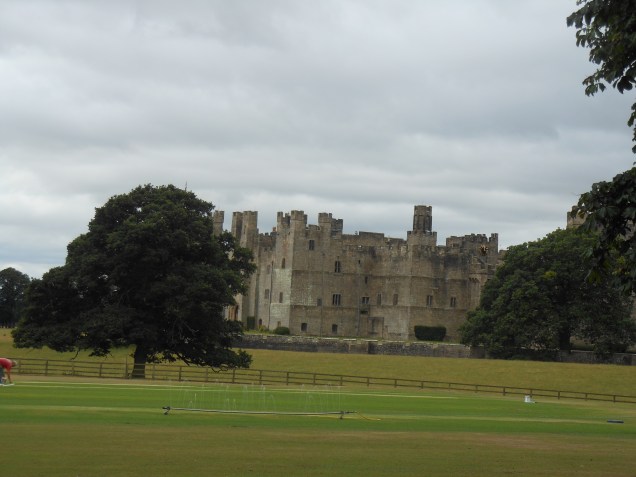
Unlike many medieval women, we have some idea of what Joan may have looked like, thanks to a miniature by Pol de Limbourg. Taken from the Neville Book of Hours, it shows Joan dressed piously in black and white, though her cloak and cuffs are lined with ermine and she wears the Lancastrian S-collar around her neck. Her features are delicate. Her hands, with rings on the fingers, are clasped in prayer.
Joan was a learned woman, she was educated to the same standard as her legitimate half-sisters, Philippa and Elizabeth of Lancaster. She seems to have possessed a considerable library, the texts being largely devotional. She owned a copy of ‘Les Cronikels de Jerusalem et de Viage de Godfray de Boylion’ (Chronicles of Jerusalem and the Voyages of Godfrey de Bouillon) which she lent to her nephew, Henry V, but had to petition the Council for its return after Henry’s death. Her brother, Thomas, had left her a book, titled ‘Tristram’.
Thomas Hoccleve dedicated a volume of poems, ‘Hoccleve’s Works’ to her sending it to her around 1422, saying:
Go, smal book to the noble excellence
Of my lady of Westmerland and seye,
Her humble seruant with al reuerence
Him recommandith vn-to hir nobleye.
Also, an early copy of Hoccleve’s ‘Regiment of Princes’ was made for Joan’s son-in-law, John Mowbray.
Known for her piety, Joan left many bequests to religious institutions in her will, especially monasteries in the north. Admitted to the sisterhood at St Albans, she was also licensed to appropriate for the support of the chantry the advowson of the church of Welton, in the Howden area; and it was Joan who saw the completion of the college at Staindrop, founded by her husband in 1408. According to antiquarian, John Leland, Joan ‘erectid the very house self of the college’ in the form of a medieval hospital. Her piety, however, was not always conventional. Her father had been a defender of the Lollards – he employed John Wycliffe, the first person to translate the Bible into English, as a tutor to his children. And Joan seems to have had a similar religious curiosity – hence her association with Margery Kempe.
Margery Kempe was a mystic from Lyn, Norfolk; she claimed to have visions of Christ and travelled throughout England and on the Continent. She wrote the Book of Margery Kempe which recounted the story of her life and her visions and considered to be the first ever autobiography in English. Joan invited Margery Kempe to visit her at Raby. She also wrote a letter to exonerate Margery from accusations of corruption. Margery’s own testimony says they knew each other for ‘this two years and more’. In 1417 Margery was brought before the Archbishop of York, accused of advising Joan’s daughter, Elizabeth Greystoke, to leave her husband. Margery was found ‘not guilty’ of the offence and under questioning, admitted she had told Countess Joan and her daughter a ‘good tale of a lady who was damned because she would not love her enemies’. Margery even suggested her questioners ask Joan for corroboration of her testimony, demonstrating her trust that the Countess would back her.
Joan enjoyed influence at court – as the sister of one king, Henry IV, and aunt to his successor, Henry V. She was named in royal grants as ‘the king’s sister’ and made a Lady of the Garter in the reign of her cousin, Richard II. She was compassionate and used her influence to petition the king to aid those less fortunate, such as Christopher and Margaret Standith, who had fallen on hard times after Christopher had been dismissed from his father’s service for marrying for love. Joan wrote the king, asking him to give Margaret a position in the household of his queen, Joan of Navarre.
It can be argued that Joan had a strong bond of affection and purpose with her husband. They both wanted to see their family’s prospects improved even further, arranging advantageous marriages for their large brood of children. Although, it is unclear how much influence Joan had when her husband, the Earl of Westmorland, manage to entail the bulk of his estates onto his children by Joan, rather than the children by his first marriage to Margaret Stafford. This seems to have been a sensible strategy, given that his children by Joan were closely related to the royal family – Joan being the half sister of King Henry IV. The strategy, however, caused Joan problems after her husband’s death and led to a family feud – which sometimes turned violent – which wasn’t resolved until after Joan died.
Joan was a strong influence on her daughters and daughters-in-law. She concerned herself with matters of family – such as her children’s marriages – rather than business. Ralph’s son, also Ralph, by his first marriage, was married to Mary, Joan’s younger daughter from her first marriage. Ralph and Joan’s children were married into many of the leading noble dynasties of the time and served to strengthen the position of the Beauforts as a whole. Such significant marriages saw their eldest daughter, Katherine, married to John Mowbray, 2nd Duke of Norfolk – it was Katherine who later married John Woodville, brother-in-law of her nephew Edward IV; Katherine was around 65 years old and John just 20. Of other daughters, Eleanor married Henry Percy, 2nd Earl of Northumberland, while Anne married Humphrey Stafford, a descendant of Edward III and 1st Duke of Buckingham. Of their sons, Richard Neville married Alice Montagu, heiress to the earldom of Salisbury, and became Earl of Salisbury by right of his wife; their son, Richard Neville, was the Earl of Warwick known as the Kingmaker. Robert Neville became Bishop of Durham and other sons married rich heiresses to claim titles and positions for themselves.
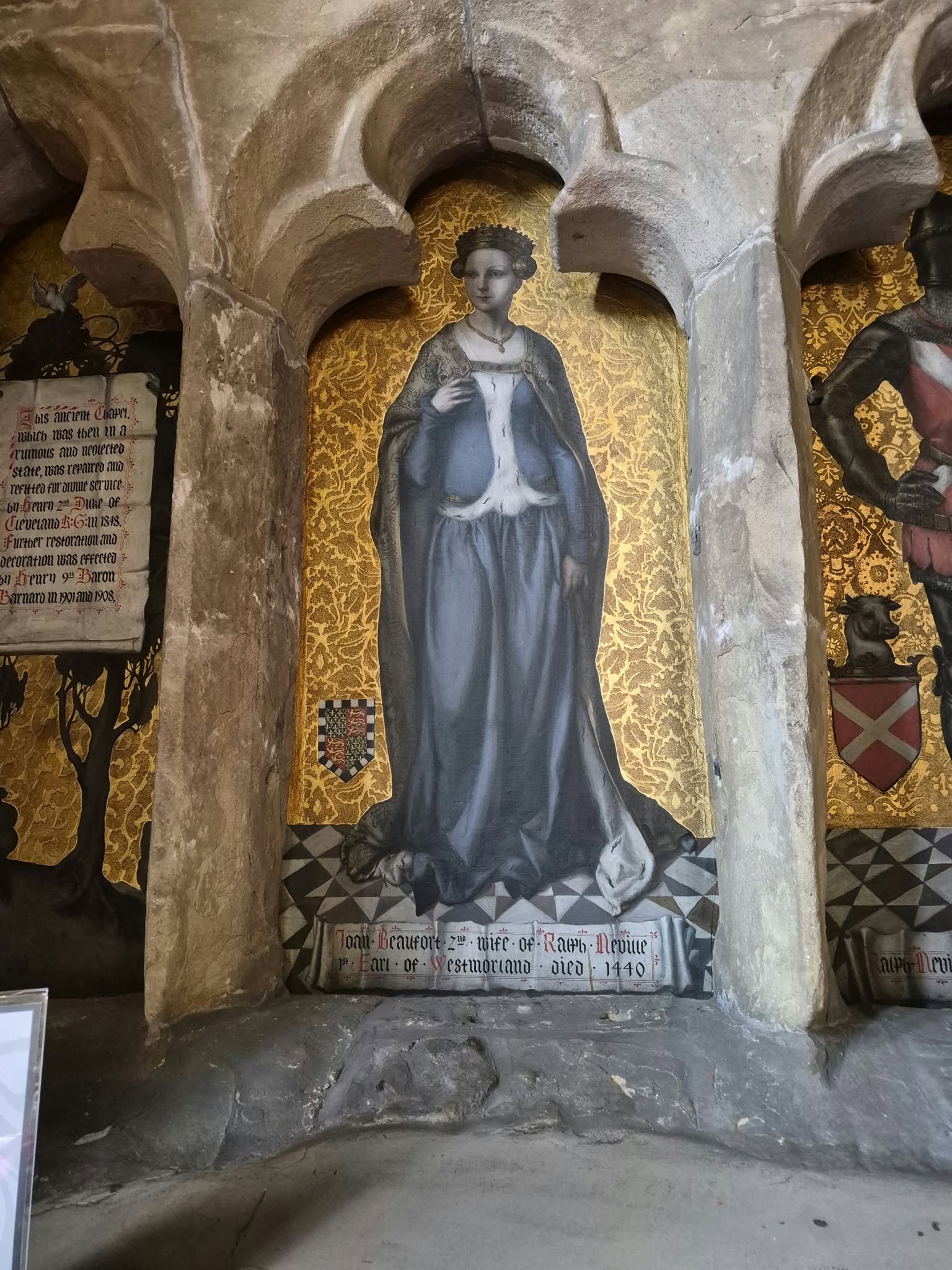
Ralph died in 1425 and was buried at Staindrop, close to Raby Castle. His tomb includes effigies of both Joan and his first wife, although neither woman is buried beside him. Joan was herself responsible for the negotiations after her husband’s death, which saw their youngest daughter, Cecily, married to Richard, Duke of York. Two of Cecily’s sons would become Kings of England; Edward IV and Richard III.
Having married young herself, and having become a mother before she was 15 years old, Joan was sensible to the dangers of girls marrying too young and ensured that none of her daughters or daughters-in-law, faced the dangers of childbirth before they were 17 or 18 years of age. She even kept married couples apart – such as Cecily and the Duke of York – when necessary, in order to protect the girls.
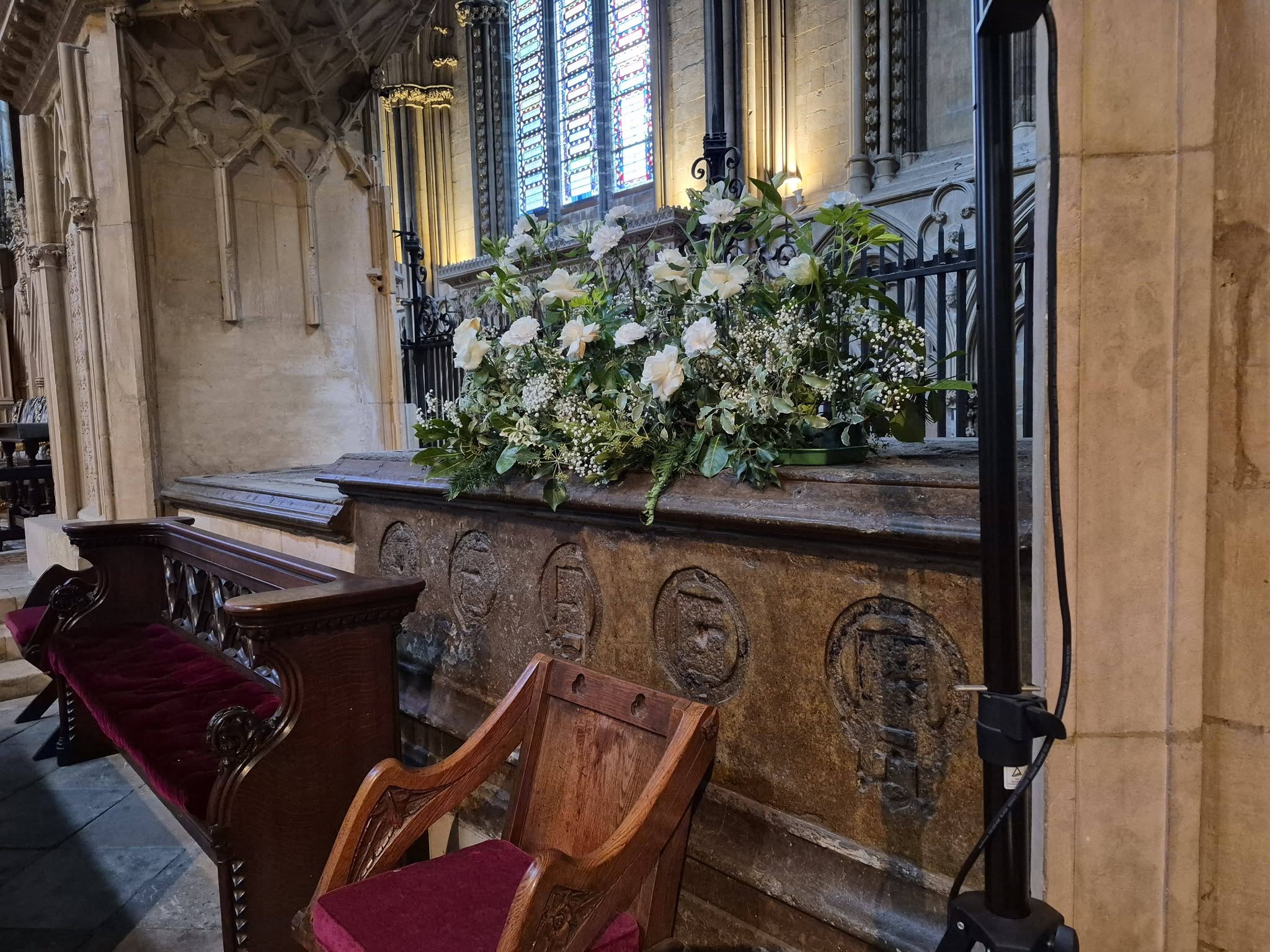
On 28 November 1437, Joan was granted licence for the foundation of a chantry with two chaplains at Lincoln Cathedral, to pray daily for the soul of her mother, Katherine Swynford, as well as for herself, her husband, brother (Cardinal Henry Beaufort) and father. On the same day, she secured a grant for daily prayers to be said at Staindrop Church – where her husband Ralph, Earl of Westmorland, was buried – for the souls of her husband, brother and father.
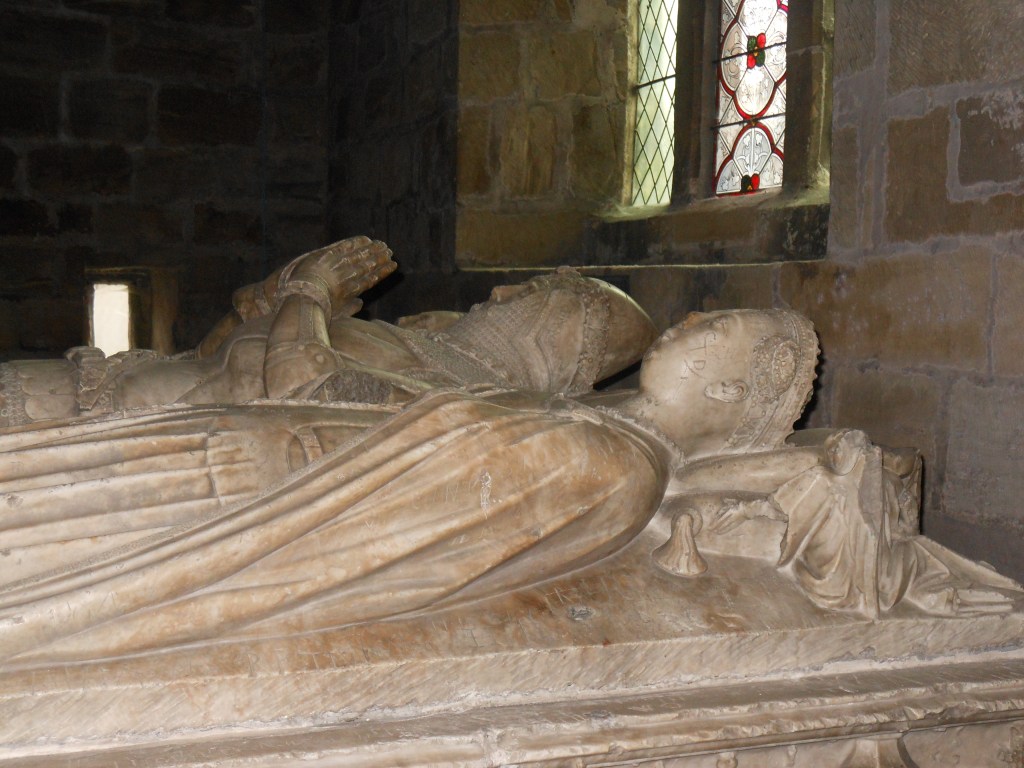
Joan died at Howden, a manor near Beverley in her son Robert’s possession as Bishop of Durham, on 13 November 1440. In her will, she requested to be buried with her mother, with whom she had a strong bond in life, but also for her mother’s burial site to be enlarged and enclosed. It seems likely that the now-lost wrought iron screens which surrounded her mother’s tomb, were added at this time, rather than when Katherine died in 1403. Joan’s epitaph claimed that the whole nation grieved at her death.
There is, however, no clear indication why Joan chose to be buried with her mother, rather than at Staindrop with her husband. It may be that as the granddaughter of a king (Edward III), she thought Lincoln Cathedral a more appropriate resting place, or that she wanted to be as close to her mother in death as she had been in life.
*
Pictures: John of Gaunt and Joan Beaufort courtesy of Wikipedia. All other photos ©SharonBennettConnolly FRHistS
*
Sources: katherineswynfordsociety.org.uk; Red Roses: Blanche of Gaunt to Margaret Beaufort by Amy Licence; The Nevills of Middleham by K.L. Clark; The House of Beaufort: the Bastard Line that Captured the Crown by Nathen Amin; Brewer’s British Royalty by David Williamson; History Today Companion to British History Edited by Juliet Gardiner & Neil Wenborn; The mammoth Book of British kings & Queen by Mike Ashley; Britain’s Royal Families, the Complete Genealogy by Alison Weir; The Life and Times of Edward III by Paul Johnson; The Perfect King, the Life of Edward III by Ian Mortimer; The Reign of Edward III by WM Ormrod; Chronicles of the Age of Chivalry Edited by Elizabeth Hallam; Oxforddnb.com; womenshistory.about.com/od/medrenqueens/a/Katherine-Swynford.
*
My Books
Signed, dedicated copies of all my books are available through my online bookshop. or by contacting me.
New releases in 2026:
New Hardbacks
‘My daughter wanted me to treat her more like a princess.
So, I married her to a stranger to strengthen the alliance with Poland!’
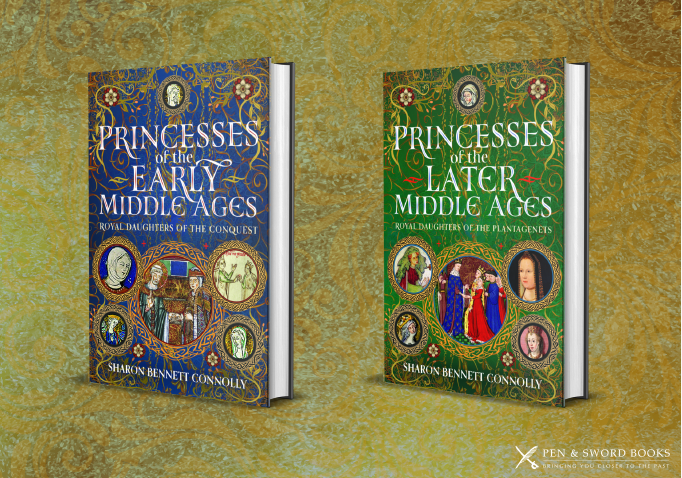
Princesses of the Early Middle Ages: Royal Daughters of the Conquest and Princesses of the Later Middle Ages: Royal Daughters of the Plantagenets tell the stories of England’s royal daughters from 1066 to the rise of the Tudors, from the last Anglo-Saxon princesses to the fall of the House of York.
Were they really pampered pawns sent off to marriages on the Continent, out of sight and out of mind?
Perhaps, there was different story, where a foreign marriage does not mean eternal exile, but a purpose in life, where a princess is a diplomat, an ambassador for England in her new country.
Where she is the bond between allies – most of the time.
Their stories are touching, inspiring and, at times, heartbreaking...
Praise for Princesses of the Early Middle Ages:
Heidi Malagisi: This is another excellent book by Sharon Bennett Connolly. Extremely well researched and relatively easy to follow along, which is a great thing because there are so many Matildas and Eleanors in this book.
Tony Riches: I challenge anyone with an interest in medieval Britain to not find something they will learn from this book.
Anna Belfrage: I just love how [Sharon] presents this huge cast of real life people in a casual, chatty tone that has me expecting the various female protagonists to suddenly pop their head up and add their own commentary.
Buy now: Princesses of the Early Middle Ages: Royal Daughters of the Conquest
Praise for Princesses of the Later Middle Ages:
Elizabeth Chadwick: Really interesting and informative and gives a great handle on the goings on surrounding these ladies!
Kathryn Warner: A deeply researched, richly detailed and fascinating account of late medieval England’s forgotten princesses. I loved it!
Buy now: Princesses of the Later Middle Ages: Royal Daughters of the Plantagenets
New in Paperback:
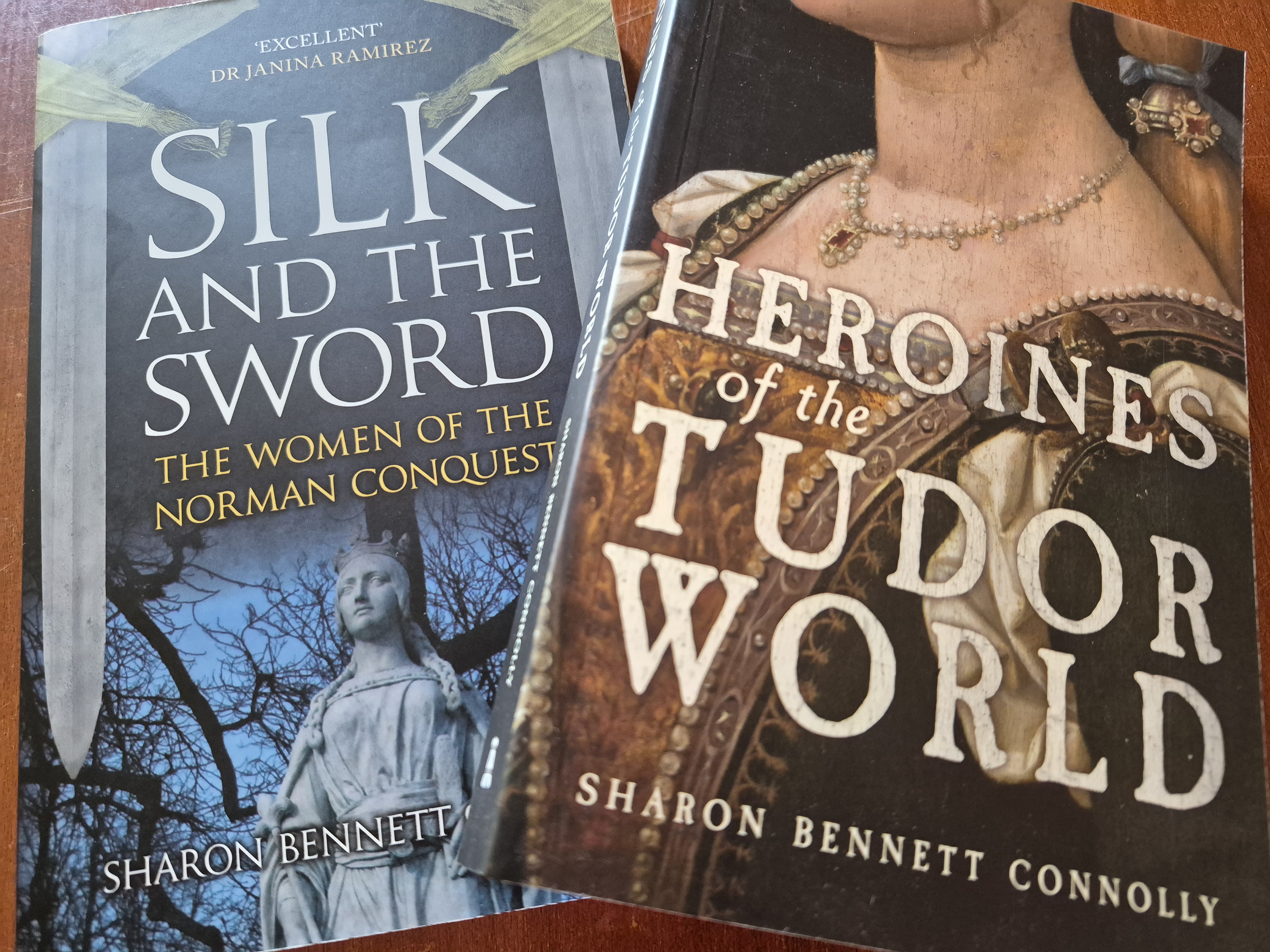
The momentous events of 1066, the story of invasion, battle and conquest, are well known. But what of the women? Silk and the Sword: The Women of the Norman Conquest traces the fortunes of the women who had a significant role to play during the Norman Conquest – wives, lovers, sisters, mothers, leaders. These are lives full of drama, pathos and sometimes mystery: Edith and Gytha searching the battlefield of Hastings for the body of Harold, his lover and mother united in their grief for the fallen king. Who was Ælfgyva, the lady of the Bayeux Tapestry, portrayed with a naked man at her feet?
Janina Ramirez said it’s “Excellent!”
Heroines of the Tudor World focuses on the women who lived through the Renaissance and Reformation, examining the threats and challenges they faced and how they overcame them. These are the women who ruled, the women who founded dynasties, the women who fought for religious freedom, their families and love. These are the women who made a difference, who influenced countries, kings and the Reformation.
Derek Birks: An excellent account of the changing roles of women in Tudor society.
Annie Whitehead: What a treat this book was to read. Bennett Connolly has an easy, conversation style of writing which welcomes you from the opening pages and draws you into her story.
Available now from Amazon and Pen and Sword Books
Also by Sharon Bennett Connolly:
Heroines of the Medieval World; Silk and the Sword: The Women of the Norman Conquest; Ladies of Magna Carta: Women of Influence in Thirteenth Century England; Defenders of the Norman Crown: Rise and Fall of the Warenne Earls of Surrey; King John’s Right Hand Lady: The Story of Nicholaa de la Haye; Women of the Anarchy; Heroines of the Tudor World; Scotland’s Medieval Queens: From St Margaret to Margaret of Denmark; Princesses of the Early Middle Ages: Royal Daughters of the Conquest; Princesses of the Later Middle Ages; Royal Daughters of the Plantagenets
Alternate Endings: An anthology of historical fiction short stories including Long Live the King… which is my take what might have happened had King John not died in October 1216. Available in paperback and kindle from Amazon.
*
Podcast:

Have a listen to the A Slice of Medieval podcast, which I co-host with Historical fiction novelist Derek Birks. Derek and I welcome guests, such as Bernard Cornwell and Elizabeth Chadwick, and discuss a wide range of topics in medieval history, from significant events to the personalities involved.
There are now 80 episodes to listen to!
Every episode is also available on YouTube.
*
Don’t forget!
Signed and dedicated copies of all my books are available through my online bookshop.
For forthcoming online and in-person talks, please check out my Events Page.
You can be the first to read new articles by clicking the ‘Follow’ button, liking our Facebook page or joining me on Twitter, Threads, Bluesky and Instagram.
©2019 Sharon Bennett Connolly FRHistS


Oh, thank you, thank! My most favorite of all people in the past are John of Gaunt and Katherine! This article about Joan was so well-written, besides being just fun reading. I gobble up any info on them that I can find. My mother gave me a copy of Katherine by Anya Seton close to 45 years ago and said if I didn’t like it, she would give me $100. Needless to say, I didn’t get the mony. That’s when I decided that I love history.
I love your posts! Wish I was in Britain instead of the states so I could visit more thoroughly the places I only read about.
LikeLiked by 1 person
Thank you Suzanne, I’m so happy you enjoyed it. I loved writing about Joan and her family – they’re so interesting! Best wishes, Sharon 😀
LikeLike
Beaufort was a property owned by John Duke of Lancaster.
LikeLike
Apparently so.
LikeLike
Hi. My maiden name was Swinford and my mother gave me a copy of Katherine to read close to 60 years ago. It gave me an interest in my family as well as history. I went on to train as a teacher with history as my main subject. History is my love.
LikeLiked by 1 person
Wonderful!
LikeLike
The Beaufort name comes from the name of one of John of Gaunt’s (my great grandfather x 18) castle’s in France
LikeLike
Probably, yes. Although the lordship was in Champagne, rather than Anjou and was already lost to John of Gaunt when the first Beaufort child was born. According to Nathen Amin – the author of The House of Beaufort – it was chosen as a surname because of its Lancaster links, but as it was no longer a Lancastrian possession the name wouldn’t imply a claim on the Lancaster patrimony.
LikeLike
She was my 15yh great grandmother. Always been interested in her long before I knew about the connection.
LikeLike
She is a fascinating character. Such a strong woman. I can’t help but admire her
LikeLike
Yes, Joan is one of my most favorite ancestors. I am working on heraldry papers for her for Colonial Dames. Just want to make sure my documentation is good. I’d also like to go back to her grandparents, John of Gaunt and Philippa. I also have the documentation to carry Joan’s line back to the very early rulers of Hungary. Just love proving my ancestors.
LikeLike
Reblogged this on History's Untold Treasures and commented:
H/T History, the Interesting Bits!
LikeLike