It is that time of year again. Christmas is around the corner and the Historical Writers Forum has just released a new short story anthology, Echoes of Winter: A Seasonal Anthology of Historical Fiction Short Stories. You may remember that I contributed my first fiction piece for Alternate Endings a few years ago, it was great fun but made me realised how much hard work goes into writing historical fiction. Anthologies are a great way to find new writers and new historical eras that you might be interested in. It also gives Historical Writers Forum the opportunity to showcase previously unpublished writers – at least one in every anthology.
Joining me today is Ian Bristow, with an article about the research behind his contribution to the anthology, The Dead of Winter.
A Christmas Coronation
By Ian Bristow
Think of Christmas. What comes to mind? Did you imagine a tree, its bows decked in glittering strands of garland while scores of twinkling lights reflect off gemlike baubles? Perhaps you imagined your family, all of them wearing hideous but cozy jumpers, drinking hot coco and eggnog (some of them adding more brandy than is advisable)? Or maybe your mind wandered to presents, stacked neatly under the tree and boasting colorful paper and bows? Maybe you’re a foodie (like me) and you can almost smell the aromas of pudding and pies and turkey with all the trimmings drifting tantalizingly from the kitchen. Did you picture a jolly man sporting a red coat and white beard with a group of nine reindeer pulling his sleigh across the winter sky?
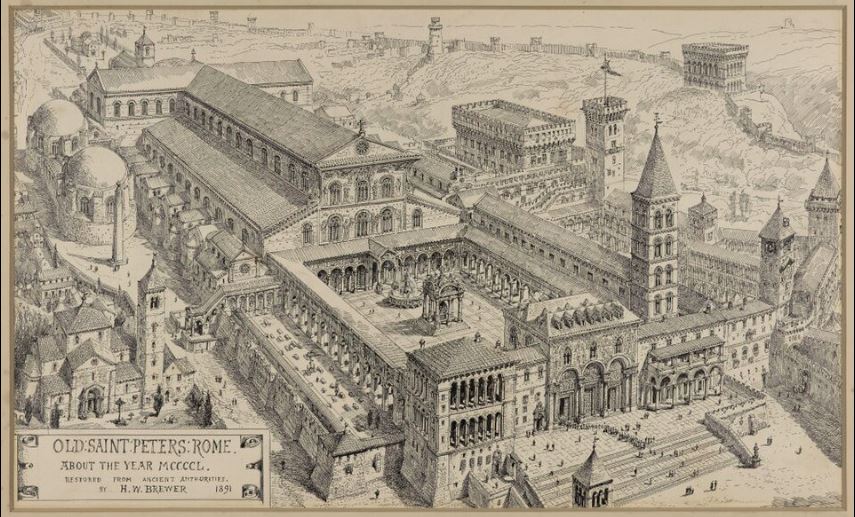
These are all perfectly normal 21st century associations, built on traditions upheld across many cultures over the centuries. But did you imagine an 8th century Frankish king arriving in Rome with the salvation of the church of Christ resting on his shoulders? Did you think of St. Peter’s Basilica, the religious epicenter of Rome, with its long halls and cloisters and courtyard?
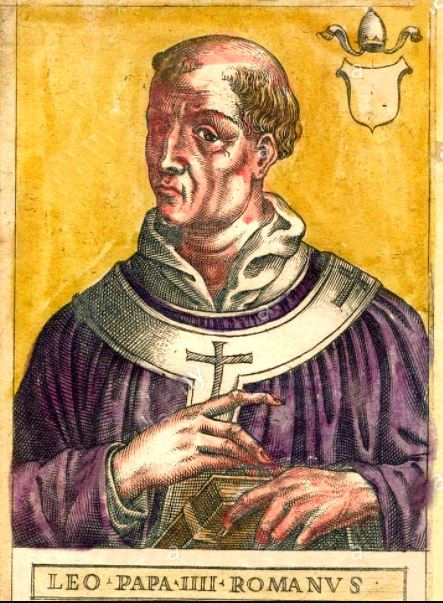
Leo III was pope in the year 800, and he had a problem. He’d made powerful enemies amongst the Roman aristocracy because he was a commoner. They accused him of adultery and perjury and ambushed him. But Leo had been clever enough to secure the protection of the Frankish King. He was rescued by the king’s men and taken to his castle at Paderborn. The Pope went back to Rome with a hefty escort of Franks and Charlemagne followed soon after.
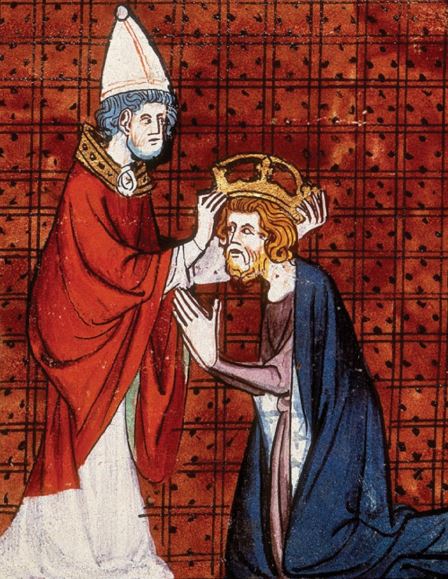
Back in Rome, Leo swore an oath, abolishing all charges against him. And it was there, at St. Peter’s Basilica, on Christmas day in 800 AD, that Pope Leo III, rescued from his enemies by Charlemagne and two days purged of charges, placed the imperial crown upon Charlemagne’s head. When the Frankish king rose from prayer during what he thought was meant to be the consecration and crowning of his own son as king, he was ruler of a new empire. The nefarious, and indeed illegal, act secured Leo’s own papal position, proving that popes had the authority to make emperors, and left a surprised and angry Charlemagne with no option but to try and legitimize his new position as Emperor through recognition from Constantinople. This was due to the fact the Eastern Roman Empire, with its seat there, had been deemed the only true and legitimate heir to the Roman Empire.
According to the chronicler Theophanes, Charlemagne sought to accomplish recognition of the new title by offering his hand in marriage to Empress Irene, thus uniting the Carolingian and Byzantine empires. This attempt, assuming Theophanes’ assertion was indeed accurate, never came to fruition, as Irene was deposed in 802. Charlemagne remained a usurper in the eyes of the Byzantines. Thus, the only imperial lands he held were the duchy of Rome and his former territories as king of the Franks and the Lombards.
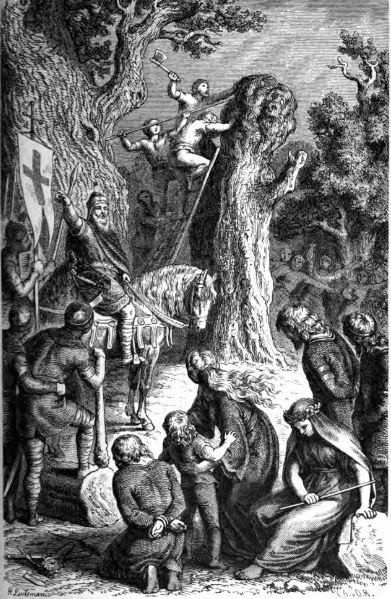
But was unification with the Byzantine empire ever Charlemagne’s chief concern? Or did he believe his true religious and political calling rested elsewhere? Let us turn our gaze northward, just as Charlemagne himself had in 772, when he led his first campaign into Saxony. Upon that first campaign, the Frankish armies made a huge statement of intent, destroying an Irminsul—sacred Saxon pillars which stood as treelike centerpieces at notable sites of worship—and forcing many to convert to Christianity on penalty of death. And only ten years later, Charlemagne had imposed the infamous Capitulatio di partibus Saxoniae, which decreed the death penalty for any Saxon who refused baptism or practiced pagan rituals.
It’s hard to see such a ruthless subjugation and conversion of an entire people to Christianity as anything but the actions of a man wholly convinced his was a righteous conquest. For Charlemagne, the conquering and conversion of Saxony to Christianity was the chief mechanism in bringing about unification within the lands which would go on to become the Holy Roman Empire.
And while examining the events which would ultimately lead to the creation of the HRE through a Carolingian lens is truly fascinating, what of the people in Saxony who lived through three decades of horror? What of their stories? What of the traditions so many people died to observe and, ultimately, protect? It was those very questions which led to the first inklings of the idea that would later become the basis for my story, The Dead of Winter.
Imagine armed soldiers forcing you to commit your soul to a god you didn’t know or understand before they dragged you out into a river and plunged you beneath the icy current to purge your soul of the beliefs that defined you, now deemed to be wicked.
True horror.
But for some, the horror didn’t end there. For some, the Frankish army demanded they take up arms and march on their own people or suffer the penalty of death. I’m not sure one could quantify the shame and dread those poor souls must have experienced marching through their own lands, spilling the blood of their own people because they were too afraid to die themselves.
The Dead of Winter sets out to explore this exact point of view. For one who had taken up arms against his own people, could there be any chance of redemption? If so, what would it take to return from crossing such a line? Can our future choices and behaviors ever truly make amends for those of our past? Or do we simply live with every choice we make, perhaps never redeemed, rather reinvented? Whatever the case, the struggle for survival and cultural identity was one every Saxon faced that winter in 800. And as Charlemagne was crowned emperor in Rome, a beacon of hope for the future of the church, thousands of Saxons gathered in hiding to observe their own winter traditions.
Yule, a midwinter celebration, marked the return of longer days and the rebirth of the sun. Surely it had never held greater significance. There could be no better symbol of hope in the darkness they faced. And it was in defiantly upholding those customs that many of those traditions would find their way into our modern day celebrations. Burning the Yule log, feasting on the bounty of the years’ harvest, decorating with evergreens, and gift giving
were all customs absorbed into the broader Christmas festival. The human spirit and our time-honored traditions have a way of transcending tyranny. Charlemagne set out to abolish an entire culture, and in an ironic twist that is truly human, he laid the groundwork for a new one. One which merged two ideologies and persists to this day.
Please enjoy this excerpt from the opening of The Dead of Winter to whet your appetite:
Billowing smoke masked the stench of death. The fire that consumed what remained of a sacked village expelled the bitter December cold from Baldwin’s aching limbs but did nothing to thaw the ice in his heart. What he’d done that day crossed a line he could never come back from.
For the Frankish soldiers, the slaughter of Saxons, or as they called them ‘heathens’, was routine in their king’s quest to subjugate all who believed in the old gods of the north. But for him, born a Saxon and raised before Charlemagne had first arrived to destroy the sacred irminsul and erect a church in its place, this was utter betrayal.
Drogo, the Frankish captain of Baldwin’s small Carolingian contingent and the man who’d given him the choice between death and unconditional servitude, surveyed the scenes of destruction he’d inflicted on this unsuspecting village. He frowned and barked through bloodied lips: “Ademir, your report.” When he didn’t receive an immediate response, he turned on the spot in search of his second in command. “Where’s Ademir? I told him no women.”
A burly man, blackened by soot and blood, stepped forward and bowed. “Dead, sir.”
Drogo didn’t show any remorse for the man Baldwin had assumed he might have called ‘friend’. “Form a small hunting party and see what you can find. Christmas is only a few days off, and I intend to feast in celebration of Charlemagne’s crowning as our Emperor on that most holy day. The men will want meat, and these people had almost nothing of value in their stores.”
“Yes, sir.”
“And be quick about it. I want camp established by nightfall.” He pointed his bloodstained sword beyond what remained of the burning buildings, now reduced to crumbled frameworks that glowed red against the darkening sky. “The rest of you search the forest for survivors. None are to live. Charlemagne demands we send a message to the factions in the north.”
Having received their orders, the men dispersed. Baldwin, his sword still drawn from the raid, trudged into the snow swept underbrush beyond the village. His blistered feet screamed their discontent with each icy step. Surely the excruciating pain was punishment for his cowardice and wavering loyalty to his people.
About the author:
Ian C. Bristow is the author of several speculative fiction books. He is currently writing an epic fantasy series and researching for an Age of Sail adventure set in the Elizabethan period — his first novel length work of historical fiction. Beyond writing, he is a full-time freelance artist and designer as well as a part-time composer. You can find him at www.facebook.com/ian.bristow.129
About the book:
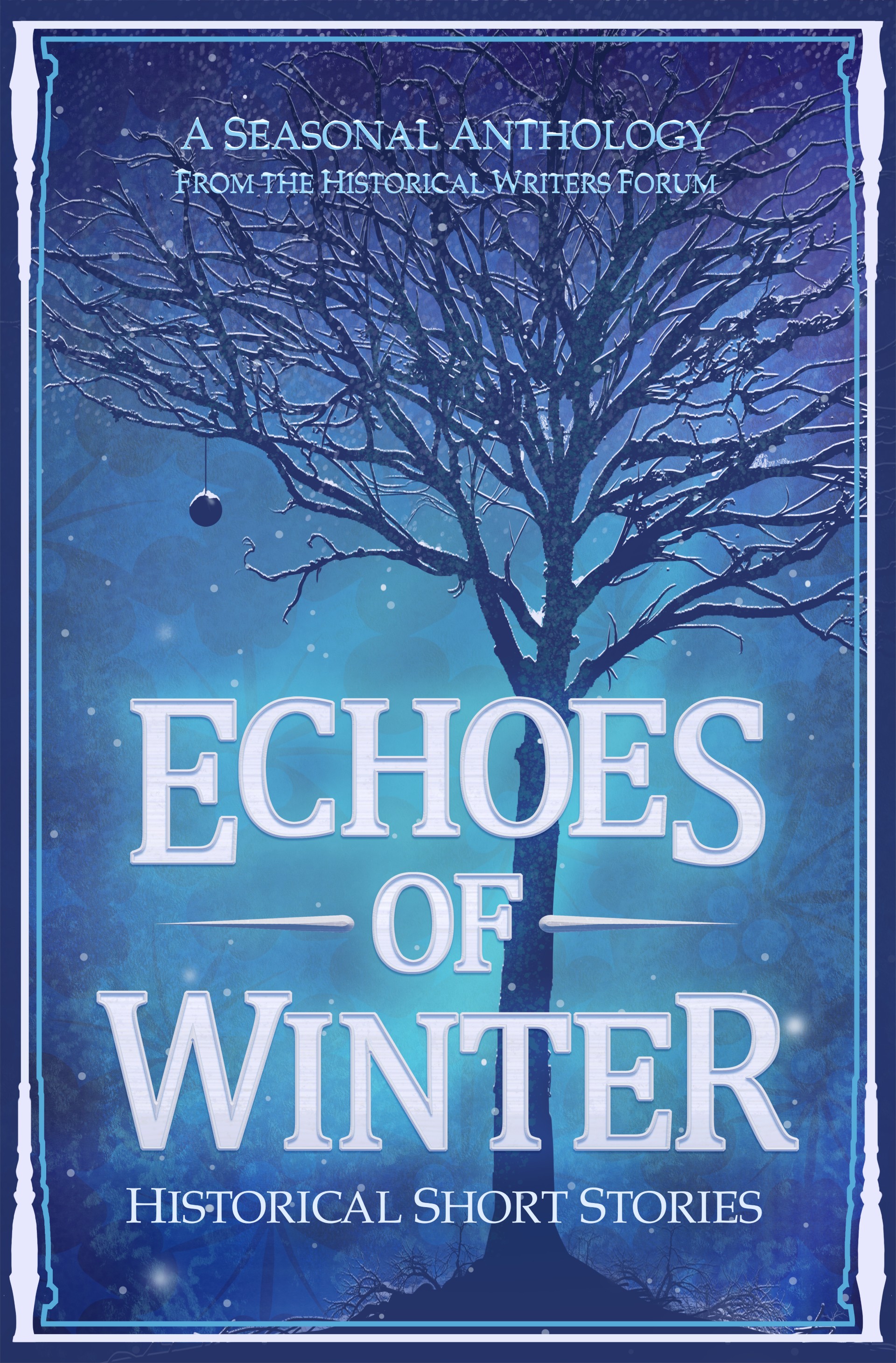
Echoes of Winter: A Seasonal Anthology of Historical Fiction Short Stories: Across centuries and continents, these historical tales explore the cold that bites, memories that linger, and hope that refuses to fade. From snow blanketed forests of Saxony to gold-glinting waters of New Zealand, this Historical Writers Forum collection gathers stories of winter hardship, courage, and unexpected grace.
Travel between quiet castle chambers to the belly of a ship, losing yourself in Christmases long past. With a vibrant range of voices, this anthology includes beautifully crafted stories from heartwarming to haunted, each steeped in rich historic detail and the timeless pull of the season.
Journey through winters gone by and discover the light that endures in every cold season.
Buy Echoes of Winter: A Seasonal Anthology of Historical Fiction Short Stories
*
My Books
Signed, dedicated copies of all my books are available through my online bookshop. or by contacting me.
New releases in 2026:
New Hardbacks
‘My daughter wanted me to treat her more like a princess.
So, I married her to a stranger to strengthen the alliance with Poland!’
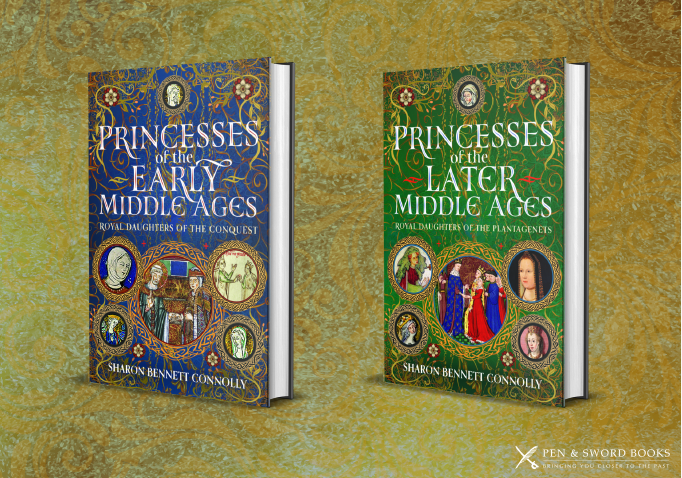
Princesses of the Early Middle Ages: Royal Daughters of the Conquest and Princesses of the Later Middle Ages: Royal Daughters of the Plantagenets tell the stories of England’s royal daughters from 1066 to the rise of the Tudors, from the last Anglo-Saxon princesses to the fall of the House of York.
Were they really pampered pawns sent off to marriages on the Continent, out of sight and out of mind?
Perhaps, there was different story, where a foreign marriage does not mean eternal exile, but a purpose in life, where a princess is a diplomat, an ambassador for England in her new country.
Where she is the bond between allies – most of the time.
Their stories are touching, inspiring and, at times, heartbreaking...
Praise for Princesses of the Early Middle Ages:
Heidi Malagisi: This is another excellent book by Sharon Bennett Connolly. Extremely well researched and relatively easy to follow along, which is a great thing because there are so many Matildas and Eleanors in this book.
Tony Riches: I challenge anyone with an interest in medieval Britain to not find something they will learn from this book.
Anna Belfrage: I just love how [Sharon] presents this huge cast of real life people in a casual, chatty tone that has me expecting the various female protagonists to suddenly pop their head up and add their own commentary.
Buy now: Princesses of the Early Middle Ages: Royal Daughters of the Conquest
Praise for Princesses of the Later Middle Ages:
Elizabeth Chadwick: Really interesting and informative and gives a great handle on the goings on surrounding these ladies!
Kathryn Warner: A deeply researched, richly detailed and fascinating account of late medieval England’s forgotten princesses. I loved it!
Buy now: Princesses of the Later Middle Ages: Royal Daughters of the Plantagenets
New in Paperback:
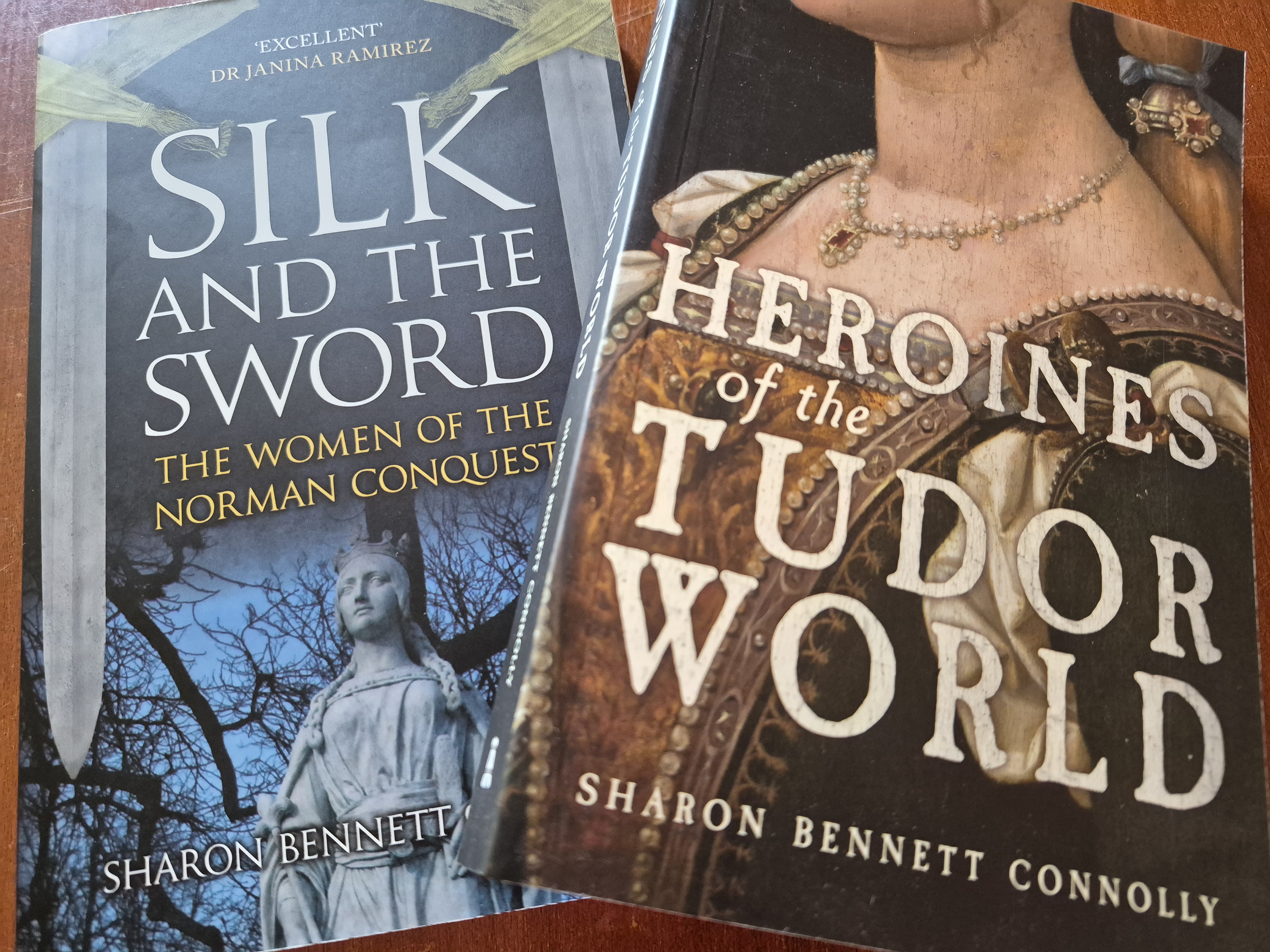
The momentous events of 1066, the story of invasion, battle and conquest, are well known. But what of the women? Silk and the Sword: The Women of the Norman Conquest traces the fortunes of the women who had a significant role to play during the Norman Conquest – wives, lovers, sisters, mothers, leaders. These are lives full of drama, pathos and sometimes mystery: Edith and Gytha searching the battlefield of Hastings for the body of Harold, his lover and mother united in their grief for the fallen king. Who was Ælfgyva, the lady of the Bayeux Tapestry, portrayed with a naked man at her feet?
Janina Ramirez said it’s “Excellent!”
Heroines of the Tudor World focuses on the women who lived through the Renaissance and Reformation, examining the threats and challenges they faced and how they overcame them. These are the women who ruled, the women who founded dynasties, the women who fought for religious freedom, their families and love. These are the women who made a difference, who influenced countries, kings and the Reformation.
Derek Birks: An excellent account of the changing roles of women in Tudor society.
Annie Whitehead: What a treat this book was to read. Bennett Connolly has an easy, conversation style of writing which welcomes you from the opening pages and draws you into her story.
Available now from Amazon and Pen and Sword Books
Also by Sharon Bennett Connolly:
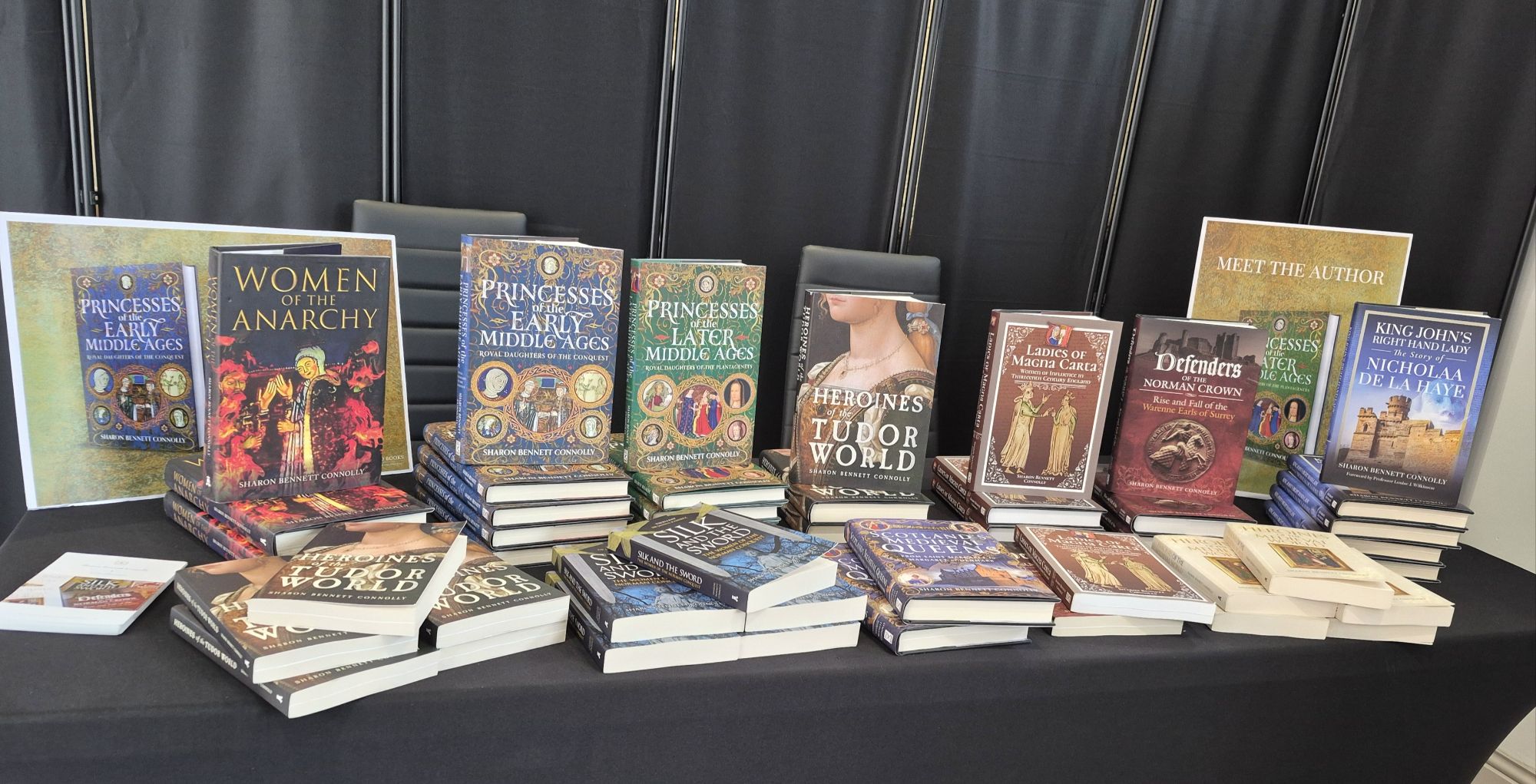
Heroines of the Medieval World; Silk and the Sword: The Women of the Norman Conquest; Ladies of Magna Carta: Women of Influence in Thirteenth Century England; Defenders of the Norman Crown: Rise and Fall of the Warenne Earls of Surrey; King John’s Right Hand Lady: The Story of Nicholaa de la Haye; Women of the Anarchy; Heroines of the Tudor World; Scotland’s Medieval Queens: From St Margaret to Margaret of Denmark; Princesses of the Early Middle Ages: Royal Daughters of the Conquest; Princesses of the Later Middle Ages; Royal Daughters of the Plantagenets
Alternate Endings: An anthology of historical fiction short stories including Long Live the King… which is my take what might have happened had King John not died in October 1216. Available in paperback and kindle from Amazon.
*
Podcast:
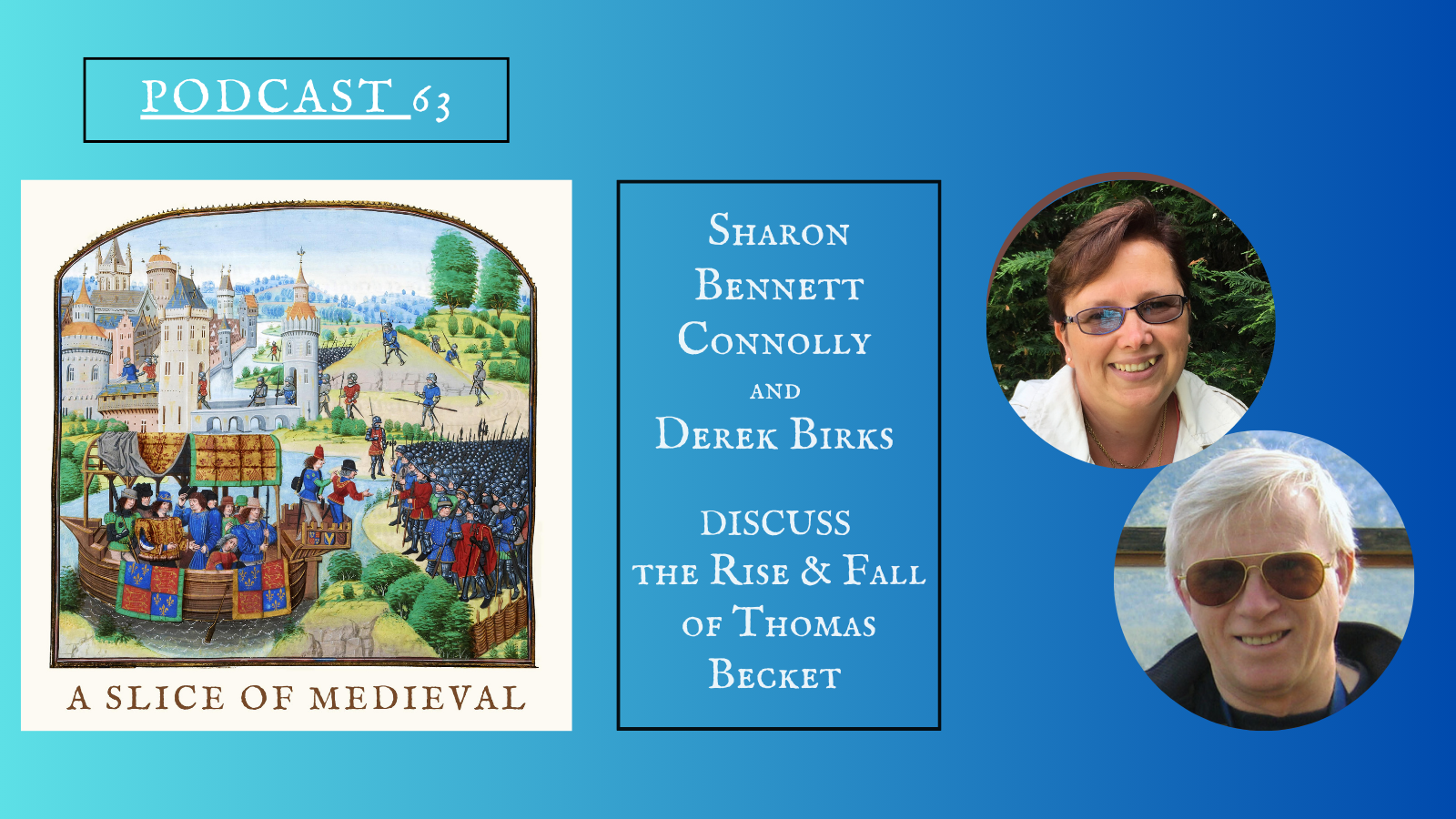
Have a listen to the A Slice of Medieval podcast, which I co-host with Historical fiction novelist Derek Birks. Derek and I welcome guests, such as Ian Mortimer, Bernard Cornwell, Elizabeth Chadwick and Scott Mariani.
We discuss a wide range of topics in medieval history, from significant events to the personalities involved.
Every episode is also now available on YouTube.
*
Don’t forget!
For forthcoming online and in-person talks, please check out my Events Page.
You can be the first to read new articles by clicking the ‘Follow’ button, liking our Facebook page or joining me on Twitter, Threads, Bluesky and Instagram.
Signed and dedicated copies of all my books are available through my online bookshop.
*
©2026 Sharon Bennett Connolly FRHistS and Ian Bristow

