Hi all, I have a few snippets of news to share, so thought I would write a short post to make sure you are all caught up.
Book News:
Firstly, as you know, my next book, Princesses of the Early Middle Ages: Royal Daughters of the Conquest is going through the editing process and already has a gorgeous cover. I now have a release date – 30 March 2026 in the UK. I am still waiting for a date for the US release, but it is usually2 or 3 months after the UK. And it is now available for pre-order on Amazon. Here’s the blurb:
Daughters of kings were often used to seal treaty alliances and forge peace with England’s enemies. Princesses of the Early Middle Ages: Royal Daughters from the Conquest will explore the lives of these young women, how they followed the stereotype, and how they sometimes managed to escape it. It will look at the world they lived in, and how their lives and marriages were affected by political necessity and the events of the time. Almost as interesting as the marriages these girls made are the ones that were never realised. Many English princesses were betrothed, or proposed as brides, three or more times before they were married. Their failed marriage proposals demonstrated their influence and worth on the international royal marriage market, as well as the changing allegiances between countries and the making and breaking of international friendships. Princesses of the Early Middle Ages will also examine how these girls, who were often political pawns, were able to control their own lives and fates. Whilst they were expected to obey their parents in their marriage choices, several princesses were able to exert their own influence on these choices, with someAboutme: outright refusing the husbands offered to them. Their stories are touching, inspiring and, at times, heartbreaking.
I am still working on the second book Princesses of the Later Middle Ages: Royal Daughters of the Plantagenets, which will be winging its way to my editor by the end of August.
Talks news:
I have some talks coming up over the summer and I would love to see you there and say ‘hello’ if you are in the area.
Conisbrough Castle
Saturday 26 July 2025 and Saturday 23 August 2025, I will be back at ‘my local’ with two talks and a book signing.
The talks are:
11am The Warennes of Conisbrough Castle
The subject of my book, Defenders of the Norman Crown: Rise and Fall of the Warenne Earls of Surrey, the Warennes held the Honour and castle of Conisbrough from the time of the Norman Conquest of 1066 until the death of the 7th and last earl in 1347. A noble family at the heart of English government, the Warennes were closely related to the Plantagenet royal house and played leading roles in the government of the realm. They held lands stretching from Lewes in the south, through Castle Acre in Norfolk, to Sandal Castle in Wakefield.
1pm The Women of Conisbrough Castle
From Gundrada de Warenne to Maud Clifford, widow of Richard of Conisbrough, some remarkable women have called Consibrough Castle home. From heiresses to abandoned wives and duchesses accused of infidelity, their stories unfolded within the castle’s stout walls.
Tickets are free, but places are limited.
To reserve your place contact Conisbrough Castle:
Tel: 01709 863329
Email: conisbroughcastle@english-heritage.org.uk
Worcester Medieval Fest
Worcester Cathedral have put on a wonderful series of events in August to celebrate all-things medieval with a particular focus on King John. From Disney’s Robin Hood, to little old me. With a medieval market, crafts and talks, there’s something for everyone.
Learn about the lives of the women of Magna Carta, including , Matilda de Braose, Nicholaa de la Haye and Isabel d’Aubigny.
Women from many of the great families of England were affected by the far-reaching legacy of Magna Carta, from their experiences in the civil war and as hostages, to calling on its use to protect their property and rights as widows. Among them, Matilda de Braose, Nicholaa de la Haye and Isabel d’Aubigny each played a part in the Magna Carta story.
I am so excited to be talking about some of my favourite Tudor women in one of the greatest Tudor manor houses in England – Gainsborough Old Hall – a building which some of the women called home. Highlighting the lives of Bessie Blount, Anne Askew, Katherine Willoughby, Katherine Parr and Rose Hickman.
More details to come…
Podcast:
If you haven’t yet, do have a listen to theA Slice of Medieval podcast, which I co-host with Historical fiction novelist Derek Birks. Derek and I welcome guests, such as Bernard Cornwell and discuss a wide range of topics in medieval history, from significant events to the personalities involved. Our most recent episode was a fascinating discussion with historian Helen Castor on Henry IV. And coming soon, we have bestselling thriller writer Scott Mariani talking about his new series set in the Third Crusade.
Sharon Bennett Connolly is the bestselling author of several non-fiction history books. A Fellow of the Royal Historical Society, Sharon has studied history academically and just for fun – and has even worked as a tour guide at a castle. She also writes the popular history blog, http://www.historytheinterestingbits.com and co-hosts the podcast A Slice of Medieval, alongside historical novelist Derek Birks. Sharon regularly gives talks on women’s history, for historical groups, festivals and in schools; her book Silk and the Sword: The Women of the Norman Conquest is a recommended text for teaching the Norman Conquest in the National Curriculum. She is a feature writer for All About History, Tudor Places and Living Medieval magazines and her TV work includes Australian Television’s Who Do You Think You Are?
Her previous books include: Heroines of the Medieval World, Silk and the Sword: The Women of the Norman Conquest, Ladies of Magna Carta: Women of Influence in Thirteenth-Century England, Defenders of the Norman Crown: Rise and Fall of the Warenne Earls of Surrey, King John’s Right-Hand Lady: The Story of Nicholaa de la Haye, Women of the Anarchy, Heroines of the Tudor World and Scotland’s Medieval Queens: From St Margaret to Margaret of Denmark.
The time commonly referred to as the Anarchy is one of the most violent and unstable periods of English history. Lasting almost the entirety of the reign of King Stephen, it truly was a Cousin’s War. The two main protagonists, King Stephen and Empress Matilda, were first cousins, both being grandchildren of William the Conqueror and his queen, Matilda of Flanders. What is perhaps less well known is that Empress Matilda was also first cousin to Stephen’s wife and queen, Matilda of Boulogne. The two Matilda’s were both granddaughters of Margaret of Wessex, Queen of Scots as the wife of Malcolm III Canmore. And later St Margaret. It is through Margaret that the namesake cousins could claim descent from Alfred the Great.
The origins to the Anarchy can be traced back to one dramatic and tragic event: the sinking of the White Ship in 1120. This saw the drowning of the only legitimate son and heir of King Henry I, William Ætheling (or Adelin). The young man was 17 years old at the time, recently married, and his father’s pride and joy. His death gave rise to a constitutional crisis which the widowed Henry I sought to resolve by his speedy marriage to the teenage Adeliza of Louvain, in the hope of begetting yet more sons. Although he was getting on in years at roughly fifty-two, and had only two legitimate children, his brood of more than twenty illegitimate, but acknowledged, offspring gave him cause for optimism.
However, as the years progressed and no children were born, Henry had to look to other ways of resolving the succession crisis. In the years since the death of his son, the king had taken his nephew Stephen of Blois under his wing, showering him with gifts and land, and arranging the young man’s marriage. Stephen was the son of Henry’s highly capable sister Adela of Normandy, Countess of Blois and Stephen, Count of Blois, who had been killed on Crusade. The younger Stephen was created Count of Mortain and married to Matilda of Boulogne, the only child and heiress of Eustace of Boulogne and Mary of Scotland. It is possible that Henry was showing Stephen such favouritism in anticipation of not producing an heir by his new wife and was grooming Stephen to succeed him.
Empress Matilda depicted in an image from the Gospels of Henry the Lion.
However, the death of his daughter’s husband, Emperor Henry V, in faraway Germany offered Henry an alternative to his nephew. Better still, here was an opportunity to put his own blood on the throne. Shortly after the German emperor’s death in 1125, Henry recalled Empress Matilda to England. She had been sent to Germany at the age of seven, to be raised at the court of the emperor in anticipation of their marriage when she came of age. Matilda had married Henry in 1114, a month before her twelfth birthday. Although she and Henry were married for eleven years, they remained childless. When Henry died in 1125, Henry I of England therefore saw an opportunity to resolve his succession problem by recalling Matilda and making her his heir.
There was one problem with this plan: Matilda was a woman. Henry knew his barons would not be happy with the idea of being ruled by a woman, but by a process of coercion and persuasion he managed to get all his barons to swear to accept her as their next monarch. Following Matilda’s arrival in England in 1126, Henry proceeded to extract oaths of allegiance to her from all the bishops and magnates present at his Christmas court. Notably, this included Stephen of Blois, Count of Mortain, King Henry’s nephew and the empress’s cousin. One of the concessions made to the barons was that they would have a say in Matilda’s choice of husband. After all, as a woman, Matilda would need a husband to rule in her name. The Anglo-Saxon Chronicle reported:
David the king of Scots was there, and all the head [men], clerical and lay, that were in England; and there he [Henry] had archbishops, and bishops, and abbots, and earls, and all those thegns who were there, swear England and Normandy after his day into the hand of his daughter Æthelic [Matilda], who was earlier wife of the emperor of Saxony; and afterwards sent her to Normandy (and with her travelled her brother Robert, Earl of Gloucester, and Brian, son of the earl Alan Fergant), and had her wedded to the son of the Earl of Anjou, [who] was called Geoffrey Martel [Plantagenet]. Despite the fact that it offended all the French and English, the king did it in order to have peace from the Earl of Anjou and in order to have help against William his nephew.1
Matilda of Boulogne
In trying to resolve the issue of who would rule after him, Henry had inadvertently created a problem that ensured the succession would be anything but smooth. He had created two rivals for the throne. His daughter had the claim that she was Henry’s successor by blood, but she was a woman. Though his blood claim was weaker, Stephen was Henry’s closest living male relative, and in the days when a king not only had to rule but had to lead his men into battle, the prospect of a female ruler struck fear into the hearts of the barons.
Empress Matilda’s actual abilities mattered less than the fact of her gender. Raised at the German imperial court, Matilda was an experienced politician who had acted as regent for her first husband on several occasions. She was confident. She knew, beyond doubt, that she was capable of ruling in her own right. This confidence was her strength but also her weakness; the barons would surely baulk at the idea of a woman who was unwilling to take instruction from them. In contrast, King Stephen was a magnate who was experienced in war and had enjoyed the favour of King Henry I.
Stephen’s wife, Matilda of Boulogne, was a stalwart supporter of her husband. She was arguably more capable than Stephen and often took the initiative in diplomatic negotiations. Acting as Stephen’s queen, she offered a stark contrast to the independence and authority of Empress Matilda that so infuriated the barons. Matilda of Boulogne was a little more subtle than her imperious counterpart, only ever acting in her husband’s name, not her own. Even later, when she held the command of Stephen’s forces during his captivity in 1141, she claimed to act only on behalf of her husband and sons.
King Stephen, Lincoln Cathedral
Matilda of Boulogne was an example of how a woman was expected to act and comport herself: strong and confident, but subject to her husband’s will. On this last, Empress Matilda failed in the eyes of the barons; she was acting for herself. In the event, the barons of England and Normandy despised her second husband, Geoffrey of Anjou, so they would have been even less receptive to Matilda had her husband tried to assert his authority. It was a conundrum that Matilda was never able to resolve, though she would not give up trying.
And the empress was, ultimately, the winner. With Stephen’s death in 1154, the last flickers of conflict also died. The empress’s oldest son succeeded as Henry II, peacefully and largely unopposed, despite the continued presence of Stephen’s son, William of Blois. Support for William was non-existent, and the war-weary barons were more than happy with the settlement. For Empress Matilda, it must have been a bittersweet moment. She had spent most of the past nineteen years fighting for her birthright and that of her son. While she had never worn the crown, Henry now did. The line of succession had finally passed into the hands of the descendants of Henry I.
Her bloodline had prevailed, but King Stephen had denied Empress Matilda her inheritance, her titles and her due. The irony of this struggle is that, in order to claim the throne, Stephen overruled the same laws of inheritance that saw him become Count of Boulogne. While it was difficult for a woman to manage her own lands and titles, they descended through her to her husband or son. So, as the county of Boulogne was inherited by Queen Matilda, so Stephen held those titles by right of his wife. And this was the dilemma for the Anglo-Norman nobility, and the reason they largely chose to support Stephen: they were suspicious and distrusting of the husband chosen for Empress Matilda. Just like Stephen, Geoffrey of Anjou had every right to claim Matilda’s lands as his own. Not the Geoffrey showed any interest in England; his sights were firmly set on Normandy, which he had conquered by 1144 and handed to his son, Henry in 1150.
The similarities between Empress and Queen are more noticeable than their differences. Both women demonstrated a level of piety which can only have come from their family connection, namely their mutual descent from Margaret of Wessex, Queen of Scots and later saint. Each Matilda was willing to do whatever it took to protect the interests of her children. Queen Matilda appealed to the empress to protect her son Eustace’s inheritance, while the empress invaded England. It is easy to see the empress’s struggle as an expression of her personal ambition to recover the inheritance stolen from her.
Henry II, Lincoln Cathedral
Yet it is necessary to look deeper and acknowledge that she was also motivated to see her son achieve his birthright. When Stephen usurped her throne, he stole it not just from Matilda but also from Henry. Calling himself Henry Fitz Empress when he joined his mother’s struggle, Henry was the grandson and eventual heir of Henry I. He had been raised to believe that England and Normandy were his destiny, and with the knowledge that his mother was absent for much of his formative years because she was fighting for his inheritance as much as hers.
Both empress and queen were adept at negotiating to achieve their aims, demonstrating impressive diplomatic skills in the most difficult of circumstances. Neither was prepared to sit on the sidelines and let others fight their battles for them. Although they could not wield a sword, nor participate in warfare, neither did they sit and wait in the safety of their ivory towers. They travelled with the armies and participated in councils of war, advising, directing and commanding their forces.
Empress Matilda and Queen Matilda had so much more in common than a name. Indeed, there was more to uniting them than pitting them against one another, be it family ties, abilities or aspirations for their children. What really differentiated them was the way they went about achieving their aims.
Dynastic ambition was a fine line for a woman to walk…
*
The story of Empress Matilda and Queen Matilda of Boulogne is examined in greater detail in my book, Women of the Anarchy.
Notes:
1. Anglo-Saxon Chronicle, edited by Michael Swanton
Sources:
Gesta Stephani, translated by K. R. Potter; Henry of Huntingdon, The History of the English People 1000-1154; Marjorie Chibnall, The Empress Matilda: Queen Consort, Queen Mother and Lady of the English; Teresa Cole, The Anarchy: The Darkest Days of Medieval England; Catherine Hanley, Matilda: Empress, Queen, Warrior; Helen Castor, She-Wolves: The Women who Ruled England before Elizabeth; Robert Bartlett, England Under the Norman and Angevin Kings; J. Sharpe (trans.), The History of the Kings of England and of his Own Times by William Malmesbury; Orderici Vitalis, Historiae ecclesiasticae libri tredecem, translated by Auguste Le Prévost; Chronicles of the Reigns of Stephen, Henry II and Richard I; Edmund King, King Stephen; Donald Matthew, King Stephen; Matthew Lewis, Stephen and Matilda’s Civil War: Cousins of Anarchy.
Signed, dedicated copies of all my books are available through my online bookshop.
Out now: Scotland’s Medieval Queens
Scotland’s history is dramatic, violent and bloody. Being England’s northern neighbour has never been easy. Scotland’s queens have had to deal with war, murder, imprisonment, political rivalries and open betrayal. They have loved and lost, raised kings and queens, ruled and died for Scotland. From St Margaret, who became one of the patron saints of Scotland, to Elizabeth de Burgh and the dramatic story of the Scottish Wars of Independence, to the love story and tragedy of Joan Beaufort, to Margaret of Denmark and the dawn of the Renaissance, Scotland’s Medieval Queens have seen it all. This is the story of Scotland through their eyes.
‘Scotland’s Medieval Queens gives a thorough grounding in the history of the women who ruled Scotland at the side of its kings, often in the shadows, but just as interesting in their lives beyond the spotlight. It’s not a subject that has been widely covered, and Sharon is a pioneer in bringing that information into accessible history.’ Elizabeth Chadwick (New York Times bestselling author)
Heroines of the Tudor World tells the stories of the most remarkable women from European history in the time of the Tudor dynasty, 1485-1603. These are the women who ruled, the women who founded dynasties, the women who fought for religious freedom, their families and love. Heroines of the Tudor World is now available for pre-order from Amberley Publishing and Amazon UK.Women of the Anarchy demonstrates how Empress Matilda and Matilda of Boulogne, unable to wield a sword themselves, were prime movers in this time of conflict and lawlessness. It shows how their strengths, weaknesses, and personal ambitions swung the fortunes of war one way – and then the other. Available from Bookshop.org, Amberley Publishing and Amazon UK. King John’s Right-Hand Lady: The Story of Nicholaa de la Haye is the story of a truly remarkable lady, the hereditary constable of Lincoln Castle and the first woman in England to be appointed sheriff in her own right. Available from all good bookshops Pen & Sword Books, bookshop.org and Amazon.
Alternate Endings: An anthology of historical fiction short stories including Long Live the King… which is my take what might have happened had King John not died in October 1216. Available in paperback and kindle from Amazon.
Podcast:
Have a listen to theA Slice of Medieval podcast, which I co-host with Historical fiction novelist Derek Birks. Derek and I welcome guests, such as Bernard Cornwell and discuss a wide range of topics in medieval history, from significant events to the personalities involved. Our first ever episode was a discussion on The Anarchy Every episode is also now available on YouTube.
*
Don’t forget!Signed and dedicated copies of all my books are available through my online bookshop.
For forthcoming online and in-person talks, please check out my Events Page.
Today I am continuing my Wordly Women series with a historian who, just like me, concentrates on bringing the women to the fore. Gemma Hollman has written about Royal Witches, queens and mistresses. Her last book, Women in the Middle Ages: Illuminating the World of Peasants, Nuns, and Queens came out at the end of 2024, and is gorgeous! It was lovely to get the chance to have a chat with Gemma about her writing journey.
Sharon:So, Gemma, what got you into writing?
Gemma: It’s kind of a mix of completely by accident, and something I’ve always enjoyed doing. Whilst at school and university I would write bits of fiction for fun, never for anyone to look at, so I’ve always had a bit of a writing bug. But when I finished university, it felt so weird to go from four years of researching and writing history to quitting cold turkey. At this time, it seemed like everyone was making blogs, including loads of my friends, so I decided to join the trend and establish my blog, Just History Posts.
I loved writing there, and by the second year I was gathering a load of steam. One of my most popular posts was about Joan of Navarre, a fifteenth-century Queen of England who was accused of using witchcraft against the king – and one of the focuses of my Masters dissertation. That, combined with lots of people I knew in real life saying my dissertation would make an amazing book, made me think maybe people would like to learn about these women and their stories which are not that well-known. I pitched the book to The History Press and it eventually turned into my debut non-fiction book, Royal Witches. The rest, as they say, is history.
Sharon: Tell us about your books.
Gemma: Well, I already gave you a little bit of a taster about Royal Witches (the other three women, beyond Joan, are Eleanor Cobham, Jacquetta of Luxembourg and Elizabeth Woodville), about fifteenth-century women in the English Royal Family who were all accused of witchcraft. My second book goes back to the previous century and the court of Edward III of England, and is a dual biography of the two women who dominated his court and his heart – his queen, Philippa of Hainault, and his mistress, Alice Perrers. Both women are absolutely fascinating in their own right, but by looking at them together I think you can understand them, Edward, and the fourteenth century a lot better.
My final book came out at the end of last year, and is called Women in the Middle Ages. A slight departure from my first two books, which were both focused biographies, this is a much broader look at women across much of Europe from roughly 1000-1500. The best thing about it, though, is that it is an illustrated history, featuring just shy of 200 images of artwork and artefacts from the medieval period. I explore how these objects can illuminate the real lives of these women in far more detail than written records alone. It is a beautiful, full-colour experience which was so special to pull together.
Sharon: What attracts you to the medieval period?
Gemma: I’ve always loved all periods of history, and studied a huge range of history at university, but I found that I enjoyed writing medieval history much more than I did modern history. I enjoyed acting almost like a detective and trying to extract bits about people’s lives and personalities with such limited sources. And the more I researched and wrote it, the more I fell in love with it. The medieval world was so incredibly different from today in every aspect, that it can sometimes feel like another world. But, at the same time, people themselves are so similar to today. I always love reading stories that connects us through the centuries, feeling that human connection to someone so far removed from myself today. Although it was a time of huge strife, poverty, and difficulty, there is something intrinsically magical about it – it’s no coincidence so much of our fantasy media today has medieval vibes!
Sharon: Who is your favourite 14th century person and why?
Gemma: Oh gosh, that is such a difficult question! Of course there is no one favourite, as that would be impossible, but someone who has grabbed my attention ever since I first learnt about her is Isabella of France, the queen of Edward II of England. She was so self-assured of her lineage, her rights, the respect due to her by virtue of her position, and she was not going to let anyone tell her otherwise. She was loved and sympathised with whilst the neglected spouse, then inspired the entire country to stand with her and overthrow her husband, and went on to pretty much rule England with her lover for several years. Even after her son, Edward III, forcibly took control of the kingdom again, she continued to wield significant influence at court. I think she is just so utterly fascinating – and she of course perfectly sets the scene for the start of my second book, The Queen and the Mistress!
Sharon: Who is your least favourite 14th century and why?
Gemma: Ooh. I don’t know that there’s really anyone I actively dislike, but for playfulness I will put forward Thomas Walsingham, chronicler and monk at St Albans Abbey in Hertfordshire. His chronicles are invaluable for our knowledge of the late fourteenth century, but he is a bit of a villain in my second book for his treatment of Alice Perrers. As a religious man, Alice’s position as a mistress at the heart of the court was unconscionable (and it didn’t help that she was embroiled in legal conflicts with his abbey for many years). He is responsible for a lot of the negative propaganda against Alice which lasted for centuries, including the baseless accusation that she stole the rings from Edward’s fingers after he died. Even today, the way he spoke about her is the main way people approach her and assume how she really was. Talk about negative PR.
Sharon: How do you approach researching your topic?
Gemma: Mostly I already have a theme or a person in mind for what I want to research, and generally I already have an amount of knowledge about the topic. But I always find it most helpful to start with secondary sources, ie by reading a load of books and journal articles on the subject. I write copious notes, start creating timelines where necessary, and jot down the names of other books and sources from the footnotes. I then go to the original sources and make a load of notes on those, too, and I then dive in to writing. I always find once I start writing I then become aware of areas where my notes might be lacking, like missing any information about what someone was doing in a particular year of their life, and so I then go back to the sources and secondary material to fill in these gaps. I also find that it’s only by starting to write do I truly know which direction my piece is going in, and thus am able to tailor my research much more specifically, rather than reading about anything in the hope it might be useful, but finding that I don’t use it at all (as happens with much of my early research).
Sharon: Tell us your ‘favourite’ medieval story you have come across in your research.
Gemma: One of my favourites definitely comes from a story I read in a chronicle at university, and which I recounted in one of my very first blog posts. This is a story from the court of Henry II of England, and is one that very much exemplifies what I said earlier about people never changing. The king’s steward, a man named Thurston, came to him and complained that another man, Adam of Yarmouth, refused to seal a writ for him free of charge (something which was to be expected amongst people working in the government). After some investigation, it was revealed that Adam was upset at Thurstan because at a party Thurstan had been hosting, he refused to allow Adam to eat two cakes! Such a petty squabble had disrupted the king’s business, and he settled the squabble by having Adam seal the writ in return for Thurstan serving him two cakes on bended knee. It sounds like something out of fiction rather than reality!
Sharon: Are there any other eras you would like to write about?
Gemma: I definitely have found my comfort zone in the medieval era, but I do think from time to time about writing about other periods, as I think is only natural. I know of some amazing women from the Georgian and Victorian periods that I’ve been drawn to writing about several times, so maybe that’s something I can set my sights on one day.
Sharon: What are you working on now?
Gemma: At the moment, I am in the midst of my fourth book which is set in the court of Richard II. The book is largely a biography about Richard, but it also aims to take a look at his wider court, too, particularly some of the other large and important figures – and, particularly, women. It’s due next year, so wish me luck with getting it done in time!
Sharon: And finally, what is the best thing about being a writer?
Gemma: This question is definitely easy for me – spreading the knowledge I have and seeing people enjoy it and learn something new. Every time I get a review, or speak to a person at a talk I am giving, where the person said they’ve loved what I’ve written/how I’ve spoken, and that they’ve learnt something is just as special as the last. I love writing, and I love that I get to learn so many interesting things myself in the process, but the whole point of me writing is to share all the things I’ve learnt with other people. Each time I hear that I’ve done that, and done it well, makes all of the late nights researching after a full day’s work, or the times I can’t see my friends and family because I have a deadline worth it.
About the author:
Author bio: Gemma Hollman is a historian and author who specialises in late medieval English history. A Fellow of the Royal Historical Society, she has a particular interest in the plethora of strong, intriguing and complicated women from the medieval period, a time she had always been taught was dominated by men. Gemma also works full-time in the heritage industry whilst running her historical blog, Just History Posts, which explores all periods of history in more depth. Gemma’s first book, Royal Witches, was a bestseller, and two more books have since followed: The Queen and the Mistress, and Women in the Middle Ages.
Signed, dedicated copies of all my books are available through my online store.
Out now: Scotland’s Medieval Queens
Scotland’s history is dramatic, violent and bloody. Being England’s northern neighbour has never been easy. Scotland’s queens have had to deal with war, murder, imprisonment, political rivalries and open betrayal. They have loved and lost, raised kings and queens, ruled and died for Scotland. From St Margaret, who became one of the patron saints of Scotland, to Elizabeth de Burgh and the dramatic story of the Scottish Wars of Independence, to the love story and tragedy of Joan Beaufort, to Margaret of Denmark and the dawn of the Renaissance, Scotland’s Medieval Queens have seen it all. This is the story of Scotland through their eyes.
‘Scotland’s Medieval Queens gives a thorough grounding in the history of the women who ruled Scotland at the side of its kings, often in the shadows, but just as interesting in their lives beyond the spotlight. It’s not a subject that has been widely covered, and Sharon is a pioneer in bringing that information into accessible history.’ Elizabeth Chadwick (New York Times bestselling author)
Heroines of the Tudor World tells the stories of the most remarkable women from European history in the time of the Tudor dynasty, 1485-1603. These are the women who ruled, the women who founded dynasties, the women who fought for religious freedom, their families and love. Heroines of the Tudor World is now available from Amberley Publishing and Amazon UK.Women of the Anarchy demonstrates how Empress Matilda and Matilda of Boulogne, unable to wield a sword themselves, were prime movers in this time of conflict and lawlessness. It shows how their strengths, weaknesses, and personal ambitions swung the fortunes of war one way – and then the other. Available from Bookshop.org, Amberley Publishing and Amazon UK. King John’s Right-Hand Lady: The Story of Nicholaa de la Haye is the story of a truly remarkable lady, the hereditary constable of Lincoln Castle and the first woman in England to be appointed sheriff in her own right. Available from all good bookshops Pen & Sword Books, bookshop.org and Amazon.
Alternate Endings: An anthology of historical fiction short stories including Long Live the King… which is my take what might have happened had King John not died in October 1216. Available in paperback and kindle from Amazon.
Podcast:
Have a listen to theA Slice of Medieval podcast, which I co-host with Historical fiction novelist Derek Birks. Derek and I welcome guests, such as Bernard Cornwell and Michael Jecks, and discuss a wide range of topics in medieval history, from significant events to the personalities involved. Every episode is also now available on YouTube.
*
Don’t forget!Signed and dedicated copies of all my books are available through my online store.
For forthcoming online and in-person talks, please check out my Events Page.
Today, it is a pleasure to welcome Aimee Fleming to History…the Interesting Bits. Aimee’s first book, The Female Tudor Scholar and Writer: The Life and Times of Margaret More Roper was a wonderful biography of Thomas More’s famous scholarly daughter. Aimee is now back with a second book, looking into the lives of the first royal Tudor children, Tudor Princes and Princesses: The Early Lives of the Children of Henry VII and Elizabeth of York. And she has written a little piece as a taster of the treat that is this wonderful book. Over to Aimee…
When Henry VII and Elizabeth of York married in January 1486, it was clear to them that their most important task ahead was to stabilise England, and the best, perhaps easiest way available to them was to produce an heir, and quickly.
However, bearing a child in the fifteenth century was not an easy feat, even for a Queen. Science and medicine were far from helpful, and the practices of the time meant that pregnancy and childbirth were dangerous to everyone involved. Elizabeth had her family around her, her mother who had had twelve children would have been invaluable to her, but the risks to herself, her child, and to her husband’s reign would have been very clear indeed.
In this extract we see how the couple prepared for their new arrival, and what Elizabeth herself was required to do, even before the rigours of birth.
Extract from Chapter 2 of Tudor Princes and Princesses
Elizabeth of York
Following the wedding ceremony in January 1486, the royal couple remained in London and held court over celebrations in their honour, with spectacular banquets and dances. The celebrations were held all over London and further afield. As Bernard André describes:
‘…the most wished day of marriage was celebrated by them
with all religious and glorious magnificence at court, and
by their people, to show their gladness with bonfires,
dancing, songs and banquets throughout all London,
both men and women, rich and poor, beseeching God to
bless the King and Queen and grant them a numerous
progeny.’
This outpouring of support for the marriage of the king and queen was welcomed by all, especially by Henry and Elizabeth themselves, who knew just how important it was that their union, and rule, be accepted. It became apparent that their marriage represented the potential for peace in the form of an heir who would have their claims combined within him. Hall’s Chronicle shows what was expected.
‘By reason of whiche manage peace was thought to discende out of heaue into England, consideryng that the lynes of Lancastre & Yorke, being both noble families equiualet in ryches, fame and honour, were now brought into one knot and connexed together, of whose two bodyes one heyre might succede, which after their lyme should peaceably rule and enioye the whole monarchy and realme of England.’
Confident in their position early on, the king and queen worked to secure the future that so many hoped for and very soon after their wedding took place it was announced that the queen was with child. Whether that be out of duty, mutual respect, or genuine affection and love between them, the conception of a child was joyous news for all involved. Calculating from the date of their wedding, and Arthur’s birth, it is reasonable to assume that they conceived quickly, if not on their wedding night itself. When Henry departed for a progress around Yorkshire and Lincolnshire in the early spring of 1486, he did not take Elizabeth with him, most likely because she was suffering from morning sickness, or other symptoms associated with the early stages of pregnancy. As a first-time mother, it would have been new to Elizabeth, but luckily, she had her experienced mother and mother-in-law both around to support her. While Henry was travelling, he sent regular letters to his new wife, and would send gifts to her while she stayed at the Palace of Placentia.
Elizabeth would have been familiar with the palace, having spent a lot of time there as a young girl. It would become one of the most favoured for the king and queen and would be renamed by Henry as Greenwich Palace. Both names emphasise how the palace was surrounded by green parks and fields, isolated from the hustle and bustle and potential diseases of London itself.
As soon as it could be confirmed that Elizabeth was with child, the wheels began turning to arrange yet more elaborate ceremony, intended to cement Elizabeth as queen, the Tudor dynasty as the ruling family, and rightfully on the throne. This started with Elizabeth’s care while pregnant.
While it was not common for pregnant women to receive medical or ante-natal care in this period, Elizabeth’s health would have been monitored and her diet checked, and healthy habits encouraged by her ladies and physicians. Pregnant women were discouraged from heavy activities or stressful situations, and sometimes forbidden to eat certain foods; for example, if a woman complained of morning sickness, she may be told to limit her intake of fish or milk, both of which modern doctors would recommend she eat.
Pregnancy was dangerous, as was childbirth, for both the mother and the child, so royal women were given the best possible conditions in which to give birth, according to the science of the time.
Elizabeth of York
As a woman’s due date got closer, she would be expected to enter confinement. This was a time where the pregnant woman and her household would isolate themselves in the woman’s bedroom. Windows would be barred and draped, and air flow would be completely stifled as it was believed that illnesses were carried on the air. For a queen, preparations for confinement would be made by the king according to traditions laid out during the reign of Edward IV, Elizabeth’s father. She would have been very familiar with the work that needed to be done, and the fact that the arrangements would be made for her by her husband.
Henry took his role in arranging Elizabeth’s confinement very seriously indeed. He purchased clothes and bedding for the chambers, all made of furs and velvet, and the most luxurious cotton sheets. He arranged for new furniture for her rooms and cushions stuffed with feathers, and even, bewilderingly, two velvet-covered saddles.
However, by far the most important decision that Henry made regarding his wife’s confinement and birth experience was to choose the location, and for Henry there was only one place that it could happen and that was the city of Winchester.
About the Author:
Aimee Fleming is a historian and author from North Yorkshire. She is happily married, with three growing boys and a whole host of pets. She studied history at the University of Wales, Bangor and then later completed a masters in Early Modern History at the University of York as a mature student. She has a passion for history, particularly the Tudors, and worked for over a decade in the heritage industry in a wide variety of roles and historic places.
Signed, dedicated copies of all my books are available through my online store.
Out now: Scotland’s Medieval Queens
Scotland’s history is dramatic, violent and bloody. Being England’s northern neighbour has never been easy. Scotland’s queens have had to deal with war, murder, imprisonment, political rivalries and open betrayal. They have loved and lost, raised kings and queens, ruled and died for Scotland. From St Margaret, who became one of the patron saints of Scotland, to Elizabeth de Burgh and the dramatic story of the Scottish Wars of Independence, to the love story and tragedy of Joan Beaufort, to Margaret of Denmark and the dawn of the Renaissance, Scotland’s Medieval Queens have seen it all. This is the story of Scotland through their eyes.
‘Scotland’s Medieval Queens gives a thorough grounding in the history of the women who ruled Scotland at the side of its kings, often in the shadows, but just as interesting in their lives beyond the spotlight. It’s not a subject that has been widely covered, and Sharon is a pioneer in bringing that information into accessible history.’ Elizabeth Chadwick (New York Times bestselling author)
Heroines of the Tudor World tells the stories of the most remarkable women from European history in the time of the Tudor dynasty, 1485-1603. These are the women who ruled, the women who founded dynasties, the women who fought for religious freedom, their families and love. Heroines of the Tudor World is now available from Amberley Publishing and Amazon UK.Women of the Anarchy demonstrates how Empress Matilda and Matilda of Boulogne, unable to wield a sword themselves, were prime movers in this time of conflict and lawlessness. It shows how their strengths, weaknesses, and personal ambitions swung the fortunes of war one way – and then the other. Available from Bookshop.org, Amberley Publishing and Amazon UK. King John’s Right-Hand Lady: The Story of Nicholaa de la Haye is the story of a truly remarkable lady, the hereditary constable of Lincoln Castle and the first woman in England to be appointed sheriff in her own right. Available from all good bookshops Pen & Sword Books, bookshop.org and Amazon.
Alternate Endings: An anthology of historical fiction short stories including Long Live the King… which is my take what might have happened had King John not died in October 1216. Available in paperback and kindle from Amazon.
Podcast:
Have a listen to theA Slice of Medieval podcast, which I co-host with Historical fiction novelist Derek Birks. Derek and I welcome guests, such as Bernard Cornwell and Michael Jecks, and discuss a wide range of topics in medieval history, from significant events to the personalities involved.
When the Saxons, invited to settle in Britannia by King Wyrtgeorn, brutally murder the father and brother of Ceredig, the second son of a fifth century Romano-British chieftain, he flees the land of his birth.
While the Saxons expand their control over Britannia, Ceredig grows up in Armorica, learning the ways of the Gewisse, and ultimately taking command of this elite force of warriors, who had remained loyal to his father, Elisedd.
Despite ruling as a chieftain in Armorica, Ceredig remains determined to return to his homeland, avenge his father and brother’s murder, and finally reclaim the lands his father had once ruled in southern Britannia.
After over forty years in exile, Ceredig, his son and a force of Gewisse warriors return to Britannia, joining a large army of Britons who are preparing to take on the Saxons in battle at Badonbyrg.
What happens next will go down in history…
As a debut novel, Rise of the First Wessex King by A.J. Proudfoot is a winner. And as a special treat, alongside my review, I have an interview with the author, who is currently working on book no. 2 in what promises to be a fascinating series. Cerdic, or Ceredig, is the founder of the kingdom of Wessex and a royal house that would reach its zenith under Ceredig’s descendants, King Alfred the Great, Æthelflæd, Lady of the Mercians, her brother Edward the Elder and Edward’s son Athelstan, first king of England.
And it all started with Ceredig.
In Rise of the First Wessex King, A.J. Proudfoot recreates Ceredig’s world, post-Roman Britain, breathing life into this 1,500-year-old story. And what a fascinating story it is. Though our knowledge is limited, Proudfoot fills in the gaps to create a lively and energetic retelling of the foundation of the royal house of Wessex. This is the story of the fight of the native Britons against the invading Saxons, of a war that must have felt never-ending, at times. It is a story of conflict and betrayal, but also of family and comradeship, and of a young man who had to patiently wait for the time to be right to achieve his dream of pushing back the Saxons and going home.
The characters, particularly our hero, are wonderfully vivid. And I love how Proudfoot weaves the legends of Arthur and Hengist and Horsa in to the story, bringing a little-known period of history back to life. Who doesn’t like to see a little bit of King Arthur thrown into the mix? The inclusion of Artorius and Ambrosius made me smile – and want to read more!
This is a debut novel, so Proudfoot sometimes fall into the trap of giving summaries, telling, rather than showing the action and debate, but this does not detract from the pace of the book. Overall, it is a fabulous read, imbued with a sense of adventure. It is a great start to what promises to be an impressive series.
Overall, it is a great story, told well!
If you’re looking for a new author to sink your teeth into, I don’t hesitate to recommend A.J. Proudfoot’s Rise of the First Wessex King.
Sharon: So, Alex, what got you into writing historical fiction?
Alex: This may come as a surprise, but I didn’t originally set out to become an author and write historical fiction novels. I was simply trying to trace the origins of my unusual Proudfoot surname, and was continuing the research into our Proudfoot family history that my parents and aunt had begun many years before.
After several years’ research, I was amazed to find that I had traced my family ancestry back 1500 years to a mysterious chieftain called Cerdic, at the end of the fifth century, who founded the Anglo-Saxon kingdom of Wessex. There are many interesting ancestors in the Proudfoot family tree, whose lives would make an excellent novel, but when I discovered more about Cerdic’s life, I realised that there was an Arthurian story that was worth writing.
Sharon: What made you want to tell Cerdic’s story?
Alex: I was intrigued why this important figure in early English history has been largely ignored by historical writers, so I undertook my own research into the life of Cerdic, finding crucial inconsistencies in what is written about Cerdic’s Saxon heritage, which I put down to a desire, by early Saxon chroniclers, to establish King Alfred’s Saxon ancestry.
Instead, I found evidence that Cerdic was more likely to be descended from a Romano-British family, who originally hailed from an ancient Welsh kingdom, and was more than likely called Ceredig, given his Brythonic heritage, and to the phonetic similarities. As a result, I felt compelled to use what I had learned to tell the story about my earliest known ancestor and his crucial role in history, based on recorded events in the early Anglo-Saxon era. To paraphrase John Wade, the rest is historical fiction!
Sharon: How do you go about researching a historical character from 1500 years ago?
Imaginary depiction from John Speed’s 1611 “Saxon Heptarchy”
Alex: The great difficulty in researching a historical figure from so far back is the lack of contemporary records. My starting point was, naturally, the Anglo-Saxon Chronicle, but it only mentions six events relating to Cerdic’s life, and is written from a Saxon perspective. I read all I could about Cerdic in research papers by modern Anglo-Saxon historians, including JNL Myers and Richard Coates, which is where I found clues to Cerdic’s Romano-British connections. There was also a story about 5th century Bishop Germanus meeting a regional chieftain in southern Britain, called Elasius, whose name is remarkably similar to Elesa, the recorded name of Cerdic’s father in the Anglo-Saxon Chronicle.
Eventually, I had built a picture of the young son of a Romano-British chieftain, ruling and defending the southern coastline of Britain against Saxon invaders, who suddenly disappeared from Britain, returning nearly fifty years later to take control over a region in the Upper Thames Valley, before expanding his lands south before becoming king and ruling a kingdom of the Gewisse that would eventually become known as Wessex, named after the West Saxons.
My research raised more questions than answers, so I used what I had learned about events during that period to write a dramatic reconstruction of Cerdic’s life, and the formation of the Anglo-Saxon kingdom of Wessex. Based on fact, but mostly fiction.
Sharon: What are you working on now?
Alex:I am currently working on a sequel to Rise of the First Wessex King, which will follow the lives of Cunorix and his son, Ceawlin, as they try to build on Ceredig’s legacy in ruling the kingdom of the Gewisse, whilst facing threats from the Saxons in the east, and Britons in the west, as well as challenges they could not anticipate.
Sharon: What is the best – and worse – thing about being a writer?
Alex:Personally, the hardest part about writing my historical fiction novels is that the stories are based in the south of England and I live just outside Edinburgh, in Scotland. This meant that I have had to make several research trips down south, visiting locations featured in my novels. Whilst there is very little evidence to reveal what it would be like when the books are set, I have found this a useful exercise in understanding the topography, as well as encouraging the creative writing juices.
The best part of being a writer is that I love history and solving puzzles. This has been useful in writing about a period in history where facts are limited, so deciphering my characters’ motives behind their decisions has been crucial in building the story of their lives.
About the Author
A J (Alex) Proudfoot lives in Musselburgh, near Edinburgh. He started his career as an accountant, working in the brewing, publishing and financial sectors, before qualifying as a chartered marketer, working at the University of Edinburgh for over twenty years. After retiring early in 2018, he has spent his free time researching his Proudfoot family history, back 1500 years to his earliest known ancestor, which led to the publication of his debut historical fiction novel, Rise of the First Wessex King.
Signed, dedicated copies of all my books are available through my online store.
Out now: Scotland’s Medieval Queens
Scotland’s history is dramatic, violent and bloody. Being England’s northern neighbour has never been easy. Scotland’s queens have had to deal with war, murder, imprisonment, political rivalries and open betrayal. They have loved and lost, raised kings and queens, ruled and died for Scotland. From St Margaret, who became one of the patron saints of Scotland, to Elizabeth de Burgh and the dramatic story of the Scottish Wars of Independence, to the love story and tragedy of Joan Beaufort, to Margaret of Denmark and the dawn of the Renaissance, Scotland’s Medieval Queens have seen it all. This is the story of Scotland through their eyes.
‘Scotland’s Medieval Queens gives a thorough grounding in the history of the women who ruled Scotland at the side of its kings, often in the shadows, but just as interesting in their lives beyond the spotlight. It’s not a subject that has been widely covered, and Sharon is a pioneer in bringing that information into accessible history.’ Elizabeth Chadwick (New York Times bestselling author)
Heroines of the Tudor World tells the stories of the most remarkable women from European history in the time of the Tudor dynasty, 1485-1603. These are the women who ruled, the women who founded dynasties, the women who fought for religious freedom, their families and love. Heroines of the Tudor World is now available from Amberley Publishing and Amazon UK.Women of the Anarchy demonstrates how Empress Matilda and Matilda of Boulogne, unable to wield a sword themselves, were prime movers in this time of conflict and lawlessness. It shows how their strengths, weaknesses, and personal ambitions swung the fortunes of war one way – and then the other. Available from Bookshop.org, Amberley Publishing and Amazon UK. King John’s Right-Hand Lady: The Story of Nicholaa de la Haye is the story of a truly remarkable lady, the hereditary constable of Lincoln Castle and the first woman in England to be appointed sheriff in her own right. Available from all good bookshops Pen & Sword Books, bookshop.org and Amazon.
Alternate Endings: An anthology of historical fiction short stories including Long Live the King… which is my take what might have happened had King John not died in October 1216. Available in paperback and kindle from Amazon.
Podcast:
Have a listen to theA Slice of Medieval podcast, which I co-host with Historical fiction novelist Derek Birks. Derek and I welcome guests, such as Bernard Cornwell and Michael Jecks, and discuss a wide range of topics in medieval history, from significant events to the personalities involved.
Everyone complains about William Shakespeare’s portrayal of Richard III and how that kings posthumous reputation has been damaged – possibly beyond repair – by the bard’s now-infamous play. His greed, ambition and murderous shenanigans enshrined in literature and history. But Richard III was not the only historical figure whose true history was subjected to defamation and misinformation in the name of drama, by that same playwright. For over 400 years, William Shakespeare’s version of Lady Macbeth has been the woman most people are familiar with. The scheming, ambitious wife who will stop at nothing to put her husband on the Scottish throne – and commit murder to keep him there.
In Macbeth, also known as ‘The Scottish Play’, the eponymous character’s wife is not even given her own name. She is ‘Lady Macbeth’, and she is imbued with evil and ambition. She is a character to be vilified and hated, driving her husband to yet greater crimes for the sake of a crown. She never professes love, nor sentimentality throughout the play. She is an intelligent, beautiful woman, but her passions are for power and supremacy.
But is that the real Lady Macbeth?
As many fans of Richard III will say, Shakespeare is fiction. He is telling a story to entertain, imbuing it with the moral judgements of his time, the early modern era. Unlike with Richard III, Lady Macbeth has no following with a desire to seek out the truth and right the wrongs done to her. Historians have tried to address the bard’s inaccuracies.
But Shakespeare’s shadow is long…
So, who was Lady Macbeth?
Lady Macbeth by George Cattermole
As you can imagine, with the passing of nearly a thousand years, the information on Lady Macbeth is scarce. We know her name was Gruoch, and she was a royal princess, the granddaughter of a king. Gruoch’s date of birth is unknown, but she appears to have been married at some point in the 1020s to a man named Gille Comgáin, which may mean she was born in the first decade of the eleventh century, perhaps somewhere around 1005-1010. We know that she and Gille Comgáin had a son, named Lulach.
Gille Comgáin, was involved in a particularly nasty family feud. He was a first cousin of Macbethad mac Findláech – Macbeth MacFinlay in English – Macbeth. Macbeth’s father, Findlaech mac Ruidrí was mormaer of Moray and may have been some relation to Malcolm II, King of Scots. The other possibility, though the evidence is later and uncertain, is that Findlaech was married to the unnamed youngest daughter of Malcolm II. Although the family relationship is confusing, this may explain why Macbeth is identified as a nephew or grandson of Malcolm II in various sources.
Gille Comgáin he and his brother, Máel Coluim, had murdered Macbeth’s father, and claimed the lands of Moray, with Máel Coluim succeeding his uncle as Mormaer of Moray, a semi-independent region of north-eastern Scotland. Literally translated, mormaer means great steward and the holders of the title enjoyed semi-royal status, which may explain why they are sometimes referred to as kings. Máel Coluim was in turn succeeded by his younger brother Gille Comgáin, on his death in 1029. Macbeth, younger than his murderous cousins, and probably only a teenager at the time, fled, perhaps to Ireland.
Macbeth and Banquo
In 1032, Gille Comgáin was murdered, along with 50 of his men. Although Macbeth is not mentioned as the perpetrator, many, certainly, lay the blame at his door. Given the number of dead involved, it is possible that Gille Comgáin and his followers were trapped in his hall as it was burned down, perhaps during a feast, the doors barred from the outside to prevent escape. If Gruoch was Gille Comgáin’s wife, she did not share her husband’s fate. It is possible that she and her small son were away from home at the time, otherwise they would have perished alongside the others. Another possibility is that Gruoch escaped – or was rescued – from the hall with Lulach before the fire took hold.
Macbeth succeeded his cousin as mormaer of Moray, and it was only a short time after Gille Comgáin’s death that Gruoch and Macbeth were married, putting an end to the murderous family feud. We may feel uneasy about Gruoch marrying her husband’s murderer, if he was, but the union was political common sense. Gruoch, a mother with a young son and royal blood, was low on male protection; her brother had just been murdered, possibly by Malcolm II, and her infant nephew would be killed the following year. As the wife of Macbeth, Gruoch could feel secure in his protection as the new mormaer and may have extracted guarantees that Macbeth would look after Lulach’s interests, given the way he raised the boy and even designated him as his heir. For Macbeth, Gruoch’s royal blood and lands would strengthen his own claim to the Scots throne, if he was thinking that far ahead in 1032.
In 1034, on 25 November, King Malcolm II died at Glamis and was peacefully succeeded by his grandson, Duncan, helped no doubt by Malcolm’s campaign of eliminating potential rivals. Duncan was probably in his mid-20s when he was invested as King of Scots at Scone just five days after his grandfather’s death: he was certainly not the old man as depicted by Shakespeare. When Duncan led an army north against Thorfinn of Orkney, Thorfinn allied with Macbeth to form a league to challenge the Scots king. Duncan led an army against Moray, apparently unaware of Macbeth’s alliance with Thorfinn and the two armies met at Pitgaveny, near Elgin, on 15 August 1040. Macbeth won the contest, with Duncan lying dead on the field of battle at the end of the day – not murdered as in ‘the Scottish play’. With Duncan’s sons still only children, taken into exile, beyond Macbeth’s reach, Macbeth assumed the kingship unchallenged, with Gruoch by his side.
Gruoch is the first Scottish queen whose name is known to history.
Lady Macbeth sleepwalking by Johann Heinrich Füssli
In the early years of his reign, Macbeth faced challenges from the dead King Duncan’s father and from Siward, Earl of Northumbria, who mounted an invasion of Scotland in the name of Malcolm, Duncan I’s oldest son and heir. Although the invasion initially succeeded in defeating Macbeth, the king gathered reinforcements from his heartlands in the north and expelled Siward’s forces.
There followed 8 years of peace in Scotland. By 1050, King Macbeth was in such a strong position that he was able to leave the kingdom and go on pilgrimage to Rome, where he ‘scattered money like seed to the poor’.1 The pilgrimage would have been a combination of religious devotion and diplomatic networking; a chance for the King of Scots to be seen on the wider European stage. The generosity of Macbeth and Gruoch towards the church, during the pilgrimage, had monastic writers recording that ‘in his reign there were productive seasons’.2
In those 8 years, Duncan’s sons were growing to adulthood and in 1054, Earl Siward again invaded Scotland, hoping to place Malcolm on the throne, as a client king of England’s Edward the Confessor. Although the battle at Dunsinane was lost, Macbeth’s men sold their lives dearly; Siward’s oldest son was killed, and the earl was unable to press any advantage. Scotland was divided, with Malcolm establishing himself in Lothian and the southern kingdom of Strathclyde, while Macbeth continued to control Scotland’s heartlands north of the Forth. The subsequent campaign was long and bloody as Malcolm extended his influence northwards. It was not until 1057 that Malcolm crossed the Mounth, ambushing Macbeth, cut off from his main army, at Lumphanan, west of Aberdeen, on 15 August. Macbeth was killed in the battle, along with his personal bodyguard.
The Scots king was buried on the island of Iona, where his rival King Duncan was also interred. Macbeth was succeeded, briefly, by his stepson, Lulach. His reign lasted less than a year and he was defeated and killed, ‘by treachery’, on 17 March 1058, at Essie in Strathbogie.
Macbeth’s reputation as a strong, wise, generous and pious king has been overshadowed by the Macbeth of Shakespeare. He is described as ‘a tall man with a ruddy complexion and fair hair’.3 Of his wife Gruoch, we have no description. We have very little record of Gruoch’s movements, either as Macbeth’s wife or before. We can assume that she spent the early years of her marriage to Macbeth in creating a household and raising her young son, Lulach.
Once Macbeth attained the throne, Gruoch may well have assumed the traditional roles associated with queens, as an intercessor for those seeking the king’s mercy or patronage, as a hostess in welcoming foreign envoys and powerful magnates to the Scottish court, and as a religious benefactor. In one charter, Gruoch is identified with her husband as ‘Macbeth son of Finlach… and Gruoch daughter of Bodhe, King and Queen of Scots’.4 The fact that we have a grant given jointly by Macbeth and Gruoch suggests that the couple worked together during Macbeth’s reign. Gruoch also accompanied her husband on his pilgrimage to Rome, a journey that must have been an exciting adventure for both of them.
Gabriel von Max’s depiction of Lady Macbeth
There is no record in the chronicles of any disharmony in the marriage but we know little else of Queen Gruoch. Despite already bearing a son, Lulach, she and Macbeth had no children that we know of; although it may be that she lost children by miscarriage or in early childhood before they came to the notice of chroniclers. This lack of a surviving heir of his own may have been what prompted Macbeth to adopt Gruoch’s son as his successor.
We know nothing of Gruoch’s death, no date is recorded nor even hinted at. She may have lived through the grief of losing her husband and son in battle and seeing Malcolm III Canmore ascend the throne and assert his authority over the whole of Scotland. Or she may have died some years beforehand. William Shakespeare had her dying by her own hand, driven insane by her evil deeds:
Of his dead butcher and his fiend-like queene, Who, as ’t is thought, by selfe and violent hands Tooke off her life.5
But this was almost definitely fiction.
Gruoch’s final resting place, the one site that may give us a clue, is also lost to history.
The story of Queen Gruoch, Lady Macbeth, is one shrouded in mystery, tantalisingly obscure…
*
Notes:
1. Anderson, Early Sources, 1.588, quoted in Dauvit Broun, Macbeth [Macbethad mac Findlaich] (d. 1057), king of Scots, Oxforddnb.com; 2. Richard Oram, editor, The Kings and Queens of Scotland; 3. Mike Ashley, The Mammoth Book of British Kings and Queens; 4. ‘Macbeth filius Finlach … et Gruoch filia Bodhe, Rex et Regina Scottorum’, Early Scottish charters prior to A.D. 1153: with notes and an index, edited by Archibald Campbell Lawrie; 5. Act V, Scene VIII, Shakespeare, William, The tragedie of Macbeth; a new edition of Shakspere’s works with critical text in Elizabethan English and brief notes, illustrative of Elizabethan life, thought and idiom, edited by Mark Harvey Liddell.
Sources:
Shakespeare, William, The tragedie of Macbeth; a new edition of Shakspere’s works with critical text in Elizabethan English and brief notes, illustrative of Elizabethan life, thought and idiom, edited by Mark Harvey Liddell; The Chronicle of John of Worcester, edited by R. R. Darlington and P. McGurk; Early Scottish charters prior to A.D. 1153: with notes and an index, edited by Archibald Campbell Lawrie; fmg.ac/Projects/MedLands/SCOTLAND; Oxforddnb.com; Richard Oram, editor, The Kings and Queens of Scotland; Mike Ashley, The Mammoth Book of British Kings and Queens; Kate Braithwaite, Gruoch: The Real Lady Macbeth, historyofroyalwomen.com; Henry of Huntingdon: The History of the English People 1000-1154, edited by Diana Greenway; Chronicles of the Picts, chronicles of the Scots, and other early memorials of Scottish history, edited by W. F. Skene; Rosalind K. Marshall, Scottish Queens 1034–1714; Chronicle of the Scots, 1165, Cronica Regum Scottorum; Annals of Ulster; David Ross, Scotland: History of a Nation.
Images:
Courtesy of Wikipedia
*
My books
Signed, dedicated copies of all my books are available through my online store.
Out now: Scotland’s Medieval Queens
Scotland’s history is dramatic, violent and bloody. Being England’s northern neighbour has never been easy. Scotland’s queens have had to deal with war, murder, imprisonment, political rivalries and open betrayal. They have loved and lost, raised kings and queens, ruled and died for Scotland. From St Margaret, who became one of the patron saints of Scotland, to Elizabeth de Burgh and the dramatic story of the Scottish Wars of Independence, to the love story and tragedy of Joan Beaufort, to Margaret of Denmark and the dawn of the Renaissance, Scotland’s Medieval Queens have seen it all. This is the story of Scotland through their eyes.
‘Scotland’s Medieval Queens gives a thorough grounding in the history of the women who ruled Scotland at the side of its kings, often in the shadows, but just as interesting in their lives beyond the spotlight. It’s not a subject that has been widely covered, and Sharon is a pioneer in bringing that information into accessible history.’ Elizabeth Chadwick (New York Times bestselling author)
Heroines of the Tudor World tells the stories of the most remarkable women from European history in the time of the Tudor dynasty, 1485-1603. These are the women who ruled, the women who founded dynasties, the women who fought for religious freedom, their families and love. Heroines of the Tudor World is now available from Amberley Publishing and Amazon UK.Women of the Anarchy demonstrates how Empress Matilda and Matilda of Boulogne, unable to wield a sword themselves, were prime movers in this time of conflict and lawlessness. It shows how their strengths, weaknesses, and personal ambitions swung the fortunes of war one way – and then the other. Available from Bookshop.org, Amberley Publishing and Amazon UK. King John’s Right-Hand Lady: The Story of Nicholaa de la Haye is the story of a truly remarkable lady, the hereditary constable of Lincoln Castle and the first woman in England to be appointed sheriff in her own right. Available from all good bookshops Pen & Sword Books, bookshop.org and Amazon.
Alternate Endings: An anthology of historical fiction short stories including Long Live the King… which is my take what might have happened had King John not died in October 1216. Available in paperback and kindle from Amazon.
Podcast:
Have a listen to theA Slice of Medieval podcast, which I co-host with Historical fiction novelist Derek Birks. Derek and I welcome guests, such as Bernard Cornwell and Michael Jecks, and discuss a wide range of topics in medieval history, from significant events to the personalities involved.
It is a pleasure to welcome my good friend Rosanna McGlone to History … the Interesting Bits to chat about her new book, Feisty Females, a series of short stories inspired by The Great Cowcher Book. Although Feisty Females is Rosanna’s ‘baby’, I feel like its Godmother as we have chatted frequently, over coffee, about the women she included, included Nicholaa de la Haye, Alice de Lacey, Blanche of Lancaster and Gwenllian of Wales – women my readers, I know, are well acquainted with!
Rosanna would meet me, armed with questions about the history of these women and the world they lived in. Then she went away and came back having put her own mark on their stories. And what a fascinating collection of stories it is!
It is a joy to see this project come to fruition. So, over to Rosanna to tell you a little about the process of researching and writing Feisty Females: Old Bolingbroke through our Imaginations.
Feisty Females: Writing Lincolnshire’s Medieval Women by Rosanna McGlone
Henry IV, Canterbury Cathedral
You’ve heard of the Domesday Book, right? But do you know the second most important medieval record book? If you don’t, let me reassure you. Until I received this commission, neither did I. According to staff at the National Archives it’s The Great Cowcher Book, a medieval land registry commissioned by Henry IV to provide a record of lands within the Duchy of Lancaster. Receiver General John Leventhorpe was assigned to visit the 18,000 hectares of rural estates in England and Wales including Cheshire and Lancashire in the West and The Honor of Bolingbroke in Lincolnshire in the East which make up the Duchy of Lancaster. In doing so, he gathered a total of 161 folios and 2,433 charters written in either Latin or medieval French.
What exactly do the two volumes of The Great Cowcher Book contain? As well as including transactions such as the bestowing of Old Bolingbroke Castle to John of Gaunt and his wife Blanche of Lancaster, the book also covers more minor land transactions between people of much lower status.
Additionally, the Great Cowcher Book provides a record of disputes which had been brought before the court seeking resolution.
I was commissioned, and funded, by a number of organisations including the Arts Council, Lincoln County Council, the community of Old Bolingbroke and others to write a creative response to this unique material. Thus, it is from this medieval register that my book of short stories, Feisty Females: Old Bolingbroke through our Imaginations was crafted.
The beautiful medieval manuscripts have recently been translated into English and I received the information on a rather less romanticised, Excel spreadsheet! The columns display the following headings, however not all of them have been populated for each of the more than 5,000 entries: regnal year, name of vendor, name of buyer, land to be purchased; witnesses to the contract; any special conditions, the original language of the manuscript.
As I poured over in excess of 1,200 entries pertaining to The Honor of Bolingbroke, my key focus, I was struck by the names: Walter son of Andrew; Adam, Hugh, Odo Galle of Saltfletby; Gilbert, Ranulf, Clement Prior of Spaldying, William de Rusmar, Henry de Lascy, Simon le Bret, God and his church.
Where were all of the women? As I note in the introduction to my book, His-tory is so often that, a record of the past through the male lens. For me, it was important to offer a different perspective. Out of the more than 5,000 entries within the Great Cowcher Book there are few female landowners. Yet, I was mindful that any females who did appear would have something remarkable about them to succeed in the male dominated medieval world.
Tomb effigy of Nicholaa de la Haye
Women such as Nicholaa de la Haye, the first female Sheriff of Lincoln and Castellan of Lincoln Castle who withstood not one, but three separate sieges on the castle and earned the respect of King John himself.
Another feisty female for whom I have particular affection is Alice de Lacy, a woman whose story is too incredible to be true, at least that’s what I thought when I read it. Kidnappings, rape, imprisonment by the king, threats of being burnt to death, really how could I possibly capture all of Alice’s turbulent life in a mere 3,000 words? The answer is, I couldn’t. Therefore, I focused upon the catalyst for her troubles, her inheritance. Two bizarre childhood accidents occurred to her brothers which, in my opinion, determined the course of Alice’s life. Firstly, her young brother Edmund fell down a well at Denbigh Castle and died. Then, barely six months later, her other brother, John fell off the battlements at Pontefract Castle. He too perished leaving Alice- still a child herself- as sole heir to her parents, Henry de Lacy, Earl of Lincoln, and Margaret Longespee, Countess of Salisbury.
Whilst all of the other stories are set in medieval times, for Alice’s story I use the framework of a police interview in which she is pushed to reveal the truth of those inciting incidents.
The women with the most charters in the Great Cowcher Book is Hawise de Quincy, first Countess of Lincoln, who has a remarkable 40 entries. Whilst the vast majority of these relate to land acquisitions, the one upon which my tale focuses concerns a dispute was between Hawise and Philip de Kyma. To quote the Great Cowcher, this disagreement was
‘…concerning a certain obstruction of a certain watercourse made by the said Philip in Torp to the nuisance of the port of the said Hawise in Weynfled. Because it was then clear the land of both sides of that watercourse towards the port of Weynfled is of the said Philip…’
And so on… In essence, Philip de Kyma was preventing Hawise de Quincy from accessing her port and, therefore, the valuable port fees. So, what was she to do? This is what my story explores. Does pragmatism work, or must Hawise resort to womanly wiles?
Memorial to Gwenllian, Sempringham Priory
An incredibly wronged female in Feisty Females is Gwenllian, the last Princess of Wales who was incarcerated in a Lincolnshire Priory from which there was little chance of escape, unless she had inside help…
In all cases, bar one, the women come from the Great Cowcher book, however in Matilda’s case my desire to write on the specific topic of that story arose first, based on a certain building referenced in The Great Cowcher. Matilda’s Story begins thus:
It was the day after Candlemas that we held my brother’s funeral. There was just one problem: he wasn’t dead.
It has been a pleasure to learn more about these characters and to bring them to life for readers, giving them voices after 800 years, or more, of silence. The book is a celebration of the female power which was understood by Chaucer who, himself, makes an appearance in Blanche’s Story. In the epigraph to my book Chaucer describes women thus:
‘And what is better than wisedoom? Womman.
And what is better than a good woman? Nothyng.’1
*
Notes: 1. Geoffrey Chaucer, ‘The Tale of Melibee’ The Canterbury Tales.
Rosanna McGlone is a writer and journalist. Her book, The Process of Poetry -which explores the development of early drafts of poems by some of the country’s leading poets- was number 1 on Amazon and featured on Radio 4’s Front Row. The sequel, The Making of a Poem, focuses on the work of Australian foremost poets. She has written more than 100 features for the national press, including: The Guardian, The Independent, The Sydney Morning Herald and The Australian. Rosanna has written memoirs, community plays and collected oral histories. Feisty Females, a creative response to The Great Cowcher Book, a medieval book, is out on June 8th 2025.
To find out more follow Rosanna at @rosannamcglone.bsky.social
*
My Books:
Signed, dedicated copies of all my books are available through my online bookshop.
Out Now! Scotland’s Medieval Queens
Scotland’s history is dramatic, violent and bloody. Being England’s northern neighbour has never been easy. Scotland’s queens have had to deal with war, murder, imprisonment, political rivalries and open betrayal. They have loved and lost, raised kings and queens, ruled and died for Scotland. From St Margaret, who became one of the patron saints of Scotland, to Elizabeth de Burgh and the dramatic story of the Scottish Wars of Independence, to the love story and tragedy of Joan Beaufort, to Margaret of Denmark and the dawn of the Renaissance, Scotland’s Medieval Queens have seen it all. This is the story of Scotland through their eyes.
‘Scotland’s Medieval Queens gives a thorough grounding in the history of the women who ruled Scotland at the side of its kings, often in the shadows, but just as interesting in their lives beyond the spotlight. It’s not a subject that has been widely covered, and Sharon is a pioneer in bringing that information into accessible history.’ Elizabeth Chadwick (New York Times bestselling author)
Heroines of the Tudor World tells the stories of the most remarkable women from European history in the time of the Tudor dynasty, 1485-1603. These are the women who ruled, the women who founded dynasties, the women who fought for religious freedom, their families and love. Heroines of the Tudor World is now available for pre-order from Amberley Publishing and Amazon UK.Women of the Anarchy demonstrates how Empress Matilda and Matilda of Boulogne, unable to wield a sword themselves, were prime movers in this time of conflict and lawlessness. It shows how their strengths, weaknesses, and personal ambitions swung the fortunes of war one way – and then the other. Available from Bookshop.org, Amberley Publishing and Amazon UK. King John’s Right-Hand Lady: The Story of Nicholaa de la Haye is the story of a truly remarkable lady, the hereditary constable of Lincoln Castle and the first woman in England to be appointed sheriff in her own right. Available from all good bookshops Pen & Sword Books, bookshop.org and Amazon.
Alternate Endings: An anthology of historical fiction short stories including Long Live the King… which is my take what might have happened had King John not died in October 1216. Available in paperback and kindle from Amazon.
Podcast:
Have a listen to theA Slice of Medieval podcast, which I co-host with Historical fiction novelist Derek Birks. Derek and I welcome guests, such as Bernard Cornwell and Michael Jecks, and discuss a wide range of topics in medieval history, from significant events to the personalities involved.
As many of you may know I have spent the last year on a project that was originally titled ‘The Medieval Princess: Royal Daughters from the Conquest to the Wars of the Roses’. It was one of those projects that seemed to go on and on, with no end in sight. But then, at the end of April, it was done. With one tiny snag. The reason it had seemed never-ending was the word count: a whopping 143,000 words!
Cover reveal coming – be patient!
What does that mean in terms of a physical book? Well, it was 50% more words than in my contract and would come out at a book-and-a-half – about 500 pages.
Just wait a little longer…
It is not a surprise, really, Mary Anne Everett Green’s The Lives of the Princesses of England from the Norman Conquest was published in six volumes in the19th century; the first 3 volumes covered the medieval period. So, I knew all along it was going to be a challenge to bring the book in at under 100,000 words.
And I failed miserably!
Stop scrolling – cover reveal coming soon….
Luckily, I have a very understanding editor and her first words, when I confessed my massive word count, was, ‘well, we’re not going to make you cut 20,000 words. Let’s split it in two!
What a relief!
Not long now…
So, I have spent May splitting the books, polishing off book no. 1 and changing the introduction and conclusions so they are relevant to that particular book. And we have settled on titles. The first book is entitled Princesses of the Early Middle Ages: Royal Daughters of the Conquest and will look at the English princesses from the daughters of Harold II to King John.
Nearly there….
I still have work to do on book no. 2, Princesses of the Later Middle Ages: Royal Daughters of the Plantagenets, which will include all the royal daughters from Henry III to Edward IV. There will be more on that at the end of the summer…
It’s time!
Did you peek?
So, here it is. The cover for Princesses of the Early Middle Ages: Royal Daughters from the Conquest
Drum roll please….
Daughters of kings were often used to seal treaty alliances and forge peace with England’s enemies. Princesses of the Early Middle Ages: Royal Daughters from the Conquest will explore the lives of these young women, how they followed the stereotype, and how they sometimes managed to escape it. It will look at the world they lived in, and how their lives and marriages were affected by political necessity and the events of the time.
Almost as interesting as the marriages these girls made are the ones that were never realised. Many English princesses were betrothed, or proposed as brides, three or more times before they were married. Their failed marriage proposals demonstrated their influence and worth on the international royal marriage market, as well as the changing allegiances between countries and the making and breaking of international friendships.
Princesses of the Early Middle Ages will also examine how these girls, who were often political pawns, were able to control their own lives and fates. Whilst they were expected to obey their parents in their marriage choices, several princesses were able to exert their own influence on these choices, with some outright refusing the husbands offered to them. Their stories are touching, inspiring and, at times, heartbreaking.
Princesses of the Early Middle Ages: Royal Daughters from the Conquest is due for release in the spring of 2026, with Princesses of the Later Middle Ages: Royal Daughters of the Plantagenets coming in the summer.
I can’t wait for you to read them!
About the Author:
Sharon Bennett Connolly is the bestselling author of several non-fiction history books. A Fellow of the Royal Historical Society, Sharon has studied history academically and just for fun – and has even worked as a tour guide at a castle. She also writes the popular history blog, http://www.historytheinterestingbits.com and co-hosts the podcast A Slice of Medieval, alongside historical novelist Derek Birks. Sharon regularly gives talks on women’s history, for historical groups, festivals and in schools; her book Silk and the Sword: The Women of the Norman Conquest is a recommended text for teaching the Norman Conquest in the National Curriculum. She is a feature writer for All About History, Tudor Places and Living Medieval magazines and her TV work includes Australian Television’s Who Do You Think You Are?
Her previous books include: Heroines of the Medieval World, Silk and the Sword: The Women of the Norman Conquest, Ladies of Magna Carta: Women of Influence in Thirteenth-Century England, Defenders of the Norman Crown: Rise and Fall of the Warenne Earls of Surrey, King John’s Right-Hand Lady: The Story of Nicholaa de la Haye, Women of the Anarchy, Heroines of the Tudor World and Scotland’s Medieval Queens: From St Margaret to Margaret of Denmark.
Bess of Hardwick is perhaps the most famous Tudor woman, outside of the extended Tudor royal family. A friend of Queen Elizabeth I, and confidant of Katherine Grey, she was also gaoler to Mary, Queen of Scots. An accomplished needlewoman, she is probably best known having built Chatsworth House and Hardwick Hall in Derbyshire; indeed, Hardwick Hall even bears her initials ES (Elizabeth Shrewsbury) in its external stonework.
Bess’s marital history is just as remarkable.
Bess was born around 1527, possibly on 27 July. She was one of four daughters and a son born to John Hardwick of Hardwick, Derbyshire. It was a moderately prosperous gentry family. When her father died in 1528, When her father died in 1528, most of the family lands were taken into royal wardship until her brother James came of age. Bess’s mother, Elizabeth Leeke, remarried around 1529, to Ralph Leche of nearby Chatsworth, and had three more children, stretching the family finances even tighter. Leche’s constant problems with money meant that Leche spent the years from 1538 to 1544 in the Fleet Prison for debt and in 1545 he was committed to the debtors’ prison in Derby
With no dowry to attract a husband, 11-year-old Bess was sent into service in the household of Sir George and Lady Anne Zouche of Codnor Castle, a neighbouring family. Lady Zouche was a distant cousin of both of Bess’s parents and a friend and lady-in-waiting to Queen Anne Boleyn; following the queen’s downfall, she served her successor, Jane Seymour. Sir George was a gentleman pensioner to the king. It was in this household that Bess would have learned the ways of the aristocracy, whilst acting as a lady-in-waiting. Bess would have also made connections with various families through the other young people of the household.
Husband no. 1.
The ‘old’ Hardwick Hall
It was while she was living in the Zouche’s household that Bess met her first husband, Robert Barlow. The Barlows were acquainted with Bess’s stepfather, who was owed money on a land deal by Robert’s father, Arthur Barlow. It may well be that Arthur offered his oldest son and heir in marriage to Bess, with the amount owing from the court case written off in lieu of Bess’s dowry. Bess and Robert were married in the spring of 1543, with Bess being about fifteen and Robert a couple of months short of his fourteenth birthday.
The marriage was short-lived and possibly unconsummated, given their ages. Robert fell ill and died within eighteen months of their wedding day, on Christmas Eve 1544. When Bess applied to the Barlows for her widow’s dower, one-third of the income in rents and revenues from her husband’s estates, she was refused and a lengthy court battle ensued. A settlement was finally in 1546. It did not make her rich, but the annual income of £30 gave Bess a measure of independence when she was only 17 years of age.
Husband no. 2.
Bess of Hardwick, 1550s
Bess may have met Sir William Cavendish, while staying at Bradgate Park with Lady Frances Brandon, Marchioness of Dorset. Frances was a granddaughter of King Henry VII and the mother of the ill-fated Lady Jane Grey, the Nine Days Queen. Cavendish was twice-widowed, mature and rather rich, with 3 surviving daughters and no male heir. An experienced government official, he had been appointed Treasurer of the King’s Chamber in 1546 and had been knighted by the king on Easter Sunday of the same year. He had a portfolio of properties throughout the Midlands and a fine house in London.
When he met Bess in 1547, she was 19 and he was 40. A strong friendship developed, despite the age gap. They were married in the family chapel at Bradgate Park on 20 August 1547. Bess had a deep interest in astrology and the timing of the wedding, at two in the morning, was calculated as being the most propitious. Cavendish recorded the event in his notebook:
‘Memorandum. That I was married unto Elizabeth Hardwicke my third wife in Leestersheer at Bradgate House, on 20th August in the first year of King Edward’s reign, at two of the clock after midnight.’1
After the wedding, the couple travelled to Sir William’s manor at Northaw in Hertfordshire where Bess probably met her three stepdaughters for the first time, Catherine, Mary and Anne. At twelve, the eldest was only seven years younger than Bess. Though managing a household and acting as stepmother to 3 girls not much younger than herself must have been a daunting prospect, within a year Bess was keeping the books, paying bills and recording rents. The proximity of the manor to London also meant that shortly after the wedding Bess was presented at court to the young king Edward VI.
Bess and Cavendish would have 8 children together, of which 6 would survive childhood, including 3 boys. And it was with Cavendish that Bess acquired the lands of her stepfather at Chatsworth for £600. There was an old manor house on the property that the family lived in until the completion of Chatsworth House. Bess and Sir William continued to buy land in Derbyshire, including 8,000 acres from the earl of Westmorland. All the Derbyshire properties were in both their names, which meant that when Sir William died before his heir came of age, the properties remained in Bess’s hands rather than being taken into wardship. Sir William died in October 1557, leaving Bess in a precarious financial position, owing £5,237 to the crown over funds that had disappeared during his time at the Exchequer, apparently pilfered by an assistant.
The ‘new’ Hardwick Hall, taken from the old hall
Facing bankruptcy, Bess only avoided the confiscation of her lands by writing to many of her husband’s friends asking for their help and support. These friends voted against the bill when it was presented to Parliament. Her lands were safe, but she still owed the money. Bess made the final entry in Sir William’s notebook:
‘Sir William Cavendish Knight, my most dear and well-loved husband, departed this present life on Monday, being the 25th day of October … on whose soul I most humbly beseech the Lord to have mercy, and to rid me and his poor children of our great misery.’2
Husband no. 3.
In 1559, Bess married her late husband’s friend Sir William St Loe, a widower with 2 surviving daughters, Mary and Margaret. From an ancient and noble family and considerably wealthier than Cavendish had been, St Loe was Captain of Elizabeth I’s Yeoman Guard. St Loe’s father, Sir John St Loe, died and Bess took the opportunity to visit her husband’s old friend and offer her condolences. As the months progressed, so did their relationship. In January 1559, Sir William St Loe played a major role in Queen Elizabeth’s coronation, seeing to her security and, as Chief Butler of England, it was St Loe who ceremonially offered the first cup of wine to the new sovereign.
In July 1559, Sir William St Loe announced his betrothal to Bess and a wedding invitation sent by the groom to Bess’s old friend, Sir John Thynne, still exists:
Saving your promise … and not forgetting your friendship, these lines are to satisfy you that the day of my marriage is by my Mistress appointed upon Sunday this sennight [27 August]. At which time both her ladyship and myself [hope] to see you there. She hath with terrible threatenings commanded me not to forget making of her hearty commendations unto you and to my lady your wife, unto whom I pray you let me also commended … from Somerset this Tuesday 15th August. William Seyntlo.3
Bess’s initials and the Talbot dog, Hardwick Hall
Once married, St Loe’s duties often separated the couple, until Bess was appointed a Lady of the Privy Chamber. Due to his relationship with Queen Elizabeth, St Loe was able to reduce the debt Bess owed and paid the £1,000 fine on her behalf. The marriage of Bess and St Loe was a happy one and he treated Bess’s children as his own. However, Sir William and his younger brother, Edward, became involved in a property dispute. Edward visited Sir William and Bess in London to resolve the issue but shortly after the visit, Bess fell ill, poisoned. William St Loe suspected his brother Edward and 3 of Edward’s associates were punished, though Edward was not.
Bess was visiting her family in Derbyshire in 1565 when she received a note from London informing her that St Loe was critically ill. By the time she arrived back in the city, her husband was dead. As his brother Edward had visited recently, poison was suspected but could not be proven. St Loe had left everything to Bess. His will was unequivocal, though the fact St Loe had left nothing to his daughters meant that it was challenged, and Bess found herself fighting yet another court case for her rights.
Husband no. 4.
Bess of Hardwick’s initials on Hardwick Hall, Derbyshire
On 1 November 1567, Bess married her fourth and final husband, George Talbot, Earl of Shrewsbury. At the same time, four of their children were married, with Bess’s daughter Mary marrying George’s second son, Gilbert, and Henry Cavendish marrying George’s daughter, Grace. A wealthy widow until that point, Bess was well aware that all her lands and property would be controlled by Shrewsbury from the moment of their marriage. However, Bess had a clause written into the marriage contract that in exchange for this, one-third of Shrewsbury’s unsettled income would go to Bess on his death. Arrangements were also made regarding Chatsworth, which would automatically go to Henry Cavendish on Bess’s death.
Bess and Shrewsbury spent the first few months of their married life away from court but sent the queen a gift of venison through Bess’s nephew, Anthony Wingfield. When the young man said he did not know when Bess would be returning to court, the queen said,
‘I am assured that if she have her own will she would not be long before she would see me. I have been glad to see my lady St Loe, but am I now more desirous to see my Lady Shrewsbury. I hope my Lady hath known my good opinion of her… I assure you there is no Lady in this land that I better love and like.’4
Bess of Hardwick’s bedchamber, Hardwick Hall
In 1568, Shrewsbury and Bess were given the custody of Mary, Queen of Scots, who remained in their charge until 1584. Famed for her needlework, Bess and Queen Mary would work on samples together. It was whilst they had custody of the Scots queen that Bess and Shrewsbury’s relationship began to break down. Bess repeatedly accused the earl of infidelities, including with their queenly prisoner, and Shrewsbury was feeling the strain of acting gaoler, with mounting debts as a result of the expenses incurred. In 1584, Bess separated from Shrewsbury and went to live at Chatsworth. She had to fight yet another legal battle when Shrewsbury claimed Chatsworth was his under the terms of their marriage settlement, but the court found in Bess’s favour, awarding her Chatsworth and a sizeable income from her husband.
By the time of the settlement, however, Bess had already moved on from Chatsworth and started a new building project at Hardwick, rebuilding her family’s old Hall, which was completed by 1591. Her estranged husband, Shrewsbury, died in 1590, leaving Bess with a third of his disposable lands. As a result, as soon as the Old Hall was completed, Bess embarked on a new project, building an entirely new Hardwick Hall right next door. Bess’s final years were occupied with building and furnishing the new hall.
In 1601, she made her will, leaving Hardwick to her second and favourite son, William, while her eldest son Henry was to have Chatsworth. Bess also made provision for her other children and her grandchildren, as well as her servants and the residents of the almshouse that she had founded in Derby. However, she altered the will in March 1603, after quarrelling with both Henry and her granddaughter Arbella, both of whom she now disinherited.
Effigy of Bess of Hardwick wearing a coronet of a countess. Derby Cathedral
At the time of her death, Bess was one of the richest people in England. She had survived childbirth eight times and the rollercoaster that was the English Reformation. She is famed both as the builder of Chatsworth House and Hardwick Hall and as the founder of a great dynasty. Her descendant, Peregrine Cavendish, the twelfth and current duke of Devonshire, still resides at Chatsworth House. Bess is also famed for her needlework, many examples of it still survive in her various properties. She and Mary, Queen of Scots would work on samples together when the Scots queen was in the custody of Bess and her husband.
Having survived all four husbands, various legal challenges, poisoning and scandal, Bess died at Hardwick on 13 February 1610 and was buried at All Hallows, Derby, now Derby Cathedral.
Read Bess’s story in greater detail in my book, Heroines of the Tudor World, now available in hardback, paperback and ebook.
Notes:
1. Collins, Historical Collections of the Noble Families of Cavendish quoted in Mary S. Lovell, Bess of Hardwick, p. 36; 2. Collins, Historical Collections of the Noble Families of Cavendish, quoted in Jill Armitage, Four Queens and a Countess, p. 93; 3. Mary S. Lovell, Bess of Hardwick, p. 147; 4. Jill Armitage, Four Queens and a Countess, p. 125
Sources;
Mary S. Lovell, Bess of Hardwick: First Lady of Chatsworth; Jill Armitage, Four Queens and a Countess: Mary Queen of Scots, Elizabeth I, Mary I, Lady Jane Grey and Bess of Hardwick; Nathaniel Johnson, Lives of the Earls of Shrewsbury; Arthur Barlow’s Inquisition Post Mortem; Calendar of State Papers, Letters and Papers September 1536; Lisa Hilton, Elizabeth I: Renaissance Prince, A Biography; Annie Bullen, Hardwick Hall (guidebook); Tracy Borman, Elizabeth’s Women; Leanda de Lisle, The Sisters Who Would Be Queen: The Tragedy of Mary, Katherine and Jane Grey; Nicola Tallis, Crown of Blood: The Deadly Inheritance of Lady Jane Grey; Alison Weir, Elizabeth the Queen; Elizabeth Norton, The Lives of Tudor Women; Victoria Sylvia Evans, Ladies-in-Waiting: Women who Served at the Tudor Court; Amy Licence, The Sixteenth Century in 100 Women.
‘My daughter wanted me to treat her more like a princess. So, I married her to a stranger to strengthen the alliance with Poland!’
Princesses of the Early Middle Ages: Royal Daughters of the Conquest and Princesses of the Later Middle Ages: Royal Daughters of the Plantagenets tell the stories of England’s royal daughters from 1066 to the rise of the Tudors, from the last Anglo-Saxon princesses to the fall of the House of York.
Were they really pampered pawns sent off to marriages on the Continent, out of sight and out of mind?
Perhaps, there was different story, where a foreign marriage does not mean eternal exile, but a purpose in life, where a princess is a diplomat, an ambassador for England in her new country.
Where she is the bond between allies – most of the time.
Their stories are touching, inspiring and, at times, heartbreaking...
Heidi Malagisi: ‘This is another excellent book by Sharon Bennett Connolly. Extremely well researched and relatively easy to follow along, which is a great thing because there are so many Matildas and Eleanors in this book.‘
Tony Riches: “I challenge anyone with an interest in medieval Britain to not find something they will learn from this book.”
Anna Belfrage: “I just love how [Sharon] presents this huge cast of real life people in a casual, chatty tone that has me expecting the various female protagonists to suddenly pop their head up and add their own commentary.“
The momentous events of 1066, the story of invasion, battle and conquest, are well known. But what of the women? Silk and the Sword: The Women of the Norman Conquest traces the fortunes of the women who had a significant role to play during the Norman Conquest – wives, lovers, sisters, mothers, leaders. These are lives full of drama, pathos and sometimes mystery: Edith and Gytha searching the battlefield of Hastings for the body of Harold, his lover and mother united in their grief for the fallen king. Who was Ælfgyva, the lady of the Bayeux Tapestry, portrayed with a naked man at her feet?
Janina Ramirez said it’s ‘Excellent’!
Heroines of the Tudor World focuses on the women who lived through the Renaissance and Reformation, examining the threats and challenges they faced and how they overcame them. These are the women who ruled, the women who founded dynasties, the women who fought for religious freedom, their families and love. These are the women who made a difference, who influenced countries, kings and the Reformation.
Derek Birks: ‘An excellent account of the changing roles of women in Tudor society.’
Annie Whitehead: ‘What a treat this book was to read. Bennett Connolly has an easy, conversation style of writing which welcomes you from the opening pages and draws you into her story.‘
Also by Sharon Bennett Connolly:
Heroines of the Medieval World; Silk and the Sword: The Women of the Norman Conquest; Ladies of Magna Carta: Women of Influence in Thirteenth Century England; Defenders of the Norman Crown: Rise and Fall of the Warenne Earls of Surrey; King John’s Right Hand Lady: The Story of Nicholaa de la Haye; Women of the Anarchy; Heroines of the Tudor World; Scotland’s Medieval Queens: From St Margaret to Margaret of Denmark; Princesses of the Early Middle Ages: Royal Daughters of the Conquest (March 2026); Princesses of the Later Middle Ages; Royal Daughters of the Plantagenets (August 2026)
Alternate Endings: An anthology of historical fiction short stories including Long Live the King… which is my take what might have happened had King John not died in October 1216. Available in paperback and kindle from Amazon.
Have a listen to theA Slice of Medieval podcast, which I co-host with Historical fiction novelist Derek Birks. Derek and I welcome guests, such as Ian Mortimer, Bernard Cornwell, Elizabeth Chadwick and Scott Mariani, and discuss a wide range of topics in medieval history, from significant events to the personalities involved.
22 August is a famous date in history. The Battle of Bosworth, on 22 August 1485 is often seen as the end of one era and the beginning of another: the end of the medieval age and the beginning of the early modern. It was the end of the royal line of the Plantagenets, begun under Henry II in 1154 and ended with the death of Richard III on that fateful August day. It was the advent of, arguably, the most famous royal house in history: the house of Tudor, which ruled England from 1485 to 1603.
But Bosworth was not the only battle fought on English soil on 22 August. 347 years before, during the period known to history as the Anarchy, when King Stephen stole the English throne from his cousin Empress Matilda. At Northallerton in North Yorkshire, an English army faced a Scots army in what would come to be known as the Battle of the Standard; between the forces of King Stephen and those of his wife’s uncle – and also the uncle of Empress Matilda – David I, King of Scots.
On his marriage to Matilda de Senlis, arranged by his brother-in-law King Henry, David acquired lands in Northampton, Bedford, Cambridge and Huntingdon, as well as lands stretching from South Yorkshire to Middlesbrough, which would become known as the ‘honour of Huntingdon’. By the first Treaty of Durham, agreed in February 1136, at which David had refused to do homage to Stephen but allowed his son to do so, young Henry was given Doncaster and the lordship of Carlisle. He also received his mother’s inheritance, the honour and earldom of Huntingdon, paying homage for these lands to King Stephen at York. At Stephen’s Easter court that same year, Henry sat at the king’s right hand, his royal birth giving him precedence ahead of the English earls. This infuriated Earl Ranulf of Chester, who had wanted Carlisle for himself, and Simon (II) de Senlis, Henry’s older half-brother, who maintained a rival claim to the Huntingdon lands.
David I King of Scots
The two barons withdrew from the court in disgust. As the grandson of Earl Waltheof, Henry also demanded the earldom of Northumberland. When Stephen refused to relinquish it, Scottish raids into Northumberland were renewed. David was ostensibly arguing that he was supporting his niece, Empress Matilda, in her struggle with Stephen over the English crown, though his actual motives were far from selfless. The Gesta Stephani was generous in assessing the Scots king’s dilemma:
In Scotland, which borders on England, with a river fixing the boundary between the two kingdoms, there was a king of a gentle heart, born of religious parents and equal to them in his just way of living. Since he had in the presence of King Henry, together with the other magnates of the kingdom, or rather first of all of them, bound himself with an oath that on King Henry’s death he would recognise no-one as his successor except his daughter or her heir, he was greatly vexed that Stephen had come to take the tiller of the kingdom of the English. But because it had been planned and carried out by the barons themselves without consulting him he wisely pondered the ultimate result and waited quietly for some time to see what end the enterprise would come.1
In the early months of 1138, David had exploited Stephen’s preoccupation with the siege of Bedford Castle to lead a foray into Northumberland. The Scots king was apparently spurred on by a letter from Empress Matilda ‘stating that she had been disinherited and deprived of the kingdom promised to her on oath, that the laws had been made of no account, justice trampled under foot, the fealty of the barons of England and the compact to which they had sworn broken and utterly disregarded, and therefore she humbly and mournfully besought him to aid her as a relation, since she was abandoned, and assist her as one bound to her by oath, since she was in distress’.2
Empress Matilda depicted in an image from the Gospels of Henry the Lion.
Whether acting in response to his niece’s pleas or to pursue his own interests, David had moved south in January 1138. He had besieged Wark Castle and led a chevauchée further south. However, he had retreated into the Scottish borders when Stephen brought a substantial force against him. From Roxburgh, David awaited the departure of the English army before renewing his campaign. The Scots ventured across the border, once again, on 8 April, this time targeting the coastal regions of Northumberland and County Durham in a campaign of plunder and waste. Stephen was now tied up in the south in campaigns against various rebel barons, including William Fitz Alan, who was married to a niece of Robert, Earl of Gloucester, and Arnulf of Hesdin, who held Shrewsbury Castle against the king.
Robert of Gloucester, Empress Matilda’s illegitimate half-brother, had finally made a move in favour of his sister, issuing Stephen with a diffidatio, a chivalric device which was a formal statement of renunciation of allegiance and homage. According to William of Malmesbury, Robert ‘sent representatives and abandoned friendship and faith with the king in the traditional way, also renouncing homage, giving as the reason that his action was just, because the king had both unlawfully claimed the throne and disregarded, not to say betrayed, all the faith he had sworn to him’.3
David took advantage of these distractions and again crossed the River Tees with a Scottish army in July. He sent two Scottish barons to lay siege to Wark Castle while he headed further south. Eustace fitz John, deprived of Bamburgh Castle by King Stephen but still in control of Alnwick, chose to add his own forces to those of King David. The army marched past Bamburgh until the garrison, believing themselves impregnable, taunted the Scots from the safety of the castle’s formidable walls. The Scots promptly attacked, breaking down the barricades and killing everyone in the castle. Bernard de Baliol was then sent north by King Stephen and he and Robert de Bruce were tasked with discussing terms with the Scots. The proposal was that if the Scots went home, Prince Henry would be given the earldom of Northumberland. David rejected the offer.
Stephen, it seems, was beset on all sides, with invaders on his northern borders, rebellion within his kingdom and trouble across the Channel in Normandy. He employed all his senior commanders in putting out the fires – including his wife, Queen Matilda. In the late summer of 1138, following the capitulation of Shrewsbury, Stephen had hanged that town’s entire garrison, learning from his leniency at Exeter. He then ‘besieged Dover with a strong force on the landward side, and sent word to [Queen Matilda’s] friends and kinsmen and dependents in Boulogne to blockade the force by sea. The people of Boulogne proved obedient, gladly carried out their lady’s commands and, with a great fleet of ships, closed the narrow strait to prevent the garrison receiving any supplies.’4 This military pressure, combined with the persuasive power of Robert de Ferrers, father-in-law of the rebel garrison’s commander, Walchelin Maminot, caused Walchelin to surrender to the queen, in late August or early September. The retribution meted out to the Shrewsbury garrison was probably another persuasive argument to the recalcitrant defenders.
Coin of Prince Henry of Scotland
David had overplayed his hand by allowing his troops from Galloway to plunder the countryside, thus uniting the northern barons in their determination to put an end to these all-too-frequent Scottish forays into England. With Stephen, his loyal generals and his wife occupied with rebels in the south of England, the defence of the north fell to Thurstan, Archbishop of York since 1115 and nearing his seventieth year. Placing the archbishop in command was a move which would prevent baronial squabbling over seniority. Thurstan called for a crusade against the Scots and mustered his army at York. The Scots refused all offers of negotiations, so the archbishop marched his force to Northallerton in Yorkshire, just 30 miles north-west of York. Calling upon holy favour, the army was preceded by the banners of St Peter, St John of Beverly and St Wilfrid of Ripon, flying on a mast which itself was mounted on a carriage.
On 22 August 1138, with the carriage supporting the standards placed on the summit of the southernmost of two hillocks next to the Darlington road, the troops were arrayed to the front of their standards. Above the emblems of the saints a banner read, ‘Body of the Lord, to be their standard-bearer and the leader of their battle.’5 It is from this pious display that the ensuing clash, the Battle of the Standard, would get its name. The English forces were formed in three groups, with dismounted men-at-arms in the front rank, a body of knights around the standards and the shire levies deployed at the rear and on both flanks. The Scots were drawn up on the northern hillock, with men-at-arms and archers in the front and the poorly equipped men from Galloway and the Highlanders in the rear. The unarmoured men from Galloway complained bitterly about being placed in the rear and demanded the rightful place of honour in the front of the battleline, to the extent that King David, against his better judgement, granted them their wish to spearhead the attack. Prince Henry took command of the right flank, comprising the troops from Strathclyde and the eastern Lowlands and a body of mounted knights. The left was formed of men from the western Highlands. The king led the small reserve, made up of the men from Moray and the eastern Highlands.
The presence of the apostle and two Yorkshire saints in their force, arrayed against a foe containing a contingent of Picts, led to a sense among the English that they were on a noble crusade. According to Henry of Huntingdon, the Bishop of Durham then gave a stirring speech before the bishops and priests retreated from the field:
Memorial to the Battle of the Standard, Northallerton
… Rouse yourselves, then, gallant soldiers, and bear down on an accursed enemy with the courage of your race and in the presence of God. Let not their impetuosity shake you, since the many tokens of our valour do not deter them. They do not cover themselves with armour in war; you are in the constant practice of arms in time of peace, that you may be at no loss in the chances at the day of battle. Your head is covered with the helmet, your breast with a coat of mail, your legs with greaves and your whole body with shield. Where can the enemy strike you when he finds you sheathed in steel … It is not so much the multitude of a host, as the valour of a few which is decisive. Numbers, without discipline, are a hindrance to success in the attack and to retreat in defeat. Your ancestors were often victorious when they were but a few against many…6
As the English soldiers shouted out ‘Amen! Amen!’ in response to the bishop’s speech, the Scottish army advanced with their own battle cry of ‘Alban! Alban!’ on their lips. The men of Galloway launched the initial attack and ‘bore down on the English mailed knights with a cloud of darts and their long spears’.7 The unclothed Galwegians had no protection against the hail of arrows and English swords, though their sheer ferocity saw them temporarily breach the English front rank. Even so, they could get no further: ‘The whole army of English and Normans stood fast around the Standard in one solid body.’8 It was a stalemate that Prince Henry attempted to break by leading a mounted charge against the English forces. Although he sustained heavy losses, the prince broke through the English ranks and continued towards the enemy’s rear, reaching the horse lines. The English closed ranks before the Scots foot soldiers could take advantage of the gap created by the prince’s charge.
Henry of Huntingdon reserves praise for the prince: ‘[David’s] brave son, heedless of what his countrymen were doing, and inspired only by his ardour for the fight and for glory, made a fierce attack, with the remnant of the fugitives on the enemy’s ranks … But this body of cavalry could by no means make any impression against men sheathed in armour, and fighting on foot in a close column; so that they were compelled to retire with wounded horses and shattered lances, after a brilliant but unsuccessful attack.’9 Finding himself marooned behind enemy lines, the prince ordered his men to discard any identifying badges and mingle with the English forces until they could escape. The ruse worked and the prince was able to make his way back to Carlisle.
According to Huntingdon, the men of Galloway were put to flight when their chief fell, pierced by an arrow. Fighting along the line, and having seen what befell the Galwegians, the remainder of the Scots army began to falter. Seeing that the battle was lost, men began to flee. It began as a trickle, but soon the greater part of the army was in retreat. King David had chosen the greatest of the Scottish knights as his personal guard, and they remained steadfast almost to the last. Once they saw the battle was lost, they persuaded the king to call for his horse and retreat rather than risk death or capture. Henry of Huntingdon reports 11,000 Scottish dead against few English casualties, with Gilbert de Lacy’s brother the only English knight to fall on the field of battle.
The English, however, failed to pursue the fleeing Scots. David was therefore able to march his surviving army north to join the forces that had been besieging Wark Castle since June. Satisfied that they had seen off the Scottish threat, the English had withdrawn, leaving only a small contingent in the field to reduce Eustace fitz John’s castle at Malton. Negotiations for peace could then begin:
Durham Cathedral
After the war between the two kings had lasted for a long time, created terrible disorder, and brought widespread calamity, a peace mission was sent out by God’s will; travelling to and fro between the two kings, who were exhausted by the slaughter, destruction, ceaseless anxieties, and hardships, the envoys succeeded in restoring harmony between them.10
A truce was arranged at Carlisle at the end of September 1138 and negotiations for a lasting peace began in earnest. On 9 April 1139, the Treaty of Durham was concluded between King Stephen and David of Scotland. As part of the treaty, Henry of Scotland would marry Ada de Warenne, daughter of William de Warenne, 2nd Earl of Warenne and Surrey. Not that peace would prevent King David from continuing to aid his niece, Empress Matilda, in her struggles against King Stephen, but that is another story.
Notes:
1. K. R. Potter (trans.), Gesta Stephani; 2. ibid; 3. William of Malmesbury quoted in Matthew Lewis, Stephen and Matilda’s Civil War: Cousins of Anarchy; 4. John of Worcester quoted in Patricia A. Dark, The Career of Matilda of Boulogne as Countess and Queen in England, 1135-1152; 5. Matthew Lewis, Stephen and Matilda’s Civil War; 6. Thomas Forester (trans. and ed.), The Chronicle of Henry of Huntingdon. Comprising the history of England, from the invasion of Julius Caesar to the accession of Henry II. Also,the Acts of Stephen, King of England and Duke of Normandy; 7. ibid; 8. ibid; 9. ibid; 10. Ordericus Vitalis, The Ecclesiastical History of Orderic Vitalis, 1075-1143, book XIII.
Potter, K. R. (trans.), Gesta Stephani; Matthew Lewis, Stephen and Matilda’s Civil War: Cousins of Anarchy; Patricia A. Dark, The Career of Matilda of Boulogne as Countess and Queen in England, 1135-1152; Thomas Forester (trans. and ed.), The Chronicle of Henry of Huntingdon. Comprising the history of England, from the invasion of Julius Caesar to the accession of Henry II. Also, the Acts of Stephen, King of England and Duke of Normandy; David Smurthwaite, The Complete Guide to the Battlefields of Britain; David Crouch, The Reign of King Stephen; Keith Stringer, ‘Henry, Earl of Northumberland (c. 1115-1152)’, Oxforddnb.com; G.W.S. Barrow, ‘David I (c. 1185-1153)’, Oxforddnb.com; Keith Stringer, ‘Ada [née Ada de Warenne], countess of Northumberland (c. 1123-1178)’, Oxforddnb.com; Victoria Chandler, ‘Ada de Warenne, Queen Mother of Scotland (c. 1123-1178)’, The Scottish Historical Review, Vol. 60, no. 170; Farrer, W. and C. T. Clay (eds), Early Yorkshire Charters, Volume 8: The Honour of Warenne; Henry of Huntingdon, The History of the English People 1000–1154; Catherine Hanley, Matilda: Empress, Queen, Warrior; Marjorie Chibnall, The Empress Matilda: Queen Consort, Queen Mother and Lady of the English; Edmund King, King Stephen.
*
My Books
Signed, dedicated copies of all my books are available through my online store.
Out now: Scotland’s Medieval Queens
Scotland’s history is dramatic, violent and bloody. Being England’s northern neighbour has never been easy. Scotland’s queens have had to deal with war, murder, imprisonment, political rivalries and open betrayal. They have loved and lost, raised kings and queens, ruled and died for Scotland. From St Margaret, who became one of the patron saints of Scotland, to Elizabeth de Burgh and the dramatic story of the Scottish Wars of Independence, to the love story and tragedy of Joan Beaufort, to Margaret of Denmark and the dawn of the Renaissance, Scotland’s Medieval Queens have seen it all. This is the story of Scotland through their eyes.
‘Scotland’s Medieval Queens gives a thorough grounding in the history of the women who ruled Scotland at the side of its kings, often in the shadows, but just as interesting in their lives beyond the spotlight. It’s not a subject that has been widely covered, and Sharon is a pioneer in bringing that information into accessible history.’ Elizabeth Chadwick (New York Times bestselling author)
Heroines of the Tudor World tells the stories of the most remarkable women from European history in the time of the Tudor dynasty, 1485-1603. These are the women who ruled, the women who founded dynasties, the women who fought for religious freedom, their families and love. Heroines of the Tudor World is now available from Amberley Publishing and Amazon UK.Women of the Anarchy demonstrates how Empress Matilda and Matilda of Boulogne, unable to wield a sword themselves, were prime movers in this time of conflict and lawlessness. It shows how their strengths, weaknesses, and personal ambitions swung the fortunes of war one way – and then the other. Available from Bookshop.org, Amberley Publishing and Amazon UK. King John’s Right-Hand Lady: The Story of Nicholaa de la Haye is the story of a truly remarkable lady, the hereditary constable of Lincoln Castle and the first woman in England to be appointed sheriff in her own right. Available from all good bookshops Pen & Sword Books, bookshop.org and Amazon.
Alternate Endings: An anthology of historical fiction short stories including Long Live the King… which is my take what might have happened had King John not died in October 1216. Available in paperback and kindle from Amazon.
Podcast:
Have a listen to theA Slice of Medieval podcast, which I co-host with Historical fiction novelist Derek Birks. Derek and I welcome guests, such as Bernard Cornwell and discuss a wide range of topics in medieval history, from significant events to the personalities involved. There are now over 70 episodes to listen to!
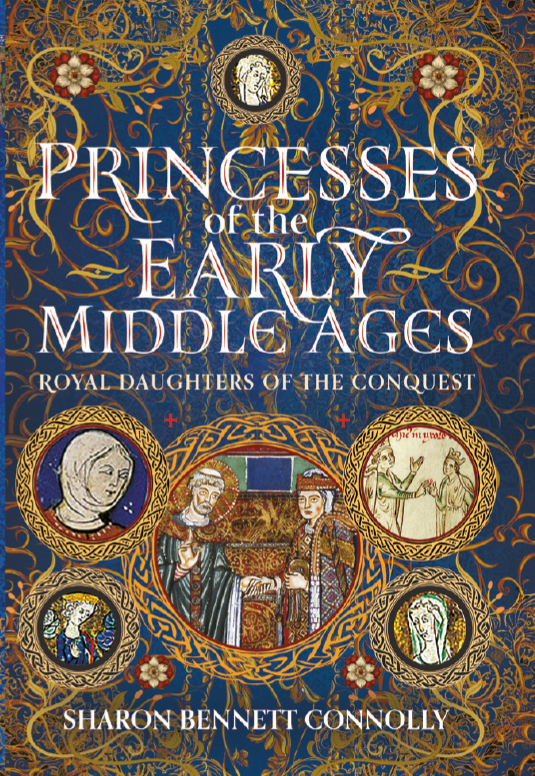
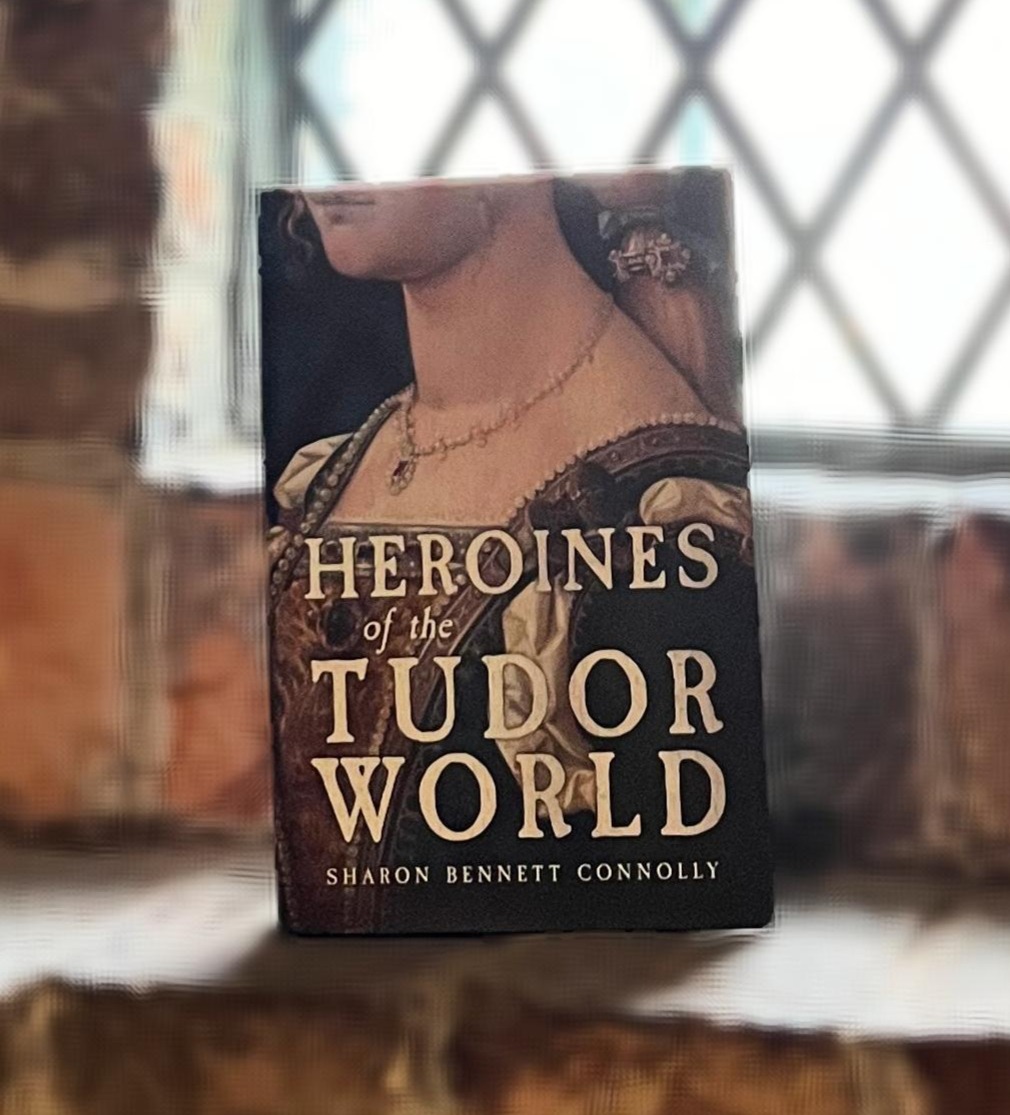



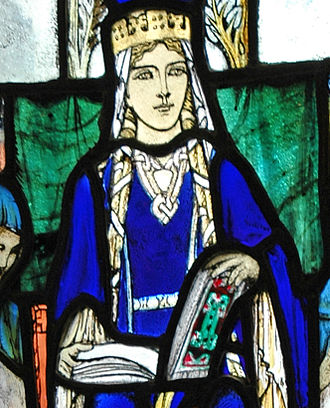
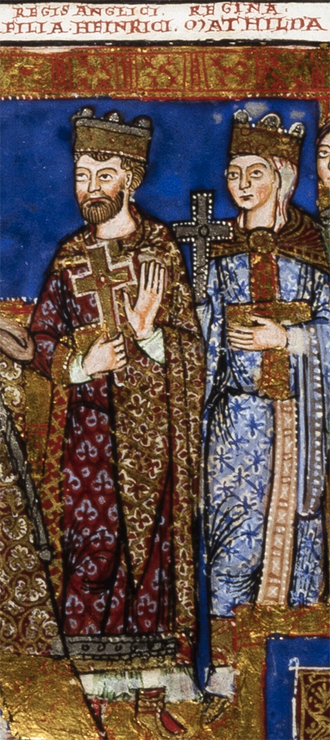

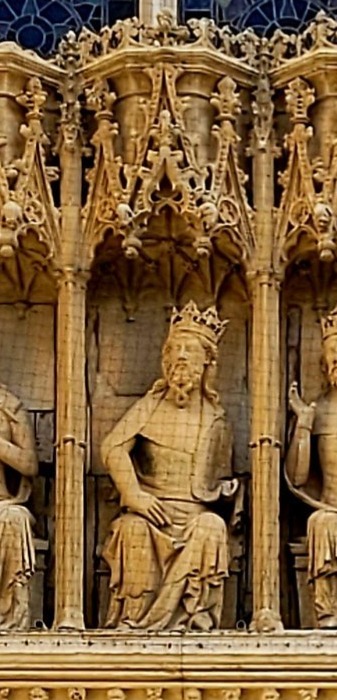


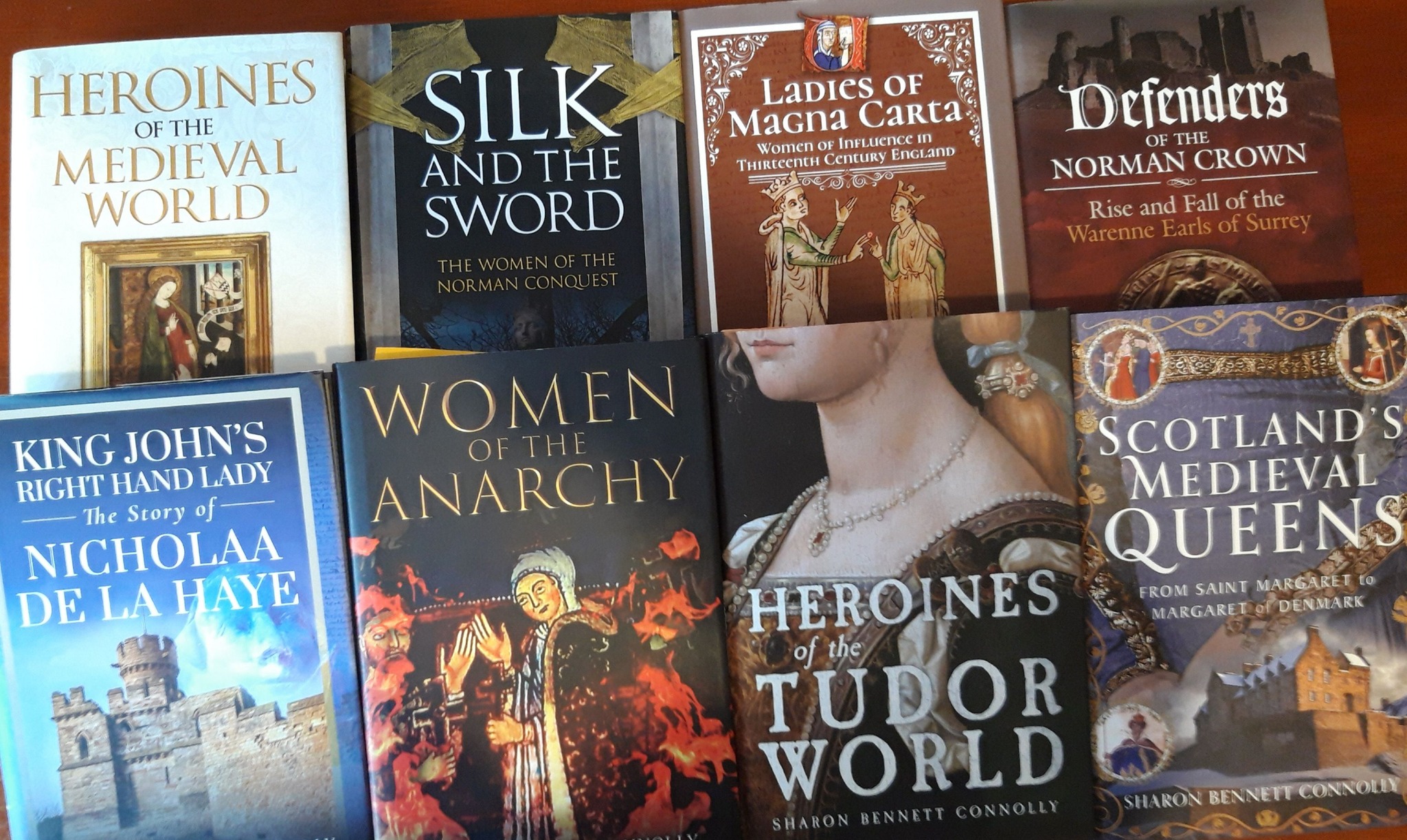
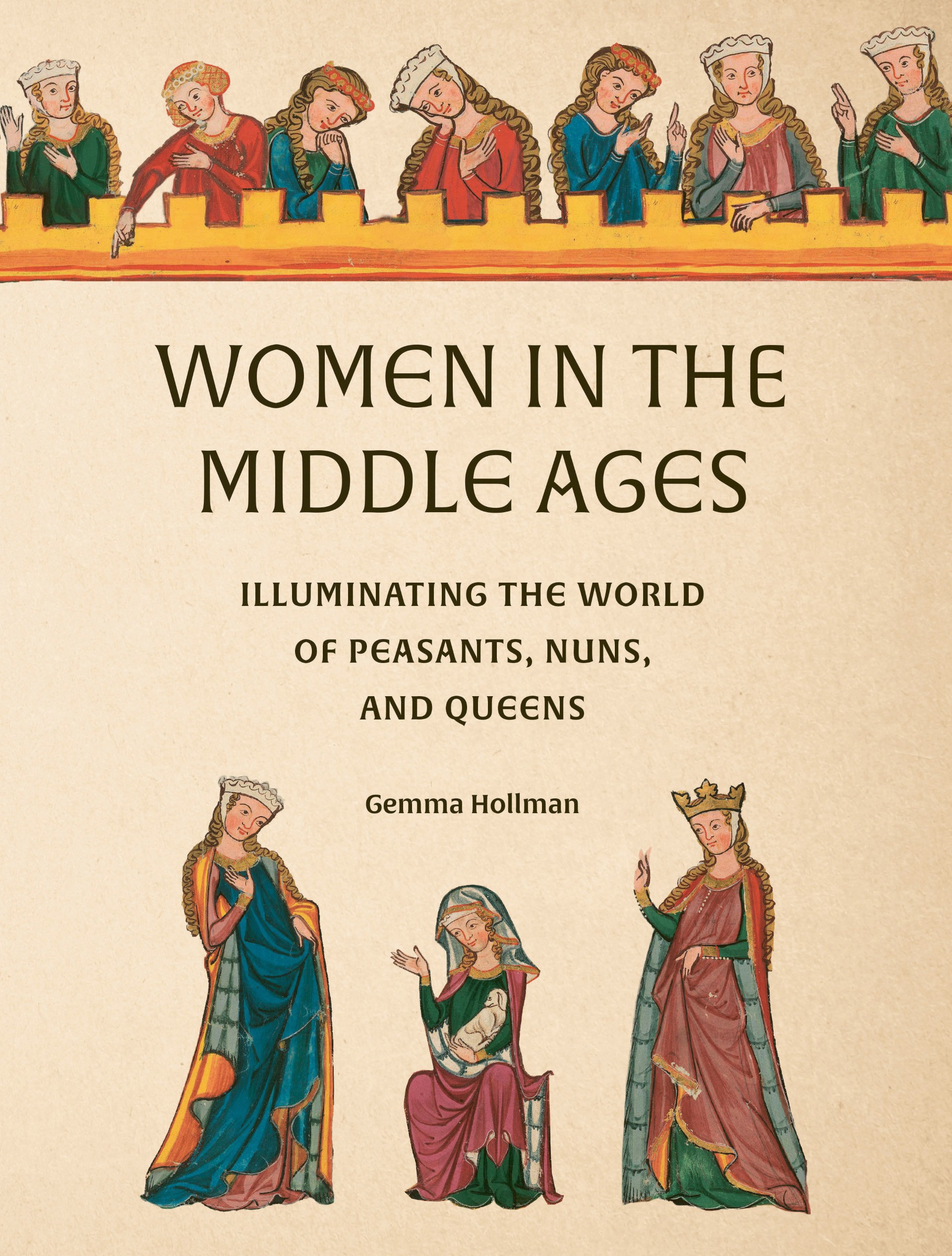
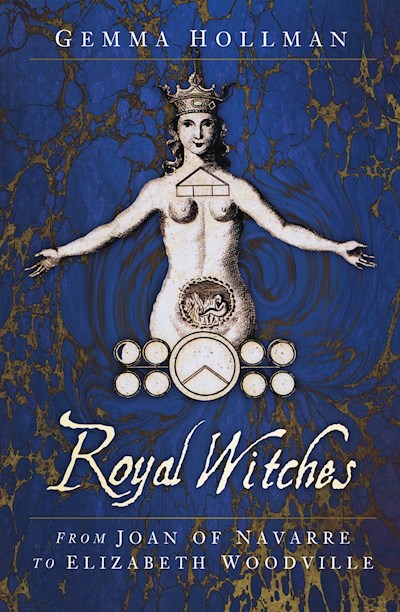
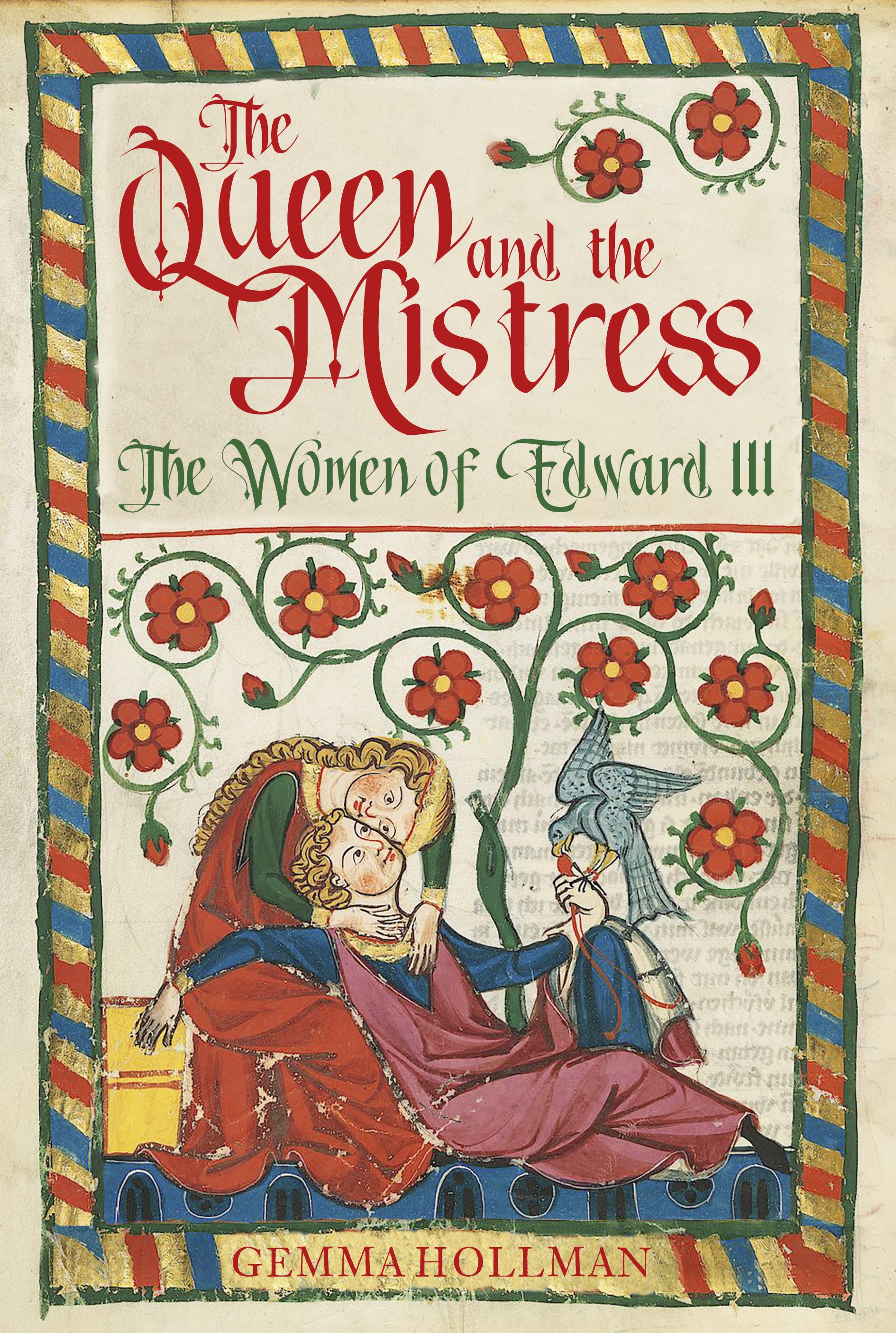
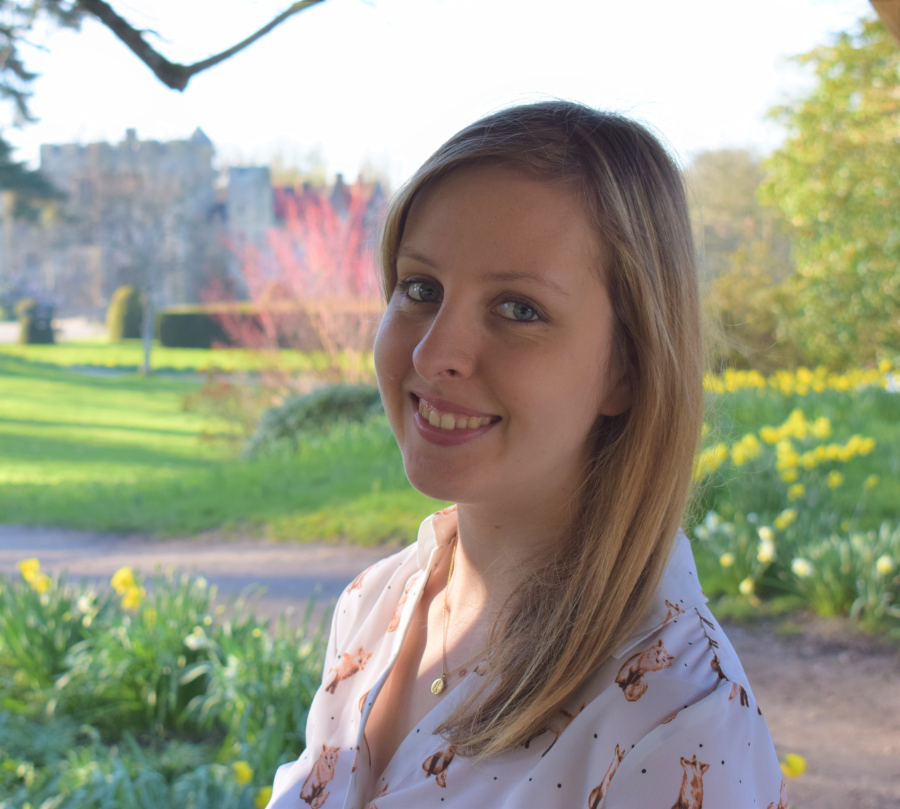
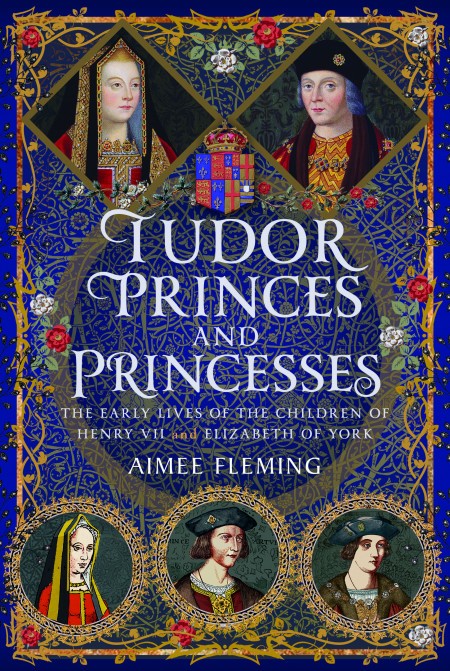
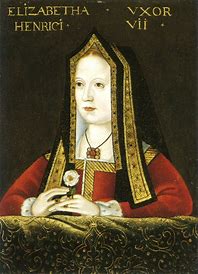
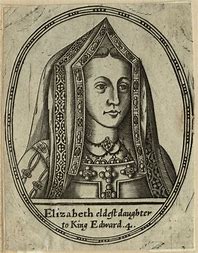
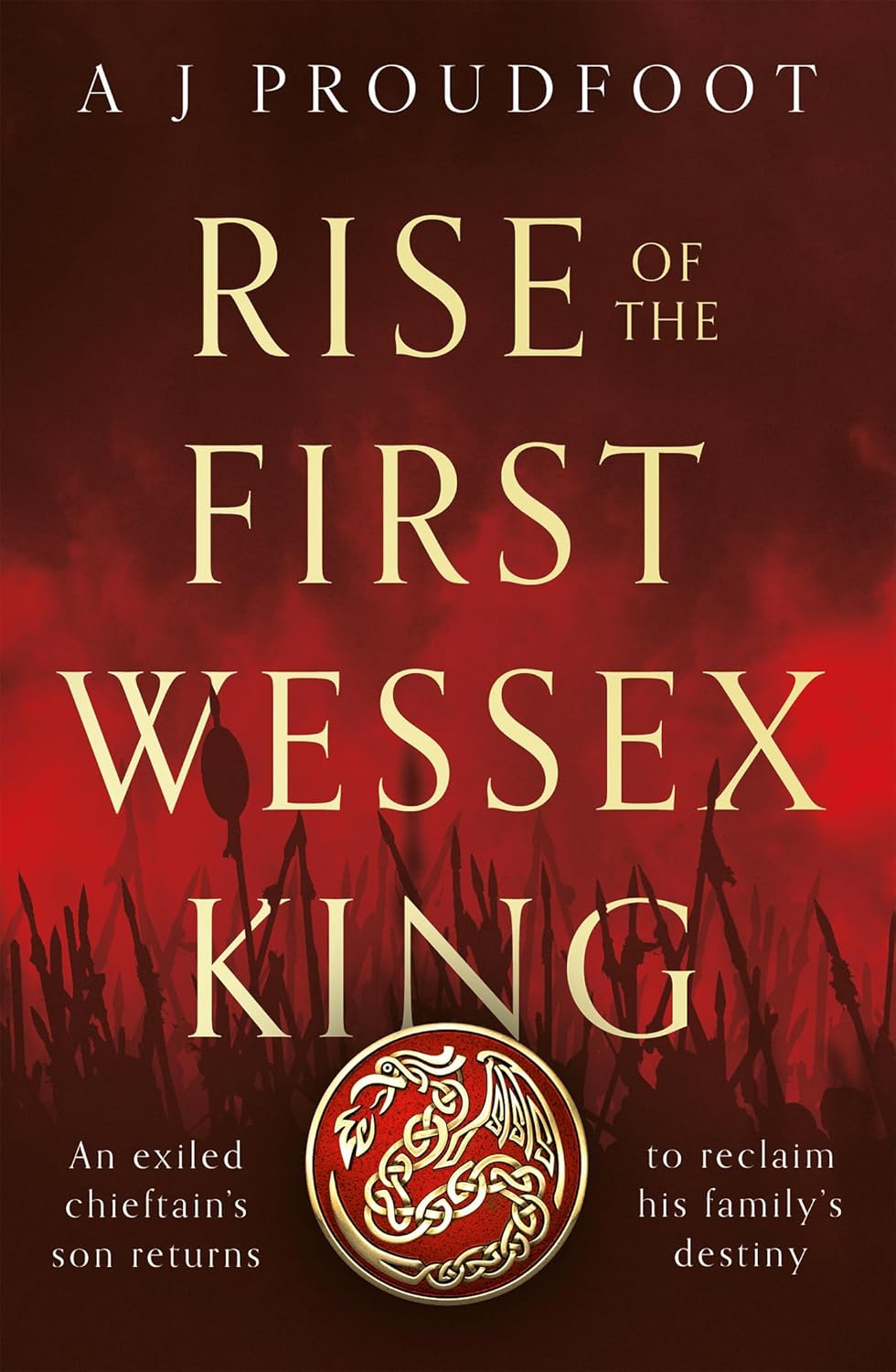
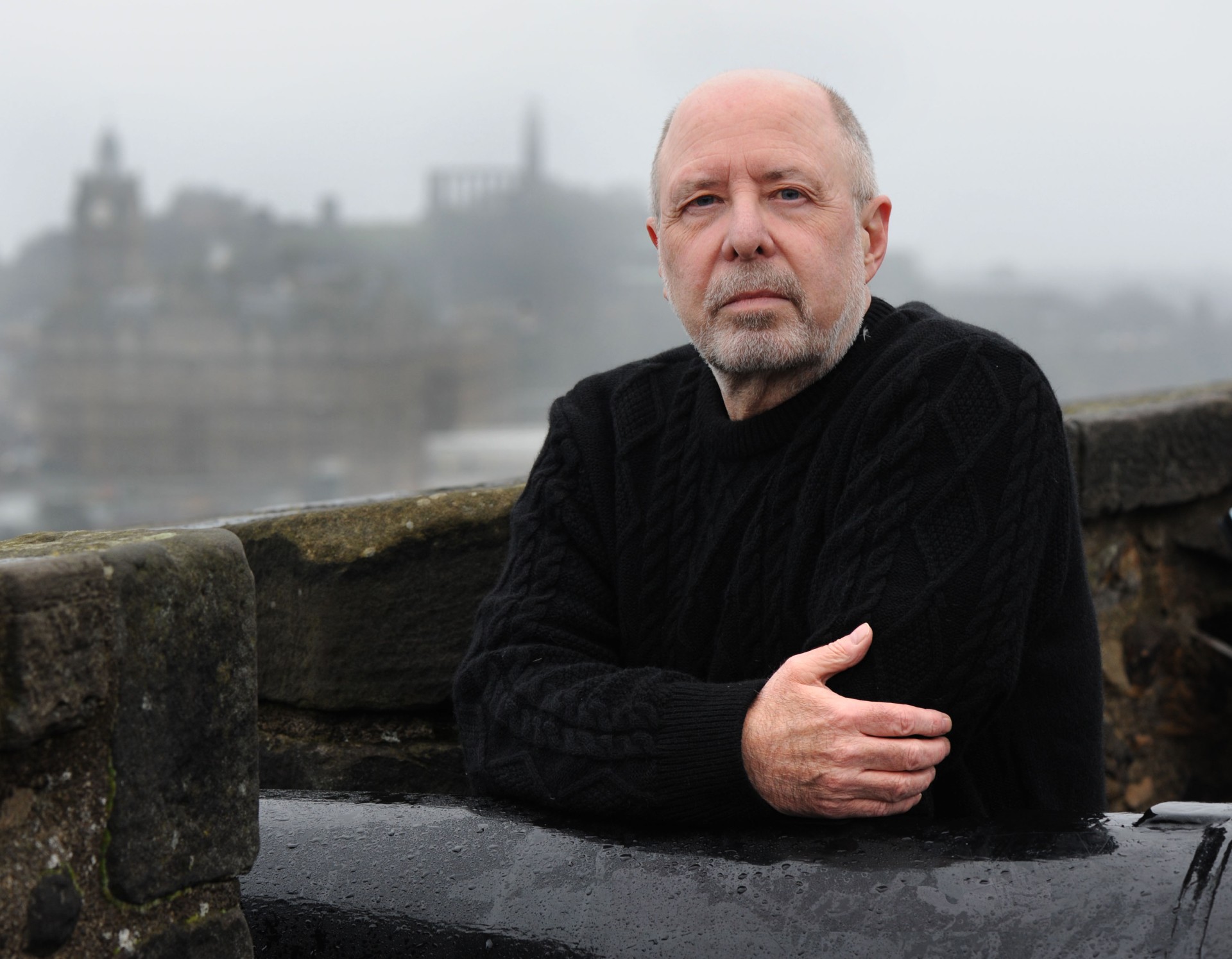
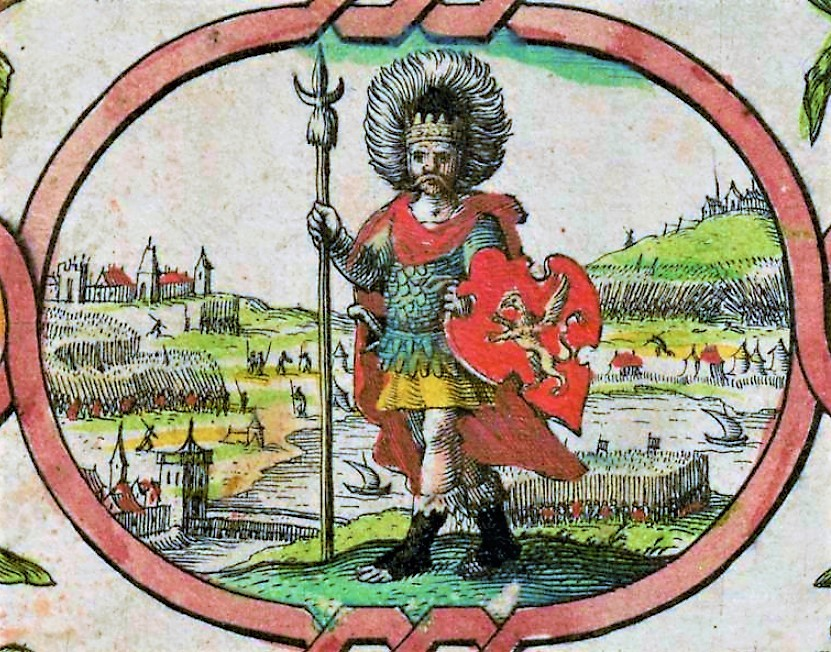
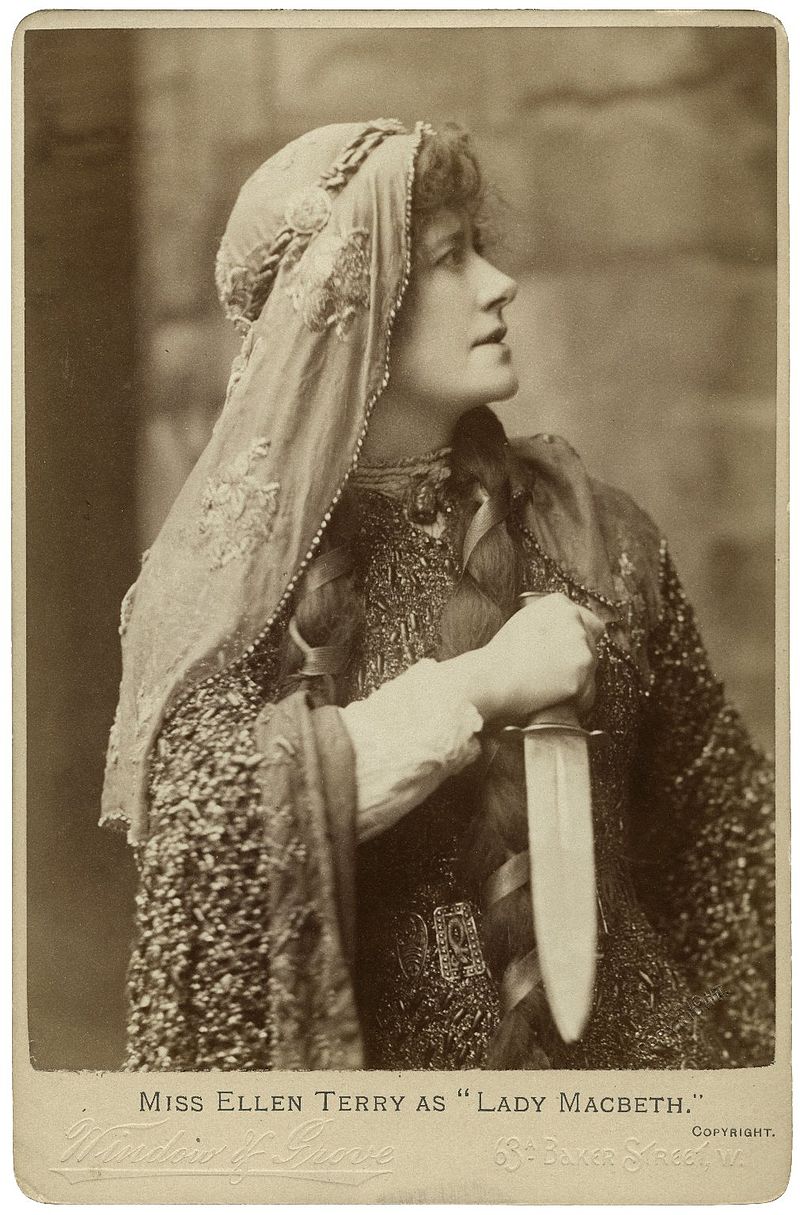
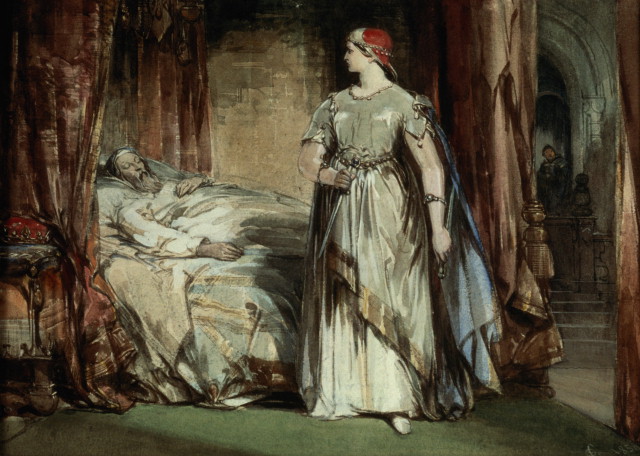
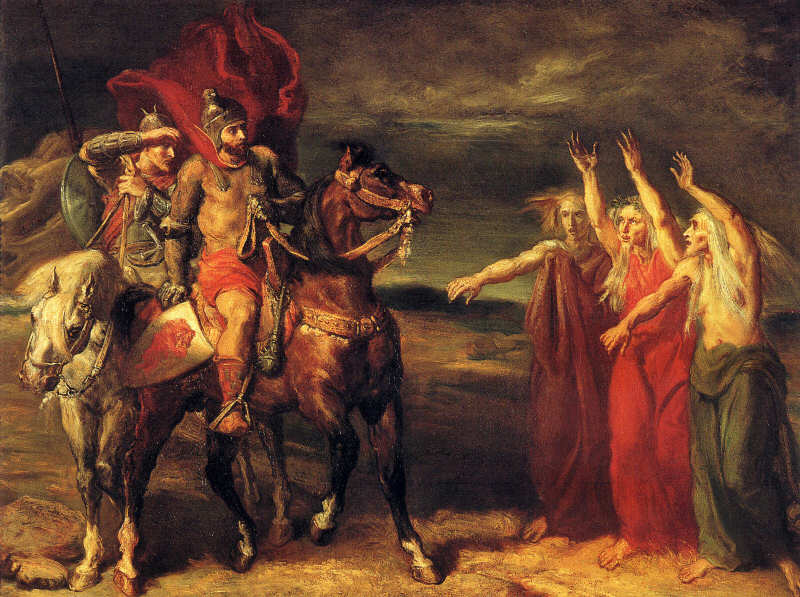
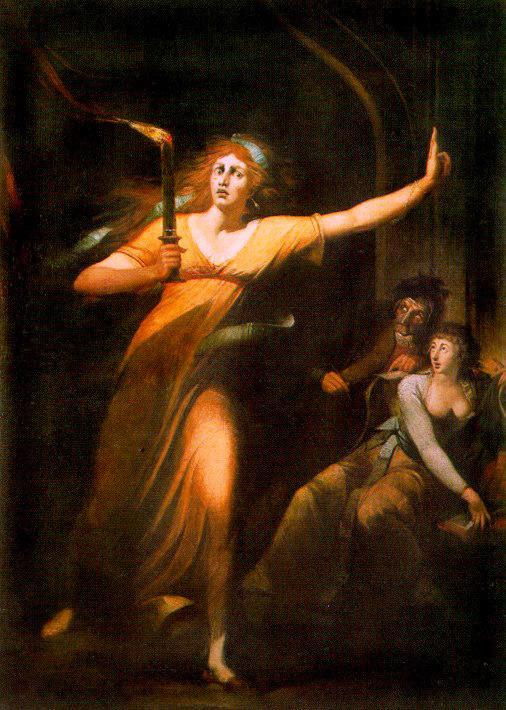
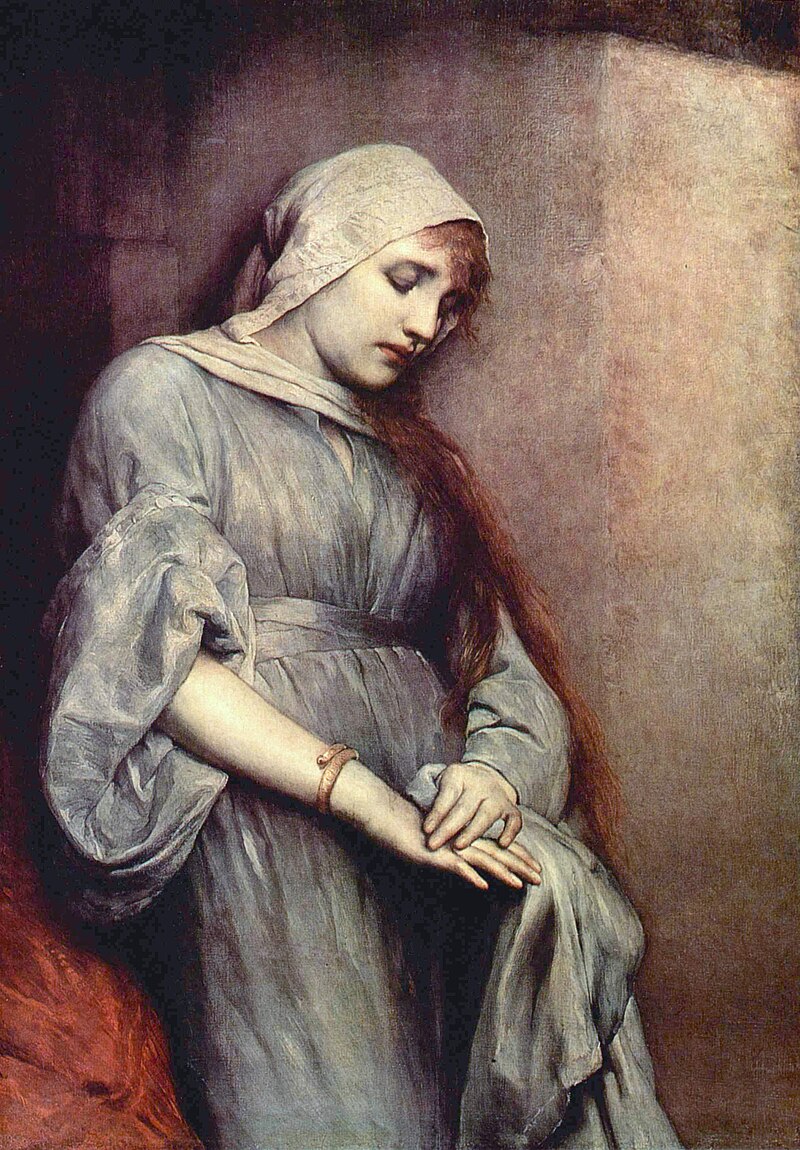
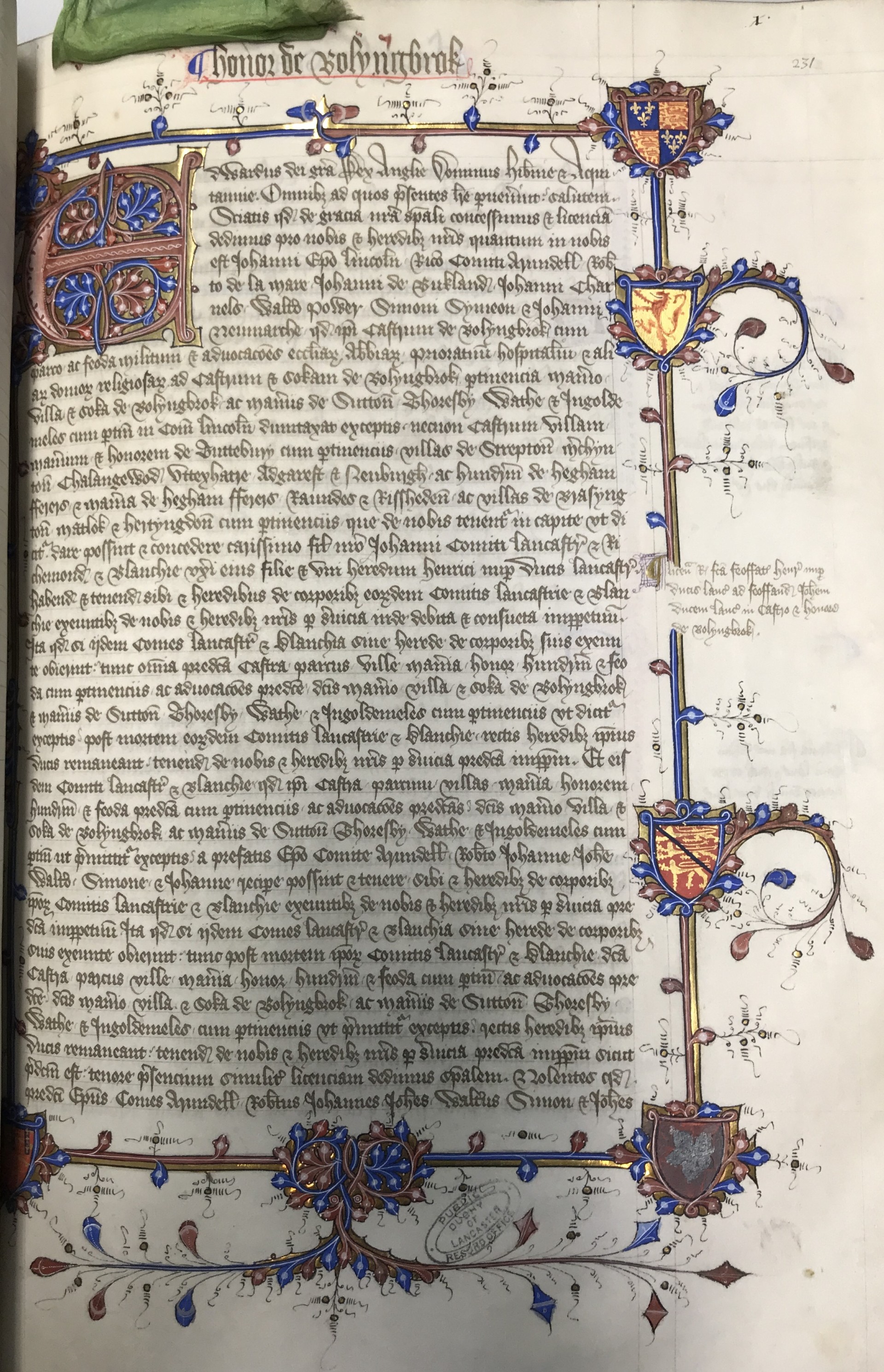

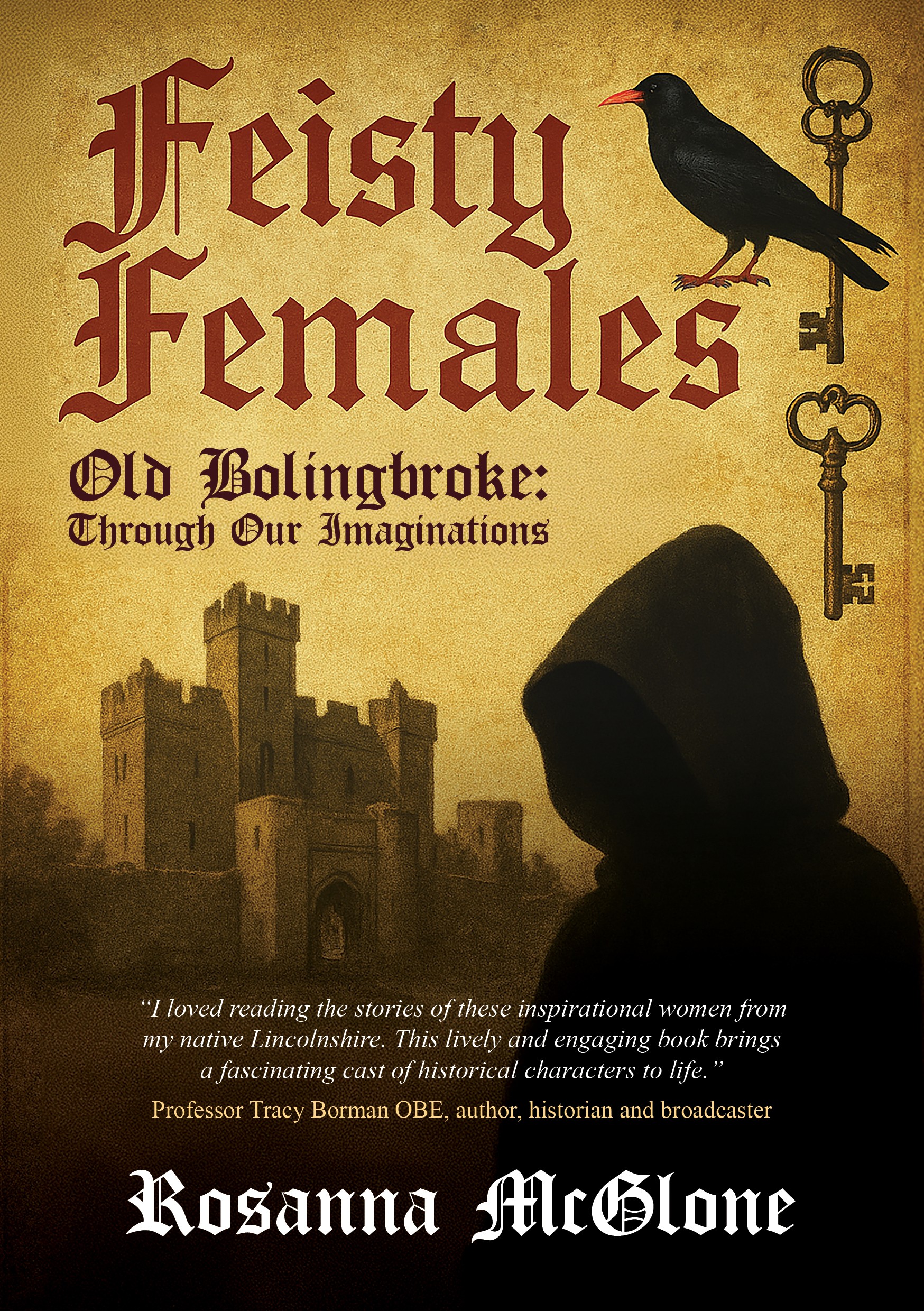
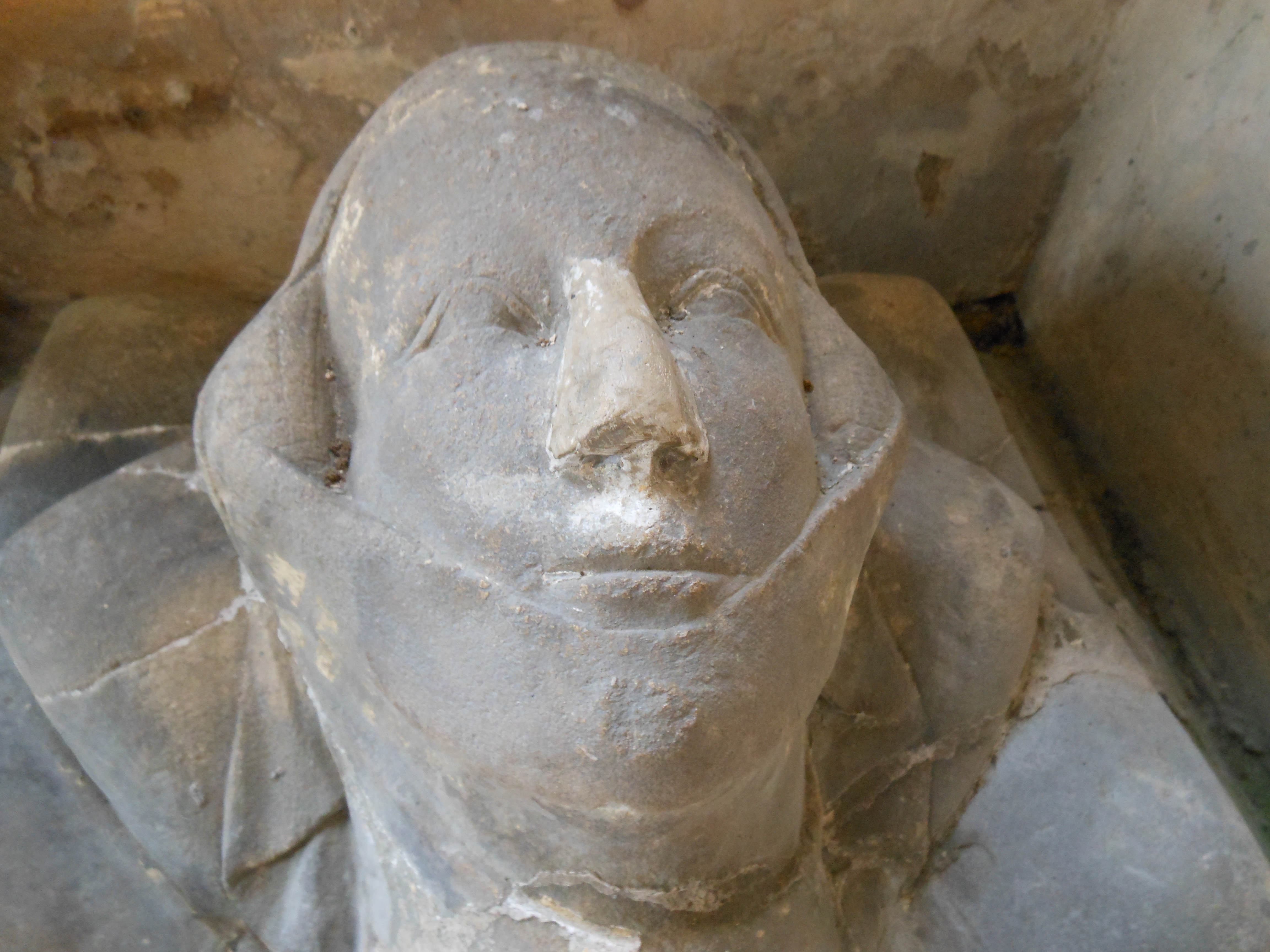

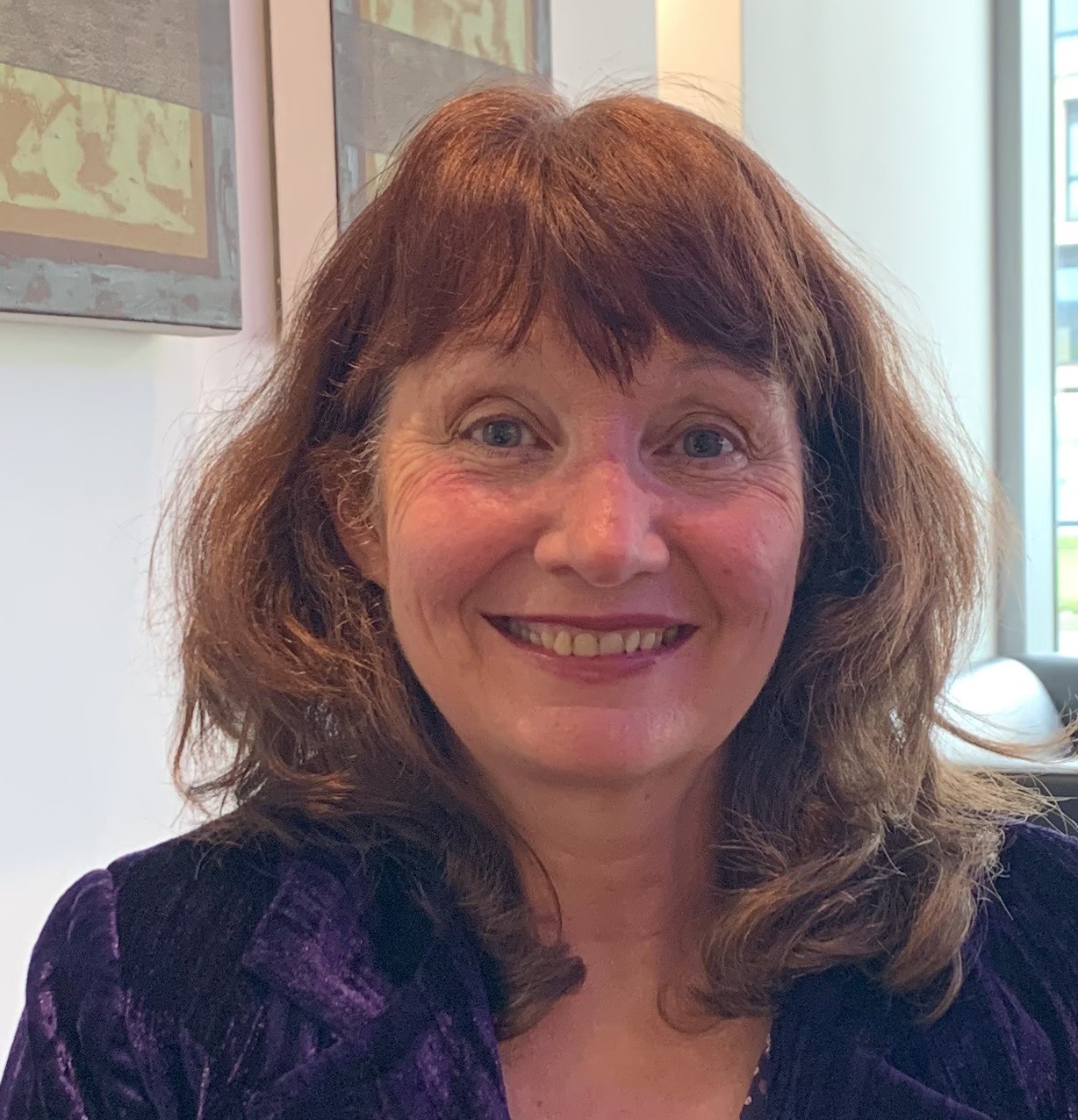
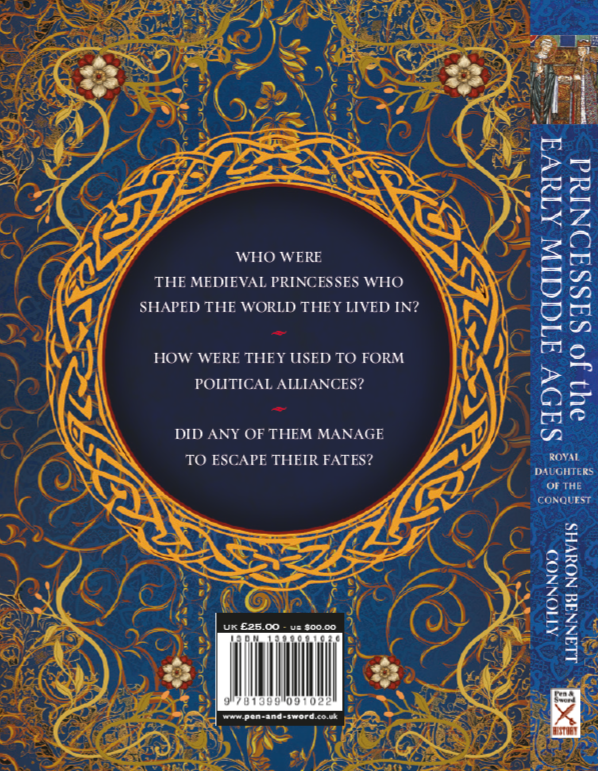
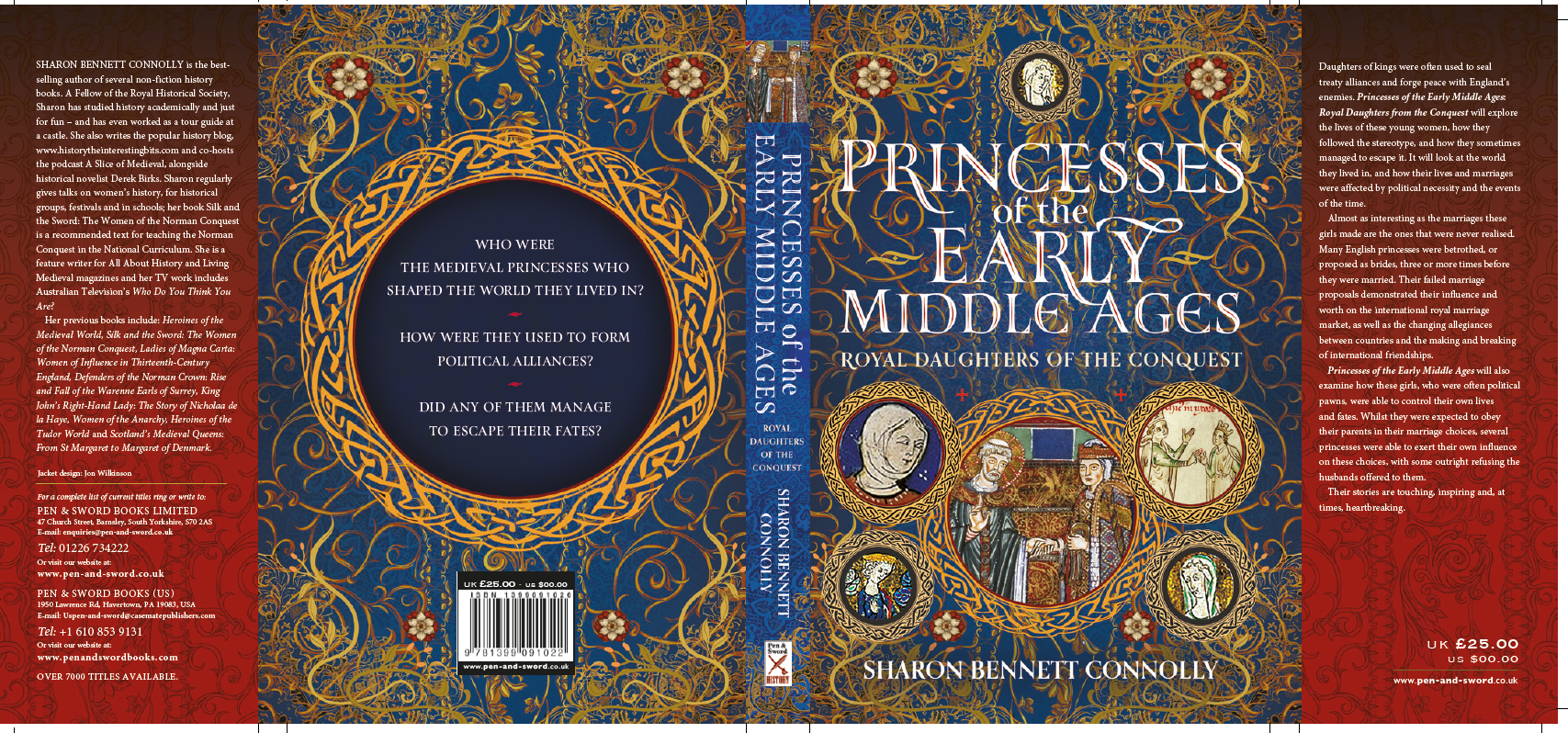
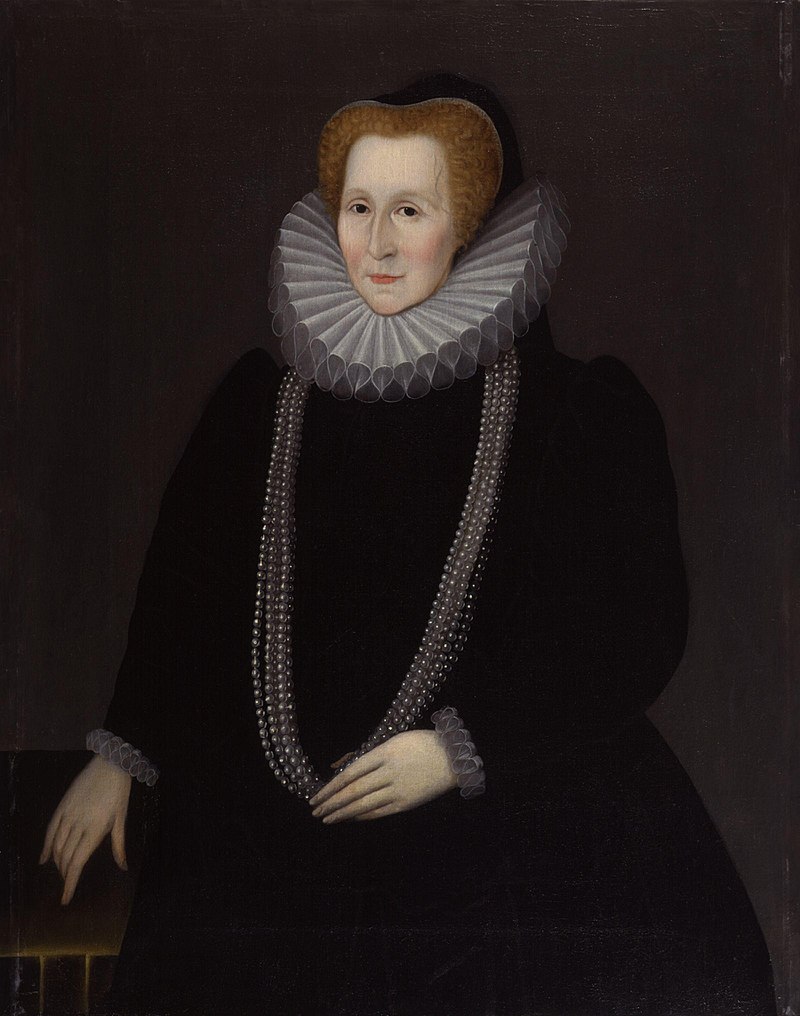
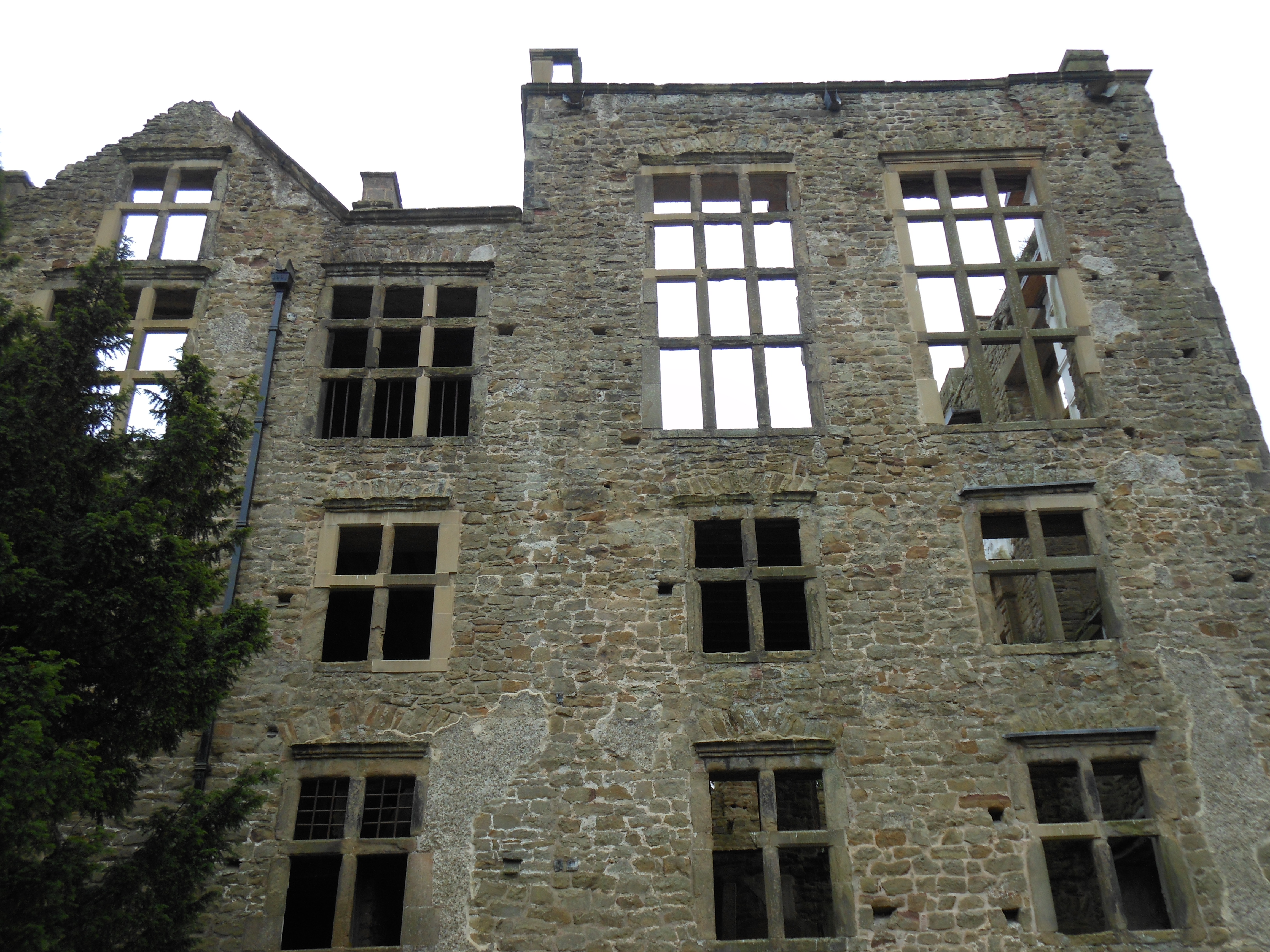
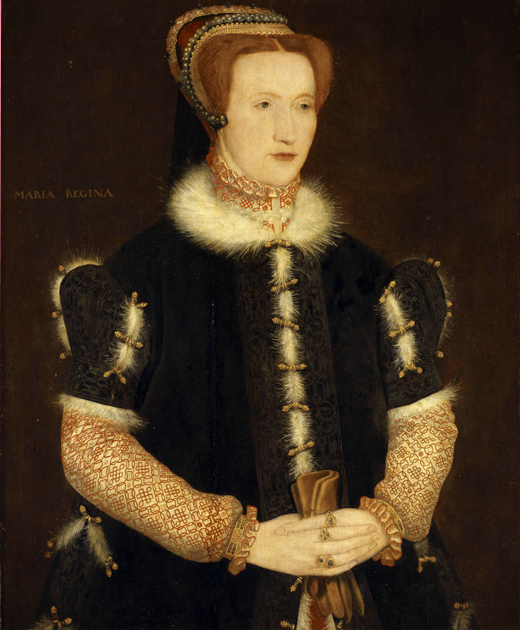
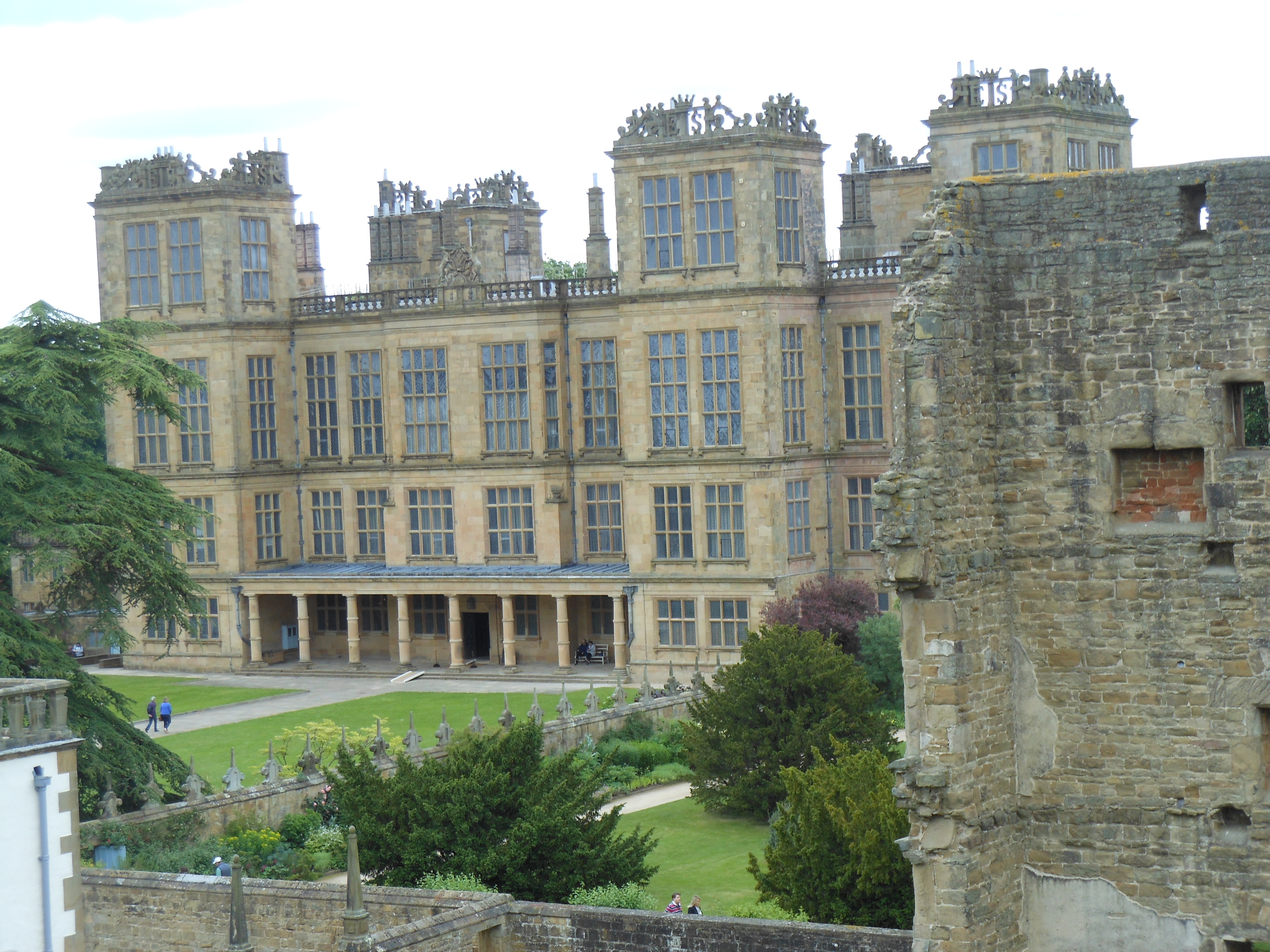
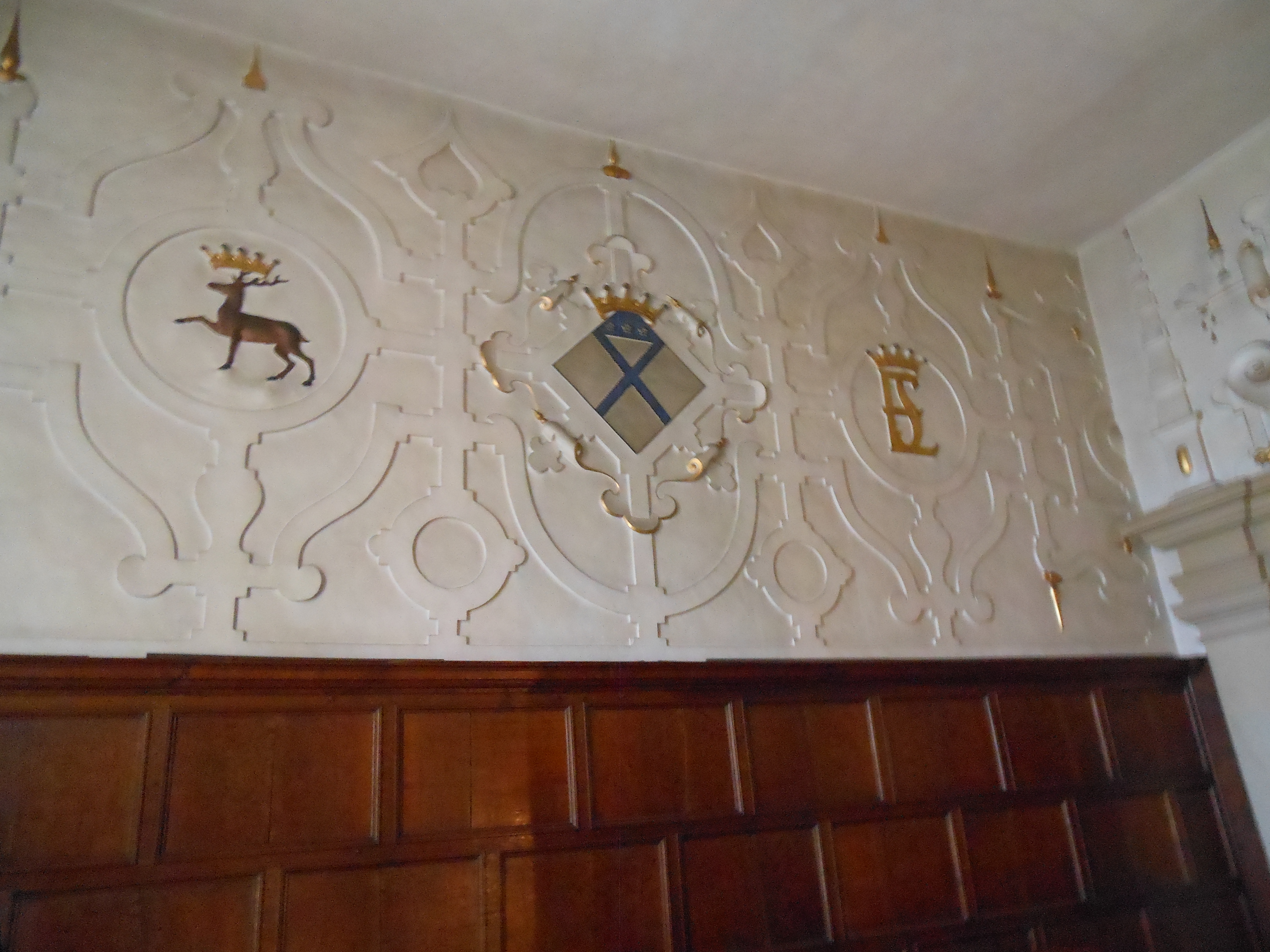
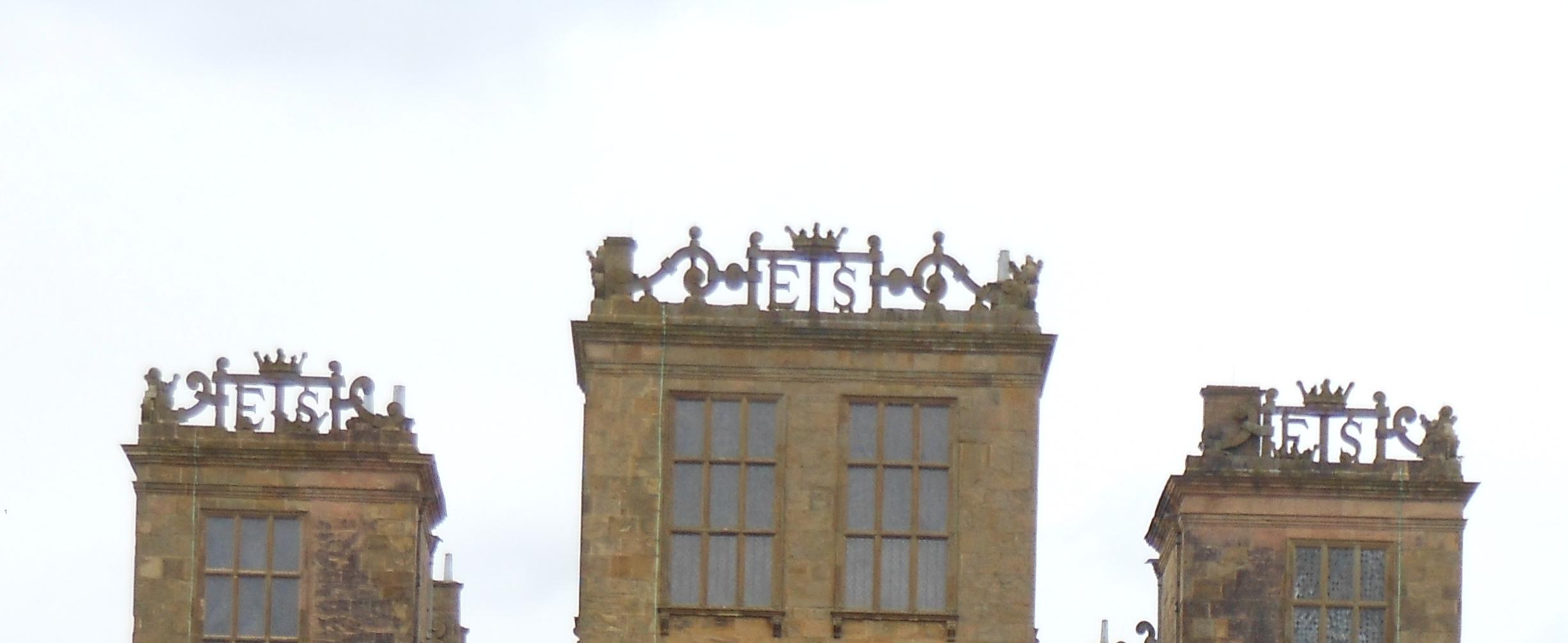
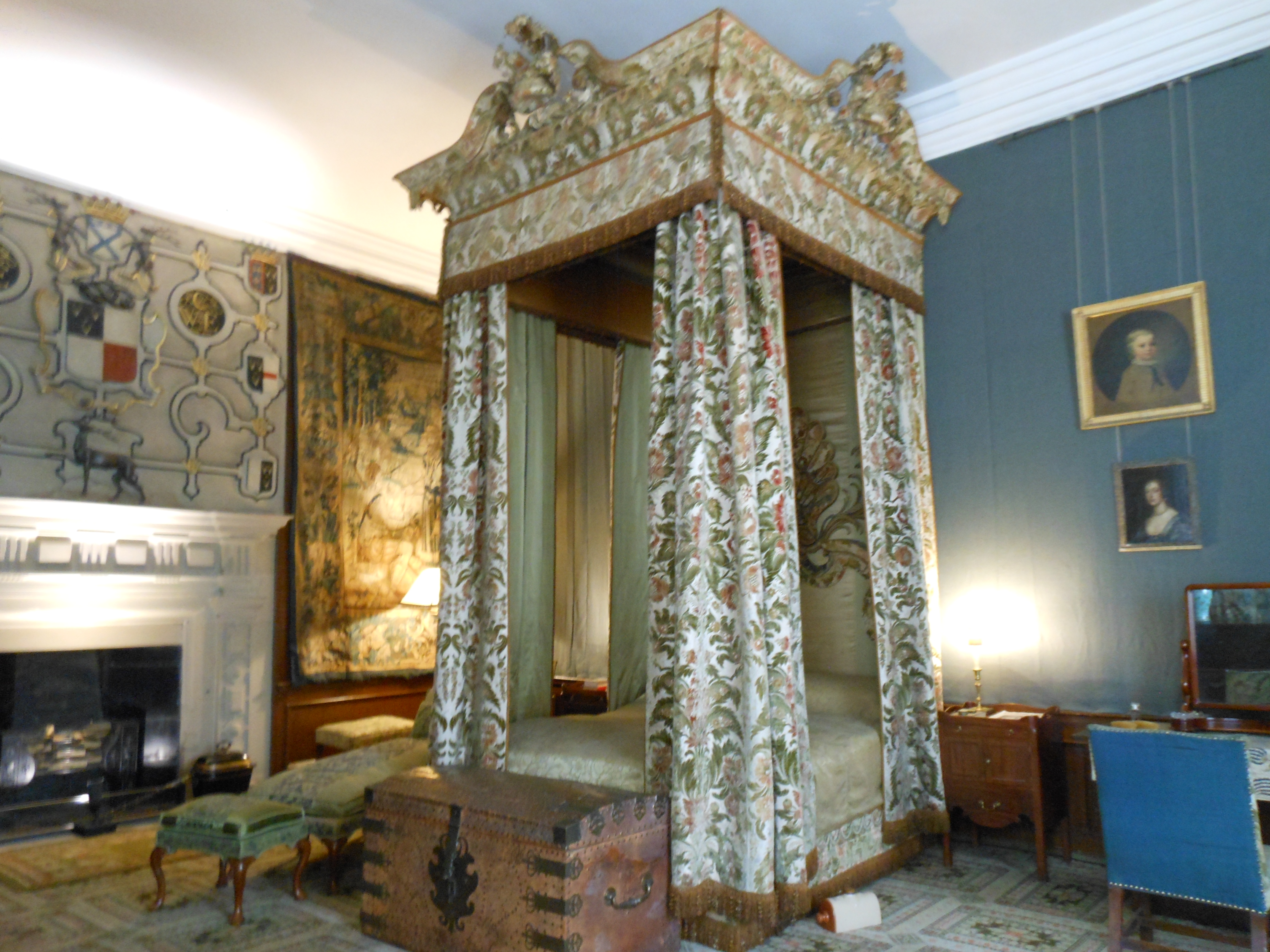
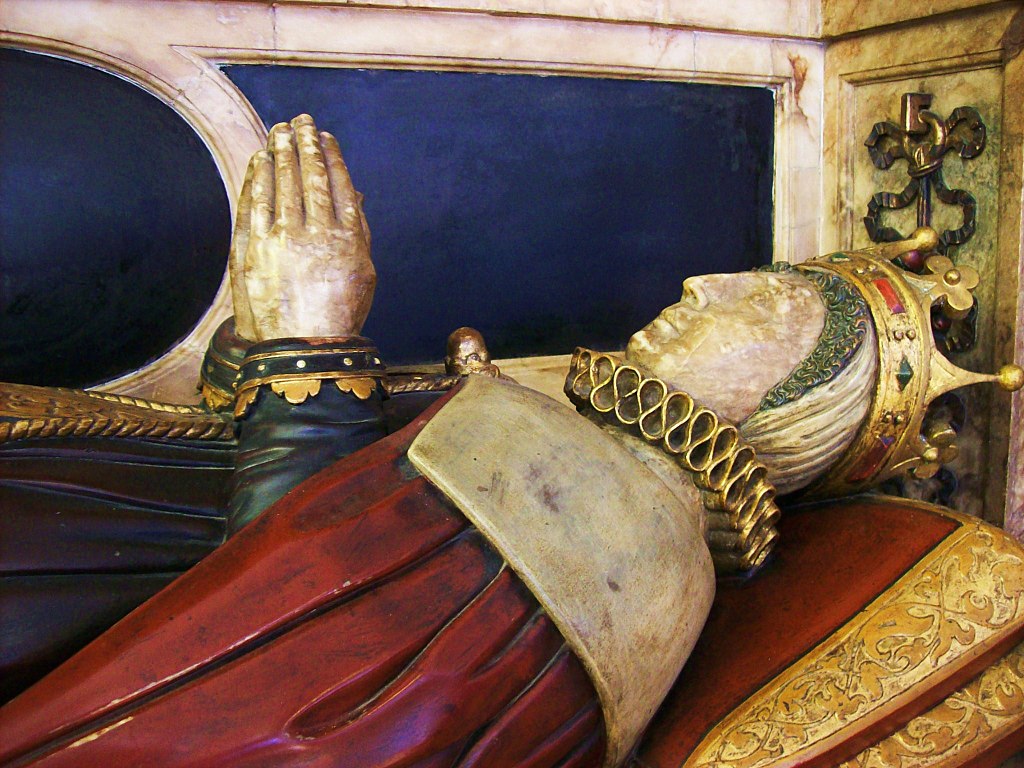
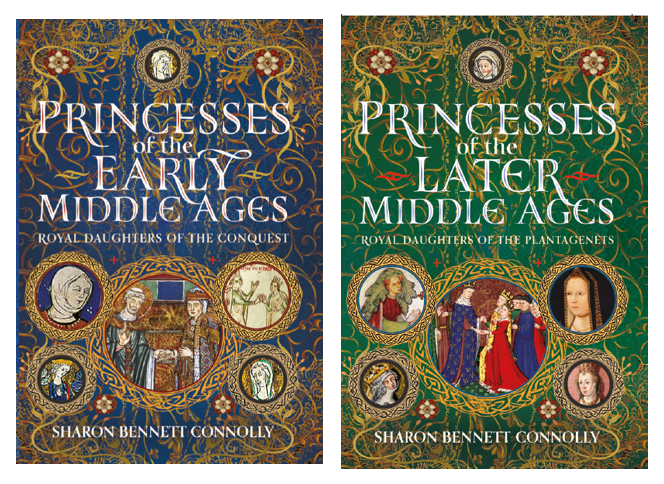
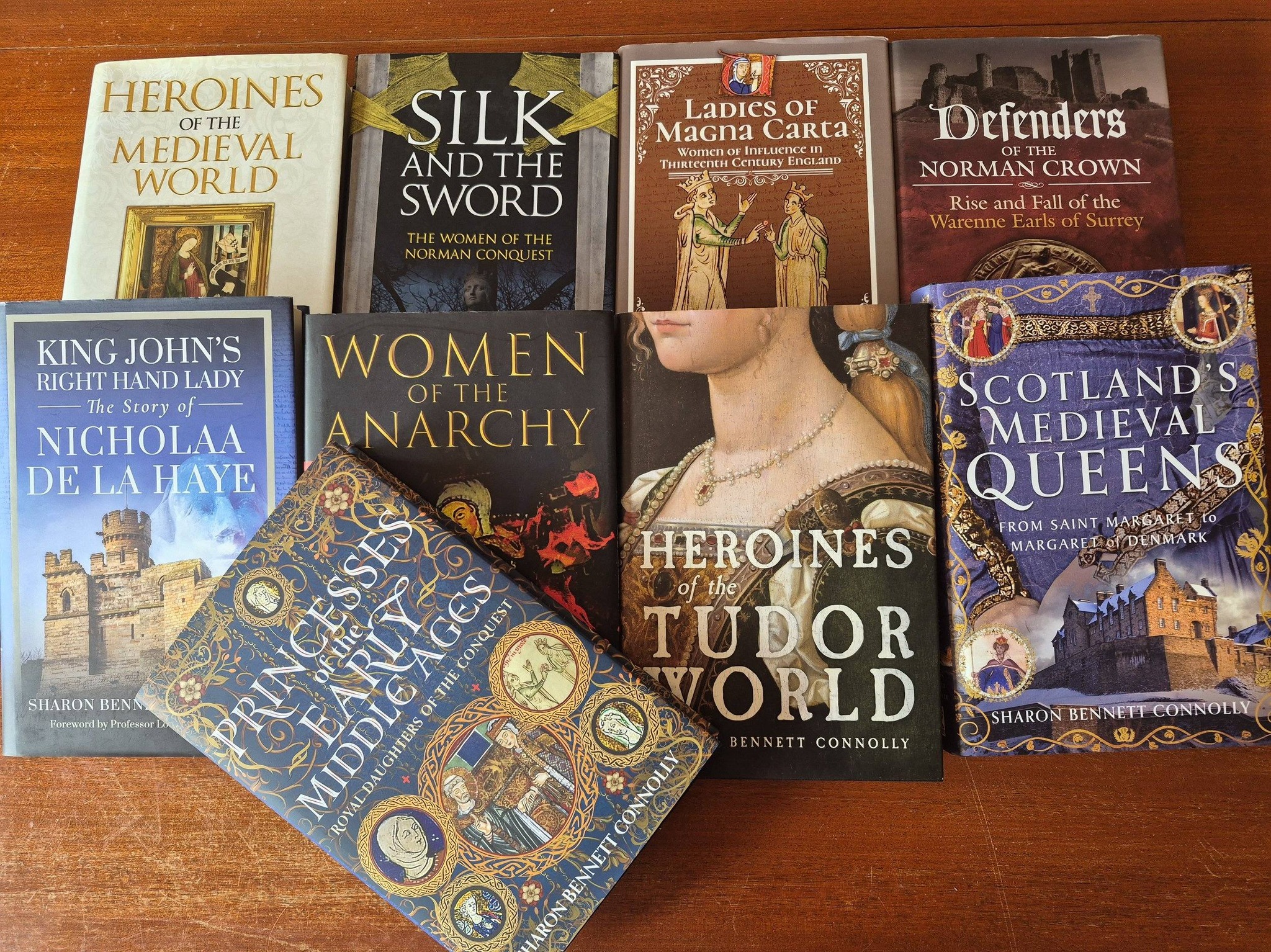

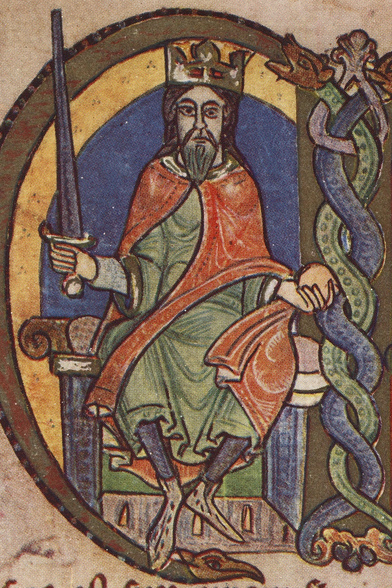

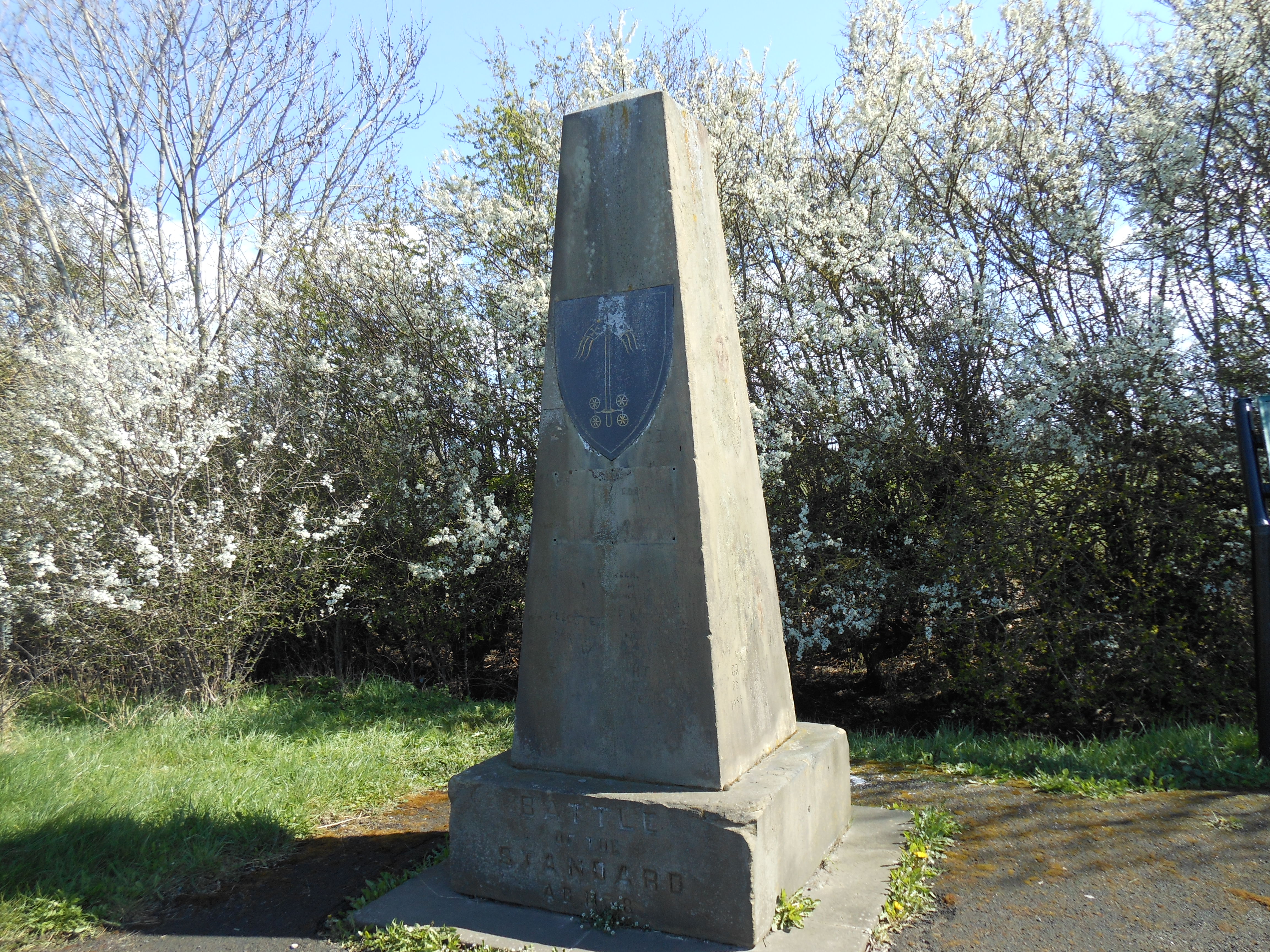


 History... the interesting bits!