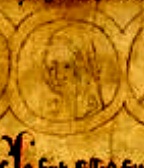
Joan of Acre had an exotic start in life; she was born in Palestine, whilst her parents were on the 9th Crusade, in the spring of 1272.
Joan’s parents, Prince Edward of England and Eleanor of Castile, had arrived in Palestine in May 1271. The Crusade had very little success and the nominal King of Jerusalem, Hugh III of Cyprus, brought it to an end by signing a 10 year truce with Baibars, the Mamluk leader, in May 1272.
Eleanor having just recently been delivered of her daughter, Joan, and an assassin’s attack that nearly cost Edward his life, forced the couple to stay in the Holy Land a while longer. But in September Edward and Eleanor set sail for Europe , bringing their baby daughter home.
They stopped in Sicily on their way, before spending Christmas on the Italian mainland. It was while in Italy that English messengers arrived with the news that Henry III had died in November – and Edward was now king.
The news did not hasten Edward’s return to England; he and Eleanor continued their progress through Europe, visiting Eleanor’s mother Joan, Countess of Ponthieu, in France. They left little Joan at Ponthieu, to be raised by her grandmother for the next few years.
Edward and Eleanor went on to England, arriving there in 1274, and Edward’s coronation.

By the time Joan finally arrived in England, in 1278, her father was in the process of arranging a marriage for her; to Hartman, son of the King of the Romans, but he died before the wedding could take place.
Towards the end of the 1270s Joan, along with her elder sister Eleanor and her younger brother Alfonso, were allowed to accompany the royal court, for parts of the year at least. They would have been allowed to take part in the Christmas and Easter celebrations with their parents, whilst their younger siblings remained in the royal nursery.
Little is known of Joan’s every day life. Though we do get glimpses. When in her mid-teens, Joan had a disagreement with the steward to the royal children, Giles de Audenarde, and refused to deal with him, preferring to run up debts than ask him for money. She even wrote to her parents to explain her side of the story before Audenarde could tell his. Edward appears to have been indifferent to the quarrel and the queen paid off Joan’s debts when she returned home.
Joan may have been close to her baby brother, Edward – the future Edward II – as she lent him the use her own seal when he was at odds with his father. It is said that she was distant from her parents; however this probably originates from their leaving Joan with her grandmother during her early years and doesn’t necessarily mean the same relationship continued when she finally arrived in England.
Edward and Eleanor traveled relentlessly, and not always with their children. Nevertheless, they did make time for their family, with weeks at Leeds Castle and Windsor built into their itinerary. What is certain is that Edward planned for the future of the children through their marriages.
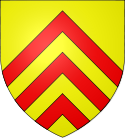
Following the death of Joan’s first intended, Hartman, Edward started looking for an alternative husband. He finally settled on Gilbert de Clare, 8th Earl of Gloucester and 7th Earl of Hertford, also known as Gilbert the Red. Gilbert had been married to Alice de Lusignan, half-sister of Henry III, in 1253 when Gilbert was 10 years old. The marriage was finally annulled in 1285.
One of the most powerful barons in England, offering Joan in marriage was intended to bind Gilbert to the royal cause, thus weakening baronial opposition. As part of the agreement, Gilbert relinquished his titles to the crown and regained them on his marriage to Joan.
Joan and Gilbert were married in a private ceremony at Westminster on 30 April, 1290. Joan was 18 years old, Gilbert 46. Although Joan’s dress was second-hand, she was presented with gifts from her parents of a headdress from France with a matching belt of gold, decorated with emeralds and rubies
Later in the same year, at the celebrations of the wedding of Joan’s sister Margaret – to John II, Duke of Brabant – Gilbert and Joan, along with many members of the court, took the cross. Although they planned to go on Crusade, events in Scotland changed Edward’s priorities, and the Crusade never happened.
Joan and Gilbert were married for 5 years; Gilbert died at Monmouth Castle on 7th December 1295. They had a son and 3 daughters together. Their son, also called Gilbert, succeeded his father as Earl of Gloucester and Hertford, was killed at the Battle of Bannockburn in 1314; he was married to Matilda, daughter of Richard de Burgh, Earl of Ulster, and sister of Elizabeth de Burgh, Robert the Bruce’s queen.

Of their daughters, Eleanor would first be married to Hugh le Despenser, the Younger, the favourite of he uncle Edward II who was executed in 1326, she then married William la Zouche and died in 1337. Margaret was married to her uncle, Edward II’s first favourite, Piers Gaveston, Earl of Cornwall, who was executed in 1312; she went on to marry Hugh Audley and died in 1347. Their sister, Elizabeth, married 3 times; John de Burgh, Theobald de Verdon and Roger Baron d’Amory.
Joan was widowed in 1295 and Edward wasted no time finding suitable new husband; Amadeus V, Count of Savoy.
However, it seems Joan had other ideas. In January 1297, in one of the few genuine love matches of medieval history, she secretly married Ralph de Monthermer, her late husband’s squire. Before the marriage took place, Joan had sent Ralph to her father, requesting that he be knighted; she married him shortly after his return. Joan is reputed to have said, ‘It is not ignominious or shameful for a great and powerful earl to marry a poor and weak woman; in the reverse case it is neither reprehensible or difficult for a countess to promote a vigorous young man.’ Edward was so furious that he ordered Ralph’s imprisonment in Bristol Castle, refused to receive Joan and confiscated all the lands and castle she had inherited from her late husband.
Joan is said to have sent her 3 daughters by Gilbert to their grandfather, to try to appease him, and the Bishop of Durham also attempted to mediate. It seems likely that Edward mellowed when he saw Joan was pregnant with Ralph’s child – which may also explain the hasty, secret wedding.
Monthermer was released and summoned to the August 1297 parliament as Earl of Gloucester and Hertford, by right of his wife.
Joan and Ralph seem to have had a happy, loving relationship. They had 2 sons and 2 daughters. Their eldest son, Thomas, was killed at the Battle of Sluys in 1340 and their second son, Edward, died in the same year. Of their 2 daughters Mary married Duncan the 10th Earl of Fife, while Joan became a nun at Amesbury Abbey in Wiltshire.
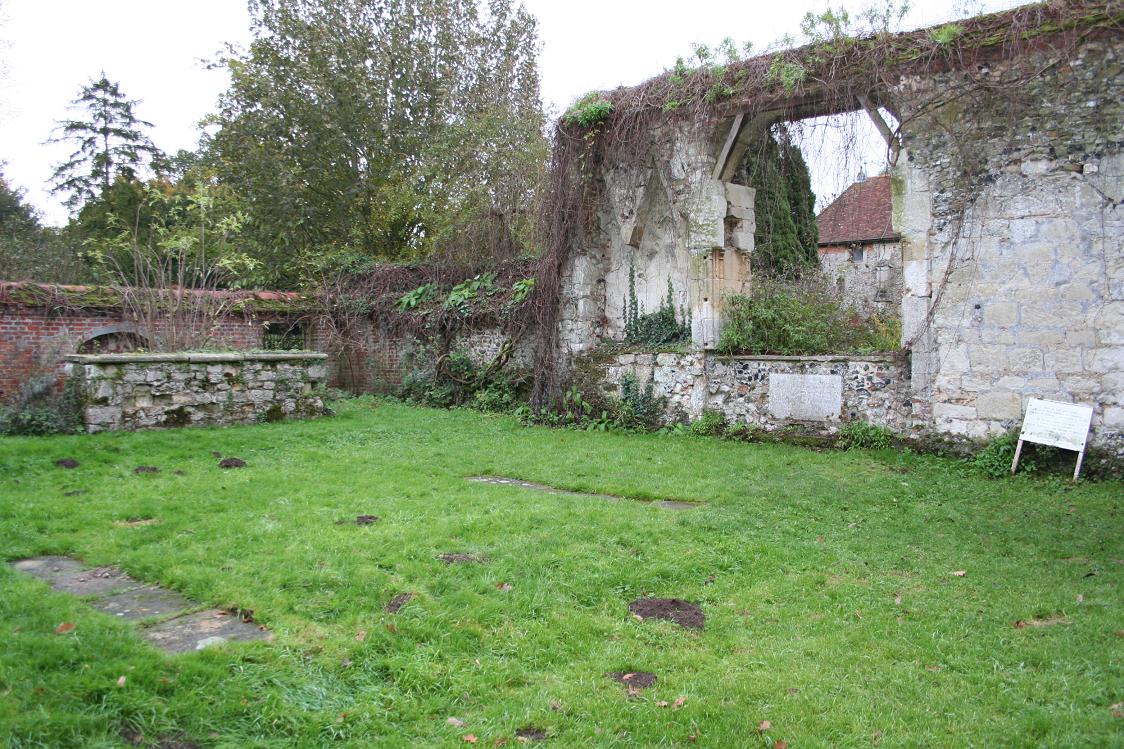
After just over 10 years of marriage with Ralph, Joan of Acre died at Clare in Suffolk on 23rd April 1307, from an unknown ailment, aged just 35. She was buried in the Augustinian Priory there. The Earldoms of Gloucester and Hertford passed to her son by Gilbert. As her widower, Ralph was given the title 1st Baron Monthermer.
*
Joan of Acre’s story is told in greater detail in my latest book, Princesses of the Later Middle Ages: Royal Daughters of the Plantagenets
Images courtesy of Wikipedia, except Clare Priory, courtesy of http://www.findagrave.com
*
Sources: Edward I A Great and Terrible King by Marc Morris; Brewer’s British Royalty by David Williamson; Britain’s Royal Families by Alison Weir; The Mammoth Book of British Kings & Queens by Mike Ashley; The Plantagenets, The Kings Who Made England by Dan Jones; findagrave.com; susanhigginbotham.com; womenshistory.about.com.
*
My Books:
Signed, dedicated copies of all my books are available through my online bookshop or the Contact Me page
New releases in 2026:
New Hardbacks
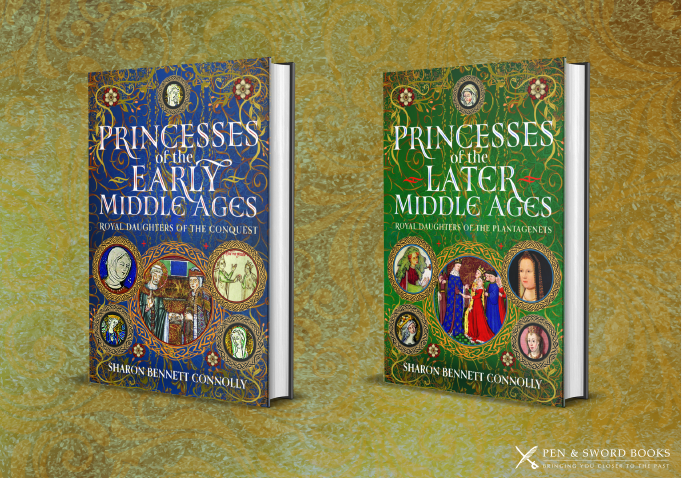
‘My daughter wanted me to treat her more like a princess. So, I married her to a stranger to strengthen the alliance with Poland!’
Princesses of the Early Middle Ages: Royal Daughters of the Conquest and Princesses of the Later Middle Ages: Royal Daughters of the Plantagenets tell the stories of England’s royal daughters from 1066 to the rise of the Tudors, from the last Anglo-Saxon princesses to the fall of the House of York.
Were they really pampered pawns sent off to marriages on the Continent, out of sight and out of mind?
Perhaps, there was different story, where a foreign marriage does not mean eternal exile, but a purpose in life, where a princess is a diplomat, an ambassador for England in her new country.
Where she is the bond between allies – most of the time.
Their stories are touching, inspiring and, at times, heartbreaking...
Praise for Princesses of the Early Middle Ages:
Heidi Malagisi: ‘This is another excellent book by Sharon Bennett Connolly. Extremely well researched and relatively easy to follow along, which is a great thing because there are so many Matildas and Eleanors in this book.‘
Tony Riches: “I challenge anyone with an interest in medieval Britain to not find something they will learn from this book.”
Anna Belfrage: “I just love how [Sharon] presents this huge cast of real life people in a casual, chatty tone that has me expecting the various female protagonists to suddenly pop their head up and add their own commentary.“
Buy now: Princesses of the Early Middle Ages: Royal Daughters of the Conquest
Praise for Princesses of the Later Middle Ages:
Elizabeth Chadwick: ‘Really interesting and informative and gives a great handle on the goings on surrounding these ladies!’
Kathryn Warner: ‘A deeply researched, richly detailed and fascinating account of late medieval England’s forgotten princesses. I loved it!’
Pre-order: Princesses of the Later Middle Ages: Royal Daughters of the Plantagenets
New in Paperback:
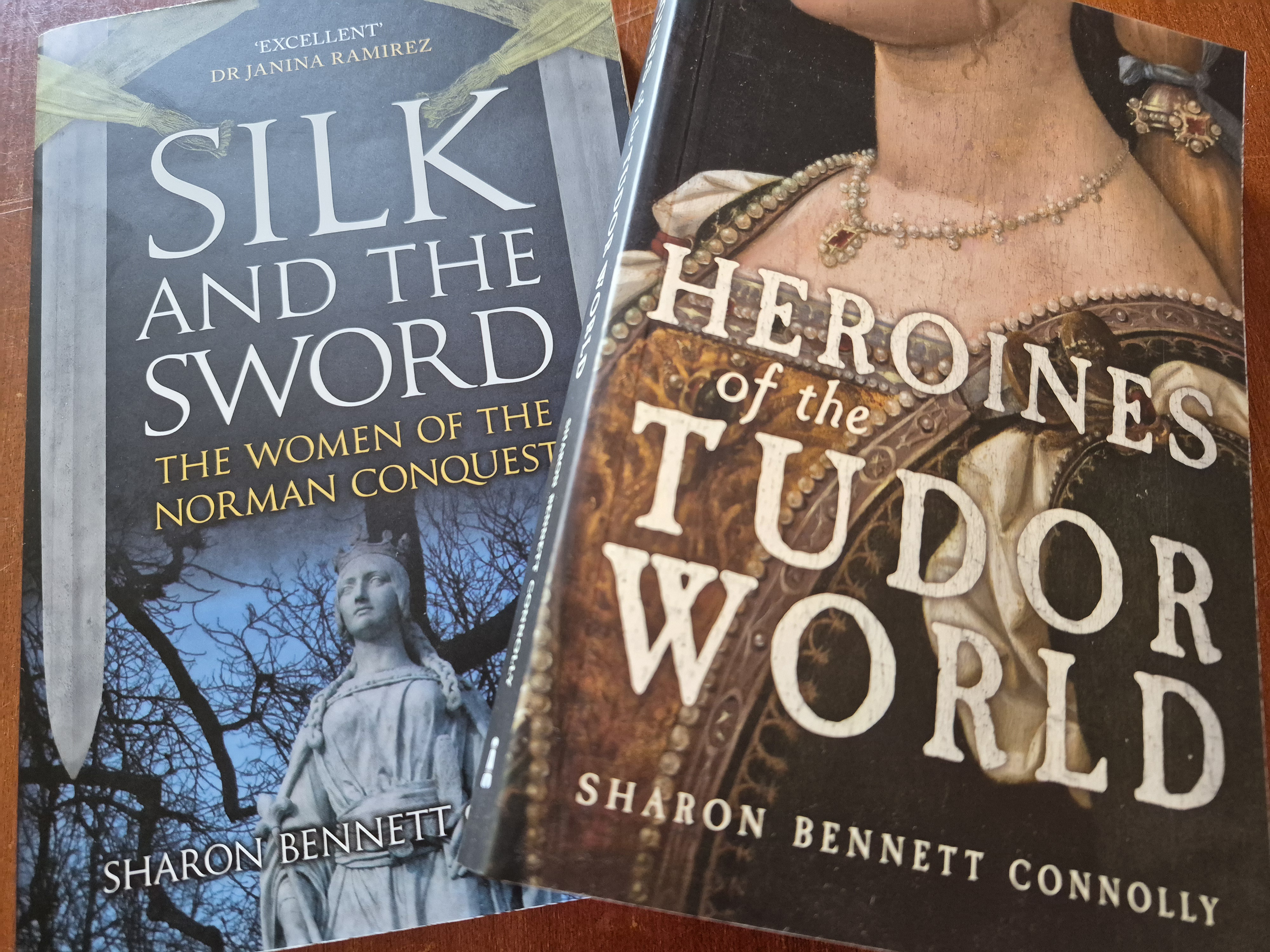
The momentous events of 1066, the story of invasion, battle and conquest, are well known. But what of the women? Silk and the Sword: The Women of the Norman Conquest traces the fortunes of the women who had a significant role to play during the Norman Conquest – wives, lovers, sisters, mothers, leaders. These are lives full of drama, pathos and sometimes mystery: Edith and Gytha searching the battlefield of Hastings for the body of Harold, his lover and mother united in their grief for the fallen king. Who was Ælfgyva, the lady of the Bayeux Tapestry, portrayed with a naked man at her feet?
Janina Ramirez said it’s ‘Excellent’!
Heroines of the Tudor World focuses on the women who lived through the Renaissance and Reformation, examining the threats and challenges they faced and how they overcame them. These are the women who ruled, the women who founded dynasties, the women who fought for religious freedom, their families and love. These are the women who made a difference, who influenced countries, kings and the Reformation.
Derek Birks: ‘An excellent account of the changing roles of women in Tudor society.’
Annie Whitehead: ‘What a treat this book was to read. Bennett Connolly has an easy, conversation style of writing which welcomes you from the opening pages and draws you into her story.‘
Available now from Amazon and Pen and Sword Books
Also by Sharon Bennett Connolly:
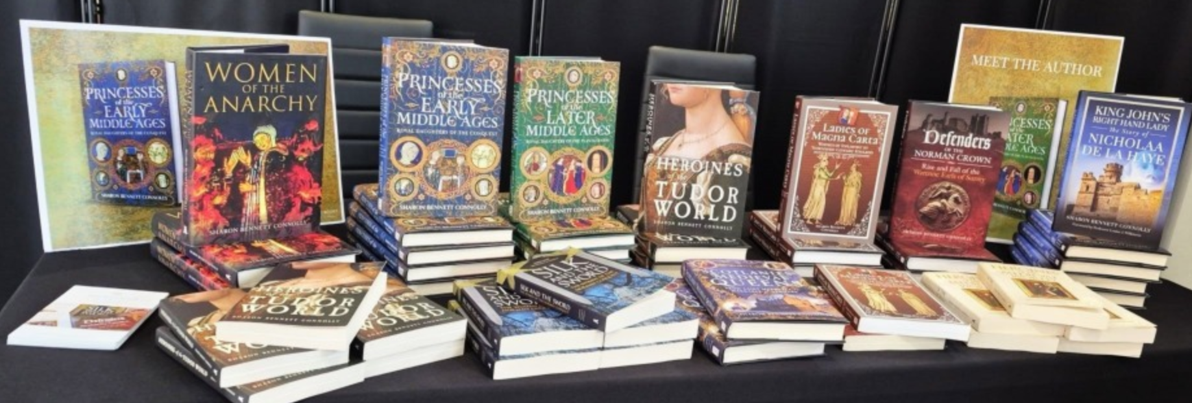
Heroines of the Medieval World; Silk and the Sword: The Women of the Norman Conquest; Ladies of Magna Carta: Women of Influence in Thirteenth Century England; Defenders of the Norman Crown: Rise and Fall of the Warenne Earls of Surrey; King John’s Right Hand Lady: The Story of Nicholaa de la Haye; Women of the Anarchy; Heroines of the Tudor World; Scotland’s Medieval Queens: From St Margaret to Margaret of Denmark; Princesses of the Early Middle Ages: Royal Daughters of the Conquest (March 2026); Princesses of the Later Middle Ages; Royal Daughters of the Plantagenets (August 2026)
Alternate Endings: An anthology of historical fiction short stories including Long Live the King… which is my take what might have happened had King John not died in October 1216. Available in paperback and kindle from Amazon.
All my books on Amazon and Bookshop.org .
You can also order direct from my publishers, Pen and Sword Books and Amberley Publishing.
Podcast:

Have a listen to the A Slice of Medieval podcast, which I co-host with Historical fiction novelist Derek Birks. Derek and I welcome guests, such as Bernard Cornwell and Elizabeth Chadwick, and discuss a wide range of topics in medieval history, from significant events to the personalities involved.
Every episode is also now available on YouTube.
*
Don’t forget!
Signed, dedicated copies of all my books are available through my online bookshop or the Contact Me page
For forthcoming online and in-person talks, please check out my Events Page.
You can be the first to read new articles by clicking the ‘Follow’ button, liking our Facebook page or joining me on Twitter and Instagram.
*
©2015 Sharon Bennett Connolly, FRHistS
 History... the interesting bits!