Women’s History Month 2026

For a historian who focuses on the lives of medieval women, Women’s History Month is always exciting. And this year, it is even more so as I have a book coming out at the end of the month.

Schools
History... the Interesting Bits

On Friday 6 March I spent the day at the King’s Leadership Academy in Bolton, Manchester, where they were having a Drop-Down International Women’s Day and had invited me as a guest speaker. I presented two talks, one to the Year 7s on the Women of the Anarchy and the other to the Year 8s on my Ladies of Magna Carta. I love that the school is keen to incorporate the study of Women’s History into their curriculum, especially their Challenges to Kingship module which features my heroine, Matilda de Braose. The students were very impressive – both in their behaviour and in their own knowledge of the period.

Future generations will know that women had just as much input in our history as the men did. I will make sure of it!

I do love speaking in schools. The energy and enthusiasm of the students is always infectious. And even the kids who don’t love History (I know, does not compute – how can you not love History?) seem to enjoy my talks.

I can’t think of a better way to celebrate International Women’s Day or Women’s History Month.

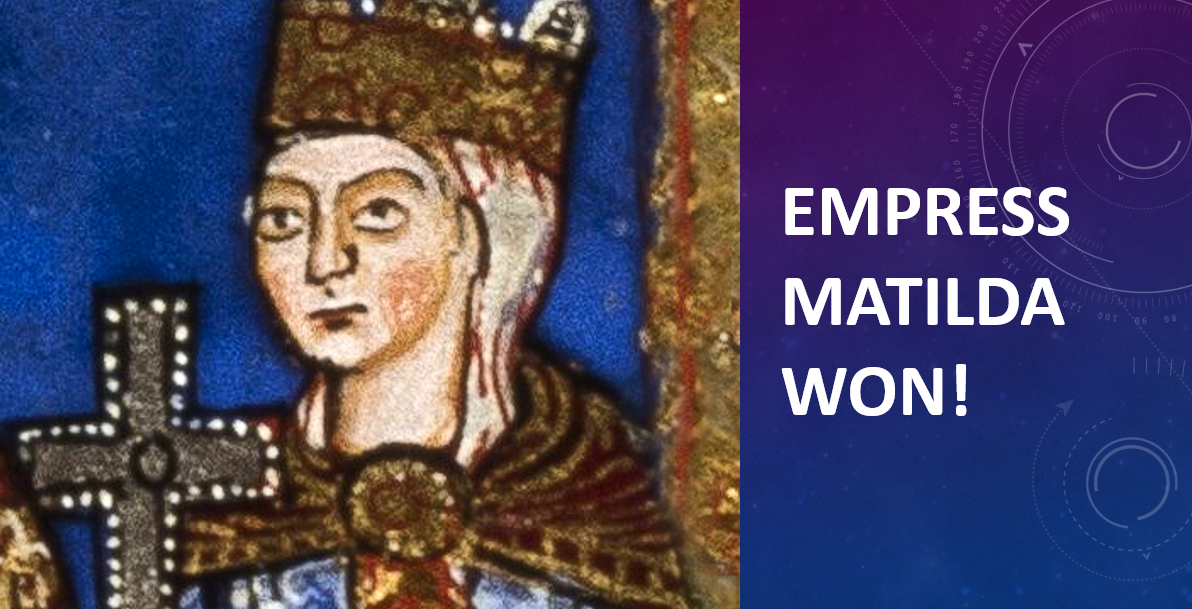
I visited a school in February and spoke about the Women of the Anarchy and when the last slide went up (See image), the whole hall cheered. It made my day.

If you are a teacher and looking for a Historian to speak to your students, give me shout through my Contact me page. I don’t charge for schools, just ask that you cover my travel expenses.

Grantham Museum
History... the Interesting Bits

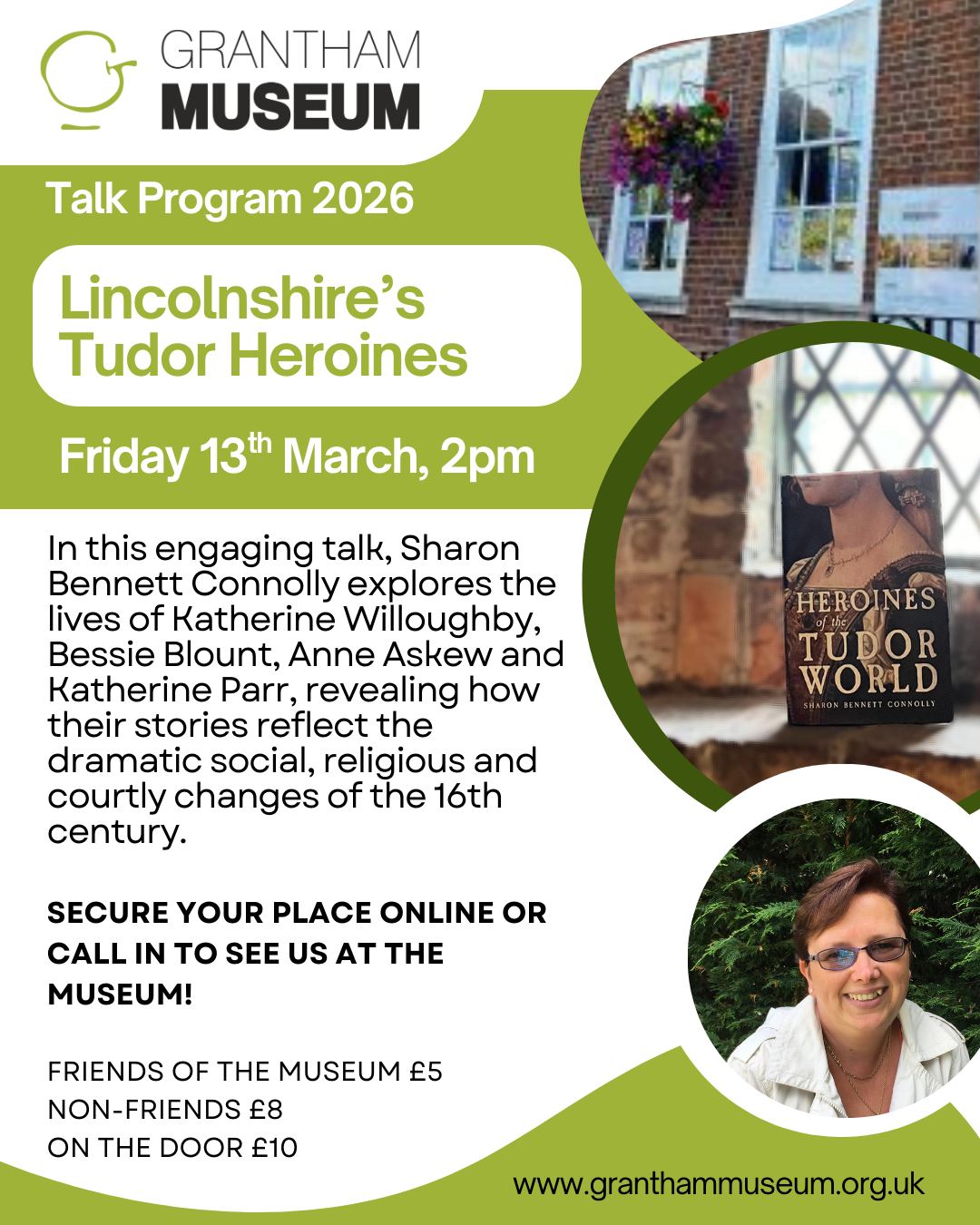
I will be speaking on Lincolnshire’s Tudor Heroines at Grantham Museum on Friday 13th March at 2pm.

Renaissance women from writers and mistresses to martyrs, duchesses and queens. Featuring the stories of Katherine Willoughby, Bessie Blount, Anne Askew and Katherine Parr, ‘Lincolnshire’s Tudor Heroines’ highlights the changes in society, religion and the royal court in the 16th century.

Come and hear the stories of these incredible women and their connections to Lincolnshire.

Tickets, include tea and coffee on arrival.
Friends of Grantham Museum: £5 | General Admission: £8 | On the Door: £10

Click HERE to reserve your ticket

Defining Moments in British History

History... the Interesting Bits

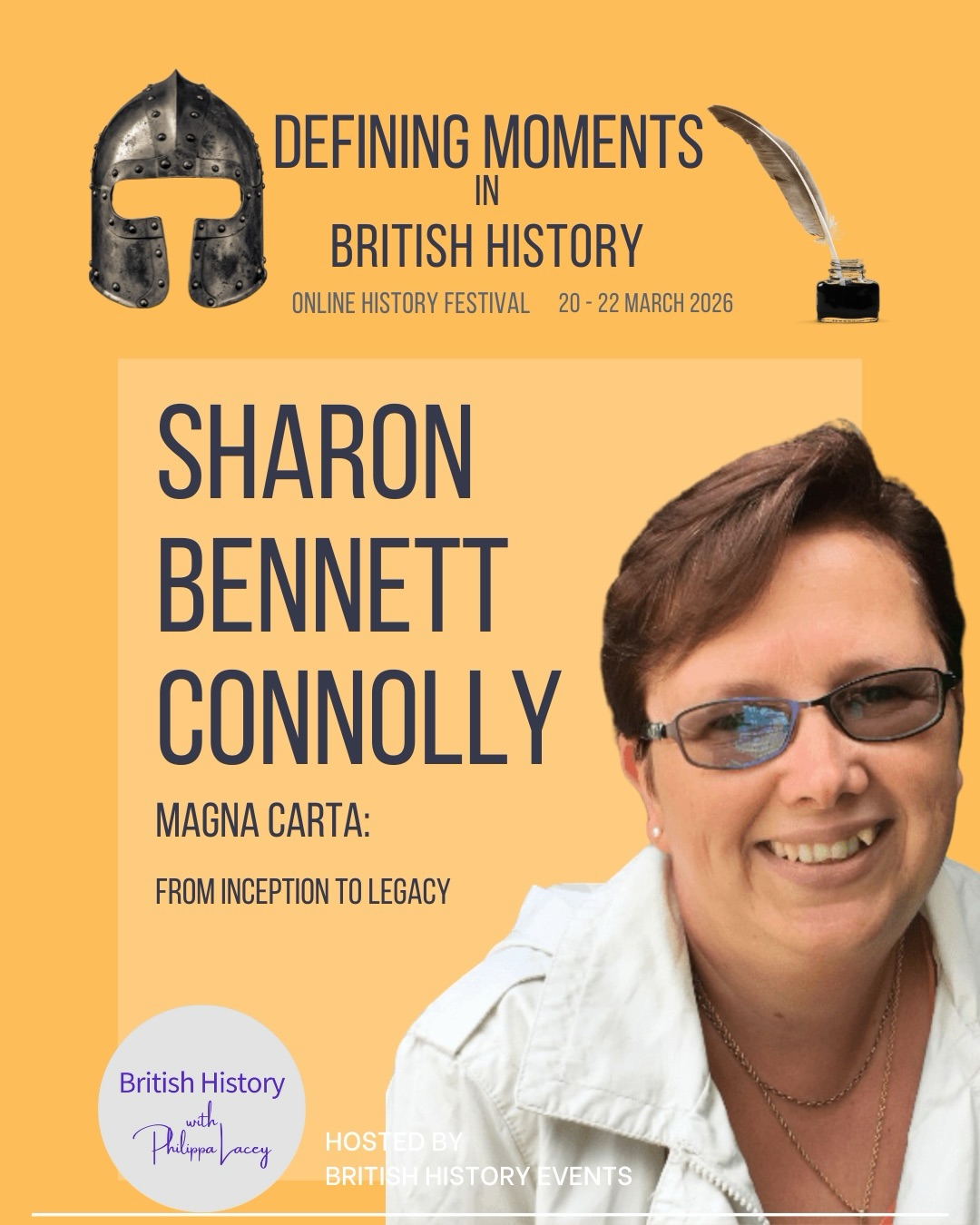
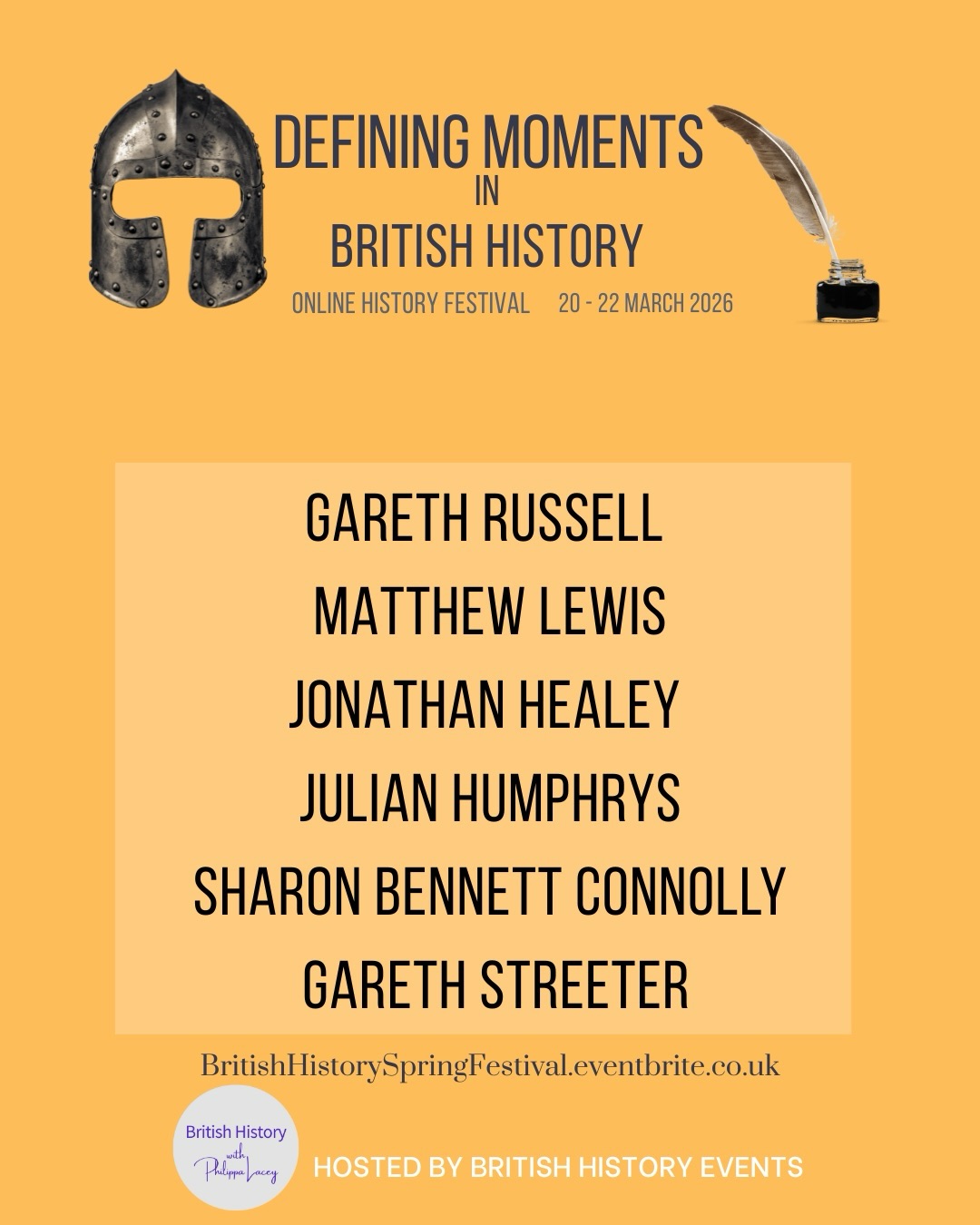
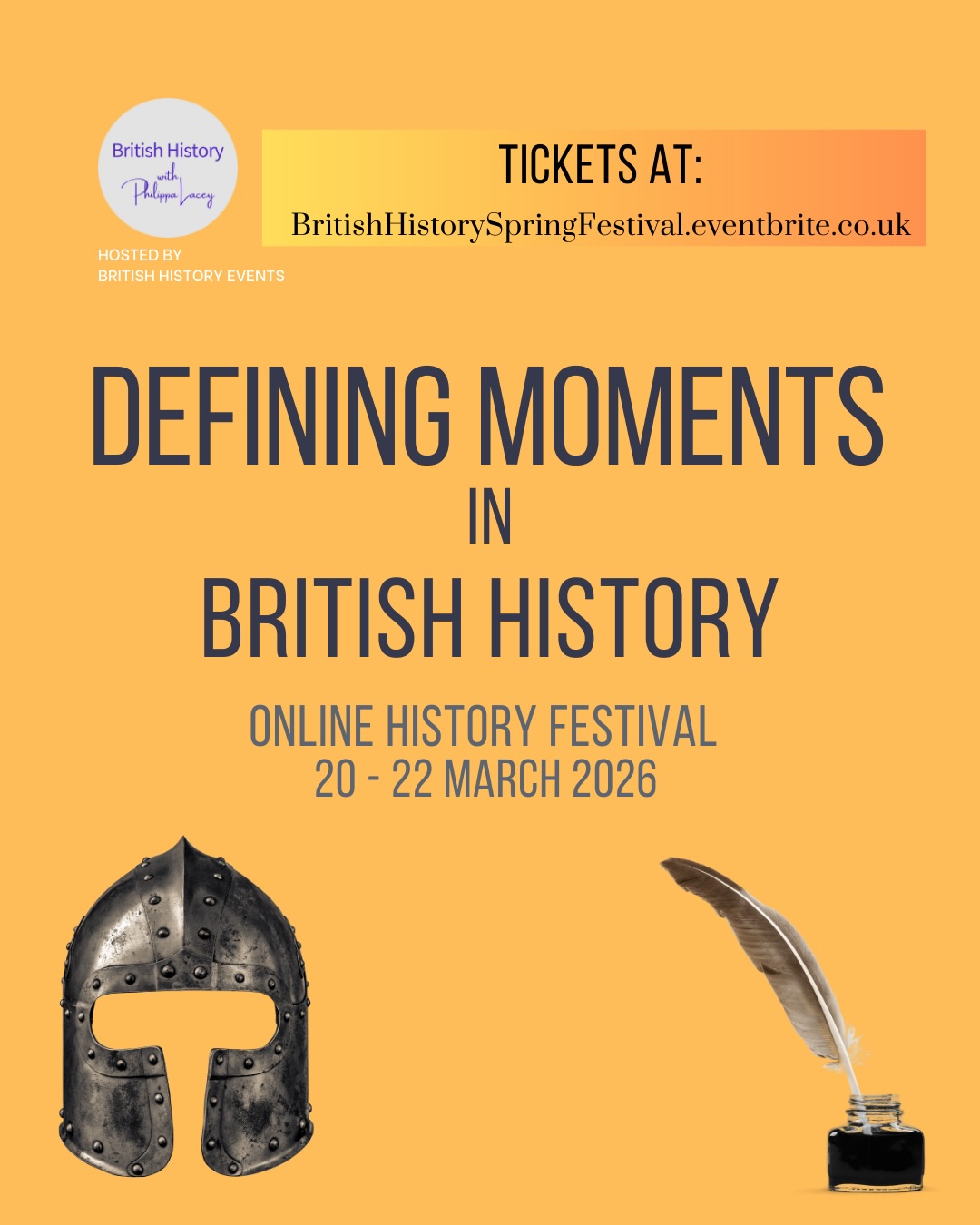
I am delighted to have been asked to take part in this year’s Online History Festival hosted by British History Events!

The theme and title of this year’s festival (their 6th) is Defining Moments in British History – exploring six defining moments that have shaped Britain today. The festival is all online, taking place from the evening of Friday, 20th March until the evening of Sunday, 22nd March 2026.

In my lecture, Magna Carta: From Inception to Legacy, I will explore the reasons for Magna Carta, the civil war that followed its creation and the people who fought for it and used it to assert their own rights. And we will look at how relevant it still is today, even beyond England’s shores.

There will be 6 talks from leading historians (including myself!), a live Q&A with all 6 historians, a live quiz, and a prize draw. Here is the line up!

Julian Humphrys explores ‘The Battle of Hastings: What Happened and What Followed’.
Sharon Bennett Connolly (me!) traces ‘Magna Carta: From Inception to Legacy’.
Matthew Lewis examines ‘How the Black Death Changed England Forever’.
Gareth Russell tackles ‘Crisis of Faith: The Reformation in British History’.
Jonathan Healey delves into ‘The British Civil Wars: How They Happened and Why They Matter’.
Gareth Streeter looks at ‘The Birth of Britain: How the Glorious Revolution and the Act of Union Forged a Modern Nation’.
History... the Interesting Bits

And I am really looking forward to the online Q&A and discussion.

Of course, Magna Carta is THE defining moment, but I will let the fellas have their say …

As it’s online, the event is open to everyone, worldwide. And at just £22 to listen to 6 lectures by leading historians – followed by the opportunity to join in the discussion and ask questions, it really is a steal!

Don’t worry if you can’t watch all the talks as they go out – your ticket will give you access to everything in the festival until 31st May 2026.

And you can watch them as often as you like.

Tickets are £22 + fees and are available now at: British History Events’ Online History Festival

If you have any questions, please ask. You can also email the event organisers at office@britishhistorytours.com.

We would all love to have you join us!

Coming 30 March: Princesses of the Early Middle Ages

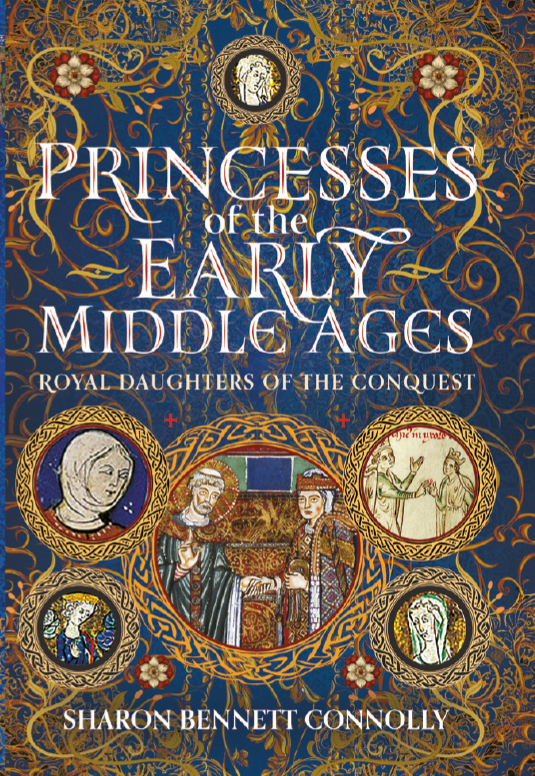
I have just given my final approval for the jacket design, images section and edits for Princesses of the Early Middle Ages: Royal Daughters of the Conquest. So, it is off to the printers. And my 9th book will be a reality by the end of the month!
Books by Sharon Bennett Connolly

It never gets old, holding your own book in your hands!

It is always a nerve-wracking time, wondering if anyone will like your book – or even read it. But my partner-in-podcasting, Derek Birks, has had a read and said he really enjoyed it – such a relief! And this week we recorded a Book Launch episode which will go live on 25 March – so please look out for it!

I have a few other podcast interviews lined up, with the first already live. A few months ago, I had a fabulous time chatting with Matthew Harffy and Justin Hill, on Medieval Princesses, Power and the Norman Conquest over at Rock, Paper, Swords

Daughters of kings were often used to seal treaty alliances and forge peace with England’s enemies. Princesses of the Early Middle Ages: Royal Daughters of the Conquest explores the lives of these young women, how they followed the stereotype, and how they sometimes managed to escape it. It will look at the world they lived in, and how their lives and marriages were affected by political necessity and the events of the time. 

Princesses of the Early Middle Ages will also examine how these girls, who were often political pawns, were able to control their own lives and fates. Whilst they were expected to obey their parents in their marriage choices, several princesses were able to exert their own influence on these choices, with some outright refusing the husbands offered to them.

Their stories are touching, inspiring and, at times, heartbreaking.

Princesses of the Early Middle Ages: Royal Daughters of the Conquest is now available for pre-order from Pen & Sword and Amazon.

I am also in the process of planning an online Book Launch for the week Princesses of the Early Middle Ages is published, with a talk followed by a Q&A, so watch this space…

And one last bit of news….

Coming 15 April: Silk and the Sword: The Women of the Norman Conquest
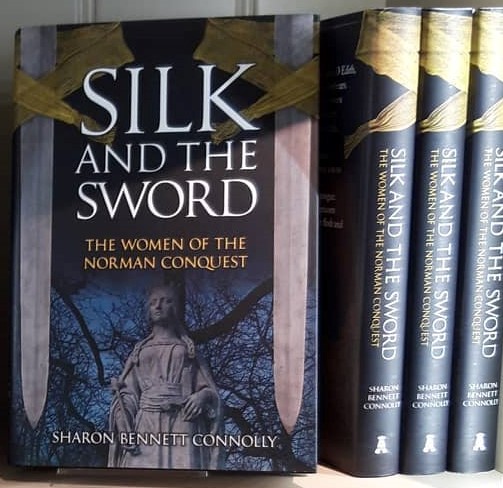
Books by Sharon Bennett Connolly

It has been a long time coming, but publication of the paperback edition of Silk and the Sword: The Women of the Norman Conquest is finally just around the corner. In fact, it comes out next month!

The momentous events of 1066, the story of invasion, battle and conquest, are well known. But what of the women?

Harold II of England had been with Edith Swanneck for twenty years but in 1066, in order to strengthen his hold on the throne, he married Ealdgyth, sister of two earls. William of Normandy’s Duchess, Matilda of Flanders, had supposedly only agreed to marry the Duke after he’d pulled her pigtails and thrown her in the mud. Harald Hardrada had two wives – apparently at the same time. So, who were these women? What was their real story? And what happened to them after 1066?

These are not peripheral figures. Emma of Normandy was a Norman married to both a Saxon and a Dane ‒ and the mother of a king from each. Wife of both King Cnut and Aethelred II, the fact that, according to the Anglo-Saxon Chronicle, she had control of the treasury at the end of the reigns of both Cnut and Harthacnut suggests the extent of Emma’s influence over these two kings –and the country itself.

Then there is Saint Margaret, a descendant of Alfred the Great, and the less well known but still influential Gundrada de Warenne, the wife of one of William the Conqueror’s most loyal knights, and one of the few men who it is known beyond doubt was with the Duke at the Battle of Hastings.

These are lives full of drama, pathos and sometimes mystery: Edith and Gytha searching the battlefield of Hastings for the body of Harold, his lover and mother united in their grief for the fallen king. Who was Ælfgyva, the lady of the Bayeux Tapestry, portrayed with a naked man at her feet?

Silk and the Sword traces the fortunes of the women who had a significant role to play during the Norman Conquest – wives, lovers, sisters, mothers, leaders.

The paperback edition of Silk and the Sword: The Women of the Norman Conquest can be pre-ordered from Amberley Publishing and Amazon UK.

My Books

Signed, dedicated copies of all my books are available through my online bookshop. or by contacting me.

Books by Sharon Bennett Connolly

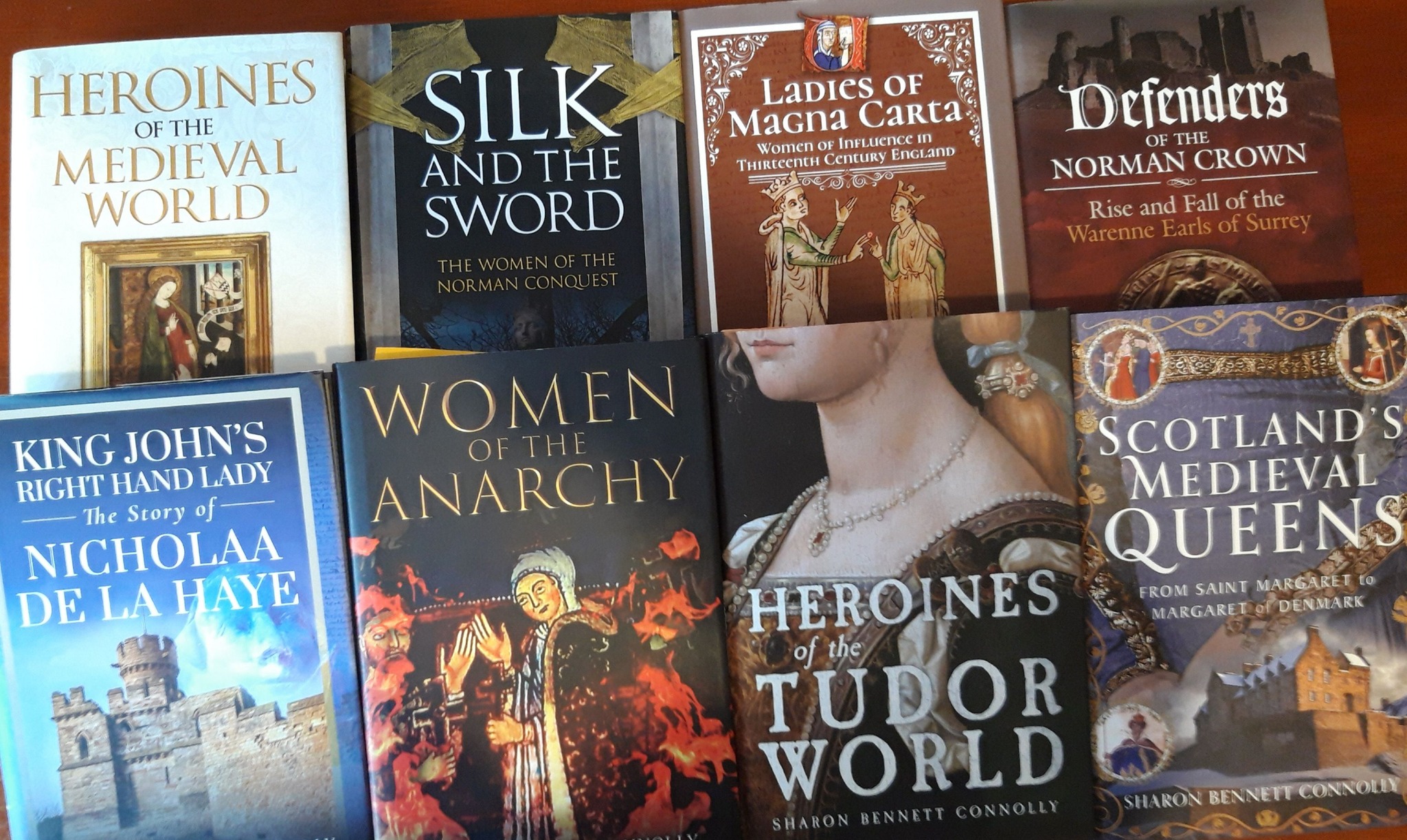
Scotland’s history is dramatic, violent and bloody and Scotland’s Medieval Queens have seen it all. This is the story of Scotland through their eyes. Available now from Amazon and Pen and Sword BooksHeroines of the Tudor World tells the stories of the most remarkable women from European history in the time of the Tudor dynasty, 1485-1603. These are the women who ruled, the women who founded dynasties, the women who fought for religious freedom, their families and love. Heroines of the Tudor World is now available from Amberley Publishing and Amazon UK. Women of the Anarchy demonstrates how Empress Matilda and Matilda of Boulogne, unable to wield a sword themselves, were prime movers in this time of conflict and lawlessness. It shows how their strengths, weaknesses, and personal ambitions swung the fortunes of war one way – and then the other. Available from Bookshop.orgAmberley Publishing and Amazon UKKing John’s Right-Hand Lady: The Story of Nicholaa de la Haye is the story of a truly remarkable lady, the hereditary constable of Lincoln Castle and the first woman in England to be appointed sheriff in her own right. Available from all good bookshops Pen & Sword Booksbookshop.org and Amazon

Royal Historical Society

Defenders of the Norman Crown: The Rise and Fall of the Warenne Earls of Surrey tells the fascinating story of the Warenne dynasty, from its origins in Normandy, through the Conquest, Magna Carta, the wars and marriages that led to its ultimate demise in the reign of Edward III. Available from Pen & Sword BooksAmazon in the UK and US, and Bookshop.orgLadies of Magna Carta: Women of Influence in Thirteenth Century England looks into the relationships of the various noble families of the 13th century, and how they were affected by the Barons’ Wars, Magna Carta and its aftermath; the bonds that were formed and those that were broken. It is now available in paperback and hardback from Pen & SwordAmazon, and Bookshop.orgHeroines of the Medieval World tells the stories of some of the most remarkable women from Medieval history, from Eleanor of Aquitaine to Julian of Norwich. Available now from Amberley Publishing and Amazon, and Bookshop.orgSilk and the Sword: The Women of the Norman Conquest traces the fortunes of the women who had a significant role to play in the momentous events of 1066. Available now from Amazon,  Amberley Publishing, and Bookshop.org.

Alternate Endings: An anthology of historical fiction short stories including Long Live the King… which is my take what might have happened had King John not died in October 1216. Available in paperback and kindle from Amazon.

Podcast:
A Slice of Medieval

Have a listen to the A Slice of Medieval podcast, which I co-host with Historical fiction novelist Derek Birks. Derek and I welcome guests, such as Ian Mortimer, Bernard Cornwell, Elizabeth Chadwick and Scott Mariani, and discuss a wide range of topics in medieval history, from significant events to the personalities involved. 

Every episode is also now available on YouTube.

*

Don’t forget! Signed and dedicated copies of all my books are available through my online bookshop.

For forthcoming online and in-person talks, please check out my Events Page.

You can be the first to read new articles by clicking the ‘Follow’ button, liking our Facebook page or joining me on TwitterThreadsBluesky and Instagram.

*

©2026 Sharon Bennett Connolly FRHistS
Guest Post: Jane Boleyn, née Parker, the infamous Lady Rochford – The Perfect Scapegoat by Monika E. Simon

It is a pleasure to welcome historian Monika E. Simon back to History…the Interesting Bits. Monika’s book, From Robber Barons to Courtiers. The Changing World of the Lovells of Titchmarsh, is a fascinating read. And today, Monika is here to talk about the life and downfall of a descendant of the Lovells, Jane Boleyn.

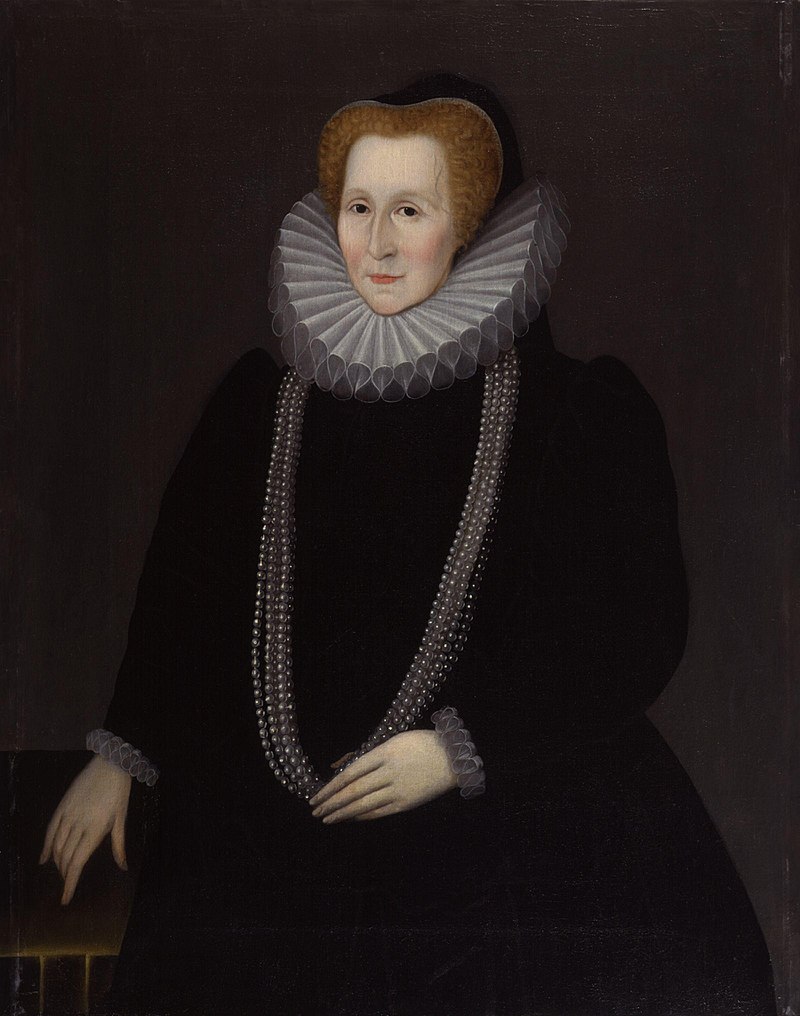
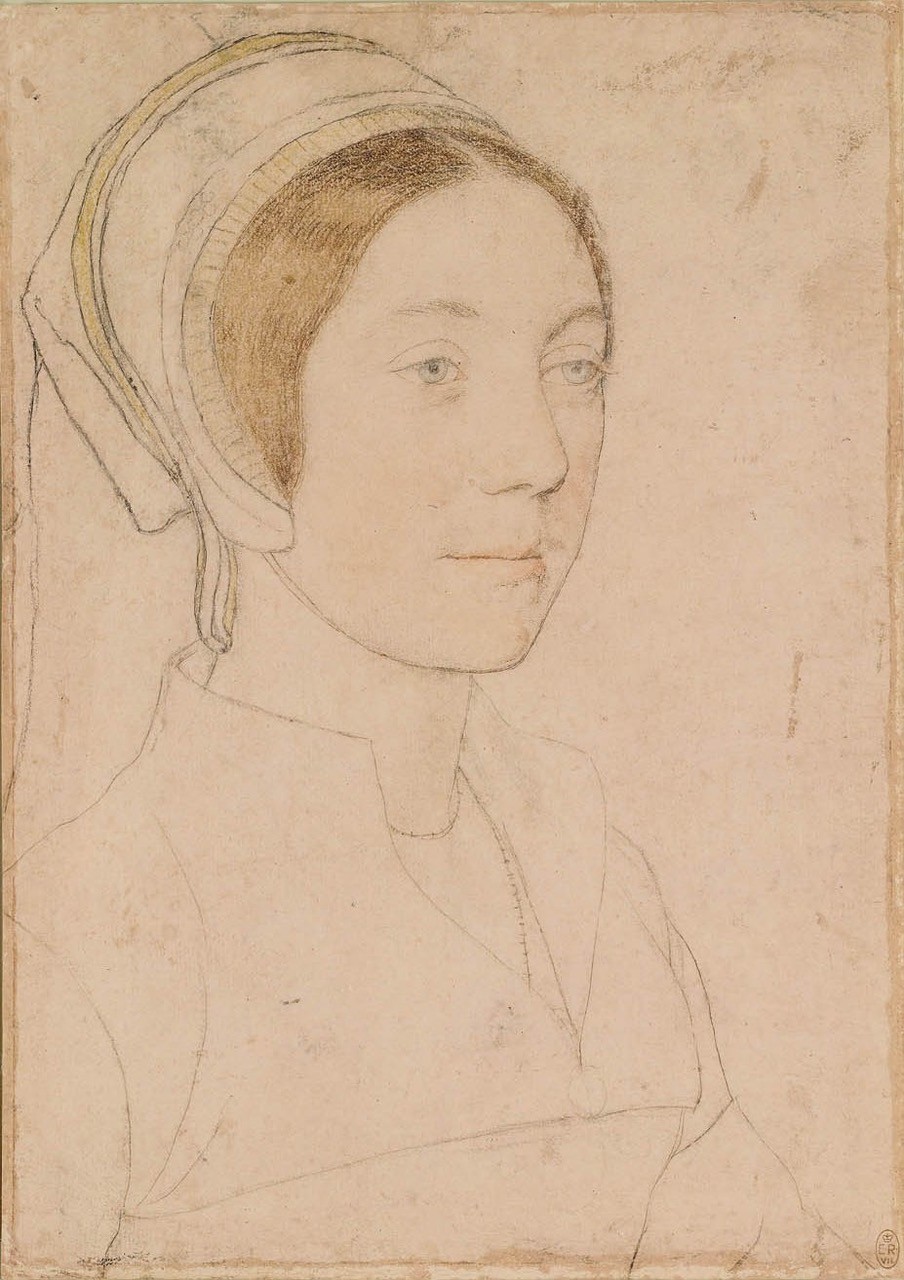
Unknown Woman, often identified as Jane Boleyn
Hans Holbein the Younger

Jane Boleyn, née Parker, the infamous Lady Rochford – The Perfect Scapegoat

Jane Boleyn, Lady Rochford is generally regarded as one of the key witnesses if not the key witness in the court case against Anne Boleyn. Jane was married to Anne’s brother George Boleyn. As Anne’s sister-in-law and with her own husband, George Boleyn accused of having had an affair with his sister Anne, Jane’s betrayal is seen as a particular heinous crime. Jane is also accused to have been the source of this accusation of incest against her husband and her sister-in-law.

In an article on Jane’s father for example, James P. Carley declares ‘Morley’s daughter Jane, was principal witness against her husband, George Boleyn, Lord Rochford, at the time of his trial in 1536.’

However, most historians agree that the charges against Anne Boleyn, her brother, and the others accused were trumped up to rid Henry VIII of his wife. Eric Ives for example states, ‘Under analysis, the case presented by the Crown in May 1536 collapses’. If the outcome of the trial and the guilty verdicts were a forgone conclusion, surely it made absolutely no difference who had said or may have said what during or before the trials?

Why then did Jane Boleyn become the ‘infamous Lady Rochford‘?

Let me first introduce you to Jane Boleyn, née Parker.

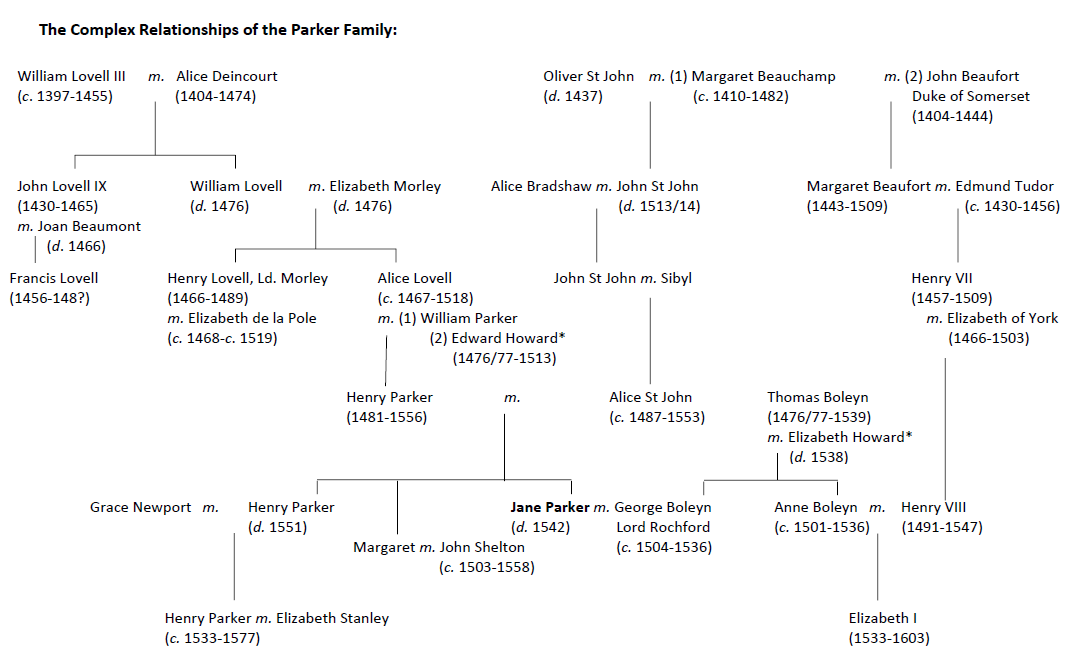
Jane was the daughter of Henry Parker, Lord Morley, and his wife Alice St John. Alice was the daughter of Margaret Beaufort’s half-brother John St John. The match was almost certainly arranged by Margaret Beaufort in whose household Henry Parker had served from a young age. During this time Margaret Beaufort became his patroness. She supported him financially and looked after his wife Alice and their children when Henry was away. Margaret Beaufort was also a major influence on his religious beliefs.

Henry was summoned to parliament as Lord Morley after the death of his mother Alice Parker, née Lovell, in 1518. He never made a particular name for himself at court and never held important office. Richard Starkey calls him ‘an unimportant backwoodsman’ but I think ‘hard-working backbencher’ is a more apt description. He assiduously attended parliament, great ceremonial events, and state trials. That he never achieved higher office may be simply due to a lack of ambition or a personal choice to not risk his life. After all he witnessed how many of the men holding high office during Henry VIII’s reign ended their lives on the scaffold.

Henry Parker and his wife Alice had five children, two sons, Henry and Francis, and three daughters, Jane, Margaret, and Elizabeth. In the 1520s, Henry and his wife Alice arranged marriages for their three elder children. Henry, the eldest son and heir, was married to Grace Newport, heiress of her father John Newport. Jane married George Boleyn around 1526. In 1530, Margaret married Sir John Shelton the Younger, the son of Sir John Shelton the Elder and his wife Anne Boleyn, the aunt of Queen Anne.

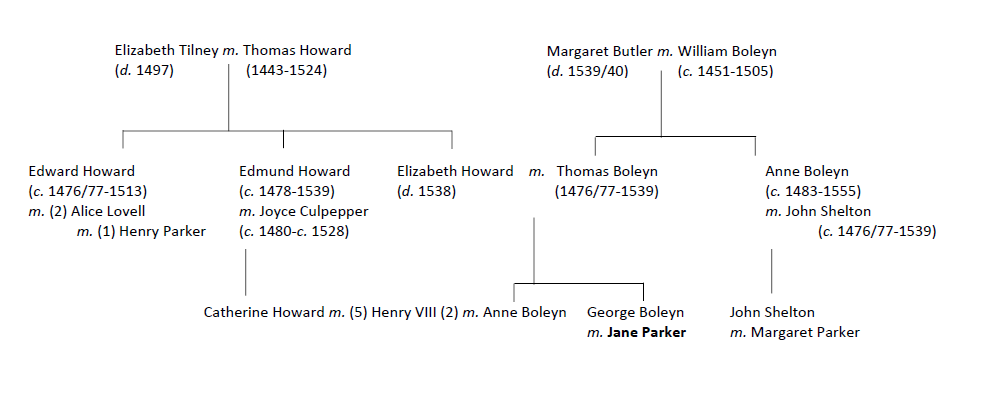
The Boleyn family were neighbours of the Parkers, as were the Howard Dukes of Norfolk. Henry Parker’s mother, Alice Parker had married as her second husband Edward Howard, whose sister Elizabeth was married to Thomas Boleyn. Thomas Boleyn’s father William had been one of the executors of the will of Alice Parker’s brother Henry Lovell, Lord Morley. Alice had been the heir to her brother Henry Lovell and had become very wealthy when she inherited the part of his estates that were not held in tail male. Henry Lovell had been married to Elizabeth de la Pole, daughter of John de la Pole, duke of Suffolk, and Elizabeth, the sister of Edward IV and Richard III. Both Henry and Alice were cousins of Francis Lovell, Viscount Lovell (see Genealogies).

The complex relationships of the Parker family

This confusing profusion of relationships is typical for the higher nobility. The families tried to marry their children to spouses of the same rank, and since the higher nobility was a small group, a multitude of relationships between families was the inevitable result.

The families of Jane and her husband George were not only neighbours in Essex, the two knew each other from court as well. George Boleyn had become a royal page in 1516, and Jane had become one of the ladies of Queen Catherine of Aragon in 1520. The relationship between Jane and her husband was therefore both personal and professional. Jane’s husband George also shared his father-in-law’s interest in literature and translations. In fact, George Boleyn’s translation of ‘The Pistellis and Gospelles for the LII Sondayes of the Yere’ has been attributed to Henry Parker until recently.

To be chosen as a lady of the queen, a young woman had to be of noble birth, attractive, and well-mannered. Jane must have possessed all these qualities. She must also have been skilled in dancing and performing as in 1522 she was among those court ladies who participated a particularly grand pageant for the imperial envoys Jacques de Castres and Charles Poupet de Lacheaulx. Henry VIII’s sister was one of the other ladies as was Jane’s future sister-in-law Anne Boleyn.

In the following years, as Henry VIII became enthralled by Anne Boleyn, Jane and her husband George prospered at court. George became a Squire of the Chamber and was given numerous grants. He received the courtesy title of Viscount, when his father Thomas became Earl of Wiltshire in 1529.

Jane continued to be chosen for active parts in the court’s festivities. In 1532 she was chosen to be one of the six ladies to accompany Anne Boleyn in a dance with the French king Francis I, Henry VIII, and assorted courtiers. In the procession to Anne’s coronation the following year, Jane rode immediately behind Anne. Her brother Henry had been created a Knight of the Bath on the evening before the coronation.

All seemed well both inside the Boleyn family and in the marriage of Henry VIII and Anne Boleyn. But in 1536 this changed dramatically: Anne and her family fell from grace spectacularly. She, her brother George, Henry Norris, and others were arrested, accused of adultery, and executed for treason. Prior to this trial a considerable number of men and women were questions about the allegations. Jane, as Anne’s sister-in-law and lady-in-waiting was naturally also interrogated.

Signature of Jane, Lady Rochford

Even though most historians consider the charges against Anne Boleyn and the other accused as fictional, most, myself included (Both in my book and in my previous guest post), have debated all available clues, hints and the few concrete statements existing to proof or disproof Jane’s guilt. All her prior and subsequent actions are judged, depending on whether she is considered guilty or innocent of the charge of betraying her husband and sister-in-law.

Since Jane was only one of a large number of people, including Anne Boleyn herself and her brother George, who were questioned about the events at court and whose answers were used during the trial, why was it Jane and not one of the many other people involved in this affair that has been singled out as the despicable traitor? After all, Lady Wingfield was named by judge John Spelman as the source of the behaviour of Anne Boleyn.

Having pondered this question for quite a while now I have developed my own theory about this question.

After Anne Boleyn’s daughter Elizabeth became queen, Anne’s reputation had to be cleared of any suggestion of scandal and extramarital adventures. It was equally inadvisable to put the blame instead on Elizabeth’s father Henry VIII. To protect her right to be queen of England, the reputation of both her parents needed to be above reproach.

But somebody had to be blamed for Anne Boleyn’s death and, as it turned out, Anne’s sister-in-law Jane made the perfect scapegoat.

Jane had no children and no other family in a position to defend her reputation. Her brother Henry was dead and his son, another Henry, was a devout Catholic. This made him suspicious from the start. He first supported Queen Elizabeth who visited him in Great Hallingbury in 1561. However, later in the decade, he refused to subscribe to the Act of Uniformity. He was also linked to the rising of noble earls and fled England in 1570. He died in exile in 1577.

The Howard family

Additionally, Jane’s own reputation was already ruined. She had been executed alongside Henry VIII’s fifth queen Katherine Howard in 1542. There was no reason to clear childless Katherine Howard’s reputation. Any endeavour to do so would have been much more difficult if not impossible.

While Anne Boleyn was accused of infidelity and incest to remove her for political reason, Katherine Howard certainly had been unfaithful to her husband, even if her clandestine meetings with her paramour Thomas Culpepper did involve nothing more serious than talking and a chaste kiss on the hand as the two claimed. Jane had been present at the meetings as a chaperone of sorts, though she claimed that she had not heard or seen what happened between the queen and Thomas Culpepper as she sat too far away and moreover during at least one of the meetings, she had fallen asleep. Jane did state that she thought Katherine and Thomas had been lovers.

Who of the three, Katherine Howard, Jane Boleyn, or Thomas Culpepper, had been the main instigator of these meetings was and is still debated. Naturally, all three tried to play down their own role and blame the others. Thomas Culpepper used the time-honoured excuse that he had been helpless against the wily ways of the two women. Katherine claimed that Jane had been encouraging her and that it had been her lady-in-waiting who wanted her to befriend Thomas in the first place. It had also been Jane who searched out the places where they could meet Thomas. Jane insisted that she had only followed the orders of the queen.

In the end, all three participated in illicit meetings and they all should have known what would happen if they were found out. The execution of Anne Boleyn and her alleged lovers was only a few years in the past.

In his biography of Anne Boleyn Eric Ives wonders ‘whether the incrimination of Lady Rochford in the crimes of Katherine Howard may not have owed something to revenge’. There was, however, no need to incriminate Jane Boleyn in any way, she did so herself by her actions.

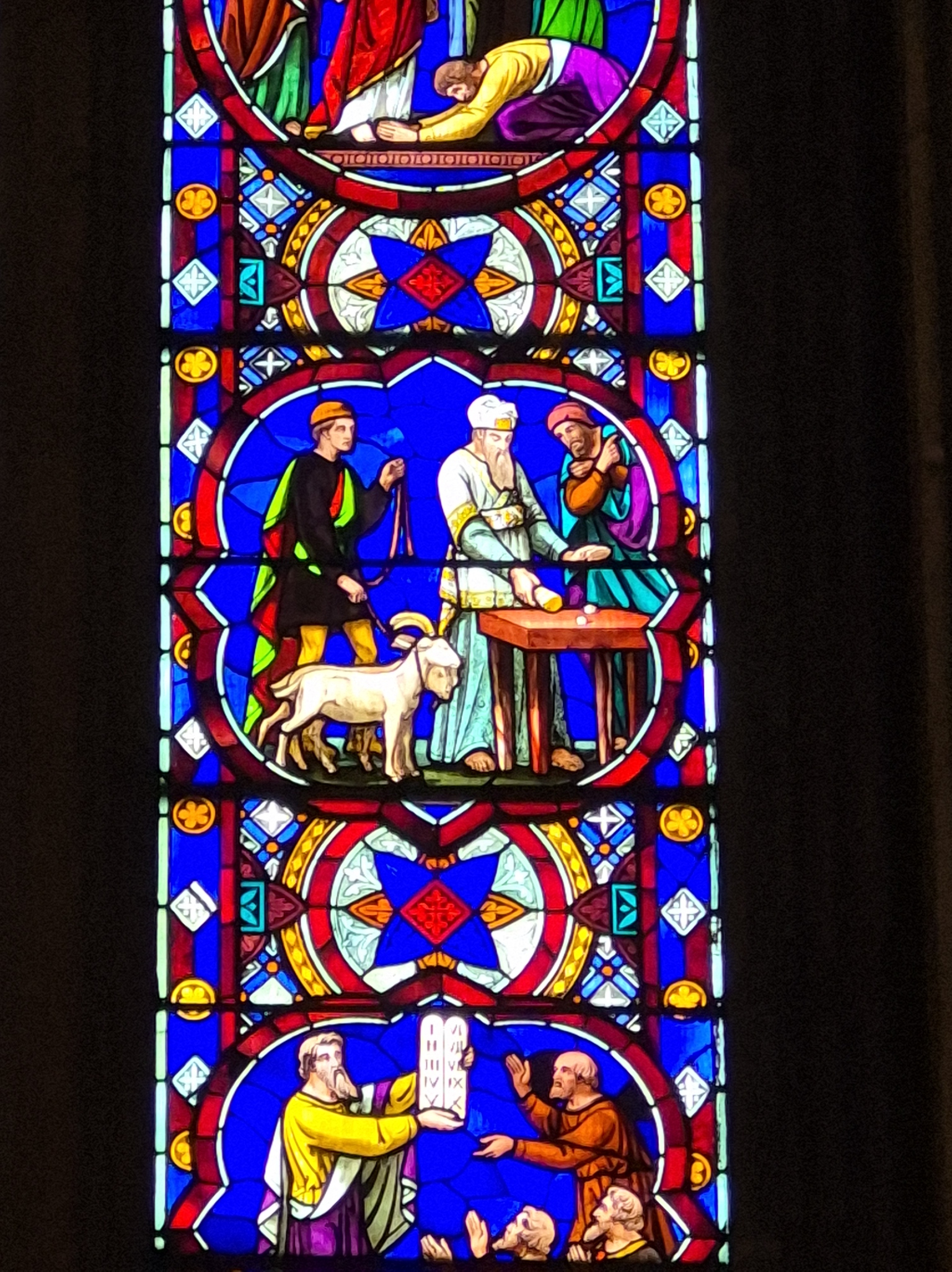
Scapegoat Ceremony shown in Stained Glass window in Lincoln Cathedral 

I think Ives’s argument should be put on its head: Jane Parker has become the much-maligned ‘key witness’ in Anne Boleyn’s trial, since she was guilty in the case that brought down Katherine Howard, Thomas Culpepper, and herself. What was more natural than to assume that she was equally deeply involved in the fall of Anne Boleyn?

Perhaps it is not wholly imaginary to think that makes Jane a particularly satisfying scapegoat for Anne Boleyn’s fall because of her close relationship to Anne. To suggest that Anne’s own sister-in-law, the wife of her brother George, who provided the charge of incest, is particularly piquant. The people nearest to us are those who can reveal our deepest secrets and the fear of being betrayed by them runs deep.

The trial of Anne Boleyn and her alleged lovers was a means to an end and the charges spurious. Today it is merely fascinating to discuss the alleged contribution of individuals to the proceedings and interesting to observe how Jane’s action both before and after Anne Boleyn’s trial are today interpreted completely different, depending on whether or not an author regards Jane as the traitor.

Back in the second half of the sixteenth century, the trial of Anne Boleyn was not discussed (at least openly) as a political manoeuvre conducted on trumped up charges to remove a no longer wanted queen. This would have fundamentally damaged the reputation of Henry VIII, the father of Elizabeth I. Since her mother had to be cleared of any allegations of infidelity, somebody else had to be blamed. Jane Parker was the best choice for that role. She was the perfect scapegoat.

Further Reading:

  • James P. Carley, ‘The Writings of Henry Parker, Lord Morley: A Biographical Survey’, in: Marie Axton and James P. Carley (eds.), ‘Triumphs of English’. Henry Parker, Lord Morley, Translator to the Tudor Court (London, 2000).
  • Julia Fox, Jane Boleyn. The Infamous Lady Rochford (London, 2007).
  • Eric Ives, The Live and Death of Anne Boleyn. ‘The Most Happy’ (Oxford, 2004).

Monika E. Simon, From Robber Barons to Courtiers. The Changing World of the Lovells of Titchmarsh (Barnsley, 2021

Images:

Jane Boleyn portrait via Wikimedia Commons; Scapegoat, Lincoln Cathedral ©2026 Sharon Bennett Connolly FRHistS
About the Author:

Monika E Simon was born as the third of four sisters in 1969 in a small city in southern Bavaria. Interested in history from an early age, she wrote her MA thesis about the tenth-century Empress Adelheid at the Ludwig-Maximilians-Universtität in Munich. Having spent a year of her studies at the University of York (Yorkshire), she fell in love with the city and decided to transfer there for her doctoral thesis. For her DPhil thesis she studied the history of the Lovells of Titchmarsh which she submitted in 1999.

In 2001, after two years in London, Monika E Simon returned to Munich, where she has lived since, working in a variety of jobs. In 2021 her first book, From Robber Barons to Courtiers. The Changing World of the Lovells of Titchmarsh was published.

She has also published a small number of articles about the Lovell family. She continues to research a variety of historical subjects. 

Where to find Monika: Facebook; website; Pen & Sword

*

My Books

Signed, dedicated copies of all my books are available through my online bookshop. or by contacting me.

Coming 30 March: Princesses of the Early Middle Ages

Books by Sharon Bennett Connolly

Daughters of kings were often used to seal treaty alliances and forge peace with England’s enemies. Princesses of the Early Middle Ages: Royal Daughters of the Conquest explores the lives of these young women, how they followed the stereotype, and how they sometimes managed to escape it. It will look at the world they lived in, and how their lives and marriages were affected by political necessity and the events of the time. Princesses of the Early Middle Ages will also examine how these girls, who were often political pawns, were able to control their own lives and fates. Whilst they were expected to obey their parents in their marriage choices, several princesses were able to exert their own influence on these choices, with some outright refusing the husbands offered to them.

Their stories are touching, inspiring and, at times, heartbreaking.

Princesses of the Early Middle Ages: Royal Daughters of the Conquest is now available for pre-order from Pen & Sword and Amazon.

Also by Sharon Bennett Connolly:

Books by Sharon Bennett Connolly

Scotland’s history is dramatic, violent and bloody and Scotland’s Medieval Queens have seen it all. This is the story of Scotland through their eyes. Available now from Amazon and Pen and Sword BooksHeroines of the Tudor World tells the stories of the most remarkable women from European history in the time of the Tudor dynasty, 1485-1603. These are the women who ruled, the women who founded dynasties, the women who fought for religious freedom, their families and love. Heroines of the Tudor World is now available from Amberley Publishing and Amazon UK. Women of the Anarchy demonstrates how Empress Matilda and Matilda of Boulogne, unable to wield a sword themselves, were prime movers in this time of conflict and lawlessness. It shows how their strengths, weaknesses, and personal ambitions swung the fortunes of war one way – and then the other. Available from Bookshop.orgAmberley Publishing and Amazon UKKing John’s Right-Hand Lady: The Story of Nicholaa de la Haye is the story of a truly remarkable lady, the hereditary constable of Lincoln Castle and the first woman in England to be appointed sheriff in her own right. Available from all good bookshops Pen & Sword Booksbookshop.org and Amazon

Royal Historical Society

Defenders of the Norman Crown: The Rise and Fall of the Warenne Earls of Surrey tells the fascinating story of the Warenne dynasty, from its origins in Normandy, through the Conquest, Magna Carta, the wars and marriages that led to its ultimate demise in the reign of Edward III. Available from Pen & Sword BooksAmazon in the UK and US, and Bookshop.orgLadies of Magna Carta: Women of Influence in Thirteenth Century England looks into the relationships of the various noble families of the 13th century, and how they were affected by the Barons’ Wars, Magna Carta and its aftermath; the bonds that were formed and those that were broken. It is now available in paperback and hardback from Pen & SwordAmazon, and Bookshop.orgHeroines of the Medieval World tells the stories of some of the most remarkable women from Medieval history, from Eleanor of Aquitaine to Julian of Norwich. Available now from Amberley Publishing and Amazon, and Bookshop.orgSilk and the Sword: The Women of the Norman Conquest traces the fortunes of the women who had a significant role to play in the momentous events of 1066. Available now from Amazon,  Amberley Publishing, and Bookshop.org.

Alternate Endings: An anthology of historical fiction short stories including Long Live the King… which is my take what might have happened had King John not died in October 1216. Available in paperback and kindle from Amazon.

Podcast:

A Slice of Medieval

Have a listen to the A Slice of Medieval podcast, which I co-host with Historical fiction novelist Derek Birks. Derek and I welcome guests, such as Ian Mortimer, Bernard Cornwell, Elizabeth Chadwick and Scott Mariani, and discuss a wide range of topics in medieval history, from significant events to the personalities involved. 

Every episode is also now available on YouTube.

*

Don’t forget! Signed and dedicated copies of all my books are available through my online bookshop.

For forthcoming online and in-person talks, please check out my Events Page.

You can be the first to read new articles by clicking the ‘Follow’ button, liking our Facebook page or joining me on TwitterThreadsBluesky and Instagram.

*

©2026 Sharon Bennett Connolly FRHistS

Alice Chaucer: the Making of a Duchess

History...the Interesting Bits
A first edition of The Canterbury Tales, held in Lincoln Cathedral Library

Geoffrey Chaucer is often referred to as the father of English Literature. The author of The Canterbury Tales was patronised by John of Gaunt, Duke of Lancaster. after entering the household of Elizabeth de Burgh, Countess of Ulster and wife of Lionel of Antwerp, Duke of Clarence, as a page, he rose high, to become a clerk, diplomat and courtier. Geoffrey Chaucer had married Philippa de Roelt (or Rouet), sister of Katherine Swynford, the third wife and Duchess of John of Gaunt, and the mother of Gaunt’s legitimised children, the Beauforts, loyal supporters of their Lancastrian half-brother, King Henry IV.

The granddaughter of the famous poet, Alice Chaucer was the only child, and heir, of Geoffrey’s son, Thomas Chaucer. Alice’s mother was Maud (or Matilda) Burghersh, co-heir of the Burghersh estates, which included the manor of Ewelme in Oxfordshire, where Alice was probably born, sometime around 1404. Nothing is known of Alice’s childhood, although, given her later success in estate management and preserving her son’s inheritance, we can assume that she had some level of education.

She is first mentioned in 1414, when she was around ten years old. Alice became the wife of Sir John Phelip, who was some twenty-four years her senior. Poor Alice had little time to get used to married life, and was still not old enough to consummate the marriage when she was widowed. Phelip died of dysentery at the Siege of Harfleur, a prelude to the Battle of Agincourt, on 2 October 1415. In his will, Alice was left a gold cup and all the furniture from one room of Phelip’s house at Grovebury. Still a minor, Alice probably returned home to her family after Phelip’s death, if she had ever left home.

Alice was married again by 1421, this time to Thomas Montagu, Earl of Salisbury. Salisbury’s daughter by his first wife, Eleanor Holland, was also called Alice, and was of a similar age to her new stepmother. Alice Montagu would marry Richard Neville, son of Joan Beaufort and Ralph Neville, Earl of Westmorland. Through his mother, Richard Neville was a grandson of John of Gaunt and first cousin, once removed, of Alice Chaucer.

History...the Interesting Bits
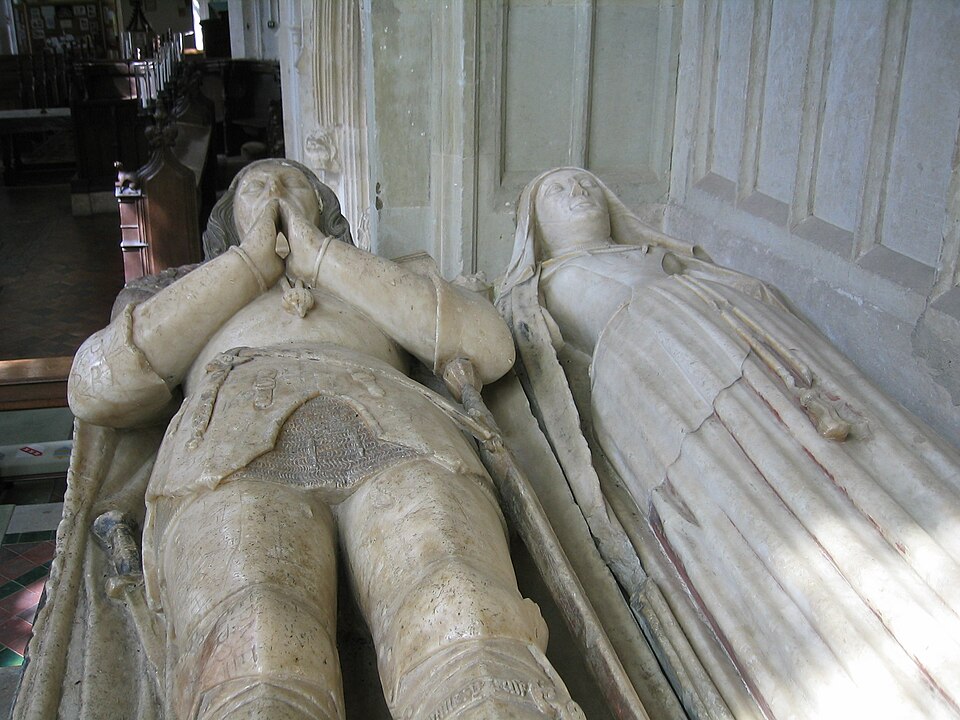
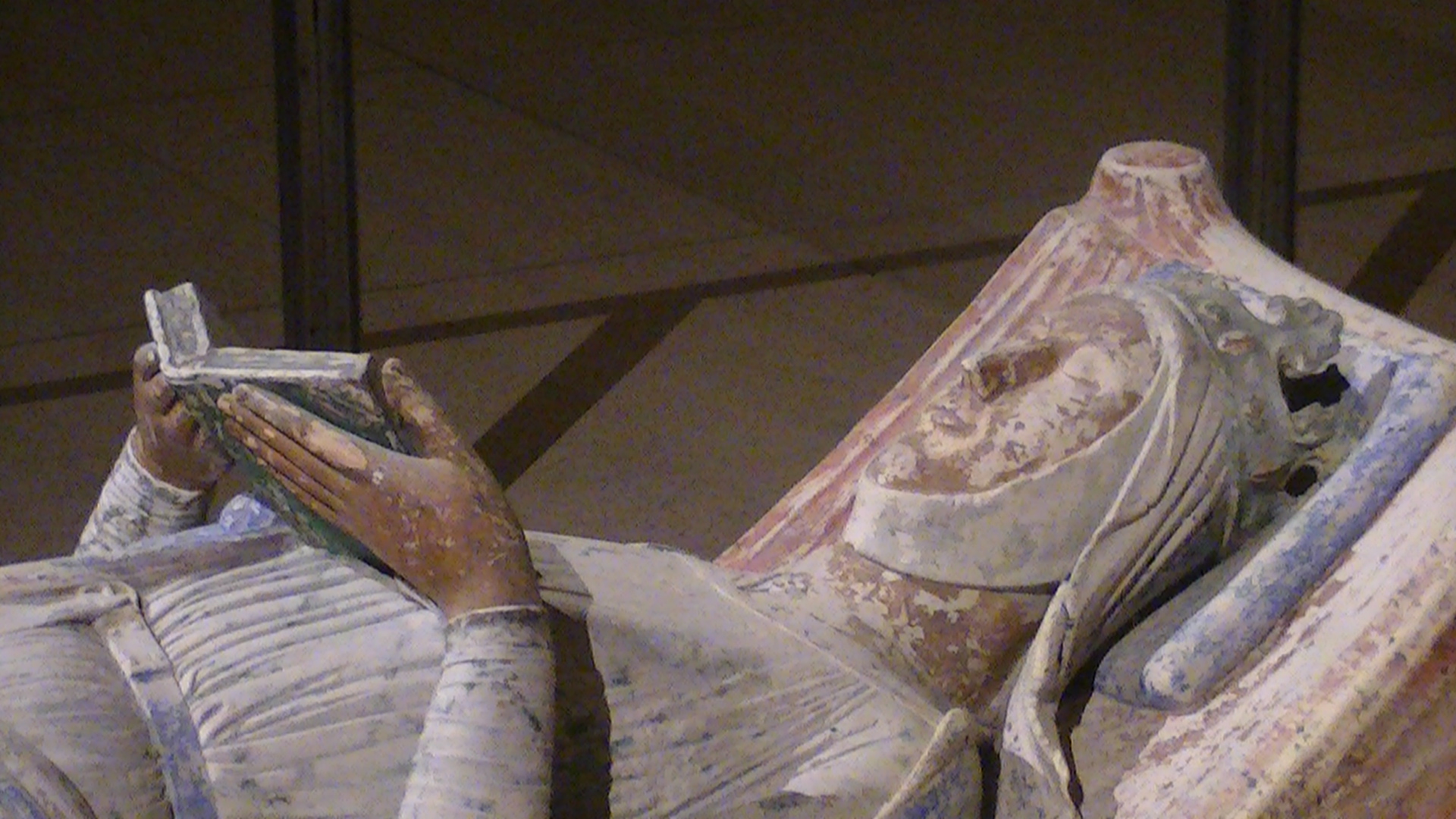
Effigy of Alice Chaucer, Duchess of Suffolk, from her tomb at Ewelme

Alice’s new husband was a soldier, and fought in the Hundred Years War in France. It was during a visit to France in 1424, to her husband, that Alice was at a banquet in Paris, hosted by Philip the good, Duke of Burgundy. Renowned for her beauty, it appears that Duke Philip was far too attentive to the Earl of Salisbury’s wife, infuriating the earl in his attempts to seduce poor Alice. Relations between the duke and the earl soured significantly, with Salisbury going against the interests of Burgundy in besieging Orléans. The siege was a disaster for Salisbury, the French were rallied by Joan of Arc. During the fighting, Salisbury was struck in the face by a splinter from a French cannon on 27 October 1428. He died a week later, on 3 November. In the same engagement, Salisbury’s good friend, William de la Pole, Earl of Suffolk, was captured by the French. Suffolk, it seems, was also fond of Alice and it is thought Alice was the mystery woman to whom he wrote love poetry during his two years of captivity.

Salisbury’s death left Alice a widow for a second time, but this time she was a very wealthy one. According to the terms of Salisbury’s will, Alice was left half of his net goods, 100 marks in gold and 3,000 marks in jewellery and plate, plus the revenues of his Norman lands. As a sign of his trust in Alice and her abilities, Salisbury had also named her as the supervisor of the will. A wealthy and beautiful widow, and still in her twenties, it is not surprising that by 1432, and possibly as early as 1430, Alice had made her third and final marriage. Her husband was the same William de la Pole, Earl of Suffolk, friend of her husband and, apparently, an admirer of Alice. It seems likely that they married shortly after his release from his French imprisonment.

The de la Pole family had risen from being wealthy wool merchants to the nobility, to nobility themselves. William’s grandfather, Michael de la Pole, was a favourite of Richard II, who had been promoted to the peerage as Earl of Suffolk. However, when Richard II’s personal rule was curbed by the Lords Appellant, Suffolk was one of those to take the brunt of the criticism. He fled into exile in 1388 and was sentenced to death in absentia; he died in Paris the following year. His son, another Michael and William’s father, was allied with the Appellant Lords and saw his goods and titles forfeit when Richard II regained control.

History...the Interesting Bits
Alice’s grandfather, Geoffrey Chaucer

They were restored to him in 1398. Michael de la Pole, 2nd Earl of Suffolk, had five sons, of whom William was the second oldest. The de la Pole family gave everything fighting in the French wars, the second earl died of dysentery in 1415, during the same siege of Harfleur during which Alice’s first husband died, and his oldest son, another Michael, died in October of the same year, as one of the few noble casualties of the Battle of Agincourt; he was nineteen and had held the title Earl of Suffolk for just one month. William therefore succeeded to the earldom of Suffolk, but would lose his three remaining brothers to the French over the next twenty years: Alexander was killed in 1429, at the Battle of Jargeau, John died a prisoner in France and Thomas died while acting as hostage for William.

William himself spent decades fighting in France, as one of Henry VI’s senior commanders. This military service may well be the reason why, although William and Alice were married in the early 1430s, their only known child, John de la Pole, was not born until 27 September 1442. When still a child, John would be betrothed to his parents’ ward, Margaret Beaufort, sole heiress of Alice’s cousin, John Beaufort, Duke of Somerset.

William and Alice appear to have had a genuinely close, affectionate and trusting relationship. In his will of 1448, William appoints Alice as his sole executrix, giving her guardianship of their son, John, stating; ‘And last of all, with the blessing of God and of me as heartily as I can give it, my dear and true son, I bequeath between him and his mother love and all good accord and give him to her wholly’.1

History...the Interesting Bits
The village of Ewelme, with the parish church and almshouses

Although William’s family seat was a house at Wingfield, the couple spent most of their time at Alice’s house at Ewelme, where they enlarged the manor house, even receiving a papal dispensation to have a font installed in the chapel. They also rebuilt the parish church of St Mary the Virgin and established a school to educate local boys, the master of which was to be selected from the University of Oxford. William and Alice also built a series of almshouses, known as God’s House, to house thirteen almsmen and two priests, one of whom was to be the schoolmaster.

William de la Pole was deeply involved in the politics of the time. One of Henry VI’s most trusted advisers, it was William who led the embassy to arrange the king’s marriage to Margaret of Anjou, a cousin of the King of France. In November 1444, Alice accompanied her husband to France, along with the Earls of Shrewsbury and Salisbury, to bring back the king’s bride. Alice was to act as Margaret’s senior lady-in-waiting for the journey home and became her close friend; Queen Margaret would visit Alice at her husband’s manor of Wingfield during a progress through the Midlands in 1452. William, however, was to receive the brunt of the criticism for the marriage, which brought no benefit to England, as Margaret came without a dowry, and a secret clause in the marriage contract returned the conquered counties of Maine and Anjou to France.

History...the Interesting Bits
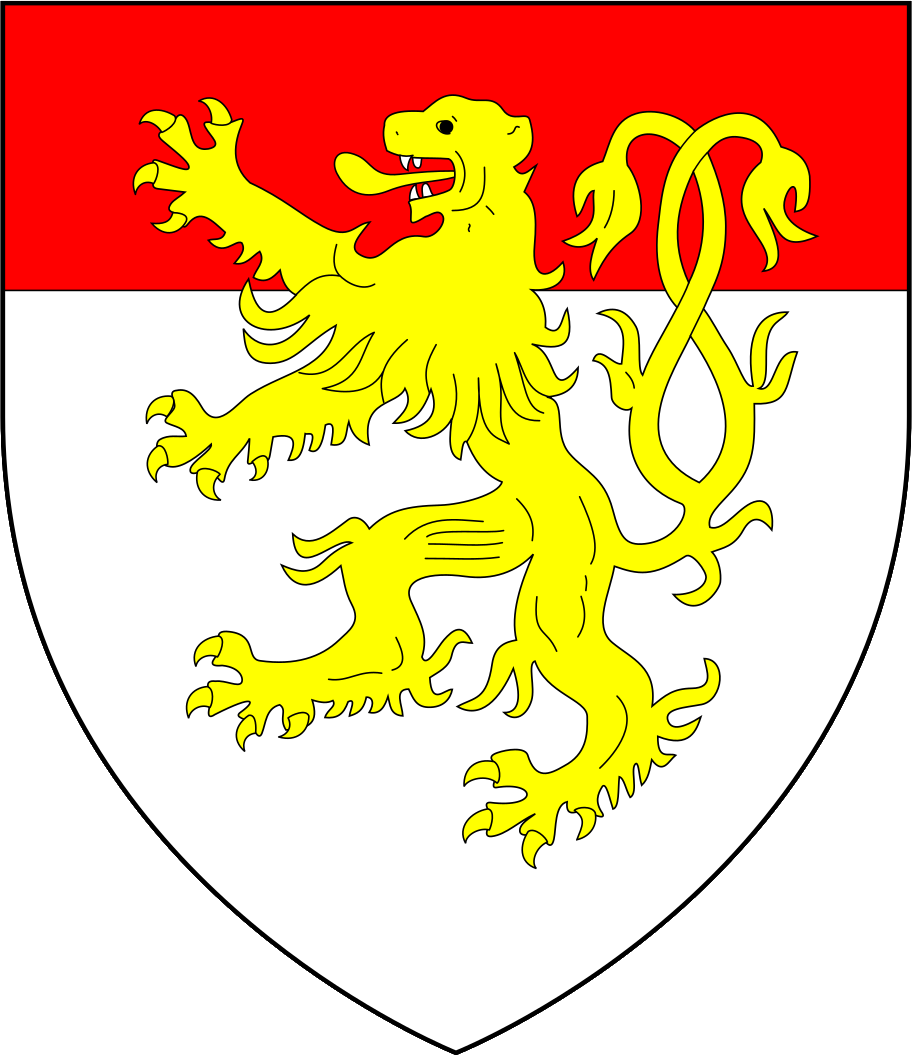
Arms of Alice Chaucer

In 1448 William was created Duke of Suffolk by Henry VI. However, while he still had the confidence of the king, the lords turned against him and his downfall soon followed. He had fallen foul of the powerful Duke of York and became the scapegoat for the ineptitude of Henry VI’s policies. On 7 February 1450, the Paston Letters recorded Suffolk’s impeachment, which charged that:

William de la Pole, Duke of Suffolk, late of Ewelme, in the county of Oxford, falsely and traitorously hath imagined, compassed, purposed forethought, done and committed divers high, great, heinous, and horrible treasons against your most royal person, your commons of your realms of England and France, your duchy of Guienne and Normandy, and your whole inheritance of your county of Anjou and Maine, the estate and dignity of the same, and the universal wele and prosperity of all your true subjects.2

The king tried to stand by Suffolk, and refused to accept the charges of treason; he banished the Duke from the realm for five years. William de la Pole was given six weeks to set his affairs in order before leaving England on 1 May 1450. The Duke wrote a moving letter to his six-year-old son, John, full of fatherly advice and commending him to his mother, saying: ‘Thirdly, in the same wise, I charge you, my dear son, always, as you’re bound by the commandment of God to do, to love, to worship your lady and mother, and also that you obey always her commandments and to believe her councils and advice in all your works, the which dread not, but shall be best and truest to you. And if any other body would stir you to the contrary, to flee the counsel in any wise, for you shall find it nought and evil.’3

History...the Interesting Bits
19th century illustration depicting Suffolk’s murder

The letter is all the more poignant, as it turned out to be William de la Pole’s last communication with his son. He left England on the ship Nicholas of the Tower, but it was intercepted by unknown persons and on 2 May, 1450, the Duke of Suffolk was forced to endure a mock trial before he was gruesomely beheaded with a rusty sword. His body was left on the beach at Dover and his head stuck on a pole beside it. He was later buried at his family’s manor of Wingfield in Suffolk.

Widowed for a third and final time, Alice devoted her time and energies to protecting her son’s inheritance. On 8 May she secured the keeping of all the lands belonging to her husband. However, she was still an object of derision among the malcontents; she was one of those mentioned by name in a Commons petition to have people removed from court. Henry initially acquiesced, but failed to keep his promise to banish the twenty-nine people named in the petition and Alice remained at court as one of Queen Margaret’s ladies. She was with the queen at her churching on 18 November 1453, following the birth of Edward, prince of Wales. The magnificent ceremony was attended by six duchesses, including Alice, eight countesses and seven baronesses.

Alice proved to be a formidable Duchess, pursuing her family’s interests with the utmost vigour. Following her husband’s death, she continued in his claims to some manors in East Anglia, which belonged to John Fastolf. The Pastons, a prominent East Anglian
family who wrote a remarkable number of letters during this period, also laid claim to the lands following Fastolf’s death in 1459. The dispute over Caistor Castle continued long into the next decade. In 1469, John Paston wrote to his younger brother, another John, that ‘the Quene hath sent a letter unto my Lady of Suffolk the elder [Alice] desyryng theym to common [speak] with my lordis that all such matters as the Kyng wrote unto them fore mabe kept so that no defaute be founden in them, as ye may understand by youre lettre sent frome the Quene’.4 Suffolk’s claim on the properties had been dubious, but Alice’s litigation was successful, despite the opposition of the Pastons.

History...the Interesting Bits
Tomb of Alice’s son, John de la Pole and his wife, Elizabeth of York, Wingfield

The mid-15th century was a dangerous time. Powerful lords were squaring up to each other, looking to take advantage of Henry VI’s weak rule. A woman alone, with her son’s inheritance to protect, Alice needed powerful allies. And so, she broke her son’s betrothal to the Lancastrian heiress, Margaret Beaufort, and turned to the House of York. In 1458, Alice negotiated John’s marriage with Elizabeth, daughter of Richard, Duke of York and Cecily Neville. Her son and grandsons would become stalwarts of the Yorkist cause. Of the eleven children of John and Elizabeth, their eldest son, another John, having been named as his heir by Richard III, was killed fighting Henry VII’s Lancastrian army at the Battle of Stoke Field, the final engagement of the Wars of the Roses, in 1487. He was succeeded as Duke of Suffolk by his brother, Edmund, who was executed, because of his Yorkist blood, by Henry VIII in 1513.

Alice was favoured by Edward IV, who won the throne for the Yorkists in 1461, gaining exemptions in his Acts of Resumption. She was among the more honoured guests at the sumptuous feast, hosted by Richard Neville, Earl of Warwick, for the enthronement of his brother, George Neville, as Archbishop of York. The feast was held at the Archbishop’s castle of Cawood in 1465, and Alice was given a place of honour at a high table in a second chamber – a sign of distinction as opposed to a place on a secondary table in the great hall – alongside the Countess of Warwick and the new Archbishop’s sisters, the Countess of Oxford, Lady Hastings and Lady Fitzhugh.

History...the Interesting Bits
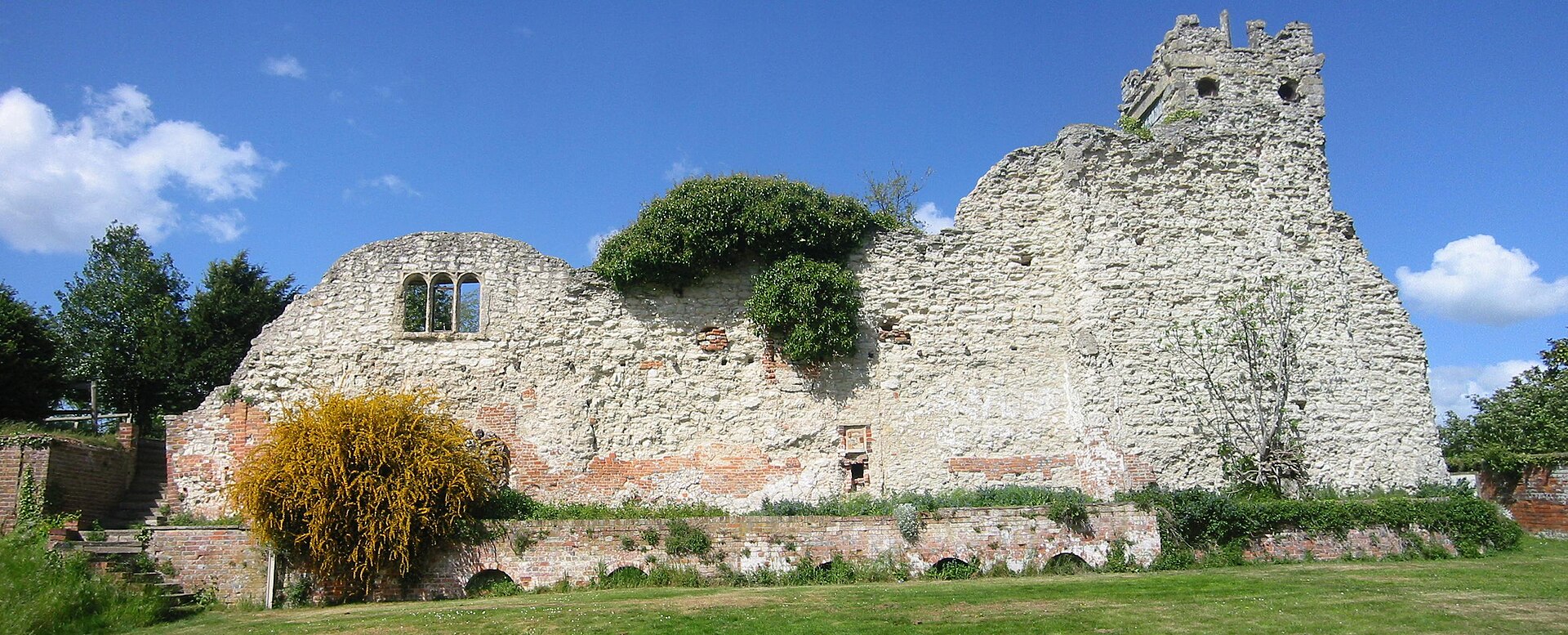
The ruins of Wallingford Castle

A further sign of trust came in 1471; following the Battle of Tewkesbury and the capture of Margaret of Anjou. Edward entrusted the former queen to Alice’s custody. Margaret was held at Wallingford Castle, which was held by Alice and was close to her estate at Ewelme. The Duchess was the queen’s jailer for the last four years of her life. Following Alice’s death, Margaret of Anjou was ransomed by Louis XI of France, and returned to France in 1476.

Through her family inheritance and three marriages, Alice Chaucer had become an incredibly wealthy woman. She held estates in twenty-two counties; in 1454 she received an income of £1300 from three of them alone. Given that her grandfather was Geoffrey Chaucer, it is no surprise that Alice was a patron of the arts, particularly literature, including John Lydgate. An inventory of her goods, taken in 1466 during a move back to Ewelme, included many books.

History...the Interesting Bits
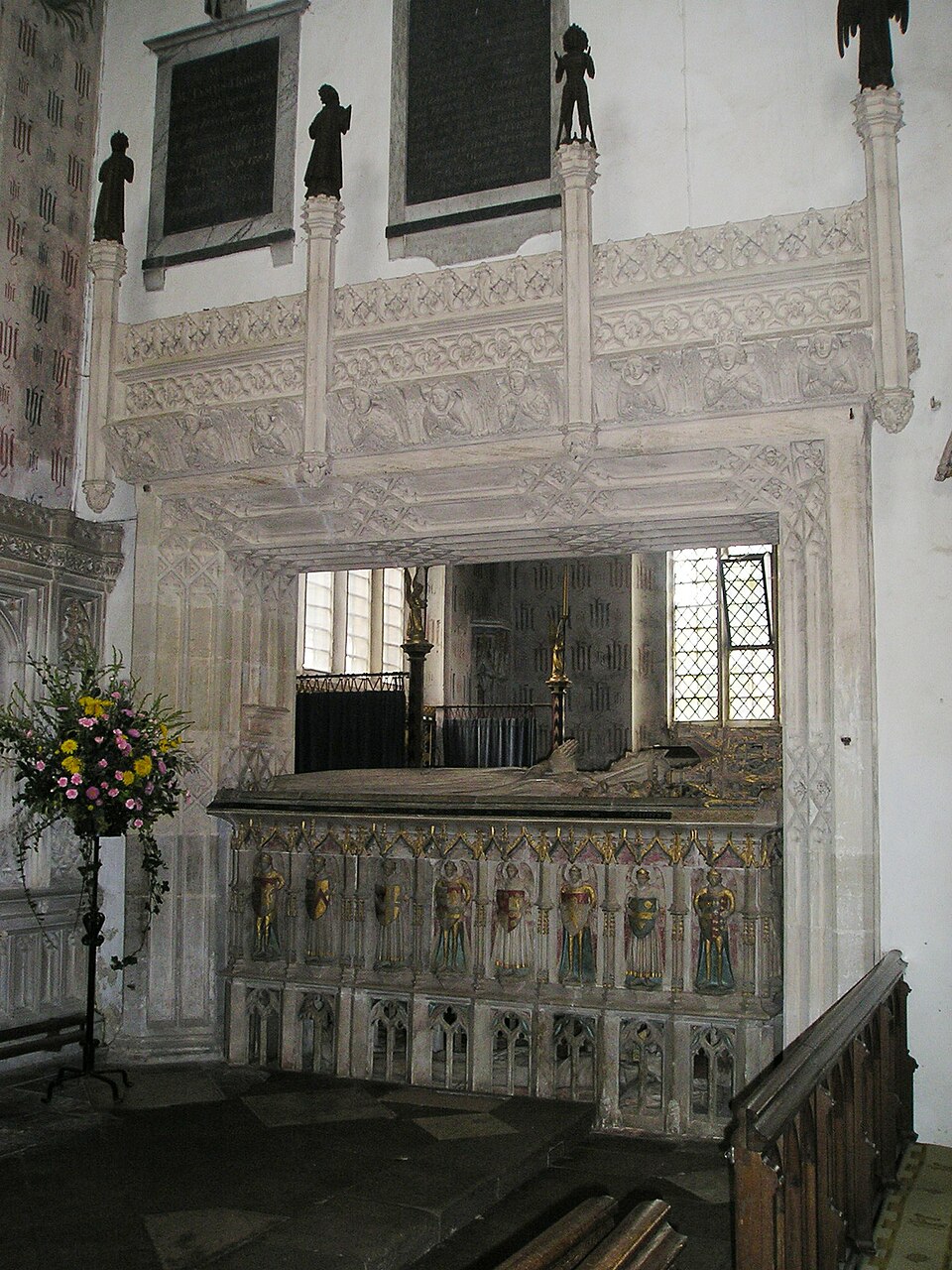
Alice’s tomb in the church of St Mary the Virgin at Ewelme

Alice died sometime between 20 May and 9 June, 1475, aged around seventy-one. She was laid to rest in the church of St Mary the Virgin, at Ewelme, where her parents were also buried. Her magnificent tomb lies between the nave and the chapel of St John the Baptist, an effigy of Alice lies atop the tomb, with the Duchess wearing a ducal coronet and the Order of the Garter on her arm.

Alice had led a remarkable life, successfully weathering the political turmoil that claimed the life of her third husband. She was a survivor, successfully negotiating the pitfalls and dangers of the medieval world – and particularly the turmoil of the 15th century – forging her own path to see herself and her son safely through.

Notes:

Notes: 1. K.L. Clark, The Nevills of Middleham: England’s Most Powerful Family in the Wars of the Roses; 2. Matthew Lewis, Richard Duke of York, King by Right; 3. Clark, The Nevills of Middleham; 4. David Baldwin, Elizabeth Woodville, Mother of the Princes in the Tower.

Images:

Courtesy of Wikimedia except The Canterbury Tales which is ©2026 Sharon Bennett Connolly FRHistS
Further Reading:

Rowena E. Archer, Chaucer, Alice, Duchess of Suffolk (c.1404–1475) (ODNB); K.L. Clark, The Nevills of Middleham: England’s Most Powerful Family in the Wars of the Roses; Kristie Dean, On the Trail of the Yorks; Matthew Lewis, Richard Duke of York, King by Right; David Baldwin, Elizabeth Woodville, Mother of the Princes in the Tower; John Gillingham, The Wars of the Roses; Martin J Dougherty, The Wars of the Roses; Susan Higginbotham, The Woodvilles, the Wars of the Roses and England’s Most Infamous Family; Amy Licence, Red Roses, Blanche of Gaunt to Margaret Beaufort; David Santuiste, Edward IV and the Wars of the Roses; Amy Licence, Henry VI and Margaret of Anjou: A Marriage of Unequals

*

My Books

Signed, dedicated copies of all my books are available through my online bookshop. or by contacting me.

Coming 30 March: Princesses of the Early Middle Ages

Books by Sharon Bennett Connolly

Daughters of kings were often used to seal treaty alliances and forge peace with England’s enemies. Princesses of the Early Middle Ages: Royal Daughters of the Conquest explores the lives of these young women, how they followed the stereotype, and how they sometimes managed to escape it. It will look at the world they lived in, and how their lives and marriages were affected by political necessity and the events of the time. Princesses of the Early Middle Ages will also examine how these girls, who were often political pawns, were able to control their own lives and fates. Whilst they were expected to obey their parents in their marriage choices, several princesses were able to exert their own influence on these choices, with some outright refusing the husbands offered to them.

Their stories are touching, inspiring and, at times, heartbreaking.

Princesses of the Early Middle Ages: Royal Daughters of the Conquest is now available for pre-order from Pen & Sword and Amazon.

Also by Sharon Bennett Connolly:

Books by Sharon Bennett Connolly

Scotland’s history is dramatic, violent and bloody and Scotland’s Medieval Queens have seen it all. This is the story of Scotland through their eyes. Available now from Amazon and Pen and Sword BooksHeroines of the Tudor World tells the stories of the most remarkable women from European history in the time of the Tudor dynasty, 1485-1603. These are the women who ruled, the women who founded dynasties, the women who fought for religious freedom, their families and love. Heroines of the Tudor World is now available from Amberley Publishing and Amazon UK. Women of the Anarchy demonstrates how Empress Matilda and Matilda of Boulogne, unable to wield a sword themselves, were prime movers in this time of conflict and lawlessness. It shows how their strengths, weaknesses, and personal ambitions swung the fortunes of war one way – and then the other. Available from Bookshop.orgAmberley Publishing and Amazon UKKing John’s Right-Hand Lady: The Story of Nicholaa de la Haye is the story of a truly remarkable lady, the hereditary constable of Lincoln Castle and the first woman in England to be appointed sheriff in her own right. Available from all good bookshops Pen & Sword Booksbookshop.org and Amazon

Royal Historical Society

Defenders of the Norman Crown: The Rise and Fall of the Warenne Earls of Surrey tells the fascinating story of the Warenne dynasty, from its origins in Normandy, through the Conquest, Magna Carta, the wars and marriages that led to its ultimate demise in the reign of Edward III. Available from Pen & Sword BooksAmazon in the UK and US, and Bookshop.orgLadies of Magna Carta: Women of Influence in Thirteenth Century England looks into the relationships of the various noble families of the 13th century, and how they were affected by the Barons’ Wars, Magna Carta and its aftermath; the bonds that were formed and those that were broken. It is now available in paperback and hardback from Pen & SwordAmazon, and Bookshop.orgHeroines of the Medieval World tells the stories of some of the most remarkable women from Medieval history, from Eleanor of Aquitaine to Julian of Norwich. Available now from Amberley Publishing and Amazon, and Bookshop.orgSilk and the Sword: The Women of the Norman Conquest traces the fortunes of the women who had a significant role to play in the momentous events of 1066. Available now from Amazon,  Amberley Publishing, and Bookshop.org.

Alternate Endings: An anthology of historical fiction short stories including Long Live the King… which is my take what might have happened had King John not died in October 1216. Available in paperback and kindle from Amazon.

Podcast:

A Slice of Medieval

Have a listen to the A Slice of Medieval podcast, which I co-host with Historical fiction novelist Derek Birks. Derek and I welcome guests, such as Ian Mortimer, Bernard Cornwell, Elizabeth Chadwick and Scott Mariani, and discuss a wide range of topics in medieval history, from significant events to the personalities involved. 

Every episode is also now available on YouTube.

*

Don’t forget! Signed and dedicated copies of all my books are available through my online bookshop.

For forthcoming online and in-person talks, please check out my Events Page.

You can be the first to read new articles by clicking the ‘Follow’ button, liking our Facebook page or joining me on TwitterThreadsBluesky and Instagram.

*

©2026 Sharon Bennett Connolly FRHistS
Online History Festival: Defining Moments in British History

History...the Interesting Bits

I am delighted to have been asked to take part in this year’s Online History Festival hosted by British History Events!

The theme and title of this year’s festival (their 6th) is ‘Defining Moments in British History’ – exploring six defining moments that have shaped Britain today. The festival is all online, taking place from the evening of Friday, 20th March until the evening of Sunday, 22nd March 2026.

Magna Carta: From Inception to Legacy

By 1215, the English barons’ objections to King John were almost beyond number. He had failed to face the French and had lost not only most of his family’s Continental possessions, but also those of his barons. Few had forgotten his treachery against his brother – his attempts on the throne whilst Richard was away on Crusade. His barons even complained that he forced himself on their wives and daughters.

The barons had had enough.

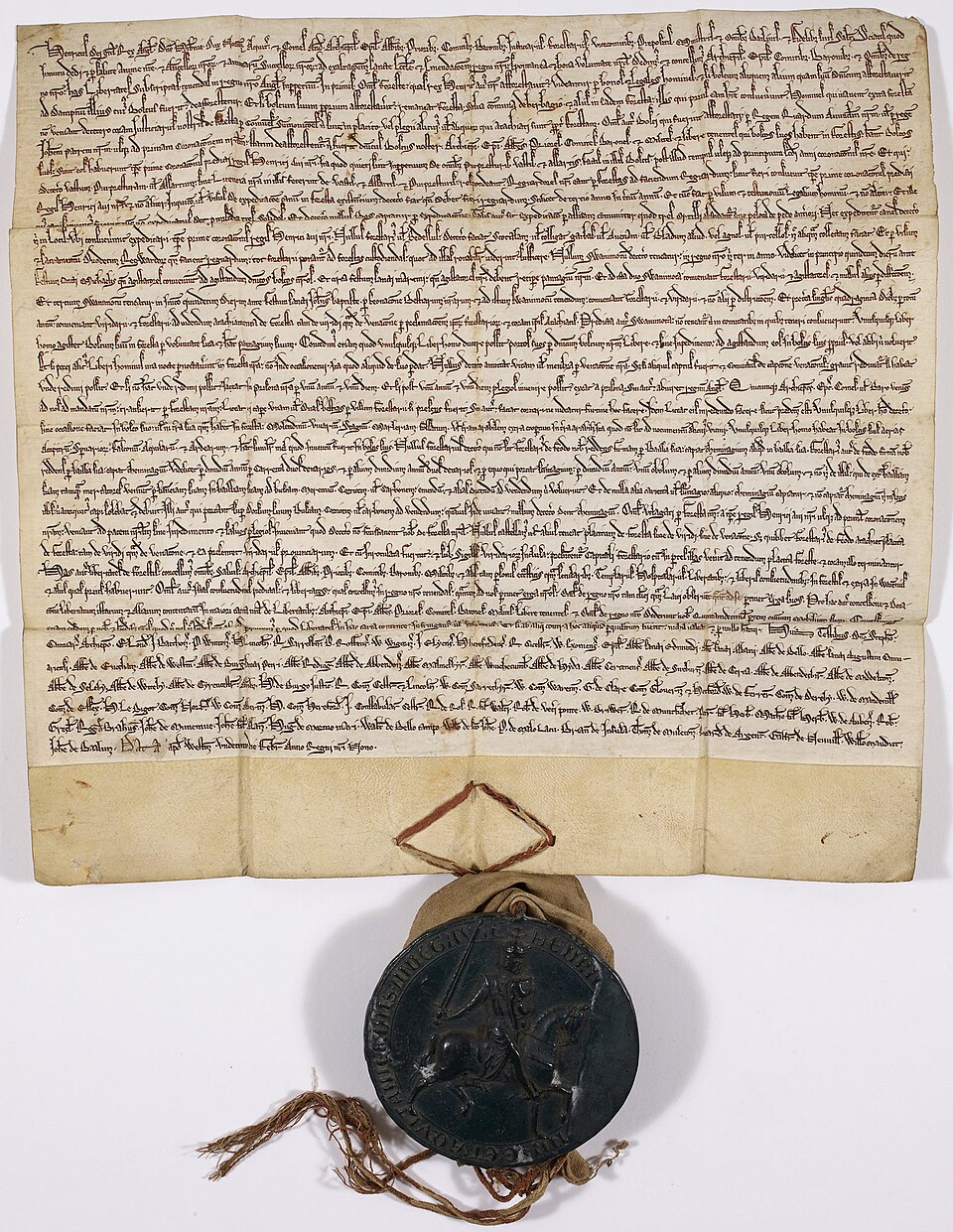
And the result was Magna Carta; a detailed document created to stave off civil war. It touched on the whole system of royal government. And it was granted to ‘all free men of the realm and their heirs forever’. It brought the king within the law, rather than above it.

It is the closest thing England has to a Constitution.

How significant was Magna Carta really?

In this lecture, I will explore the reasons for Magna Carta, the civil war that followed its creation and the people who fought for it and used it to assert their own rights. And we will look at how relevant it still is today, even beyond England’s shores.

So, I have been spending this week tweaking my PowerPoint presentation and recording the lecture.

History...the Interesting Bits

There will be 6 talks from leading historians (including myself!), a live Q&A with all 6 historians, a live quiz, and a prize draw. Here is the line up!

Julian Humphrys explores ‘The Battle of Hastings: What Happened and What Followed’.
Sharon Bennett Connolly (me!) traces ‘Magna Carta: From Inception to Legacy’.
Matthew Lewis examines ‘How the Black Death Changed England Forever’.
Gareth Russell tackles ‘Crisis of Faith: The Reformation in British History’.
Jonathan Healey delves into ‘The British Civil Wars: How They Happened and Why They Matter’.
Gareth Streeter looks at ‘The Birth of Britain: How the Glorious Revolution and the Act of Union Forged a Modern Nation’.

And I am really looking forward to the online Q&A and discussion.

Of course, Magna Carta is THE defining moment, but I will let the fellas have their say …

History...the Interesting Bits

Don’t worry if you can’t watch all the talks as they go out – your ticket will give you access to everything in the festival until 31st May 2026.

And you can watch them as often as you like.

Tickets are £22 + fees and are available now at: British History Events’ Online History Festival

If you have any questions, please ask. You can also email the event organisers at office@britishhistorytours.com.

We would all love to have you join us!

*

My Books

Signed, dedicated copies of all my books are available through my online bookshop. or by contacting me.

Coming 30 March: Princesses of the Early Middle Ages

Books by Sharon Bennett Connolly

Daughters of kings were often used to seal treaty alliances and forge peace with England’s enemies. Princesses of the Early Middle Ages: Royal Daughters of the Conquest explores the lives of these young women, how they followed the stereotype, and how they sometimes managed to escape it. It will look at the world they lived in, and how their lives and marriages were affected by political necessity and the events of the time. Princesses of the Early Middle Ages will also examine how these girls, who were often political pawns, were able to control their own lives and fates. Whilst they were expected to obey their parents in their marriage choices, several princesses were able to exert their own influence on these choices, with some outright refusing the husbands offered to them.

Their stories are touching, inspiring and, at times, heartbreaking.

Princesses of the Early Middle Ages: Royal Daughters of the Conquest is now available for pre-order from Pen & Sword and Amazon.

Also by Sharon Bennett Connolly:

Books by Sharon Bennett Connolly

Scotland’s history is dramatic, violent and bloody and Scotland’s Medieval Queens have seen it all. This is the story of Scotland through their eyes. Available now from Amazon and Pen and Sword BooksHeroines of the Tudor World tells the stories of the most remarkable women from European history in the time of the Tudor dynasty, 1485-1603. These are the women who ruled, the women who founded dynasties, the women who fought for religious freedom, their families and love. Heroines of the Tudor World is now available from Amberley Publishing and Amazon UK. Women of the Anarchy demonstrates how Empress Matilda and Matilda of Boulogne, unable to wield a sword themselves, were prime movers in this time of conflict and lawlessness. It shows how their strengths, weaknesses, and personal ambitions swung the fortunes of war one way – and then the other. Available from Bookshop.orgAmberley Publishing and Amazon UKKing John’s Right-Hand Lady: The Story of Nicholaa de la Haye is the story of a truly remarkable lady, the hereditary constable of Lincoln Castle and the first woman in England to be appointed sheriff in her own right. Available from all good bookshops Pen & Sword Booksbookshop.org and Amazon

Royal Historical Society

Defenders of the Norman Crown: The Rise and Fall of the Warenne Earls of Surrey tells the fascinating story of the Warenne dynasty, from its origins in Normandy, through the Conquest, Magna Carta, the wars and marriages that led to its ultimate demise in the reign of Edward III. Available from Pen & Sword BooksAmazon in the UK and US, and Bookshop.orgLadies of Magna Carta: Women of Influence in Thirteenth Century England looks into the relationships of the various noble families of the 13th century, and how they were affected by the Barons’ Wars, Magna Carta and its aftermath; the bonds that were formed and those that were broken. It is now available in paperback and hardback from Pen & SwordAmazon, and Bookshop.orgHeroines of the Medieval World tells the stories of some of the most remarkable women from Medieval history, from Eleanor of Aquitaine to Julian of Norwich. Available now from Amberley Publishing and Amazon, and Bookshop.orgSilk and the Sword: The Women of the Norman Conquest traces the fortunes of the women who had a significant role to play in the momentous events of 1066. Available now from Amazon,  Amberley Publishing, and Bookshop.org.

Alternate Endings: An anthology of historical fiction short stories including Long Live the King… which is my take what might have happened had King John not died in October 1216. Available in paperback and kindle from Amazon.

Podcast:

A Slice of Medieval

Have a listen to the A Slice of Medieval podcast, which I co-host with Historical fiction novelist Derek Birks. Derek and I welcome guests, such as Ian Mortimer, Bernard Cornwell, Elizabeth Chadwick and Scott Mariani, and discuss a wide range of topics in medieval history, from significant events to the personalities involved. 

Every episode is also now available on YouTube.

*

Don’t forget! Signed and dedicated copies of all my books are available through my online bookshop.

For forthcoming online and in-person talks, please check out my Events Page.

You can be the first to read new articles by clicking the ‘Follow’ button, liking our Facebook page or joining me on TwitterThreadsBluesky and Instagram.

*

©2026 Sharon Bennett Connolly FRHistS and British History Tours
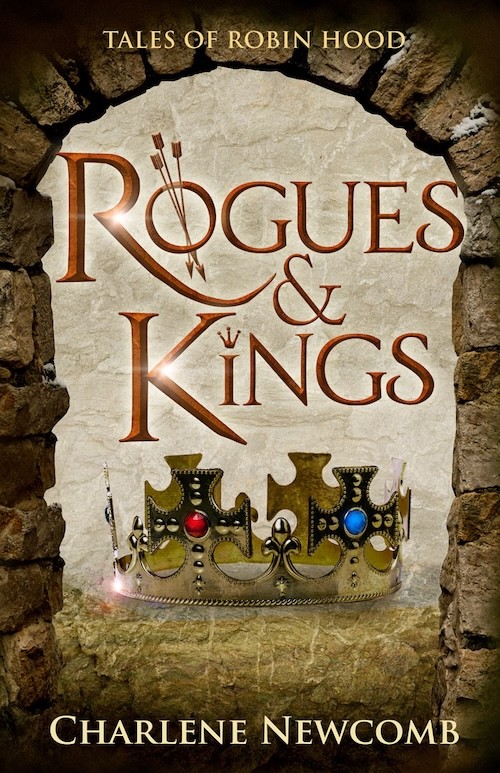
Book Corner: Rogues and Kings by Charlene Newcomb

History ... the Interesting Bits

Deadly secrets. Hidden identities. A true enemy.
Silence is the only shield.

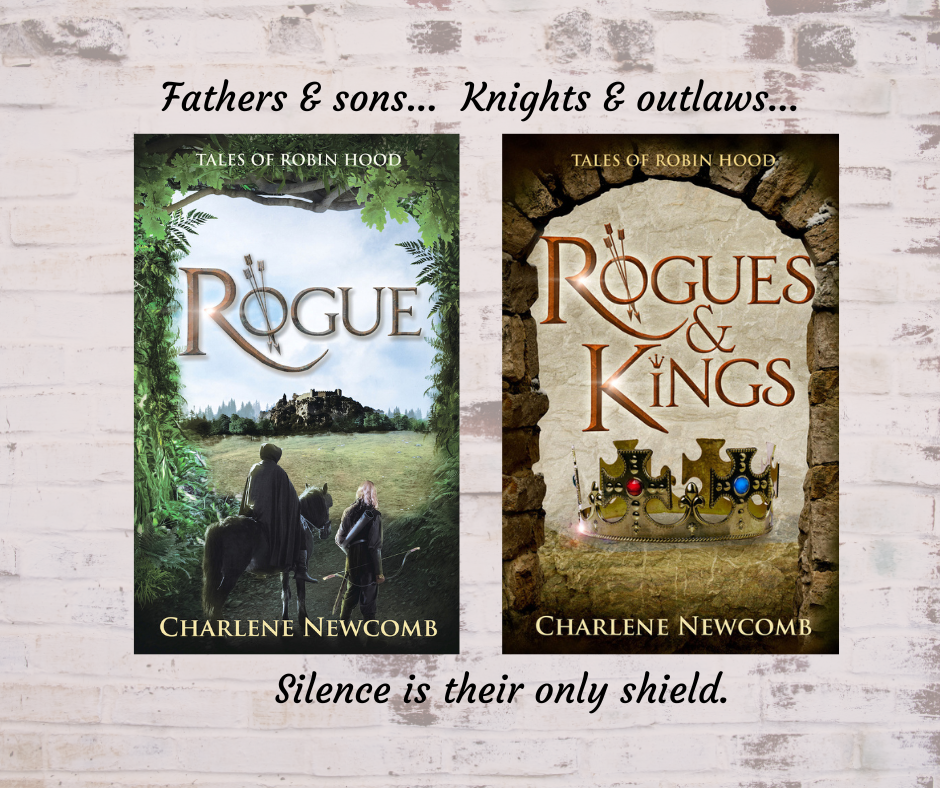
The year is 1216 and civil war rages in England. King John ravages the countryside against rebellious barons and a French invasion. Unbeknownst to him, his newest squire, Richard, is in fact the son of a man the king would hang without a second thought. A man the common folk call Robin Hood.

For years, Robin has lived as a knight in exile. But when his son is ensnared in the treachery of the royal court, Robin is forced out of the shadows, aided by his outlaw friends in the Hood.

There is no question for Richard where his loyalties lie but it’s more than his own life at risk. He has the trust of a dangerous king. Can he serve the Hood better from within John’s inner circle, or will schemes against the crown unravel?

Rob from the rich, give to the poor takes on a whole new meaning.

Rogues & Kings is a sweeping tale of courage and betrayal in a kingdom on the edge of ruin, of a boy coming of age in the midst of war, and of legends being born.

Woohoo! A Robin Hood story!

As I’m sure you know by now, I have great affection for anything Robin Hood-related. I think it comes from living so close to Sherwood Forest for most of my life. So, when a new Robin Hood story comes out, I have to read it. Rogues and Kings by Charlene Newcomb is particularly special because another of my heroes/heroines is a co-star, Nicholaa de la Haye.

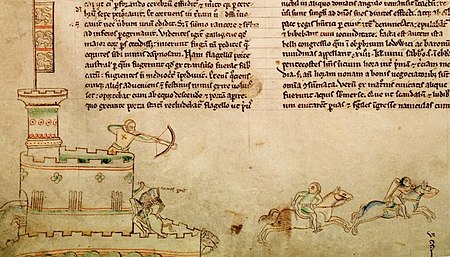
Rogues & Kings is set at the height of the First Barons’ War. Magna Carta has been issued and revoked, the French have been invited to invade in support the English rebels. John is fighting for his political survival. The city of Lincoln had been seized by the rebels, but they retreated as John came north, chasing them into the Isle of Axholme ‘with fire and sword’. The king returns to Lincoln in September, in time for the Michaelmas Feast. And who holds Lincoln?

Nicholaa de la Haye!

I have to admit to one disappointment with Rogues & Kings, the scene in which Nicholaa tries to resign her post as constable of Lincoln Castle is not included. And I do think it would have made a great scene, with John confirming his trust in Nicholaa. It is a pity, I would have loved to read Charlene’s take on it. But I have to remember, this isn’t Nicholaa’s story. It’s the story of Robin Hood, his family and allies – and Nicholaa is walking a fine line, as the host and ally of King John and as friend to Robin and his familia.

And Rogues & Kings is a Robin Hood story in the best tradition of the genre. John has taken Robin’s son, Richard, as a squire – though he is unaware that Richard is Robin’s son. And teenage Richard wants to help the outlaws and rebels, by spying on the king. But he soon realises the dangers inherent in working for ‘Bad King John’ while helping his father’s friends.

History...the Interesting Bits
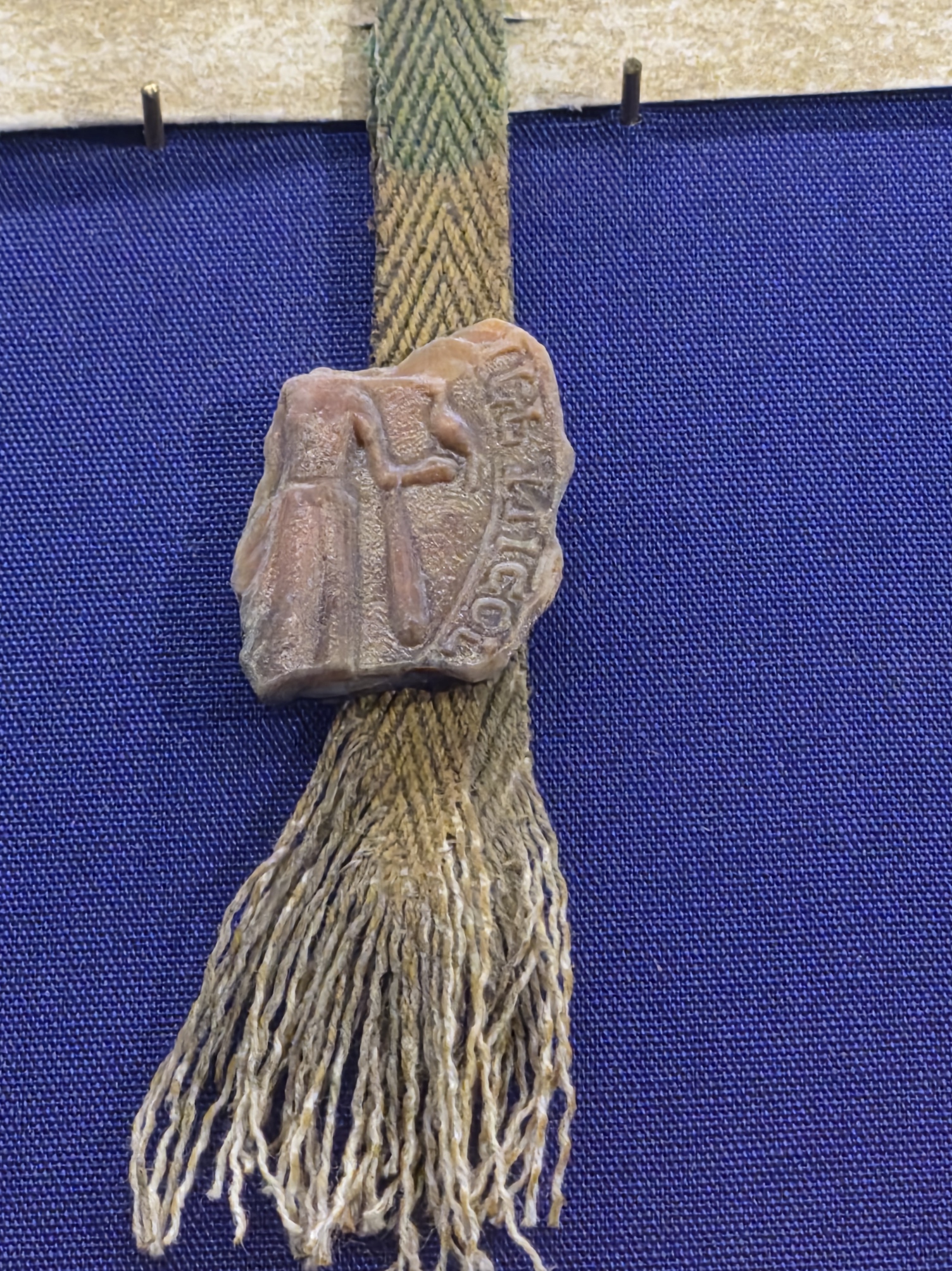
Seal of Nicholaa de la Haye, Lincoln Cathedral ©Sharon Bennett Connolly

“Your mother will expect and official wedding.” Which would work well, Robin thought, since the sheriff and the men of Robert’s troop could learn nothing about this ceremony in Sherwood surrounded by the Hood.

Robin clasped Robert’s shoulder. “Tuck can announce the bans at St Mary’s. I’ll bring your mother. She will love Joanna.” He found Robert’s new bride amongst the dancers, and then pounded Robert on the back. “You’ll have a beautiful night together here. Just don’t put off marrying at the church too long in case…”

Robert turned a dark crimson.

Robin eyed him. “You have… You know how -“

“God’s bones, Papa!” Robert groaned. “I’m four and thirty.”

Robin laughed until his eyes brimmed with tears. Wiping them away he said, “There’s that secret room off the castle kitchen. Good place for a tryst.” he winked, tipped his head. “Joanna’s ma might give you a few minutes to yourselves.”

Robert dropped his head into his hands and groaned again.

A shout rose from a sentry deep in the wood, and a covey of birds burst skyward across the crescent moon. The vielle fell silent and the dancing stopped.

“What’s that?” Robert asked as Joanna rushed toward him.

Slinging his quiver over his shoulder, Robin scrambled to his feet. “Rider coming.” He reached for his bow.

The revelers retrieved swords and bows, whisking them from beneath their clothing or from the weapons stashed at the edge of the gathering. Women hurrying for cover at the tree line brandished daggers and cutting knives as the great fire lighting the wedding celebration crackled and tree branches rustled.

Allan studied the ancient oaks and birch, listening, his gray-streaked blonde hair stirring in the breeze. The violent snap of a twig and the damp, grinding crunch of leaves beneath a horse’s hooves betrayed the interloper’s approach. The sound grew louder, closer, until a familiar bird call pierced the air and Allan signaled for calm.

A collective sigh of relief swept the air as wedding guests peeked out from behind moss-covered tree trunks and prickly holly bushes. Firelight glinted off polished swords as the men slowly lowered their blades.

The rider came slowly, the darkened path to the camp mired in thick brush and uneven tree roots. Curses echoed through the forest. Recognizing the voice, Robin smiled and set down his bow before the last branches were swept aside.

The outlaws waved and clapped as Little John urged his horse into the clearing. As a child, “little” described him well – he’d been smaller than his orphan-friend Allan, who’d given him the name when they’d met on the quay in London. But he’d grown. And quite large, too, standing a head above most men.

Little John sprang from his horse and strode toward Robin. The outlaws’ greetings melted away as he held up his hands, the light from the fire revealing his grim face.

“King John has taken Richard hostage.”

Rogues & Kings is hard-hitting, in places it is sad, in other places the suspense is palpable. It leaves the reader egging on the outlaws, hoping for deceptions to succeed and knowing that not everyone can – or will – survive. Including King John. I spend half of the book thinking, ‘just hold on, John dies soon.’ John died on the night of 18/19 October 1216. If only Robin knew this! But, of course, he didn’t and the author does a fantastic job of not giving spoilers to John’s fate, heightening the tension. (Oops! Sorry!)

Robin, Marian, Little John and Allan Dale have to live in the moment, making their decisions ignorant of the fact England’s fate – and their own – was about to take a dramatic twist.

Charlene Newcomb uses the historical background of 1216 – John’s pursuit of the rebels, visit to Lincoln, disastrous crossing of the Wash and agonising death – as the backbone of her story. She weaves the intrigues and actions of her heroes around the historical facts.

Her depiction of King John is suitably paranoid, duplicitous and dastardly. Nicholaa de la Haye is a masterful creation. She is a politically savvy woman navigating her way in a world where the king is unpredictable and vindictive and her castle is surrounded by enemies. Robin is older than he appears in other stories; a man experienced in war and regret, he has much to lose and has to learn how to let go, how to trust that his sons are capable of looking after themselves – in a world fraught with danger.

History...the Interesting Bits
1217 Battle of Lincoln

Rogues & Kings is fast-paced, fun, gripping, agonising and adventurous. And I love it! (All the more so because Nicholaa de la Haye gets a significant supporting role.)

My only regret is that Charlene says this is the last. There will be no more Robin Hood stories – I hope to persuade her otherwise.

I really do think Robin should stick around to help out at the end of the First Barons’ War. How can he resist helping Nicholaa defend Lincoln Castle and being present at the 1217 Battle of Lincoln?

Surely the story will write itself?

Buy Rogues & Kings!

About the author:

Charlene Newcomb, aka Char, writes historical fiction and science fiction. Her award-winning Battle Scars trilogy is set in the 12th century during the reign of Richard the Lionheart. Her writing roots are in the Star Wars Expanded Universe (aka Legends) where she published 10 short stories in the Star Wars Adventure Journal. She published the scifi/space opera Echoes of the Storm in 2020, and returns to medieval times with her latest novel Rogue in 2023.

Librarian (retired).

U.S. Navy veteran.

Mom to 3, grandma to 3.

My Books

Signed, dedicated copies of all my books are available through my online bookshop. or by contacting me.

Coming 30 March: Princesses of the Early Middle Ages

Books by Sharon Bennett Connolly

Daughters of kings were often used to seal treaty alliances and forge peace with England’s enemies. Princesses of the Early Middle Ages: Royal Daughters of the Conquest explores the lives of these young women, how they followed the stereotype, and how they sometimes managed to escape it. It will look at the world they lived in, and how their lives and marriages were affected by political necessity and the events of the time. Princesses of the Early Middle Ages will also examine how these girls, who were often political pawns, were able to control their own lives and fates. Whilst they were expected to obey their parents in their marriage choices, several princesses were able to exert their own influence on these choices, with some outright refusing the husbands offered to them.

Their stories are touching, inspiring and, at times, heartbreaking.

Princesses of the Early Middle Ages: Royal Daughters of the Conquest is now available for pre-order from Pen & Sword and Amazon.

Also by Sharon Bennett Connolly:

Books by Sharon Bennett Connolly

Scotland’s history is dramatic, violent and bloody and Scotland’s Medieval Queens have seen it all. This is the story of Scotland through their eyes. Available now from Amazon and Pen and Sword BooksHeroines of the Tudor World tells the stories of the most remarkable women from European history in the time of the Tudor dynasty, 1485-1603. These are the women who ruled, the women who founded dynasties, the women who fought for religious freedom, their families and love. Heroines of the Tudor World is now available from Amberley Publishing and Amazon UK. Women of the Anarchy demonstrates how Empress Matilda and Matilda of Boulogne, unable to wield a sword themselves, were prime movers in this time of conflict and lawlessness. It shows how their strengths, weaknesses, and personal ambitions swung the fortunes of war one way – and then the other. Available from Bookshop.orgAmberley Publishing and Amazon UKKing John’s Right-Hand Lady: The Story of Nicholaa de la Haye is the story of a truly remarkable lady, the hereditary constable of Lincoln Castle and the first woman in England to be appointed sheriff in her own right. Available from all good bookshops Pen & Sword Booksbookshop.org and Amazon

Royal Historical Society

Defenders of the Norman Crown: The Rise and Fall of the Warenne Earls of Surrey tells the fascinating story of the Warenne dynasty, from its origins in Normandy, through the Conquest, Magna Carta, the wars and marriages that led to its ultimate demise in the reign of Edward III. Available from Pen & Sword BooksAmazon in the UK and US, and Bookshop.orgLadies of Magna Carta: Women of Influence in Thirteenth Century England looks into the relationships of the various noble families of the 13th century, and how they were affected by the Barons’ Wars, Magna Carta and its aftermath; the bonds that were formed and those that were broken. It is now available in paperback and hardback from Pen & SwordAmazon, and Bookshop.orgHeroines of the Medieval World tells the stories of some of the most remarkable women from Medieval history, from Eleanor of Aquitaine to Julian of Norwich. Available now from Amberley PublishingAmazon, and Bookshop.orgSilk and the Sword: The Women of the Norman Conquest traces the fortunes of the women who had a significant role to play in the momentous events of 1066. Available now from AmazonAmberley Publishing, and Bookshop.org.

Alternate Endings: An anthology of historical fiction short stories including Long Live the King… which is my take what might have happened had King John not died in October 1216. Available in paperback and kindle from Amazon.

Podcast:

History ... the Interesting Bits

Have a listen to the A Slice of Medieval podcast, which I co-host with Historical fiction novelist Derek Birks. Derek and I welcome guests, such as Ian Mortimer, Bernard Cornwell, Elizabeth Chadwick and Scott Mariani, and discuss a wide range of topics in medieval history, from significant events to the personalities involved. 

Every episode is also now available on YouTube.

*

Don’t forget! Signed and dedicated copies of all my books are available through my online bookshop.

For forthcoming online and in-person talks, please check out my Events Page.

You can be the first to read new articles by clicking the ‘Follow’ button, liking our Facebook page or joining me on TwitterThreadsBluesky and Instagram.

Article: © 2020 Sharon Bennett Connolly FRHistS

Wordly Women: Charlene Newcomb

Today, it is a pleasure to be chatting with my good friend Charlene Newcomb, just as her latest book, Rogues and Kings hits the shops. Rogues and Kings is a fabulous story, set in 1216, featuring Robin Hood and his gang/friends, King John and the magnificent Nicholaa de la Haye. I highly recommend it and will be writing a review shortly.

But first, Char, let’s have a chat.

Sharon: We’re here today talking medieval historical fiction, but I know you started your publishing career with short stories in the Star Wars universe. How did that come about?

Charlene: Timothy Zahn’s Heir to the Empire, a sequel to the movie Return of the Jedi, inspired me to write my own Star Wars sequel though my writing credentials as of 1993 consisted of an alternative history short story in high school and a few scenes from other attempts at creativity. I was a huge fan of the original Star Wars trilogy. (Shouldn’t that count for something?) I quickly discovered only well known authors were being invited to publish in that universe but ran across a call for short stories in an official Lucasfilm licensed role-playing game magazine. My novel had broken all the rules for submission, but I took one of my original characters—a rebel underground freedom fighter named Alexandra Winger—and created her backstory. “A Glimmer of Hope” was accepted, vetted through West End Games and Lucasfilm, and illustrated and published in the Star Wars Adventure Journal (SWAJ). Alex even has a Wookiepedia entry!

Sharon: How did you get from Star Wars to medieval historical fiction?

History ... the Interesting Bits

Charlene: The publisher of the SWAJ declared bankruptcy so the timing of that—around 1998—along with single parenthood and a demanding career interrupted my writing journey. Several years later a BBC Robin Hood series stirred my interest in Richard the Lionheart and the Third Crusade. Down the research rabbit hole I went, and my itch to create an original novel-length story surfaced.

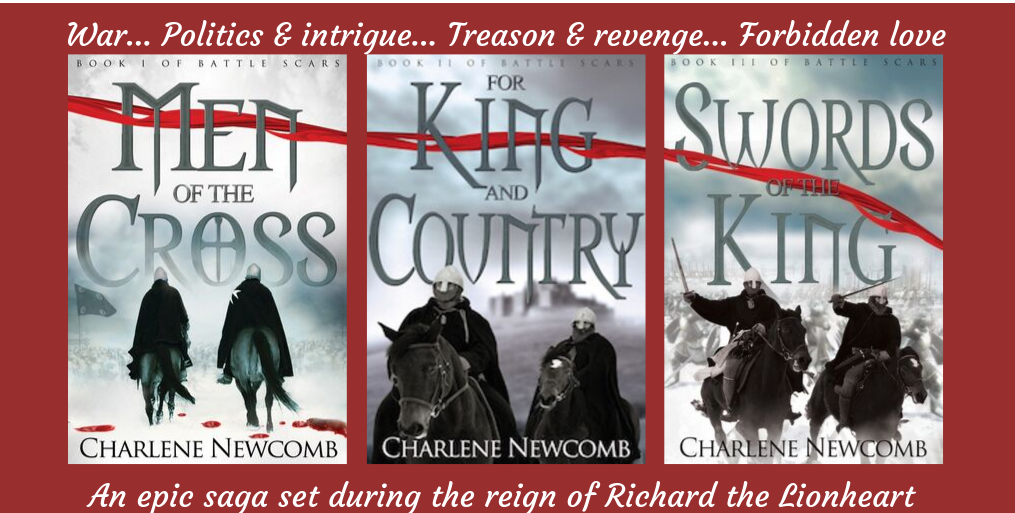
I wanted to see the Lionheart through the eyes of the men who served him so I created two original characters: the battle-hardened Stephan l’Aigle and the naive and inexperienced Henry de Grey. Men of the Cross (Battle Scars I) takes the young knights to the Holy Land and then back to England. I introduced some secondary characters in that novel: two teenaged camp followers and a knight named Will who was an expert with bow and had been in love with, and left behind, a girl named Marian. My critique partners could tell I was hinting at a Robin-Hood-type character in Will—they convinced me I should give readers a reimagining of the origins of the legend. Will became Robin and the two teenagers became my Allan a Dale and Little John.

Sharon: Tell us about your books.

History ... the Interesting Bits

The Battle Scars series (3 books) cover events of King Richard I’s reign from 1190-1199: the Third Crusade, Prince John’s attempted coup, and King Richard’s war against Philip of France for his continental holdings. The series ends shortly after Richard’s death in 1199.

The two books In Tales of Robin Hood can be read as stand-alones though they are closely tied. Both Tales take place in 1216 with the premise that Allan a Dale leads ‘the Hood’ in Sherwood Forest and Robin, in his fifties, has assumed a different identity and been in self-exile to finally have a life with Marian in Yorkshire. King John has never forgotten their roles in thwarting his attempt to overthrow Richard. He would hang them all in his thirst for revenge.

Sharon: What attracts you to the 12th-13th centuries?

History ... the Interesting Bits
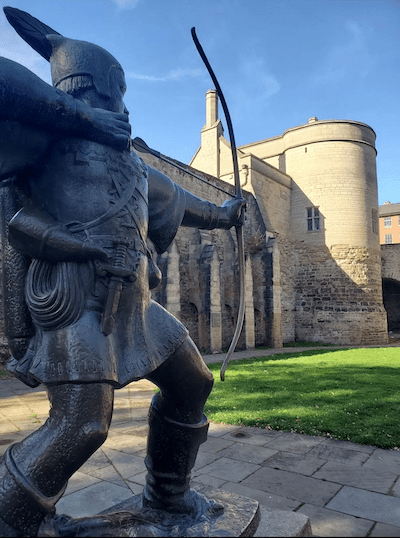
Robin Hood (Charlene Newcomb)

Empress Matilda, Eleanor of Aquitaine, Henry II, Richard I, John—such rich (and not always so pretty) lives with powerful stories in incredible times: the Anarchy, Thomas Becket’s murder, the Crusades, the rise and fall of the Angevin Empire, Magna Carta. Unlike most school kids, I was a history nerd and soaked it in when Dad made an effort to stop at historic U.S. sites every time we traveled. But the medieval period was an era barely touched on in the world history classes I was required to take.

I loved the idea of Robin Hood as a close companion and loyal knight of Richard I, accompanying the king to the Holy Land, and then later serving as a spy in Prince John’s mesnie. When Richard, John, and their mother Eleanor of Aquitaine are on the page, the actual history at times almost feels like fiction—the dysfunctional family, sons (and wife) in rebellion against Henry II, brother against brother, scheming enemies, a paranoid, distrustful king. To weave Robin, Allan, Little John, and the other Hood (including Henry and Stephan) into that history lets me reveal lines between traitors and heroes.S

Sharon: What don’t people know about Robin Hood?

History ... the Interesting Bits
Forest Charter 1217, reissue 1225 image

Charlene: Modern audiences are familiar with the original legend through movies and television, most of which take place in the late 12th/early 13th century. But many don’t realize there is no evidence to indicate Robin was an actual historical figure. The first written stories about him appear mid-15th century though oral stories were passed around in the latter half of the 1400s. Television and movies generally portray Robin as serving King Richard I and/or fighting against King John (1189-1216), but the oldest ballads don’t name either of them. The Gest of Robyn Hode (late 1400s) notes Robin’s meeting with ‘Edwarde, our comly kynge,’ referring, many believe, to Edward I, II, or III, whose reigns covered the years from 1272-1377.

Sharon: How do you approach researching your topic?

History ... the Interesting Bits
Lincoln Castle (Charlene Newcomb)

Pre-14th century history is challenging for the historical fiction writer. Primary sources such as official documents and contemporary chronicles were written in medieval Latin. Fortunately, many of them have been translated and some are available freely online or are discussed by historians in works about the people and events of the era. When my university library didn’t have what I needed, I turned to interlibrary loan. (Thank you, libraries!) Footnotes and bibliographies in these resources provided more threads to follow.

Visiting the places I write about, standing in awe of the Major Oak in Sherwood, walking around the baileys and along the battlements of castles, even seeing the ruins, is inspiring, a blast. Castles and towns like Lincoln, Nottingham, York, and Newark have changed considerably in 800 years which meant more research to get everyday life and the settings right. I’d go back again and again if I lived closer. I will never forget meeting up with writer friends like you, and comparing notes on the history of a place.

Sharon: What are you working on now?

Charlene: I am gathering notes and considering story arcs surrounding two different events that I’d like to feature in short stories: King John’s rescue of his mother, Eleanor of Aquitaine, at the siege of Mirebeau in 1202; and the Battle of Lincoln Fair in 1217. (Sharon: I definitely think you should do one on the Battle of Lincoln Fair. I can just imagine Robin and his friends helping Nicholaa out there!)

Sharon: And finally, what is the best thing about being a writer?

History ... the Interesting Bits
Charlene and I at Newark Castle, below the windows to the room in which King John died in 1216

Writing can be a solitary undertaking so hearing from readers and friends that you’ve crafted a story and characters they tell you they love is such a rush. Just as rewarding is when you write ‘the end’ on something that started with a single idea, such as what might be the consequences if the son of Robin Hood served in King John’s household, write down a half dozen bullet points that spawn many more, and suddenly (or rather over the course of many, many months) the pieces gel and become chapters in a tome of nearly 400 pages. What is surprising is when a character takes over the story and blurts out something you weren’t expecting. Your jaw drops and then you sit back and realize, wow, that opens up a whole new dilemma. Run with it! Hopefully the reader experiences that same feeling.

About the Author:

Charlene Newcomb, aka Char, is a retired librarian, a U.S. Navy veteran, mom to 3 amazing humans, and grandma to 3. She writes historical fiction and science fiction. Her award-winning Battle Scars trilogy is set in the 12th century during the reign of Richard the Lionheart. Her writing roots are in science fiction: in the Star Wars Expanded Universe (aka Legends) where she published 10 short stories in the Star Wars Adventure Journal, and an original novel, Echoes of the Storm. Char returned to medieval times with Rogue and her latest novel Rogues & Kings, both in her Tales of Robin Hood series.

Website: https://charlenenewcomb.com Newsletter: https://charlenenewcomb.substack.com/ Facebook: https://facebook.com/CharleneNewcombAuthor Instagram: https://instagram.com/charnewc Bluesky: https://charnewcomb.bsky.social/ Pinterest: https://www.pinterest.com/charnewcomb/

About Rogues and Kings

History ... the Interesting Bits

Deadly secrets. Hidden identities. A true enemy.
Silence is the only shield.

The year is 1216 and civil war rages in England. King John ravages the countryside against rebellious barons and a French invasion. Unbeknownst to him, his newest squire, Richard, is in fact the son of a man the king would hang without a second thought. A man the common folk call Robin Hood.

For years, Robin has lived as a knight in exile. But when his son is ensnared in the treachery of the royal court, Robin is forced out of the shadows, aided by his outlaw friends in the Hood.

There is no question for Richard where his loyalties lie but it’s more than his own life at risk. He has the trust of a dangerous king. Can he serve the Hood better from within John’s inner circle, or will schemes against the crown unravel?

Rob from the rich, give to the poor takes on a whole new meaning.

Rogues & Kings is a sweeping tale of courage and betrayal in a kingdom on the edge of ruin, of a boy coming of age in the midst of war, and of legends being born.

Buy the book!

Images courtesy and ©2026 of Charlene Newcomb

*

My Books

Signed, dedicated copies of all my books are available through my online bookshop. or by contacting me.

Coming 30 March: Princesses of the Early Middle Ages

Books by Sharon Bennett Connolly

Daughters of kings were often used to seal treaty alliances and forge peace with England’s enemies. Princesses of the Early Middle Ages: Royal Daughters of the Conquest explores the lives of these young women, how they followed the stereotype, and how they sometimes managed to escape it. It will look at the world they lived in, and how their lives and marriages were affected by political necessity and the events of the time. Princesses of the Early Middle Ages will also examine how these girls, who were often political pawns, were able to control their own lives and fates. Whilst they were expected to obey their parents in their marriage choices, several princesses were able to exert their own influence on these choices, with some outright refusing the husbands offered to them.

Their stories are touching, inspiring and, at times, heartbreaking.

Princesses of the Early Middle Ages: Royal Daughters of the Conquest is now available for pre-order from Pen & Sword and Amazon.

Also by Sharon Bennett Connolly:

Books by Sharon Bennett Connolly

Scotland’s history is dramatic, violent and bloody and Scotland’s Medieval Queens have seen it all. This is the story of Scotland through their eyes. Available now from Amazon and Pen and Sword BooksHeroines of the Tudor World tells the stories of the most remarkable women from European history in the time of the Tudor dynasty, 1485-1603. These are the women who ruled, the women who founded dynasties, the women who fought for religious freedom, their families and love. Heroines of the Tudor World is now available from Amberley Publishing and Amazon UK. Women of the Anarchy demonstrates how Empress Matilda and Matilda of Boulogne, unable to wield a sword themselves, were prime movers in this time of conflict and lawlessness. It shows how their strengths, weaknesses, and personal ambitions swung the fortunes of war one way – and then the other. Available from Bookshop.orgAmberley Publishing and Amazon UKKing John’s Right-Hand Lady: The Story of Nicholaa de la Haye is the story of a truly remarkable lady, the hereditary constable of Lincoln Castle and the first woman in England to be appointed sheriff in her own right. Available from all good bookshops Pen & Sword Booksbookshop.org and Amazon

Royal Historical Society

Defenders of the Norman Crown: The Rise and Fall of the Warenne Earls of Surrey tells the fascinating story of the Warenne dynasty, from its origins in Normandy, through the Conquest, Magna Carta, the wars and marriages that led to its ultimate demise in the reign of Edward III. Available from Pen & Sword Books, Amazon in the UK and US, and Bookshop.org. Ladies of Magna Carta: Women of Influence in Thirteenth Century England looks into the relationships of the various noble families of the 13th century, and how they were affected by the Barons’ Wars, Magna Carta and its aftermath; the bonds that were formed and those that were broken. It is now available in paperback and hardback from Pen & Sword, Amazon, and Bookshop.org. Heroines of the Medieval World tells the stories of some of the most remarkable women from Medieval history, from Eleanor of Aquitaine to Julian of Norwich. Available now from Amberley Publishing and Amazon, and Bookshop.org. Silk and the Sword: The Women of the Norman Conquest traces the fortunes of the women who had a significant role to play in the momentous events of 1066. Available now from Amazon, Amberley Publishing, and Bookshop.org.

Alternate Endings: An anthology of historical fiction short stories including Long Live the King… which is my take what might have happened had King John not died in October 1216. Available in paperback and kindle from Amazon.

Podcast:

A Slice of Medieval

Have a listen to the A Slice of Medieval podcast, which I co-host with Historical fiction novelist Derek Birks. Derek and I welcome guests, such as Ian Mortimer, Bernard Cornwell, Elizabeth Chadwick and Scott Mariani, and discuss a wide range of topics in medieval history, from significant events to the personalities involved. 

Every episode is also now available on YouTube.

*

Don’t forget! Signed and dedicated copies of all my books are available through my online bookshop.

For forthcoming online and in-person talks, please check out my Events Page.

You can be the first to read new articles by clicking the ‘Follow’ button, liking our Facebook page or joining me on TwitterThreadsBluesky and Instagram.

*

©2026 Sharon Bennett Connolly FRHistS and Charlene Newcomb
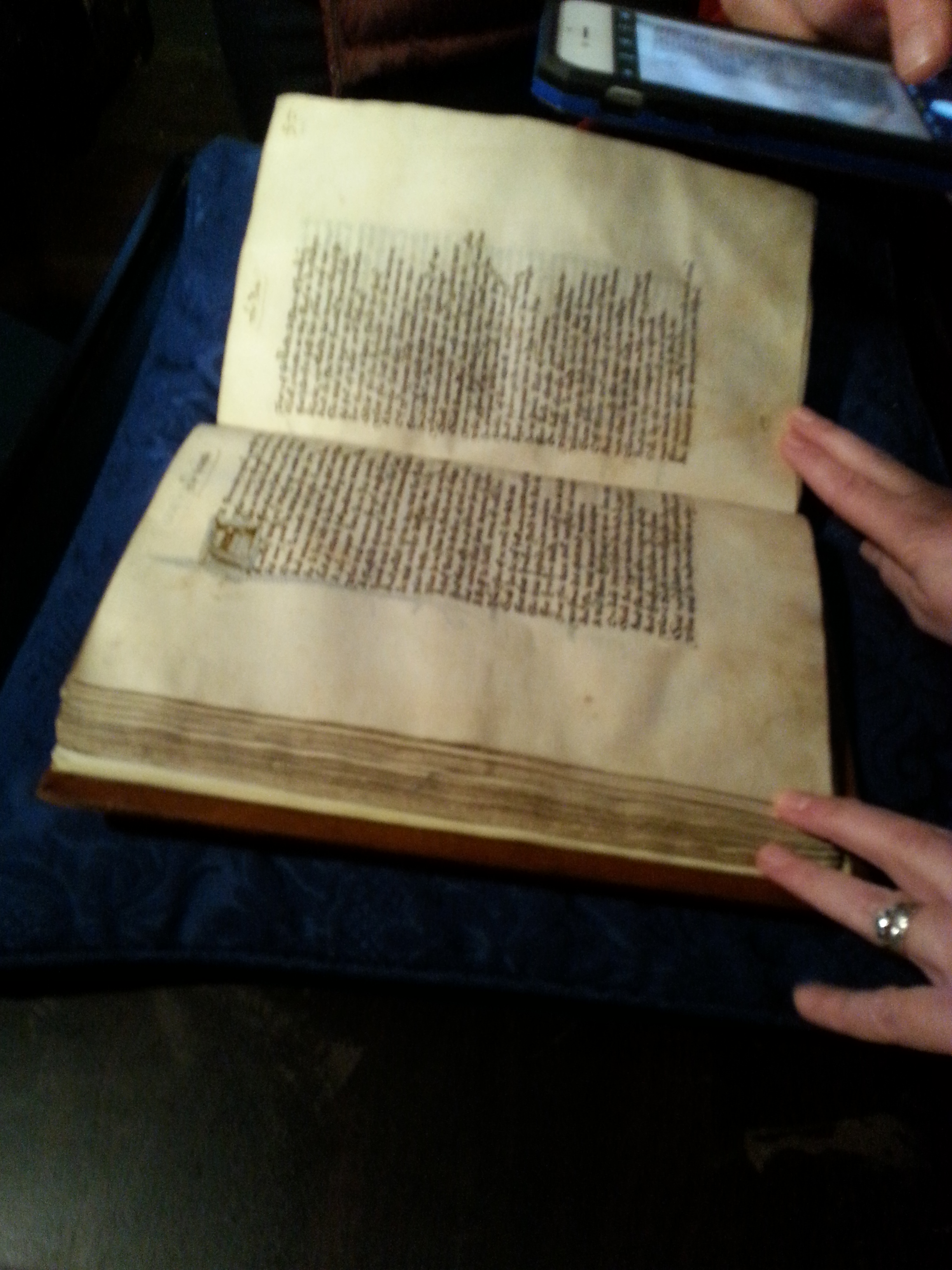
Wordly Women: Catherine Hokin

History...the Interesting Bits

I am stepping out of my medieval comfort zone today to chat with Catherine Hokin. It is always nice to stray into other eras and see what they have to offer; Catherine is a historical fiction author who focuses on the twentieth century. Her new book, The Girl Who Told The Truth, hits the shops this week and I have included the synopsis at the end of the interview, as a little teaser for you all.

Sharon: Hi Catherine, welcome! What got you into writing?

Catherine: Like most people who become writers, I’ve always loved stories but I’ve also always been a very visual person and, when I was younger, I originally wanted to be a fashion designer. I used to spend hours drawing fabulous dresses and, I realise with hindsight, spinning stories about who would wear them. I’m still a fashion buff now, which is why my novel What Only We Know is set in the haute couture world of 1930s and 1940s Berlin and Christian Dior’s gorgeous Bar Suit makes an appearance in my new book, The Girl Who Told the Truth. Actual writing was a long burning itch for me because the demands of life made the reality of doing it impossible. I started with short stories and had some success with those and then the bug truly bit. I think it’s only since I began writing full time that I’ve realised how much I always wanted to do it. (Sharon: I know that feeling!)

Sharon: Tell us about your books.

Catherine: I write historical fiction set between 1930 and 1990, so World War Two and Cold War, and set primarily in Berlin and Eastern Europe. That sounds rather niche when I write it down! My novels are about the long shadows cast by war and the impact of terrible events on ordinary people. They ask a lot of questions about the way people act, or don’t act, about where courage comes from and how we define evil. They usually have a secret or two, sometimes they are dual timeline and they frequently have a very bad character in them because they are great fun to write. Most of the twelve published to date by Bookouture (number 13, The Girl Who Told the Truth, comes out in January 2026) are stand-alones, but there is also the Hanni Winter series: four books about a young photographer and a detective, set in Berlin between 1930 and the 1950s. It’s got so many twists and it was brilliant to be able to write over such a long arc. And exhausting!

Sharon: What attracts you to the period you write in?

History...the Interesting Bits

Catherine: So many reasons. With World War Two I think it’s perhaps because my parents (who were very small children in 1939) were so marked by their experiences of the blitz in Liverpool and the difficult post war years, and I grew up in that shadow. War is also such a testing time: it brings out the best and the worst in people, and so many of those involved only talk about their experiences as they draw towards the end of their life, so we are constantly learning about it. There is also a personal element for me when it comes to the Cold War, and the Berlin Wall which features in my novels a lot. I was born in 1961, the year it went up, and my daughter was born in 1990, the year it came down. If we had lived in East Germany, our experiences would have poles apart from each other which fascinates me. Germany was also the first country I visited outside the UK and seeing the Wall when I was seventeen made a huge impression. I’ve never forgotten talking to a woman who hadn’t seen her sister for almost twenty years. They were physically less than two miles apart, but the Wall lay across that two miles and made contact impossible.

Sharon: Who is your favourite 20th century person and why?

Catherine: Oh that is a hard question as we know so much about everyone’s flaws nowadays! At the moment I would probably have to say Frieda Kahlo as I’ve recently got back from an incredible two week stay in Mexico City and I visited her house. Her courage in the face of dreadful pain was remarkable, as is her art.

Sharon: Who is your least favourite 20th century person and why?

Catherine: Another hard one with so many contenders. All the dictators aside, I think it’s the people who follow blindly and have no compassion that fall into that category for me. Again, thinking about people I’ve encountered more recently, in the research for The Girl Who Told the Truth, I would say Magda Goebbels was high on the list. Reading the accounts of her murdering her children in the bunker was tough. I’m also no fan of Diana Mosley who also appears in the novel: I find the way some of the Mitford sisters (of which she was one) have been romanticised over the years a little disturbing.

Sharon: How do you approach researching your topic?

History...the Interesting Bits

Catherine: With great joy! I love the research part, it is very varied, and I did a history degree so I feel I know what I’m doing – the skills learned then have helped me to be very disciplined so I don’t lose days down rabbit holes. In terms of time, there’s at least three solid months of nothing but research and then more ongoing bits while I’m writing. Once I have my initial idea, I do a huge resource search which includes primary and secondary sources in English and German, and also films and artworks and music, whatever is relevant. I keep detailed notes and cross-reference these to characters and plot points. I am also lucky enough to be able to visit the places I write about, so I walk in my characters’ footsteps and do a lot of photography. And I draw a lot of maps. For The Secret Hotel in Berlin, I also drew the interiors. It’s a very immersive process. And about 70% never gets used, because it’s what I need to know, not the reader…

Sharon: Tell us your ‘favourite’ 20th century story you have come across in your research.

Catherine: That has to be the story of Else Krüger, which I used as the basis for Margarete in The Girl Who Told The Truth. I first came across her via historian Mark Felton’s YouTube video, which is well worth a watch. Krüger was Martin Bormann’s secretary, and she escaped from the Berlin bunker after Hitler’s death, allegedly carrying a copy of his final testament and a bag of diamonds. She was arrested in Hamburg, taken to Nuremberg and married her interrogator before she settled in England, where she passed herself off as a Danish war bride. It’s an amazing story, but that’s where it ends – unlike the other secretaries and survivors of the bunker, Else never wrote a memoir or discussed her experiences, and the truth about the documents and the diamonds died with her. My character Margarete is, of course, fictional, but how could any writer walk away from a nugget like that?

Sharon: Tell us your least ‘favourite’ 20th century story you have come across in your research.

History...the Interesting Bits

Catherine: So much of what I read and reference is deeply tragic. The experiments on female prisoners at Ravensbrook plays a part in the background to What Only We Know, the terrible fate of Warsaw and its ghetto is a key component in The Secret Locket and the T4 Euthanasia programme is part of the Hanni Winter series. All my stories have the Holocaust and the dreadful carnage of WW2 looming behind them, so I can’t choose one but I do have a cardinal rule when writing about the atrocities and that is, get in late and leave early. I don’t want to dwell on suffering, or take advantage of that to write a book. It’s better to tread lightly.

Sharon: Are there any other eras you would like to write about?

Catherine: There are! My next two novels, after The Girl Who Told the Truth, are set against the background of German involvement in the Spanish Civil War which I’ve been obsessed with for years. I’m really excited about that. And I am also fascinated by the Vietnam War, so who knows. There’s still a mass of books to be written about my current area though and I’ve plenty of new ideas.

Sharon: What are you working on now?

Catherine: My current WIP is a two part series, set in Berlin and Spain between 1934 and 1948 and due to be published in July 2026 and January 2027. It’s set against the Spanish Civil War and Germany’s involvement in that, World War Two and the story of the Nazis who fled to Spain after 1945. And it’s about a brother and a sister, a lot of lies and a terrible choice…

Sharon: And finally, what is the best thing about being a writer?

Catherine: So many things. I love that I get to spend my days weaving stories. I love the reader engagement and the fact that I can make a living out of what is essentially a dream job. I am very lucky, and happy!

About the book:

History...the Interesting Bits

The Girl Who Told The Truth: Blood surges through Annie’s veins as she stares into the cold eyes of the Nazi who hurt her mother. She knows she must finally make it right… Germany, 1946. Annie draws a deep breath, trying to stop her hands shaking as she takes notes at the Nuremberg Trials. She isn’t just here to expose the horrors the Nazis committed, she also has a personal stake. And as soon as she lays eyes on Margarete, the Nazi who destroyed her family, a flame burns bright in her to deliver justice for her mother too. Only Annie knows how dangerous Margarete truly is. Not only was she one of the last people inside Hitler’s bunker, she left there with a mission to continue his work. A mission that almost led to the murder of Annie’s mother. Now Annie must make a choice. Revealing Margarete’s true identity will also mean exposing her father’s secret relationship with the German woman. In telling the world the truth, can Annie show the world who Margarete really is? Or will speaking out betray her father and destroy her family forever? An achingly emotional page-turner about risking everything to protect those you love. Perfect for fans of Kristin Hannah, Roberta Kagan and Ellie Midwood.

Buy The Girl Who Told the Truth

About the Author:

History...the Interesting Bits

Catherine writes historical fiction set primarily in Berlin, covering the period from the 1930s up to the fall of the Berlin Wall and dealing with the long shadows left by war. The Secret Locket will be her twelfth novel with Bookouture and there are more to come. Her books have been published by Grand Central Publishing in the USA and translated into a number of languages including French, Italian and, most recently, German. She has a degree in History from Manchester University and has worked in a variety of roles from the fashion business via politics and teaching to the world of climate technology before happily becoming a full-time writer.

She is from the North of England but now lives in Glasgow with her American husband. She loves to travel and spends as much time as she can in Berlin, where her son also lives. If she’s not at her desk, you’ll find her at the cinema or just follow the sound of very loud music.

Details of all her books can be found on her Amazon page or at her website.

Social Media Links: Facebook; Instagram; bookouture (Sign up here and get a free WW2 short story, The Last Casualty)

*

My Books

Signed, dedicated copies of all my books are available through my online bookshop. or by contacting me.

Coming 30 March: Princesses of the Early Middle Ages

Books by Sharon Bennett Connolly

Daughters of kings were often used to seal treaty alliances and forge peace with England’s enemies. Princesses of the Early Middle Ages: Royal Daughters of the Conquest explores the lives of these young women, how they followed the stereotype, and how they sometimes managed to escape it. It will look at the world they lived in, and how their lives and marriages were affected by political necessity and the events of the time. Princesses of the Early Middle Ages will also examine how these girls, who were often political pawns, were able to control their own lives and fates. Whilst they were expected to obey their parents in their marriage choices, several princesses were able to exert their own influence on these choices, with some outright refusing the husbands offered to them.

Their stories are touching, inspiring and, at times, heartbreaking.

Princesses of the Early Middle Ages: Royal Daughters of the Conquest is now available for pre-order from Pen & Sword and Amazon.

Also by Sharon Bennett Connolly:

Books by Sharon Bennett Connolly

Scotland’s history is dramatic, violent and bloody and Scotland’s Medieval Queens have seen it all. This is the story of Scotland through their eyes. Available now from Amazon and Pen and Sword BooksHeroines of the Tudor World tells the stories of the most remarkable women from European history in the time of the Tudor dynasty, 1485-1603. These are the women who ruled, the women who founded dynasties, the women who fought for religious freedom, their families and love. Heroines of the Tudor World is now available from Amberley Publishing and Amazon UK. Women of the Anarchy demonstrates how Empress Matilda and Matilda of Boulogne, unable to wield a sword themselves, were prime movers in this time of conflict and lawlessness. It shows how their strengths, weaknesses, and personal ambitions swung the fortunes of war one way – and then the other. Available from Bookshop.orgAmberley Publishing and Amazon UKKing John’s Right-Hand Lady: The Story of Nicholaa de la Haye is the story of a truly remarkable lady, the hereditary constable of Lincoln Castle and the first woman in England to be appointed sheriff in her own right. Available from all good bookshops Pen & Sword Booksbookshop.org and Amazon

Royal Historical Society

Defenders of the Norman Crown: The Rise and Fall of the Warenne Earls of Surrey tells the fascinating story of the Warenne dynasty, from its origins in Normandy, through the Conquest, Magna Carta, the wars and marriages that led to its ultimate demise in the reign of Edward III. Available from Pen & Sword BooksAmazon in the UK and US, and Bookshop.orgLadies of Magna Carta: Women of Influence in Thirteenth Century England looks into the relationships of the various noble families of the 13th century, and how they were affected by the Barons’ Wars, Magna Carta and its aftermath; the bonds that were formed and those that were broken. It is now available in paperback and hardback from Pen & SwordAmazon, and Bookshop.orgHeroines of the Medieval World tells the stories of some of the most remarkable women from Medieval history, from Eleanor of Aquitaine to Julian of Norwich. Available now from Amberley Publishing and Amazon, and Bookshop.orgSilk and the Sword: The Women of the Norman Conquest traces the fortunes of the women who had a significant role to play in the momentous events of 1066. Available now from Amazon,  Amberley Publishing, and Bookshop.org.

Alternate Endings: An anthology of historical fiction short stories including Long Live the King… which is my take what might have happened had King John not died in October 1216. Available in paperback and kindle from Amazon.

Podcast:

A Slice of Medieval

Have a listen to the A Slice of Medieval podcast, which I co-host with Historical fiction novelist Derek Birks. Derek and I welcome guests, such as Ian Mortimer, Bernard Cornwell, Elizabeth Chadwick and Scott Mariani, and discuss a wide range of topics in medieval history, from significant events to the personalities involved. 

Every episode is also now available on YouTube.

*

Don’t forget! Signed and dedicated copies of all my books are available through my online bookshop.

For forthcoming online and in-person talks, please check out my Events Page.

You can be the first to read new articles by clicking the ‘Follow’ button, liking our Facebook page or joining me on TwitterThreadsBluesky and Instagram.

*

©2026 Sharon Bennett Connolly FRHistS and Catherine Hokin
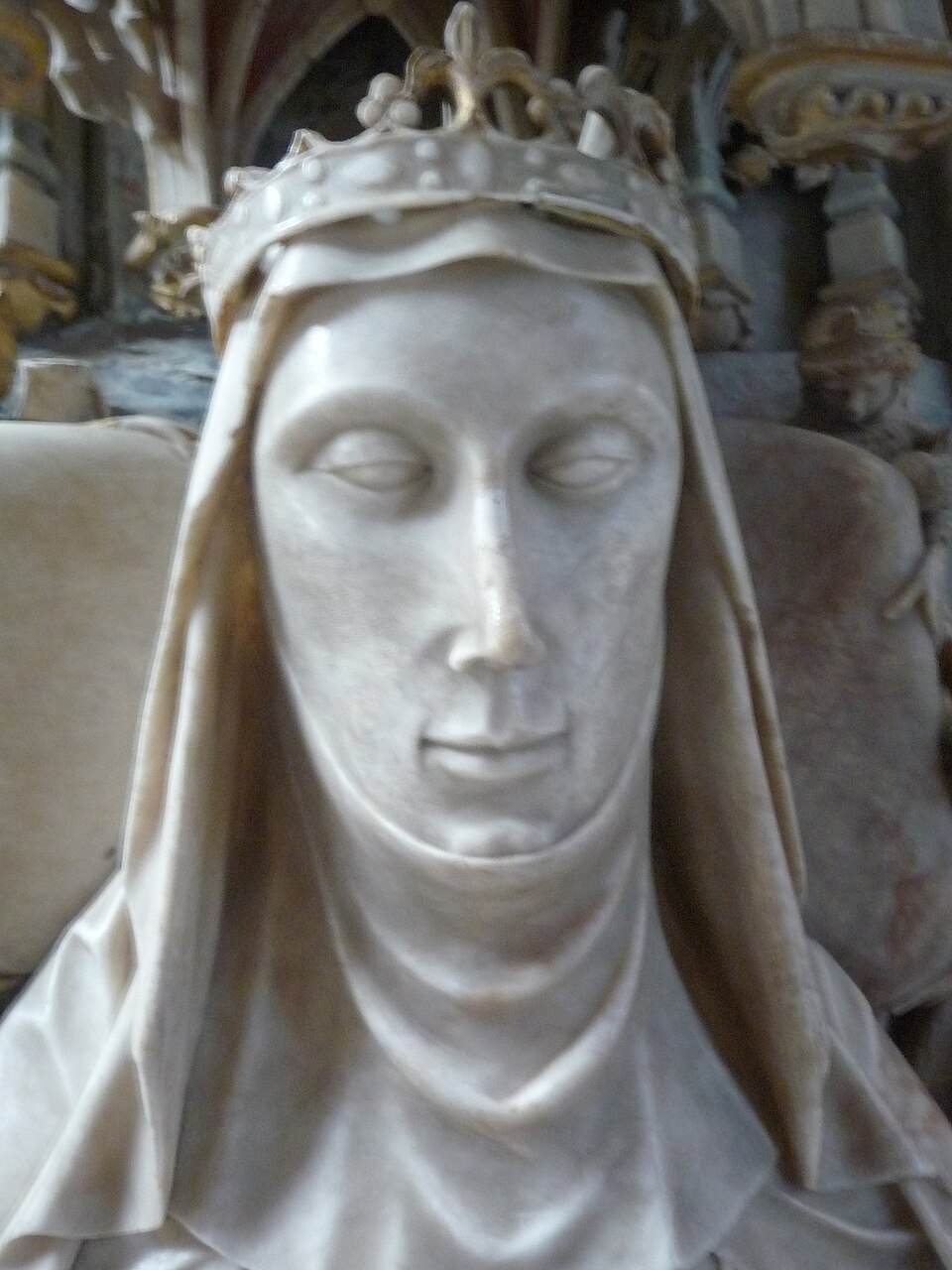
Wordly Women: Carol Ann Lloyd

HAPPY NEW YEAR!

History...the Interesting Bits

I hope you have all had a wonderful Christmas and enjoyed the New Year celebrations. Thankfully, my Wordly Women series is still going strong. I wonder if I can keep it going the whole year? We’ll see. I have at least 2 more interviews lined up, so we are starting the year strong!

My first guest of the year is a lady I have never met in person, but who feels like an old friend. I regularly chat with Carol Ann Lloyd on her podcast, Royals, Rebels and Romantics, when we have a lot of fun and ALWAYS go over time. Once we get talking, it is hard to stop us!

So, welcome to Carol Ann!

Sharon: Carol Ann, can I ask, what got you into writing?

Carol Ann: I have always really enjoyed writing. In fact, my mom kept a very silly story I wrote as a young school child called “Sam the Clam.” I illustrated it myself. It was pretty terrible, about a clam who of course spoke and moved around. It all rhymed. What I remember, though, it how much fun it was to create a little world.

Sharon: Tell us about your books.

Carol Ann: I’ve published two books about Tudor history: The Tudors by Numbers and Courting the Virgin Queen.

I got the idea for The Tudors by Numbers when I was working on something about the coronations of Mary I and Elizabeth I. We usually think of the two half-sisters as opposing each other: Catholic and Protestant, daughter of Katherine of Aragon and daughter of Anne Boleyn, etc. But I started thinking of them as two succeeding Queens Regnant. When we put them together, the ruled for 50 years, which is a total of 42 percent of the Tudor dynasty. Those are important numbers, and I don’t think we usually consider the Tudor dynasty as having such a high percentage of female rule. Then, if you consider Jane Grey a Queen (which I do), there are three Tudor kings and three Tudor queens: 50 percent each. So I know the number six is the most famous, but I think there are other Tudor numbers that are equally important.

For Courting the Virgin Queen, I was asked to explore Elizabeth’s suitors. That was really interesting for me to take on. We know she never married, but why? I was struck by one of the first diplomatic comments about her reign, when the Count of Feria, the Spanish ambassador, wrote to Philip that “everything depends upon the husband this woman may take.” EVERYTHING. That got me thinking. He was right is so many ways. The foreign policy, the religious policy, trade partners and trade routes, future alliances, standing in Europe and around the world, the future of England—all that depended on the man Elizabeth chose as her husband. And, of course, there were no really good options. Elizabeth saw first-hand the problems with Mary’s Spanish marriage. And she saw all around her how women lost so much by marrying. She may have loved Robert Dudley, but she would have lost enormous credibility in England and abroad by marrying a subject. A foreign alliance might have proven handy at some points, but she would have linked her kingdom to another with no way out. There were no good options. Even though it infuriated her own council and dismayed the foreign picture, remaining the Virgin Queen was her best option.

Sharon: What attracts you to the Tudor period?

History...the Interesting Bits
Bess of Hardwick

Carol Ann: The women! (Sharon: Yes! This is why we get along so well!) I love Tudor women. Of course, the Queens and the Queen Consorts are terrific. But so many other women are fascinating. Right now, I’m digging into Bess of Hardwick. She blows my mind. She was born around 1520 to a small landowner in Hardwick. The family had some standing, but when Bess’s father John. Hardwick died, the King took control of the lands because the John’s oldest son was just two years old. Bess was around 15 when she married the first time, but Robert Barlow died about 18 months later and she was a widow. She then married Sir William Cavendish of Chatsworth, gaining land and money. Bess and Cavendish had several children, and Bess enjoyed supervising the building works. But Sir William was accused of embezzlement and went into debt, and his death brought her into debt. She became a lady-in-waiting to Elizabeth I and met Sir William St Loe, who became her third husband. She was able to indulge in her passion for building, and the couple seem to have been genuinely in love (if their letters are to be believed).

When St Loe died, his daughters from his first wife had been excluded from his will. Bess’s reputation was tarnished. Still, she was very well off and returned to her home at Chatsworth. When she returned to court in 1566, she met and charmed the very wealthy George Talbot, marrying him in 1567 and becoming the Countess of Shrewsbury. This final marriage was a stormy one, not all that surprising as the couple had to play host to Mary, Queen of Scots. Although Bess and Mary seemed to get along well initially, working on embroidery together, as time went on the relationship soured. Bess also fell out of favour with Queen Elizabeth, although she tried to present herself as one of the Queen’s “most true and faith servants”. It was not entirely successful. Bess hoped her granddaughter Arbella, whom she helped raise, would become Queen after Elizabeth’s death. Her rocky marriage with Shrewsbury ended with his death in 1590. Bess moved back to Hardwick, where she built the new Hardwick Hall (known for being “more glass than wall”). She outlived Elizabeth I and saw James VI of Scotland succeed the English Queen. Bess of Hardwick died in 13 February, around 87 years old. She outlived four husbands and several monarchs (Henry VIII, Edward VI, Jane, Mary I, and Elizabeth I). What an inspiration for making the most of every opportunity!

Sharon: Who is your favourite Tudor and why?

Carol Ann: Anne Boleyn. I know it’s a cliché, but I can’t help it. She caught my eye when I was just a kid, watching the PBS (originally BBC) production of The Six Wives of Henry VIII. I saw how she was standing up to the men around her, and I was hooked. She is complicated, both generous and selfish, intelligent and foolish, ambitious and over-reaching. Everything about her intrigues me.

Sharon: Who is your least favourite Tudor and why?

Carol Ann: I’m not crazy about either of Jane Seymour’s brothers. I think they are self-absorbed and ruthless, with little or no thought to the people around them.

Sharon: How do you approach researching your topic?

History...the Interesting Bits

Carol Ann: I love reading. I can start reading one article, find a reference to something that sounds interesting, and then I’m off down that rabbit hole. More often than not, that new area leads me into several more. There is nothing more fun for me than just losing myself in the little details and wonderful stories of history! I know I should be much more organized, so I’m afraid my approach also includes a lot of “where did I write that down?” searches through piles of paper as well.

Sharon: Tell us your ‘favourite’ true historical story you have come across in your research.

Carol Ann: Anne Boleyn and the Thomas Wyatt versus Henry VIII game of bowls story. Which might or might not be “true”, but it’s in some accounts.

Sharon: Tell us your least ‘favourite’ true historical story you have come across in your research.

Carol Ann: Katherine Parr helping Thomas Seymour hold Elizabeth down while he cut her dress to shreds. I hope against hope she was doing so because her presence there was the only way she could limit how far he would go. But it’s a tough story to read.

Sharon: Are there any other eras you would like to write about?

Eleanor of Aquitaine

Carol Ann: I’m working on a book now that starts in early times with the story of King Arthur and then highlights the time of Eleanor of Aquitaine. I am crazy about her, and it’s been great to explore her through this book. I would love to spend more time there. (Sharon: Oooooh, that sounds amazing. Can’t wait!)

Sharon: What are you working on now?

Carol Ann: I’m working on a book about the history of courtly love (and a bit about chivalry as well), looking closely at two of my favorite historical women: Eleanor of Aquitaine and Anne Boleyn. Two queen consorts who completely rewrote the book and who played courtly love at the highest levels.

Sharon: And finally, what is the best thing about being a writer?

Carol Ann: I love research! (Sharon: oh, me too!) I love traveling to England and heading to the National Archives at Kew and the British Library. I remember holding a seal of Henry VIII and one of Elizabeth I in my hands. In MY hands. It was amazing. I also was able to see the letters patent creating Anne Boleyn as Marchioness of Pembroke at the British Library. The falcon emblem was blazing with gold leaf and nearly as large as my hand. I couldn’t believe I was not dreaming. I also love researching closer to home at Folger Shakespeare Library. Again, I can’t believe I’m holding a document signed by Elizabeth I. I even have been in the room with her red velvet Bible. How can anything match that?!

About the author:

History...the Interesting Bits

Carol Ann Lloyd turned an obsession with the Tudors into a speaking and writing career. She shares her love of history with Smithsonian Associates, Royal Oak Foundation, Agecroft Hall, Folger Shakespeare Library and other organizations. She holds degrees in Literature and Education and hosts a popular podcast, _British History: Royals, Rebels, and Romantics_. She also offers workshops about using Shakespeare strategies to improve communication skills and is a member of National Speakers Association.

Where to find Carol Ann:

Website: www.carolannlloyd.com; Twitter/X: @shakeuphistory; Podcast: BRITISH HISTORY-Royals, Rebels, Romantics; Books: The Tudors by Numbers (2023)and Courting the Virgin Queen (2024)

*

My Books

Signed, dedicated copies of all my books are available through my online bookshop. or by contacting me.

Coming 30 March 2026: Princesses of the Early Middle Ages

Books by Sharon Bennett Connolly

Daughters of kings were often used to seal treaty alliances and forge peace with England’s enemies. Princesses of the Early Middle Ages: Royal Daughters of the Conquest explores the lives of these young women, how they followed the stereotype, and how they sometimes managed to escape it. It will look at the world they lived in, and how their lives and marriages were affected by political necessity and the events of the time. Princesses of the Early Middle Ages will also examine how these girls, who were often political pawns, were able to control their own lives and fates. Whilst they were expected to obey their parents in their marriage choices, several princesses were able to exert their own influence on these choices, with some outright refusing the husbands offered to them.

Their stories are touching, inspiring and, at times, heartbreaking.

Princesses of the Early Middle Ages: Royal Daughters of the Conquest is now available for pre-order from Pen & Sword and Amazon.

Also by Sharon Bennett Connolly:

Books by Sharon Bennett Connolly

Scotland’s history is dramatic, violent and bloody and Scotland’s Medieval Queens have seen it all. This is the story of Scotland through their eyes. Available now from Amazon and Pen and Sword Books. Heroines of the Tudor World tells the stories of the most remarkable women from European history in the time of the Tudor dynasty, 1485-1603. These are the women who ruled, the women who founded dynasties, the women who fought for religious freedom, their families and love. Heroines of the Tudor World is now available from Amberley Publishing and Amazon UK. Women of the Anarchy demonstrates how Empress Matilda and Matilda of Boulogne, unable to wield a sword themselves, were prime movers in this time of conflict and lawlessness. It shows how their strengths, weaknesses, and personal ambitions swung the fortunes of war one way – and then the other. Available from Bookshop.orgAmberley Publishing and Amazon UKKing John’s Right-Hand Lady: The Story of Nicholaa de la Haye is the story of a truly remarkable lady, the hereditary constable of Lincoln Castle and the first woman in England to be appointed sheriff in her own right. Available from all good bookshops Pen & Sword Booksbookshop.org and Amazon

Royal Historical Society

Defenders of the Norman Crown: The Rise and Fall of the Warenne Earls of Surrey tells the fascinating story of the Warenne dynasty, from its origins in Normandy, through the Conquest, Magna Carta, the wars and marriages that led to its ultimate demise in the reign of Edward III. Available from Pen & Sword BooksAmazon in the UK and US, and Bookshop.orgLadies of Magna Carta: Women of Influence in Thirteenth Century England looks into the relationships of the various noble families of the 13th century, and how they were affected by the Barons’ Wars, Magna Carta and its aftermath; the bonds that were formed and those that were broken. It is now available in paperback and hardback from Pen & SwordAmazon, and Bookshop.orgHeroines of the Medieval World tells the stories of some of the most remarkable women from Medieval history, from Eleanor of Aquitaine to Julian of Norwich. Available now from Amberley Publishing and Amazon, and Bookshop.orgSilk and the Sword: The Women of the Norman Conquest traces the fortunes of the women who had a significant role to play in the momentous events of 1066. Available now from Amazon,  Amberley Publishing, and Bookshop.org.

Alternate Endings: An anthology of historical fiction short stories including Long Live the King… which is my take what might have happened had King John not died in October 1216. Available in paperback and kindle from Amazon.

Podcast:

A Slice of Medieval

Have a listen to the A Slice of Medieval podcast, which I co-host with Historical fiction novelist Derek Birks. Derek and I welcome guests, such as Ian Mortimer, Bernard Cornwell, Elizabeth Chadwick and Scott Mariani, and discuss a wide range of topics in medieval history, from significant events to the personalities involved. 

Every episode is also now available on YouTube.

*

Don’t forget! Signed and dedicated copies of all my books are available through my online bookshop.

For forthcoming online and in-person talks, please check out my Events Page.

You can be the first to read new articles by clicking the ‘Follow’ button, liking our Facebook page or joining me on TwitterThreadsBluesky and Instagram.

*

©2025 Sharon Bennett Connolly FRHistS and Carol Ann Lloyd
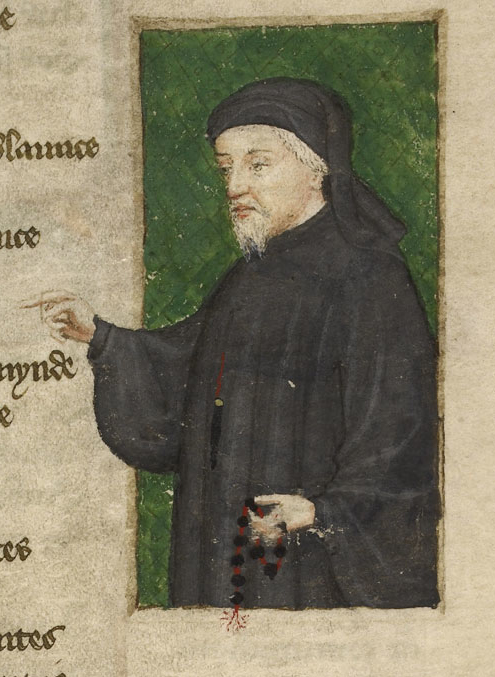
Wordly Women: Ann M. Beggs

Well, it is the last Wordly Women of 2025 and I cannot believe how well this series of interviews has been received. I do hope it has given you an insight into the writing life – the good and the bad. And maybe you have discovered a new author, or been re-acquainted with one you haven’t read in a while? For my part, it has been wonderful, learning a little bit more about my friends’ writing journeys. Isn’t it funny that no 2 people have the same experience as writers? But we all love the warmth and encouragement of the writing community – and the love and enthusiasm of our readers.

I will continue the series into 2026, hoping it will at least survive until its 1st birthday in March. And I already have the next 2 interviews ready to go. But for now, I would like to introduce you to Anne M. Beggs. Anne is one of those authors who uses her own platform to promote and encourage her fellow authors. I am so grateful to her for sharing every single one of my Wordly Women interviews so far – and I am sure she will share this one!

Sharon: Hello Anne! What got you into writing:

History...the Interesting Bits

Anne: Well, that is a long story, but isn’t that what historical fiction and family sagas are? My story telling began with horses. I was born with the horse gene. Unable to have a horse I lived my equine dreams in artwork, drawing and painting my beloved “worsey/wishies” for horsey (my first spoken word, btw). I was an undiagnosed dyslexic as a child. Writing and reading were and ARE not easy, so my story telling was through visual art. Back then all my stories were Barn Romances: Girl meets horse. You get the idea.

My Medieval fetish is nearly as deep as my love of horses. My aunt took me to the cinema to see Disney’s Sleeping Beauty as a five-year-old and those images – the castle, the medieval setting, and a gray horse filled my dreams and nightmares for years. In high school I started a bit of research into the Crusades (horses, remember), and the exploring the soul-gripping architecture of castles and cathedrals.

A trip to Medieval Times in Anaheim, California, when our kids were little, triggered my medieval fetish and love of horses. The voices came alive. My fictional characters would not be still. The What Ifs, How Abouts, and a medieval barn romance morphed into a full-born passion…and it was no longer just Girl Meets Horse; a feisty, spiritual, heiress was seeking a voice in my mind and in her patriarchal time. Yes, initially it was all about getting “boinked” in a castle or cathedral. As I learned how to write a book, the stories developed into a spiritual quest for understanding, battles to save a family, create a dynasty, and an enduring love story or stories.

Sharon: You write fiction and non-fiction, and is one harder than the other?

Anne: It all depends. My first publications were articles on mounted archery and my journey from author to mounted archer. I didn’t have an editor, so those were WAY easy.

My fiction writing includes my Dahlquin series, a family saga set in 13th century Ireland, with more details in subsequent questions. To date I also have four short stories in four Paper Lantern Writers Anthologies: The Dragon Lord, A Winter Solstice Tale, in Unlocked, based on my Dahlquin characters; Dear Santa, in Beneath a Mid-Winter Moon, set in 1969, with Dahlquin descendants; Beg, Borrow, Tomorrow, in Destiny Comes Due, a “shopaholic” in a medieval convent; and The Storm in Echoes of Small Things, a story of Richard the Lion Heart’s final days.

In Archer’s Grace, Book One and By Arrow and Sword, Book Two, my editors told me repeatedly: “Less riding, more story. You are writing a novel, not a “how to” in horsemanship.”

When I was invited to write a chapter, Bringing Horses to Life in Historical Fiction, in the Paper Lantern Writers non-fiction book, Crafting Stories from the Past; A How-To Guide for Writing Historical Fiction, I thought GREAT, here is my chance to talk horses. Turns out, it was one of the hardest things I have ever written. It was vital to distil the important aspects of horses and not get carried away. Fortunately, my editors were non-horse people and found most parts necessary. Working on this entire project was a great education, and I still refer to the book myself, with fresh eyes. We are also doing live, hands-on-workshops teaching the Craft of Writing Stories From the Past to aspiring authors. I enjoy helping and learning more as we go.

Back to your question, which is harder – each is different. All deserve the best I can offer. They are full-on challenges that I accept, and I muddle through, learning, growing, finding enlightenment, and often not concluding with what I thought I was going to write about.

Sharon: Tell Us About Your books

History...the Interesting Bits

Anne: Archer’s Grace, Book One, launches the Dahlquin series: Eloise, a 13th century only child grows up coming to terms with and battling her patriarchal Irish society. Intelligent, curious, bold, and romantic, she also has a secret that might get her condemned as a heretic.

Ireland is a volatile island poised for civil war, with another English invasion threating. A treasonous siege catapults her from her ancestral home. She and a stranger embark on a perilous journey across Ireland, running for their lives to save Dahlquin and mayhap Ireland itself.

By Arrow and Sword, Book Two, returns to Dahlquin for this family saga. A war-torn country lies between Eloise and Roland as they try to make their way back to each other, navigating a political landscape fraught with intrigue and betrayal. One threat is vanquished, but others loom in the shadows, waiting for the perfect moment to seek revenge.

For readers, Book Two, is written to stand alone.

Sharon: What attracts you to the 13th Century?

Anne: I like to say I researched the Middle Ages into and beyond Middle Age.

History...the Interesting Bits

My characters, the voices, came to me. They are all fictional, with some true historic people, “Celebrity Cameos”, as Ana Brazil says. All are living in a medieval world. I just started taking dictation from them and researching the Middle Ages. This was before internet as we know it. Before social media and a world full of ‘arm-chair historians’ (some were quite cruel, but I am also sensitive). I depended on books. I delighted when the old-fashioned Barnes and Nobel catalogue arrived in my mailbox, with an abundance of history books. What a happy dance I did when I received Dress Accessories from 1150-1450, and Shoes and Patterns. My family thought I was nuts. Real bookstores also provided resources; thus started my personal research library, getting lost in an era I love.

Using the limited books I had, I found a fifty-year gap in history, as if records were lost between Henry and Eleanor, then resuming fifty years later. Of course, this is not true, but thirty years ago, I was stumped. What a great space to write my own fictional characters and their adventures. Thirteenth century it was and I really didn’t like those henins, either. Eloise could not be galloping across the countryside wearing one of those.

Sharon: Who is your favourite Medieval person?

Anne: Eleanor of Aquitaine, is one of my protagonist, Eloise’s, favourites. Twenty years after the queen’s death, her legend looms large in Eloise’s mind. I just finished listening to The Summer Queen, by Elizabeth Chadwick, and I am even more in love with the smart, feisty monarch myself.

Sharon: Who is your least favourite Medieval person?

Anne: It is not my style to pick a least favourite, so I let others share theirs.

Sharon: I’m the same. I love the History and even the bad guys bring something to the table

Sharon: How do you approach your research?

History...the Interesting Bits

Anne: This year was special. Finally, after many years, I got to ride in Connacht, Ireland, where my fictional characters are. My husband sent me on a trip of a lifetime. Starting alone in Dublin, I toured for two days. Then a bus to Galway, and on to Connemara Equestrian Escapes for riding, history, and cultural immersion. Next two nights at Ashford Castle. That was as pilgrimage, for sure, as I have a fictional family named Ashbury. Research revealed there is an Ashford Castle exactly where my fictional family are – hmmm, I guess I got my character’s name wrong by a syllable. Connacht looked just as I expected. The trip was validating and magical.

As I mentioned earlier – and before my trip – it all started with history books, my own or the library’s. It never occurred to me to travel to a research library. I had kids at home, responsibilities to our businesses, being a domestic goddess, and community volunteer. Writing was a back burner passion for me, by my choice.

Enter the internet, chat rooms (which didn’t click with me then), and social media. I have access to research, so much research. Sometimes, too much. There is more opportunity for conflicting experts, scholars revealing new discoveries and insights. And that fifty-year gap in my sources…all filled in…oh gosh…oh well. I rejoice and lament. I concentrate on 13th century, because my own time is limited. Still, it is easy to get lured into anything medieval. The fetish runs hard and deep.

My hot tip for beginners; keep a list of the sources you use. You will be called on it later. I didn’t do that originally. I picked the expert whose claims fit my story and kept writing. It was a novel, not a college paper with footnotes. Big mistake on my part.

Research is also how I discovered Dahlquin’s location. I had written over 700 pages not knowing where my characters lived. Before he had horses and a boarding ranch, we travelled to Europe several times indulging my quest for anything medieval and other family holiday delights. Every where we went, hoping for a home for Dahlquin, it was a big nope. I considered going for pure fantasy fiction, making up a country and plopping it in Europe, but it didn’t feel right. I stumbled upon a used book on Medieval Ireland, and BINGO, my characters had been trying to tell me they were Irish…well, Welsh/Anglo/Irish/Celtic/English, it IS complicated.

Sharon: Tell us your ‘favourite’ medieval story you have come across in your research.

History...the Interesting Bits

Anne: I enjoyed the 9th poem, Pangur Bán. As a cat and animal lover, I delight in the archaeological records of cats leaving their paw prints in history from ancient times to now. Besides horses and dogs, I have cats in my books, a song of a cat dropping a mouse in the wine. while writing my short story, Beg, Borrow, Tomorrow, it was fitting a cat play a role.

Sharon: What are you working on now?

Anne: I am writing The High Love, Book Three, in the Dahlquin series. Much of my 25ish year-old version is on the cutting room floor, and I’m excited to rewrite it with more political intrigue as Eloise and Roland explore and define for themselves what is the highest love: Church, God, King, liege, family, each other? Eloise’s spiritual quest continues as she seeks balance and understanding – God and Goddess, love and loyalty, The Highest Love. I am seeing a better way to tackle Book Four, Ordained Folly, mayhap, mayhap not: The magic in writing. I don’t always know where the story must go until I write it, and write, and rewrite it. There is nothing fast in my process.

I anticipate another short story for the Paper Lantern Writers’ fifth anthology, for 2026, title and theme still a mystery. I love being part of these challenging books and working with our talented writers.

Sharon: What is the best thing about being a writer?

Anne: I love word dancing, making my character’s stories blaze to life, in full colour, texture, taste…cantering across the pages for others to read. It is fantabulous riding into the Middle Ages, safely (such a hazardous time, with no antibiotics, etc.), sharing my joy of lost voices, horses, and history. If I am fortunate, mayhap my writing will inspire someone to pick up a bow and arrow, take riding lessons, and best of all to Be Their Own Hero, Don’t Wait to Be Saved.

About the Author:

History...the Interesting Bits

Anne M. Beggs, the writing, riding grandma, is an award-winning author of historical fiction and has published articles on mounted archery and horsemanship. Her debut novel, Archer’s Grace, Book One, in her Dahlquin series starts this family saga when a young noblewoman is catapulted from her ancestral home and set on a quest to save her family in Medieval Ireland. By and Arrow and Sword, Book Two is published, and The Highest Love, Book Three is underway. Four short stories appear in Paper Lantern Writer’s anthologies. Also with Paper Lantern Writers, she is a contributor to Crafting Stories from the Past: A How-To Guide for Writing Historical Fiction. She and other “Lanterns” give hands-on workshops on writing historical fiction.

Anne likes to say she researched the Middle Ages into middle age and beyond. Still married to her high school sweetheart, they live on and manage a horse boarding ranch, Equisance, in Watsonville, California. Anne is a member of the Historical Novel Society, and for more about her writing, horses, mounted archery and grandkids, she invites you to join up with her Facebook pages, Anne M. Beggs, https://www.facebook.com/anne.beggs.3/ ; or Anne M. Beggs, author, https://www.facebook.com/AnneMBeggsAuthor/ ; or her website, https://annembeggs.com/, IG @annibella72 ; Substack, https://substack.com/@annibella1

*

My Books

Signed, dedicated copies of all my books are available through my online bookshop. or by contacting me.

Out now: Scotland’s Medieval Queens

Books by Sharon Bennett Connolly

Scotland’s history is dramatic, violent and bloody. Being England’s northern neighbour has never been easy. Scotland’s queens have had to deal with war, murder, imprisonment, political rivalries and open betrayal. They have loved and lost, raised kings and queens, ruled and died for Scotland. From St Margaret, who became one of the patron saints of Scotland, to Elizabeth de Burgh and the dramatic story of the Scottish Wars of Independence, to the love story and tragedy of Joan Beaufort, to Margaret of Denmark and the dawn of the Renaissance, Scotland’s Medieval Queens have seen it all. This is the story of Scotland through their eyes.

Scotland’s Medieval Queens gives a thorough grounding in the history of the women who ruled Scotland at the side of its kings, often in the shadows, but just as interesting in their lives beyond the spotlight. It’s not a subject that has been widely covered, and Sharon is a pioneer in bringing that information into accessible history.’ Elizabeth Chadwick (New York Times bestselling author)

Available now from Amazon and Pen and Sword Books

Coming 30 March 2026: Princesses of the Early Middle Ages

Books by Sharon Bennett Connolly

Daughters of kings were often used to seal treaty alliances and forge peace with England’s enemies. Princesses of the Early Middle Ages: Royal Daughters of the Conquest explores the lives of these young women, how they followed the stereotype, and how they sometimes managed to escape it. It will look at the world they lived in, and how their lives and marriages were affected by political necessity and the events of the time. Princesses of the Early Middle Ages will also examine how these girls, who were often political pawns, were able to control their own lives and fates. Whilst they were expected to obey their parents in their marriage choices, several princesses were able to exert their own influence on these choices, with some outright refusing the husbands offered to them.

Their stories are touching, inspiring and, at times, heartbreaking.

Princesses of the Early Middle Ages: Royal Daughters of the Conquest is now available for pre-order.

Also by Sharon Bennett Connolly:

Books by Sharon Bennett Connolly

Heroines of the Tudor World tells the stories of the most remarkable women from European history in the time of the Tudor dynasty, 1485-1603. These are the women who ruled, the women who founded dynasties, the women who fought for religious freedom, their families and love. Heroines of the Tudor World is now available from Amberley Publishing and Amazon UK. Women of the Anarchy demonstrates how Empress Matilda and Matilda of Boulogne, unable to wield a sword themselves, were prime movers in this time of conflict and lawlessness. It shows how their strengths, weaknesses, and personal ambitions swung the fortunes of war one way – and then the other. Available from Bookshop.orgAmberley Publishing and Amazon UKKing John’s Right-Hand Lady: The Story of Nicholaa de la Haye is the story of a truly remarkable lady, the hereditary constable of Lincoln Castle and the first woman in England to be appointed sheriff in her own right. Available from all good bookshops Pen & Sword Booksbookshop.org and Amazon

Royal Historical Society

Defenders of the Norman Crown: The Rise and Fall of the Warenne Earls of Surrey tells the fascinating story of the Warenne dynasty, from its origins in Normandy, through the Conquest, Magna Carta, the wars and marriages that led to its ultimate demise in the reign of Edward III. Available from Pen & Sword BooksAmazon in the UK and US, and Bookshop.orgLadies of Magna Carta: Women of Influence in Thirteenth Century England looks into the relationships of the various noble families of the 13th century, and how they were affected by the Barons’ Wars, Magna Carta and its aftermath; the bonds that were formed and those that were broken. It is now available in paperback and hardback from Pen & SwordAmazon, and Bookshop.orgHeroines of the Medieval World tells the stories of some of the most remarkable women from Medieval history, from Eleanor of Aquitaine to Julian of Norwich. Available now from Amberley Publishing and Amazon, and Bookshop.orgSilk and the Sword: The Women of the Norman Conquest traces the fortunes of the women who had a significant role to play in the momentous events of 1066. Available now from Amazon,  Amberley Publishing, and Bookshop.org.

Alternate Endings: An anthology of historical fiction short stories including Long Live the King… which is my take what might have happened had King John not died in October 1216. Available in paperback and kindle from Amazon.

Podcast:

History...the Interesting Bits

Have a listen to the A Slice of Medieval podcast, which I co-host with Historical fiction novelist Derek Birks. Derek and I welcome guests, such as Ian Mortimer, Bernard Cornwell, Elizabeth Chadwick and Scott Mariani, and discuss a wide range of topics in medieval history, from significant events to the personalities involved. 

Do have a listen to our 2025 Christmas episode in which Derek and I look bag at some of our favourite discussions with guests.

Every episode is also now available on YouTube.

*

Don’t forget! Signed and dedicated copies of all my books are available through my online bookshop.

For forthcoming online and in-person talks, please check out my Events Page.

You can be the first to read new articles by clicking the ‘Follow’ button, liking our Facebook page or joining me on TwitterThreadsBluesky and Instagram.

*

©2025 Sharon Bennett Connolly FRHistS and Anne M. Beggs
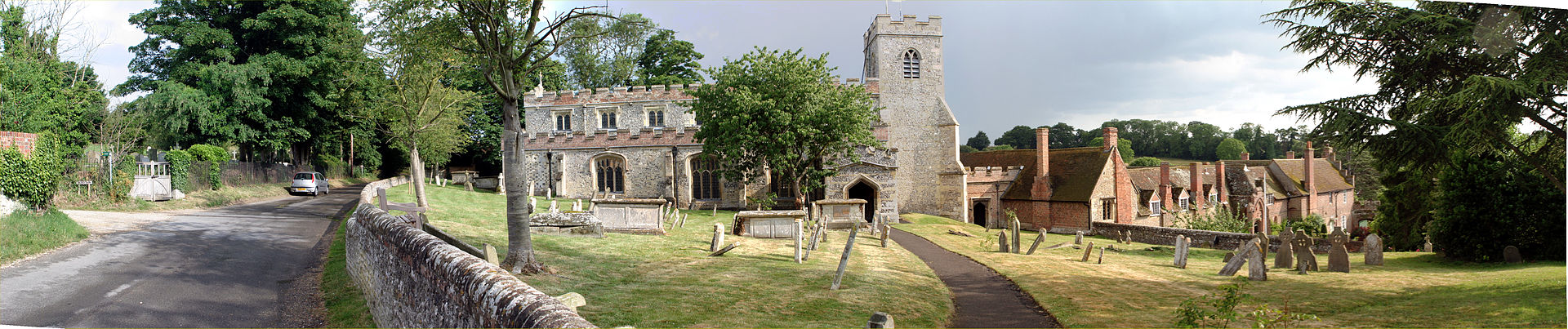
Elizabeth Mure, Robert II and a Question of Legitimacy

Books by Sharon Bennett Connolly
Tomb of Marjorie Bruce, Paisley Abbey

Robert II, King of Scots, had been born on 2 March 1316, as the grandson and heir of Robert the Bruce. His mother. Marjorie Bruce, had died at the time of his birth, or shortly after. He had been supplanted as his grandfather’s heir when Bruce’s queen, Elizabeth de Burgh, gave birth to a son, David Bruce, in 1324. David was crowned as King David II on his father’s death in 1329. Although only 5-years-old, David was already a married ‘man’, having wed Edward III’s 7-year-old sister, Joan of the Tower, in July 1328.

Edward III saw an opportunity in Scotland having a child-king and, notwithstanding the headache he was causing his own sister, he decided to support the claims, to the Scottish crown, of Edward Balliol, son of the deposed king, John Balliol, and his wife, Isabella de Warenne. Edward III invaded Scotland. King David and his young wife were sent to France for their safety, while the Scots fought for the kingdom. One of those leading the fight was Robert Stewart, David’s nephew – Robert the Bruce’s grandson. He had become High Steward of Scotland on his father’s death in 1327. He was made guardian of Scotland whilst still in his late teens and fought in the defeat of the Scots at Halidon Hill in July 1333, when he was still only 17.

Robert was David II’s heir – until the latter produced a son and heir of his own, at least. Uncle and nephew had a fractious relationship, even after David returned from French exile. David may have resented the reputation Robert had gained in fighting for Scottish independence, and he was certainly wary of Robert’s powerful position, as High Steward, guardian and – of course – as heir presumptive to the crown.

Books by Sharon Bennett Connolly
David II and Joan being greeted by Philip VI of France

Robert’s strength, however, lay not only in his proximity to the throne, but also in the fact he had managed to do what David had not, produce an heir. Six, in fact. Robert’s rather unusual marital situation, and perhaps the growing awareness, as the years went on, that there was less and less likelihood of David producing an heir, saw him apply for a papal dispensation to marry Elizabeth Mure, which was supported by King David, King Philip VI of France, the seven Scottish bishops and parliament. It was granted on 22 November 1347, at least ten years after the start of their relationship. The dispensation allowed for the retrospective legitimisation of their children:

This Robert took to his bed one of the daughters of Adam More, knight; and of her he begat sons and daughters, out of wedlock. But he afterwards – in the year 1349, to wit – bespoke and got the dispensation of the Apostolic See, and espoused her regularly, according to the forms of the Church.1

An earlier dispensation, issued in 1345, had annulled Elizabeth’s betrothal to Hugh Giffard. Elizabeth was the daughter of Adam Mure of Rowallon, Ayrshire. Though whether her mother was his first wife, Joan Cunnigham, or his second wife, Janet, is undetermined. The unusual nature of their relationship and marital situation has given rise to questions over the legitimacy of their children. According to John Riddell, the facts of the relationship are that:

Robert II, when related to Elizabeth Mure, in the third and fourth forbidden degrees of affinity, and the fourth forbidden degree of consanguinity, lived for a long space in concubinage with her, during which ‘prolis utriusque sexus multitudinem procrearunf’ – during that unhallowed, and in law, incestuous connection; till at last, resolving to marry, but discovering the double relationship between them, which was a bar to their marriage at common (Ecclesiastical) law, they then obtained a dispensation from Clement VI, in 1347, for the purpose, in ordinary form. After which it is in proof, that they did marry under authority of the dispensation, – Robert founding in 1364, in compliance with an injunction there, a Chaplainry, in expiation of his former offence, which was, by received doctrine at the time, deemed an aggravated one.2

Books by Sharon Bennett Connolly
Robert II’s maternal grandparents, Robert the Bruce and his first wife, Isabella of Mar

It has been argued that the children of Robert and Elizabeth were not only born outside of marriage, but also that their parents were related within the limited degrees, and therefore the relationship was incestuous without a papal dispensation. This, however, ignores the possibility that Robert and Elizabeth did go through a form of marriage in the 1330s, when Scotland was deeply involved in its war with England and, with David II sent to France for his safety and Robert was the senior representative of the Bruce family in Scotland. Moreover, it may have been thought prudent that Robert should marry sooner, rather than later, for dynastic considerations. With Edward Balliol unmarried and with no heir, the fact that the king’s heir was married with children was significant, a sign that the Bruce–Stewart dynasty was secure, at least.

That the marriage was not regularised until the war was over could be excused by the fact there were more urgent matters to attend to and the financial and legal obligations of obtaining a dispensation could wait. This would certainly explain the papacy’s willingness to regulate the marriage by issuing a retroactive dispensation. Alternatively, they may have only recently discovered a familial relationship within the prohibited degrees, and therefore applied for a dispensation. Elizabeth and Robert then underwent a second, formal, marriage ceremony in 1349.

Their first child, John, had been born in about 1337 and was created Earl of Carrick in 1369, the title held by his great-grandfather, Robert the Bruce, before he became king. He would ascend the throne as Robert III on his father’s death in 1390. Although the birth order could be slightly different, it seems likely that John was followed by a sister, Margaret, who was married to John MacDonald, Lord of the Isles, as his second wife, for which a papal dispensation was issued on 14 June 1350. The couple were granted the island of Colowsay by Margaret’s father in a charter dated to July 1376. Three more sons followed, Walter, Robert and Alexander. Walter was married to Isabel, Countess of Fife, in April 1360 or 1361. He died sometime after 14 August 1362 but before the end of the year, as his widow married again, to Thomas Bisset of Upsetlington on 10 January 1363. She resigned the earldom of Fife to Walter’s brother, Robert Stewart, Earl of Menteith, on 30 March 1371.

Robert Stewart is identified as the ‘second born of the king’ in the Liber Pluscardensis. Robert was Earl of Menteith by right of his wife, Margaret Graham, a title she herself had inherited from her mother, Mary. Margaret had been married three times before; her first husband, Sir John Moray, was the son of Christian Bruce, King Robert I’s sister, by her last husband, Sir Andrew Murray. Robert was later created Duke of Albany and acted as regent during his brother’s reign.

Books by Sharon Bennett Connolly
The reverse side of Robert II’s Great Seal

The third son, Alexander, has a significant reputation as a cruel and rapacious character, earning him the nickname, the Wolf of Badenoch. He married Euphemia, Countess of Ross and was Earl of Ross in her name. Euphemia resigned her share of Buchan to the king, who regranted it to Alexander and Euphemia, in July 1382, so that they were Earl and Countess of Ross and Buchan. The marriage had its difficulties and Alexander left his wife, for ‘Mariota’s daughter Athyn’ but was ordered to return to her, in a charter dated 2 November 1389, by the Bishop of Moray and Ross. Apparently, the breach was irretrievable, as Pope Clement VII ‘issued a commission to dissolve her marriage’ on 9 June 1392, and in December 1392 Euphemia was granted a divorce ‘from bed and board’.3 Although Alexander had seven illegitimate children, he and Euphemia had remained childless.

Robert II and Elizabeth Mure also had four more daughters, although their order of birth is unknown. Marjory married John Dunbar, the son of Patrick Dunbar and Isabel Randolph of Moray. He was created Earl of Moray by his father-in-law in March 1372. Marjory’s second husband was Alexander Keith of Grandown.

Jean, or Joan, Stewart was married three times, firstly to John Keith, son of William de Keith, the Marischal, in January 1374. John died just fourteen months later. A year after that, in either June or October 1376, Jean married Sir John Lyon of Glamis. On 4 October 1376, King Robert II granted land, the thanedom of Tannadyce in Forfar, possibly a wedding gift, ‘to his dearest son John Lyon and Johanna his wife, the King’s beloved daughter’.4 The marriage was initially kept secret and only publicly acknowledged on 10 May 1378 when the king, with the consent of his surviving sons, ‘granted to the spouses letters of acknowledgement and remission for any clandestine marriage formerly contracted by them, in regard a marriage had been solemnly celebrated between them in face of the Church, in presence of the King and his sons and other friends and relatives.’5 Further grants followed, but Sir John was killed, apparently murdered by Sir James Lindsay on 4 November 1382. According to the Liber Pluscardensis, the deed was done at night when the ‘victim was in bed and unsuspecting’.6 Their only child was John’s son and successor, also called John Lyon. On 20 November 1384, Jean married for a third and final time, to Sir James Sandilands of Calder. Ahead of the marriage, Sir James was granted the baronies of Dalzell, Motherwell and Wiston, to be held by Sir James and Jean, the king’s daughter, ‘whom God willing he is about to take to wife’.7 The princess is last mentioned in 1404, as ‘Lady Johanna of Glammys’. She was buried beside her second husband, Sir John Lyon, at Scone Abbey.

Another daughter, Elizabeth Stewart, married Thomas Hay, Baron of Erroll and Constable of Scotland. A charter issued by King Robert II granted an annuity to ‘Thomas Hay and Elizabeth the king’s daughter, and the children born and to be born of them’ dated 7 September 1372, the day of their marriage.8

Isabel Stewart was married twice, firstly to James Douglas, son of William Douglas, Earl of Douglas, and his wife, Margaret, Countess of Mar. A papal dispensation was issued for the marriage in September 1371 and James succeeded his father as Earl Douglas in 1384. Sir James died in 1388 and sometime in the next two years, Isabel married John Edmonstone of Duntreath. Isabel most likely died before 22 July 1410, when accounts record payments to ‘John Edmonstone … for the reason that he was once married to the Countess of Douglas’.9

Through the marriages of his sons and daughters, Robert Stewart created a familial network that extended his influence over the greater part of central, western and north-eastern Scotland. He formed unions with eight of the country’s fifteen existing earldoms as well as gaining other lordships, royal castles and offices north of the Forth-Clyde line. However, the unusual nature of the marriage of Robert and Elizabeth would always leave a question mark hanging over the legitimacy of their children, an uncertainty that the children of Robert’s second marriage would highlight and try to exploit.

Books by Sharon Bennett Connolly
Robert III and his queen, Annabella Drummond

But it was Elizabeth’s eldest son, John, Earl of Carrick, who would succeed his father as King Robert III. Elizabeth herself, though married to David II’s heir, was never to become queen. She died sometime before 1355, possibly in childbirth as she would have been no more than in her late 30s, or perhaps from complications arising from having borne at least nine children, and possibly as many as thirteen. We have so little information about her that her place of burial is also unknown, though Paisley Abbey or Scone Abbey are possibilities. We only know that poor Elizabeth was dead by 1355 because 2 May of that year is the date of the papal dispensation for Robert Stewart’s second marriage, to Euphemia Ross.

Whatever the nature of their marriage, and the reason for the dispensation, it was not an arranged marriage for dynastic purposes. Robert and Elizabeth appear to have chosen each other. The number of children born, even during times of war, suggests that Robert and Elizabeth had a close and loving relationship. This did not, however, preclude Robert from marrying again, possibly only a short time after Elizabeth’s death. Walter Bower suggests that, although Robert’s relationship with Elizabeth Mure was earlier, the marriage only occurred after Queen Euphemia’s death:

It is noteworthy that the said King Robert fathered three sons by the Lady Elizabeth daughter of Sir Adam More, namely John who was later king, and Robert duke of Albany, and the said Alexander earl of Buchan, who was commonly called ‘The Wolf of Badenoch’. Later he married the Lady Euphemia daughter of Hugh earl of Ross, by whom he fathered Walter earl of Athol and lord of Brechin, and David earl of Strathearn. But on the death of Queen Euphemia he married the said Lady Elizabeth, and so by virtue of subsequent marriage, a second marriage ceremony, the said brothers John, Robert and Alexander were legitimated, for according to canon law a subsequent marriage legitimates sons born before the marriage.10

Books by Sharon Bennett Connolly
Robert II and Elizabeth Mure

This timeline, of course, does not work, as the papal dispensation, legitimising the children, was issued in 1347 and there is every indication that Elizabeth was dead before 1355.

King Robert II died at Dundonald Castle on 19 April 1390 and was buried at Scone Abbey. He had spent almost his entire life as heir presumptive to the Scottish throne, always waiting on the sidelines. It is a sad fact of history that we have very little insight into the personalities and appearances of Robert’s wives. We do not know, for instance, what either wife thought of his various mistresses, nor his illegitimate children. They cannot have been happy about his philandering but may have accepted it, reluctantly. It was certainly not an unusual trait in the men of the family, as both Robert the Bruce and David II had had a string of mistresses.

Robert’s first wife, Elizabeth Mure, never got to wear the crown, though her influence, through her children, would set the tone for the Scottish royal house of Stewart into the next century.

We shall leave the story Robert’s second wife, Queen Euphemia, for another day.

*

Images: courtesy of Wikipedia

Notes:

1. John of Fordun’s Chronicle of the Scottish Nation; 2. John Riddell, Stewartiana, containing the case of Robert II and Elizabeth Mure; 3. Sir James Balfour Paul, editor, The Scots Peerage, Vol. VII; 4. ibid, Vol VIII; 5. ibid; 6. ibid; 7. ibid; 8. Burnett (1880) Exchequer Rolls, Vol. IV; 9. ibid; 10. Bower, Scotichronicon, V 7.

Sources:

John of Fordun’s Chronicle of the Scottish Nation, edited by W. F. Skene; Walter Bower, Scotichronicon; John Riddell, Stewartiana, containing the case of Robert II and Elizabeth Mure; Sir James Balfour Paul, editor, The Scots Peerage; fmg.ac/Projects/MedLands/SCOTLAND; Susan Abernethy, The Two Wives of Robert II, King of Scots – Elizabeth Mure and Euphemia Ross; G. Barrow, G. (1978), The Aftermath of War: Scotland and England in the late Thirteenth and early Fourteenth Centuries; Rosalind K. Marshall, Scottish Queens 1034–1714; Nigel Tranter, The Story of Scotland; Richard Oram, editor, The Kings and Queens of Scotland; David Ross, Scotland, History of a NationLiber pluscardensis, edited by Felix James Henry Skene.

*

My Books

Signed, dedicated copies of all my books are available through my online bookshop.

Out now: Scotland’s Medieval Queens

Books by Sharon Bennett Connolly

Scotland’s history is dramatic, violent and bloody. Being England’s northern neighbour has never been easy. Scotland’s queens have had to deal with war, murder, imprisonment, political rivalries and open betrayal. They have loved and lost, raised kings and queens, ruled and died for Scotland. From St Margaret, who became one of the patron saints of Scotland, to Elizabeth de Burgh and the dramatic story of the Scottish Wars of Independence, to the love story and tragedy of Joan Beaufort, to Margaret of Denmark and the dawn of the Renaissance, Scotland’s Medieval Queens have seen it all. This is the story of Scotland through their eyes.

Scotland’s Medieval Queens gives a thorough grounding in the history of the women who ruled Scotland at the side of its kings, often in the shadows, but just as interesting in their lives beyond the spotlight. It’s not a subject that has been widely covered, and Sharon is a pioneer in bringing that information into accessible history.’ Elizabeth Chadwick (New York Times bestselling author)

Available now from Amazon and Pen and Sword Books

Coming 30 March 2026: Princesses of the Early Middle Ages

Books by Sharon Bennett Connolly

Daughters of kings were often used to seal treaty alliances and forge peace with England’s enemies. Princesses of the Early Middle Ages: Royal Daughters of the Conquest explores the lives of these young women, how they followed the stereotype, and how they sometimes managed to escape it. It will look at the world they lived in, and how their lives and marriages were affected by political necessity and the events of the time. Princesses of the Early Middle Ages will also examine how these girls, who were often political pawns, were able to control their own lives and fates. Whilst they were expected to obey their parents in their marriage choices, several princesses were able to exert their own influence on these choices, with some outright refusing the husbands offered to them.

Their stories are touching, inspiring and, at times, heartbreaking.

Princesses of the Early Middle Ages: Royal Daughters of the Conquest is now available for pre-order.

Also by Sharon Bennett Connolly:

Books by Sharon Bennett Connolly

Heroines of the Tudor World tells the stories of the most remarkable women from European history in the time of the Tudor dynasty, 1485-1603. These are the women who ruled, the women who founded dynasties, the women who fought for religious freedom, their families and love. Heroines of the Tudor World is now available from Amberley Publishing and Amazon UK. Women of the Anarchy demonstrates how Empress Matilda and Matilda of Boulogne, unable to wield a sword themselves, were prime movers in this time of conflict and lawlessness. It shows how their strengths, weaknesses, and personal ambitions swung the fortunes of war one way – and then the other. Available from Bookshop.orgAmberley Publishing and Amazon UKKing John’s Right-Hand Lady: The Story of Nicholaa de la Haye is the story of a truly remarkable lady, the hereditary constable of Lincoln Castle and the first woman in England to be appointed sheriff in her own right. Available from all good bookshops Pen & Sword Booksbookshop.org and Amazon

Royal Historical Society

Defenders of the Norman Crown: The Rise and Fall of the Warenne Earls of Surrey tells the fascinating story of the Warenne dynasty, from its origins in Normandy, through the Conquest, Magna Carta, the wars and marriages that led to its ultimate demise in the reign of Edward III. Available from Pen & Sword BooksAmazon in the UK and US, and Bookshop.orgLadies of Magna Carta: Women of Influence in Thirteenth Century England looks into the relationships of the various noble families of the 13th century, and how they were affected by the Barons’ Wars, Magna Carta and its aftermath; the bonds that were formed and those that were broken. It is now available in paperback and hardback from Pen & SwordAmazon, and Bookshop.orgHeroines of the Medieval World tells the stories of some of the most remarkable women from Medieval history, from Eleanor of Aquitaine to Julian of Norwich. Available now from Amberley Publishing and Amazon, and Bookshop.orgSilk and the Sword: The Women of the Norman Conquest traces the fortunes of the women who had a significant role to play in the momentous events of 1066. Available now from Amazon,  Amberley Publishing, and Bookshop.org.

Alternate Endings: An anthology of historical fiction short stories including Long Live the King… which is my take what might have happened had King John not died in October 1216. Available in paperback and kindle from Amazon.

Podcast:

A Slice of Medieval

Have a listen to the A Slice of Medieval podcast, which I co-host with Historical fiction novelist Derek Birks. Derek and I welcome guests, such as Ian Mortimer, Bernard Cornwell, Elizabeth Chadwick and Scott Mariani, and discuss a wide range of topics in medieval history, from significant events to the personalities involved. 

There are now over 80 episodes to listen to!

Every episode is also now available on YouTube.

*

Don’t forget! Signed and dedicated copies of all my books are available through my online bookshop.

For forthcoming online and in-person talks, please check out my Events Page.

You can be the first to read new articles by clicking the ‘Follow’ button, liking our Facebook page or joining me on TwitterThreadsBluesky and Instagram.

*

©2025 Sharon Bennett Connolly FRHistS