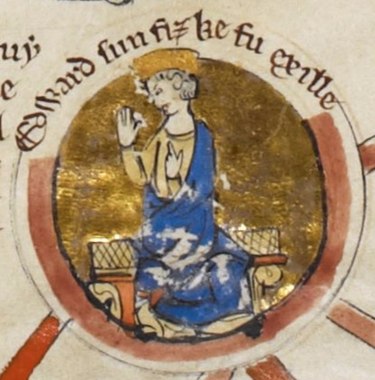
Edward the Exile and the Last Saxon Royal Family

History...the Interesting Bits
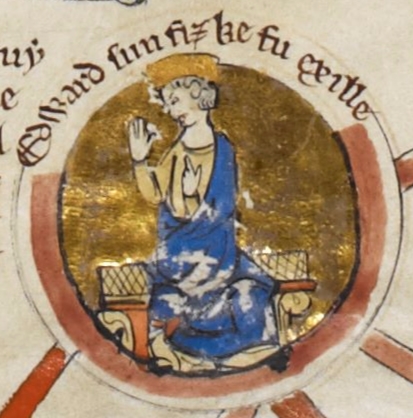
Edward the Exile

The story of Edward the Exile is a sad tale of an opportunity lost. Edward the Exile was one of the two sons of Edmund II Ironside, King of England in 1016; Edmund was the son of Ӕthelred II and his first wife, Ӕlfgifu of York. Edward’s grandfather was, therefore, Ӕthelred II (the Unready) and his uncle was Edward the Confessor, England’s king from 1042 until 1066.

Edward the Exile’s mother was Ealdgyth, the widow of Sigeferth, a thegn from East Anglia, who had been betrayed in 1015, along with another thegn, Morcar, by Eadric Streona. Eadric had lured them into his chamber during a great assembly at Oxford and killed them.  After her first husband’s murder, King Ӕthelred ‘took possession of their effects, and ordered Elgitha [Ealdgyth], Sigeferth’s widow, to be taken to the town of Malmesbury’.¹

Taking a stand against his father and Eadric, however, Edmund rescued Ealdgyth from Malmesbury and ‘married her against his father’s will’, between the middle of August and the middle of September 1015, Edmund then rode into the territories of Sigeferth and Morcar, in the Five Boroughs (The Five Boroughs were Derby, Leicester, Lincoln, Nottingham and Stamford), ‘and seizing the lands of Sigeferth and Morcar, compelled the villeins to acknowledge him as their lord’.¹

Edmund and Ealdgyth were probably married at the beginning of August 1015. They would have two sons, Edward and Edmund, who may well have been twins or were born just one year apart. Edward was born in 1016, with Edmund being born no later than 1017. Their father spent the rest of 1015 and 1016 trying to encourage resistance to the constant Danish onslaught.
History...the Interesting Bits
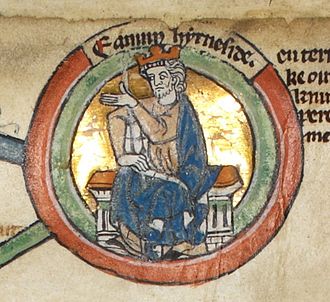
Edmund II Ironside

Following the death of Ӕthelred II on 23 April 1016, Edmund was proclaimed King Edmund II as the old king’s oldest surviving son. He was to spend the remainder of his life fighting the forces of King Cnut, the Danish contender for the English crown. He even allied with the treacherous Eadric Streona in the hope that their combined forces could fend off the Danes. However, when it came to the crunch, in the Battle of Assundun, on 18 October 2016, Streona fled in the face of the enemy, leaving Edmund and his allies to fight on alone. The result was defeat for Edmund, and the deaths of many of England’s leading nobles.

A peace was eventually negotiated, in which England was divided between the two contenders, with Edmund taking Wessex and Cnut taking Northumbria and, probably, Mercia. Under the treaty it was agreed the other would inherit the remainder of the country from whichever died first. Unfortunately, on 30 November 1016, Edmund died, either from wounds received during the summer of battles, or by more nefarious means – it is impossible to tell. A later story that Edmund was killed, by a sword or spear thrust into his bowels, as he visited the latrine, does not appear in any contemporary chronicles.

Cnut was now sole king of England.

As soon as he had control, Cnut sent Edmund’s infant sons to the court of the king of Sweden, Olof Stötkonung, apparently with instructions to have them killed. However, the Swedish king was understandably squeamish about murdering two innocent toddlers. He was an old ally of the boys’ grandfather, Ӕthelred II and spared the children, sending them to safety in Hungary. When Cnut’s assassins almost caught up with them there, they were forced to flee for their lives, settling at the court of Yaroslav the Wise in Kyiv, where Ingegerd, the daughter of King Olof of Sweden, was queen.
History...the Interesting Bits
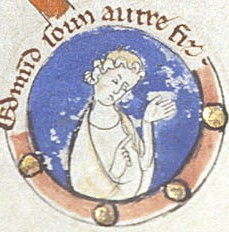
Edmund Aetheling, brother of Edward the Exile

In 1046,  as young adults, Edward and Edmund made their way back to Hungary and helped in the restoration of the exiled Andrew of Hungary. Edmund is said to have married a Hungarian princess but died sometime before 1054. Around 1043 Edward married Agatha, whose origins are extremely obscure. She may have been a daughter of Yaroslav and Ingegerd of Kyiv but was more likely the daughter of Luidolf, Margrave of West Friesland and a relative of Holy Roman Emperor Henry III. The couple had three children together. Margaret, the eldest, was born in either 1045 or 1046; her sister, Christina was born around 1050 and her brother Edgar, the Ӕtheling was born sometime between 1052 and 1056.

The family could have spent their whole lives in European exile, were it not for Edward the Confessor’s failure to produce a legitimate heir by his wife, Edith of Wessex. In 1054 Edward, having realised that he needed to settle the question over the succession, sent an embassy to eastern Europe in search of his brother, Edmund’s children. Ealdred, Archbishop of York, spent several months at the court of Holy Roman Emperor Henry III, but was initially unsuccessful in arranging Edward the Exile’s return to England.

A second embassy in 1056 managed to persuade the prince to return to his homeland and he arrived back in England in 1057, forty years after he was sent into exile.  We do not know whether his family travelled with him or arrived later. However, just days after his return Edward the Exile was dead, before he even saw the king, his uncle. He died on 19 April 1057, and was laid to rest in St Paul’s Cathedral, London, where his grandfather, Ӕthelred II, was also buried. Whether his death was caused by nefarious means or simply a sad twist of fate is uncertain. The suspicion has been raised that Edward’s rival for the throne, Harold Godwinson – the future Harold II – may have taken the opportunity to remove his rival; although it was likely that it was Harold who had escorted Edward back to England, as he was on the continent at that time. So surely, had he intended murder, he would have done it sooner and far from English soil?
History...the Interesting Bits
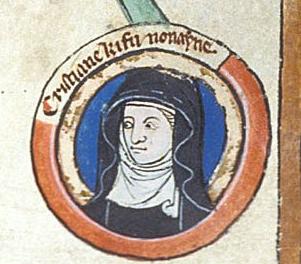
Christina, daughter of Edward the Exile and Agatha

Edward the Exile’s brother, Edmund, is not mentioned as a candidate for the English throne, nor is he spoken of when his brother returned from Hungary in 1057, so it seems likely that he had died in his eastern exile in the late 1040s or early 1050s; otherwise it would have been prudent for the king to send for him following Edward the Exile’s unfortunate demise in 1057.

Whatever the circumstances, the death of Edward the Exile was a blow for Edward the Confessor’s dynastic hopes. The Anglo-Saxon Chronicle bemoans his death, ‘Alas! That was a rueful time, and injurious to all this nation – that he ended his life so soon after he came to England, to the misfortune of this miserable people.’¹ With Edward’s death, his son, Edgar, became the ӕtheling, but Edgar was still very much a child of about five years of age and unlikely to inherit if King Edward died in the near future. He and his sisters, along with their mother, were now in the protection of King Edward. They continued to live at court, Edgar was adopted by Queen Edith, who raised him and saw to his education. Margaret and Christina were probably sent to the nunnery at Wilton, where the queen had been schooled, to continue their education. They would have undergone instruction in religion, spinning and embroidery, household management and possibly music and dancing.

By January 1066, when Edward the Confessor died, Margaret was approaching her twentieth birthday, while Edgar could have been as young as ten and was, probably, no older than fourteen. Due to his tender years Edgar was passed over as a candidate for the throne, in preference for the older and more experienced Harold Godwinson; who was crowned as King Harold II the day after King Edward’s death. Following Harold’s death at the Battle of Hastings in October 1066, Edgar was proclaimed king by some of his supporters, including Archbishop Ealdred of York, but was hardly capable of mounting any real challenge to William the Conqueror and by December had come to terms with him at Berkhamsted.
History...the Interesting Bits
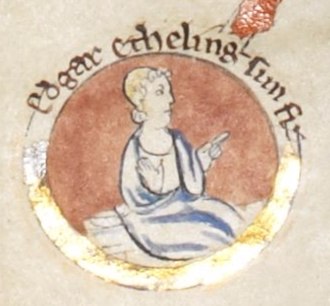
Edgar the Aetheling, son of Edward the Exile and Agatha

By 1068 Edgar the Ӕtheling had become involved in the opposition to Norman rule, which had been festering in northern England. However, when events turned against him he fled to Scotland, taking his mother and sisters along with him. The family was warmly received at Dunfermline by Scotland’s king, Malcolm III Canmore. Malcolm III Canmore was the son of Duncan I and Sybilla of Northumbria. His father had been killed by Macbeth, of Shakespeare fame, in August of 1040. Malcolm himself had defeated King Macbeth in battle, at Lumphanan, in August 1057 and Macbeth’s son Lulach in March 1058, to take the throne. By 1069 he was well established as king and had two sons by his first wife, Ingebiorg. Ingeborg was the daughter of Fin Arnasson, friend of Harald Hardrada and Jarl of Holland. The couple had three sons Duncan, Malcolm and Donald. In 1069 Malcolm asked Edgar and his mother for Margaret’s hand in marriage:

‘Then began Malcolm to yearn after the child’s [Edgar] sister, Margaret, to wife; but he and all his men long refused; and she also herself was averse, and said that she would neither have him nor anyone else, if the Supreme Power would grant, that she in her maidenhood might please the mighty Lord with a carnal heart, in this short life, in pure continence. The king, however, earnestly urged her brother, until he answered Yea. And indeed he durst not otherwise; for they were come into his kingdom … The prescient Creator wist long before what he of her would have done; for that she would increase the glory of God in this land, lead the king aright from the path of error, bend him and his people together by a better way, and suppress the bad customs which the nation formerly followed: all which she afterwards did. The king therefore received her, though it was against her will, and was pleased with her manners, and thanked God, who in his might had given him such a match.’¹

Margaret was reluctant to agree to the marriage, she was more inclined to a religious life and had hoped to become a nun. Nonetheless, with pressure from Malcolm, her brother and, possibly, her own sense of obligation to the king who was sheltering her family, she eventually accepted his proposal. They were married at Dunfermline sometime in 1069 or 1070 and, by all accounts, it seems to have been a happy and successful marriage and partnership.
History...the Interesting Bits
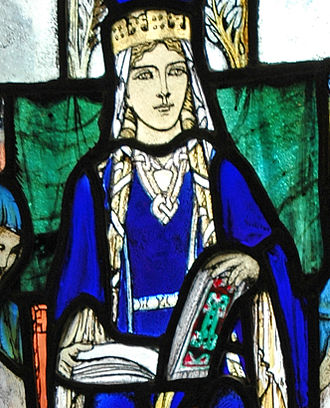
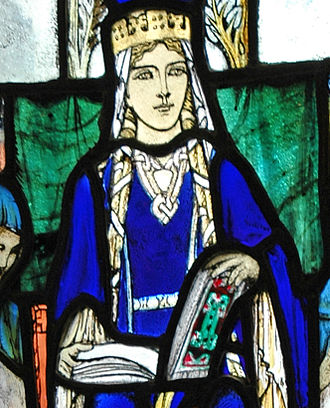
St Margaret, Queen of Scotland

Every English monarch, from Henry II onwards, could also claim descent from Alfred the Great, but through the female line of St Margaret, Queen of Scotland, daughter of King Edward ‘s nephew, Edward the Exile, and mother of Henry I’s wife, Matilda of Scotland.

Margaret’s sister, Christina would later take holy orders, becoming the abbess of Romsey Abbey and overseeing the education of her nieces, Edith and Mary, the daughters of her sister, Margaret, Queen of Scotland.

Edgar seems to have been only a minor player in the politics and upheaval following the Norman Conquest. His political isolation meant that few took his claim to the English crown seriously. While his participation in military actions, and in relations with Scotland are mentioned in various documents, his death passed without notice – or remark. William of Malmesbury wrote of him in 1125, that ‘he now grows old in the country in privacy and quiet’². Nothing is mentioned of him thereafter; neither is it ever remarked that he had a wife of children.

If he had only been a few years older in that crucial year of 1066, or if his father had survived to inherit the throne from Edward the Confessor, the story could have been very different.

*

Footnotes: ¹The Anglo-Saxon Chronicle translated by James ingram; ²William of Malmesbury, De gestis regum; ³Anglo-Saxon Chronicle, 1097, Text E.

Pictures courtesy of Wikipedia

Sources: Brewer’s British Royalty by David Williamson; Britain’s Royal Families, the Complete Genealogy by Alison Weir;The Wordsworth Dictionary of British History by JP Kenyon; The Anglo-Saxons in 100 Facts by Martin Wall; Kings, Queens, Bones and Bastards by David Hilliam; The Mammoth Book of British kings & Queens by Mike Ashley; The Oxford Companion to British History Edited by John Cannon; The Anglo-Saxon Chronicles translated and edited by Michael Swaton; The Anglo-Saxon Chronicle translated by James Ingram; Queen Emma and the Vikings by Harriett O’Brien; The Bayeux Tapestry by Carola Hicks; oxforddnb.com.

*

My Books

Signed, dedicated copies of all my books are available, please get in touch by completing the contact me form or through my online bookshop.

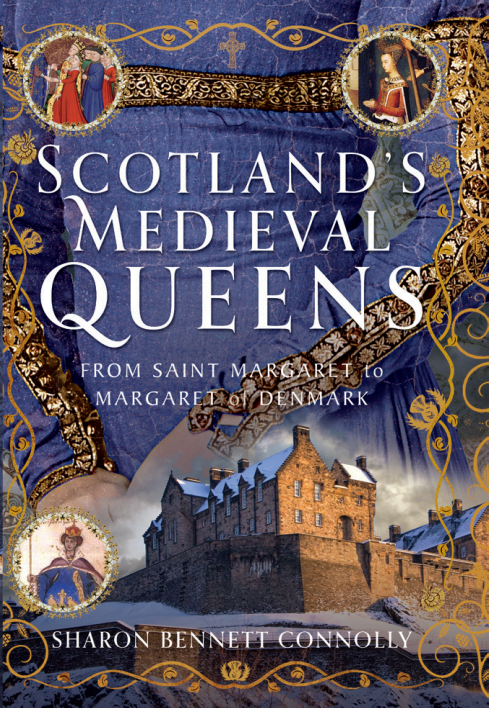
Out now: Scotland’s Medieval Queens

Books by Sharon Bennett Connolly

Scotland’s history is dramatic, violent and bloody. Being England’s northern neighbour has never been easy. Scotland’s queens have had to deal with war, murder, imprisonment, political rivalries and open betrayal. They have loved and lost, raised kings and queens, ruled and died for Scotland. From St Margaret, who became one of the patron saints of Scotland, to Elizabeth de Burgh and the dramatic story of the Scottish Wars of Independence, to the love story and tragedy of Joan Beaufort, to Margaret of Denmark and the dawn of the Renaissance, Scotland’s Medieval Queens have seen it all. This is the story of Scotland through their eyes.

Scotland’s Medieval Queens gives a thorough grounding in the history of the women who ruled Scotland at the side of its kings, often in the shadows, but just as interesting in their lives beyond the spotlight. It’s not a subject that has been widely covered, and Sharon is a pioneer in bringing that information into accessible history.’ Elizabeth Chadwick (New York Times bestselling author)

Available now from Amazon and Pen and Sword Books

Also by Sharon Bennett Connolly:

Books by Sharon Bennett Connolly

Heroines of the Tudor World tells the stories of the most remarkable women from European history in the time of the Tudor dynasty, 1485-1603. These are the women who ruled, the women who founded dynasties, the women who fought for religious freedom, their families and love. Heroines of the Tudor World is now available for pre-order from Amberley Publishing and Amazon UK. Women of the Anarchy demonstrates how Empress Matilda and Matilda of Boulogne, unable to wield a sword themselves, were prime movers in this time of conflict and lawlessness. It shows how their strengths, weaknesses, and personal ambitions swung the fortunes of war one way – and then the other. Available from Bookshop.orgAmberley Publishing and Amazon UKKing John’s Right-Hand Lady: The Story of Nicholaa de la Haye is the story of a truly remarkable lady, the hereditary constable of Lincoln Castle and the first woman in England to be appointed sheriff in her own right. Available from all good bookshops Pen & Sword Booksbookshop.org and Amazon

Royal Historical Society

Defenders of the Norman Crown: The Rise and Fall of the Warenne Earls of Surrey tells the fascinating story of the Warenne dynasty, from its origins in Normandy, through the Conquest, Magna Carta, the wars and marriages that led to its ultimate demise in the reign of Edward III. Available from Pen & Sword BooksAmazon in the UK and US, and Bookshop.orgLadies of Magna Carta: Women of Influence in Thirteenth Century England looks into the relationships of the various noble families of the 13th century, and how they were affected by the Barons’ Wars, Magna Carta and its aftermath; the bonds that were formed and those that were broken. It is now available in paperback and hardback from Pen & SwordAmazon, and Bookshop.orgHeroines of the Medieval World tells the stories of some of the most remarkable women from Medieval history, from Eleanor of Aquitaine to Julian of Norwich. Available now from Amberley Publishing and Amazon, and Bookshop.orgSilk and the Sword: The Women of the Norman Conquest traces the fortunes of the women who had a significant role to play in the momentous events of 1066. Available now from Amazon,  Amberley Publishing, and Bookshop.org.

Alternate Endings: An anthology of historical fiction short stories including Long Live the King… which is my take what might have happened had King John not died in October 1216. Available in paperback and kindle from Amazon.

Podcast:

A Slice of Medieval

Have a listen to the A Slice of Medieval podcast, which I co-host with Historical fiction novelist Derek Birks. Derek and I welcome guests, such as Bernard Cornwell and Elizabeth Chadwick, and discuss a wide range of topics in medieval history, from significant events to the personalities involved. 

There are now 80 episodes to listen to!

Every episode is also available on YouTube.

*

Don’t forget! Signed and dedicated copies of all my books are available through my online bookshop.

For forthcoming online and in-person talks, please check out my Events Page.

You can be the first to read new articles by clicking the ‘Follow’ button, liking our Facebook page or joining me on TwitterThreadsBluesky and Instagram.

©2018 Sharon Bennett Connolly FRHistS
The Dreadful Fate of Alfred the Aetheling

History ... the Interesting Bits
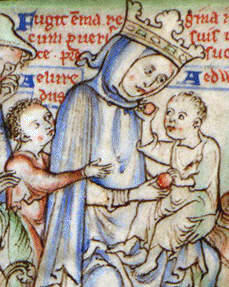
Emma fleeing England with Edward and Alfred, following the invasion of Sweyn Forkbeard

Alfred the Ætheling was the younger son of Æthelred II the Unready and his second wife, Emma of Normandy.

Emma was the daughter of Richard I, Duke of Normandy, and his wife, Gunnora. Born in around 985/987, she was married to Æthelred at Winchester on 5 April 1002, at which time she was given the English name Ælfgifu, although in the Anglo-Saxon Chronicle she is often referred to, simply, as ‘The Lady’. Her marriage with Æthelred was an attempt to seal a peace between England and Normandy, and to persuade the Normans not to allow the Viking raiders to winter in their lands between raids into England. Although the Vikings continued to shelter in Normandy during the winter, and raiding into England continued throughout the early years of the 11th century, the marriage was a success in that it produced two more sons and a daughter for Æthelred; a second family considering he was the father of as many as thirteen children by his first wife, Ælfgifu of York, including at least six sons.

Of Emma and Æthelred’s two sons the eldest, Edward, would eventually succeed to the English throne following the death of his half-brother, Harthacnut, son of Emma by her second husband, King Cnut. Edward became king in 1042 and ruled until his death on 5 January 1066, leaving the crown on his deathbed to the ill-fated Harold II Godwinson. Edward’s younger brother, Alfred, however, was to suffer a rather different fate.

Alfred was born sometime before 1012 and styled ætheling, or throne-worthy, although he had numerous older brothers also holding that title. However, whilst still a young child, his father’s hold on the kingdom was becoming ever more precarious. By 1013 Danish king Sweyn Forkbeard was gaining victory after victory. Emma and her children were sent to safety in her native Normandy. The Anglo-Saxon Chronicle records:

‘the Lady then turned across the sea to her brother Richard, and Ӕlfsige, abbot of Peterborough with her. And the king sent Bishop Ӕlfhun across the sea with the ӕthelings Edward and Alfred in order that he should look after them.’¹

Ӕthelred spent Christmas on the Isle of Wight, before joining his family in Normandy as Sweyn consolidated his victory. The Dane’s ascendancy was short-lived however, as he died after a fall from his horse on 3 February 1014. His death gave Ӕthelred a way back to his kingdom and he sent Edward to England to negotiate his return with the English Witan, who invited Æthelred to resume the throne ‘if he would govern them better than he did before’.¹ Unfortunately, despite his promises, Æthelred proved just as inept as before, failing to defeat the Danish invaders, led by Sweyn’s son Cnut. The beleaguered Æthelred died just two years later, on 23 April 1016, and was succeeded by his oldest surviving son by his first wife, Edmund II Ironside. Although Edmund put up a valiant fight against the Danish invaders, a summer of fighting took its toll and he died on 30 November 1016, probably from wounds received in the recent string of battles. The rumours of murder by a sword thrust into the bowels as Edmund visited the latrine, only arose centuries later.

History ... the Interesting Bits
Emma, with Edward and Alfred, welcomed to the Norman court by Duke Richard II

Alfred and his brother Edward, again, sought in exile in Normandy, as Cnut consolidated his control on the whole of England.. One of the new king’s first actions was to send for their mother Emma, who he married on 2 July 1017. Marrying Emma was a sensible move for Cnut, she was a link to the old regime and provided a sense of continuity for England’s conquered people. How much choice had in accepting the most powerful man in the country as her husband, we do not know; she may have thought it the only way of ensuring Cnut did not pursue the deaths of her sons in exile. Emma gave Cnut three children including a son, Harthacnut, and two daughters; one, who’s name is lost, died aged 8 and is buried in Bosham, Sussex. A second daughter, Gunhilda, married Henry III, Emperor of Germany.

When Cnut died in 1035 Emma was in England and retired to her manor in Winchester, taking the royal treasury with her, in the hope she could pass it to her son, Harthacnut. However, Harthacnut was in Denmark and it was Harold Harefoot, one of Cnut’s two sons by Ælfgifu of Northampton, who seized the initiative. An agreement was reached whereby the half-brothers ruled as co-kings with Emma acting for Harthacnut, in his absence, and ruling in Wessex.

As it was, in 1036 Harold was accepted as England’s ruler, Harthacnut was ruling in Denmark and Emma was living on her estates in Winchester. Emma faced tragedy, however, when her son Alfred arrived in England. The ætheling was probably approaching thirty years of age and had been living in exile in Normandy for the last twenty years, arrived in England. According to Norman sources, it was Edward who had first tried to join their mother in Winchester in 1036, sailing up the Solent and winning a battle near Southampton before returning to Normandy with his plunder. It was after this that Alfred attempted to visit his mother in Winchester, but many feared he would make a play for the crown.

However, before he had the chance to see Emma, the ӕtheling was welcomed by Earl Godwin, taken to Godwin’s estate at Guildford, where he was seized and taken to Ely. At Ely he was blinded; blinding was a symbolic gesture aimed at destroying his worth as a king.

The Anglo-Saxon Chronicle retold the tale in rhyme:

History ... the Interesting Bits
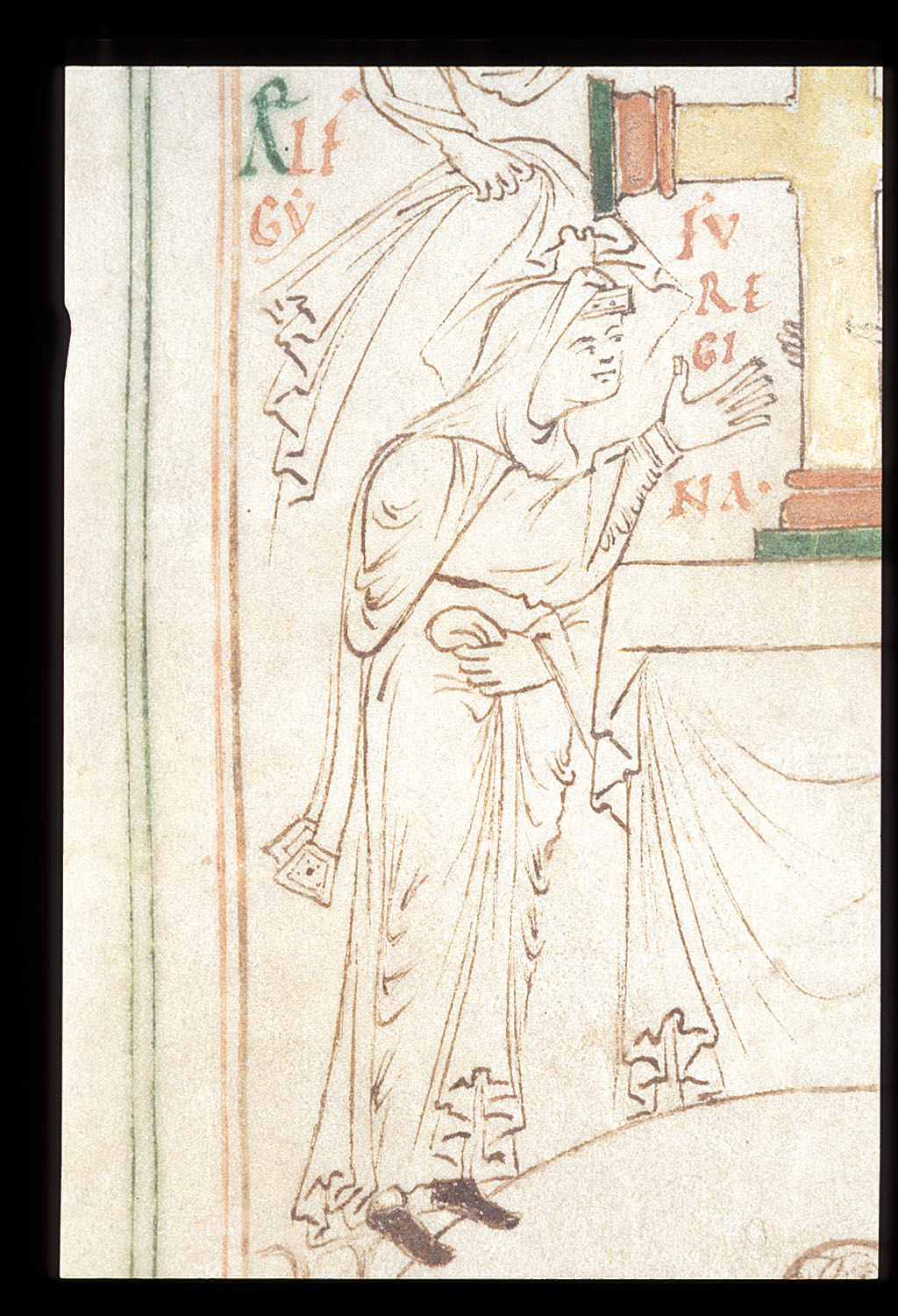
Detail of Queen Emma before an altar

‘But then Godwine stopped him, and set him in captivity,

and drove off his companions, and some variously killed;

some of them were sold for money, some cruelly destroyed,

some of them were fettered, some of them were blinded,

some maimed, some scalped.

No more horrible deed was done in this country

since the Danes came and made peace here.

Now we must trust to the dear God

that they who, without blame, were so wretchedly destroyed

rejoice happily with Christ.

The ӕtheling still lived; he was threatened with every evil;

until it was decided that he be led

to Ely town, fettered thus.

As soon as he came on ship he was blinded,

and blind thus brought to the monks.

And there he dwelt as long as he lived.

Afterwards he was buried, as well befitted him,

full honourably, as he was entitled,

at the west end, very near at hand to the steeple,

in the south side-chapel. His soul is with Christ.²

Emma’s own biography, the Encomium Emmae Reginae tells the story slightly differently, saying that Harold Harefoot forged a letter from Emma to her son, which claimed that the English would prefer Edward or Alfred as king, enticing Alfred to come to England and claim the crown. It does seem likely that Alfred received such a letter, but it may well have come from Emma herself, who sought to lay the blame on Harold when the expedition failed so abysmally.

History ... the Interesting Bits
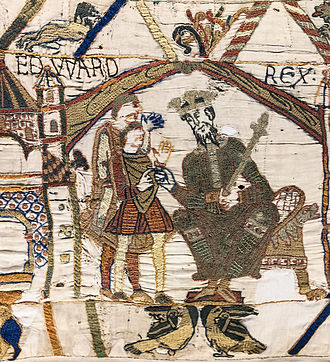
Edward the Confessor, taken from the Bayeux Tapestry

The sources are confusing over what exactly happened. Some state that when Alfred arrived in England, he was met by Earl Godwin, who swore fealty to him and established the ætheling at Guildford, but then Harold attacked in the night and took Alfred to Ely, where he was tried, blinded, killed and buried. While others suggest that Godwin betrayed Alfred and handed him over to King Harold. Either way, the result is always the same; Alfred was blinded and either intentionally killed or died from wounds caused by his blinding, on Harold’s orders, with or without the connivance of Godwin in late 1036 or early 1037.³ This one potential threat to Harold’s crown was thus eliminated and buried in Ely.

Emma must have been relieved that at least Edward had remained safe in Normandy. Despite the fact she had not seen him for many years, the loss of Alfred must have been a cruel blow to his mother. His brothers, moreover, did not forget Alfred’s fate. On his accession in 1040, Harthacnut pursued the prosecution of Godwin and Lyfing, the Bishop of Worcester and Crediton who had also been implicated in Alfred’s death, for Alfred’s murder. Lyfing was deprived of his see in punishment. Godwin gave the king a warship carrying eighty fighting men as appeasement – an expensive sweetener – and swore that he had not wanted the prince blinded and that whatever he had done had been on the orders of King Harold.

Like Harthacnut, Edward was never convinced of Godwin’s innocence, a fact which added to the increasing distrust and conflict between the king and his most powerful earl in the first ten years of Edward’s reign. Indeed, when the Godwin family and Edward quarrelled in 1051, it was Edward’s demand to have his brother returned to him that made Earl Godwin realise there would be no rapprochement; the earl sailed into exile in Flanders with his family. When he did manage to negotiate his return the following year, Edward and Godwin were still wary of each other. Moreover, when Godwin died at Winchester 1052, having collapsed during the Easter feast to entertain the king, a story arose that Godwin had called on God to choke him with a mouthful of cake if he were guilty of Alfred’s murder. Needless to say, Earl Godwin collapsed on the floor the very next moment. Though it is a great moral story, there is probably little truth in it, and it is likely we will never know the extent of Godwin’s guilt, or innocence.

*

Footnotes: ¹The Anglo-Saxon Chronicle translated by James ingram; ²The Anglo-Saxon Chronicles translated and edited by Michael Swaton; ³Alfred Ætheling (article) by M.K.Lawson, oxforddnb.com

*

Pictures courtesy of Wikipedia, except Queen Emma, courtesy of British Library.

Sources: Brewer’s British Royalty by David Williamson; Britain’s Royal Families, the Complete Genealogy by Alison Weir;The Wordsworth Dictionary of British History by JP Kenyon; The Anglo-Saxons in 100 Facts by Martin Wall; Kings, Queens, Bones and Bastards by David Hilliam; The Mammoth Book of British kings & Queens by Mike Ashley; The Oxford Companion to British History Edited by John Cannon; The Anglo-Saxon Chronicles translated and edited by Michael Swaton; The Anglo-Saxon Chronicle translated by James Ingram; Queen Emma and the Vikings by Harriett O’Brien; The Bayeux Tapestry by Carola Hicks; oxforddnb.com.

*

My Books

Signed, dedicated copies of all my books are available through my online bookshop.

Out now: Scotland’s Medieval Queens

Books by Sharon Bennett Connolly

Scotland’s history is dramatic, violent and bloody. Being England’s northern neighbour has never been easy. Scotland’s queens have had to deal with war, murder, imprisonment, political rivalries and open betrayal. They have loved and lost, raised kings and queens, ruled and died for Scotland. From St Margaret, who became one of the patron saints of Scotland, to Elizabeth de Burgh and the dramatic story of the Scottish Wars of Independence, to the love story and tragedy of Joan Beaufort, to Margaret of Denmark and the dawn of the Renaissance, Scotland’s Medieval Queens have seen it all. This is the story of Scotland through their eyes.

Scotland’s Medieval Queens gives a thorough grounding in the history of the women who ruled Scotland at the side of its kings, often in the shadows, but just as interesting in their lives beyond the spotlight. It’s not a subject that has been widely covered, and Sharon is a pioneer in bringing that information into accessible history.’ Elizabeth Chadwick (New York Times bestselling author)

Available now from Amazon and Pen and Sword Books

Also by Sharon Bennett Connolly:

Books by Sharon Bennett Connolly

Heroines of the Tudor World tells the stories of the most remarkable women from European history in the time of the Tudor dynasty, 1485-1603. These are the women who ruled, the women who founded dynasties, the women who fought for religious freedom, their families and love. Heroines of the Tudor World is now available for pre-order from Amberley Publishing and Amazon UK. Women of the Anarchy demonstrates how Empress Matilda and Matilda of Boulogne, unable to wield a sword themselves, were prime movers in this time of conflict and lawlessness. It shows how their strengths, weaknesses, and personal ambitions swung the fortunes of war one way – and then the other. Available from Bookshop.orgAmberley Publishing and Amazon UKKing John’s Right-Hand Lady: The Story of Nicholaa de la Haye is the story of a truly remarkable lady, the hereditary constable of Lincoln Castle and the first woman in England to be appointed sheriff in her own right. Available from all good bookshops Pen & Sword Booksbookshop.org and Amazon

Defenders of the Norman Crown: The Rise and Fall of the Warenne Earls of Surrey tells the fascinating story of the Warenne dynasty, from its origins in Normandy, through the Conquest, Magna Carta, the wars and marriages that led to its ultimate demise in the reign of Edward III. Available from Pen & Sword BooksAmazon in the UK and US, and Bookshop.orgLadies of Magna Carta: Women of Influence in Thirteenth Century England looks into the relationships of the various noble families of the 13th century, and how they were affected by the Barons’ Wars, Magna Carta and its aftermath; the bonds that were formed and those that were broken. It is now available in paperback and hardback from Pen & SwordAmazon, and Bookshop.orgHeroines of the Medieval World tells the stories of some of the most remarkable women from Medieval history, from Eleanor of Aquitaine to Julian of Norwich. Available now from Amberley Publishing and Amazon, and Bookshop.orgSilk and the Sword: The Women of the Norman Conquest traces the fortunes of the women who had a significant role to play in the momentous events of 1066. Available now from Amazon,  Amberley Publishing, and Bookshop.org.

Alternate Endings: An anthology of historical fiction short stories including Long Live the King… which is my take what might have happened had King John not died in October 1216. Available in paperback and kindle from Amazon.

Podcast:

Have a listen to the A Slice of Medieval podcast, which I co-host with Historical fiction novelist Derek Birks. Derek and I welcome guests, such as Elizabeth Chadwick, Helen Castor, Ian Mortimer, Scott Mariani and Bernard Cornwell and discuss a wide range of topics in medieval history, from significant events to the personalities involved.

Every episode is also now available on YouTube.

*

Don’t forget! Signed and dedicated copies of all my books are available through my online bookshop.

For forthcoming online and in-person talks, please check out my Events Page.

You can be the first to read new articles by clicking the ‘Follow’ button, liking our Facebook page or joining me on TwitterThreadsBluesky and Instagram.

*

©2018 Sharon Bennett Connolly FRHistS
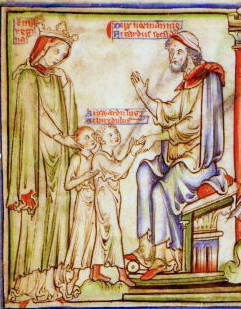
The Wives and Family of King Harold II

History ... the Interesting Bits
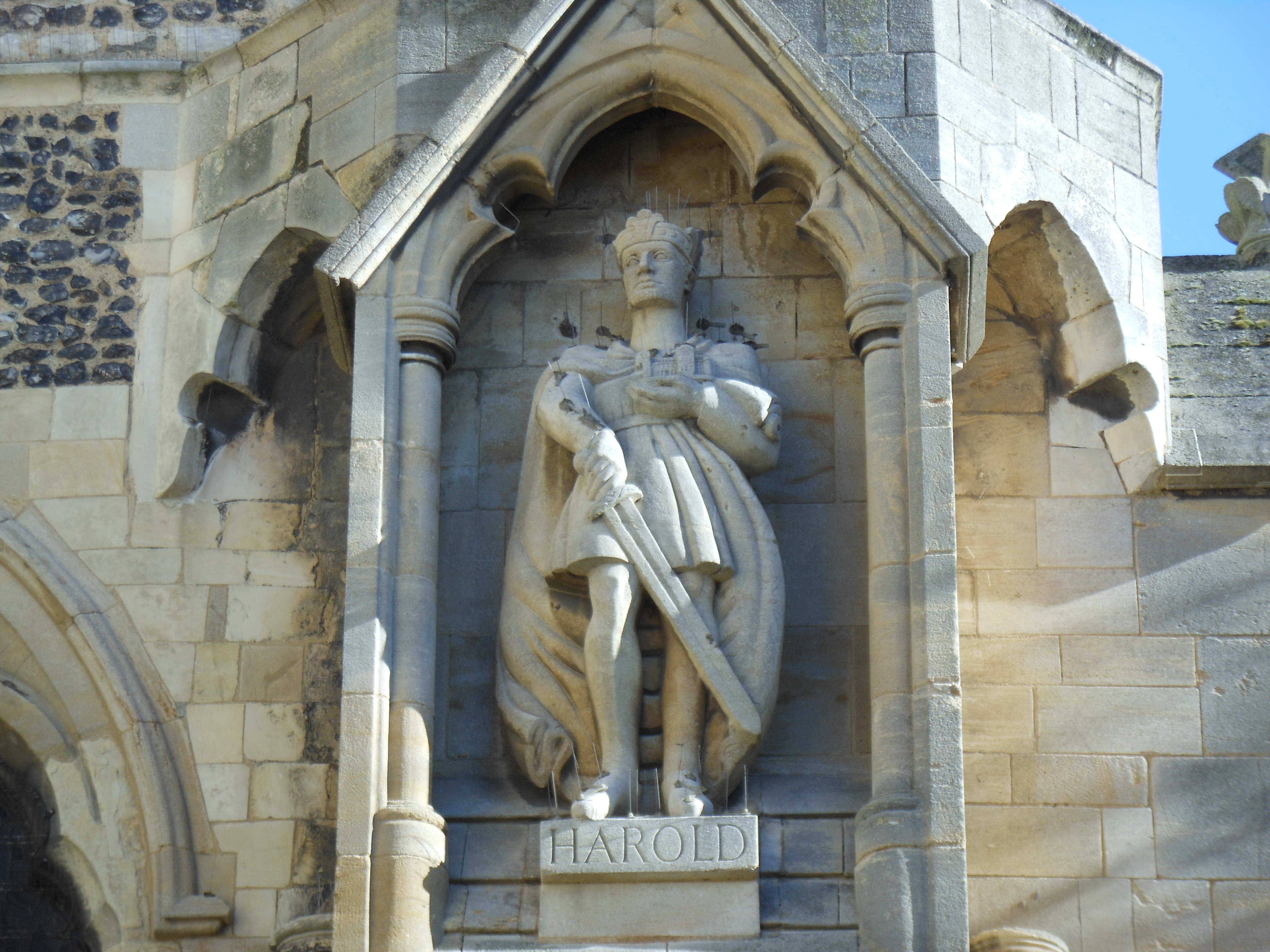
Statue of King Harold II at Waltham Abbey

The future king, Harold II Godwinson, was born into an Anglo-Danish family whose extensive influence and power meant they were frequently seen as the power behind the throne. This also meant that they were often seen as a threat to the man wearing the crown – especially Edward the Confessor – and suffered exile as a result.

Harold was born around 1022/3 to Godwin and his wife, Gytha Thorkelsdottir. Gytha was a member of the extended Danish royal family, as her brother, Ulf, was married to King Cnut the Great’s sister, Estrith. Gytha’s nephew, Sweyn Estrithson, would eventually rule Denmark as king. Harold received the earldom of East Anglia in 1044 and, as the oldest surviving son of Godwin, Earl of Wessex, he succeeded to his father’s earldom in 1053. Godwin died at Winchester in Easter week of 1053, after collapsing during a feast to entertain his son-in-law, King Edward the Confessor.

Harold’s sister, Edith, was the wife of King Edward; she had married him in January 1046. However, the fact they had no children meant there was no clear successor to the English crown; a situation that would be a major cause of the crisis of 1066. Of Harold’s brothers three were to become earls; Tostig, Gyrth and Leofwine. However, Tostig was driven out of his earldom of Northumberland by an uprising in 1065 and replaced with Morcar, the brother of Edwin, earl of Mercia. Gyrth and Leofwine both fought – and died – alongside Harold at Hastings. Harold’s older brother, Sweyn, once Earl of Hereford, had left on pilgrimage to Jerusalem in 1051, to atone for his many sins, which included the murder of his own cousin and the kidnapping and rape of an abbess, Eadgifu. He died – or was killed – on his journey home. Another, younger brother, Wulfnoth, was a hostage at the court of William, Duke of Normandy, along with his nephew – Sweyn’s son – Hakon.

History ... the Interesting Bits
Memorial to the 1066 Battle of Stamford bridge just outside York

Harold, himself, was not only one of the king’s foremost earls but also one of his most respected advisors and generals. In short, the Godwinsons were the most powerful family in the kingdom, after the king himself – and often resented for the fact. At one point Harold, with his father and brothers, had been exiled from England after quarrelling with the king. During a visit to Normandy in 1064, Harold is even said to have sworn an oath to back William of Normandy’s claim to the English throne in the likely event that Edward the Confessor died without an heir; a claim that William used to the full in order to secure papal approval for his invasion of England.

However, when it came to the moment of truth, it was Harold the old king is said to have named on his deathbed as his successor. He was crowned on 6 January, just hours after the burial of Edward the Confessor in Westminster Abbey. There was no gentle introduction to kingship for King Harold II, however, and  almost immediately he had to prepare to defend England against the rival claimants of Norway and Normandy; and against his own brother, Tostig, who had joined forces with Harald Hardrada, King of Norway.

Harold’s love life was as tangled as his political life.

History ... the Interesting Bits
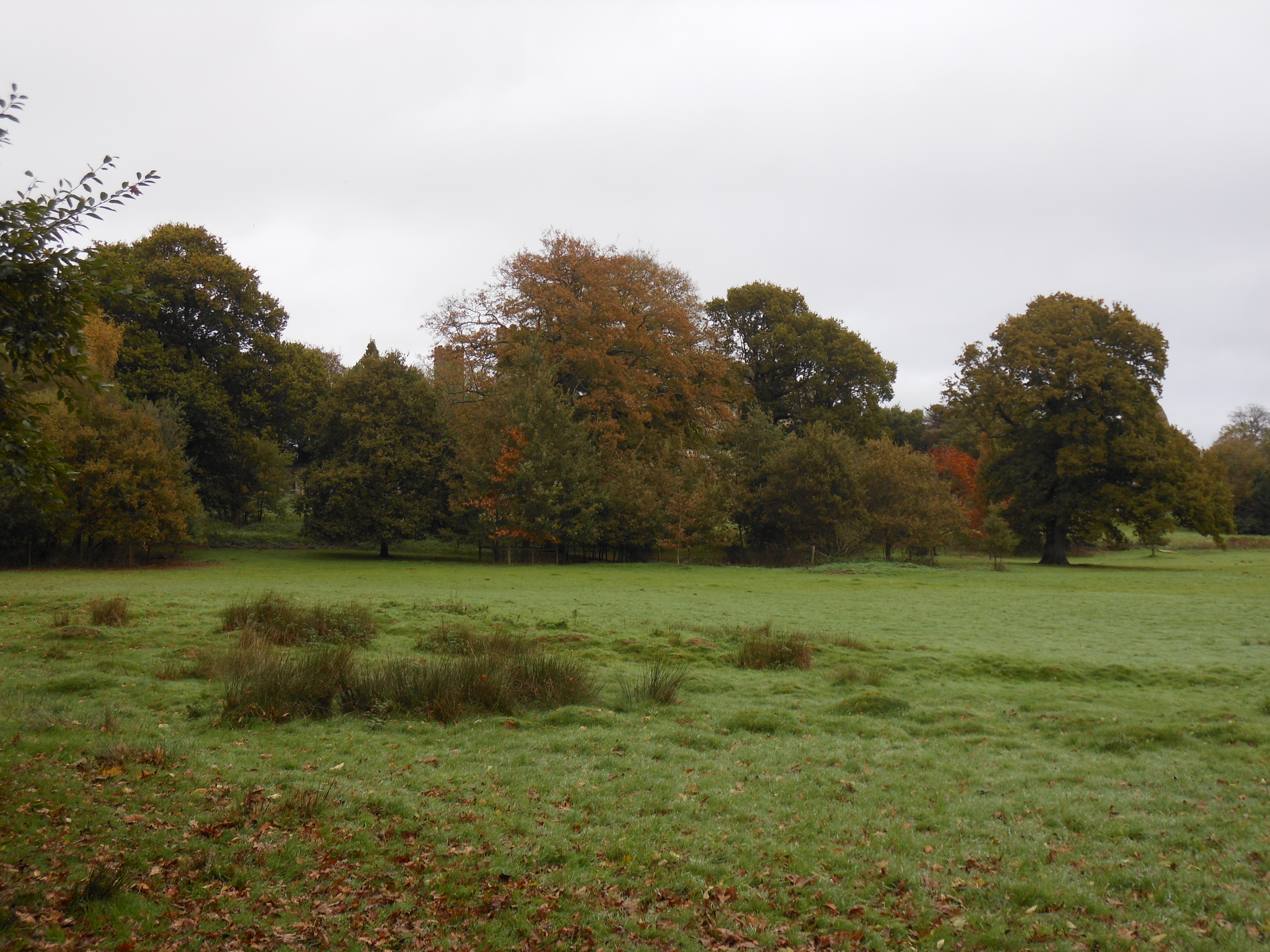
The battlefield of Hastings

Harold probably met Edith the Swan-neck (or Swanneshals) at about the same time as he became Earl of East Anglia, in 1044, which makes it possible that Edith the Swan-neck and the East Anglian magnate, Eadgifu the Fair, are one and the same. Eadgifu the Fair held over 270 hides of land and was one of the richest magnates in England. The majority of her estates lay in Cambridgeshire, but she also held land in Buckinghamshire, Hertfordshire, Essex and Suffolk; in the Domesday Book, Eadgifu held the manor at Harkstead in Suffolk, which was attached to Harold’s manor of Brightlingsea in Essex, and some of her Suffolk lands were tributary to Harold’s manor of East Bergholt.

While it is by no means certain that Eadgifu is Edith the Swan-neck, several historians – including Ann Williams in the Oxford Database of National Biography – make convincing arguments that they were. Even their names, Eadgifu and Eadgyth, are so similar that the difference could be merely a matter of spelling or mistranslation; indeed, the Abbey of St Benet of Hulme, Norfolk, remembers an Eadgifu Swanneshals among its patrons.

History ... the Interesting Bits
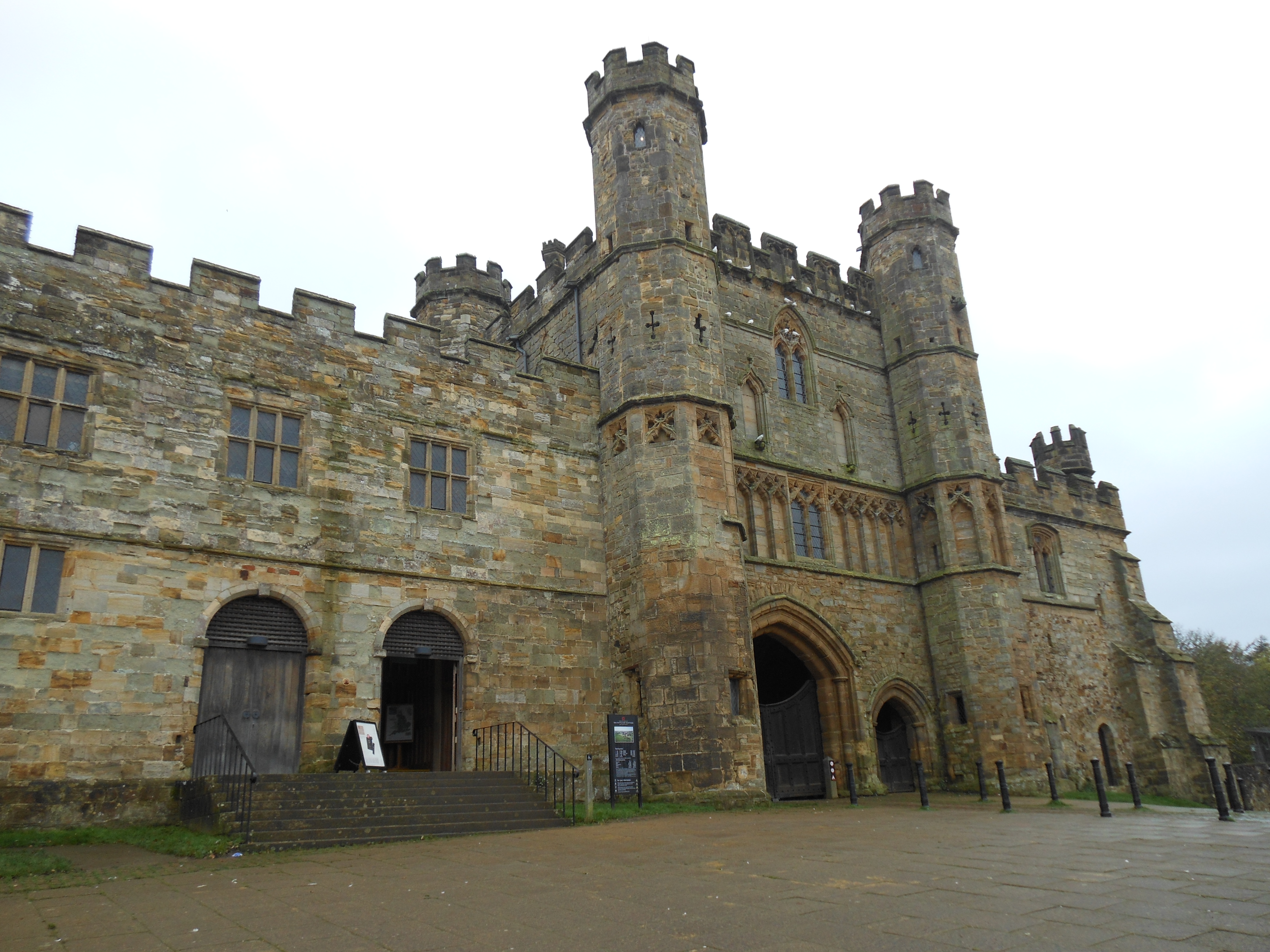
The gatehouse of Battle Abbey

What we do know is that by 1065 Harold had been living with the wonderfully-named Eadgyth Swanneshals (Edith the Swan-neck) for twenty years. History books label her as Harold’s concubine, but Edith was, obviously, no weak and powerless peasant, so it’s highly likely they went through a hand-fasting ceremony  – or ‘Danish marriage’ – a marriage, but not one recognised by the Church. It was not an uncommon practice – King Cnut had married his first wife, Ælfgifu of Northampton, in the same fashion. Edith being a hand-fast wife meant that Harold was still free to marry a second ‘wife’ in a Christian ceremony at a later date. Although we can’t say why Harold didn’t marry Edith in a manner recognised by the Church, it may be that they were both young and one or both of their families would not consent to their marriage.

Harold and Edith had about six children together – including three sons, Godwin, Edmund, Magnus and possibly a fourth, Ulf. They also had two daughters. Gytha married Vladimir Monomakh, Great Prince of Kiev, and is the ancestress of the current queen, Elizabeth II, through her descent from Philippa of Hainault. A second daughter, Gunnhild, spent sometime in Wilton Abbey in Wiltshire, although it is not certain that she was there with the intention of becoming a nun, or for safety and protection from the invading Normans. However, she is said to have eloped, before taking her vows, with a Breton knight, Alan the Red.

History ... the Interesting Bits
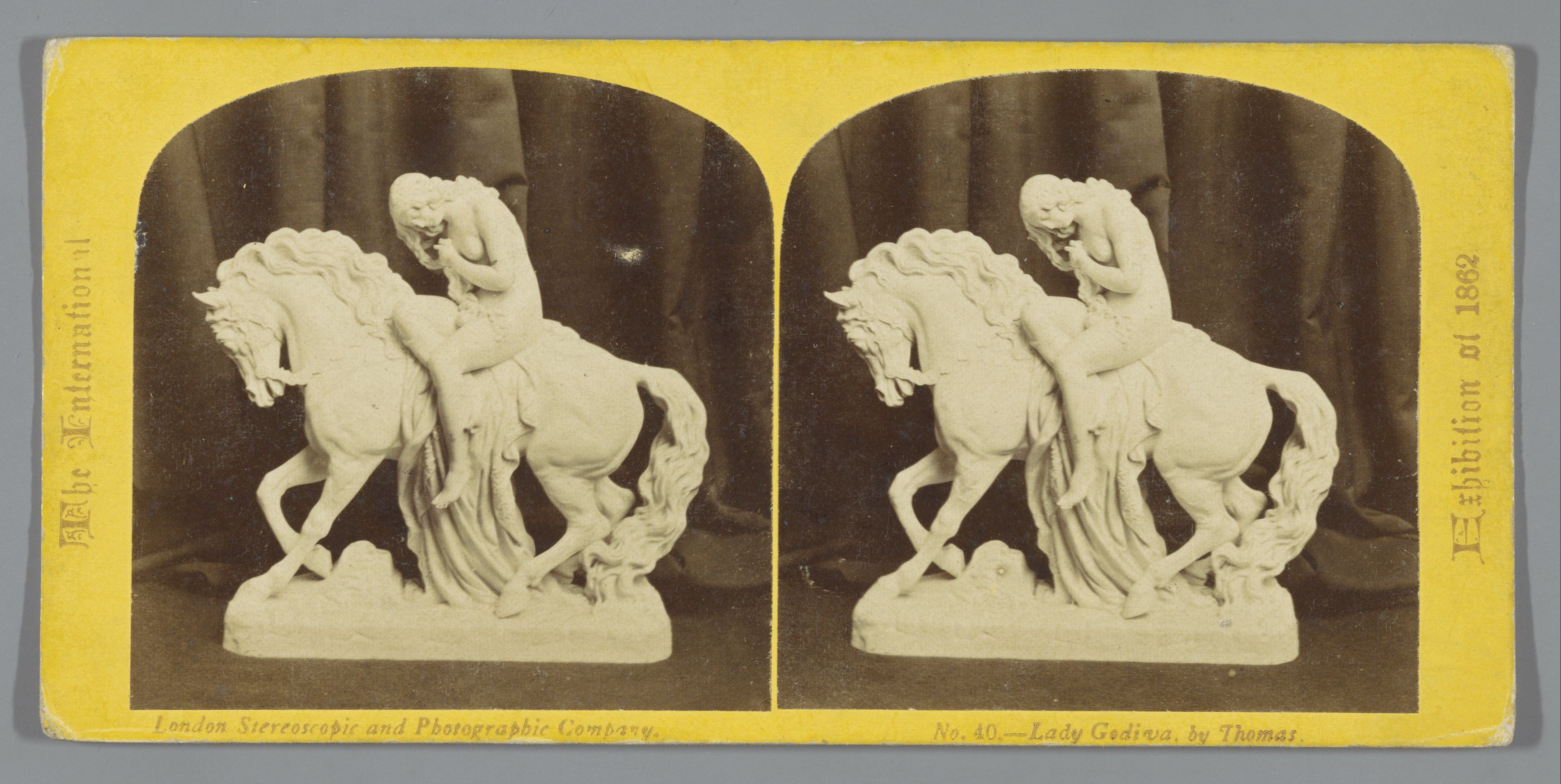
Lady Godiva, grandmother of Harold’s second wife, Ealdgyth

However, despite their twenty years and many children, and with the health of the king, Edward the Confessor, deteriorating, it became politically expedient for Harold to marry, to strengthen his position as England’s premier earl and, possibly, next king. Ealdgyth of Mercia was the daughter of Alfgar, Earl of Mercia, and granddaughter of the famous Lady Godiva and, according to William of Jumièges, very beautiful. Her brothers were Edwin, Earl of Mercia, and Morcar, who replaced Harold’s brother Tostig as Earl of Northumberland in the last months of 1065.

Ealdgyth was the widow of Gruffuddd ap Llywelyn, King of Gwynedd from 1039 and ruler of all Wales after 1055, with whom she had had at least one child, a daughter, Nest. Gruffuddd had been murdered in 1063, following an English expedition into Wales. Gruffudd’s own men are said to have betrayed their king, killed him and presented his head to Harold in submission. Harold’s subsequent marriage to Ealdgyth, which probably took place at the end of 1065 or beginning of 1066, not only secured the support of the earls of Northumbria and Mercia, but also weakened the political ties of the same earls with the new rulers of north Wales.

History ... the Interesting Bits
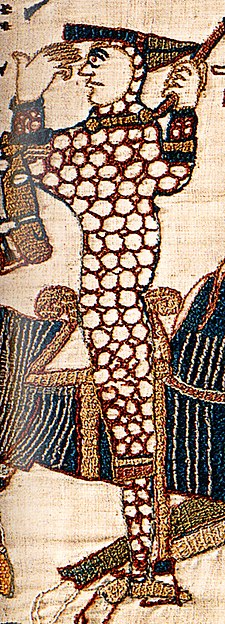
William the Conqueror, Harold’s nemesis

As Harold’s wife Ealdgyth was, therefore, for a short time, Queen of England. However, with Harold having to defend his realm, first against Harold Hardrada and his own brother, Tostig, at Stamford Bridge in September of 1066 and, subsequently, against William of Normandy at Hastings, it is unlikely Ealdgyth had time to enjoy her exalted status. At the time of the Battle of Hastings, on 14 October 1066, Ealdgyth was in London, but her brothers took her north to Chester soon after. Although sources are contradictory, it seems possible Ealdgyth was heavily pregnant and gave birth to a son, or twin sons, Harold and Ulf Haroldson, within months of the battle. The identity of Ulf’s mother seems to be sorely disputed, with some believing he was the twin brother of Harold and others that he was the youngest son of Edith Swan-neck; I suppose we will never know for certain.

Unfortunately, we hear nothing of Ealdgyth after the birth of Harold (and Ulf); her fate remains unknown. Young Harold is said to have grown up in exile on the Continent and died in 1098.

Despite his marriage to Ealdgyth of Mercia it seems Edith the Swan-neck remained close to Harold and it was she who was said to be waiting close by when the king faced William of Normandy at Senlac Hill near Hastings on 14 October 1066. She awaited the outcome alongside Harold’s mother, Gytha. Having lost a son, Tostig, just two weeks before, fighting against his brother and with the Norwegians at the Battle of Stamford Bridge, Gytha lost three more sons – Harold, Gyrth and Leofwine and, possibly, her grandson, Haakon, in the fierce battle at Hastings.

History ... the Interesting Bits
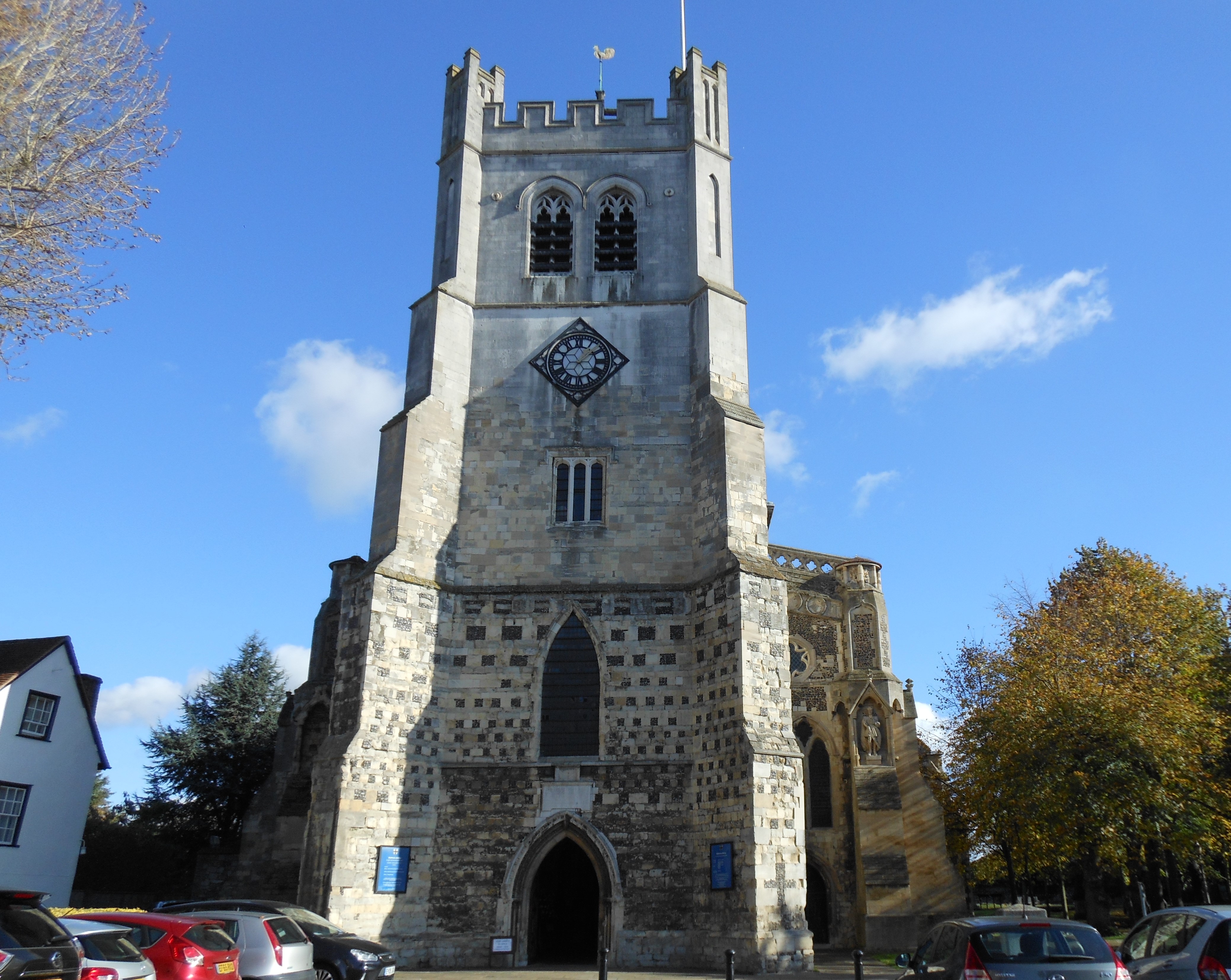
Waltham Abbey, where Edith is said to have brought Harold’s body after the Battle of Hastings

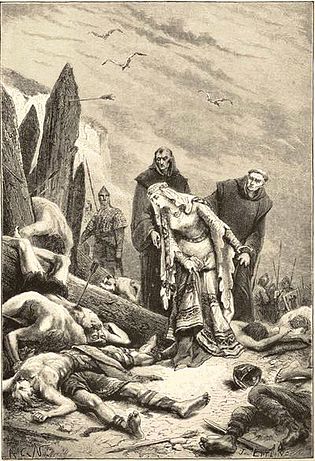
It is heart-wrenching, even now, to think of Edith and the elderly Gytha, wandering the blood-soaked field after the battle, in search of the fallen king. Sources say that Gytha was unable to identify her sons amid the mangled and mutilated bodies. It fell to Edith to find Harold, by undoing the chain mail of the victims, in order to recognise certain identifying marks on the king’s body – probably tattoos. There is a tradition, from the monks of Waltham Abbey, of Edith bringing Harold’s body to them for burial, soon after the battle. Although other sources suggest Harold was buried close to the battlefield, and without ceremony, it is hard not to hope that Edith was able to perform this last service for the king. However, any trace of Harold’s remains was swept away by Henry VIII’s dissolution of the monasteries, so the grave of England’s last Anglo-Saxon king is lost to history.

History ... the Interesting Bits
Edith searching the battlefield of Hastings for Harold’s body

After another year or so of leading resistance to Norman rule in the south-west, Harold’s mother, Gytha, eventually fled into exile on the Continent, taking Harold and Edith’s daughter, another Gytha, with her. Gytha and her nephew, Swein Estrithson, King of Denmark, arranged the marriage of the younger Gytha to the prince of Smolensk and – later – Kiev, Vladimir II Monomakh.

Edith and Harold’s sons fled to Ireland with all but one living into the 1080s, though the dates of their eventual deaths remain uncertain. Gunnhild remained in her nunnery at Wilton until sometime before 1093, when she became the wife or concubine of Alan the Red, a Norman magnate. Whether or not she was kidnapped seems to be in question but when Alan died in 1093, instead of returning to the convent, Gunnhild became the mistress of Alan’s brother and heir, Alan Niger. Alan Rufus held vast lands in East Anglia – lands that had once belonged to Eadgifu the Fair and, if Eadgifu was Edith the Swan-neck, it’s possible that Alan married Gunnhild to strengthen his claims to her mother’s lands.

History ... the Interesting Bits
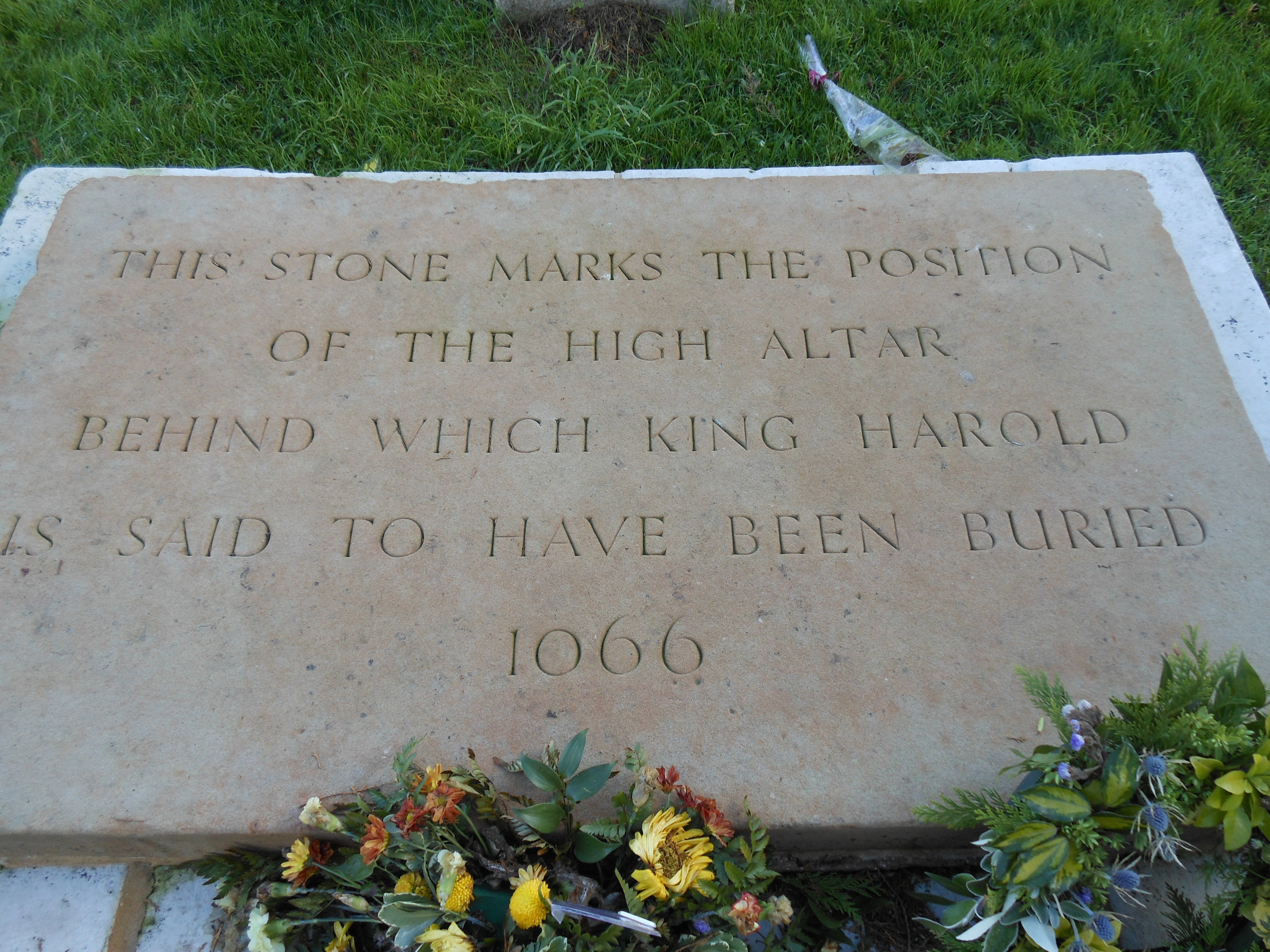
Stone marking the site of Harold’s grave at Waltham Abbey

After 1066 Edith’s lands had passed to Ralph de Gael, but he rebelled against King William and so they were eventually given to Alan the Red. Gunnhild and Alan are thought to have had a daughter, Matilda, who was married to Walter d’Eyncourt. Matilda and Walter’s oldest son, William d’Eyncourt, died as a child whilst fostered in the household of William II Rufus. He was buried in Lincoln Cathedral; his grave is now lost but his grave marker is preserved in the cathedral’s museum.

Of Edith the Swan-neck, there is no trace after Harold is interred at Waltham Abbey. Although she spent twenty years at the side of the man who would become king, and her daughter, Gytha, would be an ancestress of the English royal family of today, Edith simply disappears from the pages of history. Overall, history has treated Edith kindly; sympathising with a woman who remained loyal to her man to the end, despite the fact her official status was questionable.

*

Pictures ©2018 Sharon Bennett Connolly except Lady Godiva, which is courtesy of the Rijksmuseum and Edith at Hastings and William the Conqueror, which are courtesy of Wikipedia.

*

Sources: The English and the Norman Conquest by Dr Ann Williams; Brewer’s British Royalty by David Williamson; Britain’s Royal Families, the Complete Genealogy by Alison Weir; The Wordsworth Dictionary of British History by JP Kenyon; The Norman Conquest by Marc Morris; Harold, the King Who Fell at Hastings by Peter Rex; The Anglo-Saxons in 100 Facts by Martin Wall; The Anglo-Saxon Age by Martin Wall; Kings, Queens, Bones and Bastards by David Hilliam; The Mammoth Book of British kings & Queens by Mike Ashley; The Oxford Companion to British History Edited by John Cannon; The Anglo-Saxon Chronicles translated and edited by Michael Swaton; The Anglo-Saxon Chronicle translated by James Ingram; Queen Emma and the Vikings by Harriett O’Brien; The Bayeux Tapestry by Carola Hicks; oxforddnb.com.

*

My books

Signed, dedicated copies of all my books are available through my online store.

Out now: Scotland’s Medieval Queens

Books by Sharon Bennett Connolly

Scotland’s history is dramatic, violent and bloody. Being England’s northern neighbour has never been easy. Scotland’s queens have had to deal with war, murder, imprisonment, political rivalries and open betrayal. They have loved and lost, raised kings and queens, ruled and died for Scotland. From St Margaret, who became one of the patron saints of Scotland, to Elizabeth de Burgh and the dramatic story of the Scottish Wars of Independence, to the love story and tragedy of Joan Beaufort, to Margaret of Denmark and the dawn of the Renaissance, Scotland’s Medieval Queens have seen it all. This is the story of Scotland through their eyes.

Scotland’s Medieval Queens gives a thorough grounding in the history of the women who ruled Scotland at the side of its kings, often in the shadows, but just as interesting in their lives beyond the spotlight. It’s not a subject that has been widely covered, and Sharon is a pioneer in bringing that information into accessible history.’ Elizabeth Chadwick (New York Times bestselling author)

Available now from Amazon and Pen and Sword Books

Also by Sharon Bennett Connolly:

Books by Sharon Bennett Connolly

Heroines of the Tudor World tells the stories of the most remarkable women from European history in the time of the Tudor dynasty, 1485-1603. These are the women who ruled, the women who founded dynasties, the women who fought for religious freedom, their families and love. Heroines of the Tudor World is now available from Amberley Publishing and Amazon UK. Women of the Anarchy demonstrates how Empress Matilda and Matilda of Boulogne, unable to wield a sword themselves, were prime movers in this time of conflict and lawlessness. It shows how their strengths, weaknesses, and personal ambitions swung the fortunes of war one way – and then the other. Available from Bookshop.orgAmberley Publishing and Amazon UKKing John’s Right-Hand Lady: The Story of Nicholaa de la Haye is the story of a truly remarkable lady, the hereditary constable of Lincoln Castle and the first woman in England to be appointed sheriff in her own right. Available from all good bookshops Pen & Sword Booksbookshop.org and Amazon

Books by Sharon Bennett Connolly

Defenders of the Norman Crown: The Rise and Fall of the Warenne Earls of Surrey tells the fascinating story of the Warenne dynasty, from its origins in Normandy, through the Conquest, Magna Carta, the wars and marriages that led to its ultimate demise in the reign of Edward III. Available from Pen & Sword BooksAmazon in the UK and US, and Bookshop.orgLadies of Magna Carta: Women of Influence in Thirteenth Century England looks into the relationships of the various noble families of the 13th century, and how they were affected by the Barons’ Wars, Magna Carta and its aftermath; the bonds that were formed and those that were broken. It is now available in paperback and hardback from Pen & SwordAmazon, and Bookshop.orgHeroines of the Medieval World tells the stories of some of the most remarkable women from Medieval history, from Eleanor of Aquitaine to Julian of Norwich. Available now from Amberley Publishing and Amazon, and Bookshop.orgSilk and the Sword: The Women of the Norman Conquest traces the fortunes of the women who had a significant role to play in the momentous events of 1066. Available now from Amazon,  Amberley Publishing, and Bookshop.org.

Alternate Endings: An anthology of historical fiction short stories including Long Live the King… which is my take what might have happened had King John not died in October 1216. Available in paperback and kindle from Amazon.

Podcast:

A Slice of Medieval

Have a listen to the A Slice of Medieval podcast, which I co-host with Historical fiction novelist Derek Birks. Derek and I welcome guests, such as Bernard Cornwell, Scott Mariana and Michael Jecks, and discuss a wide range of topics in medieval history, from significant events to the personalities involved. 

Every episode is also now available on YouTube.

*

Don’t forget! Signed and dedicated copies of all my books are available through my online store.

For forthcoming online and in-person talks, please check out my Events Page.

You can be the first to read new articles by clicking the ‘Follow’ button, liking our Facebook page or joining me on TwitterThreadsBluesky and Instagram.

*

©2018 Sharon Bennett Connolly FRHistS
In Search of Ӕlfgifu of York, Ӕthelred II’s First Wife

Æthelread II the Unready

The first wife of Ӕthelred II, Ӕlfgifu of York is a shadowy figure in history, with very little known about her. She was probably born sometime in the 960s. Ӕthelred and Ӕlfgifu were married around 985, when he was in his late teens or early twenties; Ӕlfgifu may have been a little younger.

The monk Ailred of Rievaulx, writing in the 1150s, identified her as the daughter of, Thored. Ailred had served in the household of David I, King of Scotland, a great-great-grandson of Ӕthelred II and Ӕlfgifu through his mother, Queen Margaret and so Ailred was well place to learn the ancestry of King David with some accuracy. Thored was Earl of Northumbria between, about, 975 and 992 and regularly attested charters by King Ӕthelred II during the 980s.

Marriage to the daughter of the leading noble of Northumbria would have been a beneficial move for King Ӕthelred. It would have helped to expand and strengthen his influence over the north of England, an area notoriously independent of the royal administration of the south, and bring him powerful friends and allies.

Ӕthelred was the youngest son of King Edgar the Peaceable and his last wife, Ælfthryth. The grandson of Edward the Elder, and great-grandson of Alfred the Great, Edgar was king from 959 until his death in 975. His wife, Ælfthryth, was probably born around 945; she was the daughter of Ealdorman Ordgar of Devon, her mother an unknown woman who is said to have been descended from the royal family. She was first married around the age of eleven to Æthelwold, the son of Æthelstan Half-King, ealdorman of East Anglia. However, Æthelwold died in 962, probably in a hunting accident, although there were rumours of murder on the orders of his wife’s supposed lover, King Edgar. Edgar’s marital history was already chequered. Ælfthryth could be Edgar’s second or third wife; she was certainly the third relationship by which children were born.

Ælfgifu’s son Edmund II Ironside

Ælfthryth and Edgar were married in 964 and were soon the parents of two sons; Edmund and Æthelred. Despite having an older half-brother, Edward, it is Edmund who was treated as Edgar’s acknowledged heir; his name being above that of Edward’s in a charter of 966, witnessed by both boys, which founded the New Minster at Winchester. Poor Ælfthryth must have been distraught when, in 971 and still only a child of about seven, young Edmund died.

When King Edgar died suddenly in 975 it was Edward, at the age of  13, who was proclaimed king, despite Ælfthryth trying to claim the crown for her surviving son, Æthelred, who was aged between 7 and 10 years of age. Edward reigned for just 3 years before he met a violent and untimely death at Corfe Castle in Dorset.

It was on 18th March 978 that 16-year-old King Edward visited his step-mother and half-brother at Ælfthryth’s estate at Corfe. Whether Edward had been out hunting, or was in the area to specifically visit Ælfthryth and Æthelred seems to be uncertain. However, he did send a message that he would be calling on them and Ælfthryth’s retainers were awaiting the young king at the gate, when he arrived with a small retinue. Still sitting in the saddle, he was handed a drink; and stabbed. It must have been a horrific sight, as the king’s horse panicked and bolted, racing off with Edward’s foot stuck in the stirrup and the dying king being dragged along behind. The Anglo-Saxon Chronicle recorded:

No worse deed than this was ever done by the English nation since they first sought the land of Britain. Men murdered him, but God hath magnified him. He was in life an earthly king. He is now after death a heavenly saint. ¹

With Edward’s death his surviving brother, Æthelred, possibly as young as 10 years old, and certainly no older than 13, was now king of England, with his mother and a council of prominent nobleman to guide him. He would rule over a tumultuous period in English history, when Saxon England was under frequent attacks from the Danes. His tendency to inaction, indecision, his ineffectual handling of the Danish incursions and the fact he lost the throne to Sweyn Forkbeard, have earned him a reputation as one of England’s worst rulers.

Edward the Exile, grandson of Ælfgifu and father of St Margaret, Queen of Scotland

As his mother and adviser – and a force to be reckoned with – it may well have been Ælfthryth who chose Ӕlfgifu of York as a bride for Æthelred. It is also possible, even likely, that Ælfgifu was never crowned because her mother-in-law, the crowned and anointed queen, was still alive. Indeed,  Ælfgifu’s successor as Æthelred’s wife, Emma of Normandy, was given a coronation, but Ælfthryth was dead by then.

In the 15-or-so years of marriage to Ӕlfgifu of York, the couple had a large number of children, including at least 6 boys and 4 girls. It is even likely that Ӕlfgifu’s mother-in-law, Ælfthryth, raised a number of her children, including the royal couple’s first-born son and ætheling, Æthelstan. Ӕthelstan, was born c.986 but would die before his father, in June 1014, either killed in battle or from wounds received during the wars against Sweyn Forkbeard and his son Cnut. Ӕthelred and Ӕlfgifu’s other sons included Ecgberht, Edmund, Eadred, Eadwig and Edgar and all died young.

In April 1016 Edmund succeeded his father as King Edmund II Ironside but died in November of the same year, probably from wounds received in battle after a summer of constant fighting. His sons, Edward and Edmund, escaped Cnut by being sent into exile in eastern Europe. King Edmund’s sole-surviving brother Eadwig was murdered in 1017, on the orders of the victorious King Cnut.

Of Ӕthelred and Ӕlfgifu’s daughters, three were married to prominent Saxon noblemen. Edith was married to the traitorous Ealdorman, Eadric Streona, who kept changing sides during the wars against the Danes and eventually met his death on the orders of the triumphant King Cnut. Ӕlfgifu married Uhtred, Earl of Northumbria, an ally of Edmund Ironside who had to submit to Cnut when his earldom was under threat of being overrun by the Danes. He and forty of his supporters were murdered on Cnut’s orders in 1016. A third daughter, Wulfhild, married Ulfcytel, Ealdorman of East Anglia, who was killed in the fighting of 1016. A possible fourth daughter, whose name is unknown, became the abbess at Wherwell, a prominent convent at the time, and died in the 1050s.

Other than the children she bore, however, Ӕlfgifu of York has left very little imprint on history.  She gets barely a mention in the chronicles of the time. Sulcard of Westminster, writing in the second half of the eleventh century, says that she was “of very noble English stock”, but fails to give her name, while William of Malmesbury ignores her altogether. John of Worcester makes mention of Ӕlfgifu, giving her name and listing her sons but states, probably erroneously, that she was the daughter of Ӕthelberht. Ailred of Rievaulx provides us with the details of Ӕlfgifu’s parentage but, again, fails to name her. The poor woman doesn’t even make it into the Anglo-Saxon Chronicle.

St Margaret, Queen of Scotland

There is no evidence that Ӕlfgifu was a crowned and anointed as queen, unlike her successor, Emma of Normandy. We know nothing of her, not her personality or her actions during her time as Ӕthelred’s wife. We don’t even know the date of her death, though it must have been before April 1002, when Ӕthelred married Emma of Normandy.

Ӕlfgifu of York’s story has been greatly overshadowed by her larger-than-life successor, Emma of Normandy, the twice-crowned Queen of England as the wife of both Ӕthelred II (the Unready) and King Cnut (the Great). However, although she may have had little impact on history during her lifetime, it is the blood of Ӕlfgifu of York that still runs in the veins of the British royal family today, through the descendants of her son, Edmund II Ironside and his granddaughter, St Margaret, Queen of Scotland. Margaret’s daughter, Edith, was married to King Henry I of England. Her name was changed to Matilda on her marriage and it is through this Matilda and her daughter and namesake, Matilda, the Lady of the English, that all English kings and queens are descended.

*

Footnotes: ¹ Anglo-Saxon Chronicle edited by Michael Swanton.

*

Pictures courtesy of Wikipedia

Sources: Brewer’s British Royalty by David Williamson; Britain’s Royal Families, the Complete Genealogy by Alison Weir;The Wordsworth Dictionary of British History by JP Kenyon; The Anglo-Saxons in 100 Facts by Martin Wall; Kings, Queens, Bones and Bastards by David Hilliam; The Mammoth Book of British kings & Queens by Mike Ashley; The Oxford Companion to British History Edited by John Cannon; The Anglo-Saxon Chronicles translated and edited by Michael Swaton; The Anglo-Saxon Chronicle translated by James Ingram; Queen Emma and the Vikings by Harriett O’Brien; The Bayeux Tapestry by Carola Hicks; oxforddnb.com.

*

My books

Signed, dedicated copies of all my books are available through my online store.

Out nowKing John’s Right-Hand Lady: The Story of Nicholaa de la Haye

In a time when men fought and women stayed home, Nicholaa de la Haye held Lincoln Castle against all-comers, gaining prominence in the First Baron’s War, the civil war that followed the sealing of Magna Carta in 1215. A truly remarkable lady, Nicholaa was the first woman to be appointed sheriff in her own right. Her strength and tenacity saved England at one of the lowest points in its history. Nicholaa de la Haye is one woman in English history whose story needs to be told…

King John’s Right-Hand Lady: The Story of Nicholaa de la Haye is now available from Pen & Sword Booksbookshop.org and Amazon.

Coming 15 January 2024: Women of the Anarchy

On the one side is Empress Matilda, or Maud. The sole surviving legitimate child of Henry I, she is fighting for her birthright and that of her children. On the other side is her cousin, Queen Matilda, supporting her husband, King Stephen, and fighting to see her own son inherit the English crown. Both women are granddaughters of St Margaret, Queen of Scotland and descendants of Alfred the Great of Wessex. Women of the Anarchy demonstrates how these women, unable to wield a sword, were prime movers in this time of conflict and lawlessness. It show how their strengths, weaknesses, and personal ambitions swung the fortunes of war one way – and then the other.

Available for pre-order from Amberley Publishing and Amazon UK.

Also by Sharon Bennett Connolly:

Defenders of the Norman Crown: The Rise and Fall of the Warenne Earls of Surrey tells the fascinating story of the Warenne dynasty, of the successes and failures of one of the most powerful families in England, from its origins in Normandy, through the Conquest, Magna Carta, the wars and marriages that led to its ultimate demise in the reign of Edward III. Defenders of the Norman Crown: Rise and Fall of the Warenne Earls of Surrey is now available from Pen & Sword BooksAmazon in the UK and US, and  Bookshop.org.

Ladies of Magna Carta: Women of Influence in Thirteenth Century England looks into the relationships of the various noble families of the 13th century, and how they were affected by the Barons’ Wars, Magna Carta and its aftermath; the bonds that were formed and those that were broken. It is now available in paperback and hardback from Pen & Sword,  Amazon, and Bookshop.org.

Heroines of the Medieval World tells the stories of some of the most remarkable women from Medieval history, from Eleanor of Aquitaine to Julian of Norwich. Available now from Amberley Publishing and Amazon, and Bookshop.org.

Silk and the Sword: The Women of the Norman Conquest traces the fortunes of the women who had a significant role to play in the momentous events of 1066. Available now from Amazon,  Amberley Publishing, and Bookshop.org.

Alternate Endings: An anthology of historical fiction short stories including Long Live the King… which is my take what might have happened had King John not died in October 1216. Available in paperback and kindle from Amazon.

New Podcast:

Have a listen to the A Slice of Medieval podcast, which I co-host with Historical fiction novelist Derek Birks. Derek and I welcome guests, such as Bernard Cornwell, and discuss a wide range of topics in medieval history, from significant events to the personalities involved.

*

Signed and dedicated copies of all my books are available through my online store.

For forthcoming online and in-person talks, please check out my Events Page.

You can be the first to read new articles by clicking the ‘Follow’ button, liking our Facebook page or joining me on Twitter and Instagram.

*

©2018 Sharon Bennett Connolly FRHistS
Æthelflæd, Lady of the Mercians

Books by Sharon Bennett Connolly
Æthelflæd (from The Cartulary and Customs of Abingdon Abbey, c. 1220)

12th June 2018 marked the 1100th anniversary of one of England’s greatest ever women. The daughter of Alfred the Great, Æthelflæd, Lady of the Mercians, led the resistance against Danish invasion, alongside her brother, Edward the Elder. And yet, she is virtually unknown to the people of today.

Æthelflæd was born about 870, the eldest child of King Alfred and his wife, Ealhswith. Alfred’s biographer, Asser, says Ealhswith was a member of the Mercian royal house through her mother, Eadburh. Around 886 Æthelflæd was married to Æthelred, ealdorman of Mercia and a trusted lieutenant of her father. Æthelred ruled over the English half of the Mercian kingdom, which had been dissected by the Vikings, but submitted to King Alfred’s overlordship. The marriage was a political alliance, intended to strengthen Saxon resistance to the Danes, who were now occupying Northumbria, Yorkshire and East Anglia. The resulting close relationship of Mercia and Wessex was only further strengthened by the renewed Viking attacks of the 890s.

During the early years of their marriage the young couple appear to have settled in London, the city that had been entrusted to Æthelred’s care by Alfred. Æthelflæd seems to have taken after her father – she was a strong, brave woman and is often regarded more as a partner to Æthelred than a meek, obedient wife. The couple jointly presided over provincial courts. The ‘Mercian Register’, a fragment of a Mercian chronicle, included in some versions of the Anglo-Saxon Chronicle, records that Æthelflæd was exercising regal powers in the region even before her husband’s death. In his final years Æthelred increasingly suffered from illness, during which time Æthelflæd assumed greater authority. The couple had only one child, a daughter, Ælfwynn. Writing 2 centuries later William of Malmesbury claimed the lack of more children was due to Æthelflæd’s avoidance of marital relations, possibly due to a fear of dying in childbirth. Malmesbury quotes her as saying it was ‘unbecoming a daughter of a king to give way to a delight, which after a time produced such painful consequences’. Æthelred died in 911, though whether this was from wounds received in battle or from illness remains unclear. He was buried at Gloucester.

Books by Sharon Bennett Connolly
Charter S 221 dated 901 of Æthelred and Ætheflæd donating land and a golden chalice to Much Wenlock Church

Wessex had already adjusted to a change in ruler when Æthelflæd’s father had died in 899 and had been succeeded by her younger brother, Edward ‘the Elder’. When Æthelred died, Edward was happy to support his sister as sole ruler of Mercia, but he took personal control of the cities of London and Oxford, cities that could be used as bases from which Edward would be able to launch campaigns against the Danes of the Midlands. The siblings seem to have had a trusting relationship for many years; Edward had entrusted his son Æthelstan, often viewed as the first king of England, to Æthelflæd and her husband, to be educated at the Mercian court.

The first woman to rule an Anglo-Saxon kingdom  – albeit as a client of her brother’s more powerful kingdom of Wessex, Æthelflæd was accorded the title the Lady of the Mercians. She proved to be a vital ally to her brother and the siblings worked together to combat the threats of the Danes. In 909, according to the Anglo-Saxon Chronicle, Edward sent an army, made up of West Saxons and Mercians, into Danish territory in the north. It was probably this army that brought back to Mercia the relics of St Oswald, the 7th century Northumbrian saint. They had been taken from Bardney in Lincolnshire and Æthelflæd had them translated to the new minster at Gloucester, which was renamed St Oswald in his honour.

Æthelflæd continued the policy, started by her father, of building burhs and established a ring of fortified centres around western Mercia. The burhs not only provided protection against the Danes, but served as bases from which to launch attacks on Danish occupied regions. Each burh could provide a refuge for all villagers within a 20-mile radius; it would have a large garrison, depot and its own water supply. During Æthelred’s lifetime, burhs had been established at ‘Bremesburh’, Worcester (between 887 and 899) and Chester (907). Later, on Æthelflæd’s orders, in 913, fortresses were built at several further sites, including Bridgnorth, Tamworth and Stafford, in response to Viking raids into Edward’s territories.

Edward built two further burhs at Buckingham in 914, plugging a defensive gap between Tamworth and Hertford. At the same time, Æthelflæd built one at Warwick and another at Eddisbury; this latter, with a new burh at Runcorn in 915, helped to strengthen her northern defences. While the Danes appeared to be the greatest risk, Æthelflæd did not neglect her defences along the Welsh border, building a burh at Chirbury and one at the now-lost location of ‘Wearburh’. In the same year, Edward fortified Bedford and in 916 he built a burh at Maldon to fortify Essex against seaborne raiding. While this building programme was going on, it also seems highly likely that Æthelflæd rebuilt and strengthened the defences of Gloucester and Hereford.

Books by Sharon Bennett Connolly
Statue of Æthelflæd and her nephew, Athelstan, Tamworth

Æthelflæd was no silent partner in Edward’s reconquest of England. Most remarkably, she personally led successful military campaigns against the Welsh, the Norse and the Danes of York. The Anglo-Saxon Chronicle relates that on the feast of St Cyriac the Martyr, 16 June 916, the abbot Egbert and his retainers, were murdered for no known reason. The Mercian abbot had been travelling in the Welsh mountain kingdom of Brycheiniog when he was attacked. Æthelflæd seems to have taken the murder as a personal affront; the abbot was, after all, under her protection. Three days later she invaded Wales; her army ravaged Brycheiniog, burning the little kingdom. Although King Tewdr escaped, Æthelflæd took his wife, Queen Angharad, as a hostage, with 33 others, many of whom were relatives of the Welsh king. Eventually, the king submitted to Æthelflæd, promising to serve her faithfully and to pay compensation. The incident not only demonstrates Æthelflæd’s commitment to her people, but also shows her strength and determination, attributes she was to put to good use against the Danes.

In 917 Æthelflæd turned her attention to those Danes. Danish forces had taken the offensive, raiding English territories. By the end of the year Edward had subdued East Anglia, with all the Scandinavian armies of the region submitting to him. While her brother was raiding in  the East Midlands, Æthelflæd led her forces across the West Midlands. She marched on the Viking stronghold of Derby, personally leading the army on campaign. It would be the first of the Danes’ ‘Five Boroughs’, which made up the Danelaw, to fall. Although she managed to successfully storm the fort, her army suffered heavy casualties, including four of her most trusted and senior thegns (thegns were the army’s commanders and officers). The Anglo-Saxon Chronicle reported; ‘With God’s help Ethelfleda, lady of Mercia, captured the fortress known as Derby with all its assets. Four of her favoured ministers were slain inside the gates’.¹

The Saxon victory was a great shock to the Danes. Their Viking myths told of an invincible woman who would appear at Ragnarok, the Norse apocalypse, and make brave warriors cower before her. Æthelflæd was relentless  – in early 918 she and her army moved on to Leicester, while Edward headed for Stamford. Leicester was the centre of a heavily settled Danish colony, and Æthelflæd ravaged the countryside around the settlement. The Danes had no choice but to surrender in the face of her indefatigable forces. However, she was magnanimous in victory, displaying mercy and charity by distributing alms as she progressed into town.

Books by Sharon Bennett Connolly
Æthelflæd in the thirteenth century Genealogical Chronicle of the English Kings

The inexorable advance of Æthelflæd’s army combined with her compassion for the defeated was to prove to be a clever strategy, demonstrating to those regions still controlled by the Danes that she was prepared to offer compromise if they would only submit to her. The Danes of York, the Viking capital, in particular, began to look at submitting to Æthelflæd as a serious option to avoid continued conflict. Their new king was Ragnall, a Viking pirate from Dublin, who had taken the throne by force; but the Danes knew that Edward and Æthelflæd would never make peace with him. In the summer of 918 the noblemen and magnates of York sent emissaries to Æthelflæd, promising that they would surrender to her.

In May, King Edward had marched his army to Stamford, building a new fort south of the river and accepting the surrender of the local Danes, who submitted to him as their new ruler. It was while he was still at Stamford that Edward received word of his sister, The Anglo-Saxon Chronicle made a cold, clinical report:

918 While he was there his sister Æthelflæd died at Tamworth two weeks before midsummer. The king took possession of Tamworth and the whole province of Mercia which she had governed.²

Æthelflæd died suddenly at Tamworth on 12 June 918. She was buried beside her husband, in the east chapel of the cathedral she had founded, St Oswald’s Minister, Gloucester. Although she did not live long enough to see the successful conclusion to the work she and her brother had carried out, her achievements cannot be lightly brushed off. Between 910 and 920 all Danish territories south of Yorkshire had been conquered. Her nephew Athelstan consolidated the kingdom that had been created by the efforts of Edward and Æthelflæd. If Æthelflæd did not live to see the extent of her success, neither did she live to see her daughter, Ælfwynn, nearly thirty and still unmarried, briefly become the nominal ruler of Mercia; only to be ‘deprived of all authority’ six months later and taken to Wessex, from where nothing more is heard of her.

Books by Sharon Bennett Connolly
St Oswald’s Priory, Gloucester, where Æthelflæd and her husband are buried

The story of Æthelflæd mainly comes from the Mercian Register, embedded largely in the B, C and D texts of the Anglo-Saxon Chronicle. She appears only rarely in the primary text, text A, which focuses on Edward and Wessex. Text A tries to minimise Æthelflæd’s significance, but could not wholly obscure her achievements. She was, after all, the daughter of Alfred the Great, the wife of the ealdorman of Mercia and a prominent woman in her own right, in an era when this was an incredible rarity. It is thought that it was Æthelflæd, the Lady of the Mercians, who inspired the 10th century poem, ‘Judith’ who is ‘white and shining’, ‘noble and courageous’. In the poem, Æthelflæd is depicted as the ‘valorous virgin’ who struck off the head of the hostile foe with her gleaming sword and ‘ascribed the glory of all that to the Lord of Hosts’. Recognising her vital role in the creation of England, the 12th century Henry of Huntingdon declared Æthelflæd ‘to have been so powerful that in praise and exaltation of her wonderful gifts, some call her not only lady, but even king’. In a poem he described her as ‘worthy of a man’s name’ and ‘more illustrious than Caesar’, apparently high praise indeed – for a woman.

In the 21st century Æthelflæd’s story is becoming more widely known than it has ever been. She is one of the major influences of my book, Heroines of the Medieval World and appears, appropriately, in the chapter on Warrior Heroines. Joanna Arman’s non-fiction book The Warrior Queen: the Life and Legend of Æthelflæd, Daughter of Alfred the Great is well worth a perusalIn addition, with her appearance in Bernard Cornwell’s wonderful The Last Kingdom books and television series, and Annie Whitehead’s non-fiction book, Mercia: the rise and Fall of a Kingdom, as well as her novel, To Be A Queen, Æthelflæd’s story is finally being brought into the light. On the 1100th anniversary of her death, her incredible achievements were being celebrated in the heart of Mercia, in Gloucester and Tamworth. And not before time; Æthelflæd should be the inspiration for future generations of strong, influential women and stand out as an example of what can be achieved if you are determined enough.

*

Footnotes: ¹ The Anglo-Saxon Chronicles by Michael Swanton; ² ibid.

Pictures courtesy of Wikipedia

Further Reading: The Anglo-Saxon Chronicles by Michael Swanton; The Anglo-Saxon Chronicle by James Ingram; Chronicles of the Kings of England, From the Earliest Period to the Reign of King Stephen, c. 1090–1143 by William of Malmesbury; The Chronicle of Henry of Huntingdon by Thomas Forester; Alfred the Great by David Sturdy; Brewer’s British Royalty by David Williamson;  History Today Companion to British History Edited by Juliet Gardiner & Neil Wenborn; The mammoth Book of British kings & Queen by Mike Ashley; Britain’s Royal Families, the Complete Genealogy by Alison Weir; The Wordsworth Dictionary of British History by JP Kenyon; The Anglo-Saxons in 100 Facts by Martin Wall; Kings, Queens, Bones and Bastards by David Hilliam; The Oxford Companion to British History Edited by John Cannon; oxforddnb.com.

*

My Books

Signed, dedicated copies of all my books are available through my online bookshop.

Out now: Scotland’s Medieval Queens

Books by Sharon Bennett Connolly

Scotland’s history is dramatic, violent and bloody. Being England’s northern neighbour has never been easy. Scotland’s queens have had to deal with war, murder, imprisonment, political rivalries and open betrayal. They have loved and lost, raised kings and queens, ruled and died for Scotland. From St Margaret, who became one of the patron saints of Scotland, to Elizabeth de Burgh and the dramatic story of the Scottish Wars of Independence, to the love story and tragedy of Joan Beaufort, to Margaret of Denmark and the dawn of the Renaissance, Scotland’s Medieval Queens have seen it all. This is the story of Scotland through their eyes.

Scotland’s Medieval Queens gives a thorough grounding in the history of the women who ruled Scotland at the side of its kings, often in the shadows, but just as interesting in their lives beyond the spotlight. It’s not a subject that has been widely covered, and Sharon is a pioneer in bringing that information into accessible history.’ Elizabeth Chadwick (New York Times bestselling author)

Available now from Amazon and Pen and Sword Books

Also by Sharon Bennett Connolly:

Books by Sharon Bennett Connolly

Heroines of the Tudor World tells the stories of the most remarkable women from European history in the time of the Tudor dynasty, 1485-1603. These are the women who ruled, the women who founded dynasties, the women who fought for religious freedom, their families and love. Heroines of the Tudor World is now available from Amberley Publishing and Amazon UK. Women of the Anarchy demonstrates how Empress Matilda and Matilda of Boulogne, unable to wield a sword themselves, were prime movers in this time of conflict and lawlessness. It shows how their strengths, weaknesses, and personal ambitions swung the fortunes of war one way – and then the other. Available from Bookshop.orgAmberley Publishing and Amazon UKKing John’s Right-Hand Lady: The Story of Nicholaa de la Haye is the story of a truly remarkable lady, the hereditary constable of Lincoln Castle and the first woman in England to be appointed sheriff in her own right. Available from all good bookshops Pen & Sword Booksbookshop.org and Amazon

Books by Sharon Bennett Connolly

Defenders of the Norman Crown: The Rise and Fall of the Warenne Earls of Surrey tells the fascinating story of the Warenne dynasty, from its origins in Normandy, through the Conquest, Magna Carta, the wars and marriages that led to its ultimate demise in the reign of Edward III. Available from Pen & Sword BooksAmazon in the UK and US, and Bookshop.orgLadies of Magna Carta: Women of Influence in Thirteenth Century England looks into the relationships of the various noble families of the 13th century, and how they were affected by the Barons’ Wars, Magna Carta and its aftermath; the bonds that were formed and those that were broken. It is now available in paperback and hardback from Pen & SwordAmazon, and Bookshop.orgHeroines of the Medieval World tells the stories of some of the most remarkable women from Medieval history, from Eleanor of Aquitaine to Julian of Norwich. Available now from Amberley Publishing and Amazon, and Bookshop.orgSilk and the Sword: The Women of the Norman Conquest traces the fortunes of the women who had a significant role to play in the momentous events of 1066. Available now from Amazon,  Amberley Publishing, and Bookshop.org.

Alternate Endings: An anthology of historical fiction short stories including Long Live the King… which is my take what might have happened had King John not died in October 1216. Available in paperback and kindle from Amazon.

Podcast:

A Slice of Medieval

Have a listen to the A Slice of Medieval podcast, which I co-host with Historical fiction novelist Derek Birks. Derek and I welcome guests, such as Bernard Cornwell and discuss a wide range of topics in medieval history, from significant events to the personalities involved.

Every episode is also now available on YouTube.

*

Don’t forget! Signed and dedicated copies of all my books are available through my online bookshop.

For forthcoming online and in-person talks, please check out my Events Page.

You can be the first to read new articles by clicking the ‘Follow’ button, liking our Facebook page or joining me on TwitterThreadsBluesky and Instagram.

*

©2018 Sharon Bennett Connolly FRHistS

The First Marriage of Kateryn Parr

Katherine Parr

We often hear the story that Kateryn – or Katherine – Parr was used to marriage to older men when she accepted the proposal of Henry VIII in 1543. Her second husband, Lord Latimer, was a widower with young children and twenty years older than his bride. And her first husband, it has often been said was a man much older in years. However, this story has arisen from a case of mistaken identity, between a grandfather and grandson of the same name, Edward Burgh.

Kateryn Parr’s first husband was Edward Burgh (pronounced Borough) of Gainsborough in Lincolnshire. And Kateryn’s early biographers appear to have assumed that this was Edward Burgh senior, Lord Burgh from 1496 to his death in 1528.

The Burgh family were descended from Hubert de Burgh, 1st Earl of Kent and Justiciar for King John and Henry III. Hubert had even been married, briefly, to King John’s first, discarded wife, Isabel of Gloucester. The first Thomas Burgh had fought at Agincourt and married Elizabeth Percy, a co-heiress of a junior branch of the mighty Percy family, the Earls of Northumberland. It was through Elizabeth Percy that the manor house at Gainsborough came into the Burgh family, inherited from her father; she then left the estate to her son Thomas (II) Burgh, Baron  Gainsborough, on her death in 1455.

Thomas (II) Burgh was a trusted Yorkist, named sheriff of Lincoln in 1460 and, later, an Esquire of the Body for King Edward IV. By the end of 1462 he had been knighted and was a member of the Privy Council. By 1464 he had married a wealthy widow Margaret, dowager Lady Botreaux and daughter of Lord Thomas Ros. It was Sir Thomas Burgh who, along with Thomas Stanley, rescued Edward IV from his imprisonment in Middleham Castle by the Earl of Warwick.

The sacking of Burgh’s manor house at Gainsborough was the opening move of the rebellion of Richard, Lord Welles, in 1470, which eventually saw Edward IV escaping to Flanders and the brief readeption of Henry VI; Edward IV recovered his kingdom in 1471, with the Battle of Tewkesbury, and Henry VI’s mysterious death in the Tower of London just days later, putting an end to Lancastrian hopes. On Edward IV’s death, Sir Thomas had initially supported the succession of his brother, Richard III, but switched his allegiance to Henry Tudor shortly after King Richard visited the Sir Thomas’s Hall at Gainsborough. What had been said to make this staunch Yorkist transfer his support to a Lancastrian pretender, we can only guess….

Gainsborough Old Hall

In 1496, Thomas was succeeded as Baron Gainsborough by his son, Edward Burgh, who married Anne Cobham, daughter of Sir Thomas, 5th Baron Cobham of Starborough, when he was 13 and she was just 9 years old. It was from this marriage that the Burgh’s would inherit Starborough Castle.

Although he won his knighthood on the battlefield at Stoke in 1487, and was a Member of Parliament for Lincoln in 1492, Edward appears to have been less politically capable than his father. He soon fell foul of King Henry VII, whether it was because of the fact he associated with those the king distrusted, or due to early signs of mental illness, in December 1496, Edward was forced into a legal bond where he was obliged to present himself to the king wherever and whenever it was demanded, and to vow to do his subjects no harm.¹ He was even remanded to the custody of the Lord Chamberlain and had to seek royal permission if he wanted to leave court for any reason. For a time, he was incarcerated in the Fleet Prison, but managed to escape, despite his promise and financial guarantee not to; an action which put him in thousands of pounds of debt to the king.

From his mother, Margaret de Ros, it seems Edward had inherited a mental illness, one which also affected his Ros cousins, Sir George Tailboys and Lord Ros of Hamlake. As a result, in 1509, ‘distracted of memorie’, he was declared a lunatic.² His wife died in 1526 and he died in 1528, never quite recovering his wits. He was succeeded as Baron Burgh of Gainsborough by his son, Thomas (III).

In 1496, aged just 8-years-old, Thomas (III) had married Agnes Tyrwhitt. The marriage had been arranged by his grandfather, Thomas (II) and gave the younger Thomas useful contacts within Yorkshire and Lincolnshire, contacts he would need to counteract the damaging effects of his father’s mental illness and royal disfavour. Thomas (III) pursued a dual career, combining service as a justice of the peace in Lindsey with his service at court. In 1513 he was knighted on the battlefield of Flodden, the same field on which James IV of Scotland met his death. He was Sheriff of Lincoln in 1518-19 and 1524-25. He was appointed Anne Boelyn’s Lord Chamberlain in May 1533, and held the middle of the queen’s train at her coronation. He was also one of the twenty-six peers who sat at Anne’s trial in 1536.

Thomas (III) and his wife had as many as 12 children. The eldest of which was Edward, who died in 1533. It was this Edward who was the 1st husband of Kateryn Parr, a marriage that had been arranged in 1529 by Sir Thomas and Kateryn’s widowed mother, Maud Parr; her husband, Thomas Parr of Kendal, had died in 1517. Maud had taken it upon herself to arrange her daughter’s future. After a failed proposal to marry Katherine to Henry Scrope, the son of Lord Scrope of Bolton, due to the prospective groom’s lack of enthusiasm, Maud turned to another of her late husband’s relatives and arranged for Katherine to marry Edward.

Young Edward was of a similar age to his wife, not the old man as was stated in Katherine’s early biographies, when he was mistaken for his grandfather. Kateryn was 17 at the time of the marriage, with Edward in his early twenties. It is impossible not to muse on how life could have been so different for Kateryn, had this first marriage proved longer-lasting.

The great hall of Gainsborough Old Hall viewed from the solar

Sir Thomas, however, was renowned for his violent outbursts and wild rages (possibly due to the inherited mental instability in the family) and had a tyrannical control over his family. The first two years of the marriage, spent at Sir Thomas’s Hall at Gainsborough, was a miserable time for Kateryn. She wrote, regularly, to her mother of her unhappiness and it seems the situation was only resolved following a visit by Maud Parr, who persuaded Sir Thomas to allow Edward and Kateryn to move to their own, smaller, house at Kirton-in-Lindsey.

We don’t know whether Edward was a sickly individual (he may have inherited his grandfather’s mental illness), or whether or not he succumbed to a sudden illness, but their happiness was short-lived, as he died in the spring of 1533. Having no children, Kateryn was left with little from the marriage, and, with her mother having died the previous year, and with her siblings in no position to assist her, she was virtually alone in the world. It was possibly as a remedy to her isolation that Kateryn married her second husband, John Neville, 3rd Baron Latimer, who was twenty years her senior, in 1534. There is no record that Kateryn served any of Henry VIII’s queens. Her first appearance at court seems to be in 1542, when she became a lady-in-waiting in Mary Tudor’s household, before she caught the King’s eye.

Kateryn had not forgotten her time with the Burgh family, however, and when she became queen Katerynpaid a pension from her own purse to her former sister-in-law, Elizabeth Owen, widow of her husband’s younger brother, Thomas. Poor Elizabeth had been accused of adultery, during her husband’s lifetime, by her domineering father-in-law, Sir Thomas, and her children were declared illegitimate by a private Act of Parliament in 1542. Although, it does appear that Thomas had a partial change of heart before his death in 1550, as his will included a bequest for ‘700 marks towards the preferment and marriage of Margaret, daughter of Dame Elizabeth Burgh, late wife to Sir Thomas my son, deceased …’ ³

Gainsborough Old Hall

Sir Thomas, Baron Burgh of Gainsborough, was eventually succeeded by his third surviving son, William, born in the early 1520s. He married Katherine Fiennes de Clinton, daughter of Edward Fiennes de Clinton – the future Earl of Lincoln – and Elizabeth (Bessie) Blount, a former mistress of Henry VIII and mother of the king’s illegitimate son, Henry Fitzroy, Duke of Richmond and Somerset.

Lord Latimer died on 2 March 1543 and Kateryn became Queen of England when she married Henry VIII on 12 July the same year. Her marriage to the king would last less than 4 years and ended with Henry’s death on 28 January 1547. In May 1547 Kateryn secretly married her 4th and final husband, Sir Thomas Seymour, brother of her predecessor as queen, Jane Seymour, and uncle of King Edward VI. She died at Sudeley Castle on 5 September 1548, having given birth to a daughter, Mary, 6 days earlier. She was buried in the chapel at Sudeley on the same day. Her daughter was given into the custody of Katherine Willoughby, Duchess of Suffolk, but disappeared from history whilst still a toddler.

*

Footnotes: ¹ ² & ³ Gainsborough Old Hall, Extended Guide Book by Sue Allen

Sources: Gainsborough Old Hall, Extended Guide Book by Sue Allen; In Bed with the Tudors by Amy Licence; oxforddnb.com; The Life and Times of Henry VIII by Robert Lacey; England Under the Tudors by Arthur D Innes; The Earlier Tudors 185-1558 by JD Mackie; Elizabeth’s Women by Tracy Borman; Henry VIII: King and Court by Alison Weir; In the Footsteps of the Six Wives of Henry VIII by Sarah Morris and Natalie Grueninger; Ladies-in-Waiting: Women who Served at the Tudor Court by Victoria Sylvia Evans; The Life and Times of Henry VII by Neville Williams; The Six Wives and Many Mistresses of Henry VIII: The Women’s Stories by Amy Licence; Tudorplace.com; John Leland Leland’s itinerary in England and Wales 1535-43 edited by L Toulmin Smith (1906-10); Letters and Papers, Foreign and Domestic, of the Reign of Henry VIII 1509-47 edited by JS Brewer, James Gairdner and RH Brodie, HMSO London 1862-1932; Privy Purse Expenses of King Henry VIII from November MDXIX to December MDXXXII edited by Sir Nicholas Harris Nicolas 1827.

*

My Books

Signed, dedicated copies of all my books are available through my online bookshop.

OUT NOW! Heroines of the Tudor World

Heroines of the Tudor World tells the stories of the most remarkable women from European history in the time of the Tudor dynasty, 1485-1603. These are the women who ruled, the women who founded dynasties, the women who fought for religious freedom, their families and love. These are the women who made a difference, who influenced countries, kings and the Reformation. In the era dominated by the Renaissance and Reformation, Heroines of the Tudor World examines the threats and challenges faced by the women of the era, and how they overcame them. From writers to regents, from nuns to queens, Heroines of the Tudor World shines the spotlight on the women helped to shape Early Modern Europe.

Heroines of the Tudor World is now available for pre-order from Amberley Publishing and Amazon UK.

Also by Sharon Bennett Connolly:

Women of the Anarchy demonstrates how Empress Matilda and Matilda of Boulogne, unable to wield a sword themselves, were prime movers in this time of conflict and lawlessness. It shows how their strengths, weaknesses, and personal ambitions swung the fortunes of war one way – and then the other. Available from Bookshop.orgAmberley Publishing and Amazon UKKing John’s Right-Hand Lady: The Story of Nicholaa de la Haye is the story of a truly remarkable lady, the hereditary constable of Lincoln Castle and the first woman in England to be appointed sheriff in her own right. Available from all good bookshops Pen & Sword Booksbookshop.org and AmazonDefenders of the Norman Crown: The Rise and Fall of the Warenne Earls of Surrey tells the fascinating story of the Warenne dynasty, from its origins in Normandy, through the Conquest, Magna Carta, the wars and marriages that led to its ultimate demise in the reign of Edward III. Available from Pen & Sword BooksAmazon in the UK and US, and Bookshop.org

Ladies of Magna Carta: Women of Influence in Thirteenth Century England looks into the relationships of the various noble families of the 13th century, and how they were affected by the Barons’ Wars, Magna Carta and its aftermath; the bonds that were formed and those that were broken. It is now available in paperback and hardback from Pen & Sword,  Amazon, and Bookshop.orgHeroines of the Medieval World tells the stories of some of the most remarkable women from Medieval history, from Eleanor of Aquitaine to Julian of Norwich. Available now from Amberley Publishing and Amazon, and Bookshop.orgSilk and the Sword: The Women of the Norman Conquest traces the fortunes of the women who had a significant role to play in the momentous events of 1066. Available now from Amazon,  Amberley Publishing, and Bookshop.org.

Alternate Endings: An anthology of historical fiction short stories including Long Live the King… which is my take what might have happened had King John not died in October 1216. Available in paperback and kindle from Amazon.

Podcast:

Have a listen to the A Slice of Medieval podcast, which I co-host with Historical fiction novelist Derek Birks. Derek and I welcome guests, such as Bernard Cornwell and discuss a wide range of topics in medieval history, from significant events to the personalities involved.

*

Don’t forget! Signed and dedicated copies of all my books are available through my online bookshop.

For forthcoming online and in-person talks, please check out my Events Page.

You can be the first to read new articles by clicking the ‘Follow’ button, liking our Facebook page or joining me on Twitter and Instagram.

©2018 Sharon Bennett Connolly FRHistS

Maria de Salinas, the Loyal Lady Willoughby

Grimsthorpe Castle, Lincolnshire

Maria de Salinas was lady-in-waiting to Katherine of Aragon, and one of her closest confidantes. Although we know little of her origins, she was the daughter of Juan de Salinas, secretary to Katherine’s eldest sister, Isabella, and Josepha Gonzales de Salas. Maria was not on the original list of ladies, drawn up in 1500, chosen to accompany Katherine of Aragon to England for her marriage to Prince Arthur. However, it seems likely that she, and her sister Inez, did come to England with the Spanish princess. She may have been added to the princess’s staff when her mother, Isabella of Castile, increased the size of Katherine’s entourage in March 1501.

Maria was one of the ladies who stayed with Katherine after her household was reduced and many returned to Spain, following the death of Katherine’s young husband, Arthur, Prince of Wales, in 1502. She remained with the Spanish princess throughout the years of penury and uncertainty, when Katherine was used as a pawn by both her father, Ferdinand, and father-in-law, Henry VII, in negotiations for her marriage to Prince Henry, the future Henry VIII. To solemnise the marriage was one of Henry’s first acts on his accession to the throne, so that Henry and Katherine would be crowned together as the new King and Queen of England. Maria is included in the list of Katherine’s attendants who were given an allowance of black cloth for mantles and kerchiefs, following the death of Henry VII in 1509; she was then given a new gown for Katherine’s coronation, which was held jointly with King Henry in June of the same year.

In 1511 Maria stood as godmother to Mary Brandon, daughter of Charles Brandon – one of the new king, Henry VIII’s closest companions and her future son-in-law – and his first wife, Ann Browne. Katherine of Aragon and Maria were very close; in fact, by 1514 Ambassador Caroz de Villagarut, appointed by Katherine’s father, Ferdinand of Aragon, was complaining of Maria’s influence over the queen. He accused Maria of conspiring with her kinsman, Juan Adursa – a merchant in Flanders with hopes of becoming treasurer to Philip, prince of Castile –  to persuade Katherine not to cooperate with the ambassador. The ambassador complained: ‘The few Spaniards who are still in her household prefer to be friends of the English, and neglect their duties as subjects of the King of Spain. The worst influence on the queen is exercised by Dona Maria de Salinas, whom she loves more than any other mortal.’¹

Maria was naturalised on 29th May, 1516, and just a week later, on 5th June she married the largest landowner in Lincolnshire, William Willoughby, 11th Baron Willoughby de Eresby. William Willoughby was the son of Sir Christopher Willoughby, who had died c.1498, and Margaret, or Marjery, Jenney of Knodishall in Suffolk. He had been married previously, to Mary Hussey, daughter of Sir William Hussey, Chief Justice of the King’s Bench. The King and Queen paid for the wedding, which took place at Greenwich, the Queen even provided Maria with a dowry of 1100 marks. They were given Grimsthorpe Castle, and other Lincolnshire manors which had formerly belonged to Francis Lovel (friend of Richard III), as a wedding gift. Henry VIII even named one of his new ships the Mary Willoughby in Maria’s honour.

Maria remained at court for some years after her wedding, and attended Katherine at the Field of Cloth of Gold in 1520. Henry VIII was godfather to Maria and William’s oldest son, Henry, who died in infancy. Another son, Francis, also died young and their daughter Katherine, born in 1519, would be the only surviving child of the marriage. Lord Willoughby died in 1526, and for several years afterwards Maria was embroiled in a legal dispute with her brother-in-law, Sir Christopher Willoughby, over the inheritance of the Willoughby lands. Sir Christopher claimed that William had settled some lands on Maria which were entailed to Sir Christopher. The dispute went to the Star Chamber and caused Sir Thomas More, the king’s chancellor and a prominent lawyer, to make an initial redistribution of some of the disputed lands.

Miniature Katherine Willoughby, Duchess of Suffolk, by Hans Holbein the Younger

This must have been a hard fight for the newly widowed Maria, and the dispute threatened the stability of Lincolnshire itself, given the extensive lands involved. However, Maria attracted a powerful ally in Charles Brandon, Duke of Suffolk and brother-in-law of the King, who called on the assistance of Cardinal Thomas Wolsey, Henry’s first minister at the time, in the hope of resolving the situation. Suffolk had managed to obtain the wardship of Katherine Willoughby in 1528, intending her to marry his eldest son and heir Henry, Earl of Lincoln, and so had a vested interest in a favourable settlement for Maria. This interest became even greater following the death of Mary Tudor, Suffolk’s wife, in September 1533, when only three months later the fifty-year-old Duke of Suffolk married fourteen-year-old Katherine, himself.

Although Suffolk pursued the legal case with more vigour after the wedding, a final settlement was not reached until the reign of Elizabeth I. Suffolk eventually became the greatest landowner in Lincolnshire and, despite the age difference, the marriage does appear to have been successful. Katherine served at court, in the household of Henry VIII’s sixth and last queen, Katherine Parr. She was widowed in 1545 and lost her two sons – and heirs – by the Duke, Henry and Charles, to the sweating sickness, within hours of each other in 1551. Katherine was a stalwart of the Protestant learning and even invited Hugh Latimer to preach at Grimsthorpe Castle. It was she and Sir William Cecil who persuaded Katherine Parr to publish her book, The Lamentacion of a Sinner in 1547, demonstrating her continuing links with the court despite her first husband’s death. Following the death of her sons by Suffolk, Katherine no longer had a financial interest in the Suffolk estates, and in order to safeguard her Willoughby estates, Katherine married her gentleman usher, Richard Bertie.

The couple had a difficult time navigating the religious tensions of the age and even went into exile on the Continent during the reign of the Catholic Queen, Mary I, only returning on Elizabeth’s accession. Katherine resumed her position in Tudor society; her relations with the court, however, were strained by her tendency towards Puritan learning. The records of Katherine’s Lincolnshire household show that she employed Miles Coverdale – a prominent critic of the Elizabethan church – as tutor to her two children by Bertie, Susan and Peregrine. Unfortunately, Katherine died after a long illness, on 19th September 1580 and was buried in her native Lincolnshire, in Spilsby Church.

Catherine of Aragon by Lucas Hornebolte

A widow since 1526, Maria de Salinas, Lady Willoughby, kept a tight rein on the Willoughby lands, proving to be an efficient landlady. She took advantage of the dissolution of the monasteries in order to lease monastic land. Although this was a business arrangement, rather than political or religious, it still made her a target of discontent during the Lincolnshire Rising of 1536.

Maria had remained as a Lady-in-Waiting to Katherine. She was known to dislike Anne Boleyn and, as Henry’s attitude towards Katherine hardened during his attempts to divorce her, in 1532 Maria was ordered to leave Katehrine’s household and not contact her again. By 1534, as Emperor Charles V’s ambassador, Chapuys, described it; Katherine was ‘more a prisoner than before, for not only is she deprived of her goods, but even a Spanish lady who has remained with her all her life, and has served her at her own expense, is forbidden to see her.’²

When Katherine was reported to be dying at Kimbolton Castle, in December 1535, Maria applied for a license to visit her ailing mistress. She wrote to  Sir Thomas Cromwell, the King’s chief minister at the time, saying ‘for I heard that my mistress is very sore sick again. I pray you remember me, for you promised to labour with the king to get me licence to go to her before God send for her, as there is no  other likelihood.’² Permission was refused, but despite this setback, Maria set out from London to visit Katherine at Kimbolton Castle, arriving on the evening of New Years’ Day, 1536 and contrived to get herself admitted by Sir Edmund Bedingfield by claiming a fall from her horse meant she could travel no further. According to Sarah Morris and Nathalie Grueninger, Katherine and Maria spent hours talking in their native Castilian; the former queen died in Maria’s arms on 7th January 1536.³ Katherine of Aragon was buried in Peterborough Cathedral on 29th January, with Maria and her daughter, Katherine, in attendance.

Maria herself died in May 1539, keeping control of her estates to the very last. She signed a copy of the court roll around 7th May, but was dead by the 20th, by which time the duke of Suffolk was negotiating for livery of her lands. Her extensive Lincolnshire estates, including Grimsthorpe and Eresby, passed to her only surviving child, Katherine and her husband, Charles Brandon, Duke of Suffolk. Maria’s burial-place is unknown, though there is a legend that she was buried in Peterborough Cathedral, close to her beloved Queen Katherine.

*

Footnotes: ¹Henry VIII’s Last Love by David Baldwin; ²Catherine of Aragon by Amy Licence; ³In the Footsteps of the Six Wives of Henry VIII by Sarah Morris and Natalie Grueninger

Picture credits: Grimsthorpe Castle ©2016 Sharon Bennett Connolly; all other pictures courtesy of Wikipedia

Bibliography: Bibliography: Catherine of Aragon by Amy Licence; Henry VIII’s Last Love by David Baldwin; Charles Brandon: Henry VIII’s Closest Friend by Steven Gunn; Accounts of the Chamber and Great Wardrobe Public Record Office; Howard [earl of Surrey], Poems, edited by E. Jones (1964); John Leland Leland’s itinerary in England and Wales 1535-43 edited by L Toulmin Smith (1906-10); Letters and Papers, Foreign and Domestic, of the Reign of Henry VIII 1509-47 edited by JS Brewer, James Gairdner and RH Brodie, HMSO London 1862-1932; Privy Purse Expenses of King Henry VIII from November MDXIX to December MDXXXII edited by Sir Nicholas Harris Nicolas 1827; Religion and politics in mid-Tudor England through the eyes of an English Protestant Woman: Bulletin of the Institute of Historical Research, 1980 & 1982; Elizabeth’s Women by Tracy Borman; England Under the Tudors by Arthur D Innes; Henry VIII: King and Court by Alison Weir; In Bed with the Tudors by Amy Licence; In the Footsteps of the Six Wives of Henry VIII by Sarah Morris and Natalie Grueninger; Ladies-in-Waiting: Women who Served at the Tudor Court by Victoria Sylvia Evans; The Earlier Tudors 1485-1558 by JD Mackie; The Six Wives and Many Mistresses of Henry VIII: The Women’s Stories by Amy Licence; Oxforddnb.com; Tudorplace.com

*

My Books

Signed, dedicated copies of all my books are available, please get in touch by completing the contact me form.

Defenders of the Norman Crown: The Rise and Fall of the Warenne Earls of Surrey tells the fascinating story of the Warenne dynasty, of the successes and failures of one of the most powerful families in England, from its origins in Normandy, through the Conquest, Magna Carta, the wars and marriages that led to its ultimate demise in the reign of Edward III. Defenders of the Norman Crown: Rise and Fall of the Warenne Earls of Surrey is now available from Pen & Sword BooksAmazon in the UK and US, Bookshop.org and Book Depository.

1 family. 8 earls. 300 years of English history!

Also by Sharon Bennett Connolly:

Ladies of Magna Carta: Women of Influence in Thirteenth Century England looks into the relationships of the various noble families of the 13th century, and how they were affected by the Barons’ Wars, Magna Carta and its aftermath; the bonds that were formed and those that were broken. It is now available in paperback and hardback from Pen & Sword,  AmazonBookshop.org and from Book Depository worldwide.

Heroines of the Medieval World tells the stories of some of the most remarkable women from Medieval history, from Eleanor of Aquitaine to Julian of Norwich. Available now from Amberley Publishing and Amazon, Bookshop.org and Book Depository.

Silk and the Sword: The Women of the Norman Conquest traces the fortunes of the women who had a significant role to play in the momentous events of 1066.  Available now from Amazon,  Amberley Publishing, Bookshop.org and Book Depository.

*

You can be the first to read new articles by clicking the ‘Follow’ button, liking our Facebook page or joining me on Twitter and Instagram.

*

©2018 Sharon Bennett Connolly

Elizabeth FitzGerald, ‘Fair Geraldine’

Elizabeth Fitzgerald, painted by Steven van der Meulen

Elizabeth Fitzgerald, a great-granddaughter of Elizabeth Woodville, had been born in Ireland in about 1528 and was the second daughter of Gerald Fitzgerald, 9th Earl of Kildare. Her mother was Lady Elizabeth Grey, daughter of Sir Thomas Grey, Marquess of Dorset and only surviving son of Elizabeth Woodville, Edward IV’s queen, and therefore first cousin to Henry VIII. Elizabeth Fitzgerald was therefore a second cousin to King Edward VI and queens Mary I and Elizabeth I.

A wealthy, cultivated family, her early childhood was spent at the Kildare’s stately home of Maynooth, in Ireland, with her father acting as the king’s Lord Deputy in Ireland. However, in 1533 the earl was summoned to court to answer complaints against him. Claiming illness, he initially sent his wife, in hope that she could appease the king, but his presence was demanded and in 1534, the ailing earl left for England, leaving his son, Lord Offaly, as his deputy in Ireland. The Earl of Kildare was charged with treason and imprisoned in the Tower of London, where he died of illness in August 1534. His son had come out in open rebellion against the king and would himself be executed at Tyburn in 1537.

The rebellion caused the downfall of the House of Kildare; the title forfeit and their estates confiscated. Lady Kildare and her children sought assistance from her brother, Lord Leonard Grey, settling on his estate at Beaumanor in Leicestershire. Her eldest son and the Kildare heir, Gerald Fitzgerald,  fled to exile on the continent, protected from Henry VIII by both Francis I of France and Charles V, the Holy Roman Emperor.

Lady Kildare’s family connections to the king meant that young Elizabeth Fitzgerald was able to enter Princess Elizabeth’s household in 1539, possibly as a maid of honour but ostensibly to be raised alongside her cousin. She was only 9 or 10 years old at the time while the princess was about 6-years-old. While in the princess’s household, Elizabeth made an impression, it seems, particularly on Henry Howard, Earl of Surrey, who wrote a sonnet, From Tuscan cam my ladies worthi race in praise of her as his Fair Geraldine;

Bewty of kind, her vertues from above; Happy ys he that may obtaine her love¹.

Elizabeth’s first husband, Sir Anthony Browne

In 1542 Elizabeth married her first husband, the wealthy courtier Sir Anthony Browne, who was Henry VIII’s Master of the Horse. The marriage meant that Elizabeth now had the means to restore the family fortunes, applying for military command for her brother, Edward. Her older brother, Gerald returned to England in the reign of Edward VI; he was knighted and his lands restored. In 1554, during the reign of Mary I, Gerald married his sister’s stepdaughter, Mabel (Sir Anthony Browne’s daughter by his first wife, Alice Gage).

Elizabeth was widowed in 1548. Her two sons by Sir Anthony, Edward and Thomas, had both died in infancy.

In 1552 Elizabeth married again, this time to Edward Fiennes de Clinton, ninth Baron Clinton and Saye; the same Baron Clinton who had married Elizabeth (Bessie) Blount in 1535. Clinton had remarried in 1541, after Bessie’s death, to Ursula, daughter of William, seventh Baron Stourton; Ursula was a niece of John Dudley, Duke of Northumberland in the reign of Edward VI. She died in 1551 and Edward married Elizabeth the following year.

Sir Edward Fiennes de Clinton had led a very successful military career and in May 1550 he had been appointed a privy councillor and lord high admiral of England. He was made a knight of the garter in April 1551 and, later in the same year, was given the former Howard property of Tattershall Castle in Lincolnshire, which he made his principal residence. Clinton was an adept political survivor; after being involved in the plot to put the nine-day-queen, Jane Grey, on the throne he was imprisoned for a short time, but managed to win Queen Mary’s trust and was active in her military campaigns.

Tattershall Castle, Lincolnshire

With the accession of Elizabeth I, Clinton was appointed a privy councillor and his wife, Elizabeth Fiennes de Clinton, the queen’s childhood friend, was appointed Gentlewoman of the Privy Chamber ‘without wages’ (this indicated her high-born status, as salaried members were drawn from the lower ranks of the nobility).

In 1572 Baron Clinton was rewarded for his service with the earldom of Lincoln.  Elizabeth had practically been raised with the new queen since she was ten years old and was thought to have considerable influence; she regularly received petitions and suits from others requesting she intervene with Elizabeth I on their behalf. She was also able to use her influence at court to benefit her own family; in 1569 Elizabeth and her brothers, Gerald and Edward, and sisters, Margaret and Cecily, successfully petitioned Queen Elizabeth for  the  restoration of the Fitzgeralds to their blood and lineage.

Edward trusted his wife considerably, and made her executor of his will, bequeathing Sempringham to Elizabeth, and Tattershall to his eldest son, Henry (his son by Ursula). Edward, Earl of Lincoln, died in 1585 and just before his father’s death, his son Henry had written to William Cecil, Lord Burghley, accusing Elizabeth of attempting to deprive him of his inheritance, and of maligning him to the queen. However, Henry’s tactic failed and the will was confirmed in 1587.

Elizabeth Fitzgerald, by an unknown artist

Elizabeth herself appears to have withdrawn from court following her husband’s death. When she died in March 1589, the ‘Fair Geraldine’ was laid to rest beside her husband in the Lincoln Chapel of St George’s Chapel Windsor.

Although one of the greatest noble ladies of her time, with her only 2 children having died in infancy, Elizabeth’s legacy is in the poetry left by Henry Howard, Earl of Surrey;

Do not deface them than wyth fansies newe, Nor chaunge of mindes let not thy minde infect.¹

*

Footnote:  ¹H. Howard [earl of Surrey], Poems, ed. E. Jones (1964)

Pictures courtesy of Wikipedia, except photo of Tattershall Castle, ©2017 Sharon Bennett Connolly

Bibliography: Accounts of the Chamber and Great Wardrobe Public Record Office; Howard [earl of Surrey], Poems, edited by E. Jones (1964); John Leland Leland’s itinerary in England and Wales 1535-43 edited by L Toulmin Smith (1906-10); Letters and Papers, Foreign and Domestic, of the Reign of Henry VIII 1509-47 edited by JS Brewer, James Gairdner and RH Brodie, HMSO London 1862-1932; Privy Purse Expenses of King Henry VIII from November MDXIX to December MDXXXII edited by Sir Nicholas Harris Nicolas 1827; Religion and politics in mid-Tudor England through the eyes of an English Protestant Woman: the Recollections of Rose Hickman edited by Maria Dowling and Joy Shakespeare; Bulletin of the Institute of Historical Research, 1980 & 1982; A Guide to Gainsborough Old Hall by Sue Allan; Bastard Prince: Henry VIII’s Lost Son by Beverley A Murphy; Elizabeth’s Women by Tracy Borman; England Under the Tudors by Arthur D Innes; Henry VIII: King and Court by Alison Weir; In Bed with the Tudors by Amy Licence; In the Footsteps of the Six Wives of Henry VIII by Sarah Morris and Natalie Grueninger; Ladies-in-Waiting: Women who Served at the Tudor Court by Victoria Sylvia Evans; The Earlier Tudors 1485-1558 by JD Mackie; The Life and Times of Henry VII by Neville Williams; The Six Wives and Many Mistresses of Henry VIII: The Women’s Stories by Amy Licence; Oxforddnb.com; Tudorplace.com

*

My Books

Signed, dedicated copies of all my books are available through my online bookshop.

Out nowKing John’s Right-Hand Lady: The Story of Nicholaa de la Haye

In a time when men fought and women stayed home, Nicholaa de la Haye held Lincoln Castle against all-comers, gaining prominence in the First Baron’s War, the civil war that followed the sealing of Magna Carta in 1215. A truly remarkable lady, Nicholaa was the first woman to be appointed sheriff in her own right. Her strength and tenacity saved England at one of the lowest points in its history. Nicholaa de la Haye is one woman in English history whose story needs to be told…

King John’s Right-Hand Lady: The Story of Nicholaa de la Haye is now available from Pen & Sword Booksbookshop.org and Amazon.

Coming 15 January 2024: Women of the Anarchy

On the one side is Empress Matilda, or Maud. The sole surviving legitimate child of Henry I, she is fighting for her birthright and that of her children. On the other side is her cousin, Queen Matilda, supporting her husband, King Stephen, and fighting to see her own son inherit the English crown. Both women are granddaughters of St Margaret, Queen of Scotland and descendants of Alfred the Great of Wessex. Women of the Anarchy demonstrates how these women, unable to wield a sword, were prime movers in this time of conflict and lawlessness. It show how their strengths, weaknesses, and personal ambitions swung the fortunes of war one way – and then the other.

Available for pre-order from Amberley Publishing and Amazon UK.

Also by Sharon Bennett Connolly:

Defenders of the Norman Crown: The Rise and Fall of the Warenne Earls of Surrey tells the fascinating story of the Warenne dynasty, of the successes and failures of one of the most powerful families in England, from its origins in Normandy, through the Conquest, Magna Carta, the wars and marriages that led to its ultimate demise in the reign of Edward III. Defenders of the Norman Crown: Rise and Fall of the Warenne Earls of Surrey is now available from Pen & Sword BooksAmazon in the UK and US, and  Bookshop.org.

Ladies of Magna Carta: Women of Influence in Thirteenth Century England looks into the relationships of the various noble families of the 13th century, and how they were affected by the Barons’ Wars, Magna Carta and its aftermath; the bonds that were formed and those that were broken. It is now available in paperback and hardback from Pen & Sword,  Amazon, and Bookshop.org.

Heroines of the Medieval World tells the stories of some of the most remarkable women from Medieval history, from Eleanor of Aquitaine to Julian of Norwich. Available now from Amberley Publishing and Amazon, and Bookshop.org.

Silk and the Sword: The Women of the Norman Conquest traces the fortunes of the women who had a significant role to play in the momentous events of 1066. Available now from Amazon,  Amberley Publishing, and Bookshop.org.

Alternate Endings: An anthology of historical fiction short stories including Long Live the King… which is my take what might have happened had King John not died in October 1216. Available in paperback and kindle from Amazon.

Podcast:

Have a listen to the A Slice of Medieval podcast, which I co-host with Historical fiction novelist Derek Birks. Derek and I welcome guests, such as Bernard Cornwell, and discuss a wide range of topics in medieval history, from significant events to the personalities involved.

*

Don’t forget! Signed and dedicated copies of all my books are available through my online bookshop.

For forthcoming online and in-person talks, please check out my Events Page.

You can be the first to read new articles by clicking the ‘Follow’ button, liking our Facebook page or joining me on Twitter and Instagram.

*

©2017 Sharon Bennett Connolly FRHistS
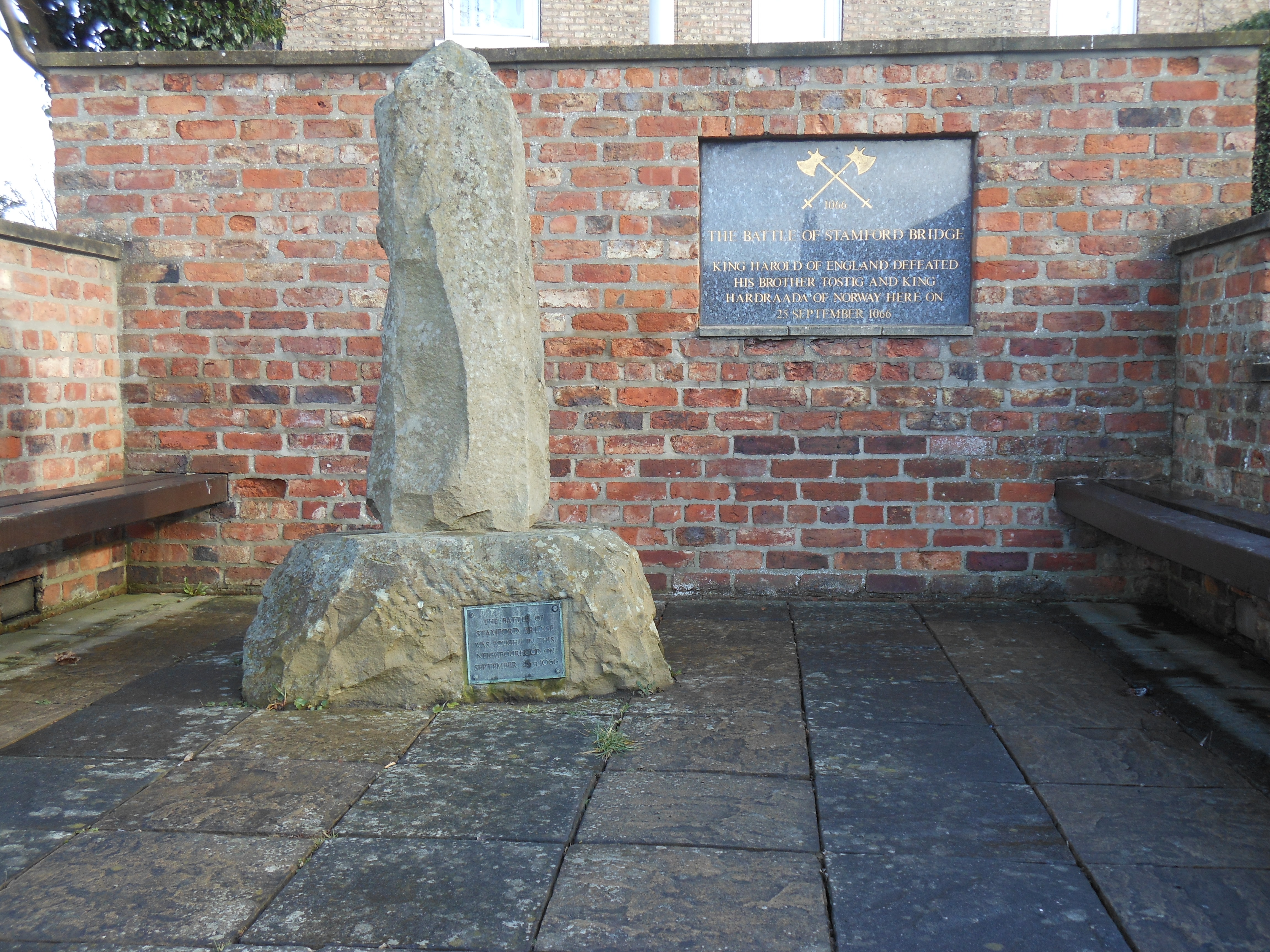
Lady Rose

Rose Hickman, A Tudor Lady

Lady Rose

Rose Locke was born in London on 26 December 1526. She was the daughter of Sir William Locke and his 2nd wife, Katherine. The 3rd of 11 children, her family were some of the earliest Protestants in England, and staunch supporters of Henry VIII’s divorce from Catherine of Aragon. The family lived in Cheapside in the 1530s, with Rose’s father and several brothers serving as agents of the king in France and Flanders during the 1540s. A mercer and alderman of London, Rose’s father was a gentleman usher of the chamber to Henry VIII and was appointed sheriff of London in 1548; he was knighted by Edward VI in 1549.

According to Rose her father, Sir William Locke, a merchant with strong links to Antwerp, had smuggled ‘herectic’ Protestant writings from abroad for Queen Anne Boleyne herself. Rose had long been familiar with the new learning and wrote in 1610: “My mother in the dayes of King Henry the 8th came to some light of the gospel by means of some English books sent privately to her by my father’s factor from beyond the sea: where upon she used to call me with my 2 sisters into her chamber to read to us out of these same good books very privately for feare of troble because these good books were then accepted hereticall…”¹

On 28 November 1543, just a month short of her 17th birthday, Rose married London merchant Anthony Hickman. They had as many as 7 children together and their eldest daughter, Mary, was born in 1547 and a son, William, was born in 1549. Sons Walter and Anthony were born in 1553 and 1560 respectively. Another son, Eleazar, born in 1562, was named after John Knox’s son, and the last, Matthew, was born in 1563. There were two other daughters, Frances and Rose, though their birth dates are unclear.

Anthony Hickman owned several ships, including the Great Christopher, given to Queen Elizabeth I’s navy in 1560 and renamed Victory; and had property in London, Essex and Antwerp. He had a business partnership with Rose’s brother, Thomas Locke, and both were favourites of Henry VIII and Edward VI, growing rich through their mercantile endeavours. The Hickmans entertained such eminent clergymen as John Foxe and John Knox; Rose’s sister-in-law Anne Locke was a correspondent of John Knox and he mentioned the family a number of times in his letters to her between 1556 and 1560.

044
Gainsborough Old Hall

However, the advent of the reign of Mary I, and the resurgence of the Catholic faith in England, meant that the staunchly Protestant family fell out of favour with the catholic queen. They defied Mary by holding private religious services in their homes.  Anthony and Thomas were both arrested and held in the Fleet prison for a time, before being released to house arrest. Anthony eventually escaped to Antwerp, with Rose and the children following him shortly after; the family would remain on the continent until after Queen Mary’s death.

They returned to England shortly after the accession of Elizabeth I. However, religious divisions were becoming more pronounced as Queen Elizabeth’s reign advanced, not only between Catholicism and Protestantism, but within Protestantism itself.

After Anthony’s death in 1573, Rose married again. Her 2nd husband was a widower, Simon Throckmorton of Brampton, who died in 1585. Rose rarely used the Throckmorton surname, possibly because of its association with plots to rescue Mary Queen of Scots by disaffected Catholics; the Throckmorton Plot being led by Sir Francis Throckmorton, a cousin of Queen Elizabeth’s lady in waiting, Bess Throckmorton.

The Hickman family had become known for their Puritan leanings; Puritans were those who wanted the ‘purer’ church as envisaged in the reign of Edward VI, rather than the compromise established by Elizabeth I. In 1593, in order to curb the activities of such religious dissidents, Elizabeth I’s government had approved the ‘Act Against Puritans’, whereby it became illegal to become a Puritan or encourage others to that tendency.

052
Gainsborough Old Hall

As a result, official appointments at court, for those known to have Puritan connections, suddenly dried up. Rose’s son Walter, deeply entrenched in court circles and an old hand at brokering appointments for friends and family (usually with a financial incentive) discovered the implications of the new stance in 1594. The Cecil Papers show that Walter was refused when he applied for the position of Receiver of the Court of Wards for his brother William, despite offering an inducement of £1,000.² The increasing hostility towards Puritans, and the possibility of escalating religious persecution, may well have persuaded William to move his family north; away from the prying eyes of the authorities and into Lincolnshire.

With the encouragement of Katherine Willoughby, Duchess of Suffolk, ministers with Puritan leanings had been appointed to various churches throughout Lincolnshire. Several of the Pilgrim Fathers, who sailed to America on the Mayflower, would come from the region, including William Brewster and William Bradford. Families with strong ties to service at the Tudor court, such as the Burghs of Gainsborough, were moving south, closer to London and the person of the Queen, while other families were moving north.

In 1596 William Hickman bought the Old Hall at Gainsborough, which provided the merchant with his very own port on the River Trent. The move to Gainsborough was not without its challenges. With the Burgh family having essentially left the town to its own devices for the last 30 years, Hickman’s attempts to collect market revenues and port tolls met with opposition, including the apparent murder of one of his servants, who was stabbed to death. It may well have been that William’s puritan leanings exacerbated the situation, but the main unrest seems to have stemmed from relatives and retainers of the outgoing Burgh family. A Mr Topliff, who tried to stop William obtaining justice for his servant, was the son-in-law of Thomas Burgh III (himself the father-in-law of Henry VIII’s last queen, Katherine Parr).

028
The great hall of Gainsborough Old Hall viewed from the solar

Now approaching her 80s, Rose moved to Gainsborough with her eldest son. In 1610, at the age of 84, she wrote an account of her early life, from 1534, when her father removed the papal bull, which had been posted in Dunkirk, against Henry VIII. Her recollections ended in 1558, with the death of Mary I and her family’s return to England on the accession of Elizabeth.

Lady Rose Hickman died on 21 November 1613, a month short of her 87th birthday. She was buried in the Hickman Quire of the former Burgh chantry chapel in the parish church of All Saints in Gainsborough, just across the road from her home, Gainsborough Old Hall. Her epitaph was written in 1637 and reads:

God gave unto this matron in her days

Such pledges firm of his affliction dear

Such happy blessings as the psalmist says

They shall receive as serve the Lord in fear

Herself in wedlock as the fruitful vine

Her children like the olive plants to be

And of her issues in descendant line

She did her childrens childrens children see

And freed from the Babylonish awe

Peace permanent on Isreal saw

Now having fought a good and Christian fight

Against the spiritual common enemy

And exercis’d herself both day and night

In oracles divine continually.

And kept the sacred faith with constancy

Even in the midst of persecutions rage

Express’d by worthy works of peity

From time to time as well in youth as age

She finished her course and doth possess in heavenly bliss the crown of righteousness”³

*

Footnotes:

¹A Guide to Gainsborough Old Hall by Sue Allan; ²ibid; ³MS C Folio 7, deposited in the British Museum in 1935, quoted by gainsborougholdhall.co.uk/throckmorton
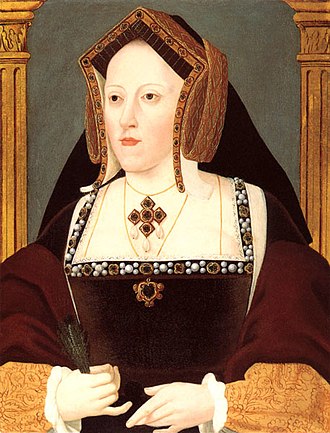
Images:

Rose Hickman from gainsborougholdhall.com; Gainsborough Old Hall photos ©SharonBennettConnolly 2017

Bibliography:

John Leland Leland’s Itinerary in England and Wales 1535-43 edited by L Toulmin Smith (1906-10); Letters and Papers, Foreign and Domestic, of the Reign of Henry VIII 1509-47 edited by JS Brewer, James Gairdner and RH Brodie, HMSO London 1862-1932; Privy Purse Expenses of King Henry VIII from November MDXIX to December MDXXXII edited by Sir Nicholas Harris Nicolas 1827; Religion and politics in mid-Tudor England through the eyes of an English Protestant Woman: the Recollections of Rose Hickman edited by Maria Dowling and Joy Shakespeare; Bulletin of the Institute of Historical Research, 1980 & 1982; A Guide to Gainsborough Old Hall by Sue Allan; Elizabeth’s Women by Tracy Borman; England Under the Tudors by Arthur D Innes; Henry VIII: King and Court by Alison Weir; In Bed with the Tudors by Amy Licence; In the Footsteps of the Six Wives of Henry VIII by Sarah Morris and Natalie Grueninger; Ladies-in-Waiting: Women who Served at the Tudor Court by Victoria Sylvia Evans; The Six Wives and Many Mistresses of Henry VIII: The Women’s Stories by Amy Licence; Oxforddnb.com; Tudorplace.com; gainsborougholdhall.com.

Lady Rose also features in Marie McPherson’s novel on the life of John Knox, The Second Blast of the Trumpet.

*

My books

Signed, dedicated copies of all my books are available, please get in touch by completing the contact me form.

Defenders of the Norman Crown: The Rise and Fall of the Warenne Earls of Surrey tells the fascinating story of the Warenne dynasty, of the successes and failures of one of the most powerful families in England, from its origins in Normandy, through the Conquest, Magna Carta, the wars and marriages that led to its ultimate demise in the reign of Edward III. Defenders of the Norman Crown: Rise and Fall of the Warenne Earls of Surrey is now available from Pen & Sword BooksAmazon in the UK and US, Bookshop.org and Book Depository.

1 family. 8 earls. 300 years of English history!

Also by Sharon Bennett Connolly:

Ladies of Magna Carta: Women of Influence in Thirteenth Century England looks into the relationships of the various noble families of the 13th century, and how they were affected by the Barons’ Wars, Magna Carta and its aftermath; the bonds that were formed and those that were broken. It is now available in paperback and hardback from Pen & Sword,  AmazonBookshop.org and from Book Depository worldwide.

Heroines of the Medieval World tells the stories of some of the most remarkable women from Medieval history, from Eleanor of Aquitaine to Julian of Norwich. Available now from Amberley Publishing and Amazon, Bookshop.org and Book Depository.

Silk and the Sword: The Women of the Norman Conquest traces the fortunes of the women who had a significant role to play in the momentous events of 1066.  Available now from Amazon,  Amberley Publishing, Bookshop.org and Book Depository.

*

You can be the first to read new articles by clicking the ‘Follow’ button, liking our Facebook page or joining me on Twitter and Instagram.

*

©2017 Sharon Bennett Connolly

The Countess who Chastised a King

300px-royal_arms_of_england_1154-1189-svg
The arms of Hugh d’Aubigny, 5th Earl of Arundel

I recently came across the wonderful story of Isabel d’Aubigny, countess of Arundel, a woman who wouldn’t be cheated – even if it was by the king himself.

Isabel was born sometime in the late 1220s, the daughter of William de Warenne, 5th earl of Surrey and Warenne, and Matilda (or Maud) Marshal, daughter and co-heir of the Greatest Knight, William Marshal, earl of Pembroke. Through her grandfather, Hamelin Plantagenet, illegitimate half-brother of King Henry II, Isabel was a cousin of the king, Henry III.

With such impeccable parentage and family connections, it is no surprise that Isabel made a prestigious marriage. At no older than 8 years of age Isabel was married, in 1234, to 20-year-old Hugh d’Aubigny, 5th earl of Arundel. Hugh’s father, William, 3rd Earl of Arundel, had died in 1221, on his way home from the Fifth Crusade. William had been succeeded as 4th Earl by his oldest son and namesake, who died just 3 years after his father, aged just 21, leaving the earldom to his brother Hugh.

On their marriage, Isabel’s father granted the couple a manor at Marham in Norfolk, worth £40 a year in rent. The charter for this grant offers the only details available for the marriage. In 1242 Hugh accompanied the king on his expedition to Aquitaine. However, after just 9 years, on 7 May 1243, Hugh died; leaving Isabel, at 17 years of age, a childless widow, with a rather large dower.

Within weeks of her husband’s death, on 29th May, Isabel’s marriage was granted to Pierre de Genevre, a Savoyard favourite of the king, Henry III. However, the patent rolls show that provision was made for Isabel to remain unmarried should she so wish; although she would have to pay Pierre for the privilege. Given that she never remarried, she must have been more than happy to pay.

The de Warenne coat of arms

The Arundel inhheritance was divided between Hugh’s 4 sisters; Mabel, Isabel, Nicholaa and Cecily. The earldom itself went to Hugh’s nephew, his sister Isabel’s son, John FitzAlan. Isabel was well provided for, however, with her dower including the hundred and manor of Bourne in Lincolnshire, the manors of Wymondham and Kenninghall in Norfolk, Stansted in Essex and several properties in Norfolk and Buckinghamshire. Suffice to say, she was a very wealthy widow and would continue to be styled Countess of Arundel until her death.

In 1249, the same year as her mother died, Isabel founded the only English convent that was part of the Cistercian order. Established at Marham, two Cistercian abbots had inspected it in its first year. Isabel’s brother, John de Warenne, 6th Earl of Surrey, the Bishop of Norwich and Henry III himself all issued charters confirming the abbeys foundation. Along with other endowments, Isabel herself made 11 grants to the abbey in its early years, giving it a strong economic foundation. In 1252 Isabel was granted papal permission to visit the Cistercian house at Waverley to consult with him about her convent; Waverley’s annals record that she granted 4 marks and a cask of wine to the monks there.

Isabel was very protective of her property rights and went on the offensive when they were threatened, even if that meant going against the king. In 1252 Isabel did just that. One of her tenants, Thomas of Ingoldisthorpe, held a ¼ knight’s fee from Isabel at Fring and Snettisham; he also had property in the honour of Haughley, as an escheat from the crown. On his death in 1252 Henry III took all of Thomas’s lands in wardship until Thomas’s heir was of age, including Isabel’s ¼ knight’s fee. In March of 1252 Henry granted the wardship of the lands and marriage of the heir to his former treasurer and keeper of the king’s wardrobe, Peter Chaceporc. Had Thomas held his lands in chief from the king, Henry would have been within his rights to take prerogative wardship, however his land at Haughley was  held from the honour of Haughley, which only in the king’s hands as an escheat and Isabel had therefore been treated unjustly in being denied the wardship of his heirs.

Isabel took her grievances direct to the king, supposedly berating him for trampling on the rights laid out in Magna Carta. She is said to have asked:

‘Where are the liberties of England, so often recorded, so often granted, and so often ransomed?’¹

According to Matthew Paris, the chronicler and a personal friend of Isabel’s (though no particular fan of Henry), Henry scorned Isabel’s argument, ‘derisively and curling his nostrils’ and asked if the nobles of the realm had given her permission to speak on their behalf. Isabel argued that the king had given her the right to speak thus, in the articles granted in Magna Carta and accused the king of being a ‘shameless transgressor’ of the liberties laid down in the Great Charter, breaking his sworn oath to uphold its principles. At the end of the audience, Henry refused to be moved, ‘After listening to her [civilly] reproachful speech, the king was silent, and the countess, without obtaining or even asking for permission, returned home.’²

Arundel Castle

Isabel was one of the great nobles of England, the daughter of one earl and wife of another, and was obviously undaunted by an audience with the king. And although the king did not react to her reprimand immediately he did, eventually, admit that he may have been in the wrong, issuing a letter to her on 23 May 1253 saying:

‘Since the king has learnt that Thomas of Ingoldisthorpe, whose son and heir is in the custody of Peter Chaceporc by concession of the king, did not hold from the crown of the king in chief but from the honour of Haughley, which is in the hand of the king as his escheat, and that the same Thomas held from Hugh de Aubigny, once earl of Arundel, a quarter part of the fee of one knight with appurtenances in Fring and Snettisham and the service of which was assigned to Isabella, countess of Arundel, the widow of the foresaid earl, in dower, he has returned to the same countess custody of the foresaid quarter part of a fee with appurtenances; and the foresaid Peter is ordered to give the countess full seizin of the foresaid custody.’²

However, Isabel’s victory was incomplete, as in late 1253, while the king was overseas in Aquitaine, she instigated legal proceedings against Peter Chaceporc ‘for custody of Ingoldisthorpe’. Whether Chaceporc had not relinquished the land, or she believed she was entitled to more land than was returned to her, Isabel in fact lost the suit and was amerced £20 (30 marks) for a false claim. The writ was witnessed by Henry III’s queen, Eleanor of Provence, and his brother Richard, Earl of Cornwall.

As persistent as ever, and although he was overseas, Isabel appealed directly to the king, who responded with a pardon, although it seems he still smarted from the upbraiding she had given him earlier in the year:

‘3 April. Meilham. Henry, by the grace of God king of England, lord of Ireland, duke of Normandy and Aquitaine and count of Anjou sends greeting to his beloved consort E, by the same grace queen of England, lady of Ireland, duchess of Normandy and Aquitaine and countess of Anjou and to his beloved and faithful brother, R. earl of Cornwall. Know that we have pardoned our beloved and faithful Isabella countess of Arundel the 30m. at which she was amerced before our justices against our beloved and faithful … Peter Chaceporc, our Treasurer, for custody of Ingoldisthorpe. We, therefore, order you to cause the same countess to be quit of the aforesaid 30m. by our seal of England provided she says nothing opprobrious to us as she did when we were at Westminster and as we have signified to her by letter. Witness myself.’³

Holy Trinity Church, Marham

Isabel obviously had an eye for business, given that she could so concern herself with a ¼ knight’s fee out of the 60 that she held. A wealthy widow with impressive family connections, she was renowned not only for her religious endowment of the Cistercian convent at Marham, but also as a patron of religious texts, having commissioned at least 2 saints’ lives, including the life of St Richard of Wyche by Ralph Bocking. Isabel could count among her friends Richard Wych himself, the bishop of Chichester who was later canonised, and Matthew Paris. Paris translated  a life of Saint Edmund of Abingdon in to Anglo-Norman verse for Isabel’s personal use.

Isabel died shortly before 23 November 1282 and was laid to rest at her own foundation at Marham; her dower properties passed to her husband’s great-great nephew, Richard FitzAlan, 8th Earl of Arundel. Having spent almost 40 years as a childless widow, Isabel never remarried, her remarkable life dedicated to the patronage of her convent at Markham and religious writers, such as Paris and Bocking. This incredible woman stands out as the countess who reprimanded and humbled her king for his injustices.

*

Isabel’s remarkable story appears in my book, Defenders Of the Norman Crown: Rise and Fall of the Warenne Earls of Surrey.

Footnotes: 1. quoted by John A. Nichols in Oxforddnb.com; 2. quoted by Susanna Annesley in finerollshenry3.org.uk; 3. ibid.

*

Sources: John A. Nichols Oxforddnb.com; Susanna Annesley finerollshenry3.org.uk; Robert Bartlett England Under the Norman and Angevin Kings; Dan Jones The Plantagenets;David Williamson Brewer’s British Royalty; british-history.ac.uk; Early Yorkshire Charters Volume 8: The Honour of Warenne, Edited by William Farrer and Charles Travis Clay.

Pictures courtesy of Wikipedia: d’Aubigny arms by Sodocan; Warenne arms by Madboy74; Arundel Castle by Chensiyuan; Holy Trinity Church by John Billinger.

*

My Books

Signed, dedicated copies of all my books are available through my online bookshop.

Coming 30 January 2025: Scotland’s Medieval Queens

Scotland’s history is dramatic, violent and bloody. Being England’s northern neighbour has never been easy. Scotland’s queens have had to deal with war, murder, imprisonment, political rivalries and open betrayal. They have loved and lost, raised kings and queens, ruled and died for Scotland. From St Margaret, who became one of the patron saints of Scotland, to Elizabeth de Burgh and the dramatic story of the Scottish Wars of Independence, to the love story and tragedy of Joan Beaufort, to Margaret of Denmark and the dawn of the Renaissance, Scotland’s Medieval Queens have seen it all. This is the story of Scotland through their eyes.

Available for pre-order now.

Also by Sharon Bennett Connolly:

Heroines of the Tudor World tells the stories of the most remarkable women from European history in the time of the Tudor dynasty, 1485-1603. These are the women who ruled, the women who founded dynasties, the women who fought for religious freedom, their families and love. Heroines of the Tudor World is now available for pre-order from Amberley Publishing and Amazon UK. Women of the Anarchy demonstrates how Empress Matilda and Matilda of Boulogne, unable to wield a sword themselves, were prime movers in this time of conflict and lawlessness. It shows how their strengths, weaknesses, and personal ambitions swung the fortunes of war one way – and then the other. Available from Bookshop.orgAmberley Publishing and Amazon UKKing John’s Right-Hand Lady: The Story of Nicholaa de la Haye is the story of a truly remarkable lady, the hereditary constable of Lincoln Castle and the first woman in England to be appointed sheriff in her own right. Available from all good bookshops Pen & Sword Booksbookshop.org and Amazon

Defenders of the Norman Crown: The Rise and Fall of the Warenne Earls of Surrey tells the fascinating story of the Warenne dynasty, from its origins in Normandy, through the Conquest, Magna Carta, the wars and marriages that led to its ultimate demise in the reign of Edward III. Available from Pen & Sword BooksAmazon in the UK and US, and Bookshop.orgLadies of Magna Carta: Women of Influence in Thirteenth Century England looks into the relationships of the various noble families of the 13th century, and how they were affected by the Barons’ Wars, Magna Carta and its aftermath; the bonds that were formed and those that were broken. It is now available in paperback and hardback from Pen & SwordAmazon, and Bookshop.orgHeroines of the Medieval World tells the stories of some of the most remarkable women from Medieval history, from Eleanor of Aquitaine to Julian of Norwich. Available now from Amberley Publishing and Amazon, and Bookshop.orgSilk and the Sword: The Women of the Norman Conquest traces the fortunes of the women who had a significant role to play in the momentous events of 1066. Available now from Amazon,  Amberley Publishing, and Bookshop.org.

Alternate Endings: An anthology of historical fiction short stories including Long Live the King… which is my take what might have happened had King John not died in October 1216. Available in paperback and kindle from Amazon.

Podcast:

Have a listen to the A Slice of Medieval podcast, which I co-host with Historical fiction novelist Derek Birks. Derek and I welcome guests, such as Bernard Cornwell, and discuss a wide range of topics in medieval history, from significant events to the personalities involved.

*

Don’t forget! Signed and dedicated copies of all my books are available through my online bookshop.

For forthcoming online and in-person talks, please check out my Events Page.

You can be the first to read new articles by clicking the ‘Follow’ button, liking our Facebook page or joining me on TwitterThreadsBluesky and Instagram.

*

©2017 Sharon Bennett Connolly, FRHistS