First of all, i would like to say a huge thank you to everyone who entered the giveaway. There were 156 entries, which is truly incredible. But unfortunately there can be only one winnerAnd the winner is…Charlotte Clark.
Congratulations Charlotte. Thank you all for taking part and giving me such a confidence boost with your lovely comments.
If you do get your hands on a copy of Ladies of Magna Carta – or any of my books – do get in touch and I will send you a signed bookplate to pop in the front. Alternatively, I do have copies of all my books in stock if you’d like to purchase a signed and dedicated copy.
Love Sharon x
I realise that I haven’t done a giveaway in over a year. So, to celebrate the release of Ladies of Magna Carta in paperback in the UK this week, I thought I would do a giveaway. One signed copy of the brand spanking new paperback (it looks very pretty!) will go to the lucky competition winner.
Inspired by the lives of Matilda de Braose and Nichoaa de la Haye, My third book looks at the events surrounding the issuing of Magna Carta with a view to how it affected the women.
Praise for Ladies of Magna Carta:
“Sharon Bennett Connolly throws much needed light on the lives of the high-born women of thirteenth-century England…Connolly’s version of the first Plantagenets is superbly concise. No distractions or detours, hitting all the right nails on the head…Connolly’s book is an informative and delightful read about women aspiring to control their destiny against this backdrop, but their success or failure had less to do with Magna Carta than with the timeless principles of resourcefulness, determination and knowing how to skilfully handle the big guy. It’s these qualities that make their stories inspiring.”
Darren Baker, author of The Two Eleanors
“A well-researched and comprehensive study of the women who lived through, and were affected by, the Barons’ Revolt and the sealing of the Magna Carta. Ms Bennett Connolly has skilfully brought to the fore the lives of the women who have hitherto been hidden in the background. A must-read for anyone interested in this pivotal moment in English and Scottish history.”
Annie Whitehead, author of Women of Power in Anglo-Saxon England
It’s easy to enter!
The competition is open to everyone, wherever you are in the world. To win a signed and dedicated copy of Ladies of Magna Carta, simply leave a comment below or on my Facebook page and I will include you in the prize draw.
The draw will be made on Sunday 21 November.
*
My Books
Signed, dedicated copies of all my books are available, please get in touch by completing the contact me form.
Defenders of the Norman Crown: The Rise and Fall of the Warenne Earls of Surrey tells the fascinating story of the Warenne dynasty, of the successes and failures of one of the most powerful families in England, from its origins in Normandy, through the Conquest, Magna Carta, the wars and marriages that led to its ultimate demise in the reign of Edward III. Defenders of the Norman Crown: Rise and Fall of the Warenne Earls of Surrey is now available from Pen & Sword Books, Amazon in the UK and US and Book Depository.
It is a pleasure today to join the blog tour for Gods of Rome, with a short review and enticing extract from the book. Gods of Rome is the final instalment in the magnificent Rise of Emperors series by Simon Turney and Gordon Doherty.
For one to rule, the other must die.
AD 312: A year of horrific and brutal warfare.
Although outnumbered, Constantine’s legions seem unstoppable as they surge through Maxentius’ Italian heartlands. Constantine is determined to reach and seize the ancient capital of Rome from his rival, yet his army is exhausted, plagued by religious rivalries and on the verge of revolt. Maxentius meanwhile contends with a restive and dissenting Roman populace. Neither general can risk a prolonged war.
When the two forces clash amidst portents and omens in a battle that will shape history, there are factors at work beyond their control. Only one thing is certain: Constantine and Maxentius’ rivalry must end. With one on a bloodied sword and the other the sole ruler of an Empire…
The Rise of Emperors trilogy finally comes to its inevitable, devastating conclusion with Gods of Rome. The series has followed the careers of rival emperors Maxentius and Constantine, from their first meeting as children and blossoming friendship in Sons of Rome, to that friendship turning to rivalry in the second instalment, Masters of Rome. In Gods of Rome, the rivalry turns deadly when the ultimate prize is within each’s grasp – that of command of the empire itself.
This series has been a fabulous, unique reading experience. With each writer taking the voice of one of the emperors, the distinction between the two becomes profound. There is no hidden bias as you may find with one author writing both sides – but secretly preferring one. The rival emperors, Constantine and Maxentius, each have their own very distinct voice.
As you would expect with anything from Gordon Doherty and Simon Turney, the action is intense, the pace is, at times, rather furious, grabbing the reader’s attention and holding it to the very end.
The only problem with the whole trilogy is that one of the heroes had to lose – was destined to lose. And neither truly deserved to. Doherty and Turney draw wonderfully on the political machinations and family rivalries that drew these two former friends, Constantine and Maxentius, to final, devastating contest for Rome itself.
The meticulous research of the history, landscape, military strategy of the time and the war itself, help to recreate the world of the Roman Empire of the 4th century. Both authors draw on the conflicts, not only of politics and protagonists, but also through the rise of Christianity and how the rival emperors harnessed or exploited those divisions within their own camp and the camp of their rival.
Gods of Rome is a wonderful, engaging and fast-paced novel that is entertaining from start to finish. Another Doherty/Turney collaboration that is an absolute triumph.
Here’s what the reader has to look forward to:
Extract
1 CONSTANTINE
The Cottian Alpes, 27th January 312 ad
We moved through the mountains like winter wolves. The ferocious blizzard sped southwards with us, carried on the famous bora winds, singing a dire song. For days we marched through that driving snow, seeing nothing but great white-clad peaks either side of us; rugged,inhospitable highlands which in these frozen months soldiers were not meant to cross. All around me the gale screamed, boots crunched endlessly through the successively deeper drifts of white, men’s teeth chattered violently, mules brayed, exhausted. It felt at times as if we were wandering, snow-blind, to our deaths, but I knew what lay ahead… so close now.
I called upon my chosen men and a handful of their best soldiers – a group of thirty – and we roved ahead of the army like advance scouts. The blizzard raked through my bear cloak, the snow rattling like slingshot against my gemmed ridge helm and bronze scales as I scoured the valley route. Yet I refused to blink. When the speeding hail of white slowed and the murky grey ahead thinned a little, I saw them: a pair of stone and timber watchtowers, northern faces plastered in snow. Gateposts watching this passage between two realms. I dropped to my haunches behind the brow of a snowdrift and my chosen men hunkered down with me. I gazed over the drift’s brow, regarding the narrow gap between the towers and the valley route beyond, on through the winter-veined mountains. Thinking of the land that lay beyond these heights, my frozen lips moved soundlessly.
Italia…
Land of Roman forefathers. Home of the man I had once considered my friend… but that territory was rightfully mine. Mine! My surging anger scattered when I spotted movement atop one of the two towers: a freezing Maxentian scout blowing into his hands, oblivious to our presence. Then the blizzard fell treacherously slack, and the speeding veil of white cleared for a trice. I saw his ice-crusted eyebrows rise as he leaned forward, peering into the momentary clarity, right at us. His eyes bulged, mouth agog.
‘He is here!’ he screamed to be heard over the sudden return of the storm’s wrath. ‘Constantine is h—’
With a wet punch, an arrow whacked into the man’s chest and shuddered there. He spasmed then folded over the edge of the timber parapet and fell like a sack of gravel, crunching into a pillowy snowdrift at the turret’s foot. I glanced to my right, seeing my archer nock and draw again, shifting his bow to the heights of the other tower, his eyes narrowing within the shadow of his helm brow. He loosed, but the dark-skinned sentry up there ducked behind the parapet, screaming and tolling a warning bell. At once, three more Maxentians spilled from the door at the base of that rightmost tower, rushing south towards a simple, snow-topped stable twenty paces away, in the lee of a rocky overhang. This was one of the few gateways through the mountains – albeit the least favoured and most treacherous – and it was guarded by just five men? Instantly, suspicion and elation clashed like swords in my mind. We had no time to rake over the facts. These watchmen could not be allowed to ride south and warn the legions of Italia. They had to die.
About the authors
Gordon Doherty
Simon Turney is the author of the Marius’ Mules and Praetorian series, as well as The Damned Emperor series for Orion and Tales of the Empire series for Canelo. He is based in Yorkshire.
Gordon Doherty is the author of the Legionary and Strategos series, and wrote the Assassin’s Creed tie-in novel Odyssey. He is based in Scotland.
Signed, dedicated copies of all my books are available, please get in touch by completing the contact me form.
Defenders of the Norman Crown: The Rise and Fall of the Warenne Earls of Surrey tells the fascinating story of the Warenne dynasty, of the successes and failures of one of the most powerful families in England, from its origins in Normandy, through the Conquest, Magna Carta, the wars and marriages that led to its ultimate demise in the reign of Edward III. Defenders of the Norman Crown: Rise and Fall of the Warenne Earls of Surrey is now available from Pen & Sword Books, Amazon in the UK and US and Book Depository.
Sometimes the similarities in the stories of medieval women are intriguing. Especially among families. Katherine Swynford’s story is one of the endurance of love and is unique in that she eventually married her prince. Katherine’s granddaughter, Joan Beaufort, is one half of, arguably, the greatest love story of the middle ages. I say arguably, of course, because many would say that Katherine’s was the greatest.
You may not consider a mistress as a heroine, seeing her as ‘the other woman’ and not worthy of consideration. However, women in the medieval era had little control over their own lives; if a lord wanted them, who were they to refuse? And even if they were in love, differences in social position could mean marriage was impossible – at least for a time.
Katherine was born around 1350; she was the younger daughter of Sir Payn Roelt, a Hainault knight in the service of Edward III’s queen, Philippa of Hainault, who eventually rose to be Guyenne King of Arms. Her mother’s identity is unknown, but Katherine and her older sister, Philippa, appear to have been spent their early years in Queen Philippa’s household. By 1365 Katherine was serving Blanche, Duchess of Lancaster, the first wife of John of Gaunt and Katherine was married to Sir Hugh Swynford of Coleby and Kettlethorpe, Lincolnshire, shortly after. The couple had three children, Thomas, Margaret, who became a nun, and Blanche, who was named after the duchess. John of Gaunt stood as little Blanche’s godfather and she was raised alongside his own daughters by Duchess Blanche.
Following Blanche’s death in 1368, Katherine was appointed governess to the duchess’s daughters. In September 1371 John of Gaunt was remarried, to Constance of Castile; Constance had a claim to the throne of Castile and John was soon being addressed as King of Castile. In the same year, Katherine’s husband, Sir Hugh Swynford, died whilst serving overseas and it seems that within months of his death, probably in the winter of 1371/72 Katherine became John’s mistress. Their first child, John Beaufort, was born towards the end of 1372. Over the next few years, three further children – two sons and a daughter – followed. John’s wife Constance also had children during this time – she gave birth to a daughter, Catherine, (Catalina) in 1373 and a short-lived son, John, in 1374.
John of Gaunt, Duke of Lancaster
We can only guess at what the two women thought of each other, but it can’t have been an easy time for either. In 1381, following the unrest of the Peasants’ Revolt and the hefty criticism aimed particularly at John and his relationship with Katherine, John renounced Katherine. Giving up her position as governess, Katherine left court and returned to Lincoln. Her relationship with John of Gaunt and, indeed, his family, remained cordial and the duke still visited her, although discreetly. In 1388 Katherine was made a Lady of the Garter – a high honour indeed. And in 1394 Constance died.
In January 1396, John and Katherine were finally married in Lincoln Cathedral; they had to obtain a dispensation from the church as John was godfather to Katherine’s daughter. With the marriage, Katherine had gone from being a vilified mistress to Duchess of Lancaster. Her children by John were legitimised by the pope in September 1396 and by Richard II’s royal patent in the following February, although they were later excluded from the succession by Henry IV.
Sadly, Katherine’s marital happiness with John of Gaunt was short-lived; John of Gaunt died in February 1399 and Katherine retired to live in Lincoln, close to the cathedral of which her second son by John, Henry, was bishop. Katherine herself died at Lincoln on 10 May 1403 and was buried in the cathedral in which she had married her prince. Her tomb can still be seen today and lies close to the high altar, beside that of her youngest child Joan Beaufort, countess of Westmorland, who died in 1440.
Although it seems easy to criticise Katherine’s position as ‘the other woman’, her life cannot have been an easy one. The insecurity and uncertainty of her position, due to the lack of a wedding ring, must have caused her much unease. However, that she eventually married her prince, where so many other medieval mistresses simply fell by the wayside and were forgotten, makes her story unique. What makes her even more unique is that Katherine’s own granddaughter was part of one of the greatest love stories of the middle ages.
Joan Beaufort was the only daughter of Katherine’s eldest son by John of Gaunt, also named John. The story of King James I of Scotland and his queen, Joan Beaufort, is probably the greatest love story of the medieval era. He was a king in captivity and she a beautiful young lady of the court of her Lancastrian cousin, Henry V. The son of Robert III of Scotland, James had been on his way to France, sent there for safety and to continue his education, when his ship was captured by pirates in April 1406. Aged only eleven, he had been handed over to the English king, Henry IV, and imprisoned in the Tower of London. Within a couple of months of his capture, James’s father had died, and he was proclaimed King of Scots, but the English would not release their valuable prisoner. James was closely guarded and regularly moved around, but he was also well-educated while in the custody of the English king and became an accomplished musician and poet.
Joan Beaufort, Queen of Scots
Probably born in the early 1400s, Lady Joan was the daughter of John Beaufort, 1st Earl of Somerset. She was at court by the early 1420s, when James first set eyes on her. The Scottish king wrote of his love for Joan in his famous poem, The Kingis Quair. According to Nigel Tranter, James was with the court at Windsor, when he saw Joan for the first time; she was walking her little lapdog in the garden, below his window. The narrow window afforded him only a limited view, but the Lady Joan walked the same route every morning and James wrote of her;
Beauty, fair enough to make the world to dote,
Are ye a worldy creature?
Or heavenly thing in likeness of nature?
Or are ye Cupid’s own priestess, come here,
To loose me out of bonds
One morning James is said to have dropped a plucked rose down to Lady Joan, which he saw her wearing the following evening at dinner. Nigel Tranter suggests Lady Joan grieved over James’s imprisonment and even pleaded for his release. Written in the winter of 1423/24, the autobiographical poem, The Kingis Quair, gives expression to James’ feelings for Joan;
I declare the kind of my loving
Truly and good, without variance
I love that flower above all other things
James’s imprisonment lasted for eighteen years. His uncle Robert Stewart, Duke of Albany and Guardian of Scotland in James’s absence, refused to ransom him, in the hope of gaining the throne himself. He never quite garnered enough support, but managed to keep the Scottish nobles in check. However, when he died in 1420, control passed to his son Murdoch, and Scotland fell into a state of virtual anarchy. With Henry V’s death in 1422, it fell to his brother John, Duke of Bedford, as regent for the infant Henry VI, to arrange James’ release. The Scots king was charged 60,000 marks in ransom – ironically, it was claimed that it was to cover the costs for his upkeep and education for eighteen years. The agreement included a promise for the Scots to keep out of England’s wars with France, and for James to marry an English noble woman – not an onerous clause, given his love for Lady Joan Beaufort.
James and Joan were married at the Church of St Mary Overie in Southwark (now Southwark Cathedral) on 2 February 1424, with the wedding feast taking place in the adjoining hall, the official residence of Joan’s uncle Henry Beaufort, Bishop of Winchester. Finally united – and free – the young couple made their way north soon afterwards and were crowned together at Scone Abbey on 21 May 1424. James and Joan had eight children, seven of whom survived childhood. Their six daughters helped to strengthen alliances across Europe. The royal couple finally had twin sons on 16 October 1430; and although Alexander died within a year of his birth, his younger twin, James, thrived and was created Duke of Rothesay and heir to the throne. He would eventually succeed his father as James II.
On his return to Scotland, James immediately set about getting his revenge on the Duke of Albany’s family and adherents; executing some, including Murdoch, Albany’s son and heir. Two other claimants to James’s throne were sent to England, as hostages for the payment of his ransom. James and Joan ruled Scotland for thirteen years; James even allowed Joan to take some part in the business of government. Although the Scots were wary of her being English, Queen Joan became a figurehead for patronage and pageantry. The English hope that Joan’s marriage to James would also steer the Scots away from their Auld Alliance with France, was short-lived, however, and the 1436 marriage of their eldest daughter, Margaret, to the French dauphin formed part of the renewal of the Auld Alliance.
James I, King of Scots
James’ political reforms, combined with his desire for a firm but just government, made enemies of some nobles, including his own chamberlain Sir Robert Stewart, grandson of Walter, Earl of Atholl, who had been James’s heir until the birth of his sons. Sir Robert and his grandfather hatched a plot to kill the king and queen. In February 1437, the royal couple was staying at the Blackfriars in Perth when the king’s chamberlain dismissed the guard and the assassins were let into the priory. The king is said to have hidden in an underground vault as the plotters were heard approaching. There is a legend that the vault had originally been an underground passage, however, the king had ordered the far end to be sealed, when his tennis balls kept getting lost down there. Unfortunately, that also meant James had blocked off his own escape route. The assassins dragged the king from his hiding place and stabbed him to death; Joan herself was wounded in the scuffle.
And one of the greatest love affairs of the era ended in violence and death. The plotters, far from seizing control of the country, were arrested and executed as the Scottish nobles rallied around the new king, six-year-old James II. Joan’s life would continue to be filled with political intrigue, but her love story had been viciously cut short, without the happy ending her grandmother had achieved. Joan would marry again, to Sir James Stewart, the Black Knight of Lorne. They would go on to have 3 sons together before Joan died during a siege at Dunbar Castle on 15 July, 1445; although whether her death was caused by illness or the violence of the siege has not been determined. She was buried in the Carthusian priory in Perth alongside her first husband, King James I.
Katherine and Joan led very different lives, although the similarities are there if you look for them; they both lived their lives around the glittering court and married for love. Joan’s happy marriage only achieved because her grandmother finally got her prince; if Katherine had not married John of Gaunt, the Beauforts would have remained illegitimate and their future prospects seriously restricted by the taint of bastardy.
*
Images courtesy of Wikipedia.
Sources:
katherineswynfordsociety.org.uk; Red Roses: Blanche of Gaunt to Margaret Beaufort by Amy Licence; The Nevills of Middleham by K.L. Clark; The House of Beaufort: the Bastard Line that Captured the Crown by Nathen Amin; Brewer’s British Royalty by David Williamson; History Today Companion to British History Edited by Juliet Gardiner & Neil Wenborn; The mammoth Book of British kings & Queen by Mike Ashley; Britain’s Royal Families, the Complete Genealogy by Alison Weir; The Life and Times of Edward III by Paul Johnson; The Perfect King, the Life of Edward III by Ian Mortimer; The Reign of Edward III by WM Ormrod; Chronicles of the Age of Chivalry Edited by Elizabeth Hallam; Oxforddnb.com; womenshistory.about.com/od/medrenqueens/a/Katherine-Swynford.
An earlier version of this article first appeared on The Henry Tudor Society blog in November 2017.
*
My Books
Signed, dedicated copies of all my books are available through my online store.
Out now: Scotland’s Medieval Queens
Scotland’s history is dramatic, violent and bloody. Being England’s northern neighbour has never been easy. Scotland’s queens have had to deal with war, murder, imprisonment, political rivalries and open betrayal. They have loved and lost, raised kings and queens, ruled and died for Scotland. From St Margaret, who became one of the patron saints of Scotland, to Elizabeth de Burgh and the dramatic story of the Scottish Wars of Independence, to the love story and tragedy of Joan Beaufort, to Margaret of Denmark and the dawn of the Renaissance, Scotland’s Medieval Queens have seen it all. This is the story of Scotland through their eyes.
Heroines of the Tudor World tells the stories of the most remarkable women from European history in the time of the Tudor dynasty, 1485-1603. These are the women who ruled, the women who founded dynasties, the women who fought for religious freedom, their families and love. Heroines of the Tudor World is now available for pre-order from Amberley Publishing and Amazon UK.Women of the Anarchy demonstrates how Empress Matilda and Matilda of Boulogne, unable to wield a sword themselves, were prime movers in this time of conflict and lawlessness. It shows how their strengths, weaknesses, and personal ambitions swung the fortunes of war one way – and then the other. Available from Bookshop.org, Amberley Publishing and Amazon UK. King John’s Right-Hand Lady: The Story of Nicholaa de la Haye is the story of a truly remarkable lady, the hereditary constable of Lincoln Castle and the first woman in England to be appointed sheriff in her own right. Available from all good bookshops Pen & Sword Books, bookshop.org and Amazon.
Alternate Endings: An anthology of historical fiction short stories including Long Live the King… which is my take what might have happened had King John not died in October 1216. Available in paperback and kindle from Amazon.
Podcast:
Have a listen to theA Slice of Medieval podcast, which I co-host with Historical fiction novelist Derek Birks. Derek and I welcome guests, such as Bernard Cornwell and discuss a wide range of topics in medieval history, from significant events to the personalities involved.
*
Don’t forget!Signed and dedicated copies of all my books are available through my online store.
For forthcoming online and in-person talks, please check out my Events Page.
Coat of arms of the Warenne earls of Surrey, in the Gundrada Chapel of Trinity Church, Southover
When looking at a particular period or event in history, it can be easy to assume that it was all-consuming for those involved. The rest of the world blurs into the background as a country is consumed by war. Or does it? Even in medieval times, countries were not unaffected by the others around them. I almost got swept into the idea that the period known in English history as the Anarchy was a time when people thought of little else but who should be king – or queen. Even those fighting in the war were not so blinkered. Nor ignorant of events outside of England’s borders.
Did you know, for instance, that not one, but two, contingents of crusaders left England’s shores in the midst of the Anarchy? One force was headed to Portugal, and the other to the Holy Land, to join the Second Crusade. One of those crusaders was William de Warenne, 3rd Earl of Warenne and Surrey.
William (III) de Warenne was the son of William (II) de Warenne, 2nd Earl of Warenne and Surrey, and Isabel de Vermandois, a granddaughter of King Henry I of France. William was born in 1119, a year after his parents’ marriage. He was the eldest of five children. His two brothers, Reginald and Ralph, appear frequently in his story, suggesting a close family bond. Of his sisters, Ada married Prince Henry of Scotland, and was the mother of two Scottish kings, Malcolm IV and William the Lion. Gundreda de Warenne married Roger de Beaumont, Earl of Warwick, who was a cousin of Gundreda’s half-brothers, the famous Beaumont twins, Waleran and Robert.
Waleran and Robert de Beaumont were the eldest sons of Isabel de Vermandois by her first husband, Robert de Beaumont, Count of Meulan and Earl of Leicester. Isabel had nine children with her first husband and five more with Earl Warenne. Interestingly, the two families appear to have got on rather well together. William (III) can often be found in the company of one or both of his older, twin, half-brothers, such as at the deathbed of Henry I, at Lyons-la-Forêt in 1135; William was there alongside his father, the second earl, and his brothers Waleran and Robert de Beaumont.
Following his father’s death in 1138, William (III) inherited the lands and titles of the earl of Warenne and Surrey. As such, he was heavily involved in that period of history known as the Anarchy, the contest between King Stephen and Empress Matilda for England’s crown. As his father had done, the 3rd earl supported King Stephen, fighting at both the First Battle of Lincoln and the siege of Winchester in 1141. By the late 1140s, although the conflict between Stephen and Matilda was still unresolved, Earl Warenne and his half-brother, Waleran de Beaumont, appear to have wanted to get away from the constant unrest of the cousins’ war and looked to join a more noble enterprise.
Castle Acre Priory, Norfolk
On 24 March 1146, Palm Sunday, near Vézélay, and perhaps motivated by the example of his royal cousin, Louis VII of France, William de Warenne took the cross and committed himself to the Second Crusade. From this moment on, the earl’s time was taken up with preparations for the expedition and making arrangements to ensure the security and administration of his earldom during his absence. Among others, he confirmed grants to Castle Acre Priory of the land of Thexton in Norfolk which Osmoda de Candos had given with the consent of her husband Philip: William’s brother Reginald is named in the charter and his brother Ralph, as well as his wife, Countess Ela, are all listed among the witnesses. He also confirmed a gift made to his brother Reginald whereby William son of Philip, gave his land of Harpley in Norfolk. During the winter of 1146–47, the earl granted to the monks of Castle Acre, a confirmation of any acquisitions which they might make, ‘from my fee of whatever tenancy within my tenseria [authority], whether by way of gift or purchase.’1
In 1147, before leaving England’s shores, the earl, his family and leading magnates congregated at Lewes Priory for the dedication of the new priory church. Most of the royal court were present, as were Ralph and Reginald de Warenne, the earl’s brothers; four leading church prelates attended, including Theobald, Archbishop of Canterbury and Henry of Blois, Bishop of Winchester as well as the bishops of Rochester and Bath. Also present were the abbots of Reading and Battle, the prior of Canterbury and William d’Aubigny, Earl of Sussex. Earl Warenne appears to have used the occasion to set his affairs in order and guarantee the security of his earldom during his absence.
St Pancras Priory, Lewes
The most significant charter issued on this occasion added to the endowment of Lewes’ priory church and promised that the earl would pay the taxes that the priory would ordinarily owe to the king. In it, the earl confirmed
‘all its lands of his fee, undertaking to acquit it of danegeld and all other services due to the king; and gift of tithe of corn, etc., from all his demesne lands and a full tenth penny of all his rents in England. He issued the charter when he caused the priory church to be dedicated and endowed it with the tenth penny of his rents, giving it seisin thereof by hair from his own head and that of Ralph de Warenne his brother, cut with a knife by Henry, bishop of Winchester, before the altar.’2
The locks of hair of Earl William and his brother Ralph, ceremoniously cut off by Bishop Henry before the altar, would afterwards have been placed on the altar, alongside the knife used in the ceremony, and may have later been ‘filed’ within the charter when it was sealed. This is the last reference to Ralph de Warenne that I could find in the historical record. Given that only Ralph and William stored locks of their hair, and not Reginald, who we know stayed in England, I think it possible that Ralph accompanied his older brother on crusade.
His affairs in order, the earldom was placed under the supervision of his very capable brother, Reginald de Warenne. The pope stipulated that church sanctions should not be invoked, ‘in respect of those men whom our beloved son Stephen the illustrious king of the English or his adversaries disinherited on the occasion of the war held for the realm before they took the cross.’3 In a time of continued civil war, this guaranteed protection of a crusader’s lands was a necessity. Earl William was now able to depart on crusade, secure in the knowledge that the family and lands he left behind were well protected from anyone wishing to take advantage of his absence:
At Whitsuntide Lewis [Louis], king of France, and Theodorie, earl of Flanders, and the count of St Egidius, with an immense multitude from every part of France, and numbers of the English, assumed the cross and journeyed to Jerusalem, intending to expel the Infidels who had taken the city of Rohen. A still greater number accompanied Conrad, emperor of Germany; and both armies passed through the territories of the emperor of Constantinople, who afterwards betrayed them.
Henry of Huntingdon
Louis VII, King of France
There were, in fact, two crusades that departed England’s shores in 1147. Some of the crusaders, an Anglo-Flemish force, went to Portugal and successfully captured Lisbon from the Muslims. Earl William de Warenne and his older half-brother, Waleran de Beaumont, joined their cousin King Louis VII of France and set out for the Holy Land. Taking the overland route, they followed in the footsteps of the German emperor, Conrad III, who had left Germany in May and arrived in Constantinople in September. Louis, accompanied by his wife Eleanor of Aquitaine, arrived in Constantinople with his army on 4 October. Tensions ran high from the start. On initially hearing of the proposed crusade, Byzantine emperor Manuel Comnenus, afraid of losing local trading connections, made a truce with the Turkish sultan of Rum in 1146 to protect Constantinople’s Asian lands from attack. To the Western crusaders, this was more proof of the apostasy of the Eastern church. The more fervent of Louis’ followers accused Emperor Manuel of treason and urged Louis to attack the emperor. Louis, on the other hand, was persuaded to appease the emperor by his less volatile advisers and the king promised to restore any imperial lands they may capture.
The German and French contingents met at Nicaea in November, with the Germans having already suffered a defeat at Dorylaeum on 25 October, after taking the inland route towards the kingdom of Jerusalem. The two armies, now combined, set off on the coastal route, following the path of the first crusaders’ advance into Philadelphia in Lydia. By the time they reached Ephesus, Conrad was seriously ill and returned to Constantinople to recover. The French king and his army continued on to Antioch; marching through difficult terrain in mid-winter proved particularly harrowing. The Seljuk Turks waited for the crusaders on the banks of the river Meander, but Louis’ army forced their way through. On 6 January 1148, they reached Laodicea and from there marched into the mountains that separate the Phrygia of the Pisidia. It was here that the army met with disaster.
As they crossed Mount Cadmus, the vanguard advanced too far ahead under the leadership of Geoffrey de Rançon, thus becoming detached from the main body of the army. As the vanguard progressed across Mount Cadmus, the French column followed behind, secure in the knowledge that the vanguard occupied the high ground to their front. William de Warenne was in the king’s bodyguard, towards the rear of the column, as they advanced. When the Turks appeared, the French broke their ranks and rushed upon them with swords drawn; the disorder in the ranks handing the advantage to their enemy. Retreating, the French found themselves in a narrow gorge, with a steep precipice on one side and crags on the other. Horses, men and baggage were forced over the precipice by the advancing Turks. Louis VII’s biographer, Odo de Deuil, related the events:
“…the king, who had been left behind in peril with certain of his nobles, since he was not accompanied by common soldiers or serjeants with bows (for he had not fortified himself for crossing the pass, which by common agreement he was to cross the next day), careless of his own life and with the desire of freeing the dying mob, pushed through the rear-guard and courageously checked the butchery of his middle division. He boldly assaulted the infidel, who outnumbered him a hundred times and whom the position aided a great deal; for there no horse could stand, I shall not say gallop, but barely stand, and the slower attack which resulted in the weakened knights’ thrust when wounding the enemy. On the slippery slope our men brandished their spears with all of their own might, but without the added force of their horses, and from the safe shelter of rocks and trees the Turks shot arrows. Freed by the knights’ efforts, the mob fled, carrying their own packs or leading the sumpter animals, and exposed the king and comrades to death in their stead….During the engagement the king lost his small but renowned royal guard; keeping a stout heart; however, he nimbly and bravely scaled a rock by making use of tree roots which God had provided for his safety. The enemy climbed after, in order to capture him, and the more distant rabble shot arrows at him. But by the will of God his cuirass protected him from the arrows, and to keep from being captured he defended the crag with his bloody sword, cutting off heads and hands of many opponents in the process…”
Odo of Deuil, De Profectione Ludovici VII in Orientem
Laodicea
King Louis’ bodyguard was cut down in the fighting and William de Warenne was among the fallen. Louis himself was able to escape the carnage, standing alone against a number of attackers. As the night drew in, the king and survivors were able to take advantage of the darkness to reunite with the vanguard, which had believed the king lost. In one of his letters to Abbot Sugar, King Louis wrote of the disaster on Mount Cadmus, explaining how he had been separated from the vanguard and his escort had been cut down, with the loss of his cousin, William de Warenne. He was too upset to give any more details and Mount Cadmus remains a battle of which very little is known beyond the basic details.
“Nearby the baggage train was still crossing the pass, because the closer packed it was, the slower it fled over the crags. When he came upon it, the king, who was on foot, secured a horse and accompanied the men through the evening, which had already fallen. At that time breathless cohorts of knights from the camp met him and groaned when they saw him alone, bloody, and tired, for, without asking, they knew what had happened and mourned inconsolably for the missing royal escort, which numbered about forty (to wit, the count of Warenne and his brother Evrard of Breteuil, Manasses of Bulles and Gautier of Montjay and others; but I shall not record the names of all, lest I be considered unnecessarily wordy.)”
Odo of Deuil, De Profectione Ludovici VII in Orientem
Despite the heavy losses, King Louis’ crusade continued, reuniting with the German contingent between March and June 1148. They failed to take Edessa and were forced to withdraw from Damascus after a week of heavy fighting, when fresh Muslim forces arrived. The crusade ended in failure and the French king, who blamed Emperor Manuel Comnenus for the fiasco, accepted the aid of Manuel’s enemy Roger of Sicily, who sent ships to take the French forces home. Of the English forces, while William de Warenne was lost at Mount Cadmus, his brother Waleran de Beaumont, Count of Meulan and Earl of Worcester, made it back to England’s shores, narrowly surviving a shipwreck along the way; he founded a monastery in gratitude. Of the two Anglo-Norman bishops who accompanied the crusade, Roger of Chester died at Antioch and was buried there, whereas Arnulf of Lisieux, who had served as one of the leading diplomats, returned but with his reputation faded.
Seal of Isabel de Warenne, Countess of Surrey
Perhaps it was always on the cards that the 3rd Earl Warenne’s unspectacular military career would end with his death in battle. He was only 28 years old and had held the earldom for just over nine years. The earl had been a stalwart supporter of King Stephen, not once wavering in his allegiance, despite his failures in Normandy and at Lincoln early on in his career. He had done extensive work on the family’s property at Castle Acre, reinforcing the castle and replanning the town, building the ramparts that now surround it. William de Warenne had been a generous benefactor to the church, especially the Warenne foundations at Lewes and Castle Acre.
Even in his absence on crusade, the earl was still technically in charge; his brother, Reginald, issued a number of charters, each with the proviso that ‘if Jesus Christ brought back the earl [from the crusade] he would cause him to confirm it’ or ‘do his best to obtain the earl’s confirmation.’4
The death of William de Warenne, 3rd Earl of Warenne and Surrey brought an end to the senior male line that had been founded with the creation of the earldom for William (I) de Warenne in 1088. The earl was survived by his wife, Ela de Talvas, still a young woman, and his daughter, Isabel de Warenne, a child probably no more than 10 years of age. Isabel was now the richest heiress in England and married to King Stephen‘s youngest son, William of Blois. The earl’s estates were left in the capable hands of his youngest brother, Reginald de Warenne, Baron of Wormegay, who would watch over them for his niece and her young husband.
Notes:
1 Edmund King, King Stephen; 2 Farrer, William and Charles Travis Clay, editors, Early Yorkshire Charters, Volume 8: The Honour of Warenne; 3Epistolae Pontificum Romanorum ineditae quoted in Edmund King, King Stephen; 4 Farrer, William and Charles Travis Clay, editors, Early Yorkshire Charters, Volume 8: The Honour of Warenne; Odo of Deuil, De Profectione Ludovici VII in Orientem, magnacharta.com.
Sources:
Robert Batlett, England Under the Norman and Angevin Kings; Dan Jones, The Plantagenets; Donald Matthew, King Stephen; Medieval Lands Project on the Earls of Surrey, Conisbrough Castle; Farrer, William and Charles Travis Clay, editors, Early Yorkshire Charters, Volume 8: The Honour of Warenne; Morris, Marc King John: Treachery, Tyranny and the Road to Magna Carta; Church, Stephen, King John: England, Magna Carta and the Making of a Tyrant; doncasterhistory.co.uk; A History of the County of Sussex: Volume 2 edited by William Page; W.H. Blaauw, On the Early History of Lewes Priory, and its Seals, with extracts from a MS. Chronicle, Sussex Archaeological Collections; Rev. John Watson, Memoirs of the Ancient Earls of Warren and Surrey, and Their Descendants to the Present Time, Volume I; Odo of Deuil, De Profectione Ludovici VII in Orientem; magnacharta.com; Cokayne, G.E., The Complete Peerage, Vol. XII; Henry of Huntingdon, The Chronicle of Henry of Huntingdon.
Coming 30 March 2026: Princesses of the Early Middle Ages
Daughters of kings were often used to seal treaty alliances and forge peace with England’s enemies. Princesses of the Early Middle Ages: Royal Daughters of the Conquest explores the lives of these young women, how they followed the stereotype, and how they sometimes managed to escape it. It will look at the world they lived in, and how their lives and marriages were affected by political necessity and the events of the time. Princesses of the Early Middle Ages will also examine how these girls, who were often political pawns, were able to control their own lives and fates. Whilst they were expected to obey their parents in their marriage choices, several princesses were able to exert their own influence on these choices, with some outright refusing the husbands offered to them.
Their stories are touching, inspiring and, at times, heartbreaking.
Princesses of the Early Middle Ages: Royal Daughters of the Conquest is now available for pre-order from Pen & Sword and Amazon.
Also by Sharon Bennett Connolly:
Scotland’s history is dramatic, violent and bloody and Scotland’s Medieval Queens have seen it all. This is the story of Scotland through their eyes. Available now from Amazon and Pen and Sword Books. Heroines of the Tudor World tells the stories of the most remarkable women from European history in the time of the Tudor dynasty, 1485-1603. These are the women who ruled, the women who founded dynasties, the women who fought for religious freedom, their families and love. Heroines of the Tudor World is now available from Amberley Publishing and Amazon UK.Women of the Anarchy demonstrates how Empress Matilda and Matilda of Boulogne, unable to wield a sword themselves, were prime movers in this time of conflict and lawlessness. It shows how their strengths, weaknesses, and personal ambitions swung the fortunes of war one way – and then the other. Available from Bookshop.org, Amberley Publishing and Amazon UK. King John’s Right-Hand Lady: The Story of Nicholaa de la Haye is the story of a truly remarkable lady, the hereditary constable of Lincoln Castle and the first woman in England to be appointed sheriff in her own right. Available from all good bookshops Pen & Sword Books, bookshop.org and Amazon.
Alternate Endings: An anthology of historical fiction short stories including Long Live the King… which is my take what might have happened had King John not died in October 1216. Available in paperback and kindle from Amazon.
Podcast:
Have a listen to theA Slice of Medieval podcast, which I co-host with Historical fiction novelist Derek Birks. Derek and I welcome guests, such as Ian Mortimer, Bernard Cornwell, Elizabeth Chadwick and Scott Mariani, and discuss a wide range of topics in medieval history, from significant events to the personalities involved.
Dan Jones’s epic new history tells nothing less than the story of how the world we know today came to be built. It is a thousand-year adventure that moves from the ruins of the once-mighty city of Rome, sacked by barbarians in AD 410, to the first contacts between the old and new worlds in the sixteenth century. It shows how, from a state of crisis and collapse, the West was rebuilt and came to dominate the entire globe. The book identifies three key themes that underpinned the success of the West: commerce, conquest and Christianity.
Across 16 chapters, blending Dan Jones’s trademark gripping narrative style with authoritative analysis, Powers and Thrones shows how, at each stage in this story, successive western powers thrived by attracting – or stealing – the most valuable resources, ideas and people from the rest of the world. It casts new light on iconic locations – Rome, Paris, Venice, Constantinople – and it features some of history’s most famous and notorious men and women.
This is a book written about – and for – an age of profound change, and it asks the biggest questions about the West both then and now. Where did we come from? What made us? Where do we go from here?
Well, isn’t this an epic undertaking. The history of the Middle Ages, across Europe and into the four corners of the world (except Australia because it still hadn’t been discovered) – in 16 chapters, 633 pages and about 25 hours of reading. And it is awesome!
I couldn’t read this book at a leisurely pace because I was actually scheduled to interview Dan Jones on 29 September, for Lindum Books in Lincoln and I desperately wanted to make sure I had read the whole thing beforehand. So, I had 10 days to read it and I am quite proud of myself that I managed it. I put all other books aside and concentrated on this, hoping it would keep my attention. I was a little worried. It is a long book and covers such a wide historical arena. Could it keep my interest? Well, the simple answer is YES!
Powers and Thrones by Dan Jones is a thoroughly enthralling read encompassing over a thousand years of history, from the Sack of Rome in 410AD to the sack of Rome in 1527. Writing the story of the entire medieval era was a massive undertaking that Dan said he wanted to do, both as his 10th book and to mark his 40th birthday. And it is, indeed, a magnum opus to be proud of. Powers and Thrones is a perfectly balanced book, giving just enough attention to each area of interest and geographical location, going from Rome, to Byzantium and on to the rise of Islam, Dan Jones manages to cover the significant events and influences that drove change and development through the entire Middle Ages.
Powers and Thrones demonstrates how climate change, disease, technology and ideology were often the forces behind change. For example, the Guttenberg Press was revolutionary in every way, allowing the mass production of books, pamphlets and the dissemination of knowledge to a far-wider audience. It was the medieval equivalent to our social media, both in its reach and influence, and Dan Jones highlights how significant it was in Europe’s emergence from the medieval era, with its impact on learning, communication and – perhaps above all – religion.
For those alert to signs hidden in the fabric of the world, the Roman Empire’s collapse in the west was announced by a series of omens. In Antioch, dogs howled like wolves, night-birds let out hideous shrieks and people muttered that the emperor should be burned alive. In Thrace, a dead man lay in the road and fixed passers-by with a unnerving, lifelike glare, until after a few days the corpse suddenly disappeared. And in the city of Rome itself, citizens persisted in going to the theatre: an egregious and insanely sinful pastime, which, according to one Christian writer, practically invited the wrath of the Almighty. Human beings have been superstitious in all ages and we are especially good at adducing portents when we have the benefit of hindsight. Hence the opinion of the historian Ammianus Marcellinus, who looked back on the end of the fourth century into which he was born and reflected that this was a time when fortune’s wheel, ‘which is perpetually alternating prosperity and adversity’, was turning fast.
In the 370s, when Rome’s fatal malady set in, the Roman state – monarchy, republic and empire – had existed for more than a millennium. Yet within little more than one hundred years, by the end of the fifth century AD, every province west of the Balkans had slipped from Roman control. In the ancient heartlands of empire, Roman institutions, tax systems and trade networks were falling apart. The physical signs of Roma elite culture – palatial villas, cheap imported consumer goods, hot running water – were fading from everyday life. The Eternal City had been sacked several times, the western crown had passed between a succession of dimwits, usurpers, tyrants and children, until eventually it had been abolished; and territory that formerly comprised the core of a powerful mega-state had been parcelled among peoples whom the proud-hearted citizens of Rome’s imperial heyday had previously scorned as savages and subhumans. These were the ‘barbarians’: a derogatory word which encompassed a huge range of people from itinerant nomadic tribes quite new to the west and ignorant or dismissive of Roman mores, through to longstanding near-neighbours, whose lives were heavily influenced by Roman-ness, but who had not been able to share in the fruits of citizenship.
With Dan Jones at The Collection, Lincoln
What makes this book special is the way Dan Jones manages to make Powers and Thrones relevant to today. Writing it in the midst of a pandemic certainly must have helped to give Dan a sense of history all around him and he alludes to this in the book. When interviewing him, Dan told me that living through Covid gave him a better understanding of the plague years of 14th century Europe, of the fear and panic that must have consumed people. And by referring to modern-day equivalents, such as world leaders, the pandemic and the rise of social media, Dan is able to draw the reader in and make medieval history relevant in the modern age.
Dan Jones does not shy away from the harsh questions, either, examining the development and morals of slavery, the reasoning behind the crusades and the rise of Protestantism. What may surprise readers is the facts this book is essentially Euro-centric – it made me realise how Anglo-centric my study of history has been over the years. By focusing on change and development in mainland Europe, whilst encompassing England and the British Isles in various guises where appropriate, it gives the reader a whole new outlook on the medieval era, whilst also demonstrates how events in Europe – even back then – could influence events in England, Scotland, Wales and Ireland. Powers and Thrones highlights the driving forces of change, whether it was people, ideas or technology, and demonstrates how such change effected Europe in general and individuals in particular, whether it was the empire of Charlemagne, the rise of monasticism, or even the development of the humble stirrup that led to the emergence of the knightly class.
In Powers and Thrones, Dan Jones combines a narrative of international events with case studies that focus on individual people, organisations and movements. By highlighting such diverse subjects as Empress Theodora, the rise of Islam, El Cid and the magnificent Lincoln Cathedral, the author manages to personalise what might otherwise have been a wide, sweeping narrative. The Warennes also get a mention in the involvement of William de Warenne, the 1st Earl, and his wife, Gundrada, in founding the first Cluniac priory in England, St Pancras Priory in Lewes, Sussex. From my personal point of view, it is fabulous that Dan Jones chose to include Empress Theodora so prominently – a woman who rose from extremely humble roots to become Empress of Byzantium and a woman who was influential in holding that empire together, especially in adroitly soothing religious dissension. It is impossible to get everything from 1,000 years of history in one book, but by showing the big picture, whilst highlighting particular events, ideas, buildings or people, Dan Jones manages to provide a fascinating narrative that is fast-paced and engaging without being overwhelming.
Powers and Thrones is, quite simply, an amazing book. It is chock full of little snippets of information that you may never have known, it relates medieval events to our modern day equivalents, such as the Black Death to Covid. Such references to the modern era could easily have backfired, but they serve to make the book more accessible and entertaining and not a little amusing. The moments of light-heartedness often provide an extra depth to the reading experience and make the book accessible to every reader.
Powers and Thrones was certainly an ambitious project, but in the hour-long interview I had with Dan Jones, he spoke about every aspect of it with passion and enthusiasm an that same passion and enthusiasm comes across throughout the book. The book is a pleasure to read and would be a welcome addition to any bookshelf.
Powers and Thrones by Dan Jones is available from Amazon and Bookshop.org.
My Books
Signed, dedicated copies of all my books are available, please get in touch by completing the contact me form.
Defenders of the Norman Crown: The Rise and Fall of the Warenne Earls of Surrey tells the fascinating story of the Warenne dynasty, of the successes and failures of one of the most powerful families in England, from its origins in Normandy, through the Conquest, Magna Carta, the wars and marriages that led to its ultimate demise in the reign of Edward III. Defenders of the Norman Crown: Rise and Fall of the Warenne Earls of Surrey is now available from Pen & Sword Books, Amazon in the UK and US and Book Depository.
The Man in the Iron Mask has all the hallmarks of a thrilling adventure story: a glamorous and all-powerful king, ambitious ministers, a cruel and despotic gaoler, dark and sinister dungeons – and a secret prisoner. It is easy for forget that this story, made famous by Alexandre Dumas, is that of a real person, who spent more than thirty years in the prison system of Louis XIV’s France never to be freed. This book brings to life the true story of this mysterious man and follows his journey through four prisons and across decades of time. It introduces the reader to those with whom he shared his imprisonment, those who had charge of him and those who decided his fate. The Man in the Iron Mask is one of the most enduring mysteries of Louis XIV’s reign, but, above all, it is a human story. Using contemporary documents, this book shows what life was really like for state prisoners in seventeenth-century France and offers tantalising insight into why this mysterious man was arrested and why, several years later, his story would become one of France’s most intriguing legends.
I have long had a fascination with the story of the Man in the Iron Mask, probably thanks to my obsession for all things related to The Three Musketeers. Alexandre Dumas covers a version of the story in the last book, Ten Years Later (Dix Ans Plus Tard). In Dumas’ version, the prisoner is a twin brother of Louis XIV, who had been spirited away after birth in order to avoid a succession competition between the two heirs. And Dumas was not the only one to advance a theory. In other stories, the young man is an illegitimate older brother, a lookalike, the English Duke of Beaufort, various of Louis XIV’s ministers…
The list is a long one.
In The Man in The Iron Mask: the Truth About Europe’s Most Famous Prisoner, Josephine Wilkinson finally separates the legend from the history and brings the real story of the mysterious prisoner to light.
It began with a letter written to an obscure gaoler in the distant fortress of Pignerol at the end of July 1669. Saint-Mars, the governor of the donjon of Pignerol, was alerted to the imminent arrival of a new prisoner. It was of the utmost importance to the king’s service, he was told, that the man whose name was given as ‘Eustache d’Auger’ should be kept under conditions of the strictest security. Particularly, it was imperative that this man should be unable to communicate with anyone by any means whatsoever.
Saint-Mars was being warned in advance of the arrival of his prisoner so that he could prepare a secure cell. He was ordered to take care that the windows of this cell were ‘so placed that they could not be approached by anyone’, and that it was equipped with ‘enough doors closing one upon the other’ that Saint-Mars’s sentries would not be able to hear anything. Saint-Mars himself was to take to this ‘wretch’, once a day, whatever he might need for the day, and he was not under any pretext to listen to what the prisoner might say to him, but instead to threaten to kill him if he tried to speak of anything except his basic needs. The sieur Poupart, commissioner for war at Pignerol, was on standby waiting to begin work on the secure cell, while Saint-Mars was authorised to obtain some furniture for the prisoner, bearing in mind that ‘since he is only a valet’ this should not cost very much.’
The letter to Saint-Mars, which was dated 19 July 1669, was written on the orders of Louis XIV by François-Michel Le Tellier, marquis de Louvois. Still only twenty-eight years old, Louvois was destined to play a vital role in the story of the Man in the Iron Mask. Serving as Louis XIV’s minister of state for war, Louvois had been educated at the Jesuit Collège de Clermont in the rue Saint-Jacques in Paris. Upon leaving the school in 1657, he was instructed in French law by his father, the formidable secretary of state for war, Michel Le Tellier. Louvois then served at the parlement of Metz as counsellor before obtaining the survivance of his father’s office. He worked in the ministry for war for a time, learning the job under his father’s guidance, but Le Tellier would hand over increasing amounts of ministry work to his son and, upon being made chancellor in 1677, he would leave Louvois in sole charge. As the minister for war, the garrison and prison of Pignerol came under Louvois’s jurisdiction, as did any prisoner who might be held there.
Beautifully written and told as a narrative following the career of the supposed Man in the Iron Mask’s gaoler, Josephine Wilkinson traces the origins of the legend, the facts of the story and the embellishments that came after, helped along by the likes of Voltaire and Liselotte, Duchess of Orleans. The Man in The Iron Mask: the Truth About Europe’s Most Famous Prisoner, is a fabulous investigation of every aspect of the Iron Mask story. Tracing the prisoner’s life from the fortress of Pignerol to his last few years in the Bastille, the book clears up so many mysteries, misunderstandings and questions that have arisen over the years.
Josephine Wilkinson has written a superb book that will have the reader engrossed from the very first pages. For anyone with even a passing interest in the Man in the Iron Mask, it is an essential addition to their library.
I cannot recommend it highly enough!
The Man in The Iron Mask: the Truth About Europe’s Most Famous Prisoner is available from Amazon and Amberley Books.
My Books
Signed, dedicated copies of all my books are available, please get in touch by completing the contact me form.
Defenders of the Norman Crown: The Rise and Fall of the Warenne Earls of Surrey tells the fascinating story of the Warenne dynasty, of the successes and failures of one of the most powerful families in England, from its origins in Normandy, through the Conquest, Magna Carta, the wars and marriages that led to its ultimate demise in the reign of Edward III. Defenders of the Norman Crown: Rise and Fall of the Warenne Earls of Surrey is now available from Pen & Sword Books, Amazon in the UK and US and Book Depository.
Today, it is a pleasure to welcome author Helen Batten to History…the Interesting Bits. Helen’s new book, The Improbable Adventures of Miss Emily Soldene: Actress, Writer, and Rebel is out this week.
About the book:
‘‘I rode on the stage in such style, that the men in front forgot I was a girl, and also forgot to laugh’
Emily Soldene
The fascinating biography of an almost forgotten star of the Victorian stage brought back to life by the Sunday Times bestselling author of Sisters of the East End. Emily Soldene was a courageous actor-manager whose life spanned the entire Victorian period. She challenged the stereotype of Victorian women and showed just what women could achieve with enough determination. From in humble working-class beginnings born as the daughter of a Clerkenwell milliner in 1838, she rose to become a celebrated leading lady, director and formidable impresario creating one of the era’s most celebrated opera companies. Her career took her to theatres across America and Australia, as well as throughout Great Britain, before reinventing herself as a journalist and writer in her fifties. She wrote a weekly column for the Sydney Evening News, as well as a novel and a memoir, and scandalised the capital with her revelations. Emily Soldene died in 1912. A darling of London’s music halls and theatre land, Emily counted Charles Dickens and the Pre-Raphaelite Brotherhood as friends and mingled with the Rothschilds, Oscar Wilde and aristocrats. Charting her international triumphs and calamitous disasters, from taking Broadway by storm, to befriending cowboys in the Wild West and touring the Australian outback, Helen Batten vividly recreates the era and a riotous life that has faded from the limelight. Putting Emily Soldene firmly back in centre stage, The Improbable Adventures of Miss Emily Soldene is a portrait of an irrepressible character who trod the boards, travelled the globe and tore up the Victorian rule book.
So I asked Helen a few questions about this remarkable Victorian, Emily Soldene, and about her experiences in writing the book.
1. Please tell me a little about the book.
When I was growing up Nanna said we were related to a famous actress, but she knew nothing about her. We dismissed this actress as just a figment of Nanna’s imagination, but years later a historian of our ancestral village told me that we were indeed related to a great actress, that her name was Emily Soldene and I must Google her. I was amazed to find that she was not only a star of the music hall, but a leading lady of light opera. She went on to become a producer, director and then an impresario, taking the lease of London’s top theatres. She bought the rights to Bizet’s Carmen and was the first person to tour it around Britain. She was the Cameron Mackintosh of her time, and she was my first cousin three times removed.
Emily had a social life that was as stellar as her career – she mixed with the most interesting men of her generation, the great and the good who were running the country. She was invited to the best parties, sailed in yachts, had weekend trips to Brighton, drank champagne, ate oysters and played a lot of poker. Her favourite pastime was a trip to the races. She also managed to circle the globe several times. Emily took her production company on tour, was a hit on Broadway, played mining towns in the Wild West and got stuck in an earthquake in San Francisco. Then, struck by wanderlust she carried on to New Zealand and Australia, driving across the outback in a Cobbs Coach. Emily was married and had four children, but the existence of a family didn’t stop Emily having the life she wanted. She once said that her husband ‘never got in the way of the green room’.
But it was her next incarnation as a journalist that I find the most heroic. As her light operas went out of fashion (Gilbert and Sullivan were suddenly all the rage), she entered her middle years and struggled with her weight. Emily found herself stranded in Australia with no money for the passage home and needing a new career. She started writing theatre reviews anonymously and within three years was on a boat home, with a new job as the London correspondent for Australia’s largest newspaper. Emily could write about whatever she liked and she did every week for the next eleven years of her life. She was funny and outspoken – parties, politics, suffragettes, Churchill, hemlines and her personal life – everything was fair game. She also published a scandalous novel and her kiss and tell memoir was one of the best-selling books of 1898.
Emily always loved her food (and a brandy and soda) it was this that killed her, having a heart attack after a ten course Easter Sunday lunch that was the subject of her last column. As soon as I found out about Emily, I knew that I wanted to write a book about her. She has disappeared from the public consciousness, but I think her extraordinary story should be told; her life shows what Victorian women could and did achieve. This book is my attempt at putting her back into the limelight where she belongs.
2. What attracted you to Emily Soldene’s story?
Emily had never been educated, she was the illegitimate daughter of a Clerkenwell bonnet maker and yet she managed to have a rare thing for a Victorian working-class woman – a public voice. She mixed with the most famous men of her day and travelled in a way many of us in the twenty first century have never managed. And she was a wife and a mother of four children. I find her very inspiring.
Emily’s story gives an insight into the colourful world of Victorian theatre. But it’s an amazing personal story of rising above unpromising beginnings, and resilience despite numerous public disappointments. She was adored and achieved the heights of fame, only in later years to receive the sort of public criticism that would be worthy of today’s social media trolls – as one reviewer said, ‘please take away the corpse’, but Emily never lost her joie de vivre and just kept on getting up there on the stage.
In her journalism she gives us a unique insight into Edwardian London and the upper classes from the view of a working-class woman. Her opinions are fascinating – she’s a feminist and yet not a suffragette. She despises sexual hypocrisy and is anti-abortion. She loathes Churchill but loves Cecil Rhodes. She is devastated when Queen Victoria dies. She is a great fan of the Empire, hates taxes but is first in the queue to get her pension when they are brought in in 1906. She’s initially suspicious of the motor car (terrible attire for women) but loves the idea of flight, and is confused by the tube – why is it so windy and what happens if they break?
Most of all she was not afraid to speak out about what she believed in. She wrote a novel advocating that men who had affairs should be exposed, and illegitimate children should not be stigmatised but recognised. Of course, this was very personal, the circumstances of her birth had haunted her all her life. And then she practised what she preached by outing the famously respectable men who had consorted with actresses in her bestselling memoir. Basically, Emily gave me more than enough material for a book!
3. What made you become a writer?
I was always scribbling as a child and my earliest ambition was to write a book. It was going to be a historical novel with handsome knights and courageous princesses, a story of great love winning over adversity. This book is still to be written. Instead, I kept a daily diary from the age of five until I went off to university and the late nights got in the way. Afterwards I trained as a journalist but went into television, so I didn’t write so much, but in a way, I was still telling stories, just in a different form. One day I went to a talk at a book festival and had a bit of an epiphany moment. The three successful female authors on the panel said that it was ok not to have the book plotted out before you start – it can write itself, you don’t have to start at the beginning, characters take on a life of their own, momentum is really important – just write a small amount but every day, the first draft is the most difficult and generally rubbish. All these tips made it seem much more possible to write a book. I came out exhilarated with a sense that I could do it too.
Around the same time, I made a television documentary spending a year following Gerry Cottle’s circus. He was a brilliant raconteur and kept me entertained with endless fantastic anecdotes. His whole life felt like a novel – he was a stockbroker’s son who ran away to join the circus when he was sixteen and married into circus royalty. He was soon Britain’s biggest circus owner, and yet he also battled with terrible demons particulalry his addiction to cocaine and prostitutes, which he eventually overcame. He made millions and was bankrupt many times, a survivor. So, when he rang me and asked whether I would write his life story for him, I couldn’t refuse.
4. Who are your major writing influences?
For the Improbable Adventures, Claire Tomalin’s biography of Charles Dicken’s mistress, Nelly Ternan, The Invisible Woman, was an extremely useful window into the world of the Victorian actress, Haille Rubbenhold’s Five gave a sense of the precariousness of life for women in Victorian London and helped explain why Emily worked so hard to make herself financially independent, and rereading Sarah Waters’ Tipping the Velvet inspired me at the beginning of writing the book. Although fiction, it sounded rather like Emily and her theatrical world.
But as to historical writing influences generally, as a child I spent hours pouring over Antonia Fraser’s Kings and Queens of England which started my love of history. Then as a young teenager I read Anya Seaton’s Katherine, a biography of John of Gaunt’s mistress Katherine Swynford, which rooted me firmly in the fourteenth century. The Waning of the Middle Ages by Huizinga is slightly impenetrable but when I first read it as a teenager it somehow managed to make me feel if I was right there in the middle of the calamitous fourteenth and fifteenth centuries, with their misplaced chivalry, endless civil wars, heretical religious movements, revolting peasants and repeating pandemics.
My favourite author is Daphne Du Maurier, I think she is altogether darker and more complicated than at first glance. I also think she is rather good at capturing the breathless intensity, excitement and fun of romantic relationships. My guilty pleasure is Frenchman’s Creek. I read it whenever real life becomes too pressing….
In my twenties I read Tom Baker’s memoir Who on Earth is Tom Baker? which is utterly hilarious and started me off reading a stream of autobiographies of a certain kind of mid to late twentieth century entertainer as if I was unconsciously preparing for writing Gerry’s autobiography. But then I branched out into autobiographies of all kinds – favourites include Clare Balding, Alan Johnson, Elizabeth Jane Howard and Claire Tomalin. Hilary Mantel is of course a genius, but my favourite book is her memoir Giving up the Ghost, and then most recently Maggie O’Farrell’s I am, I am, I am- Seventeen brushes with death which is just an inspired way to construct a life story. Years ago, after losing someone very close and precious to me, I read Joan Didion’s Year of Magical Thinking. It’s short and poetic; and managed to put into beautiful words how I felt in that dark place. A lesson in the power of books to save you in extreme times.
Stephen King’s On Writing and Anne Lamott’s Bird by Bird have been the most helpful books with writing. I haven’t started with the books that have inspired my day job as a psychotherapist, but I’ll stop now….
5. How long did you spend researching Emily Soldene before writing the book?
I tend to research as I go along but I’d say the book was six months in preparation and another year almost to the day to write. It was a lockdown book. I signed the publishing deal in the first week of March 2020. I could feel the way things were going, so spent every spare second in the British Library and London Library, trying to get all the information I could, while I could. Luckily the London Library continued to post books through the pandemic which was a lifeline.
6. Have you always been interested in the Victorian era?
I’ve always been interested in social history, particularly the lives of women and how they have changed. Along with previous books, researching Emily’s story has given me a fascinating insight into how women used to live. I’ve been rooted in the twentieth century before, and with this book I really enjoyed the opportunity to go back a bit further. It’s made me very grateful to be a woman in the twenty first century with all the opportunities and rights we have now. I think being a woman of whatever class in Victorian Britain was particularly oppressive. A choice between respectability and independence, security and experience, which makes Emily all the more remarkable.
7. What do you enjoy most about writing?
I’m a bit of an insomniac and so most of my books have been written in the quiet hours before the house stirs between 5 and 7.30am. Watching the daybreak is a precious time. I feel lucky, fashioning something that’s hopefully meaningful out of the contents of my head, seems like a kind of alchemy. When it’s going well, the words write themselves. It’s exhilarating. I can get away from the small nonsense that can clamour too loudly. Writing helps put things into perspective. It can be a kind of therapy.
8. What is the worst thing about writing?
Sometimes I feel like I’m more in the world I’m writing about than the present. When I’m in the flow it can be frustrating to have to stop and re-enter the real world. And then I do become a bit obsessed with the topic I’m working on and keep talking about it. I don’t think being the child (or partner!) of a writer is necessarily easy. It’s no accident that I’ve thanked my three daughters for putting up with my endless book-related chat in the acknowledgements of my last two books.
9. Who are your favourite personalities from history? Is there anyone you would particularly like to write about, but haven’t yet?
My university dissertation was centred on an obscure medieval monarch called Alfonso XI of Castille. He was a bit of a hero – inherited the throne at 10 months old, managed to seize the reins of power from his bossy granny, reunited the warring barons, drove the Moors out of Gibraltar, founded Europe’s first chivalric order, crowned himself with a mechanical statue, and had a hot affair with Eleanor the beautiful widow of Seville. Unfortunately, he died in the Black Death at the age of 38 and his legacy was the most horrible civil war. Over thirty years ago I promised my supervisor that I’d write a book about him, so Alfonso has been on my ‘to do’ list for a long time.
10. Who are your heroes/heroines, from history or elsewhere?
I have a deep respect for some of my ancestors, not least for their general resilience in the face of an unforgiving universe. I dedicated the Improbable Adventures to my three daughters because I think Emily is so inspiring for a young woman – her can do, irrepressible joie de vivre, not ‘why me?’, but ‘why not me?’ attitude to life. But writing my last book, The Scarlet Sisters, I learned about my great grandmother, Clara Crisp, and was humbled by what she had experienced and survived, and her determination to give her daughters a better life. I’m also in awe of my paternal grandfather who was drafted into the Household Cavalry at the start of the First World War because he was so tall (he knew nothing about horses, he was a glazier’s son), and charged the German machine guns on his warhorse. He believed that what kept him alive was reciting Kipling’s poem, If, as the bullets whistled past. Eventually he was made to eat the horse, and then was gassed in the trenches. But he went back and fought right up until the end of the war. Afterwards he joined the police (because he was so tall) and ended up as the Chief Constable of Warwickshire Police, in charge of policing Coventry during the blitz. Every night he was driven round the city inspecting the damage and directing operations. I remember him in his nineties, a kindly archetypal (still tall) grandpa who gave me sweets and pennies, and told me stories of going to bed with candles and a nightcap like Wee Willy Winkie. My granny, was the chief matron at Coventry General and was also busy during the Blitz. She cut off her finger while passing a scalpel during an operation, but didn’t say anything until after it had finished. I was always staring at this half finger. She was also scarred on her face from going back into the hospital when it received a direct hit and pulling a young doctor out from the flames. She was less of an archetypal grandparent though. A gambler, she was known as ‘Five Ace Annie’ because she allegedly always had an extra ace up her sleeve. She taught me how to play poker at the age of five.
Aside from the ancestors, I love the many wise writings of Nora Ephron and I have a lot of time for Dolly Parton, the music and the woman.
11. Do you find social media – such as Facebook and Twitter – a benefit or a hindrance?
I’m late to social media, but I can see the potential. I like Facebook for family and friends, and then I’ve recently joined Twitter and I’m impressed with how easy it is to connect to people with the same interests. I’ve been a bit behind the curve on this one…
12. What’s next? Do you have another writing project in mind?
I’ve got a few ideas of the historical nonfiction variety, but just at the moment I’m doing a writing for TV course, so who knows?
13. What did you learn from writing the book?
Apart from the general awe inspired by the scope of Emily’s adventures, I was struck by how the different expectations of mothers in the Victorian era could give opportunities for a freedom unknown to twenty first century mothers. Victorian mothers were not expected to have a relationship with their children. As long as they kept them fed, washed and morally upright, or at least paid someone else to do it, they’d fulfilled the brief. This meant that Emily could buy a big house in Staines, install her mother and a few maids, and leave her children for years at a time with no one thinking any the worse of her. And then Emily’s views sometimes surprised – for example although she lived a kind of practical feminism way ahead of her time, she was anti the suffragette movement arguing that women held the reins anyway – ‘ let them do it with silk gloves’. She was also, along with many feminists of the time, anti-abortion, believing that women were driven to have them by society’s sexual hypocrisy and harsh judgement. Instead, affairs should be open, mistresses acknowledged, illegitimate children instead of being stigmatized should be welcomed and their legal rights the same as other children. This was deeply personal for Emily as all her life she had hidden her own illegitimacy and the name of her real father.
Thank you so much, Helen, for a fascinating conversation. Good luck with the book – I can’t wait to read it!
About the author:
Helen Batten is the Sunday Times bestselling author of Sisters of the East End, and of The Scarlet Sisters which told the story of her grandmother’s life. She is also the co-author of Confessions of a Showman: My Life in the Circus, Gerry Cottle’s autobiography.
After reading history at Cambridge, Helen studied journalism at Cardiff University. She went on to become a producer and director at the BBC. She now works as a writer and psychotherapist. She lives in West London with her three daughters.
To buy the book:
The Improbable Adventures of Miss Emily Soldene: Actress, Writer, and Rebel is available from Allison & Busby, Waterstones and Amazon.
*
My Books
Signed, dedicated copies of all my books are available, please get in touch by completing the contact me form.
Defenders of the Norman Crown: The Rise and Fall of the Warenne Earls of Surrey tells the fascinating story of the Warenne dynasty, of the successes and failures of one of the most powerful families in England, from its origins in Normandy, through the Conquest, Magna Carta, the wars and marriages that led to its ultimate demise in the reign of Edward III. Defenders of the Norman Crown: Rise and Fall of the Warenne Earls of Surrey is now available from Pen & Sword Books, Amazon in the UK and US and Book Depository.
The Roman Conquests series seeks to explain when and how the Romans were able to conquer a vast empire stretching from the foothills of the Scottish Highlands to the Sahara Desert, from the Atlantic to the Persian Gulf. How did their armies adapt to and overcome the challenges of widely varied enemies and terrain? In this volume, Dr Simon Elliott draws on the latest research and archaeological evidence to present a new narrative of the conquest (never completed) of Britain. From Julius Caesar’s initial incursions in 55 and 54 BC, through the Claudian invasion of 43 AD and the campaigns of expansion and pacification thereafter, he analyses the Roman army in action. The weapons, equipment, organization, leadership, strategy and tactics of the legions and their British foes are described and analysed. The ferocity of the resistance was such that the island was never wholly subdued and required a disproportionate military presence for the duration of its time as a Roman province.
Roman Conquests: Britain by Simon Elliott is a fascinating study of the Roman campaigns in Britain, from the time of the first forays by Julius Caesar in 55 and 54 BC to the final departure of the legions in the 4th century AD. 400 years of conquest.
I have to confess, I hadn’t read much on Roman history until a holiday on Hadrian’s Wall – at Corbridge – about 8 year ago. Standing on a 2,000 year old High Street in the middle of a Roman town has a way of drawing you in. Since then, I have spent many enjoyable hours reading up on Roman history, particularly in relation to Britain.
Simon Elliott’s Roman Conquests: Britain concentrates on the military aspects of Roman invasion and occupation, and the reactions and rebellions of the various British tribes they wanted to subjugate. With that in mind, the book is an in-depth study of Roman military might and tactics. However, it goes much further, using the evidence of tombstones, archaeology and contemporary sources to give the reader a picture of what it was like to be a Roman – or and Briton – during the 400 years that the Romans held sway over the land at the farthest reaches of its empire.
Caesar made his decision to carry out a second expedition to Britain before the end of 55BC, giving orders to his legates to start building a bespoke fleet of ships more appropriate for a large invasion than those used in his first incursion. He then headed back to Cisalpine Gaul to winter in his usual quarters there.
Early in the new Year, after a brief visit to his other province of Illyricum, he returned to the territory of the Morini where he gathered his entire army of eight legions again, together with 4,000 Gallic allied cavalry. This time we learn the name of the chosen port of embarkation for Britain, Portus Itius. Grainge usefully sets out the various candidate sites in the region, all to the south of modern Calais with its short journey across Oceanus to Britain. The most northerly is Wissant near Cap Gris Nez, while the most southerly is the later major port site at Boulogne (the future headquarters of the Classis Britannica regional fleet). The latter seems the most likely given the fine harbourage there in the estuary of the River Liane.
When Caesar arrived he was pleased with the work of his legates and their shipbuilders, with 600 specially built vessels ready for service. These, based on designs of the Veneti, featured lower freeboards than his earlier Mediterranean designs to enable easier disembarkation, banks of oars as well as a large sail to give good manoeuvrability in shallow waters, and wider beams to carry bulkier loads. To these he added 200 locally chartered transports, over 80 Roman transport ships that had survived the previous year’s incursion, and his 28 remaining war galleys.
Simon Elliott gives a pacy narrative, detailing the various attempts to conquer Britain, and the massive effort needed – in men and resources – to hold on to it. Not that it was ever fully subjugated – the tribes in the far reaches of Scotland made sure of that. Replete with detail, from weapons and personnel to military strategy, Roman Conquests: Britain covers every aspect of the various Roman invasions of Britain, and the men who led them, from Julius Caesar to Agricola and the numerous generals assigned to control the island.
Roman Conquests: Britain highlights what a massive undertaking it was to invade, conquer and subjugate Britain – both in men, money, time and resources. Simon Elliott provides invaluable analysis of the large-scale campaigns and their varying degrees of success, and of the men who led them. However, he does not forget the tribes who opposed them, providing fair assessments of the Boudiccan revolt, the Brigantes’ rebellions and the reasons behind abandoning the newly-built Antonine Wall in favour of the more secure Hadrian’s Wall.
Simon Elliott highlights what we do know about the Roman campaigns in Britain, but clearly identifies how much we do not know. Roman Conquests: Britain is an investigative journey into the first centuries AD, using the evidence we have to explain the possible scenarios and pointing out the information that is still lacking. It is a jigsaw puzzle in which the author pulls together the pieces we have available to give the reader and overall picture of events. Roman Conquests: Britain is a detailed, fascinating look into the conquest of Britain by the massive Roman war machine. Impressive research combines with an engaging narrative to make this an eminently readable book.
Dr Simon Elliott is an award winning and best selling archaeologist, historian and broadcaster with a PhD in Classics and Archaeology from the University of Kent where he is now an Honorary Research Fellow. He has an MA in Archaeology from UCL and an MA in War Studies from KCL. Simon is widely published with numerous works in print on various themes relating to the ancient world, with a particular focus on the Roman military, and he makes frequent appearances on TV as a Roman expert. Simon lectures widely to universities, local history societies and archaeological groups, is co-Director of a Roman villa excavation, a Trustee of the Council for British Archaeology and an Ambassador for Museum of London Archaeology. He is also a Guide Lecturer for Andante Travels and President of the Society of Ancients.
*
My Books
Signed, dedicated copies of all my books are available, please get in touch by completing the contact me form.
Defenders of the Norman Crown: The Rise and Fall of the Warenne Earls of Surrey tells the fascinating story of the Warenne dynasty, of the successes and failures of one of the most powerful families in England, from its origins in Normandy, through the Conquest, Magna Carta, the wars and marriages that led to its ultimate demise in the reign of Edward III. Defenders of the Norman Crown: Rise and Fall of the Warenne Earls of Surrey is now available from Pen & Sword Books, Amazon in the UK and US and Book Depository.
Raised at the court of King Henry III as a chamber lady to the queen, young Joanna of Swanscombe’s life changes forever when she comes into an inheritance far above all expectations, including her own.
Now a wealthy heiress, Joanna’s arranged marriage to the King’s charming, tournament-loving half-brother William de Valence immediately stokes the flames of political unrest as more established courtiers object to the privileges bestowed on newcomers.
As Joanna and William strive to build a life together, England descends into a bitter civil war. In mortal danger, William is forced to run for his life, and Joanna is left with only her wit and courage to outfox their enemies and prevent them from destroying her husband, her family, and their fortunes.
What a marvellous adventure!
A Marriage of Lions is another fabulous, character-driven historical novel from Elizabeth Chadwick. An enjoyable and entertaining read, it will take you through the full range of emotions; it will have you in tears in one moment and shouting at the characters in the book the next. Beautifully written, it is a wonderful reading experience.
As I have come to expect with Elizabeth Chadwick, A Marriage of Lions transports you back through the centuries, so expertly that you can almost imagine yourself in the midst of Henry III’s court and the battle of wills between Henry and Simon de Montfort. In a change of focus to most books of the time, Elizabeth foregoes telling de Montfort’s story to concentrate on the remarkable relationship of William de Valence and his wife, Joanna de Munchesny, granddaughter of the great William Marshal.
Having just written a biography of the Warenne family, who were the earls of Surrey from the time of the Norman Conquest to the death of the 7th and last earl in 1347, I took particular interest in Elizabeth’s portrayal of John de Warenne, 6th Earl of Surrey, who was brother-in-law to both King Henry III and William de Valence. He was also a cousin to William’s wife, Joanna, through their Marshal mothers. And I have to say, I think Elizabeth got John spot on. He was a loyal, noble character with his friends and family – a trait that ran through his family. Though he could be ruthless to his enemies and was not a benevolent lord to his tenants.
A Marriage of Lions is not just a fascinating read, it is an experience not to be missed, shining a light on the 13th century, on not only the complex political manoeuvring, but also on the family dynamics that coloured the politics of all those involved, from inheritance disputes to political reform and financial management. Elizabeth manages to weave all these different threads into one fabulous, addictive story.
Elizabeth Chadwick seamlessly combines the history with the fiction.
‘Did you know my mother well?’ Joanna ventured, hoping for crumbs.
Her aunt held out her empty cup to a passing servant to be refilled. ‘I was married with a child before she was born, but I saw her sometimes and I grew to know her better when our father was dying. We sang to him, your mother and me. She was young and shy, but he took great delight in it and it was a moment of light and blessing amid his pain.’ a shadow crossed her face. ‘Our mother died less than a year later and I cared for your mother until she came to be wed. That is why I say you are like her for I knew her well when she was your age. I miss her. I miss all of my sisters. I am the last one. None have made old bones.’
‘I am sorry, madam,’ Joanna said. Her aunt Isabelle, Mahelt’s sister, had died bearing the child she had been carrying at the Queen’s churching – a stillborn son. Her husband, the King’s brother, Richard, had since departed on crusade with Simon de Montfort who was making good use of his exile. ‘I am sorry for the loss of your husband too.’
‘Him I do not miss,’ her aunt said brusquely. ‘Marriage is a bargain and you make the best of your circumstances. If you are fortunate you will bear sons and daughters to nurture and shape, who will be your consolation and make you proud.’
She beckoned to a junior squire who had been attending on the newly knighted Peter of Savoy.
The boy joined them and bowed. Joanna eyed him curiously. He had glossy crow’s wing hair and dark-brown eyes set under slanted brows. He was of about her own age and she recognised his guarded expression from her own repertoire. Her aunt introduced him as her son, John de Warenne, who was entering the household of the newly knighted Peter of Savoy as his squire and ward, where he would be trained to knighthood.
The boy bowed again and gave Joanna an evaluating, slightly wary look. She could almost see prickles bristling on him like a defensive hedgehog. She understood his tension for she had reacted in the same way when she first arrived at court.
‘I will be glad to have another cousin to talk to,’ she said.
Elizabeth Chadwick demonstrates a deep understanding of the politics and nuances of the royal court of Henry III, showing how factionalism and court favourites led to the Second Barons’ War and how it was Henry’s Lusignan siblings suffered from the fallout of Henry’s mounting disagreements with Simon de Montfort. A Marriage of Lions also shows readers how women, despite their inability to take to the field of battle, could use their own skills and abilities to not only protect their family, but also further the interests of their husbands and children. Through Joanna de Munchesny, Elizabeth Chadwick emphasises that medieval women were no more meek and defenceless in the 13th century than they are today. Joanna was intelligent and resourceful – and a force to be reckoned with! She is a character than any reader can admire and get behind.
I have written about many of the historical personages in A Marriage of Lions, either as research subjects or peripheral subjects of my books and I found myself nodding along to Elizabeth Chadwick’s own assessments of these characters, from Simon de Montfort to John de Warenne, from Matilda Marshal to de Montfort’s wife, Eleanor of England – I think Elizabeth and I must read many of the same books for research. This also serves to demonstrate how much knowledge and research the author has accumulated over the years, and how deeply she comes to understand her characters. While this isn’t essential in a historical fiction book, it does help to add authenticity to a novel, and draws the reader in deeper, so that they become totally immersed in the story and its characters.
While I have enjoyed many an Elizabeth Chadwick novel, A Marriage of Lions stands on a level with The Greatest Knight as one of her very best. If you are an Elizabeth Chadwick fan, this is a must read. If you have never read Elizabeth, then I suggest you start with this one – you will definitely want to read the rest afterwards. It is one of the best historical fiction novels that I have read this year. I did not want it to finish and yet – at the same time – could not wait to get to the end!
Elizabeth Chadwick has a knack of getting into the heads and hearts of her characters, so that they jump off the page and insinuate themselves into the thought of the reader. The book is impossible to put down – until the very last page. And finishing the book – especially this book – leaves the reader bereft.
New York Times bestselling author Elizabeth Chadwick lives in a cottage in the Vale of Belvoir in Nottinghamshire with her husband and their 3 dogs. Her first novel, The Wild Hunt, won a Betty Trask Award and To Defy a King won the RNA’s 2011 Historical Novel Prize. She was also shortlisted for the Romantic Novelists’ Award in 1998 for The Champion, in 2001 for Lords of the White Castle, in 2002 for The Winter Mantle and in 2003 for The Falcons of Montabard. Her sixteenth novel, The Scarlet Lion, was nominated by Richard Lee, founder of the Historical Novel Society, as one of the top ten historical novels of the last decade. She often lectures at conferences and historical venues, has been consulted for television documentaries and is a member of the Royal Historical Society.
For more details on Elizabeth Chadwick and her books, visit http://www.elizabethchadwick.com, follow her on Twitter, read her blogs or chat to her on Facebook.
*
My Books
Signed, dedicated copies of all my books are available, please get in touch by completing the contact me form.
Defenders of the Norman Crown: The Rise and Fall of the Warenne Earls of Surrey tells the fascinating story of the Warenne dynasty, of the successes and failures of one of the most powerful families in England, from its origins in Normandy, through the Conquest, Magna Carta, the wars and marriages that led to its ultimate demise in the reign of Edward III. Defenders of the Norman Crown: Rise and Fall of the Warenne Earls of Surrey is now available from Pen & Sword Books, Amazon in the UK and US and Book Depository.
‘Rebellion?’ The word is a spark. They can start a fire with it, or smother it in their fingertips. She chooses to start a fire.
You are born high, but marry a traitor’s son. You bear him twelve children, carry his cause and bury his past.
You play the game, against enemies who wish you ashes. Slowly, you rise.
You are Cecily.
But when the king who governs you proves unfit, what then?
Loyalty or treason – death may follow both. The board is set. Time to make your first move.
Told through the eyes of its greatest unknown protagonist, this astonishing debut plunges you into the closed bedchambers and bloody battlefields of the first days of the Wars of the Roses, a war as women fight it.
What a fabulous debut novel!
I had already been hearing good things about Annie Garthwaite’s book, Cecily, when I was offered a review copy from NetGalley. So, of course, I jumped at the chance to read it. A book about one of the strongest and most influential women of the 15th century was bound to interest me. I have forever been fascinated with the Wars of the Roses, after all, and written a number of articles about members of the House of York. I’ve also researched and written about Cecily’s amazing mother, Joan Beaufort, and impressive grandmother, Katherine Swynford. So, I was interested to read Annie Garthwaite’s take on this incredible woman.
And I was not disappointed,. It is hard to believe that Cecily is a debut novel. Beautifully written and composed, it transports the reader back the turmoil of fifteenth century England and shows us the Wars of the Roses through the eyes of Cecily and her husband, Richard, Duke of York. Though historical fiction, it has a sense of reality that is not always present in novels.
Cecily takes no wine in Lent but, when its privations are over, she had chance to share her uncle’s gift with unlooked-for visitors. Bedford’s widow comes to Fotheringhay. Not the gentle duchess Anne she’d come to care for in France, but pretty young Jacquetta, who took that lady’s place after plague demanded she vacate it.
In truth, of course, she’d met Jacquetta too, that time in Paris.
It was the morning after Henry’s crowning and she and Richard had been staying in the Bedfords’ household. Their new good fortune had made them more hungry for excitement than sleep, so they stole out in the cold dawn light, planning to take horses and race each other over the frost hard fields beyond the city. They were laughing as they came, thinking themselves alone, until they turned a corner into the mews and saw Jacquetta, daughter of Bedford’s ally the Count of St Pol, leaning down from a fine grey mare and kissing John of Bedford hard on the mouth.
They brazened it out. Jacquetta smiled boldly, gave brief farewells and was gone. Bedford, dismissive, bade them take whichever of his horses they fancied and enjoy their morning. Richard thanked him warmly but couldn’t look him in the eye.
Cecily could.
‘I believe it was Jacquetta’s uncle who captured the peasant Joan when the English could not and sold her to you for ten thousand livres,’ she said, pulling on her gloves. ‘I suppose that, for such service, you owe her much.’
Enough fr him to marry her, it seems. Duchess Anne died the winter after Cecily returned from France. By spring the Duke of Bedford had dried his tears in Jacquetta’s lap and taken her to wife. Cecily had grieved for it but, in truth, who could blame him? Jacquetta was sixteen, untouched by grief and, likely, fertile. He was forty years old and lonely; the king’s her and childless. After the wedding he’d brought his new wife briefly to England and had grace enough to look shamefaced when he’d asked Cecily to be a friend to her. ‘She knows no one here, you see. And I must be busy, so…’
He’d come to make pleas to the council for more money and more men. They begrudged giving either to a man who kept losing. Even then, he’d looked ill; whip thin and hollow. She’d told him so.
‘I’m just tired, Cecily,’ he’d shrugged. ‘This endless war.’
So, out of pity, and because, in truth, he’d been a maker of her fortune, she’d taken Jacquetta into her company, tolerated her French gossip; her vanity and foolishness.
Cecily is a marvellous, sweeping story, that follows the fortunes of the house of York, through the eyes of its duchess, from the last years of the Hundred Years War, through the turbulent ups and downs of the Wars of the Roses, to the triumphal coronation of Edward IV. Meticulously researched, it strikes the perfect balance between portraying national and international events, and the family life of Cecily and her husband, Richard. Ambition, love and loss, victory and defeat all play a powerful part in the narrative.
The storyline is fast-paced, the political and physical landscape of fifteenth century England providing a wonderful backdrop to the dramatic events of the era. Annie Garthwaite tries to get in the heads of her characters, depicting the Yorks not just as whit knights in shining armour, but as genuine, real people, with their own foibles and ambitions. I do love the depth of the characters. Cecily herself is not perfect, and is the product of her experiences – Annie Garthwaite has really considered how Cecily’s personality would be affected by her experiences and by the characters around her, both friends and enemies alike. The complexities of the family relationships involved in the Wars of the Roses can sometimes get confusing, but the author has managed to navigate her way through the complex relationships to craft a story that is, at once, enjoyable and intriguing.
I can heartily recommend Cecily by Annie Garthwaite to anyone with a passion for historical fiction, and for the Wars of the Roses period, in particular. The book does not disappoint!
About the author:
Annie Garthwaite grew up in a working-class community in the north-east of England. She studied English at the University of Wales before embarking on a thirty-year international business career. In 2017 she returned to her first love, books, and set out to write the story of a woman she had always felt drawn to: Cecily Neville. This became her debut novel, Cecily.
Defenders of the Norman Crown: The Rise and Fall of the Warenne Earls of Surrey tells the fascinating story of the Warenne dynasty, of the successes and failures of one of the most powerful families in England, from its origins in Normandy, through the Conquest, Magna Carta, the wars and marriages that led to its ultimate demise in the reign of Edward III.


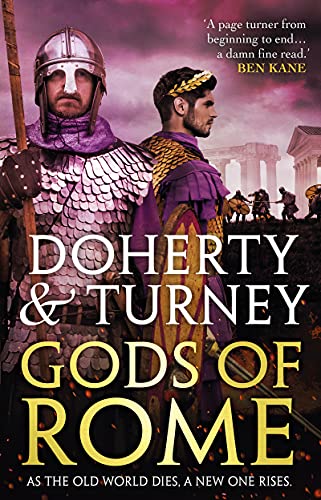


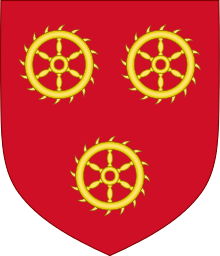
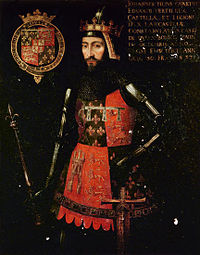
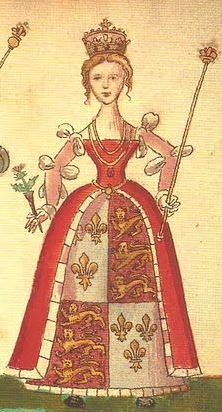
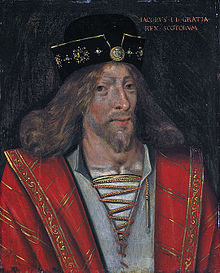

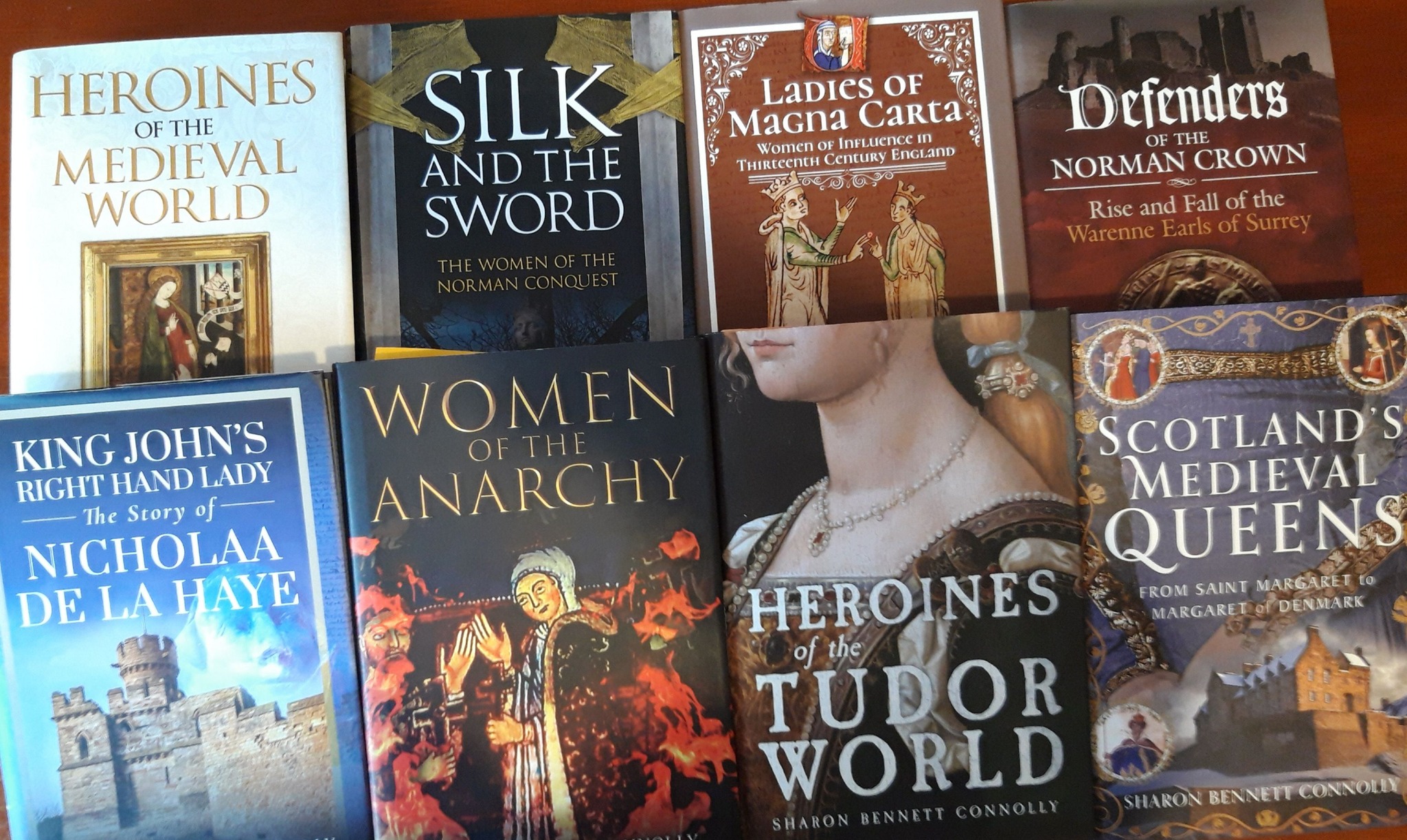


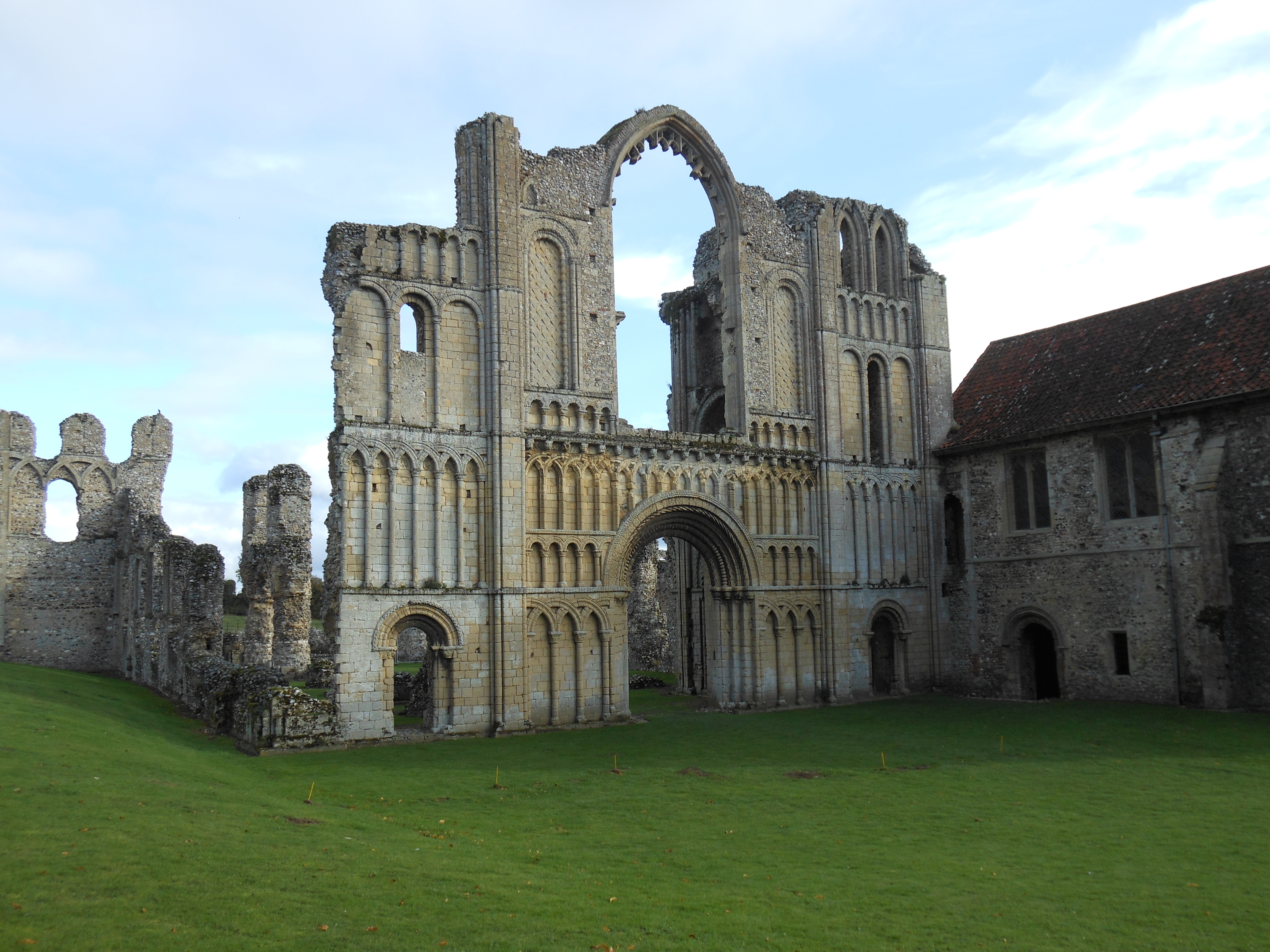


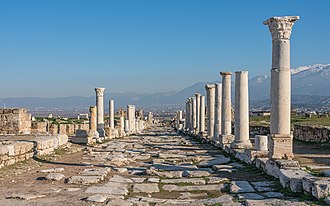
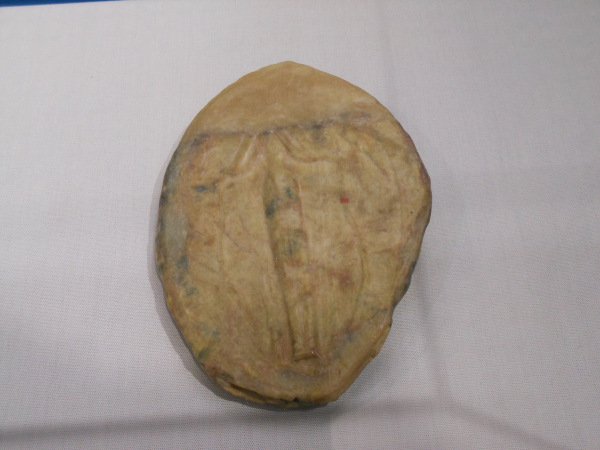
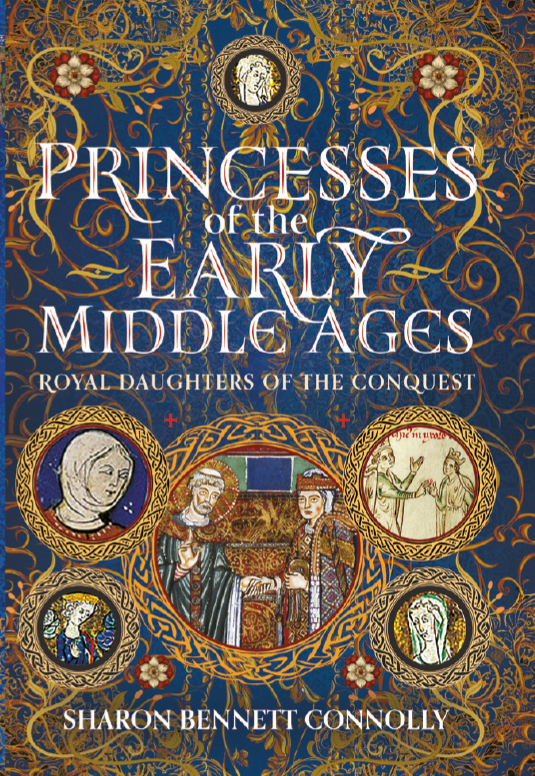


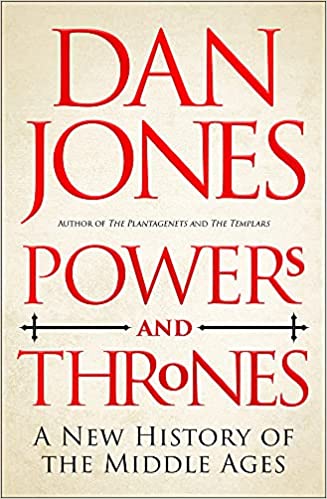

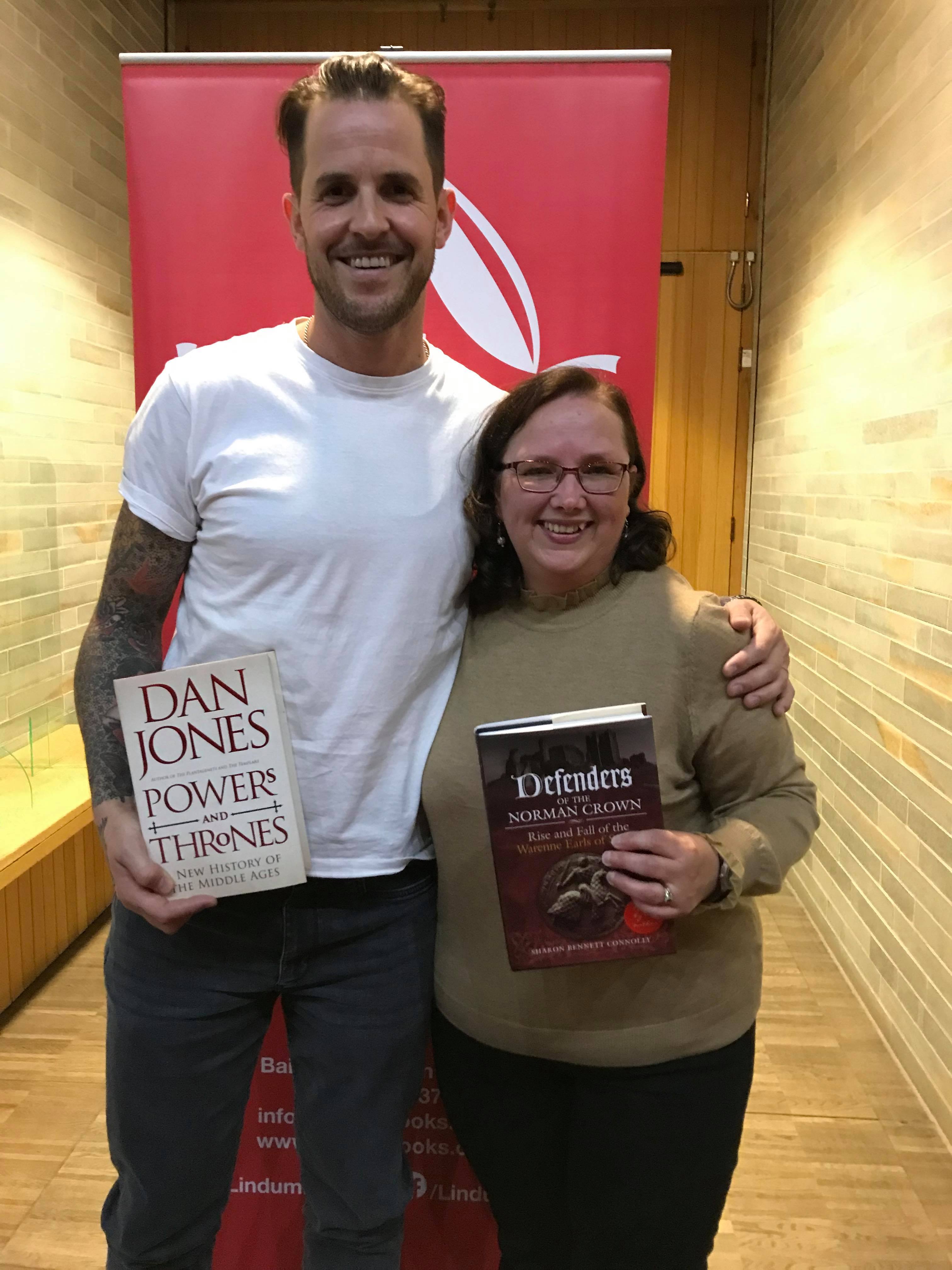

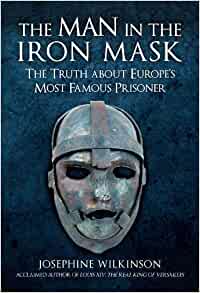
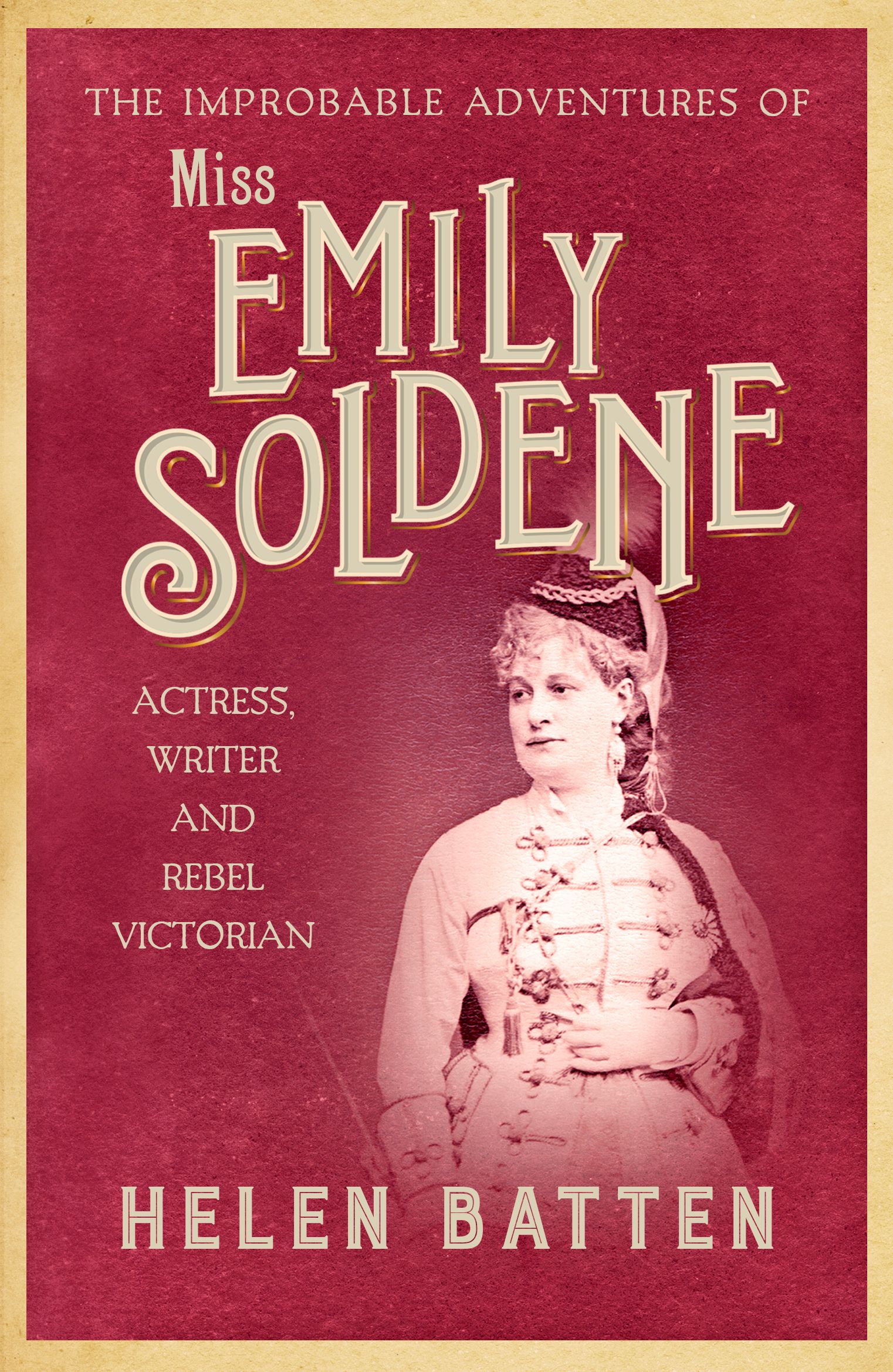
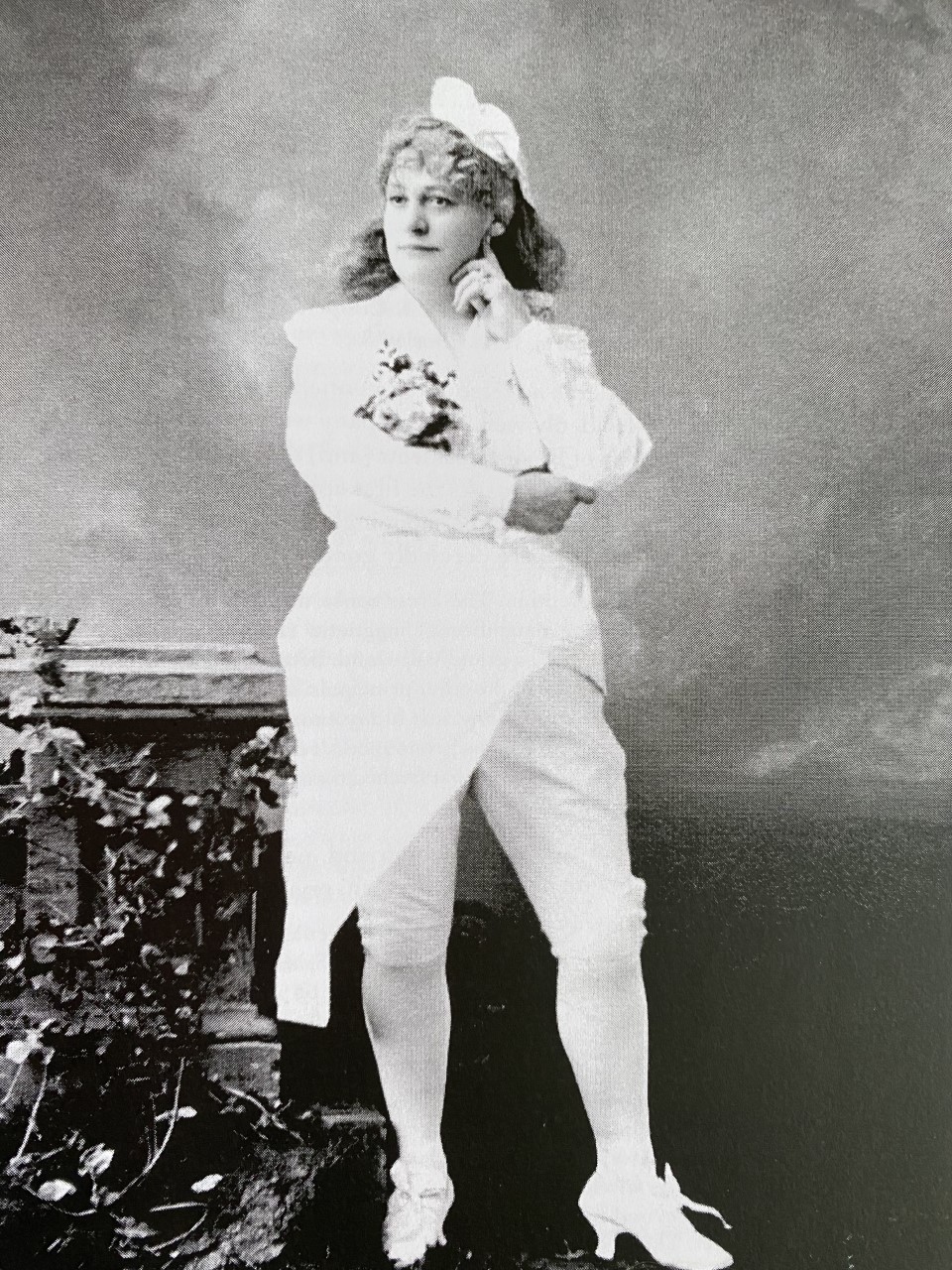
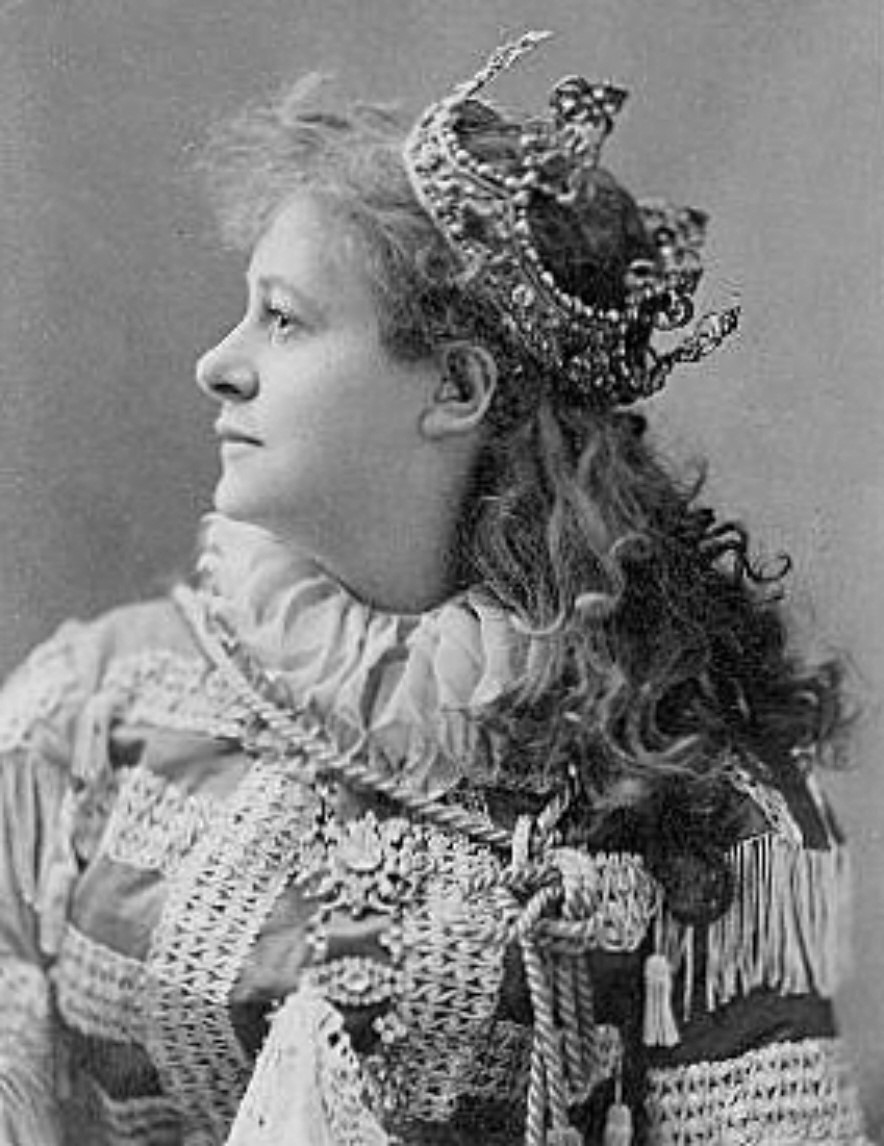
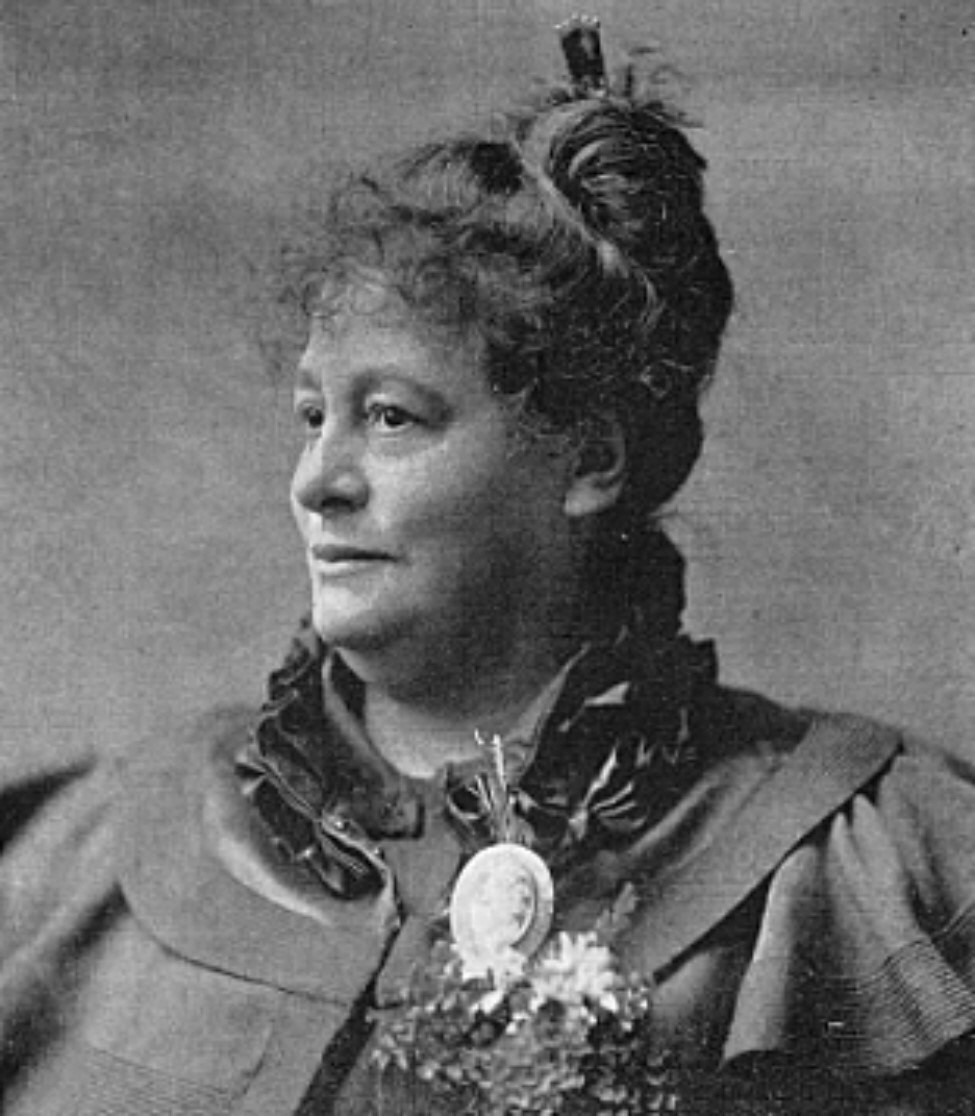
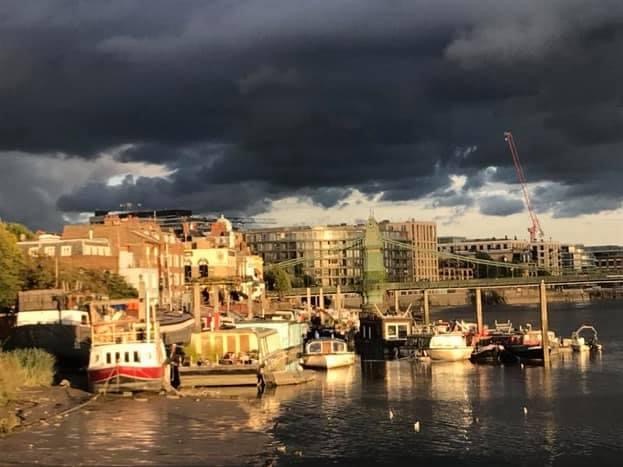
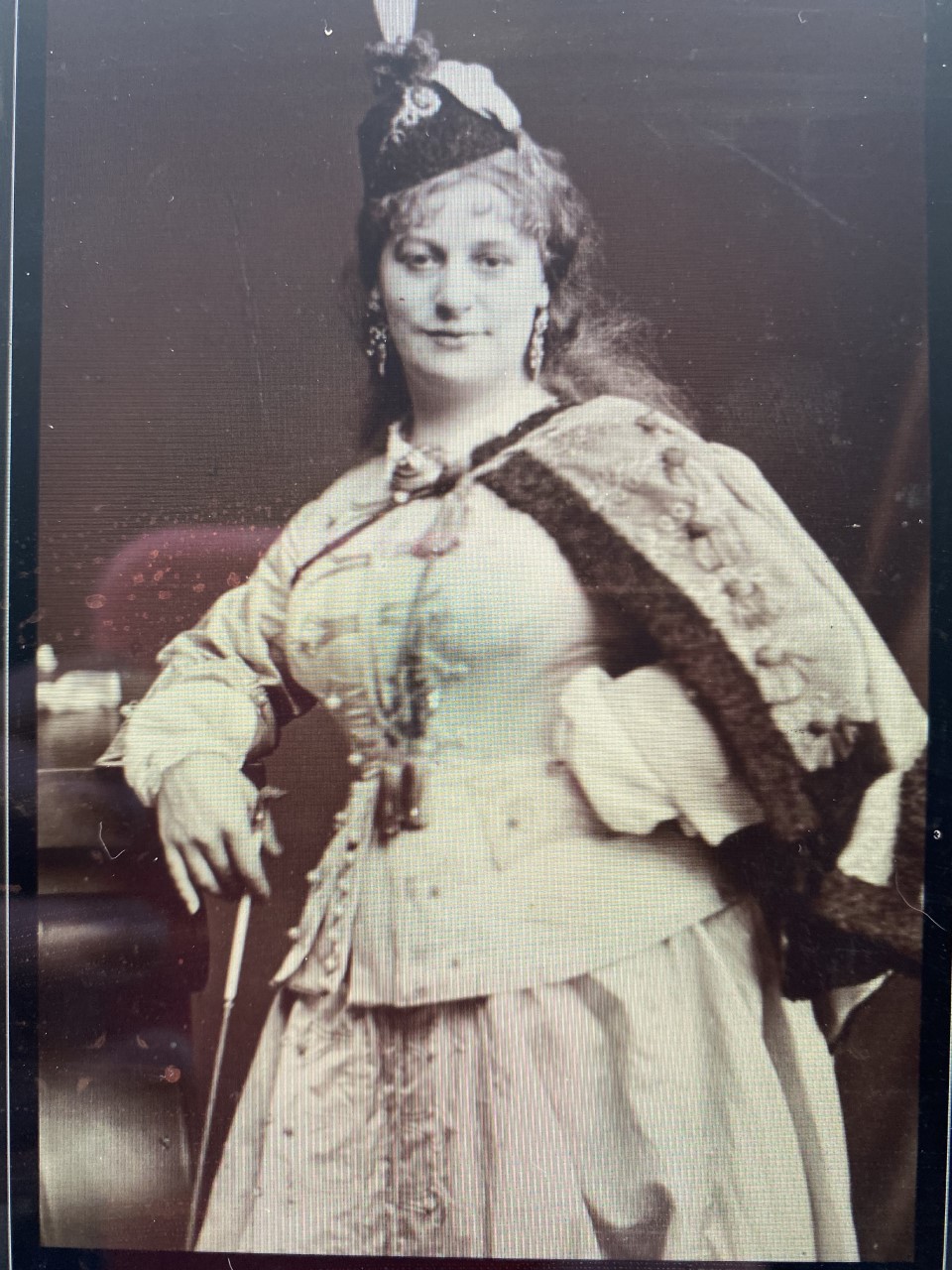

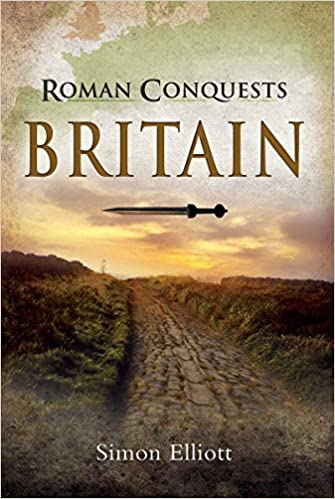
 History... the interesting bits!