The Eternal Legacy of Magna Carta

031
Lincoln Cathedral’s Magna Carta

June 15th 2015 was the 800th anniversary of the signing of Magna Carta.

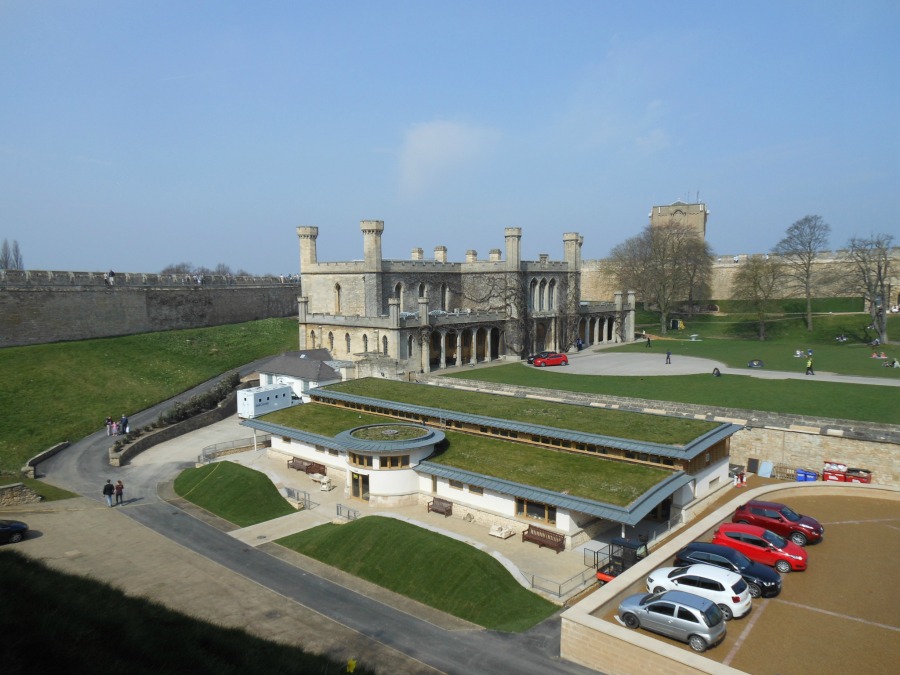
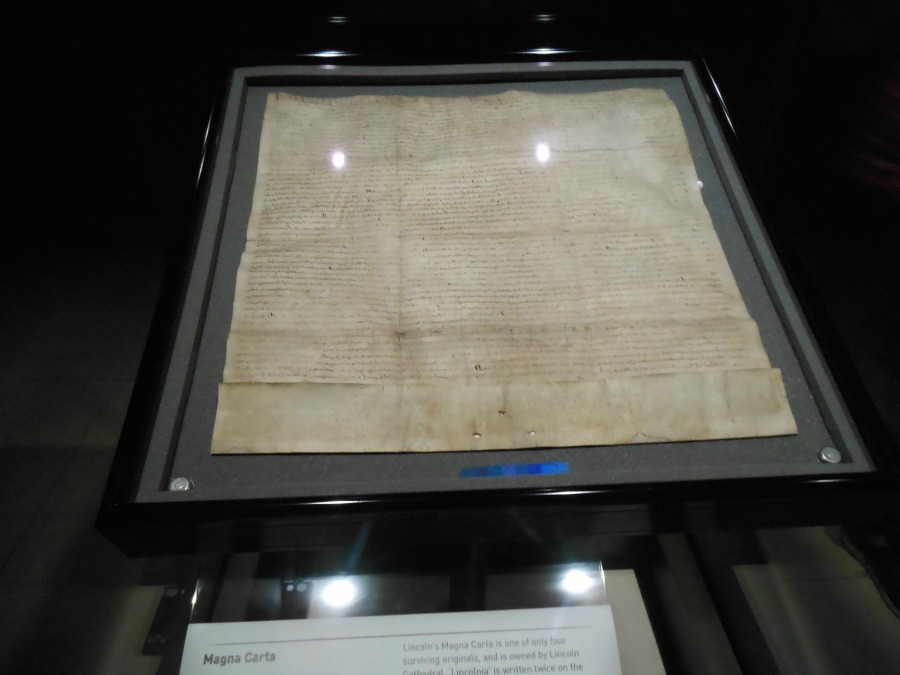
On 1 April 2015 Lincoln Castle reopened its doors after an extensive refurbishment. The renovations included a new purpose-built, state-of-the-art, underground vault for its most prized possession: one of only four surviving copies of the original 1215 Great Charter – the Magna Carta.

The Magna Carta’s new home cannot fail to emphasise the importance of this charter in the history of not only England, but also the rest of the world. Two films – Magna Carta: Challenging the Power of the King and Magna Carta: Meaning and Myth – reconstruct the events leading up to Magna Carta and chart its significance through the centuries, respectively.

But what is Magna Carta? And what makes it so important?

In many ways, the reign of King John had been a continuation of that of his father, Henry II, and of his brother, Richard I, with one significant difference. Early in his reign John had lost the French part of the great Angevin empire: Normandy and most of Aquitaine were now held by France. In 1214 King John returned to England following his army’s defeat by the French at the Battle of Bouvines. The battle ended the king’s hopes of regaining the lost empire.

Added to this catastrophe was the character and personality of John himself. By nature John was paranoid, secretive and distrustful. John’s cruelty is widely known. He is accused of killing his nephew and rival claimant to the English throne, Arthur of Brittany; he hanged 28 Welsh hostages (sons of rebel chieftains) and he hounded William de Braose and his family all the way to Ireland and back. De Braose’s wife and son died in one of John’s prisons, probably from starvation.

The History of William Marshal, a biography of the great knight and statesman, states of John: ‘He kept his prisoners in such a horrible manner, and in such abject confinement that it seemed an indignity and a disgrace to all those with him who witnessed such cruelty’.

Although John faced the fallout of Magna Carta, many of the injustices targeted by the barons can be seen in the reigns of his predecessors. Heavy taxes, arbitrary fines and the exploitation of wardships were long-established royal revenue earners. However, where Henry and Richard had a whole empire to exploit, John’s need for money had to be met by England alone.

Even John’s disagreement with the Church can see parallels in the reign of Henry II and his clashes with Thomas Becket. John opposed the election of Stephen Langton as Archbishop of Canterbury, and refused to allow his consecration. Pope Innocent III went so far as to excommunicate John and place England under interdict; in 1213 Philip II of France was even invited to depose him.

John finally came to an agreement with the Church in May 1213, swearing that the liberties established under Henry I would be strictly observed and allowing Langton to take up his post as archbishop. However, John broke his oath almost immediately and Langton became one of the leaders of the opposition to the king.

The barons’ objections to John were almost beyond number. He had failed to face the French and had lost not only most of his family’s Continental possessions, but also those of his barons. Few had forgotten his treachery against his brother – his attempts on the throne whilst Richard was away on Crusade. His barons even complained that he forced himself on their wives and daughters.

The barons had had enough.
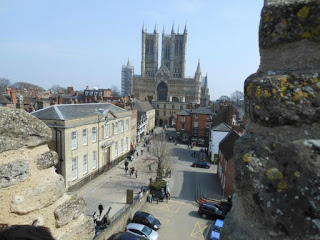
Lincoln Cathedral Sharon's pic
Lincoln Cathedral

The rebels were ready to fight. After occupying London they made one final attempt to prevent war, presenting the king with a list of their demands.

Following further negotiations a long detailed document was produced, dealing with particular grievances of the time and with injustices in general. It touched on the whole system of royal government. And it was granted to ‘all free men of the realm and their heirs forever’.

Magna Carta

Of its 63 clauses, some terms were asking for immediate remedies, such as the removal of corrupt administrators and the sending home of foreign mercenaries. The clause stating that fighting outside of the kingdom could not be imposed by the king was a reaction to John’s recent attempts to force his English barons to help him recover his Continental domains.

Others had long-term aims. The document sought to guarantee the privileges of the Church and the City of London. Restrictions were placed on the powers of regional officials, such as sheriffs, to prevent abuses. The royal court was fixed at Westminster, for justice to be obtainable by all, and royal judges were to visit each county regularly. Taxes could no longer be levied without the consent of the Church and the barons.
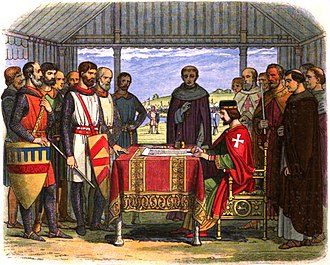
John and the barons at Runnymede

Clauses included the fixing of inheritance charges and protection from exploitation for under-age heirs; the king was to take only what was reasonable from an estate (although ‘reasonable’ remained undefined). From henceforth a widow was to be free to choose whether or not to remarry and her marriage portion (dowry) would be made available to her immediately on her husband’s death. Another clause sought to prevent the seizure of land from Jews and the king’s debtors.

Magna Carta even went so far as to regulate weights and measures. It also reduced the size of the king’s forests and limited the powers of forest justices.

Although most of the 63 clauses of Magna Carta are now defunct, three still remain as major tenets of British law, including ‘to no one will we sell, to no one will we deny or delay right or justice’. That no person could be imprisoned, outlawed or deprived of his lands except by judgement of his peers and the law of the land has remained the cornerstone of the English legal system ever since.

Magna Carta was sealed at Runnymede, Berkshire, on 15 June 1215. John ordered that the charter be circulated around the towns and villages.

As a peace agreement between King John and his rebellious barons, however, it failed miserably. By July John was appealing to the Pope for help. Pope Innocent III’s response arrived in England in September. The treaty was declared null and void; it was ‘not only shameful and demeaning but also illegal and unjust’. By the time the letter arrived in England, the dispute had already erupted into the Barons’ War.

Deciding they could no longer deal with John’s perfidy, the rebel barons invited the King of France, Philip II, to claim the throne. Philip’s son and heir, the future Louis VIII, accepted the offer. Having landed on the south coast, he marched for London, where he was proclaimed King of England on 2 June 1216.

John’s fortuitous death at Newark in October 1216 turned the tide against Louis and the rebels. The highly respected knight and statesman, William Marshal, Earl of Pembroke, was appointed regent for John’s nine-year-old son, Henry III. Marshal’s staunch loyalty was renowned throughout Europe; he was the embodiment of the chivalric code. Many barons who had previously sided with Louis saw the opportunity to come back from the brink, and rally around the young king. Marshal reissued Magna Carta and faced and defeated the joint French and rebel army at Lincoln on 20 May 1217.

Afterwards, the English were able to dictate peace terms to Louis, and the French went home. Magna Carta was issued a third time, along with a new Forest Charter (also on display at Lincoln Castle). It was reissued in 1225, on Henry III attaining his majority and it is the 1225 edition which remains on the statute books today.

The Legacy of Magna Carta
021
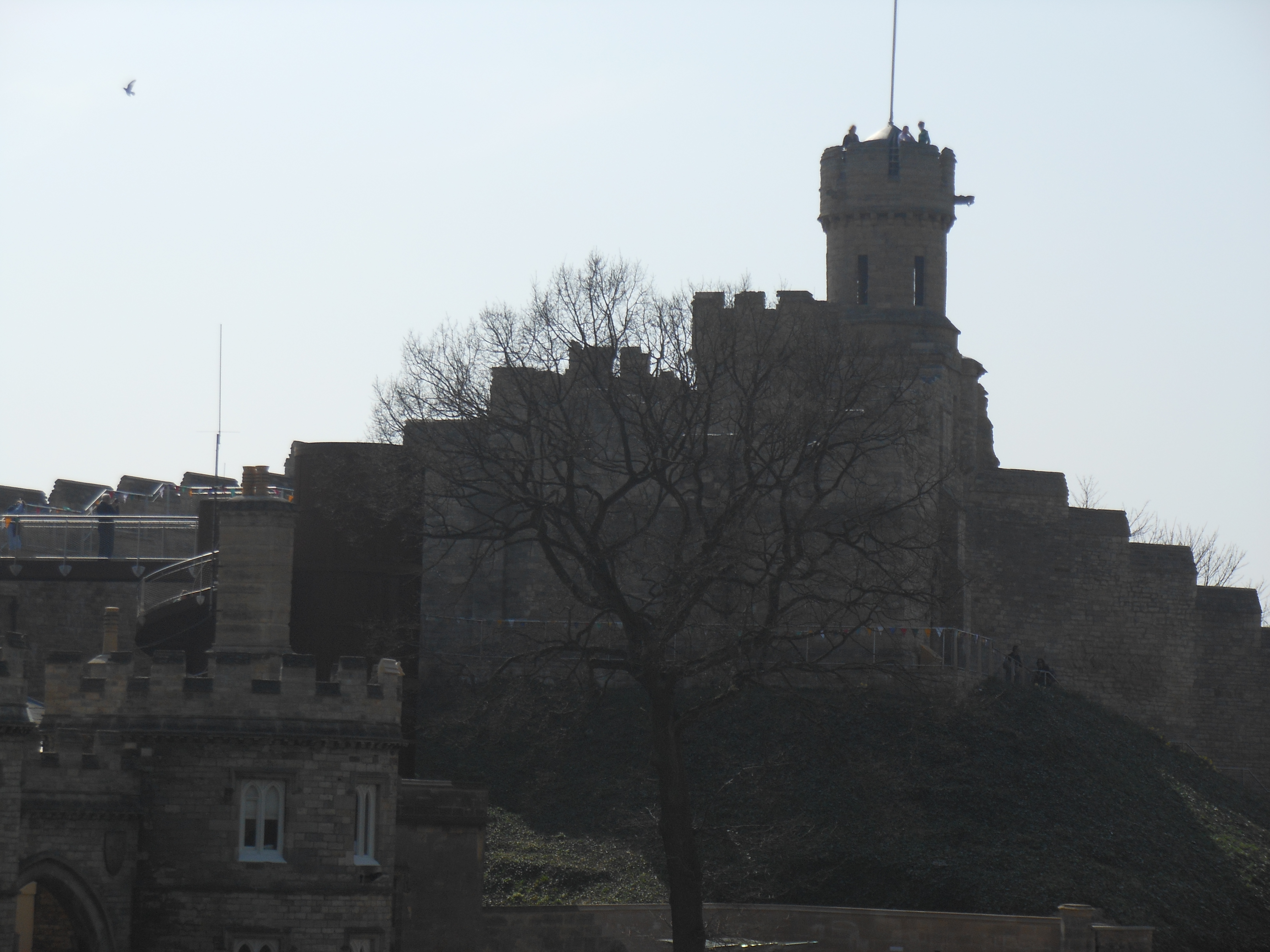
Lincoln Castle

It is hard to overstate the enduring significance of Magna Carta. Although it was initially a document conceived by rebel barons, the regents of Henry III exploited Magna Carta as a royalist device to recover the loyalty of the rebel barons. However, once it was issued it was used as a curb to all regal excesses. In 1265 it was invoked to create the first representative parliament.

By the late 1200s Magna Carta was regarded as a fundamental statement of English liberties.

Magna Carta set the precedent for future reform programmes, such as the Provisions of Oxford of 1258, the Ordinances of 1311, the Petition of Right of 1628 and the Grand Remonstrance of 1641.

The influence of Magna Carta has spread far beyond England’s shores. It can be seen in the United States’ 1791 Bill of Rights, in the 1948 Universal Declaration of Human Rights and the 1950 European Convention on Human Rights.

Although a failure in the short term, in the long term, Magna Carta established defined limitations to royal rights, laying down that standard to be observed by the crown and its agents.

It is the closest thing England has to a Constitution.

*

Article and Photos © Sharon Bennett Connolly FRHistS 2015, except John and his barons, which is courtesy of Wikipedia.

*

Article originally published on The Review in June 2015.

*

Sources: Robert Bartlett England Under the Norman and Angevin Kings 1075-1225; Dan Jones The Plantagenets; the Kings who Made England; The Plantagenet Chronicle Edited by Elizabeth Hallam; Maurice Ashley The Life and Times of King John; Roy Strong The Story of Britain; Oxford Companion to British History; Mike Ashley British Kings & Queens; David Williamson Brewer’s British Royalty.

My Books

Signed, dedicated copies of all my books are available, please get in touch by completing the contact me form.

Out now!
King John’s Right-Hand Lady: The Story of Nicholaa de la Haye is now available for pre-order from Pen & Sword Booksbookshop.org and Amazon UK. (I will hopefully have a US release date shortly)

In a time when men fought and women stayed home, Nicholaa de la Haye held Lincoln Castle against all-comers. Not once, but three times, earning herself the ironic praise that she acted ‘manfully.’ Nicholaa gained prominence in the First Baron’s War, the civil war that followed the sealing of Magna Carta in 1215.

A truly remarkable lady, Nicholaa was the first woman to be appointed sheriff in her own right. Her strength and tenacity saved England at one of the lowest points in its history. Nicholaa de la Haye is one woman in English history whose story needs to be told…

Coming 15 January 2024: Women of the Anarchy

On the one side is Empress Matilda, or Maud. The sole surviving legitimate child of Henry I, she is fighting for her birthright and that of her children. On the other side is her cousin, Queen Matilda, supporting her husband, King Stephen, and fighting to see her own son inherit the English crown. Both women are granddaughters of St Margaret, Queen of Scotland and descendants of Alfred the Great of Wessex. Women of the Anarchy demonstrates how these women, unable to wield a sword, were prime movers in this time of conflict and lawlessness. It show how their strengths, weaknesses, and personal ambitions swung the fortunes of war one way – and then the other.

Available for pre-order from Amberley Publishing and Amazon UK.

Also by Sharon Bennett Connolly:

Defenders of the Norman Crown: The Rise and Fall of the Warenne Earls of Surrey tells the fascinating story of the Warenne dynasty, of the successes and failures of one of the most powerful families in England, from its origins in Normandy, through the Conquest, Magna Carta, the wars and marriages that led to its ultimate demise in the reign of Edward III. Defenders of the Norman Crown: Rise and Fall of the Warenne Earls of Surrey is now available from Pen & Sword BooksAmazon in the UK and US, and  Bookshop.org.

Ladies of Magna Carta: Women of Influence in Thirteenth Century England looks into the relationships of the various noble families of the 13th century, and how they were affected by the Barons’ Wars, Magna Carta and its aftermath; the bonds that were formed and those that were broken. It is now available in paperback and hardback from Pen & Sword,  Amazon, and Bookshop.org.
Heroines of the Medieval World tells the stories of some of the most remarkable women from Medieval history, from Eleanor of Aquitaine to Julian of Norwich. Available now from Amberley Publishing and Amazon, and Bookshop.org.

Silk and the Sword: The Women of the Norman Conquest traces the fortunes of the women who had a significant role to play in the momentous events of 1066. Available now from Amazon,  Amberley Publishing, and Bookshop.org.

Alternate Endings: An anthology of historical fiction short stories including Long Live the King… which is my take what might have happened had King John not died in October 1216. Available in paperback and kindle from Amazon.

Podcast:

Have a listen to the A Slice of Medieval podcast, which I co-host with Historical fiction novelist Derek Birks. Derek and I welcome guests, such as Bernard Cornwell and discuss a wide range of topics in medieval history, from significant events to the personalities involved.

*

For forthcoming online and in-person talks, please check out my Events Page.

You can be the first to read new articles by clicking the ‘Follow’ button, liking our Facebook page or joining me on Twitter and Instagram.

©2015 Sharon Bennett Connolly FRHistS
Lincoln Castle, a Journey Through History

064
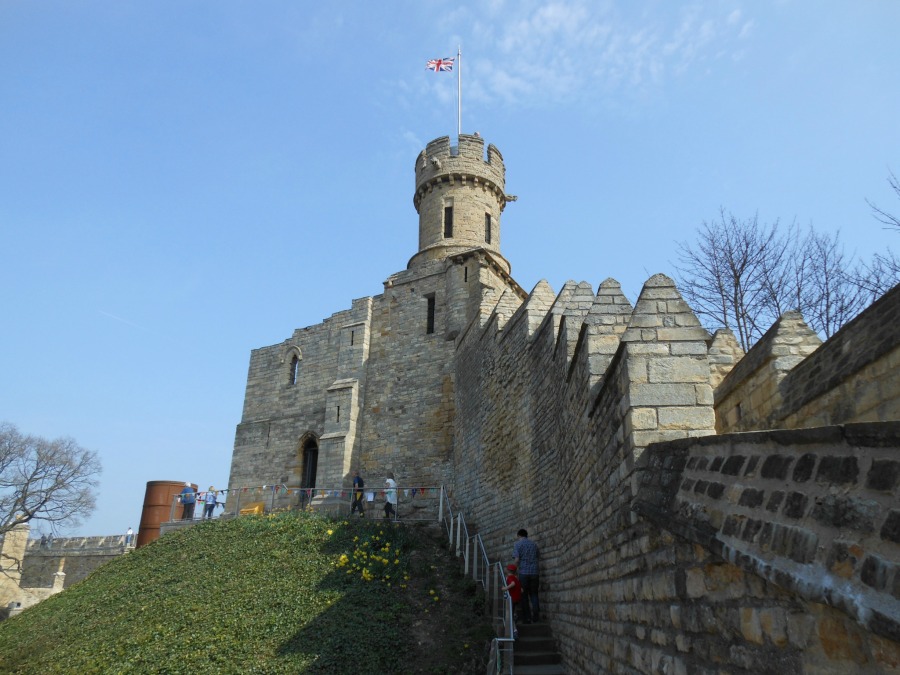
The Observatory Tower

I love the school holidays. My son and I always find something historical to explore. Today, it was Lincoln Castle.

The Castle only reopened on the 1st April, 2015, after an extensive revamp. And it was teeming with visitors (apparently it was the quietest day since they reopened, so the last week must have been incredibly hectic for the staff).

Lincoln Castle was started by William the Conqueror in 1068 and has been in constant use ever since. You can follow its history, just by looking at the buildings that occupy the Inner Bailey. In its time, it has been a military fortification, a Victorian prison and is now home to Lincoln’s Crown Court – and the Magna Carta!

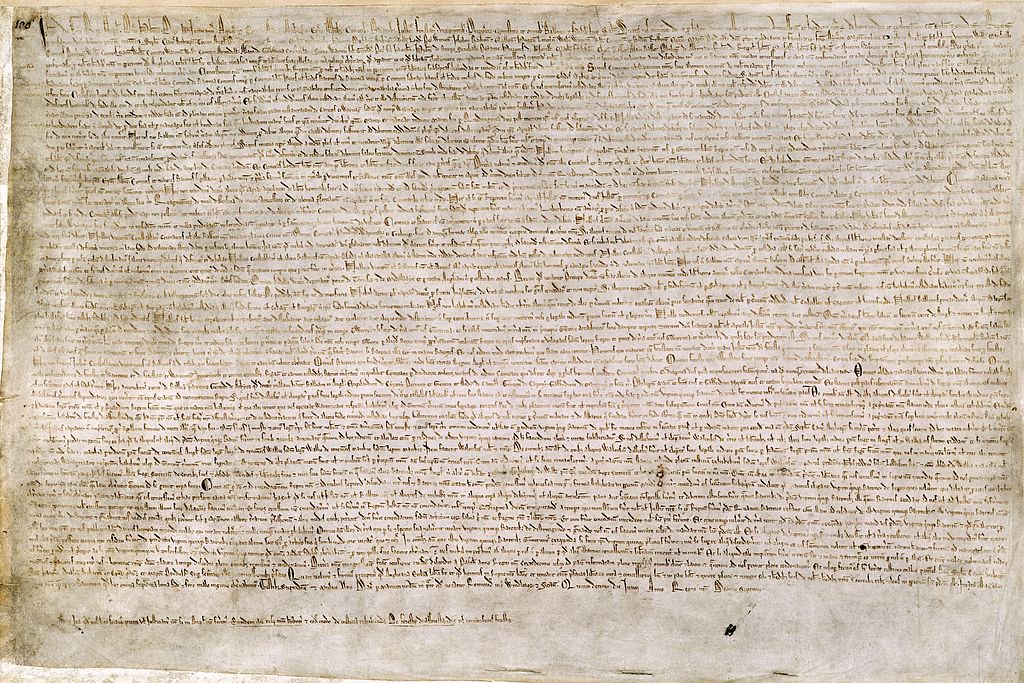
Magna_Carta_(British_Library_Cotton_MS_Augustus_II.106)
Magna Carta

Lincoln Cathedral’s Magna Carta is one of only four surviving originals. It is now on display in an impressive purpose-built, underground vault. The Magna Carta is accompanied by an original copy of the 1217 Charter of the Forest.

There is a 20-minute video, with a very believable King John and the great William Marshal, discussing the Magna Carta and explaining its inception and significance through the centuries.

041
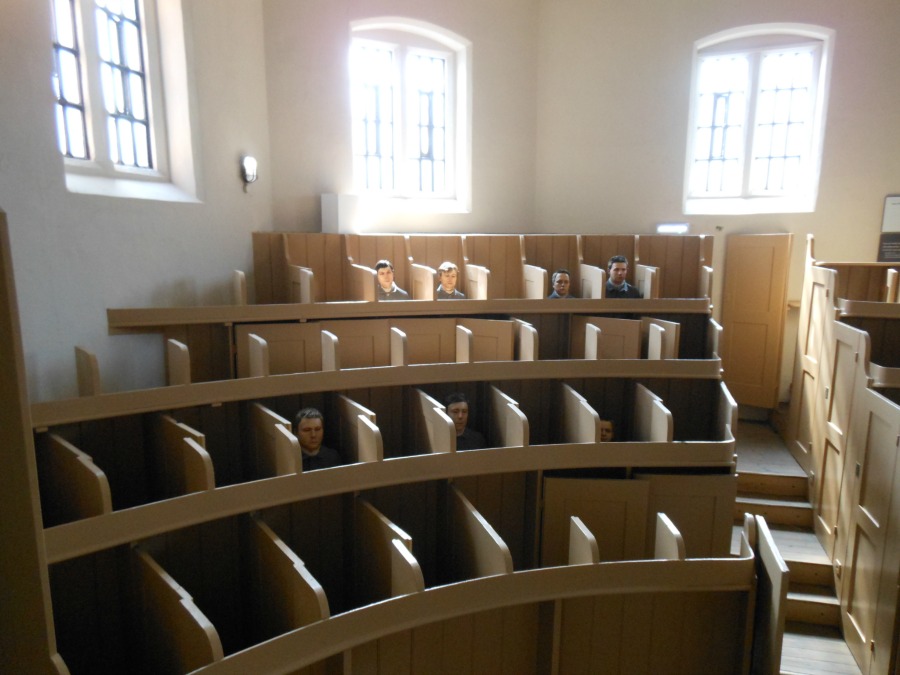
Prison Chapel

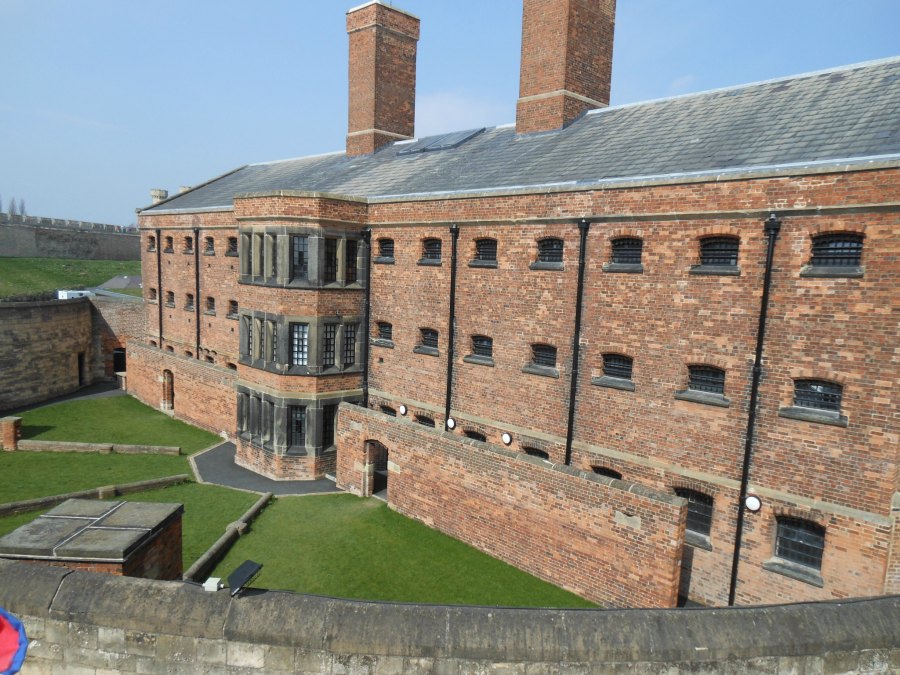
The Magna Carta Vault is a modern addition, adjoining the imposing Victorian prison. In its day, the prison was an innovation in the harshness punishment; the prisoners were held in solitary confinement for 24 hours a day.

There was no relief from the solitude, even when attending church services; the prison chapel was constructed in a way that each prisoner could see the priest, but could have no contact with his fellow prisoners. The chapel gives me the creeps everytime I visit it. I have a thing about dummies, but it’s also the thought of all those prisoners only able to see the one person, in the pulpit; cut off from society and each other.

037
Inside the male prison

The prison included some wonderful interactive displays, with the opportunity to read the diaries of the priest, the wardens and prisoners. Kids can dress-up as prisoners or wardens, explore the separate male and female prisons, and watch videos of the inmates, explaining their crimes – and pleading their innocence!

The Castle grounds give you the sense of the thousand years of history its walls have witnessed.

It was at Lincoln that King Stephen was captured by forces loyal to the Empress Matilda, during the civil war – the Anarchy – that followed the death of Henry I (when Matilda and Stephen both claimed the throne).

046
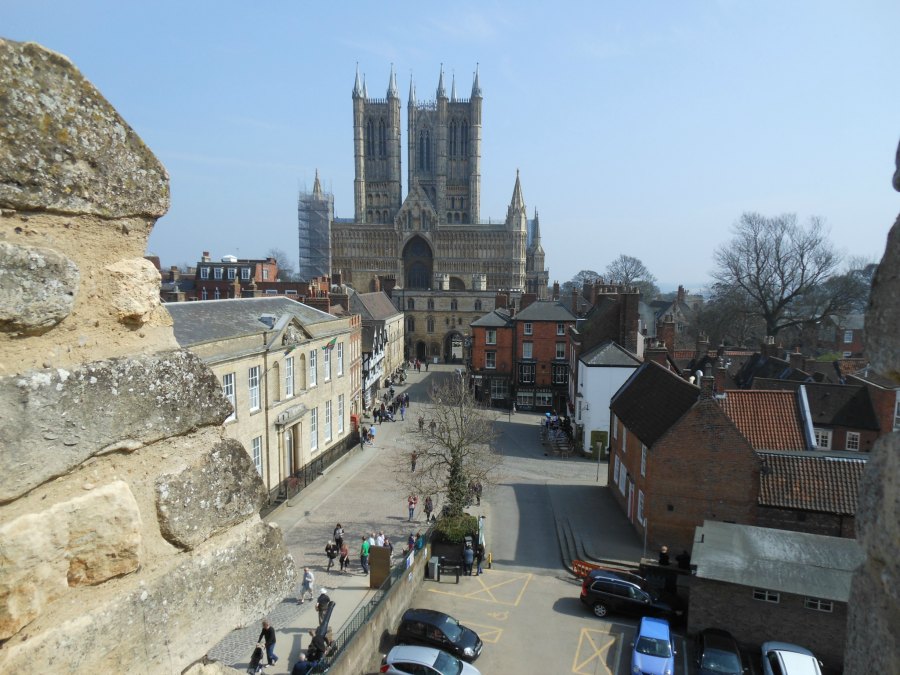
From the battlements: Lincoln Cathedral

Henry VIII and Catherine Howard had visited Lincoln Castle during their northern progress of 1541, shortly before Catherine’s infidelities were uncovered.

You can now walk the whole length of the walls – a third of a mile, though it can feel longer, with all the steps. You can climb the narrow spiral staircase to the top of the Observatory Tower – and take in the whole view of Lincoln, its Cathedral and the Fens.

The Lucy Tower contains within its walls a small cemetery, where executed prisoners, and those who died of disease, were buried.

077
The West Gate

The West Gate is a little piece of history in itself; opened to William Marshal’s troops during the Second Battle of Lincoln, by the castle’s castellan, Nicholaa de la Haye, whilst the castle was under siege from the army of Louis of France, who had been invited to take England by King John’s disaffected barons. The Dauphin was defeated shortly after, outside the Castle’s walls, and returned to France.

087
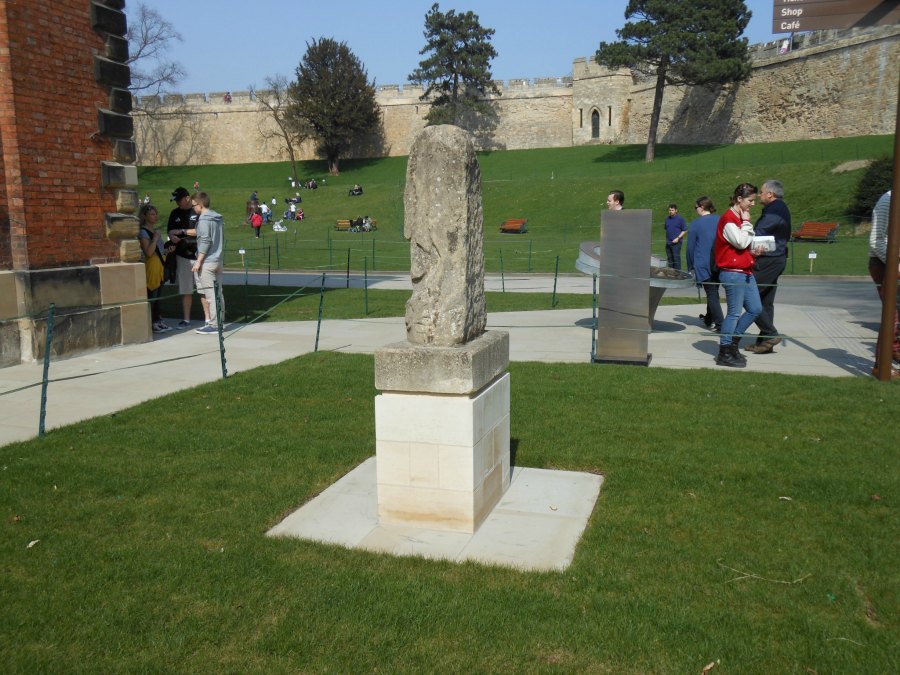
Remnant of the Eleanor Cross

Another memento from history, within the Inner Bailey, is the remnant of Lincoln’s Eleanor Cross. Eleanor of Castile was just 7 miles from Lincoln when she died in 1290 and Lincoln’s Eleanor Cross is the first marker of her funeral procession, which ended at Westminster Abbey. Eleanor’s viscera (her intestines) were buried in Lincoln Cathedral, while her embalmed body was transported to London, an elaborate cross being erected at each stopping place along the way.

025
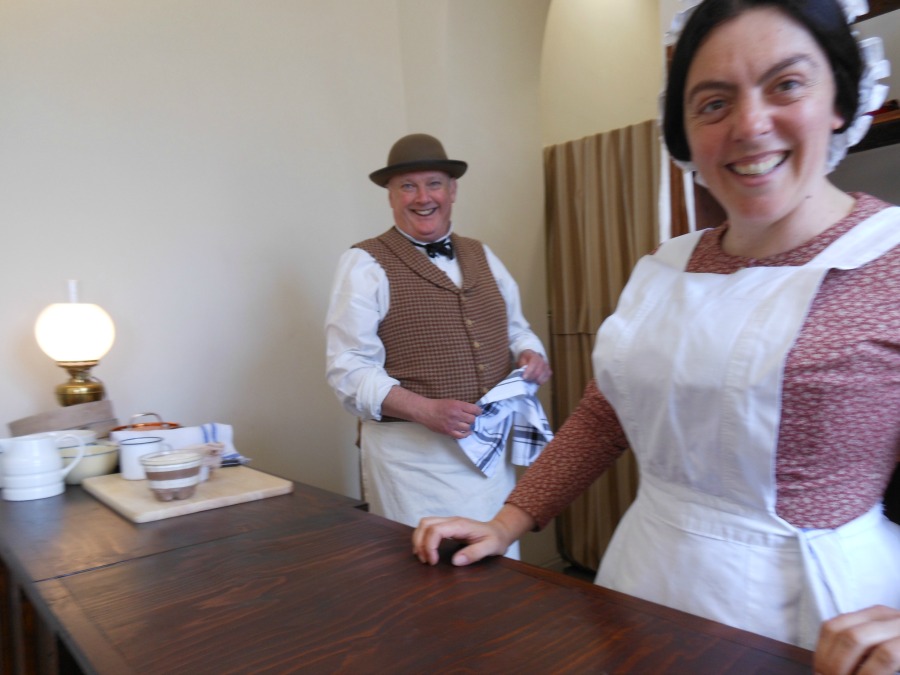
Inside the Victorian Kitchen

The Castle has not forgotten its younger visitors, with a little treasure trail and quiz, based on King John’s loss of the Crown Jewels in the Wash.

The prize was well worth winning – chocolate coins from the Victorian Kitchen. And ‘thank you’ to the Victorian lady, who insisted all children pay a 1 coin tax to their parents out of their winnings – very tasty!

Whether you choose to explore by yourself, take the guided tour or simply bask in the sun of the Bailey, Lincoln Castle is a wonderful day out – for the young and old alike – I can highly recommend it.

066
The exercise yard and facade of the Victorian prison

*

My book, Heroines of the Medieval World,  is now available in hardback in the UK from both Amberley Publishing and Amazon UK and worldwide from Book Depository. It is also available on Kindle in both the UK and USA and will be available in Hardback from Amazon US from 1 May 2018.

Be the first to read new articles by clicking the ‘Follow’ button, liking our Facebook page or joining me on Twitter.

*

All pictures and article are copyright to Sharon Bennett Connolly, 2015, except the Magna Carta, which is courtesy of Wikipedia.

*

For further information, visit http://www.lincolncastle.com

072
The Crown Court building

©2015 Sharon Bennett Connolly

Eleanor de Montfort, the First Princess of Wales

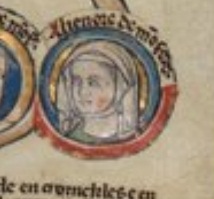
Eleanor_de_Montford
Eleanor de Montfort

Born in 1258, probably at Kenilworth Castle, Eleanor de Montfort was the only daughter and sixth child of Eleanor of England. Her mother was the fifth and youngest child of King John and Isabella of Angouleme, and sister of Henry III. Her father was Simon de Montfort, Earl of Leicester, leader of the rebels in the Second Barons’ War.

Eleanor had 5 older brothers; Henry, Simon, Amaury, Guy and Richard.

Her father, Simon de Montfort, is remembered as one of the founders of representative government. He was a leading figure of the Second Barons’ War. He and his eldest son, Henry, were killed at the Battle of Evesham on 4th August 1265. On her father’s death, Eleanor fled to exile in France with her mother and brother, Amuary. The women settled at the Abbey at Montargis until Eleanor of England’s death there in 1275.

llywel2
Llewelyn ap Gruffydd, Prince of Wales

In 1265, in return for Welsh support, Simon de Montfort had agreed to the marriage of his daughter, Eleanor, to Llewelyn ap Gruffydd, Prince of Wales. De Montfort’s downfall had postponed the marriage, but in 1275, in a move guaranteed to rile Edward I, King of England, Llewelyn reprised his marriage plans and the couple were married by proxy whilst Eleanor was still in France.

Shortly afterwards, Eleanor set sail for Wales, accompanied by her brother, Amaury, who was now a Papal Chaplain and Canon of York. Believing the marriage would ‘scatter the seeds which had grown from the malice her father had sown’, Edward arranged for Eleanor to be captured at sea. When Eleanor’s ship was taken in the Bristol Channel, the de Montfort arms and banner were found beneath the ship’s boards.

Eleanor was taken to close, but comfortable, captivity at Windsor; whilst her brother Amaury was imprisoned at Corfe Castle for 6 years.

In 1276 Llewelyn having refused to pay homage to Edward I, he was declared a rebel. Faced with Edward’s overwhelming forces, and support slipping away, Llewelyn was forced to submit within a year. The Treaty of Aberconwy reduced his lands to Gwynedd, but paved the way for his marriage to Eleanor, at last; it’s possible that the marriage was one of the conditions of Llewelyn’s submission.

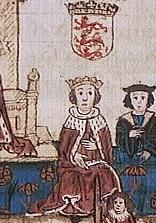
edward03
Edward I, with Alexander III, King of Scots on his right, and Llewelyn, Prince of Wales on his left

The wedding celebrations of Eleanor de Montfort and Llewelyn ap Gruffydd were an extravagant affair, celebrated at Worcester Cathedral on the Feast of St Edward, 13th October 1278. The illustrious guest list included Edward I and Alexander III, King of Scots. Edward and his brother, Edmund of Lancaster gave Eleanor away at the church door, and Edward paid for the lavish wedding feast.

While the marriage did not prevent further struggles between the Welsh and the English king, there was relative peace for a short time and Eleanor may have encouraged her husband to seek political solutions. She is known to have visited the English court when Princess of Wales; and was at Windsor on such a visit in January 1281. Eleanor herself wrote to Edward on 8 July 1279, not only to assure him of her ‘sincere affection’ and loyalty, but also to warn him against listening to reports unfavourable to Wales from his advisers:

Although as we have heard, the contrary hereto hath been reported of us to your excellency by some; and we believe, notwithstanding, that you in no wise give credit to any who report unfavourably concerning our lord and ourself until you learn from ourselves if such speeches contain truth: because you showed, of your grace, so much honour and so much friendliness to our lord and yourself, when you were at the last time at Worcester.

Anne Crawford, Letters of Medieval Women

As a testament to her diplomatic skills, Eleanor uses words of affection and flattery whilst clearly getting her point across, a technique her predecessor Joan, Lady of Wales, had used to good effect with Henry III. As it had been with Joan, Eleanor, too, was not beyond humbling herself to King Edward in order to achieve her objectives and wrote to him again in October 1280, this time regarding her brother, Amaury, who was still in the king’s custody. She wrote to the king,

with clasped hands, and with bended knees and tearful groanings, we supplicate your highness that, reverencing from your inmost soul the Divine mercy (which holds out the hand of pity to all, especially those who seek Him with their whole heart), you would deign mercifully to take again to your grace and favour our aforesaid brother and your kinsman, who humbly craves, as we understand, your kindness. For if your excellency, as we have often known, mercifully condescends to strangers, with much reason, as we think, ought you to hold out the hand of pity to one so near to you by the ties of nature.

Anne Crawford, Letters of Medieval Women

Amaury was released shortly afterwards.

However, on 22nd March, 1282, Llewelyn’s younger brother, Dafydd, attacked the Clifford stronghold of Hawarden Castle and Llewelyn found himself in rebellion against Edward I yet again. At the same time, Eleanor was in the final few months of her pregnancy and Llewelyn held off taking the field until the birth of his much hoped for heir.

Eleanor and Llewelyn’s only child, a daughter, Gwenllian, was born on 19th June 1282; Eleanor died the same day.

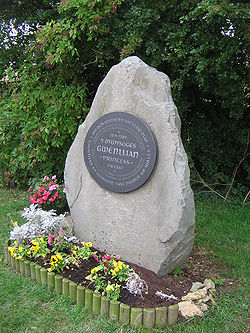
250px-Gwenllian_memorial_Sempringham
Memorial stone for Princess Gwenllian, Sempringham

Llewelyn himself was killed in an ambush on 11 December of the same year, at Builth, earning himself the name of Llewelyn the Last – the last native Prince of Wales.

Their daughter, Gwenllian was given into the guardianship of her uncle, Dafydd ap Gruffydd, but was taken into Edward I’s custody when David was defeated and captured by the English. She was sent to be raised at the Gilbertine convent at Sempringham, where she eventually became a nun. She died there on 7th June 1337, the last of her father’s line. It is said that she was never allowed to speak, hear or learn her native language. It has been assumed that she was not aware of her heritage, although she was once visited by her cousin, Edward III, who paid £20 annually for her food and clothing. However, as David Pilling has pointed out, she does in fact call herself ‘Princess of Wales, daughter of Llywelyn ap Gruffudd’ in a petition inside the volume of petitions from Wales edited by William Rees.

Eleanor de Montfort was the first woman known to have used the title Princess of Wales. She was buried alongside her aunt Joan, illegitimate daughter of King John and wife of Llewelyn the Great, at Llanfaes on the Isle of Anglesey.

*

Sources: castlewales.com; snowdoniaheritage.info; Marc Morris A Great and Terrible King; David Williamson Brewer’s British royalty; Mike Ashley The Mammoth Book of British kings & Queens; Alison Weir Britain’s Royal Families; Roy Strong The Story of Britain; Dan Jones The Plantagenets; the Kings who Made England; Chronicles of the Age of Chivalry Edited by Elizabeth Hallam; The Oxford Companion to British History; The History Today Companion to British History; Derek Wilson The Plantagenets; Anne Crawford, Letters of Medieval Women; author David Pilling.

Pictures taken from Wikipedia, except that of Edward I, Alexander III and Llewelyn, which was taken from castlewales.com.

*

My Books:

Signed, dedicated copies of all my books are available through my online bookshop.

Out Now! Scotland’s Medieval Queens

Books by Sharon Bennett Connolly

Scotland’s history is dramatic, violent and bloody. Being England’s northern neighbour has never been easy. Scotland’s queens have had to deal with war, murder, imprisonment, political rivalries and open betrayal. They have loved and lost, raised kings and queens, ruled and died for Scotland. From St Margaret, who became one of the patron saints of Scotland, to Elizabeth de Burgh and the dramatic story of the Scottish Wars of Independence, to the love story and tragedy of Joan Beaufort, to Margaret of Denmark and the dawn of the Renaissance, Scotland’s Medieval Queens have seen it all. This is the story of Scotland through their eyes.

Scotland’s Medieval Queens gives a thorough grounding in the history of the women who ruled Scotland at the side of its kings, often in the shadows, but just as interesting in their lives beyond the spotlight. It’s not a subject that has been widely covered, and Sharon is a pioneer in bringing that information into accessible history.’ Elizabeth Chadwick (New York Times bestselling author)

Available now from Amazon and Pen and Sword Books

Also by Sharon Bennett Connolly:

Books by Sharon Bennett Connolly

Heroines of the Tudor World tells the stories of the most remarkable women from European history in the time of the Tudor dynasty, 1485-1603. These are the women who ruled, the women who founded dynasties, the women who fought for religious freedom, their families and love. Heroines of the Tudor World is now available for pre-order from Amberley Publishing and Amazon UK. Women of the Anarchy demonstrates how Empress Matilda and Matilda of Boulogne, unable to wield a sword themselves, were prime movers in this time of conflict and lawlessness. It shows how their strengths, weaknesses, and personal ambitions swung the fortunes of war one way – and then the other. Available from Bookshop.orgAmberley Publishing and Amazon UKKing John’s Right-Hand Lady: The Story of Nicholaa de la Haye is the story of a truly remarkable lady, the hereditary constable of Lincoln Castle and the first woman in England to be appointed sheriff in her own right. Available from all good bookshops Pen & Sword Booksbookshop.org and Amazon

Royal Historical Society

Defenders of the Norman Crown: The Rise and Fall of the Warenne Earls of Surrey tells the fascinating story of the Warenne dynasty, from its origins in Normandy, through the Conquest, Magna Carta, the wars and marriages that led to its ultimate demise in the reign of Edward III. Available from Pen & Sword BooksAmazon in the UK and US, and Bookshop.orgLadies of Magna Carta: Women of Influence in Thirteenth Century England looks into the relationships of the various noble families of the 13th century, and how they were affected by the Barons’ Wars, Magna Carta and its aftermath; the bonds that were formed and those that were broken. It is now available in paperback and hardback from Pen & SwordAmazon, and Bookshop.orgHeroines of the Medieval World tells the stories of some of the most remarkable women from Medieval history, from Eleanor of Aquitaine to Julian of Norwich. Available now from Amberley Publishing and Amazon, and Bookshop.orgSilk and the Sword: The Women of the Norman Conquest traces the fortunes of the women who had a significant role to play in the momentous events of 1066. Available now from Amazon,  Amberley Publishing, and Bookshop.org.

Alternate Endings: An anthology of historical fiction short stories including Long Live the King… which is my take what might have happened had King John not died in October 1216. Available in paperback and kindle from Amazon.

Podcast:

A Slice of Medieval

Have a listen to the A Slice of Medieval podcast, which I co-host with Historical fiction novelist Derek Birks. Derek and I welcome guests, such as Bernard Cornwell and Michael Jecks, and discuss a wide range of topics in medieval history, from significant events to the personalities involved. 

Every episode is also now available on YouTube.

*

Don’t forget! Signed and dedicated copies of all my books are available through my online store.

For forthcoming online and in-person talks, please check out my Events Page.

You can be the first to read new articles by clicking the ‘Follow’ button, liking our Facebook page or joining me on TwitterThreadsBluesky and Instagram.

*

©2015 Sharon Bennett Connolly FRHistS
Isabella of Gloucester, the Lost Queen of England

170px-john_of_england_john_lackland
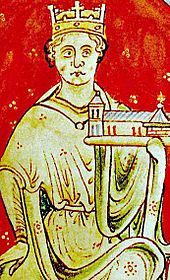
King John

Isabella of Gloucester is a shadow in the pages of history. I could find no pictures of her. Until recently, no one even seemed certain of her name; in the history books she has been called Isabel, Isabella, Hawise, Avice – probably due to different language interpretations, translations and misunderstandings. However, Rich Price, who has done extensive research on primary sources from King John‘s reign has clarified that The Close Rolls definitely name her as ‘comitissa Isabella’ and ‘Isabella filia Willielmi comitis’ (Isabella, daughter of Count William), so we’ll stick with Isabella.

Isabella was the youngest daughter, and co-heiress, of William, 2nd Earl of Gloucester and his wife, Hawise, daughter of Robert de Beaumont, 2nd Earl of Leicester; Isabella was therefore a great-granddaughter of Isabel de Vermandois (and a distant cousin of the Warennes). Through her father, Isabella was a descendant of Robert of Gloucester, the illegitimate half-brother of Empress Matilda who was his sister’s leading general during the civil war known as The Anarchy. We know very little of Isabella’s childhood, although, considering her social status, as the daughter of one of England’s wealthiest earls, it is likely that she was given the education expected of a high-ranking noblewoman and taught to run a large household, as well as the social graces of singing, dancing and needlework. Her parents’ marriage appears to have been a successful one. Isabella’s mother, Countess Hawise, was a regular witness to her husband’s charters and was mentioned in several of them, especially in the pro amina clauses of grants made to religious houses that sought spiritual benefits for those named.

Although her date of birth has been lost to history – most sources say between 1173 and 1176, though she may have been born in the 1160s – she was betrothed in 1176, possibly whilst still in her cradle, to Prince John. The youngest son of Henry II and Eleanor of Aquitaine, John was 9 years old at the time of the betrothal. Under the terms of the marriage agreement, Earl William recognised John as heir to the earldom of Gloucester, effectively disinheriting Isabella’s two elder sisters. The marriage was to be a way for Henry II to provide for his youngest son. After the Earl of Gloucester’s death in 1183, his entire estate was passed to Isabella, who had been made a ward of the king. However the wedding did not take place until 1189, when John was 21.

Baldwin, the Archbishop of Canterbury at the time, opposed the marriage as the couple were related within the prohibited degrees, both being a great-grandchild of Henry I, and ordered that they should not live together as husband and wife. John promised to seek a papal dispensation, in order to overcome Baldwin’s objections – although it appears this was never obtained. Nevertheless, John and Isabella were married on 29 August, 1189, at Marlborough Castle, Wiltshire. Although Isabella and John were married for ten years, their marriage was neither happy nor successful. They spent some time together in the first years of their marriage and issued joint charters during a visit to Normandy around 1190–91. However, they appear to have spent less and less time in each others’ company as the years went on. They never had any children and it is during this time in his life that John’s illegitimate children, including Richard of Chilham and Joan Lady of Wales, were probably born. In 1193, as part of his plotting with Philip Augustus, John promised to marry the French king’s half-sister, Alys, who had previously been betrothed to John’s own brother, Richard. Nothing eventually came of the marriage proposal, but it was an implicit rejection of Isabella as his wife.

John succeeded to the throne on the death of his older brother Richard I – the Lionheart – on 6 April 1199. He was crowned king on 27 May 1199; the fact that Isabella was not crowned alongside him, suggests that John was already looking for a way out of the marriage. Isabella would never be styled Queen of England.

Books by Sharon Bennett Connolly
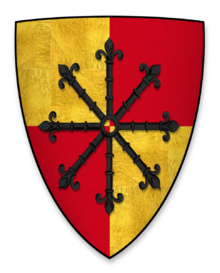
Coat of arms of Geoffrey de Mandeville, Earl of Essex and Gloucester

Within months of his succession, possibly as early as 30 August 1199 (the day after their 10th wedding anniversary), but certainly by 1200, John had obtained a divorce on the grounds of consanguinity; the bishops of Lisieux, Bayeux and Avranches, sitting in Normandy, provided the required judgement.

However, in order to keep his hold on the substantial Gloucester lands, John imposed a royal wardship on Isabella for the next 14 years. When John remarried, to Isabelle d’Angouleme, his new, young wife (she was no more than 12 on her wedding day and possibly a year or two younger) was lodged with Isabella of Gloucester at Winchester, the countess’s allowance was raised from £50 to £80 to cover the extra expenditure that comes with housing a queen. John’s wife and ex-wife were housed together until a few weeks before the birth of Isabelle’s first child by John, the future King Henry III, who was born in 1207.

The king eventually arranged a new marriage for Isabella, to a man who was over 16 years her junior. In 1214, although possibly past child-bearing age – certainly safe child-bearing age – she was married to Geoffrey de Mandeville, Earl of Essex, who had paid the considerable sum of 20,000 marks to become her second husband and Earl of Gloucester ‘jure uxoris‘ (by right of his wife), a huge sum which he could never hope to repay. Indeed, he soon defaulted on his payments. Just 2 years later, in 1216, de Mandeville died from wounds he had received in a tournament in London.

One of the Magna Carta sureties, de Mandeville was in a state of rebellion against the king when he died; as a result, all his lands and titles – including the earldom of Gloucester – were forfeit to the crown. Isabella’s feelings towards John may well be seen in the fact that, even after de Mandeville’s death, she continued to support the rebels. Isabella was now a widow and although virtually penniless appears to have reveled in her first taste of freedom, styling herself on one charter ‘Countess of Gloucester and Essex in my free widowhood’. It was not until 17th September 1217, almost a year after the death of King John, that Isabella’s lands were returned to her.

220px-Hubert_de_Burgh-Paris
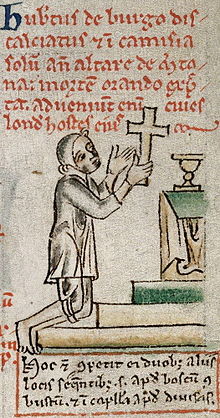
Hubert de burgh

At about the same time – or shortly after – Isabella was married for a third and final time, to Hubert de Burgh. Hubert De Burgh had become Chief Justiciar of England in 1215 and would rise to be Regent during the minority of Henry III. It was only several years after Isabella’s death that he would be created Earl of Kent.

On 13 October 1217 the sheriffs of nine counties were ordered to relinquish custody of Isabella’s lands to de Burgh. This final marriage was, sadly, very short-lived and Isabella was dead within only a few weeks of her wedding day and almost exactly a year after the death of her first husband, King John.

Isabella died on 14 October 1217, probably at Keynsham Abbey near Bristol, and was buried at the cathedral of Christ Church, Canterbury. Shortly before her death, Isabella made a grant to the monks of Canterbury, of £10 of land in her manor of Petersfield, Hampshire, which was witnessed by Hubert de Burgh and other members of his household.

In spite of her three marriages, Isabella never had children and was succeeded to the earldom of Gloucester by her nephew, Gilbert de Clare.

She was laid to rest in Canterbury Cathedral, Kent.

  *

Isabella of Gloucester’s story appears in greater detail in my book, Ladies of Magna Carta: Women of Influence in Thirteenth Century England.

Further Reading: Robert Bartlett England Under the Norman and Angevin Kings 1075-1225; Dan Jones The Plantagenets; the Kings who Made England; The Plantagenet Chronicle Edited by Elizabeth Hallam; Maurice Ashley The Life and Times of King John; Roy Strong The Story of Britain; Oxford Companion to British History; Mike Ashley British Kings & Queens; David Williamson Brewer’s British Royalty; Rich Price King John’s Letters Facebook page; finerollshenry3.org.uk; Oxforddnb.com; magnacarta800th.com; Church, Stephen, King John: England, Magna Carta and the Making of a Tyrant; Danziger, Danny and John Gillingham, 1215: The Year of Magna Carta.

Pictures courtesy of Wikipedia.

*

My Books

Signed, dedicated copies of all my books are available through my online bookshop.

Out now: Scotland’s Medieval Queens

Books by Sharon Bennett Connolly

Scotland’s history is dramatic, violent and bloody. Being England’s northern neighbour has never been easy. Scotland’s queens have had to deal with war, murder, imprisonment, political rivalries and open betrayal. They have loved and lost, raised kings and queens, ruled and died for Scotland. From St Margaret, who became one of the patron saints of Scotland, to Elizabeth de Burgh and the dramatic story of the Scottish Wars of Independence, to the love story and tragedy of Joan Beaufort, to Margaret of Denmark and the dawn of the Renaissance, Scotland’s Medieval Queens have seen it all. This is the story of Scotland through their eyes.

Scotland’s Medieval Queens gives a thorough grounding in the history of the women who ruled Scotland at the side of its kings, often in the shadows, but just as interesting in their lives beyond the spotlight. It’s not a subject that has been widely covered, and Sharon is a pioneer in bringing that information into accessible history.’ Elizabeth Chadwick (New York Times bestselling author)

Available now from Amazon and Pen and Sword Books

Also by Sharon Bennett Connolly:

Books by Sharon Bennett Connolly

Heroines of the Tudor World tells the stories of the most remarkable women from European history in the time of the Tudor dynasty, 1485-1603. These are the women who ruled, the women who founded dynasties, the women who fought for religious freedom, their families and love. Heroines of the Tudor World is now available for pre-order from Amberley Publishing and Amazon UK. Women of the Anarchy demonstrates how Empress Matilda and Matilda of Boulogne, unable to wield a sword themselves, were prime movers in this time of conflict and lawlessness. It shows how their strengths, weaknesses, and personal ambitions swung the fortunes of war one way – and then the other. Available from Bookshop.orgAmberley Publishing and Amazon UKKing John’s Right-Hand Lady: The Story of Nicholaa de la Haye is the story of a truly remarkable lady, the hereditary constable of Lincoln Castle and the first woman in England to be appointed sheriff in her own right. Available from all good bookshops Pen & Sword Booksbookshop.org and Amazon

Defenders of the Norman Crown: The Rise and Fall of the Warenne Earls of Surrey tells the fascinating story of the Warenne dynasty, from its origins in Normandy, through the Conquest, Magna Carta, the wars and marriages that led to its ultimate demise in the reign of Edward III. Available from Pen & Sword BooksAmazon in the UK and US, and Bookshop.orgLadies of Magna Carta: Women of Influence in Thirteenth Century England looks into the relationships of the various noble families of the 13th century, and how they were affected by the Barons’ Wars, Magna Carta and its aftermath; the bonds that were formed and those that were broken. It is now available in paperback and hardback from Pen & SwordAmazon, and Bookshop.orgHeroines of the Medieval World tells the stories of some of the most remarkable women from Medieval history, from Eleanor of Aquitaine to Julian of Norwich. Available now from Amberley Publishing and Amazon, and Bookshop.orgSilk and the Sword: The Women of the Norman Conquest traces the fortunes of the women who had a significant role to play in the momentous events of 1066. Available now from Amazon,  Amberley Publishing, and Bookshop.org.

Alternate Endings: An anthology of historical fiction short stories including Long Live the King… which is my take what might have happened had King John not died in October 1216. Available in paperback and kindle from Amazon.

Podcast:

Have a listen to the A Slice of Medieval podcast, which I co-host with Historical fiction novelist Derek Birks. Derek and I welcome guests, such as Bernard Cornwell and Elizabeth Chadwick, and discuss a wide range of topics in medieval history, from significant events to the personalities involved.

Every episode is also now available on YouTube.

*

Signed and dedicated copies of all my books are available through my online store.

For forthcoming online and in-person talks, please check out my Events Page.

You can be the first to read new articles by clicking the ‘Follow’ button, liking our Facebook page or joining me on TwitterThreadsBluesky and Instagram.

©2015 Sharon Bennett Connolly FRHistS
Edmund Crouchback, Edward I’s Loyal Brother

arms_of_edmund_crouchback_earl_of_leicester_and_lancaster-svg
Arms of Edmund Crouchback

The fourth child and second son of Henry III and his Queen, Eleanor of Provence,  and named to honour the Old English royal saint, Edmund was born in London on 16th January 1245.

From an early age, Edmund was involved in his father’s schemes to extend Angevin influence across Europe; in 1254 Henry accepted the crown of Sicily from the Pope for the 9-year-old Edmund, but this came to naught and he was to be officially deprived of the kingdom in 1266, when the Pope handed Sicily to Henry’s brother-in-law, Charles of Anjou.

Henry and Eleanor are known to have been devoted parents and had a very close relationship with all their children. However, Edmund grew up in a time of great upheaval in the kingdom. Henry was locked in a power struggle with his barons, led by his brother-in-law, Simon de Montfort, Earl of Leicester. The barons were against expensive entanglements in Europe – such as Edmund’s claim to the Sicilian crown – and what they saw as Henry’s inept and ineffective rule in general.

BodleianDouce231Fol1rEdCrouchbackAndStGeorge
Miniature of Edmund with Saint George

The conflict known as the Barons’ War would lead to what is now seen as the first recognisable English parliament, and to the eventual defeat and destruction of Simon de Montfort at the Battle of Evesham in 1265.

Although Edmund’s youth during the war years meant he took no major part in the conflict, following de Montfort’s death, in October 1265 Edmund was given his lands and titles, including the castle at Kenilworth, which was still holding out against the king. Edmund commanded the Siege of Kenilworth, which held out for 6 months, until starvation forced the garrison’s capitulation. He would also receive the earldom of Lancaster, which was created for him in 1267 by Henry III.

A less-than-chivalric move in 1269 saw Edmund and his older brother, Edward, conspiring against Robert de Ferrers, Earl of Derby, a former Montfort supporter, depriving him of his titles and lands – all of which were passed to Edmund.

In April of the same year, Edmund married Avelina de Forz, daughter of the Earl of Devon and Aumale. The marriage produced no children and Avelina died in 1274.

In 1268 Edward and Edmund had both taken the cross, promising to take part in Crusade to the Holy Land. Although logistics meant they didn’t leave immediately, the brothers travelled separately and Edmund arrived in the Holy Land in September 1271. It is likely that his soubriquet of ‘Crouchback’ comes from him wearing a cross on his back during the Crusades, as there is no evidence of any physical deformity.

After some minor victories, but realising their force wasn’t big enough to retake the Holy Land, and reinforcements from Europe were not forthcoming, Edward signed a 10 year truce with the Muslim leader, Baibars. The following month, May 1272, Edmund sailed for home.

150px-BlancheArtois
Seal of Blanche of Artois

Henry III died in November 1272 and Edmund’s older brother ascended the throne as Edward I. Edmund was loyal to his brother, throughout his reign, playing a supporting role, both militarily and diplomatically. In 1276, Edmund married again; to Blanche of Artois, the widowed Countess of Champagne, whose daughter, Jeanne of Navarre, would marry Philip IV of France in 1284, making Edmund step-father to the French Queen.

Blanche would outlive Edmund, dying in Paris in 1302. They had 4 children together. Thomas was born before 1280 and was executed on the orders of Edward II, following a failed rebellion and his defeat at the Battle of Boroughbridge. Their second son, Henry would eventually succeed to his brother’s titles of Earl of Lancaster, Lincoln, Salisbury, Derby and Leicester. Born around 1281, he married Matilda, daughter of Sir Patrick de Chaworth, and they had 7 children together; their eldest son being Henry of Grosmont, 1st Duke of Lancaster and father of Blanche of Lancaster. A third son, John, Lord of Beaufort and Nogent, was born before May 1286 and died around 1317, leaving no children. Their only daughter, Mary, died young in France.

In Edward’s 1277 Welsh campaign Edmund, the biggest landowner in south Wales, was given the command of the southern army. This second, smaller contingent of the invasion of Wales provided support to Edward’s main army. Having set out shortly after 10th July, Edmund’s force drove deep into Wales, facing little opposition compared to Edward’s army. The main landholders of the south had already capitulated, or had fled to join the Welsh prince, Llewellyn, in the north. Edmund’s army had reached their objective of Aberystwyth by 25th July and, at the start of August, began the construction of the castle there. By September the war was over, Edmund disbanded his army on the 20th – leaving a small contingent to garrison the castle – and returned to England.

As a loyal and loving brother, in 1290 Edmund was involved in organising the funeral arrangements for his sister-in-law, Eleanor of Castile. Historian Dean Irwin has told me of a letter which includes many current events and explains that Edmund had had to cancel a planned trip to Canterbury in order to help with the late queen’s funeral.

Edmond1
Edmund’s seal

In 1294 Edmund used his familial connections with the French crown to broker a peace deal with France; an agreement intended to foster a long-lasting peace and to see his widowed brother Edward married to Margaret, Philip IV’s sister. Edmund agreed to hand over several cities, including Bordeaux, in Gascony, on the understanding they would be returned to Edward on his marriage.

The French had no intention of returning the Gascon lands, and in April 1294, Edmund realised he had been duped; the French ejected the English Seneschal of Gascony and Edward prepared an invasion force, ordered to muster on 1st September.

However, rebellion in Wales meant the postponement of the Gascon expedition and Edmund and his forces were ordered to Worcester. The Welsh having been subdued and Edmund having recovered from unspeicifed illness that struck him at the end of 1295, Edmund and his army finally set sail for Gascony in January 1296.

It was to be Edmund’s last campaign. The French were well entrenched and the English failed to retake Bordeaux, or any of the towns along the Garonne. His money running out, Edmund was forced to retire to Bayonne, where he fell sick, dying there on 5th June 1296.

A devastated Edward I called on his churchmen to pray for ‘our dearest and only brother, who was always devoted and faithful to us…and in whom valour and many gifts of grace shone forth’.

He was buried in Westminster Abbey, recently completed by his father, Henry III.

*

Pictures of Edmund’s coat of arms, seal and Edmund with St George, and of Blanche of Artois, courtesy of Wikipedia.

Further reading: Marc Morris A Great and terrible King; Sara Cockerill Eleanor of Castile: Shadow Queen; Roy Strong The Story of Britain; Mike Ashley The Mammoth Book of British Kings & Queens; Derek Wilson The Plantagenets; Alison Weir Britain’s Royal Families; Dean Irwin.

*

My Books

Signed, dedicated copies of all my books are available through my online store.

Out now: Scotland’s Medieval Queens

Books by Sharon Bennett Connolly

Scotland’s history is dramatic, violent and bloody. Being England’s northern neighbour has never been easy. Scotland’s queens have had to deal with war, murder, imprisonment, political rivalries and open betrayal. They have loved and lost, raised kings and queens, ruled and died for Scotland. From St Margaret, who became one of the patron saints of Scotland, to Elizabeth de Burgh and the dramatic story of the Scottish Wars of Independence, to the love story and tragedy of Joan Beaufort, to Margaret of Denmark and the dawn of the Renaissance, Scotland’s Medieval Queens have seen it all. This is the story of Scotland through their eyes.

Scotland’s Medieval Queens gives a thorough grounding in the history of the women who ruled Scotland at the side of its kings, often in the shadows, but just as interesting in their lives beyond the spotlight. It’s not a subject that has been widely covered, and Sharon is a pioneer in bringing that information into accessible history.’ Elizabeth Chadwick (New York Times bestselling author)

Available now from Amazon and Pen and Sword Books

Also by Sharon Bennett Connolly:

Books by Sharon Bennett Connolly

Heroines of the Tudor World tells the stories of the most remarkable women from European history in the time of the Tudor dynasty, 1485-1603. These are the women who ruled, the women who founded dynasties, the women who fought for religious freedom, their families and love. Heroines of the Tudor World is now available from Amberley Publishing and Amazon UK. Women of the Anarchy demonstrates how Empress Matilda and Matilda of Boulogne, unable to wield a sword themselves, were prime movers in this time of conflict and lawlessness. It shows how their strengths, weaknesses, and personal ambitions swung the fortunes of war one way – and then the other. Available from Bookshop.orgAmberley Publishing and Amazon UKKing John’s Right-Hand Lady: The Story of Nicholaa de la Haye is the story of a truly remarkable lady, the hereditary constable of Lincoln Castle and the first woman in England to be appointed sheriff in her own right. Available from all good bookshops Pen & Sword Booksbookshop.org and Amazon

Defenders of the Norman Crown: The Rise and Fall of the Warenne Earls of Surrey tells the fascinating story of the Warenne dynasty, from its origins in Normandy, through the Conquest, Magna Carta, the wars and marriages that led to its ultimate demise in the reign of Edward III. Available from Pen & Sword BooksAmazon in the UK and US, and Bookshop.orgLadies of Magna Carta: Women of Influence in Thirteenth Century England looks into the relationships of the various noble families of the 13th century, and how they were affected by the Barons’ Wars, Magna Carta and its aftermath; the bonds that were formed and those that were broken. It is now available in paperback and hardback from Pen & SwordAmazon, and Bookshop.orgHeroines of the Medieval World tells the stories of some of the most remarkable women from Medieval history, from Eleanor of Aquitaine to Julian of Norwich. Available now from Amberley Publishing and Amazon, and Bookshop.orgSilk and the Sword: The Women of the Norman Conquest traces the fortunes of the women who had a significant role to play in the momentous events of 1066. Available now from Amazon,  Amberley Publishing, and Bookshop.org.

Alternate Endings: An anthology of historical fiction short stories including Long Live the King… which is my take what might have happened had King John not died in October 1216. Available in paperback and kindle from Amazon.

Podcast:

A Slice of Medieval

Have a listen to the A Slice of Medieval podcast, which I co-host with Historical fiction novelist Derek Birks. Derek and I welcome guests, such as Bernard Cornwell and Michael Jecks, and discuss a wide range of topics in medieval history, from significant events to the personalities involved. Every episode is also now available on YouTube.

*

Don’t forget! Signed and dedicated copies of all my books are available through my online store.

For forthcoming online and in-person talks, please check out my Events Page.

You can be the first to read new articles by clicking the ‘Follow’ button, liking our Facebook page or joining me on TwitterThreadsBluesky and Instagram.

*

©2015  Sharon Bennett Connolly FRHistS