Well, it is the last day of the Ladies of Magna Carta Blog Tour. And what a way to end it! With this amazing review from author Derek Birks.
Don’t forget, if you would like a signed book plate to pop in the front of your copy of Ladies of Magna Carta, simply drop me a line with your address via the ‘Contact Me’ button and I will get one out to you.
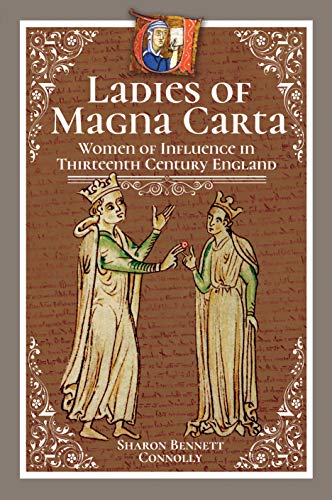
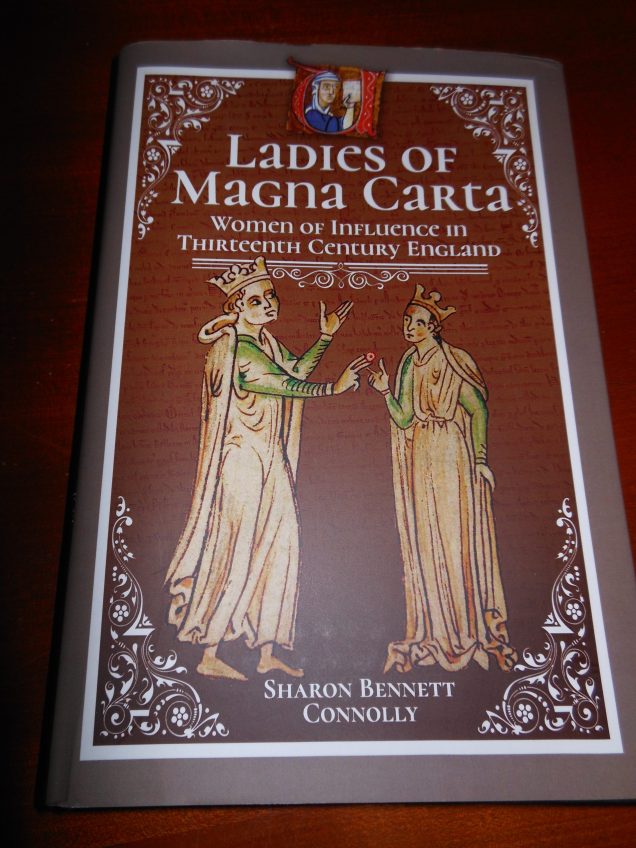
I am absolutely delighted that my blog has the honour of being the final stop on a blog tour to celebrate:The Ladies of the Magna Carta by Sharon Bennett Connolly.
Sharon Bennett Connolly is fast becoming the go-to historian if you want to find out more about the lives of medieval women. Her latest book is interesting on so many levels for once again the author introduces the reader to an alternative medieval world – a world where the focus is on the women, not the men. Some of the stories of these noblewomen are inspiring – even heroic – but others reveal the dark side of medieval life at the top. Above all, this book demonstrates the vital role played by women in the tumultuous events surrounding the Magna Carta of 1215.
The world of men in the twelfth and thirteenth centuries was dominated by the close…
The Ladies of Magna Carta Blog Tour continues today with an excerpt and Q&A over at Louise Wyatt’s Musings. Huge thanks to Louise for the virtual coffee and chat – it was fun!
Don’t forget, if you have a copy of the book and would like a signed book plate to pop in the front, just get in touch via the ‘Contact Me’ button.
Today, I’m very excited to be hosting the author Sharon Bennett Connolloy on her Blog Tour celebrating the release of her book, Ladies of the Magna Carta. So sit back, relax and enjoy!
Isabel de Warenne was the only surviving child of William de Warenne, 3rd Earl of Warenne and Surrey, and his wife Adela, or Ela, de Talvas, daughter of William III of Ponthieu. When her father died on the Second Crusade to the Holy Land, in around 1148, Isabel became 4th Countess of Surrey, in her own right, and one of the most prized heiresses in England and Normandy, with large estates in Yorkshire.
Isabel was born during a period of civil war in England, a time known as The Anarchy (c.1135-54), when King Stephen fought against Empress Matilda, the daughter of Henry I, for the right to rule England. Isabel’s father, William, was a staunch supporter of the king and had fought at the Battle of Lincoln in February 1141, though without distinction; his men were routed early on in the battle and William was among a number of earls who fled the field. He later redeemed himself that summer by capturing Empress Matilda’s brother and senior general, Robert Earl of Gloucester, at Winchester.
The earl appears to have tired of the civil war in 1147 and departed on Crusade with his half-brother, Waleran de Beaumont, Count of Meulan, and their cousin, King Louis VII of France. In the same year, as part of King Stephen’s attempts to control the vast de Warenne lands during a crucial time in the Anarchy, Earl Warenne’s only daughter, Isabel, was married to Stephen’s younger son, William of Blois, who would become Earl by right of his wife, following the 3rd earl’s death on Crusade in 1148; the earl was killed fighting in the doomed rearguard at the Battle of Mount Cadmus near Laodicea in January 1148.
Lewes Priory
It has been suggested that William of Blois was some 7 or 8 years younger than his wife, Isabel. However, this seems improbable and it appears more likely that the young couple were of similar ages. Isabel’s father had been born in 1119 and was no older than 29 when he died; his wife, Ela de Talvas, was a few years younger than her husband. This means that, even if the couple married as soon as they reached the ages allowed by the church, 12 for a girl and 14 for a boy, which would have been 1133 at the earliest, and Ela fell pregnant on her wedding night, Isabel could have been no older 13 in 1147. Given the danger associated with girls giving birth before their teens, it seems plausible that Isabel was not born until the late 1130s and may have been between 10 and 12, or younger when she married William of Blois.
Even before it was known that Earl Warenne had died on crusade, William of Blois was already being referred to as earl in a number of charters relating to Warenne lands, one such charter, dated to c.1148, was issued with the proviso ‘that if God should bring back the earl [from the crusade] he would do his best to obtain the earl’s confirmation, or otherwise that of his lord earl William, the king’s son.’1
During the 3rd earl’s absence, and while the new earl and countess were still only children, the vast Warenne lands were administered by the 3rd earl’s youngest brother, Reginald de Warenne, Baron Wormegay, who was a renowned and accomplished administrator and estate manager. We do not know when news reached England of the earl’s death, the tidings may have arrived before the return of the earl’s half-brother, Waleran, later in the year. However, the future of the earldom was already secure with the succession of Isabel and her young husband, carefully watched over by Isabel’s uncle, Reginald.
In August 1153 the young couple’s future prospects could have changed drastically when William’s elder brother Eustace, their father’s heir, died. As a consequence, William inherited his mother’s County of Boulogne from his brother, adding to his already substantial domains. He may also have expected to inherit his brother’s position as heir to the throne – or not. It seems that William’s ambitions did not extend to the lofty heights of the throne, or he was not considered suitable for the crown. Either way, the young man was removed from the succession to the crown by his own father, when Stephen made a deal with Empress Matilda’s son, Henry of Anjou, that the throne would go to him on Stephen’s death, thus returning the crown to the rightful line of succession.
William seems to have accepted this, on the whole. Although there is some suggestion of his involvement in a plot against Henry later in 1154, during which William suffered a broken leg, he served Henry loyally, once he became king, until his own death, returning from the king’s campaign in Toulouse, in 1159.
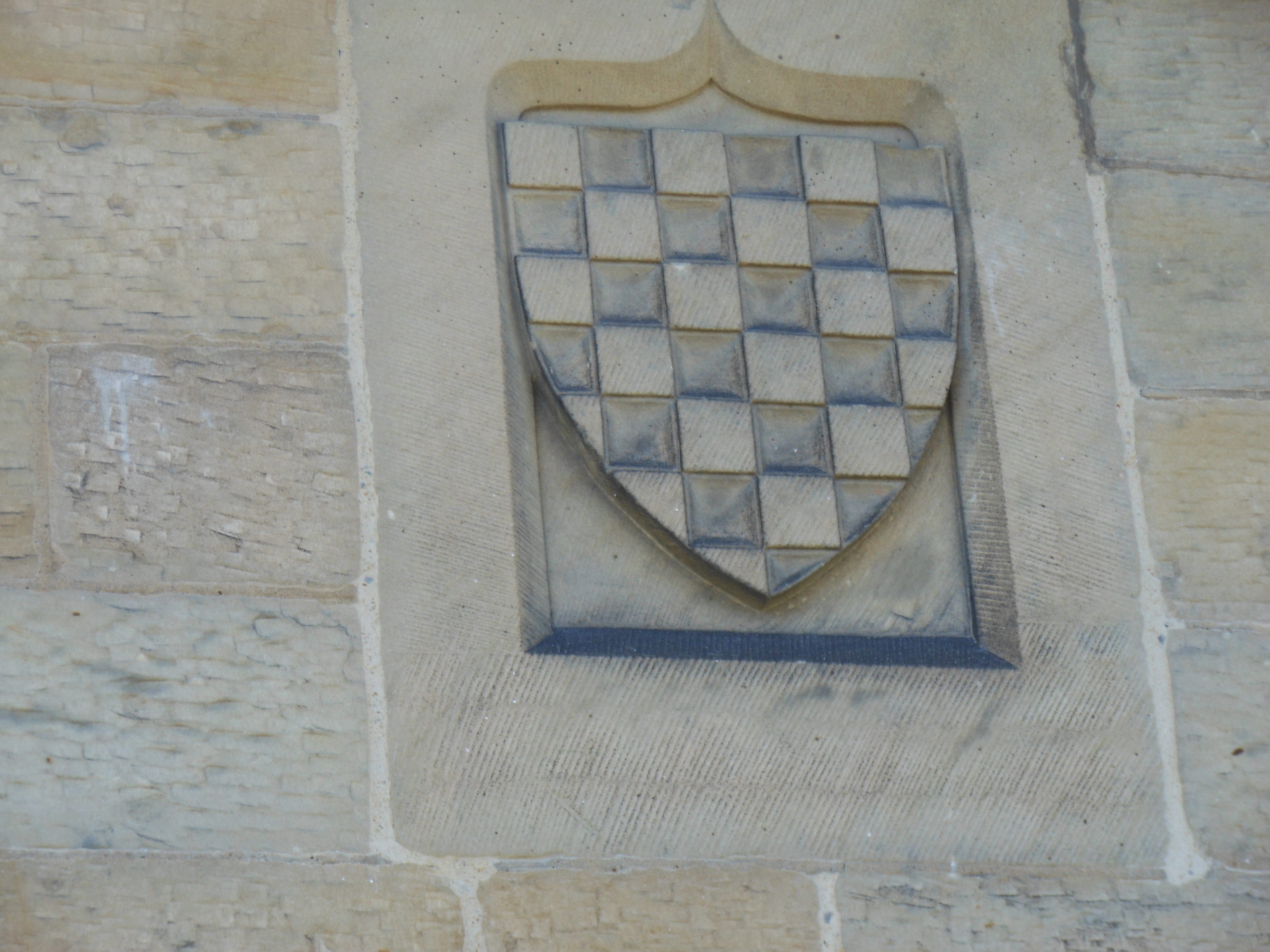
The Warenne coat of arms
Now in her mid-20s, and as their marriage had been childless, Isabel was once again a prize heiress. Although she seems to have had a little respite from the marriage market, by 1162 Henry II’s youngest brother, William X, Count of Poitou, was seeking a dispensation to marry her. The dispensation was refused by Thomas Becket, Archbishop of Canterbury, on the grounds of consanguinity; the archbishop’s objection was not that Isabel and William were too closely related, but that William and Isabel’s first husband had been cousins. William died shortly after the archbishop refused to sanction the marriage – it is said, of a broken heart.
King Henry was not to be thwarted so easily in his plans to bring the Warenne lands into the royal family, and his illegitimate half-brother, Hamelin, was married to Isabel in 1164. Hamelin was the son of Herny’s father, Geoffrey, Count of Anjou, and an unknown woman, born around 1130, in the time when Geoffrey and Empress Matilda were estranged. In an unusual step, Hamelin took his wife’s surname and bore the titles Earl of Warenne and Surrey in her right.
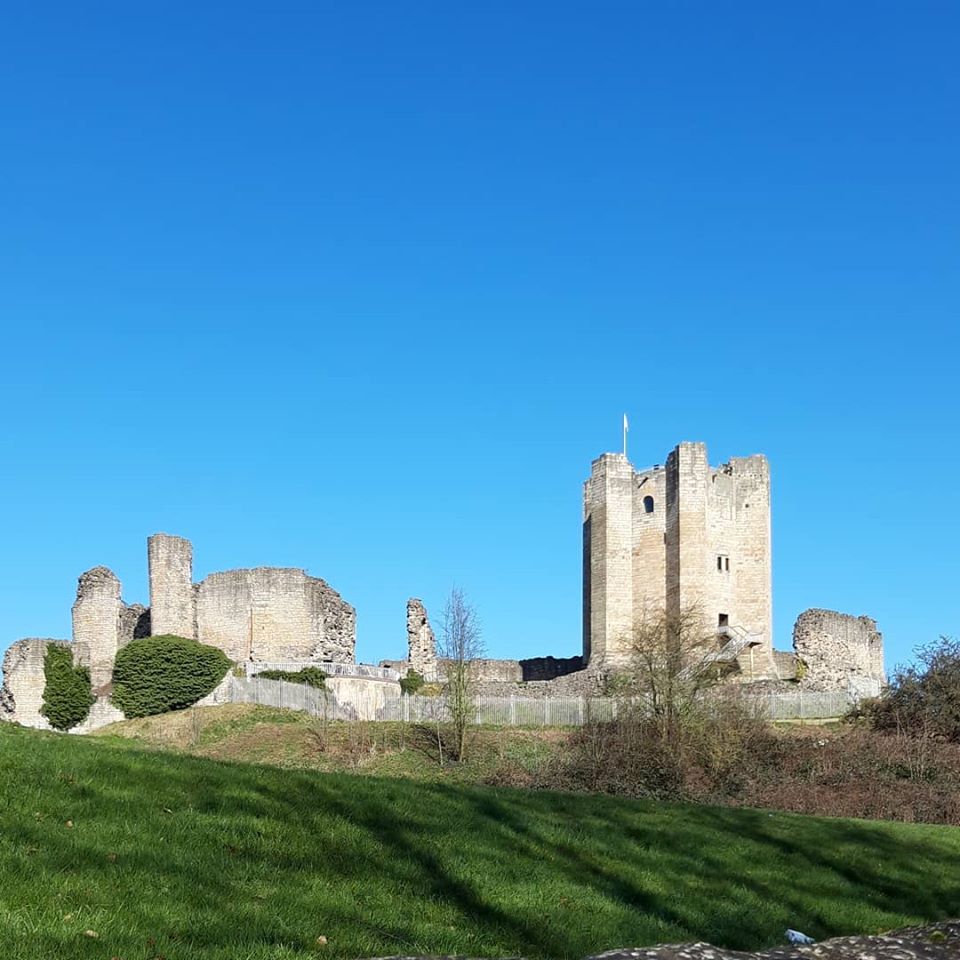
The marriage appears to have been highly successful. Hamelin was loyal to his brother and his nephew, Richard I, and played a prominent part in English politics whilst Richard was absent on the 3rd Crusade. He also built the highly innovative keep at Conisbrough in the 1170s and 1180s.
The keep at Conisbrough Castle
Isabel and Hamelin had four surviving children. Their son and heir, William, would become the 5th Earl of Surrey and married Matilda Marshal, daughter of the great William Marshal, Earl of Pembroke and regent for King Henry III. There were also three daughters, Ela, Isabel and Matilda. It has been suggested that Matilda was Hamelin’s daughter by a previous relationship, but this theory is based on an erroneous death date for her husband. One of the daughters – although it is not clear which – bore an illegitimate son, Richard Fitzroy, by her cousin, John (the future King John).
Isabel died in her mid-60s, in 1203, and was buried at Lewes Priory, alongside Hamelin, who had died the previous year. In 1202, Countess Isabel had granted ‘for the soul of her husband earl Hamelin, to the priory of St Katherine, Lincoln, of similar easements for 60 beasts, namely for 40 as of his gift and 20 as of hers.’2
*
Footnotes: 1 Farrer, William and Charles Travis Clay, editors, Early Yorkshire Charters, Volume 8: The Honour of Warenne; 2 ibid
Sources: Robert Batlett, England Under the Norman and Angevin Kings; Dan Jones, The Plantagenets; Donald Matthew, King Stephen; Medieval Lands Project on the Earls of Surrey, Conisbrough Castle; Farrer, William and Charles Travis Clay, editors, Early Yorkshire Charters, Volume 8: The Honour of Warenne; Morris, Marc King John: Treachery, Tyranny and the Road to Magna Carta; Church, Stephen, King John: England, Magna Carta and the Making of a Tyrant; doncasterhistory.co.uk
Signed, dedicated copies of all my books are available through my online bookshop.
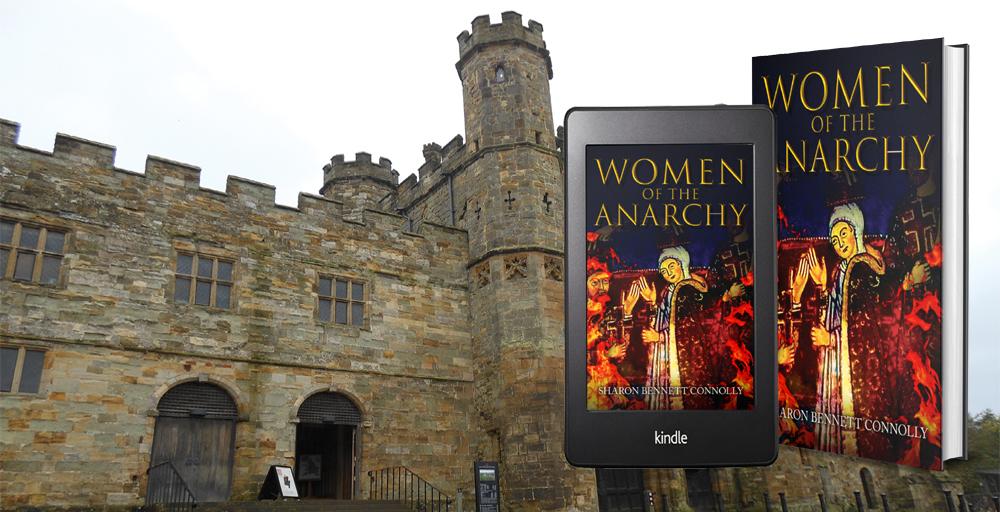
Coming 15 January 2024:Women of the Anarchy
On the one side is Empress Matilda, or Maud. The sole surviving legitimate child of Henry I, she is fighting for her birthright and that of her children. On the other side is her cousin, Queen Matilda, supporting her husband, King Stephen, and fighting to see her own son inherit the English crown. Both women are granddaughters of St Margaret, Queen of Scotland and descendants of Alfred the Great of Wessex. Women of the Anarchy demonstrates how these women, unable to wield a sword, were prime movers in this time of conflict and lawlessness. It show how their strengths, weaknesses, and personal ambitions swung the fortunes of war one way – and then the other.
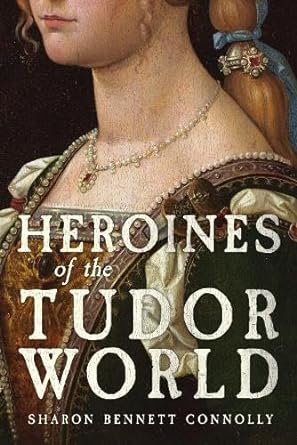
Coming on 15 June 2024: Heroines of the Tudor World
Heroines of the Tudor World tells the stories of the most remarkable women from European history in the time of the Tudor dynasty, 1485-1603. These are the women who ruled, the women who founded dynasties, the women who fought for religious freedom, their families and love. These are the women who made a difference, who influenced countries, kings and the Reformation. In the era dominated by the Renaissance and Reformation, Heroines of the Tudor World examines the threats and challenges faced by the women of the era, and how they overcame them. Some famous, some infamous, some less well known, including Anne Boleyn, Elizabeth Barton, Catherine de Medici, Bess of Hardwick and Elizabeth I. From writers to regents, from nuns to queens, Heroines of the Tudor World shines the spotlight on the women helped to shape Early Modern Europe.
King John’s Right-Hand Lady: The Story of Nicholaa de la Haye is the story of a truly remarkable lady, the hereditary constable of Lincoln Castle and the first woman in England to be appointed sheriff in her own right. It is is available from Pen & Sword Books, bookshop.org and Amazon. Defenders of the Norman Crown: The Rise and Fall of the Warenne Earls of Surrey tells the fascinating story of the Warenne dynasty, from its origins in Normandy, through the Conquest, Magna Carta, the wars and marriages that led to its ultimate demise in the reign of Edward III. Available from Pen & Sword Books, Amazon in the UK and US, and Bookshop.org.
Alternate Endings: An anthology of historical fiction short stories including Long Live the King… which is my take what might have happened had King John not died in October 1216. Available in paperback and kindle from Amazon.
Podcast:
Have a listen to theA Slice of Medieval podcast, which I co-host with Historical fiction novelist Derek Birks. Derek and I welcome guests, such as Bernard Cornwell and Elizabeth Chadwick, and discuss a wide range of topics in medieval history, from significant events to the personalities involved.
*
Don’t forget!Signed and dedicated copies of all my books are available through my online bookshop.
For forthcoming online and in-person talks, please check out my Events Page.
*You can be the first to read new articles by clicking the ‘Follow’ button, liking our Facebook page or joining me on Twitterand Instagram.
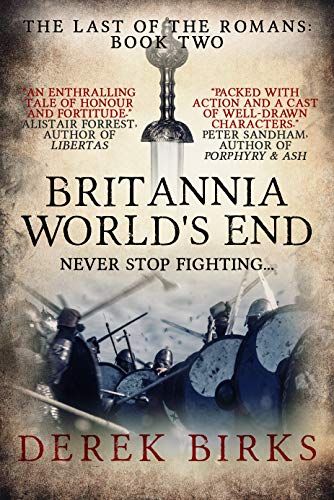
454 AD. Even after years of Roman rule, Britannia is a conflicted and largely untamed land. Disgraced Imperial Officer, Dux Ambrosius Aurelianus, flees to its shores seeking sanctuary in the land of his deceased mother. His years of loyal service to the emperor count for nothing now. He must carve out a new life beyond the empire. Accompanying Ambrosius is a disparate group of fellow refugees: Inga, a freed Saxon slave, his bucellarii – warriors sworn to him – and the surviving members of his estranged family. The burden of command weighs heavy on his shoulders, for when he lands in the country, winter is fast approaching. But the weather is not the only thing inhospitable towards the newcomers. Plagued by troubles, Ambrosius faces opponents among both the native Britons and Saxon settlers. He discovers that no-one in Britannia – least of all, the High King, Vortigern – still fears the soldiers of the decaying empire. When those he loves are savagely abducted and betrayal divides his company, Ambrosius is left with only a handful of his bucellarii. Though heavily outnumbered and unfamiliar with the land, Ambrosius remains undaunted. Pitted against powerful opponents, the Roman will need new allies if he is to free the hostages and make Britannia his home. There will be blood.
Derek Birkshas fast become one of my favourite authors. His first novel, Feud, is still one of my personal favourites. He has a knack for fast-paced action woven into a wonderful story that keeps the reader hooked from the first page to the last. This latest offering is no different. Trouble arrives almost at the very first page and leaves the reader on the edge of their seat to the very end. Survival is far from certain and each character has their own battle to fight – and their own demons to face – within the larger story.
Britannia: World’s End is the second book in Derek Birks’ new series based in the twilight of the Roman era, which follows the exploits of Ambrosius Aurelianus and his small band of loyal warriors, and a disparate group of waifs and strays that he has picked up since being chased out of the Roman Empire. Ambrosius leads his people to the island of Britain, in the hope of finding a new home, but only finds more problems and more enemies to fight.
Set in the age of King Arthur, there are suggestions of the famous Arthurian legends, and the links to Ambrosius Aurelianus, though the story is firmly set in the history and reality of Britain at the waning of the Roman Empire, where land and people were open to exploitation and manipulation.
With a final scowl at Remigius, Ambrosius leapt from the boat onto the stony shore where dog-tired men were cheering and clapping each other on the back. They deserved to celebrate, he thought, for though they were some yards east of the camp now, at least they had salvaged the boat. By the time he heard the hooves, it was too late and he could only stare, helpless, as a dozen horsemen cantered through his camp.
By the time he roared: “To arms!”, women were already scattering in fear. Obliged to retrieve their scattered weapons from all along the beach, Ambrosius and his bucellarii were slow to return to the camp. Ambrosius was still trying to disentangle his spatha from his belt when he heard Inga’s voice, heaping Saxon abuse at her assailants.
“I’m here, Inga!” he cried, as he watched her trying to fend off one of the riders with her knife. “Run – this way! Run to us!”
Defiant as ever, she retorted: “I have Ferox with me!”
Thank God for Ferox, thought Ambrosius, as he stumbled towards her. Of course, the damned dog had not been warning him about the boat at all, for how would a dog know the boat was drifting out to sea? No, Ferox had caught the scent of strangers and their horses, but Ambrosius, like some green recruit, had ignored the animal’s alert and allowed himself to be drawn away from camp.
Though he had told Inga to run, of course, she had not. Armed only with her long blade, she stood her ground, flailing at her mounted assailants. Ambrosius cursed under his breath as he ran, for had he not told her how brave she was – as brave as any one of his bucellarii? And because he encouraged her, she fought, when she should have run. One moment Ambrosius glimpsed her, slashing out in vain, the next she was grappling with her captor. Racing to her side, spatha in hand and ready to dispense death to the villains who had dared to assault his camp, he was relieved to see that she had broken free.
“Stay behind me!” he ordered, but Inga’s blood was up and she took a snarling pace towards one of the horsemen. Thrusting out an arm to pull her back, Ambrosius’ fingertips scarcely brushed hers, as she was lifted clean off her feet and borne away.
Derek Birks has several great strengths as a writer. He is a natural storyteller and has a knack for knowing how to draw a reader in and holding their attention, so that you’re always promising yourself ‘just one more page’ or ‘just one more chapter’. His actions scenes are second-to-none and help to keep the tension high throughout the book.
His greatest skill, however, is in his characters. Despite a large number of supporting characters, Derek Birks has the ability to make each and everyone of them an individual. Not just in their appearance, but in their actions and in their individual stories. Each character has a legend that is his or her own; this means that each character has their own motivations and their own set of rules.
The author is also known for creating strong, independent female characters, such as the great Eleanor Elder in his two series set in the Wars of the Roses. In The Last of the Romans, it is Inga, a former sex slave, who steals the show with her strength and quiet determination. And then there is the dog, Ferox, a ferocious war dog with a soft spot for Inga, and a scene stealer in every chapter in which he appears. He is such a unique character!
There is one other thing Derek Birks has become renowned for in his books;; no character is so precious that he cannot be killed off, if the story asks for it. Not even the hero of the book is safe. And this brings an added tension to the book; the reader does not know who will make it out alive!
These 3 great strengths in the author are a fantastic combination that leads to another amazing novel. I have never had any qualms about recommending Derek Birks’ books to any fan of action-packed historical fiction, and Britannia: World’s End is no exception.
It is an awesome book!
*
About the author:
Derek was born in Hampshire in England but spent his teenage years in Auckland, New Zealand, where he still has strong family ties.
On his return to England, he read history at Reading University and for many years he taught history in a secondary school. Whilst he enjoyed his teaching career and it paid the bills, he found a creative outlet in theatrical activities, stage-managing many plays and outdoor Shakespeare performances.
Derek always wanted to write and began, aged 17, writing stories, songs and poetry – in fact virtually anything. Inevitably, work and family life took precedence for a long period of time but in 2010 Derek took early retirement to indulge his passion for history and concentrate on his writing. He is interested in a wide range of historical themes but his particular favourite is the late medieval period.
Derek writes action-packed fiction which is rooted in accurate history. He also produces podcasts on the Wars of the Roses for those interested in the real historical background to his books. Check them out on his website at: https://www.derekbirks.com/history-podcasts/
His historical fiction works include: Rebels & Brothers – a 4-book series set during the fifteenth century, which follows a fictional family, the Elders, through their struggle to survive the Wars of the Roses up to 1471. The Craft of Kings – a sequel series which finds the Elder family ten years later in 1481. The latest book in this series is book 3, Echoes of Treason, which is set during the short and turbulent reign of Richard III.
He has recently embarked upon a new Post-Roman series and the first book is out now: The Last of the Romans
Apart from his writing, he enjoys travelling – sometimes, but not always, to carry out research for his books. He also spends his time walking, swimming and taking part in archaeological digs.
He was a regular presence at the Harrogate History Festival, is an active member of the Historical Novel Society and you will also find him each summer signing books – and selling them – at the Chalke Valley History Festival outside Salisbury in Wiltshire.
Stop no.8 of the Ladies of Magna Carta Blog Tour is Sussex – and this awesome review from author Paula Lofting: ‘Ladies of Magna Carta is a tour de force for Ms Connolly. Her research is impeccable and second to none…’
I’m pleased and honoured to be part of the blog tour for Ladies of Magna Carta written by the fabulous Sharon Bennett Connolly who has for the past few years been enlightening us with her insightful looks at the role women of the nobility played in late medieval politics and history. Her most recent book, Ladies of Magna Carta, captures the lives of the women who lived through this time against the backdrop of those men who ruled over them. Their stories, although not directly, would go on to influence the clauses in one of the most famous charters in the world.
Ladiesof MagnaCarta is a tour de force for Ms Connolly. Her research is impeccable and second to none. The Charter of liberties was always intended to be about men. It was a man’s world…
Today on the Ladies of Magna Carta Blog Tour I stop by author SJA Turney to talk about the Family Ties that link so many of the women of the Magna Carta story.
Today, I have something of a treat for you. The lovely, knowledgeable and entertaining Sharon Bennett Connolly has just released a new book covering the impressive women with an involvement in the great Magna Carta. You might know that I’m a devotee of Sharon’s work, having read and reviewed her two previous books, and this one holds up her excellent standard. Quite simply I’ve not come across anyone more knowledgeable on the subject of the women of Medieval Britain than her. I’ll review the book at the end here, but first, as part of her Blog Tour, Sharon has kindly penned an article on the book, so feast your historical hunger on this:
* * *
Thank you so much to Simon for inviting me to his blog to talk about Ladies of Magna Carta: Women of Influence in Thirteenth Century England.
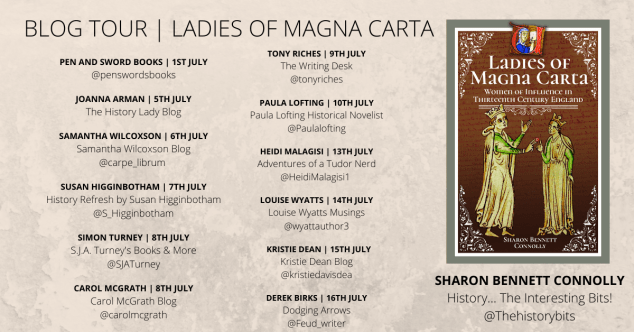
Ladies of Magna Carta: Women of Influence in Thirteenth Century Europe is going on tour – virtually at least. With articles, book reviews and interviews coming over the next 2 weeks, we will be visiting such exotic places as Barnsley, Tennessee, the Yorkshire Dales, Sussex and Michigan – all from the desktop!
Here’s the itinerary!
First stop is 1st July at my amazing publishers, Pen and Sword, who have done a wonderful job of organising the tour. Here’s an article on the inspiration behind the book.
5th July, Joanna Arman, The History Lady, will publishing her thoughts on Ladies of Magna Carta. I’m not nervous – much!
6th July, I will be stopping by for a cuppa with Samantha Wilcoxson to talk about The Marshal Sisters.
7th July, I will be chatting with Susan Higginbotham on History Refreshed about why it is so hard to love Isabelle d’Angoulême.
I will be making 2 stops on 8th July, visiting Simon Turney’s S.J.A. Turney’s Books and More, with an article on the many Family Ties of the women of the Magna Carta a story, plus Simon has written a wonderful review of Ladies of Magna Carta. And then it’s a quick hop over to visit Carol McGrath for her review of Ladies of Magna Carta and a chat about history, research and writing in general.
9th July I’ll be visiting the inimitable author, Tony Riches, with an article on Matilda de Braose.
13th July its back over to the US to Adventures of a Tudor Nerd for ace reviewer Heidi Malagasi’s thoughts on Ladies of Magna carta.
14th July, its over to nursing historian Louise Wyatt for coffee and a Q &A – and a little taster from the book.
15th July its back over the pond to Tennessee, to visit Kristie Dean and give you 16 Facts About Woman and Magna Carta– it was supposed to be 10 but I got carried away!
16th July Last – but by no means least – stop on the tour is the amazing Derek Birks and one final – hopefully glowing – review.
I would like to thank Rosie and Rebecca at Pen & Sword and all the authors and bloggers involved for taking part in this amazing tour. I am truly humbled and grateful that you have all taken the time to read Ladies of Magna Carta and shared your thoughts and blog space with me.
THANK YOU!
*
Signed book plates
If you have a copy of Ladies of Magna Carta and would like a signed book plate to pop in the front, for you or someone else, just drop me a line via the ‘Contact Me‘ page with your address and who you would like the dedication made out to, and I will get one out to you.
*
About me:
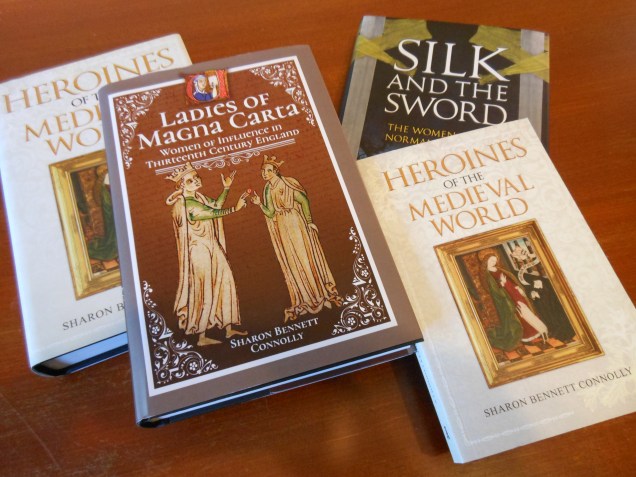
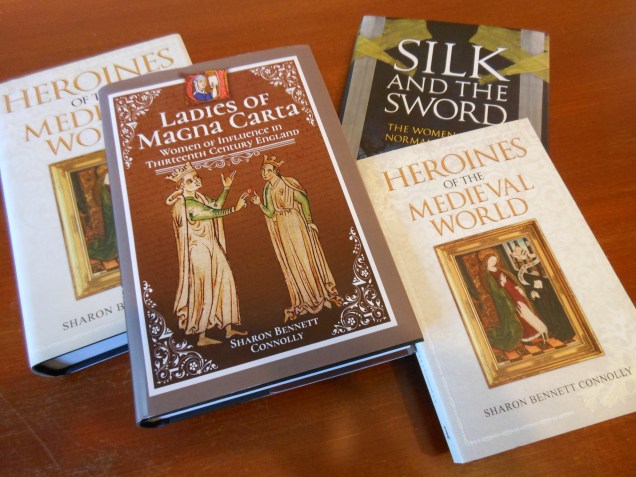
Sharon Bennett Connolly has been fascinated by history her whole life. She has studied history academically and just for fun – and even worked as a tour guide at historical sites. For Christmas 2014, her husband gave her a blog as a gift – http://www.historytheinterestingbits.com – and Sharon started researching and writing about the stories that have always fascinated, concentrating on medieval women. Her latest book, Ladies of Magna Carta: Women of Influence in Thirteenth Century England, released in May 2020, is her third non-fiction book. She is also the author of Heroines of the Medieval World and Silk and the Sword: The Women of the Norman Conquest. Sharon regularly gives talks on women’s history; she is a feature writer for All About History magazine and her TV work includes Australian Television’s ‘Who Do You Think You Are?‘
There is only one clause in Magna Carta that mentions particular women. Although they are not identified by name, they are easily identifiable due to their positions. These two women were the daughters of William I, the Lion, King of Scots. They were the sisters of the new King of Scots, Alexander II, and had been hostages in England since the treaty of Norham in 1209. Clause 59 of Magna Carta agrees to negotiate for their release, alongside a number of other Scottish hostages:
We will treat Alexander, king of Scots, concerning the return of his sisters and hostages and his liberties and rights in the same manner in which we will act towards our other barons of England, unless it ought to be otherwise because of the charters which we have from William his father, formerly king of Scots; and this shall be determined by the judgement of his peers in our court.1
The king of Scots’ two sisters referred to in the clause were Margaret and Isabella, the oldest daughters of William I (the Lion), King of Scots, and his wife, Ermengarde de Beaumont. The two girls had been caught up in the power struggle between their father and the Plantagenet kings. William I was the second of the three sons of Henry, Earl of Northumberland, and his wife, Ada de Warenne. He was, therefore, a grandson of David I and great-grandson of Malcolm III Canmor and St Margaret, the Anglo-Saxon princess.
Magna Carta, Lincoln Castle
William had succeeded his father as earl of Northumberland in June 1153, when he was about 11 years old; William used ‘Warenne’ as his family name when earl of Northumberland. He lost the earldom, however, when his brother, Malcolm IV (known as Malcolm the Maiden) surrendered the northern counties of England to Henry II; he was given lands in Tynedale, worth £10 per annum, in compensation. This loss of Northumberland was never forgotten and was to colour William’s future dealings with the English crown throughout his reign.
William was probably knighted in 1159, when he accompanied King Henry and his own brother Malcolm on an expedition to Toulouse and in 1163 he was in attendance in a meeting with King Henry II at Woodstock where the Scots king did homage to the English king. The youngest of the royal brothers, David, was to remain in England as a hostage to Malcolm’s good behaviour. William ascended the Scottish throne on Malcolm’s death on 9 December 1165, aged about 23; his inauguration as king took place at Scone on Christmas Eve, 24 December. In 1166 William travelled to Normandy to meet with King Henry II and, although we do not know what they spoke of, it was reported that they parted on bad terms.
Malcolm IV, king of Scots
Nevertheless, in 1170 William and his brother David were at the English court, attending Henry II’s council at Windsor in April and were in London on 14 June, at the coronation of Henry’s eldest son, also Henry, the Young King; he died in 1183, six years before his father. Both William and his brother David did homage to the Young King after the coronation. And in 1173 when the Young King and his brothers, Richard and Geoffrey, rebelled against their father, Henry II, they sought William’s aid. The younger King Henry promised that he would give the northern counties of England to the Scots king, and the earldoms of Huntingdon with Cambridgeshire to the king’s brother, David, in return for their support in the rebellion.
William considered the offer, but after consulting his barons in the summer of 1173, he decided to ask Henry II to return Northumberland. He would renounce his homage if the English king refused. Henry II did refuse and William joined the Young King’s rebellion. He formed an alliance with Louis VII of France and Count Philippe of Flanders, who both promised mercenaries would be sent to England in support. This was the start of the long Scottish tradition of alliances with France, against England, which would become known as the Auld Alliance. On 20 August 1173 the Scottish forces moved south, to Alnwick, Warkworth and Newcastle.
Although they devastated the countryside, the campaign in Northumberland achieved very little; they were unable to take the strategically important castles. They moved on to Carlisle, but pulled back to Roxburgh after receiving news that a new English force was advancing. This force, under Ranulf de Glanville, the justiciar, burned Berwick before agreeing to a truce until 13 January 1174. The truce was later extended to 24 March 1174, after a payment of 300 marks by the bishop of Durham to King William. At the end of the truce, the Scots, accompanied by Flemish mercenaries, again advanced into England. They ravaged the Northumberland coast and besieged both Wark-on-Tweed and Carlisle castles, but failed to take either.
On 13 July, while much of the Scottish army was spread out in raiding parties, the Scots were the victims of a surprise attack. King William’s horse was killed, the king trapped underneath. William surrendered to Ranulf de Glanville and was taken first to Newcastle and then to Northampton, where he appeared before Henry II on 24 July. The Scots king was sentenced to imprisonment at Falaise in Normandy and the price of his freedom was to submit himself, his kingdom and the castles of Berwick, Roxburgh and Edinburgh to King Henry II. The Convention of Falaise on 1 December 1174 also granted that ‘the church of Scotland shall henceforward owe such subjection to the church of England as it should do.’2 It was a humiliating treaty for the Scots, which also required twenty Scottish noble hostages be handed to the English in return for their king’s freedom.
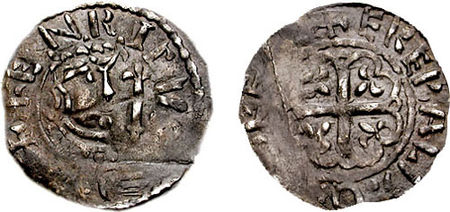
Coin of William’s father Henry of Scotland
King William arrived back in Scotland in February 1175, having spent two months in England until the handover of the Scottish castles had been completed. He returned to a revolt in Galloway, which he managed to quash, he was then faced with a threat from Donald Ban Macwilliam, grandson of Duncan II, who was gaining support for a challenge to the throne and a return to the royal line of Duncan II. Things quietened down for a time, but in April 1181, when the king and David were in Normandy Donald Ban Macwilliam led an uprising in Moray and Ross, apparently gaining full control of the two earldoms. One royal retainer, Gillecolm the Marischal, surrendered the castle of Auldearn and then joined the rebels.
The king was also faced with unrest in Galloway, where Gilbert of Galloway was vying with his nephew Roland for control of the region. Gilbert died on 1 January 1185 and shortly after King William invaded Galloway, alongside Gilbert’s nephew Roland. On 4 July 1185 William and his allies defeated the main force of Gilbert’s followers and by 1190 Roland had been granted the lordship of Galloway by King William while Gilbert’s son, Duncan, was made lord of Carrick.As a result, Galloway remained at peace well into the 13th century, until the death of Roland’s son, Alan, in 1234.
With Galloway subdued, in 1187 King William was finally able to quash the rebellion in the north, leading his considerable army as far as Inverness. On 31 July, at the now-lost site of ‘Mam Garvia’, Roland of Galloway faced the rebels in battle where over 500 of them were killed, including Donald Macwilliam, whose head was sent to King William.
The overlordship of Henry II caused additional problems for King William in the Scottish church; the archbishops of York and Canterbury both claimed the homage of the Scottish clergy. William also had a long running dispute with the papacy, with five successive popes, in fact, over the appointment of a bishop of St Andrews; neither king nor pope approved the other’s choice of candidate. The English king sided with the popes on the matter and in 1181 King William was excommunicated by the archbishop of Canterbury; the Scottish people, as a whole, were subsequently excommunicated by the bishop of Durham. Within two years, however, the papacy and the Scots king were on such good terms that the pope sent William the Golden Rose as a tribute to ‘a king of exceptional religious zeal’.3 On 13 March 1192 Pope Celestine III issued the papal bull, Cum universi, recognising the Scottish church as a ‘special daughter’ of the apostolic see and subject to Rome without an intermediary. Thereby denying the claims to superiority of both York and Canterbury.
Unusually for a king in this period, by 1180 William had been on the throne for fifteen years and was still unmarried. He had several illegitimate children but until he married, William’s heir was his younger brother, David. With this in mind, in 1184, William was at King Henry’s court to discuss a possible marriage with Henry’s granddaughter, Matilda of Saxony. The match was forbidden by the pope on the grounds of consanguinity. In May 1186, during a council at Woodstock, King Henry suggested Ermengarde de Beaumont as a bride for William. Ermengarde was the daughter of Richard, Vicomte de Beaumont-sur-Sarthe, who was himself the son of Constance, one of the many illegitimate daughters of King Henry I of England.
With such diluted royal blood, she was hardly a prestigious match for the king of Scots, but he reluctantly accepted the marriage after consulting his advisers. The wedding took place at Woodstock on 5 September 1186, with King Henry hosting four days of festivities. Edinburgh Castle was returned to the Scots as part of Ermengarde’s dowry.Although we do not know Ermengarde’s birth date, at the time of the marriage, she was referred to as ‘a girl’, suggesting that she may have only just reached the age of 12.
King William agreed to provide Ermengarde with £100 of rents and forty knights’ fees in Scotland, for the financial maintenance of her household; she also had dwellings and lands at Crail and Haddington, lands which had previously been held by William’s mother, Ada de Warenne.Between 1187 and 1195 Queen Ermengarde gave birth to two daughters, Margaret and Isabella. A son, the future Alexander II, was finally born at Haddington on 24 August 1198, the first legitimate son born to a reigning Scottish king in 70 years; a contemporary remarked that ‘many rejoiced at his birth.’4 A third daughter, Marjorie, was born sometime later.
On the death of King Henry II in 1189, King William again went south, and met with the new king, Richard I, at Canterbury, where he did homage for his English lands. Desperate for money for his crusade, on 5 December 1189, Richard abandoned his lordship of Scotland in the quitclaim of Canterbury; King William was released from the homage and submission given to Henry II, the castles of Roxburgh and Berwick were returned and the relationship between the kingdoms reverted to that in the time of Malcolm IV. The cost to the Scots was to be 10,000 marks, but Scotland was independent once again. However, Richard still refused to sell Northumberland back to William. The Scots king remained on good relations with King Richard, paying 2,000 marks towards his ransom in 1193. King William carried one of the three swords of state at Richard’s second coronation at Winchester on 17 April 1194.
In the spring of 1195 King William fell gravely ill at Clackmannan, causing a succession crisis, the king’s only legitimate children being daughters. The Scottish barons appear to have been divided, between recognising William’s oldest legitimate daughter, Margaret, as his heir, or marrying Margaret to Otto, Duke of Saxony, grandson of Henry II, and allowing Otto to succeed to the throne. A third faction claimed that either solution was contrary to the custom of the land, so long as the king had a brother who could succeed him.In the event, the king recovered from his illness and three years later the queen gave birth to Alexander, the much-desired son and heir. For the last years of the century, William was again occupied with unrest in the north. Before going on campaign in October 1201, he had the Scottish barons swear fealty to his son, Alexander, now 3 years old, a sensible precaution, given that he was approaching his sixtieth birthday.
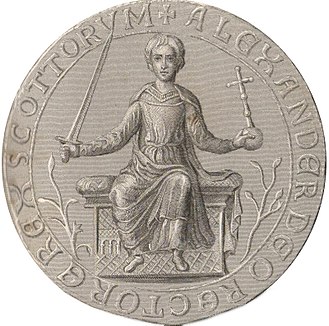
Alexander II, William’s son and successor
Relations with England changed again in 1199, with the accession of King John. During the reign of King Richard, William had agreed with the justiciar, William Longchamp, and backed Arthur of Brittany as the king’s heir. John may well have remembered this and soon after his accession, in 1200, the two kings met at Lincoln, with William doing homage for his English lands. The matter of Northumberland, still in English hands, was raised and deferred on several occasions between 1199 and 1205. The two kings finally met for formal talks at York from 9 to 12 February 1206 and again from 26 to 28 May 1207, although we have little record of what was discussed. However, John appears to have been prevaricating, suggesting another meeting in October 1207, which the Scots rejected.
In the meantime, the death of the bishop of Durham meant John took over the vacant see and set about building a castle at Tweedmouth. The Scots, seeing this as a direct threat to Berwick, destroyed the building works and matters came to a crisis in 1209. After many threats, and with both sides building up their armies, the two kings met at Norham, Northumberland, in the last week of July and first week of August 1209. The Scots were in a desperate position, with an ailing and ageing king, and a 10-year-old boy as heir, whilst the English, with their Welsh allies and foreign mercenaries, had an army big enough to force a Scottish submission.
The subsequent treaty, agreed at Norham on 7 August, was humiliating for William and the Scots. They agreed to pay 15,000 marks for peace and to surrender hostages, including the king’s two oldest legitimate daughters, Margaret and Isabella. As a sweetener, John promised to marry the princesses to his sons; although Henry was only 2 years old at the time and Richard was just 8 months, whilst the girls were probably in their early-to-mid teens. John would have the castle at Tweedmouth dismantled, but the Scots would pay an extra £4,000 compensation for the damage they had caused to it. The king’s daughters and the other Scottish hostages were handed into the custody of England’s justiciar, at Carlisle on 16 August. How the girls, or their parents, thought about this turn of events, we know not. Given John’s proven record of prevarication and perfidy, King William may have hoped that the promised marriages would occur in good time, but may also have expected that John would find a way out of the promises made.
Arbroath Abbey, burial place of William the Lion
There is no mention of Queen Ermengarde being present for the treaty at Norham, although she did act as mediator in 1212, when her husband was absent, in negotiations with John at Durham. A contemporary observer described the Scottish queen as ‘an extraordinary woman, gifted with a charming and witty eloquence’.5 It seems likely that King John was not immune to the queen’s charms, as he did not ask for more hostages and agreed that the Scottish heir, Alexander, would be knighted and one day marry an English princess. Alexander was knighted at Clerkenwell on 4 March 1212.
King William I, later known as William the Lion, died on 4 December 1214, aged about 72, having reigned for a total of forty-nine years, almost to the day. He was buried before the high altar of Arbroath Abbey. William’s daughters were still in English custody, the conditions for their release would form one of the clauses of Magna Carta. He was succeeded by Alexander, his only legitimate son, who was proclaimed king at Scone on 6 December 1214, aged just 16. Queen Ermengarde was said to be distraught at her husband’s death. She lived for 19 more years, devoting her time to the founding of a Cistercian abbey at Balmerino in Fife. She died on 11 February 1233.
*
Footnotes: 1 Marc Morris, King John; 2E.L.G. Stones quoted in Scott, W.W., William I; 3Ross, David, Scotland: History of a Nation; 4W.W. Scott, Ermengarde de Beaumont (1233); 5Bower quoted in W.W. Scott, Ermengarde de Beaumont (1233),
Further reading: W.W. Scott, Ermengarde de Beaumont (d. 1233), Oxforddnb.com; Scott, W.W., William I [known as William the Lion] (c. 1142–1214) Oxforddnb.com; Scott, W.W., Malcolm IV (c. 1141–1165) Oxforddnb.com; Mackay, A.J.G. (ed.), The Historie and Chronicles of Scotland … by Robert Lindesay of Pitscottie; Ross, David, Scotland: History of a Nation; Farrer, William and Charles Travis Clay, editors, Early Yorkshire Charters, Volume 8: The Honour of Warenne; Morris, Marc King John: Treachery, Tyranny and the Road to Magna Carta; Church, Stephen, King John: England, Magna Carta and the Making of a Tyrant; Danziger, Danny and John Gillingham, 1215: The Year of Magna Carta; Crouch, David, William Marshal; fmg.ac; Brewer’s British Royalty by David Williamson; The Mammoth Book of British Kings and Queens by Mike Ashley; The Story of Scotland by Nigel Tranter; Ada, Queen Mother of Scotland (article) by Victoria Chandler.
*
My Books
Signed, dedicated copies of all my books are available through my online bookshop.
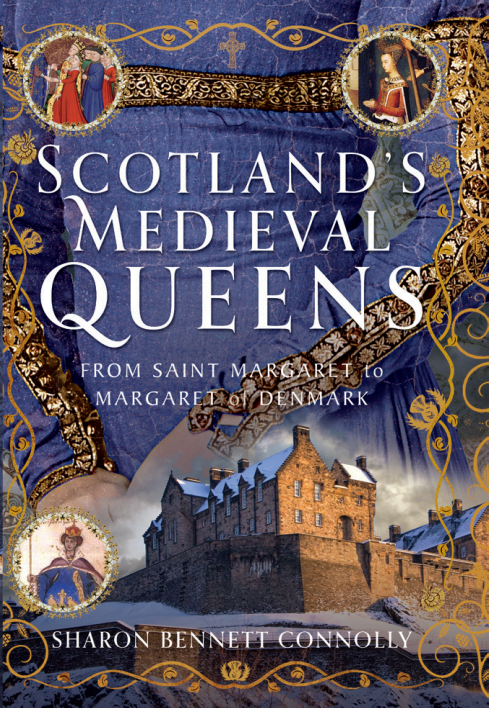
Coming 30 January 2025: Scotland’s Medieval Queens
Scotland’s history is dramatic, violent and bloody. Being England’s northern neighbour has never been easy. Scotland’s queens have had to deal with war, murder, imprisonment, political rivalries and open betrayal. They have loved and lost, raised kings and queens, ruled and died for Scotland. From St Margaret, who became one of the patron saints of Scotland, to Elizabeth de Burgh and the dramatic story of the Scottish Wars of Independence, to the love story and tragedy of Joan Beaufort, to Margaret of Denmark and the dawn of the Renaissance, Scotland’s Medieval Queens have seen it all. This is the story of Scotland through their eyes.
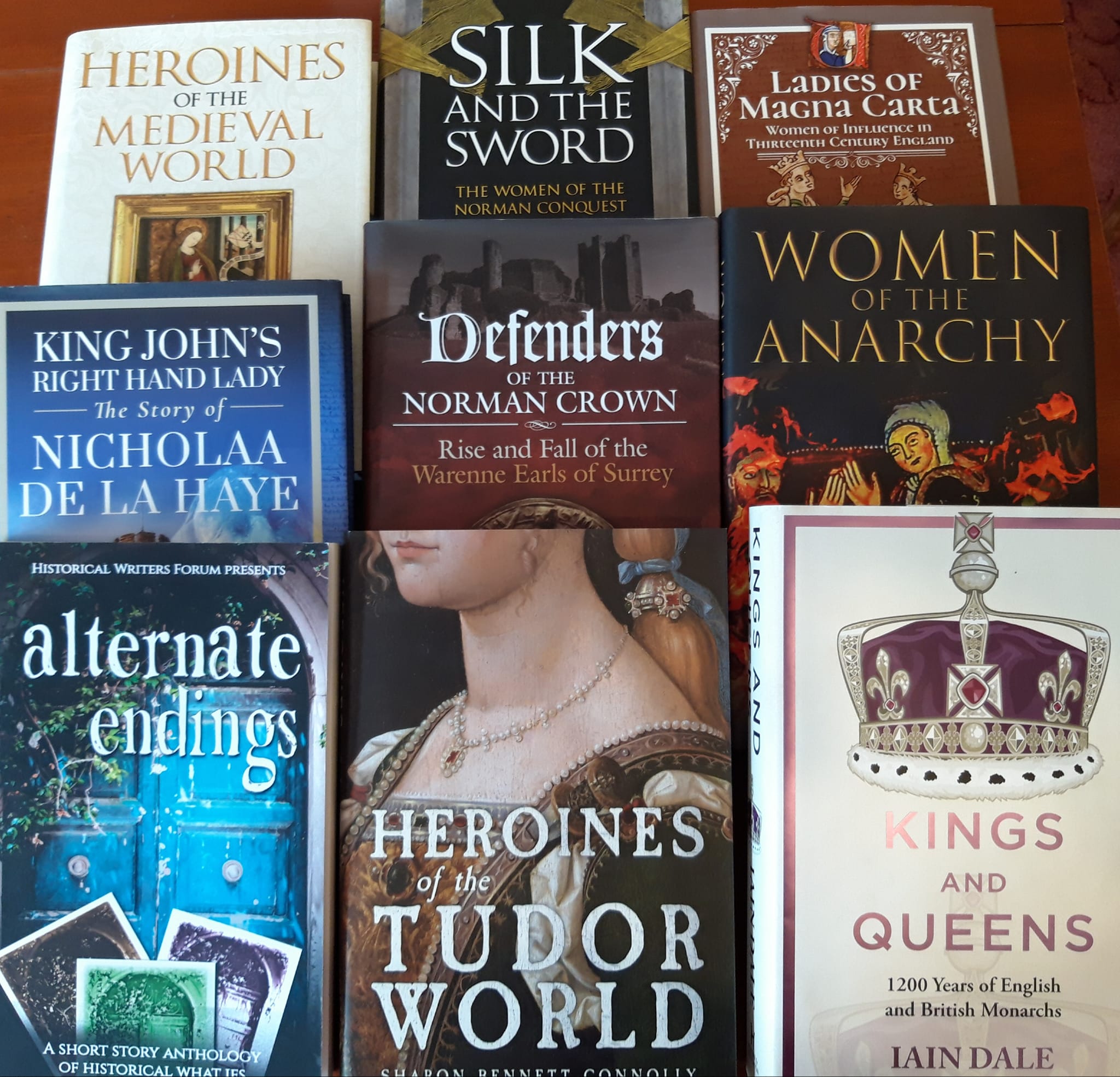
Heroines of the Tudor World tells the stories of the most remarkable women from European history in the time of the Tudor dynasty, 1485-1603. These are the women who ruled, the women who founded dynasties, the women who fought for religious freedom, their families and love. Heroines of the Tudor World is now available for pre-order from Amberley Publishing and Amazon UK.Women of the Anarchy demonstrates how Empress Matilda and Matilda of Boulogne, unable to wield a sword themselves, were prime movers in this time of conflict and lawlessness. It shows how their strengths, weaknesses, and personal ambitions swung the fortunes of war one way – and then the other. Available from Bookshop.org, Amberley Publishing and Amazon UK. King John’s Right-Hand Lady: The Story of Nicholaa de la Haye is the story of a truly remarkable lady, the hereditary constable of Lincoln Castle and the first woman in England to be appointed sheriff in her own right. Available from all good bookshops Pen & Sword Books, bookshop.org and Amazon.
Alternate Endings: An anthology of historical fiction short stories including Long Live the King… which is my take what might have happened had King John not died in October 1216. Available in paperback and kindle from Amazon.
Podcast:
Have a listen to theA Slice of Medieval podcast, which I co-host with Historical fiction novelist Derek Birks. Derek and I welcome guests, such as Bernard Cornwell, and discuss a wide range of topics in medieval history, from significant events to the personalities involved.
*
Don’t forget!Signed and dedicated copies of all my books are available through my online bookshop.
For forthcoming online and in-person talks, please check out my Events Page.
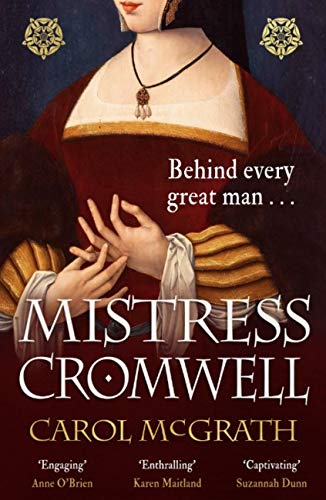
MISTRESS CROMWELL presents the rise of Tudor England’s most powerful courtier, Thomas Cromwell, through the eyes of the most important – and little known – woman in his life . . .
When beautiful cloth merchant’s daughter Elizabeth Williams is widowed at the age of twenty-two, she is determined to make a success of the business she inherited from her father. But there are those who oppose a woman making her own way in the world, and soon Elizabeth realises she may have some powerful enemies – enemies who know the dark truth about her dead husband.
Happiness arrives when Elizabeth meets ambitious young lawyer, Thomas Cromwell. Their marriage begins in mutual love and respect – but it isn’t always easy being the wife of an independent, headstrong man in Henry VIII’s London. The city is both merciless and filled with temptation, and Elizabeth soon realises she must take care in the life she has chosen . . . or risk losing everything.
Mistress Cromwell was first published as The Woman in the Shadows. What a treat of a book it is! Mistress Cromwell is a fabulous fictional account of the life and times of Elizabeth Cromwell, wife of Henry VIII’s famous – some would say notorious – adviser. It is an enjoyable, thoughtful story which gives the reader an insight into life in Tudor London, in general, and in a Tudor household in particular. Following Elizabeth from the funeral of her first husband, through her widowhood and new love and marriage with Thomas Cromwell, this is not the story of Henry VIII and the Tudor court, but of the ‘ordinary’ people without whom the Tudors would not have been able to sustain their glamorous court.
Written in colourful, vivid language that draws you in from the first page, Mistress Cromwell is a wonderful novel, full of life and imagery. And, of course, the fact I could find no picture of Elizabeth Cromwell – only ones of Thomas – serves to highlight how little information we have about the ordinary Tudor woman. Carol McGrath’s novel gives us a rarely seen insight into everyday life of the non-aristocratic family in Tudor London. However, if you were expecting melodrama, this book is not it; adventure and mystery are given equal billing, with murder, arson and secrets, ambushes in dark corners and some strange, scary personalities making this an exciting story which is not to be missed.
Cromwell’s rise to power at the Tudor court runs parallel with his family concerns, with the arrival of children and Elizabeth’s own business adventures. His mysterious past – as a soldier and adventurer in Italy – is alluded to and even comes in useful. Carol McGrath does an excellent job of portraying the enigma that is Thomas Cromwell; the courtier, soldier and statesman who is also merchant, husband and father. The characters are brought to life in vivid, vibrant detail, creating a tableau that is hard to forget even once the last page has been read.
For several hours, I spoke little and ate sparingly. Father went about the hall speaking with merchants. I wondered how I would manage but knew I must and would. A chair scraped beside me, jolting me out of my thoughts. I felt a light touch on my elbow and glanced up. The feast was ending. My merchant had left his place. Gone to the privy, no doubt. Instead, Father stood by my chair, with Master Cromwell by his side.
‘Lizzy, Master Cromwell is my new cloth middle-man. He would like you to show him your bombazine cloth. He has admired your mourning gown.’
I started. This was nothing new. Father always employed different cloth middlemen to sell his fabrics to Flanders, thinking each one better than the last but today, at my husband’s funeral it was not seemly. Master Cromwell was watching me through eyes of an unusual shade, not quite blue or grey.
He bowed and said, ‘Forgive me for staring, Mistress Williams, but you see I knew you as a child. Your father used our fulling mill in Putney.’ He smiled at Father.
That was why he was familiar. I stared back, and in a moment or two I had recollected a tough, wicked little boy, some years older than I, who taught me to fish in the river with a string and a hook with a wriggling worm at the end of it.
‘I do recollect you, Master Cromwell. We played together as children,’ I said, feeling my mouth widen into a smile. ‘Father sent your father our cloth to be washed, beaten, prepared and softened for sale. I remember climbing trees and stealing apples. You led me astray.’
Elizabeth Cromwell herself is a wonderful, strong character, facing the prejudices of the merchant class and her own family in order to take some control over her life. And Mistress Cromwell will make you want to know more Although a history buff would know what is to become of Cromwell and Elizabeth, the author cleverly manages to avoid inserting any hindsight into the story. If you don’t know what becomes of the characters, you will soon be scouring the history books for the true story.
Carol McGrath’s wonderful novel transports you through time and space to the streets of London and Northampton at the height of Henry VIII’s magnificent reign. With colourful, vivid imagery she recreates a world and its people which has been otherwise lost through the centuries. The city, the characters and the lifestyle have been brought back to life, recreating the vibrant world in which Thomas Cromwell would eventually rise to be the king’s chief statesman. The story follows Elizabeth’s life; her family, her business and her husband, cleverly demonstrating how these are affected and changed by her husband’s inexorable rise to power.
The attention to detail is phenomenal, showing many of the social conventions of the time, while not detracting from the story, nor making the reader feel like they’re in a lecture on social history. It paints a fascinating tableau of merchant life in Tudor London, portraying the struggles and successes facing a widow trying to keep her business going in a man’s world. Rich in detail in every aspect, Carol McGrath’s meticulous research has produced a novel which plunges the reader into the middle of Elizabeth’s household in Tudor London. From funeral and marriage arrangements, births and christenings, to the contents of a Tudor garden and the conduct of the cloth trade, Mistress Cromwell acts as a window into Tudor merchant society.
If you liked Hilary Mantel’s Wolf Hall you will love Mistress Cromwell by Carol McGrath. It shows the human side of the Cromwell family and is a treat for any lover of historical fiction, and especially for a fan of Tudor history. It is a novel not to be missed, and which must be devoured for both the meticulous detail and the wonderful story – especially the story.
Based in England, Carol McGrath writes Historical Fiction and Non-Fiction. She studied History at Queens University Belfast, has an MA in Creative Writing from the Seamus Heaney Centre, Queens University Belfast and an English MPhil from Royal Holloway, University of London. The Handfasted Wife, first in a trilogy about the royal women of 1066 was shortlisted for the RoNAS in 2014. The Swan-Daughter and The Betrothed Sister complete this highly acclaimed trilogy. Mistress Cromwell, a best-selling historical novel about Elizabeth Cromwell, wife of Henry VIII’s statesman, Thomas Cromwell, is republished by Headline. The Silken Rose, first in a Medieval She-Wolf Queens Trilogy, featuring Ailenor of Provence, was published 2nd April 2020 and comes out 23rd July 2020 as a PB. also published by the Headline Group. Tudor Sex & Sexuality will be published in 2022. Carol speaks at events and conferences. She was the co-ordinator of the Historical Novels’ Society Conference, Oxford in September 2016 and is an avid reader and reviewer, in particular, for the Historical Novel Society. She is a member of the Romantic Novelists’ Association and Historical Writers Association. Carol lives in Oxfordshire with her husband. Website: http://www.carolcmcgrath.co.uk. Newsletter: bit.ly/39eUgKl for the signup page. Amazon.
Malcolm IV (the Maiden), King of Scots, was the son of Prince Henry of Scotland and Ada de Warenne. He was the grandson of David I, King of Scots and great-grandson of Malcolm III, King of Scots and second his wife St Margaret, herself a descendant of Alfred the great. On his mother’s side, he was the grandson of William de Warenne, second Earl of Warenne and Surrey, and Isabel de Vermandois, granddaughter of King Henry I of France and his queen, Anna of Kiev.
The younger Malcolm was born between born between 23 April and 24 May 1141. He earned the soubriquet ‘the Maiden’ due to his youth, religious devotion and the fact he remained unmarried. Malcolm had become his grandfather’s heir following his father’s death in 1152, at which time he had been placed into the custody of Duncan, Earl of Fife, and taken on a progress around Scotland north of the Forth, following the old Celtic tradition of showing the heir to the kingdom. When King David I died less than twelve months after his son, Henry, on 24 May 1153, he was succeeded by his grandson, Malcolm. The new king succeeded to the crown at the age of twelve – possibly even on his twelfth birthday – as Malcolm IV.
The accession of Malcolm surpassed all the ambitions of his Warenne grandfather. William de Warenne, the second earl, had sought a royal bride for himself. He had not lived to see his daughter marry the heir to the Scottish throne not to see his grandson’s accession and coronation, which surpassed all of his aspirations and ambitions.
The chronicles make no mention of Malcolm’s mother, Ada, playing a part in the politics of Scotland during her eldest son’s kingship. She did appear at court often and was present for many of the important occasions; she was also a witness to no less than sixteen of Malcolm’s charters. Ada did, moreover, take great interest in the futures of her children, arranging the marriages of her two surviving daughters and employing any means possible to persuade her son to marry. The chronicler, William of Newburgh, relates a story of the lengths Ada had to go to in order to get her reluctant son to choose a bride. Ada went so far as to present her son with a young woman of noble birth, in his bed. Not wishing to cause an argument with his mother, Malcolm did not send her away and allowed the lady to spend the night in his royal bed; while he slept on the floor, wrapped in his cloak. Ada, it seems, was relentless in her attempts to persuade Malcolm to marry, until the young king tired of her constant nagging and begged her to hold her peace.
Coin of Malcolm’s father, Prince Henry, minted at Corbridge
While William of Newburgh makes it sound as if Ada was pushing for grandchildren, or tempting her son to lose his innocence, Ada’s constant attempts to discuss marriage with Malcolm had a political motive as much as a personal one. She was well aware of the importance of royal marriage, not just for the continuation of a dynasty and political alliance, but also for the strength and stability of the monarchy itself. Ada, moreover, was not the only one eager to see the young king settle down with a wife.
The Scottish curia regis (royal council) continued to pressure Malcolm to find a bride, even after his mother had given up. Arnold, Bishop of St Andrews encouraged Malcolm to follow the example of his recently married sisters. The king, however, was no more persuaded by the archbishop and his royal council than he was by his mother. He was eager to hold onto to the highest ideals of Christian knighthood and remain chaste. Malcolm’s relative youth may also have led him to believe that he had many years ahead of him and plenty of time before he needed to settle down and raise a family.
Malcolm’s kingship faced several challenges during his all-too-short reign. In November 1154, the young king was faced with a revolt from Somerled, Earl of Argyll. The unrest was to continue for several years, with Somerled only suing for peace in 1159 having been deprived of his chief supporters, the MacHeths, father and sons, who had been reconciled with the king in 1157.
Malcolm’s greatest challenge, however, was with his larger neighbour, England. While David I had taken advantage of the civil war in England during Stephen’s turbulent reign – known to history as the Anarchy – the accession of Henry II in 1154 changed the political landscape entirely. In 1157 the two kings met at Chester, where Malcolm performed homage ‘in the manner in which his grandfather had been the man of old King Henry’. 1 This homage suggests that Malcolm was accepting that he was a vassal of King Henry, as David I had done with King Henry I. He was also forced to resign his lordship of Northumberland, Cumberland and Westmorland, although the honour of Huntingdon was returned to the Scots king and his brother and heir, William, was given the lordship of Tynedale.
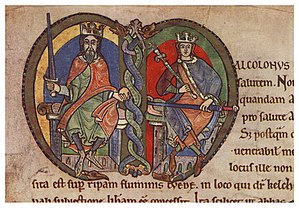
The charter to Kelso Abbey, depicting David I on the left with his grandson Malcolm IV on the right
In 1159 Malcolm, his brother and others joined Henry II and the English army on an expedition to Toulouse; William of Blois, son of King Stephen and husband of Malcolm’s cousin, Isabel de Warenne, Countess of Surrey, was also part of the expedition. The military enterprise gave Malcolm the chance to be knighted honourably in the field. The Scots contingent joined Henry II at Poitiers on 24 June and Henry knighted Malcolm at Périgueux a few days later. The expedition met with initial success and the army overran the county of Toulouse before laying siege to the city itself. However, the siege had to be abandoned when King Louis VII of France, another kinsman of Malcolm’s, intervened.
By the end of the year, Henry and Malcolm were back in Limoges, crossing to England shortly afterwards. Malcolm returned to Scotland in 1160 and to a revolt of six earls led by Feterth, Earl of Strathearn, angry at his expedition with the English army. Mediation by the clergy led to an uneasy peace and their abandoning of their besieging Malcolm at Perth. Unrest then arose in Galloway and Malcolm made several forays into the region before the end of the year, when Fergus, lord of Galloway, submitted to the king. It was the last major unrest by any Scottish earls for not only Malcolm’s reign, but for also for that of his brother, William I.
Malcolm was again summoned to meet Henry II in 1163. Despite falling ill at Doncaster, he was still expected to complete the journey to Henry’s court and arrived at Woodstock at the end of June. It seems Henry wanted to assert his supremacy over Britain, as a group of Welsh rulers had also been called to attend the English king. On 1 July, Malcolm renewed his oath to Henry and handed over hostages, the most senior of whom was his own youngest brother, David, soon to be made earl of Huntingdon. Homage given, Malcolm returned to Scotland, where he faced a revolt led by Somerled, Lord of the Isles, who was later killed in an attempted raid on Glasgow in 1164.
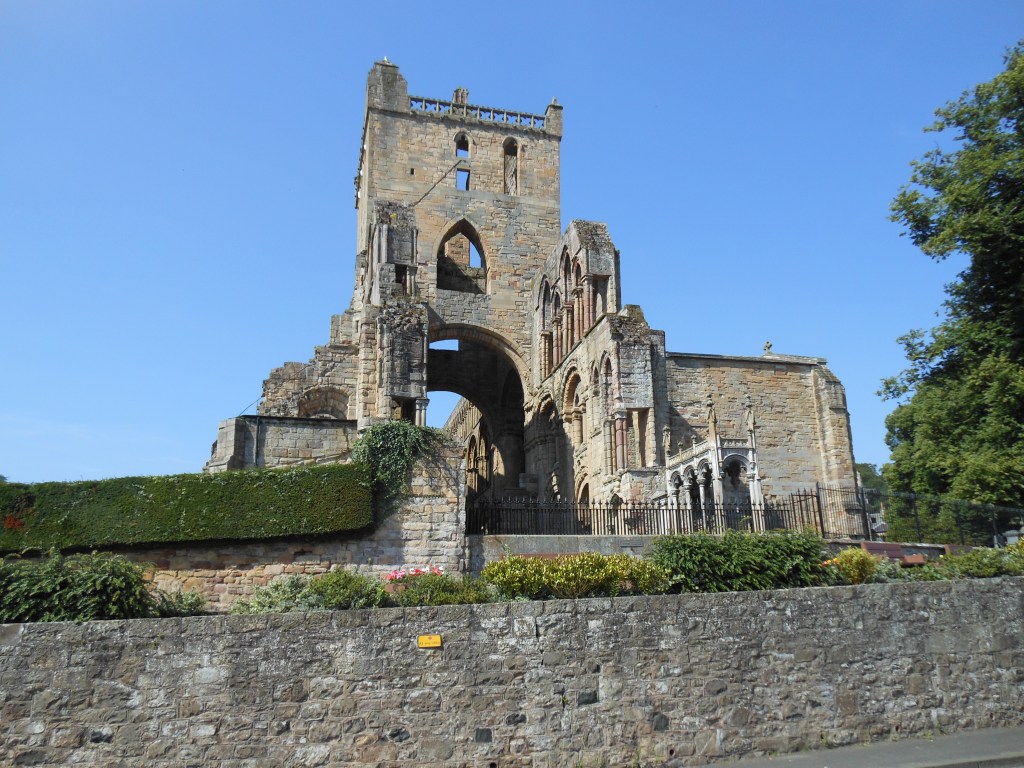
Jedburgh Abbey
Malcolm appears to have never fully recovered from the illness he suffered in Doncaster in 1163 and frequently complained of pains in his head and feet. He planned a pilgrimage to Santiago de Compostela, to pray for healing, but was too ill to undertake it. He died at Jedburgh on Thursday 9 December 1165, aged only 24: he had reigned for 12 years and 6 months and was buried among his ancestors at Dunfermline Abbey. We do not have his mother’s response to the death of her first-born son, but it cannot have been easy for her, only in her forties herself and already a widow of thirteen years. Malcolm was succeeded by his brother William, later known as William the Lion.
*
Footnote: 1 The Melrose Chronicle quoted in W.W. Scott, Malcolm IV (c. 1141–1165)
Scott, W.W., Malcolm IV (c. 1141–1165) Oxforddnb.com; Mackay, A.J.G. (ed.), The Historie and Chronicles of Scotland … by Robert Lindesay of Pitscottie; Ross, David, Scotland: History of a Nation; Farrer, William and Charles Travis Clay, editors, Early Yorkshire Charters, Volume 8: The Honour of Warenne; Morris, Marc King John: Treachery, Tyranny and the Road to Magna Carta; Church, Stephen, King John: England, Magna Carta and the Making of a Tyrant; Danziger, Danny and John Gillingham, 1215: The Year of Magna Carta; Crouch, David, William Marshal; fmg.ac; Brewer’s British Royalty by David Williamson; The Mammoth Book of British Kings and Queens by Mike Ashley; The Story of Scotland by Nigel Tranter; Ada, Queen Mother of Scotland (article) by Victoria Chandler.
*
My Books:
Signed, dedicated copies of all my books are available, please get in touch by completing the contact me form.
Out now!
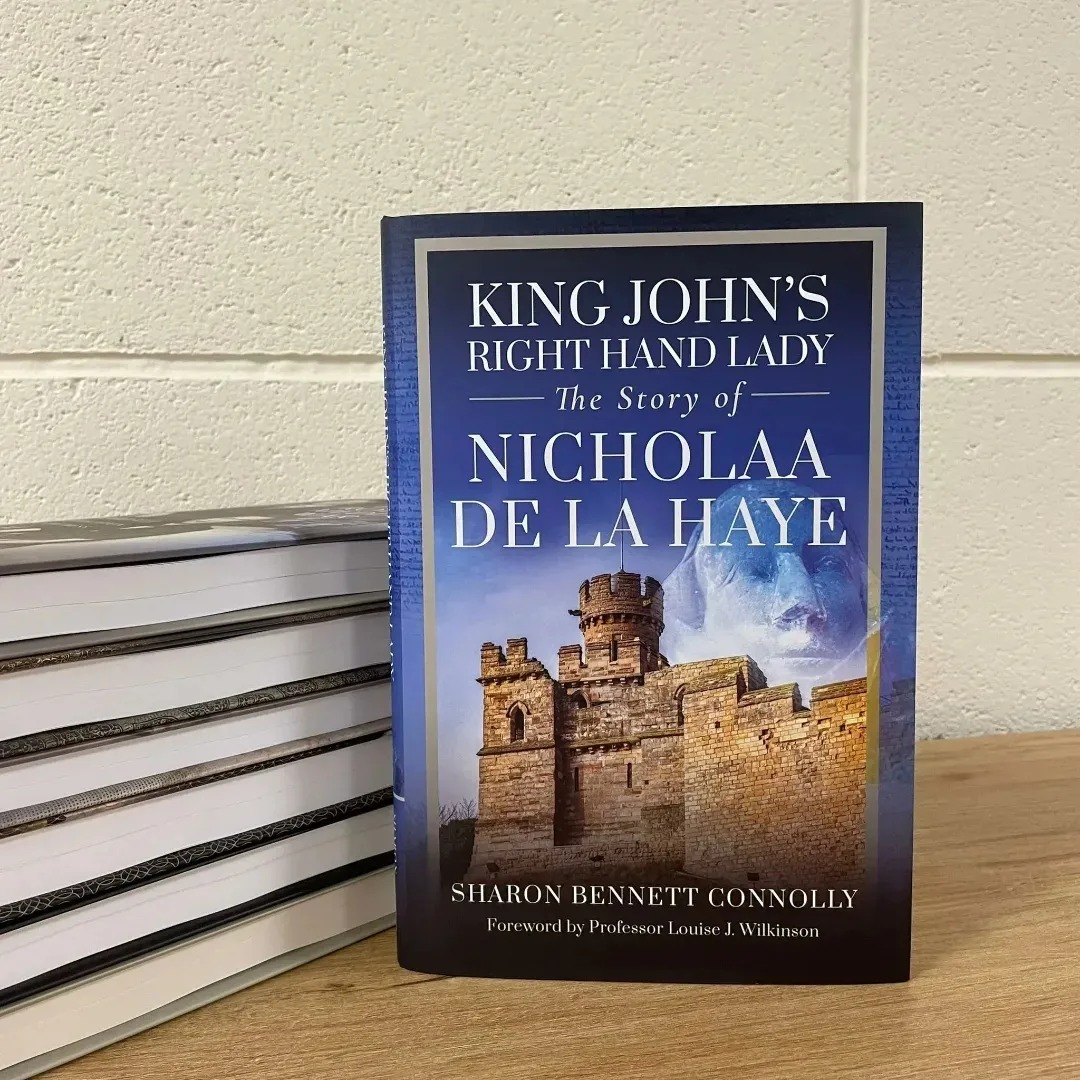
King John’s Right-Hand Lady: The Story of Nicholaa de la Haye is now available for pre-order as a hardback and Kindle from Pen & Sword Books, bookshop.org and Amazon (UK and US).
In a time when men fought and women stayed home, Nicholaa de la Haye held Lincoln Castle against all-comers. Not once, but three times, earning herself the ironic praise that she acted ‘manfully’. Nicholaa gained prominence in the First Baron’s War, the civil war that followed the sealing of Magna Carta in 1215.
A truly remarkable lady, Nicholaa was the first woman to be appointed sheriff in her own right. Her strength and tenacity saved England at one of the lowest points in its history. Nicholaa de la Haye is one woman in English history whose story needs to be told…
Alternate Endings: An anthology of historical fiction short stories including Long Live the King… which is my take what might have happened had King John not died in October 1216. Available in paperback and kindle from Amazon.
*
For forthcoming online and in-person talks, please check out my Events Page.
You can be the first to read new articles by clicking the ‘Follow’ button, liking my Facebook page or joining me on Twitterand Instagram.

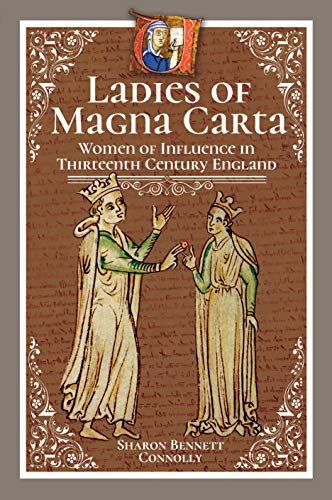
 Sharon Bennett Connolly is fast becoming the go-to historian if you want to find out more about the lives of medieval women. Her latest book is interesting on so many levels for once again the author introduces the reader to an alternative medieval world – a world where the focus is on the women, not the men. Some of the stories of these noblewomen are inspiring – even heroic – but others reveal the dark side of medieval life at the top. Above all, this book demonstrates the vital role played by women in the tumultuous events surrounding the Magna Carta of 1215.














 History... the interesting bits!