Book Corner: Interview with Paul Fraser Collard

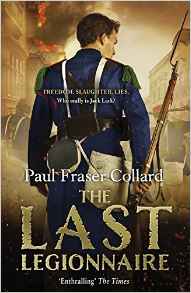
Author ImageJack Lark exploded onto Kindles and bookshelves everywhere in Paul’s 1st novel, The Scarlet Thief, and now, 3 years later, The Last Legionnaire is Jack Lark’s 5th adventure. And what an adventure!

This week, after finishing his latest book, The Last Legionnaire, I was lucky enough to catch up with its author, Paul Fraser Collard and ask him a few questions about his writing and  the hero of his books, Jack Lark.

What made you become a writer? I have always read a lot. For years, I spent my daily commute to work reading anything I could get my hands on. My favourite books were always historical fiction, especially the Sharpe novels by Bernard Cornwell. When I was in my early thirties, I began to wonder if I had it in me to write my own novel. One day, after a tough day at work, I opened up my laptop and made a start.

Who are your major writing influences? Bernard Cornwell stands out. I have read every book he has ever written. For me, he gets the mix of historical detail and plot exactly right. The books never fail to sweep me away into the past whilst still giving me a wonderful education into the period he is covering.

I would also say I have been influenced by the fantastic George McDonald Fraser. His Flashman series is quite magnificent. I could never hope to write anything close to such brilliance, but it did give me the idea of setting each novel in a new setting with a different cast of supporting characters.

index2Jack Lark is quite a unique character, a soldier/officer impostor. How did you come up with him as your character? Is he based on an actual historic person? The idea for Jack was developed from the desire to find a way to move a character around without tying him to a single regiment or a particular military campaign. I knew that is what I wanted to make my series stand out, and so I thought long and hard how to create a character that was unique enough to be able to travel the Victorian world.

The idea for an imposter came from the real story of Percy Toplis, a man made famous by the BBC TV series called The Monocled Mutineer. Percy was a rogue from a mining town in the north of England, yet he managed to pass himself off as a British army officer during the First Word War. Poor Percy met a rather nasty end, but he gave me the proof I felt I needed that a lad from a very humble background could manage to impersonate an officer.

If someone said they wanted to make a film of your books, who would you pick to play Jack Lark? Goodness, I hope this happens! However, I am dreadful at answering this question. I just don’t know of any actor that matches the picture of Jack that I carry in my head. Perhaps readers of this interview can send me their suggestions!

How long do you spend researching a novel before you start writing? I always start any novel with a period of research. This generally begins whilst I am still working on another book. I work full time so everything has to be fitted in 2as and when I can. I would say that on average I spend around three months learning the history of the next novel. Some have been easier than others. The American Civil War or the events of the Indian Mutiny are covered by hundreds of books, whereas the campaign against the Shah of Persia and the battle of Khoosh-Ab barely feature anywhere!
What comes first, your storyline or your research? They both develop together. The history gives me the framework and the plot is the fabric that gets woven around it. I put the two together in a very detailed plan that tends to be around 20-30,000 words. Then all I have to do it flesh it all out.

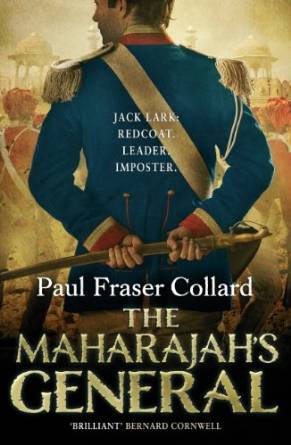
With The Last Legionnaire, Jack becomes embroiled in a war that Britain took no part in; how did you decide where he was going to fight next? I always have a vague idea where Jack is going for the next couple of novels. From there, I cast around to see what events happened in the years following the last novel I have planned. The tricky bit is thinking of how Jack can go from one to the other. I remember a review of The Maharajah’s General that stated that it would be a dull series indeed, if Jack just moved from one convenient identity to another (a Victorian version of Mr Ben, if you like!). So I always think very carefully about the link between the novels. Hopefully they work!

Do you know how the book is going to end when you start it? Pretty much. As I have to cram my writing into short gaps in my day, I need to be able to write fast. This makes planning pretty important and my novel outline is always very detailed. That said, it can and does change. The ending to The Last Legionnaire change dramatically about one week before I had to submit it to my editor. The ending I had planned just didn’t sit well and so it had to be changed.

How do you organise your writing day? My writing time is squeezed into my commute at the start and the end of the day. I have quite a long journey so that gives me just under two hours a day dedicated to writing. I then fit what I can into other times. This means I have to be very disciplined about using what time I have as e3ffectively as I can. I try hard to write at full speed on the train, making sure I cram as much productivity into those two hours as I can. I am not one of those writers who had the luxury of ruminating over the perfect sentence!

What do you enjoy most about writing? Creating the story is the best bit and I love plotting and creating the detailed outline.

What is the worst thing about writing? Finishing the first draft! This gets harder, if I start planning the next novel before I have finished the current one.

How long does it take to do a project from start to finish? So far I am getting a novel done in around ten months. I tend to work on multiple books at the same time. Right now I am polishing book 6, writing a short story whilst also plotting and researching for book 7.

Who are your favourite personalities from history? Is there anyone you would particularly like to write about, or include in Jack’s adventures? I love the idea of working in a reference to Flashman in one of Jack’s stories, but I must say, I have always been much more interested in the ordinary men and women who found themselves caught up in the cataclysm of war than the great and famous personalities. For me, the tale of an ordinary infantryman is more interesting than that of a famous general. Apart from a few exceptions, Jack’s stories will focus on what the battles were like for the poor bloody individuals on the front line.

What other historical periods would you like to write about? I w4ould really enjoy writing about WW2. If anything this period fascinates me even more than the Victorian Empire. I have written a novel set in WW2, but for now it is on the back burner as its needs a re-write that I just don’t have time to do. For the moment at least!

Do you ever get writer’s block? If so, how do you get around it? I have to say that I don’t often get writer’s block. I think this is because I have so little time to actually write. I tend to do my thinking at other times. When I sit down to write, I slip into blast mode and just go for it. If I do get stuck then I jump to something else. I cannot bear to waste time! It is too precious.

Do you find social media – such as Facebook – a benefit or a hindrance? I love it! The publishers are very keen on social media and I was a little daunted at first. But now I think it is the best outlet I have. I have found so many brilliant people on Facebook and on Twitter and I would now count many of them as friends. I love the fact that I can be available to anyone kind enough to read my books and I always enjoy being able to chat about history or anything else that comes up.

What will be your next project? Where is Jack fighting next – and when do we get to read it? Next up is the start of The American Civil War and specifically the First Battle of Bull Run (Jack fights for the Union in this one). If you have finished The Last Leindexgionnaire then you will have an idea of what takes Jack across the Atlantic.
This one should be out early in 2017.

How many more Jack Lark adventures do we have to look forward to? Do you have a number in mind, or will he keep fighting until there are no wars left? I cannot imagine ever letting Jack settle down and I hope he can keep going for many years, and many novels, to come. You will know when I have written the last one as I will make sure the cover image is of him facing the reader for the first time.

*

I would like to extend my thanks to Paul Fraser Collard for his fantastic answers. Look out for my review of The Last Legionnaire, which should go live on Friday 13th May, 2016.

*

My book, Heroines of the Medieval World,  is now available in hardback in the UK from both Amberley Publishing and Amazon UK and worldwide from Book Depository. It is also available on Kindle in both the UK and USA and will be available in Hardback from Amazon US from 1 May 2018.

Be the first to read new articles by clicking the ‘Follow’ button, liking our Facebook page or joining me on Twitter.

©2016 Sharon Bennett Connolly

Book Corner: In the Shadow of the Storm, by Anna Belfrage

51FcCxVcaOL._SX310_BO1,204,203,200_Adam de Guirande owes his lord, Sir Roger Mortimer, much more than loyalty. He owes Sir Roger for his life and all his worldly goods, he owes him for his beautiful wife – even if Kit is not quite the woman Sir Roger thinks she is. So when Sir Roger rises in rebellion against the king, Adam has no choice but to ride with him – no matter what the ultimate cost may be. England in 1321 is a confusing place. Edward II has been forced by his barons to exile his favourite, Hugh Despenser. The barons, led by the powerful Thomas of Lancaster, Roger Mortimer and Humphrey de Bohun, have reasons to believe they have finally tamed the king. But Edward is not about to take things lying down, and fate is a fickle mistress, favouring first one, then the other… The Welsh Marches explode into war, and soon Sir Roger and his men are fighting for their very lives. When hope splutters and dies, when death seems inevitable, it falls to Kit to save her man – if she can….

In the Shadow of the Storm is the first book in Anna Belfrage’s new series, The King’s Greatest Enemy, and what a magnificent introduction to Anna’s new heroes and heroines! Set in one the most tumultuous periods of English history, the book expertly blends the personal lives of its heroic couple, Sir Adam and Kit, his new wife, with the national drama of the disintegrating reign of Edward II.

Seal_of_Edward_II-2
Seal of Edward II

I know it’s a bit of a cliché, but this book is impossible to put down. The action and intrigue are, to put it simply, riveting. In the Shadow of the Storm has a great mix of love story and rebellion, and of heroes and villains and a heavy dose of adventure; it has you in tears one minute and on the edge of your seat with excitement the next.

Kit is my new hero! In a world where women’s rules were very specifically defined, Kit pushes the boundaries in order to achieve what she wants – but she never quite exceeds them. A young woman kidnapped from her sheltered life and thrown into a marriage to a man she has never met, and into the world of her new husband’s lord; where war, intrigue and a secret threatens to destroy the growing love the couple have for each other. However, not only does she manage to avoid sinking, Kit becomes a champion swimmer.

Adam went to the nearby table, sloshed wine into a goblet and drank deeply before passing it to her.

“I hadn’t expected to find you a virgin,” he said, eyes the colour of pewter raking her body up and down.

“What do you mean, my lord?”

“Don’t give me that.” He reclaimed the cup and leaned against one of the bedposts. “Do you think I don’t know about you and Lord Roger?” Not only was he tall, he was big, a thick, fair fuzz covering his chest, the hair darkening closer to his groin.

“Lord who?” Kit’s head ached.

“Mortimer,” he clarified with an edge to his voice. “Our lord and master.”

Adam is a knight sworn to Lord Roger Mortimer, balancing a burgeoning love for his wife and family with his duty to his lord. Kit and Adam are a very real, down-to-earth, young couple; newly married they are still discovering each other. Misunderstandings and insecurities lead to a married life that is anything but smooth. And in the midst of their developing love and trust, they are thrown into the middle of Mortimer’s rebellion against Edward II.

Isabella_of_France
Isabella of France, Edward II’s queen

Ranged against them are enemies aplenty. Adam’s own step-brother, Guy, has eyes on Kit – and on everything Adam possesses – and will go to extraordinarily vicious lengths to achieve his goal. While the most despicable of all is Hugh le Despenser the younger, Edward II’s favourite and a man with a particular hatred for Adam and his lord. Vindictive and cruel, Despenser is determined to destroy Adam; Kit has to use all her courage and skill to thwart him – and to save her husband’s life.

Anna Belfrage manages to weave a wonderful story around the very real history of a desperate time for England and her people. The threats and dangers of living in a divided, unstable realm, with forces polarizing between the king and queen, are vividly depicted, drawing the reader deeper and deeper into the 14th century.

The author’s deep knowledge of the period serves to make the reader believe they are actually there, watching the action, weighing the choices and living the harsh reality of a realm on the brink of civil war. The history is impeccable, with Kit and Adam’s story slipping into the historical timeline so neatly that it is practically impossible to see the line where history ends and fiction begins.

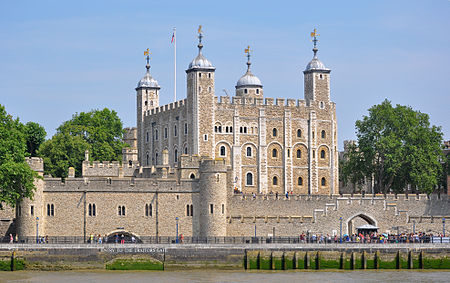
450px-Tower_of_London_viewed_from_the_River_Thames
Tower of London

Anna Belfrage’s depiction of the historical characters is exquisite. Despenser is suitably heinous; he makes your skin crawl when he walks into a scene. Lord Roger Mortimer is determined, charming … and noble. The personalities are diverse and fascinating. The landscapes are so vividly describes as to be dramatic; you could almost imagine yourself riding along the rivers of the Welsh Marches, incarcerated in a dark, cold dungeon, or walking along the main thoroughfare of the ancient town of Shrewsbury.

In the Shadow of the Storm is a wonderfully exciting book; a clever blend of intrigue, romance and action. Anna Belfrage is a master story-teller and has done her homework well – she brings the 14th century to vivid, colourful life. It will be difficult to read anything better this year …. but I can’t wait to see if Book 2 in The King’s Greatest Enemy series, Days of Sun and Glory, proves me wrong……

*

nna Belfrage is the author of the extremely popular time travelling series, The Graham Saga. To find out more about this incredible author and her books, please visit her website.

Pictures of Edward II and Isabella of France are courtesy of Wikipedia.

*

My book, Heroines of the Medieval World,  is now available in hardback in the UK from both Amberley Publishing and Amazon UK and worldwide from Book Depository. It is also available on Kindle in both the UK and USA and will be available in Hardback from Amazon US from 1 May 2018.

Be the first to read new articles by clicking the ‘Follow’ button, liking our Facebook page or joining me on Twitter.

©2016 Sharon BennettConnolly


Book Corner: For King and Country by Charlene Newcomb

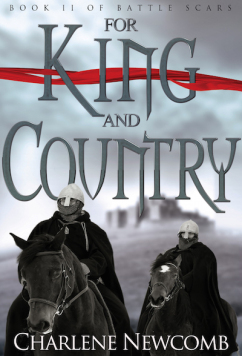
My latest book review, of Charlene Newcomb’s fantastic novel, For King and Country – the 2nd instalment in her Battle Scars series– has gone live over at The Review today!

king-and-country_smallTen months ago I did my first review for The Review. The book was the first instalment of Charlene Newcomb’s Battle Scar’s series, Men of the Cross. Ms Newcomb must have been quite happy with the review, as a few months ago she asked me if I’d review Book 2 in the series. I jumped at the chance; I needed to know what happened next, to Henry, Stephan, Robin, Little John….even King Richard. I needed to get back to the action.

And For King and Country did not disappoint.

The story begins with Henry and his friends arriving home to Lincolnshire, but their fight doesn’t end there. With Richard still in a German prison, they now have to help Queen Eleanor thwart the plans of King Richard’s brother, John, to steal the throne. For King and Country is one of those rare books that is impossible to put down. I often found myself reading late into the night….

To read the full review of this wonderful novel – and to enter the prize draw and be in with a chance of winning your very own copy of the e-book in the giveaway, simply visit The Review and leave a comment. Good luck!

*

My book, Heroines of the Medieval World,  is now available in hardback in the UK from both Amberley Publishing and Amazon UK and worldwide from Book Depository. It is also available on Kindle in both the UK and USA and will be available in Hardback from Amazon US from 1 May 2018.

Be the first to read new articles by clicking the ‘Follow’ button, liking our Facebook page or joining me on Twitter.

©2016 Sharon Bennett Connolly

The Ætheling and the Tragedy of the White Ship

220px-Vilém_syn
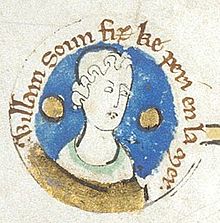
William the Atheling

In the late summer of 1103 England’s queen, Matilda of Scotland, gave birth to a son. Named after his grandfather, William the Conqueror, the young prince would be known to history as William the Ætheling. He is one of those historical figures who resides in the shadows, more famous for his death than his all-too-short life as the heir to England’s throne.

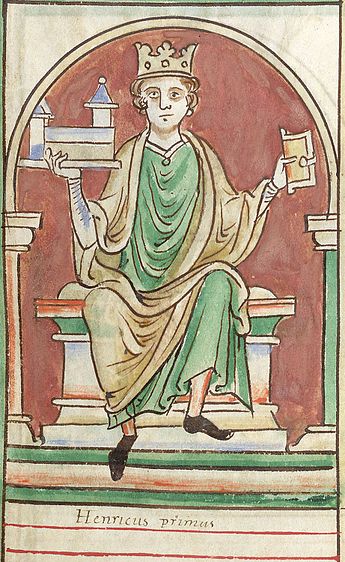
William’s father, Henry, was a younger son of William the Conqueror and Matilda of Flanders. When his father had died in 1087, the patrimony of England and Normandy was divided between Henry’s older brothers; the eldest, Robert Curthose, inherited Normandy while William II Rufus became King of England. Henry was given money and lands. It has been said that Henry was intended for a life in the church; however, when his father died, Henry was already 18 and would have joined the church as a child if that was the career set out for him. Instead, the little brother seems to have set his sights on greater things and, as a result, was distrusted by William II, who kept him close, so he could not cause any mischief.

On 2 August, 1100, while out hunting in the New Forest, William was struck by a stray arrow and killed. Some say it was planned, others that it was an accident; I guess we’ll never know for sure…

Henry, however, did not waste the opportunity. With his older brother Robert still on his way back from Crusading in the Holy Land, Henry seized the initiative, the treasury and the kingdom; he was crowned at Westminster Abbey just 3 days after his brother’s death. Within months Henry had found himself a bride with impeccable parentage. Matilda had been born Edith of Scotland and was the daughter of Malcolm III, King of Scots. Through her mother, St Margaret, she was the great-granddaughter of Edmund II Ironside, the Anglo-Saxon king of England who died in 1016. She changed her name on marrying Henry, as Edith was considered ‘too Saxon’ for Norman tastes.

Matylda_zena
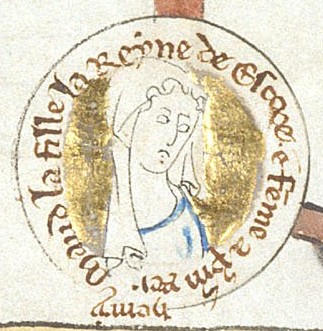
Matilda of Scotland

Henry and Matilda were married in November 1100 and within 3 years were the proud parents of 2 children. Their daughter, Adelaide, was born in 1102; she would adopt the name Matilda on her marriage to the Holy Roman Emperor, Henry V, and would be known to history as the Empress Matilda (or Maud, though this appears to have been a later nickname). Although some historians suggest they were twins, it is most likely that Matilda’s younger brother, William, was born in 1103; a message of congratulations was sent to Henry I by Pope Paschal II on 23 November of that year.

The soubriquet of Ætheling is attributed to chronicler Orderic Vitalis and harks back to Anglo-Saxon times as a title given to the king’s designated heir. According to William of Malmesbury, William, with an Anglo-Saxon mother and Norman father, represented the hope of reconciliation between the conquered and conquerors of England.

Although the king and queen had only 2 children – a possible third child is thought to have died young – the king had numerous illegitimate offspring by various women, several of whom were raised alongside his legitimate children. William and a number of his illegitimate brothers, including Robert, Earl of Gloucester, were tutored by Otuel (or Othuer) fitzEarl, natural son of Hugh, Earl of Chester. fitzEarl had been made castellan of the Tower of London and so it is likely that the prince and his brothers were frequently in residence there, in order to pursue their education.

330px-Empress_Mathilda
William’s sister, Empress Matilda

According to William of Malmesbury, William was trained for his future role ‘with fond hope and immense care’. In 1108, while their father was away in Normandy, William and his sister were entrusted to the spiritual care of Anselm, the revered Archbishop of Canterbury.

In 1110 William’s sister, Matilda, left for Germany; she was to continue her education at the court of her future husband, but would not be married until January 1114, just before her 12th birthday. William was still only 6 years old when his sister left; Matilda was 8. It’s sad to think the young siblings would never meet again.

Following his sister’s departure, William’s education continued apace. By 1113, aged just 10, William began to attest royal documents. While still only 9, in February of that year, William was betrothed, at Alençon, to Alice (who changed her name to Matilda on her marriage), the daughter of Fulk V, count of Anjou and Maine. The betrothal formed part of his father’s wider diplomacy, which had also included his sister’s marriage to the Holy Roman Emperor.

Henry I spent the early part of his reign fighting against his brother, Robert Curthose, and, later, Robert’s son, William Clito, trying to secure a smooth succession for William. Robert had been decisively defeated at Tinchebrai in 1106 and spent his remaining years – until his death in 1134 – a prisoner of his brother. Henry subsequently claimed Normandy for the English crown, but William Clito was still a thorn in his side. Clito was supported by the French king, Louis VI; who used him as a counter to Henry’s attempts to conquer Maine.

345px-Henry1
Henry I

In 1115, according to the Anglo-Saxon Chronicle, Henry arranged for the Norman barons to do homage and swear fealty to William, in an attempt to counter the claims of William Clito. A similar ceremony was arranged in England in 1116, for all the great men and barons of England to swear fealty to William as the king’s heir. The Warenne (Hyde) Chronicle referred to William as ‘rex Norman-Angllorum, ut putabatur futurus’ (assumed to be the future king of the Norman-English).

On 1st May 1118 William’s mother, Queen Matilda, died at Westminster and was laid to rest in Westminster Abbey. We do not know how the young prince felt at the loss of his mother – he was 15 at the time. However, it is from this point that William took on more responsibility, acting as regent whenever the king was away in Normandy.

In December 1118 Henry’s troops defeated the Angevins, under Fulk of Anjou, at Alençon. To counteract the defeat, William and Alice/Matilda of Anjou were married, with the Count settling Maine on them as their marriage gift, thus deserting the cause of the French king. Inevitably, war with Louis VI followed.

On 20 August 1119, 16-year-old William was with his father at the Battle of Brémule. Henry won the fight against the forces of Louis VI of France and William Clito. During the battle, William had captured the palfrey of his cousin, William Clito, which he chivalrously returned at the end of the battle.

In the same year William witnessed a charter at Rouen, in which he was described as ‘dei gratia, rex designatus’ (by the grace of God, king designate). And continuing his education in diplomacy, in November 1119, William accompanied his father to a meeting with Pope Calixtus II, (William’s second cousin once removed).

330px-Sceau_de_Louis_VI
Louis VI of France

At the turn of the year, it must have seemed to Henry that his dynasty – and the future of England – was secure in the hands of his son; at the age of 16 he was experienced in warfare and diplomacy and married to Matilda, though she was probably still under 10 years of age, who brought with her the county of Maine as her marriage portion (and the promise of Anjou should her father die whilst on Crusade).

In 1120 peace was finally achieved with France, with William being created Duke of Normandy by his father, and paying homage for the duchy to King Louis; a precedent that would be used  by future English kings, in order to avoid a king paying homage to a fellow king for part of his holdings. William, in turn, then received the homage of the Norman barons. Accompanied by his father, wife and several of his half brothers and sisters, it must have been a time of great rejoicing and festivities.

The final entry of the Warenne (Hyde) Chronicle set the scene:

At last King Henry restored peace with his diligence and money and decided to come to England with much triumph and joy, but God omnipotent, who, just as the blessed Job says, ‘loosens the belt of kings, and girds their kidneys with a rope’, out of his just judgment turned the king’s joy into grief and victory into sorrow. Having descended with his two sons, William and Richard, and with Theobald count of Blois, his nephew, and with many relatives and a crowd of nobles, to the seaport, called Barfleur, on the designated day he began to board his ship with favourable winds and a prosperous sea…

The Warenne (Hyde) Chronicle, edited by Elisabeth m.C. Van Houts and Rosalind C. Love

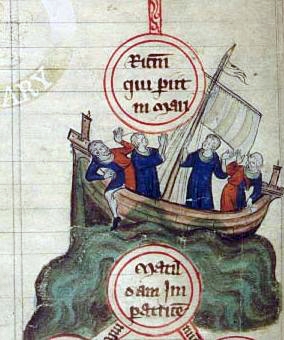
Indeed, when the large party prepared to cross the Channel, to return to England, it seems several of them were still celebrating. While Henry made the crossing in his own ship, taking with him several nobles and his daughter-in-law, the prince took the offer of a newly built ship, the Blanche Nef – or White Ship – which its owner, Thomas fitzStephen, claimed would guarantee a swift, safe passage. William the Ætheling was accompanied by many of the young nobles of the great families of England, including his half-sister, Matilda, and half-brother, Richard of Lincoln.

WhiteShipSinking
The Sinking of the White Ship

Most of the passengers and crew were still drunk from celebrating when the ship finally left the harbour of Barfleur, in the dark, on the evening of 25 November, 1120. Oderic Vitalis described the scene:

At length he gave the signal to put to sea. Then the rowers made haste to take up their oars and, in high spirits because they knew nothing of what lay ahead, put the rest of the equipment ready and made the ship lean forward and race through the sea. As the drunken oarsmen were rowing with all their might, and the luckless helmsman paid scant attention to steering the ship though he sea, the port side of the White Ship struck violently against a huge rock, which was uncovered each day as the tide ebbed and covered once more at high tide. Two planks were shattered and, terrible to relate, the ship capsized without warning. Everyone cried out at once in their great peril, but the water pouring into the boat soon drowned their cries and all alike perished.

William was ushered into a small boat and was being rowed to safety when he is said to have heard the cries of his half-sister, Matilda. The prince insisted on rowing to her aid, but the little boat was overwhelmed by those trying to make it to safety, and capsized, taking everyone with it.

Vitalis, Oderic, The Ecclesiastical History of Oderic Vitalis.

William the Ætheling was 17-years-old.

With only one survivor, a butcher from Rouen, over 300 souls were lost – drowned – and only a handful of bodies were ever recovered. With the sinking of the White Ship Henry I lost his son; England and Normandy lost their next ruler.

Young Matilda had lost her husband. Still only a child, Matilda had made the crossing of the Channel with the King, rather than her husband, and sometime after the disaster she returned to her father’s court. In 1121 Matilda became a nun, eventually becoming abbess of the convent at Fontevrault. She died in 1158.

With the uncertainty that followed, Louis VI renewed his support of William Clito, who continued to be a thorn in Henry I’s side until his death fighting in Flanders in 1128. Henry himself, in the hope of producing another son, married  again in 1121; to Adeliza of Louvain. Unfortunately, the marriage proved childless and Henry spent the final years of his reign trying to secure the throne for his daughter, Matilda. Empress Matilda had returned to Henry’s court in England following the death of her husband in 1125 and was married again,  in 1128, to Geoffrey, Count of Anjou – the brother of Matilda of Anjou – in the hope that the union would strengthen her claim to the throne.

In the end, however, despite the fact Henry had made the barons of England swear fealty to Matilda as his successor Henry’s nephew, Stephen, claimed the throne on the old king’s death in 1135; thus ushering in 19 years of warfare, an era which became known as The Anarchy.

Reading_Abbey_03
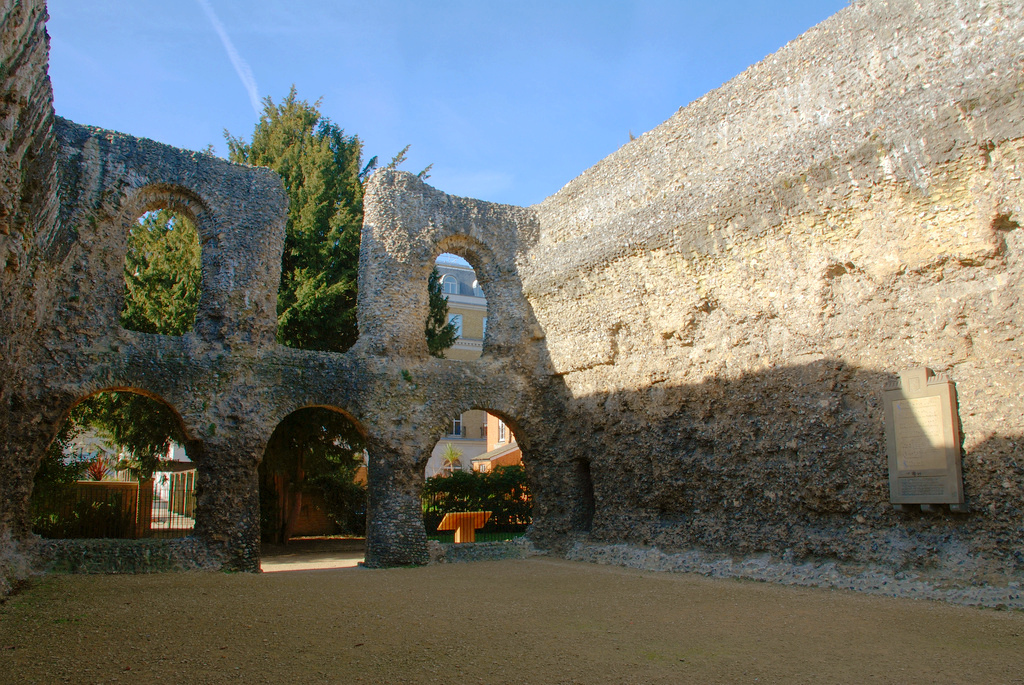
Chapter house of Reading Abbey

William’s death was a tragedy, not only on a national scale, but also a personal one, for Henry I. According to the Anglo-Saxon Chronicle the disaster was ‘a double grief: first that they lost their lives so swiftly; second that few of their bodies were found afterwards’. The young prince’s body was never recovered, leaving no monument to his life, save for Reading Abbey, established as a priory – and later an abbey – in 1121 by Henry I,

‘for the salvation of my soul and that of king William my father and king William my brother and William my son and queen Matilda my mother and queen Matilda my wife and all of my predecessors and successors.’

*

Sources: oxforddnb.com; Oderic Vitalis, The Ecclesiastical History of Orderic Vitalis; Donald Matthew, King Stephen; Robert Bartlett, England Under the Norman and Angevin Kings; David Williamson, Brewer’s British Royalty; the History Today Companion to British History; Dan Jones, the Plantagenets; englishmonarchs.co.uk; The Oxford Companion to British History Edited by John Cannon; Mike Ashley, The Mammoth Book of British kings & Queens; Alison Weir, Britain’s Royal Families, the Complete Genealogy; medievalilsts.net; The Plantagenet Chronicles Edited by Elizabeth Hallam; The Warenne (Hyde) Chronicle, edited by Elisabeth Van Houts and Rosalind C. Love .

*

Pictures courtesy of Wikipedia

*

My Books

Signed, dedicated copies of all my books are available through my online bookshop.

Out now! Scotland’s Medieval Queens

Books by Sharon Bennett Connolly

Scotland’s history is dramatic, violent and bloody. Being England’s northern neighbour has never been easy. Scotland’s queens have had to deal with war, murder, imprisonment, political rivalries and open betrayal. They have loved and lost, raised kings and queens, ruled and died for Scotland. From St Margaret, who became one of the patron saints of Scotland, to Elizabeth de Burgh and the dramatic story of the Scottish Wars of Independence, to the love story and tragedy of Joan Beaufort, to Margaret of Denmark and the dawn of the Renaissance, Scotland’s Medieval Queens have seen it all. This is the story of Scotland through their eyes.

Scotland’s Medieval Queens gives a thorough grounding in the history of the women who ruled Scotland at the side of its kings, often in the shadows, but just as interesting in their lives beyond the spotlight. It’s not a subject that has been widely covered, and Sharon is a pioneer in bringing that information into accessible history.’ Elizabeth Chadwick (New York Times bestselling author)

Available now from Amazon and Pen and Sword Books

Also by Sharon Bennett Connolly:

Books by Sharon Bennett Connolly

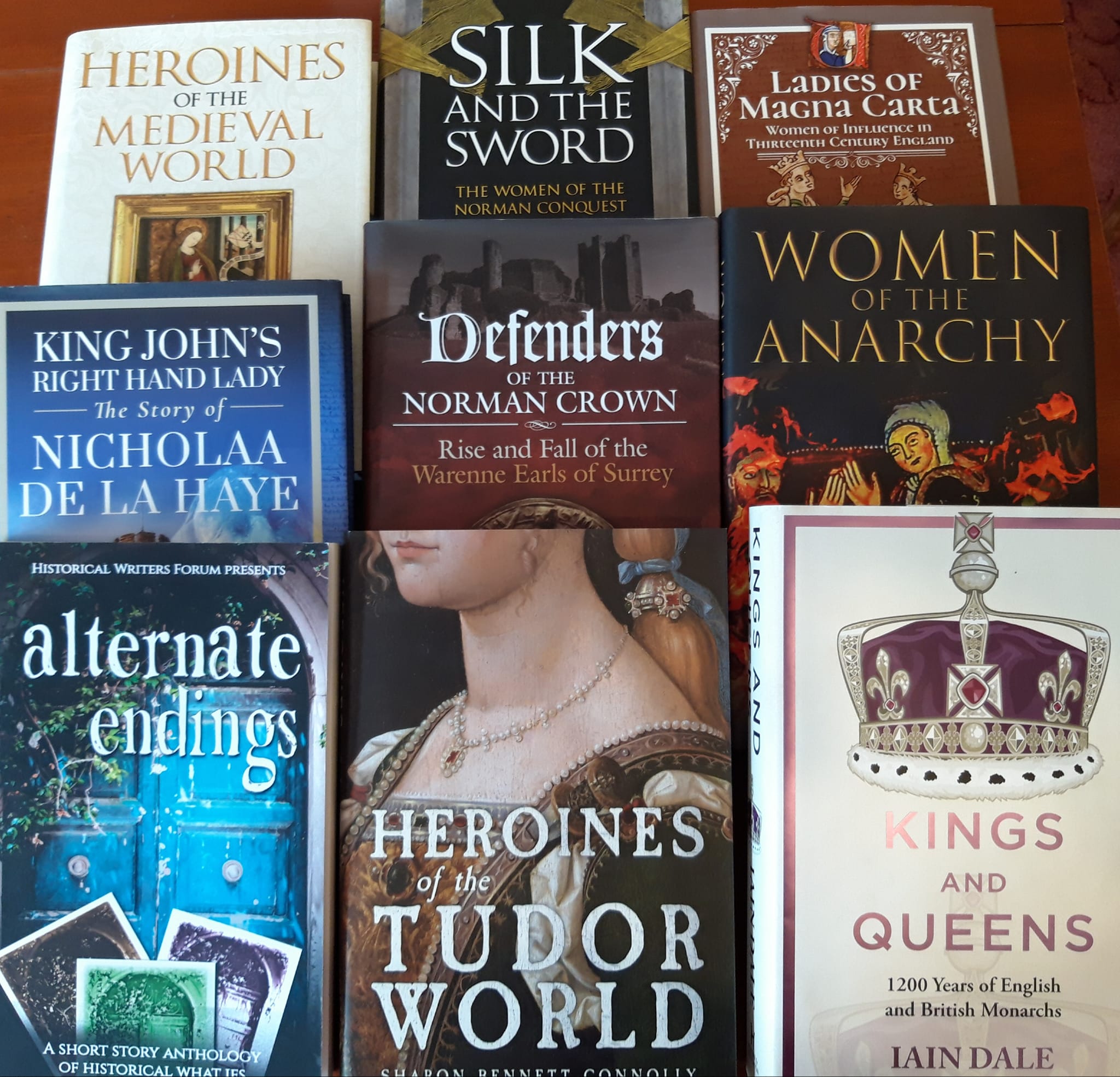
Heroines of the Tudor World tells the stories of the most remarkable women from European history in the time of the Tudor dynasty, 1485-1603. These are the women who ruled, the women who founded dynasties, the women who fought for religious freedom, their families and love. Heroines of the Tudor World is now available for pre-order from Amberley Publishing and Amazon UK. Women of the Anarchy demonstrates how Empress Matilda and Matilda of Boulogne, unable to wield a sword themselves, were prime movers in this time of conflict and lawlessness. It shows how their strengths, weaknesses, and personal ambitions swung the fortunes of war one way – and then the other. Available from Bookshop.orgAmberley Publishing and Amazon UKKing John’s Right-Hand Lady: The Story of Nicholaa de la Haye is the story of a truly remarkable lady, the hereditary constable of Lincoln Castle and the first woman in England to be appointed sheriff in her own right. Available from all good bookshops Pen & Sword Booksbookshop.org and Amazon

Royal Historical Society

Defenders of the Norman Crown: The Rise and Fall of the Warenne Earls of Surrey tells the fascinating story of the Warenne dynasty, from its origins in Normandy, through the Conquest, Magna Carta, the wars and marriages that led to its ultimate demise in the reign of Edward III. Available from Pen & Sword BooksAmazon in the UK and US, and Bookshop.orgLadies of Magna Carta: Women of Influence in Thirteenth Century England looks into the relationships of the various noble families of the 13th century, and how they were affected by the Barons’ Wars, Magna Carta and its aftermath; the bonds that were formed and those that were broken. It is now available in paperback and hardback from Pen & SwordAmazon, and Bookshop.orgHeroines of the Medieval World tells the stories of some of the most remarkable women from Medieval history, from Eleanor of Aquitaine to Julian of Norwich. Available now from Amberley Publishing and Amazon, and Bookshop.orgSilk and the Sword: The Women of the Norman Conquest traces the fortunes of the women who had a significant role to play in the momentous events of 1066. Available now from Amazon,  Amberley Publishing, and Bookshop.org.

Alternate Endings: An anthology of historical fiction short stories including Long Live the King… which is my take what might have happened had King John not died in October 1216. Available in paperback and kindle from Amazon.

Podcast:

A Slice of Medieval

Have a listen to the A Slice of Medieval podcast, which I co-host with Historical fiction novelist Derek Birks. Our very first episode was on The Anarchy. Derek and I welcome guests, such as Bernard Cornwell, and discuss a wide range of topics in medieval history, from significant events to the personalities involved.

There are now over 75 episodes to listen to!

Every episode is also now available on YouTube.

*

Don’t forget! Signed and dedicated copies of all my books are available through my online bookshop.

For forthcoming online and in-person talks, please check out my Events Page.

You can be the first to read new articles by clicking the ‘Follow’ button, liking our Facebook page or joining me on TwitterThreadsBluesky and Instagram.

*

©2016 Sharon Bennett Connolly FRHistS

Book Corner: Samantha Wilcoxson’s ‘Plantagenet Princess, Tudor Queen

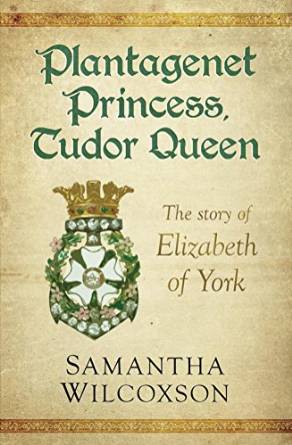
indexMy latest book review, of Samantha Wilcoxson’s wonderful novel, Plantagenet Princess, Tudor Queen – telling the story of Elizabeth of York, mother of Henry VIII– has gone live over at The Review today!

Plantagenet Princess, Tudor Queen is a delightful novel portraying the life of England’s first Tudor Queen, Elizabeth of York. Well written and researched, the author’s passion for her subject shines through on every page, drawing you into every aspect of Elizabeth’s life, from the men in her life, to her siblings and her children. Samantha Wilcoxson’s novel immerses you in every aspect of Elizabeth’s life; indeed it draws you into the Queen’s own thoughts and feelings; into her inner turmoil surrounding the fate of her brothers, the Princes in the Tower, and her desperate desire for her eldest son, Arthur, to succeed his father as king……

Plantagenet Princess, Tudor Queen immerses you in the world of the fledgling Tudor dynasty. Surrounding by wonderful palaces and the splendour of the royal court, we are taken on a journey through the life of a remarkable woman, a queen who bridged the gap between the Medieval World and the emerging Renaissance, between the Yorkists and the Lancastrians and became the matriarch of England’s most famous ruling dynasty. Samantha Wilcoxson skilfully guides us around the Tudor palaces, the customs and etiquette of the day, in order to bring the world of 500 years ago to vivid life…..

To read the full review of this fantastic novel – and to enter the prize draw and be in with a chance of winning a signed copy of the book in the giveaway, simply visit The Review and leave a comment. Good luck!

*

My book, Heroines of the Medieval World,  is now available in hardback in the UK from both Amberley Publishing and Amazon UK and worldwide from Book Depository. It is also available on Kindle in both the UK and USA and will be available in Hardback from Amazon US from 1 May 2018.

Be the first to read new articles by clicking the ‘Follow’ button, liking our Facebook page or joining me on Twitter.

©2016 Sharon Bennett Connolly
 

Book Corner: In the Footsteps of the Six Wives of Henry VIII by Sarah Morris and Natalie Grueninger

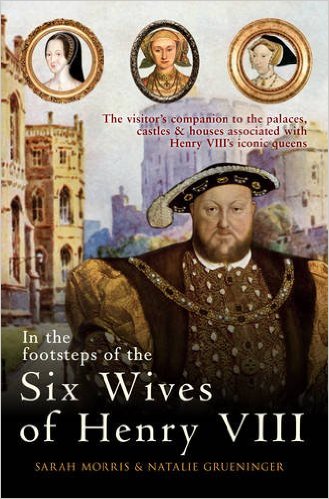
51C52QElN8L._SX327_BO1,204,203,200_This book provides a fresh perspective on the lives of Henry VIII’s six wives by embarking on a journey through the manors, castles and palaces in which their lives were played out.

Each location is described in a fascinating narrative that unearths the queens’ lives in documents and artefacts, as well as providing practical visitor information based on the authors’ first-hand knowledge of each site. Accompanied by an extensive range of images including timelines, maps, photographs and sketches, this book brings us closer than ever to the women behind the legends, providing a personal and illuminating journey in the footsteps of the six wives of Henry VIII.

In the Footsteps of the Six Wives of Henry VIII, by Sarah Morris and Natalie Grueninger, is an absolute treasure trove of pictures and information of the many historic locations associated with Henry VIII’s 6 wives. The book is divided into 7 easy-to-follow sections; the 1st covers the principal Royal residences of the period and the 6 subsequent portions are each dedicated to one of the 6 wives, in chronological order.

054 (2)
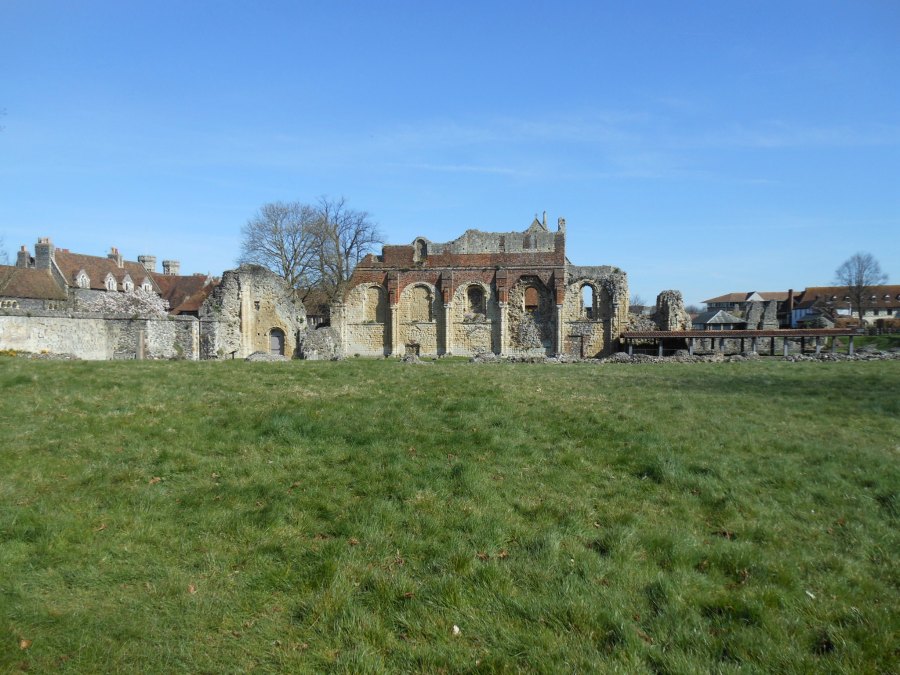
St Augustine’s Abbey, Canterbury

The book examines each of Henry’s queens in turn, looking at the locations associated with them, not only when they were queen, but also from their childhood and early life. In each section, we are treated to the queen’s story, her triumphs and failures, told through the palaces in which she experienced them.

In the Footsteps of the Six Wives of Henry VIII takes you on a visit of each location, whether it’s a palace or manor house, the authors give vivid tours, telling you what to look out for, what is still extant – and what is lost to history. In one location, they guide you to a housing estate and point out the walls which once made up the exterior of a Henry VIII’s now-lost palace. You are also provided with a practical guide to the locations covered, giving you visitor information, parking suggestions, details on refreshments and facilities.

135
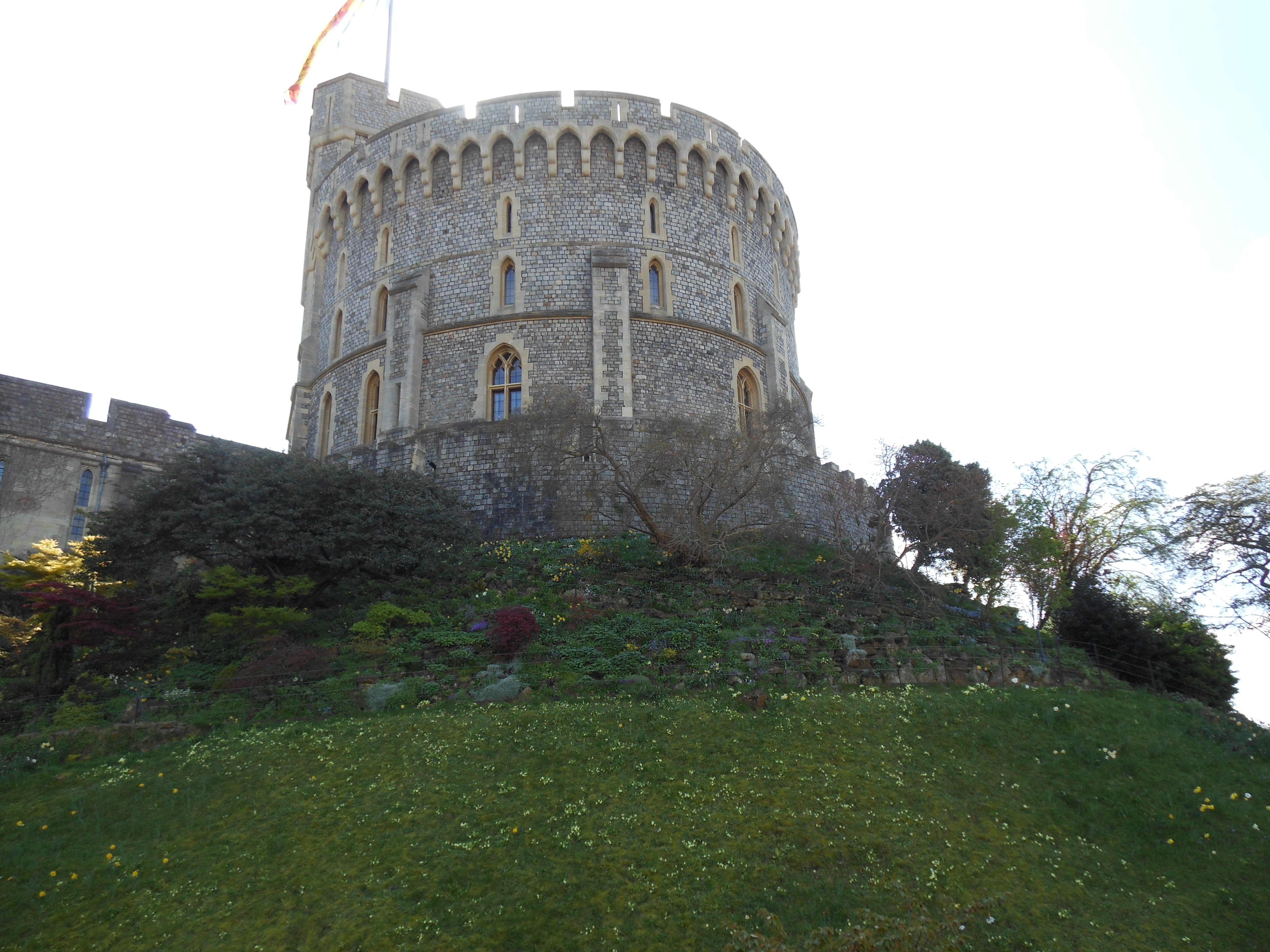
Windsor Castle

With Katherine of Aragon, we visit the magnificent palaces of Spain, while Anne Boleyn takes us from Burgundy to the Loire Valley. Jane Seymour allows us to investigate the renowned Wolf Hall and Anne of Cleves gives us a fascinating glimpse into Germany’s wonderful castles. Jane Seymour The tragic story of Katherine Howard allows us to join Henry’s great progress of 1541,  through Lincolnshire and Yorkshire, before the tragic last months of imprisonment at Syon House. Which finally brings us to Katherine Parr, investigating the locations associated with her first 2 marriages, her life with Henry and then her final years with Thomas Seymour.To walk the grounds and corridors of Hampton Court Palace is to walk in the footsteps of all the Tudor kings and queens. Within the Tudor palace’s russet-coloured walls, the present fades into the brickwork and the past emerges to greet us. Although mush of the Tudor palace has, over the years, been modified or demolished and replaced with William III’s and Mary II’s baroque palace, the buildings that survive propel us back through the years to a time when Hampton Court was one of Henry VIII’s most beloved palaces, at the centre of court life and politics.

020 (2)
Hever Castle, Kent

If nothing else, it is worth reading In the Footsteps of the Six Wives of Henry VIII for the research the Sarah Morris and Natalie Grueninger have conducted into the Anne of Cleves panels. These wonderful wood carvings are discussed and investigated in detail; their fascinating story told for the first time in its entirety. It is not hard to imagine the feelings of curiosity and, sometimes,  disappointment the authors must have felt as they tried to uncover the provenance of these panels, and their associations with Henry VIII’s 4th wife. Their eventual success and discoveries are a testament to the author’s persistence and tenacity.

This book is amply supported by quotes from primary sources, describing the locations as they were at the time the queens lived. The authors have a wonderful habit of discussing the difficulties involved in locating and identifying some of the less famous sites, making you feel part of their investigations.

178
The Bishop’s Palace, Lincoln

An abundance of photographs and illustrations are included in the book. These include colourful photos of the sites as they are now, black and white floor plans from the Tudor period and artwork painted through the ages.

Sarah Morris and Natalie Grueninger have created a wonderful book, which is a combination of history book and travel guide. They have worked so well together it is impossible to see the join; they speak with one voice in this stunning collaboration. The book is produced in a way to make it easy to dip in and out of, making it possible to read only about the locations you are currently touring, or to read from beginning to end in a couple of sittings. But be careful, in just looking up one specific location you may find that you lose an entire hour without noticing.

The only criticism I would have is that there are no footnotes to clarify the source of quotations, which makes it harder to use as a research tool, but not impossible. This fault is partly offset, moreover, by an extensive bibliography of primary and secondary sources, and in no way detracts from the enjoyment of the book as a whole.

Remarkably, the authors give equal empathy to each of Henry’s wives. It is impossible to discern a bias for Katherine of Aragon or Anne Boleyn (a remarkable achievement). Each property is subject to the same attention to detail, whether it was a frequently occupied palace, or a manor house visited for just a few days while on progress.

052
Gainsborough Old Hall, Lincolnshire

In the Footsteps of the Six Wives of Henry VIII is beautifully written and thoroughly engaging. You can practically hear, see and smell the Tudors. The book is a detailed, enjoyable and enlightening read, no matter whether you are intending to travel to the palaces, or visiting them through the book, you are in for a real treat. The authors have an incredible ability to invoke the past and recreate the sumptuous, lavish lives of England’s most fascinating queen consorts. It will be a valued addition to anyone’s Tudor library.

*

My book, Heroines of the Medieval World,  is now available in hardback in the UK from both Amberley Publishing and Amazon UK and worldwide from Book Depository. It is also available on Kindle in both the UK and USA and will be available in Hardback from Amazon US from 1 May 2018.

Be the first to read new articles by clicking the ‘Follow’ button, liking our Facebook page or joining me on Twitter.

*

Photographs ©Sharon Bennett Connolly 2016

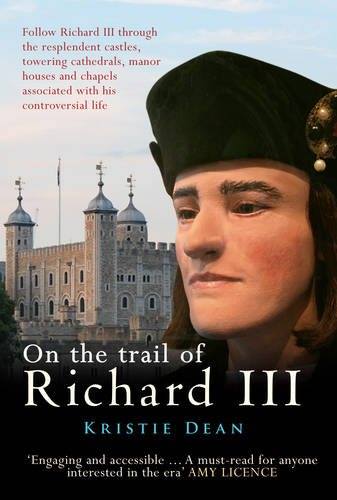
Book Corner: On the Trail of the Yorks by Kristie Dean

24th March On the Trail slider 13

Today is the last day of Kristie Dean‘s Blog Tour to celebrate the release of her latest book, On the Trail of the Yorks. Congratulations to Kristie on what has been a wonderful virtual book tour – and ‘thank you’ for asking History…the Interesting Bits to be a part of it.

So, I think, for the last day, it is only fair to give you my review of this remarkable book.

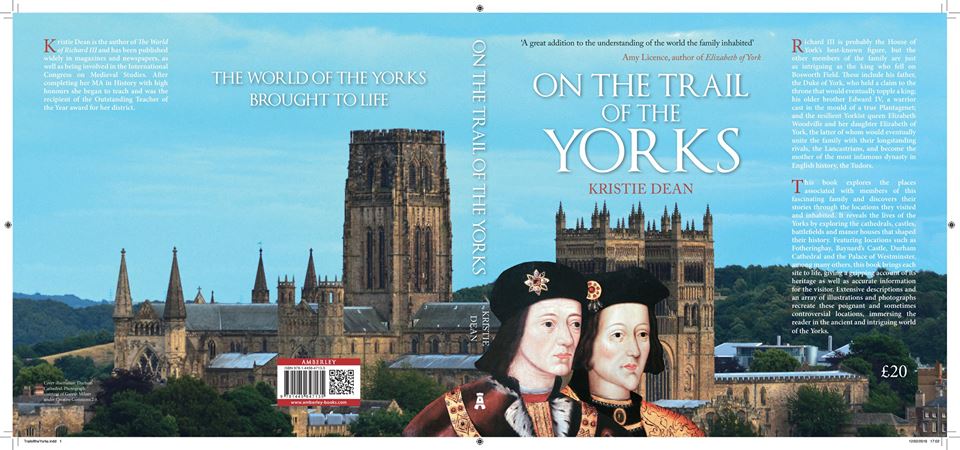
12791083_736187379851237_1299001826319792577_nRichard III is probably the House of York’s best-known figure, but the other members of the family are just as intriguing as the king who fell on Bosworth Field. This book explores the places associated with members of this fascinating family and discovers their stories through the locations they visited and inhabited. It reveals the lives of the Yorks by exploring the cathedrals, castles, battlefields and manor houses that shaped their history. Featuring locations such as Fotheringhay, Baynard’s Castle, Durham Cathedral and the Palace of Westminster, among many others, this book brings each site to life, giving a gripping account of its heritage as well as accurate information for the visitor. Extensive descriptions and an array of illustrations and photographs recreate these poignant and sometimes controversial locations, immersing the reader in the ancient and intriguing world of the Yorks.

Just over a year ago Kristie Dean published her book, The World of Richard III. This was a unique book with its own inimitable style. A combination of history book and travel guide, Ms Dean told the story of Richard III through the geographical locations associated with him. In On the Trail of the Yorks Kristie Dean has extended her research to include the rest of Richard’s family, from his father the Duke of York through his wife and brothers to his niece, Elizabeth of York, queen of Henry VII.

1422626_729589277177714_706482969626694562_nThe book is laid out in an easy-to-follow format, with each main character of the Yorkist dynasty getting their own chapter. The chapters then follow a loosely chronological manner, based on when the locations were used, or visited, by the person in question. Ms Dean always gives a history of the association between the Yorks and the historic site, while also giving a general history of the location. The book acts as a practical guide for each location; giving not only useful contact details, but also travel information and what to look out for while you are there.

The centre of the book has a treasure trove of colourful and black and white images. Including portraits depicting leading members of the House of York and photographs of the places the Yorks and Kristie Dean have visited. The wonderful pictures help to bring the history to life and you find yourself flicking between the descriptions of the various sites and the related pictures.

Kristie Dean also discusses locations which are no longer available to us. Her description of Old St Paul’s Cathedral, which was destroyed during the 1666 Great Fire of London, is so thorough and passionate that it leaves the reader bereft at the thought of what is lost.

Some places are familiar to any fan of the Yorkist dynasty; York, Fotheringhay, Ludlow and, of course, Middleham. While other locations are less-instantly recognisable as having Yorkist connections, but just as interesting; castles such as Conisbrough and the shrine of Our Lady of Walsingham. The book itself takes you from locations in England to Ireland and into France and the Continent, with comprehensive travel information as you go; giving you a tour of some of the best historic sites that Europe has to offer – whilst never moving from your armchair.

220px-Eltham_Palace_-_geograph.org.uk_-_19354
Eltham Palace

No matter how familiar it is to us, each location is given the same level of attention, with detailed descriptions of the site, the things to see – and what not to miss – and the Yorkist story behind  it. Kristie Dean builds up the personal stories of the individual members of the family through the buildings and places particularly associated with them.

On every page Kristie Dean’s passion and enthusiasm for her subject shines through. Here, she writes about Westminster Hall:

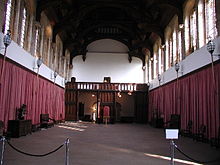
Few other places have survived to offer the York enthusiast such a rich tapestry of history; few other places allow one to stand under the same roof where so much history has passed. The atmospheric presence of those long gone can be felt, separated from today’s visitor by only the thin wall of time. You might feel hurried to move on to the next room, but find a corner and stand for a moment to experience the atmosphere…..

This book allows the reader to vicariously visit the locations associated with the family of the House of York, with the history of each site, descriptions of what it would have looked like in the 15th century and descriptions of what is available to visit today.

065
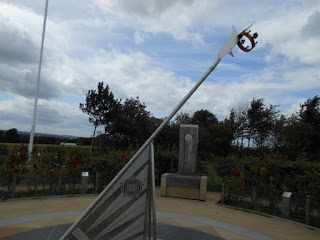
Bosworth Battlefield

You can vividly imagine being in Staindrop Church, or the church at Fotheringhay during the re-internment of Richard Duke of York in 1476, or feasting at the castle afterwards. Kristie Dean’s own information and knowledge is enhanced by her use of contemporary quotes, to give past descriptions of the locations and of the events she is describing.

It would be easy for a book of this kind to be confusing and higgledy-piggledy, but the author keeps focussed throughout and makes the book easy to follow, both as a history book and as a guide-book; keeping on topic and explaining any overlaps.

The work is thorough and impressive in the blend of history and geography, allowing you to use the book as a general history and tour guide, while each chapter and location is designed as a standalone guide, allowing you to drop in and out of the book as you please; a useful tool when travelling.

In short, this is a wonderful resource for both the armchair traveller, and the historical tourist, enhanced by photographs of locations and a level of detail that is second-to-none. It is a ‘must have’ on the book shelves for any fan of Richard III, the House of York or the Wars of the Roses in general, in order to enhance our knowledge of the period.

KristieKristie Dean has an MA in History and now enjoys teaching the subject, following a successful career in public relations. Her particular historic interest is the medieval era, specifically the Plantagenets, the Wars of the Roses and the Tudors. When not traveling for research, you can find Kristie at home in Tennessee with her husband, three dogs, and two cats. On the Trail of the Yorks is available now from Amazon UK and from Amazon US in May. And The World of Richard III will be released in paperback in May 2016, with its new title ….  On the Trail of Richard III.

*

My book, Heroines of the Medieval World,  is now available in hardback in the UK from both Amberley Publishing and Amazon UK and worldwide from Book Depository. It is also available on Kindle in both the UK and USA and will be available in Hardback from Amazon US from 1 May 2018.

Be the first to read new articles by clicking the ‘Follow’ button, liking our Facebook page or joining me on Twitter.

*

Pictures: Eltham Palace courtesy of Wikipedia; Bosworth ©SharonBennettConnolly 2014

Book corner: Interview with author Matthew Harffy

Earlier this week I had the opportunity to ask author Matthew Harffy a few questions.

Matthew’s latest book in his Bernicia Chronicles series, The Cross and the Curse, is out today. If it’s anything like his debut novel, The Serpent Sword, it will be a real page-turner.

The Romans are gone and largely forgotten, and the idea of a united England is 200 years in the future. 7th century England is a time of small, disparate kingdoms fighting for supremacy, a time when a skilled warrior can make a name for himself.

The Bernicia chronicles follow Beobrand, a young warrior, barely out of childhood, trying to find his own place in the world. Beobrand finds enemies, adventure and friendship while learning to fight and overcome his own personal losses. And amidst all this he is searching for his brother’s killer and vengeance.

TCATCKindleCover(1)
Matthew Harffy’s new novel, The Cross & The Curse

Matthew was kind enough to answer my queries, about his books, writing in general and it’s highs and lows.

1. What made you start writing?

I’ve always been creative and been involved in different artistic projects. I’ve sung in bands, painted and drawn, and studied performing arts. Being an avid reader, writing was an obvious thing to try at some stage. I started writing stories many times over the years but I always quickly ran out of patience and/or inspiration. The Serpent Sword was the first story I ever finished writing.

2. Who are your major writing influences?

There are so many, but a few of my favourite authors are David Gemmell, Bernard Cornwell, Larry McMurtry and Patrick O’Brian. More recently I’ve discovered lots of new authors, including Justin Hill and Robert Lautner, both of whom have produced excellent novels that inspired me.

3. What first got you interested in writing historical fiction?

I used to read a lot of fantasy and also played fantasy role playing games, such as Dungeons & Dragons. When I started writing The Serpent Sword, historical fiction just seemed a better fit. The early medieval period gave me a heroic age where people believed in gods, monsters and magic, but it was firmly grounded in historical fact. It felt more grown up perhaps.

I also read some best-sellers in the genre and thought – “I could do that”!

4. What attracted you to writing about the 7th century?

It was more the area of Northumbria than the era at first. I lived in Northumberland as a child for a few years and loved the place, with its castles perched atop rocky cliffs overlooking the slate-grey North Sea.

In 2001 I saw a documentary on TV about 7th century Anglo-Saxon graves being excavated at Bamburgh Castle. Something clicked and I started writing that night. After that I did research and realised what an interesting and important period the 7th century was for Northumbria and Britain as a whole.

5. What comes first, the storyline or the research?

When starting a new project, I do some background reading and find some interesting historical events that I think I could plot a story around. I then work out how to get my characters’ lives to intertwine with the real events.

6. Which do you find easiest to develop, the plot or the characters?

I think the plot is easier to develop. It is just like a jigsaw puzzle and you need to move the pieces until they click into place.

The character develop a little bit haphazardly as the plot progresses. The plot drives the narration for me, and the characters develop within that framework.

Matt
Matthew Harffy

7. What made you choose your central characters? From where do you get the inspiration for them?

I honestly have no idea for most of them! I need a character to fit the plot so just start writing and then, as time progresses, they get richer and more detailed. Sometimes I need to go back and add details earlier on in the storylines where I wrote them with less complexity than they ended up with. Some writers know all about their characters before they write a word. I don’t! One character in The Cross and the Curse, Anhaga, appeared as a “walk on” part, just a person for a major character to interact with in one scene. But then, something happened and he became one of the most important characters in the novel!

8. Who do you think is your best character? Who is your personal favourite? And why?

Wow – how can I answer that? I like them all, of course! Beobrand is the protagonist, so I probably know most about him and he is in most scenes of the novels. However, it is often more fun to write some of the less central characters.

I particularly like the more recent character of Reaghan, who does not appear in The Serpent Sword. I’m not sure why, but writing the female characters is pretty fun. I am married and have two daughters, so I find it cathartic to put myself in their heads for a time and try to see the world through a woman’s eyes.

9. Do you know how the book is going to end when you start it?

Broadly speaking yes. Perhaps not when I write the first lines of the book, but before I get too far into the narrative, I break down the plot into chapters and each chapter into scenes. I stick roughly to this structure and I write from beginning to end, without skipping any sections. So I write in the same order that the reader will read it. Of course, I know where it is headed, but I think this helps me get a feel for how the story plays out.

10. How do you approach your writing day?

I don’t have a “writing day”! I have “writing hours”. These are one or two hour slots of time that I can dedicate to writing. In those moments, wherever I am, be it a coffee shop, the library, a train, a hotel room, a bench in a hall while my daughter practices Taekwondo, a plane, or my parked car (all places I have written), I put headphones on, read the last scene I wrote to get in the mood and then write as much as I can. I normally write about five or six hundred words in an hour. Something like that. Once I have finished the whole novel draft, then, and only then, do I read the whole book.

Then the editing commences!

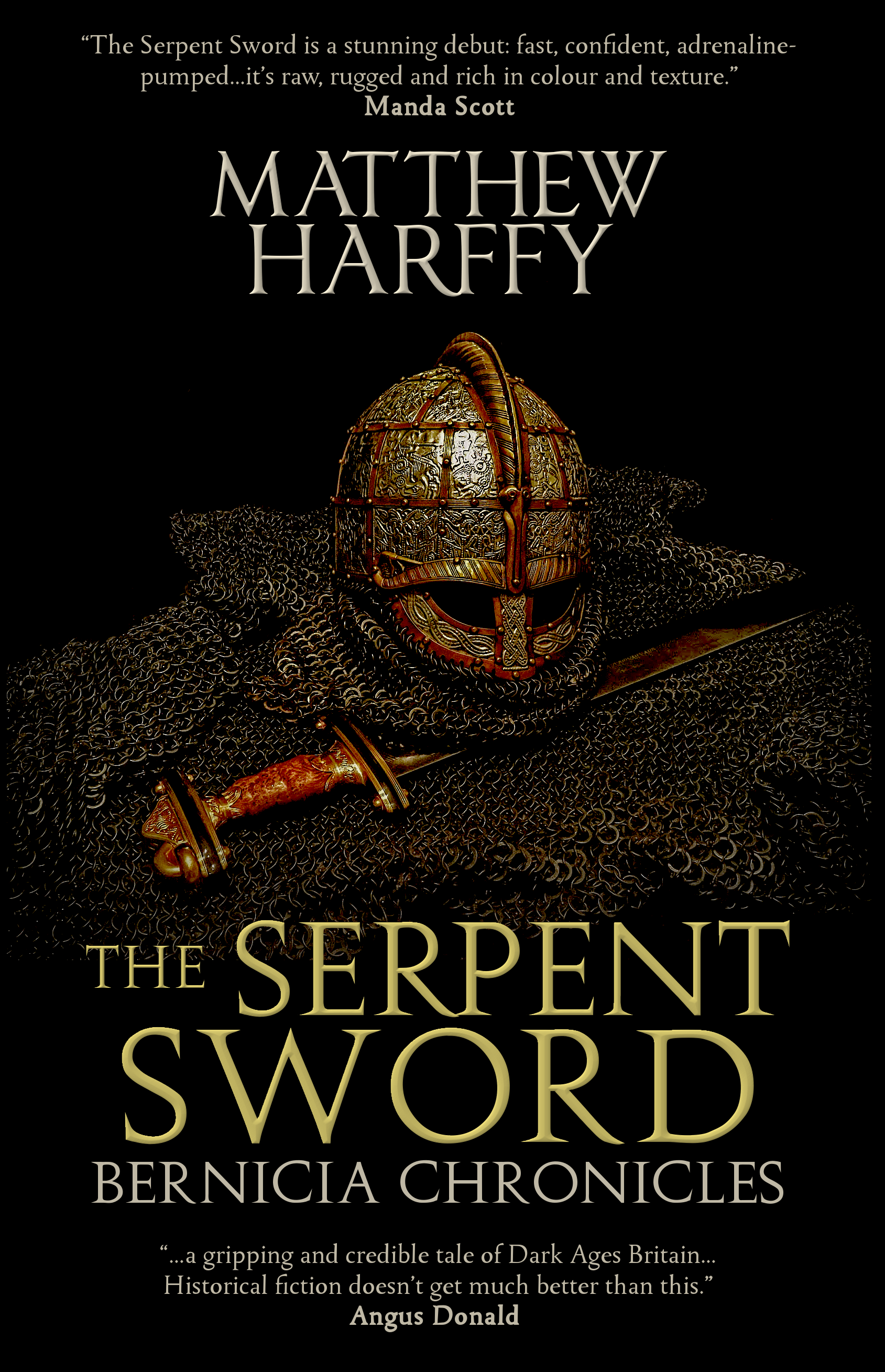
TheSerpentSwordFrontCover
Matthew Harffy’s debut novel, The Serpent Sword

11. If Ridley Scott was to approach you to make a film of your books, who would you want to play Beobrand?

From all I’ve heard of Hollywood, I’d have no say in the matter (Tom Cruise as Jack Reacher, anyone?!). I would like it to be someone who was large enough and strong enough to be believable, but with a brooding intensity and presence that would draw others to his side.

Perhaps your readers could suggest some actors in the comments!

12. Have you ever changed your mind about killing off a character?

No. They die when their time is up! It is as simple as that. I don’t really choose for them to be killed, it is just what the story demands.

13. What comes next? Do you have more books planned in the Bernicia Chronicles?

Yes! The follow up to The Serpent Sword – The Cross and the Curse – will be published on 22nd January 2016.

Book three of the Bernicia Chronicles, By Blood and Blade, is already written and is due for release later this year.

I am currently working on a novella, a standalone prequel to the Bernicia Chronicles, called Kin of Cain. That should be published this year too.

Then I’ll move on to book four of the Bernicia Chronicles (as yet untitled). That should be ready in 2017. I have plenty more stories to tell, so if people keep buying them, I’ll keep writing them!

14. Which other periods of history would you like to write about?

I’m interesting in many periods, but the 19th century is a time I would most like to write about. Perhaps set in the American West, as I love westerns.

15. What is the best thing about writing? And what’s the worst?

The best thing about writing is getting to tell stories and find that others actually enjoy them! Hearing from readers is the best thing, and reviews on Amazon and other sites actually help sell more books, so that’s an added bonus!

The worst thing is that it takes so bloody long to write a book! And by definition all of that time is spent on your own with no feedback, so you have to trust that you are writing something that others will want to read.

Thank you for the great questions and for the opportunity to spend some time with you today on your awesome blog.

Thank you very much to Matthew Harffy for taking the time to answer my questions.

The Serpent Sword is already available now and well worth the read. It’s a wonderful novel, full of excitement and adventure. The Cross and the Curse is available from Friday 22nd January 2016.

To find out more about Matthew Harffy you can his Facebook and Twitter pages, and his own website. Click on the book titles to buy The Serpent Sword and The Cross and The Curse.

I’d like to extend a huge thank you to Matthew for such a wonderful interview and wish him every success with his new novel.

*

My book, Heroines of the Medieval World,  is now available in hardback in the UK from both Amberley Publishing and Amazon UK and worldwide from Book Depository. It is also available on Kindle in both the UK and USA and will be available in Hardback from Amazon US from 1 May 2018.

Be the first to read new articles by clicking the ‘Follow’ button, liking our Facebook page or joining me on Twitter.

©2016 Sharon Bennett Connolly
Merry Christmas and Happy New Year

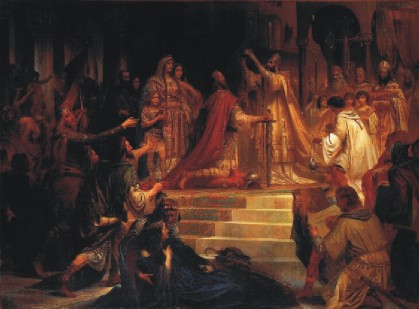
Friedrich_Kaulbach_-_Krönung_Karls_des_Großen
Coronation of Charlemagne as Holy Roman Emperor, Christmas Day 800

On Christmas Day ‘History…the Interesting Bits’ marks its 1st birthday. I would like to thank all my readers for sticking with me, and for all your support and encouragement – I couldn’t have done it without you.

It has been an exciting year and a steep learning curve for me, but I am very happy with the results!

Articles have covered many different subjects in history, from kings and queens, brothers and sisters, heroines, mistresses and witchcraft to abbeys, castles and caves  – and even Sir Lancelot – with a couple of book reviews thrown in.

It has been a lot of fun and I hope there has been something of interest for everyone.

Roll on 2016….

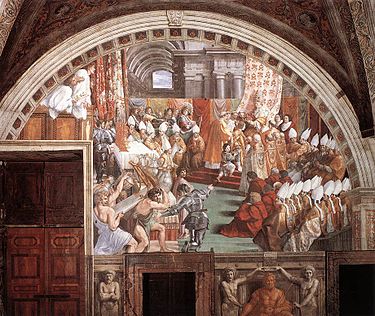
375px-Raphael_Charlemagne
Raphael’s depiction of Charlemagne’s Imperial coronation

Once again, thank you everyone for your support. A very MERRY CHRISTMAS to all of you and a magnificent NEW YEAR.

Best wishes, Sharon

*

Be the first to read new articles by clicking the ‘Follow’ button, liking our Facebook page or joining me on Twitter.

*

Pictures courtesy of Wikipedia


The Jilted Princess

JoanEngland
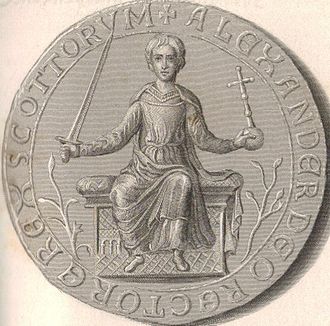
Joan of England, Queen of Scotland

Joan of England was the oldest of daughter of King John and his 2nd wife, Isabella of Angoulême. Born on 22 July 1210 she was the 3rd of 5 children; she had 2 older brothers and 2 younger sisters would join the family by 1215.

Even before her birth, she was mooted as a possible bride for Alexander of Scotland, son of King William I of Scotland. A verbal agreement between the two kings, after the Treaty of Norham, in 1209 provided for John to arrange the marriages of William’s two daughters, with one marrying a son of John’s, and Alexander marrying one of John’s daughters.

Following the death of William I a further treaty in 1212 agreed to the marriage of 14-year-old Alexander II to 2-year-old Joan. However, the agreement seems to have been made as a way of preventing Alexander from looking to the continent – and especially France – for a potential bride, and by extension allies.

It did not stop John from looking further afield, nevertheless, for a more favourable marriage alliance. Nor did it stop Alexander from siding with the Barons against King John; Alexander was one of the Magna Carta signatories. John refused a proposal from King Philip II of France, for his son John, and settled in 1214 for a marriage with his old enemies the de Lusignan’s.

In 1214 Joan was betrothed to Hugh X de Lusignan. Hugh was the son of John’s rival for the hand of Isabella in 1200; Isabella’s engagement to Hugh IX was broken off  in order for her to marry John. Following the betrothal Hugh, Lord of Lusignan and Count of La Marche, was given custody of Joan and of Saintes, Saintonge and the Isle of Oléron as pledges for her dowry. Joan was just 4 years old when she travelled to the south of France to live with her future husband’s family. She was away from England at the height of the Baron’s War, and at her father’s death in October 1216.

It’s possible she was reunited with her mother in 1217 when Isabella of Angoulême left England, abandoning her four other children, in order to govern her own lands in Angoulême.

In 1220 in a scandalous about-face Hugh repudiated Joan and married her mother, his father’s former betrothed. And poor 9-year-old Joan’s erstwhile future husband was now her step-father!

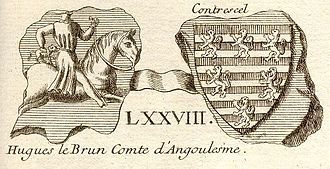
330px-Hugues_le_Brun
Hugh X de Lusignan, Joan’s betrothed and step-father

And worse was to come…

Instead of being sent back to England, as you would expect, Joan went from being Hugh’s betrothed – to being his prisoner. She was held hostage to ensure Hugh’s continued control of her dower lands, and to guarantee the transfer of his new wife’s dower, while England was withholding Queen Isabella’s dower against the return of Joan’s dower lands.

Negotiations to resolve the situation were ongoing. In the mean time, Henry III was already looking to arrange a new marriage for Joan. On 15th June 1220, in York, a conference between Alexander II and Henry III saw the Scots king agree to marry Joan, with a provision that he would marry Joan’s younger sister, Isabella, if Joan was not returned to England in time.

Negotiations for Joan’s return were long and difficult and not helped by the fact Hugh was threatening war in Poitou. Eventually, after Papal intervention, agreement was reached in October 1220 and Joan was surrendered to the English.

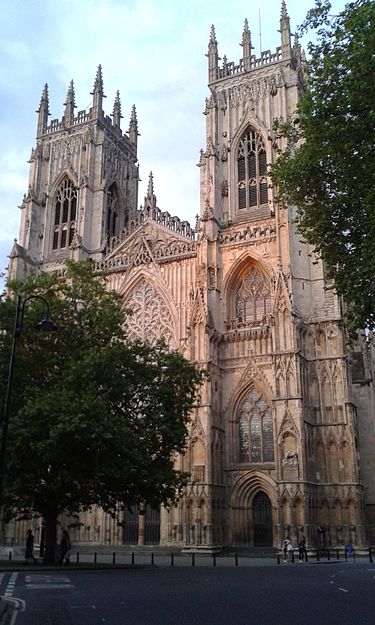
Joan and Alexander II were married on the 19th June 1221, at York Minster. Joan was just a month from her 11th birthday, while Alexander was 22. The archbishop of York performed the ceremony, which was witnessed Henry III and the great magnates of both realms. Henry III’s Pipe Rolls suggest the wedding was followed by 3 days of celebrations, costing £100. According to the Chronicle of Melrose ‘having celebrated the nuptials most splendidly, as was befitting, with all the natives of either realm rejoicing, [Alexander] conducted [Joan] to Scotland.’

York.mstr.
York Minster

The day before the wedding Alexander had assigned dower estates to Joan, worth an annual income of £1,000, including Jedburgh, Crail and Kinghorn. However, part of the dower was still held by Alexander’s mother, the dowager Queen Ermengarde, and Joan was not entitled to the income until after her mother-in-law’s death. This left Joan financially dependent on Alexander from the beginning.

There is a suggestion that Joan was not enamoured with Scotland and its society. She was hampered by her youth, her domineering mother-in-law and, eventually, by the fact she failed  to produce the desired heir. Her position was further hindered by tensions between her husband and brother from time to time.

In this, though, she seems to have found her purpose. Joan regularly acted as intermediary between the 2 kings. Alexander often used Joan’s personal letters to her brother as a way of communicating with Henry, while bypassing the formality of official correspondence between kings.

One such letter is a warning, possibly on behalf of Alexander’s constable, Alan of Galloway, of intelligence that Haakon IV of Norway was intending to aid Hugh de Lacy in Ireland. In the same letter she assured Henry that no one from Scotland would be going to Ireland to fight against Henry’s interests. Another letter, this time from Henry, was of a more personal nature, written in February 1235 it informed Joan of the marriage of their “beloved sister” Isabella to the holy Roman Emperor Frederick II, news at which he knew Joan “would greatly rejoice”.

In December 1235 Alexander and Joan were summoned to London, possibly for the coronation of Henry’s new queen, Eleanor of Provence. This would have been a long and arduous journey for the Scots monarchs, especially in the deepest part of winter.

Henry’s use of Joan as an intermediary suggests she did have some influence over her husband, this theory is supported by the fact that Joan accompanied Alexander to negotiations with the English king, at Newcastle in September 1236 and again at York in September 1237.

In 1234 Henry had granted Joan the manor of Fenstanton in Huntingdonshire and during the 1236 negotiations she was granted Driffield in Yorkshire, giving Joan an income independent of Scotland. Many have seen this as an indication that Joan was intending to spend more time in England, especially seeing as the chronicler Matthew Paris hints at an estrangement, although we cannot be certain.

330px-Alexander_II_(Alba)_i
Alexander II

The 1236 and 1237 councils were attempts at resolving the ongoing claims of Alexander that King John had agreed to gift Northumberland to Alexander as part of the marriage contract between Alexander and Joan. Henry, of course, denied this. With the mediation of a papal legate, agreement was eventually reached in York at the 1237 council, with both queens present, when Alexander gave up the claim to Northumberland in return for lands in the northern counties with an annual income of £200.

Following the 1237 council Joan and her sister-in-law Eleanor of Provence departed on pilgrimage to the shrine of Thomas Becket at Canterbury. Given that Joan was now 27 and Eleanor already married for two years, it is possible both women were praying for children, and an heir.

Joan stayed in England for the rest of the year; much of the stay seems to have been informal and pleasurable. She spent Christmas at Henry’s court and was given new robes for herself, her clerks and servants, in addition to gifts of does and wine. Her widowed sister Eleanor, Countess of Pembroke, was present, along with the Countess of Chester and Joan’s cousin, the captive Eleanor of Brittany.

In late January arrangements were being made for Joan’s return to Scotland, but she fell ill before she could travel north. Still only 27 years of age Joan died on 4th March 1238 at Havering-atte-Bower in Essex, her brothers, King Henry III and Richard, Earl of Cornwall, were at her side.

HenryIII
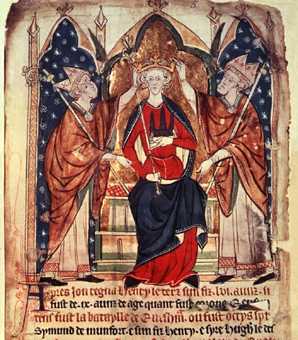
Henry III

According to Matthew Paris ‘her death was grievous, however she merited less mourning, because she refused to return [to Scotland] although often summoned back by her husband’. And even in death Joan elected to stay in England. her will requested that she be buried at the Cistercian nunnery of Tarrant in Dorset.

The convent benefited greatly from Henry III’s almsgiving for the soul of his sister; in 1252, over 13 years after her death, the king ordered a marble effigy to be made for her tomb (which unfortunately has not survived).

Talking of her wedding day, the Chronicle of Lanercost had described Joan as ‘a girl still of a young age, but when she was an adult of comely beauty.’

Alexander II married again just over a year after Joan’s death, to Marie de Coucy and their son, Alexander III, the longed-for heir, was born in 1241. Alexander II died of a fever in 1249.

*

Images courtesy of Wikipedia

*

Sources: The Oxford Companion to British History Edited by John Cannon; The Plantagenets, the Kings who Made England by Dan Jones; History Today Companion to British History Edited by Juliet Gardiner and Neil Wenborn;  Brewer’s British Royalty by David Williamson; Britain’s Royal Families, the Complete Genealogy by Alison Weir; The Plantagenet Chronicles Edited by Elizabeth Hallam; The Mammoth Book of British Kings and Queens by Mike Ashley; The Plantagenets, the Kings that made Britain by Derek Wilson; England Under the Norman and Angevin Kings  by Robert Bartlett; http://www.britannica.com; oxforddnb.com; finerollshenry3.org.uk.

*

My Books

Signed, dedicated copies of all my books are available through my online bookshop. or by contacting me.

Unfortunately, postage costs make it very expensive to send books to the US. However, if you buy one of my books in the US, I can send out a signed book plate. Just send me your address and who to dedicate it to via my contacting me page.

Coming 30 March: Princesses of the Early Middle Ages

Daughters of kings were often used to seal treaty alliances and forge peace with England’s enemies. Princesses of the Early Middle Ages: Royal Daughters of the Conquest explores the lives of these young women, how they followed the stereotype, and how they sometimes managed to escape it. It will look at the world they lived in, and how their lives and marriages were affected by political necessity and the events of the time. Princesses of the Early Middle Ages will also examine how these girls, who were often political pawns, were able to control their own lives and fates. Whilst they were expected to obey their parents in their marriage choices, several princesses were able to exert their own influence on these choices, with some outright refusing the husbands offered to them.

Their stories are touching, inspiring and, at times, heartbreaking.

Princesses of the Early Middle Ages: Royal Daughters of the Conquest is now available for pre-order from Pen & Sword and Amazon.

Also by Sharon Bennett Connolly:

Scotland’s history is dramatic, violent and bloody and Scotland’s Medieval Queens have seen it all. This is the story of Scotland through their eyes. Available now from Amazon and Pen and Sword BooksHeroines of the Tudor World tells the stories of the most remarkable women from European history in the time of the Tudor dynasty, 1485-1603. These are the women who ruled, the women who founded dynasties, the women who fought for religious freedom, their families and love. Heroines of the Tudor World is now available from Amberley Publishing and Amazon UK. Women of the Anarchy demonstrates how Empress Matilda and Matilda of Boulogne, unable to wield a sword themselves, were prime movers in this time of conflict and lawlessness. It shows how their strengths, weaknesses, and personal ambitions swung the fortunes of war one way – and then the other. Available from Bookshop.orgAmberley Publishing and Amazon UKKing John’s Right-Hand Lady: The Story of Nicholaa de la Haye is the story of a truly remarkable lady, the hereditary constable of Lincoln Castle and the first woman in England to be appointed sheriff in her own right. Available from all good bookshops Pen & Sword Booksbookshop.org and Amazon

Defenders of the Norman Crown: The Rise and Fall of the Warenne Earls of Surrey tells the fascinating story of the Warenne dynasty, from its origins in Normandy, through the Conquest, Magna Carta, the wars and marriages that led to its ultimate demise in the reign of Edward III. Available from Pen & Sword BooksAmazon in the UK and US, and Bookshop.orgLadies of Magna Carta: Women of Influence in Thirteenth Century England looks into the relationships of the various noble families of the 13th century, and how they were affected by the Barons’ Wars, Magna Carta and its aftermath; the bonds that were formed and those that were broken. It is now available in paperback and hardback from Pen & SwordAmazon, and Bookshop.orgHeroines of the Medieval World tells the stories of some of the most remarkable women from Medieval history, from Eleanor of Aquitaine to Julian of Norwich. Available now from Amberley Publishing and Amazon, and Bookshop.orgSilk and the Sword: The Women of the Norman Conquest traces the fortunes of the women who had a significant role to play in the momentous events of 1066. Available now from Amazon,  Amberley Publishing, and Bookshop.org.

Alternate Endings: An anthology of historical fiction short stories including Long Live the King… which is my take what might have happened had King John not died in October 1216. Available in paperback and kindle from Amazon.

Podcast:

Have a listen to the A Slice of Medieval podcast, which I co-host with Historical fiction novelist Derek Birks. Derek and I welcome guests, such as Bernard Cornwell and Michael Jecks, and discuss a wide range of topics in medieval history, from significant events to the personalities involved. 

Every episode is also now available on YouTube.

*

Don’t forget! Signed and dedicated copies of all my books are available through my online bookshop.

For forthcoming online and in-person talks, please check out my Events Page.

You can be the first to read new articles by clicking the ‘Follow’ button, liking our Facebook page or joining me on TwitterThreadsBluesky and Instagram.

*

©2015 Sharon Bennett Connolly FRHistS