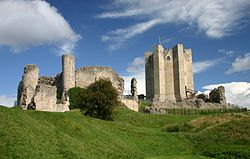
Conisbrough Castle – its Life and History

ConisbroughCastle

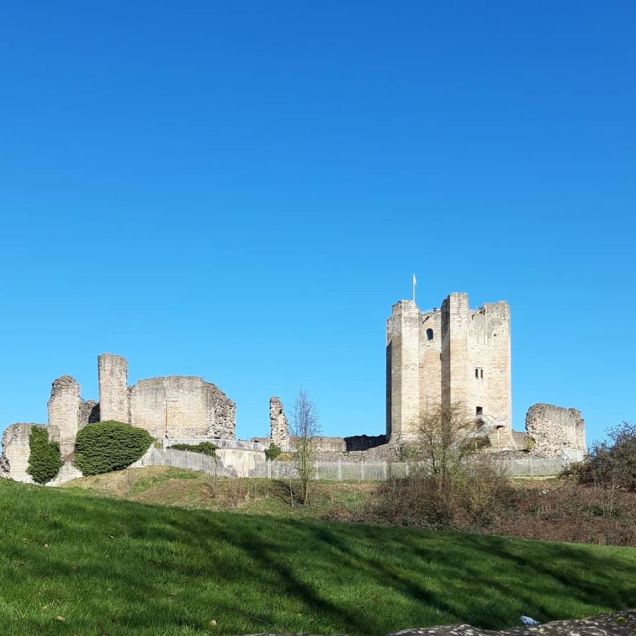
Growing up near Conisbrough Castle, South Yorkshire, I did not know much about its history. It was rather underrated. We always thought it was just a bland old place – it was great for exploring and rolling down the hills and playing hide and seek in the inner bailey. However, being so far from London, the centre of power,  it didn’t seem to have much history or national importance. The most famous thing about it was that it was used as the Saxon castle in Sir Walter Scott’s Ivanhoe.

The castle’s early history

English Heritage have spent a lot of money on it in recent years. When I worked there in the early 1990s there was no roof, it was open to the elements, with green moss on the walls and erosion caused by acid rain. And there was just a very narrow walkway around the inside of the keep. It was just a shell. Now it has a roof, floors on every level, sensitive lighting, information videos on each floor and a fantastic little visitor centre with a small museum. It looks so much better (although I still wouldn’t want to stand on the battlements on a windy day like today).
020
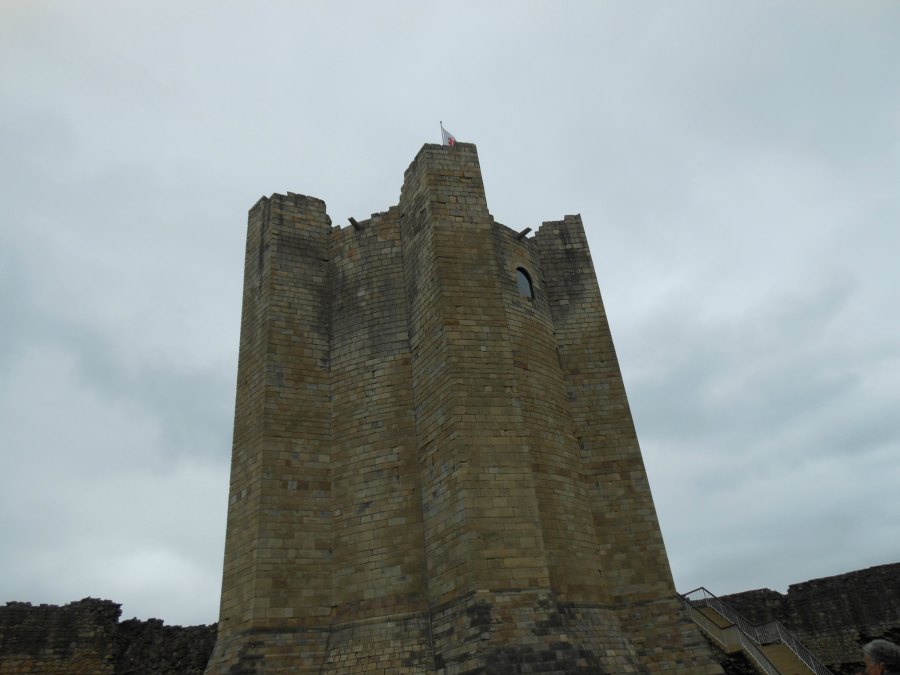
Conisbrough’s hexagonal keep

When I joined the castle team as a volunteer tour guide, I started looking into the actual history of the Castle, seeing it more for what it has been, than for the visitor attraction it is now. Instead of being a forgotten, unimportant little castle in the middle of nowhere, Conisbrough Castle comes to life through the history it has been a part of, and the people who have called it home.

According to Geoffrey of Monmouth, in his Historia Regum Britanniae (History of the Kings of Britain), Conisbrough was founded as ‘Conan’s Burg’ by a British leader called Conan. It was said to have later belonged to Ambrosius Aurelianus, a candidate for the legendary King Arthur. As Geoffrey of Monmouth says, Ambrosius captured the Saxon leader Hengist, once a mercenary for Vortigern, at the battle of ‘Maisbeli.’ And brought him to his stronghold at Conisbrough. Hengist was then beheaded on Ambrosius’ orders and buried at the entrance to the castle of ‘Cunengeburg’, that is Conisbrough. A small hill, locally called Hengist’s Mound, is in the grounds of the outer bailey.

What we know, for certain, is that by 1066 the Honour of Conisbrough belonged to Harold Godwinson, Earl of Wessex and later King Harold II of England, though there is no evidence that he ever visited. On a prominent, steep hill, the castle guards the main road between Sheffield and Doncaster to the east, and the navigable River Don to the north.

010 (2)
The kitchen range in the inner bailey

Following Harold’s defeat and death at the Battle of Hastings, and shortly after the Harrying of the North of 1068 Conisbrough was given to one of William the Conqueror’s greatest supporters, William de Warenne. Warenne was a cousin of Duke William of Normandy and fought alongside him at the Battle of Hastings. He was given land in various counties, including Lewes in Sussex and Conisbrough in Yorkshire; and although he developed his property at Castle Acre in Norfolk, little was done at Conisbrough. In those days the castle itself was little more than a wooden motte and bailey construction, surrounded by wooden palisades and earthworks.

*

A thoroughly modern Castle

It was not until the reign of Henry II that the Castle began to take on the majestic appearance we know today. Conisbrough came into the hands of Hamelin Plantagenet, illegitimate half-brother of King Henry II; Hamelin had married the de Warenne heiress, Isabel, 4th Countess of Warenne and Surrey, and became 4th Earl of Warenne and Surrey by right of his wife.

029
Fireplace in the bedchamber in the keep

It was Hamelin who built the spectacular hexagonal keep that we can see today. The stairs to the keep were originally accessed across a drawbridge, which could be raised in times of attack. The ground floor was used for storage, with a basement storeroom below, housing the keep’s well,  and accessed by ladder.

The first floor holds the great chamber, or solar, with a magnificent fireplace and seating in the glass-less window. According to Margaret Wood’s The English Medieval House, “It has been shown * that the two earliest known examples of a hooded fireplace, at Conisborough [sic] keep (c. 1185)‘ in Yorkshire (PI. XLI p), occur where the circular plan of the room made an arched fireplace difficult to construct. Here a lintel was formed along a chord of the circumference, and the resulting filling above assumed a hooded form.” This is where the Lord would have conducted business, or entertained important guests. Henry II, King John and King Edward II are known to have visited Conisbrough: King John even issued a charter from Conisbrough Castle in March 1201.
030
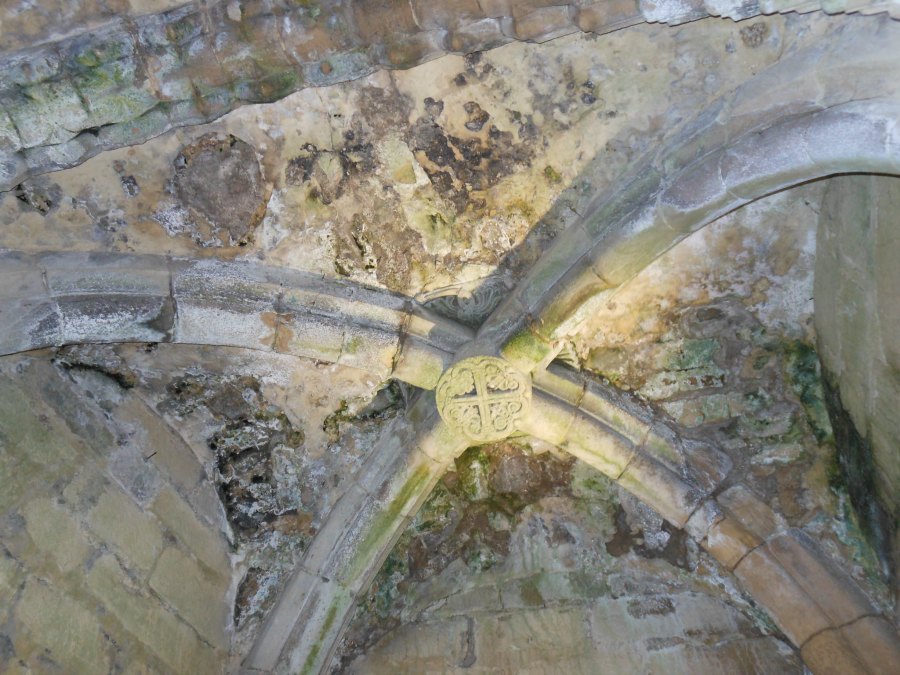
The chapel’s vaulted ceiling

The second floor would have been sleeping quarters for the lord and lady. Both the solar and the bedchamber have impressive fireplaces, garderobes and a stone basin, which would have had running water delivered from a rainwater cistern on the roof.

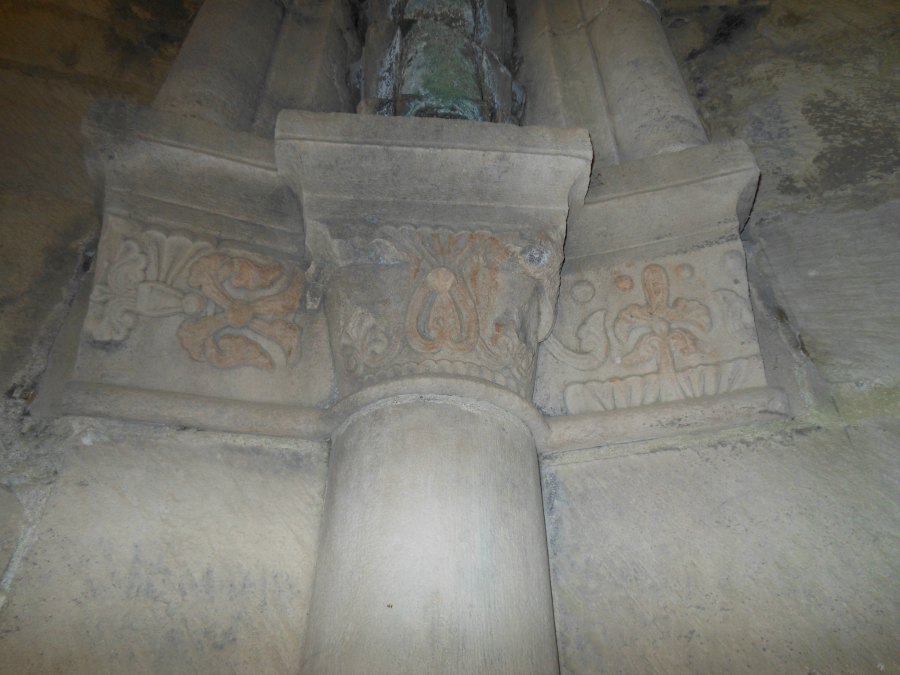
On this floor, also, built into one of the keep’s buttresses is the family’s private chapel. This may well have been the chapel endowed by Hamelin and Isabel in 1189-90, and dedicated to St Philip and St James (although there was a, now lost, second chapel in the inner bailey to which the endowment could refer). The chapel is well-decorated, with quatrefoil windows, elaborate carving on the columns and a wonderful vaulted ceiling.
036
Chapel carvings

There is a small sacristy for the priest, just to the left of the door, with another basin for the priest’s personal use, and cavities for storing the vestments and altar vessels.

The winding stairs, built within the keep’s thick walls, give access to each successive level and, eventually, to the battlements, with a panoramic view of the surrounding area.

These battlements also had cisterns to hold rainwater, a bread oven and weapons storage; and wooden hoardings stretching out over the bailey to aid in defence. The keep and curtain walls – which were built slightly later – were of a state-of-the art design in their day. The barbican, leading into the inner bailey, had 2 gatehouses and  a steep passageway guarded by high walls on both sides; an attacking force would have been defenceless against missiles from above, with nowhere to run in the cramped corridor.

041
View from the battlements

Although the encircling moat is dry (the keep is built high on a hill), all the detritus from the toilets and kitchens drained into it; another little aid to defence – imagine having to attack through that kind of waste?

None of the buildings in the inner bailey have survived, although you can see their stone foundations in the ground. Along one wall there were kitchens and service rooms leading into a great hall, with a raised dais at the far end, and a solar and living quarters above. Another range of buildings attached to the western wall also held living quarters, possibly for the garrison and any guests. There’s even a small jail cell just to the side of the barbican.

Although Conisbrough is not a large castle, the extensive range of buildings, the magnificent decorations of the fireplaces and chapel, suggest it would have been impressive in its day; and reflects the importance of the castle’s owners and occupants.

*

The Castle’s Residents

008 (2)
The inner bailey

The Warenne Earls of Surrey were close to the crown, and the centre of government, for the best part 3 centuries. The daughter of the 2nd Earl, Ada, had married the heir to the Scots throne and was mother to 2 Scottish kings; Malcolm the Maiden and William the Lion.

Hamelin’s son and heir, William, 5th Earl of Warenne and Surrey, married Maud Marshal, daughter of the Greatest knight, William Marshal, Earl of Pembroke and Regent during Henry III’s  infancy. A cousin of King John, William was deeply involved in the Magna Carta crisis, though not always in support of his cousin. Their son John, the 6th Earl, was Edward I’s lieutenant in Scotland and beat the Scots at the Battle of Dunbar in 1296, though he had been defeated by William Wallace at Stirling Bridge the following year. John’s daughter, Isabella, married John Balliol, King of Scots, and was mother to Edward Balliol, another Scottish king. John’s sister, Isabel, married Hugh d’Aubigny, 5th Earl of Arundel, and is remembered as the countess who stood up to Henry III, invoking Magna Carta, when he appropriated land that was rightfully hers.

The 7th – and last – Warenne earl, John, was a colourful character who lived through some of the most dramatic events of English history; the reign of Edweard II. John was the grandson of the 6th earl; his father, William de Warenne, had diedbeen killed in a tournament at Croydon, in December 1286, when John was just 6 months old. Although he was married to Joan of Bar, a granddaughter of Edward I, John lived openly with his mistress and made several unsuccessful attempts to obtain a divorce from his wife. A private feud with Thomas Earl of Lancaster saw John arrange the kidnapping of Earl Tomas’ wife, Alice de Lacey, possibly in retaliation for Lancaster standing in the way of Surrey’s longed-for divorce. The result was the 1st – and only – siege of Conisbrough Castle.

Lancaster sent forces to seize the Warenne castles at Sandal and Conisbrough. His men found the gates of Conisbrough closed to them. The castle was defended by only six men, including the town miller and three brothers, Thomas, Henry and William Greathead, who were men-at-arms. The siege lasted less than two hours and the defenders appear to have relinquished the castle after apparently putting up a token resistance; the three brothers were fined for drawing blood. The chapel in the castle’s inner bailey may have been damaged in the brief altercation, as the following year, Lancaster sent orders to his castellan at Conisbrough, John de Lassell, to ‘repailler la couverture de la chapele de Conynggesburgh.’1
028
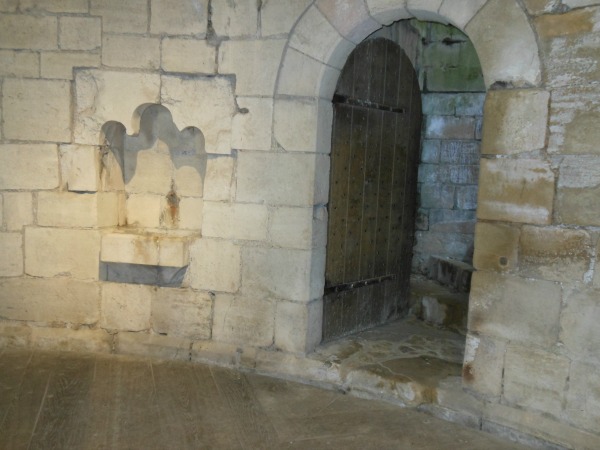
The bedchamber in the keep, with wash basin and stairway leading to the garderobe and battlements

The last Earl of Surrey died without heirs in 1347 and Conisbrough passed to John de Warenne’s godson, Edmund of Langley, fourth son of Edward III. Edmund’s wife Isabella of Castile gave birth to her 3rd child, Richard Earl of Cambridge (also known as Richard of Conisbrough) at Conisbrough, possibly in the lavish bedchamber within the keep itself. Cambridge had the dubious reputation of being England’s poorest Earl and was executed following his involvement in the Southampton plot against Henry V; however, he is remembered to history as the grandfather of the Yorkist kings, Edward IV and Richard III.

Following Cambridge’s execution for treason in 1415 his 2nd wife, Maud Clifford, made Conisbrough her principal residence until her death in 1446. Maud entertained her Clifford family here and her great-nephew and godson John Clifford, known to Yorkists as the Butcher of Skipton was born there in 1435. In a strange twist of fate, John Clifford is the one accused of murdering the Earl of Cambridge’s 17-year-old grandson Edmund, Earl of Rutland, following the Lancastrian’s defeat of the Yorksists at the Battle of Wakefield on 30 December 1460. Maud died at the castle in August 1446 and is buried in Roche Abbey, about 10 miles from her home.

The castle underwent repairs during the reigns of Edward IV and Richard III, in 1482-3, but by 1538 a survey revealed the it had fallen into neglect and decay, with parts of the curtain wall having slipped down the embankment.

From then on, although it has had successive owners until it came under the protection of English Heritage, Conisbrough Castle has been a picturesque ruin, a wonderful venue for picnics and exploring its many hidden treasures.
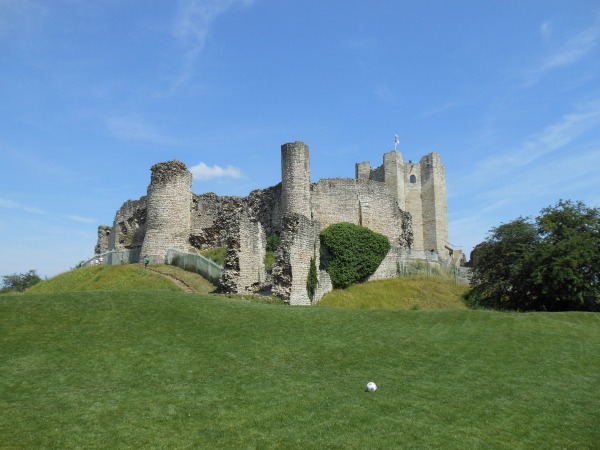
Conisbrough Castle from the outer bailey

*

All photographs are copyright to Sharon Bennett Connolly, 2015.

Footnote:

1 Hunter’s South Yorkshire ii; Deanery of Doncaster ii quoted in F. Royston Fairbank, The Last Earl of Warenne and Surrey, and the Distribution of His Possessions, Yorkshire Archaeological Journal, p. 213

*

Sources:

Further reading: East Yorkshire Charters Volume 8: The Honour of Warenne, edited by William Farrer & Charles Travis Clay; English Heritage Guidebook for Conisbrough Castle by Steven Brindle and Agnieszka Sadrei; English Tourist Board’s English Castles Almanac; The English Medieval House by Margaret Wood; http://www.kristiedean.com/butcher-skipton; On the Trail of the Yorks by Kristie Dean; F. Royston Fairbank, The Last Earl of Warenne and Surrey, and the Distribution of His Possessions, Yorkshire Archaeological Journal.

*

My Books
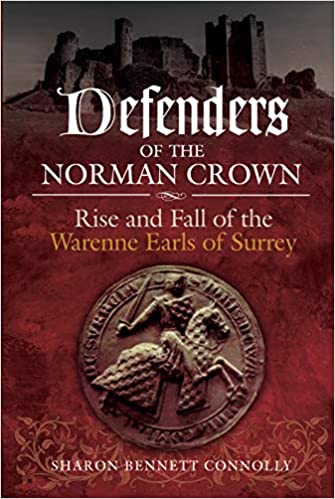
Defenders of the Norman Crown: The Rise and Fall of the Warenne Earls of Surrey tells the fascinating story of the Warenne dynasty, of the successes and failures of one of the most powerful families in England, from its origins in Normandy, through the Conquest, Magna Carta, the wars and marriages that led to its ultimate demise in the reign of Edward III.

1 family. 8 earls. 300 years of English history!

Defenders of the Norman Crown: Rise and Fall of the Warenne Earls of Surrey will be released in the UK on 31 May and in the US on 6 August. And it is now available for pre-order from Pen & Sword BooksAmazon in the UK and US and Book Depository.

Also by Sharon Bennett Connolly:

Ladies of Magna Carta: Women of Influence in Thirteenth Century England looks into the relationships of the various noble families of the 13th century, and how they were affected by the Barons’ Wars, Magna Carta and its aftermath; the bonds that were formed and those that were broken. It is now available from Pen & Sword,  Amazon and from Book Depository worldwide.

Heroines of the Medieval World tells the stories of some of the most remarkable women from Medieval history, from Eleanor of Aquitaine to Julian of Norwich. Available now from Amberley Publishing and Amazon and Book Depository.

Silk and the Sword: The Women of the Norman Conquest traces the fortunes of the women who had a significant role to play in the momentous events of 1066.  Available now from Amazon,  Amberley Publishing, Book Depository.

*

You can be the first to read new articles by clicking the ‘Follow’ button, liking our Facebook page or joining me on Twitter and Instagram.

©2020 Sharon Bennett Connolly
Magna Carta and the Princesses of Scotland

12215 Magna Carta, British Library

Other than the Queen of England, Isabelle d’Angoulême, only two women who can be clearly identified in Magna Carta itself. Though they are not mentioned by name, they are two Scottish princesses. The older sisters of King Alexander II had been held hostage in England since 1209, when John forced the humiliating Treaty of Norham on their ailing father, King William the Lion. Clause 59 of Magna Carta promised:

‘We will treat Alexander, king of Scots, concerning the return of his sisters and hostages and his liberties and rights in the same manner in which we will act towards our other barons of England, unless it ought to be otherwise because of the charters which we have from William his father, formerly king of Scots; and this shall be determined by the judgement of his peers in our court.

Taken from Marc Morris, King John

The king of Scots’ two sisters referred to in the clause were Margaret and Isabella, the oldest daughters of William I (the Lion), King of Scots, and his wife, Ermengarde de Beaumont. The two girls had been caught up in the power struggle between their father and the Plantagenet kings. William I had been the second of three sons of Henry, Earl of Northumberland, and his wife, Ada de Warenne. He was, therefore, a grandson of David I and great-grandson of Malcolm III Canmor and St Margaret, the Anglo-Saxon princess. William had succeeded to his father’s earldom of Northumberland in June 1153, when his older brother, Malcolm IV, succeeded their grandfather as King of Scots. William himself became King of Scots on Malcolm’s death on 9 December 1165, aged about 23.

When William was looking for a wife, in 1186, King Henry II suggested Ermengarde de Beaumont, daughter of Richard, Vicomte de Beaumont-sur-Sarthe, and great-granddaughter of Henry I of England through one of the king’s many illegitimate offspring. With such diluted royal blood, she was hardly a prestigious match for the king of Scots, but he reluctantly accepted the marriage after consulting his advisers. The wedding took place at Woodstock on 5 September 1186, with King Henry hosting four days of festivities and Edinburgh Castle was returned to the Scots as part of Ermengarde’s dowry.

William the Lion, King of Scots

After the wedding, King William accompanied King Henry to Marlborough whilst the new Scottish queen was escorted to her new home by Jocelin, Bishop of Glasgow, and other Scottish nobles. Before 1195 Queen Ermengarde gave birth to two daughters, Margaret and Isabella. A son, the future Alexander II, was finally born at Haddington on 24 August 1198, the first legitimate son born to a reigning Scottish king in seventy years; a contemporary remarked that ‘many rejoiced at his birth.’1 A third daughter, Marjorie, was born sometime later.

Margaret, the eldest daughter of William I and Ermengarde de Beaumont, had been born sometime between her parents’ marriage in 1186 and 1195, unfortunately we cannot be more specific. Given the apparent youth of Ermengarde on her wedding day, Margaret’s date of birth is more likely to have been 1190 or later. We do know that she was born by 1195, as she was mooted as a possible heir to King William I in the succession crisis of that year, when the king fell gravely ill. Primogeniture was not yet the established order of succession, nor was the idea of a female ruler a welcome one; the period known to history as the Anarchy, which followed King Stephen’s usurpation of the throne from Empress Matilda, would have still been fresh in people’s memories, even in Scotland. King David had, after all, supported his niece’s claims against those of her cousin. The lesson of 20 years of civil war, albeit over the border, would have given William’s counsellors pause for thought in their own succession issue.

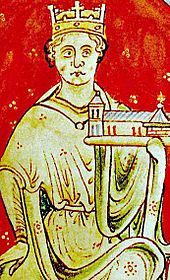
King John

Several options were proposed at the time, including marrying young Margaret to Otto of Saxony, son of Henry II’s eldest daughter Matilda and nephew of King Richard I. However, it was also proposed that Margaret should not even be considered as heir, that the kingdom should pass to her father’s younger brother, David. In the event, King William recovered and none of the options were pursued, but at least it means that we know Margaret was born before 1195. And when her brother, Alexander, was born in 1198, Margaret’s position as a possible heir was diminished further.

Margaret’s younger sister, Isabella’s date and year of birth is unknown; she was older than her brother, Alexander, who was born in 1198, but may have been born any time in the ten years before. She is not mentioned in the succession crisis of 1195, but that does not mean that she was born after, just that, being the younger daughter, she was not a subject of discussions. Jessica Nelson, in her article for the Oxford Dictionary of National Biography, suggests that Isabella was born in 1195 or 1196.

The two young princesses became the unwitting pawns in political relations between England and Scotland when the two kings, John and William the Lion, met at Norham, Northumberland, in the last week of July and first week of August 1209. The Scots were in a desperate position, with an ailing and ageing king, and a 10-year-old boy as heir, whilst the English, with their Welsh allies and foreign mercenaries, had an army big enough to force a Scottish submission. The subsequent treaty, agreed at Norham on 7 August, was humiliating for the Scots. John would have the castle at Tweedmouth dismantled, but the Scots would pay an extra £4,000 compensation for the damage they had caused to it. The Scots also agreed to pay 15,000 marks for peace and to surrender hostages, including the king’s two oldest legitimate daughters, Margaret and Isabella.

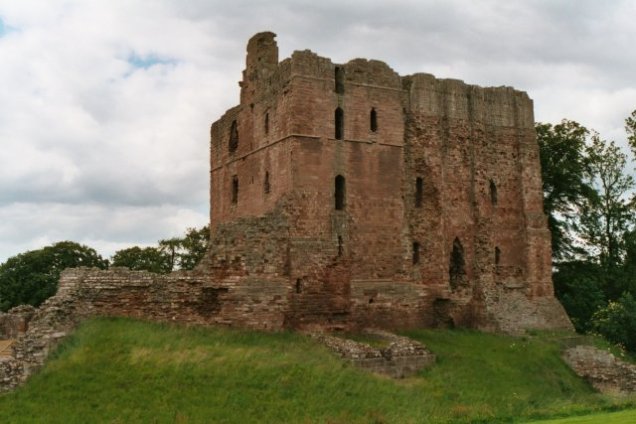
Norham Castle

As a sweetener, John promised to marry the princesses to his sons; although Henry was only 2 years old at the time and Richard was just 8 months, whilst the girls were probably in their early-to-mid teens. The king’s daughters and the other Scottish hostages were handed into the custody of England’s justiciar, at Carlisle on 16 August. How the girls, or their parents, thought about this turn of events, we know not. Given John’s proven record of prevarication and perfidy, King William may have hoped that the promised marriages would occur in good time, but may also have expected that John would find a way out of the promises made.

John’s demand of Margaret and Isabella as hostages, with the sweetener that they would be brides for his own sons, may well have been to prevent Margaret marrying elsewhere. King Philip II of France had expressed interest in a marriage between himself and Margaret, a union John would be keen to thwart. Thus, John’s control of the marriages of Margaret and Isabella would mean that they could not marry against the king of England’s own interests. It also meant that King William had lost two useful diplomatic bargaining chips; marriage alliances could be used to cement political ones, and these had been passed to John, weakening William’s position on the international stage. According to the chronicler Bower, the agreement specified that Margaret would marry John’s son, Henry, while Isabella would be married to an English nobleman of rank.

When the sisters were brought south, they were housed comfortably, as evidence demonstrates. While hostages in England, Margaret and Isabella were kept together, and lived comfortably, although John’s promise of arranging marriages for the girls remained unfulfilled. Payments for their upkeep were recorded by sheriffs and the king’s own wardrobe, which suggests the two princesses spent some time at court. In 1213 Isabella was residing at Corfe Castle in the household of John’s queen, Isabelle d’Angoulême; John’s niece, Eleanor of Brittany, held captive since the failed rebellion of her brother, Arthur of Brittany in 1202, was also there.

Alexander II, King of Scots

One can imagine the frustration of the Scots, to see their princesses languishing in the custody of the English; their inclusion in clause 59 of Magna Carta evidence of this. Unfortunately, King John tore up Magna Carta almost before the wax seals had dried, writing to the pope to have the charter declared void, leaving Alexander to join the baronial rebellion.

When Alexander came to terms with the government of Henry III in December 1217, he pressed for a resolution to the marriages of himself and his sisters, Margaret and Isabella, still languishing in English custody. In June 1220, at a meeting of King Henry III’s minority council, it was agreed that Margaret and Isabella would be married by October 1221 or allowed to return to Scotland.

King John had promised that Alexander would marry one of his daughters and Henry III, or rather his ministers, finally fulfilled this promise in June 1221, when his sister, Joan, was married to the Scots king at York. And it was probably at this event, when the Scottish and English royal families came together in celebration, that Margaret’s own future was finally resolved.

It was decided that she would marry Hubert de Burgh, the king’s justiciar and one of the leading figures of Henry III’s minority government. They were married in London on 3 October 1221, with King Henry himself giving the bride away. It was a major coup for Hubert de Burgh, who came from a gentry family rather than the higher echelons of the nobility; though it was a less prestigious match for Margaret, the daughter of a king. The couple had one child, a girl named Margaret but known as Megotta, who was probably born in the early 1220s.

Hubert de Burgh from Matthew Paris

Isabella, however, remained unmarried and returned to Scotland in November 1222. Isabella’s own marriage prospects may have been damaged by the relatively lowly marriage of her older sister. Nevertheless, Alexander II was keen to look after his sister’s interests and continued to search for a suitable husband. A letter from Henry III alludes to a possible match between Isabella and William (II) Marshal, Earl of Pembroke but the earl was, instead, married to the king’s own younger sister, Eleanor

Isabella’s future was finally settled in June 1225, when she married Roger Bigod, fourth Earl of Norfolk, at Alnwick in Northumberland. On 20 May, the archbishop of York was given respite from his debts in order to attend the wedding of the King of Scots’ sister:

Order to the barons of the Exchequer to place in respite, until 15 days from Michaelmas in the ninth year, the demand for debts they make by summons of the Exchequer from W. archbishop of York, because the archbishop has set out for Alnwick where he is to be present to celebrate the marriage between Roger, son and heir of Earl H. Bigod, and Isabella, sister of the King of Scots.

finerollshenry3.org.uk /content/calendar/roll_022.html#it204_001, 20 May
1225.

Roger was the young son of Hugh Bigod, Earl of Norfolk, who had died earlier in the year, and Matilda Marshal, eldest daughter of William Marshal, Earl of Pembroke. Roger was still a minor, aged about 13, and possibly as much as seventeen years his wife’s junior. In 1224 King Alexander II had levied an aid of 10,000 marks towards the costs of his sisters’ marriages, as well as contributing £1,000 towards Henry III’s 1225 expedition to Gascony, suggesting the Scots king was eager to see both his sisters comfortably settled.

At the time of the marriage, Roger’s wardship was in the hands of Henry III’s uncle, William Longespée, Earl of Salisbury, but it was transferred to King Alexander II in 1226, after Longespée’s death. Now in the custody of the king of Scots, Roger and Isabella moved to Scotland, living at the Scottish court until Roger attained his majority in 1233 and entered into his inheritance.

The Marshal coat of arms

Ten years after the sealing of Magna Carta, and 16 years after they had been taken hostage, the two Scottish princesses were both finally settled into marriage, though less exalted marriages than their father had wished and hoped for, with English barons, rather than princes or kings. Their younger sister, Marjorie, would also marry into the English nobility in 1235, becoming the wife of Gilbert Marshal, 3rd son of the famed William Marshal who had become Earl of Pembroke the previous year.

Marjorie died in 1244, Isabella in 1253 and Margaret, the eldest, in 1259. Rather unusually for princesses, who would often be married off in foreign lands and separated from family, the 3 sisters would share their final resting place and be buried at the Church of the Black Friars in London.

*

Footnote:

1W.W. Scott, ‘Ermengarde de Beaumont (1233)’, Oxforddnb.com.

Images:

All images courtesy of Wikipedia except Magna Carta, which is ©2015 Sharon Bennett Connolly

Sources:

finerollshenry3.org.uk; W.W. Scott, ‘Ermengarde de Beaumont (1233)’, Oxforddnb.com; Marc Morris, King John; Jessica Nelson, ‘Isabella [Isabella Bigod], countess of Norfolk (b. 1195/1196, 1270)’, Oxforddnb.com; Nelson, Jessica A., ‘Isabella, Countess of Norfolk’, magnacarta800th.com; Louise J. Wilkinson, ‘Margaret, Princess of Scotland’, magnacarta800th.com; W.W. Scott, ‘Margaret, countess of Kent (b. 1187×1195, d. 1259)’, Oxforddnb.com; Keith Stringer, ‘Alexander II (1198–1249)’, Oxforddnb.com; Mackay, A.J.G. (ed.), The Historie and Chronicles of Scotland … by Robert Lindesay of Pitscottie; Ross, David, Scotland: History of a Nation; Church, Stephen, King John: England, Magna Carta and the Making of a Tyrant; Danziger, Danny and John Gillingham, 1215: The Year of Magna Carta; Crouch, David, William Marshal; The Story of Scotland by Nigel Tranter; Matthew Paris, Robert de Reading and others, Flores Historiarum, volume III.

*

My Books

Signed, dedicated copies of all my books are available through my online bookshop.

Out now! Scotland’s Medieval Queens

Scotland’s history is dramatic, violent and bloody. Being England’s northern neighbour has never been easy. Scotland’s queens have had to deal with war, murder, imprisonment, political rivalries and open betrayal. They have loved and lost, raised kings and queens, ruled and died for Scotland. From St Margaret, who became one of the patron saints of Scotland, to Elizabeth de Burgh and the dramatic story of the Scottish Wars of Independence, to the love story and tragedy of Joan Beaufort, to Margaret of Denmark and the dawn of the Renaissance, Scotland’s Medieval Queens have seen it all. This is the story of Scotland through their eyes.

Available now from Amazon and Pen and Sword Books

Also by Sharon Bennett Connolly:

Heroines of the Tudor World tells the stories of the most remarkable women from European history in the time of the Tudor dynasty, 1485-1603. These are the women who ruled, the women who founded dynasties, the women who fought for religious freedom, their families and love. Heroines of the Tudor World is now available for pre-order from Amberley Publishing and Amazon UK. Women of the Anarchy demonstrates how Empress Matilda and Matilda of Boulogne, unable to wield a sword themselves, were prime movers in this time of conflict and lawlessness. It shows how their strengths, weaknesses, and personal ambitions swung the fortunes of war one way – and then the other. Available from Bookshop.orgAmberley Publishing and Amazon UKKing John’s Right-Hand Lady: The Story of Nicholaa de la Haye is the story of a truly remarkable lady, the hereditary constable of Lincoln Castle and the first woman in England to be appointed sheriff in her own right. Available from all good bookshops Pen & Sword Booksbookshop.org and Amazon

Defenders of the Norman Crown: The Rise and Fall of the Warenne Earls of Surrey tells the fascinating story of the Warenne dynasty, from its origins in Normandy, through the Conquest, Magna Carta, the wars and marriages that led to its ultimate demise in the reign of Edward III. Available from Pen & Sword BooksAmazon in the UK and US, and Bookshop.orgLadies of Magna Carta: Women of Influence in Thirteenth Century England looks into the relationships of the various noble families of the 13th century, and how they were affected by the Barons’ Wars, Magna Carta and its aftermath; the bonds that were formed and those that were broken. It is now available in paperback and hardback from Pen & SwordAmazon, and Bookshop.orgHeroines of the Medieval World tells the stories of some of the most remarkable women from Medieval history, from Eleanor of Aquitaine to Julian of Norwich. Available now from Amberley Publishing and Amazon, and Bookshop.orgSilk and the Sword: The Women of the Norman Conquest traces the fortunes of the women who had a significant role to play in the momentous events of 1066. Available now from Amazon,  Amberley Publishing, and Bookshop.org.

Alternate Endings: An anthology of historical fiction short stories including Long Live the King… which is my take what might have happened had King John not died in October 1216. Available in paperback and kindle from Amazon.

Podcast:

Have a listen to the A Slice of Medieval podcast, which I co-host with Historical fiction novelist Derek Birks. Derek and I welcome guests, such as Bernard Cornwell and Elizabeth Chadwick, and discuss a wide range of topics in medieval history, from significant events to the personalities involved. Every episode is also now available on YouTube.

*

Don’t forget! Signed and dedicated copies of all my books are available through my online bookshop.

For forthcoming online and in-person talks, please check out my Events Page.

You can be the first to read new articles by clicking the ‘Follow’ button, liking our Facebook page or joining me on Twitter and Instagram.

©2020 Sharon Bennett Connolly FRHistS
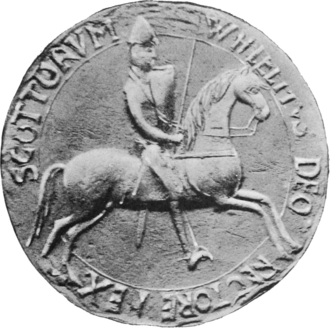
William the Lion, the Warenne King of Scots

William the Lion, King of Scots

There is only one clause in Magna Carta that mentions particular women. Although they are not identified by name, they are easily identifiable due to their positions. These two women were the daughters of William I, the Lion, King of Scots. They were the sisters of the new King of Scots, Alexander II, and had been hostages in England since the treaty of Norham in 1209. Clause 59 of Magna Carta agrees to negotiate for their release, alongside a number of other Scottish hostages:

We will treat Alexander, king of Scots, concerning the return of his sisters and hostages and his liberties and rights in the same manner in which we will act towards our other barons of England, unless it ought to be otherwise because of the charters which we have from William his father, formerly king of Scots; and this shall be determined by the judgement of his peers in our court.1

The king of Scots’ two sisters referred to in the clause were Margaret and Isabella, the oldest daughters of William I (the Lion), King of Scots, and his wife, Ermengarde de Beaumont. The two girls had been caught up in the power struggle between their father and the Plantagenet kings. William I was the second of the three sons of Henry, Earl of Northumberland, and his wife, Ada de Warenne. He was, therefore, a grandson of David I and great-grandson of Malcolm III Canmor and St Margaret, the Anglo-Saxon princess.

Magna Carta, Lincoln Castle

William had succeeded his father as earl of Northumberland in June 1153, when he was about 11 years old; William used ‘Warenne’ as his family name when earl of Northumberland. He lost the earldom, however, when his brother, Malcolm IV (known as Malcolm the Maiden) surrendered the northern counties of England to Henry II; he was given lands in Tynedale, worth £10 per annum, in compensation. This loss of Northumberland was never forgotten and was to colour William’s future dealings with the English crown throughout his reign.

William was probably knighted in 1159, when he accompanied King Henry and his own brother Malcolm on an expedition to Toulouse and in 1163 he was in attendance in a meeting with King Henry II at Woodstock where the Scots king did homage to the English king. The youngest of the royal brothers, David, was to remain in England as a hostage to Malcolm’s good behaviour. William ascended the Scottish throne on Malcolm’s death on 9 December 1165, aged about 23; his inauguration as king took place at Scone on Christmas Eve, 24 December. In 1166 William travelled to Normandy to meet with King Henry II and, although we do not know what they spoke of, it was reported that they parted on bad terms.

Malcolm IV, king of Scots

Nevertheless, in 1170 William and his brother David were at the English court, attending Henry II’s council at Windsor in April and were in London on 14 June, at the coronation of Henry’s eldest son, also Henry, the Young King; he died in 1183, six years before his father. Both William and his brother David did homage to the Young King after the coronation. And in 1173 when the Young King and his brothers, Richard and Geoffrey, rebelled against their father, Henry II, they sought William’s aid. The younger King Henry promised that he would give the northern counties of England to the Scots king, and the earldoms of Huntingdon with Cambridgeshire to the king’s brother, David, in return for their support in the rebellion.

William considered the offer, but after consulting his barons in the summer of 1173, he decided to ask Henry II to return Northumberland. He would renounce his homage if the English king refused. Henry II did refuse and William joined the Young King’s rebellion. He formed an alliance with Louis VII of France and Count Philippe of Flanders, who both promised mercenaries would be sent to England in support. This was the start of the long Scottish tradition of alliances with France, against England, which would become known as the Auld Alliance. On 20 August 1173 the Scottish forces moved south, to Alnwick, Warkworth and Newcastle.

Although they devastated the countryside, the campaign in Northumberland achieved very little; they were unable to take the strategically important castles. They moved on to Carlisle, but pulled back to Roxburgh after receiving news that a new English force was advancing. This force, under Ranulf de Glanville, the justiciar, burned Berwick before agreeing to a truce until 13 January 1174. The truce was later extended to 24 March 1174, after a payment of 300 marks by the bishop of Durham to King William. At the end of the truce, the Scots, accompanied by Flemish mercenaries, again advanced into England. They ravaged the Northumberland coast and besieged both Wark-on-Tweed and Carlisle castles, but failed to take either.

On 13 July, while much of the Scottish army was spread out in raiding parties, the Scots were the victims of a surprise attack. King William’s horse was killed, the king trapped underneath. William surrendered to Ranulf de Glanville and was taken first to Newcastle and then to Northampton, where he appeared before Henry II on 24 July. The Scots king was sentenced to imprisonment at Falaise in Normandy and the price of his freedom was to submit himself, his kingdom and the castles of Berwick, Roxburgh and Edinburgh to King Henry II. The Convention of Falaise on 1 December 1174 also granted that ‘the church of Scotland shall henceforward owe such subjection to the church of England as it should do.’2 It was a humiliating treaty for the Scots, which also required twenty Scottish noble hostages be handed to the English in return for their king’s freedom.

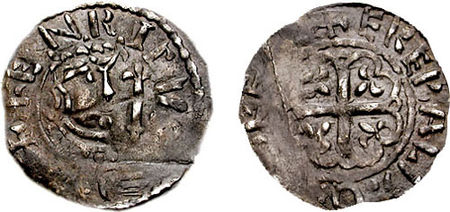
Coin of William’s father Henry of Scotland

King William arrived back in Scotland in February 1175, having spent two months in England until the handover of the Scottish castles had been completed. He returned to a revolt in Galloway, which he managed to quash, he was then faced with a threat from Donald Ban Macwilliam, grandson of Duncan II, who was gaining support for a challenge to the throne and a return to the royal line of Duncan II. Things quietened down for a time, but in April 1181, when the king and David were in Normandy Donald Ban Macwilliam led an uprising in Moray and Ross, apparently gaining full control of the two earldoms. One royal retainer, Gillecolm the Marischal, surrendered the castle of Auldearn and then joined the rebels.

The king was also faced with unrest in Galloway, where Gilbert of Galloway was vying with his nephew Roland for control of the region. Gilbert died on 1 January 1185 and shortly after King William invaded Galloway, alongside Gilbert’s nephew Roland. On 4 July 1185 William and his allies defeated the main force of Gilbert’s followers and by 1190 Roland had been granted the lordship of Galloway by King William while Gilbert’s son, Duncan, was made lord of Carrick. As a result, Galloway remained at peace well into the 13th century, until the death of Roland’s son, Alan, in 1234.

With Galloway subdued, in 1187 King William was finally able to quash the rebellion in the north, leading his considerable army as far as Inverness. On 31 July, at the now-lost site of ‘Mam Garvia’, Roland of Galloway faced the rebels in battle where over 500 of them were killed, including Donald Macwilliam, whose head was sent to King William.

The overlordship of Henry II caused additional problems for King William in the Scottish church; the archbishops of York and Canterbury both claimed the homage of the Scottish clergy. William also had a long running dispute with the papacy, with five successive popes, in fact, over the appointment of a bishop of St Andrews; neither king nor pope approved the other’s choice of candidate. The English king sided with the popes on the matter and in 1181 King William was excommunicated by the archbishop of Canterbury; the Scottish people, as a whole, were subsequently excommunicated by the bishop of Durham. Within two years, however, the papacy and the Scots king were on such good terms that the pope sent William the Golden Rose as a tribute to ‘a king of exceptional religious zeal’.3 On 13 March 1192 Pope Celestine III issued the papal bull, Cum universi, recognising the Scottish church as a ‘special daughter’ of the apostolic see and subject to Rome without an intermediary. Thereby denying the claims to superiority of both York and Canterbury.

Unusually for a king in this period, by 1180 William had been on the throne for fifteen years and was still unmarried. He had several illegitimate children but until he married, William’s heir was his younger brother, David. With this in mind, in 1184, William was at King Henry’s court to discuss a possible marriage with Henry’s granddaughter, Matilda of Saxony. The match was forbidden by the pope on the grounds of consanguinity. In May 1186, during a council at Woodstock, King Henry suggested Ermengarde de Beaumont as a bride for William. Ermengarde was the daughter of Richard, Vicomte de Beaumont-sur-Sarthe, who was himself the son of Constance, one of the many illegitimate daughters of King Henry I of England.

With such diluted royal blood, she was hardly a prestigious match for the king of Scots, but he reluctantly accepted the marriage after consulting his advisers. The wedding took place at Woodstock on 5 September 1186, with King Henry hosting four days of festivities. Edinburgh Castle was returned to the Scots as part of Ermengarde’s dowry. Although we do not know Ermengarde’s birth date, at the time of the marriage, she was referred to as ‘a girl’, suggesting that she may have only just reached the age of 12.

King William agreed to provide Ermengarde with £100 of rents and forty knights’ fees in Scotland, for the financial maintenance of her household; she also had dwellings and lands at Crail and Haddington, lands which had previously been held by William’s mother, Ada de Warenne. Between 1187 and 1195 Queen Ermengarde gave birth to two daughters, Margaret and Isabella. A son, the future Alexander II, was finally born at Haddington on 24 August 1198, the first legitimate son born to a reigning Scottish king in 70 years; a contemporary remarked that ‘many rejoiced at his birth.’4 A third daughter, Marjorie, was born sometime later.

On the death of King Henry II in 1189, King William again went south, and met with the new king, Richard I, at Canterbury, where he did homage for his English lands. Desperate for money for his crusade, on 5 December 1189, Richard abandoned his lordship of Scotland in the quitclaim of Canterbury; King William was released from the homage and submission given to Henry II, the castles of Roxburgh and Berwick were returned and the relationship between the kingdoms reverted to that in the time of Malcolm IV. The cost to the Scots was to be 10,000 marks, but Scotland was independent once again. However, Richard still refused to sell Northumberland back to William. The Scots king remained on good relations with King Richard, paying 2,000 marks towards his ransom in 1193. King William carried one of the three swords of state at Richard’s second coronation at Winchester on 17 April 1194.

In the spring of 1195 King William fell gravely ill at Clackmannan, causing a succession crisis, the king’s only legitimate children being daughters. The Scottish barons appear to have been divided, between recognising William’s oldest legitimate daughter, Margaret, as his heir, or marrying Margaret to Otto, Duke of Saxony, grandson of Henry II, and allowing Otto to succeed to the throne. A third faction claimed that either solution was contrary to the custom of the land, so long as the king had a brother who could succeed him. In the event, the king recovered from his illness and three years later the queen gave birth to Alexander, the much-desired son and heir. For the last years of the century, William was again occupied with unrest in the north. Before going on campaign in October 1201, he had the Scottish barons swear fealty to his son, Alexander, now 3 years old, a sensible precaution, given that he was approaching his sixtieth birthday.

Alexander II, William’s son and successor

Relations with England changed again in 1199, with the accession of King John. During the reign of King Richard, William had agreed with the justiciar, William Longchamp, and backed Arthur of Brittany as the king’s heir. John may well have remembered this and soon after his accession, in 1200, the two kings met at Lincoln, with William doing homage for his English lands. The matter of Northumberland, still in English hands, was raised and deferred on several occasions between 1199 and 1205. The two kings finally met for formal talks at York from 9 to 12 February 1206 and again from 26 to 28 May 1207, although we have little record of what was discussed. However, John appears to have been prevaricating, suggesting another meeting in October 1207, which the Scots rejected.

In the meantime, the death of the bishop of Durham meant John took over the vacant see and set about building a castle at Tweedmouth. The Scots, seeing this as a direct threat to Berwick, destroyed the building works and matters came to a crisis in 1209. After many threats, and with both sides building up their armies, the two kings met at Norham, Northumberland, in the last week of July and first week of August 1209. The Scots were in a desperate position, with an ailing and ageing king, and a 10-year-old boy as heir, whilst the English, with their Welsh allies and foreign mercenaries, had an army big enough to force a Scottish submission.

The subsequent treaty, agreed at Norham on 7 August, was humiliating for William and the Scots. They agreed to pay 15,000 marks for peace and to surrender hostages, including the king’s two oldest legitimate daughters, Margaret and Isabella. As a sweetener, John promised to marry the princesses to his sons; although Henry was only 2 years old at the time and Richard was just 8 months, whilst the girls were probably in their early-to-mid teens. John would have the castle at Tweedmouth dismantled, but the Scots would pay an extra £4,000 compensation for the damage they had caused to it. The king’s daughters and the other Scottish hostages were handed into the custody of England’s justiciar, at Carlisle on 16 August. How the girls, or their parents, thought about this turn of events, we know not. Given John’s proven record of prevarication and perfidy, King William may have hoped that the promised marriages would occur in good time, but may also have expected that John would find a way out of the promises made.

Arbroath Abbey, burial place of William the Lion

There is no mention of Queen Ermengarde being present for the treaty at Norham, although she did act as mediator in 1212, when her husband was absent, in negotiations with John at Durham. A contemporary observer described the Scottish queen as ‘an extraordinary woman, gifted with a charming and witty eloquence’.5 It seems likely that King John was not immune to the queen’s charms, as he did not ask for more hostages and agreed that the Scottish heir, Alexander, would be knighted and one day marry an English princess. Alexander was knighted at Clerkenwell on 4 March 1212.

King William I, later known as William the Lion, died on 4 December 1214, aged about 72, having reigned for a total of forty-nine years, almost to the day. He was buried before the high altar of Arbroath Abbey. William’s daughters were still in English custody, the conditions for their release would form one of the clauses of Magna Carta. He was succeeded by Alexander, his only legitimate son, who was proclaimed king at Scone on 6 December 1214, aged just 16. Queen Ermengarde was said to be distraught at her husband’s death. She lived for 19 more years, devoting her time to the founding of a Cistercian abbey at Balmerino in Fife. She died on 11 February 1233.

*

Footnotes: 1 Marc Morris, King John; 2E.L.G. Stones quoted in Scott, W.W., William I; 3Ross, David, Scotland: History of a Nation; 4W.W. Scott, Ermengarde de Beaumont (1233); 5Bower quoted in W.W. Scott, Ermengarde de Beaumont (1233),

Images: Courtesy of Wikipedia except Magna Carta which is ©2015 Sharon Bennett Connolly

Further reading: W.W. Scott, Ermengarde de Beaumont (d. 1233), Oxforddnb.com; Scott, W.W., William I [known as William the Lion] (c. 1142–1214) Oxforddnb.com; Scott, W.W., Malcolm IV (c. 1141–1165) Oxforddnb.com; Mackay, A.J.G. (ed.), The Historie and Chronicles of Scotland … by Robert Lindesay of Pitscottie; Ross, David, Scotland: History of a Nation; Farrer, William and Charles Travis Clay, editors, Early Yorkshire Charters, Volume 8: The Honour of Warenne; Morris, Marc King John: Treachery, Tyranny and the Road to Magna Carta; Church, Stephen, King John: England, Magna Carta and the Making of a Tyrant; Danziger, Danny and John Gillingham, 1215: The Year of Magna Carta; Crouch, David, William Marshal; fmg.ac; Brewer’s British Royalty by David Williamson; The Mammoth Book of British Kings and Queens by Mike Ashley; The Story of Scotland by Nigel Tranter; Ada, Queen Mother of Scotland (article) by Victoria Chandler.

*

My Books

Signed, dedicated copies of all my books are available through my online bookshop.

Coming 30 January 2025: Scotland’s Medieval Queens

Scotland’s history is dramatic, violent and bloody. Being England’s northern neighbour has never been easy. Scotland’s queens have had to deal with war, murder, imprisonment, political rivalries and open betrayal. They have loved and lost, raised kings and queens, ruled and died for Scotland. From St Margaret, who became one of the patron saints of Scotland, to Elizabeth de Burgh and the dramatic story of the Scottish Wars of Independence, to the love story and tragedy of Joan Beaufort, to Margaret of Denmark and the dawn of the Renaissance, Scotland’s Medieval Queens have seen it all. This is the story of Scotland through their eyes.

Available for pre-order now.

Also by Sharon Bennett Connolly:

Heroines of the Tudor World tells the stories of the most remarkable women from European history in the time of the Tudor dynasty, 1485-1603. These are the women who ruled, the women who founded dynasties, the women who fought for religious freedom, their families and love. Heroines of the Tudor World is now available for pre-order from Amberley Publishing and Amazon UK. Women of the Anarchy demonstrates how Empress Matilda and Matilda of Boulogne, unable to wield a sword themselves, were prime movers in this time of conflict and lawlessness. It shows how their strengths, weaknesses, and personal ambitions swung the fortunes of war one way – and then the other. Available from Bookshop.orgAmberley Publishing and Amazon UKKing John’s Right-Hand Lady: The Story of Nicholaa de la Haye is the story of a truly remarkable lady, the hereditary constable of Lincoln Castle and the first woman in England to be appointed sheriff in her own right. Available from all good bookshops Pen & Sword Booksbookshop.org and Amazon

Defenders of the Norman Crown: The Rise and Fall of the Warenne Earls of Surrey tells the fascinating story of the Warenne dynasty, from its origins in Normandy, through the Conquest, Magna Carta, the wars and marriages that led to its ultimate demise in the reign of Edward III. Available from Pen & Sword BooksAmazon in the UK and US, and Bookshop.orgLadies of Magna Carta: Women of Influence in Thirteenth Century England looks into the relationships of the various noble families of the 13th century, and how they were affected by the Barons’ Wars, Magna Carta and its aftermath; the bonds that were formed and those that were broken. It is now available in paperback and hardback from Pen & SwordAmazon, and Bookshop.orgHeroines of the Medieval World tells the stories of some of the most remarkable women from Medieval history, from Eleanor of Aquitaine to Julian of Norwich. Available now from Amberley Publishing and Amazon, and Bookshop.orgSilk and the Sword: The Women of the Norman Conquest traces the fortunes of the women who had a significant role to play in the momentous events of 1066. Available now from Amazon,  Amberley Publishing, and Bookshop.org.

Alternate Endings: An anthology of historical fiction short stories including Long Live the King… which is my take what might have happened had King John not died in October 1216. Available in paperback and kindle from Amazon.

Podcast:

Have a listen to the A Slice of Medieval podcast, which I co-host with Historical fiction novelist Derek Birks. Derek and I welcome guests, such as Bernard Cornwell, and discuss a wide range of topics in medieval history, from significant events to the personalities involved.

*

Don’t forget! Signed and dedicated copies of all my books are available through my online bookshop.

For forthcoming online and in-person talks, please check out my Events Page.

You can be the first to read new articles by clicking the ‘Follow’ button, liking our Facebook page or joining me on TwitterThreadsBluesky and Instagram.

*

©2020 Sharon Bennett Connolly FRHistS

Malcolm the Maiden

Malcolm IV

Malcolm IV (the Maiden), King of Scots, was the son of Prince Henry of Scotland and Ada de Warenne. He was the grandson of David I, King of Scots and great-grandson of Malcolm III, King of Scots and second his wife St Margaret, herself a descendant of Alfred the great. On his mother’s side, he was the grandson of William de Warenne, second Earl of Warenne and Surrey, and Isabel de Vermandois, granddaughter of King Henry I of France and his queen, Anna of Kiev.

The younger Malcolm was born between born between 23 April and 24 May 1141. He earned the soubriquet ‘the Maiden’ due to his youth, religious devotion and the fact he remained unmarried. Malcolm had become his grandfather’s heir following his father’s death in 1152, at which time he had been placed into the custody of Duncan, Earl of Fife, and taken on a progress around Scotland north of the Forth, following the old Celtic tradition of showing the heir to the kingdom. When King David I died less than twelve months after his son, Henry, on 24 May 1153, he was succeeded by his grandson, Malcolm. The new king succeeded to the crown at the age of twelve – possibly even on his twelfth birthday – as Malcolm IV.

The accession of Malcolm surpassed all the ambitions of his Warenne grandfather. William de Warenne, the second earl, had sought a royal bride for himself. He had not lived to see his daughter marry the heir to the Scottish throne not to see his grandson’s accession and coronation, which surpassed all of his aspirations and ambitions.

The chronicles make no mention of Malcolm’s mother, Ada, playing a part in the politics of Scotland during her eldest son’s kingship. She did appear at court often and was present for many of the important occasions; she was also a witness to no less than sixteen of Malcolm’s charters. Ada did, moreover, take great interest in the futures of her children, arranging the marriages of her two surviving daughters and employing any means possible to persuade her son to marry. The chronicler, William of Newburgh, relates a story of the lengths Ada had to go to in order to get her reluctant son to choose a bride. Ada went so far as to present her son with a young woman of noble birth, in his bed. Not wishing to cause an argument with his mother, Malcolm did not send her away and allowed the lady to spend the night in his royal bed; while he slept on the floor, wrapped in his cloak. Ada, it seems, was relentless in her attempts to persuade Malcolm to marry, until the young king tired of her constant nagging and begged her to hold her peace.

Coin of Malcolm’s father, Prince Henry, minted at Corbridge

While William of Newburgh makes it sound as if Ada was pushing for grandchildren, or tempting her son to lose his innocence, Ada’s constant attempts to discuss marriage with Malcolm had a political motive as much as a personal one. She was well aware of the importance of royal marriage, not just for the continuation of a dynasty and political alliance, but also for the strength and stability of the monarchy itself. Ada, moreover, was not the only one eager to see the young king settle down with a wife.

The Scottish curia regis (royal council) continued to pressure Malcolm to find a bride, even after his mother had given up. Arnold, Bishop of St Andrews encouraged Malcolm to follow the example of his recently married sisters. The king, however, was no more persuaded by the archbishop and his royal council than he was by his mother. He was eager to hold onto to the highest ideals of Christian knighthood and remain chaste. Malcolm’s relative youth may also have led him to believe that he had many years ahead of him and plenty of time before he needed to settle down and raise a family.

Malcolm’s kingship faced several challenges during his all-too-short reign. In November 1154, the young king was faced with a revolt from Somerled, Earl of Argyll. The unrest was to continue for several years, with Somerled only suing for peace in 1159 having been deprived of his chief supporters, the MacHeths, father and sons, who had been reconciled with the king in 1157.

Malcolm’s greatest challenge, however, was with his larger neighbour, England. While David I had taken advantage of the civil war in England during Stephen’s turbulent reign – known to history as the Anarchy – the accession of Henry II in 1154 changed the political landscape entirely. In 1157 the two kings met at Chester, where Malcolm performed homage ‘in the manner in which his grandfather had been the man of old King Henry’. 1 This homage suggests that Malcolm was accepting that he was a vassal of King Henry, as David I had done with King Henry I. He was also forced to resign his lordship of Northumberland, Cumberland and Westmorland, although the honour of Huntingdon was returned to the Scots king and his brother and heir, William, was given the lordship of Tynedale.

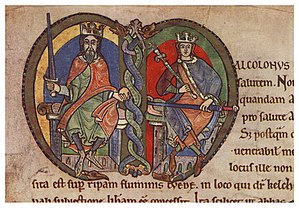
The charter to Kelso Abbey, depicting David I on the left with his grandson Malcolm IV on the right

In 1159 Malcolm, his brother and others joined Henry II and the English army on an expedition to Toulouse; William of Blois, son of King Stephen and husband of Malcolm’s cousin, Isabel de Warenne, Countess of Surrey, was also part of the expedition. The military enterprise gave Malcolm the chance to be knighted honourably in the field. The Scots contingent joined Henry II at Poitiers on 24 June and Henry knighted Malcolm at Périgueux a few days later. The expedition met with initial success and the army overran the county of Toulouse before laying siege to the city itself. However, the siege had to be abandoned when King Louis VII of France, another kinsman of Malcolm’s, intervened.

By the end of the year, Henry and Malcolm were back in Limoges, crossing to England shortly afterwards. Malcolm returned to Scotland in 1160 and to a revolt of six earls led by Feterth, Earl of Strathearn, angry at his expedition with the English army. Mediation by the clergy led to an uneasy peace and their abandoning of their besieging Malcolm at Perth. Unrest then arose in Galloway and Malcolm made several forays into the region before the end of the year, when Fergus, lord of Galloway, submitted to the king. It was the last major unrest by any Scottish earls for not only Malcolm’s reign, but for also for that of his brother, William I.

Malcolm was again summoned to meet Henry II in 1163. Despite falling ill at Doncaster, he was still expected to complete the journey to Henry’s court and arrived at Woodstock at the end of June. It seems Henry wanted to assert his supremacy over Britain, as a group of Welsh rulers had also been called to attend the English king. On 1 July, Malcolm renewed his oath to Henry and handed over hostages, the most senior of whom was his own youngest brother, David, soon to be made earl of Huntingdon. Homage given, Malcolm returned to Scotland, where he faced a revolt led by Somerled, Lord of the Isles, who was later killed in an attempted raid on Glasgow in 1164.

Jedburgh Abbey

Malcolm appears to have never fully recovered from the illness he suffered in Doncaster in 1163 and frequently complained of pains in his head and feet. He planned a pilgrimage to Santiago de Compostela, to pray for healing, but was too ill to undertake it. He died at Jedburgh on Thursday 9 December 1165, aged only 24: he had reigned for 12 years and 6 months and was buried among his ancestors at Dunfermline Abbey. We do not have his mother’s response to the death of her first-born son, but it cannot have been easy for her, only in her forties herself and already a widow of thirteen years. Malcolm was succeeded by his brother William, later known as William the Lion.

*

Footnote: 1 The Melrose Chronicle quoted in W.W. Scott, Malcolm IV (c. 1141–1165)

Images: courtesy of Wikipedia except Jedburgh which is ©2017 Sharon Bennett Connolly

Further reading:

Scott, W.W., Malcolm IV (c. 1141–1165) Oxforddnb.com; Mackay, A.J.G. (ed.), The Historie and Chronicles of Scotland … by Robert Lindesay of Pitscottie; Ross, David, Scotland: History of a Nation; Farrer, William and Charles Travis Clay, editors, Early Yorkshire Charters, Volume 8: The Honour of Warenne; Morris, Marc King John: Treachery, Tyranny and the Road to Magna Carta; Church, Stephen, King John: England, Magna Carta and the Making of a Tyrant; Danziger, Danny and John Gillingham, 1215: The Year of Magna Carta; Crouch, David, William Marshal; fmg.ac; Brewer’s British Royalty by David Williamson; The Mammoth Book of British Kings and Queens by Mike Ashley; The Story of Scotland by Nigel Tranter; Ada, Queen Mother of Scotland (article) by Victoria Chandler.

*

My Books:

Signed, dedicated copies of all my books are available, please get in touch by completing the contact me form.

Out now!

King John’s Right-Hand Lady: The Story of Nicholaa de la Haye is now available for pre-order as a hardback and Kindle from Pen & Sword Booksbookshop.org and Amazon (UK and US).

In a time when men fought and women stayed home, Nicholaa de la Haye held Lincoln Castle against all-comers. Not once, but three times, earning herself the ironic praise that she acted ‘manfully’. Nicholaa gained prominence in the First Baron’s War, the civil war that followed the sealing of Magna Carta in 1215.

A truly remarkable lady, Nicholaa was the first woman to be appointed sheriff in her own right. Her strength and tenacity saved England at one of the lowest points in its history. Nicholaa de la Haye is one woman in English history whose story needs to be told…

Also by Sharon Bennett Connolly:

Defenders of the Norman Crown: The Rise and Fall of the Warenne Earls of Surrey tells the fascinating story of the Warenne dynasty, of the successes and failures of one of the most powerful families in England, from its origins in Normandy, through the Conquest, Magna Carta, the wars and marriages that led to its ultimate demise in the reign of Edward III. Defenders of the Norman Crown: Rise and Fall of the Warenne Earls of Surrey is now available from Pen & Sword BooksAmazon in the UK and US, and  Bookshop.org.

Ladies of Magna Carta: Women of Influence in Thirteenth Century England looks into the relationships of the various noble families of the 13th century, and how they were affected by the Barons’ Wars, Magna Carta and its aftermath; the bonds that were formed and those that were broken. It is now available in paperback and hardback from Pen & Sword,  Amazon, and Bookshop.org.

Heroines of the Medieval World tells the stories of some of the most remarkable women from Medieval history, from Eleanor of Aquitaine to Julian of Norwich. Available now from Amberley Publishing and Amazon, and Bookshop.org.

Silk and the Sword: The Women of the Norman Conquest traces the fortunes of the women who had a significant role to play in the momentous events of 1066. Available now from Amazon,  Amberley Publishing, and Bookshop.org.

Alternate Endings: An anthology of historical fiction short stories including Long Live the King… which is my take what might have happened had King John not died in October 1216. Available in paperback and kindle from Amazon.

*

For forthcoming online and in-person talks, please check out my Events Page.

You can be the first to read new articles by clicking the ‘Follow’ button, liking my Facebook page or joining me on Twitter and Instagram.

©2020 Sharon Bennett Connolly, FRHistS

Ladies of Magna Carta: Women of Influence in Thirteenth Century Europe

Ladies of Magna Carta: Women of Influence in Thirteenth Century Europe hits the bookshops today. Inspired by the lives of Matilda de Braose and Nichoaa de la Haye, My third book looks at the events surrounding the issuing of Magna Carta with a view to how it affected the women.

Magna Carta clause 39: No man shall be taken, imprisoned, outlawed, banished or in any way destroyed, nor will we proceed against or prosecute him, except by the lawful judgement of his peers or by the law of the land.

This clause in Magna Carta was in response to the appalling imprisonment and starvation of Matilda de Braose, the wife of one of King John’s barons. Matilda was not the only woman who influenced, or was influenced by, the 1215 Charter of Liberties, now known as Magna Carta. Women from many of the great families of England were affected by the far-reaching legacy of Magna Carta, from their experiences in the civil war and as hostages, to calling on its use to protect their property and rights as widows.

Ladies of Magna Carta looks into the relationships – through marriage and blood – of the various noble families and how they were affected by the Barons’ Wars, Magna Carta and its aftermath; the bonds that were formed and those that were broken. Including the royal families of England and Scotland, the Marshals, the Warennes, the Braoses and more, Ladies of Magna Carta_focuses on the roles played by the women of the great families whose influences and experiences have reached far beyond the thirteenth century.

Ladies of Magna Carta: Women of Influence in Thirteenth Century England was such an amazing story to write. There were so many women who influenced the clauses of Magna Carta and the civil war which surrounded its creation. And there were even more women who were able to use Magna Carta to protect their own rights. And there were some for whom Magna Carta did nothing too assuage their suffering…..

It was an honour and a privilege to tell their stories.

Here’s what the reviewers are saying:

“Sharon Bennett Connolly throws much needed light on the lives of the high-born women of thirteenth-century England…Connolly’s version of the first Plantagenets is superbly concise. No distractions or detours, hitting all the right nails on the head…Connolly’s book is an informative and delightful read about women aspiring to control their destiny against this backdrop, but their success or failure had less to do with Magna Carta than with the timeless principles of resourcefulness, determination and knowing how to skilfully handle the big guy. It’s these qualities that make their stories inspiring.”

Darren Baker, author of The Two Eleanors

“A well-researched and comprehensive study of the women who lived through, and were affected by, the Barons’ Revolt and the sealing of the Magna Carta. Ms Bennett Connolly has skilfully brought to the fore the lives of the women who have hitherto been hidden in the background. A must-read for anyone interested in this pivotal moment in English and Scottish history.”

Annie Whitehead, author of Women of Power in Anglo-Saxon England

The history of women isn’t written about enough. I requested this one because it sounded like it would be a very interesting read about contemporary women. It focuses, of course, more on women who were royal or connected with the nobility, but it was still fascinating. Each chapter goes over different families or women. It was very easy to read and get into. When this gets published, I’m going to see if I can snag a copy because I’d want to own and reread this one!

Caidyn, goodreads reviewer

“Fascinating book! It was interesting to read about women living at the time of the issuing of the Magna Carta and to learn about what chapters were addressed to them and in what respects…Much on the book is about the families of women, that is to say the male part. I found nevertheless interesting to read about differences in those various families in their relationship with their daughters and wives. A few of these medieval women did have a louder voice than was usually expected: 2 became Sheriffs, for instance.”

Christine, goodreads reviewer

Absolutely loved this book. It brought out the roles of women in the formation and assertion of the Magna Carta, something we don’t hear very much about in general. There were some formidable women mentioned and I learned so much about their struggles and stories – some of them very tragic – and whether or not John was able to implement the Magna Carta to help them. In some cases, it was argued, women helped form the structure of some of the Magna Carta. A great read!

Jo Romero, NetGalley reviewer

Absolutely amazing book! Could not stop reading it. Very informative and interesting. The author has an amazing ability to ferret out information on people we have always thought of as “lost”. This is the third book I have read from this author and again I am blown away with her ability to make a very confusing time in English history interesting and, even more importantly, tell it from the perspective of a set of people often forgot about…women.

Janette Recore, NetGalley reviewer

Reviews:

You can find a wonderful full review of Ladies of Magna Carta: Women of Influence in Thirteenth Century Europe over on the Love British History blog.

Here’s the full review from historian Darren Baker.

Guest blog posts:

I visited Annie Whitehead to talk about writing Ladies of Magna Carta and some of my past and future projects.

You can find me over on Tony Riches’ blog, The Writing Desk, talking about Matilda de Braose, her family and their influence on the Magna Carta story.

And you can find me over at Just History Posts, talking about Ladies of Magna Carta and writing in general.

Over on The Coffee Pot Book Club, you can find an extract on Margaret of Scotland, from the chapter on Scottish Princesses.

Out Now!

Ladies of Magna Carta: Women of Influence in Thirteenth Century England will be released in the UK on 30 May 2020 and is now available for pre-order from Pen & SwordAmazon UK and from Book Depository worldwide. It will be released in the US on 2 September and is available for pre-order from Amazon US.

Also by Sharon Bennett Connolly:

Silk and the Sword: The Women of the Norman Conquest traces the fortunes of the women who had a significant role to play in the momentous events of 1066.  Available now from Amazon UK,  Amberley Publishing, Book Depository and Amazon US.

Heroines of the Medieval World tells the stories of some of the most remarkable women from Medieval history, from Eleanor of Aquitaine to Julian of Norwich. Available now from Amberley Publishing and Amazon UK, Amazon US and Book Depository.

*

You can be the first to read new articles by clicking the ‘Follow’ button, liking our Facebook page or joining me on Twitter and Instagram.

©2020 Sharon Bennett Connolly 
David Hey Memorial Lecture

It was an honour and a privilege to be asked to present the David Hey Memorial Lecture for the Doncaster Local Heritage Festival 2020. Due to the current Coronavirus outbreak, the lecture was moved online and broadcast via You Tube.

Conisbrough Castle

To keep it relevant with Doncaster and South Yorkshire, I decided to talk about one of my favourite subjects, and my current research project; the Warennes, the earls of Surrey who held Conisbrough from the Norman Conquest until the death of the last earl in 1347.

A family at the centre of English history for almost 300 years. It is a story of strong family loyalties, national and international rivalries, rebellion and civil wars, lost loves and royal connections. It’s also the story of Conisbrough’s iconic castle!

This talk is dedicated to David Hey. In the 1970s he was one of few professional historians to respond in a positive way to the growing interest in family and local history. David was a highly regarded and pioneering figure in this field.He held posts of importance such as being Professor of Local and Family History at the University of Sheffield and President of the British Association of Local History. But he was first and foremost a Yorkshireman at heart and never forgot his roots. He was the Patron of the Doncaster and District Heritage Association and gave a talk at the 2013 Heritage Festival.

So, here it is:

I hope you enjoyed it!

I would like to express my immense gratitude to the Doncaster Local Heritage Festival for inviting me to present such a prestigious lecture. I truly hope I did justice to the memory of David Hey.

*

My Books

Coming soon! 

Ladies of Magna Carta: Women of Influence in Thirteenth Century England will be released in the UK on 30 May 2020 and is now available for pre-order from Pen & SwordAmazon UK and from Book Depository worldwide. It will be released in the US on 2 September and is available for pre-order from Amazon US.

Also by Sharon Bennett Connolly:

Silk and the Sword: The Women of the Norman Conquest traces the fortunes of the women who had a significant role to play in the momentous events of 1066.  Available now from Amazon UK,  Amberley Publishing, Book Depository and Amazon US.

Heroines of the Medieval World tells the stories of some of the most remarkable women from Medieval history, from Eleanor of Aquitaine to Julian of Norwich. Available now from Amberley Publishing and Amazon UK, Amazon US and Book Depository.

*

You can be the first to read new articles by clicking the ‘Follow’ button, liking our Facebook page or joining me on Twitter and Instagram.

©2020 Sharon Bennett Connolly 
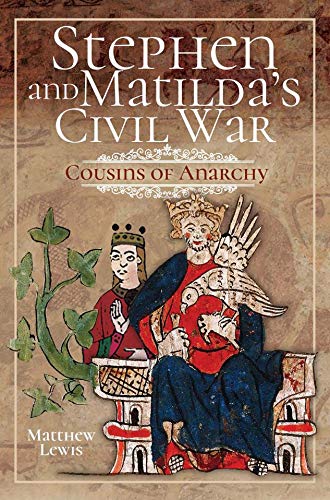
Book Corner: Stephen and Matilda’s Civil War: Cousins of Anarchy by Matthew Lewis

The Anarchy was the first civil war in post-Conquest England, enduring throughout the reign of King Stephen between 1135 and 1154. It ultimately brought about the end of the Norman dynasty and the birth of the mighty Plantagenet kings. When Henry I died having lost his only legitimate son in a shipwreck, he had caused all of his barons to swear to recognize his daughter Matilda, widow of the Holy Roman Emperor, as his heir and remarried her to Geoffrey, Count of Anjou. When she was slow to move to England on her father’s death, Henry’s favorite nephew Stephen of Blois rushed to have himself crowned, much as Henry himself had done on the death of his brother William Rufus.

Supported by his brother Henry, Bishop of Winchester, Stephen made a promising start, but Matilda would not give up her birthright and tried to hold the English barons to their oaths. The result was more than a decade of civil war that saw England split apart. Empress Matilda is often remembered as aloof and high-handed, Stephen as ineffective and indecisive. By following both sides of the dispute and seeking to understand their actions and motivations, Matthew Lewis aims to reach a more rounded understanding of this crucial period of English history and asks to what extent there really was anarchy.

Stephen and Matilda’s Civil War: Cousins of Anarchy by Matthew Lewis, is a wonderful book looking at the civil war, known as The Anarchy, through the eyes of the two leading protagonists, King Stephen and his cousin, Empress Matilda. A totally absorbing read, this book is enjoyable and informative, analysing the actions of both sides in a critical but sympathetic light.

Matthew Lewis digs deep into the personalities involved in both sides of the war and puts flesh on the bones of these characters. The result is a fair and balanced appraisal of the conflict between these two cousins, both as rival claimants to the throne and as leaders of their disparate supporters. The story is told in alternate chapters from the views of Stephen and Matilda, helping to keep the analysis and narrative balanced and fresh.

Matthew Lewis tries to be fair to both sides. You can tell that he feels for Empress Matilda, faced not only with a challenge to her right to the throne, but with the extra challenges that arose out of her being a woman and unable to lead the military aspects of the war. The author highlights Matilda’s failings, but does temper them with an explanation of how her actions would have been received differently, had she only been a man!

On the other side, King Stephen’s own faults and weaknesses are also singled out, though Matthew Lewis also stresses that where Matilda was hindered by her sex, so was Stephen – by Matilda’s gender, that is. There were limits put on Stephen by the fact he was challenged by a woman; just as Matilda could not lead her troops into battle, neither could Stephen face his challenger in an all-for-nothing trial by combat that could have put an end to the war years later. The result was a long, protracted war during which it was said ‘Christ and his saints slept.’

Before any move was made, there were probably four prime candidates to succeed Henry. His daughter, Empress Matilda, was perhaps the most obvious, but also in many ways the least attractive. Female rule was still something unheard of, at least in England, a nation that would have no queen regnant for another 400 years. The second possibility was Robert, Earl of Gloucester. Robert was an illegitimate son of Henry I, widely considered his favourite. He had extensive lands and power both in Normandy and England and was well respected. He was, however, illegitimate. That was less of a bar to power in Normandy: the Conqueror himself had been called William the Bastard. In England, it was unheard of. Legitimacy was still an absolute, marking the distinction between a duke and a king. Robert had everything required to follow his father except the right mother.

The two other contenders came from the House of Blois. They were Henry’s nephews, the sons of his sister Adela and her husband Stephen, Count of Blois. Theobald, Count of Blois and Champagne was the senior male of the house, though his younger brother Stephen, Count of Mortain, had been in England for years and was close to his uncle. They offered the prospect of legitimate, male successors as grandsons of William the Conqueror, albeit in a female line of descent. None of these solutions appeared perfect, and only one could win the throne. As it turned out, only two displayed an interest, and neither would give up during the nineteen years that followed.

Stephen and Matilda’s Civil War: Cousins of Anarchy by Matthew Lewis is a thoroughly enjoyable read, offering the perfect balance in a non-fiction book; accessible, interesting and informative. It gives a whole new perspective to the Civil War which divided England for the whole of Stephen’s 19-year reign. The book looks into each aspect of the war. The battles, conferences, truces and stalemates, are all analysed through the disparate eyes of those involved; not only looking into how they effected events, but also how events affected them.

Although it concentrates on the 2 leading protagonists, Stephen and Matilda, the book also gives insight into the lead supporting characters on both sides, giving the reader a comprehensive, panoramic view of the era through the personalities of those involved; from the steadfast and loyal Robert, Earl of Gloucester, to Stephen’s queen, also Matilda and the gruff, fearless John Marshal, father of William Marshal, first Earl of Pembroke and arguable the greatest knight England ever had.

Although more known for his books on the Wars of the Roses, Matthew Lewis has managed to demonstrate the breadth and depth of his historical knowledge with Stephen and Matilda’s Civil War: Cousins of Anarchy. He had put his usual level of passion and attention to detail into this book and the result is well worth reading. Stephen and Matilda’s Civil War: Cousins of Anarchy by Matthew Lewis is a thoroughly compelling read.

Stephen and Matilda’s Civil War: Cousins of Anarchy by Matthew Lewis is available from Amazon.

About the author:

Matthew Lewis trained in law and is now a full time author of historical fiction and non-fiction. He also blogs on his website, Matt’s History Blog, and can be found on Twitter as @mattlewisauthor. His main interest is medieval history and he has a number of books on that topic, including The Survival of the Princes in the Tower and Richard, Duke of York: King by Right.

*

My Books

Coming soon! 

Ladies of Magna Carta: Women of Influence in Thirteenth Century England will be released in the UK on 30 May 2020 and is now available for pre-order from Pen & SwordAmazon UK and from Book Depository worldwide. It will be released in the US on 2 September and is available for pre-order from Amazon US.

Also by Sharon Bennett Connolly:

Silk and the Sword: The Women of the Norman Conquest traces the fortunes of the women who had a significant role to play in the momentous events of 1066.  Available now from Amazon UK,  Amberley Publishing, Book Depository and Amazon US.

Heroines of the Medieval World tells the stories of some of the most remarkable women from Medieval history, from Eleanor of Aquitaine to Julian of Norwich. Available now from Amberley Publishing and Amazon UK, Amazon US and Book Depository.

*

You can be the first to read new articles by clicking the ‘Follow’ button, liking our Facebook page or joining me on Twitter and Instagram.

©2020 Sharon Bennett Connolly 
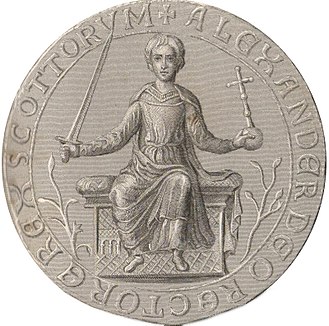
Book Corner: The Peasants' Revolting Crimes by Terry Deary

By Lewis Connolly

Popular history writer Terry Deary takes us on a light-hearted and often humorous romp through the centuries with Mr & Mrs Peasant, recounting foul and dastardly deeds committed by the underclasses, as well as the punishments meted out by those on the right side’ of the law.

Discover tales of arsonists and axe-wielders, grave robbers and garroters, poisoners and prostitutes. Delve into the dark histories of beggars, swindlers, forgers, sheep rustlers and a whole host of other felons from the lower ranks of society who have veered off the straight and narrow. There are stories of highwaymen and hooligans, violent gangs, clashing clans and the witch trials that shocked a nation. Learn too about the impoverished workers who raised a riot opposing crippling taxes and draconian laws, as well as the strikers and machine-smashers who thumped out their grievances against new technologies that threatened their livelihoods.

Britain has never been short of those who have been prepared to flout the law of the land for the common good, or for their own despicable purposes. The upper classes have lorded and hoarded their wealth for centuries of British history, often to the disadvantage of the impoverished. Frustration in the face of this has resulted in revolt. Read all about it here!

This entertaining book is packed full of revolting acts and acts of revolt, revealing how ordinary folk – from nasty Normans to present-day lawbreakers – have left an extraordinary trail of criminality behind them. The often gruesome penalties exacted in retribution reveal a great deal about some of the most fascinating eras of British history.

It has been a strange week for us all, I’m sure. And on Tuesday evening we got a message from my son’s school saying it was closed until further notice, so Wednesday morning was my first day of home schooling. School have been amazing and set tons of work to keep the child occupied. However, on Wednesday, there was no English so I had to set some myself; which was basically for said child to write a review of Terry Deary’s The Peasants’ Revolting CRIMES. I received this book as a review copy from the publishers, Pen & Sword, but the child got to read it first, and loved it. He’s a die-hard fan of Horrible Histories, so this book was right up his street.

So, it’s over to Lewis:

I liked, no I LOVED Terry Deary’s The Peasants’ Revolting CRIMES. I would recommend it for people who are age 13+ (due to minor swearing content) and you will not need to know your history because this book educates you in the revolting and hard life of the peasant.

Opening with ‘Norman Nastiness’, the book gives you a vivid taste of peasant crimes right up until the ‘Georgian Jokers and Victorian Villains’ and beyond.

The last witch

After seeing a smiling ‘medium’ at a psychic fair, a friend of mine punched her. When I asked him why he would do such a thing, he replied, ‘My father always taught me to strike a happy medium’,

In 1944, Helen Duncan was a Scottish spiritual medium, working in Portsmouth. She began broadcasting information from the port’s gullible sailors wjhho came ot consult her. D-Day was approaching and she was a security risk. She had to be stopped.

Duncan was originally charged under the Vagrancy Act 1824, relating to fortune telling, astrology and spiritualism. Then there was a change of plan. The paranoid government’s legal experts sent her to be tried by jury at the Old Bailey for contravening section 4 of the Witchcraft Act 1735, which carried the heavier penalty of a prison sentence.

Winston Churchill even described the whole episode as ‘obsolete tomfoolery’ but Helen went to prison for nine months.

The 1753 Act was later repealed and replaced with the Fraudulent Mediums Act of 1951.

So, no more witch trials.

You could call it hex-it

In this book, you will explore various ages of history, from the Middle Ages to the Stuarts, to the vicious, unforgiving Victorian era and the modern era. You will hear various quotes from all sorts of people, from William Shakespeare, to Martin Luther King and many, many others as you explore the book.

I particularly like the funny jokes like “Bring a man a fire and he will be warm for a day. Give a man a fire and he will be warm for the rest of his life” and “Will Shakespeare. Great writer, dodgy historian”. There are various other jokes, which are scattered throughout the book.

There was nothing to dislike about this book, despite its gory and bloody moments. It will tickle your funny bone for hours on end, so much so you will never put it down!

In conclusion, this is a great book for children and adults alike. It is not only comedy but it also used 100% historically accurate. You should order it now. What are you waiting for?

Huge thanks to Lewis for a fabulous, entertaining review!

The Peasants’ Revolting CRIMES by Terry Deary is available from Pen & Sword and Amazon.

About the author:

Terry Deary is the esteemed author of the immensely popular Horrible Histories series. This is his first title for Pen and Sword Books, to be followed next year by The Peasants’ Revolting Lives.

My Books

Coming soon! 

Ladies of Magna Carta: Women of Influence in Thirteenth Century England will be released in the UK on 30 May 2020 and is now available for pre-order from Pen & SwordAmazon UK and from Book Depository worldwide. It will be released in the US on 2 September and is available for pre-order from Amazon US.

Also by Sharon Bennett Connolly:

Silk and the Sword: The Women of the Norman Conquest traces the fortunes of the women who had a significant role to play in the momentous events of 1066.  Available now from Amazon UK,  Amberley Publishing, Book Depository and Amazon US.

Heroines of the Medieval World tells the stories of some of the most remarkable women from Medieval history, from Eleanor of Aquitaine to Julian of Norwich. Available now from Amberley Publishing and Amazon UK, Amazon US and Book Depository.

*

You can be the first to read new articles by clicking the ‘Follow’ button, liking our Facebook page or joining me on Twitter and Instagram.

©2020 Sharon Bennett Connolly 
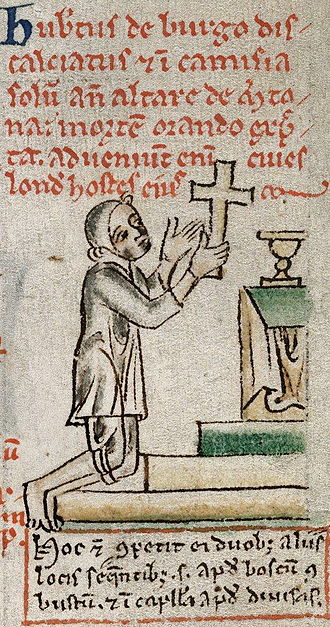
Mother’s Day Giveaway

Competition Closed: And the winner is Carolyn Hester

Sunday 22nd March 2020 is Mother’s Day in the UK this year and what better way to celebrate the 1st birthday of the paperback of Heroines of the Medieval World, than a giveaway for everyone’s favourite Heroine – MUM?!?!

“As Connolly ably demonstrates, knowing about these fascinating women is essential to filly understanding medieval Europe.” (Publishers Weekly)

About Heroines of the Medieval World

Heroines come in many different forms, and it is no less true for medieval heroines. They can be found in all areas of medieval life; from the dutiful wife and daughter to religious devotees, warriors and rulers. What makes them different compared to those of today are the limitations placed on them by those who directed their lives – their fathers, husbands, priests and kings. Women have always been an integral part of history, although when reading through the chronicles of the medieval world, you would be forgiven if you did not know it. We find that the vast majority of written references are focussed on men. The chronicles were written by men and, more often than not, written for men. It was men who ruled countries, fought wars, made laws and treaties, dominated religion and guaranteed – or tried to guarantee – the continued survival of their world. It was usually the men, but not all of them, who could read, who were trained to rule and who were expected to fight, to defend their people and their country…

And don’t worry, the offer is open worldwide – even if it isn’t Mother’s Day for you just yet.

It’s easy to enter!

To win a signed copy of Heroines of the Medieval World dedicated to a heroine of your choice – your mum, aunt, sister, grandmother, daughter or yourself (I won’t judge!), or someone else’s mum – for Mother’s Day, simply leave a comment below or on my Facebook page and I will include you in the prize draw.

The draw will be made on Wednesday 18th March, so you should get the book in time for the big day.

Good luck!

*

My Books

Coming soon! 

Ladies of Magna Carta: Women of Influence in Thirteenth Century England will be released in the UK on 30 May 2020 and is now available for pre-order from Pen & SwordAmazon UK and from Book Depository worldwide. It will be released in the US on 2 September and is available for pre-order from Amazon US.

Also by Sharon Bennett Connolly:

Silk and the Sword: The Women of the Norman Conquest traces the fortunes of the women who had a significant role to play in the momentous events of 1066.  Available now from Amazon UK,  Amberley Publishing, Book Depository and Amazon US.

Heroines of the Medieval World tells the stories of some of the most remarkable women from Medieval history, from Eleanor of Aquitaine to Julian of Norwich. Available now from Amberley Publishing and Amazon UK, Amazon US and Book Depository.

*

You can be the first to read new articles by clicking the ‘Follow’ button, liking our Facebook page or joining me on Twitter and Instagram.

©2020 Sharon Bennett Connolly 
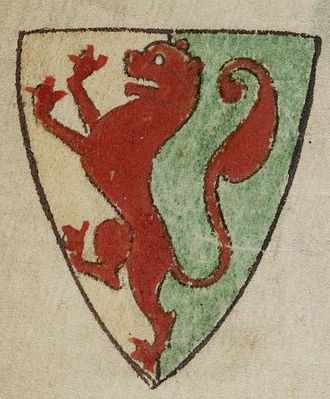
Book Corner: Robert the Bruce; Champion of a Nation by Stephen Spinks

Robert the Bruce is a man of both history and legend. In his lifetime he secured Scottish independence in the face of English imperial aggression under the successive leadership of Edward I and Edward II. He was the victor of Bannockburn, a self-made king against all odds, and is celebrated as a champion of the Scottish nation. Yet Robert s colourful life is far from straightforward. Stephen Spinks seeks to examine this most enigmatic of kings beyond the myths to reveal him in the context of his time, his people and in his actions.

Stephen shows that Robert was a complex man, confronted by hardships and difficult and often dangerous decisions. He was not born to rule. As the murderer of John Comyn, a rival for the Scottish crown, Bruce sent shockwaves across Europe and was condemned by kings and popes. In war he suffered terrible personal loss, including the deaths of all four of his brothers and the imprisonment of his wife, daughter and two sisters, all at the hands of the English. He was at times a desperate yet focussed and highly determined man. Robert was also astute, breaking the rules of chivalry to even the odds, systematically fighting a guerrilla war against the English which he ultimately won. Yet he also cultivated the symbols of kingship, was pious, careful with his patronage and fought to uphold his fiercely held beliefs.

King Robert unified his deeply divided kingdom and secured its independence from England. His dramatic life as the victorious underdog forged a significant legacy that has survived for 700 years.

I may have mentioned before that I have a soft spot for Robert the Bruce and his family. I have already written of his daughter Marjorie, wife Elizabeth de Burgh and 2 of his sisters, Christian and Mary, women who suffered under the heavy hand of Edward I due to their relationship with Robert the Bruce and his ambition for an independent Scotland. King Robert I (the Bruce) is an enigmatic figure, whose conflicted loyalties saw him change sides on a number of occasions during the early years of his career.

So, of course I have been eagerly awaiting Robert the Bruce: Champion of a Nation ever since I first heard that Stephen Spinks was writing it. And it does not disappoint. Beautifully written and presented, Stephen Spinks tells the incredible story of Robert the Bruce and the fight for Scottish independence with great passion and enthusiasm. This is a wonderful book for any fan of Robert the Bruce – and Scottish history in general.

Since his surreptitious meeting with Lamberton, Robert may well have been building discreet coalitions to shore up a foundation on which to launch a bid for the Scottish throne. Yet, however successful he may have been at this juncture, there remained a significant contingent of men who would probably not support him, in particular the Balliols and Comyns and their adherents, who still held out for the return of King John or the accession of his heir, Edward Balliol, the latter still in English captivity. Just because Bruce wanted to champion his right did not mean Scotland would unite behind his cause. His greatest challenge now rested with John ‘the Red’ Comyn, lord of Badenoch, who had assumed the leadership of the Comyn family. He was nephew to King John, cousin to the Comyn Earl of Buchan, and brother-in-law to the English Aymer de Valence, soon to be Earl of Pembroke. If Bruce was to secure the crown, he needed to reconcile Comyn to his cause one way or another. What happened next tested the limits of Bruce’s personal ambition, and has gone down in the annals of history.

What is certain is that, on a cold night on 10 February 1306, Robert and John Comyn met at the Church of the Greyfriars in Dumfries. Comyn had been resident at his nearby castle at Dalswinton, not far from Bruce’s family home of Lochmaben. The two men, who had a history of bitter rivalry and had clashed violently at Peebles during the summer gathering near Selkirk Forest in 1299, could guarantee a safe, violence-free meeting constrained by their choice of location. Spilling blood in a church was sacrilegious and warranted excommunication, the gravest of punishements.

Robert the Bruce: Champion of a Nation doesn’t sugar coat Robert the Bruce’s actions, it examines the good and the bad in detail, from his support for Edward I in his early years, to the fateful murder of John Comyn that set him on the road to his coronation, a race against time to become king before the inevitable sentence of excommunication could be passed.

The author uses the primary sources of both England and Scotland, to present the story of Bruce’s fight to gain – and hold on to – the Scottish throne. Analytical and highlighting source bias, Stephen Spinks presents Robert the Bruce as a flawed hero, like all kings, whose personal and political ambition is balanced by opposition within a deeply divided Scotland, and a personal cost to him and his family that few of us could bare.

Robert the Bruce: Champion of a Nation is a wonderful, entertaining and informative read from beginning to end. Insightful and analytical, it puts every known aspect of Robert the Bruce’s life under the microscope, from his family, ambitions and military capabilities, to his health and leadership. Author Stephen Spinks examines Bruce’s actions and motivations in great detail, painting a fascinating portrait of the man and king.

Robert the Bruce: Champion of a Nation by Stephen Spinks is a must-read for anyone interested in Scottish history, and one of the best non-fiction books I have read in recent years. It is thoroughly enjoyable, totally engaging and impossible to put down.

Robert the Bruce: Champion of a Nation is now available from Amazon in the UK. It will be released in the US on 1 April 2020 and is available for pre-order on Amazon US.

About the Author:

Stephen Spinks wrote his dissertation on Edward II while studying at King’s College, London. He works for the National Trust and manages three Medieval heritage sites with 900 volunteers and 150 staff. He is a columnist for ‘Midlands Zone’ magazine, in which he writes a very well received exploration of life as a gay man today, partly political, partly personal. He has given many interviews on radio and in his capacity at the National Trust, to ‘BBC’s Escape to the Country’ and the ‘Antiques Road Show’. He has been studying the primary sources (and locations) for this book over the past 15 years.

*

My Books

Coming soon! 

Ladies of Magna Carta: Women of Influence in Thirteenth Century England will be released in the UK on 30 May 2020 and is now available for pre-order from Amazon UK and from Book Depository worldwide. It will be released in the US on 2 September and is available for pre-order from Amazon US.

Also by Sharon Bennett Connolly:

Silk and the Sword: The Women of the Norman Conquest traces the fortunes of the women who had a significant role to play in the momentous events of 1066.  Available now from Amazon UK,  Amberley Publishing, Book Depository and Amazon US.

Heroines of the Medieval World tells the stories of some of the most remarkable women from Medieval history, from Eleanor of Aquitaine to Julian of Norwich. Available now from Amberley Publishing and Amazon UK, Amazon US and Book Depository.

*

You can be the first to read new articles by clicking the ‘Follow’ button, liking our Facebook page or joining me on Twitter and Instagram.

©2020 Sharon Bennett Connolly