An ideal Christmas present for yourself or a friend!
About Silk and the Sword: the Women of the Norman Conquest
The momentous events of 1066, the story of invasion, battle and conquest, are well known. But what of the women?
Harold II of England had been with Edith Swanneck for twenty years but in 1066, in order to strengthen his hold on the throne, he married Ealdgyth, sister of two earls. William of Normandy’s Duchess, Matilda of Flanders, had supposedly only agreed to marry the Duke after he’d pulled her pigtails and thrown her in the mud. Harald Hardrada had two wives – apparently at the same time. So, who were these women? What was their real story? And what happened to them after 1066?
These are not peripheral figures. Emma of Normandy was a Norman married to both a Saxon and a Dane ‒ and the mother of a king from each. Wife of both King Cnut and Aethelred II, the fact that, according to the Anglo-Saxon Chronicle, she had control of the treasury at the end of the reigns of both Cnut and Harthacnut suggests the extent of Emma’s influence over these two kings –and the country itself.
Then there is Saint Margaret, a descendant of Alfred the Great, and the less well known but still influential Gundrada de Warenne, the wife of one of William the Conqueror’s most loyal knights, and one of the few men who it is known beyond doubt was with the Duke at the Battle of Hastings.
These are lives full of drama, pathos and sometimes mystery: Edith and Gytha searching the battlefield of Hastings for the body of Harold, his lover and mother united in their grief for the fallen king. Who was Ælfgyva, the lady of the Bayeux Tapestry, portrayed with a naked man at her feet?
Silk and the Sword traces the fortunes of the women who had a significant role to play during the Norman Conquest – wives, lovers, sisters, mothers, leaders.
If you would like to win the signed copy of Silk and the Sword: the Women of the Norman Conquest to put under your Christmas tree, or someone else’s Christmas tree, simply leave a comment below or on the giveaway post on my Facebook page and I will include you in the prize draw.
And don’t worry if you already have a copy – I’ll be happy to send you a signed bookplate to give it as a Christmas present, while you keep your newly signed copy.
The draw will be made on Sunday 2nd December, so you should get the book in time for Christmas Day. Good luck!
***AND THE WINNER IS…..Chloe Amy***
Thank you so much to everyone who entered the Silk and the Sword giveaway – there were 149 entries in all and I am only sorry there can only be 1 winner. Google’s random number generator picked no. 102, which is Chloe Amy. Congratulations, Chloe, if you can drop me a pm with address, I will get your book out to you this week.
To everyone else who entered, thank you so much for taking the time and for leaving such wonderful comments. If you do buy the book, drop me a message, through the ‘contact me’ button, with your address and I will send you out a signed bookplate to pop in the front. Best wishes, Sharon
*
Out Now!
Tracing the fortunes of the women who had a significant role to play in the momentous events of 1066, Silk and the Sword: the Women of the Norman Conquest is available from Amazon UK, Amberley Publishing and Book Depository. It is scheduled for release in the US on 1 March 2019 and is available for pre-order from Amazon US.
Also by Sharon Bennett Connolly:
Telling the stories of some of the most incredible women from Medieval history, Heroines of the Medieval World, is now available in hardback in the UK from both Amberley Publishing and Amazon UK, in the US from Amazon US and worldwide from Book Depository. It will be released in paperback in the UK from 15 March 2019 and is available for pre-order on Amazon.
*
You can be the first to read new articles by clicking the ‘Follow’ button, liking our Facebook page or joining me on Twitter.
Almost a year ago, I read and reviewed one of the most innovative and refreshing historical texts I have ever come across, that being Heroines of the Medieval World by Sharon Bennett Connolly (my review can be found here).
Imagine my glee in being able to dive in to Sharon’s second treatment of historical women, then. Silk and the Sword: the women of the Norman conquest is released in just three days’ time (15th of November). You can pre-order it here.
In ‘Heroines…’ Sharon gave us a very detailed, thought provoking, and fascinating view into an aspect of history that is rarely covered in academia: the feminine perspective. She explored what it meant to be a woman in the Medieval era, illustrating her narrative by telling us the tales of some of the most interesting women ever to grace the pages of history.
I have to admit, I expected Emma of Normandy to be the woman who stole the show with my second book, Silk and the Sword: the Women of the Norman Conquest, but I was pleasantly surprised to discover it was Gytha of Wessex! Gytha completes the triumvirate of remarkable women who presided over the first half of the eleventh century in England; the others being Emma of Normandy and the legendary Lady Godiva. However, unlike Emma and Godiva, Gytha was at the centre of events before, during and after the fateful year of 1066. Her tale is far too long to be told in one blog post, so I will concentrate on the lesser known part of the story; the early years of the marriage of Godwin and Gytha.
A woman of impeccable pedigree, Gytha was the mother of a large brood of children that included several earls, the queen of Edward the Confessor and the last Anglo-Saxon king of England. Raised in Denmark, Gytha was the daughter of Thorgils Sprakaleg, a Danish magnate who himself was said to have been the grandson of a bear and a Swedish maiden. Although obviously not true, such a legend serves to weave a sense of mystery and legacy into a family. Little is known of her mother; a later story suggested she was Tyra, daughter of Harold Bluetooth, king of Norway and Denmark, but this has been discounted by historians.
Gytha was probably born in the last decade of the 10th century or the first decade of the 11th, and she had at least two brothers. Her brother Eilaf was Earl of Gloucestershire under King Cnut while her second brother, Earl Ulf, was married to King Cnut’s sister, Estrith, and was the father of Swein Estrithson, King of Denmark from 1047 to 1076. Earl Ulf had two other children, Beorn Estrithson and Asbjørn; Beorn spent time with his aunt’s family and was murdered by his cousin, Gytha’s oldest son, Swein Godwinson, in 1049. Ulf acted as Regent of Denmark for King Cnut before he was killed, apparently on the orders of Cnut himself, on Christmas Day 1026.
It was in about 1022 that Gytha was married to Godwin. According to The Life of King Edward, commissioned by Gytha’s daughter, Queen Edith, it was early in his reign that King Cnut took Godwin with him to Denmark, where the king ‘tested more closely his wisdom’, and ‘admitted [him] to his council and gave him his sister [sic] as wife.’¹ Although Gytha was not, in fact, Cnut’s sister, she was still a part of the extended Danish royal family; giving her to Godwin as a wife was a substantial reward and a sign of Cnut’s trust in him. What Gytha thought of being given in marriage to a man below her station, no matter how much a favourite of Cnut’s he was, we can only surmise. We can assume that she probably had little say in the matter; once Cnut had decided on the marriage, who could refuse such a powerful king?
King Cnut with Gytha’s brother, Earl Ulf
Godwin’s background is obscured by time, but it is likely that he was the son of Wulfnoth Cild, a Sussex thegn who fell afoul of the politics and political machinations of the reign of Æthelred II the Unready. The appellation ‘Cild’ denotes a young man or warrior and is usually applied to those of rank in Anglo-Saxon England. In 1009 Wulfnoth had been accused of treason by Brihtric, the brother of the powerful and wily Eadric Streona. What treason he had committed is unclear, and it is likely that the charges were unfounded. The accusations came during the muster of the magnificent new fleet, built on the orders of Æthelred II to counter the incursions of the Scandinavians. Wulfnoth fled to sea, taking twenty of the new ships with him. According to the Anglo-Saxon Chronicle, Brihtric went in pursuit of him, with eighty ships, but his force was run aground in a heavy storm and then attacked by Wulfnoth, who set fire to Brihtric’s ships. The destruction of the greater part of the fleet was to put an end to any hope of campaigning off the English coast and Æthelred gave up on the project and went home.
It is possible that Godwin was married to a lady called Thyra, before he married Gytha. According to William of Malmesbury, Thyra was Cnut’s sister, and a quite unpleasant lady. She is said to have had a son who, while out riding a horse ‘was carried into the Thames, and perished in the stream: his mother, too, paid the penalty of her cruelty; being killed by a stroke of lightning. For it is reported, that she was in the habit of purchasing companies of slaves in England, and sending them into Denmark; more especially girls, whose beauty and age rendered them more valuable, that she might accumulate money by this horrid traffic.’²
Godwin appears to have accumulated considerable lands during the reign of Cnut. Although only one charter survives from the period, in which Cnut granted him Polhampton in Hampshire, Godwin also possessed manors in Kent, Sussex and Hampshire, some of which had previously belonged to the royal estates in the reign of Æthelred II. Although we don’t hear of Gytha at this time – the chronicles rarely mention the women – we can assume that she enjoyed and benefitted from the favour her husband received from King Cnut. It is likely that she spent the majority of her time in the 1020s and 1030s giving birth to, and raising, her large brood of children. Gytha and Godwin had a large family of at least ten – possibly eleven – children.
Their daughter Edith was probably born within a year of the marriage and would become Queen of England as the wife of King Edward the Confessor. Although we cannot be certain of the order of birth, the eldest son seems likely to have been Swein, who was born in about 1023, with Harold – the future King Harold II – probably arriving the year after. Five more sons may have followed; Tostig, Gyrth, Leofwine, Wulfnoth and possibly Alfgar.
Death of Leofwine at the Battle of Hastings, depicted in the Bayeux Tapestry
Tostig, Gyrth and Leofwine all became earls under Edward the Confessor and were deeply involved in the events of 1066, although not all on the same side. While still only a child, Wulfnoth was taken to Normandy as a hostage in about 1052, with his nephew, Hakon (the son of Wulfnoth’s older brother, Swein). Wulfnoth died sometime after 1087, but whether in England or Normandy is unclear. It is possible that young Hakon died whilst still a hostage in Normandy; however, there is some suggestion that he was released following Harold’s visit to Normandy in 1064 and fought – and died – alongside his uncles at the Battle of Hastings on 14 October 1066. Little is known of Alfgar; if he existed, he may have been a monk at Reims in France.
As well as Edith, Gytha and Godwin are thought to have had two or three more daughters. Little is known of Eadgiva (or Eadgifu), but for her name and that she held the comital estate of Crewkerne in Somerset; she is also on a list of women in confraternity with the New Minster at Winchester but may have been dead by 1066. A younger daughter, Gunhilda, is believed to have been a vowess from an early age and became a nun after the Conquest, either at St Omer in France or Bruges in Flanders. Gunhilda died at Bruges on 24 August 1087 and is buried in Bruges Cathedral.
When Edward the Confessor came to the throne in 1042 the support of the powerful Earl Godwin was essential to the success of his accession. Among the lands acquired by Godwin during the 1040s was Woodchester in Gloucestershire, which he bought for Gytha. The manor was intended to support her when she stayed at Berekely, for ‘she was unwilling to use up anything from that manor because of the destruction of the abbey.’¹
As Godwin’s star continued to rise; so too did that of his family. In 1043 an earldom, centred on Hereford, had been created for his eldest son, Swein, and in 1044 Harold, the next oldest, was made Earl of East Anglia. Gytha must have been proud to see her husband and sons rise so high, and surely was overjoyed as she became the mother of a queen when her eldest daughter, Edith, married King Edward on 23 January 1045. The family must have appeared unassailable to their fellow and rival nobles.
For Gytha, it was mostly a time for pride in her children, although one of her sons would disappoint and humiliate her. Swein Godwinson was, by most accounts, a rather unpleasant character. Although a notable fighter, he was ruthless and determined. One source suggests that Swein had, at some point, impugned his mother’s reputation, claiming that he was not the son of Godwin, but of the former king, Cnut. The claim was indignantly refuted by Gytha, who gathered together the noble ladies of Wessex to witness her oath that Godwin was Swein’s father. It is impossible to imagine what must have gone through Gytha’s mind when Swein made this claim. To be so blatantly accused of infidelity by her eldest son, someone who should have had a care for his mother’s reputation, must have been heartbreaking. Whether it was a political move – to pursue a claim to the throne as Cnut’s heir – or not, Swein effectively rejected Godwin as his father and called his mother an unfaithful wife.
Harold Godwinson, King of England
In the national theater, moreover, the year 1051 brought a crisis that threatened the family’s very position in English society. Edward the Confessor, unhappy at the apparently unassailable position of the Godwin family, sought to curb the Earl of Wessex’s strength and influence. Both sides raised their retainers, intending to defend their positions with force, if necessary. Civil war loomed.
The two sides came back from the brink, with Godwin called before the king to answer for his actions. The king, however, offered to take the earl back into his peace ‘when he gave him back his brother alive.’ Earl Godwin’s involvement in the death of Edward’s brother, Alfred, had come back to haunt him. Godwin would have known, at that moment, that there was no chance of reconciliation. The earl rode away from London, returning to Bosham. John of Worcester takes up the story:
… but his army gradually dwindling away and deserting him, he did not venture to abide the judgment of the king’s court, but fled, under cover of night. When, therefore, the morning came, the king, in his witan, with the unanimous consent of the whole army, made a decree that Godwin and his five sons should be banished. Thereupon he and his wife Gytha, and Tostig and his wife Judith, the daughter of Baldwin, count of Flanders, and two of his other sons, namely, Sweyn and Gyrth, went, without loss of time, to Thorney, where a ship had been got ready for them. They quickly laded her with as much gold, silver, and other valuable articles as she could hold, and, embarking in great haste, directed her course towards Flanders and Baldwin the count.³
Godwin and Gytha’s two other sons, Harold and Leofwine, headed west; arriving at Bristol, they took Swein’s ship, which had already been prepared and provisioned for him, and sailed to exile in Ireland. The couple’s youngest son, Wulfstan, and Swein’s son, Hakon, may already have been in the custody of King Edward as hostages. Queen Edith, therefore, was the only Godwin who remained at liberty in England, although not for long. She was banished to the nunnery at Wherwell, where Edward’s half-sister was abbess; her land, jewels and possessions were taken from her and Edward may have started divorce proceedings, though they were never completed.
Godwin and Gytha, along with Swein, Tostig and the family’s retainers, spent the winter in Bruges from where Swein, looking to the salvation of his soul, set out on pilgrimage to Jerusalem. According to John of Worcester, Swein walked the whole way, barefoot, but caught a cold on the way home and died. In the spring of 1052, the family set about orchestrating their return to England. After some initial setbacks, Godwin attacked the Isle of Wight and was reunited with his sons, Harold and Leofwine, newly arrived from Ireland. They proceeded, along the Sussex and Kent coasts, to London, unopposed, and anchored on the south bank of the Thames, opposite the forces of the king and his earls who were waiting on the north bank with fifty ships.
Queen Edith of Wessex
Godwin sent to the king, requesting the restoration of his lands and the lands of his sons, but Edward flatly refused. However, public opinion had turned against the king; his strong support for his Norman advisers and the visit of William of Normandy soon after the Godwin’s exile, had soured public opinion which turned to favour Godwin and his family. The Norman contingent of Edward’s administration, seeing events were turning against them, and that Godwin would be welcomed back into the fold, mounted their horses and fled London, some going north, some west; presumably with Godwin and Gytha’s son, Wulfstan, and their grandson, Hakon, as hostages.
The following morning Godwin met the king in a council outside London. The Earl begged forgiveness of the king, declaring that he and his sons were innocent of the charges laid against them. Despite his underlying fury, Edward had no choice but to grant Godwin a pardon and restore the lands and titles of the whole family. According to the Anglo-Saxon Chronicle, Gytha is even mentioned in the agreement, whereby the council ‘gave Godwin fairly his earldom, so full and so free as he at first possessed it, and his sons also all that they formerly had; and his wife and his daughter so full and so free as they formerly had.’ Soon after, their daughter, Edith, was fetched from her incarceration in the nunnery and reinstated as queen.
The Anglo-Saxon Chronicle also mentions that Godwin fell sick shortly after the conclusion of negotiations with Edward. Given that the earl died at Easter 1053, we can imagine that Gytha spent the winter nursing her ailing husband. On Easter Monday (12 April), Godwin was dining with his sons, Harold and Tostig, and King Edward, at Winchester, when ‘he suddenly sank towards the foot-stool, deprived of speech and of all his strength; he was carried to the king’s chamber, and it was thought it would pass over, but it was not so; but he continued like this unspeaking and helpless, through until the Thursday and then gave up his life. And he lies there in the Old Minster; and his son Harold succeeded to his earldom.’ [ASC]
Writing later, with a flair for the dramatic, William of Malmesbury had Godwin’s last words to Edward before he collapsed as; ‘May God not permit me to swallow if I have done anything to endanger Alfred or to hurt you.’² Contemporary chronicles do not mention such a declaration, so while it makes Godwin’s death appear as divine justice, it is more than likely untrue.
King Harold’s coronation in the Bayeux Tapestry
Following his death on 15 April 1053, the House of Godwin continued its inexorable rise. Harold had succeeded to his father’s earldom of Wessex and in 1055 Tostig was given the earldom of Northumbria; Earl Siward had died at York, leaving only a young son, Waltheof, to succeed him. It was thought too dangerous to leave a county which bordered Scotland in the hands of a child, and so the earldom was awarded to Tostig. When Ælfgar succeeded to his father Leofric’s earldom of Mercia in 1057, he had to relinquish the earldom of East Anglia, which was given to Gyrth, one of Gytha’s younger sons. Another son, Leofwine, appears to have succeeded to part of the earldom of Ralph, Earl of Hereford, on his death in 1057, gaining lands in the south Midlands.
Gytha’s movements in the years immediately after Godwin’s death have gone unrecorded. The widow of the great earl probably spent most of her time in retirement on her estates, possibly visiting her family on occasion and spending time at King Edward’s court, with her daughter, Queen Edith. One can imagine she would watch the success of her son’s with pride, unaware of the looming storm clouds that would see 4 of her sons lying dead on battlefields at Stamford Bridge and Hastings within the short space of 3 weeks in the autumn of 1066.
Footnotes: ¹Godwine, earl of Wessex (d. 1053) by Ann Williams, oxforddnb.com; ²The History of the Kings of England and of his Own Times by William Malmesbury; ³The Chronicle of John of Worcester, translated and edited by Thomas Forester; [ASC] The Anglo-Saxon Chronicle translated by James Ingram
*
Sources: The English and the Norman Conquest by Dr Ann Williams; Brewer’s British Royalty by David Williamson; Britain’s Royal Families, the Complete Genealogy by Alison Weir; The Wordsworth Dictionary of British History by JP Kenyon; The Norman Conquestby Marc Morris; Harold, the King Who Fell at Hastings by Peter Rex; The Anglo-Saxons in 100 Facts by Martin Wall; The Anglo-Saxon Age by Martin Wall; Kings, Queens, Bones and Bastards by David Hilliam; The Mammoth Book of British kings & Queens by Mike Ashley; The Oxford Companion to British History Edited by John Cannon; The Anglo-Saxon Chronicles translated and edited by Michael Swaton; The Anglo-Saxon Chronicle translated by James Ingram; Queen Emma and the Vikings by Harriett O’Brien; The Bayeux Tapestry by Carola Hicks; oxforddnb.com.
*
My Books
Signed, dedicated copies of all my books are available through my online bookshop or the Contact Me page.
New releases in 2026:
New Hardbacks
‘My daughter wanted me to treat her more like a princess. So, I married her to a stranger to strengthen the alliance with Poland!’
Princesses of the Early Middle Ages: Royal Daughters of the Conquest and Princesses of the Later Middle Ages: Royal Daughters of the Plantagenets tell the stories of England’s royal daughters from 1066 to the rise of the Tudors, from the last Anglo-Saxon princesses to the fall of the House of York.
Were they really pampered pawns sent off to marriages on the Continent, out of sight and out of mind?
Perhaps, there was different story, where a foreign marriage does not mean eternal exile, but a purpose in life, where a princess is a diplomat, an ambassador for England in her new country.
Where she is the bond between allies – most of the time.
Their stories are touching, inspiring and, at times, heartbreaking...
Praise for Princesses of the Early Middle Ages:
Heidi Malagisi: ‘This is another excellent book by Sharon Bennett Connolly. Extremely well researched and relatively easy to follow along, which is a great thing because there are so many Matildas and Eleanors in this book.‘
Tony Riches: “I challenge anyone with an interest in medieval Britain to not find something they will learn from this book.”
Anna Belfrage “I just love how [Sharon] presents this huge cast of real life people in a casual, chatty tone that has me expecting the various female protagonists to suddenly pop their head up and add their own commentary.“
The momentous events of 1066, the story of invasion, battle and conquest, are well known. But what of the women? Silk and the Sword: The Women of the Norman Conquest traces the fortunes of the women who had a significant role to play during the Norman Conquest – wives, lovers, sisters, mothers, leaders. These are lives full of drama, pathos and sometimes mystery: Edith and Gytha searching the battlefield of Hastings for the body of Harold, his lover and mother united in their grief for the fallen king. Who was Ælfgyva, the lady of the Bayeux Tapestry, portrayed with a naked man at her feet?
Janina Ramirez said it’s ‘Excellent’!
Heroines of the Tudor World focuses on the women who lived through the Renaissance and Reformation, examining the threats and challenges they faced and how they overcame them. These are the women who ruled, the women who founded dynasties, the women who fought for religious freedom, their families and love. These are the women who made a difference, who influenced countries, kings and the Reformation. Heroines of the Tudor World demonstrates there is so much more to the 16th century than just Henry VIII and his 6 queens.
Derek Birks: ‘An excellent account of the changing roles of women in Tudor society.’
Annie Whitehead: ‘What a treat this book was to read. Bennett Connolly has an easy, conversation style of writing which welcomes you from the opening pages and draws you into her story.‘
Heroines of the Medieval World; Silk and the Sword: The Women of the Norman Conquest; Ladies of Magna Carta: Women of Influence in Thirteenth Century England; Defenders of the Norman Crown: Rise and Fall of the Warenne Earls of Surrey; King John’s Right Hand Lady: The Story of Nicholaa de la Haye; Women of the Anarchy; Heroines of the Tudor World; Scotland’s Medieval Queens: From St Margaret to Margaret of Denmark; Princesses of the Early Middle Ages: Royal Daughters of the Conquest (March 2026); Princesses of the Later Middle Ages; Royal Daughters of the Plantagenets (August 2026)
Alternate Endings: An anthology of historical fiction short stories including Long Live the King… which is my take what might have happened had King John not died in October 1216. Available in paperback and kindle from Amazon.
Have a listen to theA Slice of Medieval podcast, which I co-host with Historical fiction novelist Derek Birks. Derek and I welcome guests, such as Bernard Cornwell, Elizabeth Chadwick, Scott Mariani and Michael Jecks, and discuss a wide range of topics in medieval history, from significant events to the personalities involved.
Silk and the Sword: the Women of the Norman Conquest is available from today.
The momentous events of 1066, the story of invasion, battle and conquest, are well known. But what of the women?
Harold II of England had been with Edith Swanneck for twenty years but in 1066, in order to strengthen his hold on the throne, he married Ealdgyth, sister of two earls. William of Normandy’s Duchess, Matilda of Flanders, had supposedly only agreed to marry the Duke after he’d pulled her pigtails and thrown her in the mud. Harald Hardrada had two wives – apparently at the same time. So, who were these women? What was their real story? And what happened to them after 1066?
These are not peripheral figures. Emma of Normandy was a Norman married to both a Saxon and a Dane ‒ and the mother of a king from each. Wife of both King Cnut and Aethelred II, the fact that, according to the Anglo-Saxon Chronicle, she had control of the treasury at the end of the reigns of both Cnut and Harthacnut suggests the extent of Emma’s influence over these two kings –and the country itself.
Then there is Saint Margaret, a descendant of Alfred the Great, and the less well known but still influential Gundrada de Warenne, the wife of one of William the Conqueror’s most loyal knights, and one of the few men who it is known beyond doubt was with the Duke at the Battle of Hastings.
These are lives full of drama, pathos and sometimes mystery: Edith and Gytha searching the battlefield of Hastings for the body of Harold, his lover and mother united in their grief for the fallen king. Who was Ælfgyva, the lady of the Bayeux Tapestry, portrayed with a naked man at her feet?
Silk and the Sword traces the fortunes of the women who had a significant role to play during the Norman Conquest – wives, lovers, sisters, mothers, leaders.
Two years ago, in 1016, the story of the Norman Conquest was all over the news – it was the 950th anniversary of the fateful year, when Halley’s Comet was seen in the skies, three kings died on English soil (2 in battle), one invasion was repelled and a second succeeded. I remember watching the progress of the English Heritage re-enactors, who marched from Stamford Bridge near York to Hastings in Sussex. They were following in the footsteps of King Harold II himself, marching from victory at Stamford Bridge to defeat and death at Hastings.
And I remember thinking, what about the women?
The focus was always on the men, the soldiers and kings. However, men didn’t do this alone.
No, the women didn’t fight, and it is often hard to discern their presence and influence on events; but they were there and so I determined to discover their stories and place them in the context of the events of, not only, 1066, but of the 11th century as a whole.
Reviews
And the first reviews are already in. Thanks to the Tony Riches, S.J.A. Turney and Louise Wyatt their wonderful assessments of Silk and the Sword: the Women of the Norman Conquest:
From Tony Riches: “the central theme of Silk and the Sword, … is how little is known about the women involved in the build-up to the Norman Conquest. It has taken much detective work to sort out the few known facts from the many myths. It hasn’t helped that even the names of these women are debated and records of the time (including the famous tapestry) focus on the men.”
From S.J.A. Turney: “Once more a refreshing and unique look at the women of British history, this book offers a perspective you’ll not find in any other work on the events of 1066….Silk and the Sword is a valuable addition to any reference library on the Medieval world and simply a very good read.”
From Louise Wyatt: “Although this is obviously a work of non-fiction, the intricacy and meticulous attention to detail adds a woven depth that brings the reader into the tumultuous times these people lived in….this is an example of the level Sharon works at – professional microscopic attention to detail – and this shines through in Sharon’s writing….Silk and the Sword: the Women of the Norman Conquest is a most vicarious read, be it for leisure and/or for referencing. Highly recommended.“
From Annie Whitehead: “Great care has been taken to skilfully extract these women from the general narrative and talk about them in isolation, whilst keeping the facts of their lives in context….This was an ambitious project, beautifully executed…..This book is a light, easy read, but it’s also full of depth.”
I owe a huge thank you to everyone in the Facebook community, to Amberley Publishing, to my friends and family and the incredible readers of this blog, who have shown nothing but encouragement and support. THANK YOU!
*
Silk and the Sword: the Women of the Norman Conquest will is available in the UK ffrom today and is available for order on Amazon UK, Amberley Publishing and Book Depository. It will be published in the USA on 1 March 2019 and is available for pre-order from Amazon US.
Also by Sharon Bennett Connolly:
Telling the stories of some of the most incredible women from Medieval history, Heroines of the Medieval World, is now available in hardback in the UK from both Amberley Publishing and Amazon UK, in the US from Amazon US and worldwide from Book Depository. It will be released in paperback in the UK from 15 March 2019 and is available for pre-order on Amazon.
You can be the first to read new articles by clicking the ‘Follow’ button, liking our Facebook page or joining me on Twitter.
The story of Edward the Exile is a sad tale of an opportunity lost. Edward the Exile was one of the two sons of Edmund II Ironside, King of England in 1016; Edmund was the son of Ӕthelred II and his first wife, Ӕlfgifu of York. Edward’s grandfather was, therefore, Ӕthelred II (the Unready) and his uncle was Edward the Confessor, England’s king from 1042 until 1066.
Edward the Exile’s mother was Ealdgyth, the widow of Sigeferth, a thegn from East Anglia, who had been betrayed in 1015, along with another thegn, Morcar, by Eadric Streona. Eadric had lured them into his chamber during a great assembly at Oxford and killed them. After her first husband’s murder, King Ӕthelred ‘took possession of their effects, and ordered Elgitha [Ealdgyth], Sigeferth’s widow, to be taken to the town of Malmesbury’.¹
Taking a stand against his father and Eadric, however, Edmund rescued Ealdgyth from Malmesbury and ‘married her against his father’s will’, between the middle of August and the middle of September 1015, Edmund then rode into the territories of Sigeferth and Morcar, in the Five Boroughs (The Five Boroughs were Derby, Leicester, Lincoln, Nottingham and Stamford), ‘and seizing the lands of Sigeferth and Morcar, compelled the villeins to acknowledge him as their lord’.¹
Edmund and Ealdgyth were probably married at the beginning of August 1015. They would have two sons, Edward and Edmund, who may well have been twins or were born just one year apart. Edward was born in 1016, with Edmund being born no later than 1017. Their father spent the rest of 1015 and 1016 trying to encourage resistance to the constant Danish onslaught.
Edmund II Ironside
Following the death of Ӕthelred II on 23 April 1016, Edmund was proclaimed King Edmund II as the old king’s oldest surviving son. He was to spend the remainder of his life fighting the forces of King Cnut, the Danish contender for the English crown. He even allied with the treacherous Eadric Streona in the hope that their combined forces could fend off the Danes. However, when it came to the crunch, in the Battle of Assundun, on 18 October 2016, Streona fled in the face of the enemy, leaving Edmund and his allies to fight on alone. The result was defeat for Edmund, and the deaths of many of England’s leading nobles.
A peace was eventually negotiated, in which England was divided between the two contenders, with Edmund taking Wessex and Cnut taking Northumbria and, probably, Mercia. Under the treaty it was agreed the other would inherit the remainder of the country from whichever died first. Unfortunately, on 30 November 1016, Edmund died, either from wounds received during the summer of battles, or by more nefarious means – it is impossible to tell. A later story that Edmund was killed, by a sword or spear thrust into his bowels, as he visited the latrine, does not appear in any contemporary chronicles.
Cnut was now sole king of England.
As soon as he had control, Cnut sent Edmund’s infant sons to the court of the king of Sweden, Olof Stötkonung, apparently with instructions to have them killed. However, the Swedish king was understandably squeamish about murdering two innocent toddlers. He was an old ally of the boys’ grandfather, Ӕthelred II and spared the children, sending them to safety in Hungary. When Cnut’s assassins almost caught up with them there, they were forced to flee for their lives, settling at the court of Yaroslav the Wise in Kyiv, where Ingegerd, the daughter of King Olof of Sweden, was queen.
Edmund Aetheling, brother of Edward the Exile
In 1046, as young adults, Edward and Edmund made their way back to Hungary and helped in the restoration of the exiled Andrew of Hungary. Edmund is said to have married a Hungarian princess but died sometime before 1054. Around 1043 Edward married Agatha, whose origins are extremely obscure. She may have been a daughter of Yaroslav and Ingegerd of Kyiv but was more likely the daughter of Luidolf, Margrave of West Friesland and a relative of Holy Roman Emperor Henry III. The couple had three children together. Margaret, the eldest, was born in either 1045 or 1046; her sister, Christina was born around 1050 and her brother Edgar, the Ӕtheling was born sometime between 1052 and 1056.
The family could have spent their whole lives in European exile, were it not for Edward the Confessor’s failure to produce a legitimate heir by his wife, Edith of Wessex. In 1054 Edward, having realised that he needed to settle the question over the succession, sent an embassy to eastern Europe in search of his brother, Edmund’s children. Ealdred, Archbishop of York, spent several months at the court of Holy Roman Emperor Henry III, but was initially unsuccessful in arranging Edward the Exile’s return to England.
A second embassy in 1056 managed to persuade the prince to return to his homeland and he arrived back in England in 1057, forty years after he was sent into exile. We do not know whether his family travelled with him or arrived later. However, just days after his return Edward the Exile was dead, before he even saw the king, his uncle. He died on 19 April 1057, and was laid to rest in St Paul’s Cathedral, London, where his grandfather, Ӕthelred II, was also buried. Whether his death was caused by nefarious means or simply a sad twist of fate is uncertain. The suspicion has been raised that Edward’s rival for the throne, Harold Godwinson – the future Harold II – may have taken the opportunity to remove his rival; although it was likely that it was Harold who had escorted Edward back to England, as he was on the continent at that time. So surely, had he intended murder, he would have done it sooner and far from English soil?
Christina, daughter of Edward the Exile and Agatha
Edward the Exile’s brother, Edmund, is not mentioned as a candidate for the English throne, nor is he spoken of when his brother returned from Hungary in 1057, so it seems likely that he had died in his eastern exile in the late 1040s or early 1050s; otherwise it would have been prudent for the king to send for him following Edward the Exile’s unfortunate demise in 1057.
Whatever the circumstances, the death of Edward the Exile was a blow for Edward the Confessor’s dynastic hopes. The Anglo-Saxon Chronicle bemoans his death, ‘Alas! That was a rueful time, and injurious to all this nation – that he ended his life so soon after he came to England, to the misfortune of this miserable people.’¹ With Edward’s death, his son, Edgar, became the ӕtheling, but Edgar was still very much a child of about five years of age and unlikely to inherit if King Edward died in the near future. He and his sisters, along with their mother, were now in the protection of King Edward. They continued to live at court, Edgar was adopted by Queen Edith, who raised him and saw to his education. Margaret and Christina were probably sent to the nunnery at Wilton, where the queen had been schooled, to continue their education. They would have undergone instruction in religion, spinning and embroidery, household management and possibly music and dancing.
By January 1066, when Edward the Confessor died, Margaret was approaching her twentieth birthday, while Edgar could have been as young as ten and was, probably, no older than fourteen. Due to his tender years Edgar was passed over as a candidate for the throne, in preference for the older and more experienced Harold Godwinson; who was crowned as King Harold II the day after King Edward’s death. Following Harold’s death at the Battle of Hastings in October 1066, Edgar was proclaimed king by some of his supporters, including Archbishop Ealdred of York, but was hardly capable of mounting any real challenge to William the Conqueror and by December had come to terms with him at Berkhamsted.
Edgar the Aetheling, son of Edward the Exile and Agatha
By 1068 Edgar the Ӕtheling had become involved in the opposition to Norman rule, which had been festering in northern England. However, when events turned against him he fled to Scotland, taking his mother and sisters along with him. The family was warmly received at Dunfermline by Scotland’s king, Malcolm III Canmore. Malcolm III Canmore was the son of Duncan I and Sybilla of Northumbria. His father had been killed by Macbeth, of Shakespeare fame, in August of 1040. Malcolm himself had defeated King Macbeth in battle, at Lumphanan, in August 1057 and Macbeth’s son Lulach in March 1058, to take the throne. By 1069 he was well established as king and had two sons by his first wife, Ingebiorg. Ingeborg was the daughter of Fin Arnasson, friend of Harald Hardrada and Jarl of Holland. The couple had three sons Duncan, Malcolm and Donald. In 1069 Malcolm asked Edgar and his mother for Margaret’s hand in marriage:
‘Then began Malcolm to yearn after the child’s [Edgar] sister, Margaret, to wife; but he and all his men long refused; and she also herself was averse, and said that she would neither have him nor anyone else, if the Supreme Power would grant, that she in her maidenhood might please the mighty Lord with a carnal heart, in this short life, in pure continence. The king, however, earnestly urged her brother, until he answered Yea. And indeed he durst not otherwise; for they were come into his kingdom … The prescient Creator wist long before what he of her would have done; for that she would increase the glory of God in this land, lead the king aright from the path of error, bend him and his people together by a better way, and suppress the bad customs which the nation formerly followed: all which she afterwards did. The king therefore received her, though it was against her will, and was pleased with her manners, and thanked God, who in his might had given him such a match.’¹
Margaret was reluctant to agree to the marriage, she was more inclined to a religious life and had hoped to become a nun. Nonetheless, with pressure from Malcolm, her brother and, possibly, her own sense of obligation to the king who was sheltering her family, she eventually accepted his proposal. They were married at Dunfermline sometime in 1069 or 1070 and, by all accounts, it seems to have been a happy and successful marriage and partnership.
St Margaret, Queen of Scotland
Every English monarch, from Henry II onwards, could also claim descent from Alfred the Great, but through the female line of St Margaret, Queen of Scotland, daughter of King Edward ‘s nephew, Edward the Exile, and mother of Henry I’s wife, Matilda of Scotland.
Margaret’s sister, Christina would later take holy orders, becoming the abbess of Romsey Abbey and overseeing the education of her nieces, Edith and Mary, the daughters of her sister, Margaret, Queen of Scotland.
Edgar seems to have been only a minor player in the politics and upheaval following the Norman Conquest. His political isolation meant that few took his claim to the English crown seriously. While his participation in military actions, and in relations with Scotland are mentioned in various documents, his death passed without notice – or remark. William of Malmesbury wrote of him in 1125, that ‘he now grows old in the country in privacy and quiet’². Nothing is mentioned of him thereafter; neither is it ever remarked that he had a wife of children.
If he had only been a few years older in that crucial year of 1066, or if his father had survived to inherit the throne from Edward the Confessor, the story could have been very different.
*
Footnotes: ¹The Anglo-Saxon Chronicle translated by James ingram; ²William of Malmesbury, De gestis regum; ³Anglo-Saxon Chronicle, 1097, Text E.
Pictures courtesy of Wikipedia
Sources: Brewer’s British Royalty by David Williamson; Britain’s Royal Families, the Complete Genealogy by Alison Weir;The Wordsworth Dictionary of British History by JP Kenyon; The Anglo-Saxons in 100 Facts by Martin Wall; Kings, Queens, Bones and Bastards by David Hilliam; The Mammoth Book of British kings & Queens by Mike Ashley; The Oxford Companion to British History Edited by John Cannon; The Anglo-Saxon Chronicles translated and edited by Michael Swaton; The Anglo-Saxon Chronicle translated by James Ingram; Queen Emma and the Vikings by Harriett O’Brien; The Bayeux Tapestry by Carola Hicks; oxforddnb.com.
*
My Books
Signed, dedicated copies of all my books are available, please get in touch by completing the contact me form or through my online bookshop.
Out now: Scotland’s Medieval Queens
Scotland’s history is dramatic, violent and bloody. Being England’s northern neighbour has never been easy. Scotland’s queens have had to deal with war, murder, imprisonment, political rivalries and open betrayal. They have loved and lost, raised kings and queens, ruled and died for Scotland. From St Margaret, who became one of the patron saints of Scotland, to Elizabeth de Burgh and the dramatic story of the Scottish Wars of Independence, to the love story and tragedy of Joan Beaufort, to Margaret of Denmark and the dawn of the Renaissance, Scotland’s Medieval Queens have seen it all. This is the story of Scotland through their eyes.
‘Scotland’s Medieval Queens gives a thorough grounding in the history of the women who ruled Scotland at the side of its kings, often in the shadows, but just as interesting in their lives beyond the spotlight. It’s not a subject that has been widely covered, and Sharon is a pioneer in bringing that information into accessible history.’ Elizabeth Chadwick (New York Times bestselling author)
Heroines of the Tudor World tells the stories of the most remarkable women from European history in the time of the Tudor dynasty, 1485-1603. These are the women who ruled, the women who founded dynasties, the women who fought for religious freedom, their families and love. Heroines of the Tudor World is now available for pre-order from Amberley Publishing and Amazon UK.Women of the Anarchy demonstrates how Empress Matilda and Matilda of Boulogne, unable to wield a sword themselves, were prime movers in this time of conflict and lawlessness. It shows how their strengths, weaknesses, and personal ambitions swung the fortunes of war one way – and then the other. Available from Bookshop.org, Amberley Publishing and Amazon UK. King John’s Right-Hand Lady: The Story of Nicholaa de la Haye is the story of a truly remarkable lady, the hereditary constable of Lincoln Castle and the first woman in England to be appointed sheriff in her own right. Available from all good bookshops Pen & Sword Books, bookshop.org and Amazon.
Alternate Endings: An anthology of historical fiction short stories including Long Live the King… which is my take what might have happened had King John not died in October 1216. Available in paperback and kindle from Amazon.
Podcast:
Have a listen to theA Slice of Medieval podcast, which I co-host with Historical fiction novelist Derek Birks. Derek and I welcome guests, such as Bernard Cornwell and Elizabeth Chadwick, and discuss a wide range of topics in medieval history, from significant events to the personalities involved.
Emma fleeing England with Edward and Alfred, following the invasion of Sweyn Forkbeard
Alfred the Ætheling was the younger son of Æthelred II the Unready and his second wife, Emma of Normandy.
Emma was the daughter of Richard I, Duke of Normandy, and his wife, Gunnora. Born in around 985/987, she was married to Æthelred at Winchester on 5 April 1002, at which time she was given the English name Ælfgifu, although in the Anglo-Saxon Chronicle she is often referred to, simply, as ‘The Lady’. Her marriage with Æthelred was an attempt to seal a peace between England and Normandy, and to persuade the Normans not to allow the Viking raiders to winter in their lands between raids into England. Although the Vikings continued to shelter in Normandy during the winter, and raiding into England continued throughout the early years of the 11th century, the marriage was a success in that it produced two more sons and a daughter for Æthelred; a second family considering he was the father of as many as thirteen children by his first wife, Ælfgifu of York, including at least six sons.
Of Emma and Æthelred’s two sons the eldest, Edward, would eventually succeed to the English throne following the death of his half-brother, Harthacnut, son of Emma by her second husband, King Cnut. Edward became king in 1042 and ruled until his death on 5 January 1066, leaving the crown on his deathbed to the ill-fated Harold II Godwinson. Edward’s younger brother, Alfred, however, was to suffer a rather different fate.
Alfred was born sometime before 1012 and styled ætheling, or throne-worthy, although he had numerous older brothers also holding that title. However, whilst still a young child, his father’s hold on the kingdom was becoming ever more precarious. By 1013 Danish king Sweyn Forkbeard was gaining victory after victory. Emma and her children were sent to safety in her native Normandy. The Anglo-Saxon Chronicle records:
‘the Lady then turned across the sea to her brother Richard, and Ӕlfsige, abbot of Peterborough with her. And the king sent Bishop Ӕlfhun across the sea with the ӕthelings Edward and Alfred in order that he should look after them.’¹
Ӕthelred spent Christmas on the Isle of Wight, before joining his family in Normandy as Sweyn consolidated his victory. The Dane’s ascendancy was short-lived however, as he died after a fall from his horse on 3 February 1014. His death gave Ӕthelred a way back to his kingdom and he sent Edward to England to negotiate his return with the English Witan, who invited Æthelred to resume the throne ‘if he would govern them better than he did before’.¹ Unfortunately, despite his promises, Æthelred proved just as inept as before, failing to defeat the Danish invaders, led by Sweyn’s son Cnut. The beleaguered Æthelred died just two years later, on 23 April 1016, and was succeeded by his oldest surviving son by his first wife, Edmund II Ironside. Although Edmund put up a valiant fight against the Danish invaders, a summer of fighting took its toll and he died on 30 November 1016, probably from wounds received in the recent string of battles. The rumours of murder by a sword thrust into the bowels as Edmund visited the latrine, only arose centuries later.
Emma, with Edward and Alfred, welcomed to the Norman court by Duke Richard II
Alfred and his brother Edward, again, sought in exile in Normandy, as Cnut consolidated his control on the whole of England.. One of the new king’s first actions was to send for their mother Emma, who he married on 2 July 1017. Marrying Emma was a sensible move for Cnut, she was a link to the old regime and provided a sense of continuity for England’s conquered people. How much choice had in accepting the most powerful man in the country as her husband, we do not know; she may have thought it the only way of ensuring Cnut did not pursue the deaths of her sons in exile. Emma gave Cnut three children including a son, Harthacnut, and two daughters; one, who’s name is lost, died aged 8 and is buried in Bosham, Sussex. A second daughter, Gunhilda, married Henry III, Emperor of Germany.
When Cnut died in 1035 Emma was in England and retired to her manor in Winchester, taking the royal treasury with her, in the hope she could pass it to her son, Harthacnut. However, Harthacnut was in Denmark and it was Harold Harefoot, one of Cnut’s two sons by Ælfgifu of Northampton, who seized the initiative. An agreement was reached whereby the half-brothers ruled as co-kings with Emma acting for Harthacnut, in his absence, and ruling in Wessex.
As it was, in 1036 Harold was accepted as England’s ruler, Harthacnut was ruling in Denmark and Emma was living on her estates in Winchester. Emma faced tragedy, however, when her son Alfred arrived in England. The ætheling was probably approaching thirty years of age and had been living in exile in Normandy for the last twenty years, arrived in England. According to Norman sources, it was Edward who had first tried to join their mother in Winchester in 1036, sailing up the Solent and winning a battle near Southampton before returning to Normandy with his plunder. It was after this that Alfred attempted to visit his mother in Winchester, but many feared he would make a play for the crown.
However, before he had the chance to see Emma, the ӕtheling was welcomed by Earl Godwin, taken to Godwin’s estate at Guildford, where he was seized and taken to Ely. At Ely he was blinded; blinding was a symbolic gesture aimed at destroying his worth as a king.
The Anglo-Saxon Chronicle retold the tale in rhyme:
Detail of Queen Emma before an altar
‘But then Godwine stopped him, and set him in captivity,
and drove off his companions, and some variously killed;
some of them were sold for money, some cruelly destroyed,
some of them were fettered, some of them were blinded,
some maimed, some scalped.
No more horrible deed was done in this country
since the Danes came and made peace here.
Now we must trust to the dear God
that they who, without blame, were so wretchedly destroyed
rejoice happily with Christ.
The ӕtheling still lived; he was threatened with every evil;
until it was decided that he be led
to Ely town, fettered thus.
As soon as he came on ship he was blinded,
and blind thus brought to the monks.
And there he dwelt as long as he lived.
Afterwards he was buried, as well befitted him,
full honourably, as he was entitled,
at the west end, very near at hand to the steeple,
in the south side-chapel. His soul is with Christ.²
Emma’s own biography, the Encomium Emmae Reginae tells the story slightly differently, saying that Harold Harefoot forged a letter from Emma to her son, which claimed that the English would prefer Edward or Alfred as king, enticing Alfred to come to England and claim the crown. It does seem likely that Alfred received such a letter, but it may well have come from Emma herself, who sought to lay the blame on Harold when the expedition failed so abysmally.
Edward the Confessor, taken from the Bayeux Tapestry
The sources are confusing over what exactly happened. Some state that when Alfred arrived in England, he was met by Earl Godwin, who swore fealty to him and established the ætheling at Guildford, but then Harold attacked in the night and took Alfred to Ely, where he was tried, blinded, killed and buried. While others suggest that Godwin betrayed Alfred and handed him over to King Harold. Either way, the result is always the same; Alfred was blinded and either intentionally killed or died from wounds caused by his blinding, on Harold’s orders, with or without the connivance of Godwin in late 1036 or early 1037.³ This one potential threat to Harold’s crown was thus eliminated and buried in Ely.
Emma must have been relieved that at least Edward had remained safe in Normandy. Despite the fact she had not seen him for many years, the loss of Alfred must have been a cruel blow to his mother. His brothers, moreover, did not forget Alfred’s fate. On his accession in 1040, Harthacnut pursued the prosecution of Godwin and Lyfing, the Bishop of Worcester and Crediton who had also been implicated in Alfred’s death, for Alfred’s murder. Lyfing was deprived of his see in punishment. Godwin gave the king a warship carrying eighty fighting men as appeasement – an expensive sweetener – and swore that he had not wanted the prince blinded and that whatever he had done had been on the orders of King Harold.
Like Harthacnut, Edward was never convinced of Godwin’s innocence, a fact which added to the increasing distrust and conflict between the king and his most powerful earl in the first ten years of Edward’s reign. Indeed, when the Godwin family and Edward quarrelled in 1051, it was Edward’s demand to have his brother returned to him that made Earl Godwin realise there would be no rapprochement; the earl sailed into exile in Flanders with his family. When he did manage to negotiate his return the following year, Edward and Godwin were still wary of each other. Moreover, when Godwin died at Winchester 1052, having collapsed during the Easter feast to entertain the king, a story arose that Godwin had called on God to choke him with a mouthful of cake if he were guilty of Alfred’s murder. Needless to say, Earl Godwin collapsed on the floor the very next moment. Though it is a great moral story, there is probably little truth in it, and it is likely we will never know the extent of Godwin’s guilt, or innocence.
*
Footnotes: ¹The Anglo-Saxon Chronicle translated by James ingram; ²The Anglo-Saxon Chronicles translated and edited by Michael Swaton; ³Alfred Ætheling (article) by M.K.Lawson, oxforddnb.com
*
Pictures courtesy of Wikipedia, except Queen Emma, courtesy of British Library.
Sources: Brewer’s British Royalty by David Williamson; Britain’s Royal Families, the Complete Genealogy by Alison Weir;The Wordsworth Dictionary of British History by JP Kenyon; The Anglo-Saxons in 100 Facts by Martin Wall; Kings, Queens, Bones and Bastards by David Hilliam; The Mammoth Book of British kings & Queens by Mike Ashley; The Oxford Companion to British History Edited by John Cannon; The Anglo-Saxon Chronicles translated and edited by Michael Swaton; The Anglo-Saxon Chronicle translated by James Ingram; Queen Emma and the Vikings by Harriett O’Brien; The Bayeux Tapestry by Carola Hicks; oxforddnb.com.
*
My Books
Signed, dedicated copies of all my books are available through my online bookshop.
Out now: Scotland’s Medieval Queens
Scotland’s history is dramatic, violent and bloody. Being England’s northern neighbour has never been easy. Scotland’s queens have had to deal with war, murder, imprisonment, political rivalries and open betrayal. They have loved and lost, raised kings and queens, ruled and died for Scotland. From St Margaret, who became one of the patron saints of Scotland, to Elizabeth de Burgh and the dramatic story of the Scottish Wars of Independence, to the love story and tragedy of Joan Beaufort, to Margaret of Denmark and the dawn of the Renaissance, Scotland’s Medieval Queens have seen it all. This is the story of Scotland through their eyes.
‘Scotland’s Medieval Queens gives a thorough grounding in the history of the women who ruled Scotland at the side of its kings, often in the shadows, but just as interesting in their lives beyond the spotlight. It’s not a subject that has been widely covered, and Sharon is a pioneer in bringing that information into accessible history.’ Elizabeth Chadwick (New York Times bestselling author)
Heroines of the Tudor World tells the stories of the most remarkable women from European history in the time of the Tudor dynasty, 1485-1603. These are the women who ruled, the women who founded dynasties, the women who fought for religious freedom, their families and love. Heroines of the Tudor World is now available for pre-order from Amberley Publishing and Amazon UK.Women of the Anarchy demonstrates how Empress Matilda and Matilda of Boulogne, unable to wield a sword themselves, were prime movers in this time of conflict and lawlessness. It shows how their strengths, weaknesses, and personal ambitions swung the fortunes of war one way – and then the other. Available from Bookshop.org, Amberley Publishing and Amazon UK. King John’s Right-Hand Lady: The Story of Nicholaa de la Haye is the story of a truly remarkable lady, the hereditary constable of Lincoln Castle and the first woman in England to be appointed sheriff in her own right. Available from all good bookshops Pen & Sword Books, bookshop.org and Amazon.
Alternate Endings: An anthology of historical fiction short stories including Long Live the King… which is my take what might have happened had King John not died in October 1216. Available in paperback and kindle from Amazon.
Podcast:
Have a listen to theA Slice of Medieval podcast, which I co-host with Historical fiction novelist Derek Birks. Derek and I welcome guests, such as Elizabeth Chadwick, Helen Castor, Ian Mortimer, Scott Mariani and Bernard Cornwell and discuss a wide range of topics in medieval history, from significant events to the personalities involved.
The future king, Harold II Godwinson, was born into an Anglo-Danish family whose extensive influence and power meant they were frequently seen as the power behind the throne. This also meant that they were often seen as a threat to the man wearing the crown – especially Edward the Confessor – and suffered exile as a result.
Harold was born around 1022/3 to Godwin and his wife, Gytha Thorkelsdottir. Gytha was a member of the extended Danish royal family, as her brother, Ulf, was married to King Cnut the Great’s sister, Estrith. Gytha’s nephew, Sweyn Estrithson, would eventually rule Denmark as king. Harold received the earldom of East Anglia in 1044 and, as the oldest surviving son of Godwin, Earl of Wessex, he succeeded to his father’s earldom in 1053. Godwin died at Winchester in Easter week of 1053, after collapsing during a feast to entertain his son-in-law, King Edward the Confessor.
Harold’s sister, Edith, was the wife of King Edward; she had married him in January 1046. However, the fact they had no children meant there was no clear successor to the English crown; a situation that would be a major cause of the crisis of 1066. Of Harold’s brothers three were to become earls; Tostig, Gyrth and Leofwine. However, Tostig was driven out of his earldom of Northumberland by an uprising in 1065 and replaced with Morcar, the brother of Edwin, earl of Mercia. Gyrth and Leofwine both fought – and died – alongside Harold at Hastings. Harold’s older brother, Sweyn, once Earl of Hereford, had left on pilgrimage to Jerusalem in 1051, to atone for his many sins, which included the murder of his own cousin and the kidnapping and rape of an abbess, Eadgifu. He died – or was killed – on his journey home. Another, younger brother, Wulfnoth, was a hostage at the court of William, Duke of Normandy, along with his nephew – Sweyn’s son – Hakon.
Memorial to the 1066 Battle of Stamford bridge just outside York
Harold, himself, was not only one of the king’s foremost earls but also one of his most respected advisors and generals. In short, the Godwinsons were the most powerful family in the kingdom, after the king himself – and often resented for the fact. At one point Harold, with his father and brothers, had been exiled from England after quarrelling with the king. During a visit to Normandy in 1064, Harold is even said to have sworn an oath to back William of Normandy’s claim to the English throne in the likely event that Edward the Confessor died without an heir; a claim that William used to the full in order to secure papal approval for his invasion of England.
However, when it came to the moment of truth, it was Harold the old king is said to have named on his deathbed as his successor. He was crowned on 6 January, just hours after the burial of Edward the Confessor in Westminster Abbey. There was no gentle introduction to kingship for King Harold II, however, and almost immediately he had to prepare to defend England against the rival claimants of Norway and Normandy; and against his own brother, Tostig, who had joined forces with Harald Hardrada, King of Norway.
Harold’s love life was as tangled as his political life.
The battlefield of Hastings
Harold probably met Edith the Swan-neck (or Swanneshals) at about the same time as he became Earl of East Anglia, in 1044, which makes it possible that Edith the Swan-neck and the East Anglian magnate, Eadgifu the Fair, are one and the same. Eadgifu the Fair held over 270 hides of land and was one of the richest magnates in England. The majority of her estates lay in Cambridgeshire, but she also held land in Buckinghamshire, Hertfordshire, Essex and Suffolk; in the Domesday Book, Eadgifu held the manor at Harkstead in Suffolk, which was attached to Harold’s manor of Brightlingsea in Essex, and some of her Suffolk lands were tributary to Harold’s manor of East Bergholt.
While it is by no means certain that Eadgifu is Edith the Swan-neck, several historians – including Ann Williams in the Oxford Database of National Biography – make convincing arguments that they were. Even their names, Eadgifu and Eadgyth, are so similar that the difference could be merely a matter of spelling or mistranslation; indeed, the Abbey of St Benet of Hulme, Norfolk, remembers an Eadgifu Swanneshals among its patrons.
The gatehouse of Battle Abbey
What we do know is that by 1065 Harold had been living with the wonderfully-named Eadgyth Swanneshals (Edith the Swan-neck) for twenty years. History books label her as Harold’s concubine, but Edith was, obviously, no weak and powerless peasant, so it’s highly likely they went through a hand-fasting ceremony – or ‘Danish marriage’ – a marriage, but not one recognised by the Church. It was not an uncommon practice – King Cnut had married his first wife, Ælfgifu of Northampton, in the same fashion. Edith being a hand-fast wife meant that Harold was still free to marry a second ‘wife’ in a Christian ceremony at a later date. Although we can’t say why Harold didn’t marry Edith in a manner recognised by the Church, it may be that they were both young and one or both of their families would not consent to their marriage.
Harold and Edith had about six children together – including three sons, Godwin, Edmund, Magnus and possibly a fourth, Ulf. They also had two daughters. Gytha married Vladimir Monomakh, Great Prince of Kiev, and is the ancestress of the current queen, Elizabeth II, through her descent from Philippa of Hainault. A second daughter, Gunnhild, spent sometime in Wilton Abbey in Wiltshire, although it is not certain that she was there with the intention of becoming a nun, or for safety and protection from the invading Normans. However, she is said to have eloped, before taking her vows, with a Breton knight, Alan the Red.
Lady Godiva, grandmother of Harold’s second wife, Ealdgyth
However, despite their twenty years and many children, and with the health of the king, Edward the Confessor, deteriorating, it became politically expedient for Harold to marry, to strengthen his position as England’s premier earl and, possibly, next king. Ealdgyth of Mercia was the daughter of Alfgar, Earl of Mercia, and granddaughter of the famous Lady Godiva and, according to William of Jumièges, very beautiful. Her brothers were Edwin, Earl of Mercia, and Morcar, who replaced Harold’s brother Tostig as Earl of Northumberland in the last months of 1065.
Ealdgyth was the widow of Gruffuddd ap Llywelyn, King of Gwynedd from 1039 and ruler of all Wales after 1055, with whom she had had at least one child, a daughter, Nest. Gruffuddd had been murdered in 1063, following an English expedition into Wales. Gruffudd’s own men are said to have betrayed their king, killed him and presented his head to Harold in submission. Harold’s subsequent marriage to Ealdgyth, which probably took place at the end of 1065 or beginning of 1066, not only secured the support of the earls of Northumbria and Mercia, but also weakened the political ties of the same earls with the new rulers of north Wales.
William the Conqueror, Harold’s nemesis
As Harold’s wife Ealdgyth was, therefore, for a short time, Queen of England. However, with Harold having to defend his realm, first against Harold Hardrada and his own brother, Tostig, at Stamford Bridge in September of 1066 and, subsequently, against William of Normandy at Hastings, it is unlikely Ealdgyth had time to enjoy her exalted status. At the time of the Battle of Hastings, on 14 October 1066, Ealdgyth was in London, but her brothers took her north to Chester soon after. Although sources are contradictory, it seems possible Ealdgyth was heavily pregnant and gave birth to a son, or twin sons, Harold and Ulf Haroldson, within months of the battle. The identity of Ulf’s mother seems to be sorely disputed, with some believing he was the twin brother of Harold and others that he was the youngest son of Edith Swan-neck; I suppose we will never know for certain.
Unfortunately, we hear nothing of Ealdgyth after the birth of Harold (and Ulf); her fate remains unknown. Young Harold is said to have grown up in exile on the Continent and died in 1098.
Despite his marriage to Ealdgyth of Mercia it seems Edith the Swan-neck remained close to Harold and it was she who was said to be waiting close by when the king faced William of Normandy at Senlac Hill near Hastings on 14 October 1066. She awaited the outcome alongside Harold’s mother, Gytha. Having lost a son, Tostig, just two weeks before, fighting against his brother and with the Norwegians at the Battle of Stamford Bridge, Gytha lost three more sons – Harold, Gyrth and Leofwine and, possibly, her grandson, Haakon, in the fierce battle at Hastings.
Waltham Abbey, where Edith is said to have brought Harold’s body after the Battle of Hastings
It is heart-wrenching, even now, to think of Edith and the elderly Gytha, wandering the blood-soaked field after the battle, in search of the fallen king. Sources say that Gytha was unable to identify her sons amid the mangled and mutilated bodies. It fell to Edith to find Harold, by undoing the chain mail of the victims, in order to recognise certain identifying marks on the king’s body – probably tattoos. There is a tradition, from the monks of Waltham Abbey, of Edith bringing Harold’s body to them for burial, soon after the battle. Although other sources suggest Harold was buried close to the battlefield, and without ceremony, it is hard not to hope that Edith was able to perform this last service for the king. However, any trace of Harold’s remains was swept away by Henry VIII’s dissolution of the monasteries, so the grave of England’s last Anglo-Saxon king is lost to history.
Edith searching the battlefield of Hastings for Harold’s body
After another year or so of leading resistance to Norman rule in the south-west, Harold’s mother, Gytha, eventually fled into exile on the Continent, taking Harold and Edith’s daughter, another Gytha, with her. Gytha and her nephew, Swein Estrithson, King of Denmark, arranged the marriage of the younger Gytha to the prince of Smolensk and – later – Kiev, Vladimir II Monomakh.
Edith and Harold’s sons fled to Ireland with all but one living into the 1080s, though the dates of their eventual deaths remain uncertain. Gunnhild remained in her nunnery at Wilton until sometime before 1093, when she became the wife or concubine of Alan the Red, a Norman magnate. Whether or not she was kidnapped seems to be in question but when Alan died in 1093, instead of returning to the convent, Gunnhild became the mistress of Alan’s brother and heir, Alan Niger. Alan Rufus held vast lands in East Anglia – lands that had once belonged to Eadgifu the Fair and, if Eadgifu was Edith the Swan-neck, it’s possible that Alan married Gunnhild to strengthen his claims to her mother’s lands.
Stone marking the site of Harold’s grave at Waltham Abbey
After 1066 Edith’s lands had passed to Ralph de Gael, but he rebelled against King William and so they were eventually given to Alan the Red. Gunnhild and Alan are thought to have had a daughter, Matilda, who was married to Walter d’Eyncourt. Matilda and Walter’s oldest son, William d’Eyncourt, died as a child whilst fostered in the household of William II Rufus. He was buried in Lincoln Cathedral; his grave is now lost but his grave marker is preserved in the cathedral’s museum.
Of Edith the Swan-neck, there is no trace after Harold is interred at Waltham Abbey. Although she spent twenty years at the side of the man who would become king, and her daughter, Gytha, would be an ancestress of the English royal family of today, Edith simply disappears from the pages of history. Overall, history has treated Edith kindly; sympathising with a woman who remained loyal to her man to the end, despite the fact her official status was questionable.
Sources: The English and the Norman Conquest by Dr Ann Williams; Brewer’s British Royalty by David Williamson; Britain’s Royal Families, the Complete Genealogy by Alison Weir; The Wordsworth Dictionary of British History by JP Kenyon; The Norman Conquest by Marc Morris; Harold, the King Who Fell at Hastings by Peter Rex; The Anglo-Saxons in 100 Facts by Martin Wall; The Anglo-Saxon Age by Martin Wall; Kings, Queens, Bones and Bastards by David Hilliam; The Mammoth Book of British kings & Queens by Mike Ashley; The Oxford Companion to British History Edited by John Cannon; The Anglo-Saxon Chronicles translated and edited by Michael Swaton; The Anglo-Saxon Chronicle translated by James Ingram; Queen Emma and the Vikings by Harriett O’Brien; The Bayeux Tapestry by Carola Hicks; oxforddnb.com.
*
My books
Signed, dedicated copies of all my books are available through my online store.
Out now: Scotland’s Medieval Queens
Scotland’s history is dramatic, violent and bloody. Being England’s northern neighbour has never been easy. Scotland’s queens have had to deal with war, murder, imprisonment, political rivalries and open betrayal. They have loved and lost, raised kings and queens, ruled and died for Scotland. From St Margaret, who became one of the patron saints of Scotland, to Elizabeth de Burgh and the dramatic story of the Scottish Wars of Independence, to the love story and tragedy of Joan Beaufort, to Margaret of Denmark and the dawn of the Renaissance, Scotland’s Medieval Queens have seen it all. This is the story of Scotland through their eyes.
‘Scotland’s Medieval Queens gives a thorough grounding in the history of the women who ruled Scotland at the side of its kings, often in the shadows, but just as interesting in their lives beyond the spotlight. It’s not a subject that has been widely covered, and Sharon is a pioneer in bringing that information into accessible history.’ Elizabeth Chadwick (New York Times bestselling author)
Heroines of the Tudor World tells the stories of the most remarkable women from European history in the time of the Tudor dynasty, 1485-1603. These are the women who ruled, the women who founded dynasties, the women who fought for religious freedom, their families and love. Heroines of the Tudor World is now available from Amberley Publishing and Amazon UK.Women of the Anarchy demonstrates how Empress Matilda and Matilda of Boulogne, unable to wield a sword themselves, were prime movers in this time of conflict and lawlessness. It shows how their strengths, weaknesses, and personal ambitions swung the fortunes of war one way – and then the other. Available from Bookshop.org, Amberley Publishing and Amazon UK. King John’s Right-Hand Lady: The Story of Nicholaa de la Haye is the story of a truly remarkable lady, the hereditary constable of Lincoln Castle and the first woman in England to be appointed sheriff in her own right. Available from all good bookshops Pen & Sword Books, bookshop.org and Amazon.
Alternate Endings: An anthology of historical fiction short stories including Long Live the King… which is my take what might have happened had King John not died in October 1216. Available in paperback and kindle from Amazon.
Podcast:
Have a listen to theA Slice of Medieval podcast, which I co-host with Historical fiction novelist Derek Birks. Derek and I welcome guests, such as Bernard Cornwell, Scott Mariana and Michael Jecks, and discuss a wide range of topics in medieval history, from significant events to the personalities involved.
Today it is a pleasure to welcome author Annie Whitehead to the blog. Annie’s book, Mercia: The Rise and Fall of a Kingdom was released by Amberley on 15th September and traces the fortunes of the Anglo-Saxon Midlands kingdom of Mercia, from its origins in the 6th century to its absorption into Norman England in the 11th century. The book is a fabulous, enjoyable read and I can highly recommend it to anyone with an interest in Anglo-Saxon England.
A huge thank you to Annie for this fabulous article.
King Who?
King Cenwulf, that’s who. He may not be all that well known, but he was one of the most successful Anglo-Saxon kings and was king for twenty-five years (796-821) during a period when most kings were lucky if they survived a year in the job.
So why don’t we know more about him? Probably because his reign was sandwiched between a lot of kings with odd names, and he was overshadowed by his more famous predecessor, Offa.
Cenwulf was supposedly descended from a brother of the infamous pagan king, Penda, but no one is entirely sure of the precise link (although my new book provides an intriguing theory…).
Statue/carving of King Cenwulf in St Peter’s Winchcomb
One thing is for sure, and that is that he had no direct connection with his immediate predecessor, Ecgfrith, who was Offa’s son. Offa had gone to great lengths to secure the succession of his son, even going so far as to have him anointed as his heir. But all his plans were for naught, because Ecgfrith survived only five months after being crowned.
Foul play? Maybe. There was no suggestion of it in the chronicles and many believed that he died for the sins of his father. It looks as if Cenwulf wasn’t around at court much during Offa’s reign, and may have been in exile. Perhaps he was the victim of the purges of which Offa had been accused, and for which the punishment was supposedly the untimely death of his son. No accusations of murder were ever levelled against Cenwulf.
Cenwulf’s reign was an impressive one of overlordship and conquest. We don’t know much about his marital history but it is possible that he was married twice, firstly to a lady named Cynegyth, although it’s by no means certain, as a charter naming her as queen has been declared unreliable. His – possibly second – wife was Ælfthryth.
Offa had controlled East Anglia (famously doing away with their king, whom he’d had beheaded) but after his death East Anglia seems to have regained its independence. That was short-lived, however, for while they had been minting their own coins, very soon after he came to power, the East Anglian moneyers were striking coins for Cenwulf.
Coffin believed by some to be that of Kenelm, Cwoenthryth’s murdered brother, but it actually dates from a later period.
East Saxon independence also appears to have been short-lived, with its last ever recorded king, Sigered, being reduced to the status of first sub-king, and then dux.
In 801, Cenwulf was attacked by King Eardwulf of the Northumbrians, ‘because of his harbouring of his enemies.’ A letter from Pope Leo III to Charlemagne in 808 mentions the nobleman, Wada, and seems to confirm the accusation that Cenwulf had indeed been harbouring Eardwulf’s enemies, because Wada was involved in a battle of 798 where he had fought against King Eardwulf. Eventually the two kings agreed to a truce.
Things were a little more violent when it came to Cenwulf’s dealings with Kent, however, and it was perhaps not Cenwulf’s finest hour.
In 798, the same year as the battle involving Wada, Cenwulf was busy ravaging Kent, and he captured the Kentish king, known as Eadberht Præn.
When Offa, who had been overlord of Kent, died, Kent had risen up in revolt against Mercia. Eadberht Præn had been in exile at the court of Charlemagne, and he returned after Offa’s death, forcing the archbishop of Canterbury – who was known to have Mercian sympathies – to flee.
Kenelm’s Well, supposedly where his funeral procession rested on its journey
According to the Anglo-Saxon Chronicle, Cenwulf ‘seized Præn and brought him in fetters into Mercia’ where his eyes were put out and his hands cut off. But while one later chronicler, Henry of Huntingdon, refers to the capture, he makes no mention of the mutilations and another twelfth-century writer, William of Malmesbury, called Cenwulf a ‘truly great man’ who ‘surpassed his fame by his virtues, doing nothing that malice could justly find fault with.’ His praise seems motivated by the latter’s having restored Canterbury, and he goes on to say that Cenwulf released Eadberht Præn out of pity.
For a short while, Cenwulf put his brother into Kent to rule there as a puppet king, but after his brother died, he took direct control.
For all William of Malmesbury praised Cenwulf for restoring order at Canterbury (Offa had fought to have the archbishopric moved to London and when that failed, established one at Lichfield. Cenwulf reversed this decision), Cenwulf had a fractious relationship with the Church.
He became embroiled in an argument with the new archbishop of Canterbury, Wulfred. The dispute concerned the Kentish minsters and whether it was right that the state should have control over ecclesiastical lands. The argument raged from 816 and was not resolved when Cenwulf died in 821.
Drawing of Coenwulf Coin
The kings who followed him make up a list which looks a little like a cat has walked over the keyboard and show that the kingdom was troubled by a series of dynastic disputes between rival families. In amongst this, Cenwulf reigned successfully for a quarter of a century, and it seems as though he was on campaign against the Welsh when he died, but his reign is overshadowed by what (allegedly) happened to his children.
His daughter, Cwoenthryth, inherited not only her father’s lands but his dispute with the Church. Wulfred was accused of forging documents to support his case, but the Church Council found in his favour and whilst Cwoenthryth was allowed to keep the possession of Winchcombe she was forced to hand over the rights to the Kentish minsters. Winchcombe, where her father was buried and where she was abbess, became the centre of a scandal when she was accused of arranging for her little brother, Kenelm, to be murdered. Some of the stories say that her eyeballs dropped out as divine punishment, some that she was struck down dead. Reality was probably somewhat different, since it’s hard to prove that the young brother in question was even a small boy at the time of the alleged murder, and Cwoenthryth lived on as abbess of Winchcombe; some historians think she survived until the 840s.
Photo of the Cenwulf coin is a replica from my own collection
When the history of this period includes Offa the Great, a murder of a little boy, and dynastic struggle which also ended in murder, it’s hardly surprising that poor Cenwulf gets forgotten. But as one historian pointed out, his achievement was ‘scarcely less impressive’ than Offa’s.
He controlled the whole of the south east, and while his influence was not felt over Wessex, he at least kept the Northumbrians at bay, and he increased pressure on the Welsh, to the extent that his eventual successor, his brother, was able virtually to overrun Powys. Old-fashioned warlord he may have been, but he was the only English king before the tenth century to be styled ‘emperor’. If only he’d lived at another time, or gone up against more famous adversaries, perhaps he’d be better remembered today.
Annie Whitehead graduated in history having specialised in the ‘Dark Ages’ and is a member of the Royal Historical Society. She’s written three books about early medieval Mercia, the ancient Anglo-Saxon kingdom of the Midlands. The first, To Be a Queen, tells the story of Alfred the Great’s daughter, and was long-listed for the Historical Novelist Society’s Indie Book of the Year 2016, and was an IAN (Independent Author Network) Finalist in 2017, while the second, Alvar the Kingmaker, is the story of Aelfhere, Earl of Mercia in the 10th century. The third, Cometh the Hour, is the first of two volumes set in seventh-century Mercia. She was a contributor to the anthology 1066 Turned Upside Down, a collection of alternative short stories. She writes magazine articles and has had pieces printed in diverse publications, including Cumbria Magazine and This England. She has twice been a prize winner in the Mail on Sunday Novel Writing Competition, and won First Prize in the 2012 New Writer Magazine’s Prose and Poetry Competition. She was a finalist in the 2015 Tom Howard Prize for nonfiction, and is also a contributor and editor for the English Historical Fiction Authors blog, as well as blogging for her own site – Casting Light upon the Shadow. In 2017 she won the inaugural HWA/Dorothy Dunnett Society Short Story Prize.
Her first full-length nonfiction book, Mercia: The Rise and Fall of a Kingdom, is published by Amberley and available from Amazon UK.
*
My books
Telling the stories of some of the most incredible women from Medieval history, Heroines of the Medieval World, is now available in hardback in the UK from both Amberley Publishing and Amazon UK, in the US from Amazon US and worldwide from Book Depository. It will be released in paperback in the UK from 15 March 2019 and is available for pre-order on Amazon.
Tracing the fortunes of the women who had a significant role to play in the momentous events of 1066, Silk and the Sword: the Women of the Norman Conquest will be released in the UK on 15 November 2018 and is available for pre-order on Amazon UK, Amazon US, Amberley Publishing and Book Depository.
You can be the first to read new articles by clicking the ‘Follow’ button, liking our Facebook page or joining me on Twitter.
Many people know about Wessex, the ‘Last Kingdom’ of the Anglo-Saxons to fall to the Northmen, but another kingdom, Mercia, once enjoyed supremacy over not only Wessex, but all of the Anglo-Saxon kingdoms. At its zenith Mercia controlled what is now Birmingham and London ‒ and the political, commercial paramountcy of the two today finds echoes in the past.
Those interested in the period will surely have heard of Penda, Offa, and Æthelflæd, Lady of the Mercians ‒ but remarkably there is no single book that tells their story in its entirety, the story of the great kingdom of the midlands.
Historically, the records are in two halves, pre- and post-Viking, in the way they have been preserved. Pre-Viking, virtually all the source material was written by the victims, or perceived victims, of Mercian aggression and expansion. Post-Viking, the surviving documents tend to hail from places which were not sacked or burned by the Northmen, particularly from Wessex, the traditional enemy of Mercia. The inclusion of those records here allows for the exploration of Mercia post-924.
Mercia ceased to be a kingdom when Alfred the Great came to power, but its history did not end there. Examining the roles of the great ealdormen in the anti-monastic reaction of the tenth century, through the treachery of Eadric Streona in the eleventh, and the last, brave young earls who made a stand against William the Conqueror, this book shows the important role the Mercians played in the forging of the English nation.
I have been waiting eagerly for Annie Whitehead’s Mercia: the Rise and Fall of a Kingdom ever since I knew she was writing it. Luckily, I got an advanced copy from the publisher – but it was well worth the wait! In her introduction Annie Whitehead promises:
This is the story of the Mercians, the kings, the queens, saints, sinners, earls and warrior women who governed the kingdom and shaped its history.
And she does not disappoint!
Mercia: the Rise and Fall of a Kingdom covers the story of the English midlands kingdom from its pagan origins, in the 7th century, to its absorption into the kingdom of England; a process started in the reign of King Alfred but not completed until after the Norman Conquest. Annie Whitehead traced the fortunes of Mercia from Penda, a king we know little enough about – and that from his enemies. As the author tells us, the problems with knowing anything about early Mercian history spring from the fact Mercia was a pagan land; they therefore had no monastic tradition of writing everything down. In which case, their history is taken from such as the Venerable Bede, who lived in the land of Mercia’s enemies, Northumbria.
As a result, Annie Whitehead’s first task was to assess the bias of her sources, all of whom had their own hostile vision of Mercia. She uses sources from varied fields, including charter and archaeological evidence, in order to reconstruct early Mercian society and tell the story of the land itself, and its relations to its neighbours, such as Northumbria, Wessex and East Anglia. Using primary sources wherever possible, Mercia: the Rise and Fall of a Kingdom brings the people of this ancient kingdom to vivid life. The author also uses alliterative analysis, to suggest familial links between such rulers as Coenred and Ceolred, for example. Although this is not an exact science, it does help to give the reader some perspective on the personal and familial relationships between the major players in the region.
Throughout the book, Annie Whitehead retells the story from the available sources, taking great care to avoid filling in the gaps with invention and clearly offering theories and analysis to explain the direction in which the narrative proceeded. She provides an ongoing assessment of sources, discussing their validity, honesty and integrity; clearly stating where charters are thought to be spurious or of dubious provenance.
The story portrayed is one of conflict, from within and without the region, marriage alliances, murder and betrayal and the shifting political tensions of the various kingdoms within England. The history, inevitably, draws on the history of Wessex, Northumbria, Kent and Wales. However, Annie Whitehead constantly retains the focus firmly on Mercia, while clearly demonstrating the shifting political alliances and the internal and external forces which decided the direction in which Mercian – and English history as a whole – would eventual be drawn.
It is difficult to piece together the circumstances of Æthelbald’s exile. It doesn’t appear that Ceolred was a strong enough king to stave off contenders, particularly ones of the calibre Æthelbald would prove to be. Perhaps, then, he had been in exile since the time of Æthelred, yet he did not emerge until after Ceolred’s death. Were there other contenders to the throne? Had he been chased out of Mercia because the kings there were strong, or because he was, and thus he was a threat? Dynastic disputes would become a feature of Mercian politics, particularly in the next century.
There is, in fact, a hint that the takeover was not so peaceful, provided by a reference in one source to a Ceolwald reigning between Ceolred and Æthelbald. This man, briefly mentioned in Chapter Three, could, if he existed at all, have been the brother of Ceolred. If so, and if he became king, he did not reign for long, for Æthelbald became king in the same year in which Coelred died. Perhaps there was a coup? If only we knew; but as we have seen, particularly when it comes to Mercian history, absence of evidence is most assuredly not evidence of absence, and we can only speculate when we come across these tantalising nuggets of information.
Æthelflæd, Lady of Mercia
Annie Whitehead provides a thorough and in-depth analysis of Mercia, its history and its people. Where there is uncertainty or conflicting evidence , she carefully sets out the opposing theories, providing her own thoughts and analysis, while making it clear what alternative reasoning there is available. The text is supplemented by some wonderful illustrations, colourful photographs of locations and buildings closely associated with Mercia’s history, from the well-known statue of Æthelflæd, daughter of Alfred the Great and Lady of Mercia, to Repton in Derbyshire, burial site of a number of Mercian kings.
On a personal level, it is fascinating to read another author’s interpretation of subjects I have researched myself. Annie Whitehead dedicates (and rightfully so) an entire chapter to the Lady Æthelflæd and her husband Æthelred. And it is good to know that her version of Æthelflæd does not contradict the lady I found when researching Heroines of the Medieval World. The same also happened with her depiction of Lady Godiva. Godiva appears in my next book, Silk and the Sword: The Women of the Norman Conquest; she was the wife of Leofric, Earl of Mercia, and grandmother of the last Anglo-Saxon Earl of Mercia, Edwin, who was killed in 1071 after fighting against the Normans.
Mercia: the Rise and Fall of a Kingdom is written in an engaging and conversational manner, leaving the reader both entertained and informed. It is impossible to read this book without being made aware of the depth of research that has gone into producing such an authoritative depiction of Mercia. the
Rich in detail, this is a must-have book for anyone interested in the English midlands, and Anglo-Saxon history. Annie Whitehead delves into all the corners of Mercia, her history and conflicts and relates the story of not just the land, but of the generations of people who occupied it.
About the author:
Annie Whitehead graduated in history having specialised in the ‘Dark Ages’ and is a member of the Royal Historical Society. She’s written three books about early medieval Mercia, the ancient Anglo-Saxon kingdom of the Midlands. The first, To Be a Queen, tells the story of Alfred the Great’s daughter, and was long-listed for the Historical Novelist Society’s Indie Book of the Year 2016, and was an IAN (Independent Author Network) Finalist in 2017, while the second, Alvar the Kingmaker, is the story of Aelfhere, Earl of Mercia in the 10th century. The third, Cometh the Hour, is the first of two volumes set in seventh-century Mercia. She was a contributor to the anthology 1066 Turned Upside Down, a collection of alternative short stories. She writes magazine articles and has had pieces printed in diverse publications, including Cumbria Magazine and This England. She has twice been a prize winner in the Mail on Sunday Novel Writing Competition, and won First Prize in the 2012 New Writer Magazine’s Prose and Poetry Competition. She was a finalist in the 2015 Tom Howard Prize for nonfiction, and is also a contributor and editor for the English Historical Fiction Authors blog, as well as blogging for her own site – Casting Light upon the Shadow. In 2017 she won the inaugural HWA/Dorothy Dunnett Society Short Story Prize. Her first full-length nonfiction book, Mercia: The Rise and Fall of a Kingdom, is published by Amberley and available from Amazon UK.
Tracing the fortunes of the women who had a significant role to play in the momentous events of 1066, Silk and the Sword: the Women of the Norman Conquest will be released in the UK on 15 November 2018 and is available for pre-order on Amazon UK, Amazon US, Amberley Publishing and Book Depository.
You can be the first to read new articles by clicking the ‘Follow’ button, liking our Facebook page or joining me on Twitter.
The first wife of Ӕthelred II, Ӕlfgifu of York is a shadowy figure in history, with very little known about her. She was probably born sometime in the 960s. Ӕthelred and Ӕlfgifu were married around 985, when he was in his late teens or early twenties; Ӕlfgifu may have been a little younger.
The monk Ailred of Rievaulx, writing in the 1150s, identified her as the daughter of, Thored. Ailred had served in the household of David I, King of Scotland, a great-great-grandson of Ӕthelred II and Ӕlfgifu through his mother, Queen Margaret and so Ailred was well place to learn the ancestry of King David with some accuracy. Thored was Earl of Northumbria between, about, 975 and 992 and regularly attested charters by King Ӕthelred II during the 980s.
Marriage to the daughter of the leading noble of Northumbria would have been a beneficial move for King Ӕthelred. It would have helped to expand and strengthen his influence over the north of England, an area notoriously independent of the royal administration of the south, and bring him powerful friends and allies.
Ӕthelred was the youngest son of King Edgar the Peaceable and his last wife, Ælfthryth. The grandson of Edward the Elder, and great-grandson of Alfred the Great, Edgar was king from 959 until his death in 975. His wife, Ælfthryth, was probably born around 945; she was the daughter of Ealdorman Ordgar of Devon, her mother an unknown woman who is said to have been descended from the royal family. She was first married around the age of eleven to Æthelwold, the son of Æthelstan Half-King, ealdorman of East Anglia. However, Æthelwold died in 962, probably in a hunting accident, although there were rumours of murder on the orders of his wife’s supposed lover, King Edgar. Edgar’s marital history was already chequered. Ælfthryth could be Edgar’s second or third wife; she was certainly the third relationship by which children were born.
Ælfgifu’s son Edmund II Ironside
Ælfthryth and Edgar were married in 964 and were soon the parents of two sons; Edmund and Æthelred. Despite having an older half-brother, Edward, it is Edmund who was treated as Edgar’s acknowledged heir; his name being above that of Edward’s in a charter of 966, witnessed by both boys, which founded the New Minster at Winchester. Poor Ælfthryth must have been distraught when, in 971 and still only a child of about seven, young Edmund died.
When King Edgar died suddenly in 975 it was Edward, at the age of 13, who was proclaimed king, despite Ælfthryth trying to claim the crown for her surviving son, Æthelred, who was aged between 7 and 10 years of age. Edward reigned for just 3 years before he met a violent and untimely death at Corfe Castle in Dorset.
It was on 18th March 978 that 16-year-old King Edward visited his step-mother and half-brother at Ælfthryth’s estate at Corfe. Whether Edward had been out hunting, or was in the area to specifically visit Ælfthryth and Æthelred seems to be uncertain. However, he did send a message that he would be calling on them and Ælfthryth’s retainers were awaiting the young king at the gate, when he arrived with a small retinue. Still sitting in the saddle, he was handed a drink; and stabbed. It must have been a horrific sight, as the king’s horse panicked and bolted, racing off with Edward’s foot stuck in the stirrup and the dying king being dragged along behind. The Anglo-Saxon Chronicle recorded:
No worse deed than this was ever done by the English nation since they first sought the land of Britain. Men murdered him, but God hath magnified him. He was in life an earthly king. He is now after death a heavenly saint. ¹
With Edward’s death his surviving brother, Æthelred, possibly as young as 10 years old, and certainly no older than 13, was now king of England, with his mother and a council of prominent nobleman to guide him. He would rule over a tumultuous period in English history, when Saxon England was under frequent attacks from the Danes. His tendency to inaction, indecision, his ineffectual handling of the Danish incursions and the fact he lost the throne to Sweyn Forkbeard, have earned him a reputation as one of England’s worst rulers.
Edward the Exile, grandson of Ælfgifu and father of St Margaret, Queen of Scotland
As his mother and adviser – and a force to be reckoned with – it may well have been Ælfthryth who chose Ӕlfgifu of York as a bride for Æthelred. It is also possible, even likely, that Ælfgifu was never crowned because her mother-in-law, the crowned and anointed queen, was still alive. Indeed, Ælfgifu’s successor as Æthelred’s wife, Emma of Normandy, was given a coronation, but Ælfthryth was dead by then.
In the 15-or-so years of marriage to Ӕlfgifu of York, the couple had a large number of children, including at least 6 boys and 4 girls. It is even likely that Ӕlfgifu’s mother-in-law, Ælfthryth, raised a number of her children, including the royal couple’s first-born son and ætheling, Æthelstan. Ӕthelstan, was born c.986 but would die before his father, in June 1014, either killed in battle or from wounds received during the wars against Sweyn Forkbeard and his son Cnut. Ӕthelred and Ӕlfgifu’s other sons included Ecgberht, Edmund, Eadred, Eadwig and Edgar and all died young.
In April 1016 Edmund succeeded his father as King Edmund II Ironside but died in November of the same year, probably from wounds received in battle after a summer of constant fighting. His sons, Edward and Edmund, escaped Cnut by being sent into exile in eastern Europe. King Edmund’s sole-surviving brother Eadwig was murdered in 1017, on the orders of the victorious King Cnut.
Of Ӕthelred and Ӕlfgifu’s daughters, three were married to prominent Saxon noblemen. Edith was married to the traitorous Ealdorman, Eadric Streona, who kept changing sides during the wars against the Danes and eventually met his death on the orders of the triumphant King Cnut. Ӕlfgifu married Uhtred, Earl of Northumbria, an ally of Edmund Ironside who had to submit to Cnut when his earldom was under threat of being overrun by the Danes. He and forty of his supporters were murdered on Cnut’s orders in 1016. A third daughter, Wulfhild, married Ulfcytel, Ealdorman of East Anglia, who was killed in the fighting of 1016. A possible fourth daughter, whose name is unknown, became the abbess at Wherwell, a prominent convent at the time, and died in the 1050s.
Other than the children she bore, however, Ӕlfgifu of York has left very little imprint on history. She gets barely a mention in the chronicles of the time. Sulcard of Westminster, writing in the second half of the eleventh century, says that she was “of very noble English stock”, but fails to give her name, while William of Malmesbury ignores her altogether. John of Worcester makes mention of Ӕlfgifu, giving her name and listing her sons but states, probably erroneously, that she was the daughter of Ӕthelberht. Ailred of Rievaulx provides us with the details of Ӕlfgifu’s parentage but, again, fails to name her. The poor woman doesn’t even make it into the Anglo-Saxon Chronicle.
St Margaret, Queen of Scotland
There is no evidence that Ӕlfgifu was a crowned and anointed as queen, unlike her successor, Emma of Normandy. We know nothing of her, not her personality or her actions during her time as Ӕthelred’s wife. We don’t even know the date of her death, though it must have been before April 1002, when Ӕthelred married Emma of Normandy.
Ӕlfgifu of York’s story has been greatly overshadowed by her larger-than-life successor, Emma of Normandy, the twice-crowned Queen of England as the wife of both Ӕthelred II (the Unready) and King Cnut (the Great). However, although she may have had little impact on history during her lifetime, it is the blood of Ӕlfgifu of York that still runs in the veins of the British royal family today, through the descendants of her son, Edmund II Ironside and his granddaughter, St Margaret, Queen of Scotland. Margaret’s daughter, Edith, was married to King Henry I of England. Her name was changed to Matilda on her marriage and it is through this Matilda and her daughter and namesake, Matilda, the Lady of the English, that all English kings and queens are descended.
*
Footnotes: ¹ Anglo-Saxon Chronicle edited by Michael Swanton.
*
Pictures courtesy of Wikipedia
Sources: Brewer’s British Royalty by David Williamson; Britain’s Royal Families, the Complete Genealogy by Alison Weir;The Wordsworth Dictionary of British History by JP Kenyon; The Anglo-Saxons in 100 Facts by Martin Wall; Kings, Queens, Bones and Bastards by David Hilliam; The Mammoth Book of British kings & Queens by Mike Ashley; The Oxford Companion to British History Edited by John Cannon; The Anglo-Saxon Chronicles translated and edited by Michael Swaton; The Anglo-Saxon Chronicle translated by James Ingram; Queen Emma and the Vikings by Harriett O’Brien; The Bayeux Tapestry by Carola Hicks; oxforddnb.com.
*
My books
Signed, dedicated copies of all my books are available through my online store.
Out now: King John’s Right-Hand Lady: The Story of Nicholaa de la Haye
In a time when men fought and women stayed home, Nicholaa de la Haye held Lincoln Castle against all-comers, gaining prominence in the First Baron’s War, the civil war that followed the sealing of Magna Carta in 1215. A truly remarkable lady, Nicholaa was the first woman to be appointed sheriff in her own right. Her strength and tenacity saved England at one of the lowest points in its history. Nicholaa de la Haye is one woman in English history whose story needs to be told…
On the one side is Empress Matilda, or Maud. The sole surviving legitimate child of Henry I, she is fighting for her birthright and that of her children. On the other side is her cousin, Queen Matilda, supporting her husband, King Stephen, and fighting to see her own son inherit the English crown. Both women are granddaughters of St Margaret, Queen of Scotland and descendants of Alfred the Great of Wessex. Women of the Anarchy demonstrates how these women, unable to wield a sword, were prime movers in this time of conflict and lawlessness. It show how their strengths, weaknesses, and personal ambitions swung the fortunes of war one way – and then the other.
Alternate Endings: An anthology of historical fiction short stories including Long Live the King… which is my take what might have happened had King John not died in October 1216. Available in paperback and kindle from Amazon.
New Podcast:
Have a listen to theA Slice of Medieval podcast, which I co-host with Historical fiction novelist Derek Birks. Derek and I welcome guests, such as Bernard Cornwell, and discuss a wide range of topics in medieval history, from significant events to the personalities involved.
*
Signed and dedicated copies of all my books are available through my online store.
For forthcoming online and in-person talks, please check out my Events Page.
You can be the first to read new articles by clicking the ‘Follow’ button, liking our Facebook page or joining me on Twitterand Instagram.

Then there is Saint Margaret, a descendant of Alfred the Great, and the less well known but still influential Gundrada de Warenne, the wife of one of William the Conqueror’s most loyal knights, and one of the few men who it is known beyond doubt was with the Duke at the Battle of Hastings.

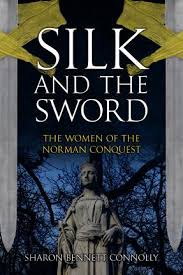
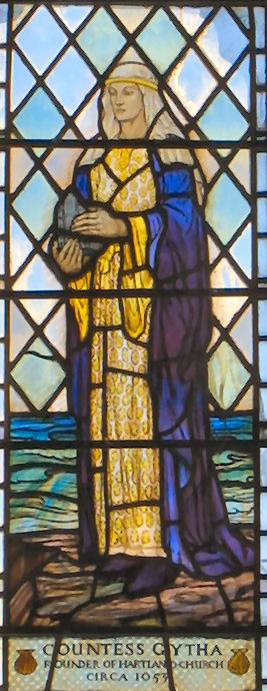
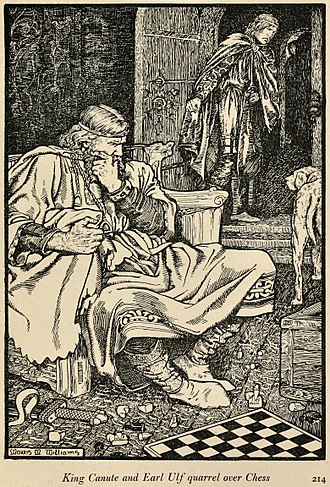
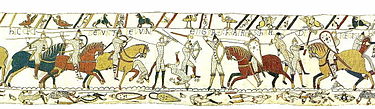
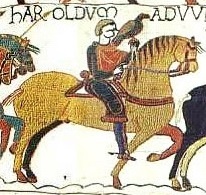
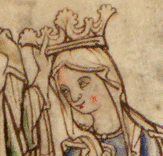
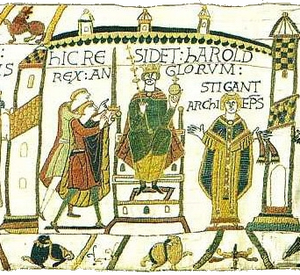
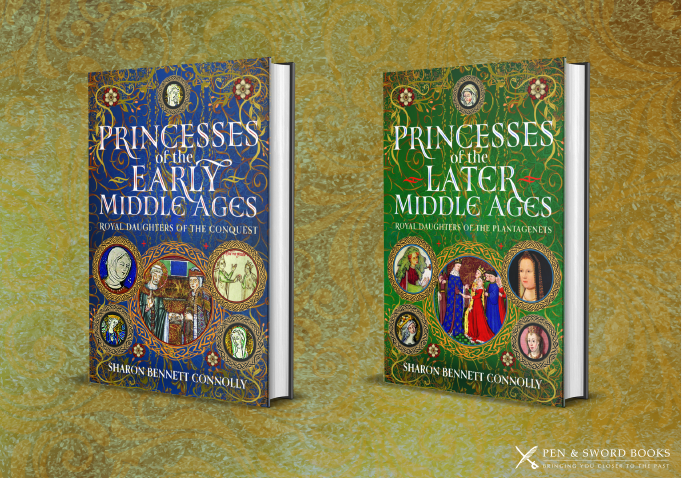
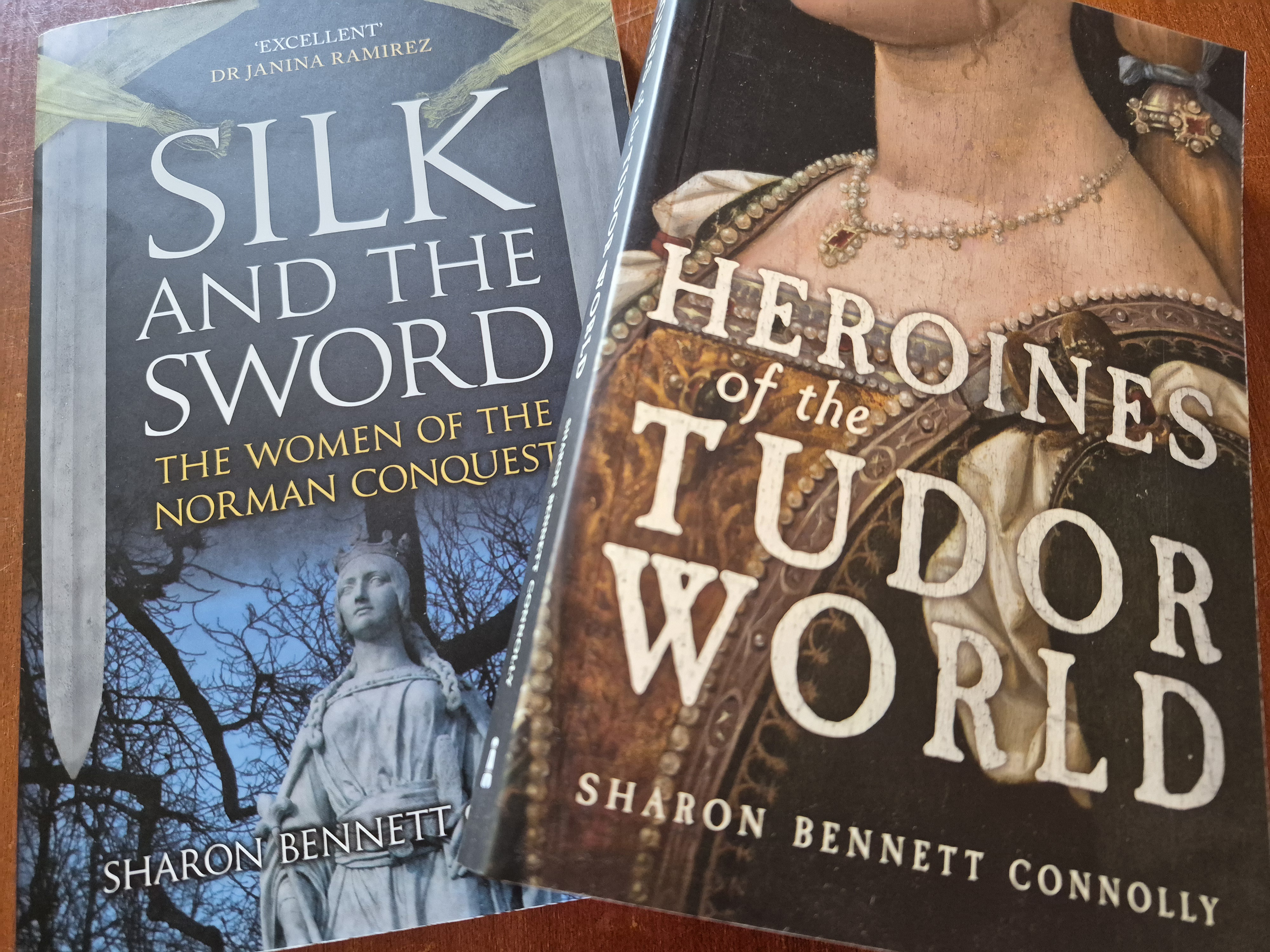
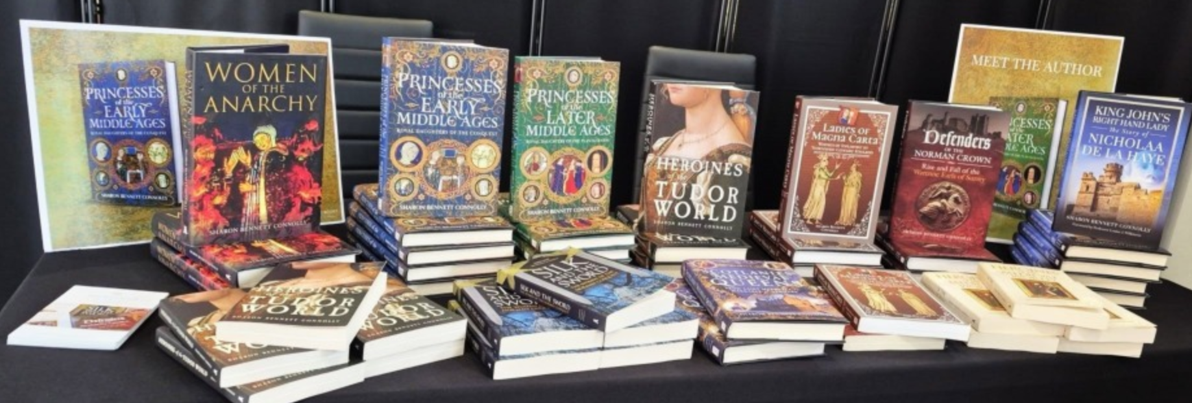

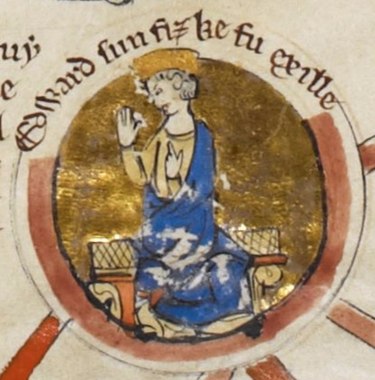
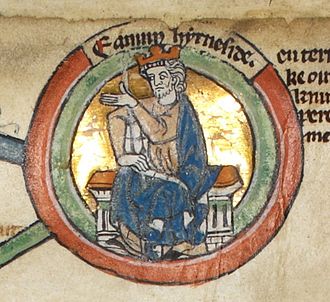
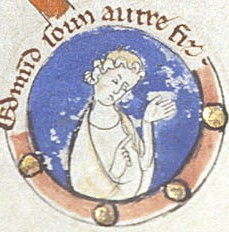
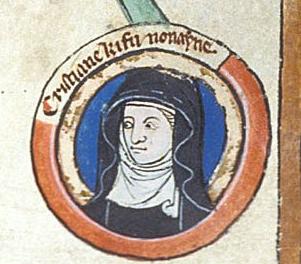
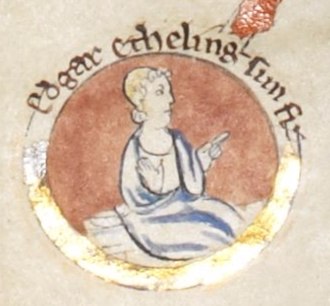
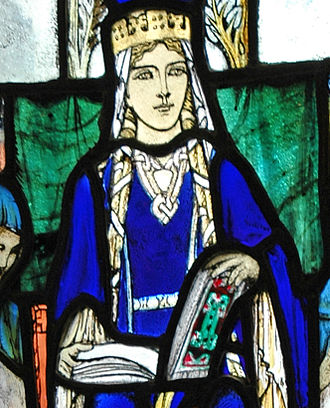


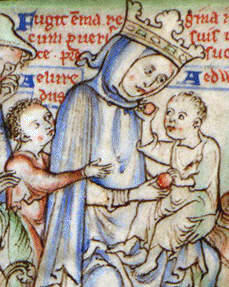
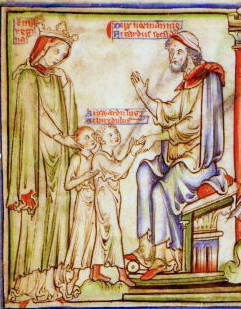
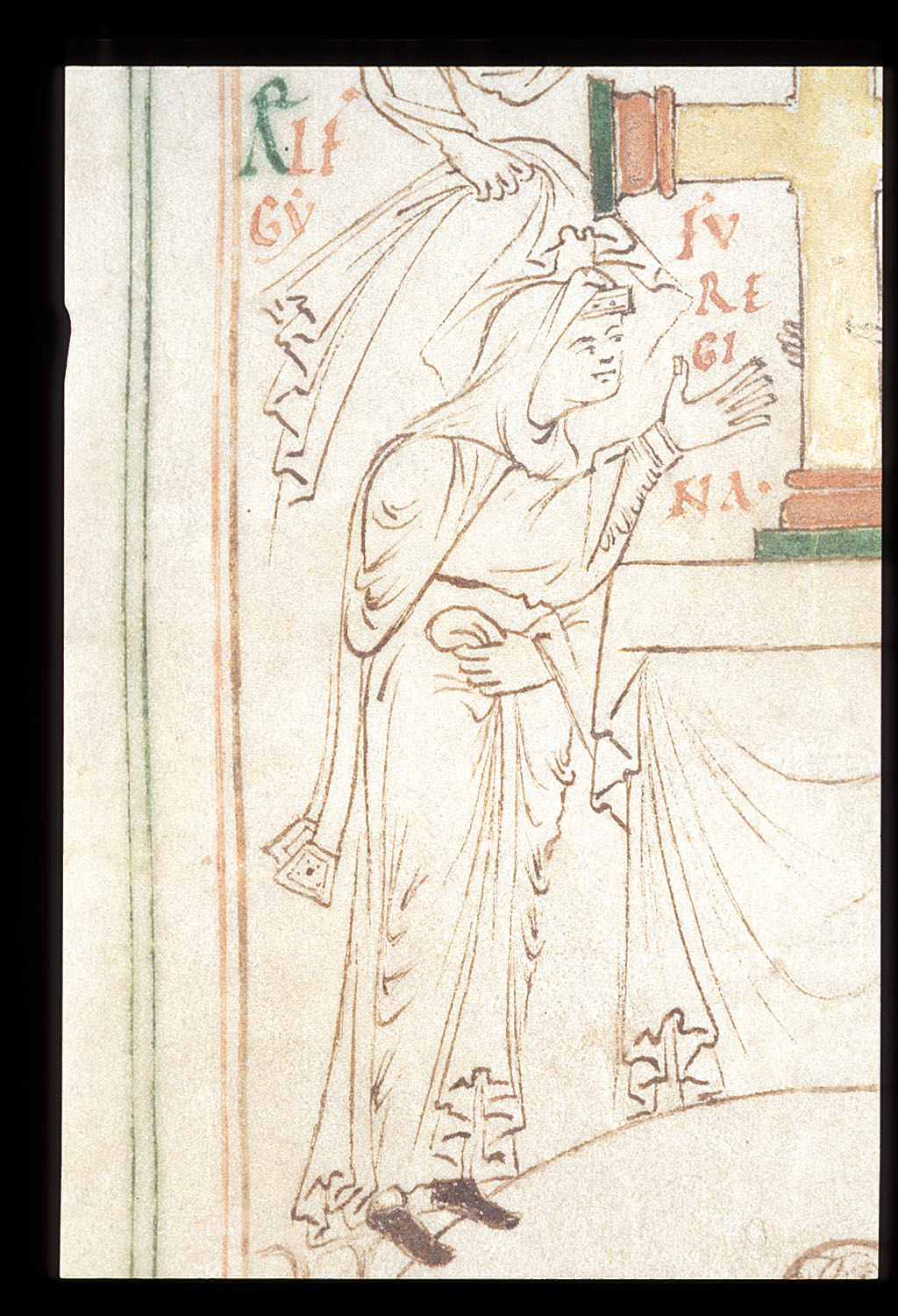
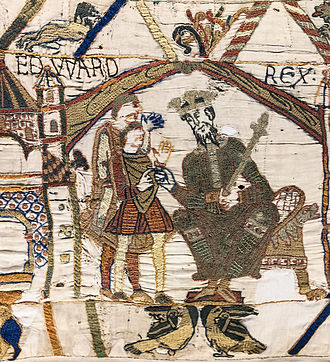


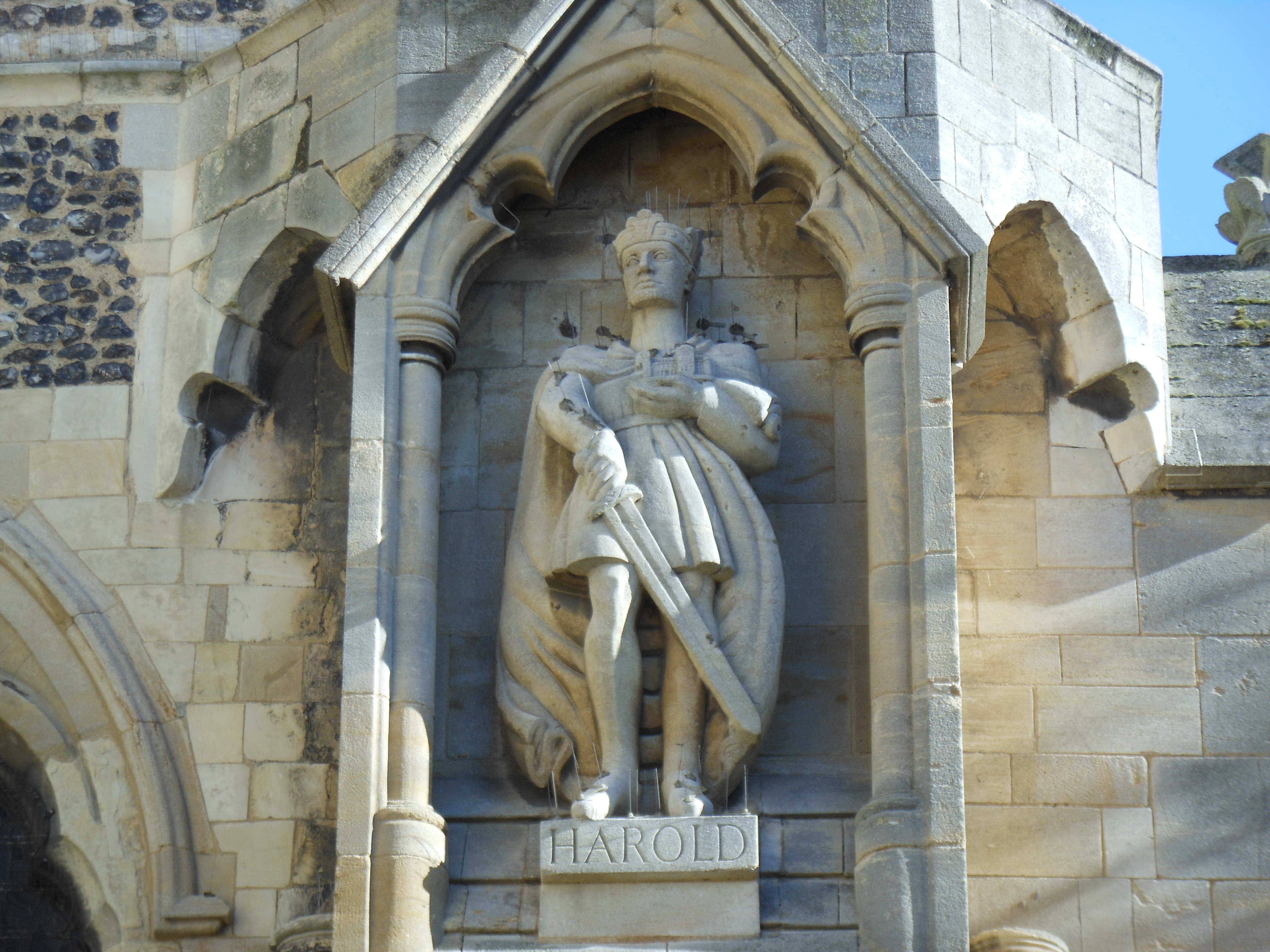
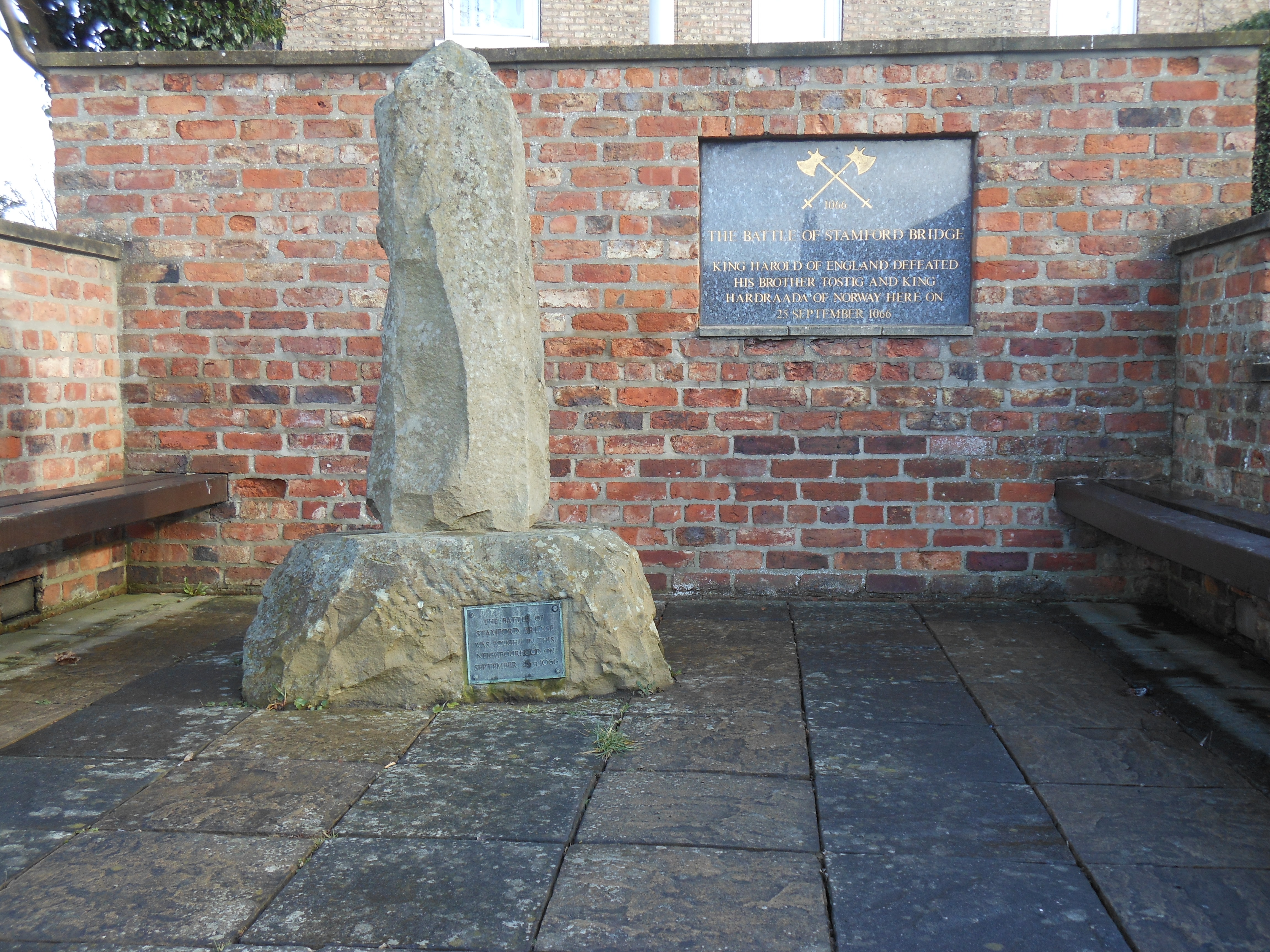
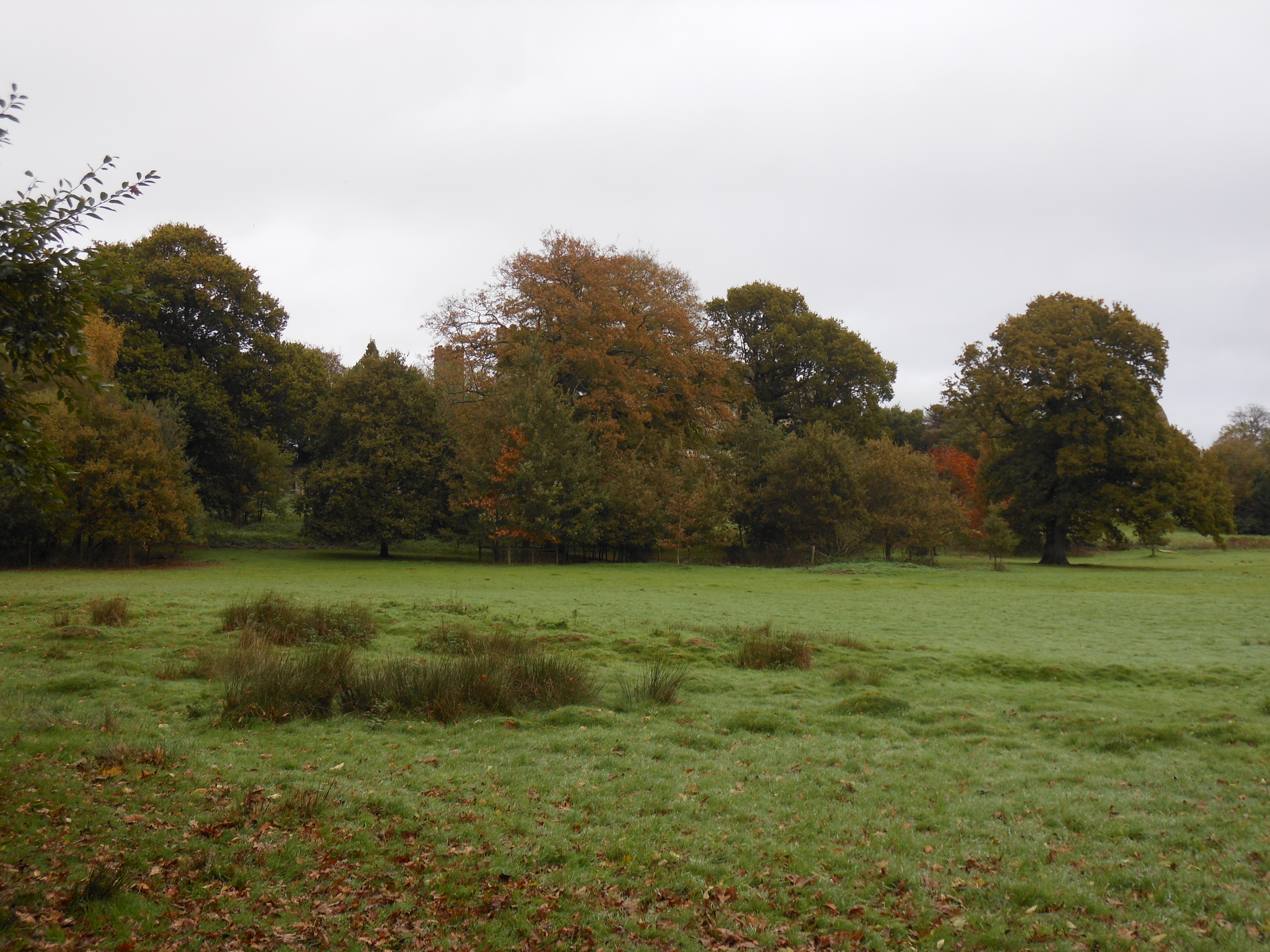
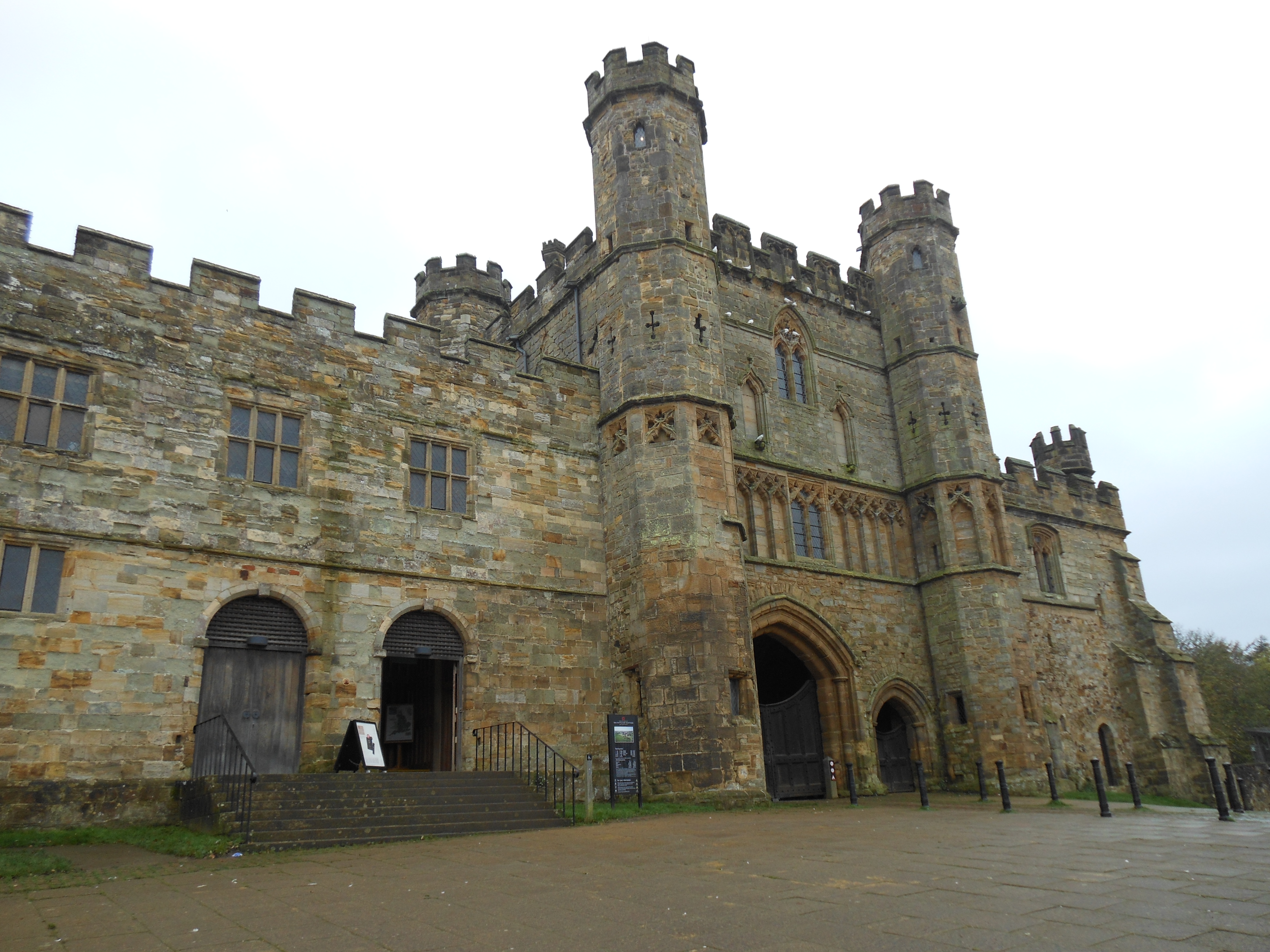
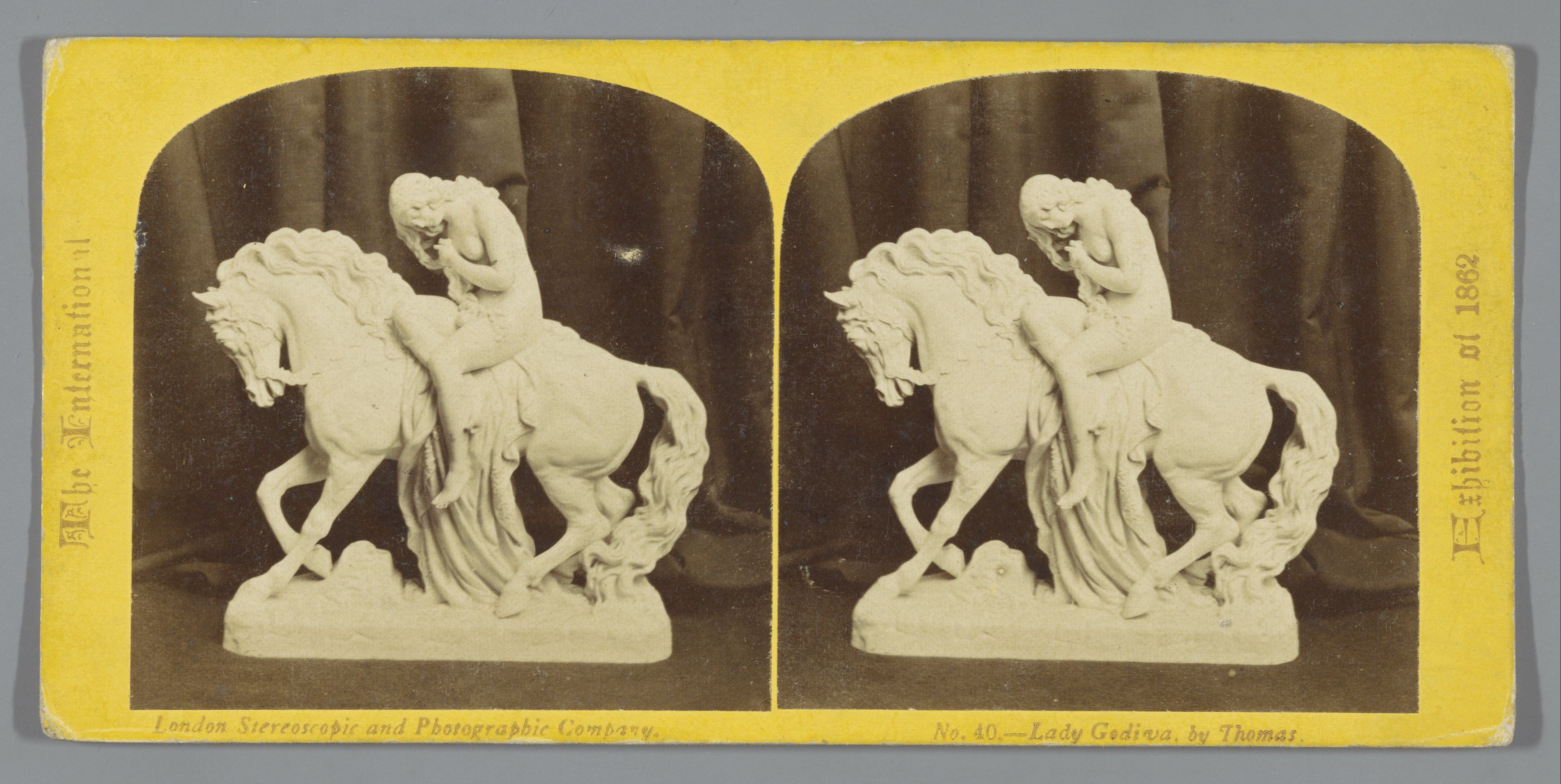
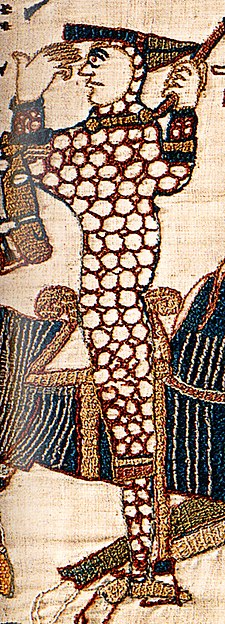
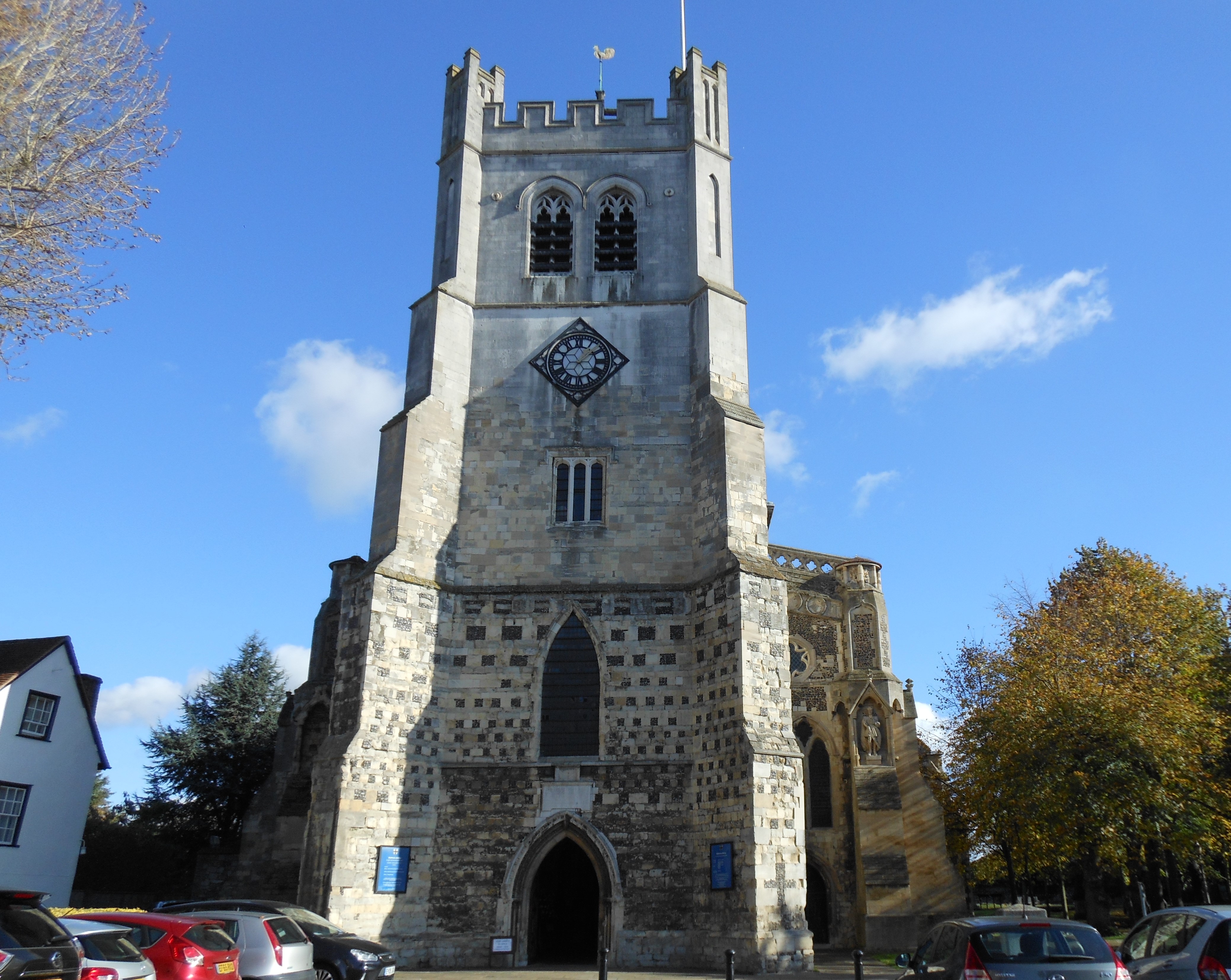
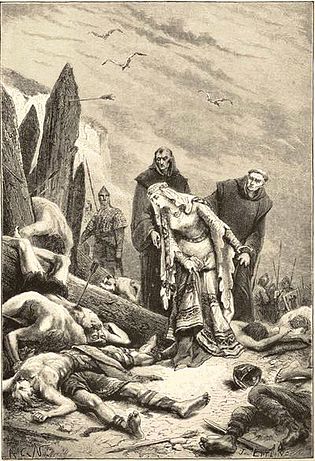
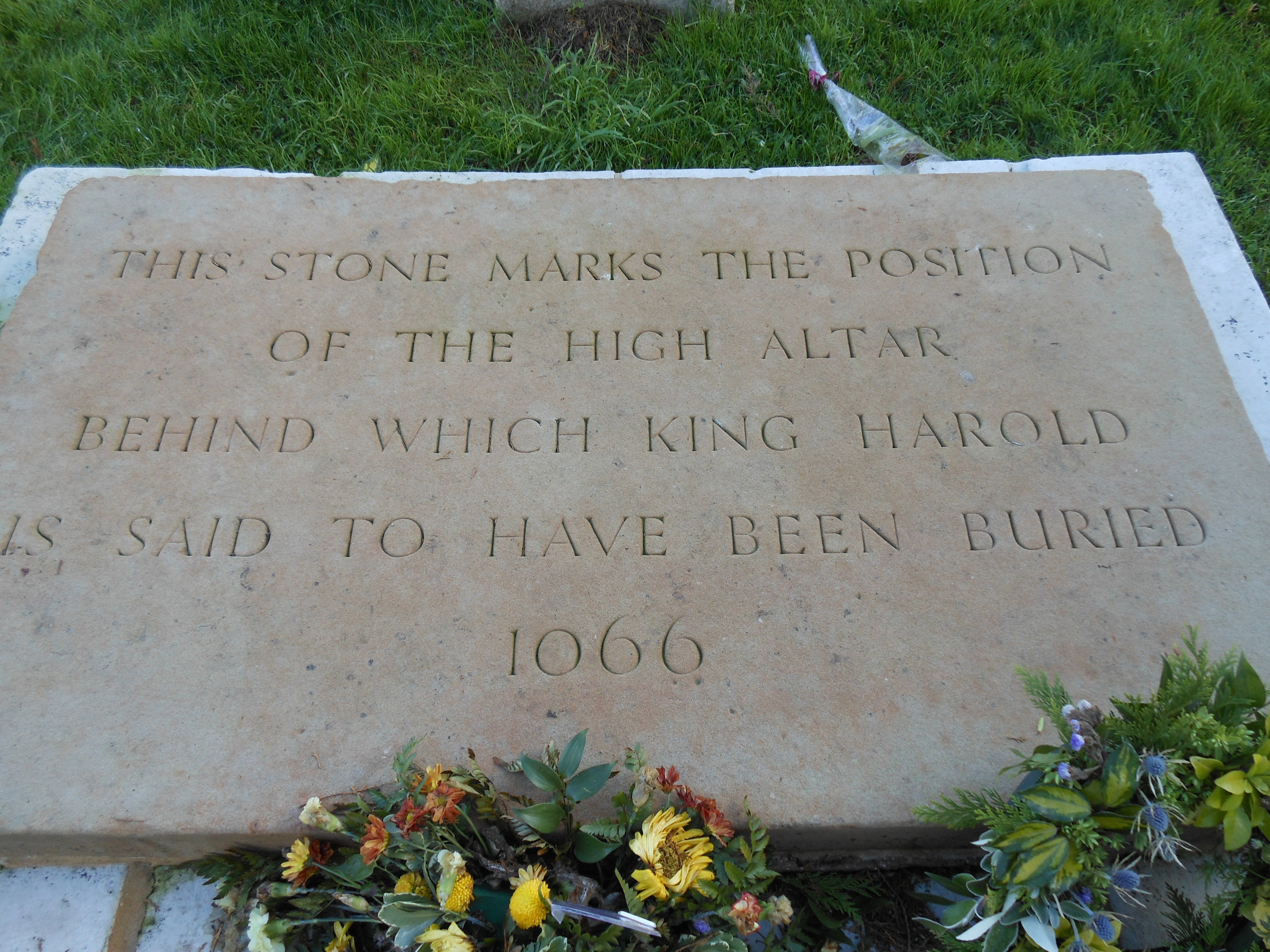
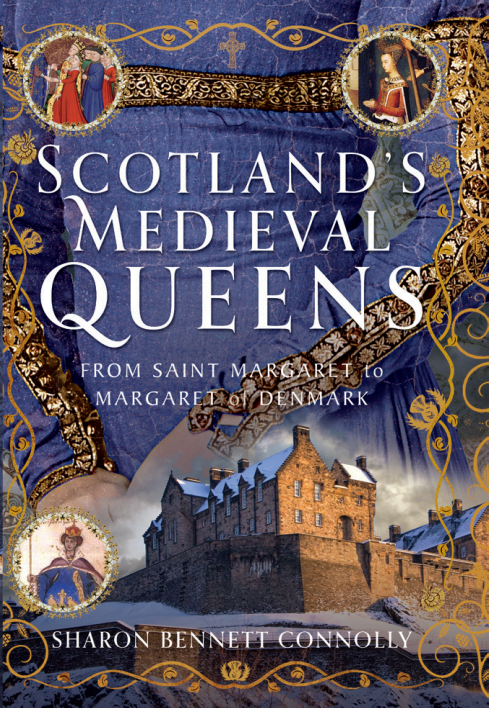
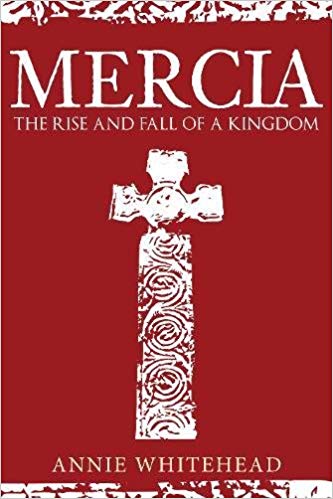
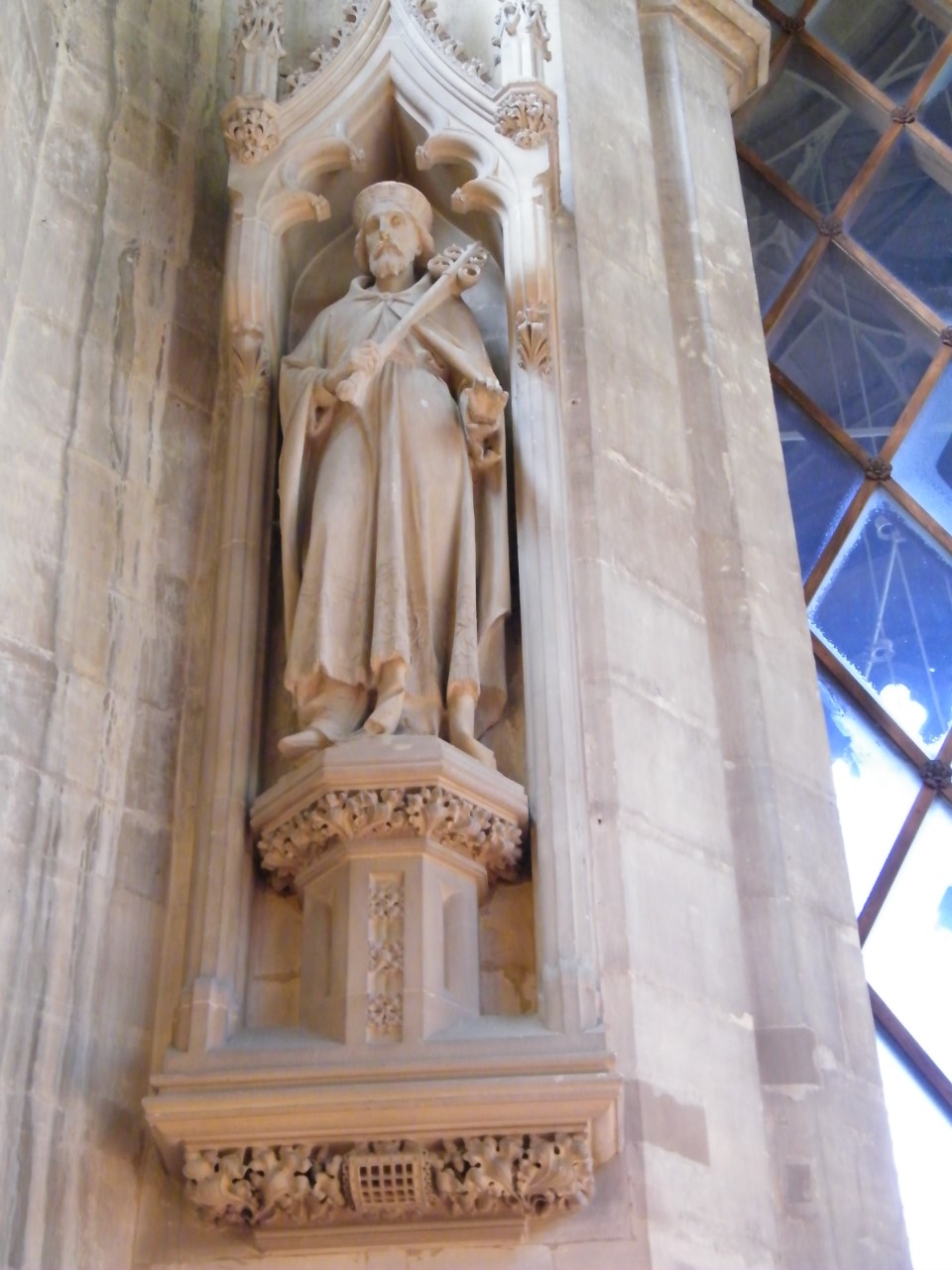
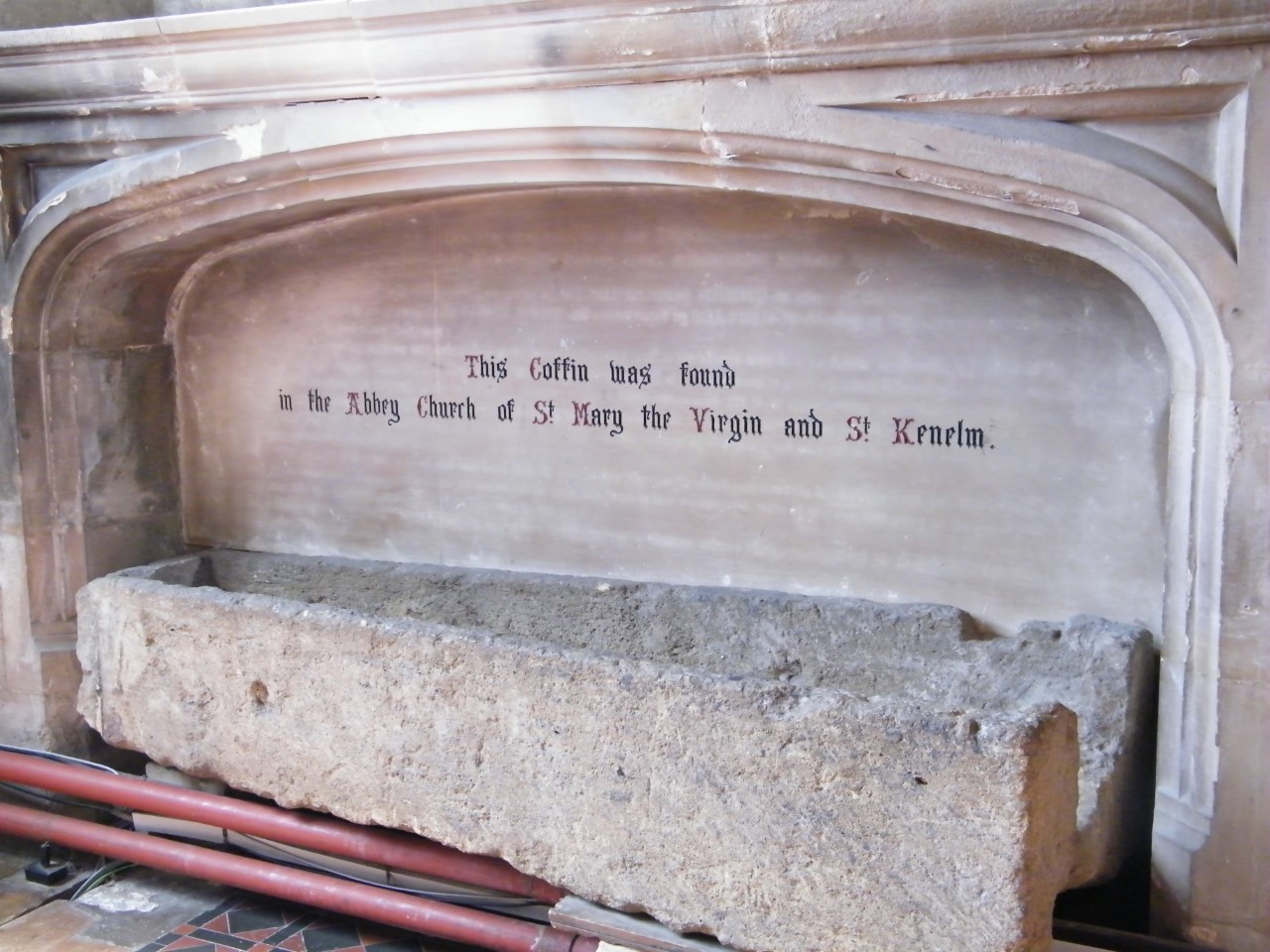
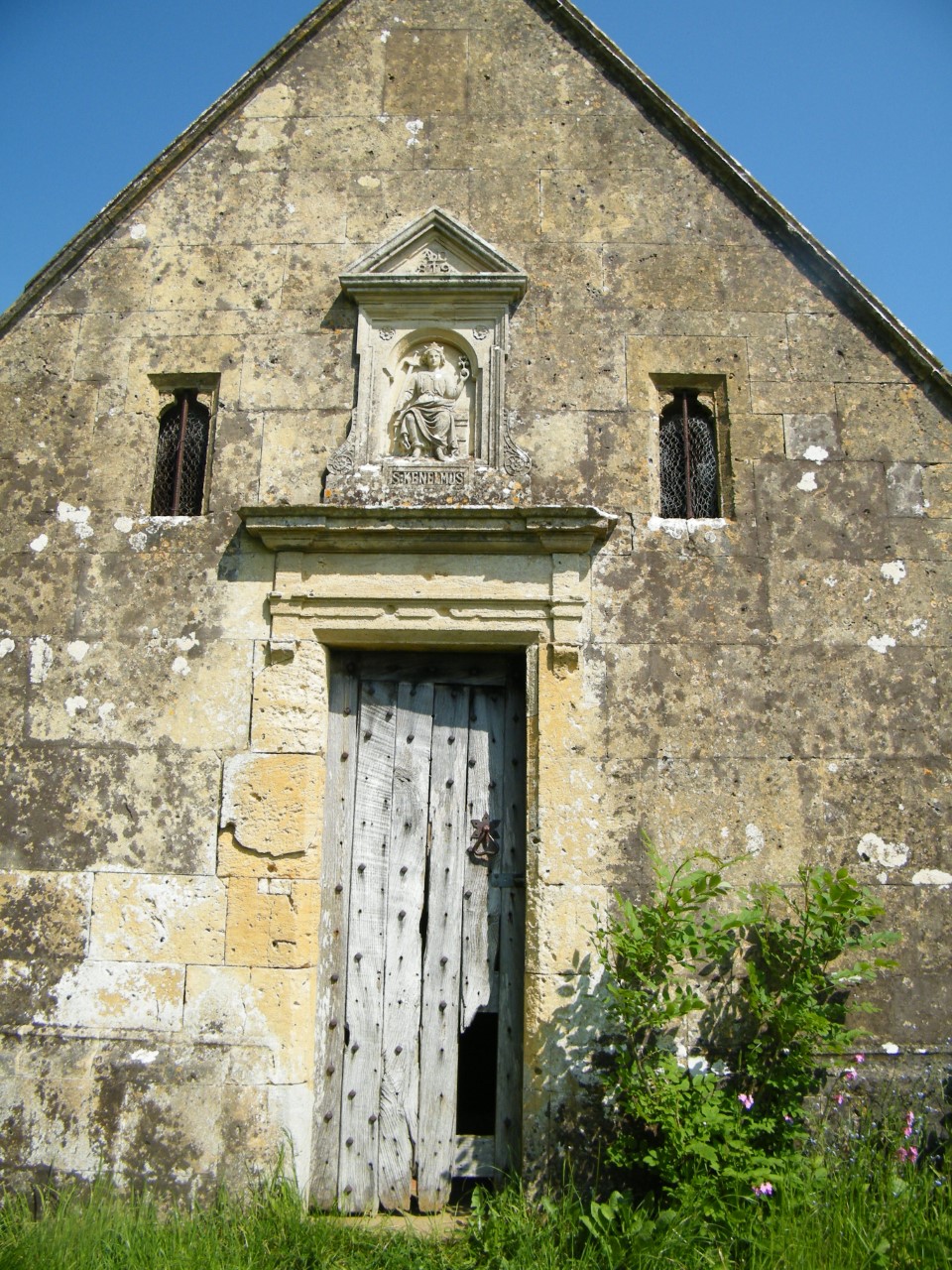
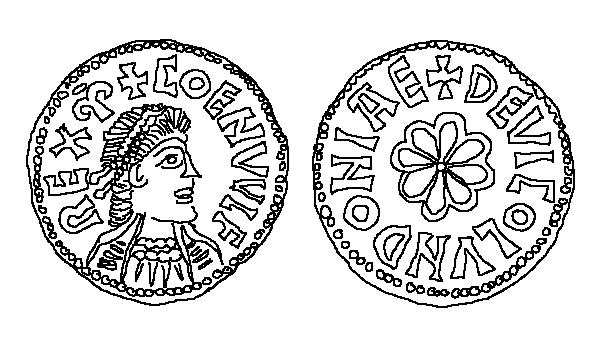
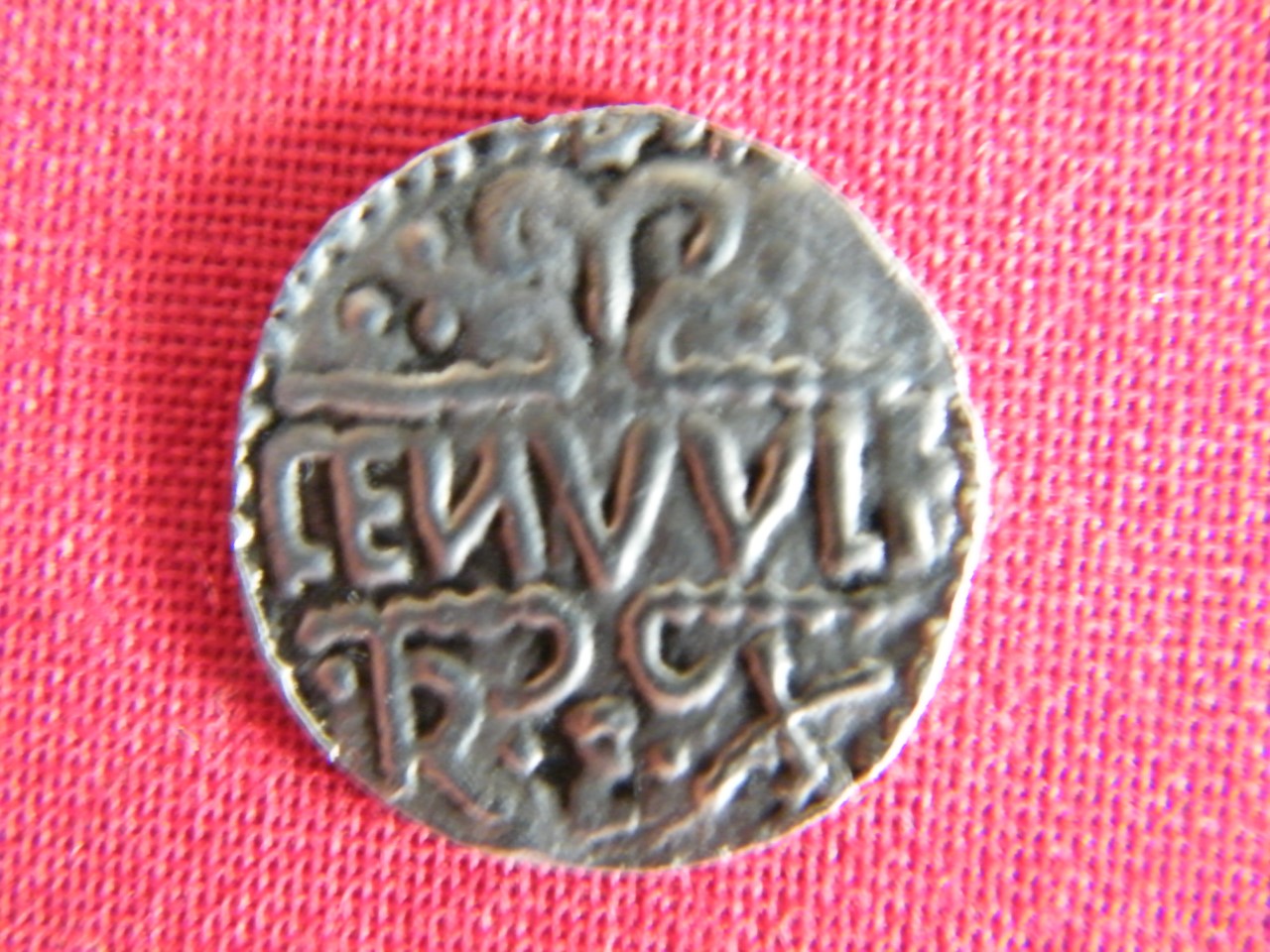


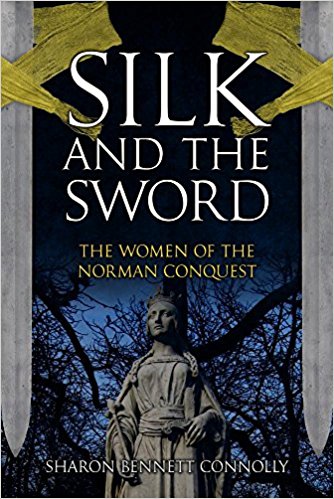


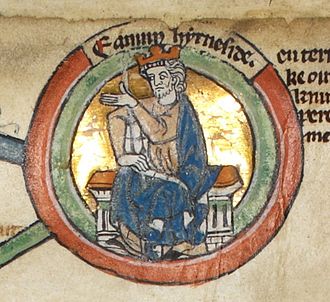
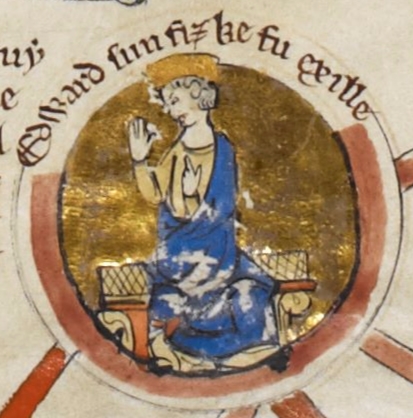
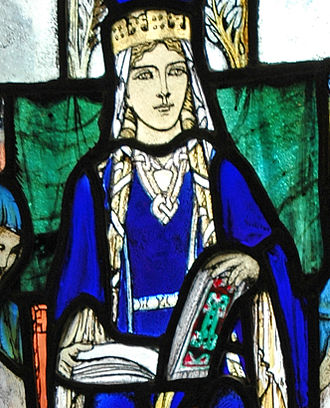
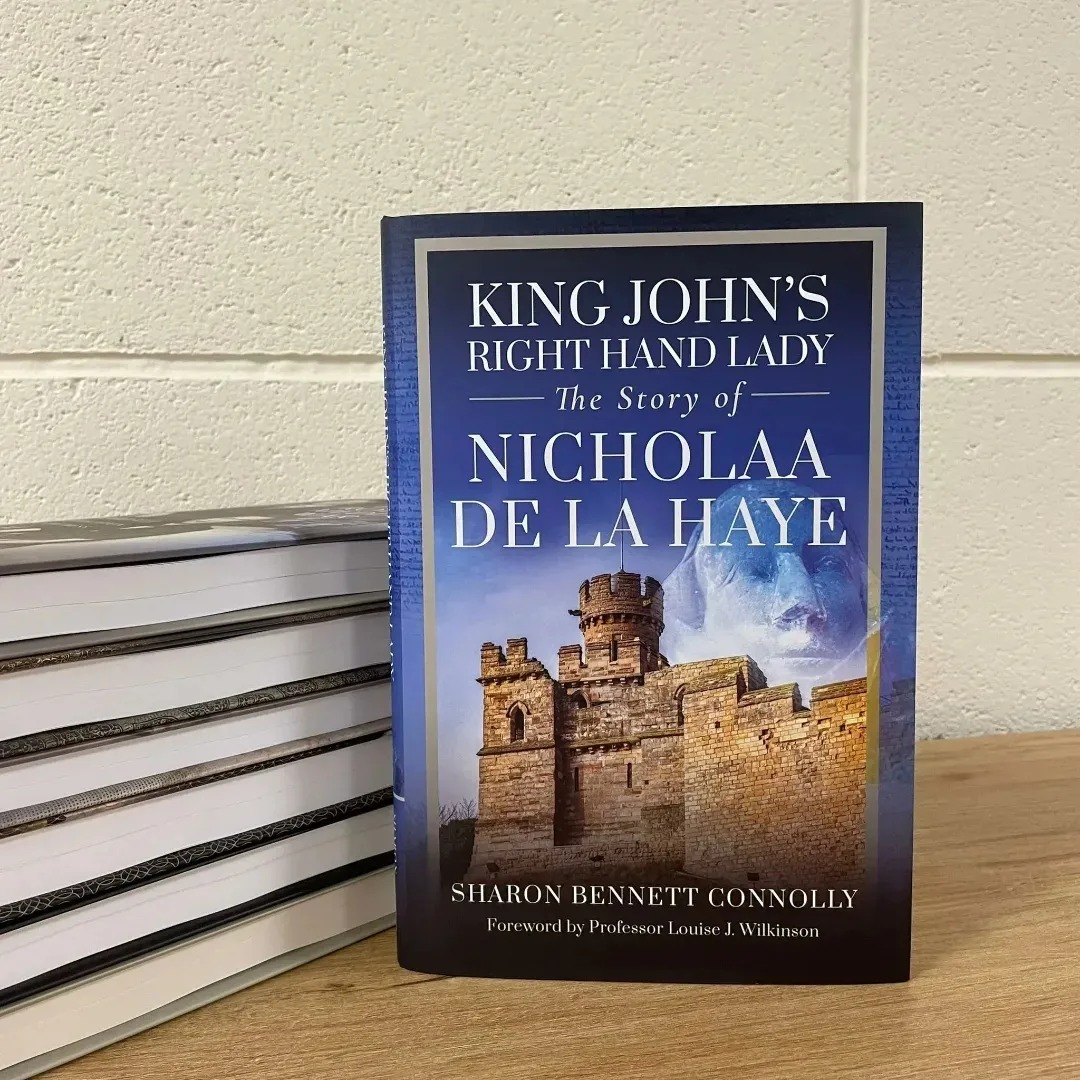


 History... the interesting bits!