Eleanor of England, Queen Leonor of Castile

EleonoraAngl
Eleanor of England, Queen of Castile

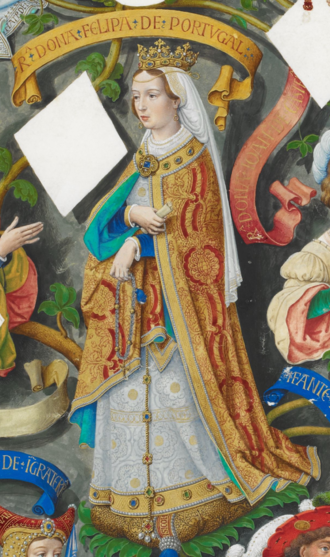
On 13th October 1162 (1161 has also been suggested, but most sources agree on 1162) the Queen of England gave birth to a 2nd daughter at Domfront Castle in Normandy, Eleanor. She was the 6th child of Europe’s most glamorous and controversial couple; Henry II and Eleanor of Aquitaine. Named after her mother Eleanor was baptised by Cardinal Henry of Pisa, with the chronicler Robert de Torigny standing as her godfather.

Of Eleanor’s 4 older brothers 3 had survived infancy; Henry, the Young King, Richard the Lionheart and Geoffrey – later Duke of Brittany. Geoffrey was nearest to Eleanor in age, but already 4 years old when she was born. Eleanor’s older sister, Matilda, had been born in 1156 and would be married to Henry V ‘the Lion’, Duke of Saxony and Bavaria, when Eleanor was just 6 years old. At the age of 3 Eleanor would be joined by a baby sister, Joanna, in the Plantagenet nursery and by a last brother, John, in 1166.

Eleanor’s birth coincided with an awkward period in her parents’ marriage. Eleanor of Aquitaine’s vassals, unhappy with Henry’s rule, were attempting to get her marriage to Henry annulled on the grounds of consanguinity. Although the plot was unsuccessful and the Cardinals were unimpressed with the argument, it cannot have been an easy time for the King and Queen.
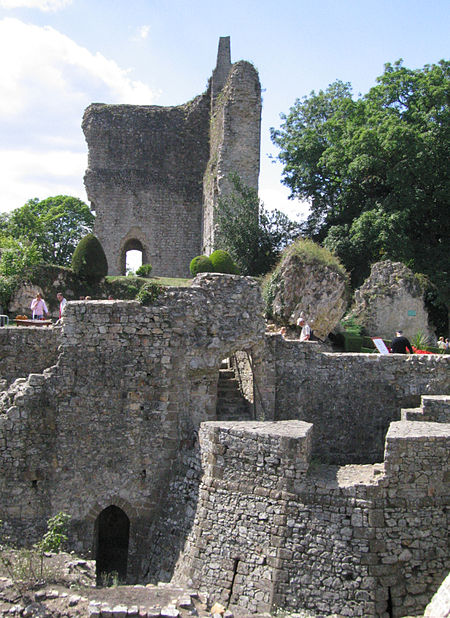
450px-DonjonDomfront61
Domfront, Eleanor’s birthplace

Eleanor’s early childhood was quite nomadic. She travelled often with her parents, in her mother’s entourage. Henry had been absent from the country for 5 years when Eleanor first came to England with her parents in 1163. The Royal family would spend the Christmas of 1164/5 at Marlborough, while in the midst of the crisis of Henry’s disagreements with his archbishop of Canterbury, Thomas a Becket. Eleanor of Aquitaine would then take her children to Winchester, from where they visited Sherborne Castle in Dorset and the Isle of Wight before moving to Westminster.

In February 1165 3-year-old Eleanor was betrothed to the infant son of Frederick Barbarossa, Frederick, in order to cement a treaty with the Emperor. And following the conclusion of the treaty the Archbishop of Cologne was introduced to Eleanor and Matilda (who was to marry Henry the Lion). However, where Matilda departed for her new life in Germany in 1168, Eleanor’s proposed marriage was still in the distant future.
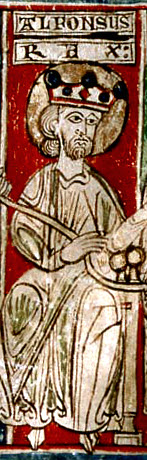
Alfons8Kastilie
Alfonso VIII of Castile

Some historians have speculated that Eleanor was educated for some time at Fontevrault Abbey, along with her younger sister Joanna and her baby brother, John, who spent 5 years there after initially being intended for the church. However, by 1168 she was with her mother, who had decided to settle in Aquitaine and was allowed, by Henry II, to have her children with her.

By 1170 Eleanor’s marriage to the Emperor’s son was no longer a part of Henry II’s plans, and he decided to look elsewhere for an alliance. Seeking to extend his influence across the Pyrenees and to prevent a French alliance with Castile, Henry betrothed Eleanor to 7-year-old Alfonso VIII, king of Castile since he was just 2 years old. Raoul de Faye, Seneschal of Poitou for Eleanor of Aquitaine, was influential in negotiating the marriage; arranging for Eleanor to receive Gascony as her dowry, but only after the death of her mother.

September 1170 saw Eleanor on her way to Castile. A month short of her 8th birthday, some historians suggest she was escorted as far as Bordeaux by her mother, but this is not supported by the contemporary chronicles. However, she would have been given a suitable escort – as the daughter of a king and as a future queen herself – to see her safely to her new country. The wedding took place at Burgos Cathedral in 1174, when the bride was twelve-years-old.
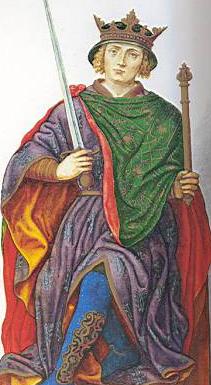
Enrique_I_de_Castilla
Henry I, King of Castile

Eleanor and Alfonso appear to have had a very successful marriage, and a close, trusting relationship. Eleanor is renowned for introducing her mother’s Poitevin culture into the Castilian court. The court encouraged the culture and architecture of Eleanor’s youth, whilst blending it with the luxuries offered by the neighbouring Moorish culture. Castilian poet Ramon Vidal described Eleanor as “Queen Leonore modestly clad in a mantle of rich stuff, red, with a silver border wrought with golden lions.” While the troubadour Pierre Vidal described to Eleanor as elegant and gracious.

Eleanor and Alfonso would have 7 children that survived infancy. Their eldest daughter Berengaria would marry Alfonso IX, King of Leon, and would act as regent in Castile for her younger brother, Henry I, before succeeding him as queen regnant. Berengaria and Alfonso’s marriage was dissolved by the papacy, on the grounds of consanguinity; but their children were declared legitimate. Shortly after succeeding to the throne of Castile, Berengaria abdicated in favour of her son, Ferdinand III, but continued to act as his closest adviser.
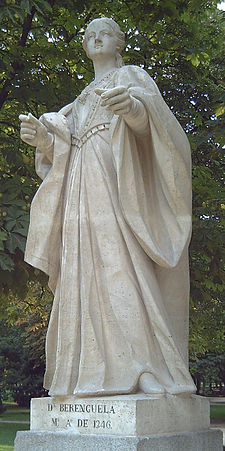
225px-Doña_Berenguela_01
Berengaria, Queen of Castile

One daughter, Eleanor, married James I, king of Aragon, but they divorced in 1229. While another, Constance, was dedicated as a nun and eventually became abbess of the abbey of Las Huelgas, founded by her parents in 1187. The abbey’s nuns were drawn from the highest ranks of the Spanish nobility, they belonged to the  Cistercian Order, a closed community mainly cut off from the world.

Alfonso and Eleanor had 2 sons who would survive childhood. The eldest, Ferdinand, predeceased his parents, dying of a fever in 1209 or 1211. Henry I would succeed his father, but died in 1217 when a loose roof tile fell on his head. He was 13 years old.

Two other daughters survived childhood. Eleanor’s 2nd eldest daughter, 14-year-old Urraca, was initially suggested as the bride of the future Louis VIII of France, son of Philip II Augustus. In 1200 the girls’ grandmother, Eleanor of Aquitaine, was instrumental in arranging the marriage; her dowry was to be provided from the territories Richard I had won from France at the end of the 12th century.

D._Urraca_de_Castela,_Rainha_de_Portugal_-_The_Portuguese_Genealogy_(Genealogia_dos_Reis_de_Portugal)
Urraca, Queen of Portugal

Eleanor of Aquitaine outlived all but 2 of her children. With the deaths of Richard I and his sister Joanna in 1199, only Eleanor in Castile and her baby brother John, now King of England, remained of the once large brood of 4 boys and 3 girls who had survived infancy.

Such recent losses may have helped to persuade the 77-year-old Eleanor of Aquitaine to travel to Castile, in person and in the depths of winter, to collect the granddaughter who would be Louis’ bride. The reunion of the 2 Eleanors would surely have been highly emotional.

She was received at Alfonso’s court with all the pageantry and courtesies appropriate for most remarkable woman of her time. The Dowager Queen of England stayed with her daughter for over 2 months, taking the opportunity to spend some time with her daughter and grandchildren, as the marriage would not be able to take place until after Lent.

In getting to know her granddaughters, Eleanor of Aquitaine seems to have decided that 12-year-old Blanca would make a more suitable bride for Louis. Whether it was because of the girls’ temperaments or simply a matter of names, as some historians have suggested. Urraca was not a name easily translated into French, whereas Blanca, as Blanche, was easily  recognisable.
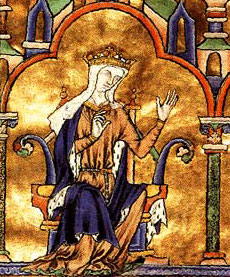
Blancheofcastile
Blanche of Castile, Queen of France

It was, therefore, 12-year-old Blanche who travelled back to France with her grandmother to marry the Dauphin, Louis – the same Louis who would be invited to become England’s king by the rebel barons and laid siege to Lincoln Castle in 1216. Blanche and Louis were married in Normandy, as France was under papal interdict at the time; Blanche would be the mother, and lifelong adviser, of Louis IX (St Louis).

In 1206 Urraca married the heir to the throne of Portugal – the future King Alfonso II.

Eleanor of England and Alfonso VIII appear to have had a happy, successful marriage, producing a family of 4 sons and 8 daughters over a 16 year period. Eleanor enhanced the culture of the Castilian court and acted as a diplomatic conduit between her husband and brothers, Richard and John, in order to aid each other and keep the peace – most of the time. However, in 1204, following the death of Eleanor of Aquitaine, Alfonso had to resort to a show of military force in order to successfully claim his wife’s dower rights over Gascony from John.
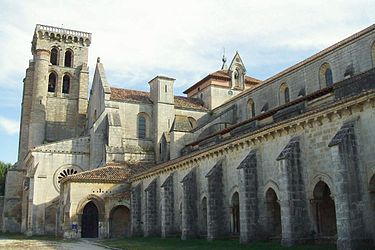
Burgos_-_Las_Huelgas_10
Abbey of Las Huelgas

Their happy marriage came to an end when Alfonso died in Burgos on 6th October 1214. He was buried in the Abbey of Las Huelgas, where their daughter, Constance, was now Abbess, leaving Eleanor as regent for their 10-year-old son, Henry I. Broken-hearted Eleanor, however, only survived her husband by a little over 3 weeks. Overcome with grief she died in Burgos on 31st October 1214, and was laid to rest beside her beloved husband; leaving their daughter Berengaria to take up the regency for Henry.

Of Eleanor’s grandchildren 2 were to become saints, Louis IX of France and Berengaria’s son Ferdinand III, king of Castile; her great-granddaughter and namesake, Eleanor of Castile (Ferdinand’s daughter), would become Queen of England as the wife of Edward I.

*

Pictures courtesy of Wikipedia

*

Sources: Brewer’s Royalty by David Williamson; The Mammoth Book of British Kings & Queens by Mike Ashley; Britain’s Royal Families, the Complete Genealogy by Alison Weir; The Plantagenet Chronicles Edited by Elizabeth Hallam; England Under the Norman and Angevin Kings by Robert Bartlett; Eleanor of Aquitaine, by the Wrath of God, Queen of England by Alison Weir; Eleanor, April Queen of Aquitaine by Douglas Boyd; oxforddnb.com.

*

My Books

Christmas is coming!

Signed, dedicated copies of all my books are available through my online bookshop.

Coming 15 January 2024: Women of the Anarchy

On the one side is Empress Matilda, or Maud. The sole surviving legitimate child of Henry I, she is fighting for her birthright and that of her children. On the other side is her cousin, Queen Matilda, supporting her husband, King Stephen, and fighting to see her own son inherit the English crown. Both women are granddaughters of St Margaret, Queen of Scotland and descendants of Alfred the Great of Wessex. Women of the Anarchy demonstrates how these women, unable to wield a sword, were prime movers in this time of conflict and lawlessness. It show how their strengths, weaknesses, and personal ambitions swung the fortunes of war one way – and then the other.

Available for pre-order from Amberley Publishing and Amazon UK.

Also by Sharon Bennett Connolly:

Out nowKing John’s Right-Hand Lady: The Story of Nicholaa de la Haye is the story of a truly remarkable lady. Nicholaa de la Haye was the hereditary constable of Lincoln Castle and the first woman in England to be appointed sheriff in her own right. Her strength and tenacity saved England at one of the lowest points in its history. Nicholaa de la Haye is one woman in English history whose story needs to be told…

King John’s Right-Hand Lady: The Story of Nicholaa de la Haye is now available from Pen & Sword Booksbookshop.org and Amazon.

Defenders of the Norman Crown: The Rise and Fall of the Warenne Earls of Surrey tells the fascinating story of the Warenne dynasty, of the successes and failures of one of the most powerful families in England, from its origins in Normandy, through the Conquest, Magna Carta, the wars and marriages that led to its ultimate demise in the reign of Edward III. Defenders of the Norman Crown: Rise and Fall of the Warenne Earls of Surrey is now available from Pen & Sword BooksAmazon in the UK and US, and Bookshop.org.

Ladies of Magna Carta: Women of Influence in Thirteenth Century England looks into the relationships of the various noble families of the 13th century, and how they were affected by the Barons’ Wars, Magna Carta and its aftermath; the bonds that were formed and those that were broken. It is now available in paperback and hardback from Pen & Sword,  Amazon, and Bookshop.org.
Heroines of the Medieval World tells the stories of some of the most remarkable women from Medieval history, from Eleanor of Aquitaine to Julian of Norwich. Available now from Amberley Publishing and Amazon, and Bookshop.org.

Silk and the Sword: The Women of the Norman Conquest traces the fortunes of the women who had a significant role to play in the momentous events of 1066. Available now from Amazon,  Amberley Publishing, and Bookshop.org.

Alternate Endings: An anthology of historical fiction short stories including Long Live the King… which is my take what might have happened had King John not died in October 1216. Available in paperback and kindle from Amazon.

Podcast:

Have a listen to the A Slice of Medieval podcast, which I co-host with Historical fiction novelist Derek Birks. Derek and I welcome guests, such as Bernard Cornwell, and discuss a wide range of topics in medieval history, from significant events to the personalities involved.

*

Don’t forget! Signed and dedicated copies of all my books are available through my online bookshop.

For forthcoming online and in-person talks, please check out my Events Page.

You can be the first to read new articles by clicking the ‘Follow’ button, liking our Facebook page or joining me on Twitter and Instagram.

*

©2016 Sharon Bennett Connolly FRHistS
Book Corner: Interview with Kristie Dean

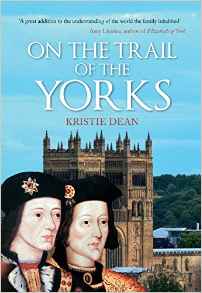
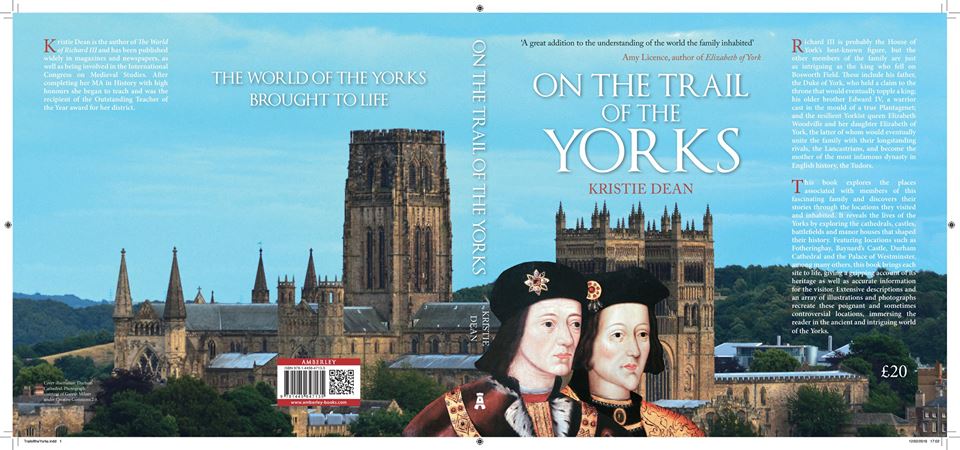
12791083_736187379851237_1299001826319792577_nThis week I have the great pleasure of starting off Kristie Dean’s Blog Tour, in honour of the launch of her new book, On the Trail of the Yorks.

Just a year ago she published the book, The World of Richard III and on Monday her latest offering, On the Trail of the Yorks goes on sale in the UK. Kristie’s books are a unique and fascinating blend of history and travel writing; they bring to life the castles, palaces and other locations  associated with one of the ,most famous kings – and families – in British history.

Here, she talks to me about her love of history and writing.

What made you become a writer?
When I was a little girl I would spend my time creating stories for the other kids. I also wrote and distributed a neighborhood newspaper. I was always writing – poems, short stories, and even reports. I wrote a research paper for my 7th grade teacher and she later talked to my parents, telling them I was pushing myself too hard. It wasn’t that; I just couldn’t stand a blank page, and so I was always looking for new ways of writing.

With a career as a teacher, how do you discipline yourself to write?
When I am working on a book, writing consumes my life. I come home from work and write for three or four hours plus I write all day Saturday and most of Sunday. If I have a school event or my husband convinces me to go out, I take that evening off. I take a week off every May to take my students to Washington DC, although I do take research materials to read on the bus. I also am a mentor teacher at my school, so that takes a chunk of time. But, just like writing and teaching, it is worthwhile and enjoyable.

How do you organise your writing day?
At 5 p.m., I get home and write until at least 8 p.m. On weekends, I am researching/writing by 9 a.m. and usually going until 5 p.m. If I am writing about a certain location and I am in a ‘zone’ I will often continue until I am done.

Kristie
Kristie Dean

How many projects do you have going at once, or do you concentrate on one at a time?
With my time constraints, I usually have one or two in the back of my mind, but I only work on one at a time. I would love to be able to work on two or three projects at a time. Authors who are able to do this amaze me.

Your books are quite unique, a combination of history and historical locations, what made you decide to write them this way?
I traveled to Europe several times and always ended up frustrated with my guidebooks. I ended up making my own guides to each location for myself and fellow travelers to reach deeper in the history. Since I was particularly fascinated with the Plantagenets (especially Richard III) and Anne Boleyn, I was frustrated there weren’t any guides to places associated with them. Then a member of a history group I am in wrote an excellent guide for Anne Boleyn. This helped me to realize that I wasn’t the only one who wanted to explore the history of a location, so I decided to start with the historical figure I was most interested in, which was Richard III.

How long do you spend researching your book before you start writing?
This is a tough one to answer since it varies. I already had a great deal of information on Richard III and the Wars of the Roses, so much of my research involved the locations associated with him. However, I have been researching for a fiction book for years. Whether it ever sees the light of day is a different story.

What do you enjoy most about writing?
I love getting to delve into the lives of historic figures and locations. I also like visiting each place to get a feel for it. I enjoy trying to make history come alive for my readers.

What is the worst thing about writing?
The long hours of solitude. It can get lonely, and when I am up against a deadline I do not have time to go out with friends.

How long does it take to do a project from start to finish?
About a year. It depends on the book and how much research I’ve done prior. It also depends on where the research takes me. I became interested in Margaret of York while writing my latest book and spent several hours researching information that I did not even need for the book.

Have you ever considered writing a novel? What would it be about?
(Laughs) Oh yes, I have. It would be a thriller, I think. I love reading those types of novels. I might eventually do an historic fiction novel, too.

Who are your favourite personalities from history?
Oh my. It would be easier to answer who doesn’t interest me, but I will give it a try. Richard III, obviously. Anne Boleyn, All the Plantagenet queens, St Margaret, Margaret of York, Cecily Neville, Anne Neville, Llywelyn Fawr, and several lesser known women from history. From a more modern time, Winston Churchill intrigues me.

What are your favourite places from history?1422626_729589277177714_706482969626694562_n
All of England, Scotland, and Wales. I feel like the area is a second home for me. I love traveling and exploring each region. Middleham Castle is one of my favourites, as well as Llanrhychwyn Church, which is believed to be the oldest church in Wales. This little church is a gem, said to have been built by Llywelyn Fawr for his wife, Joan. I had a difficult time finding it, but Sharon Kay Penman helped me by putting me in touch with someone who lived in the area. Pam took me straight there, and I was immediately enchanted.

Your last book was The World of Richard III and the new one is On the Trail of the Yorks, what is it that fascinates you about Richard III and the House of York?
I have been fascinated by that time period for a long time. It’s a time of turbulence, a time of changing allies and enemies, and a time of controversy. It just pulls me in. Originally, I was interested in the controversy surrounding Richard III, but now I am captivated by the entire period.
On another note, The World of Richard III is going to undergo a title change to On the Trail of Richard III for the paperback version. This will keep the two books aligned.

Would you ever consider doing a book about the House of Lancaster and the locations associated with it?
I would, but I think many of the locations would be the same. Of course, the difference would be what the Lancastrians would be doing at each location. It is certainly an interesting idea.

Do you ever get writer’s block? If so, how do you get around it?
Not often. When I do it is a sign that I need a break. So, I get up, play with my three dogs and two cats or take a walk outside. Or I clean the bathroom. I am always excited to get back to writing after that.

Do you find social media – such as Facebook – a benefit or a hindrance?
It’s a benefit, but I confess to not being the best at it. I don’t get around to the various groups as often as I want, so sometimes I am out of the loop. I do have several wonderfulyorks Facebook friends who help me admin my groups and keep me up to date on what’s happening in the other history groups.

What is be your next project?
I have a book about locations associated with some of history’s forgotten women brewing in my head, but it has a serious contender in Margaret, Mary and Arthur Tudor. I am not sure which will win out in the end. I am taking a much-needed break right now to collaborate with some friends on a joint project. I will spend two weeks in East Anglia this summer with them doing research.

I would like to extend a huge ‘thank you’ to Kristie Dean for her wonderful answers and wish her the every success with her latest book. And look out for my review of On the Trail of the Yorks next week!

*

Kristie Dean has an MA in History and now enjoys teaching the subject, following a successful career in public relations. Her particular historic interest is the medieval era, specifically the Plantagenets, the Wars of the Roses and the Tudors. When not traveling for research, you can find Kristie at home in Tennessee with her husband, three dogs, and two cats. On the Trail of the Yorks is available from Amazon UK from 15th March 2016 and from Amazon US in May. And On the Trail of Richard III is due for release in paperback in May.

*

My book, Heroines of the Medieval World,  is now available in hardback in the UK from both Amberley Publishing and Amazon UK and worldwide from Book Depository. It is also available on Kindle in both the UK and USA and will be available in Hardback from Amazon US from 1 May 2018.

Be the first to read new articles by clicking the ‘Follow’ button, liking our Facebook page or joining me on Twitter.

©2016 Sharon Bennett Connolly

Book Corner – Red Roses by Amy Licence

51V9Q+iXiyLRed Roses: From Blanche of Gaunt to Margaret Beaufort traces the story of the women of the House of Lancaster, from the children borne by Blanche, wife of John of Gaunt, in the fourteenth century, through the turbulent fifteenth century to the advent of Margaret Beaufort’s son in 1485 and the establishment of the Tudor dynasty. From the secret liaisons of Katherine Swynford and Catherine of Valois to the love lives of Mary de Bohun and Jacquetta of Luxembourg, to the queenship of Joan of Navarre and Margaret of Anjou, this book explores their experiences as women. What bound them to their cause? What real influence did they wield?

With this book, historian Amy Licence has excelled herself. Red Roses is a thorough and  comprehensive examination of the lives of the women of the House of Lancaster, from its inception with the marriage of Blanche of Lancaster and John of Gaunt to its crowning glory, with the regency of Margaret Beaufort for her 17-year-old grandson, Henry VIII.

I have waited eagerly for this book, bringing together all the Lancastrian ladies in one volume was an incredible undertaking and has been achieved with great skill and tact. As I have researched several of these ladies myself over the last year I was keen to see if Amy Licence’s own opinions and theories differed greatly from my own. (And I was happy to see I hadn’t made any glaring errors in my own assessments).

240px-Marriage_of_blanche_of_lancster_and_john_of_gaunt_1359
The birth of the Lancastrian dynasty: the marriage of Blanche of Lancaster and John of Gaunt

I was amazed at the detailed research involved in creating this book, and the little extra snippets of information which the author has found, but which had eluded earlier historians. There are several new pieces of information brought to light, which were previously unknown – and I will have to edit some of my own articles, including those on Blanche and Katherine Swynford in light of this new information.

This meticulously research is presented in a largely chronological format, detailing not only the lives of John of Gaunt’s 3 wives and of the major Lancastrian wives who came after, but also of women with less  obvious Lancastrian links, such as Joan Beaufort, queen of James I.

The author takes care to bring to light the struggles of some and the near obscurity of others; demonstrating how some women became the centre of attention, stepping into the limelight, while others remained influential only in the family sphere, bringing into the world the next generation of the dynasty – or dying in the attempt. She considers how some were bargaining tools in international diplomacy, while others were tainted by scandal, how some were countesses while others were queens; but they were all great and interesting ladies worthy of our attention.

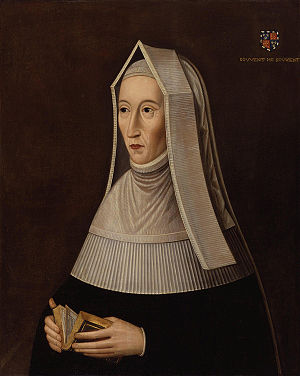
300px-Lady_Margaret_Beaufort_from_NPG
Margaret Beaufort

Amy Licence emphasises the deep sense of family and duty each woman felt towards the Lancastrian dynasty. She skilfully highlights the changes in the actions and responsibilities of the women over time; clearly demonstrating the differences in expectations from the marriage of Blanche of Lancaster to the marriages of Margaret Beaufort.

Ms Licence’s passionate narrative builds on the lives of these women, demonstrating how events impacted on them, and how they influenced those around them, not only in their close family spheres, but also on the international stage. The work analyses the effects on the fortunes of the dynasty and the lives of the women, caused by plague, war and political machinations and discusses the vulnerabilities and risks of being a woman in the later middle ages; from childbirth to accusations of witchcraft.

It appears that the ideal Lancastrian woman of the fourteenth century was essentially well bred and beautiful, an adored wife and mother, pious and dignified, devoted and loyal to the dynasty’s cause. Yet, as the fifteenth century advanced, women marrying Lancastrian husbands increasingly began to step outside this role, to challenge it and redefine concepts of femininity and rule…..

A great strength of the book, which spans a 150-year time period, is the way in which the author successfully maintains, throughout, the links between the various eras in which these women lived. She displays a deep understanding of how traditions and perceptions will have changed over time during the period under investigation. After all, how much has life changed for us since 1866?

The text provides thorough analysis of primary and secondary sources, and even includes assessments of popular fiction classics and arguments put forward by contemporary historians. These assessments are fair, persuasive counter-arguments professed with demonstrative respect for the authors in question. In the end, however, Ms Licence presents her own findings in a clear, convincing manner.

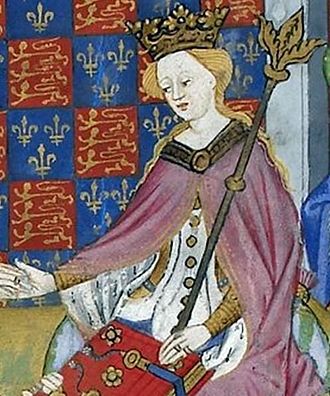
330px-MargaretAnjou
Margaret of Anjou, the last Lancastrian queen

The only minor bug-bear I have with the book is the title. Blanche of Lancaster was never actually known as Blanche of Gaunt, but I guess it will make the book appear to a wider audience; as so many more people have heard of John of Gaunt than have heard of Blanche.

I love the way Amy Licence clearly explains the relationships between the disparate Lancastrian women, whether it is familial, chronological, or by experience. For example, Katherine Swynford is discussed not only in respect of her relationship with John of Gaunt, but also as governess to his children, companion to his daughter-in-law and as matriarch of the extended Lancastrian family.

This is a comprehensive and thorough analysis of the lives of the Lancastrian women, told in an engaging and entertaining manner. Amy Licence tells the story, not only of the individual women, but also of a dynasty; and how that dynasty was held together by the wives and mothers essential to its survival, continued existence and eventual success. She also takes care to demonstrate how responsibilities and perceptions changed through time, affected by events and changing circumstances.

I have to recommend Red Roses as a thoroughly enjoyable read. The author engages with the reader from the outset, drawing you in to the lives of these varied and remarkable women, demonstrating how they all fit together in the story of the House of Lancaster, like the individual pieces of a jigsaw.

In short, this is a wonderful book, telling the story of a dynasty and, in my opinion, Amy Licence’s best yet.

*

10384680_10153841333263942_6977345604197683474_nAmy Licence has been a teacher for over a decade. She has an MA in Medieval and Tudor Studies and has published several scholarly articles on the Tudors. She is an author and historian of women’s lives in the medieval and Tudor period.

Red Roses: From Blanche of Gaunt to Margaret Beaufort is available on Amazon in the UK from Monday 7th March and in the US from Monday 15th March 2016.

*

My book, Heroines of the Medieval World,  is now available in hardback in the UK from both Amberley Publishing and Amazon UK and worldwide from Book Depository. It is also available on Kindle in both the UK and USA and will be available in Hardback from Amazon US from 1 May 2018.

Be the first to read new articles by clicking the ‘Follow’ button, liking our Facebook page or joining me on Twitter.

©2016 Sharon BennettConnolly

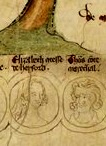
Elizabeth of Rhuddlan, Daddy’s Girl

Membrane with genealogy of the kings of England.
Elizabeth of Rhuddlan

In July 1282 King Edward I was in the middle of subduing Wales when his wife, Eleanor of Castile, was reaching her final month of pregnancy. Unlike most royal wives, who would have stayed at home in one of their sumptuous, cosy palaces, Eleanor was in Wales with her husband. After all, Eleanor had been on Crusade with her husband and had even given birth to her daughter, Joan of Acre, in the Holy Land. Wales was no more of a difficulty.

Rhuddlan Castle had been ‘civilised’ for the queen’s use; with the addition of gardens, decorative seating and a fish pond to aid Eleanor’s comfort. However, it was still Edward’s headquarters, where troops were mustering and messengers were coming and going at all hours – hardly the most comfortable and peaceful place for a queen to give birth.

Elizabeth of Rhuddlan was born around the 7th August 1282. She was the youngest surviving daughter of the king and queen’s 15 children – a 16th and final child, Edward (the future Edward II) would be born in 1284. Although the castle must have been hectic during Elizabeth’s birth, one can imagine the rooms surrounding the birthing chamber were kept as serene as possible. Indeed, it seems that Eleanor was allowed the ‘laying-in’ of a whole month following Elizabeth’s birth with her churching at the end of it – a luxury that did not arise all that often for Edward’s queen.

Eleanor’s wardrobe accounts show that the queen purchased several small items for her baby daughter’s use; a basin, some tankards, a storage chest and a bucket. And, unlike her siblings, Eleanor kept Elizabeth with her during the 1st few years of her life. It’s possible she was with her full-time until the age of 2, or was at least visited regularly by Eleanor. Elizabeth was still with her mother when her baby brother and the king’s heir, Edward, was born at Caernarfon in 1284.

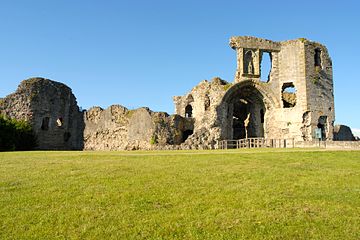
360px-Rhuddlan_Castle,_May_2012
Rhuddlan Castle, Flintshire, Elizabeth’s birthplace

When Edward was established in his own household, Elizabeth went with him. She spent most of her childhood in her brother’s company; her education supervised by her mother, often from a distance.

In 1285 Elizabeth and Edward spent the summer with their parents and older sisters. They visited Thomas a Becket’s shrine at Canterbury and spent a week at Leeds Castle in Kent before traveling to Amesbury in Wiltshire. Amesbury Priory was the retirement home of the dowager queen, Eleanor of Provence; and it was during the visit that Elizabeth’s 6-year-old sister, Mary, was veiled as a  nun.

Edward I and Eleanor of Castile are famous for having had a close, loving relationship. They appear to have travelled everywhere together. Their children, however, were often left behind, usually in the care of their grandmother, Eleanor of Provence, Henry III’s queen and Edward I’s mother. In 1286, when Elizabeth was still only 3, they left England for the continent to broker peace between France and Aragon, in the hope of another Crusade. Although the Crusade never materialised, Edward and Eleanor were absorbed in their continental possessions until 1289.

However, the children were not forgotten. While in Paris Eleanor bought little items of jewellery for her daughters and sent them other pieces that had been given to her as gifts. She was also known to make offerings for her children’s health at any major shrines she visited.

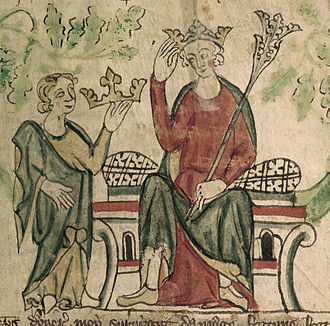
Edward_II_-_British_Library_Royal_20_A_ii_f10_(detail)
Edward II, Elizabeth’s childhood companion

Arriving at Dover after a 3 year absence, Edward and Eleanor were met by their children; 6-year-old Elizabeth and 4-year-old Edward probably had little or no memory of their parents. Following celebrations for their return in Canterbury, the royal family would spent the next 2 weeks at Leeds Castle, getting to know  each other again.

Elizabeth and Eleanor were not especially close. Eleanor had spent half of her daughter’s life away on the Continent and Eleanor’s health began to fail shortly after her return. Elizabeth spent the summer of 1290 touring the countryside with her brother, only attending the court for the weddings of their sisters; Joan in April and Margaret in July.

In October 1290 Elizabeth was summoned to her ailing mother’s bedside at the royal hunting lodge of Clipstone in Nottinghamshire. Eleanor died at Harby in Lincolnshire on the 28th November 1290, the king accompanied her body back for burial at Westminster Abbey, ordering stone crosses to be erected at the places they stopped along the route.

We have no record of how Elizabeth reacted to her mother’s death, she was just 8 years old and had seen her mother rarely over the last 5 years. We can assume that she was saddened, but that life carried on pretty much as normal otherwise, with her day-to-day life remaining constant. In 1297 she and her sister Mary paid to have a special Mass held in honour of their mother, demonstrating their affection, and that she hadn’t been forgotten.

330px-Jean_Ier_de_Hollande
John Count of Holland

In 1297 Elizabeth’s marriage was celebrated; to John, Count of Holland. John had been educated at Edward’s court following his betrothal to Elizabeth in 1285. He had been one of the competitors for the Scots throne, though with only an outside chance. Elizabeth is said to have thrown a tantrum before the wedding, when not all her jewels were ready in time.

However, the royal wedding went ahead, at Ipswich Priory on 8th January 1297, with her father, her brother Edward and sister Margaret in attendance. Elizabeth was just 14 years old and John was about 13. It seems Elizabeth was very fond of her father – there is some suggestion, too, that she was his favourite – and she was loath to leave him, and England. The king himself threw Elizabeth’s coronet into the fire during an argument over Elizabeth’s refusal to leave England with her husband. It took several letters from Count John, and cajoling from the king, to persuade Elizabeth to accompany her husband to her new country.

In the event, however, the arguing proved unnecessary as Count John died at Haarlem  on 10th November 1299. Elizabeth, a childless widow at 17, returned home to her father’s court.

Almost exactly 3 years after the death of her 1st husband, on 14th November 1302, Elizabeth married again. This time there would be no arguments about leaving England as her husband was Humphrey de Bohun, 4th Earl of Hereford and Essex. Before the wedding Humphrey had relinquished all his lands and titles to the crown; after the wedding they were re-granted, jointly, to Humphrey and his new wife.

Humphrey_de_Bohun,_4th_Earl_of_Hereford
Humphrey de Bohun, 4th earl of Hereford and Essex

Elizabeth’s second marriage appears to have been highly successful. Humphrey and Elizabeth weathered the storms of change together. Humphrey had been a stalwart of Edward I’s Scottish campaigns and in 1306 had been rewarded with the forfeited estates of Robert the Bruce. When Elizabeth’s father died in 1307, Humphrey was initially a supporter of the new king, Elizabeth’s brother and childhood companion, Edward II. He is witness to the document that created Piers Gaveston, Edward’s controversial favourite, Earl of Cornwall.

However, in 1310 he was named one of the lords ordainers, set up to reform the king’s household and government. He was stripped of his position as Constable of England for refusing to accompany the king on his Scottish campaign of 1310/11, but was reinstated the following year.

In 1314 Humphrey was one of the commanders of the English forces facing Robert the Bruce at Bannockburn. It is believed his arguments with Gilbert de Clare, Earl of Gloucester, over who should have precedence, was a major factor contributing to England’s defeat. Gloucester was killed in the fighting, but Humphrey was captured by the Scots; he was exchanged for Robert the Bruce’s queen, Elizabeth de Burgh, who had been held captive by the English since 1306.

Between 1303 and 1316, Elizabeth and Humphrey were to have 11 children, including twin boys, 8 of whom survived childhood; 6 boys and 2 girls. Their eldest daughter, Eleanor, married James Butler, 1st Earl of Ormonde and, following his death, Sir Thomas Dagworth, who was murdered in 1350. While their youngest surviving daughter, Margaret, married Hugh de Courtenay, Earl of Devon and lived until 1391.

330px-MargaretDeBohunExeterCathedral
Margaret de Bohun, Countess of Devon

Two of their sons would succeed, consecutively to the earldoms of Hereford and Essex; John and Humphrey. While William de Bohun, twin brother of Edward (who drowned in 1334), would be granted the title of Earl of Northampton by his cousin and close friend Edward III. The twin brothers had both been involved in Edward III’s escape from Nottingham Castle and the control of his mother’s lover, Roger Mortimer. Of the 2 remaining sons; Eneas died before 1343 and Edmund married Matilda, the daughter of Nicholas de Segrave, Baron Stowe.

Elizabeth died in childbirth on 5th May 1316; their last daughter, Isabella, died with her.  They were buried together at Walden Priory in Essex on 23rd May.

Humphrey survived his wife by 6 years, being killed at the Battle of Boroughbridge in March 1322, fighting with the forces of Thomas of Lancaster against the king. Despite his will requesting he be buried beside his wife at Walden Priory, he was laid to rest at the Church of the Friars Preachers in York.

Elizabeth and Humphrey’s great-granddaughter, Mary de Bohun, married Henry Bolingbroke (the future Henry IV) and was the mother of 5 children, including Henry V.

*

Pictures courtesy of Wikipedia

*

Sources: The Oxford Companion to British History Edited by John Cannon; The Plantagenets, the Kings who Made England by Dan Jones; History Today Companion to British History Edited by Juliet Gardiner and Neil Wenborn;  Brewer’s British Royalty by David Williamson; Britain’s Royal Families, the Complete Genealogy by Alison Weir; The Mammoth Book of British Kings and Queens by Mike Ashley; The Plantagenets, the Kings that made Britain by Derek Wilson;  oxforddnb.com; Edward I; A Great and Terrible King by Marc Morris; Chronicles of the Age of Chivalry Edited by Elizabeth Hallam; Eleanor of Castile; the Shadow Queen by Sara Cockerill.

*

My Books:

Signed, dedicated copies of all my books are available through my online bookshop.

Out Now! Women of the Anarchy

Two cousins. On the one side is Empress Matilda, or Maud. The sole surviving legitimate child of Henry I, she is fighting for her birthright and that of her children. On the other side is her cousin, Queen Matilda, supporting her husband, King Stephen, and fighting to see her own son inherit the English crown. Women of the Anarchy demonstrates how these women, unable to wield a sword, were prime movers in this time of conflict and lawlessness. It show how their strengths, weaknesses, and personal ambitions swung the fortunes of war one way – and then the other.

Available from Bookshop.orgAmberley Publishing and Amazon UK.

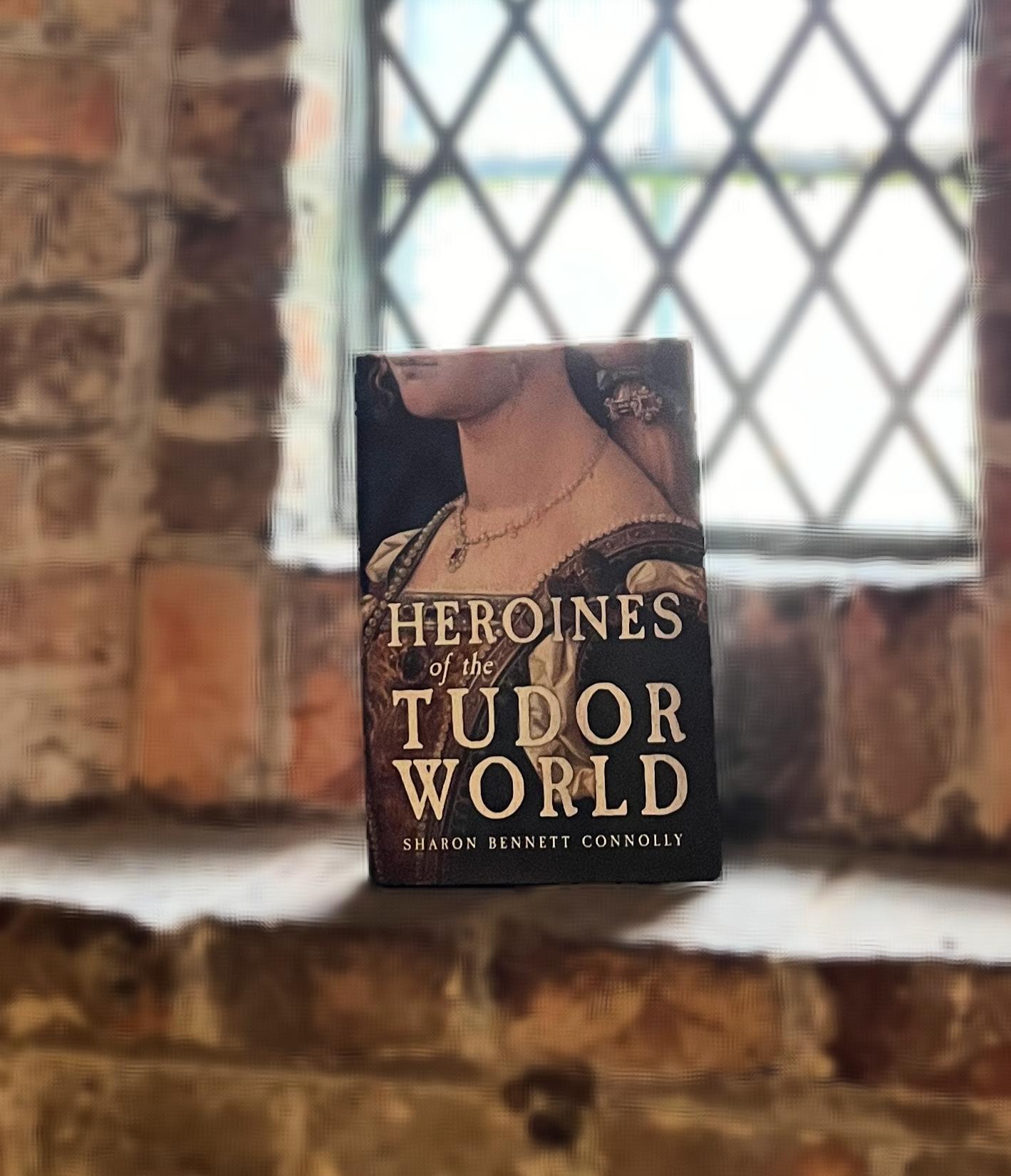
Coming on 15 June 2024: Heroines of the Tudor World

Heroines of the Tudor World tells the stories of the most remarkable women from European history in the time of the Tudor dynasty, 1485-1603. These are the women who ruled, the women who founded dynasties, the women who fought for religious freedom, their families and love. These are the women who made a difference, who influenced countries, kings and the Reformation. In the era dominated by the Renaissance and Reformation, Heroines of the Tudor World examines the threats and challenges faced by the women of the era, and how they overcame them. From writers to regents, from nuns to queens, Heroines of the Tudor World shines the spotlight on the women helped to shape Early Modern Europe.

Heroines of the Tudor World is now available for pre-order from Amberley Publishing and Amazon UK.

Also by Sharon Bennett Connolly:

King John’s Right-Hand Lady: The Story of Nicholaa de la Haye is the story of a truly remarkable lady, the hereditary constable of Lincoln Castle and the first woman in England to be appointed sheriff in her own right. It is is available from King John’s Right-Hand Lady: The Story of Nicholaa de la Haye is the story of a truly remarkable lady, the hereditary constable of Lincoln Castle and the first woman in England to be appointed sheriff in her own right. Available from all good bookshops or direct from Pen & Sword Booksbookshop.org and AmazonDefenders of the Norman Crown: The Rise and Fall of the Warenne Earls of Surrey tells the fascinating story of the Warenne dynasty, from its origins in Normandy, through the Conquest, Magna Carta, the wars and marriages that led to its ultimate demise in the reign of Edward III. Available from Pen & Sword BooksAmazon in the UK and US, and Bookshop.org

Ladies of Magna Carta: Women of Influence in Thirteenth Century England looks into the relationships of the various noble families of the 13th century, and how they were affected by the Barons’ Wars, Magna Carta and its aftermath; the bonds that were formed and those that were broken. It is now available in paperback and hardback from Pen & Sword, Amazon, and Bookshop.orgHeroines of the Medieval World tells the stories of some of the most remarkable women from Medieval history, from Eleanor of Aquitaine to Julian of Norwich. Available now from Amberley Publishing and Amazon, and Bookshop.orgSilk and the Sword: The Women of the Norman Conquest traces the fortunes of the women who had a significant role to play in the momentous events of 1066. Available now from Amazon,  Amberley Publishing, and Bookshop.org.

Alternate Endings: An anthology of historical fiction short stories including Long Live the King… which is my take what might have happened had King John not died in October 1216. Available in paperback and kindle from Amazon.

Podcast:

Have a listen to the A Slice of Medieval podcast, which I co-host with Historical fiction novelist Derek Birks. Derek and I welcome guests, such as Bernard Cornwell and Elizabeth Chadwick, and discuss a wide range of topics in medieval history, from significant events to the personalities involved.

*

Don’t forget! Signed and dedicated copies of all my books are available through my online bookshop.

For forthcoming online and in-person talks, please check out my Events Page.

You can be the first to read new articles by clicking the ‘Follow’ button, liking our Facebook page or joining me on Twitter and Instagram.

*

©2016 Sharon Bennett Connolly FRHistS

The Colourful Career of Edward, 2nd Duke of York

Edward_of_Norwich_Duke_of_York
Edward, 2nd Duke of York

Edward of Norwich, 2nd Duke of York, was born into wealth and privilege. Grandson of 2 kings and 1st cousin to 2 kings, his life story is full of ambition, glory and war, duty and service – and a hint of treason. All the ingredients needed for a rollicking good novel; with also the possibility of a strange love story.

Edward was born, probably at King’s Langley, in about 1373. A birthday of 1375 has also been suggested, but 1373 seems most likely. The fact he has Norwich after his name has suggested he could have been born there, but there is a theory that it is a derivation of “d’Everwick”, meaning “of York”.

Edward’s father was Edmund of Langley, 1st Duke of York and 5th son of Edward III and Philippa of Hainault. His mother was Isabella of Castile, daughter of Pedro the Cruel, king of Castile, and his mistress – and later, wife – Maria de Padilla. Although the couple had 3 children, their marriage doesn’t appear to have been a happy one and there were rumours of scandal surrounding Isabella, with a question mark raised over the paternity of her youngest son, Richard of Conisbrough. Edward also had a sister, Constance, who was close in age to him and born around 1374.

220px-Edward_III_of_England_(Order_of_the_Garter)
Edward III

Edward was born into a time of great change in the English monarchy. His grandmother, Philippa, had died in 1369 and his grandfather, Edward III, king since 1327, was slipping into senility, allowing his mistress, Alice Perrers, and her cohorts too much control of his affairs. In 1376 Edward’s eldest son and heir – and England’s hero of the time – Edward, the Black Prince, died after years of debilitating illness. The prince’s death broke the old king,  who died the following year, leaving his 10-year-old grandson Richard of Bordeaux, son of the Black Prince, as king.

The government – and the country – was largely in the hands of Edward and Richard’s uncle, John of Gaunt, Duke of Lancaster. John was the 4th son of Edward III and married to Edward of Norwich’s aunt, Constance of Castile. It was a time of uncertainty; many feared John would usurp the crown for  himself, but he stayed loyal to his nephew and Richard was crowned as King Richard II.

At only 4 years old Edward of Norwich attended the coronation, receiving his knighthood as part of the celebrations. Edward would be a loyal supporter of Richard II and received numerous royal grants, including the title of Earl of Rutland in February 1390. He was also given the title Earl of Cork when he accompanied Richard on his Irish campaign in 1394/5, leading several successful missions.

In the 1390s Edward emerged as a leading member of Richard’s circle of intimates. A man of considerable ability, Richard named him “the most able,wise and powerful man that he could think of”¹ and is even said to have considered leaving his crown to Edward. After the death of Richard’s queen, Anne of Bohemia, in 1394, Edward was one of the 3 feoffees of her estate, allowing him control of considerable patronage.

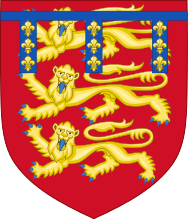
Arms_of_Edward_of_Norwich.svg
Arms of Edward of Norwich

Richard practically showered Edward with lucrative positions, including: admiral of the North & West (1391), Constable of Dover and Warden of the Cinque Ports (1396), Constable of the Tower of London (1397) and Constable of England (1398). He was also involved in the king’s diplomacy in France and the Holy Roman Empire, undertaking diplomatic missions to both.

Richard even took personal interest in Edward’s marriage prospects. In 1381 Edward had been betrothed to Beatriz of Portugal as part of the Anglo-Portuguese alliance against Castile. However, when the Portuguese made peace with Castile, Beatriz was married to Juan I of Castile instead.

Richard II suggested the sister-in-law of Giangaleazzo Visconti of Milan and also considered 3 relatives of Charles VI of France before suggesting Jeanne de Valois, younger sister of Richard’s proposed bride, Isabelle de Valois. Edward was addressed as ‘the king’s brother’ in recognition of their proposed marriages to sisters, even long after Edward’s planned marriage had fallen through.

By October 1398 Edward was married. His bride was a very curious choice for England’s most eligible bachelor. At 25 and likely to inherit his father’s dukedom in the not-too-distant future, Edward must surely have had the choice of every heiress in the kingdom of marriageable age. And yet his bride was twice widowed, 20 years his senior and with no dowry or inheritance to speak of.

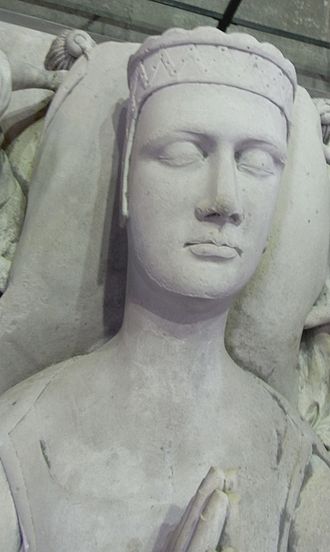
PhilippaMohun_Died1431_WestminsterAbbey_ByStothard
Effigy of Philippa Mohun, Duchess of York, from her tomb in Westminster Abbey

Philippa was the 3rd daughter of John Mohun, 2nd Baron Mohun and a founding member of the Order of the Garter, and his wife Joan Burghersh. She had first been married to Walter Fitzwalter, 3rd Baron Fitzwalter, who died in 1386 and secondly to Sir john Golafre who died in 1396. Having no male heirs, Philippa’s mother had sold the reversion of the Mohun estates to Lady Elizabeth Luttrell, leaving her daughters with no landed inheritance.

The fact this was hardly a glittering match for such an illustrious magnate greatly suggests that it was a love match. And, as with Philippa’s previous 2 marriages, the union was to remain childless; Edward would eventually name his young nephew as his heir.

While Edward was finalising the domestic arrangements for his new bride, England was falling into turmoil. Richard II had imprisoned one uncle Thomas of Woodstock, Duke of Gloucester, in Calais and was distrustful of another uncle, John of Gaunt.

In the 2nd half of the 1380s Gloucester and the Lords Appellants had been the focus of opposition against Richard’s personal rule and had attempted to curb the king’s excesses, forcing restrictions to his rule. John of Gaunt had restored order following his return from campaigning in Spain, but in 1397 Gloucester was murdered whilst imprisoned in Calais, most likely on  Richard’s orders. It was said Edward had played a leading role in the arrest of Gloucester and the earls of Arundel and Warwick and he certainly benefited from the aftermath, receiving a significant share of the forfeitures that followed.

In September 1397 he was made Duke of Aumale and given the post of Constable of England – formerly held by Gloucester. As Constable, Edward would preside over Richard’s legal reforms, extending the court of chivalry to include treason and other offences which touched the king’s dignity.

220px-Richard_II_King_of_England
Richard II

Of the other 2 ringleaders of the Lords Appellant, Richard Fitzalan, earl of Arundel was beheaded and Thomas de Beauchamp, earl of Warwick was stripped of his titles and imprisoned on the Isle of Man. Two of the younger members of the Lords Appellants, Thomas of Mowbray, earl of Nottingham and Henry Bolingbroke earl of Derby, had initially escaped any severe retribution. However, in  1398 Richard found a pretext to exile them both from the country.

Bolingbroke was the son of the most powerful man in the kingdom – John of Gaunt – he was also cousin to both Richard II and Edward of Norwich. On Gaunt’s death in 1399, instead of passing his inheritance onto Bolingbroke, Richard appropriated it for the crown, putting some of the lands into Edward’s care – and extending his cousin’s exile to life.

Later that year Richard set off on campaign to Ireland, taking with him his cousin Edward and Bolingbroke’s 13-year-old son, Henry of Monmouth. We don’t know how Edward had reacted to his cousin Henry’s disinheritance, but it can’t have been an easy time for him, caught in the middle of his warring cousins, and he may have felt uneasy with the sudden change in Henry’s circumstances at the hands of the king. He later claimed that he had not drawn any of the revenues from the Lancastrian lands which had been put in his custody.

Whilst Richard was in Ireland Henry of Bolingbroke landed at Ravenspur in Yorkshire, announcing that he had returned only to claim his inheritance. While Richard headed back to England to face him, Henry was progressing through the country, gaining support. Edward advised Richard to send John Montague, Earl of Salisbury, into north Wales while Richard gathered his forces. Montague raised 4,000 men, but his force had disintegrated by the time the king arrived. On arriving in south Wales, Richard had immediately pressed northwards, leaving Edward and his main force behind him.

170px-King_Henry_IV_from_NPG_(2)
Henry IV

There seems to be some confusion as to Edward’s actions. He was reputedly attacked as he made his way through Wales, but by which side is unclear. He was said to be part of the delegation sent – by Bolingbroke – to Richard at Flint, wearing Bolingbroke’s livery.

Jean Creton, in his Histoire du Roy d’Angleterre Richard II, says Edward ‘said nothing to the king, but kept at as great a distance as he could from him’². Creton stated there was no man alive that Richard had loved better and depicted Edward as a Judas deliberately betraying his king in 1399.

However, the transition of power from Richard II to Henry IV was far from plain sailing for Edward. Henry and Edward were 1st cousins, but Edward was one of the key personalities of Richard’s tyrannical reign, and a focus for revenge. According to the chronicler, Thomas Walsingham, Edward came close to being lynched as tempers ran hot during Henry’s 1st parliament. Edward was accused of urging Gloucester’s murder, a claim he was forced to vehemently deny. Henry resisted calls for the death penalty for Richard’s adherents, and settled instead for punishment by the confiscation of all titles and rewards granted since 1397.

Edward was one of the greatest losers; he lost the constableships of England and the Tower of London and his manor of Burstwick was granted to the earl of Northumberland. He was no longer Duke of Aumale and back to being, simply, earl of Rutland. However, when parliament finished, Henry confirmed Edward’s custody of the Channel Islands and his lordship of the Isle of Wight, suggesting the new king had confidence in his cousin’s loyalty, even if parliament didn’t.

180px-Edmund_of_Langley_2C_Duke_of_York
Edmund of Langley, 1st Duke of York

By the end of 1399 Edward had become embroiled in the Epiphany Rising, the plot to murder Henry IV and his sons during a tournament at Windsor on Twelfth Night. Edward is said to have been a conspirator, but it was he who betrayed the plot to the king, and he was rewarded with the restoration of the lordship of Oakham in Rutland. The plot’s failure meant death for Richard II; Richard had been held at Pontefract Castle since his deposition, but the uncovering of the plot meant he was too dangerous to keep alive. He died around 14th February 1400, probably from starvation.

Edward served the Lancastrian dynasty in much the same way he had Richard II. In October 1400 he was appointed Keeper of North Wales and July 1401 he was dispatched to France as Henry’s lieutenant in Aquitaine, in response to an appeal from the archbishop of Bordeaux who described Edward as ‘the man closest to the king after the king’s sons’.

Whilst in Bordeaux Edward succeeded as the Duke of York, following his father’s death on 1st August 1402. In May of the following year Edward gave up his office to return to England and by the autumn he was campaigning in Wales. In October he was appointed the king’s lieutenant in south Wales for 1 year, but by November the appointment had been extended to 3 years.

Still owed money from his time in Aquitaine, and with Henry unable to meet the costs of the war in Wales, Edward was left in serious financial straits. His men were on the verge of mutiny. However, Edward was one of those rare commanders, who knew how to inspire men and command loyalty. Forced to mortgage his properties to release funds, he made a promise to his troops that, on his honour, he would receive none of his own revenues until they were paid.

The Duke of York’s duty in Wales stood  him in good stead in February 1405 after his sister, Constance, implicated him in a plot against the crown. York was imprisoned in Pevensey Castle for 17 weeks. But it was the Prince of Wales who came to his defence in parliament. Henry of Monmouth described Edward as “a loyal and valiant knight”.  Speaking of clashes against Owen Glendower, in  1407 Prince Henry said “If it had not been for the duke’s good advice and counsel he and others would have been in great peril and desolation.”

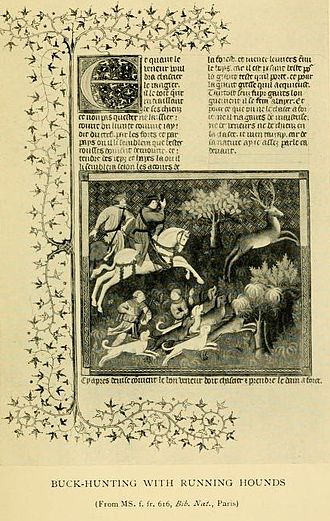
The_Master_of_Game_-_Buck_Hunting_With_Running_Hounds
1904 edition of Edward Duke of York’s “The Master of Game”

As far as the Prince of Wales was concerned, York “had laboured and served in such a way as to support and embolden all the other members of the company, as if he had been the poorest gentleman in the realm wishing to serve him in order to win honour and renown”.³

The Duke of York was an authority on hunting, translating the work Gaston Phebus, Count of Foix, Livre du Chasse” into English and adding several chapters himself. He dedicated the work, Master of Game to the Prince of Wales, the future Henry V. The book gives us a glimpse of the Duke of York’s personality and shows us why his men and peers thought so much of him:

“I ask of every person who reads this little treatise, or comes to hear of it, whatever their estate or condition, that in plain and simple language they will add to it anything they find useful and remove all that seems superfluous … so that this work may always grow through the advice and counsel of all hunters, and with this in mind, I tried to set out, as simply and clearly as I knew, what I understood of this craft, for the use and remembrance of all.”³

Edward and Prince Henry were particularly close. Edward was something of a mentor to the young Prince of Wales, as well as being his hunting master.

However, when Henry IV and the Prince of Wales quarreled over foreign policy, Edward sided with the king. In 1412 he accompanied the king’s 2nd son, Thomas, on campaign in France, to aid the Armagnacs against the Burgundians. Following the king’s death in 1413 he was preparing to defend Aquitaine in the June, and by August he was in Paris, negotiating a possible marriage between the new king, Henry V and Catherine of Valois.

220px-King_Henry_V_from_NPG
Henry V

Edward was back in England by October 1413, but was constantly involved in the diplomacy between England and France that led to Henry’s invasion of the country in 1415. In August 1415 Edward’s brother, Richard of Conisbrough, earl of Cambridge was executed for his involvement in the Southampton Plot to replace Henry V with his Mortimer cousin. For once, the Duke of York was above suspicion.

Shortly after the executions the fleet set sail for France and landed there on 13th August 1415. Almost immediately the army besieged Harfleur, finally taking the small town on 22nd September, but at great cost. During the siege dysentery had spread through the army, decimating Henry’s forces and leaving him with barely 6,000 men to continue the campaign.

As a result, Henry decided to make a run for Calais and safety, hoping to find a crossing of the River Somme whilst avoiding the French army amassing near Rouen. Edward, Duke of York, led the vanguard, taking part in several skirmishes from the harassing French troops and marching his men at an incredible pace. His men were starving and desperately ill – with more succumbing to dysentery every day.

Until they reached Agincourt.

According to historian Michael Jones, the Duke of York used his extensive hunting expertise to formulate the battle plan that would give Henry V the great victory that is still remembered today.

300px-Schlacht_von_Azincourt
Battle of Agincourt

His battle plan depended on a contingent of English archers being able to provoke the French into attacking down an enclosed valley, channelling them into the path of massed volley fire from a 2nd contingent of archers. The knights and men-at-arms would then enclose the survivors and destroy the remainder of the French army.

York was in the thick of the fighting, 90 men were killed defending his banner – the majority of the English casualties on the day. York fought valiantly but was killed as his helmet was smashed into his skull. His men protected their fallen leader’s body, preventing the French from breaking through the thin English line.

The London Chronicler wrote:

The Duke of York was slain,For his king he would not retreat, even by a foot, til his bascinet into his brain was brent [impaled].³

Edward Duke of York had led an illustrious and often controversial career. He had served 3 kings. He had written the first book on hunting in the English language. He could quote Chaucer, was a generous lord and a great military leader. The Chronicler of Godstow regarded him as a “second Solomon”. However, his reputation suffered damage during the Tudor era, when he was accused of being fat and dissolute – it was said he’d died at Agincourt after being suffocated in his armour because he was too heavy to rise after a fall.

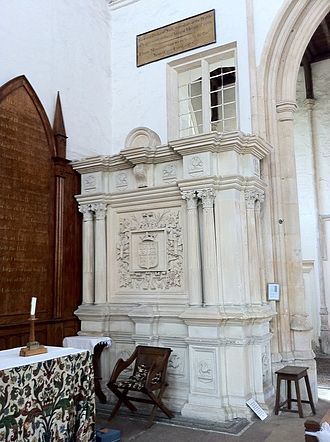
330px-Fotheringhay_memorial_Edward_2nd_Duke_of_York
Elizabethan memorial to Edward, 2nd Duke of York

The reverence with which Henry treated Edward after his death proves the lie of the later propaganda. Edward’s will was honoured; his nephew Richard inherited his lands and title, gifts to his men were fulfilled, such as Sir John Popham who received armour, a horse and a life rent from one of the Duke’s manors.

Edward asked to be buried in the church at Fotheringhay, where he had recently founded a college of priests. He was laid to rest beneath the choir steps, the grave marked by a marble slab with his figure upon it, engraved in brass. A larger memorial was added in Elizabethan times.

Edward’s wife Philippa survived him by 16 years, spending her widowhood at Carisbrooke Castle as the Lady of the Isle of Wight. She died 17th July 1431 and was buried in Westminster Abbey.

Edward’s nephew Richard, 3rd Duke of York, would go on to challenge Henry VI for the throne, dying at the Battle of Wakefield in December 1460. His son Edward would take up the mantle and succeed as Edward IV in March 1461, just 3 months after his father’s death.

*

Footnotes: ¹ Given-Wilson quoted in Oxford Database of National Biography; ² Jean Creton Histoire du Roy d’Angleterre Richard II quoted in Oxford Database of National Biography; ³ 24 Hours at Agincourt by Michael Jones.

*

Pictures courtesy of Wikipedia

*

Sources: The Oxford Companion to British History Edited by John Cannon; The Plantagenets, the Kings who Made England by Dan Jones; History Today Companion to British History Edited by Juliet Gardiner and Neil Wenborn;  Brewer’s British Royalty by David Williamson; 24 Hours at Agincourt by Michael Jones; Agincourt: My Family, the Battle and the Fight for France by Ranulph Fiennes Britain’s Royal Families, the Complete Genealogy by Alison Weir; The Mammoth Book of British Kings and Queens by Mike Ashley; The Plantagenets, the Kings that made Britain by Derek Wilson;  englishmonarchs.co.uk; oxforddnb.com; britannica.com; upenn.edu.

*

My Books:

Signed, dedicated copies of all my books are available through my online store.

OUT NOW! Heroines of the Tudor World

Heroines of the Tudor World tells the stories of the most remarkable women from European history in the time of the Tudor dynasty, 1485-1603. These are the women who ruled, the women who founded dynasties, the women who fought for religious freedom, their families and love. These are the women who made a difference, who influenced countries, kings and the Reformation. In the era dominated by the Renaissance and Reformation, Heroines of the Tudor World examines the threats and challenges faced by the women of the era, and how they overcame them. From writers to regents, from nuns to queens, Heroines of the Tudor World shines the spotlight on the women helped to shape Early Modern Europe.

Heroines of the Tudor World is now available for pre-order from Amberley Publishing and Amazon UK.

Coming 30 January 2025: Scotland’s Medieval Queens

Scotland’s history is dramatic, violent and bloody. Being England’s northern neighbour has never been easy. Scotland’s queens have had to deal with war, murder, imprisonment, political rivalries and open betrayal. They have loved and lost, raised kings and queens, ruled and died for Scotland. From St Margaret, who became one of the patron saints of Scotland, to Elizabeth de Burgh and the dramatic story of the Scottish Wars of Independence, to the love story and tragedy of Joan Beaufort, to Margaret of Denmark and the dawn of the Renaissance, Scotland’s Medieval Queens have seen it all. This is the story of Scotland through their eyes.

Available for pre-order now.

Also by Sharon Bennett Connolly:

Women of the Anarchy demonstrates how Empress Matilda and Matilda of Boulogne, unable to wield a sword themselves, were prime movers in this time of conflict and lawlessness. It shows how their strengths, weaknesses, and personal ambitions swung the fortunes of war one way – and then the other. Available from Bookshop.orgAmberley Publishing and Amazon UKKing John’s Right-Hand Lady: The Story of Nicholaa de la Haye is the story of a truly remarkable lady, the hereditary constable of Lincoln Castle and the first woman in England to be appointed sheriff in her own right. Available from all good bookshops Pen & Sword Booksbookshop.org and AmazonDefenders of the Norman Crown: The Rise and Fall of the Warenne Earls of Surrey tells the fascinating story of the Warenne dynasty, from its origins in Normandy, through the Conquest, Magna Carta, the wars and marriages that led to its ultimate demise in the reign of Edward III. Available from Pen & Sword BooksAmazon in the UK and US, and Bookshop.org

Ladies of Magna Carta: Women of Influence in Thirteenth Century England looks into the relationships of the various noble families of the 13th century, and how they were affected by the Barons’ Wars, Magna Carta and its aftermath; the bonds that were formed and those that were broken. It is now available in paperback and hardback from Pen & SwordAmazon, and Bookshop.orgHeroines of the Medieval World tells the stories of some of the most remarkable women from Medieval history, from Eleanor of Aquitaine to Julian of Norwich. Available now from Amberley Publishing and Amazon, and Bookshop.orgSilk and the Sword: The Women of the Norman Conquest traces the fortunes of the women who had a significant role to play in the momentous events of 1066. Available now from Amazon,  Amberley Publishing, and Bookshop.org.

Alternate Endings: An anthology of historical fiction short stories including Long Live the King… which is my take what might have happened had King John not died in October 1216. Available in paperback and kindle from Amazon.

Podcast:

Have a listen to the A Slice of Medieval podcast, which I co-host with Historical fiction novelist Derek Birks. Derek and I welcome guests, such as Bernard Cornwell, and discuss a wide range of topics in medieval history, from significant events to the personalities involved.

*

Don’t forget! Signed and dedicated copies of all my books are available through my online store.

For forthcoming online and in-person talks, please check out my Events Page.

You can be the first to read new articles by clicking the ‘Follow’ button, liking our Facebook page or joining me on TwitterThreads and Instagram.

*

©2015 Sharon Bennett Connolly, FRHistS

Book Corner: Interview with historian Amy Licence

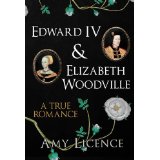
51T3oNzwxuLThis week I have had the good fortune to review a wonderful new joint biography of Edward IV and Elizabeth Woodville by author and historian Amy Licence.

Amy was also kind enough to answer a few questions for me; about her love of writing and history.

What made you become a writer?
I’ve always been a writer, since I could write, since I could formulate a narrative. I wrote my first story when I was three and I decided that was what I wanted to do when I was eight years old – that was after I rejected the possibility of being a ballerina, an actor, an architect and an interior designer. I sent off my first novel at sixteen – it was rejected, of course! Since then I’ve always written, it was just something I had to do, I don’t feel right it I’m not writing: if I’m breathing, I’m writing. Words – their meaning and rhythm – are how I make sense of the world. I kept doing it all through university, and while I was a teacher, having articles, poems and stories published, but it wasn’t until 2011 that I finally signed a contract!

With young children around, how do you discipline yourself to write?
Luckily for me, it’s not a question of having to discipline myself. Writing is my escape and my relaxation; I feel most myself when I’m writing, so it’s essential for me to do it. Finding the time can be difficult though, so I write by stealth, whenever and wherever I can. It’s not too hard because I love it; I always have a book in my hand to research from or a notebook to jot ideas in. My hands will be changing a nappy while my head is in the fifteenth century. I have to be very organised to divide my time between my children and my work so I choose how I spend my time and try not to waste it. I don’t watch a lot of TV, for example. I have to be able to switch in and out of it quickly, as I’ll be writing and then a plaintive voice will ask for a drink, or for a story to be read, so I’m off for ten minutes then back to finish my thought.

10384680_10153841333263942_6977345604197683474_n
Amy Licence

How do you organise your writing day?
Usually it fits around the school day, so it’s balanced between getting my eldest son ready and out on time and playing with my younger one. I manage to do my best work in the morning once I get back, between about 9 and 11, often with my younger boy sitting beside me, drawing or playing. We’ll have lunch together and play in the afternoon. The boys will happily play together for about an hour when we get in from the school run so I sometimes manage another hour then. I’ll try and do some more in the evening too, or at least sit with my family if they’re watching TV with a pile of books and do some research. We try and spend as much time together as we can on the weekend but if I have a deadline looming, my husband will take the boys out for a morning.

How many projects do you have going at once, or do you concentrate on one at a time?
It depends upon my deadlines. I usually have four or five ideas for different things running in my head and work on them at different speeds. Typically, I might have one main book to be written, which I’m preparing for a deadline, and a second in the planning and research stage, plus a couple of novels I’m tinkering with and a number of articles and/or reviews. Each has a different speed. I have two reading piles too; one with books for my writing, which I’m dipping in and out of, and another for escapism reading. I like to have four or five books on the go that are totally different to what I’m writing about – the Post-Impressionists, Ted Hughes, D.H Lawrence and Tolstoy at the moment.

How long do you spend researching your subject before you start writing?
This is an odd one because it has been a slow-burning process. I’m not coming to any of my topics new, so although I’m writing about them now, I’ve been reading about them for 25 years. By the time I was 15 I’d read all the books in my local library about the Tudors and I completed my MA in Medieval and Tudor history in 1995. Since then I’ve been reading everything new about them I can get my hands on. So the general research has been on-going. With each book though, I do more specific “honing” research, which is the trawling through primary sources and that can take between 6 and 9 months.

What do you enjoy most about writing as a career?
I actually enjoy the process of writing! It’s lovely when a book comes out and the reviews start to come in; it’s great to see my name on Amazon and it’s a real buzz to give author talks to people who are interested in my work. Best of all though, is just me sitting down at the computer and writing. It takes me to another place.

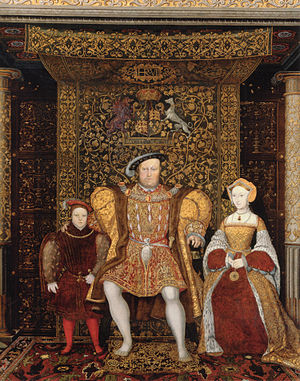
300px-Family_of_Henry_VIII_c_1545_detail
The family of Henry VIII

What is the worst thing about writing as a career?
That it’s not a viable career. I work long hours, very hard, building on years of perseverance and dedication, overcoming rejections and I get paid less than if I was working in a supermarket stacking shelves.

How long does it take to do a project from start to finish?
Again this can vary, given that the ideas have been brewing for a long time, but the period from signing a contract to submitting the book is usually about a year, sometimes more.

Have you ever considered writing a novel? What would it be about?
Novel writing was my first love. I worked for ten years with a top literary agent and submitted about five novels to them; they loved them and said my writing was beautiful but that the market wasn’t quite right for them. I like to write literary fiction; my heroes are Woolf, Dostoevsky, Gorky and Nabokov but the current market isn’t particularly welcoming for new authors in this style. I have written historical fiction too; while I was at university I wrote a novel about the death of Amy Dudley and more recently, one about a teeth stealer on the battlefield of Waterloo, plus I’m half way through one about Edward IV. It’s just finding the time to finish it!

Who are your favourite personalities from history?
Quite honestly, I get interested in most characters I research. I don’t go for particular sides or affiliations, but I am drawn to people who challenged or defied the rules in some way, either breaking the law or transgressing social boundaries. I’m interested in people’s motivation under duress and the people who really carved out their own niches and made their own luck so I am fascinated by the lives of Edward IV and Richard III.

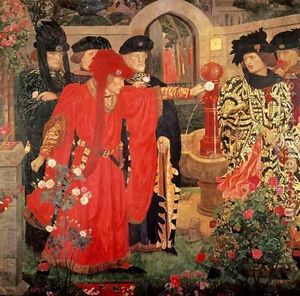
Choosing_the_Red_and_White_Roses
Choosing the Red and White Roses

Which is your favourite and why, the Wars of the Roses or the Tudor era?
I like both very much, I like the century straddling the two, from about 1450 to 1550. I think we tend to perpetuate something of an artificial divide between them and I’ve just submitted a book proposal that covers exactly this period, both Wars of the Roses and Tudors and looks at the continuity. If I had to choose between one or the other, I’d probably go for the court of Edward IV, simply because the Tudors have already received so much attention.

Why Edward IV and Elizabeth? What is it about them that fascinates you?
I think there are so many interesting things about this pair, individually and collectively. The more I research Edward, the more of an interesting figure I find him, in terms of his personal rule, charisma and abilities: he was a supremely able man who conquered the country twice and held it together by force of his personality. I really think he has been overlooked by history. His marriage to Elizabeth and their relationship intrigues me too. I also feel that she has had a very raw deal from historians, almost written up as a caricature, typifying the notions of patriarchal history and “cherchez la femme”, and she deserves to be analysed far more objectively. Despite the initial objections to her background, birth, age and marital history, Elizabeth can be seen as conforming to contemporary notions of ideal queenship; beautiful, fertile, submissive. She is a paradox who has divided historians for centuries, but much of that is the repetition of a patriarchal mind-set that has remained unchallenged until recently.

What era that you haven’t yet written about would you like to get your teeth into?
Good question. Definitely the English Civil War and its aftermath; I’d love to do something on the failed experiment of the radical sects in the C17th, or on Charles and Cromwell, or the period slightly before. I’d also quite like to write about Eleanor of Aquitaine and I’m very keen to do another early C20th book, about some of the makers of Modernism. I have plans in the pipeline for that last one.

51V9Q+iXiyLA lot of your work has been about women in history. What attracted you to their stories?
I wrote my first published book, In Bed with the Tudors, because I’d just had my first child. I was interested to explore the experiences of women during pregnancy and birth in the past, so I suppose it does have a lot to do with the fact that I am a woman. However, I’m also drawn to write about marginal figures whose stories have been overlooked and I’m fascinated by alternative narratives. In my forthcoming “Red Roses” (The History Press, March 2016) I trace an alternative thread to the male metanarrative that has dominated historiography, connecting the women of the Lancastrian dynasty between the 1340s and 1509 and seeking common themes in their lives. The study of women’s history is comparatively new and it’s shocking how often their lives are simply retold in the same ways, without attempts being made to get inside their heads and see things from their perspectives.

Do you every get writer’s block? If so, how do you get round it?
I don’t believe in writer’s block. If you’re a serious writer, you have to be professional about it and just get on with it. There is always something to be done, even if it turns out not to be perfect. If you’re finding one section difficult, write another part, or go back and revise. If writing is tricky that day, research, read, make notes, collect images or jot down some ideas. You can always go back and change them, or reject them entirely, but it’s a process of crafting and clarification, so the next time you attempt that bit, it will be that little bit better. If you produce nothing, you have nothing to work with, you’re still at step one. My mantras are: “the worst thing you write is always better than the best thing you don’t write” and “the only way to do it, is to do it!”

Do you find social media – such as Facebook – a help or a distraction?
Both. It has been invaluable for connecting me with wonderful, like-minded people from all round the world. I thank them profusely for their friendship and kindness, for sharing their thoughts and research; I’ve made some great friends on Facebook who have inspired and influenced me and kept me sane. It is also my shop-front and without question, has helped me reach a far wider audience and update people about my work and appearances. However, it can be a huge time waster. Sometimes, especially with deadlines looming, I have to step back from it, or else I would get nothing done.

330px-Catherine_aragon
Catherine of Aragon

What is your next project?
I’ve signed three contracts and am about to sign one more, to keep me busy for the next couple of years. I will keep some of those projects secret for a while, but can tell you I’ve begun writing a huge biography of Catherine of Aragon. Catherine tends to get often in terms of her gynecological record and marriage to Henry but I want to analyse her as a queen in the context of her childhood and parentage. I want to explore the influence of her mother Isabella – who expelled the Jews from Spain and founded the secular branch of the Inquisition, as well as patronising female humanist scholars – and how this shaped the mind-set of a woman who never forgot she was Isabella’s daughter and resisted Henry’s demands because she felt the higher calling of God. I want to see Catherine as a Renaissance woman in her own right. Henry is definitely taking a back seat for this one.

I’d like to extend a huge thank you to Amy Licence for answering all my questions and giving us an insight into her writing life. Edward IV & Elizabeth Woodville: A True Romance is available from Monday 15th February in the Uk and Red Roses: From Blanche of Gaunt to Margaret Beaufort is set for release in early March.

*

My book, Heroines of the Medieval World,  is now available in hardback in the UK from both Amberley Publishing and Amazon UK and worldwide from Book Depository. It is also available on Kindle in both the UK and USA and will be available in Hardback from Amazon US from 1 May 2018.

Be the first to read new articles by clicking the ‘Follow’ button, liking our Facebook page or joining me on Twitter.

Book Corner: Edward IV and Elizabeth Woodville: A True Romance by Amy Licence

51T3oNzwxuLTraditionally it happened on May Day, early in the morning … two women slipped away from the manor house … They were a mother and daughter … They hurried on foot across the Wydeville land, towards the edge of the estate …. There stood a small priory or hermitage, dedicated to St Mary and St Michael … Waiting inside was a tall, athletic and distinguished young man in rich clothes, a priest and a choir boy and two gentlewomen, to act as witnesses. There, before this tiny group, Elizabeth Wydeville was married without pomp or ceremony to the King of England.”

It is the stuff legends are made of – and fairy tales. The story of how a penniless widow rose to become the Queen of England. After examining the lives of many of the characters of the Wars of the Roses and the Tudor period, author and historian Amy Licence has turned her attention to the greatest love story of Medieval England; Edward IV and Elizabeth Woodville, a true Cinderella story if ever there was one.

Amy Licence’s latest book, Edward IV and Elizabeth Woodville: A True Romance, is remarkable in that it is not a fairy tale, it’s not a historical fiction novel. It is the true story of how Edward IV came to be married to a mere ‘commoner’. In a wonderfully lively retelling of the lives of Edward IV and his queen, Ms Licence leaves no stone unturned. She tells the story from the beginning in a fascinating and engaging narrative of the lives of her main characters, and the lives of those around them.

255px-Edward_IV_PlantagenetEdward has become the ghost of a king, a historical filler before Richard III assumed the throne, a bit-player in Shakespeare’s trilogy about Henry VI, the father of the Princes in the Tower, the husband of the White Queen. Edward has become one of our many ‘missing kings’.”

Amy Licence goes into great detail about Edward’s love life and relationships, examining all the accusations ever levelled against him. Her love of her subjects shines through. The book provides a thorough analysis, whilst being lively and enthralling.

A True Romance” is a marvelous piece of research presented in such a manner that will have the novice and the expert glued to every page. The controversies surrounding the couple are discussed in detail: their secret marriage, Edward’s reputation, Elizabeth’s social status.

This romance is presented in the context of the period in which it happened. The author gives a comprehensive overview of the Wars of the Roses, and the characters involved, detailing the lives of the individuals close to Edward and Elizabeth, and the separate lives of the couple themselves before they come together. Their relationship is not only presented as a love story, but also in the context of the period in which they were living, demonstrating how big an upset it caused on the international stage.

330px-ElizabethWoodville… Elizabeth Wydeville, an unlikely queen, whom he had chosen in spite of tradition, in spite of advice, perhaps even in spite of himself. Her beauty was legendary but on almost every other level, she was an unacceptable choice for an English queen.

In this book Ms Licence demonstrates not only her extensive knowledge of the events of the era, but of all aspects of the period; from May Day traditions to the Sumptuary Laws, to the people themselves.

Amy Licence’s writing style is so easy to read and free-flowing, it is as if she is in the room talking to you. She brings the past to life in a vivid and entertaining way. Crammed full of facts and information taken from primary sources, the book tells the story not only of Edward and Elizabeth, but also of their wider family and affinity, demonstrating how the lives of their friends and family are interlinked and how it influences the couple, their decisions and the world around them.

The book discusses all aspects of the evidence available. This is presented in an objective and fair way; from the chronicles of the time, to literary representations and even rumours and archaeological evidence. The reliability and veracity of the evidence is explained and thoroughly analysed in detail, leaving the reader nodding in agreement at the author’s conclusions; her arguments are thorough and persuasive.

A major strength in Ms Licence’s work is that she shows respect when discussing the theories of fellow historians; whether she agrees with them or not.

EdwardIVThis biography of Edward IV and Elizabeth Woodville leaves no stone unturned. Amy Licence discusses every legend related to the couple, explores the development of their relationship and its effects on the lives of the couple, their families and the nation at large. Every aspect of their lives is discussed, leaving no situation unexamined and no rumour ignored.

Amy Licence presents a marriage and relationship that is as human and complex as any celebrity marriage of today. This is a wonderful study of one of the most famous love affairs in history in a book which is at once sympathetic, vivid and lively.

In short, this book is a fabulous biography of a romance that changed English history a forever. Thoroughly researched and stunningly presented, it is a must-read for all lovers of history, romance and the Wars of the Roses, themselves.

*

51T3oNzwxuL._AA160_Amy Licence has been a teacher for over a decade. She has an MA in Medieval and Tudor Studies and has published several scholarly articles on the Tudors. She is an author and historian of women’s lives in the medieval and Tudor period.

Edward IV & Elizabeth Woodville: A True Romance is available on Amazon in the UK from Monday 15th February and in the US soon.

*
My book, Heroines of the Medieval World,  is now available in hardback in the UK from both Amberley Publishing and Amazon UK and worldwide from Book Depository. It is also available on Kindle in both the UK and USA and will be available in Hardback from Amazon US from 1 May 2018.

Be the first to read new articles by clicking the ‘Follow’ button, liking our Facebook page or joining me on Twitter.

©2016 Sharon Bennett Connolly

Book Corner: The Serpent Sword by Matthew Harffy

TheSerpentSwordFrontCoverOver at the Review today!

I recently had the pleasure of reading and reviewing Matthew Harffy‘s debut novel, The Serpent Sword for The Review.

Here’s a taster:

The Serpent Sword is Matthew Harffy’s debut novel (not that you would know it), and the first installment of his Bernicia Chronicles. Set in the turbulence of 7th century Northumbria, The Serpent Sword is a wonderful story full of action, adventure, betrayal … and just a little romance. The novel leads you across the countryside of the ancient kingdom of Bernicia, taking you from battlefield, to ancient strongholds or small villages and religious settlements; meeting heroes and villains, friends and foes along the way. The fast-paced action leaves you eager to see how the story ends while experiencing a wealth of emotions along the way.

The two-fold story-line keeps you on your toes, seeing the young hero tackling the enemies of Bernicia – in the forces of Penda and Cadwallon – whilst searching for his brother’s killer….”

To read the full review, and to be in with the chance of winning a signed copy of the book, just visit The Review and leave a comment. The winner will be drawn on Monday 15th February. Good luck!

*

My book, Heroines of the Medieval World,  is now available in hardback in the UK from both Amberley Publishing and Amazon UK and worldwide from Book Depository. It is also available on Kindle in both the UK and USA and will be available in Hardback from Amazon US from 1 May 2018.

Be the first to read new articles by clicking the ‘Follow’ button, liking our Facebook page or joining me on Twitter.

Illustrious Queen

Filipa_de_Lencastre,_Rainha_de_Portugal_-_The_Portuguese_Genealogy_(Genealogia_dos_Reis_de_Portugal)
Philippa of Lancaster, Queen of Portugal

Philippa of Lancaster was born at Leicester on 31st March 1360. She was the eldest daughter of John of Gaunt, Duke of Lancaster and 4th son of Edward III, and his first wife Blanche of Lancaster, great-great-granddaughter of Henry III. her father was one of the richest men in the country – and one of the most powerful.

Her life as a child would have been one of luxury and privilege, with a glorious dynastic marriage awaiting her in the future. Philippa was raised alongside her younger sister, Elizabeth, who was born in 1363, and her baby brother, Henry of Bolingbroke, born in 1367.

The children shared a household for some of their childhood and were given the best education available. The reformer John Wycliffe, first translator of the Bible into English, was among their tutors.

The children lost their mother when Blanche died at Tutbury on 12th September, 1368, more likely from the complications of childbirth than from the plague, as a daughter, Isabella, who did not survive, was born around the same time.

The children’s father was with Blanche when she died but departed on campaign to France soon after; it is doubtful the children’s care was interrupted. The Lancaster household was well-organised and by 1376 the girls had been appointed a new governess; Katherine Swynford, who was by this time also mistress to their father, John of Gaunt.

450px-Casamento_João_I_e_Filipa_Lencastre
Wedding of Philippa and King John

As with most high-born women of the time, Philippa’s marriage was in the hands of her father. John of Gaunt planned for her to contract a dynastic match which would benefit and complement his own dynastic ambitions. In 1374, Philippa was betrothed to Gaston, Count of Foix, but nothing came of it. In 1381/2 she was offered in marriage to Jean de Blois, claimant to the duchy of Brittany; and in 1383 her prospective husband was Count William of Ostrevant, the heir to Hainault, Holland and Zeeland.

In 1385 and 25 years old Philippa was still unmarried. However, in the following year her father took her on his military expedition to Spain, hoping to claim the kingdom of Castile in right of his 2nd wife, Constance. Philippa’s marriage to John – or Joao – I of Portugal was agreed as part of an alliance made between the 2 Johns at Ponte do Mouro in November 1386.

Philippa was married to King John at Oporto on 2nd February 1387, before they had even received the required papal dispensation. The British Museum has a beautifully illuminated manuscript (above) which depicts the wedding, with John of Gaunt and his wife, Constance, looking on. Philippa was 26 – about 10 years older than the average age for a princess to marry. John was 3 years her senior and had been king for just short of 2 years.

Anoniem_-_Koning_Johan_I_van_Portugal_(1450-1500)_-_Lissabon_Museu_Nacional_de_Arte_Antiga_19-10-2010_16-12-61
John I, King of Portugal

Philippa became known as ‘Dona Fillipa’ in Portugal and would be one of the country’s best-loved queens. Her natural disposition to austerity and piety was endearing to the Portuguese people. Philippa reformed the court and encouraged courtly games among her ladies. French poet Eustace Deschamps characterised her as the chief patron of the order of The Flower of England, casting her at the centre of the court and the May Day celebrations.

A patron of literature, Philippa was sent a copy of John Gower’s poem “Confessio amantis“, which was translated into Portuguese by Robert Payn, an English canon of Lisbon Cathedral.

Philippa had been made a Lady of the Garter in 1378 and was instrumental in fostering  links between England and Portugal, a practice helped by the mixture of English and Portuguese servants in her household. She was on good terms with both Richard II and his successor – her brother, Henry IV.

In 1399 she wrote to the Archbishop of Canterbury, Thomas Arundel, asking him to intervene with Henry on behalf of her friend, Bishop Henry Despenser of Norwich, who had angered the new king by defending Richard II at the time of Henry’s invasion of England and seizure of the throne.

Rogier_van_der_Weyden_(workshop_of)_-_Portrait_of_Isabella_of_Portugal
John and Philippa’s daughter Isabella, Duchess of Burgundy

Philippa also had a hand in persuading Henry to arrange the marriage of her stepdaughter, Beatriz (John’s illegitimate daughter) to the earl of Arundel in 1405.

Almost immediately after the wedding John returned to the war. In July 1387 Philippa miscarried their first child while visiting John at Curval, where he lay seriously ill. However, after what appears to have been a bumpy start, the couple seem well-matched. John had had 2 illegitimate children before his marriage, but was demonstrably faithful to Philippa after the wedding.

In fact when court gossip reached the queen that he had been unfaithful, John went to great lengths to convince Philippa of his innocence. He even went so far as to commemorate the event by having a room in the royal apartments at Sintra decorated with chattering magpies – he must have had a great sense of humour, and confidence in his relationship to be so bold.

Philippa and John were to have a large family, which they brought up with great care. Of their 9 children,  5 sons and one daughter survived infancy and would later be known in Portugal as ‘the Illustrious Generation’. Their eldest surviving son, Edward, was born in 1391 and would succeed his father as King of Portugal in 1433. Peter, Duke of Coimbra, was born in 1392 and would act as regent for his nephew, Afonso V, following Edward’s death in 1438.

330px-Henry_the_Navigator_(Cronicas)
Prince Henry the Navigator

Their most famous son was Prince Henry ‘the Navigator’, Duke of Viseu, who was renowned for financing and researching great explorations – though he never undertook expeditions himself.

Their next youngest son was John, Duke of Beja and Constable of Portugal, who married Isabella, the daughter of Alfonso I, Duke of Braganza.

The baby of the family was Ferdinand, Grand Master of Aviz. He was born in 1402 and was later known as ‘the Saint Prince’ following his death as a prisoner of the Moors. Ferdinand had been held as a hostage for the return of Ceuta following the Disaster of Tangier, a siege led by his brother Henry. Ferdinand was held in increasingly severe confinement when it became apparent no ransom would be forthcoming, until he finally died in 1443.

John and Philippa’s one daughter, Isabella, was born in 1397 and would go on to marry Philip III the Good, Duke of Burgundy; and become the mother of Charles the Bold, Duke of Burgundy.

By 1415 Philippa’s oldest sons were itching to prove their martial prowess. Scorning their father’s offer to hold a magnificent tournament for them, they persuaded him to mount an attack on the port of Ceuta in North Africa. As they were about to set sail Philippa fell ill.

353px-BatalhaTombKingJohn
Tomb of John and Philippa

She had contracted plague and died at Odivelas, near Lisbon, on 18/19th July 1415. She was 55. On her deathbed she gave her 3 eldest sons, each, a jewel encrusted sword, in anticipation of their impending knighthoods, and a piece of the true cross. Giving them her blessing for the forthcoming military expedition she exhorted “them to preserve their faith and to fulfil the duties of their rank”¹.

The expedition sailed just 5 days after her death and Ceuta fell after only one day of siege, becoming Portugal’s first African possession.

Described as pious, charitable, affable and obedient to her husband, Portuguese historian Fernao Lopes, secretary to Philippa’s son, Fernando, held Philippa up as a model queen. Her piety was renowned; in later life she was said to regularly read the Book of Psalms.

353px-Túmulos_de_los_Infantes
Tombs of the Infantes, the 4 younger sons of John and Philippa

Queen Philippa was buried in the Dominican Priory at Batalha Abbey, which had been founded by her husband. King John arranged for a magnificent tomb to be built in the Capela do Fundador. Constructed between 1426 and 1434, it is topped by their effigies, clasping each others’ hands. King John himself was laid beside her after his death in August 1433.

Their sons, Ferdinand, John, Henry and Peter, were laid to rest along the south side of the same chapel.

*

Footnote: ¹ Edgar Prestage, The Portuguese pioneers.

*

Pictures courtesy of Wikipedia

*

Sources: The Plantagenets, the Kings who Made England by Dan Jones;  Brewer’s British Royalty by David Williamson; Britain’s Royal Families, the Complete Genealogy by Alison Weir; The Mammoth Book of British Kings and Queens by Mike Ashley; The Plantagenets, the Kings that made Britain by Derek Wilson;  englishmonarchs.co.uk; oxforddnb.com; annvictoriaroberts.co.uk.

*

My Books

Signed, dedicated copies of all my books are available through my online bookshop.

Out now: Scotland’s Medieval Queens

Books by Sharon Bennett Connolly

Scotland’s history is dramatic, violent and bloody. Being England’s northern neighbour has never been easy. Scotland’s queens have had to deal with war, murder, imprisonment, political rivalries and open betrayal. They have loved and lost, raised kings and queens, ruled and died for Scotland. From St Margaret, who became one of the patron saints of Scotland, to Elizabeth de Burgh and the dramatic story of the Scottish Wars of Independence, to the love story and tragedy of Joan Beaufort, to Margaret of Denmark and the dawn of the Renaissance, Scotland’s Medieval Queens have seen it all. This is the story of Scotland through their eyes.

Scotland’s Medieval Queens gives a thorough grounding in the history of the women who ruled Scotland at the side of its kings, often in the shadows, but just as interesting in their lives beyond the spotlight. It’s not a subject that has been widely covered, and Sharon is a pioneer in bringing that information into accessible history.’ Elizabeth Chadwick (New York Times bestselling author)

Available now from Amazon and Pen and Sword Books

Also by Sharon Bennett Connolly:

Books by Sharon Bennett Connolly

Heroines of the Tudor World tells the stories of the most remarkable women from European history in the time of the Tudor dynasty, 1485-1603. These are the women who ruled, the women who founded dynasties, the women who fought for religious freedom, their families and love. Heroines of the Tudor World is now available for pre-order from Amberley Publishing and Amazon UK. Women of the Anarchy demonstrates how Empress Matilda and Matilda of Boulogne, unable to wield a sword themselves, were prime movers in this time of conflict and lawlessness. It shows how their strengths, weaknesses, and personal ambitions swung the fortunes of war one way – and then the other. Available from Bookshop.orgAmberley Publishing and Amazon UKKing John’s Right-Hand Lady: The Story of Nicholaa de la Haye is the story of a truly remarkable lady, the hereditary constable of Lincoln Castle and the first woman in England to be appointed sheriff in her own right. Available from all good bookshops Pen & Sword Booksbookshop.org and Amazon

Books by Sharon Bennett Connolly

Defenders of the Norman Crown: The Rise and Fall of the Warenne Earls of Surrey tells the fascinating story of the Warenne dynasty, from its origins in Normandy, through the Conquest, Magna Carta, the wars and marriages that led to its ultimate demise in the reign of Edward III. Available from Pen & Sword BooksAmazon in the UK and US, and Bookshop.orgLadies of Magna Carta: Women of Influence in Thirteenth Century England looks into the relationships of the various noble families of the 13th century, and how they were affected by the Barons’ Wars, Magna Carta and its aftermath; the bonds that were formed and those that were broken. It is now available in paperback and hardback from Pen & SwordAmazon, and Bookshop.orgHeroines of the Medieval World tells the stories of some of the most remarkable women from Medieval history, from Eleanor of Aquitaine to Julian of Norwich. Available now from Amberley Publishing and Amazon, and Bookshop.orgSilk and the Sword: The Women of the Norman Conquest traces the fortunes of the women who had a significant role to play in the momentous events of 1066. Available now from Amazon,  Amberley Publishing, and Bookshop.org.

Alternate Endings: An anthology of historical fiction short stories including Long Live the King… which is my take what might have happened had King John not died in October 1216. Available in paperback and kindle from Amazon.

Podcast:

A Slice of Medieval

Have a listen to the A Slice of Medieval podcast, which I co-host with Historical fiction novelist Derek Birks. Derek and I welcome guests, such as Bernard Cornwell and discuss a wide range of topics in medieval history, from significant events to the personalities involved. Our first ever episode was a discussion on The Anarchy 

Every episode is also now available on YouTube.

*

Don’t forget! Signed and dedicated copies of all my books are available through my online bookshop.

For forthcoming online and in-person talks, please check out my Events Page.

You can be the first to read new articles by clicking the ‘Follow’ button, liking our Facebook page or joining me on TwitterThreadsBluesky and Instagram.

©2016 Sharon Bennett Connolly FRHistS
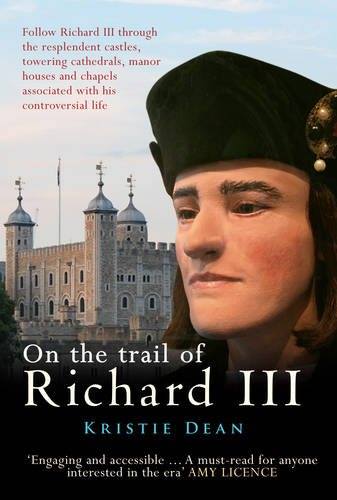
The Kidnapped Countess

Denbigh_Castle_3
Denbigh Castle

The story of Alice de Lacey is like something straight from a novel, with rebellion, kidnappings and love all wrapped up in the life of this one Countess. Alice was born at Denbigh Castle on 25th December 1281. She was the daughter of Henry de Lacey, 5th Earl of Lincoln. Through her mother Margaret, she was a granddaughter of William (II) Longspee, Earl of Salisbury and his wife, Idonea de Camville. Through Margaret, Alice was also descended from 2 of the greatest women of the 13th century, Nicholaa de la Haye, castellan of Lincoln Castle, and Ela of Salisbury, Countess of Salisbury in her own right.

Alice was one of 3 children. With 2 brothers, Edmund and John, she was, of course, not  expected to inherit her father’s earldom. However, 2 family tragedies made Alice one of the richest heiresses in England. Young Edmund, it appears, drowned in a well at Denbigh Castle and John fell to his death from the parapet at Pontefract Castle, leaving Alice as her parents’ sole heir.

In 1294 Alice’s marriage was arranged by no-less than the king – Edward I – who saw her as a suitable bride for his nephew Thomas, Earl of Lancaster and son of the king’s brother Edmund Crouchback. Alice and Thomas were married on or before 28th October 1294; he was about 16 years old and Alice was not yet 13.

Edward I had shown his unscrupulous nature in the marriage settlement in that Thomas was given part of the Lacey inheritance on the marriage, with the rest to pass to Thomas on Henry de Lacey’s death. The settlement further stipulated that the de Lacey lands would pass to Lancaster in the event of Alice’s dying without issue; thus excluding all collateral heirs to the earldoms of Salisbury and Lincoln.

330px-Seal_Henry_de_Lacy
Seal of Henry de Lacey

Alice’s mother Margaret, Countess of Salisbury in her own right, died in 1309 and by June 1310 her father had remarried, to Joan Fitz Martin, probably in the hope of securing an heir for his earldom. In the event, it wasn’t to be and the Earl of Lincoln died in 1311, with his estates passing through his daughter, to Thomas Earl of Lancaster and Leicester.

With 5 earldoms to his name, Thomas now became one of the richest and most powerful men in the kingdom. Although he was initially a supporter of the new king, his cousin Edward II, he would soon turn against him and his favourites, making enemies along the way.

Poor Alice got caught in the middle of one of Thomas’s feuds.

According to the chronicler Walsingham:

The Countess of Lancaster … was seized at Canford, in Dorset, by a certain knight of the house and family of John, Earl Warenne, with many English retainers called together for the detestable deed, as it is said, with the royal assent. … With them was a certain man of a miserable stature, lame and hunchbacked, called Richard de St Martin, exhibiting and declaring constantly his evil intentions towards the lady, so miserably led away.

Alice was kidnapped in 1317 from her manor in Canford, Dorset, by John de Warenne‘s man, Sir Richard de St Martin, supposedly with the king’s knowledge. Several reasons for the abduction have been put forward; one is, of course, that Alice and St Martin were having an affair while another is that the affair was between Alice and John de Warenne, Earl of Surrey, himself. After all, John de Warenne did have a reputation with women.

Given the king’s involvement, a more likely explanation is that the kidnapping was organised by Earl Warenne in retaliation for Lancaster’s objections to the earl’s attempts to divorce his wife, Joan of Bar, in 1315/16. Joan was a cousin of Thomas of Lancaster and niece of King Edward II, but her marriage to John de Warenne was a disaster and John openly lived with his mistress, Maud Nerford. When he attempted to divorce Joan, Lancaster was one of his most vocal opponents; the divorce was eventually refused and Earl Warenne was even excommunicated for a time.

Arms_of_Edmund_Crouchback,_Earl_of_Leicester_and_Lancaster.svg
Arms of Thomas and his father as Earls of Lancaster and Leicester

Following her kidnapping, Alice was held at Reigate Castle, Surrey. Her abduction set off a private war between the 2 magnates, with Lancaster targeting Warenne’s Yorkshire estates and successfully besieging the Earl’s castle at Conisbrough in retaliation. Lancaster seems to have made little-to-no effort to actually rescue his wife and there is no record of how and when she was eventually released.

Alice and Thomas’s marriage does not appear to have been a happy one and there is some evidence that they were actually divorced in 1318, with Thomas retaining Alice’s earldoms after enforcing the marriage contract. The divorce was supposedly on account of her adultery with the Earl of Surrey’s squire, Sir Eubolo Lestrange (although this may be a confusion of facts from her abduction and her later marriage). It has also been claimed that Alice and her abductor, Richard de St Martin, were pre-contracted before her marriage to Thomas of Lancaster. However, although this is not impossible, it does seem unlikely, given Alice’s tender age on her wedding day.

Whether or not Alice and Thomas did divorce is still open to debate. If the divorce occurred, it did not protect her from the reprisals meted out after her husband’s failed rebellion and defeat at the Battle of Boroughbridge on 16th March 1322. While Thomas was executed Alice, along with her step-mother, Joan, was imprisoned in York Castle.

It must have been a truly terrifying time for the 2 women; with no protectors they were at the mercy of the king’s favourites, the Despensers, father and son. Threatened with execution by burning they were forced to turn over the majority of their estates. Having paid an enormous ransom of £20,000 Alice was finally released, securing some her titles, a small number of estates and the right to remarry.

021
Lincoln Castle

Her step-mother, Joan, died in October 1322; we can only surmise as to whether or not her demise was as a consequence of her imprisonment.
Alice would eventually recover Lincoln Castle and the Earldom of Lincoln, but many of her estates were given to her erstwhile abductor, John de Warenne, and only returned to her by Edward III, many years later.
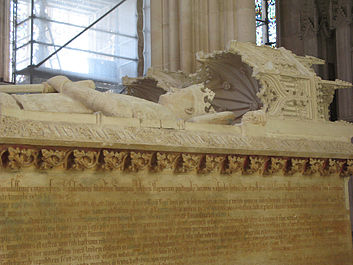
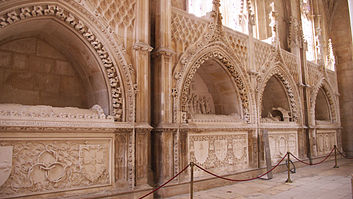
By November 1324 Alice had married again, this time to a minor baron from the Welsh Marches, Sir Ebule, or Eubolo, Lestrange of Shropshire. The  marriage demonstrated that Alice had managed to come out of the disaster of her first husband’s downfall with enough income and  property to make her an attractive proposition as a wife. Although, it does seem possible that this marriage was a love-match.

This marriage appears to have been a happier one, given that Lestrange moved over to Lincolnshire to look after his wife’s interests, and that it was with Sir Eubolo that Alice chose to be buried, when the time came. Alice and Sir Eubolo were married for over 10 years, although towards the latter part Lestrange was away campaigning in Scotland, where he died in September 1335. Alice was named as one of his executors and he was buried in Barlings Abbey, Lincolnshire.

Following his death, Alice took a vow of chastity and looked determined to settle into a life of quiet retirement. However, her adventures were not quite at an end. In 1335, or early 1336, Alice was kidnapped for a second time; she was abducted from her castle at Bolingbroke and raped, by Sir Hugh de Freyne. Freyne was a Herefordshire knight and royal keeper of the town and castle of Cardigan.

There appears some suggestion that Alice was in collusion with Sir Hugh, with the theory being that her abduction was a way for her to escape her vow of chastity. It seems more likely that Alice acquiesced to a situation over which she had little control. Edward III was furious and ordered the imprisonment of the couple, but they were reconciled with the king in 1336 and allowed to marry. The marriage did much to improve Freyne’s status and brought him a summons to Parliament in November 1336.

330px-Barlings_Abbey_ruins_-_geograph.org.uk_-_242596
Barlings Abbey

However, such success was short-lived as he died at Perth in December 1336 or January 1337.

Shortly after her third husband’s death, the Bishop of Lincoln issued a demand that Alice keep her prior vow and chastity. As there were no further marriages – or abductions – we can probably assume that she did. Alice died on the 2nd October 1348 at the grand age of 66. She was buried with her second husband at the Premonstratensian House of Barlings, in Lincolnshire, founded by Ralph de la Haye, uncle of the famous Nicholaa de la Haye.

Having had no children from any of her 3 marriages, Alice’s lands and titles, as according to her marriage settlement 54 years earlier, passed to the house of Lancaster and her husband’s nephew, Henry of Grosmont, 1st Duke of Lancaster and father of Blanche of Lancaster, John of Gaunt’s 1st wife.

*

Pictures courtesy of Wikipedia, except Lincoln Castle © 2015 Sharon Bennett Connolly FRHistS.

*

Sources: The Oxford Companion to British History Edited by John Cannon; The Plantagenets, the Kings who Made England by Dan Jones; History Today Companion to British History Edited by Juliet Gardiner and Neil Wenborn;  Brewer’s British Royalty by David Williamson; Britain’s Royal Families, the Complete Genealogy by Alison Weir; Conisbrough Castle by Steven Brindle and Agnieszka Sadraei; The Mammoth Book of British Kings and Queens by Mike Ashley; The Plantagenets, the Kings that made Britain by Derek Wilson;  findagrave.com; oxforddnb.com; royaldescent.net.

*

My Books

Signed, dedicated copies of all my books are available through my online store.

OUT NOW! Heroines of the Tudor World

Heroines of the Tudor World tells the stories of the most remarkable women from European history in the time of the Tudor dynasty, 1485-1603. These are the women who ruled, the women who founded dynasties, the women who fought for religious freedom, their families and love. These are the women who made a difference, who influenced countries, kings and the Reformation. In the era dominated by the Renaissance and Reformation, Heroines of the Tudor World examines the threats and challenges faced by the women of the era, and how they overcame them. From writers to regents, from nuns to queens, Heroines of the Tudor World shines the spotlight on the women helped to shape Early Modern Europe.

Heroines of the Tudor World is now available for pre-order from Amberley Publishing and Amazon UK.

Coming 30 January 2025: Scotland’s Medieval Queens

Scotland’s history is dramatic, violent and bloody. Being England’s northern neighbour has never been easy. Scotland’s queens have had to deal with war, murder, imprisonment, political rivalries and open betrayal. They have loved and lost, raised kings and queens, ruled and died for Scotland. From St Margaret, who became one of the patron saints of Scotland, to Elizabeth de Burgh and the dramatic story of the Scottish Wars of Independence, to the love story and tragedy of Joan Beaufort, to Margaret of Denmark and the dawn of the Renaissance, Scotland’s Medieval Queens have seen it all. This is the story of Scotland through their eyes.

Available for pre-order now.

Also by Sharon Bennett Connolly:

Women of the Anarchy demonstrates how Empress Matilda and Matilda of Boulogne, unable to wield a sword themselves, were prime movers in this time of conflict and lawlessness. It shows how their strengths, weaknesses, and personal ambitions swung the fortunes of war one way – and then the other. Available from Bookshop.orgAmberley Publishing and Amazon UKKing John’s Right-Hand Lady: The Story of Nicholaa de la Haye is the story of a truly remarkable lady, the hereditary constable of Lincoln Castle and the first woman in England to be appointed sheriff in her own right. Available from all good bookshops Pen & Sword Booksbookshop.org and AmazonDefenders of the Norman Crown: The Rise and Fall of the Warenne Earls of Surrey tells the fascinating story of the Warenne dynasty, from its origins in Normandy, through the Conquest, Magna Carta, the wars and marriages that led to its ultimate demise in the reign of Edward III. Available from Pen & Sword BooksAmazon in the UK and US, and Bookshop.org

Ladies of Magna Carta: Women of Influence in Thirteenth Century England looks into the relationships of the various noble families of the 13th century, and how they were affected by the Barons’ Wars, Magna Carta and its aftermath; the bonds that were formed and those that were broken. It is now available in paperback and hardback from Pen & SwordAmazon, and Bookshop.orgHeroines of the Medieval World tells the stories of some of the most remarkable women from Medieval history, from Eleanor of Aquitaine to Julian of Norwich. Available now from Amberley Publishing and Amazon, and Bookshop.orgSilk and the Sword: The Women of the Norman Conquest traces the fortunes of the women who had a significant role to play in the momentous events of 1066. Available now from Amazon,  Amberley Publishing, and Bookshop.org.

Alternate Endings: An anthology of historical fiction short stories including Long Live the King… which is my take what might have happened had King John not died in October 1216. Available in paperback and kindle from Amazon.

Podcast:

Have a listen to the A Slice of Medieval podcast, which I co-host with Historical fiction novelist Derek Birks. Derek and I welcome guests, such as Bernard Cornwell, and discuss a wide range of topics in medieval history, from significant events to the personalities involved.

*

Don’t forget! Signed and dedicated copies of all my books are available through my online store.

For forthcoming online and in-person talks, please check out my Events Page.

You can be the first to read new articles by clicking the ‘Follow’ button, liking our Facebook page or joining me on Twitter and Instagram.

*

©2016 Sharon Bennett Connolly FRHistS