Today it is a pleasure to welcome Kevin Heads to the blog, to introduce us to Michael Saxon, his new hero for children aged 10 and above.
Kevin Heads is a writer and poet who has a love of Historical Fiction. He classes himself more as a storyteller than a writer, and likes his stories to reflect that approach.
Born in Newcastle-Upon-Tyne in 1962, he grew up in Cramlington Northumberland, and after leaving school with no idea what he wanted to do, ended up as an apprentice box maker in a carton-manufacturing firm.
Kevin met his wife Sue at High School and after they married they had two children Sam and Stephanie. This is where Kevins’ love of storytelling began. Tired of reading the same books to his children, he started inventing characters and stories to entertain his children at bedtime. His children loved them and still remember them fondly. He never wrote these stories down as they were only for his children and he never took them seriously.
After moving around the country several times throughout his career Kevin ended up in Selby North Yorkshire. Surrounded by history he often spends time in Selby Abbey, York and walking the local battlefields, Towton being a particular favourite. However it was on a trip back from Devon that Kevin had the idea of a series of historical fiction books aimed at the younger generation.
Michael Saxon was born and by the time Kevin had driven home the first few chapters were already formulated in his mind.
Kevin is an avid reader and Bernard Cornwell is one of his favourite authors. He has read all the books apart from the Sharpe series citing Shaun Beans’ portrayal in the T.V adaptation as the reason. He loved the series and watched them all with his son and that is a memory he doesn’t want to change by reading the books.
It is Sharpe that made him decide that Waterloo would be the first setting for his Michael Saxon series specifically The Chateau d’Hougoumont.
Where it goes from there we will have to wait and see, although it is possible that a great naval battle may be next in line.
Kevin has also written an adult book set in Norway around 870AD and this is currently being edited. He plans to make Helga a series also.
He has several other ideas moving forward, he would like to visit 1066 and also has plans for a story based around the battle of Towton.
Although history plays a big part in these stories, it is the characters that Kevin wants people to engage with. Without them there is no story.
Michael Saxon Waterloo
After Michael’s grandfather goes missing presumed dead, his family moves from the city into the country home that was left to his mother in his grandfathers’ will. Michael struggles to fit in and hates the country life. He is failing at school and has no friends; spending most of his time playing video games in his bedroom. Then, after his Great Aunt visits from Whitby, things dramatically change.
She tells him of the library in the attic that is full of historical books, and gives him the key to look for himself. This is no ordinary attic and when Michael takes a book about Waterloo from the dust-covered shelves and attempts to leave, he is immediately transported through time and history to the Chateau d’Hougoumont.
Now dressed, as a soldier in the Coldstream Guards, Michael has to find a way to navigate the battlefield and find his way home. With no experience of real warfare he must depend on others to help him fight and survive in one of the biggest battles in British History.
This is the debut book by author Kevin Heads and the first in a series.
Aimed at 10 years plus it is a gentle introduction into the world of Historical fiction
It is available to purchase on Amazon now in both Paperback and Kindle format.
You can also find Kevin and his books on his website. http://www.kevinheads.co.uk, where he blogs about his stories and his poetry.
The characters, fact or fiction:
The best part of writing a book is learning new things, and intertwining the story around actual facts and characters.
In Michael Saxon there is a fair amount of creative invention, yet the facts surrounding the battle at Hougoumont remain accurate as far as I can ascertain from historical sources.
Most of the main characters are fictional as we enter the gates of the Chateau. Angus, Jimmy, Alec and Helena all created and liberties were taken with Helena as there is no evidence that Major Hunter, the surgeon in Hougoumont, actually had a daughter at all, and even if he did then she was definitely not at the battle.
Cartwright is my invention and was the most fun to write, a wicked man who was only interested in self-preservation. Although fictional I imagine there was a few like him in the army at that time.
Other characters were real.
Sergeant Graham for one was instrumental in the closing of the north gate during the battle.
Lt – Colonel Charles Dashwood was also a real person also and in charge of the third guards that defended the orchard.
Lieutenant Colonel James MacDonnell was in charge of the whole garrison, although his speech in this story is purely fictional.
Major Hunter also real and indeed a surgeon in Hougoumont.
Corporal Brewster was also a fact, although he may well have been a Private at the time. His intervention during the battle was said to have helped save the day and he was decorated for his actions and bravery.
The one that interests me the most was the French drummer boy that was rumoured to be the only survivor of the French troops that managed to get through the north gate before it was closed.
Although I could find no official proof that this actually happened, the fact it is rumoured was enough for me to include it in my book.
I named him Philip as the name transcends both the French and English language.
I hope this gives you some incite into the history and characters written about in my book and urges you to read more about the people and places from our historical past. History is such a great subject and our past should never be forgotten.
Given my recent articles on She Wolves, it is a distinct pleasure to welcome Carol McGrath to History…the Interesting Bits with an article about Eleanor of Provence, another queen labelled a ‘she-wolf’.
Why was Ailenor of Provence called a She Wolf Queen?
The first novel, in The She Wolf Queens Trilogy, The Silken Rose was published as an ebook on Thursday 2nd April. The Silken Rose features Ailenor of Provence, who married Henry III in 1236 at only twelve or thirteen years of age. He was already old at twenty-nine years old. The term She Wolf Queen was initially used for Margaret of Anjou by William Shakespeare.
Later, the Victorian Historian, Agnes Strickland, used it for Ailenor of Provence, although Ailenor had, without doubt, made enemies during own her life time. Why label Ailenor of Provence a she wolf queen. Did she deserve this sobriquet?
Alms dish (photograph courtesy of Carol McGrath)
In many ways beautiful Ailenor was the perfect queen who generously gave alms to the poor, was devoted to her husband and endowed abbeys. She was a good mother, protective of her children. Exemplary you might think. However, Ailenor was foreign at a time when English Continental territories had been reduced to Gascony and Aquitaine and ‘Englishness’ was becoming a national identity.
Ailenor of Provence never brought Henry a dowry. She was not even from the top-drawer of European nobility. After her marriage, she introduced a collection of penniless Savoyard and Provençal relatives to England. The English barons who had become inward looking, after the loss of estates in Normandy during the previous reign, were furious. They disliked top positions being parcelled out to the queen’s relatives, particularly to her uncles from Savoy.
Opus Anglicanum
It probably seemed natural to Ailenor to advance her own relatives. Uncle William of Savoy who had accompanied Ailenor to England became one of King Henry’s chief counsellors. Henry even attempted to make him Bishop of Winchester.
Uncle Peter, reportedly charming and clever, became an advisor and received the Honour of Richmond, in Yorkshire. Peter built the Savoy Palace in London. Thomas of Savoy acted as an envoy when Ailenor attempted to buy the Sicilian crown for her second son, Edmund. An unpopular foolish move. It was costly and fell apart when Thomas was captured and imprisoned in Turin and Ailenor had to raise a ransom. The handsome, reforming Uncle Boniface became Archbishop of Canterbury.
Peter of Savoy
In addition, talented clerks came to England from Provence and Savoy. They took over running the treasury as well as other areas of government. This did not please the English barons who felt such jobs were theirs to distribute and control. Henry loved pageants and parties. He spent money on magnificent, expensive building works such as Westminster Abbey. She adored fashion and rich embroidery. I off set her point of view in the novel with that of a court embroiderer. Extravagant spending and nepotism would lead to conflict between King and Barons. She was blamed as a bad influence on the King.
English marriages were arranged for her relations, including that of Ailenor’s younger sister, Sanchia, to Henry’s brother, Richard of Cornwall. This limited English heirs and heiresses available for English barons’ own sons and daughters. After the disgrace and death of Henry’s mother, his hated Lusignan half-brothers arrived in England seeking patronage. Incensed,
Coat of arms of Alienor of Provence
Ailenor’s opposition to the unpopular Lusignans gave her momentarily a stronger political position at court. However, she recognised she would have to tolerate them if she was to preserve good will within her marriage. Henry made her joint regent when he campaigned in Gascony during the 1250s but she levied new taxes, an unpopular move.
At the outbreak of the Baron’s war in 1263, Ailenor was pelted with offal from London Bridge as she attempted to take a boat from The Tower upriver. After that, she sailed for France to raise mercenaries for the royalist cause.
Ailenor was a force to be reckoned with. No wonder during the Victorian era she earned the title of she wolf queen. Nowadays, I suspect, we admire her loyalty, intelligence, love of culture and personal strength.
I would like to extend huge thanks to Carol for a fabulous postand wish her every success with The Silken Rose.
About the author:
Carol McGrath
Following her first degree in English and History, Carol McGrath completed an MA in Creative Writing at The Seamus Heaney Centre, Belfast, followed by an MPhil from University of London. Her fifth historical novel, The Silken Rose, first in The Rose Trilogy, published by the Headline Group, is set during the High Middle Ages. It features Ailenor of Provence and will be published on April 2nd 2020. Carol was the co-ordinator of the Historical Novels’ Society Conference, Oxford in September 2016. Visit her website: http://www.carolcmcgrath.co.uk.
Carol’s latest novel, The Silken Rose, telling the remarkable story of Alienor of Provence is available now. To purchase The Silken Rose ebook click here
Competition Closed: And the winner is Carolyn Hester
Sunday 22nd March 2020 is Mother’s Day in the UK this year and what better way to celebrate the 1st birthday of the paperback of Heroines of the Medieval World, than a giveaway for everyone’s favourite Heroine – MUM?!?!
“As Connolly ably demonstrates, knowing about these fascinating women is essential to filly understanding medieval Europe.” (Publishers Weekly)
About Heroines of the Medieval World
Heroines come in many different forms, and it is no less true for medieval heroines. They can be found in all areas of medieval life; from the dutiful wife and daughter to religious devotees, warriors and rulers. What makes them different compared to those of today are the limitations placed on them by those who directed their lives – their fathers, husbands, priests and kings. Women have always been an integral part of history, although when reading through the chronicles of the medieval world, you would be forgiven if you did not know it. We find that the vast majority of written references are focussed on men. The chronicles were written by men and, more often than not, written for men. It was men who ruled countries, fought wars, made laws and treaties, dominated religion and guaranteed – or tried to guarantee – the continued survival of their world. It was usually the men, but not all of them, who could read, who were trained to rule and who were expected to fight, to defend their people and their country…
And don’t worry, the offer is open worldwide – even if it isn’t Mother’s Day for you just yet.
It’s easy to enter!
To win a signed copy of Heroines of the Medieval World dedicated to a heroine of your choice – your mum, aunt, sister, grandmother, daughter or yourself (I won’t judge!), or someone else’s mum – for Mother’s Day, simply leave a comment below or on my Facebook page and I will include you in the prize draw.
The draw will be made on Wednesday 18th March, so you should get the book in time for the big day.
As promised, here’s Part Two of Medieval She-Wolves. Charting the stories of 3 more remarkable women who have been labelled ‘she-wolves’ due to their strength and determination – and a ruthlessness born out of an impressive survival instinct.
Zoe Porphyrogenita lived much of her life in relative obscurity. At the age of 50, in 1028, she was married to her father’s designated successor, Emperor Romanos III, and became empress consort when he succeeded to the throne in the same year. Zoe was described by a palace courtier, Michael Psellos, as ‘a woman of great beauty, most imposing in her manner and commanding respect … a woman of passionate interests.’
As empress consort, Zoe asserted herself. Her younger sister, Theordora, was sent to a monastery. Neglected by her husband, who had taken a mistress and refused his wife access to the treasury, Zoe took a much younger, teenage lover, Michael. Together the lovers conspired to dispose of Romanos and he was drowned in his bath in 1034.
Zoe promptly married her lover and made him Emperor Michael IV. Their marriage, however, was full of distrust and Zoe was allowed no power or say in government. Michael IV then banished Zoe to the gynaeceum, or women’s quarters. Not to be forgotten, Zoe began scheming to reclaim her throne. After she was allowed back to court, and unable to bare her own children, Zoe adopted Michael IV’s nephew, another Michael, and made him her heir. Michael IV’s life would have probably ended in the same way as his predecessor, Romanos III, drowned in the bath or with a knife in his back, had he not died of natural causes in 1041.
Michael’s nephew, Zoe’s adopted son, ascended the throne as Michael V. When Michael V was crowned, Zoe was again banished to a monastery, an act which caused an uprising in Constantinople. Michael V was deposed after only four months of disastrous rule. He was exiled to a monastery, but complaints about such lenient treatment meant that, despite Zoe’s desire to be merciful, orders were issued for his mutilation and he was blinded, an act symbolically rendering him incapable of ruling.
Zoe and Theodora
Now 64-years-old, Zoe was empress, once again. Her sister, Theordora, was retrieved from her monastery to rule beside her, though Zoe’s throne being placed slightly further forward, at the joint coronation ceremony, was an obvious indication of which of the sisters was in charge. In the same year, 1042, Zoe took a third husband, Emperor Constantine IX, who co-ruled the empire, with the two sisters. Constantine outlived his wife; Zoe died in 1050, aged about 72. A ruthless empress who knew what she wanted, Zoe was not afraid to dispose of her rivals – whether they be a husband or an adopted son.
Isabella of Angouleme, Queen of England
At first sight, it is easy to have sympathy for Isabella of Angouleme. When I started researching her for my forthcoming book, Ladies of Magna Carta: Women of Influence in Thirteenth Century England, I was expecting to be able to go some way to redeeming her reputation. She was married at a very young age – she was no more than 12 and may have been as young as 10 – to ‘Bad’ King John, the man who left women to starve in his dungeons and murdered his own nephew. Isabella and John were married in 1200 and, after 16 years together, they had 5 children; the youngest, Eleanor, was born in 1215.
Seal of Isabella of Angouleme
When John died in October 1216, however, Isabella didn’t spend much time seeking to comfort and protect her children. As soon as her oldest son, Henry III, was crowned with her own ‘chaplet’, Isabella started making arrangements to go home, to her own lands in Angouleme, France. In 1217 she left England, supposedly to arrange the wedding of her daughter, Joan, but she never returned. Joan had been betrothed, at the age of 4, to Hugh X de Lusignan, Count of La Marche and the son of Hugh IX de Lusignan (the man who had been betrothed to Isabella before John married her).
In 1220, however, in a scandalous about-face Hugh IX repudiated Joan and married her mother, his father’s former betrothed. And poor 9-year-old Joan’s erstwhile betrothed was now her step-father!
But worse was to come…
Instead of being sent back to England, as you would expect, Joan went from being Hugh’s betrothed – to being his prisoner. She was held hostage to ensure Hugh’s continued control of her dower lands, and as a guarantee to the transfer of his new wife’s dower. England, on the other hand, was withholding Queen Isabella’s dower against the return of Joan’s dower lands.
Isabella wrote to her son, Henry III, to explain and justify why she had supplanted her own daughter as Hugh’s bride, claiming that his ‘friends’ were worried about Joan’s youth and forcing Hugh to repudiate the English princess in favour of a French bride who was old enough to bear him a son. Isabella had married Hugh to stop him going over to the French and to guarantee his allegiance to her son.
Ironically, the proposed union of Hugh IX and Isabella, and of their lands, was the reason John had married Isabella in the first place – to prevent the lands of La Marche and Angouleme combining and challenging Plantagenet superiority in the region. Little Joan was returned to England towards the end of 1220, but the arguments over Isabella’s English lands continued and they were confiscated, for a short time, in 1221.
Isabella would not retire in peace, however, and in 1224 she and Hugh betrayed Henry by allying themselves with the King of France. In exchange for a substantial pension, they supported a French invasion of Poitou (the lands in France belonging to the King of England, her son). Although she reconciled with Henry in 1230, Isabella and Hugh continued to play the kings of France and England against each other, always looking for the advantage. In 1242, for example, when Henry III invaded Poitou, Hugh X initially gave support to his English stepson, only to change sides once more. Isabella herself was implicated in a plot to poison King Louis IX of France and his brother, only to be foiled at the last minute.
As contemporaries described her as ‘more Jezebel than Isabel’, accused her of ‘sorcery and witchcraft’, Isabella of Angouleme’s reputation as a heartless mother and habitual schemer seems set to remain. With little to recommend her, she stands out as a She-wolf with an impressive ruthless streak, even against her own son.
Isabella of France, Queen of England
Isabella of France, Queen of England
Isabella of France was the wife and queen of Edward II of England. In 1325, Isabella went on a diplomatic mission to France to negotiate terms with her brother, the French king Charles IV, who had seized Edward’s lands in France. Isabella saw an opportunity to take a stand against the unfairness of her situation. Ignored, spied on and persecuted by her husband’s favourite, the hated Hugh Despencer, and after 17 years of marriage, Isabella refused to return home. Isabella took to wearing widow’s weeds and claimed:
‘I feel that marriage is a joining together of man and woman, maintaining the undivided habit of life. Someone has come between my husband and myself, trying to break this bond. I protest that I will not return until this intruder has been removed but, discarding my marriage garment, I shall assume the robes of widowhood and mourning until I am avenged of this Pharisee.’
Isabella and the Strange Death of Edward II by Paul Doherty
With her son Edward, the heir to the throne, in her in France, and with the help of her close friend and adviser – and, quite possibly, her lover – Roger Mortimer, Isabella started attracting support from the disappointed and disillusioned of Edward’s subjects. In 1326, she launched the invasion of England that would see her husband fleeing for his life in the face of her advancing army. Edward and Hugh were captured near Llantrisant in Wales. Edward was sent to imprisonment in Berkeley Castle.
Hugh Despencer was taken before a military tribunal in Hereford, blamed for the collapse of the queen’s marriage and humiliating Isabella, and seizing her wealth and estates, he was given no right to reply. His guilt was a foregone conclusion. Paraded through the city of Hereford, with a crown of nettles on his head and all manner of things thrown at him, before being dragged on a sled to the town square, where Despencer suffered the full horror of a traitor’s death. He was hanged from a specially-erected gallows, fifty feet high; cut down whilst still alive, his intestines were cut out and burned before his eyes, before his head was cut off to end his agony.
Despencer’s death demonstrated the anger Isabella felt towards her husband and his favourite. Edward’s death may well have been just as gruesome – or not at all. Historians are divided about what happened to Edward II. Some claim he escaped to the continent, dying years later in Italy, while others are convinced that he was killed in Berkeley Castle, although probably not by a red-hot poker up his bum. Whatever happened to Edward, Isabella’s revenge was complete; Despencer had been utterly destroyed and Edward was deposed and replaced with his son, the 14-year-old Edward III.
Isabella (3rd from the left), with her father King Philip IV, brothers and uncle
For 3 years Isabella and Mortimer ruled England, only to be themselves deposed by Edward III when he turned eighteen; their own arrogance and mismanagement of England causing their downfall. Mortimer was hanged at Tyburn and Isabella spent her remaining years in comfortable house arrest, the She-Wolf who had launched an invasion of England and deposed – and possibly murdered – her husband, only to be deposed herself.
Zoe, Isabella of Angouleme and Isabella of France have been much maligned throughout history. Their stories have concentrated on the ruthlessness of their actions, rather than how they themselves had been treated by the men around them. If we turn it around, it is far easier to sympathise with women who were used as pawns in an Empire, or child brides or endured troubled marriages. Just as with Æthelflæd, Eleanor of Aquitaine and Isabeau of Bavaria (see Medieval She-Wolves from Part One), they fought for what they wanted, often against impossible odds, and achieved much. At a time when the perceived main purpose of a wife was to produce and raise children, these women made a remarkable imprint on history that has ensured their stories are still being told today.
Selected Sources:
The Oxford Companion to British History Edited by John Cannon; The Plantagenets, the Kings who Made England by Dan Jones; History Today Companion to British History Edited by Juliet Gardiner and Neil Wenborn; Brewer’s British Royalty by David Williamson; Britain’s Royal Families, the Complete Genealogy by Alison Weir; The Plantagenet Chronicles Edited by Elizabeth Hallam; The Mammoth Book of British Kings and Queens by Mike Ashley; The Plantagenets, the Kings that made Britain by Derek Wilson; England Under the Norman and Angevin Kings by Robert Bartlett; http://www.britannica.com; oxforddnb.com; finerollshenry3.org.uk; The Anglo-Saxon Chronicles by Michael Swanton; The Anglo-Saxon Chronicle by James Ingram; Chronicles of the Kings of England, From the Earliest Period to the Reign of King Stephen, c. 1090–1143 by William of Malmesbury; The Chronicle of Henry of Huntingdon by Thomas Forester; Alfred the Great by David Sturdy; Britain’s Royal Families, the Complete Genealogy by Alison Weir; The Wordsworth Dictionary of British History by JP Kenyon; The Anglo-Saxons in 100 Facts by Martin Wall; Kings, Queens, Bones and Bastards by David Hilliam; Mercia; the Rise and Fall of a Kingdom by Annie Whitehead.
Images courtesy of Wikipedia
A version of both parts of Medieval She-Wolves first appeared in the 2019 edition of All About History magazine. Isabella of Angouleme’s story is discussed in greater detail in my forthcoming book, Ladies of Magna Carta.
My Books:
Signed, dedicated copies of all my books are available through my online bookshop.
Out Now!Women of the Anarchy
Two cousins. On the one side is Empress Matilda, or Maud. The sole surviving legitimate child of Henry I, she is fighting for her birthright and that of her children. On the other side is her cousin, Queen Matilda, supporting her husband, King Stephen, and fighting to see her own son inherit the English crown. Women of the Anarchy demonstrates how these women, unable to wield a sword, were prime movers in this time of conflict and lawlessness. It show how their strengths, weaknesses, and personal ambitions swung the fortunes of war one way – and then the other.
Coming on 15 June 2024: Heroines of the Tudor World
Heroines of the Tudor World tells the stories of the most remarkable women from European history in the time of the Tudor dynasty, 1485-1603. These are the women who ruled, the women who founded dynasties, the women who fought for religious freedom, their families and love. These are the women who made a difference, who influenced countries, kings and the Reformation. In the era dominated by the Renaissance and Reformation, Heroines of the Tudor World examines the threats and challenges faced by the women of the era, and how they overcame them. From writers to regents, from nuns to queens, Heroines of the Tudor World shines the spotlight on the women helped to shape Early Modern Europe.
King John’s Right-Hand Lady: The Story of Nicholaa de la Haye is the story of a truly remarkable lady, the hereditary constable of Lincoln Castle and the first woman in England to be appointed sheriff in her own right. It is is available from King John’s Right-Hand Lady: The Story of Nicholaa de la Haye is the story of a truly remarkable lady, the hereditary constable of Lincoln Castle and the first woman in England to be appointed sheriff in her own right. Available from all good bookshops or direct from Pen & Sword Books, bookshop.org and Amazon. Defenders of the Norman Crown: The Rise and Fall of the Warenne Earls of Surrey tells the fascinating story of the Warenne dynasty, from its origins in Normandy, through the Conquest, Magna Carta, the wars and marriages that led to its ultimate demise in the reign of Edward III. Available from Pen & Sword Books, Amazon in the UK and US, and Bookshop.org.
Alternate Endings: An anthology of historical fiction short stories including Long Live the King… which is my take what might have happened had King John not died in October 1216. Available in paperback and kindle from Amazon.
Podcast:
Have a listen to theA Slice of Medieval podcast, which I co-host with Historical fiction novelist Derek Birks. Derek and I welcome guests, such as Bernard Cornwell and Elizabeth Chadwick, and discuss a wide range of topics in medieval history, from significant events to the personalities involved.
*
Don’t forget!Signed and dedicated copies of all my books are available through my online bookshop.
For forthcoming online and in-person talks, please check out my Events Page.
You can be the first to read new articles by clicking the ‘Follow’ button, liking our Facebook page or joining me on Twitterand Instagram.
Throughout history – and particularly in medieval times – strong, determined women have been labelled ‘she-wolves’. It is a term that has been used as a criticism or insult. It has often been applied to suggest a woman of serious character flaws who would invariably put her own interests ahead of others, who fought for what they wanted, be it a crown, their children or independence. Men who performed similar actions and had similar aims tended to be called strong and determined rulers. However, the term can also be used to show women in a positive light, women who didn’t give up, fought for themselves and their families. So I have chosen 6 women who could have been termed ‘she-wolves’ to show women from both viewpoints, and to demonstrate the strength of the characters and the challenges they faced. And while their actions were not always exemplary, their stories were always remarkable.
Here are the first 3:
Æthelflæd, Lady of Mercia
Æthelflæd, Lady of Mercia
The daughter of King Alfred the Great, Æthelflæd was married to Æthelred, ealdorman of Mercia. Æthelflæd was a strong, brave woman and is often regarded more as a partner to Æthelred than a meek, obedient wife. Although she exercised regal rights in Mercia even before her husband’s death, after Æthelred died in 911, it was left to Æthelflæd to lead the Mercians in the fight against the Danes. Alongside her brother, King Edward of Wessex. It is universally acknowledged that Æthelflæd helped to push back the Viking incursions. Losing four of her greatest captains in the battle to capture Derby in 917, the Anglo-Saxon Chronicle reported:
‘With God’s help Ethelfleda, lady of Mercia, captured the fortress known as Derby with all its assets. Four of her favoured ministers were slain inside the gates.’
Anglo-Saxon Chronicles edited by Michael Swanton
In 918, Æthelflæd captured Leicester, ravaging the countryside around the town until the Danes surrendered. The combination of her indefatigable forces and compassion in victory saw the Danes soon suing for peace; in the summer of 918, the noblemen and magnates of York sent emissaries to Æthelflæd, promising that they would surrender to her. She personally led campaigns against the Welsh, the Norse and the Danes – though whether she actually wielded a sword in battle is unknown.
While often magnanimous in victory, Æthelflæd could be ruthless when it was her friends who were attacked; even she was not immune from the desire for revenge. In June 916, on the feast of St Cyriac, Æthelflæd’s good friend, Abbot Egbert, was murdered for no known reason. The Mercian abbot and his retainers were ambushed and killed while travelling in the Welsh mountain kingdom of Brycheiniog. The abbot had been under Æthelflæd’s protection and within three days she was leading an army into the Wales to exact revenge.
Statue of Aethelflaed and Athelstan
Æthelflæd’s army ravaged Brycheiniog, burning the little kingdom and taking many hostages. Although King Tewdr escaped Æthelflæd, his wife did not; Queen Angharad and thirty-three others, many of them relatives of the Welsh king, were taken back to Mercia as hostages. Æthelflæd’s strength and determination was complemented by her quick actions and an impressive ruthless streak. When the Welsh king eventually submitted to Æthelflæd, he promised to serve her faithfully, and to pay compensation for the murder of the abbot and his people.
Æthelflæd died suddenly in June 918. She did not live to see the successful conclusion to the work she and her brother had worked tirelessly to achieve; between 910 and 920 all Danish territories south of Yorkshire had been conquered.
Eleanor of Aquitaine, Queen of France, Queen of England (died 1204)
Tomb effigy of Eleanor of Aquitaine, Fontevraud Abbey, France
Eleanor of Aquitaine is iconic. Probably the most famous woman of the middle ages, she is the only woman to have ever worn the crowns of both England and France. She has even been promoted as the first feminist.
Eleanor’s long life saw her weather the dangers of crusade, scandal, siege, imprisonment and betrayal to emerge as the great matriarch of Europe.
When her first husband, Louis VII, led the Second Crusade, Eleanor went with him, only to find herself mired in scandal. Eleanor’s uncle Raymond of Toulouse, Prince of Antioch, welcomed Eleanor warmly and lavished such attention on her that rumours soon arose of an affair. Despite a lack of concrete evidence, but accused of adultery and incest, Eleanor spent most of the crusade under close guard on her husband’s orders.
Louis and Eleanor’s marriage had been dealt a fatal blow; they left the Holy Land in 1149 and their divorce was finally proclaimed 21 March 1152. By May 1152 Eleanor was married again, to the man who would become her first husband’s greatest rival. Henry of Anjou would become King of England in 1154 and eventually built an empire that extended 1,000 miles, from the Scottish border in the north to the Pyrenees in the south and incorporating most of western France.
Later rumours again mired Eleanor in scandal, accusing her of murdering Henry’s lover Rosamund Clifford. In one extravagant version, Rosamund was hidden in her secret bower within a maze but, with the help of a silken thread, a jealous Eleanor still found her and stabbed her while she bathed. In another the discarded queen forced Rosamund to drink from a poison cup. Of course, a closely guarded prisoner in Old Sarum or at Winchester as Eleanor was at the time of Rosamund’s death, it was impossible for her to do any such thing. But who are we to let facts get in the way of a good story?
Eleanor did, however, commit one of the most heinous crimes a woman could in the medieval world. As a she-wolf, protecting her cubs, she rebelled against her husband. In 1173 her eldest son by Henry, also called Henry, rebelled against his father and fled to the French court for support. His father-in-law, King Louis VII welcomed the disgruntled Angevin prince and Eleanor of Aquitaine, having sided with her sons against her husband, sent two of her other sons, fifteen-year-old Richard and fourteen-year-old Geoffrey, to join their older brother at the French court, while she rallied her barons in Poitou to their cause. In 1174, when the rebellion failed, Henry accepted the submission of his sons.
Eleanor, who was captured as she rode towards safety in France, wearing men’s clothing – an act itself highly frowned upon – was not so fortunate. While it was not encouraged for sons to rebel against their father, it could be seen as boys flexing their muscles. For a wife to rebel against her husband was practically unheard of, and went against the natural order of society, and therefore deserved harsher punishment – where would the world be if women refused to behave?
Unforgiven and defeated, Eleanor was sent to perpetual imprisonment in various castles throughout southern England. She was only released after Henry II’s death in 1189, when her favourite son, Richard I, the Lionheart, ascended England’s throne. If she had done everything of which she was accused – murder, incest, adultery and rebellion – Eleanor would be the ultimate she-wolf. As it was, her rebellion, an act unprecedented for a queen, meant she paid the price with her freedom for the next fifteen years.
Isabeau of Bavaria, Queen of France
Isabeau of Bavaria
If all the stories of Isabeau of Bavaria were to be believed, she would be the most ruthless and wicked queen to have ever lived. For centuries Isabeau has been accused of almost every crime imaginable, from adultery and incest to treason and avarice. Variously described as being beautiful and hypnotic or so obese that she was crippled, the chroniclers have not been kind to Isabeau. According to them, her moral corruption led to the neglect of her children and betrayal of her husband and country.
However, they ignored the challenges faced by a queen whose husband was sinking deeper and deeper into the realms of insanity, going so far as killing four of his own knights during one mental breakdown and thinking he was made of glass in another. Married to King Charles VI of France, also known as Charles ‘the Mad’, Isabeau was left to raise her children and navigate the dangers and intrigues of court politics with little assistance from her mentally disturbed husband. Her political alliance with Louis of Orléans, her husband’s brother, led to her imprisonment amid slanderous rumours of adultery and incest – from the opposing political party.
To add to this, France was – not that they knew it at the time – halfway through the conflict with England that would become known as the Hundred Years’ War. The war was going badly for France – Henry V defeated them decisively at Agincourt – and Isabeau was forced to put her signature to the Treaty of Troyes in 1420. In that instant she disinherited her own son, the Dauphin, making Henry V heir to King Charles and handing France over to England. Much of Isabeau’s life and career has been re-examined in the twentieth century and she has been exonerated of many of the accusations against her, but, despite the fact Isabeau was backed into a corner, she still signed away her son’s inheritance in favour of a foreign power…
Although not all their actions were womanly, and some of what they did could be seen as dishonourable and ruthless, what is certain is that these women – and many others from their time – left their mark on history. With each of them, applying the term ‘she-wolf’ highlights their strengths, their determination, and the challenges they faced and overcame. They fought for what they wanted, often against impossible odds, and achieved much. At a time when the perceived main purpose of a wife was to produce and raise children, these women made a remarkable imprint on history that has ensured their stories are still being told today.
The Oxford Companion to British History Edited by John Cannon; The Plantagenets, the Kings who Made England by Dan Jones; History Today Companion to British History Edited by Juliet Gardiner and Neil Wenborn; Brewer’s British Royalty by David Williamson; Britain’s Royal Families, the Complete Genealogy by Alison Weir; The Plantagenet Chronicles Edited by Elizabeth Hallam; The Mammoth Book of British Kings and Queens by Mike Ashley; The Plantagenets, the Kings that made Britain by Derek Wilson; England Under the Norman and Angevin Kings by Robert Bartlett; http://www.britannica.com; oxforddnb.com; finerollshenry3.org.uk; The Anglo-Saxon Chronicles by Michael Swanton; The Anglo-Saxon Chronicle by James Ingram; Chronicles of the Kings of England, From the Earliest Period to the Reign of King Stephen, c. 1090–1143 by William of Malmesbury; The Chronicle of Henry of Huntingdon by Thomas Forester; Alfred the Great by David Sturdy; Britain’s Royal Families, the Complete Genealogy by Alison Weir; The Wordsworth Dictionary of British History by JP Kenyon; The Anglo-Saxons in 100 Facts by Martin Wall; Kings, Queens, Bones and Bastards by David Hilliam; Mercia; the Rise and Fall of a Kingdom by Annie Whitehead.
Images courtesy of Wikipedia
A version of this article first appeared in the 2019 edition of All About History magazine.
My Books:
Signed, dedicated copies of all my books are available through my online bookshop.
Out Now!Women of the Anarchy
Two cousins. On the one side is Empress Matilda, or Maud. The sole surviving legitimate child of Henry I, she is fighting for her birthright and that of her children. On the other side is her cousin, Queen Matilda, supporting her husband, King Stephen, and fighting to see her own son inherit the English crown. Women of the Anarchy demonstrates how these women, unable to wield a sword, were prime movers in this time of conflict and lawlessness. It show how their strengths, weaknesses, and personal ambitions swung the fortunes of war one way – and then the other.
Coming on 15 June 2024: Heroines of the Tudor World
Heroines of the Tudor World tells the stories of the most remarkable women from European history in the time of the Tudor dynasty, 1485-1603. These are the women who ruled, the women who founded dynasties, the women who fought for religious freedom, their families and love. These are the women who made a difference, who influenced countries, kings and the Reformation. In the era dominated by the Renaissance and Reformation, Heroines of the Tudor World examines the threats and challenges faced by the women of the era, and how they overcame them. From writers to regents, from nuns to queens, Heroines of the Tudor World shines the spotlight on the women helped to shape Early Modern Europe.
King John’s Right-Hand Lady: The Story of Nicholaa de la Haye is the story of a truly remarkable lady, the hereditary constable of Lincoln Castle and the first woman in England to be appointed sheriff in her own right. It is is available from King John’s Right-Hand Lady: The Story of Nicholaa de la Haye is the story of a truly remarkable lady, the hereditary constable of Lincoln Castle and the first woman in England to be appointed sheriff in her own right. Available from all good bookshops or direct from Pen & Sword Books, bookshop.org and Amazon. Defenders of the Norman Crown: The Rise and Fall of the Warenne Earls of Surrey tells the fascinating story of the Warenne dynasty, from its origins in Normandy, through the Conquest, Magna Carta, the wars and marriages that led to its ultimate demise in the reign of Edward III. Available from Pen & Sword Books, Amazon in the UK and US, and Bookshop.org.
Alternate Endings: An anthology of historical fiction short stories including Long Live the King… which is my take what might have happened had King John not died in October 1216. Available in paperback and kindle from Amazon.
Podcast:
Have a listen to theA Slice of Medieval podcast, which I co-host with Historical fiction novelist Derek Birks. Derek and I welcome guests, such as Bernard Cornwell and Elizabeth Chadwick, and discuss a wide range of topics in medieval history, from significant events to the personalities involved.
*
Don’t forget!Signed and dedicated copies of all my books are available through my online bookshop.
For forthcoming online and in-person talks, please check out my Events Page.
You can be the first to read new articles by clicking the ‘Follow’ button, liking our Facebook page or joining me on Twitterand Instagram.
Ladies of Magna Carta: Women of Influence in Thirteenth Century England
In my first year of writing History … the Interesting Bits I told the stories of 2 remarkable women, contemporaries of each other, but with markedly different fates. Matilda de Braose fell foul of King John and suffered a horrible death in his dungeons, while Nicholaa de la Haye was John’s steadfast supporter, successfully defending Lincoln Castle in no fewer than 3 sieges; the last against a combined French and rebel army.
These 2 stories became the catalyst for my latest book, which looks into how the 1215 Magna Carta was relevant to the women of the great families of 13th century England, including the royal families of England and Scotland, the Marshals, the Bigods, the Salisburys,Braoses and Warennes.
Magna Carta clause 39: No man shall be taken, imprisoned, outlawed, banished or in any way destroyed, nor will we proceed against or prosecute him, except by the lawful judgement of his peers or by the law of the land.
This clause in Magna Carta was in response to the appalling imprisonment and starvation of Matilda de Braose, the wife of one of King John’s barons. Matilda was not the only woman who influenced, or was influenced by, the 1215 Charter of Liberties, now known as Magna Carta. Women from many of the great families of England were affected by the far-reaching legacy of Magna Carta, from their experiences in the civil war and as hostages, to calling on its use to protect their property and rights as widows.
Ladies of Magna Carta: Women of Influence in Thirteenth Century England looks into the relationships – through marriage and blood – of the various noble families and how they were affected by the Barons’ Wars, Magna Carta and its aftermath; the bonds that were formed and those that were broken. Including the royal families of England and Scotland, the Marshals, the Warennes, the Braoses and more, _Ladies of Magna Carta_ focuses on the roles played by the women of the great families whose influences and experiences have reached far beyond the thirteenth century.
And it is almost here! Ladies of Magna Carta: Women of Influence in Thirteenth Century England will be released in the UK on 30 May 2020 and is now available for pre-order from Amazon UK and from Book Depository worldwide.
Book Launch:
Please join me at The Collection, Lincoln, for the launch of Ladies of Magna Carta: Women of Influence in Thirteenth Century England, hosted by Lindum Books.
I will be doing a talk and book signing, at The Collection in Lincoln. Tickets: £7 Single; including book:£29. Couple including book: £32. Tickets are available from The collection and Lindum Books, Lincoln.
Eleanor of Provence was born in the province of her name in 1223. She has come to England at the age of twelve to marry the king, Henry III. He’s sixteen years older, but was a boy when he ascended the throne. He’s a kind, sensitive sort whose only personal attachments to women so far have been to his three sisters. The youngest of them is called Eleanor too. She was only nine when, for political reasons, her first marriage took place, but she’s already a chaste twenty-year old widow when the new queen arrives in 1236. In a short time, this Eleanor will marry the rising star of her brother’s court, a French parvenu named Simon de Montfort, thus wedding the fates of these four people together in an England about to undergo some of the most profound changes in its history. It’s a tale that covers three decades at its heart, with loyalty to family and principles at stake, in a land where foreigners are subject to intense scrutiny and jealousy. The relationship between these two sisters-in-law, close but ultimately doomed, will reflect not just the turbulence and tragedy of their times, but also the brilliance and splendour.
Having just reviewed one of the best fiction books of 2019 in Angus Donald’s Blood’s Campaign, it is a pleasure to review one of the best non-fiction books I’ve read this year. Darren Baker’s The Two Eleanors of Henry III: The Lives of Eleanor of Provence and Eleanor de Montfort is a truly engaging book, delving into the lives of two very different women, friends who were on opposing sides during the Second Baron’s War and the rebellion of Simon de Montfort.
Told chronologically, with their lives running in parallel, Darren Baker recreates the experiences of Eleanor of Provence, queen of Henry III, and Eleanor de Montfort, sister of Henry III and wife of his bitter enemy, Simon de Montfort. Sympathetic but not overly sentimental, Darren Baker recreates the political and personal lives of his two protagonists, both on the national and international stage.
The Two Eleanors of Henry III: The Lives of Eleanor of Provence and Eleanor de Montfort is a wonderful analysis of the years between the issuing of Magna Carta and the death of Simon de Montfort at the Battle of Evesham, clearly demonstrating the roles played by the wives of the two main protagonists in the ongoing battle between crown and barons. Darren Baker examines the conflict, and motivations behind it, from a new and innovative angle.
It cannot have been easy to write a dual biography about two women who shared a Christian name, but Darren Baker has a remarkable skill in always clearly identifying which Eleanor he is talking about at any particular time, negating any possible confusion for the reader.
As the banquet commences, Eleanor [of Provence] notices a man standing in close proximity to them, holding a basin of water for the king to clean his hands in before, during and after the meal. But e is clearly no servant. Besides wearing stately robes, he walks with Henry with a familiarity that suggests they are friends. More intriguing, his accent is very close to hers. Someone in the party whispers that it is Simon de Montfort, the son of the crusader who set most of their region ablaze three decades earlier. Simon too grew up in the south of France until his father was felled in the conflict. When the crusade was over, he ventured to England to claim the earldom of Leicester through his grandmother’s noble lineage. The earldom came with the office of steward, which is what this tall and handsome knight, then in his late twenties, is doing in attending the king at the feast.
Simon looks at the party from Provence with equal suspicion. He survived a purge of foreign courtiers only a few years before and is worried this new crowd from abroad might re-ignite that peculiar English obsession with aliens. His position seems safe because he is one of Henry’s most trusted confidants. He has recently shown his loyalty to him by proposing marriage to two widowed countesses on the Continent, presumably at the king’s urging. Henry has grand ideas about creating alliances across the Channel as a means of recovering the lands seized by the French from his father. ‘Do that,’ he intimated, ‘and I’ll find you a suitable bride if it doesn’t work out.’ Simon returned empty-handed.
Widows abound in this feudal society and the king gets to decide who marries the rich and powerful ones. None is more desirable than his own sister, who is also named Eleanor. She was younger than her new sister-in-law when she was betrothed to William Marshal II, son of her brother’s first regent. Because of her extreme youth at the time, it was years before she and William began cohabiting. Their marriage waas successfull but childless.
Don’t be fooled by the flowing narrative, The Two Eleanors of Henry III: The Lives of Eleanor of Provence and Eleanor de Montfort is an in-depth analysis, not only of the lives of the two women, but of the events which shaped their world and threatened the very stability of England and the monarchy. Darren Baker delves into the motivations of both women, their loyalty to their husbands and family and examines the lengths that each went to in order to protect their own interests.
The Two Eleanors of Henry III: The Lives of Eleanor of Provence and Eleanor de Montfort is a pleasure to read. It provides great insight into the lives of Eleanor of Provence, Eleanor de Montfort, their husbands and children and the impact that their family feuding had, not only on England, but also on the European stage. The author does not run to judgement and provides a balanced analysis of both sides of the conflict of the Second Barons’ War. He clearly points out the character strengths and flaws of both Eleanors, using chronicles and letters to build clear images of their characters and personalities.
The Two Eleanors of Henry III: The Lives of Eleanor of Provence and Eleanor de Montfort firmly places Eleanor of Provence and Eleanor de Montfort within the thirteenth century world in which they lived. Darren Baker brings their stories to life, with his passion for his subjects clearly visible in the elegant narrative. This book is a must for anyone interested in medieval women or in the conflict between Henry III and Simon de Montfort. Placing the focus on the two women who saw their husbands and sons drawn into the Second Barons’ War shines a whole new light on the period.
It is an enjoyable and fascinating read!
To buy the Book:
The Two Eleanors of Henry III: The Lives of Eleanor of Provence and Eleanor de Montfort is now available from Amazon UK and is available for pre-order from Amazon US and direct from Pen & Sword.
About the author:
Darren Baker is a translator and historian who took his degree at the University of Connecticut. He currently lives in the Czech Republic.
From Emma of Normandy, wife of both King Cnut and Æthelred II to Saint Margaret, a descendant of Alfred the Great himself, Silk and the Sword: the Women of the Norman Conquest traces the fortunes of the women who had a significant role to play in the momentous events of 1066. Available now from Amazon UK, Amberley Publishing,Book Depository and Amazon US.
Telling the stories of some of the most remarkable women from Medieval history, from Eleanor of Aquitaine to Julian of Norwich, Heroines of the Medieval World, is available now on kindle and in paperback in the UK from from both Amberley Publishing and Amazon, in the US from Amazon and worldwide from Book Depository.
*
You can be the first to read new articles by clicking the ‘Follow’ button, liking our Facebook page or joining me on Twitterand Instagram.
Ever since I first discovered Bernard Cornwell’s Richard Sharpe 30 years ago, I have had a fascination for all-things Napoleonic – the Peninsular War in particular (I even wrote my university dissertation on it!). The Walcheren expedition of 1809 was an extension of this conflict, and a rather disastrous one. Author Lynn Bryant is currently writing a fiction series, The Manxman Series, based on the events of the Walcheren Campaign. Book 2, This Blighted Expedition, is out this week. Today Lynn visits us to talk about the research behind the book.
This Blighted Expedition: a novel of the Walcheren Campaign of 1809 (Book 2 in the Manxman series)
This
Blighted Expedition
is my eleventh published historical novel, and the second in the Manxman
series, which follows the fortunes of the fictional Captain Hugh Kelly of HMS Iris, his wife Roseen and his young
first lieutenant Alfred Durrell. This book takes them to the Walcheren campaign
of 1809 where a huge joint operation between the army and the navy went
disastrously wrong, and led to an ignominious retreat, the deaths of over 4000
men from the deadly Walcheren fever and a Parliamentary inquiry.
Researching Walcheren has been very
different to researching the better known campaigns of the wars for my
Peninsular War Saga. There is a huge amount of published contemporary material
in the form of letters and journals about the Peninsular War. Officers, and in
a few cases, their enlisted men, wrote endlessly to their family and friends
about their experiences in the war, and modern historians have done a
remarkable job of discovering, editing and publishing these accounts. When
researching the doings of my fictional regiment at the siege of Badajoz, the
problem was having time to sift through all the material and also of knowing
when to stop. Writing fiction, as opposed to history, there comes a point when
you have to decide how you’re going to write it and then stop researching. You
are not trying to give a perfect account of events, you’re trying to give a
credible account of events from the point of view of your characters. There’s a
big difference.
With Walcheren, I was unusually
lucky to have a great deal of help with the sources, in the person of Dr
Jacqueline Reiter, who is something of an expert on the campaign. Jacqueline
has done an enormous amount of research on Walcheren, and has written an
excellent biography of John Pitt, second Earl of Chatham, who commanded the
army during the campaign. She is currently working on a biography of Sir Home
Popham, the controversial navy officer who played such a large part in the
planning and execution of the joint operation at Walcheren. Not only did
Jacqueline point me in the direction of the few books written on the subject,
but she also generously shared her own notes and sources from many years of
research.
With a joint operation, I needed to
follow both the army and the navy. As always, my starting point was to read any
books on the subject to get a general overview, and I’ve listed them in full
below. There aren’t many, but I read Jacqueline’s book on Chatham, and the
books by Martin R Howard and Gordon Bond on the campaign. There is a brief
account of the campaign in Andrew Limm’s Walcheren to Waterloo and a
frustratingly short mention of it in Hugh Popham’s biography of Sir Home Riggs
Popham. I was also very grateful to Carl Christie, for sharing his excellent
thesis on the campaign with me as well as his list of sources.
There are some accounts by both
army and navy officers. Many are very brief, and included in volumes describing
their more glorious achievements in later campaigns. One of the most useful
sources for the navy was the letters and journals of Edward Codrington, which
are available online. I owe the story of the wreck of the Venerable to him and
to Dr McGrigor, who was aboard the ship and described it vividly in his
autobiography. Jacqueline Reiter generously shared her research notes on the
log of the Venerable, which confirmed McGrigor’s account of the army wives
aboard the vessel.
Some of my old favourite army
writers include an account of Walcheren, including Private Harris and Private
Wheeler and it is from them that I have taken my account of the fever, along
with several medical men who wrote about it. The Proceedings of the Army give
daily accounts of the progress of the siege works, once again shared by Dr
Reiter, and offer a marvellous impression of the mind-numbing tedium of the
digging of trenches and building of batteries.
I am indebted to Gareth Glover for
sending me the account of the campaign by Joseph Barrallier of the 71st
who told the story of Pack’s abortive attack on Veere really well. Excerpts of
diaries by Captain Bowlby of the 4th foot and General Trench are
very short, but give marvellous small details which help to bring a novel to
life, such as Trench’s mention of the order of 24th July stating
that plundering would be punished by ‘instant death’. Trench is also scathing
about Chatham’s abilities as a commander, and writes that: “yesterday about 12
o’clock he got under way being preceded by a column of 8 waggons in the first
of which was a life turtle, he had a fresh horse at Schore but did not attempt
to go further than Crabbendyke, tho’ Batz was but 7 miles off.” Evidently
Chatham’s indolence and slow progress was a source of frustration in his army.
The rather unusual aspect of the
Walcheren campaign was the large number of civilians who accompanied the army,
including a number of journalists, most of them invited by that relentless
self-publicist, Sir Home Popham. Once again, I am indebted to Jacqui Reiter for
a lot of information about them, including the diary and letters of young Lord
Lowther. Lowther was a gift wrapped in silver paper for a historical novelist,
and almost everything I have written about him was true.
In addition to sources which are
directly relevant to the campaign, I spent a great deal of time reading online
accounts of the Parliamentary inquiry into Walcheren, since I decided that the
story of one of my characters, needed to end with his appearance before the
House of Commons. This turned out to be one of those impulsive decisions a
writer makes, without really thinking about the amount of work involved. I did
the same thing at the end of the first book in the series, by choosing to end
the novel with a general Court Martial which took hours of research into
procedure and rules of evidence. It turns out that a Parliamentary inquiry
takes even longer although as a set piece to end the novel, it was very
effective.
While most of my research is done
sitting at my desk, I was lucky enough to be able to go to Walcheren earlier
this year, to visit many of the sites I’ve been writing about. The apartment we
stayed in was in one of the many old houses on Korendijk in Middelburg, which
would have been there at the time Katja de Groot was living there and I was
ridiculously excited when our hostess explained that the old beams in the house
are so scarred and in some places burned, because they were all re-used from
broken up ships in the Vlissingen and Antwerp dockyards. That kind of on the
ground research is priceless and I feel as though I know Katja’s lovely
Middelburg home personally.
This
Blighted Expedition
is available on Kindle and will be available in paperback in a few weeks. In
the end, it is always my aim, as a novelist to engage the reader with my
characters, both fictional and real. The research is a framework, on which to
build a story, and by the end of the book it often feels as though I’ve been
playing a game of Jenga with the research, carefully removing as much of it as
I can to enable the story to stand up but not taking out so much that the whole
thing comes crashing down. I hope I’ve achieved it and that readers enjoy the
end result.
As this is a blog post, not a thesis, I’ve provided a short book list but if readers have any further questions about online sources, please contact me on my website, on Facebook or on Twitter and I’ll do my best to answer them.
Bibliography
Bond, Gordon, The Grand Expedition: the British invasion of Holland in 1809 (University of Georgia Press, 1979); Christie, Carl A, The Walcheren Expedition of 1809 (PhD, University of Dundee, 1975); Howard, Martin R, Walcheren 1809: the scandalous destruction of a British army; Limm, Andrew, Walcheren to Waterloo: the British Army in the Low Countries during the French Revolution and Napoleonic Wars (Pen and Sword, 2018); Popham, Hugh, A Damned Cunning Fellow: the eventful life of Rear-Admiral Sir Home Popham (The Old Ferry Press, 1991); Reiter, Jacqueline, The Late Lord: the life of John Pitt, 2nd Earl of Chatham (Pen and Sword 2017).
About the author:
Lynn Bryant was born
and raised in London’s East End. She studied History at University and had
dreams of being a writer from a young age. Since this was clearly not something
a working class girl made good could aspire to, she had a variety of careers
including a librarian, NHS administrator, relationship counsellor and manager of
an art gallery before realising that most of these were just as unlikely as
being a writer and took the step of publishing her first book.
She now lives in the
Isle of Man and is married to a man who understands technology, which saves her
a job, and has two grown up children and two Labradors. History is still a
passion, with a particular enthusiasm for the Napoleonic era and the sixteenth
century. When not writing she waits on the Labradors, reads anything that’s put
in front of her and makes periodic and unsuccessful attempts to keep a tidy
house.
This Blighted Expedition is available on Amazon kindle here and will be out in paperback by the end of November. To celebrate publication, the first book, An Unwilling Alliance is available from 1st to 5th November 2019 FREE on Amazon here.
In the meantime, I am about to embark on book six of the Peninsular War Saga. It’s called An Unrelenting Enmity and to give myself a kick start with the writing process, I am attempting NaNaWriMo for the first time ever. To follow my progress why not join me on my blog over at Writing with Labradors, or on Facebook or Twitter?
From Emma of Normandy, wife of both King Cnut and Æthelred II to Saint Margaret, a descendant of Alfred the Great himself, Silk and the Sword: the Women of the Norman Conquest traces the fortunes of the women who had a significant role to play in the momentous events of 1066. Available now from Amazon UK, Amberley Publishing,Book Depository and Amazon US.
Telling the stories of some of the most remarkable women from Medieval history, from Eleanor of Aquitaine to Julian of Norwich, Heroines of the Medieval World, is available now on kindle and in paperback in the UK from from both Amberley Publishing and Amazon, in the US from Amazon and worldwide from Book Depository.
*
You can be the first to read new articles by clicking the ‘Follow’ button, liking our Facebook page or joining me on Twitterand Instagram.
Matilda of Flanders was the consummate duchess and queen. Born in the early to mid-1030s, possibly around 1032, Matilda was the daughter of Baldwin V, Count of Flanders, and his wife Adela of France, a daughter of Robert the Pious, King of France. Matilda had two brothers and each of them became Count of Flanders in his turn; Baldwin of Mons and Robert the Frisian. As is often the case with medieval women, we know very little of Matilda’s early life, though it is likely she was raised alongside her aunt, Judith, her father’s sister who was of a similar age to Matilda, and who would go on to marry Tostig, Earl of Northumberland and brother of king Harold II.
The first time Matilda appears on the world stage is when her marriage is being discussed. There is a popular story of how Matilda refused to marry William, Duke of Normandy, stating that she was too highly born to marry a bastard. As the legend goes; on hearing this, William was so infuriated that he rode to Flanders and confronted Matilda. He is said to have thrown her to the ground, before pulling her braids and cutting her with his spurs. Matilda, unlikely as it seems, then accepted his proposal and they were married. Despite the story most likely being a later invention, William was the one to propose the marriage and, although he was a duke, his illegitimacy would have meant making a proposal to a niece of the King of France was audacious, to say the least.
The arrangements for the marriage of Matilda and William probably started in 1048, but it was a long, drawn out matter, marred by papal and political machinations. The Synod of Reims, of 3 and 4 October 1049, issued a decree instructing Count Baldwin not to allow the marriage of his daughter to Duke William. However, despite these papal objections, Matilda and William were married by 1053, at the latest. A penance was later imposed on the couple for their disobedience in marrying against papal prohibition. Each was to found an abbey; William founded the Abbaye-aux-Hommes, or St Stephen’s Abbey, in his Norman capital of Caen, while Matilda founded the Abbaye-aux-Dames, or Holy Trinity Abbey, in the same city. The two abbeys still stand to this day.
William the Conqueror from the Bayeux Tapestry
The marriage between Matilda and William proved to be a strong and trusting relationship; William is one of very few medieval kings believed to have been completely faithful to his wife, no known lovers or illegitimate children have ever been uncovered, although that did not stop the rumours. William of Malmesbury related one such story, of William having a mistress, the daughter of a priest, who Matilda ordered to be hamstrung and disinherited; in punishment, Matilda is said to have been beaten to death by a horse bridle. Malmesbury himself was sceptical of the story and, given that Matilda’s death came after a short illness in 1083, it does seem rather far-fetched.
William trusted Matilda to act as regent in Normandy during his many absences on campaign or in England. Their relationship appears to have been more of a partnership than most marriages of the time; she was witness to thirty-nine pre-conquest and sixty-one post-conquest charters. Matilda supported her husband’s proposed invasion of England; she promised a great ship for William’s personal use, called the Mora. Just before leaving for England in 1066, William accompanied Matilda to the consecration of her foundation, Holy Trinity Abbey – the Abbaye-aux-Dames – in Caen, arranging for his duchess to act as regent in his absence. The Conquest was a close-run thing and it was not until 1068 that William felt secure enough to bring his wife to England for her coronation. Matilda, six months pregnant with her son Henry, who would be born at Selby in September, was crowned Queen of England in Westminster Abbey, by Archbishop Ealdred of Canterbury, at Whitsuntide 1068.
Matilda and William had a large family, with four boys and at least four daughters. Of their sons; the eldest, Robert Curthose, would inherit Normandy, Richard was killed in a hunting accident as a youth, William, known as Rufus, became King William II, and the youngest was the future King Henry I. Of the four or five daughters; Adeliza became a nun following a series of failed marriage plans, Cecilia was given to the convent of Ste Trinité as a child, Constance married Alain Fergant, Duke of Brittany, and Adela married Stephen of Blois and was the mother of King Stephen of England. There are suggestions of two further daughters, Matilda and Agatha, though evidence for their existence is limited. Queen Matilda was very close to her family, especially her eldest son, Robert. William and Robert, father and son, however, were often at loggerheads, with Robert rebelling against his father as a young man. Matilda was constantly trying to play the peacemaker. During a period of exile imposed on Robert, Matilda still supported her son as best she could; she would send him vast amounts of silver and gold through a Breton messenger, Samson.
Although the problems with Robert, their eldest son, caused considerable tensions within the marriage, Matilda and William’s relationship is one of the most successful of the medieval period. Their partnership as rulers, and as husband and wife, was strong and appeared to be one built on mutual respect. One contemporary remarked that ‘The Queen adored the King and the King the Queen.’1
Matilda’s youngest son Henry I, King of England
Matilda’s piety was renowned. Although founding the Abbaye aux Dames in Caen was a penance for her irregular marriage to William, her constant and repeated donations to religious houses demonstrated her dedication to her faith. The nuns of her abbey at Ste Trinité, Caen, received a substantial bequest from Matilda’s will, written the year before her death; as well as her crown and sceptre, they were given a chalice, a chasuble, a mantle of brocade, two golden chains with a cross, a chain decorated with emblems for hanging a lamp in front of the altar, several large candelabras, the draperies for her horse and all the vases ‘which she had not yet handed out during her life’. 2
Having drawn up her will in 1082, it is possible that Matilda was aware of her illness long before her last summer. The continuing worry over the rift between her husband and beloved son cannot have helped her health, and the arrival of winter saw her gravely ill. Matilda died on 2 November 1083, having ‘confessed her sins with bitter tears and, after fully accomplishing all that Christian custom requires and being fortified by the saving sacrament’.3 Her husband was with her throughout the final moments of her illness, and he ‘… showed many days of the deepest mourning how much he missed the love of her whom he had lost’.4 She was buried at Ste Trinité, Caen, following a funeral that lasted two days and that was attended by a host of monks, abbots, bishops and nuns and a host of people came to pay homage. There is no record of which of her children attended the funeral, although her daughter Cecilia was most likely in attendance, being a nun of the abbey. The original tombstone still survives; it has an inscription carved around the edge, emphasising her royal descent on her mother’s side.
Queen Matilda’s Grave, Ste Trinité, Caen
Matilda’s height has been discussed frequently by historians, with some claiming that she was a dwarf. The casket, containing her bones, was opened in 1961 and misreported as revealing a woman of about 4ft 2in tall. However, Professor Dastague, from the Institut D’Anthropologie at Caen, who was present at the original dig confirmed that it had been calculated that Matilda was in fact 152cm, about 5ft, in height.5 Matilda’s actual height cannot be said with certainty, however, as the skeleton which was examined was incomplete. The queen’s grave had been destroyed in the sixteenth century, during the French Wars of Religion, and much of her remains never recovered.
William the Conqueror followed his wife to the grave four years later, in 1087. In many aspects of her life, Matilda is clearly seen as the ideal medieval wife and mother. Ever supportive of her husband, he relied heavily on her to administer Normandy in his frequent absences. Even when disobeying William, in her support of their eldest son Robert, she was still trying to be the embodiment of the good medieval woman, playing the peacemaker between warring members of her family. Her piety and steadfast support of her husband provided an example for future queens, and noble ladies, to follow.
*
This article, first appeared in March 2019, as Matilda of Flanders: The Ideal Medieval Queen, on Mary Anne Yarde’s wonderful blog Myths, Legends, Book and Coffee Pots.
*
Footnotes:
[1] Les Oeuvres Poétiques de Baudri de Bourgueil edited by P. Abrahams; [2] Musset, La Reine Mathilde, quoted by Elizabeth van Houts in oxforddnb.com. [3] Matilda by Tracy Borman, [4] Chronicles of the Kings of England, From the Earliest Period to the Reign of King Stephen by William of Malmesbury; [5] A Historical Obstetric Enigma: How Tall was Matilda? (article) by J Dewhurst Journal of Obstetriccs and Gynaecology.
Pictures:
Courtesy of Wikipedia
Sources:
England Under the Norman and Angevin Kings by Robert Bartlett; Heroines of the Medieval World by Sharon Bennett Connolly; Chronicles of the Kings of England, From the Earliest Period to the Reign of King Stephen by William of Malmesbury; Silk and the Sword: The Women of the Norman Conquest by Sharon Bennett Connolly; Brewer’s British Royalty by David Williamson; Britain’s Royal Families, the Complete Genealogy by Alison Weir; Matilda by Tracy Borman; The Norman Conquest by Marc Morris; The Anglo-Saxon Chronicles by Michael Swanton; The Anglo-Saxon Chronicle by James Ingram; The Mammoth Book of British Kings and Queens by Mike Ashley; oxforddnb.com; Queen Matilda, wife of William the Conqueror, was NOT a Dwarf (article) by Marc Morris, marcmorris.org.uk; womenshistory.about.com; epistolae.ccnmtl.columbia.edu; Les Oeuvres Poétiques de Baudri de Bourgueil edited by P. Abrahams
*
My Books
Signed, dedicated copies of all my books are available through my online store.
Out now: Scotland’s Medieval Queens
Scotland’s history is dramatic, violent and bloody. Being England’s northern neighbour has never been easy. Scotland’s queens have had to deal with war, murder, imprisonment, political rivalries and open betrayal. They have loved and lost, raised kings and queens, ruled and died for Scotland. From St Margaret, who became one of the patron saints of Scotland, to Elizabeth de Burgh and the dramatic story of the Scottish Wars of Independence, to the love story and tragedy of Joan Beaufort, to Margaret of Denmark and the dawn of the Renaissance, Scotland’s Medieval Queens have seen it all. This is the story of Scotland through their eyes.
‘Scotland’s Medieval Queens gives a thorough grounding in the history of the women who ruled Scotland at the side of its kings, often in the shadows, but just as interesting in their lives beyond the spotlight. It’s not a subject that has been widely covered, and Sharon is a pioneer in bringing that information into accessible history.’ Elizabeth Chadwick (New York Times bestselling author)
Heroines of the Tudor World tells the stories of the most remarkable women from European history in the time of the Tudor dynasty, 1485-1603. These are the women who ruled, the women who founded dynasties, the women who fought for religious freedom, their families and love. Heroines of the Tudor World is now available for pre-order from Amberley Publishing and Amazon UK.Women of the Anarchy demonstrates how Empress Matilda and Matilda of Boulogne, unable to wield a sword themselves, were prime movers in this time of conflict and lawlessness. It shows how their strengths, weaknesses, and personal ambitions swung the fortunes of war one way – and then the other. Available from Bookshop.org, Amberley Publishing and Amazon UK. King John’s Right-Hand Lady: The Story of Nicholaa de la Haye is the story of a truly remarkable lady, the hereditary constable of Lincoln Castle and the first woman in England to be appointed sheriff in her own right. Available from all good bookshops Pen & Sword Books, bookshop.org and Amazon.
Alternate Endings: An anthology of historical fiction short stories including Long Live the King… which is my take what might have happened had King John not died in October 1216. Available in paperback and kindle from Amazon.
Podcast:
Have a listen to theA Slice of Medieval podcast, which I co-host with Historical fiction novelist Derek Birks. Derek and I welcome guests, such as Bernard Cornwell and Elizabeth Chadwick, and discuss a wide range of topics in medieval history, from significant events to the personalities involved. Episode 41 was on the Norman Conquest!
Judith of Flanders was born sometime in the early 1030s. Her father was Baldwin IV, Count of Flanders; he died in 1035, when Judith was, at most, five years old and possibly still only a baby.
Baldwin had been count since the age of seven, from 987. His first wife was Orgive of Luxembourg, the mother of Baldwin’s son and heir, Baldwin V, who was born in 1012. Orgive died in 1030. Their son, Baldwin V, married Adele of France, the second daughter of Robert II (the Pious), King of France, and they had at least three children together, including Baldwin VI, Count of Flanders, and Matilda of Flanders, Duchess of Normandy and Queen of England as the wife of William the Conqueror. After Orgive’s death, Baldwin IV married again. In about 1031 he wed Eleanor of Normandy, the daughter of Baldwin’s neighbour, Richard II, Duke of Normandy, and his wife, Judith of Brittany. Eleanor’s brother was Robert I, Duke of Normandy, the father of William the Conqueror, who became Duke of Normandy and King of England. Eleanor’s daughter and only child Judith, therefore, was a first cousin of William the Conqueror, the future King of England, as well as aunt of his wife, Matilda.
When her father died in 1035, Judith’s older brother, who was about twenty years her senior, succeeded as Count Baldwin V; it would be he who decided on Judith’s future when the time came for her to marry. We know nothing of Judith’s childhood or level of education. As the daughter of a count, expected to make a good marriage into another ruling or noble family, she would have been taught how to run a large household, dancing, embroidery and possibly some languages, such as Latin. It is unlikely, however, that she was taught to read and write, skills usually reserved for members of the Church. It is possible she was raised alongside her niece, Matilda, who was of a similar age to Judith.
Cover of one of the four gospels commissioned by Judith of Flanders
In the late summer or autumn of 1051, Judith was married to Tostig, a son of the powerful Earl Godwin of Wessex and his wife, Gytha. And when the family fell foul of King Edward the Confessor, Judith accompanied them into exile; back to her homeland of Flanders. Tostig was probably the third eldest son of Godwin and Gytha of Wessex, one of his older brothers being the future King Harold II of England. He would have been in his early twenties at the time of his marriage and the family’s subsequent exile; Judith was no more than six years younger than him, which would suggest she was at least fifteen years old at the time of her marriage.
Judith would
have returned to her new homeland of England when Tostig and his family forced
their return from exile in 1052. After some vigorous negotiations in London, an
uneasy peace was restored between Earl Godwin and the king. Judith and Tostig
would have finally been able to settle down to married life, following months
of uncertainty and upheaval. Although it is impossible to say for certain, they
were probably given one of Godwin’s many comital estates, somewhere in Wessex,
in which to set up their household. Their marriage appears to have been a
successful one, with no rumours of infidelity recorded by the various
chroniclers of the time. They are thought to have had two sons together, Skuli
Tostisson Kongsfostre and Ketil Tostisson, born in 1052 and 1054, respectively.
Tostig was created earl of Northumbria in 1055 and spent the next few years sparring with Malcolm III, King of Scots. However, with peace restored Tostig left on pilgrimage to Rome in 1061, taking Judith with him. They were accompanied by several English bishops, including Ealdred, bishop of Worcester, who had just been made archbishop of York by King Edward, and was travelling to Rome to receive his pallium.
Their party reached Rome in the spring of 1061, where they were received honourably by Pope Nicholas; Tostig given the honour of attending a synod, possibly that held on 15 April at Easter 1061, at which Tostig is said to have sat next to the pope. Shortly after departing Rome for their homeward journey, Tostig’s party were caught up in a local dispute between the papacy and the Tuscan nobility; they were ambushed while travelling along the Via Cassia, by the Count of Galeria. Tostig was able to escape by the ruse of one of his own thegns pretending to be the earl. Judith and a large portion of the party had gone on ahead and were unaware for some time of what had befallen Tostig. She must have been relieved to hear of the failure of the attack when Tostig eventually caught up with her.
Memorial to the Battle of Stamford Bridge, York
Judith appears to have been a very pious individual, although some stories have come down to us of disagreements between the Earl and his countess, and the Church. One story from Symeon of Durham tells of Judith’s attempts to circumvent the rules of the community of St Cuthbert. Despite there being a specific injunction forbidding women to enter the precincts of the church in which lay the shrine of St Cuthbert, Judith was determined to get around this. She sent one of her own maidservants to attempt entry, but the poor girl fell ill as soon as she crossed the boundary and died shortly afterwards, clearly demonstrating the power of St Cuthbert’s will. We can assume that Judith gave up trying to enter the shrine after that! Judith sent gifts to the cathedral – including a crucifix, church ornaments and images of the Virgin Mary and St John the Evangelist, decorated in gold and silver – to make amends for her disastrous attempt to break the rules.
Despite this, the relationship between the couple and the Church at Durham was generally cordial and mutually appreciated. The earl and countess were notable for almsgiving in Northumbria, and for their generosity towards the community of St Cuthbert. In return Æthelwine, Bishop of Durham, was generous enough to give Judith a relic containing some of St Oswine’s hair. As a consequence, Tostig and Judith are both commemorated in the Durham Liber Vitae.
In 1065, rebellion in Northumbria, and the lack of support from his fellow nobles – including his brother Harold – saw Tostig and his family banished from England; he and Judith, their children and their entire household, crossed the English Channel on 1 November 1065. They made their way to Flanders, to seek refuge with Judith’s brother, Count Baldwin, where they were warmly welcomed just a few days before Christmas.
Memorial Plaque, Stamford Bridge, York
However, everything changed in January 1066, with the death of Edward the Confessor and the accession of Tostig’s brother, Harold, to the English throne. Not one to miss an opportunity, Tostig started raiding English shores, before invading from Scotland with his ally Harald Hardrada, King of Norway. They defeated the Northumbrians at the Battle of Fulford, near York, on 20 September, before facing Tostig’s brother, King Harold II, across the battlefield of Stamford Bridge 5 days later. King Harold proved victorious and Tostig and his ally, Harald Hardrada, were both killed in the fighting.
Judith’s whereabouts during Tostig’s invasion are not mentioned. It is possible that she stayed safe in Flanders with her family and two young sons, the oldest of whom was about fourteen by 1066. However, she may have travelled with her husband; there is a suggestion that at least one of her sons fought at Stamford Bridge and travelled to Norway with the survivors. Following Tostig’s defeat at Stamford Bridge, and Harold’s subsequent death at the Battle of Hastings, Judith’s two sons by Tostig eventually sought refuge with King Olaf ‘the Peaceable’ of Norway, Harald Hardrada’s son who had been allowed to return home following his father’s defeat and death at Stamford Bridge. Little is known of their movements after that, other than that the oldest, Skuli Tostisson Kongsfostre, must have married and had children as he was the ancestor of King Inge II of Norway.
Wedding of Judith of Flanders and Welf IV, Duke of Bavaria
For a time,
Judith remained in Flanders from where her older, half-brother, Count Baldwin
V, arranged a second marriage for her in about 1070, to Welf IV, the newly
created Duke of Bavaria. The couple were to have two sons and a daughter; Welf,
who succeeded his father as Duke of Bavaria and died in 1119, Henry and
Kunizza, who married Count Frederick of Diessen and died in 1120. Henry
succeeded his brother as Duke of Bavaria and died in 1126; he had at least
seven children by his wife, Wulfhilde of Saxony.
A patron of the arts, Judith is renowned for the commissioning of four gospel books, luxurious creations produced in England, probably at Winchester. When Judith left England, she took these gospels, with other manuscripts and relics in her private collection, with her to Flanders. After she remarried, they accompanied her to southern Germany.
On 12 March 1094, with the approval of her husband and sons, Judith drew up a list of bequests. She bequeathed the four gospels and other treasures, to the monastery at Weingarten, a foundation of her husband’s family, thus helping to disseminate Anglo-Saxon art throughout southern Europe. Among the bequests was also a relic of Christ’s blood, given to her by her father. She died a year later, on 5 March 1095, and was buried at the Abbey of Weingarten. Judith is remembered at Weingarten as a widowed queen of England, perhaps a testimony to how close her first husband got to the English throne.
*
This article, Judith of Flanders, Countess of Northumberland, first appeared on Mary Anne Yarde’s wonderful blog Myths, Legends, Book and Coffee Pots.
The English and the Norman Conquest by Dr Ann Williams; Brewer’s British Royalty by David Williamson; Britain’s Royal Families, the Complete Genealogy by Alison Weir; The Wordsworth Dictionary of British History by JP Kenyon; The Norman Conquest by Marc Morris; Harold, the King Who Fell at Hastings by Peter Rex; The Anglo-Saxons in 100 Facts by Martin Wall; The Anglo-Saxon Age by Martin Wall; Kings, Queens, Bones and Bastards by David Hilliam; The Mammoth Book of British kings & Queens by Mike Ashley; The Oxford Companion to British History Edited by John Cannon; The Anglo-Saxon Chronicles translated and edited by Michael Swaton; The Anglo-Saxon Chronicle translated by James Ingram; Queen Emma and the Vikings by Harriett O’Brien; The Bayeux Tapestry by Carola Hicks; On the Spindle Side: the Kinswomen of Earl Godwin of Wessex by Ann Williams; oxforddnb.com.
*
My Books
Signed, dedicated copies of all my books are available through my online store.
OUT NOW! Scotland’s Medieval Queens
Scotland’s history is dramatic, violent and bloody. Being England’s northern neighbour has never been easy. Scotland’s queens have had to deal with war, murder, imprisonment, political rivalries and open betrayal. They have loved and lost, raised kings and queens, ruled and died for Scotland. From St Margaret, who became one of the patron saints of Scotland, to Elizabeth de Burgh and the dramatic story of the Scottish Wars of Independence, to the love story and tragedy of Joan Beaufort, to Margaret of Denmark and the dawn of the Renaissance, Scotland’s Medieval Queens have seen it all. This is the story of Scotland through their eyes.
‘Scotland’s Medieval Queens gives a thorough grounding in the history of the women who ruled Scotland at the side of its kings, often in the shadows, but just as interesting in their lives beyond the spotlight. It’s not a subject that has been widely covered, and Sharon is a pioneer in bringing that information into accessible history.’ Elizabeth Chadwick (New York Times bestselling author)
Heroines of the Tudor World tells the stories of the most remarkable women from European history in the time of the Tudor dynasty, 1485-1603. These are the women who ruled, the women who founded dynasties, the women who fought for religious freedom, their families and love. Heroines of the Tudor World is now available for pre-order from Amberley Publishing and Amazon UK.Women of the Anarchy demonstrates how Empress Matilda and Matilda of Boulogne, unable to wield a sword themselves, were prime movers in this time of conflict and lawlessness. It shows how their strengths, weaknesses, and personal ambitions swung the fortunes of war one way – and then the other. Available from Bookshop.org, Amberley Publishing and Amazon UK. King John’s Right-Hand Lady: The Story of Nicholaa de la Haye is the story of a truly remarkable lady, the hereditary constable of Lincoln Castle and the first woman in England to be appointed sheriff in her own right. Available from all good bookshops Pen & Sword Books, bookshop.org and Amazon.
Alternate Endings: An anthology of historical fiction short stories including Long Live the King… which is my take what might have happened had King John not died in October 1216. Available in paperback and kindle from Amazon.
Podcast:
Have a listen to theA Slice of Medieval podcast, which I co-host with Historical fiction novelist Derek Birks. Derek and I welcome guests, such as Bernard Cornwell, and discuss a wide range of topics in medieval history, from significant events to the personalities involved. A recent episode saw Derek and I looking at the years before the Norman Conquest in A Triumvirate of Earls.


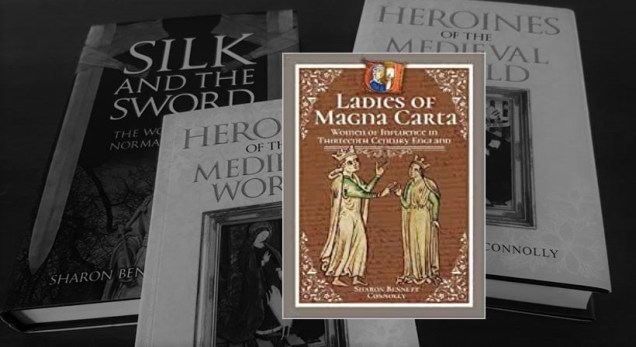
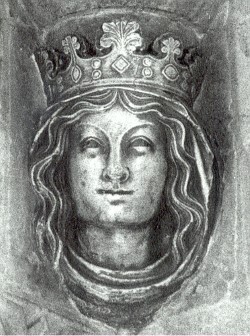
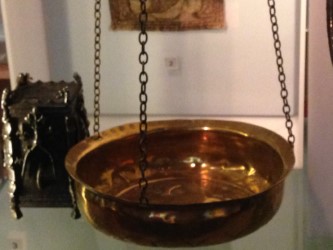
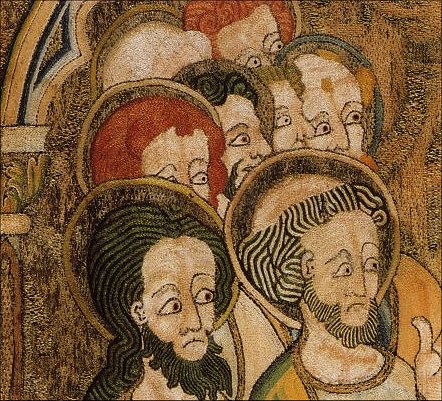
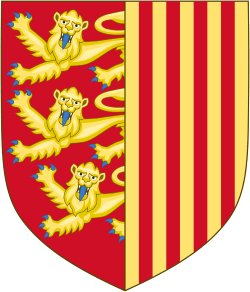

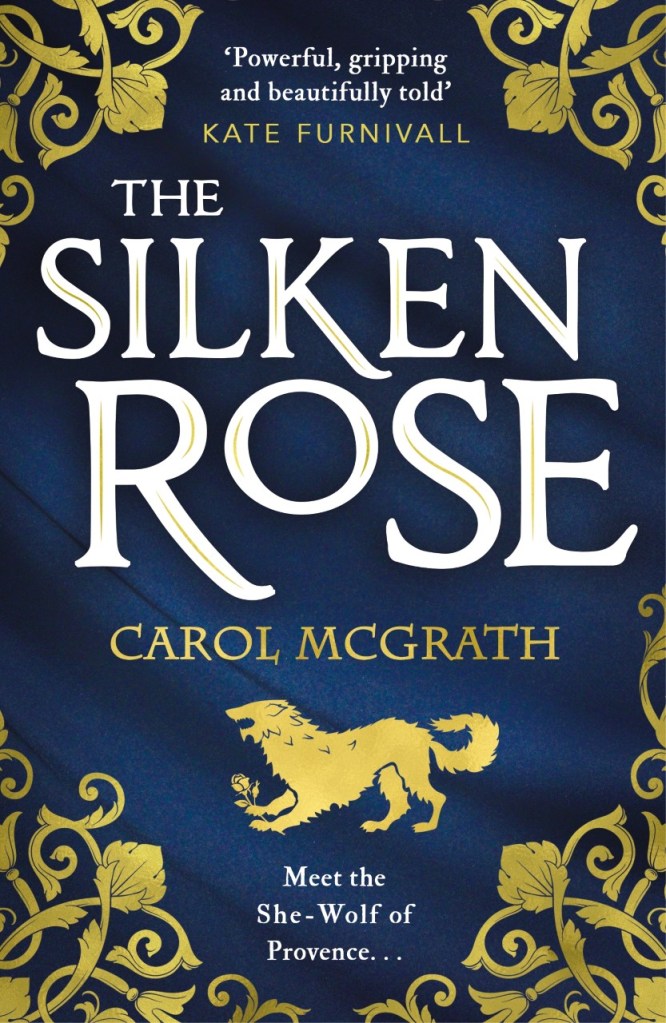
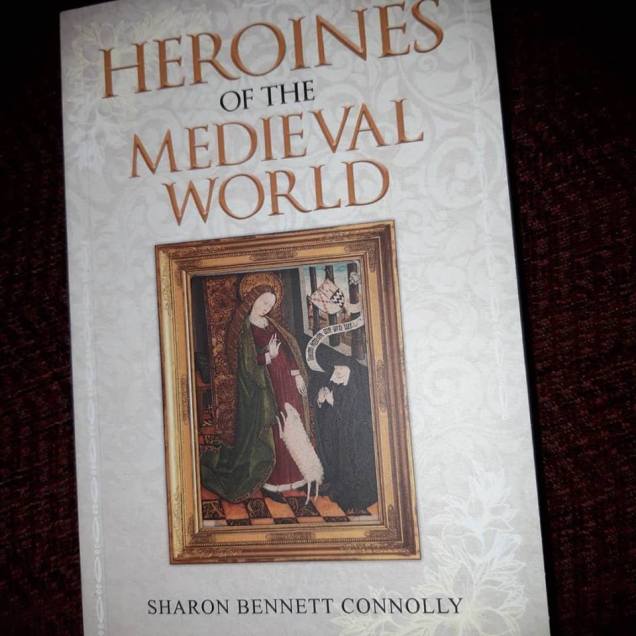

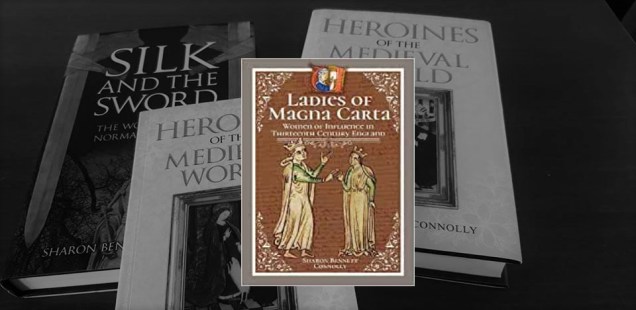

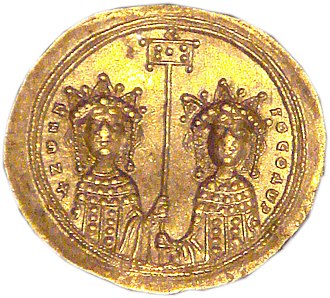

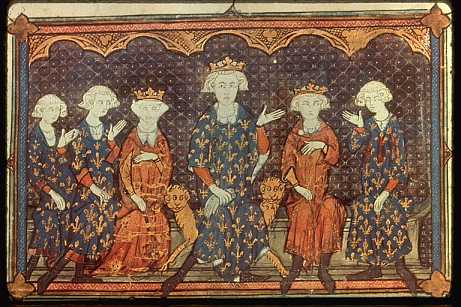
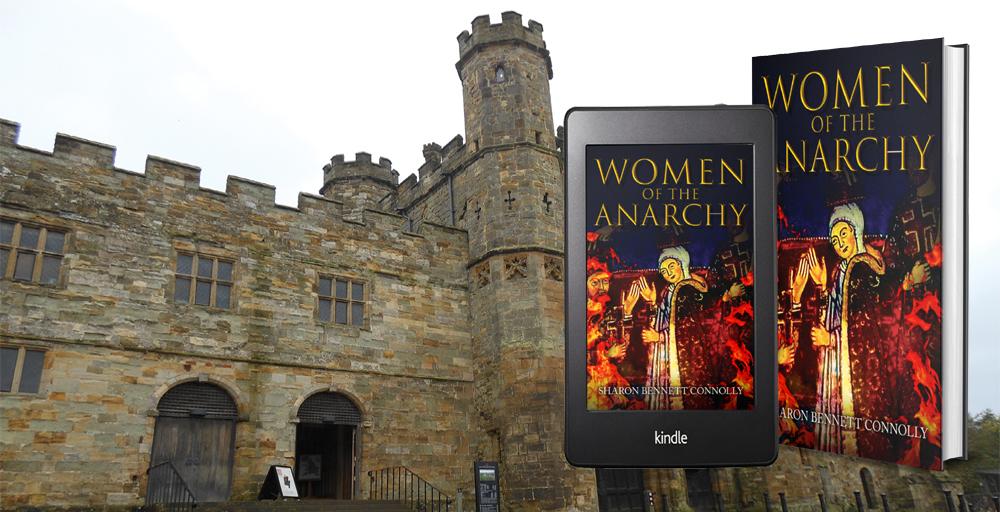
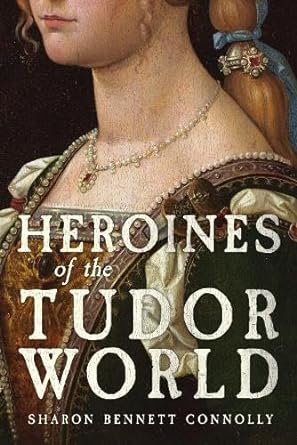




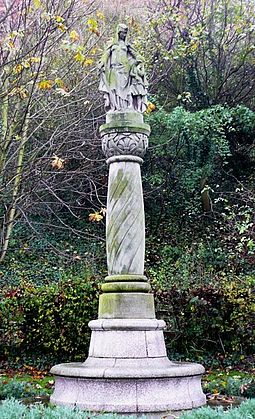
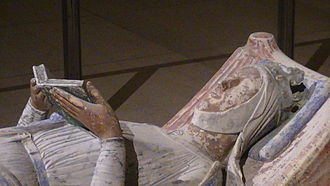


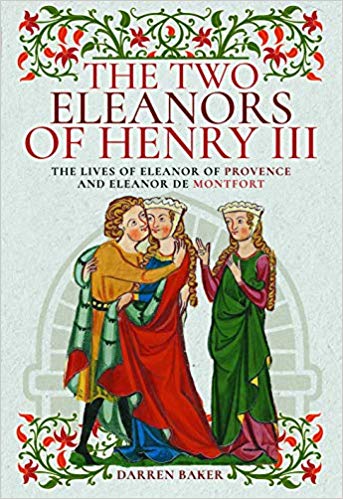
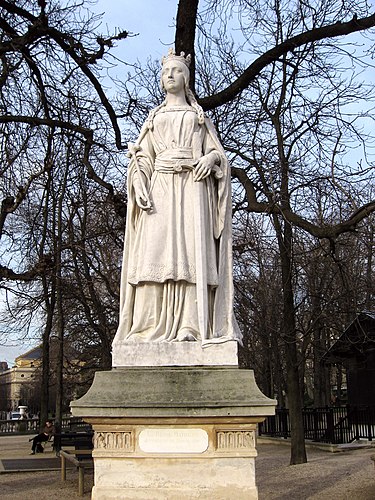
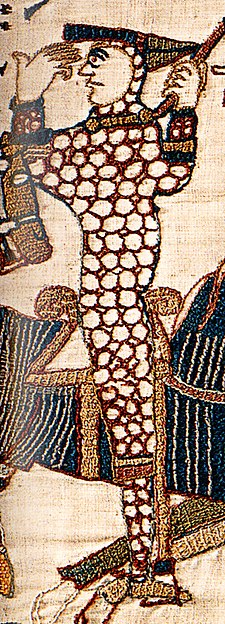





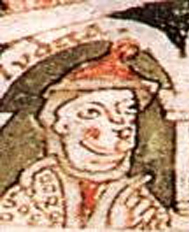
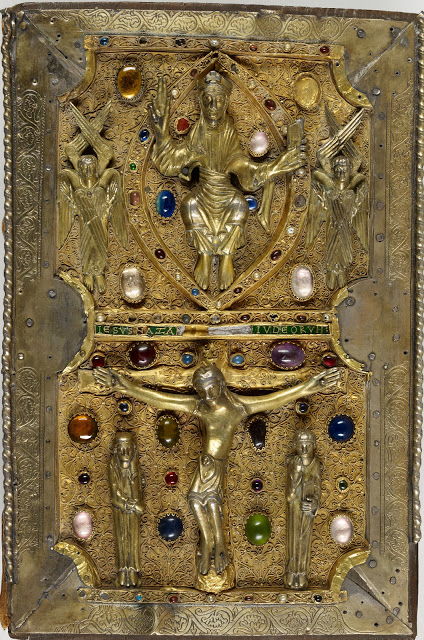
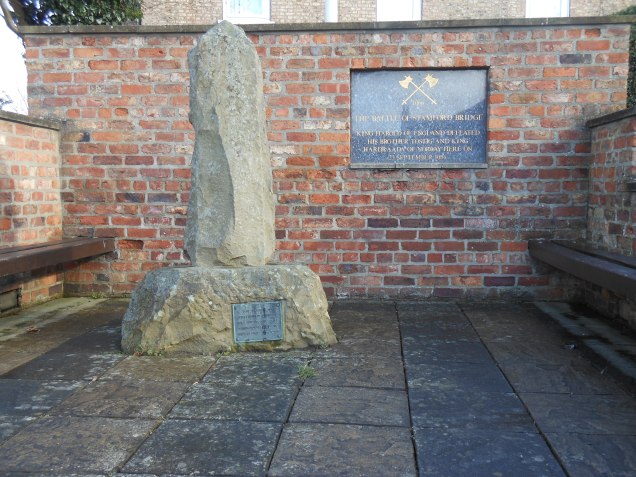
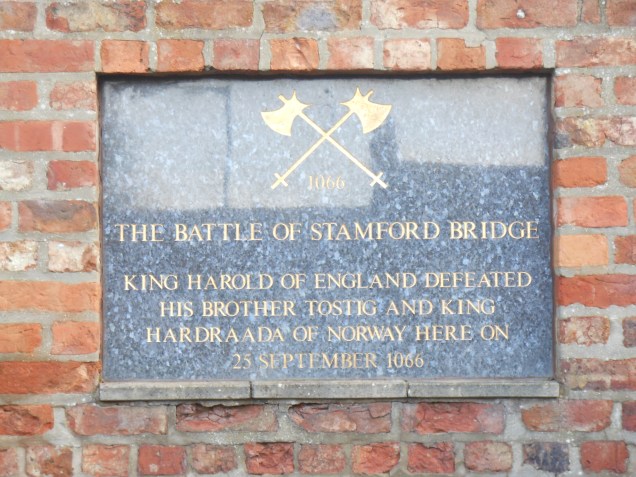

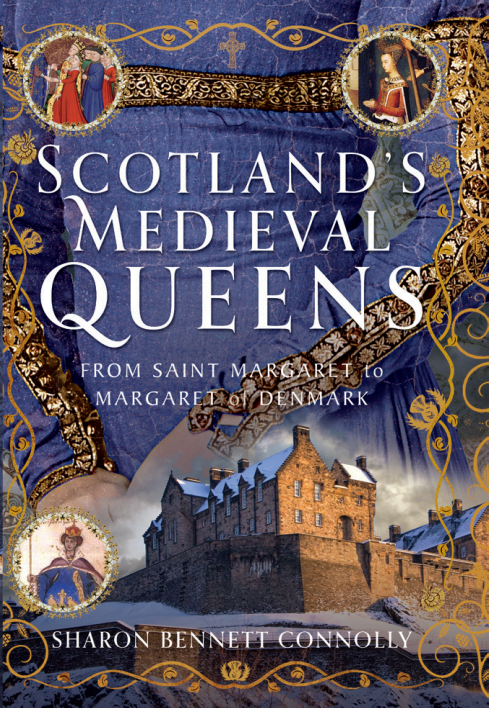


 History... the interesting bits!