The Early Years of the Last Earl Warenne

Books by Sharon Bennett Connolly
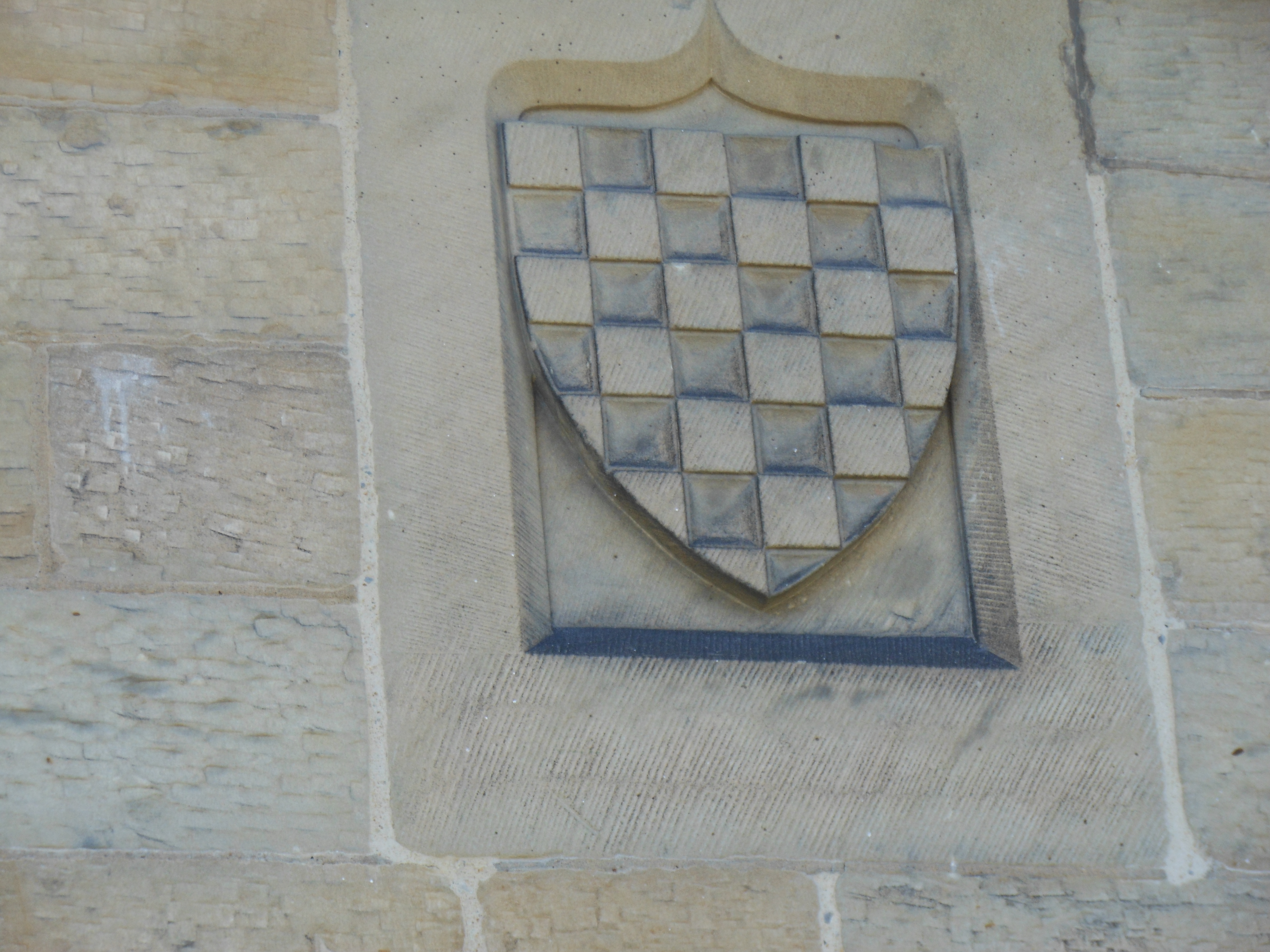
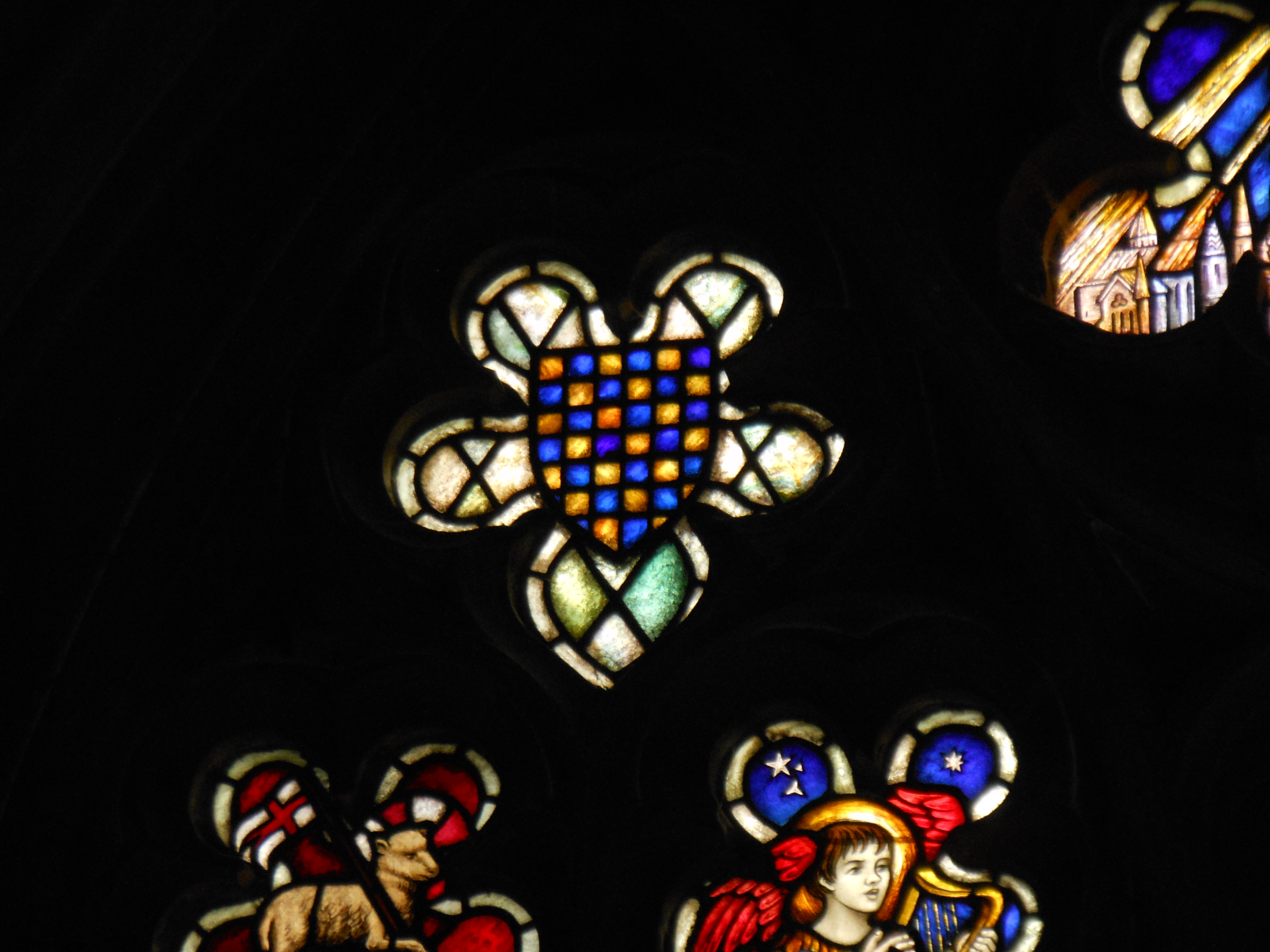
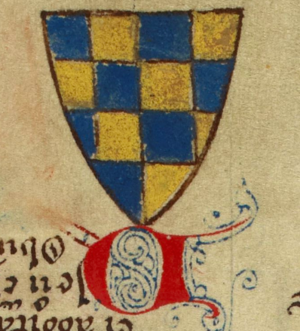
Arms of the Earls of Warenne and Surrey

John de Warenne, 7th and last Earl of Warenne and Surrey (Earl Warenne), was the only son of William de Warenne, who in turn was the only son of the colourful and rather legendary John de Warenne, 6th Earl Warenne. The 6th earl had been married in 1247 to Alice de Lusignan, half-sister of King Henry III as the second eldest daughter of Isabelle d’Angoulême, Queen of England as the wife of King John, and her second husband, Hugh X de Lusignan, Count of La Marche and Lord of Lusignan and Valence.

Born in around 1224, Alice was seven years older than her 16-year-old husband. The marriage had formed part of King Henry’s much-despised policy of patronising his Lusignan siblings and thus was condemned by Matthew Paris. Rather harshly, Paris claimed that the marriage was ‘beyond the bride’s station.’1 Given that Alice was half-sister of the king of England, this assessment seems a tad unfair. For John’s son and grandson, it would provide them with powerful royal relations in the future; William de Warenne was a first cousin of Edward I and the younger John de Warenne was a second cousin to Edward II.

Alice de Lusignan, Countess of Warenne and Surrey, died on 9 February 1256, just hours or days after William’s birth. She was ‘placed in the earth before the great altar [Lewes priory] in the presence of her brother Adelmar [Aymer], [bishop] elect of Winchester.’2 Despite being one of the wealthiest and most powerful earls in the country, and with only one legitimate son to succeed him, John de Warenne would never remarry, perhaps an indication of the deep affection that he held for his semi-royal wife.

In his late twenties, William de Warenne was married to Joan, daughter of Richard de Vere, Earl of Oxford, sometime in 1284: ‘Also William de Warenne married the daughter of the Earl of Oxford.’3 Through his mother, William was the nephew of Henry III and first cousin to Edward I. Through his father, William was descended from, among others, William Marshal, Geoffrey of Anjou and six Warenne earls of Surrey. However, William was destined never to succeed to the expansive earldom of Surrey. He was killed in a tournament at Croydon in December 1286, just six months after the birth of his only son and heir, John. The Annals of Lewes Priory recorded the events of 1286:

This year, on June 30, was born the first-begotten son of Sir William de Warenn, by his wife, daughter of the Earl of Oxford, whom he had married, as appears above. He was baptised and called by the name of John, on the 7th of November, with immense rejoicing; but alas! As the prophet testifies, ‘our joys are extinguished, but lamentation possesses us;’ for in the same year, on the first Sunday before the feast of Thomas the Apostle, which was on December 15, the father of the aforesaid youth [Sir William, killed in a tournament at Croydon], concerning whom our gladness had been, expired, and, oh sadness! He in whom flourished entire nobility, generosity and honesty, and the beginning of the glory of all knighthood, now lies buried and covered with stones. But there was present at the entombment of this so noble a man, the lord of Canterbury, who buried him before the high altar, on the left side, near his mother, with the greatest devotion of respect, as was fitting, many nobles of the land being present. The earl marshal [Roger Bigod, Earl of Norfolk], the Earl of Oxford and several barons … were anxiously afflicted.4

Books by Sharon Bennett Connolly
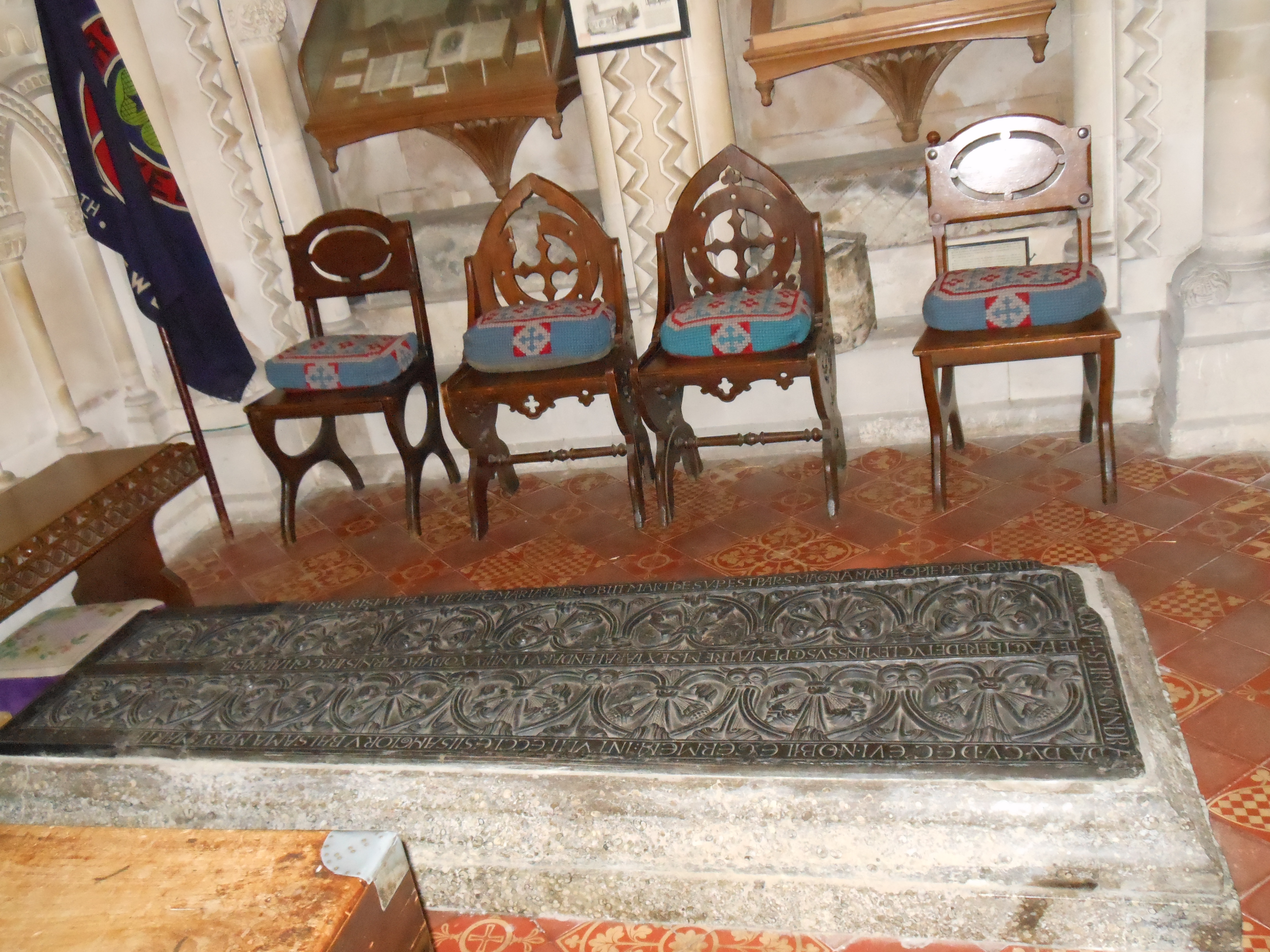
St Pancras priory, Lewes, the Warenne family mausoleum

Some sources suggest that John was the posthumous son of William, stating that William was killed in January 1286; however, this entry in the Annals of Lewes Priory makes it clear that John was born almost six months before his father was killed. John’s sister, Alice, on the other hand, may well have been born the year after her father’s death, in June 1287; hence John being referred to as the ‘first-begotten son’ despite being the only son. Joan was pregnant with Alice and no one yet knew if the child would be a boy or a girl.

Given the chronicle was written by a monk at Lewes, a priory patronised by the Warenne family, the laments and praise of William may be slightly exaggerated. However, that the archbishop of Canterbury conducted the funeral rites, and the presence of many senior nobles, suggests that William was, indeed, well thought of. This fact may give the lie to the rumours of murder that inevitably accompany a medieval death from unnatural causes. Rumours that William’s enemies had taken the opportunity of the tournament to despatch the young lord appear to be without foundation.

Young John suffered a further bereavement on 1293, when his mother, Joan died. Aged only 7, it seems arrangements had already been made should John still be a minor when his parents died. It had been agreed that the custody of John and his lands should go to Joan’s parents, Robert de Vere and his wife, Alice de Sanford. However, Earl Robert died in 1296 and it is not known where 10-year-old John spent the remainder of his childhood. It seems likely that John was raised by his Warenne grandfather, until the 6th Earl’s death in 1304.

At the age of 18, John succeeded to the earldom of his grandfather as the 7th earl of Warenne, Surrey and Sussex. His vast holdings comprised of lands and manors in numerous counties, including Sussex, Surrey, Lincolnshire, Yorkshire, Wiltshire and Norfolk. John, Earl Warenne, was still a minor and would be for another three years; as a consequence, he was made a royal ward, his lands taken into the custody of the Crown. Although he and his lands were in royal custody, and managed by custodians, John lived on his own estates and in 1305 the king commanded John to provide him with forty dried and salted barrels of deer.5 In the same year, he was sent to attend a tournament at Guildford, part of John’s estates, by Edward I, who provided the young lord with considerable funds for his maintenance.6

On 7 April 1306, in spite of the fact he had not yet performed homage to the king, still only 19 years old, Edward granted John his grandfather’s lands. It may well have been at this time that Edward Balliol was placed in John’s custody. The son of John’s aunt, Isabella, and King John Balliol of Scotland, the younger Balliol had been in the custody of his grandfather, the sixth Earl Warenne, from 1299 until the old earl’s death in 1304.
Books by Sharon Bennett Connolly
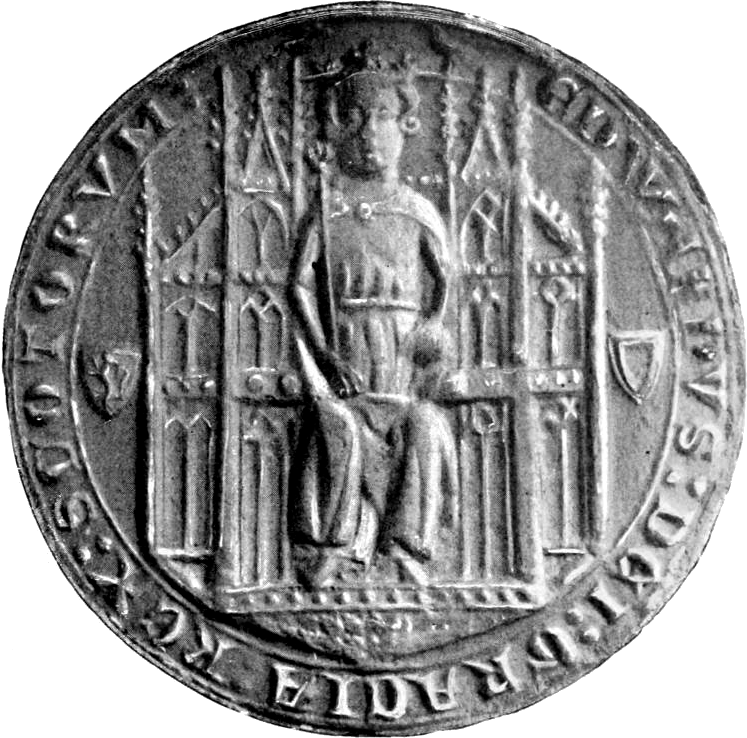
Seal of Edward Balliol as King of Scots

Given that it is likely his mother was no longer living when John Balliol became king in 1292, and that the couple had been married sometime before 7th February 1281, it seems probable that Edward was born sometime in the 1280s, making him of a similar age to his cousin, John de Warenne. Indeed, the two young men may well have spent their teenage years together in their grandfather’s household, training for knighthood. John was Balliol’s guardian for about 4 years, until it was ordered that he be delivered into royal custody in 1310, by Edward II. Edward Balliol had a strong claim to the Scottish throne, one that he would later be encouraged to pursue by Edward III in the 1330s. In May 1306, John de Warenne attended his first parliament at Westminster, an event which marked his coming of age, although he was not yet 21; in fact, he was still a month shy of his twentieth birthday.

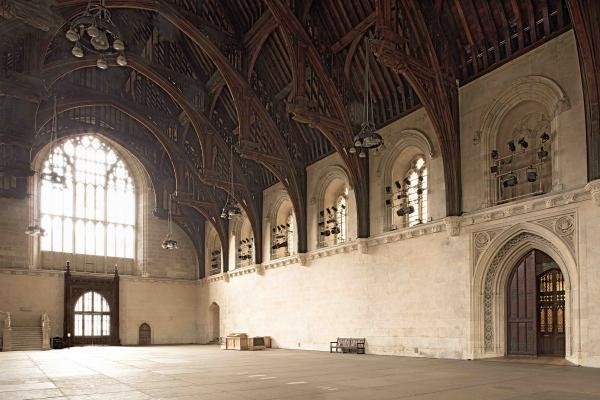
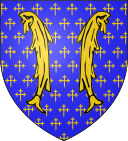
John’s early coming of age appears to have been a part of larger scheme by King Edward, as during the parliamentary session, John was brought before the king and offered Edward’s granddaughter in marriage; the young earl readily agreed to the marriage, even though his bride was only 10 years old. The proposed bride was Joan, or Jeanne of Bar, Edward’s granddaughter by his eldest daughter, Eleanor and her husband Henry, Count of Bar. In the week following the betrothal of John and Joan, and in anticipation of a new expedition against Scotland, on 22 May 1306, Edward I held a magnificent ceremony for the knighting of his eldest son, Edward; the king knighted the prince, who then went on to knight the other candidates, in the glorious setting of Westminster Abbey.

In anticipation of the prince’s knighting, and in order to gather a body of knights who would be loyal to his son, the king proclaimed that all young men of sufficient age and income should travel to Westminster, to be knighted at royal expense alongside their future king, Prince Edward. The ceremony was also to bestow knighthoods on almost 300 men, John de Warenne included: ‘The yong Erle of Warenne with grete nobley was thare / A wif thei him bikenne, the erles douhter of Bare.’7

There were so many young men to be knighted, that it was impossible to find accommodation for all, and apple trees had to be chopped down in the gardens of the New Temple to make room. The prince and his closest companions kept their vigil, the night before the ceremony, watching their arms, in the abbey church at Westminster. Matthew of Westminster records that:

there was such a noise of trumpets and pipes, and such a clamour of voices, that one side of the choir could not hear the other. The others kept their vigil at the New Temple. The King provided them the necessary scarlet cloths, fine linen and belts for their use from his own wardrobe. 8
Books by Sharon Bennett Connolly
Arms of the House of Bar

The following morning, the king knighted his son in the palace of Westminster, investing him with his knight’s belt and spurs. The prince then crossed to Westminster Abbey, to invest the others; ‘The crowd was enormous, so great indeed, that two knights were killed. Each candidate was attended by three knights, who saw and assisted him through the ceremony.’9 The prince knighted sixty of the candidates himself, with other knights assisting with the rest. A lavish banquet – which later became known as the Feast of the Swans – followed the proceedings:

when two swans were brought in ornamented with gold network, emblematical of constancy and truth. When they were placed upon the table the King rose and made a vow to God and to the swans, that he would set out for Scotland and avenge the death of Comyn, and punish the treachery of the Scots … It was under these exceptionally interesting circumstances that Warenne received his knighthood.10

The murder of John Comyn, at the hands of Robert the Bruce in the church of the Greyfriars in Dumfries, on 10 February 1306, following an argument, had sent shockwaves through Christendom. Bruce had then raced to Scone where he was crowned King Robert I of Scots. As the celebrations continued a number of weddings also took place, involving several barons and nobles. John’s sister, Alice, married Edmund FitzAlan, 9th Earl of Arundel. Edmund had been a ward of John’s grandfather. The two young men were very close in age and were political allies and friends.

John de Warenne and Joan of Bar were married on 25 May, ‘before an altar spread with glittering cloths-of-gold.’11 Barely 10 years old, Joan was escorted to the palace at Westminster with great pomp and she and John were married in the presence of the ageing king. The Wardrobe Accounts bear witness to the extravagance of the ceremony and celebrations:

‘1306. May 25. In money lent and dispersed in the presence of the King, at the nuptials celebrated in the King’s chapel at Westminster, between John, Earl de Warenne, and the Lady Joanna, daughter of the Count de Barr, xls [40s].’ Other money was paid out ‘for diverse minstrels’, and ‘for letting fly the king’s gyrfalcon.’ More extravagance was expended to Thomas the coachbuilder, ‘advanced on making a chariot for the Earl de Warenne, June 28, lxs [60s],’ and to Walter de Bardeney, ‘advanced on harness being made for the said Earl, on the same day, cs [100s].’ While Walter de Bedewynde was commissioned ‘for a new carriage for the use of the Countess de Warenne, by order of the Treasurer.’12

Books by Sharon Bennett Connolly
Conisbrough Castle, South Yorkshire, where John de Warenne, the last Earl of Warenne and Surrey, died in 1347

The marriage would prove to be a disaster, with John spending most of his adult life trying to obtain a divorce from Joan in order to marry his mistress, Maud de Nerford, and thus legitimise his children by her. Although the relationship with Maud eventually broke down, possibly due to the considerable pressure they couple must have been under with the almost-constant court cases, John was still trying to obtain a divorce from Joan to his dying day. In his latter years, in a last desperate attempt to produce a legitimate heir, he hoped to marry his mistress at that time, Isabella Holland, who his described as ‘ma compaigne’ in his will.13

John de Warenne, seventh and last Earl of Warenne, Surrey, Sussex and Strathearn died at Conisbrough Castle between 28 and 30 June 1347, possibly even on his sixty-first birthday (30 June). He asked to be buried at St Pancras Priory, Lewes, in an arch near the high altar. His will, dated 24 June 1347, left various gifts to his illegitimate children and to Isabella, to whom he left plate, jewels, cows, horses and other beasts, ‘and after that my debts and devises be made, I give to my said “compaigne” all the residue of all my goods and chattels, and whatsoever things they find.’14 To Joan, his wife of forty years, he left nothing.

*

Footnotes:

1. Scott L. Waugh, ‘Warenne, John de, seventh earl of Surrey earl of Surrey and Sussex, Earl Warenne’, ODNB; 2. ‘Annals written by a certain monk of Lewes, from the birth of Christ to the year 1312’ quoted in Blaauw, On the Early History of Lewes Priory; 3. ibid; 4. ibid; 5. Scott L. Waugh, ‘Warenne, John de, seventh earl of Surrey earl of Surrey and Sussex, Earl Warenne’, ODNB; 6. ibid; 7. F. Royston Fairbank, ‘The Last Earl of Warenne and Surrey, and the Distribution of his Possessions’, The Yorkshire Archaeological Journal, vol. XIX; 8. ibid; 9. ibid; 10. ibid; 11. Kelcey Wilson-Lee, Daughters of Chivalry: The Forgotten Children of Edward I; 12. Wardrobe Accounts quoted in F. Royston Fairbank, ‘The Last Earl of Warenne and Surrey, and the Distribution of his Possessions’, The Yorkshire Archaeological Journal, vol. XIX; 13. Katheryn Warner, Philippa of Hainault: Mother of the English Nation; 14. Calendar of Papal Registers, Papal Letters quoted in F. Royston Fairbank, ‘The Last Earl of Warenne and Surrey, and the Distribution of his Possessions’, The Yorkshire Archaeological Journal, vol. XIX

Images:

Courtesy of Wikipedia except Conisbrough Castle and Lewes Priory which are ©2021 Sharon Bennett Connolly

Sources:

The Oxford Companion to British History Edited by John Cannon; The Plantagenets, the Kings who Made England by Dan Jones; History Today Companion to British History Edited by Juliet Gardiner and Neil Wenborn;  Brewer’s British Royalty by David Williamson; Britain’s Royal Families, the Complete Genealogy by Alison Weir; Early Yorkshire Charters Volume 8, Edited by William Farrer and Charles Travis Clay; Conisbrough Castle by Steven Brindle and Agnieszka Sadraei; The Mammoth Book of British Kings and Queens by Mike Ashley; The Plantagenets, the Kings that made Britain by Derek Wilson; oxforddnb.com; royaldescent.net; F. Royston Fairbank, ‘The Last Earl of Warenne and Surrey, and the Distribution of his Possessions’, The Yorkshire Archaeological Journal, vol. XIX; Scott L. Waugh, ‘Warenne, John de, seventh earl of Surrey earl of Surrey and Sussex, Earl Warenne’, ODNB; ‘Annals written by a certain monk of Lewes, from the birth of Christ to the year 1312’ quoted in Blaauw, On the Early History of Lewes Priory; Kelcey Wilson-Lee, Daughters of Chivalry: The Forgotten Children of Edward I; Katheryn Warner, Philippa of Hainault: Mother of the English Nation

My Books

Signed, dedicated copies of all my books are available through my online store.

Out now: Scotland’s Medieval Queens

Books by Sharon Bennett Connolly

Scotland’s history is dramatic, violent and bloody. Being England’s northern neighbour has never been easy. Scotland’s queens have had to deal with war, murder, imprisonment, political rivalries and open betrayal. They have loved and lost, raised kings and queens, ruled and died for Scotland. From St Margaret, who became one of the patron saints of Scotland, to Elizabeth de Burgh and the dramatic story of the Scottish Wars of Independence, to the love story and tragedy of Joan Beaufort, to Margaret of Denmark and the dawn of the Renaissance, Scotland’s Medieval Queens have seen it all. This is the story of Scotland through their eyes.

Scotland’s Medieval Queens gives a thorough grounding in the history of the women who ruled Scotland at the side of its kings, often in the shadows, but just as interesting in their lives beyond the spotlight. It’s not a subject that has been widely covered, and Sharon is a pioneer in bringing that information into accessible history.’ Elizabeth Chadwick (New York Times bestselling author)

Available now from Amazon and Pen and Sword Books

Heroines of the Tudor World is now available for pre-order from Amberley Publishing and Amazon UK.

Also by Sharon Bennett Connolly:

Books by Sharon Bennett Connolly

Heroines of the Tudor World tells the stories of the most remarkable women from European history in the time of the Tudor dynasty, 1485-1603. These are the women who ruled, the women who founded dynasties, the women who fought for religious freedom, their families and love. Heroines of the Tudor World is now available from Amberley Publishing and Amazon UK. Women of the Anarchy demonstrates how Empress Matilda and Matilda of Boulogne, unable to wield a sword themselves, were prime movers in this time of conflict and lawlessness. It shows how their strengths, weaknesses, and personal ambitions swung the fortunes of war one way – and then the other. Available from Bookshop.orgAmberley Publishing and Amazon UKKing John’s Right-Hand Lady: The Story of Nicholaa de la Haye is the story of a truly remarkable lady, the hereditary constable of Lincoln Castle and the first woman in England to be appointed sheriff in her own right. Available from all good bookshops Pen & Sword Booksbookshop.org and Amazon

Royal Historical Society

Defenders of the Norman Crown: The Rise and Fall of the Warenne Earls of Surrey tells the fascinating story of the Warenne dynasty, from its origins in Normandy, through the Conquest, Magna Carta, the wars and marriages that led to its ultimate demise in the reign of Edward III. Available from Pen & Sword BooksAmazon in the UK and US, and Bookshop.orgLadies of Magna Carta: Women of Influence in Thirteenth Century England looks into the relationships of the various noble families of the 13th century, and how they were affected by the Barons’ Wars, Magna Carta and its aftermath; the bonds that were formed and those that were broken. It is now available in paperback and hardback from Pen & SwordAmazon, and Bookshop.orgHeroines of the Medieval World tells the stories of some of the most remarkable women from Medieval history, from Eleanor of Aquitaine to Julian of Norwich. Available now from Amberley Publishing and Amazon, and Bookshop.orgSilk and the Sword: The Women of the Norman Conquest traces the fortunes of the women who had a significant role to play in the momentous events of 1066. Available now from Amazon,  Amberley Publishing, and Bookshop.org.

Alternate Endings: An anthology of historical fiction short stories including Long Live the King… which is my take what might have happened had King John not died in October 1216. Available in paperback and kindle from Amazon.

Podcast:

A Slice of Medieval

Have a listen to the A Slice of Medieval podcast, which I co-host with Historical fiction novelist Derek Birks. Derek and I welcome guests, such as Bernard Cornwell and discuss a wide range of topics in medieval history, from significant events to the personalities involved.

Every episode is also now available on YouTube.

*

Don’t forget! Signed and dedicated copies of all my books are available through my online bookshop.

For forthcoming online and in-person talks, please check out my Events Page.

You can be the first to read new articles by clicking the ‘Follow’ button, liking our Facebook page or joining me on Twitter and Instagram.

©2021 Sharon Bennett Connolly FRHistS
Guest Post: How to make your fortune and get your name into the history books? by Monika E Simon

Today it is a pleasure to welcome author Monika E Simon back to the blog, with an article looking at the origins of the Lovell family. Monika’s book, From Robber Barons to Courtiers: The Changing World of the Lovells of Titchmarsh, will be released on 30 June. Over to Monika:

How to make your fortune and get your name into the history books?

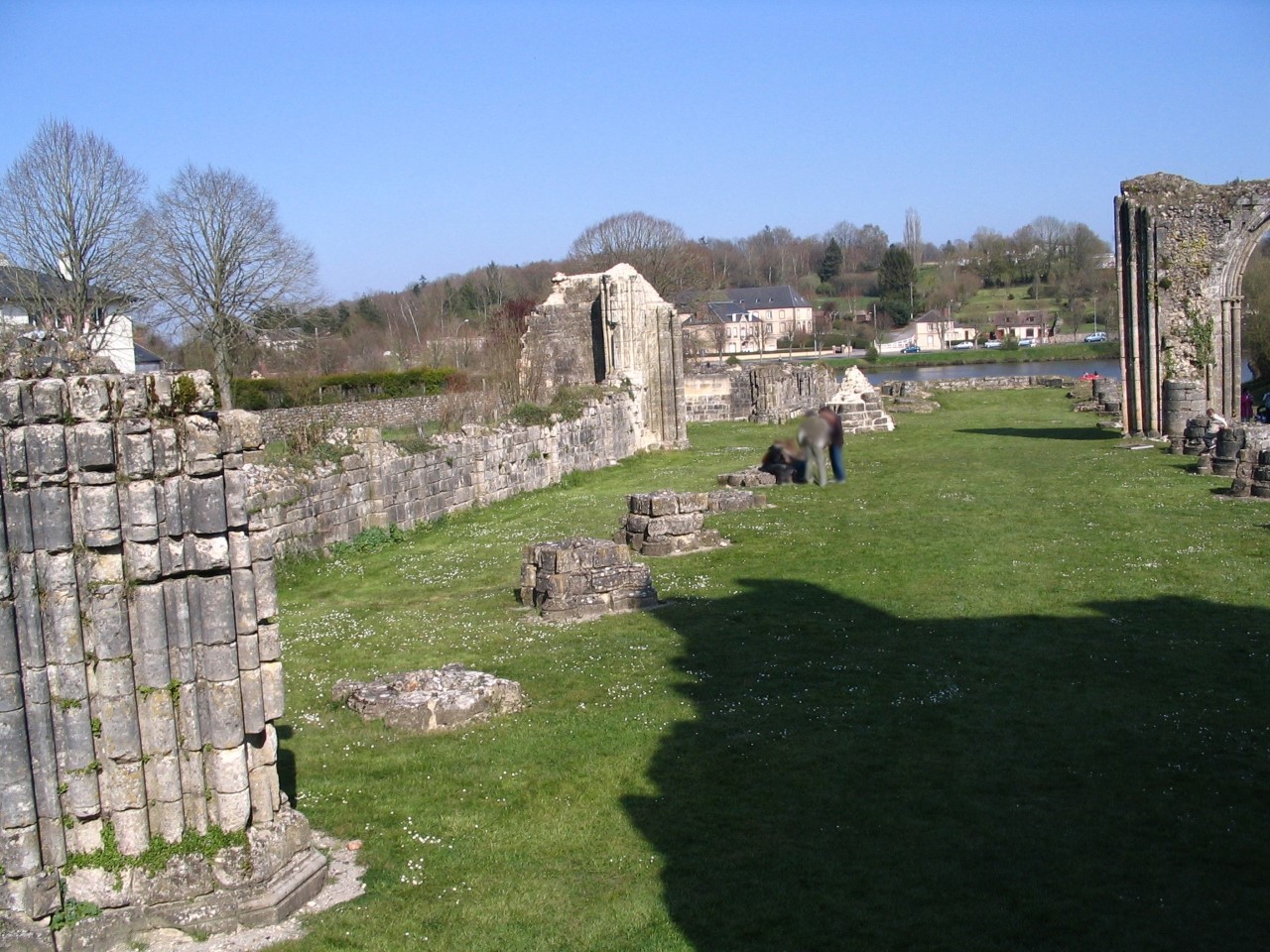
The ruins of the Abbay of Saint-Evroult-Notre-Dame-du-Bois, Orne

In my last blogs I have talked about events from the last century of the history of the Lovell of Titchmarsh. Today I am going back to their very beginnings of this English noble family. So far back in fact that they had not arrived in England and were not called Lovell. At the time, the second half of the eleventh century, the ancestors of the family were obscure minor lords at the Norman French border about whom we know nothing beyond their names and a few details about lands they possessed or office they held. This all changed with Ascelin Goël, who was, as the Complete Peerage puts it, ‘undoubtedly the true founder of the family fortunes.’ He turned his family from an minor nobles into powerful border lords.

How did Ascelin Goël achieved this? Not as the reward for faithful service to his lord, but through rebellion and violence. His behaviour was outrageous enough, even in a time not short on violent men, for the chronicler Orderic Vitalis to write about Ascelin Goël’s deeds in his Ecclesiastical History.

For many events, this chronicle is the only source. Fortunately, Orderic Vitalis was exceptionally well placed to know what he was writing about. He was a monk at the monastery of St Evroult (Dept. Orne, Normandy) and in the latter part of his chronicle he describes events that happened in his own lifetime and often not very far from where he lived. His Ecclesiastical History is, as J.O. Prestwich writes ‘of exceptional value for the history of the Anglo-Norman world’. The way he orders the events in his chronicle is, however, not without severe drawbacks, as he was ‘remarkably careless of chronology’ (Prestwich again). The confusing structure means that the events in which Ascelin Goël was involved in are described in different parts of the chronicle and it is often difficult or impossible to be certain what happened when. Since Orderic Vitalis is mostly the only source existing it is also not possible to check his report or fill in any information his chronicle omits to mention. Nonetheless it is possible to reconstruct the story and draw some probably conclusions.

Ascelin Goël was the eldest son of Robert d’Ivry and Hildeburge de Gallardon. Both of his parents entered religious houses towards the end of their lives and Hildeburge de Gallardon acquired a reputation for heir piety. A brief description of her life, the Vita Domine Hildeburgis, was written, perhaps as a first step to have her canonized. There is however no evidence that this was pursued any further.

Ascelin Goël’s father Robert d’Ivry held land around Bréval and Ivry on both sides of the French Norman border. He was castellan of the border Castle of Ivry (in modern-day Ivry-la-Bataille, Dept. Eure) in 1059. Robert’s mother was probably Aubrée, daughter of Hugh, Bishop of Bayeux and therefore granddaughter of Ralph, Count of Bayeux and his wife Aubrée. According to Orderic Vitalis it was Aubrée who had the architect Lanfred build the Castle of Ivry. If Ascelin Goël’s grandmother was indeed Aubrée, daughter of Hugh, Bishop of Bayeux, he was for one indirectly related to the ducal family, as Aubrée’s grandfather Ralph Count of Bayeux was a half-brother of Richard I of Normandy. It would also mean that Ascelin Goël was related to William de Breteuil, his lord and great opponent, as William’s grandmother Emma was a sister of bishop Hugh. Moreover, Ascelin’s descend from the woman who built the Castle of Ivry would give him a hereditary claim on the castle.

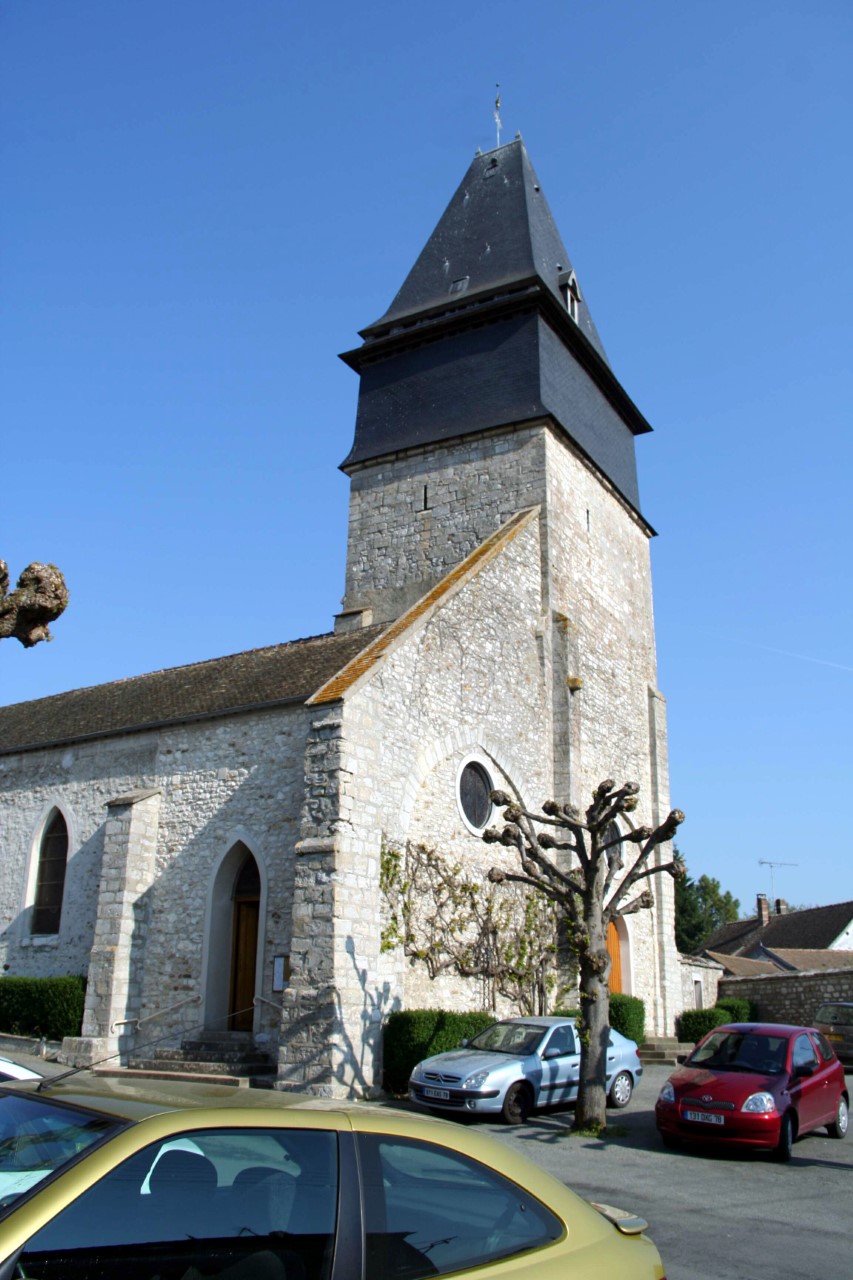
Église Notre-Dame-de-la-Trinité in Bréval

Ascelin Goël had in fact set his sight on the Castle of Ivry, a mighty border fortress and possibly the model for the White Tower in London. At the time, castles were centres of power and much coveted by the nobility. Particularly desirable were the castles that guarded the borders of England against Wales and Normandy against France. Possessing one of these border castles gave the owner both power and an unusual amount of freedom, especially if they were held them in their own right and not as castellans appointed by their king or duke. Many noblemen used any means, fair or foul to gain full control of one or more of these castles. They used any opportunity to achieve this goal, and in 1087, after the death of William the Conqueror, the nobles en masse expelled the royal garrisons from their castles.

Until then the Castle of Ivry had been in the hand of the dukes of Normandy. William the Conqueror had appointed Roger Beaumont as the castellan, probably after Robert d’Ivry had joined a religious community. When Robert Curthose became Duke he granted the castle to William de Breteuil, who was one of his long-standing supporters. To appease Roger Beaumont, Robert Curthose gave him the Castle of Brionne as compensation.

William de Breteuil was a grandson of Osbern, the steward of duke Robert the Magnificent. He had not inherited all the lands of his father William fitz Osbern, but enough to become one of the most powerful nobleman in Normandy. After gaining possession of Ivry he made Ascelin Goël castellan of the castle. As it turned out, Ascelin Goël was not satisfied with merely holding the castle for another lord. Two years after becoming castellan of Ivry, he took control of the castle, presumably by expelling William de Breteuil’s men and replacing them with his own.

An interesting aspect of this conflict is that Ascelin Goël took on not only his lord but also a nobleman who was so much more powerful than he himself was. Ascelin Goël was only a minor border lord whose man residence was in Bréval (Dept. Yvelines). Here he had built a strong castle that he had filled ‘with cruel bandits to the ruin of many’, according to Orderic Vitalis.

After gaining control of Ivry, Ascelin Goël handed it over to Duke Robert. It is possible that he hoped his hereditary claim to the castle would move Robert Curthose to grant it to him. If that was the case, he was mistaken, as Robert Curthose sold it back to William de Breteuil.

Unsurprisingly, William de Breteuil was far from pleased with his castellan and deprived Ascelin Goël not only of his castellanship but of all the lands Ascelin had held off him.

For Ascelin Goël this was a setback but he did not give up. In 1091, he was able to capture William de Breteuil, with the help of Richard of Montfort and household troops of King Philip I of France. William de Breteuil now found himself incarcerated for three months at Bréval and subjected to various forms of torture. Once, Orderic Vitalis writes, Ascelin Goël had his prisoners exposed to the freezing wind clad only with wet shirts until these were frozen solid. After three months of imprisonment, William’s release was secured by a truce arranged by several noblemen. He had to pay a heavy price for his freedom. He had to give the Castle of Ivry to Ascelin Goël and pay a hefty ransom in money, horses, arms and ‘other things’. Additionally, William de Breteuil had to give Ascelin his illegitimate daughter Isabel as his wife.  – Needless to say, what Isabel thought of this was not recorded.

However, Ascelin Goël was not able to enjoy possessing Ivry for long. The year after his release William de Breteuil first tried to retake Ivry. He failed and barely escaped being recaptured by Ascelin Goël, who again tortured the prisoners he had taken. The next year William de Breteuil was better prepared. With the support of Robert Curthose and King Philip of France, both of whom he had to pay for their help, he tried again to take Ivry back. He had also gained the support of the experienced warrior Robert de Bellême who led the siege of Ascelin Goël’s Castle of Bréval. Ascelin was able to withstand the siege for two months but eventually had to surrender and hand the Castle of Ivry back to William de Breteuil.

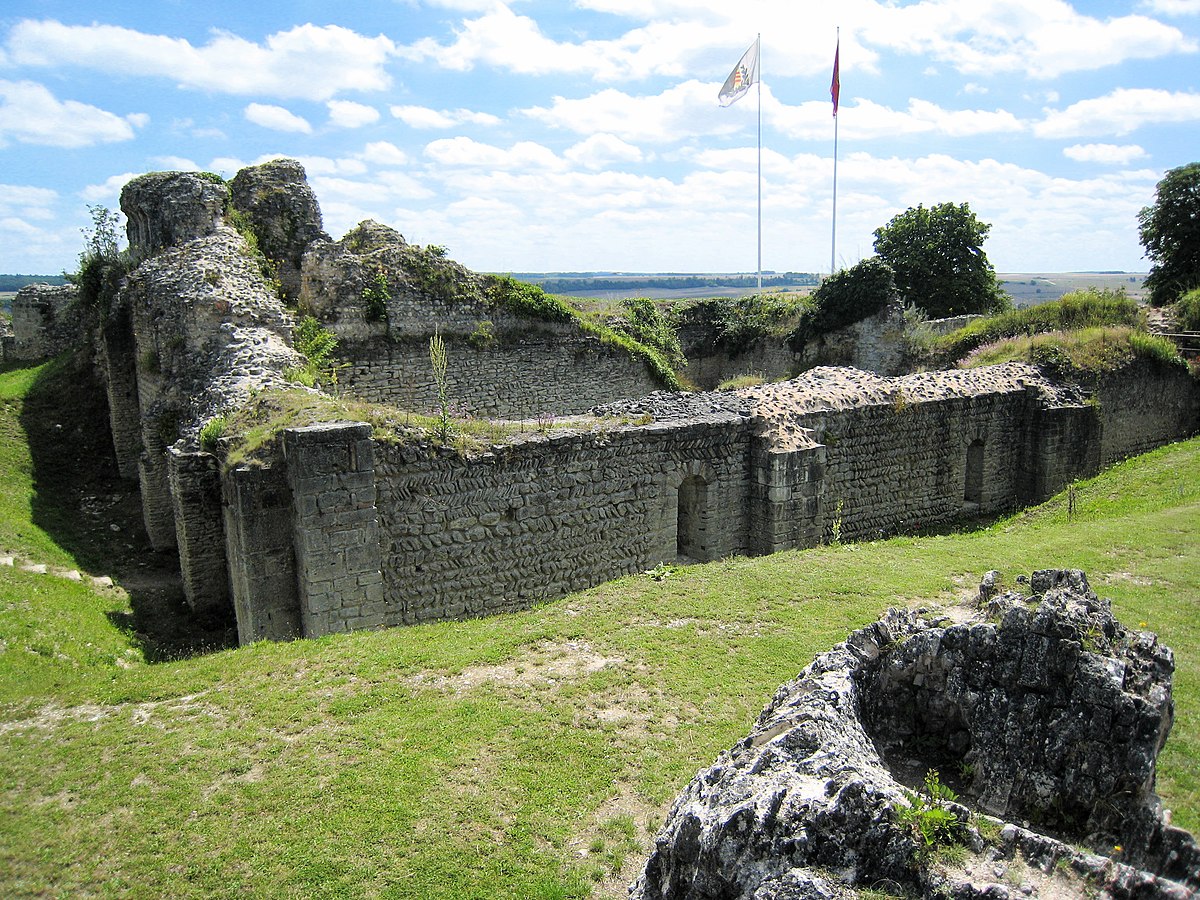
The ruins of the Castle of Ivry

Having lost Ivry again, Ascelin Goël seems to have realised that for now he had no chance to hold the castle permanently against William de Breteuil. With Isabel de Breteuil as his wife, Ascelin Goël also had a better claim to inherit the castle after William de Breteuil’s death. William had no legitimate children, only an illegitimate daughter Isabel and an illegitimate son Eustace. As inheritance law was not yet strictly settled in this time, Isabel, Eustace, and several more distant relations could claim William de Breteuil’s lands or part of them after his death.

When William de Breteuil died on 12 January 1203, Ascelin Goël was in fact one of them men fought Eustace de Breteuil for possession of William de Breteuil’s lands. The two most prominent claimants were William Gael, a nephew of William de Breteuil, and a more distant relative the Burgundian Reginald de Grancey. Eustace had previously gained the goodwill of Henry I of England by supporting him in driving Robert de Bêlleme out of England and had married Henry I’s illegitimate daughter Juliana. Moreover, the Norman nobility largely supported Eustace, ‘because’, as Orderic Vitalis explains, ‘they chose to be ruled by a fellow countryman who was a bastard rather than by a legitimate Breton or Burgundian’.

Ascelin Goël is usually mentioned in this conflict, but he is not regarded as a rival claimant to the Breteuil in inheritance. However, Orderic Vitalis singles him out particularly. He writes that Henry I promised to support Eustace ‘against Goel and all his other enemies’. To me it seems significant that it is Ascelin Goël rather than Reginald de Grancey whom Orderic names as Eustace principal enemy.

To solve this crisis, Henry I sent his chief advisor Robert Beaumont, Count of Meulan to Normandy. Robert Beaumont soon had a personal reason to find a solution, as Ascelin Goël kidnapped John, a citizen from Meulan, when he was on his way back from a meeting with Robert Beaumont. John de Meulan was imprisoned in Bréval and for four months Robert Beaumont was unable to rescue him. Eventually Robert Beaumont was able to arrange a peace between all parties. Orderic Vitalis reports that he betrothed his baby daughter Emma to Amaury de Montfort, which appeased not only Amaury himself but also his uncle William, Count of Évreux, Ralph of Conches, Eustace de Breteuil, and Ascelin Goël. Orderic Vitalis does not mention any specific concessions made to Ascelin Goël. Later evidence suggests that Ascelin Goël gained what he had strived to gain for more than ten years: the Castle of Ivry. A charter of 1115 calls Ascelin Goël ‘Goelli de Ibriaco’, Goël of Ivry, and at no other time Ascelin Goël was in the position to achieve this concession from Eustace de Breteuil.

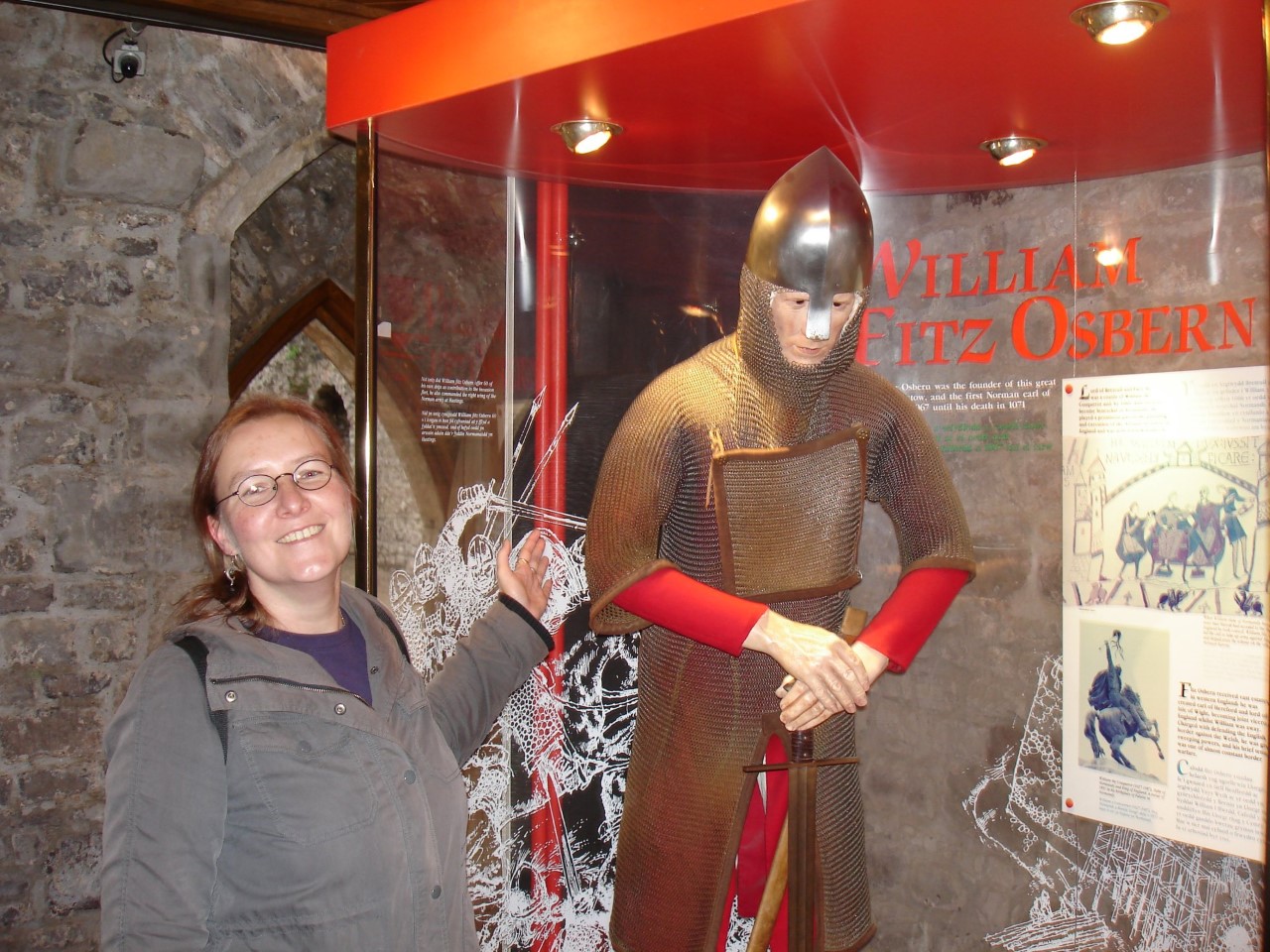
William fitz Osbern and the author at Chepstow Castle, 2007 (Kirsty Hartsiotis)

From this time on, Ascelin Goël kept his peace until his death between 1116 and 1119. At least he refrained from engaging in feuds with his powerful neighbours. Orderic Vitalis writes that he and his sons continued to plague the region with their violence and cruelty.

To answer the question I have asked at the beginning of this blog: How did one make one’s fortune and got one’s name into the history books? Ascelin Goël’s answer was by rebellion and violence. His disregard from the bonds of feudal lordship, his cruelty and ruthlessness ensured him a place in Orderic Vitalis’s Ecclesiastical History and from there in history books to the present day. He also probably gained the Castle of Ivry and became a much more powerful lord than his father and grandfather had been.

Though Robert Goël, Ascelin Goël’s eldest son, did not inherit the Castle of Ivry, he did inherit his ruthless streak and tactical skill. He joined the rebellion against Henry I in 1118 but was the first rebel to make his peace with the king in 1119. In return and ‘to guarantee his loyalty’, to quote Orderic Vitalis one last time, Henry I granted Robert Goël the Castle of Ivry. Robert Goël’s younger brother, William Lovell I, inherited the castle after his brother’s death in or shortly before 1123.

Images:

Courtesy of Wikimedia Commons except William fitz Osbern and the author at Chepstow Castle, 2007 which is courtesy of Kirsty Hartsiotis

About the author:

Monika E. Simon studied Medieval History, Ancient History, and English Linguistics and Middle English Literature at the Ludwig-Maximilians-Universität, Munich, from which she received an MA. She wrote her DPhil thesis about the Lovells of Titchmarsh at the University of York. She lives and works in Munich.

Links:
https://www.pen-and-sword.co.uk/From-Robber-Barons-to-Courtiers-Hardback/p/19045
https://www.facebook.com/MoniESim
http://www.monikasimon.eu/lovell.html

*

My Books:

Defenders of the Norman Crown: The Rise and Fall of the Warenne Earls of Surrey tells the fascinating story of the Warenne dynasty, of the successes and failures of one of the most powerful families in England, from its origins in Normandy, through the Conquest, Magna Carta, the wars and marriages that led to its ultimate demise in the reign of Edward III.

1 family. 8 earls. 300 years of English history!

Defenders of the Norman Crown: Rise and Fall of the Warenne Earls of Surrey will be released in the UK on 31 May and in the US on 6 August. And it is now available for pre-order from Pen & Sword BooksAmazon in the UK and US and Book Depository.
Also by Sharon Bennett Connolly:

Ladies of Magna Carta: Women of Influence in Thirteenth Century England looks into the relationships of the various noble families of the 13th century, and how they were affected by the Barons’ Wars, Magna Carta and its aftermath; the bonds that were formed and those that were broken. It is now available from Pen & Sword,  Amazon and from Book Depository worldwide.

Heroines of the Medieval World tells the stories of some of the most remarkable women from Medieval history, from Eleanor of Aquitaine to Julian of Norwich. Available now from Amberley Publishing and Amazon and Book Depository.

Silk and the Sword: The Women of the Norman Conquest traces the fortunes of the women who had a significant role to play in the momentous events of 1066.  Available now from Amazon,  Amberley Publishing, Book Depository.

*

You can be the first to read new articles by clicking the ‘Follow’ button, liking our Facebook page or joining me on Twitter and Instagram.

©2021 Sharon Bennett Connolly  and Monika E Simon

Guest Post: Suffolk Place by Sarah Bryson

Today it is a pleasure to welcome author/ historian Sarah Bryson to History…the Interesting Bits as the last stop on Sarah’s blog tour for her latest book The Brandon Men: In the Shadow of Kings. Look out for my review coming soon.

Suffolk Place

Suffolk Place was once the magnificent manor home belonging to Charles Brandon, Duke of Suffolk. It is a common misconception that Brandon built Suffolk Place, when in fact it has a long and rich history dating back to the 1460’s.

Suffolk Place, otherwise known as Brandon House was built during the 1460’s by Charles Brandon’s grandfather, Sir William Brandon. William Brandon was closely associated with England’s Kings and was knighted in 1471 after the Battle of Tewkesbury by King Edward IV.

In 1457 William Brandon was Marshall of the Marshalsea Prison in Southwark. The prison was run for profit and prisoners would have to pay the Marshall for certain rights, such as access to better conditions, soap, water, food etc.

The Prison was located along Borough High Street, the main thoroughfare from Southwark to London. To enter London from Southwark people had to cross the famous London Bridge. From as early as 14 November 1462 William Brandon was being referred to as Brandon ‘of Suthwerk.’

William Brandon built Suffolk Place, known then as Brandon House, during this period opposite the prison that he controlled. Suffolk Place would become the Brandon family’s main dwelling, providing the family not only access to the Prison but close access to London. In 1465 Sir Thomas Howard, the future Duke of Norfolk is recorded as having stayed at “Brandennes Place in Sothwerke”.

Dominico Mancini, Parisian Scholar, described Southwark as ‘a suburb remarkable for its streets and buildings, which, if it were surrounded by walls, might be called a second city.’ In fact, Southwark was so large that it had a population of approximately 8000 people, many of those considered to be foreigners, including Flemish.

When Sir William Brandon died in 1491 not only was the Marshall of the Marshalsea Prison granted to his third son, Thomas Brandon, but he also left his property of Suffolk Place. Thomas’ older brother William, father of Charles Brandon, Duke of Suffolk had died at the famous Battle of Bosworth fighting for King Henry VII. In 1502 Thomas Brandon added to Suffolk place by leasing 48 acres of meadow surrounding the property. He turned this meadow into a park which also included a fishpond stocked with fish to eat.

Thomas Brandon held his own illustrious career at court, becoming Henry VII’s Master of the Horse and knighted on the 17th June 1497 at battle of Blackheath. Over his career Thomas Brandon amassed quite a fortune comprising of land, plate and coin totaling almost £1000.

When Thomas Brandon died on January 27th 1510, he left Suffolk Place to Lady Guildford, wife of the late Sir Richard Guilford whom had helped Thomas Brandon during his final illness. To keep Suffolk Place Charles Brandon, Thomas’ nephew, had to rent the property from Lady Guildford for £42 6s 8d a year.

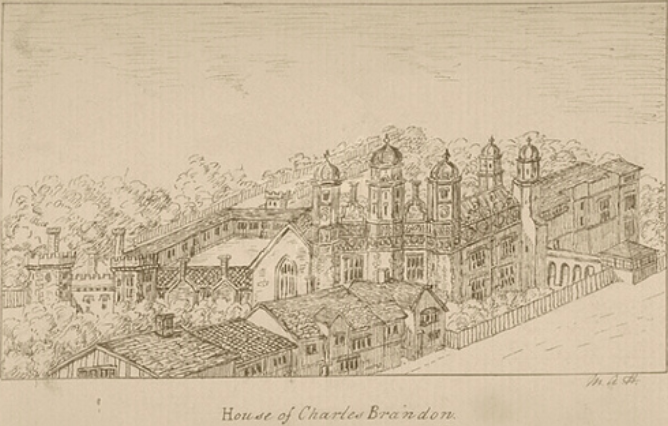
Suffolk Place was built from traditional Tudor red brick, containing four towers with domed turrets at each corner and an additional tower positioned at the center of one side. The palace was decorated with fashionable terracotta. In addition, there were decorations of cupid, an urn flanked by two griffins, a mythological creature and Charles Brandon’s famous crowned lion’s head badge. The chapel within Suffolk Place contained six guilt statues of saints. Brandon stocked Suffolk Place with plate worth £1 475. Suffolk Place would have stood out as one travelled along Borough High Street as they made their way toward London Bridge clearly showing Brandon’s status to all that passed.

After Charles Brandon, Duke of Suffolk’s first son was born, the baby, named Henry after the King, was Christened at Suffolk Place. The christening ceremony took place in the hall at Suffolk Place and was conducted with great splendor and ceremony. The hall was lavishly decorated with wall hangings of red and white Tudor roses, torches were lit and the christening font was warmed for the special occasion. The Christening as performed by John Fisher, Bishop of Rochester and he was assisted by Thomas Ruthall of Durham. The King attended ceremony as did Cardinal Thomas Wolsey, the Duke of Norfolk and other important members of the court. The King and Cardinal Wolsey stood as the godfathers while Catherine, the Dowager Countess of Devon, a daughter of the late King Edward IV stood as the godmother.

In June 1522 when Charles V visited England Charles Brandon, Duke of Suffolk he had the honour of hosting Henry VIII and the Emperor at Suffolk place where the men dined and hunted in the great park that Brandon’s Uncle had purchased. Charles was a great lover of hunting and kept the park stocked with deer.

Suffolk Place would not stay in the hands of Charles Brandon. On 19 July 1535 Brandon was to be given £2333.6.8 by the King in return for handing over ‘the manors and lordships of Ewelme, Donington, Hokenorton, Carsington, Throppe, Newnham, Courtney, Newnham Moreyn, Tournes, Cudlington, Lekenor, Hantesford Auston, Thorold, Langley, West Bradley, West Compton and Bukland in counties of Oxford and Berk., the manor house of Southwark called Suffolk place and two adjoining walled gardens the constableship of Wallingford Castle.’ To lose Suffolk Place was a huge blow for Brandon as it had been his family’s primary residence in London since his grandfather built the place in the early 1460’s. However, Brandon was in debt and needed money to continue his position at court. Henry VIII did grant Brandon the Bishop of Norwich’s house near Charring Cross to Brandon which still provided the Duke with close access to Westminster and the King.

In June the following year Suffolk Place was granted to Henry VIII’s third wife, Jane Seymour. After her death in 1537 the property reverted back to the crown. The property was occasionally used as a royal residence or to host royal visitors. The royal accounts record that

2 gardeners and 2 women were kept for weeding, and setting of strawberries and 3,000 “red rossiers” and 1,000 slips of damask roses were added as well as and cages to put birds in.

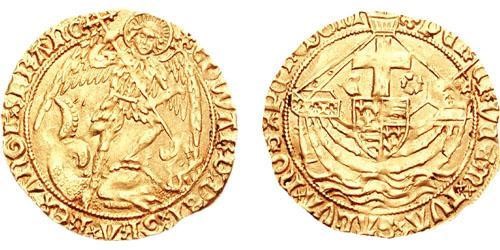
In 1545 part of Suffolk Place was turned into the Royal Mint and Edward VI, Henry VIII’s son, ordered that new sovereigns, royal, angel and half angel coins be made. However, the mint was closed in 1551 due to fraud.

After Edward VI’s death his half-sister Mary and her husband, Philip stayed at Suffolk Place in August 1555. In February 1556 Queen Mary granted Suffolk Place to the Archbishop of York. However, he was only granted 14 acres of the property as during the reign of Edward VI part of Suffolk Place had been leased out to small tenements.

The Archbishop did not keep the property for long and over the next year sought to dismantle and dispose of the once great Suffolk Place. The manor was completely destroyed by June 1562 and the remaining property sold to Anthony Cage. Soon the land was filled with small cottages.

Today nothing remains of Suffolk Place. In its place stands a large office building aptly named Brandon House.

Sources:

Calendar of the patent rolls preserved in the Public Record Office, 1446-1452 Henry VI v.5. Great Britain; ‘Close Rolls, Edward IV: 1471-1472’, in Calendar of Close Rolls, Edward IV: Volume 1, 1468-1476, ed. W H B Bird and K H Ledward (London, 1953), British History Online http://www.british-history.ac.uk/cal-close-rolls/edw4/vol2/pp222-234 [accessed 19 December 2018]; Gunn, Steven 2015, Charles Brandon, Amberley Publishing, Gloucestershire, UK; Gunn, Steven 2016, Henry VII’s New Men and The Making of Tudor England, Oxford University Press, Oxford; Letters and Papers, Foreign and Domestic, of the Reign of Henry VIII, 1509-47, ed. J.S Brewer, James Gairdner and R.H Brodie, His Majesty’s Stationery Office, 1862-1932; Porter, Stephen 2016, Everyday Life in Tudor London, Amberley Publishing, Gloucestershire; Sadlack, Erin 2001, The French Queen’s Letters, Palgrave Macmillan, New York; ‘Suffolk Place and the Mint’, in Survey of London: Volume 25, St George’s Fields (The Parishes of St. George the Martyr Southwark and St. Mary Newington), ed. Ida Darlington (London, 1955), pp. 22-25, viewed 2 June 2015, <http://www.british-history.ac.uk/survey-london/vol25/pp22-25&gt;.

About the Author:

Sarah Bryson is a researcher, writer and educator who has a Bachelor of Early Childhood Education with Honours. She currently works with children with disabilities. She is passionate about Tudor history and has a deep interest in the Brandon family who lived in England during the 14th and 15th centuries.  She has previously written a book on the life of Mary Tudor, sister of Henry VIII and wife of Charles Brandon, Duke of Suffolk. She runs a website and facebook page dedicated to Tudor history. Sarah lives in Australia, enjoys reading, writing and Tudor costume enactment.

Links:

Website: Facebook page: Amazon

*

My Books:

Defenders of the Norman Crown: The Rise and Fall of the Warenne Earls of Surrey tells the fascinating story of the Warenne dynasty, of the successes and failures of one of the most powerful families in England, from its origins in Normandy, through the Conquest, Magna Carta, the wars and marriages that led to its ultimate demise in the reign of Edward III.

1 family. 8 earls. 300 years of English history!

Defenders of the Norman Crown: Rise and Fall of the Warenne Earls of Surrey will be released in the UK on 31 May and in the US on 6 August. And it is now available for pre-order from Pen & Sword BooksAmazon in the UK and US and Book Depository.

Also by Sharon Bennett Connolly:

Ladies of Magna Carta: Women of Influence in Thirteenth Century England looks into the relationships of the various noble families of the 13th century, and how they were affected by the Barons’ Wars, Magna Carta and its aftermath; the bonds that were formed and those that were broken. It is now available from Pen & Sword,  Amazon and from Book Depository worldwide.

Heroines of the Medieval World tells the stories of some of the most remarkable women from Medieval history, from Eleanor of Aquitaine to Julian of Norwich. Available now from Amberley Publishing and Amazon and Book Depository.

Silk and the Sword: The Women of the Norman Conquest traces the fortunes of the women who had a significant role to play in the momentous events of 1066.  Available now from Amazon,  Amberley Publishing, Book Depository.

You can be the first to read new articles by clicking the ‘Follow’ button, liking our Facebook page or joining me on Twitter and Instagram.

©2021 Sharon Bennett Connolly  and Sarah Bryson

The Parentage of Gundrada de Warenne

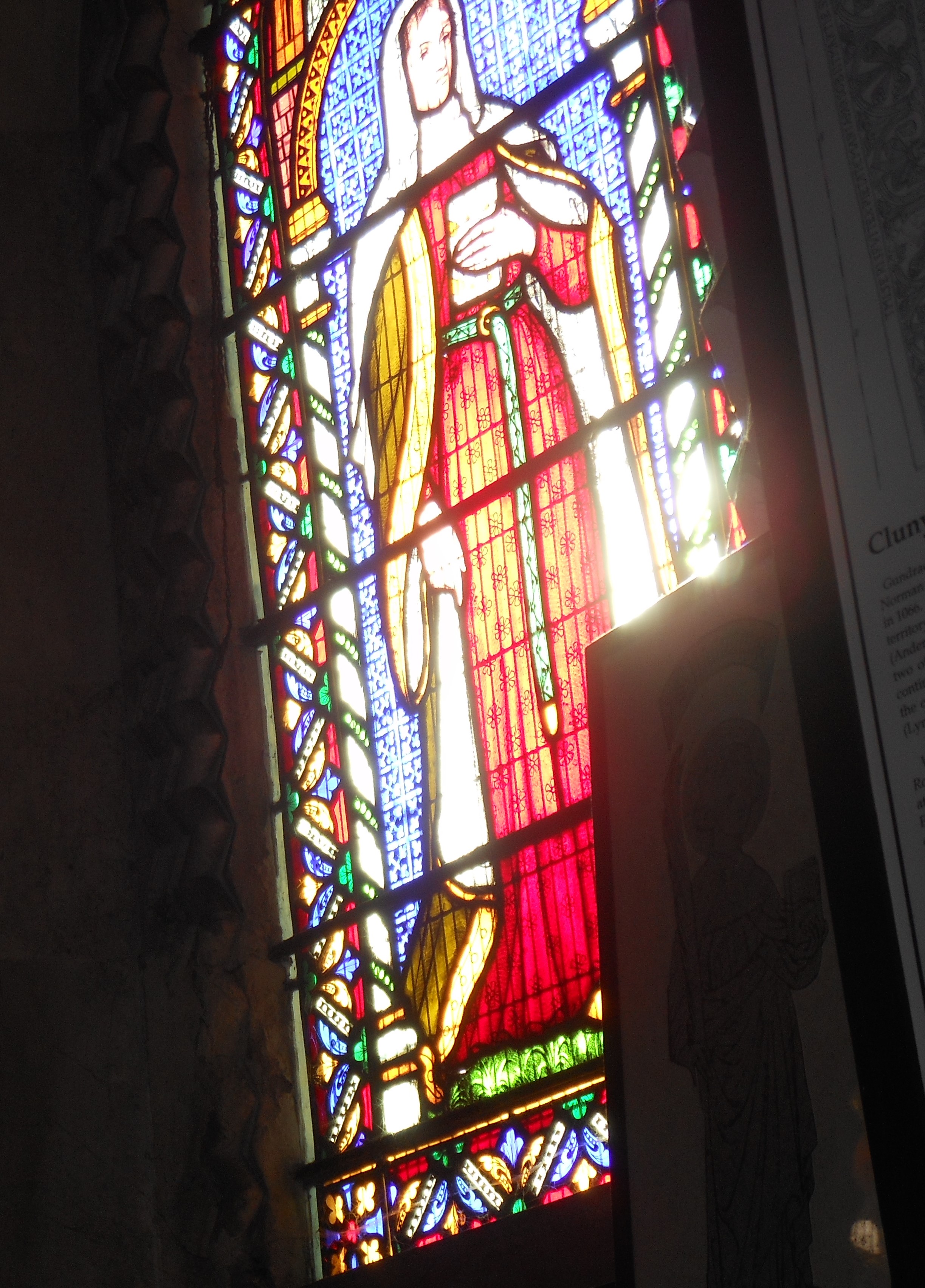
Gundrada de Warenne, the Gundrada chapel, Trinity Church Southover

When I first volunteered at Conisbrough Castle, in the early 1990s, it was believed that Gundrada de Warenne the wife of William de Warenne, first Earl of Warenne, was the daughter of William the Conqueror and Matilda of Flanders. Royal connections were very important in the 11th century and still provide a fascination to us today, so it was a fabulous piece of history to be able to impart to visitors. Unfortunately, the truth is never quite what it seems.

Sometime in the years either side of the Conquest, William de Warenne married Gundrada. Gundrada’s parentage has long been a subject of debate among historians. Her story throughout history has been coloured by the belief, now thought to be a mistaken one, that she was the daughter of Queen Matilda. Many historians from the eighteenth to the twentieth centuries accepted this as fact and obviously started their research from this false assumption, without looking deeper into the origins of the story. For many years Gundrada was believed to be the fifth and youngest daughter of William the Conqueror and his wife, Matilda of Flanders. In 1878 Sir George Duckett wrote an article for the Cumberland and Westmorland Archaeological Society arguing that the foundation charter for St Pancras Priory, Lewes ‘expressly states Gundrada to have been the Queen’s Daughter’, the wording within the charter being; ‘pro salute dominæ meæ Matildis Reginæ matrix uxoris mea’ [ ‘for the health of my mistress Queen Matilda, mother of my wife’].1

This statement in the priory’s second founding charter, issued in the reign of King William II Rufus, appeared to contradict the claims by Orderic Vitalis, a near contemporary, that ‘Guillelmo de Guarenna qui Gundredam sororem Gherbodi conjugem habitat, dedit Surregiam.’ [‘William de Warenne, whose wife Gundrada was sister of Gerbod, was given Surrey’.]2 Gundrada’s own tombstone contains enough ambiguity to add to the confusion, rather than clarify the issue:

Gundrada, offspring of dukes, glory of the age, noble shoot,
brought to the churches of the English the balm of her character.
As a Martha …
she was to the wretched; a Mary she was in her piety.
That part of Martha [in her] died; the greater part of Mary survives.
O, pious Pancras, witness of truth and justice,
she makes you her heir; may you in your clemency accept the mother.
The sixth day of the kalends of June, showing itself,
broke the alabaster containing her flesh …3

In 1846 Thomas Stapleton wrote a paper for the Archaeological Journal proposing that Gundrada was Matilda’s daughter from an earlier, undocumented marriage, to Gerbod, advocate of Saint-Bertin, thus explaining her also being a sister to Gerbod, Earl of Chester. In this theory, it was proposed that Gundrada was not a daughter of the king, but his stepdaughter. This notion neatly ties in with Orderic Vitalis identifying Gundrada as ‘Sister of Gherbode, a Fleming, to whom King William the First had given the City and Earldom of Chester.’4 E.A. Freeman, in his six-volume The History of the Norman Conquest of England, published between 1867 and 1879 stated, ‘For a long while, Gundrada was looked on as a daughter of William himself, but there is no doubt that she and her brother Gerbod were the children of Matilda by her first husband.’5

The certainty of Gundrada being the daughter of Matilda of Flanders means that historians tried to fit the facts to that theory, rather than re-examining the case entirely.

Tomb of Gundrada, Gundrada Chapel, Trinity Church, Southover

Disputing the suggestion of Matilda’s marriage to Gerbod, historian W.H. Blaauw observed that not one of the Norman chroniclers ‘dropped the smallest hint of any husband or child, or consequently any such divorce on the part of Matilda previous to her marriage with the King.’6 Duckett goes on to say that the Norman chroniclers, indeed, said quite the opposite; each of them attesting that Matilda was a young, unmarried girl at the time of her betrothal to William of Normandy. However, Duckett then draws the conclusion that this can only mean that Gundrada was the daughter of both Matilda and William of Normandy, and that Gerbod of Chester was her foster-brother, rather than actual brother. The claim was also made in a charter in which the king gave to the monks of St Pancras (Lewes) the manor of Walton in Norfolk, on the foundation of the priory. In the charter the king distinctly names ‘Guilelmi de Warenna, et uxoris suæ Gundredæ filiæ meæ’ (‘William de Warenne and his wife Gundrada, my daughter’).7

St Pancras Priory at Lewes was founded as a Cluniac monastery by William and Gundrada and it may be that the monks got carried away with the idea of their foundress having royal blood; royal links could prove financially lucrative when a monastery was looking for benefactors, and would help a monastery stand out among the many vying for patronage. However, it may also be that there was a simple error when copying the charter from the original. For whatever reason, the claims by St Pancras Priory at Lewes have caused controversy throughout the ensuing centuries.

Other suggestions have included that Gundrada was an adopted daughter, raised alongside William and Matilda’s own children who were of a similar age. Alternatively, due to her Flemish origins, it has been argued that the confusion arose as she had joined Matilda’s household at an early age; an assertion supported by Matilda’s gift to Gundrada of the manor of Carlton in Cambridge – a manor Gundrada later gave to Lewes Priory. In 1888, writing in the English Historical Review, E.A. Freeman returned to the subject and used the priory’s original charter to conclude that there was no familial relationship between Gundrada and William the Conqueror. In it, while the king and William de Warenne, both, mention Gundrada, neither refer to her as being related to the king or queen. Freeman stated, ‘there is nothing to show that Gundrada was the daughter either of King William or of Queen Matilda; there is a great deal to show that she was not.’8

It now seems more likely that Gundrada was a Flemish noblewoman, the sister of Gerbod who would be, for a brief time, earl of Chester. Historian Elisabeth van Houts argues that Gundrada was most likely a distant relative of Queen Matilda and the counts of Flanders, as asserted in her epitaph as ‘offspring of dukes’ and a ‘noble shoot’. Indeed, had her father been William the Conqueror, her epitaph would surely have referred to her as the offspring of kings. Even if she had been the daughter of Matilda by an earlier marriage, off-spring of kings would have still been appropriate, given that Queen Matilda was the granddaughter of King Robert II of France.

William de Warenne, the Gundrada chapel, Trinity Church Southover

Gundrada’s father may also have been called Gerbod, or Gherbode. It is highly likely that this was the same Gerbod who was the hereditary advocate of the monastery of St Bertin; a title which in later generations will pass down through the Warenne family. Another brother, Frederic, appears to have jointly, with Gundrada, held lands in England even before the Conquest, when two people named Frederic and Gundrada are mentioned as holding four manors in Kent and Sussex. It would indeed be a coincidence if there were two other related people, named Frederic and Gundrada, very distinctive foreign names, in England at that time. Gundrada’s brothers, it seems, were deeply involved in the border politics between Flanders and Normandy; indeed, it is thought that Gerbod resigned his responsibilities in Chester in order to return to the Continent to oversee the family’s lands and duties there, following the death of an older brother, Arnulf II of Oosterzele-Scheldewindeke.

Gundrada’s brother, Frederic, along with the count of Flanders, was a witness to Count Guy of Ponthieu’s charter to the Abbey of St Riquier in 1067.9 The ‘dukes’ referred to in Gundrada’s epitaph, although naturally assumed to be of Normandy, could well refer to a kinship with the house of Luxembourg, to which Queen Matilda’s paternal grandmother, Orgive, belonged. Moreover, Frederic was a familial name within the house of Luxembourg. This kinship via the House of Luxembourg with Queen Matilda would also explain the queen’s gift to Gundrada, of the manor of Carlton, which is usually given as evidence that Gundrada belonged to the queen’s household; an association which would be entirely consistent with kinship.

The Warenne coat of arms, adopted by the second earl, the Gundrada chapel, Trinity Church Southover

Marriage between William de Warenne and Gundrada was a good match on both sides. Although William was a second son, he had acquired lands and reputation through his military skills. Warenne’s lands in Normandy lay close to the border with Flanders, while Gundrada, with her politically astute brothers and links to England even before the Conquest, would have been an attractive proposition as a bride. Both Frederic and Gerbod appear to have joined the Norman expedition to England, with Frederic receiving, as reward, lands in Norfolk, Suffolk and Cambridgeshire, valued at over £100 a year; lands which had previously belonged to a rich Englishman named Toki. Gerbod, in turn, was given the earldom of Chester, which he held until relinquishing it to return to Flanders in 1071.

Gundrada’s parentage may not be as illustrious as was once thought and her origins are now obscured by time, but the dynasty that she and William founded would be at the heart of the Anglo-Norman political elite for the next three centuries. In the twelfth century, her great grandsons, Malcolm IV and William the Lion, would sit on the Scottish throne and her descendants would, eventually, become the rulers of the United Kingdom, even down to the present incumbent, King Charles III.

Footnotes:

1 My translation from quote in George Floyd Duckett, Observations on the Parentage of Gundreda, the Daughter of William Duke of Normandy, and Wife of William de Warenne; 2 ibid; 3 Elisabeth M.C. Van Houts and Rosalind C. Love (eds and trans), The Warenne (Hyde) Chronicle; 4 Early Yorkshire Charters Volume 8: The Honour of Warenne, Edited by William Farrer and Charles Travis Clay; 5 ibid; 6 W.H. Blaauw quoted in Duckett, Observations on the Parentage of Gundreda; 7 Duckett, Observations on the Parentage of Gundreda; 8 Farrer and Clay, Early Yorkshire Charters; 9 C.P. Lewis, ‘Warenne, Gundrada de (d.1085)’, ODNB.

Sources:

Early Yorkshire Charters Volume 8: The Honour of Warenne, Edited by William Farrer and Charles Travis Clay; England Under the Norman and Angevin Kings by Robert BatlettBrewer’s British Royalty by David WilliamsonBritain’s Royal Families, the Complete Genealogy by Alison Weir; british-history.ac.uk; kristiedean.com; English Heritage Guidebook for Conisbrough Castle by Steven Brindle and Agnieszka Sadrei; oxforddnb.com; George Floyd Duckett, Observations on the Parentage of Gundreda, the Daughter of William Duke of Normandy, and Wife of William de Warenne; Elisabeth M.C. Van Houts and Rosalind C. Love (eds and trans), The Warenne (Hyde) Chronicle; C.P. Lewis, ‘Warenne, Gundrada de (d.1085)’, ODNB; Elisabeth Van Houts, ‘The Warenne View of the Past’, in Proceedings of the Battle Conference 2003, edited by John Gillingham

Images:

©2021 Sharon Bennett Connolly. Published with the kind permission of the rector of Trinity Church, Southover

My books

Signed, dedicated copies of all my books are available through my online bookshop.

Coming 30 January 2025: Scotland’s Medieval Queens

Scotland’s history is dramatic, violent and bloody. Being England’s northern neighbour has never been easy. Scotland’s queens have had to deal with war, murder, imprisonment, political rivalries and open betrayal. They have loved and lost, raised kings and queens, ruled and died for Scotland. From St Margaret, who became one of the patron saints of Scotland, to Elizabeth de Burgh and the dramatic story of the Scottish Wars of Independence, to the love story and tragedy of Joan Beaufort, to Margaret of Denmark and the dawn of the Renaissance, Scotland’s Medieval Queens have seen it all. This is the story of Scotland through their eyes.

Available for pre-order now.

Also by Sharon Bennett Connolly:

Heroines of the Tudor World tells the stories of the most remarkable women from European history in the time of the Tudor dynasty, 1485-1603. These are the women who ruled, the women who founded dynasties, the women who fought for religious freedom, their families and love. Heroines of the Tudor World is now available for pre-order from Amberley Publishing and Amazon UK. Women of the Anarchy demonstrates how Empress Matilda and Matilda of Boulogne, unable to wield a sword themselves, were prime movers in this time of conflict and lawlessness. It shows how their strengths, weaknesses, and personal ambitions swung the fortunes of war one way – and then the other. Available from Bookshop.orgAmberley Publishing and Amazon UKKing John’s Right-Hand Lady: The Story of Nicholaa de la Haye is the story of a truly remarkable lady, the hereditary constable of Lincoln Castle and the first woman in England to be appointed sheriff in her own right. Available from all good bookshops Pen & Sword Booksbookshop.org and Amazon

Defenders of the Norman Crown: The Rise and Fall of the Warenne Earls of Surrey tells the fascinating story of the Warenne dynasty, from its origins in Normandy, through the Conquest, Magna Carta, the wars and marriages that led to its ultimate demise in the reign of Edward III. Available from Pen & Sword BooksAmazon in the UK and US, and Bookshop.orgLadies of Magna Carta: Women of Influence in Thirteenth Century England looks into the relationships of the various noble families of the 13th century, and how they were affected by the Barons’ Wars, Magna Carta and its aftermath; the bonds that were formed and those that were broken. It is now available in paperback and hardback from Pen & SwordAmazon, and Bookshop.orgHeroines of the Medieval World tells the stories of some of the most remarkable women from Medieval history, from Eleanor of Aquitaine to Julian of Norwich. Available now from Amberley Publishing and Amazon, and Bookshop.orgSilk and the Sword: The Women of the Norman Conquest traces the fortunes of the women who had a significant role to play in the momentous events of 1066. Available now from Amazon,  Amberley Publishing, and Bookshop.org.

Alternate Endings: An anthology of historical fiction short stories including Long Live the King… which is my take what might have happened had King John not died in October 1216. Available in paperback and kindle from Amazon.

Podcast:

Have a listen to the A Slice of Medieval podcast, which I co-host with Historical fiction novelist Derek Birks. Derek and I welcome guests, such as Bernard Cornwell, and discuss a wide range of topics in medieval history, from significant events to the personalities involved. Our latest episode is 2024 Christmas Special with Toni Mount, A Medieval Christmas.

*

Don’t forget! Signed and dedicated copies of all my books are available through my online bookshop.

For forthcoming online and in-person talks, please check out my Events Page.

You can be the first to read new articles by clicking the ‘Follow’ button, liking our Facebook page or joining me on TwitterThreadsBluesky and Instagram.

©2021 Sharon Bennett Connolly.

Book Launch: Defenders of the Norman Crown

In the reign of Edward I, when asked Quo Warranto ‘by what warrant he held his lands’ John de Warenne, the 6th earl of Surrey, is said to have drawn a rusty sword, claiming “My ancestors came with William the Bastard, and conquered their lands with the sword, and I will defend them with the sword against anyone wishing to seize them”

John’s ancestor, William de Warenne, 1st Earl of Surrey, fought for William the Conqueror at the Battle of Hastings in 1066. He was rewarded with enough land to make him one of the richest men of all time.

In his search for a royal bride, the 2nd earl kidnapped the wife of a fellow baron.

The 3rd earl died on crusade, fighting for his royal cousin, Louis VII of France…

For three centuries, the Warennes were at the heart of English politics at the highest level, until one unhappy marriage brought an end to the dynasty. The family moved in the highest circles, married into royalty and were not immune to scandal. Defenders of the Norman Crown tells the fascinating story of the Warenne dynasty, of the successes and failures of one of the most powerful families in England, from its origins in Normandy, through the Conquest, Magna Carta, the wars and marriages that led to its ultimate demise in the reign of Edward III.

It’s finally here!

My fourth non-fiction book, Defenders of the Norman Crown: Rise and Fall of the Warenne Earls of Surrey, comes out today in hardback in the UK – it will be released in the US and elsewhere on 6 August. Telling the remarkable story of the Earls of Warenne and Surrey, and their family, from the time of the Norman Conquest to the reign of Edward III, Defenders of the Norman Crown follows a family right at the heart of Anglo-Norman England.

1 family. 8 earls. 300 years of English history!

And here’s what early reviewers are saying:

Sharon Bennett Connolly has written an evocative narrative, highlighting the role the Warenne earls of Surrey played in the nation’s history. Her meticulous research is evident in every page, making the book both a reference guide and an immensely enjoyable read.

Kristie Dean, author of On the Trail of the Yorks and The World of Richard III

Another great read from Pen & Sword. I’m vaguely familiar with this family, so reading a book specifically about their history from inception to the end of it, was very interesting. It’s definitely one I’d like to have on my shelf to reference again in the future.

NetGalley, Caidyn Young
Warenne coat of arms

5 out of 5 stars

An impressive and long overdue publication about the earls of Surrey, the Warenne (Varenne in Normandy) and their steadfast contributions and deep loyalties to the English Crown from the heyday of the Norman Conquest and the battlefield of Hastings to the glorious reign of Edward III. Ms. Bennett Connolly has given us a solidly researched portrait of a medieval family and its successful longevity during the three long and troublesome centuries that followed the Norman establishment on the throne and the roles played by its successive and prominent members in the shadows of the crown. A colorful tapestry through all the ups and downs of medieval England, its monarchical shenanigans and its military and political restlessness. Highly recommended to anyone interested in English and European medieval history.

NetGalley, jean luc estrella

Oh my goodness, Sharon Bennett Connolly has done it again! This was the perfect romp through a medieval family! Honor, scandal, marriages, and intrigue all play into the Warrene family lines.
Beginning with William of Normandy, and going down through the Wars of the Roses, this book will read as an action-packed, give me all the information book!

I loved this one! The Warrene family was very prominent throughout the medieval history of England, and this book will dive into their past, and share everything that you could ever want to know about this ambitious family.

And if you would like to hear a little more about the Warenne earls, I presented the David Hey Memorial Lecture in 2020 as part of the Doncaster Local Heritage Festival. The lecture, Warenne: The Earls of Surrey and Conisbrough Castle, is still available to watch on YouTube.

Rebecca Hill, NetGalley

And …

To survive during the reigns of the Norman and Plantagenet Kings of England, one must understand where their loyalty and trust lied. Did they follow the crown or did they take a risk and follow those who opposed the person who wore the crown? For one family, there was no question who they were loyal to, which was the crown. The Warenne Earls of Surrey served the Kings of England from William the Conqueror to Edward III, gaining titles, prestige, and marriages that would cement their names in history books. They survived some of the most turbulent times in English history even if they did have a few scandals in their illustrious history. In Sharon Bennett Connolly’s latest non-fiction adventure, “Defenders of the Norman Crown: The Rose and Fall of the Warenne Earls of Surrey ”, she explores this family’s history that spanned over three centuries.

I would like to thank Pen and Sword Books and NetGalley for sending me a copy of this book. I have been a fan of Sharon Bennett Connolly’s books for a while now, so when I heard about this title, I knew I wanted to read it. I was going in a bit blind since I have never heard of the Warenne Earls of Surrey, but that is part of the fun of studying a new aspect of history.

The first Earl of Surrey, William de Warenne began this family’s tradition of royal loyalty as he joined William the Conqueror on his journey to England and fought alongside him to establish Norman rule at the Battle of Hastings. William’s descendants would be involved in some of the most important events of the time, from the crusades to the 1st and 2nd Baron’s Wars and the sealing of the Magna Carta. At some points, the earls would briefly switch sides if they thought the king was not in the best interest of the country, but they remained at the heart of English politics and worked hard to help guide the king and the country to become stronger.

What made the Warennes a tour de force when it came to noble families was their ability to marry well, except for the final earl and his scandalous relationships. The second earl desired to marry into the royal family, which did not happen, but his daughter, Ada de Warenne would marry William the Lion, King of Scotland. One of the daughters of Hamlin and Isabel de Warenne would be the mistress of King John and would give birth to his illegitimate son Richard of Chilham. The only woman of the family who inherited the earldom of Surrey, Isabel de Warenne, was married twice and so both of her husbands, William of Blois and Hamelin of Anjou, are considered the 4th earl of Surrey.

Connolly does a wonderful job explaining each story in de Warenne’s long history, including the minor branches of the family. I was able to understand the difference between family members who shared the same first name, (like William, John, and Isabel) but I know that others might have struggled with this aspect. I think it would have been helpful if Connolly had included either a family tree or a list of family members of the de Warennes at the beginning of this book to help readers who did struggle.

I found this particular title fascinating. The de Warenne’s were a family that proved loyalty to the crown and good marriages went a long way to cement one’s legacy in medieval England. Connolly proved that she has a passion for bringing obscure noble families to the spotlight through her impeccable research. If you want a nonfiction book of a noble family full of loyalty, love, and action, you should check out “Defenders of the Norman Crown: The Rise and Fall of the Warenne Earls of Surrey” by Sharon Bennett Connolly.

Heidi Malagisi, NetGalley and Adventures of a Tudor Nerd

David Hey Memorial Lecture

Last year, I presented the David Hey Memorial Lecture for Doncaster Heritage Festival, entitled Warenne: The Earls of Surrey and Conisbrough Castle. Just press play on the link below if you would like to watch and hear a little more about the Warennes.

Defenders of the Norman Crown: Rise and Fall of the Warenne Earls of Surrey is released in the UK today and in the US on 6 August. And it is now available from Pen & Sword BooksAmazon in the UK and US and Book Depository.

Signed copies!

If you would like a signed, dedicated copy of  Defenders of the Norman Crown: Rise and Fall of the Warenne Earls of Surrey, or any of my books, please get in touch by completing the contact me form.

Online Book Launch Event

Defenders of the Norman Crown online Book Launch!I am going to do a Zoom online talk to celebrate the launch of Defenders of the Norman Crown: Rise and Fall of the Warenne Earls of Surrey.It will be on Saturday 5th June from 7pm UK time, with a talk followed by a Q&A. Bring your own wine and cake!

If you would like to join me (please do!) then just pm me with your email address and I will send you an invite. If you would like to come along, please get in touch via the CONTACT ME form and I will send you an invite. Can’t wait to tell you all about Defenders of the Norman Crown and the Warenne earls of Surrey.

The Warenne stronghold of Conisbrough Castle

Also by Sharon Bennett Connolly:

Ladies of Magna Carta: Women of Influence in Thirteenth Century England looks into the relationships of the various noble families of the 13th century, and how they were affected by the Barons’ Wars, Magna Carta and its aftermath; the bonds that were formed and those that were broken. It is now available from Pen & Sword,  Amazon and from Book Depository worldwide.

Heroines of the Medieval World tells the stories of some of the most remarkable women from Medieval history, from Eleanor of Aquitaine to Julian of Norwich. Available now from Amberley Publishing and Amazon and Book Depository.

Silk and the Sword: The Women of the Norman Conquest traces the fortunes of the women who had a significant role to play in the momentous events of 1066.  Available now from Amazon,  Amberley Publishing, Book Depository.

*

You can be the first to read new articles by clicking the ‘Follow’ button, liking our Facebook page or joining me on Twitter and Instagram.

*

Images: ©2021 Sharon Bennett Connolly

©2021 Sharon Bennett Connolly

The Origins of the Warenne Family

The Warenne coat of arms, Holy Trinity Church Southover

From the time of the Norman Conquest to the death of the seventh and last earl, the Warenne family was at the heart of English politics and the establishment, providing military and administrative support to the Crown. In the years following 1066 William I de Warenne, who became the first Earl of Surrey in 1088, was the fourth richest man in England and the richest not related to the royal family – he ranks at number 18 in MSN.com’s Top 20 Richest People of All Time. The earls of Surrey were at the centre of the major crises of medieval England, from the Norman Conquest itself to the deposition of Edward II and accession of Edward III. Strategic marriages forged links with the leading noble houses in England and Scotland, from the Marshals, the FitzAlans, the d’Aubignys and Percys to the Scottish and English royal families themselves.

But where did they originate?

As with most medieval Anglo-Norman families, the origins of the Warenne family are shrouded in the sands of time and the distance of over a thousand years. Given that the family hailed from Normandy, it is likely that they had Scandinavian ancestry, just like the majority of Normans, including their duke, William (known as William the Bastard, or William the Conqueror). Duke William was descended from the famous Rollo, the first Norse, or Viking, ruler of Normandy. William was the illegitimate son of Robert I the Magnificent, who was duke of Normandy from 1027 until his death in Nicaea in 1035, whilst returning from pilgrimage to Jerusalem. Before departing on this pilgrimage, Robert had named William, then only 7 or 8 years old, as his heir, despite the question mark over his birth.

Several studies were written in the 18th, 19th and 20th centuries in an attempt to establish the Warenne family’s origins, and its relationship to the duke of Normandy. The family name is probably derived from the hamlet of Varenne, situated just south of Arques in northern France and 13 miles from Bellencombre. The village is situated on the river of the same name, Varenne (previously known as Guarenne). Varenne was part of the Warenne lands in the département of Seine-Inférieure, Normandy. William de Warenne, the first earl of Surrey, was a younger son of Rodulf, or Ralph, de Warenne.

Rodulf was a minor Norman lord with lands in the Pays de Caux; his first wife, Beatrix, was the mother of William and his older brother, another Rodulf, and possibly an unnamed sister. Although William de Warenne’s ancestry is far from clear, it seems likely that his mother Beatrix was a niece of Duchess Gunnor. As the wife of Duke Richard I of Normandy, Gunnor was the mother of Emma of Normandy and the great-grandmother of Duke William of Normandy. Emma of Normandy was wife of both Ӕthelred II and King Cnut, kings of England; she holds the distinction of being the only woman to have been crowned queen of England twice, with two different husbands. Emma was the mother of Harthacnut and Edward the Confessor, also kings of England, and great-aunt of Duke William, later king of England. If Beatrix’s familial link to Duchess Gunnor is true, it would mean that William de Warenne was a second cousin, once removed, of the victorious duke of Normandy, later to be known as William the Conqueror. The two families were certainly related in some way, as Anselm, Archbishop of Canterbury, would later forbid a marriage between William de Warenne’s son, another William, and an illegitimate daughter of Henry I on the grounds of consanguinity (meaning the couple was too closely related by blood to be allowed to marry).

William de Warenne, 1st Earl of Warenne and Surrey, Holy Trinity Church, Southover

In 1782 Rev John Watson wrote a two-volume biography of the Warenne earls of Surrey for Sir George Warren, to demonstrate the knight’s descent from the Warenne earls. Watson tried to establish the origins of the Warennes, but his family trees are confusing, and his sources are not cited. He claimed that the Warennes were descended from Herfastus through a daughter who married Walter de Saint Martin. This daughter supposedly gave birth to William de Warenne, Earl of Varenne in Normandy, who in turn married a daughter of Rafe de Torta, a Danish nobleman who was protector of Normandy in the time of Duke Richard I. This William de Warenne was, supposedly, the father of William I de Warenne. Although there are no sources mentioned, it seems likely that Rev Watson got his information from the chronicler Robert de Torigny. There was no mention of Rodulf, who is clearly identified in the cartulary of the Holy Trinity of Rouen as being the father of William de Warenne and his older brother: ‘ filii eorum Rodulfus et Willelmus’.

It was suggested by Robert de Torigny, in his additions to the Gesta Normannorum Ducum of William of Jumièges, that William de Warenne was the brother of another Norman baron, Ralph de Mortemer. However, de Torigny’s genealogies are also rather confusing and it seems more likely that the two lords were cousins, as described by Orderic Vitalis, rather than brothers. Both are said to be descended from Hugh, who later joined the church and became bishop of Coutances. William’s father, Rodulf de Warenne, has been described as ‘ filius episcopi’, as was Roger de Mortemer, Ralph’s father. The cartulary of Rouen’s Abbey of the Holy Trinity describes Rodulf and Roger as co-heirs, implying they were brothers, in the abbey’s purchase of 100 acres of woodland. The relevant charter can be dated to before 1055 as it is witnessed by Mauger, Archbishop of Rouen, who was deposed in that year. Duke William, Rodulf’s wife Beatrix and Roger’s two sons, William and Hugh, were also witnesses to the charter.

William’s father, Rodulf I de Warenne, who survived to a grand old age and died around 1074, is also mentioned in a charter of Robert I, Duke of Normandy, father of William the Conqueror which can be dated to sometime between 1030 and 1035, when Duke Robert left on his pilgrimage to the Holy Land, and confirmed the foundation of the Abbey of St Amand at Rouen. The duke died on his return journey and was succeeded by his son, William. Briefly, the details of the charter give sufficient information of the landscape to suggest that Rodulf’s lands must have been outside Rouen’s existing city wall; it describes the land ‘as far as the wall of the city that sweeps from there to the land of Ralph de Warenne.’ The land was to the east of the city and close to Mount Saint Catherine, where the Abbey of the Holy Trinity stood.

William the Conqueror depicted in the Bayeux Tapestry

In 1053, the year by which William of Normandy had married Matilda of Flanders, Rodulf, described as ‘quidam miles de Warenna, Radulfus nomine’ (‘a Warenne knight named Ralph’), gave all his land in Vascoeuil, in the Eure département, to the Abbey of St Pierre de Préaux. This charter also granted high justice to the duke of Normandy, which suggests that Vascoeuil was a part of the ducal demesne, another possible indication of a familial link between Rodulf, and his wife, and the ducal house. Rodulf’s wife Beatrix gave her consent to the gift, with Rodulf’s brother Godfrey being a witness on the charter.

Sometime between May 1055 and 1059, Beatrix died and Rodulf married his second wife, Emma. Rodulf and Beatrix had at least three children. The oldest was Rodulf (or Ralph) II de Warenne, who inherited the greater part of the Warenne estates from his father. William de Warenne was the second son of the family. The feodary of Philip II Augustus, King of France, dated between 1210 and 1220 demonstrates that some of the Warenne estates, both in the Pays de Caux and near Rouen, by the dawn of the thirteenth century, formed part of the barony of Esneval. This suggests that Rodulf II had at least one child, and that his lands eventually passed through a daughter, an heiress, who married into the d’Esneval family. These lands are shown to be in the hands of Robert d’Esneval in return of knights’ fees in 1172.13

Rodulf I de Warenne also had a daughter, whose name is unknown, though whether her mother was Beatrix or Emma is undetermined as she does not appear as a witness on any charters, unlike her brothers. This daughter was married to Erneis de Coulances and had two sons, Richard and Roger. Richard became lord of Coulances and a benefactor of the Abbey of St Evroul; he had fifteen children by his wife, Adelaisa and died on 15 September 1125. Roger, also named Roger de Guarenna and described by Orderic Vitalis as nephew of William Earl of Surrey, became a monk at St Evroul in 1081, spending forty-six years there.

Another branch of the Warenne family may have descended from Roger, son of Ralph (or Rodulf) de Warethnæ, who held lands near Arques and was himself witness to a charter in favour of the Abbey of St Wandrille sometime before 1045. There is no extant evidence of a familial link, but it is possible, given that Roger and Rodulf were of the same generation, that they were cousins and that Rodulf is likely to be the Rodulf referred to as Rodulf Warethna in an entry in the Holy Trinity cartulary, undated but probably around 1060, in which Hugh de Flamanville sold to the abbey tithe and land in Emanville, Motteville and Flamanville.

William’s father, Rodulf I de Warenne, appears to have survived well beyond the Norman Conquest of England; he is recorded in 1074 as having made a gift of a church and tithe in the Pays de Caux to the Abbey of Holy Trinity in Rouen. The charter is witnessed by Rodulf, his wife and his sons: ‘Signum ipsius Rodulfi. Signum Emmæ uxoris ejus. Signum Rodulfi filii eorum. Signum Willelmi fratris ejus’ (‘Signed Rodulf our son and William his brother’). This is the last mention of Rodulf I and he is likely to have died shortly afterwards.

By this time William I de Warenne was a wealthy lord in his own right, with extensive lands in England and Normandy.

Sources:

Elisabeth Van Houts, Hereward and Flanders (article), Anglo-Saxon England vol. 28; A History of the County of Sussex: Volume 2 edited by William Page; W.H. Blaauw, On the Early History of Lewes Priory, and its Seals, with extracts from a MS. Chronicle, Sussex Archaeological Collections; Edward Impey, Castle Acre Priory and Castle, English Heritage; Warenne, Gundrada de (d.1085) (article) by C.P. Lewis, Oxforddnb.com, oxforddnb.com; Elisabeth M.C. Van Houts and Rosalind C. Love (eds and trans), The Warenne (Hyde) Chronicle; Jeffrey James, The Bastard’s Sons: Robert, William and Henry of Normandy; Early Yorkshire Charters Volume 8 Edited by William Farrer and Charles Travis Clay; Rev. John Watson, Memoirs of the Ancient Earls of Warren and Surrey, and Their Descendants to the Present Time, Volume I; Alfred S. Ellis, Biographical Notes on the Yorkshire Tenants Named in Domesday Book (article); C.P. Lewis, Warenne, William de, first Earl of Surrey [Earl Warenne] (d. 1088) (article), Oxforddnb.com

*

My books

Coming 31st May:

Defenders of the Norman Crown: The Rise and Fall of the Warenne Earls of Surrey tells the fascinating story of the Warenne dynasty, of the successes and failures of one of the most powerful families in England, from its origins in Normandy, through the Conquest, Magna Carta, the wars and marriages that led to its ultimate demise in the reign of Edward III.

Defenders of the Norman Crown: Rise and Fall of the Warenne Earls of Surrey will be released in the UK on 31 May and in the US on 6 August. And it is now available for pre-order from Pen & Sword BooksAmazon in the UK and US and Book Depository.

Also by Sharon Bennett Connolly:

Ladies of Magna Carta: Women of Influence in Thirteenth Century England looks into the relationships of the various noble families of the 13th century, and how they were affected by the Barons’ Wars, Magna Carta and its aftermath; the bonds that were formed and those that were broken. It is now available from Pen & Sword,  Amazon and from Book Depository worldwide.

Heroines of the Medieval World tells the stories of some of the most remarkable women from Medieval history, from Eleanor of Aquitaine to Julian of Norwich. Available now from Amberley Publishing and Amazon and Book Depository.

Silk and the Sword: The Women of the Norman Conquest traces the fortunes of the women who had a significant role to play in the momentous events of 1066.  Available now from Amazon,  Amberley Publishing, Book Depository.

You can be the first to read new articles by clicking the ‘Follow’ button, liking our Facebook page or joining me on Twitter and Instagram.

©2021 Sharon Bennett Connolly

Guest Post: The Infamous Lady Rochford and the fall of Anne Boleyn by Monika Simon

Today it is a pleasure to welcome Monika Simon to the blog. Monika’s debut book, From Robber Barons to Courtiers: The Changing World of the Lovells of Titchmarsh, is out at the end of the month. And on the anniversary of the execution of Henry VIII’s second and tragic queen, Anne Boleyn, Monika has written about the involvement in events, of Anne’s sister-in-law, Jane, Lady Rochford.

The Infamous Lady Rochford and the fall of Anne Boleyn

by Monika Simon

Anne Boleyn, National Portrait Gallery

Anne Boleyn, the second wife of Henry VIII and mother of Queen Elizabeth I, was executed on 19 May 1536. Reading about the whirlwind prosecution of Anne Boleyn and her fellow accused that lasted not even four weeks, one name comes up inevitably as one of the key witness if not the key witness: Anne’s sister-in-law Jane, Lady Rochford, sometimes cited as the person who may have accused Anne and her brother George of incest.

In short, she has become ‘the infamous Lady Rochford’. But does she deserve her infamy?

Jane was born Jane Parker, the name I continue to use here*, around the year 1500 as the oldest (or possibly second oldest) daughter of Henry Parker, Lord Morley and his wife Alice St John. Her father was the son of Alice Lovell and Sir William Parker, a knight from an obscure northern family. William Parker had made his career in the service of Richard III and it is possible that Alice Lovell’s cousin Francis Lovell had helped to arrange the marriage between Alice and his fellow member of the retinue of Richard, then Duke of Gloucester. Alice Lovell inherited her mother’s Morley estates after the death of her brother Henry Parker, Lord Morley in the battle of Dixmude in 1489. As a boy, Henry Parker entered the service of Margaret Beaufort, the mother of Henry VII, and she arranged his marriage to Alice St John, the granddaughter of her half-brother John St John.

Around 1520, Jane Parker became a lady-in-waiting of Catherine of Aragon. To achieve this position she must have been good looking and quite accomplished. In the following years she often participated in the grand pageants at court, including a particularly spectacular one in 1522 revolving around a mocked-up castle, the Château Vert. It was inhabited by ladies dressed as virtues. A mock fight was then staged between boys representing vices and eight gentleman, including Henry VIII, who also bore mottos. Jane was given the role of Perseverance, the king’s sister Mary Tudor was Beauty and a recent newcomer, Anne Boleyn, portrayed Constancy. In the mid-1520s Jane Parker married Anne Boleyn’s brother George, whom she must have known well from court.

The Parkers were estates were situated near those of the Boleyns and the Howards were another noble family whose property was nearby. As is so often the case with aristocratic families, multiple ties existed between these families. Jane’s grandmother Alice Lovell had married Edward Howard after the death of her first husband. Edward Howard’s sister Elizabeth was the wife of Thomas Boleyn and the mother of Jane’s husband George and Anne Boleyn. Thomas Boleyn’s sister Anne was in turn the mother-in-law of Jane’s sister Margaret.

While George Boleyn was profiting from his sisters affair with and marriage to Henry VIII, Jane was able to enjoy the honours and grants that he received alongside her husband. When her father-in-law was elevated to Earl of Wiltshire, George received the courtesy title of Viscount and Jane became a Viscountess.

But Jane’s situation changed drastically when the relationship between Henry VIII and Anne Boleyn soured. As lady-in-waiting and sister-in-law to Anne, Jane was one of the women and men who were questioned in the search for incriminating evidence against Anne, her brother George, and the other accused. The brief description of Jane’s life in the Oxford Dictionary of National Biography asserts that by this time, she had turned against Anne and that she may have been the source of rumours about George and Anne’s incest and of Henry VIII’s impotence. It is speculated that the reason for Jane’s actions was that her relationship to the Boleyns had been ‘poisoned by sexual jealousy’. As the accusations against Anne and her alleged lovers are almost generally regarded as spurious and just a means to an end, Jane Parker must have deliberately lied and lied in the full knowledge that it would cost her husband, her sister-in-law, and the other accused their lives. Accordingly, she has been described by Diarmaid MacCulloch as a ‘less than grieving widow’ and when she wrote to her husband imprisoned in the Tower that she would plead for his life, Eric Ives states that the letter ‘smells of malice’. Her complaints about her impoverished state after the goods and estates of her husband had been confiscated have been severely criticised as well.

Commemorative Plaque at the Tower of London

But on what evidence is the assertion based that Jane Parker was a main or the key witnesses against Anne Boleyn and the other accused?

The short answer is: not much. Though the proceedings against the accused are fairly well documented, and individual statements are known, what exactly Jane or anybody else said under questioning was not recorded in detail. The one information provided by Jane that we know for certain was used in the trial of her husband George. He was asked to silently read a note he was handed and answer yes or no. George, however, probably knowing that he had already been condemned before the official judgement, decided to read the note out loud. It said that his wife Jane had told him that his sister Anne had told her that the king ‘was no good in bed with women, and that he neither had potency nor force’.

This statement was probably received with embarrassed silence by the assembled Lords, Jane’s father among them, who knew that this was a particularly touchy topic. However tactless it was, the information was neither about adultery nor incest.

Another piece of evidence against Jane is that George Boleyn is recorded to have said, ‘On the evidence of only one woman you are willing to believe this great evil of me, and on the basis of her allegations you are deciding my judgement’. It has often been assumed that the one woman he referred to was his wife. There were however other women who were questioned and according to John Spelmen, one of the judges of the trial, it was Lady Wingfield’s deathbed confession that first revealed Anne’s behaviour.

The third piece of ‘damning’ evidence is the lost journal of Antony Antony, which probably  included the statement that ‘the wife of Lord Rochford [George Boleyn] was a particular instrument in the death of Queen Anne’.

The charge that Jane was the source of incest against her husband is based on a book by Bishop Burnet, writing over a hundred years later, who asserted that Jane Rochford ‘carried many stories to the king or some about him [George Boleyn]’, and evidence ‘that there was a familiarity’. Bishop Burnett had access to sources no longer existing, but what these sources said and how reliable they were cannot be determined today.

Signature of Jane, Lady Rochford

To me this evidence seems rather flimsy, but for many it has been enough to condemn Jane, but there are also those, who like me don’t believe Jane was responsible for the death of Anne Boleyn, her husbands and the other accused notably Julia Fox who wrote a biography about her.

How Jane’s previous and subsequent actions have been interpreted depends on whether the historian in question believes in Jane’s guilt or not.

Three examples show this quite clearly. According to a report by the imperial ambassador Eustace Chapuys from 1534, Jane was banished from court as she had conspired with Anne to get rid of a lady who Henry VIII had become too interested in. If Jane is thought to be guilty in the case against Anne, as for example Eric Ives does, this must be an unfounded rumour. If Jane is not seen as guilty, for example by Julia Fox, it is believable that she worked together with Anne to remove a rival.

A year later a crowd of women from London demonstrated their loyalty to Lady Mary, the daughter of Catherine of Aragon, who was saying at Greenwich at this time. Among the mob were two ladies, Lady Jane Parker and Lady ‘William Howard’. Those who think Jane was guilty find this only natural, as she was ‘otherwise known as Anne’s enemy’, in the words of Eric Ives. Others, Richard Starkey for example, point out that the names of the two ladies were later added to the document, and states that Jane Parker would never be foolish enough to participate in such a demonstration.

It is also hard to believe that Anne Boleyn would have allowed Jane to remain her lady-in-waiting if she had been a ‘known enemy’. Ives himself repeatedly stresses how much control Anne had over the personnel at court so she would have been able to have Jane dismissed or at least sent away from court until she learned how to behave herself. Jane’s husband George would have hardly pressed a ‘known enemy’ on his sisters, and Jane’s father definitely had not enough influence to force Anne to accept his daughter as lady-in-waiting if the queen wanted her gone.

Unknown Man, possibly George Boleyn, Hans Holbein

The third example of how Jane’s actions, or in this case possible actions, are interpreted is the report that on Whitsun 1536, two weeks after the executions of Anne Boleyn, Jane, her father and mother paid a visit to Lady Mary. This visit is seen as further proof of Jane’s hostility to Anne. However, the document from which the visit is known is badly damaged and most likely says only that Henry Parker, Lord Morley, his wife and unnamed daughter visited Mary. The daughter in question was, however, most likely not Jane but her sister Margaret. Margaret’s parents-in-law, John Shelton and Anne Boleyn, were in charge of Mary at the time.

What the relationship between Jane and her husband was really like on a personal level is something we can only judge from their actions and as the three examples above show, Jane’s behaviour has been interpreted according to the author’s judgement on whether or not she was responsible for Anne’s death.

In the end, the case against Jane Parker rests on one vague statement by her husband about ‘a woman’, a lost journal that may have included the accusation, and the later report by Bishop Burnett that is impossible to verify. On the other hand, the one definite piece of information we have, that she was told by Anne a very intimate detail about her married life, which Jane in turn shared with her husband, shows that far from being estranged to the queen or her husband, Jane was on good terms with them. Anne surely would not have divulged the problematic state of her relationship to Henry VIII to a woman who was her enemy.

Additionally, if the whole case against Anne Boleyn and her alleged lovers was a farce and falls apart as soon as it is analysed, as Ives states, can Jane even be responsible for Anne Boleyn’s fate? If the trial was only the means to the end of getting rid of Anne and make way for a new queen, what Jane said or whether or not George Boleyn read out the note in court made no difference whatsoever.

Why are so many writers convinced of Jane Parker’s guilt based on this meagre evidence? For most of them this is an open and shut case and has been proved for centuries. The focus of their research was on a different subject and they had to rely on other writers for their information. Diarmaid MacCullough working on his massive and excellent biography of Thomas Cromwell could not let himself be side-tracked by examining in detail every person that happened to come in contact with the subject of his study.

Additionally, Jane Parker, Lady Rochford also became entangled in the downfall of another of Henry VIII’s wives: Katherine Howard. Jane was briefly exiled from court following Anne Boleyn’s execution, but returned to became lady-in waiting to the next three queens. When Katherine Howard’s youthful misdemeanours had come to light, her behaviour as queen was scrutinised and it was discovered that she had become all too friendly with a young courtier, Thomas Culpepper, one of the king’s gentlemen of the Privy Chamber. During the court’s progress through northern England Katherine had secretly met Thomas Culpepper on several occasions, meetings that often lasted for hours. Her lady-in-waiting Jane Parker was incriminated as well as she had helped arranged these clandestine encounters and acted as a chaperon. In their trial, all three, Thomas Culpepper, Katherine Howard, and Jane Parker, naturally tried to present their part in the events in as innocent a light as possible. Culpepper blamed the women for leading him astray, Katherine blamed Jane for encouraging her and enabling the meetings, and Jane said she had only done what Katherine had told her to do. None of them could deny they had been involved and all three were executed.

In the light of her involvement in Katherine Howard’s conviction and death, it was easy to assume that Jane had also been involved in the downfall of Anne Boleyn. By the reign of Elizabeth it was also adamant that the reputation of her mother had to be freed of any doubts about her sexual conduct, but the blame for her execution should also not be put on Elizabeth’s father Henry VIII. Blaming others, like Jane Parker or Thomas Cromwell, had become the prudent explanation of the downfall of Anne Boleyn.

* I generally refer to married women my their maiden names for one to keep their natal family in mind and secondly to avoid confusion. Alice Lovell and Alice St John would otherwise become Alice Parker.

About the book:

Francis Lovell is without a doubt the most famous – if not the only famous – Lovell of Titchmarsh. In 1483 he was he was made a viscount by Edward IV, the first Lovell to be raised into the titled nobility. He is most famous for being the chamberlain and close friend of Richard III, the ‘dog’ of William Collingbourne’s famous doggerel.

Though Francis Lovell is the best known member of his family, the Lovells were an old aristocratic family, tracing their roots back to eleventh-century Normandy. Aside from the Battle of Hastings, a Lovell can be found at virtually all important events in English history, whether it was the crusade of Richard I, the Battle of Lewes, the siege of Calais, the Lambert Simnel rebellion against Henry VII, or the downfall of Anne Boleyn. Over the centuries the Lovells rose in wealth and power through service to the crown, rich marriages, and, to a considerable degree, luck.

The history of the Lovells of Titchmarsh, from their relatively obscure beginnings in the border region between France and Normandy to a powerful position at the royal court, not only illustrates the fate of this one family but also throws an interesting light on the changes and developments in medieval and Tudor England. Several themes emerge as constant in the lives of an aristocratic family over the five centuries covered in this book: the profit and perils of service to the crown, the influences of family tradition and personal choice, loyalty and opportunism, skill and luck, and the roles of women in the family.

About the author:

Monika E. Simon studied Medieval History, Ancient History, and English Linguistics and Middle English Literature at the Ludwig-Maximilians-Universität, Munich, from which she received an MA. She wrote her DPhil thesis about the Lovells of Titchmarsh at the University of York. She lives and works in Munich.

Links:
https://www.pen-and-sword.co.uk/From-Robber-Barons-to-Courtiers-Hardback/p/19045
https://www.facebook.com/MoniESim
http://www.monikasimon.eu/lovell.html

My Books:

Coming 31 May 2021:

Defenders of the Norman Crown: The Rise and Fall of the Warenne Earls of Surrey tells the fascinating story of the Warenne dynasty, of the successes and failures of one of the most powerful families in England, from its origins in Normandy, through the Conquest, Magna Carta, the wars and marriages that led to its ultimate demise in the reign of Edward III.

1 family. 8 earls. 300 years of English history!

Defenders of the Norman Crown: Rise and Fall of the Warenne Earls of Surrey will be released in the UK on 31 May and in the US on 6 August. And it is now available for pre-order from Pen & Sword BooksAmazon in the UK and US and Book Depository.

Also by Sharon Bennett Connolly:

Ladies of Magna Carta: Women of Influence in Thirteenth Century England looks into the relationships of the various noble families of the 13th century, and how they were affected by the Barons’ Wars, Magna Carta and its aftermath; the bonds that were formed and those that were broken. It is now available from Pen & Sword,  Amazon and from Book Depository worldwide.

Heroines of the Medieval World tells the stories of some of the most remarkable women from Medieval history, from Eleanor of Aquitaine to Julian of Norwich. Available now from Amberley Publishing and Amazon and Book Depository.

Silk and the Sword: The Women of the Norman Conquest traces the fortunes of the women who had a significant role to play in the momentous events of 1066.  Available now from Amazon,  Amberley Publishing, Book Depository.

You can be the first to read new articles by clicking the ‘Follow’ button, liking our Facebook page or joining me on Twitter and Instagram.

©2021 Sharon Bennett Connolly  and Monika Simon

Guest Post: Female Crusaders by Carol McGrath

It is a pleasure to welcome to History…the Interesting Bits, author Carol McGrath. Carol’s latest novel, The Damask Rose, is out this month and tells the story of Eleanor of Castile and her devoted husband, King Edward I. Eleanor of Castile led an adventurous life, to say the least, even accompanying her husband on Crusade to the Holy Land.

Carol McGrath tells us more…

Female Crusaders

Eleanor of Castile (1241-1290) is placed at the centre of my new publication The Damask Rose. She was married to Edward I at only twelve years old when he was fifteen and was his father Henry III’s heir. It is always thought that, throughout her life, Eleanor was devoted to Edward and him to her. They certainly supported each other throughout her life, almost always together. They even journeyed on Crusade together. She was not the first royal spouse to Crusade. Eleanor of Aquitaine and Marguerite of France had crusaded before her.

Sugar Storage Jar

In 1270 they set off on Crusade but they never reached Jerusalem. Acre was the royal couple’s home for more than a year. Edward was an able and courageous leader but the Crusade was militarily unsuccessful. They established their crusading court in Acre after the death of the original Crusade leader, the saintly Louis IX, at Carthage, and Edward became the eighth Crusade’s figure head. A legend says that Eleanor was so dutiful and committed to Edward, her only love, she saved his life in June 1272 when an assassin struck Edward down with a poisoned dagger. Edward apparently wrestled the knife from his assailant and killed him but not before he took injury to his arm.

The story relates that Eleanor sucked out the poison. This is not entirely true. Bartolemo Fiadoni known as the Ptolemy of Lucca is responsible for the popular tradition that Eleanor ‘showed great faithfulness; for with her tongue she licked his open wounds all the day, and sucked out the humour, and thus by her virtue drew out all the poisonous material.’ It is a story from the period’s High Romantic Tradition thus expressing Eleanor’s heroism. Read The Damask Rose to discover what most likely really did happen and how Edward survived the attack.

The story illustrates how the Crusades claimed both ecclesiastical and chivalric ideas linking Church and Court, how at the time, the Crusades became romanticised. Courtly literature was linked to women in Historical Romances, many of which were associated with crusading and the Holy Grail. In fact, many ordinary women went on Crusade as well as queens and noble women. These ordinary women were almost always described in sources in relation to men as daughters, wives, mothers, aunts, sisters and even more distant kin. However, sometimes we find widows or women, well past child bearing age and referred to as ‘in old age’, on Crusade.

Toilets in Acre

Individual female crusaders mentioned in sources were predominantly well to do. Even so, others exist such as the woman who followed a goose on Crusade because she believed it was filled with the Holy Spirit. Women generally were accompanied male relatives but some, like the goose lady, travelled without a guardian. A passenger list surviving from the Saint Viktor, a Crusade ship of 1250 records forty two of the 342 common people travelling to the Holy Land were women. Twenty-two of these women had no male chaperone. Securing a suitable male escort was apparently a huge problem. Large groups of widows might travel together as pilgrims. Pilgrims were not supposed to carry arms and even if women had travelled with pilgrim guards, they were still vulnerable. Women Crusaders were utterly courageous and determined. For example, in her mid-sixties, Ermeongarde, Countess of Brittany, who had taken the veil in Dijon in 1130, visited her half-brother, King Fulke of Jerusalem, and passed some years in the nunnery of St Anne in the Holy City. She safely return to Brittany in 1135 to tell her tale.

 The Dining Hall, Hospitaller Palace, Acre

Piety was the main reason for taking the cross. Women sometimes took the cross in public ceremonies alongside men. Jerusalem was naturally the goal. The two fold nature of armed pilgrimage to rescue the Holy Land by force and to pray at shrines gave women a ‘canonical loophole’ to participate. Also, Crusading affected women’s lives whether they stayed in Europe, took the cross or lived abroad in settler territories. Although women are recorded as present since the First Crusade, it was only during the thirteenth century that they were granted legal status as crucesignatae. Spiritual rewards such as the remittance of sins were indeed as attractive to women as men.

Women fulfilled practical functions during siege warfare on Crusade often undertaking jobs such as clearing rubble and filling ditches. They are recorded as bringing refreshments to the first Crusaders at the Battle of Dorylaeum. They are known to have transported materials to weave the panels in a siege engine in 1099 at the Siege of Jerusalem. This I found fascinating. They washed clothing and picked lice out of body linen. By the fourth Crusade, women were entitled to a share of the booty. They ground corn and maintained markets. They tended to the wounded and the sick.

A Parisian woman called Hosenda tended Louis IX when he was ill from dysentery in 1250. It was dangerous too. If a woman was captured her captivity held a sexual slur which devalued them regarding ransom. A woman was valued at a third the price of a man. Power in the settlements was, however, often transferred through widows and heiresses. Aristocratic marriages were extremely important to Crusader settler society. They cemented political alliances between Latins from the West, the Levant, Greeks, Armenians and Syrians. Some women even became feudal lords thus contributing to the defence of the Holy Land and women who stayed behind acted as regents and organised financing the Crusaders.

The Hospitaller Palace Acre

As for Eleanor of Castile, nothing quite so amazing. She was a child bearer during her Crusade experience, pregnant for most of the campaign. It is thought she suffered a still birth early on; her daughter, Joan of Acre, was born on Crusade; her son Alfonso was born on the long journey home. It is unlikely Eleanor actually saw much of Acre where prostitution was rife, a city called ‘a sinful city and one filled with all uncleanness’ by Oliver of Poderborn. It is likely that after the excitement of their arrival, Acre soon palled on her accompanying noble women and their ladies. At least, Eleanor, a true blue-stocking, could find escape in her beautiful books and the lovely gardens of the Citadel of the Knights Hospitaller, a substantial building complex of five thousand square miles, three times that of the Tower of London, her home for the duration. To discover more do read my new novel The Damask Rose.

Many thanks to Carol McGrath for her wonderful insight and research into female crusaders.

To buy The Damask Rose: tinyurl.com/dk2att32

Look out for my review of The Damask Rose, which will go live in a few days…

Catch up on Carol’s blog tour so far – and follow the last few stops with the bloggers.

About the author:

Carol McGrath is the author of the acclaimed She-Wolves Trilogy, which began with the hugely successful The Silken Rose and continues with the brand new The Damask Rose. Born in Northern Ireland, she fell in love with historical fiction at a young age, when exploring local castles, such as Carrickfergus, and nearby archaeological digs – and discovering some ancient bones herself. While completing a degree in history, she became fascinated by the strong women who were silenced in record, and was inspired to start exploring their lives. Her first novel, The Handfasted Wife, was shortlisted for the Romantic Novelists’ Association Awards, and Mistress Cromwell was widely praised as a timely feminist retelling of Tudor court life. Her novels are known for their intricacy, depth of research and powerful stories.

For more news, exclusive content and competitions, sign up to Carol’s newsletter at: http://www.carolcmcgrath.co.uk

Follow her on Facebook: /CarolMcGrathAuthor1

And Twitter: @CarolMcGrath

*

My books

Coming 31st May:

Defenders of the Norman Crown: The Rise and Fall of the Warenne Earls of Surrey tells the fascinating story of the Warenne dynasty, of the successes and failures of one of the most powerful families in England, from its origins in Normandy, through the Conquest, Magna Carta, the wars and marriages that led to its ultimate demise in the reign of Edward III.

Defenders of the Norman Crown: Rise and Fall of the Warenne Earls of Surrey will be released in the UK on 31 May and in the US on 6 August. And it is now available for pre-order from Pen & Sword BooksAmazon in the UK and US and Book Depository.

Also by Sharon Bennett Connolly:

Ladies of Magna Carta: Women of Influence in Thirteenth Century England looks into the relationships of the various noble families of the 13th century, and how they were affected by the Barons’ Wars, Magna Carta and its aftermath; the bonds that were formed and those that were broken. It is now available from Pen & Sword,  Amazon and from Book Depository worldwide.

Heroines of the Medieval World tells the stories of some of the most remarkable women from Medieval history, from Eleanor of Aquitaine to Julian of Norwich. Available now from Amberley Publishing and Amazon and Book Depository.

Silk and the Sword: The Women of the Norman Conquest traces the fortunes of the women who had a significant role to play in the momentous events of 1066.  Available now from Amazon,  Amberley Publishing, Book Depository.

You can be the first to read new articles by clicking the ‘Follow’ button, liking our Facebook page or joining me on Twitter and Instagram.

©2021 Sharon Bennett Connolly 

Guest Post: Best Friends Turned Enemies by Jo Willet

Today it is a pleasure to welcome author Jo Willet to the blog. Jo has just released the biography The Pioneering Life of Mary Wortley Montagu: Scientist and Feminist. Lady Mary Wortley Montagu is remembered for her pioneering advocacy of smallpox inoculation – her 3 year-old daughter being the first westerner to be inoculated against the killer disease.

Mary Wortley Montagu and Alexander Pope – Best Friends turned Enemies

Lady Mary Wortley Montagu by Jonathan Richardson,

A friendship between a woman and a man which starts off as just that but develops into something altogether more dangerous  – despite #MeToo heightening our awareness, these kinds of problems have been with us since time immemorial.  The aristocrat Lady Mary Wortley Montagu and the poet Alexander Pope had just such a relationship. For both of them, it was one of the most powerful and ultimately the most damaging of their lives.

The two met in April 1715 in the London studio of a mutual friend, the artist Charles Jervas. Lady Mary was a 26-year old aristocrat, slight, dark and fiendishly intelligent.  Alexander Pope was a year older.  As a child he had suffered from tuberculosis of the bone, Potts Disease, which had stunted his growth and left him with a hunchback. He was only 1.2 metres in height, a bit smaller than Mary. Middle-class and Catholic, his background was very different from hers, but he had already found fame and fortune as a writer, which impressed her.  Both saw themselves as outsiders and used these feelings to express themselves with wit and irony. 

Mary and Pope were part of a group of friends all of whom liked to write and to share their writing with each other. Along with John Gay (who wrote The Beggars’ Opera) they began a shared project called The Town Eclogues.  The Latin poet Virgil had written six poems known as The Pastoral Eclogues, each linked to a day of the week, and the idea was to use these as an inspiration for contemporary, English poems, capturing a sense of life in London at the time. Pope described himself and Mary working together on writing one of the poems and Mary calling out: “No, Pope, no touching! For then, whatever is good for anything will pass for yours, and the rest for mine.”  Already there was an erotic undertone.

The poems were designed to be shown to friends, but they soon fell into the wrong hands.  One of Mary’s poems satirised two women desperate to serve at the court of Princess Caroline of Ansbach.  When the princess was shown a copy she was extremely displeased.  Then, even worse, the notorious Edmund Curll published an unauthorised version of the poems, which immediately became a best-seller.  None of them needed this kind of publicity. Furious, Pope arranged to meet Curll as if by chance at a drinking house. He introduced a powerful emetic into his drink, as revenge. We have no record of what Mary thought of this – but it probably felt good to have a friend protect her honour so powerfully.

Alexander Pope by Jonathan Richardson

Mary’s husband, Edward Wortley Montagu, was appointed British Ambassador to Turkey in 1716. Spirited as always, she decided to go with him.  Pope was distraught.  He pleaded with her to give him some of her ‘last Moments’ before leaving, as if she were not simply travelling but dying. That said, a journey such as this would be fraught with danger.  He gave her an album of their Town Eclogues bound in the finest red Turkey leatherand admitted: ‘indeed I find I begin to behave myself worse to you than to any other Woman, as I value you more.’  She left the album in London, said goodbye to Pope and set off on her travels.

It was expected that she would be away for five years.  In fact the trip only lasted half that time.  Pope wrote her a series of letters where it became increasingly obvious that his feelings for her had changed from friendship to something far more powerful.  The further away she travelled, the less inhibited he became. He and Mary were, he said, ‘like a couple who behave modestly when around other people, but who once by themselves can untie garters or take off Shifts without scruple.’  His physical limitations were something he was always acutely aware of.  He wrote to her imagining a place where women ‘best like the Ugliest fellows…and look upon Deformities as the Signatures of divine Favour.’

For her part, she was so excited by her adventures that she hardly seemed to notice what was going on.  But she was careful to transcribe copies of Pope’s letters into her journal. When she and her husband travelled across the battlefield of Petrograd, strewn with corpses, where the Austrians had been victorious over the Turks only a few months earlier, she wrote to Pope expressing her revulsion for war. She knew he would agree with her.


Alexander Pope declares his love for Lady Mary, who bursts into fits of laughter. William Powell Frith’s painting of 1852. 

Pope’s poems of the time were clearly inspired by his feelings for her. Eloisa and Abelard describes an impossible love which remains strong however many obstacles it encounters.  The poem is full of images of eyes, like Mary’s own.  He sent a copy, with a letter clarifying the source of his inspiration, out to Mary in Constantinople. She wrote ‘mine’ in the margin but at the same time dispatched a letter to their mutual friend, William Congreve, asking why he allowed Pope to go on making these ‘Lampoons’.

When the Wortley Montagus started their journey back to England in 1718, Pope offered to travel out to Italy to accompany Mary home. This was a conceit on his part. He would never be well enough to be able to travel. As she neared England, Mary became increasingly nervous as to how to handle things. When she landed in Dover a letter awaited her, expressing Pope’s longing to see her ‘Oriental self’. With it was a poem he had written about a pair of lovers from Stanton Harcourt, in Oxfordshire, who had both been struck by lightning and died simultaneously. The intensity of his feelings was clear.

Mary decided to respond by lightening the tone.  She sent Pope a satirical, cynical poem in response. If the two lovers had lived, she wrote, their future marriage might well have turned out to be a disappointment: ‘Now they are happy in their doom,/For P. has wrote upon their Tomb.’  Pope got the message.  Rather than rushing to greet Mary on her return to London, he held back.

By now Pope was living in Twickenham, outside London, and soon the Wortley Montagus rented a house nearby.  For about ten years the two friends rubbed along.  People noted that Pope tended to resort to over-elaborate puns whenever he was in Lady Mary’s presence but they had lots of mutual friends and enjoyed each other’s company.  Pope even commissioned a portrait of her,  which would hang in the ‘best room’ of his Twickenham house for the rest of his life. Then some time in the 1720s the two fell out spectacularly.  We do not know why.

Mary’s family always believed that Pope one day made the mistake of expressing his feelings for her and that she instinctively broke into gales of laughter at what he said.  An anonymous play, Mr Taste, the Poetical Fop, written a few years later, dramatised exactly this.  Another reason given for the rupture was that she asked him to collaborate with her on a satirical poem and he made it clear he disagreed with her attitude to the subject matter. Yet another suggestion is that she was the author of some cruel verses satirising his relationship with his nurse, who had just died.  Yet another was a rumour, spread by Horace Walpole, that she had borrowed some bedsheets from Pope and returned them unlaundered.

Mary’s friend, Lord John Hervey

Whatever the reason, the result was an unedifying, escalating row. In 1728 a published poem of Pope’s satirised Wortley as a sober yeoman living in Yorkshire whose wife owned a hen (Lady Mary) which attracted lots of cocks.  The innuendo was intentional.  Another longer poem of Pope’s published the same year, The Dunciad, described Lady Mary as a ‘sage dame, experienced in her trade’  – a prostitute.  Mary had been involved in bringing the process of inoculation against the smallpox back with her from Turkey.  Pope played on this by linking smallpox to the word ‘poxed’, implying Mary had syphilis. He also insinuated that she had behaved badly towards someone during the South Sea Bubble Crisis.  Her friends knew that Lady Mary had got into difficulty over some investments a French friend of hers had asked her to make on his behalf. But they would also have known she had behaved honourably throughout.

As an aristocratic woman, Mary risked undermining her reputation if she published anything in response.  So to begin with she simply wrote satirical poems about the situation, which were to be passed around among her friends.  In one the Goddess Dulness set up her headquarters in the famous shell grotto in Pope’s Twickenham garden.  Various more scurrilous verses about the breakdown of the relationship began circulating as well.  It is hard to ascertain whether either of them was the author of any of these. Pope wrote to a mutual friend of theirs claiming to have seen one of these poems in Lady Mary’s handwriting.  She denied she had written it and suggested instead that Pope had indulged in a bit of forgery to blacken her name.

Mary appealed to mutual friends for help – first to Lord Peterborough, whose letter in response read as if Pope had ghost-written it, and then to Sir Robert Walpole, the prime minister.  He asked Pope to remove a particularly nasty couplet about Mary. Pope refused, replying that it was Mary who had libelled him, not the other way round.

Mary then made the strategic mistake of collaborating with another friend of theirs, Lord John Hervey, in writing a satirical poem about Pope:  Verses Addressed to the Imitator of the First Satire of the Second Book of Horace.  Hervey was well-placed within society at the time, a close friend of the queen’s, an aristocrat like Mary and bisexual. The poem is vicious in its portrayal of Pope and ends by cursing him, predicting that he will be destined to wander the earth forever, like Cain, the first murderer in the Bible, ‘with the Emblem of thy crooked Mind/Marked on they Back.’ Somehow – and it was unclear how – the poem was published, with the claim that it was written ‘By a Lady’, with no mention of Hervey.

The gloves were off.  Pope upped his verse attacks on her, all published so everyone who wanted could read them.  And he ensured that even nastier, lewder verses of his were published anonymously.  Again and again he elided smallpox with the pox, or syphilis.  Though she normally charged ten per cent, he wrote, men could currently have Mary’s body for free. She was physically disgusting, ‘at her toilet’s greasy task’. Her dress sense was questionable, in ‘diamonds with her dirty smock’. He harboured ‘a Suspicion that she intended to ravish him.’

Mary could not retaliate with the same force.  She wrote an unpublished poem describing him as a ‘Toad-eater’, but most of their friends and acquaintances sided with Pope not with Mary.  Her friends Lord and Lady Oxford described Mary as having to check with them beforehand whenever she dined at their house that Pope would not be there. In the 1730s Mary went to live abroad, well away from ‘the wicked wasp of Twickenham’, as she called him.  When Pope died in 1744 she wrote home anxiously to be sent a copy of his will, just in case there were anything damaging there.  What a relief it was, she wrote to her husband, that now there was no-one in the whole world who wished them ill.

It feels a familiar story, when relationships turn sour, that the woman comes off worst.  Pope’s satirising of Mary has a distinctly misogynistic feel to it, reading his words today.  For her part, Mary was unable to defend herself satisfactorily.  Her only crime was to invoke feelings in him he could not control and then to reject his advances.

*

All images courtesy of Wikimedia Commons

I would like to express my thanks to Jo Willet for such a fabulous article, and to wish Jo my hearty congratulations on the release of The Pioneering Life of Mary Wortley Montagu: Scientist and Feminist.

To buy the book:

The Pioneering Life of Mary Wortley Montagu: Scientist and Feminist is now available from Pen & Sword Publishing and Amazon.

About the author:

Lavinya of the The Black Curriculum

Jo has been an award-winning TV drama and comedy producer all her working life.  Her credits range from the recent MANHUNT, starring Martin Clunes, to BIRDS OF A FEATHER. Her most relevant productions for this project include BRIEF ENCOUNTERS in 2016 (a fictionalised story of the first women who ran Anne Summers’ parties in the 1980s), THE MAKING OF A LADY in 2012 (an adaption of the Frances Hodgson Burnett novel The Making of a Marchioness), BERTIE AND ELIZABETH in 2002 (telling the story of the Queen Mother’s marriage) and the BAFTA-and-RTS-Award-Winning A RATHER ENGLISH MARRIAGE in 1998 (starring Albert Finney, Tom Courtenay and Joanna Lumley, adapted from the novel of the same name by Angela Lambert). She studied English at Queens College Cambridge and has an MA from Birkbeck in Arts Policy. She is married with a daughter, a son and a stepson. She lives in London and Dorset. www.devoniaroad.co.uk

You can find Jo at:

Twitter:  @Willettjo

Instagram: jowillett_biographer

Website:  www.devoniaroad.co.uk

*

My books

Coming 31st May:

Defenders of the Norman Crown: The Rise and Fall of the Warenne Earls of Surrey tells the fascinating story of the Warenne dynasty, of the successes and failures of one of the most powerful families in England, from its origins in Normandy, through the Conquest, Magna Carta, the wars and marriages that led to its ultimate demise in the reign of Edward III.

Defenders of the Norman Crown: Rise and Fall of the Warenne Earls of Surrey will be released in the UK on 31 May and in the US on 6 August. And it is now available for pre-order from Pen & Sword BooksAmazon in the UK and US and Book Depository.

Also by Sharon Bennett Connolly:

Ladies of Magna Carta: Women of Influence in Thirteenth Century England looks into the relationships of the various noble families of the 13th century, and how they were affected by the Barons’ Wars, Magna Carta and its aftermath; the bonds that were formed and those that were broken. It is now available from Pen & Sword,  Amazon and from Book Depository worldwide.

Heroines of the Medieval World tells the stories of some of the most remarkable women from Medieval history, from Eleanor of Aquitaine to Julian of Norwich. Available now from Amberley Publishing and Amazon and Book Depository.

Silk and the Sword: The Women of the Norman Conquest traces the fortunes of the women who had a significant role to play in the momentous events of 1066.  Available now from Amazon,  Amberley Publishing, Book Depository.

*

You can be the first to read new articles by clicking the ‘Follow’ button, liking our Facebook page or joining me on Twitter and Instagram.

©2021 Sharon Bennett Connolly and Jo Willet

Guest Post: The Root of all Evil by Toni Mount

Today it is a pleasure to welcome author and historian Toni Mount to the blog, as part of Toni’s blog tour for her fabulous new novel, The Colour of Evil, which is released on 25th March.

The Root of all Evil – Money to spend in Medieval London

Portrait of Sebastian Foxley by Dmitry Yakovsky @ Madeglobal Publishing

The theme in my latest novel in the The Colour of … series is money, whether earning it, owing it, forging it or even murdering because of it. Our hero, Seb Foxley, has to solve the mysteries, however he can. So I thought an article about medieval money might interest readers.

Silver penny of Henry II – note the cross-shape on the reverse so it could be cut accurately into halfpennies or farthings

From Anglo-Saxon times, England’s currency system was based on the penny which contained one pennyworth of silver. These were minted from high quality ‘sterling’ silver, so called because the earliest coins were known as steorlings or little stars; perhaps a star was part of the original design. By the time of William the Conqueror [1066-86] a pounds worth of starlings was accepted as well-respected money across Europe. However, not all Kings of England took care to keep constant the value of silver in a penny. Henry I’s reign was a particularly bad time for the coinage and in 1124 the Anglo-Saxon Chronicle recorded that ‘pennies were so adulterated, a pound at market could not purchase twelve pence worth of anything’. Since 12 pence = 1 shilling and 20 shillings = £1, this meant a penny wasn’t worth one-twentieth of its original value back in 1066. The reign of King Stephen [1135-54] didn’t help as it was a period of almost constant civil war. In fact, things became worse because different factions set up their own mints and coins became mere tokens, often spendable only within the jurisdiction of a particular faction. Somebody had to sort out the mess.

Fortunately for the reputation of England’s monetary system, Henry Plantagenet became King Henry II in 1154 and from 1158 he issued an entirely new set of currency, asserting royal control over just thirty designated mints and restored not only the silver content of the pennies but confidence in English money. And this was a good time to do so because trade across Europe was changing from the barter system, when a dozen eggs could pay for a pair of shoes to be mended, or a day’s work might be repaid with a sack of flour, to the purchase of goods and services using money.

It was easier also to gather taxes and customs duties for the king in coin, rather than in kind, and Henry demanded efficiency in their collection. In fact, the system worked so well in England that when Henry’s son, Richard the Lionheart, was held to ransom in 1192 for the incredible sum of £100,000 [about $17.5 million today], most of it was gathered in England and paid in English pennies, despite Richard’s realm including much of France at the time.

Westminster Hall where the Trial of the Pyx were first held

Having put the monetary system in good order, the ‘Trial of the Pyx’ was invented to keep it that way and safeguard the value of new-minted coins. It is thought that this institution began in the twelfth century but in 1282 Edward I made it official and records have been kept ever since. Conducted like a public legal trial, twelve ‘discreet and lawful’ citizens of London and twelve members of the Goldsmiths’ Company sat as a jury to judge the legitimacy of the newly minted coins. Coin samples were taken from every minting and set aside for assay in secure chests called pyx – hence the name of the trial. It’s the same word used for the box in which consecrated bread is kept at Holy Communion, showing the significance of this procedure. For centuries they were stored in the Pyx Chamber in Westminster Abbey, along with other important items belonging to both state and church.

Early trials were held first in Westminster Hall and later in the Exchequer at Westminster, taking place annually. The jury was summoned by and the trial presided over by the King’s [or Queen’s] Remembrancer of the Royal Courts of Justice. The size, weight, silver purity and content of the coins were all examined and verified, the jury passing its verdict on the results. The trial was held at the beginning of the year on the previous year’s samples, allowing two months for the proceedings and a third month for the assayers’ testing and reports before the Remembrancer announced the result of the trial.1

The medieval monetary system of England was complicated, to say the least. As I write this, it’s fifty years since the decimalisation of our coinage in Britain [15th Feb 1971] and our own pre-decimalisation coinage was still based upon the medieval system: 12 pennies [12d] = 1 shilling; 20 shillings [20s] = £1 and, therefore 240 pennies = £1. It made accounting tricky and you had to know your 12 times table. But until 1489, there was no coin of the value of £1 and there were no shilling coins until 1504.

Richard III groat (1483-85)

In some ways, to the average carpenter, shoemaker and housewife, this didn’t matter very much because with a skilled man’s wages counted in pennies, the chance of him requiring, handling – or even seeing – a coin of denomination larger than a groat was slim indeed. A groat was a silver coin worth 4 pennies, the word ‘groat’ being a corruption of the French word gros, meaning large because, in 1279, when Edward I first issued it, it was the biggest coin in circulation. 3 groats = 1 shilling but even then a groat was engraved with a design to divide it exactly into four quarters so it could be reduced to 2 half-groats [worth 2d each] or even 4 equal pennyworths of silver. The round 1 penny coins [1d] were similarly engraved so they could be cut into 2 halfpennies and again into 4 farthings [originally ‘fourthings’]. England still used farthings as proper, circular coins, not cut-downs, into the 1950s. These were the coins of everyday use in medieval times.

But there were people who dealt in larger sums than pennies. A medieval merchant’s cargo of wine imported from Bordeaux was going to cost more than a few pence, as would the hire of the ship and the customs duties to be paid. Counting out hundreds of tiny coins, some of them wedge-shaped from being cut down, was a time-consuming business and time – as ever – was money. So it made sense to have some higher value coins in use for such transactions. Pounds and shillings, maybe? No. Nothing so simple as that. The account ledgers might show business conducted in pounds, shillings and pence but the coins changing hands bore little resemblence to what was noted down. A common amount used in both theoretical and practical accounting was the mark.

Edward IV gold angel, worth 6s 8d or half a mark
note the image of the Archangel Michael slaying the devil

The mark had been around since Anglo-Saxon times and had varied in value but, by the fifteenth century, a mark was worth 13s 4d. This may seem an arbitrary amount but is 160 pennies = two-thirds of £1. The half-mark [6s 8d, one-third of £1 or 80 pence] was an actual coin so that three half-marks equalled £1 in total comprised of just three coins that were so much easier to count and handle. There were even quarter-marks worth 3s 4d. This explains the frequent appearance of these values in medieval accounts ledgers. The half-mark was minted in gold and at various times was known as the noble, the rose-noble and the angel – this last after the image of St Michael the Archangel on the reverse. There was also a short-lived gold ryal [or royal] from 1465 worth 10 shillings.

Henry VII was not only determined to refill his empty coffers, by fair means or otherwise – his tax-gatherering methods were notorious – he wanted to be certain the actual coins were worth their face value, so one of the first things he did after becoming king was overhaul the coinage. Firstly, in 1489, he invented the £1 coin, called it a sovereign and had it minted in gold with his own image on the the obverse – a declaration that the Tudor king had arrived, if ever there was one.

The 10 shilling ryal and the 6s 8d angel were both reminted as silver coins, their previously gold counterparts having often been hoarded or melted down into cups, plates and jewellery. Pennies, half-groats [2d] and groats were all redesigned and their silver content assured, as well as the new silver shillings by 1504.

Henry VII gold sovereign worth £1

Readers may think that the writing of cheques cannot predate the banking system – the Bank of England was first set up in 1694, although Italian bankers go back centuries before that. Surprisingly, the first ‘cheques’ were invented by ordinary citizens and had nothing to do with banks. Rather, it had to do with keeping heavy valuables safe. In medieval times, people kept their assets in solid form, as gold plate, silver gilt candlesticks, fine goblets, jewellery and even expensive textiles and books. The crown jewels were frequently used as collateral to borrow money by kings in need of ready cash. A wary citizen would want his bulky treasures stored safely where thieves couldn’t help themselves and even the Royal Treasury at Westminster was looted on one occasion in the fourteenth century – the thieves were apprehended in the end but not all the swag was recovered. However, few folk had the facilities for storing their treasures. Important documents were sometimes locked in a chest at the parish church to which only the priest and the churchwarden had keys. But there wasn’t room for stacks of gold plate or suchlike. In London, the Goldsmiths’ Company kept their precious resources in their vaults underneath Goldsmiths’ Hall and were willing to rent out space to others to store their assets. This kept everything secure but what happened when, say, a wealthy merchant wished to use his set of gold plate to purchase a house from a rich widow? Instead of going to the goldsmiths, demanding his plates and then carrying the heavy weight across the city, risking robbery along the way, and handing them to the widow who would probably then have to arrange the plates’ return to the goldsmiths’ for safe-keeping, the cheque was invented. The cheque was simply a written document to inform the goldsmiths that the wealthy merchant’s gold plate stored in their vaults had now been transferred to the property of the rich widow. No physical effort, inconvenience or risks of loss were involved.

A cheque dated 16th February 1659
No medieval cheques are known to survive but would have looked similar, probably with a red wax seal, as here

In fact, bank notes, invented much later, were simply ready-written cheques made out for specific sums and, in theory at least, like the earlier cheques, could be used to redeem the valuables themselves. Today, Bank of England notes still say in very small print ‘I promise to pay the bearer on demand the sum of five pounds’, or whatever the value, signed on behalf of the Government and Company of the Bank of England by the bank’s Chief Cashier. I wonder what they’d do if I did present my fiver and demand the equivalent in silver or gold? Laugh themselves silly, probably.

Footnote:

1 For more information on the history and the conduct of the Trial of the Pyx in the 21st century see https://www.assayofficelondon.co.uk/about-us/trial-of-the-pyx

*

Huge thanks to Toni for a fantastic article and good luck with the new book. To look back on the rest of the blog tour:

About ‘The Colour of Evil’:

Every Londoner has money worries. Seb Foxley, talented artist and some-time sleuth, is no exception but when fellow indebted craftsmen are found dead in the most horrible circumstances, fears escalate. Only Seb can solve the puzzles that baffle the authorities and help Bailiff Thaddeus Turner to track down and apprehend the villains.

When Seb’s wayward, elder brother, Jude, returns, unannounced, from Italy with a child-bride upon his arm, shock turns to dismay as life becomes more complicated and troubles multiply.

From counterfeit coins to deadly darkness in the worst corners of London, from mysterious thefts to attacks of murderous intent – Seb finds himself embroiled at every turn. With a royal commission to fulfil and heartache to resolve, can our hero win through against the odds?

Share Seb Foxley’s latest adventures in the filthy streets of medieval London, join in the Midsummer festivities and meet his fellow citizens, both the respectable and the villainous.

The Colour of Evil comes out on 25th March.

To buy the Book: http://getbook.at/colour_of_evilhttp://mybook.to/Colour_Evil

About the Author

Toni Mount earned her Master’s Degree by completing original research into a unique 15th-century medical manuscript. She is the author of several successful non-fiction books including the number one bestseller, Everyday Life in Medieval England, which reflects her detailed knowledge in the lives of ordinary people in the Middle Ages. Toni’s enthusiastic understanding of the period allows her to create accurate, atmospheric settings and realistic characters for her Sebastian Foxley medieval murder mysteries. Toni’s first career was as a scientist and this brings an extra dimension to her novels. It also led to her new biography of Sir Isaac Newton. She writes regularly for both The Richard III Society and The Tudor Society and is a major contributor of online courses to MedievalCourses.com. As well as writing, Toni teaches history to adults, coordinates a creative writing group and is a member of the Crime Writers’ Association.

http://www.tonimount.com (my website) http://www.sebastianfoxley.com (Seb’s own website) http://www.facebook.com/sebfoxley (Seb’s Facebook page) http://www.facebook.com/medievalengland (my ‘Medieval England’ Facebook page) http://www.facebook.com/toni.mount.10 (my general Facebook page) http://www.medievalcourses.com (seven of my history courses ‘online’ for download)

*

My books

Coming 31st May:

Defenders of the Norman Crown: The Rise and Fall of the Warenne Earls of Surrey tells the fascinating story of the Warenne dynasty, of the successes and failures of one of the most powerful families in England, from its origins in Normandy, through the Conquest, Magna Carta, the wars and marriages that led to its ultimate demise in the reign of Edward III.

Defenders of the Norman Crown: Rise and Fall of the Warenne Earls of Surrey will be released in the UK on 31 May and in the US on 6 August. And it is now available for pre-order from Pen & Sword BooksAmazon in the UK and US and Book Depository.

Also by Sharon Bennett Connolly:

Ladies of Magna Carta: Women of Influence in Thirteenth Century England looks into the relationships of the various noble families of the 13th century, and how they were affected by the Barons’ Wars, Magna Carta and its aftermath; the bonds that were formed and those that were broken. It is now available from Pen & Sword,  Amazon and from Book Depository worldwide.

Heroines of the Medieval World tells the stories of some of the most remarkable women from Medieval history, from Eleanor of Aquitaine to Julian of Norwich. Available now from Amberley Publishing and Amazon and Book Depository.

Silk and the Sword: The Women of the Norman Conquest traces the fortunes of the women who had a significant role to play in the momentous events of 1066.  Available now from Amazon,  Amberley Publishing, Book Depository.

*

You can be the first to read new articles by clicking the ‘Follow’ button, liking our Facebook page or joining me on Twitter and Instagram.

©2021 Sharon Bennett Connolly.