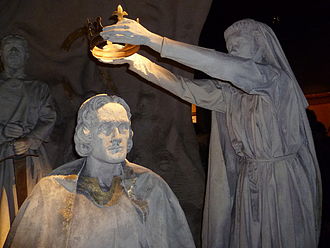
The Dreadful Fate of Alfred the Aetheling

History ... the Interesting Bits
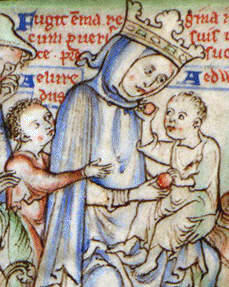
Emma fleeing England with Edward and Alfred, following the invasion of Sweyn Forkbeard

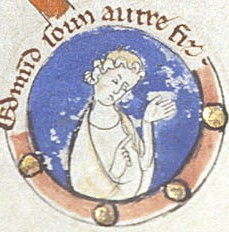
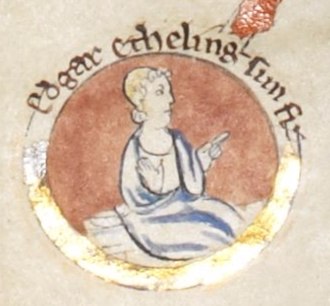
Alfred the Ætheling was the younger son of Æthelred II the Unready and his second wife, Emma of Normandy.

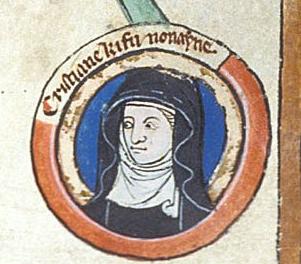
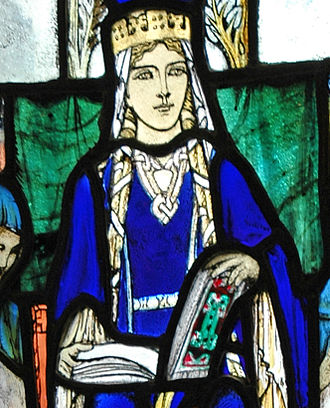
Emma was the daughter of Richard I, Duke of Normandy, and his wife, Gunnora. Born in around 985/987, she was married to Æthelred at Winchester on 5 April 1002, at which time she was given the English name Ælfgifu, although in the Anglo-Saxon Chronicle she is often referred to, simply, as ‘The Lady’. Her marriage with Æthelred was an attempt to seal a peace between England and Normandy, and to persuade the Normans not to allow the Viking raiders to winter in their lands between raids into England. Although the Vikings continued to shelter in Normandy during the winter, and raiding into England continued throughout the early years of the 11th century, the marriage was a success in that it produced two more sons and a daughter for Æthelred; a second family considering he was the father of as many as thirteen children by his first wife, Ælfgifu of York, including at least six sons.

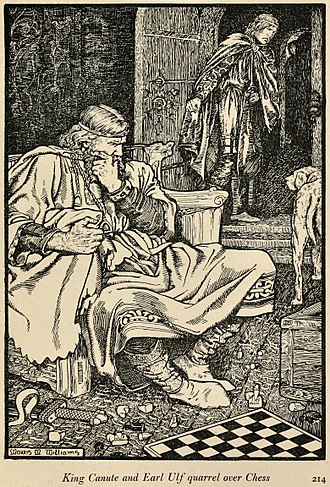
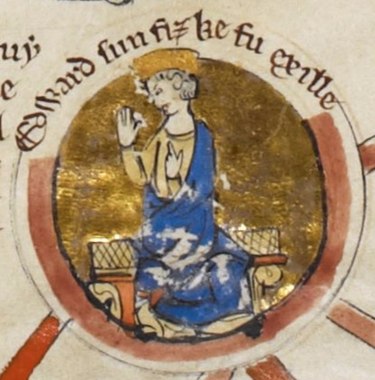
Of Emma and Æthelred’s two sons the eldest, Edward, would eventually succeed to the English throne following the death of his half-brother, Harthacnut, son of Emma by her second husband, King Cnut. Edward became king in 1042 and ruled until his death on 5 January 1066, leaving the crown on his deathbed to the ill-fated Harold II Godwinson. Edward’s younger brother, Alfred, however, was to suffer a rather different fate.

Alfred was born sometime before 1012 and styled ætheling, or throne-worthy, although he had numerous older brothers also holding that title. However, whilst still a young child, his father’s hold on the kingdom was becoming ever more precarious. By 1013 Danish king Sweyn Forkbeard was gaining victory after victory. Emma and her children were sent to safety in her native Normandy. The Anglo-Saxon Chronicle records:

‘the Lady then turned across the sea to her brother Richard, and Ӕlfsige, abbot of Peterborough with her. And the king sent Bishop Ӕlfhun across the sea with the ӕthelings Edward and Alfred in order that he should look after them.’¹

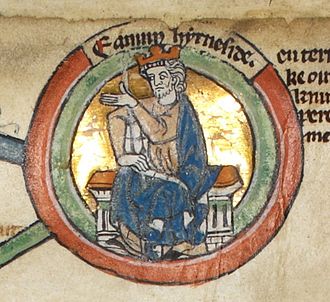
Ӕthelred spent Christmas on the Isle of Wight, before joining his family in Normandy as Sweyn consolidated his victory. The Dane’s ascendancy was short-lived however, as he died after a fall from his horse on 3 February 1014. His death gave Ӕthelred a way back to his kingdom and he sent Edward to England to negotiate his return with the English Witan, who invited Æthelred to resume the throne ‘if he would govern them better than he did before’.¹ Unfortunately, despite his promises, Æthelred proved just as inept as before, failing to defeat the Danish invaders, led by Sweyn’s son Cnut. The beleaguered Æthelred died just two years later, on 23 April 1016, and was succeeded by his oldest surviving son by his first wife, Edmund II Ironside. Although Edmund put up a valiant fight against the Danish invaders, a summer of fighting took its toll and he died on 30 November 1016, probably from wounds received in the recent string of battles. The rumours of murder by a sword thrust into the bowels as Edmund visited the latrine, only arose centuries later.

History ... the Interesting Bits
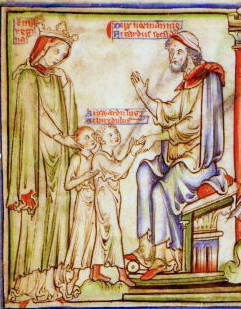
Emma, with Edward and Alfred, welcomed to the Norman court by Duke Richard II

Alfred and his brother Edward, again, sought in exile in Normandy, as Cnut consolidated his control on the whole of England.. One of the new king’s first actions was to send for their mother Emma, who he married on 2 July 1017. Marrying Emma was a sensible move for Cnut, she was a link to the old regime and provided a sense of continuity for England’s conquered people. How much choice had in accepting the most powerful man in the country as her husband, we do not know; she may have thought it the only way of ensuring Cnut did not pursue the deaths of her sons in exile. Emma gave Cnut three children including a son, Harthacnut, and two daughters; one, who’s name is lost, died aged 8 and is buried in Bosham, Sussex. A second daughter, Gunhilda, married Henry III, Emperor of Germany.

When Cnut died in 1035 Emma was in England and retired to her manor in Winchester, taking the royal treasury with her, in the hope she could pass it to her son, Harthacnut. However, Harthacnut was in Denmark and it was Harold Harefoot, one of Cnut’s two sons by Ælfgifu of Northampton, who seized the initiative. An agreement was reached whereby the half-brothers ruled as co-kings with Emma acting for Harthacnut, in his absence, and ruling in Wessex.

As it was, in 1036 Harold was accepted as England’s ruler, Harthacnut was ruling in Denmark and Emma was living on her estates in Winchester. Emma faced tragedy, however, when her son Alfred arrived in England. The ætheling was probably approaching thirty years of age and had been living in exile in Normandy for the last twenty years, arrived in England. According to Norman sources, it was Edward who had first tried to join their mother in Winchester in 1036, sailing up the Solent and winning a battle near Southampton before returning to Normandy with his plunder. It was after this that Alfred attempted to visit his mother in Winchester, but many feared he would make a play for the crown.

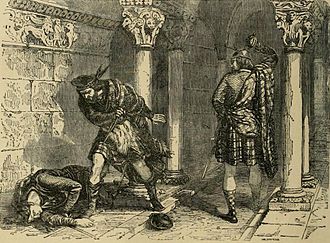
However, before he had the chance to see Emma, the ӕtheling was welcomed by Earl Godwin, taken to Godwin’s estate at Guildford, where he was seized and taken to Ely. At Ely he was blinded; blinding was a symbolic gesture aimed at destroying his worth as a king.

The Anglo-Saxon Chronicle retold the tale in rhyme:

History ... the Interesting Bits
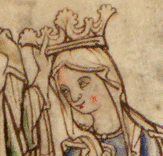
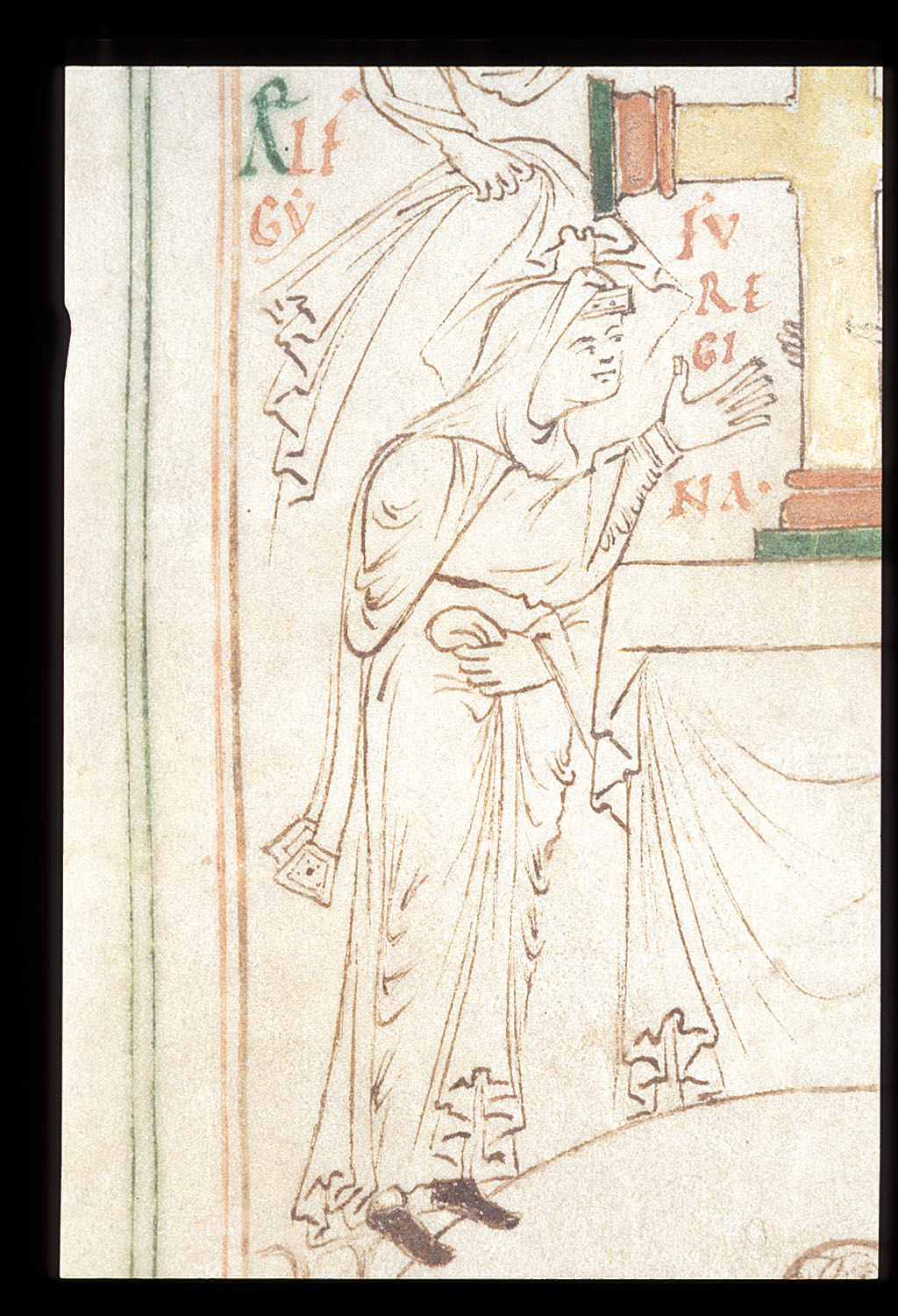
Detail of Queen Emma before an altar

‘But then Godwine stopped him, and set him in captivity,

and drove off his companions, and some variously killed;

some of them were sold for money, some cruelly destroyed,

some of them were fettered, some of them were blinded,

some maimed, some scalped.

No more horrible deed was done in this country

since the Danes came and made peace here.

Now we must trust to the dear God

that they who, without blame, were so wretchedly destroyed

rejoice happily with Christ.

The ӕtheling still lived; he was threatened with every evil;

until it was decided that he be led

to Ely town, fettered thus.

As soon as he came on ship he was blinded,

and blind thus brought to the monks.

And there he dwelt as long as he lived.

Afterwards he was buried, as well befitted him,

full honourably, as he was entitled,

at the west end, very near at hand to the steeple,

in the south side-chapel. His soul is with Christ.²

Emma’s own biography, the Encomium Emmae Reginae tells the story slightly differently, saying that Harold Harefoot forged a letter from Emma to her son, which claimed that the English would prefer Edward or Alfred as king, enticing Alfred to come to England and claim the crown. It does seem likely that Alfred received such a letter, but it may well have come from Emma herself, who sought to lay the blame on Harold when the expedition failed so abysmally.

History ... the Interesting Bits
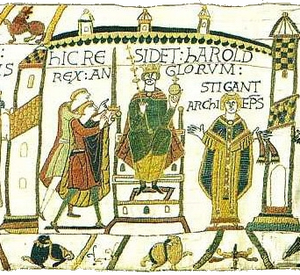
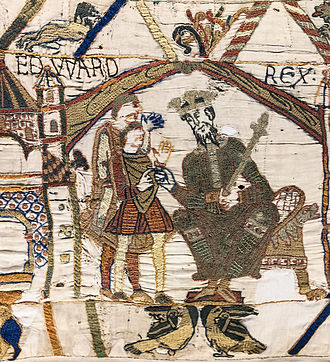
Edward the Confessor, taken from the Bayeux Tapestry

The sources are confusing over what exactly happened. Some state that when Alfred arrived in England, he was met by Earl Godwin, who swore fealty to him and established the ætheling at Guildford, but then Harold attacked in the night and took Alfred to Ely, where he was tried, blinded, killed and buried. While others suggest that Godwin betrayed Alfred and handed him over to King Harold. Either way, the result is always the same; Alfred was blinded and either intentionally killed or died from wounds caused by his blinding, on Harold’s orders, with or without the connivance of Godwin in late 1036 or early 1037.³ This one potential threat to Harold’s crown was thus eliminated and buried in Ely.

Emma must have been relieved that at least Edward had remained safe in Normandy. Despite the fact she had not seen him for many years, the loss of Alfred must have been a cruel blow to his mother. His brothers, moreover, did not forget Alfred’s fate. On his accession in 1040, Harthacnut pursued the prosecution of Godwin and Lyfing, the Bishop of Worcester and Crediton who had also been implicated in Alfred’s death, for Alfred’s murder. Lyfing was deprived of his see in punishment. Godwin gave the king a warship carrying eighty fighting men as appeasement – an expensive sweetener – and swore that he had not wanted the prince blinded and that whatever he had done had been on the orders of King Harold.

Like Harthacnut, Edward was never convinced of Godwin’s innocence, a fact which added to the increasing distrust and conflict between the king and his most powerful earl in the first ten years of Edward’s reign. Indeed, when the Godwin family and Edward quarrelled in 1051, it was Edward’s demand to have his brother returned to him that made Earl Godwin realise there would be no rapprochement; the earl sailed into exile in Flanders with his family. When he did manage to negotiate his return the following year, Edward and Godwin were still wary of each other. Moreover, when Godwin died at Winchester 1052, having collapsed during the Easter feast to entertain the king, a story arose that Godwin had called on God to choke him with a mouthful of cake if he were guilty of Alfred’s murder. Needless to say, Earl Godwin collapsed on the floor the very next moment. Though it is a great moral story, there is probably little truth in it, and it is likely we will never know the extent of Godwin’s guilt, or innocence.

*

Footnotes: ¹The Anglo-Saxon Chronicle translated by James ingram; ²The Anglo-Saxon Chronicles translated and edited by Michael Swaton; ³Alfred Ætheling (article) by M.K.Lawson, oxforddnb.com

*

Pictures courtesy of Wikipedia, except Queen Emma, courtesy of British Library.

Sources: Brewer’s British Royalty by David Williamson; Britain’s Royal Families, the Complete Genealogy by Alison Weir;The Wordsworth Dictionary of British History by JP Kenyon; The Anglo-Saxons in 100 Facts by Martin Wall; Kings, Queens, Bones and Bastards by David Hilliam; The Mammoth Book of British kings & Queens by Mike Ashley; The Oxford Companion to British History Edited by John Cannon; The Anglo-Saxon Chronicles translated and edited by Michael Swaton; The Anglo-Saxon Chronicle translated by James Ingram; Queen Emma and the Vikings by Harriett O’Brien; The Bayeux Tapestry by Carola Hicks; oxforddnb.com.

*

My Books

Signed, dedicated copies of all my books are available through my online bookshop.

Out now: Scotland’s Medieval Queens

Books by Sharon Bennett Connolly

Scotland’s history is dramatic, violent and bloody. Being England’s northern neighbour has never been easy. Scotland’s queens have had to deal with war, murder, imprisonment, political rivalries and open betrayal. They have loved and lost, raised kings and queens, ruled and died for Scotland. From St Margaret, who became one of the patron saints of Scotland, to Elizabeth de Burgh and the dramatic story of the Scottish Wars of Independence, to the love story and tragedy of Joan Beaufort, to Margaret of Denmark and the dawn of the Renaissance, Scotland’s Medieval Queens have seen it all. This is the story of Scotland through their eyes.

Scotland’s Medieval Queens gives a thorough grounding in the history of the women who ruled Scotland at the side of its kings, often in the shadows, but just as interesting in their lives beyond the spotlight. It’s not a subject that has been widely covered, and Sharon is a pioneer in bringing that information into accessible history.’ Elizabeth Chadwick (New York Times bestselling author)

Available now from Amazon and Pen and Sword Books

Also by Sharon Bennett Connolly:

Books by Sharon Bennett Connolly

Heroines of the Tudor World tells the stories of the most remarkable women from European history in the time of the Tudor dynasty, 1485-1603. These are the women who ruled, the women who founded dynasties, the women who fought for religious freedom, their families and love. Heroines of the Tudor World is now available for pre-order from Amberley Publishing and Amazon UK. Women of the Anarchy demonstrates how Empress Matilda and Matilda of Boulogne, unable to wield a sword themselves, were prime movers in this time of conflict and lawlessness. It shows how their strengths, weaknesses, and personal ambitions swung the fortunes of war one way – and then the other. Available from Bookshop.orgAmberley Publishing and Amazon UKKing John’s Right-Hand Lady: The Story of Nicholaa de la Haye is the story of a truly remarkable lady, the hereditary constable of Lincoln Castle and the first woman in England to be appointed sheriff in her own right. Available from all good bookshops Pen & Sword Booksbookshop.org and Amazon

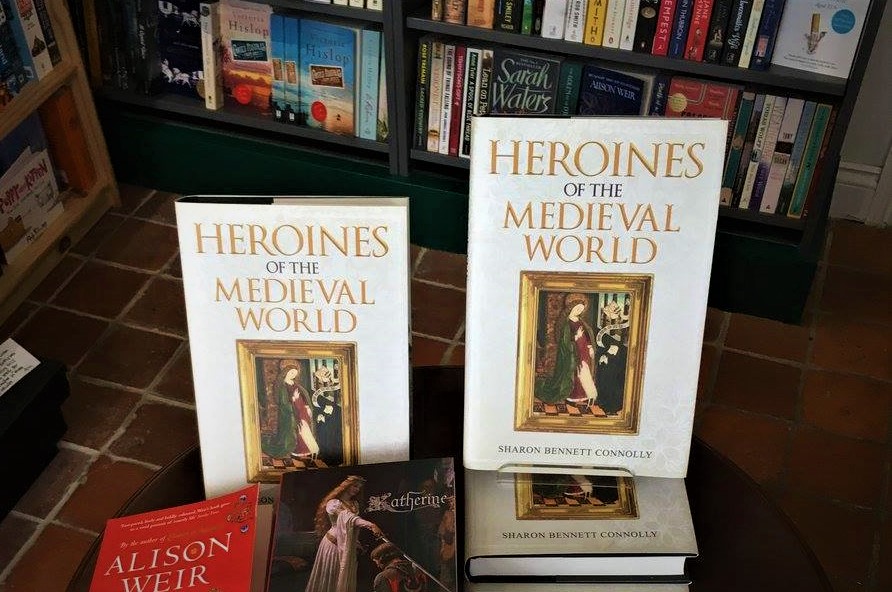
Defenders of the Norman Crown: The Rise and Fall of the Warenne Earls of Surrey tells the fascinating story of the Warenne dynasty, from its origins in Normandy, through the Conquest, Magna Carta, the wars and marriages that led to its ultimate demise in the reign of Edward III. Available from Pen & Sword BooksAmazon in the UK and US, and Bookshop.orgLadies of Magna Carta: Women of Influence in Thirteenth Century England looks into the relationships of the various noble families of the 13th century, and how they were affected by the Barons’ Wars, Magna Carta and its aftermath; the bonds that were formed and those that were broken. It is now available in paperback and hardback from Pen & SwordAmazon, and Bookshop.orgHeroines of the Medieval World tells the stories of some of the most remarkable women from Medieval history, from Eleanor of Aquitaine to Julian of Norwich. Available now from Amberley Publishing and Amazon, and Bookshop.orgSilk and the Sword: The Women of the Norman Conquest traces the fortunes of the women who had a significant role to play in the momentous events of 1066. Available now from Amazon,  Amberley Publishing, and Bookshop.org.

Alternate Endings: An anthology of historical fiction short stories including Long Live the King… which is my take what might have happened had King John not died in October 1216. Available in paperback and kindle from Amazon.

Podcast:
Have a listen to the A Slice of Medieval podcast, which I co-host with Historical fiction novelist Derek Birks. Derek and I welcome guests, such as Elizabeth Chadwick, Helen Castor, Ian Mortimer, Scott Mariani and Bernard Cornwell and discuss a wide range of topics in medieval history, from significant events to the personalities involved.

Every episode is also now available on YouTube.

*

Don’t forget! Signed and dedicated copies of all my books are available through my online bookshop.

For forthcoming online and in-person talks, please check out my Events Page.

You can be the first to read new articles by clicking the ‘Follow’ button, liking our Facebook page or joining me on TwitterThreadsBluesky and Instagram.

*

©2018 Sharon Bennett Connolly FRHistS
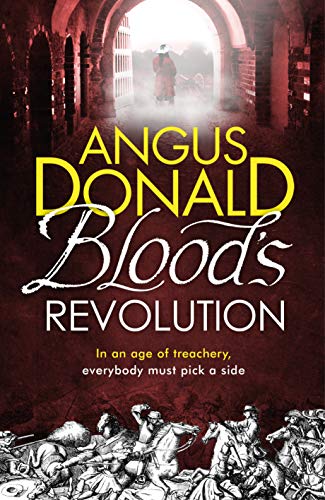
Book Corner: Blood’s Revolution by Angus Donald

Newly returned from years of secret work in Paris, Lieutenant Holcroft Blood, a brilliant but unusual gunnery officer in His Majesty’s Ordnance, must now face King James II’s enemies on the gore-drenched battlefields of the British Isles.

But after the victory at Sedgemoor – and its cruel aftermath, the Bloody Assizes, in which the Duke of Monmouth’s rebellion was ruthlessly crushed – many powerful men have grown tired of Catholic James’s brutal, autocratic rule and seek to invite William, the Protestant Prince of Orange, to seize the thrones of the Three Kingdoms.

While revolution brews in the gentlemen’s clubs of London, Holcroft discovers that a sinister French agent, known only by his code name Narrey, has followed him across the Channel and intends to murder him. Worse, Holcroft must decide whether to join the conspirators, including his old friend Jack Churchill, now Lord Marlborough, and support Dutch William’s invasion – or remain loyal to his unpopular king.

Holcroft Blood is my hero!

What a fabulous character Angus Donald has created in this fabulous new series set during the Stuart era. Holcroft is not your typical swashbuckling hero, he is a young man who struggles with personal connections and the nuances of human traits. He is more comfortable with mathematics and his cannons, but he has a remarkable knack for sniffing out trouble and unravelling conspiracies. In Blood’s Game, the first book in this new series, Holcroft was a young boy thrown into the heart of the court as a page to the Duke of Buckingham. Now he is an officer in the Royal Ordnance of the Stuart army and in Blood’s Revolution, his loyalty to his king is tested as the country and society turn against the Catholic king James II (VII in Scotland).

Blood’s Revolution is set some 15 years after the conclusion of the first book, Blood’s Game, which means it can easily be read as a standalone – though for anyone who hasn’t read Blood’s Game I can heartily recommend it!

Opening with Monmouth’s rebellion and the Battle of Sedgemoor, the early action sets the pace for the rest of the book, barely leaving the reader any opportunity to breathe, as Holcroft attempts to unravel the plots against the King and expose the plotters – and the French masterspy backing them. And at the same time, Holcroft has his own personal life to deal with; changing friendships, marriage and an errant brother all serve to upset the young man’s well-ordered life.

Matthew was standing now, red-faced, shaking with anger. ‘I will speak no more to you about Father Palmer nor about any other matter. I would rather hang!’

Holcroft lowered his head, he looked at his big hands, ignoring the threat of the angry boy standing over him and listening only to his words. He was not naturally skilled at this – the passion and poetry that resided in other men’s hearts had always been  something of a mystery to him. Yet he knew of his shortcomings and had trained himself, as far as it was possible, to listen to what men said and to test their words for truth or falsehood. To his ear, this was the voice of truth. The outrage was not false, so far as he could tell. This boy believed the Jesuit priest was innocent.

Holcroft looked up.

‘Sit down, and calm yourself. Or I will see that you do hang. I have one more question for you before I go. Sit down, be quiet and listen to me.’ Holcroft waited. Eventually, Matthews subsided and sat back down on the bed.

‘Tell me, John, why did you attempt to steal the keg of gunpowder from the magazine? Tell me truly and I will leave you here in peace, and do all I can for you with Lord Dartmouth at the court martial, as I have sworn on my honour to do.’

The fiction is seeded with real historical characters, ranging from Holcroft’s friend John Churchill – the future Duke of Marlborough – to the doomed Duke of Monmouth himself. Holcroft’s story itself is woven within the historical narrative, so that it is hard to tell where the facts end and fiction takes over; always a sign of a good book – and an opportunity for research that is hard to ignore. And the author’s note at the end also helps to distinguish between the fact and the fiction.

Angus Donald is a superb storyteller, drawing the reader in to the wonderfully wicked world he has recreated for Holcroft Blood to navigate his way through. It is hard to find a negative. The story is clever, imaginative and addictive. The characters are fascinating, full of life and vigour. The locations, especially 17th century London, are painstakingly recreated and brought to bustling life, the smells, sounds and atmosphere of a London, that is almost-recognisable to the 21st century reader, enhancing the story further.

It is going to be hard for the author to top this story with the next book in the series, but I cannot wait to find out what happens to Holcroft next…..

And at least I now know what to get my dad for Christmas – he’s gonna love this!

*

Blood’s Revolution is available from Amazon in the UK from 18 October 2018.

*

About the Author:

Angus Donald was educated at Marlborough College and Edinburgh University. He has worked as a fruit-picker in Greece, a waiter in New York and as an anthropologist studying magic and witchcraft in Indonesia. For many years he was a journalist in Hong Kong, India, Afghanistan and London. He is married to Mary, with whom he has two children, and he now writes full time from a medieval farmhouse in Kent.

He is the author of the bestselling Outlaw Chronicles, a series of eight books set in the 12th/13th centuries and featuring a gangster-ish Robin Hood and his loyal lieutenant Sir Alan Dale. His new Holcroft Blood series stars a mildly autistic artillery officer who was the son of notorious 17th-century Crown Jewel thief Colonel Thomas Blood. The series begins with Blood’s Game and continues with Blood’s Revolution (to be published in October 2018) and Blood’s Campaign (out October 2019). The author has also written an epic Asian fantasy novel Gates of Stone (out February 2019) under the pseudonym Angus Macallan. He is always happy to chat to readers on Facebook, Twitter and via his website http://www.angusdonaldbooks.com


*

Coming in November!

Tracing the fortunes of the women who had a significant role to play in the momentous events of 1066, Silk and the Sword: the Women of the Norman Conquest will be released in the UK on 15 November 2018 and is available for pre-order on Amazon UK,  Amberley Publishing and Book Depository. It is scheduled for release in the US on 1 March 2019 and is available for pre-order from Amazon US.

Also by Sharon Bennett Connolly:

Telling the stories of some of the most incredible women from Medieval history, Heroines of the Medieval World,  is now available in hardback in the UK from both Amberley Publishing and Amazon UK, in the US from Amazon US  and worldwide from Book Depository. It will be released in paperback in the UK from 15 March 2019 and is available for pre-order on Amazon.

You can be the first to read new articles by clicking the ‘Follow’ button, liking our Facebook page or joining me on Twitter.

*

©2018 Sharon Bennett Connolly

The Wives and Family of King Harold II

History ... the Interesting Bits
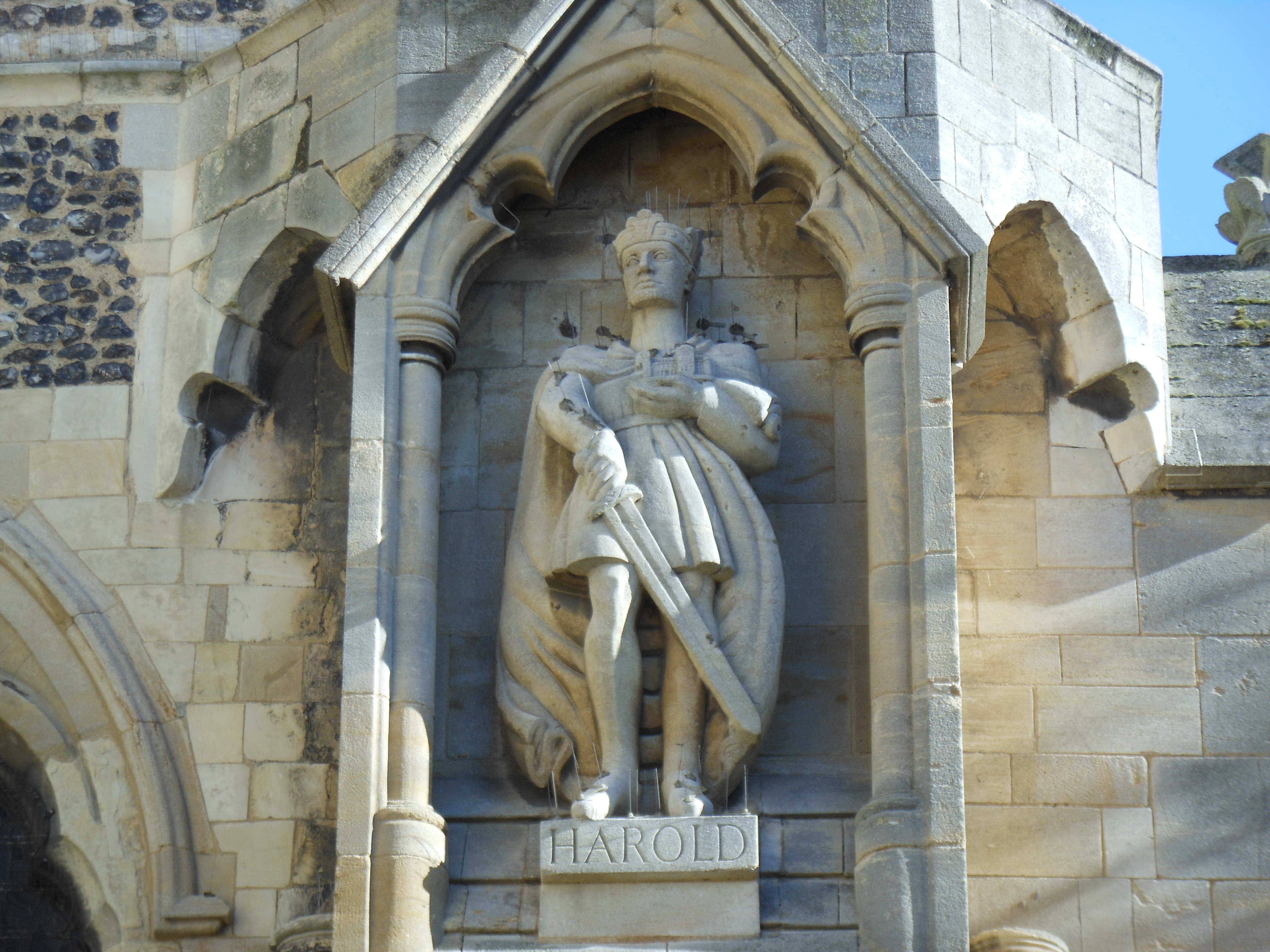
Statue of King Harold II at Waltham Abbey

The future king, Harold II Godwinson, was born into an Anglo-Danish family whose extensive influence and power meant they were frequently seen as the power behind the throne. This also meant that they were often seen as a threat to the man wearing the crown – especially Edward the Confessor – and suffered exile as a result.

Harold was born around 1022/3 to Godwin and his wife, Gytha Thorkelsdottir. Gytha was a member of the extended Danish royal family, as her brother, Ulf, was married to King Cnut the Great’s sister, Estrith. Gytha’s nephew, Sweyn Estrithson, would eventually rule Denmark as king. Harold received the earldom of East Anglia in 1044 and, as the oldest surviving son of Godwin, Earl of Wessex, he succeeded to his father’s earldom in 1053. Godwin died at Winchester in Easter week of 1053, after collapsing during a feast to entertain his son-in-law, King Edward the Confessor.

Harold’s sister, Edith, was the wife of King Edward; she had married him in January 1046. However, the fact they had no children meant there was no clear successor to the English crown; a situation that would be a major cause of the crisis of 1066. Of Harold’s brothers three were to become earls; Tostig, Gyrth and Leofwine. However, Tostig was driven out of his earldom of Northumberland by an uprising in 1065 and replaced with Morcar, the brother of Edwin, earl of Mercia. Gyrth and Leofwine both fought – and died – alongside Harold at Hastings. Harold’s older brother, Sweyn, once Earl of Hereford, had left on pilgrimage to Jerusalem in 1051, to atone for his many sins, which included the murder of his own cousin and the kidnapping and rape of an abbess, Eadgifu. He died – or was killed – on his journey home. Another, younger brother, Wulfnoth, was a hostage at the court of William, Duke of Normandy, along with his nephew – Sweyn’s son – Hakon.

History ... the Interesting Bits
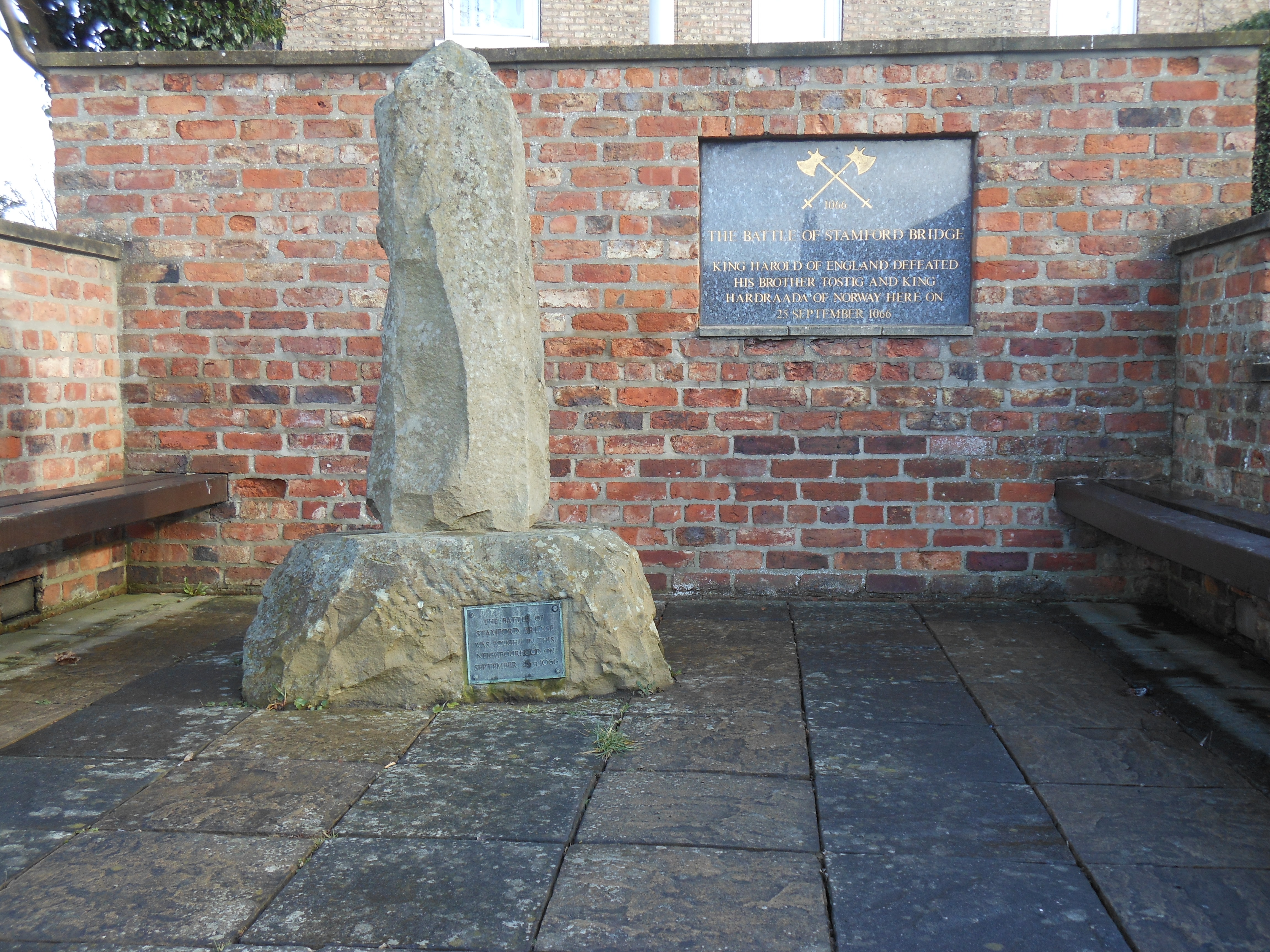
Memorial to the 1066 Battle of Stamford bridge just outside York

Harold, himself, was not only one of the king’s foremost earls but also one of his most respected advisors and generals. In short, the Godwinsons were the most powerful family in the kingdom, after the king himself – and often resented for the fact. At one point Harold, with his father and brothers, had been exiled from England after quarrelling with the king. During a visit to Normandy in 1064, Harold is even said to have sworn an oath to back William of Normandy’s claim to the English throne in the likely event that Edward the Confessor died without an heir; a claim that William used to the full in order to secure papal approval for his invasion of England.

However, when it came to the moment of truth, it was Harold the old king is said to have named on his deathbed as his successor. He was crowned on 6 January, just hours after the burial of Edward the Confessor in Westminster Abbey. There was no gentle introduction to kingship for King Harold II, however, and  almost immediately he had to prepare to defend England against the rival claimants of Norway and Normandy; and against his own brother, Tostig, who had joined forces with Harald Hardrada, King of Norway.

Harold’s love life was as tangled as his political life.

History ... the Interesting Bits
The battlefield of Hastings

Harold probably met Edith the Swan-neck (or Swanneshals) at about the same time as he became Earl of East Anglia, in 1044, which makes it possible that Edith the Swan-neck and the East Anglian magnate, Eadgifu the Fair, are one and the same. Eadgifu the Fair held over 270 hides of land and was one of the richest magnates in England. The majority of her estates lay in Cambridgeshire, but she also held land in Buckinghamshire, Hertfordshire, Essex and Suffolk; in the Domesday Book, Eadgifu held the manor at Harkstead in Suffolk, which was attached to Harold’s manor of Brightlingsea in Essex, and some of her Suffolk lands were tributary to Harold’s manor of East Bergholt.

While it is by no means certain that Eadgifu is Edith the Swan-neck, several historians – including Ann Williams in the Oxford Database of National Biography – make convincing arguments that they were. Even their names, Eadgifu and Eadgyth, are so similar that the difference could be merely a matter of spelling or mistranslation; indeed, the Abbey of St Benet of Hulme, Norfolk, remembers an Eadgifu Swanneshals among its patrons.

History ... the Interesting Bits
The gatehouse of Battle Abbey

What we do know is that by 1065 Harold had been living with the wonderfully-named Eadgyth Swanneshals (Edith the Swan-neck) for twenty years. History books label her as Harold’s concubine, but Edith was, obviously, no weak and powerless peasant, so it’s highly likely they went through a hand-fasting ceremony  – or ‘Danish marriage’ – a marriage, but not one recognised by the Church. It was not an uncommon practice – King Cnut had married his first wife, Ælfgifu of Northampton, in the same fashion. Edith being a hand-fast wife meant that Harold was still free to marry a second ‘wife’ in a Christian ceremony at a later date. Although we can’t say why Harold didn’t marry Edith in a manner recognised by the Church, it may be that they were both young and one or both of their families would not consent to their marriage.

Harold and Edith had about six children together – including three sons, Godwin, Edmund, Magnus and possibly a fourth, Ulf. They also had two daughters. Gytha married Vladimir Monomakh, Great Prince of Kiev, and is the ancestress of the current queen, Elizabeth II, through her descent from Philippa of Hainault. A second daughter, Gunnhild, spent sometime in Wilton Abbey in Wiltshire, although it is not certain that she was there with the intention of becoming a nun, or for safety and protection from the invading Normans. However, she is said to have eloped, before taking her vows, with a Breton knight, Alan the Red.

History ... the Interesting Bits
Lady Godiva, grandmother of Harold’s second wife, Ealdgyth

However, despite their twenty years and many children, and with the health of the king, Edward the Confessor, deteriorating, it became politically expedient for Harold to marry, to strengthen his position as England’s premier earl and, possibly, next king. Ealdgyth of Mercia was the daughter of Alfgar, Earl of Mercia, and granddaughter of the famous Lady Godiva and, according to William of Jumièges, very beautiful. Her brothers were Edwin, Earl of Mercia, and Morcar, who replaced Harold’s brother Tostig as Earl of Northumberland in the last months of 1065.

Ealdgyth was the widow of Gruffuddd ap Llywelyn, King of Gwynedd from 1039 and ruler of all Wales after 1055, with whom she had had at least one child, a daughter, Nest. Gruffuddd had been murdered in 1063, following an English expedition into Wales. Gruffudd’s own men are said to have betrayed their king, killed him and presented his head to Harold in submission. Harold’s subsequent marriage to Ealdgyth, which probably took place at the end of 1065 or beginning of 1066, not only secured the support of the earls of Northumbria and Mercia, but also weakened the political ties of the same earls with the new rulers of north Wales.

History ... the Interesting Bits
William the Conqueror, Harold’s nemesis

As Harold’s wife Ealdgyth was, therefore, for a short time, Queen of England. However, with Harold having to defend his realm, first against Harold Hardrada and his own brother, Tostig, at Stamford Bridge in September of 1066 and, subsequently, against William of Normandy at Hastings, it is unlikely Ealdgyth had time to enjoy her exalted status. At the time of the Battle of Hastings, on 14 October 1066, Ealdgyth was in London, but her brothers took her north to Chester soon after. Although sources are contradictory, it seems possible Ealdgyth was heavily pregnant and gave birth to a son, or twin sons, Harold and Ulf Haroldson, within months of the battle. The identity of Ulf’s mother seems to be sorely disputed, with some believing he was the twin brother of Harold and others that he was the youngest son of Edith Swan-neck; I suppose we will never know for certain.

Unfortunately, we hear nothing of Ealdgyth after the birth of Harold (and Ulf); her fate remains unknown. Young Harold is said to have grown up in exile on the Continent and died in 1098.

Despite his marriage to Ealdgyth of Mercia it seems Edith the Swan-neck remained close to Harold and it was she who was said to be waiting close by when the king faced William of Normandy at Senlac Hill near Hastings on 14 October 1066. She awaited the outcome alongside Harold’s mother, Gytha. Having lost a son, Tostig, just two weeks before, fighting against his brother and with the Norwegians at the Battle of Stamford Bridge, Gytha lost three more sons – Harold, Gyrth and Leofwine and, possibly, her grandson, Haakon, in the fierce battle at Hastings.

History ... the Interesting Bits
Waltham Abbey, where Edith is said to have brought Harold’s body after the Battle of Hastings

It is heart-wrenching, even now, to think of Edith and the elderly Gytha, wandering the blood-soaked field after the battle, in search of the fallen king. Sources say that Gytha was unable to identify her sons amid the mangled and mutilated bodies. It fell to Edith to find Harold, by undoing the chain mail of the victims, in order to recognise certain identifying marks on the king’s body – probably tattoos. There is a tradition, from the monks of Waltham Abbey, of Edith bringing Harold’s body to them for burial, soon after the battle. Although other sources suggest Harold was buried close to the battlefield, and without ceremony, it is hard not to hope that Edith was able to perform this last service for the king. However, any trace of Harold’s remains was swept away by Henry VIII’s dissolution of the monasteries, so the grave of England’s last Anglo-Saxon king is lost to history.

History ... the Interesting Bits
Edith searching the battlefield of Hastings for Harold’s body

After another year or so of leading resistance to Norman rule in the south-west, Harold’s mother, Gytha, eventually fled into exile on the Continent, taking Harold and Edith’s daughter, another Gytha, with her. Gytha and her nephew, Swein Estrithson, King of Denmark, arranged the marriage of the younger Gytha to the prince of Smolensk and – later – Kiev, Vladimir II Monomakh.

Edith and Harold’s sons fled to Ireland with all but one living into the 1080s, though the dates of their eventual deaths remain uncertain. Gunnhild remained in her nunnery at Wilton until sometime before 1093, when she became the wife or concubine of Alan the Red, a Norman magnate. Whether or not she was kidnapped seems to be in question but when Alan died in 1093, instead of returning to the convent, Gunnhild became the mistress of Alan’s brother and heir, Alan Niger. Alan Rufus held vast lands in East Anglia – lands that had once belonged to Eadgifu the Fair and, if Eadgifu was Edith the Swan-neck, it’s possible that Alan married Gunnhild to strengthen his claims to her mother’s lands.

History ... the Interesting Bits
Stone marking the site of Harold’s grave at Waltham Abbey

After 1066 Edith’s lands had passed to Ralph de Gael, but he rebelled against King William and so they were eventually given to Alan the Red. Gunnhild and Alan are thought to have had a daughter, Matilda, who was married to Walter d’Eyncourt. Matilda and Walter’s oldest son, William d’Eyncourt, died as a child whilst fostered in the household of William II Rufus. He was buried in Lincoln Cathedral; his grave is now lost but his grave marker is preserved in the cathedral’s museum.

Of Edith the Swan-neck, there is no trace after Harold is interred at Waltham Abbey. Although she spent twenty years at the side of the man who would become king, and her daughter, Gytha, would be an ancestress of the English royal family of today, Edith simply disappears from the pages of history. Overall, history has treated Edith kindly; sympathising with a woman who remained loyal to her man to the end, despite the fact her official status was questionable.

*

Pictures ©2018 Sharon Bennett Connolly except Lady Godiva, which is courtesy of the Rijksmuseum and Edith at Hastings and William the Conqueror, which are courtesy of Wikipedia.

*

Sources: The English and the Norman Conquest by Dr Ann Williams; Brewer’s British Royalty by David Williamson; Britain’s Royal Families, the Complete Genealogy by Alison Weir; The Wordsworth Dictionary of British History by JP Kenyon; The Norman Conquest by Marc Morris; Harold, the King Who Fell at Hastings by Peter Rex; The Anglo-Saxons in 100 Facts by Martin Wall; The Anglo-Saxon Age by Martin Wall; Kings, Queens, Bones and Bastards by David Hilliam; The Mammoth Book of British kings & Queens by Mike Ashley; The Oxford Companion to British History Edited by John Cannon; The Anglo-Saxon Chronicles translated and edited by Michael Swaton; The Anglo-Saxon Chronicle translated by James Ingram; Queen Emma and the Vikings by Harriett O’Brien; The Bayeux Tapestry by Carola Hicks; oxforddnb.com.

*

My books

Signed, dedicated copies of all my books are available through my online store.

Out now: Scotland’s Medieval Queens

Books by Sharon Bennett Connolly

Scotland’s history is dramatic, violent and bloody. Being England’s northern neighbour has never been easy. Scotland’s queens have had to deal with war, murder, imprisonment, political rivalries and open betrayal. They have loved and lost, raised kings and queens, ruled and died for Scotland. From St Margaret, who became one of the patron saints of Scotland, to Elizabeth de Burgh and the dramatic story of the Scottish Wars of Independence, to the love story and tragedy of Joan Beaufort, to Margaret of Denmark and the dawn of the Renaissance, Scotland’s Medieval Queens have seen it all. This is the story of Scotland through their eyes.

Scotland’s Medieval Queens gives a thorough grounding in the history of the women who ruled Scotland at the side of its kings, often in the shadows, but just as interesting in their lives beyond the spotlight. It’s not a subject that has been widely covered, and Sharon is a pioneer in bringing that information into accessible history.’ Elizabeth Chadwick (New York Times bestselling author)

Available now from Amazon and Pen and Sword Books

Also by Sharon Bennett Connolly:

Books by Sharon Bennett Connolly

Heroines of the Tudor World tells the stories of the most remarkable women from European history in the time of the Tudor dynasty, 1485-1603. These are the women who ruled, the women who founded dynasties, the women who fought for religious freedom, their families and love. Heroines of the Tudor World is now available from Amberley Publishing and Amazon UK. Women of the Anarchy demonstrates how Empress Matilda and Matilda of Boulogne, unable to wield a sword themselves, were prime movers in this time of conflict and lawlessness. It shows how their strengths, weaknesses, and personal ambitions swung the fortunes of war one way – and then the other. Available from Bookshop.orgAmberley Publishing and Amazon UKKing John’s Right-Hand Lady: The Story of Nicholaa de la Haye is the story of a truly remarkable lady, the hereditary constable of Lincoln Castle and the first woman in England to be appointed sheriff in her own right. Available from all good bookshops Pen & Sword Booksbookshop.org and Amazon

Books by Sharon Bennett Connolly

Defenders of the Norman Crown: The Rise and Fall of the Warenne Earls of Surrey tells the fascinating story of the Warenne dynasty, from its origins in Normandy, through the Conquest, Magna Carta, the wars and marriages that led to its ultimate demise in the reign of Edward III. Available from Pen & Sword BooksAmazon in the UK and US, and Bookshop.orgLadies of Magna Carta: Women of Influence in Thirteenth Century England looks into the relationships of the various noble families of the 13th century, and how they were affected by the Barons’ Wars, Magna Carta and its aftermath; the bonds that were formed and those that were broken. It is now available in paperback and hardback from Pen & SwordAmazon, and Bookshop.orgHeroines of the Medieval World tells the stories of some of the most remarkable women from Medieval history, from Eleanor of Aquitaine to Julian of Norwich. Available now from Amberley Publishing and Amazon, and Bookshop.orgSilk and the Sword: The Women of the Norman Conquest traces the fortunes of the women who had a significant role to play in the momentous events of 1066. Available now from Amazon,  Amberley Publishing, and Bookshop.org.

Alternate Endings: An anthology of historical fiction short stories including Long Live the King… which is my take what might have happened had King John not died in October 1216. Available in paperback and kindle from Amazon.

Podcast:

A Slice of Medieval

Have a listen to the A Slice of Medieval podcast, which I co-host with Historical fiction novelist Derek Birks. Derek and I welcome guests, such as Bernard Cornwell, Scott Mariana and Michael Jecks, and discuss a wide range of topics in medieval history, from significant events to the personalities involved. 

Every episode is also now available on YouTube.

*

Don’t forget! Signed and dedicated copies of all my books are available through my online store.

For forthcoming online and in-person talks, please check out my Events Page.

You can be the first to read new articles by clicking the ‘Follow’ button, liking our Facebook page or joining me on TwitterThreadsBluesky and Instagram.

*

©2018 Sharon Bennett Connolly FRHistS
Book Corner: Mercia, the Rise and Fall of a Kingdom by Annie Whitehead

Many people know about Wessex, the ‘Last Kingdom’ of the Anglo-Saxons to fall to the Northmen, but another kingdom, Mercia, once enjoyed supremacy over not only Wessex, but all of the Anglo-Saxon kingdoms. At its zenith Mercia controlled what is now Birmingham and London ‒ and the political, commercial paramountcy of the two today finds echoes in the past.

Those interested in the period will surely have heard of Penda, Offa, and Æthelflæd, Lady of the Mercians ‒ but remarkably there is no single book that tells their story in its entirety, the story of the great kingdom of the midlands.

Historically, the records are in two halves, pre- and post-Viking, in the way they have been preserved. Pre-Viking, virtually all the source material was written by the victims, or perceived victims, of Mercian aggression and expansion. Post-Viking, the surviving documents tend to hail from places which were not sacked or burned by the Northmen, particularly from Wessex, the traditional enemy of Mercia. The inclusion of those records here allows for the exploration of Mercia post-924.

Mercia ceased to be a kingdom when Alfred the Great came to power, but its history did not end there. Examining the roles of the great ealdormen in the anti-monastic reaction of the tenth century, through the treachery of Eadric Streona in the eleventh, and the last, brave young earls who made a stand against William the Conqueror, this book shows the important role the Mercians played in the forging of the English nation.


I have been waiting eagerly for Annie Whitehead’s Mercia: the Rise and Fall of  a Kingdom ever since I knew she was writing it. Luckily, I got an advanced copy from the publisher – but it was well worth the wait! In her introduction Annie Whitehead promises:

This is the story of the Mercians, the kings, the queens, saints, sinners, earls and warrior women who governed the kingdom and shaped its history.


And she does not disappoint!

Mercia: the Rise and Fall of  a Kingdom covers the story of the English midlands kingdom from its pagan origins, in the 7th century, to its absorption into the kingdom of England; a process started in the reign of King Alfred but not completed until after the Norman Conquest. Annie Whitehead traced the fortunes of Mercia from Penda, a king we know little enough about – and that from his enemies. As the author tells us, the problems with knowing anything about early Mercian history spring from the fact Mercia was a pagan land; they therefore had no monastic tradition of writing everything down. In which case, their history is taken from such as the Venerable Bede, who lived in the land of Mercia’s enemies, Northumbria.

As a result, Annie Whitehead’s first task was to assess the bias of her sources, all of whom had their own hostile vision of Mercia. She uses sources from varied fields, including charter and archaeological evidence, in order to reconstruct early Mercian society and tell the story of the land itself, and its relations to its neighbours, such as Northumbria, Wessex and East Anglia. Using primary sources wherever possible, Mercia: the Rise and Fall of  a Kingdom brings the people of this ancient kingdom to vivid life. The author also uses alliterative analysis, to suggest familial links between such rulers as Coenred and Ceolred, for example. Although this is not an exact science, it does help to give the reader some perspective on the personal and familial relationships between the major players in the region.

Throughout the book, Annie Whitehead retells the story from the available sources, taking great care to avoid filling in the gaps with invention and clearly offering theories and analysis to explain the direction in which the narrative proceeded. She provides an ongoing assessment of sources, discussing their validity, honesty and integrity; clearly stating where charters are thought to be spurious or of dubious provenance.

The story portrayed is one of conflict, from within and without the region, marriage alliances, murder and betrayal and the shifting political tensions of the various kingdoms within England. The history, inevitably, draws on the history of Wessex, Northumbria, Kent and Wales. However, Annie Whitehead constantly retains the focus firmly on Mercia, while clearly demonstrating the shifting political alliances and the internal and external forces which decided the direction in which Mercian – and English history as a whole – would eventual be drawn.

It is difficult to piece together the circumstances of Æthelbald’s exile. It doesn’t appear that Ceolred was a strong enough king to stave off contenders, particularly ones of the calibre Æthelbald would prove to be. Perhaps, then, he had been in exile since the time of Æthelred, yet he did not emerge until after Ceolred’s death. Were there other contenders to the throne? Had he been chased out of Mercia because the kings there were strong, or because he was, and thus he was  a threat? Dynastic disputes would become a feature of Mercian politics, particularly in the next century.

There is, in fact, a hint that the takeover was not so peaceful, provided by a reference in one source to a Ceolwald reigning between Ceolred and Æthelbald. This man, briefly mentioned in Chapter Three, could, if he existed at all, have been the brother of Ceolred. If so, and if he became king, he did not reign for long, for Æthelbald became king in the same year in which Coelred died. Perhaps there was a coup? If only we knew; but as we have seen, particularly when it comes to Mercian history, absence of evidence is most assuredly not evidence of absence, and we can only speculate when we come across these tantalising nuggets of information.

Æthelflæd, Lady of Mercia

Annie Whitehead provides a thorough and in-depth analysis of Mercia, its history and its people. Where there is uncertainty or conflicting evidence , she carefully sets out the opposing theories, providing her own thoughts and analysis, while making it clear what alternative reasoning there is available. The text is supplemented by some wonderful illustrations, colourful photographs of locations and buildings closely associated with Mercia’s history, from the well-known statue of Æthelflæd, daughter of Alfred the Great and Lady of Mercia, to Repton in Derbyshire, burial site of a number of Mercian kings.

On a personal level, it is fascinating to read another author’s interpretation of subjects I have researched myself. Annie Whitehead dedicates (and rightfully so) an entire chapter to the Lady Æthelflæd and her husband Æthelred. And it is good to know that her version of Æthelflæd does not contradict the lady I found when researching Heroines of the Medieval World. The same also happened with her depiction of Lady Godiva. Godiva appears in my next book, Silk and the Sword: The Women of the Norman Conquest; she was the wife of Leofric, Earl of Mercia, and grandmother of the last Anglo-Saxon Earl of Mercia, Edwin, who was killed in 1071 after fighting against the Normans.

Mercia: the Rise and Fall of  a Kingdom  is written in an engaging and conversational manner, leaving the reader both entertained and informed. It is impossible to read this book without being made aware of the depth of research that has gone into producing such an authoritative depiction of Mercia. the

Rich in detail, this is a must-have book for anyone interested in the English midlands, and Anglo-Saxon history. Annie Whitehead delves into all the corners of Mercia, her history and conflicts and relates the story of not just the land, but of the generations of people who occupied it.

About the author:

Annie Whitehead graduated in history having specialised in the ‘Dark Ages’ and is a member of the Royal Historical Society. She’s written three books about early medieval Mercia, the ancient Anglo-Saxon kingdom of the Midlands. The first, To Be a Queen, tells the story of Alfred the Great’s daughter, and was long-listed for the Historical Novelist Society’s Indie Book of the Year 2016, and was an IAN (Independent Author Network) Finalist in 2017, while the second, Alvar the Kingmaker, is the story of Aelfhere, Earl of Mercia in the 10th century. The third, Cometh the Hour, is the first of two volumes set in seventh-century Mercia. She was a contributor to the anthology 1066 Turned Upside Down, a collection of alternative short stories. She writes magazine articles and has had pieces printed in diverse publications, including Cumbria Magazine and This England. She has twice been a prize winner in the Mail on Sunday Novel Writing Competition, and won First Prize in the 2012 New Writer Magazine’s Prose and Poetry Competition. She was a finalist in the 2015 Tom Howard Prize for nonfiction, and is also a contributor and editor for the English Historical Fiction Authors blog, as well as blogging for her own site – Casting Light upon the Shadow. In 2017 she won the inaugural HWA/Dorothy Dunnett Society Short Story Prize. Her first full-length nonfiction book, Mercia: The Rise and Fall of a Kingdom, is published by Amberley and available from Amazon UK.

*

My books

Heroines of the Medieval World,  is now available in hardback in the UK from both Amberley Publishing and Amazon UK. It is now available in Hardback from Amazon US  and worldwide from Book Depository.

Tracing the fortunes of the women who had a significant role to play in the momentous events of 1066, Silk and the Sword: the Women of the Norman Conquest will be released in the UK on 15 November 2018 and is available for pre-order on Amazon UKAmazon USAmberley Publishing and Book Depository.

You can be the first to read new articles by clicking the ‘Follow’ button, liking our Facebook page or joining me on Twitter.

*

©2018 Sharon Bennett Connolly

Book Corner: The King’s Witch by Tracy Borman

As she helps to nurse the dying Queen Elizabeth, Frances Gorges longs for the fields and ancient woods of her parents’ Hampshire estate, where she has learned to use the flowers and herbs to become a much-loved healer.

Frances is happy to stay in her beloved countryside when the new King arrives from Scotland, bringing change, fear and suspicion. His court may be shockingly decadent, but James’s religion is Puritan, intolerant of all the old ways; he has already put to death many men for treason and women for witchcraft.

So when her ambitious uncle forcibly brings Frances to court, she is trapped in a claustrophobic world of intrigue and betrayal – and a ready target for the twisted scheming of Lord Cecil, the King’s first minister. Surrounded by mortal dangers, Frances finds happiness only with the precocious young Princess Elizabeth, and Tom Wintour, the one courtier she can trust.

Or can she?

I was lucky enough to receive a copy of Tracy Borman’s first novel, The King’s Witch through NetGalley.

I have often read and enjoyed Tracy Borman’s non-fiction works. Indeed, her book on Matilda of Flanders, queen of William the Conqueror, was very helpful in my research for my own books, Heroines of the Medieval World and Silk and the Sword: the Women of the Norman Conquest. However, there is a great difference in writing non-fiction and fiction and not every author can make the jump. As a result I was unsure what tot expect from The King’s Witch  but discovered that Tracy Borman has managed to create a masterpiece of literary fiction at the first attempt.

Set in the court of James VI and I shortly after his arrival in England, The King’s Witch weaves a wonderful tale of love, intrigue, betrayal and suspense, set against the backdrop of the king’s obsession with eradicating witchcraft within his realm and the persecution of catholics. The officers of the old regime of Elizabeth I are trying to curry favour with the new king by taking on his obsessions and making them their own, so that those out of favour are hunted on every side.

As curator of the Historic Royal Palaces, Tracy Borman uses the wealth of inside  knowledge and information she has acquired to vividly recreate the world of early Stuart Britain in vibrant detail. She breathes life into her characters, both historical and invented, so that it is impossible to tell where the fact ends and the fiction begins. Her expertise is demonstrated not only in court etiquette, dress and manners, but also in the seedier side of Stuart Britain, in the treatment and punishment of prisoners, the oppression of catholic families and priests. The extent of research the author pursued in the writing of the book is demonstrated in the knowledge of herbs and their healing qualities, and how a girl may gain and use the knowledge to help others, if not always successfully.

There was silence for a few moments, then Helena bade her daughter sit with her again, and clasped both of Frances’s hands in her own.

‘My daughter.’ She pronounced the word as ‘dotter’, a rare hint of her native tongue. ‘You are my precious jewel. If only I could keep you as safe as these trifles -‘ she gestured to the coffers surrounding them, each secured with a brightly polished lock, the keys to which were only entrusted to her highest-ranking attendant.

Frances looked up into her mother’s dark brown eyes. She had long since seen her fiftieth year, but with her pale skin, high cheekbones, and small rosebud mouth, she was still beautiful.

‘Lady Mother?’

‘Frances, you must know that the court – the kingdom – is greatly changed,’ Helena began, her voice low. ‘King James has no patience with the traditions upheld by the late queen. Already the court is beset with scandal and vice. It will bring shame upon the kingdom.’ A scornful look crossed her face.  ‘Yet neither does he respect our former mistress’s moderation in matters of religion, but insists upon the strict observance of the Protestant faith. He seems determined to bend his subjects to his will.

Helena looked down at her hands for a moment, and when she raised her eyes to Frances again they were clouded with anxiety.

‘He has declared a war on witches, Frances. He says that they are a canker in our midst, and that God has appointed him to destroy them all. He will not leave a stone unturned in his search for the “whores of Satan”, as he calls them. Already Cecil is drafting a new Act against witchcraft. Any practice that is deemed to be sorcery will be punishable by death.’ She paused, eyeing Frances closely. ‘Even the arts of healing are under suspicion. There is to be no mercy.’

Frances looked doubtful. ‘Surely the king does not mean to hunt down the wise women and cunning folk? His officials would have to scour every village in the kingdom, and to what purpose? Their skills have always been used for good, not evil.’


The heroine of the story, Frances Gorges, as lady-in-waiting to King James’ pampered daughter, Elizabeth, has to navigate the Stuart court, despite being suspected as a witch by the king’s chief adviser, Robert Cecil. A skilled healer, Frances’ kind and trusting nature is tested to the extremes. While her skill with herbs and healing leads her into a dark place, her love for one of the men of the court leads her into the heart of a dangerous conspiracy and she doesn’t know who to trust. As the story unfolds, the reader is taken on a journey into the heart of a plot could change the course of history….

Tracy Borman has succeeded wonderfully in attaining that often difficult balance with historical fiction, of keeping to the historical fact while weaving an enchanting story which will keep the reader gripped to the very last page. Her obvious expertise in the era means that she is able to get into the heads of the characters she is depicting, thus relating their thoughts feelings and motivations with an uncanny accuracy which serves to transport the reader back in time, to the court and country of James VI and I. The author accurately depicts the sense of unease and apprehension at the change in regime from Elizabethan to Jacobean, demonstrating the distrust and unfamiliarity that accompanies the Scottish king to his new court; and conflict between those who find favour with the new king and those who hanker after the times and tolerance of the old queen, Elizabeth I.

Tracy Borman’s heroine, Frances Gorges, must traverse this difficult terrain of shifting allegiances and changing favourites, searching for a way to survive the plots and machinations of those who would see her fall. The King’s Witch is an exquisitely crafted novel, recreating the essence of Stuart Britain in wonderful detail.

The King’s Witch is available from Amazon.

About the author

81jjBI51lTL._SY200_

Tracy Borman is joint Chief Curator of Historic Royal Palaces and Chief Executive of the Heritage Education Trust. She studied and taught history at the University of Hull and was awarded a PhD in 1997.

Tracy is the author of a number of highly acclaimed books, including Thomas Cromwell: The Untold Story of Henry VIII’s Most Faithful Servant, Matilda: Wife of the Conqueror, First Queen of England, Elizabeth’s Women: The Hidden Story of the Virgin Queen and Witches: A Tale of Sorcery, Scandal and Seduction. Tracy is also a regular broadcaster and public speaker, giving talks on her books across the UK and abroad. She lives in Surrey with her daughter.

*

My books

Heroines of the Medieval World tells the stories of women, famous, infamous and unknown, who shaped the course of medieval history. It is available in hardback in the UK from both Amberley Publishing and Amazon UK. It is now available in Hardback from Amazon US  and worldwide from Book Depository.

From Emma of Normandy, wife of both King Cnut and Æthelred II to Saint Margaret, a descendant of Alfred the Great himself, Silk and the Sword: the Women of the Norman Conquest traces the fortunes of the women who had a significant role to play in the momentous events of 1066. Silk and the Sword: the Women of the Norman Conquest will be released in the UK on 15 November 2018 and is available for pre-order on Amazon UKAmazon USAmberley Publishing and Book Depository.

You can be the first to read new articles by clicking the ‘Follow’ button, liking our Facebook page or joining me on Twitter.

*

©2018 Sharon Bennett Connolly

Book Corner: A Missed Murder by Michael Jecks

When Jack Blackjack disobeys the orders of his spymaster, he enters dangerous waters in this lively Tudor mystery.

London, 1555. Queen Mary is newly married to Philip II of Spain – and not everyone is happy about the alliance. The kingdom is divided between those loyal to Catholic Mary and those who support her half-sister, Lady Elizabeth.

Former cutpurse turned paid assassin Jack Blackjack has more immediate matters to worry about. Having been ordered to kill a man, he determines to save him instead. But Jack defies his spymaster at his peril … and even the best-laid plans can sometimes go awry. When it appears that Jack has killed the wrong man, he reluctantly finds himself drawn into affairs of state, making new enemies wherever he turns. Can he survive long enough to put matters right?

I have long been a fan of Michael Jecks. I have been an avid reader of his books ever since The Last Templar, the first of his Knights Templar Mysteries series came out many, many moons ago! Michael Jecks has a knack of transporting the reader back in time and subjecting them to a jolly good murder mystery, unhampered by any modern-day crime solving techniques. I also thoroughly enjoyed his Vintener Trilogy, set during the Hundred Years’ War. However, the Bloody Mary Mysteries,following the adventures of Jack Blackjack, are a new departure for him, in a way.

Michael Jecks has moved away from the 14th century into the heart of Tudor London and the reign of Mary I. However, the intrigue and suspense is still present – in abundance. With this series Michael Jecks proves that he is the consummate story-teller in whatever era he writes. His expertise at writing mysteries shines through on every page, keeping the reader guessing to the very last page.

The author has recreated Tudor London’s sordid underworld in fine detail, taking the reader through the backstreets and wharves, to the brothels of Southwark and the alehouses of the city, leaving the reader with a lasting (and not always pleasant) impression of the sights, sounds and smells of an overcrowded and tense London, uneasy at the marriage of their queen to a Spaniard and eager for the impending birth of a prince and Tudor heir.

‘Mistress,’ i said, and bowed elaborately. ‘I am your most devoted servant. I saw you enter, and …’

‘I must speak with Jack Blackjack, Master. Do you know where I might find him?’

The man from the bar sniggered and walked away as I smiled lecherously. ‘I am he. You were looking for me? What is your name, pretty maiden?’

She looked doubtful. ‘I was told to look for a man who had a square face, brown eyes and a little scar on his left cheek.’

i smiled at her. My face has always been my fortune. Women look at me and see a bold yeoman they want to coddle. God would never have given such looks to a black-hearted devil, they think.

Turning my head, I indicated my scar. I always think it gives me a devil-may-care appearance, a proof that I am a bold, adventurous type – although I won it from falling while fleeing a furious miller who wanted to exact vengeance for my deflowering of his daughter. Deflowering, indeed! That little hussy had been more practised than half the women in Piers’s brothel.

‘Who told you to seek me?’ I asked.

‘Master Blount.’

Jack Blackjack is not your traditional, gung-ho, hero. He is worldly-wise, in many ways, though sometimes a little too trusting. He is cautious where heroes may just jump in and he has landed himself a job as a paid assassin, despite his dislike of the sight of blood. However, as a character he has a charm all of his own. He is a likable fellow, who seems to have a tendency to get himself into trouble without even trying. His adventurous take you on a journey through the seedier parts of Tudor London, introducing some of the most colourful characters you are ever likely to meet, including Mal the Loaf (so-called because of the bread knife he carries) and Ramon, a Spanish soldier with a sharp rapier and a desire to use it!)

Before you know it, the reader is drawn into Jack’s adventures, willing him to unravel the mysteries surrounding the death of a Spaniard, the disappearance of several purses of money and the confusion caused by a change orders sent by his employer, Master Blount.

Written in the first person, the writing style of A Missed Murder takes a little getting used to, but creates a more personal relationship between the reader and the book’s hero. Thoroughly researched, the author has managed to reanimate Tudor London, down to the finest detail. As I have come to expect from Michael Jecks, A Missed Murder is well written and thoroughly absorbing, taking the reader on an adventure through Tudor London which will not easily be forgotten.

To buy the book.

About the author:

Michael Jecks is the author of more than thirty novels in the Knights Templar medieval mystery series. A former Chairman of the Crime Writers’ Association, he lives with his wife, children and dogs in northern Dartmoor.

For more on Michael Jecks, check out writerlywitterings.com, look him up at writerlywitterings on YouTube, check his pictures on Flickr.com/photos/Michael_Jecks, like his page on FaceBook, or check for him on Instagram, Pinterest, LinkedIn, and all other social media!

*

My books

Heroines of the Medieval World tells the stories of women, famous, infamous and unknown, who shaped the course of medieval history. It is available in hardback in the UK from both Amberley Publishing and Amazon UK. It is now available in Hardback from Amazon US  and worldwide from Book Depository.

From Emma of Normandy, wife of both King Cnut and Æthelred II to Saint Margaret, a descendant of Alfred the Great himself, Silk and the Sword: the Women of the Norman Conquest traces the fortunes of the women who had a significant role to play in the momentous events of 1066. Silk and the Sword: the Women of the Norman Conquest will be released in the UK on 15 November 2018 and is available for pre-order on Amazon UKAmazon USAmberley Publishing and Book Depository.

You can be the first to read new articles by clicking the ‘Follow’ button, liking our Facebook page or joining me on Twitter.

*

©2018 Sharon Bennett Connolly

Book Corner: After the Conquest by Teresa Cole

On his deathbed William the Conqueror divided his property between his three sons, Robert, William and Henry. One of them got England, one got Normandy and one £5,000 of silver. None of them was satisfied with what he received. It took much violence, treachery, sudden death and twenty years before one of them reigned supreme over all the Conqueror’s lands.

Geoffrey of Monmouth, in his ‘Prophecies of Merlin’, depicted them as two dragons and a lion with a mighty roar, but which would end up the winner, and what was the fate of the losers?

After the Conquest tells the story of the turbulent lives of the sons of the Conqueror.

Having read and enjoyed Teresa Cole’s book, The Norman Conquest, I was expecting a great deal from this book, and was not disappointed. After the Conquest takes up the story where the first book left off, giving an overview of the Conquest and the years which followed with the reign of William the Conqueror, before coming into its own with the stories of the Conqueror’s 3 surviving sons; Robert Curthose, William Rufus and Henry I. Taking the story from teh Conquest itself, to the death of Henry I and the succession squabble which followed, Teresa Cole provides and in-depth view of the post-Conquest years in England and Normandy.

Robert II Curthose, Duke of Normandy

After the Conquest provides a complete and detailed study of each of the 3 sons of William and Matilda; their family life and military and political careers. She is thorough and analytical in her approach, using primary sources to support her arguments and theories. The book provides a new and refreshing insight into the story of the struggles between the brothers is told in a balanced, thoughtful style, highlighting the strengths and weaknesses of each with equal vigour. She dissects the abilities and failings of each brother separately, and compares their successes and failures, providing a complete image of their changing relationships throughout the years.

There is a tendency to see Henry, especially at this time, as the innocent younger brother, tossed about and beset by the whims of hos elders. Clearly, though, there was a strong streak of his father’s ruthlessness in the young man’s make-up, and also a strong conviction as to what was due to people of his class and upbringing.

William II Rufus, King of England


Rather than an example of brotherly love, After the Conquest tells the story of one of the most significant examples of sibling rivalry in English royal history, rivalling that of King Richard the Lionheart and King John in its viciousness. However, although this theme runs throughout the book, the author also provides an in-depth study of the regimes of each of the brothers, separately, highlighting the successes and failures of their rule as kings of England and dukes of Normandy. While Henry I, the youngest brother, invariably comes out on top, it is fascinating to read of Henry’s abilities, as the baby of the family, to exploit his brothers’ weaknesses for his own benefit.

Teresa Cole not only analyses the relationship of the brothers, with each other, but also with those around them, including their siblings,  officials, servants and the church. She provides a wonderful overview of the period and the main actors involved the affairs of England and Normandy in the years immediately following the Conquest.

If Henry had thought his support for his brother might have secured his affection, or at least his approval, he was soon disillusioned. Instead, it appeared that Robert grudged him his success, particularly in view of his own perceived failure…

Teresa Cole’s writing style  is a pleasure to read. While authoritative and thorough, the book is an enjoyable, accessible read for all those interested in history in general, and the Norman Conquest in particular. She also provides a brief, comprehensive analysis of each of the primary sources used in her work. My only criticism, however, would be the lack of footnotes hampers the reader’s ability to investigate some of her arguments further.

Henry I, King of England and Duke of Normandy

After spending a year researching the women of the period for my new book, Silk and the Sword: the Women of the Norman Conquest, I was worried that, having read so much on the period recently, I would be too jaded with the 11th century to truly enjoy the book. However, in After the Conquest, Teresa Cole has taken a new approach, in focusing on the 3 sons of William the Conqueror, and has produced a thoroughly engaging book, providing a view of the Conquest and its aftermath from a new and intriguing angle. It would be a wonderful complement to anyone’s library of 11th century works.

After the Conquest by Teresa Cole is available from both Amazon and Amberley Publishing.

About the Author

Teresa Cole has been a teacher for thirty years. She has written several law books and a historical biography by Amberley, ‘Henry V: The Life of the Warrior King & the Battle of Agincourt 1415’ (‘Cole understands the importance of drama… a thorough account of Henry’s life’ HISTORY OF WAR MAGAZINE). She lives just outside Bath.

*

My books

Heroines of the Medieval World tells the stories of women, famous, infamous and unknown, who shaped the course of medieval history. It is available in hardback in the UK from both Amberley Publishing and Amazon UK. It is now available in Hardback from Amazon US  and worldwide from Book Depository.

From Emma of Normandy, wife of both King Cnut and Æthelred II to Saint Margaret, a descendant of Alfred the Great himself, Silk and the Sword: the Women of the Norman Conquest traces the fortunes of the women who had a significant role to play in the momentous events of 1066. Silk and the Sword: the Women of the Norman Conquest will be released in the UK on 15 November 2018 and is available for pre-order on Amazon UKAmazon USAmberley Publishing and Book Depository.

You can be the first to read new articles by clicking the ‘Follow’ button, liking our Facebook page or joining me on Twitter.

*

©2018 Sharon Bennett Connolly

Book Corner: The Rebel Killer by Paul Fraser Collard

Paul Fraser Collard’s roguish hero Jack Lark – dubbed ‘Sharpe meets the Talented Mr Ripley’ – returns once more, switching sides to join the ranks of the Confederate Army. This latest adventure will see Jack journey through the Southern states as the American Civil War continues in earnest, and is a must-read for fans of Bernard Cornwell and Simon Scarrow.

‘Enthralling’ The Times on the Jack Lark series

Fighting for the Union gave Jack Lark purpose. But America is tearing itself apart and no one will be left in peace.

Virginia, 1861. With his comrades defeated, Jack turns his back on the battlefield. At heart he’s still a soldier, but this wholly uncivil war has left him wanting something – and someone – more. Lost in the woods with the Confederate army closing in, Jack will stop at nothing to protect Rose and the future they might share.

Then one bullet changes everything and Jack wakes up in a military hospital – alone. Broken but determined, he sets out on an epic journey across the Confederacy disguised in the grey coat of his one-time enemy. He will find the man who destroyed his life. Jack Lark is out for revenge.


Paul Fraser Collard has done it again!

The Rebel Killer is a stunning adventure which is impossible to put down. It is one of those books every reader hopes to find, which don’t come along too often; you are desperate to finish it, but want it never to end, and feel bereft as soon as you have read the last word, knowing that you were not quite ready to say goodbye to such a wonderful story.

I have followed Jack Lark’s story from the very beginning, The Scarlet Thief was a refreshingly different and new innovative style. There is no shadow of the inimitable Sharpe from Bernard Cornwell, which many stories of 19th century soldiering are trying to recreate. Though their starts in life may have been similar, their attitude to soldiering are polar opposites. Where Sharpe seeks honour within the ranks of the army, and the regiment is his family, Jack feels no such connection to a particular regiment, nor a particular army, for that matter. And yet, both have that unique quality, they are natural soldiers and leaders, bound by their own personal interpretation of honour to do the decent thing. In battle they are invincible, natural leaders, soldiers follow them without question.

That is where the comparisons end, however. Jack Lark is very much his own man. He has the ability to change his coat and his allegiance wherever and whenever he has to, whilst still holding on to a set of values which make him an admirable leading man. He is no mercenary, rather a soldier fighting for his own reasons and always where the battle is fiercest. He is a lovable rogue in every way.

Jack looked deep into the other man’s eyes. He saw the fear there, yet he felt not even a shred of compassion. The moment the brothers had spotted the pair of fugitives, they had become a  risk to Rose and to the future he might share with her. It was time to end it. He lashed out with the sabre, bludgeoning the steel into the side of Seth’s head and knocking him to the ground. The Confederate fell without a sound.

Jack turned away, searching the undergrowth for Rose. She had not moved during the short, bitter struggle. Now she rose to her feet and stalked forward.

‘Are they dead?’ She asked the question in a voice quite without emotion.

‘One is. One soon will be.’ He gave the cold answer, then began to wipe the worst of the gore from his sword on the jacket of the man he had slain. He could not return it to its scabbard until it was clean, lest it stick to the insides.

Rose came to his side. There was no hint of horror on her face; only sadness. She had seen Jack fight before. She knew what he was. She had accepted him.

She looked down at the second man, the one she had heard called Seth. He was still alive, yet it was clear that he would not last long. Already the flow of blood pulsing from his grotesque wounds was slowing, and his skin was the colour of week-old ash.

‘Give me your revolver.’ She made the demand of Jack in a voice wrapped in iron.

‘No.’ Jack saw what she intended. ‘Shoot him and you’ll draw more of them this way.’

‘You’d leave him to suffer?’

‘He’s as good as dead, love.’ Jack reached out and took a grip of Rose’s shoulder, turning her so that she faced him and no longer looked at the dying man.

‘He’s suffering.’ Rose shook off his hand. ‘His name is Seth and he is suffering.’

Paul Fraser Collard is a wonderful storyteller, he pulls you into the action from the first page and keeps you constantly wanting more, wanting to know what happens next, wanting to know if the bad guys get there’s, wanting to know if it will all be alright in the end. Jack Lark is a wonderful creation, an impostor, a man who can take on whatever guise, whatever uniform the situation requires. But there is one constant, he’s a soldier, a warrior and he will never give up the fight while there is breath – and blood – in his body.

In The Rebel Killer Jack’s character really comes to the fore. His need for introspection, to decipher his own motives and justify his actions offer a new perspective on the story and great insight into the hero. He grows in this book, as a human being and a soldier, realising where his talents lie and using them to the full.  In The Rebel Killer he is driven by thoughts of vengeance and the need to be alone, to not have to be responsible for others. However, that is not – and never has been – his way. He has a natural protective instinct and cannot leave others to fend for themselves, no matter how much easier it would make his life.

These relationships – with friend and enemy alike – are what brings Jack’s story to life. His talent is not just for killing, but for touching the lives of those around him., not that he always realises this.

In the midst of the American Civil War, Paul Fraser Collard has dropped this English chameleon and left him to fight for his vengeance and survival. And as such created a story which views the war from both sides and shows how men fought, not for the political ideals of their leaders, but for their families, their comrades and their own survival. The action is frenetic and vividly, colourfully described. The reader is not merely an observer, but thrust into the heart and heat of battle, fighting for their next breath, alongside Jack Lark. You can feel the heat and dust of battle, hear the cannons roar and the screams of the wounded and dying.

The Rebel Killer is a wonderful story, not to be missed, and probably the best Jack Lark tale yet. I cannot wait for the next instalment and to see where Jack goes next!

*

About the author

Paul’s love of military history started at an early age. A childhood spent watching films like Waterloo and Zulu whilst reading Sharpe, Flashman and the occasional Commando comic, gave him a desire to know more of the men who fought in the great wars of the Nineteenth and Twentieth Centuries. This fascination led to a desire to write and his series of novels featuring the brutally courageous Victorian rogue and imposter Jack Lark burst into life in 2013. Since then Paul has continued to write, developing the Jack Lark series to great acclaim. To find out more about Paul and his novels visit www.paulfrasercollard.com or find him on twitter @pfcollard.

Paul Fraser Collard‘s Jack Lark series of books are available now from Amazon.

*

My books

Heroines of the Medieval World tells the stories of women, famous, infamous and unknown, who shaped the course of medieval history. It is available in hardback in the UK from both Amberley Publishing and Amazon UK. It is now available in Hardback from Amazon US  and worldwide from Book Depository.

From Emma of Normandy, wife of both King Cnut and Æthelred II to Saint Margaret, a descendant of Alfred the Great himself, Silk and the Sword: the Women of the Norman Conquest traces the fortunes of the women who had a significant role to play in the momentous events of 1066. Silk and the Sword: the Women of the Norman Conquest will be released in the UK on 15 November 2018 and is available for pre-order on Amazon UKAmberley Publishing and Book Depository.

You can be the first to read new articles by clicking the ‘Follow’ button, liking our Facebook page or joining me on Twitter.

*

©2018 Sharon Bennett Connolly

In Search of Ӕlfgifu of York, Ӕthelred II’s First Wife

Æthelread II the Unready

The first wife of Ӕthelred II, Ӕlfgifu of York is a shadowy figure in history, with very little known about her. She was probably born sometime in the 960s. Ӕthelred and Ӕlfgifu were married around 985, when he was in his late teens or early twenties; Ӕlfgifu may have been a little younger.

The monk Ailred of Rievaulx, writing in the 1150s, identified her as the daughter of, Thored. Ailred had served in the household of David I, King of Scotland, a great-great-grandson of Ӕthelred II and Ӕlfgifu through his mother, Queen Margaret and so Ailred was well place to learn the ancestry of King David with some accuracy. Thored was Earl of Northumbria between, about, 975 and 992 and regularly attested charters by King Ӕthelred II during the 980s.

Marriage to the daughter of the leading noble of Northumbria would have been a beneficial move for King Ӕthelred. It would have helped to expand and strengthen his influence over the north of England, an area notoriously independent of the royal administration of the south, and bring him powerful friends and allies.

Ӕthelred was the youngest son of King Edgar the Peaceable and his last wife, Ælfthryth. The grandson of Edward the Elder, and great-grandson of Alfred the Great, Edgar was king from 959 until his death in 975. His wife, Ælfthryth, was probably born around 945; she was the daughter of Ealdorman Ordgar of Devon, her mother an unknown woman who is said to have been descended from the royal family. She was first married around the age of eleven to Æthelwold, the son of Æthelstan Half-King, ealdorman of East Anglia. However, Æthelwold died in 962, probably in a hunting accident, although there were rumours of murder on the orders of his wife’s supposed lover, King Edgar. Edgar’s marital history was already chequered. Ælfthryth could be Edgar’s second or third wife; she was certainly the third relationship by which children were born.

Ælfgifu’s son Edmund II Ironside

Ælfthryth and Edgar were married in 964 and were soon the parents of two sons; Edmund and Æthelred. Despite having an older half-brother, Edward, it is Edmund who was treated as Edgar’s acknowledged heir; his name being above that of Edward’s in a charter of 966, witnessed by both boys, which founded the New Minster at Winchester. Poor Ælfthryth must have been distraught when, in 971 and still only a child of about seven, young Edmund died.

When King Edgar died suddenly in 975 it was Edward, at the age of  13, who was proclaimed king, despite Ælfthryth trying to claim the crown for her surviving son, Æthelred, who was aged between 7 and 10 years of age. Edward reigned for just 3 years before he met a violent and untimely death at Corfe Castle in Dorset.

It was on 18th March 978 that 16-year-old King Edward visited his step-mother and half-brother at Ælfthryth’s estate at Corfe. Whether Edward had been out hunting, or was in the area to specifically visit Ælfthryth and Æthelred seems to be uncertain. However, he did send a message that he would be calling on them and Ælfthryth’s retainers were awaiting the young king at the gate, when he arrived with a small retinue. Still sitting in the saddle, he was handed a drink; and stabbed. It must have been a horrific sight, as the king’s horse panicked and bolted, racing off with Edward’s foot stuck in the stirrup and the dying king being dragged along behind. The Anglo-Saxon Chronicle recorded:

No worse deed than this was ever done by the English nation since they first sought the land of Britain. Men murdered him, but God hath magnified him. He was in life an earthly king. He is now after death a heavenly saint. ¹

With Edward’s death his surviving brother, Æthelred, possibly as young as 10 years old, and certainly no older than 13, was now king of England, with his mother and a council of prominent nobleman to guide him. He would rule over a tumultuous period in English history, when Saxon England was under frequent attacks from the Danes. His tendency to inaction, indecision, his ineffectual handling of the Danish incursions and the fact he lost the throne to Sweyn Forkbeard, have earned him a reputation as one of England’s worst rulers.

Edward the Exile, grandson of Ælfgifu and father of St Margaret, Queen of Scotland

As his mother and adviser – and a force to be reckoned with – it may well have been Ælfthryth who chose Ӕlfgifu of York as a bride for Æthelred. It is also possible, even likely, that Ælfgifu was never crowned because her mother-in-law, the crowned and anointed queen, was still alive. Indeed,  Ælfgifu’s successor as Æthelred’s wife, Emma of Normandy, was given a coronation, but Ælfthryth was dead by then.

In the 15-or-so years of marriage to Ӕlfgifu of York, the couple had a large number of children, including at least 6 boys and 4 girls. It is even likely that Ӕlfgifu’s mother-in-law, Ælfthryth, raised a number of her children, including the royal couple’s first-born son and ætheling, Æthelstan. Ӕthelstan, was born c.986 but would die before his father, in June 1014, either killed in battle or from wounds received during the wars against Sweyn Forkbeard and his son Cnut. Ӕthelred and Ӕlfgifu’s other sons included Ecgberht, Edmund, Eadred, Eadwig and Edgar and all died young.

In April 1016 Edmund succeeded his father as King Edmund II Ironside but died in November of the same year, probably from wounds received in battle after a summer of constant fighting. His sons, Edward and Edmund, escaped Cnut by being sent into exile in eastern Europe. King Edmund’s sole-surviving brother Eadwig was murdered in 1017, on the orders of the victorious King Cnut.

Of Ӕthelred and Ӕlfgifu’s daughters, three were married to prominent Saxon noblemen. Edith was married to the traitorous Ealdorman, Eadric Streona, who kept changing sides during the wars against the Danes and eventually met his death on the orders of the triumphant King Cnut. Ӕlfgifu married Uhtred, Earl of Northumbria, an ally of Edmund Ironside who had to submit to Cnut when his earldom was under threat of being overrun by the Danes. He and forty of his supporters were murdered on Cnut’s orders in 1016. A third daughter, Wulfhild, married Ulfcytel, Ealdorman of East Anglia, who was killed in the fighting of 1016. A possible fourth daughter, whose name is unknown, became the abbess at Wherwell, a prominent convent at the time, and died in the 1050s.

Other than the children she bore, however, Ӕlfgifu of York has left very little imprint on history.  She gets barely a mention in the chronicles of the time. Sulcard of Westminster, writing in the second half of the eleventh century, says that she was “of very noble English stock”, but fails to give her name, while William of Malmesbury ignores her altogether. John of Worcester makes mention of Ӕlfgifu, giving her name and listing her sons but states, probably erroneously, that she was the daughter of Ӕthelberht. Ailred of Rievaulx provides us with the details of Ӕlfgifu’s parentage but, again, fails to name her. The poor woman doesn’t even make it into the Anglo-Saxon Chronicle.

St Margaret, Queen of Scotland

There is no evidence that Ӕlfgifu was a crowned and anointed as queen, unlike her successor, Emma of Normandy. We know nothing of her, not her personality or her actions during her time as Ӕthelred’s wife. We don’t even know the date of her death, though it must have been before April 1002, when Ӕthelred married Emma of Normandy.

Ӕlfgifu of York’s story has been greatly overshadowed by her larger-than-life successor, Emma of Normandy, the twice-crowned Queen of England as the wife of both Ӕthelred II (the Unready) and King Cnut (the Great). However, although she may have had little impact on history during her lifetime, it is the blood of Ӕlfgifu of York that still runs in the veins of the British royal family today, through the descendants of her son, Edmund II Ironside and his granddaughter, St Margaret, Queen of Scotland. Margaret’s daughter, Edith, was married to King Henry I of England. Her name was changed to Matilda on her marriage and it is through this Matilda and her daughter and namesake, Matilda, the Lady of the English, that all English kings and queens are descended.

*

Footnotes: ¹ Anglo-Saxon Chronicle edited by Michael Swanton.

*

Pictures courtesy of Wikipedia

Sources: Brewer’s British Royalty by David Williamson; Britain’s Royal Families, the Complete Genealogy by Alison Weir;The Wordsworth Dictionary of British History by JP Kenyon; The Anglo-Saxons in 100 Facts by Martin Wall; Kings, Queens, Bones and Bastards by David Hilliam; The Mammoth Book of British kings & Queens by Mike Ashley; The Oxford Companion to British History Edited by John Cannon; The Anglo-Saxon Chronicles translated and edited by Michael Swaton; The Anglo-Saxon Chronicle translated by James Ingram; Queen Emma and the Vikings by Harriett O’Brien; The Bayeux Tapestry by Carola Hicks; oxforddnb.com.

*

My books

Signed, dedicated copies of all my books are available through my online store.

Out nowKing John’s Right-Hand Lady: The Story of Nicholaa de la Haye

In a time when men fought and women stayed home, Nicholaa de la Haye held Lincoln Castle against all-comers, gaining prominence in the First Baron’s War, the civil war that followed the sealing of Magna Carta in 1215. A truly remarkable lady, Nicholaa was the first woman to be appointed sheriff in her own right. Her strength and tenacity saved England at one of the lowest points in its history. Nicholaa de la Haye is one woman in English history whose story needs to be told…

King John’s Right-Hand Lady: The Story of Nicholaa de la Haye is now available from Pen & Sword Booksbookshop.org and Amazon.

Coming 15 January 2024: Women of the Anarchy

On the one side is Empress Matilda, or Maud. The sole surviving legitimate child of Henry I, she is fighting for her birthright and that of her children. On the other side is her cousin, Queen Matilda, supporting her husband, King Stephen, and fighting to see her own son inherit the English crown. Both women are granddaughters of St Margaret, Queen of Scotland and descendants of Alfred the Great of Wessex. Women of the Anarchy demonstrates how these women, unable to wield a sword, were prime movers in this time of conflict and lawlessness. It show how their strengths, weaknesses, and personal ambitions swung the fortunes of war one way – and then the other.

Available for pre-order from Amberley Publishing and Amazon UK.

Also by Sharon Bennett Connolly:

Defenders of the Norman Crown: The Rise and Fall of the Warenne Earls of Surrey tells the fascinating story of the Warenne dynasty, of the successes and failures of one of the most powerful families in England, from its origins in Normandy, through the Conquest, Magna Carta, the wars and marriages that led to its ultimate demise in the reign of Edward III. Defenders of the Norman Crown: Rise and Fall of the Warenne Earls of Surrey is now available from Pen & Sword BooksAmazon in the UK and US, and  Bookshop.org.

Ladies of Magna Carta: Women of Influence in Thirteenth Century England looks into the relationships of the various noble families of the 13th century, and how they were affected by the Barons’ Wars, Magna Carta and its aftermath; the bonds that were formed and those that were broken. It is now available in paperback and hardback from Pen & Sword,  Amazon, and Bookshop.org.

Heroines of the Medieval World tells the stories of some of the most remarkable women from Medieval history, from Eleanor of Aquitaine to Julian of Norwich. Available now from Amberley Publishing and Amazon, and Bookshop.org.

Silk and the Sword: The Women of the Norman Conquest traces the fortunes of the women who had a significant role to play in the momentous events of 1066. Available now from Amazon,  Amberley Publishing, and Bookshop.org.

Alternate Endings: An anthology of historical fiction short stories including Long Live the King… which is my take what might have happened had King John not died in October 1216. Available in paperback and kindle from Amazon.

New Podcast:

Have a listen to the A Slice of Medieval podcast, which I co-host with Historical fiction novelist Derek Birks. Derek and I welcome guests, such as Bernard Cornwell, and discuss a wide range of topics in medieval history, from significant events to the personalities involved.

*

Signed and dedicated copies of all my books are available through my online store.

For forthcoming online and in-person talks, please check out my Events Page.

You can be the first to read new articles by clicking the ‘Follow’ button, liking our Facebook page or joining me on Twitter and Instagram.

*

©2018 Sharon Bennett Connolly FRHistS
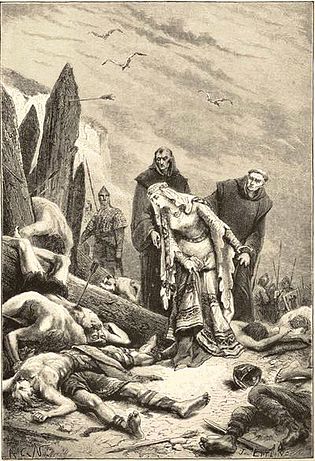
Book Corner: La Reine Blanche by Sarah Bryson

Mary Tudor’s childhood was overshadowed by the men in her life: her father, Henry VII, and her brothers Arthur, heir to the Tudor throne, and Henry VIII. These men and the beliefs held about women at the time helped to shape Mary’s life. She was trained to be a dutiful wife and at the age of eighteen Mary married the French king, Louis XII, thirty-four years her senior.

When her husband died three months after the marriage, Mary took charge of her life and shaped her own destiny. As a young widow, Mary blossomed. This was the opportunity to show the world the strong, self-willed, determined woman she always had been. She remarried for love and at great personal risk to herself. She loved and respected Katherine of Aragon and despised Anne Boleyn – again, a dangerous position to take.

Author Sarah Bryson has returned to primary sources, state papers and letters, to unearth the truth about this intelligent and passionate woman. This is the story of Mary Tudor, told through her own words for the first time.

Mary Tudor, Queen of France, is probably my favourite Tudor. She is a woman who understood duty, but also managed to forge her own way in life, while keeping her mercurial brother (Henry VIII) appeased. I have loved reading anything I could find on her since watching the film The Sword and the Rose as a teenager.

Mary Tudor followed her duty and married the husband her brother chose for her – Louis XII of France. However, before leaving England’s shores for her new life as Queen of France, she managed to extract a promise from her brother which would mean she could eventually choose the direction of her life. Henry  promised that if she married the husband he had chosen for her, then she would be allowed to choose her next husband. And Mary knew that she would have a second husband; Louis XII was 53 and Mary was 18. Their marriage lasted less than 3 months.

Not wanting to trust to her brother’s ability to keep to his promise once she was back under his roof, Mary then married the man of her choice before she had even left France. He was Charles Brandon, one of  her brother’s closest friends. The marriage could have caused great scandal, Brandon was far lower in rank than his royal bride. It did cause the couple financial hardship, that lasted the duration of their marriage; Henry exacted a heavy price, in fines, for his sister to follow her heart.

Sarah Bryson tells the story of Mary Tudor with great empathy and a deep understanding of the woman, her personal and private life, her highs and lows. Using Mary’s own letters as the backbone of the book, the author brings the French Queen to vivid life. It is impossible not to read this book and come to a new admiration for this remarkable lively English princess.

Mary Tudor, Queen of France, and Charles Brandon, Duke of Suffolk

Mary would not have been able to challenge men verbally, or publicly speak her mind. To do so would have been to step out of the mould that had been so carefully created for her by the men in her life and the culture of her time. Many men held the belief that to publicly challenge a man meant that a woman was not in fact a true woman, or that the woman was somehow mentally unbalanced. There were even physical and humiliating punishments for women who dared to challenge or speak ill of their husbands. Therefore Mary influenced the men in her life by using what skills and means she had at hand – in her case it was letter writing.

Mary Tudor’s letters are a fascinating and captivating look at how a woman could wield power without publicly challenging the patriarchy. They show how Mary was able to manoeuvre those around her to follow her heart – marrying her second husband for love, rather than being dragged back to the international chess game as a marriage pawn. They are also, on occasion, a way of looking into Mary’s life whereby the layers of princess and queen are stripped back and only the woman remains.

La Reine Blanche by Sarah Bryson provides an intimate assessment of the life of Mary Tudor. The author’s love of her subject shines through on every page. Her extensive knowledge of Mary, Charles Brandon and Henry VIII serves to make this book both entertaining and informative and makes it eminently readable. The reader is engaged from the first page and transported to the life and times of the subject and her family.

La Reine Blanche is well written and engaging. With impeccable research it follows Mary’s story from cradle to grave, giving a deep insight into the woman and the times in which she lived. It analyses the constraints which were placed on a woman – and especially a queen – at that time. It also provides an interesting assessment of Henry VIII, both as a brother and a king. There is a wonderful balance between Mary’s public and private life as the author delves into Mary’s experiences, motivations and clever manipulations of those around her. Sarah Bryson brings Mary to life through her letters, clearly demonstrating how the Tudor princess was aware of her station and the limitations placed on women; but used her own wiles and the art of flattery and persuasion to take as much control of her life as was humanly possible.

In reading Sarah Bryson’s wonderful biography, it is impossible not to fall a little bit in love with this amazing Tudor princess and French Queen.

La Reine Blanche by Sarah Bryson is now available from Amberley Books and Amazon .

About the author: Sarah Bryson is a researcher, writer and educator. Se runs a website dedicated to Tudor history and has written on other websites including ‘On the Tudor Trail’ and ‘Queen Anne Boleyn’. She has been studying primary sources to tell the story of Mary Tudor for a decade and is the author on Mary Boleyn and Charles Brandon.

*

Picture courtesy of Wikipedia

*

My books

Heroines of the Medieval World tells the stories of women, famous, infamous and unknown, who shaped the course of medieval history. It is available in hardback in the UK from both Amberley Publishing and Amazon UK. It is now available in Hardback from Amazon US  and worldwide from Book Depository.
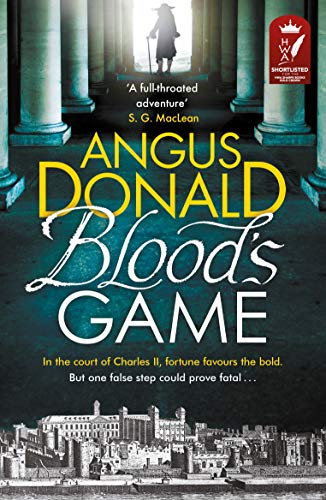
From Emma of Normandy, wife of both King Cnut and Aethelred II to Saint Margaret, a descendant of Alfred the Great himself, Silk and the Sword: the Women of the Norman Conquest traces the fortunes of the women who had a significant role to play in the momentous events of 1066. Silk and the Sword: the Women of the Norman Conquest will be released in the UK on 15 November 2018 and is available for pre-order on Amazon UKAmberley Publishing and Book Depository.

You can be the first to read new articles by clicking the ‘Follow’ button, liking our Facebook page or joining me on Twitter.

*

©2018 Sharon Bennett Connolly