Ermengarde de Beaumont, Queen of Scots

History... the Interesting Bits
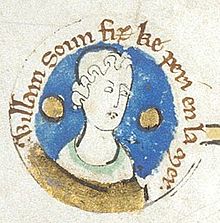
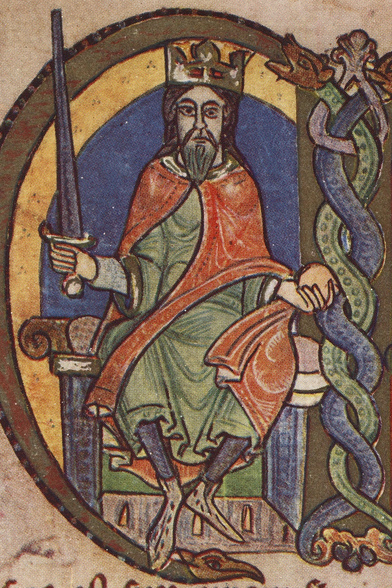
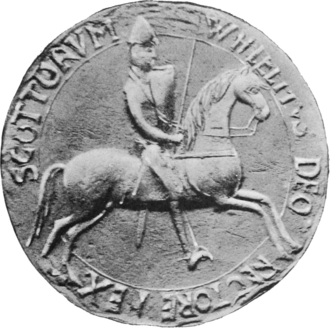
William I the Lion, King of Scots

Unusually for a king in medieval times, by 1185 William the Lion, King of Scots had been on the throne for 20 years, was past 40 and was still unmarried, despite having several illegitimate children. Until he married, William’s heir was his younger brother, David. Ironically, William’s mother, Ada de Warenne, who had been so keen to find a bride for her oldest son Malcolm IV that she was not above putting suitable girls in his bed, does not seem to have had the same sense of urgency with William. There’s no evidence that she pressured him to marry as she had his older brother. Though, I suppose, at least William had shown an interest in women and had the bastards to prove it.

And William was looking for a bride. Henry II, always happy to remind William that he was the Scots king’s overlord, exercised his right to choose William’s wife.

In May 1186, during a council at Woodstock, King Henry suggested Ermengarde de Beaumont as a bride for William. Ermengarde was the daughter of Richard, Vicomte de Beaumont-sur- Sarthe, who was himself the son of Constance, one of the many illegitimate daughters of King Henry I of England. With such diluted royal blood, she was hardly a prestigious match for the king of Scots. William felt slighted but he reluctantly accepted the marriage after consulting his advisers, the offer sweetened by a generous payment for the wedding celebrations and the return of two forfeited Scottish castles, as a wedding present.

History... the Interesting Bits
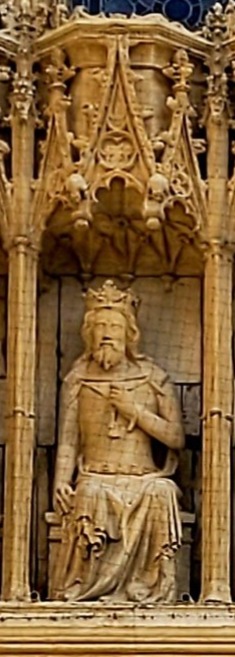
Henry II, King of England, Lincoln Cathedral

We have, of course, no record of Ermengarde’s thoughts on the marriage, nor of whether she was aware of the fact it was seen as an insult to the Scots king. The wedding was celebrated at Woodstock, conducted by the Archbishop of Canterbury, on 5 September 1186,

‘with great magnificence, on the nones of September [5th Sept.] (being the sixth day of the week [Friday], the moon being in her eighteenth day), in the royal chapel in the park at Woodstock, in the presence of the king himself.’1

Following the ceremony, King Henry hosted 4 days of festivities. Although we do not know Ermengarde’s birth date, at the time of the marriage, she was described as ‘a girl’, suggesting that she may have only just reached the age of 12, the minimum legal age girls could marry. It has been suggested that Ermengarde’s tender age may also have been the reason for William’s reluctance to marry her.

We do not know the year of birth of Ermengarde’s first child, a daughter named Margaret, but it was sometime between 1187 and 1195. Another daughter, Isabella, was born a year or two later. If Ermengarde gave birth to Margaret the year after her marriage, it seems highly likely that she was at least fourteen or fifteen years old at the time of her wedding. However, a later birthdate, in the 1190s would suggest that Ermengarde was younger at the time of her marriage and was given time to mature before bearing children. The king’s growing need for an heir would, perhaps, indicate that Ermengarde was old enough to bear children at the time of their marriage, and that describing the bride as ‘a girl’ was alluding to her youth, but not her actual age. Unfortunately, the vagaries of chroniclers means that we cannot say for certain

In the spring of 1195 King William fell gravely ill at Clackmannan, causing a succession crisis, the sum of his legitimate children being one, possibly two, daughters at this time – and no son. The Scottish barons deliberated a number of options, such as recognising William’s oldest legitimate daughter, Margaret, as his heir. They also considered marrying Margaret to Otto, Duke of Saxony, grandson of Henry II, and allowing Otto to succeed to the throne. The earl of Dunbar led a faction who claimed that both solutions were contrary to the custom of the land, so long as the king had a brother who could succeed him. Traditionally, the Scots throne had passed to the oldest, legitimate, male member of the royal family, rather than by primogeniture.

This must have been a worrying time for Ermengarde, not only for the health of her husband, but for her own status in Scotland, should her daughter be disinherited. Not to mention the concern that Margaret, then aged only 8 at the most, might be married at such a young age to secure the succession. In the event, the discussion was moot as the king recovered from his illness and three years later the queen gave birth to Alexander, the much-desired son and heir.

History... the Interesting Bits
Alexander II, King of Scots

Chronicler John of Fordun described the relief and celebration felt throughout the country at the birth of the heir to the Scots throne:

‘Now this most fortunate king of Scotland, William, had, nearly twelve years ago, with great splendour and rejoicings, taken to wife Ermyngarde, daughter of the Viscount of Beaumont… By her he had a son, named Alexander, — to the great gladness of his people, and the refreshment of the whole kingdom of the Scots, as the after course of these annals will show forth. He was born at Haddington, on Saint Bartholomew’s Day, in the year 1198. In every place in the whole country, the common folk used to forsake their menial work on this day, wherein they first heard tidings of his birth, and spend it in joy; while priests and churchmen donned the alb, and walked in procession, with loud voice glorifying God in hymns and canticles, and humbly praising Him.’

Although she does not act as a witness on any of King William’s extant charters, Queen Ermengarde appears to have played an active role in Scotland, with William allowing her an increasingly influential part in public affairs. One disgruntled canon, in 1207, complained that Walter, a royal chaplain, had obtained the bishopric of Glasgow by not only bribing the king’s chamberlain, but also Queen Ermengarde. The queen may also have offered patronage to relatives, including one Richard de Beaumont, perhaps a brother or cousin, who received substantial lands in Crail. As the king’s health declined in old age – he was already 46 when he married Ermengarde – the queen took on more responsibilities, especially where her children were concerned.

Relations with England had changed in 1199, with the accession of King John, the youngest son of Henry II. During the reign of King Richard, William had agreed with the justiciar, William Longchamp, and supported Arthur of Brittany as the king’s heir. However, it was John who succeeded Richard and he may well have remembered William’s stance. Soon after John’s accession, King William asked for the return of Northumberland. The two kings met at Lincoln in 1200, with William doing homage for his English lands but getting no satisfaction in his claim to Northumberland. In subsequent meetings, John continued to prevaricate, leaving the dispute unresolved.

In the meantime, the death of the bishop of Durham meant John took over the vacant see and set about building a castle at Tweedmouth. The Scots, saw this as a direct threat to Berwick and destroyed the building works. Matters reached a crisis point in 1209.

History... the Interesting Bits
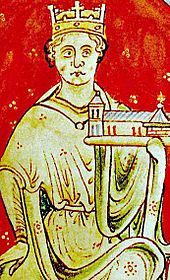
King John of England

After many threats, and with both sides building up their armies, the two kings met at Norham, Northumberland, in the last week of July and first week of August 1209. The Scots were in a desperate position, with an ailing and ageing king, and a 10-year-old boy as heir, whilst the English, with their Welsh allies and foreign mercenaries, had an army big enough to force a Scottish submission. Queen Ermengarde appears to have acted as a mediator between the two kings, although the subsequent treaty, agreed at Norham on 7 August, was humiliating for the Scots it did, at least, prevent a war. The Scots agreed to pay 15,000 marks for peace and to surrender hostages, including the king’s two oldest legitimate daughters, Margaret and Isabella. As a sweetener, John promised to marry the Margaret to one of his sons; although Henry was only 2 years old at the time and Richard was just 8 months, whilst the girls were already in their mid teens, at least. It was agreed that Isabella would be married to an English noble of suitable rank, an earl at least.

The king’s daughters and the other Scottish hostages were handed into the custody of England’s justiciar, at Carlisle on 16 August.

How the girls, or their parents, thought about this turn of events, we know not. Given John’s proven record of prevarication and perfidy, King William may have hoped that the promised marriages would occur in good time but may also have expected that John would find a way out of the pledges he had made. William and John met again at Durham in February 1212, a meeting in which ‘The queen of Scotland was present and acted as mediator, an extraordinary woman, gifted with a charming and witty eloquence.’3 The queen’s efforts bore fruit and peace between the two countries was renewed, as ‘There in the presence of the nobles of both kingdoms and the revered lady the queen of the Scots a formula for achieving peace and love, to be observed between the kingdoms and their kings for ever, was worked out anew and confirmed by charters given by both parties.’4

It was also agreed that the Scottish prince, Alexander, should be given an English wife. With at least one of the prince’s older sisters already intended for a son of King John, marrying Alexander to one of John’s daughters would further bind the Scots to the Plantagenet cause. Prince Alexander, now aged 14, would be knighted by King John, the ceremony taking place at Clerkenwell on 4 March 1212.

Ermengarde may have taken a more prominent role in the negotiations of 1212 as King William’s health began to fail. Their son, Alexander, was still only a teenager and so it would have fallen to the queen to take the lead in the talks. William was a physically active king almost to the very last moment. In January and February 1213, when both the Scots and English kings were close to the border, a meeting was proposed, but William resisted and could not be persuaded to meet with John. In his 70th year, he was probably already very ill.

History...the Interesting Bits
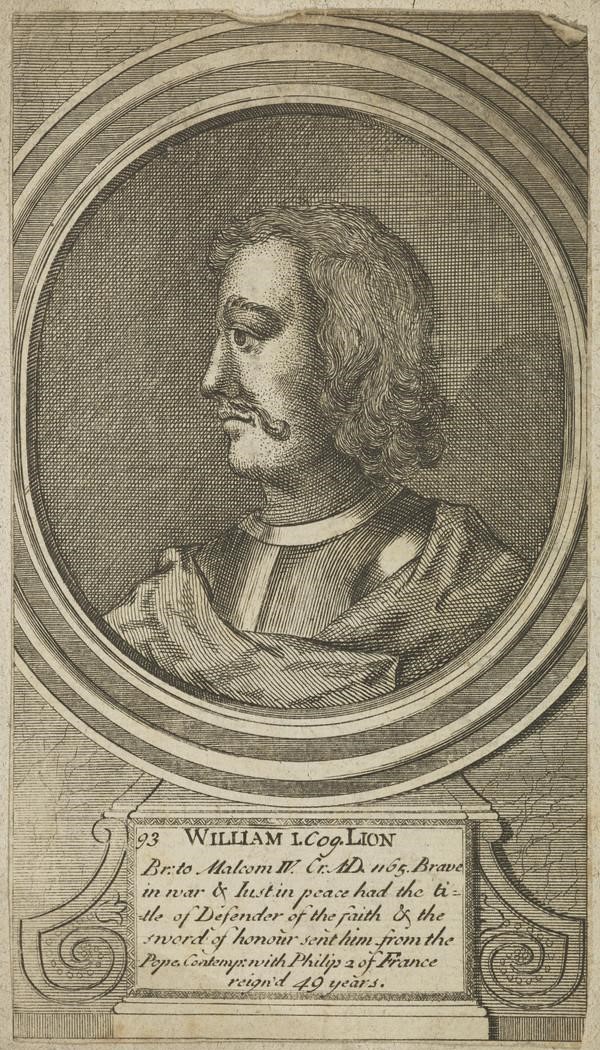
18th century image of William I the Lion

As William’s health failed, Queen Ermengarde appears to have taken on more responsibilities and exerted her influence on the court. The king rallied in 1214, so that he was well enough to travel to Elgin in the summer, where he came to an accord with John, the new earl of Caithness, and received the earl’s unnamed daughter as a hostage. The journey took its toll on the king, and he suffered some sort of collapse. He was taken, in easy stages, to the royal castle at Stirling, where he saw his lords for the last time. With the queen in attendance, William urged his barons and bishops to accept Alexander, now 16 years old, as king. King William I, later known as William the Lion, died on 4 December 1214, aged about seventy-one, having reigned for a total of forty-nine years, almost to the day.

On the morning after her husband’s death, Queen Ermengarde was ‘in a state of extreme mourning and worn out with grief.’5 The prelates and nobles attempted to rouse the queen from her melancholy by asking that she arrange the late king’s funeral, but the queen would not be moved. They left Ermengarde with her grief and took the young king to Scone, where he was crowned as King Alexander II on 6 December. King William was then buried at Arbroath on 10 December. The new king and his mother then presided over the royal Christmas feast at Forfar but returned to Stirling in January 1215, before visiting Arbroath, to see the tomb of King William.

Queen Ermengarde had been much younger than her husband, possibly by as much as thirty years. She would, therefore, continue to live for many years into her son’s reign.

History ... the Interesting Bits
Magna Carta

King Alexander II sided with the English barons in their struggle against the tyranny of King John, making an alliance with the northern barons, who agreed to press for a decision on the future of Alexander’s sisters, and a resolution of the lordship of the northern counties. He raided the northern English earldoms, exploiting the unrest in England to renew Scottish claims to these counties, besieging Norham in October 1215 and receiving the homage of the leading men of Northumberland. And when a French force joined the fight on the side of the rebels, the papal legate pronounced a sentence of excommunication on the rebels and their French and Scottish allies; it even extended to Queen Ermengarde. Scotland put under interdict. Following John’s death in October 1216 and the defeat of the French rebel army at Lincoln in May 1217, Alexander’s position in England became precarious.

The Scots king surrendered Carlisle Castle at Berwick on 1 December 1217 and submitted to England’s boy-king Henry III at Northampton later in the same month. Alexander’s sentence of excommunication was lifted by the archbishop of York, while the bishop of Durham absolved his mother, Queen Ermengarde.

With King Alexander’s submission, there followed an unprecedented almost 80 years of unbroken peace between England and Scotland, sealed by his marriage – in York – with Joan, Henry III’s sister in June 1221. Another marriage soon followed, when, in London on 30 October, Alexander’s oldest sister, Margaret, was married to Hubert de Burgh.

History ... the Interesting Bits
Joan of England, Queen of Scots

Queen Ermengarde must have felt relief that her son had found a bride, and hoped that an heir would soon follow. She may also have been satisfied that her eldest daughter, Margaret, once thought of as the heir to the Scots throne, was also finally settled in matrimony. Though there was complaint from some sides that Margaret had been pressed into a disparaging marriage when she had been promised a prince as a bridegroom. Hubert de Burgh was King Henry III’s justiciar, but was of minor nobility. He only receive his earldom of Kent after his marriage to Margaret. As for Margaret’s sister Isabella, she returned to Scotland, still unmarried. She eventually married Roger Bigod, the young Earl of Norfolk, in 1225. The wedding took place at Alnwick, in Northumberland, which may mean that Queen Ermengarde was able to attend.

Queen Ermengarde devoted her later years to founding an abbey at Balmerino, with the help of Alexander. A parish in the district of Cupar in county of Fife, it was an area she regularly visited for the benefit of her health. The dowager queen raised the money to found the Cistercian abbey, paying 1,000 merks to purchase the land and acting as overseer to the building project. The abbey was built in red stone, quarried locally. Dedicated to Saint Edward the Confessor, Balmerino was populated by monks from Melrose Abbey. Queen Ermengarde appears to have had a particular veneration for the sainted English king as the only other religious gift we can attribute to her was to the hospital of St Edward at Berwick.

The queen had lived long enough to see three of her four children settled in marriage, and may have met her first grandchild, a daughter born to Princess Margaret in 1227, also named Margaret. In the same year, Henry III’s brother Richard, Earl of Cornwall, arrived in Scotland to speak with Queen Ermengarde. The object of the discussions was his possible marriage to the queen’s youngest daughter, Marjory. The earl’s proposals were attractive to neither the Scots nor his brother and negotiations came to naught, but the fact that it was Ermengarde that Richard approached, rather than the king, clearly demonstrates the queen’s continuing influence on her family. Her youngest daughter was not married until August 1235, when she married Gilbert Marshal, Earl of Pembroke, at Berwick.

History... the Interesting Bits
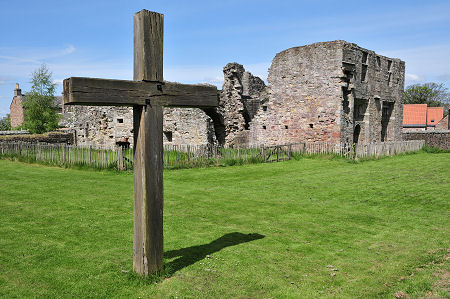
Balmerino Abbey with Queen Ermengarde’s Cross in the foreground

The queen did not live to see the wedding as in February 1233 Ermengarde de Beaumont died. She was buried before the high altar of the abbey to which she had dedicated her years of widowhood, Balmerino. Although the surviving records hint at the queen enjoying substantial authority in Scotland, especially where her family were concerned, we have few specifics. That she was entrusted with negotiating with the English emissaries, in 1209 and again in 1212, suggests that she possessed impressive diplomatic skills, and that King William had considerable confidence in his wife’s abilities. Furthermore, the queen’s evident grief at her husband’s death attests to a deep affection within the union, an affection that not only defined the marriage, but also the whole family, with the queen continuing to exert her influence on the relationships of her children in the years after her husband’s death.

Having served Scotland as queen for 28 years and as its dowager queen for a further 19 years, Ermengarde de Beaumont defined the role of Queen of Scots for subsequent royal consorts. Her memory cast a long shadow.

*

Images:

Courtesy of Wikipedia except Henry II, which is ©2025 Sharon Bennett Connolly FRHistS, and Balmerino Abbey which is courtesy of Undiscovered Scotland

Notes:

1. Mediaeval chronicles of Scotland, translated by Joseph Stephenson; 2. John of Fordun’s Chronicle of the Scottish Nation; 3. Walter Bower, Scotichronicon, V 4; 4. ibid; 5. Rosalind K. Marshall, Scottish Queens 1034–1714

Bibliography:

Walter Bower, Scotichronicon, V 4; Chronicles of the Picts, chronicles of the Scots, and other early memorials of Scottish history, edited by W. F. Skene; fmg.ac/Projects/MedLands/SCOTLAND; John of Fordun’s Chronicle of the Scottish Nation, edited by W. F. Skene, Edinburgh, Edmonston and Douglas; Rosalind K. Marshall, Scottish Queens 1034–1714; Mediaeval chronicles of Scotland: the chronicles of Melrose and Holyrood, translated by Joseph Stephenson; Richard Oram, editor, The Kings and Queens of Scotland; The annals of Roger de Hoveden. Comprising the history of England and of other countries of Europe from A.D. 732 to A.D. 1201, edited by Henry T. Riley; David Ross, Scotland, History of a Nation; W.W. Scott, Ermengarde [Ermengarde de Beaumont], oxforddnb.com; W.W. Scott, William I [known as William the Lion] (c. 1142–1214), oxforddnb.com

*

My Books:

Signed, dedicated copies of all my books are available through my online bookshop.

Out now: Scotland’s Medieval Queens

Books by Sharon Bennett Connolly

Scotland’s history is dramatic, violent and bloody. Being England’s northern neighbour has never been easy. Scotland’s queens have had to deal with war, murder, imprisonment, political rivalries and open betrayal. They have loved and lost, raised kings and queens, ruled and died for Scotland. From St Margaret, who became one of the patron saints of Scotland, to Elizabeth de Burgh and the dramatic story of the Scottish Wars of Independence, to the love story and tragedy of Joan Beaufort, to Margaret of Denmark and the dawn of the Renaissance, Scotland’s Medieval Queens have seen it all. This is the story of Scotland through their eyes.

Scotland’s Medieval Queens gives a thorough grounding in the history of the women who ruled Scotland at the side of its kings, often in the shadows, but just as interesting in their lives beyond the spotlight. It’s not a subject that has been widely covered, and Sharon is a pioneer in bringing that information into accessible history.’ Elizabeth Chadwick (New York Times bestselling author)

Available now from Amazon and Pen and Sword Books

Also by Sharon Bennett Connolly:

Books by Sharon Bennett Connolly

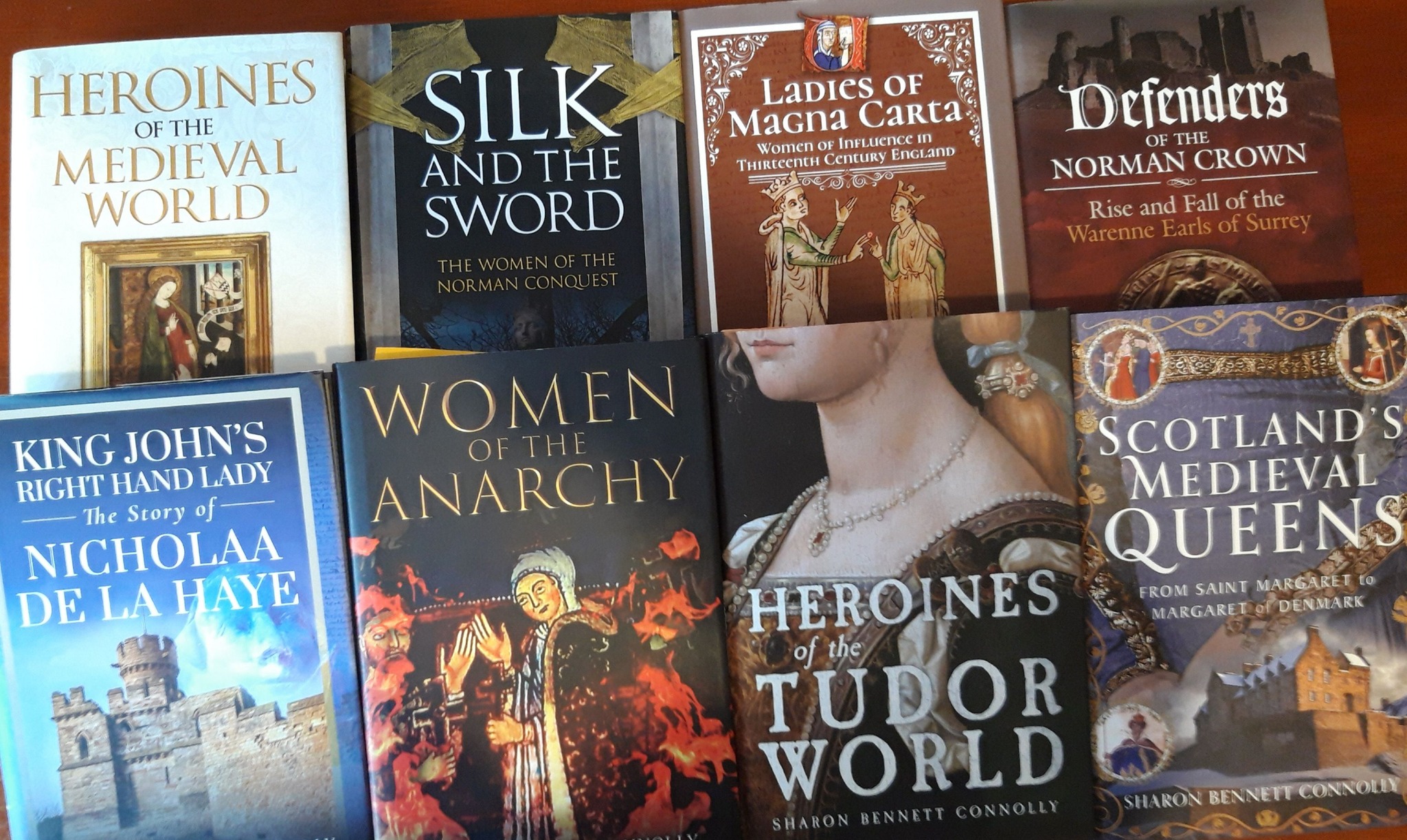
Heroines of the Tudor World tells the stories of the most remarkable women from European history in the time of the Tudor dynasty, 1485-1603. These are the women who ruled, the women who founded dynasties, the women who fought for religious freedom, their families and love. Heroines of the Tudor World is now available for pre-order from Amberley Publishing and Amazon UK. Women of the Anarchy demonstrates how Empress Matilda and Matilda of Boulogne, unable to wield a sword themselves, were prime movers in this time of conflict and lawlessness. It shows how their strengths, weaknesses, and personal ambitions swung the fortunes of war one way – and then the other. Available from Bookshop.orgAmberley Publishing and Amazon UKKing John’s Right-Hand Lady: The Story of Nicholaa de la Haye is the story of a truly remarkable lady, the hereditary constable of Lincoln Castle and the first woman in England to be appointed sheriff in her own right. Available from all good bookshops Pen & Sword Booksbookshop.org and Amazon

Royal Historical Society

Defenders of the Norman Crown: The Rise and Fall of the Warenne Earls of Surrey tells the fascinating story of the Warenne dynasty, from its origins in Normandy, through the Conquest, Magna Carta, the wars and marriages that led to its ultimate demise in the reign of Edward III. Available from Pen & Sword BooksAmazon in the UK and US, and Bookshop.orgLadies of Magna Carta: Women of Influence in Thirteenth Century England looks into the relationships of the various noble families of the 13th century, and how they were affected by the Barons’ Wars, Magna Carta and its aftermath; the bonds that were formed and those that were broken. It is now available in paperback and hardback from Pen & SwordAmazon, and Bookshop.orgHeroines of the Medieval World tells the stories of some of the most remarkable women from Medieval history, from Eleanor of Aquitaine to Julian of Norwich. Available now from Amberley Publishing and Amazon, and Bookshop.orgSilk and the Sword: The Women of the Norman Conquest traces the fortunes of the women who had a significant role to play in the momentous events of 1066. Available now from Amazon,  Amberley Publishing, and Bookshop.org.

Alternate Endings: An anthology of historical fiction short stories including Long Live the King… which is my take what might have happened had King John not died in October 1216. Available in paperback and kindle from Amazon.

Podcast:
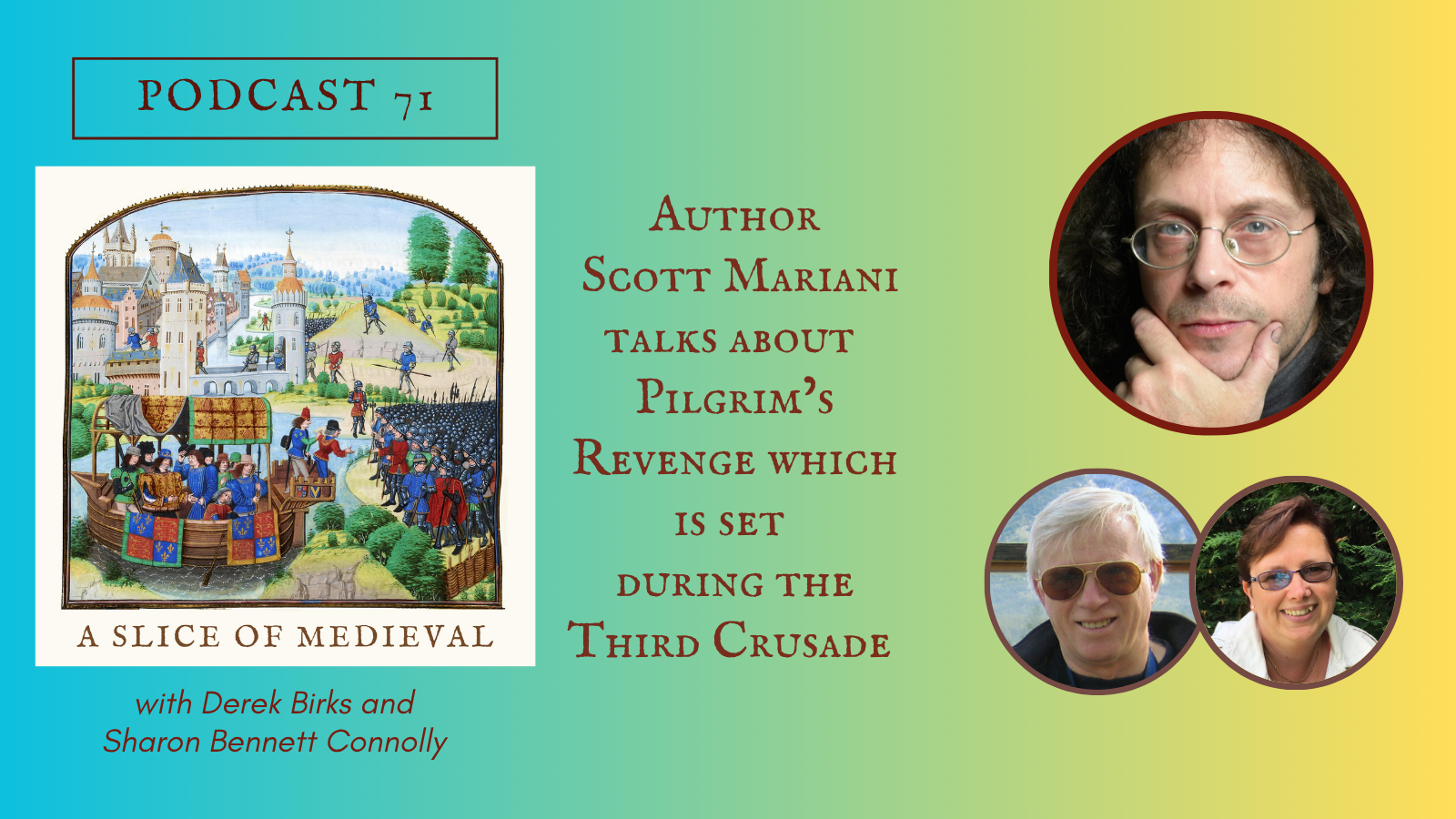
A Slice of Medieval

Have a listen to the A Slice of Medieval podcast, which I co-host with Historical fiction novelist Derek Birks. Derek and I welcome guests, such as Bernard Cornwell and Elizabeth Chadwick, and discuss a wide range of topics in medieval history, from significant events to the personalities involved.

Every episode is also now available on YouTube.

*

Don’t forget! Signed and dedicated copies of all my books are available through my online bookshop.

For forthcoming online and in-person talks, please check out my Events Page.

You can be the first to read new articles by clicking the ‘Follow’ button, liking our Facebook page or joining me on TwitterThreadsBluesky and Instagram.

*

©2025 Sharon Bennett Connolly FRHistS.

Wordly Women: Susan Abernethy

When I started writing my blog way back in 2015, Susan Abernethy already had a successful website telling the stories from History. Despite that, she never saw me as competition. Susan offered me advice and encouragement. And I will never forget that. So, today, it is so nice to be able to pay a little of that back by welcoming Susan to my author spotlight series, Wordly Women, to tell us a little of her writing journey – and about her two books, the second of which, The Formidable Women who Shaped Medieval Europe: Power and Patronage at the Burgundian Court, hits the shops at the end of October.

Welcome Susan!

Sharon: So, What got you into writing?

Susan: A friend of mine from high school started a women’s history blog in 2012 and put out a call for someone to join her in writing articles. I didn’t even know if I could write but I answered and wrote an article on Queen Emma of Normandy. It got a really good reception, and the writing took off from there. Later, I decided it would be good to write not only about women, but other topics in history and so The Freelance History Writer blog began.

Sharon: Tell us about your books.

History ... the Interesting Bits

Susan: Many years ago, I found the books of Jean Plaidy in the library and read every one I could get my hands on. This included The Merry Monarch’s Wife, about Catherine of Braganza, wife of King Charles II. When I started the blog in 2012, one of my plans was to write an article about every Queen of England. While doing some research on Catherine of Braganza, it seemed like there wasn’t a great deal of information about her available, especially in English. It turned out most of the biographies were old, published in 1915 and in the 1930’s and 40’s.

Also, people, including myself, believed Catherine was miserable and nearly forgotten because of her unfaithful husband and his glamourous mistresses. I wondered if this was true. Having very little knowledge of Portuguese history, I ended up reading dozens of history books about the country and their seaborne empire, which is pretty fascinating stuff. This research was necessary to put Catherine in historical context and to explain why the ports of Tangier and Bombay were included in her dowry.

So the adventure began. Charles II’s Portuguese Queen: The Legacy of Catherine of Braganza is my debut book which was published in April 2025 in the UK and June 2025 in the US.

The second book is called The Formidable Women Who Shaped Medieval Europe: Power and Patronage in the Burgundian Court. This is the result of a mountain of research beginning with an article about Isabel of Portugal. She was the daughter of King John I of Portugal and his wife, Philippa of Lancaster, the daughter of John of Gaunt and Blanche of Lancaster and the only English queen of Portugal.

Isabel, at the age of thirty, married Philip the Good, the third Valois Duke of Burgundy and was the mother of the fourth duke, Charles the Bold. After reading biographies of Isabel and Charles, they seemed to me to be captivating characters, both strong and powerful. Charles also appeared to be a real character and possibly suffering from some kind of mental illness. After writing articles about both of them, I decided to delve further into Burgundian history, which covers the Low Countries, northern France and part of the Holy Roman Empire. Richard Vaughan wrote excellent biographies of all four of the Valois Dukes so that is where the research started.

Philip the Bold, one of the greatest diplomats in his era, began a program of amassing an empire which included the marriages of his daughters, granddaughters, nieces and many others into various houses of Europe. This book is a collection of 31 women related to the Valois dukes by blood and marriage. It includes the wives of kings, dauphins, dukes, counts, and others along with a few queens and a queen regnant, even a saint. In telling their stories, you discover a great variety of history of many principalities of western Europe.

Sharon: Is there a book you’ve read recently that influenced your research?

Susan: A year or so ago, I read Sharon L Jansen’s book The Monstrous Regiment of Women: Female Rulers in Early Modern Europe. Her main point is that historical family trees basically only show the descendants of men. If the women are mentioned at all, it is as the wife or maybe the daughter if she married an important man. She says we need to look at the women and their connections, not just their husbands and children. How did they interact with other women? A total eye-opener for me, now I cannot look at history in any other way. It really guided me in the research and writing of my second book on the Valois royal and aristocratic women. Some of these women lived in luxurious comfort while others had to scrape and fight to keep their patrimonies from being wrested from them by powerful men.

Sharon: This is soooooo true!

Sharon: Who is your favorite historical person and why?

History ... the Interesting Bits

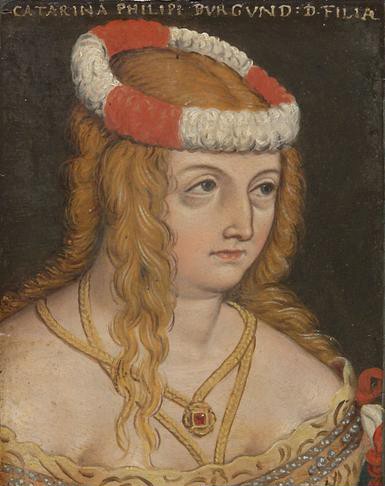
Susan: I have many favorites so it’s hard to choose one. Margaret of Austria, Regent of the Netherlands and Anne de Beaujeu, Duchess of  Bourbon and Regent of France, come to mind, both of whom are in the second book. But while I was researching the formidable women, I came across Catherine of Burgundy, Duchess of Austria and Countess of Ferrette, the daughter of Philp the Bold. Her life really captivated me for several reasons. When her father didn’t pay the balance of her dowry, she convinced her husband to give her the county of Ferrette, not just for the income but to rule on her own.

Catherine took full advantage of this opportunity. She acted as diplomat for her brother, John the Fearless and her nephew Philip the Good. She engaged in feuds and even started a small conflict with the city of Basel. She must have had remarkable charisma and a forceful personality. But the best part is she made a marriage without the permission of her brother. I haven’t come across many women who did such a thing. She may have done it to have an ally for her feuds and to maintain her position as countess. But she also may have been in love with the man. When her nephew Philip forced her to back out of the marriage, she seems to have lost her will to live which is pretty sad. But she’s my current favorite medieval historical person.

Sharon: Who is your least favorite historical person and why?

History ... the Interesting Bits

Susan: At the moment, I’m going to say Ferdinand of Aragon for several reasons. One the one hand, I have to admire his political acumen and diplomatic panache. In the era of Isabella of Castile, King Henry VIII, King Francis I and Holy Roman Emperor Charles V, he held his own. But his treatment of women is abominable.

He appears to have navigated his relationship with Isabella really well. They were on equal footing and managed to share their responsibilities. But once Isabella was gone, he engaged in antics like marrying again to try to have another child to displace his daughter Juana as queen of Aragon, as well as not supporting his younger daughter Katherine of Aragon once her husband Arthur Tudor died. He also is responsible, along with her husband Philip as well as her son HRE Charles V, for spreading terrible rumors about Juana of Castile’s mental health and for her eventual captivity which lasted for 45 years. It’s not a pretty story.

Sharon: How do you approach researching your topic?

Susan: The process of research starts with reading. Lots of reading. After finding as many books as I can on my topic, I start reading and find more resources. This process also involves searches on the internet for sources. Then, I make notes from my reading. I treat each chapter of the book as if it were an extended post for my blog. The notes are combined into a narrative which then becomes a chapter, and the chapters are assimilated into the book.  

Sharon: Tell us your ‘favourite’ story you have come across in your research.

Susan: This is a good one! Many years ago, I read a turn of the century biography of Philippa of Hainault, queen of King Edward III of England. The king and queen arranged a marriage for their eldest daughter Isabella to Louis II, Count of Flanders, also known as Louis of Male. The author relates the story of how Louis jilted Isabella at the altar, fleeing to France to avoid the wedding ceremony. Louis had promised his ally, King Philip VI of France that he would marry Margaret, the middle daughter of the Duke of Brabant and he eventually did.

Now Louis was not a faithful husband to Margaret and had something along the lines of 18 illegitimate children. Margaret was 7 years older than Louis. She gave birth to her daughter Margaret of Male in 1350 who eventually married the first Duke of Burgundy, Philip the Bold in 1369. Two years later, Countess Margaret deserted the court of Flanders to live in the country.

The author of the biography of Philippa of Hainault casually mentions that Margaret, Countess of Flanders, ordered the nose of Louis’ mistress cut off after the mistress gave birth to twins. As a result of her injuries, the mistress died. She insinuates this was the reason for Margaret abandoning the court. This sensational story really piqued my curiosity, and I searched for the truth for a long time.

Why did Margaret desert the Flemish court, something Belgian historians have debated for years? Did Louis abandon her? Did she abandon him? Was she mentally ill? Is there a history of mental illness in the House of Reginar of Brabant?

It seems an unknown chronicler from Bruges, in 1430, is the instigator of the report of Margaret cutting off the nose of Louis’ lover. He wrote this sixty years after the alleged event. It is entirely possible he spoke with someone who knew the truth of the matter from oral tradition. It is also possible he made up the entire scenario. Since then, a chronicler restated the story in 1531, and popular historians have repeated it down through the ages. While there is still the possibility the story is true, it is highly unlikely, and these chroniclers may have had their own agenda in spreading the rumors.

The stories of the jilting of Isabella, the marriage of Margaret of Brabant to Louis, Count of Flanders and her daughter Margaret of Male, wife of Philip the Bold, Duke of Burgundy, are all in the Formidable Women book.

Sharon: Tell us your least ‘favourite’ story you have come across in your research.

Susan: That has to be the story of Blanche II, Titular Queen of Navarre. Her father was King Juan II of Aragon, and her mother was Blanche I, Queen of Navarre. King Juan was crafty and sly and ruled Navarre by right of his wife. But once Blanche I died, a family feud ensued and King Juan did everything in his power to retain the governance of Navarre, even going so far as to ignore the rights of Blanche II and her brother Charles who had both gained the approval of the Cortes of Navarre as the legal heirs of Blanche I.

This state of affairs lasted for years. Blanche II had been married to Enrique IV of Castile, but the marriage was not a happy one and eventually, the union was annulled and Blanche II returned to Aragon. Her father locked her up in prison to prevent her from gaining the throne of Navarre to which she was legally entitled. Blanche remained in prison from 1453 until her death under suspicious circumstances in December 1464.

What makes this story even sadder is the fact that King Juan II of Aragon married again and had a son, Ferdinand of Aragon, who married Isabella of Castile and was the father of Queen Juana of Castile. In an eerie twist of fate, similar to Blanche II of Navarre, Ferdinand managed to declare his daughter Juana mentally unstable and locked her up for 45 years in Tordesillas. History repeats itself.

Sharon: Are there any other eras you would like to write about?

History ... the Interesting Bits

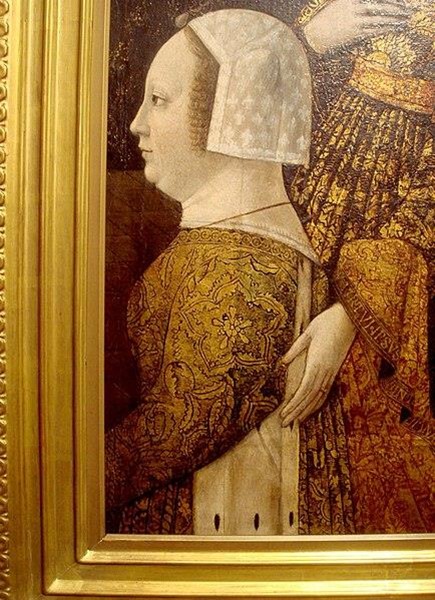
Susan: My interest in the medieval, early modern and Renaissance eras is pretty passionate and I’ve been out of my element by writing about the Stuart era. But the Stuart’s need an update and more scrutiny. If I did look at a different era, it might be Italian medieval and Renaissance history, a subject I’ve tried to avoid for many years because I found it to be meandering and complicated. But recently, I’ve delved into the stories of women such as Bona of Savoy, who features in my second book, as well as Bianca Maria Visconti, mother of Bona’s husband, Galeazzo Maria Sforza, Duke of Milan, and Valentina Visconti, wife of Louis I, Duke of Orleans who was assassinated by John the Fearless, Duke of Burgundy. These are tremendous women’s stories and pique my interest for more.

Sharon: What are you working on now?

Susan: I’m currently in the research stage of writing a biography of Mary Beatrice d’Este, second wife of King James II of England. She was the sister-in-law of Catherine of Braganza and the only Italian Queen of England. This book will be along the same lines as the biography of Catherine.

The research into Mary Beatrice brought up another intriguing subject. Her mother was Laura Martinozzi, Duchess of Modena, one of the many nieces of Cardinal Mazarin, the prime minister of Kings Louis XIII and XIV of France. Seems like another intriguing topic to look into.

Sharon: What is the best thing about being writer?

Susan: Having been an avid reader all my life, being a writer allows me to keep reading and to read about any topic that interests me. I love learning! I probably should have been a history teacher but never pursued it. By writing books and for the blog it allows me to educate people who are interested in the fascinating stories of history. My main goal is to get someone to read a book and hopefully enjoy the history as much as I do.

About the Author:

History ... the Interesting Bits

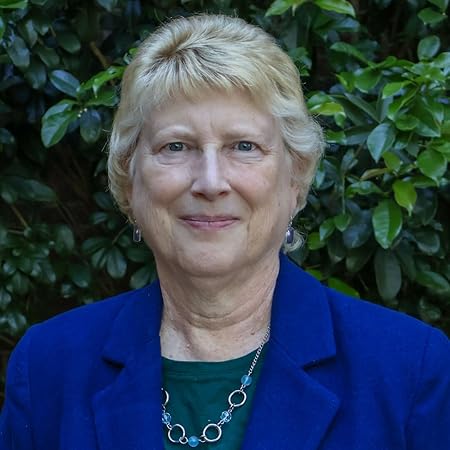
Susan Abernethy’s passion for history dates back fifty years and led her to study for a Bachelor of Arts degree in history at the University of North Carolina at Charlotte. She is currently a member of the Rocky Mountain Medieval and Renaissance Association, the Society for Renaissance Studies and the Historical Association. Her work has appeared on several historical websites and in magazines and includes guest appearances on historical podcasts. Her blog, The Freelance History Writer, has continuously published over five hundred historical articles since 2012, with an emphasis on European, Tudor, Medieval, Renaissance, Early Modern and women’s history. She is currently working on her third non-fiction book.

Buy the books:

Charles II’s Portuguese Queen: The Legacy of Catherine of Braganza; The Formidable Women Who Shaped Medieval Europe: Power and Patronage in the Burgundian Court

*

My Books:

Signed, dedicated copies of all my books are available through my online bookshop.

Out now: Scotland’s Medieval Queens

Books by Sharon Bennett Connolly

Scotland’s history is dramatic, violent and bloody. Being England’s northern neighbour has never been easy. Scotland’s queens have had to deal with war, murder, imprisonment, political rivalries and open betrayal. They have loved and lost, raised kings and queens, ruled and died for Scotland. From St Margaret, who became one of the patron saints of Scotland, to Elizabeth de Burgh and the dramatic story of the Scottish Wars of Independence, to the love story and tragedy of Joan Beaufort, to Margaret of Denmark and the dawn of the Renaissance, Scotland’s Medieval Queens have seen it all. This is the story of Scotland through their eyes.

Scotland’s Medieval Queens gives a thorough grounding in the history of the women who ruled Scotland at the side of its kings, often in the shadows, but just as interesting in their lives beyond the spotlight. It’s not a subject that has been widely covered, and Sharon is a pioneer in bringing that information into accessible history.’ Elizabeth Chadwick (New York Times bestselling author)

Available now from Amazon and Pen and Sword Books

Also by Sharon Bennett Connolly:

Books by Sharon Bennett Connolly

Heroines of the Tudor World tells the stories of the most remarkable women from European history in the time of the Tudor dynasty, 1485-1603. These are the women who ruled, the women who founded dynasties, the women who fought for religious freedom, their families and love. Heroines of the Tudor World is now available for pre-order from Amberley Publishing and Amazon UK. Women of the Anarchy demonstrates how Empress Matilda and Matilda of Boulogne, unable to wield a sword themselves, were prime movers in this time of conflict and lawlessness. It shows how their strengths, weaknesses, and personal ambitions swung the fortunes of war one way – and then the other. Available from Bookshop.orgAmberley Publishing and Amazon UKKing John’s Right-Hand Lady: The Story of Nicholaa de la Haye is the story of a truly remarkable lady, the hereditary constable of Lincoln Castle and the first woman in England to be appointed sheriff in her own right. Available from all good bookshops Pen & Sword Booksbookshop.org and Amazon

Royal Historical Society

Defenders of the Norman Crown: The Rise and Fall of the Warenne Earls of Surrey tells the fascinating story of the Warenne dynasty, from its origins in Normandy, through the Conquest, Magna Carta, the wars and marriages that led to its ultimate demise in the reign of Edward III. Available from Pen & Sword BooksAmazon in the UK and US, and Bookshop.orgLadies of Magna Carta: Women of Influence in Thirteenth Century England looks into the relationships of the various noble families of the 13th century, and how they were affected by the Barons’ Wars, Magna Carta and its aftermath; the bonds that were formed and those that were broken. It is now available in paperback and hardback from Pen & SwordAmazon, and Bookshop.orgHeroines of the Medieval World tells the stories of some of the most remarkable women from Medieval history, from Eleanor of Aquitaine to Julian of Norwich. Available now from Amberley Publishing and Amazon, and Bookshop.orgSilk and the Sword: The Women of the Norman Conquest traces the fortunes of the women who had a significant role to play in the momentous events of 1066. Available now from Amazon,  Amberley Publishing, and Bookshop.org.

Alternate Endings: An anthology of historical fiction short stories including Long Live the King… which is my take what might have happened had King John not died in October 1216. Available in paperback and kindle from Amazon.

Podcast:

A Slice of Medieval

Have a listen to the A Slice of Medieval podcast, which I co-host with Historical fiction novelist Derek Birks. Derek and I welcome guests, such as Bernard Cornwell and Elizabeth Chadwick, and discuss a wide range of topics in medieval history, from significant events to the personalities involved.

Every episode is also now available on YouTube.

*

Don’t forget! Signed and dedicated copies of all my books are available through my online bookshop.

For forthcoming online and in-person talks, please check out my Events Page.

You can be the first to read new articles by clicking the ‘Follow’ button, liking our Facebook page or joining me on TwitterThreadsBluesky and Instagram.

*

©2025 Susan Abernethy and Sharon Bennett Connolly FRHistS.

Helena Snakenborg: A Swedish Woman Living in Tudor England

History ... the Interesting Bits
Helena Snakenborg, Marchioness of Northampton, in coronation robes, 1603

An Elizabethan whose story I became aware of through a novel is Helena Snakenborg, who features in Tracy Borman’s novel, The King’s Witch. I had to know more about this Swedish lady living in Tudor England, and include her in my own Heroines of the Tudor World. Even more so after I learned that Helena was the only foreigner amongst Queen Elizabeth’s ladies. Helena was born in 1548, into an ancient Swedish baronial family. Her father, Ulf Henriksson, had been a trusted supporter of King Gustav I Vasa of Sweden. Her mother, Agneta Knuttson, was a descendant of the earls of Orkney and it is from her mother’s family that Helena took her name, Snakenborg.

In 1564, at the age of fifteen, Helena was appointed a maid of honour to Gustav Vasa’s daughter, and the sister of the new King Eric XIV, Princess Cecilia. Later that same year, Princess Cecilia embarked on a voyage to England, taking Helena with her. Cecilia claimed that as a committed Anglophile, she wanted to meet the queen of England. She may also have been hoping to revive her brother’s suit for Queen Elizabeth’s hand in marriage. Their overland journey to England was long and arduous.

They travelled through Poland and Germany in order to avoid hostile countries and were hampered by bad weather. The princess was accompanied by her husband and fell pregnant during the journey, necessitating further delays. Almost a year had passed by the time they arrived in London in September 1565, with the Spanish ambassador reporting to Philip II,

‘On the 11th instant [of September] the king of Sweden’s sister entered London at 2 o’clock in the afternoon. She is very far advanced in pregnancy, and was dressed in a black velvet robe with a mantle of black cloth of silver, and wore on her head a golden crown… She had with her six Ladies dressed in crimson taffety with mantles of the same.’1

The arrival of the Swedish princess caused a great deal of excitement at court and the queen gave them a lavish reception. Among Cecilia’s six ladies was Helena Snakenborg and in a letter to her mother, Helena wrote of their reception in England: ‘There came so many to visit us that there was no end to it. All wished us a hearty welcome to England.’2 After the official ceremonies were completed, Princess Cecilia was taken at once to the place designated for her confinement, where she gave birth to a son on 14 September. The princess was given the use of Bedford House as her London residence. She did not remain long in seclusion after the birth and she and her entourage soon became regular visitors at court, treated to receptions and entertainments.

History ... the Interesting Bits
William Parr, Marquess of Northampton

Helena was by all accounts a beautiful young woman, with large brown eyes, red hair and a pink and white complexion. She attracted the attention of William Parr, Marquess of Northampton, a man thirty-five years her senior whose sister, Kateryn Parr, had been Henry VIII’s sixth and final wife. In a letter to her mother, Helena told her about the marquess’s attention:

‘Amongst the gentlemen was a courtier who always came with the earliest arrivals and left amongst the last. When my gracious Lady had been “churched” after the baby was born, the Marquess of Northampton (for that was the courtier’s name) talked to my gracious lady about me.’3

The marquess of Northampton wasted no time in pressing his suit with Helena, sending her lavish gifts of clothes and jewels, and ‘being an impressionable and romantic young girl, Helena was swept off her feet by the experienced older man.’4 Helena was beguiled by Northampton, who wanted to marry her but felt prevented from doing so because, although divorced in 1551, his first wife Lady Anne Bourchier was still alive and there were some doubts as to the validity of the divorce.

In the meantime, Princess Cecilia had run up some rather large debts due to her lavish lifestyle in England. Her debts, in excess of £3,000, had been amassed as a result of the purchase of poultry, articles of plate and jewellery, a kirtle wrought with gold, a Venice lute – the list goes on. The princess left England in order to escape her creditors, though she had been obliged by the queen to sell whatever she could in order to raise as much money as she could to pay off at least some of the debt, leaving England in April 1566. The princess had wanted to take Helena with her, but the young woman was enjoying life in England, and the attentions of the marquess of Northampton, and wanted to stay.

History ... the Interesting Bits
Queen Elizabeth I

Queen Elizabeth came to Helena’s rescue by offering her a place in her household, appointing her a maid of honour in 1567 and later promoting her to Gentlewoman of the Privy Chamber. Although unpaid, the queen awarded her new maid of honour additional privileges, including lodgings at court, servants and a horse. It seems Queen Elizabeth had grown fond of Helena and was keen to help the budding romance of Helena and Northampton. Helena, in her turn, was in the queen’s thrall, emulating her dress and manners and even her signature, underlining the ‘H’ with the same flourish Elizabeth did with her ‘E’. Helena was diligent and conscientious in her duties and became an indispensable member of the queen’s household.

Helena’s relationship with Northampton was still hindered by Northampton’s ambiguous marital status, but the marquess was still generous with Helena, assigning ten of his own servants to care for her and giving her everything she needed or wanted. Helena told her mother: ‘I cannot imagine I shall ever want for anything however beautiful or expensive that his Lordship can buy without his getting it at once for his Elin.’5 The couple’s patience was eventually rewarded, so to speak, with the death of Anne Bourchier in January 1571. William Parr was finally free to marry.

History ... the Interesting Bits
A Young Lady Aged 21 in 1569, tentatively identified as a portrait of Helena Snakenborg

The wedding took place in May in the presence of Queen Elizabeth, who had offered her own closet in Whitehall Palace for the ceremony. The bride was twenty-two and the groom fifty-seven. The newlyweds divided their time between their houses in Guildford, Surrey, and Stanstead Hall, Essex, close enough to London that Helena could attend court regularly. The happy marriage came to a sudden end within just a few months, when the marquess fell ill at Warwick in September 1571. He had been suffering from gout for some time and it now took a turn for the worse. Helena nursed her ailing husband through the ensuing weeks, but the earl succumbed to his illness on 28 October. They had been married just five months. The queen bore the costs of the funeral and even provided material from her own wardrobe for the mourning outfits.

Helena was left a young widow with a substantial dower of £368 per annum from her husband’s estates in Cumberland. She could have retired from court and lived in comfort for the rest of her life, but Helena chose to return to the queen’s service just as soon as her husband’s affairs were settled. It was not long, however, before she attracted a new admirer in Thomas Gorges. Although the queen was initially in favour of the match, she refused to consent to a marriage, either out of jealousy or concern for the disparity in their statuses. Helena was a marchioness, whereas Thomas was merely a gentleman, serving as a Groom of the Privy Chamber. In spite of the queen’s objections, the couple married in secret in 1576, earning themselves Elizabeth’s wrath.

Dismissed from court, Helena wrote to the queen to beg forgiveness, describing herself as ‘a poure, desolate, and banished creature’.6

History ... the Interesting Bits
Thomas Gorges

Helena was soon forgiven and welcomed back to court, with the queen granting Helena manors in Huntingdonshire and Wiltshire. Her second marriage appears to have been as happy as the first, if not happier. Two years later, Helena left court to give birth to her first child, a daughter named after Elizabeth for whom the queen acted as godmother, presenting Helena with a silver-gilt bowl at the christening. A son, Francis, was probably born the following year, with at least six more children after that, two more daughters and four more sons, the last being born in 1589.

Despite her growing brood Helena still served the queen, acting as her deputy at the baptisms of children of distinguished noblemen, especially towards the end of the reign as the queen’s health was deteriorating. Helena was with Elizabeth during her final illness at Richmond and remained with the queen’s body after her death on 24 March 1603, watching over the corpse as it was laid in a lead coffin and then accompanied it as it was taken by barge from Richmond to Whitehall Palace in a sombre torchlit procession. As senior peeress, Helena was chief mourner at Elizabeth’s funeral at Westminster Abbey on 28 April.

History ... the Interesting Bits
Joint tomb of Helena and Sir Thomas Gorges, Salisbury Cathedral

The reign of King James I (VI of Scots) inevitably meant changes at court and Thomas Gorges was demoted. Helena, too, lost some of her privileges. And with the death of Thomas on 30 March 1610, she increasingly retreated from public life. A devoted member of the Church of England, she died on 10 April 1635, having lived in England for almost exactly seventy years. She granted over £1,700 in annuities and bequests in her will. At the time of her death, Helena had ninety-two living, direct descendants.

Helen Snakenborg, Marchioness of Northampton, was buried in Salisbury Cathedral, beside her second husband Thomas Gorges who had been laid to rest there in 1610.

In her long life, Helena Snakenborg had been lucky enough to enjoy two happy marriages, both made for love, and to have enjoyed the love and patronage of Queen Elizabeth. Even when she had faced the wrath of the queen, Helena had managed to win back her favour.

*

Images:

Courtesy of Wikipedia

Notes:

1. CSPS, Elizabeth 1558-67, I, 475 quoted in Tracy Borman, Elizabeth’s Women, p. 278; 2. ibid; 3. ibid; 4. Paul Harrington, ‘Gorges [née Snakenborg], Helena, Lady Gorges [other married name Helena Parr, marchioness of Northampton],’ Oxforddnb.com; 5. Tracy Borman, Elizabeth’s Women, p. 281; 6. BM Cotton MS Titus B II, f. 346 quoted in Tracy Borman, Elizabeth’s Women, p. 357

Sources:

Tracy Borman, Elizabeth’s Women; Paul Harrington, ‘Gorges [née Snakenborg], Helena, Lady Gorges [other
married name Helena Parr, marchioness of Northampton],’ Oxforddnb.com; Calendar of State Papers Domestic: Edward VI, Mary and Elizabeth, 1547-80, ed. Robert Lemon; Elizabeth Norton, The Lives of Tudor Women; Amy Licence, Tudor Roses: From Margaret Beaufort to Elizabeth I; Paul Kendall, Queen Elizabeth I: Life & Legacy of the Virgin Queen; Lisa Hilton, Elizabeth I: Renaissance Prince, A Biography; John Guy, Elizabeth: The Forgotten Years; Laura Brennan, Elizabeth I: The Making of a Queen; R.E. Pritchard, Sex, Love & Marriage in the Elizabethan Age; Alison Weir, Elizabeth the Queen; Neville Williams, The Life and Times of Elizabeth I; Sarah Gristwood, The Tudors in Love: The Courtly Code Behind the Last Medieval Dynasty

*

My Books:

Signed, dedicated copies of all my books are available through my online bookshop.

Out now: Scotland’s Medieval Queens

Books by Sharon Bennett Connolly

Scotland’s history is dramatic, violent and bloody. Being England’s northern neighbour has never been easy. Scotland’s queens have had to deal with war, murder, imprisonment, political rivalries and open betrayal. They have loved and lost, raised kings and queens, ruled and died for Scotland. From St Margaret, who became one of the patron saints of Scotland, to Elizabeth de Burgh and the dramatic story of the Scottish Wars of Independence, to the love story and tragedy of Joan Beaufort, to Margaret of Denmark and the dawn of the Renaissance, Scotland’s Medieval Queens have seen it all. This is the story of Scotland through their eyes.

Scotland’s Medieval Queens gives a thorough grounding in the history of the women who ruled Scotland at the side of its kings, often in the shadows, but just as interesting in their lives beyond the spotlight. It’s not a subject that has been widely covered, and Sharon is a pioneer in bringing that information into accessible history.’ Elizabeth Chadwick (New York Times bestselling author)

Available now from Amazon and Pen and Sword Books

Also by Sharon Bennett Connolly:

Books by Sharon Bennett Connolly

Heroines of the Tudor World tells the stories of the most remarkable women from European history in the time of the Tudor dynasty, 1485-1603. These are the women who ruled, the women who founded dynasties, the women who fought for religious freedom, their families and love. Heroines of the Tudor World is now available for pre-order from Amberley Publishing and Amazon UK. Women of the Anarchy demonstrates how Empress Matilda and Matilda of Boulogne, unable to wield a sword themselves, were prime movers in this time of conflict and lawlessness. It shows how their strengths, weaknesses, and personal ambitions swung the fortunes of war one way – and then the other. Available from Bookshop.orgAmberley Publishing and Amazon UKKing John’s Right-Hand Lady: The Story of Nicholaa de la Haye is the story of a truly remarkable lady, the hereditary constable of Lincoln Castle and the first woman in England to be appointed sheriff in her own right. Available from all good bookshops Pen & Sword Booksbookshop.org and Amazon

Royal Historical Society

Defenders of the Norman Crown: The Rise and Fall of the Warenne Earls of Surrey tells the fascinating story of the Warenne dynasty, from its origins in Normandy, through the Conquest, Magna Carta, the wars and marriages that led to its ultimate demise in the reign of Edward III. Available from Pen & Sword BooksAmazon in the UK and US, and Bookshop.orgLadies of Magna Carta: Women of Influence in Thirteenth Century England looks into the relationships of the various noble families of the 13th century, and how they were affected by the Barons’ Wars, Magna Carta and its aftermath; the bonds that were formed and those that were broken. It is now available in paperback and hardback from Pen & SwordAmazon, and Bookshop.orgHeroines of the Medieval World tells the stories of some of the most remarkable women from Medieval history, from Eleanor of Aquitaine to Julian of Norwich. Available now from Amberley Publishing and Amazon, and Bookshop.orgSilk and the Sword: The Women of the Norman Conquest traces the fortunes of the women who had a significant role to play in the momentous events of 1066. Available now from Amazon,  Amberley Publishing, and Bookshop.org.

Alternate Endings: An anthology of historical fiction short stories including Long Live the King… which is my take what might have happened had King John not died in October 1216. Available in paperback and kindle from Amazon.

Podcast:

A Slice of Medieval

Have a listen to the A Slice of Medieval podcast, which I co-host with Historical fiction novelist Derek Birks. Derek and I welcome guests, such as Bernard Cornwell and Elizabeth Chadwick, and discuss a wide range of topics in medieval history, from significant events to the personalities involved.

Every episode is also now available on YouTube.

*

Don’t forget! Signed and dedicated copies of all my books are available through my online bookshop.

For forthcoming online and in-person talks, please check out my Events Page.

You can be the first to read new articles by clicking the ‘Follow’ button, liking our Facebook page or joining me on TwitterThreadsBluesky and Instagram.

*

©2025 Sharon Bennett Connolly FRHistS.

Wordly Women: Gillian Bagwell

History ... the Interesting Bits: Wordly Women
Near Dunvegan Castle, Isle of Skye

Time for another edition of Wordly Women! I am blown away by how receptive people have been to this little series and I am thoroughly enjoying having the chance to highlight the careers and writing experiences of the best of women writers in both history and and historical fiction. Today is another ‘fan girl’ edition as I get to chat with one of my favourite writers, Gillian Bagwell, who has written a wonderful novel about one of my Tudor Heroines, Bess of Hardwick.

Sharon: Firstly, welcome Gillian, what got you into writing?

Gillian: Both of my parents were writers, among other talents and accomplishments, interests, and they both read to my sisters and me a lot when we were kids, so I guess it seemed natural to write. I think I took my first writing class in junior high school. I’d had the idea for one of my novels (not yet published) long ago, and I recently discovered a story that I’d written based on that idea for that class when I was about thirteen. I’d forgotten about it.

Sharon: Tell us about your books.

Gillian: The three books that I have published are all based on the lives of real English women, two in the seventeenth century and one in the sixteenth century. My first novel, The Darling Strumpet, is based on the life of Nell Gwynn, one of the first English actresses and a longtime mistress of Charles II. She was a poor urchin who got her big break in life when Charles reopened the theatres soon after he was restored to the throne, and she got a job selling oranges. She caught the eye of Charles Hart, one of the leading actors, and he became her lover and mentor, teaching her to act, and they became an enormously popular duo onstage, with many “gay couple” (not as we use that phrase today!) comedies written specifically for them. Her career took place during one of the most amazing and important periods in the history of English theatre, when over the space of about fifteen years, performance practices went from Elizabethan/Jacobean to what remained essentially unchanged until the end of the nineteenth century.

History ... the Interesting Bits: Wordly Women
Experiencing the battlefield of Worcester

I learned about Jane Lane, the heroine of my second novel, when I was researching Nell Gwynn. Her story isn’t much remembered now, but she played a big part in helping Charles escape after the disastrous Battle of Worcester in 1651, saving not only his life but likely the future of the monarchy. She had a pass to travel with a manservant, so he disguised himself and travelled hundreds of miles with her. There were notices all along their way offering a reward of £1000 pounds for information leading to his capture—an enormous amount of money then—and they so narrowly escaped discovery so many times that his six-week odyssey became known as the Royal Miracle. The US title of the book is The September Queen. The UK published it as The King’s Mistress.

My third novel tells the story of Bess of Hardwick, who rose from genteel poverty to become probably the wealthiest and most powerful woman in England after Queen Elizabeth. She’s probably best known for building Hardwick Hall and the original Chatsworth, and for surviving four husbands. I didn’t think I could do justice to her very long and remarkable life in one novel, so Venus in Winter really only covers the first half of it, which included acting as keeper to Mary Queen of Scots for several years, and her granddaughter Arbella nearly succeeding Queen Elizabeth.

My fourth novel, The Tower on the Sea, not yet published, is a Gothic thriller with a heavy dose of romance set mostly on a tiny and remote Scottish island in 1901-1902. I’ve been working on a novel based on the life of Dame Flora MacLeod, who was chief of the Clan MacLeod from 1935 to her death in 1976, but as biographical fiction seems to be hard to sell these days, I’ve set it aside temporarily and am working on something completely different, which I’ll discuss below.

Sharon: What attracts you to the periods in which you write?

History ... the Interesting Bits: Wordly Women
William Shakespeare

Gillian: I became enamoured of Shakespeare very early on, and so was interested in sixteenth-century England. Around the time I turned fourteen, my father was hired as the director of education for the non-profit educational branch of the company that invented and produced the original Renaissance Pleasure Faires, a re-creation of a country fair in Elizabethan England with food, crafts, music, dancing, shows on stage and peformers improvising in the street with each other and the patrons. I know the concept of a Renaissance fair may be unfamiliar to many British people, but that original event inspired hundreds of copycats, mostly in the US but also in other countries. I wrote an article for Smithsonian Magazine about how the first Faire came about: The Surprisingly Radical Roots of the Renaissance Fair.

My whole family became involved and I performed at the Faires from when I was fourteen to when I was twenty—six weekends each at the Renaissance Faires in Southern and Northern California, and six weekends at the Great Dickens Christmas Fair, an indoor recreation of Victorian London at Christmastime. So I spent a lot of time in the sixteenth century and the nineteenth centuries!

Sharon: Who is your favourite Tudor and why?

Gillian: I think that would have to be Elizabeth. She survived an incredibly difficult childhood and youth, with her mother dead and vilified and her own future uncertain, and also managed to come through perilous times as a young woman, especially under the reign of her sister Mary. When she finally became queen, she ushered in a time of great change, mostly in good ways, and I think in general was a great leader—not an easy thing to be, especially for a woman, in those days.

Sharon: Who is your least favourite Tudor and why?

    Gillian: Henry VIII. It may be that he became the erratic tyrant he was especially later in life as the result of the injury to his leg and other medical problems, but it doesn’t erase the harm he caused to the six women who had the misfortune to marry him, his dissolution of the church and destruction not only of so many beautiful buildings but of the lives of so many people, both those who were of the church and those they helped, and much, much more.

    Sharon: How do you approach researching your books?
    Gillian: I read whatever I can find about my heroines, of course, as well as the period they lived in and the events that my books cover. But sometimes there isn’t much information available. The story of Jane Lane, for instance was very well known when Charles II was restored to the throne, but no one’s written a biography of her. There are several biographies of Bess of Hardwick, but they focus on her later life. One of them dispenses with her life up until her second marriage in the first twenty pages. So I have to piece together information, surmise what seems likely, and fill in the gaps with invention—of course mentioning in my author’s notes what historical facts I’ve taken liberty with. I’ve almost always gone to the UK on research trips, too, to find the places my main characters lived and where the action of their stories took place.

    History ... the Interesting Bits: Wordly Women
    Jane Lane

    There’s nothing like it not only for learning new things but getting inspiration. When I was researching The September Queen/The King’s Mistress, a good friend from London joined me on a trip following in the footsteps of Charles II from Worcester to Staffordshire and Shropshire, and then the route that he and Jane Lane took together. I didn’t know it at the time, but the Monarch’s Way is a marked footpath, which the Monarch’s Way Association maintains and has published maps of. When we went to Boscobel, it was near the end of the day and almost no one else was there. I found myself alone in a closet peering down into the priest hole where Charles hid. And at Trent, the lady at Trent Manor showed us around the house, including her bedroom, with the priest hole where Charles hid there. I also visit libraries and archives to use primary sources. I’ve done research at the British Library, the Theatre Museum in Covent Garden, the National Library and the National Records of Scotland, and the office of the Lord Lyon in Edinburgh. For my current work in progress, I recently I spent eight days at the Bodleian Library doing research and spent the rest of my time exploring Oxford, visiting places where the main characters lived and knew well. I even got a private tour of St. Hugh’s College, where each was principal, from the archivist.

    Sharon: Tell us your ‘favourite’ Stuart story you have come across in your research.

    History ... the Interesting Bits: Wordly Women
    A young Charles II

    Gillian: I’d say that’s the story of Charles II’s six-week odyssey trying to get out of England after the Battle of Worcester. Many, many common people risked their lives to help him, and it was a formative period in his life. He was only twenty-one at the time. He told the stories of his adventures for the rest of his life. Fortunately, the diarist Samuel Pepys sat him down decades later and over the course of a couple of days, took down the story in his famous shorthand. He then gathered all the accounts people had published of their parts in the story and bound them together. It’s an amazing resource, giving us a day-by-day and sometimes hour-by-hour account of what Charles did, said, wore, and ate. In the run-up to the publication of my book about Jane Lane, I blogged the daily events of those weeks. Here’s a link to the story, beginning with the Battle of Worcester: http://theroyalmiracle.blogspot.com/2011/09/september-3-1651-battle-of-worcester.html.

    Sharon: And do you have a favourite Tudor story?

    Gillian: There are many great stories about the Tudors, of course, but I became fascinated with this nugget mentioned in Robert Hutchinson’s The Last Days of Henry VIII, and have thought of writing a story or play about it. In the bitter cold of early February 1547, the body of Henry VIII lay at Windsor Castle, and amid clouds of incense, requiem masses were being held night and day to waft the soul of the dead tyrant to heaven. Fierce struggles for power raged at court, as the new king, Edward VI, was a child, and who controlled him would effectively rule. Against this backdrop of intrigue, John de Vere, the sixteenth Earl of Oxford, planned a dramatic event of his own: the presentation of a play he had written on the death of the king, to be performed by his own company of players. But as the actors rehearsed for their day in the winter sun, Bishop Gardiner, though recently banned from the Palace of Westminster, intended to claw his way back to power, and he would do whatever he must to prevent Oxford’s play from coming to the stage.

    I find a lot intriguing about this story, not least the fact that John de Vere was the father of Edward DeVere, the seventeenth Earl of Oxford, whom many serious people believe could have been the author of the plays attributed to William Shakespeare. He was almost seven years old at the time of this cancelled performance, and it’s interesting to think that he might have witnessed the drama offstage as well as on. The evidence for the argument for Oxford as the author includes a wealth of similarities in his life and experience and the plays; the fact that he was familiar with theatre from an early age, as his father kept a company of players; and that he was regarded as an accomplished and playwright, though none of his plays survive. Charlton Ogburn’s 600-page tome The Mysterious William Shakespeare is an exhaustive study of the evidence in favor of Oxford.

    Notable authorship skeptics include included Mark Rylance, Derek Jacobi, John Gielgud, Tyrone Guthrie, David McCullough, and Supreme Court Justices Sandra Day O’Connor, John Paul Stevens, Harry A. Blackmun, and Lewis F. Powell (Declaration of Reasonable Doubt, Shakespeare Oxford Fellowship – Famous Authorship Skeptics).

      Sharon: Tell us your least ‘favourite’ Tudor story you have come across in your research.

      Gillian: Many of the Tudors were responsible for a lot of bloodshed and cruelty, of course. I think Henry VIII’s persecution and elimination of the Pole family, who he considered a threat to his keeping the throne, ranks high, especially the murder of Lady Margaret Pole, the Countess of Salisbury, who was sixty-seven and had spent her life serving the Tudors. The executioner botched the job terribly, and it was a gruesome death. Here’s Tracy Borman’s post on the Historic Royal Palaces’ website: The Extraordinary Life and Death of Lady Margaret Pole, Countess of Salisbury.

      History ... the Interesting Bits: Wordly Women

      Sharon: Are there any other eras you would like to write about?

      Gillian: Well, I’ve moved into the early twentieth century with The Tower on the Sea, and both Flora MacLeod’s story and my current work in progress take me further into the 1900s and has a contemporary timeline too. There are other stories I’d love to write about, including from the eighteenth and nineteenth centuries.

      Sharon: What are you working on now?

      Gillian: I’m working on a novel with dual timelines inspired by the true story of Eleanor Jourdain and Charlotte Anne Moberly, two Oxford academics who visited Versailles in 1901, had a very strange experience, encountering people in eighteenth-century dress who behaved oddly, and came to believe they’d walked into the eighteenth century. I learned about this story from Miss Morison’s Ghosts, a British movie made in 1981, and I’ve wanted to write about it ever since. Having gone through the seventeen boxes of their notes, correspondence, drawings, photos, maps, and other documentation of their eight or so years of research about their experience at Versailles, I can say that something extraordinary happened to them, though I don’t know exactly what and neither did they.

      Sharon: And finally, what is the best thing about being a writer?

      Gillian: Exploring the worlds of my characters is endlessly fascinating. I get chills when I experience or discover something that connects me viscerally with the people I’m writing about, for instance holding letters they wrote, or being in the rooms where important things took place. And much as I like adventure and travel, all my life, I’ve been something of a homebody, too, so I love being able to work at home, especially on days when I don’t have to do anything but write.

        About Gillian Bagwell:

        History ... the Interesting Bits: Wordly Women
        Gillian Bagwell

        Gillian Bagwell’s historical novels have been praised for their vivid and lifelike characters and richly textured, compelling evocation of time and place. Her first career was in theatre, as an actress and later as a director and producer, and she founded the Pasadena Shakespeare Company and produced thirty-seven shows over ten years. Gillian has found her acting experience helpful to her writing, and many of the workshops and classes she’s taught at the annual Historical Novel Society Conferences in the US and the UK relate to her life in theatre, including writing effective historical dialogue, using acting tools to bring characters to life on the page, and giving effective public readings. She’s also a professional editor and provides writing coaching and manuscript evaluations. Gillian lives in Berkeley, California in the house where she grew up, her life enlivened by her five rescue cats.

        *

        My Books

        Signed, dedicated copies of all my books are available through my online bookshop.

        Out now: Scotland’s Medieval Queens

        Books by Sharon Bennett Connolly

        Scotland’s history is dramatic, violent and bloody. Being England’s northern neighbour has never been easy. Scotland’s queens have had to deal with war, murder, imprisonment, political rivalries and open betrayal. They have loved and lost, raised kings and queens, ruled and died for Scotland. From St Margaret, who became one of the patron saints of Scotland, to Elizabeth de Burgh and the dramatic story of the Scottish Wars of Independence, to the love story and tragedy of Joan Beaufort, to Margaret of Denmark and the dawn of the Renaissance, Scotland’s Medieval Queens have seen it all. This is the story of Scotland through their eyes.

        Scotland’s Medieval Queens gives a thorough grounding in the history of the women who ruled Scotland at the side of its kings, often in the shadows, but just as interesting in their lives beyond the spotlight. It’s not a subject that has been widely covered, and Sharon is a pioneer in bringing that information into accessible history.’ Elizabeth Chadwick (New York Times bestselling author)

        Available now from Amazon and Pen and Sword Books

        Also by Sharon Bennett Connolly:

        Books by Sharon Bennett Connolly

        Heroines of the Tudor World tells the stories of the most remarkable women from European history in the time of the Tudor dynasty, 1485-1603. These are the women who ruled, the women who founded dynasties, the women who fought for religious freedom, their families and love. Heroines of the Tudor World is now available for pre-order from Amberley Publishing and Amazon UK. Women of the Anarchy demonstrates how Empress Matilda and Matilda of Boulogne, unable to wield a sword themselves, were prime movers in this time of conflict and lawlessness. It shows how their strengths, weaknesses, and personal ambitions swung the fortunes of war one way – and then the other. Available from Bookshop.orgAmberley Publishing and Amazon UKKing John’s Right-Hand Lady: The Story of Nicholaa de la Haye is the story of a truly remarkable lady, the hereditary constable of Lincoln Castle and the first woman in England to be appointed sheriff in her own right. Available from all good bookshops Pen & Sword Booksbookshop.org and Amazon

        Royal Historical Society

        Defenders of the Norman Crown: The Rise and Fall of the Warenne Earls of Surrey tells the fascinating story of the Warenne dynasty, from its origins in Normandy, through the Conquest, Magna Carta, the wars and marriages that led to its ultimate demise in the reign of Edward III. Available from Pen & Sword BooksAmazon in the UK and US, and Bookshop.orgLadies of Magna Carta: Women of Influence in Thirteenth Century England looks into the relationships of the various noble families of the 13th century, and how they were affected by the Barons’ Wars, Magna Carta and its aftermath; the bonds that were formed and those that were broken. It is now available in paperback and hardback from Pen & SwordAmazon, and Bookshop.orgHeroines of the Medieval World tells the stories of some of the most remarkable women from Medieval history, from Eleanor of Aquitaine to Julian of Norwich. Available now from Amberley Publishing and Amazon, and Bookshop.orgSilk and the Sword: The Women of the Norman Conquest traces the fortunes of the women who had a significant role to play in the momentous events of 1066. Available now from Amazon,  Amberley Publishing, and Bookshop.org.

        Alternate Endings: An anthology of historical fiction short stories including Long Live the King… which is my take what might have happened had King John not died in October 1216. Available in paperback and kindle from Amazon.

        Podcast:

        A Slice of Medieval

        Have a listen to the A Slice of Medieval podcast, which I co-host with Historical fiction novelist Derek Birks. Derek and I welcome guests, such as Elizabeth Chadwick, Helen Castor, Ian Mortimer, Scott Mariani and Bernard Cornwell and discuss a wide range of topics in medieval history, from significant events to the personalities involved.

        Every episode is also now available on YouTube.

        *

        Don’t forget! Signed and dedicated copies of all my books are available through my online bookshop.

        For forthcoming online and in-person talks, please check out my Events Page.

        You can be the first to read new articles by clicking the ‘Follow’ button, liking our Facebook page or joining me on TwitterThreadsBluesky and Instagram.

        *

        ©2025 Sharon Bennett Connolly FRHistS

        Wordly Women: Elizabeth Chadwick

        History ... the Interesting Bits
        Elizabeth Chadwick and I at Newark Book Festival, 2018

        Throughout my writing career, I have been very lucky to have enjoyed the friendship of Elizabeth Chadwick. A truly generous person, Elizabeth and I shared a stage at the Newark Book Festival in July 2018. I had only published my first book, Heroines of the Medieval World the previous September, and I was a nervous wreck. Elizabeth was the star of the show, I was the newcomer, and she could have easily dominated the conversation – no one would have blamed her. Everyone was there to see her, not me. But Elizabeth was calm, encouraging and made sure I had my say. I will never forget that.

        So, it is an honour and a pleasure to welcome Elizabeth to History … the Interesting Bits as part of my Wordly Women series, to discuss her writing career and her love of history – and William Marshal, of course!

        Sharon: Hi, Elizabeth. So, what got you into writing?

        History ... the Interesting Bits

        Elizabeth: I came into the world as a storyteller. I can remember very clearly telling myself stories with beginnings, middles and ends at the age of three. Throughout my childhood I made up stories, inspired from illustrations I liked in books. I’d invent whole tales around pieces of artwork, say from the wonderful pages of Ladybird books. Even at a young age I was asking myself ‘What if this happened?’ Who, where, what why? I learned the art of story telling just by having fun – and reading a lot obviously. I didn’t write anything down until my mid-teens by which time I decided that I wanted to bring some posterity to my verbal stories and so began writing them down. I was fifteen when I wrote my first historical novel, purely for fun, and enjoyed the experience so much that I decided that I wanted to do this for my career. Eight unpublished novels later I finally got there.

        Sharon: Tell us about your books.

        Elizabeth: I write historical fiction set in the Middle Ages, mostly covering England and France with a bit of the Middle East thrown in. I began writing my stories with imaginary protagonists but then moved on to biographical fiction. They are character-driven stories of the life and times of the people, focussing on their family lives interwoven with political and emotional drama. I research the period meticulously and blend fact and fiction with an emphasis on telling an engrossing story without depriving the facts of their integrity. I have award winning novels and New York Times bestsellers among my published novels to date.

        Sharon: What attracts you to the medieval period?

        History ... the Interesting Bits

        Elizabeth: It was actually chance that brought me to the Middle Ages. As I’ve mentioned above, I told myself stories throughout my childhood. I enjoyed historical TV dramas and became quite hooked on The Six Wives of Henry VIII starring Keith Michell. That led me to write down my first ever story over the summer holidays when I was fourteen. I enjoyed the exercise, but ran out of steam, however, I’d laid the groundwork. I became very enamoured of a knight in a children’s TV program put out by the BBC and dubbed from the French. It was called Desert Crusader, In French it was Thibaud ou les Croisades. My weekly doses of Desert Crusader led me to take up my pen again, and this time I didn’t run out of steam. This time I wrote a whole novel. It started out as a piece of fan fiction I guess, but within two chapters had taken on a life of its own – rather like me making up brand new stories to the Ladybird books of my childhood. Once I had the basic visual inspiration I was off. Since I knew nothing about the Holy Land and very little about the Middle Ages I had to begin researching because I wanted my story to have veracity and feel real. However if I hadn’t fallen for actor Andre Lawrence as Thibaud, ‘Le Chevalier Blanc’ I might never have taken to the Medieval period the way I did. Such are moments of chance in our lives.

        Sharon: Who is your favourite medieval character and why?

        History ... the Interesting Bits
        William Marshal

        Elizabeth: It would have to be the great William Marshal. You don’t get many of his kind to the pound. He had an amazing life and great integrity. He rose from the ranks of the ordinary jobbing nobility and a life in the military, and by using his charisma, intelligence, physical abilities and sheer personality, came to the attention of the Angevin royal family. Having saved the life of Eleanor of Aquitaine, he was taken into royal service. He was a champion of the tourneys, a far-travelled pilgrim, a counsellor of kings. He had his ups and downs and he wasn’t perfect by any manner of means, but the Angevins trusted him enough to give him a fantastic marriage to a great heiress (and they appear to have been very compatible despite a more than 20 year age gap). He became earl of Pembroke under King John and involved in the development of Magna Carta. When King John died, William took over the rule of England on behalf of John’s 9 year old son Henry III. He dealt with the volatile political situation in a way that showed he had a firm grasp of the politics and a practical knowledge of what to do. And at the battle of Lincoln in 1217, aged approx. 71, he saw off the French and got the country back on an even keel.

        Sharon: Who is your least favourite medieval character and why?

        Elizabeth: I don’t have a least favourite. Even the villains are interesting. I have some very least favourite modern politicians, but that’s because they’re in my face and I am having to deal with emotions engendered as consequences of their actions rather than being more objective. I do find it fascinating how people almost come to blows over Richard III and Henry VII and hold such passionate loyalties over a pair of men who are now bones. The War of the Roses is fought over and over and over again all day online! Having said that, I do admit I have a huge fondness for William Marshal which is certainly not dispassionate. I don’t however, get in a lather about King John!

        Sharon: How do you approach researching your topic?

        History ... the Interesting Bits
        Just some of Elizabeth’s research books

        Elizabeth: I’ve been studying the Middle Ages since I was fifteen years old and I am a few decades older now, so I have a good grounding in the general research of the period. I don’t have to start from scratch. I research using academic and specialist books of which I have a wide-ranging library – in several rooms of my house! I research online these days – when I began my career that wasn’t an option, but now it is, and it’s more a case of limiting the information and knowing which are the bona fide sites. While there’s a great deal of marvellous research resources out there, it has to be said that sadly copious amounts of rubbish exist too and one has to become an expert at sifting. I might do bits of experimental living history. I used to re-enact before I ran out of time and I still have all the kit and friends in the business toward whom I can direct questions. I also have friends in the academic community who are very helpful.

        Sharon: Tell us your ‘favourite’ medieval story you have come across in your research.

        Elizabeth: I think that would have to be the great William Marshal who attended a tournament with his lord the Young King, eldest son of Henry II. During the tournament they captured another knight for ransom and brought him back to their own camp sitting on his horse with a lead rein. However, on the way there they had to pass some buildings and the captured knight lifted himself off his horse and shimmied up a gutter pipe and clambered onto a house gallery (upstairs veranda sort of thing). Meanwhile, William Marshal was riding along, holding the reins of a riderless horse and not realising his captive had absconded until the Young King, doubled up with laughter, let him know – he’d been in on the joke for a while!

        Sharon: Tell us your least ‘favourite’ medieval story you have come across in your research.

        History ... the Interesting Bits
        The Gallery of Kings, Lincoln Cathedral

        Elizabeth: There are quite a few, but here’s a typical one. It would be in a work I was reading on criminal cases in Medieval Coventry. Someone stole a horse and was put in the stocks for it by the bailiff. But it was a very, very cold night and the criminal got frost bite which resulted in his lower legs perishing and then dropping off! He died, and the bailiff was arrested for murder – pretty gruesome!

        Sharon: Are there any other eras you would like to write about?

        Elizabeth: Arthurian might be interesting, although I’d need to do a lot of reading up because history has changed a lot since I became a fan of that era via various novels. When I first began writing as a teen, I almost wrote a Regency novel, but Medieval pipped Regency at the post. It might still be interesting to do, but again, I’d need to get stuck into the research so probably not.

        Sharon: What are you working on now?

        History ... the Interesting Bits
        Joan of Kent

        Elizabeth: I’ve just completed The Uncrowned Queen, the second part of Joan of Kent’s amazing story and I am now working on an untitled novel about Katherine Swynford and her two husbands – Hugh Swynford and John of Gaunt. I am finding it fascinating, especially the way research has moved on and changed datelines, nuances and our understanding of the period and the protagonists. It goes to show that so much of the time what we think we know is actually what we don’t know. Actually, if we are prepared to swallow long-cherished beliefs and re-learn, it’s immensely exciting and rewarding!

        Sharon: And finally, what is the best thing about being a writer?

        Elizabeth: Being your own boss to an extent. As long as I put in the word count, I can get up as I please and go to bed as I please. Equal with that are the many good friends I have made over my career, both the readers and the historians – and I’ve learned a lot of cool things too!

        About the Author:

        History ... the Interesting Bits

        Elizabeth Chadwick is a UK million selling historical novelist whose works are based in the medieval period. She won a Betty Trask award for her first published novel The Wild Hunt and the RNA prize for Historical fiction in 2011 with To Defy A King. Her novel The Greatest Knight is a New York Times bestseller and has been optioned for film and TV together with several others in the same series. Specialising in the Middle Ages, with a particular interest in the life and times of William Marshal and the Angevin court, she occasionally lectures on the academic circuit and gives talks on historical tours. Elizabeth is also a member of The Royal Historical Society. When not writing, Elizabeth enjoys chatting to readers on all sorts of subjects but with a strong emphasis on reading and medieval history.

        *

        My books

        Signed, dedicated copies of all my books are available through my online store.

        Out now: Scotland’s Medieval Queens

        Books by Sharon Bennett Connolly

        Scotland’s history is dramatic, violent and bloody. Being England’s northern neighbour has never been easy. Scotland’s queens have had to deal with war, murder, imprisonment, political rivalries and open betrayal. They have loved and lost, raised kings and queens, ruled and died for Scotland. From St Margaret, who became one of the patron saints of Scotland, to Elizabeth de Burgh and the dramatic story of the Scottish Wars of Independence, to the love story and tragedy of Joan Beaufort, to Margaret of Denmark and the dawn of the Renaissance, Scotland’s Medieval Queens have seen it all. This is the story of Scotland through their eyes.

        Scotland’s Medieval Queens gives a thorough grounding in the history of the women who ruled Scotland at the side of its kings, often in the shadows, but just as interesting in their lives beyond the spotlight. It’s not a subject that has been widely covered, and Sharon is a pioneer in bringing that information into accessible history.’ Elizabeth Chadwick (New York Times bestselling author)

        Available now from Amazon and Pen and Sword Books

        Also by Sharon Bennett Connolly:

        Books by Sharon Bennett Connolly

        Heroines of the Tudor World tells the stories of the most remarkable women from European history in the time of the Tudor dynasty, 1485-1603. These are the women who ruled, the women who founded dynasties, the women who fought for religious freedom, their families and love. Heroines of the Tudor World is now available for pre-order from Amberley Publishing and Amazon UK. Women of the Anarchy demonstrates how Empress Matilda and Matilda of Boulogne, unable to wield a sword themselves, were prime movers in this time of conflict and lawlessness. It shows how their strengths, weaknesses, and personal ambitions swung the fortunes of war one way – and then the other. Available from Bookshop.orgAmberley Publishing and Amazon UKKing John’s Right-Hand Lady: The Story of Nicholaa de la Haye is the story of a truly remarkable lady, the hereditary constable of Lincoln Castle and the first woman in England to be appointed sheriff in her own right. Available from all good bookshops Pen & Sword Booksbookshop.org and Amazon

        Royal Historical Society

        Defenders of the Norman Crown: The Rise and Fall of the Warenne Earls of Surrey tells the fascinating story of the Warenne dynasty, from its origins in Normandy, through the Conquest, Magna Carta, the wars and marriages that led to its ultimate demise in the reign of Edward III. Available from Pen & Sword BooksAmazon in the UK and US, and Bookshop.orgLadies of Magna Carta: Women of Influence in Thirteenth Century England looks into the relationships of the various noble families of the 13th century, and how they were affected by the Barons’ Wars, Magna Carta and its aftermath; the bonds that were formed and those that were broken. It is now available in paperback and hardback from Pen & SwordAmazon, and Bookshop.orgHeroines of the Medieval World tells the stories of some of the most remarkable women from Medieval history, from Eleanor of Aquitaine to Julian of Norwich. Available now from Amberley Publishing and Amazon, and Bookshop.orgSilk and the Sword: The Women of the Norman Conquest traces the fortunes of the women who had a significant role to play in the momentous events of 1066. Available now from Amazon,  Amberley Publishing, and Bookshop.org.

        Alternate Endings: An anthology of historical fiction short stories including Long Live the King… which is my take what might have happened had King John not died in October 1216. Available in paperback and kindle from Amazon.

        Podcast:

        Have a listen to the A Slice of Medieval podcast, which I co-host with Historical fiction novelist Derek Birks. Derek and I welcome guests, such as Elizabeth Chadwick and Bernard Cornwell and discuss a wide range of topics in medieval history, from significant events to the personalities involved.

        Every episode is also now available on YouTube.

        *

        Don’t forget! Signed and dedicated copies of all my books are available through my online bookshop.

        For forthcoming online and in-person talks, please check out my Events Page.

        You can be the first to read new articles by clicking the ‘Follow’ button, liking our Facebook page or joining me on TwitterThreadsBluesky and Instagram.

        *

        ©2025 Sharon Bennett Connolly, FRHistS and Elizabeth Chadwick
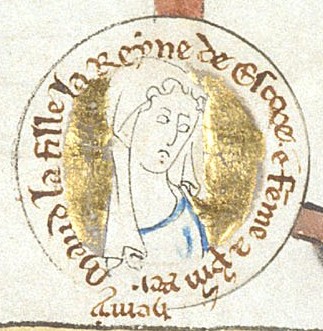
        Book Corner: The Queen’s Musician by Martha Jean Johnson

        History ... the Interesting Bits

        For fans of Philippa Gregor, Alison Weir and Elizabeth Fremantle, an untold story about how the plot against Anne Boleyn entrapped a gifted young musician. A glamorous queen, a volatile king, a gifted musician concealing a forbidden romance.

        Everyone knows Anne Boleyn’s story. No one knows Mark Smeaton’s. On May 17, 1536, a young court musician was executed, accused of adultery and treason with the queen. Most historians believe both he and Anne Boleyn were innocent – victims of Henry VIII’s rage.

        Mark Smeaton was a talented performer who rose from poverty to become a royal favourite. He played for the king in private and entertained at sumptuous feasts. He witnessed Anne Boleyn’s astonishing rise and fall – her reign of a thousand days. History tells us little about him, other than noting his confession and execution. The Queen’s Musician imagines his story, as seen from his perspective and that of the young woman who loves him. It all takes place amid the spectacle and danger of the Tudor court.

        What an interesting take on a well known story!

        The Queen’s Musician by Martha Jean Johnson looks at the story of Anne Boleyn’s downfall through the eyes of her musician, Mark Smeaton. Smeaton was the lowliest, in terms of social standing, of the men accused of sleeping with Henry VIII’s second queen. You cannot fail to feel sympathy for the poor musician, drawn into a scandal created by his social superiors.

        Young Mark Smeaton establishes himself in the reader’s affections from the very beginning. You find yourself invested in his life, enjoying his journey, his music and his success. But then, once in a while, you remember where the book is going, inexorably, to its tragic, dramatic end. The tension is palpable the closer you get to the dramatic events of 1536.

        All to bring down a queen.

        Poor Mark!

        Even if he hadn’t been king, His Majesty would have been a commanding figure. He was vigorous, with masculine features, draped in white and gold. The rotund, graying cardinal hovered near him like a honeybee buzzing a flower. Recalling the scene later, I could see the rupture between them. More than once, the cardinal leaned close to His Majesty to begin a conversation, but the king turned his head away.

        The room was still noisy, the diners talking among themselves. I waited for someone to call for quiet so the concert could begin. Several minutes passed, and I stood beside the stool uncertain what to do. I bowed to His Majesty and the others, but they took no notice. I began to worry that my great opportunity would turn out to be a humiliating disappointment. Then the king brought his goblet to his lips, drank slowly, paused, and raised his hand for silence. He said nothing, but his command was clear: I am ready now. You may begin.

        Dressed like a prince and given this chance to entertain the king, I was pleased with my performance that night. I played six pieces, mostly English, before ending with the French love song. The king stood at his place and applauded. “Excellent, my boy, wonderful. Your songs bring me back to my younger days.”

        I stood and bowed deeply. “Thank you, Your Majesty.” I glanced at the cardinal who looked only at the king.

        “What is your name?”

        “I am Mark Smeaton, Your Majesty.” I bowed again, elated by even this brief attention.

        “The French song – it was perfection. I might want to sing it. Send me the music and the words.”

        “With great pleasure, Your Majesty. I would be most honored to prepare a copy.”

        “Be sure to get it from him.” The king motioned to one of his grooms who, like me, kept bowing his head.

        The cardinal edged closer to the king and said, “It will be done before you leave, Your Majesty.” The king acted like he didn’t hear.

        After my performance, I joined several other musicians playing light music to enhance what seemed like a festive mood. The cardinal approached and said, “Thank you, Mark – your songs have lifted His Majesty’s spirits. Please prepare the manuscript tomorrow morning.”

        “You will have it before ten o’clock, Your Eminence.” In this moment, my excitement at playing for the king blended with my concern for the cardinal’s enterprise. “I hope I have helped you, sir,” I added. The old man’s nod of the head signaled his gratitude.

        The next day after breakfast, I ran to the chapel to make the copy and tell Master Peter that the king had complimented my playing.

        “The king has already left,” he said…

        Although you know Anne Boleyn’s story, The Queen’s Musician by Martha Jean Johnson will catch you out and draw you in. The author does a wonderful job of depicting the Tudor court; its decadence, the political intrigues, the social strata and the dangerous undercurrents. The latent fear. In Tudor times, ability and intelligence could rise to the top – but it could also lead to one’s downfall.

        The Queen’s Musician has all of this … with a little bit of forbidden love thrown into the mix!

        Historically accurate, it gets you thinking, too. That you may have heard Smeaton’s music without even knowing it. That his music was attributed to others, or marked as anonymous in order to guarantee its survival following Smeaton’s downfall and execution. It makes you wonder…

        Martha Jean Johnson has found a unique angle for telling a familiar story. But this is not Anne Boleyn’s tale. It’s the story of a man who fell victim to those determined to bring down a queen, at all costs. No matter the collateral damage it would take to do it. The tragedy is the poor boy was a pawn, drawn into the intrigues of the great and good, who stepped on him, destroyed him to gain for themselves more power, more influence…

        I admit it, I cried.

        I always think it is the sign of a good book if it can bring me to tears. The Queen’s Musician is a good book!

        The Queen’s Musician by Martha Jean Johnson is beautifully written, thoughtful and deep.

        To Buy the Book: The Queen’s Musician

        About the author:

        History ... the Interesting Bits

        Martha Jean Johnson is a writer of fiction and non-fiction and the author of a series of books and articles on public opinion and public policy. The Queen’s Musician is her debut novel. She also reviews trends in historical fiction and discusses her own love of reading and writing in her biweekly blog, Historical Magic. She currently divides her time between writing and her work with the National Issues Forums Institute, an organization that encourages civil discourse and nonpartisan deliberation on national and local issues. During a long public policy career, she analyzed and reported on American public thinking, working with noted social analyst and public opinion pioneer, Daniel Yankelovich. She has published articles in USA Today and The Huffington Post and appeared on CNN, MSNBC, and PBS. She is the author of a series of nonfiction paperbacks on major political issues, co-authored with Scott Bittle and published by HarperCollins. She holds degrees from Mount Holyoke College, Brown University, and Simmons College. She lives in Jersey City, New Jersey.

        *

        My books

        Signed, dedicated copies of all my books are available through my online store.

        Out now: Scotland’s Medieval Queens

        Books by Sharon Bennett Connolly

        Scotland’s history is dramatic, violent and bloody. Being England’s northern neighbour has never been easy. Scotland’s queens have had to deal with war, murder, imprisonment, political rivalries and open betrayal. They have loved and lost, raised kings and queens, ruled and died for Scotland. From St Margaret, who became one of the patron saints of Scotland, to Elizabeth de Burgh and the dramatic story of the Scottish Wars of Independence, to the love story and tragedy of Joan Beaufort, to Margaret of Denmark and the dawn of the Renaissance, Scotland’s Medieval Queens have seen it all. This is the story of Scotland through their eyes.

        Scotland’s Medieval Queens gives a thorough grounding in the history of the women who ruled Scotland at the side of its kings, often in the shadows, but just as interesting in their lives beyond the spotlight. It’s not a subject that has been widely covered, and Sharon is a pioneer in bringing that information into accessible history.’ Elizabeth Chadwick (New York Times bestselling author)

        Available now from Amazon and Pen and Sword Books

        Also by Sharon Bennett Connolly:

        Books by Sharon Bennett Connolly

        Heroines of the Tudor World tells the stories of the most remarkable women from European history in the time of the Tudor dynasty, 1485-1603. These are the women who ruled, the women who founded dynasties, the women who fought for religious freedom, their families and love. Heroines of the Tudor World is now available from Amberley Publishing and Amazon UK. Women of the Anarchy demonstrates how Empress Matilda and Matilda of Boulogne, unable to wield a sword themselves, were prime movers in this time of conflict and lawlessness. It shows how their strengths, weaknesses, and personal ambitions swung the fortunes of war one way – and then the other. Available from Bookshop.orgAmberley Publishing and Amazon UKKing John’s Right-Hand Lady: The Story of Nicholaa de la Haye is the story of a truly remarkable lady, the hereditary constable of Lincoln Castle and the first woman in England to be appointed sheriff in her own right. Available from all good bookshops Pen & Sword Booksbookshop.org and Amazon

        Royal Historical Society

        Defenders of the Norman Crown: The Rise and Fall of the Warenne Earls of Surrey tells the fascinating story of the Warenne dynasty, from its origins in Normandy, through the Conquest, Magna Carta, the wars and marriages that led to its ultimate demise in the reign of Edward III. Available from Pen & Sword BooksAmazon in the UK and US, and Bookshop.orgLadies of Magna Carta: Women of Influence in Thirteenth Century England looks into the relationships of the various noble families of the 13th century, and how they were affected by the Barons’ Wars, Magna Carta and its aftermath; the bonds that were formed and those that were broken. It is now available in paperback and hardback from Pen & SwordAmazon, and Bookshop.orgHeroines of the Medieval World tells the stories of some of the most remarkable women from Medieval history, from Eleanor of Aquitaine to Julian of Norwich. Available now from Amberley Publishing and Amazon, and Bookshop.orgSilk and the Sword: The Women of the Norman Conquest traces the fortunes of the women who had a significant role to play in the momentous events of 1066. Available now from Amazon,  Amberley Publishing, and Bookshop.org.

        Alternate Endings: An anthology of historical fiction short stories including Long Live the King… which is my take what might have happened had King John not died in October 1216. Available in paperback and kindle from Amazon.

        Podcast:

        A Slice of Medieval

        Have a listen to the A Slice of Medieval podcast, which I co-host with Historical fiction novelist Derek Birks. Derek and I welcome guests, such as Bernard Cornwell and Michael Jecks, and discuss a wide range of topics in medieval history, from significant events to the personalities involved. 

        Every episode is also now available on YouTube.

        *

        Don’t forget! Signed and dedicated copies of all my books are available through my online store.

        For forthcoming online and in-person talks, please check out my Events Page.

        You can be the first to read new articles by clicking the ‘Follow’ button, liking our Facebook page or joining me on TwitterThreadsBluesky and Instagram.

        *

        ©2025 Sharon Bennett Connolly


        Book Corner: The Druid’s Prey by Steven A. McKay

        History...the Interesting Bits

        A vicious attack. An enraged warrior-druid. A relentless hunt for vengeance!

        Following a cowardly raid on Dun Breatann the Saxon attacker, Saksnot, rides back to rejoin his bretwalda, Hengist, in far-off Garrianum. Bellicus, outraged by the savage attack on his people and his closest friend, follows the perpetrator with just one thing on his mind: bloody justice!
        As the towering druid hunts his prey across the summer fields and streams, Arthur, Bear of Britain, seeks to make a lasting peace with the new immigrants from across the sea. Hengist has no such plans however, instead working alongside his terrifying volva, Thorbjorg, to bring only blood, fire, and death to the embattled Britons.

        As the brutal struggle for supremacy rages between the two warlords and their armies, Bellicus will find himself drawn into an adventure he could never have foreseen. An adventure that may seal the fate of Britain for generations to come.

        Yes! Bellicus is back!

        And better than ever! The Druid’s Prey by Steven A. McKay is the seventh book in Steven’s excellent Warrior Druid of Britain Chronicles. As regular readers will know, I have been reading this series since the first book, The Druid. The books follow the adventures of Bellicus the druid, his family and his Roman friend, Duro, as the defend their home, Dun Breatann, and the rest of Britain from the invading Saxons, led by Hengist and Horsa. Well, its just Hengist now, thanks to The Vengeance of Merlin. A sucker for anything Arthurian, Steven A. McKay also draws in the legendary Arthur, Lancelot and his loyal knights. And I love how Arthur is drawn into Bellicus’ story, but never fully takes over.

        It’s a perfect combination and partnership.

        In The Druid’s Prey, Bellicus is set on revenge, traveling the length of Britain to find the man who had tried to kill him and hurt his friend. Further south, Arthur is trying to take the war to Hengist, to strike a blow that will hurt the Saxon leader’s forces, and to find a friend of his own who has been captured by the enemy. Oh, and while Bellicus is away, his wife and daughter, Narina and Catia, work to strengthen Dun Breatann’s position and stave off the influence of the hated Hengist. Three missions that the reader can’t help but hope they collide…

        The bear stopped moving, taking in the sight of the boar which was peering at it in return. And then the bear looked up at Bellicus and their eyes met. The druid swallowed, knowing for certain that he had come across this very animal before – it had attacked them some years prior, not far from where they were now, badly injuring King Coroticus and Gavo and killing one warrior and three dogs. It had eventually decided to give up the fight but only once it had a spear stuck in its back and a number of arrows from the Damnonii hunters’ bows. Bellicus examined its hairy pelt for evidence of those earlier wounds but it seemed to have healed well in the intervening years.

        As if it recalled the battle the bear suddenly stood up on its hind legs and let out an enormous roar. Bellicus gazed at it in awe – the animal was not just enormous, it was majestic, and the thought of trying to kill it again was truly terrifying.

        It seemed the boar had similar thoughts, for instead of charging at the bear, it turned and hurried off into the trees, the spear that Duro had planted in its side clattering noisily against tree trunks until, at last, it must have snapped off for there was a last, distant squeal and then only the low growling of the bear was left to fill the clearing.

        “Mithras protect us, we’re in for it now,” Duro said, doing his best to draw his spatha while still gripping the trunk of his tree for dear life. “At least the boar couldn’t get up here.”

        “Don’t do anything,”Bellicus ordered in a low voice. “Do you not recognise it?”

        “Aye,” the centurion nodded. “It’s the same bear that almost killed us all before. You told us to let it go back then for some mad reason.”

        “The Bear of Britain,” Bellicus said, so softly Duro could not hear him. “That’s what the Merlin had called Arthur.” Memories of the previous encounter with the bear were filling his mind and he remembered being in a shocked stupor as he’d stared at the bear bristling with missiles like a hedgehog. The animal had lost the will to fight that day and Bellicus had commanded those with him to let it go, a decision he’d never really understood himself. For some reason he’d seen the beast as connected to Arthur, or perhaps he just didn’t want any more people – or Cai, for the mastiff had been involved in the fighting too – getting injured or killed.

        Whatever his motives had been, the bear stared up at him now, its round, dark eyes fixing on his own. There seemed an intelligence behind that gaze that Bellicus had not expected. Did it recognise him? Did it understand that he’d been the one that called off the attack on it and most likely saved its life after their previous encounter? Maybe. The druid knew that bears had an even more developed sense of smell than dogs, so it was possible the beast, which had dropped back to all fours now, recognised his scent if not his face.

        The bear made a strange, ululating, guttural grunting sound and then simply wandered off into the trees, quickly disappearing from sight.

        “Is… Is it over?” Duro gasped, sword still glinting in the last of the sunshine as he lowered himself down, hanging from a branch by one arm as he tried to see through the foliage and make sure the bear had really gone.

        Hengist is on the road to revenge, taking any opportunity he can to punish his brother’s killers, whilst at the same time increasing his hold on Britain, extending his influence and grabbing more land. He sends an assassin north to Dun Breatann, captures one of Arthur’s leading men and seeks allies among the enemies of Bellicus and Queen Narina. The Druid’s Prey by Steven A. McKay has more than one story within its pages – and more than one hero!

        It is a rollercoaster journey through post-Roman Britain as the lead characters fight to hold onto their lands, their friends and their family. Their are more than a few heart-in-the-mouth moments along the way. And, if you are reading at night, beware! “Just one more chapter…” will lead to 3 or 4 more!

        As we are at book no. 7 in the Warrior Druid of Britain series, Steven A. McKay’s characters are well developed and very familiar to us. We know how Bellicus will react to his family and friends being attacked. We know that his daughter, Catia, now 12 years old, is not a little girl to whom things happen-she is a pre-teen, trained in warfare, experienced beyond her years but still needing the guidance of parents to keep her out of the worst trouble. And Arthur, everyone’s hero and Bellicus’ friend. Well, his adventures never fail to inspire and entertain. And each of these characters have to make choices and decisions that affect, not only themselves but also their people. Agonising decisions will lead to more danger, adventure and not a little swordplay.

        I won’t tell you any more – I do not want to ruin it for anyone.

        All I will say is, The Druid’s Prey by Steven A. McKay is the 7th book in a series and yet is as fresh and original as the first. If you have not yet read this excellent series, you are missing a treat – but I envy the fact you have 7 books to read, one after the other. What a treat you have instore.

        To Buy the Book: The Druid’s Prey

        About the author:

        History...the Interesting Bits

        Steven A. McKay was born in Scotland in 1977 and always enjoyed studying history. He decided to write his Forest Lord novels after seeing a house called “Sherwood” when he was out at work one day. Since then he’s started a new series, the Warrior Druid of Britain Chronicles, and just completed a trilogy about Alfred the Great.

        In 2021 the Xbox game HOOD: Outlaws and Legends was released, featuring Steven’s writing.

        He used to be in a heavy metal band although he tends to just play guitar in his study these days. He did use those guitars to write the theme song for the podcast he co-hosted, Rock, Paper, Swords! with Matthew Harffy, though. Give it a listen, they’ve interviewed great guests like Diana Gabaldon, Simon Scarrow, Bernard Cornwell, Dan Jones and more!

        *

        My books

        Signed, dedicated copies of all my books are available through my online store.

        Out now: Scotland’s Medieval Queens

        Books by Sharon Bennett Connolly

        Scotland’s history is dramatic, violent and bloody. Being England’s northern neighbour has never been easy. Scotland’s queens have had to deal with war, murder, imprisonment, political rivalries and open betrayal. They have loved and lost, raised kings and queens, ruled and died for Scotland. From St Margaret, who became one of the patron saints of Scotland, to Elizabeth de Burgh and the dramatic story of the Scottish Wars of Independence, to the love story and tragedy of Joan Beaufort, to Margaret of Denmark and the dawn of the Renaissance, Scotland’s Medieval Queens have seen it all. This is the story of Scotland through their eyes.

        Scotland’s Medieval Queens gives a thorough grounding in the history of the women who ruled Scotland at the side of its kings, often in the shadows, but just as interesting in their lives beyond the spotlight. It’s not a subject that has been widely covered, and Sharon is a pioneer in bringing that information into accessible history.’ Elizabeth Chadwick (New York Times bestselling author)

        Available now from Amazon and Pen and Sword Books

        Also by Sharon Bennett Connolly:

        Books by Sharon Bennett Connolly

        Heroines of the Tudor World tells the stories of the most remarkable women from European history in the time of the Tudor dynasty, 1485-1603. These are the women who ruled, the women who founded dynasties, the women who fought for religious freedom, their families and love. Heroines of the Tudor World is now available from Amberley Publishing and Amazon UK. Women of the Anarchy demonstrates how Empress Matilda and Matilda of Boulogne, unable to wield a sword themselves, were prime movers in this time of conflict and lawlessness. It shows how their strengths, weaknesses, and personal ambitions swung the fortunes of war one way – and then the other. Available from Bookshop.orgAmberley Publishing and Amazon UKKing John’s Right-Hand Lady: The Story of Nicholaa de la Haye is the story of a truly remarkable lady, the hereditary constable of Lincoln Castle and the first woman in England to be appointed sheriff in her own right. Available from all good bookshops Pen & Sword Booksbookshop.org and Amazon

        Royal Historical Society

        Defenders of the Norman Crown: The Rise and Fall of the Warenne Earls of Surrey tells the fascinating story of the Warenne dynasty, from its origins in Normandy, through the Conquest, Magna Carta, the wars and marriages that led to its ultimate demise in the reign of Edward III. Available from Pen & Sword BooksAmazon in the UK and US, and Bookshop.orgLadies of Magna Carta: Women of Influence in Thirteenth Century England looks into the relationships of the various noble families of the 13th century, and how they were affected by the Barons’ Wars, Magna Carta and its aftermath; the bonds that were formed and those that were broken. It is now available in paperback and hardback from Pen & SwordAmazon, and Bookshop.orgHeroines of the Medieval World tells the stories of some of the most remarkable women from Medieval history, from Eleanor of Aquitaine to Julian of Norwich. Available now from Amberley Publishing and Amazon, and Bookshop.orgSilk and the Sword: The Women of the Norman Conquest traces the fortunes of the women who had a significant role to play in the momentous events of 1066. Available now from Amazon,  Amberley Publishing, and Bookshop.org.

        Alternate Endings: An anthology of historical fiction short stories including Long Live the King… which is my take what might have happened had King John not died in October 1216. Available in paperback and kindle from Amazon.

        Podcast:

        A Slice of Medieval

        Have a listen to the A Slice of Medieval podcast, which I co-host with Historical fiction novelist Derek Birks. Derek and I welcome guests, such as Bernard Cornwell and Michael Jecks, and discuss a wide range of topics in medieval history, from significant events to the personalities involved. 

        Every episode is also now available on YouTube.

        *

        Don’t forget! Signed and dedicated copies of all my books are available through my online store.

        For forthcoming online and in-person talks, please check out my Events Page.

        You can be the first to read new articles by clicking the ‘Follow’ button, liking our Facebook page or joining me on TwitterThreadsBluesky and Instagram.

        *

        ©2025 Sharon Bennett Connolly

        Wordly Women: Kathryn Warner

        A Slice of Medieval

        I am very happy today to welcome historian Kathryn Warner to History…the Interesting Bits in a new instalment of my Author Spotlight series, Wordly Women. Kathryn is the ‘go to’ person for all-things Edward II. She has also written about John of Gaunt, the Beaumont kings of Jerusalem, the Clare sisters and her latest book is The Black Death in England: Journal of the Plague Years in the Fourteenth Century. Her books are always well research and enjoyable reads. And when we get together to chat on A Slice of Medieval, it is always a fabulous discussion and a pleasure.

        So, over to Kathryn…

        Sharon: Hi Kathryn, I would love to know what got you into writing?

        Kathryn: In a nutshell, my passion for Edward II and his era! It was strange, because during my time at university studying medieval history, I’d never been that interested in him, but my fascination developed some years after I graduated. I started writing stories about him, then started a blog about him and his reign as well, because my passion was so overwhelming that I just had to get it down on paper or on a screen and share it with people. Some years later, I wrote some academic articles about him, then went on to write a full-length biography of Edward and his life and reign, which became my first published book.

        Sharon: Tell us about your books.

        Kathryn Warner

        Kathryn: I’ve written at least twenty non-fiction books now. My earlier ones are biographies and joint biographies, including Edward II’s queen Isabella of France, their daughter-in-law Philippa of Hainault, their grandson John of Gaunt, Edward II’s last and most powerful favourite Hugh Despenser the Younger, Edward’s nieces the de Clare sisters, and Edward III’s granddaughters. These days, I’m massively getting into social history too, and have written a book about aspects of life in London between 1300 and 1350, one about the victims and survivors of the fourteenth-century pandemics of the Black Death, and one called Life in a Medieval Town.

        Sharon: What attracts you to the 14th century?

        Kathryn: It was such an astonishingly dramatic and turbulent era. As well as the chaos of Edward II’s reign early in the century – battles, rebellions, executions, betrayals, changes of fortune, hatreds and passions, Edward’s forced abdication, and much else – there were natural disasters too. The pandemics of the Black Death are well known, especially the first one in 1348/49, but there was also a massive famine in England in the 1310s. Edward III began what we know as the Hundred Years War against France in the 1330s, his grandson Richard II witnessed the Peasants’ Revolt in 1381, and so on. I really don’t think I’d have liked to live in the fourteenth century, haha, but it’s an endlessly fascinating era to research and write about.

        Sharon: Who is your favourite 14th century person and why?

        Kathryn Warner

        Kathryn: To the surprise of absolutely no one who knows me, Edward II! Without question, he’s one of England’s most unsuccessful kings in history, and was the first one who suffered the fate of deposition or forced abdication in 1327. His reign of just under 20 years is dramatic almost beyond the telling of it, as Edward lurched constantly from one crisis to the next, crises almost entirely of his own making. He was completely unsuited to the position he’d been born into, and was a deeply unconventional man by the standards of his era. I feel that he makes much more sense to us than he did to his contemporaries: he openly loved men, he enjoyed the company of his common subjects and even went on holiday with them, he enjoyed being outdoors and doing hard physical labour. Edward II, born in 1284, is exactly 700 years older than Prince Harry the Duke of Sussex, born in 1984, and I often think that Edward would have been much happier and more successful if he’d been born into the royal family of the late twentieth century than he was in his own lifetime.

        Sharon: Who is your least favourite 14th century person and why?

        Kathryn: That’s a tricky question to answer, really, as even the people I instinctively don’t tend to like all that much intrigue me and led fascinating lives that I want to delve into. Someone like Roger Mortimer, the first earl of March, for example. He played a massive role in Edward II’s downfall in 1326/27, and as such is someone I feel I should dislike, but I really don’t, because he’s such a complex fascinating person. It’s not Roger that I dislike, it’s the way he’s often been written in modern times, in this absurdly over-romanticised way as the adored lover and saviour of Edward II’s queen, Isabella of France. It flattens his character and turns him into a caricature that has very little to do with the person he actually was. So I can’t say that I have a least favourite fourteenth-century person, but I do often profoundly dislike the simplistic, one-dimensional ways in which many fourteenth-century people are depicted nowadays.

        Sharon: How do you approach researching your topic?

        Kathryn Warner
        Edward II

        Kathryn: I think a lot of people might be surprised at just at how many sources we have from the fourteenth century, and how much information there actually is once you start delving into them. In the period I write about, pretty well all the sources are written in Latin or French, and though many have been transcribed and translated, many have not. Looking at original documents in the National Archives is such a joy! I’ve found lots of wonderful details about Edward II and his life and household from his extant accounts, for example. I often fall down a rabbit-hole of research and emerge blinking hours later, and oddly enough, some of my best finds are things I stumbled upon by accident while researching something else.

        Sharon: Tell us your ‘favourite’ 14th century story you have come across in your research.

        Kathryn: While I was researching a book about London between 1300 and 1350, I came across this fab story. The rector of the church of St Margaret Lothbury in London around the year 1300, whose name was William (his last name was not recorded), had an insatiable curiosity about a disease he called Le Lou. This means ‘The Wolf’ in medieval French, and probably referred to the condition we now call lupus, which means ‘wolf’ in Latin. Believing that wolf flesh could cure the disease, William ordered a cask of four dead wolves from abroad (where exactly was not specified) to be sent to his church. By the time the dead animals arrived in London, however, their corpses had become ‘putrid’, and William was hauled before the court of the mayor of London, Elias Russel, on 5 January 1300, and ordered to explain himself. To me, this situation reveals several things that are worth knowing about the early fourteenth century. Firstly, that a man in England somehow managed to contact a person on the Continent who was willing and able to send him dead wolves; secondly, that officials around the year 1300 were aware that the welfare of the general public in a crowded city might be worsened by the presence of decaying animal corpses; and thirdly, that a person was deeply interested in a particular disease and cared about its victims, and attempted, albeit in a comically misguided way, to find a cure for it.

        Sharon: Tell us your least ‘favourite’ 14th century story you have come across in your research.

        Kathryn Warner

        Kathryn: It’s one that breaks my heart. At the start of the year 1349, Agnes Stokwell was living on Whitecross Street in London with her family, who consisted of her father Walter, a painter; her mother Joan; her older brother Laurence; and her three older sisters, Christine, Imania, and Alice. She also had an aunt named Isabel and an uncle named William, her father’s siblings, and her father’s apprentice Thomas Bournham lived in the household as well. The Stokwell family were pretty well-off and thriving, but by the end of 1349, all of them were dead in the first massive pandemic of the Black Death, except only Agnes. She was just seven years old, and within a few months had lost her entire family, every living relative; her parents, her four older siblings, and her aunt and uncle. Thankfully, her late father’s apprentice Thomas Bournham also lived through the plague, the only other survivor of the household, and was given custody of Agnes at the end of 1349. They both disappear from written record after that, or at least I’ve never been able to find them again, but I hope they lived long and thrived.

        Sharon: Are there any other eras you would like to write about?

        Kathryn: My second favourite era after the fourteenth century is the eleventh century. I did a few courses on Old English language, literature, history and culture at university, and loved it. I’m particularly interested in the first few decades of the 1000s – the end of Aethelred’s reign, the brief reign of his son Edmund Ironside, King Cnut and his son, and Emma of Normandy, who married both Aethelred and Cnut.

        Sharon: What are you working on now?

        Kathryn: My current project is provisionally titled Murder and Mayhem, and is about some of the violence, homicide, gangs and feuds in fourteenth-century England. There’s a wealth of material, almost too much, in fact! The book after that is about the royal English household in the late Middle Ages, which is a subject I’ve been wanting to write about for ages.

        Sharon: Now that, I want to read!

        Sharon: And finally, what is the best thing about being a writer?

        Kathryn: For me, it’s the chance to immerse myself in the fourteenth century, to discover fascinating stories and to share them with readers. I also love that my time is unstructured, and I can write whenever I like and take breaks whenever I like, which suits me very well. And finally, it’s simply amazing that I’ve been able to turn my passion for fourteenth-century history into a job!

        About the Author:

        Kathryn Warner

        Kathryn Warner holds two degrees in medieval history from the University of Manchester. She is considered a foremost expert on Edward II and an article from her on the subject was published in the English Historical Review. She has run a website about him since 2005 and a Facebook page about him since 2010 and has carved out a strong online presence as an expert on Edward II and the fourteenth century in general. Kathryn teaches Business English as a foreign language and lives between Dusseldorf and Cumbria.

        To buy: Kathryn’s books

        *

        My books

        Signed, dedicated copies of all my books are available through my online store.

        Out now: Scotland’s Medieval Queens

        Books by Sharon Bennett Connolly

        Scotland’s history is dramatic, violent and bloody. Being England’s northern neighbour has never been easy. Scotland’s queens have had to deal with war, murder, imprisonment, political rivalries and open betrayal. They have loved and lost, raised kings and queens, ruled and died for Scotland. From St Margaret, who became one of the patron saints of Scotland, to Elizabeth de Burgh and the dramatic story of the Scottish Wars of Independence, to the love story and tragedy of Joan Beaufort, to Margaret of Denmark and the dawn of the Renaissance, Scotland’s Medieval Queens have seen it all. This is the story of Scotland through their eyes.

        Scotland’s Medieval Queens gives a thorough grounding in the history of the women who ruled Scotland at the side of its kings, often in the shadows, but just as interesting in their lives beyond the spotlight. It’s not a subject that has been widely covered, and Sharon is a pioneer in bringing that information into accessible history.’ Elizabeth Chadwick (New York Times bestselling author)

        Available now from Amazon and Pen and Sword Books

        Also by Sharon Bennett Connolly:

        Books by Sharon Bennett Connolly

        Heroines of the Tudor World tells the stories of the most remarkable women from European history in the time of the Tudor dynasty, 1485-1603. These are the women who ruled, the women who founded dynasties, the women who fought for religious freedom, their families and love. Heroines of the Tudor World is now available from Amberley Publishing and Amazon UK. Women of the Anarchy demonstrates how Empress Matilda and Matilda of Boulogne, unable to wield a sword themselves, were prime movers in this time of conflict and lawlessness. It shows how their strengths, weaknesses, and personal ambitions swung the fortunes of war one way – and then the other. Available from Bookshop.orgAmberley Publishing and Amazon UKKing John’s Right-Hand Lady: The Story of Nicholaa de la Haye is the story of a truly remarkable lady, the hereditary constable of Lincoln Castle and the first woman in England to be appointed sheriff in her own right. Available from all good bookshops Pen & Sword Booksbookshop.org and Amazon

        Royal Historical Society

        Defenders of the Norman Crown: The Rise and Fall of the Warenne Earls of Surrey tells the fascinating story of the Warenne dynasty, from its origins in Normandy, through the Conquest, Magna Carta, the wars and marriages that led to its ultimate demise in the reign of Edward III. Available from Pen & Sword BooksAmazon in the UK and US, and Bookshop.orgLadies of Magna Carta: Women of Influence in Thirteenth Century England looks into the relationships of the various noble families of the 13th century, and how they were affected by the Barons’ Wars, Magna Carta and its aftermath; the bonds that were formed and those that were broken. It is now available in paperback and hardback from Pen & SwordAmazon, and Bookshop.orgHeroines of the Medieval World tells the stories of some of the most remarkable women from Medieval history, from Eleanor of Aquitaine to Julian of Norwich. Available now from Amberley Publishing and Amazon, and Bookshop.orgSilk and the Sword: The Women of the Norman Conquest traces the fortunes of the women who had a significant role to play in the momentous events of 1066. Available now from Amazon,  Amberley Publishing, and Bookshop.org.

        Alternate Endings: An anthology of historical fiction short stories including Long Live the King… which is my take what might have happened had King John not died in October 1216. Available in paperback and kindle from Amazon.

        Podcast:

        A Slice of Medieval

        Have a listen to the A Slice of Medieval podcast, which I co-host with Historical fiction novelist Derek Birks. Derek and I welcome guests, such as Bernard Cornwell and Michael Jecks, and discuss a wide range of topics in medieval history, from significant events to the personalities involved. 

        Every episode is also now available on YouTube.

        *

        Don’t forget! Signed and dedicated copies of all my books are available through my online store.

        For forthcoming online and in-person talks, please check out my Events Page.

        You can be the first to read new articles by clicking the ‘Follow’ button, liking our Facebook page or joining me on TwitterThreadsBluesky and Instagram.

        *

        ©2025 Sharon Bennett Connolly, FRHistS and Kathryn Warner


        Wordly Women: Aimee Fleming

        Aimee Fleming

        In today’s episode of my Wordly Women, author spotlight series, I have a chat with Tudor historian Aimee Fleming. I have followed Aimee’s career from the very beginning. Her first book, The Female Tudor Scholar and Writer: The Life and Times of Margaret More Roper came out last year and just last month Aimee published her second book, Tudor Princes and Princesses: The Early Lives of the Children of Henry VII and Elizabeth of York

        So, it was wonderful to get the chance to talk with Aimee about her writing…

        Sharon: Hi Aimee. First question, what got you into writing?

        Aimee: I have always enjoyed writing as a process, but it was really during secondary school I was encouraged to write poetry by my English teacher. I did English Literature A Level and loved studying the classics, but it was History that really sparked my interest. After I finished my BA I remember I wanted to keep going and write more, but I didn’t begin properly until after my MA when I decided to really put pen to paper properly. I loved to read work by Alison Weir and Tracey Borman (amongst lots of others) and think that I could perhaps do something like that!

        Sharon: Tell us about your books.

        Aimee: My books are all non-fiction books about the Tudor period. My first book came out in summer 2024 and was a biography of Margaret More Roper, the eldest daughter of Sir Thomas More, called ‘The Female Tudor Scholar and Writer’. I also have a study of the early lives of the children of Henry VII coming out soon, called ‘Tudor Princes and Princesses.’ It is available for pre-order now and is due to be released at the end of June.

        Sharon: What attracts you to the Tudor period?

        Aimee: I think the Tudor and Early Modern period generally is fascinating. There are such larger-than-life characters, the artwork and portraits bring those characters into such clear detail, dramatic events just keep on coming, and the clothing is so flamboyant and over the top. I do love other periods too, the medieval period and the later periods of the Stuarts and Georgians are also very interesting, but I am always drawn back to the tempestuous Tudors.

        Sharon: Who is your favourite Tudor and why?

        Aimee Fleming

        Aimee: Do I have to pick just one? I obviously have a soft spot for Margaret More Roper. She is such an inspirational woman, and I genuinely believe that we all owe her a debt; if it wasn’t for her taking that first step of getting her work published, we may not even be doing what we do today!

        Sharon: Who is your least favourite Tudor and why?

        Before I wrote my most recent book, I probably would have said Henry VIII. I was always a bit of a critic of his, but my writing and research has actually made me a lot more sympathetic. I think now my hatred properly ends up at Thomas Howard, the Duke of Norfolk’s door – an all-round unpleasant creature if ever there was one.

        Sharon: Howard was horrible, but I will have to read your book to see if I can find any sympathy for Henry VIII!

        Sharon: How do you approach researching your topic?

        Aimee: I start quite broad and work my way in. I think we all have out go-to textbooks on subjects and for me it’s always my old copy of John Guy’s ‘Tudor England’. I start by looking up whatever I’m researching up in that, and then other books that may be on my shelf. I’m lucky enough to live close to York and I do try to make full use of the University library and their archives too for those all-important primary sources. If it’s possible I also like to try to take a trip to see some places and experience the surroundings that my subjects would have known.

        Sharon: Tell us your ‘favourite’ Tudor story you have come across in your research.

        Wolfeton Hall near Dorchester

        Aimee: I have a few favourites, but I think the one that I particularly love is the ‘shipwreck’ of Archduke Phillip, heir to the Holy Roman Emperor, and his wife Queen Joanna of Castile. The Archduke had led his fleet from Flanders intent on taking the throne of Spain for himself, but the weather turned against him, and he, Queen Joanna, and the rest of the fleet had to take refuge in the harbour at Weymouth. They came ashore at Melcombe Regis in Dorset – about as far from London and civilisation as you can get, and in November too! Henry VII of course welcomed them and invited them to London, even sending carriages for them and their luggage, but the Queen was too shaken and took refuge at Wolfeton Hall near Dorchester. A welcoming party was sent to greet them, led by fourteen-year-old Henry, the royals did eventually meet up and they held all sorts of talks, agreeing marriages seemingly for everyone…but none of them came to fruition.

        I have spent many a family holiday in Dorset, especially Weymouth, and it makes me smile that Queen Joanna may have walked up that beach on a cold November afternoon.

        Sharon: Tell us your least ‘favourite’ Tudor story you have come across in your research.

        Elizabeth of York
        Elizabeth of York

        Aimee: The worst bit of writing history is the sad stories that you have to read and write about. In Tudor Princes and Princesses, I had to research about Elizabeth of York’s pregnancies and the deaths of the Tudor children who did not survive until adulthood. The arrangements made for the funerals, particularly of little Elizabeth really brought home just how much these children were loved in their short lives.

        On the other side, writing about the death of Thomas More’s first wife, Joanna, was particularly heart-rending. She died when Margaret was only 5 years old, but Margaret would have been expected to play a full role in her mother’s funeral, reading a prayer in front of the whole congregation. That in itself was bad enough, but reading further it was commonplace for people who weren’t connected to the family to still attend the funeral. I was in bits writing about Margaret standing up and reading the prayers, imagining her fear as she looked out on all those strangers’ faces.

        Sharon: Are there any other eras you would like to write about?

        Aimee: I am doing a lot of research into Stuart Scotland at the moment, and it has made me want to go deeper into Stuart England and the English Civil War. I would love to learn more about the people as well as the politics of the period, but it’s not something I’ve ever really looked at in depth.

        Sharon: What are you working on now?

        Aimee: My current project is a period study of Tudor England and Stuart Scotland, looking at the relationship between the two countries while the Tudors were on the throne in England and what brought us to 1603 and the succession of James VI and I. It’s a lot of work but I am thoroughly enjoying it, and I’m loving looking at Scottish history in more detail. That manuscript is due for submission in the Autumn, and then after that I have another book lined up to write, about Elizabeth Barton, the Holy Maid of Kent.

        Sharon: And finally, what is the best thing about being a writer?

        Aimee: I enjoy the freedom it gives me to explore things I find interesting. No two days are the same, and it’s never boring. Losing myself in documents at the library really is a dream come true.

        About Aimee:

        Aimee Fleming

        Aimee Fleming is a historian and author from North Yorkshire. She is happily married, with three growing boys and a whole host of pets. She studied history at the University of Wales, Bangor and then later completed a masters in Early Modern History at the University of York as a mature student. She has a passion for history, particularly the Tudors, and worked for over a decade in the heritage industry in a wide variety of roles and historic places.

        Books by Aimee Fleming:

        The Female Tudor Scholar and Writer: The Life and Times of Margaret More Roper

        Tudor Princes and Princesses: The Early Lives of the Children of Henry VII and Elizabeth of York

        Where to find Aimee:

        Website; Facebook; Threads and Instagram: @historyaimee; Substack.

        *

        My books

        Signed, dedicated copies of all my books are available through my online store.

        Out now: Scotland’s Medieval Queens

        Books by Sharon Bennett Connolly

        Scotland’s history is dramatic, violent and bloody. Being England’s northern neighbour has never been easy. Scotland’s queens have had to deal with war, murder, imprisonment, political rivalries and open betrayal. They have loved and lost, raised kings and queens, ruled and died for Scotland. From St Margaret, who became one of the patron saints of Scotland, to Elizabeth de Burgh and the dramatic story of the Scottish Wars of Independence, to the love story and tragedy of Joan Beaufort, to Margaret of Denmark and the dawn of the Renaissance, Scotland’s Medieval Queens have seen it all. This is the story of Scotland through their eyes.

        Scotland’s Medieval Queens gives a thorough grounding in the history of the women who ruled Scotland at the side of its kings, often in the shadows, but just as interesting in their lives beyond the spotlight. It’s not a subject that has been widely covered, and Sharon is a pioneer in bringing that information into accessible history.’ Elizabeth Chadwick (New York Times bestselling author)

        Available now from Amazon and Pen and Sword Books

        Also by Sharon Bennett Connolly:

        Books by Sharon Bennett Connolly

        Heroines of the Tudor World tells the stories of the most remarkable women from European history in the time of the Tudor dynasty, 1485-1603. These are the women who ruled, the women who founded dynasties, the women who fought for religious freedom, their families and love. Heroines of the Tudor World is now available from Amberley Publishing and Amazon UK. Women of the Anarchy demonstrates how Empress Matilda and Matilda of Boulogne, unable to wield a sword themselves, were prime movers in this time of conflict and lawlessness. It shows how their strengths, weaknesses, and personal ambitions swung the fortunes of war one way – and then the other. Available from Bookshop.orgAmberley Publishing and Amazon UKKing John’s Right-Hand Lady: The Story of Nicholaa de la Haye is the story of a truly remarkable lady, the hereditary constable of Lincoln Castle and the first woman in England to be appointed sheriff in her own right. Available from all good bookshops Pen & Sword Booksbookshop.org and Amazon

        Royal Historical Society

        Defenders of the Norman Crown: The Rise and Fall of the Warenne Earls of Surrey tells the fascinating story of the Warenne dynasty, from its origins in Normandy, through the Conquest, Magna Carta, the wars and marriages that led to its ultimate demise in the reign of Edward III. Available from Pen & Sword BooksAmazon in the UK and US, and Bookshop.orgLadies of Magna Carta: Women of Influence in Thirteenth Century England looks into the relationships of the various noble families of the 13th century, and how they were affected by the Barons’ Wars, Magna Carta and its aftermath; the bonds that were formed and those that were broken. It is now available in paperback and hardback from Pen & SwordAmazon, and Bookshop.orgHeroines of the Medieval World tells the stories of some of the most remarkable women from Medieval history, from Eleanor of Aquitaine to Julian of Norwich. Available now from Amberley Publishing and Amazon, and Bookshop.orgSilk and the Sword: The Women of the Norman Conquest traces the fortunes of the women who had a significant role to play in the momentous events of 1066. Available now from Amazon,  Amberley Publishing, and Bookshop.org.

        Alternate Endings: An anthology of historical fiction short stories including Long Live the King… which is my take what might have happened had King John not died in October 1216. Available in paperback and kindle from Amazon.

        Podcast:

        A Slice of Medieval

        Have a listen to the A Slice of Medieval podcast, which I co-host with Historical fiction novelist Derek Birks. Derek and I welcome guests, such as Bernard Cornwell and Michael Jecks, and discuss a wide range of topics in medieval history, from significant events to the personalities involved. 

        Every episode is also now available on YouTube.

        *

        Don’t forget! Signed and dedicated copies of all my books are available through my online store.

        For forthcoming online and in-person talks, please check out my Events Page.

        You can be the first to read new articles by clicking the ‘Follow’ button, liking our Facebook page or joining me on TwitterThreadsBluesky and Instagram.

        *

        ©2025 Sharon Bennett Connolly, FRHistS and Aimee Fleming

        Guest Post: Inside the Book Trade of Late Medieval London by Toni Mount

        It is always a pleasure to welcome Toni Mount to History … the Interesting Bits. Toni is a brilliant historian and born storyteller and she is here today to give a glimpse of the history behind her latest Seb Foxley novel, The Colour of Darkness. If you haven’t met him yet, I really do recommend you pick up a Foxley book. They are simply delicious!

        So, it’s over to Toni…

        Inside the Book Trade of Late Medieval London

        History ... the Interesting Bits

        When we think about medieval London, we probably imagine grimy streets, plague and maybe a knight or two clanking through the city. But tucked within the chaos was a quiet revolution – one involving paper, ink and a growing thirst for knowledge. By the late 1400s, the book trade in London wasn’t just alive; it was thriving. And at the heart of it all stood St Paul’s Cathedral – not just a place of worship, but a book-fest for the city’s literate elite.

        To put this in context, the printing press arrived in England when William Caxton famously set up the first one at Westminster in 1476 and the world of books was changing fast. Previously, books were hand-copied by scribes – as at the fictional Seb Foxley’s workshop in Paternoster Row, just north of St Paul’s, in my latest novel, The Colour of Darkness. Writing every page by hand meant they were expensive and slow to produce. But then came the printing press – a real game-changer.

        Printing took a decade or two to catch on in England, mainly because it was a tricky procedure to master – see my next guest Blog on printing books – but once the techniques were established books could be produced faster and cheaper. More books available led to an increase in literacy, especially among the urban middle classes, clergy and educated elite. London, with its bustling population and growing trade networks, became a prime spot for this new business.

        St Paul’s Cathedral: The Book Trade’s Beating Heart

        History ... the Interesting Bits
        Old St Paul’s, from Francis Bond, Early Christian Architecture 1913

        Forget the grand white dome you see today in the City of London because that was designed by Sir Christopher Wren after the Great Fire of 1666. Before that catastrophe, it was ‘Old St Paul’s’, a massive gothic structure that dominated the skyline with a spire over 400 feet tall, at least until it was struck by lightning in the reign of Elizabeth I. Its precinct and churchyard weren’t just for prayer and pigeons but, together with nearby Paternoster Row, were at the very centre of London’s book trade. In fact, Paternoster Row remained at the heart of the British publishing industry until it was destroyed by bombs during World War II.

        But returning to the late fifteenth century, imagine a lively courtyard filled with wooden stalls, booksellers shouting out their latest wares, customers thumbing through new pamphlets and prayer books. The area around St Paul’s was known for its ‘stationers’ – a term that, back then, didn’t just mean a place to buy paper and pens. These were the printers, booksellers, and binders who brought the written word to the people.

        Why did St Paul’s become such a hive of book-production? The cathedral’s proximity to learning helped. The Cathedral School and other educational institutions were nearby, including the Inns of Court to the west of the city where lawyers were trained and the sons of the aristocracy were schooled in the arts required for life at the royal court. The clergy needed books for sermons, study and teaching, so local demand was ensured.

        Who were the Printers?

        By the 1480s, London had a small but important group of professional printers. William Caxton deserves the spotlight since he was the first to introduce a press, having learned the business in Burgundy and the Low Countries. His press in Westminster produced some of the first books in English, making literature and religious texts more accessible to the public. After Caxton, his former assistant, Wynkyn de Worde, took over the operation and moved it closer to the action, by St Paul’s. De Worde knew the churchyard was where the customers would come. He printed everything from devotional tracts to almanacs and even the occasional romance or how-to guide. He’s sometimes credited with being one of the first to market printed books to a wider audience.

        But printers, like the scribes before them, didn’t only create the pages. They often collated and stitched the pages before either binding them or passing them on to a specialist binder to stitch the pages into a cover. A book’s binding could range from simple stitched parchment to elaborately tooled leather with jewelled clasps. The wealthy might commission personalised bindings with their family crests. The printers often dealt with sales too or went into partnership with independent booksellers. These sellers might have a permanent stall near St Paul’s or be mobile, setting up shop at fairs or markets – wherever there were customers.

        What was on the shelves?

        So what were Londoners reading? A lot of religious texts, unsurprisingly: sermons, Books of Hours, Psalters and the lives of popular saints. The Church was a dominant force in everyday life and owning religious books was a sign of piety and status. For this reason, the new fashion of portrait painting would frequently show the sitter with a religious book in their hands. But secular works were creeping in, too. Translations of classical texts, histories, medical manuals and even cookbooks began to appear. One popular genre was that of ‘books of courtesy’ – guides to correct behaviour, speech and etiquette for the aspiring gentleman or gentlewoman. There were also the early English romances and poetry. Caxton and de Worde printed tales of King Arthur, Chaucer’s Canterbury Tales and other stories that helped shape English literary culture down to our own times.

        Not only Men’s work

        While the big names in printing were all men, there is increasing evidence that women played a quiet but important role in the trade. Widows who took over their husbands’ businesses often became successful printers or booksellers in their own right. The trade was one area in medieval commerce where women participated openly, though their contributions often went under-recorded.

        Censorship and Control

        Of course, not everyone was thrilled about the explosion of printed material. The Church and the Crown kept a watchful eye on the presses. Unauthorised texts, especially those seen as heretical or politically subversive – such as the Ars Notoria in The Colour of Darkness – could get a printer, stationer or book seller into trouble. The Stationers’ Company, officially incorporated in 1557 but already in existence in the fifteenth century to oversee the production of hand-written books, would help regulate who could print what when printing eventually came under its umbrella.

        By the early 1500s, the London book trade was setting the stage for what would become a publishing powerhouse in later centuries. It was local but also international, connected by trade routes that brought in books and ideas from France, the Low Countries and beyond. Some of the early printers, like Wynkyn de Worde, brought their foreign know-how to the new trade. The stalls around St Paul’s would continue to be a hub for centuries, long after the old cathedral itself was gone. In fact, it’s reckoned that one reason why the building burned so ferociously during the Great Fire of 1666 was that the printers and stationers stored their stocks of paper and books in St Faith’s Chapel in the cathedral’s undercroft – a disaster just waiting to happen.

        The people who browsed there – the scholars, preachers, merchants, citizens and maybe a curious apprentice or two – were part of a quiet revolution, one that transformed how knowledge spread and who had access to it.

        So next time you think about medieval London, picture not just mud and markets but a vibrant little world of booksellers shouting above the crowd, customers thumbing through the latest printed pamphlets and the great gothic walls of St Paul’s towering above it all. The presses may have been small but their impact was monumental.

        About the book:

        History ... the Interesting Bits

        My new Sebastian Foxley novel, The Colour of Darkness, transports readers to midsummer 1480, in medieval London where our hero has to solve a number of serious crimes, involving Master Caxton’s printing business, ‘suspect’ books and witchcraft. London is ready for a joyous festivity but, for some, there is nothing to celebrate when Death stalks the city’s sweltering streets. As livelihoods are brought to ruin and trust withers in the heat, our hero and artist-cum-sleuth discovers trouble has come to his own doorstep. Plague rears its hideous head; fire, theft and disease imperil the citizens.

        Meanwhile, a beautiful young woman enchants the men of London and the mob shrieks that witchcraft is to blame when waxen dolls, spiked with pins, are discovered. With such horrors in his possession and discovering that guilt lies too close at hand, can Seb unravel the mysteries and save those he loves before it’s too late?

        Join Seb Foxley in this intriguing and danger-riddled new adventure, The Colour of Darkness, out now from MadeGlobal.  

        Buy The Colour of Darkness

        About the Author:

        History ... the Interesting Bits

        Toni studies, teaches and writes about medieval history. She is a successful author writing the popular Sebastian Foxley medieval murder series and several non-fiction volumes, including her collection of How to Survive in books. She has created several online courses for http://www.MedievalCourses.com, she teaches history to adults and is an experienced speaker giving talks to groups and societies. Toni enjoys attending history events as a costumed interpreter and is a member of the Research Committee of the Richard III Society.

        Toni earned her Masters Degree by Research from the University of Kent in 2009 through study of a medieval medical manuscript held at the Wellcome Library in London. Her first-class honours degree, Diploma in Literature and Creative Writing and her Diploma in European Humanities are from the Open University. Toni also holds a Cert. Ed (in Post-Compulsory Education and Training) from the University of Greenwich.

        Find Toni Mount’s books here

        Find Toni on Social Media:

        AmazonWebsiteSeb Foxley websiteFacebookMedieval England FacebookSeb Foxley FacebookTwitter

        *

        My books

        Signed, dedicated copies of all my books are available through my online store.

        Out now: Scotland’s Medieval Queens

        Books by Sharon Bennett Connolly

        Scotland’s history is dramatic, violent and bloody. Being England’s northern neighbour has never been easy. Scotland’s queens have had to deal with war, murder, imprisonment, political rivalries and open betrayal. They have loved and lost, raised kings and queens, ruled and died for Scotland. From St Margaret, who became one of the patron saints of Scotland, to Elizabeth de Burgh and the dramatic story of the Scottish Wars of Independence, to the love story and tragedy of Joan Beaufort, to Margaret of Denmark and the dawn of the Renaissance, Scotland’s Medieval Queens have seen it all. This is the story of Scotland through their eyes.

        Scotland’s Medieval Queens gives a thorough grounding in the history of the women who ruled Scotland at the side of its kings, often in the shadows, but just as interesting in their lives beyond the spotlight. It’s not a subject that has been widely covered, and Sharon is a pioneer in bringing that information into accessible history.’ Elizabeth Chadwick (New York Times bestselling author)

        Available now from Amazon and Pen and Sword Books

        Also by Sharon Bennett Connolly:

        Books by Sharon Bennett Connolly

        Heroines of the Tudor World tells the stories of the most remarkable women from European history in the time of the Tudor dynasty, 1485-1603. These are the women who ruled, the women who founded dynasties, the women who fought for religious freedom, their families and love. Heroines of the Tudor World is now available for pre-order from Amberley Publishing and Amazon UK. Women of the Anarchy demonstrates how Empress Matilda and Matilda of Boulogne, unable to wield a sword themselves, were prime movers in this time of conflict and lawlessness. It shows how their strengths, weaknesses, and personal ambitions swung the fortunes of war one way – and then the other. Available from Bookshop.orgAmberley Publishing and Amazon UKKing John’s Right-Hand Lady: The Story of Nicholaa de la Haye is the story of a truly remarkable lady, the hereditary constable of Lincoln Castle and the first woman in England to be appointed sheriff in her own right. Available from all good bookshops Pen & Sword Booksbookshop.org and Amazon

        Royal Historical Society

        Defenders of the Norman Crown: The Rise and Fall of the Warenne Earls of Surrey tells the fascinating story of the Warenne dynasty, from its origins in Normandy, through the Conquest, Magna Carta, the wars and marriages that led to its ultimate demise in the reign of Edward III. Available from Pen & Sword BooksAmazon in the UK and US, and Bookshop.orgLadies of Magna Carta: Women of Influence in Thirteenth Century England looks into the relationships of the various noble families of the 13th century, and how they were affected by the Barons’ Wars, Magna Carta and its aftermath; the bonds that were formed and those that were broken. It is now available in paperback and hardback from Pen & SwordAmazon, and Bookshop.orgHeroines of the Medieval World tells the stories of some of the most remarkable women from Medieval history, from Eleanor of Aquitaine to Julian of Norwich. Available now from Amberley Publishing and Amazon, and Bookshop.orgSilk and the Sword: The Women of the Norman Conquest traces the fortunes of the women who had a significant role to play in the momentous events of 1066. Available now from Amazon,  Amberley Publishing, and Bookshop.org.

        Alternate Endings: An anthology of historical fiction short stories including Long Live the King… which is my take what might have happened had King John not died in October 1216. Available in paperback and kindle from Amazon.

        Podcast:

        A Slice of Medieval

        Have a listen to the A Slice of Medieval podcast, which I co-host with Historical fiction novelist Derek Birks. Derek and I welcome guests, such as Bernard Cornwell and discuss a wide range of topics in medieval history, from significant events to the personalities involved.

        Every episode is also now available on YouTube.

        *

        Don’t forget! Signed and dedicated copies of all my books are available through my online bookshop.

        For forthcoming online and in-person talks, please check out my Events Page.

        You can be the first to read new articles by clicking the ‘Follow’ button, liking our Facebook page or joining me on TwitterThreadsBluesky and Instagram.

        *

        ©2025 Sharon Bennett Connolly, FRHistS and Toni Mount