Guest Post: The Infamous Lady Rochford and the fall of Anne Boleyn by Monika Simon

Today it is a pleasure to welcome Monika Simon to the blog. Monika’s debut book, From Robber Barons to Courtiers: The Changing World of the Lovells of Titchmarsh, is out at the end of the month. And on the anniversary of the execution of Henry VIII’s second and tragic queen, Anne Boleyn, Monika has written about the involvement in events, of Anne’s sister-in-law, Jane, Lady Rochford.

The Infamous Lady Rochford and the fall of Anne Boleyn

by Monika Simon

Anne Boleyn, National Portrait Gallery

Anne Boleyn, the second wife of Henry VIII and mother of Queen Elizabeth I, was executed on 19 May 1536. Reading about the whirlwind prosecution of Anne Boleyn and her fellow accused that lasted not even four weeks, one name comes up inevitably as one of the key witness if not the key witness: Anne’s sister-in-law Jane, Lady Rochford, sometimes cited as the person who may have accused Anne and her brother George of incest.

In short, she has become ‘the infamous Lady Rochford’. But does she deserve her infamy?

Jane was born Jane Parker, the name I continue to use here*, around the year 1500 as the oldest (or possibly second oldest) daughter of Henry Parker, Lord Morley and his wife Alice St John. Her father was the son of Alice Lovell and Sir William Parker, a knight from an obscure northern family. William Parker had made his career in the service of Richard III and it is possible that Alice Lovell’s cousin Francis Lovell had helped to arrange the marriage between Alice and his fellow member of the retinue of Richard, then Duke of Gloucester. Alice Lovell inherited her mother’s Morley estates after the death of her brother Henry Parker, Lord Morley in the battle of Dixmude in 1489. As a boy, Henry Parker entered the service of Margaret Beaufort, the mother of Henry VII, and she arranged his marriage to Alice St John, the granddaughter of her half-brother John St John.

Around 1520, Jane Parker became a lady-in-waiting of Catherine of Aragon. To achieve this position she must have been good looking and quite accomplished. In the following years she often participated in the grand pageants at court, including a particularly spectacular one in 1522 revolving around a mocked-up castle, the Château Vert. It was inhabited by ladies dressed as virtues. A mock fight was then staged between boys representing vices and eight gentleman, including Henry VIII, who also bore mottos. Jane was given the role of Perseverance, the king’s sister Mary Tudor was Beauty and a recent newcomer, Anne Boleyn, portrayed Constancy. In the mid-1520s Jane Parker married Anne Boleyn’s brother George, whom she must have known well from court.

The Parkers were estates were situated near those of the Boleyns and the Howards were another noble family whose property was nearby. As is so often the case with aristocratic families, multiple ties existed between these families. Jane’s grandmother Alice Lovell had married Edward Howard after the death of her first husband. Edward Howard’s sister Elizabeth was the wife of Thomas Boleyn and the mother of Jane’s husband George and Anne Boleyn. Thomas Boleyn’s sister Anne was in turn the mother-in-law of Jane’s sister Margaret.

While George Boleyn was profiting from his sisters affair with and marriage to Henry VIII, Jane was able to enjoy the honours and grants that he received alongside her husband. When her father-in-law was elevated to Earl of Wiltshire, George received the courtesy title of Viscount and Jane became a Viscountess.

But Jane’s situation changed drastically when the relationship between Henry VIII and Anne Boleyn soured. As lady-in-waiting and sister-in-law to Anne, Jane was one of the women and men who were questioned in the search for incriminating evidence against Anne, her brother George, and the other accused. The brief description of Jane’s life in the Oxford Dictionary of National Biography asserts that by this time, she had turned against Anne and that she may have been the source of rumours about George and Anne’s incest and of Henry VIII’s impotence. It is speculated that the reason for Jane’s actions was that her relationship to the Boleyns had been ‘poisoned by sexual jealousy’. As the accusations against Anne and her alleged lovers are almost generally regarded as spurious and just a means to an end, Jane Parker must have deliberately lied and lied in the full knowledge that it would cost her husband, her sister-in-law, and the other accused their lives. Accordingly, she has been described by Diarmaid MacCulloch as a ‘less than grieving widow’ and when she wrote to her husband imprisoned in the Tower that she would plead for his life, Eric Ives states that the letter ‘smells of malice’. Her complaints about her impoverished state after the goods and estates of her husband had been confiscated have been severely criticised as well.

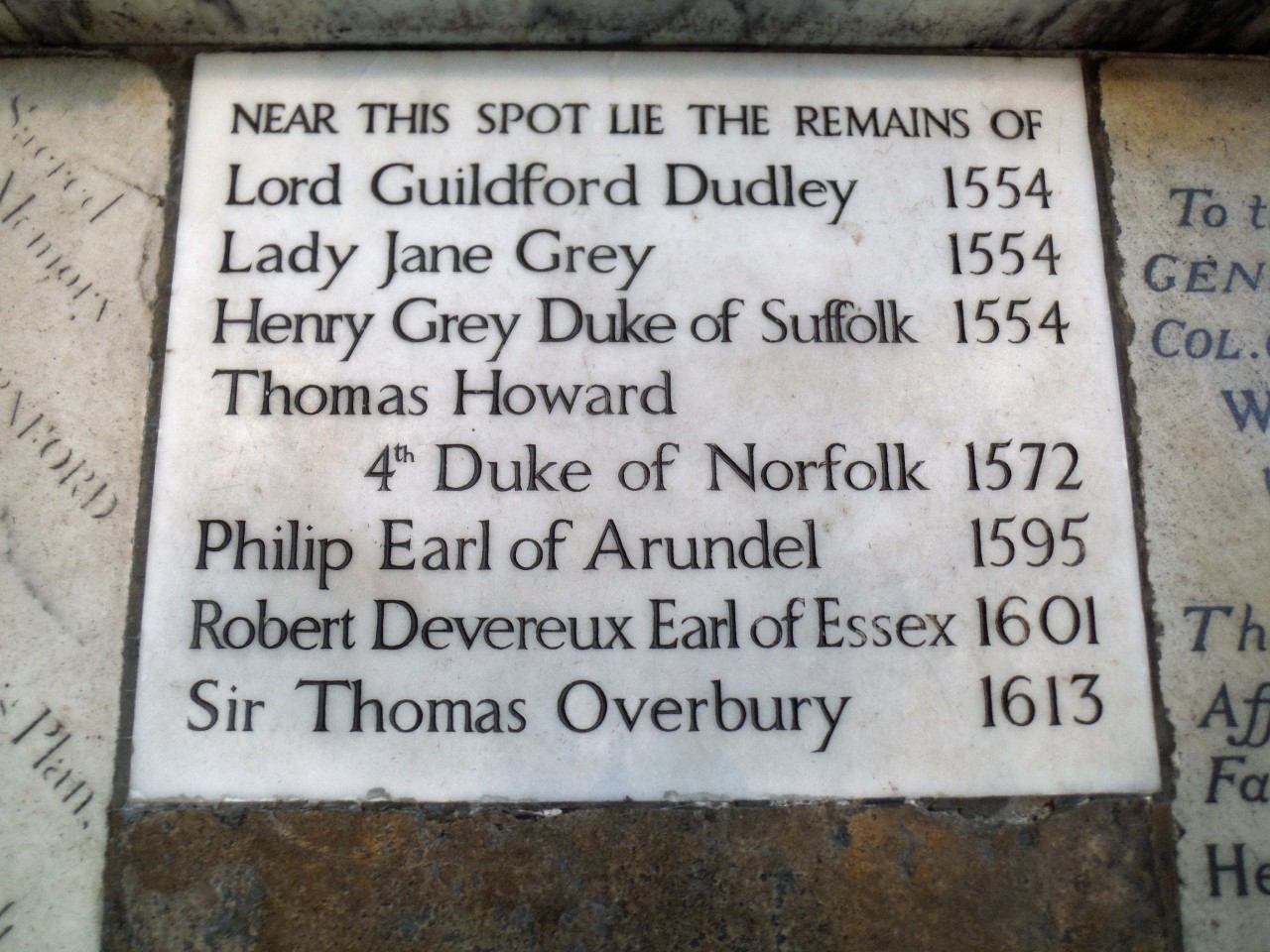
Commemorative Plaque at the Tower of London

But on what evidence is the assertion based that Jane Parker was a main or the key witnesses against Anne Boleyn and the other accused?

The short answer is: not much. Though the proceedings against the accused are fairly well documented, and individual statements are known, what exactly Jane or anybody else said under questioning was not recorded in detail. The one information provided by Jane that we know for certain was used in the trial of her husband George. He was asked to silently read a note he was handed and answer yes or no. George, however, probably knowing that he had already been condemned before the official judgement, decided to read the note out loud. It said that his wife Jane had told him that his sister Anne had told her that the king ‘was no good in bed with women, and that he neither had potency nor force’.

This statement was probably received with embarrassed silence by the assembled Lords, Jane’s father among them, who knew that this was a particularly touchy topic. However tactless it was, the information was neither about adultery nor incest.

Another piece of evidence against Jane is that George Boleyn is recorded to have said, ‘On the evidence of only one woman you are willing to believe this great evil of me, and on the basis of her allegations you are deciding my judgement’. It has often been assumed that the one woman he referred to was his wife. There were however other women who were questioned and according to John Spelmen, one of the judges of the trial, it was Lady Wingfield’s deathbed confession that first revealed Anne’s behaviour.

The third piece of ‘damning’ evidence is the lost journal of Antony Antony, which probably  included the statement that ‘the wife of Lord Rochford [George Boleyn] was a particular instrument in the death of Queen Anne’.

The charge that Jane was the source of incest against her husband is based on a book by Bishop Burnet, writing over a hundred years later, who asserted that Jane Rochford ‘carried many stories to the king or some about him [George Boleyn]’, and evidence ‘that there was a familiarity’. Bishop Burnett had access to sources no longer existing, but what these sources said and how reliable they were cannot be determined today.

Signature of Jane, Lady Rochford

To me this evidence seems rather flimsy, but for many it has been enough to condemn Jane, but there are also those, who like me don’t believe Jane was responsible for the death of Anne Boleyn, her husbands and the other accused notably Julia Fox who wrote a biography about her.

How Jane’s previous and subsequent actions have been interpreted depends on whether the historian in question believes in Jane’s guilt or not.

Three examples show this quite clearly. According to a report by the imperial ambassador Eustace Chapuys from 1534, Jane was banished from court as she had conspired with Anne to get rid of a lady who Henry VIII had become too interested in. If Jane is thought to be guilty in the case against Anne, as for example Eric Ives does, this must be an unfounded rumour. If Jane is not seen as guilty, for example by Julia Fox, it is believable that she worked together with Anne to remove a rival.

A year later a crowd of women from London demonstrated their loyalty to Lady Mary, the daughter of Catherine of Aragon, who was saying at Greenwich at this time. Among the mob were two ladies, Lady Jane Parker and Lady ‘William Howard’. Those who think Jane was guilty find this only natural, as she was ‘otherwise known as Anne’s enemy’, in the words of Eric Ives. Others, Richard Starkey for example, point out that the names of the two ladies were later added to the document, and states that Jane Parker would never be foolish enough to participate in such a demonstration.

It is also hard to believe that Anne Boleyn would have allowed Jane to remain her lady-in-waiting if she had been a ‘known enemy’. Ives himself repeatedly stresses how much control Anne had over the personnel at court so she would have been able to have Jane dismissed or at least sent away from court until she learned how to behave herself. Jane’s husband George would have hardly pressed a ‘known enemy’ on his sisters, and Jane’s father definitely had not enough influence to force Anne to accept his daughter as lady-in-waiting if the queen wanted her gone.

Unknown Man, possibly George Boleyn, Hans Holbein

The third example of how Jane’s actions, or in this case possible actions, are interpreted is the report that on Whitsun 1536, two weeks after the executions of Anne Boleyn, Jane, her father and mother paid a visit to Lady Mary. This visit is seen as further proof of Jane’s hostility to Anne. However, the document from which the visit is known is badly damaged and most likely says only that Henry Parker, Lord Morley, his wife and unnamed daughter visited Mary. The daughter in question was, however, most likely not Jane but her sister Margaret. Margaret’s parents-in-law, John Shelton and Anne Boleyn, were in charge of Mary at the time.

What the relationship between Jane and her husband was really like on a personal level is something we can only judge from their actions and as the three examples above show, Jane’s behaviour has been interpreted according to the author’s judgement on whether or not she was responsible for Anne’s death.

In the end, the case against Jane Parker rests on one vague statement by her husband about ‘a woman’, a lost journal that may have included the accusation, and the later report by Bishop Burnett that is impossible to verify. On the other hand, the one definite piece of information we have, that she was told by Anne a very intimate detail about her married life, which Jane in turn shared with her husband, shows that far from being estranged to the queen or her husband, Jane was on good terms with them. Anne surely would not have divulged the problematic state of her relationship to Henry VIII to a woman who was her enemy.

Additionally, if the whole case against Anne Boleyn and her alleged lovers was a farce and falls apart as soon as it is analysed, as Ives states, can Jane even be responsible for Anne Boleyn’s fate? If the trial was only the means to the end of getting rid of Anne and make way for a new queen, what Jane said or whether or not George Boleyn read out the note in court made no difference whatsoever.

Why are so many writers convinced of Jane Parker’s guilt based on this meagre evidence? For most of them this is an open and shut case and has been proved for centuries. The focus of their research was on a different subject and they had to rely on other writers for their information. Diarmaid MacCullough working on his massive and excellent biography of Thomas Cromwell could not let himself be side-tracked by examining in detail every person that happened to come in contact with the subject of his study.

Additionally, Jane Parker, Lady Rochford also became entangled in the downfall of another of Henry VIII’s wives: Katherine Howard. Jane was briefly exiled from court following Anne Boleyn’s execution, but returned to became lady-in waiting to the next three queens. When Katherine Howard’s youthful misdemeanours had come to light, her behaviour as queen was scrutinised and it was discovered that she had become all too friendly with a young courtier, Thomas Culpepper, one of the king’s gentlemen of the Privy Chamber. During the court’s progress through northern England Katherine had secretly met Thomas Culpepper on several occasions, meetings that often lasted for hours. Her lady-in-waiting Jane Parker was incriminated as well as she had helped arranged these clandestine encounters and acted as a chaperon. In their trial, all three, Thomas Culpepper, Katherine Howard, and Jane Parker, naturally tried to present their part in the events in as innocent a light as possible. Culpepper blamed the women for leading him astray, Katherine blamed Jane for encouraging her and enabling the meetings, and Jane said she had only done what Katherine had told her to do. None of them could deny they had been involved and all three were executed.

In the light of her involvement in Katherine Howard’s conviction and death, it was easy to assume that Jane had also been involved in the downfall of Anne Boleyn. By the reign of Elizabeth it was also adamant that the reputation of her mother had to be freed of any doubts about her sexual conduct, but the blame for her execution should also not be put on Elizabeth’s father Henry VIII. Blaming others, like Jane Parker or Thomas Cromwell, had become the prudent explanation of the downfall of Anne Boleyn.

* I generally refer to married women my their maiden names for one to keep their natal family in mind and secondly to avoid confusion. Alice Lovell and Alice St John would otherwise become Alice Parker.

About the book:

Francis Lovell is without a doubt the most famous – if not the only famous – Lovell of Titchmarsh. In 1483 he was he was made a viscount by Edward IV, the first Lovell to be raised into the titled nobility. He is most famous for being the chamberlain and close friend of Richard III, the ‘dog’ of William Collingbourne’s famous doggerel.

Though Francis Lovell is the best known member of his family, the Lovells were an old aristocratic family, tracing their roots back to eleventh-century Normandy. Aside from the Battle of Hastings, a Lovell can be found at virtually all important events in English history, whether it was the crusade of Richard I, the Battle of Lewes, the siege of Calais, the Lambert Simnel rebellion against Henry VII, or the downfall of Anne Boleyn. Over the centuries the Lovells rose in wealth and power through service to the crown, rich marriages, and, to a considerable degree, luck.

The history of the Lovells of Titchmarsh, from their relatively obscure beginnings in the border region between France and Normandy to a powerful position at the royal court, not only illustrates the fate of this one family but also throws an interesting light on the changes and developments in medieval and Tudor England. Several themes emerge as constant in the lives of an aristocratic family over the five centuries covered in this book: the profit and perils of service to the crown, the influences of family tradition and personal choice, loyalty and opportunism, skill and luck, and the roles of women in the family.

About the author:

Monika E. Simon studied Medieval History, Ancient History, and English Linguistics and Middle English Literature at the Ludwig-Maximilians-Universität, Munich, from which she received an MA. She wrote her DPhil thesis about the Lovells of Titchmarsh at the University of York. She lives and works in Munich.

Links:
https://www.pen-and-sword.co.uk/From-Robber-Barons-to-Courtiers-Hardback/p/19045
https://www.facebook.com/MoniESim
http://www.monikasimon.eu/lovell.html

My Books:

Coming 31 May 2021:
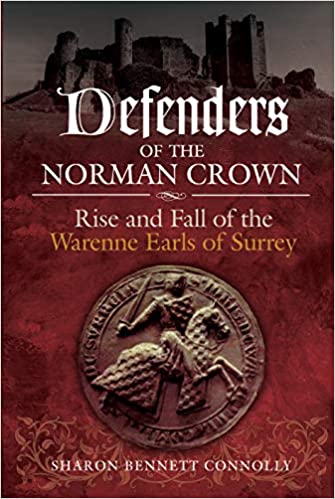
Defenders of the Norman Crown: The Rise and Fall of the Warenne Earls of Surrey tells the fascinating story of the Warenne dynasty, of the successes and failures of one of the most powerful families in England, from its origins in Normandy, through the Conquest, Magna Carta, the wars and marriages that led to its ultimate demise in the reign of Edward III.

1 family. 8 earls. 300 years of English history!

Defenders of the Norman Crown: Rise and Fall of the Warenne Earls of Surrey will be released in the UK on 31 May and in the US on 6 August. And it is now available for pre-order from Pen & Sword Books, Amazon in the UK and US and Book Depository.

Also by Sharon Bennett Connolly:

Ladies of Magna Carta: Women of Influence in Thirteenth Century England looks into the relationships of the various noble families of the 13th century, and how they were affected by the Barons’ Wars, Magna Carta and its aftermath; the bonds that were formed and those that were broken. It is now available from Pen & Sword,  Amazon and from Book Depository worldwide.

Heroines of the Medieval World tells the stories of some of the most remarkable women from Medieval history, from Eleanor of Aquitaine to Julian of Norwich. Available now from Amberley Publishing and Amazon and Book Depository.

Silk and the Sword: The Women of the Norman Conquest traces the fortunes of the women who had a significant role to play in the momentous events of 1066.  Available now from Amazon,  Amberley Publishing, Book Depository.

You can be the first to read new articles by clicking the ‘Follow’ button, liking our Facebook page or joining me on Twitter and Instagram.

©2021 Sharon Bennett Connolly  and Monika Simon
Guest Post: Inspiration to Write Essex – Tudor Rebel by Tony Riches

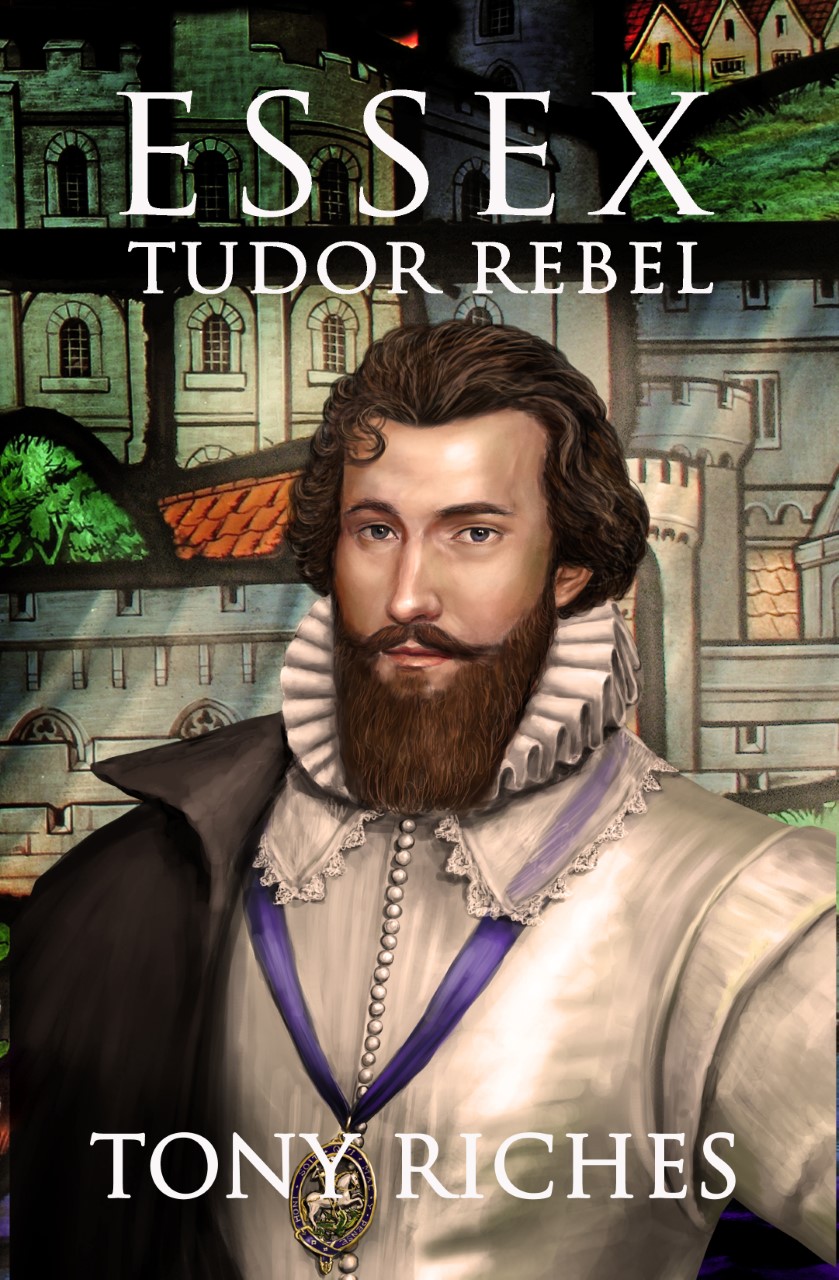
Today it is a pleasure to welcome author Tony Riches back to the blog, talking about the inspiration behind his latest book, Essex – Tudor Rebel. Essex is the second book of Tony’s fabulous Tudor Trilogy, looking into some of the most fascinating characters of the Tudor dynasty. The first in the series, Drake – Tudor Corsair was absolutely fabulous!

Inspiration to Write Essex – Tudor Rebel 

by Tony Riches

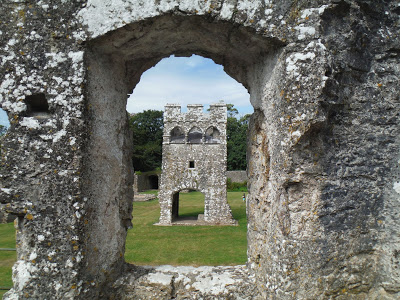
Lamphey Palace

Robert Devereux, Earl of Essex, is one of the most intriguing men of the Elizabethan period. He becomes a ‘favourite’ at court, so close to the queen many wonder if they are lovers. The truth is far more complex, as each has what the other yearns for. Robert Devereux longs for recognition, wealth and influence. His flamboyant naïveté amuses the ageing Queen Elizabeth, like the son she never had, and his vitality makes her feel young. 

I decided to explore Robert Devereux’s story when writing the first book of my Elizabethan series, Drake – Tudor Corsair. Drake is appalled when Essex commandeers a warship from the waiting fleet to sail in the ‘English Armada’ and attack Lisbon. 

Memorial including Robert Devereux, Earl of Essex

To make things worse, Drake knew Queen Elizabeth had forbidden Essex to join the expedition – and he had no experience of naval command or fighting at sea. With typical bravado, Essex leapt from his ship into deep water, causing many of his followers to drown in their attempt to do the same. He then led the forty-mile march to Lisbon, without waiting for supplies, and many soldiers died from hunger, heat exhaustion and thirst. The whole enterprise proved a costly disaster, and set the tone for Robert’s later adventures. 

I wanted to understand why he was so driven to take such risks, when he knew his vengeful queen would be furious. I had access to all his surviving letters, which reveal an intriguing, deeply flawed character, always at the heart of events, the perfect subject for an historical novel. 

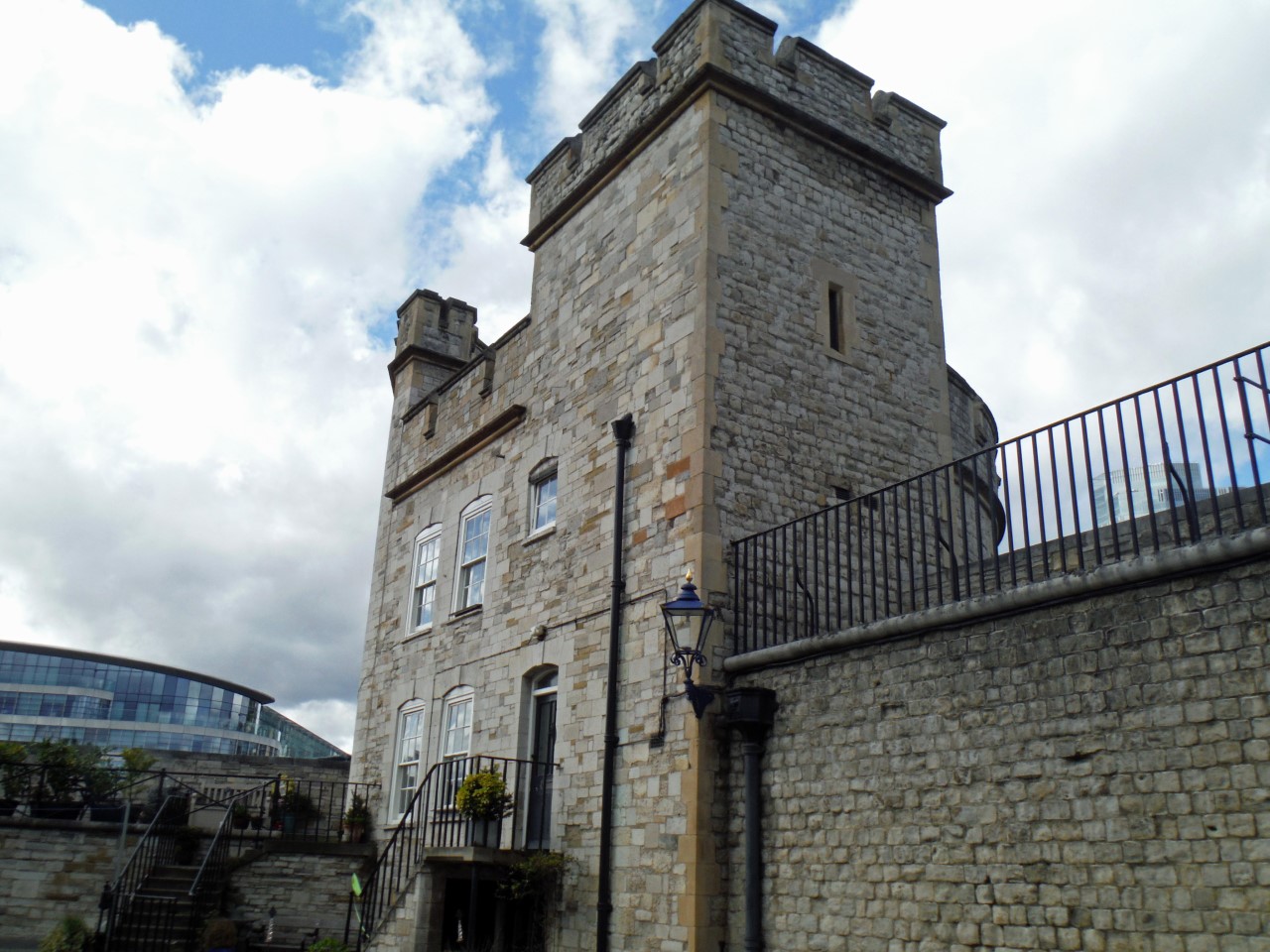
Devereux Tower

I particularly wanted to keep his story as factually accurate and authentic as possible, so immersed myself in the dangerous world of Elizabethan London. During my research I was amazed to find Robert Devereux lived at Lamphey Palace, twenty minutes from my home in Pembrokeshire. I also visited the Devereux Tower and Chapel of St Peter ad Vincula at the Tower of London, (where he lies close to Lady jane Grey and Anne Boleyn). 

I hope readers will be able to tell that this book is one I’ve really enjoyed researching and writing, and that I’ve been able to find some of Robert Devereux’s redeeming qualities. 

To buy the book:

Amazon US: https://www.amazon.com/dp/B09246T7ZT 

Amazon UK: https://www.amazon.co.uk/dp/B09246T7ZT 

Amazon CA: https://www.amazon.ca/dp/B09246T7ZT 

Amazon AU: https://www.amazon.com.au/dp/B09246T7ZT 

About the Author:

Tony Riches is a full-time UK author of best-selling Tudor historical fiction. He lives in Pembrokeshire, West Wales and is a specialist in the lives of the early Tudors. As well as his new Elizabethan series, Tony’s historical fiction novels include the Tudor trilogy and the Brandon trilogy, about Charles Brandon and his wives. 

For more information about Tony’s books please visit his website tonyriches.com and his blog, The Writing Desk and find him on  Facebook and Twitter @tonyriches.

*

My books

Coming 31st May:

Defenders of the Norman Crown: The Rise and Fall of the Warenne Earls of Surrey tells the fascinating story of the Warenne dynasty, of the successes and failures of one of the most powerful families in England, from its origins in Normandy, through the Conquest, Magna Carta, the wars and marriages that led to its ultimate demise in the reign of Edward III.

1 family. 8 earls. 300 years of English history!

Defenders of the Norman Crown: Rise and Fall of the Warenne Earls of Surrey will be released in the UK on 31 May and in the US on 6 August. And it is now available for pre-order from Pen & Sword Books, Amazon in the UK and US and Book Depository.

Also by Sharon Bennett Connolly:

Ladies of Magna Carta: Women of Influence in Thirteenth Century England looks into the relationships of the various noble families of the 13th century, and how they were affected by the Barons’ Wars, Magna Carta and its aftermath; the bonds that were formed and those that were broken. It is now available from Pen & Sword,  Amazon and from Book Depository worldwide.

Heroines of the Medieval World tells the stories of some of the most remarkable women from Medieval history, from Eleanor of Aquitaine to Julian of Norwich. Available now from Amberley Publishing and Amazon and Book Depository.

Silk and the Sword: The Women of the Norman Conquest traces the fortunes of the women who had a significant role to play in the momentous events of 1066.  Available now from Amazon,  Amberley Publishing, Book Depository.

You can be the first to read new articles by clicking the ‘Follow’ button, liking our Facebook page or joining me on Twitter and Instagram.

©2021 Sharon Bennett Connolly and Tony Riches

Maria de Salinas, the Loyal Lady Willoughby

Grimsthorpe Castle, Lincolnshire

Maria de Salinas was lady-in-waiting to Katherine of Aragon, and one of her closest confidantes. Although we know little of her origins, she was the daughter of Juan de Salinas, secretary to Katherine’s eldest sister, Isabella, and Josepha Gonzales de Salas. Maria was not on the original list of ladies, drawn up in 1500, chosen to accompany Katherine of Aragon to England for her marriage to Prince Arthur. However, it seems likely that she, and her sister Inez, did come to England with the Spanish princess. She may have been added to the princess’s staff when her mother, Isabella of Castile, increased the size of Katherine’s entourage in March 1501.

Maria was one of the ladies who stayed with Katherine after her household was reduced and many returned to Spain, following the death of Katherine’s young husband, Arthur, Prince of Wales, in 1502. She remained with the Spanish princess throughout the years of penury and uncertainty, when Katherine was used as a pawn by both her father, Ferdinand, and father-in-law, Henry VII, in negotiations for her marriage to Prince Henry, the future Henry VIII. To solemnise the marriage was one of Henry’s first acts on his accession to the throne, so that Henry and Katherine would be crowned together as the new King and Queen of England. Maria is included in the list of Katherine’s attendants who were given an allowance of black cloth for mantles and kerchiefs, following the death of Henry VII in 1509; she was then given a new gown for Katherine’s coronation, which was held jointly with King Henry in June of the same year.

In 1511 Maria stood as godmother to Mary Brandon, daughter of Charles Brandon – one of the new king, Henry VIII’s closest companions and her future son-in-law – and his first wife, Ann Browne. Katherine of Aragon and Maria were very close; in fact, by 1514 Ambassador Caroz de Villagarut, appointed by Katherine’s father, Ferdinand of Aragon, was complaining of Maria’s influence over the queen. He accused Maria of conspiring with her kinsman, Juan Adursa – a merchant in Flanders with hopes of becoming treasurer to Philip, prince of Castile –  to persuade Katherine not to cooperate with the ambassador. The ambassador complained: ‘The few Spaniards who are still in her household prefer to be friends of the English, and neglect their duties as subjects of the King of Spain. The worst influence on the queen is exercised by Dona Maria de Salinas, whom she loves more than any other mortal.’¹

Maria was naturalised on 29th May, 1516, and just a week later, on 5th June she married the largest landowner in Lincolnshire, William Willoughby, 11th Baron Willoughby de Eresby. William Willoughby was the son of Sir Christopher Willoughby, who had died c.1498, and Margaret, or Marjery, Jenney of Knodishall in Suffolk. He had been married previously, to Mary Hussey, daughter of Sir William Hussey, Chief Justice of the King’s Bench. The King and Queen paid for the wedding, which took place at Greenwich, the Queen even provided Maria with a dowry of 1100 marks. They were given Grimsthorpe Castle, and other Lincolnshire manors which had formerly belonged to Francis Lovel (friend of Richard III), as a wedding gift. Henry VIII even named one of his new ships the Mary Willoughby in Maria’s honour.

Maria remained at court for some years after her wedding, and attended Katherine at the Field of Cloth of Gold in 1520. Henry VIII was godfather to Maria and William’s oldest son, Henry, who died in infancy. Another son, Francis, also died young and their daughter Katherine, born in 1519, would be the only surviving child of the marriage. Lord Willoughby died in 1526, and for several years afterwards Maria was embroiled in a legal dispute with her brother-in-law, Sir Christopher Willoughby, over the inheritance of the Willoughby lands. Sir Christopher claimed that William had settled some lands on Maria which were entailed to Sir Christopher. The dispute went to the Star Chamber and caused Sir Thomas More, the king’s chancellor and a prominent lawyer, to make an initial redistribution of some of the disputed lands.

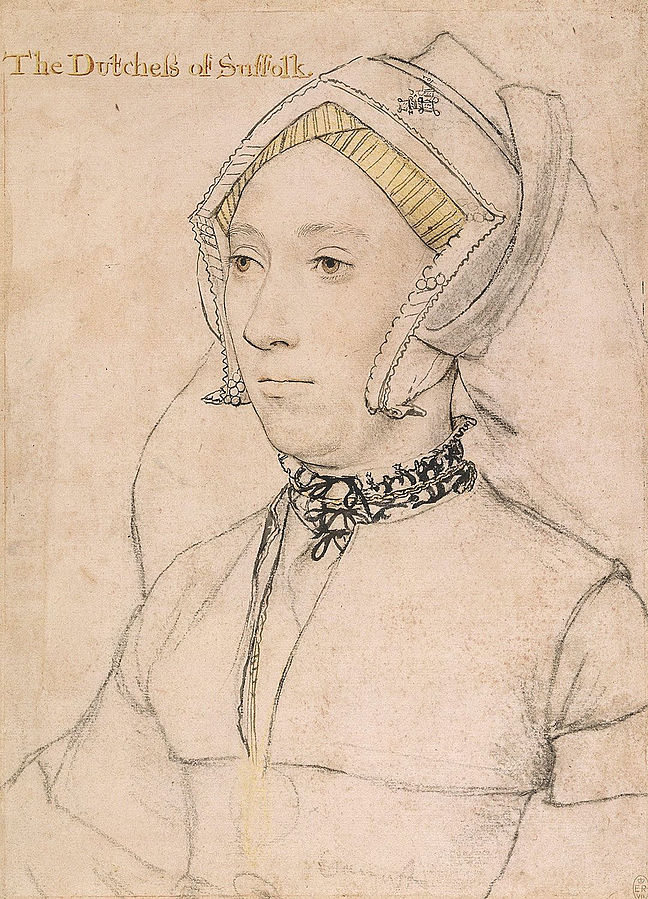
Miniature Katherine Willoughby, Duchess of Suffolk, by Hans Holbein the Younger

This must have been a hard fight for the newly widowed Maria, and the dispute threatened the stability of Lincolnshire itself, given the extensive lands involved. However, Maria attracted a powerful ally in Charles Brandon, Duke of Suffolk and brother-in-law of the King, who called on the assistance of Cardinal Thomas Wolsey, Henry’s first minister at the time, in the hope of resolving the situation. Suffolk had managed to obtain the wardship of Katherine Willoughby in 1528, intending her to marry his eldest son and heir Henry, Earl of Lincoln, and so had a vested interest in a favourable settlement for Maria. This interest became even greater following the death of Mary Tudor, Suffolk’s wife, in September 1533, when only three months later the fifty-year-old Duke of Suffolk married fourteen-year-old Katherine, himself.

Although Suffolk pursued the legal case with more vigour after the wedding, a final settlement was not reached until the reign of Elizabeth I. Suffolk eventually became the greatest landowner in Lincolnshire and, despite the age difference, the marriage does appear to have been successful. Katherine served at court, in the household of Henry VIII’s sixth and last queen, Katherine Parr. She was widowed in 1545 and lost her two sons – and heirs – by the Duke, Henry and Charles, to the sweating sickness, within hours of each other in 1551. Katherine was a stalwart of the Protestant learning and even invited Hugh Latimer to preach at Grimsthorpe Castle. It was she and Sir William Cecil who persuaded Katherine Parr to publish her book, The Lamentacion of a Sinner in 1547, demonstrating her continuing links with the court despite her first husband’s death. Following the death of her sons by Suffolk, Katherine no longer had a financial interest in the Suffolk estates, and in order to safeguard her Willoughby estates, Katherine married her gentleman usher, Richard Bertie.

The couple had a difficult time navigating the religious tensions of the age and even went into exile on the Continent during the reign of the Catholic Queen, Mary I, only returning on Elizabeth’s accession. Katherine resumed her position in Tudor society; her relations with the court, however, were strained by her tendency towards Puritan learning. The records of Katherine’s Lincolnshire household show that she employed Miles Coverdale – a prominent critic of the Elizabethan church – as tutor to her two children by Bertie, Susan and Peregrine. Unfortunately, Katherine died after a long illness, on 19th September 1580 and was buried in her native Lincolnshire, in Spilsby Church.

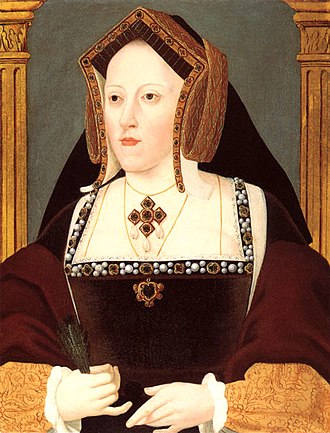
Catherine of Aragon by Lucas Hornebolte

A widow since 1526, Maria de Salinas, Lady Willoughby, kept a tight rein on the Willoughby lands, proving to be an efficient landlady. She took advantage of the dissolution of the monasteries in order to lease monastic land. Although this was a business arrangement, rather than political or religious, it still made her a target of discontent during the Lincolnshire Rising of 1536.

Maria had remained as a Lady-in-Waiting to Katherine. She was known to dislike Anne Boleyn and, as Henry’s attitude towards Katherine hardened during his attempts to divorce her, in 1532 Maria was ordered to leave Katehrine’s household and not contact her again. By 1534, as Emperor Charles V’s ambassador, Chapuys, described it; Katherine was ‘more a prisoner than before, for not only is she deprived of her goods, but even a Spanish lady who has remained with her all her life, and has served her at her own expense, is forbidden to see her.’²

When Katherine was reported to be dying at Kimbolton Castle, in December 1535, Maria applied for a license to visit her ailing mistress. She wrote to  Sir Thomas Cromwell, the King’s chief minister at the time, saying ‘for I heard that my mistress is very sore sick again. I pray you remember me, for you promised to labour with the king to get me licence to go to her before God send for her, as there is no  other likelihood.’² Permission was refused, but despite this setback, Maria set out from London to visit Katherine at Kimbolton Castle, arriving on the evening of New Years’ Day, 1536 and contrived to get herself admitted by Sir Edmund Bedingfield by claiming a fall from her horse meant she could travel no further. According to Sarah Morris and Nathalie Grueninger, Katherine and Maria spent hours talking in their native Castilian; the former queen died in Maria’s arms on 7th January 1536.³ Katherine of Aragon was buried in Peterborough Cathedral on 29th January, with Maria and her daughter, Katherine, in attendance.

Maria herself died in May 1539, keeping control of her estates to the very last. She signed a copy of the court roll around 7th May, but was dead by the 20th, by which time the duke of Suffolk was negotiating for livery of her lands. Her extensive Lincolnshire estates, including Grimsthorpe and Eresby, passed to her only surviving child, Katherine and her husband, Charles Brandon, Duke of Suffolk. Maria’s burial-place is unknown, though there is a legend that she was buried in Peterborough Cathedral, close to her beloved Queen Katherine.

*

Footnotes: ¹Henry VIII’s Last Love by David Baldwin; ²Catherine of Aragon by Amy Licence; ³In the Footsteps of the Six Wives of Henry VIII by Sarah Morris and Natalie Grueninger

Picture credits: Grimsthorpe Castle ©2016 Sharon Bennett Connolly; all other pictures courtesy of Wikipedia

Bibliography: Bibliography: Catherine of Aragon by Amy Licence; Henry VIII’s Last Love by David Baldwin; Charles Brandon: Henry VIII’s Closest Friend by Steven Gunn; Accounts of the Chamber and Great Wardrobe Public Record Office; Howard [earl of Surrey], Poems, edited by E. Jones (1964); John Leland Leland’s itinerary in England and Wales 1535-43 edited by L Toulmin Smith (1906-10); Letters and Papers, Foreign and Domestic, of the Reign of Henry VIII 1509-47 edited by JS Brewer, James Gairdner and RH Brodie, HMSO London 1862-1932; Privy Purse Expenses of King Henry VIII from November MDXIX to December MDXXXII edited by Sir Nicholas Harris Nicolas 1827; Religion and politics in mid-Tudor England through the eyes of an English Protestant Woman: Bulletin of the Institute of Historical Research, 1980 & 1982; Elizabeth’s Women by Tracy Borman; England Under the Tudors by Arthur D Innes; Henry VIII: King and Court by Alison Weir; In Bed with the Tudors by Amy Licence; In the Footsteps of the Six Wives of Henry VIII by Sarah Morris and Natalie Grueninger; Ladies-in-Waiting: Women who Served at the Tudor Court by Victoria Sylvia Evans; The Earlier Tudors 1485-1558 by JD Mackie; The Six Wives and Many Mistresses of Henry VIII: The Women’s Stories by Amy Licence; Oxforddnb.com; Tudorplace.com

*

My Books

Signed, dedicated copies of all my books are available, please get in touch by completing the contact me form.

Defenders of the Norman Crown: The Rise and Fall of the Warenne Earls of Surrey tells the fascinating story of the Warenne dynasty, of the successes and failures of one of the most powerful families in England, from its origins in Normandy, through the Conquest, Magna Carta, the wars and marriages that led to its ultimate demise in the reign of Edward III. Defenders of the Norman Crown: Rise and Fall of the Warenne Earls of Surrey is now available from Pen & Sword Books, Amazon in the UK and US, Bookshop.org and Book Depository.

1 family. 8 earls. 300 years of English history!

Also by Sharon Bennett Connolly:

Ladies of Magna Carta: Women of Influence in Thirteenth Century England looks into the relationships of the various noble families of the 13th century, and how they were affected by the Barons’ Wars, Magna Carta and its aftermath; the bonds that were formed and those that were broken. It is now available in paperback and hardback from Pen & Sword,  Amazon, Bookshop.org and from Book Depository worldwide.

Heroines of the Medieval World tells the stories of some of the most remarkable women from Medieval history, from Eleanor of Aquitaine to Julian of Norwich. Available now from Amberley Publishing and Amazon, Bookshop.org and Book Depository.

Silk and the Sword: The Women of the Norman Conquest traces the fortunes of the women who had a significant role to play in the momentous events of 1066.  Available now from Amazon,  Amberley Publishing, Bookshop.org and Book Depository.

*

You can be the first to read new articles by clicking the ‘Follow’ button, liking our Facebook page or joining me on Twitter and Instagram.

*

©2018 Sharon Bennett Connolly

Katherine Willoughby, the Puritan Duchess

Catherine,_Duchess_of_Suffolk_by_Hans_Holbein_the_Younger
Katherine Willoughby, Duchess of Suffolk

Maria de Salinas was a lady-in-waiting and close friend to Katherine of Aragon; indeed, she probably came to England with the Spanish princess in 1501 for the marriage to Henry’s older brother, Arthur, Prince of Wales. Katherine and Maria were very close and the Spanish ambassador complained of Maria’s influence over the queen, especially after she tried to persuade Katherine not to cooperate with the ambassador and encouraged the Queen to favour her English subjects.

In June 1516 Maria married the largest landowner in Lincolnshire, William Willoughby, 11th Baron Willoughby de Eresby. The wedding was a lavish affair – attended and paid for by the King and Queen. It took place at Greenwich Palace and the couple were given Grimsthorpe Castle, in Lincolnshire, as a wedding present. The Queen even provided Maria with a generous dowry of 1100 marks.

Maria remained at court for some years after her wedding, and attended Queen Katherine at the Field of Cloth of Gold in 1520. Henry VIII was godfather to Maria and William’s oldest son, Henry who died in infancy. Another son, Francis, also died young and their daughter Katherine, born on 22nd March 1519 and named after the queen, would be the only surviving child of the marriage. With her father holding over 30 manors in Lincolnshire alone, and an annual income of over £900 a year, Katherine was one of the great heiresses of her generation.

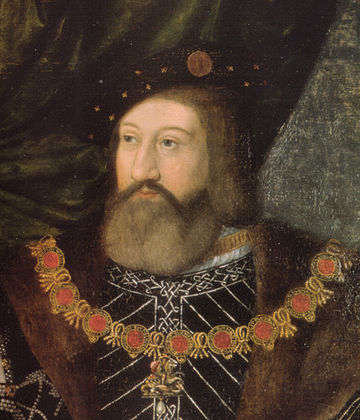
360px-Charles_Brandon_Duke_of_Suffolk
Charles Brandon, Duke of Suffolk

Little Katherine was only 6 or 7 when her father, Lord Willoughby, died in 1526. For several years afterwards Maria was embroiled in a legal dispute with her brother-in-law, Sir Christopher Willoughby, over the inheritance of the Willoughby lands. It seems William had settled some lands on Maria which were entailed to Sir Christopher. The dispute went to the Star Chamber and caused Sir Thomas More, the king’s chancellor and a prominent lawyer, to make an initial redistribution of some of the disputed lands.

This must have been a hard fight for the newly widowed Maria, and the dispute threatened the stability of Lincolnshire itself, given the extensive lands involved. However, Maria attracted a powerful ally in Charles Brandon, Duke of Suffolk and brother-in-law of the King, who called on the assistance of Cardinal Thomas Wolsey, Henry’s first minister at the time, in the hope of resolving the situation.

Suffolk had managed to obtain the wardship of Katherine Willoughby in 1529, intending her to marry his eldest son and heir Henry, who had been made Earl of Lincoln in 1525, and so had a vested interest in a favourable settlement for Maria. Suffolk’s acquisition of the de la Pole estates had given him a prominent position in East Anglia; with these properties added to young Katherine’s lands in Lincolnshire, he would create an impressive power base.

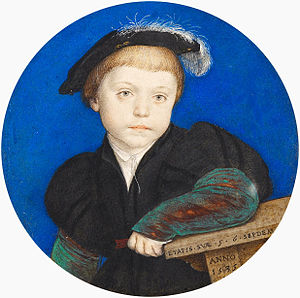
Hans_Holbein_the_Younger_-_Henry_Brandon,_2nd_Duke_of_Suffolk_(1535-51)_-_Google_Art_Project
Henry Brandon, 2nd Duke of Suffolk

Whether or not the young earl of Lincoln was a sickly child (as he died in 1534) is uncertain; however the marriage was not to be – it has been a habit to say that anyone who died young was sickly, but this was not necessarily the case as fatal childhood illnesses were common. Suffolk had been married to king Henry VIII’s little sister, Mary Tudor, Dowager Queen of France, but she died in September 1533. The 50-year-old Duke of Suffolk caused a great scandal when, only 3 months later, he married 14-year-old Katherine himself. She was Suffolk’s fourth wife.

Despite the age difference, it does appear to have been a successful marriage. Katherine and Charles were to have 2 sons. The first, Henry, was born in 1535 and the youngest, Charles, was born in 1537.

Although Suffolk pursued the legal case with more vigour after the wedding, a final settlement was not reached until the reign of Elizabeth I. The combined properties of Charles Brandon, Duke of Suffolk, and Katherine made Suffolk the greatest magnate in Lincolnshire. He added to their properties by purchasing monastic land and built a fine house at Grimsthorpe Castle. His prominence in the county meant Suffolk was instrumental in suppressing the Lincolnshire rebellion in 1536 (part of the Pilgrimage of Grace), a consequence of the Dissolution of the Monasteries.

Hans_Holbein_the_Younger_-_Charles_Brandon_(Royal_Collection)
Charles Brandon, 3rd Duke of Suffolk

Along with her mother, Katherine was an official mourner at the funeral of Katherine of Aragon in 1536. Sadly, it was only 3 years later, in 1539, that Queen Katherine’s former lady-in-waiting, Maria de Salinas, Lady Willoughby, passed away.

Katherine served at court, in the household of Henry VIII’s sixth and last queen, Katherine Parr. A stalwart of the Protestant learning, Duchess Katherine used her position to introduce Protestant clergy to Lincolnshire, even inviting Hugh Latimer to preach and Grimsthorpe Castle. It was she and Sir William Cecil who persuaded Katherine Parr to publish her book, The Lamentacion of a Sinner in 1547. Katherine Willoughby was also drawn into the tragedy of Anne Askew, whose brother-in-law, George St Poll, was a lawyer in Katherine’s service. During her torture in the Tower of London, Anne was questioned as to whether or not Katherine and aided her, but she refused to implicate the duchess or Queen Katherine.

In the early 1540s Suffolk played a big part in Henry’s wars with France and Scotland; in 1544 he successfully prosecuted the siege of Boulogne and was rewarded in February 1545 with the lands of Tattershall College, which he was allowed to purchase for less than half price.

Amid preparations for another expedition to France, Suffolk died at Guildford in August 1545; the cause of death is not known. He would have been in his early 60s. Suffolk’s son and heir, Henry, was just 10 years old. Katherine was granted his wardship in May 1546, for the sum of £1500 and he was sent to the household of Prince Edward to continue his studies. It must have been a cause of great pride for Katherine when Henry and Charles were both knighted at Edward VI’s coronation, with Henry, as duke of Suffolk, having the honour of carrying the orb during the ceremony.

In 1549 Henry and Charles were enrolled at St John’s College, Cambridge, in order to finish their education.

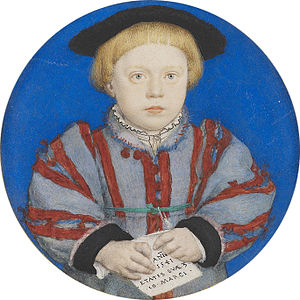
330px-Catherine_Willoughby,_portrait_miniature_3
Katherine Willoughby

It was in the summer of 1551 that an outbreak of sweating sickness struck Cambridge. Henry and Charles moved to the Bishop of Lincoln’s Palace at Buckden in Huntingdonshire, in a futile attempt to escape the disease. For it was at Buckden, on July 14th 1551, that the boys both passed away within minutes of each other. Charles, surviving his brother by about half an hour, became the 3rd Duke of Suffolk before his death. The boys, who had shown great promise at Cambridge, were buried together at Buckden. To lose both her sons in such a short space of time must have been devastating for Katherine to take.

Following the deaths of her sons by Suffolk, Katherine no longer had a financial interest in the Suffolk estates, which went to the heirs of Mary Tudor, Henry VIII’s sister. However, Katherine still had her own Willoughby estates to look after and in order to safeguard these, Katherine married her gentleman usher, Richard Bertie, in 1552. This marriage appears to have been made for love and with mutual religious beliefs; unfortunately for the couple, Katherine was unsuccessful in her attempts to gain the title of Lord Willoughby for her second husband.

The couple had a difficult time navigating the religious tensions of the age and, during the reign of the Catholic Queen Mary I, in early 1555, even went into exile on the Continent, travelling through Wesel, Strasbourg and Frankfurt. And at the time of Mary’s death, in 1558, they were staying at the court of the king of Poland. They returned to England the following year. During the reign of Elizabeth I, Katherine resumed her position in Tudor society; however, her relations with the court were strained by her tendency towards Puritanism.

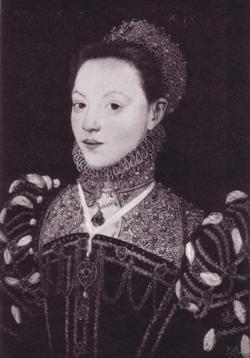
Susan_Bertie,_Countess_of_Kent
Susan Bertie, Countess of Kent

Katherine used her position in Lincolnshire and extensive patronage to help disseminate the Puritan teachings. The records of Katherine’s Lincolnshire household show that she employed Miles Coverdale – a prominent critic of the Elizabethan church – as tutor to her two children by Bertie. The couple’s 1st child, a daughter, Susan, was born in 1554 and was still a baby when she went into exile on the continent, with her parents. A son, Peregrine, was born in Wesel in Cleves in 1555, whilst the family was still exiled from England.

Susan went on to marry Reginald Gray of Wrest in 1570. Reginald would be restored to the family title of Earl of Kent in 1572, but died in March 1573. The couple had no children and the Dowager Countess of Kent would marry again in 1581, to Sir John Wingfield, a nephew of the redoubtable Bess of Hardwick. they had 2 sons.

Peregrine Bertie spent his teenage years in the household of Sir William Cecil, a good friend of his mother and Queen Elizabeth’s principal secretary. It was there that he met and fell in love with Mary de Vere, orphaned daughter of John de Vere, 16th Earl of Oxford. Despite opposition from Katherine and the bride’s brother Edward de Vere, 17th Earl of Oxford, the couple married sometime in late 1577, or early 1578. The marriage appears to have been happy and loving, and produced 5 sons and a daughter.

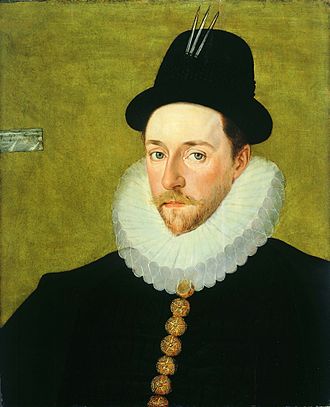
330px-Peregrine_Bertie,_13th_Baron_Willoughby_de_Eresby,_oil_painting
Peregrine Bertie, 13th Baron Willoughby de Eresby

Peregrine succeeded as the 13th Baron Willoughby of Willoughby, Beck and Eresby on the death of his mother and would serve Queen Elizabeth, both as a soldier and administrator, until his own death in 1601.

Katherine had been a strong supporter of the Protestant faith; numerous books carried her coat of arms, or were dedicated to her, including works by Erasmus and William Tyndale. The family’s adventures on the continent were retold in John Foxe’s Acts and Monuments, and even in popular Elizabethan ballads.

Katherine Willoughby, Dowager Duchess of Suffolk and 12th Baroness Willoughby de Eresby, died after a long illness, on 19th September 1580, at Grimsthorpe Castle. She was interred with a fine, alabaster tomb in Spilsby Church, in her native Lincolnshire. Her husband, Richard, died 2 years later and was buried beside her.

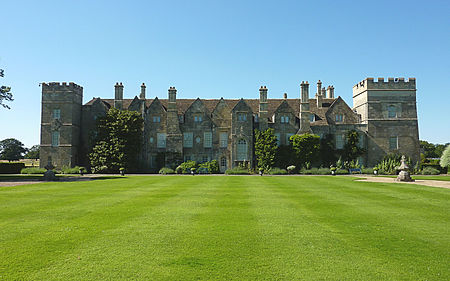
450px-Grimsthorpe_Castle_-_South_Facade
Grimsthorpe Castle

*

Katherine’s story appears in greater detail in my book, Heroines of the Tudor World, now available in hardback, paperback and ebook.

Images courtesy of Wikipedia

*

Sources: Susan Wabuda, Oxforddnb.com; Sarah Morris and Natalie Grueninger, In the Footsteps of the Six Wives of Henry VIII; Retha M. Warnicke, Oxforddnb.com; England Under the Tudors by Arthur D Innes; In Bed with the Tudors by Amy Licence; Ladies-in-Waiting: Women who Served at the Tudor Court by Victoria Sylvia Evans; The Earlier Tudors 1485-1558 by JD Mackie; The Six Wives and Many Mistresses of Henry VIII: The Women’s Stories by Amy Licence; Sarah Bryson; Elizabeth’s Women by Tracy Borman.

*

My Books

Signed, dedicated copies of all my books are available through my online bookshop or the Contact Me page

New releases in 2026:

New Hardbacks

Books by Sharon Bennett Connolly

‘My daughter wanted me to treat her more like a princess. So, I married her to a stranger to strengthen the alliance with Poland!’

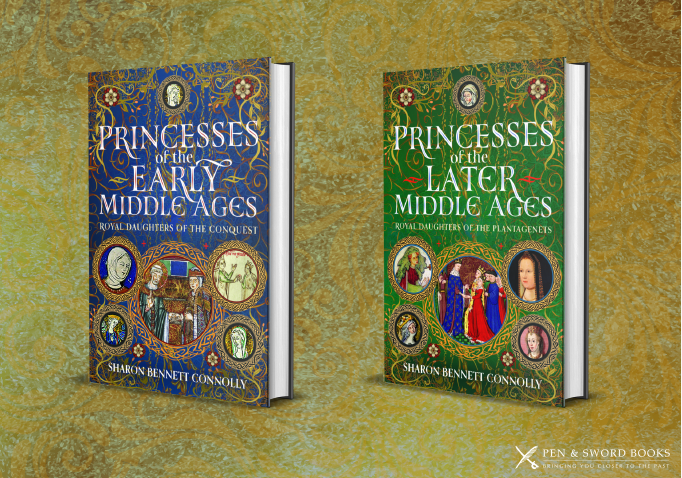
Princesses of the Early Middle Ages: Royal Daughters of the Conquest and Princesses of the Later Middle Ages: Royal Daughters of the Plantagenets tell the stories of England’s royal daughters from 1066 to the rise of the Tudors, from the last Anglo-Saxon princesses to the fall of the House of York.

Were they really pampered pawns sent off to marriages on the Continent, out of sight and out of mind?

Perhaps, there was different story, where a foreign marriage does not mean eternal exile, but a purpose in life, where a princess is a diplomat, an ambassador for England in her new country.

Where she is the bond between allies – most of the time.

Their stories are touching, inspiring and, at times, heartbreaking...

Praise for Princesses of the Early Middle Ages:

Heidi Malagisi: ‘This is another excellent book by Sharon Bennett Connolly. Extremely well researched and relatively easy to follow along, which is a great thing because there are so many Matildas and Eleanors in this book.‘

Tony Riches: “I challenge anyone with an interest in medieval Britain to not find something they will learn from this book.”

Anna Belfrage: “I just love how [Sharon] presents this huge cast of real life people in a casual, chatty tone that has me expecting the various female protagonists to suddenly pop their head up and add their own commentary.“

Buy now: Princesses of the Early Middle Ages: Royal Daughters of the Conquest

Praise for Princesses of the Later Middle Ages:

Elizabeth Chadwick: ‘Really interesting and informative and gives a great handle on the goings on surrounding these ladies!’

Kathryn Warner: ‘A deeply researched, richly detailed and fascinating account of late medieval England’s forgotten princesses. I loved it!’

Pre-order: Princesses of the Later Middle Ages: Royal Daughters of the Plantagenets 

New in Paperback:

Books by Sharon Bennett Connolly

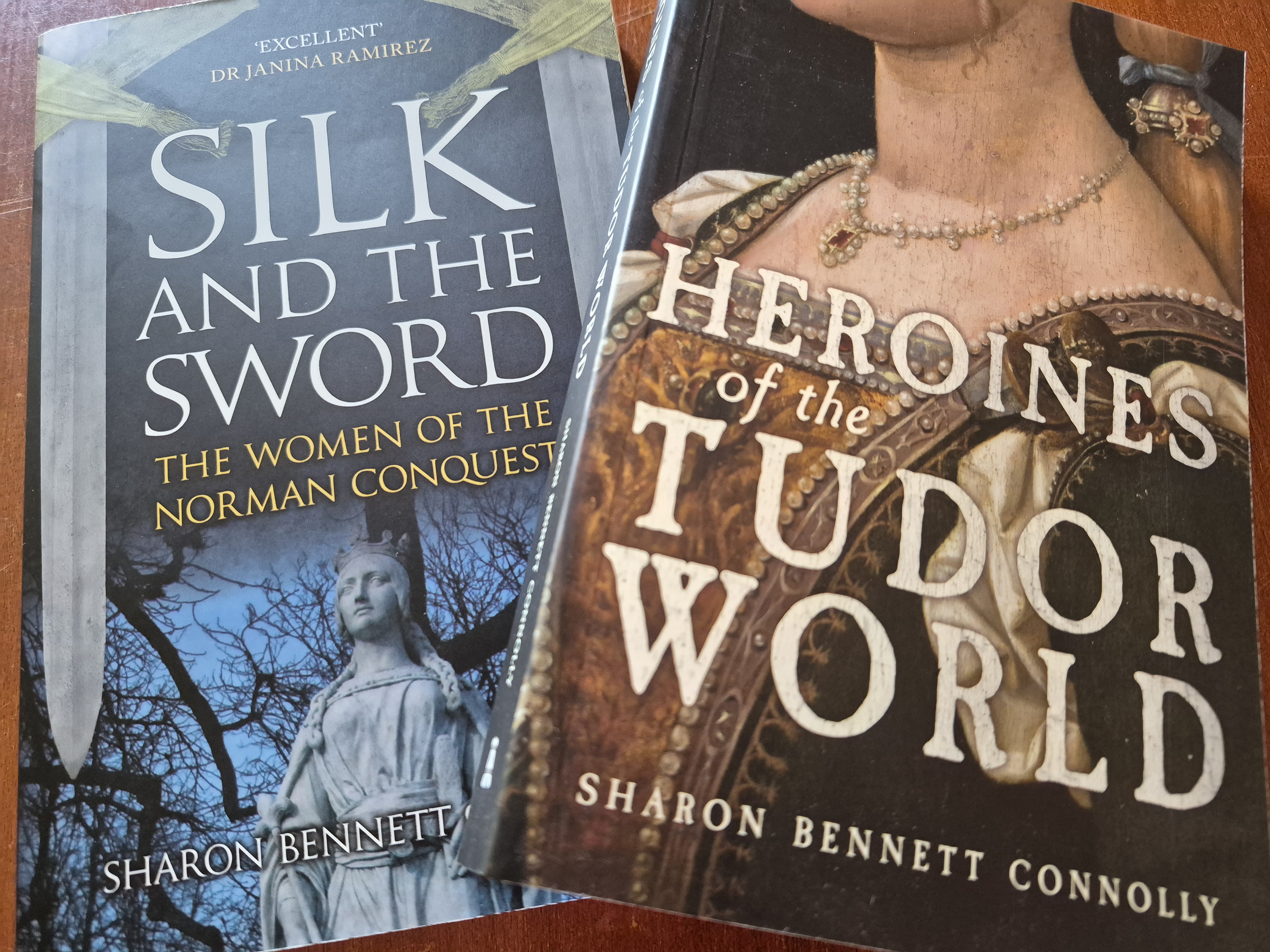
The momentous events of 1066, the story of invasion, battle and conquest, are well known. But what of the women? Silk and the Sword: The Women of the Norman Conquest traces the fortunes of the women who had a significant role to play during the Norman Conquest – wives, lovers, sisters, mothers, leaders. These are lives full of drama, pathos and sometimes mystery: Edith and Gytha searching the battlefield of Hastings for the body of Harold, his lover and mother united in their grief for the fallen king. Who was Ælfgyva, the lady of the Bayeux Tapestry, portrayed with a naked man at her feet?

Janina Ramirez said it’s ‘Excellent’!

Heroines of the Tudor World focuses on the women who lived through the Renaissance and Reformation, examining the threats and challenges they faced and how they overcame them. These are the women who ruled, the women who founded dynasties, the women who fought for religious freedom, their families and love. These are the women who made a difference, who influenced countries, kings and the Reformation.

Derek Birks: ‘An excellent account of the changing roles of women in Tudor society.’

Annie Whitehead: ‘What a treat this book was to read. Bennett Connolly has an easy, conversation style of writing which welcomes you from the opening pages and draws you into her story.‘

Available now from Amazon and Pen and Sword Books

Also by Sharon Bennett Connolly:

Books by Sharon Bennett Connolly

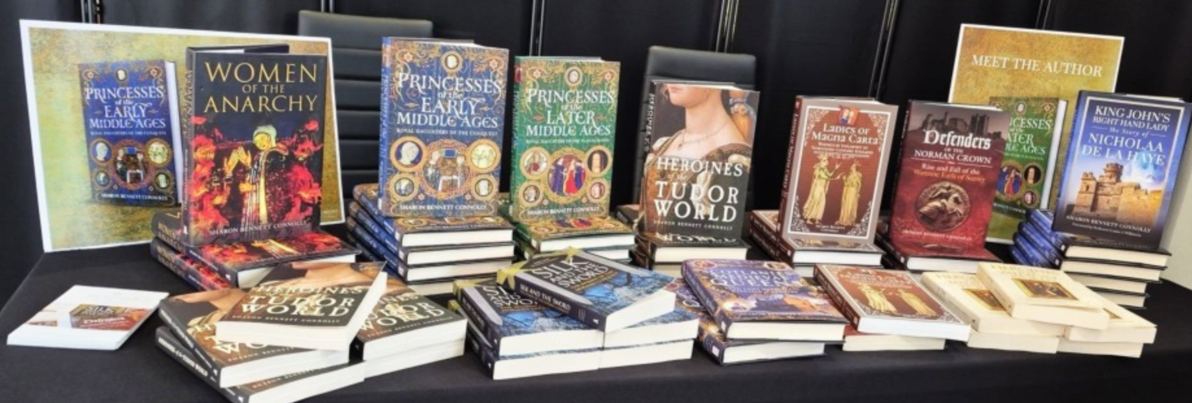
Heroines of the Medieval World; Silk and the Sword: The Women of the Norman Conquest; Ladies of Magna Carta: Women of Influence in Thirteenth Century England; Defenders of the Norman Crown: Rise and Fall of the Warenne Earls of Surrey; King John’s Right Hand Lady: The Story of Nicholaa de la Haye; Women of the Anarchy; Heroines of the Tudor World; Scotland’s Medieval Queens: From St Margaret to Margaret of Denmark; Princesses of the Early Middle Ages: Royal Daughters of the Conquest (March 2026); Princesses of the Later Middle Ages; Royal Daughters of the Plantagenets (August 2026)

Alternate Endings: An anthology of historical fiction short stories including Long Live the King… which is my take what might have happened had King John not died in October 1216. Available in paperback and kindle from Amazon.

All my books on Amazon and Bookshop.org .

You can also order direct from my publishers, Pen and Sword Books and Amberley Publishing.

Podcast:

A Slice of Medieval

Have a listen to the A Slice of Medieval podcast, which I co-host with Historical fiction novelist Derek Birks. Derek and I welcome guests, such as Bernard Cornwell and Michael Jecks, and discuss a wide range of topics in medieval history, from significant events to the personalities involved. 

Every episode is also now available on YouTube.

*

Royal Historical Society

Don’t forget! 

Signed, dedicated copies of all my books are available through my online bookshop or the Contact Me page

For forthcoming online and in-person talks, please check out my Events Page.

You can be the first to read new articles by clicking the ‘Follow’ button, liking our Facebook page or joining me on Twitter, Threads, Bluesky and Instagram.

©2016 Sharon Bennett Connolly FRHistS