Ladies of Magna Carta Blog Tour

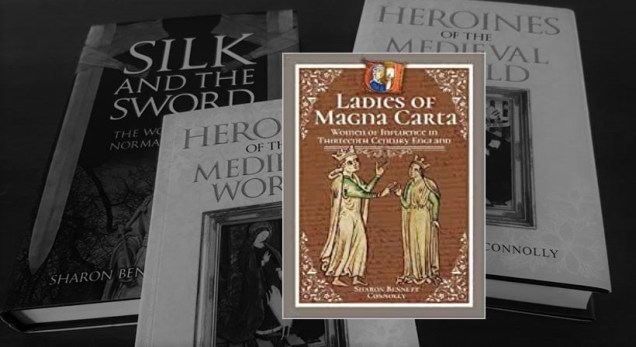
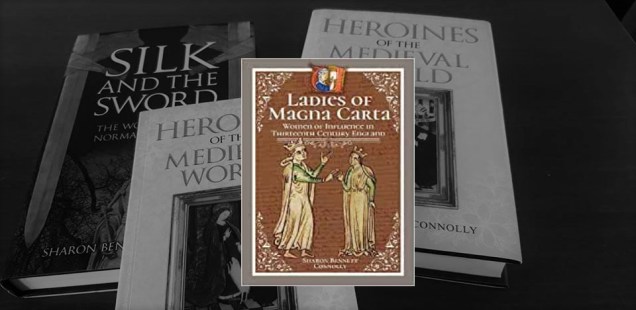
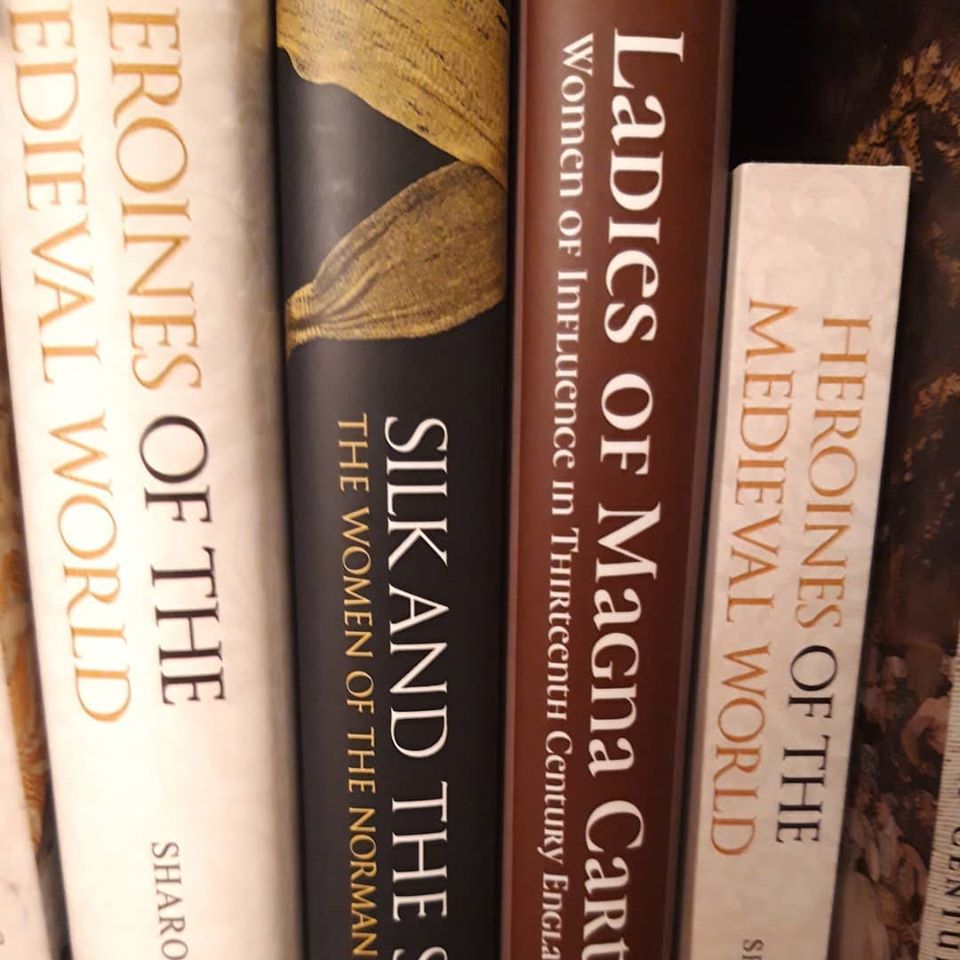
Ladies of Magna Carta: Women of Influence in Thirteenth Century Europe is going on tour – virtually at least. With articles, book reviews and interviews coming over the next 2 weeks, we will be visiting such exotic places as Barnsley, Tennessee, the Yorkshire Dales, Sussex and Michigan – all from the desktop!

Here’s the itinerary!

First stop is 1st July at my amazing publishers, Pen and Sword, who have done a wonderful job of organising the tour. Here’s an article on the inspiration behind the book.

5th July, Joanna Arman, The History Lady, will publishing her thoughts on Ladies of Magna Carta. I’m not nervous – much!
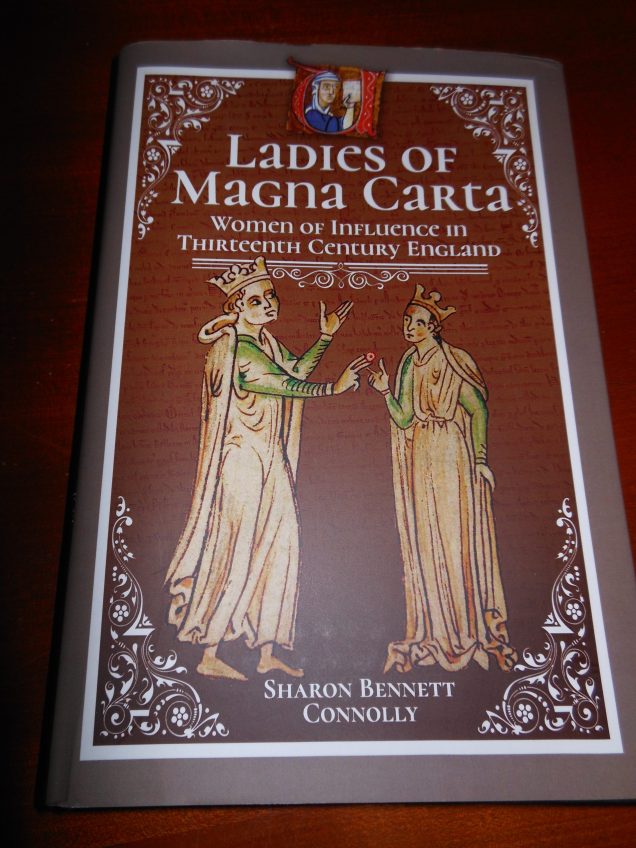
6th July, I will be stopping by for a cuppa with Samantha Wilcoxson to talk about The Marshal Sisters.

7th July, I will be chatting with Susan Higginbotham on History Refreshed about why it is so hard to love Isabelle d’Angoulême.

I will be making 2 stops on 8th July, visiting Simon Turney’s S.J.A. Turney’s Books and More, with an article on the many Family Ties of the women of the Magna Carta a story, plus Simon has written a wonderful review of Ladies of Magna Carta. And then it’s a quick hop over to visit Carol McGrath for her review of Ladies of Magna Carta and a chat about history, research and writing in general.

9th July I’ll be visiting the inimitable author, Tony Riches, with an article on Matilda de Braose.

10th July its down to Surrey for a review from the wonderful Paula Lofting over at The Road to Hastings and Other Stories.

13th July its back over to the US to Adventures of a Tudor Nerd for ace reviewer Heidi Malagasi’s thoughts on Ladies of Magna carta.

14th July, its over to nursing historian Louise Wyatt for coffee and a Q &A – and a little taster from the book.

15th July its back over the pond to Tennessee, to visit Kristie Dean and give you 16 Facts About Woman and Magna Carta – it was supposed to be 10 but I got carried away!

16th July Last – but by no means least – stop on the tour is the amazing Derek Birks and one final – hopefully glowing – review.

Ladies of Magna Carta: Women of Influence in Thirteenth Century England  is now available from Pen & SwordAmazon and from Book Depository worldwide.

I would like to thank Rosie and Rebecca at Pen & Sword and all the authors and bloggers involved for taking part in this amazing tour. I am truly humbled and grateful that you have all taken the time to read Ladies of Magna Carta and shared your thoughts and blog space with me.

THANK YOU!

*

Signed book plates

If you have a copy of Ladies of Magna Carta and would like a signed book plate to pop in the front, for you or someone else, just drop me a line via the ‘Contact Me‘ page with your address and who you would like the dedication made out to, and I will get one out to you.

*

About me:

Sharon Bennett Connolly has been fascinated by history her whole life. She has studied history academically and just for fun – and even worked as a tour guide at historical sites. For Christmas 2014, her husband gave her a blog as a gift – http://www.historytheinterestingbits.com – and Sharon started researching and writing about the stories that have always fascinated, concentrating on medieval women. Her latest book, Ladies of Magna Carta: Women of Influence in Thirteenth Century England, released in May 2020, is her third non-fiction book. She is also the author of Heroines of the Medieval World and Silk and the Sword: The Women of the Norman Conquest. Sharon regularly gives talks on women’s history; she is a feature writer for All About History magazine and her TV work includes Australian Television’s ‘Who Do You Think You Are?

My Books

Out Now!

Ladies of Magna Carta: Women of Influence in Thirteenth Century England  looks into the relationships of the various noble families of the 13th century, and how they were affected by the Barons’ Wars, Magna Carta and its aftermath; the bonds that were formed and those that were broken. It is now available from Pen & SwordAmazon and from Book Depository worldwide.
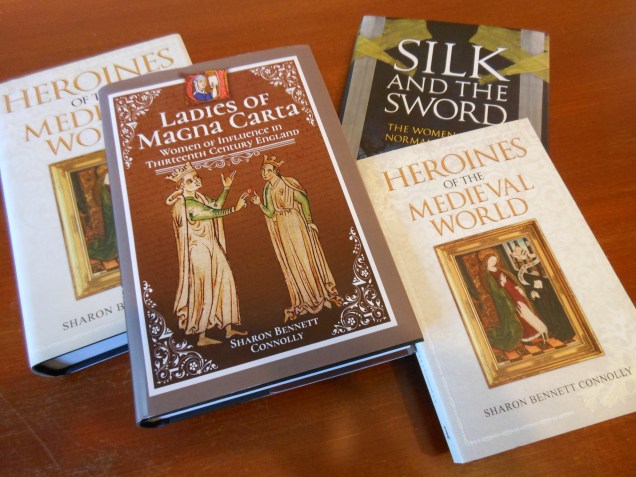
Also by Sharon Bennett Connolly:

Silk and the Sword: The Women of the Norman Conquest traces the fortunes of the women who had a significant role to play in the momentous events of 1066.  Available now from Amazon,  Amberley Publishing, Book Depository.

Heroines of the Medieval World tells the stories of some of the most remarkable women from Medieval history, from Eleanor of Aquitaine to Julian of Norwich. Available now from Amberley Publishing and Amazon and Book Depository.

*

You can be the first to read new articles by clicking the ‘Follow’ button, liking our Facebook page or joining me on Twitter and Instagram.

©2020 Sharon Bennett Connolly
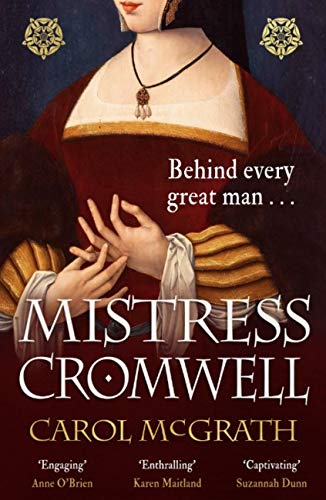
Book Corner: Mistress Cromwell by Carol McGrath

MISTRESS CROMWELL presents the rise of Tudor England’s most powerful courtier, Thomas Cromwell, through the eyes of the most important – and little known – woman in his life . . .

When beautiful cloth merchant’s daughter Elizabeth Williams is widowed at the age of twenty-two, she is determined to make a success of the business she inherited from her father. But there are those who oppose a woman making her own way in the world, and soon Elizabeth realises she may have some powerful enemies – enemies who know the dark truth about her dead husband.

Happiness arrives when Elizabeth meets ambitious young lawyer, Thomas Cromwell. Their marriage begins in mutual love and respect – but it isn’t always easy being the wife of an independent, headstrong man in Henry VIII’s London. The city is both merciless and filled with temptation, and Elizabeth soon realises she must take care in the life she has chosen . . . or risk losing everything.

Mistress Cromwell was first published as The Woman in the Shadows. What a treat of a book it is! Mistress Cromwell is a fabulous fictional account of the life and times of Elizabeth Cromwell, wife of Henry VIII’s famous – some would say notorious – adviser.  It is an enjoyable, thoughtful story which gives the reader an insight into life in Tudor London, in general, and in a Tudor household in particular. Following Elizabeth from the funeral of her first husband, through her widowhood and new love and marriage with Thomas Cromwell, this is not the story of Henry VIII and the Tudor court, but of the ‘ordinary’ people without whom the Tudors would not have been able to sustain their glamorous court.

Written in colourful, vivid language that draws you in from the first page, Mistress Cromwell is a wonderful novel, full of life and imagery. And, of course, the fact I could find no picture of Elizabeth Cromwell – only ones of Thomas – serves to highlight how little information we have about the ordinary Tudor woman. Carol McGrath’s novel gives us a rarely seen insight into everyday life of the non-aristocratic family in Tudor London. However, if you were expecting melodrama, this book is not it; adventure and mystery are given equal billing, with murder, arson and secrets, ambushes in dark corners and some strange, scary personalities making this an exciting story which is not to be missed.

Cromwell’s rise to power at the Tudor court runs parallel with his family concerns, with the arrival of children and Elizabeth’s own business adventures. His mysterious past – as a soldier and adventurer in Italy – is alluded to and even comes in useful. Carol McGrath does an excellent job of portraying the enigma that is Thomas Cromwell; the courtier, soldier and statesman who is also merchant, husband and father. The characters are brought to life in vivid, vibrant detail, creating a tableau that is hard to forget even once the last page has been read.

For several hours, I spoke little and ate sparingly. Father went about the hall speaking with merchants. I wondered how I would manage but knew I must and would. A chair scraped beside me, jolting me out of my thoughts. I felt a light touch on my elbow and glanced up. The feast was ending. My merchant had left his place. Gone to the privy, no doubt. Instead, Father stood by my chair, with Master Cromwell by his side.

‘Lizzy, Master Cromwell is my new cloth middle-man. He would like you to show him your bombazine cloth. He has admired your mourning gown.’

I started. This was nothing new. Father always employed different cloth middlemen to sell his fabrics to Flanders, thinking each one better than the last but today, at my husband’s funeral it was not seemly. Master Cromwell was watching me through eyes of an unusual shade, not quite blue or grey.

He bowed and said, ‘Forgive me for staring, Mistress Williams, but you see I knew you as a child. Your father used our fulling mill in Putney.’ He smiled at Father.

That was why he was familiar. I stared back, and in a moment or two I had recollected a tough, wicked little boy, some years older than I, who taught me to fish in the river with a string and a hook with a wriggling worm at the end of it.

‘I do recollect you, Master Cromwell. We played together as children,’ I said, feeling my mouth widen into a smile. ‘Father sent your father our cloth to be washed, beaten, prepared and softened for sale. I remember climbing trees and stealing apples. You led me astray.’

Elizabeth Cromwell herself is a wonderful, strong character, facing the prejudices of the merchant class and her own family in order to take some control over her life. And Mistress Cromwell will make you want to know more Although a history buff would know what is to become of Cromwell and Elizabeth, the author cleverly manages to avoid inserting any hindsight into the story. If you don’t know what becomes of the characters, you will soon be scouring the history books for the true story.

Carol McGrath’s wonderful novel transports you through time and space to the streets of London and Northampton at the height of Henry VIII’s magnificent reign. With colourful, vivid imagery she recreates a world and its people which has been otherwise lost through the centuries. The city, the characters and the lifestyle have been brought back to life, recreating the vibrant world in which Thomas Cromwell would eventually rise to be the king’s chief statesman. The story follows Elizabeth’s life; her family, her business and her husband, cleverly demonstrating how these are affected and changed by her husband’s inexorable rise to power.

The attention to detail is phenomenal, showing many of the social conventions of the time, while not detracting from the story, nor making the reader feel like they’re in a lecture on social history. It paints a fascinating tableau of merchant life in Tudor London, portraying the struggles and successes facing a widow trying to keep her business going in a man’s world. Rich in detail in every aspect, Carol McGrath’s meticulous research has produced a novel which plunges the reader into the middle of Elizabeth’s household in Tudor London. From funeral and marriage arrangements, births and christenings, to the contents of a Tudor garden and the conduct of the cloth trade, Mistress Cromwell acts as a window into Tudor merchant society.

If you liked Hilary Mantel’s Wolf Hall you will love Mistress Cromwell by Carol McGrath. It shows the human side of the Cromwell family and is a treat for any lover of historical fiction, and especially for a fan of Tudor history. It is a novel not to be missed, and which must be devoured for both the meticulous detail and the wonderful story – especially the story.

This review first appeared on The Review.

About the author:

Based in England, Carol McGrath writes Historical Fiction and Non-Fiction. She studied History at Queens University Belfast, has an MA in Creative Writing from the Seamus Heaney Centre, Queens University Belfast and an English MPhil from Royal Holloway, University of London. The Handfasted Wife, first in a trilogy about the royal women of 1066 was shortlisted for the RoNAS in 2014. The Swan-Daughter and The Betrothed Sister complete this highly acclaimed trilogy. Mistress Cromwell, a best-selling historical novel about Elizabeth Cromwell, wife of Henry VIII’s statesman, Thomas Cromwell, is republished by Headline. The Silken Rose, first in a Medieval She-Wolf Queens Trilogy, featuring Ailenor of Provence, was published 2nd April 2020 and comes out 23rd July 2020 as a PB. also published by the Headline Group. Tudor Sex & Sexuality will be published in 2022. Carol speaks at events and conferences. She was the co-ordinator of the Historical Novels’ Society Conference, Oxford in September 2016 and is an avid reader and reviewer, in particular, for the Historical Novel Society. She is a member of the Romantic Novelists’ Association and Historical Writers Association. Carol lives in Oxfordshire with her husband. Website: http://www.carolcmcgrath.co.uk. Newsletter: bit.ly/39eUgKl for the signup page. Amazon.

*

My Books

Out Now!

Ladies of Magna Carta: Women of Influence in Thirteenth Century England  looks into the relationships of the various noble families of the 13th century, and how they were affected by the Barons’ Wars, Magna Carta and its aftermath; the bonds that were formed and those that were broken. It is now available from Pen & SwordAmazon and from Book Depository worldwide.

Also by Sharon Bennett Connolly:

Silk and the Sword: The Women of the Norman Conquest traces the fortunes of the women who had a significant role to play in the momentous events of 1066.  Available now from Amazon,  Amberley Publishing, Book Depository.

Heroines of the Medieval World tells the stories of some of the most remarkable women from Medieval history, from Eleanor of Aquitaine to Julian of Norwich. Available now from Amberley Publishing and Amazon and Book Depository.

*

You can be the first to read new articles by clicking the ‘Follow’ button, liking our Facebook page or joining me on Twitter and Instagram.

©2020 Sharon Bennett Connolly

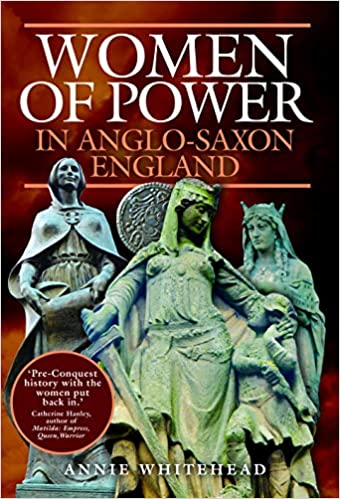
Book Corner: Women of Power in Anglo-Saxon England by Annie Whitehead

Many Anglo-Saxon kings are familiar. Æthelred the Unready is one, yet less is written of his wife, who was consort of two kings and championed one of her sons over the others, or his mother who was an anointed queen and powerful regent, but was also accused of witchcraft and regicide. A royal abbess educated five bishops and was instrumental in deciding the date of Easter; another took on the might of Canterbury and Rome and was accused by the monks of fratricide.

Anglo-Saxon women were prized for their bloodlines – one had such rich blood that it sparked a war – and one was appointed regent of a foreign country. Royal mothers wielded power; Eadgifu, wife of Edward the Elder, maintained a position of authority during the reigns of both her sons.

Æthelflaed, Lady of the Mercians, was a queen in all but name, while few have heard of Queen Seaxburh, who ruled Wessex, or Queen Cynethryth, who issued her own coinage. She, too, was accused of murder, but was also, like many of the royal women, literate and highly-educated.

From seventh-century Northumbria to eleventh-century Wessex and making extensive use of primary sources, Women of Power in Anglo-Saxon England examines the lives of individual women in a way that has often been done for the Anglo-Saxon men but not for their wives, sisters, mothers and daughters. It tells their stories: those who ruled and schemed, the peace-weavers and the warrior women, the saints and the sinners. It explores, and restores, their reputations.

I was very lucky to receive an advance copy of Annie Whitehead’s wonderful new book, Women of Power in Anglo-Saxon England. Beautifully written and thoroughly researched, this book brings to life the women on England from before the Norman Conquest.

Women of Power in Anglo-Saxon England is a wonderful study of the influential royal and noble women of pre-Conquest England, whether they were queens, princesses, abbesses or countesses. Annie Whitehead tells their stories in wonderful, vivid detail, beautifully weaving the historical implications off their lives with their larger-than-life stories.

Though they have been dead a thousand years and more, and while written evidence on these women may be scarce, the author has managed to squeeze every bit of information from the available chronicles, charters and saints’ lives. She has given the reader every possible snippet of information on their lives, presenting and analysing the sources in an accessible, engaging and thoroughly enjoyable reading experience.

The stories of these women is told with a passion and eloquence which makes every chapter a pleasure to read. The more familiar stories of Æthelflæd, Lady Godiva and St Hilda of Whitby are given excellent new interpretations, while the reader may be meeting the less familiar women, such as Æthelfrith of Bernicia, Eadburh and Alfred the Great’s sister, Æthelswith, for the first time.

Ælfgifu appears not to have been married for long. Her son Eadwig was probably born around 940, and his younger brother Edgar around 943. King Edmund himself died in 946 – the victim of a brawl, or perhaps a political assassination – having married again, so his first marriage must have ended not long after Edgar’s birth. The younger of the royal orphans, Edgar, was fostered by a noblewoman, the wife of the ealdorman of East Anglia, whom we shall meet in Part VI.

Ælfgifu is known as Ælfgifu of Shaftesbury, and William of Malmesbury in particular had a lot to say about her. He said that it was she who built the nunnery there and that her bodily remains were placed there. She was ‘so pious and loving that she would even secretly release criminals who had been openly condemned by the gloomy verdict of a jury.’ She would also give away her expensive clothes to the needy and she was a beautiful woman who was remembered for the miracles associated with her; the blind, the deaf and the lame were cured after visiting Shaftesbury.

It would be easy to assume that she retired to Shaftesbury in the manner of a number of previous queens, but the short-lived nature of her marriage and the young age of her children suggest another scenario. It is plausible that she died in childbirth, either in labour with Edgar or with a subsequent pregnancy in which both mother and child died. If she did indeed die in childbirth then she cannot have been a nun at Shaftesbury, but merely its benefactress.

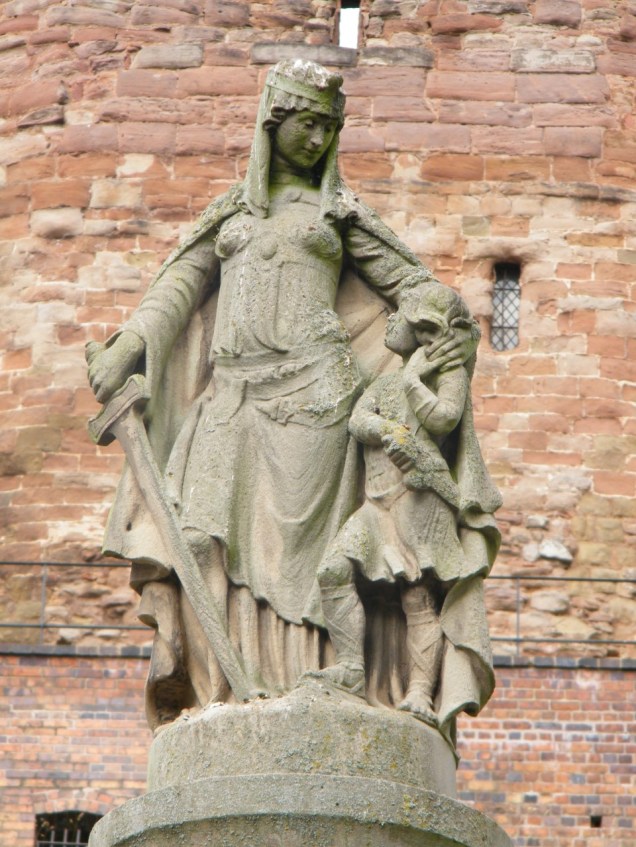
Æthelflæd with her nephew Æthelstan

of these women were not easy to find, and the detective work involved in researching Women of Power in Anglo-Saxon England is both entertaining and fascinating. In recreating and retelling the lives of these remarkable women, Annie Whitehead has given us a window into a distant past. We have the chance to observe the lives, loves, hopes and dreams of these remarkable women; women who helped shape their present and futures, and thus the world in which we now live.

The author also helps to dispel some of the myths that have arisen about these women, whether by historical fiction writers or the over-active imaginations of the chroniclers of the past. The true stories of Æthelflæd and Godiva, and others, are revealed, the myths surrounding them examined and explained. This is a wonderful book, filled with stories of love, intrigue and murder, of the power struggles and betrayals of Anglo-Saxon England, of strong and influential women who made an impression, not only on their own times, but on the generations who came after.

Women of Power in Anglo-Saxon England brings to life the women of the Anglo-Saxon period with vivid clarity. It is a remarkable study of the lives of women of the period – known and unknown – and their impact on history. Saints, princesses and queens; wives, daughters and mothers, Annie Whitehead demonstrates the strengths, weaknesses and challenges these incredible women faced in order to exert their influence on their corner of the world. The author’s meticulous research, beautiful writing and natural storytelling ability make this book a pleasure to read from beginning to end.

To Buy the Book:

Bookhttp://mybook.to/WomeninPower Amazonhttp://viewauthor.at/Annie-Whitehead

About the author:

Annie Whitehead graduated in history having specialised in the ‘Dark Ages’ and is a member of the Royal Historical Society. She’s written three books about early medieval Mercia, the ancient Anglo-Saxon kingdom of the Midlands. The first, To Be a Queen, tells the story of Alfred the Great’s daughter, and was long-listed for the Historical Novelist Society’s Indie Book of the Year 2016, and was an IAN (Independent Author Network) Finalist in 2017, while the second, Alvar the Kingmaker, is the story of Aelfhere, Earl of Mercia in the 10th century. The third, Cometh the Hour, is the first of two volumes set in seventh-century Mercia. She was a contributor to the anthology 1066 Turned Upside Down, a collection of alternative short stories. She writes magazine articles and has had pieces printed in diverse publications, including Cumbria Magazine and This England. She has twice been a prize winner in the Mail on Sunday Novel Writing Competition, and won First Prize in the 2012 New Writer Magazine’s Prose and Poetry Competition. She was a finalist in the 2015 Tom Howard Prize for nonfiction, and is also a contributor and editor for the English Historical Fiction Authors blog, as well as blogging for her own site – Casting Light upon the Shadow. In 2017 she won the inaugural HWA/Dorothy Dunnett Society Short Story Prize. Her first full-length nonfiction book, Mercia: The Rise and Fall of a Kingdom, is published by Amberley. Her latest nonfiction, Women of Power in Anglo-Saxon England, is published by Pen & Sword Books.

Social Media links: Blog; Twitter; Website; Facebook

*

My Books

Out Now!

Ladies of Magna Carta: Women of Influence in Thirteenth Century England  looks into the relationships of the various noble families of the 13th century, and how they were affected by the Barons’ Wars, Magna Carta and its aftermath; the bonds that were formed and those that were broken. It is now available from Pen & SwordAmazon and from Book Depository worldwide.

Also by Sharon Bennett Connolly:

Silk and the Sword: The Women of the Norman Conquest traces the fortunes of the women who had a significant role to play in the momentous events of 1066.  Available now from Amazon,  Amberley Publishing, Book Depository.

Heroines of the Medieval World tells the stories of some of the most remarkable women from Medieval history, from Eleanor of Aquitaine to Julian of Norwich. Available now from Amberley Publishing and Amazon and Book Depository.

*

You can be the first to read new articles by clicking the ‘Follow’ button, liking our Facebook page or joining me on Twitter and Instagram.

©2020 Sharon Bennett Connolly
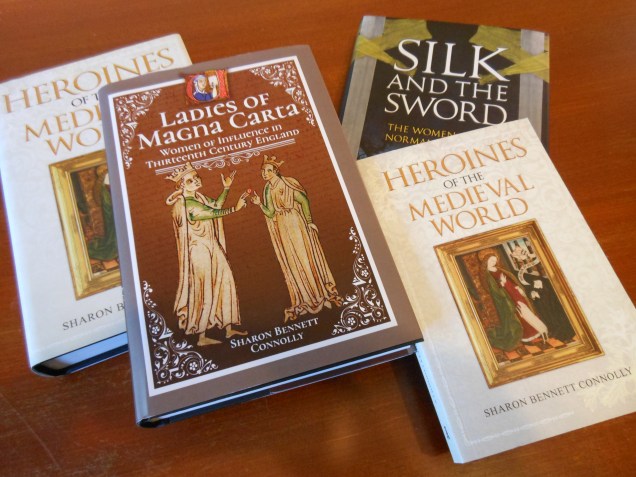
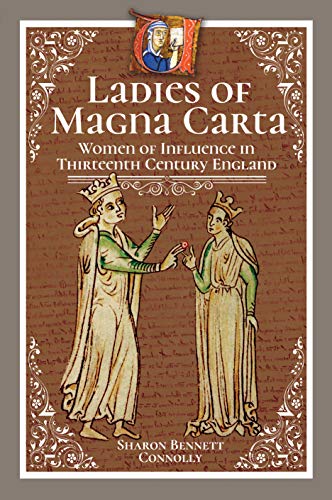
Ladies of Magna Carta: Women of Influence in Thirteenth Century Europe

Ladies of Magna Carta: Women of Influence in Thirteenth Century Europe hits the bookshops today. Inspired by the lives of Matilda de Braose and Nichoaa de la Haye, My third book looks at the events surrounding the issuing of Magna Carta with a view to how it affected the women.

Magna Carta clause 39: No man shall be taken, imprisoned, outlawed, banished or in any way destroyed, nor will we proceed against or prosecute him, except by the lawful judgement of his peers or by the law of the land.

This clause in Magna Carta was in response to the appalling imprisonment and starvation of Matilda de Braose, the wife of one of King John’s barons. Matilda was not the only woman who influenced, or was influenced by, the 1215 Charter of Liberties, now known as Magna Carta. Women from many of the great families of England were affected by the far-reaching legacy of Magna Carta, from their experiences in the civil war and as hostages, to calling on its use to protect their property and rights as widows.

Ladies of Magna Carta looks into the relationships – through marriage and blood – of the various noble families and how they were affected by the Barons’ Wars, Magna Carta and its aftermath; the bonds that were formed and those that were broken. Including the royal families of England and Scotland, the Marshals, the Warennes, the Braoses and more, Ladies of Magna Carta_focuses on the roles played by the women of the great families whose influences and experiences have reached far beyond the thirteenth century.

Ladies of Magna Carta: Women of Influence in Thirteenth Century England was such an amazing story to write. There were so many women who influenced the clauses of Magna Carta and the civil war which surrounded its creation. And there were even more women who were able to use Magna Carta to protect their own rights. And there were some for whom Magna Carta did nothing too assuage their suffering…..

It was an honour and a privilege to tell their stories.

Here’s what the reviewers are saying:

“Sharon Bennett Connolly throws much needed light on the lives of the high-born women of thirteenth-century England…Connolly’s version of the first Plantagenets is superbly concise. No distractions or detours, hitting all the right nails on the head…Connolly’s book is an informative and delightful read about women aspiring to control their destiny against this backdrop, but their success or failure had less to do with Magna Carta than with the timeless principles of resourcefulness, determination and knowing how to skilfully handle the big guy. It’s these qualities that make their stories inspiring.”

Darren Baker, author of The Two Eleanors

“A well-researched and comprehensive study of the women who lived through, and were affected by, the Barons’ Revolt and the sealing of the Magna Carta. Ms Bennett Connolly has skilfully brought to the fore the lives of the women who have hitherto been hidden in the background. A must-read for anyone interested in this pivotal moment in English and Scottish history.”

Annie Whitehead, author of Women of Power in Anglo-Saxon England

The history of women isn’t written about enough. I requested this one because it sounded like it would be a very interesting read about contemporary women. It focuses, of course, more on women who were royal or connected with the nobility, but it was still fascinating. Each chapter goes over different families or women. It was very easy to read and get into. When this gets published, I’m going to see if I can snag a copy because I’d want to own and reread this one!

Caidyn, goodreads reviewer

“Fascinating book! It was interesting to read about women living at the time of the issuing of the Magna Carta and to learn about what chapters were addressed to them and in what respects…Much on the book is about the families of women, that is to say the male part. I found nevertheless interesting to read about differences in those various families in their relationship with their daughters and wives. A few of these medieval women did have a louder voice than was usually expected: 2 became Sheriffs, for instance.”

Christine, goodreads reviewer

Absolutely loved this book. It brought out the roles of women in the formation and assertion of the Magna Carta, something we don’t hear very much about in general. There were some formidable women mentioned and I learned so much about their struggles and stories – some of them very tragic – and whether or not John was able to implement the Magna Carta to help them. In some cases, it was argued, women helped form the structure of some of the Magna Carta. A great read!

Jo Romero, NetGalley reviewer

Absolutely amazing book! Could not stop reading it. Very informative and interesting. The author has an amazing ability to ferret out information on people we have always thought of as “lost”. This is the third book I have read from this author and again I am blown away with her ability to make a very confusing time in English history interesting and, even more importantly, tell it from the perspective of a set of people often forgot about…women.

Janette Recore, NetGalley reviewer

Reviews:

You can find a wonderful full review of Ladies of Magna Carta: Women of Influence in Thirteenth Century Europe over on the Love British History blog.

Here’s the full review from historian Darren Baker.

Guest blog posts:

I visited Annie Whitehead to talk about writing Ladies of Magna Carta and some of my past and future projects.

You can find me over on Tony Riches’ blog, The Writing Desk, talking about Matilda de Braose, her family and their influence on the Magna Carta story.

And you can find me over at Just History Posts, talking about Ladies of Magna Carta and writing in general.

Over on The Coffee Pot Book Club, you can find an extract on Margaret of Scotland, from the chapter on Scottish Princesses.

Out Now!

Ladies of Magna Carta: Women of Influence in Thirteenth Century England will be released in the UK on 30 May 2020 and is now available for pre-order from Pen & SwordAmazon UK and from Book Depository worldwide. It will be released in the US on 2 September and is available for pre-order from Amazon US.

Also by Sharon Bennett Connolly:

Silk and the Sword: The Women of the Norman Conquest traces the fortunes of the women who had a significant role to play in the momentous events of 1066.  Available now from Amazon UK,  Amberley Publishing, Book Depository and Amazon US.

Heroines of the Medieval World tells the stories of some of the most remarkable women from Medieval history, from Eleanor of Aquitaine to Julian of Norwich. Available now from Amberley Publishing and Amazon UK, Amazon US and Book Depository.

*

You can be the first to read new articles by clicking the ‘Follow’ button, liking our Facebook page or joining me on Twitter and Instagram.

©2020 Sharon Bennett Connolly 
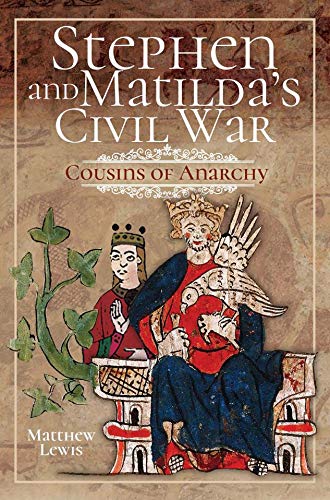
Book Corner: Stephen and Matilda’s Civil War: Cousins of Anarchy by Matthew Lewis

The Anarchy was the first civil war in post-Conquest England, enduring throughout the reign of King Stephen between 1135 and 1154. It ultimately brought about the end of the Norman dynasty and the birth of the mighty Plantagenet kings. When Henry I died having lost his only legitimate son in a shipwreck, he had caused all of his barons to swear to recognize his daughter Matilda, widow of the Holy Roman Emperor, as his heir and remarried her to Geoffrey, Count of Anjou. When she was slow to move to England on her father’s death, Henry’s favorite nephew Stephen of Blois rushed to have himself crowned, much as Henry himself had done on the death of his brother William Rufus.

Supported by his brother Henry, Bishop of Winchester, Stephen made a promising start, but Matilda would not give up her birthright and tried to hold the English barons to their oaths. The result was more than a decade of civil war that saw England split apart. Empress Matilda is often remembered as aloof and high-handed, Stephen as ineffective and indecisive. By following both sides of the dispute and seeking to understand their actions and motivations, Matthew Lewis aims to reach a more rounded understanding of this crucial period of English history and asks to what extent there really was anarchy.

Stephen and Matilda’s Civil War: Cousins of Anarchy by Matthew Lewis, is a wonderful book looking at the civil war, known as The Anarchy, through the eyes of the two leading protagonists, King Stephen and his cousin, Empress Matilda. A totally absorbing read, this book is enjoyable and informative, analysing the actions of both sides in a critical but sympathetic light.

Matthew Lewis digs deep into the personalities involved in both sides of the war and puts flesh on the bones of these characters. The result is a fair and balanced appraisal of the conflict between these two cousins, both as rival claimants to the throne and as leaders of their disparate supporters. The story is told in alternate chapters from the views of Stephen and Matilda, helping to keep the analysis and narrative balanced and fresh.

Matthew Lewis tries to be fair to both sides. You can tell that he feels for Empress Matilda, faced not only with a challenge to her right to the throne, but with the extra challenges that arose out of her being a woman and unable to lead the military aspects of the war. The author highlights Matilda’s failings, but does temper them with an explanation of how her actions would have been received differently, had she only been a man!

On the other side, King Stephen’s own faults and weaknesses are also singled out, though Matthew Lewis also stresses that where Matilda was hindered by her sex, so was Stephen – by Matilda’s gender, that is. There were limits put on Stephen by the fact he was challenged by a woman; just as Matilda could not lead her troops into battle, neither could Stephen face his challenger in an all-for-nothing trial by combat that could have put an end to the war years later. The result was a long, protracted war during which it was said ‘Christ and his saints slept.’

Before any move was made, there were probably four prime candidates to succeed Henry. His daughter, Empress Matilda, was perhaps the most obvious, but also in many ways the least attractive. Female rule was still something unheard of, at least in England, a nation that would have no queen regnant for another 400 years. The second possibility was Robert, Earl of Gloucester. Robert was an illegitimate son of Henry I, widely considered his favourite. He had extensive lands and power both in Normandy and England and was well respected. He was, however, illegitimate. That was less of a bar to power in Normandy: the Conqueror himself had been called William the Bastard. In England, it was unheard of. Legitimacy was still an absolute, marking the distinction between a duke and a king. Robert had everything required to follow his father except the right mother.

The two other contenders came from the House of Blois. They were Henry’s nephews, the sons of his sister Adela and her husband Stephen, Count of Blois. Theobald, Count of Blois and Champagne was the senior male of the house, though his younger brother Stephen, Count of Mortain, had been in England for years and was close to his uncle. They offered the prospect of legitimate, male successors as grandsons of William the Conqueror, albeit in a female line of descent. None of these solutions appeared perfect, and only one could win the throne. As it turned out, only two displayed an interest, and neither would give up during the nineteen years that followed.

Stephen and Matilda’s Civil War: Cousins of Anarchy by Matthew Lewis is a thoroughly enjoyable read, offering the perfect balance in a non-fiction book; accessible, interesting and informative. It gives a whole new perspective to the Civil War which divided England for the whole of Stephen’s 19-year reign. The book looks into each aspect of the war. The battles, conferences, truces and stalemates, are all analysed through the disparate eyes of those involved; not only looking into how they effected events, but also how events affected them.

Although it concentrates on the 2 leading protagonists, Stephen and Matilda, the book also gives insight into the lead supporting characters on both sides, giving the reader a comprehensive, panoramic view of the era through the personalities of those involved; from the steadfast and loyal Robert, Earl of Gloucester, to Stephen’s queen, also Matilda and the gruff, fearless John Marshal, father of William Marshal, first Earl of Pembroke and arguable the greatest knight England ever had.

Although more known for his books on the Wars of the Roses, Matthew Lewis has managed to demonstrate the breadth and depth of his historical knowledge with Stephen and Matilda’s Civil War: Cousins of Anarchy. He had put his usual level of passion and attention to detail into this book and the result is well worth reading. Stephen and Matilda’s Civil War: Cousins of Anarchy by Matthew Lewis is a thoroughly compelling read.

Stephen and Matilda’s Civil War: Cousins of Anarchy by Matthew Lewis is available from Amazon.

About the author:

Matthew Lewis trained in law and is now a full time author of historical fiction and non-fiction. He also blogs on his website, Matt’s History Blog, and can be found on Twitter as @mattlewisauthor. His main interest is medieval history and he has a number of books on that topic, including The Survival of the Princes in the Tower and Richard, Duke of York: King by Right.

*

My Books

Coming soon! 

Ladies of Magna Carta: Women of Influence in Thirteenth Century England will be released in the UK on 30 May 2020 and is now available for pre-order from Pen & SwordAmazon UK and from Book Depository worldwide. It will be released in the US on 2 September and is available for pre-order from Amazon US.

Also by Sharon Bennett Connolly:

Silk and the Sword: The Women of the Norman Conquest traces the fortunes of the women who had a significant role to play in the momentous events of 1066.  Available now from Amazon UK,  Amberley Publishing, Book Depository and Amazon US.

Heroines of the Medieval World tells the stories of some of the most remarkable women from Medieval history, from Eleanor of Aquitaine to Julian of Norwich. Available now from Amberley Publishing and Amazon UK, Amazon US and Book Depository.

*

You can be the first to read new articles by clicking the ‘Follow’ button, liking our Facebook page or joining me on Twitter and Instagram.

©2020 Sharon Bennett Connolly 
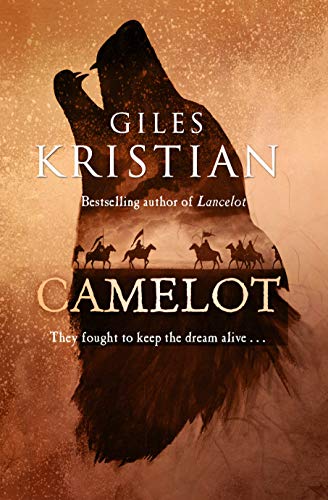
Book Corner: Camelot by Giles Kristian

Britain is a land riven by anarchy, slaughter, famine, filth and darkness. Its armies are destroyed, its heroes dead, or missing. Arthur and Lancelot fell in the last great battle and Merlin has not been seen these past ten years. Now, the Saxons are gathering again, their warbands stalk the land, their king seeks dominion. As for the lords and kings of Britain, they look only to their own survival and will not unite as they once did under Arthur and his legendary sword Excalibur.

But in an isolated monastery in the marshes of Avalon, a novice of the order is preparing to take his vows when the life he has known is suddenly turned upside down in a welter of blood. Two strangers – the wild-spirited, Saxon-killing Iselle and the ageing warrior Gawain – will pluck the young man from the wreckage of his simple existence. Together, they will seek the last druid and the cauldron of a god. And the young man must come to terms with his legacy and fate as the son of the most celebrated yet most infamous of Arthur’s warriors: Lancelot.

For this is the story of Galahad, Lancelot’s son – the reluctant warrior who dared to keep the dream of Camelot alive . . .

A couple of years ago, I read Lancelot by Giles Kristian, not really expecting to like it. After all, Lancelot was the villain of the King Arthur story and lover of Guinevere; he caused the downfall of Camelot. However, Kristian skillfully put a different spin on the story, presenting Lancelot as a flawed but talented knight, torn between the love for his lord, Arthur, and that for for his true love, Guinevere. Lancelot became a tragic hero and the cause of his own downfall. Lancelot was a story of complex loyalties, tested to the limit by war and circumstance beyond the control of the leading protagonists. In short, it was an incredible piece of storytelling that totally changed my view of Lancelot and the Arthurian legend.

This new book, Camelot, had a lot to live up to!

And, of course, it did not disappoint. In fact, I think Camelot surpasses Lancelot in so many ways. The story follows Galahad, Lancelot’s son in the attempts of the British tribes to form one last alliance that will see them fighting off the Saxon advance. The old heroes – Gawain, Arthur and, of course, Merlin – are there to help the new generation find their way. And the love interest is no defenceless little girl in need of saving – she’s a strong, independent character you will not fail to love, with a story all her own. There is humour, sadness, action and adventure. Giles Kristian cleverly weaves his own story into the existing legend, recreating a world lovers of all thing Arthurian cannot fail to appreciate.

‘You must leave this place and you must do it without delay,’ Gawain said, not looking up from his bowl. He fished out a scrap of meat and blew on it as it steamed between his finger and thumb. Then he thrust the scrap into his mouth and closed his eyes for a moment as if seeking to commit the taste and pleasure of the food to memory.

Father Brice and Father Judoc, standing across from Gawain on the other side of the hearth, looked at each other. ‘We cannot leave Ynys Wydryn,’ Father Brice said.

‘Why would we?’ Father Judoc asked. ‘We are safe here. Hidden.’

‘We found you,’ Gawain said, chewing, juices running into his beard.

‘The Saxons do not know we are here,’ Brice said. ‘The ones who attacked Galahad -‘

‘If they were Saxons,’ Judoc interrupted.

‘- They must have wandered in search of plunder, straying far from King Cerdic’s army,’ Brice went on, ‘which I believe is some miles east of Camelot and -‘

‘The Saxons are already here,’ Gawain cut him off, looking up now, holding Brice’s gaze. There were rumours and rumbles around the fire then.

‘We had to slip past them to get across the White Lake,’ Gediens said, thumbing at the east wall. He was the youngest of the four men, though he could not have been less than forty years old. ‘And not just a few scouts and foragers but war bands. Spearmen by the score. Saw their fires on Pennard Hill. Too many to count.’

Camelot by Giles Kristian is a wonderful crafted novel that leads the reader on a winding tale through Arthurian Britain. It takes you on a legendary quest, to the wondrous castles of Tintagel and Camelot, to the wilds of Anglesey and the Isle of Man and through various skirmishes, political intrigues, disappointments and love – with many twists and turns along the way. While you are desperate to read on through the next chapter, you simultaneously, never want the book to end.

I truly believe that the sign of a good book, is one that will take you through a range of emotions, from laughter to tears, and that will – when you get to the final page – leave you bereft that there is no more to read, and disappointed that you know will not read anything so good any time soon. Camelot fills all this criteria. It surprises you at every turn. It is probably the best book I will read this year – and its only April! This book is a keeper, and one I’ll be getting my dad for Father’s Day, that’s for sure!

Camelot is one of those rare books that will remain with you for days to come, musing over why Arthur acted the way he did, how Galahad managed to achieve what he did, how Gawain’s loyalty and perseverance saved the heroes on more than one occasion and how Merlin managed to weave his magic through the whole story, all the way to the final, climactic battle.

Camelot by Giles Kristian is due for release in the UK on 14 May 2020 and is available for pre-order from Amazon.

About the author:

Family history (he is half Norwegian) and a passion for the fiction of Bernard Cornwell inspired GILES KRISTIAN to write. Set in the Viking world, his bestselling ‘Raven’ and ‘The Rise of Sigurd’ trilogies have been acclaimed by his peers, reviewers and readers alike. In The Bleeding Land and Brothers’ Fury, he tells the story of a family torn apart by the English Civil War. He also co-wrote Wilbur Smith’s No.1 bestseller, Golden Lion. In his most recent novel, the SundaTimes bestseller Lancelot, Giles plunged into the rich waters of the Arthurian legend. For his next book, he continues his epic reimagining of our greatest island ‘history’.
Giles Kristian lives in Leicestershire.

*

My Books

Coming soon! 

Ladies of Magna Carta: Women of Influence in Thirteenth Century England will be released in the UK on 30 May 2020 and is now available for pre-order from Pen & SwordAmazon UK and from Book Depository worldwide. It will be released in the US on 2 September and is available for pre-order from Amazon US.

Also by Sharon Bennett Connolly:

Silk and the Sword: The Women of the Norman Conquest traces the fortunes of the women who had a significant role to play in the momentous events of 1066.  Available now from Amazon UK,  Amberley Publishing, Book Depository and Amazon US.

Heroines of the Medieval World tells the stories of some of the most remarkable women from Medieval history, from Eleanor of Aquitaine to Julian of Norwich. Available now from Amberley Publishing and Amazon UK, Amazon US and Book Depository.

*

You can be the first to read new articles by clicking the ‘Follow’ button, liking our Facebook page or joining me on Twitter and Instagram.

©2020 Sharon Bennett Connolly 

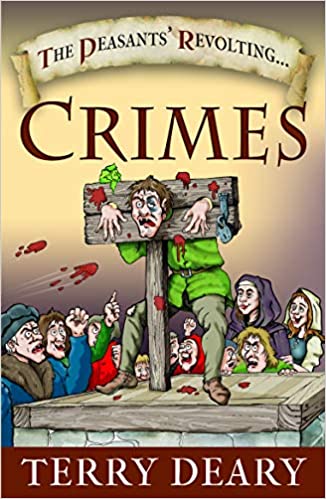
Book Corner: The Peasants' Revolting Crimes by Terry Deary

By Lewis Connolly

Popular history writer Terry Deary takes us on a light-hearted and often humorous romp through the centuries with Mr & Mrs Peasant, recounting foul and dastardly deeds committed by the underclasses, as well as the punishments meted out by those on the right side’ of the law.

Discover tales of arsonists and axe-wielders, grave robbers and garroters, poisoners and prostitutes. Delve into the dark histories of beggars, swindlers, forgers, sheep rustlers and a whole host of other felons from the lower ranks of society who have veered off the straight and narrow. There are stories of highwaymen and hooligans, violent gangs, clashing clans and the witch trials that shocked a nation. Learn too about the impoverished workers who raised a riot opposing crippling taxes and draconian laws, as well as the strikers and machine-smashers who thumped out their grievances against new technologies that threatened their livelihoods.

Britain has never been short of those who have been prepared to flout the law of the land for the common good, or for their own despicable purposes. The upper classes have lorded and hoarded their wealth for centuries of British history, often to the disadvantage of the impoverished. Frustration in the face of this has resulted in revolt. Read all about it here!

This entertaining book is packed full of revolting acts and acts of revolt, revealing how ordinary folk – from nasty Normans to present-day lawbreakers – have left an extraordinary trail of criminality behind them. The often gruesome penalties exacted in retribution reveal a great deal about some of the most fascinating eras of British history.

It has been a strange week for us all, I’m sure. And on Tuesday evening we got a message from my son’s school saying it was closed until further notice, so Wednesday morning was my first day of home schooling. School have been amazing and set tons of work to keep the child occupied. However, on Wednesday, there was no English so I had to set some myself; which was basically for said child to write a review of Terry Deary’s The Peasants’ Revolting CRIMES. I received this book as a review copy from the publishers, Pen & Sword, but the child got to read it first, and loved it. He’s a die-hard fan of Horrible Histories, so this book was right up his street.

So, it’s over to Lewis:

I liked, no I LOVED Terry Deary’s The Peasants’ Revolting CRIMES. I would recommend it for people who are age 13+ (due to minor swearing content) and you will not need to know your history because this book educates you in the revolting and hard life of the peasant.

Opening with ‘Norman Nastiness’, the book gives you a vivid taste of peasant crimes right up until the ‘Georgian Jokers and Victorian Villains’ and beyond.

The last witch

After seeing a smiling ‘medium’ at a psychic fair, a friend of mine punched her. When I asked him why he would do such a thing, he replied, ‘My father always taught me to strike a happy medium’,

In 1944, Helen Duncan was a Scottish spiritual medium, working in Portsmouth. She began broadcasting information from the port’s gullible sailors wjhho came ot consult her. D-Day was approaching and she was a security risk. She had to be stopped.

Duncan was originally charged under the Vagrancy Act 1824, relating to fortune telling, astrology and spiritualism. Then there was a change of plan. The paranoid government’s legal experts sent her to be tried by jury at the Old Bailey for contravening section 4 of the Witchcraft Act 1735, which carried the heavier penalty of a prison sentence.

Winston Churchill even described the whole episode as ‘obsolete tomfoolery’ but Helen went to prison for nine months.

The 1753 Act was later repealed and replaced with the Fraudulent Mediums Act of 1951.

So, no more witch trials.

You could call it hex-it

In this book, you will explore various ages of history, from the Middle Ages to the Stuarts, to the vicious, unforgiving Victorian era and the modern era. You will hear various quotes from all sorts of people, from William Shakespeare, to Martin Luther King and many, many others as you explore the book.

I particularly like the funny jokes like “Bring a man a fire and he will be warm for a day. Give a man a fire and he will be warm for the rest of his life” and “Will Shakespeare. Great writer, dodgy historian”. There are various other jokes, which are scattered throughout the book.

There was nothing to dislike about this book, despite its gory and bloody moments. It will tickle your funny bone for hours on end, so much so you will never put it down!

In conclusion, this is a great book for children and adults alike. It is not only comedy but it also used 100% historically accurate. You should order it now. What are you waiting for?

Huge thanks to Lewis for a fabulous, entertaining review!

The Peasants’ Revolting CRIMES by Terry Deary is available from Pen & Sword and Amazon.

About the author:

Terry Deary is the esteemed author of the immensely popular Horrible Histories series. This is his first title for Pen and Sword Books, to be followed next year by The Peasants’ Revolting Lives.

My Books

Coming soon! 

Ladies of Magna Carta: Women of Influence in Thirteenth Century England will be released in the UK on 30 May 2020 and is now available for pre-order from Pen & SwordAmazon UK and from Book Depository worldwide. It will be released in the US on 2 September and is available for pre-order from Amazon US.

Also by Sharon Bennett Connolly:

Silk and the Sword: The Women of the Norman Conquest traces the fortunes of the women who had a significant role to play in the momentous events of 1066.  Available now from Amazon UK,  Amberley Publishing, Book Depository and Amazon US.

Heroines of the Medieval World tells the stories of some of the most remarkable women from Medieval history, from Eleanor of Aquitaine to Julian of Norwich. Available now from Amberley Publishing and Amazon UK, Amazon US and Book Depository.

*

You can be the first to read new articles by clicking the ‘Follow’ button, liking our Facebook page or joining me on Twitter and Instagram.

©2020 Sharon Bennett Connolly 
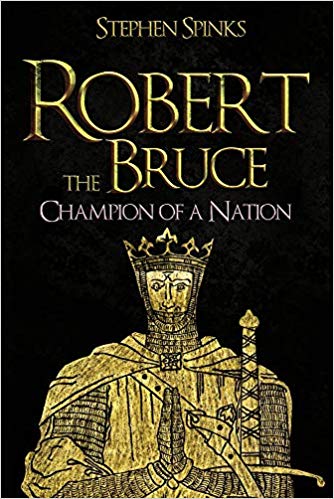
Book Corner: Robert the Bruce; Champion of a Nation by Stephen Spinks

Robert the Bruce is a man of both history and legend. In his lifetime he secured Scottish independence in the face of English imperial aggression under the successive leadership of Edward I and Edward II. He was the victor of Bannockburn, a self-made king against all odds, and is celebrated as a champion of the Scottish nation. Yet Robert s colourful life is far from straightforward. Stephen Spinks seeks to examine this most enigmatic of kings beyond the myths to reveal him in the context of his time, his people and in his actions.

Stephen shows that Robert was a complex man, confronted by hardships and difficult and often dangerous decisions. He was not born to rule. As the murderer of John Comyn, a rival for the Scottish crown, Bruce sent shockwaves across Europe and was condemned by kings and popes. In war he suffered terrible personal loss, including the deaths of all four of his brothers and the imprisonment of his wife, daughter and two sisters, all at the hands of the English. He was at times a desperate yet focussed and highly determined man. Robert was also astute, breaking the rules of chivalry to even the odds, systematically fighting a guerrilla war against the English which he ultimately won. Yet he also cultivated the symbols of kingship, was pious, careful with his patronage and fought to uphold his fiercely held beliefs.

King Robert unified his deeply divided kingdom and secured its independence from England. His dramatic life as the victorious underdog forged a significant legacy that has survived for 700 years.

I may have mentioned before that I have a soft spot for Robert the Bruce and his family. I have already written of his daughter Marjorie, wife Elizabeth de Burgh and 2 of his sisters, Christian and Mary, women who suffered under the heavy hand of Edward I due to their relationship with Robert the Bruce and his ambition for an independent Scotland. King Robert I (the Bruce) is an enigmatic figure, whose conflicted loyalties saw him change sides on a number of occasions during the early years of his career.

So, of course I have been eagerly awaiting Robert the Bruce: Champion of a Nation ever since I first heard that Stephen Spinks was writing it. And it does not disappoint. Beautifully written and presented, Stephen Spinks tells the incredible story of Robert the Bruce and the fight for Scottish independence with great passion and enthusiasm. This is a wonderful book for any fan of Robert the Bruce – and Scottish history in general.

Since his surreptitious meeting with Lamberton, Robert may well have been building discreet coalitions to shore up a foundation on which to launch a bid for the Scottish throne. Yet, however successful he may have been at this juncture, there remained a significant contingent of men who would probably not support him, in particular the Balliols and Comyns and their adherents, who still held out for the return of King John or the accession of his heir, Edward Balliol, the latter still in English captivity. Just because Bruce wanted to champion his right did not mean Scotland would unite behind his cause. His greatest challenge now rested with John ‘the Red’ Comyn, lord of Badenoch, who had assumed the leadership of the Comyn family. He was nephew to King John, cousin to the Comyn Earl of Buchan, and brother-in-law to the English Aymer de Valence, soon to be Earl of Pembroke. If Bruce was to secure the crown, he needed to reconcile Comyn to his cause one way or another. What happened next tested the limits of Bruce’s personal ambition, and has gone down in the annals of history.

What is certain is that, on a cold night on 10 February 1306, Robert and John Comyn met at the Church of the Greyfriars in Dumfries. Comyn had been resident at his nearby castle at Dalswinton, not far from Bruce’s family home of Lochmaben. The two men, who had a history of bitter rivalry and had clashed violently at Peebles during the summer gathering near Selkirk Forest in 1299, could guarantee a safe, violence-free meeting constrained by their choice of location. Spilling blood in a church was sacrilegious and warranted excommunication, the gravest of punishements.

Robert the Bruce: Champion of a Nation doesn’t sugar coat Robert the Bruce’s actions, it examines the good and the bad in detail, from his support for Edward I in his early years, to the fateful murder of John Comyn that set him on the road to his coronation, a race against time to become king before the inevitable sentence of excommunication could be passed.

The author uses the primary sources of both England and Scotland, to present the story of Bruce’s fight to gain – and hold on to – the Scottish throne. Analytical and highlighting source bias, Stephen Spinks presents Robert the Bruce as a flawed hero, like all kings, whose personal and political ambition is balanced by opposition within a deeply divided Scotland, and a personal cost to him and his family that few of us could bare.

Robert the Bruce: Champion of a Nation is a wonderful, entertaining and informative read from beginning to end. Insightful and analytical, it puts every known aspect of Robert the Bruce’s life under the microscope, from his family, ambitions and military capabilities, to his health and leadership. Author Stephen Spinks examines Bruce’s actions and motivations in great detail, painting a fascinating portrait of the man and king.

Robert the Bruce: Champion of a Nation by Stephen Spinks is a must-read for anyone interested in Scottish history, and one of the best non-fiction books I have read in recent years. It is thoroughly enjoyable, totally engaging and impossible to put down.

Robert the Bruce: Champion of a Nation is now available from Amazon in the UK. It will be released in the US on 1 April 2020 and is available for pre-order on Amazon US.

About the Author:

Stephen Spinks wrote his dissertation on Edward II while studying at King’s College, London. He works for the National Trust and manages three Medieval heritage sites with 900 volunteers and 150 staff. He is a columnist for ‘Midlands Zone’ magazine, in which he writes a very well received exploration of life as a gay man today, partly political, partly personal. He has given many interviews on radio and in his capacity at the National Trust, to ‘BBC’s Escape to the Country’ and the ‘Antiques Road Show’. He has been studying the primary sources (and locations) for this book over the past 15 years.

*

My Books

Coming soon! 

Ladies of Magna Carta: Women of Influence in Thirteenth Century England will be released in the UK on 30 May 2020 and is now available for pre-order from Amazon UK and from Book Depository worldwide. It will be released in the US on 2 September and is available for pre-order from Amazon US.

Also by Sharon Bennett Connolly:

Silk and the Sword: The Women of the Norman Conquest traces the fortunes of the women who had a significant role to play in the momentous events of 1066.  Available now from Amazon UK,  Amberley Publishing, Book Depository and Amazon US.

Heroines of the Medieval World tells the stories of some of the most remarkable women from Medieval history, from Eleanor of Aquitaine to Julian of Norwich. Available now from Amberley Publishing and Amazon UK, Amazon US and Book Depository.

*

You can be the first to read new articles by clicking the ‘Follow’ button, liking our Facebook page or joining me on Twitter and Instagram.

©2020 Sharon Bennett Connolly 
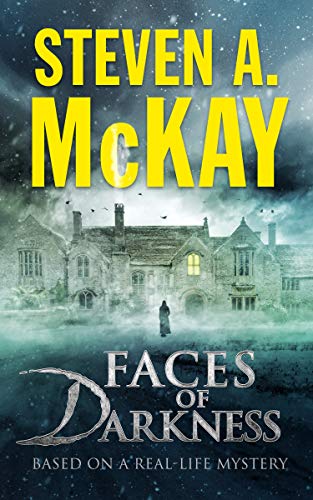
Book Corner: Faces of Darkness by Steven A. McKay

CROFTUN, ENGLAND AD 1328
Lady Isabella de Courcy is found alone in a room bolted from the inside, unconscious, and with a dagger brutally forced through her hand into the floorboards beneath, but this is just the latest in a line of similar, terrifying incidents. For months now she’s been stalked by some shadowy tormentor who leaves no trace of his movements and has never been clearly seen by anyone, even Lady Isabella.

Can the bailiff, John Little, along with his friend – the legendary friar, Robert Stafford – uncover the truth and, more importantly, will they be able to save the troubled victim before she ends up dead?

This new standalone tale from the author of The Druid sees the return of two much-loved characters from the Forest Lord series and is based on a shocking real-life case which remains, to this day, unsolved.

I have been a fan of Steven A McKay‘s writing for several years now. His Forest Lord series, retelling the story of Robin Hood in Barnsdale Forest, rather than Sherwood, was a refreshing new take on the outlaw’s legend. And the 2 books in his new series, Warrior Druid of Britain, the Druid and Song of the Centurion are among the finest books I have read in recent years. So Faces of Darkness had quite a lot to live up to.

And it did not disappoint.

Faces of Darkness is a novella featuring two of Robin Hood’s best friends, Friar Tuck and Little John, and is a detective novel-cum-psychological thriller of impressive quality. The story revolves around Lady Isabella de Courcy, who is being tormented by a mysterious stalker no one has seen. Friar Tuck and Little John are brought int o investigate the matter.

“Did you see him, Isabella?” the nobleman was demanding, in a hard tone of voice which Tuck felt inappropriate given the young woman’s ordeal. It wasn’t his place to interfere in the dynamic of their relationship though, and unbidden, he began to inspect the rooms for signs of what had taken place.

“No,” the lady sobbed. “Please, Adam, my hand is really hurting. Can you fetch me something for it?”

“Anne,” de Courcy said irritably. “Go and fetch some wine for the lady, hurry.”

“No,” broke in Isabella, eyes wide. “I can’t stay in this room another moment.” Tuck turned to look at her and realised there was a length of fabric tied around her neck, which also bore tell-tale red bruising. Clearly, she had suffered a most violent assault – no wonder she wanted away from the scene of the crime.

“John,” he said. “Could you help Lady Isabella to the room we came from? Would that be acceptable, Sir Adam? Aye? Good. Anne will make the place comfortable, with some unwatered wine to numb the pain a little and …” he stood next to the bed as the injured woman rose to her feet. “Fear nothing, my lady. If the person who did this to you is still around, Little John will deal with them.”

“You can be sure of that,” rumbled John who, at over six-and-a-half feet, had to stoop to avoid hitting his head on the doorframe. “You’re safe with me, my lady.”

Faces of Darkness is quite a departure for Steven A. McKay. A psychological thriller, it could be set in any era, but he has ingeniously set it in the world of his Forest Lord series, so that the astute Friar Tuck and redoubtable Little John can take the lead in solving the mystery, giving the reader the comfort of familiar characters in a story that is both emotional and evocative.

The novella keeps you guessing the true cause of Lady Isabella’s misery to the climactic end. There were several points where I thought I had solved the mystery, only to be disabused of my theory a few pages later, which, of course, makes the book even more riveting!

This is fabulous story that has only one downside – it is too short. I would have loved the book to be a full-length historical novel. It was enthralling! Here’s hoping that Faces of Darkness sparks a new career for Friar Tuck and Little John, solving medieval mysteries.

*

About the author:

Steven McKay was born in 1977 near Glasgow in Scotland. He live in Old Kilpatrick with his wife and two young children. After obtaining his Bachelor of Arts degree with the Open University he decided to follow his life-long ambition and write a historical novel.

He plays guitar and sings in a heavy metal band when they can find the time to meet up.

You can check out his website here. Steven also has an Amazon Author page and can be found on Twitter and Facebook.

*

My Books

Coming soon! 

Ladies of Magna Carta: Women of Influence in Thirteenth Century England will be released in the UK on 30 May 2020 and is now available for pre-order from Amazon UK and from Book Depository worldwide.

Also by Sharon Bennett Connolly:

Silk and the Sword: The Women of the Norman Conquest traces the fortunes of the women who had a significant role to play in the momentous events of 1066.  Available now from Amazon UK,  Amberley Publishing, Book Depository and Amazon US.

Heroines of the Medieval World tells the stories of some of the most remarkable women from Medieval history, from Eleanor of Aquitaine to Julian of Norwich. Available now from Amberley Publishing and Amazon UK, Amazon US and Book Depository.

*

You can be the first to read new articles by clicking the ‘Follow’ button, liking our Facebook page or joining me on Twitter and Instagram.

©2020 Sharon Bennett Connolly 
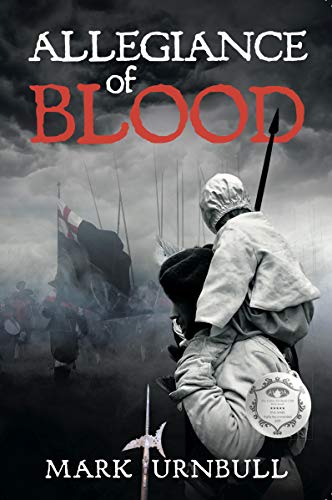
Book Corner: Allegiance of Blood by Mark Turnbull

Sir Francis Berkeley strives to protect his wife and family from the brutal effects of the English Civil War. But aside from the struggle between king and parliament, the allegiances of family, friendship and honour entangle him at every turn and prove to be just as bloody.
As a witness to treason on the field of Edgehill, Francis is drawn into a fast-moving world of espionage and politics. Against a backdrop of some of the major battles and sieges, Francis’s fight to reunite his family opens up very different conflicts with which to contend.
Everything is at stake when the war comes to a little church one December morning. Can the family survive the parliamentarian onslaught as well as their own feud?

I have to admit, the English Civil War is not one of my more familiar periods of history. So a book on it – be it fact or fiction – has to be really good to hold my attention. Allegiance of Blood by Mark Turnbull is one such book. It is a wonderful novel based around the struggles between the English Parliament and King Charles I and the divisions this caused with the country – and even within families. It centres on the story of one royalist, Sir Francis Berkeley, and his experiences following the battle of Edgehill on October 1642.

Allegiance of Blood beautifully weaves together the personal life and tragedies of the hero, Berkeley, with the greater drama that is overtaking England and the embattled King Charles I. Fast-paced and full of action, the story highlights the many conspiracies and conflicted loyalties that plagued the soldiers on both sides of the war; where brothers fought brothers, friends found themselves on opposing sides and families were torn by politics and ideologies.

The story is augmented by Francis’s proximity to the great and the good. Taken under the wing of Prince Rupert of the Rhine, the dashing cavalier general, and given promotion and responsibility, Francis fights to further the royalist cause, even against his own family and friends.

“After years of watching others, I see I have been spied upon myself.” Harbottle paled with realisation. “A secret that will die with you.” He squeezed the trigger, only for a flash of yellow and a hiss to taunt him upon its smoking misfire.

Francis seized his sword and sliced at Harbottle’s leg; a streak of crimson filled the gash. Before the blood had time to soak into his breeches, Francis punched the man in the face and then in the stomach. Harbottle, winded and with a broken nose, careered backwards into a shelf of pewter plates that jangled across the floor around them.

“You betrayed every man who lost his life that day.” Francis caught his breath and grabbed the remaining letters. “Cowardly son of a whore.” Clutching them in his other fist he held them up in vindication of all the lost souls of Edgehill who’d been sold out by this self-centred dog. It took all of his restraint not to skewer Harbottle on the end of his sword that instant.

“I’m no such thing.” Harbottle panted, claiming that swimming against the popular tide took much more courage. “My family’s future will not be dictated by attachment to one of two corrupt factions.”

“Perhaps you’ll soon come to realise the futility of your two-faced strategy.”

“Your battlefield memories are little more than the ramblings of a lunatic,” Harbottle replied.

“I suspect these letters contain more than mere ramblings.” Francis warned that Harbottle would soon be swinging from a noose. “A constricted throat will put an end to your betrayal of the King.”

With the appearance of his subordinates, revealing that the street was rapidly being cleared of rebels, Francis’s prediction took a step closer to reality. Every passing day of peace negotiations had seen royal dominance loosened bit by bit, because every fresh day brought Parliament’s field army closer to London in its bid to defend the city. Brentford’s fall evened out the balance of power, but what remained to be seen was whether Francis could tip the scales against Harbottle and prove the man’s duplicity.

After a slight tendency to over-description in the early chapters, Allegiance of Blood proves to be a wonderful novel, exciting, entertaining and addictive. It draws you in, taking you through all the motions as you experience love, battle, betrayal and grief. The imagery is sublime.

The history is impeccable and Mark’s extensive research shines through, but does not overshadow the story. The characters are a wonderful, disparate group, from the Puritan brother-in-law, drunken father-in-law, to a loving wife. And then there’s Francis himself, a loyal royalist who is often caught between his unwavering allegiance to the crown and family and friendship loyalties which serve to test that allegiance.

Mark Turnbull skilfully brings together all the aspects of war; family and friendships riven apart, betrayal, espionage, sieges and pitched battles – and a family secret! He weaves a wonderful, sweeping story, which draws the reader into the essence of the wars between parliament and king.

Allegiance of Blood by Mark Turnbull is available in paperback and ebook from Amazon UK.

About the author:

After a visit to Helmsley Castle at the age of 10, Mark Turnbull bought a pack of ‘top trump’ cards featuring the monarchs of England. The card portraying King Charles I fascinated him.
Van Dyck’s regal portrait of the King and the fact that he was executed by his own people were the beginnings of Mark’s passionate interest in the English Civil War that has lasted ever since.
In the absence of time travel, he thoroughly enjoys bringing this period to life through writing. He has written articles for magazines, local newspapers and online educational sites. He has also re-enacted battles with The Sealed Knot and for several years edited the Historical Novel Society’s online newsletter.

*

My Books

Silk and the Sword: The Women of the Norman Conquest

From Emma of Normandy, wife of both King Cnut and Æthelred II to Saint Margaret, a descendant of Alfred the Great himself, Silk and the Sword: the Women of the Norman Conquest traces the fortunes of the women who had a significant role to play in the momentous events of 1066.  Available now from Amazon UK,  Amberley Publishing, Book Depository and Amazon US.

Heroines of the Medieval World

Telling the stories of some of the most remarkable women from Medieval history, from Eleanor of Aquitaine to Julian of Norwich, Heroines of the Medieval World,  is available now on kindle and in paperback in the UK from from both Amberley Publishing and Amazon, in the US from Amazon and worldwide from Book Depository.

*

You can be the first to read new articles by clicking the ‘Follow’ button, liking our Facebook page or joining me on Twitter and Instagram.

©2020 Sharon Bennett Connolly