Helena Snakenborg: A Swedish Woman Living in Tudor England

History ... the Interesting Bits
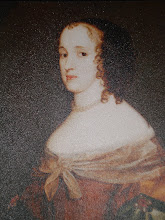
Helena Snakenborg, Marchioness of Northampton, in coronation robes, 1603

An Elizabethan whose story I became aware of through a novel is Helena Snakenborg, who features in Tracy Borman’s novel, The King’s Witch. I had to know more about this Swedish lady living in Tudor England, and include her in my own Heroines of the Tudor World. Even more so after I learned that Helena was the only foreigner amongst Queen Elizabeth’s ladies. Helena was born in 1548, into an ancient Swedish baronial family. Her father, Ulf Henriksson, had been a trusted supporter of King Gustav I Vasa of Sweden. Her mother, Agneta Knuttson, was a descendant of the earls of Orkney and it is from her mother’s family that Helena took her name, Snakenborg.

In 1564, at the age of fifteen, Helena was appointed a maid of honour to Gustav Vasa’s daughter, and the sister of the new King Eric XIV, Princess Cecilia. Later that same year, Princess Cecilia embarked on a voyage to England, taking Helena with her. Cecilia claimed that as a committed Anglophile, she wanted to meet the queen of England. She may also have been hoping to revive her brother’s suit for Queen Elizabeth’s hand in marriage. Their overland journey to England was long and arduous.

They travelled through Poland and Germany in order to avoid hostile countries and were hampered by bad weather. The princess was accompanied by her husband and fell pregnant during the journey, necessitating further delays. Almost a year had passed by the time they arrived in London in September 1565, with the Spanish ambassador reporting to Philip II,

‘On the 11th instant [of September] the king of Sweden’s sister entered London at 2 o’clock in the afternoon. She is very far advanced in pregnancy, and was dressed in a black velvet robe with a mantle of black cloth of silver, and wore on her head a golden crown… She had with her six Ladies dressed in crimson taffety with mantles of the same.’1

The arrival of the Swedish princess caused a great deal of excitement at court and the queen gave them a lavish reception. Among Cecilia’s six ladies was Helena Snakenborg and in a letter to her mother, Helena wrote of their reception in England: ‘There came so many to visit us that there was no end to it. All wished us a hearty welcome to England.’2 After the official ceremonies were completed, Princess Cecilia was taken at once to the place designated for her confinement, where she gave birth to a son on 14 September. The princess was given the use of Bedford House as her London residence. She did not remain long in seclusion after the birth and she and her entourage soon became regular visitors at court, treated to receptions and entertainments.

History ... the Interesting Bits
William Parr, Marquess of Northampton

Helena was by all accounts a beautiful young woman, with large brown eyes, red hair and a pink and white complexion. She attracted the attention of William Parr, Marquess of Northampton, a man thirty-five years her senior whose sister, Kateryn Parr, had been Henry VIII’s sixth and final wife. In a letter to her mother, Helena told her about the marquess’s attention:

‘Amongst the gentlemen was a courtier who always came with the earliest arrivals and left amongst the last. When my gracious Lady had been “churched” after the baby was born, the Marquess of Northampton (for that was the courtier’s name) talked to my gracious lady about me.’3

The marquess of Northampton wasted no time in pressing his suit with Helena, sending her lavish gifts of clothes and jewels, and ‘being an impressionable and romantic young girl, Helena was swept off her feet by the experienced older man.’4 Helena was beguiled by Northampton, who wanted to marry her but felt prevented from doing so because, although divorced in 1551, his first wife Lady Anne Bourchier was still alive and there were some doubts as to the validity of the divorce.

In the meantime, Princess Cecilia had run up some rather large debts due to her lavish lifestyle in England. Her debts, in excess of £3,000, had been amassed as a result of the purchase of poultry, articles of plate and jewellery, a kirtle wrought with gold, a Venice lute – the list goes on. The princess left England in order to escape her creditors, though she had been obliged by the queen to sell whatever she could in order to raise as much money as she could to pay off at least some of the debt, leaving England in April 1566. The princess had wanted to take Helena with her, but the young woman was enjoying life in England, and the attentions of the marquess of Northampton, and wanted to stay.

History ... the Interesting Bits
Queen Elizabeth I

Queen Elizabeth came to Helena’s rescue by offering her a place in her household, appointing her a maid of honour in 1567 and later promoting her to Gentlewoman of the Privy Chamber. Although unpaid, the queen awarded her new maid of honour additional privileges, including lodgings at court, servants and a horse. It seems Queen Elizabeth had grown fond of Helena and was keen to help the budding romance of Helena and Northampton. Helena, in her turn, was in the queen’s thrall, emulating her dress and manners and even her signature, underlining the ‘H’ with the same flourish Elizabeth did with her ‘E’. Helena was diligent and conscientious in her duties and became an indispensable member of the queen’s household.

Helena’s relationship with Northampton was still hindered by Northampton’s ambiguous marital status, but the marquess was still generous with Helena, assigning ten of his own servants to care for her and giving her everything she needed or wanted. Helena told her mother: ‘I cannot imagine I shall ever want for anything however beautiful or expensive that his Lordship can buy without his getting it at once for his Elin.’5 The couple’s patience was eventually rewarded, so to speak, with the death of Anne Bourchier in January 1571. William Parr was finally free to marry.
History ... the Interesting Bits
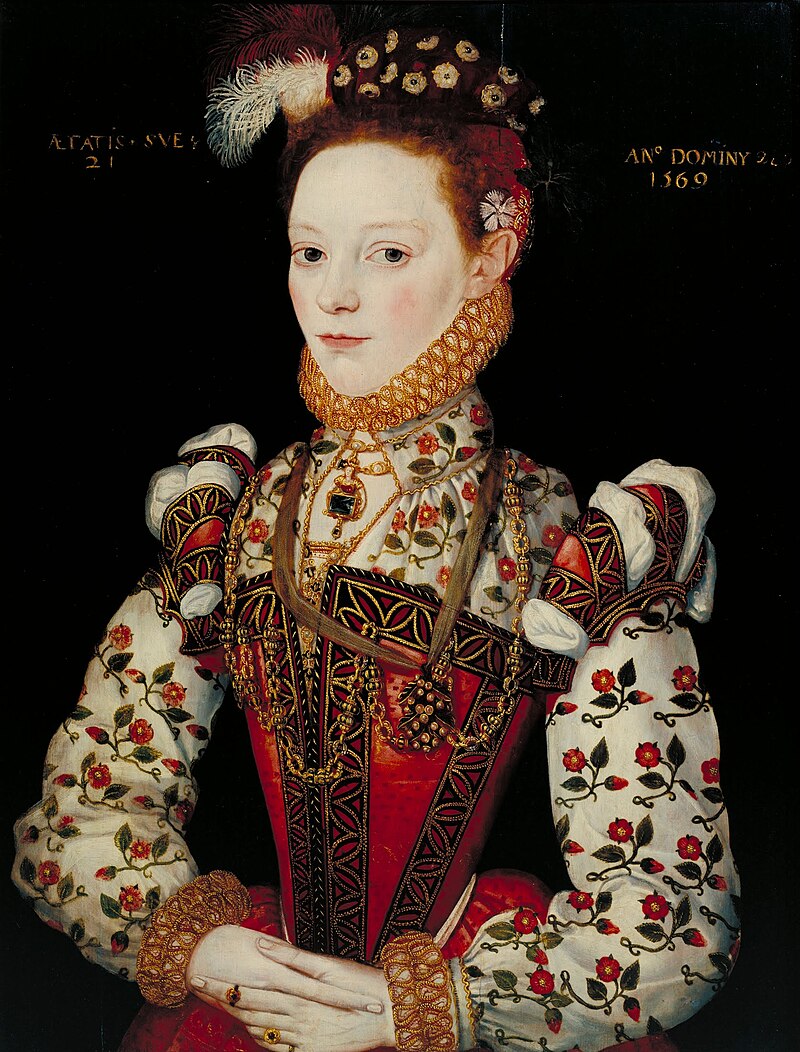
A Young Lady Aged 21 in 1569, tentatively identified as a portrait of Helena Snakenborg

The wedding took place in May in the presence of Queen Elizabeth, who had offered her own closet in Whitehall Palace for the ceremony. The bride was twenty-two and the groom fifty-seven. The newlyweds divided their time between their houses in Guildford, Surrey, and Stanstead Hall, Essex, close enough to London that Helena could attend court regularly. The happy marriage came to a sudden end within just a few months, when the marquess fell ill at Warwick in September 1571. He had been suffering from gout for some time and it now took a turn for the worse. Helena nursed her ailing husband through the ensuing weeks, but the earl succumbed to his illness on 28 October. They had been married just five months. The queen bore the costs of the funeral and even provided material from her own wardrobe for the mourning outfits.

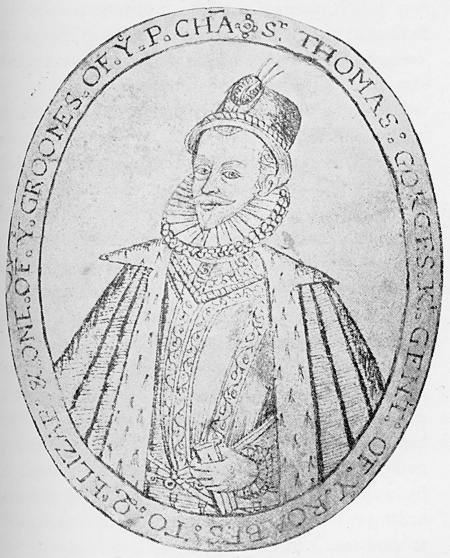
Helena was left a young widow with a substantial dower of £368 per annum from her husband’s estates in Cumberland. She could have retired from court and lived in comfort for the rest of her life, but Helena chose to return to the queen’s service just as soon as her husband’s affairs were settled. It was not long, however, before she attracted a new admirer in Thomas Gorges. Although the queen was initially in favour of the match, she refused to consent to a marriage, either out of jealousy or concern for the disparity in their statuses. Helena was a marchioness, whereas Thomas was merely a gentleman, serving as a Groom of the Privy Chamber. In spite of the queen’s objections, the couple married in secret in 1576, earning themselves Elizabeth’s wrath.

Dismissed from court, Helena wrote to the queen to beg forgiveness, describing herself as ‘a poure, desolate, and banished creature’.6
History ... the Interesting Bits
Thomas Gorges

Helena was soon forgiven and welcomed back to court, with the queen granting Helena manors in Huntingdonshire and Wiltshire. Her second marriage appears to have been as happy as the first, if not happier. Two years later, Helena left court to give birth to her first child, a daughter named after Elizabeth for whom the queen acted as godmother, presenting Helena with a silver-gilt bowl at the christening. A son, Francis, was probably born the following year, with at least six more children after that, two more daughters and four more sons, the last being born in 1589.

Despite her growing brood Helena still served the queen, acting as her deputy at the baptisms of children of distinguished noblemen, especially towards the end of the reign as the queen’s health was deteriorating. Helena was with Elizabeth during her final illness at Richmond and remained with the queen’s body after her death on 24 March 1603, watching over the corpse as it was laid in a lead coffin and then accompanied it as it was taken by barge from Richmond to Whitehall Palace in a sombre torchlit procession. As senior peeress, Helena was chief mourner at Elizabeth’s funeral at Westminster Abbey on 28 April.
History ... the Interesting Bits
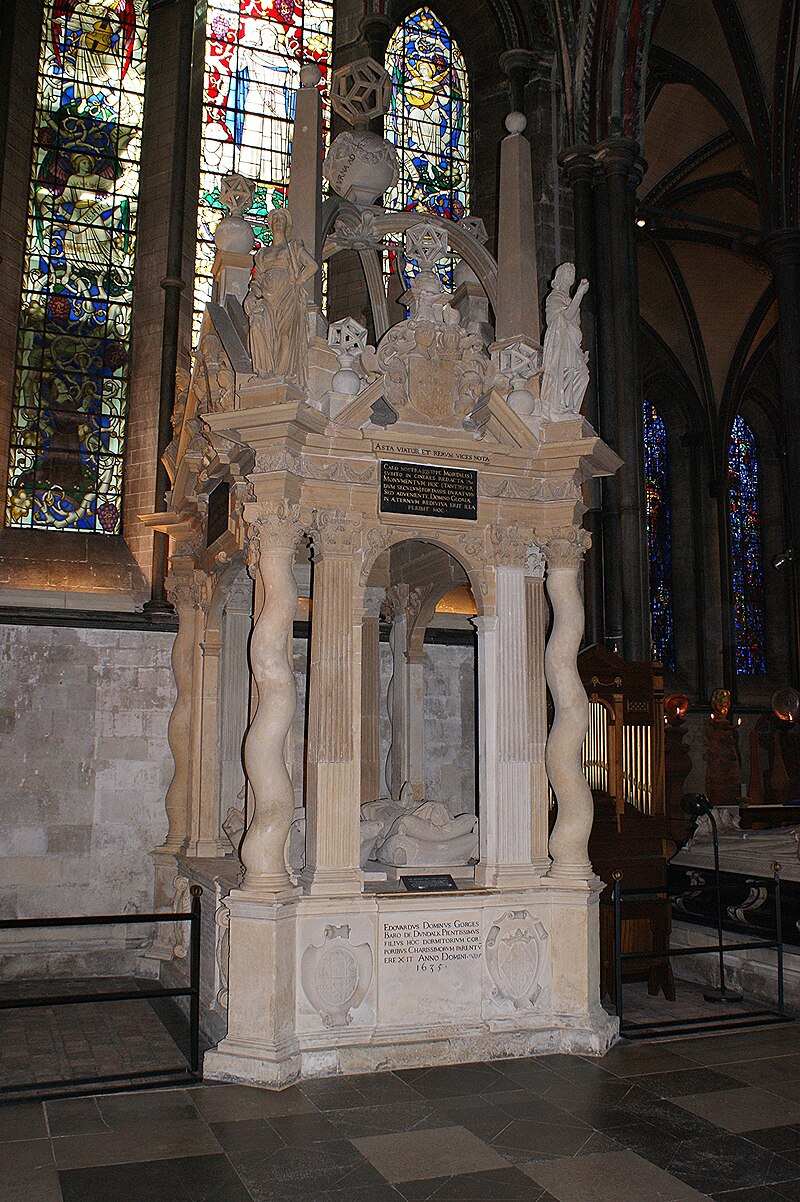
Joint tomb of Helena and Sir Thomas Gorges, Salisbury Cathedral

The reign of King James I (VI of Scots) inevitably meant changes at court and Thomas Gorges was demoted. Helena, too, lost some of her privileges. And with the death of Thomas on 30 March 1610, she increasingly retreated from public life. A devoted member of the Church of England, she died on 10 April 1635, having lived in England for almost exactly seventy years. She granted over £1,700 in annuities and bequests in her will. At the time of her death, Helena had ninety-two living, direct descendants.

Helen Snakenborg, Marchioness of Northampton, was buried in Salisbury Cathedral, beside her second husband Thomas Gorges who had been laid to rest there in 1610.

In her long life, Helena Snakenborg had been lucky enough to enjoy two happy marriages, both made for love, and to have enjoyed the love and patronage of Queen Elizabeth. Even when she had faced the wrath of the queen, Helena had managed to win back her favour.

*

Images:

Courtesy of Wikipedia

Notes:

1. CSPS, Elizabeth 1558-67, I, 475 quoted in Tracy Borman, Elizabeth’s Women, p. 278; 2. ibid; 3. ibid; 4. Paul Harrington, ‘Gorges [née Snakenborg], Helena, Lady Gorges [other married name Helena Parr, marchioness of Northampton],’ Oxforddnb.com; 5. Tracy Borman, Elizabeth’s Women, p. 281; 6. BM Cotton MS Titus B II, f. 346 quoted in Tracy Borman, Elizabeth’s Women, p. 357

Sources:

Tracy Borman, Elizabeth’s Women; Paul Harrington, ‘Gorges [née Snakenborg], Helena, Lady Gorges [other
married name Helena Parr, marchioness of Northampton],’ Oxforddnb.com; Calendar of State Papers Domestic: Edward VI, Mary and Elizabeth, 1547-80, ed. Robert Lemon; Elizabeth Norton, The Lives of Tudor Women; Amy Licence, Tudor Roses: From Margaret Beaufort to Elizabeth I; Paul Kendall, Queen Elizabeth I: Life & Legacy of the Virgin Queen; Lisa Hilton, Elizabeth I: Renaissance Prince, A Biography; John Guy, Elizabeth: The Forgotten Years; Laura Brennan, Elizabeth I: The Making of a Queen; R.E. Pritchard, Sex, Love & Marriage in the Elizabethan Age; Alison Weir, Elizabeth the Queen; Neville Williams, The Life and Times of Elizabeth I; Sarah Gristwood, The Tudors in Love: The Courtly Code Behind the Last Medieval Dynasty

*

My Books:

Signed, dedicated copies of all my books are available through my online bookshop.

Out now: Scotland’s Medieval Queens

Books by Sharon Bennett Connolly

Scotland’s history is dramatic, violent and bloody. Being England’s northern neighbour has never been easy. Scotland’s queens have had to deal with war, murder, imprisonment, political rivalries and open betrayal. They have loved and lost, raised kings and queens, ruled and died for Scotland. From St Margaret, who became one of the patron saints of Scotland, to Elizabeth de Burgh and the dramatic story of the Scottish Wars of Independence, to the love story and tragedy of Joan Beaufort, to Margaret of Denmark and the dawn of the Renaissance, Scotland’s Medieval Queens have seen it all. This is the story of Scotland through their eyes.

Scotland’s Medieval Queens gives a thorough grounding in the history of the women who ruled Scotland at the side of its kings, often in the shadows, but just as interesting in their lives beyond the spotlight. It’s not a subject that has been widely covered, and Sharon is a pioneer in bringing that information into accessible history.’ Elizabeth Chadwick (New York Times bestselling author)

Available now from Amazon and Pen and Sword Books

Also by Sharon Bennett Connolly:

Books by Sharon Bennett Connolly

Heroines of the Tudor World tells the stories of the most remarkable women from European history in the time of the Tudor dynasty, 1485-1603. These are the women who ruled, the women who founded dynasties, the women who fought for religious freedom, their families and love. Heroines of the Tudor World is now available for pre-order from Amberley Publishing and Amazon UK. Women of the Anarchy demonstrates how Empress Matilda and Matilda of Boulogne, unable to wield a sword themselves, were prime movers in this time of conflict and lawlessness. It shows how their strengths, weaknesses, and personal ambitions swung the fortunes of war one way – and then the other. Available from Bookshop.orgAmberley Publishing and Amazon UKKing John’s Right-Hand Lady: The Story of Nicholaa de la Haye is the story of a truly remarkable lady, the hereditary constable of Lincoln Castle and the first woman in England to be appointed sheriff in her own right. Available from all good bookshops Pen & Sword Booksbookshop.org and Amazon

Royal Historical Society

Defenders of the Norman Crown: The Rise and Fall of the Warenne Earls of Surrey tells the fascinating story of the Warenne dynasty, from its origins in Normandy, through the Conquest, Magna Carta, the wars and marriages that led to its ultimate demise in the reign of Edward III. Available from Pen & Sword BooksAmazon in the UK and US, and Bookshop.orgLadies of Magna Carta: Women of Influence in Thirteenth Century England looks into the relationships of the various noble families of the 13th century, and how they were affected by the Barons’ Wars, Magna Carta and its aftermath; the bonds that were formed and those that were broken. It is now available in paperback and hardback from Pen & SwordAmazon, and Bookshop.orgHeroines of the Medieval World tells the stories of some of the most remarkable women from Medieval history, from Eleanor of Aquitaine to Julian of Norwich. Available now from Amberley Publishing and Amazon, and Bookshop.orgSilk and the Sword: The Women of the Norman Conquest traces the fortunes of the women who had a significant role to play in the momentous events of 1066. Available now from Amazon,  Amberley Publishing, and Bookshop.org.

Alternate Endings: An anthology of historical fiction short stories including Long Live the King… which is my take what might have happened had King John not died in October 1216. Available in paperback and kindle from Amazon.

Podcast:

A Slice of Medieval

Have a listen to the A Slice of Medieval podcast, which I co-host with Historical fiction novelist Derek Birks. Derek and I welcome guests, such as Bernard Cornwell and Elizabeth Chadwick, and discuss a wide range of topics in medieval history, from significant events to the personalities involved.

Every episode is also now available on YouTube.

*

Don’t forget! Signed and dedicated copies of all my books are available through my online bookshop.

For forthcoming online and in-person talks, please check out my Events Page.

You can be the first to read new articles by clicking the ‘Follow’ button, liking our Facebook page or joining me on TwitterThreadsBluesky and Instagram.

*

©2025 Sharon Bennett Connolly FRHistS.

Wordly Women: Gillian Bagwell

History ... the Interesting Bits: Wordly Women
Near Dunvegan Castle, Isle of Skye

Time for another edition of Wordly Women! I am blown away by how receptive people have been to this little series and I am thoroughly enjoying having the chance to highlight the careers and writing experiences of the best of women writers in both history and and historical fiction. Today is another ‘fan girl’ edition as I get to chat with one of my favourite writers, Gillian Bagwell, who has written a wonderful novel about one of my Tudor Heroines, Bess of Hardwick.

Sharon: Firstly, welcome Gillian, what got you into writing?

Gillian: Both of my parents were writers, among other talents and accomplishments, interests, and they both read to my sisters and me a lot when we were kids, so I guess it seemed natural to write. I think I took my first writing class in junior high school. I’d had the idea for one of my novels (not yet published) long ago, and I recently discovered a story that I’d written based on that idea for that class when I was about thirteen. I’d forgotten about it.

Sharon: Tell us about your books.

Gillian: The three books that I have published are all based on the lives of real English women, two in the seventeenth century and one in the sixteenth century. My first novel, The Darling Strumpet, is based on the life of Nell Gwynn, one of the first English actresses and a longtime mistress of Charles II. She was a poor urchin who got her big break in life when Charles reopened the theatres soon after he was restored to the throne, and she got a job selling oranges. She caught the eye of Charles Hart, one of the leading actors, and he became her lover and mentor, teaching her to act, and they became an enormously popular duo onstage, with many “gay couple” (not as we use that phrase today!) comedies written specifically for them. Her career took place during one of the most amazing and important periods in the history of English theatre, when over the space of about fifteen years, performance practices went from Elizabethan/Jacobean to what remained essentially unchanged until the end of the nineteenth century.

History ... the Interesting Bits: Wordly Women
Experiencing the battlefield of Worcester

I learned about Jane Lane, the heroine of my second novel, when I was researching Nell Gwynn. Her story isn’t much remembered now, but she played a big part in helping Charles escape after the disastrous Battle of Worcester in 1651, saving not only his life but likely the future of the monarchy. She had a pass to travel with a manservant, so he disguised himself and travelled hundreds of miles with her. There were notices all along their way offering a reward of £1000 pounds for information leading to his capture—an enormous amount of money then—and they so narrowly escaped discovery so many times that his six-week odyssey became known as the Royal Miracle. The US title of the book is The September Queen. The UK published it as The King’s Mistress.

My third novel tells the story of Bess of Hardwick, who rose from genteel poverty to become probably the wealthiest and most powerful woman in England after Queen Elizabeth. She’s probably best known for building Hardwick Hall and the original Chatsworth, and for surviving four husbands. I didn’t think I could do justice to her very long and remarkable life in one novel, so Venus in Winter really only covers the first half of it, which included acting as keeper to Mary Queen of Scots for several years, and her granddaughter Arbella nearly succeeding Queen Elizabeth.

My fourth novel, The Tower on the Sea, not yet published, is a Gothic thriller with a heavy dose of romance set mostly on a tiny and remote Scottish island in 1901-1902. I’ve been working on a novel based on the life of Dame Flora MacLeod, who was chief of the Clan MacLeod from 1935 to her death in 1976, but as biographical fiction seems to be hard to sell these days, I’ve set it aside temporarily and am working on something completely different, which I’ll discuss below.

Sharon: What attracts you to the periods in which you write?

History ... the Interesting Bits: Wordly Women
William Shakespeare

Gillian: I became enamoured of Shakespeare very early on, and so was interested in sixteenth-century England. Around the time I turned fourteen, my father was hired as the director of education for the non-profit educational branch of the company that invented and produced the original Renaissance Pleasure Faires, a re-creation of a country fair in Elizabethan England with food, crafts, music, dancing, shows on stage and peformers improvising in the street with each other and the patrons. I know the concept of a Renaissance fair may be unfamiliar to many British people, but that original event inspired hundreds of copycats, mostly in the US but also in other countries. I wrote an article for Smithsonian Magazine about how the first Faire came about: The Surprisingly Radical Roots of the Renaissance Fair.

My whole family became involved and I performed at the Faires from when I was fourteen to when I was twenty—six weekends each at the Renaissance Faires in Southern and Northern California, and six weekends at the Great Dickens Christmas Fair, an indoor recreation of Victorian London at Christmastime. So I spent a lot of time in the sixteenth century and the nineteenth centuries!

Sharon: Who is your favourite Tudor and why?

Gillian: I think that would have to be Elizabeth. She survived an incredibly difficult childhood and youth, with her mother dead and vilified and her own future uncertain, and also managed to come through perilous times as a young woman, especially under the reign of her sister Mary. When she finally became queen, she ushered in a time of great change, mostly in good ways, and I think in general was a great leader—not an easy thing to be, especially for a woman, in those days.

Sharon: Who is your least favourite Tudor and why?

    Gillian: Henry VIII. It may be that he became the erratic tyrant he was especially later in life as the result of the injury to his leg and other medical problems, but it doesn’t erase the harm he caused to the six women who had the misfortune to marry him, his dissolution of the church and destruction not only of so many beautiful buildings but of the lives of so many people, both those who were of the church and those they helped, and much, much more.

    Sharon: How do you approach researching your books?
    Gillian: I read whatever I can find about my heroines, of course, as well as the period they lived in and the events that my books cover. But sometimes there isn’t much information available. The story of Jane Lane, for instance was very well known when Charles II was restored to the throne, but no one’s written a biography of her. There are several biographies of Bess of Hardwick, but they focus on her later life. One of them dispenses with her life up until her second marriage in the first twenty pages. So I have to piece together information, surmise what seems likely, and fill in the gaps with invention—of course mentioning in my author’s notes what historical facts I’ve taken liberty with. I’ve almost always gone to the UK on research trips, too, to find the places my main characters lived and where the action of their stories took place.

    History ... the Interesting Bits: Wordly Women
    Jane Lane

    There’s nothing like it not only for learning new things but getting inspiration. When I was researching The September Queen/The King’s Mistress, a good friend from London joined me on a trip following in the footsteps of Charles II from Worcester to Staffordshire and Shropshire, and then the route that he and Jane Lane took together. I didn’t know it at the time, but the Monarch’s Way is a marked footpath, which the Monarch’s Way Association maintains and has published maps of. When we went to Boscobel, it was near the end of the day and almost no one else was there. I found myself alone in a closet peering down into the priest hole where Charles hid. And at Trent, the lady at Trent Manor showed us around the house, including her bedroom, with the priest hole where Charles hid there. I also visit libraries and archives to use primary sources. I’ve done research at the British Library, the Theatre Museum in Covent Garden, the National Library and the National Records of Scotland, and the office of the Lord Lyon in Edinburgh. For my current work in progress, I recently I spent eight days at the Bodleian Library doing research and spent the rest of my time exploring Oxford, visiting places where the main characters lived and knew well. I even got a private tour of St. Hugh’s College, where each was principal, from the archivist.

    Sharon: Tell us your ‘favourite’ Stuart story you have come across in your research.

    History ... the Interesting Bits: Wordly Women
    A young Charles II

    Gillian: I’d say that’s the story of Charles II’s six-week odyssey trying to get out of England after the Battle of Worcester. Many, many common people risked their lives to help him, and it was a formative period in his life. He was only twenty-one at the time. He told the stories of his adventures for the rest of his life. Fortunately, the diarist Samuel Pepys sat him down decades later and over the course of a couple of days, took down the story in his famous shorthand. He then gathered all the accounts people had published of their parts in the story and bound them together. It’s an amazing resource, giving us a day-by-day and sometimes hour-by-hour account of what Charles did, said, wore, and ate. In the run-up to the publication of my book about Jane Lane, I blogged the daily events of those weeks. Here’s a link to the story, beginning with the Battle of Worcester: http://theroyalmiracle.blogspot.com/2011/09/september-3-1651-battle-of-worcester.html.

    Sharon: And do you have a favourite Tudor story?

    Gillian: There are many great stories about the Tudors, of course, but I became fascinated with this nugget mentioned in Robert Hutchinson’s The Last Days of Henry VIII, and have thought of writing a story or play about it. In the bitter cold of early February 1547, the body of Henry VIII lay at Windsor Castle, and amid clouds of incense, requiem masses were being held night and day to waft the soul of the dead tyrant to heaven. Fierce struggles for power raged at court, as the new king, Edward VI, was a child, and who controlled him would effectively rule. Against this backdrop of intrigue, John de Vere, the sixteenth Earl of Oxford, planned a dramatic event of his own: the presentation of a play he had written on the death of the king, to be performed by his own company of players. But as the actors rehearsed for their day in the winter sun, Bishop Gardiner, though recently banned from the Palace of Westminster, intended to claw his way back to power, and he would do whatever he must to prevent Oxford’s play from coming to the stage.

    I find a lot intriguing about this story, not least the fact that John de Vere was the father of Edward DeVere, the seventeenth Earl of Oxford, whom many serious people believe could have been the author of the plays attributed to William Shakespeare. He was almost seven years old at the time of this cancelled performance, and it’s interesting to think that he might have witnessed the drama offstage as well as on. The evidence for the argument for Oxford as the author includes a wealth of similarities in his life and experience and the plays; the fact that he was familiar with theatre from an early age, as his father kept a company of players; and that he was regarded as an accomplished and playwright, though none of his plays survive. Charlton Ogburn’s 600-page tome The Mysterious William Shakespeare is an exhaustive study of the evidence in favor of Oxford.

    Notable authorship skeptics include included Mark Rylance, Derek Jacobi, John Gielgud, Tyrone Guthrie, David McCullough, and Supreme Court Justices Sandra Day O’Connor, John Paul Stevens, Harry A. Blackmun, and Lewis F. Powell (Declaration of Reasonable Doubt, Shakespeare Oxford Fellowship – Famous Authorship Skeptics).

      Sharon: Tell us your least ‘favourite’ Tudor story you have come across in your research.

      Gillian: Many of the Tudors were responsible for a lot of bloodshed and cruelty, of course. I think Henry VIII’s persecution and elimination of the Pole family, who he considered a threat to his keeping the throne, ranks high, especially the murder of Lady Margaret Pole, the Countess of Salisbury, who was sixty-seven and had spent her life serving the Tudors. The executioner botched the job terribly, and it was a gruesome death. Here’s Tracy Borman’s post on the Historic Royal Palaces’ website: The Extraordinary Life and Death of Lady Margaret Pole, Countess of Salisbury.

      History ... the Interesting Bits: Wordly Women

      Sharon: Are there any other eras you would like to write about?

      Gillian: Well, I’ve moved into the early twentieth century with The Tower on the Sea, and both Flora MacLeod’s story and my current work in progress take me further into the 1900s and has a contemporary timeline too. There are other stories I’d love to write about, including from the eighteenth and nineteenth centuries.

      Sharon: What are you working on now?

      Gillian: I’m working on a novel with dual timelines inspired by the true story of Eleanor Jourdain and Charlotte Anne Moberly, two Oxford academics who visited Versailles in 1901, had a very strange experience, encountering people in eighteenth-century dress who behaved oddly, and came to believe they’d walked into the eighteenth century. I learned about this story from Miss Morison’s Ghosts, a British movie made in 1981, and I’ve wanted to write about it ever since. Having gone through the seventeen boxes of their notes, correspondence, drawings, photos, maps, and other documentation of their eight or so years of research about their experience at Versailles, I can say that something extraordinary happened to them, though I don’t know exactly what and neither did they.

      Sharon: And finally, what is the best thing about being a writer?

      Gillian: Exploring the worlds of my characters is endlessly fascinating. I get chills when I experience or discover something that connects me viscerally with the people I’m writing about, for instance holding letters they wrote, or being in the rooms where important things took place. And much as I like adventure and travel, all my life, I’ve been something of a homebody, too, so I love being able to work at home, especially on days when I don’t have to do anything but write.

        About Gillian Bagwell:

        History ... the Interesting Bits: Wordly Women
        Gillian Bagwell

        Gillian Bagwell’s historical novels have been praised for their vivid and lifelike characters and richly textured, compelling evocation of time and place. Her first career was in theatre, as an actress and later as a director and producer, and she founded the Pasadena Shakespeare Company and produced thirty-seven shows over ten years. Gillian has found her acting experience helpful to her writing, and many of the workshops and classes she’s taught at the annual Historical Novel Society Conferences in the US and the UK relate to her life in theatre, including writing effective historical dialogue, using acting tools to bring characters to life on the page, and giving effective public readings. She’s also a professional editor and provides writing coaching and manuscript evaluations. Gillian lives in Berkeley, California in the house where she grew up, her life enlivened by her five rescue cats.

        *

        My Books

        Signed, dedicated copies of all my books are available through my online bookshop.

        Out now: Scotland’s Medieval Queens

        Books by Sharon Bennett Connolly

        Scotland’s history is dramatic, violent and bloody. Being England’s northern neighbour has never been easy. Scotland’s queens have had to deal with war, murder, imprisonment, political rivalries and open betrayal. They have loved and lost, raised kings and queens, ruled and died for Scotland. From St Margaret, who became one of the patron saints of Scotland, to Elizabeth de Burgh and the dramatic story of the Scottish Wars of Independence, to the love story and tragedy of Joan Beaufort, to Margaret of Denmark and the dawn of the Renaissance, Scotland’s Medieval Queens have seen it all. This is the story of Scotland through their eyes.

        Scotland’s Medieval Queens gives a thorough grounding in the history of the women who ruled Scotland at the side of its kings, often in the shadows, but just as interesting in their lives beyond the spotlight. It’s not a subject that has been widely covered, and Sharon is a pioneer in bringing that information into accessible history.’ Elizabeth Chadwick (New York Times bestselling author)

        Available now from Amazon and Pen and Sword Books

        Also by Sharon Bennett Connolly:

        Books by Sharon Bennett Connolly

        Heroines of the Tudor World tells the stories of the most remarkable women from European history in the time of the Tudor dynasty, 1485-1603. These are the women who ruled, the women who founded dynasties, the women who fought for religious freedom, their families and love. Heroines of the Tudor World is now available for pre-order from Amberley Publishing and Amazon UK. Women of the Anarchy demonstrates how Empress Matilda and Matilda of Boulogne, unable to wield a sword themselves, were prime movers in this time of conflict and lawlessness. It shows how their strengths, weaknesses, and personal ambitions swung the fortunes of war one way – and then the other. Available from Bookshop.orgAmberley Publishing and Amazon UKKing John’s Right-Hand Lady: The Story of Nicholaa de la Haye is the story of a truly remarkable lady, the hereditary constable of Lincoln Castle and the first woman in England to be appointed sheriff in her own right. Available from all good bookshops Pen & Sword Booksbookshop.org and Amazon

        Royal Historical Society

        Defenders of the Norman Crown: The Rise and Fall of the Warenne Earls of Surrey tells the fascinating story of the Warenne dynasty, from its origins in Normandy, through the Conquest, Magna Carta, the wars and marriages that led to its ultimate demise in the reign of Edward III. Available from Pen & Sword BooksAmazon in the UK and US, and Bookshop.orgLadies of Magna Carta: Women of Influence in Thirteenth Century England looks into the relationships of the various noble families of the 13th century, and how they were affected by the Barons’ Wars, Magna Carta and its aftermath; the bonds that were formed and those that were broken. It is now available in paperback and hardback from Pen & SwordAmazon, and Bookshop.orgHeroines of the Medieval World tells the stories of some of the most remarkable women from Medieval history, from Eleanor of Aquitaine to Julian of Norwich. Available now from Amberley Publishing and Amazon, and Bookshop.orgSilk and the Sword: The Women of the Norman Conquest traces the fortunes of the women who had a significant role to play in the momentous events of 1066. Available now from Amazon,  Amberley Publishing, and Bookshop.org.

        Alternate Endings: An anthology of historical fiction short stories including Long Live the King… which is my take what might have happened had King John not died in October 1216. Available in paperback and kindle from Amazon.

        Podcast:

        A Slice of Medieval

        Have a listen to the A Slice of Medieval podcast, which I co-host with Historical fiction novelist Derek Birks. Derek and I welcome guests, such as Elizabeth Chadwick, Helen Castor, Ian Mortimer, Scott Mariani and Bernard Cornwell and discuss a wide range of topics in medieval history, from significant events to the personalities involved.

        Every episode is also now available on YouTube.

        *

        Don’t forget! Signed and dedicated copies of all my books are available through my online bookshop.

        For forthcoming online and in-person talks, please check out my Events Page.

        You can be the first to read new articles by clicking the ‘Follow’ button, liking our Facebook page or joining me on TwitterThreadsBluesky and Instagram.

        *

        ©2025 Sharon Bennett Connolly FRHistS

        Book Corner: The Queen’s Musician by Martha Jean Johnson

        History ... the Interesting Bits

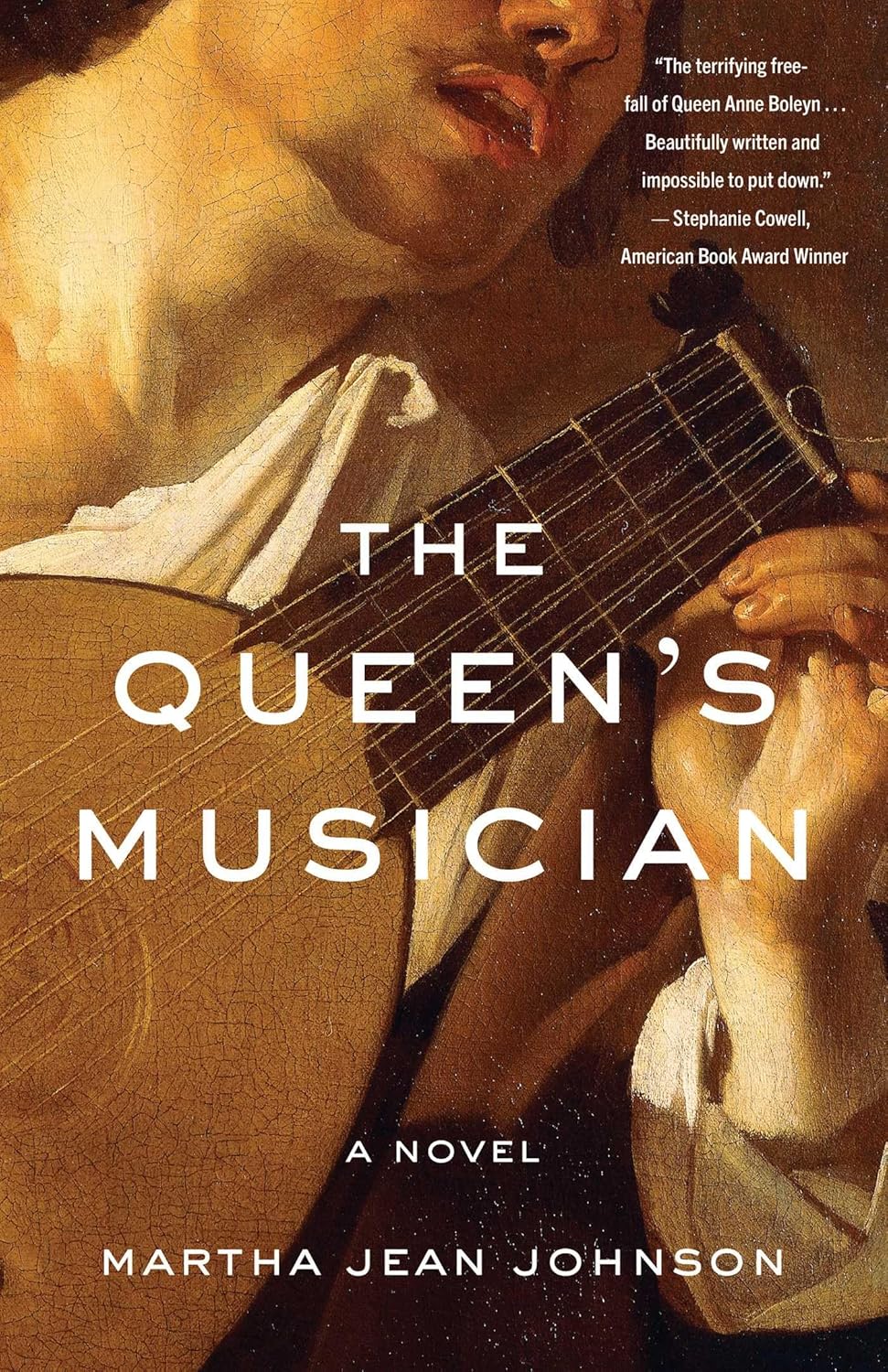
        For fans of Philippa Gregor, Alison Weir and Elizabeth Fremantle, an untold story about how the plot against Anne Boleyn entrapped a gifted young musician. A glamorous queen, a volatile king, a gifted musician concealing a forbidden romance.

        Everyone knows Anne Boleyn’s story. No one knows Mark Smeaton’s. On May 17, 1536, a young court musician was executed, accused of adultery and treason with the queen. Most historians believe both he and Anne Boleyn were innocent – victims of Henry VIII’s rage.

        Mark Smeaton was a talented performer who rose from poverty to become a royal favourite. He played for the king in private and entertained at sumptuous feasts. He witnessed Anne Boleyn’s astonishing rise and fall – her reign of a thousand days. History tells us little about him, other than noting his confession and execution. The Queen’s Musician imagines his story, as seen from his perspective and that of the young woman who loves him. It all takes place amid the spectacle and danger of the Tudor court.

        What an interesting take on a well known story!

        The Queen’s Musician by Martha Jean Johnson looks at the story of Anne Boleyn’s downfall through the eyes of her musician, Mark Smeaton. Smeaton was the lowliest, in terms of social standing, of the men accused of sleeping with Henry VIII’s second queen. You cannot fail to feel sympathy for the poor musician, drawn into a scandal created by his social superiors.

        Young Mark Smeaton establishes himself in the reader’s affections from the very beginning. You find yourself invested in his life, enjoying his journey, his music and his success. But then, once in a while, you remember where the book is going, inexorably, to its tragic, dramatic end. The tension is palpable the closer you get to the dramatic events of 1536.

        All to bring down a queen.

        Poor Mark!

        Even if he hadn’t been king, His Majesty would have been a commanding figure. He was vigorous, with masculine features, draped in white and gold. The rotund, graying cardinal hovered near him like a honeybee buzzing a flower. Recalling the scene later, I could see the rupture between them. More than once, the cardinal leaned close to His Majesty to begin a conversation, but the king turned his head away.

        The room was still noisy, the diners talking among themselves. I waited for someone to call for quiet so the concert could begin. Several minutes passed, and I stood beside the stool uncertain what to do. I bowed to His Majesty and the others, but they took no notice. I began to worry that my great opportunity would turn out to be a humiliating disappointment. Then the king brought his goblet to his lips, drank slowly, paused, and raised his hand for silence. He said nothing, but his command was clear: I am ready now. You may begin.

        Dressed like a prince and given this chance to entertain the king, I was pleased with my performance that night. I played six pieces, mostly English, before ending with the French love song. The king stood at his place and applauded. “Excellent, my boy, wonderful. Your songs bring me back to my younger days.”

        I stood and bowed deeply. “Thank you, Your Majesty.” I glanced at the cardinal who looked only at the king.

        “What is your name?”

        “I am Mark Smeaton, Your Majesty.” I bowed again, elated by even this brief attention.

        “The French song – it was perfection. I might want to sing it. Send me the music and the words.”

        “With great pleasure, Your Majesty. I would be most honored to prepare a copy.”

        “Be sure to get it from him.” The king motioned to one of his grooms who, like me, kept bowing his head.

        The cardinal edged closer to the king and said, “It will be done before you leave, Your Majesty.” The king acted like he didn’t hear.

        After my performance, I joined several other musicians playing light music to enhance what seemed like a festive mood. The cardinal approached and said, “Thank you, Mark – your songs have lifted His Majesty’s spirits. Please prepare the manuscript tomorrow morning.”

        “You will have it before ten o’clock, Your Eminence.” In this moment, my excitement at playing for the king blended with my concern for the cardinal’s enterprise. “I hope I have helped you, sir,” I added. The old man’s nod of the head signaled his gratitude.

        The next day after breakfast, I ran to the chapel to make the copy and tell Master Peter that the king had complimented my playing.

        “The king has already left,” he said…

        Although you know Anne Boleyn’s story, The Queen’s Musician by Martha Jean Johnson will catch you out and draw you in. The author does a wonderful job of depicting the Tudor court; its decadence, the political intrigues, the social strata and the dangerous undercurrents. The latent fear. In Tudor times, ability and intelligence could rise to the top – but it could also lead to one’s downfall.

        The Queen’s Musician has all of this … with a little bit of forbidden love thrown into the mix!

        Historically accurate, it gets you thinking, too. That you may have heard Smeaton’s music without even knowing it. That his music was attributed to others, or marked as anonymous in order to guarantee its survival following Smeaton’s downfall and execution. It makes you wonder…

        Martha Jean Johnson has found a unique angle for telling a familiar story. But this is not Anne Boleyn’s tale. It’s the story of a man who fell victim to those determined to bring down a queen, at all costs. No matter the collateral damage it would take to do it. The tragedy is the poor boy was a pawn, drawn into the intrigues of the great and good, who stepped on him, destroyed him to gain for themselves more power, more influence…

        I admit it, I cried.

        I always think it is the sign of a good book if it can bring me to tears. The Queen’s Musician is a good book!

        The Queen’s Musician by Martha Jean Johnson is beautifully written, thoughtful and deep.

        To Buy the Book: The Queen’s Musician

        About the author:

        History ... the Interesting Bits

        Martha Jean Johnson is a writer of fiction and non-fiction and the author of a series of books and articles on public opinion and public policy. The Queen’s Musician is her debut novel. She also reviews trends in historical fiction and discusses her own love of reading and writing in her biweekly blog, Historical Magic. She currently divides her time between writing and her work with the National Issues Forums Institute, an organization that encourages civil discourse and nonpartisan deliberation on national and local issues. During a long public policy career, she analyzed and reported on American public thinking, working with noted social analyst and public opinion pioneer, Daniel Yankelovich. She has published articles in USA Today and The Huffington Post and appeared on CNN, MSNBC, and PBS. She is the author of a series of nonfiction paperbacks on major political issues, co-authored with Scott Bittle and published by HarperCollins. She holds degrees from Mount Holyoke College, Brown University, and Simmons College. She lives in Jersey City, New Jersey.
        *

        My books

        Signed, dedicated copies of all my books are available through my online store.

        Out now: Scotland’s Medieval Queens

        Books by Sharon Bennett Connolly

        Scotland’s history is dramatic, violent and bloody. Being England’s northern neighbour has never been easy. Scotland’s queens have had to deal with war, murder, imprisonment, political rivalries and open betrayal. They have loved and lost, raised kings and queens, ruled and died for Scotland. From St Margaret, who became one of the patron saints of Scotland, to Elizabeth de Burgh and the dramatic story of the Scottish Wars of Independence, to the love story and tragedy of Joan Beaufort, to Margaret of Denmark and the dawn of the Renaissance, Scotland’s Medieval Queens have seen it all. This is the story of Scotland through their eyes.

        Scotland’s Medieval Queens gives a thorough grounding in the history of the women who ruled Scotland at the side of its kings, often in the shadows, but just as interesting in their lives beyond the spotlight. It’s not a subject that has been widely covered, and Sharon is a pioneer in bringing that information into accessible history.’ Elizabeth Chadwick (New York Times bestselling author)

        Available now from Amazon and Pen and Sword Books

        Also by Sharon Bennett Connolly:

        Books by Sharon Bennett Connolly

        Heroines of the Tudor World tells the stories of the most remarkable women from European history in the time of the Tudor dynasty, 1485-1603. These are the women who ruled, the women who founded dynasties, the women who fought for religious freedom, their families and love. Heroines of the Tudor World is now available from Amberley Publishing and Amazon UK. Women of the Anarchy demonstrates how Empress Matilda and Matilda of Boulogne, unable to wield a sword themselves, were prime movers in this time of conflict and lawlessness. It shows how their strengths, weaknesses, and personal ambitions swung the fortunes of war one way – and then the other. Available from Bookshop.orgAmberley Publishing and Amazon UKKing John’s Right-Hand Lady: The Story of Nicholaa de la Haye is the story of a truly remarkable lady, the hereditary constable of Lincoln Castle and the first woman in England to be appointed sheriff in her own right. Available from all good bookshops Pen & Sword Booksbookshop.org and Amazon

        Royal Historical Society

        Defenders of the Norman Crown: The Rise and Fall of the Warenne Earls of Surrey tells the fascinating story of the Warenne dynasty, from its origins in Normandy, through the Conquest, Magna Carta, the wars and marriages that led to its ultimate demise in the reign of Edward III. Available from Pen & Sword BooksAmazon in the UK and US, and Bookshop.orgLadies of Magna Carta: Women of Influence in Thirteenth Century England looks into the relationships of the various noble families of the 13th century, and how they were affected by the Barons’ Wars, Magna Carta and its aftermath; the bonds that were formed and those that were broken. It is now available in paperback and hardback from Pen & SwordAmazon, and Bookshop.orgHeroines of the Medieval World tells the stories of some of the most remarkable women from Medieval history, from Eleanor of Aquitaine to Julian of Norwich. Available now from Amberley Publishing and Amazon, and Bookshop.orgSilk and the Sword: The Women of the Norman Conquest traces the fortunes of the women who had a significant role to play in the momentous events of 1066. Available now from Amazon,  Amberley Publishing, and Bookshop.org.

        Alternate Endings: An anthology of historical fiction short stories including Long Live the King… which is my take what might have happened had King John not died in October 1216. Available in paperback and kindle from Amazon.

        Podcast:

        A Slice of Medieval

        Have a listen to the A Slice of Medieval podcast, which I co-host with Historical fiction novelist Derek Birks. Derek and I welcome guests, such as Bernard Cornwell and Michael Jecks, and discuss a wide range of topics in medieval history, from significant events to the personalities involved. 

        Every episode is also now available on YouTube.

        *

        Don’t forget! Signed and dedicated copies of all my books are available through my online store.

        For forthcoming online and in-person talks, please check out my Events Page.

        You can be the first to read new articles by clicking the ‘Follow’ button, liking our Facebook page or joining me on TwitterThreadsBluesky and Instagram.

        *

        ©2025 Sharon Bennett Connolly


        Anne de Beaujeu, ‘the least foolish woman in France’

        History ... the Interesting Bits
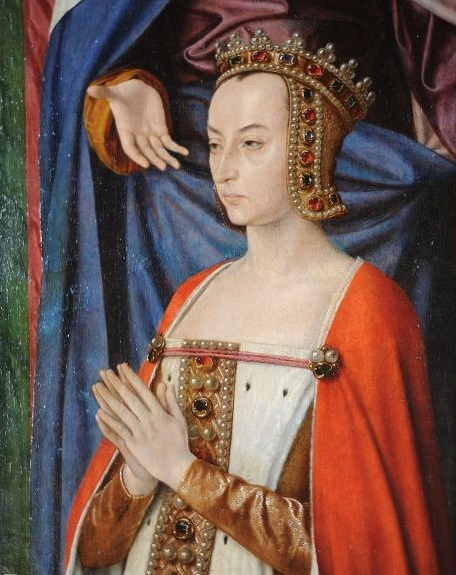
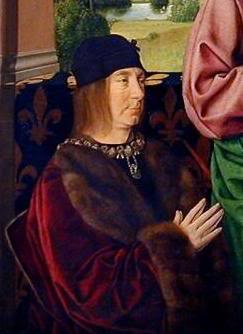
        Anne de Beaujeu

        Anne de France, also known as Anne de Beaujeu, crosses the invisible divide between the medieval and Tudor eras. As with many rulers from medieval times, Anne was called upon to act as regent for an underage king. She was regent of France during the minority of her younger brother, Charles VIII. Anne was the third child born to Louis XI of France and his second wife, Charlotte of Savoy, but she was the first to survive infancy. Louis’ first wife, Margaret of Scotland, was a daughter of James I and Joan Beaufort and had died in August1445, aged 20.

        Anne was born at Genappe, near Brussels, in April 1461. At the time of her birth her father was still dauphin of France. However, just a few months later, Anne’s grandfather, Charles VII, the man who had attained the crown thanks to the efforts of Joan of Arc, died.

        The unfortunate king had had a fractious relationship with his son and heir, Louis; they did not see each other for the last fifteen years of Charles VII’s life. Louis plotted intrigue with his neighbours and had even raised an army against his father in 1455, following arguments over Louis’ marriage to Charlotte. He eventually fled to Burgundy with his wife after his father threatened to invade his lands in the Dauphiné. He refused to return to France, despite being told that his father was dying; Louis waited at the French border for news that he was king. Charles VII died of starvation on 22 July 1461, after a tumour in his jaw prevented him from eating, and Louis immediately returned to France for his coronation.

        History ... the Interesting Bits
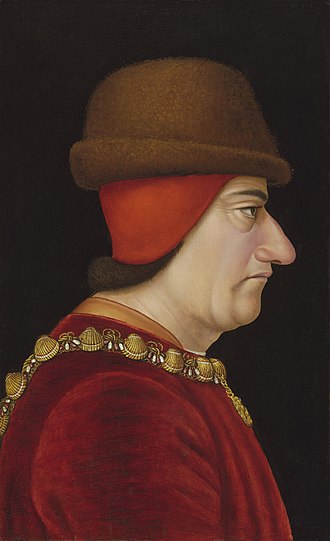
        Louis XI, known as the Universal Spider

        Louis XI was thirty-eight years old when he became king. He was not a likable man. He possessed a keen intelligence and few scruples. His main political aim was to expand his kingdom, using whatever methods would achieve this. He was pious and cultivated, in contrast to the ostentation and debauchery of his predecessors. His web of political intrigues often got him into international hot water, such as the adventure of Péronnne in 1468, when Louis incited the people of Liège to revolt against the Duke of Burgundy. Under the pretext of negotiation, Louis was arrested by the Duke and forced to offer him financial aid. However, these initial setbacks did not last. Louis was a wily diplomat, at home and abroad, earning him the nickname ‘the universal spider’. He managed to extend French territory by acquiring the French duchy of Burgundy, Picardy, Anjou, Maine and Provence. Louis relied on men of modest means to run his administration, rightfully anticipating that they would be more dependent on him and his goodwill than wealthy nobles. He encouraged the bourgeoisie and initiated the Grand Conseil. He also increased the number of military companies who came directly under the command of the king rather than his nobles.

        On his accession, Louis’ daughter, Anne, was installed in the Chateau at Amboise, away from the court, with her mother Charlotte of Savoy and paternal grandmother, Marie of Anjou. Anne was given her own attendants, including chambermaids, nurses and a cradle-rocker. Her mother was in charge of Anne’s education. The queen had an extensive library, including classical works by authors such as Cicero, romances, psalters, histories and books on government. Anne inherited the books on her mother’s death; they were still in her library at Moulins when she herself died.

        History ... the Interesting Bits
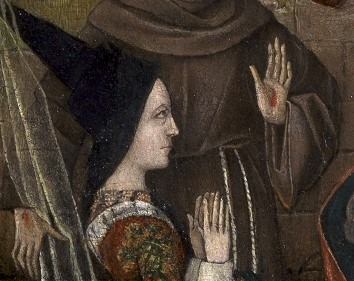
        Charlotte of Savoy

        While still in the cradle, in fact as soon as her father was on the throne, Anne was the most eligible princess in Europe. Combined with great energy; many thought her the mirror image of her father in her keen political mind, although not in other ways. She was considered as a bride for Edward IV in England, Duke Francis II of Brittany and even her uncle Charles, Duke of Berry. Any age difference did not matter to her father, who offered the four-year-old princess to the thirty-two-year-old Count of Charolais– Charles the Bold, the future Duke of Burgundy. A betrothal to Nicholas, Duke of Lorraine, came to nothing when the duke broke it off to pursue Mary, Duchess of Burgundy. When she was twelve, almost thirteen, Anne’s future was decided when she married Pierre de Bourbon on 3 November 1473. At thirty-four, Pierre was twenty-one years her senior.

        Pierre’s brother, the Duke of Bourbon, allowed him to use the courtesy title of Lord of Beaujeu and gave him rule of the Beaujolais. However, the newly married couple resided in the king’s court at Plessis-lès-Tours. For Anne, the next ten years were spent at the court and, particularly, with her father– during which time Louis XI said Anne was ‘the least foolish woman in France, but a wise one there was not’ (‘Elle était la moins folle femme de France, car de sage il n’en était point’). Anne, who would be called ‘Madame La Grande’ had a sharp political intelligence. She had a handsome face but was not considered beautiful. She fell pregnant in 1476, but little is known of the outcome of the pregnancy, it is possible that she had a short-lived son, Charles, Count of Clermont, but the details are sketchy. In 1481, Anne was given the County of Gien by her father to allow her to finance her own household. In April 1483 she was despatched to Hesdin to bring her little brother’s bride, three-year-old Margaret of Austria, to France. The little princess was to be brought up at the French court until she was old enough to marry the thirteen-year-old dauphin, Charles.

        History ... the Interesting Bits
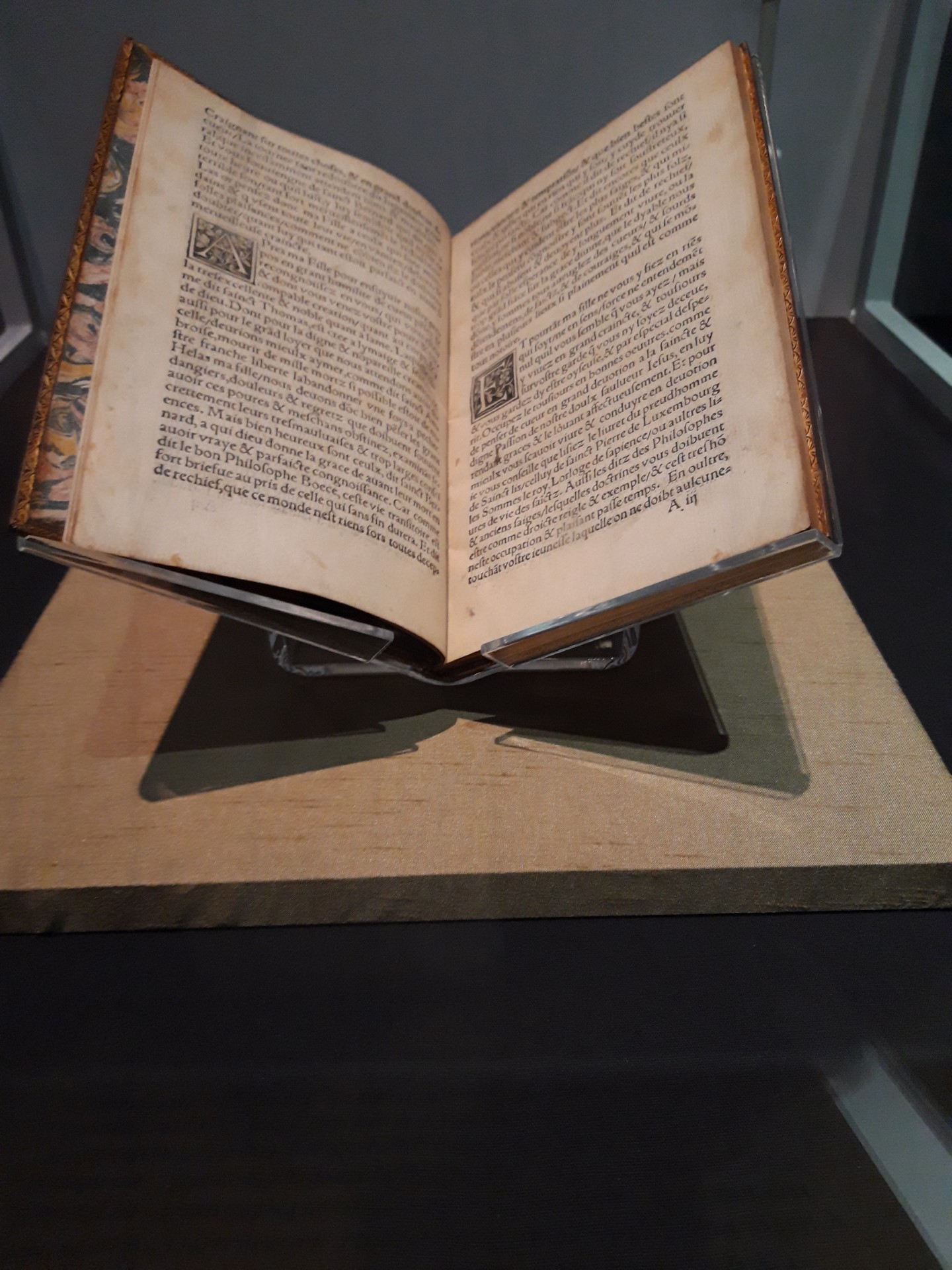
        Les Enseignements d’Anne de France, Duchesse de Bourbonnais et d’Auvergne, à sa fille Suzanne de Bourbon

        Anne was twenty-two years old when Louis XI died aged sixty on 30 August 1483, at Plessis-lès-Tours in the Loire Valley. He was succeeded by his son, Charles VIII, who was thirteen years old. Louis had not provided for a regency – young Charles was ten months short of his majority – although he had intended to set up a regency council, which would include the young king’s mother, Charlotte of Savoy, and Louis, Duke of Orléans. Louis was a great-grandson of Charles V and brother-in-law to the king and his sister, Anne de Beaujeu, being married to Jeanne de France; he was also Charles VIII’s heir until he produced a son of his own.

        Anne’s husband Pierre, Lord of Beaujeu, was to be appointed the council’s president. However, Anne and her husband had also been appointed Charles’s guardians and it seemed a natural progression for them to take over the government of the realm. Charles was crowned on 30 May 1484 and, in the same year, to appease the populace, an Estates General was called. The body which brought together representatives from the Three Estates (nobility, clergy and commons) had last met in 1439. Their grievances, such as requests for reductions in the tailles and no taxation without the consent of the Estates, were heard and promises made; and the representatives went home content they had been listened to, even though their demands were not entirely met.

        History ... the Interesting Bits
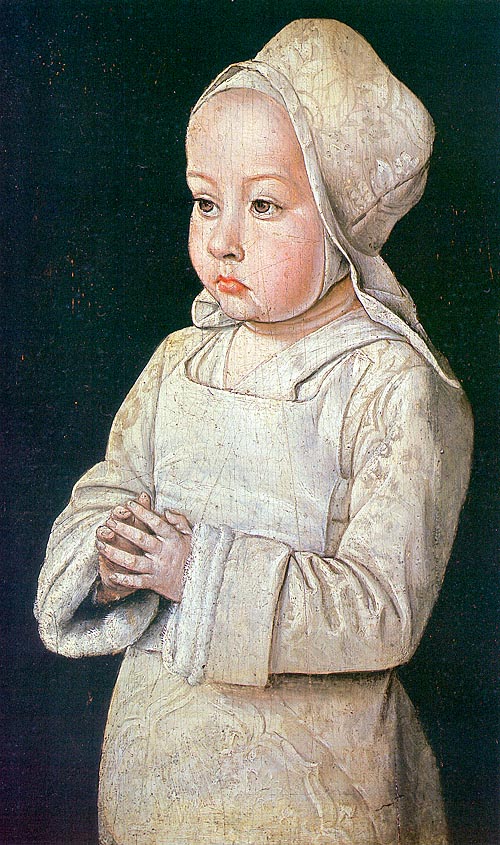
        Suzanne de Bourbon

        The nobility, who had control of the army, and Louis d’Orléans in particular, were not happy with the arrangements. Encouraged by Archduke Maximilian of Austria and Duke Francis of Brittany, Louis and his supporters took up arms in what became known as ‘the mad war’ or ‘the silly war’. They were soundly defeated, their army crushed at Saint-Aubin-du-Cormier in July 1488, and the Duke of Orléans taken prisoner.

        Anne’s greatest success was in Brittany, a semi-autonomous duchy within France. The Duke of Brittany, Francis, died in 1488 leaving his thirteen-year-old daughter Anne as his sole heir. Before his death, in an attempt to keep Brittany from being swallowed up by the French crown, the Duke offered his daughter’s hand in marriage to Maximilian of Austria. However, Maximilian was too far away to protect the duchy when the French army invaded. Anne of Brittany was forced to agree to marry Charles VIII, although Brittany would remain in Anne’s hands. This move eventually led to the annexation of Brittany by the crown. No longer needed as a bride, little Margaret of Austria was sent home and Charles VIII married Anne of Brittany on 6 December 1491. The marriage treaty had one unusual clause in that should Charles die before they had children, Anne was to marry Charles’s heir, the next king of France.

        History ... the Interesting Bits
        Pierre de Bourbon

        This diplomatic coup was one of the last of the Beaujeu regency as Charles VIII was now twenty and of an age and desire to rule. In 1488, Anne de Beaujeu had become Duchess of Bourbon following the death of Pierre’s older brother, John; the title had initially passed to another older brother, Charles, an Archbishop, who was persuaded to relinquish it after holding it for just two weeks, following Pierre’s invasion of the duchy. Anne and Pierre, now the Duke and Duchess of Bourbon, had become the richest, most powerful nobles in the realm. Although she still acted as an advisor to her young brother, Anne de Beaujeu now turned her attention to her new duchy, familiarising herself with her lands and its administration. She started a building programme, which included the rebuilding of the ducal castle at Gien, and the palace at Moulins. She also reorganised the duchy’s administration, codified its laws and raised taxes. Theirs was the epitome of a Renaissance court, the couple being patrons of the arts and literature. Anne particularly loved paintings, tapestries and books.

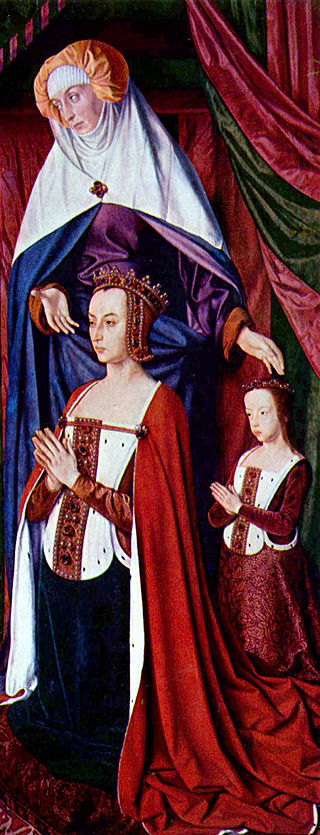
        Anne finally gave birth to a surviving child, a daughter, on 10 May 1491, who was named Suzanne. Suzanne was carefully educated by her mother, who wrote a book, Les Enseignements d’Anne de France, Duchesse de Bourbonnais et d’Auvergne, à sa fille Suzanne de Bourbon, giving advice to her daughter on the proper behaviour expected of a noblewoman. Anne de Beaujeu was made regent again in 1494, when her brother Charles VIII led his army into Italy. She financially supported the king’s campaign by loaning him 10,000 livres; she made him pay it back in instalments and had recovered the full amount within a year. Charles died in 1498 after striking his head on a door lintel, leaving no direct heir. His distant cousin Louis, Duke of Orléans, succeeded him as King Louis XII. He immediately applied to the papacy for an annulment of his marriage to Anne de Beaujeu’s sister, Jeanne, in order to marry the dowager queen, Anne of Brittany, as the terms of her original marriage contract dictated. In return for Anne de Beaujeu’s support of his accession and repudiation of her sister, Louis agreed to waive royal rights to the duchy of Bourbon and the Auvergne and to allow these rights to pass to Suzanne, should Anne produce no male heir.

        History ... the Interesting Bits
        Anne with her daughter Suzanne

        In 1503, Pierre de Beaujeu, Duke of Bourbon, fell ill while returning home to Moulins from the French court. He succumbed to a fever, which attacked his body for two months before he died on 10 October. Pierre arranged for Suzanne to marry a prince of royal blood, Charles d’Alençon, and called him to Moulins so the wedding could take place before his death. However, Charles arrived too late and could only act as chief mourner at Pierre’s funeral, rather than as bridegroom to Suzanne. Suzanne’s mother then broke the marriage contract and Suzanne would marry her cousin, Charles III of Bourbon Montpensier, Constable of France, but she died in 1521, childless.

        Anne de Beaujeu, Duchess of Bourbon, died on 14 November 1522 at the Château of Chandelle, Coulandon. She was buried alongside her husband and daughter in the abbey at Sauvigny. Her lands and personal title, at her own request, passed to her son-in-law, Charles of Bourbon-Montpensier.

        Anne de Beaujeu was regent of France at a time when the country was transitioning from the medieval to the early modern era. She successfully steered the country through civil unrest and initiated the merging of Brittany into the French crown, which would be definitively sealed in 1532.

        *

        Images:

        Courtesy of Wikipedia except the ‘Les Enseignements‘ which is ©2025 Sharon Bennett Connolly

        Sources:

        Pierre Goubert, The Course of French History; Les Enseignements d’Anne de France, Duchesse de Bourbonnais et d’Auvergene, à sa fille Suzanne de Bourbon (‘The lessons of Anne of France, Duchess of Bourbon and Auvergne, to her daughter Suzanne of Bourbon’); Abernethy, Susan, ‘Anne de Beaujeu, Duchess of Bourbon and Regent of France’ (article);

        *

        My Books:

        Signed, dedicated copies of all my books are available through my online store.

        Out now: Scotland’s Medieval Queens

        Books by Sharon Bennett Connolly

        Scotland’s history is dramatic, violent and bloody. Being England’s northern neighbour has never been easy. Scotland’s queens have had to deal with war, murder, imprisonment, political rivalries and open betrayal. They have loved and lost, raised kings and queens, ruled and died for Scotland. From St Margaret, who became one of the patron saints of Scotland, to Elizabeth de Burgh and the dramatic story of the Scottish Wars of Independence, to the love story and tragedy of Joan Beaufort, to Margaret of Denmark and the dawn of the Renaissance, Scotland’s Medieval Queens have seen it all. This is the story of Scotland through their eyes.

        Scotland’s Medieval Queens gives a thorough grounding in the history of the women who ruled Scotland at the side of its kings, often in the shadows, but just as interesting in their lives beyond the spotlight. It’s not a subject that has been widely covered, and Sharon is a pioneer in bringing that information into accessible history.’ Elizabeth Chadwick (New York Times bestselling author)

        Available now from Amazon and Pen and Sword Books

        Also by Sharon Bennett Connolly:

        Books by Sharon Bennett Connolly

        Heroines of the Tudor World tells the stories of the most remarkable women from European history in the time of the Tudor dynasty, 1485-1603. These are the women who ruled, the women who founded dynasties, the women who fought for religious freedom, their families and love. Heroines of the Tudor World is now available from Amberley Publishing and Amazon UK. Women of the Anarchy demonstrates how Empress Matilda and Matilda of Boulogne, unable to wield a sword themselves, were prime movers in this time of conflict and lawlessness. It shows how their strengths, weaknesses, and personal ambitions swung the fortunes of war one way – and then the other. Available from Bookshop.orgAmberley Publishing and Amazon UKKing John’s Right-Hand Lady: The Story of Nicholaa de la Haye is the story of a truly remarkable lady, the hereditary constable of Lincoln Castle and the first woman in England to be appointed sheriff in her own right. Available from all good bookshops Pen & Sword Booksbookshop.org and Amazon

        Royal Historical Society

        Defenders of the Norman Crown: The Rise and Fall of the Warenne Earls of Surrey tells the fascinating story of the Warenne dynasty, from its origins in Normandy, through the Conquest, Magna Carta, the wars and marriages that led to its ultimate demise in the reign of Edward III. Available from Pen & Sword BooksAmazon in the UK and US, and Bookshop.orgLadies of Magna Carta: Women of Influence in Thirteenth Century England looks into the relationships of the various noble families of the 13th century, and how they were affected by the Barons’ Wars, Magna Carta and its aftermath; the bonds that were formed and those that were broken. It is now available in paperback and hardback from Pen & SwordAmazon, and Bookshop.orgHeroines of the Medieval World tells the stories of some of the most remarkable women from Medieval history, from Eleanor of Aquitaine to Julian of Norwich. Available now from Amberley Publishing and Amazon, and Bookshop.orgSilk and the Sword: The Women of the Norman Conquest traces the fortunes of the women who had a significant role to play in the momentous events of 1066. Available now from Amazon,  Amberley Publishing, and Bookshop.org.

        Alternate Endings: An anthology of historical fiction short stories including Long Live the King… which is my take what might have happened had King John not died in October 1216. Available in paperback and kindle from Amazon.

        Podcast:

        A Slice of Medieval

        Have a listen to the A Slice of Medieval podcast, which I co-host with Historical fiction novelist Derek Birks. Derek and I welcome guests, such as Bernard Cornwell and Michael Jecks, and discuss a wide range of topics in medieval history, from significant events to the personalities involved. 

        Every episode is also now available on YouTube.

        *

        Don’t forget! Signed and dedicated copies of all my books are available through my online store.

        For forthcoming online and in-person talks, please check out my Events Page.

        You can be the first to read new articles by clicking the ‘Follow’ button, liking our Facebook page or joining me on TwitterThreadsBluesky and Instagram.

        *

        ©2025 Sharon Bennett Connolly FRHistS

        Wordly Women: Aimee Fleming

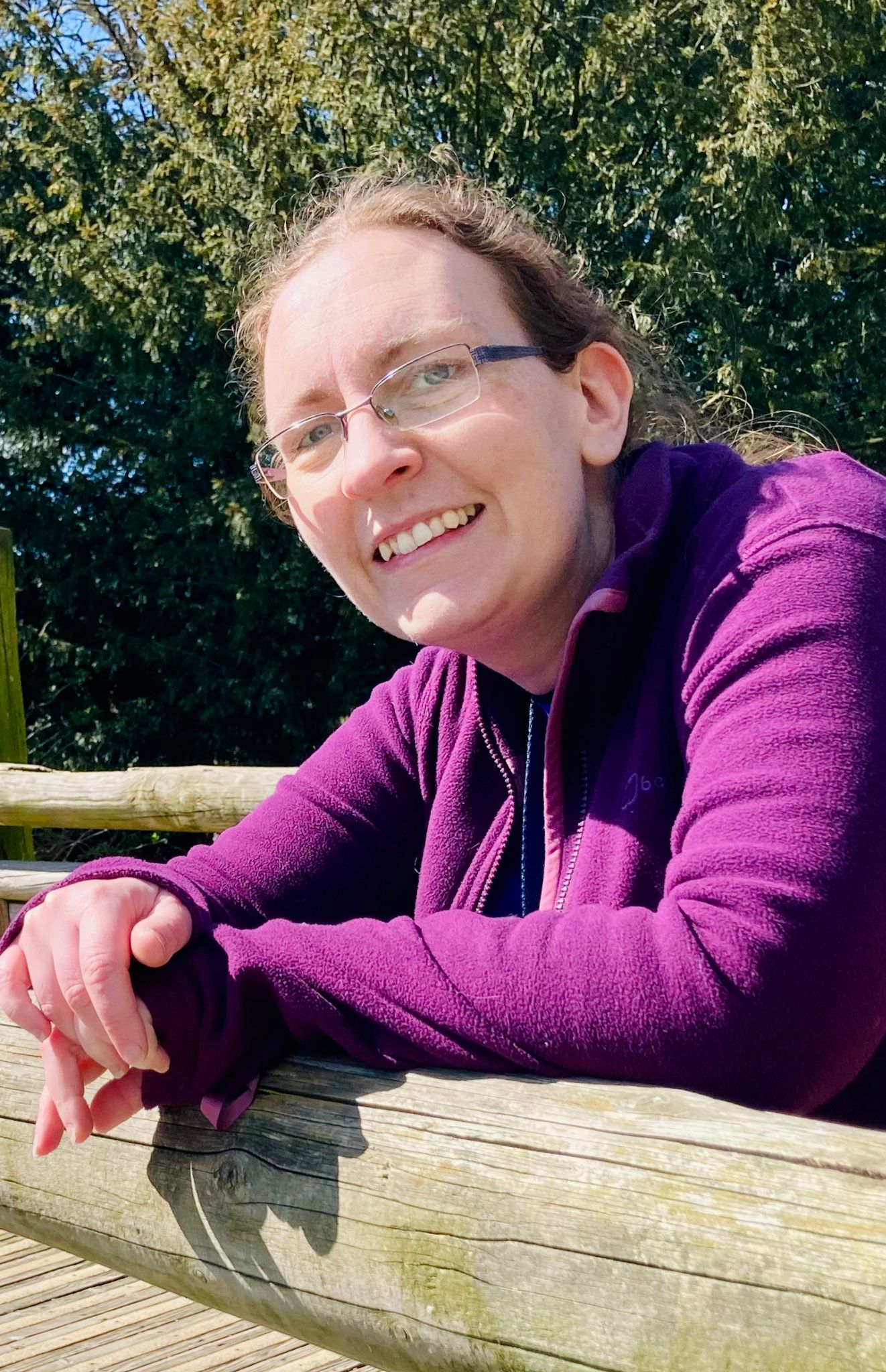
        Aimee Fleming

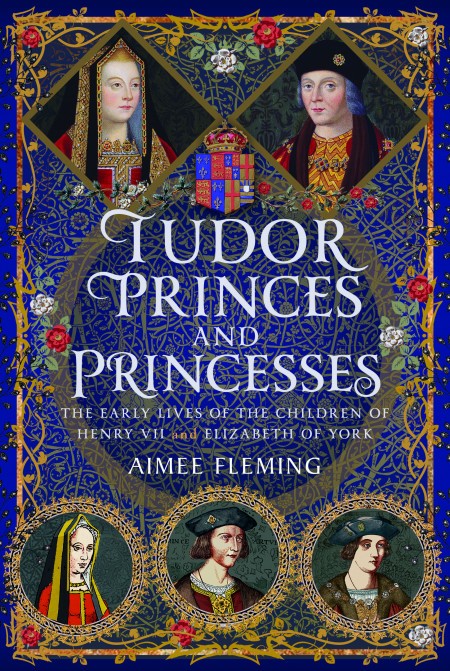
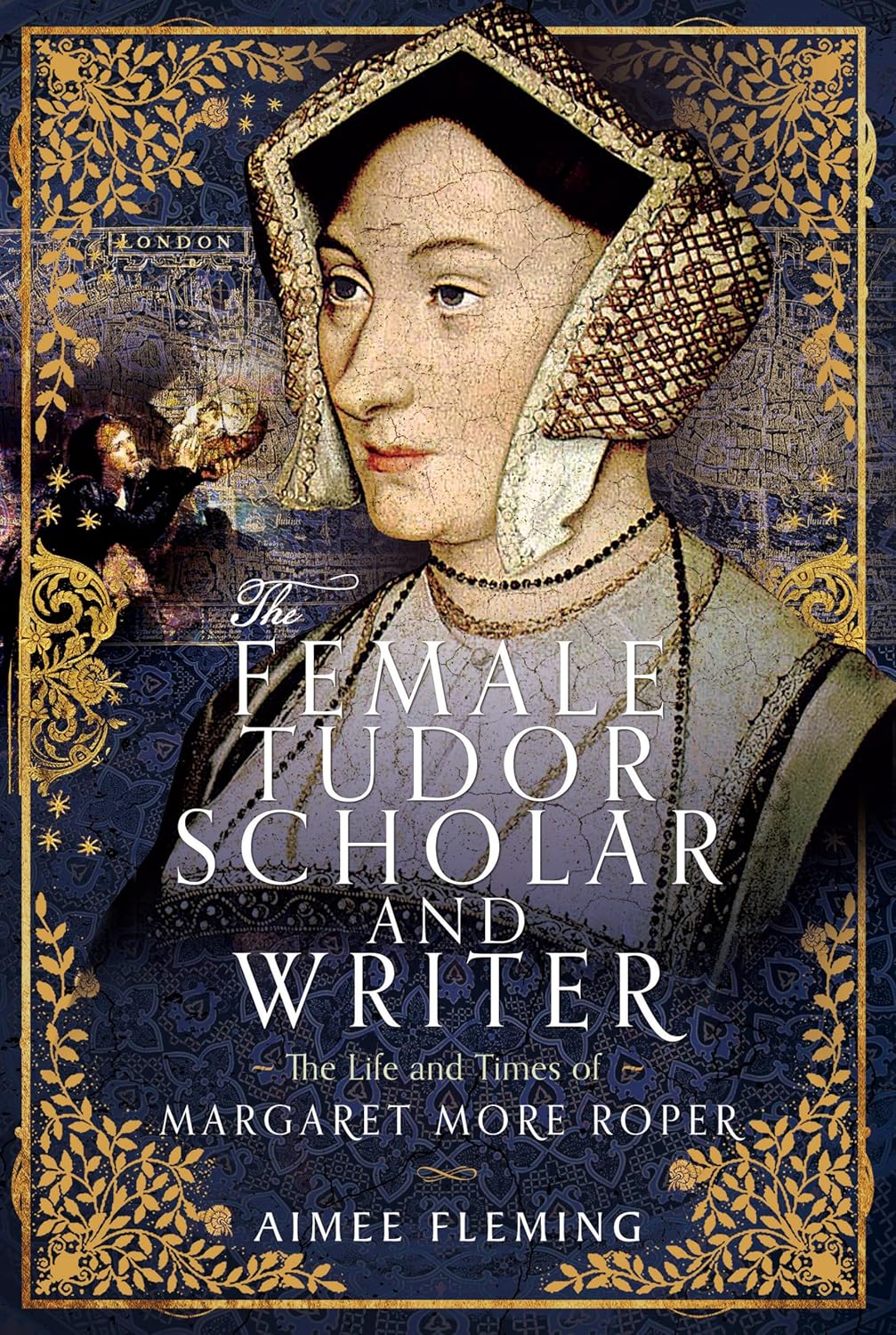
        In today’s episode of my Wordly Women, author spotlight series, I have a chat with Tudor historian Aimee Fleming. I have followed Aimee’s career from the very beginning. Her first book, The Female Tudor Scholar and Writer: The Life and Times of Margaret More Roper came out last year and just last month Aimee published her second book, Tudor Princes and Princesses: The Early Lives of the Children of Henry VII and Elizabeth of York

        So, it was wonderful to get the chance to talk with Aimee about her writing…

        Sharon: Hi Aimee. First question, what got you into writing?

        Aimee: I have always enjoyed writing as a process, but it was really during secondary school I was encouraged to write poetry by my English teacher. I did English Literature A Level and loved studying the classics, but it was History that really sparked my interest. After I finished my BA I remember I wanted to keep going and write more, but I didn’t begin properly until after my MA when I decided to really put pen to paper properly. I loved to read work by Alison Weir and Tracey Borman (amongst lots of others) and think that I could perhaps do something like that!

        Sharon: Tell us about your books.

        Aimee: My books are all non-fiction books about the Tudor period. My first book came out in summer 2024 and was a biography of Margaret More Roper, the eldest daughter of Sir Thomas More, called ‘The Female Tudor Scholar and Writer’. I also have a study of the early lives of the children of Henry VII coming out soon, called ‘Tudor Princes and Princesses.’ It is available for pre-order now and is due to be released at the end of June.

        Sharon: What attracts you to the Tudor period?

        Aimee: I think the Tudor and Early Modern period generally is fascinating. There are such larger-than-life characters, the artwork and portraits bring those characters into such clear detail, dramatic events just keep on coming, and the clothing is so flamboyant and over the top. I do love other periods too, the medieval period and the later periods of the Stuarts and Georgians are also very interesting, but I am always drawn back to the tempestuous Tudors.

        Sharon: Who is your favourite Tudor and why?

        Aimee Fleming

        Aimee: Do I have to pick just one? I obviously have a soft spot for Margaret More Roper. She is such an inspirational woman, and I genuinely believe that we all owe her a debt; if it wasn’t for her taking that first step of getting her work published, we may not even be doing what we do today!

        Sharon: Who is your least favourite Tudor and why?

        Before I wrote my most recent book, I probably would have said Henry VIII. I was always a bit of a critic of his, but my writing and research has actually made me a lot more sympathetic. I think now my hatred properly ends up at Thomas Howard, the Duke of Norfolk’s door – an all-round unpleasant creature if ever there was one.

        Sharon: Howard was horrible, but I will have to read your book to see if I can find any sympathy for Henry VIII!

        Sharon: How do you approach researching your topic?

        Aimee: I start quite broad and work my way in. I think we all have out go-to textbooks on subjects and for me it’s always my old copy of John Guy’s ‘Tudor England’. I start by looking up whatever I’m researching up in that, and then other books that may be on my shelf. I’m lucky enough to live close to York and I do try to make full use of the University library and their archives too for those all-important primary sources. If it’s possible I also like to try to take a trip to see some places and experience the surroundings that my subjects would have known.

        Sharon: Tell us your ‘favourite’ Tudor story you have come across in your research.

        Wolfeton Hall near Dorchester

        Aimee: I have a few favourites, but I think the one that I particularly love is the ‘shipwreck’ of Archduke Phillip, heir to the Holy Roman Emperor, and his wife Queen Joanna of Castile. The Archduke had led his fleet from Flanders intent on taking the throne of Spain for himself, but the weather turned against him, and he, Queen Joanna, and the rest of the fleet had to take refuge in the harbour at Weymouth. They came ashore at Melcombe Regis in Dorset – about as far from London and civilisation as you can get, and in November too! Henry VII of course welcomed them and invited them to London, even sending carriages for them and their luggage, but the Queen was too shaken and took refuge at Wolfeton Hall near Dorchester. A welcoming party was sent to greet them, led by fourteen-year-old Henry, the royals did eventually meet up and they held all sorts of talks, agreeing marriages seemingly for everyone…but none of them came to fruition.

        I have spent many a family holiday in Dorset, especially Weymouth, and it makes me smile that Queen Joanna may have walked up that beach on a cold November afternoon.

        Sharon: Tell us your least ‘favourite’ Tudor story you have come across in your research.

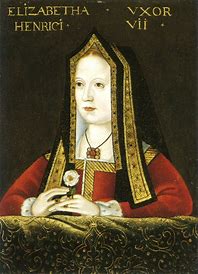
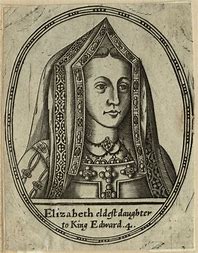
        Elizabeth of York
        Elizabeth of York

        Aimee: The worst bit of writing history is the sad stories that you have to read and write about. In Tudor Princes and Princesses, I had to research about Elizabeth of York’s pregnancies and the deaths of the Tudor children who did not survive until adulthood. The arrangements made for the funerals, particularly of little Elizabeth really brought home just how much these children were loved in their short lives.

        On the other side, writing about the death of Thomas More’s first wife, Joanna, was particularly heart-rending. She died when Margaret was only 5 years old, but Margaret would have been expected to play a full role in her mother’s funeral, reading a prayer in front of the whole congregation. That in itself was bad enough, but reading further it was commonplace for people who weren’t connected to the family to still attend the funeral. I was in bits writing about Margaret standing up and reading the prayers, imagining her fear as she looked out on all those strangers’ faces.

        Sharon: Are there any other eras you would like to write about?

        Aimee: I am doing a lot of research into Stuart Scotland at the moment, and it has made me want to go deeper into Stuart England and the English Civil War. I would love to learn more about the people as well as the politics of the period, but it’s not something I’ve ever really looked at in depth.

        Sharon: What are you working on now?

        Aimee: My current project is a period study of Tudor England and Stuart Scotland, looking at the relationship between the two countries while the Tudors were on the throne in England and what brought us to 1603 and the succession of James VI and I. It’s a lot of work but I am thoroughly enjoying it, and I’m loving looking at Scottish history in more detail. That manuscript is due for submission in the Autumn, and then after that I have another book lined up to write, about Elizabeth Barton, the Holy Maid of Kent.

        Sharon: And finally, what is the best thing about being a writer?

        Aimee: I enjoy the freedom it gives me to explore things I find interesting. No two days are the same, and it’s never boring. Losing myself in documents at the library really is a dream come true.

        About Aimee:

        Aimee Fleming

        Aimee Fleming is a historian and author from North Yorkshire. She is happily married, with three growing boys and a whole host of pets. She studied history at the University of Wales, Bangor and then later completed a masters in Early Modern History at the University of York as a mature student. She has a passion for history, particularly the Tudors, and worked for over a decade in the heritage industry in a wide variety of roles and historic places.

        Books by Aimee Fleming:

        The Female Tudor Scholar and Writer: The Life and Times of Margaret More Roper

        Tudor Princes and Princesses: The Early Lives of the Children of Henry VII and Elizabeth of York

        Where to find Aimee:

        Website; Facebook; Threads and Instagram: @historyaimee; Substack.

        *

        My books

        Signed, dedicated copies of all my books are available through my online store.

        Out now: Scotland’s Medieval Queens

        Books by Sharon Bennett Connolly

        Scotland’s history is dramatic, violent and bloody. Being England’s northern neighbour has never been easy. Scotland’s queens have had to deal with war, murder, imprisonment, political rivalries and open betrayal. They have loved and lost, raised kings and queens, ruled and died for Scotland. From St Margaret, who became one of the patron saints of Scotland, to Elizabeth de Burgh and the dramatic story of the Scottish Wars of Independence, to the love story and tragedy of Joan Beaufort, to Margaret of Denmark and the dawn of the Renaissance, Scotland’s Medieval Queens have seen it all. This is the story of Scotland through their eyes.

        Scotland’s Medieval Queens gives a thorough grounding in the history of the women who ruled Scotland at the side of its kings, often in the shadows, but just as interesting in their lives beyond the spotlight. It’s not a subject that has been widely covered, and Sharon is a pioneer in bringing that information into accessible history.’ Elizabeth Chadwick (New York Times bestselling author)

        Available now from Amazon and Pen and Sword Books

        Also by Sharon Bennett Connolly:

        Books by Sharon Bennett Connolly

        Heroines of the Tudor World tells the stories of the most remarkable women from European history in the time of the Tudor dynasty, 1485-1603. These are the women who ruled, the women who founded dynasties, the women who fought for religious freedom, their families and love. Heroines of the Tudor World is now available from Amberley Publishing and Amazon UK. Women of the Anarchy demonstrates how Empress Matilda and Matilda of Boulogne, unable to wield a sword themselves, were prime movers in this time of conflict and lawlessness. It shows how their strengths, weaknesses, and personal ambitions swung the fortunes of war one way – and then the other. Available from Bookshop.orgAmberley Publishing and Amazon UKKing John’s Right-Hand Lady: The Story of Nicholaa de la Haye is the story of a truly remarkable lady, the hereditary constable of Lincoln Castle and the first woman in England to be appointed sheriff in her own right. Available from all good bookshops Pen & Sword Booksbookshop.org and Amazon

        Royal Historical Society

        Defenders of the Norman Crown: The Rise and Fall of the Warenne Earls of Surrey tells the fascinating story of the Warenne dynasty, from its origins in Normandy, through the Conquest, Magna Carta, the wars and marriages that led to its ultimate demise in the reign of Edward III. Available from Pen & Sword BooksAmazon in the UK and US, and Bookshop.orgLadies of Magna Carta: Women of Influence in Thirteenth Century England looks into the relationships of the various noble families of the 13th century, and how they were affected by the Barons’ Wars, Magna Carta and its aftermath; the bonds that were formed and those that were broken. It is now available in paperback and hardback from Pen & SwordAmazon, and Bookshop.orgHeroines of the Medieval World tells the stories of some of the most remarkable women from Medieval history, from Eleanor of Aquitaine to Julian of Norwich. Available now from Amberley Publishing and Amazon, and Bookshop.orgSilk and the Sword: The Women of the Norman Conquest traces the fortunes of the women who had a significant role to play in the momentous events of 1066. Available now from Amazon,  Amberley Publishing, and Bookshop.org.

        Alternate Endings: An anthology of historical fiction short stories including Long Live the King… which is my take what might have happened had King John not died in October 1216. Available in paperback and kindle from Amazon.

        Podcast:

        A Slice of Medieval

        Have a listen to the A Slice of Medieval podcast, which I co-host with Historical fiction novelist Derek Birks. Derek and I welcome guests, such as Bernard Cornwell and Michael Jecks, and discuss a wide range of topics in medieval history, from significant events to the personalities involved. 

        Every episode is also now available on YouTube.

        *

        Don’t forget! Signed and dedicated copies of all my books are available through my online store.

        For forthcoming online and in-person talks, please check out my Events Page.

        You can be the first to read new articles by clicking the ‘Follow’ button, liking our Facebook page or joining me on TwitterThreadsBluesky and Instagram.

        *

        ©2025 Sharon Bennett Connolly, FRHistS and Aimee Fleming

        Guest Post: Tudor Princes and Princesses by Aimee Fleming

        Today, it is a pleasure to welcome Aimee Fleming to History…the Interesting Bits. Aimee’s first book, The Female Tudor Scholar and Writer: The Life and Times of Margaret More Roper was a wonderful biography of Thomas More’s famous scholarly daughter. Aimee is now back with a second book, looking into the lives of the first royal Tudor children, Tudor Princes and Princesses: The Early Lives of the Children of Henry VII and Elizabeth of York. And she has written a little piece as a taster of the treat that is this wonderful book. Over to Aimee…

        When Henry VII and Elizabeth of York married in January 1486, it was clear to them that their most important task ahead was to stabilise England, and the best, perhaps easiest way available to them was to produce an heir, and quickly.

        However, bearing a child in the fifteenth century was not an easy feat, even for a Queen. Science and medicine were far from helpful, and the practices of the time meant that pregnancy and childbirth were dangerous to everyone involved. Elizabeth had her family around her, her mother who had had twelve children would have been invaluable to her, but the risks to herself, her child, and to her husband’s reign would have been very clear indeed.

        In this extract we see how the couple prepared for their new arrival, and what Elizabeth herself was required to do, even before the rigours of birth.

        Extract from Chapter 2 of Tudor Princes and Princesses

        Elizabeth of York

        Following the wedding ceremony in January 1486, the royal couple remained in London and held court over celebrations in their honour, with spectacular banquets and dances. The celebrations were held all over London and further afield. As Bernard André describes:

        ‘…the most wished day of marriage was celebrated by them

        with all religious and glorious magnificence at court, and

        by their people, to show their gladness with bonfires,

        dancing, songs and banquets throughout all London,

        both men and women, rich and poor, beseeching God to

        bless the King and Queen and grant them a numerous

        progeny.’

        This outpouring of support for the marriage of the king and queen was welcomed by all, especially by Henry and Elizabeth themselves, who knew just how important it was that their union, and rule, be accepted. It became apparent that their marriage represented the potential for peace in the form of an heir who would have their claims combined within him. Hall’s Chronicle shows what was expected.

        ‘By reason of whiche manage peace was thought to discende out of heaue into England, consideryng that the lynes of Lancastre & Yorke, being both noble families equiualet in ryches, fame and honour, were now brought into one knot and connexed together, of whose two bodyes one heyre might succede, which after their lyme should peaceably rule and enioye the whole monarchy and realme of England.’

        Confident in their position early on, the king and queen worked to secure the future that so many hoped for and very soon after their wedding took place it was announced that the queen was with child. Whether that be out of duty, mutual respect, or genuine affection and love between them, the conception of a child was joyous news for all involved. Calculating from the date of their wedding, and Arthur’s birth, it is reasonable to assume that they conceived quickly, if not on their wedding night itself. When Henry departed for a progress around Yorkshire and Lincolnshire in the early spring of 1486, he did not take Elizabeth with him, most likely because she was suffering from morning sickness, or other symptoms associated with the early stages of pregnancy. As a first-time mother, it would have been new to Elizabeth, but luckily, she had her experienced mother and mother-in-law both around to support her. While Henry was travelling, he sent regular letters to his new wife, and would send gifts to her while she stayed at the Palace of Placentia.

        Elizabeth would have been familiar with the palace, having spent a lot of time there as a young girl. It would become one of the most favoured for the king and queen and would be renamed by Henry as Greenwich Palace. Both names emphasise how the palace was surrounded by green parks and fields, isolated from the hustle and bustle and potential diseases of London itself.

        As soon as it could be confirmed that Elizabeth was with child, the wheels began turning to arrange yet more elaborate ceremony, intended to cement Elizabeth as queen, the Tudor dynasty as the ruling family, and rightfully on the throne. This started with Elizabeth’s care while pregnant.

        While it was not common for pregnant women to receive medical or ante-natal care in this period, Elizabeth’s health would have been monitored and her diet checked, and healthy habits encouraged by her ladies and physicians. Pregnant women were discouraged from heavy activities or stressful situations, and sometimes forbidden to eat certain foods; for example, if a woman complained of morning sickness, she may be told to limit her intake of fish or milk, both of which modern doctors would recommend she eat.

        Pregnancy was dangerous, as was childbirth, for both the mother and the child, so royal women were given the best possible conditions in which to give birth, according to the science of the time.

        Elizabeth of York

        As a woman’s due date got closer, she would be expected to enter confinement. This was a time where the pregnant woman and her household would isolate themselves in the woman’s bedroom. Windows would be barred and draped, and air flow would be completely stifled as it was believed that illnesses were carried on the air. For a queen, preparations for confinement would be made by the king according to traditions laid out during the reign of Edward IV, Elizabeth’s father. She would have been very familiar with the work that needed to be done, and the fact that the arrangements would be made for her by her husband.

        Henry took his role in arranging Elizabeth’s confinement very seriously indeed. He purchased clothes and bedding for the chambers, all made of furs and velvet, and the most luxurious cotton sheets. He arranged for new furniture for her rooms and cushions stuffed with feathers, and even, bewilderingly, two velvet-covered saddles.

        However, by far the most important decision that Henry made regarding his wife’s confinement and birth experience was to choose the location, and for Henry there was only one place that it could happen and that was the city of Winchester.

        About the Author:

        Aimee Fleming is a historian and author from North Yorkshire. She is happily married, with three growing boys and a whole host of pets. She studied history at the University of Wales, Bangor and then later completed a masters in Early Modern History at the University of York as a mature student. She has a passion for history, particularly the Tudors, and worked for over a decade in the heritage industry in a wide variety of roles and historic places.

        Books by Aimee Fleming:

        The Female Tudor Scholar and Writer: The Life and Times of Margaret More Roper

        Tudor Princes and Princesses: The Early Lives of the Children of Henry VII and Elizabeth of York

        Where to find Aimee:

        Website; Facebook; Threads and Instagram: @historyaimee; Substack.

        *

        My books

        Signed, dedicated copies of all my books are available through my online store.

        Out now: Scotland’s Medieval Queens

        Books by Sharon Bennett Connolly

        Scotland’s history is dramatic, violent and bloody. Being England’s northern neighbour has never been easy. Scotland’s queens have had to deal with war, murder, imprisonment, political rivalries and open betrayal. They have loved and lost, raised kings and queens, ruled and died for Scotland. From St Margaret, who became one of the patron saints of Scotland, to Elizabeth de Burgh and the dramatic story of the Scottish Wars of Independence, to the love story and tragedy of Joan Beaufort, to Margaret of Denmark and the dawn of the Renaissance, Scotland’s Medieval Queens have seen it all. This is the story of Scotland through their eyes.

        Scotland’s Medieval Queens gives a thorough grounding in the history of the women who ruled Scotland at the side of its kings, often in the shadows, but just as interesting in their lives beyond the spotlight. It’s not a subject that has been widely covered, and Sharon is a pioneer in bringing that information into accessible history.’ Elizabeth Chadwick (New York Times bestselling author)

        Available now from Amazon and Pen and Sword Books

        Also by Sharon Bennett Connolly:

        Books by Sharon Bennett Connolly

        Heroines of the Tudor World tells the stories of the most remarkable women from European history in the time of the Tudor dynasty, 1485-1603. These are the women who ruled, the women who founded dynasties, the women who fought for religious freedom, their families and love. Heroines of the Tudor World is now available from Amberley Publishing and Amazon UK. Women of the Anarchy demonstrates how Empress Matilda and Matilda of Boulogne, unable to wield a sword themselves, were prime movers in this time of conflict and lawlessness. It shows how their strengths, weaknesses, and personal ambitions swung the fortunes of war one way – and then the other. Available from Bookshop.orgAmberley Publishing and Amazon UKKing John’s Right-Hand Lady: The Story of Nicholaa de la Haye is the story of a truly remarkable lady, the hereditary constable of Lincoln Castle and the first woman in England to be appointed sheriff in her own right. Available from all good bookshops Pen & Sword Booksbookshop.org and Amazon

        Royal Historical Society

        Defenders of the Norman Crown: The Rise and Fall of the Warenne Earls of Surrey tells the fascinating story of the Warenne dynasty, from its origins in Normandy, through the Conquest, Magna Carta, the wars and marriages that led to its ultimate demise in the reign of Edward III. Available from Pen & Sword BooksAmazon in the UK and US, and Bookshop.orgLadies of Magna Carta: Women of Influence in Thirteenth Century England looks into the relationships of the various noble families of the 13th century, and how they were affected by the Barons’ Wars, Magna Carta and its aftermath; the bonds that were formed and those that were broken. It is now available in paperback and hardback from Pen & SwordAmazon, and Bookshop.orgHeroines of the Medieval World tells the stories of some of the most remarkable women from Medieval history, from Eleanor of Aquitaine to Julian of Norwich. Available now from Amberley Publishing and Amazon, and Bookshop.orgSilk and the Sword: The Women of the Norman Conquest traces the fortunes of the women who had a significant role to play in the momentous events of 1066. Available now from Amazon,  Amberley Publishing, and Bookshop.org.

        Alternate Endings: An anthology of historical fiction short stories including Long Live the King… which is my take what might have happened had King John not died in October 1216. Available in paperback and kindle from Amazon.

        Podcast:

        A Slice of Medieval

        Have a listen to the A Slice of Medieval podcast, which I co-host with Historical fiction novelist Derek Birks. Derek and I welcome guests, such as Bernard Cornwell and Michael Jecks, and discuss a wide range of topics in medieval history, from significant events to the personalities involved. 

        Every episode is also now available on YouTube.

        *

        Don’t forget! Signed and dedicated copies of all my books are available through my online store.

        For forthcoming online and in-person talks, please check out my Events Page.

        You can be the first to read new articles by clicking the ‘Follow’ button, liking our Facebook page or joining me on TwitterThreadsBluesky and Instagram.

        *

        ©2025 Sharon Bennett Connolly, FRHistS and Aimee Fleming

        Wordly Women: C.F. Dunn

        Last year, I discovered two novels by an author who was previously unknown to me, Wheel of Fortune and Sun Ascendant and I read them one after the other. I loved them. Set just down the road from me in Tickhill, I loved the details of the countryside I had grown up in. Then, in September, I had the pleasure of meeting the author Claire Dunn, writing as C.F. Dunn, at the Historical Novel Society conference. Claire joined our dinner party, which also included Derek Birks, Elizabeth Chadwick, Matthew Harffy and Steven A. McKay. As you can imagine, the talk was all about history! But I did also get the chance to chat with Claire on her own, and grill her about her characters and her love of the Wars of the Roses. So, I had to ask her to take part in my Wordly Women author interviews.

        Welcome Claire!

        Sharon: What got you into writing?

        Claire: I can’t remember a time when I didn’t write. Even before I learned how to commit thoughts to paper, I wrote stories in my head. I devoured books as soon as I learned, late, how to read, so it wasn’t ever a question of whether I would write one day, but rather when. There were obstacles to that ambition, however, the major one being dyslexia. It was more a problem of other people’s perceptions than my own limitations. Growing up when I did, a career immersed in history and literature for someone who had initially struggled to read and write, was considered untenable. I wasn’t deterred; the stories were in my head and it was only a matter of time before one escaped onto paper.

        Sharon: Tell us about your books.

        Claire: As a child and young adult, I loved books with historical action and a mystery at their core, whatever the period in which they were set. I also enjoyed cold war thrillers and, later, classic 19th century British and European literature. It was the combination of a strong story, believable characters and powerfully evocative language that was all important. So, when I came to write my own books, I suppose all those years of being drip fed such fiction found its way into my work. I didn’t start committing ideas to paper until much later and during one of the busiest times of my life running a school. In 2009, in Avila cathedral, I told my daughter about an idea I had for a story. That became my debut novel Mortal Fire (published by Lion Fiction) which went on to win a gold medal for Best Adult Romance in 2012. That was the first of five books in my contemporary gothic Secret of the Journal series, featuring a young historian, a hidden 17th century journal, and a historic anomaly that needed solving.

        Almost as soon as I started the Secret of the Journal series, I also began work on my current historical series The Tarnished Crown. It took over a decade of research before Wheel of Fortune was ready for publication. The new edition of the second book – Sun Ascendant – is out in April 2025. There are going to be about 8 books in the series. I like writing longer stories and enjoy establishing characters that grow and develop throughout the series. This is especially the case when dealing with highly involved periods. I don’t see the Wars of the Roses as a succession of battles and memorable names, but a complex web of relationships affecting the highest to the lowest in the land, and stretching across the country and to the realms beyond.

        By bringing fictional characters into real events with historical individuals, I’m able to explore different scenarios and outcomes while always keeping as close to what is known as possible. I don’t play fast and loose with facts and I won’t change something that has been established for the sake of the story. Sometimes, though, I have to take a fair stab at it if details are a bit sketchy, but that’s just part of the territory a fiction writer has to negotiate.

        Sharon: What attracts you to the Wars of the Roses?

        Tickhill Castle gatehouse

        Claire: It’s fair to say that I am slightly obsessed. The last decades of the Plantagenet dynasty have been the bedrock of my historical interest. It has led to a degree in Medieval History and a lifetime of research. It’s a period packed with contention – both then and now – and individuals whose personalities spring from the page. Intense loyalties, treachery, ambiguous allegiances – as a writer, what more could anyone want?

        Sharon: Who is your favourite 15th century person and why?

        Claire: It has always been Richard III. I first became aware of the controversy surrounding him when about 8 or 9 and was hooked on history from then on. There have been brief flirtations with other people and periods along the way, but he has remained the reason for my fascination with the Wars of the Roses and the focus of my research. I wish I could say why; it’s not as if there isn’t an abundance of enigmatic figures dotted throughout history; but it was he who caught my imagination as a child, and so it has remained. It isn’t the controversy that I find interesting, however, but the complex personality and the weaving of relationships that I mentioned before. Richard’s life as Duke of Gloucester is far more revealing of the man than his few years as king.

        Sharon: Who is your least favourite 15th century person and why?

        Claire: Without a doubt it’s Henry VII. I have never forgiven him for winning Bosworth and even less so for almost succeeding in destroying Richard III’s reputation.

        Sharon: How do you approach researching your topic?

        Claire: I do acres of research, and then research the research just to make sure. I have a real thing about doing justice to the people of the past – they were just people after all – but a stroke of a pen can make or break a reputation. I believe I have a responsibility to represent them as accurately and fairly as possible, and try to do so while keeping the story gripping. Depending upon the period I’m researching, I’ll start with the historical record and delve into as many contemporary accounts as I can. If they are thin on the ground, as they often are in earlier periods or where written records have been destroyed, then I’ll look at archaeological reports. Here, geography and topography can play their role, as an understanding of the land and human interaction with it can speak volumes.

        Primary physical and pictorial sources are also important – sculpture, buildings, paintings, and made artefacts such as jewellery, ceramics, textiles, represent the cultures that created them. There’s a place for ‘living’ history as well, something re-enactors understand, because nothing beats living in the past for understanding the practicalities of life in another era. How do you collect water, make fire, survive a harsh winter? Sometimes I’ll run my own experiments. I’ve been growing saffron for the past 5 years (saffron crops up – pun intended – in one of my future books). I didn’t know that mice could be a problem until a few days ago when I discovered that nearly all my corms have been eaten. Imagine that happening to someone whose livelihood depended upon bringing in a decent harvest. My corm-munching mice might very well feature in a future book.

        Sharon: Are there any other eras in History you would like to write about?

        Claire: My first series – a contemporary gothic mystery – had a 17th century twist, a period I find interesting and which I would like to explore further. Otherwise, it’s back to the fifteenth century and other people and themes that are begging to be explored.

        Sharon: What are you working on now?

        The bailey of Tickhill Castle

        Claire: I’m currently writing the first book in a Victorian Gothic series, an eerie tale set in Scotland where not everything is as it seems. It’s one of those stories which has me checking the shadows and keeping the lights on in the evening. I am really enjoying researching all sorts of aspects of life in the later part of the nineteenth century, although I sometimes have to take stock when I remember that my Scottish grandfather was born in 1880. The past is not so very far away.

        Sharon: And finally, what is the best thing about being a writer?

        Claire: I’ve spent my life in a sort of nether world of betwixt and between. On the one hand I’ve been rooted in reality, running a school for neurodiverse children and young adults. On the other, I’m attached to a past that at times has felt more real than reality. No longer running the school, I now explore all manner of themes, topics, people and places, and get to call it work.

        About the author:

        CF Dunn is an award-winning novelist of history, mystery and suspense.

        Acutely aware of the impact of the past, Claire’s vibrant characters and meticulous research weave threads of history to bring an authenticity to her suspenseful stories of love, treachery and loyalty.

        She is currently writing The Tarnished Crown series, the first of which, Wheel of Fortune, is described by renowned historical novelist, Elizabeth Chadwick as ‘The best Wars of the Roses novel I have ever read. ’

        Now living in the South West of England, Claire frequently tries out new plot ideas on her clutch of chickens. Her love of history is equaled only by her delight in the natural world and the unruly sea by which she lives with her family, assorted animals, and overworked coffee machine.

        The Tarnished Crown series:

        Wheel of Fortune – ‘Dunn’s world is utterly believable, the research meticulous, the characters deep and rich. A triumph.’ Matthew Lewis. To buy Wheel of Fortune.  

        Sun Ascendant. – ‘Vivid, engaging and so incredibly captivating.’ The Book Magnet. To buy Sun Ascendant

        Degrees of Affinity – (October 2025)

        Where to find C.F. Dunn:

        You can find Claire on Instagram at @claire.f.dunn, on Facebook at CF Dunn and sign up for her quarterly newsletter on her website.

        Tickhill Castle images are ©Sharon Bennett Connolly 2025

        *

        My books

        Signed, dedicated copies of all my books are available through my online store.

        Out now: Scotland’s Medieval Queens

        Scotland’s history is dramatic, violent and bloody. Being England’s northern neighbour has never been easy. Scotland’s queens have had to deal with war, murder, imprisonment, political rivalries and open betrayal. They have loved and lost, raised kings and queens, ruled and died for Scotland. From St Margaret, who became one of the patron saints of Scotland, to Elizabeth de Burgh and the dramatic story of the Scottish Wars of Independence, to the love story and tragedy of Joan Beaufort, to Margaret of Denmark and the dawn of the Renaissance, Scotland’s Medieval Queens have seen it all. This is the story of Scotland through their eyes.

        Scotland’s Medieval Queens gives a thorough grounding in the history of the women who ruled Scotland at the side of its kings, often in the shadows, but just as interesting in their lives beyond the spotlight. It’s not a subject that has been widely covered, and Sharon is a pioneer in bringing that information into accessible history.’ Elizabeth Chadwick (New York Times bestselling author)

        Available now from Amazon and Pen and Sword Books

        Also by Sharon Bennett Connolly:

        Heroines of the Tudor World tells the stories of the most remarkable women from European history in the time of the Tudor dynasty, 1485-1603. These are the women who ruled, the women who founded dynasties, the women who fought for religious freedom, their families and love. Heroines of the Tudor World is now available from Amberley Publishing and Amazon UK. Women of the Anarchy demonstrates how Empress Matilda and Matilda of Boulogne, unable to wield a sword themselves, were prime movers in this time of conflict and lawlessness. It shows how their strengths, weaknesses, and personal ambitions swung the fortunes of war one way – and then the other. Available from Bookshop.orgAmberley Publishing and Amazon UKKing John’s Right-Hand Lady: The Story of Nicholaa de la Haye is the story of a truly remarkable lady, the hereditary constable of Lincoln Castle and the first woman in England to be appointed sheriff in her own right. Available from all good bookshops Pen & Sword Booksbookshop.org and Amazon

        Defenders of the Norman Crown: The Rise and Fall of the Warenne Earls of Surrey tells the fascinating story of the Warenne dynasty, from its origins in Normandy, through the Conquest, Magna Carta, the wars and marriages that led to its ultimate demise in the reign of Edward III. Available from Pen & Sword BooksAmazon in the UK and US, and Bookshop.orgLadies of Magna Carta: Women of Influence in Thirteenth Century England looks into the relationships of the various noble families of the 13th century, and how they were affected by the Barons’ Wars, Magna Carta and its aftermath; the bonds that were formed and those that were broken. It is now available in paperback and hardback from Pen & SwordAmazon, and Bookshop.orgHeroines of the Medieval World tells the stories of some of the most remarkable women from Medieval history, from Eleanor of Aquitaine to Julian of Norwich. Available now from Amberley Publishing and Amazon, and Bookshop.orgSilk and the Sword: The Women of the Norman Conquest traces the fortunes of the women who had a significant role to play in the momentous events of 1066. Available now from Amazon,  Amberley Publishing, and Bookshop.org.

        Alternate Endings: An anthology of historical fiction short stories including Long Live the King… which is my take what might have happened had King John not died in October 1216. Available in paperback and kindle from Amazon.

        Podcast:

        Have a listen to the A Slice of Medieval podcast, which I co-host with Historical fiction novelist Derek Birks. Derek and I welcome guests, such as Bernard Cornwell and Michael Jecks, and discuss a wide range of topics in medieval history, from significant events to the personalities involved. Every episode is also now available on YouTube.

        *

        Don’t forget! Signed and dedicated copies of all my books are available through my online store.

        For forthcoming online and in-person talks, please check out my Events Page.

        You can be the first to read new articles by clicking the ‘Follow’ button, liking our Facebook page or joining me on TwitterThreadsBluesky and Instagram.

        *

        ©2025 Sharon Bennett Connolly, FRHistS and C.F. Dunn

        Wordly Women: Carol McGrath

        Today in my Wordly Women, author spotlight series, I have a chat with Carol McGrath. Carol is one of those people I can spend a day with, just discussing history from dawn to dusk. Indeed, we have done on a couple of occasions.

        So, it was wonderful to get the chance to talk with Carol about her writing, both fiction and non-fiction.

        Over to Carol…

        Sharon: Carol, what got you into writing?

        Carol: I loved writing as a child and even made my own little books, mostly mysteries. Originally loving art, I wanted to be a book illustrator. However, I came to be passionate about the stories of the past and, as a child, was very influenced by writers such as Rosemary Sutcliff and Geoffrey Treece. Later, of course, Jean Plaidy took over and, after her, Anya Seton. It was an honour when at the age of thirteen I was asked to present my own story about the Children’s Crusade to an English inspector at my school. I wrote poetry as well. So, I guess my own reading and interest in History inspired me to write. As it can do, life got in the way and I became a teacher and loved it. I was even Head of a History Department for a time so there was no time to pursue writing. In those days teaching was a wonderful career and all consuming. Family, too, was all consuming. From the 1990s onwards, I began to take evening courses to keep up my interest in writing. There was a two year certificate in creative writing at Oxford, an MA in creative writing from Queens University Belfast and finally a Phd programme at Royal Holloway. It’s not for everyone to go an academic route but it was wonderful for me and helped me find my voice as well as specific writing interests and genres. The MA and Phd courses focused me. They enhanced what I hope was always there, the ability and love of writing.

        Sharon: You write both fiction and non-fiction-is one harder than the other?

        Carol: That’s a great question. I studied English, Medieval History and interestingly Russian History and politics at University, Q.U.B. I enjoy both kinds of writing. They are different disciplines. I feel the Phd programme helped me with writing non-fiction because of thesis work. When I research and write it’s all consuming for me, whether for fiction or non-fiction. What I do find hard is to research and write both disciplines at the same time. I am currently in contract for Headline for two Tudor novels. After this, maybe another non-fiction. Pen & Sword still approach me with wonderful suggestions but since these books do take time, a lot of time, the non-fiction is on hold. To answer your question, I guess for me fiction is easier although I like writing both. I adore the research and am a member of the Bodleian Library Oxford which is fabulous.

        Sharon: Tell us about your books

        St Sophia, Kyiv

        Carol: I write both Medieval and Tudor novels currently. I wrote my debut novel that was easily published on the PhD programme. The Handfasted Wife was inspired by the Bayeaux Tapestry, specifically the image of The Burning House. I believe it represents Edith Swan-Neck and her son fleeing from the Normans probably from Harold’s estate at Crowhurst. Some Historians think this too. This novel is about Edith Swanneck and what happened to her after the Battle of Hastings. It was followed by novels about Harold’s daughters, The Swan-Daughter and The Betrothed Sister. I researched them carefully but for The Betrothed Sister about his elder daughter , Gytha, I had much knowledge about the medieval Rus, Kyiv and life in the region of Rus lands now known as Ukraine. I have spent time seeking Gytha out in Kyiv, especially The Church of St Sophia. The Swan-Daughter about Gunnhild, Harold’s second daughter is my favourite of all my books. Creatively, I linked it to the story of Tristram and Iseult. Gunnhild eloped from Wilton Abbey with Alan of Richmond, a cousin of William of Normandy. Talk about ‘sleeping with the enemy’. Again, these books were closely researched and they all follow the Historical record where it exists. The Hastings Trilogy was followed by a Tudor novel Mistress Cromwell, looking at Thomas Cromwell through his wife’s eyes. By the way, it’s on an Amazon kindle offer for April. I am currently writing the sequel, The Queen’s Sister, to be published May 2026. I have also written The Rose Trilogy about three high medieval queens and a novel called The Stolen Crown about Stephen and Matilda but really it is mostly Matilda’s story. In non-fiction Tudor Sex and Sexuality is my great debut. It’s published by Pen & Sword. It’s simply a great fun look at this topic.

        Sharon: What Attracts you to the Period?

        Harold’s daughter’s burial place in St Sophia Kyiv

        Carol: I studied Medieval History and enjoy researching it. It’s not as brutal a time as one might think. I find I can lose myself in this era especially the twelfth century. As for the Tudors, they are absolutely fascinating with many interesting female stories to write. Besides, it’s an excuse to visit great Tudor houses such as Hever Castle. I love the portraiture from this era. Holbein is a character in my current work. As for Henry VIII, he’s larger than life. I am interested in Historical landscape and attracted to a less populated time with its villages and towns. The crafts from both eras are fabulous. I love to include crafts persons in my medieval novels.

        Sharon: Who is your favourite Tudor and Why?

        Carol: I am about to write Margaret Douglas’s story. It will be called The Tudor Rebel. At the moment she is my favourite Tudor because she had a clandestine love affair and was involved with fascinating Devonshire Manuscript. Ladies of Queen Anne Bullen’s court wrote poems and shared them in a similar way as we did with Twitter now X. They commented and added to each other’s verses. Meg Douglas was right in the thick of it , as was her suitor, young Tom Howard. What’s not to love about a Courtly Romance and clandestine love affair that caused terrible consequences for this pair of love birds. I studied Renaissance poetry so another favourite Tudor of mine is Sir Thomas Wyatt. He, too, has an interesting story.

        Sharon: Who is your least favourite Tudor

        Hever Castle

        Carol: My least favourite Tudor is the sleezy, snobbish Duke of Norfolk. He was incredibly underhand to get what he wanted. And the mean, creepy Duke was an infamous wife beater although not alone in that. Very ambitious and manipulative. I’m not too keen on Stephen Gardiner either. However, I need to research that particular man further. Motivation always interests me, that and the atmosphere in which these people lived.

        Sharon: How do you approach researching your topic

        Carol: I read everything I can find on it in primary and secondary source material. I love notebooks so I am a great pen and paper writer. I adore burying myself in the Bodleian Library. I find great original source material there. Mind you I occasionally wonder about translations. When you come across boats that serviced King Richard’s march south from Acre on the third crusade translated as ‘snacks’ you have to smile. A misprint? I have never found out. I visit houses and castles, museums and enactments. When writing about stone masons, I learned how to carve in stone myself. I work hard at understanding an Historical mindset but I do believe a writer of fiction is always there in her novels too. It’s all about point of views and voice.

        Sharon: What is your favourite Medieval or Tudor Story found in Research

        Carol: Has to be the fact that Harold’s youngest son Ulf, a young hostage at the time of The Norman Conquest who was raised at the Norman Court by Robert Curthose and as a knight he likely went on the First Crusade. I found a reference in a chronicle (John of Worcester) to Ulf’s fate. I am going to write his story someday in fiction. I like the Crusades and I love tidbits about personalities that can inspire elaboration.

        Sharon: What is your least Favourite Story

        Carol: I could say it is how Thomas Cromwell set up Anne Bullen. When you examine this closely it has to have been a ghastly, rather complete conspiracy. Thomas Cromwell is a mixed bag as a character. He’s redeemed by Hilary Mantel and to some extent by Dermot McCullagh whose book on Cromwell is excellent. However, even if sincere, Cromwell’s reformist opinions grew completely suspect when he fell out with Anne Bullen over what to do with monastic lands. He, himself, by the way, benefited greatly. You will find out more about this in The Queen’s Sister when it is published. So, the story of Anne Bullen’s downfall is utterly horrendous. Even worse, were the accusations against the men who died with her. By the way, she was no paragon of virtue either. She was hideous to Catherine of Aragon and Lady Mary, motivated, I believe, by fear of their supporters undoing her.

        Sharon: Are there any other eras you would like to write about?

        Carol: Absolutely The English Civil War. I have a novel that’s unfinished called The Queen’s Tulip so watch this space. I also have a bottom drawer novel I may polish up that’s set in Edwardian Ireland. To my credit, Andrew Motion, my MA outside examiner, praised the first five chapters of The Damask Maker and it won me, along with short stories, a distinction on my MA.

        Sharon: What are you working on now?

        Carol: I am editing The Queen’s Sister about Elizabeth Seymour who married Gregory Cromwell. It’s her story but also covers Thomas Cromwell’s downfall. It’s due in to my editor at Headline on May 1st. My agent beta read it and says she loves it so that’s encouraging. I am now researching and planning The Tudor Rebel about Meg Douglas, Henry VIII’s errant niece.

        Sharon: What do you love most about being a writer

        Carol: It is the opportunity to express myself creatively. I feel very privileged to be busily doing something I thoroughly love. I never expected to be published and I am fortunate because it just happened for me, initially with a small publisher who was bought out by Headline in 2019.

        About the Author

        Following a first degree in English and History, Carol McGrath completed an MA in Creative Writing from The Seamus Heaney Centre, Queens University Belfast, followed by an MPhil in English from University of London. She is published by Headline. The Handfasted Wife, first in a trilogy about the royal women of 1066 was shortlisted for the RoNAS in 2014. The Swan-Daughter and The Betrothed Sister complete this highly acclaimed trilogy. Mistress Cromwell, a best-selling historical novel about Elizabeth Cromwell, wife of Henry VIII’s statesman, Thomas Cromwell, was republished by Headline in 2020. The Silken Rose, first in a Medieval She-Wolf Queens Trilogy, featuring Ailenor of Provence, saw publication in April 2020. This was followed by The Damask Rose. The Stone Rose was published April 2022. The Stolen Crown 2023 and July 2024 The Lost Queen about Berengaria of Navarre and The Third Crusade. Carol writes Historical non-fiction as well as fiction. Sex and Sexuality in Tudor England was published in February 2022 by Pen & Sword. She speaks at Conferences and gives interviews. Her new novel The Queen’s Sister will be published in May 2026. She lives in Oxfordshire and in the Mani, Greece.

        Where to find Carol

        Website (Subscribe to her newsletter via the drop down menu on the web-site Home Page); Amazon; The Stolen Crown

        *

        My books

        Signed, dedicated copies of all my books are available through my online store.

        Out now: Scotland’s Medieval Queens

        Scotland’s history is dramatic, violent and bloody. Being England’s northern neighbour has never been easy. Scotland’s queens have had to deal with war, murder, imprisonment, political rivalries and open betrayal. They have loved and lost, raised kings and queens, ruled and died for Scotland. From St Margaret, who became one of the patron saints of Scotland, to Elizabeth de Burgh and the dramatic story of the Scottish Wars of Independence, to the love story and tragedy of Joan Beaufort, to Margaret of Denmark and the dawn of the Renaissance, Scotland’s Medieval Queens have seen it all. This is the story of Scotland through their eyes.

        Scotland’s Medieval Queens gives a thorough grounding in the history of the women who ruled Scotland at the side of its kings, often in the shadows, but just as interesting in their lives beyond the spotlight. It’s not a subject that has been widely covered, and Sharon is a pioneer in bringing that information into accessible history.’ Elizabeth Chadwick (New York Times bestselling author)

        Available now from Amazon and Pen and Sword Books

        Also by Sharon Bennett Connolly:

        Heroines of the Tudor World tells the stories of the most remarkable women from European history in the time of the Tudor dynasty, 1485-1603. These are the women who ruled, the women who founded dynasties, the women who fought for religious freedom, their families and love. Heroines of the Tudor World is now available from Amberley Publishing and Amazon UK. Women of the Anarchy demonstrates how Empress Matilda and Matilda of Boulogne, unable to wield a sword themselves, were prime movers in this time of conflict and lawlessness. It shows how their strengths, weaknesses, and personal ambitions swung the fortunes of war one way – and then the other. Available from Bookshop.orgAmberley Publishing and Amazon UKKing John’s Right-Hand Lady: The Story of Nicholaa de la Haye is the story of a truly remarkable lady, the hereditary constable of Lincoln Castle and the first woman in England to be appointed sheriff in her own right. Available from all good bookshops Pen & Sword Booksbookshop.org and Amazon

        Defenders of the Norman Crown: The Rise and Fall of the Warenne Earls of Surrey tells the fascinating story of the Warenne dynasty, from its origins in Normandy, through the Conquest, Magna Carta, the wars and marriages that led to its ultimate demise in the reign of Edward III. Available from Pen & Sword BooksAmazon in the UK and US, and Bookshop.orgLadies of Magna Carta: Women of Influence in Thirteenth Century England looks into the relationships of the various noble families of the 13th century, and how they were affected by the Barons’ Wars, Magna Carta and its aftermath; the bonds that were formed and those that were broken. It is now available in paperback and hardback from Pen & SwordAmazon, and Bookshop.orgHeroines of the Medieval World tells the stories of some of the most remarkable women from Medieval history, from Eleanor of Aquitaine to Julian of Norwich. Available now from Amberley Publishing and Amazon, and Bookshop.orgSilk and the Sword: The Women of the Norman Conquest traces the fortunes of the women who had a significant role to play in the momentous events of 1066. Available now from Amazon,  Amberley Publishing, and Bookshop.org.

        Alternate Endings: An anthology of historical fiction short stories including Long Live the King… which is my take what might have happened had King John not died in October 1216. Available in paperback and kindle from Amazon.

        Podcast:

        Have a listen the A Slice of Medieval podcast, which I co-host with Historical fiction novelist Derek Birks. Derek and I welcome guests, such as Bernard Cornwell and discuss a wide range of topics in medieval history, from significant events to the personalities involved. In episode #43, Derek and I chat with Carol about Berengaria of Navarre and The Lost Queen. 

        Every episode is also now available on YouTube.

        *

        Don’t forget! Signed and dedicated copies of all my books are available through my online store.

        For forthcoming online and in-person talks, please check out my Events Page.

        You can be the first to read new articles by clicking the ‘Follow’ button, liking our Facebook page or joining me on TwitterThreadsBluesky and Instagram.

        *

        ©2025 Sharon Bennett Connolly, FRHistS and CarolMcGrath

        Wordly Women: Samantha Wilcoxson

        Today we are hopping across the pond for the next chat in my Wordly Women series. Joining me is Samantha Wilcoxson. Author of fiction novels mainly based in the late medieval and Tudor eras and and non-fiction books on the American Revolution, Samantha’s books – literally – span the Atlantic divide. Samantha has a knack for getting into the heads of the people she is writing about. Her book, Plantagenet Princess, Tudor Queen, about Elizabeth of York, is still one of the most insightful novels I have ever read.

        Sharon: What got you into writing?

        Samantha: What got you into writing? I have always loved reading and used to write dozens of book reviews every year. Many of those books were historical fiction and nonfiction. When I was considering ways to earn money while a stay-at-home mom, my husband suggested I write a book. I had never considered taking this step, so the first obstacle was deciding what I would want to write about. It didn’t take me long to settle on Elizabeth of York, and I quickly became passionate about the project. That novel turned into a series, and I’ve ventured into other historical eras since then.

        Sharon: Tell us about your books.

        Samantha: Each of my novels explores the life of a real historical figure in a way that helps readers connect with them on a personal level. My Plantagenet Embers series includes three novels featuring Elizabeth of York, Margaret Pole, and Mary I. It also has three novellas that offer new points of view of the same events by focusing on Margaret Beaufort, Elizabeth Woodville, and Reginald Pole. Then I moved into US history with my next two novels. Luminous is biographical fiction of real life radium girl Catherine Wolfe Donohue, and But One Life explores the life of American Revolution soldier Nathan Hale. My nonfiction books are Women of the American Revolution and a newly released biography of James Alexander Hamilton.

        Sharon: What attracted you to the Tudors?

        Samantha: When I started writing the series that ended up covering the early Tudor era, I was actually obsessed with the Wars of the Roses. I thought Elizabeth of York was an unsung heroine, so I started with her with no real intention of writing about the Tudors! This is actually a great insight into my writing. I never know what is coming next.

        Sharon: So, what is coming next?

        Samantha: I am currently writing a trilogy set during the Wars of the Roses for Sapere Books. It includes multiple women’s points of view. For example, book one has chapters featuring Marguerite of Anjou, Cecily Neville, and Anne Beauchamp. That one is in editing, and I’m working on book two, which will add the perspective of Elizabeth Woodville and others.

        Sharon: How do you approach researching your topic?

        Samantha: This depends a lot on whether I’m writing fiction or nonfiction. For novels, I largely depend on biographies already written, but for nonfiction I look for more primary resources like personal letters and diaries. For either, I like to visit locations important to the people I’m writing about so that I can include details about the places they experienced.

        Sharon: You also write US history non-fiction.

        Samantha: Tell us your ‘favourite’ story you have come across in your research? My research into James Alexander Hamilton uncovered loads of interesting discoveries, partly because nobody else has really written about him. I held letters written between James and Andrew Jackson, Martin Van Buren, John Quincy Adams, and so many others. (Gotta admit, it was tempting to try sneak that JQA letter into my bag!) I think the most fun story I came across, besides John Quincy writing about being too old to stay up all night at a lively Hamilton party, was learning that James was part of the crew of the schooner America for which the America’s Cup is named.

        Sharon: Tell us your least ‘favourite’ US history story you have come across in your research?

        Samantha: I don’t know if I would call it a least favorite, but I decided to write a novel about Nathan Hale because I often came across quotes attributed to him such as, “I only regret that I have but one life to give for my country” but very little else about who Hale was. What happened in this young man’s life to create such bravery and patriotism? Few references to him offered much, so I decided to dig in and reveal the story of Nathan Hale before his famous execution during the American Revolution.

        Sharon: Are there any other eras you would like to write about?

        Samantha: I always have a few ideas brewing but am committed to the next couple of books on the Wars of the Roses right now. I have started a bit of research into a historical event that occurred near my home in Michigan in 1847 that I would like to consider for a future project. I’m not one of those writers who has the next five years planned out and I tend to impetuously strike out in new directions, so we’ll see what happens.

        Sharon: And finally, what is the best thing about being a writer?

        Samantha: Besides spending my day reading, writing, and learning about history, I love the flexibility of being a writer. I began as a stay-at-home mom, and I still appreciate the ability to easily set my work aside for a few days if one of my adult children needs anything. I’ve also made many friends in the writing community who make me feel less alone as a history nerd and have provided amazing support and encouragement for each of my book projects.

        About the Author:

        Samantha Wilcoxson is an author of emotive biographical fiction and nonfiction featuring history’s unsung heroes. Her novel Luminous has been named Book of the Year by Ruins & Reading and Yarde Book Reviews. Samantha’s most recent work is the first biography of James Alexander Hamilton, published by Pen & Sword History. She is currently writing a Wars of the Roses trilogy for Sapere Books. When not reading or writing, Samantha loves sharing trips to historic places with her family and spending time by the lake with a glass of wine.

        Where to find Samantha Wilcoxson:

        Website; Instagram; Amazon Author Page; Newsletter Signup; Goodreads; Pinterest; Twitter; Shop Direct; Audible

        *

        My books

        Signed, dedicated copies of all my books are available through my online store.

        Out now: Scotland’s Medieval Queens

        Scotland’s history is dramatic, violent and bloody. Being England’s northern neighbour has never been easy. Scotland’s queens have had to deal with war, murder, imprisonment, political rivalries and open betrayal. They have loved and lost, raised kings and queens, ruled and died for Scotland. From St Margaret, who became one of the patron saints of Scotland, to Elizabeth de Burgh and the dramatic story of the Scottish Wars of Independence, to the love story and tragedy of Joan Beaufort, to Margaret of Denmark and the dawn of the Renaissance, Scotland’s Medieval Queens have seen it all. This is the story of Scotland through their eyes.

        Scotland’s Medieval Queens gives a thorough grounding in the history of the women who ruled Scotland at the side of its kings, often in the shadows, but just as interesting in their lives beyond the spotlight. It’s not a subject that has been widely covered, and Sharon is a pioneer in bringing that information into accessible history.’ Elizabeth Chadwick (New York Times bestselling author)

        Available now from Amazon and Pen and Sword Books

        Also by Sharon Bennett Connolly:

        Heroines of the Tudor World tells the stories of the most remarkable women from European history in the time of the Tudor dynasty, 1485-1603. These are the women who ruled, the women who founded dynasties, the women who fought for religious freedom, their families and love. Heroines of the Tudor World is now available from Amberley Publishing and Amazon UK. Women of the Anarchy demonstrates how Empress Matilda and Matilda of Boulogne, unable to wield a sword themselves, were prime movers in this time of conflict and lawlessness. It shows how their strengths, weaknesses, and personal ambitions swung the fortunes of war one way – and then the other. Available from Bookshop.orgAmberley Publishing and Amazon UKKing John’s Right-Hand Lady: The Story of Nicholaa de la Haye is the story of a truly remarkable lady, the hereditary constable of Lincoln Castle and the first woman in England to be appointed sheriff in her own right. Available from all good bookshops Pen & Sword Booksbookshop.org and Amazon

        Defenders of the Norman Crown: The Rise and Fall of the Warenne Earls of Surrey tells the fascinating story of the Warenne dynasty, from its origins in Normandy, through the Conquest, Magna Carta, the wars and marriages that led to its ultimate demise in the reign of Edward III. Available from Pen & Sword BooksAmazon in the UK and US, and Bookshop.orgLadies of Magna Carta: Women of Influence in Thirteenth Century England looks into the relationships of the various noble families of the 13th century, and how they were affected by the Barons’ Wars, Magna Carta and its aftermath; the bonds that were formed and those that were broken. It is now available in paperback and hardback from Pen & SwordAmazon, and Bookshop.orgHeroines of the Medieval World tells the stories of some of the most remarkable women from Medieval history, from Eleanor of Aquitaine to Julian of Norwich. Available now from Amberley Publishing and Amazon, and Bookshop.orgSilk and the Sword: The Women of the Norman Conquest traces the fortunes of the women who had a significant role to play in the momentous events of 1066. Available now from Amazon,  Amberley Publishing, and Bookshop.org.

        Alternate Endings: An anthology of historical fiction short stories including Long Live the King… which is my take what might have happened had King John not died in October 1216. Available in paperback and kindle from Amazon.

        Podcast:

        Have a listen to the A Slice of Medieval podcast, which I co-host with Historical fiction novelist Derek Birks. Derek and I welcome guests, such as Bernard Cornwell and Michael Jecks, and discuss a wide range of topics in medieval history, from significant events to the personalities involved. Every episode is also now available on YouTube.

        *

        Don’t forget! Signed and dedicated copies of all my books are available through my online store.

        For forthcoming online and in-person talks, please check out my Events Page.

        You can be the first to read new articles by clicking the ‘Follow’ button, liking our Facebook page or joining me on TwitterThreadsBluesky and Instagram.

        *

        ©2025 Sharon Bennett Connolly, FRHistS and Samantha Wilcoxson

        Wordly Women: Heather R. Darsie

        In a special episode of my Wordly Women interview series, Heather R. Darsie drops by on her blog tour celebrating the publication of her new book, Katharine of Aragon, Spanish Princess: ‘I am Not as Simple as I May Seem’. Do have a look at the other stops on the tour to geta taste of this wonderful new biography.

        So, Heather, What got you into writing?

        Heather: As silly as this sounds, I can’t remember originally. My dad had an electric typewriter that he let me use to write stories beginning when I was probably eight years old. I continued writing stories and poems through high school (14 to 18 years old in the USA), which culminated in a play based off Edgar Allen Poe’s “Annabel Lee” when I was in my final year of high school. My play was called Annalise, wherein the wife was dying of amyotrophic lateral sclerosis of which my paternal grandfather passed away. The husband slowly went mad, to the point where the wife’s had to intervene. The theme of the play was tragedy. My high school put on the play, I was in the local newspaper, and invited to host a workshop at the statewide high school theatre festival.

        After graduating from high school, I went to university and majored in German Languages and Literature, then pursued my Juris Doctorate in American Jurisprudence. Along the way, I studied abroad in Costa Rica and France, learning Spanish and French, too. I have had numerous opportunities to travel to France, Spain, Germany, and various countries in Central America, which have all contributed to keeping my language skills sharp.

        I became heavily interested in Tudor history in around 2010. By early 2015, I grew tired of reading the same-old, same-old about Anna of Cleves, a German woman. I asked Claire Ridgeway of the Anne Boleyn Files if I could contribute a post on Anna to her website, to which Claire kindly agreed. Thereafter encouraged and emboldened, I sent a letter in my very best German to the mayor of the current City of Cleves, and my research took off from there. The combination of a life-long interest in writing, linguistic education, research and analytical skills from my juris doctorate, combined with the history community’s encouragement is how I arrived here, ten years on.

        Sharon: Tell us about your books.

        Heather: I view myself as a Tudor-adjacent historian. The persons and events I choose to focus on should be recognizable am most interested in the Holy Roman Empire of the German Nation, which began recognizing itself that way in the early 16th century. Specifically, anyone or anything connected to the von der Marks, which is Anna of Cleves’ family (she was “of Cleves” much like Princess Mary Tudor would be “Mary of England” in another country) or the Habsburgs. My first two nonfiction books, Anna, Duchess of Cleves: The King’s Beloved Sister and Children of the House of Cleves: Anna and Her Siblings are effectively German history books. My third nonfiction book, Stuart Spouses: A Compendium of Consorts from James I of Scotland to Queen Anne of Great Britain looks at just that, the husbands and wives of the Scottish-to-English Stuart dynasty. The dynastic intermingling with continental European families is fascinating. I wrote a novella during the pandemic, Diary of a Plague Doctor’s Wife, set during the last outbreak of the Black Death in 1720s Marseille. The parallels to our own experiences 300 years later with Covid-19 were eerie to me at the time of writing.

        Sharon: What attracts you to the Catherine of Aragon?

        Heather: Like Anna of Cleves, I felt there was more to her than the end of her marriage with Henry VIII. Specifically, I wanted to know more about Katharine’s family dynasty and Katharine’s early time in England, and share that with readers.

        Sharon: Who is your favourite Tudor and why?

        Heather: For queens, I am drawn to Catherine Parr. She seemed the most savvy when it came to navigating Henry VIII and the dangerous politics of the Tudor court. I am very intrigued by Thomas Cromwell in his position as a lawyer. He was very clever; I hope to write about him someday.

        Sharon: Who is your least favourite Tudor and why?

        Heather: I do not have a least favorite, but I do think the most tragic was Anne Boleyn, who was foisted by her own petard. I am finding that more and more as I work on my next book, If any Person will Meddle with My Cause: The Judicial Murder of Anne Boleyn.

        Sharon: How do you approach researching your topic, especially when most of the sources are Spanish?

        Heather: I start with finding articles on JSTOR, then checking the footnotes for sources. From there, I go to Google Play, Archive.org, the Spanish library websites, etc. for old manuscripts. Like many English books, several of the old, out-of-copyright ones are available for free. The Spanish language is not a barrier for me, since I hear or read it most days a week at work.

        Sharon: Tell us your ‘favourite’ Catherine of Aragon story you have come across in your research.

        Heather: I really enjoyed reading about all of the pageants she viewed during her formal entry into London. It must have been quite the time for her.

        Sharon: Tell us your least ‘favourite’ Catherine of Aragon story you have come across in your research.

        Heather: Katharine was having a difficult time with Spanish grammar in her letters toward the very late 1520s and early 1530s. This could be indicative of the extreme stress that she was under during that time, or the isolation she was experiencing and being unable to speak Spanish with anyone, or both. I found it tragic and poignant. I don’t believe I remarked on that in my book.

        Sharon: Are there any other eras you would like to write about?

        Heather: I am interested in doing a little more on the late 16th to early 17th century. Otherwise, I am fairly happy with the time frame that I work in now, but exploring more individuals and courts.

        Sharon: What are you working on now?

        Heather: I am finishing up the aforementioned book, If any Person will Meddle with My Cause: The Judicial Murder of Anne Boleyn. I am completing an epic as well, which I will self publish likely later this year, that has heavy Greek mythology themes. Our heroes go on a quest to bring back the Olympians and restore justice to the human world. The epic is clocking in at about 3, 600 lines right now. I suppose it makes me a poet along with an author.

        Sharon: And finally, what is the best thing about being a writer?

        Heather: Sharing knowledge.

        About the book:

        Katharine of Aragon is more in the public consciousness now due to the TV show ‘Spanish Princess’. Katharine has of course been an interesting historical figure for quite some time because she is the first wife of the infamous Henry VIII. This book provides a new perspective on Katharine because it includes far more background on her Spanish upbringing, Spanish culture, and how that continued to define her in England during her first fifteen years in the country. Additionally, Heather uses rich primary sources, such as ‘The Receyt of Ladie Kateryne’, which have either not been sourced or infrequently referred to in other biographies about Katharine. In this, Heather’s multilingual abilities – especially her fluent Spanish – are put to good use. No one, for example, has considered he rippling impact of terminating Katharine’s marriage on the Trastamara and Habsburg dynasties in Europe. Katherine was as important abroad as she was in England.

        Buy Katharine of Aragon, Spanish Princess: ‘I am Not as Simple as I May Seem’

        About the author:

        Heather R. Darsie, J. D. is an independent researcher specializing in early modern history. She describes herself as a “Tudor-adjacent” historian, focusing on the Holy Roman Empire and England in the early 16th century. She is the author of four nonfiction books: Anna, Duchess of Cleves: The King’s Beloved Sister, Children of the House of Cleves: Anna and Her Siblings, Stuart Spouses: A Compendium of Consorts from James I of Scotland to Queen Anne of Great Britain, and Katharine of Aragon, Spanish Princess: I am not as Simple as I May Seem. She self-published the novella Diary of a Plague Doctor’s Wife. Her primary career is as an attorney. Heather lives in Illinois with her loving husband, wonderful stepchildren, and three raucous parrots.

        Where to find Heather:

        Website: MaidensAndManuscripts.com; Instagram: @hdarsiehistory; X: @hrdarsiehistory; Threads: hdarsiehistory; Facebook: Heather R. Darsie, Historian; BlueSky: @hrdarsiehistory.bsky.social

        *

        My books

        Signed, dedicated copies of all my books are available through my online store.

        Out now: Scotland’s Medieval Queens

        Scotland’s history is dramatic, violent and bloody. Being England’s northern neighbour has never been easy. Scotland’s queens have had to deal with war, murder, imprisonment, political rivalries and open betrayal. They have loved and lost, raised kings and queens, ruled and died for Scotland. From St Margaret, who became one of the patron saints of Scotland, to Elizabeth de Burgh and the dramatic story of the Scottish Wars of Independence, to the love story and tragedy of Joan Beaufort, to Margaret of Denmark and the dawn of the Renaissance, Scotland’s Medieval Queens have seen it all. This is the story of Scotland through their eyes.

        Scotland’s Medieval Queens gives a thorough grounding in the history of the women who ruled Scotland at the side of its kings, often in the shadows, but just as interesting in their lives beyond the spotlight. It’s not a subject that has been widely covered, and Sharon is a pioneer in bringing that information into accessible history.’ Elizabeth Chadwick (New York Times bestselling author)

        Available now from Amazon and Pen and Sword Books

        Also by Sharon Bennett Connolly:

        Heroines of the Tudor World tells the stories of the most remarkable women from European history in the time of the Tudor dynasty, 1485-1603. These are the women who ruled, the women who founded dynasties, the women who fought for religious freedom, their families and love. Heroines of the Tudor World is now available from Amberley Publishing and Amazon UK. Women of the Anarchy demonstrates how Empress Matilda and Matilda of Boulogne, unable to wield a sword themselves, were prime movers in this time of conflict and lawlessness. It shows how their strengths, weaknesses, and personal ambitions swung the fortunes of war one way – and then the other. Available from Bookshop.orgAmberley Publishing and Amazon UKKing John’s Right-Hand Lady: The Story of Nicholaa de la Haye is the story of a truly remarkable lady, the hereditary constable of Lincoln Castle and the first woman in England to be appointed sheriff in her own right. Available from all good bookshops Pen & Sword Booksbookshop.org and Amazon

        Defenders of the Norman Crown: The Rise and Fall of the Warenne Earls of Surrey tells the fascinating story of the Warenne dynasty, from its origins in Normandy, through the Conquest, Magna Carta, the wars and marriages that led to its ultimate demise in the reign of Edward III. Available from Pen & Sword BooksAmazon in the UK and US, and Bookshop.orgLadies of Magna Carta: Women of Influence in Thirteenth Century England looks into the relationships of the various noble families of the 13th century, and how they were affected by the Barons’ Wars, Magna Carta and its aftermath; the bonds that were formed and those that were broken. It is now available in paperback and hardback from Pen & SwordAmazon, and Bookshop.orgHeroines of the Medieval World tells the stories of some of the most remarkable women from Medieval history, from Eleanor of Aquitaine to Julian of Norwich. Available now from Amberley Publishing and Amazon, and Bookshop.orgSilk and the Sword: The Women of the Norman Conquest traces the fortunes of the women who had a significant role to play in the momentous events of 1066. Available now from Amazon,  Amberley Publishing, and Bookshop.org.

        Alternate Endings: An anthology of historical fiction short stories including Long Live the King… which is my take what might have happened had King John not died in October 1216. Available in paperback and kindle from Amazon.

        Podcast:

        Have a listen to the A Slice of Medieval podcast, which I co-host with Historical fiction novelist Derek Birks. Derek and I welcome guests, such as Bernard Cornwell and Michael Jecks, and discuss a wide range of topics in medieval history, from significant events to the personalities involved. Every episode is also now available on YouTube.

        *

        Don’t forget! Signed and dedicated copies of all my books are available through my online store.

        For forthcoming online and in-person talks, please check out my Events Page.

        You can be the first to read new articles by clicking the ‘Follow’ button, liking our Facebook page or joining me on TwitterThreadsBluesky and Instagram.

        *

        ©2025 Sharon Bennett Connolly, FRHistS and Heather R. Darsie