Daughters of the Greatest Knight

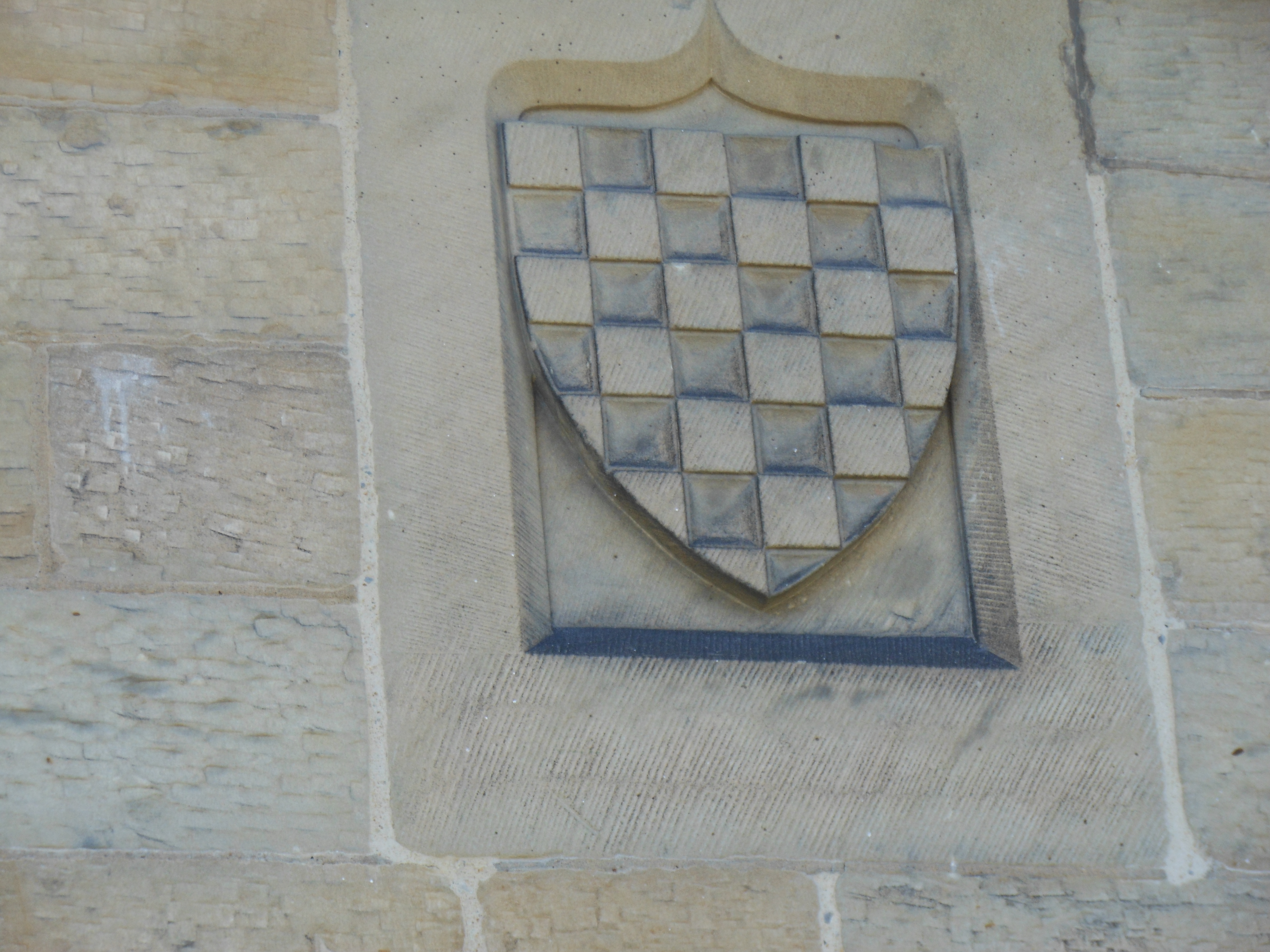
Arms of William Marshal, Earl of Pembroke

It is impossible to talk about anything related to Magna Carta without mentioning the man who has come to be known as ‘the Greatest Knight’: William Marshal, Earl of Pembroke, and his family. Marshal was one of the few nobles to stay loyal to King John throughout the Magna Carta crisis. That is not to say that the king and Marshal did not have their differences, nor that their relationship was always smooth sailing. However, William Marshal was famed for his loyalty and integrity and maintained his oaths to King John throughout his reign, regardless of the distrust between the two men.

The children of William and his wife, Isabel de Clare, cannot fail to have benefited from William Marshal’s rise through the ranks from fourth son and humble hearth knight, to earl of Pembroke and, eventually, regent for King Henry III. Their father’s position as a powerful magnate on the Welsh Marches, and the most respected knight in the kingdom, saw William’s daughters make advantageous marriages in the highest echelons of the English nobility.

William and Isabel were the parents of 10 children who survived to adulthood, 5 boys and 5 girls. In a bizarre and sad twist of fate, each of the boys would, in turn, succeed to the earldom, with not one leaving a male heir to continue the Marshal line. Of the girls, the couple’s eldest daughter was Matilda, also known as Maud or Mahelt. Given that her parents married in 1189 and she had two elder brothers, Matilda was probably born in 1193 or 1194. The Histoire de Guillaume le Maréchal wrote glowingly of Matilda, saying she had the gifts of

‘wisdom, generosity, beauty, nobility of heart, graciousness, and I can tell you in truth, all the good qualities which a noble lady should possess.’

 Histoire de Guillaume le Maréchal 

The Histoire goes on to say;

‘Her worthy father who loved her dearly, married her off, during his lifetime to the best and most handsome party he knew, to Sir Hugh Bigot.’

 Histoire de Guillaume le Maréchal 

Unfortunately for Matilda, her husband Hugh, the eldest son of the earl of Norfolk, was among the rebels during the Magna Carta crisis; their eldest son was taken hostage by the king when their castle at Framlingham surrendered to the royal army. It must have been a comfort to Matilda that, on John’s death, her son’s welfare, while still a hostage, would have been supervised by the new regent, the boy’s grandfather. When Hugh died in 1225, Matilda married for a second time just a few months later, to William de Warenne, Earl of Warenne and Surrey, thus uniting the Bigod, Warenne and Marshal families. The marriage appears to have been one of convenience rather than love but produced 2 children, a boy and a girl, John and Isabel. Matilda’s son by her second marriage, John de Warenne, joined his 3 older Bigod half-brothers, Roger, Hugh and Ralph as pall bearers for their mother’s coffin at her funeral in 1248, when she was laid to rest beside her mother at Tintern Abbey in Monmouthshire.

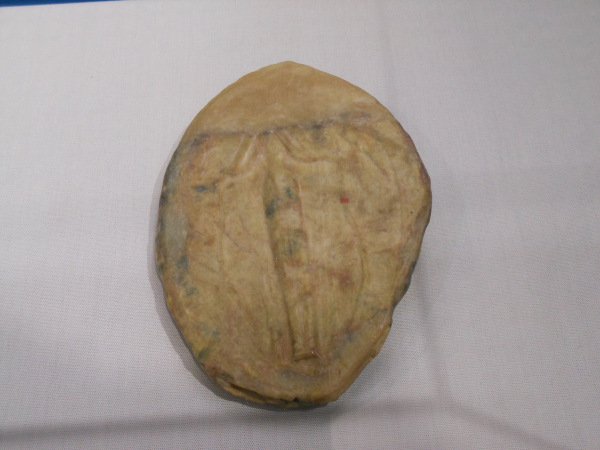
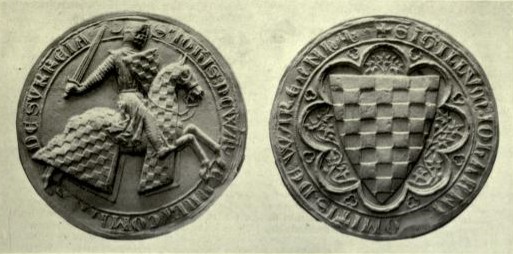
Seal of Matilda Marshal’s youngest son John de Warenne, 6th Earl of Warenne and Surrey

The next daughter, Isabel, was at least six years younger than Matilda, born in 1200. She was married to Gilbert de Clare, Earl of Gloucester and Hertford, who was twenty years her senior. Gilbert was the son of Richard de Clare, earl of Hertford, and Amicia, coheiress of William, Earl of Gloucester; through his mother he could trace his ancestry back to King Henry I, albeit through king’s illegitimate eldest son, Robert of Gloucester, the stalwart supporter of his half-sister, Empress Matilda. Gilbert’s aunt, Amicia’s sister, was Isabella of Gloucester, the discarded first wife of King John, who had held the earldom of Gloucester until her death on 14 October 1217, when it passed to Gilbert.

Both Gilbert and his father were named among the twenty-five barons appointed as Enforcers of Magna Carta in 1215; as a consequence, father and son were excommunicated at the beginning of 1216. After the death of King John, Gilbert sided with Prince Louis of France and was only reconciled with the royalist cause after the Battle of Lincoln in May 1217. This was despite having married Isabel, the second daughter of William Marshal, in 1214; Marshal had been regent of England for 9-year-old Henry III since King John’s death in October 1216. Like her older sister, Isabel had found her husband’s family were on the opposing side to her father in the Magna Carta crisis and the civil war that followed. They had 6 children together before Gilbert’s death in October 1230; he died on the return journey from an expedition to Brittany. Isabel was married again, not 6 months later, to the king’s younger brother, Richard, Earl of Cornwall. The early deaths of at least 2 children put a strain on this marriage and Richard had been seeking a divorce when Isabel found herself pregnant again. She was safely delivered of the longed-for son and heir, Henry of Almain in 1235. Tragically, Isabel herself died in childbirth, in 1240. Her baby son, Nicholas, died the same day.

The next-youngest of the Marshal sisters, Sibyl, was born around 1201: she was married to William de Ferrers, fifth earl of Derby. Unlike her elder sisters, Sibyl and her husband played little part in national affairs. Ferrers had been plagued by gout since his youth and led a largely secluded life. He was regularly transported by litter. Further, he had never fully recovered from an accident that had happened sometime in the 1230s. While crossing a bridge at St Neots in Huntingdonshire, Ferrers was thrown from his litter, into the water. It must have been a terrifying experience. He succeeded to the earldom of Derby on his father’s death in 1247 but died in 1254. During the marriage Sibyl gave birth to 7 children, all daughters: Agnes, Isabel, Maud, Sibyl, Joan, Agatha and Eleanor. Sibyl died sometime before 1247 and was laid to rest at Tintern Abbey, alongside her mother.

Tintern Abbey, Monmouthshire, resting place of several members of the Marshal family

William and Isabel Marshal’s fourth daughter, Eva, was born in about 1203 in Pembroke Castle, and so was only 16 when her father died – and 17 when she lost her mother. As a child, she spent several years with her family in exile in Ireland, only returning to England when her father was finally reconciled with King John in 1212. Sometime before 1221, Eva was married to William (V) de Braose, Lord of Abergavenny, son of Reginald de Braose and grandson of Matilda de Braose, who had died of starvation in King John’s dungeons in 1210. William de Braose was a wealthy Norman baron with estates along the Welsh Marches. He was hated by the Welsh, who had given him the nickname Gwilym Ddu, or Black William, and had been taken prisoner by Llywelyn ap Iorweth – Llywelyn the Great – in 1228.

Although he had been released after paying a ransom, de Braose later returned to Llywelyn’s court to arrange a marriage between his daughter, Isabella, and Llywelyn’s son and heir, Dafydd. During this stay, Eva’s husband was ‘caught in Llywelyn’s chamber with the King of England’s daughter, Llywelyn’s wife’. Whilst Llywelyn’s wife, Joan, Lady of Wales, the illegitimate daughter of King John, was imprisoned for a year, a much worse fate was meted out to William de Braose. He was publicly hanged on Llywelyn’s orders, leaving Eva a widow at the age of 27, with 4 young daughters, all under the age of 10. Despite the discomfort caused by Llywelyn’s execution of Braose, the marriage of Isabella and Dafydd went ahead, following some impressive diplomacy on Llywelyn’s part. Eva never remarried and spent her widowhood managing her own lands. She was caught up the revolt of her brother, Richard, in 1234, and appears to have acted as intermediary between her brother and the king to help resolve the situation. She died in 1246.

The youngest Marshal sister was Joan, who was still only a child when William Marshal died in 1219, being born in 1210. She is mentioned in the Histoire as having been called for by her ailing father, so that she could sing for him. Joan was married, before 1222, to Warin de Munchensi, a landholder and soldier who was born in the mid-1190s. When his father and older brother died in 1204 and 1208 (possibly), respectively, Warin was made a ward of his uncle William d’Aubigny, Earl of Arundel. He was ill-treated by King John, who demanded 2,000 marks in relief and quittance of his father’s Jewish debts on 23 December 1213. He was ordered to pay quickly and pledged his lands as a guarantee of his good behaviour.

Effigy identified as William Marshal, Temple Church, London

This harsh treatment drove him to ally with the rebel barons and he was captured fighting against the royalist forces, and his father-in-law, at the Battle of Lincoln, on 20 May 1217. He was, soon after, reconciled with the crown and served Henry III loyally on almost every military campaign of the next forty years. His marriage to Joan Marshal produced two children; John de Munchensi and a daughter, Joan, who would marry the king’s half-brother, William de Valence, fourth son of Isabelle d’Angoulême and her second husband, Hugh X de Lusignan, Count of La Marche. It was through his wife and, more accurately her mother, that William de Valence was allowed to accede to the earldom of Pembroke following the extinction of the Marshal male line. Joan Marshal died in 1234 and so never saw her daughter marry and become countess of Pembroke in 1247.

The various experiences of the 5 Marshal daughters serve as a demonstration of the divisions among the nobility, caused by the Magna Carta crisis, with several of them finding themselves on the opposing side to that of their father. It must have been a source of great anxiety for a family which appears to have been otherwise very close. These 5 young women also provide a snapshot of the fates of women in thirteenth century England, death in childbirth, early widowhood and second marriages arranged for personal security rather than love. What is evident is that, just like their father, these girls were an integral part of the Magna Carta story.

*

An earlier version of this article first appeared on Samantha Wilcoxson’s blog.

Sources:

Rich Price, King John’s Letters Facebook group; Robert Bartlett England Under the Norman and Angevin Kings 1075-1225; Dan Jones The Plantagenets; the Kings who Made EnglandThe Plantagenet Chronicle Edited by Elizabeth Hallam; Maurice Ashley The Life and Times of King John; Roy Strong The Story of BritainOxford Companion to British History; Mike Ashley British Kings & Queens; David Williamson Brewer’s British Royalty; Ralph of Diceto, Images of History; Marc Morris, King John; David Crouch, William Marshal; Crouch and Holden, History of William Marshal; Crouch, David, ‘William Marshal [called the Marshal], fourth earl of Pembroke (c. 1146–1219)’, Oxforddnb.com; Flanagan, M.T., ‘Isabel de Clare, suo jure countess of Pembroke (1171×6–1220)’, Oxforddnb.com; Thomas Asbridge, The Greatest Knight; Chadwick, Elizabeth, ‘Clothing the Bones: Finding Mahelt Marshal’, livingthehistoryelizabethchadwick.blogspot.com; Stacey, Robert C., ‘Roger Bigod, fourth earl of Norfolk (c. 1212-1270)’, Oxforddnb.com; finerollshenry3.org.uk; Vincent, Nicholas, ‘William de Warenne, fifth earl of Surrey [Earl Warenne] (d. 1240)’, Oxforddnb.com.

My Books

Signed, dedicated copies of all my books are available through my online bookshop.

Out now: Scotland’s Medieval Queens

Scotland’s history is dramatic, violent and bloody. Being England’s northern neighbour has never been easy. Scotland’s queens have had to deal with war, murder, imprisonment, political rivalries and open betrayal. They have loved and lost, raised kings and queens, ruled and died for Scotland. From St Margaret, who became one of the patron saints of Scotland, to Elizabeth de Burgh and the dramatic story of the Scottish Wars of Independence, to the love story and tragedy of Joan Beaufort, to Margaret of Denmark and the dawn of the Renaissance, Scotland’s Medieval Queens have seen it all. This is the story of Scotland through their eyes.

Scotland’s Medieval Queens gives a thorough grounding in the history of the women who ruled Scotland at the side of its kings, often in the shadows, but just as interesting in their lives beyond the spotlight. It’s not a subject that has been widely covered, and Sharon is a pioneer in bringing that information into accessible history.’ Elizabeth Chadwick (New York Times bestselling author)

Available now from Amazon and Pen and Sword Books

Also by Sharon Bennett Connolly:
Heroines of the Tudor World tells the stories of the most remarkable women from European history in the time of the Tudor dynasty, 1485-1603. These are the women who ruled, the women who founded dynasties, the women who fought for religious freedom, their families and love. Heroines of the Tudor World is now available for pre-order from Amberley Publishing and Amazon UK. Women of the Anarchy demonstrates how Empress Matilda and Matilda of Boulogne, unable to wield a sword themselves, were prime movers in this time of conflict and lawlessness. It shows how their strengths, weaknesses, and personal ambitions swung the fortunes of war one way – and then the other. Available from Bookshop.orgAmberley Publishing and Amazon UKKing John’s Right-Hand Lady: The Story of Nicholaa de la Haye is the story of a truly remarkable lady, the hereditary constable of Lincoln Castle and the first woman in England to be appointed sheriff in her own right. Available from all good bookshops Pen & Sword Booksbookshop.org and Amazon

Defenders of the Norman Crown: The Rise and Fall of the Warenne Earls of Surrey tells the fascinating story of the Warenne dynasty, from its origins in Normandy, through the Conquest, Magna Carta, the wars and marriages that led to its ultimate demise in the reign of Edward III. Available from Pen & Sword BooksAmazon in the UK and US, and Bookshop.orgLadies of Magna Carta: Women of Influence in Thirteenth Century England looks into the relationships of the various noble families of the 13th century, and how they were affected by the Barons’ Wars, Magna Carta and its aftermath; the bonds that were formed and those that were broken. It is now available in paperback and hardback from Pen & SwordAmazon, and Bookshop.orgHeroines of the Medieval World tells the stories of some of the most remarkable women from Medieval history, from Eleanor of Aquitaine to Julian of Norwich. Available now from Amberley Publishing and Amazon, and Bookshop.orgSilk and the Sword: The Women of the Norman Conquest traces the fortunes of the women who had a significant role to play in the momentous events of 1066. Available now from Amazon,  Amberley Publishing, and Bookshop.org.

Alternate Endings: An anthology of historical fiction short stories including Long Live the King… which is my take what might have happened had King John not died in October 1216. Available in paperback and kindle from Amazon.

Podcast:

Have a listen to the A Slice of Medieval podcast, which I co-host with Historical fiction novelist Derek Birks. Derek and I welcome guests, such as Bernard Cornwell and Michael Jecks, and discuss a wide range of topics in medieval history, from significant events to the personalities involved. Including an episode on William Marshal with Elizabeth Chadwick, author of The Greatest Knight. Every episode is now available on YouTube.

*

Don’t forget! Signed and dedicated copies of all my books are available through my online bookshop.

For forthcoming online and in-person talks, please check out my Events Page.

You can be the first to read new articles by clicking the ‘Follow’ button, liking our Facebook page or joining me on TwitterThreadsBluesky and Instagram.

*

©2021 Sharon Bennett Connolly FRHistS
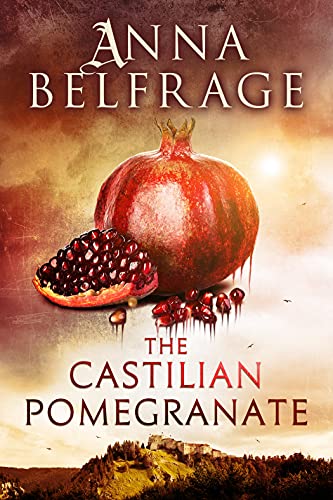
Book Corner: The Castilian Pomegranate by Anna Belfrage

An enraged and grieving queen commands them to retrieve her exquisite jewel and abandon their foundling brat overseas—or never return

Robert FitzStephan and his wife, Noor, have been temporarily exiled. Officially, they are to travel to the courts of Aragon and Castile as emissaries of Queen Eleanor of England. Unofficially, the queen demands two things: that they abandon Lionel, their foster son, in foreign lands and that they bring back a precious jewel – the Castilian Pomegranate.

Noor would rather chop off a foot than leave Lionel in a foreign land—especially as he’s been entrusted to her by his dead father, the last true prince of Wales. And as to the jewel, stealing it would mean immediate execution. . .

Spain in 1285 is a complicated place. France has launched a crusade against Aragon and soon enough Robert is embroiled in the conflict, standing side by side with their Aragonese hosts.

Once in Castile, it is the fearsome Moors that must be fought, with Robert facing weeks separated from his young wife, a wife who is enthralled by the Castilian court—and a particular Castilian gallant.

Jealousy, betrayal and a thirst for revenge plunge Noor and Robert into life-threatening danger.

Will they emerge unscathed or will savage but beautiful Castile leave them permanently scarred and damaged?

And the wait is over! Anna Belfrage is back with the second instalment in her new Castilian Saga. And she has worked her magic again with another stunning page-turner of a book. A fast-paced adventure into the heart of medieval Spain, with stops at the courts of both Aragon and Castile. Anna Belfrage always seems to know how to craft a tale that will draw the reader in and keep them transfixed to the very end.

The Castilian Pomegranate continues the tale of Noor and her husband, Robert FitzStephan, as the journey to Spain with messages from the English queen, Eleanor of Castile, and in search of Noor’s roots a as a daughter of an illegitimate daughter of the Castilian royal house. They are also carrying a secret in the shape of a child, their foster son, who would be on the top of King Edward I’s Top Ten Most Wanted list, if he knew the child even existed. The story draws the young couple into the action and drama of the Reconquista, as the Catholic monarchs of Castile and Aragon attempt to retake Spain from the Moorish invaders.

The action is fast-paced and, at times, brutal. Anna Belfrage provides a stark contrast between the violence and action of war and the more gentle scenes of the continuing love story between Noor and Robert. That married life is never all plain sailing, means that, perhaps, the more thought provoking scenes are far from any battlefield.

Robert laughed again. For an instant, their gazes met, his light eyes crinkling at the corners as he blew her a kiss. Her man, so full of life, and just the thought of him being tortured to death… No one knew, she told herself shakily – she did that often. Except that Queen Eleanor had added two and two together and harboured strong suspicions as to Lionel’s real identity, and then there was that Welshman Rhys, who had accompanied Dafydd to Orton Manor that day when he’d placed his son in Noor’s care.

Only the fact that Queen Eleanor feared for her royal husband’s immortal soul had stopped her from sharing her suspicions with him. Aghast at having lost yet another son, her beloved Prince Alphonso, convinced that this was divine retribution for what Edward had done to Dafydd’s children, Eleanor had instead ordered Noor and Robert to leave England with the child, saying that as long as she was alive they were forbidden to return with the boy. “Get rid of him,” she’d said. “Leave him behind at a monastery somewhere and you are welcome to return.”

Without conscious thought, Noor had steered her mare back to the litter and dismounted to hug Lionel. “Never,” she whispered into his hair. “I will never abandon you.” So instead she prayed for divine guidance and – God forgive her – for Queen Eleanor’s death. Far too often, she woke angry, silently cursing the woman who’d obliged her and her husband, their foster son and their little daughter, Isabel, to leave their home for a long and hazardous voyage.

The litter drapes were pulled back, and Amalia stuck out her head. “Are we to stay here all day?” she grumbled. “I long for Sevilla, for Castile, not for a field in the middle of nowhere.” She smoothed her wimple into place, framing a very round face in which two dark eyes were the most distinctive feature. “And you,” she said to Lionel, “come here, mi tresoro. You cannot go about like that!”

“Let me,” Noor said, reaching inside for Lionel’s coif. The child protested loudly, but when she promised he could ride with her once the coif was tied into place, he stood as still as was possible for a child born with quicksilver in his veins.

As ever, the extent of Anna Belfrage’s research and attention to detail shines through on every page. The reader is transported to 14th century Spain, accosted by the sights, smells and sounds of the mixture of cultures that lived and fought alongside and within each other. The author has slotted the fictional Noor and Robert into the factual royal families of the time, weaving their story into the wider story of the Reconquista and conflicts, both in religion and cultures, of the Iberian Peninsula.

Anna Belfrage is a wonderful storyteller, one of the best. Her stories are at once exciting, sensual, and full of suspense. The intrigue and action combine beautifully with the love story at the heart of The Castilian Pomegranate. And the women see just as much intrigue and action as the men. That is not to say that actions do not have consequences, and Anna Belfrage always makes sure the story doesn’t always got the heroes’ way, which leaves the reader on the edge of their seat throughout the book.

The Castilian Pomegranate is a fabulous work of fiction, a wonderful story that will leave you captivated to the very end – and bereft when it is finally over. I enjoyed every word of it. Thank goodness there is another book in the works!

The Castilian Pomegranate is available in ebook and paperback from Amazon.

About the Author:

Had Anna been allowed to choose, she’d have become a professional time-traveller. No luck there, so instead she became a financial professional with two absorbing interests; history and writing. These days, Anna combines an exciting day-job with a large family and her writing endeavours. Plus she always finds the time to try out new recipes, chase down obscure rose bushes and initiate a home renovation scheme or two.

Anna has authored the acclaimed time travelling series The Graham Saga , set in 17th century Scotland and Maryland, as well as the equally acclaimed medieval series The King’s Greatest Enemy.

Anna has also published The Wanderer, a fast-paced contemporary romantic suspense trilogy with paranormal and time-slip ingredients. Her September 2020 release, His Castilian Hawk is a story of loyalty and love set against the complications of Edward I’s invasion of Wales in the late 13th century.

Her most recent release, The Whirlpools of Time , is a time travel romance set against the backdrop of brewing rebellion in the Scottish highlands.

All of Anna’s books have been awarded the IndieBRAG Medallion, she has several Historical Novel Society Editor’s Choices, and one of her books won the HNS Indie Award in 2015. She is also the proud recipient of several Reader’s Favorite medals as well as having won various Gold, Silver and Bronze Coffee Pot Book Club awards.

My Books

Signed, dedicated copies of all my books are available, please get in touch by completing the contact me form.

Defenders of the Norman Crown: The Rise and Fall of the Warenne Earls of Surrey tells the fascinating story of the Warenne dynasty, of the successes and failures of one of the most powerful families in England, from its origins in Normandy, through the Conquest, Magna Carta, the wars and marriages that led to its ultimate demise in the reign of Edward III. Defenders of the Norman Crown: Rise and Fall of the Warenne Earls of Surrey is now available from Pen & Sword BooksAmazon in the UK and US and Book Depository.

1 family. 8 earls. 300 years of English history!

Also by Sharon Bennett Connolly:

Ladies of Magna Carta: Women of Influence in Thirteenth Century England looks into the relationships of the various noble families of the 13th century, and how they were affected by the Barons’ Wars, Magna Carta and its aftermath; the bonds that were formed and those that were broken. It is now available in paperback and hardback from Pen & Sword,  Amazon and from Book Depository worldwide.

Silk and the Sword: The Women of the Norman Conquest traces the fortunes of the women who had a significant role to play in the momentous events of 1066.  Available now from Amazon,  Amberley Publishing, Book Depository.

Heroines of the Medieval World tells the stories of some of the most remarkable women from Medieval history, from Eleanor of Aquitaine to Julian of Norwich. Available now from Amberley Publishing and Amazon and Book Depository.

*

You can be the first to read new articles by clicking the ‘Follow’ button, liking our Facebook page or joining me on Twitter and Instagram.

*

©2021 Sharon Bennett Connolly

Book Giveaway: Ladies of Magna Carta

Giveaway results!

First of all, i would like to say a huge thank you to everyone who entered the giveaway. There were 156 entries, which is truly incredible. But unfortunately there can be only one winnerAnd the winner is…Charlotte Clark.

Congratulations Charlotte. Thank you all for taking part and giving me such a confidence boost with your lovely comments.

If you do get your hands on a copy of Ladies of Magna Carta – or any of my books – do get in touch and I will send you a signed bookplate to pop in the front. Alternatively, I do have copies of all my books in stock if you’d like to purchase a signed and dedicated copy.

Love Sharon x

I realise that I haven’t done a giveaway in over a year. So, to celebrate the release of Ladies of Magna Carta in paperback in the UK this week, I thought I would do a giveaway. One signed copy of the brand spanking new paperback (it looks very pretty!) will go to the lucky competition winner.

Inspired by the lives of Matilda de Braose and Nichoaa de la Haye, My third book looks at the events surrounding the issuing of Magna Carta with a view to how it affected the women.

Praise for Ladies of Magna Carta:

“Sharon Bennett Connolly throws much needed light on the lives of the high-born women of thirteenth-century England…Connolly’s version of the first Plantagenets is superbly concise. No distractions or detours, hitting all the right nails on the head…Connolly’s book is an informative and delightful read about women aspiring to control their destiny against this backdrop, but their success or failure had less to do with Magna Carta than with the timeless principles of resourcefulness, determination and knowing how to skilfully handle the big guy. It’s these qualities that make their stories inspiring.”

Darren Baker, author of The Two Eleanors

“A well-researched and comprehensive study of the women who lived through, and were affected by, the Barons’ Revolt and the sealing of the Magna Carta. Ms Bennett Connolly has skilfully brought to the fore the lives of the women who have hitherto been hidden in the background. A must-read for anyone interested in this pivotal moment in English and Scottish history.”

Annie Whitehead, author of Women of Power in Anglo-Saxon England

It’s easy to enter!

The competition is open to everyone, wherever you are in the world. To win a signed and dedicated copy of Ladies of Magna Carta, simply leave a comment below or on my Facebook page and I will include you in the prize draw.

The draw will be made on Sunday 21 November.

*

My Books

Signed, dedicated copies of all my books are available, please get in touch by completing the contact me form.

Defenders of the Norman Crown: The Rise and Fall of the Warenne Earls of Surrey tells the fascinating story of the Warenne dynasty, of the successes and failures of one of the most powerful families in England, from its origins in Normandy, through the Conquest, Magna Carta, the wars and marriages that led to its ultimate demise in the reign of Edward III. Defenders of the Norman Crown: Rise and Fall of the Warenne Earls of Surrey is now available from Pen & Sword BooksAmazon in the UK and US and Book Depository.

1 family. 8 earls. 300 years of English history!

Also by Sharon Bennett Connolly:

Ladies of Magna Carta: Women of Influence in Thirteenth Century England looks into the relationships of the various noble families of the 13th century, and how they were affected by the Barons’ Wars, Magna Carta and its aftermath; the bonds that were formed and those that were broken. It is now available in paperback and hardback from Pen & Sword,  Amazon and from Book Depository worldwide.

Heroines of the Medieval World tells the stories of some of the most remarkable women from Medieval history, from Eleanor of Aquitaine to Julian of Norwich. Available now from Amberley Publishing and Amazon and Book Depository.

Silk and the Sword: The Women of the Norman Conquest traces the fortunes of the women who had a significant role to play in the momentous events of 1066.  Available now from Amazon,  Amberley Publishing, Book Depository.

*

You can be the first to read new articles by clicking the ‘Follow’ button, liking our Facebook page or joining me on Twitter and Instagram.

©2021 Sharon Bennett Connolly

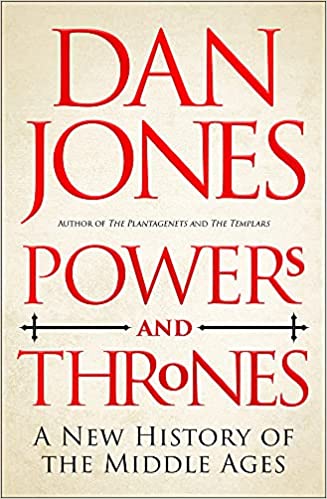
Book Corner: Powers and Thrones by Dan Jones

Dan Jones’s epic new history tells nothing less than the story of how the world we know today came to be built. It is a thousand-year adventure that moves from the ruins of the once-mighty city of Rome, sacked by barbarians in AD 410, to the first contacts between the old and new worlds in the sixteenth century. It shows how, from a state of crisis and collapse, the West was rebuilt and came to dominate the entire globe. The book identifies three key themes that underpinned the success of the West: commerce, conquest and Christianity.

Across 16 chapters, blending Dan Jones’s trademark gripping narrative style with authoritative analysis, Powers and Thrones shows how, at each stage in this story, successive western powers thrived by attracting – or stealing – the most valuable resources, ideas and people from the rest of the world. It casts new light on iconic locations – Rome, Paris, Venice, Constantinople – and it features some of history’s most famous and notorious men and women.

This is a book written about – and for – an age of profound change, and it asks the biggest questions about the West both then and now. Where did we come from? What made us? Where do we go from here?

Well, isn’t this an epic undertaking. The history of the Middle Ages, across Europe and into the four corners of the world (except Australia because it still hadn’t been discovered) – in 16 chapters, 633 pages and about 25 hours of reading. And it is awesome!

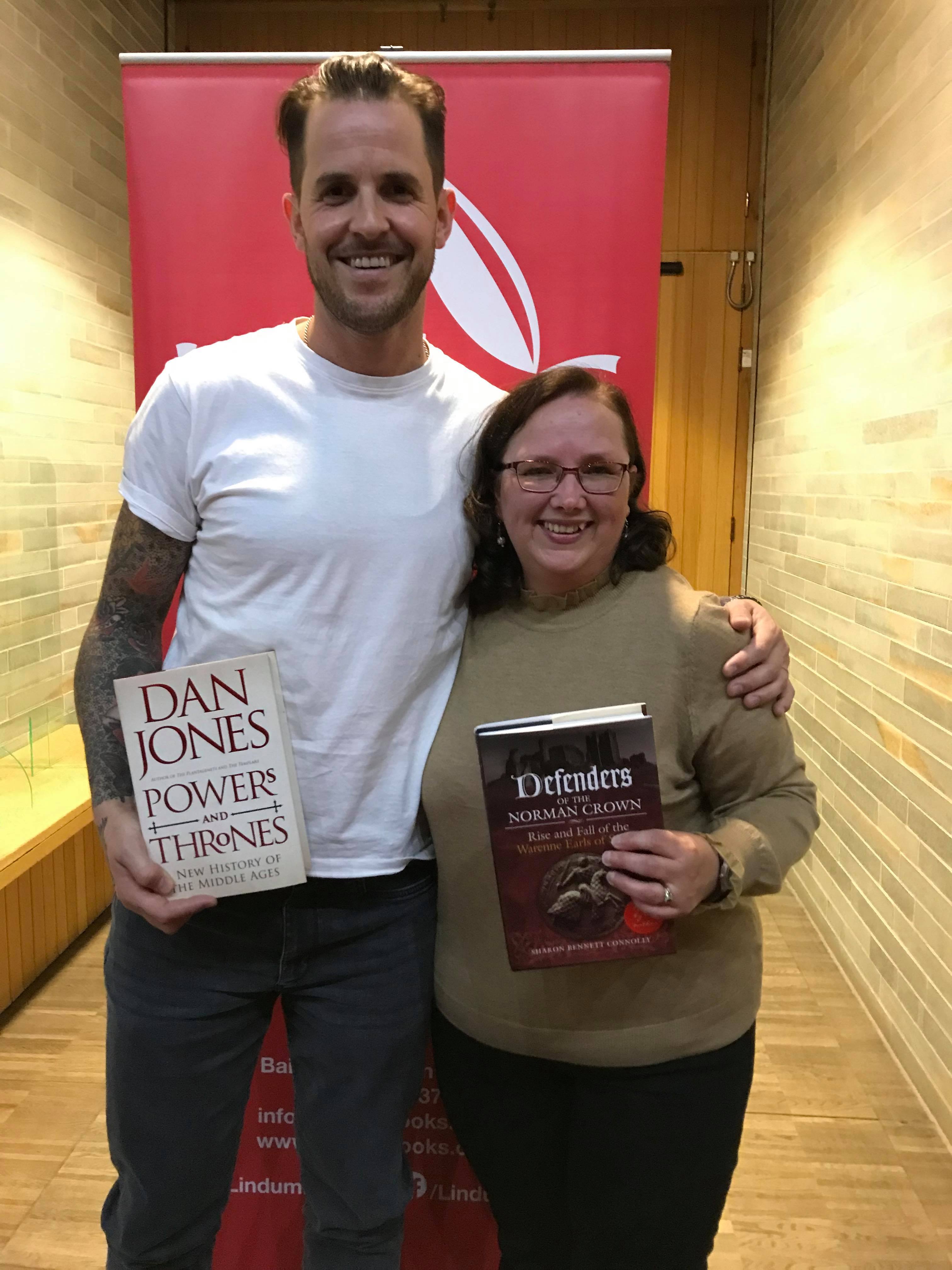
I couldn’t read this book at a leisurely pace because I was actually scheduled to interview Dan Jones on 29 September, for Lindum Books in Lincoln and I desperately wanted to make sure I had read the whole thing beforehand. So, I had 10 days to read it and I am quite proud of myself that I managed it. I put all other books aside and concentrated on this, hoping it would keep my attention. I was a little worried. It is a long book and covers such a wide historical arena. Could it keep my interest? Well, the simple answer is YES!

Powers and Thrones by Dan Jones is a thoroughly enthralling read encompassing over a thousand years of history, from the Sack of Rome in 410AD to the sack of Rome in 1527. Writing the story of the entire medieval era was a massive undertaking that Dan said he wanted to do, both as his 10th book and to mark his 40th birthday. And it is, indeed, a magnum opus to be proud of. Powers and Thrones is a perfectly balanced book, giving just enough attention to each area of interest and geographical location, going from Rome, to Byzantium and on to the rise of Islam, Dan Jones manages to cover the significant events and influences that drove change and development through the entire Middle Ages.

Powers and Thrones demonstrates how climate change, disease, technology and ideology were often the forces behind change. For example, the Guttenberg Press was revolutionary in every way, allowing the mass production of books, pamphlets and the dissemination of knowledge to a far-wider audience. It was the medieval equivalent to our social media, both in its reach and influence, and Dan Jones highlights how significant it was in Europe’s emergence from the medieval era, with its impact on learning, communication and – perhaps above all – religion.

For those alert to signs hidden in the fabric of the world, the Roman Empire’s collapse in the west was announced by a series of omens. In Antioch, dogs howled like wolves, night-birds let out hideous shrieks and people muttered that the emperor should be burned alive. In Thrace, a dead man lay in the road and fixed passers-by with a unnerving, lifelike glare, until after a few days the corpse suddenly disappeared. And in the city of Rome itself, citizens persisted in going to the theatre: an egregious and insanely sinful pastime, which, according to one Christian writer, practically invited the wrath of the Almighty. Human beings have been superstitious in all ages and we are especially good at adducing portents when we have the benefit of hindsight. Hence the opinion of the historian Ammianus Marcellinus, who looked back on the end of the fourth century into which he was born and reflected that this was a time when fortune’s wheel, ‘which is perpetually alternating prosperity and adversity’, was turning fast.

In the 370s, when Rome’s fatal malady set in, the Roman state – monarchy, republic and empire – had existed for more than a millennium. Yet within little more than one hundred years, by the end of the fifth century AD, every province west of the Balkans had slipped from Roman control. In the ancient heartlands of empire, Roman institutions, tax systems and trade networks were falling apart. The physical signs of Roma elite culture – palatial villas, cheap imported consumer goods, hot running water – were fading from everyday life. The Eternal City had been sacked several times, the western crown had passed between a succession of dimwits, usurpers, tyrants and children, until eventually it had been abolished; and territory that formerly comprised the core of a powerful mega-state had been parcelled among peoples whom the proud-hearted citizens of Rome’s imperial heyday had previously scorned as savages and subhumans. These were the ‘barbarians’: a derogatory word which encompassed a huge range of people from itinerant nomadic tribes quite new to the west and ignorant or dismissive of Roman mores, through to longstanding near-neighbours, whose lives were heavily influenced by Roman-ness, but who had not been able to share in the fruits of citizenship.

With Dan Jones at The Collection, Lincoln

What makes this book special is the way Dan Jones manages to make Powers and Thrones relevant to today. Writing it in the midst of a pandemic certainly must have helped to give Dan a sense of history all around him and he alludes to this in the book. When interviewing him, Dan told me that living through Covid gave him a better understanding of the plague years of 14th century Europe, of the fear and panic that must have consumed people. And by referring to modern-day equivalents, such as world leaders, the pandemic and the rise of social media, Dan is able to draw the reader in and make medieval history relevant in the modern age.

Dan Jones does not shy away from the harsh questions, either, examining the development and morals of slavery, the reasoning behind the crusades and the rise of Protestantism. What may surprise readers is the facts this book is essentially Euro-centric – it made me realise how Anglo-centric my study of history has been over the years. By focusing on change and development in mainland Europe, whilst encompassing England and the British Isles in various guises where appropriate, it gives the reader a whole new outlook on the medieval era, whilst also demonstrates how events in Europe – even back then – could influence events in England, Scotland, Wales and Ireland. Powers and Thrones highlights the driving forces of change, whether it was people, ideas or technology, and demonstrates how such change effected Europe in general and individuals in particular, whether it was the empire of Charlemagne, the rise of monasticism, or even the development of the humble stirrup that led to the emergence of the knightly class.

In Powers and Thrones, Dan Jones combines a narrative of international events with case studies that focus on individual people, organisations and movements. By highlighting such diverse subjects as Empress Theodora, the rise of Islam, El Cid and the magnificent Lincoln Cathedral, the author manages to personalise what might otherwise have been a wide, sweeping narrative. The Warennes also get a mention in the involvement of William de Warenne, the 1st Earl, and his wife, Gundrada, in founding the first Cluniac priory in England, St Pancras Priory in Lewes, Sussex. From my personal point of view, it is fabulous that Dan Jones chose to include Empress Theodora so prominently – a woman who rose from extremely humble roots to become Empress of Byzantium and a woman who was influential in holding that empire together, especially in adroitly soothing religious dissension. It is impossible to get everything from 1,000 years of history in one book, but by showing the big picture, whilst highlighting particular events, ideas, buildings or people, Dan Jones manages to provide a fascinating narrative that is fast-paced and engaging without being overwhelming.

Powers and Thrones is, quite simply, an amazing book. It is chock full of little snippets of information that you may never have known, it relates medieval events to our modern day equivalents, such as the Black Death to Covid. Such references to the modern era could easily have backfired, but they serve to make the book more accessible and entertaining and not a little amusing. The moments of light-heartedness often provide an extra depth to the reading experience and make the book accessible to every reader.

Powers and Thrones was certainly an ambitious project, but in the hour-long interview I had with Dan Jones, he spoke about every aspect of it with passion and enthusiasm an that same passion and enthusiasm comes across throughout the book. The book is a pleasure to read and would be a welcome addition to any bookshelf.

Powers and Thrones by Dan Jones is available from Amazon and Bookshop.org.

My Books

Signed, dedicated copies of all my books are available, please get in touch by completing the contact me form.

Defenders of the Norman Crown: The Rise and Fall of the Warenne Earls of Surrey tells the fascinating story of the Warenne dynasty, of the successes and failures of one of the most powerful families in England, from its origins in Normandy, through the Conquest, Magna Carta, the wars and marriages that led to its ultimate demise in the reign of Edward III. Defenders of the Norman Crown: Rise and Fall of the Warenne Earls of Surrey is now available from Pen & Sword BooksAmazon in the UK and US and Book Depository.

1 family. 8 earls. 300 years of English history!

Also by Sharon Bennett Connolly:

Ladies of Magna Carta: Women of Influence in Thirteenth Century England looks into the relationships of the various noble families of the 13th century, and how they were affected by the Barons’ Wars, Magna Carta and its aftermath; the bonds that were formed and those that were broken. It is now available in paperback and hardback from Pen & Sword,  Amazon and from Book Depository worldwide.

Heroines of the Medieval World tells the stories of some of the most remarkable women from Medieval history, from Eleanor of Aquitaine to Julian of Norwich. Available now from Amberley Publishing and Amazon and Book Depository.

Silk and the Sword: The Women of the Norman Conquest traces the fortunes of the women who had a significant role to play in the momentous events of 1066.  Available now from Amazon,  Amberley Publishing, Book Depository.

*

You can be the first to read new articles by clicking the ‘Follow’ button, liking our Facebook page or joining me on Twitter and Instagram.

©2021 Sharon Bennett Connolly

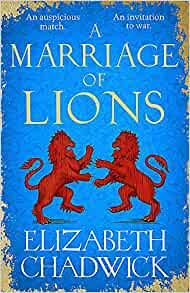
Book Corner: A Marriage of Lions by Elizabeth Chadwick

England, 1238

Raised at the court of King Henry III as a chamber lady to the queen, young Joanna of Swanscombe’s life changes forever when she comes into an inheritance far above all expectations, including her own.

Now a wealthy heiress, Joanna’s arranged marriage to the King’s charming, tournament-loving half-brother William de Valence immediately stokes the flames of political unrest as more established courtiers object to the privileges bestowed on newcomers.

As Joanna and William strive to build a life together, England descends into a bitter civil war. In mortal danger, William is forced to run for his life, and Joanna is left with only her wit and courage to outfox their enemies and prevent them from destroying her husband, her family, and their fortunes.

What a marvellous adventure!

A Marriage of Lions is another fabulous, character-driven historical novel from Elizabeth Chadwick. An enjoyable and entertaining read, it will take you through the full range of emotions; it will have you in tears in one moment and shouting at the characters in the book the next. Beautifully written, it is a wonderful reading experience.

As I have come to expect with Elizabeth Chadwick, A Marriage of Lions transports you back through the centuries, so expertly that you can almost imagine yourself in the midst of Henry III’s court and the battle of wills between Henry and Simon de Montfort. In a change of focus to most books of the time, Elizabeth foregoes telling de Montfort’s story to concentrate on the remarkable relationship of William de Valence and his wife, Joanna de Munchesny, granddaughter of the great William Marshal.

Having just written a biography of the Warenne family, who were the earls of Surrey from the time of the Norman Conquest to the death of the 7th and last earl in 1347, I took particular interest in Elizabeth’s portrayal of John de Warenne, 6th Earl of Surrey, who was brother-in-law to both King Henry III and William de Valence. He was also a cousin to William’s wife, Joanna, through their Marshal mothers. And I have to say, I think Elizabeth got John spot on. He was a loyal, noble character with his friends and family – a trait that ran through his family. Though he could be ruthless to his enemies and was not a benevolent lord to his tenants. 

A Marriage of Lions is not just a fascinating read, it is an experience not to be missed, shining a light on the 13th century, on not only the complex political manoeuvring, but also on the family dynamics that coloured the politics of all those involved, from inheritance disputes to political reform and financial management. Elizabeth manages to weave all these different threads into one fabulous, addictive story.

Elizabeth Chadwick seamlessly combines the history with the fiction.

‘Did you know my mother well?’ Joanna ventured, hoping for crumbs.

Her aunt held out her empty cup to a passing servant to be refilled. ‘I was married with a child before she was born, but I saw her sometimes and I grew to know her better when our father was dying. We sang to him, your mother and me. She was young and shy, but he took great delight in it and it was a moment of light and blessing amid his pain.’ a shadow crossed her face. ‘Our mother died less than a year later and I cared for your mother until she came to be wed. That is why I say you are like her for I knew her well when she was your age. I miss her. I miss all of my sisters. I am the last one. None have made old bones.’

‘I am sorry, madam,’ Joanna said. Her aunt Isabelle, Mahelt’s sister, had died bearing the child she had been carrying at the Queen’s churching – a stillborn son. Her husband, the King’s brother, Richard, had since departed on crusade with Simon de Montfort who was making good use of his exile. ‘I am sorry for the loss of your husband too.’

‘Him I do not miss,’ her aunt said brusquely. ‘Marriage is a bargain and you make the best of your circumstances. If you are fortunate you will bear sons and daughters to nurture and shape, who will be your consolation and make you proud.’

She beckoned to a junior squire who had been attending on the newly knighted Peter of Savoy.

The boy joined them and bowed. Joanna eyed him curiously. He had glossy crow’s wing hair and dark-brown eyes set under slanted brows. He was of about her own age and she recognised his guarded expression from her own repertoire. Her aunt introduced him as her son, John de Warenne, who was entering the household of the newly knighted Peter of Savoy as his squire and ward, where he would be trained to knighthood.

The boy bowed again and gave Joanna an evaluating, slightly wary look. She could almost see prickles bristling on him like a defensive hedgehog. She understood his tension for she had reacted in the same way when she first arrived at court.

‘I will be glad to have another cousin to talk to,’ she said.

Elizabeth Chadwick demonstrates a deep understanding of the politics and nuances of the royal court of Henry III, showing how factionalism and court favourites led to the Second Barons’ War and how it was Henry’s Lusignan siblings suffered from the fallout of Henry’s mounting disagreements with Simon de Montfort. A Marriage of Lions also shows readers how women, despite their inability to take to the field of battle, could use their own skills and abilities to not only protect their family, but also further the interests of their husbands and children. Through Joanna de Munchesny, Elizabeth Chadwick emphasises that medieval women were no more meek and defenceless in the 13th century than they are today. Joanna was intelligent and resourceful – and a force to be reckoned with! She is a character than any reader can admire and get behind.

I have written about many of the historical personages in A Marriage of Lions, either as research subjects or peripheral subjects of my books and I found myself nodding along to Elizabeth Chadwick’s own assessments of these characters, from Simon de Montfort to John de Warenne, from Matilda Marshal to de Montfort’s wife, Eleanor of England – I think Elizabeth and I must read many of the same books for research. This also serves to demonstrate how much knowledge and research the author has accumulated over the years, and how deeply she comes to understand her characters. While this isn’t essential in a historical fiction book, it does help to add authenticity to a novel, and draws the reader in deeper, so that they become totally immersed in the story and its characters.

While I have enjoyed many an Elizabeth Chadwick novel, A Marriage of Lions stands on a level with The Greatest Knight as one of her very best. If you are an Elizabeth Chadwick fan, this is a must read. If you have never read Elizabeth, then I suggest you start with this one – you will definitely want to read the rest afterwards. It is one of the best historical fiction novels that I have read this year. I did not want it to finish and yet – at the same time – could not wait to get to the end!

Elizabeth Chadwick has a knack of getting into the heads and hearts of her characters, so that they jump off the page and insinuate themselves into the thought of the reader. The book is impossible to put down – until the very last page. And finishing the book – especially this book – leaves the reader bereft.

To buy the book: Amazon

About the author:

New York Times bestselling author Elizabeth Chadwick lives in a cottage in the Vale of Belvoir in Nottinghamshire with her husband and their 3 dogs. Her first novel, The Wild Hunt, won a Betty Trask Award and To Defy a King won the RNA’s 2011 Historical Novel Prize. She was also shortlisted for the Romantic Novelists’ Award in 1998 for The Champion, in 2001 for Lords of the White Castle, in 2002 for The Winter Mantle and in 2003 for The Falcons of Montabard. Her sixteenth novel, The Scarlet Lion, was nominated by Richard Lee, founder of the Historical Novel Society, as one of the top ten historical novels of the last decade. She often lectures at conferences and historical venues, has been consulted for television documentaries and is a member of the Royal Historical Society.

For more details on Elizabeth Chadwick and her books, visit http://www.elizabethchadwick.com, follow her on Twitter, read her blogs or chat to her on Facebook.

*

My Books

Signed, dedicated copies of all my books are available, please get in touch by completing the contact me form.

Defenders of the Norman Crown: The Rise and Fall of the Warenne Earls of Surrey tells the fascinating story of the Warenne dynasty, of the successes and failures of one of the most powerful families in England, from its origins in Normandy, through the Conquest, Magna Carta, the wars and marriages that led to its ultimate demise in the reign of Edward III. Defenders of the Norman Crown: Rise and Fall of the Warenne Earls of Surrey is now available from Pen & Sword BooksAmazon in the UK and US and Book Depository.

1 family. 8 earls. 300 years of English history!

Also by Sharon Bennett Connolly:

Ladies of Magna Carta: Women of Influence in Thirteenth Century England looks into the relationships of the various noble families of the 13th century, and how they were affected by the Barons’ Wars, Magna Carta and its aftermath; the bonds that were formed and those that were broken. It is now available from Pen & Sword,  Amazon and from Book Depository worldwide.

Heroines of the Medieval World tells the stories of some of the most remarkable women from Medieval history, from Eleanor of Aquitaine to Julian of Norwich. Available now from Amberley Publishing and Amazon and Book Depository.

Silk and the Sword: The Women of the Norman Conquest traces the fortunes of the women who had a significant role to play in the momentous events of 1066.  Available now from Amazon,  Amberley Publishing, Book Depository.

*

You can be the first to read new articles by clicking the ‘Follow’ button, liking our Facebook page or joining me on Twitter and Instagram.

©2021 Sharon Bennett Connolly

Guest Post: Philip Lovell, a career in royal service by Monika E Simon

Today it is a pleasure to welcome author Monika E Simon back to the blog, with an article looking at one particular member of the Lovell family. Monika’s book, From Robber Barons to Courtiers: The Changing World of the Lovells of Titchmarsh, has just been released in the UK. Over to Monika:

Philip Lovell, a career in royal service

Parish church of St James the Great, Hanslope, Buckinghamshire

Philip Lovell was the younger son of William Lovell II and his wife Isabel (family unknown). He was the only member of the Lovell family who entered the church and had a successful if chequered career as a clerk and administrator in royal service, culminating in his appointment as Treasurer of England in 1252. He is also the first Lovell who left a significant trail in the royal records.Nonetheless, little is known about Philip Lovell’s early life. When his father William Lovell II died in 1212/13, Philip’s elder brother John Lovell I was still underage and King John granted his wardship to his supporter Alan Basset. As younger brother, Philip must have been underage as well. Unlike others who made their career in the church, Philip Lovell did not set his feet on this path as a young man. He married at an unknown time the widow of Alexander de Arsic whose name unfortunately is also unknown. They had three children, two sons, Philip Lovell the younger and Henry Lovell, and one daughter Amicia who married Richard de Curzon of Derbyshire. It is also not known when Philip Lovell’s wife died.

After his wife’s death Philip Lovell entered the church and in 1231/32 was ordained subdeacon and given the living in Lutterworth (Leicestershire) by Nicholas de Verdun. It may have also been Nicholas de Verdun who introduced Philip to Roger de Quincy, Earl of Winchester and Constable of Scotland, whose service Philip entered. Again the information is vague but Philip was witnessing the earl’s charters before 1240 and eventually became the earl’s steward for his English estates. During this period, Philip Lovell frequently travelled to Scotland where he earned the friendship of King Alexander II and second his wife Marie de Coucy, as Mathew Paris reports.

Philip Lovell must have worked efficiently and without causing trouble as otherwise Roger de Quincy would not have employed him as a steward or at least retained him in that position.

Over time Philip Lovell gained several positions in the church. He was as rector of Stanground (Huntingdonshire), Rock (Worcestershire), canon of London, and holding the living of Hanslope.

Seal of Alexander II

After about ten years in the service of Roger de Quincy and, no doubt using the contacts he had made for example with William Mauduit, Chamberlain of the Exchequer, entered the service of Henry III. In 1249 Philip Lovell was appointed a justiciary of the Jews through the influence of another influential man, John Mansel. Mansel was an ambitious and highly successful administrator whom Mathew Paris described as Henry III chief or special councillor. Perhaps he felt responsible for the man, he had introduced to royal service but he remained a firm supporter of Philip Lovell throughout his time in royal service.

At first everything went well for Philip Lovell and in 1250 he was styled a clerk and counsellor of the king. But a year later, Philip was disgraced for allegedly taking bribes from wealthy Jews in return for reducing the amount of tallage they had to pay. It is possible that the charges were trumped up by his rival and colleague, Robert de la Ho, as chronicles imply.

John Mansel and Alexander III of Scotland put in a good word with Henry III and Philip was restored to favour. John Mansel arranged for Alexander III to petition Henry III to restore Philip to favour, which he did remembering his parents friendship with Philip. Philip Lovell must have made a very good and lasting impression on Alexander II and his queen for his son to petition Henry III. John Mansel himself paid the fine of 10 marks of gold (a substantial sum) that Philip had offered. Even if Mansel felt responsible for the man he had been instrumental to gain the position as justiciar of the Jews it seems unlikely to me he would have gone to such length if he had thought that Philip was completely hopeless.

Philip Lovell’s restoration to favour was complete and swift. Not even a year after his dismissal from office, on 27 August 1252, he was appointed Treasurer of England. As a key figure in the administration of the country, his name appears constantly in the government records. The Patent Rolls, Close Rolls, and the Liberate Rolls of this period contain a multitude of references to his work which was incredibly varied.

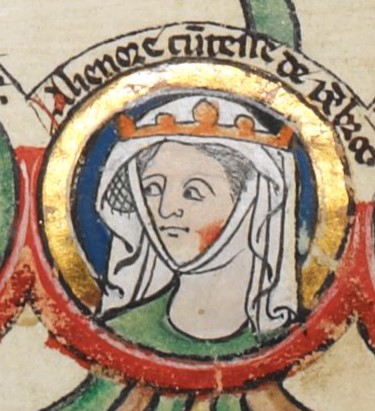
Eleanor of England, Countess of Leicester

The Liberate Rolls are the records of the writs ordering money to be paid out of the treasury. The work of the treasurer was varied and often hands-on. Most often, Philip Lovell was the person to authorise the payment. For example when the sheriffs of London were to be repaid for the lead they had purchased for building works in Windsor and on another occasion for the transport of the gear of the king’s pavilion in Westminster to Portsmouth. On other occasions the sheriff of Surrey and Sussex had transported the king’s treasure from London to Portsmouth. The sheriff of Kent was paid back the money he had spent on the reception of the Barsias Martini, the elect of Toledo and his household in Dover and on their travels to the New Temple in London.

Money was also paid out to Eleanor of England, Countess of Leicester for her dower. In 1256, Philip Lovell received 1,600 marks from Margaret de Lascy, Countess of Lincoln, a part payment of the arrears of the money she owned as her share of the dower payments to Eleanor of England.

Philip himself was often purchasing items for the royal court. For example, he bought 30 gold-wrought cloths for Queen Eleanor or wax for the king’s children in Windsor.

The purchases also shed a light on the sheer size of the royal household. In 1253, Philip Lovell and two colleagues purchased 82 gold buckles, 277 precious rings of gold, 15 girdles, 89 ‘massive’ rings of gold, and 14 ‘massive’ buckles of gold to the tune of £250 17s. 5d. In 1254, 600 ells of linen were bought to make napkins for the feast of St Edward. Another large purchase, in 1255, was of various spices: 385 pounds of pepper, 386 pounds of ginger, 4 pounds of mace, 12 pounds of setwall (valerian), and 16 pound of sugar ‘of Alexandria’. Sheep, boars and fowl were sent from the sheriff of Buckinghamshire to Westminster for the Feast of St Edward in 1255. Wine was also bought for the king. On several occasions Philip Lovell himself bought the wine and transported it to where the royal household was at the time.

Another frequent expense was for gift of the king to a church or cleric. In 1255, for example, five gold-wrought cloths, a piece of red sandal (a light silk material), and another piece of green sandal were bought for a cloth for St Peter’s in Westminster. In 1256, Philip Lovell bought an embroidered cope to give to the church of St Edmund. A year later he bought another embroidered cope that was a gift by the king to Westminster in honour of St Edward. It was not only vestments and cloth that was given to churches, in 1257 Philip bought a gold buckle for 10 marks to give to the feretory of St Edmund of Pontigny.

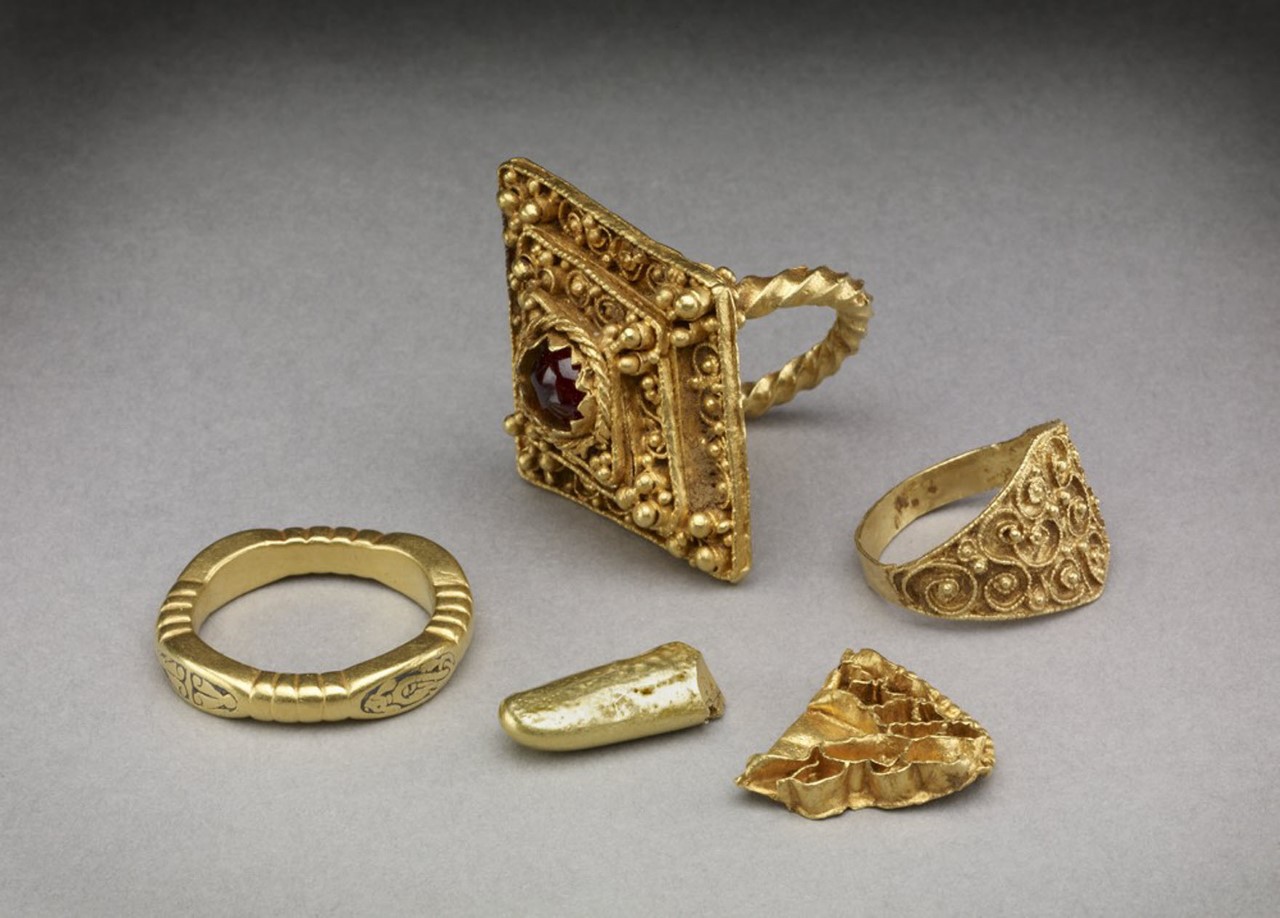
Hoard of Anglo-Saxon rings found at Leeds, West Yorkshire

For his service to the king, Philip Lovell was to be given ecclesiastical benefices, dignities or prebends to the amount of 200 marks per year. He was granted free pasture in the forest of Whittlewood and received gifts of trees on several occasions. He also often received grants of deer from the royal forests. In 1250, he simply took a hind and a doe in Sherwood Forest without asking prior permission. His pardon by the king for this offence must be regarded as a further sign of the good favour he stood in. Philip Lovell was also granted the wardship and marriage of the heirs of Vivian de Staundon.

Not all of Henry III attempts to promote his treasurer were successful. In 1257 he tried to persuade the monks of Coventry to make Philip Lovell bishop of Lichfield and Coventry but without success.

In the late 1250s, the dissatisfaction of the barons of England increased and with the charismatic leadership of Simon de Montfort, Earl of Leicester the demands for changes in the government grew louder. Philip Lovell was one of the men they wanted to remove from office. He had been too harsh in his attempts to find revenue for the treasury, as in 1255 when he was making an inquiry into the king’s revenues and rights in eight midland counties. Simon de Montfort had his private complaints against the king and his treasurer as the payments of his wife’s dower were a constant problem. The critics were eventually successful. Philip Lovell was accused of plundering the forest of Whittlewood, charges that were trumped up according to Nicholas Vincent in his biography of Philip Lovell in the ODNB. Nonetheless, Philip was dismissed from service and replaced by John de Crachale, archdeacon of Bedford.

Philip Lovell retired to Hanslope where he died on 29 December 1258 of grief that the king, whom he had served so faithfully, would not forgive him. His estates, which included lands in Little Brickhill (Buckinghamshire), Littlebury (Essex), and Snotescombe (Northamptonshire), were at first confiscated but later divided between his three children and his nephew John Lovell II.

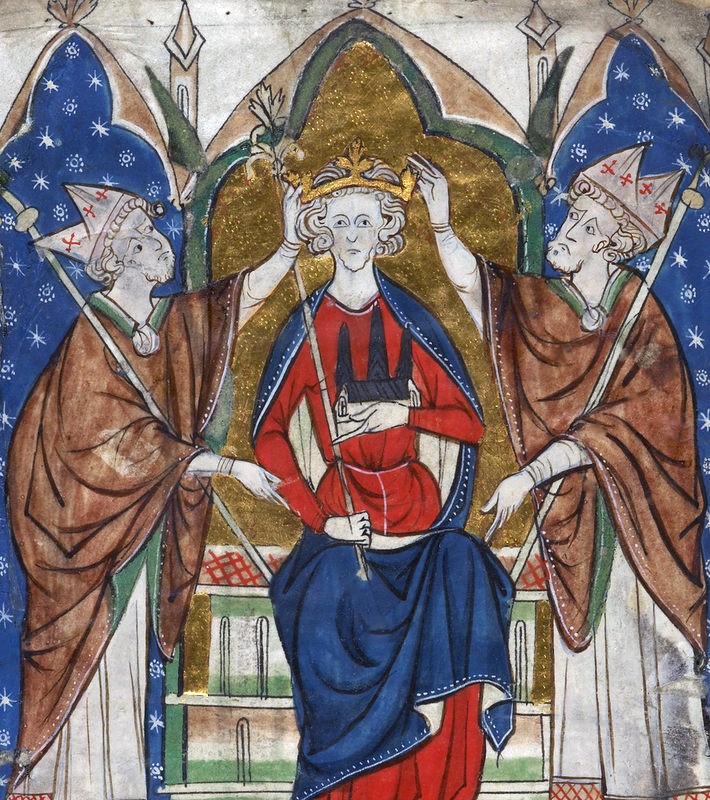
Coronation of King Henry III

Philip Lovell was a controversial figure. He lost his position as he was thoroughly disliked by many barons. Being responsible for collecting taxes and guarding the king’s financial rights and income is, if done thoroughly, not a job that is likely to make a person popular with those whose money he took. Modern historians are also critical. J.R. Maddicot describes him as ‘a man with a bad reputation for corrupt and oppressive behaviour’. Matthew Paris by contrast calls him a prudent, eloquent and magnanimous man.

Philip Lovell’s nephew, John Lovell II also entered royal service though he choose the more traditional route for a noblemen: service in war. It is possible that his uncle’s position at court helped him in this respect. However, John Lovell II’s maternal uncles, the Bassets, were a stronger influence that his paternal uncle Philip. Several brothers of John Lovell II’s mother Katherine were high-ranking members of the royal administration. The fact that John Lovell II decided to adapt the Basset coat of arms to become that used by the Lovell family speaks for a close link between the two families.

Images:

Church of England parish church of St James the Great, Hanslope, Buckinghamshire, seen from the southwest
(John Salmon / St James the Great, Hanslope, Bucks via Wikimedia Commons) https://commons.wikimedia.org/wiki/File:St_James_the_Great,_Hanslope,_Bucks_-_geograph.org.uk_-_333065.jpg

Steel engraving and enhancement of the Great Seal of Alexander II, King of Alba (Scotland) (Unknown author, Public domain, via Wikimedia Commons) https://commons.wikimedia.org/wiki/File:Alexander_II_(Alba)_i.JPG

Eleanor of England, Countess of Leicester (Unknown author, Public domain, via Wikimedia Commons)
https://commons.wikimedia.org/wiki/File:Alienor_Pembroke.jpg

Hoard of Anglo-Saxon rings found at Leeds, West Yorkshire (portableantiquities, CC BY 2.0 <https://creativecommons.org/licenses/by/2.0&gt;, via Wikimedia Commons)

Coronation of King Henry III (Unknown author, Public domain, via Wikimedia Commons) https://commons.wikimedia.org/wiki/File:HenryIII.jpg

About the Author:

Monika E. Simon studied Medieval History, Ancient History, and English Linguistics and Middle English Literature at the Ludwig-Maximilians-Universität, Munich, from which she received an MA. She wrote her DPhil thesis about the Lovells of Titchmarsh at the University of York. She lives and works in Munich.

Links:
https://www.pen-and-sword.co.uk/From-Robber-Barons-to-Courtiers-Hardback/p/19045
https://www.facebook.com/MoniESim
http://www.monikasimon.eu/lovell.html

*

My Books

Defenders of the Norman Crown: The Rise and Fall of the Warenne Earls of Surrey tells the fascinating story of the Warenne dynasty, of the successes and failures of one of the most powerful families in England, from its origins in Normandy, through the Conquest, Magna Carta, the wars and marriages that led to its ultimate demise in the reign of Edward III.

1 family. 8 earls. 300 years of English history!

Defenders of the Norman Crown: Rise and Fall of the Warenne Earls of Surrey is now available from Pen & Sword BooksAmazon in the UK and US and Book Depository.

Also by Sharon Bennett Connolly:

Ladies of Magna Carta: Women of Influence in Thirteenth Century England looks into the relationships of the various noble families of the 13th century, and how they were affected by the Barons’ Wars, Magna Carta and its aftermath; the bonds that were formed and those that were broken. It is now available from Pen & Sword,  Amazon and from Book Depository worldwide.

Heroines of the Medieval World tells the stories of some of the most remarkable women from Medieval history, from Eleanor of Aquitaine to Julian of Norwich. Available now from Amberley Publishing and Amazon and Book Depository.

Silk and the Sword: The Women of the Norman Conquest traces the fortunes of the women who had a significant role to play in the momentous events of 1066.  Available now from Amazon,  Amberley Publishing, Book Depository.

*

You can be the first to read new articles by clicking the ‘Follow’ button, liking our Facebook page or joining me on Twitter and Instagram.

©2021 Sharon Bennett Connolly

Introducing the Earls of Warenne and Surrey

Books by Sharon Bennett Connolly
William de Warenne, 1st Earl of Warenne and Surrey, Trinity Church, Southover

The Warenne earls of Surrey were a fascinating family, right at the heart of English history and politics for almost 300 years, from the time of the Norman Conquest to the reign of Edward III. They held lands throughout England, acted as justiciars, sheriffs and generals – and yet, few people know their story.

But who were they?

William I de Warenne was rewarded for his support of King William II in the 1088 rebellion with the earldom of Surrey. However, the earls thereafter were as often referred to as the earls of Warenne – or the familial Earl Warenne, rather than earls of Surrey. The earldoms of Sussex and Strathearn (Scotland) were later added to these titles. As they appear to have preferred the simple familial title of Earl Warenne, that is how I have chosen to refer to them, except when establishing their titles. The Warenne’s extensive lands were spread over 13 counties and spanned the country from Lewes on the south coast to their castles of Conisbrough and Sandal in Yorkshire, with their family powerbase in East Anglia, where they built a magnificent priory, castle and medieval village at Castle Acre.

Wakefield, including Sandal Castle, appears to have come into the hands of the Warenne family at some point before 1121, during the tenure of the 2nd Earl Warenne. It is possible that they were acquired possibly in an exchange of lands with William Meschin, who had taken control of the Warenne holdings of Kimbolton in Huntingdonshire and Dean in Bedfordshire some time before 1130.

The family mausoleum was at St Pancras Priory in Lewes, founded by the first earl and his wife, Gundrada. It is the burial place of all but two subsequent earls and numerous other family members, as well as several earls of Arundel and their countesses.

For almost 300 years the Warenne earls of Surrey were some of the most influential men in the country, but the family died out rather ingloriously, with the seventh – and last – earl’s marital difficulties. Despite a prestigious marriage to a granddaughter of the king of England, John de Warenne, 7th Earl Warenne, died with no legitimate son to succeed him, though he had numerous acknowledged illegitimate children to whom he had given the family name.

Books by Sharon Bennett Connolly
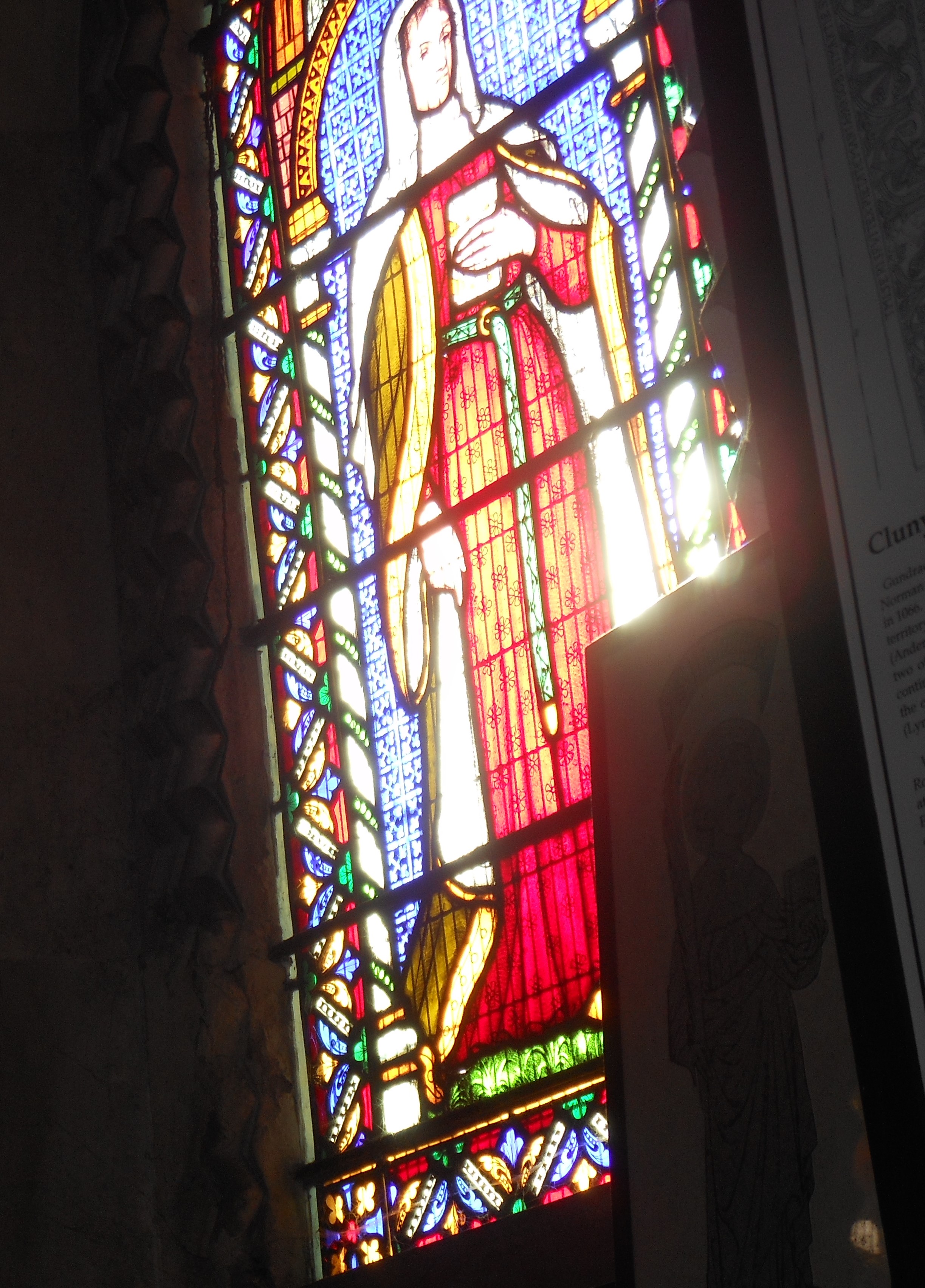
Gundrada de Warenne, wife of the 1st earl

The first Warenne earl, William de Warenne, Earl of Warenne and Surrey, came to England with William the Conqueror’s invasion force and fought at the Battle of Hastings in 1066. As a younger son, he had little hope of an inheritance and had acquired his fortune and reputation fighting for the duke of Normandy, making his name as a young man at the 1054 Battle of Mortemer.

The Warennes were at the heart of English history and politics from the time of the Conquest to the death of John de Warenne, the 7th and last earl in 1347

So who were the Warenne earls?

Briefly,

William de Warenne was a distant cousin of William the Conqueror and fought at the Battle of Hastings. William was a trusted advisor and companion of King William I and was appointed justiciar in England during the king’s absences in Normandy. He pursued a personal feud against English freedom fighter, Hereward the Wake, after Hereward murdered his brother-in-law, Frederic. William was created Earl of Surrey by King William II, just weeks before his death in 1088, having been fatally wounded at the siege of Pevensey. William and his wife, Gundrada, founded the first Cluniac priory in England, St Pancras, at Lewes in Sussex. It would become the family mausoleum. William and Gundrada’s coffins were found in the 19th century, when the railway line was being laid, and are now interred in the Gundrada Chapel of Trinity Church, Southover.

Books by Sharon Bennett Connolly
The Warenne coat of arms, adopted by William de Warenne, 2nd Earl of Warenne and Surrey

He was succeeded by his oldest son, William II de Warenne (it was a popular name) who was earl for 50 years. This William had an awkward relationship with Henry I – William was thwarted in love by Henry when they both set their sights on the same woman, Matilda of Scotland. William supported Robert Curthose’s claim for the throne against Henry, but was persuaded to abandon the duke of Normandy in favour of the king of England after the former’s failed attempt to invade England led to Earl Warenne’s lands being confiscated by King Henry. From that moment on Earl Warenne was loyal to Henry and gave a rousing speech in favour of King Henry before the 1119 Battle of Bremule. He married Isabel de Vermandois, granddaughter of King Henry I of France and widow of Robert, Earl of Leicester. The relationship caused some scandal as one chronicler suggests Isabel and William ran away together, before Isabel’s first husband was dead. William’s royal ambitions would be realised when his daughter, Ada de Warenne, married Prince Henry of Scotland in 1139; William’s grandsons, Malcolm IV and William the Lion, both succeeded to the Scottish throne.

The 3rd earl fought on the wrong side (in my opinion) during the Anarchy; he supported King Stephen, rather than Empress Matilda. Also named William, he and his forces were ignominiously routed at the 1141 Battle of Lincoln, leaving King Stephen to be captured by Earl Robert of Gloucester. Earl Warenne redeemed himself by capturing the same Earl Robert during the Rout of Winchester in the summer of 1141, thus facilitating and exchange of commanders that saw King Stephen’s release from imprisonment at Bristol Castle. Perhaps growing tired of the constant civil war, in 1147 the earl left on the Second Crusade with his half-brother, Waleran de Beaumont, Count of Meulan, led by the brothers’ second cousin, Louis VII, and his wife, Eleanor of Aquitaine. Earl William was killed at the age of 28 at the Battle of Mount Cadmus in January 1148, leaving the earldom to his young daughter, Isabel.

Books by Sharon Bennett Connolly
Seal of Isabel de Warenne, 4th Countess of Warenne and Surrey in her own right

The 4th earl. Now this is where the subsequent numbering of earls gets confusing. There were two 4th earls, though some history books count them as the 4th and 5th earls. The earldom actually belonged to Isabel. Isabel de Warenne was 4th Countess of Warenne and Surrey in her own right. Her first husband, William of Blois (the first 4th earl), was the youngest son of King Stephen and her second husband, Hamelin Plantagenet (the second 4th earl), was the illegitimate half-brother of King Henry II; a thoroughly modern Hamelin changed his name from Plantagenet to de Warenne on marrying Isabel. The first marriage produced no children, which was a stroke of luck for Henry II, as William of Blois could have founded a royal dynasty to rival the mighty Plantagenets. The second marriage proved more fruitful, with three daughters and a son. Hamelin was a loyal supporter of his brother, Henry II, and nephews, Richard I and King John – despite the fact John seduced one of Hamelin’s daughters, fathering an illegitimate child with her. Hamelin also built the magnificent keep at Conisbrough Castle, South Yorkshire.

Their son, William de Warenne, the 5th Earl, was first cousin to both King Richard I and King John. He probably grew up in Normandy, and served with King Richard in France in the 1190s. William played an active role in English politics, negotiating with the rebels on John’s behalf in Spring 1215, attempting to avert civil war. He was a signatory of the Magna Carta in 1215 and again on its reissue in 1225; he was one of the few surviving earls to have witnessed both issues of the charter. He did side with the rebel barons and their French allies, for a time, but returned to the fold following King John’s death in October 1216. He then helped to negotiate the peace, in September 1217, which saw the French Prince Louis give up his claim to England and return home. He married Matilda Marshal, daughter of the great William Marshal, Earl of Pembroke and regent of England for the first few years of Henry III’s reign. The couple had two children; their daughter, Isabel d’Aubigny, Countess of Arundel, became famous for berating King Henry III over the appropriation of a wardship that was rightfully hers.

Books by Sharon Bennett Connolly
Seal of John de Warenne, 6th Earl of Warenne and Surrey

John de Warenne, the 6th earl, was the longest serving earl of them all, holding the title for 64 years. His father died when he was 8 years old. Henry III became his brother-in-law when he married the king’s half-sister, Alice de Lusignan, daughter of Queen Isabella of Angouleme and her second husband, Hugh X de Lusignan. The marriage was a happy one and, as far as we can tell, the couple truly loved each other; following Alice’s death in childbirth, John did not take another wife. John de Warenne fought in the Second Barons’ War and was a close associate of the future king, Edward I. He was at the Battle of Lewes in 1264, fighting for King Henry III against Simon de Montfort, but escaped to the continent when the battle was lost. John was probably at Evesham for the defeat and death of Simon de Montfort, though his presence is not recorded; he was certainly with Henry III’s son, Edward, in the days before the battle. His daughter, Isabella, was married to John Balliol, King of Scots, and the mother of Edward Balliol, who pursued his own claim to the Scottish throne in the 1330s. John was guardian of Scotland for a time and lost the Battle of Stirling to William Wallace in 1298. John de Warenne was a brutal man with a sense of humour; he once claimed the rights to all the rabbit warrens in Surrey – because it was his name! His son, William de Warenne, had died during a tournament in 1286, so when John died in 1304, aged 72, he was succeeded by his 18-year-old grandson, John II de Warenne.

Books by Sharon Bennett Connolly
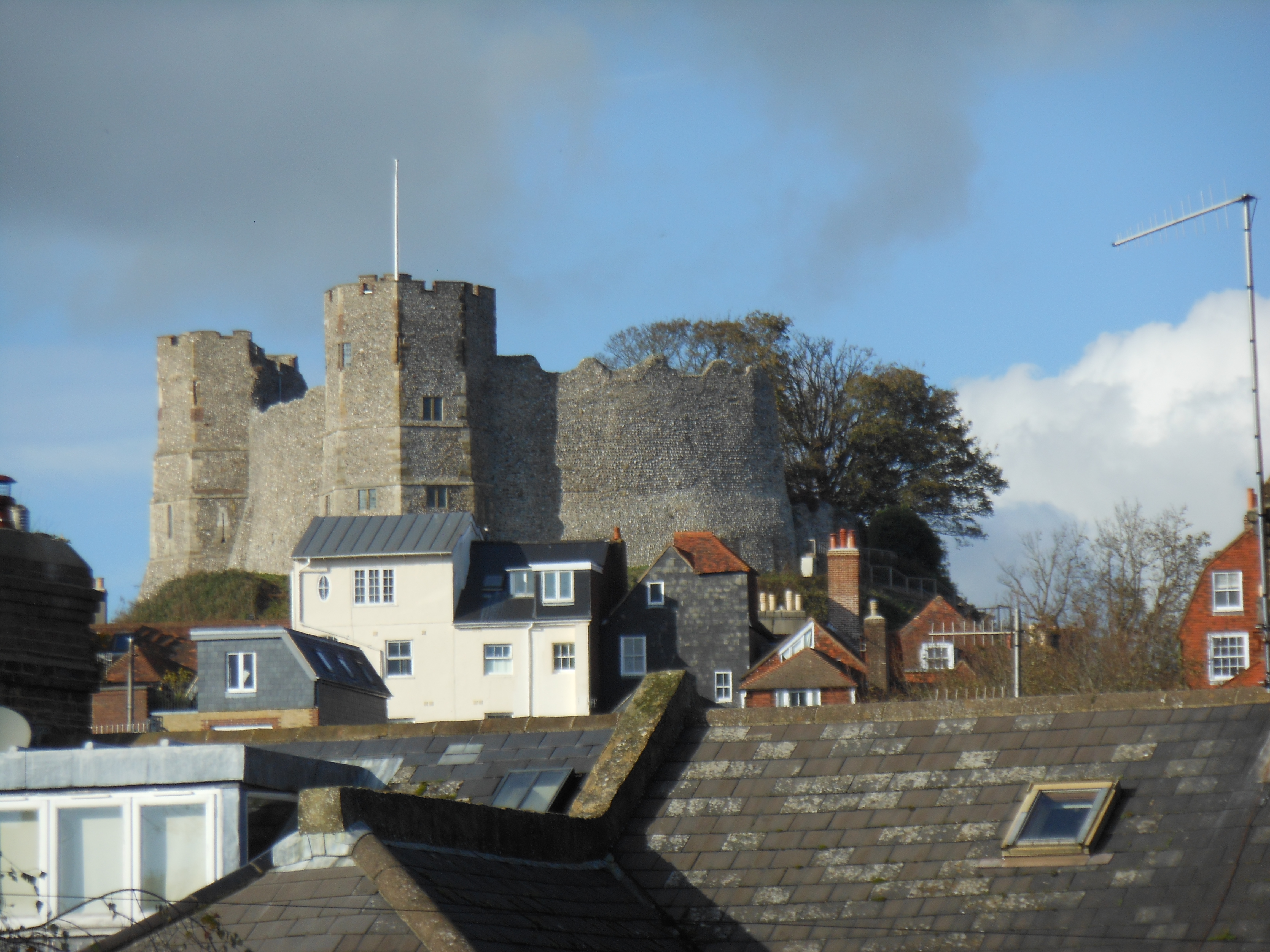
Lewes Castle, Sussex, seat of the earls of Warenne and Surrey

John II de Warenne, the 7th and last earl of Warenne and Surrey, spent most of his adult life trying to divorce his wife, Jeanne de Bar (Joan of Bar), a granddaughter of King Edward I, in order to marry his mistress. He made various claims to try and effect a divorce, including that he had had an affair with his wife’s aunt, Mary of Woodstock, who had been a nun from the age of 7. John was embroiled in a private – but very public – feud with Thomas of Lancaster, Edward II’s most powerful vassal, and even went so far as kidnapping Lancaster’s wife, Alice de Lacey. In retaliation, Lancaster seized the Warenne castles of Conisbrough and Sandal, both being close to his own castle of Pontefract. The castles were only restored to John after Lancaster’s execution following his defeat at the Battle of Boroughbridge, in 1322. John was involved in many of the events that shaped the reign of Edward II, though he did not fight in the 1314 English defeat by the Scots at the Battle of Bannockburn. He supported Edward II to the end – almost, only adding his to support to Isabella of France and the future Edward III, when he saw that the king’s cause was hopeless. He died in 1347 at Conisbrough, still married to Jeanne de Bar and with no legitimate heir to succeed him. The earldom passed to his nephew, Richard FitzAlan, Earl of Arundel, but the Yorkshire lands, including Conisbrough and Sandal castles, passed to the crown and were given to Edward III’s fourth surviving son, Edmund of Langley, 1st Duke of York.

Books by Sharon Bennett Connolly
Castle Acre Priory, Norfolk, one of the Cluniac monasteries founded by the Warenne earls

And that is just a – very – brief summary of the earls.

The Warenne family has a fascinating history, standing at the heart of English politics for the better part of 3 centuries. They had a family bond that is not always found amongst the aristocracy, with brothers and sisters helping and supporting each other and working for the benefit of their family. Strategic marriages forged links with the greatest families in England, Scotland and France; their family connections spanned the greatest noble houses, from the Marshals, the FitzAlans, the Lusignans, the d’Aubignys and Percys to the Scottish, French and English royal families.

One family, over 8 generations, the Warennes were at the centre of 300 years of English history.

*

Selected Sources:

Elisabeth Van Houts, Hereward and Flanders (article), Anglo-Saxon England vol. 28; A History of the County of Sussex: Volume 2 edited by William Page; W.H. Blaauw, On the Early History of Lewes Priory, and its Seals, with extracts from a MS. Chronicle, Sussex Archaeological Collections; Edward Impey, Castle Acre Priory and Castle, English Heritage; Warenne, Gundrada de (d.1085) (article) by C.P. Lewis, Oxforddnb.com; Elisabeth M.C. Van Houts and Rosalind C. Love (eds and trans), The Warenne (Hyde) Chronicle; Jeffrey James, The Bastard’s Sons: Robert, William and Henry of Normandy; Early Yorkshire Charters Volume 8 Edited by William Farrer and Charles Travis Clay; Rev. John Watson, Memoirs of the Ancient Earls of Warren and Surrey, and Their Descendants to the Present Time, Volume I; Alfred S. Ellis, Biographical Notes on the Yorkshire Tenants Named in Domesday Book (article); C.P. Lewis, Warenne, William de, first Earl of Surrey [Earl Warenne] (d. 1088) (article), Oxforddnb.com; The Oxford Companion to British History Edited by John Cannon; The Plantagenets, the Kings who Made England by Dan Jones; History Today Companion to British History Edited by Juliet Gardiner and Neil Wenborn;  Brewer’s British Royalty by David Williamson; Britain’s Royal Families, the Complete Genealogy by Alison Weir; Conisbrough Castle Giudebook by Steven Brindle and Agnieszka Sadraei; The Mammoth Book of British Kings and Queens by Mike Ashley; The Plantagenets, the Kings that made Britain by Derek Wilson; royaldescent.net; F. Royston Fairbank, ‘The Last Earl of Warenne and Surrey, and the Distribution of his Possessions’, The Yorkshire Archaeological Journal, vol. XIX; Scott L. Waugh, ‘Warenne, John de, seventh earl of Surrey earl of Surrey and Sussex, Earl Warenne’, ODNB; ‘Annals written by a certain monk of Lewes, from the birth of Christ to the year 1312’ quoted in Blaauw, On the Early History of Lewes Priory; Kelcey Wilson-Lee, Daughters of Chivalry: The Forgotten Children of Edward I; Katheryn Warner, Philippa of Hainault: Mother of the English Nation

*

My Books:

Signed, dedicated copies of all my books are available through my online store.

Out now: Scotland’s Medieval Queens

Books by Sharon Bennett Connolly

Scotland’s history is dramatic, violent and bloody. Being England’s northern neighbour has never been easy. Scotland’s queens have had to deal with war, murder, imprisonment, political rivalries and open betrayal. They have loved and lost, raised kings and queens, ruled and died for Scotland. From St Margaret, who became one of the patron saints of Scotland, to Elizabeth de Burgh and the dramatic story of the Scottish Wars of Independence, to the love story and tragedy of Joan Beaufort, to Margaret of Denmark and the dawn of the Renaissance, Scotland’s Medieval Queens have seen it all. This is the story of Scotland through their eyes.

Scotland’s Medieval Queens gives a thorough grounding in the history of the women who ruled Scotland at the side of its kings, often in the shadows, but just as interesting in their lives beyond the spotlight. It’s not a subject that has been widely covered, and Sharon is a pioneer in bringing that information into accessible history.’ Elizabeth Chadwick (New York Times bestselling author)

Available now from Amazon and Pen and Sword Books

Also by Sharon Bennett Connolly:

Books by Sharon Bennett Connolly

Heroines of the Tudor World tells the stories of the most remarkable women from European history in the time of the Tudor dynasty, 1485-1603. These are the women who ruled, the women who founded dynasties, the women who fought for religious freedom, their families and love. Heroines of the Tudor World is now available from Amberley Publishing and Amazon UK. Women of the Anarchy demonstrates how Empress Matilda and Matilda of Boulogne, unable to wield a sword themselves, were prime movers in this time of conflict and lawlessness. It shows how their strengths, weaknesses, and personal ambitions swung the fortunes of war one way – and then the other. Available from Bookshop.orgAmberley Publishing and Amazon UKKing John’s Right-Hand Lady: The Story of Nicholaa de la Haye is the story of a truly remarkable lady, the hereditary constable of Lincoln Castle and the first woman in England to be appointed sheriff in her own right. Available from all good bookshops Pen & Sword Booksbookshop.org and Amazon

Royal Historical Society

Defenders of the Norman Crown: The Rise and Fall of the Warenne Earls of Surrey tells the fascinating story of the Warenne dynasty, from its origins in Normandy, through the Conquest, Magna Carta, the wars and marriages that led to its ultimate demise in the reign of Edward III. Available from Pen & Sword BooksAmazon in the UK and US, and Bookshop.orgLadies of Magna Carta: Women of Influence in Thirteenth Century England looks into the relationships of the various noble families of the 13th century, and how they were affected by the Barons’ Wars, Magna Carta and its aftermath; the bonds that were formed and those that were broken. It is now available in paperback and hardback from Pen & SwordAmazon, and Bookshop.orgHeroines of the Medieval World tells the stories of some of the most remarkable women from Medieval history, from Eleanor of Aquitaine to Julian of Norwich. Available now from Amberley Publishing and Amazon, and Bookshop.orgSilk and the Sword: The Women of the Norman Conquest traces the fortunes of the women who had a significant role to play in the momentous events of 1066. Available now from Amazon,  Amberley Publishing, and Bookshop.org.

Alternate Endings: An anthology of historical fiction short stories including Long Live the King… which is my take what might have happened had King John not died in October 1216. Available in paperback and kindle from Amazon.

Podcast:

A Slice of Medieval

Have a listen to the A Slice of Medieval podcast, which I co-host with Historical fiction novelist Derek Birks. Derek and I welcome guests, such as Bernard Cornwell and Michael Jecks, and discuss a wide range of topics in medieval history, from significant events to the personalities involved. 

Every episode is also now available on YouTube.

*

Don’t forget! Signed and dedicated copies of all my books are available through my online store.

For forthcoming online and in-person talks, please check out my Events Page.

You can be the first to read new articles by clicking the ‘Follow’ button, liking our Facebook page or joining me on TwitterThreadsBluesky and Instagram.

*

©2021 Sharon Bennett Connolly FRHistS

Guest Post: Trial by Combat – Rough Justice by Toni Mount

It is an absolute pleasure to welcome author and historian Toni Mount back to the blog, with an article based on her research for her latest non-fiction book, How to Survive in Medieval England. Toni has a wonderful way with words to the extent that her books – fiction and non-fiction alike – are a pure pleasure to read.

So, without further ado, it is over to Toni:

Trial by Combat – Rough Justice

My new book, How to Survive in Medieval England, published by Pen & Sword, is a guide to travelling in history: what to expect, how to dress, how to stay safe and what to look for on the menu.

If you were able to go back in time to medieval England, so much would be very different and so many things missing – all technology, from engines to the Internet. All work would be done by hand. In medieval England, the law sometimes works quite differently from the way we expect today. Trial by Ordeal was a means of deciding who was innocent and who was guilty. A suspect or the accused would be taken to a church and with a priest presiding, subjected to one of a number of horrific acts.

Trial by Fire – a priest (centre) blesses the ordeal as the accused (left) takes the red-hot iron in hand.
[Readers may note the accused wears ‘motley’ – parti-coloured cloth – a sure sign of untrustworthiness.’

A favourite was Trial by Fire. In this case, a piece of iron was heated to red-hot in a brazier and the accused had to remove the metal from the fire – by hand! His burns would be bandaged and left for a week. When inspected by the priest at the end of seven days, if they were healing well this was God’s decision and the accused was innocent. But if the burns were septic and weeping, that was also God’s doing and proved the accused was guilty because God was not on his side.

Trial by Water could be similar with the accused having to plunge his hand into a cauldron of boiling water. Or, an alternative Ordeal by Water involved throwing the accused into a pond or river, though this one always seems most unfair to me. If the accused sank and, therefore, probably drowned, he was innocent because the water, having been blessed by a priest, ‘accepted’ him. If he floated, he was guilty because the blessed water refused him. In which case, he would be hanged, so he died either way.

Another method was Trial by Combat in which the accuser and the accused fought it out with weapons. God would cause whoever was telling the truth to win the battle.

In 1249, a gang of thieves was terrorising Winchester, Salisbury and Guildford, specialising in stealing expensive clothing and shoes. The gang was often violent and, although folk in the area knew who they were, they were too scared to accuse them.

Top right corner – Walter (left) fighting Hamo (right) and Hamo (top centre) being hanged after he lost
[https://blogs.loc.gov/law/2018/09/judicial-combat-barbarous-relic-or-timeless-litigation-strategy/]

In my new book, I include some imagined interviews with real people of the time as a means of telling about true aspects or incidents in their lives. Let’s speak to Walter Blowberme, a member of this notorious gang of thieves:

‘Now Walter, you were caught in the act, I believe, and admitted your crimes. Tell us what you did.’

‘Well, see, we stoled all this valuable stuff, didn’t we? Good cloth, shoes, some jewellery and silver cups. Made a fine profit ’til I got caught, filching a gold brooch. I knewed this meant a date wi’ the hangman for me so I told the sheriff I’d be an approver.’

‘What is an approver?’

‘You don’t know? What a dim-wit. It means my life’ll be spared if I telled the court the names of ten others involved in the crimes. I didn’t want t’ do it, ’cos they was my mates but a man has t’ lookout for hisself.’

‘So you snitched on your fellows. What happened then?’

‘I named six fellows from Guildford who was all members of the gang. They was all arrested, tried and condemned. I didn’t feel too bad about them ’cos I never liked most of ’em, except Tom. It was a shame about him. But I still needed another four fellows convicted to save my own neck, so I accused three from Hampshire. They wasn’t in the gang; just fellows I knowed and didn’t like much. They was found not guilty and released so I had t’ name four others as gang members. It’s a good thing I know so many folk and don’t like none of ’em. These four was nasty bits o’ work, I can tell you, but when the sheriff tried to take ’em, three managed to escape. But because they never turned up in court, they was found guilty anyway. The fourth fellow, Hamo Stare – my sister’s husband what I never liked – was brung to trial but things was so complicated, the judge offered Hamo a trial by ordeal.’

‘I thought trial by ordeal was made illegal by the Church?’

‘Don’t ask me; I’m not the judge. Anyhow, Hamo chosed trial by combat and I, as his accuser, had to be his opponent. We had wooden clubs and shields and fighted ’til we was both bloody but Hamo gave in first. The judge declared God had gived me most strength, so I must have spoke truly against Hamo. Hamo was hanged – good riddance – and I’d managed to get ten fellows convicted, so my life was spared but I got banished from the district forever ’cos I admitted being guilty of so many crimes.’

‘But you didn’t mend your ways, Walter?’

‘Nay. Couldn’t resist some silver bits, could I? I comed t’ London and just six months later I got caught, thieving a chalice and candlesticks from St Mary-le-Bow church.’

‘And this time there is no second chance for you, is there, Walter?’

‘Nay. This time it’s the gallows for me. T’morrow. Pray for me soul, won’t you?’

Judicial tests and ordeals had been abolished at an important Lateran Council meeting, held by the pope in 1215, stating that churchmen may ‘neither pronounce nor execute a sentence of death. Nor may they act as judges in extreme criminal cases, or take part in matters connected with.’ This meant trial by ordeal no longer had God’s sanction – a priest had to be present as His representative – since it was God who determined the outcome. However, obviously, such trials must have continued for at least another thirty years.

A naughty priest in the stocks along with his mistress – churchmen’s punishments were not so bad.
[https://www.historyextra.com/period/medieval/monks-sex-drink-gamble-history-pope/]

Churchmen could no longer sit in judgement but neither could they be tried in a state court. They had to be tried in church courts by their fellow clerics and a death sentence could never be past, even for murder. So, in medieval England, if anyone could prove they were a man of the cloth, or a nun, then they could, literally, get away with murder. Here’s how: only trained clerics can read Latin; so if the accused can read the Bible – always in Latin – he must be a churchman. To prove a person can read, the same passage is always required to be read aloud from the Bible: ‘Oh loving and kind God, have mercy. Have pity upon my transgressions.’ (Psalm 51, Verse 1.) This meant that any forward-thinking criminal learned this verse by heart, in Latin, even if he couldn’t read a word. It saved the necks of so many miscreants, it was known as the ‘Neck-Verse’ and got a great number of very guilty people out of trouble.

Readers can find out far more about medieval lives, meet some of the characters involved and get a ‘taste’ of the food of the time in How to Survive in Medieval England, my new book from Pen & Sword, published on 30th June 2021 and available for pre-order now on Amazon.

About the book:

How to Survive in Medieval England by Toni Mount
Pen & Sword History (30 Jun. 2021)

Imagine you were transported back to Medieval England and had to start a new life – without mobile phones, ipads, or social media. When transport meant walking or, if you’re lucky, horse-back; how will you know where you are or what to do? Where will you live? What is there to eat? What shall you wear and how can you communicate? Who can you turn to if you fall ill or are mugged in the street,? All these questions and many more are answered in this new guide book. How to Survive in Medieval England is a handy self-help guide with tips and suggestions to make your visit to the Middle Ages much more fun. Learn the rules so you don’t get into trouble or show your ignorance in embarrassing
situations and read interviews with the stars of the day, from a celebrity chef to King Richard III himself. Have an exciting visit but be sure to keep this book to hand.

About the Author

Toni Mount is a history teacher and a best-selling author of historical non-fiction and fiction. She’s a member of the Richard III Society’s Research Committee, a regular speaker to groups and societies and belongs to the Crime Writers’ Association. She writes regularly for Tudor Life magazine, has written several online courses for http://www.MedievalCourses.com and created the Sebastian Foxley series of medieval murder mysteries. Toni has a First class honours degree in history, a Masters Degree in Medieval History, a Diploma in English Literature with Creative Writing, a Diploma in European Humanities and a PGCE. She lives in Kent, England with her husband and has two grown-up sons.

Web http://www.tonimount.com

Social https://www.facebook.com/toni.mount.10/ https://twitter.com/tonihistorian https://www.instagram.com/toni.mount.10/

*

My Books

Defenders of the Norman Crown: The Rise and Fall of the Warenne Earls of Surrey tells the fascinating story of the Warenne dynasty, of the successes and failures of one of the most powerful families in England, from its origins in Normandy, through the Conquest, Magna Carta, the wars and marriages that led to its ultimate demise in the reign of Edward III.

1 family. 8 earls. 300 years of English history!

Defenders of the Norman Crown: Rise and Fall of the Warenne Earls of Surrey is now available from Pen & Sword BooksAmazon in the UK and US and Book Depository.
Also by Sharon Bennett Connolly:

Ladies of Magna Carta: Women of Influence in Thirteenth Century England looks into the relationships of the various noble families of the 13th century, and how they were affected by the Barons’ Wars, Magna Carta and its aftermath; the bonds that were formed and those that were broken. It is now available from Pen & Sword,  Amazon and from Book Depository worldwide.

Heroines of the Medieval World tells the stories of some of the most remarkable women from Medieval history, from Eleanor of Aquitaine to Julian of Norwich. Available now from Amberley Publishing and Amazon and Book Depository.

Silk and the Sword: The Women of the Norman Conquest traces the fortunes of the women who had a significant role to play in the momentous events of 1066.  Available now from Amazon,  Amberley Publishing, Book Depository.

*

You can be the first to read new articles by clicking the ‘Follow’ button, liking our Facebook page or joining me on Twitter and Instagram.

©2021 Sharon Bennett Connolly and Toni Mount

Book Launch: Defenders of the Norman Crown

In the reign of Edward I, when asked Quo Warranto ‘by what warrant he held his lands’ John de Warenne, the 6th earl of Surrey, is said to have drawn a rusty sword, claiming “My ancestors came with William the Bastard, and conquered their lands with the sword, and I will defend them with the sword against anyone wishing to seize them”

John’s ancestor, William de Warenne, 1st Earl of Surrey, fought for William the Conqueror at the Battle of Hastings in 1066. He was rewarded with enough land to make him one of the richest men of all time.

In his search for a royal bride, the 2nd earl kidnapped the wife of a fellow baron.

The 3rd earl died on crusade, fighting for his royal cousin, Louis VII of France…

For three centuries, the Warennes were at the heart of English politics at the highest level, until one unhappy marriage brought an end to the dynasty. The family moved in the highest circles, married into royalty and were not immune to scandal. Defenders of the Norman Crown tells the fascinating story of the Warenne dynasty, of the successes and failures of one of the most powerful families in England, from its origins in Normandy, through the Conquest, Magna Carta, the wars and marriages that led to its ultimate demise in the reign of Edward III.

It’s finally here!

My fourth non-fiction book, Defenders of the Norman Crown: Rise and Fall of the Warenne Earls of Surrey, comes out today in hardback in the UK – it will be released in the US and elsewhere on 6 August. Telling the remarkable story of the Earls of Warenne and Surrey, and their family, from the time of the Norman Conquest to the reign of Edward III, Defenders of the Norman Crown follows a family right at the heart of Anglo-Norman England.

1 family. 8 earls. 300 years of English history!

And here’s what early reviewers are saying:

Sharon Bennett Connolly has written an evocative narrative, highlighting the role the Warenne earls of Surrey played in the nation’s history. Her meticulous research is evident in every page, making the book both a reference guide and an immensely enjoyable read.

Kristie Dean, author of On the Trail of the Yorks and The World of Richard III

Another great read from Pen & Sword. I’m vaguely familiar with this family, so reading a book specifically about their history from inception to the end of it, was very interesting. It’s definitely one I’d like to have on my shelf to reference again in the future.

NetGalley, Caidyn Young
Warenne coat of arms

5 out of 5 stars

An impressive and long overdue publication about the earls of Surrey, the Warenne (Varenne in Normandy) and their steadfast contributions and deep loyalties to the English Crown from the heyday of the Norman Conquest and the battlefield of Hastings to the glorious reign of Edward III. Ms. Bennett Connolly has given us a solidly researched portrait of a medieval family and its successful longevity during the three long and troublesome centuries that followed the Norman establishment on the throne and the roles played by its successive and prominent members in the shadows of the crown. A colorful tapestry through all the ups and downs of medieval England, its monarchical shenanigans and its military and political restlessness. Highly recommended to anyone interested in English and European medieval history.

NetGalley, jean luc estrella

Oh my goodness, Sharon Bennett Connolly has done it again! This was the perfect romp through a medieval family! Honor, scandal, marriages, and intrigue all play into the Warrene family lines.
Beginning with William of Normandy, and going down through the Wars of the Roses, this book will read as an action-packed, give me all the information book!

I loved this one! The Warrene family was very prominent throughout the medieval history of England, and this book will dive into their past, and share everything that you could ever want to know about this ambitious family.

And if you would like to hear a little more about the Warenne earls, I presented the David Hey Memorial Lecture in 2020 as part of the Doncaster Local Heritage Festival. The lecture, Warenne: The Earls of Surrey and Conisbrough Castle, is still available to watch on YouTube.

Rebecca Hill, NetGalley

And …

To survive during the reigns of the Norman and Plantagenet Kings of England, one must understand where their loyalty and trust lied. Did they follow the crown or did they take a risk and follow those who opposed the person who wore the crown? For one family, there was no question who they were loyal to, which was the crown. The Warenne Earls of Surrey served the Kings of England from William the Conqueror to Edward III, gaining titles, prestige, and marriages that would cement their names in history books. They survived some of the most turbulent times in English history even if they did have a few scandals in their illustrious history. In Sharon Bennett Connolly’s latest non-fiction adventure, “Defenders of the Norman Crown: The Rose and Fall of the Warenne Earls of Surrey ”, she explores this family’s history that spanned over three centuries.

I would like to thank Pen and Sword Books and NetGalley for sending me a copy of this book. I have been a fan of Sharon Bennett Connolly’s books for a while now, so when I heard about this title, I knew I wanted to read it. I was going in a bit blind since I have never heard of the Warenne Earls of Surrey, but that is part of the fun of studying a new aspect of history.

The first Earl of Surrey, William de Warenne began this family’s tradition of royal loyalty as he joined William the Conqueror on his journey to England and fought alongside him to establish Norman rule at the Battle of Hastings. William’s descendants would be involved in some of the most important events of the time, from the crusades to the 1st and 2nd Baron’s Wars and the sealing of the Magna Carta. At some points, the earls would briefly switch sides if they thought the king was not in the best interest of the country, but they remained at the heart of English politics and worked hard to help guide the king and the country to become stronger.

What made the Warennes a tour de force when it came to noble families was their ability to marry well, except for the final earl and his scandalous relationships. The second earl desired to marry into the royal family, which did not happen, but his daughter, Ada de Warenne would marry William the Lion, King of Scotland. One of the daughters of Hamlin and Isabel de Warenne would be the mistress of King John and would give birth to his illegitimate son Richard of Chilham. The only woman of the family who inherited the earldom of Surrey, Isabel de Warenne, was married twice and so both of her husbands, William of Blois and Hamelin of Anjou, are considered the 4th earl of Surrey.

Connolly does a wonderful job explaining each story in de Warenne’s long history, including the minor branches of the family. I was able to understand the difference between family members who shared the same first name, (like William, John, and Isabel) but I know that others might have struggled with this aspect. I think it would have been helpful if Connolly had included either a family tree or a list of family members of the de Warennes at the beginning of this book to help readers who did struggle.

I found this particular title fascinating. The de Warenne’s were a family that proved loyalty to the crown and good marriages went a long way to cement one’s legacy in medieval England. Connolly proved that she has a passion for bringing obscure noble families to the spotlight through her impeccable research. If you want a nonfiction book of a noble family full of loyalty, love, and action, you should check out “Defenders of the Norman Crown: The Rise and Fall of the Warenne Earls of Surrey” by Sharon Bennett Connolly.

Heidi Malagisi, NetGalley and Adventures of a Tudor Nerd

David Hey Memorial Lecture

Last year, I presented the David Hey Memorial Lecture for Doncaster Heritage Festival, entitled Warenne: The Earls of Surrey and Conisbrough Castle. Just press play on the link below if you would like to watch and hear a little more about the Warennes.

Defenders of the Norman Crown: Rise and Fall of the Warenne Earls of Surrey is released in the UK today and in the US on 6 August. And it is now available from Pen & Sword BooksAmazon in the UK and US and Book Depository.

Signed copies!

If you would like a signed, dedicated copy of  Defenders of the Norman Crown: Rise and Fall of the Warenne Earls of Surrey, or any of my books, please get in touch by completing the contact me form.

Online Book Launch Event

Defenders of the Norman Crown online Book Launch!I am going to do a Zoom online talk to celebrate the launch of Defenders of the Norman Crown: Rise and Fall of the Warenne Earls of Surrey.It will be on Saturday 5th June from 7pm UK time, with a talk followed by a Q&A. Bring your own wine and cake!

If you would like to join me (please do!) then just pm me with your email address and I will send you an invite. If you would like to come along, please get in touch via the CONTACT ME form and I will send you an invite. Can’t wait to tell you all about Defenders of the Norman Crown and the Warenne earls of Surrey.

The Warenne stronghold of Conisbrough Castle

Also by Sharon Bennett Connolly:

Ladies of Magna Carta: Women of Influence in Thirteenth Century England looks into the relationships of the various noble families of the 13th century, and how they were affected by the Barons’ Wars, Magna Carta and its aftermath; the bonds that were formed and those that were broken. It is now available from Pen & Sword,  Amazon and from Book Depository worldwide.

Heroines of the Medieval World tells the stories of some of the most remarkable women from Medieval history, from Eleanor of Aquitaine to Julian of Norwich. Available now from Amberley Publishing and Amazon and Book Depository.

Silk and the Sword: The Women of the Norman Conquest traces the fortunes of the women who had a significant role to play in the momentous events of 1066.  Available now from Amazon,  Amberley Publishing, Book Depository.

*

You can be the first to read new articles by clicking the ‘Follow’ button, liking our Facebook page or joining me on Twitter and Instagram.

*

Images: ©2021 Sharon Bennett Connolly

©2021 Sharon Bennett Connolly

Book Corner: The Damask Rose by Carol McGrath

1266. Eleanor of Castile, adored wife of the Crown Prince of England, is still only a princess when she is held hostage in the brutal Baron’s Rebellion, and her baby daughter dies. Scarred by privation, a bitter Eleanor swears revenge on those who would harm her family – and vows never to let herself be vulnerable again.

As she rises to become Queen, Eleanor keeps Olwen – a trusted herbalist, who tried to save her daughter – by her side. But it is dangerous to be friendless in a royal household, and as the court sets out on crusade, Olwen and Eleanor discover that the true battle for Europe may not be a matter of swords and lances, but one fanned by whispers and spies . . .

The Damask Rose is the second book in historian and novelist Carol McGrath’s She-Wolves trilogy, giving a refreshing new appraisal of the lives of Eleanor of Provence, Eleanor of Castile and – still to come – Isabella of France. The first in the series, The Silken Rose, followed the story of Eleanor of Provence through the early years of the reign of her husband, Henry III and his struggle with Simon de Montfort. The Damask Rose continues the story through Eleanor’s daughter-in-law, Eleanor of Castile. Though each book can definitely be read as a standalone, the two novels certainly complement each other.

Carol McGrath has a wonderful, engaging writing style that draws the reader in. The Damask Rose is a pleasure to read from start to finish and really gets into the mind of Eleanor of Castile, giving a new interpretation of the queen, her experiences, her emotions and motivations.

It shows the woman behind the crown and follows the life of Eleanor from the young Castilian princess, newly arrived in England to the height of her powers as queen and landowner.

And it is a thoroughly entertaining story.

In this fantastic novel, Carol McGrath explores every aspect of Eleanor’s life and explains how the Barons’ War and Simon de Montfort’s rebellion left a lasting impression on her, so much so that she never wanted to be so vulnerable and helpless ever again.

Eleanor scanned the courtyard where her frightened people had begun to gather in family groups. A priest hurried through them clutching a large cross, his habit flapping in a sudden breeze. He crossed himself and shouted in a voice as clear as reliquary crystal, ‘You, Gilbert of Gloucester, mark this, you are excommunicate by order of our Father, the Pope. You’ll burn Hell’s fire and you’ll deserve your fate.’

Earl Gilbert turned his head away from him. Pushing Eleanor forward again, he said, ‘UP you go, my lady.’ In a heartbeat, he had hoisted her onto his horse as if she were light as a feather, and jumped up behind her. He said into her pained ear, ‘Tell them they are to obey Hugh Bigod when he enters the castle this evening. He’ll arrange an escort for your ladies and household.’

‘We have no choice,’ she called down as she managed to wriggle an arm free from Gilbert’s grip. She pointed at the crumpled scroll still lying on the earth, and shouted to her shocked steward, ‘Take it. Read it to my people. Tell them the king has been forced to sign it.’

Master Thomas ran forward and scooped up the King’s letter. He picked her veil up from the ground and handed it up to her.

‘See the King’s order is obeyed,’ she said in a grudging tone as she took possession of her veil. Gilbert thrust her sword into an empty scabbard hanging from his saddle, and slowly walked his horse forward onto the drawbridge.

She could not let this seizure of her royal person go without another protest. ‘Gilbert of Gloucester, I shall have my revenge on you,’ she barked. ‘No one treats a future queen in such a manner.’ She knew she was making a formidable enemy but she didn’t care. Her temper could be foul but she did not care about this either.

‘Lady Eleanor, when you behave as a queen should, with suitable decorum, I shall treat you as a queen,’ he quipped. ‘Until then you are no better than a harridan.’

‘Arrogant bastard,’ she said under her breath as they rode into the trees, followed by the trotting horse ridden by the squire with the ridiculous name and carrying young Simon, the Devil’s son.

That evening, she peered from her heavily guarded tent, incandescent, watching as Hgh Bigod, Earl of Norfolk, rode to take possession of Windsor Castle. Her child and ladies would be loaded like cattle into wagons the next day to begin the journey to Canterbury. Her close friend and lady-in-waiting, Joanna de Valence, married to King Henry’s own half-brother William of Pembroke, was pregnant and she, herself, had missed her courses twice.

Statues of Edward I and Eleanor of Castile, Lincoln Cathedral ©2021 Sharon Bennett Connolly 

The leading characters of the story are a wonderful, rich collection of historical personages, from Edward and Eleanor themselves to the distasteful Gilbert de Clare, and the various lords, barons and ladies who made up their court, including my very own John de Warenne, Earl of Surrey. The fictional foil to the story is a young woman, Olwen, who helps the queen with her vast knowledge of herbs and their medicinal properties. Olwen is the perfect observer to Eleanor’s life, able to watch and listen whilst escaping notice – for the most part.

Carol McGrath weaves together the known story of Eleanor’s life, through the great events that shaped it, with the fictional creation of Eleanor’s world and emotions, allowing the reader to be a fly on the wall, watching events unfold and marvelling at the sights, smells and emotions of this long lost world.

And it will play on your own emotions.

In The Damask Rose, Carol McGrath not only tells Eleanor of Castile’s story, but also looks deep into the queen’s heart, offering a scenario that would explain Eleanor’s apparent lack of maternal instinct, her need to remain at Edward’s side no matter how far he travelled, and the inter-family relationships that shaped her life. It is a window into the life of a medieval princess and queen that is hard to forget.

Carol McGrath’s portrayal of the Spanish queen is the best depiction of Eleanor of Castile that I have ever read. Beautifully written, it is so touching that it had me in tears in several places – always the sign of a good book.

To buy The Damask Rose: tinyurl.com/dk2att32

About the Author:

Carol McGrath is the author of the acclaimed She-Wolves Trilogy, which began with the hugely successful The Silken Rose and continues with the brand new The Damask Rose. Born in Northern Ireland, she fell in love with historical fiction at a young age, when exploring local castles, such as Carrickfergus, and nearby archaeological digs – and discovering some ancient bones herself. While completing a degree in history, she became fascinated by the strong women who were silenced in record, and was inspired to start exploring their lives. Her first novel, The Handfasted Wife, was shortlisted for the Romantic Novelists’ Association Awards, and Mistress Cromwell was widely praised as a timely feminist retelling of Tudor court life. Her novels are known for their intricacy, depth of research and powerful stories.

For more news, exclusive content and competitions, sign up to Carol’s newsletter at: http://www.carolcmcgrath.co.uk

Follow her on Facebook: /CarolMcGrathAuthor1

And Twitter: @CarolMcGrath

*

My books

Coming 31st May:

Defenders of the Norman Crown: The Rise and Fall of the Warenne Earls of Surrey tells the fascinating story of the Warenne dynasty, of the successes and failures of one of the most powerful families in England, from its origins in Normandy, through the Conquest, Magna Carta, the wars and marriages that led to its ultimate demise in the reign of Edward III.

Defenders of the Norman Crown: Rise and Fall of the Warenne Earls of Surrey will be released in the UK on 31 May and in the US on 6 August. And it is now available for pre-order from Pen & Sword BooksAmazon in the UK and US and Book Depository.

Also by Sharon Bennett Connolly:

Ladies of Magna Carta: Women of Influence in Thirteenth Century England looks into the relationships of the various noble families of the 13th century, and how they were affected by the Barons’ Wars, Magna Carta and its aftermath; the bonds that were formed and those that were broken. It is now available from Pen & Sword,  Amazon and from Book Depository worldwide.

Heroines of the Medieval World tells the stories of some of the most remarkable women from Medieval history, from Eleanor of Aquitaine to Julian of Norwich. Available now from Amberley Publishing and Amazon and Book Depository.

Silk and the Sword: The Women of the Norman Conquest traces the fortunes of the women who had a significant role to play in the momentous events of 1066.  Available now from Amazon,  Amberley Publishing, Book Depository.

You can be the first to read new articles by clicking the ‘Follow’ button, liking our Facebook page or joining me on Twitter and Instagram.

©2021 Sharon Bennett Connolly