Wordly Women: Catherine Hokin

History...the Interesting Bits

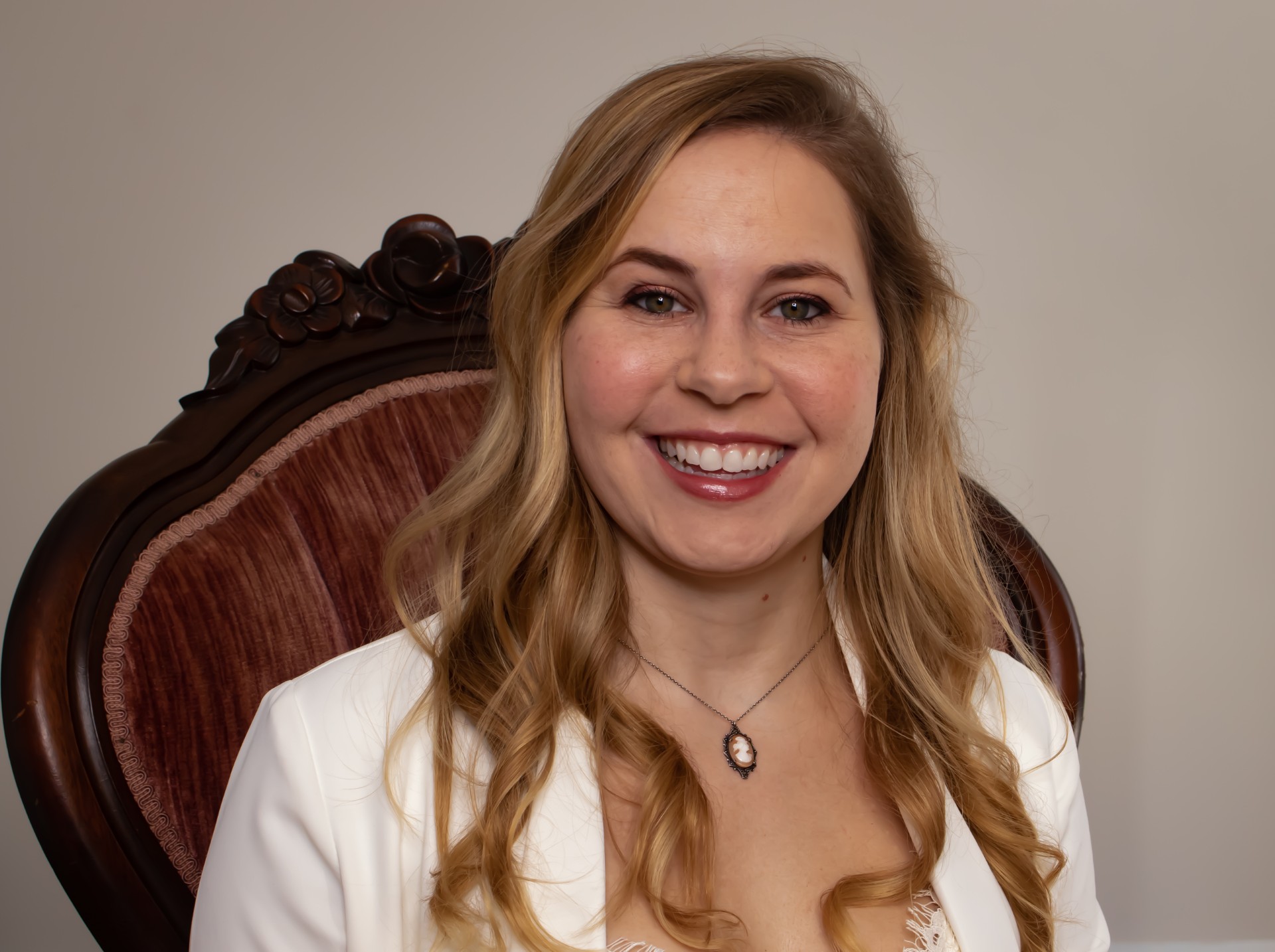
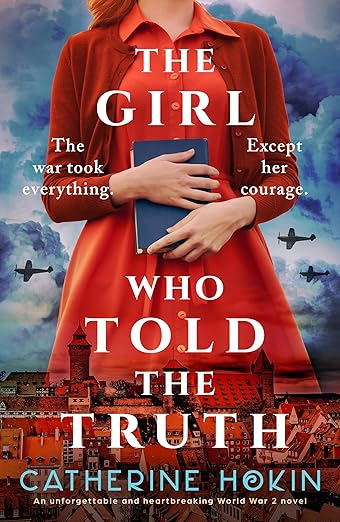
I am stepping out of my medieval comfort zone today to chat with Catherine Hokin. It is always nice to stray into other eras and see what they have to offer; Catherine is a historical fiction author who focuses on the twentieth century. Her new book, The Girl Who Told The Truth, hits the shops this week and I have included the synopsis at the end of the interview, as a little teaser for you all.

Sharon: Hi Catherine, welcome! What got you into writing?

Catherine: Like most people who become writers, I’ve always loved stories but I’ve also always been a very visual person and, when I was younger, I originally wanted to be a fashion designer. I used to spend hours drawing fabulous dresses and, I realise with hindsight, spinning stories about who would wear them. I’m still a fashion buff now, which is why my novel What Only We Know is set in the haute couture world of 1930s and 1940s Berlin and Christian Dior’s gorgeous Bar Suit makes an appearance in my new book, The Girl Who Told the Truth. Actual writing was a long burning itch for me because the demands of life made the reality of doing it impossible. I started with short stories and had some success with those and then the bug truly bit. I think it’s only since I began writing full time that I’ve realised how much I always wanted to do it. (Sharon: I know that feeling!)

Sharon: Tell us about your books.

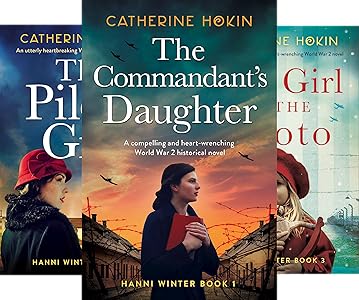
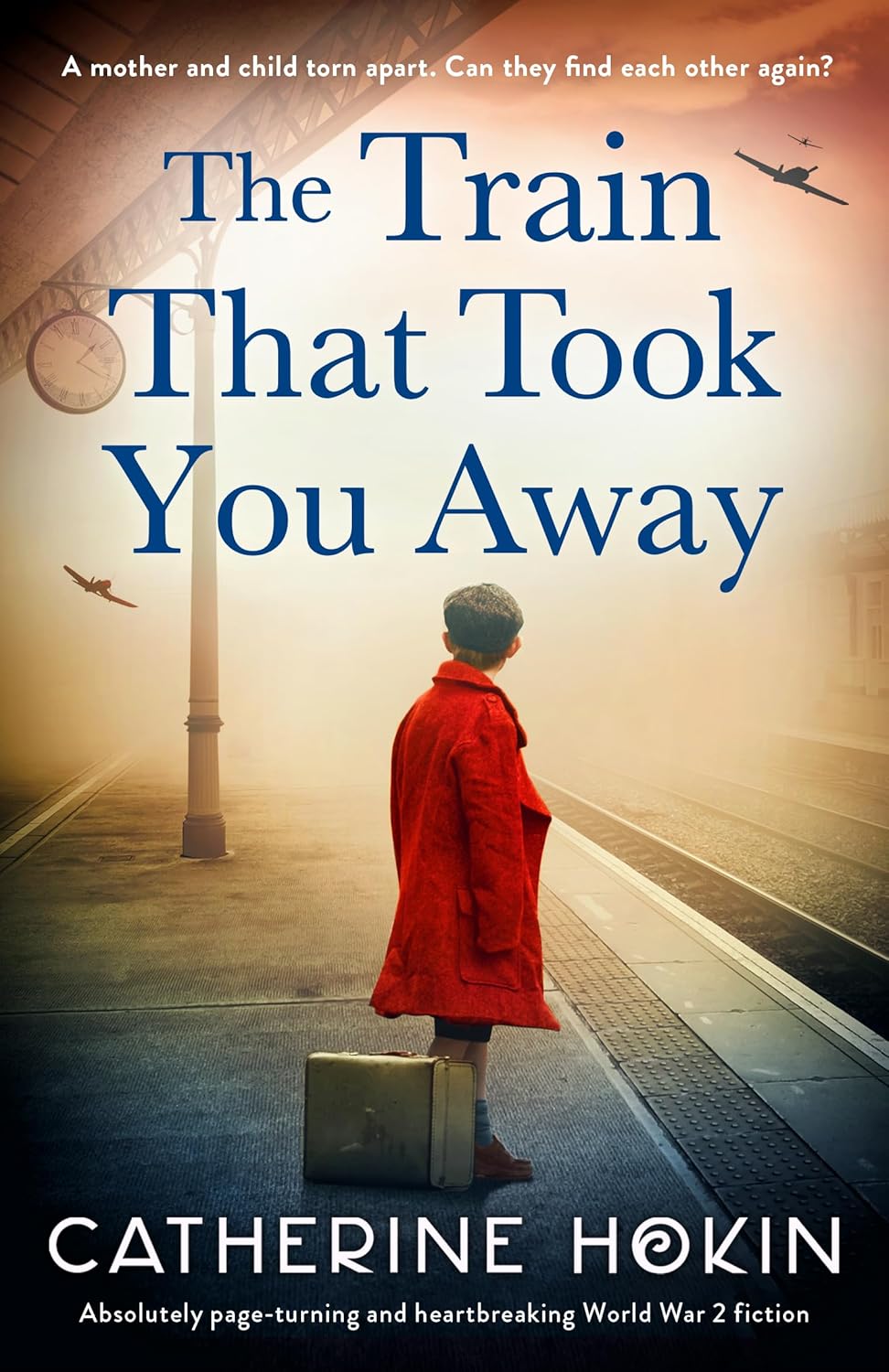
Catherine: I write historical fiction set between 1930 and 1990, so World War Two and Cold War, and set primarily in Berlin and Eastern Europe. That sounds rather niche when I write it down! My novels are about the long shadows cast by war and the impact of terrible events on ordinary people. They ask a lot of questions about the way people act, or don’t act, about where courage comes from and how we define evil. They usually have a secret or two, sometimes they are dual timeline and they frequently have a very bad character in them because they are great fun to write. Most of the twelve published to date by Bookouture (number 13, The Girl Who Told the Truth, comes out in January 2026) are stand-alones, but there is also the Hanni Winter series: four books about a young photographer and a detective, set in Berlin between 1930 and the 1950s. It’s got so many twists and it was brilliant to be able to write over such a long arc. And exhausting!

Sharon: What attracts you to the period you write in?

History...the Interesting Bits

Catherine: So many reasons. With World War Two I think it’s perhaps because my parents (who were very small children in 1939) were so marked by their experiences of the blitz in Liverpool and the difficult post war years, and I grew up in that shadow. War is also such a testing time: it brings out the best and the worst in people, and so many of those involved only talk about their experiences as they draw towards the end of their life, so we are constantly learning about it. There is also a personal element for me when it comes to the Cold War, and the Berlin Wall which features in my novels a lot. I was born in 1961, the year it went up, and my daughter was born in 1990, the year it came down. If we had lived in East Germany, our experiences would have poles apart from each other which fascinates me. Germany was also the first country I visited outside the UK and seeing the Wall when I was seventeen made a huge impression. I’ve never forgotten talking to a woman who hadn’t seen her sister for almost twenty years. They were physically less than two miles apart, but the Wall lay across that two miles and made contact impossible.

Sharon: Who is your favourite 20th century person and why?

Catherine: Oh that is a hard question as we know so much about everyone’s flaws nowadays! At the moment I would probably have to say Frieda Kahlo as I’ve recently got back from an incredible two week stay in Mexico City and I visited her house. Her courage in the face of dreadful pain was remarkable, as is her art.

Sharon: Who is your least favourite 20th century person and why?

Catherine: Another hard one with so many contenders. All the dictators aside, I think it’s the people who follow blindly and have no compassion that fall into that category for me. Again, thinking about people I’ve encountered more recently, in the research for The Girl Who Told the Truth, I would say Magda Goebbels was high on the list. Reading the accounts of her murdering her children in the bunker was tough. I’m also no fan of Diana Mosley who also appears in the novel: I find the way some of the Mitford sisters (of which she was one) have been romanticised over the years a little disturbing.

Sharon: How do you approach researching your topic?

History...the Interesting Bits

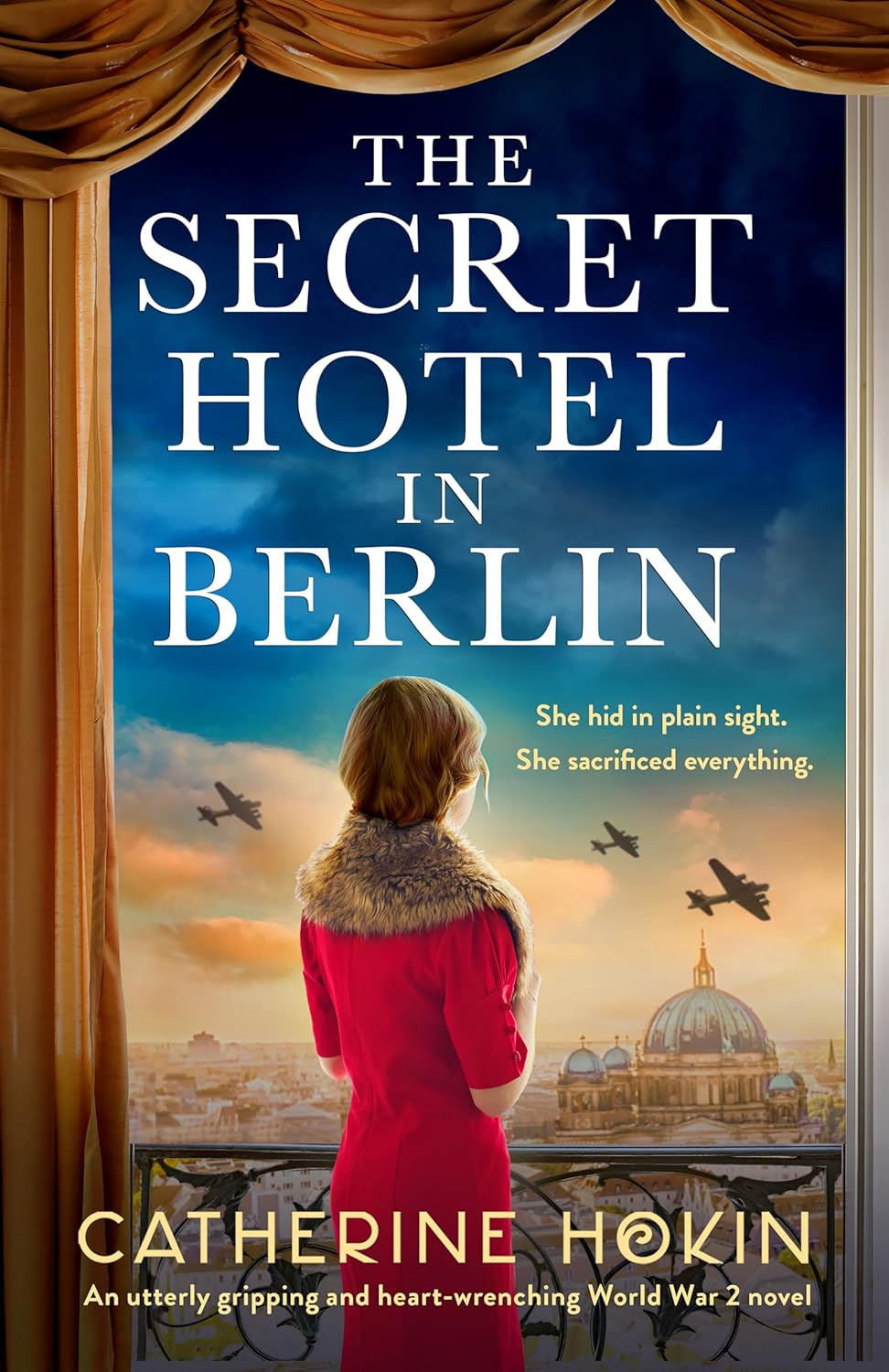
Catherine: With great joy! I love the research part, it is very varied, and I did a history degree so I feel I know what I’m doing – the skills learned then have helped me to be very disciplined so I don’t lose days down rabbit holes. In terms of time, there’s at least three solid months of nothing but research and then more ongoing bits while I’m writing. Once I have my initial idea, I do a huge resource search which includes primary and secondary sources in English and German, and also films and artworks and music, whatever is relevant. I keep detailed notes and cross-reference these to characters and plot points. I am also lucky enough to be able to visit the places I write about, so I walk in my characters’ footsteps and do a lot of photography. And I draw a lot of maps. For The Secret Hotel in Berlin, I also drew the interiors. It’s a very immersive process. And about 70% never gets used, because it’s what I need to know, not the reader…

Sharon: Tell us your ‘favourite’ 20th century story you have come across in your research.

Catherine: That has to be the story of Else Krüger, which I used as the basis for Margarete in The Girl Who Told The Truth. I first came across her via historian Mark Felton’s YouTube video, which is well worth a watch. Krüger was Martin Bormann’s secretary, and she escaped from the Berlin bunker after Hitler’s death, allegedly carrying a copy of his final testament and a bag of diamonds. She was arrested in Hamburg, taken to Nuremberg and married her interrogator before she settled in England, where she passed herself off as a Danish war bride. It’s an amazing story, but that’s where it ends – unlike the other secretaries and survivors of the bunker, Else never wrote a memoir or discussed her experiences, and the truth about the documents and the diamonds died with her. My character Margarete is, of course, fictional, but how could any writer walk away from a nugget like that?

Sharon: Tell us your least ‘favourite’ 20th century story you have come across in your research.

History...the Interesting Bits

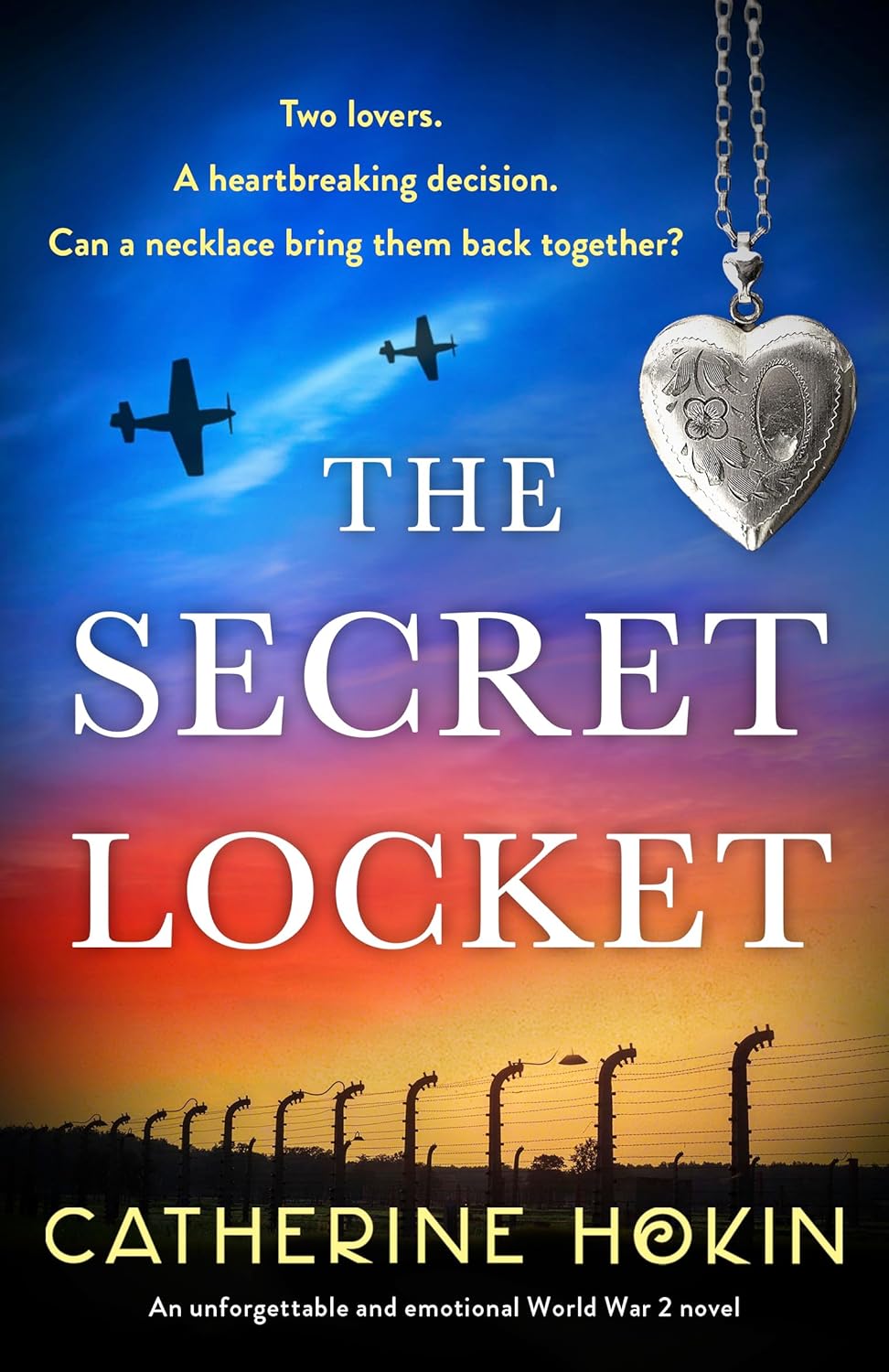
Catherine: So much of what I read and reference is deeply tragic. The experiments on female prisoners at Ravensbrook plays a part in the background to What Only We Know, the terrible fate of Warsaw and its ghetto is a key component in The Secret Locket and the T4 Euthanasia programme is part of the Hanni Winter series. All my stories have the Holocaust and the dreadful carnage of WW2 looming behind them, so I can’t choose one but I do have a cardinal rule when writing about the atrocities and that is, get in late and leave early. I don’t want to dwell on suffering, or take advantage of that to write a book. It’s better to tread lightly.

Sharon: Are there any other eras you would like to write about?

Catherine: There are! My next two novels, after The Girl Who Told the Truth, are set against the background of German involvement in the Spanish Civil War which I’ve been obsessed with for years. I’m really excited about that. And I am also fascinated by the Vietnam War, so who knows. There’s still a mass of books to be written about my current area though and I’ve plenty of new ideas.

Sharon: What are you working on now?

Catherine: My current WIP is a two part series, set in Berlin and Spain between 1934 and 1948 and due to be published in July 2026 and January 2027. It’s set against the Spanish Civil War and Germany’s involvement in that, World War Two and the story of the Nazis who fled to Spain after 1945. And it’s about a brother and a sister, a lot of lies and a terrible choice…

Sharon: And finally, what is the best thing about being a writer?

Catherine: So many things. I love that I get to spend my days weaving stories. I love the reader engagement and the fact that I can make a living out of what is essentially a dream job. I am very lucky, and happy!

About the book:

History...the Interesting Bits

The Girl Who Told The Truth: Blood surges through Annie’s veins as she stares into the cold eyes of the Nazi who hurt her mother. She knows she must finally make it right… Germany, 1946. Annie draws a deep breath, trying to stop her hands shaking as she takes notes at the Nuremberg Trials. She isn’t just here to expose the horrors the Nazis committed, she also has a personal stake. And as soon as she lays eyes on Margarete, the Nazi who destroyed her family, a flame burns bright in her to deliver justice for her mother too. Only Annie knows how dangerous Margarete truly is. Not only was she one of the last people inside Hitler’s bunker, she left there with a mission to continue his work. A mission that almost led to the murder of Annie’s mother. Now Annie must make a choice. Revealing Margarete’s true identity will also mean exposing her father’s secret relationship with the German woman. In telling the world the truth, can Annie show the world who Margarete really is? Or will speaking out betray her father and destroy her family forever? An achingly emotional page-turner about risking everything to protect those you love. Perfect for fans of Kristin Hannah, Roberta Kagan and Ellie Midwood.

Buy The Girl Who Told the Truth

About the Author:

History...the Interesting Bits

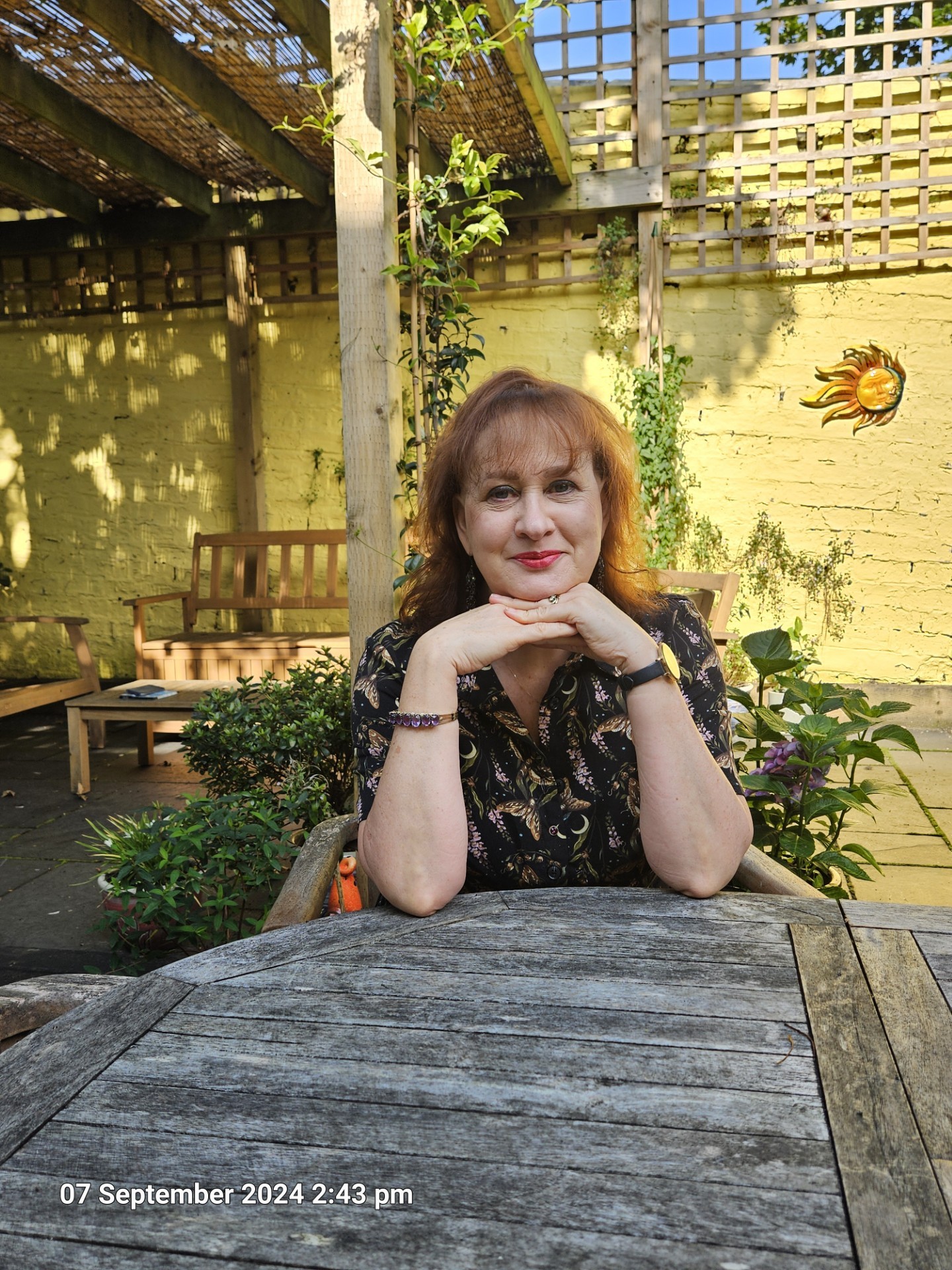
Catherine writes historical fiction set primarily in Berlin, covering the period from the 1930s up to the fall of the Berlin Wall and dealing with the long shadows left by war. The Secret Locket will be her twelfth novel with Bookouture and there are more to come. Her books have been published by Grand Central Publishing in the USA and translated into a number of languages including French, Italian and, most recently, German. She has a degree in History from Manchester University and has worked in a variety of roles from the fashion business via politics and teaching to the world of climate technology before happily becoming a full-time writer.

She is from the North of England but now lives in Glasgow with her American husband. She loves to travel and spends as much time as she can in Berlin, where her son also lives. If she’s not at her desk, you’ll find her at the cinema or just follow the sound of very loud music.

Details of all her books can be found on her Amazon page or at her website.

Social Media Links: Facebook; Instagram; bookouture (Sign up here and get a free WW2 short story, The Last Casualty)

*

My Books

Signed, dedicated copies of all my books are available through my online bookshop. or by contacting me.

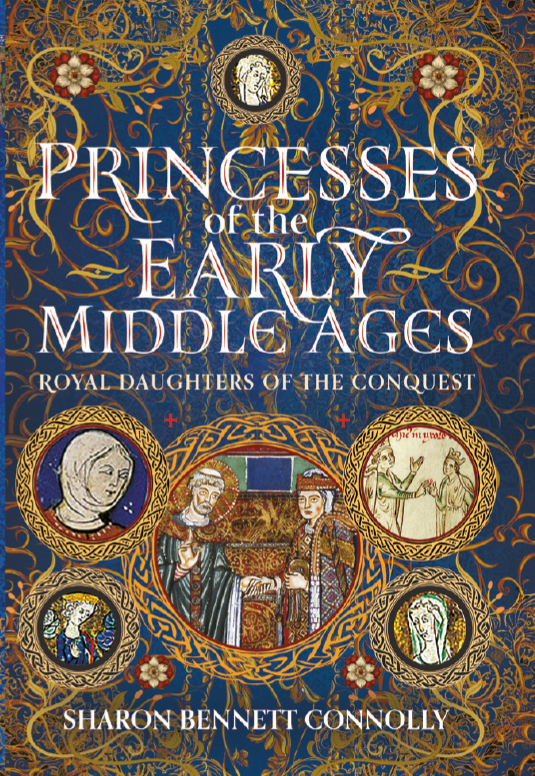
Coming 30 March: Princesses of the Early Middle Ages
Books by Sharon Bennett Connolly

Daughters of kings were often used to seal treaty alliances and forge peace with England’s enemies. Princesses of the Early Middle Ages: Royal Daughters of the Conquest explores the lives of these young women, how they followed the stereotype, and how they sometimes managed to escape it. It will look at the world they lived in, and how their lives and marriages were affected by political necessity and the events of the time. Princesses of the Early Middle Ages will also examine how these girls, who were often political pawns, were able to control their own lives and fates. Whilst they were expected to obey their parents in their marriage choices, several princesses were able to exert their own influence on these choices, with some outright refusing the husbands offered to them.

Their stories are touching, inspiring and, at times, heartbreaking.

Princesses of the Early Middle Ages: Royal Daughters of the Conquest is now available for pre-order from Pen & Sword and Amazon.

Also by Sharon Bennett Connolly:

Books by Sharon Bennett Connolly

Scotland’s history is dramatic, violent and bloody and Scotland’s Medieval Queens have seen it all. This is the story of Scotland through their eyes. Available now from Amazon and Pen and Sword BooksHeroines of the Tudor World tells the stories of the most remarkable women from European history in the time of the Tudor dynasty, 1485-1603. These are the women who ruled, the women who founded dynasties, the women who fought for religious freedom, their families and love. Heroines of the Tudor World is now available from Amberley Publishing and Amazon UK. Women of the Anarchy demonstrates how Empress Matilda and Matilda of Boulogne, unable to wield a sword themselves, were prime movers in this time of conflict and lawlessness. It shows how their strengths, weaknesses, and personal ambitions swung the fortunes of war one way – and then the other. Available from Bookshop.orgAmberley Publishing and Amazon UKKing John’s Right-Hand Lady: The Story of Nicholaa de la Haye is the story of a truly remarkable lady, the hereditary constable of Lincoln Castle and the first woman in England to be appointed sheriff in her own right. Available from all good bookshops Pen & Sword Booksbookshop.org and Amazon

Royal Historical Society

Defenders of the Norman Crown: The Rise and Fall of the Warenne Earls of Surrey tells the fascinating story of the Warenne dynasty, from its origins in Normandy, through the Conquest, Magna Carta, the wars and marriages that led to its ultimate demise in the reign of Edward III. Available from Pen & Sword BooksAmazon in the UK and US, and Bookshop.orgLadies of Magna Carta: Women of Influence in Thirteenth Century England looks into the relationships of the various noble families of the 13th century, and how they were affected by the Barons’ Wars, Magna Carta and its aftermath; the bonds that were formed and those that were broken. It is now available in paperback and hardback from Pen & SwordAmazon, and Bookshop.orgHeroines of the Medieval World tells the stories of some of the most remarkable women from Medieval history, from Eleanor of Aquitaine to Julian of Norwich. Available now from Amberley Publishing and Amazon, and Bookshop.orgSilk and the Sword: The Women of the Norman Conquest traces the fortunes of the women who had a significant role to play in the momentous events of 1066. Available now from Amazon,  Amberley Publishing, and Bookshop.org.

Alternate Endings: An anthology of historical fiction short stories including Long Live the King… which is my take what might have happened had King John not died in October 1216. Available in paperback and kindle from Amazon.

Podcast:
A Slice of Medieval

Have a listen to the A Slice of Medieval podcast, which I co-host with Historical fiction novelist Derek Birks. Derek and I welcome guests, such as Ian Mortimer, Bernard Cornwell, Elizabeth Chadwick and Scott Mariani, and discuss a wide range of topics in medieval history, from significant events to the personalities involved. 

Every episode is also now available on YouTube.

*

Don’t forget! Signed and dedicated copies of all my books are available through my online bookshop.

For forthcoming online and in-person talks, please check out my Events Page.

You can be the first to read new articles by clicking the ‘Follow’ button, liking our Facebook page or joining me on TwitterThreadsBluesky and Instagram.

*

©2025 Sharon Bennett Connolly FRHistS and Catherine Hokin
Wordly Women: Carol Ann Lloyd

HAPPY NEW YEAR!

History...the Interesting Bits

I hope you have all had a wonderful Christmas and enjoyed the New Year celebrations. Thankfully, my Wordly Women series is still going strong. I wonder if I can keep it going the whole year? We’ll see. I have at least 2 more interviews lined up, so we are starting the year strong!

My first guest of the year is a lady I have never met in person, but who feels like an old friend. I regularly chat with Carol Ann Lloyd on her podcast, Royals, Rebels and Romantics, when we have a lot of fun and ALWAYS go over time. Once we get talking, it is hard to stop us!

So, welcome to Carol Ann!

Sharon: Carol Ann, can I ask, what got you into writing?

Carol Ann: I have always really enjoyed writing. In fact, my mom kept a very silly story I wrote as a young school child called “Sam the Clam.” I illustrated it myself. It was pretty terrible, about a clam who of course spoke and moved around. It all rhymed. What I remember, though, it how much fun it was to create a little world.

Sharon: Tell us about your books.

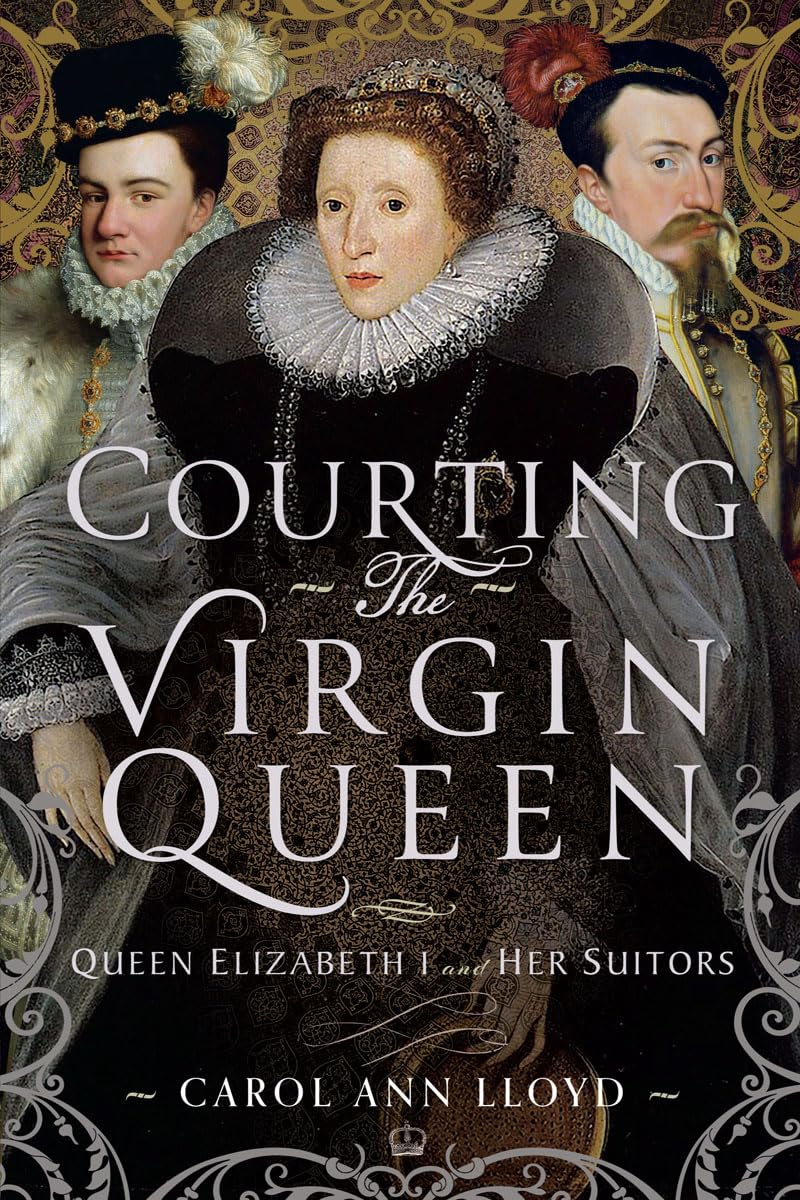
Carol Ann: I’ve published two books about Tudor history: The Tudors by Numbers and Courting the Virgin Queen.

I got the idea for The Tudors by Numbers when I was working on something about the coronations of Mary I and Elizabeth I. We usually think of the two half-sisters as opposing each other: Catholic and Protestant, daughter of Katherine of Aragon and daughter of Anne Boleyn, etc. But I started thinking of them as two succeeding Queens Regnant. When we put them together, the ruled for 50 years, which is a total of 42 percent of the Tudor dynasty. Those are important numbers, and I don’t think we usually consider the Tudor dynasty as having such a high percentage of female rule. Then, if you consider Jane Grey a Queen (which I do), there are three Tudor kings and three Tudor queens: 50 percent each. So I know the number six is the most famous, but I think there are other Tudor numbers that are equally important.

For Courting the Virgin Queen, I was asked to explore Elizabeth’s suitors. That was really interesting for me to take on. We know she never married, but why? I was struck by one of the first diplomatic comments about her reign, when the Count of Feria, the Spanish ambassador, wrote to Philip that “everything depends upon the husband this woman may take.” EVERYTHING. That got me thinking. He was right is so many ways. The foreign policy, the religious policy, trade partners and trade routes, future alliances, standing in Europe and around the world, the future of England—all that depended on the man Elizabeth chose as her husband. And, of course, there were no really good options. Elizabeth saw first-hand the problems with Mary’s Spanish marriage. And she saw all around her how women lost so much by marrying. She may have loved Robert Dudley, but she would have lost enormous credibility in England and abroad by marrying a subject. A foreign alliance might have proven handy at some points, but she would have linked her kingdom to another with no way out. There were no good options. Even though it infuriated her own council and dismayed the foreign picture, remaining the Virgin Queen was her best option.

Sharon: What attracts you to the Tudor period?

History...the Interesting Bits
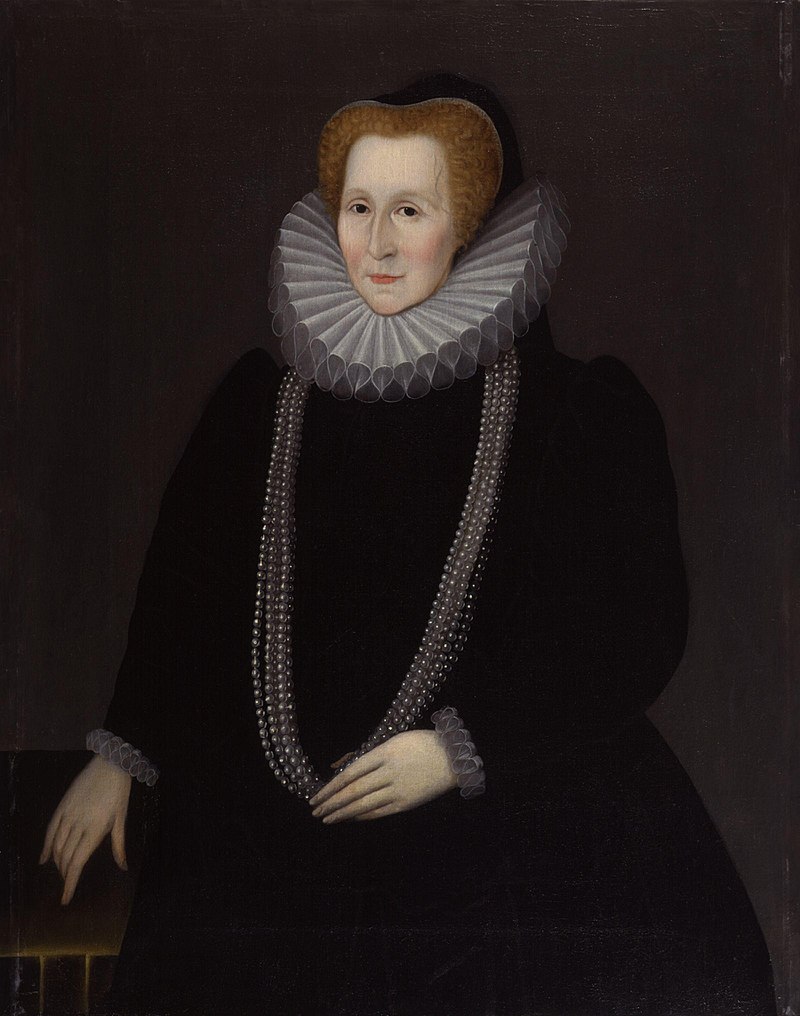
Bess of Hardwick

Carol Ann: The women! (Sharon: Yes! This is why we get along so well!) I love Tudor women. Of course, the Queens and the Queen Consorts are terrific. But so many other women are fascinating. Right now, I’m digging into Bess of Hardwick. She blows my mind. She was born around 1520 to a small landowner in Hardwick. The family had some standing, but when Bess’s father John. Hardwick died, the King took control of the lands because the John’s oldest son was just two years old. Bess was around 15 when she married the first time, but Robert Barlow died about 18 months later and she was a widow. She then married Sir William Cavendish of Chatsworth, gaining land and money. Bess and Cavendish had several children, and Bess enjoyed supervising the building works. But Sir William was accused of embezzlement and went into debt, and his death brought her into debt. She became a lady-in-waiting to Elizabeth I and met Sir William St Loe, who became her third husband. She was able to indulge in her passion for building, and the couple seem to have been genuinely in love (if their letters are to be believed).

When St Loe died, his daughters from his first wife had been excluded from his will. Bess’s reputation was tarnished. Still, she was very well off and returned to her home at Chatsworth. When she returned to court in 1566, she met and charmed the very wealthy George Talbot, marrying him in 1567 and becoming the Countess of Shrewsbury. This final marriage was a stormy one, not all that surprising as the couple had to play host to Mary, Queen of Scots. Although Bess and Mary seemed to get along well initially, working on embroidery together, as time went on the relationship soured. Bess also fell out of favour with Queen Elizabeth, although she tried to present herself as one of the Queen’s “most true and faith servants”. It was not entirely successful. Bess hoped her granddaughter Arbella, whom she helped raise, would become Queen after Elizabeth’s death. Her rocky marriage with Shrewsbury ended with his death in 1590. Bess moved back to Hardwick, where she built the new Hardwick Hall (known for being “more glass than wall”). She outlived Elizabeth I and saw James VI of Scotland succeed the English Queen. Bess of Hardwick died in 13 February, around 87 years old. She outlived four husbands and several monarchs (Henry VIII, Edward VI, Jane, Mary I, and Elizabeth I). What an inspiration for making the most of every opportunity!

Sharon: Who is your favourite Tudor and why?

Carol Ann: Anne Boleyn. I know it’s a cliché, but I can’t help it. She caught my eye when I was just a kid, watching the PBS (originally BBC) production of The Six Wives of Henry VIII. I saw how she was standing up to the men around her, and I was hooked. She is complicated, both generous and selfish, intelligent and foolish, ambitious and over-reaching. Everything about her intrigues me.

Sharon: Who is your least favourite Tudor and why?

Carol Ann: I’m not crazy about either of Jane Seymour’s brothers. I think they are self-absorbed and ruthless, with little or no thought to the people around them.

Sharon: How do you approach researching your topic?

History...the Interesting Bits

Carol Ann: I love reading. I can start reading one article, find a reference to something that sounds interesting, and then I’m off down that rabbit hole. More often than not, that new area leads me into several more. There is nothing more fun for me than just losing myself in the little details and wonderful stories of history! I know I should be much more organized, so I’m afraid my approach also includes a lot of “where did I write that down?” searches through piles of paper as well.

Sharon: Tell us your ‘favourite’ true historical story you have come across in your research.

Carol Ann: Anne Boleyn and the Thomas Wyatt versus Henry VIII game of bowls story. Which might or might not be “true”, but it’s in some accounts.

Sharon: Tell us your least ‘favourite’ true historical story you have come across in your research.

Carol Ann: Katherine Parr helping Thomas Seymour hold Elizabeth down while he cut her dress to shreds. I hope against hope she was doing so because her presence there was the only way she could limit how far he would go. But it’s a tough story to read.

Sharon: Are there any other eras you would like to write about?

Eleanor of Aquitaine

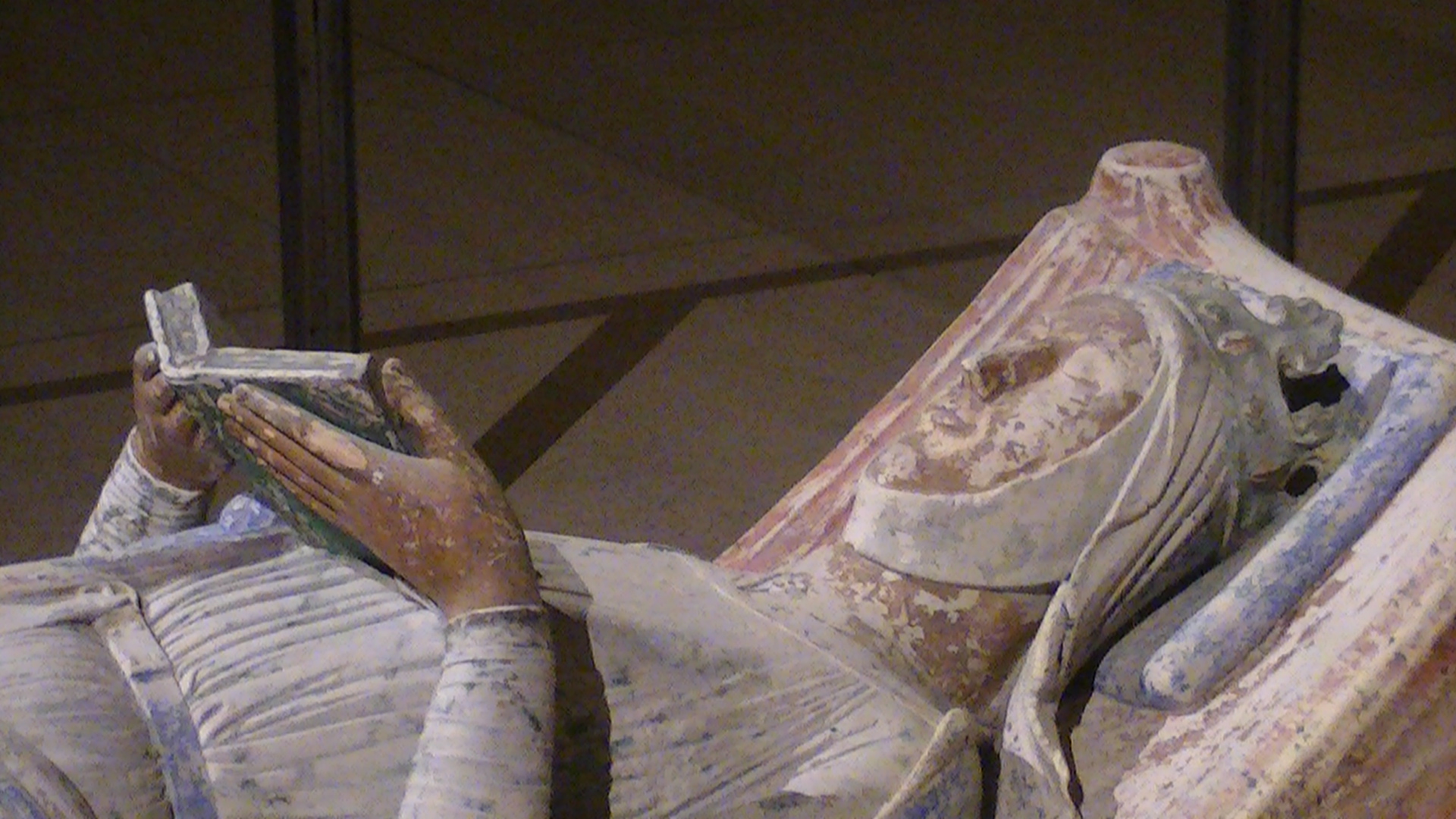
Carol Ann: I’m working on a book now that starts in early times with the story of King Arthur and then highlights the time of Eleanor of Aquitaine. I am crazy about her, and it’s been great to explore her through this book. I would love to spend more time there. (Sharon: Oooooh, that sounds amazing. Can’t wait!)

Sharon: What are you working on now?

Carol Ann: I’m working on a book about the history of courtly love (and a bit about chivalry as well), looking closely at two of my favorite historical women: Eleanor of Aquitaine and Anne Boleyn. Two queen consorts who completely rewrote the book and who played courtly love at the highest levels.

Sharon: And finally, what is the best thing about being a writer?

Carol Ann: I love research! (Sharon: oh, me too!) I love traveling to England and heading to the National Archives at Kew and the British Library. I remember holding a seal of Henry VIII and one of Elizabeth I in my hands. In MY hands. It was amazing. I also was able to see the letters patent creating Anne Boleyn as Marchioness of Pembroke at the British Library. The falcon emblem was blazing with gold leaf and nearly as large as my hand. I couldn’t believe I was not dreaming. I also love researching closer to home at Folger Shakespeare Library. Again, I can’t believe I’m holding a document signed by Elizabeth I. I even have been in the room with her red velvet Bible. How can anything match that?!

About the author:

History...the Interesting Bits

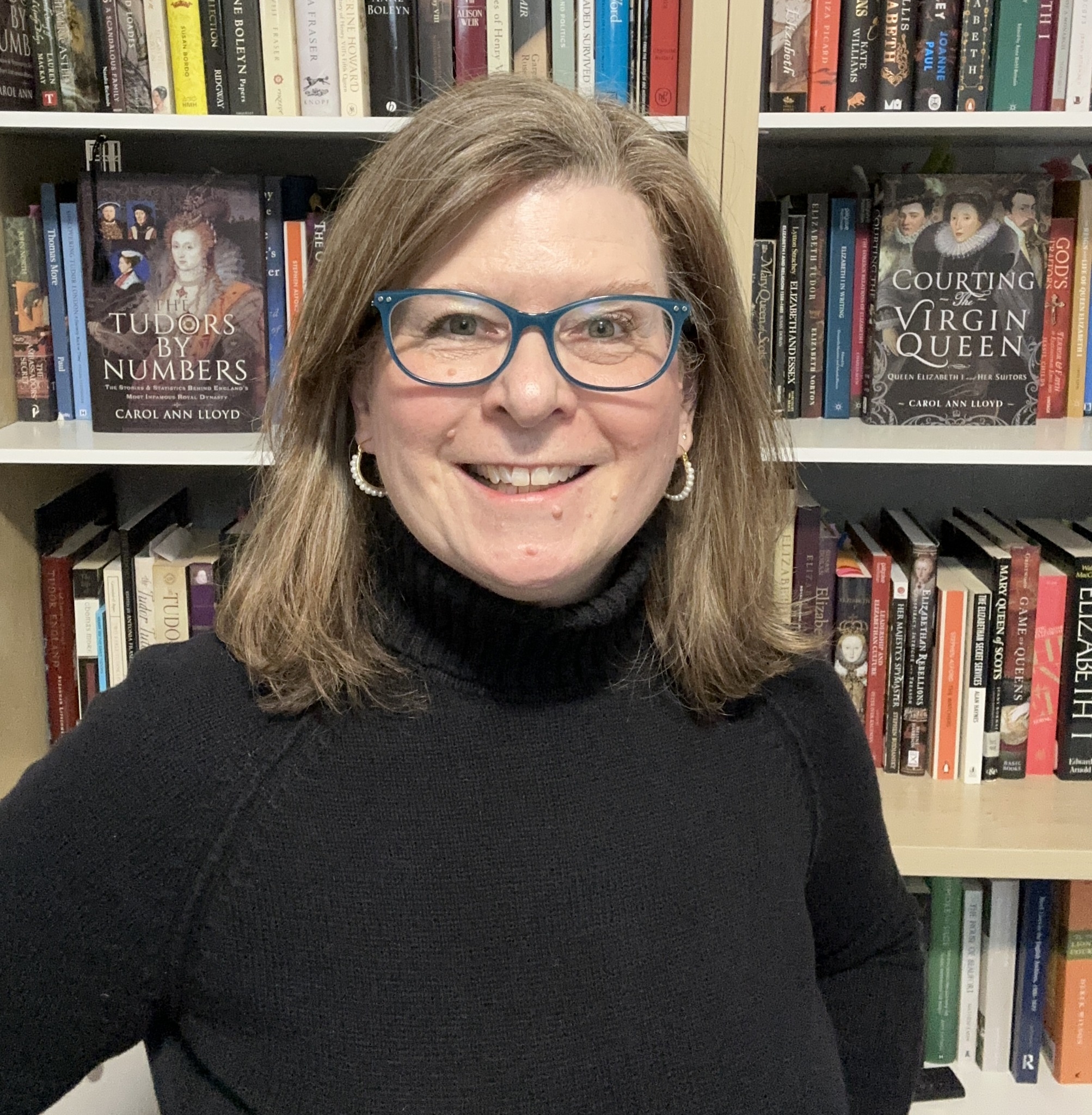
Carol Ann Lloyd turned an obsession with the Tudors into a speaking and writing career. She shares her love of history with Smithsonian Associates, Royal Oak Foundation, Agecroft Hall, Folger Shakespeare Library and other organizations. She holds degrees in Literature and Education and hosts a popular podcast, _British History: Royals, Rebels, and Romantics_. She also offers workshops about using Shakespeare strategies to improve communication skills and is a member of National Speakers Association.

Where to find Carol Ann:

Website: www.carolannlloyd.com; Twitter/X: @shakeuphistory; Podcast: BRITISH HISTORY-Royals, Rebels, Romantics; Books: The Tudors by Numbers (2023)and Courting the Virgin Queen (2024)

*

My Books

Signed, dedicated copies of all my books are available through my online bookshop. or by contacting me.

Coming 30 March 2026: Princesses of the Early Middle Ages

Books by Sharon Bennett Connolly

Daughters of kings were often used to seal treaty alliances and forge peace with England’s enemies. Princesses of the Early Middle Ages: Royal Daughters of the Conquest explores the lives of these young women, how they followed the stereotype, and how they sometimes managed to escape it. It will look at the world they lived in, and how their lives and marriages were affected by political necessity and the events of the time. Princesses of the Early Middle Ages will also examine how these girls, who were often political pawns, were able to control their own lives and fates. Whilst they were expected to obey their parents in their marriage choices, several princesses were able to exert their own influence on these choices, with some outright refusing the husbands offered to them.

Their stories are touching, inspiring and, at times, heartbreaking.

Princesses of the Early Middle Ages: Royal Daughters of the Conquest is now available for pre-order from Pen & Sword and Amazon.

Also by Sharon Bennett Connolly:

Books by Sharon Bennett Connolly

Scotland’s history is dramatic, violent and bloody and Scotland’s Medieval Queens have seen it all. This is the story of Scotland through their eyes. Available now from Amazon and Pen and Sword Books. Heroines of the Tudor World tells the stories of the most remarkable women from European history in the time of the Tudor dynasty, 1485-1603. These are the women who ruled, the women who founded dynasties, the women who fought for religious freedom, their families and love. Heroines of the Tudor World is now available from Amberley Publishing and Amazon UK. Women of the Anarchy demonstrates how Empress Matilda and Matilda of Boulogne, unable to wield a sword themselves, were prime movers in this time of conflict and lawlessness. It shows how their strengths, weaknesses, and personal ambitions swung the fortunes of war one way – and then the other. Available from Bookshop.orgAmberley Publishing and Amazon UKKing John’s Right-Hand Lady: The Story of Nicholaa de la Haye is the story of a truly remarkable lady, the hereditary constable of Lincoln Castle and the first woman in England to be appointed sheriff in her own right. Available from all good bookshops Pen & Sword Booksbookshop.org and Amazon

Royal Historical Society

Defenders of the Norman Crown: The Rise and Fall of the Warenne Earls of Surrey tells the fascinating story of the Warenne dynasty, from its origins in Normandy, through the Conquest, Magna Carta, the wars and marriages that led to its ultimate demise in the reign of Edward III. Available from Pen & Sword BooksAmazon in the UK and US, and Bookshop.orgLadies of Magna Carta: Women of Influence in Thirteenth Century England looks into the relationships of the various noble families of the 13th century, and how they were affected by the Barons’ Wars, Magna Carta and its aftermath; the bonds that were formed and those that were broken. It is now available in paperback and hardback from Pen & SwordAmazon, and Bookshop.orgHeroines of the Medieval World tells the stories of some of the most remarkable women from Medieval history, from Eleanor of Aquitaine to Julian of Norwich. Available now from Amberley Publishing and Amazon, and Bookshop.orgSilk and the Sword: The Women of the Norman Conquest traces the fortunes of the women who had a significant role to play in the momentous events of 1066. Available now from Amazon,  Amberley Publishing, and Bookshop.org.

Alternate Endings: An anthology of historical fiction short stories including Long Live the King… which is my take what might have happened had King John not died in October 1216. Available in paperback and kindle from Amazon.

Podcast:

A Slice of Medieval

Have a listen to the A Slice of Medieval podcast, which I co-host with Historical fiction novelist Derek Birks. Derek and I welcome guests, such as Ian Mortimer, Bernard Cornwell, Elizabeth Chadwick and Scott Mariani, and discuss a wide range of topics in medieval history, from significant events to the personalities involved. 

Every episode is also now available on YouTube.

*

Don’t forget! Signed and dedicated copies of all my books are available through my online bookshop.

For forthcoming online and in-person talks, please check out my Events Page.

You can be the first to read new articles by clicking the ‘Follow’ button, liking our Facebook page or joining me on TwitterThreadsBluesky and Instagram.

*

©2025 Sharon Bennett Connolly FRHistS and Carol Ann Lloyd
Happy New Year!

History...the Interesting Bits

I just popped in to say Happy New Year to all my readers.

Thank you for your support in 2025 and here’s to a fabulous 2026 for all of us!

Lots of love,

Sharon xx

Books by Sharon Bennett Connolly

Wordly Women: Ann M. Beggs

Well, it is the last Wordly Women of 2025 and I cannot believe how well this series of interviews has been received. I do hope it has given you an insight into the writing life – the good and the bad. And maybe you have discovered a new author, or been re-acquainted with one you haven’t read in a while? For my part, it has been wonderful, learning a little bit more about my friends’ writing journeys. Isn’t it funny that no 2 people have the same experience as writers? But we all love the warmth and encouragement of the writing community – and the love and enthusiasm of our readers.

I will continue the series into 2026, hoping it will at least survive until its 1st birthday in March. And I already have the next 2 interviews ready to go. But for now, I would like to introduce you to Anne M. Beggs. Anne is one of those authors who uses her own platform to promote and encourage her fellow authors. I am so grateful to her for sharing every single one of my Wordly Women interviews so far – and I am sure she will share this one!

Sharon: Hello Anne! What got you into writing:

History...the Interesting Bits

Anne: Well, that is a long story, but isn’t that what historical fiction and family sagas are? My story telling began with horses. I was born with the horse gene. Unable to have a horse I lived my equine dreams in artwork, drawing and painting my beloved “worsey/wishies” for horsey (my first spoken word, btw). I was an undiagnosed dyslexic as a child. Writing and reading were and ARE not easy, so my story telling was through visual art. Back then all my stories were Barn Romances: Girl meets horse. You get the idea.

My Medieval fetish is nearly as deep as my love of horses. My aunt took me to the cinema to see Disney’s Sleeping Beauty as a five-year-old and those images – the castle, the medieval setting, and a gray horse filled my dreams and nightmares for years. In high school I started a bit of research into the Crusades (horses, remember), and the exploring the soul-gripping architecture of castles and cathedrals.

A trip to Medieval Times in Anaheim, California, when our kids were little, triggered my medieval fetish and love of horses. The voices came alive. My fictional characters would not be still. The What Ifs, How Abouts, and a medieval barn romance morphed into a full-born passion…and it was no longer just Girl Meets Horse; a feisty, spiritual, heiress was seeking a voice in my mind and in her patriarchal time. Yes, initially it was all about getting “boinked” in a castle or cathedral. As I learned how to write a book, the stories developed into a spiritual quest for understanding, battles to save a family, create a dynasty, and an enduring love story or stories.

Sharon: You write fiction and non-fiction, and is one harder than the other?

Anne: It all depends. My first publications were articles on mounted archery and my journey from author to mounted archer. I didn’t have an editor, so those were WAY easy.

My fiction writing includes my Dahlquin series, a family saga set in 13th century Ireland, with more details in subsequent questions. To date I also have four short stories in four Paper Lantern Writers Anthologies: The Dragon Lord, A Winter Solstice Tale, in Unlocked, based on my Dahlquin characters; Dear Santa, in Beneath a Mid-Winter Moon, set in 1969, with Dahlquin descendants; Beg, Borrow, Tomorrow, in Destiny Comes Due, a “shopaholic” in a medieval convent; and The Storm in Echoes of Small Things, a story of Richard the Lion Heart’s final days.

In Archer’s Grace, Book One and By Arrow and Sword, Book Two, my editors told me repeatedly: “Less riding, more story. You are writing a novel, not a “how to” in horsemanship.”

When I was invited to write a chapter, Bringing Horses to Life in Historical Fiction, in the Paper Lantern Writers non-fiction book, Crafting Stories from the Past; A How-To Guide for Writing Historical Fiction, I thought GREAT, here is my chance to talk horses. Turns out, it was one of the hardest things I have ever written. It was vital to distil the important aspects of horses and not get carried away. Fortunately, my editors were non-horse people and found most parts necessary. Working on this entire project was a great education, and I still refer to the book myself, with fresh eyes. We are also doing live, hands-on-workshops teaching the Craft of Writing Stories From the Past to aspiring authors. I enjoy helping and learning more as we go.

Back to your question, which is harder – each is different. All deserve the best I can offer. They are full-on challenges that I accept, and I muddle through, learning, growing, finding enlightenment, and often not concluding with what I thought I was going to write about.

Sharon: Tell Us About Your books

History...the Interesting Bits

Anne: Archer’s Grace, Book One, launches the Dahlquin series: Eloise, a 13th century only child grows up coming to terms with and battling her patriarchal Irish society. Intelligent, curious, bold, and romantic, she also has a secret that might get her condemned as a heretic.

Ireland is a volatile island poised for civil war, with another English invasion threating. A treasonous siege catapults her from her ancestral home. She and a stranger embark on a perilous journey across Ireland, running for their lives to save Dahlquin and mayhap Ireland itself.

By Arrow and Sword, Book Two, returns to Dahlquin for this family saga. A war-torn country lies between Eloise and Roland as they try to make their way back to each other, navigating a political landscape fraught with intrigue and betrayal. One threat is vanquished, but others loom in the shadows, waiting for the perfect moment to seek revenge.

For readers, Book Two, is written to stand alone.

Sharon: What attracts you to the 13th Century?

Anne: I like to say I researched the Middle Ages into and beyond Middle Age.

History...the Interesting Bits

My characters, the voices, came to me. They are all fictional, with some true historic people, “Celebrity Cameos”, as Ana Brazil says. All are living in a medieval world. I just started taking dictation from them and researching the Middle Ages. This was before internet as we know it. Before social media and a world full of ‘arm-chair historians’ (some were quite cruel, but I am also sensitive). I depended on books. I delighted when the old-fashioned Barnes and Nobel catalogue arrived in my mailbox, with an abundance of history books. What a happy dance I did when I received Dress Accessories from 1150-1450, and Shoes and Patterns. My family thought I was nuts. Real bookstores also provided resources; thus started my personal research library, getting lost in an era I love.

Using the limited books I had, I found a fifty-year gap in history, as if records were lost between Henry and Eleanor, then resuming fifty years later. Of course, this is not true, but thirty years ago, I was stumped. What a great space to write my own fictional characters and their adventures. Thirteenth century it was and I really didn’t like those henins, either. Eloise could not be galloping across the countryside wearing one of those.

Sharon: Who is your favourite Medieval person?

Anne: Eleanor of Aquitaine, is one of my protagonist, Eloise’s, favourites. Twenty years after the queen’s death, her legend looms large in Eloise’s mind. I just finished listening to The Summer Queen, by Elizabeth Chadwick, and I am even more in love with the smart, feisty monarch myself.

Sharon: Who is your least favourite Medieval person?

Anne: It is not my style to pick a least favourite, so I let others share theirs.

Sharon: I’m the same. I love the History and even the bad guys bring something to the table

Sharon: How do you approach your research?

History...the Interesting Bits

Anne: This year was special. Finally, after many years, I got to ride in Connacht, Ireland, where my fictional characters are. My husband sent me on a trip of a lifetime. Starting alone in Dublin, I toured for two days. Then a bus to Galway, and on to Connemara Equestrian Escapes for riding, history, and cultural immersion. Next two nights at Ashford Castle. That was as pilgrimage, for sure, as I have a fictional family named Ashbury. Research revealed there is an Ashford Castle exactly where my fictional family are – hmmm, I guess I got my character’s name wrong by a syllable. Connacht looked just as I expected. The trip was validating and magical.

As I mentioned earlier – and before my trip – it all started with history books, my own or the library’s. It never occurred to me to travel to a research library. I had kids at home, responsibilities to our businesses, being a domestic goddess, and community volunteer. Writing was a back burner passion for me, by my choice.

Enter the internet, chat rooms (which didn’t click with me then), and social media. I have access to research, so much research. Sometimes, too much. There is more opportunity for conflicting experts, scholars revealing new discoveries and insights. And that fifty-year gap in my sources…all filled in…oh gosh…oh well. I rejoice and lament. I concentrate on 13th century, because my own time is limited. Still, it is easy to get lured into anything medieval. The fetish runs hard and deep.

My hot tip for beginners; keep a list of the sources you use. You will be called on it later. I didn’t do that originally. I picked the expert whose claims fit my story and kept writing. It was a novel, not a college paper with footnotes. Big mistake on my part.

Research is also how I discovered Dahlquin’s location. I had written over 700 pages not knowing where my characters lived. Before he had horses and a boarding ranch, we travelled to Europe several times indulging my quest for anything medieval and other family holiday delights. Every where we went, hoping for a home for Dahlquin, it was a big nope. I considered going for pure fantasy fiction, making up a country and plopping it in Europe, but it didn’t feel right. I stumbled upon a used book on Medieval Ireland, and BINGO, my characters had been trying to tell me they were Irish…well, Welsh/Anglo/Irish/Celtic/English, it IS complicated.

Sharon: Tell us your ‘favourite’ medieval story you have come across in your research.

History...the Interesting Bits

Anne: I enjoyed the 9th poem, Pangur Bán. As a cat and animal lover, I delight in the archaeological records of cats leaving their paw prints in history from ancient times to now. Besides horses and dogs, I have cats in my books, a song of a cat dropping a mouse in the wine. while writing my short story, Beg, Borrow, Tomorrow, it was fitting a cat play a role.

Sharon: What are you working on now?

Anne: I am writing The High Love, Book Three, in the Dahlquin series. Much of my 25ish year-old version is on the cutting room floor, and I’m excited to rewrite it with more political intrigue as Eloise and Roland explore and define for themselves what is the highest love: Church, God, King, liege, family, each other? Eloise’s spiritual quest continues as she seeks balance and understanding – God and Goddess, love and loyalty, The Highest Love. I am seeing a better way to tackle Book Four, Ordained Folly, mayhap, mayhap not: The magic in writing. I don’t always know where the story must go until I write it, and write, and rewrite it. There is nothing fast in my process.

I anticipate another short story for the Paper Lantern Writers’ fifth anthology, for 2026, title and theme still a mystery. I love being part of these challenging books and working with our talented writers.

Sharon: What is the best thing about being a writer?

Anne: I love word dancing, making my character’s stories blaze to life, in full colour, texture, taste…cantering across the pages for others to read. It is fantabulous riding into the Middle Ages, safely (such a hazardous time, with no antibiotics, etc.), sharing my joy of lost voices, horses, and history. If I am fortunate, mayhap my writing will inspire someone to pick up a bow and arrow, take riding lessons, and best of all to Be Their Own Hero, Don’t Wait to Be Saved.

About the Author:

History...the Interesting Bits

Anne M. Beggs, the writing, riding grandma, is an award-winning author of historical fiction and has published articles on mounted archery and horsemanship. Her debut novel, Archer’s Grace, Book One, in her Dahlquin series starts this family saga when a young noblewoman is catapulted from her ancestral home and set on a quest to save her family in Medieval Ireland. By and Arrow and Sword, Book Two is published, and The Highest Love, Book Three is underway. Four short stories appear in Paper Lantern Writer’s anthologies. Also with Paper Lantern Writers, she is a contributor to Crafting Stories from the Past: A How-To Guide for Writing Historical Fiction. She and other “Lanterns” give hands-on workshops on writing historical fiction.

Anne likes to say she researched the Middle Ages into middle age and beyond. Still married to her high school sweetheart, they live on and manage a horse boarding ranch, Equisance, in Watsonville, California. Anne is a member of the Historical Novel Society, and for more about her writing, horses, mounted archery and grandkids, she invites you to join up with her Facebook pages, Anne M. Beggs, https://www.facebook.com/anne.beggs.3/ ; or Anne M. Beggs, author, https://www.facebook.com/AnneMBeggsAuthor/ ; or her website, https://annembeggs.com/, IG @annibella72 ; Substack, https://substack.com/@annibella1

*

My Books

Signed, dedicated copies of all my books are available through my online bookshop. or by contacting me.

Out now: Scotland’s Medieval Queens

Books by Sharon Bennett Connolly

Scotland’s history is dramatic, violent and bloody. Being England’s northern neighbour has never been easy. Scotland’s queens have had to deal with war, murder, imprisonment, political rivalries and open betrayal. They have loved and lost, raised kings and queens, ruled and died for Scotland. From St Margaret, who became one of the patron saints of Scotland, to Elizabeth de Burgh and the dramatic story of the Scottish Wars of Independence, to the love story and tragedy of Joan Beaufort, to Margaret of Denmark and the dawn of the Renaissance, Scotland’s Medieval Queens have seen it all. This is the story of Scotland through their eyes.

Scotland’s Medieval Queens gives a thorough grounding in the history of the women who ruled Scotland at the side of its kings, often in the shadows, but just as interesting in their lives beyond the spotlight. It’s not a subject that has been widely covered, and Sharon is a pioneer in bringing that information into accessible history.’ Elizabeth Chadwick (New York Times bestselling author)

Available now from Amazon and Pen and Sword Books

Coming 30 March 2026: Princesses of the Early Middle Ages

Books by Sharon Bennett Connolly

Daughters of kings were often used to seal treaty alliances and forge peace with England’s enemies. Princesses of the Early Middle Ages: Royal Daughters of the Conquest explores the lives of these young women, how they followed the stereotype, and how they sometimes managed to escape it. It will look at the world they lived in, and how their lives and marriages were affected by political necessity and the events of the time. Princesses of the Early Middle Ages will also examine how these girls, who were often political pawns, were able to control their own lives and fates. Whilst they were expected to obey their parents in their marriage choices, several princesses were able to exert their own influence on these choices, with some outright refusing the husbands offered to them.

Their stories are touching, inspiring and, at times, heartbreaking.

Princesses of the Early Middle Ages: Royal Daughters of the Conquest is now available for pre-order.

Also by Sharon Bennett Connolly:

Books by Sharon Bennett Connolly

Heroines of the Tudor World tells the stories of the most remarkable women from European history in the time of the Tudor dynasty, 1485-1603. These are the women who ruled, the women who founded dynasties, the women who fought for religious freedom, their families and love. Heroines of the Tudor World is now available from Amberley Publishing and Amazon UK. Women of the Anarchy demonstrates how Empress Matilda and Matilda of Boulogne, unable to wield a sword themselves, were prime movers in this time of conflict and lawlessness. It shows how their strengths, weaknesses, and personal ambitions swung the fortunes of war one way – and then the other. Available from Bookshop.orgAmberley Publishing and Amazon UKKing John’s Right-Hand Lady: The Story of Nicholaa de la Haye is the story of a truly remarkable lady, the hereditary constable of Lincoln Castle and the first woman in England to be appointed sheriff in her own right. Available from all good bookshops Pen & Sword Booksbookshop.org and Amazon

Royal Historical Society

Defenders of the Norman Crown: The Rise and Fall of the Warenne Earls of Surrey tells the fascinating story of the Warenne dynasty, from its origins in Normandy, through the Conquest, Magna Carta, the wars and marriages that led to its ultimate demise in the reign of Edward III. Available from Pen & Sword BooksAmazon in the UK and US, and Bookshop.orgLadies of Magna Carta: Women of Influence in Thirteenth Century England looks into the relationships of the various noble families of the 13th century, and how they were affected by the Barons’ Wars, Magna Carta and its aftermath; the bonds that were formed and those that were broken. It is now available in paperback and hardback from Pen & SwordAmazon, and Bookshop.orgHeroines of the Medieval World tells the stories of some of the most remarkable women from Medieval history, from Eleanor of Aquitaine to Julian of Norwich. Available now from Amberley Publishing and Amazon, and Bookshop.orgSilk and the Sword: The Women of the Norman Conquest traces the fortunes of the women who had a significant role to play in the momentous events of 1066. Available now from Amazon,  Amberley Publishing, and Bookshop.org.

Alternate Endings: An anthology of historical fiction short stories including Long Live the King… which is my take what might have happened had King John not died in October 1216. Available in paperback and kindle from Amazon.

Podcast:

History...the Interesting Bits

Have a listen to the A Slice of Medieval podcast, which I co-host with Historical fiction novelist Derek Birks. Derek and I welcome guests, such as Ian Mortimer, Bernard Cornwell, Elizabeth Chadwick and Scott Mariani, and discuss a wide range of topics in medieval history, from significant events to the personalities involved. 

Do have a listen to our 2025 Christmas episode in which Derek and I look bag at some of our favourite discussions with guests.

Every episode is also now available on YouTube.

*

Don’t forget! Signed and dedicated copies of all my books are available through my online bookshop.

For forthcoming online and in-person talks, please check out my Events Page.

You can be the first to read new articles by clicking the ‘Follow’ button, liking our Facebook page or joining me on TwitterThreadsBluesky and Instagram.

*

©2025 Sharon Bennett Connolly FRHistS and Anne M. Beggs
Elizabeth Mure, Robert II and a Question of Legitimacy

Books by Sharon Bennett Connolly
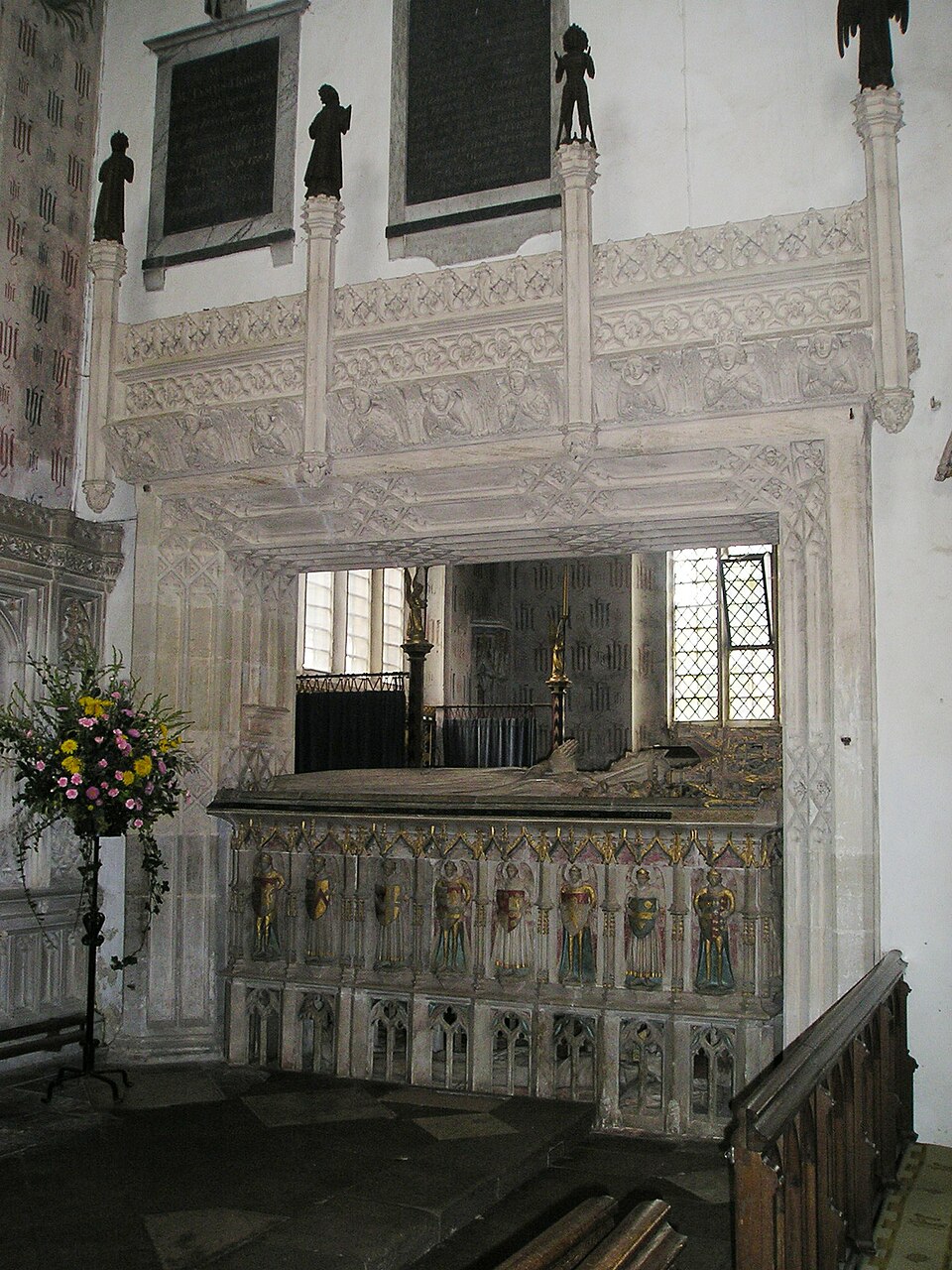
Tomb of Marjorie Bruce, Paisley Abbey

Robert II, King of Scots, had been born on 2 March 1316, as the grandson and heir of Robert the Bruce. His mother. Marjorie Bruce, had died at the time of his birth, or shortly after. He had been supplanted as his grandfather’s heir when Bruce’s queen, Elizabeth de Burgh, gave birth to a son, David Bruce, in 1324. David was crowned as King David II on his father’s death in 1329. Although only 5-years-old, David was already a married ‘man’, having wed Edward III’s 7-year-old sister, Joan of the Tower, in July 1328.

Edward III saw an opportunity in Scotland having a child-king and, notwithstanding the headache he was causing his own sister, he decided to support the claims, to the Scottish crown, of Edward Balliol, son of the deposed king, John Balliol, and his wife, Isabella de Warenne. Edward III invaded Scotland. King David and his young wife were sent to France for their safety, while the Scots fought for the kingdom. One of those leading the fight was Robert Stewart, David’s nephew – Robert the Bruce’s grandson. He had become High Steward of Scotland on his father’s death in 1327. He was made guardian of Scotland whilst still in his late teens and fought in the defeat of the Scots at Halidon Hill in July 1333, when he was still only 17.

Robert was David II’s heir – until the latter produced a son and heir of his own, at least. Uncle and nephew had a fractious relationship, even after David returned from French exile. David may have resented the reputation Robert had gained in fighting for Scottish independence, and he was certainly wary of Robert’s powerful position, as High Steward, guardian and – of course – as heir presumptive to the crown.

Books by Sharon Bennett Connolly
David II and Joan being greeted by Philip VI of France

Robert’s strength, however, lay not only in his proximity to the throne, but also in the fact he had managed to do what David had not, produce an heir. Six, in fact. Robert’s rather unusual marital situation, and perhaps the growing awareness, as the years went on, that there was less and less likelihood of David producing an heir, saw him apply for a papal dispensation to marry Elizabeth Mure, which was supported by King David, King Philip VI of France, the seven Scottish bishops and parliament. It was granted on 22 November 1347, at least ten years after the start of their relationship. The dispensation allowed for the retrospective legitimisation of their children:

This Robert took to his bed one of the daughters of Adam More, knight; and of her he begat sons and daughters, out of wedlock. But he afterwards – in the year 1349, to wit – bespoke and got the dispensation of the Apostolic See, and espoused her regularly, according to the forms of the Church.1

An earlier dispensation, issued in 1345, had annulled Elizabeth’s betrothal to Hugh Giffard. Elizabeth was the daughter of Adam Mure of Rowallon, Ayrshire. Though whether her mother was his first wife, Joan Cunnigham, or his second wife, Janet, is undetermined. The unusual nature of their relationship and marital situation has given rise to questions over the legitimacy of their children. According to John Riddell, the facts of the relationship are that:

Robert II, when related to Elizabeth Mure, in the third and fourth forbidden degrees of affinity, and the fourth forbidden degree of consanguinity, lived for a long space in concubinage with her, during which ‘prolis utriusque sexus multitudinem procrearunf’ – during that unhallowed, and in law, incestuous connection; till at last, resolving to marry, but discovering the double relationship between them, which was a bar to their marriage at common (Ecclesiastical) law, they then obtained a dispensation from Clement VI, in 1347, for the purpose, in ordinary form. After which it is in proof, that they did marry under authority of the dispensation, – Robert founding in 1364, in compliance with an injunction there, a Chaplainry, in expiation of his former offence, which was, by received doctrine at the time, deemed an aggravated one.2

Books by Sharon Bennett Connolly
Robert II’s maternal grandparents, Robert the Bruce and his first wife, Isabella of Mar

It has been argued that the children of Robert and Elizabeth were not only born outside of marriage, but also that their parents were related within the limited degrees, and therefore the relationship was incestuous without a papal dispensation. This, however, ignores the possibility that Robert and Elizabeth did go through a form of marriage in the 1330s, when Scotland was deeply involved in its war with England and, with David II sent to France for his safety and Robert was the senior representative of the Bruce family in Scotland. Moreover, it may have been thought prudent that Robert should marry sooner, rather than later, for dynastic considerations. With Edward Balliol unmarried and with no heir, the fact that the king’s heir was married with children was significant, a sign that the Bruce–Stewart dynasty was secure, at least.

That the marriage was not regularised until the war was over could be excused by the fact there were more urgent matters to attend to and the financial and legal obligations of obtaining a dispensation could wait. This would certainly explain the papacy’s willingness to regulate the marriage by issuing a retroactive dispensation. Alternatively, they may have only recently discovered a familial relationship within the prohibited degrees, and therefore applied for a dispensation. Elizabeth and Robert then underwent a second, formal, marriage ceremony in 1349.

Their first child, John, had been born in about 1337 and was created Earl of Carrick in 1369, the title held by his great-grandfather, Robert the Bruce, before he became king. He would ascend the throne as Robert III on his father’s death in 1390. Although the birth order could be slightly different, it seems likely that John was followed by a sister, Margaret, who was married to John MacDonald, Lord of the Isles, as his second wife, for which a papal dispensation was issued on 14 June 1350. The couple were granted the island of Colowsay by Margaret’s father in a charter dated to July 1376. Three more sons followed, Walter, Robert and Alexander. Walter was married to Isabel, Countess of Fife, in April 1360 or 1361. He died sometime after 14 August 1362 but before the end of the year, as his widow married again, to Thomas Bisset of Upsetlington on 10 January 1363. She resigned the earldom of Fife to Walter’s brother, Robert Stewart, Earl of Menteith, on 30 March 1371.

Robert Stewart is identified as the ‘second born of the king’ in the Liber Pluscardensis. Robert was Earl of Menteith by right of his wife, Margaret Graham, a title she herself had inherited from her mother, Mary. Margaret had been married three times before; her first husband, Sir John Moray, was the son of Christian Bruce, King Robert I’s sister, by her last husband, Sir Andrew Murray. Robert was later created Duke of Albany and acted as regent during his brother’s reign.

Books by Sharon Bennett Connolly
The reverse side of Robert II’s Great Seal

The third son, Alexander, has a significant reputation as a cruel and rapacious character, earning him the nickname, the Wolf of Badenoch. He married Euphemia, Countess of Ross and was Earl of Ross in her name. Euphemia resigned her share of Buchan to the king, who regranted it to Alexander and Euphemia, in July 1382, so that they were Earl and Countess of Ross and Buchan. The marriage had its difficulties and Alexander left his wife, for ‘Mariota’s daughter Athyn’ but was ordered to return to her, in a charter dated 2 November 1389, by the Bishop of Moray and Ross. Apparently, the breach was irretrievable, as Pope Clement VII ‘issued a commission to dissolve her marriage’ on 9 June 1392, and in December 1392 Euphemia was granted a divorce ‘from bed and board’.3 Although Alexander had seven illegitimate children, he and Euphemia had remained childless.

Robert II and Elizabeth Mure also had four more daughters, although their order of birth is unknown. Marjory married John Dunbar, the son of Patrick Dunbar and Isabel Randolph of Moray. He was created Earl of Moray by his father-in-law in March 1372. Marjory’s second husband was Alexander Keith of Grandown.

Jean, or Joan, Stewart was married three times, firstly to John Keith, son of William de Keith, the Marischal, in January 1374. John died just fourteen months later. A year after that, in either June or October 1376, Jean married Sir John Lyon of Glamis. On 4 October 1376, King Robert II granted land, the thanedom of Tannadyce in Forfar, possibly a wedding gift, ‘to his dearest son John Lyon and Johanna his wife, the King’s beloved daughter’.4 The marriage was initially kept secret and only publicly acknowledged on 10 May 1378 when the king, with the consent of his surviving sons, ‘granted to the spouses letters of acknowledgement and remission for any clandestine marriage formerly contracted by them, in regard a marriage had been solemnly celebrated between them in face of the Church, in presence of the King and his sons and other friends and relatives.’5 Further grants followed, but Sir John was killed, apparently murdered by Sir James Lindsay on 4 November 1382. According to the Liber Pluscardensis, the deed was done at night when the ‘victim was in bed and unsuspecting’.6 Their only child was John’s son and successor, also called John Lyon. On 20 November 1384, Jean married for a third and final time, to Sir James Sandilands of Calder. Ahead of the marriage, Sir James was granted the baronies of Dalzell, Motherwell and Wiston, to be held by Sir James and Jean, the king’s daughter, ‘whom God willing he is about to take to wife’.7 The princess is last mentioned in 1404, as ‘Lady Johanna of Glammys’. She was buried beside her second husband, Sir John Lyon, at Scone Abbey.

Another daughter, Elizabeth Stewart, married Thomas Hay, Baron of Erroll and Constable of Scotland. A charter issued by King Robert II granted an annuity to ‘Thomas Hay and Elizabeth the king’s daughter, and the children born and to be born of them’ dated 7 September 1372, the day of their marriage.8

Isabel Stewart was married twice, firstly to James Douglas, son of William Douglas, Earl of Douglas, and his wife, Margaret, Countess of Mar. A papal dispensation was issued for the marriage in September 1371 and James succeeded his father as Earl Douglas in 1384. Sir James died in 1388 and sometime in the next two years, Isabel married John Edmonstone of Duntreath. Isabel most likely died before 22 July 1410, when accounts record payments to ‘John Edmonstone … for the reason that he was once married to the Countess of Douglas’.9

Through the marriages of his sons and daughters, Robert Stewart created a familial network that extended his influence over the greater part of central, western and north-eastern Scotland. He formed unions with eight of the country’s fifteen existing earldoms as well as gaining other lordships, royal castles and offices north of the Forth-Clyde line. However, the unusual nature of the marriage of Robert and Elizabeth would always leave a question mark hanging over the legitimacy of their children, an uncertainty that the children of Robert’s second marriage would highlight and try to exploit.

Books by Sharon Bennett Connolly
Robert III and his queen, Annabella Drummond

But it was Elizabeth’s eldest son, John, Earl of Carrick, who would succeed his father as King Robert III. Elizabeth herself, though married to David II’s heir, was never to become queen. She died sometime before 1355, possibly in childbirth as she would have been no more than in her late 30s, or perhaps from complications arising from having borne at least nine children, and possibly as many as thirteen. We have so little information about her that her place of burial is also unknown, though Paisley Abbey or Scone Abbey are possibilities. We only know that poor Elizabeth was dead by 1355 because 2 May of that year is the date of the papal dispensation for Robert Stewart’s second marriage, to Euphemia Ross.

Whatever the nature of their marriage, and the reason for the dispensation, it was not an arranged marriage for dynastic purposes. Robert and Elizabeth appear to have chosen each other. The number of children born, even during times of war, suggests that Robert and Elizabeth had a close and loving relationship. This did not, however, preclude Robert from marrying again, possibly only a short time after Elizabeth’s death. Walter Bower suggests that, although Robert’s relationship with Elizabeth Mure was earlier, the marriage only occurred after Queen Euphemia’s death:

It is noteworthy that the said King Robert fathered three sons by the Lady Elizabeth daughter of Sir Adam More, namely John who was later king, and Robert duke of Albany, and the said Alexander earl of Buchan, who was commonly called ‘The Wolf of Badenoch’. Later he married the Lady Euphemia daughter of Hugh earl of Ross, by whom he fathered Walter earl of Athol and lord of Brechin, and David earl of Strathearn. But on the death of Queen Euphemia he married the said Lady Elizabeth, and so by virtue of subsequent marriage, a second marriage ceremony, the said brothers John, Robert and Alexander were legitimated, for according to canon law a subsequent marriage legitimates sons born before the marriage.10

Books by Sharon Bennett Connolly
Robert II and Elizabeth Mure

This timeline, of course, does not work, as the papal dispensation, legitimising the children, was issued in 1347 and there is every indication that Elizabeth was dead before 1355.

King Robert II died at Dundonald Castle on 19 April 1390 and was buried at Scone Abbey. He had spent almost his entire life as heir presumptive to the Scottish throne, always waiting on the sidelines. It is a sad fact of history that we have very little insight into the personalities and appearances of Robert’s wives. We do not know, for instance, what either wife thought of his various mistresses, nor his illegitimate children. They cannot have been happy about his philandering but may have accepted it, reluctantly. It was certainly not an unusual trait in the men of the family, as both Robert the Bruce and David II had had a string of mistresses.

Robert’s first wife, Elizabeth Mure, never got to wear the crown, though her influence, through her children, would set the tone for the Scottish royal house of Stewart into the next century.

We shall leave the story Robert’s second wife, Queen Euphemia, for another day.

*

Images: courtesy of Wikipedia

Notes:

1. John of Fordun’s Chronicle of the Scottish Nation; 2. John Riddell, Stewartiana, containing the case of Robert II and Elizabeth Mure; 3. Sir James Balfour Paul, editor, The Scots Peerage, Vol. VII; 4. ibid, Vol VIII; 5. ibid; 6. ibid; 7. ibid; 8. Burnett (1880) Exchequer Rolls, Vol. IV; 9. ibid; 10. Bower, Scotichronicon, V 7.

Sources:

John of Fordun’s Chronicle of the Scottish Nation, edited by W. F. Skene; Walter Bower, Scotichronicon; John Riddell, Stewartiana, containing the case of Robert II and Elizabeth Mure; Sir James Balfour Paul, editor, The Scots Peerage; fmg.ac/Projects/MedLands/SCOTLAND; Susan Abernethy, The Two Wives of Robert II, King of Scots – Elizabeth Mure and Euphemia Ross; G. Barrow, G. (1978), The Aftermath of War: Scotland and England in the late Thirteenth and early Fourteenth Centuries; Rosalind K. Marshall, Scottish Queens 1034–1714; Nigel Tranter, The Story of Scotland; Richard Oram, editor, The Kings and Queens of Scotland; David Ross, Scotland, History of a NationLiber pluscardensis, edited by Felix James Henry Skene.

*

My Books

Signed, dedicated copies of all my books are available through my online bookshop.

Out now: Scotland’s Medieval Queens

Books by Sharon Bennett Connolly

Scotland’s history is dramatic, violent and bloody. Being England’s northern neighbour has never been easy. Scotland’s queens have had to deal with war, murder, imprisonment, political rivalries and open betrayal. They have loved and lost, raised kings and queens, ruled and died for Scotland. From St Margaret, who became one of the patron saints of Scotland, to Elizabeth de Burgh and the dramatic story of the Scottish Wars of Independence, to the love story and tragedy of Joan Beaufort, to Margaret of Denmark and the dawn of the Renaissance, Scotland’s Medieval Queens have seen it all. This is the story of Scotland through their eyes.

Scotland’s Medieval Queens gives a thorough grounding in the history of the women who ruled Scotland at the side of its kings, often in the shadows, but just as interesting in their lives beyond the spotlight. It’s not a subject that has been widely covered, and Sharon is a pioneer in bringing that information into accessible history.’ Elizabeth Chadwick (New York Times bestselling author)

Available now from Amazon and Pen and Sword Books

Coming 30 March 2026: Princesses of the Early Middle Ages

Books by Sharon Bennett Connolly

Daughters of kings were often used to seal treaty alliances and forge peace with England’s enemies. Princesses of the Early Middle Ages: Royal Daughters of the Conquest explores the lives of these young women, how they followed the stereotype, and how they sometimes managed to escape it. It will look at the world they lived in, and how their lives and marriages were affected by political necessity and the events of the time. Princesses of the Early Middle Ages will also examine how these girls, who were often political pawns, were able to control their own lives and fates. Whilst they were expected to obey their parents in their marriage choices, several princesses were able to exert their own influence on these choices, with some outright refusing the husbands offered to them.

Their stories are touching, inspiring and, at times, heartbreaking.

Princesses of the Early Middle Ages: Royal Daughters of the Conquest is now available for pre-order.

Also by Sharon Bennett Connolly:

Books by Sharon Bennett Connolly

Heroines of the Tudor World tells the stories of the most remarkable women from European history in the time of the Tudor dynasty, 1485-1603. These are the women who ruled, the women who founded dynasties, the women who fought for religious freedom, their families and love. Heroines of the Tudor World is now available from Amberley Publishing and Amazon UK. Women of the Anarchy demonstrates how Empress Matilda and Matilda of Boulogne, unable to wield a sword themselves, were prime movers in this time of conflict and lawlessness. It shows how their strengths, weaknesses, and personal ambitions swung the fortunes of war one way – and then the other. Available from Bookshop.orgAmberley Publishing and Amazon UKKing John’s Right-Hand Lady: The Story of Nicholaa de la Haye is the story of a truly remarkable lady, the hereditary constable of Lincoln Castle and the first woman in England to be appointed sheriff in her own right. Available from all good bookshops Pen & Sword Booksbookshop.org and Amazon

Royal Historical Society

Defenders of the Norman Crown: The Rise and Fall of the Warenne Earls of Surrey tells the fascinating story of the Warenne dynasty, from its origins in Normandy, through the Conquest, Magna Carta, the wars and marriages that led to its ultimate demise in the reign of Edward III. Available from Pen & Sword BooksAmazon in the UK and US, and Bookshop.orgLadies of Magna Carta: Women of Influence in Thirteenth Century England looks into the relationships of the various noble families of the 13th century, and how they were affected by the Barons’ Wars, Magna Carta and its aftermath; the bonds that were formed and those that were broken. It is now available in paperback and hardback from Pen & SwordAmazon, and Bookshop.orgHeroines of the Medieval World tells the stories of some of the most remarkable women from Medieval history, from Eleanor of Aquitaine to Julian of Norwich. Available now from Amberley Publishing and Amazon, and Bookshop.orgSilk and the Sword: The Women of the Norman Conquest traces the fortunes of the women who had a significant role to play in the momentous events of 1066. Available now from Amazon,  Amberley Publishing, and Bookshop.org.

Alternate Endings: An anthology of historical fiction short stories including Long Live the King… which is my take what might have happened had King John not died in October 1216. Available in paperback and kindle from Amazon.

Podcast:

A Slice of Medieval

Have a listen to the A Slice of Medieval podcast, which I co-host with Historical fiction novelist Derek Birks. Derek and I welcome guests, such as Ian Mortimer, Bernard Cornwell, Elizabeth Chadwick and Scott Mariani, and discuss a wide range of topics in medieval history, from significant events to the personalities involved. 

There are now over 80 episodes to listen to!

Every episode is also now available on YouTube.

*

Don’t forget! Signed and dedicated copies of all my books are available through my online bookshop.

For forthcoming online and in-person talks, please check out my Events Page.

You can be the first to read new articles by clicking the ‘Follow’ button, liking our Facebook page or joining me on TwitterThreadsBluesky and Instagram.

*

©2025 Sharon Bennett Connolly FRHistS
Book Corner: Swords in the Snow by Matthew Harffy and Steven A. McKay

A stolen relic. A dying child. A desperate chase.

December, c. AD 1330.

When thieves snatch a priceless holy relic from a Pontefract church, Friar Tuck and the bailiff, John Little, set out through snowbound Yorkshire to recover it. The relic is the only hope for a gravely ill girl—but the hunt soon turns bloody.

From frozen dales to the mud-slick streets of York, John and Tuck pursue ruthless crime lord William Wake and his brutal enforcers: the battle-hardened Henry Tanner and the murderous giant Grimbald de Pendok.

When they finally face each other with swords in the snow, will Little John and Friar Tuck find they have met their match at last, or will there be a Christmas miracle?

It has fast become a tradition for me, as the night’s are drawing in and it is frosty outside, to read a novella written by Steven A. McKay. The author of the Forest Lord series, Steven has now written a whole host of Christmas mysteries which draw Robin Hood’s companions, Little John, Will Scarlet and Friar Tuck, into a life-or-death adventure, when all they want to do is sit around a warm fire, eating and drinking and telling stories of adventures past.

But no.

Steven A. McKay insists on sending them out into the freezing winds and deep snow drifts to entertain us. I feel sorry for the Merry Men (or not so ‘merry’ when they’re cold, wet and fighting for their lives), I do. But I do love these medieval mysteries.

This year is no exception, but with a twist and a treat. And this time, with Swords in the Snow, Steven A. McKay has enlisted the help of his fellow novelist and friend, Matthew Harffy, the creator of the Bernicia Chronicles, to act -or, rather, write – as the ‘bad guys’. And so, Little John and Friar Tuck are once again trudging through snow and mud, in search of thieves and murderers, and a Christmas miracle. At least there are no ghosts this time.

“Tuck!” The shout rang out, loud in the still winter air, and John, recognising a distinct note of alarm in it, spun around, staff held defensively before him. At his side, Tuck was in a similar posture, ready for whatever an enemy might throw at them, but the cry came again and the bailiff realised it had come from someone standing at the entrance to All Saints’ Church.

“Is that Bishop Wulstan?”

John squinted as the clergyman stepped out from the doorway and the pale December day lit his features. “Aye, it is,” the bailiff nodded. “Something’s upset him too.”

“Come over, Tuck,” the bishop called almost frantically. “And you too, John.”

With a last, longing look at the baker’s, both men sighed and walked across to the church. It was not a particularly large building, but it was impressive nonetheless, having been built quite recently.

Bishop Wulstan Barnsford had met John and Tuck before, when they’d investigated a strange, and ultimately murderous, religious sect. The bishop had led the trial against the leader of the cult, Lady Alice de Staynton, whose punishment was excommunication and banishment. He was a competent, clever man who did not seem the type to be easily upset, so John was surprised to note how pale the bishop’s complexion was. He was wringing his hands as the former outlaws strode across the road and, as they reached him, he let out a long sigh that conveyed great relief, as if he was glad to meet someone who could take the weight from his shoulders.

“What’s happened, your grace?” Tuck asked, reading the signs as John had done.

In reply, Bishop Wulstan turned, beckoning for them to follow as he went into All Saints’.

The pair did as they were bidden and walked inside, both tugging their collars up for it was even colder in the church than it was outside, their breath steaming in the frigid, incense-tinged air as they walked.

“In the name of God!” Tuck cried, hurrying ahead as they saw a priest lying on his side on the floor, eyes open but clearly in great pain and distress. “Stand back,” the friar commanded and the two men who were kneeling beside the priest hastily moved aside to let him through. They might have no idea who the burly newcomer was, but his tone brooked no argument.

John looked on, bemused, as Tuck, a man of learning who’d often acted as healer or surgeon for Robin Hood’s outlaw gang, tended to the injured priest who had, at least, been covered with a blanket.

“What happened here?” the friar asked.

“Thieves,” said the fallen clergyman, grunting in pain as Tuck checked him for broken bones. “They came in the night. I tried to stop them, but there was a giant with them and he—” His eyes fell on Little John and he visibly shrank into himself, terror written across his bruised face.

In Swords in the Snow Steven A. McKay and Matthew Harffy complement each other’s writing wonderfully, making for an engaging, entertaining and, quite frankly, thrilling story. And while Steven A. McKay takes Little John and Friar Tuck on a chilly ride through Yorkshire, hunting for the fiends who stole a holy relic from Pontefract, Matthew Harffy directs those said villains through their escapades.

It makes for some surprising twists and turns.

The two writing styles truly complement each other and create an exciting, gripping story.

Swords in the Snow is about half the length of a full novel, which means the authors have kept the story tight and focused, and you can tell they enjoyed working on the project. Here’s hoping it leads to even more collaborative work; perhaps Steven A. McKay will visit Bernicia and Beobrand next Christmas (hint, hint, fellas!)

In short, Swords in the Snow is a jolly good read, especially on a cold winter night when you are tucked up warm in front of a blazing fire!

To Buy the book:

Swords in the Snow is available now from Amazon.

About the authors:

Steven A. McKay was born in Scotland in 1977 and always enjoyed studying history. He decided to write his Forest Lord novels after seeing a house called “Sherwood” when he was out at work one day. Since then he’s started a new series, the Warrior Druid of Britain Chronicles, and just completed a trilogy about Alfred the Great.

In 2021 the Xbox game HOOD: Outlaws and Legends was released, featuring Steven’s writing.

Steven wrote the theme song for the podcast he co-hosted, Rock, Paper, Swords! with Matthew Harffy.

Matthew Harffy lived in Northumberland as a child and the area had a great impact on him. The rugged terrain, ruined castles and rocky coastline made it easy to imagine the past. Decades later, a documentary about Northumbria’s Golden Age sowed the kernel of an idea for a series of historical fiction novels. The first of them is the action-packed tale of vengeance and coming of age, The Serpent Sword.

Matthew has worked in the IT industry, where he spent all day writing and editing, just not the words that most interested him. Prior to that he worked in Spain as an English teacher and translator. Matthew lives in Wiltshire, England, with his wife and their two daughters.

For all the latest news and exclusive competitions, join Matthew online: http://www.matthewharffy.com; twitter.com/@MatthewHarffy; http://www.facebook.com/MatthewHarffyAuthor

*

My Books

Signed, dedicated copies of all my books are available through my online bookshop.

Out now: Scotland’s Medieval Queens

Books by Sharon Bennett Connolly

Scotland’s history is dramatic, violent and bloody. Being England’s northern neighbour has never been easy. Scotland’s queens have had to deal with war, murder, imprisonment, political rivalries and open betrayal. They have loved and lost, raised kings and queens, ruled and died for Scotland. From St Margaret, who became one of the patron saints of Scotland, to Elizabeth de Burgh and the dramatic story of the Scottish Wars of Independence, to the love story and tragedy of Joan Beaufort, to Margaret of Denmark and the dawn of the Renaissance, Scotland’s Medieval Queens have seen it all. This is the story of Scotland through their eyes.

Scotland’s Medieval Queens gives a thorough grounding in the history of the women who ruled Scotland at the side of its kings, often in the shadows, but just as interesting in their lives beyond the spotlight. It’s not a subject that has been widely covered, and Sharon is a pioneer in bringing that information into accessible history.’ Elizabeth Chadwick (New York Times bestselling author)

Available now from Amazon and Pen and Sword Books

Coming 30 March 2026: Princesses of the Early Middle Ages

Books by Sharon Bennett Connolly

Daughters of kings were often used to seal treaty alliances and forge peace with England’s enemies. Princesses of the Early Middle Ages: Royal Daughters of the Conquest explores the lives of these young women, how they followed the stereotype, and how they sometimes managed to escape it. It will look at the world they lived in, and how their lives and marriages were affected by political necessity and the events of the time. Princesses of the Early Middle Ages will also examine how these girls, who were often political pawns, were able to control their own lives and fates. Whilst they were expected to obey their parents in their marriage choices, several princesses were able to exert their own influence on these choices, with some outright refusing the husbands offered to them.

Their stories are touching, inspiring and, at times, heartbreaking.

Princesses of the Early Middle Ages: Royal Daughters of the Conquest is now available for pre-order.

Also by Sharon Bennett Connolly:

Books by Sharon Bennett Connolly

Heroines of the Tudor World tells the stories of the most remarkable women from European history in the time of the Tudor dynasty, 1485-1603. These are the women who ruled, the women who founded dynasties, the women who fought for religious freedom, their families and love. Heroines of the Tudor World is now available from Amberley Publishing and Amazon UK. Women of the Anarchy demonstrates how Empress Matilda and Matilda of Boulogne, unable to wield a sword themselves, were prime movers in this time of conflict and lawlessness. It shows how their strengths, weaknesses, and personal ambitions swung the fortunes of war one way – and then the other. Available from Bookshop.orgAmberley Publishing and Amazon UKKing John’s Right-Hand Lady: The Story of Nicholaa de la Haye is the story of a truly remarkable lady, the hereditary constable of Lincoln Castle and the first woman in England to be appointed sheriff in her own right. Available from all good bookshops Pen & Sword Booksbookshop.org and Amazon

Royal Historical Society

Defenders of the Norman Crown: The Rise and Fall of the Warenne Earls of Surrey tells the fascinating story of the Warenne dynasty, from its origins in Normandy, through the Conquest, Magna Carta, the wars and marriages that led to its ultimate demise in the reign of Edward III. Available from Pen & Sword BooksAmazon in the UK and US, and Bookshop.orgLadies of Magna Carta: Women of Influence in Thirteenth Century England looks into the relationships of the various noble families of the 13th century, and how they were affected by the Barons’ Wars, Magna Carta and its aftermath; the bonds that were formed and those that were broken. It is now available in paperback and hardback from Pen & SwordAmazon, and Bookshop.orgHeroines of the Medieval World tells the stories of some of the most remarkable women from Medieval history, from Eleanor of Aquitaine to Julian of Norwich. Available now from Amberley Publishing and Amazon, and Bookshop.orgSilk and the Sword: The Women of the Norman Conquest traces the fortunes of the women who had a significant role to play in the momentous events of 1066. Available now from Amazon,  Amberley Publishing, and Bookshop.org.

Alternate Endings: An anthology of historical fiction short stories including Long Live the King… which is my take what might have happened had King John not died in October 1216. Available in paperback and kindle from Amazon.

Podcast:

A Slice of Medieval

Have a listen to the A Slice of Medieval podcast, which I co-host with Historical fiction novelist Derek Birks. Derek and I welcome guests, such as Ian Mortimer, Bernard Cornwell, Elizabeth Chadwick and Scott Mariani, and discuss a wide range of topics in medieval history, from significant events to the personalities involved. 

There are now over 80 episodes to listen to!

Every episode is also now available on YouTube.

*

Don’t forget! Signed and dedicated copies of all my books are available through my online bookshop.

For forthcoming online and in-person talks, please check out my Events Page.

You can be the first to read new articles by clicking the ‘Follow’ button, liking our Facebook page or joining me on TwitterThreadsBluesky and Instagram.

*

©2025 Sharon Bennett Connolly FRHistS
Book Corner: Mortimer’s A to Zs of English History by Ian Mortimer

From the bestselling author of the Time Traveller’s Guides

In these sparkling A to Zs, time-travelling historian Ian Mortimer visits four classic periods of English history: the fourteenth century, the Elizabethan age, the Restoration and the Regency.

As he ranges from the Great Plague to the Great Freeze, from Armada to Austen, and from tobacco to toenails, he shines a light into corners of history we never knew were so fascinating — or so revealing of the whole.

How did the button change life in the Middle Ages? If you found yourself at a smart Elizabethan party, should you kiss your hostess on the lips? Why were pistols safer than swords in a duel? And how come Regency Londoners quaffed so much port?

This is Mortimer at his accessible and witty best. As ever, his aim is not only to bring the past to life but also to illuminate our own times.

A couple of weeks ago, Derek Birks and I had the pleasure of chatting with Ian Mortimer on our podcast, A Slice of Medieval, and we talked about THIS book. You can listen to the episode when it goes live on New Years’ Eve. And if this review doesn’t persuade you to have a read, Ian’s interview certainly will. Ian Mortimer has a refreshing outlook on History – he not only wants to make it accessible to everyone, he wants to make it enjoyable. And he wants you to look at History from different angles, even sideways. Because then, you see things differently.

Mortimer’s A to Zs of English History is split into 5 sections and focuses on 4 main periods; 14th century, Elizabeth, Restoration and Regency, with a 5th section, the envoi, an A to Z of reflections on those themes history that cross periods. This is a stunning book and a thoroughly enjoyable read.

Many History fans look down on general History books, saying they already know the basics. But this isn’t basic. It is not as much about the facts as it is about changing the way you look at the facts. It is about making you think and making you look differently at the facts, at what we know and how we know it. It makes you wonder how inventions came about, how innovations developed. It makes you consider how diet, environment, opportunities – and the weather – affected society and drove change.

And the envoi of Mortimer’s A to Zs of English History highlights what doesn’t change, considering the values, good and bad, that transect eras and generations. Xenophobia, for instance, rears its ugly head in every generation. Speed, also, is a consideration throughout the eras; the speed of travel, of communication and of progress.

Q is for Queenship

What are medieval queens for? Obviously, they are the partners of kings and their primary duty is to produce the next generation of the royal family. In medieval times it is essential to have a line of succession: political stability depends on it. But it is worth asking what queens are for other than childbirth. After all, they are not like other aristocratic women. When Lord So-and-so goes off to court, he leaves Lady So-and-so behind to look after the household in his absence, with staff to carry out her instructions, just as in countless other private households in the country. But when the king travels, the court goes with him. His queen might remain in one of the palaces or castles or she might accompany him, but even if she remains, her role is limited. Officials are left in charge of the royal residences. Childcare is normally passed over to other women – wetnurses and guardians. When a fourteenth-century king goes abroad, he entrusts the guardianship of the realm to his heir or a near male relative, not his queen. (In this respect, the fourteenth-century is more sexist than earlier ones.) So it is fair to ask, what other purpose do queens serve?

There are several interesting ways to answer this question. For a start, no fourteenth-century English king marries an Englishwoman. Edward I marries Eleanor of Castile and then Margaret of France. Edward II marries Isabella of France. Edward III marries Philippa of Hainault. Richard II first marries Anne of Bohemia and later Isabella of France. Henry IV is married to an Englishwoman, Mary de Bohun, before becoming king but she dies five years before his accession. The same pattern applies to the previous century: King John annuls his marriage to Isabella of Gloucester almost immediately on becoming king and marries a French heiress, Isabella of Angoulême, very shortly afterwards. Queens are a diplomatic link with other kings and kingdoms. They bring with them foreign attendants and a large number of foreign relations – this is an age when third and fourth cousins are an important source of trust, information and support. Edward II’s queen, Isabella of France, is given the task of negotiating a peace treaty with her brother, Charles IV of France, on her husband’s behalf. Queens thus tie England into an international diplomatic network.

Mortimer’s A to Zs of English History will make you think, question – and want to know more. It is a fabulous resource of facts that you didn’t even know you didn’t know – and didn’t know you needed to know.

Who would have thought of buttons as causing a revolution in fashion? Did you know cows and sheep were smaller in medieval times? Ian Mortimer takes a look at the History we do not always consider: the everyday, the quirky, the mundane. He’s insightful; how much more would we have known about medieval women if they had been taught to write, allowed to tell their own stories?

If you have a History fan in your family, you should get them Mortimer’s A to Zs of English History for Christmas.

It is educational.

It is entertaining.

It is amusing.

It is revelatory.

It is a ‘must read’.

You will not look at History in the same way ever again. Get it. Read it. Devour it. And gift a copy to a friend. It is a fabulous resource for anyone with a love of History – and an amazing introduction for anyone you want to get hooked on History.

Buy Mortimer’s A to Zs of English History

About the author:

Ian Mortimer is the bestselling author of the Time Traveller’s Guides series, as well as Medieval Horizons: Why the Middle Ages Matter and four critically acclaimed biographies. He was elected a Fellow of the Royal Historical Society in 1998 and a Fellow of the Society of Antiquaries in 2015. His work on the social history of medicine won the Alexander Prize in 2004 and was published by the Royal Historical Society in 2009. He lives with his wife on the edge of Dartmoor.

*

My Books

Signed, dedicated copies of all my books are available through my online bookshop.

Out now: Scotland’s Medieval Queens

Books by Sharon Bennett Connolly

Scotland’s history is dramatic, violent and bloody. Being England’s northern neighbour has never been easy. Scotland’s queens have had to deal with war, murder, imprisonment, political rivalries and open betrayal. They have loved and lost, raised kings and queens, ruled and died for Scotland. From St Margaret, who became one of the patron saints of Scotland, to Elizabeth de Burgh and the dramatic story of the Scottish Wars of Independence, to the love story and tragedy of Joan Beaufort, to Margaret of Denmark and the dawn of the Renaissance, Scotland’s Medieval Queens have seen it all. This is the story of Scotland through their eyes.

Scotland’s Medieval Queens gives a thorough grounding in the history of the women who ruled Scotland at the side of its kings, often in the shadows, but just as interesting in their lives beyond the spotlight. It’s not a subject that has been widely covered, and Sharon is a pioneer in bringing that information into accessible history.’ Elizabeth Chadwick (New York Times bestselling author)

Available now from Amazon and Pen and Sword Books

Coming 30 March 2026: Princesses of the Early Middle Ages

Books by Sharon Bennett Connolly

Daughters of kings were often used to seal treaty alliances and forge peace with England’s enemies. Princesses of the Early Middle Ages: Royal Daughters of the Conquest explores the lives of these young women, how they followed the stereotype, and how they sometimes managed to escape it. It will look at the world they lived in, and how their lives and marriages were affected by political necessity and the events of the time. Princesses of the Early Middle Ages will also examine how these girls, who were often political pawns, were able to control their own lives and fates. Whilst they were expected to obey their parents in their marriage choices, several princesses were able to exert their own influence on these choices, with some outright refusing the husbands offered to them.

Their stories are touching, inspiring and, at times, heartbreaking.

Princesses of the Early Middle Ages: Royal Daughters of the Conquest is now available for pre-order.

Also by Sharon Bennett Connolly:

Books by Sharon Bennett Connolly

Heroines of the Tudor World tells the stories of the most remarkable women from European history in the time of the Tudor dynasty, 1485-1603. These are the women who ruled, the women who founded dynasties, the women who fought for religious freedom, their families and love. Heroines of the Tudor World is now available from Amberley Publishing and Amazon UK. Women of the Anarchy demonstrates how Empress Matilda and Matilda of Boulogne, unable to wield a sword themselves, were prime movers in this time of conflict and lawlessness. It shows how their strengths, weaknesses, and personal ambitions swung the fortunes of war one way – and then the other. Available from Bookshop.orgAmberley Publishing and Amazon UKKing John’s Right-Hand Lady: The Story of Nicholaa de la Haye is the story of a truly remarkable lady, the hereditary constable of Lincoln Castle and the first woman in England to be appointed sheriff in her own right. Available from all good bookshops Pen & Sword Booksbookshop.org and Amazon

Royal Historical Society

Defenders of the Norman Crown: The Rise and Fall of the Warenne Earls of Surrey tells the fascinating story of the Warenne dynasty, from its origins in Normandy, through the Conquest, Magna Carta, the wars and marriages that led to its ultimate demise in the reign of Edward III. Available from Pen & Sword BooksAmazon in the UK and US, and Bookshop.orgLadies of Magna Carta: Women of Influence in Thirteenth Century England looks into the relationships of the various noble families of the 13th century, and how they were affected by the Barons’ Wars, Magna Carta and its aftermath; the bonds that were formed and those that were broken. It is now available in paperback and hardback from Pen & SwordAmazon, and Bookshop.orgHeroines of the Medieval World tells the stories of some of the most remarkable women from Medieval history, from Eleanor of Aquitaine to Julian of Norwich. Available now from Amberley Publishing and Amazon, and Bookshop.orgSilk and the Sword: The Women of the Norman Conquest traces the fortunes of the women who had a significant role to play in the momentous events of 1066. Available now from Amazon,  Amberley Publishing, and Bookshop.org.

Alternate Endings: An anthology of historical fiction short stories including Long Live the King… which is my take what might have happened had King John not died in October 1216. Available in paperback and kindle from Amazon.

Podcast:

A Slice of Medieval

Have a listen to the A Slice of Medieval podcast, which I co-host with Historical fiction novelist Derek Birks. Derek and I welcome guests, such as Ian Mortimer, Bernard Cornwell, Elizabeth Chadwick and Scott Mariani, and discuss a wide range of topics in medieval history, from significant events to the personalities involved. 

There are now over 80 episodes to listen to!

Every episode is also now available on YouTube.

*

Don’t forget! Signed and dedicated copies of all my books are available through my online bookshop.

For forthcoming online and in-person talks, please check out my Events Page.

You can be the first to read new articles by clicking the ‘Follow’ button, liking our Facebook page or joining me on TwitterThreadsBluesky and Instagram.

*

©2025 Sharon Bennett Connolly FRHistS
Wordly Women: Anna Belfrage

For my latest edition of Wordly Women, it is an absolute pleasure to welcome my dear friend, Anna Belfrage. Anna writes both historical fiction and time slip and is a magician with the written word. Her Castilian Saga books are something special and I loved the King’s Greatest Enemy books!

So, welcome Anna!

Sharon: What got you into writing?

Anna: I think many writers start like readers—that is how it was for me. I was like eight and felt the world needed a book about a girl who dressed up as a boy and accompanied Richard Lionheart as a page. My take on history was vague, my take on Richard was way too heroic, and my vocabulary was horribly tedious—and full of attempted medieval “speak” Agh! Many years later, I decided to really give writing a go, and once again I wrote a book that resonated with what I wanted to read. Seeing as I have always wanted to time travel—well, for short visits, deffo not to stay—my protagonist ended up being thrown back into the seventeenth century, because at the time, I was so fascinated by this period.

Sharon: Tell us about your books.

History...the Interesting Bits

Anna: Well, I have just—today!—finished my 24th novel, supposedly a stand-alone, but according to my editor, I must write the rest of the story. So I probably will. Insert Graham Saga pic here! This is what always happens, you see. I start off writing ONE book and end up with one series after the other. My first series is The Graham Saga and is the story of Alex, my alter-ego time traveller who ends up in the 17th century where she meets Matthew Graham. Life will never be the same—not for Alex, not for Matthew, who has his doubts about this strange, borderline heathen woman who has landed at his feet. All in all, The Graham Saga is a ten (!!!!) book series, following Alex, Matthew and their expanding family through the latter half of the 17th century. Things happen to the Grahams—a lot of things, actually. Alex sometimes complains that it is too much, but between the two of us, she loves the adrenaline rushes I put her through! (“No, I don’t!” Alex growls. I just smirk) My second series is The King’s Greatest Enemy. I give you Adam de Guirande, an honourable knight who ends up torn between his love for his first lord, Roger Mortimer , and his loyalty to the young Edward III. Fortunately, he has a strong helpmeet in his wife, Kit. One book turned into four in this instance…

History...the Interesting Bits

My third series is called The Castilian Saga and is set in the late 13th century. The lives and adventures of Robert FitzStephan, loyal captain to Edward I, and his wife, Eleanor d’Outremer, play out against the background of the conquest of Wales and the general upheaval in Castile and Aragon at the time. Yet another four book series…

I have also authored a three-book series called The Wanderer, which tells the story of Jason and Helle, brutally torn apart 3 000 years ago. After endless lives searching for his Helle, Jason finally finds her again and there is a HEA hovering on the horizon—had it not been for their nemesis last time round who has just gate-crashed the party. I loved writing this borderline fantasy/romantic suspense/ steamy series – but historical fiction is my first love and always will be.

History...the Interesting Bits

I have an ongoing series called The Time Locket—and yes, it has a time travelling protagonist. Erin is of mixed race and find it very hard to navigate the early 18th century in the American Colonies—well, she finds it hard to navigate life in the 18th century, full stop. Fortunately, she has Duncan at her side. I’ve written two books in this series and have started on number three –but for some odd reason we seem to be going to St Petersburg—well, the building site that will become St Petersburg—and I am dragging my feet, despite Erin and Duncan constantly sending me evil looks.

And then, finally, we have my just finished Queen of Shadows. (The one that I now need to write a sequel to according to my editor) We are in 14th century Castile where King Alfonso XI is married to one woman, but loves another. Quite the soap opera—except it is a true story. Along the way, our stalwart king must vanquish Marinid invaders, rebellious nobles and handle a most incensed father-in-law. I don’t think I’ve ever spent as much time researching a novel as I have done with this one—I started toying with the idea already back in 2016.

I have also contributed to various short-story collections: Betrayal: Historical stories, Historical Stories of Exile and Fate: Tales of History, Mystery and Magic.

Phew! Quite a list, isn’t it? (Anna looks quite, quite pleased)

Sharon: What attracts you to the periods you write in?

Anna: The history. An event or a personage catches my attention, and off I go. During my recent visit to Dresden, I discovered just how complicated and delicious the history of Saxony is, but I hesitate re writing a book set there, because I don’t speak German, and I have learned the hard way that it helps if you know the language of the country you are writing about. Writing about Castile in the 14th century has required reading my way through bits and pieces of medieval Castilian chronicles—but as I am fluent in Spanish, I managed. I also had the opportunity to revisit all my old text books about the development of the Spanish language)

Sharon: Who is your favourite medieval person and why?

Anna: Seriously, ONE person? No, no, Sharon, how am I supposed to choose?? *Scratches head* Okay: in Castile, it would have to be Maria de Molina, I think. Wife of Sancho IV, she was firt regent to her son, Fernando IV, and when he was “summoned” (Yup, he’s known as Fernando the Summoned, given the odd circumstances of his death) she once again had to act as regent, now for her grandson, Alfonso XI. An extremely competent and wise woman, who suffered so much loss, so much heartbreak, but never gave up.

History...the Interesting Bits

In England, I am going to say Edward I. Yes, yes, I can hear people going WHAT? THAT RAT BASTARD? – and yes, he deffo had rat bastard qualities, especially vis-à-vis Scotland and Wales, but he was also a competent, hard-working ruler who never quite got over the loss of his wife, Eleanor. When she died, his soft side more or less disappeared (although his second wife seems to have brought it out in him on occasion). Also, we must remember that Edward is a product of his time and of the events that shook his kingdom when he was still a young man—namely the rebellions that more or less stripped Edward’s father of all his kingly power.

Sharon: Who is your least favourite medieval person and why?

History...the Interesting Bits

Anna: I’m not a big fan of The Black Prince, but my least favourite? Ah, yes: Simon Montfort the Elder, the man who led the Albigensian Crusade—or maybe Arnaud Amalric, the Cistercian abbot who purportedly ordered his men to kill all the people of Beziers during said crusade, stating that God would recognise his own (after death). Okay, so this is probably not true, but just the fact that an abbot actively participated in the massacre of the Cathars is rather icky, IMO. Sharon: I have to admit, I’m not a fan of either Simon de Montfort!

Sharon: How do you approach researching your topic?

History...the Interesting Bits
Sevilla

Anna: I start with one person, map out persons Person A interacted with and so on and so on. Plus, I always read an overview of the period first, highlighting things I will need to dig into. In my latest, it’s been a lot about sheep, about the Black Death, about coinage, about food—the Moors left a delicious legacy—about architecture. I also try to visit, to get a feel for the land as such. Good thing I did re my latest WIP, as it made me realise I was off by some kilometres from the sea in one of the more crucial scenes! insert pic of Sevilla

Sharon: Tell us your ‘favourite’ true historical story you have come across in your research.

Anna: Hmm. I am rather fond of the Edward-Eleanor love story. There he was, the future Edward I, all of fifteen when he married thirteen-year-old Eleanor. From that moment on, where he went, there went she.

Sharon: Tell us your least ‘favourite’ true historical story you have come across in your research.

Anna: Well, that is easy. In 1575, a seven-year-old little boy, Gustav Eriksson, was brutally exiled by his uncle, king Johan III of Sweden. Gustav was carried across the Baltic sea to Poland and there more or less abandoned, totally alone. No mother, no sister, no money. I have written about this sad little boy in Historical Stories of Exile (Sharon: How sad!)

Sharon: Are there any other eras you would like to write about?

Anna: I am rather fascinated by the period of the Second Great Awakening, i.e. the decades after the Napoleonic Wars. (Sharon: oooooooooh, yes please!)

Sharon: What are you working on now?

Anna: Well . . . I am dithering: should I start on that unplanned sequel by describing a wedding in 1353 at which an unwilling royal groom weds a French princess? Or should I dig into the mystery of the dead man in the barrel, come all the way from Russia before it ends up in Arabella Sterling’s warehouse? Or maybe I should work on both in parallel! (Sharon: Decisions! Decisions!)

Sharon: And finally, what is the best thing about being a writer?

Anna: I step into a world where I am totally in control (Muffled laughter from all my characters) OK, I escape into a world where I have some control—assuming my pesky characters cooperate. Somewhat more seriously, I love recreating life in the past, building that distant world brick by brick. Is the end creation an entirely correct representation? Of course not: there is so much we don’t know about that distant life—but I hope it gives a flavour!

Books by Anna Belfrage:

The Graham Saga Amazon US; Amazon UK; The King’s Greatest Enemy Amazon US; Amazon UK; The Castilian Saga Amazon US; Amazon UK; The Time Locket Amazon US; Amazon UK; The Wanderer Amazon US Amazon UK

About the Author:

Had Anna been allowed to choose, she’d have become a time-traveller. As this was impossible, she became a financial professional with three absorbing interests: history, romance and writing. Anna has authored the acclaimed time travelling series The Graham Saga, set in 17th century Scotland and Maryland, as well as the equally acclaimed medieval series The King’s Greatest Enemy which is set in 14th century England, and The Castilian Saga ,which is set against the medieval conquest of Wales. She has also published a time travel romance, The Whirlpools of Time, and its sequel Times of Turmoil, and is now considering just how to wiggle out of setting the next book in that series in Peter the Great’s Russia, as her characters are demanding. . .

All of Anna’s books have been awarded the IndieBRAG Medallion, she has several Historical Novel Society Editor’s Choices, and one of her books won the HNS Indie Award in 2015. She is also the proud recipient of various Reader’s Favorite medals as well as having won various Gold, Silver and Bronze Coffee Pot Book Club awards.

“A master storyteller” “This is what all historical fiction should be like. Superb.”

Find out more about Anna, her books and enjoy her eclectic historical blog on her website, http://www.annabelfrage.com

Social Media Links:

Bluesky: Facebook: Amazon Author Page

*

My books

Signed, dedicated copies of all my books are available through my online store.

Out now: Scotland’s Medieval Queens

Books by Sharon Bennett Connolly

Scotland’s history is dramatic, violent and bloody. Being England’s northern neighbour has never been easy. Scotland’s queens have had to deal with war, murder, imprisonment, political rivalries and open betrayal. They have loved and lost, raised kings and queens, ruled and died for Scotland. From St Margaret, who became one of the patron saints of Scotland, to Elizabeth de Burgh and the dramatic story of the Scottish Wars of Independence, to the love story and tragedy of Joan Beaufort, to Margaret of Denmark and the dawn of the Renaissance, Scotland’s Medieval Queens have seen it all. This is the story of Scotland through their eyes.

Scotland’s Medieval Queens gives a thorough grounding in the history of the women who ruled Scotland at the side of its kings, often in the shadows, but just as interesting in their lives beyond the spotlight. It’s not a subject that has been widely covered, and Sharon is a pioneer in bringing that information into accessible history.’ Elizabeth Chadwick (New York Times bestselling author)

Available now from Amazon and Pen and Sword Books

Also by Sharon Bennett Connolly:

Books by Sharon Bennett Connolly

Heroines of the Tudor World tells the stories of the most remarkable women from European history in the time of the Tudor dynasty, 1485-1603. These are the women who ruled, the women who founded dynasties, the women who fought for religious freedom, their families and love. Heroines of the Tudor World is now available from Amberley Publishing and Amazon UK. Women of the Anarchy demonstrates how Empress Matilda and Matilda of Boulogne, unable to wield a sword themselves, were prime movers in this time of conflict and lawlessness. It shows how their strengths, weaknesses, and personal ambitions swung the fortunes of war one way – and then the other. Available from Bookshop.orgAmberley Publishing and Amazon UKKing John’s Right-Hand Lady: The Story of Nicholaa de la Haye is the story of a truly remarkable lady, the hereditary constable of Lincoln Castle and the first woman in England to be appointed sheriff in her own right. Available from all good bookshops Pen & Sword Booksbookshop.org and Amazon

Royal Historical Society

Defenders of the Norman Crown: The Rise and Fall of the Warenne Earls of Surrey tells the fascinating story of the Warenne dynasty, from its origins in Normandy, through the Conquest, Magna Carta, the wars and marriages that led to its ultimate demise in the reign of Edward III. Available from Pen & Sword BooksAmazon in the UK and US, and Bookshop.orgLadies of Magna Carta: Women of Influence in Thirteenth Century England looks into the relationships of the various noble families of the 13th century, and how they were affected by the Barons’ Wars, Magna Carta and its aftermath; the bonds that were formed and those that were broken. It is now available in paperback and hardback from Pen & SwordAmazon, and Bookshop.orgHeroines of the Medieval World tells the stories of some of the most remarkable women from Medieval history, from Eleanor of Aquitaine to Julian of Norwich. Available now from Amberley Publishing and Amazon, and Bookshop.orgSilk and the Sword: The Women of the Norman Conquest traces the fortunes of the women who had a significant role to play in the momentous events of 1066. Available now from Amazon,  Amberley Publishing, and Bookshop.org.

Alternate Endings: An anthology of historical fiction short stories including Long Live the King… which is my take what might have happened had King John not died in October 1216. Available in paperback and kindle from Amazon.

Podcast:

A Slice of Medieval

Have a listen to the A Slice of Medieval podcast, which I co-host with Historical fiction novelist Derek Birks. Derek and I welcome guests, such as Bernard Cornwell and Michael Jecks, and discuss a wide range of topics in medieval history, from significant events to the personalities involved. There’s even an episode where we chat with Anna Belfrage about Edward I and Eleanor of Castile.

There are now over 75 episodes to listen to!

Every episode is also now available on YouTube.

*

Don’t forget! Signed and dedicated copies of all my books are available through my online store.

For forthcoming online and in-person talks, please check out my Events Page.

You can be the first to read new articles by clicking the ‘Follow’ button, liking our Facebook page or joining me on TwitterThreadsBluesky and Instagram.

*

©2025 Sharon Bennett Connolly and Anna Belfrage

Guest Post: The Festive History of Gingerbread and “The Twelve Days of Christmas” by Grace Tierney

It’s December!

And to get us in the Christmas spirit, I have a wonderful guest post from Grace Tierney, looking into the history of two of our greatest Christmas traditions.

The Festive History of Gingerbread and “The Twelve Days of Christmas”

History...the Interesting Bits

I’ve spent the last three years researching the words and traditions Christmas gave to the English language for my book “Words Christmas Gave Us”. The old roots of festive traditions are truly fascinating and a doorway to history. You can use Crusader spices in your mince pies and honour the Vikings by kissing under mistletoe. Two such doorways are the histories of gingerbread and the stories behind the lyrics of “The Twelve Days of Christmas”.

I always make gingerbread at Christmas and if your family makes (or eats) a gingerbread house at Christmas you have a fairytale to thank for it, and you’re continuing a history which goes back 5,000 years.

Gingerbread entered the English language in the late 1200s, spelled as gingerbrar but at that time the word was for preserved ginger. It arrived from Old French ginginbrat (ginger preserve) and Medieval Latin gingimbratus (gingered). By the mid 1300s the end of the word had changed to brede (bread) as the idea of sweet cakes spiced with ginger gained popularity, probably thanks to Crusaders returning to Europe with spices.

Ginger root had been used in medicine and food long before the 1300s, however. The plant was grown in China around 5,000 years ago and used in their traditional medicines. Some food historians claim early recipes for gingerbread date to 2400 B.C. in Greece. Certainly by the 1400s there are references to a gingerbread bakers’ guild in Germany.

History...the Interesting Bits

Gingerbread figures are popular too, just as they are today. These date back to Tudor times. Shakespeare mentions them in “Love’s Labour’s Lost” in 1598. They were made to resemble important guests at the court of Queen Elizabeth I so they were much more elaborate and unique than the gingerbread man we cut out in our festive kitchens today. The giving of such figures on religious feast days at that time may explain gingerbread’s modern association with Christmas, although children’s stories about gingerbread men in the 1800s probably helped too.

The fairytale connection gives us the Christmas classic, the gingerbread house, thanks to the two folk-tale collectors, the famous Brothers Grimm. When they published the tale of Hansel and Gretel in 1812 the idea of a witch’s house made from bread sparked the readers’ imaginations. German bakers were quick to create the houses to sell to their customers and in the process started another tasty Christmas tradition. In fact in later editions of the tale, the word bread was changed to gingerbread in response to these new, and quickly beloved, gingerbread houses.

Thus the gingerbread house has a 5,000 year old history spanning Greece, Crusaders, German folk-tales, and the Tudor court before it reaches our homes at Christmas.

The chances of you hearing a choir or radio warbling “The Twelve Days of Christmas” in December this year are pretty high, but the rather strange lyrics provide another doorway into history and are well worth exploring as you listen to the tune.

First published in the late 1700s, “The Twelve Days of Christmas” is a popular English carol which lists the gifts given to the singer by their true love. The gift-giver is a very generous friend or romantic suitor who wants to celebrate on each day of the Christmas season with their loved one.

History...the Interesting Bits

The origin of the song is obscure. Some sources believe it was originally chanted by children as a memory game. Each child would add a line and you paid a forfeit if you forgot one.

The twelve days refer to the traditional English Christmas season from Christmas Day until Twelfth Night which falls on the 5th of January, although there was a version called “The Ten Days of Christmas” in the north of England.

One theory, dating to the 1990s and well debunked by now, arose that the lyrics were reminders to Catholic children of the articles of their faith when it was outlawed in England. The “two turtle doves” were the old and new testaments, the “ten lords “were the ten commandments, and the “true love: was from God at baptism.

Apparently it would cost your true love £28,000 to send these gifts in the 2020s which is  very generous by most people’s standards. It rises closer to £119,000 if the gifts are bought repeatedly each time they’re mentioned in the song’s cumulative verses.

Now let’s take a look at each of the gifts and what meanings they may contain.

A Partridge in a Pear Tree – It should be noted that partridges are ground birds and don’t perch in trees, although this particular line may come from an earlier song which had a line about a pie sitting in a pear tree. This doesn’t refer to the classic Tudor love of a festive pie, it’s a magpie which is perching in the tree this time which is feasible.

Two Turtle Doves – It’s mentioned in the Bible that two turtle doves were sacrificed at the circumcision of Jesus, so this one may be a reference to that ceremony or even to love with the birds representing a pair of lovers.

Three French Hens – French in this case simply means foreign, and is probably included to make them seem special or expensive relative to local hens.

Four Calling Birds – Earlier versions of the lyrics presented the receiver with four canary birds, four mockingbirds, or four colly (or collie) birds which is an archaic term for blackbirds. Blackbirds were called colly birds because of coal, which is black. Coal is associated with Christmas in two other ways – the coal you bring if you are First Footing in Scotland and the coal in your stocking if you’ve been naughty and have found yourself on the wrong list.

History...the Interesting Bits

Five Golden Rings – The rings are perhaps the most obvious choice of gift from a lover (although five seems excessive) but this may be a mishearing of goldspinks, an alternative word for goldfinches, yet another bird. Certainly by 1780 song illustrations show the rings as being jewellery.

Six Geese a-Laying – the goose was the bird of choice for Christmas feasting until relatively recent times in the British Isles.

Seven Swans a-Swimming – Since the 1100s the British monarch owns the mute swans on the River Thames. The British Royal Family still maintains a Royal Swan Keeper and this is historically because swans were eaten at special feasts. This makes the seven swans here a very valuable gift indeed, although thankfully swans are now a protected species and nobody eats them.

Eight Maids a-Milking – These particular maidens appear to be dairy maids at work, perhaps creating cheese and butter for the feasting.

Nine Ladies Dancing – Having gathered all the items for decoration and feasting the giver now moves on to inviting guests and creating some music. The ladies get the party started.

Ten Lords a-Leaping – If you have pretty ladies dancing it won’t be long before gentlemen arrive to join them. Tudor era dances involved leaping, and lifting of the ladies, so the gents are in perfect form here.

Eleven Pipers Piping – Small pipes and flutes would provide the melody for the dance.

History...the Interesting Bits

Twelve Drummers Drumming – Add some percussion and the scene is set for a perfect Twelfth Night revel. The true love had a passion for party planning as well as gift giving.

While we no longer party for the entire twelve days between the 25th of December and the 5th of January, if you need to plan a Tudor style revel this year, the song might well be your guide (although please leave the swans alone or sculpt them in chocolate or marzipan). The song gives us a glimpse back in time to some serious next level gift giving and yuletide feasting.

Finally, if you enjoy parodies, look up Frank Kelly’s “Christmas Countdown”, a classic comedy sketch which recounts how the generous gifts recounted in the song ruined Christmas for one Irish recipient. You might know Frank better as the alcoholic Father Jack in the sitcom “Father Ted”.

Wishing you all a very Merry Christmas and hoping it lasts for twelve days and includes plenty of gingerbread.

About Grace Tierney

Grace Tierney is an author, and blogger writing on Ireland’s coast. She blogs about the history of unusual words at http://wordfoolery.wordpress.com every Monday and broadcasts a monthly slot about etymology on LMFM radio since 2020.

Her books about words are “Words Christmas Gave Us”, “How To Get Your Name in the Dictionary” (the extraordinary lives of those who gave their names as eponyms to English), “Words The Sea Gave Us” (nautical nouns from fishermen, pirates, and explorers), “Words the Vikings Gave Us” (how Vikings gave us everyday English words), and “Modern Words with Old Roots” (the ancient histories of 50 modern words).

Her favourite Christmas word is twixtmas because it’s the quiet part of the season, spent with family, friends, and a heap of new books.

Grace’s Social Media Links

http://www.twitter.com/Wordfoolery
http://www.facebook.com/gracetierneywriter
http://www.bsky.app/profile/wordfoolery.bsky.social
http://www.instagram.com/wordfoolery/

Where to Buy “Words Christmas Gave Us”

“Words Christmas Gave Us” by Grace Tierney is out now in hardback, paperback, and ebook format.
Physical copies are available from Amazon worldwide, waterstones.com , and foyles.co.uk as well as select independent bookstores and libraries.
All the links are at https://wordfoolery.wordpress.com/my-books/
Signed copies are available directly from the author via https://wordfoolery.wordpress.com/would-you-like-a-signed-copy/

Words Christmas Gave Us” unwraps the stories behind the season, via festive words from advent to yule and grinch to scurryfunge. This book, the third in the series, explores the influence of Greeks, Romans, Vikings, Tudors, Dickens, and of course Santa Claus, on worldwide traditions, merry music, decorations, feasts, and more. Discover why Jean-Paul Sartre wrote a nativity play, when Jingle Bells was sung in space, what Christmas decoration used to contain false teeth, how a newspaper typo started Santa tracking, and plenty of festive folklore traditions.

Ideal for word geeks, Christmas enthusiasts, and anybody who’s ever said Bah Humbug or Ho Ho Ho.

*

My Books

Signed, dedicated copies of all my books are available through my online bookshop.

Out now: Scotland’s Medieval Queens

Books by Sharon Bennett Connolly

Scotland’s history is dramatic, violent and bloody. Being England’s northern neighbour has never been easy. Scotland’s queens have had to deal with war, murder, imprisonment, political rivalries and open betrayal. They have loved and lost, raised kings and queens, ruled and died for Scotland. From St Margaret, who became one of the patron saints of Scotland, to Elizabeth de Burgh and the dramatic story of the Scottish Wars of Independence, to the love story and tragedy of Joan Beaufort, to Margaret of Denmark and the dawn of the Renaissance, Scotland’s Medieval Queens have seen it all. This is the story of Scotland through their eyes.

Scotland’s Medieval Queens gives a thorough grounding in the history of the women who ruled Scotland at the side of its kings, often in the shadows, but just as interesting in their lives beyond the spotlight. It’s not a subject that has been widely covered, and Sharon is a pioneer in bringing that information into accessible history.’ Elizabeth Chadwick (New York Times bestselling author)

Available now from Amazon and Pen and Sword Books

Coming 30 March 2026: Princesses of the Early Middle Ages

Books by Sharon Bennett Connolly

Daughters of kings were often used to seal treaty alliances and forge peace with England’s enemies. Princesses of the Early Middle Ages: Royal Daughters of the Conquest explores the lives of these young women, how they followed the stereotype, and how they sometimes managed to escape it. It will look at the world they lived in, and how their lives and marriages were affected by political necessity and the events of the time. Princesses of the Early Middle Ages will also examine how these girls, who were often political pawns, were able to control their own lives and fates. Whilst they were expected to obey their parents in their marriage choices, several princesses were able to exert their own influence on these choices, with some outright refusing the husbands offered to them.

Their stories are touching, inspiring and, at times, heartbreaking.

Princesses of the Early Middle Ages: Royal Daughters of the Conquest is now available for pre-order.

Also by Sharon Bennett Connolly:

Books by Sharon Bennett Connolly

Heroines of the Tudor World tells the stories of the most remarkable women from European history in the time of the Tudor dynasty, 1485-1603. These are the women who ruled, the women who founded dynasties, the women who fought for religious freedom, their families and love. Heroines of the Tudor World is now available from Amberley Publishing and Amazon UK. Women of the Anarchy demonstrates how Empress Matilda and Matilda of Boulogne, unable to wield a sword themselves, were prime movers in this time of conflict and lawlessness. It shows how their strengths, weaknesses, and personal ambitions swung the fortunes of war one way – and then the other. Available from Bookshop.orgAmberley Publishing and Amazon UKKing John’s Right-Hand Lady: The Story of Nicholaa de la Haye is the story of a truly remarkable lady, the hereditary constable of Lincoln Castle and the first woman in England to be appointed sheriff in her own right. Available from all good bookshops Pen & Sword Booksbookshop.org and Amazon

Royal Historical Society

Defenders of the Norman Crown: The Rise and Fall of the Warenne Earls of Surrey tells the fascinating story of the Warenne dynasty, from its origins in Normandy, through the Conquest, Magna Carta, the wars and marriages that led to its ultimate demise in the reign of Edward III. Available from Pen & Sword BooksAmazon in the UK and US, and Bookshop.orgLadies of Magna Carta: Women of Influence in Thirteenth Century England looks into the relationships of the various noble families of the 13th century, and how they were affected by the Barons’ Wars, Magna Carta and its aftermath; the bonds that were formed and those that were broken. It is now available in paperback and hardback from Pen & SwordAmazon, and Bookshop.orgHeroines of the Medieval World tells the stories of some of the most remarkable women from Medieval history, from Eleanor of Aquitaine to Julian of Norwich. Available now from Amberley Publishing and Amazon, and Bookshop.orgSilk and the Sword: The Women of the Norman Conquest traces the fortunes of the women who had a significant role to play in the momentous events of 1066. Available now from Amazon,  Amberley Publishing, and Bookshop.org.

Alternate Endings: An anthology of historical fiction short stories including Long Live the King… which is my take what might have happened had King John not died in October 1216. Available in paperback and kindle from Amazon.

Podcast:

A Slice of Medieval

Have a listen to the A Slice of Medieval podcast, which I co-host with Historical fiction novelist Derek Birks. Derek and I welcome guests, such as Bernard Cornwell, Elizabeth Chadwick and Scott Mariani, and discuss a wide range of topics in medieval history, from significant events to the personalities involved. 

There are now over 80 episodes to listen to!

Every episode is also now available on YouTube.

*

Don’t forget! Signed and dedicated copies of all my books are available through my online bookshop.

For forthcoming online and in-person talks, please check out my Events Page.

You can be the first to read new articles by clicking the ‘Follow’ button, liking our Facebook page or joining me on TwitterThreadsBluesky and Instagram.

*

©2025 Sharon Bennett Connolly FRHistS and Grace Tierney
Black Agnes

History ... the Interesting Bits
Agnes of Dunbar (from a children’s book)

You may have noticed that I love the stories of women from medieval times who do the remarkable, who will defy a tyrant or hold a castle while under siege. Women like Nicholaa de la Haye. And yet, Nicholaa was not the only medieval woman to hold tenaciously to a castle under siege. It was more common than one might think. Matilda de Braose (or Briouze), the Lady of Hay, was another such, who held her castle against the besieging Welsh; as was Agnes of Dunbar, known to history as Black Agnes and a woman who was a blight on English forces in Scotland. Agnes was a bold lady whose acts of defiance against the English would surely have impressed Nicholaa, nationalities aside, of course.

Agnes was the eldest daughter of Thomas Randolph, 1st Earl of Moray, and his wife Isabel, a daughter of Sir John Stewart of Bunkle. Thomas Randolph was a favoured nephew of Robert the Bruce, King of Scots, and one of his most stalwart supporters. Randolph was rewarded with the earldom of Moray and the appointment as guardian during the minority of King Robert’s son and successor, David II, in 1329.

There is very little known of the early life of Agnes, until about 1320, when she was married to Patrick, Earl of Dunbar. We can imagine that Agnes envisioned a life as a typical laird’s lady, raising children, looking after the land and tenants while her husband was away fighting. Unfortunately, Agnes and Patrick would remain childless, so the countess was not preoccupied with raising children. Agnes’s younger sister, Isabel, was married to Sir Patrick Dunbar, Earl Patrick’s cousin, and it would be their son, George, who would be made heir to Earl Patrick and Agnes.

From the timing of the marriage, we can surmise that Agnes was probably born just after the turn of the century, into a country struggling to gain independence from its aggressive neighbour, England. It would, therefore, not be unreasonable to assume that she saw little of her father during her early years as he was frequently away fighting; even after the Scottish victory at Bannockburn in 1314, Randolph continued in active service for the Scottish crown, fighting with Robert the Bruce in Ireland in 1317, and in the borders with England in 1318 and 1319.

Scotland’s troubles continued long into the reign of David II, with the English backing David’s rival, Edward Balliol, son of Scotland’s former king, John Balliol. This despite David II being married to Edward III’s sister, Joan of the Tower. The throne would pass back and forth between the two claimants for several years. When Agnes’s father died in 1332, he was succeeded by her brother Thomas, who was killed just weeks later, at the Battle of Dupplin Moor, fighting those who had been disinherited during the Wars of Independence. Thomas, in turn, was succeeded by another brother, John, who was killed fighting the English at the Battle of Neville’s Cross in 1346.

History ... the Interesting Bits
Arms of Patrick, Earl of March

On John’s death, the earldom of Moray would pass to Agnes’s husband in right of his wife. Agnes and Patrick were cousins within the prohibited degree of consanguinity and a dispensation had been needed for them to marry. According to the chronicler, Pitscottie, she gained her name of Black Agnes ‘be ressone she was blak skynnit’, suggesting Agnes had a dark complexion; her black hair, dark eyes and olive skin more common among Mediterranean countries than the northern fastness of Scotland.1 The English attributed a different reason to her name, to them, Black Agnes was the most evil Scotswoman who ever lived. Pitscottie went on to say of Agnes that she was ‘of greater spirit than it became a woman to be’, which, given her actions in the face of the enemy, is a fair appraisal of an incredible woman.2

Agnes was not the only woman to become heavily involved in the Scottish Wars of Independence, which had been a different kind of war from the very beginning. Robert the Bruce’s wife, daughter and sisters had been imprisoned for eight years by Edward I; his sister Christian would herself become involved in the fighting during her nephew David’s reign, defending the castle of Kildrummy against the supporters of Edward Balliol, in 1335.

Most of Agnes Randolph’s life is shrouded in mystery; there is very little mention of her existence until the English army appeared before her castle of Dunbar in January 1338. With the resumption of hostilities between England and Scotland in the 1330s, the castle of Dunbar became strategically important for both sides.

The stronghold had been rebuilt, at the expense of Edward III, in 1333, but by 1337 it was standing against England’s king. English affairs in the north lay in the hands of Richard (II) FitzAlan, Earl of Arundel, and William Montague, Earl of Salisbury, and it was these two experienced military leaders who decided to launch an English offensive by attacking Dunbar. An impressive stronghold, the castle was all but impregnable; it was built at the mouth of the Dunbar harbour, on separate rocks, with interlinking bridges and corridors.

History ... the Interesting Bits
The castle of Dunbar

Strategically, the castle’s position made it impossible for the English to march past it and leave it behind them, intact, able to harry the invaders and cut their lines of communication with England. Earl Patrick was away from home at the time, however, Scottish writer Nigel Tranter suggests that Agnes deliberately allowed herself to be besieged to give the Scottish forces time to rally and organise a resistance to the English invasion. Even so, it must have been a terrifying sight for the countess to look out from the battlements and see an army approaching; and the English earls must surely have been confident that they could beat the countess and her reduced garrison.

In January 1338, the English laid siege to Dunbar, surrounding it as best they could. The army had brought a legion of engineers with it, thus ensuring that a vast number of siege engines could be constructed and the castle’s inhabitants would face an almost constant barrage from missiles. When Salisbury demanded that Agnes surrender, she is said to have responded,

Of Scotland’s King I haud my House,
He pays me meat and fee,
And I will keep my gude and house,
While my house will keep me.3

The siege didn’t go exactly as the English planned. Agnes mocked them at every opportunity, appearing on the battlements even during bombardments. She is said to have had her maids dusting the battlements where they had been struck by missiles. When a siege engine known as a sow (a battering ram) was brought to face the castle, Agnes is said to have taunted the English by shouting ‘Beware, Montagow, for fallow shall they sow.’ The Scots would use the displaced rocks, caused by the barrages, and the missiles that had been fired at them, and rain them back down on their enemies. As the sow was destroyed and the English took cover, Agnes is said to have shouted ‘Behold the litter of English pigs.’4 Attack after attack was repulsed by Agnes and her men; a ballad, said to have been written by Salisbury himself, demonstrates Agnes’ steadfast attitude:

History ... the Interesting Bits
William Montague, from the Salisbury Roll

She makes a stir in tower and trench,
That brawling, boisterous, Scottish wench;
Came I early, came I late,
I found Agnes at the gate!5

The English even tried subterfuge to win the castle, bribing one of the castle’s guards to raise the gate and allow entry to the English attackers. However, the guard, having taken the money, went straight to Agnes:

Believing that they were going to be entering the castle, the Earl and his soldiers arrived at the gate. The guards, thinking Salisbury would be first to enter, dropped the gate after the first soldier stepped into the castle. Fortunately for Salisbury, one of his men had passed him on the approach. The thwarted earl retreated back to his camp with Agnes yelling at him from the castle walls: ‘Fare thee well Montague, I meant that you should have supped with us and support us in upholding the castle from the English!’5

At one point, the English used Agnes’s brother John Randolph in an attempt to persuade her to submit. One of the regents of Scotland during David II’s minority, John had been ambushed and captured in 1335. He was brought before Dunbar Castle, where Salisbury threatened to hang him in full view of his sister. Unperturbed, Agnes responded that John’s death could only be to her own benefit; although she could not inherit John’s titles, she was, alongside her sister, co-heir to his lands. John was given a reprieve and sent to imprisonment in England. Ironically, he would be freed in 1341 as part of a prisoner exchange; for the earl of Salisbury, of all people!

The problem for the English lay in the fact that they could not entirely surround the castle. Although they could besiege it from the land, the castle was still accessible by sea. An English fleet was guarding the harbour, but Sir Alexander Ramsay of Dalhousie managed to replenish the castle’s dwindling supplies by using a fleet of fishing boats, approaching in the early dawn from the cover of the Bass Rock. He managed to sneak through the enemy lines, making a dash for the harbour before the larger English vessels could get underway. Ramsay managed to land vital supplies and reinforcements for the garrison through a partially submerged entrance.

Agnes even sent the Earl of Salisbury some fresh-baked food when she knew the English supplies were running low, taunting the poor earl. Eventually, Agnes’s resistance proved too much for the English army, and, after nineteen weeks, on 10 June 1338, they lifted the siege, claiming their men and resources were needed for the king’s campaigns overseas. It had cost over £6,000, prompting one English chronicler to record that the siege had been ‘wasteful, and neither honourable nor secure, but useful and advantageous to the Scots’.6

History ... the Interesting Bits
David II, King of Scots, and Edward III, King of England

The struggle against the English continued for several more years, but David II and his queen, Joan of the Tower, the daughter of Edward II and sister of Edward III, returned to Scotland amid great rejoicing in 1341; only for David to become a captive of Edward III following the Battle of Neville’s Cross in 1346. Scotland’s king spent eleven years in English captivity, while Scotland was ruled by his nephew and heir, Robert the Steward.

David returned in 1357, the same year that Patrick, Earl of Dunbar, participated in the raid that saw Berwick returned to Scottish sovereignty, for a short time at least. Earl Patrick continued to witness royal charters until July 1368 and remained active in Scottish affairs until his death in 1369. When Agnes also died in 1369, aged about 57, her father’s earldom and that of her husband passed to her nephew, George Dunbar.

Agnes of Dunbar was a women of status, raised to command households, if not men, who stepped up to the mark when the occasion demanded it. Although she was not educated in military techniques and tactics, she had lived within a world that was constantly on a war footing and when faced with a fight, she rose to the challenge. With her death, Black Agnes passed into legend, her tenacity and stalwart defence of Dunbar Castle a shining example of what a mere woman can be capable of achieving.

Images:

Courtesy of Wikipedia

Notes:

1. The historie and cronicles of Scotland … by Robert Lindesay of Pitscottie, ed. A. J. G. Mackay, 3 vols, Scottish Text Society, 42–3, 60 (1899–1911); 2. ibid; 3. Kyra Cornelius Kramer, Black Agnes and Psychological Warfare, kyrackramer.com; 4. Nigel Tranter, The Story of Scotland; 5. Kramer, Black Agnes and Psychological Warfare; 6. Historia Anglicana

Sources:

The historie and cronicles of Scotland … by Robert Lindesay of Pitscottie, ed. A. J. G. Mackay, 3 vols, Scottish Text Society, 42–3, 60 (1899–1911); Kyra Cornelius Kramer, Black Agnes and Psychological Warfare, kyrackramer.com; Nigel Tranter, The Story of Scotland; oxforddnb.com; Brewer’s British Royalty by David Williamson; Kings & Queens of Britain by Joyce Marlow; Mammoth Book of British Kings & Queens by Mike Ashley; Oxford Companion to British History Edited by John Cannon; Britain’s Royal Families by Alison Weir; educationscotland.gov.uk/scotlandhistory; englishmonarchs.co.uk; The Perfect King by Ian Mortimer; Scotland, History of a Nation by David Ross; The Life & Times of Edward III by Paul Johnson; The Reign of Edward III by W.M. Ormrod

*

My Books

Signed, dedicated copies of all my books are available through my online bookshop.

Out now: Scotland’s Medieval Queens

Books by Sharon Bennett Connolly

Scotland’s history is dramatic, violent and bloody. Being England’s northern neighbour has never been easy. Scotland’s queens have had to deal with war, murder, imprisonment, political rivalries and open betrayal. They have loved and lost, raised kings and queens, ruled and died for Scotland. From St Margaret, who became one of the patron saints of Scotland, to Elizabeth de Burgh and the dramatic story of the Scottish Wars of Independence, to the love story and tragedy of Joan Beaufort, to Margaret of Denmark and the dawn of the Renaissance, Scotland’s Medieval Queens have seen it all. This is the story of Scotland through their eyes.

Scotland’s Medieval Queens gives a thorough grounding in the history of the women who ruled Scotland at the side of its kings, often in the shadows, but just as interesting in their lives beyond the spotlight. It’s not a subject that has been widely covered, and Sharon is a pioneer in bringing that information into accessible history.’ Elizabeth Chadwick (New York Times bestselling author)

Available now from Amazon and Pen and Sword Books

Coming 30 March 2026: Princesses of the Early Middle Ages

Books by Sharon Bennett Connolly

Daughters of kings were often used to seal treaty alliances and forge peace with England’s enemies. Princesses of the Early Middle Ages: Royal Daughters of the Conquest explores the lives of these young women, how they followed the stereotype, and how they sometimes managed to escape it. It will look at the world they lived in, and how their lives and marriages were affected by political necessity and the events of the time. Princesses of the Early Middle Ages will also examine how these girls, who were often political pawns, were able to control their own lives and fates. Whilst they were expected to obey their parents in their marriage choices, several princesses were able to exert their own influence on these choices, with some outright refusing the husbands offered to them.

Their stories are touching, inspiring and, at times, heartbreaking.

Princesses of the Early Middle Ages: Royal Daughters of the Conquest is now available for pre-order.

Also by Sharon Bennett Connolly:

Books by Sharon Bennett Connolly

Heroines of the Tudor World tells the stories of the most remarkable women from European history in the time of the Tudor dynasty, 1485-1603. These are the women who ruled, the women who founded dynasties, the women who fought for religious freedom, their families and love. Heroines of the Tudor World is now available from Amberley Publishing and Amazon UK. Women of the Anarchy demonstrates how Empress Matilda and Matilda of Boulogne, unable to wield a sword themselves, were prime movers in this time of conflict and lawlessness. It shows how their strengths, weaknesses, and personal ambitions swung the fortunes of war one way – and then the other. Available from Bookshop.orgAmberley Publishing and Amazon UKKing John’s Right-Hand Lady: The Story of Nicholaa de la Haye is the story of a truly remarkable lady, the hereditary constable of Lincoln Castle and the first woman in England to be appointed sheriff in her own right. Available from all good bookshops Pen & Sword Booksbookshop.org and Amazon

Royal Historical Society

Defenders of the Norman Crown: The Rise and Fall of the Warenne Earls of Surrey tells the fascinating story of the Warenne dynasty, from its origins in Normandy, through the Conquest, Magna Carta, the wars and marriages that led to its ultimate demise in the reign of Edward III. Available from Pen & Sword BooksAmazon in the UK and US, and Bookshop.orgLadies of Magna Carta: Women of Influence in Thirteenth Century England looks into the relationships of the various noble families of the 13th century, and how they were affected by the Barons’ Wars, Magna Carta and its aftermath; the bonds that were formed and those that were broken. It is now available in paperback and hardback from Pen & SwordAmazon, and Bookshop.orgHeroines of the Medieval World tells the stories of some of the most remarkable women from Medieval history, from Eleanor of Aquitaine to Julian of Norwich. Available now from Amberley Publishing and Amazon, and Bookshop.orgSilk and the Sword: The Women of the Norman Conquest traces the fortunes of the women who had a significant role to play in the momentous events of 1066. Available now from Amazon,  Amberley Publishing, and Bookshop.org.

Alternate Endings: An anthology of historical fiction short stories including Long Live the King… which is my take what might have happened had King John not died in October 1216. Available in paperback and kindle from Amazon.

Podcast:

A Slice of Medieval

Have a listen to the A Slice of Medieval podcast, which I co-host with Historical fiction novelist Derek Birks. Derek and I welcome guests, such as Bernard Cornwell, Elizabeth Chadwick and Scott Mariani, and discuss a wide range of topics in medieval history, from significant events to the personalities involved. 

There are now over 80 episodes to listen to!

Every episode is also now available on YouTube.

*

Don’t forget! Signed and dedicated copies of all my books are available through my online bookshop.

For forthcoming online and in-person talks, please check out my Events Page.

You can be the first to read new articles by clicking the ‘Follow’ button, liking our Facebook page or joining me on TwitterThreadsBluesky and Instagram.

*

©2025 Sharon Bennett Connolly FRHistS