
On 13th October 1162 (1161 has also been suggested, but most sources agree on 1162) the Queen of England gave birth to a 2nd daughter at Domfront Castle in Normandy, Eleanor. She was the 6th child of Europe’s most glamorous and controversial couple; Henry II and Eleanor of Aquitaine. Named after her mother Eleanor was baptised by Cardinal Henry of Pisa, with the chronicler Robert de Torigny standing as her godfather.
Of Eleanor’s 4 older brothers 3 had survived infancy; Henry, the Young King, Richard the Lionheart and Geoffrey – later Duke of Brittany. Geoffrey was nearest to Eleanor in age, but already 4 years old when she was born. Eleanor’s older sister, Matilda, had been born in 1156 and would be married to Henry V ‘the Lion’, Duke of Saxony and Bavaria, when Eleanor was just 6 years old. At the age of 3 Eleanor would be joined by a baby sister, Joanna, in the Plantagenet nursery and by a last brother, John, in 1166.
Eleanor’s birth coincided with an awkward period in her parents’ marriage. Eleanor of Aquitaine’s vassals, unhappy with Henry’s rule, were attempting to get her marriage to Henry annulled on the grounds of consanguinity. Although the plot was unsuccessful and the Cardinals were unimpressed with the argument, it cannot have been an easy time for the King and Queen.
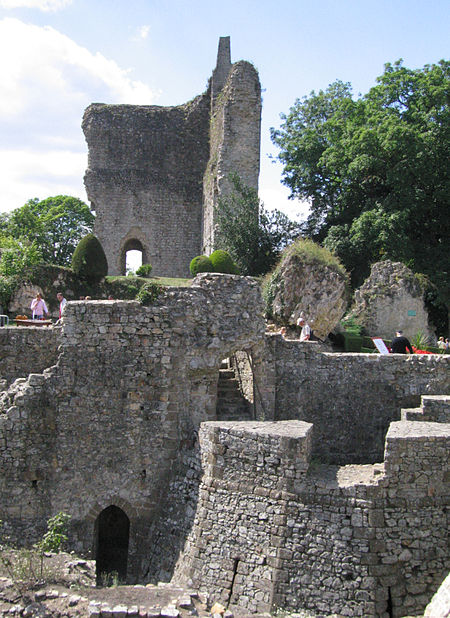
Eleanor’s early childhood was quite nomadic. She travelled often with her parents, in her mother’s entourage. Henry had been absent from the country for 5 years when Eleanor first came to England with her parents in 1163. The Royal family would spend the Christmas of 1164/5 at Marlborough, while in the midst of the crisis of Henry’s disagreements with his archbishop of Canterbury, Thomas a Becket. Eleanor of Aquitaine would then take her children to Winchester, from where they visited Sherborne Castle in Dorset and the Isle of Wight before moving to Westminster.
In February 1165 3-year-old Eleanor was betrothed to the infant son of Frederick Barbarossa, Frederick, in order to cement a treaty with the Emperor. And following the conclusion of the treaty the Archbishop of Cologne was introduced to Eleanor and Matilda (who was to marry Henry the Lion). However, where Matilda departed for her new life in Germany in 1168, Eleanor’s proposed marriage was still in the distant future.
Some historians have speculated that Eleanor was educated for some time at Fontevrault Abbey, along with her younger sister Joanna and her baby brother, John, who spent 5 years there after initially being intended for the church. However, by 1168 she was with her mother, who had decided to settle in Aquitaine and was allowed, by Henry II, to have her children with her.
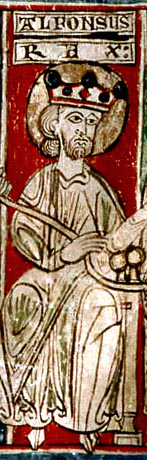
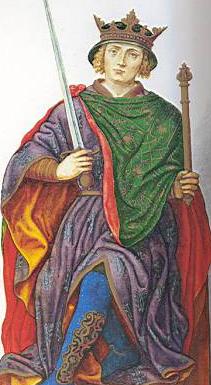
By 1170 Eleanor’s marriage to the Emperor’s son was no longer a part of Henry II’s plans, and he decided to look elsewhere for an alliance. Seeking to extend his influence across the Pyrenees and to prevent a French alliance with Castile, Henry betrothed Eleanor to 7-year-old Alfonso VIII, king of Castile since he was just 2 years old. Raoul de Faye, Seneschal of Poitou for Eleanor of Aquitaine, was influential in negotiating the marriage; arranging for Eleanor to receive Gascony as her dowry, but only after the death of her mother.
September 1170 saw Eleanor on her way to Castile. A month short of her 8th birthday, some historians suggest she was escorted as far as Bordeaux by her mother, but this is not supported by the contemporary chronicles. However, she would have been given a suitable escort – as the daughter of a king and as a future queen herself – to see her safely to her new country. The wedding took place at Burgos Cathedral in 1174, when the bride was twelve-years-old.
Eleanor and Alfonso appear to have had a very successful marriage, and a close, trusting relationship. Eleanor is renowned for introducing her mother’s Poitevin culture into the Castilian court. The court encouraged the culture and architecture of Eleanor’s youth, whilst blending it with the luxuries offered by the neighbouring Moorish culture. Castilian poet Ramon Vidal described Eleanor as “Queen Leonore modestly clad in a mantle of rich stuff, red, with a silver border wrought with golden lions.” While the troubadour Pierre Vidal described to Eleanor as elegant and gracious.
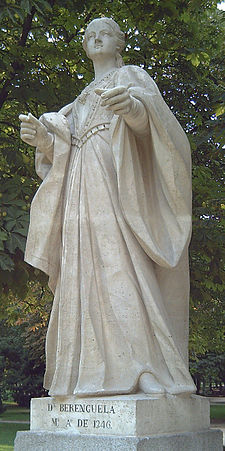
Eleanor and Alfonso would have 7 children that survived infancy. Their eldest daughter Berengaria would marry Alfonso IX, King of Leon, and would act as regent in Castile for her younger brother, Henry I, before succeeding him as queen regnant. Berengaria and Alfonso’s marriage was dissolved by the papacy, on the grounds of consanguinity; but their children were declared legitimate. Shortly after succeeding to the throne of Castile, Berengaria abdicated in favour of her son, Ferdinand III, but continued to act as his closest adviser.
One daughter, Eleanor, married James I, king of Aragon, but they divorced in 1229. While another, Constance, was dedicated as a nun and eventually became abbess of the abbey of Las Huelgas, founded by her parents in 1187. The abbey’s nuns were drawn from the highest ranks of the Spanish nobility, they belonged to the Cistercian Order, a closed community mainly cut off from the world.
Alfonso and Eleanor had 2 sons who would survive childhood. The eldest, Ferdinand, predeceased his parents, dying of a fever in 1209 or 1211. Henry I would succeed his father, but died in 1217 when a loose roof tile fell on his head. He was 13 years old.
Two other daughters survived childhood. Eleanor’s 2nd eldest daughter, 14-year-old Urraca, was initially suggested as the bride of the future Louis VIII of France, son of Philip II Augustus. In 1200 the girls’ grandmother, Eleanor of Aquitaine, was instrumental in arranging the marriage; her dowry was to be provided from the territories Richard I had won from France at the end of the 12th century.

Eleanor of Aquitaine outlived all but 2 of her children. With the deaths of Richard I and his sister Joanna in 1199, only Eleanor in Castile and her baby brother John, now King of England, remained of the once large brood of 4 boys and 3 girls who had survived infancy.
Such recent losses may have helped to persuade the 77-year-old Eleanor of Aquitaine to travel to Castile, in person and in the depths of winter, to collect the granddaughter who would be Louis’ bride. The reunion of the 2 Eleanors would surely have been highly emotional.
She was received at Alfonso’s court with all the pageantry and courtesies appropriate for most remarkable woman of her time. The Dowager Queen of England stayed with her daughter for over 2 months, taking the opportunity to spend some time with her daughter and grandchildren, as the marriage would not be able to take place until after Lent.
In getting to know her granddaughters, Eleanor of Aquitaine seems to have decided that 12-year-old Blanca would make a more suitable bride for Louis. Whether it was because of the girls’ temperaments or simply a matter of names, as some historians have suggested. Urraca was not a name easily translated into French, whereas Blanca, as Blanche, was easily recognisable.
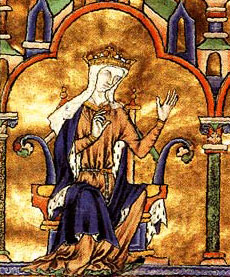
It was, therefore, 12-year-old Blanche who travelled back to France with her grandmother to marry the Dauphin, Louis – the same Louis who would be invited to become England’s king by the rebel barons and laid siege to Lincoln Castle in 1216. Blanche and Louis were married in Normandy, as France was under papal interdict at the time; Blanche would be the mother, and lifelong adviser, of Louis IX (St Louis).
In 1206 Urraca married the heir to the throne of Portugal – the future King Alfonso II.
Eleanor of England and Alfonso VIII appear to have had a happy, successful marriage, producing a family of 4 sons and 8 daughters over a 16 year period. Eleanor enhanced the culture of the Castilian court and acted as a diplomatic conduit between her husband and brothers, Richard and John, in order to aid each other and keep the peace – most of the time. However, in 1204, following the death of Eleanor of Aquitaine, Alfonso had to resort to a show of military force in order to successfully claim his wife’s dower rights over Gascony from John.
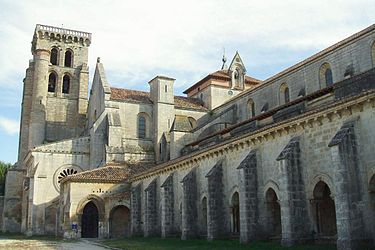
Their happy marriage came to an end when Alfonso died in Burgos on 6th October 1214. He was buried in the Abbey of Las Huelgas, where their daughter, Constance, was now Abbess, leaving Eleanor as regent for their 10-year-old son, Henry I. Broken-hearted Eleanor, however, only survived her husband by a little over 3 weeks. Overcome with grief she died in Burgos on 31st October 1214, and was laid to rest beside her beloved husband; leaving their daughter Berengaria to take up the regency for Henry.
Of Eleanor’s grandchildren 2 were to become saints, Louis IX of France and Berengaria’s son Ferdinand III, king of Castile; her great-granddaughter and namesake, Eleanor of Castile (Ferdinand’s daughter), would become Queen of England as the wife of Edward I.
*
Eleanor/Leonor’s story appears in greater detail, alongside those of her sisters Matilda and Joanna, in my book Princesses of the Early Middle Ages: Royal Daughters of the Conquest, out now in hardback and ebook.
*
Images courtesy of Wikipedia
*
Sources: Brewer’s Royalty by David Williamson; The Mammoth Book of British Kings & Queens by Mike Ashley; Britain’s Royal Families, the Complete Genealogy by Alison Weir; The Plantagenet Chronicles Edited by Elizabeth Hallam; England Under the Norman and Angevin Kings by Robert Bartlett; Eleanor of Aquitaine, by the Wrath of God, Queen of England by Alison Weir; Eleanor, April Queen of Aquitaine by Douglas Boyd; oxforddnb.com; The Families of Eleanor of Aquitaine by J.F. Andrews; Eleanor of Aquitaine by Sara Cockerill
*
My Books
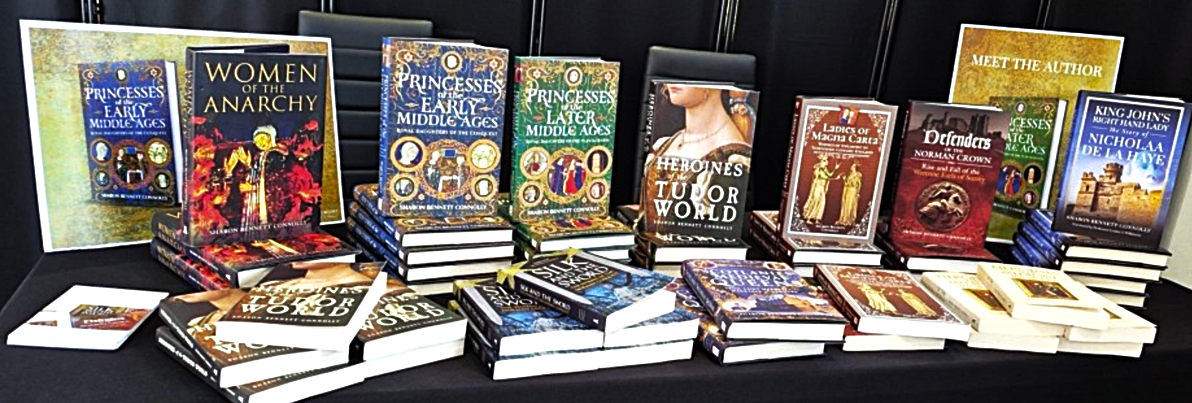
Signed, dedicated copies of all my books are available through my online bookshop. or by contacting me.
New releases in 2026:
New Hardbacks
‘My daughter wanted me to treat her more like a princess.
So, I married her to a stranger to strengthen the alliance with Poland!’
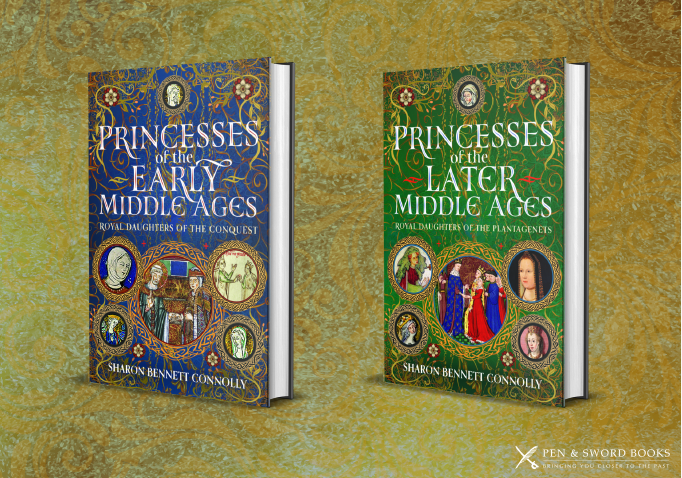
Princesses of the Early Middle Ages: Royal Daughters of the Conquest and Princesses of the Later Middle Ages: Royal Daughters of the Plantagenets tell the stories of England’s royal daughters from 1066 to the rise of the Tudors, from the last Anglo-Saxon princesses to the fall of the House of York.
Were they really pampered pawns sent off to marriages on the Continent, out of sight and out of mind?
Perhaps, there was different story, where a foreign marriage does not mean eternal exile, but a purpose in life, where a princess is a diplomat, an ambassador for England in her new country.
Where she is the bond between allies – most of the time.
Their stories are touching, inspiring and, at times, heartbreaking...
Praise for Princesses of the Early Middle Ages:
Heidi Malagisi: This is another excellent book by Sharon Bennett Connolly. Extremely well researched and relatively easy to follow along, which is a great thing because there are so many Matildas and Eleanors in this book.
Tony Riches: I challenge anyone with an interest in medieval Britain to not find something they will learn from this book.
Anna Belfrage: I just love how [Sharon] presents this huge cast of real life people in a casual, chatty tone that has me expecting the various female protagonists to suddenly pop their head up and add their own commentary.
Buy now: Princesses of the Early Middle Ages: Royal Daughters of the Conquest
Praise for Princesses of the Later Middle Ages:
Elizabeth Chadwick: Really interesting and informative and gives a great handle on the goings on surrounding these ladies!
Kathryn Warner: A deeply researched, richly detailed and fascinating account of late medieval England’s forgotten princesses. I loved it!
Buy now: Princesses of the Later Middle Ages: Royal Daughters of the Plantagenets
New in Paperback:
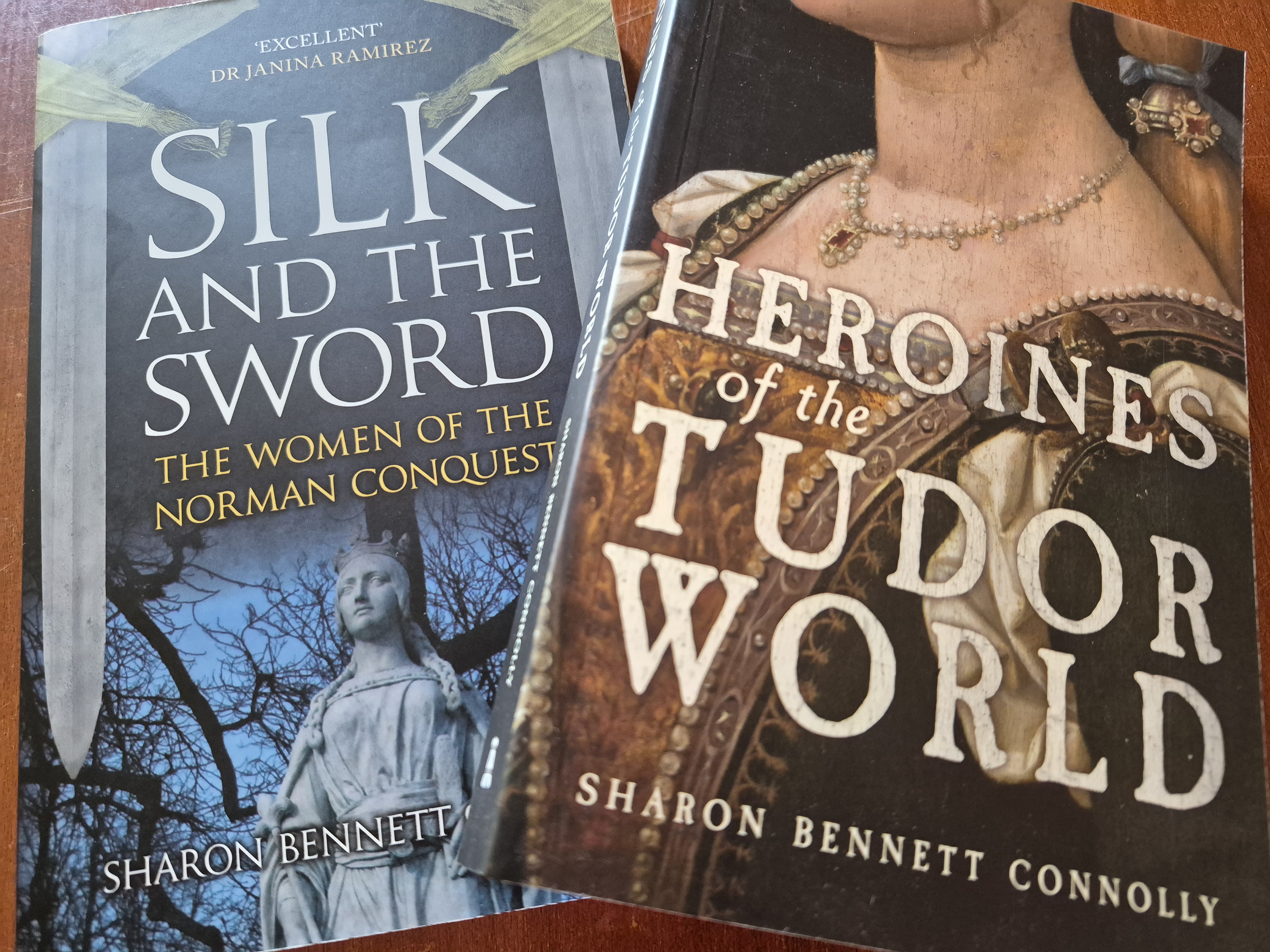
The momentous events of 1066, the story of invasion, battle and conquest, are well known. But what of the women? Silk and the Sword: The Women of the Norman Conquest traces the fortunes of the women who had a significant role to play during the Norman Conquest – wives, lovers, sisters, mothers, leaders. These are lives full of drama, pathos and sometimes mystery: Edith and Gytha searching the battlefield of Hastings for the body of Harold, his lover and mother united in their grief for the fallen king. Who was Ælfgyva, the lady of the Bayeux Tapestry, portrayed with a naked man at her feet?
Janina Ramirez said it’s “Excellent!”
Heroines of the Tudor World focuses on the women who lived through the Renaissance and Reformation, examining the threats and challenges they faced and how they overcame them. These are the women who ruled, the women who founded dynasties, the women who fought for religious freedom, their families and love. These are the women who made a difference, who influenced countries, kings and the Reformation.
Derek Birks: An excellent account of the changing roles of women in Tudor society.
Annie Whitehead: What a treat this book was to read. Bennett Connolly has an easy, conversation style of writing which welcomes you from the opening pages and draws you into her story.
Available now from Amazon and Pen and Sword Books
Also by Sharon Bennett Connolly:
Heroines of the Medieval World; Silk and the Sword: The Women of the Norman Conquest; Ladies of Magna Carta: Women of Influence in Thirteenth Century England; Defenders of the Norman Crown: Rise and Fall of the Warenne Earls of Surrey; King John’s Right Hand Lady: The Story of Nicholaa de la Haye; Women of the Anarchy; Heroines of the Tudor World; Scotland’s Medieval Queens: From St Margaret to Margaret of Denmark; Princesses of the Early Middle Ages: Royal Daughters of the Conquest (March 2026); Princesses of the Later Middle Ages; Royal Daughters of the Plantagenets (August 2026)
Alternate Endings: An anthology of historical fiction short stories including Long Live the King… which is my take what might have happened had King John not died in October 1216. Available in paperback and kindle from Amazon.
Podcast:
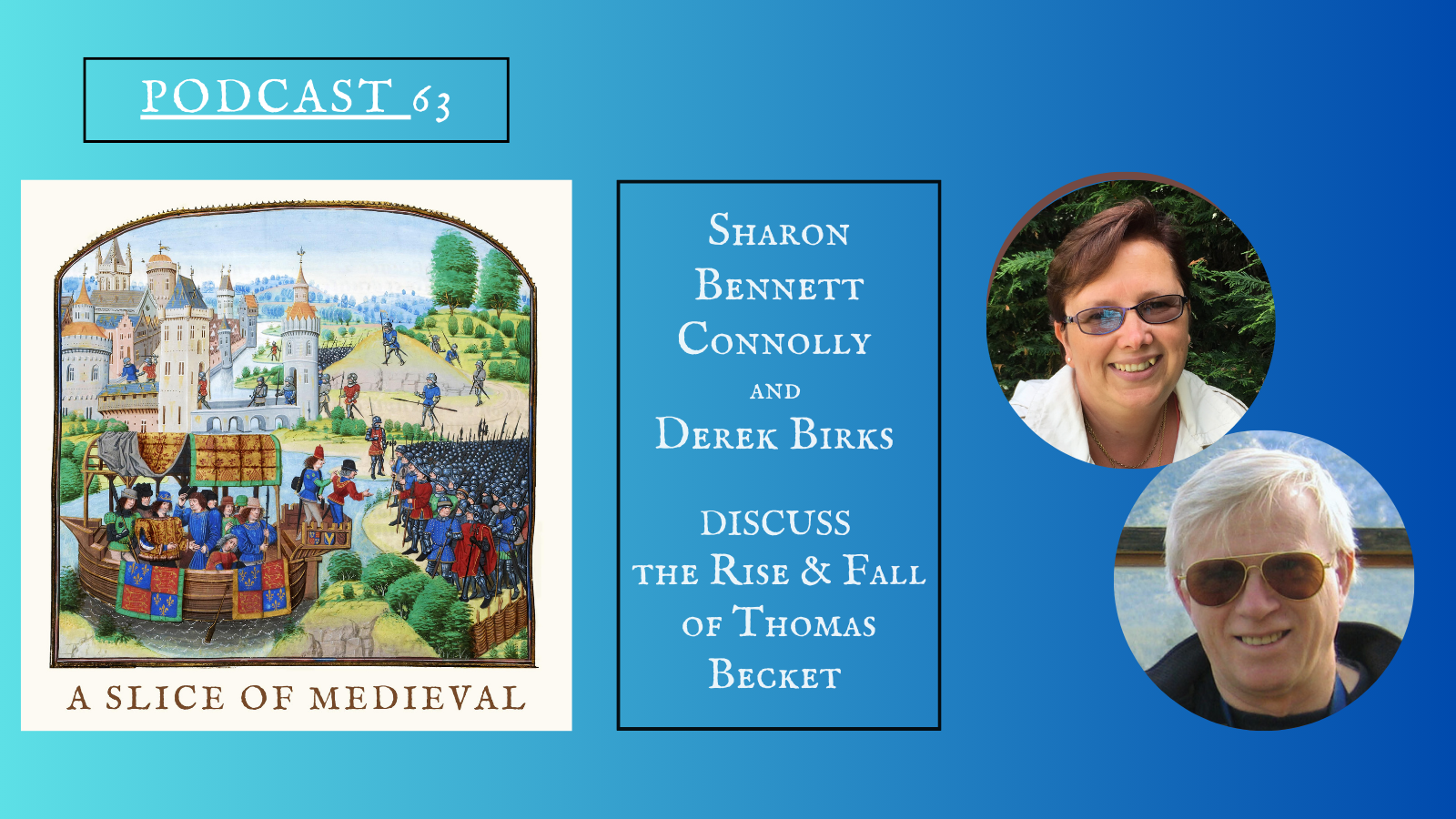
Have a listen to the A Slice of Medieval podcast, which I co-host with Historical fiction novelist Derek Birks. Derek and I welcome guests, such as Ian Mortimer, Bernard Cornwell, Elizabeth Chadwick and Scott Mariani.
We discuss a wide range of topics in medieval history, from significant events to the personalities involved.
Every episode is also now available on YouTube.
*
Don’t forget!
For forthcoming online and in-person talks, please check out my Events Page.
You can be the first to read new articles by clicking the ‘Follow’ button, liking our Facebook page or joining me on Twitter, Threads, Bluesky and Instagram.
Signed and dedicated copies of all my books are available through my online bookshop.
*
©2016 Sharon Bennett Connolly FRHistS


Reblogged this on Lenora's Culture Center and Foray into History.
LikeLike
Thank you. 🙂
LikeLike
At first I thought this was Eleanor of Castile wife of Edward 1. Now I think I have discovered a new subject for a novel. It’s a fabulous article. Soooo interesting. Thank you, Sharon.
LikeLike
Thank you Carol. I think she would make a wonderful subject for a novel – I look forward to reading it!
LikeLike
Reblogged this on History's Untold Treasures and commented:
H/T History … the Interesting Bits
LikeLike
Thank you ☺
LikeLike