Yolande and the Hope for the Scottish Succession

330px-sceau_de_yolande_decosse_-_duchesse_de_bretagne
Yolande de Dreux

Yolande de Dreux was Scotland’s Queen Consort for only  4 months and 14 days. In that short time, she carried the hope of a nation – and its king – to secure the Scottish succession.

Yolande was born into a cadet branch of the French royal family, probably sometime in the mid-1260s. Her father was Robert IV, Count of Dreux, who died in 1282 and her mother was Beatrice de Montfort, who died  in 1311. Beatrice was the daughter of Count Jean I de Montfort l’Amoury and his wife Jeanne de Chateaudun, Beatrice was therefore a great-granddaughter of Simon de Montfort, earl of Leicester, and heiress to the impressive de Montfort estates. One of 6 children, Yolande had 2 brothers and 3 sisters. Little is known of Yolande’s childhood but we can imagine that as a junior member of the Capetian dynasty, she grew up amidst some privilege and splendour.

Whilst Yolande was growing into adulthood Scotland was experiencing a “golden age”, a period of relative peace and prosperity. Her king, Alexander III was married to Margaret, daughter of Henry III of England and the couple had 3 children survive childhood. Their daughter, Margaret, born at Windsor on 28th February, 1261,  was married to Erik II, king of Norway, in August 1281. Their eldest son, Alexander, was born on 21st January 1264, at Jedburgh. On 15th November 1282 Alexander married Margaret, the daughter of Guy de Dampierre, Count of Flanders. A younger son, David was born on 20th March 1273.

Queen Margaret died in 1275 and within 8 years all 3 of her children were dead; 8-year-old David died at Stirling Castle at the end of June 1281, Margaret died in childbirth on 9th April 1283 and Alexander died at Lindores Abbey in January 1284, sometime around his 20th birthday. Alexander’s heir was now his infant granddaughter by Margaret and Erik, little Margaret, the Maid of Norway, born shortly before her mother’s death.

dscn4964
Jedburgh Abbey

With his entire dynasty resting on the life of his toddler granddaughter, Alexander started the search for a new wife. In February 1285 he sent a Scottish embassy to France for this sole purpose. Their successful search saw Yolande arrive in Scotland that same summer, accompanied by her brother John. Alexander and Yolande were married at Jedburgh Abbey, Roxburghshire, on 14th October 1285, the feast of St Calixtus, in front of a large congregation made up of Scottish and French nobles. Yolande was probably no more than 22 years of age, while Alexander was in his 44th year.

The marriage was one of the shortest in British royal history – and the shortest of any English or Scottish king, lasting less than 5 months. Tragedy struck on 19 March 1286.

Alexander had spent the day attending a council meeting in Edinburgh. When the meeting broke up he set off on horseback to join his wife at Kinghorn Castle in Fife. It was said he wanted to be there to celebrate her birthday and he may also have recently discovered that she was pregnant with the much-desired heir. For whatever the reason, he was eager to get to her and took only a small escort of 3 men and 2 local guides. It seems that, with bad weather closing in and daylight fading, several people counselled against continuing the journey, including the ferryman at the River Forth and the bailie at Inverkeithing, who argued that Alexander should stay the night and continue his journey in the morning as a heavy storm was brewing.

330px-alexander_iii_and_ollamh_righ
Alexander III

Only 8 miles from his destination, Alexander would hear none of it and insisted on continuing his journey. He somehow lost his escort in the dark and worsening weather, but continued alone. It was the next morning when his body was found on the foreshore of Pettycur, just a mile from his destination. The most likely explanation was that his horse had stumbled, throwing the king whose neck was broken in the fall, although at least one historical fiction writer has suggested foul play while others have suggested the king was drunk.

There followed months of uncertainty in Scotland. She had lost one of her most successful kings and the succession was in turmoil. Little Margaret, the Maid of Norway, had been recognised by the council as Alexander’s heir, but his queen was pregnant; and if she gave birth to a boy he would be king from his first breath. A regency council was established to rule until the queen gave birth.

In the event, Yolande either suffered a miscarriage, or the child was stillborn. Some sources, the Lanercost Chronicle in particular, have questioned whether Yolande was pregnant at all, suggesting that she was intending to pass off another woman’s baby as her own. The plan thwarted, the chronicle recorded that ‘women’s cunning always turns toward a wretched outcome‘.¹ However, there are major discrepancies in the chronicle’s apparently malicious account and tradition has the baby buried at Cambuskenneth.
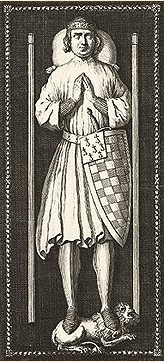
artur_bretan
Arthur of Brittany

The throne passed to little Margaret and arrangements began to have her brought to England, with marriage negotiations being opened with Edward I for the little queen to marry his son and heir; the future Edward II. Yolande continued to reside in Scotland for some time, possibly at Stirling Castle, and was confirmed in her dower properties, which included an annual income of £200 from Berwick; she also had estates in the sheriffdom of Stirling and a horse stud at Jedworth.

Margaret’s death at sea in 1290, while on her journey to her new kingdom, threw Scotland into years of turmoil, with 13 nobles advancing their competing claims to the crown and Edward I of England claiming the right to choose Alexander III’s successor, and recognition as Scotland’s overlord. The English king’s imperialist ambitions had thrown Scotland into crisis by 1296.

Luckily for Yolande, she was already far away from Scotland and the brewing wars. In May 1294 Yolande had married for a second time; Arthur of Brittany was a similar age to Yolande and was the son and heir of Jean II, duke of Brittany and earl of Richmond. Yolande was the second wife of Arthur, who already had 3 sons, Jean, Guy and Peter, by his first wife, Marie, Vicomtesse de Limoges.

It is possible that Arthur chose Yolande as a bride due to the impressive de Montfort territories that she stood to inherit from her mother, although there were legal wranglings between Yolande and her younger sister, Jeanne, who also claimed the lands.
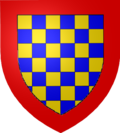
120px-blason_comtes_dreux
Arms of the counts of Dreux

Yolande and Arthur had 6 children together. Their eldest daughter, Joan was born a year after their marriage and married Robert, Lord of Cassel; she died in 1363. Beatrice was born c.1295 and married Guy, Lord of Laval; she lived until 1384. Their only son, John, was probably born 1295/6 and married Joan of Flanders. Of the 3 youngest daughters: Alice was born in the late 1290s married Bouchard VI, Count of Vendôme and died in 1377; Blanche was born in 1300 and died young; Mary was born in 1302 and became a nun, she died in 1377.

Arthur succeeded his father as Duke of Brittany in 1305 and ruled until his death in 1312. He was succeeded by John III, his eldest son by his first marriage. However, John’s death in 1341 sparked the War of the Breton Succession when Yolande’s son, John de Montfort, claimed the duchy in place of Joan of Penthièvre, daughter of Guy (Arthur’s 2nd son by his 1st wife), who was married to Charles of Blois, nephew of King Philip VI of France. Joan and Charles were therefore backed by the French crown, and Edward III of England supported the claims of John de Montfort; the war eventually became part of the greater conflict, the Hundred Years War. When John fell ill and died in 1345, the war continued in the name of his 6-year-old son and Yolande’s grandson, another John (John IV, duke of Brittany) and finally ended in John’s favour with the treaty of Guérande in April 1365.
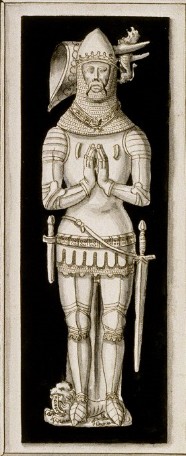
jan5bretan
John IV Duke of Brittany

After being widowed for a second time Yolande did not remarry.

During her time in Brittany Yolande continued to administer to her Scottish estates; in October 1323 safe-conduct to Scotland was granted to a French knight  ‘for the dower of the Duchess of Brittany while she was Queen of Scotland‘.² It seems uncertain when Yolande died. Sources vary between 1324 and 1330, although she was still alive on 1st February 1324 when she made provision for the support of her daughter, Marie, who had become a nun.

These arrangements for her daughter are the last mention of Yolande in the historical record, the date of her death as uncertain as that of her birth.

*

Footnotes: ¹ Chronique de Lanercost, 118,  quoted by Jessica Nelson in Oxforddnb.com. ²CSP Scot.. 3. no. 829 quoted by Jessica Nelson in Oxforddnb.com.

*

Pictures courtesy of Wikipedia, except Jedburgh Abbey, which is ©2016 Sharon Bennett Connolly.

*

Sources: Marc Morris Edward I: A Great and Terrible King by Marc Morris;  Brewer’s British Royalty by David Williamson; The Mammoth Book of British kings & Queens by Mike Ashley; Britain’s Royal Families by Alison Weir; The Oxford Companion to British History edited by John Cannon; The History Today Companion to British History Edited by Juliet Gardiner and Neil Wenborn; The Story of Scotland by Nigel Tranter; Scotland, History of a Nation by David Ross; oxforddnb.com; undiscoveredscotland.co.uk; freelancehistorywriter.com.

*

My books

Signed, dedicated copies of all my books are available through my online store.

Out now: Scotland’s Medieval Queens

Scotland’s history is dramatic, violent and bloody. Being England’s northern neighbour has never been easy. Scotland’s queens have had to deal with war, murder, imprisonment, political rivalries and open betrayal. They have loved and lost, raised kings and queens, ruled and died for Scotland. From St Margaret, who became one of the patron saints of Scotland, to Elizabeth de Burgh and the dramatic story of the Scottish Wars of Independence, to the love story and tragedy of Joan Beaufort, to Margaret of Denmark and the dawn of the Renaissance, Scotland’s Medieval Queens have seen it all. This is the story of Scotland through their eyes.

Available now from Amazon and Pen and Sword Books

Also by Sharon Bennett Connolly:
Heroines of the Tudor World tells the stories of the most remarkable women from European history in the time of the Tudor dynasty, 1485-1603. These are the women who ruled, the women who founded dynasties, the women who fought for religious freedom, their families and love. Heroines of the Tudor World is now available for pre-order from Amberley Publishing and Amazon UK. Women of the Anarchy demonstrates how Empress Matilda and Matilda of Boulogne, unable to wield a sword themselves, were prime movers in this time of conflict and lawlessness. It shows how their strengths, weaknesses, and personal ambitions swung the fortunes of war one way – and then the other. Available from Bookshop.orgAmberley Publishing and Amazon UKKing John’s Right-Hand Lady: The Story of Nicholaa de la Haye is the story of a truly remarkable lady, the hereditary constable of Lincoln Castle and the first woman in England to be appointed sheriff in her own right. Available from all good bookshops Pen & Sword Booksbookshop.org and Amazon

Defenders of the Norman Crown: The Rise and Fall of the Warenne Earls of Surrey tells the fascinating story of the Warenne dynasty, from its origins in Normandy, through the Conquest, Magna Carta, the wars and marriages that led to its ultimate demise in the reign of Edward III. Available from Pen & Sword BooksAmazon in the UK and US, and Bookshop.orgLadies of Magna Carta: Women of Influence in Thirteenth Century England looks into the relationships of the various noble families of the 13th century, and how they were affected by the Barons’ Wars, Magna Carta and its aftermath; the bonds that were formed and those that were broken. It is now available in paperback and hardback from Pen & SwordAmazon, and Bookshop.orgHeroines of the Medieval World tells the stories of some of the most remarkable women from Medieval history, from Eleanor of Aquitaine to Julian of Norwich. Available now from Amberley Publishing and Amazon, and Bookshop.orgSilk and the Sword: The Women of the Norman Conquest traces the fortunes of the women who had a significant role to play in the momentous events of 1066. Available now from Amazon,  Amberley Publishing, and Bookshop.org.

Alternate Endings: An anthology of historical fiction short stories including Long Live the King… which is my take what might have happened had King John not died in October 1216. Available in paperback and kindle from Amazon.

Podcast:

Have a listen to the A Slice of Medieval podcast, which I co-host with Historical fiction novelist Derek Birks. Derek and I welcome guests, such as Bernard Cornwell and Michael Jecks, and discuss a wide range of topics in medieval history, from significant events to the personalities involved. Every episode is also now available on YouTube.

*

Don’t forget! Signed and dedicated copies of all my books are available through my online store.

For forthcoming online and in-person talks, please check out my Events Page.

You can be the first to read new articles by clicking the ‘Follow’ button, liking our Facebook page or joining me on TwitterThreadsBluesky and Instagram.

*

©2016 Sharon Bennett Connolly, FRHistS
Eleanor de Montfort, the First Princess of Wales

Eleanor_de_Montford
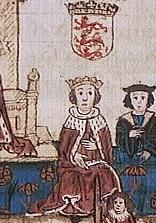
Eleanor de Montfort

Born in 1258, probably at Kenilworth Castle, Eleanor de Montfort was the only daughter and sixth child of Eleanor of England. Her mother was the fifth and youngest child of King John and Isabella of Angouleme, and sister of Henry III. Her father was Simon de Montfort, Earl of Leicester, leader of the rebels in the Second Barons’ War.

Eleanor had 5 older brothers; Henry, Simon, Amaury, Guy and Richard.

Her father, Simon de Montfort, is remembered as one of the founders of representative government. He was a leading figure of the Second Barons’ War. He and his eldest son, Henry, were killed at the Battle of Evesham on 4th August 1265. On her father’s death, Eleanor fled to exile in France with her mother and brother, Amuary. The women settled at the Abbey at Montargis until Eleanor of England’s death there in 1275.

llywel2
Llewelyn ap Gruffydd, Prince of Wales

In 1265, in return for Welsh support, Simon de Montfort had agreed to the marriage of his daughter, Eleanor, to Llewelyn ap Gruffydd, Prince of Wales. De Montfort’s downfall had postponed the marriage, but in 1275, in a move guaranteed to rile Edward I, King of England, Llewelyn reprised his marriage plans and the couple were married by proxy whilst Eleanor was still in France.

Shortly afterwards, Eleanor set sail for Wales, accompanied by her brother, Amaury, who was now a Papal Chaplain and Canon of York. Believing the marriage would ‘scatter the seeds which had grown from the malice her father had sown’, Edward arranged for Eleanor to be captured at sea. When Eleanor’s ship was taken in the Bristol Channel, the de Montfort arms and banner were found beneath the ship’s boards.

Eleanor was taken to close, but comfortable, captivity at Windsor; whilst her brother Amaury was imprisoned at Corfe Castle for 6 years.

In 1276 Llewelyn having refused to pay homage to Edward I, he was declared a rebel. Faced with Edward’s overwhelming forces, and support slipping away, Llewelyn was forced to submit within a year. The Treaty of Aberconwy reduced his lands to Gwynedd, but paved the way for his marriage to Eleanor, at last; it’s possible that the marriage was one of the conditions of Llewelyn’s submission.

edward03
Edward I, with Alexander III, King of Scots on his right, and Llewelyn, Prince of Wales on his left

The wedding celebrations of Eleanor de Montfort and Llewelyn ap Gruffydd were an extravagant affair, celebrated at Worcester Cathedral on the Feast of St Edward, 13th October 1278. The illustrious guest list included Edward I and Alexander III, King of Scots. Edward and his brother, Edmund of Lancaster gave Eleanor away at the church door, and Edward paid for the lavish wedding feast.

While the marriage did not prevent further struggles between the Welsh and the English king, there was relative peace for a short time and Eleanor may have encouraged her husband to seek political solutions. She is known to have visited the English court when Princess of Wales; and was at Windsor on such a visit in January 1281. Eleanor herself wrote to Edward on 8 July 1279, not only to assure him of her ‘sincere affection’ and loyalty, but also to warn him against listening to reports unfavourable to Wales from his advisers:

Although as we have heard, the contrary hereto hath been reported of us to your excellency by some; and we believe, notwithstanding, that you in no wise give credit to any who report unfavourably concerning our lord and ourself until you learn from ourselves if such speeches contain truth: because you showed, of your grace, so much honour and so much friendliness to our lord and yourself, when you were at the last time at Worcester.

Anne Crawford, Letters of Medieval Women

As a testament to her diplomatic skills, Eleanor uses words of affection and flattery whilst clearly getting her point across, a technique her predecessor Joan, Lady of Wales, had used to good effect with Henry III. As it had been with Joan, Eleanor, too, was not beyond humbling herself to King Edward in order to achieve her objectives and wrote to him again in October 1280, this time regarding her brother, Amaury, who was still in the king’s custody. She wrote to the king,

with clasped hands, and with bended knees and tearful groanings, we supplicate your highness that, reverencing from your inmost soul the Divine mercy (which holds out the hand of pity to all, especially those who seek Him with their whole heart), you would deign mercifully to take again to your grace and favour our aforesaid brother and your kinsman, who humbly craves, as we understand, your kindness. For if your excellency, as we have often known, mercifully condescends to strangers, with much reason, as we think, ought you to hold out the hand of pity to one so near to you by the ties of nature.

Anne Crawford, Letters of Medieval Women

Amaury was released shortly afterwards.

However, on 22nd March, 1282, Llewelyn’s younger brother, Dafydd, attacked the Clifford stronghold of Hawarden Castle and Llewelyn found himself in rebellion against Edward I yet again. At the same time, Eleanor was in the final few months of her pregnancy and Llewelyn held off taking the field until the birth of his much hoped for heir.

Eleanor and Llewelyn’s only child, a daughter, Gwenllian, was born on 19th June 1282; Eleanor died the same day.

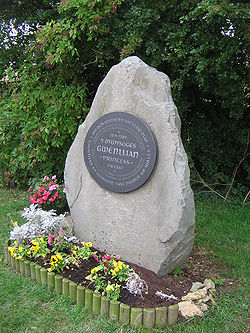
250px-Gwenllian_memorial_Sempringham
Memorial stone for Princess Gwenllian, Sempringham

Llewelyn himself was killed in an ambush on 11 December of the same year, at Builth, earning himself the name of Llewelyn the Last – the last native Prince of Wales.

Their daughter, Gwenllian was given into the guardianship of her uncle, Dafydd ap Gruffydd, but was taken into Edward I’s custody when David was defeated and captured by the English. She was sent to be raised at the Gilbertine convent at Sempringham, where she eventually became a nun. She died there on 7th June 1337, the last of her father’s line. It is said that she was never allowed to speak, hear or learn her native language. It has been assumed that she was not aware of her heritage, although she was once visited by her cousin, Edward III, who paid £20 annually for her food and clothing. However, as David Pilling has pointed out, she does in fact call herself ‘Princess of Wales, daughter of Llywelyn ap Gruffudd’ in a petition inside the volume of petitions from Wales edited by William Rees.

Eleanor de Montfort was the first woman known to have used the title Princess of Wales. She was buried alongside her aunt Joan, illegitimate daughter of King John and wife of Llewelyn the Great, at Llanfaes on the Isle of Anglesey.

*

Sources: castlewales.com; snowdoniaheritage.info; Marc Morris A Great and Terrible King; David Williamson Brewer’s British royalty; Mike Ashley The Mammoth Book of British kings & Queens; Alison Weir Britain’s Royal Families; Roy Strong The Story of Britain; Dan Jones The Plantagenets; the Kings who Made England; Chronicles of the Age of Chivalry Edited by Elizabeth Hallam; The Oxford Companion to British History; The History Today Companion to British History; Derek Wilson The Plantagenets; Anne Crawford, Letters of Medieval Women; author David Pilling.

Pictures taken from Wikipedia, except that of Edward I, Alexander III and Llewelyn, which was taken from castlewales.com.

*

My Books:

Signed, dedicated copies of all my books are available through my online bookshop.

Out Now! Scotland’s Medieval Queens

Books by Sharon Bennett Connolly

Scotland’s history is dramatic, violent and bloody. Being England’s northern neighbour has never been easy. Scotland’s queens have had to deal with war, murder, imprisonment, political rivalries and open betrayal. They have loved and lost, raised kings and queens, ruled and died for Scotland. From St Margaret, who became one of the patron saints of Scotland, to Elizabeth de Burgh and the dramatic story of the Scottish Wars of Independence, to the love story and tragedy of Joan Beaufort, to Margaret of Denmark and the dawn of the Renaissance, Scotland’s Medieval Queens have seen it all. This is the story of Scotland through their eyes.

Scotland’s Medieval Queens gives a thorough grounding in the history of the women who ruled Scotland at the side of its kings, often in the shadows, but just as interesting in their lives beyond the spotlight. It’s not a subject that has been widely covered, and Sharon is a pioneer in bringing that information into accessible history.’ Elizabeth Chadwick (New York Times bestselling author)

Available now from Amazon and Pen and Sword Books

Also by Sharon Bennett Connolly:

Books by Sharon Bennett Connolly

Heroines of the Tudor World tells the stories of the most remarkable women from European history in the time of the Tudor dynasty, 1485-1603. These are the women who ruled, the women who founded dynasties, the women who fought for religious freedom, their families and love. Heroines of the Tudor World is now available for pre-order from Amberley Publishing and Amazon UK. Women of the Anarchy demonstrates how Empress Matilda and Matilda of Boulogne, unable to wield a sword themselves, were prime movers in this time of conflict and lawlessness. It shows how their strengths, weaknesses, and personal ambitions swung the fortunes of war one way – and then the other. Available from Bookshop.orgAmberley Publishing and Amazon UKKing John’s Right-Hand Lady: The Story of Nicholaa de la Haye is the story of a truly remarkable lady, the hereditary constable of Lincoln Castle and the first woman in England to be appointed sheriff in her own right. Available from all good bookshops Pen & Sword Booksbookshop.org and Amazon

Royal Historical Society

Defenders of the Norman Crown: The Rise and Fall of the Warenne Earls of Surrey tells the fascinating story of the Warenne dynasty, from its origins in Normandy, through the Conquest, Magna Carta, the wars and marriages that led to its ultimate demise in the reign of Edward III. Available from Pen & Sword BooksAmazon in the UK and US, and Bookshop.orgLadies of Magna Carta: Women of Influence in Thirteenth Century England looks into the relationships of the various noble families of the 13th century, and how they were affected by the Barons’ Wars, Magna Carta and its aftermath; the bonds that were formed and those that were broken. It is now available in paperback and hardback from Pen & SwordAmazon, and Bookshop.orgHeroines of the Medieval World tells the stories of some of the most remarkable women from Medieval history, from Eleanor of Aquitaine to Julian of Norwich. Available now from Amberley Publishing and Amazon, and Bookshop.orgSilk and the Sword: The Women of the Norman Conquest traces the fortunes of the women who had a significant role to play in the momentous events of 1066. Available now from Amazon,  Amberley Publishing, and Bookshop.org.

Alternate Endings: An anthology of historical fiction short stories including Long Live the King… which is my take what might have happened had King John not died in October 1216. Available in paperback and kindle from Amazon.

Podcast:

A Slice of Medieval

Have a listen to the A Slice of Medieval podcast, which I co-host with Historical fiction novelist Derek Birks. Derek and I welcome guests, such as Bernard Cornwell and Michael Jecks, and discuss a wide range of topics in medieval history, from significant events to the personalities involved. 

Every episode is also now available on YouTube.

*

Don’t forget! Signed and dedicated copies of all my books are available through my online store.

For forthcoming online and in-person talks, please check out my Events Page.

You can be the first to read new articles by clicking the ‘Follow’ button, liking our Facebook page or joining me on TwitterThreadsBluesky and Instagram.

*

©2015 Sharon Bennett Connolly FRHistS

Edmund Crouchback, Edward I’s Loyal Brother

arms_of_edmund_crouchback_earl_of_leicester_and_lancaster-svg
Arms of Edmund Crouchback

The fourth child and second son of Henry III and his Queen, Eleanor of Provence,  and named to honour the Old English royal saint, Edmund was born in London on 16th January 1245.

From an early age, Edmund was involved in his father’s schemes to extend Angevin influence across Europe; in 1254 Henry accepted the crown of Sicily from the Pope for the 9-year-old Edmund, but this came to naught and he was to be officially deprived of the kingdom in 1266, when the Pope handed Sicily to Henry’s brother-in-law, Charles of Anjou.

Henry and Eleanor are known to have been devoted parents and had a very close relationship with all their children. However, Edmund grew up in a time of great upheaval in the kingdom. Henry was locked in a power struggle with his barons, led by his brother-in-law, Simon de Montfort, Earl of Leicester. The barons were against expensive entanglements in Europe – such as Edmund’s claim to the Sicilian crown – and what they saw as Henry’s inept and ineffective rule in general.

BodleianDouce231Fol1rEdCrouchbackAndStGeorge
Miniature of Edmund with Saint George

The conflict known as the Barons’ War would lead to what is now seen as the first recognisable English parliament, and to the eventual defeat and destruction of Simon de Montfort at the Battle of Evesham in 1265.

Although Edmund’s youth during the war years meant he took no major part in the conflict, following de Montfort’s death, in October 1265 Edmund was given his lands and titles, including the castle at Kenilworth, which was still holding out against the king. Edmund commanded the Siege of Kenilworth, which held out for 6 months, until starvation forced the garrison’s capitulation. He would also receive the earldom of Lancaster, which was created for him in 1267 by Henry III.

A less-than-chivalric move in 1269 saw Edmund and his older brother, Edward, conspiring against Robert de Ferrers, Earl of Derby, a former Montfort supporter, depriving him of his titles and lands – all of which were passed to Edmund.

In April of the same year, Edmund married Avelina de Forz, daughter of the Earl of Devon and Aumale. The marriage produced no children and Avelina died in 1274.

In 1268 Edward and Edmund had both taken the cross, promising to take part in Crusade to the Holy Land. Although logistics meant they didn’t leave immediately, the brothers travelled separately and Edmund arrived in the Holy Land in September 1271. It is likely that his soubriquet of ‘Crouchback’ comes from him wearing a cross on his back during the Crusades, as there is no evidence of any physical deformity.

After some minor victories, but realising their force wasn’t big enough to retake the Holy Land, and reinforcements from Europe were not forthcoming, Edward signed a 10 year truce with the Muslim leader, Baibars. The following month, May 1272, Edmund sailed for home.

150px-BlancheArtois
Seal of Blanche of Artois

Henry III died in November 1272 and Edmund’s older brother ascended the throne as Edward I. Edmund was loyal to his brother, throughout his reign, playing a supporting role, both militarily and diplomatically. In 1276, Edmund married again; to Blanche of Artois, the widowed Countess of Champagne, whose daughter, Jeanne of Navarre, would marry Philip IV of France in 1284, making Edmund step-father to the French Queen.

Blanche would outlive Edmund, dying in Paris in 1302. They had 4 children together. Thomas was born before 1280 and was executed on the orders of Edward II, following a failed rebellion and his defeat at the Battle of Boroughbridge. Their second son, Henry would eventually succeed to his brother’s titles of Earl of Lancaster, Lincoln, Salisbury, Derby and Leicester. Born around 1281, he married Matilda, daughter of Sir Patrick de Chaworth, and they had 7 children together; their eldest son being Henry of Grosmont, 1st Duke of Lancaster and father of Blanche of Lancaster. A third son, John, Lord of Beaufort and Nogent, was born before May 1286 and died around 1317, leaving no children. Their only daughter, Mary, died young in France.

In Edward’s 1277 Welsh campaign Edmund, the biggest landowner in south Wales, was given the command of the southern army. This second, smaller contingent of the invasion of Wales provided support to Edward’s main army. Having set out shortly after 10th July, Edmund’s force drove deep into Wales, facing little opposition compared to Edward’s army. The main landholders of the south had already capitulated, or had fled to join the Welsh prince, Llewellyn, in the north. Edmund’s army had reached their objective of Aberystwyth by 25th July and, at the start of August, began the construction of the castle there. By September the war was over, Edmund disbanded his army on the 20th – leaving a small contingent to garrison the castle – and returned to England.

As a loyal and loving brother, in 1290 Edmund was involved in organising the funeral arrangements for his sister-in-law, Eleanor of Castile. Historian Dean Irwin has told me of a letter which includes many current events and explains that Edmund had had to cancel a planned trip to Canterbury in order to help with the late queen’s funeral.

Edmond1
Edmund’s seal

In 1294 Edmund used his familial connections with the French crown to broker a peace deal with France; an agreement intended to foster a long-lasting peace and to see his widowed brother Edward married to Margaret, Philip IV’s sister. Edmund agreed to hand over several cities, including Bordeaux, in Gascony, on the understanding they would be returned to Edward on his marriage.

The French had no intention of returning the Gascon lands, and in April 1294, Edmund realised he had been duped; the French ejected the English Seneschal of Gascony and Edward prepared an invasion force, ordered to muster on 1st September.

However, rebellion in Wales meant the postponement of the Gascon expedition and Edmund and his forces were ordered to Worcester. The Welsh having been subdued and Edmund having recovered from unspeicifed illness that struck him at the end of 1295, Edmund and his army finally set sail for Gascony in January 1296.

It was to be Edmund’s last campaign. The French were well entrenched and the English failed to retake Bordeaux, or any of the towns along the Garonne. His money running out, Edmund was forced to retire to Bayonne, where he fell sick, dying there on 5th June 1296.

A devastated Edward I called on his churchmen to pray for ‘our dearest and only brother, who was always devoted and faithful to us…and in whom valour and many gifts of grace shone forth’.

He was buried in Westminster Abbey, recently completed by his father, Henry III.

*

Pictures of Edmund’s coat of arms, seal and Edmund with St George, and of Blanche of Artois, courtesy of Wikipedia.

Further reading: Marc Morris A Great and terrible King; Sara Cockerill Eleanor of Castile: Shadow Queen; Roy Strong The Story of Britain; Mike Ashley The Mammoth Book of British Kings & Queens; Derek Wilson The Plantagenets; Alison Weir Britain’s Royal Families; Dean Irwin.

*

My Books

Signed, dedicated copies of all my books are available through my online store.

Out now: Scotland’s Medieval Queens

Books by Sharon Bennett Connolly

Scotland’s history is dramatic, violent and bloody. Being England’s northern neighbour has never been easy. Scotland’s queens have had to deal with war, murder, imprisonment, political rivalries and open betrayal. They have loved and lost, raised kings and queens, ruled and died for Scotland. From St Margaret, who became one of the patron saints of Scotland, to Elizabeth de Burgh and the dramatic story of the Scottish Wars of Independence, to the love story and tragedy of Joan Beaufort, to Margaret of Denmark and the dawn of the Renaissance, Scotland’s Medieval Queens have seen it all. This is the story of Scotland through their eyes.

Scotland’s Medieval Queens gives a thorough grounding in the history of the women who ruled Scotland at the side of its kings, often in the shadows, but just as interesting in their lives beyond the spotlight. It’s not a subject that has been widely covered, and Sharon is a pioneer in bringing that information into accessible history.’ Elizabeth Chadwick (New York Times bestselling author)

Available now from Amazon and Pen and Sword Books

Also by Sharon Bennett Connolly:

Books by Sharon Bennett Connolly

Heroines of the Tudor World tells the stories of the most remarkable women from European history in the time of the Tudor dynasty, 1485-1603. These are the women who ruled, the women who founded dynasties, the women who fought for religious freedom, their families and love. Heroines of the Tudor World is now available from Amberley Publishing and Amazon UK. Women of the Anarchy demonstrates how Empress Matilda and Matilda of Boulogne, unable to wield a sword themselves, were prime movers in this time of conflict and lawlessness. It shows how their strengths, weaknesses, and personal ambitions swung the fortunes of war one way – and then the other. Available from Bookshop.orgAmberley Publishing and Amazon UKKing John’s Right-Hand Lady: The Story of Nicholaa de la Haye is the story of a truly remarkable lady, the hereditary constable of Lincoln Castle and the first woman in England to be appointed sheriff in her own right. Available from all good bookshops Pen & Sword Booksbookshop.org and Amazon

Defenders of the Norman Crown: The Rise and Fall of the Warenne Earls of Surrey tells the fascinating story of the Warenne dynasty, from its origins in Normandy, through the Conquest, Magna Carta, the wars and marriages that led to its ultimate demise in the reign of Edward III. Available from Pen & Sword BooksAmazon in the UK and US, and Bookshop.orgLadies of Magna Carta: Women of Influence in Thirteenth Century England looks into the relationships of the various noble families of the 13th century, and how they were affected by the Barons’ Wars, Magna Carta and its aftermath; the bonds that were formed and those that were broken. It is now available in paperback and hardback from Pen & SwordAmazon, and Bookshop.orgHeroines of the Medieval World tells the stories of some of the most remarkable women from Medieval history, from Eleanor of Aquitaine to Julian of Norwich. Available now from Amberley Publishing and Amazon, and Bookshop.orgSilk and the Sword: The Women of the Norman Conquest traces the fortunes of the women who had a significant role to play in the momentous events of 1066. Available now from Amazon,  Amberley Publishing, and Bookshop.org.

Alternate Endings: An anthology of historical fiction short stories including Long Live the King… which is my take what might have happened had King John not died in October 1216. Available in paperback and kindle from Amazon.

Podcast:

A Slice of Medieval

Have a listen to the A Slice of Medieval podcast, which I co-host with Historical fiction novelist Derek Birks. Derek and I welcome guests, such as Bernard Cornwell and Michael Jecks, and discuss a wide range of topics in medieval history, from significant events to the personalities involved. Every episode is also now available on YouTube.

*

Don’t forget! Signed and dedicated copies of all my books are available through my online store.

For forthcoming online and in-person talks, please check out my Events Page.

You can be the first to read new articles by clicking the ‘Follow’ button, liking our Facebook page or joining me on TwitterThreadsBluesky and Instagram.

*

©2015  Sharon Bennett Connolly FRHistS