Will Bowman, now fully entangled in Richard Lionheart’s crusade, has reached the Holy Land. However, just as he and his crew are about to touch down in Acre, they are drawn into an intense battle at sea, where they are faced with the dreaded Byzantine weapon: Greek Fire.
Barely escaping with his life, Will gains the trust of Richard Lionheart, moving into his service. But as the siege of Acre continues, and Richard’s campaign grows ever more brutal and barbaric, Will begins to wonder just how safe his new position is.
And when the King sends him on a seemingly doomed mission, Will must ask himself: who exactly is he fighting for?
Well, Scott Mariani has taken to historical fiction like a duck to water. He has a flare for it. But then, he did draw me in with his Ben Hope novels, all of which had a historical mystery at the heart of the the story. With his second full, historical fiction, The Knight’s Pledge, he draws the reader into the action from the very first pages as his hero, Will Bowman, arrives at Acre to take part in the Third Crusade.
And an added bonus is that a quote from my review of the first book,The Pilgrim’s Revenge, is among the endorsements on the first pages!
And what an adventure we are treated to. Scott Mariani expertly blends fact with fiction and tells a story that will keep you hooked.
The story is gripping and full of suspense – you are never quite sure whether the heroes are going to succeed – or even make it out alive!
Will had personally come face to face with King Richard only once, and then for only a few brief moments. But he had seen his monarch flying fearlessly into the thick of battle enough times to know how he would respond.
Sure enough, almost within a heartbeat the flagship had diverted course and was steering straight at the enemy vessel, all oars manned and powering as hard as they could go. The captain of Will’s ship instantly followed suit, with a clamour of shouted orders and the frenzied activity of the sailors all around them. Every crewman aboard knew his duty as well as he knew his own name, and they needed little encouragement as they rushed to their stations and flung themselves behind the oars. Amid the rapid pounding of the drum and hoarse cries of ‘Heave ho, boys,’ and ‘We’ll have at those bastards,’ the ship picked up pace and curved sharply around. As they leaned hard into the turn, the deck sloped like a pitched roof and the bows threw up a white wave that smothered the nearside rail with foam.
One by one, every other ship of the fleet was veering off their course to engage this new enemy. Will sprinted back across the sloping deck to where he and his companions had been sitting earlier and snatched up the weapons that he kept stowed next to his habitual sleeping place. With hands trembling in anticipation of the fight that would very soon be on them he buckled up his sword belt, then quickly tensioned and strung his bow stave, an action that was second nature to him. He had been an expert with the bow for such a large part of his life that it had become the name he was known by. His leather quiver contained a sheaf of arrows carefully fashioned by his own hand, made to fly straight and true and each fitted with an iron-pointed bodkin head capable of piercing a coat of chain mail like the one he was wearing under his leather jerkin.
Gabriel came running hot on his heels, and disregarding his precious chessmen that were strewn and rolling all about the deck he grabbed the curved falchion sword he favoured over the more conventional straight-bladed variety. Samson’s preference was for his short-handled war axe, a gift to him from Will, which had hammered and split the heads of many a foe in the battles they had fought en route.
But this new enemy was like no other they had faced before. As the deck levelled itself after their steep turn, Will glanced forward and saw the Saracen ship suddenly much closer, partly wreathed behind the curtain of roiling black smoke that was pouring from the burning galley. ‘Godspeed,’ he yelled at Gabriel and Samson, then ran for the laddered companionway that led up to the elevated section of the forecastle. It was already teeming with his fellow archers, mostly equipped with crossbows and only a minority who used the more old-fashioned but further-shooting and more accurate – when properly handled – longbow.
Scott Mariani’s meticulous research and attention to detail helps to recreate the Holy Land of 1191. The sights, the smells, the spiders! Oh, and the insults! I have a new favourite insult; ‘scobberlotcher’.
Will Bowman proves how fearless and brave he can be. Though he is still young and has a naivety about him which I think will be increasingly challenged as his war goes on. It is fascinating to watch the evolution of this young man, from grieving farmer to warrior. And expert archer, he’s strong, courageous and loyal. He is quick-witted, intelligent, even, a natural leader of men, but still in possession of a sense of chivalry that will get him into trouble.
In the first half of the story, we follow the experiences of the army during the Siege of Acre, and its aftermath. Ever a writer with a sense of adventure, Scott Mariani then sends our hero on a near-suicidal mission in search of lost treasure. While it may not be in the historical record, the quest is certainly plausible – as is the outcome! (but no spoilers!)
All in all, The Knight’s Pledge is an absolute joy to read – or, rather, devour. Scott Mariani has lost none of his legendary storytelling skills in his transition from the thriller genre to historical fiction. And I like to think I can see a little of Ben Hope in this new hero, Will Bowman. I think Ben would certainly have approved of Will.
At least I know what I’m getting my dad for Christmas – he’s gonna love The Knight’s Pledge!
Scott Mariani is the No.1 Sunday Times bestselling author of the multi-million-selling Ben Hope thrillers. From 2025 he is launching into a new historical adventure series featuring medieval English hero Will Bowman, who is forced from his home to join King Richard ‘the Lionheart’ on the Third Crusade and rises up to become a knight. Book 1,THE PILGRIM’S REVENGE, is available from April 2025 and is published by Hodder & Stoughton.
Scott lives and writes in west Wales, UK. You can find out more about his work by visiting his official website.
*
My Books:
Signed, dedicated copies of all my books are available, please get in touch by completing the contact me form or through my online bookshop.
Out now: Scotland’s Medieval Queens
Scotland’s history is dramatic, violent and bloody. Being England’s northern neighbour has never been easy. Scotland’s queens have had to deal with war, murder, imprisonment, political rivalries and open betrayal. They have loved and lost, raised kings and queens, ruled and died for Scotland. From St Margaret, who became one of the patron saints of Scotland, to Elizabeth de Burgh and the dramatic story of the Scottish Wars of Independence, to the love story and tragedy of Joan Beaufort, to Margaret of Denmark and the dawn of the Renaissance, Scotland’s Medieval Queens have seen it all. This is the story of Scotland through their eyes.
‘Scotland’s Medieval Queens gives a thorough grounding in the history of the women who ruled Scotland at the side of its kings, often in the shadows, but just as interesting in their lives beyond the spotlight. It’s not a subject that has been widely covered, and Sharon is a pioneer in bringing that information into accessible history.’ Elizabeth Chadwick (New York Times bestselling author)
Daughters of kings were often used to seal treaty alliances and forge peace with England’s enemies. Princesses of the Early Middle Ages: Royal Daughters from the Conquest and Princesses of the Later Middle Ages: Royal Daughters of the Plantagenets will explore the lives of these young women, demonstrating how they followed the stereotype, and how they sometimes managed to escape it. It will look at the world they lived in, and how their lives and marriages were affected by political necessity and the events of the time.
Were they political pawns? Or, were they able to control their own lives and fates? What impact did they have on the world in which they lived?
Their stories are touching, inspiring and, at times, heartbreaking.
Princesses of the Early Middle Ages: Royal Daughters from the Conquest is now available for pre-order from Amazon and bookshop.org.
Also by me:
Heroines of the Tudor World tells the stories of the most remarkable women from European history in the time of the Tudor dynasty, 1485-1603. These are the women who ruled, the women who founded dynasties, the women who fought for religious freedom, their families and love. Heroines of the Tudor World is now available for pre-order from Amberley Publishing and Amazon UK.Women of the Anarchy demonstrates how Empress Matilda and Matilda of Boulogne, unable to wield a sword themselves, were prime movers in this time of conflict and lawlessness. It shows how their strengths, weaknesses, and personal ambitions swung the fortunes of war one way – and then the other. Available from Bookshop.org, Amberley Publishing and Amazon UK. King John’s Right-Hand Lady: The Story of Nicholaa de la Haye is the story of a truly remarkable lady, the hereditary constable of Lincoln Castle and the first woman in England to be appointed sheriff in her own right. Available from all good bookshops Pen & Sword Books, bookshop.org and Amazon.
Alternate Endings: An anthology of historical fiction short stories including Long Live the King… which is my take what might have happened had King John not died in October 1216. Available in paperback and kindle from Amazon.
*
Podcast:
Have a listen to theA Slice of Medieval podcast, which I co-host with Historical fiction novelist Derek Birks. Derek and I welcome guests, such as Bernard Cornwell and Elizabeth Chadwick, and discuss a wide range of topics in medieval history, from significant events to the personalities involved.
1190 – Humble layman Will Bowman lives in the countryside with his pregnant wife, when soldiers from Richard Lionheart’s army tear through his home. Will is beaten unconscious, and awakes to find his wife murdered, his farm burnt down, and his life forever changed.
In vengeance, Will infiltrates Richard’s army to find the marauding gang, and finds himself swept along in the march of the Crusades. With the help of new allies and fuelled by his loss, Will crosses Europe with the King’s army.
Can Will avenge his wife? Or will he be swept away by the unstoppable force of Richard’s Crusade?
I have been a Scott Mariani fan for a while now and was disappointed that Ben Hope has finally retired, though relieved for Ben that he survived 30 books of people trying to kill him. When one brilliant series ends, you begin to worry that what comes next will be a disappointment, or not as addictive, that you will not feel so invested in the new characters. Especially when the author moves genre. It is a big risk that author and reader take together.
So, when Scott Mariani moved from thriller with a historical twist to full-blown historical fiction, I was a tad concerned. Fans of historical fiction can be pedants. If there is a grey squirrel out of place, ie, in medieval England, someone will notice. If a character lives longer than he actually did (I am looking at Sweyn Forkbeard in Vikings Valhalla) someone will notice. There is a knack to historical fiction, to weaving the story within the known facts, to introducing fictional characters and creating their interactions with historical figures. The story has to have that essence of authenticity.
I needn’t have worried!
In fact, I probably should have trusted that Scott Mariani knew what he was doing. Though I may not have agreed with some of his theories in The Tudor Deception, the actual history was spot on. Having read the last Ben Hope book, The Templar Secret, after Christmas, I should have known a historical fiction book was around the corner. It is obvious the author loves his history. And, given the topic of that last Hope book, it should come as no surprise that Mariani’s first foray into historical fiction involved the crusades – the Third Crusade, to be precise.
Not that we get more than a glimpse of the Holy Land in this first book – all that is still to come.
By now Will had almost reached the nearest of the horsemen on his side of the yard. Up close, the rider was an intimidating figure looming far above him in the saddle with the blade of his drawn arming sword glinting in the sunlight. Before Will reached him the horseman saw his approach and wheeled his mount around to face him, dust flying from its hooves. With an angry shout the rider spurred the horse towards Will, swinging his sword down at him. Will ducked, and the double-edged blade hissed through the air above him.
It had been a blow meant to separate his head from his shoulders, and it had only narrowly missed its mark. The horse thundered past, shaking the ground. The rider reined it brutally around and charged at Will again.
Nothing like this had ever happened or even been heard of in Will’s experience. He had never been in a real fight, except a minor scuffle once when he was a lad, settled quickly with a couple of punches. This was deadly serious combat, and he was unprepared for it. But the terrible shocking sight of Beatrice in the soldiers’ clutches and the sound of her screams was enough to dispel his confusion and fear, filling him with rage and determination to do anything he could to drive these raiders away and make this stop. And the obvious realisation suddenly occurred to him, for the first time, that he was holding the very means of doing that in his hands. His bow was still unstrung, no more than a long wooden shaft with its hemp cord loosely attached to the bottom end. But practice had made him very adept at readying the weapon in moments; as the horseman bore down on him with the sword raised high, he bent the stave against his foot and looped the string into place.
The rider was almost on him. Will snatched an arrow from his quiver, nocked it to the string and simultaneously raised his bow and pulled it to full draw. He had never before pointed any weapon in anger at another human being, but there was little time to reflect on that fact, or even to take aim, as his enemy closed in. Will stood his ground until the last moment, released his arrow and saw it fly and hit the rider full in the chest.
The soldier flinched violently at the arrow strike. A normal opponent would have been a dead man, his heart split in two by the power of the longbow at such close range. But instead of piercing deep into his flesh the iron point glanced off his heavy chain mail and the broken pieces of the arrow shaft spun away through the air. Then Will had to leap out of the way of the charging horse, and he threw himself to the ground.
The Pilgrims’ Revenge starts in England and follows the journey of a crusader fleet to Outremer, with adventures that are often overlooked by historical fiction authors eager to get to the nitty gritty of the crusade. But what a story they miss out! Scott Mariani includes the little-known excursion of part of the fleet, into Portugal to help with the crusades there. Then, of course, we arrive in Sicily, where Richard the Lionheart frees his sister, Joanna, meets his bride Berengaria and antagonises his ‘ally’ Philip II of France. And then we get a wonderful, vivid depiction of the conquest of Cyprus.
All is seen through the eyes of our hero, Will Bowman, a men seeking revenge for the murder of his wife and unborn child. He only joins the crusade to chase the murderers but finds a purpose, a talent for soldiering, comradeship and a bent to command along the way. Scott Mariani seamlessly blends together the wider story of Richard the Lionheart’s crusading enterprise with Will’s personal story and experiences.
The Pilgrims’ Revenge is the first of what promises to be a fast-paced, exhilarating – and, hopefully, long – series. Punctuated by bloody battles, exquisite swordplay and a thrilling storyline, the action is relentless and Scott Mariani fans will not be disappointed. The research is exemplary, especially with regard to the conflict in Portugal, which is usually ignored. The historical figures are wonderfully written and the locations evocative, dusty, hot and exotic.
Will Bowman is a character I look forward to hearing much more about.
The Pilgrim’s Revenge will be available from 24 April 2025
Scott Mariani is the No.1 Sunday Times bestselling author of the multi-million-selling Ben Hope thrillers. From 2025 he is launching into a new historical adventure series featuring medieval English hero Will Bowman, who is forced from his home to join King Richard ‘the Lionheart’ on the Third Crusade and rises up to become a knight. Book 1,THE PILGRIM’S REVENGE, is available from April 2025 and is published by Hodder & Stoughton.
Scott lives and writes in west Wales, UK. You can find out more about his work by visiting his official website.
*
My books
Signed, dedicated copies of all my books are available through my online store.
Out now: Scotland’s Medieval Queens
Scotland’s history is dramatic, violent and bloody. Being England’s northern neighbour has never been easy. Scotland’s queens have had to deal with war, murder, imprisonment, political rivalries and open betrayal. They have loved and lost, raised kings and queens, ruled and died for Scotland. From St Margaret, who became one of the patron saints of Scotland, to Elizabeth de Burgh and the dramatic story of the Scottish Wars of Independence, to the love story and tragedy of Joan Beaufort, to Margaret of Denmark and the dawn of the Renaissance, Scotland’s Medieval Queens have seen it all. This is the story of Scotland through their eyes.
‘Scotland’s Medieval Queens gives a thorough grounding in the history of the women who ruled Scotland at the side of its kings, often in the shadows, but just as interesting in their lives beyond the spotlight. It’s not a subject that has been widely covered, and Sharon is a pioneer in bringing that information into accessible history.’ Elizabeth Chadwick (New York Times bestselling author)
Heroines of the Tudor World tells the stories of the most remarkable women from European history in the time of the Tudor dynasty, 1485-1603. These are the women who ruled, the women who founded dynasties, the women who fought for religious freedom, their families and love. Heroines of the Tudor World is now available for pre-order from Amberley Publishing and Amazon UK.Women of the Anarchy demonstrates how Empress Matilda and Matilda of Boulogne, unable to wield a sword themselves, were prime movers in this time of conflict and lawlessness. It shows how their strengths, weaknesses, and personal ambitions swung the fortunes of war one way – and then the other. Available from Bookshop.org, Amberley Publishing and Amazon UK. King John’s Right-Hand Lady: The Story of Nicholaa de la Haye is the story of a truly remarkable lady, the hereditary constable of Lincoln Castle and the first woman in England to be appointed sheriff in her own right. Available from all good bookshops Pen & Sword Books, bookshop.org and Amazon.
Alternate Endings: An anthology of historical fiction short stories including Long Live the King… which is my take what might have happened had King John not died in October 1216. Available in paperback and kindle from Amazon.
Podcast:
Have a listen to theA Slice of Medieval podcast, which I co-host with Historical fiction novelist Derek Birks. Derek and I welcome guests, such as Bernard Cornwell and Michael Jecks, and discuss a wide range of topics in medieval history, from significant events to the personalities involved. Every episode is also now available on YouTube.
*
Don’t forget!Signed and dedicated copies of all my books are available through my online store.
For forthcoming online and in-person talks, please check out my Events Page.
If you have visited the British Library’s latest exhibition, Medieval Women: In Their Own Words, you may have spotted the work of Marie de France. Marie was a poet in the late 12th century, who wrote three major works that can be definitively attributed to her, even though we don’t know who she was. All that is left of Marie is her work, and the vague notion that she comes from France, because she wrote in her Fables ‘Marie ai num, si sui de France’.1 The traditional view is that Marie was a Frenchwoman writing at the court of Henry II of England based on the fact that if she was writing in France, she wouldn’t have to say that she was from that country. However, France in the 12th century was far from one unified, indivisible country. In fact, it was a series of counties and duchies with their own rulers, who paid homage to the King of France; the French king’s own domains at the time were the Île-de- France, which incorporated Paris and its environs.
Another argument for Marie writing in England, is that her lais, her poetic verses, were dedicated to a ‘noble reis’, or ‘noble king’, and this is thought to be Henry II of England. However, it could just as easily been intended for Louis VII of France, or his son Philip II Augustus. In turn the Fables, an adaptation of Aesop’s Fables, were dedicated to a nobleman she identifies as ‘Count William’. There were several earls in England at the time who were named William, including William Marshal, Earl of Pembroke; William Longspée, Earl of Salisbury; and William Mandeville, Earl of Essex; or even the son of King Stephen, William of Blois, Earl of Warenne and Surrey. However, William was a common name at the time, even on the Continent, where you could find many a Guillaume.
Everything we think we know about who Marie was is pure conjecture. It has even been suggested that she was the illegitimate daughter of Geoffrey of Anjou, father of Henry II, and therefore a half-sister of Henry. She has also been variously identified as a nun at Reading Abbey, the abbess of Shaftesbury between 1181 and 1216, and Marie de Meulan, wife of Hugh Talbot of Cleuville.2 We do know that Marie had a knowledge of Latin and English, and a familiarity with the works of Ovid and Wace’s Brut, and wrote in an Anglo-Norman French.
“Marie de France presents her book of poems to Henry II of England” by Charles Abraham Chasselat
Her works have been dated to the second half of the 12th century, with her poetry, the lais, dating between 1160 and 1199, the Fables between 1160 and 1190, and her last work, the Espurgatoire, has been dated to after 1189 and possibly as late as 1215.3L’Espurgatoire Seint Patriz (The Purgatory of St Patrick) is believed to have been written after 1189 as it appears to have been heavily reliant on the Latin text of Henry of Saltrey as her source, which was published around 1185. L’Espurgatoire is dedicated to ‘H. abbot of Sartis’, who may have been Hugh, Abbot of Wardon Abbey, in Bedfordshire, between 1173 and 1185 or 1186; the abbey was originally named St Mary de Sartis.4 The only surviving manuscript of this treatise is now stored in the Bibliothèque Nationale in Paris.
The lais were a series of twelve poems, many of which were drawn from Celtic legends. Only one is based on Arthurian legends, specifically the story of the lovers, Tristan and Iseult. Many of the lais were translated into Old Norse in the 13th century, while two, Lanval and Le Fresne were translated and adapted into Middle English in the 14th century. The lais were narratives, written in verse and intended to be set to music. One such included the lines; ‘when a good thing is well known, it flowers for the first time, and when it is praised by many, its flowers have blossomed.’5
Marie’s stories included fairy mistresses, twins separated at birth, and one relating the troubles of the wife of a werewolf. Her lais explored love and conflicting loyalties; they dealt with the issues of courtly behaviour and documented the struggles to fulfil the conflicting aims of individual needs and cultural expectations. They varied in length, with the shortest, Chevrefoil, having 118 lines and the longest, Eliduc, comprising 1,184 lines; this last was the story of a wife having to adapt when her husband brings home a second wife.
The Woman and the Wolf in Marie de France’s “Bisclavret”
Marie’s collection of Fables, known as Ysopets in French and written for the mysterious ‘Count William’, are based on the older Aesop’s Fables, from antiquity, but she also adapted and added to the original stories. The Fables, a rhyming collection of works, demonstrate Marie’s concern for the well-being of the lower classes and the poor, criticising the political and social conditions of the time. Her work was widely read and influential; the fable Del cok e del gupil (The Cock and the Fox) is one of the inspirations for Geoffrey Chaucer’s The Nun’s Priest’s Tale, written in the 15th century. Marie ends The Fables with an epilogue, in which she includes a plea to be remembered,
To end these tales I’ve here narrated And into Romance tongue translate, I’ll give my name for memory: I am from France, my name’s Marie. And it may hap that many a clerk Will claim as his what is my work. But such pronouncements I want not! It’s folly to become forgot!6
Wherever she came from, geographically and socially, Marie de France was a keen observer of the social undercurrents of the time, incorporating them into her Lais and Fables. And we cannot say for certain that her work was produced in England, at the English court. With the Anglo-Norman empire stretching from the borders of Scotland to the borders of Spain she may have travelled within Henry II’s domains, but not necessarily with the court. Although we have few clues to her identity and origins, at least we have her works – her poetry through which she has lived on for more than eight centuries.
Notes:
1. ‘My name is Marie and I am from France’, quoted in Rethinking Marie by Dinah Hazell; 2. Marie (fl. c.1180–c.1189) (article) by Tony Hunt; 3. Rethinking Marie by Dinah Hazell 4. Marie (fl. c.1180–c.1189) (article) by Tony Hunt; 5. The Plantagenet Chronicles edited by Elizabeth Hallam; 6. Translated from; ‘Al finement de cest escrit, Que en romanz ai treité e dit, Me numerai pur remembrance: Marie ai num, si sui de France. Put cel ester que clerc plusur Prendreient sur eus mun labur. No voil que nul sur li le die! E il fet que fol ki sei ublie!’ Taken from Marie de France: Fables, edited and translated by Harriet Spiegel.
Images: Courtesy of Wikipedia
Sources:
Marie de France: Fables, edited and translated by Harriet Spiegel; Dinah Hazell, Rethinking Marie, (article) sfsu.edu; Tony Hunt, Marie (fl. c.1180–c.1189) (article), ODNB; Elizabeth Hallam, editor, The Plantagenet Chronicles; The Plantagenets, the Kings who Made England by Dan Jones; History Today Companion to British History Edited by Juliet Gardiner and Neil Wenborn; he Plantagenets, the Kings that made Britain by Derek Wilson; England Under the Norman and Angevin Kings by Robert Bartlett; Roy Strong The Story of Britain.
*
My Books:
Signed, dedicated copies of all my books are available through my online bookshop.
Coming 30 January 2025: Scotland’s Medieval Queens
Scotland’s history is dramatic, violent and bloody. Being England’s northern neighbour has never been easy. Scotland’s queens have had to deal with war, murder, imprisonment, political rivalries and open betrayal. They have loved and lost, raised kings and queens, ruled and died for Scotland. From St Margaret, who became one of the patron saints of Scotland, to Elizabeth de Burgh and the dramatic story of the Scottish Wars of Independence, to the love story and tragedy of Joan Beaufort, to Margaret of Denmark and the dawn of the Renaissance, Scotland’s Medieval Queens have seen it all. This is the story of Scotland through their eyes.
Heroines of the Tudor World tells the stories of the most remarkable women from European history in the time of the Tudor dynasty, 1485-1603. These are the women who ruled, the women who founded dynasties, the women who fought for religious freedom, their families and love. Heroines of the Tudor World is now available for pre-order from Amberley Publishing and Amazon UK.Women of the Anarchy demonstrates how Empress Matilda and Matilda of Boulogne, unable to wield a sword themselves, were prime movers in this time of conflict and lawlessness. It shows how their strengths, weaknesses, and personal ambitions swung the fortunes of war one way – and then the other. Available from Bookshop.org, Amberley Publishing and Amazon UK. King John’s Right-Hand Lady: The Story of Nicholaa de la Haye is the story of a truly remarkable lady, the hereditary constable of Lincoln Castle and the first woman in England to be appointed sheriff in her own right. Available from all good bookshops Pen & Sword Books, bookshop.org and Amazon.
Alternate Endings: An anthology of historical fiction short stories including Long Live the King… which is my take what might have happened had King John not died in October 1216. Available in paperback and kindle from Amazon.
Podcast:
Have a listen to theA Slice of Medieval podcast, which I co-host with Historical fiction novelist Derek Birks. Derek and I welcome guests, such as Bernard Cornwell, and discuss a wide range of topics in medieval history, from significant events to the personalities involved.
*
Don’t forget!Signed and dedicated copies of all my books are available through my online bookshop.
For forthcoming online and in-person talks, please check out my Events Page.
Today, it is a pleasure to welcome my friend Maxine Sommer back to History…the Interesting Bits. This summer, Maxine led a tour group of History fans through France in search of the Plantagenets, stopping at some iconic landmarks associated with Henry II, Eleanor of Aquitaine and the rest of the most famous – and at times, infamous – medieval royal family.
Over to Maxine….
In the Footsteps of Royalty: Exploring the Plantagenets on Our First Historic Adventure
“Journeying Through Medieval Masterpieces and Iconic Landmarks”
Château Gaillard: A Castle of Triumph and Tragedy
Château Gaillard
From day one, we dove into history headfirst with a visit to the imposing ruins of Château Gaillard. Though often hailed as Richard the Lionheart’s crowning achievement, this fortress holds layers of much more history than that. In 1314, it became the prison of two daughters-in-law of King Philip IV, key figures in the infamous Tour de Nesle Affair, a scandal that rocked the French court. A couple of decades later, the castle played host to Scotland’s child king, David II, and his bride, offering a royal respite before his return to reclaim his kingdom.
With the help of our brilliant guide Ange, we traced the rise and fall of Chateau Gaillard, from its hasty construction under Richard I to its swift capture by King Philip Augustus of France after John’s ill-fated reign. Standing among the weathered stone walls, it was easy to imagine its days of glory and power, but also to understand how quickly a once-unstoppable fortress could be toppled under weaker leadership. Chateau Gaillard’s story is not just one of medieval might but also a reminder of the delicate balance of power that shaped the Plantagenet era.
The Magnificent Bayeux Tapestry: A Stitch in Time
Though the Bayeux Tapestry predates the Plantagenets by nearly a century, it remains an essential highlight for anyone captivated by the medieval period. No amount of reading can prepare you for the sheer grandeur of this stunning masterpiece, meticulously crafted by hand to narrate the dramatic lead-up to the Norman invasion of England. The vibrant details leap to life, showcasing a vivid display that is nothing short of extraordinary.
One moment that particularly struck me was a scene depicting King Harold’s hasty departure for Normandy—his men, so rushed, they left without their shoes, splashing barefoot through the water as they headed to their ships. It’s these small yet poignant details that bring the narrative to life, showcasing the dedication of the women who painstakingly wove this epic tale.
Beyond the tapestry itself, the adjoining museum is a treasure trove of information, shedding light not just on this remarkable artifact but also on the broader historical context of the era. Visiting the Bayeux Tapestry is an unforgettable experience that will truly immerse you in the rich history of Normandy.
Mont Saint-Michel: A Dreamlike Retreat
Mont St Michel
This tidal island certainly lives up to its UNESCO World Heritage status, sadly though, as with most sites like this, the allure of their fame can bring overwhelming crowds, making it challenging to fully appreciate their beauty. To create an unforgettable experience for my group, I arranged for us to stay overnight on the island—a decision that transformed our visit into something truly magical. As the day’s tourists departed, we found ourselves wandering the winding paths of Mont Saint-Michel in peaceful solitude. The island’s enchanting atmosphere became even more pronounced as twilight descended, allowing us to immerse ourselves in its rich history without the jostle of crowds.
The journey across the causeway to Mont Saint-Michel feels like a step back in time, as the abbey loomed larger, the closer we got to the gate. Approaching the island in this way adds to the otherworldly feeling, transporting you to a different realm entirely.
One of my guests, Dianne, perfectly captured the essence of our experience in her review: “The highlight for me was staying overnight on the island of Mont Saint-Michel. I will never forget watching the sun come up and the light making the abbey glow.” Her words echo the indescribable wonder we all felt, creating memories that will last a lifetime.
Fontevraud Abbey: Where History, Serenity, and Culinary Splendour Meet
Queen Eleanor at the Abbey
For anyone captivated by the Plantagenets, a visit to Fontevraud Abbey—final resting place of the indomitable Eleanor of Aquitaine—is often a dream come true. Several of my group members had long wished to stand before her effigy, so it was clear that this site would be a highlight of our tour. Yet, what awaited us at Fontevraud far exceeded expectations.
Our stay at Fontevraud l’Hôtel, situated within the abbey grounds, offered the unique luxury of exploring the abbey well into the night, with its tranquil beauty only deepening as the moonlight bathed its ancient stones. But what truly made this visit unforgettable was the dining experience. I selected the abbey’s famed “lunar menu,” a modern interpretation of the simple yet refined meals once enjoyed by the monks and nuns who lived here centuries ago. What followed was a culinary journey that transcended time—an extraordinary feast of countless, artfully prepared courses that delighted the senses.
To top it all off, we were treated to a special visit from “Queen Eleanor” herself, brought to life by our talented group member Donna in costume, creating an enchanting atmosphere that perfectly rounded out our unforgettable night at the Abbey.
Guédelon: A Medieval Masterpiece in the Making
Guedelon Medieval Site
Though its connection to the Plantagenets lies only in the era, Guédelon captivated us with its sheer ambition and authenticity. This extraordinary project, set within an unused quarry, is an ongoing attempt to build a 13th-century castle using only the materials and techniques of the medieval period. It was like stepping back in time—without the school excursion chaos! We had the chance to speak with the craftsmen, each dedicated to recreating history one stone at a time. It’s mind-boggling to witness the painstaking effort that goes into building each section of the castle by hand, giving us a new appreciation for the scale of historical construction.
As we walked through Guédelon, I couldn’t help but reflect on Château Gaillard, which we visited earlier in the tour—a fortress that Richard the Lionheart had built in just two years. While Richard’s team had far more manpower in 1196, the ongoing construction of Guédelon, which began in 1997, has taken 27 years and is still far from complete.
Adding to the authenticity, the village that houses the volunteers lives strictly by 13th-century standards. They grow their own food, dress in period-appropriate clothing, and cook using medieval techniques. It’s a living glimpse into the past and an absolute must-visit for history enthusiasts.
“Unraveling the Tales of an Intriguing Plantagenet Legacy”
Richard I, the Lionheart
Château Châlus-Chabrol
A Plantagenet-themed tour through France wouldn’t be complete without constant references to the Angevins. Unsurprisingly, Richard the Lionheart was a recurring figure throughout our journey, from the stunning ruins of Château Gaillard—Richard’s pride and joy—to his embalmed heart at Rouen Cathedral, and finally to Château Châlus-Chabrol, where he met his end after receiving a fatal crossbow wound. Along the way, there were lively debates about his merits as a king and husband, discussions that seemed to spill over into several coach rides and castle visits!
But the most amusing conversation of all came after our visit to Château Châlus-Chabrol. According to local legend, Richard’s entrails were buried in the chapel of the castle where he died, the very castle he had been besieging when he was fatally wounded. As we travelled on, our group began to ponder this curious story—if Richard was the enemy, how likely was it that the castle’s defenders would have invited him into their chapel to die comfortably by the fire? Surely, the reality was less cozy than that! This debate sparked plenty of laughs and camaraderie, as we cheerfully unraveled the mystery of Richard’s final days. It was moments like this that truly made the tour so memorable, blending history with humour and shared insights.
Henry II
Chinon Castle
On the evening of Day 4, just outside Poitiers, I arranged a lively group discussion before dinner, with the spotlight on none other than Henry II. The topic was particularly fitting after our earlier visit to the impressive Chinon Castle, a stronghold that played a key role in his reign. Over a glass or two of wine, our conversation quickly sparked debates about the enigmatic first Plantagenet king.
For many, Henry II is synonymous with the infamous murder of Thomas Becket in December 1170—a crime that shocked Europe, with Becket killed on the very floor of Canterbury Cathedral. Henry’s tumultuous relationships with his sons, often called the ‘Devil’s Brood,’ and the long imprisonment of his formidable wife, Eleanor of Aquitaine, have painted a rather dark image of him in the pages of history. And yet, I have a dear friend who defends Henry passionately, believing history has judged him too harshly. This made me eager to hear the views of my group.
I was not disappointed. What followed was a fascinating and animated discussion about Henry’s complexity, revealing both his flaws and strengths. Like many moments on our journey, everyone felt welcome to share their opinions, creating a warm and open exchange that deepened our collective understanding of this remarkable, yet often misunderstood, king.
The Hundred Years’ War
Group discussion: Hundred Years’ War
Beyond the Angevins, one of the most pivotal topics of our journey through France was the prolonged struggle for the French crown between the Plantagenet kings of England and the Valois kings of France, famously known as The Hundred Years’ War. This conflict defined a significant part of Plantagenet history in France, so I was especially excited to organize another pre-dinner group discussion on Day 8.
I am sure most of the group had read accounts of this struggle from an English perspective, however I was curious to explore its impact on the French people. Now, what better way to do that, than by hearing the insights of our
exceptional guide, Ange, a native Frenchman, who provided a fresh and compelling view of the war from the French side. His perspective gave us a different and not unbalanced understanding of this conflict.
It’s not often us history ‘nerds’ can engage in such thoughtful debates over a glass of wine, and this particular evening felt like another one of those perfect moments of camaraderie and learning that made our journey so incredible.
Eleanor of Aquitaine
Great Hall at Poitiers
No 10-night Plantagenet-themed tour through France would be complete without a deep dive into the life of the most remarkable queen of them all, Eleanor of Aquitaine. Our journey took us to some of the most significant places in her life, from the serene beauty of Fontevraud Abbey, where we had the privilege of visiting her effigy and reflecting on her final days, to the lively city of Poitiers, where she held court with unmatched influence for so many years.
We also ventured to Bordeaux, a region now synonymous with world-class wine, a commodity that owes much of its early prominence to Eleanor’s marriage to Henry, Duke of Normandy—later Henry II of England. Despite the challenges and turbulence of their union, the marriage of these two dynamic figures laid the foundation for a dynasty that ruled for 331 years.
Our discussions about Eleanor were as vibrant as her extraordinary life. From her imprisonment at the hands of her own husband to her daring voyages to the Holy Land—one of which took place when she was nearly 70 years old—we marveled at her resilience and power. And finally, we reflected on the peace she found at Fontevraud, where she spent her final days in quiet reflection at the abbey she so loved.
I hope you’ve enjoyed this glimpse into our amazing journey. For more stories and discoveries from my first tour, visit my blog and uncover all the memorable experiences we shared beyond just mere history: plantagenetdiscoveries.com.
We’re gearing up for the next adventure in July, and you won’t want to miss it! Mention this article when you reach out http://www.plantagenetdiscoveries.com/contact for an exclusive discount—I’d love to welcome you on board for our next historical journey.
*
My Books:
Signed, dedicated copies of all my books are available through my online store.
OUT NOW! Heroines of the Tudor World
Heroines of the Tudor World tells the stories of the most remarkable women from European history in the time of the Tudor dynasty, 1485-1603. These are the women who ruled, the women who founded dynasties, the women who fought for religious freedom, their families and love. These are the women who made a difference, who influenced countries, kings and the Reformation. In the era dominated by the Renaissance and Reformation, Heroines of the Tudor World examines the threats and challenges faced by the women of the era, and how they overcame them. From writers to regents, from nuns to queens, Heroines of the Tudor World shines the spotlight on the women helped to shape Early Modern Europe.
Coming 30 January 2025: Scotland’s Medieval Queens
Scotland’s history is dramatic, violent and bloody. Being England’s northern neighbour has never been easy. Scotland’s queens have had to deal with war, murder, imprisonment, political rivalries and open betrayal. They have loved and lost, raised kings and queens, ruled and died for Scotland. From St Margaret, who became one of the patron saints of Scotland, to Elizabeth de Burgh and the dramatic story of the Scottish Wars of Independence, to the love story and tragedy of Joan Beaufort, to Margaret of Denmark and the dawn of the Renaissance, Scotland’s Medieval Queens have seen it all. This is the story of Scotland through their eyes.
Alternate Endings: An anthology of historical fiction short stories including Long Live the King… which is my take what might have happened had King John not died in October 1216. Available in paperback and kindle from Amazon.
Podcast:
Have a listen to theA Slice of Medieval podcast, which I co-host with Historical fiction novelist Derek Birks. Derek and I welcome guests, such as Bernard Cornwell, and discuss a wide range of topics in medieval history, from significant events to the personalities involved.
*
Don’t forget!Signed and dedicated copies of all my books are available through my online store.
For forthcoming online and in-person talks, please check out my Events Page.
You can be the first to read new articles by clicking the ‘Follow’ button, liking our Facebook page or joining me on Twitter, Threadsand Instagram.
When writing medieval non-fiction, you don’t get to tell many love stories. Most marriages were arranged between families for mutual gain or assistance. As a consequence, you don’t really expect to come across many tales of love – and actual love tokens are rare indeed. But in researching the story of Nicholaa de la Haye, I came across just that: a rather unique love token.
Unfortunately, the love token did not belong to Nicholaa, the defender of Lincoln Castle and first ever female sheriff in England, it belonged to one of her sisters. Nicholaa was the eldest of three sisters and while she inherited Lincoln Castle and her family’s English lands, her sisters, Julia (or Gila) and Isabel, married and settled in Normandy. The story of the love token is Julia’s.
Julia, whose name appears as Gille in French but appears on charters in the Latin, Gila, was married to Richard du Hommet, who died around 1199/1200. Richard was the eldest son and heir of William du Hommet (or Hummez), constable of Normandy, who died around 1204 and his wife, Lucy. According to a charter dated 1232, recording donations to the monks of Saint-Sauveur-le-Vicomte, Lucy was the granddaughter and heir of Adam de Bruys. As constable, William du Hommet appeared as a witness to a charter of 1 March 1190 in which King Richard I ‘confirms to the archbishop and church of Rouen and all the bishops and mother churches of Normandy, concerning those who break the trêve de Dieu (a truce organised by the church).’
As with most medieval women, we know very little of Julia’s actual dates, so we have to generalise or make educated guesses. Julia was probably born sometime in the late 1150s, and would have grown up on her family’s lands in Lincolnshire. She will have probably married Richard du Hommet some time in the 1170s, when she was in her mid-to-late teens. She died in the 1190s and her husband remarried before his own death at the turn of the century. Julia and Richard had at least three sons and two or more daughters; two of these sons were the last two constables of Normandy from the Hommet family, succeeding their grandfather in the role. Richard du Hommet had certainly married Julia by the mid-1170s at the latest, when his grandfather, another Richard du Hommet, was still constable of Normandy, and while the younger Richard was still underage. The couple’s first child was born around 1180.
Richard du Hommet predeceased his father by four or five years, so never became constable of Normandy in his own right, though he does appear to have assisted his father in his duties. In June 1190, Richard appears as a witness, alongside his father, to a charter of Richard I in which he ‘confirms to St Martin’s, Troarn and the monks there serving God the vill and island of Reimberhome etc., with the right of presentation to the church of St Mary there, as given, with his assent, by John son of William count of Ponthieu, etc.’ Father and son are recorded as ‘Willelmo de Humeto constabulario; Richardo de Humeto’ in the witness list.
Richard and Julia are also the subjects of a unique charter, issued by King Richard I in June 1190. The charter was preserved by the Abbey of Aunai, which had been founded by the du Hommet family. It conferred the manors of Varreville and Pouppeville upon the couple, naming both ‘Ricardo de Humetis’ and ‘Gila, uxor sue’ (his wife) in the grant.
And it has very famous laces by which the seal was attached.
These laces are made of silk and each one is 50cm in length; one of the laces is green, now turning yellow, and the other is blue, speckled with brown. An Old French poem was embroidered on the laces:
“Jo sui druerie. Ne me dunez mie ; ki nostre amur deseivre la mort pu”,
(In French, ‘Je suis gage d’amour. Ne me donnez pas. Que celui qui sépare notre amour puisse recevoir la mort’ and in English, ‘I am a pledge of love. Do not give me away. May death come to whoever separates our love’).
For this reason, the charter is known as the charte aux lacs d’amour (the charter with the laces of love). And while the idea of a love poem being attached to a charter issued in relation to a royal land grant is charming, the reasons behind it remain elusive. At first glance, the grant appears to have no special significance that would justify such a declaration of love, nor such careful detail and precision work being undertaken on its creation.
I can’t help thinking that Richard I – the Lionheart – who was a fan of the troubadour tradition and courtly love, would have heartily approved of turning the charter into a token of enduring love.
Unfortunately, while the laces are still attached to the document, the words, which were still visible in the nineteenth century, have now faded away. At least someone thought to record them before they faded from existence.
Under Henry I, the lands of Varreville and Pouppeville had been in the hands of Roger, Bishop of Salisbury, and had returned to the crown on his death. King Henry II had granted the same lands to Richard de la Haye, but they had reverted to the crown on his death in 1169, and were accounted for in the Exchequer accounts of 1180. So, it seems that in granting Varreville and Pouppeville to Julia and Richard du Hommet, Richard I was returning them to their former, rightful owners. This may explain why Julia is specifically mentioned in the charter and the grant stipulates that the lands pass to Richard’s children by Julia, rather than Richard’s children by any wife.
According to Léopold De Lisle, in his study of the charter, the two manors formed Julia’s dowry, though she and her husband were unable to take possession of the lands immediately after the marriage. In the charter King Richard ‘gives, renderes and confirms to Richard du Hommet, and to Gila [Julia] his wife, and to their heirs, Pouppeville and Varreville with all their dependencies, for them to hold from the king with their barony, by right of the said Gila [Julia].’ De Lisle goes on to suggest that the laces used, with the accompanying love poem, were once a love token, perhaps given by Julia to Richard on their wedding day, and that Richard du Hommet persuaded the king to attach them to the charter that gave him possession of Julia’s lands, as a symbol of their union.
If so, the fact that they have survived the centuries is particularly poignant.
When Julia died in the 1190s, she was buried in Blanchelande Abbey, a religious community of the Premonstratensian order, known as the White Canons, in Neufmesnil. The abbey had been founded by Julia’s parents, and it was where her father, Richard de la Haye, had been interred after his death in 1169. On her death, Julia’s mother, Matilda de Vernon, with the approval of her son-in-law, Richard du Hommet, made a donation to the abbey in her daughter’s name. After a short period as a widower, Richard du Hommet married for a second time, to Alienor, widow of Robert de la Haie, who may well have been a distant cousin of Julia (I did not have time to delve into the familial relationship, unfortunately).
The enduring love of Richard and Julia is forever entwined in the laces attached to the land charter. Even if we can no longer see the words, we know they were there and survived seven centuries before they faded away…
Les archives du Calvados; Leopold Deslisle, “Notice sur les attaches d’un sceau de Richard Coeur-de-Lion”; Richard of Devizes, The Chronicle of Richard of Devizes; Roger of Howden (Hoveden), The Annals of Roger of Howden; The Plantagenet Chronicles edited by Elizabeth Hallam; Brassey’s Battles by John Laffin; 1215 The Year of Magna Carta by Danny Danziger & John Gillingham; The Life and times of King John by Maurice Ashley; The Plantagenets, the Kings Who Made England by Dan Jones; England Under the Norman and Angevin Kings by Robert Bartlett; lincolnshirelife.co.uk; catherinehanley.co.uk; magnacarta800th.com; lothene.org; lincolncastle.com; The Sheriff: The Man and His Office by Irene Gladwin; Louise Wilkinson, Women in Thirteenth Century Lincolnshire; Richard Huscraft, Tales from the Long Twelfth Century; J.W.F. Hill, Medieval Lincoln; swaton.org.uk; oxforddnb.com; Ingulph, Ingulph’ Chronicle of the Abbey of Croyland; Stephen Church, King John: England, Magna Carta and the Making of a Tyrant; Marc Morris, King John; Pipe Rolls; Red Book of the Exchequer
*
My Books
Christmas is coming!
Signed, dedicated copies of all my books are available through my online bookshop.
Out now! Scotland’s Medieval Queens
Scotland’s history is dramatic, violent and bloody. Being England’s northern neighbour has never been easy. Scotland’s queens have had to deal with war, murder, imprisonment, political rivalries and open betrayal. They have loved and lost, raised kings and queens, ruled and died for Scotland. From St Margaret, who became one of the patron saints of Scotland, to Elizabeth de Burgh and the dramatic story of the Scottish Wars of Independence, to the love story and tragedy of Joan Beaufort, to Margaret of Denmark and the dawn of the Renaissance, Scotland’s Medieval Queens have seen it all. This is the story of Scotland through their eyes.
Heroines of the Tudor World tells the stories of the most remarkable women from European history in the time of the Tudor dynasty, 1485-1603. These are the women who ruled, the women who founded dynasties, the women who fought for religious freedom, their families and love. Heroines of the Tudor World is now available for pre-order from Amberley Publishing and Amazon UK.Women of the Anarchy demonstrates how Empress Matilda and Matilda of Boulogne, unable to wield a sword themselves, were prime movers in this time of conflict and lawlessness. It shows how their strengths, weaknesses, and personal ambitions swung the fortunes of war one way – and then the other. Available from Bookshop.org, Amberley Publishing and Amazon UK. King John’s Right-Hand Lady: The Story of Nicholaa de la Haye is the story of a truly remarkable lady, the hereditary constable of Lincoln Castle and the first woman in England to be appointed sheriff in her own right. Available from all good bookshops Pen & Sword Books, bookshop.org and Amazon.
Alternate Endings: An anthology of historical fiction short stories including Long Live the King… which is my take what might have happened had King John not died in October 1216. Available in paperback and kindle from Amazon.
Podcast:
Have a listen to theA Slice of Medieval podcast, which I co-host with Historical fiction novelist Derek Birks. Derek and I welcome guests, such as Bernard Cornwell and discuss a wide range of topics in medieval history, from significant events to the personalities involved. Every episode is also now available on YouTube.
*
Don’t forget!Signed and dedicated copies of all my books are available through my online bookshop.
For forthcoming online and in-person talks, please check out my Events Page.
You can be the first to read new articles by clicking the ‘Follow’ button, liking our Facebook page or joining me on Twitterand Instagram.
Nicholaa de la Haye first came to the attention of the chroniclers in the year 1191. She and her husband, Gerard de Camville, were in command of Lincoln Castle. Gerard was a talented administrator and was sheriff of Lincoln in 1189 and 1190 and again from 1199 to 1205. He was also hereditary constable of Lincoln Castle by right of his wife, Nicholaa. Although he had sworn allegiance to King Richard on his accession, in 1191 Gerard paid homage to the king’s brother John, then count of Mortain, for Lincoln Castle. This meant that Gerard and Nicholaa would be drawn into John’s dispute with King Richard’s chancellor, William Longchamp.
Before King Richard’s departure on crusade, the king had extracted a promise from John and their illegitimate half-brother Geoffrey, Archbishop of York, that neither would set foot in England for three years. Although it seems highly unlikely that Longchamp released John from his oath, the prince was back in England by 1191, possibly on the insistence of his mother, Eleanor of Aquitaine, who was watching over her favourite son’s domains while he was away on crusade.
Longchamp’s heavy-handed administration of the country caused much dissent among the barons and John chose to champion their cause. The catalyst for John’s armed opposition to William Longchamp may well have been the king’s recognition of his nephew, Arthur, Duke of Brittany still only a child of five years, as his heir; the only person in England who was meant to know was William Longchamp. However, it seems that Longchamp may have sounded out others to measure the level of support for Arthur. According to the chronicler William of Newburgh, he passed on the information to the king of Scots, at least, and possibly some of the Welsh princes. In early 1191 the news was widely leaked, and John came to hear of it.
Richard I and John side by side in the Gallery of Kings on the West Front of Lincoln cathedral
According to William of Newburgh, John had expected to become the successor to the kingdom, should the king not survive the cursade. Indeed, Richard’s advancement of his brother since his accession, in giving John lands in England and arranging his marriage to an English bride, all seemed to support this expectation. Richard’s actions in naming Arthur his heir, and Longchamp’s support for this, threatened to undermine John’s own claims and rights. Having heard the not-so-secret secret, John started building up his own powerbase. According to Richard of Devizes, John, ‘when he knew for certain that his brother had turned his back on England, presently perambulated the kingdom in a more popular manner, nor did he forbid his followers calling him the king’s heir.’
Tensions were rising. Richard of Devizes reported that, as a result of the king’s departure on crusade, the nobles were ‘all stirred up in arms, castles closed, cities fortified and entrenchments thrown up.’
John sent out letters, in secret, eliciting the support of the nobles against the justiciar. The king himself was so concerned over events in England that, in the spring, he had released Walter de Coutances, archbishop of Rouen, from his crusading vow and sent him back to sort things out. The king must have had concerns about the efficacy of William Longchamp’s rule, as he also sent a letter, to William Marshal, Hugh Bardolf, Geoffrey Fitz Peter and William Brewer, in which he ordered ‘If our chancellor does not act faithfully according to the advice of yourselves and others to whom we have committed the care of our kingdom, we order you to carry out your own dispositions in all the affairs of our kingdom, in castles and escheats, without any dispute.’
Walter de Coutances landed at Shoreham on 27 June, 1191. The situation had already escalated, however.
In 1190, on returning from his investigation into the massacre of the Jews of York, Longchamp stopped at Lincoln. He accused Gerard de Camville of harbouring thieves and robbers who preyed on the merchants attending the fair at Stamford. Longchamp had demanded that Gerard de Camville, described as ‘an enemy of the chancellor’ by the Crowland Chronicle, relinquish his custody of Lincoln Castle and swear allegiance to him, personally, as justiciar. Camville refused and instead ‘had done homage to Earl John, the king’s brother, for the castle of Lincoln, the custody whereof is known to belong to the inheritance of Nicholaa, the wife of the same Gerard, but under the king.’1
In acting against Gerard de Camville, Longchamp had forced him into John’s arms. On learning of Gerard’s defiance, Longchamp sent overseas for foreign mercenaries and set out north with the troops he had under his command, attacking Wigmore along the way and forcing Roger de Mortimer, impeached for conspiracy against the king, to surrender his castles and abjure England for three years. As Gerard de Camville joined John at Nottingham, Longchamp continued to Lincoln where he besieged the castle as ‘Gerard was with the earl; and his wife Nicholaa proposing to herself nothing effeminate defended the castle like a man. The chancellor was wholly busied about Lincoln.’2
Lincoln castle, East Gate
The formidable Nicholaa refused to yield, holding out for forty days before Longchamp raised the siege, having heard that Tickhill and Nottingham had fallen to John.
Gerard’s decision to leave Nicholaa in command of the castle, even though Longchamp was heading her way with an army, may have been to emphasise the standing of the de la Haye family in Lincolnshire, and its connections to the castle itself. He believed Lincoln would rally to her side. That he did not appoint a male deputy to take charge is testament to his trust in Nicholaa and her abilities. She had, after all, grown up with the castle as her birth right and would have been familiar with every part of its defences, its strengths and weaknesses. Although she would not have been able to fight, with sword and shield, she could direct the defence, placing soldiers where they were most needed, organising supplies of weapons and ammunition, and ensuring the stores of food and drink were suitably rationed.
Nicholaa was approaching forty when William Longchamp besieged her. She was no young, inexperienced girl, and she would have been used to command – and to her orders being obeyed. She was also a mother, of a daughter in her teens and at least two young boys, but it is unlikely that the children were in the castle; it is more likely they were being raised on her manor at Brattleby, just to the north of Lincoln. The castle itself may appear difficult to defend. The curtain wall was a third of a mile in length, but there was a steep drop on the south side. There were two main entrances, the East and West gates, and a number of postern gates. These had to be guarded closely. Similarly, the castle would also have been difficult to attack, and besiegers would have concentrated their energies on the main and postern gates. There is no record of Longchamp bringing up siege machinery, so it would have been a case of watching and waiting and hoping to starve out the castle occupants.
Nicholaa held out for forty days, as demonstrated by the Pipe Roll of 1191, which showed that mercenaries were employed for that length of time on the siege of Lincoln Castle. All the same, it must have been a relief for Nicholaa, when William Longchamp gave up the siege and marched his soldiers away.
According to Roger of Howden, the chancellor besieged Lincoln Castle, ‘having expelled Gerard de Camville from the keepership and the office of sheriff of Lincoln; which former office the chancellor gave to William de Stuteville and made him sheriff as well.’ John, in turn moved north in support of Gerard, quickly taking the ill-prepared royal castles of Tickhill (in Yorkshire) and Nottingham and demanding that Gerard de Camville be reinstated, saying that he ‘would visit him [the chancellor] with a rod of iron’.3
Gatehouse of Tickhill Castle, Yorkshire
John admonished Longchamp, saying ‘it was not proper to take from the loyal men of the kingdom, well known and free, their charges and commit them to strangers and men unknown; that it was a mark of his folly that he had intrusted the king’s castles to such, because they would expose them to adventurers; that if it should go with every barbarian with that facility, that even the castles should be ready at all times for their reception, that he would no longer bear in silence the destruction of his brother’s kingdom and affairs.’4
In the meantime, Walter de Coutances, Archbishop of Rouen but an Englishman by birth, had landed in England and hastened north to act as intermediary between the two warring factions. At some point in the escalating tensions, as Roger of Howden reports, William Longchamp, as papal legate, also issued a sentence of excommunication on John’s supporters. The list included John’s leading supporters, as well as Walter de Coutances, archbishop of Rouen, and Gerard de Camville.
Despite the blatant mistrust on both sides, settlement was reached, with the aid of bishops trusted by both men, and of barons who ‘swore that they would provide satisfaction between the earl and the chancellor concerning their quarrels and questions to the honour of both parties and the peace of the kingdom.’5 Agreement, mostly favourable to John, was reached whereby John would relinquish the castles he had taken, but then Longchamp would give Tickhill into the custody of Reginald de Wasseville and Nottingham to William de Wenn, both men of John’s affinity who each agreed to give up a hostage to the chancellor. John also promised not to harbour outlaws in his lands. Longchamp also agreed to drop his support for Arthur as Richard’s heir, to support John’s claim and ‘if the king should die…should promote him to the kingdom with all his power.’6
The Lucy Tower, Lincoln Castle’s main keep
Especial mention was made of Gerard de Camville, who was reinstated to Lincoln Castle, and ‘shall be reinstated in the office of sheriff of Lincoln, and on the same day a proper day shall be appointed for him to make his appearance in the court of our lord the king, there to abide his trial; and if in the judgement of the court of our lord the king proof can be given that he aught to lose that office as also the keepership of the castle of Lincoln, then he is to lose the same; but, if not, he is to keep it, unless in the meantime an agreement can be come to relative thereto on some other terms. And the lord John is not to support him against the decision of our lord the king, nor is he to harbour such outlaws or enemies to our lord the king, as shall be named to him, nor allow them to be harboured on his lands.’7
So, Gerard and Nicholaa would be safe in their castle at Lincoln, at least for now. What may happen on the king’s return was still to be determined. They also benefited from John’s largesse; Gerard was appointed keeper of the honour of Wallingford.
In the meantime, Nicholaa and Gerard could get on with the business of managing Lincoln Castle and the county of Lincolnshire.
For now…
Notes:
Richard of Devizes, The Chronicle of Richard of Devizes, edited and translated by J. A. Giles
ibid
Roger of Howden (Hoveden), The Annals of Roger of Howden, translated by Henry T. Riley
Devizes, The Chronicle of Richard of Devizes
ibid
ibid
Howden, The Annals of Roger of Howden
Sources:
Richard of Devizes, The Chronicle of Richard of Devizes; Roger of Howden (Hoveden), The Annals of Roger of Howden; The Plantagenet Chronicles edited by Elizabeth Hallam; Brassey’s Battles by John Laffin; 1215 The Year of Magna Carta by Danny Danziger & John Gillingham; The Life and times of King John by Maurice Ashley; The Plantagenets, the Kings Who Made England by Dan Jones; England Under the Norman and Angevin Kings by Robert Bartlett; lincolnshirelife.co.uk; catherinehanley.co.uk; magnacarta800th.com; lothene.org; lincolncastle.com; The Sheriff: The Man and His Office by Irene Gladwin; Louise Wilkinson, Women in Thirteenth Century Lincolnshire; Richard Huscraft, Tales from the Long Twelfth Century; J.W.F. Hill, Medieval Lincoln; swaton.org.uk; oxforddnb.com; Ingulph, Ingulph’ Chronicle of the Abbey of Croyland; Stephen Church, King John: England, Magna Carta and the Making of a Tyrant; Marc Morris, King John; Pipe Rolls; Red Book of the Exchequer
My Books:
Signed, dedicated copies of all my books are available, please get in touch by completing the contact me form or through my online bookshop.
Out now: Scotland’s Medieval Queens
Scotland’s history is dramatic, violent and bloody. Being England’s northern neighbour has never been easy. Scotland’s queens have had to deal with war, murder, imprisonment, political rivalries and open betrayal. They have loved and lost, raised kings and queens, ruled and died for Scotland. From St Margaret, who became one of the patron saints of Scotland, to Elizabeth de Burgh and the dramatic story of the Scottish Wars of Independence, to the love story and tragedy of Joan Beaufort, to Margaret of Denmark and the dawn of the Renaissance, Scotland’s Medieval Queens have seen it all. This is the story of Scotland through their eyes.
‘Scotland’s Medieval Queens gives a thorough grounding in the history of the women who ruled Scotland at the side of its kings, often in the shadows, but just as interesting in their lives beyond the spotlight. It’s not a subject that has been widely covered, and Sharon is a pioneer in bringing that information into accessible history.’ Elizabeth Chadwick (New York Times bestselling author)
Heroines of the Tudor World tells the stories of the most remarkable women from European history in the time of the Tudor dynasty, 1485-1603. These are the women who ruled, the women who founded dynasties, the women who fought for religious freedom, their families and love. Heroines of the Tudor World is now available for pre-order from Amberley Publishing and Amazon UK.Women of the Anarchy demonstrates how Empress Matilda and Matilda of Boulogne, unable to wield a sword themselves, were prime movers in this time of conflict and lawlessness. It shows how their strengths, weaknesses, and personal ambitions swung the fortunes of war one way – and then the other. Available from Bookshop.org, Amberley Publishing and Amazon UK. King John’s Right-Hand Lady: The Story of Nicholaa de la Haye is the story of a truly remarkable lady, the hereditary constable of Lincoln Castle and the first woman in England to be appointed sheriff in her own right. Available from all good bookshops Pen & Sword Books, bookshop.org and Amazon.
Alternate Endings: An anthology of historical fiction short stories including Long Live the King… which is my take what might have happened had King John not died in October 1216. Available in paperback and kindle from Amazon.
*
Podcast:
Have a listen to theA Slice of Medieval podcast, which I co-host with Historical fiction novelist Derek Birks. Derek and I welcome guests, such as Bernard Cornwell and Elizabeth Chadwick, and discuss a wide range of topics in medieval history, from significant events to the personalities involved. In episode 15, Derek Birks and I discuss Nicholaa’s remarkable story:
Falsely convicted of a shocking crime, Robin Fitzooth, the Earl of Huntingdon, finds refuge in Sherwood Forest and becomes Robin Hood.
Leading a band of men against the injustices of a malevolent sheriff and his henchmen, Robin begins to unravel a web of treachery threatening the English royal family.
As shadowy forces gather to destroy the future of a nation, Robin faces deceit, betrayal, and the ravages of war as he defends his king, his country, his people, and the woman he loves from a conspiracy so diabolical, so unexpected, that the course of history hangs in the balance.
From the mists of an ancient woodland, to lavish royal courts teeming with intrigue, to the exotic shores of the Holy Land – Robin Hood leads the fight in a battle between good and evil, justice and tyranny, the future and the past.
Part one of an exciting three-part retelling of the Robin Hood legend! Also Available: Book 2, Robin Hood’s Widow Book 3, Robin Hood’s Return
I have to admit that I am a sucker for a good Robin Hood story. However, having grown up close to Sherwood Forest and played around the Major Oak as a child, I have to admit that I can be quite picky when it comes to Robin Hood. It has to be a good story, or I will not read it. I have had The Robin Hood Trilogy on my kindle for a while, but only actually picked up the first book 3 weeks ago. I was suffering from a heavy cold and wanted some comfort reading. And what a choice for comfort reading. I read all 3 books, one after the other, in a week. I couldn’t get enough of them!
The story opens in 1154 with the death of King Stephen and a betrayal by certain nobles who had promised to put Stephen’s son, William of Blois, Earl of Warenne and Surrey, on the throne. As a regular reader of this blog will understand, my interest was most certainly piqued. So, now we have a novel series with 2 of my favourite topics; Robin Hood and the Warennes. And I got worried. What if I don’t like the way this book goes with the Warennes? I do have quite a soft spot for them, after all.
I need not have been concerned. This Robin Hood trilogy is a fabulous adventure, with well developed characters, a story thread that will keep you gripped to the very end – and some marvellous twists in the tale.
They had left Sherwood Forest and were now traversing rolling hills and pastures, but Marian could not appreciate the lovely scenery. The closer they were to Conisbrough, the more nervous she felt.
She was riding next to Constance, and they were protected by an escort of twenty of Earl de Warenne’s mounted men-at-arms. At the front, Robin rode with Lionel and the earl’s son, Guillaume. All three were the same age, and Marian observed them as they enjoyed a friendly, animated conversation.
Robbie, as usual, was riding with his father.
Although Marian was apprehensive about staying at Conisbrough, Constance was elated. She was enthusiastically telling Marian what she knew about the de Warenne family.
Once again, Marian was lamenting her lack of interest in politics during her youth. She had never paid much attention to stories about the royal family or the elaborate familial web of royals, near royals, and distant relations to the king’s family.
In contrast, Constance was very knowledgeable. Marian knew her friend had traveled to London with her father and brother every year to attend court and celebrate Midsummer.
Marian’s father had never taken her to court, or even to London. Perhaps it was his own aversion to politics and big cities. And it’s likely that he considered it unnecessary, since it was always understood that Marian would wed Robin, so there had been no need to search for a suitable husband among the nobility of England.
“Constance, I’m confused,” she reluctantly confessed.
“About what?”
“Didn’t you say that Earl Hamelin was illegitimate? How did he inherit his title/”
Constance smiled indulgently. “Every time I’ve tried to explain this, I can see your mind wandering. Please concentrate on what I’m saying.”
“My mind is wandering because so much of this seems like pointless court intrigue. I just want to go back home and stay there.”
“You’re the wife of an earl. I think you can learn a lot by spending time with Countess de Warenne. You can’t hide at Locksley and Lenton. You have duties to perform at Huntingdon.”
Marian released a noisy sigh of defeat. “Tell me again.”
“Hamelin is the illegitimate son of Geoffrey, Count of Anjou. He’s the older half-brother of the late King Henry, God-rest-his-soul, and he’s King Richard’s uncle. Of course, he’s Prince John’s uncle, too.”
“But instead of Count of Anjou, he’s the Earl of Surrey?”
“Now I’m certain that you weren’t listening,” Constance chided. “He married Isabel de Warenne, the Countess of Surrey, who was the only child of her father. So, she inherited the earldom. When Hamelin married her, he took her family name and became earl by right of his wife.”
Robin Hood’s Dawn sets the scene beautifully, charting a youthful Robin’s journey into becoming an outlaw in Sherwood Forest, and his realisation that not everyone is honourable. His arrogance and connections get him into more trouble than he realises, almost losing the woman he loves – Marian. In Robin Hood’s Widow, we discover that Marian herself is more than capable of holding her own under the canopy of Sherwood Forest. Which makes for a fantastic finale in Robin Hood’s Return, where Robin and Marian, united in their common goals, must unite to fight their enemies and find a way to accept each other’s abilities and weaknesses.
My personal favourite of the 3 books is Robin Hood’s Return, but that may be because both Hamelin and Isabel de Warenne both play prominent roles – as does my ‘local’, Conisbrough Castle. Olivia Longueville and J.C. Plummer did their research and have done an amazing job of recreating the castle and the Warenne family dynamic. Their depictions, I believe, are spot on! And it was so nice to see the people I have spent so long researching brought to life on the page.
As to the other characters, Robin Hood, Little John, the sheriff of Nottingham, Guy of Gisborne are all there – though some not as you would ordinarily recognise them. I love the way the authors of the Robin Hood trilogy have taken the legend and made it their own, weaving an incredible story of betrayal and king-making into the existing legend, so that you are at once familiar with the characters, and yet discovering new dimensions along the way.
The Robin Hood Trilogy is a fabulous, engrossing read that you will never want to end – and yet can’t wait for it to finish.
What a fabulous adventure! I cannot recommend the series highly enough.
Robin Hood’s Dawn, Robin Hood’s Widow and Robin Hood’s Return are available from Amazon.
About the authors:
Olivia Longueville is a European author whose first book was Between Two Kings, a story set in Tudor England. J.C. Plummer is an American author and historian living in Texas. They are long distance friends who share a passion for writing and history, and this is their first collaboration. Learn more at their website: http://www.AngevinWorld.com
My Books
Signed, dedicated copies of all my books are available, please get in touch by completing the contact me form.
Defenders of the Norman Crown: The Rise and Fall of the Warenne Earls of Surrey tells the fascinating story of the Warenne dynasty, of the successes and failures of one of the most powerful families in England, from its origins in Normandy, through the Conquest, Magna Carta, the wars and marriages that led to its ultimate demise in the reign of Edward III. Defenders of the Norman Crown: Rise and Fall of the Warenne Earls of Surrey is now available from Pen & Sword Books, Amazon in the UK and US,Bookshop.org and Book Depository.
A 14th-century representation of Henry and Eleanor
In history we tend to focus on the actions of the men in a family. Well, let’s face it, the life of Henry II and his sons is fascinating, full of love, honour, death and betrayal. Who wouldn’t be drawn into that world? But did you know that the women of the family had no less exciting and eventful lives?
With a mother like Eleanor of Aquitaine, you would not expect her daughters to be shrinking violets. And, indeed, they were not. And neither were the girls sent off into the world, never to see their parents again. In what may be a unique occurrence for royal princesses, each of the three daughters of Eleanor and Henry II would get to spend time with their mother later in their lives.
Matilda of England, the eldest daughter and third child of Henry and Eleanor, was born in London in June 1156. As her parents ruled an empire that stretched from the Scottish borders to the Pyrenees, travel was a constant part of Matilda’s childhood. She took her first sea-voyage across the English Channel at just 2 months old, accompanied her big brother, Henry, later to be known as The Young King. Throughout her childhood, Matilda is often seen accompanying her mother and siblings traveling through the vast Angevin domains. By the time she was 8-years-old, negotiations had begun for her marriage to Henry the Lion; her father planning an alliance with the German Emperor, Frederick Barbarossa. The marriage was part of her father’s policy to build up opposition to Louis VII of France and the Pope, Alexander III. And in July 1166 her mother accompanied 10-year-old Matilda to Dover, where she embarked on a German ship that would take her to her new life and future husband. Her wedding to Henry V ‘the Lion’, Duke of Saxony and Bavaria, finally took place in the cathedral at Minden, Germany, on 1 February 1168.
Matilda’s dowry and send-off from England cost around £4,500 (about a quarter of England’s annual revenue). The young princess was given a trousseau worth £63, including saddles with gilt fittings, ‘two large silken cloths, and two tapestries and one cloth of samite and twelve sable skins’. Despite the fact Henry the Lion was 27 years Matilda’s senior, the marriage appears to have been a success and produced 10 children, including their eldest daughter, Richenza (her name was later changed to Matilda), born around 1172, and sons Henry, Otto and William. Otto was briefly considered as heir to the English throne by his uncle Richard I, before King John claimed the crown. He would briefly become Holy Roman Emperor as Otto IV in 1209 until his death in 1218.
13th-century depiction of Henry II and his legitimate children
Matilda’s fortunes changed dramatically in 1180 when, following a quarrel with Frederick Barbarossa, who held Henry responsible for the failure of a campaign in Italy, Henry the Lion was deprived of his fiefs and exiled from his lands for 7 years. Henry, Matilda and their children sought refuge with Matilda’s father and, in the Autumn of 1181, Henry II welcomed his daughter, giving her the palace of Argentin as a home for her family. Matilda and her family spent the next two years in the Angevin lands on the Continent; but in 1184 a pregnant Matilda accompanied her father to England, where she gave birth to her son, William, at Winchester. While at her father’s court Matilda petitioned the king to ease the restrictions on her mother’s imprisonment; following her involvement in the failed rebellion of her sons in 1173-4, Eleanor of Aquitaine had spent the last ten years incarcerated in England, at Old Sarum. Although still a prisoner, Eleanor was permitted to stay with Matilda while she was staying in England and when Eleanor was allowed to cross the Channel to take possession of the Vexin Castles, Matilda accompanied her.
Coronation of Henry the Lion and Matilda, from the Gospels of Henry the Lion, c.1188
Matilda and Henry were finally allowed to return to Germany in October 1185, although their children, Otto, William and Matilda remained at Henry’s court, to be raised by their grandfather. Matilda died at Brunswick on 28th June 1189 and was buried there, in the Cathedral of St Blasius, of which she was co-foundress. Her father Henry II died just 8 days later, probably before the news of his daughter’s death could reach him. Matilda’s husband would be buried alongside her, following his death on 6th August 1195.
Matilda’s next youngest sister, Eleanor, was born in October 1162 (1161 has also been suggested, but most sources agree on 1162) at Domfront Castle in Normandy. As with Matilda, Eleanor’s early childhood was quite nomadic. She travelled often with her parents, in her mother’s entourage. In February 1165 3-year-old Eleanor was betrothed to the infant son of Frederick Barbarossa, Frederick, as part of the same negotiations which saw Matilda married to Henry the Lion. However, Eleanor’s proposed marriage would eventually fall by the wayside. By 1170 Henry II was seeking to extend his influence across the Pyrenees and in order to prevent a French alliance with Castile, he betrothed Eleanor to 14-year-old Alfonso VIII, who had been king of Castile since he was just 2 years old. By September 1170, a month short of her 8th birthday, Eleanor was on her way to Castile, with an impressive escort to see her safely to her wedding at Burgos Cathedral.
The betrothal of Alfonso VIII of Castile and Eleanor of England
Eleanor and Alfonso appear to have had a very successful marriage, and a close, trusting relationship. Described as modest, elegant and gracious, Eleanor is renowned for introducing her mother’s Poitevin culture into the Castilian court, blending it with the luxuries offered by neighbouring Moorish cultures. Eleanor also acted as a diplomatic conduit between her husband and brothers, Richard and John, in order to aid each other and keep the peace, although not always successfully.Seven of Eleanor and Alfonso’s children survived infancy. Their eldest daughter Berengaria would eventually act as regent in Castile for her younger brother, Henry I, before succeeding him as queen regnant. One daughter, Eleanor, married James I, king of Aragon, but they divorced in 1229. While another, Constance, was dedicated as a nun and eventually became abbess of the abbey of Las Huelgas, founded by her parents in 1187.
Alfonso and Eleanor also had 2 sons who would survive childhood. The eldest, Ferdinand, died of a fever in 1209 or 1211 while his younger brother, Henry, would succeed his father, but died in a freak accident when a loose roof tile fell on his head. He was 13 years old.
Of their two other daughters, 14-year-old Urraca was initially suggested as the bride of the future Louis VIII of France, son of Philip II Augustus. The girls’ grandmother, Eleanor of Aquitaine, was instrumental in arranging the marriage and the 77-year-old queen travelled to Castile, in 1200, in person and in the depths of winter, to collect the granddaughter who would be Louis’ bride. The reunion of mother and daughter would surely have been highly emotional, having not seen each other in 23 years. The elder Eleanor spent two months with her daughter and her family and in getting to know her granddaughters, Eleanor of Aquitaine seems to have decided that the younger Blanca – rather than Urraca – would make a more suitable bride for Louis. The 12-year-old princess travelled back to Normandy with her grandmother where Blanca – or Blanche – and Louis were married.
Eleanor of England, Queen of Castile
The happy marriage of Eleanor and Alfonso came to an end when Alfonso died in Burgos on 6th October 1214. He was buried in the Abbey of Las Huelgas, where their daughter, Constance, was now Abbess, leaving Eleanor as regent for their 10-year-old son, Henry I. Broken-hearted Eleanor, however, only survived her husband by a little over 3 weeks. Overcome with grief she died in Burgos on 31st October 1214, and was laid to rest beside her beloved husband; leaving their daughter Berengaria to take up the regency for Henry. Eleanor was the last surviving daughter of the Henry II and Eleanor of Aquitaine. Only her younger brother, King John, remained of the Plantagenet siblings.
The youngest of the trio of Plantagenet sisters, Joanna, was born in October 1165. Ten years younger than her oldest brother, Henry the Young King, she was born at Angers Castle in Anjou, at a time when their parents’ relationship was breaking down; 1165 was the first ever Christmas Henry and Eleanor spent apart. With Henry still in England dealing with a Welsh revolt, he would not meet his new daughter for several months. Although Joanna spent much of her childhood at her mother’s court in Poitiers, she and her younger brother, John, were also educated at the magnificent Abbey of Fontevraud, where she learned the skills needed to run a large, aristocratic household.
Although Eleanor was imprisoned following the failed rebellion of 1173, three years later, she was allowed to travel to Winchester to say ‘goodbye’ to her youngest daughter, who had been betrothed to King William II of Sicily. Provided with an impressive trousseau, Joanna set out from Winchester at the end of August 1176, accompanied by her uncle Hamelin de Warenne Earl of Surrey. Once on the Continent, she was escorted from Barfleur by her brother Henry, the Young King to Poitiers, and from Poitiers, by another brother, Richard, who then escorted his little sister to Toulouse in a leisurely and elegant progress.
Joanna of England
Having finally reached Sicily 12-year-old Joanna was married to 24-year-old William on 13th February 1177, in Palermo Cathedral. The marriage ceremony was followed by her coronation as Queen of Sicily. Joanna must have looked magnificent, her bejewelled dress cost £114 – not a small sum at the time. Joanna and William had no surviving children and when William died without an heir in November 1189, Joanna became a pawn in the race for the succession. William’s sister, Constance was the rightful heir, but she was married to Henry VI, Holy Roman Emperor and many feared being absorbed into his empire. William II’s illegitimate nephew, Tancred of Lecce, seized the initiative. He claimed the throne and, in need of money, imprisoned Joanna and stole her dowry and the treasures left to her by her husband.
Luckily for Joanna her brother Richard I – the Lionheart – having gained the English throne in 1189, had wasted no time in organising the Third Crusade and arrived at Messina in Sicily in September 1190. Richard demanded Joanna’s release; and fearing the Crusader king’s anger Tancred capitulated and freed Joanna, also paying 40,000 ounces of gold towards the Crusade.
The beautiful and spirited Joanna was briefly reunited with her mother in Lent of 1191 when she arrived in Sicily with Richard’s bride, Berengaria of Navarre. Joanna and Berengaria were to become firm friends and travelled together to the Holy Land, ahead of Richard’s main force. However, during a storm, their ship was onto the shores of Cyprus by a storm and the two women were at risk of becoming hostages of the ruler of Cyprus, Isaac Comnenus. Again, Richard came to the rescue, reduced Cyprus in three weeks and clamped Comnenus in chains (silver ones apparently). Lent being over, Richard and Berengaria were married, with great pomp and celebration, before the whole party continued their journey to the Holy Land, arriving at Acre in June 1191.
Seal of Joanna of England
Joanna’s time in the Holy Land was mainly spent in Acre and Jaffa, accompanying her sister-in-law and following – at a safe distance – behind the Crusading army. In attempts to reach a political settlement with the Muslim leader, Saladin, Richard even offered Joanna as a bride for Saladin’s brother. His plans were scuppered, however, when Joanna refused outright to even consider marrying a Muslim. When a three-year truce was eventually agreed with Saladin, Joanna and Berengaria left the Holy Land ahead of the army, to await Richard in Rome. Richard, however, never made it; falling into the hands of Duke Leopold of Austria, he was handed over to his enemy, the Holy Roman Emperor. He was eventually freed in 1194, following payment of a huge ransom.
Joanna spent the next few years at the courts of her mother and brother. But at the age of 31 she was proposed as a bride for Raymond VI, Count of Toulouse, with the aim of bringing the County of Toulouse into the Plantagenet fold, a long-time dream of Eleanor’s. Raymond had a colourful marital history. He had been excommunicated for marrying his third wife whilst still married to his second; and he now repudiated his third wife in order to marry Joanna, which he did in Rouen in October 1196, with Queen Berengaria in attendance. Although not a happy marriage the couple had two children; with a son Raymond born around 1197 and a daughter, possibly called Mary, in 1198.
Raymond VI, however, was not a popular Count and faced rebellion. Joanna herself had to confront some of her husband’s enemies. She laid siege to a rebel stronghold at Cassee; however, her own traitorous troops set fire to her camp and Joanna barely managed to escape. Injured and pregnant, Joanna was then trying to make her way to her brother Richard when she heard of his death; changing direction, she eventually reached her mother at Niort. With no allowance from her Joanna’s husband, Queen Eleanor managed to persuade John to give his sister an annual pension of 100 marks. Knowing she was dying, Joanna became desperate to be veiled as a nun at Fontevraud; a request normally denied to married women – especially when they were in the late stages of pregnancy. However, seeing how desperate her daughter was, Eleanor asked Hubert Walter, the Archbishop of Canterbury, to intervene.
Tombs of Henry II and Eleanor of Aquitaine at Fontevraud Abbey
The Archbishop tried to dissuade Joanna, but was impressed by her fervour and convened a committee of nuns and clergy; who agreed that Joanna must be ‘inspired by heaven’. In Eleanor’s presence, the Archbishop admitted Joanna to the Order of Fontevraud. Joanna was too weak to stand and died shortly after the ceremony; her son, Richard, was born a few minutes later and lived only long enough to be baptised. She died in September 1199, a month short of her 34th birthday. Joanna and her baby son were interred together at Fontevraud, the funeral cortege having been escorted there by Eleanor of Aquitaine and King John.
There is no record that Matilda, Eleanor and Joanna ever met as adults, and the last time they were together as sisters was most likely shortly before Matilda’s marriage, when Joanna was only 2-years-old. However, although they led very different and adventurous lives, all three daughters of Eleanor of Aquitaine had the unique opportunity, in the medieval era, of spending time with their mother as adults. Given the dangers of travel and the great distances involved, as well as the fickleness of life in general, they may have hoped for a reunion but surely would never have expected it to become a reality.
The Oxford Companion to British History Edited by John Cannon; The Plantagenets, the Kings who Made England by Dan Jones; History Today Companion to British History Edited by Juliet Gardiner and Neil Wenborn; Brewer’s British Royalty by David Williamson; Britain’s Royal Families, the Complete Genealogy by Alison Weir; The Plantagenet Chronicles Edited by Elizabeth Hallam; The Mammoth Book of British Kings and Queens by Mike Ashley; The Plantagenets, the Kings that made Britain by Derek Wilson; England Under the Norman and Angevin Kings by Robert Bartlett; finerollshenry3.org.uk; Eleanor, April Queen of Aquitaine by Douglas Boyd;Eleanor of Aquitaine, by the Wrath of God, Queen of England by Alison Weir; oxforddnb.com; bestofsicily.com; britannica.com; geni.com; royalwomenblogspot.co.uk; medievalqueens.com.
*
My Books:
Signed, dedicated copies of all my books are available through my online bookshop.
Coming 15 January 2024:Women of the Anarchy
On the one side is Empress Matilda, or Maud. The sole surviving legitimate child of Henry I, she is fighting for her birthright and that of her children. On the other side is her cousin, Queen Matilda, supporting her husband, King Stephen, and fighting to see her own son inherit the English crown. Both women are granddaughters of St Margaret, Queen of Scotland and descendants of Alfred the Great of Wessex. Women of the Anarchy demonstrates how these women, unable to wield a sword, were prime movers in this time of conflict and lawlessness. It show how their strengths, weaknesses, and personal ambitions swung the fortunes of war one way – and then the other.
Coming on 15 June 2024: Heroines of the Tudor World
Heroines of the Tudor World tells the stories of the most remarkable women from European history in the time of the Tudor dynasty, 1485-1603. These are the women who ruled, the women who founded dynasties, the women who fought for religious freedom, their families and love. These are the women who made a difference, who influenced countries, kings and the Reformation. In the era dominated by the Renaissance and Reformation, Heroines of the Tudor World examines the threats and challenges faced by the women of the era, and how they overcame them. Some famous, some infamous, some less well known, including Anne Boleyn, Elizabeth Barton, Catherine de Medici, Bess of Hardwick and Elizabeth I. From writers to regents, from nuns to queens, Heroines of the Tudor World shines the spotlight on the women helped to shape Early Modern Europe.
King John’s Right-Hand Lady: The Story of Nicholaa de la Haye is the story of a truly remarkable lady. Nicholaa de la Haye was the hereditary constable of Lincoln Castle and the first woman in England to be appointed sheriff in her own right. Her strength and tenacity saved England at one of the lowest points in its history. Nicholaa de la Haye is one woman in English history whose story needs to be told… King John’s Right-Hand Lady: The Story of Nicholaa de la Haye is now available from Pen & Sword Books, bookshop.org and Amazon.
Defenders of the Norman Crown: The Rise and Fall of the Warenne Earls of Surrey tells the fascinating story of the Warenne dynasty, of the successes and failures of one of the most powerful families in England, from its origins in Normandy, through the Conquest, Magna Carta, the wars and marriages that led to its ultimate demise in the reign of Edward III. Defenders of the Norman Crown: Rise and Fall of the Warenne Earls of Surrey is now available from Pen & Sword Books, Amazon in the UK and US, and Bookshop.org.
Alternate Endings: An anthology of historical fiction short stories including Long Live the King… which is my take what might have happened had King John not died in October 1216. Available in paperback and kindle from Amazon.
Podcast:
Have a listen to theA Slice of Medieval podcast, which I co-host with Historical fiction novelist Derek Birks. Derek and I welcome guests, such as Bernard Cornwell and Elizabeth Chadwick, and discuss a wide range of topics in medieval history, from significant events to the personalities involved.
*
Don’t forget!Signed and dedicated copies of all my books are available through my online bookshop.
For forthcoming online and in-person talks, please check out my Events Page.
You can be the first to read new articles by clicking the ‘Follow’ button, liking our Facebook page or joining me on Twitterand Instagram.
For many years, although William Longespée’s father was known, the identity of his mother was very much in question. William Longespée was the son of Henry II, king of England, and it was thought that his mother was a common harlot, called Ikenai. In that case, he would have been a full brother of another of Henry’s illegitimate sons, Geoffrey, Archbishop of York. There were also theories that his mother was Rosamund Clifford, famed in ballads as ‘the Fair Rosamund’. However, it is now considered beyond doubt that his mother was, in fact, Ida de Tosney, wife of Roger Bigod, Earl of Norfolk, from a relationship she had with the king before her marriage.
Coat of arms of William Longespée, 3rd Earl of Salisbury
There are two extant pieces of evidence supporting this. The first is a charter in the cartulary of Bradenstoke Priory, made by William Longespée, in which he refers explicitly to his mother as ‘Countess Ida, my mother’. There is also a prisoner roll from after the Battle of Bouvines, in which a fellow captive, one the sons of Ida and the earl of Norfolk, Ralph Bigod, is listed as ‘Ralph Bigod, brother [halfbrother] of the earl of Salisbury’. Ralph was a younger son of Earl Roger and Ida and had been fighting under Longespée’s command in the battle in which both were taken prisoner.
Ida was probably the daughter of Roger (III) de Tosney, a powerful Anglo-Norman lord, and his wife, also called Ida. She was made a royal ward after her father’s death and became mistress of King Henry II sometime afterwards. She gave the king one son, William Longespée, who was born around 1176, making him ten years younger than the king’s youngest legitimate son, John. Around Christmas 1181, Ida was married to Roger Bigod, Earl of Norfolk and through his mother’s Norfolk family, Longespée had four half-brothers, Hugh, William, Ralph and Roger and two half-sisters, Mary and Margery.
Despite the misunderstandings over his mother, the identity of William Longespée’s father was never in doubt. He was Henry II’s son and acknowledged by his father; as an illegitimate son of Henry II, William Longespée’s fortune and position in society were inextricably linked with the fortunes of his royal half-brothers, King Richard I and King John, both of whom he served. Longespée adopted the coat of arms of his paternal grandfather, Geoffrey Plantagenet, Count of Anjou, of azure, six leoncels rampant or [gold], to emphasise his descent from the Angevin counts.
The moniker of Longespée (also Lungespée or Longsword) harkens back to his Norman forebear and namesake William Longsword, second Duke of Normandy (reigned 928–942), from whom he was descended through his father, the king. Little is known of Longespée’s childhood, upbringing or education, though a letter of 1220 that Longespée sent to Hubert de Burgh reminds the justiciar that they were raised together, probably fostered in a noble household. In 1188, Longespée had been given the manor of Appleby in Lincolnshire by his father, but he did not come into prominence until the reign of his half-brother Richard I.
It was King Richard who arranged Longespée’s marriage to the rich heiress Ela of Salisbury. Ela’s father, William, Earl of Salisbury, had carried the sceptre at Richard I’s coronation, in 1194 he had served as high sheriff of Somerset and Dorset and in 1195 campaigned with King Richard in Normandy. In the same year, he was one of the four earls who supported the canopy of state at Richard’s second coronation, and attended the great council, called by the king, at Nottingham. He died in 1196, leaving his only child, Ela, as his sole heir. Ela became Countess of Salisbury in her own right, and the most prized heiress in England.
On her father’s death, Ela’s wardship passed into the hands of the king himself, Richard I, the Lionheart. The king saw Ela as the opportunity to reward his loyal, but illegitimate, half-brother, William Longespée, by offering him her hand in marriage; the Salisbury lands being seen as a suitable reward for a king’s son, especially one born out of wedlock. They would give Longespée a power base in England. Ela and Longespée were married in the same year her father died, 1196. At the time of his marriage to Ela, Longespée was in his early twenties, while his bride was not yet 10 years old, although she would not have been expected to consummate the marriage until she was 14 or 15, and they would not have lived as husband and wife until Ela was at least 12 years old, the church’s legal age of marriage for a girl.
Ela’s new husband was an experienced soldier and statesman and would be able to protect Ela, her lands and interests. William acquired the title Earl of Salisbury by right of his wife and took over the management of the vast Salisbury estates.
Salisbury Cathedral
William (I) Longespée had an impressive military and political career during the reigns of his half-brothers. He first served in Normandy with Richard between 1196 and 1198, attesting several charters for his brother at Château Gaillard, and taking part in the campaigns against King Philip II of France, gaining essential military experience. He took part in John’s coronation on 27 May 1199 and was frequently with John thereafter. The half-brothers appear to have enjoyed a very cordial relationship; the court rolls record them gaming together and John granting Longespée numerous royal favours, from gifts of wine to an annual pension. By 1201 Longespée, along with William Marshal and Geoffrey fitz Peter, Earl of Essex ‘were seen by John at this stage in his reign as the main props to his rule, and lavish gifts followed.’1
Although Longespée’s marriage to Ela of Salisbury gave him rank and prestige, it was not a wealthy earldom. The barony commanded fifty-six knights’ fees and gave the earl custody of the royal fortress of Salisbury, but Longespée had no castle of his own. He was made sheriff of Wiltshire on 3 separate occasions, 1199–1202, 1203–1207 and 1213–1226, but was never granted the position as a hereditary right by the king. As sheriff, it was Longespée’s task to hunt down the famous outlaw Fulk Fitzwarin, whom he besieged in Stanley Abbey in 1202. When Fitzwarin and his band of about 30 men were pardoned in 1203, Longespée was among those who secured the pardon from the king. During his career, William was also entrusted with several important diplomatic missions. In 1202 he negotiated a treaty with Sancho VII of Navarre and in 1204 he and William Marshal escorted the Welsh prince Llywelyn to the king at Worcester. He was also sent to Scotland on a diplomatic mission to King William the Lion in 1205 and was with John at York in November 1206 when the two kings met. The earl was also involved in the election of his nephew, Otto, as German emperor, heading an embassy to the princes of Germany which resulted in Otto’s coronation.
William Longespée’s most prominent role during the reign of King John, however, was as a military leader. He was a commander of considerable ability. In August 1202 he had fought alongside William Marshal and William de Warenne, Earl of Surrey, hounding the retreating forces of King Philip of France. The French king had withdrawn from the siege of Arques following news of John’s victory over his nephew, Arthur, at Mirebeau. Longespée and his lightly-armed fellow earls, however, narrowly escaped capture from a counterattack led by William de Barres. Following the fall of Normandy, Longespée was given command of Gascony in May 1204. In September of the same year he was also given custody of Dover castle and made warden of the Cinque Ports; he retained both offices until May 1206. In 1208 Longespée was appointed warden of the Welsh Marches and in 1210 he joined King John on the Irish expedition which had been prompted by William de Braose fleeing to Ireland to escape John’s persecution. In 1213 he allied with the counts of Holland and Boulogne, led an expeditionary force to the aid of Count Ferrand of Flanders against King Philip II and on 30 May he achieved a significant naval victory when his forces destroyed the French fleet off the Flemish coast near Damme, burning many enemy ships and capturing others. The victory forced King Philip to abandon plans for an invasion of England.
In 1214 William Longespée commanded an army in northern France for the king, while John was campaigning in Poitou. He managed to recover most of the lands lost by the count of Flanders and,, in July of the same year, he commanded the right-wing of the allied army at the Battle of Bouvines, alongside Renaud de Dammartin, Count of Boulogne. William fought bravely but was captured, after being clubbed on the head by Philippe, the bishop of Beauvais. According to the Histoire de Guillaume le Maréchal the battle had been fought against the earl’s advice, and if it were not for Longespée’s own heroic actions, Emperor Otto would have been taken prisoner or, worse, killed. The battle was a military disaster for the English forces in France and ended John’s hopes of recovering his Continental possessions. William Longespée was held prisoner for almost a year. He was eventually ransomed and exchanged in March 1215, for John’s prisoner, Robert, son of the count of Dreux, who had been captured at Nantes in 1214.
William Longespée was back in England by May 1215 and appointed to examine the state of royal castles. However, England was reaching crisis point by this time, with the rebellion of the barons gathering pace. Although unable to prevent rebels from gaining control of London, he was effective against the rebels in Devon, forcing them to abandon Exeter. He was named among those barons who had advised John to grant Magna Carta, though whether he was actually present at Runnymede, when the charter was sealed, is unknown. He was granted lands from the royal demesne in August 1215 in compensation for the loss of Trowbridge, which had been returned to Henry de Bohun, one of the twenty-five barons appointed to the committee to oversee the enforcement of the terms of Magna Carta. Also in 1215, following the fall of Rochester, Longespée was given the task of containing the rebels in London, while John led the rest of his forces north. Alongside Faulkes de Bréauté and Savaric de Mauléon, he led a punitive chevauchée through Essex, Hertfordshire, Middlesex, Cambridgeshire and Huntingdonshire. However, in the early weeks of 1216, when Walter Buc’s Brabançon mercenaries ravaged the Isle of Ely, it was Longespée who protected the women from their worst excesses.
Longespée was still supporting John when Louis, the Dauphin, landed on 21 May 1216; however, Louis’ rapid advance through the southern counties, and the fall of Winchester in June 1216, led the earl of Salisbury to submit and ally with Louis. He remained in opposition to his half-brother for the rest of John’s life. Unfounded rumours, recorded by William the Breton, suggested that Longespée’s desertion of John was caused by the king’s seduction of Ela while the earl was a prisoner of war in France. It seems more likely that, like so many others, he saw John’s cause as lost and decided to cut his own losses. With Longespée’s defection, and that of William de Warenne, Earl of Surrey, John’s support was severely diminished and in retaliation, John ordered his brother’s lands seized in August 1216.
Battle of Lincoln 1217, from Matthew Paris
Despite the death of King John in October 1216, Longespée remained with Louis and even called for Hubert de Burgh to surrender Dover to the French. However, when Louis returned to France in March 1217, to gather reinforcements, Longespée submitted to the king, swearing loyalty to his 9-year-old nephew, Henry III. He was also absolved of the sentence of excommunication which had been passed on all those who had defected to Louis. Along with Longespée, William Marshal’s eldest son, William (II), and a hundred other men from Wiltshire and the south-west, returned to the king’s peace. Longespée was now instrumental in driving the French from England and defeating the remaining rebel barons. He was part of William Marshal’s army at the Battle of Lincoln Fair on 20 May 1217, when Lincoln Castle and its formidable castellan, Nicholaa de la Haye, were finally relieved following a months-long siege by the French under the Comte de Perche.
We know nothing of William and Ela’s married life, although it appears to have been a happy one. The couple had at least eight children together, if not more; 4 boys and 4 girls. Of their 3 youngest boys, Richard became a canon at the newly built Salisbury Cathedral, Stephen became seneschal of Gascony and justiciar of Ireland, and their youngest son, Nicholas, was elected bishop of Salisbury in 1291; he was consecrated at Canterbury by Archbishop John Pecham on 16 March 1292. Already in his sixties, Nicholas died on 18 May 1297. In 1216, the oldest son, William II Longespée, fourth Earl of Salisbury, was granted marriage by King John to Idonea, granddaughter and sole heiress of the formidable Nicholaa de la Haye. Both children were very young when the grant was made, with Idonea being, possibly, no older than 8, the youngest age that a betrothal was sanctioned by the church, though she could not be married until the age of 12. John ordered that:
Effigy from William Longespée’s tomb
The sheriffs of Oxford and of Berkshire are commanded that they cause William, Earl of Salisbury, to have the right of marriage of the daughter of Richard de Canville, born of Eustacia, who was the daughter of Gilbert Basset and wife of the said Richard, for William his first-born son by his wife Ela, Countess of Salisbury, with all the inheritance belonging to the said Richard’s daughter from her mother in their Bailiwicks. Witness myself, at Reigate, the twenty second day of April.
Letter from King John, 22 April 1216
This order may be the source of Nicholaa de la Haye’s later wranglings with Salisbury. Although it states that Salisbury should take possession of Idonea’s inheritance from her mother, the earl may have assumed – or presumed – to take all of Idonea’s inheritance into his custody, regardless of the fact Nicholaa was still very much alive at this time. It also suggests that Richard de Canville, Idonea’s father, may have already been deceased, despite most mentions of him have him dying in the first quarter of 1217. Otherwise, she would have still been in her father’s custody. Salisbury and Nicholaa de la Haye would spend several years in legal disputes over the inheritance of Nicholaa’s Lincolnshire holdings, and tried repeatedly to take Lincoln Castle from her. William (II) Longespée went on crusade with Richard, Earl of Cornwall, in 1240–1 and later led the English contingent in the Seventh Crusade led by Louis IX of France. His company formed part of the doomed vanguard, which was overwhelmed at Mansourah in Egypt on 8 February 1250. William’s body was buried in Acre, but his effigy lies atop an empty tomb in Salisbury Cathedral. His mother, Ela, is said to have experienced a vision of her son’s last moments at the time of his death.
Of William and Ela’s 4 daughters, Petronilla died unmarried, possibly having become a nun. Isabella married William de Vescy, Lord of Alnwick, and had children before her death in 1244. Another daughter, named Ela after her mother, married firstly Thomas de Beaumont, Earl of Warwick and, secondly, Phillip Basset; sadly, she had no children by either husband. A fourth daughter, Ida, married Walter fitzRobert; her second marriage was to William de Beauchamp, Baron Bedford, by whom she had 6 children.
As a couple, William Longespée and Ela were great patrons of the church, laying the 4th and 5th foundation stones for the new Salisbury Cathedral in 1220. William de Warenne, Earl of Surrey and a cousin to Ela – Ela’s father was half-brother to William’s mother, Countess Isabel de Warenne – also laid a foundation stone. In the first half of the 1220s, Longespée played an influential role in the minority government of Henry III and also served in Gascony to secure the last remaining Continental possessions of the English king. In 1225 he was shipwrecked off the coast of Brittany and a rumour spread that he was dead. While he spent months recovering at the island monastery of Ré, Hubert de Burgh, first Earl of Kent and widower of Isabella of Gloucester, proposed a marriage between Ela and his nephew, Reimund. Ela, however, would not even consider it, insisting that she knew William was alive and that, even if he were dead, she would never presume to marry below her status. It has been suggested that she used clause 8 of Magna Carta to support her rejection of the offer:
‘No widow is to be distrained to marry while she wishes to live without a husband.’
Clause 8, 1215 Magna Carta
Tomb of William Longespée, Salisbury Cathedral
As it turned out, William Longespée was, indeed, still alive and he eventually returned to England and his wife; after landing in Cornwall, he made his way to Salisbury. From Salisbury he went to Marlborough to complain to the king that Reimund had tried to marry Ela whilst he was still alive. According to the Annals and antiquities of Lacock Abbey, Reimund was present at Longespée’s audience with the king, confessed his wrongdoing and offered to make reparations, thus restoring peace.
Unfortunately, Longespée never seems to have recovered fully from his injuries and died at the royal castle of Salisbury shortly after his return home, on 7 March 1226, amid rumours of being poisoned by Hubert de Burgh or his nephew. He was buried in a splendid tomb in Salisbury Cathedral.
Although the earldom of Salisbury still belonged to his wife, his son, William (II) Longespée was sometimes called Earl of Salisbury, but never legally bore the title as he died before his mother. Ela did not marry again. On her husband’s death, she was forced to relinquish her custody of the royal castle at Salisbury, although she did eventually buy it back. More importantly, she was allowed to take over her husband’s role as sheriff of Wiltshire, which he had held 3 times in his career and continuously from 1213 until his death in 1226. Ela herself served twice as sheriff of Wiltshire from 1227 until 1228 and again from 1231 to 1237.
Ela of Salisbury outlived both her eldest son and grandson. She was succeeded as Countess of Salisbury by her great-granddaughter, Margaret, who was the daughter of William III Longespée. Just over 10 years after she was widowed, Ela entered her own foundation of Lacock Priory in 1237 and became the first Abbess when it was upgraded to an Abbey in 1239. As Abbess, Ela was able to secure many rights and privileges for the abbey and its village. She obtained a copy of the 1225 issue of Magna Carta, which had been given to her husband for him to distribute around Wiltshire. She remained Abbess for 20 years, resigning in 1259. Ela remained at the abbey, however, and died there on 24th August, 1261.
*
Footnotes:
1David Crouch, William Marshal
Images courtesy of Wikipedia.
Sources:
finerollshenry3.org.uk; Oxforddnb.com; magnacarta800th.com; Church, Stephen, King John: England, Magna Carta and the Making of a Tyrant; Danziger, Danny and John Gillingham, 1215: The Year of Magna Carta; Crouch, David, William Marshal; Matthew Paris, Robert de Reading and others, Flores Historiarum, volume III; Robert Bartlett England Under the Norman and Angevin Kings 1075-1225; Dan Jones The Plantagenets; the Kings who Made England; Maurice Ashley The Life and Times of King John; Roy Strong The Story of Britain; Oxford Companion to British History; Mike Ashley British Kings & Queens; David Williamson Brewer’s British Royalty; Rich Price King John’s Letters Facebook page; Elizabeth Hallam, editor, The Plantagenet Chronicles; Donald Matthew, King Stephen; Medieval Lands Project on the Earls of Surrey, Conisbrough Castle; Farrer, William and Charles Travis Clay, editors, Early Yorkshire Charters, Volume 8: The Honour of Warenne; Rev. John Watson, Memoirs of the Ancient Earls of Warren and Surrey and their Descendants to the Present Time; Morris, Marc King John: Treachery, Tyranny and the Road to Magna Carta; doncasterhistory.co.uk.
*
My books
Signed, dedicated copies of all my books are available through my online bookshop.
Out now: Scotland’s Medieval Queens
Scotland’s history is dramatic, violent and bloody. Being England’s northern neighbour has never been easy. Scotland’s queens have had to deal with war, murder, imprisonment, political rivalries and open betrayal. They have loved and lost, raised kings and queens, ruled and died for Scotland. From St Margaret, who became one of the patron saints of Scotland, to Elizabeth de Burgh and the dramatic story of the Scottish Wars of Independence, to the love story and tragedy of Joan Beaufort, to Margaret of Denmark and the dawn of the Renaissance, Scotland’s Medieval Queens have seen it all. This is the story of Scotland through their eyes.
‘Scotland’s Medieval Queens gives a thorough grounding in the history of the women who ruled Scotland at the side of its kings, often in the shadows, but just as interesting in their lives beyond the spotlight. It’s not a subject that has been widely covered, and Sharon is a pioneer in bringing that information into accessible history.’ Elizabeth Chadwick (New York Times bestselling author)
Heroines of the Tudor World tells the stories of the most remarkable women from European history in the time of the Tudor dynasty, 1485-1603. These are the women who ruled, the women who founded dynasties, the women who fought for religious freedom, their families and love. Heroines of the Tudor World is now available for pre-order from Amberley Publishing and Amazon UK.Women of the Anarchy demonstrates how Empress Matilda and Matilda of Boulogne, unable to wield a sword themselves, were prime movers in this time of conflict and lawlessness. It shows how their strengths, weaknesses, and personal ambitions swung the fortunes of war one way – and then the other. Available from Bookshop.org, Amberley Publishing and Amazon UK. King John’s Right-Hand Lady: The Story of Nicholaa de la Haye is the story of a truly remarkable lady, the hereditary constable of Lincoln Castle and the first woman in England to be appointed sheriff in her own right. Available from all good bookshops Pen & Sword Books, bookshop.org and Amazon.
Alternate Endings: An anthology of historical fiction short stories including Long Live the King… which is my take what might have happened had King John not died in October 1216. Available in paperback and kindle from Amazon.
Podcast:
Have a listen to theA Slice of Medieval podcast, which I co-host with Historical fiction novelist Derek Birks. Derek and I welcome guests, such as Bernard Cornwell and discuss a wide range of topics in medieval history, from significant events to the personalities involved.
The story of Eleanor of Brittany is one that highlights how women in the Middle Ages could feel truly powerless, if the men around them wanted it so. Her story also highlights the limitations of the Great Charter, or Magna Carta as it is better known, in protecting and supporting the rights of women – even princesses. Eleanor was born around 1184; she was the daughter of Geoffrey Plantagenet, Duke of Brittany by right of his wife, and Constance of Brittany. Described as beautiful, over the years she has been called the Pearl, the Fair Maid and the Beauty of Brittany.
A granddaughter of the medieval power couple, Henry II and Eleanor of Aquitaine, she was the eldest of her parents’ three children; Matilda, born the following year, died young and Arthur, born in spring 1187, six months after his father’s death in a tournament near Paris. Arthur was killed by – or at least on the orders of – King John in 1203.
Initially, Eleanor’s life seemed destined to follow the same path as many royal princesses; marriage. Richard I, her legal guardian after the death of her father in 1186, offered Eleanor as a bride to Saladin’s brother, Al-Adil. Eleanor’s aunt, Joanna, King Richard’s sister had adamantly refused to consider such a marriage and so Eleanor had been offered as an alternative. This was part of an attempt at a political settlement to the 3rd Crusade that never came to fruition.
At the age of 9, Eleanor was betrothed to Friedrich, the son of Duke Leopold VI of Austria. Duke Leopold had made the betrothal a part of the ransom for Richard I’s release from imprisonment. Young Eleanor travelled to Germany with her grandmother, Eleanor of Aquitaine, and the rest of the ransom and hostages. She was allowed to return to England, unmarried, when Duke Leopold died suddenly, and his son had ‘no great inclination’ for the proposed marriage. Further marriage plans were mooted in 1195 and 1198, to Philip II of France’s son, Louis, and Odo Duke of Burgundy, respectively; though neither came to fruition.
Arthur of Brittany
Eleanor’s fortunes changed drastically when Arthur rebelled against Richard’s successor, King John, in the early 1200s. As the son of John’s older brother, Geoffrey, Arthur had a strong claim to the English crown, but had been sidelined in favour of his more mature and experienced uncle. Arthur was captured while besieging his grandmother, Eleanor of Aquitaine, at Mirebeau on 1st August 1202. Eleanor was captured at the same time, or shortly after. And while her brother was imprisoned at Falaise, she was sent to England, to what would be a life-long imprisonment.
If the laws of primogeniture had been strictly followed at the time, Eleanor would have been sovereign of England after her brother’s death. John and his successor, Henry III could never forget this. However, primogeniture was far from being the established rule of succession that it is today. Further, the experiences of Empress Matilda and her fight with King Stephen over her own rights to the crown – and the near-20 years of civil war between 1135 and 1154, had reinforced the attitude that a woman could not rule.
Not only was Eleanor her brother Arthur’s heir, but with King John still having no legitimate children of his own, she was also the heir to England and would be until the birth of John’s eldest son, Henry, in October 1207. If the laws of inheritance had been strictly followed, Eleanor would have been sovereign of England after her brother’s death: John and his successor, Henry III, could never forget this. In 1203 she was moved to England and would be held a prisoner of successive English kings to her dying day. Although her confinement has been described as ‘honourable’ and ‘comfortable’, Eleanor’s greater right to the throne meant she would never be freed or allowed to marry and have children, despite repeated attempts over the years by King Philip and the Bretons to negotiate her release.
King John
It seems Eleanor did spend some time with the king and court, particularly in 1214 when she accompanied John to La Rochelle to pursue his war with the French. John planned to use Eleanor to gain Breton support and maybe set her up as his puppet duchess of Brittany, replacing her younger half-sister Alice. Alice was the daughter of Eleanor’s mother, Constance, by her third marriage to Guy of Thouars. She was married to Peter of Dreux, a cousin of King Philip of France and duke of Brittany by right of Alice. Using the carrot and stick approach, John offered Peter the earldom of Richmond to draw him to his side, while at the same time dangling the threat of restoring Eleanor to the dukedom, just by having her with him. Peter, however, refused to be threatened or persuaded and chose to face John in the field at Nantes. John’s victory and capture of Peter’s brother in the fighting persuaded Peter to agree to a truce, and John was content to leave Brittany alone, thereafter, instead advancing on Angers. His plans to restore Eleanor abandoned and forgotten.
As John’s prisoner, Eleanor’s movements were restricted, and she was closely guarded. Her guards were changed regularly to enhance security, but her captivity was not onerous. She was provided with ‘robes’, two ladies-in-waiting in 1230, and given money for alms and linen for her ‘work’.1 One order provided her with cloth; however, it was to be ‘not of the king’s finest.’2 Eleanor was well-treated and fed an aristocratic diet, as her weekly shopping list attests: ‘Saturday: bread, ale, sole, almonds, butter, eggs. Sunday: mutton, pork, chicken and eggs. Monday: beef, pork, honey, vinegar. Tuesday: pork, eggs, egret. Wednesday: herring, conger, sole, eels, almonds and eggs. Thursday: pork, eggs, pepper, honey. Friday: conger, sole, eels, herring and almonds.’3
Eleanor was granted the manor of Swaffham and a supply of venison from the royal forests. The royal family sent her gifts and she spent some time with the queen and the daughters of the king of Scotland, who were also hostages in the king’s custody after July 1209. King John gave her the title of Countess of Richmond on 27 May 1208, but Henry III’s regents would take it from her in 1219 and bestow the title elsewhere. From 1219 onwards she was styled the ‘king’s kinswoman’ and ‘our cousin’. In her sole surviving letter, written in 1208 with John’s consent, she is styled ‘Duchess of Brittany and Countess of Richmond.’4 Throughout her captivity she is said to have remained ‘defiant’.5
Bowes Castle
It is difficult to pinpoint exactly where Eleanor was imprisoned at any one time. Over the years, she was held in various strongholds, including the castles of Corfe (Dorset), Burgh (Westmorland), and Bowes (Yorkshire). Corfe Castle is mentioned at various times, and it seems she was moved away from the is fortress on the south coast in 1221, after a possible rescue plot was uncovered. She was also held at Marlborough for a time, and was definitely at Gloucester castle in 1236. By 1241 Eleanor was confined in Bristol castle, where she was visited regularly by bailiffs and leading citizens to ensure her continued welfare. Eleanor was also allowed her chaplain and serving ladies to ensure her comfort.
Eleanor of Brittany died at Bristol Castle, on 10 August 1241, at the age of about 57, after thirty-nine years of imprisonment, achieving in death, the freedom that had eluded her in life. She was initially buried at St James’s Priory church in Bristol but her remains were later removed to the abbey at Amesbury, as instructed in her will; a convent with a long association with the crown.
Magna Carta
The freedoms and rights enshrined in Magna Carta in 1215, and reissued in 1216 and 1225 under Henry III, unfortunately held no relevance or respite for Eleanor. Every other subject of the king was afforded the right to judgement of his peers before imprisonment thanks to clause 39:
“No man shall be taken, imprisoned, outlawed, banished or in any way destroyed, nor will we proceed against or prosecute him, except by the lawful judgement of his peers or by the law of the land.”
Magna Carta 1215
And clause 40:
“To no one will we sell, to no one will we deny or delay right or justice.”
Magna Carta 1215
Eleanor’s royal blood and claim to the throne meant that she was awarded no such privilege; justice and freedom were perpetually denied her. Of all the royal family and noblewomen of the time, it is Eleanor who proves that Magna Carta was not always observed and implemented, especially where women were involved, and particularly where the royal family – and the interests of the succession – were concerned.
*
Footnotes:
1David Williamson, ‘Eleanor, Princess (1184–1241)’, Brewer’s British Royalty; 2Rotuli litterarum clausarum quoted in Michael Jones, ‘Eleanor suo jure duchess of Brittany (1182×4–1241)’, Oxforddnb.com; 3Danziger, Danny and John Gillingham, 1215: The Year of Magna Carta; 4 Rotuli litterarum clausarum quoted in Michael Jones, ‘Eleanor suo jure duchess of Brittany (1182×4–1241)’, Oxforddnb.com; 5 Danziger, Danny and John Gillingham, 1215: The Year of Magna Carta
Sources:
Douglas Boyd, Eleanor, April Queen of Aquitaine; Dan Jones, The Plantagenets: the Kings who made England; Robert Bartlett, England Under the Norman and Angevin Kings 1075-1225; Alison Weir, Eleanor of Aquitaine and Britain’s Royal Families; Oxford Companion to British History; The History Today Companion to British History; Robert Lacey, Great Tales from English History; Mike Ashley, A Brief History of British Kings and Queens and The Mammoth Book of British Kings and Queens; findagrave.com; spokeo.com; Danziger, Danny and John Gillingham, 1215: The Year of Magna Carta; Michael Jones, ‘Eleanor suo jure duchess of Brittany (1182×4–1241)’, Oxforddnb.com
Signed, dedicated copies of all my books are available through my online bookshop.
OUT NOW! Heroines of the Tudor World
Heroines of the Tudor World tells the stories of the most remarkable women from European history in the time of the Tudor dynasty, 1485-1603. These are the women who ruled, the women who founded dynasties, the women who fought for religious freedom, their families and love. These are the women who made a difference, who influenced countries, kings and the Reformation. In the era dominated by the Renaissance and Reformation, Heroines of the Tudor World examines the threats and challenges faced by the women of the era, and how they overcame them. From writers to regents, from nuns to queens, Heroines of the Tudor World shines the spotlight on the women helped to shape Early Modern Europe.
Alternate Endings: An anthology of historical fiction short stories including Long Live the King… which is my take what might have happened had King John not died in October 1216. Available in paperback and kindle from Amazon.
Podcast:
Have a listen to theA Slice of Medieval podcast, which I co-host with Historical fiction novelist Derek Birks. Derek and I welcome guests, such as Bernard Cornwell, and discuss a wide range of topics in medieval history, from significant events to the personalities involved.
*
Signed and dedicated copies of all my books are available through my online store.
For forthcoming online and in-person talks, please check out my Events Page.
You can be the first to read new articles by clicking the ‘Follow’ button, liking our Facebook page or joining me on Twitterand Instagram.




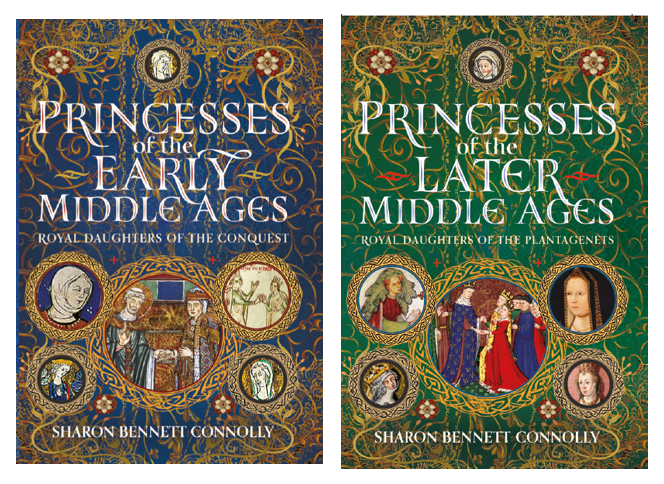


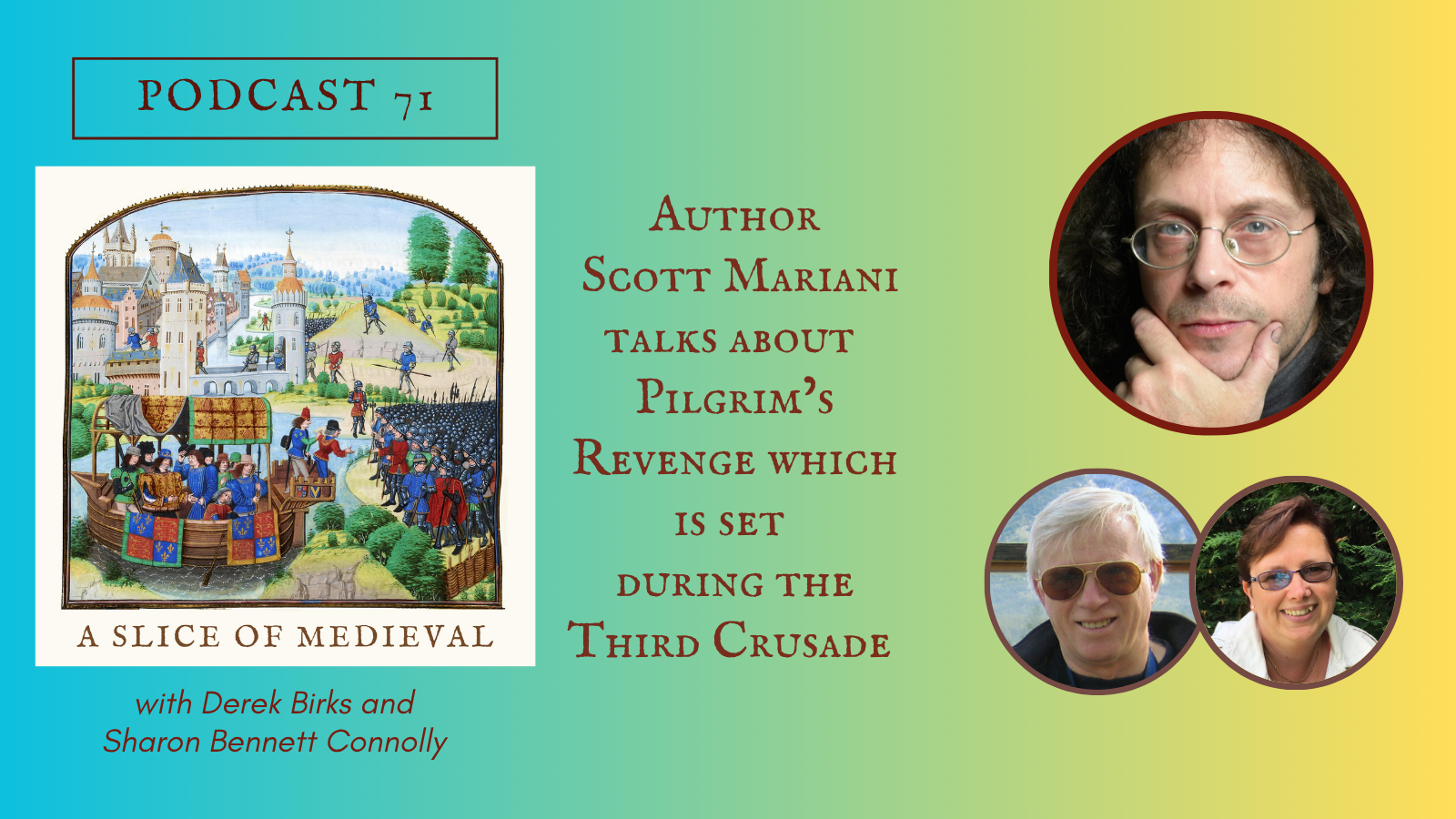
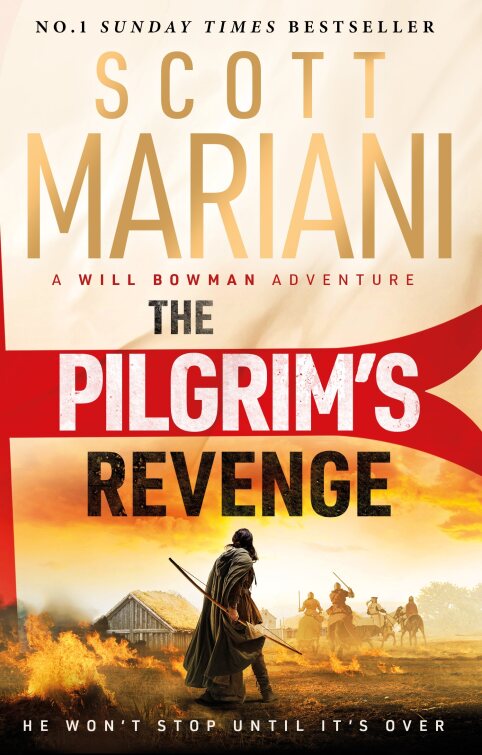
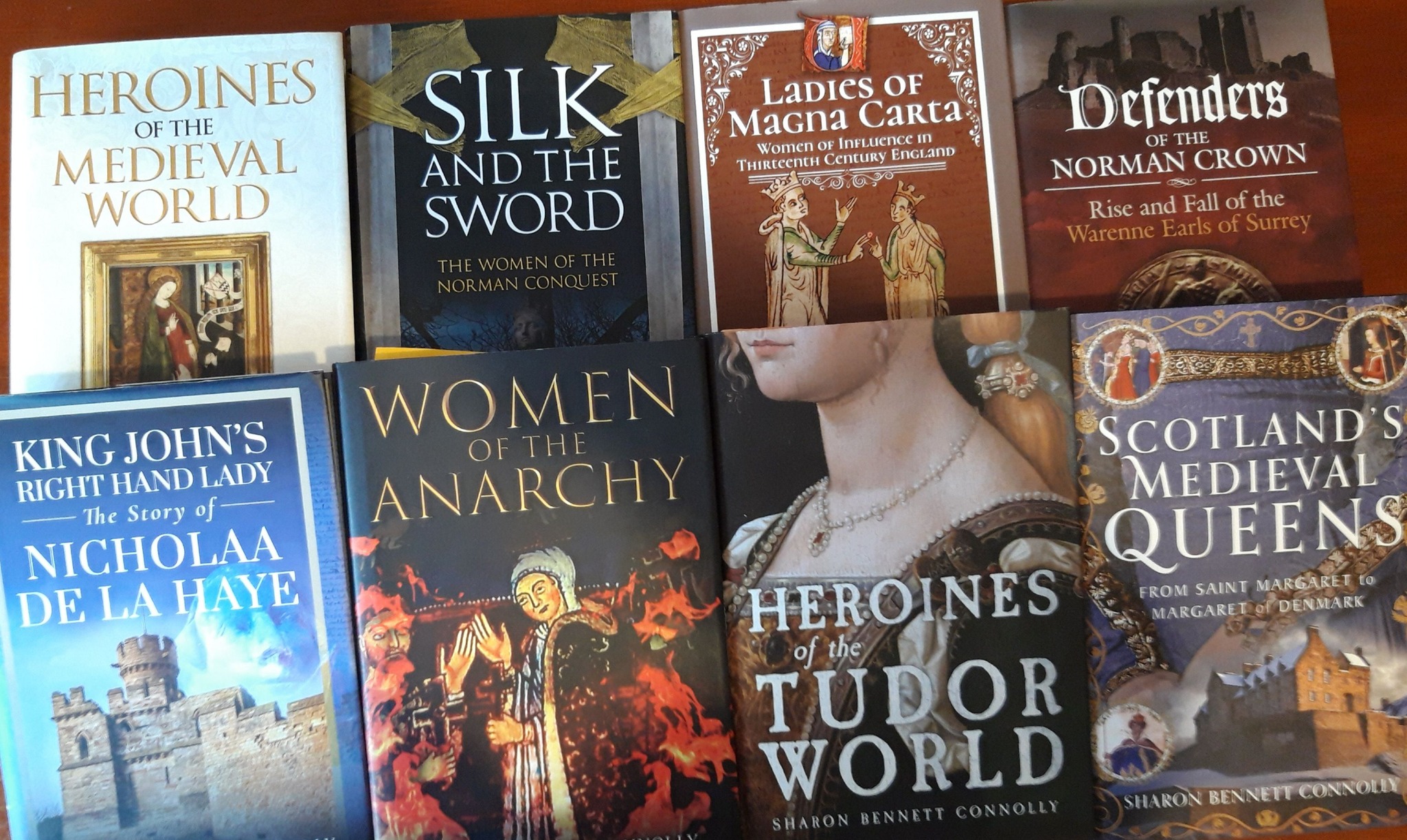

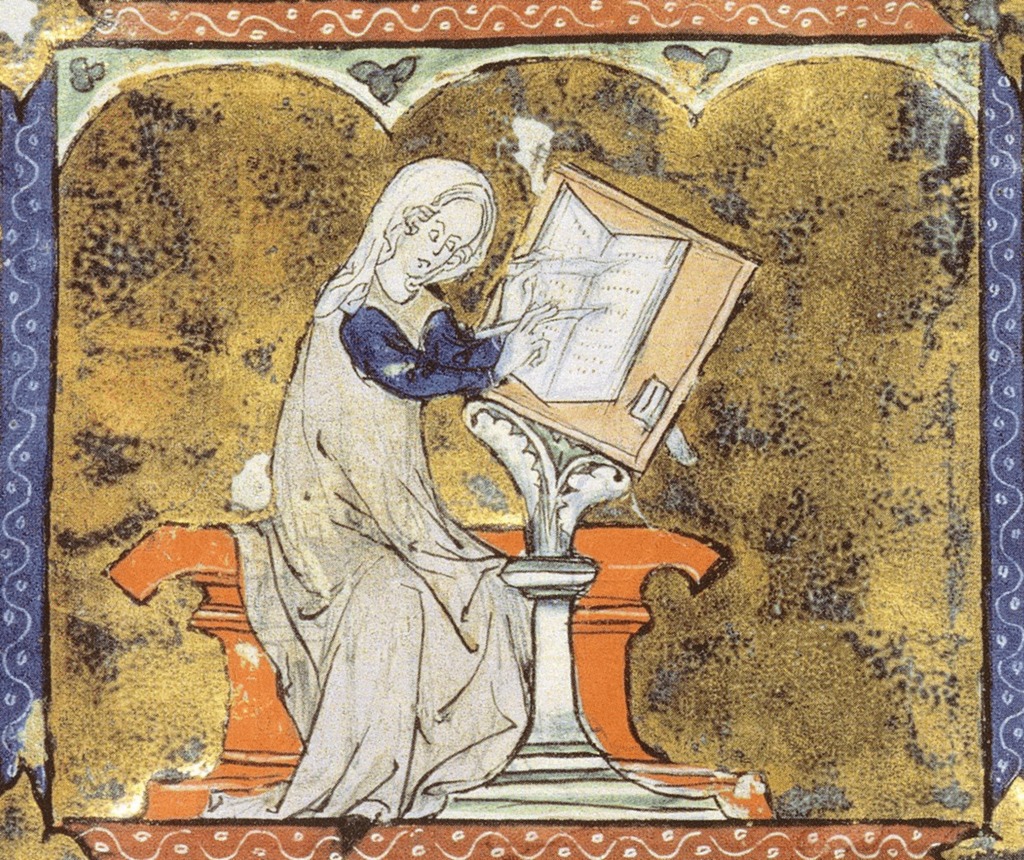
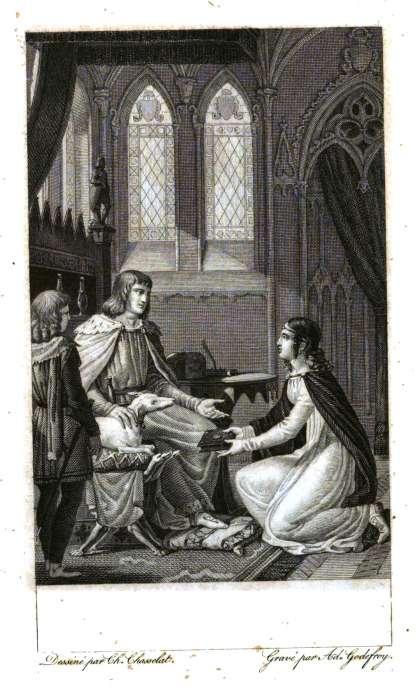
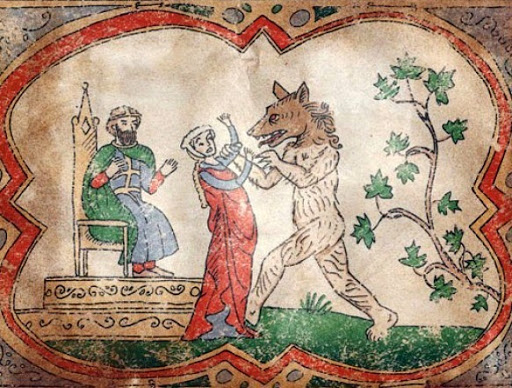
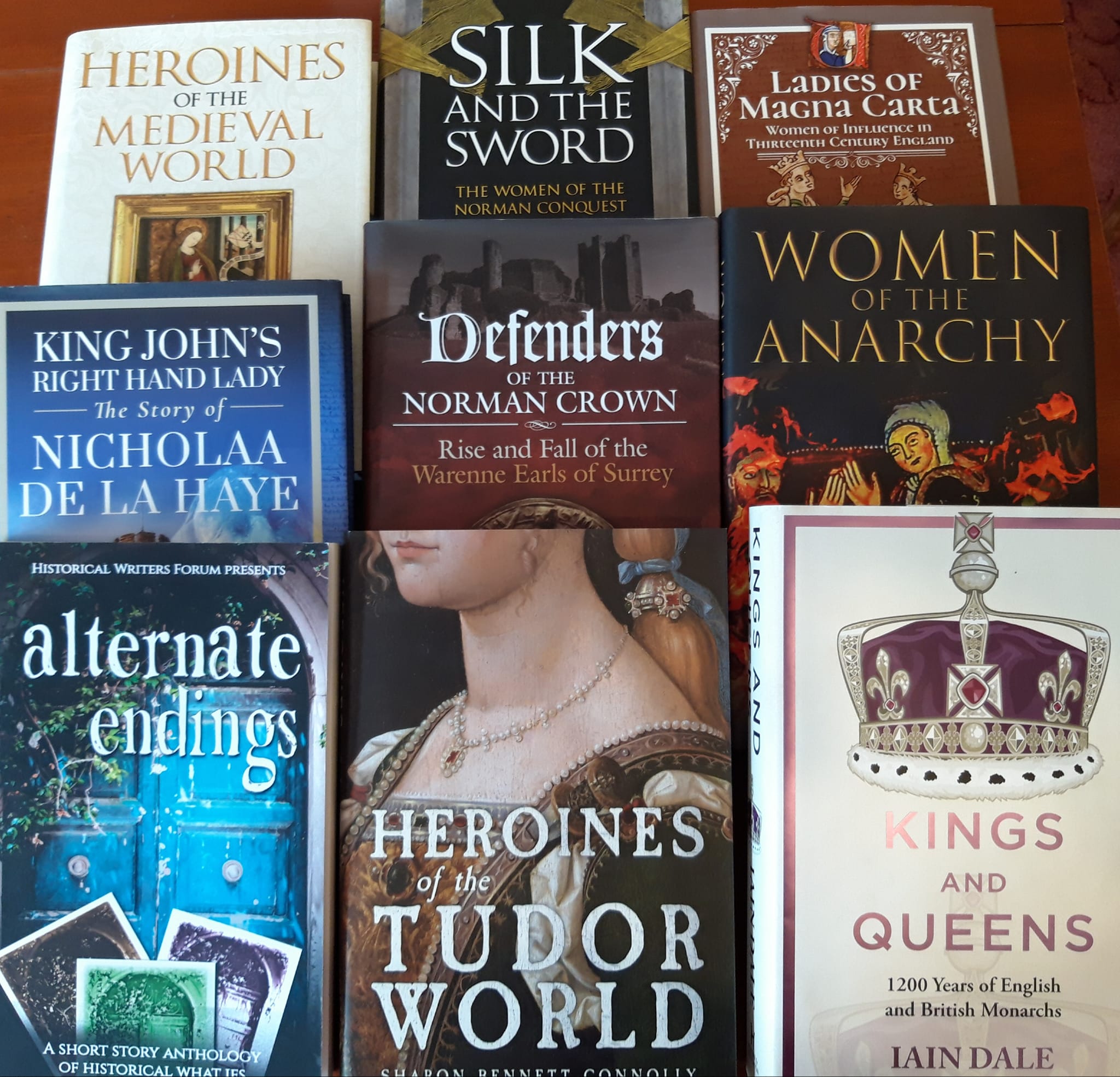
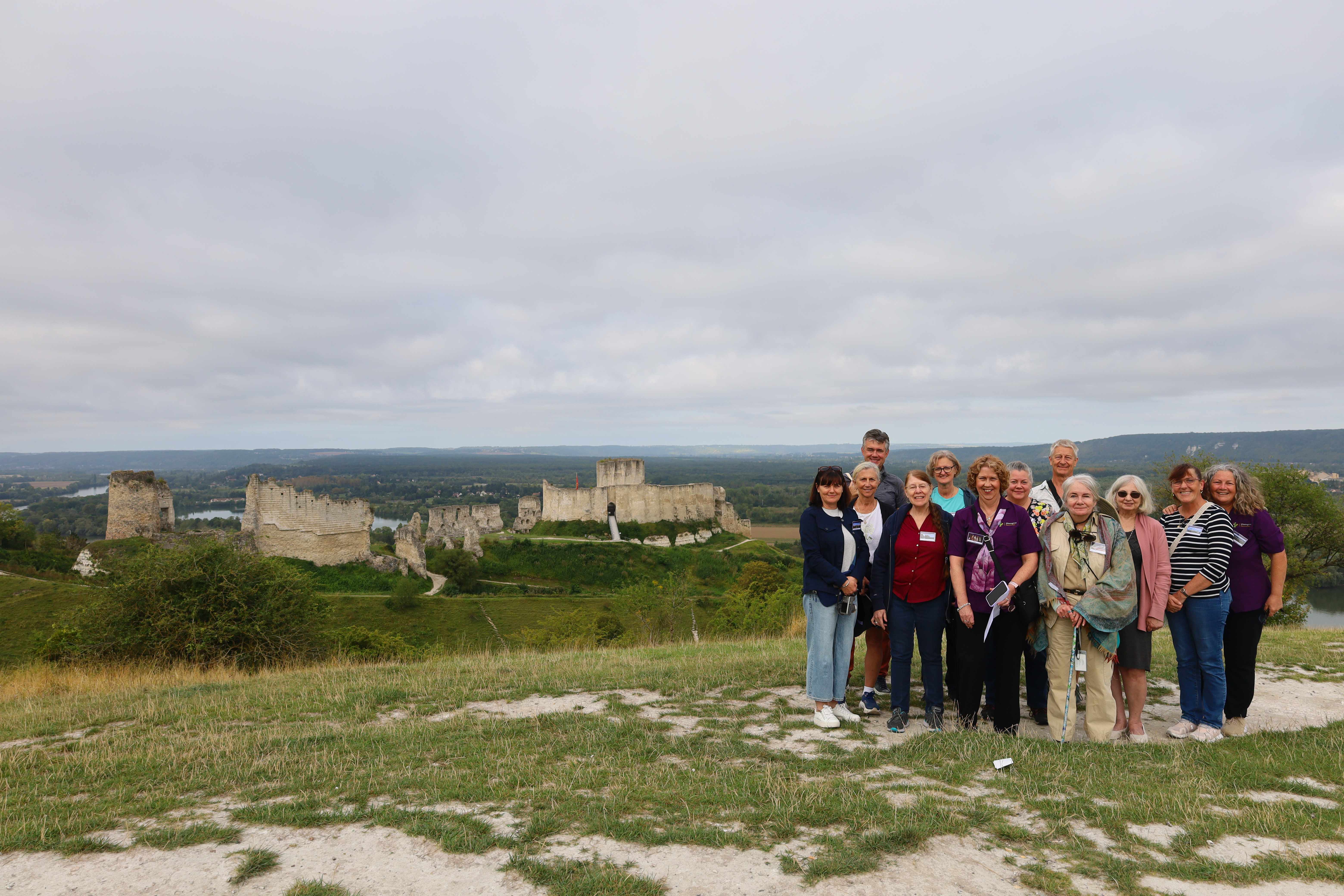


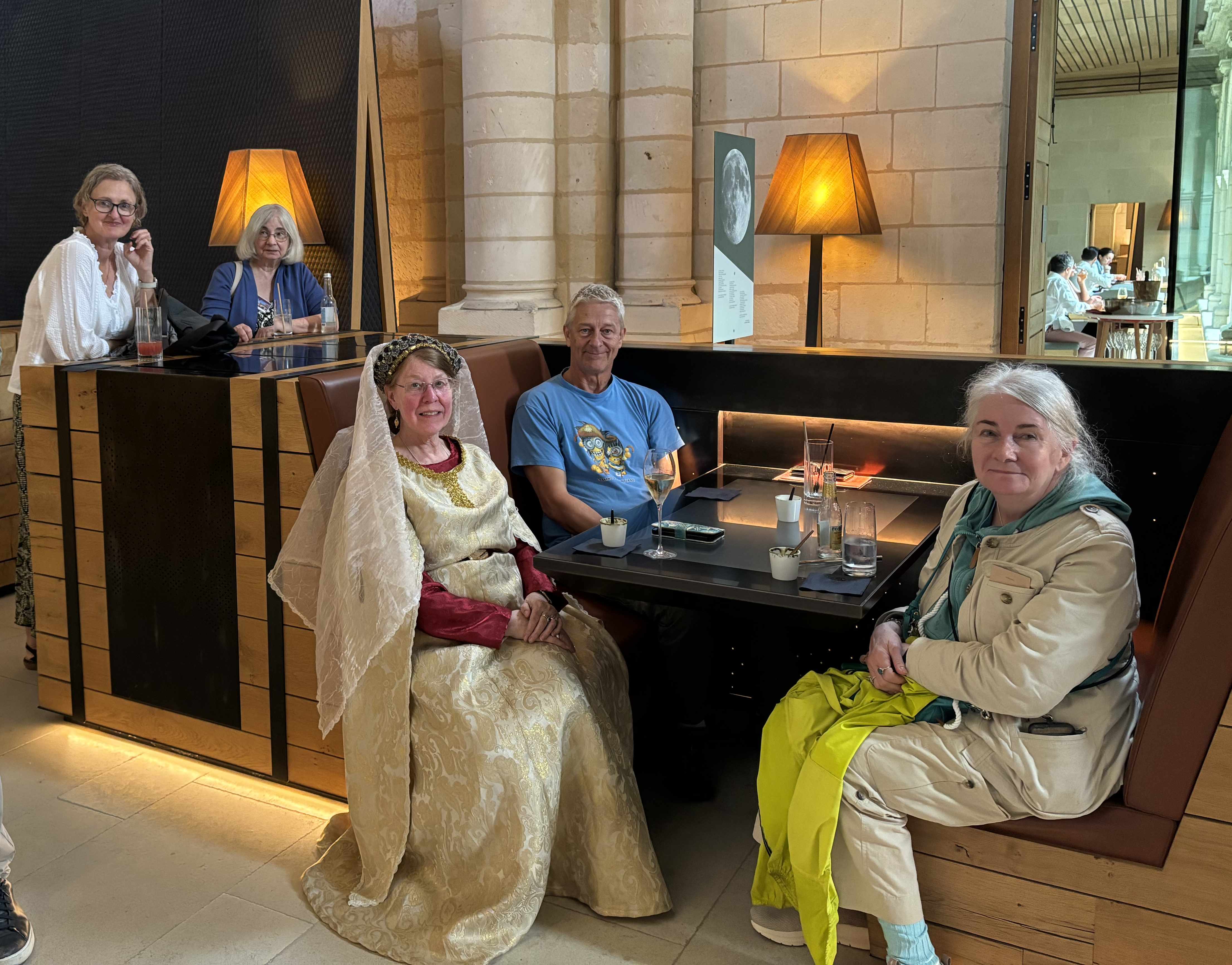
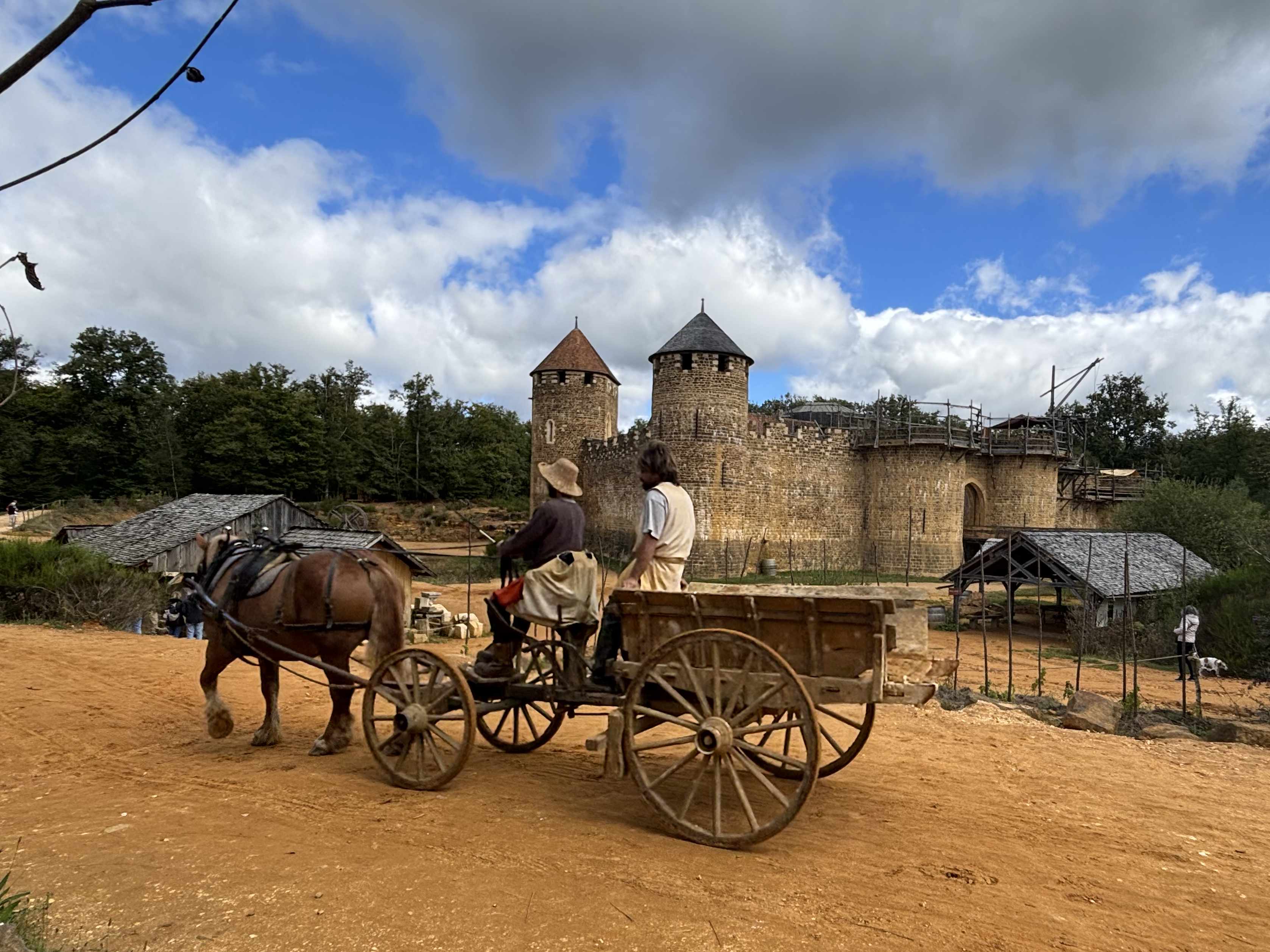
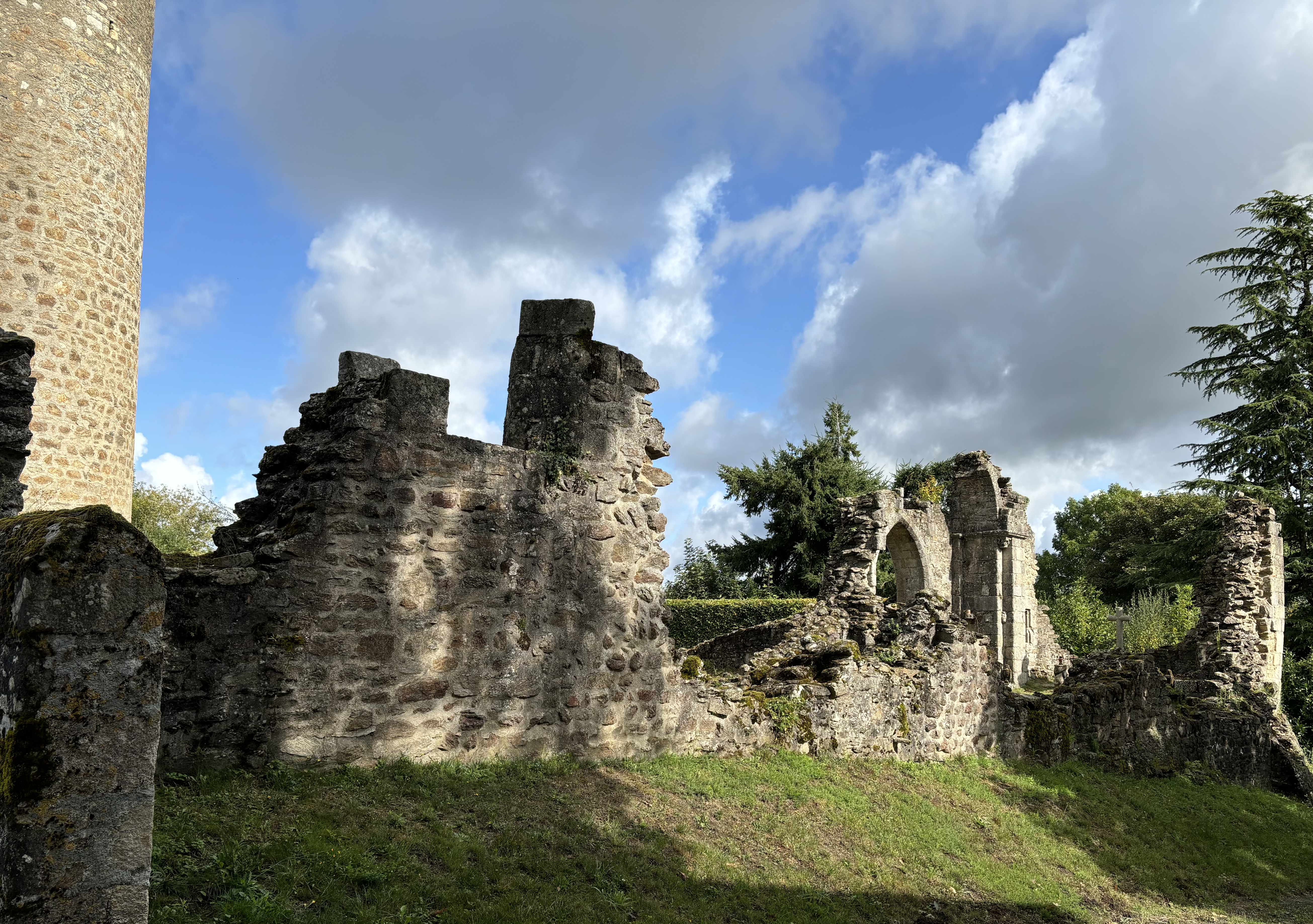
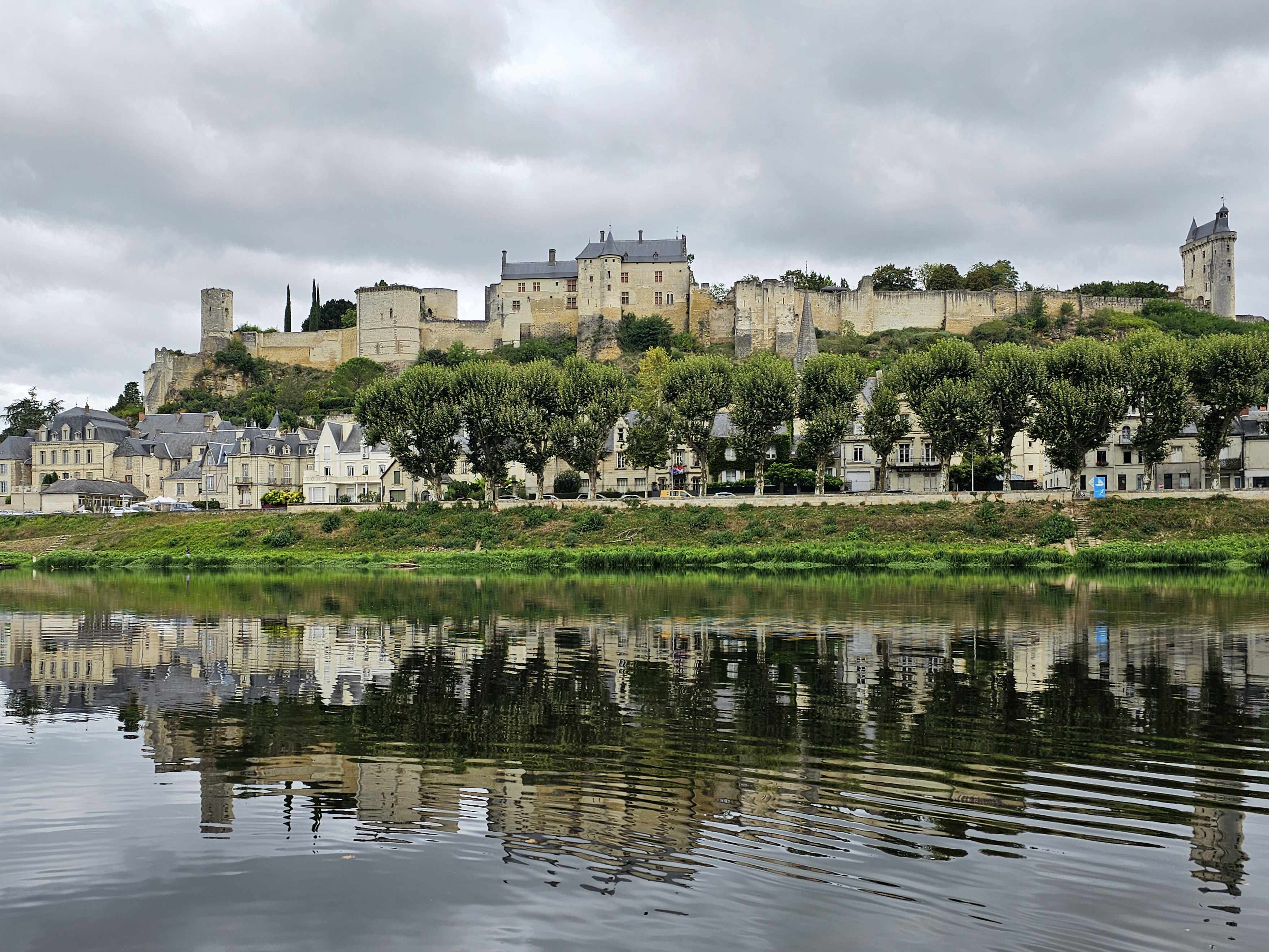
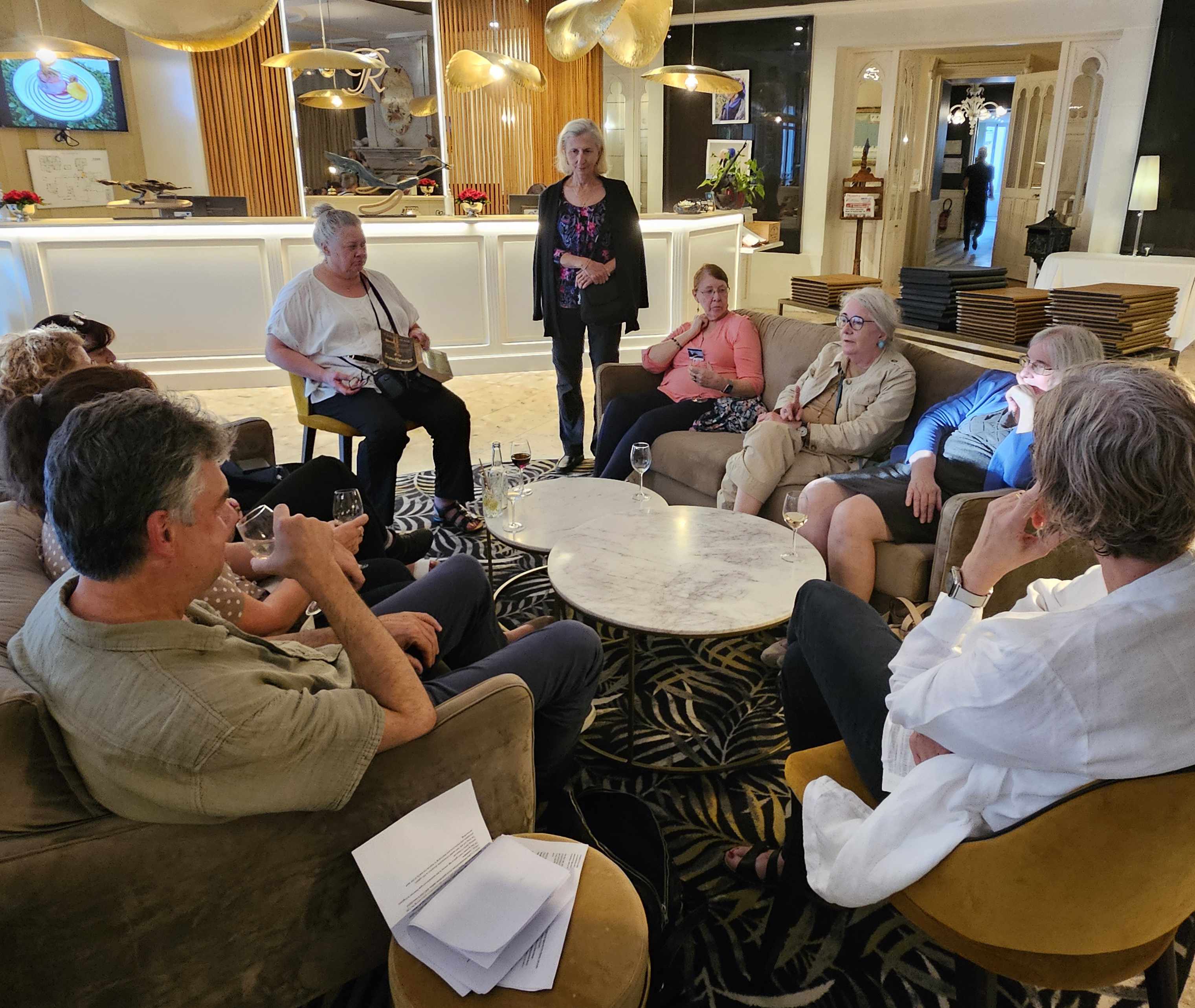
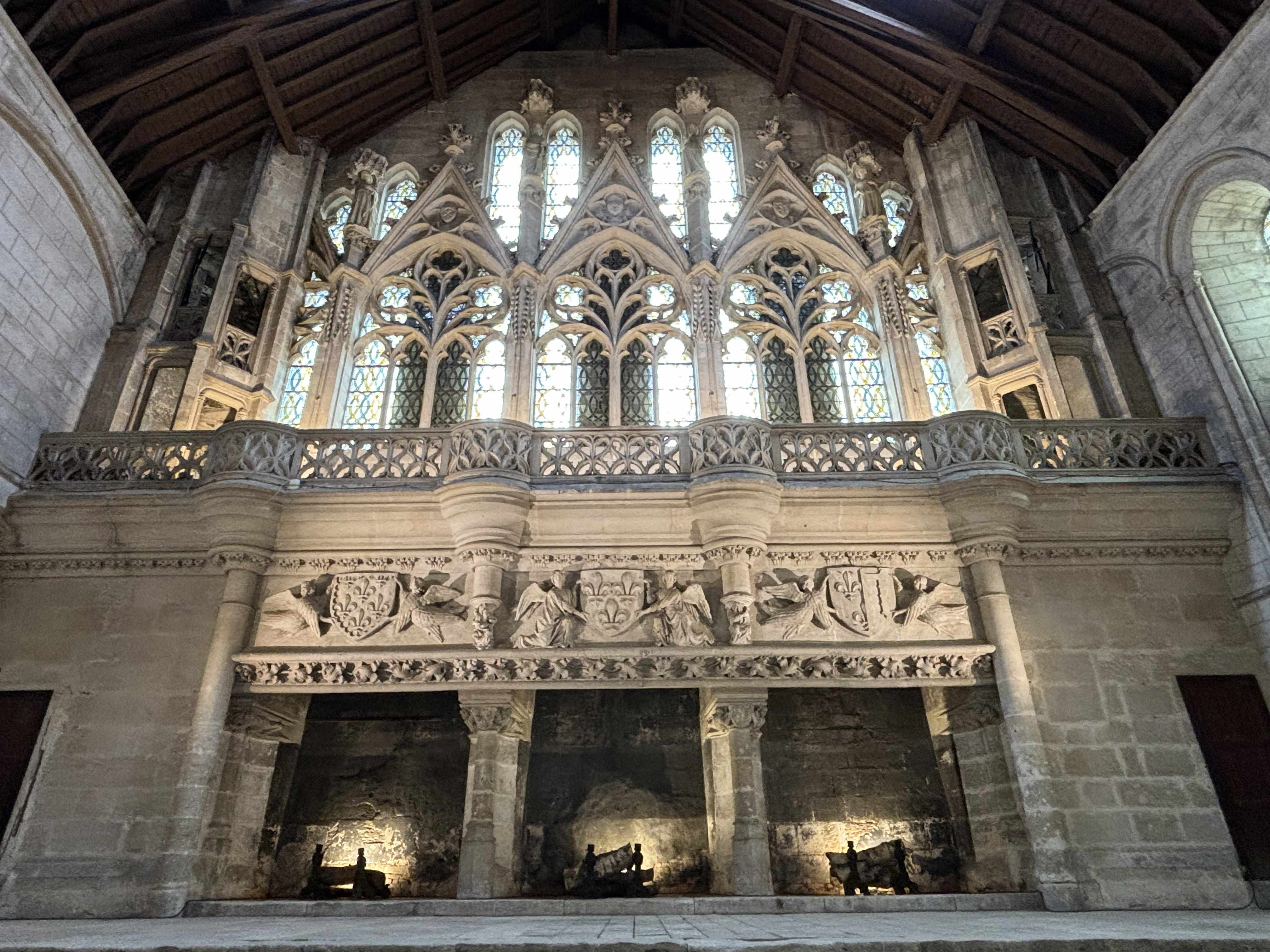
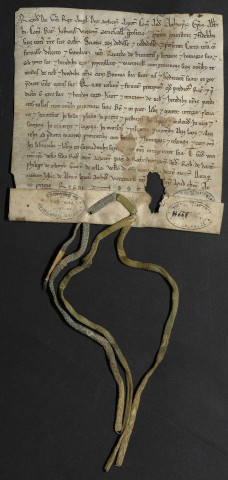
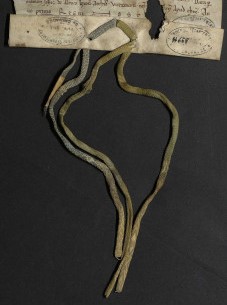

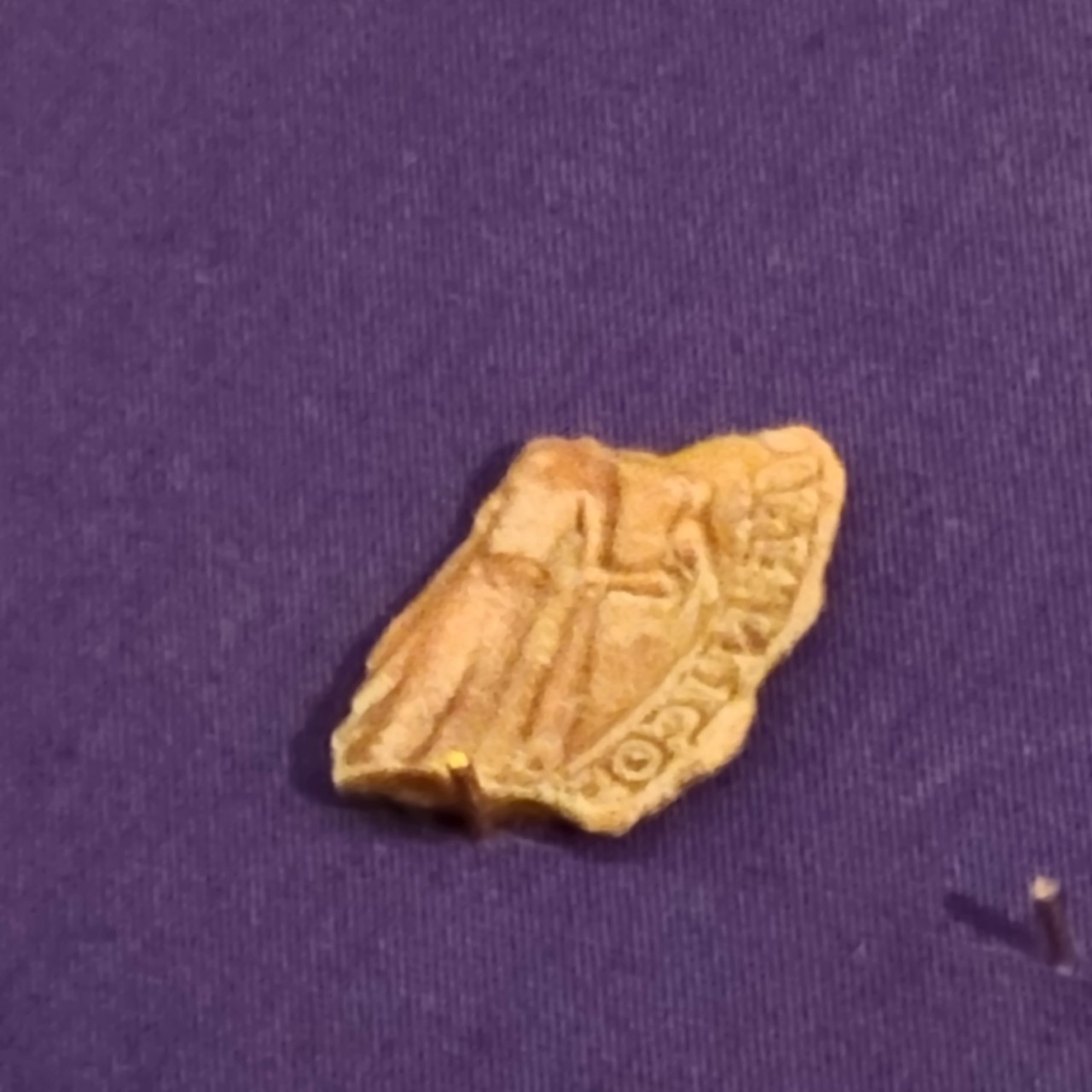
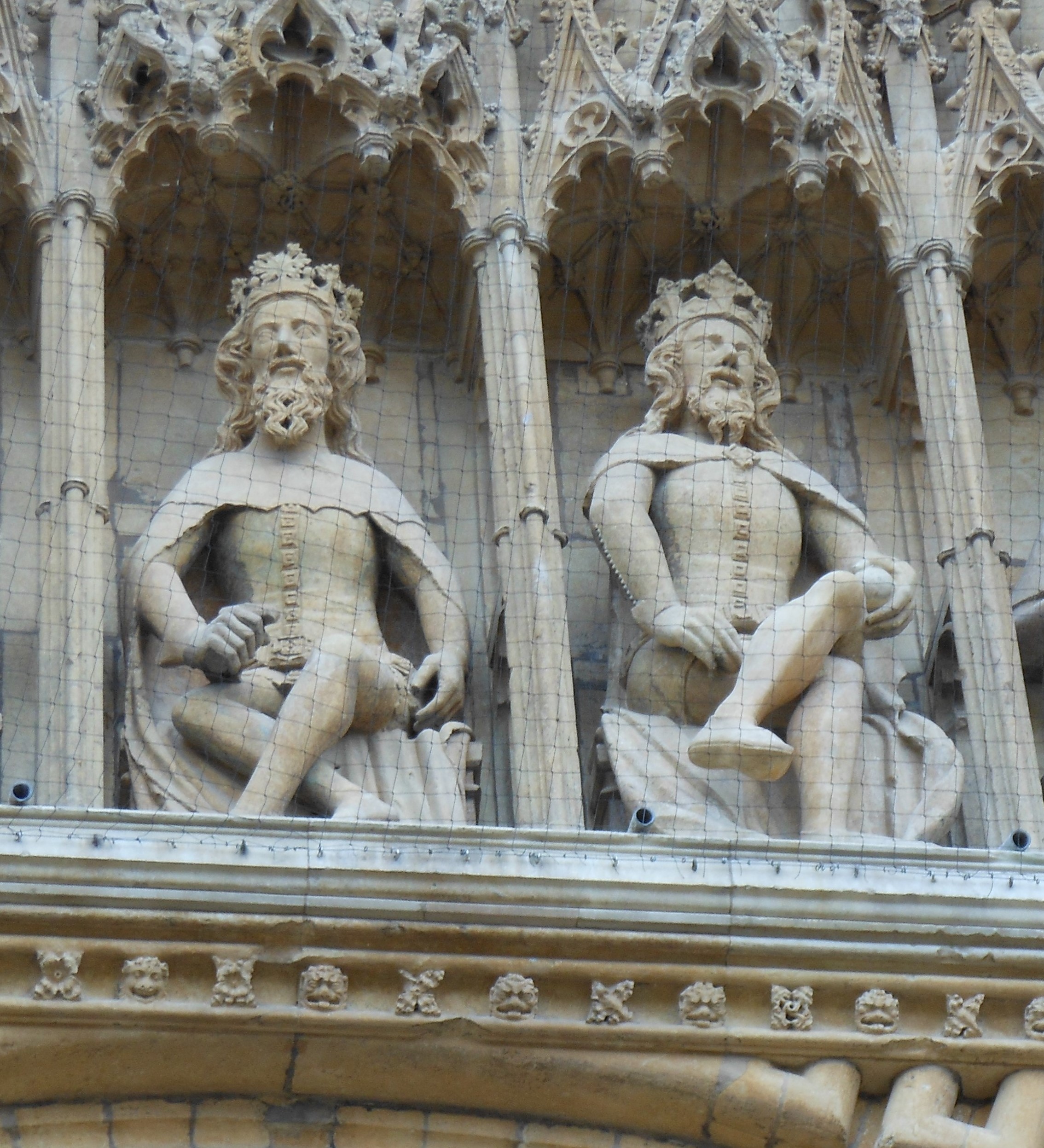

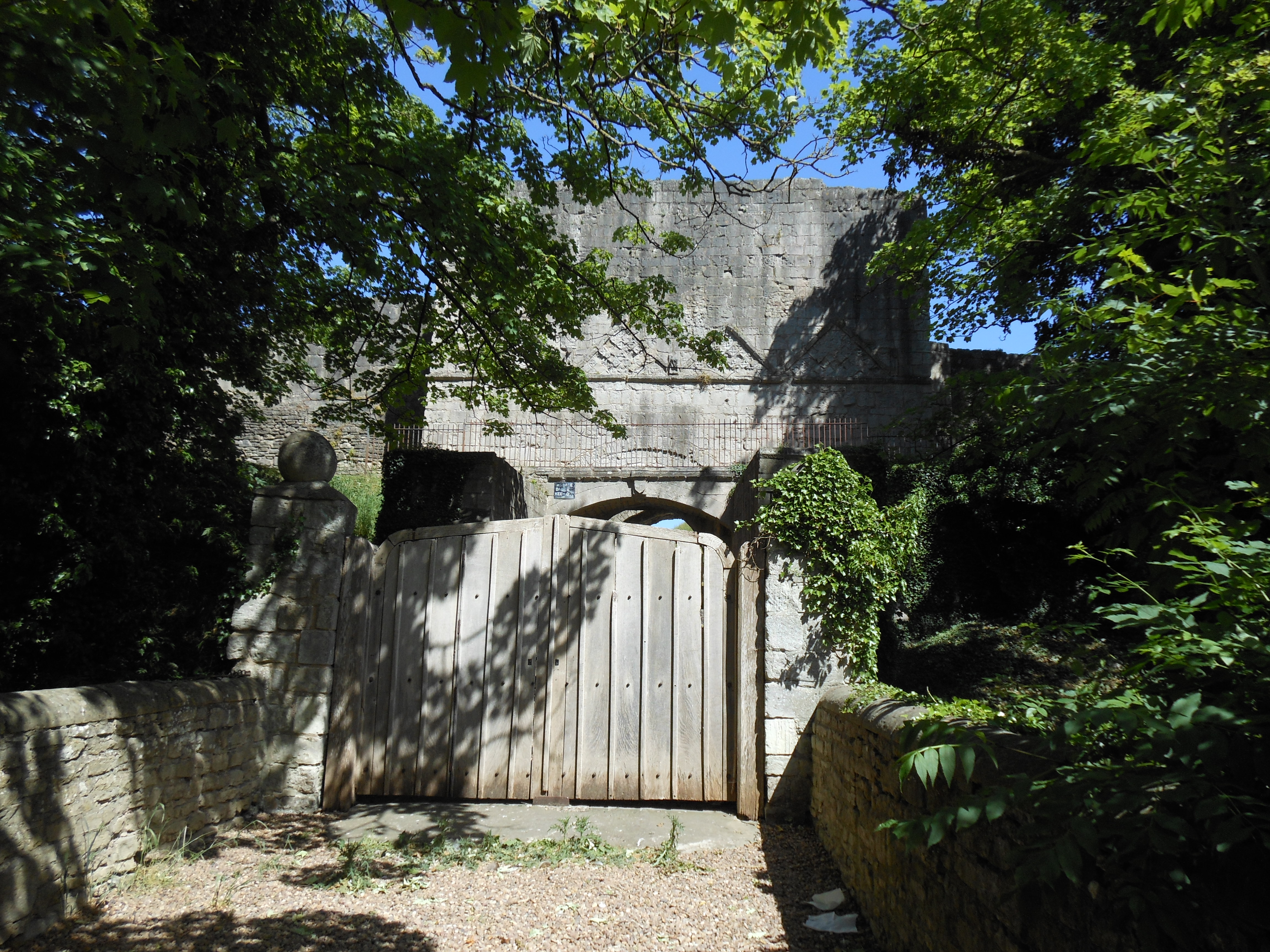
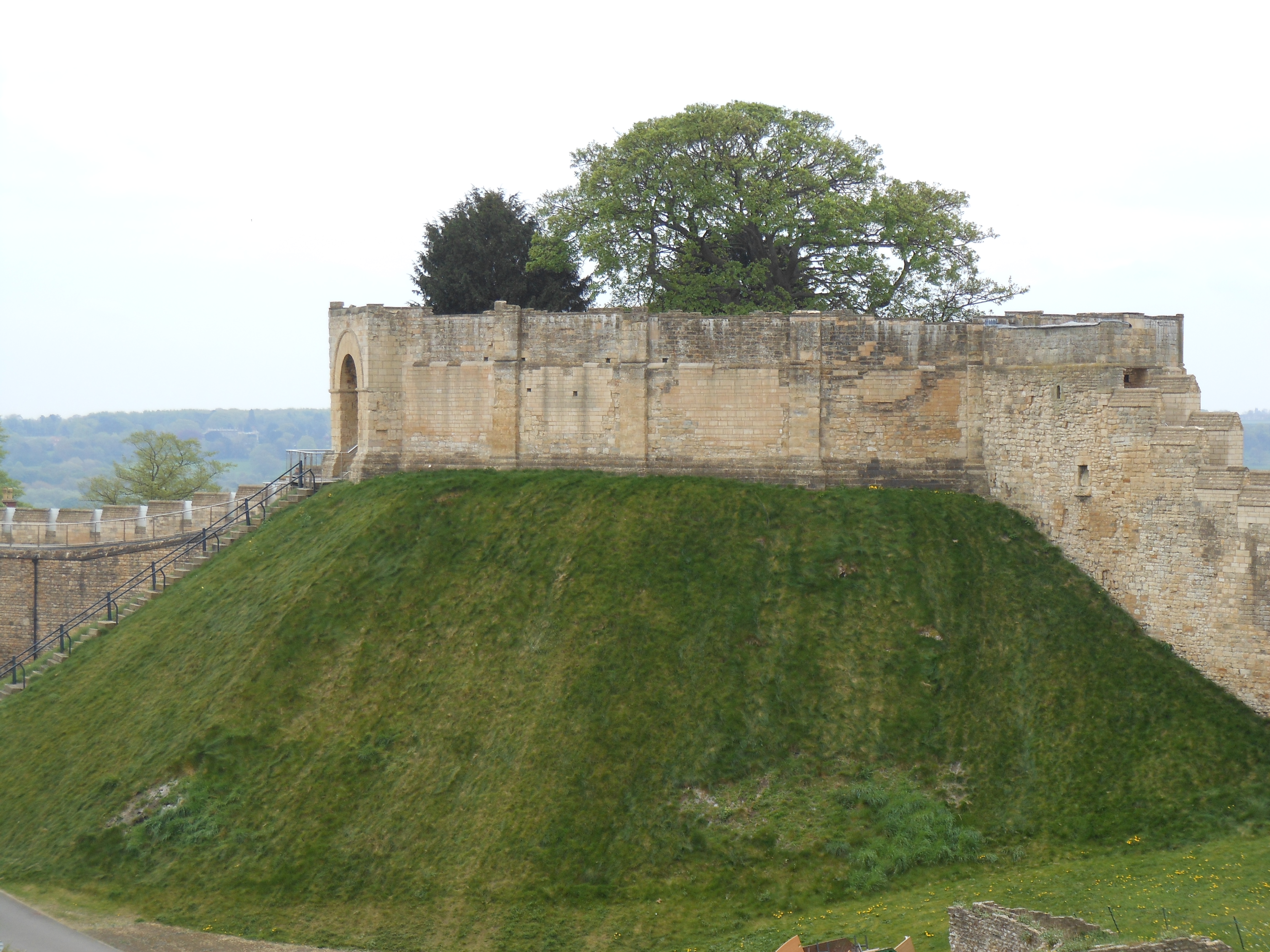
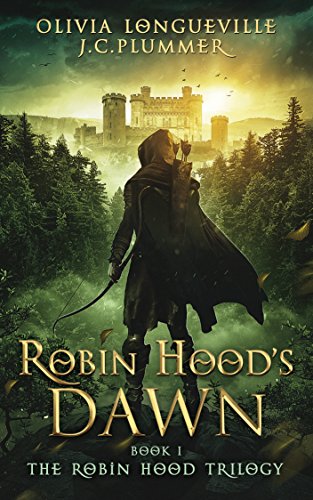
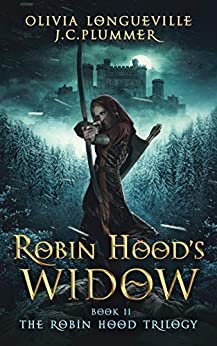
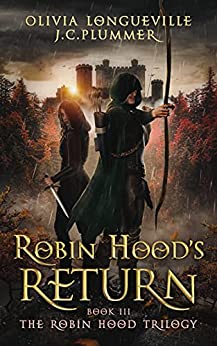


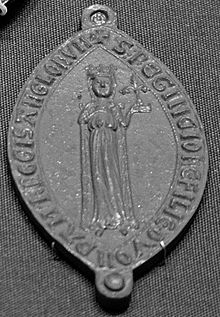




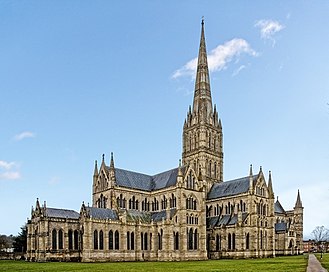
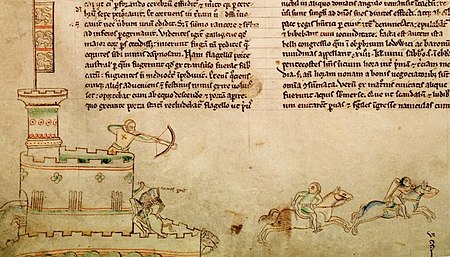


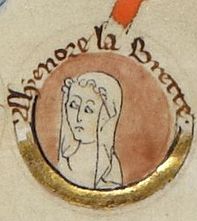

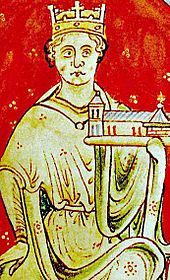


 History... the interesting bits!