Magna Carta and the Princesses of Scotland

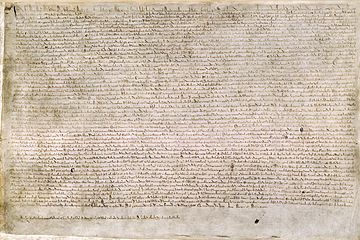
12215 Magna Carta, British Library

Other than the Queen of England, Isabelle d’Angoulême, only two women who can be clearly identified in Magna Carta itself. Though they are not mentioned by name, they are two Scottish princesses. The older sisters of King Alexander II had been held hostage in England since 1209, when John forced the humiliating Treaty of Norham on their ailing father, King William the Lion. Clause 59 of Magna Carta promised:

‘We will treat Alexander, king of Scots, concerning the return of his sisters and hostages and his liberties and rights in the same manner in which we will act towards our other barons of England, unless it ought to be otherwise because of the charters which we have from William his father, formerly king of Scots; and this shall be determined by the judgement of his peers in our court.

Taken from Marc Morris, King John

The king of Scots’ two sisters referred to in the clause were Margaret and Isabella, the oldest daughters of William I (the Lion), King of Scots, and his wife, Ermengarde de Beaumont. The two girls had been caught up in the power struggle between their father and the Plantagenet kings. William I had been the second of three sons of Henry, Earl of Northumberland, and his wife, Ada de Warenne. He was, therefore, a grandson of David I and great-grandson of Malcolm III Canmor and St Margaret, the Anglo-Saxon princess. William had succeeded to his father’s earldom of Northumberland in June 1153, when his older brother, Malcolm IV, succeeded their grandfather as King of Scots. William himself became King of Scots on Malcolm’s death on 9 December 1165, aged about 23.

When William was looking for a wife, in 1186, King Henry II suggested Ermengarde de Beaumont, daughter of Richard, Vicomte de Beaumont-sur-Sarthe, and great-granddaughter of Henry I of England through one of the king’s many illegitimate offspring. With such diluted royal blood, she was hardly a prestigious match for the king of Scots, but he reluctantly accepted the marriage after consulting his advisers. The wedding took place at Woodstock on 5 September 1186, with King Henry hosting four days of festivities and Edinburgh Castle was returned to the Scots as part of Ermengarde’s dowry.
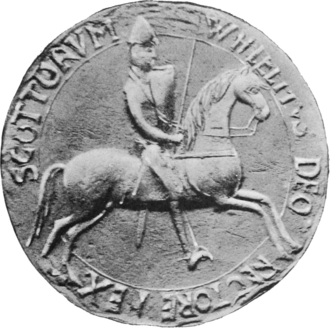
William the Lion, King of Scots

After the wedding, King William accompanied King Henry to Marlborough whilst the new Scottish queen was escorted to her new home by Jocelin, Bishop of Glasgow, and other Scottish nobles. Before 1195 Queen Ermengarde gave birth to two daughters, Margaret and Isabella. A son, the future Alexander II, was finally born at Haddington on 24 August 1198, the first legitimate son born to a reigning Scottish king in seventy years; a contemporary remarked that ‘many rejoiced at his birth.’1 A third daughter, Marjorie, was born sometime later.

Margaret, the eldest daughter of William I and Ermengarde de Beaumont, had been born sometime between her parents’ marriage in 1186 and 1195, unfortunately we cannot be more specific. Given the apparent youth of Ermengarde on her wedding day, Margaret’s date of birth is more likely to have been 1190 or later. We do know that she was born by 1195, as she was mooted as a possible heir to King William I in the succession crisis of that year, when the king fell gravely ill. Primogeniture was not yet the established order of succession, nor was the idea of a female ruler a welcome one; the period known to history as the Anarchy, which followed King Stephen’s usurpation of the throne from Empress Matilda, would have still been fresh in people’s memories, even in Scotland. King David had, after all, supported his niece’s claims against those of her cousin. The lesson of 20 years of civil war, albeit over the border, would have given William’s counsellors pause for thought in their own succession issue.
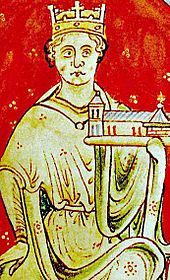
King John

Several options were proposed at the time, including marrying young Margaret to Otto of Saxony, son of Henry II’s eldest daughter Matilda and nephew of King Richard I. However, it was also proposed that Margaret should not even be considered as heir, that the kingdom should pass to her father’s younger brother, David. In the event, King William recovered and none of the options were pursued, but at least it means that we know Margaret was born before 1195. And when her brother, Alexander, was born in 1198, Margaret’s position as a possible heir was diminished further.

Margaret’s younger sister, Isabella’s date and year of birth is unknown; she was older than her brother, Alexander, who was born in 1198, but may have been born any time in the ten years before. She is not mentioned in the succession crisis of 1195, but that does not mean that she was born after, just that, being the younger daughter, she was not a subject of discussions. Jessica Nelson, in her article for the Oxford Dictionary of National Biography, suggests that Isabella was born in 1195 or 1196.

The two young princesses became the unwitting pawns in political relations between England and Scotland when the two kings, John and William the Lion, met at Norham, Northumberland, in the last week of July and first week of August 1209. The Scots were in a desperate position, with an ailing and ageing king, and a 10-year-old boy as heir, whilst the English, with their Welsh allies and foreign mercenaries, had an army big enough to force a Scottish submission. The subsequent treaty, agreed at Norham on 7 August, was humiliating for the Scots. John would have the castle at Tweedmouth dismantled, but the Scots would pay an extra £4,000 compensation for the damage they had caused to it. The Scots also agreed to pay 15,000 marks for peace and to surrender hostages, including the king’s two oldest legitimate daughters, Margaret and Isabella.
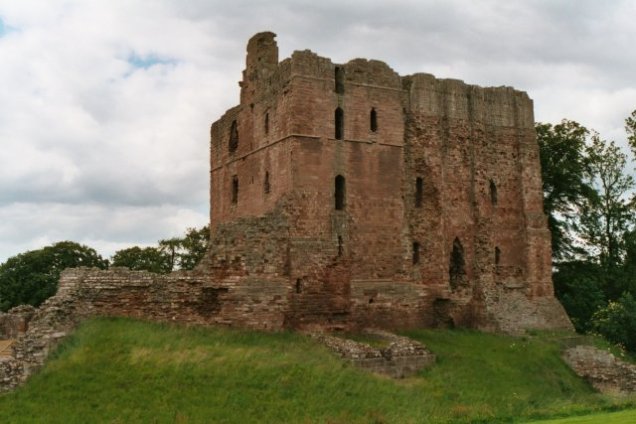
Norham Castle

As a sweetener, John promised to marry the princesses to his sons; although Henry was only 2 years old at the time and Richard was just 8 months, whilst the girls were probably in their early-to-mid teens. The king’s daughters and the other Scottish hostages were handed into the custody of England’s justiciar, at Carlisle on 16 August. How the girls, or their parents, thought about this turn of events, we know not. Given John’s proven record of prevarication and perfidy, King William may have hoped that the promised marriages would occur in good time, but may also have expected that John would find a way out of the promises made.

John’s demand of Margaret and Isabella as hostages, with the sweetener that they would be brides for his own sons, may well have been to prevent Margaret marrying elsewhere. King Philip II of France had expressed interest in a marriage between himself and Margaret, a union John would be keen to thwart. Thus, John’s control of the marriages of Margaret and Isabella would mean that they could not marry against the king of England’s own interests. It also meant that King William had lost two useful diplomatic bargaining chips; marriage alliances could be used to cement political ones, and these had been passed to John, weakening William’s position on the international stage. According to the chronicler Bower, the agreement specified that Margaret would marry John’s son, Henry, while Isabella would be married to an English nobleman of rank.

When the sisters were brought south, they were housed comfortably, as evidence demonstrates. While hostages in England, Margaret and Isabella were kept together, and lived comfortably, although John’s promise of arranging marriages for the girls remained unfulfilled. Payments for their upkeep were recorded by sheriffs and the king’s own wardrobe, which suggests the two princesses spent some time at court. In 1213 Isabella was residing at Corfe Castle in the household of John’s queen, Isabelle d’Angoulême; John’s niece, Eleanor of Brittany, held captive since the failed rebellion of her brother, Arthur of Brittany in 1202, was also there.
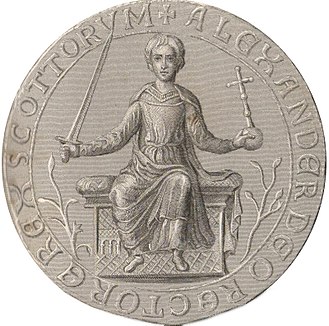
Alexander II, King of Scots

One can imagine the frustration of the Scots, to see their princesses languishing in the custody of the English; their inclusion in clause 59 of Magna Carta evidence of this. Unfortunately, King John tore up Magna Carta almost before the wax seals had dried, writing to the pope to have the charter declared void, leaving Alexander to join the baronial rebellion.

When Alexander came to terms with the government of Henry III in December 1217, he pressed for a resolution to the marriages of himself and his sisters, Margaret and Isabella, still languishing in English custody. In June 1220, at a meeting of King Henry III’s minority council, it was agreed that Margaret and Isabella would be married by October 1221 or allowed to return to Scotland.

King John had promised that Alexander would marry one of his daughters and Henry III, or rather his ministers, finally fulfilled this promise in June 1221, when his sister, Joan, was married to the Scots king at York. And it was probably at this event, when the Scottish and English royal families came together in celebration, that Margaret’s own future was finally resolved.

It was decided that she would marry Hubert de Burgh, the king’s justiciar and one of the leading figures of Henry III’s minority government. They were married in London on 3 October 1221, with King Henry himself giving the bride away. It was a major coup for Hubert de Burgh, who came from a gentry family rather than the higher echelons of the nobility; though it was a less prestigious match for Margaret, the daughter of a king. The couple had one child, a girl named Margaret but known as Megotta, who was probably born in the early 1220s.
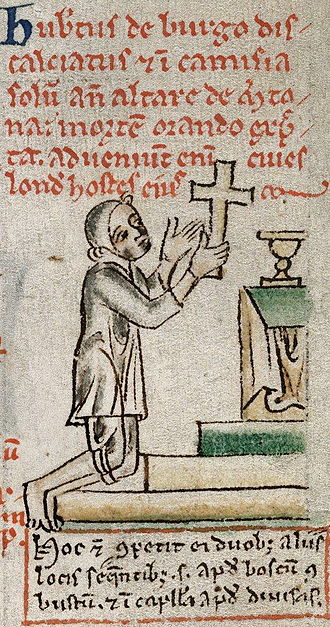
Hubert de Burgh from Matthew Paris

Isabella, however, remained unmarried and returned to Scotland in November 1222. Isabella’s own marriage prospects may have been damaged by the relatively lowly marriage of her older sister. Nevertheless, Alexander II was keen to look after his sister’s interests and continued to search for a suitable husband. A letter from Henry III alludes to a possible match between Isabella and William (II) Marshal, Earl of Pembroke but the earl was, instead, married to the king’s own younger sister, Eleanor

Isabella’s future was finally settled in June 1225, when she married Roger Bigod, fourth Earl of Norfolk, at Alnwick in Northumberland. On 20 May, the archbishop of York was given respite from his debts in order to attend the wedding of the King of Scots’ sister:

Order to the barons of the Exchequer to place in respite, until 15 days from Michaelmas in the ninth year, the demand for debts they make by summons of the Exchequer from W. archbishop of York, because the archbishop has set out for Alnwick where he is to be present to celebrate the marriage between Roger, son and heir of Earl H. Bigod, and Isabella, sister of the King of Scots.

finerollshenry3.org.uk /content/calendar/roll_022.html#it204_001, 20 May
1225.

Roger was the young son of Hugh Bigod, Earl of Norfolk, who had died earlier in the year, and Matilda Marshal, eldest daughter of William Marshal, Earl of Pembroke. Roger was still a minor, aged about 13, and possibly as much as seventeen years his wife’s junior. In 1224 King Alexander II had levied an aid of 10,000 marks towards the costs of his sisters’ marriages, as well as contributing £1,000 towards Henry III’s 1225 expedition to Gascony, suggesting the Scots king was eager to see both his sisters comfortably settled.

At the time of the marriage, Roger’s wardship was in the hands of Henry III’s uncle, William Longespée, Earl of Salisbury, but it was transferred to King Alexander II in 1226, after Longespée’s death. Now in the custody of the king of Scots, Roger and Isabella moved to Scotland, living at the Scottish court until Roger attained his majority in 1233 and entered into his inheritance.
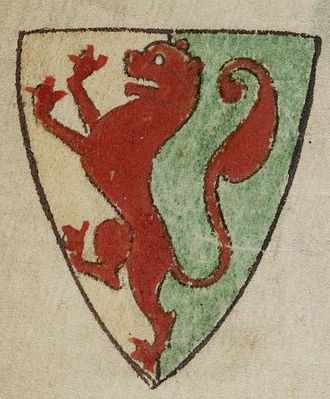
The Marshal coat of arms

Ten years after the sealing of Magna Carta, and 16 years after they had been taken hostage, the two Scottish princesses were both finally settled into marriage, though less exalted marriages than their father had wished and hoped for, with English barons, rather than princes or kings. Their younger sister, Marjorie, would also marry into the English nobility in 1235, becoming the wife of Gilbert Marshal, 3rd son of the famed William Marshal who had become Earl of Pembroke the previous year.

Marjorie died in 1244, Isabella in 1253 and Margaret, the eldest, in 1259. Rather unusually for princesses, who would often be married off in foreign lands and separated from family, the 3 sisters would share their final resting place and be buried at the Church of the Black Friars in London.

*

Footnote:

1W.W. Scott, ‘Ermengarde de Beaumont (1233)’, Oxforddnb.com.

Images:

All images courtesy of Wikipedia except Magna Carta, which is ©2015 Sharon Bennett Connolly

Sources:

finerollshenry3.org.uk; W.W. Scott, ‘Ermengarde de Beaumont (1233)’, Oxforddnb.com; Marc Morris, King John; Jessica Nelson, ‘Isabella [Isabella Bigod], countess of Norfolk (b. 1195/1196, 1270)’, Oxforddnb.com; Nelson, Jessica A., ‘Isabella, Countess of Norfolk’, magnacarta800th.com; Louise J. Wilkinson, ‘Margaret, Princess of Scotland’, magnacarta800th.com; W.W. Scott, ‘Margaret, countess of Kent (b. 1187×1195, d. 1259)’, Oxforddnb.com; Keith Stringer, ‘Alexander II (1198–1249)’, Oxforddnb.com; Mackay, A.J.G. (ed.), The Historie and Chronicles of Scotland … by Robert Lindesay of Pitscottie; Ross, David, Scotland: History of a Nation; Church, Stephen, King John: England, Magna Carta and the Making of a Tyrant; Danziger, Danny and John Gillingham, 1215: The Year of Magna Carta; Crouch, David, William Marshal; The Story of Scotland by Nigel Tranter; Matthew Paris, Robert de Reading and others, Flores Historiarum, volume III.

*

My Books

Signed, dedicated copies of all my books are available through my online bookshop.

Out now! Scotland’s Medieval Queens
Scotland’s history is dramatic, violent and bloody. Being England’s northern neighbour has never been easy. Scotland’s queens have had to deal with war, murder, imprisonment, political rivalries and open betrayal. They have loved and lost, raised kings and queens, ruled and died for Scotland. From St Margaret, who became one of the patron saints of Scotland, to Elizabeth de Burgh and the dramatic story of the Scottish Wars of Independence, to the love story and tragedy of Joan Beaufort, to Margaret of Denmark and the dawn of the Renaissance, Scotland’s Medieval Queens have seen it all. This is the story of Scotland through their eyes.

Available now from Amazon and Pen and Sword Books

Also by Sharon Bennett Connolly:
Heroines of the Tudor World tells the stories of the most remarkable women from European history in the time of the Tudor dynasty, 1485-1603. These are the women who ruled, the women who founded dynasties, the women who fought for religious freedom, their families and love. Heroines of the Tudor World is now available for pre-order from Amberley Publishing and Amazon UK. Women of the Anarchy demonstrates how Empress Matilda and Matilda of Boulogne, unable to wield a sword themselves, were prime movers in this time of conflict and lawlessness. It shows how their strengths, weaknesses, and personal ambitions swung the fortunes of war one way – and then the other. Available from Bookshop.orgAmberley Publishing and Amazon UKKing John’s Right-Hand Lady: The Story of Nicholaa de la Haye is the story of a truly remarkable lady, the hereditary constable of Lincoln Castle and the first woman in England to be appointed sheriff in her own right. Available from all good bookshops Pen & Sword Booksbookshop.org and Amazon

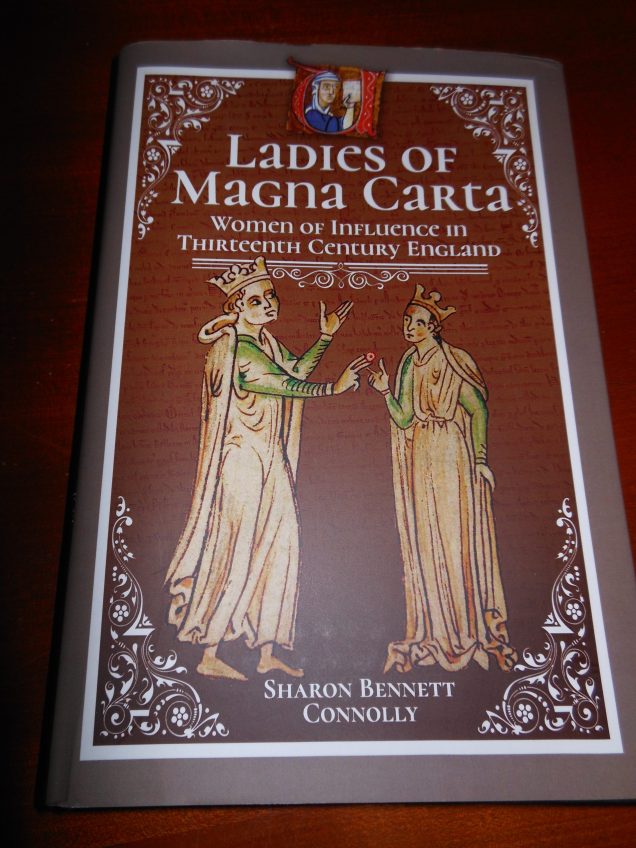
Defenders of the Norman Crown: The Rise and Fall of the Warenne Earls of Surrey tells the fascinating story of the Warenne dynasty, from its origins in Normandy, through the Conquest, Magna Carta, the wars and marriages that led to its ultimate demise in the reign of Edward III. Available from Pen & Sword BooksAmazon in the UK and US, and Bookshop.orgLadies of Magna Carta: Women of Influence in Thirteenth Century England looks into the relationships of the various noble families of the 13th century, and how they were affected by the Barons’ Wars, Magna Carta and its aftermath; the bonds that were formed and those that were broken. It is now available in paperback and hardback from Pen & SwordAmazon, and Bookshop.orgHeroines of the Medieval World tells the stories of some of the most remarkable women from Medieval history, from Eleanor of Aquitaine to Julian of Norwich. Available now from Amberley Publishing and Amazon, and Bookshop.orgSilk and the Sword: The Women of the Norman Conquest traces the fortunes of the women who had a significant role to play in the momentous events of 1066. Available now from Amazon,  Amberley Publishing, and Bookshop.org.

Alternate Endings: An anthology of historical fiction short stories including Long Live the King… which is my take what might have happened had King John not died in October 1216. Available in paperback and kindle from Amazon.

Podcast:

Have a listen to the A Slice of Medieval podcast, which I co-host with Historical fiction novelist Derek Birks. Derek and I welcome guests, such as Bernard Cornwell and Elizabeth Chadwick, and discuss a wide range of topics in medieval history, from significant events to the personalities involved. Every episode is also now available on YouTube.

*

Don’t forget! Signed and dedicated copies of all my books are available through my online bookshop.

For forthcoming online and in-person talks, please check out my Events Page.

You can be the first to read new articles by clicking the ‘Follow’ button, liking our Facebook page or joining me on Twitter and Instagram.

©2020 Sharon Bennett Connolly FRHistS

Ladies of Magna Carta Blog Tour

Ladies of Magna Carta: Women of Influence in Thirteenth Century Europe is going on tour – virtually at least. With articles, book reviews and interviews coming over the next 2 weeks, we will be visiting such exotic places as Barnsley, Tennessee, the Yorkshire Dales, Sussex and Michigan – all from the desktop!

Here’s the itinerary!

First stop is 1st July at my amazing publishers, Pen and Sword, who have done a wonderful job of organising the tour. Here’s an article on the inspiration behind the book.

5th July, Joanna Arman, The History Lady, will publishing her thoughts on Ladies of Magna Carta. I’m not nervous – much!

6th July, I will be stopping by for a cuppa with Samantha Wilcoxson to talk about The Marshal Sisters.

7th July, I will be chatting with Susan Higginbotham on History Refreshed about why it is so hard to love Isabelle d’Angoulême.

I will be making 2 stops on 8th July, visiting Simon Turney’s S.J.A. Turney’s Books and More, with an article on the many Family Ties of the women of the Magna Carta a story, plus Simon has written a wonderful review of Ladies of Magna Carta. And then it’s a quick hop over to visit Carol McGrath for her review of Ladies of Magna Carta and a chat about history, research and writing in general.

9th July I’ll be visiting the inimitable author, Tony Riches, with an article on Matilda de Braose.

10th July its down to Surrey for a review from the wonderful Paula Lofting over at The Road to Hastings and Other Stories.

13th July its back over to the US to Adventures of a Tudor Nerd for ace reviewer Heidi Malagasi’s thoughts on Ladies of Magna carta.

14th July, its over to nursing historian Louise Wyatt for coffee and a Q &A – and a little taster from the book.

15th July its back over the pond to Tennessee, to visit Kristie Dean and give you 16 Facts About Woman and Magna Carta – it was supposed to be 10 but I got carried away!

16th July Last – but by no means least – stop on the tour is the amazing Derek Birks and one final – hopefully glowing – review.

Ladies of Magna Carta: Women of Influence in Thirteenth Century England  is now available from Pen & SwordAmazon and from Book Depository worldwide.

I would like to thank Rosie and Rebecca at Pen & Sword and all the authors and bloggers involved for taking part in this amazing tour. I am truly humbled and grateful that you have all taken the time to read Ladies of Magna Carta and shared your thoughts and blog space with me.

THANK YOU!

*

Signed book plates

If you have a copy of Ladies of Magna Carta and would like a signed book plate to pop in the front, for you or someone else, just drop me a line via the ‘Contact Me‘ page with your address and who you would like the dedication made out to, and I will get one out to you.

*

About me:

Sharon Bennett Connolly has been fascinated by history her whole life. She has studied history academically and just for fun – and even worked as a tour guide at historical sites. For Christmas 2014, her husband gave her a blog as a gift – http://www.historytheinterestingbits.com – and Sharon started researching and writing about the stories that have always fascinated, concentrating on medieval women. Her latest book, Ladies of Magna Carta: Women of Influence in Thirteenth Century England, released in May 2020, is her third non-fiction book. She is also the author of Heroines of the Medieval World and Silk and the Sword: The Women of the Norman Conquest. Sharon regularly gives talks on women’s history; she is a feature writer for All About History magazine and her TV work includes Australian Television’s ‘Who Do You Think You Are?

My Books

Out Now!

Ladies of Magna Carta: Women of Influence in Thirteenth Century England  looks into the relationships of the various noble families of the 13th century, and how they were affected by the Barons’ Wars, Magna Carta and its aftermath; the bonds that were formed and those that were broken. It is now available from Pen & SwordAmazon and from Book Depository worldwide.

Also by Sharon Bennett Connolly:

Silk and the Sword: The Women of the Norman Conquest traces the fortunes of the women who had a significant role to play in the momentous events of 1066.  Available now from Amazon,  Amberley Publishing, Book Depository.

Heroines of the Medieval World tells the stories of some of the most remarkable women from Medieval history, from Eleanor of Aquitaine to Julian of Norwich. Available now from Amberley Publishing and Amazon and Book Depository.

*

You can be the first to read new articles by clicking the ‘Follow’ button, liking our Facebook page or joining me on Twitter and Instagram.

©2020 Sharon Bennett Connolly

William the Lion, the Warenne King of Scots

William the Lion, King of Scots

There is only one clause in Magna Carta that mentions particular women. Although they are not identified by name, they are easily identifiable due to their positions. These two women were the daughters of William I, the Lion, King of Scots. They were the sisters of the new King of Scots, Alexander II, and had been hostages in England since the treaty of Norham in 1209. Clause 59 of Magna Carta agrees to negotiate for their release, alongside a number of other Scottish hostages:

We will treat Alexander, king of Scots, concerning the return of his sisters and hostages and his liberties and rights in the same manner in which we will act towards our other barons of England, unless it ought to be otherwise because of the charters which we have from William his father, formerly king of Scots; and this shall be determined by the judgement of his peers in our court.1

The king of Scots’ two sisters referred to in the clause were Margaret and Isabella, the oldest daughters of William I (the Lion), King of Scots, and his wife, Ermengarde de Beaumont. The two girls had been caught up in the power struggle between their father and the Plantagenet kings. William I was the second of the three sons of Henry, Earl of Northumberland, and his wife, Ada de Warenne. He was, therefore, a grandson of David I and great-grandson of Malcolm III Canmor and St Margaret, the Anglo-Saxon princess.

Magna Carta, Lincoln Castle

William had succeeded his father as earl of Northumberland in June 1153, when he was about 11 years old; William used ‘Warenne’ as his family name when earl of Northumberland. He lost the earldom, however, when his brother, Malcolm IV (known as Malcolm the Maiden) surrendered the northern counties of England to Henry II; he was given lands in Tynedale, worth £10 per annum, in compensation. This loss of Northumberland was never forgotten and was to colour William’s future dealings with the English crown throughout his reign.

William was probably knighted in 1159, when he accompanied King Henry and his own brother Malcolm on an expedition to Toulouse and in 1163 he was in attendance in a meeting with King Henry II at Woodstock where the Scots king did homage to the English king. The youngest of the royal brothers, David, was to remain in England as a hostage to Malcolm’s good behaviour. William ascended the Scottish throne on Malcolm’s death on 9 December 1165, aged about 23; his inauguration as king took place at Scone on Christmas Eve, 24 December. In 1166 William travelled to Normandy to meet with King Henry II and, although we do not know what they spoke of, it was reported that they parted on bad terms.

Malcolm IV, king of Scots

Nevertheless, in 1170 William and his brother David were at the English court, attending Henry II’s council at Windsor in April and were in London on 14 June, at the coronation of Henry’s eldest son, also Henry, the Young King; he died in 1183, six years before his father. Both William and his brother David did homage to the Young King after the coronation. And in 1173 when the Young King and his brothers, Richard and Geoffrey, rebelled against their father, Henry II, they sought William’s aid. The younger King Henry promised that he would give the northern counties of England to the Scots king, and the earldoms of Huntingdon with Cambridgeshire to the king’s brother, David, in return for their support in the rebellion.

William considered the offer, but after consulting his barons in the summer of 1173, he decided to ask Henry II to return Northumberland. He would renounce his homage if the English king refused. Henry II did refuse and William joined the Young King’s rebellion. He formed an alliance with Louis VII of France and Count Philippe of Flanders, who both promised mercenaries would be sent to England in support. This was the start of the long Scottish tradition of alliances with France, against England, which would become known as the Auld Alliance. On 20 August 1173 the Scottish forces moved south, to Alnwick, Warkworth and Newcastle.

Although they devastated the countryside, the campaign in Northumberland achieved very little; they were unable to take the strategically important castles. They moved on to Carlisle, but pulled back to Roxburgh after receiving news that a new English force was advancing. This force, under Ranulf de Glanville, the justiciar, burned Berwick before agreeing to a truce until 13 January 1174. The truce was later extended to 24 March 1174, after a payment of 300 marks by the bishop of Durham to King William. At the end of the truce, the Scots, accompanied by Flemish mercenaries, again advanced into England. They ravaged the Northumberland coast and besieged both Wark-on-Tweed and Carlisle castles, but failed to take either.

On 13 July, while much of the Scottish army was spread out in raiding parties, the Scots were the victims of a surprise attack. King William’s horse was killed, the king trapped underneath. William surrendered to Ranulf de Glanville and was taken first to Newcastle and then to Northampton, where he appeared before Henry II on 24 July. The Scots king was sentenced to imprisonment at Falaise in Normandy and the price of his freedom was to submit himself, his kingdom and the castles of Berwick, Roxburgh and Edinburgh to King Henry II. The Convention of Falaise on 1 December 1174 also granted that ‘the church of Scotland shall henceforward owe such subjection to the church of England as it should do.’2 It was a humiliating treaty for the Scots, which also required twenty Scottish noble hostages be handed to the English in return for their king’s freedom.

Coin of William’s father Henry of Scotland

King William arrived back in Scotland in February 1175, having spent two months in England until the handover of the Scottish castles had been completed. He returned to a revolt in Galloway, which he managed to quash, he was then faced with a threat from Donald Ban Macwilliam, grandson of Duncan II, who was gaining support for a challenge to the throne and a return to the royal line of Duncan II. Things quietened down for a time, but in April 1181, when the king and David were in Normandy Donald Ban Macwilliam led an uprising in Moray and Ross, apparently gaining full control of the two earldoms. One royal retainer, Gillecolm the Marischal, surrendered the castle of Auldearn and then joined the rebels.

The king was also faced with unrest in Galloway, where Gilbert of Galloway was vying with his nephew Roland for control of the region. Gilbert died on 1 January 1185 and shortly after King William invaded Galloway, alongside Gilbert’s nephew Roland. On 4 July 1185 William and his allies defeated the main force of Gilbert’s followers and by 1190 Roland had been granted the lordship of Galloway by King William while Gilbert’s son, Duncan, was made lord of Carrick. As a result, Galloway remained at peace well into the 13th century, until the death of Roland’s son, Alan, in 1234.

With Galloway subdued, in 1187 King William was finally able to quash the rebellion in the north, leading his considerable army as far as Inverness. On 31 July, at the now-lost site of ‘Mam Garvia’, Roland of Galloway faced the rebels in battle where over 500 of them were killed, including Donald Macwilliam, whose head was sent to King William.

The overlordship of Henry II caused additional problems for King William in the Scottish church; the archbishops of York and Canterbury both claimed the homage of the Scottish clergy. William also had a long running dispute with the papacy, with five successive popes, in fact, over the appointment of a bishop of St Andrews; neither king nor pope approved the other’s choice of candidate. The English king sided with the popes on the matter and in 1181 King William was excommunicated by the archbishop of Canterbury; the Scottish people, as a whole, were subsequently excommunicated by the bishop of Durham. Within two years, however, the papacy and the Scots king were on such good terms that the pope sent William the Golden Rose as a tribute to ‘a king of exceptional religious zeal’.3 On 13 March 1192 Pope Celestine III issued the papal bull, Cum universi, recognising the Scottish church as a ‘special daughter’ of the apostolic see and subject to Rome without an intermediary. Thereby denying the claims to superiority of both York and Canterbury.

Unusually for a king in this period, by 1180 William had been on the throne for fifteen years and was still unmarried. He had several illegitimate children but until he married, William’s heir was his younger brother, David. With this in mind, in 1184, William was at King Henry’s court to discuss a possible marriage with Henry’s granddaughter, Matilda of Saxony. The match was forbidden by the pope on the grounds of consanguinity. In May 1186, during a council at Woodstock, King Henry suggested Ermengarde de Beaumont as a bride for William. Ermengarde was the daughter of Richard, Vicomte de Beaumont-sur-Sarthe, who was himself the son of Constance, one of the many illegitimate daughters of King Henry I of England.

With such diluted royal blood, she was hardly a prestigious match for the king of Scots, but he reluctantly accepted the marriage after consulting his advisers. The wedding took place at Woodstock on 5 September 1186, with King Henry hosting four days of festivities. Edinburgh Castle was returned to the Scots as part of Ermengarde’s dowry. Although we do not know Ermengarde’s birth date, at the time of the marriage, she was referred to as ‘a girl’, suggesting that she may have only just reached the age of 12.

King William agreed to provide Ermengarde with £100 of rents and forty knights’ fees in Scotland, for the financial maintenance of her household; she also had dwellings and lands at Crail and Haddington, lands which had previously been held by William’s mother, Ada de Warenne. Between 1187 and 1195 Queen Ermengarde gave birth to two daughters, Margaret and Isabella. A son, the future Alexander II, was finally born at Haddington on 24 August 1198, the first legitimate son born to a reigning Scottish king in 70 years; a contemporary remarked that ‘many rejoiced at his birth.’4 A third daughter, Marjorie, was born sometime later.

On the death of King Henry II in 1189, King William again went south, and met with the new king, Richard I, at Canterbury, where he did homage for his English lands. Desperate for money for his crusade, on 5 December 1189, Richard abandoned his lordship of Scotland in the quitclaim of Canterbury; King William was released from the homage and submission given to Henry II, the castles of Roxburgh and Berwick were returned and the relationship between the kingdoms reverted to that in the time of Malcolm IV. The cost to the Scots was to be 10,000 marks, but Scotland was independent once again. However, Richard still refused to sell Northumberland back to William. The Scots king remained on good relations with King Richard, paying 2,000 marks towards his ransom in 1193. King William carried one of the three swords of state at Richard’s second coronation at Winchester on 17 April 1194.

In the spring of 1195 King William fell gravely ill at Clackmannan, causing a succession crisis, the king’s only legitimate children being daughters. The Scottish barons appear to have been divided, between recognising William’s oldest legitimate daughter, Margaret, as his heir, or marrying Margaret to Otto, Duke of Saxony, grandson of Henry II, and allowing Otto to succeed to the throne. A third faction claimed that either solution was contrary to the custom of the land, so long as the king had a brother who could succeed him. In the event, the king recovered from his illness and three years later the queen gave birth to Alexander, the much-desired son and heir. For the last years of the century, William was again occupied with unrest in the north. Before going on campaign in October 1201, he had the Scottish barons swear fealty to his son, Alexander, now 3 years old, a sensible precaution, given that he was approaching his sixtieth birthday.

Alexander II, William’s son and successor

Relations with England changed again in 1199, with the accession of King John. During the reign of King Richard, William had agreed with the justiciar, William Longchamp, and backed Arthur of Brittany as the king’s heir. John may well have remembered this and soon after his accession, in 1200, the two kings met at Lincoln, with William doing homage for his English lands. The matter of Northumberland, still in English hands, was raised and deferred on several occasions between 1199 and 1205. The two kings finally met for formal talks at York from 9 to 12 February 1206 and again from 26 to 28 May 1207, although we have little record of what was discussed. However, John appears to have been prevaricating, suggesting another meeting in October 1207, which the Scots rejected.

In the meantime, the death of the bishop of Durham meant John took over the vacant see and set about building a castle at Tweedmouth. The Scots, seeing this as a direct threat to Berwick, destroyed the building works and matters came to a crisis in 1209. After many threats, and with both sides building up their armies, the two kings met at Norham, Northumberland, in the last week of July and first week of August 1209. The Scots were in a desperate position, with an ailing and ageing king, and a 10-year-old boy as heir, whilst the English, with their Welsh allies and foreign mercenaries, had an army big enough to force a Scottish submission.

The subsequent treaty, agreed at Norham on 7 August, was humiliating for William and the Scots. They agreed to pay 15,000 marks for peace and to surrender hostages, including the king’s two oldest legitimate daughters, Margaret and Isabella. As a sweetener, John promised to marry the princesses to his sons; although Henry was only 2 years old at the time and Richard was just 8 months, whilst the girls were probably in their early-to-mid teens. John would have the castle at Tweedmouth dismantled, but the Scots would pay an extra £4,000 compensation for the damage they had caused to it. The king’s daughters and the other Scottish hostages were handed into the custody of England’s justiciar, at Carlisle on 16 August. How the girls, or their parents, thought about this turn of events, we know not. Given John’s proven record of prevarication and perfidy, King William may have hoped that the promised marriages would occur in good time, but may also have expected that John would find a way out of the promises made.

Arbroath Abbey, burial place of William the Lion

There is no mention of Queen Ermengarde being present for the treaty at Norham, although she did act as mediator in 1212, when her husband was absent, in negotiations with John at Durham. A contemporary observer described the Scottish queen as ‘an extraordinary woman, gifted with a charming and witty eloquence’.5 It seems likely that King John was not immune to the queen’s charms, as he did not ask for more hostages and agreed that the Scottish heir, Alexander, would be knighted and one day marry an English princess. Alexander was knighted at Clerkenwell on 4 March 1212.

King William I, later known as William the Lion, died on 4 December 1214, aged about 72, having reigned for a total of forty-nine years, almost to the day. He was buried before the high altar of Arbroath Abbey. William’s daughters were still in English custody, the conditions for their release would form one of the clauses of Magna Carta. He was succeeded by Alexander, his only legitimate son, who was proclaimed king at Scone on 6 December 1214, aged just 16. Queen Ermengarde was said to be distraught at her husband’s death. She lived for 19 more years, devoting her time to the founding of a Cistercian abbey at Balmerino in Fife. She died on 11 February 1233.

*

Footnotes: 1 Marc Morris, King John; 2E.L.G. Stones quoted in Scott, W.W., William I; 3Ross, David, Scotland: History of a Nation; 4W.W. Scott, Ermengarde de Beaumont (1233); 5Bower quoted in W.W. Scott, Ermengarde de Beaumont (1233),

Images: Courtesy of Wikipedia except Magna Carta which is ©2015 Sharon Bennett Connolly

Further reading: W.W. Scott, Ermengarde de Beaumont (d. 1233), Oxforddnb.com; Scott, W.W., William I [known as William the Lion] (c. 1142–1214) Oxforddnb.com; Scott, W.W., Malcolm IV (c. 1141–1165) Oxforddnb.com; Mackay, A.J.G. (ed.), The Historie and Chronicles of Scotland … by Robert Lindesay of Pitscottie; Ross, David, Scotland: History of a Nation; Farrer, William and Charles Travis Clay, editors, Early Yorkshire Charters, Volume 8: The Honour of Warenne; Morris, Marc King John: Treachery, Tyranny and the Road to Magna Carta; Church, Stephen, King John: England, Magna Carta and the Making of a Tyrant; Danziger, Danny and John Gillingham, 1215: The Year of Magna Carta; Crouch, David, William Marshal; fmg.ac; Brewer’s British Royalty by David Williamson; The Mammoth Book of British Kings and Queens by Mike Ashley; The Story of Scotland by Nigel Tranter; Ada, Queen Mother of Scotland (article) by Victoria Chandler.

*

My Books

Signed, dedicated copies of all my books are available through my online bookshop.

Coming 30 January 2025: Scotland’s Medieval Queens

Scotland’s history is dramatic, violent and bloody. Being England’s northern neighbour has never been easy. Scotland’s queens have had to deal with war, murder, imprisonment, political rivalries and open betrayal. They have loved and lost, raised kings and queens, ruled and died for Scotland. From St Margaret, who became one of the patron saints of Scotland, to Elizabeth de Burgh and the dramatic story of the Scottish Wars of Independence, to the love story and tragedy of Joan Beaufort, to Margaret of Denmark and the dawn of the Renaissance, Scotland’s Medieval Queens have seen it all. This is the story of Scotland through their eyes.

Available for pre-order now.

Also by Sharon Bennett Connolly:

Heroines of the Tudor World tells the stories of the most remarkable women from European history in the time of the Tudor dynasty, 1485-1603. These are the women who ruled, the women who founded dynasties, the women who fought for religious freedom, their families and love. Heroines of the Tudor World is now available for pre-order from Amberley Publishing and Amazon UK. Women of the Anarchy demonstrates how Empress Matilda and Matilda of Boulogne, unable to wield a sword themselves, were prime movers in this time of conflict and lawlessness. It shows how their strengths, weaknesses, and personal ambitions swung the fortunes of war one way – and then the other. Available from Bookshop.orgAmberley Publishing and Amazon UKKing John’s Right-Hand Lady: The Story of Nicholaa de la Haye is the story of a truly remarkable lady, the hereditary constable of Lincoln Castle and the first woman in England to be appointed sheriff in her own right. Available from all good bookshops Pen & Sword Booksbookshop.org and Amazon

Defenders of the Norman Crown: The Rise and Fall of the Warenne Earls of Surrey tells the fascinating story of the Warenne dynasty, from its origins in Normandy, through the Conquest, Magna Carta, the wars and marriages that led to its ultimate demise in the reign of Edward III. Available from Pen & Sword BooksAmazon in the UK and US, and Bookshop.orgLadies of Magna Carta: Women of Influence in Thirteenth Century England looks into the relationships of the various noble families of the 13th century, and how they were affected by the Barons’ Wars, Magna Carta and its aftermath; the bonds that were formed and those that were broken. It is now available in paperback and hardback from Pen & SwordAmazon, and Bookshop.orgHeroines of the Medieval World tells the stories of some of the most remarkable women from Medieval history, from Eleanor of Aquitaine to Julian of Norwich. Available now from Amberley Publishing and Amazon, and Bookshop.orgSilk and the Sword: The Women of the Norman Conquest traces the fortunes of the women who had a significant role to play in the momentous events of 1066. Available now from Amazon,  Amberley Publishing, and Bookshop.org.

Alternate Endings: An anthology of historical fiction short stories including Long Live the King… which is my take what might have happened had King John not died in October 1216. Available in paperback and kindle from Amazon.

Podcast:

Have a listen to the A Slice of Medieval podcast, which I co-host with Historical fiction novelist Derek Birks. Derek and I welcome guests, such as Bernard Cornwell, and discuss a wide range of topics in medieval history, from significant events to the personalities involved.

*

Don’t forget! Signed and dedicated copies of all my books are available through my online bookshop.

For forthcoming online and in-person talks, please check out my Events Page.

You can be the first to read new articles by clicking the ‘Follow’ button, liking our Facebook page or joining me on TwitterThreadsBluesky and Instagram.

*

©2020 Sharon Bennett Connolly FRHistS
Edward the Exile and the Last Saxon Royal Family

History...the Interesting Bits
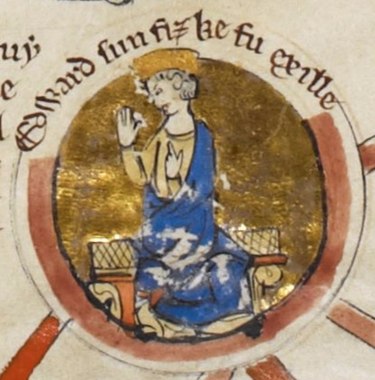
Edward the Exile

The story of Edward the Exile is a sad tale of an opportunity lost. Edward the Exile was one of the two sons of Edmund II Ironside, King of England in 1016; Edmund was the son of Ӕthelred II and his first wife, Ӕlfgifu of York. Edward’s grandfather was, therefore, Ӕthelred II (the Unready) and his uncle was Edward the Confessor, England’s king from 1042 until 1066.

Edward the Exile’s mother was Ealdgyth, the widow of Sigeferth, a thegn from East Anglia, who had been betrayed in 1015, along with another thegn, Morcar, by Eadric Streona. Eadric had lured them into his chamber during a great assembly at Oxford and killed them.  After her first husband’s murder, King Ӕthelred ‘took possession of their effects, and ordered Elgitha [Ealdgyth], Sigeferth’s widow, to be taken to the town of Malmesbury’.¹

Taking a stand against his father and Eadric, however, Edmund rescued Ealdgyth from Malmesbury and ‘married her against his father’s will’, between the middle of August and the middle of September 1015, Edmund then rode into the territories of Sigeferth and Morcar, in the Five Boroughs (The Five Boroughs were Derby, Leicester, Lincoln, Nottingham and Stamford), ‘and seizing the lands of Sigeferth and Morcar, compelled the villeins to acknowledge him as their lord’.¹

Edmund and Ealdgyth were probably married at the beginning of August 1015. They would have two sons, Edward and Edmund, who may well have been twins or were born just one year apart. Edward was born in 1016, with Edmund being born no later than 1017. Their father spent the rest of 1015 and 1016 trying to encourage resistance to the constant Danish onslaught.

History...the Interesting Bits
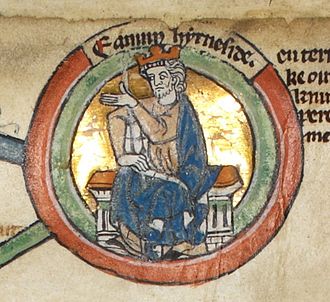
Edmund II Ironside

Following the death of Ӕthelred II on 23 April 1016, Edmund was proclaimed King Edmund II as the old king’s oldest surviving son. He was to spend the remainder of his life fighting the forces of King Cnut, the Danish contender for the English crown. He even allied with the treacherous Eadric Streona in the hope that their combined forces could fend off the Danes. However, when it came to the crunch, in the Battle of Assundun, on 18 October 2016, Streona fled in the face of the enemy, leaving Edmund and his allies to fight on alone. The result was defeat for Edmund, and the deaths of many of England’s leading nobles.

A peace was eventually negotiated, in which England was divided between the two contenders, with Edmund taking Wessex and Cnut taking Northumbria and, probably, Mercia. Under the treaty it was agreed the other would inherit the remainder of the country from whichever died first. Unfortunately, on 30 November 1016, Edmund died, either from wounds received during the summer of battles, or by more nefarious means – it is impossible to tell. A later story that Edmund was killed, by a sword or spear thrust into his bowels, as he visited the latrine, does not appear in any contemporary chronicles.

Cnut was now sole king of England.

As soon as he had control, Cnut sent Edmund’s infant sons to the court of the king of Sweden, Olof Stötkonung, apparently with instructions to have them killed. However, the Swedish king was understandably squeamish about murdering two innocent toddlers. He was an old ally of the boys’ grandfather, Ӕthelred II and spared the children, sending them to safety in Hungary. When Cnut’s assassins almost caught up with them there, they were forced to flee for their lives, settling at the court of Yaroslav the Wise in Kyiv, where Ingegerd, the daughter of King Olof of Sweden, was queen.

History...the Interesting Bits
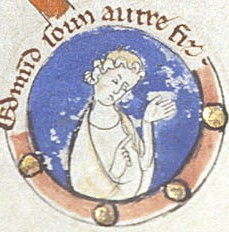
Edmund Aetheling, brother of Edward the Exile

In 1046,  as young adults, Edward and Edmund made their way back to Hungary and helped in the restoration of the exiled Andrew of Hungary. Edmund is said to have married a Hungarian princess but died sometime before 1054. Around 1043 Edward married Agatha, whose origins are extremely obscure. She may have been a daughter of Yaroslav and Ingegerd of Kyiv but was more likely the daughter of Luidolf, Margrave of West Friesland and a relative of Holy Roman Emperor Henry III. The couple had three children together. Margaret, the eldest, was born in either 1045 or 1046; her sister, Christina was born around 1050 and her brother Edgar, the Ӕtheling was born sometime between 1052 and 1056.

The family could have spent their whole lives in European exile, were it not for Edward the Confessor’s failure to produce a legitimate heir by his wife, Edith of Wessex. In 1054 Edward, having realised that he needed to settle the question over the succession, sent an embassy to eastern Europe in search of his brother, Edmund’s children. Ealdred, Archbishop of York, spent several months at the court of Holy Roman Emperor Henry III, but was initially unsuccessful in arranging Edward the Exile’s return to England.

A second embassy in 1056 managed to persuade the prince to return to his homeland and he arrived back in England in 1057, forty years after he was sent into exile.  We do not know whether his family travelled with him or arrived later. However, just days after his return Edward the Exile was dead, before he even saw the king, his uncle. He died on 19 April 1057, and was laid to rest in St Paul’s Cathedral, London, where his grandfather, Ӕthelred II, was also buried. Whether his death was caused by nefarious means or simply a sad twist of fate is uncertain. The suspicion has been raised that Edward’s rival for the throne, Harold Godwinson – the future Harold II – may have taken the opportunity to remove his rival; although it was likely that it was Harold who had escorted Edward back to England, as he was on the continent at that time. So surely, had he intended murder, he would have done it sooner and far from English soil?

History...the Interesting Bits
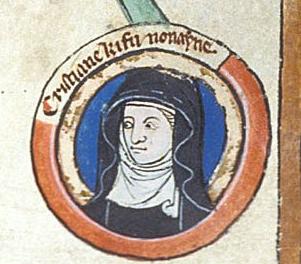
Christina, daughter of Edward the Exile and Agatha

Edward the Exile’s brother, Edmund, is not mentioned as a candidate for the English throne, nor is he spoken of when his brother returned from Hungary in 1057, so it seems likely that he had died in his eastern exile in the late 1040s or early 1050s; otherwise it would have been prudent for the king to send for him following Edward the Exile’s unfortunate demise in 1057.

Whatever the circumstances, the death of Edward the Exile was a blow for Edward the Confessor’s dynastic hopes. The Anglo-Saxon Chronicle bemoans his death, ‘Alas! That was a rueful time, and injurious to all this nation – that he ended his life so soon after he came to England, to the misfortune of this miserable people.’¹ With Edward’s death, his son, Edgar, became the ӕtheling, but Edgar was still very much a child of about five years of age and unlikely to inherit if King Edward died in the near future. He and his sisters, along with their mother, were now in the protection of King Edward. They continued to live at court, Edgar was adopted by Queen Edith, who raised him and saw to his education. Margaret and Christina were probably sent to the nunnery at Wilton, where the queen had been schooled, to continue their education. They would have undergone instruction in religion, spinning and embroidery, household management and possibly music and dancing.

By January 1066, when Edward the Confessor died, Margaret was approaching her twentieth birthday, while Edgar could have been as young as ten and was, probably, no older than fourteen. Due to his tender years Edgar was passed over as a candidate for the throne, in preference for the older and more experienced Harold Godwinson; who was crowned as King Harold II the day after King Edward’s death. Following Harold’s death at the Battle of Hastings in October 1066, Edgar was proclaimed king by some of his supporters, including Archbishop Ealdred of York, but was hardly capable of mounting any real challenge to William the Conqueror and by December had come to terms with him at Berkhamsted.

History...the Interesting Bits
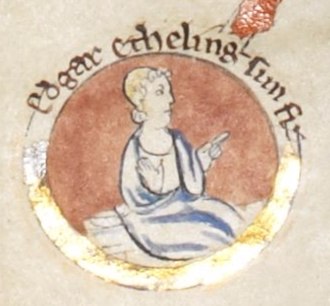
Edgar the Aetheling, son of Edward the Exile and Agatha

By 1068 Edgar the Ӕtheling had become involved in the opposition to Norman rule, which had been festering in northern England. However, when events turned against him he fled to Scotland, taking his mother and sisters along with him. The family was warmly received at Dunfermline by Scotland’s king, Malcolm III Canmore. Malcolm III Canmore was the son of Duncan I and Sybilla of Northumbria. His father had been killed by Macbeth, of Shakespeare fame, in August of 1040. Malcolm himself had defeated King Macbeth in battle, at Lumphanan, in August 1057 and Macbeth’s son Lulach in March 1058, to take the throne. By 1069 he was well established as king and had two sons by his first wife, Ingebiorg. Ingeborg was the daughter of Fin Arnasson, friend of Harald Hardrada and Jarl of Holland. The couple had three sons Duncan, Malcolm and Donald. In 1069 Malcolm asked Edgar and his mother for Margaret’s hand in marriage:

‘Then began Malcolm to yearn after the child’s [Edgar] sister, Margaret, to wife; but he and all his men long refused; and she also herself was averse, and said that she would neither have him nor anyone else, if the Supreme Power would grant, that she in her maidenhood might please the mighty Lord with a carnal heart, in this short life, in pure continence. The king, however, earnestly urged her brother, until he answered Yea. And indeed he durst not otherwise; for they were come into his kingdom … The prescient Creator wist long before what he of her would have done; for that she would increase the glory of God in this land, lead the king aright from the path of error, bend him and his people together by a better way, and suppress the bad customs which the nation formerly followed: all which she afterwards did. The king therefore received her, though it was against her will, and was pleased with her manners, and thanked God, who in his might had given him such a match.’¹

Margaret was reluctant to agree to the marriage, she was more inclined to a religious life and had hoped to become a nun. Nonetheless, with pressure from Malcolm, her brother and, possibly, her own sense of obligation to the king who was sheltering her family, she eventually accepted his proposal. They were married at Dunfermline sometime in 1069 or 1070 and, by all accounts, it seems to have been a happy and successful marriage and partnership.

History...the Interesting Bits
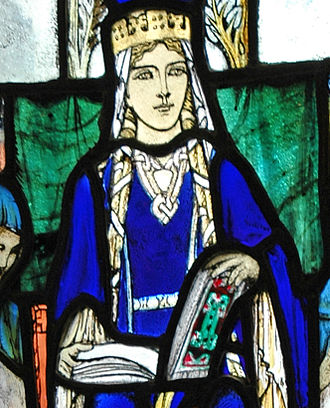
St Margaret, Queen of Scotland

Every English monarch, from Henry II onwards, could also claim descent from Alfred the Great, but through the female line of St Margaret, Queen of Scotland, daughter of King Edward ‘s nephew, Edward the Exile, and mother of Henry I’s wife, Matilda of Scotland.

Margaret’s sister, Christina would later take holy orders, becoming the abbess of Romsey Abbey and overseeing the education of her nieces, Edith and Mary, the daughters of her sister, Margaret, Queen of Scotland.

Edgar seems to have been only a minor player in the politics and upheaval following the Norman Conquest. His political isolation meant that few took his claim to the English crown seriously. While his participation in military actions, and in relations with Scotland are mentioned in various documents, his death passed without notice – or remark. William of Malmesbury wrote of him in 1125, that ‘he now grows old in the country in privacy and quiet’². Nothing is mentioned of him thereafter; neither is it ever remarked that he had a wife of children.

If he had only been a few years older in that crucial year of 1066, or if his father had survived to inherit the throne from Edward the Confessor, the story could have been very different.

*

Footnotes: ¹The Anglo-Saxon Chronicle translated by James ingram; ²William of Malmesbury, De gestis regum; ³Anglo-Saxon Chronicle, 1097, Text E.

Pictures courtesy of Wikipedia

Sources: Brewer’s British Royalty by David Williamson; Britain’s Royal Families, the Complete Genealogy by Alison Weir;The Wordsworth Dictionary of British History by JP Kenyon; The Anglo-Saxons in 100 Facts by Martin Wall; Kings, Queens, Bones and Bastards by David Hilliam; The Mammoth Book of British kings & Queens by Mike Ashley; The Oxford Companion to British History Edited by John Cannon; The Anglo-Saxon Chronicles translated and edited by Michael Swaton; The Anglo-Saxon Chronicle translated by James Ingram; Queen Emma and the Vikings by Harriett O’Brien; The Bayeux Tapestry by Carola Hicks; oxforddnb.com.

*

My Books

Signed, dedicated copies of all my books are available, please get in touch by completing the contact me form or through my online bookshop.

Out now: Scotland’s Medieval Queens

Books by Sharon Bennett Connolly

Scotland’s history is dramatic, violent and bloody. Being England’s northern neighbour has never been easy. Scotland’s queens have had to deal with war, murder, imprisonment, political rivalries and open betrayal. They have loved and lost, raised kings and queens, ruled and died for Scotland. From St Margaret, who became one of the patron saints of Scotland, to Elizabeth de Burgh and the dramatic story of the Scottish Wars of Independence, to the love story and tragedy of Joan Beaufort, to Margaret of Denmark and the dawn of the Renaissance, Scotland’s Medieval Queens have seen it all. This is the story of Scotland through their eyes.

Scotland’s Medieval Queens gives a thorough grounding in the history of the women who ruled Scotland at the side of its kings, often in the shadows, but just as interesting in their lives beyond the spotlight. It’s not a subject that has been widely covered, and Sharon is a pioneer in bringing that information into accessible history.’ Elizabeth Chadwick (New York Times bestselling author)

Available now from Amazon and Pen and Sword Books

Also by Sharon Bennett Connolly:

Books by Sharon Bennett Connolly

Heroines of the Tudor World tells the stories of the most remarkable women from European history in the time of the Tudor dynasty, 1485-1603. These are the women who ruled, the women who founded dynasties, the women who fought for religious freedom, their families and love. Heroines of the Tudor World is now available for pre-order from Amberley Publishing and Amazon UK. Women of the Anarchy demonstrates how Empress Matilda and Matilda of Boulogne, unable to wield a sword themselves, were prime movers in this time of conflict and lawlessness. It shows how their strengths, weaknesses, and personal ambitions swung the fortunes of war one way – and then the other. Available from Bookshop.orgAmberley Publishing and Amazon UKKing John’s Right-Hand Lady: The Story of Nicholaa de la Haye is the story of a truly remarkable lady, the hereditary constable of Lincoln Castle and the first woman in England to be appointed sheriff in her own right. Available from all good bookshops Pen & Sword Booksbookshop.org and Amazon

Royal Historical Society

Defenders of the Norman Crown: The Rise and Fall of the Warenne Earls of Surrey tells the fascinating story of the Warenne dynasty, from its origins in Normandy, through the Conquest, Magna Carta, the wars and marriages that led to its ultimate demise in the reign of Edward III. Available from Pen & Sword BooksAmazon in the UK and US, and Bookshop.orgLadies of Magna Carta: Women of Influence in Thirteenth Century England looks into the relationships of the various noble families of the 13th century, and how they were affected by the Barons’ Wars, Magna Carta and its aftermath; the bonds that were formed and those that were broken. It is now available in paperback and hardback from Pen & SwordAmazon, and Bookshop.orgHeroines of the Medieval World tells the stories of some of the most remarkable women from Medieval history, from Eleanor of Aquitaine to Julian of Norwich. Available now from Amberley Publishing and Amazon, and Bookshop.orgSilk and the Sword: The Women of the Norman Conquest traces the fortunes of the women who had a significant role to play in the momentous events of 1066. Available now from Amazon,  Amberley Publishing, and Bookshop.org.

Alternate Endings: An anthology of historical fiction short stories including Long Live the King… which is my take what might have happened had King John not died in October 1216. Available in paperback and kindle from Amazon.

Podcast:

A Slice of Medieval

Have a listen to the A Slice of Medieval podcast, which I co-host with Historical fiction novelist Derek Birks. Derek and I welcome guests, such as Bernard Cornwell and Elizabeth Chadwick, and discuss a wide range of topics in medieval history, from significant events to the personalities involved. 

There are now 80 episodes to listen to!

Every episode is also available on YouTube.

*

Don’t forget! Signed and dedicated copies of all my books are available through my online bookshop.

For forthcoming online and in-person talks, please check out my Events Page.

You can be the first to read new articles by clicking the ‘Follow’ button, liking our Facebook page or joining me on TwitterThreadsBluesky and Instagram.

©2018 Sharon Bennett Connolly FRHistS