Isabel de Warenne, Countess of Surrey

025
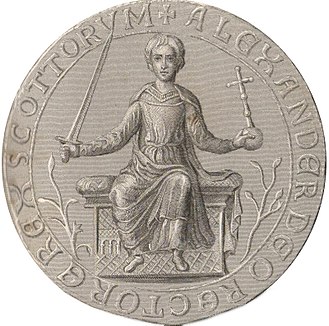
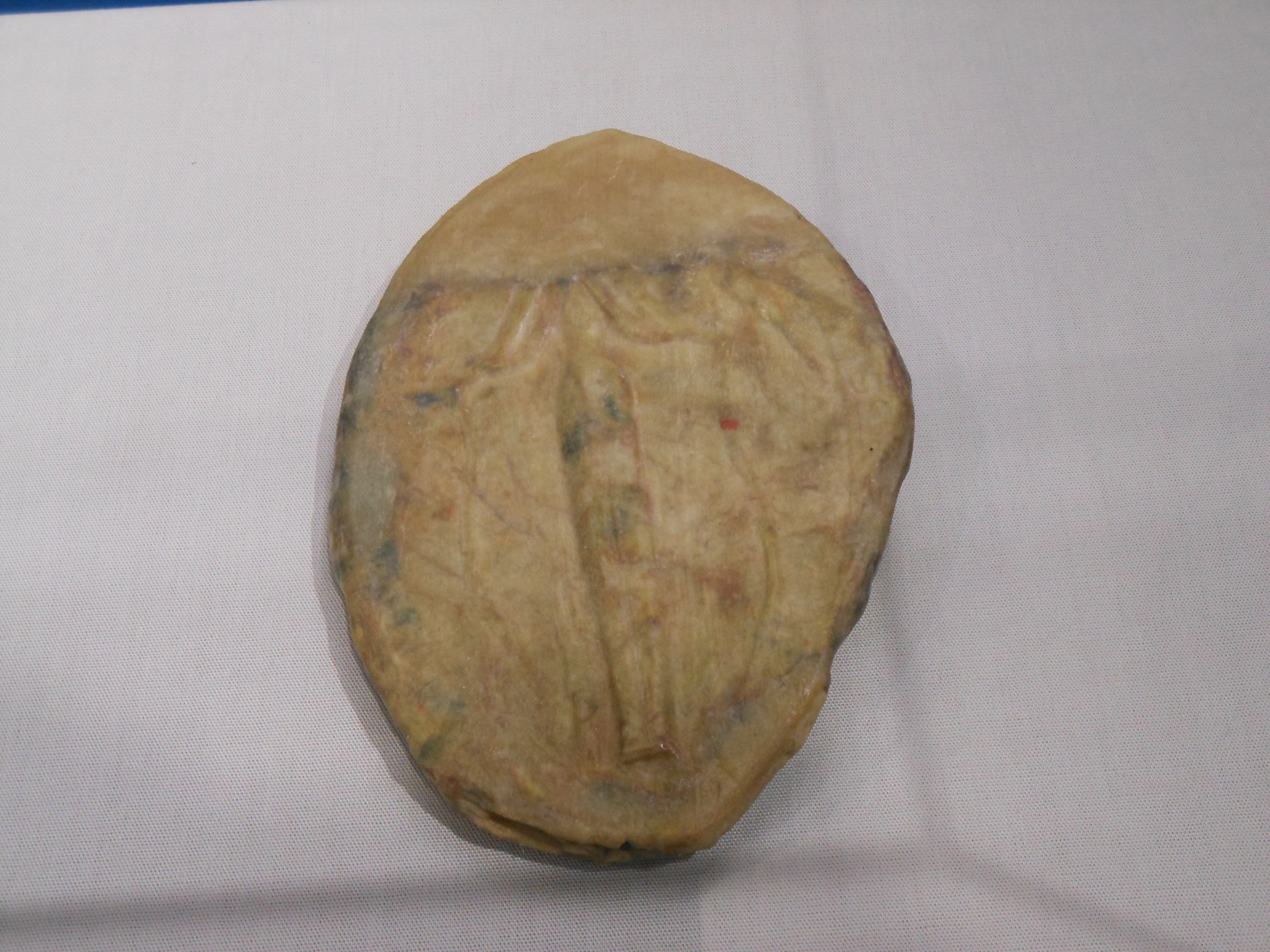
Seal of Isabel de Warenne, Conisbrough Castle

Isabel de Warenne was the only surviving child of William de Warenne, 3rd Earl of Warenne and Surrey, and his wife Adela, or Ela, de Talvas, daughter of William III of Ponthieu. When her father died on the Second Crusade to the Holy Land, in around 1148, Isabel became 4th Countess of Surrey, in her own right, and one of the most prized heiresses in England and Normandy, with large estates in Yorkshire.

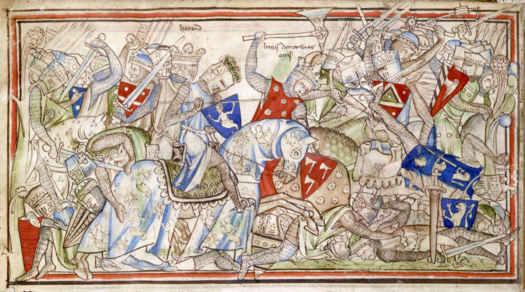
Isabel was born during a period of civil war in England, a time known as The Anarchy (c.1135-54), when King Stephen fought against Empress Matilda, the daughter of Henry I, for the right to rule England. Isabel’s father, William, was a staunch supporter of the king and had fought at the Battle of Lincoln in February 1141, though without distinction; his men were routed early on in the battle and William was among a number of earls who fled the field. He later redeemed himself that summer by capturing Empress Matilda’s brother and senior general, Robert Earl of Gloucester, at Winchester.

The earl appears to have tired of the civil war in 1147 and departed on Crusade with his half-brother, Waleran de Beaumont, Count of Meulan, and their cousin, King Louis VII of France. In the same year, as part of King Stephen’s attempts to control the vast de Warenne lands during a crucial time in the Anarchy, Earl Warenne’s only daughter, Isabel, was married to Stephen’s younger son, William of Blois, who would become Earl by right of his wife, following the 3rd earl’s death on Crusade in 1148; the earl was killed fighting in the doomed rearguard at the Battle of Mount Cadmus near Laodicea in January 1148.

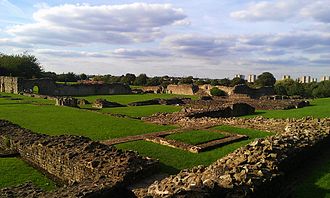
Lewes Priory

It has been suggested that William of Blois was some 7 or 8 years younger than his wife, Isabel. However, this seems improbable and it appears more likely that the young couple were of similar ages. Isabel’s father had been born in 1119 and was no older than 29 when he died; his wife, Ela de Talvas, was a few years younger than her husband. This means that, even if the couple married as soon as they reached the ages allowed by the church, 12 for a girl and 14 for a boy, which would have been 1133 at the earliest, and Ela fell pregnant on her wedding night, Isabel could have been no older 13 in 1147. Given the danger associated with girls giving birth before their teens, it seems plausible that Isabel was not born until the late 1130s and may have been between 10 and 12, or younger when she married William of Blois.

Even before it was known that Earl Warenne had died on crusade, William of Blois was already being referred to as earl in a number of charters relating to Warenne lands, one such charter, dated to c.1148, was issued with the proviso ‘that if God should bring back the earl [from the crusade] he would do his best to obtain the earl’s confirmation, or otherwise that of his lord earl William, the king’s son.’1

During the 3rd earl’s absence, and while the new earl and countess were still only children, the vast Warenne lands were administered by the 3rd earl’s youngest brother, Reginald de Warenne, Baron Wormegay, who was a renowned and accomplished administrator and estate manager. We do not know when news reached England of the earl’s death, the tidings may have arrived before the return of the earl’s half-brother, Waleran, later in the year. However, the future of the earldom was already secure with the succession of Isabel and her young husband, carefully watched over by Isabel’s uncle, Reginald.
In August 1153 the young couple’s future prospects could have changed drastically when William’s elder brother Eustace, their father’s heir, died. As a consequence, William inherited his mother’s County of Boulogne from his brother, adding to his already substantial domains. He may also have expected to inherit his brother’s position as heir to the throne – or not. It seems that William’s ambitions did not extend to the lofty heights of the throne, or he was not considered suitable for the crown. Either way, the young man was removed from the succession to the crown by his own father, when Stephen made a deal with Empress Matilda’s son, Henry of Anjou, that the throne would go to him on Stephen’s death, thus returning the crown to the rightful line of succession.

William seems to have accepted this, on the whole. Although there is some suggestion of his involvement in a plot against Henry later in 1154, during which William suffered a broken leg, he served Henry loyally, once he became king, until his own death, returning from the king’s campaign in Toulouse, in 1159.
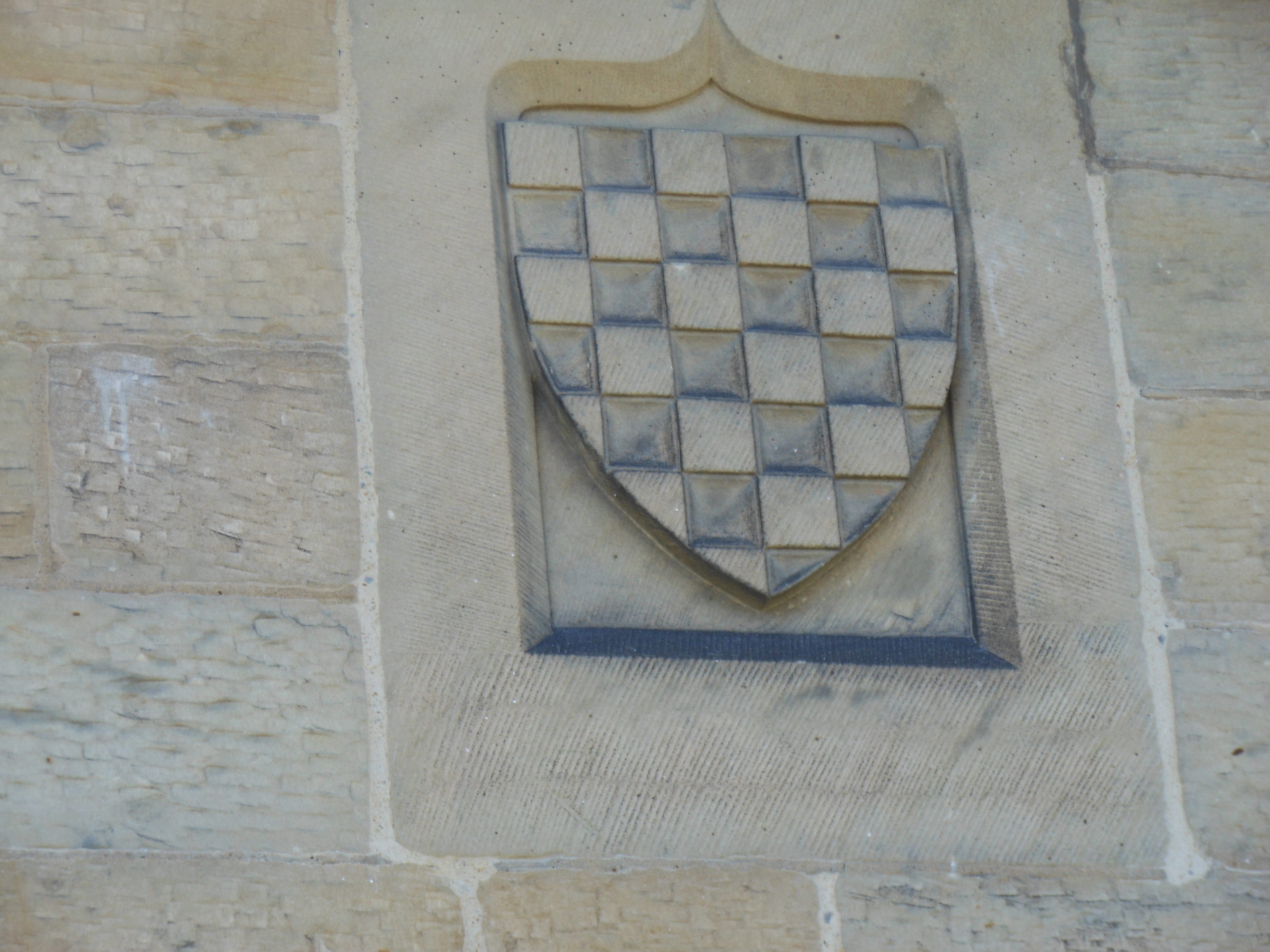
The Warenne coat of arms

Now in her mid-20s, and as their marriage had been childless, Isabel was once again a prize heiress. Although she seems to have had a little respite from the marriage market, by 1162 Henry II’s youngest brother, William X, Count of Poitou, was seeking a dispensation to marry her. The dispensation was refused by Thomas Becket, Archbishop of Canterbury, on the grounds of consanguinity; the archbishop’s objection was not that Isabel and William were too closely related, but that William and Isabel’s first husband had been cousins. William died shortly after the archbishop refused to sanction the marriage – it is said, of a broken heart.

King Henry was not to be thwarted so easily in his plans to bring the Warenne lands into the royal family, and his illegitimate half-brother, Hamelin, was married to Isabel in 1164. Hamelin was the son of Herny’s father, Geoffrey, Count of Anjou, and an unknown woman, born around 1130, in the time when Geoffrey and Empress Matilda were estranged. In an unusual step, Hamelin took his wife’s surname and bore the titles Earl of Warenne and Surrey in her right.

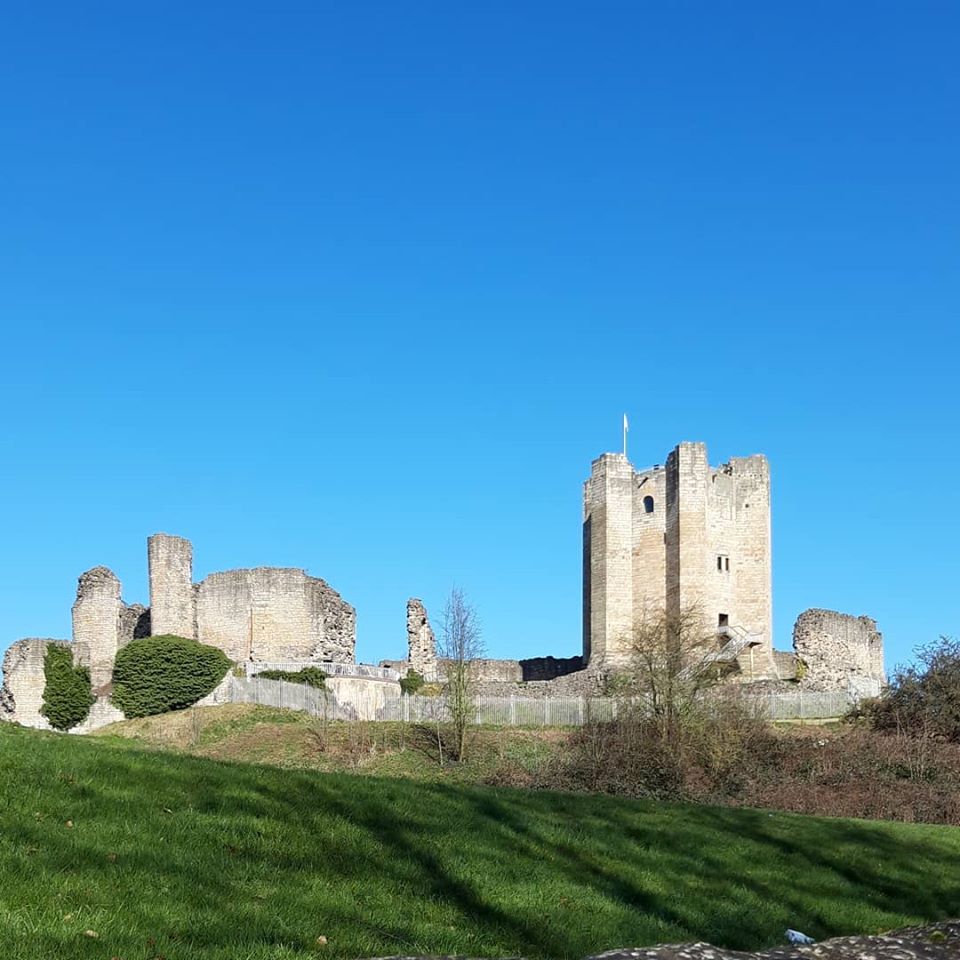
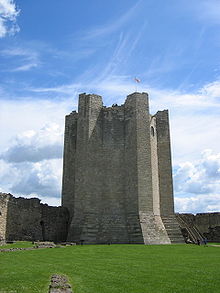
The marriage appears to have been highly successful. Hamelin was loyal to his brother and his nephew, Richard I, and played a prominent part in English politics whilst Richard was absent on the 3rd Crusade. He also built the highly innovative keep at Conisbrough in the 1170s and 1180s.
220px-Conisbrough_keep
The keep at Conisbrough Castle

Isabel and Hamelin had four surviving children. Their son and heir, William, would become the 5th Earl of Surrey and married Matilda Marshal, daughter of the great William Marshal, Earl of Pembroke and regent for King Henry III. There were also three daughters, Ela, Isabel and Matilda. It has been suggested that Matilda was Hamelin’s daughter by a previous relationship, but this theory is based on an erroneous death date for her husband. One of the daughters – although it is not clear which – bore an illegitimate son, Richard Fitzroy, by her cousin, John (the future King John).

Isabel died in her mid-60s, in 1203, and was buried at Lewes Priory, alongside Hamelin, who had died the previous year. In 1202, Countess Isabel had granted ‘for the soul of her husband earl Hamelin, to the priory of St Katherine, Lincoln, of similar easements for 60 beasts, namely for 40 as of his gift and 20 as of hers.’2

*

Footnotes: 1 Farrer, William and Charles Travis Clay, editors, Early Yorkshire Charters, Volume 8: The Honour of Warenne; 2 ibid

Sources: Robert Batlett, England Under the Norman and Angevin Kings; Dan Jones, The Plantagenets; Donald Matthew, King Stephen; Medieval Lands Project on the Earls of Surrey, Conisbrough Castle; Farrer, William and Charles Travis Clay, editors, Early Yorkshire Charters, Volume 8: The Honour of Warenne; Morris, Marc King John: Treachery, Tyranny and the Road to Magna Carta; Church, Stephen, King John: England, Magna Carta and the Making of a Tyrant; doncasterhistory.co.uk

Photos: All images © Sharon Bennett Connolly 2015.

*

My Books

Signed, dedicated copies of all my books are available through my online bookshop.

Coming 15 January 2024: Women of the Anarchy
On the one side is Empress Matilda, or Maud. The sole surviving legitimate child of Henry I, she is fighting for her birthright and that of her children. On the other side is her cousin, Queen Matilda, supporting her husband, King Stephen, and fighting to see her own son inherit the English crown. Both women are granddaughters of St Margaret, Queen of Scotland and descendants of Alfred the Great of Wessex. Women of the Anarchy demonstrates how these women, unable to wield a sword, were prime movers in this time of conflict and lawlessness. It show how their strengths, weaknesses, and personal ambitions swung the fortunes of war one way – and then the other.

Available for pre-order from Amberley Publishing and Amazon UK.

Coming on 15 June 2024: Heroines of the Tudor World
Heroines of the Tudor World tells the stories of the most remarkable women from European history in the time of the Tudor dynasty, 1485-1603. These are the women who ruled, the women who founded dynasties, the women who fought for religious freedom, their families and love. These are the women who made a difference, who influenced countries, kings and the Reformation. In the era dominated by the Renaissance and Reformation, Heroines of the Tudor World examines the threats and challenges faced by the women of the era, and how they overcame them. Some famous, some infamous, some less well known, including Anne Boleyn, Elizabeth Barton, Catherine de Medici, Bess of Hardwick and Elizabeth I. From writers to regents, from nuns to queens, Heroines of the Tudor World shines the spotlight on the women helped to shape Early Modern Europe.

Heroines of the Tudor World is now available for pre-order from Amberley Publishing and Amazon UK.

Also by Sharon Bennett Connolly:

King John’s Right-Hand Lady: The Story of Nicholaa de la Haye is the story of a truly remarkable lady, the hereditary constable of Lincoln Castle and the first woman in England to be appointed sheriff in her own right. It is is available from Pen & Sword Booksbookshop.org and Amazon. Defenders of the Norman Crown: The Rise and Fall of the Warenne Earls of Surrey tells the fascinating story of the Warenne dynasty, from its origins in Normandy, through the Conquest, Magna Carta, the wars and marriages that led to its ultimate demise in the reign of Edward III. Available from Pen & Sword BooksAmazon in the UK and US, and Bookshop.org.
Ladies of Magna Carta: Women of Influence in Thirteenth Century England looks into the relationships of the various noble families of the 13th century, and how they were affected by the Barons’ Wars, Magna Carta and its aftermath; the bonds that were formed and those that were broken. It is now available in paperback and hardback from Pen & Sword,  Amazon, and Bookshop.org. Heroines of the Medieval World tells the stories of some of the most remarkable women from Medieval history, from Eleanor of Aquitaine to Julian of Norwich. Available now from Amberley Publishing and Amazon, and Bookshop.org. Silk and the Sword: The Women of the Norman Conquest traces the fortunes of the women who had a significant role to play in the momentous events of 1066. Available now from Amazon,  Amberley Publishing, and Bookshop.org.

Alternate Endings: An anthology of historical fiction short stories including Long Live the King… which is my take what might have happened had King John not died in October 1216. Available in paperback and kindle from Amazon.

Podcast:

Have a listen to the A Slice of Medieval podcast, which I co-host with Historical fiction novelist Derek Birks. Derek and I welcome guests, such as Bernard Cornwell and Elizabeth Chadwick, and discuss a wide range of topics in medieval history, from significant events to the personalities involved.

*

Don’t forget! Signed and dedicated copies of all my books are available through my online bookshop.

For forthcoming online and in-person talks, please check out my Events Page.

*You can be the first to read new articles by clicking the ‘Follow’ button, liking our Facebook page or joining me on Twitter and Instagram.

Article: 2020 © Sharon Bennett Connolly FRHistS

William the Lion, the Warenne King of Scots

William the Lion, King of Scots

There is only one clause in Magna Carta that mentions particular women. Although they are not identified by name, they are easily identifiable due to their positions. These two women were the daughters of William I, the Lion, King of Scots. They were the sisters of the new King of Scots, Alexander II, and had been hostages in England since the treaty of Norham in 1209. Clause 59 of Magna Carta agrees to negotiate for their release, alongside a number of other Scottish hostages:

We will treat Alexander, king of Scots, concerning the return of his sisters and hostages and his liberties and rights in the same manner in which we will act towards our other barons of England, unless it ought to be otherwise because of the charters which we have from William his father, formerly king of Scots; and this shall be determined by the judgement of his peers in our court.1

The king of Scots’ two sisters referred to in the clause were Margaret and Isabella, the oldest daughters of William I (the Lion), King of Scots, and his wife, Ermengarde de Beaumont. The two girls had been caught up in the power struggle between their father and the Plantagenet kings. William I was the second of the three sons of Henry, Earl of Northumberland, and his wife, Ada de Warenne. He was, therefore, a grandson of David I and great-grandson of Malcolm III Canmor and St Margaret, the Anglo-Saxon princess.

Magna Carta, Lincoln Castle

William had succeeded his father as earl of Northumberland in June 1153, when he was about 11 years old; William used ‘Warenne’ as his family name when earl of Northumberland. He lost the earldom, however, when his brother, Malcolm IV (known as Malcolm the Maiden) surrendered the northern counties of England to Henry II; he was given lands in Tynedale, worth £10 per annum, in compensation. This loss of Northumberland was never forgotten and was to colour William’s future dealings with the English crown throughout his reign.

William was probably knighted in 1159, when he accompanied King Henry and his own brother Malcolm on an expedition to Toulouse and in 1163 he was in attendance in a meeting with King Henry II at Woodstock where the Scots king did homage to the English king. The youngest of the royal brothers, David, was to remain in England as a hostage to Malcolm’s good behaviour. William ascended the Scottish throne on Malcolm’s death on 9 December 1165, aged about 23; his inauguration as king took place at Scone on Christmas Eve, 24 December. In 1166 William travelled to Normandy to meet with King Henry II and, although we do not know what they spoke of, it was reported that they parted on bad terms.

Malcolm IV, king of Scots

Nevertheless, in 1170 William and his brother David were at the English court, attending Henry II’s council at Windsor in April and were in London on 14 June, at the coronation of Henry’s eldest son, also Henry, the Young King; he died in 1183, six years before his father. Both William and his brother David did homage to the Young King after the coronation. And in 1173 when the Young King and his brothers, Richard and Geoffrey, rebelled against their father, Henry II, they sought William’s aid. The younger King Henry promised that he would give the northern counties of England to the Scots king, and the earldoms of Huntingdon with Cambridgeshire to the king’s brother, David, in return for their support in the rebellion.

William considered the offer, but after consulting his barons in the summer of 1173, he decided to ask Henry II to return Northumberland. He would renounce his homage if the English king refused. Henry II did refuse and William joined the Young King’s rebellion. He formed an alliance with Louis VII of France and Count Philippe of Flanders, who both promised mercenaries would be sent to England in support. This was the start of the long Scottish tradition of alliances with France, against England, which would become known as the Auld Alliance. On 20 August 1173 the Scottish forces moved south, to Alnwick, Warkworth and Newcastle.

Although they devastated the countryside, the campaign in Northumberland achieved very little; they were unable to take the strategically important castles. They moved on to Carlisle, but pulled back to Roxburgh after receiving news that a new English force was advancing. This force, under Ranulf de Glanville, the justiciar, burned Berwick before agreeing to a truce until 13 January 1174. The truce was later extended to 24 March 1174, after a payment of 300 marks by the bishop of Durham to King William. At the end of the truce, the Scots, accompanied by Flemish mercenaries, again advanced into England. They ravaged the Northumberland coast and besieged both Wark-on-Tweed and Carlisle castles, but failed to take either.

On 13 July, while much of the Scottish army was spread out in raiding parties, the Scots were the victims of a surprise attack. King William’s horse was killed, the king trapped underneath. William surrendered to Ranulf de Glanville and was taken first to Newcastle and then to Northampton, where he appeared before Henry II on 24 July. The Scots king was sentenced to imprisonment at Falaise in Normandy and the price of his freedom was to submit himself, his kingdom and the castles of Berwick, Roxburgh and Edinburgh to King Henry II. The Convention of Falaise on 1 December 1174 also granted that ‘the church of Scotland shall henceforward owe such subjection to the church of England as it should do.’2 It was a humiliating treaty for the Scots, which also required twenty Scottish noble hostages be handed to the English in return for their king’s freedom.

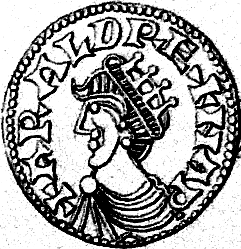
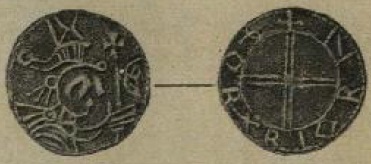
Coin of William’s father Henry of Scotland

King William arrived back in Scotland in February 1175, having spent two months in England until the handover of the Scottish castles had been completed. He returned to a revolt in Galloway, which he managed to quash, he was then faced with a threat from Donald Ban Macwilliam, grandson of Duncan II, who was gaining support for a challenge to the throne and a return to the royal line of Duncan II. Things quietened down for a time, but in April 1181, when the king and David were in Normandy Donald Ban Macwilliam led an uprising in Moray and Ross, apparently gaining full control of the two earldoms. One royal retainer, Gillecolm the Marischal, surrendered the castle of Auldearn and then joined the rebels.

The king was also faced with unrest in Galloway, where Gilbert of Galloway was vying with his nephew Roland for control of the region. Gilbert died on 1 January 1185 and shortly after King William invaded Galloway, alongside Gilbert’s nephew Roland. On 4 July 1185 William and his allies defeated the main force of Gilbert’s followers and by 1190 Roland had been granted the lordship of Galloway by King William while Gilbert’s son, Duncan, was made lord of Carrick. As a result, Galloway remained at peace well into the 13th century, until the death of Roland’s son, Alan, in 1234.

With Galloway subdued, in 1187 King William was finally able to quash the rebellion in the north, leading his considerable army as far as Inverness. On 31 July, at the now-lost site of ‘Mam Garvia’, Roland of Galloway faced the rebels in battle where over 500 of them were killed, including Donald Macwilliam, whose head was sent to King William.

The overlordship of Henry II caused additional problems for King William in the Scottish church; the archbishops of York and Canterbury both claimed the homage of the Scottish clergy. William also had a long running dispute with the papacy, with five successive popes, in fact, over the appointment of a bishop of St Andrews; neither king nor pope approved the other’s choice of candidate. The English king sided with the popes on the matter and in 1181 King William was excommunicated by the archbishop of Canterbury; the Scottish people, as a whole, were subsequently excommunicated by the bishop of Durham. Within two years, however, the papacy and the Scots king were on such good terms that the pope sent William the Golden Rose as a tribute to ‘a king of exceptional religious zeal’.3 On 13 March 1192 Pope Celestine III issued the papal bull, Cum universi, recognising the Scottish church as a ‘special daughter’ of the apostolic see and subject to Rome without an intermediary. Thereby denying the claims to superiority of both York and Canterbury.

Unusually for a king in this period, by 1180 William had been on the throne for fifteen years and was still unmarried. He had several illegitimate children but until he married, William’s heir was his younger brother, David. With this in mind, in 1184, William was at King Henry’s court to discuss a possible marriage with Henry’s granddaughter, Matilda of Saxony. The match was forbidden by the pope on the grounds of consanguinity. In May 1186, during a council at Woodstock, King Henry suggested Ermengarde de Beaumont as a bride for William. Ermengarde was the daughter of Richard, Vicomte de Beaumont-sur-Sarthe, who was himself the son of Constance, one of the many illegitimate daughters of King Henry I of England.

With such diluted royal blood, she was hardly a prestigious match for the king of Scots, but he reluctantly accepted the marriage after consulting his advisers. The wedding took place at Woodstock on 5 September 1186, with King Henry hosting four days of festivities. Edinburgh Castle was returned to the Scots as part of Ermengarde’s dowry. Although we do not know Ermengarde’s birth date, at the time of the marriage, she was referred to as ‘a girl’, suggesting that she may have only just reached the age of 12.

King William agreed to provide Ermengarde with £100 of rents and forty knights’ fees in Scotland, for the financial maintenance of her household; she also had dwellings and lands at Crail and Haddington, lands which had previously been held by William’s mother, Ada de Warenne. Between 1187 and 1195 Queen Ermengarde gave birth to two daughters, Margaret and Isabella. A son, the future Alexander II, was finally born at Haddington on 24 August 1198, the first legitimate son born to a reigning Scottish king in 70 years; a contemporary remarked that ‘many rejoiced at his birth.’4 A third daughter, Marjorie, was born sometime later.

On the death of King Henry II in 1189, King William again went south, and met with the new king, Richard I, at Canterbury, where he did homage for his English lands. Desperate for money for his crusade, on 5 December 1189, Richard abandoned his lordship of Scotland in the quitclaim of Canterbury; King William was released from the homage and submission given to Henry II, the castles of Roxburgh and Berwick were returned and the relationship between the kingdoms reverted to that in the time of Malcolm IV. The cost to the Scots was to be 10,000 marks, but Scotland was independent once again. However, Richard still refused to sell Northumberland back to William. The Scots king remained on good relations with King Richard, paying 2,000 marks towards his ransom in 1193. King William carried one of the three swords of state at Richard’s second coronation at Winchester on 17 April 1194.

In the spring of 1195 King William fell gravely ill at Clackmannan, causing a succession crisis, the king’s only legitimate children being daughters. The Scottish barons appear to have been divided, between recognising William’s oldest legitimate daughter, Margaret, as his heir, or marrying Margaret to Otto, Duke of Saxony, grandson of Henry II, and allowing Otto to succeed to the throne. A third faction claimed that either solution was contrary to the custom of the land, so long as the king had a brother who could succeed him. In the event, the king recovered from his illness and three years later the queen gave birth to Alexander, the much-desired son and heir. For the last years of the century, William was again occupied with unrest in the north. Before going on campaign in October 1201, he had the Scottish barons swear fealty to his son, Alexander, now 3 years old, a sensible precaution, given that he was approaching his sixtieth birthday.

Alexander II, William’s son and successor

Relations with England changed again in 1199, with the accession of King John. During the reign of King Richard, William had agreed with the justiciar, William Longchamp, and backed Arthur of Brittany as the king’s heir. John may well have remembered this and soon after his accession, in 1200, the two kings met at Lincoln, with William doing homage for his English lands. The matter of Northumberland, still in English hands, was raised and deferred on several occasions between 1199 and 1205. The two kings finally met for formal talks at York from 9 to 12 February 1206 and again from 26 to 28 May 1207, although we have little record of what was discussed. However, John appears to have been prevaricating, suggesting another meeting in October 1207, which the Scots rejected.

In the meantime, the death of the bishop of Durham meant John took over the vacant see and set about building a castle at Tweedmouth. The Scots, seeing this as a direct threat to Berwick, destroyed the building works and matters came to a crisis in 1209. After many threats, and with both sides building up their armies, the two kings met at Norham, Northumberland, in the last week of July and first week of August 1209. The Scots were in a desperate position, with an ailing and ageing king, and a 10-year-old boy as heir, whilst the English, with their Welsh allies and foreign mercenaries, had an army big enough to force a Scottish submission.

The subsequent treaty, agreed at Norham on 7 August, was humiliating for William and the Scots. They agreed to pay 15,000 marks for peace and to surrender hostages, including the king’s two oldest legitimate daughters, Margaret and Isabella. As a sweetener, John promised to marry the princesses to his sons; although Henry was only 2 years old at the time and Richard was just 8 months, whilst the girls were probably in their early-to-mid teens. John would have the castle at Tweedmouth dismantled, but the Scots would pay an extra £4,000 compensation for the damage they had caused to it. The king’s daughters and the other Scottish hostages were handed into the custody of England’s justiciar, at Carlisle on 16 August. How the girls, or their parents, thought about this turn of events, we know not. Given John’s proven record of prevarication and perfidy, King William may have hoped that the promised marriages would occur in good time, but may also have expected that John would find a way out of the promises made.

Arbroath Abbey, burial place of William the Lion

There is no mention of Queen Ermengarde being present for the treaty at Norham, although she did act as mediator in 1212, when her husband was absent, in negotiations with John at Durham. A contemporary observer described the Scottish queen as ‘an extraordinary woman, gifted with a charming and witty eloquence’.5 It seems likely that King John was not immune to the queen’s charms, as he did not ask for more hostages and agreed that the Scottish heir, Alexander, would be knighted and one day marry an English princess. Alexander was knighted at Clerkenwell on 4 March 1212.

King William I, later known as William the Lion, died on 4 December 1214, aged about 72, having reigned for a total of forty-nine years, almost to the day. He was buried before the high altar of Arbroath Abbey. William’s daughters were still in English custody, the conditions for their release would form one of the clauses of Magna Carta. He was succeeded by Alexander, his only legitimate son, who was proclaimed king at Scone on 6 December 1214, aged just 16. Queen Ermengarde was said to be distraught at her husband’s death. She lived for 19 more years, devoting her time to the founding of a Cistercian abbey at Balmerino in Fife. She died on 11 February 1233.

*

Footnotes: 1 Marc Morris, King John; 2E.L.G. Stones quoted in Scott, W.W., William I; 3Ross, David, Scotland: History of a Nation; 4W.W. Scott, Ermengarde de Beaumont (1233); 5Bower quoted in W.W. Scott, Ermengarde de Beaumont (1233),

Images: Courtesy of Wikipedia except Magna Carta which is ©2015 Sharon Bennett Connolly

Further reading: W.W. Scott, Ermengarde de Beaumont (d. 1233), Oxforddnb.com; Scott, W.W., William I [known as William the Lion] (c. 1142–1214) Oxforddnb.com; Scott, W.W., Malcolm IV (c. 1141–1165) Oxforddnb.com; Mackay, A.J.G. (ed.), The Historie and Chronicles of Scotland … by Robert Lindesay of Pitscottie; Ross, David, Scotland: History of a Nation; Farrer, William and Charles Travis Clay, editors, Early Yorkshire Charters, Volume 8: The Honour of Warenne; Morris, Marc King John: Treachery, Tyranny and the Road to Magna Carta; Church, Stephen, King John: England, Magna Carta and the Making of a Tyrant; Danziger, Danny and John Gillingham, 1215: The Year of Magna Carta; Crouch, David, William Marshal; fmg.ac; Brewer’s British Royalty by David Williamson; The Mammoth Book of British Kings and Queens by Mike Ashley; The Story of Scotland by Nigel Tranter; Ada, Queen Mother of Scotland (article) by Victoria Chandler.

*

My Books

Signed, dedicated copies of all my books are available through my online bookshop.

Coming 30 January 2025: Scotland’s Medieval Queens

Scotland’s history is dramatic, violent and bloody. Being England’s northern neighbour has never been easy. Scotland’s queens have had to deal with war, murder, imprisonment, political rivalries and open betrayal. They have loved and lost, raised kings and queens, ruled and died for Scotland. From St Margaret, who became one of the patron saints of Scotland, to Elizabeth de Burgh and the dramatic story of the Scottish Wars of Independence, to the love story and tragedy of Joan Beaufort, to Margaret of Denmark and the dawn of the Renaissance, Scotland’s Medieval Queens have seen it all. This is the story of Scotland through their eyes.

Available for pre-order now.

Also by Sharon Bennett Connolly:

Heroines of the Tudor World tells the stories of the most remarkable women from European history in the time of the Tudor dynasty, 1485-1603. These are the women who ruled, the women who founded dynasties, the women who fought for religious freedom, their families and love. Heroines of the Tudor World is now available for pre-order from Amberley Publishing and Amazon UK. Women of the Anarchy demonstrates how Empress Matilda and Matilda of Boulogne, unable to wield a sword themselves, were prime movers in this time of conflict and lawlessness. It shows how their strengths, weaknesses, and personal ambitions swung the fortunes of war one way – and then the other. Available from Bookshop.orgAmberley Publishing and Amazon UKKing John’s Right-Hand Lady: The Story of Nicholaa de la Haye is the story of a truly remarkable lady, the hereditary constable of Lincoln Castle and the first woman in England to be appointed sheriff in her own right. Available from all good bookshops Pen & Sword Booksbookshop.org and Amazon

Defenders of the Norman Crown: The Rise and Fall of the Warenne Earls of Surrey tells the fascinating story of the Warenne dynasty, from its origins in Normandy, through the Conquest, Magna Carta, the wars and marriages that led to its ultimate demise in the reign of Edward III. Available from Pen & Sword BooksAmazon in the UK and US, and Bookshop.orgLadies of Magna Carta: Women of Influence in Thirteenth Century England looks into the relationships of the various noble families of the 13th century, and how they were affected by the Barons’ Wars, Magna Carta and its aftermath; the bonds that were formed and those that were broken. It is now available in paperback and hardback from Pen & SwordAmazon, and Bookshop.orgHeroines of the Medieval World tells the stories of some of the most remarkable women from Medieval history, from Eleanor of Aquitaine to Julian of Norwich. Available now from Amberley Publishing and Amazon, and Bookshop.orgSilk and the Sword: The Women of the Norman Conquest traces the fortunes of the women who had a significant role to play in the momentous events of 1066. Available now from Amazon,  Amberley Publishing, and Bookshop.org.

Alternate Endings: An anthology of historical fiction short stories including Long Live the King… which is my take what might have happened had King John not died in October 1216. Available in paperback and kindle from Amazon.

Podcast:

Have a listen to the A Slice of Medieval podcast, which I co-host with Historical fiction novelist Derek Birks. Derek and I welcome guests, such as Bernard Cornwell, and discuss a wide range of topics in medieval history, from significant events to the personalities involved.

*

Don’t forget! Signed and dedicated copies of all my books are available through my online bookshop.

For forthcoming online and in-person talks, please check out my Events Page.

You can be the first to read new articles by clicking the ‘Follow’ button, liking our Facebook page or joining me on TwitterThreadsBluesky and Instagram.

*

©2020 Sharon Bennett Connolly FRHistS
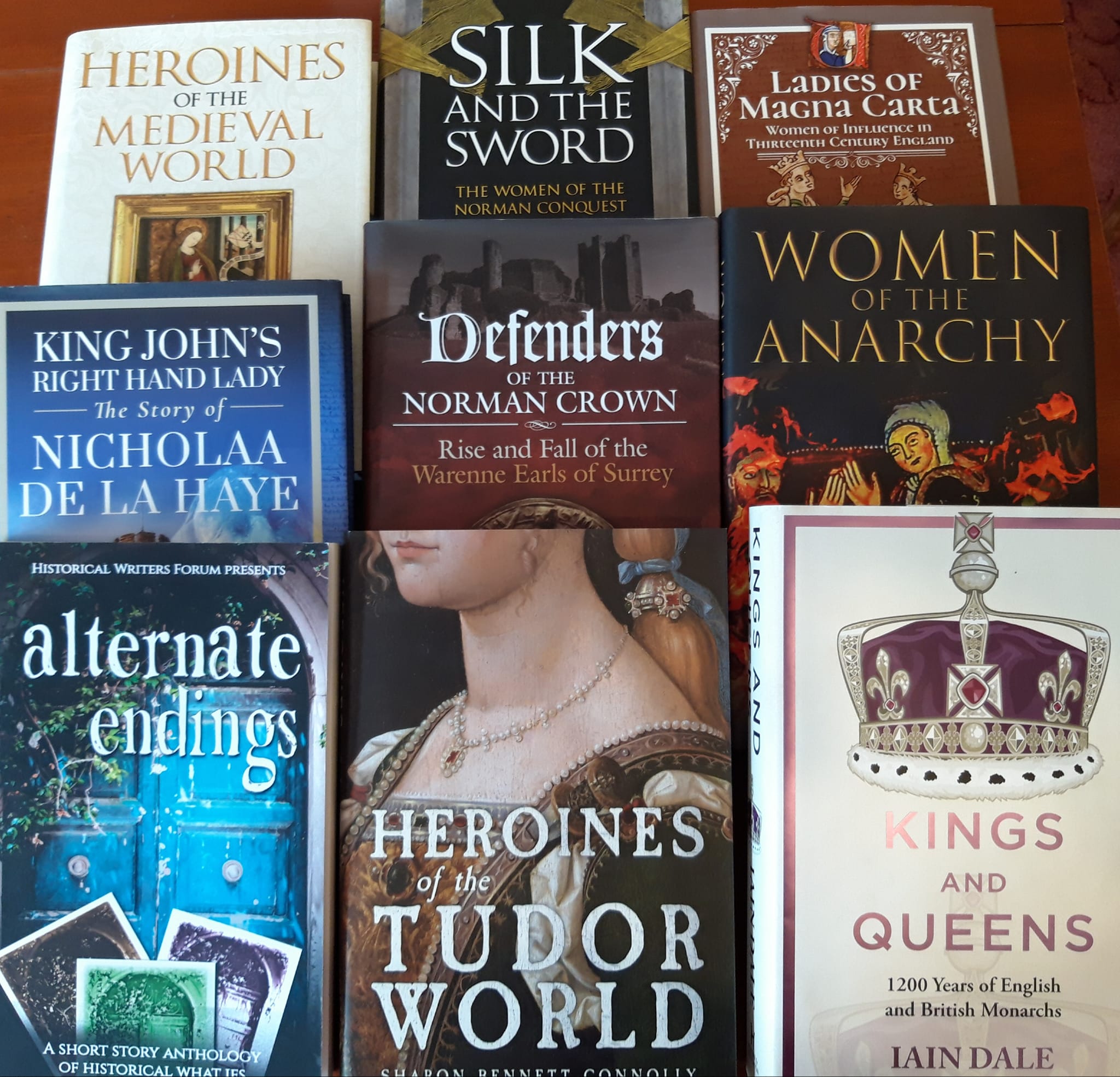
Malcolm the Maiden

Malcolm IV

Malcolm IV (the Maiden), King of Scots, was the son of Prince Henry of Scotland and Ada de Warenne. He was the grandson of David I, King of Scots and great-grandson of Malcolm III, King of Scots and second his wife St Margaret, herself a descendant of Alfred the great. On his mother’s side, he was the grandson of William de Warenne, second Earl of Warenne and Surrey, and Isabel de Vermandois, granddaughter of King Henry I of France and his queen, Anna of Kiev.

The younger Malcolm was born between born between 23 April and 24 May 1141. He earned the soubriquet ‘the Maiden’ due to his youth, religious devotion and the fact he remained unmarried. Malcolm had become his grandfather’s heir following his father’s death in 1152, at which time he had been placed into the custody of Duncan, Earl of Fife, and taken on a progress around Scotland north of the Forth, following the old Celtic tradition of showing the heir to the kingdom. When King David I died less than twelve months after his son, Henry, on 24 May 1153, he was succeeded by his grandson, Malcolm. The new king succeeded to the crown at the age of twelve – possibly even on his twelfth birthday – as Malcolm IV.

The accession of Malcolm surpassed all the ambitions of his Warenne grandfather. William de Warenne, the second earl, had sought a royal bride for himself. He had not lived to see his daughter marry the heir to the Scottish throne not to see his grandson’s accession and coronation, which surpassed all of his aspirations and ambitions.

The chronicles make no mention of Malcolm’s mother, Ada, playing a part in the politics of Scotland during her eldest son’s kingship. She did appear at court often and was present for many of the important occasions; she was also a witness to no less than sixteen of Malcolm’s charters. Ada did, moreover, take great interest in the futures of her children, arranging the marriages of her two surviving daughters and employing any means possible to persuade her son to marry. The chronicler, William of Newburgh, relates a story of the lengths Ada had to go to in order to get her reluctant son to choose a bride. Ada went so far as to present her son with a young woman of noble birth, in his bed. Not wishing to cause an argument with his mother, Malcolm did not send her away and allowed the lady to spend the night in his royal bed; while he slept on the floor, wrapped in his cloak. Ada, it seems, was relentless in her attempts to persuade Malcolm to marry, until the young king tired of her constant nagging and begged her to hold her peace.

Coin of Malcolm’s father, Prince Henry, minted at Corbridge

While William of Newburgh makes it sound as if Ada was pushing for grandchildren, or tempting her son to lose his innocence, Ada’s constant attempts to discuss marriage with Malcolm had a political motive as much as a personal one. She was well aware of the importance of royal marriage, not just for the continuation of a dynasty and political alliance, but also for the strength and stability of the monarchy itself. Ada, moreover, was not the only one eager to see the young king settle down with a wife.

The Scottish curia regis (royal council) continued to pressure Malcolm to find a bride, even after his mother had given up. Arnold, Bishop of St Andrews encouraged Malcolm to follow the example of his recently married sisters. The king, however, was no more persuaded by the archbishop and his royal council than he was by his mother. He was eager to hold onto to the highest ideals of Christian knighthood and remain chaste. Malcolm’s relative youth may also have led him to believe that he had many years ahead of him and plenty of time before he needed to settle down and raise a family.

Malcolm’s kingship faced several challenges during his all-too-short reign. In November 1154, the young king was faced with a revolt from Somerled, Earl of Argyll. The unrest was to continue for several years, with Somerled only suing for peace in 1159 having been deprived of his chief supporters, the MacHeths, father and sons, who had been reconciled with the king in 1157.

Malcolm’s greatest challenge, however, was with his larger neighbour, England. While David I had taken advantage of the civil war in England during Stephen’s turbulent reign – known to history as the Anarchy – the accession of Henry II in 1154 changed the political landscape entirely. In 1157 the two kings met at Chester, where Malcolm performed homage ‘in the manner in which his grandfather had been the man of old King Henry’. 1 This homage suggests that Malcolm was accepting that he was a vassal of King Henry, as David I had done with King Henry I. He was also forced to resign his lordship of Northumberland, Cumberland and Westmorland, although the honour of Huntingdon was returned to the Scots king and his brother and heir, William, was given the lordship of Tynedale.

The charter to Kelso Abbey, depicting David I on the left with his grandson Malcolm IV on the right

In 1159 Malcolm, his brother and others joined Henry II and the English army on an expedition to Toulouse; William of Blois, son of King Stephen and husband of Malcolm’s cousin, Isabel de Warenne, Countess of Surrey, was also part of the expedition. The military enterprise gave Malcolm the chance to be knighted honourably in the field. The Scots contingent joined Henry II at Poitiers on 24 June and Henry knighted Malcolm at Périgueux a few days later. The expedition met with initial success and the army overran the county of Toulouse before laying siege to the city itself. However, the siege had to be abandoned when King Louis VII of France, another kinsman of Malcolm’s, intervened.

By the end of the year, Henry and Malcolm were back in Limoges, crossing to England shortly afterwards. Malcolm returned to Scotland in 1160 and to a revolt of six earls led by Feterth, Earl of Strathearn, angry at his expedition with the English army. Mediation by the clergy led to an uneasy peace and their abandoning of their besieging Malcolm at Perth. Unrest then arose in Galloway and Malcolm made several forays into the region before the end of the year, when Fergus, lord of Galloway, submitted to the king. It was the last major unrest by any Scottish earls for not only Malcolm’s reign, but for also for that of his brother, William I.

Malcolm was again summoned to meet Henry II in 1163. Despite falling ill at Doncaster, he was still expected to complete the journey to Henry’s court and arrived at Woodstock at the end of June. It seems Henry wanted to assert his supremacy over Britain, as a group of Welsh rulers had also been called to attend the English king. On 1 July, Malcolm renewed his oath to Henry and handed over hostages, the most senior of whom was his own youngest brother, David, soon to be made earl of Huntingdon. Homage given, Malcolm returned to Scotland, where he faced a revolt led by Somerled, Lord of the Isles, who was later killed in an attempted raid on Glasgow in 1164.

Jedburgh Abbey

Malcolm appears to have never fully recovered from the illness he suffered in Doncaster in 1163 and frequently complained of pains in his head and feet. He planned a pilgrimage to Santiago de Compostela, to pray for healing, but was too ill to undertake it. He died at Jedburgh on Thursday 9 December 1165, aged only 24: he had reigned for 12 years and 6 months and was buried among his ancestors at Dunfermline Abbey. We do not have his mother’s response to the death of her first-born son, but it cannot have been easy for her, only in her forties herself and already a widow of thirteen years. Malcolm was succeeded by his brother William, later known as William the Lion.

*

Footnote: 1 The Melrose Chronicle quoted in W.W. Scott, Malcolm IV (c. 1141–1165)

Images: courtesy of Wikipedia except Jedburgh which is ©2017 Sharon Bennett Connolly

Further reading:

Scott, W.W., Malcolm IV (c. 1141–1165) Oxforddnb.com; Mackay, A.J.G. (ed.), The Historie and Chronicles of Scotland … by Robert Lindesay of Pitscottie; Ross, David, Scotland: History of a Nation; Farrer, William and Charles Travis Clay, editors, Early Yorkshire Charters, Volume 8: The Honour of Warenne; Morris, Marc King John: Treachery, Tyranny and the Road to Magna Carta; Church, Stephen, King John: England, Magna Carta and the Making of a Tyrant; Danziger, Danny and John Gillingham, 1215: The Year of Magna Carta; Crouch, David, William Marshal; fmg.ac; Brewer’s British Royalty by David Williamson; The Mammoth Book of British Kings and Queens by Mike Ashley; The Story of Scotland by Nigel Tranter; Ada, Queen Mother of Scotland (article) by Victoria Chandler.

*

My Books:

Signed, dedicated copies of all my books are available, please get in touch by completing the contact me form.

Out now!

King John’s Right-Hand Lady: The Story of Nicholaa de la Haye is now available for pre-order as a hardback and Kindle from Pen & Sword Booksbookshop.org and Amazon (UK and US).

In a time when men fought and women stayed home, Nicholaa de la Haye held Lincoln Castle against all-comers. Not once, but three times, earning herself the ironic praise that she acted ‘manfully’. Nicholaa gained prominence in the First Baron’s War, the civil war that followed the sealing of Magna Carta in 1215.

A truly remarkable lady, Nicholaa was the first woman to be appointed sheriff in her own right. Her strength and tenacity saved England at one of the lowest points in its history. Nicholaa de la Haye is one woman in English history whose story needs to be told…

Also by Sharon Bennett Connolly:

Defenders of the Norman Crown: The Rise and Fall of the Warenne Earls of Surrey tells the fascinating story of the Warenne dynasty, of the successes and failures of one of the most powerful families in England, from its origins in Normandy, through the Conquest, Magna Carta, the wars and marriages that led to its ultimate demise in the reign of Edward III. Defenders of the Norman Crown: Rise and Fall of the Warenne Earls of Surrey is now available from Pen & Sword BooksAmazon in the UK and US, and  Bookshop.org.

Ladies of Magna Carta: Women of Influence in Thirteenth Century England looks into the relationships of the various noble families of the 13th century, and how they were affected by the Barons’ Wars, Magna Carta and its aftermath; the bonds that were formed and those that were broken. It is now available in paperback and hardback from Pen & Sword,  Amazon, and Bookshop.org.

Heroines of the Medieval World tells the stories of some of the most remarkable women from Medieval history, from Eleanor of Aquitaine to Julian of Norwich. Available now from Amberley Publishing and Amazon, and Bookshop.org.

Silk and the Sword: The Women of the Norman Conquest traces the fortunes of the women who had a significant role to play in the momentous events of 1066. Available now from Amazon,  Amberley Publishing, and Bookshop.org.

Alternate Endings: An anthology of historical fiction short stories including Long Live the King… which is my take what might have happened had King John not died in October 1216. Available in paperback and kindle from Amazon.

*

For forthcoming online and in-person talks, please check out my Events Page.

You can be the first to read new articles by clicking the ‘Follow’ button, liking my Facebook page or joining me on Twitter and Instagram.

©2020 Sharon Bennett Connolly, FRHistS

1215: The Year of Magna Carta

King John. 1215: The Year of Magna Carta by Sharon Bennett Connolly
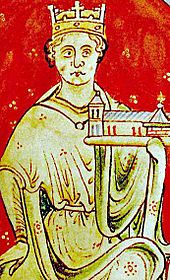
King John

The year of 1214 ended badly for King John. Attempts to appease his continental enemies had not had the desired results and he was at war in France. As a consequence, John sought a reconciliation with the Lusignans, agreeing to grant them Saintes and Oléron and to marry his daughter Joan to Hugh X de Lusignan, the son of Hugh IX de Lusignan, who had been betrothed to John’s wife, Isabelle d’Angoulême, in return for their support. A similar peace offering, of the earldom of Richmond, to Pierre, Duke of Brittany, was less well received and the duke remained aloof.

John’s campaign was successful at first, with him entering Angers unopposed before he laid siege to Roche-au-Moine. However, he was forced to retreat on 2 July, with the approach of the army of Prince Louis of France and the refusal of the Poitevins to fight by his side.

Although he was able to keep his own army intact, John’s fate was sealed on 27 July when his half-brother William Longespée, Earl of Salisbury, and John’s German and Flemish allies faced King Philip II of France at the battle of Bouvines. They were decisively defeated. Otto IV managed to escape, but William Longespée was captured and taken to Paris, along with the counts of Flanders and Boulogne. With the threat in the north neutralised, Philip was now able to join his army to that of his son, Prince Louis, and challenge John in the south. John had no choice but to seek peace and a 5-year truce was agreed on 13 October, with Ralph of Coggeshall reporting rumours that it had cost John 60,000 marks.1

At home, John’s policy of reform of the sheriffs and forest officials in 1212–1213 had resulted in a significant reduction in royal revenue, and the military campaign had drained John’s treasury further. He was no longer a wealthy king. In October 1214 John returned to England; the defeat by the French at the Battle of Bouvines had ended the king’s hopes of regaining the lost Angevin empire. Baronial opposition to John now gathered pace. The refusal to pay scutage of 3 marks on the knights’ fee demonstrating a coordinated effort by the magnates, rather than the individual disobedience that had been seen earlier in the reign.

Magna Carta by Sharon Bennett Connolly
Lincoln Cathedral’s copy of Magna Carta

The barons’ objections to John were almost beyond number. He had failed to face the French and had lost not only his family’s Continental possessions, but also those of his barons. Few had forgotten his treachery against his brother in trying to take the throne whilst Richard was on crusade. Added to these catastrophes was the character and personality of John himself. By nature, John was paranoid, secretive and distrustful. His cruelty was widely known. He stood accused of killing his nephew, Arthur, a rival claimant to the English throne; he had hanged twenty-eight Welsh hostages (sons of rebel chieftains); and he had hounded William de Braose and his family all the way to Ireland and back. De Braose’s wife and son died in one of John’s prisons, probably from starvation.

The History of William Marshal, a biography of the great knight and statesman, claimed that John treated his prisoners harshly and with such indignity that it was a disgrace to all involved.2 His barons even complained that he forced himself on their wives and daughters. With such military losses, accusations of murder and seemingly acute character flaws stacked against him, it is no wonder England’s king faced opposition by many of the most powerful in his realm.

In January 1215 John arranged to meet with his challengers in London to hear their demands, and it was agreed that they would reconvene at Northampton on 26 April to hear the king’s response. The disaffected barons demanded reform and the confirmation of the coronation charter of King Henry I, in which the king promised;

1215: The Year of Magna Carta by Sharon Bennett Connolly
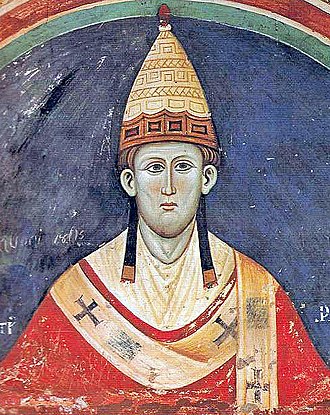
Pope Innocent III

‘Know that by the mercy of God and by the common counsel of the barons of England I have been crowned king of this realm. And because the kingdom has been oppressed by unjust exactions, being moved by reverence towards God and by the love I bear you all, I make free the Church of God … I abolish all the evil customs by which the kingdom of England has been unjustly oppressed.’ 3

Although many of the clauses of this charter, also referred to as the Charter of Liberties, were now outdated, several still resonated with the barons, including that a baron’s widow could not be married without her consent, that an heiress could not be married without the consent of her relatives and that, on the death of a baron, his heir would only pay a relief that was ‘just and lawful.’4

Whilst John was ruminating on these demands, both sides were preparing for war. John borrowed from the Templars to pay his mercenaries and on 4 March he took the cross. This latter move was seen as highly cynical and no one seems to have believed that John would actually go on crusade. His purpose for doing so was political: a crusader’s lands and properties were protected by the church and this action firmly identified the king’s opponents as the ‘bad guys’.

John failed to appear at Northampton in April. He did, however, send messages to the rebels. According to the Barnwell annalist the king ‘tried to win them back through many emissaries, and there was much discussion amongst them, the archbishop, bishops and other barons acting as intermediaries, the king himself staying at Oxford.’5 On 5 May the rebels formally renounced their fealty. John retained the support of some magnates, such as William Marshal and William de Warenne, but the majority were now standing against him. As was London, which opened its gates to the rebels on 17 May, despite John’s granting the city the right to elect its mayor only eight days before. In the Welsh Marches the Braose family had allied with Llywelyn ap Iorwerth and had taken Shrewsbury.

The rebels were ready to fight. After occupying London, they made one final attempt to prevent war, presenting the king with a list of their demands. John had no choice but to make concessions and on 10 June agreed to further discussions of the rebels’ terms. Following these negotiations, a long, detailed document was produced, dealing with the particular grievances of the time and with injustices in general. It touched on the whole system of royal government. And it was granted to ‘all free men of the realm and their heirs forever.’6

1215: The Year of Magna Carta by Sharon Bennett Connolly
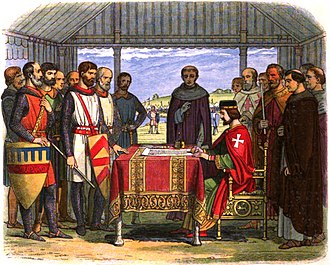
19th century recreation of the moment Magna Carta is sealed

Of its sixty-three clauses some terms were asking for immediate remedies, such as the removal of corrupt administrators and the sending home of foreign mercenaries. A clause stating that fighting outside of the kingdom could not be imposed by the king was a reaction to John’s recent attempts to force his English barons to help him recover his Continental domains. Others had long-term aims. The document sought to guarantee the privileges of the church and the City of London. Restrictions were placed on the powers of regional officials, such as sheriffs, to prevent abuses. The royal court was fixed at Westminster, for justice to be obtainable by all, and royal judges were to visit each county regularly. Taxes could no longer be levied without the consent of the church and the barons.

Clauses included the fixing of inheritance charges and the protection from exploitation for under-age heirs; the king was to take only what was reasonable from an estate (although ‘reasonable’ remained undefined). From henceforth a widow was to be free to choose whether or not to remarry and her marriage portion (dowry) would be made available to her immediately on her husband’s death. Another clause sought to prevent the seizure of land from Jews and the king’s debtors. Magna Carta even went so far as to regulate weights and measures. It also reduced the size of the king’s forests and limited the powers of forest justices.

Although most of the sixty-three clauses of Magna Carta are now defunct, three still remain as major tenets of British law, including ‘to no one will we sell, to no one will we deny or delay right or justice.’ That no person would be imprisoned, outlawed or deprived of his lands except by judgement of his peers and the law of the land has remained the cornerstone of the English legal system ever since.

1215: The Year of Magna Carta by Sharon Bennett Connolly
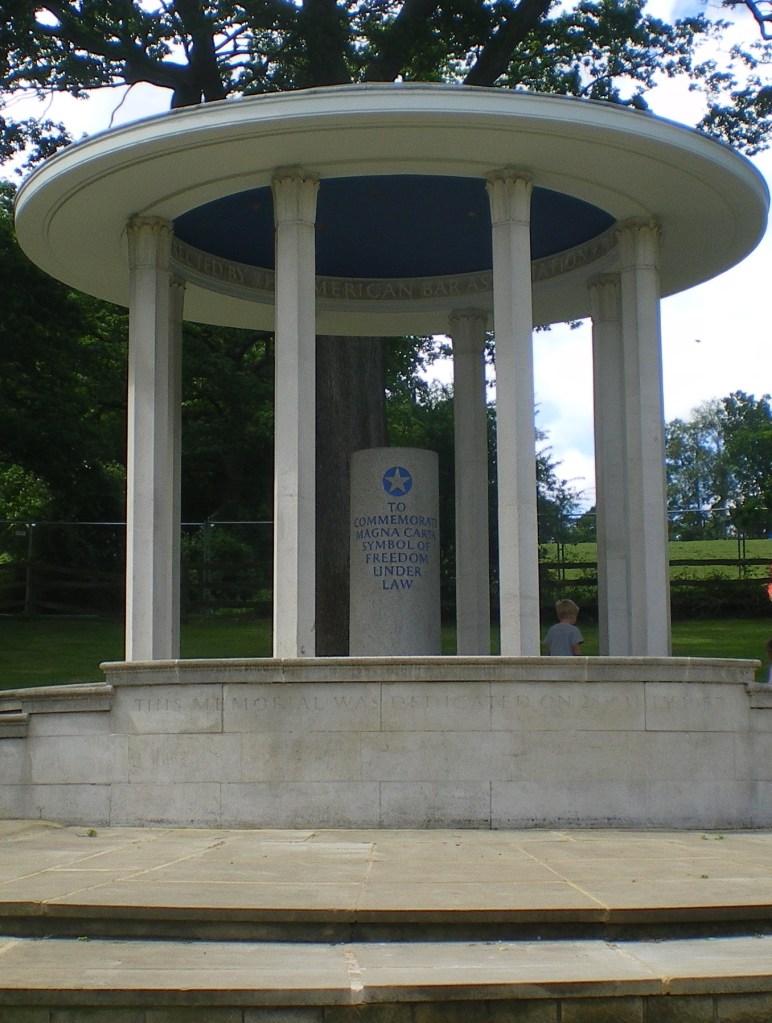
Runnymede

Magna Carta was sealed at Runnymede, Berkshire, on 15 June 1215. John ordered that the charter be circulated around the towns and villages, throughout the realm; only 4 original copies survive today, 2 at the British Library and 1 each at Lincoln and Salisbury. As a peace agreement between the king and his rebellious barons, however, it failed miserably. By July, John was appealing to the pope for help. Pope Innocent III’s response arrived in England in September. The treaty was declared null and void; according to Innocent, Magna Carta was:

‘not only shameful and base but also illegal and unjust. We refuse to overlook such shameless presumption which dishonours the Apostolic See, injures the king’s right, shames the English nation, and endangers the crusade. Since the whole crusade would be undermined if concessions of this sort were extorted from a great prince who had taken the cross, we, on behalf of Almighty God, Father, Son and Holy Ghost, and by the authority of Saints Peter and Paul His apostles, utterly reject and condemn this settlement. Under threat of excommunication we order that the king should not dare to observe and the barons and their associates should not insist on it being observed. The charter with all its undertakings and guarantees we declare to be null and void of all validity for ever.’7


The letter was accompanied by more papal letters, excommunicating rebels, including nine barons and the Londoners. However, by the time the letters arrived in England, the dispute had already erupted into the Barons’ War. John laid siege to Rochester Castle with his mercenaries and the castle surrendered on 30 November, after a seven-week siege. Deciding they could no longer deal with John’s perfidy, the rebel barons had invited the King of France, Philip II Augustus, to claim the throne.

Philip’s son and heir, the future Louis VIII, accepted the offer. He sent an advanced guard, which arrived in December of 1215. Louis himself would arrive in the spring of 1216. He landed on the south coast and marched for London, where he was proclaimed King of England on 2 June 1216, just 13 days before the 1st anniversary of Magna Carta…

*

For a study into the influence of women on the clauses and creation of Magna Carta, and its impact on the lives of women, my book, Ladies of Magna Carta: Women of Influence in Thirteenth Century England  is out now!

Footnotes:

1 John Gillingham, John (1167–1216), Oxforddnb.com; 2 L’Histoire de Guillaume le Maréchale quoted in John Gillingham, John (1167–1216), Oxforddnb.com; 3 Coronation Charter of Henry I in bl.uk; 4 Select Charters quoted in Marc Morris, King John: Treachery, Tyranny and the Road to Magna Carta; 5 The Barnwell annalist quoted in Elizabeth Hallam (editor), The Plantagenet Chronicles; 6 Danny Danziger and John Gillingham, 1215: The Year of Magna Carta; 7 Letter from Pope Innocent III, quoted in Danny Danziger and John Gillingham, 1215: The Year of Magna Carta

Images:

Courtesy of Wikipedia. Except: Magna Carta ©2015 Sharon Bennett Connolly and Runnymede ©2020 Jayne Smith

Further reading:

Robert Bartlett England Under the Norman and Angevin Kings 1075-1225; Dan Jones The Plantagenets; the Kings who Made EnglandThe Plantagenet Chronicle Edited by Elizabeth Hallam; Maurice Ashley The Life and Times of King John; Roy Strong The Story of BritainOxford Companion to British History; Mike Ashley British Kings & Queens; David Williamson Brewer’s British Royalty; Danny Danziger and John Gillingham, 1215: The Year of Magna Carta; John Gillingham, John (1167–1216), Oxforddnb.com; Marc Morris, King John: Treachery, Tyranny and the Road to Magna Carta

*

My books

Signed, dedicated copies of all my books are available through my online bookshop.

Coming 30 January 2025: Scotland’s Medieval Queens

Books by Sharon Bennett Connolly

Scotland’s history is dramatic, violent and bloody. Being England’s northern neighbour has never been easy. Scotland’s queens have had to deal with war, murder, imprisonment, political rivalries and open betrayal. They have loved and lost, raised kings and queens, ruled and died for Scotland. From St Margaret, who became one of the patron saints of Scotland, to Elizabeth de Burgh and the dramatic story of the Scottish Wars of Independence, to the love story and tragedy of Joan Beaufort, to Margaret of Denmark and the dawn of the Renaissance, Scotland’s Medieval Queens have seen it all. This is the story of Scotland through their eyes.

Scotland’s Medieval Queens gives a thorough grounding in the history of the women who ruled Scotland at the side of its kings, often in the shadows, but just as interesting in their lives beyond the spotlight. It’s not a subject that has been widely covered, and Sharon is a pioneer in bringing that information into accessible history.’ Elizabeth Chadwick (New York Times bestselling author)

Available now from Amazon and Pen and Sword Books

Also by Sharon Bennett Connolly:

Books by Sharon Bennett Connolly

Heroines of the Tudor World tells the stories of the most remarkable women from European history in the time of the Tudor dynasty, 1485-1603. These are the women who ruled, the women who founded dynasties, the women who fought for religious freedom, their families and love. Heroines of the Tudor World is now available for pre-order from Amberley Publishing and Amazon UK. Women of the Anarchy demonstrates how Empress Matilda and Matilda of Boulogne, unable to wield a sword themselves, were prime movers in this time of conflict and lawlessness. It shows how their strengths, weaknesses, and personal ambitions swung the fortunes of war one way – and then the other. Available from Bookshop.orgAmberley Publishing and Amazon UKKing John’s Right-Hand Lady: The Story of Nicholaa de la Haye is the story of a truly remarkable lady, the hereditary constable of Lincoln Castle and the first woman in England to be appointed sheriff in her own right. Available from all good bookshops Pen & Sword Booksbookshop.org and Amazon

Defenders of the Norman Crown: The Rise and Fall of the Warenne Earls of Surrey tells the fascinating story of the Warenne dynasty, from its origins in Normandy, through the Conquest, Magna Carta, the wars and marriages that led to its ultimate demise in the reign of Edward III. Available from Pen & Sword BooksAmazon in the UK and US, and Bookshop.orgLadies of Magna Carta: Women of Influence in Thirteenth Century England looks into the relationships of the various noble families of the 13th century, and how they were affected by the Barons’ Wars, Magna Carta and its aftermath; the bonds that were formed and those that were broken. It is now available in paperback and hardback from Pen & SwordAmazon, and Bookshop.orgHeroines of the Medieval World tells the stories of some of the most remarkable women from Medieval history, from Eleanor of Aquitaine to Julian of Norwich. Available now from Amberley Publishing and Amazon, and Bookshop.orgSilk and the Sword: The Women of the Norman Conquest traces the fortunes of the women who had a significant role to play in the momentous events of 1066. Available now from Amazon,  Amberley Publishing, and Bookshop.org.

Alternate Endings: An anthology of historical fiction short stories including Long Live the King… which is my take what might have happened had King John not died in October 1216. Available in paperback and kindle from Amazon.

Podcast:

Have a listen to the A Slice of Medieval podcast, which I co-host with Historical fiction novelist Derek Birks. Derek and I welcome guests, such as Bernard Cornwell and Michael Jecks, and discuss a wide range of topics in medieval history, from significant events to the personalities involved. 

Every episode is also now available on YouTube.

*

Don’t forget! Signed and dedicated copies of all my books are available through my online store.

For forthcoming online and in-person talks, please check out my Events Page.

You can be the first to read new articles by clicking the ‘Follow’ button, liking our Facebook page or joining me on TwitterThreadsBluesky and Instagram.

**

©2020 Sharon Bennett Connolly FRHistS

Richard of Chilham, King John’s Illegitimate Son

I recently shared an article about Joan, Lady of Wales, illegitimate daughter of King John. Now, John had several illegitimate children, and while Joan is probably the most famous, and certainly had the highest profile, as a Welsh princess, she was not the only one who made it into the history books. Whilst researching the Warenne earls of Surrey recently, I had the chance to look deeper into the story of another of John’s illegitimate brood, Richard of Chilham.

King John

From the late 1180s or early 1190s onwards, Earl Hamelin de Warenne’s relationship with King John was complicated by the fact that John had a brief affair with one of Hamelin’s daughters. It has been impossible to determine which of the daughters was the mother, it seems likely it was either Isabel or Ela, as Matilda was already married at the time of Richard’s birth. The result of the affair was an illegitimate son, named Richard, after John’s older brother. He was known in various guises as Richard of Chilham, Richard of Dover, Richard fitzRoy or even Richard fitz John. He was also known as Richard de Warenne, referring to his maternal line, which is the name that is inscribed on his seal; this seal bears his arms, a derivative of the royal arms, albeit with 2 lions rather than 3, emphasising his Plantagenet descent.

Richard was probably born in the 1190s and was the only one of John’s illegitimate children to gain honorific title, following his marriage to Rose of Dover in 1214, by which he became lord of the castle and honour of Chilham, in Kent. Richard’s lordship held in the region of fifteen knights’ fees, in Kent and Essex. Richard served his father and, subsequently, his royal half-brother, Henry III, as a royalist captain and administrator during the First Barons’ War of 1215-17.

From 1216, just days before his death, John appointed Richard as constable of Wallingford Castle and custodian of the honour of Wallingford; it was a strategically important castle and the honour held some 120 knights’ fees. In May 1218, he was granted the honour at royal pleasure and held it until 1227. Between 1217 and 1221 he was also sheriff of Berkshire, though it appears he had little involvement in the day-to-day duties of the position; Henry Saccario did the accounting for him at the exchequer, with Richard always finding reason to be elsewhere.

Richard distinguished himself at the Battle of Sandwich on 24 August 1217, the sea battle in which the English naval forces intercepted the French bringing equipment and supplies to Prince Louis, the Dauphin of France, who had invaded England in 1216 in an attempt to seize the throne. The dauphin’s French forces and baronial allies had been defeated at the Battle of Lincoln in May but were still causing trouble in other parts of England.

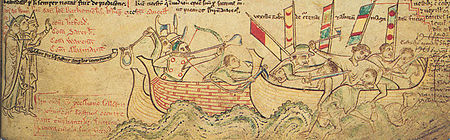
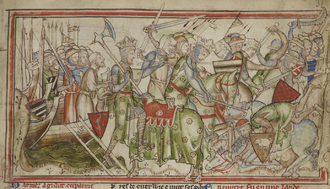
The Battle of Sandwich, showing the capture and killing of Eustace the Monk

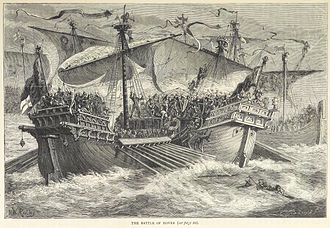
Richard commanded one of the ships in the battle, which he brought alongside the French flagship, the most formidable of the enemy’s vessels, commanded by Eustace the Monk. Richard and his men boarded the ship. Roger of Wendover suggests that it was Richard himself who beheaded Eustace the Monk after his capture; and though other sources disagree with this, none deny that Richard’s actions in the battle were significant. The Battle of Sandwich was an important action in that it forced Prince Louis to come to terms with the regency government of King Henry III. As a consequence, Louis agreed to a settlement of £10,000 as an inducement to go home.

1873 illustration of the Battle of Sandwich

In 1218 Richard left to join the fifth crusade in Egypt. He returned home in 1220 or, more likely, 1221. He is known to have reached the crusader camp at Damietta as he borrowed money whilst there, 20 marks from an Italian cardinal, and was pressured for its repayment in 1128. Henry III eventually repaid the loan on Richard’s behalf. Richard was perhaps as much as seventeen years older than his half-brother, King Henry III, and doesn’t appear to have had a close relationship with him and he never appeared on the king’s witness lists. He did receive some gifts from the king, though nothing extravagant or extraordinary, such as venison or estates. Despite the trust his father had held in him, he played a limited role in England’s affairs after his return from crusade.

He fought against the Welsh in 1223 and in the same year accompanied Alexander II, King of Scots, his second cousin once removed through his Warenne family, on pilgrimage to Canterbury. Though it has to be said that the records are unclear, and the Richard involved in either, or both, of these events could have been Richard of Cornwall, the full brother of Henry III and half-brother of Richard of Chilham. It was certainly Richard of Chilham who was one of the tax collectors for Kent in 1225, when the fifteenth was granted for Henry III’s campaign to Poitou.

Most of the evidence of Richard of Chilham comes from the debts and lawsuits held against him. Indeed, one of the advantages of his joining the fifth crusade was that it resulted in the deferment of a court case he was defending. His debts to the crown started with the scutage of 1217, a tax of 2 marks per fee on the fourteen knights’ fees of his Chilham barony. The debts piled up through the 1220s, with Richard failing to appear when summoned. He was threatened with having his land taken into the king’s custody. The debts he owed to one  William Scissor (or the tailor) were to be recovered by distraint of land and chattels, with his land to be returned when he paid his debts.

Henry III

The king stepped in at this point, though for the sake of his sister-in-law, Rose, rather than his brother. Henry III ordered the sheriff of Kent to prevent Richard from wasting, selling or damaging the manor of Northwood, which was assigned to Rose for her maintenance. Richard and Rose were also locked in a long-running dispute with Robert fitz Walter and Richard de Montfichet over Rose’s rights to the manor of Lesnes, which arose out of Rose’s rights to the inheritance of Richard de Lucy, Henry II’s justiciar. The eyre in Kent in 1227 decided that the dispute should be settled by a duel, with each side nominating champions. In all honesty, it was little more than a brawl, which Richard and Rose won. After the duel, Robert fitz Walter recognised Rose’s right to Lesnes and quitclaimed to Richard, Rose and their heirs, for which Richard and Rose paid him 40 marks, which they had to borrow for the purpose.

Their debts thus increased further, in 1229, sheriffs were ordered to take possession of all the manors of Richard and Rose, save Lesnes, which Rose was to keep for her maintenance. Richard joined Henry III’s forces sailing for Brittany, which put two pending court cases against him into abeyance and he was granted respite from his debts. Later in the 1230s, sheriffs were ordered to prevent the sale of lands and woods by Richard, lands which were a part of Rose’s inheritance. By 1242 Richard was back in the king’s favour and was advanced 20 marks to buy equipment and supplies for an expedition to Lundy, although it is possible that this was Richard’s son, also Richard, who would join the king’s expedition to Gascony that same year, receiving an annual fee of 50 marks.

Richard of Chilham and William Bardrolf led the seaborne operations against the notorious outlaw and pirate, William de Marisco. In 1238 the would-be assassin of Henry III, whose attack was foiled by the king spending the night with the queen instead of his own bed, claimed that Marisco was behind the plot. Marisco had based himself on the island of Lundy in the Bristol Channel, from where he attacked shipping, taking ransoms and plunder. Richard successfully captured Marisco and his accomplices, after scaling the island’s cliff to reach them, most of the gang were later executed in London.

In 1243 Richard was granted a pardon for £100 for a debt to the moneylender Benedict Crispin. This seems to have come about, not by Richard’s actions, but by the affection the king held for Richard’s son, King Henry’s nephew, Richard, who is referred to in the fine roll, alongside the paynment of his fee for the Easter term, as ‘our beloved and faithful Richard of Dover.’

Lesnes Abbey, Kent

Richard of Chilham died in 1246, leaving his wife, Rose of Dover, still burdened by her husband’s debts, his son Richard and a daughter, Isabel, who eventually inherited the honour of Chilham. One argument for the identity of Richard’s mother is in the naming of his daughter. It has been suggested that Richard named his daughter after his mother, Isabel, but this is hardly incontrovertible proof; he could have just as easily named her after his grandmother, Countess Isabel. And the younger Isabel had no children from either of her two marriages, which may suggest she was not the mother. The other main candidate is Ela, whose marriages were that bit less prestigious than her sisters’, being to men we known little-to-nothing of besides their names, which may hint at a scandalous past. On the other hand, her second husband was a knight form a gentry family not far from Conisbrough, Sir William FitzWilliam of Sprotborough – which could suggest that she married for love rather than advancement.

Unfortunately, a strange entry in the Annales Cestriensis only adds to the confusion. In 1200, it records that ‘W. de Waren meunch fil Regis‘ was killed, suggesting that Richard’s mother was killed in 1200. Earl Hamelin and Countess Isabel did not have a daughter with the initial ‘W’, however, and neither did any of their children died in 1200. In the Chronicle of Robert of Gloucester, Richard’s mother is merely identified as ‘the erles daughter of Wareine’. With such little information to go on, we can only speculate.

*

Images courtesy of Wikipedia

Further reading: Cassidy, Richard, Rose of Dover (d.1261), Richard of Chilham and an Inheritance in Kent; Turner, Ralph V., Two Illegitimate Sons of King John: A Comparison of Their Careers; Farrer, William and Charles Travis Clay, editors, Early Yorkshire Charters, Volume 8: The Honour of Warenne; Lloyd, Simon, Chilham, Sir Richard of (d. 1246) (article); Morris, Marc King John: Treachery, Tyranny and the Road to Magna Carta; Church, Stephen, King John: England, Magna Carta and the Making of a Tyrant; Danziger, Danny and John Gillingham, 1215: The Year of Magna Carta; Crouch, David, William Marshal; fmg.ac

My Books

Signed, dedicated copies of all my books are available through my online bookshop.

Coming on 15 June 2024: Heroines of the Tudor World

Heroines of the Tudor World tells the stories of the most remarkable women from European history in the time of the Tudor dynasty, 1485-1603. These are the women who ruled, the women who founded dynasties, the women who fought for religious freedom, their families and love. These are the women who made a difference, who influenced countries, kings and the Reformation. In the era dominated by the Renaissance and Reformation, Heroines of the Tudor World examines the threats and challenges faced by the women of the era, and how they overcame them. From writers to regents, from nuns to queens, Heroines of the Tudor World shines the spotlight on the women helped to shape Early Modern Europe.

Heroines of the Tudor World is now available for pre-order from Amberley Publishing and Amazon UK.

Out Now! Women of the Anarchy

Two cousins. On the one side is Empress Matilda, or Maud. The sole surviving legitimate child of Henry I, she is fighting for her birthright and that of her children. On the other side is her cousin, Queen Matilda, supporting her husband, King Stephen, and fighting to see her own son inherit the English crown. Women of the Anarchy demonstrates how these women, unable to wield a sword, were prime movers in this time of conflict and lawlessness. It show how their strengths, weaknesses, and personal ambitions swung the fortunes of war one way – and then the other.

Available from Bookshop.orgAmberley Publishing and Amazon UK.

Also by Sharon Bennett Connolly:

King John’s Right-Hand Lady: The Story of Nicholaa de la Haye is the story of a truly remarkable lady, the hereditary constable of Lincoln Castle and the first woman in England to be appointed sheriff in her own right. It is is available from King John’s Right-Hand Lady: The Story of Nicholaa de la Haye is the story of a truly remarkable lady, the hereditary constable of Lincoln Castle and the first woman in England to be appointed sheriff in her own right. Available from all good bookshops or direct from Pen & Sword Booksbookshop.org and AmazonDefenders of the Norman Crown: The Rise and Fall of the Warenne Earls of Surrey tells the fascinating story of the Warenne dynasty, from its origins in Normandy, through the Conquest, Magna Carta, the wars and marriages that led to its ultimate demise in the reign of Edward III. Available from Pen & Sword BooksAmazon in the UK and US, and Bookshop.org

Ladies of Magna Carta: Women of Influence in Thirteenth Century England looks into the relationships of the various noble families of the 13th century, and how they were affected by the Barons’ Wars, Magna Carta and its aftermath; the bonds that were formed and those that were broken. It is now available in paperback and hardback from Pen & Sword,  Amazon, and Bookshop.orgHeroines of the Medieval World tells the stories of some of the most remarkable women from Medieval history, from Eleanor of Aquitaine to Julian of Norwich. Available now from Amberley Publishing and Amazon, and Bookshop.orgSilk and the Sword: The Women of the Norman Conquest traces the fortunes of the women who had a significant role to play in the momentous events of 1066. Available now from Amazon,  Amberley Publishing, and Bookshop.org.

Alternate Endings: An anthology of historical fiction short stories including Long Live the King… which is my take what might have happened had King John not died in October 1216. Available in paperback and kindle from Amazon.

Podcast:

Have a listen to the A Slice of Medieval podcast, which I co-host with Historical fiction novelist Derek Birks. Derek and I welcome guests, such as Bernard Cornwell and discuss a wide range of topics in medieval history, from significant events to the personalities involved.

*

Don’t forget! Signed and dedicated copies of all my books are available through my online bookshop.

For forthcoming online and in-person talks, please check out my Events Page.

You can be the first to read new articles by clicking the ‘Follow’ button, liking our Facebook page or joining me on Twitter and Instagram.

*

©2020 Sharon Bennett Connolly FRHistS
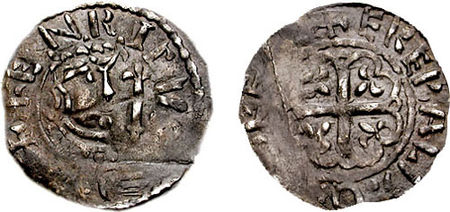
Joan, Lady of Wales

Detail of the sarcophagus thought to belong to Joan in St Mary’s and St Nicholas’s Church, Beaumaris

Many daughters, especially those of kings, had little or no say in who they would marry; they were bargaining pieces in the search for alliances. Even their legitimacy mattered little compared to what they could bring to the table, if their fathers were powerful enough. Joan, or Joanna, the illegitimate daughter of King John, was one such young lady.

Very little is known of Joan until her appearance on the international stage in 1203, aged twelve or thirteen. It was in that year mention is made of a ship, chartered in Normandy, ‘to carry the king’s daughter and the king’s accoutrements to England’.¹ The daughter in question appears to be Joan, born around 1191 to an unknown mother, possibly a lady by the name of Clemencia or Clementina. Nothing is known of Joan’s childhood, which appears to have been spent in Normandy. However, although she grew up in obscurity, Joan must have received an education suitable to her rank as the daughter of a prince and, later, king; after all, her father intended to marry her to a prince and so would need her to be able to act the part of a princess.

By 15 October 1204 Joan was betrothed to the foremost prince in Wales; Llywelyn ab Iorweth, prince of Gwynedd, also known as Llywelyn Fawr, or Llywelyn the Great. In the summer of 1204, he had paid homage to King John for his Welsh lands, having recognised the English king as overlord by treaty in July 1201; allowing him to marry Joan was a sign of John’s favour. By the time of his marriage, Llywelyn was already an accomplished warrior and experienced statesman; and was the father of at least two children, a son and daughter, Gruffuddd ab Llywelyn and Gwenllian. Their mother was possibly Tangwystl, but her union with Llywelyn was not recognised by the Church and the children were considered illegitimate under Church law.

Joan and Llywelyn were probably married in the spring of 1205; part of Joan’s dowry, the castle and manor of Ellesmere, were granted to Llywelyn on 16 April 1205, suggesting the wedding took place around that time. Joan was fourteen or fifteen at the time; at thirty-two, Llywelyn was about eighteen years her senior. Having been uprooted from her home in Normandy, she had probably spent a year at the English court, learning of the politics and duties associated with her new home in Wales. The language and traditions of her new homeland would have been completely alien to the young woman. Even her name was not the same, in Welsh, she was known as Siwan.

Arms of the royal house of Gwynedd

For someone barely into her teenage years, all these changes must have been daunting. Not only was she expected to become a wife and a princess to a nation that was totally alien to her, but her responsibilities also included the role of peacemaker. In a prestigious marriage for an illegitimate daughter, Joan was thrown into the heart of Anglo-Welsh relations. She was to become an important diplomatic tool for her father and, later, her half-brother, Henry III; acting as negotiator and peacemaker between the English crown and her husband, almost from the first day of her marriage.

Despite the marriage of Joan and Llywelyn, relations between England and Wales were rarely cordial. Following a devastating defeat by the English in 1211, in which the invading army had swept into Gwynedd, capturing the Bishop of Bangor in his own cathedral, Joan’s skills were sorely needed and

‘Llywelyn, being unable to suffer the King’s rage, sent his wife, the King’s daughter, to him by the counsel of his leading men to seek to make peace with the King on whatever terms he could.’

Brut y Tywysogyn or The Chronicle of the Princes: Peniarth MS 20 Version, editor T. Jones

Joan managed to negotiate peace, but at a high price, including the loss of the Four Cantrefs (the land between the Conwy and the Dee rivers), a heavy tribute of cattle and horses and the surrender of hostages, including Llywelyn’s son, Gruffudd.

Following a deterioration of Anglo-Welsh relations, and as a precursor to invasion, twenty-eight of the Welsh hostages were hanged in 1212, though Gruffudd was not one of them. However, the English attack was called off when John received word from Joan that his barons were planning treason closer to home. The last years of John’s reign were taken up with conflict with his barons, leading to the issuing of Magna Carta in 1215 and a French invasion by Louis, eldest son of Philip II Augustus. The last thing John needed, if he was to save his kingdom, was to be distracted by discontent in Wales. In 1214 Joan successfully negotiated with her father for the release of the Welsh hostages still in English hands, including Llywelyn’s son, Gruffudd; they were freed the following year.

Following her father’s death in October 1216, Joan continued to work towards peace between Wales and England. She visited Henry in person in September 1224, meeting him in Worcester; Joan seems to have had a good relationship with her half-brother, evidenced by his gifts to her of the manor of Rothley in Leicestershire, in 1225, followed by that of Condover in Shropshire, in 1226. An extant letter to Henry III, addressed to her ‘most excellent lord and dearest brother’ is a plea for him to come to an understanding with Llywelyn.

Statue of Llywelyn the Great, Conwy

In the letter, Joan uses her relationship with Henry to try to ease the mounting tensions between the two men. She describes her grief ‘beyond measure’ that discord between her husband and brother had arisen out of the machinations of their enemies, and reassures her brother of Llywelyn’s affection for him. In the mid-1220s, Henry acted as a sponsor, with Llywelyn, in Joan’s appeal to Pope Honorius III to be declared legitimate; in 1226 her appeal was allowed on the grounds that neither of Joan’s parents had been married to others when she was born.

Joan and Llywelyn’s marriage appears to have been, for the most part, a successful one. Joan’s high-born status, as the daughter of a king, brought great prestige to Gwynedd. As a consequence, her household was doubled from four to eight staff, including a cook who could prepare Joan’s favourite dishes. Llywelyn seems to have valued his wife’s opinion; as we have seen, he often made use of her diplomatic skills and relationship with the English court and he often consulted her on other matters. Her influence extended to Welsh legal texts, which, from this period onwards, included French words. Joan’s position was strengthened even further by the arrival of her children. Sometime between 1212 and 1215, her son, Dafydd, was born; in 1220 he was recognised as Llywelyn’s heir by Henry III, officially supplanting his older, illegitimate, half-brother, Gruffudd, who was entitled to his father’s lands under Welsh law.

The move received papal approval in 1222. As a result, in 1229 Dafydd performed homage to Henry III, as his father’s heir. A daughter, Elen, was probably born around 1210, as she was first married in 1222, to John the Scot, Earl of Chester. Her second marriage, in 1237 or 1238, was to Robert de Quincy. Joan was the mother to at least two more of Llywelyn’s daughters, Gwladus and Margaret. Gwladus was married to Reginald de Braose. Her stepson, William (V) de Braose, was to play a big part in Joan’s scandalous downfall in 1230.

Joan’s life in the first quarter of the 13th century had been exemplary; she was the ideal medieval woman, a dutiful daughter and wife, whose marriage helped to broker peace, if an uneasy one, between two countries. She had fulfilled her wifely duties, both by providing a son and heir and being supportive of her husband to the extent that she should not be included in the roll call of scandalous women – however, in 1230, everything changed.

William de Braose was a wealthy Norman baron with estates along the Welsh Marches, he was the grandson of Maud de Braose, who starved to death in King John’s dungeons. Hated by the Welsh, who had given him the nickname Gwilym Ddu, or Black William, he had been taken prisoner by Llywelyn in 1228, near Montgomery. Although he had been released after paying a ransom, de Braose had returned to Llywelyn’s court to arrange a marriage between his daughter, Isabella, and Llywelyn’s son and heir, Dafydd. During this stay, William de Braose was ‘caught in Llywelyn’s chamber with the King of England’s daughter, Llywelyn’s wife’. ²

The exact details of the relationship between Joan and William are unknown; neither can we say whether Joan was with William de Braose by choice or force. At the time, however, the blame was laid at Joan’s door. Contemporaries were deeply shocked at Joan’s betrayal of her husband; indeed, following this scandal, Welsh law identified the sexual misconduct of the wife of a ruler as ‘the greatest disgrace’. Joan was no young girl struggling to come to terms with her position in life; she was about forty years old, had been Llywelyn’s consort for twenty-five years and had borne him at least two children when the affair was discovered. The most surprising thing about the whole affair, moreover, is Llywelyn’s response. His initial anger saw William de Braose arrested, put on trial and hanged from the nearest tree on 2 May 1230. Joan was imprisoned in a tower. This rage, however vicious, was remarkably brief.

Maybe it was due to the strength of the previous relationship between Llywelyn and Joan, or maybe it was the high value placed on Joan’s diplomatic skills and her links with the English court; but within a year the terms of Joan’s imprisonment had been relaxed and just months after that, she was back on the political stage. Llywelyn appears to have forgiven her; the couple were reconciled and Joan returned to her life and position as Lady of Wales. Indeed, Joan soon reprised her diplomatic duties. She attended a conference between her husband, son and her brother, Henry III at Shrewsbury, in 1232. Despite William de Braose’s betrayal of Llywelyn, and subsequent violent death, the wedding between his daughter, Isabella, and Llywelyn’s son, Dafydd, was not derailed and by 1232 they were married.

Llywelyn with his sons, Dafydd and Gruffudd

Joan’s indiscretion was forgiven by Llywelyn, maybe even forgotten, and when she died on 2 February 1237, the Welsh prince was deeply affected by grief. Joan died at Garth Celyn, Abergwyngregyn, on the north coast of Gwynedd. She was buried close to the shore of Llanfaes, in the Franciscan friary that Llywelyn founded in her memory – a testament to his love for her. The friary was consecrated in 1240, just a few months before Llywelyn’s own death in April of that year. The friary was destroyed in 1537, during Henry VIII’s dissolution of the monasteries.

Joan’s remains were lost, but her coffin was eventually found, being used as a horse trough in the town of Beaumaris, on Anglesey. It is a testament to Joan’s personality, and the strength of her relationship with Llywelyn, that her affair with de Braose had few lasting consequences for her. Had she been younger, when the legitimacy of her children could have been called into question, her punishment could have been much harsher and the consequences more far-reaching.

*

Footnotes: ¹ Magna rotuli, 2–569, quoted in Joan, d. 1237, by Kate Norgate and Rev. A.D. Carr in Oxfroddnb.com; ² ibid.

Images courtesy of Wikipedia

Sources: Oxforddnb.com; England Under the Norman and Angevin Kings 1075-1225 by Robert Bartlett; Oxford Companion to British History Edited by John Cannon; The Story of Britain by Roy Strong; The Plantagenets, the Kings who Made England by Dan Jones; The Life and Times of King John by Maurice Ashley; The Plantagenet Chronicles Edited by Elizabeth Hallam; Oxforddnb.com; magnacartareseearch.org; Magna Carta by David Starkey; King John by Marc Morris; King John, England, Magna Carta and the Making of a Tyrant by Stephen Church; 1215, the Year of Magna Carta by Danny Danziger and John Gillingham; Women in Thirteenth Century Lincolnshire by Louise J. Wilkinson.

*

My Books

Signed, dedicated copies of all my books are available through my online store.

Out now: Scotland’s Medieval Queens

Scotland’s history is dramatic, violent and bloody. Being England’s northern neighbour has never been easy. Scotland’s queens have had to deal with war, murder, imprisonment, political rivalries and open betrayal. They have loved and lost, raised kings and queens, ruled and died for Scotland. From St Margaret, who became one of the patron saints of Scotland, to Elizabeth de Burgh and the dramatic story of the Scottish Wars of Independence, to the love story and tragedy of Joan Beaufort, to Margaret of Denmark and the dawn of the Renaissance, Scotland’s Medieval Queens have seen it all. This is the story of Scotland through their eyes.

Available now from Amazon and Pen and Sword Books

Also by Sharon Bennett Connolly:

Heroines of the Tudor World tells the stories of the most remarkable women from European history in the time of the Tudor dynasty, 1485-1603. These are the women who ruled, the women who founded dynasties, the women who fought for religious freedom, their families and love. Heroines of the Tudor World is now available for pre-order from Amberley Publishing and Amazon UK. Women of the Anarchy demonstrates how Empress Matilda and Matilda of Boulogne, unable to wield a sword themselves, were prime movers in this time of conflict and lawlessness. It shows how their strengths, weaknesses, and personal ambitions swung the fortunes of war one way – and then the other. Available from Bookshop.orgAmberley Publishing and Amazon UKKing John’s Right-Hand Lady: The Story of Nicholaa de la Haye is the story of a truly remarkable lady, the hereditary constable of Lincoln Castle and the first woman in England to be appointed sheriff in her own right. Available from all good bookshops Pen & Sword Booksbookshop.org and Amazon

Defenders of the Norman Crown: The Rise and Fall of the Warenne Earls of Surrey tells the fascinating story of the Warenne dynasty, from its origins in Normandy, through the Conquest, Magna Carta, the wars and marriages that led to its ultimate demise in the reign of Edward III. Available from Pen & Sword BooksAmazon in the UK and US, and Bookshop.orgLadies of Magna Carta: Women of Influence in Thirteenth Century England looks into the relationships of the various noble families of the 13th century, and how they were affected by the Barons’ Wars, Magna Carta and its aftermath; the bonds that were formed and those that were broken. It is now available in paperback and hardback from Pen & SwordAmazon, and Bookshop.orgHeroines of the Medieval World tells the stories of some of the most remarkable women from Medieval history, from Eleanor of Aquitaine to Julian of Norwich. Available now from Amberley Publishing and Amazon, and Bookshop.orgSilk and the Sword: The Women of the Norman Conquest traces the fortunes of the women who had a significant role to play in the momentous events of 1066. Available now from Amazon,  Amberley Publishing, and Bookshop.org.

Alternate Endings: An anthology of historical fiction short stories including Long Live the King… which is my take what might have happened had King John not died in October 1216. Available in paperback and kindle from Amazon.

Podcast:

Have a listen to the A Slice of Medieval podcast, which I co-host with Historical fiction novelist Derek Birks. Derek and I welcome guests, such as Bernard Cornwell and Michael Jecks, and discuss a wide range of topics in medieval history, from significant events to the personalities involved. Every episode is also now available on YouTube.

*

Don’t forget! Signed and dedicated copies of all my books are available through my online store.

For forthcoming online and in-person talks, please check out my Events Page.

You can be the first to read new articles by clicking the ‘Follow’ button, liking our Facebook page or joining me on TwitterThreadsBluesky and Instagram.

©2020 Sharon Bennett Connolly, FRHistS

Julian of Norwich: ‘All Shall Be Well’

Statue of Julian of Norwich, Norwich Cathedral by sculptor David Holgate.

The medieval religious life provided a refuge for widows and elderly women in search of calm and peace at the end of their lives. It was an alternative to marriage, and childbearing, for women and girls from diverse backgrounds. Moreover, the cloistered life was not the only path for a woman who wanted to devote her life to God. One such devotee was Saint Julian of Norwich, an anchorite and mystic who lived in a cell at the parish church of St Julian at Conisford in Norwich.

Julian’s life was remarkable in its simplicity, devotion and spirituality, and because of her writing. Having survived 600 years, her book, Revelations of Divine Love, is the earliest surviving of its kind – a book written in English, by a woman. She is renowned for her words

‘all shall be well, all shall be well, and all manner of things shall be well,’

Julian of Norwich, Revelations of Divine Love

These simple words still offer hope and encourage positivity today, especially in the atmosphere in which we are all currently living.

Julian’s true identity and origins remain obscured. It is possible that Julian took her name from the church in which she lived, St Julian’s, however, it may have been hers from birth. Although Julian was not a common name for a woman at the time, it was not unknown. It may even be a derivative of Juliana, a more familiar woman’s name. However, there was a contemporary of the same name, Julian of Erpingham, who was from one of the foremost noble families of Norwich in the 14th century.

Julian of Erpingham has been suggested by Father John Julian as a possible candidate for the identity of Julian of Norwich. She was the sister of Sir Thomas of Erpingham, who had been a friend of Edward III and later fought at Agincourt in 1415. Julian of Erpingham was married twice; her first husband died in 1373, and her second was dead by 1393. She had at least three children, with a daughter already married and the youngest possibly fostered out by the time Julian entered the Church. If Julian of Erpingham and Julian of Norwich are one and the same person – and this is far from certain – the legacies from her two husbands would have helped to pay for Julian’s upkeep once she had dedicated herself to God.

‘Revelations of Divine Love’ title page

It is also possible that Julian had been a nun at the Benedictine priory of Carrow, which was close by and had an affinity with St Julian’s Church. She was probably from a well-to-do, if not noble, family as she seems to have had some level of education; given that she could, at least, read before she became an anchorite. However, we simply do not know enough about Julian’s early life to positively identify her origins. Although Revelations of Divine Love is considered autobiographical, it concentrates on her spiritual journey, as opposed to her physical life. We can glean some insight, if not a great deal, from the information she gives at various points in her text. For example, we know that Julian was born in the second half of the year 1342, as she mentions in her writing that she received her visions in May 1373, when she was aged thirty-and-a-half.

In that month Julian suffered an illness so serious that her life was despaired of. Whether it was the Black Death, prevalent in England since its first major outbreak in 1348–9, or some other disease, as her illness progressed she was paralysed to the extent that she could barely even move her eyelids. She was given the last rites and she wrote of how the priest

‘…set the cross before my face and said, “I have brought you the image of your maker and saviour. Look at it and take comfort from it.”’

Julian of Norwich, Revelations of Divine Love

Julian wrote in Revelations of Divine Love that she had wanted to have a life-threatening illness, which would bring her close to death, but from which she would be saved. Maybe she believed it would bring her closer to God? Whatever the reason, her illness brought on a series of visions in which she encountered Jesus Christ and his mother the Virgin Mary. The sixteen visions were to form the basis for the direction of her spiritual life and for her book, charting her struggle to understand the divine. Julian wrote two versions of Revelations of Divine Love; the Short Text is believed to have been written soon after experiencing her visions, though it took several years to complete. The Long Text – which is six times as long – is more contemplative and appears to have been a constant work-in progress in her later years.

The beginning of the 15th century Short Text of Revelations of Divine Love

Although her near-death experience directed her later life, it was only many years after her illness that Julian entered her cell as an anchorite. The exact date is uncertain, but it is believed to have been in the 1390s that her enclosure may have come, possibly after the death of her husband or family members. The life of an anchorite was a strange, solitary existence in which the person was physically cut off from the world, while still being a part of it. It was a life that could be followed by a man or woman, but was one which could not be lightly taken on by the anchorite themselves, or by the Church at large.

Not all were suited to the life and a person wanting to profess themselves as an anchorite had to go through a rigorous process to assess that suitability. This even included an interview with the bishop. In Julian’s case, it was probably Henry Despenser, Bishop of Norwich, in the late 14th century. Of particular concern was the anchorite’s mental capacity to deal with the solitude and limitation on human contact. Once the Church had endorsed a person’s suitability to become an anchorite, there was a specific ceremony to signify the end of the life they had previously known.

An anchorite was, effectively, dead to the world. They would live in a small cell, attached to the church. As they were led to this cell, a requiem Mass would be sung for them and they would receive extreme unction, normally reserved for the dying. They would be sprinkled with dust, to signify their burial, and then the door to the cell bolted from the outside. In some cases, the cell was walled up. The only access to the outside world was a small, curtained window.

St Julians’s Church, by James Sillett, 1828

Once they had taken their vows, anchorites were forbidden to leave their cell, on pain of excommunication from the Church. As an anchoress, Julian had to adhere to vows of poverty and chastity and to remain in her cell for the rest of her life. She was not allowed to teach young girls, or possess valuables. Conversations with men in private were strictly forbidden and communication with the outside world was done from behind a black curtain, through which she could also hear the daily church offices, even if she couldn’t interact with them.

Julian would been permitted a servant to see to her daily needs, such as food, laundry, and clearing away waste. However, her daily interactions with her servant would have been restricted to dealing with her physical needs, rather than friendship and companionship. She was also allowed to keep a cat, to control the mice and rats; many images of Julian show her dressed in the habit of a nun, with a cat sat at her feet as she studies her books.

Anchorites were expected to devote their lives to prayers and contemplation, to be a benefit to their community and to work for it by praying for their souls. They were an integral part of the Church, and the parish in which they lived;

True anchoresses are indeed birds of heaven which fly up high and sit singing merrily on the green boughs – that is, direct their thoughts upwards at the bliss of heaven.’

Hugh White, translator, Ancrene Wisse

Once Julian entered her cell, her time was her own. She could manage her own daily routine, although she probably followed the canonical hours and prayed seven times daily. Julian probably read a great deal, she would have had access to books brought by well-wishers and the large selection available at the library of the cathedral priory in Norwich; a collection that was added to in 1407 by a substantial bequest of more than 200 books from Cardinal Adam Easton, a supporter of Bridget of Sweden, who was later canonised.

Margery Kempe’s manuscript, where she mentions ‘dame jelyan’ (British Library)

Julian spent many hours in contemplation, reading and writing. Revelations of Divine Love was written in the English vernacular, in beautiful, poetic prose; remarkably, it was written by Julian herself, rather than dictated to a scribe. The text’s near-miraculous survival, through 600 years and the Reformation, is due to three Long Text manuscripts, which were copied in the 17th century by English nuns at Cambrai and Paris. The book describes the sixteen visions of Christ that she had received during her illness, and her subsequent reflections on their meaning.

Not only does Julian describe her visions in the book, but she also describes the physical experience of the visions, saying,

‘All this was shown in three ways: that is to say, by bodily sight, and by words formed in my understanding, and by spiritual visions. But I neither can nor know how to disclose the spiritual vision as openly or as fully as I would wish’.

Julian of Norwich, Revelations of Divine Love

Revelations of Divine Love is a spiritual autobiography, contemplating the relationship between love, sin, suffering and God. It is heavily imbued with mysticism, where the author attempts to move beyond normal human thought, exploring sensations and feelings and the relationship with God. Its message of love and peace still gives it relevance today, and her thoughts are possibly more widely respected now than at any time in the past.

Stained glass of Julian of Norwich, Norwich Cathedral

Though Julian was appreciated in her own time. People visited to talk with her. A few years before Julian’s death, she was visited by fellow mystic Margery Kempe. Margery’s approach to her religion was a direct contrast to the path followed by Julian, but the meeting between the two women strikes me as extraordinary. Margery Kempe was about thirty years younger than Julian of Norwich, born around 1373, possibly even in the same year that Julian experienced her visions.

Julian was the recipient of several legacies, which helped to pay for her keep. In his will, Richard Reed left 2s to ‘Julian anchorite’, while Thomas Edmund, in 1404, bequeathed a legacy of 12d to Julian and 8d to Sara, her maid.

Julian died in, or shortly after, 1416; she was around seventy-three years old. She is commemorated in the Anglican calendar on 8 May. Julian had pursued her calling with quiet dignity and spirituality, ensuring her place in history as a heroine to women on many levels, not only for her piety but also as a writer, a mystic and a visionary, whose approach to God is arguably more relevant today than it was in her own day.

*

Sources:

Julian of Norwich, Revelations of Divine Love; Janina Ramirez, Julian of Norwich, a Very Brief History; Father John Julian, The Complete Julian of Norwich; Hugh White, translator, Ancrene Wisse: Guide for Anchoresses; Henrietta Leyser, Medieval Women, A Social History of Women in England 450-1500; Toni Mount, A Year in the Life of Medieval England; Felicity Riddy, Oxforddnb.com, Kempe, Margery (9b.c. 1373, d. in or after 1438); Margery Kempe, The Book of Margery Kempe; Santha Bhattacharji, Oxfroddnb, Julian of Norwich (1342-c.1416)

Images courtesy of Wikipedia

The story of St Julian of Norwich appears in my first book, Heroines of the Medieval World.

My Books

Signed, dedicated copies of all my books are available through my online bookshop.

OUT NOW! Heroines of the Tudor World

Heroines of the Tudor World tells the stories of the most remarkable women from European history in the time of the Tudor dynasty, 1485-1603. These are the women who ruled, the women who founded dynasties, the women who fought for religious freedom, their families and love. These are the women who made a difference, who influenced countries, kings and the Reformation. In the era dominated by the Renaissance and Reformation, Heroines of the Tudor World examines the threats and challenges faced by the women of the era, and how they overcame them. From writers to regents, from nuns to queens, Heroines of the Tudor World shines the spotlight on the women helped to shape Early Modern Europe.

Heroines of the Tudor World is now available for pre-order from Amberley Publishing and Amazon UK.

Also by Sharon Bennett Connolly:

Women of the Anarchy demonstrates how Empress Matilda and Matilda of Boulogne, unable to wield a sword themselves, were prime movers in this time of conflict and lawlessness. It shows how their strengths, weaknesses, and personal ambitions swung the fortunes of war one way – and then the other. Available from Bookshop.orgAmberley Publishing and Amazon UKKing John’s Right-Hand Lady: The Story of Nicholaa de la Haye is the story of a truly remarkable lady, the hereditary constable of Lincoln Castle and the first woman in England to be appointed sheriff in her own right. Available from all good bookshops Pen & Sword Booksbookshop.org and AmazonDefenders of the Norman Crown: The Rise and Fall of the Warenne Earls of Surrey tells the fascinating story of the Warenne dynasty, from its origins in Normandy, through the Conquest, Magna Carta, the wars and marriages that led to its ultimate demise in the reign of Edward III. Available from Pen & Sword BooksAmazon in the UK and US, and Bookshop.org

Ladies of Magna Carta: Women of Influence in Thirteenth Century England looks into the relationships of the various noble families of the 13th century, and how they were affected by the Barons’ Wars, Magna Carta and its aftermath; the bonds that were formed and those that were broken. It is now available in paperback and hardback from Pen & Sword,  Amazon, and Bookshop.orgHeroines of the Medieval World tells the stories of some of the most remarkable women from Medieval history, from Eleanor of Aquitaine to Julian of Norwich. Available now from Amberley Publishing and Amazon, and Bookshop.orgSilk and the Sword: The Women of the Norman Conquest traces the fortunes of the women who had a significant role to play in the momentous events of 1066. Available now from Amazon,  Amberley Publishing, and Bookshop.org.

Alternate Endings: An anthology of historical fiction short stories including Long Live the King… which is my take what might have happened had King John not died in October 1216. Available in paperback and kindle from Amazon.

Podcast:

Have a listen to the A Slice of Medieval podcast, which I co-host with Historical fiction novelist Derek Birks. Derek and I welcome guests, such as Bernard Cornwell and discuss a wide range of topics in medieval history, from significant events to the personalities involved. There’s even an episode on Robin Hood from Steven A. McKay. There are now over 40 episodes to listen to!

*

Don’t forget! Signed and dedicated copies of all my books are available through my online bookshop.

For forthcoming online and in-person talks, please check out my Events Page.

You can be the first to read new articles by clicking the ‘Follow’ button, liking our Facebook page or joining me on Twitter and Instagram.

©2020 Sharon Bennett Connolly FRHistS
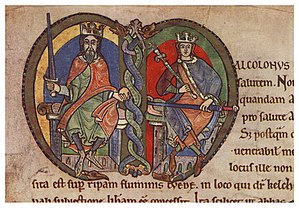
Medieval She-Wolves: Part Two

As promised, here’s Part Two of Medieval She-Wolves. Charting the stories of 3 more remarkable women who have been labelled ‘she-wolves’ due to their strength and determination – and a ruthlessness born out of an impressive survival instinct.

Zoe, Empress of Constantinople

Mosaic of Empress Zoe, Hagia Sophia

Zoe Porphyrogenita lived much of her life in relative obscurity. At the age of 50, in 1028, she was married to her father’s designated successor, Emperor Romanos III, and became empress consort when he succeeded to the throne in the same year. Zoe was described by a palace courtier, Michael Psellos, as ‘a woman of great beauty, most imposing in her manner and commanding respect … a woman of passionate interests.’

As empress consort, Zoe asserted herself. Her younger sister, Theordora, was sent to a monastery. Neglected by her husband, who had taken a mistress and refused his wife access to the treasury, Zoe took a much younger, teenage lover, Michael. Together the lovers conspired to dispose of Romanos and he was drowned in his bath in 1034.

Zoe promptly married her lover and made him Emperor Michael IV. Their marriage, however, was full of distrust and Zoe was allowed no power or say in government.  Michael IV then banished Zoe to the gynaeceum, or women’s quarters. Not to be forgotten, Zoe began scheming to reclaim her throne. After she was allowed back to court, and unable to bare her own children, Zoe adopted Michael IV’s nephew, another Michael, and made him her heir. Michael IV’s life would have probably ended in the same way as his predecessor, Romanos III, drowned in the bath or with a knife in his back, had he not died of natural causes in 1041.

Michael’s nephew, Zoe’s adopted son, ascended the throne as Michael V. When Michael V was crowned, Zoe was again banished to a monastery, an act which caused an uprising in Constantinople. Michael V was deposed after only four months of disastrous rule. He was exiled to a monastery, but complaints about such lenient treatment meant that, despite Zoe’s desire to be merciful, orders were issued for his mutilation and he was blinded, an act symbolically rendering him incapable of ruling.

Zoe and Theodora

Now 64-years-old, Zoe was empress, once again. Her sister, Theordora, was retrieved from her monastery to rule beside her, though Zoe’s throne being placed slightly further forward, at the joint coronation ceremony, was an obvious indication of which of the sisters was in charge. In the same year, 1042, Zoe took a third husband, Emperor Constantine IX, who co-ruled the empire, with the two sisters. Constantine outlived his wife; Zoe died in 1050, aged about 72. A ruthless empress who knew what she wanted, Zoe was not afraid to dispose of her rivals – whether they be a husband or an adopted son.

Isabella of Angouleme, Queen of England

At first sight, it is easy to have sympathy for Isabella of Angouleme. When I started researching her for my forthcoming book, Ladies of Magna Carta: Women of Influence in Thirteenth Century England, I was expecting to be able to go some way to redeeming her reputation. She was married at a very young age – she was no more than 12 and may have been as young as 10 – to ‘Bad’ King John, the man who left women to starve in his dungeons and murdered his own nephew. Isabella and John were married in 1200 and, after 16 years together, they had 5 children; the youngest, Eleanor, was born in 1215.

Seal of Isabella of Angouleme

When John died in October 1216, however, Isabella didn’t spend much time seeking to comfort and protect her children. As soon as her oldest son, Henry III, was crowned with her own ‘chaplet’, Isabella started making arrangements to go home, to her own lands in Angouleme, France. In 1217 she left England, supposedly to arrange the wedding of her daughter, Joan, but she never returned. Joan had been betrothed, at the age of 4, to Hugh X de Lusignan, Count of La Marche and the son of Hugh IX de Lusignan (the man who had been betrothed to Isabella before John married her).

In 1220, however, in a scandalous about-face Hugh IX repudiated Joan and married her mother, his father’s former betrothed. And poor 9-year-old Joan’s erstwhile betrothed was now her step-father!

But worse was to come…

Instead of being sent back to England, as you would expect, Joan went from being Hugh’s betrothed – to being his prisoner. She was held hostage to ensure Hugh’s continued control of her dower lands, and as a guarantee to the transfer of his new wife’s dower. England, on the other hand, was withholding Queen Isabella’s dower against the return of Joan’s dower lands.

Isabella wrote to her son, Henry III, to explain and justify why she had supplanted her own daughter as Hugh’s bride, claiming that his ‘friends’ were worried about Joan’s youth and forcing Hugh to repudiate the English princess in favour of a French bride who was old enough to bear him a son. Isabella had married Hugh to stop him going over to the French and to guarantee his allegiance to her son.

Ironically, the proposed union of Hugh IX and Isabella, and of their lands, was the reason John had married Isabella in the first place – to prevent the lands of La Marche and Angouleme combining and challenging Plantagenet superiority in the region. Little Joan was returned to England towards the end of 1220, but the arguments over Isabella’s English lands continued and they were confiscated, for a short time, in 1221.

Isabella would not retire in peace, however, and in 1224 she and Hugh betrayed Henry by allying themselves with the King of France. In exchange for a substantial pension, they supported a French invasion of Poitou (the lands in France belonging to the King of England, her son). Although she reconciled with Henry in 1230, Isabella and Hugh continued to play the kings of France and England against each other, always looking for the advantage. In 1242, for example, when Henry III invaded Poitou, Hugh X initially gave support to his English stepson, only to change sides once more. Isabella herself was implicated in a plot to poison King Louis IX of France and his brother, only to be foiled at the last minute.

As contemporaries described her as ‘more Jezebel than Isabel’, accused her of ‘sorcery and witchcraft’, Isabella of Angouleme’s reputation as a heartless mother and habitual schemer seems set to remain. With little to recommend her, she stands out as a She-wolf with an impressive ruthless streak, even against her own son.

Isabella of France, Queen of England

Isabella of France, Queen of England

Isabella of France was the wife and queen of Edward II of England. In 1325, Isabella went on a diplomatic mission to France to negotiate terms with her brother, the French king Charles IV, who had seized Edward’s lands in France. Isabella saw an opportunity to take a stand against the unfairness of her situation. Ignored, spied on and persecuted by her husband’s favourite, the hated Hugh Despencer, and after 17 years of marriage, Isabella refused to return home. Isabella took to wearing widow’s weeds and claimed:

‘I feel that marriage is a joining together of man and woman, maintaining the undivided habit of life. Someone has come between my husband and myself, trying to break this bond. I protest that I will not return until this intruder has been removed but, discarding my marriage garment, I shall assume the robes of widowhood and mourning until I am avenged of this Pharisee.’

Isabella and the Strange Death of Edward II by Paul Doherty

With her son Edward, the heir to the throne, in her in France, and with the help of her close friend and adviser – and, quite possibly, her lover – Roger Mortimer, Isabella started attracting support from the disappointed and disillusioned of Edward’s subjects. In 1326, she launched the invasion of England that would see her husband fleeing for his life in the face of her advancing army. Edward and Hugh were captured near Llantrisant in Wales. Edward was sent to imprisonment in Berkeley Castle.

Hugh Despencer was taken before a military tribunal in Hereford, blamed for the collapse of the queen’s marriage and humiliating Isabella, and seizing her wealth and estates, he was given no right to reply. His guilt was a foregone conclusion. Paraded through the city of Hereford, with a crown of nettles on his head and all manner of things thrown at him, before being dragged on a sled to the town square, where Despencer suffered the full horror of a traitor’s death. He was hanged from a specially-erected gallows, fifty feet high; cut down whilst still alive, his intestines were cut out and burned before his eyes, before his head was cut off to end his agony.

Despencer’s death demonstrated the anger Isabella felt towards her husband and his favourite. Edward’s death may well have been just as gruesome – or not at all. Historians are divided about what happened to Edward II. Some claim he escaped to the continent, dying years later in Italy, while others are convinced that he was killed in Berkeley Castle, although probably not by a red-hot poker up his bum. Whatever happened to Edward, Isabella’s revenge was complete; Despencer had been utterly destroyed and Edward was deposed and replaced with his son, the 14-year-old Edward III.

Isabella (3rd from the left), with her father King Philip IV, brothers and uncle

For 3 years Isabella and Mortimer ruled England, only to be themselves deposed by Edward III when he turned eighteen; their own arrogance and mismanagement of England causing their downfall. Mortimer was hanged at Tyburn and Isabella spent her remaining years in comfortable house arrest, the She-Wolf who had launched an invasion of England and deposed – and possibly murdered – her husband, only to be deposed herself.

Zoe, Isabella of Angouleme and Isabella of France have been much maligned throughout history. Their stories have concentrated on the ruthlessness of their actions, rather than how they themselves had been treated by the men around them. If we turn it around, it is far easier to sympathise with women who were used as pawns in an Empire, or child brides or endured troubled marriages. Just as with Æthelflæd, Eleanor of Aquitaine and Isabeau of Bavaria (see Medieval She-Wolves from Part One), they fought for what they wanted, often against impossible odds, and achieved much. At a time when the perceived main purpose of a wife was to produce and raise children, these women made a remarkable imprint on history that has ensured their stories are still being told today.

Selected Sources:

The Oxford Companion to British History Edited by John Cannon; The Plantagenets, the Kings who Made England by Dan Jones; History Today Companion to British History Edited by Juliet Gardiner and Neil Wenborn;  Brewer’s British Royalty by David Williamson; Britain’s Royal Families, the Complete Genealogy by Alison Weir; The Plantagenet Chronicles Edited by Elizabeth Hallam; The Mammoth Book of British Kings and Queens by Mike Ashley; The Plantagenets, the Kings that made Britain by Derek Wilson; England Under the Norman and Angevin Kings  by Robert Bartlett; http://www.britannica.com; oxforddnb.com; finerollshenry3.org.uk; The Anglo-Saxon Chronicles by Michael Swanton; The Anglo-Saxon Chronicle by James Ingram; Chronicles of the Kings of England, From the Earliest Period to the Reign of King Stephen, c. 1090–1143 by William of Malmesbury; The Chronicle of Henry of Huntingdon by Thomas Forester; Alfred the Great by David Sturdy; Britain’s Royal Families, the Complete Genealogy by Alison Weir; The Wordsworth Dictionary of British History by JP Kenyon; The Anglo-Saxons in 100 Facts by Martin Wall; Kings, Queens, Bones and Bastards by David Hilliam; Mercia; the Rise and Fall of a Kingdom by Annie Whitehead.

Images courtesy of Wikipedia

A version of both parts of Medieval She-Wolves first appeared in the 2019 edition of All About History magazine. Isabella of Angouleme’s story is discussed in greater detail in my forthcoming book, Ladies of Magna Carta.

My Books:

Signed, dedicated copies of all my books are available through my online bookshop.

Out Now! Women of the Anarchy

Two cousins. On the one side is Empress Matilda, or Maud. The sole surviving legitimate child of Henry I, she is fighting for her birthright and that of her children. On the other side is her cousin, Queen Matilda, supporting her husband, King Stephen, and fighting to see her own son inherit the English crown. Women of the Anarchy demonstrates how these women, unable to wield a sword, were prime movers in this time of conflict and lawlessness. It show how their strengths, weaknesses, and personal ambitions swung the fortunes of war one way – and then the other.

Available from Bookshop.orgAmberley Publishing and Amazon UK.

Coming on 15 June 2024: Heroines of the Tudor World

Heroines of the Tudor World tells the stories of the most remarkable women from European history in the time of the Tudor dynasty, 1485-1603. These are the women who ruled, the women who founded dynasties, the women who fought for religious freedom, their families and love. These are the women who made a difference, who influenced countries, kings and the Reformation. In the era dominated by the Renaissance and Reformation, Heroines of the Tudor World examines the threats and challenges faced by the women of the era, and how they overcame them. From writers to regents, from nuns to queens, Heroines of the Tudor World shines the spotlight on the women helped to shape Early Modern Europe.

Heroines of the Tudor World is now available for pre-order from Amberley Publishing and Amazon UK.

Also by Sharon Bennett Connolly:

King John’s Right-Hand Lady: The Story of Nicholaa de la Haye is the story of a truly remarkable lady, the hereditary constable of Lincoln Castle and the first woman in England to be appointed sheriff in her own right. It is is available from King John’s Right-Hand Lady: The Story of Nicholaa de la Haye is the story of a truly remarkable lady, the hereditary constable of Lincoln Castle and the first woman in England to be appointed sheriff in her own right. Available from all good bookshops or direct from Pen & Sword Booksbookshop.org and AmazonDefenders of the Norman Crown: The Rise and Fall of the Warenne Earls of Surrey tells the fascinating story of the Warenne dynasty, from its origins in Normandy, through the Conquest, Magna Carta, the wars and marriages that led to its ultimate demise in the reign of Edward III. Available from Pen & Sword BooksAmazon in the UK and US, and Bookshop.org

Ladies of Magna Carta: Women of Influence in Thirteenth Century England looks into the relationships of the various noble families of the 13th century, and how they were affected by the Barons’ Wars, Magna Carta and its aftermath; the bonds that were formed and those that were broken. It is now available in paperback and hardback from Pen & Sword,  Amazon, and Bookshop.orgHeroines of the Medieval World tells the stories of some of the most remarkable women from Medieval history, from Eleanor of Aquitaine to Julian of Norwich. Available now from Amberley Publishing and Amazon, and Bookshop.orgSilk and the Sword: The Women of the Norman Conquest traces the fortunes of the women who had a significant role to play in the momentous events of 1066. Available now from Amazon,  Amberley Publishing, and Bookshop.org.

Alternate Endings: An anthology of historical fiction short stories including Long Live the King… which is my take what might have happened had King John not died in October 1216. Available in paperback and kindle from Amazon.

Podcast:

Have a listen to the A Slice of Medieval podcast, which I co-host with Historical fiction novelist Derek Birks. Derek and I welcome guests, such as Bernard Cornwell and Elizabeth Chadwick, and discuss a wide range of topics in medieval history, from significant events to the personalities involved.

*

Don’t forget! Signed and dedicated copies of all my books are available through my online bookshop.

For forthcoming online and in-person talks, please check out my Events Page.

You can be the first to read new articles by clicking the ‘Follow’ button, liking our Facebook page or joining me on Twitter and Instagram.

*

©2020 Sharon Bennett Connolly FRHistS

Medieval She-Wolves: Part One

Throughout history – and particularly in medieval times – strong, determined women have been labelled ‘she-wolves’. It is a term that has been used as a criticism or insult. It has often been applied to suggest a woman of serious character flaws who would invariably put her own interests ahead of others, who fought for what they wanted, be it a crown, their children or independence. Men who performed similar actions and had similar aims tended to be called strong and determined rulers. However, the term can also be used to show women in a positive light, women who didn’t give up, fought for themselves and their families. So I have chosen 6 women who could have been termed ‘she-wolves’ to show women from both viewpoints, and to demonstrate the strength of the characters and the challenges they faced. And while their actions were not always exemplary, their stories were always remarkable.

Here are the first 3:

Æthelflæd, Lady of Mercia

Æthelflæd, Lady of Mercia

The daughter of King Alfred the Great, Æthelflæd was married to Æthelred, ealdorman of Mercia. Æthelflæd was a strong, brave woman and is often regarded more as a partner to Æthelred than a meek, obedient wife. Although she exercised regal rights in Mercia even before her husband’s death, after Æthelred died in 911, it was left to Æthelflæd to lead the Mercians in the fight against the Danes. Alongside her brother, King Edward of Wessex. It is universally acknowledged that Æthelflæd helped to push back the Viking incursions. Losing four of her greatest captains in the battle to capture Derby in 917, the Anglo-Saxon Chronicle reported:

‘With God’s help Ethelfleda, lady of Mercia, captured the fortress known as Derby with all its assets. Four of her favoured ministers were slain inside the gates.’

Anglo-Saxon Chronicles edited by Michael Swanton

In 918, Æthelflæd captured Leicester, ravaging the countryside around the town until the Danes surrendered. The combination of her indefatigable forces and compassion in victory saw the Danes soon suing for peace; in the summer of 918, the noblemen and magnates of York sent emissaries to Æthelflæd, promising that they would surrender to her. She personally led campaigns against the Welsh, the Norse and the Danes – though whether she actually wielded a sword in battle is unknown.

While often magnanimous in victory, Æthelflæd could be ruthless when it was her friends who were attacked; even she was not immune from the desire for revenge. In June 916, on the feast of St Cyriac, Æthelflæd’s good friend, Abbot Egbert, was murdered for no known reason. The Mercian abbot and his retainers were ambushed and killed while travelling in the Welsh mountain kingdom of Brycheiniog. The abbot had been under Æthelflæd’s protection and within three days she was leading an army into the Wales to exact revenge.

Statue of Aethelflaed and Athelstan

Æthelflæd’s army ravaged Brycheiniog, burning the little kingdom and taking many hostages. Although King Tewdr escaped Æthelflæd, his wife did not; Queen Angharad and thirty-three others, many of them relatives of the Welsh king, were taken back to Mercia as hostages. Æthelflæd’s strength and determination was complemented by her quick actions and an impressive ruthless streak. When the Welsh king eventually submitted to Æthelflæd, he promised to serve her faithfully, and to pay compensation for the murder of the abbot and his people.

Æthelflæd died suddenly in June 918. She did not live to see the successful conclusion to the work she and her brother had worked tirelessly to achieve; between 910 and 920 all Danish territories south of Yorkshire had been conquered.

Eleanor of Aquitaine, Queen of France, Queen of England (died 1204)

Tomb effigy of Eleanor of Aquitaine, Fontevraud Abbey, France

Eleanor of Aquitaine is iconic. Probably the most famous woman of the middle ages, she is the only woman to have ever worn the crowns of both England and France. She has even been promoted as the first feminist.

Eleanor’s long life saw her weather the dangers of crusade, scandal, siege, imprisonment and betrayal to emerge as the great matriarch of Europe.

When her first husband, Louis VII, led the Second Crusade, Eleanor went with him, only to find herself mired in scandal.  Eleanor’s uncle Raymond of Toulouse, Prince of Antioch, welcomed Eleanor warmly and lavished such attention on her that rumours soon arose of an affair. Despite a lack of concrete evidence, but accused of adultery and incest, Eleanor spent most of the crusade under close guard on her husband’s orders.

Louis and Eleanor’s marriage had been dealt a fatal blow; they left the Holy Land in 1149 and their divorce was finally proclaimed 21 March 1152. By May 1152 Eleanor was married again, to the man who would become her first husband’s greatest rival. Henry of Anjou would become King of England in 1154 and eventually built an empire that extended 1,000 miles, from the Scottish border in the north to the Pyrenees in the south and incorporating most of western France.

Later rumours again mired Eleanor in scandal, accusing her of murdering Henry’s lover Rosamund Clifford. In one extravagant version, Rosamund was hidden in her secret bower within a maze but, with the help of a silken thread, a jealous Eleanor still found her and stabbed her while she bathed. In another the discarded queen forced Rosamund to drink from a poison cup. Of course, a closely guarded prisoner in Old Sarum or at Winchester as Eleanor was at the time of Rosamund’s death, it was impossible for her to do any such thing. But who are we to let facts get in the way of a good story?

Eleanor did, however, commit one of the most heinous crimes a woman could in the medieval world. As a she-wolf, protecting her cubs, she rebelled against her husband. In 1173 her eldest son by Henry, also called Henry, rebelled against his father and fled to the French court for support. His father-in-law, King Louis VII welcomed the disgruntled Angevin prince and Eleanor of Aquitaine, having sided with her sons against her husband, sent two of her other sons, fifteen-year-old Richard and fourteen-year-old Geoffrey, to join their older brother at the French court, while she rallied her barons in Poitou to their cause. In 1174, when the rebellion failed, Henry accepted the submission of his sons.

Eleanor, who was captured as she rode towards safety in France, wearing men’s clothing – an act itself highly frowned upon – was not so fortunate. While it was not encouraged for sons to rebel against their father, it could be seen as boys flexing their muscles. For a wife to rebel against her husband was practically unheard of, and went against the natural order of society, and therefore deserved harsher punishment – where would the world be if women refused to behave?

Unforgiven and defeated, Eleanor was sent to perpetual imprisonment in various castles throughout southern England. She was only released after Henry II’s death in 1189, when her favourite son, Richard I, the Lionheart, ascended England’s throne. If she had done everything of which she was accused – murder, incest, adultery and rebellion – Eleanor would be the ultimate she-wolf. As it was, her rebellion, an act unprecedented for a queen, meant she paid the price with her freedom for the next fifteen years.

Isabeau of Bavaria, Queen of France

Isabeau of Bavaria

If all the stories of Isabeau of Bavaria were to be believed, she would be the most ruthless and wicked queen to have ever lived. For centuries Isabeau has been accused of almost every crime imaginable, from adultery and incest to treason and avarice. Variously described as being beautiful and hypnotic or so obese that she was crippled, the chroniclers have not been kind to Isabeau. According to them, her moral corruption led to the neglect of her children and betrayal of her husband and country.

However, they ignored the challenges faced by a queen whose husband was sinking deeper and deeper into the realms of insanity, going so far as killing four of his own knights during one mental breakdown and thinking he was made of glass in another. Married to King Charles VI of France, also known as Charles ‘the Mad’, Isabeau was left to raise her children and navigate the dangers and intrigues of court politics with little assistance from her mentally disturbed husband. Her political alliance with Louis of Orléans, her husband’s brother, led to her imprisonment amid slanderous rumours of adultery and incest – from the opposing political party.

To add to this, France was – not that they knew it at the time – halfway through the conflict with England that would become known as the Hundred Years’ War. The war was going badly for France – Henry V defeated them decisively at Agincourt – and Isabeau was forced to put her signature to the Treaty of Troyes in 1420. In that instant she disinherited her own son, the Dauphin, making Henry V heir to King Charles and handing France over to England. Much of Isabeau’s life and career has been re-examined in the twentieth century and she has been exonerated of many of the accusations against her, but, despite the fact Isabeau was backed into a corner, she still signed away her son’s inheritance in favour of a foreign power…

Although not all their actions were womanly, and some of what they did could be seen as dishonourable and ruthless, what is certain is that these women – and many others from their time – left their mark on history. With each of them, applying the term ‘she-wolf’ highlights their strengths, their determination, and the challenges they faced and overcame. They fought for what they wanted, often against impossible odds, and achieved much. At a time when the perceived main purpose of a wife was to produce and raise children, these women made a remarkable imprint on history that has ensured their stories are still being told today.

Look out for Part Two of Medieval She-Wolves, next week.

Selected Sources:

The Oxford Companion to British History Edited by John Cannon; The Plantagenets, the Kings who Made England by Dan Jones; History Today Companion to British History Edited by Juliet Gardiner and Neil Wenborn;  Brewer’s British Royalty by David Williamson; Britain’s Royal Families, the Complete Genealogy by Alison Weir; The Plantagenet Chronicles Edited by Elizabeth Hallam; The Mammoth Book of British Kings and Queens by Mike Ashley; The Plantagenets, the Kings that made Britain by Derek Wilson; England Under the Norman and Angevin Kings  by Robert Bartlett; http://www.britannica.com; oxforddnb.com; finerollshenry3.org.uk; The Anglo-Saxon Chronicles by Michael Swanton; The Anglo-Saxon Chronicle by James Ingram; Chronicles of the Kings of England, From the Earliest Period to the Reign of King Stephen, c. 1090–1143 by William of Malmesbury; The Chronicle of Henry of Huntingdon by Thomas Forester; Alfred the Great by David Sturdy; Britain’s Royal Families, the Complete Genealogy by Alison Weir; The Wordsworth Dictionary of British History by JP Kenyon; The Anglo-Saxons in 100 Facts by Martin Wall; Kings, Queens, Bones and Bastards by David Hilliam; Mercia; the Rise and Fall of a Kingdom by Annie Whitehead.

Images courtesy of Wikipedia

A version of this article first appeared in the 2019 edition of All About History magazine.

My Books:

Signed, dedicated copies of all my books are available through my online bookshop.

Out Now! Women of the Anarchy

Two cousins. On the one side is Empress Matilda, or Maud. The sole surviving legitimate child of Henry I, she is fighting for her birthright and that of her children. On the other side is her cousin, Queen Matilda, supporting her husband, King Stephen, and fighting to see her own son inherit the English crown. Women of the Anarchy demonstrates how these women, unable to wield a sword, were prime movers in this time of conflict and lawlessness. It show how their strengths, weaknesses, and personal ambitions swung the fortunes of war one way – and then the other.

Available from Bookshop.orgAmberley Publishing and Amazon UK.

Coming on 15 June 2024: Heroines of the Tudor World

Heroines of the Tudor World tells the stories of the most remarkable women from European history in the time of the Tudor dynasty, 1485-1603. These are the women who ruled, the women who founded dynasties, the women who fought for religious freedom, their families and love. These are the women who made a difference, who influenced countries, kings and the Reformation. In the era dominated by the Renaissance and Reformation, Heroines of the Tudor World examines the threats and challenges faced by the women of the era, and how they overcame them. From writers to regents, from nuns to queens, Heroines of the Tudor World shines the spotlight on the women helped to shape Early Modern Europe.

Heroines of the Tudor World is now available for pre-order from Amberley Publishing and Amazon UK.

Also by Sharon Bennett Connolly:

King John’s Right-Hand Lady: The Story of Nicholaa de la Haye is the story of a truly remarkable lady, the hereditary constable of Lincoln Castle and the first woman in England to be appointed sheriff in her own right. It is is available from King John’s Right-Hand Lady: The Story of Nicholaa de la Haye is the story of a truly remarkable lady, the hereditary constable of Lincoln Castle and the first woman in England to be appointed sheriff in her own right. Available from all good bookshops or direct from Pen & Sword Booksbookshop.org and AmazonDefenders of the Norman Crown: The Rise and Fall of the Warenne Earls of Surrey tells the fascinating story of the Warenne dynasty, from its origins in Normandy, through the Conquest, Magna Carta, the wars and marriages that led to its ultimate demise in the reign of Edward III. Available from Pen & Sword BooksAmazon in the UK and US, and Bookshop.org

Ladies of Magna Carta: Women of Influence in Thirteenth Century England looks into the relationships of the various noble families of the 13th century, and how they were affected by the Barons’ Wars, Magna Carta and its aftermath; the bonds that were formed and those that were broken. It is now available in paperback and hardback from Pen & Sword,  Amazon, and Bookshop.orgHeroines of the Medieval World tells the stories of some of the most remarkable women from Medieval history, from Eleanor of Aquitaine to Julian of Norwich. Available now from Amberley Publishing and Amazon, and Bookshop.orgSilk and the Sword: The Women of the Norman Conquest traces the fortunes of the women who had a significant role to play in the momentous events of 1066. Available now from Amazon,  Amberley Publishing, and Bookshop.org.

Alternate Endings: An anthology of historical fiction short stories including Long Live the King… which is my take what might have happened had King John not died in October 1216. Available in paperback and kindle from Amazon.

Podcast:

Have a listen to the A Slice of Medieval podcast, which I co-host with Historical fiction novelist Derek Birks. Derek and I welcome guests, such as Bernard Cornwell and Elizabeth Chadwick, and discuss a wide range of topics in medieval history, from significant events to the personalities involved.

*

Don’t forget! Signed and dedicated copies of all my books are available through my online bookshop.

For forthcoming online and in-person talks, please check out my Events Page.

You can be the first to read new articles by clicking the ‘Follow’ button, liking our Facebook page or joining me on Twitter and Instagram.

*

©2019 Sharon Bennett Connolly FRHistS
Thora, Harald Hardrada’s Other Wife

Books by Sharon Bennett Connolly
Coin of Harald Hardrada

The legend of Harald Hardrada, King Harald III of Norway, is one of my favourite stories of the 11th century. It is the tale of a warrior king, probably the best fighter of his generation, a poet and a lover. Harald’s marriage to his first wife, Elisiv of Kyiv, is the stuff legends are made of; a landless prince making his fortune in Byzantium before returning to claim his bride and winning a crown. And they lived happily ever after …. or not!

Elisiv gave Harald 2 daughters, Ingegerd and Maria, but no sons. It may, therefore, have been a desire for sons that led Harald to take a second wife, although without setting aside his first. According to Snorri Sturluson, in the ‘winter after King Magnus the Good died, King Harald took Thora, daughter of Thorberg Arnason, and they had two sons; the oldest called Magnus, and the other Olaf.’ [1]

Thora (or Tora) was the daughter of Thorberg Arnason and Ragnhild Erlingsdottir and was born around 1025; her kinsman, Fin Arnason, was a good friend of Harald’s and was married to Bergliot, the daughter of Halfdan, a brother of Harald Hardrada and Saint Olaf.  The marriage also provided the desired son and heir, which his first marriage had failed to do; both of Thora’s sons would later become kings of Norway. Magnus succeeded his father in 1066, and was in 1069 succeeded by his brother, Olaf III, who had ruled alongside Magnus since 1067.

Books by Sharon Bennett Connolly
Gerhard Munthe: illustration for Olav Kyrres saga in Heimskringla (1899)

Harald probably went through some form of marriage ceremony, more likely a handfasting than a Christian marriage, with Thora in 1048. The marriage appears to have been a political arrangement, in order to garner the support of the powerful Giskeӕtten family, the chiefs of which played a significant role in power politics.

Of Harald’s two sons, Magnus, who succeeded his father in 1066, appears to have been as warlike as Harald. In 1058, aged no more than ten or eleven, he led a fleet to England in support of Earl Ӕlfgar of Mercia, after the earl had been outlawed only a year after he had succeeded to his father’s earldom. Magnus was probably little more than a figurehead for the expedition and unlikely to have been expected to make crucial military decisions, but it would have been good experience for the young prince, and a taste of what the future held for him. By the time he was sixteen, Magnus was a successful warrior and is said to have clashed with his father; the two almost coming to blows until the king was restrained by friends.

Books by Sharon Bennett Connolly
Coin dating to the reign of King Olaf Kyrre

It has been suggested that the marriage may have come following the death of Elisiv, or that Elisiv never even left Kyiv, but given that her daughters were born once Harald was back in Scandinavia, this seems improbable. Harald’s daughters are not likely to have been the daughters of Thora, as Maria was engaged to Thora’s brother, Eystein Orre; who would have been Maria’s uncle, had she been Thora’s daughter. Harald having two wives, simultaneously, seems the most likely explanation. As demonstrated by King Cnut and King Harold II of England, two wives and, therefore, two families, were not uncommon in Scandinavian culture; although in these two other cases an earlier wife was put aside for the sake of a more prestigious marriage, whereas Harald Hardrada’s first marriage was by far the more prestigious, while the second was politically expedient.

Thora was the kinswoman of Harald’s one-time friend, Fin Arnason, who was captured fighting for the Danes against Harald. When Fin refused Harald’s offer of quarter (life), Harald made a further offer:

‘“Wilt thou accept thy life, then, from thy she-relation Thorer [Thora]?”

The earl: “Is she here?”

“She is here, ” said the king.

Then Earl Fin broke out with the ugly expressions which since have been preserved, as a proof that he was so mad with rage that he could not govern his tongue: —

“No wonder thou hast bit so strongly, if the mare was with thee.”

Earl Fin got life and quarter and the king kept him a while about him…’

Heimskringla. The Chronicle of the Kings of Norway, by Snorre Sturluson.
Books by Sharon Bennett Connolly
Harald landing near York, 1066 (Matthew Paris)

At the beginning of September, 1066, Harald sailed his fleet of over 200 ships to Shetland and then to Orkney, where he gathered reinforcements and left his wife and daughters to await news of events. There is some confusion as to which wife was left on Orkney, some sources say Elisiv, who, as Harald’s wife and queen would have expected to become queen of England, had he been successful. Some historians argue that as Thora was a relative of the Earl of Orkney she would have been more likely to travel with Harald than Elisiv.

We know from Thora’s joining one of Harald’s expeditions to Denmark, that he was not averse to taking his wives with him to war. However, given that young Magnus was left behind to rule Norway, aged only sixteen, it seems likely that his mother was also left behind, to advise him. According to Snorri;

‘Thora, the daughter of Thorberg, also remained behind; but he took with him Queen Ellisif [Elisiv] and her two daughters, Maria and Ingegerd. Olaf, King Harald’s son, also accompanied his father abroad.’

Heimskringla. The Chronicle of the Kings of Norway, by Snorre Sturluson.

Harald fought two battles outside York. The first, the Battle of Fulford, on 20 September, against the brothers, Edwin, Earl of Mercia, and Morcar, Earl of Northumberland, ended in victory for Harald Hardrada and his ally, Tostig, the former earl of Northumberland and brother of the new King of England, Harold II. However, a second battle at Stamford Bridge, five days later, saw victory go to the English. Harold II had marched his men the 200 miles from the south coast to York, in less than 4 days, and confronted his brother and the Norwegian king on 25 September. At the end of the day, Harald Hardrada and Tostig both lay dead on the field.

Books by Sharon Bennett Connolly
Battle of Stamford Bridge, 1066 (Matthew Paris)

Harald and Elisiv’s daughter, Maria, is said to have died suddenly on 25 September 1066, the same day as the Battle of Stamford Bridge, on hearing of her father’s death. She had been betrothed to Eystein Orre, the brother of Harald’s second wife, Thora; Eystein was also among the dead at Stamford Bridge. Maria’s sister, Ingegerd, returned to Norway with her mother and half-brother. Olaf had traveled with the Norwegian army, but had not taken part in the battle, having been left to guard the ships at Riccal, near York. After the English victory, he was allowed to claim his father’s body and take the survivors home.

After Harald’s death, Norway was ruled successively by Harald’s sons Magnus II and Olaf III. Olaf III ruled until his death in 1093 and was succeeded by Magnus III, his acknowledged but illegitimate son.

Of Thora’s fate, little is certain. She may have remarried, although there is some confusion. According to Adam of Bremen, she married either King Swein of Denmark or an unknown Swedish king. [2] As with much of her life, the year of Thora’s death remains unknown.

Footnotes:

[1] Heimskringla. The Chronicle of the Kings of Norway, by Snorre Sturluson; [2] Fulford: The Forgotten Battle of 1066 by Charles Jones.

Pictures:

Courtesy of Wikipedia

Sources:

The English and the Norman Conquest by Dr Ann Williams; Brewer’s British Royalty by David Williamson; Britain’s Royal Families, the Complete Genealogy by Alison Weir; The Wordsworth Dictionary of British History by JP Kenyon; The Norman Conquestby Marc Morris; Harold, the King Who Fell at Hastings by Peter Rex; The Anglo-Saxons in 100 Facts by Martin Wall; The Anglo-Saxon Age by Martin Wall; Kings, Queens, Bones and Bastards by David Hilliam; The Mammoth Book of British kings & Queens by Mike Ashley; The Oxford Companion to British History Edited by John Cannon; The Anglo-Saxon Chronicles translated and edited by Michael Swaton; The Anglo-Saxon Chronicle translated by James Ingram; Queen Emma and the Vikings by Harriett O’Brien; The Bayeux Tapestry by Carola Hicks; On the Spindle Side: the Kinswomen of Earl Godwin of Wessex by Ann Williams; oxforddnb.com.

*

My Books

Signed, dedicated copies of all my books are available through my online bookshop.

Out now: Scotland’s Medieval Queens

Books by Sharon Bennett Connolly

Scotland’s history is dramatic, violent and bloody. Being England’s northern neighbour has never been easy. Scotland’s queens have had to deal with war, murder, imprisonment, political rivalries and open betrayal. They have loved and lost, raised kings and queens, ruled and died for Scotland. From St Margaret, who became one of the patron saints of Scotland, to Elizabeth de Burgh and the dramatic story of the Scottish Wars of Independence, to the love story and tragedy of Joan Beaufort, to Margaret of Denmark and the dawn of the Renaissance, Scotland’s Medieval Queens have seen it all. This is the story of Scotland through their eyes.

Scotland’s Medieval Queens gives a thorough grounding in the history of the women who ruled Scotland at the side of its kings, often in the shadows, but just as interesting in their lives beyond the spotlight. It’s not a subject that has been widely covered, and Sharon is a pioneer in bringing that information into accessible history.’ Elizabeth Chadwick (New York Times bestselling author)

Available now from Amazon and Pen and Sword Books

Also by Sharon Bennett Connolly:

Books by Sharon Bennett Connolly

Heroines of the Tudor World tells the stories of the most remarkable women from European history in the time of the Tudor dynasty, 1485-1603. These are the women who ruled, the women who founded dynasties, the women who fought for religious freedom, their families and love. Heroines of the Tudor World is now available for pre-order from Amberley Publishing and Amazon UK. Women of the Anarchy demonstrates how Empress Matilda and Matilda of Boulogne, unable to wield a sword themselves, were prime movers in this time of conflict and lawlessness. It shows how their strengths, weaknesses, and personal ambitions swung the fortunes of war one way – and then the other. Available from Bookshop.orgAmberley Publishing and Amazon UKKing John’s Right-Hand Lady: The Story of Nicholaa de la Haye is the story of a truly remarkable lady, the hereditary constable of Lincoln Castle and the first woman in England to be appointed sheriff in her own right. Available from all good bookshops Pen & Sword Booksbookshop.org and Amazon

Defenders of the Norman Crown: The Rise and Fall of the Warenne Earls of Surrey tells the fascinating story of the Warenne dynasty, from its origins in Normandy, through the Conquest, Magna Carta, the wars and marriages that led to its ultimate demise in the reign of Edward III. Available from Pen & Sword BooksAmazon in the UK and US, and Bookshop.orgLadies of Magna Carta: Women of Influence in Thirteenth Century England looks into the relationships of the various noble families of the 13th century, and how they were affected by the Barons’ Wars, Magna Carta and its aftermath; the bonds that were formed and those that were broken. It is now available in paperback and hardback from Pen & SwordAmazon, and Bookshop.orgHeroines of the Medieval World tells the stories of some of the most remarkable women from Medieval history, from Eleanor of Aquitaine to Julian of Norwich. Available now from Amberley Publishing and Amazon, and Bookshop.orgSilk and the Sword: The Women of the Norman Conquest traces the fortunes of the women who had a significant role to play in the momentous events of 1066. Available now from Amazon,  Amberley Publishing, and Bookshop.org.

Alternate Endings: An anthology of historical fiction short stories including Long Live the King… which is my take what might have happened had King John not died in October 1216. Available in paperback and kindle from Amazon.

Podcast:

Have a listen to the A Slice of Medieval podcast, which I co-host with Historical fiction novelist Derek Birks. Derek and I welcome guests, such as Bernard Cornwell and Elizabeth Chadwick, and discuss a wide range of topics in medieval history, from significant events to the personalities involved.

Every episode is also now available on YouTube.

*

Don’t forget! Signed and dedicated copies of all my books are available through my online bookshop.

For forthcoming online and in-person talks, please check out my Events Page.

You can be the first to read new articles by clicking the ‘Follow’ button, liking our Facebook page or joining me on TwitterThreadsBluesky and Instagram.

©2020 Sharon Bennett Connolly FRHistS