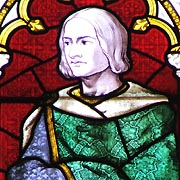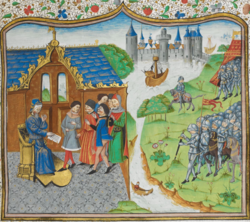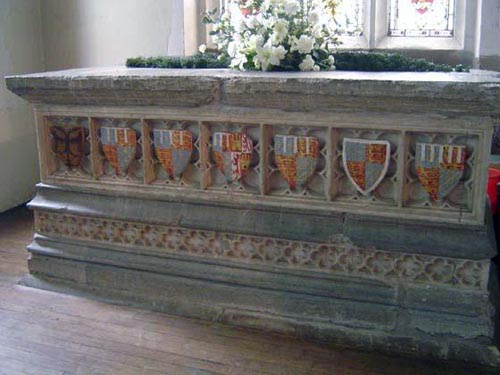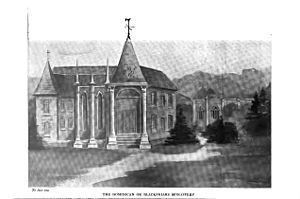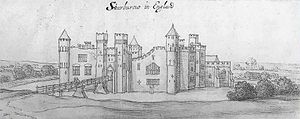
Born around 1400 and probably at the castle of Sterborough in Kent, Eleanor Cobham was the daughter of Sir Reginald Cobham of Sterborough and his wife Eleanor, daughter of Sir Thomas Culpeper of Rayal.
As is often the case with Medieval women, nothing is known of Eleanor’s early life. She appeared at court in her early 20s, when she was appointed lady-in-waiting to Jacqueline of Hainault, Duchess of Gloucester.
Jacqueline had come to England to escape her 2nd husband, the abusive John IV Duke of Brabant. She obtained an annulment of the marriage from the Antipope, Benedict XIII, and married Humphrey, Duke of Gloucester, in 1423. He would spend a large amount of their marriage trying to recover Jacqueline’s lands from the Dukes of Brabant and Burgundy.

Humphrey was a younger brother of King Henry V and John, Duke of Bedford. He had fought at the Battle of Shrewsbury at the age of 12 years and 9 months and would go on to fight at Agincourt in 1415. On Henry V’s death, Humphrey acted as Protector for his young nephew, Henry VI, whenever his older brother, the Duke of Bedford, was away fighting in France. However, he seems to have been little liked and was never trusted with full Regency powers.
In 1428 Pope Martin V refused to recognise the annulment of Jacqueline’s previous marriage to John of Brabant and declared the Gloucester marriage null and void. However, John of Brabant had died in 1426 and so Humphrey and Jacqueline were free to remarry – if they wanted to. In the mean time, Humphrey’s attention had turned to Eleanor of Cobham and he made no attempt to keep Jacqueline by his side.
This did not go down too well with the good ladies of London, who petitioned parliament between Christmas 1427 and Easter 1428.
According to the chronicler Stow their letters were delivered to Humphrey, the archbishops and the lords “containing matter of rebuke and sharpe reprehension of the Duke of Gloucester, because he would not deliver his wife Jacqueline out of her grievous imprisonment, being then held prisoner by the Duke of Burgundy, suffering her to remaine so unkindly, contrary to the law of God and the honourable estate of matrimony”.
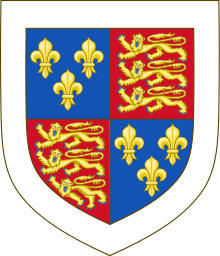
Humphrey paid the petition little attention and married Eleanor sometime between 1428 and 1431. It has been suggested that Eleanor was the mother of Humphrey’s 2 illegitimate children – Arthur and Antigone – although this seems unlikely as Humphrey made no attempt to legitimise them following the marriage (as his grandfather John of Gaunt had done with his Beaufort children by Katherine Swynford).
Described by Aeneas Sylvius as “a woman distinguished in her form” and “beautiful and marvellously pleasant” by Jean de Waurin, Eleanor and Humphrey had a small but lively court at their residence of La Plesaunce at Greenwich. Humphrey had a lifelong love of learning, which Eleanor most likely shared, and the couple attracted scholars, musicians and poets to their court.
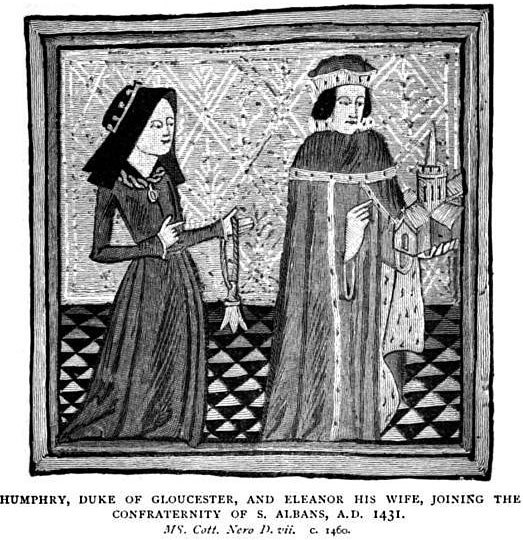
On 25th June 1431, as Duchess of Gloucester, Eleanor was admitted to the fraternity of the monastery of St Albans – to which her husband already belonged – and in 1432 she was made a Lady of the Garter.
Eleanor’s status rose even higher in 1435, with the death of John Duke of Bedford. Whilst Henry VI was still childless, John had been heir presumptive. He died having had no children and so the position passed to Humphrey, Duke of Gloucester.
With her heightened status, Eleanor received sumptuous Christmas gifts from the king; and her father was given custody of the French hostage Charles, Duke of Orleans – a prisoner since Agincourt.
But in 1441 came Eleanor’s dramatic downfall.
Master Thomas Southwell, a canon of St Stephen’s Chapel at Westminster, and Master Roger Bolyngbroke, a scholar, astronomer and cleric – and alleged necromancer, were arrested for casting the King’s horoscope and predicting his death.
Southwell and Bolyngbroke, along with Margery Jourdemayne, known as the Witch of Eye and renowned for selling potions and spells, were accused of making a wax image of the king, ‘the which image they dealt so with, that by their devilish incantations and sorcery they intended to bring out of life, little and little, the king’s person, as they little and little consumed that image’.
Bolyngbroke implicated Eleanor during questioning, saying she had asked him to cast her horoscope and predict her future; for the wife of the heir to the throne, this was a dangerous practise. Did she have her eye on the throne itself?
On hearing of the arrest of her associates Eleanor fled to Sanctuary at Westminster. Of 28 charges against her she admitted to 5. Eleanor denied the treason charges, but confessed to obtaining potions from Jourdemayne in order to help her conceive a child. Awaiting further proceedings, as Eleanor remained in Sanctuary, pleading sickness, she tried to escape by river. Thwarted, she was escorted to Leeds Castle on 11th August and held there for 2 months.
Having returned to Westminster Eleanor was examined by an ecclesiastical tribunal on 19th October and on the 23rd she faced Bolyngbroke, Southwell and Jourdemayne who accused her of being the “causer and doer of all these deeds”.
Eleanor was found guilty of sorcery and witchcraft; she was condemned to do public penance and perpetual imprisonment. Of her co-accused; Bolyngbroke was hanged, drawn and quartered, Southwell died in the Tower of London and Margery Jourdemayne was burned at the stake at Smithfield.
Eleanor’s own chaplain, Master John Hume, had also been arrested, although he was accused only of knowing of the others’ actions and was later pardoned.
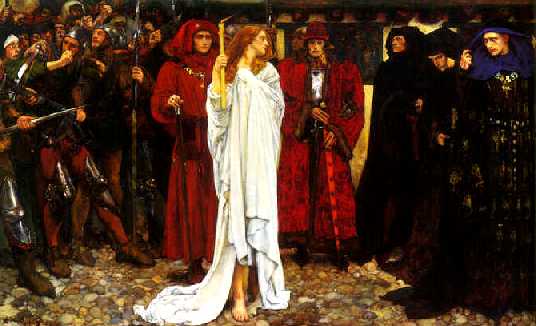
On 3 occasions Eleanor was made to do public penance at various churches in London; on the 1st of such, 13th November 1441, bareheaded and dressed in black carrying a wax taper, she walked from Temple Bar to St Paul’s Cathedral, where she offered the wax taper at the high altar. Following 2 further penances, at Christ Church and St Michael’s in Cornhill, Eleanor was sent first to Chester Castle and then to Kenilworth. Her circumstances much reduced, Eleanor was allowed a household of only 12 persons.
Eleanor Cobham’s arrest and conviction was the means by which her husband was brought down.
Eleanor’s witchcraft conviction discredited her Humphrey; he was marginalised. On 6 November 1441 his marriage was annulled. Humphrey’s enemies, Margaret of Anjou (Henry VI’s queen) and the Earl of Suffolk, convinced the king that his uncle was plotting against him. In February 1447, Humphrey was arrested and confined in Bury St Edmunds.
He died a week later, on 23 February; some claimed it was murder, but the most likely cause of death is stroke.
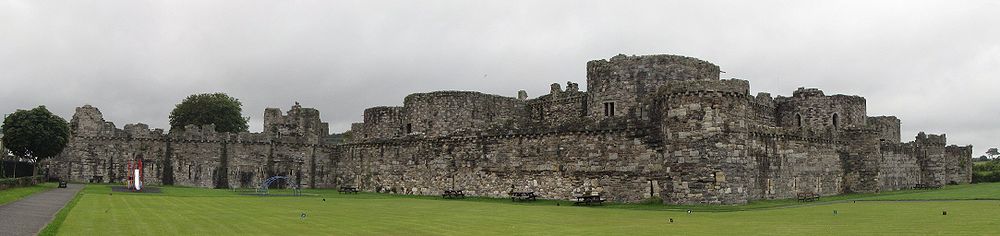
Eleanor was moved to Peel Castle on the Isle of Man, in 1446 and one final time in 1449 when she was transferred to Beaumaris Castle on Anglesey.
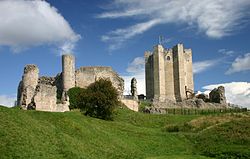
Eleanor Cobham, one time Duchess of Gloucester and wife to the heir to England’s throne, having risen so high – and fallen so low – died still a prisoner, at Beaumaris Castle on 7th July 1452; she was buried at Beaumaris, at the expense of Sir William Beauchamp, the castle’s constable.
*
Pictures courtesy of Wikipedia
*
Sources: Brewer’s British Royalty by David Williamson; History Today Companion to British History Edited by Juliet Gardiner and Neil Wenborn; The Mammoth Book of British Kings & Queens by Mike Ashley; Britain’s Royal Families, the Complete Genealogy by Alison Weir; The Oxford Companion to British History Edited by John Cannon; The Plantagenets, the Kings who made England by Dan Jones; The Plantagenets, the Kings that Made Britain by Derek Wilson; madameguillotine.co.uk; susanhigginbotham.com; The Medieval Mind.
*
My Books
Signed, dedicated copies of all my books are available through my online bookshop. or by contacting me.
New releases in 2026:
New Hardbacks
‘My daughter wanted me to treat her more like a princess.
So, I married her to a stranger to strengthen the alliance with Poland!’
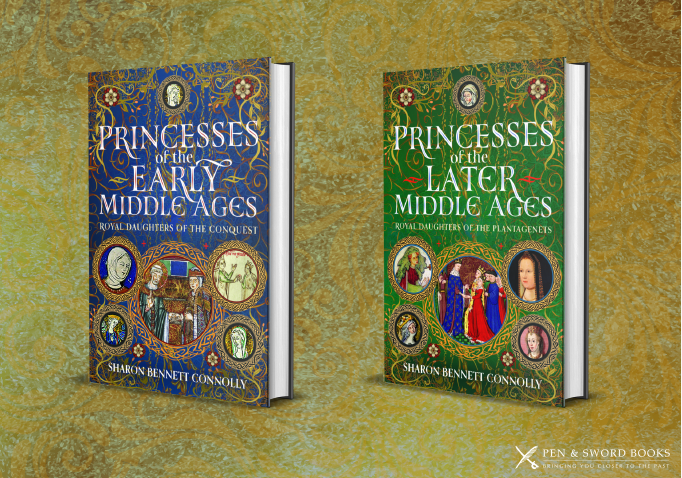
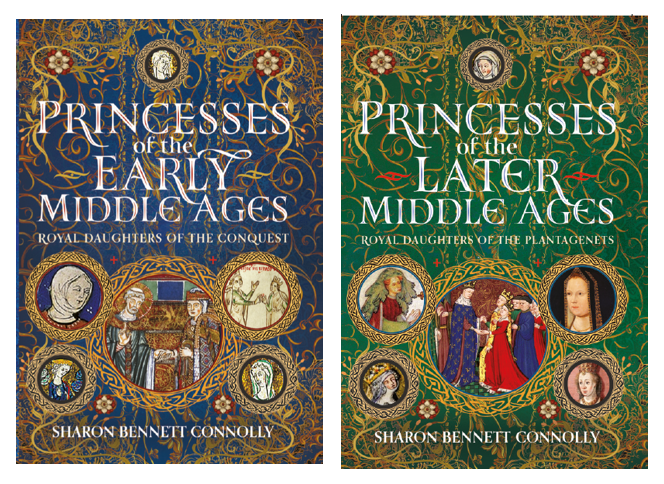
Princesses of the Early Middle Ages: Royal Daughters of the Conquest and Princesses of the Later Middle Ages: Royal Daughters of the Plantagenets tell the stories of England’s royal daughters from 1066 to the rise of the Tudors, from the last Anglo-Saxon princesses to the fall of the House of York.
Were they really pampered pawns sent off to marriages on the Continent, out of sight and out of mind?
Perhaps, there was different story, where a foreign marriage does not mean eternal exile, but a purpose in life, where a princess is a diplomat, an ambassador for England in her new country.
Where she is the bond between allies – most of the time.
Their stories are touching, inspiring and, at times, heartbreaking...
Praise for Princesses of the Early Middle Ages:
Heidi Malagisi: This is another excellent book by Sharon Bennett Connolly. Extremely well researched and relatively easy to follow along, which is a great thing because there are so many Matildas and Eleanors in this book.
Tony Riches: I challenge anyone with an interest in medieval Britain to not find something they will learn from this book.
Anna Belfrage: I just love how [Sharon] presents this huge cast of real life people in a casual, chatty tone that has me expecting the various female protagonists to suddenly pop their head up and add their own commentary.
Buy now: Princesses of the Early Middle Ages: Royal Daughters of the Conquest
Praise for Princesses of the Later Middle Ages:
Elizabeth Chadwick: Really interesting and informative and gives a great handle on the goings on surrounding these ladies!
Kathryn Warner: A deeply researched, richly detailed and fascinating account of late medieval England’s forgotten princesses. I loved it!
Buy now: Princesses of the Later Middle Ages: Royal Daughters of the Plantagenets
New in Paperback:
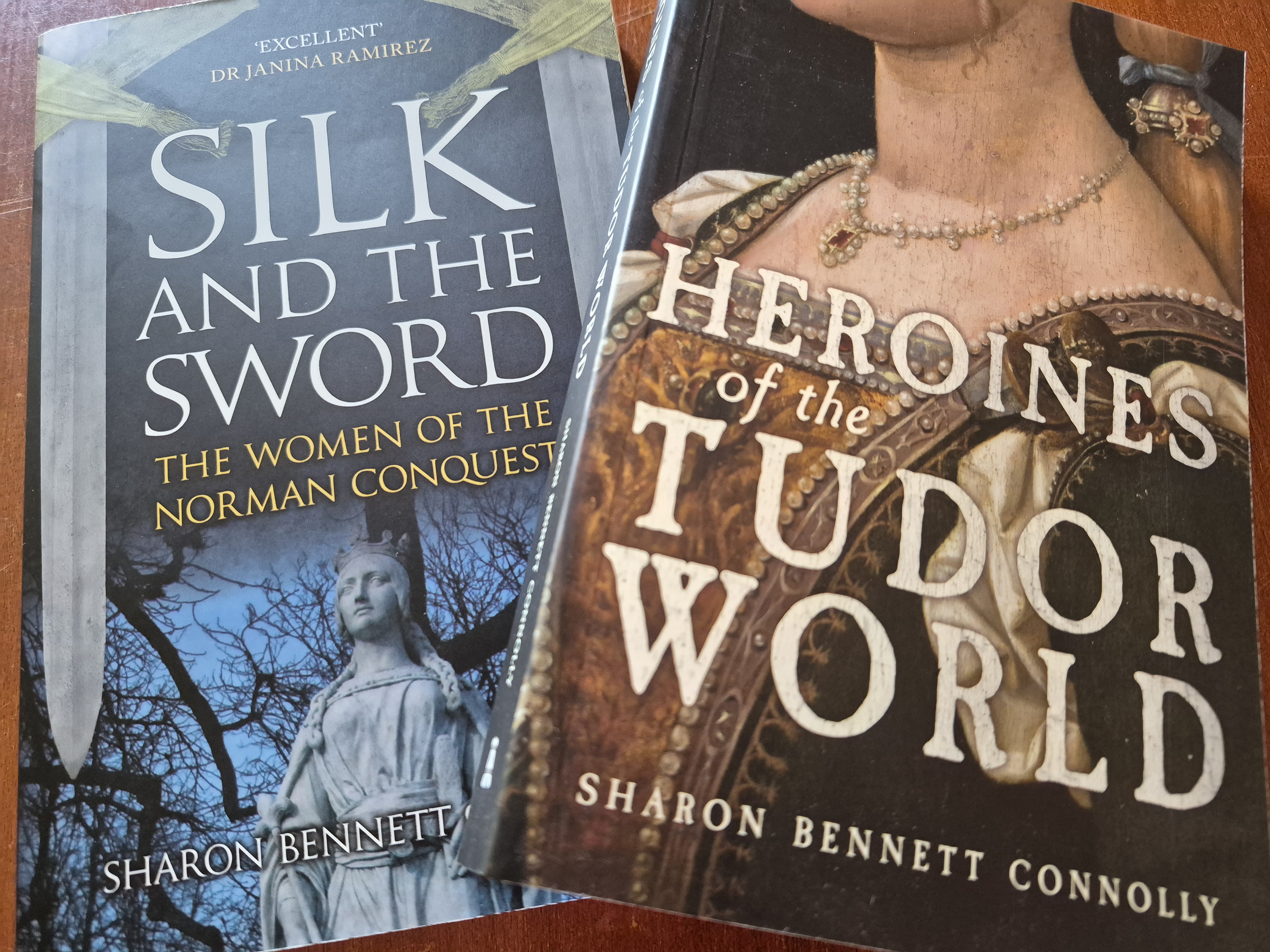
The momentous events of 1066, the story of invasion, battle and conquest, are well known. But what of the women? Silk and the Sword: The Women of the Norman Conquest traces the fortunes of the women who had a significant role to play during the Norman Conquest – wives, lovers, sisters, mothers, leaders. These are lives full of drama, pathos and sometimes mystery: Edith and Gytha searching the battlefield of Hastings for the body of Harold, his lover and mother united in their grief for the fallen king. Who was Ælfgyva, the lady of the Bayeux Tapestry, portrayed with a naked man at her feet?
Janina Ramirez said it’s “Excellent!”
Heroines of the Tudor World focuses on the women who lived through the Renaissance and Reformation, examining the threats and challenges they faced and how they overcame them. These are the women who ruled, the women who founded dynasties, the women who fought for religious freedom, their families and love. These are the women who made a difference, who influenced countries, kings and the Reformation.
Derek Birks: An excellent account of the changing roles of women in Tudor society.
Annie Whitehead: What a treat this book was to read. Bennett Connolly has an easy, conversation style of writing which welcomes you from the opening pages and draws you into her story.
Available now from Amazon and Pen and Sword Books
Sharon is also the author of:
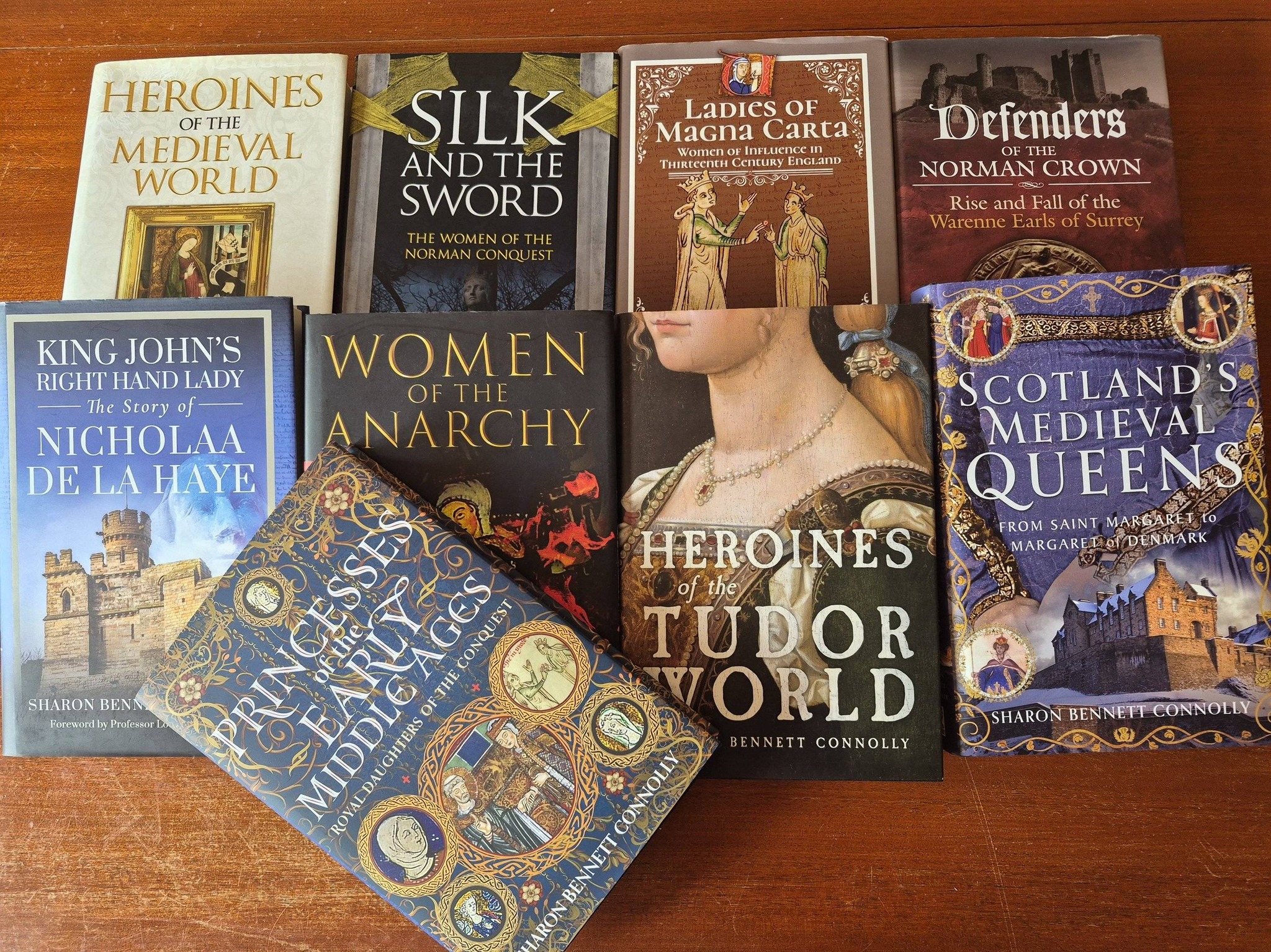
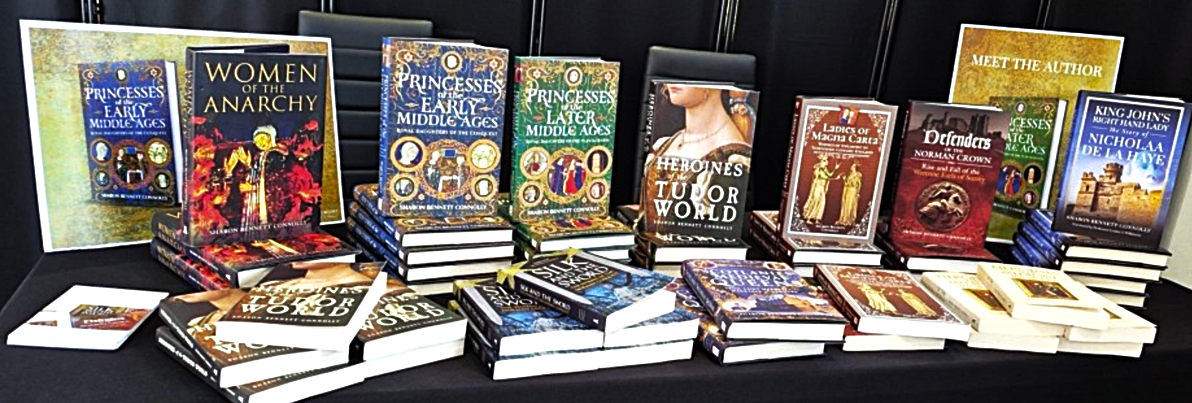
Heroines of the Medieval World; Silk and the Sword: The Women of the Norman Conquest; Ladies of Magna Carta: Women of Influence in Thirteenth Century England; Defenders of the Norman Crown: Rise and Fall of the Warenne Earls of Surrey; King John’s Right Hand Lady: The Story of Nicholaa de la Haye; Women of the Anarchy; Heroines of the Tudor World; Scotland’s Medieval Queens: From St Margaret to Margaret of Denmark; Princesses of the Early Middle Ages: Royal Daughters of the Conquest (March 2026); Princesses of the Later Middle Ages; Royal Daughters of the Plantagenets (August 2026)
Alternate Endings: An anthology of historical fiction short stories including Long Live the King… which is my take what might have happened had King John not died in October 1216. Available in paperback and kindle from Amazon.
Podcast:
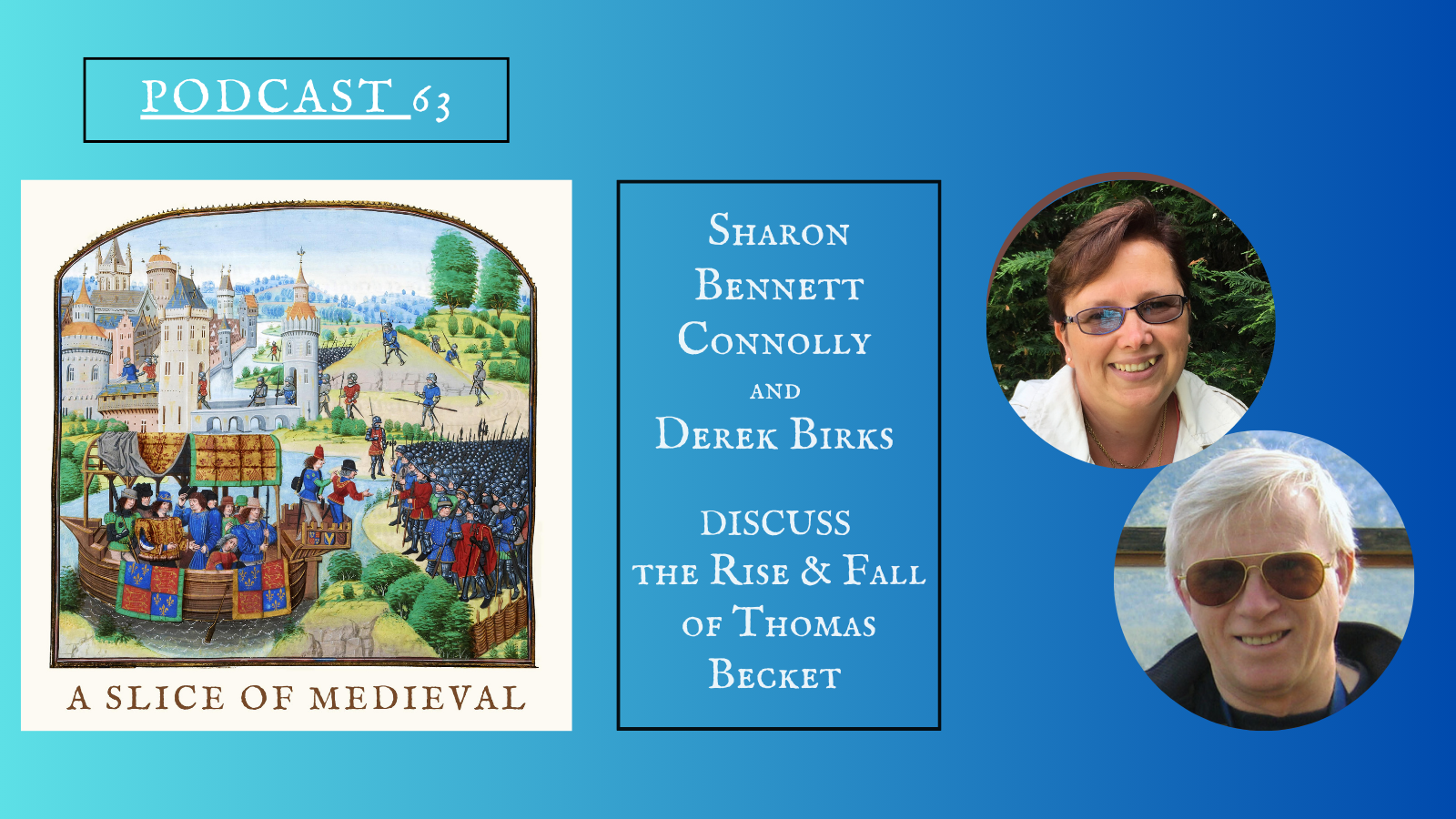
Have a listen to the A Slice of Medieval podcast, which I co-host with Historical fiction novelist Derek Birks. Derek and I welcome guests, such as Ian Mortimer, Bernard Cornwell, Elizabeth Chadwick and Scott Mariani, and discuss a wide range of topics in medieval history, from significant events to the personalities involved.
Every episode is also now available on YouTube.
*
Don’t forget!
Signed and dedicated copies of all my books are available through my online bookshop.
For forthcoming online and in-person talks, please check out my Events Page.
You can be the first to read new articles by clicking the ‘Follow’ button, liking our Facebook page or joining me on Twitter, Threads, Bluesky and Instagram.
*
©2015 Sharon Bennett Connolly FRHistS