Guest Post: Jane Boleyn, née Parker, the infamous Lady Rochford – The Perfect Scapegoat by Monika E. Simon

It is a pleasure to welcome historian Monika E. Simon back to History…the Interesting Bits. Monika’s book, From Robber Barons to Courtiers. The Changing World of the Lovells of Titchmarsh, is a fascinating read. And today, Monika is here to talk about the life and downfall of a descendant of the Lovells, Jane Boleyn.
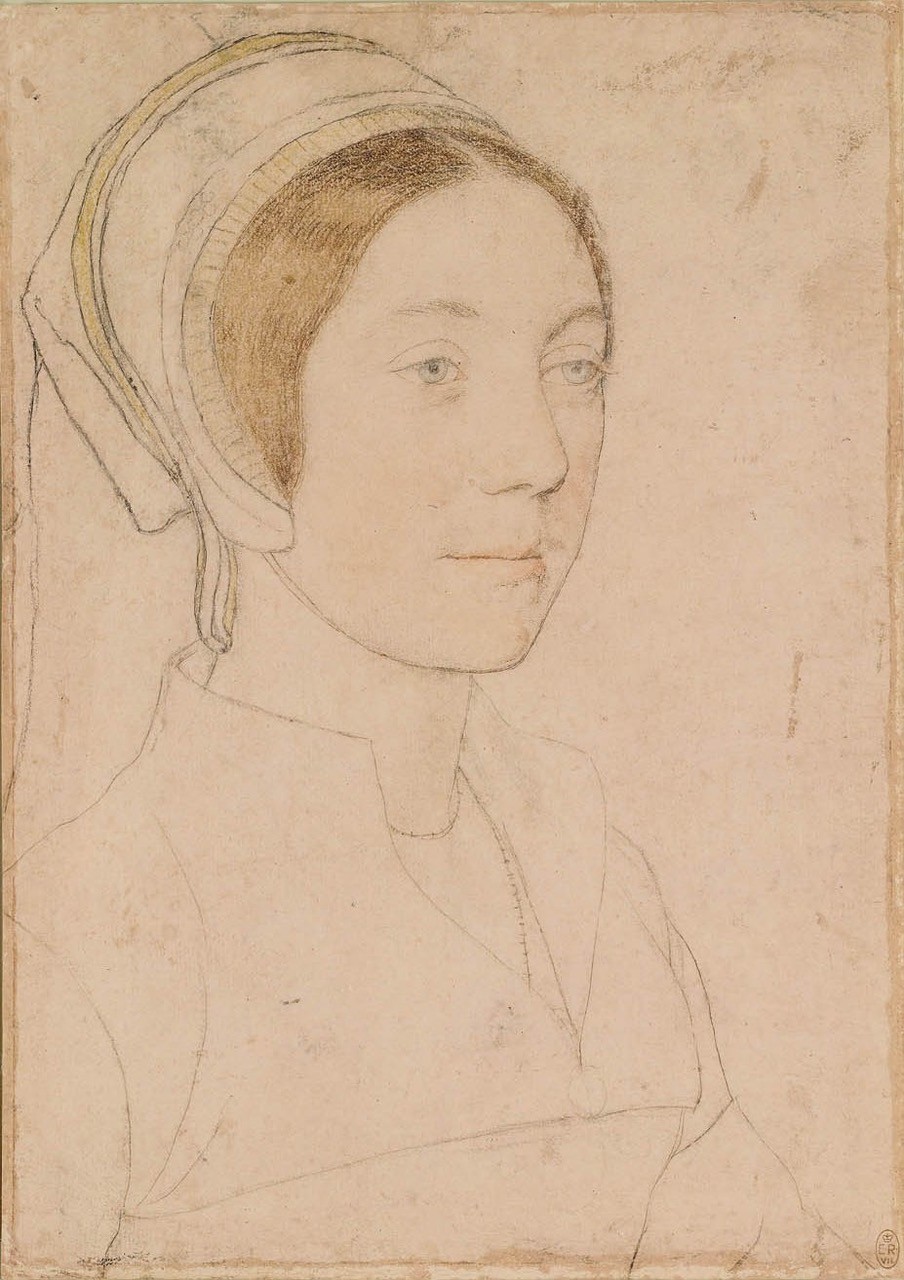
Unknown Woman, often identified as Jane Boleyn
Hans Holbein the Younger

Jane Boleyn, née Parker, the infamous Lady Rochford – The Perfect Scapegoat

Jane Boleyn, Lady Rochford is generally regarded as one of the key witnesses if not the key witness in the court case against Anne Boleyn. Jane was married to Anne’s brother George Boleyn. As Anne’s sister-in-law and with her own husband, George Boleyn accused of having had an affair with his sister Anne, Jane’s betrayal is seen as a particular heinous crime. Jane is also accused to have been the source of this accusation of incest against her husband and her sister-in-law.

In an article on Jane’s father for example, James P. Carley declares ‘Morley’s daughter Jane, was principal witness against her husband, George Boleyn, Lord Rochford, at the time of his trial in 1536.’

However, most historians agree that the charges against Anne Boleyn, her brother, and the others accused were trumped up to rid Henry VIII of his wife. Eric Ives for example states, ‘Under analysis, the case presented by the Crown in May 1536 collapses’. If the outcome of the trial and the guilty verdicts were a forgone conclusion, surely it made absolutely no difference who had said or may have said what during or before the trials?

Why then did Jane Boleyn become the ‘infamous Lady Rochford‘?

Let me first introduce you to Jane Boleyn, née Parker.

Jane was the daughter of Henry Parker, Lord Morley, and his wife Alice St John. Alice was the daughter of Margaret Beaufort’s half-brother John St John. The match was almost certainly arranged by Margaret Beaufort in whose household Henry Parker had served from a young age. During this time Margaret Beaufort became his patroness. She supported him financially and looked after his wife Alice and their children when Henry was away. Margaret Beaufort was also a major influence on his religious beliefs.

Henry was summoned to parliament as Lord Morley after the death of his mother Alice Parker, née Lovell, in 1518. He never made a particular name for himself at court and never held important office. Richard Starkey calls him ‘an unimportant backwoodsman’ but I think ‘hard-working backbencher’ is a more apt description. He assiduously attended parliament, great ceremonial events, and state trials. That he never achieved higher office may be simply due to a lack of ambition or a personal choice to not risk his life. After all he witnessed how many of the men holding high office during Henry VIII’s reign ended their lives on the scaffold.

Henry Parker and his wife Alice had five children, two sons, Henry and Francis, and three daughters, Jane, Margaret, and Elizabeth. In the 1520s, Henry and his wife Alice arranged marriages for their three elder children. Henry, the eldest son and heir, was married to Grace Newport, heiress of her father John Newport. Jane married George Boleyn around 1526. In 1530, Margaret married Sir John Shelton the Younger, the son of Sir John Shelton the Elder and his wife Anne Boleyn, the aunt of Queen Anne.

The Boleyn family were neighbours of the Parkers, as were the Howard Dukes of Norfolk. Henry Parker’s mother, Alice Parker had married as her second husband Edward Howard, whose sister Elizabeth was married to Thomas Boleyn. Thomas Boleyn’s father William had been one of the executors of the will of Alice Parker’s brother Henry Lovell, Lord Morley. Alice had been the heir to her brother Henry Lovell and had become very wealthy when she inherited the part of his estates that were not held in tail male. Henry Lovell had been married to Elizabeth de la Pole, daughter of John de la Pole, duke of Suffolk, and Elizabeth, the sister of Edward IV and Richard III. Both Henry and Alice were cousins of Francis Lovell, Viscount Lovell (see Genealogies).
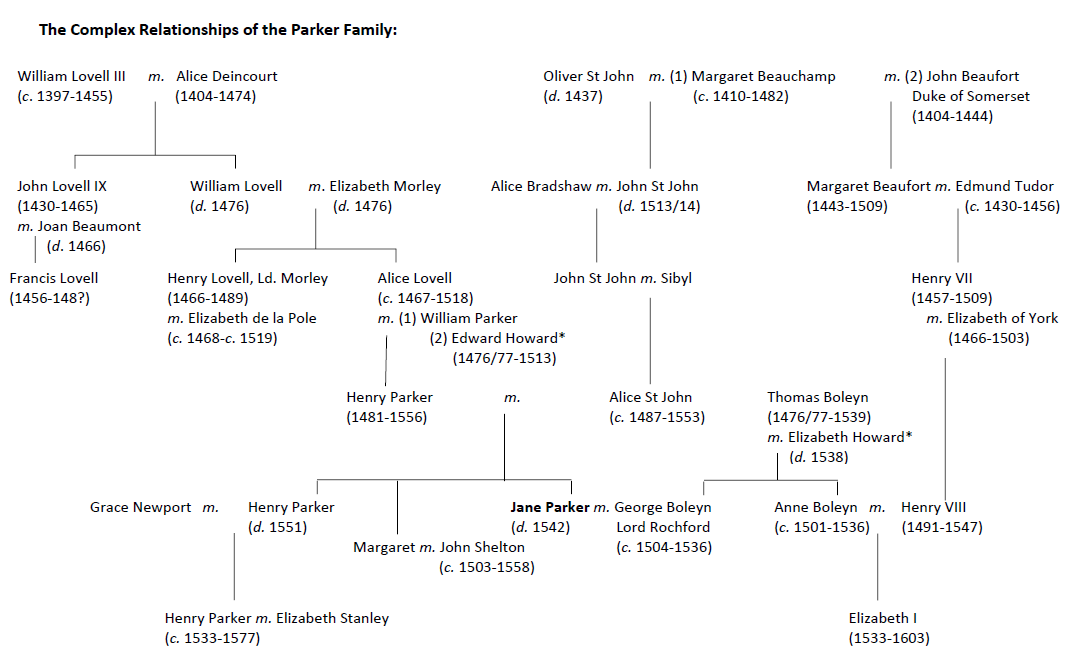
The complex relationships of the Parker family

This confusing profusion of relationships is typical for the higher nobility. The families tried to marry their children to spouses of the same rank, and since the higher nobility was a small group, a multitude of relationships between families was the inevitable result.

The families of Jane and her husband George were not only neighbours in Essex, the two knew each other from court as well. George Boleyn had become a royal page in 1516, and Jane had become one of the ladies of Queen Catherine of Aragon in 1520. The relationship between Jane and her husband was therefore both personal and professional. Jane’s husband George also shared his father-in-law’s interest in literature and translations. In fact, George Boleyn’s translation of ‘The Pistellis and Gospelles for the LII Sondayes of the Yere’ has been attributed to Henry Parker until recently.

To be chosen as a lady of the queen, a young woman had to be of noble birth, attractive, and well-mannered. Jane must have possessed all these qualities. She must also have been skilled in dancing and performing as in 1522 she was among those court ladies who participated a particularly grand pageant for the imperial envoys Jacques de Castres and Charles Poupet de Lacheaulx. Henry VIII’s sister was one of the other ladies as was Jane’s future sister-in-law Anne Boleyn.

In the following years, as Henry VIII became enthralled by Anne Boleyn, Jane and her husband George prospered at court. George became a Squire of the Chamber and was given numerous grants. He received the courtesy title of Viscount, when his father Thomas became Earl of Wiltshire in 1529.

Jane continued to be chosen for active parts in the court’s festivities. In 1532 she was chosen to be one of the six ladies to accompany Anne Boleyn in a dance with the French king Francis I, Henry VIII, and assorted courtiers. In the procession to Anne’s coronation the following year, Jane rode immediately behind Anne. Her brother Henry had been created a Knight of the Bath on the evening before the coronation.

All seemed well both inside the Boleyn family and in the marriage of Henry VIII and Anne Boleyn. But in 1536 this changed dramatically: Anne and her family fell from grace spectacularly. She, her brother George, Henry Norris, and others were arrested, accused of adultery, and executed for treason. Prior to this trial a considerable number of men and women were questions about the allegations. Jane, as Anne’s sister-in-law and lady-in-waiting was naturally also interrogated.

Signature of Jane, Lady Rochford

Even though most historians consider the charges against Anne Boleyn and the other accused as fictional, most, myself included (Both in my book and in my previous guest post), have debated all available clues, hints and the few concrete statements existing to proof or disproof Jane’s guilt. All her prior and subsequent actions are judged, depending on whether she is considered guilty or innocent of the charge of betraying her husband and sister-in-law.

Since Jane was only one of a large number of people, including Anne Boleyn herself and her brother George, who were questioned about the events at court and whose answers were used during the trial, why was it Jane and not one of the many other people involved in this affair that has been singled out as the despicable traitor? After all, Lady Wingfield was named by judge John Spelman as the source of the behaviour of Anne Boleyn.

Having pondered this question for quite a while now I have developed my own theory about this question.

After Anne Boleyn’s daughter Elizabeth became queen, Anne’s reputation had to be cleared of any suggestion of scandal and extramarital adventures. It was equally inadvisable to put the blame instead on Elizabeth’s father Henry VIII. To protect her right to be queen of England, the reputation of both her parents needed to be above reproach.

But somebody had to be blamed for Anne Boleyn’s death and, as it turned out, Anne’s sister-in-law Jane made the perfect scapegoat.

Jane had no children and no other family in a position to defend her reputation. Her brother Henry was dead and his son, another Henry, was a devout Catholic. This made him suspicious from the start. He first supported Queen Elizabeth who visited him in Great Hallingbury in 1561. However, later in the decade, he refused to subscribe to the Act of Uniformity. He was also linked to the rising of noble earls and fled England in 1570. He died in exile in 1577.
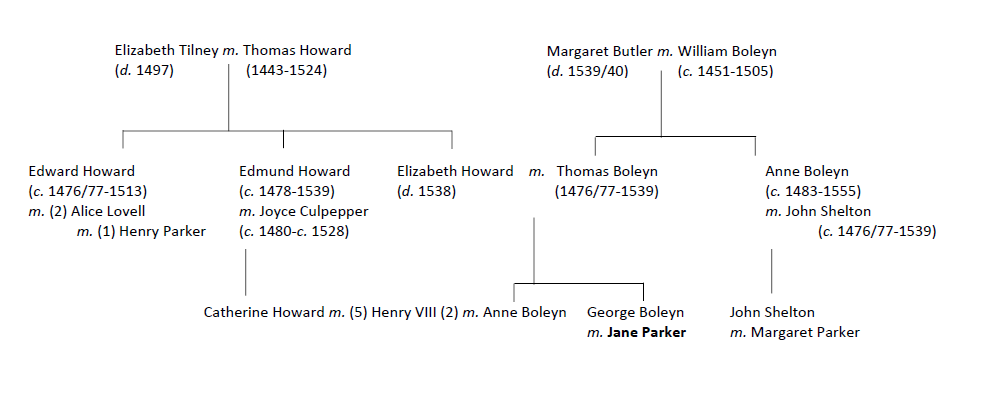
The Howard family

Additionally, Jane’s own reputation was already ruined. She had been executed alongside Henry VIII’s fifth queen Katherine Howard in 1542. There was no reason to clear childless Katherine Howard’s reputation. Any endeavour to do so would have been much more difficult if not impossible.

While Anne Boleyn was accused of infidelity and incest to remove her for political reason, Katherine Howard certainly had been unfaithful to her husband, even if her clandestine meetings with her paramour Thomas Culpepper did involve nothing more serious than talking and a chaste kiss on the hand as the two claimed. Jane had been present at the meetings as a chaperone of sorts, though she claimed that she had not heard or seen what happened between the queen and Thomas Culpepper as she sat too far away and moreover during at least one of the meetings, she had fallen asleep. Jane did state that she thought Katherine and Thomas had been lovers.

Who of the three, Katherine Howard, Jane Boleyn, or Thomas Culpepper, had been the main instigator of these meetings was and is still debated. Naturally, all three tried to play down their own role and blame the others. Thomas Culpepper used the time-honoured excuse that he had been helpless against the wily ways of the two women. Katherine claimed that Jane had been encouraging her and that it had been her lady-in-waiting who wanted her to befriend Thomas in the first place. It had also been Jane who searched out the places where they could meet Thomas. Jane insisted that she had only followed the orders of the queen.

In the end, all three participated in illicit meetings and they all should have known what would happen if they were found out. The execution of Anne Boleyn and her alleged lovers was only a few years in the past.

In his biography of Anne Boleyn Eric Ives wonders ‘whether the incrimination of Lady Rochford in the crimes of Katherine Howard may not have owed something to revenge’. There was, however, no need to incriminate Jane Boleyn in any way, she did so herself by her actions.
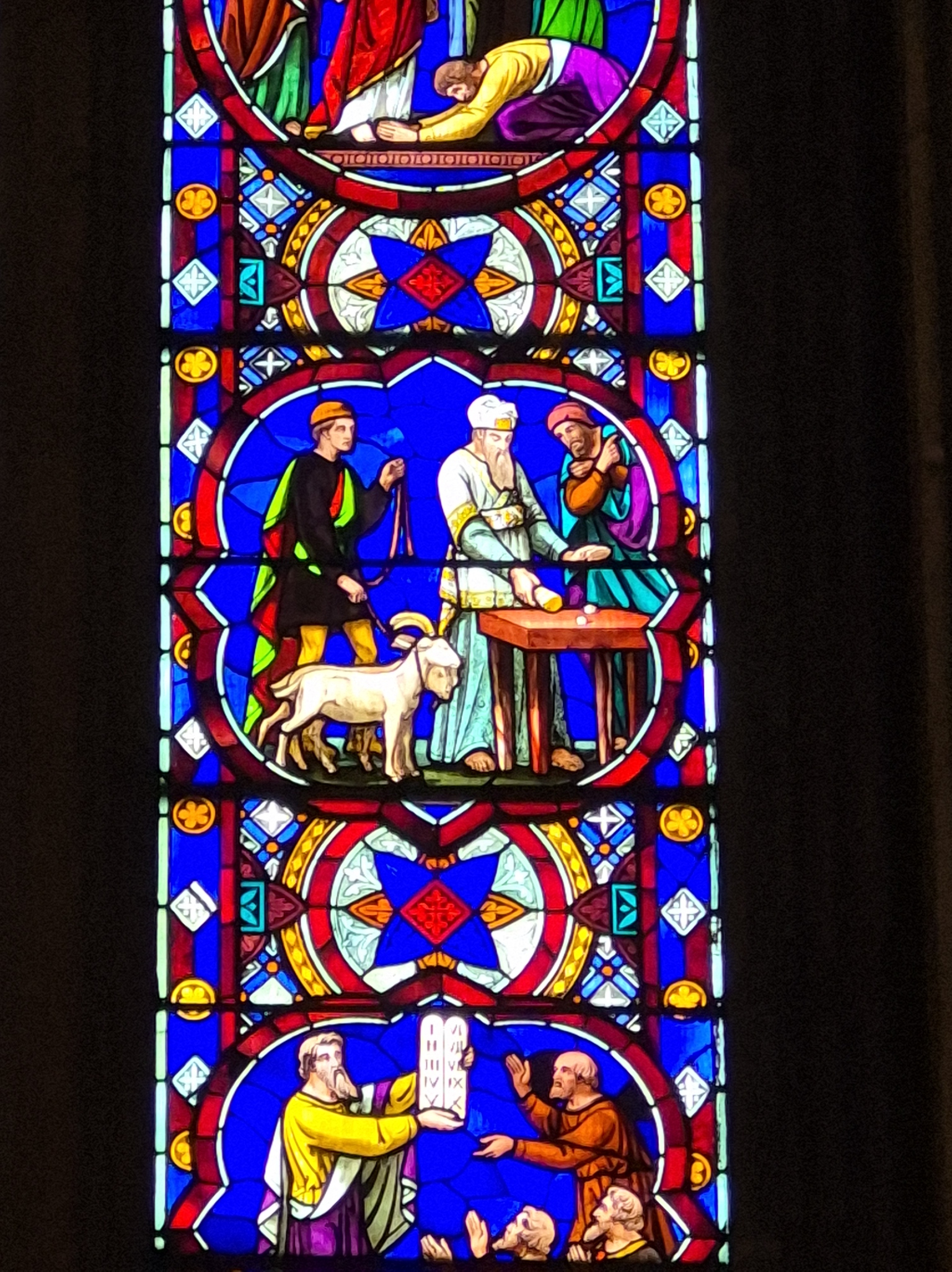
Scapegoat Ceremony shown in Stained Glass window in Lincoln Cathedral 

I think Ives’s argument should be put on its head: Jane Parker has become the much-maligned ‘key witness’ in Anne Boleyn’s trial, since she was guilty in the case that brought down Katherine Howard, Thomas Culpepper, and herself. What was more natural than to assume that she was equally deeply involved in the fall of Anne Boleyn?

Perhaps it is not wholly imaginary to think that makes Jane a particularly satisfying scapegoat for Anne Boleyn’s fall because of her close relationship to Anne. To suggest that Anne’s own sister-in-law, the wife of her brother George, who provided the charge of incest, is particularly piquant. The people nearest to us are those who can reveal our deepest secrets and the fear of being betrayed by them runs deep.

The trial of Anne Boleyn and her alleged lovers was a means to an end and the charges spurious. Today it is merely fascinating to discuss the alleged contribution of individuals to the proceedings and interesting to observe how Jane’s action both before and after Anne Boleyn’s trial are today interpreted completely different, depending on whether or not an author regards Jane as the traitor.

Back in the second half of the sixteenth century, the trial of Anne Boleyn was not discussed (at least openly) as a political manoeuvre conducted on trumped up charges to remove a no longer wanted queen. This would have fundamentally damaged the reputation of Henry VIII, the father of Elizabeth I. Since her mother had to be cleared of any allegations of infidelity, somebody else had to be blamed. Jane Parker was the best choice for that role. She was the perfect scapegoat.

Further Reading:

  • James P. Carley, ‘The Writings of Henry Parker, Lord Morley: A Biographical Survey’, in: Marie Axton and James P. Carley (eds.), ‘Triumphs of English’. Henry Parker, Lord Morley, Translator to the Tudor Court (London, 2000).
  • Julia Fox, Jane Boleyn. The Infamous Lady Rochford (London, 2007).
  • Eric Ives, The Live and Death of Anne Boleyn. ‘The Most Happy’ (Oxford, 2004).

Monika E. Simon, From Robber Barons to Courtiers. The Changing World of the Lovells of Titchmarsh (Barnsley, 2021

Images:

Jane Boleyn portrait via Wikimedia Commons; Scapegoat, Lincoln Cathedral ©2026 Sharon Bennett Connolly FRHistS

About the Author:

Monika E Simon was born as the third of four sisters in 1969 in a small city in southern Bavaria. Interested in history from an early age, she wrote her MA thesis about the tenth-century Empress Adelheid at the Ludwig-Maximilians-Universtität in Munich. Having spent a year of her studies at the University of York (Yorkshire), she fell in love with the city and decided to transfer there for her doctoral thesis. For her DPhil thesis she studied the history of the Lovells of Titchmarsh which she submitted in 1999.

In 2001, after two years in London, Monika E Simon returned to Munich, where she has lived since, working in a variety of jobs. In 2021 her first book, From Robber Barons to Courtiers. The Changing World of the Lovells of Titchmarsh was published.

She has also published a small number of articles about the Lovell family. She continues to research a variety of historical subjects. 

Where to find Monika: Facebook; website; Pen & Sword

*

My Books

Signed, dedicated copies of all my books are available through my online bookshop. or by contacting me.

Coming 30 March: Princesses of the Early Middle Ages
Books by Sharon Bennett Connolly

Daughters of kings were often used to seal treaty alliances and forge peace with England’s enemies. Princesses of the Early Middle Ages: Royal Daughters of the Conquest explores the lives of these young women, how they followed the stereotype, and how they sometimes managed to escape it. It will look at the world they lived in, and how their lives and marriages were affected by political necessity and the events of the time. Princesses of the Early Middle Ages will also examine how these girls, who were often political pawns, were able to control their own lives and fates. Whilst they were expected to obey their parents in their marriage choices, several princesses were able to exert their own influence on these choices, with some outright refusing the husbands offered to them.

Their stories are touching, inspiring and, at times, heartbreaking.

Princesses of the Early Middle Ages: Royal Daughters of the Conquest is now available for pre-order from Pen & Sword and Amazon.

Also by Sharon Bennett Connolly:

Books by Sharon Bennett Connolly

Scotland’s history is dramatic, violent and bloody and Scotland’s Medieval Queens have seen it all. This is the story of Scotland through their eyes. Available now from Amazon and Pen and Sword BooksHeroines of the Tudor World tells the stories of the most remarkable women from European history in the time of the Tudor dynasty, 1485-1603. These are the women who ruled, the women who founded dynasties, the women who fought for religious freedom, their families and love. Heroines of the Tudor World is now available from Amberley Publishing and Amazon UK. Women of the Anarchy demonstrates how Empress Matilda and Matilda of Boulogne, unable to wield a sword themselves, were prime movers in this time of conflict and lawlessness. It shows how their strengths, weaknesses, and personal ambitions swung the fortunes of war one way – and then the other. Available from Bookshop.orgAmberley Publishing and Amazon UKKing John’s Right-Hand Lady: The Story of Nicholaa de la Haye is the story of a truly remarkable lady, the hereditary constable of Lincoln Castle and the first woman in England to be appointed sheriff in her own right. Available from all good bookshops Pen & Sword Booksbookshop.org and Amazon

Royal Historical Society

Defenders of the Norman Crown: The Rise and Fall of the Warenne Earls of Surrey tells the fascinating story of the Warenne dynasty, from its origins in Normandy, through the Conquest, Magna Carta, the wars and marriages that led to its ultimate demise in the reign of Edward III. Available from Pen & Sword BooksAmazon in the UK and US, and Bookshop.orgLadies of Magna Carta: Women of Influence in Thirteenth Century England looks into the relationships of the various noble families of the 13th century, and how they were affected by the Barons’ Wars, Magna Carta and its aftermath; the bonds that were formed and those that were broken. It is now available in paperback and hardback from Pen & SwordAmazon, and Bookshop.orgHeroines of the Medieval World tells the stories of some of the most remarkable women from Medieval history, from Eleanor of Aquitaine to Julian of Norwich. Available now from Amberley Publishing and Amazon, and Bookshop.orgSilk and the Sword: The Women of the Norman Conquest traces the fortunes of the women who had a significant role to play in the momentous events of 1066. Available now from Amazon,  Amberley Publishing, and Bookshop.org.

Alternate Endings: An anthology of historical fiction short stories including Long Live the King… which is my take what might have happened had King John not died in October 1216. Available in paperback and kindle from Amazon.

Podcast:
A Slice of Medieval

Have a listen to the A Slice of Medieval podcast, which I co-host with Historical fiction novelist Derek Birks. Derek and I welcome guests, such as Ian Mortimer, Bernard Cornwell, Elizabeth Chadwick and Scott Mariani, and discuss a wide range of topics in medieval history, from significant events to the personalities involved. 

Every episode is also now available on YouTube.

*

Don’t forget! Signed and dedicated copies of all my books are available through my online bookshop.

For forthcoming online and in-person talks, please check out my Events Page.

You can be the first to read new articles by clicking the ‘Follow’ button, liking our Facebook page or joining me on TwitterThreadsBluesky and Instagram.

*

©2026 Sharon Bennett Connolly FRHistS

Guest Post: John, Lord Lovell and Holland, also called ‘the Great Lord Lovell’ by Monika E Simon

Portrait of John Lovell VII
(British Library, Harley 7026, fol. 4, verson © Bridgeman Images)

When John Lovell VII, Lord Lovell and Holland died on 10 September 1408 at the age of about 66 he had lived not only a long but also a very active and occasionally turbulent life.

John Lovell VII, who is generally referred to as the fifth Lord Lovell, came of age in 1363 and on 8 June the escheators of several counties were ordered to give him seisin of his lands. At this point, the fortunes of his family were at a distinctly low point. His great-grandfather John Lovell III had been the first Lovell to be summoned to parliament and once had been the marshal of Edward I’s army in Scotland. It was the death of his son, John Lovell IV, at the battle of Bannockburn on 24 June 1314, only four years after his father died, that started the long time of decline. First came the long minority of his posthumous son John Lovell V. John Lovell V died at the young age of 33 on 3 November 1347. Another long period of guardianship followed as his eldest son, John Lovell VI was only six years old when his father died. Isabel, the wife of John Lovell V, died two years after her husband in 1449 only a year after the death of Joan de Ros, the grandmother of John Lovell V. This meant that all the Lovell estates were in the hands of guardians. The long periods of guardianship must have surely have a detrimental effect on the profitability of the Lovell estates. Additionally, the lands were also devastated by the Plague. In Titchmarsh, for example, only four of the eight tenants survived the Plague. John Lovell VI died a minor on 12 July 1361 and his younger brother, John Lovell VII, who was also underage, inherited his lands.

Though John Lovell VII was able to look back to a long line of distinguished ancestors, when he was declared of age in 1463, for thirty-nine years of the previous 49 years, the head of the Lovell family had been a minor. His father had never been summoned to parliament, nor had, needless to say, his elder brother. John Lovell VII certainly could not rely on family influence to make his way to promotion and it was even uncertain whether he would receive an individual summons as his great-grandfather and grandfather had done.

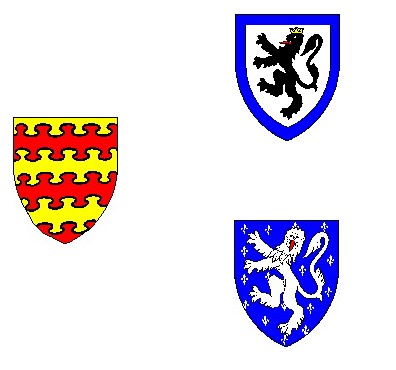
The coats of arms: Lovell (left), Burnell (top), and Holland (bottom). (© Gill Smith)

Fortunately John Lovell VII was an ambitious young man, who would prove himself to be an able military commander and administrator. He was also, as far as we can tell, able to make fast friends and allies. Last but not least, he was also lucky.

He first appears in records serving on several military campaigns including in Brittany and was in the company of Lionel, Duke of Clarence, when he was travelling to Milan to marry Violante Visconti. It was most likely in this early period of his life that he went on crusade to Prussia and the Eastern Mediterranean.

Though we do not know exactly when he married Maud Holland, the granddaughter and heiress of Robert Holland, but it was probably in 1371, when Maud was about 15. As an heiress of her grandfather large estates, this was an exceptionally good match for a young man with few connections. Interestingly, this marriage not only approximately doubled the lands John Lovell was holding, it also created a link, if only a tenuous one to the royal family. Maud Holland’s grandfather Robert Holland was the older brother of Thomas Holland, who in turn was the husband of Joan of Kent. Maud Holland’s father Robert, who had predeceased his father, therefore had been the cousin of Thomas, John, Maud, and Joan Holland, the half-siblings of Richard II.

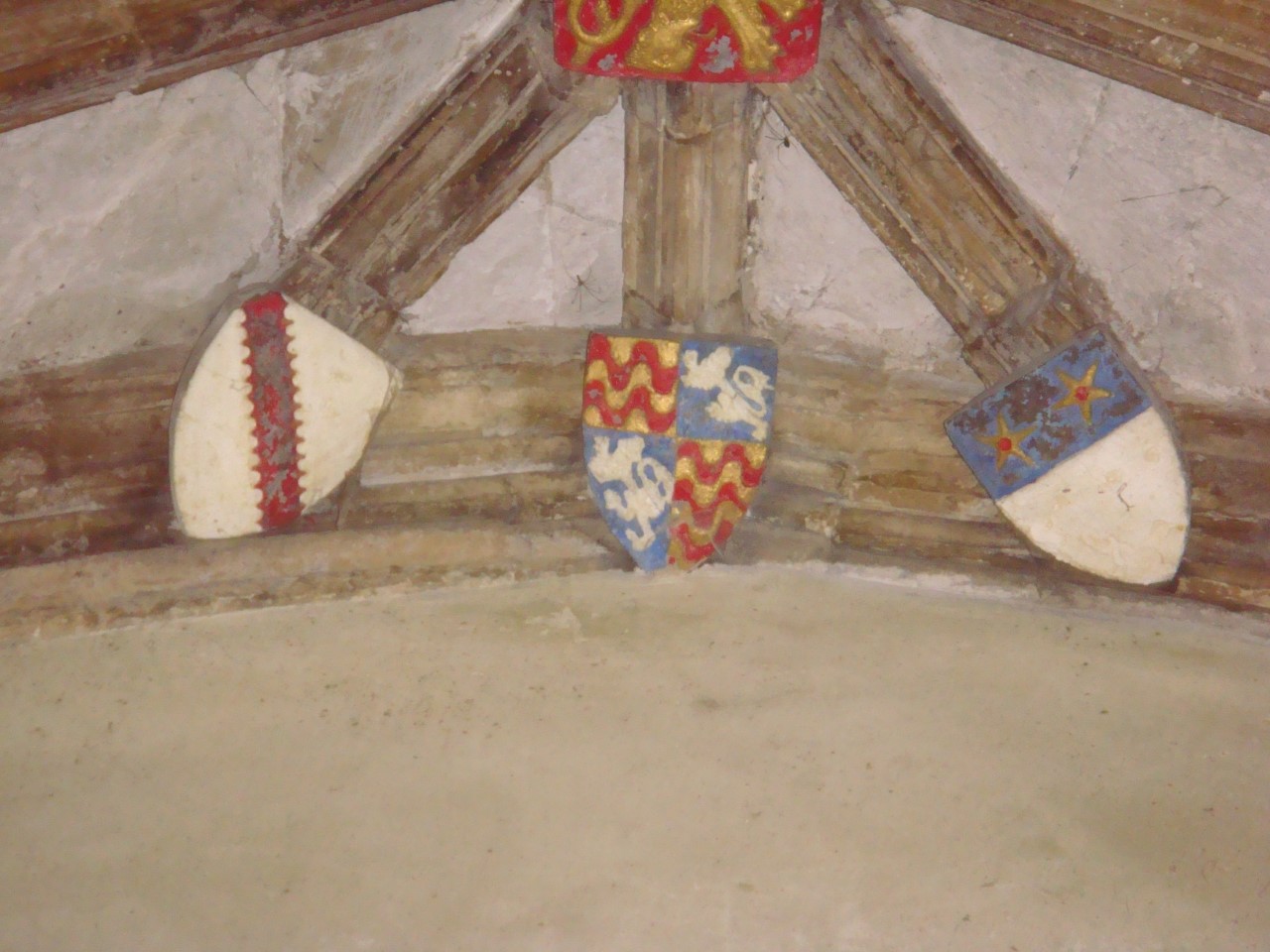
Thanks to his marriage to Maud Holland, John Lovell VII held both the Lovell and the Holland barony. John Lovell certainly seems to have appreciated the significance of this marriage: he was the first noblemen who used a double title, calling himself Lord Lovell and Lord Holland. He also combined the Lovell coat of arms with that of the Holland. On their seals, John Lovell VII, his wife Maud Holland, and their sons John Lovell VIII and Robert Holland showed the quartered Lovell and Holland coat of arms. The design can also be found in the cloister of Canterbury Cathedral to the present day.

It is perhaps no accident that the first parliament John Lovell VII was summoned to was the first parliament to be held after his wife’s grandfather had died and he had taken control of his wife’s inheritance. Significant though this boost to his wealth no doubt was, John Lovell VII had also demonstrated his willingness and ability to serve in the military in the years since he came of age. His period as a crusader certainly must have added to his fame as well. The fact that his ancestors had already received individual summonses alone may not have been enough to ensure his inclusion in the House of Lords, but a combination of all these factors made certain of it.

Over the following 33 years John Lovell VII served in a variety of functions, both in military service and increasingly also in the royal administration. Like all noblemen he was appointed to commissions in the areas where his estates were concentrated. He was also placed on commissions that were appointed to deal with more general problems. In 1381, in the aftermath of the Peasants’ Revolt, John Lovell served on a commission to deal with crimes committed during the uprising. John Lovell must have got to know several of his fellow commissioners quite well, as he met them frequently both in the localities and at court. Whether this acquaintances also became his friends is difficult to impossible to say.

In 1385, the war between England and Scotland broke erupted again, and John Lovell VII joined the exceptionally large army that Richard II led north. It was during this campaign that John Lovell started a dispute with Thomas, Lord Morley about the right to bear the arms argent, a lion rampant sable, crowned and armed or. Disputes about who was the rightful owner of a particular coat of arms were quite common in this period. However, only in three of these cases substantial records of the proceedings have survived to this day. One is the Lovell-Morley dispute, the other two are the contemporary controversy between Richard Scrope and Robert Grosvenor, and the slightly later case of Reginald, Lord Grey of Ruthin and Sir Edward Hastings. The Lovell-Morley dispute is an interesting case, as the coat of arms that John Lovell claimed were not in fact the Lovell coat of arms (barry nebuly or and gules). The arms John Lovell claimed were those that his (half-)uncle Nicholas Burnell had fought over with the grandfather of Thomas Morley, Robert Morley, during the Crécy-Calais campaign almost forty years earlier. A considerable part of the testimony collected in the records of the Morley-Lovell dispute is therefore about the earlier proceedings.

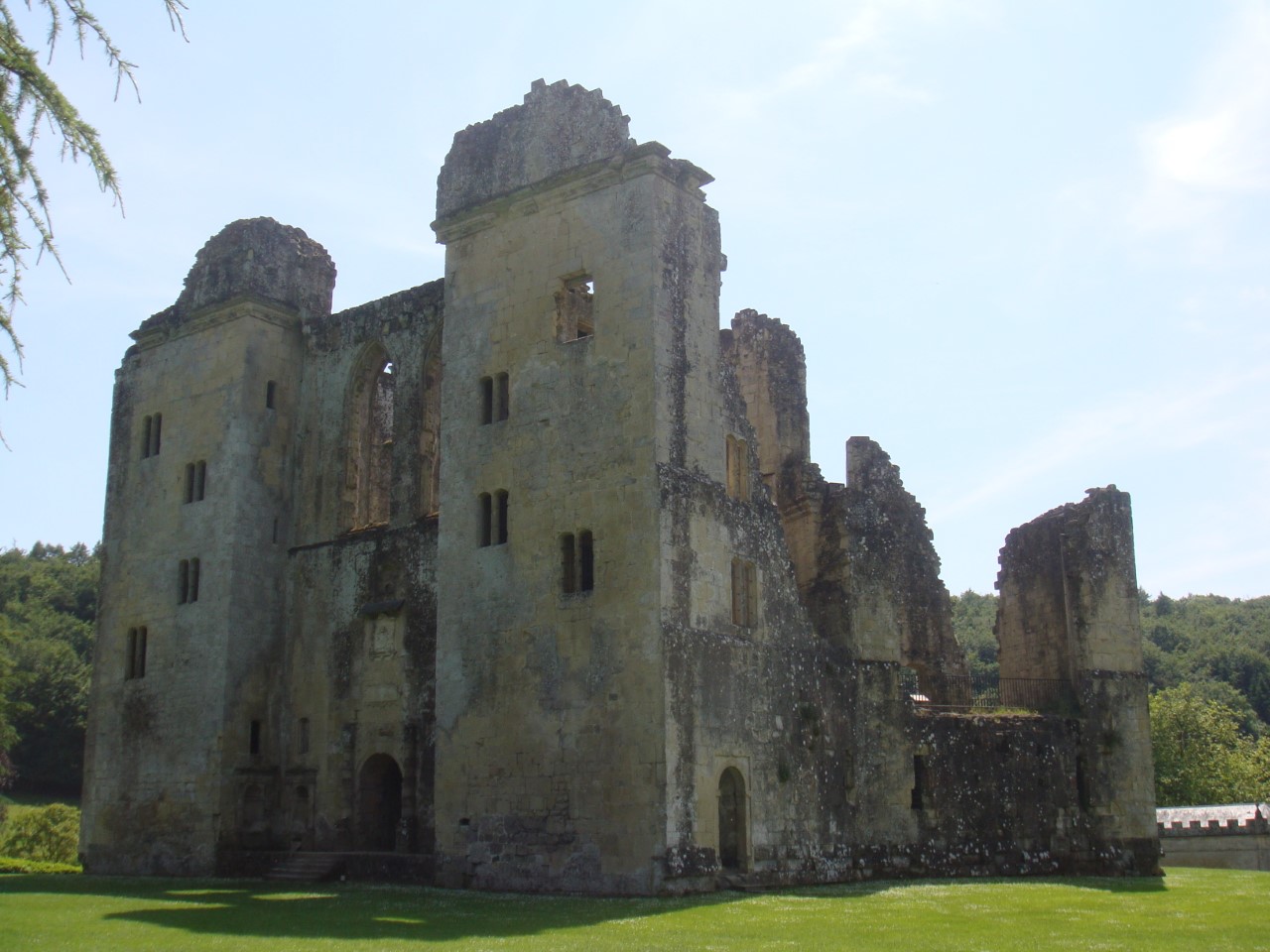
Old Wardour Castle (author)

The question that this case raises is of course why John Lovell VII claimed to be the rightful owner of the Burnell coat of arms. The most likely explanation is that he used the claim to the Burnell coat of arms to also stake his claim on the Burnell barony. His grandmother Maud Burnell had settled most of these estates on her sons from her second marriage with John Haudlo. By claiming the Burnell coat of arms, he showed he considered himself the rightful heir of the Burnell barony.

Unfortunately, the outcome of this case cannot be found in the records of the court case. Later depictions of the coat of arms used by Hugh Burnell, John Lovell VII (half-)cousin, shows them differenced with a blue border. John Lovell VII himself continued to use the quartered Lovell and Holland arms as before.

In the course of the 1380s John Lovell VII became a well-placed courtier and administrator. He was made a king’s knight and banneret of the royal household. He also received rewards for his service. When the disagreements between Richard II and several high-ranking members of the nobility worsened at the end of the decade, John Lovell was at first trusted by both sides of the conflict and was employed as an intermediary. But by the time of the Merciless Parliament, he had lost the trust of the king’s critics. He was expelled from court alongside 14 other men and women during the Merciless Parliament and had to swear not to return. Though the exact charges against the men and women thus removed from court are not known, they were considered to have had only undue influence over the king. John Lovell VII exile from court was short as he had returned by the following year. It is possible that his friendship to Bishop Thomas Arundel, the brother of one Richard II’s fiercest critics, eased his way back.

Far from discourage John Lovell VII became even more influential at court during the following decade. He became a member of the king’s council and the number of royal charters he witnessed increased. In 1395, Richard II retained him for life.

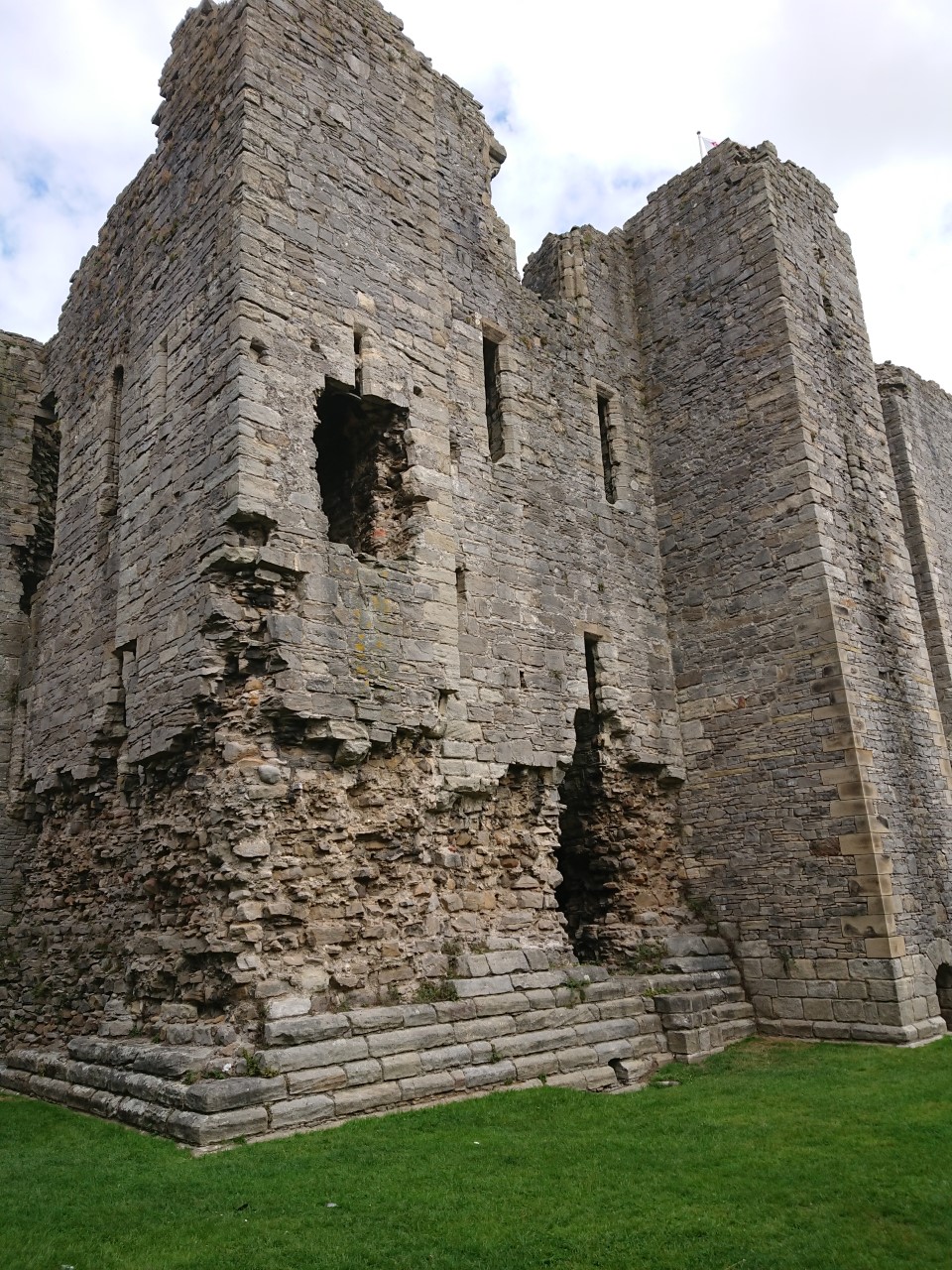
It was in 1393, John Lovell VII received a licence to crenellate his manor in Wardour (Wiltshire). The castle he built, now Old Wardour Castle, is of an unusual hexagonal design and despite its appearance are that of a fortress, it was mainly built for comfort and entertainment. Though the building was severely damaged during the Civil War, the ruins are still impressive and give an impression on the amount of money, John Lovell spent on its building.

John Lovell accompanied Richard II on both his expeditions to Ireland. When Richard’s cousin Henry of Bolingbroke invaded England while Richard was in Ireland in 1399, John Lovell stayed with the king even after he had sent most of the army back to England. By the time Richard, his remaining troops and household finally sailed for Wales, it was already too late.

Unfortunately, what exactly happened next cannot be pieced together with certainty as the chronicles describing the events are too vague. We know that soon after landing in Wales, Thomas Percy, Earl of Worcester, Edward, Duke of Aumale, John Stanley, controller of the royal household and John Lovell VII left Richard II and met up with Henry of Bolingbroke, either in Shrewsbury or Chester. Here they ‘put themselves at his mercy’. Considering that all four men had been favoured and promoted by Richard II, this looks like a case of blatant ungratefulness. However, at this time everybody vividly remembered what had happened during the last crisis of Richard II’s reign: all of his supporters that had not managed to escape abroad or were clergymen had been executed. It seems likely that John Lovell and the others tried to escape a similar fate.

Whatever his personal feelings were, John Lovell VII quickly made his peace with the new government. He did not participate in the Epiphany Rising that tried to place Richard II on the throne again and was quickly back in his old position at court. That he had gained the

trust of Henry IV was soon obvious, as John Lovell was one of the four men who were considered to become the tutor of Henry, Prince of Wales. Though he was not appointed in the end, he retained his place on the council. In February 1405 his long service to the Crown was rewarded when he was made Knight of the Garter. Though he was getting on in years, he still participated in the campaign in Wales in the same year. He died three years later on 10 September 1408.

The writs to hold the inquisitions post mortem about the estates he held were sent out to the various counties from Westminster a day later, on 11 September. The only exception is the writ to the escheator of Rutland, which was only written on 16 February 1409, presumably because it had been unknown John Lovell held land there.

The Lovell coat of arms (centre) in the cloister of Canterbury Cathedral (author)

It has been argued, though unfortunately I cannot remember where, that this quick response to his death meant that he had been ill for some time and his death was expected. The one record that specifies where John Lovell died, the inquisition taken in Lincoln on 25 September, state that he died at Wardour Castle in Wiltshire. I have to say that I have serious doubts that it was physically possible for the news of his death to travel the distance of over 100 miles from Wardour to Westminster in a single day. Even if John Lovell’s death had been expected it would still be necessary for someone to inform the administration that he had died so that the inquisitions post mortem could be sent out. It seems more likely to me that the information taken by the escheator in Lincoln was faulty, perhaps it was assumed that John Lovell would have been in Wardour Castle. The quickness with which the writs were issued, suggests to me that John Lovell died in London, probably at Lovell’s Inn in Paternoster Row.

John Lovell VII was buried in the church of the Hospital of St James and St John near Brackley. The church had had no previous connection to the Lovell family, but it was the burial place of Robert Holland, the grandfather of John Lovell’s wife Maud, and her great-grandfather, another Robert. This decision was another indication of how important his marriage was for John Lovell.

John Lovell VII had taken the fortunes of the Lovell family from a rather low point to a new height. He achieved this by luck, through his marriage to the heiress Maud Holland, dedicated service in war and peace, and through his skill to survive turbulent times like the Merciless Parliament or the usurpation of Henry IV. He could be accused of being a ruthless opportunist, but, to quote Mark Ormrod (in his masterful biography of Edward III): ‘the men who survived and thrived in the prince’s service, were precisely those who had the wit and judgement to adjust to the dramatic shifts in political fortunes.’ Though this refers to the last years of the reign of Edward II it also holds true for the turbulent times John Lovell VII lived through.

About the Author:

Monika E. Simon studied Medieval History, Ancient History, and English Linguistics and Middle English Literature at the Ludwig-Maximilians-Universität, Munich, from which she received an MA. She wrote her DPhil thesis about the Lovells of Titchmarsh at the University of York. She lives and works in Munich.

Links:
https://www.pen-and-sword.co.uk/From-Robber-Barons-to-Courtiers-Hardback/p/19045
https://www.facebook.com/MoniESim
http://www.monikasimon.eu/lovell.html

*

My Books

Signed, dedicated copies of all my books are available, please get in touch by completing the contact me form.

Defenders of the Norman Crown: The Rise and Fall of the Warenne Earls of Surrey tells the fascinating story of the Warenne dynasty, of the successes and failures of one of the most powerful families in England, from its origins in Normandy, through the Conquest, Magna Carta, the wars and marriages that led to its ultimate demise in the reign of Edward III. Defenders of the Norman Crown: Rise and Fall of the Warenne Earls of Surrey is now available from Pen & Sword BooksAmazon in the UK and US and Book Depository.

1 family. 8 earls. 300 years of English history!

Also by Sharon Bennett Connolly:

Ladies of Magna Carta: Women of Influence in Thirteenth Century England looks into the relationships of the various noble families of the 13th century, and how they were affected by the Barons’ Wars, Magna Carta and its aftermath; the bonds that were formed and those that were broken. It is now available from Pen & Sword,  Amazon and from Book Depository worldwide.

Heroines of the Medieval World tells the stories of some of the most remarkable women from Medieval history, from Eleanor of Aquitaine to Julian of Norwich. Available now from Amberley Publishing and Amazon and Book Depository.

Silk and the Sword: The Women of the Norman Conquest traces the fortunes of the women who had a significant role to play in the momentous events of 1066.  Available now from Amazon,  Amberley Publishing, Book Depository.

*

You can be the first to read new articles by clicking the ‘Follow’ button, liking our Facebook page or joining me on Twitter and Instagram.

©2021 Sharon Bennett Connolly and Monika E Simon

Guest Post: Philip Lovell, a career in royal service by Monika E Simon

Today it is a pleasure to welcome author Monika E Simon back to the blog, with an article looking at one particular member of the Lovell family. Monika’s book, From Robber Barons to Courtiers: The Changing World of the Lovells of Titchmarsh, has just been released in the UK. Over to Monika:

Philip Lovell, a career in royal service

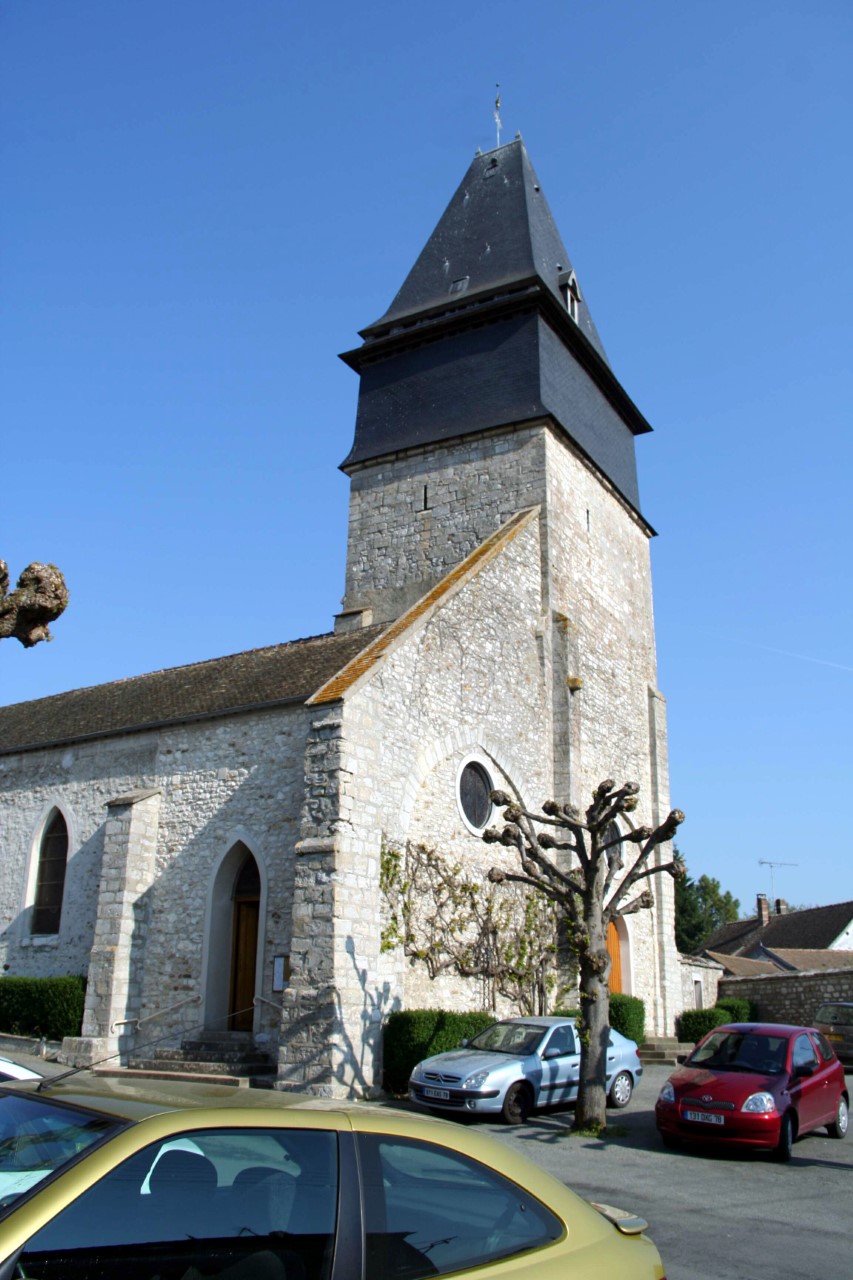
Parish church of St James the Great, Hanslope, Buckinghamshire

Philip Lovell was the younger son of William Lovell II and his wife Isabel (family unknown). He was the only member of the Lovell family who entered the church and had a successful if chequered career as a clerk and administrator in royal service, culminating in his appointment as Treasurer of England in 1252. He is also the first Lovell who left a significant trail in the royal records.Nonetheless, little is known about Philip Lovell’s early life. When his father William Lovell II died in 1212/13, Philip’s elder brother John Lovell I was still underage and King John granted his wardship to his supporter Alan Basset. As younger brother, Philip must have been underage as well. Unlike others who made their career in the church, Philip Lovell did not set his feet on this path as a young man. He married at an unknown time the widow of Alexander de Arsic whose name unfortunately is also unknown. They had three children, two sons, Philip Lovell the younger and Henry Lovell, and one daughter Amicia who married Richard de Curzon of Derbyshire. It is also not known when Philip Lovell’s wife died.

After his wife’s death Philip Lovell entered the church and in 1231/32 was ordained subdeacon and given the living in Lutterworth (Leicestershire) by Nicholas de Verdun. It may have also been Nicholas de Verdun who introduced Philip to Roger de Quincy, Earl of Winchester and Constable of Scotland, whose service Philip entered. Again the information is vague but Philip was witnessing the earl’s charters before 1240 and eventually became the earl’s steward for his English estates. During this period, Philip Lovell frequently travelled to Scotland where he earned the friendship of King Alexander II and second his wife Marie de Coucy, as Mathew Paris reports.

Philip Lovell must have worked efficiently and without causing trouble as otherwise Roger de Quincy would not have employed him as a steward or at least retained him in that position.

Over time Philip Lovell gained several positions in the church. He was as rector of Stanground (Huntingdonshire), Rock (Worcestershire), canon of London, and holding the living of Hanslope.

Seal of Alexander II

After about ten years in the service of Roger de Quincy and, no doubt using the contacts he had made for example with William Mauduit, Chamberlain of the Exchequer, entered the service of Henry III. In 1249 Philip Lovell was appointed a justiciary of the Jews through the influence of another influential man, John Mansel. Mansel was an ambitious and highly successful administrator whom Mathew Paris described as Henry III chief or special councillor. Perhaps he felt responsible for the man, he had introduced to royal service but he remained a firm supporter of Philip Lovell throughout his time in royal service.

At first everything went well for Philip Lovell and in 1250 he was styled a clerk and counsellor of the king. But a year later, Philip was disgraced for allegedly taking bribes from wealthy Jews in return for reducing the amount of tallage they had to pay. It is possible that the charges were trumped up by his rival and colleague, Robert de la Ho, as chronicles imply.

John Mansel and Alexander III of Scotland put in a good word with Henry III and Philip was restored to favour. John Mansel arranged for Alexander III to petition Henry III to restore Philip to favour, which he did remembering his parents friendship with Philip. Philip Lovell must have made a very good and lasting impression on Alexander II and his queen for his son to petition Henry III. John Mansel himself paid the fine of 10 marks of gold (a substantial sum) that Philip had offered. Even if Mansel felt responsible for the man he had been instrumental to gain the position as justiciar of the Jews it seems unlikely to me he would have gone to such length if he had thought that Philip was completely hopeless.

Philip Lovell’s restoration to favour was complete and swift. Not even a year after his dismissal from office, on 27 August 1252, he was appointed Treasurer of England. As a key figure in the administration of the country, his name appears constantly in the government records. The Patent Rolls, Close Rolls, and the Liberate Rolls of this period contain a multitude of references to his work which was incredibly varied.

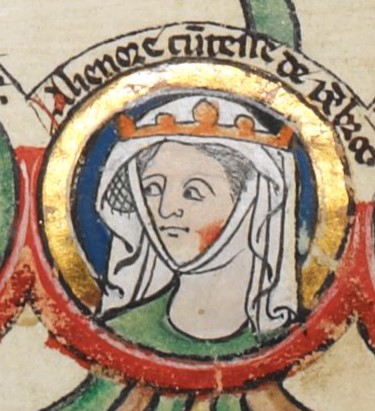
Eleanor of England, Countess of Leicester

The Liberate Rolls are the records of the writs ordering money to be paid out of the treasury. The work of the treasurer was varied and often hands-on. Most often, Philip Lovell was the person to authorise the payment. For example when the sheriffs of London were to be repaid for the lead they had purchased for building works in Windsor and on another occasion for the transport of the gear of the king’s pavilion in Westminster to Portsmouth. On other occasions the sheriff of Surrey and Sussex had transported the king’s treasure from London to Portsmouth. The sheriff of Kent was paid back the money he had spent on the reception of the Barsias Martini, the elect of Toledo and his household in Dover and on their travels to the New Temple in London.

Money was also paid out to Eleanor of England, Countess of Leicester for her dower. In 1256, Philip Lovell received 1,600 marks from Margaret de Lascy, Countess of Lincoln, a part payment of the arrears of the money she owned as her share of the dower payments to Eleanor of England.

Philip himself was often purchasing items for the royal court. For example, he bought 30 gold-wrought cloths for Queen Eleanor or wax for the king’s children in Windsor.

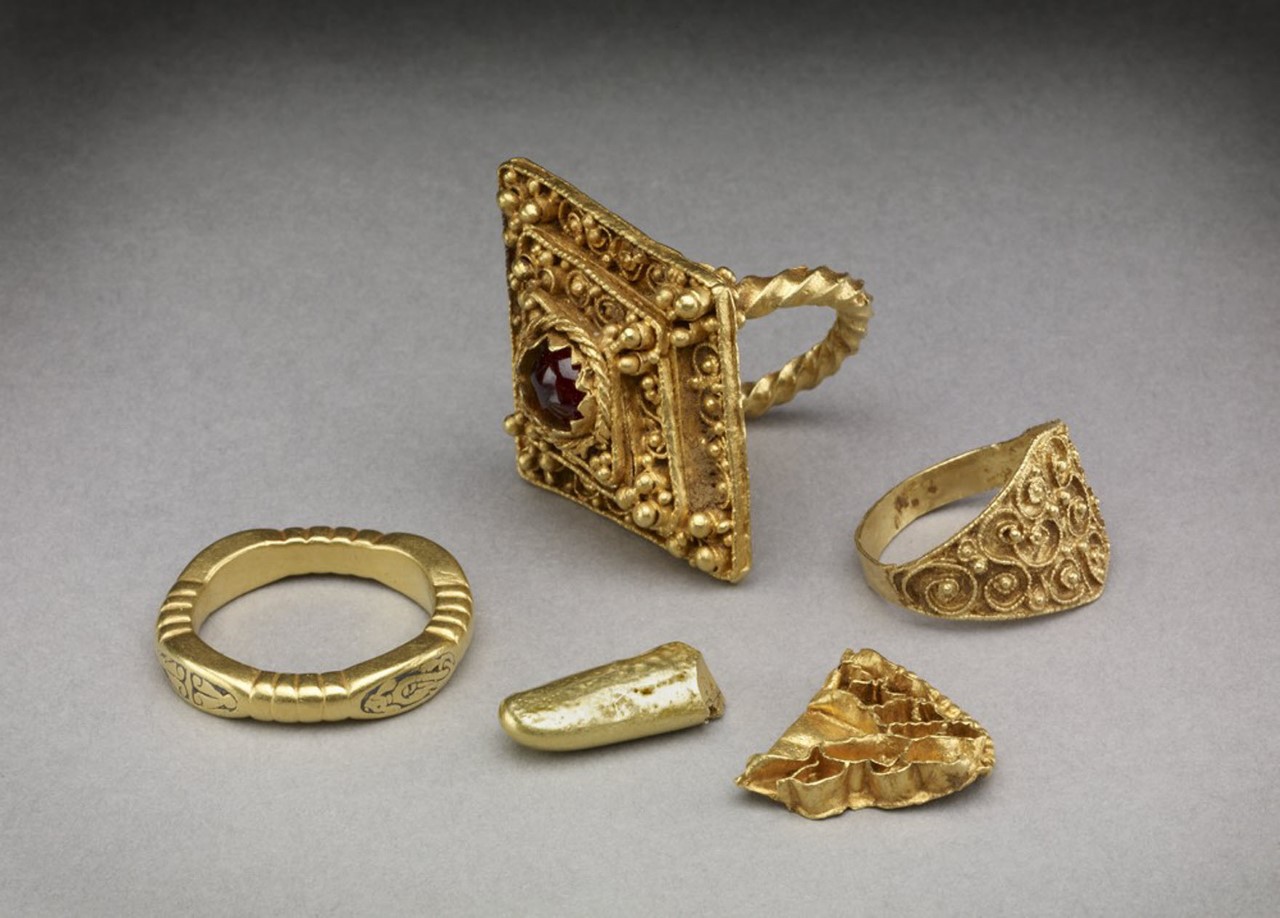
The purchases also shed a light on the sheer size of the royal household. In 1253, Philip Lovell and two colleagues purchased 82 gold buckles, 277 precious rings of gold, 15 girdles, 89 ‘massive’ rings of gold, and 14 ‘massive’ buckles of gold to the tune of £250 17s. 5d. In 1254, 600 ells of linen were bought to make napkins for the feast of St Edward. Another large purchase, in 1255, was of various spices: 385 pounds of pepper, 386 pounds of ginger, 4 pounds of mace, 12 pounds of setwall (valerian), and 16 pound of sugar ‘of Alexandria’. Sheep, boars and fowl were sent from the sheriff of Buckinghamshire to Westminster for the Feast of St Edward in 1255. Wine was also bought for the king. On several occasions Philip Lovell himself bought the wine and transported it to where the royal household was at the time.

Another frequent expense was for gift of the king to a church or cleric. In 1255, for example, five gold-wrought cloths, a piece of red sandal (a light silk material), and another piece of green sandal were bought for a cloth for St Peter’s in Westminster. In 1256, Philip Lovell bought an embroidered cope to give to the church of St Edmund. A year later he bought another embroidered cope that was a gift by the king to Westminster in honour of St Edward. It was not only vestments and cloth that was given to churches, in 1257 Philip bought a gold buckle for 10 marks to give to the feretory of St Edmund of Pontigny.

Hoard of Anglo-Saxon rings found at Leeds, West Yorkshire

For his service to the king, Philip Lovell was to be given ecclesiastical benefices, dignities or prebends to the amount of 200 marks per year. He was granted free pasture in the forest of Whittlewood and received gifts of trees on several occasions. He also often received grants of deer from the royal forests. In 1250, he simply took a hind and a doe in Sherwood Forest without asking prior permission. His pardon by the king for this offence must be regarded as a further sign of the good favour he stood in. Philip Lovell was also granted the wardship and marriage of the heirs of Vivian de Staundon.

Not all of Henry III attempts to promote his treasurer were successful. In 1257 he tried to persuade the monks of Coventry to make Philip Lovell bishop of Lichfield and Coventry but without success.

In the late 1250s, the dissatisfaction of the barons of England increased and with the charismatic leadership of Simon de Montfort, Earl of Leicester the demands for changes in the government grew louder. Philip Lovell was one of the men they wanted to remove from office. He had been too harsh in his attempts to find revenue for the treasury, as in 1255 when he was making an inquiry into the king’s revenues and rights in eight midland counties. Simon de Montfort had his private complaints against the king and his treasurer as the payments of his wife’s dower were a constant problem. The critics were eventually successful. Philip Lovell was accused of plundering the forest of Whittlewood, charges that were trumped up according to Nicholas Vincent in his biography of Philip Lovell in the ODNB. Nonetheless, Philip was dismissed from service and replaced by John de Crachale, archdeacon of Bedford.

Philip Lovell retired to Hanslope where he died on 29 December 1258 of grief that the king, whom he had served so faithfully, would not forgive him. His estates, which included lands in Little Brickhill (Buckinghamshire), Littlebury (Essex), and Snotescombe (Northamptonshire), were at first confiscated but later divided between his three children and his nephew John Lovell II.

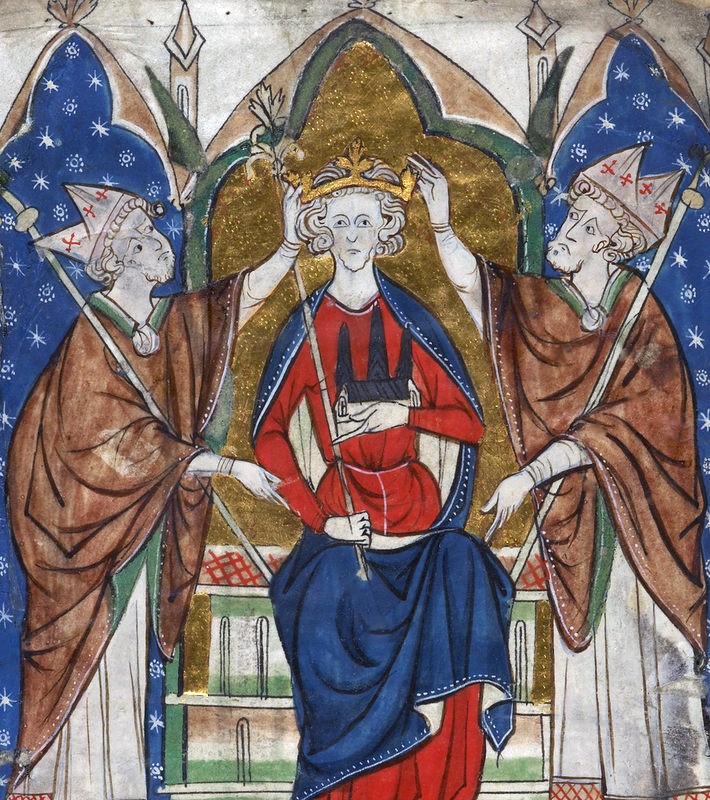
Coronation of King Henry III

Philip Lovell was a controversial figure. He lost his position as he was thoroughly disliked by many barons. Being responsible for collecting taxes and guarding the king’s financial rights and income is, if done thoroughly, not a job that is likely to make a person popular with those whose money he took. Modern historians are also critical. J.R. Maddicot describes him as ‘a man with a bad reputation for corrupt and oppressive behaviour’. Matthew Paris by contrast calls him a prudent, eloquent and magnanimous man.

Philip Lovell’s nephew, John Lovell II also entered royal service though he choose the more traditional route for a noblemen: service in war. It is possible that his uncle’s position at court helped him in this respect. However, John Lovell II’s maternal uncles, the Bassets, were a stronger influence that his paternal uncle Philip. Several brothers of John Lovell II’s mother Katherine were high-ranking members of the royal administration. The fact that John Lovell II decided to adapt the Basset coat of arms to become that used by the Lovell family speaks for a close link between the two families.

Images:

Church of England parish church of St James the Great, Hanslope, Buckinghamshire, seen from the southwest
(John Salmon / St James the Great, Hanslope, Bucks via Wikimedia Commons) https://commons.wikimedia.org/wiki/File:St_James_the_Great,_Hanslope,_Bucks_-_geograph.org.uk_-_333065.jpg

Steel engraving and enhancement of the Great Seal of Alexander II, King of Alba (Scotland) (Unknown author, Public domain, via Wikimedia Commons) https://commons.wikimedia.org/wiki/File:Alexander_II_(Alba)_i.JPG

Eleanor of England, Countess of Leicester (Unknown author, Public domain, via Wikimedia Commons)
https://commons.wikimedia.org/wiki/File:Alienor_Pembroke.jpg

Hoard of Anglo-Saxon rings found at Leeds, West Yorkshire (portableantiquities, CC BY 2.0 <https://creativecommons.org/licenses/by/2.0&gt;, via Wikimedia Commons)

Coronation of King Henry III (Unknown author, Public domain, via Wikimedia Commons) https://commons.wikimedia.org/wiki/File:HenryIII.jpg

About the Author:

Monika E. Simon studied Medieval History, Ancient History, and English Linguistics and Middle English Literature at the Ludwig-Maximilians-Universität, Munich, from which she received an MA. She wrote her DPhil thesis about the Lovells of Titchmarsh at the University of York. She lives and works in Munich.

Links:
https://www.pen-and-sword.co.uk/From-Robber-Barons-to-Courtiers-Hardback/p/19045
https://www.facebook.com/MoniESim
http://www.monikasimon.eu/lovell.html

*

My Books

Defenders of the Norman Crown: The Rise and Fall of the Warenne Earls of Surrey tells the fascinating story of the Warenne dynasty, of the successes and failures of one of the most powerful families in England, from its origins in Normandy, through the Conquest, Magna Carta, the wars and marriages that led to its ultimate demise in the reign of Edward III.

1 family. 8 earls. 300 years of English history!

Defenders of the Norman Crown: Rise and Fall of the Warenne Earls of Surrey is now available from Pen & Sword BooksAmazon in the UK and US and Book Depository.

Also by Sharon Bennett Connolly:

Ladies of Magna Carta: Women of Influence in Thirteenth Century England looks into the relationships of the various noble families of the 13th century, and how they were affected by the Barons’ Wars, Magna Carta and its aftermath; the bonds that were formed and those that were broken. It is now available from Pen & Sword,  Amazon and from Book Depository worldwide.

Heroines of the Medieval World tells the stories of some of the most remarkable women from Medieval history, from Eleanor of Aquitaine to Julian of Norwich. Available now from Amberley Publishing and Amazon and Book Depository.

Silk and the Sword: The Women of the Norman Conquest traces the fortunes of the women who had a significant role to play in the momentous events of 1066.  Available now from Amazon,  Amberley Publishing, Book Depository.

*

You can be the first to read new articles by clicking the ‘Follow’ button, liking our Facebook page or joining me on Twitter and Instagram.

©2021 Sharon Bennett Connolly

Guest Post: How to make your fortune and get your name into the history books? by Monika E Simon

Today it is a pleasure to welcome author Monika E Simon back to the blog, with an article looking at the origins of the Lovell family. Monika’s book, From Robber Barons to Courtiers: The Changing World of the Lovells of Titchmarsh, will be released on 30 June. Over to Monika:

How to make your fortune and get your name into the history books?

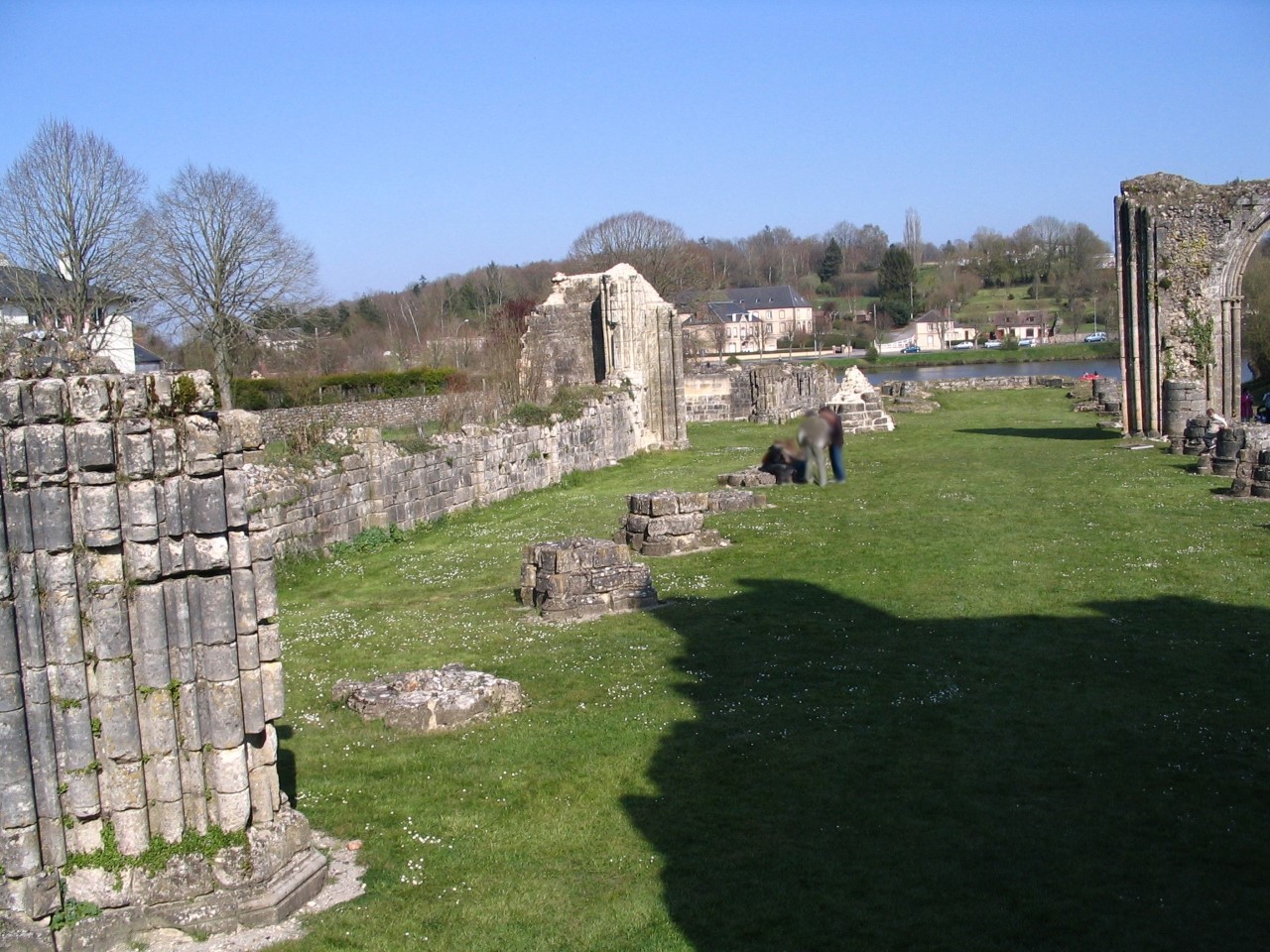
The ruins of the Abbay of Saint-Evroult-Notre-Dame-du-Bois, Orne

In my last blogs I have talked about events from the last century of the history of the Lovell of Titchmarsh. Today I am going back to their very beginnings of this English noble family. So far back in fact that they had not arrived in England and were not called Lovell. At the time, the second half of the eleventh century, the ancestors of the family were obscure minor lords at the Norman French border about whom we know nothing beyond their names and a few details about lands they possessed or office they held. This all changed with Ascelin Goël, who was, as the Complete Peerage puts it, ‘undoubtedly the true founder of the family fortunes.’ He turned his family from an minor nobles into powerful border lords.

How did Ascelin Goël achieved this? Not as the reward for faithful service to his lord, but through rebellion and violence. His behaviour was outrageous enough, even in a time not short on violent men, for the chronicler Orderic Vitalis to write about Ascelin Goël’s deeds in his Ecclesiastical History.

For many events, this chronicle is the only source. Fortunately, Orderic Vitalis was exceptionally well placed to know what he was writing about. He was a monk at the monastery of St Evroult (Dept. Orne, Normandy) and in the latter part of his chronicle he describes events that happened in his own lifetime and often not very far from where he lived. His Ecclesiastical History is, as J.O. Prestwich writes ‘of exceptional value for the history of the Anglo-Norman world’. The way he orders the events in his chronicle is, however, not without severe drawbacks, as he was ‘remarkably careless of chronology’ (Prestwich again). The confusing structure means that the events in which Ascelin Goël was involved in are described in different parts of the chronicle and it is often difficult or impossible to be certain what happened when. Since Orderic Vitalis is mostly the only source existing it is also not possible to check his report or fill in any information his chronicle omits to mention. Nonetheless it is possible to reconstruct the story and draw some probably conclusions.

Ascelin Goël was the eldest son of Robert d’Ivry and Hildeburge de Gallardon. Both of his parents entered religious houses towards the end of their lives and Hildeburge de Gallardon acquired a reputation for heir piety. A brief description of her life, the Vita Domine Hildeburgis, was written, perhaps as a first step to have her canonized. There is however no evidence that this was pursued any further.

Ascelin Goël’s father Robert d’Ivry held land around Bréval and Ivry on both sides of the French Norman border. He was castellan of the border Castle of Ivry (in modern-day Ivry-la-Bataille, Dept. Eure) in 1059. Robert’s mother was probably Aubrée, daughter of Hugh, Bishop of Bayeux and therefore granddaughter of Ralph, Count of Bayeux and his wife Aubrée. According to Orderic Vitalis it was Aubrée who had the architect Lanfred build the Castle of Ivry. If Ascelin Goël’s grandmother was indeed Aubrée, daughter of Hugh, Bishop of Bayeux, he was for one indirectly related to the ducal family, as Aubrée’s grandfather Ralph Count of Bayeux was a half-brother of Richard I of Normandy. It would also mean that Ascelin Goël was related to William de Breteuil, his lord and great opponent, as William’s grandmother Emma was a sister of bishop Hugh. Moreover, Ascelin’s descend from the woman who built the Castle of Ivry would give him a hereditary claim on the castle.

Église Notre-Dame-de-la-Trinité in Bréval

Ascelin Goël had in fact set his sight on the Castle of Ivry, a mighty border fortress and possibly the model for the White Tower in London. At the time, castles were centres of power and much coveted by the nobility. Particularly desirable were the castles that guarded the borders of England against Wales and Normandy against France. Possessing one of these border castles gave the owner both power and an unusual amount of freedom, especially if they were held them in their own right and not as castellans appointed by their king or duke. Many noblemen used any means, fair or foul to gain full control of one or more of these castles. They used any opportunity to achieve this goal, and in 1087, after the death of William the Conqueror, the nobles en masse expelled the royal garrisons from their castles.

Until then the Castle of Ivry had been in the hand of the dukes of Normandy. William the Conqueror had appointed Roger Beaumont as the castellan, probably after Robert d’Ivry had joined a religious community. When Robert Curthose became Duke he granted the castle to William de Breteuil, who was one of his long-standing supporters. To appease Roger Beaumont, Robert Curthose gave him the Castle of Brionne as compensation.

William de Breteuil was a grandson of Osbern, the steward of duke Robert the Magnificent. He had not inherited all the lands of his father William fitz Osbern, but enough to become one of the most powerful nobleman in Normandy. After gaining possession of Ivry he made Ascelin Goël castellan of the castle. As it turned out, Ascelin Goël was not satisfied with merely holding the castle for another lord. Two years after becoming castellan of Ivry, he took control of the castle, presumably by expelling William de Breteuil’s men and replacing them with his own.

An interesting aspect of this conflict is that Ascelin Goël took on not only his lord but also a nobleman who was so much more powerful than he himself was. Ascelin Goël was only a minor border lord whose man residence was in Bréval (Dept. Yvelines). Here he had built a strong castle that he had filled ‘with cruel bandits to the ruin of many’, according to Orderic Vitalis.

After gaining control of Ivry, Ascelin Goël handed it over to Duke Robert. It is possible that he hoped his hereditary claim to the castle would move Robert Curthose to grant it to him. If that was the case, he was mistaken, as Robert Curthose sold it back to William de Breteuil.

Unsurprisingly, William de Breteuil was far from pleased with his castellan and deprived Ascelin Goël not only of his castellanship but of all the lands Ascelin had held off him.

For Ascelin Goël this was a setback but he did not give up. In 1091, he was able to capture William de Breteuil, with the help of Richard of Montfort and household troops of King Philip I of France. William de Breteuil now found himself incarcerated for three months at Bréval and subjected to various forms of torture. Once, Orderic Vitalis writes, Ascelin Goël had his prisoners exposed to the freezing wind clad only with wet shirts until these were frozen solid. After three months of imprisonment, William’s release was secured by a truce arranged by several noblemen. He had to pay a heavy price for his freedom. He had to give the Castle of Ivry to Ascelin Goël and pay a hefty ransom in money, horses, arms and ‘other things’. Additionally, William de Breteuil had to give Ascelin his illegitimate daughter Isabel as his wife.  – Needless to say, what Isabel thought of this was not recorded.

However, Ascelin Goël was not able to enjoy possessing Ivry for long. The year after his release William de Breteuil first tried to retake Ivry. He failed and barely escaped being recaptured by Ascelin Goël, who again tortured the prisoners he had taken. The next year William de Breteuil was better prepared. With the support of Robert Curthose and King Philip of France, both of whom he had to pay for their help, he tried again to take Ivry back. He had also gained the support of the experienced warrior Robert de Bellême who led the siege of Ascelin Goël’s Castle of Bréval. Ascelin was able to withstand the siege for two months but eventually had to surrender and hand the Castle of Ivry back to William de Breteuil.

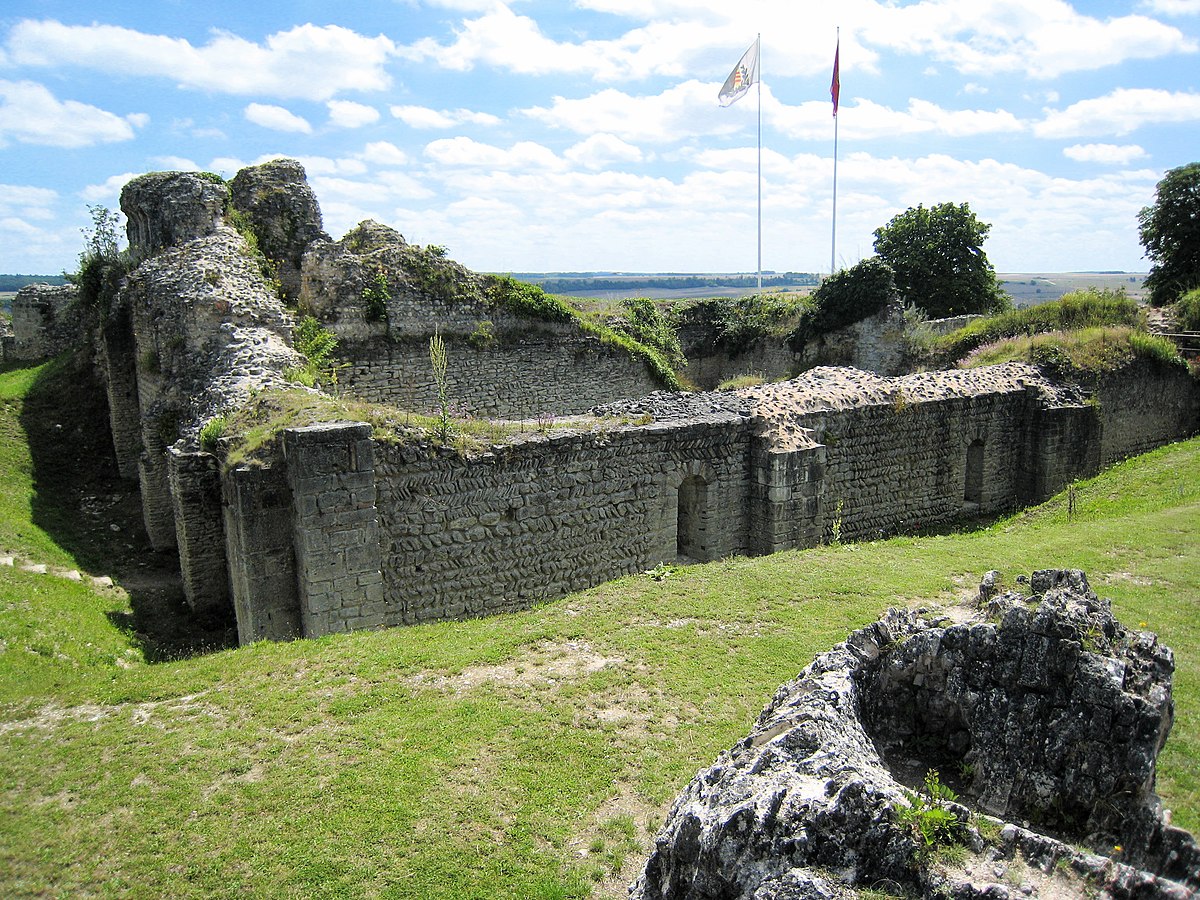
The ruins of the Castle of Ivry

Having lost Ivry again, Ascelin Goël seems to have realised that for now he had no chance to hold the castle permanently against William de Breteuil. With Isabel de Breteuil as his wife, Ascelin Goël also had a better claim to inherit the castle after William de Breteuil’s death. William had no legitimate children, only an illegitimate daughter Isabel and an illegitimate son Eustace. As inheritance law was not yet strictly settled in this time, Isabel, Eustace, and several more distant relations could claim William de Breteuil’s lands or part of them after his death.

When William de Breteuil died on 12 January 1203, Ascelin Goël was in fact one of them men fought Eustace de Breteuil for possession of William de Breteuil’s lands. The two most prominent claimants were William Gael, a nephew of William de Breteuil, and a more distant relative the Burgundian Reginald de Grancey. Eustace had previously gained the goodwill of Henry I of England by supporting him in driving Robert de Bêlleme out of England and had married Henry I’s illegitimate daughter Juliana. Moreover, the Norman nobility largely supported Eustace, ‘because’, as Orderic Vitalis explains, ‘they chose to be ruled by a fellow countryman who was a bastard rather than by a legitimate Breton or Burgundian’.

Ascelin Goël is usually mentioned in this conflict, but he is not regarded as a rival claimant to the Breteuil in inheritance. However, Orderic Vitalis singles him out particularly. He writes that Henry I promised to support Eustace ‘against Goel and all his other enemies’. To me it seems significant that it is Ascelin Goël rather than Reginald de Grancey whom Orderic names as Eustace principal enemy.

To solve this crisis, Henry I sent his chief advisor Robert Beaumont, Count of Meulan to Normandy. Robert Beaumont soon had a personal reason to find a solution, as Ascelin Goël kidnapped John, a citizen from Meulan, when he was on his way back from a meeting with Robert Beaumont. John de Meulan was imprisoned in Bréval and for four months Robert Beaumont was unable to rescue him. Eventually Robert Beaumont was able to arrange a peace between all parties. Orderic Vitalis reports that he betrothed his baby daughter Emma to Amaury de Montfort, which appeased not only Amaury himself but also his uncle William, Count of Évreux, Ralph of Conches, Eustace de Breteuil, and Ascelin Goël. Orderic Vitalis does not mention any specific concessions made to Ascelin Goël. Later evidence suggests that Ascelin Goël gained what he had strived to gain for more than ten years: the Castle of Ivry. A charter of 1115 calls Ascelin Goël ‘Goelli de Ibriaco’, Goël of Ivry, and at no other time Ascelin Goël was in the position to achieve this concession from Eustace de Breteuil.

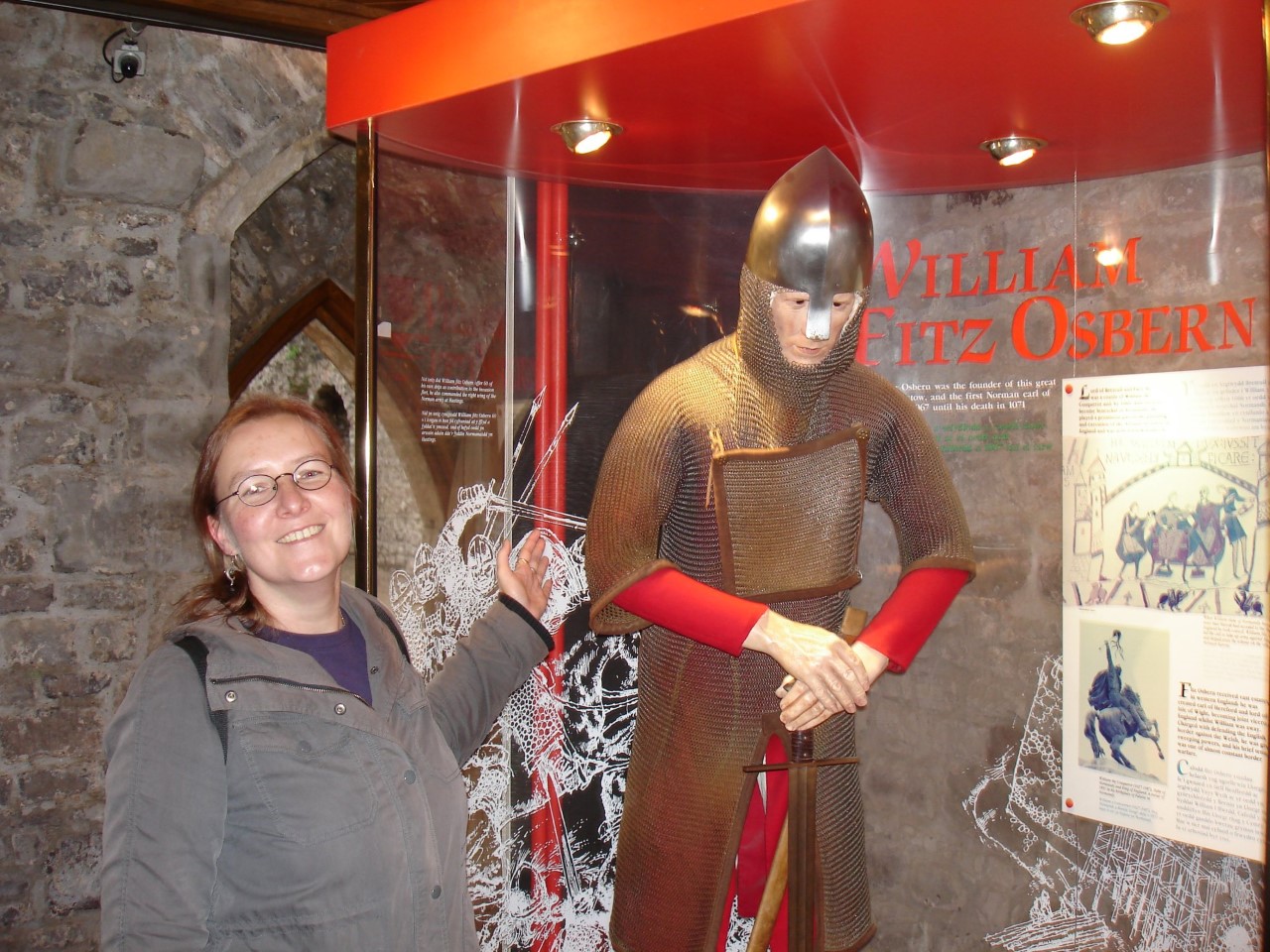
William fitz Osbern and the author at Chepstow Castle, 2007 (Kirsty Hartsiotis)

From this time on, Ascelin Goël kept his peace until his death between 1116 and 1119. At least he refrained from engaging in feuds with his powerful neighbours. Orderic Vitalis writes that he and his sons continued to plague the region with their violence and cruelty.

To answer the question I have asked at the beginning of this blog: How did one make one’s fortune and got one’s name into the history books? Ascelin Goël’s answer was by rebellion and violence. His disregard from the bonds of feudal lordship, his cruelty and ruthlessness ensured him a place in Orderic Vitalis’s Ecclesiastical History and from there in history books to the present day. He also probably gained the Castle of Ivry and became a much more powerful lord than his father and grandfather had been.

Though Robert Goël, Ascelin Goël’s eldest son, did not inherit the Castle of Ivry, he did inherit his ruthless streak and tactical skill. He joined the rebellion against Henry I in 1118 but was the first rebel to make his peace with the king in 1119. In return and ‘to guarantee his loyalty’, to quote Orderic Vitalis one last time, Henry I granted Robert Goël the Castle of Ivry. Robert Goël’s younger brother, William Lovell I, inherited the castle after his brother’s death in or shortly before 1123.

Images:

Courtesy of Wikimedia Commons except William fitz Osbern and the author at Chepstow Castle, 2007 which is courtesy of Kirsty Hartsiotis

About the author:

Monika E. Simon studied Medieval History, Ancient History, and English Linguistics and Middle English Literature at the Ludwig-Maximilians-Universität, Munich, from which she received an MA. She wrote her DPhil thesis about the Lovells of Titchmarsh at the University of York. She lives and works in Munich.

Links:
https://www.pen-and-sword.co.uk/From-Robber-Barons-to-Courtiers-Hardback/p/19045
https://www.facebook.com/MoniESim
http://www.monikasimon.eu/lovell.html

*

My Books:

Defenders of the Norman Crown: The Rise and Fall of the Warenne Earls of Surrey tells the fascinating story of the Warenne dynasty, of the successes and failures of one of the most powerful families in England, from its origins in Normandy, through the Conquest, Magna Carta, the wars and marriages that led to its ultimate demise in the reign of Edward III.

1 family. 8 earls. 300 years of English history!

Defenders of the Norman Crown: Rise and Fall of the Warenne Earls of Surrey will be released in the UK on 31 May and in the US on 6 August. And it is now available for pre-order from Pen & Sword BooksAmazon in the UK and US and Book Depository.

Also by Sharon Bennett Connolly:

Ladies of Magna Carta: Women of Influence in Thirteenth Century England looks into the relationships of the various noble families of the 13th century, and how they were affected by the Barons’ Wars, Magna Carta and its aftermath; the bonds that were formed and those that were broken. It is now available from Pen & Sword,  Amazon and from Book Depository worldwide.

Heroines of the Medieval World tells the stories of some of the most remarkable women from Medieval history, from Eleanor of Aquitaine to Julian of Norwich. Available now from Amberley Publishing and Amazon and Book Depository.

Silk and the Sword: The Women of the Norman Conquest traces the fortunes of the women who had a significant role to play in the momentous events of 1066.  Available now from Amazon,  Amberley Publishing, Book Depository.

*

You can be the first to read new articles by clicking the ‘Follow’ button, liking our Facebook page or joining me on Twitter and Instagram.

©2021 Sharon Bennett Connolly  and Monika E Simon

Guest Post: The Elusive Life of Francis, Viscount Lovell by Monika E. Simon

Today it is a pleasure to welcome back Monika E. Simon to the blog, with a second guest blog post. This time we are looking at Francis Lovell, close friend of Richard III who seems to have disappeared after the 1487 Battle of Stoke and the defeat of the forces of pretender Lambert Simnel. Monika’s debut book, From Robber Barons to Courtiers: The Changing World of the Lovells of Titchmarsh, is out at the end of the month. 

The elusive life of Francis, Viscount Lovell

On 24 May 1487 a young boy was crowned Edward VI in Christchurch Cathedral in Dublin by William FitzSimon, Archbishop of Dublin. A large number of Irish bishops, abbots, and priors attended the ceremony, as well as many Anglo-Irish nobles, including by Garret Mor FitzGerald, Earl of Kildare, and a contingent of English noblemen who had never accepted the Henry VII as king or who had abandoned him later. Most notable among these group were John de la Pole, Earl of Lincoln and Francis, Viscount Lovell, the nephew and best friend of the previous king Richard III, respectively.

Francis Lovell had been chamberlain of Richard III and was lampooned in William Collingbourne’s often-quoted doggerel, alongside William Catesby and Richard Ratcliffe:

“The catte, the ratte, and Louell our dogge,

Rulyth all Englande vnder the hogge”

Slanderous as the rhyme is, it is also quite memorable and probably one of the most famous quotes of this period.

Bosworth
(Daveleicuk, CC BY-SA 4.0 <https://creativecommons.org/licenses/by-sa/4.0>, via Wikimedia Commons)

Francis Lovell is without doubt the most famous member, not to say the only famous member of his family. However, despite his fame he is a ‘shadowy presence’ to us, to use my favourite description coined by J.M. Williams. The information that can be gathered from the existing records leaves us with huge gaps in our knowledge of his life and not only where one would expect them. While it usual that there are no records of his birth, it is surprising that for three years after coming of age and gaining full possession of his estates in 1477 Francis Lovell is not mention in governmental records. Nobleman like Francis Lovell were normally involved in the administration of the country and individual counties, where their estates were situated. It was not until 1480 that his name appears in the Patent Rolls, when he was appointed to a commission of array in the North Riding of Yorkshire.

Thanks to the fortunate survival of the Paston Letters we know Francis Lovell was married in 1466, at the age of about ten, to Anne FitzHugh, daughter of Henry FitzHugh and Alice Neville, the sister of Richard Neville, Earl of Warwick, ‘the Kingmaker’. Interestingly, it was only a year later, on 19 November 1467 that his wardship and marriage was granted to the Earl of Warwick. Francis Lovell’s father had died more than two years earlier, on 9 January 1465 and his mother a year later and a half later, on 5 August 1466. It is possible that in the period between his father’s death and the grant of his wardship to the earl of Warwick, Francis Lovell had remained a ward of the king, but the fact that he was already married to the earl’s niece when the grant was recorded could mean that his warship had already been given informally to the earl.

Francis Lovell joined the household of the earl of Warwick at Middleham and it is often assumed that it was in this period he became a close friend of Richard, Duke of Gloucester, who was staying with the earl in the same time. However, it is not known when Francis reached the Yorkshire castle nor how long Richard stayed there. It is possible that the two boys spent several years together but also that were both at Middleham only for a short period of time.

Occasionally, when Francis Lovell found himself caught up in the big events of the time, the government’s records shed some light on his life. In 1470 his father-in-law Henry FitzHugh rebelled against Edward IV in support of the earl of Warwick attempt to overthrow the king. The uprising was suppressed and the pardon for Henry FitzHugh included his son-in-law Francis Lovell and Francis’s two sisters Joan and Frideswide as all three of them seemed to have lived in with the FitzHughs at the time.

When the Earl of Warwick was killed in the Battle of Barnett, Francis Lovell was still under age and his wardship was granted to Edward IV’s sister Elizabeth and her husband John de la Pole, Duke of Suffolk. Where he lived at this time is – naturally – unknown. He may have continued to live with his wife’s family, as he joined the Corpus Christi Guild at York alongside his wife Anne, her sister Elizabeth, and her mother Alice Neville in 1473.

Francis Lovell came of age and was given control of his large inheritance in 1477. He was then a very rich and powerful nobleman. How much income he had is difficult to determine but his estates spread over the length and breadth of England from Wiltshire to Yorkshire and from Kent to Chester. Altogether he had held five baronies, four of them had come to his family through fortunate marriages of previous Lords Lovell to heiresses. His grandfather William Lovell had already been assessed with an income of £1,000 in 1436, which made him one of the richest peers below the rank of earl.

Again little is know about Francis Lovell’s life for the next six years. It seems that he spent most of his time in the north far away from the centre of his family’s estates that were largely in the south and the midlands. The few commission he was appointed to where for Yorkshire. In 1480 he accompanied Richard, Duke of Gloucester on campaign in Scotland and was knighted there by the duke. On occasion he must have ventured to the south to look after his estates there, as in 1482, when he wrote to William Stonor that he could not come south as he had planned and asked William Stonor to make sure his deer are looked after in Rotherfield Greys (an estate Francis Lovell had inherited from his grandmother). He would have also attended court and parliament. He was present at least in two parliaments as he was appointed as one of the triers of petitions for England, Ireland, Wales and Scotland.

Middleham Castle
(leestuartsherriff, CC BY-SA 4.0 <https://creativecommons.org/licenses/by-sa/4.0>, via Wikimedia Commons)

Even though much of his life largely remains hidden from us, Francis Lovell must have made an impression at least on Richard, Duke of Gloucester and also Edward IV. On 4 January 1483 Francis Lovell was created Viscount by the king. Interestingly, a near contemporary description of the ceremony wrongly identified the king as Richard III and on occasion this misidentification can be found in modern historiography as well.

After the death of Edward IV, the succession crisis, and Richard III becoming king in the spring and early summer of 1483, Francis Lovell became more prominent. He was appointed chief butler first for Edward V then for Richard III. More importantly, he was also appointed chamberlain by Richard III. The chamberlain was one of the most influential man at the royal court as he controlled access, both written and in person, to the king. For this reason and because the chamberlain had to be in constant contact with the king, the position was always given to a close friend, someone whom the king trusted absolutely. Next to the queen, the chamberlain was perhaps the most influential man at court. However, how much influence the chamberlain (or the queen) had, cannot be ascertained as it left no trace in the records. Due to their powerful positions chamberlains were often attacked for abusing their

position, as for example William Latimer, chamberlain of Edward III. However, the doggerel mentioned at the start is the only record of Francis Lovell being criticised in person.

How important Francis Lovell had become also was visible to all at the coronation of Richard III as he played an important role in the ceremony. Many of his duties as chamberlain and chief butler were unspecified, but Francis Lovell also purchased the queen’s ring, carried the third sword of state at the coronation, and had to stand before the king during the coronation banquet. Next to him several other members of his family participated in the coronation: his wife, Anne FitzHugh, her mother, Alice Neville, and her sister-in-law Elizabeth Borough were among the twelve noblewomen of the queen Anne Neville. Francis Lovell’s cousin Henry Lovell was the highest ranking of the king’s henchmen.

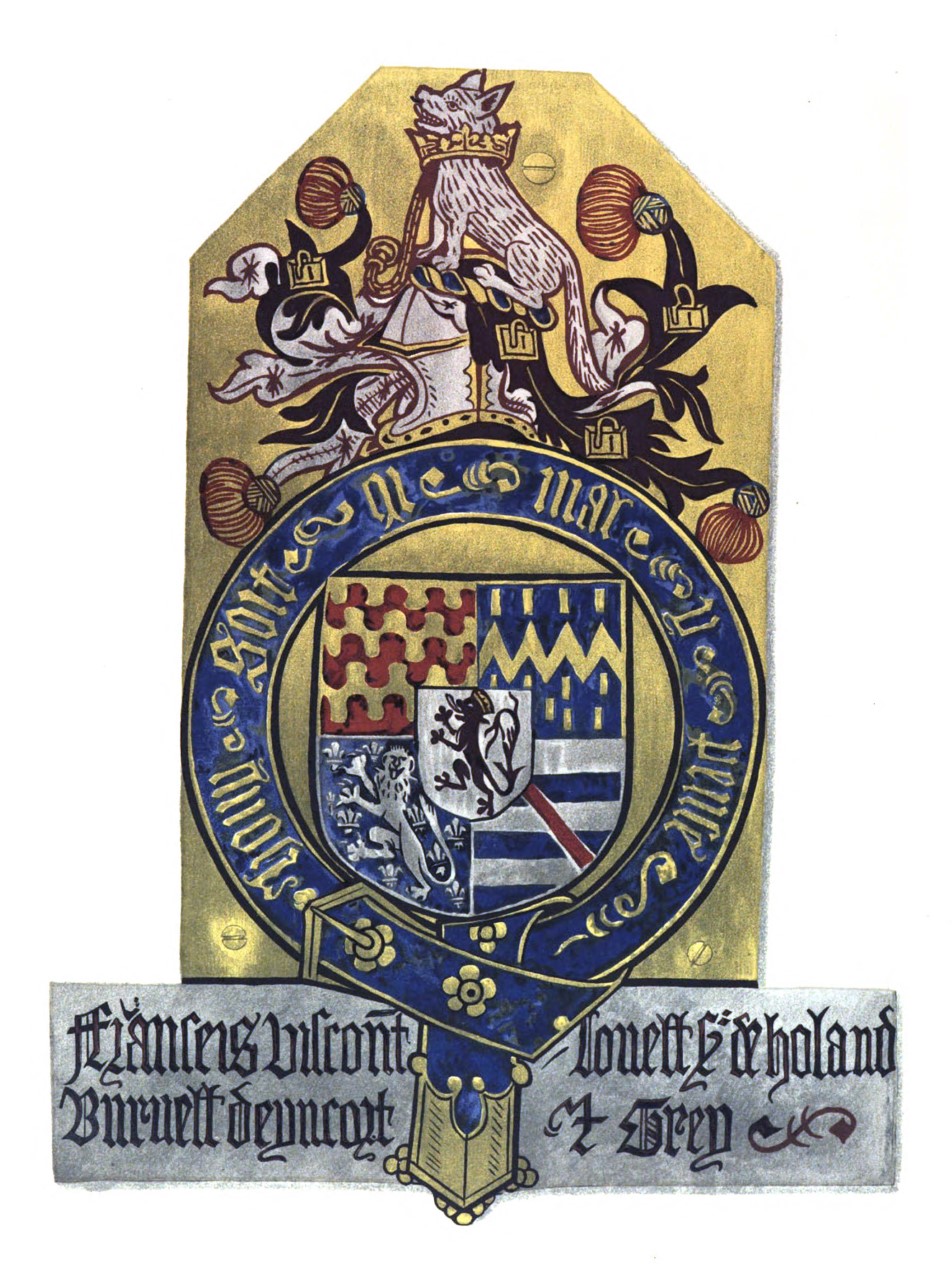
During the brief reign of Richard III, Francis Lovell was granted considerable estates, including the honour of Wallingford St Valery and the lordships of Cookham and Bray, and was appointed to a number of offices including constable of Wallingford Castle. A particular honour was given to him when he was made a Knight of the Garter, probably in 1483. His garter stall plate can still be seen today in St George’s Chapel, Windsor. On it he lists his full range of titles: ‘Francis Viscount Lovell & de holand Burnett deynccort & Grey.’

Since the Croyland Chronicle reports that Francis Lovell was sent to the Southampton to prepare the defence against the threatening invasion of Henry Tudor, it has been questioned whether he was at the Battle of Bosworth. While it is impossible to be certain, I think it is more likely that he was at the battle, as the Croyland Chronicle does not specify when he was sent south. As chamberlain Francis Lovell also had to be in constant attendance to the king, his absence from court was therefore probably brief. Additionally, two independent sources report that Francis Lovell was at the battle. The proclamation of Henry VII after the battle included Francis Lovell among the fallen as does a memorandum from York from the 23 August 1485.

Francis Lovell’s Garter Stall Plate, St George’s Chapel, Windsor
(Public Domain, digitized by Google).

After the battle of Bosworth Francis Lovell was one of the few men who refused to make peace with Henry VII. Most others, including his cousin Henry Lovell and John de la Pole, Earl of Lincoln accepted Henry as king. Again there are only a few occasions when the whereabouts of Francis Lovell are known. He was in Yorkshire where he attempted to kidnap Henry VII, without success. It was later reported that he had fled to Furness Fells and on 19 May 1486 he was said to be in sanctuary in Ely. Shortly thereafter he made his way to Burgundy where he resurfaces at the court of Maria, Duchess of Burgundy and her stepmother Margaret of York.

Another guest there was a boy who claimed to be Edward, Earl of Warwick, the son of George, Duke of Clarence. Sometime later, John de la Pole, Earl of Lincoln also arrived in Burgundy to support the boy. It is generally believed that the boy was an impostor whose name was Lambert Simnel, though whether this was his real name has been questioned. However, John Ashdown-Hill offers the hypothesis that he was who he claimed to be. George, Duke of Clarence had certainly attempted to smuggle his infant son to Ireland. Ashdown-Hill speculates that he had succeeded and the boy who lived as his son in England was the substitute. If that were the case, and that is a big ‘if’, it would explain why John de la Pole and Francis Lovell supported him.

In 1487, the boy, accompanied by Francis Lovell, John de la Pole, and a company of mercenaries under the command of Martin Schwartz travelled to Ireland where the boy was crowned Edward VI. From Ireland they invaded England only to meet defeat at the Battle of Stoke on 16 June. John de la Pole was killed, the boy king was captured, but the fate of Francis Lovell is unknown.

One theory, possibly first written down by Francis Bacon, was that Francis Lovell lived in a cave or vault according to rumour. Bacon also writes that another report says he drowned in the river Trent when he tried to swim across it after the Battle of Stoke.

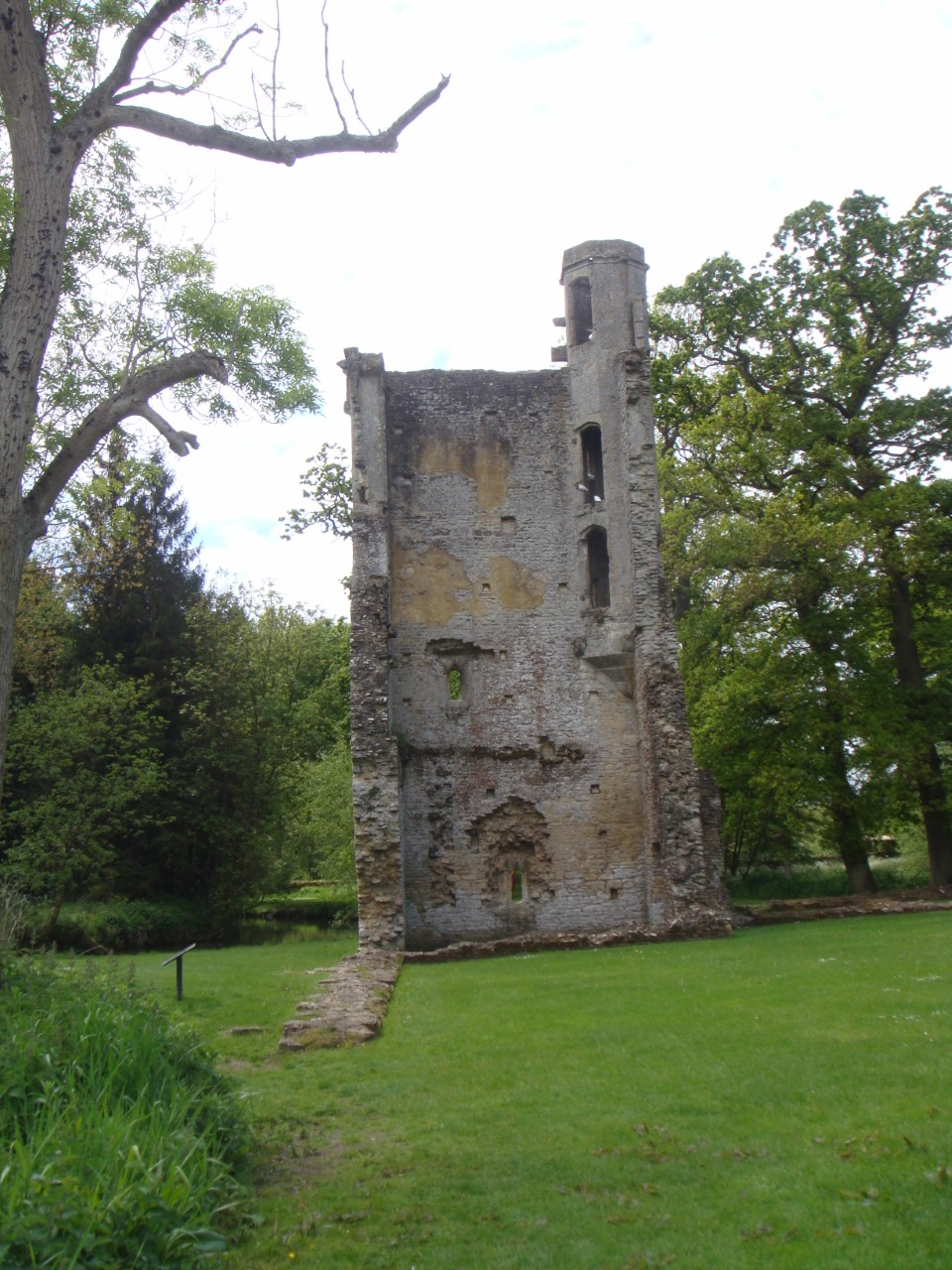
The best known theory about what happened to Francis Lovell is that he returned to Minster Lovell to live there in a hidden chamber underneath Minster Lovell Hall, being provided with all he needed by a faithful servant. However, for some reason the servant was prevented from doing so and Francis Lovell died of starvation. According to a report from the early eighteenth century, a skeleton was discovered in a hidden chamber underneath Minster Lovell Hall during construction work. The report claims that the skeleton sat at a table, there was writing material nearby, and a ‘much mouldered cap’. Unfortunately, the skeleton immediately turned to dust after exposure to fresh air. However, no secret chamber, cellar or vault was ever discovered underneath Minster Lovell Hall, which makes this story highly unlikely. Moreover, skeletons do not turn to dust, even if they had been in tightly sealed rooms and are exposed to fresh air. Skeletons or mummified bodies start to decompose quickly if not kept in a carefully controlled environment, but don’t turn to dust.

An intriguing snippet of information is that James IV of Scotland granted a safe conduct to Francis Lovell in 1488. However this trail also disappears and no other reports of Francis Lovell in Scotland exist. Shortly before this date, Francis Lovell’s mother-in-law had made an attempt to find out what happened to him. She had sent Edward Franke to the north to enquire about Francis, but Franke returned without having found out what had happened to Francis. We know of this search, as Alice Neville wrote to John Paston III to cancel a meeting as she said she wanted to stay with her daughter Anne who was very distressed about the lack of news.

Minster Lovell
(Monika E Simon)

Despite his prominent role during the reign of Richard III Francis Lovell also remains almost invisible in contemporary sources. Neither Mancini’s Usurpation of Richard III nor Thomas More’s History of Richard III mention him at all. – Shakespeare gave him only a couple of lines and as a consequence his part is usually cut out of the production and his lines given to somebody else. – Chronicles do mention Francis Lovell only after the battle of Bosworth, generally in connection with his participation in the events surrounding ‘Lambert Simnel’, are recorded.

Francis Lovell’s elusive life and unknown end is just is another mystery of this time that is not short of such. Some are highly controversial like the fate of the ‘Princes in the Tower’ or the credibility of the claim that Edward IV’s marriage to Elizabeth Woodville was bigamous, some less often debated like true identity of ‘Lambert Simnel’ or ‘Edward IV’.

About the author:

Monika E. Simon studied Medieval History, Ancient History, and English Linguistics and Middle English Literature at the Ludwig-Maximilians-Universität, Munich, from which she received an MA. She wrote her DPhil thesis about the Lovells of Titchmarsh at the University of York. She lives and works in Munich.

Links:
https://www.pen-and-sword.co.uk/From-Robber-Barons-to-Courtiers-Hardback/p/19045
https://www.facebook.com/MoniESim
http://www.monikasimon.eu/lovell.html

*

My Books:

Coming 31 May 2021:

Defenders of the Norman Crown: The Rise and Fall of the Warenne Earls of Surrey tells the fascinating story of the Warenne dynasty, of the successes and failures of one of the most powerful families in England, from its origins in Normandy, through the Conquest, Magna Carta, the wars and marriages that led to its ultimate demise in the reign of Edward III.

1 family. 8 earls. 300 years of English history!

Defenders of the Norman Crown: Rise and Fall of the Warenne Earls of Surrey will be released in the UK on 31 May and in the US on 6 August. And it is now available for pre-order from Pen & Sword BooksAmazon in the UK and US and Book Depository.

Also by Sharon Bennett Connolly:

Ladies of Magna Carta: Women of Influence in Thirteenth Century England looks into the relationships of the various noble families of the 13th century, and how they were affected by the Barons’ Wars, Magna Carta and its aftermath; the bonds that were formed and those that were broken. It is now available from Pen & Sword,  Amazon and from Book Depository worldwide.

Heroines of the Medieval World tells the stories of some of the most remarkable women from Medieval history, from Eleanor of Aquitaine to Julian of Norwich. Available now from Amberley Publishing and Amazon and Book Depository.

Silk and the Sword: The Women of the Norman Conquest traces the fortunes of the women who had a significant role to play in the momentous events of 1066.  Available now from Amazon,  Amberley Publishing, Book Depository.

You can be the first to read new articles by clicking the ‘Follow’ button, liking our Facebook page or joining me on Twitter and Instagram.

©2021 Sharon Bennett Connolly  and Monika Simon