Guest Post: Jane Boleyn, née Parker, the infamous Lady Rochford – The Perfect Scapegoat by Monika E. Simon

It is a pleasure to welcome historian Monika E. Simon back to History…the Interesting Bits. Monika’s book, From Robber Barons to Courtiers. The Changing World of the Lovells of Titchmarsh, is a fascinating read. And today, Monika is here to talk about the life and downfall of a descendant of the Lovells, Jane Boleyn.
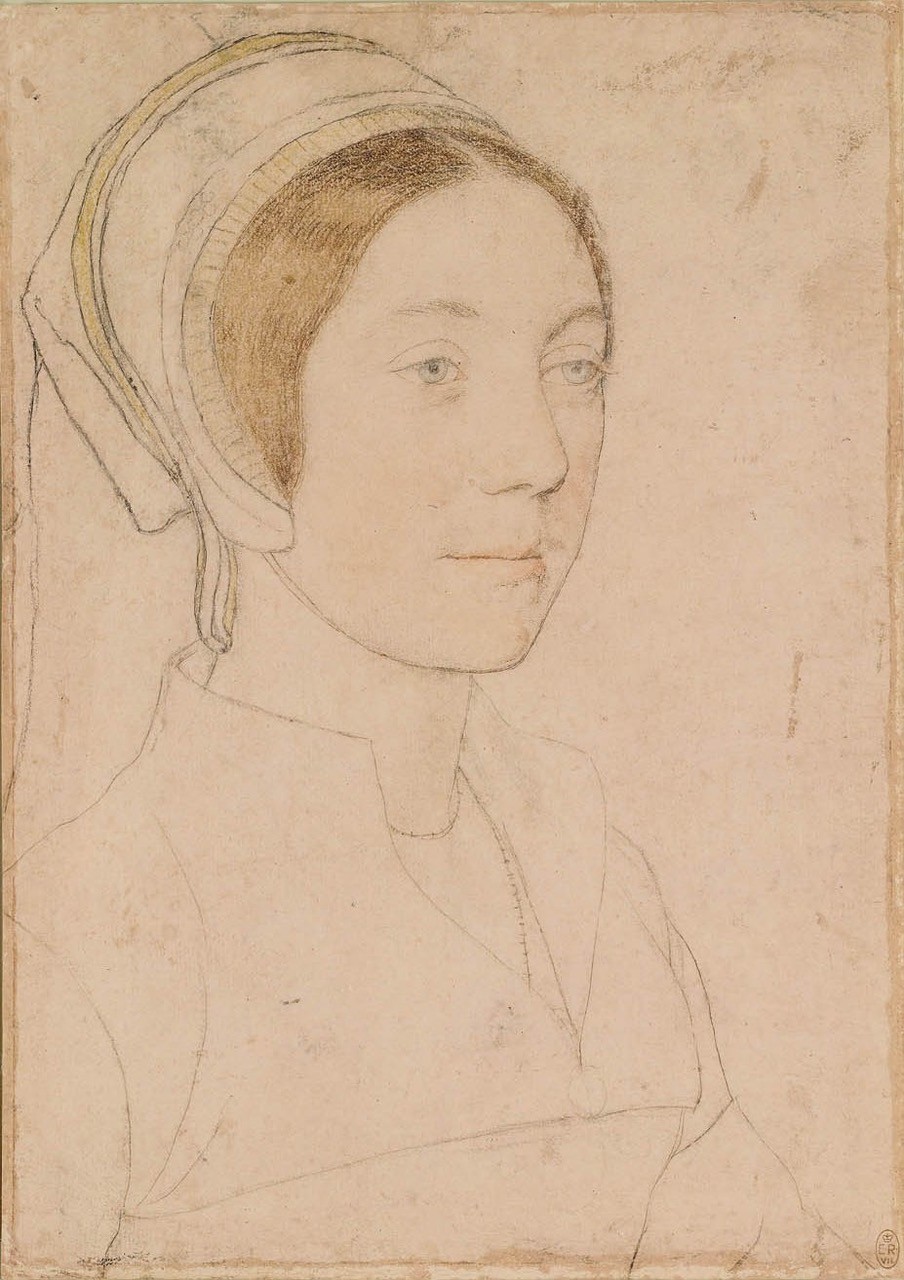
Unknown Woman, often identified as Jane Boleyn
Hans Holbein the Younger

Jane Boleyn, née Parker, the infamous Lady Rochford – The Perfect Scapegoat

Jane Boleyn, Lady Rochford is generally regarded as one of the key witnesses if not the key witness in the court case against Anne Boleyn. Jane was married to Anne’s brother George Boleyn. As Anne’s sister-in-law and with her own husband, George Boleyn accused of having had an affair with his sister Anne, Jane’s betrayal is seen as a particular heinous crime. Jane is also accused to have been the source of this accusation of incest against her husband and her sister-in-law.

In an article on Jane’s father for example, James P. Carley declares ‘Morley’s daughter Jane, was principal witness against her husband, George Boleyn, Lord Rochford, at the time of his trial in 1536.’

However, most historians agree that the charges against Anne Boleyn, her brother, and the others accused were trumped up to rid Henry VIII of his wife. Eric Ives for example states, ‘Under analysis, the case presented by the Crown in May 1536 collapses’. If the outcome of the trial and the guilty verdicts were a forgone conclusion, surely it made absolutely no difference who had said or may have said what during or before the trials?

Why then did Jane Boleyn become the ‘infamous Lady Rochford‘?

Let me first introduce you to Jane Boleyn, née Parker.

Jane was the daughter of Henry Parker, Lord Morley, and his wife Alice St John. Alice was the daughter of Margaret Beaufort’s half-brother John St John. The match was almost certainly arranged by Margaret Beaufort in whose household Henry Parker had served from a young age. During this time Margaret Beaufort became his patroness. She supported him financially and looked after his wife Alice and their children when Henry was away. Margaret Beaufort was also a major influence on his religious beliefs.

Henry was summoned to parliament as Lord Morley after the death of his mother Alice Parker, née Lovell, in 1518. He never made a particular name for himself at court and never held important office. Richard Starkey calls him ‘an unimportant backwoodsman’ but I think ‘hard-working backbencher’ is a more apt description. He assiduously attended parliament, great ceremonial events, and state trials. That he never achieved higher office may be simply due to a lack of ambition or a personal choice to not risk his life. After all he witnessed how many of the men holding high office during Henry VIII’s reign ended their lives on the scaffold.

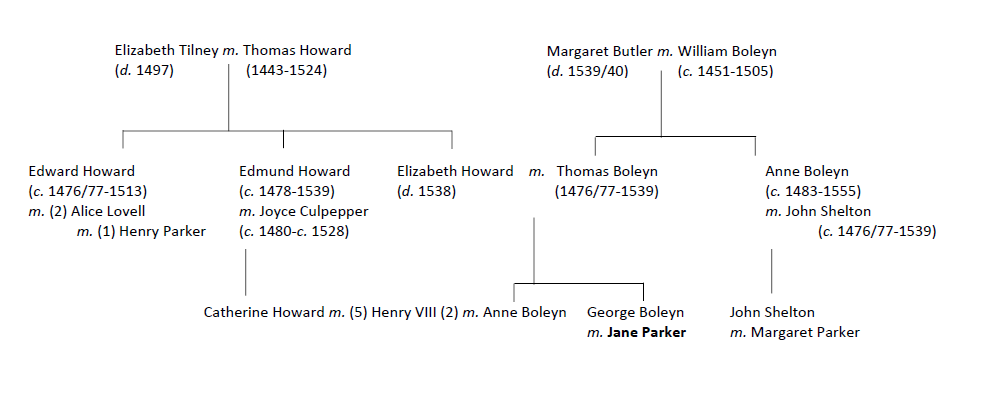
Henry Parker and his wife Alice had five children, two sons, Henry and Francis, and three daughters, Jane, Margaret, and Elizabeth. In the 1520s, Henry and his wife Alice arranged marriages for their three elder children. Henry, the eldest son and heir, was married to Grace Newport, heiress of her father John Newport. Jane married George Boleyn around 1526. In 1530, Margaret married Sir John Shelton the Younger, the son of Sir John Shelton the Elder and his wife Anne Boleyn, the aunt of Queen Anne.

The Boleyn family were neighbours of the Parkers, as were the Howard Dukes of Norfolk. Henry Parker’s mother, Alice Parker had married as her second husband Edward Howard, whose sister Elizabeth was married to Thomas Boleyn. Thomas Boleyn’s father William had been one of the executors of the will of Alice Parker’s brother Henry Lovell, Lord Morley. Alice had been the heir to her brother Henry Lovell and had become very wealthy when she inherited the part of his estates that were not held in tail male. Henry Lovell had been married to Elizabeth de la Pole, daughter of John de la Pole, duke of Suffolk, and Elizabeth, the sister of Edward IV and Richard III. Both Henry and Alice were cousins of Francis Lovell, Viscount Lovell (see Genealogies).
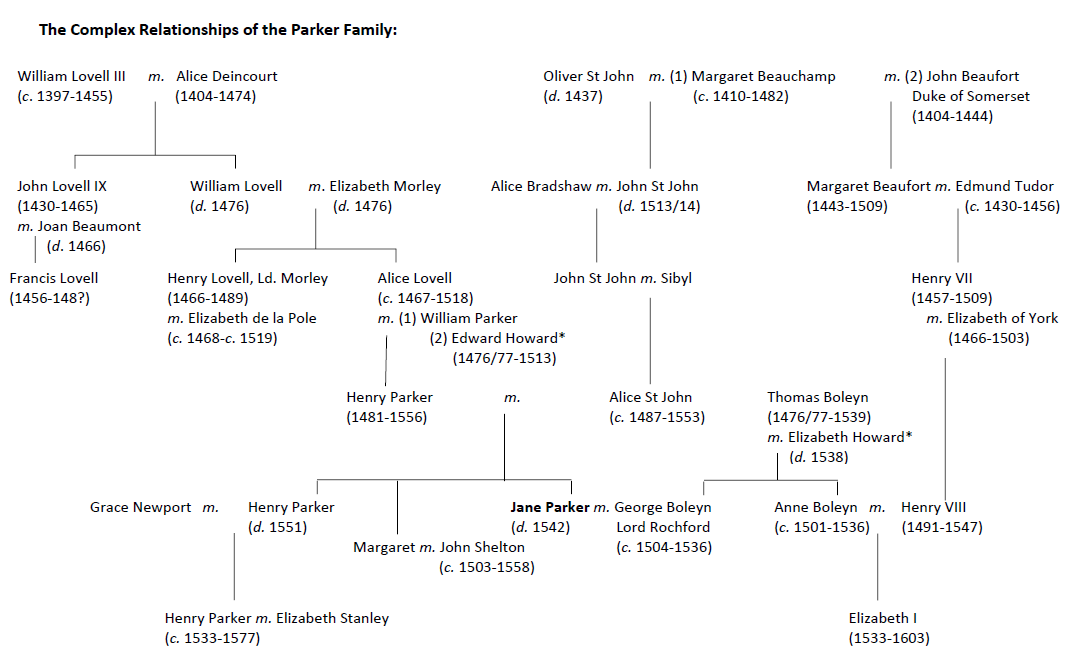
The complex relationships of the Parker family

This confusing profusion of relationships is typical for the higher nobility. The families tried to marry their children to spouses of the same rank, and since the higher nobility was a small group, a multitude of relationships between families was the inevitable result.

The families of Jane and her husband George were not only neighbours in Essex, the two knew each other from court as well. George Boleyn had become a royal page in 1516, and Jane had become one of the ladies of Queen Catherine of Aragon in 1520. The relationship between Jane and her husband was therefore both personal and professional. Jane’s husband George also shared his father-in-law’s interest in literature and translations. In fact, George Boleyn’s translation of ‘The Pistellis and Gospelles for the LII Sondayes of the Yere’ has been attributed to Henry Parker until recently.

To be chosen as a lady of the queen, a young woman had to be of noble birth, attractive, and well-mannered. Jane must have possessed all these qualities. She must also have been skilled in dancing and performing as in 1522 she was among those court ladies who participated a particularly grand pageant for the imperial envoys Jacques de Castres and Charles Poupet de Lacheaulx. Henry VIII’s sister was one of the other ladies as was Jane’s future sister-in-law Anne Boleyn.

In the following years, as Henry VIII became enthralled by Anne Boleyn, Jane and her husband George prospered at court. George became a Squire of the Chamber and was given numerous grants. He received the courtesy title of Viscount, when his father Thomas became Earl of Wiltshire in 1529.

Jane continued to be chosen for active parts in the court’s festivities. In 1532 she was chosen to be one of the six ladies to accompany Anne Boleyn in a dance with the French king Francis I, Henry VIII, and assorted courtiers. In the procession to Anne’s coronation the following year, Jane rode immediately behind Anne. Her brother Henry had been created a Knight of the Bath on the evening before the coronation.

All seemed well both inside the Boleyn family and in the marriage of Henry VIII and Anne Boleyn. But in 1536 this changed dramatically: Anne and her family fell from grace spectacularly. She, her brother George, Henry Norris, and others were arrested, accused of adultery, and executed for treason. Prior to this trial a considerable number of men and women were questions about the allegations. Jane, as Anne’s sister-in-law and lady-in-waiting was naturally also interrogated.

Signature of Jane, Lady Rochford

Even though most historians consider the charges against Anne Boleyn and the other accused as fictional, most, myself included (Both in my book and in my previous guest post), have debated all available clues, hints and the few concrete statements existing to proof or disproof Jane’s guilt. All her prior and subsequent actions are judged, depending on whether she is considered guilty or innocent of the charge of betraying her husband and sister-in-law.

Since Jane was only one of a large number of people, including Anne Boleyn herself and her brother George, who were questioned about the events at court and whose answers were used during the trial, why was it Jane and not one of the many other people involved in this affair that has been singled out as the despicable traitor? After all, Lady Wingfield was named by judge John Spelman as the source of the behaviour of Anne Boleyn.

Having pondered this question for quite a while now I have developed my own theory about this question.

After Anne Boleyn’s daughter Elizabeth became queen, Anne’s reputation had to be cleared of any suggestion of scandal and extramarital adventures. It was equally inadvisable to put the blame instead on Elizabeth’s father Henry VIII. To protect her right to be queen of England, the reputation of both her parents needed to be above reproach.

But somebody had to be blamed for Anne Boleyn’s death and, as it turned out, Anne’s sister-in-law Jane made the perfect scapegoat.

Jane had no children and no other family in a position to defend her reputation. Her brother Henry was dead and his son, another Henry, was a devout Catholic. This made him suspicious from the start. He first supported Queen Elizabeth who visited him in Great Hallingbury in 1561. However, later in the decade, he refused to subscribe to the Act of Uniformity. He was also linked to the rising of noble earls and fled England in 1570. He died in exile in 1577.
The Howard family

Additionally, Jane’s own reputation was already ruined. She had been executed alongside Henry VIII’s fifth queen Katherine Howard in 1542. There was no reason to clear childless Katherine Howard’s reputation. Any endeavour to do so would have been much more difficult if not impossible.

While Anne Boleyn was accused of infidelity and incest to remove her for political reason, Katherine Howard certainly had been unfaithful to her husband, even if her clandestine meetings with her paramour Thomas Culpepper did involve nothing more serious than talking and a chaste kiss on the hand as the two claimed. Jane had been present at the meetings as a chaperone of sorts, though she claimed that she had not heard or seen what happened between the queen and Thomas Culpepper as she sat too far away and moreover during at least one of the meetings, she had fallen asleep. Jane did state that she thought Katherine and Thomas had been lovers.

Who of the three, Katherine Howard, Jane Boleyn, or Thomas Culpepper, had been the main instigator of these meetings was and is still debated. Naturally, all three tried to play down their own role and blame the others. Thomas Culpepper used the time-honoured excuse that he had been helpless against the wily ways of the two women. Katherine claimed that Jane had been encouraging her and that it had been her lady-in-waiting who wanted her to befriend Thomas in the first place. It had also been Jane who searched out the places where they could meet Thomas. Jane insisted that she had only followed the orders of the queen.

In the end, all three participated in illicit meetings and they all should have known what would happen if they were found out. The execution of Anne Boleyn and her alleged lovers was only a few years in the past.

In his biography of Anne Boleyn Eric Ives wonders ‘whether the incrimination of Lady Rochford in the crimes of Katherine Howard may not have owed something to revenge’. There was, however, no need to incriminate Jane Boleyn in any way, she did so herself by her actions.
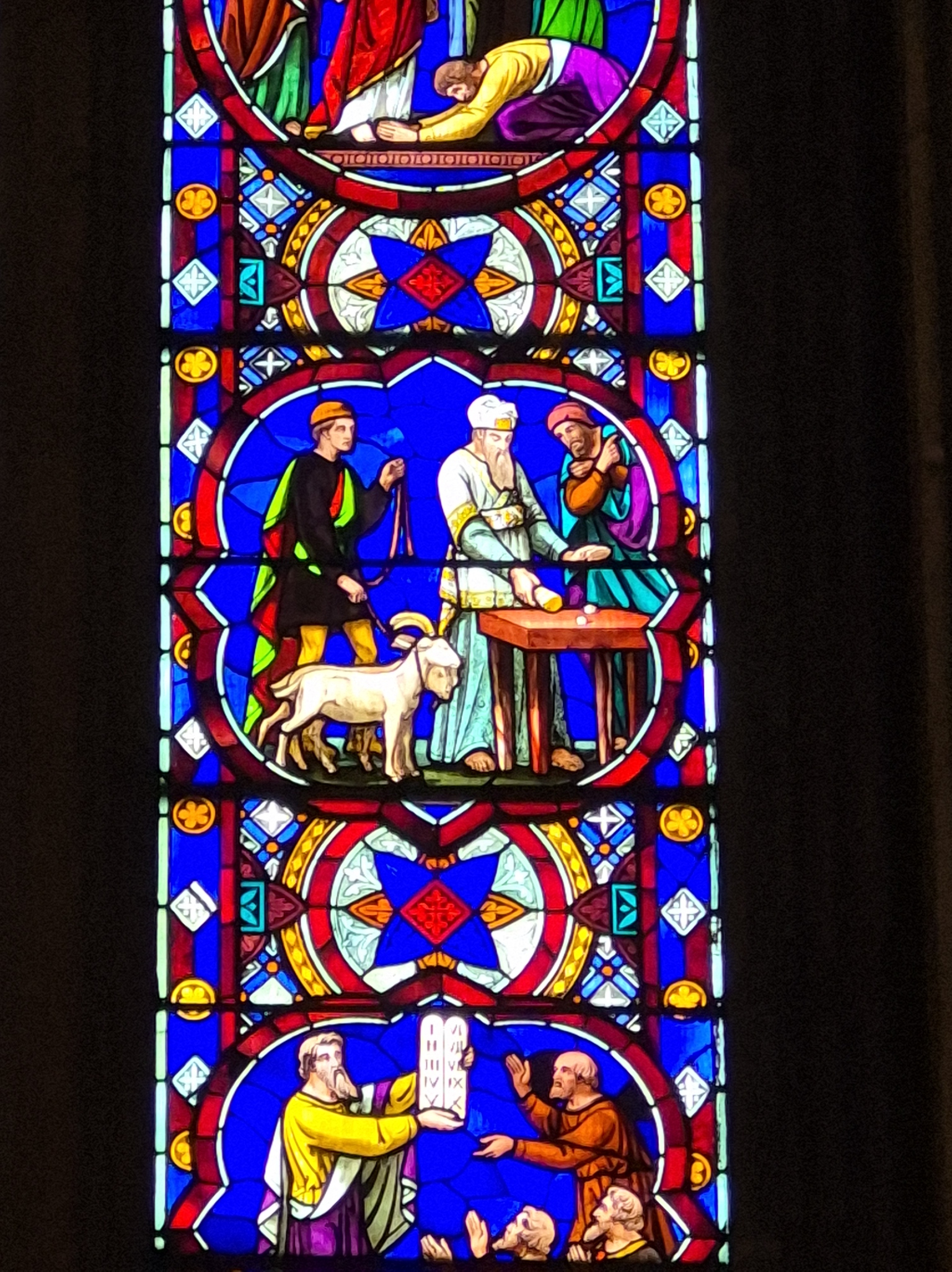
Scapegoat Ceremony shown in Stained Glass window in Lincoln Cathedral 

I think Ives’s argument should be put on its head: Jane Parker has become the much-maligned ‘key witness’ in Anne Boleyn’s trial, since she was guilty in the case that brought down Katherine Howard, Thomas Culpepper, and herself. What was more natural than to assume that she was equally deeply involved in the fall of Anne Boleyn?

Perhaps it is not wholly imaginary to think that makes Jane a particularly satisfying scapegoat for Anne Boleyn’s fall because of her close relationship to Anne. To suggest that Anne’s own sister-in-law, the wife of her brother George, who provided the charge of incest, is particularly piquant. The people nearest to us are those who can reveal our deepest secrets and the fear of being betrayed by them runs deep.

The trial of Anne Boleyn and her alleged lovers was a means to an end and the charges spurious. Today it is merely fascinating to discuss the alleged contribution of individuals to the proceedings and interesting to observe how Jane’s action both before and after Anne Boleyn’s trial are today interpreted completely different, depending on whether or not an author regards Jane as the traitor.

Back in the second half of the sixteenth century, the trial of Anne Boleyn was not discussed (at least openly) as a political manoeuvre conducted on trumped up charges to remove a no longer wanted queen. This would have fundamentally damaged the reputation of Henry VIII, the father of Elizabeth I. Since her mother had to be cleared of any allegations of infidelity, somebody else had to be blamed. Jane Parker was the best choice for that role. She was the perfect scapegoat.

Further Reading:

  • James P. Carley, ‘The Writings of Henry Parker, Lord Morley: A Biographical Survey’, in: Marie Axton and James P. Carley (eds.), ‘Triumphs of English’. Henry Parker, Lord Morley, Translator to the Tudor Court (London, 2000).
  • Julia Fox, Jane Boleyn. The Infamous Lady Rochford (London, 2007).
  • Eric Ives, The Live and Death of Anne Boleyn. ‘The Most Happy’ (Oxford, 2004).

Monika E. Simon, From Robber Barons to Courtiers. The Changing World of the Lovells of Titchmarsh (Barnsley, 2021

Images:

Jane Boleyn portrait via Wikimedia Commons; Scapegoat, Lincoln Cathedral ©2026 Sharon Bennett Connolly FRHistS

About the Author:

Monika E Simon was born as the third of four sisters in 1969 in a small city in southern Bavaria. Interested in history from an early age, she wrote her MA thesis about the tenth-century Empress Adelheid at the Ludwig-Maximilians-Universtität in Munich. Having spent a year of her studies at the University of York (Yorkshire), she fell in love with the city and decided to transfer there for her doctoral thesis. For her DPhil thesis she studied the history of the Lovells of Titchmarsh which she submitted in 1999.

In 2001, after two years in London, Monika E Simon returned to Munich, where she has lived since, working in a variety of jobs. In 2021 her first book, From Robber Barons to Courtiers. The Changing World of the Lovells of Titchmarsh was published.

She has also published a small number of articles about the Lovell family. She continues to research a variety of historical subjects. 

Where to find Monika: Facebook; website; Pen & Sword

*

My Books

Signed, dedicated copies of all my books are available through my online bookshop. or by contacting me.

Coming 30 March: Princesses of the Early Middle Ages
Books by Sharon Bennett Connolly

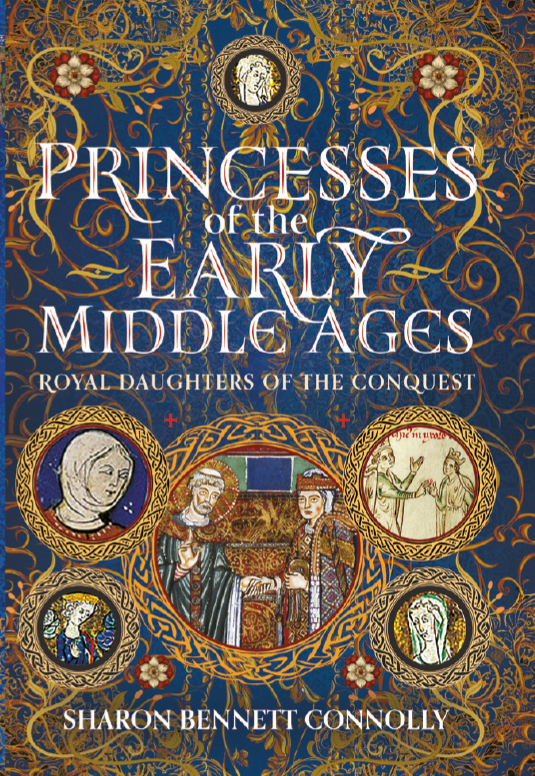
Daughters of kings were often used to seal treaty alliances and forge peace with England’s enemies. Princesses of the Early Middle Ages: Royal Daughters of the Conquest explores the lives of these young women, how they followed the stereotype, and how they sometimes managed to escape it. It will look at the world they lived in, and how their lives and marriages were affected by political necessity and the events of the time. Princesses of the Early Middle Ages will also examine how these girls, who were often political pawns, were able to control their own lives and fates. Whilst they were expected to obey their parents in their marriage choices, several princesses were able to exert their own influence on these choices, with some outright refusing the husbands offered to them.

Their stories are touching, inspiring and, at times, heartbreaking.

Princesses of the Early Middle Ages: Royal Daughters of the Conquest is now available for pre-order from Pen & Sword and Amazon.

Also by Sharon Bennett Connolly:

Books by Sharon Bennett Connolly

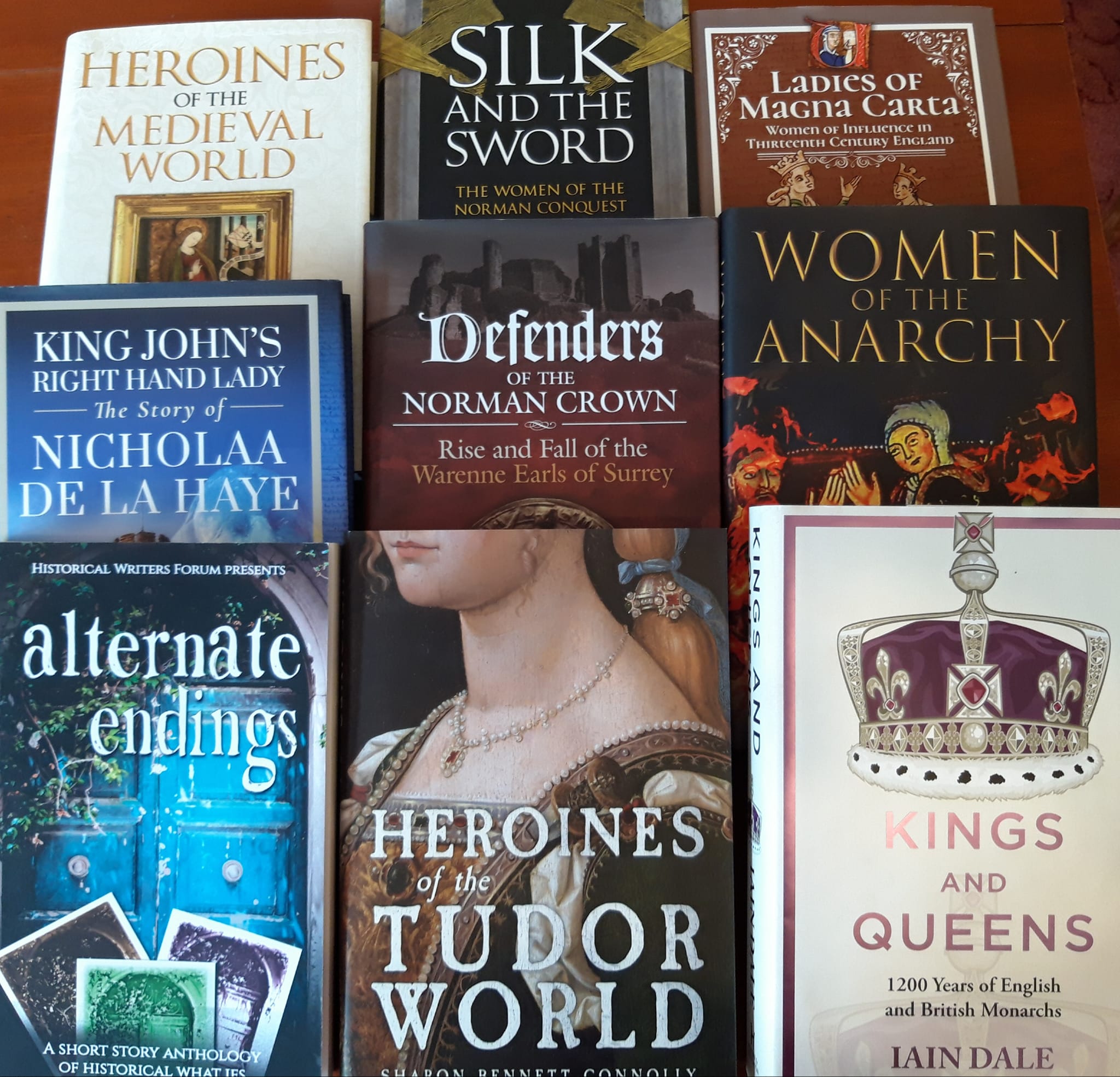
Scotland’s history is dramatic, violent and bloody and Scotland’s Medieval Queens have seen it all. This is the story of Scotland through their eyes. Available now from Amazon and Pen and Sword BooksHeroines of the Tudor World tells the stories of the most remarkable women from European history in the time of the Tudor dynasty, 1485-1603. These are the women who ruled, the women who founded dynasties, the women who fought for religious freedom, their families and love. Heroines of the Tudor World is now available from Amberley Publishing and Amazon UK. Women of the Anarchy demonstrates how Empress Matilda and Matilda of Boulogne, unable to wield a sword themselves, were prime movers in this time of conflict and lawlessness. It shows how their strengths, weaknesses, and personal ambitions swung the fortunes of war one way – and then the other. Available from Bookshop.orgAmberley Publishing and Amazon UKKing John’s Right-Hand Lady: The Story of Nicholaa de la Haye is the story of a truly remarkable lady, the hereditary constable of Lincoln Castle and the first woman in England to be appointed sheriff in her own right. Available from all good bookshops Pen & Sword Booksbookshop.org and Amazon

Royal Historical Society

Defenders of the Norman Crown: The Rise and Fall of the Warenne Earls of Surrey tells the fascinating story of the Warenne dynasty, from its origins in Normandy, through the Conquest, Magna Carta, the wars and marriages that led to its ultimate demise in the reign of Edward III. Available from Pen & Sword BooksAmazon in the UK and US, and Bookshop.orgLadies of Magna Carta: Women of Influence in Thirteenth Century England looks into the relationships of the various noble families of the 13th century, and how they were affected by the Barons’ Wars, Magna Carta and its aftermath; the bonds that were formed and those that were broken. It is now available in paperback and hardback from Pen & SwordAmazon, and Bookshop.orgHeroines of the Medieval World tells the stories of some of the most remarkable women from Medieval history, from Eleanor of Aquitaine to Julian of Norwich. Available now from Amberley Publishing and Amazon, and Bookshop.orgSilk and the Sword: The Women of the Norman Conquest traces the fortunes of the women who had a significant role to play in the momentous events of 1066. Available now from Amazon,  Amberley Publishing, and Bookshop.org.

Alternate Endings: An anthology of historical fiction short stories including Long Live the King… which is my take what might have happened had King John not died in October 1216. Available in paperback and kindle from Amazon.

Podcast:
A Slice of Medieval

Have a listen to the A Slice of Medieval podcast, which I co-host with Historical fiction novelist Derek Birks. Derek and I welcome guests, such as Ian Mortimer, Bernard Cornwell, Elizabeth Chadwick and Scott Mariani, and discuss a wide range of topics in medieval history, from significant events to the personalities involved. 

Every episode is also now available on YouTube.

*

Don’t forget! Signed and dedicated copies of all my books are available through my online bookshop.

For forthcoming online and in-person talks, please check out my Events Page.

You can be the first to read new articles by clicking the ‘Follow’ button, liking our Facebook page or joining me on TwitterThreadsBluesky and Instagram.

*

©2026 Sharon Bennett Connolly FRHistS
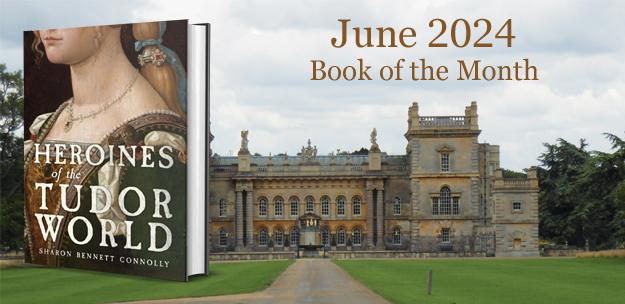
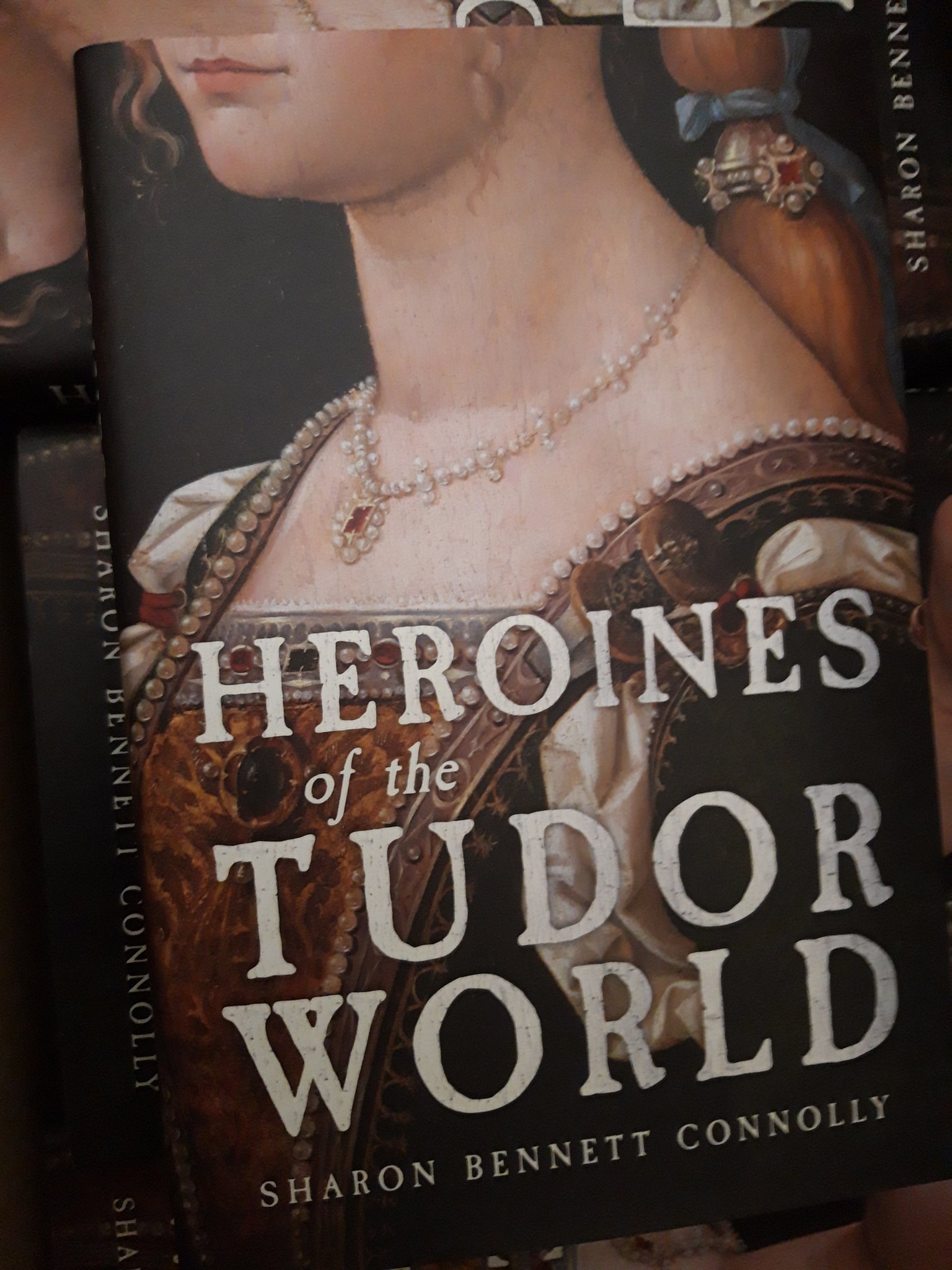
Publication Day: Heroines of the Tudor World

In 2017, when I published Heroines of the Medieval World, it was a dream come true – to actually write and publish a book! I never imagined, then, that I would still be writing books 7 years later, nor that I would get the opportunity to write a sequel!

But here it is!

Continue reading for a chance to win a signed copy of Heroines of the Tudor World in my Publication Day GIVEAWAY!

Heroines of the Tudor World tells the stories of the most remarkable women from European history in the time of the Tudor dynasty, 1485-1603.

These are the women who ruled, the women who founded dynasties, the women who fought for religious freedom, their families and love.

These are the women who made a difference, who influenced countries, kings and the Reformation. In the era dominated by the Renaissance and Reformation, Heroines of the Tudor World examines the threats and challenges faced by the women of the era, and how they overcame them. Some famous, some infamous, some less well known, including Anne Boleyn, Elizabeth Barton, Catherine de Medici, Bess of Hardwick and Elizabeth I.

From writers to regents, from nuns to queens, Heroines of the Tudor World shines the spotlight on the women helped to shape Early Modern Europe.

I am so excited to be able to announce that Heroines of the Tudor World is now available from – everywhere! Including Amberley Publishing, Bookshop.org and Amazon UK.

Publication Day GIVEAWAY!

For the chance to win a signed copy of Heroines of the Tudor World simply leave a comment below.

The draw fro the winner will be made at noon Friday 21 June 2024.

Competition Closed: and the winner is Andria van Buskirk!

Book Launch

Do join me for the Heroines of the Tudor World book launch, including a talk and book signing will be held at the gorgeous historic venue, The Lincoln County Assembly Rooms, Monday 24 June, 2024, at 7pm.

Tickets in-store or online from £7 – ticket with book deals available.

To reserve your ticket, call in at Lindum Books on Bailgate, Lincoln, or click here!

Reviews:

And the first reviews are in – and amazing!

Tony Riches was the first to give his views: ⭐️⭐️⭐️⭐️⭐️

Heroines of the Tudor World is “is perfect for ‘dipping in’ at a random page or section – where you can be sure of discovering something interesting. I also liked the way some Tudor women pop up in several categories, highlighting the complexity of their lives.  As with her medieval heroines, some of the categories are thought provoking, such as the idea of heroic mistresses and scandalous heroines, but this makes for a lively and engaging read.” Read the whole 5* review over at The Writing Desk.

And Medieval Madame, on Instagram, also gave Heroines of the Tudor World 5 stars: ⭐️⭐️⭐️⭐️⭐️

“Automatically, when we think of the Tudor woman we tend to think of King Henry VIII’s wives, ladies in waiting or mistresses like Lady Jane Parker and Mary Boleyn. Yet so many women played a vital role, and they are lesser known but those who are more widely known don’t get enough recognition. Women, the weaker, frailer, gentler sex who should have a purpose: ‘stay at home, do embroidery, bear children – hope to survive!’ Not forgetting obey your Husband!

This book centres around women who, either by chance or decision, step out of the mould society cast upon them, even if it meant death. Remember, the Tudor World was one of the most vicious times in English history.

In this 12 chapter book, Sharon Bennett Connolly looks at many women from different backgrounds, and placed into chapters that’s what made their names live on. Take for example chapter 11 we see, “Literary Heroines,” here you can read about Margaret Roper, daughter of Sir Thomas More. Religious reformist, published, Queen Katherine Parr. Then French royalty who could well handle a quill!

Other heroines include: Caterina Sforza, Elizabeth Barton, Katherine Willoughby, Mary Queen of Scots, Anne de Vere and so many more – the list is vast! That is what makes an interesting read. Whether by religion, royalty, nobility or scandal.

Sharon has achieved another piece of thought provoking literature by shining a light on this enjoyable and contemporary read. As a sequel to her “Heroines of the Medieval World,” this certainly does not disappoint, and I enjoyed it equally.

For an in-depth view on many resilient, defiant and warrior women, who could very well be the first step to what we know in modern times as feminism. This is it! This is an excellent read, most certainly in the top three reads of the year. Sharon has crafted her creative writing once more for our educational enjoyment.

[Gifted] To Be Released 15 June 2024″

All About History ⭐️⭐️⭐️⭐️

All About History magazine gave Heroines of the Tudor World 4 stars, highlighting that the book ‘reminds readers that the lot of women in this era was not an easy one, but in these fascinating stories she reminds us too that there have always been women who dared to challenge the status quo. Whether standing up for country, crown, family or love, the women who spring to life in these pages are richly deserving of their place in history.’

The first review on Amazon was ⭐️⭐️⭐️⭐️⭐️ from Helen Musson. It was short but oh so very, very sweet:

Brilliant!

And what an incredible review of Heroines of the Tudor World from Heidi Malagisi at Adventures of a Tudor Nerd:

“Connolly gave her readers a thrilling look into the 16th century….my only complaint is that it was not a longer book…”If you have enjoyed Sharon Bennett Connolly’s previous books and you are a Tudor nerd, I highly suggest you read, ‘Heroines of the Tudor World.'”

Interviews, podcasts and YouTube

You can find me talking about my choice of Heroines of the Tudor World on some of the best Tudor podcasts:

On Tudors Dynasty I may have mentioned to Rebecca Larsen that I don’t think much of Henry VIII. And I had a fabulous time, chatting with Natalie Grueninger over at On the Tudor Trail.

And I am on Books & Brews, over on You Tube, talking about my favourite Heroines of the Past. You can even watch the outtakes!

To Buy Heroines of the Tudor World

You can order signed, dedicated copies of Women of the Anarchy through my online bookshop. Heroines of the Tudor World is now available from – everywhere! Including Amberley Publishing, Bookshop.org and Amazon UK.

*

Also by Sharon Bennett Connolly:

Women of the Anarchy demonstrates how Empress Matilda and Matilda of Boulogne, unable to wield a sword, were prime movers in this time of conflict and lawlessness. It show how their strengths, weaknesses, and personal ambitions swung the fortunes of war one way – and then the other. Available from Bookshop.orgAmberley Publishing and Amazon UK. King John’s Right-Hand Lady: The Story of Nicholaa de la Haye is the story of a truly remarkable lady, the hereditary constable of Lincoln Castle and the first woman in England to be appointed sheriff in her own right. It is is available from Pen & Sword Booksbookshop.org and AmazonDefenders of the Norman Crown: The Rise and Fall of the Warenne Earls of Surrey tells the fascinating story of the Warenne dynasty, from its origins in Normandy, through the Conquest, Magna Carta, the wars and marriages that led to its ultimate demise in the reign of Edward III. Available from Pen & Sword BooksAmazon in the UK and US, and Bookshop.org.

Ladies of Magna Carta: Women of Influence in Thirteenth Century England looks into the relationships of the various noble families of the 13th century, and how they were affected by the Barons’ Wars, Magna Carta and its aftermath; the bonds that were formed and those that were broken. It is now available in paperback and hardback from Pen & Sword,  Amazon, and Bookshop.orgHeroines of the Medieval World tells the stories of some of the most remarkable women from Medieval history, from Eleanor of Aquitaine to Julian of Norwich. Available now from Amberley Publishing and Amazon, and Bookshop.orgSilk and the Sword: The Women of the Norman Conquest traces the fortunes of the women who had a significant role to play in the momentous events of 1066. Available now from Amazon,  Amberley Publishing, and Bookshop.org.

Alternate Endings: An anthology of historical fiction short stories including Long Live the King… which is my take what might have happened had King John not died in October 1216. Available in paperback and kindle from Amazon.

Podcast:

Have a listen to the A Slice of Medieval podcast, which I co-host with Historical fiction novelist Derek Birks. Derek and I welcome guests, such as Bernard Cornwell and discuss a wide range of topics in medieval history, from significant events to the personalities involved.

*

Don’t forget! Signed and dedicated copies of all my books are available through my online bookshop.

For forthcoming online and in-person talks, please check out my Events Page.

*You can be the first to read new articles by clicking the ‘Follow’ button, liking our Facebook page or joining me on Twitter and Instagram.

*

Article: 2024 © Sharon Bennett Connolly FRHistS

Cover Reveal: Heroines of the Tudor World

I am so excited!

It’s finally here!

Heroines of the Tudor World – the long-awaited (well, by me, if no one else) sequel to Heroines of the Medieval World – is now available for pre-order on Amazon in the UK (I will hopefully have a US release date shortly). It will be released in the UK on 15 June 2024.

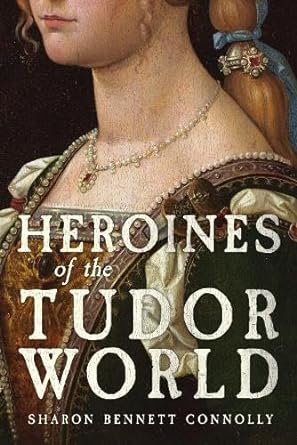
So, here is the stunning cover, designed by the fabulous cover design team at Amberley Publishing.

And what a cover!

About the book:

Heroines of the Tudor World tells the stories of the most remarkable women from European history in the time of the Tudor dynasty, 1485-1603. These are the women who ruled, the women who founded dynasties, the women who fought for religious freedom, their families and love.

These are the women who made a difference, who influenced countries, kings and the Reformation. In the era dominated by the Renaissance and Reformation, Heroines of the Tudor World examines the threats and challenges faced by the women of the era, and how they overcame them. Some famous, some infamous, some less well known, including Anne Boleyn, Elizabeth Barton, Catherine de Medici, Bess of Hardwick and Elizabeth I.

From writers to regents, from nuns to queens, Heroines of the Tudor World shines the spotlight on the women helped to shape Early Modern Europe.

To buy the book:

Heroines of the Tudor World is now available for pre-order from Amberley Publishing and Amazon UK.

About me:

Sharon Bennett Connolly is the best-selling author of several non-fiction history books. A Fellow of the Royal Historical Society, Sharon has studied history academically and just for fun – and has even worked as a tour guide at a castle. She also writes the popular history blog, http://www.historytheinterestingbits.com and co-hosts the podcast A Slice of Medieval, alongside historical novelist Derek Birks. Sharon regularly gives talks on women’s history. Sharon is a feature writer for All About History and Living Medieval magazines and her TV work includes Australian Television’s ‘Who Do You Think You Are?

Her previous books include: Heroines of the Medieval World; Silk and the Sword: The Women of the Norman Conquest; Ladies of Magna Carta: Women of Influence in Thirteenth Century England; Defenders of the Norman Crown: Rise and Fall of the Warenne Earls of Surrey; King John’s Right-Hand Lady: The Story of Nicholaa de la Haye; Women of the Anarchy

*

My Books

Christmas is coming!

Signed, dedicated copies of all my books are available through my online bookshop.

Coming 15 January 2024: Women of the Anarchy

On the one side is Empress Matilda, or Maud. The sole surviving legitimate child of Henry I, she is fighting for her birthright and that of her children. On the other side is her cousin, Queen Matilda, supporting her husband, King Stephen, and fighting to see her own son inherit the English crown. Both women are granddaughters of St Margaret, Queen of Scotland and descendants of Alfred the Great of Wessex. Women of the Anarchy demonstrates how these women, unable to wield a sword, were prime movers in this time of conflict and lawlessness. It show how their strengths, weaknesses, and personal ambitions swung the fortunes of war one way – and then the other.

Available for pre-order from Amberley Publishing and Amazon UK.

Also by Sharon Bennett Connolly:

Out nowKing John’s Right-Hand Lady: The Story of Nicholaa de la Haye is the story of a truly remarkable lady. Nicholaa de la Haye was the hereditary constable of Lincoln Castle and the first woman in England to be appointed sheriff in her own right. Her strength and tenacity saved England at one of the lowest points in its history. Nicholaa de la Haye is one woman in English history whose story needs to be told…

King John’s Right-Hand Lady: The Story of Nicholaa de la Haye is now available from Pen & Sword Booksbookshop.org and Amazon.

Defenders of the Norman Crown: The Rise and Fall of the Warenne Earls of Surrey tells the fascinating story of the Warenne dynasty, of the successes and failures of one of the most powerful families in England, from its origins in Normandy, through the Conquest, Magna Carta, the wars and marriages that led to its ultimate demise in the reign of Edward III. Defenders of the Norman Crown: Rise and Fall of the Warenne Earls of Surrey is now available from Pen & Sword BooksAmazon in the UK and US, and Bookshop.org.

Ladies of Magna Carta: Women of Influence in Thirteenth Century England looks into the relationships of the various noble families of the 13th century, and how they were affected by the Barons’ Wars, Magna Carta and its aftermath; the bonds that were formed and those that were broken. It is now available in paperback and hardback from Pen & Sword,  Amazon, and Bookshop.org.

Heroines of the Medieval World tells the stories of some of the most remarkable women from Medieval history, from Eleanor of Aquitaine to Julian of Norwich. Available now from Amberley Publishing and Amazon, and Bookshop.org.

Silk and the Sword: The Women of the Norman Conquest traces the fortunes of the women who had a significant role to play in the momentous events of 1066. Available now from Amazon,  Amberley Publishing, and Bookshop.org.

Alternate Endings: An anthology of historical fiction short stories including Long Live the King… which is my take what might have happened had King John not died in October 1216. Available in paperback and kindle from Amazon.

Podcast:

Have a listen to the A Slice of Medieval podcast, which I co-host with Historical fiction novelist Derek Birks. Derek and I welcome guests, such as Bernard Cornwell, and discuss a wide range of topics in medieval history, from significant events to the personalities involved.

*

Don’t forget! Signed and dedicated copies of all my books are available through my online bookshop.

For forthcoming online and in-person talks, please check out my Events Page.

You can be the first to read new articles by clicking the ‘Follow’ button, liking our Facebook page or joining me on Twitter and Instagram.

*

©2023 Sharon Bennett Connolly FRHistS
Book Corner: Tudor Roses by Amy Licence

A dynasty is defined by its men: by their personalities, their wars and reigns, their laws and decisions. Their mothers, wives, sisters and daughters are often depicted as mere foils, shadowy figures whose value lies in the inheritance they brought, or the children they produced. Yet the Tudor dynasty is full of women who are fascinating in their own right, like Margaret Beaufort, who finally emerged triumphant after years of turmoil; Elizabeth of York and her steadying influence; Catherine of Aragon and Anne Boleyn, whose rivalry was played out against the backdrop of the Reformation; and Mary and Elizabeth, England’s first reigning queens. Then there were all the others: Henry VIII’s fascinating sisters who became queens of France and Scotland, and their offspring, the Brandon and Grey women, Lady Margaret Douglas and her granddaughter Arabella Stuart. Many more women danced the Pavane under Henry’s watchful eye or helped adjust Elizabeth’s ruff. These were strong women, wielding remarkable power, whether that was behind the scenes or on the international stage. Their contribution took England from the medieval era into the modern. It is time for a new narrative of the Tudor women: one that prioritises their experiences and their voices.

Tudor Roses: From Margaret Beaufort to Elizabeth I by Amy Licence continues the history started with Red Roses, which told the history of the women of the royal house of Lancaster, from Blanche of Lancaster to Margaret Beaufort and the start of the Tudor dynasty. Tudor Roses: From Margaret Beaufort to Elizabeth I is the fabulous sequel! Amy Licence has put all her considerable knowledge and research into this book to bring you a book on the Tudor period focussed on its incredible women.

Amy Licence brings the women to the fore, telling the stories of the Tudors through the lives and actions of the women who formed such a considerable part of the dynasty. Not only does she retell the lives of these women, but she puts those lives in context, assessing their influence and legacy on one of the most famous English dynasties – and on the European countries that England interacted with.

Amy Licence also draws not only on events of the time, but on the changing world around the dynasty, on the developments in literature, music, the arts and religion to give a rounded picture of the women of 16th century England. This gives the reader a deeper understanding of the rules and restrictions women had to live by at the time. It also demonstrates the areas in which women had liberties and the ability to express their own desires, wants and needs, and how they could assert control over their own lives.

This is Amy Licence at her best!

Excerpt:

It is not difficult to visualise the Tudor princesses sitting at their lessons, or roaming the gardens at Eltham. Surviving accounts give an indication of the adult-style clothing in which the children appeared, as the nursery was also a location for the entertainment of dignitaries and foreign visitors, and the children were a powerful, visible indicator of the dynasty’s future. In November 1495, Henry spent £7 on ‘diverse yerdes of silk’ for Henry and Margaret, while baby Mary the following years was clothed in kirtles of black silk and velvet, edged in ermine and mink. The following year as she was beginning to walk, her dresses were made of baby buckram, a fine cotton, not like the stiff, modern version, and she required linen smocks, three pairs of hose, eight pairs of single-soled shoes and four pairs of double. The children were frequent visitors to Windsor, Westminster, Greenwich, Sheen and Baynard’s Castle, or wherever their parents might be, attending important events and festivities, expected to show themselves to best advantage in front of guests. No doubt the girls were also influenced by Margaret Beaufort’s model of piety and were visible attendees at church on red letter days in the Catholic calendar, but they were also lively, energetic participants. One of Margaret’s most notable public appearances as a small child was her fifth birthday in November 1494, on which occasion her younger brother Henry was elevated to the Dukedom of York. A tournament lasting three days was held at Westminster, after which Margaret handed out the prizes, dressed in a velvet and buckram gown trimmed in gold lace with a white, winged cap in the Dutch style. Afterwards, Margaret and her young brother danced to the delight of the court.

At Eltham, Margaret and Mary were shielded from he dynastic struggles that their parents were experiencing in the 1490s. A second pretender, far more serious than the young Lambert Simnel, had emerged in Europe, and was being feted by enemies of the Tudor regime. Claiming to be Richard of Shrewsbury, the younger of the Princes in the Tower, a young Flemish merchant by the name of Perkin Warbeck arrived at the Burgundian court, swiftly winning over Elizabeth’s aunt Margaret, who schooled him in the details and manners of the Yorkist court and encouraged him to distribute coins minted in his name. Warbeck was initially welcomed at the court of Charles VIII of France, until Charles ejected him under terms of the Treaty of Etaples he signed with England in 1492. The pretender returned to Burgundy, where he was invited to attend the funeral of the Holy Roman Emperor and recognised as Richard IV. However, after a failed attempt to invade England, and a brief flirtation with Ireland, Warbeck went north, towards the Scottish king with whom Henry had hoped to ally his eldest daughter.

Amy Licence is an accomplished writer whose prose flows so freely that you almost feel like you are reading a novel. The narrative flows easily, absorbing the reading from the very first pages. As you may have come to expect from Ms Licence, her research is thorough and second-to-none. She delves into every aspect of the lives of the women and brings the whole era to life for the reader, showing how they interracted with the world around them, with the men in their lives – and with each other.

Her insight into the lives of the Tudor women is unparalleled.

It is always a pleasure to read a non-fiction book by Amy Licence and Tudor Roses: From Margaret Beaufort to Elizabeth I is no exception. In fact, it is probably one of Ms Licence’s best. For anyone interested in the Tudor period, this book is a must read. An essential addition to any library. I cannot recommend it highly enough.

Tudor Roses: From Margaret Beaufort to Elizabeth I is available from Amazon and Amberley Publishing.

About the author:

Amy Licence is an historian of women’s lives in the medieval and early modern period, from Queens to commoners. Her particular interest lies in the late fifteenth and early sixteenth century, in gender relations, Queenship and identity, rites of passage, pilgrimage, female orthodoxy and rebellion, superstition, magic, fertility and childbirth. She is also interested in Modernism, specifically Woolf and the Bloomsbury Group, Picasso and Post-Impressionism. She has been a teacher for over twenty years and is a Fellow of the Royal Historical Society.

Amy has written for The Guardian, The TLS, The New Statesman, BBC History, The English Review, The Huffington Post, The London Magazine and contributes regularly to BBC History Magazine. She has been interviewed regularly for BBC radio, including Woman’s Hour, and has appeared in several TV documentaries.

*

My Books

Signed, dedicated copies of all my books are available, please get in touch by completing the contact me form.

Defenders of the Norman Crown: The Rise and Fall of the Warenne Earls of Surrey tells the fascinating story of the Warenne dynasty, of the successes and failures of one of the most powerful families in England, from its origins in Normandy, through the Conquest, Magna Carta, the wars and marriages that led to its ultimate demise in the reign of Edward III. Defenders of the Norman Crown: Rise and Fall of the Warenne Earls of Surrey is now available from Pen & Sword BooksAmazon in the UK and US, Bookshop.org and Book Depository.

1 family. 8 earls. 300 years of English history!

Also by Sharon Bennett Connolly:

Ladies of Magna Carta: Women of Influence in Thirteenth Century England looks into the relationships of the various noble families of the 13th century, and how they were affected by the Barons’ Wars, Magna Carta and its aftermath; the bonds that were formed and those that were broken. It is now available in paperback and hardback from Pen & Sword,  AmazonBookshop.org and from Book Depository worldwide.

Heroines of the Medieval World tells the stories of some of the most remarkable women from Medieval history, from Eleanor of Aquitaine to Julian of Norwich. Available now from Amberley Publishing and Amazon, Bookshop.org and Book Depository.

Silk and the Sword: The Women of the Norman Conquest traces the fortunes of the women who had a significant role to play in the momentous events of 1066.  Available now from Amazon,  Amberley Publishing, Bookshop.org and Book Depository.

*

You can be the first to read new articles by clicking the ‘Follow’ button, liking our Facebook page or joining me on Twitter and Instagram.

©2022 Sharon Bennett Connolly 

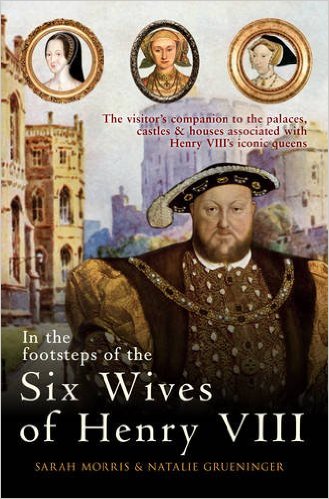
Book Corner: In the Footsteps of the Six Wives of Henry VIII by Sarah Morris and Natalie Grueninger

51C52QElN8L._SX327_BO1,204,203,200_This book provides a fresh perspective on the lives of Henry VIII’s six wives by embarking on a journey through the manors, castles and palaces in which their lives were played out.

Each location is described in a fascinating narrative that unearths the queens’ lives in documents and artefacts, as well as providing practical visitor information based on the authors’ first-hand knowledge of each site. Accompanied by an extensive range of images including timelines, maps, photographs and sketches, this book brings us closer than ever to the women behind the legends, providing a personal and illuminating journey in the footsteps of the six wives of Henry VIII.

In the Footsteps of the Six Wives of Henry VIII, by Sarah Morris and Natalie Grueninger, is an absolute treasure trove of pictures and information of the many historic locations associated with Henry VIII’s 6 wives. The book is divided into 7 easy-to-follow sections; the 1st covers the principal Royal residences of the period and the 6 subsequent portions are each dedicated to one of the 6 wives, in chronological order.

054 (2)
St Augustine’s Abbey, Canterbury

The book examines each of Henry’s queens in turn, looking at the locations associated with them, not only when they were queen, but also from their childhood and early life. In each section, we are treated to the queen’s story, her triumphs and failures, told through the palaces in which she experienced them.

In the Footsteps of the Six Wives of Henry VIII takes you on a visit of each location, whether it’s a palace or manor house, the authors give vivid tours, telling you what to look out for, what is still extant – and what is lost to history. In one location, they guide you to a housing estate and point out the walls which once made up the exterior of a Henry VIII’s now-lost palace. You are also provided with a practical guide to the locations covered, giving you visitor information, parking suggestions, details on refreshments and facilities.

135
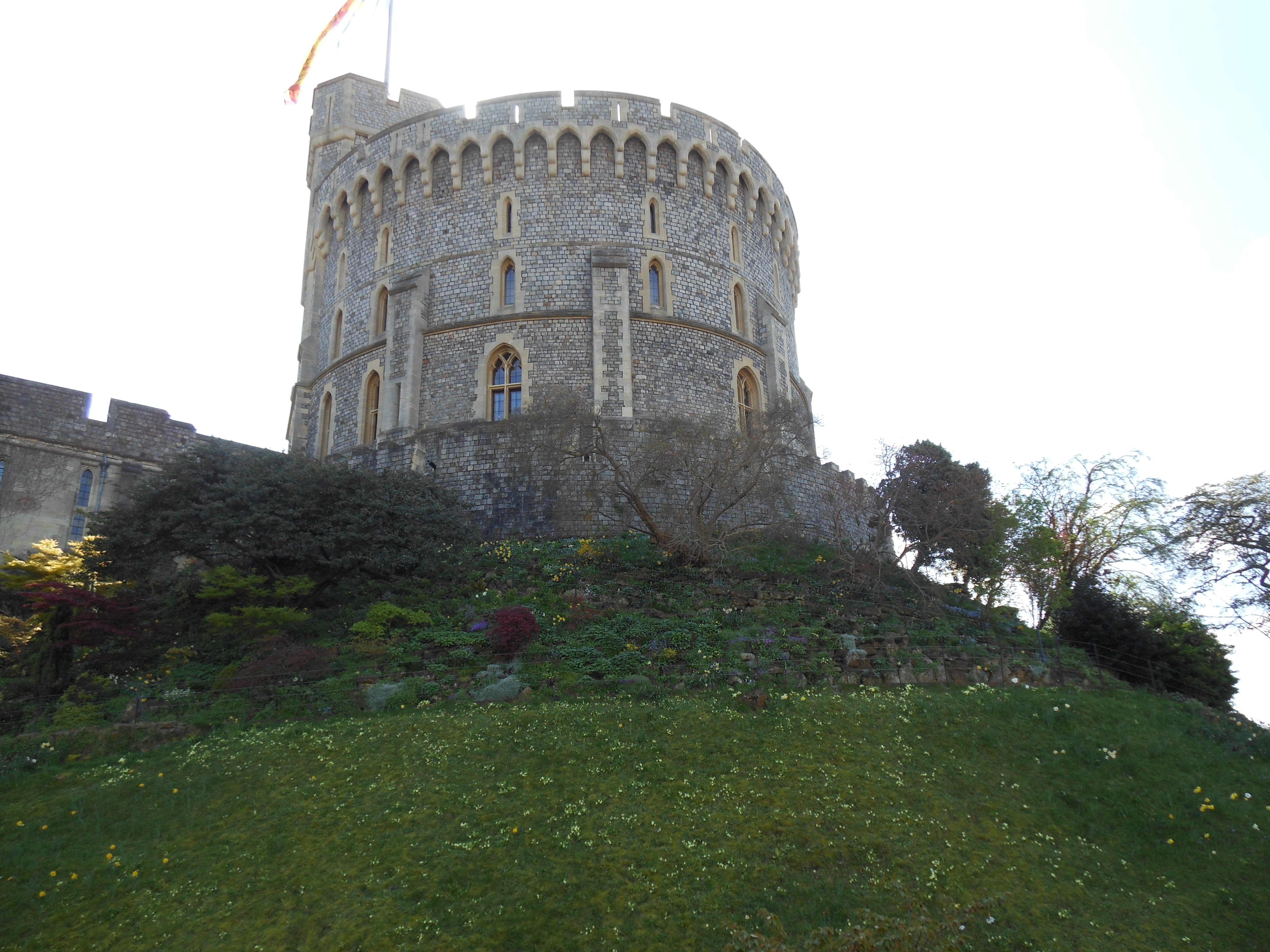
Windsor Castle

With Katherine of Aragon, we visit the magnificent palaces of Spain, while Anne Boleyn takes us from Burgundy to the Loire Valley. Jane Seymour allows us to investigate the renowned Wolf Hall and Anne of Cleves gives us a fascinating glimpse into Germany’s wonderful castles. Jane Seymour The tragic story of Katherine Howard allows us to join Henry’s great progress of 1541,  through Lincolnshire and Yorkshire, before the tragic last months of imprisonment at Syon House. Which finally brings us to Katherine Parr, investigating the locations associated with her first 2 marriages, her life with Henry and then her final years with Thomas Seymour.To walk the grounds and corridors of Hampton Court Palace is to walk in the footsteps of all the Tudor kings and queens. Within the Tudor palace’s russet-coloured walls, the present fades into the brickwork and the past emerges to greet us. Although mush of the Tudor palace has, over the years, been modified or demolished and replaced with William III’s and Mary II’s baroque palace, the buildings that survive propel us back through the years to a time when Hampton Court was one of Henry VIII’s most beloved palaces, at the centre of court life and politics.

020 (2)
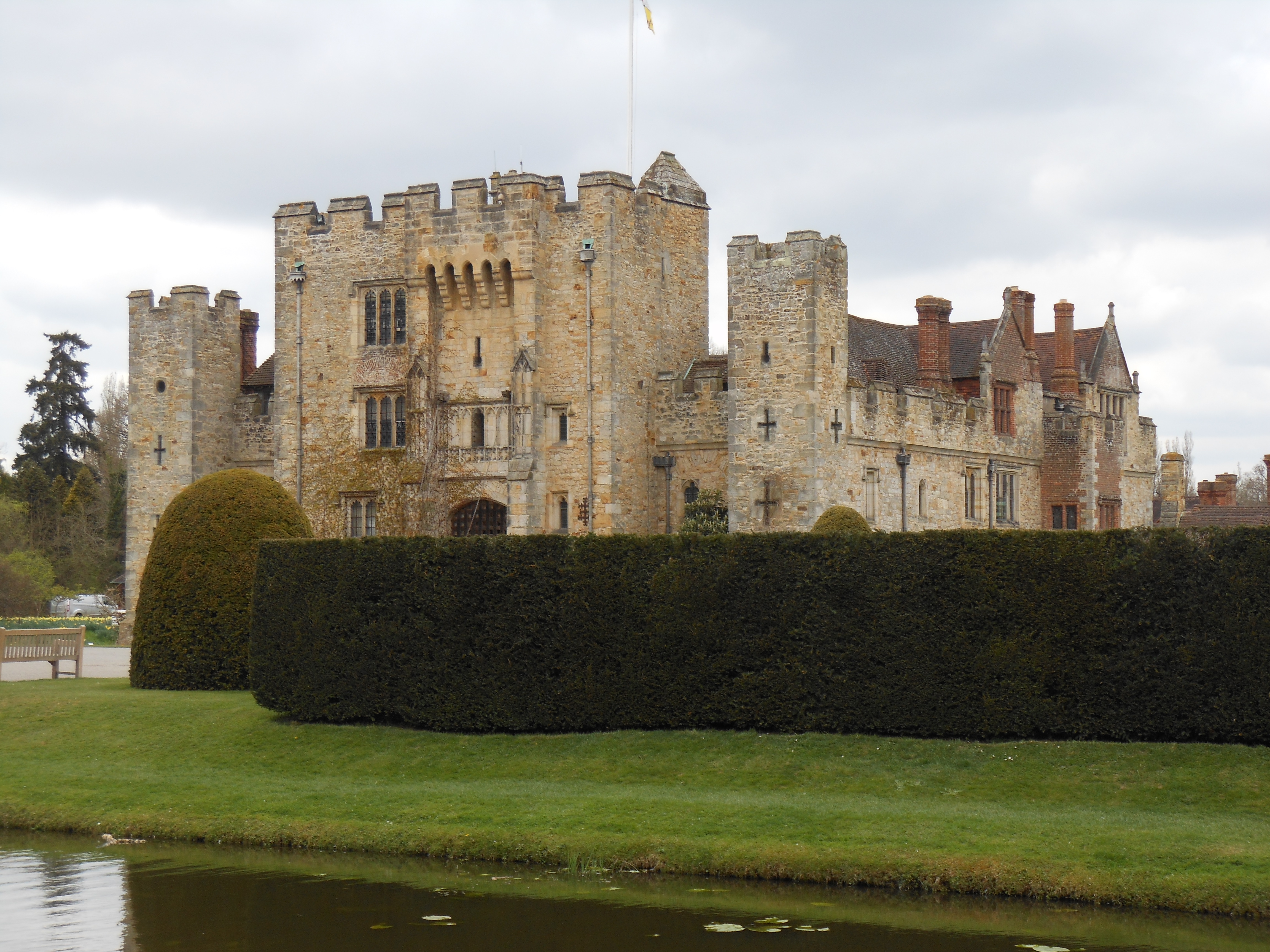
Hever Castle, Kent

If nothing else, it is worth reading In the Footsteps of the Six Wives of Henry VIII for the research the Sarah Morris and Natalie Grueninger have conducted into the Anne of Cleves panels. These wonderful wood carvings are discussed and investigated in detail; their fascinating story told for the first time in its entirety. It is not hard to imagine the feelings of curiosity and, sometimes,  disappointment the authors must have felt as they tried to uncover the provenance of these panels, and their associations with Henry VIII’s 4th wife. Their eventual success and discoveries are a testament to the author’s persistence and tenacity.

This book is amply supported by quotes from primary sources, describing the locations as they were at the time the queens lived. The authors have a wonderful habit of discussing the difficulties involved in locating and identifying some of the less famous sites, making you feel part of their investigations.

178
The Bishop’s Palace, Lincoln

An abundance of photographs and illustrations are included in the book. These include colourful photos of the sites as they are now, black and white floor plans from the Tudor period and artwork painted through the ages.

Sarah Morris and Natalie Grueninger have created a wonderful book, which is a combination of history book and travel guide. They have worked so well together it is impossible to see the join; they speak with one voice in this stunning collaboration. The book is produced in a way to make it easy to dip in and out of, making it possible to read only about the locations you are currently touring, or to read from beginning to end in a couple of sittings. But be careful, in just looking up one specific location you may find that you lose an entire hour without noticing.

The only criticism I would have is that there are no footnotes to clarify the source of quotations, which makes it harder to use as a research tool, but not impossible. This fault is partly offset, moreover, by an extensive bibliography of primary and secondary sources, and in no way detracts from the enjoyment of the book as a whole.

Remarkably, the authors give equal empathy to each of Henry’s wives. It is impossible to discern a bias for Katherine of Aragon or Anne Boleyn (a remarkable achievement). Each property is subject to the same attention to detail, whether it was a frequently occupied palace, or a manor house visited for just a few days while on progress.

052
Gainsborough Old Hall, Lincolnshire

In the Footsteps of the Six Wives of Henry VIII is beautifully written and thoroughly engaging. You can practically hear, see and smell the Tudors. The book is a detailed, enjoyable and enlightening read, no matter whether you are intending to travel to the palaces, or visiting them through the book, you are in for a real treat. The authors have an incredible ability to invoke the past and recreate the sumptuous, lavish lives of England’s most fascinating queen consorts. It will be a valued addition to anyone’s Tudor library.

*

My book, Heroines of the Medieval World,  is now available in hardback in the UK from both Amberley Publishing and Amazon UK and worldwide from Book Depository. It is also available on Kindle in both the UK and USA and will be available in Hardback from Amazon US from 1 May 2018.

Be the first to read new articles by clicking the ‘Follow’ button, liking our Facebook page or joining me on Twitter.

*

Photographs ©Sharon Bennett Connolly 2016