Yorkshire’s Little Prince

Æthelread II (known to history as the Æthelread Unready)

It may come as no surprise that very few royals have been born in Yorkshire over the years. There was Ӕlfgifu of York, the first wife of Ӕthelred II (known to history as Ӕthelred the Unready). Ӕlfgifu was the daughter of the earl of Northumbria and the marriage was intended to strengthen the links between the north and south of England. Ӕlfgifu was the mother of, among others, Edmund II Ironside, and therefore the great-grandmother of Margaret of Wessex, (St Margaret) Queen of Scots as the wife of Malcolm III Canmor. Ӕlfgifu died before April 1002 when Ӕthelred II married his second wife, Emma of Normandy.

Another royal with links to Yorkshire was Henry I. The youngest son of William the Conqueror and Matilda of Flanders, Henry was the only king of England born in Yorkshire. Henry was born in Selby in the summer of 1068, whilst his father was in the county, stamping out rebellion and pursuing his Harrying of the North. He would seize the throne in 1100 following the death of his older brother, William II Rufus, in a hunting accident in the New Forest. In the same year, Henry would marry Edith of Scotland, who changed her name to Matilda on her marriage. As the daughter of Malcolm III and St Margaret, Edith/Matilda was herself a descendant of Ӕthelred II and Ӕlfgifu of York.

There is also, of course, Edward of Middleham, the son of Richard III, who spent his short life, of no more than 10 years, living in Yorkshire. He was created Prince of Wales in a ceremony in York Minster in a lavish ceremony in September 1483. Edward died on 9 April 1484, a year to the day after the unexpected death of his uncle, Edward IV.

One other medieval royal born in Yorkshire, a little prince who spent his entire – though tragically short – life in our great county. William of Hatfield.

I read a book recently that mistakenly said William of Hatfield was born in Hatfield, Hertfordshire. I was amazed that the author wasn’t aware that he was actually born at the royal hunting lodge of Hatfield, near Doncaster. I thought everyone knew this! Then I realised that most people, when talking about royals and Hatfield, would automatically think of the Hertfordshire Hatfield. It was, after all, where Queen Elizabeth I was living when she was told that she was queen of England. It makes sense that most people would think of that Hatfield first.

But I’m a Yorkshire lass and, as I say, we don’t get many royals born up our way. So, I suppose, when we do, we know about them.

Monument to William of Hatfield, York Minster

William of Hatfield was the fourth child and second son of Edward III and Philippa of Hainault. The king and queen were keeping Christmas at the manor of Hatfield, in the old West Riding of Yorkshire, in 1336, when Prince William was born. Hatfield was situated in the midst of the royal hunting grounds of Hatfield Chase and was close to the Earl Warenne’s hunting lodge of Peel Castle, Thorne. The young prince was baptised by William Melton, Archbishop of York, but died soon afterwards. After his death, the little prince’s body was transported a little further north, to York. On 10 February 1337, William was buried in York Minster, the church in which his parents had been married in January 1328. His short life memorialised by an elaborate tomb surmounted with his effigy and located in the north quire aisle of the Minster, though the site of his grave is now lost.

In 1345, the tragic little prince’s story was caught up in the marital affairs of John de Warenne, 7th and last earl of Warenne and Surrey. John had been married to a granddaughter of King Edward I, Joan of Bar, in 1306, when John was 20 years old and Joan a girl of 10. The marriage was a disaster, with John having a number of affairs and spending many years trying to obtain a divorce. In pursuit of this divorce, and in the hope of finally being able to marry his mistress of the time, Isabella Holland, John claimed that he had had an affair before marrying Joan, with his wife’s maternal aunt Mary of Woodstock, when he was 19 and Mary 27 years of age. This was indeed a drastic claim, as Mary had been a nun since she was about 7 years old, and it was probably born out of desperation; John was becoming increasingly infirm and still had no heir to succeed him. It was a last-ditch attempt to marry Isabella and have legitimate children. It failed, though the earl’s confession was presented to Pope Clement VI who,

on 15 May, 1345, issued a mandate to the Bishop of S. Asaph to absolve John de Warenne, Earl of Surrey and Stratherne, Lord of Bromfeld and Yale, from excommunication, which he has incurred by inter-marrying with Joan, daughter of Henry, Count de Barre, whose mother’s sister, Mary, he had carnally known. A penance is to be enjoined; and as to the marriage, canonical action is to be taken.

Calendar of Papal Registers, Papal Letters (p. 116) quoted in Fairbank, ‘The Last Earl of Warenne and Surrey’, p. 245

Roche Abbey, South Yorkshire

No further action seems to have been taken with regards to the marriage. John and Joan would remain husband and wife until John’s death at Conisbrough Castle at the end of June, 1347. John’s penance, however, appears to have been the generous donation of the manor of Hatfield to Roche Abbey:

1345. November 22. Westminster. Whereas the King’s kinsman, John de Warenna, Earl of Surrey, holds the manor of Haytfield for life of the grant of Edward II, with successive remainders to Maud de Neyrford for life, to John de Warenna her son, in tail male, to Thomas his brother, in tail male, and to the heirs of the body of the said earl, and reversion to the said King and his heirs, as in the letters patent is more fully contained; the earl has now made petition that – Whereas the said Maud is dead, and John son of Maud and Thomas have taken the religious habit in the Order of the Brethren of the Hospital of S. John of Jerusalem in England, at Clerkenwell, he may have licence to grant for his life to the abbot and convent of Roche, the advowson of the church of Haytfield, held in chief, which church is extended, of the value of 70 marks yearly; and the King has assented to his petition. Also, as a further grace, the King has granted that the abbot and convent shall retain in frankalmoign the said advowson, which should revert to him on the death of the earl; and may appropriate the church whenever they deem it expedient to do so, to find thirteen monks as chaplains to celebrate divine service daily for ever in the abbey for the King, Queen Philippa, and their children, and for the earl; also for the soul of William, the King’s son, who lately died in the said manor; also the souls of the progenitors of the King and of the earl.

Calendar of Papal Registers, Papal Letters (p. 116) quoted in Fairbank, ‘The Last Earl of Warenne and Surrey’, p. 246

It is touching that John’s penance also served as a means for the king and queen to remember their infant son, William, who had been born in late 1336 at the manor of Hatfield, Doncaster, and died there in early 1337.
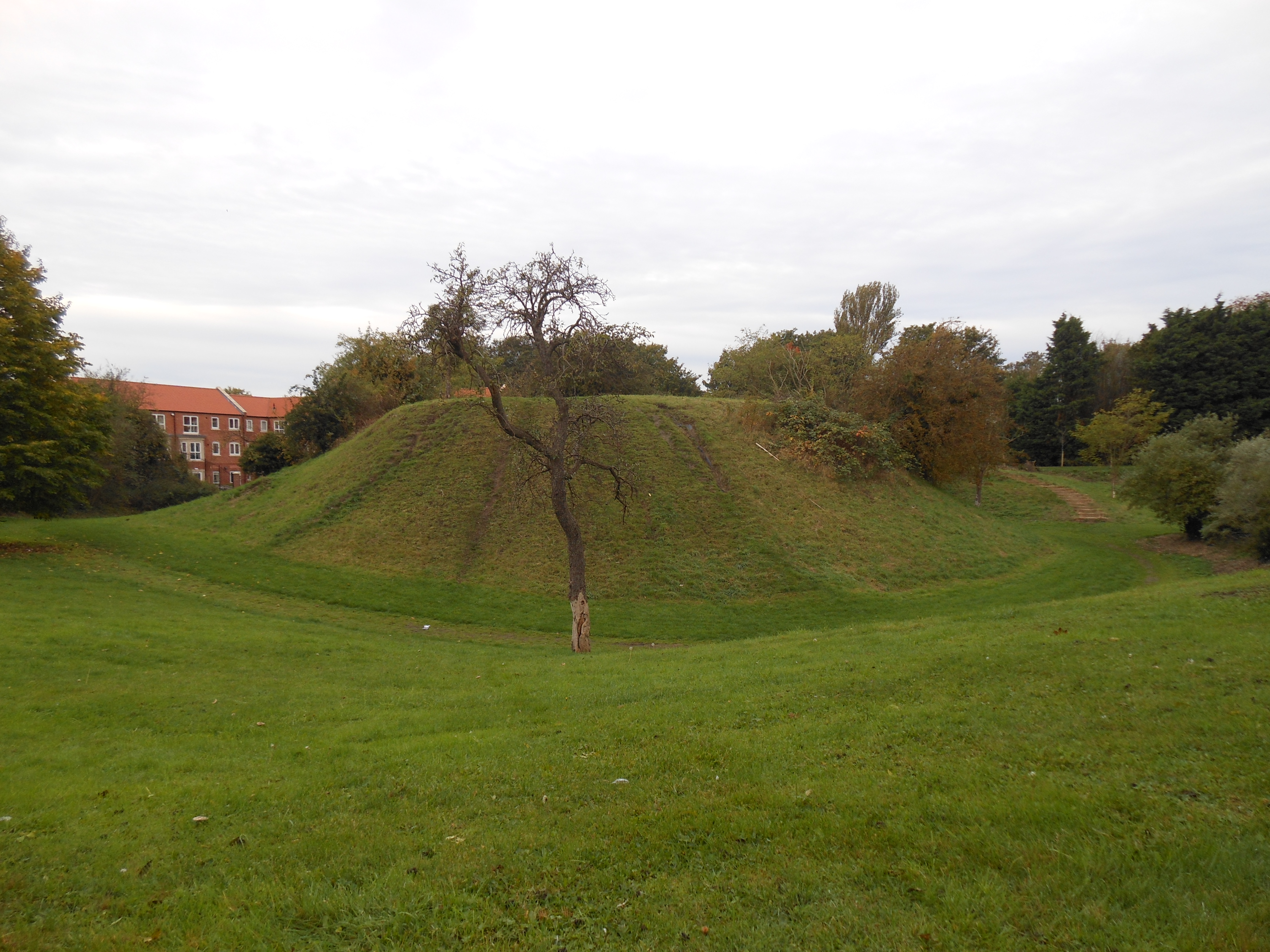
The motte of Peel Castle, Thorne, near Doncaster

William had been born six years after his older brother Edward, known to history as the Black Prince, who was their father Edward III’s heir, until his death in 1376, a year before the king. As a consequence, Edward III was succeeded by the Black Prince’s only surviving son by his wife, Joan of Kent, Richard II. It was the usurpation of Henry IV, who seized the crown from King Richard in 1399, that caused the fatal rivalry of the royal houses of Lancaster and York. Had William survived to adulthood, the story of England in the 15th century could have been very different; the rival houses of Lancaster and York were both descended from sons of Edward III who were younger than William.

Had he lived, the Wars of the Roses may never have happened….

*

Images:

Courtesy of Wikipedia, except Peel Castle and Roche Abbey, which are © Sharon Bennett Connolly

Sources: 

The Oxford Companion to British History Edited by John Cannon; The Plantagenets, the Kings who Made England by Dan Jones; History Today Companion to British History Edited by Juliet Gardiner and Neil Wenborn;  Brewer’s British Royalty by David Williamson; Britain’s Royal Families, the Complete Genealogy by Alison Weir; Early Yorkshire Charters Volume 8, Edited by William Farrer and Charles Travis Clay; Conisbrough Castle by Steven Brindle and Agnieszka Sadraei; The Mammoth Book of British Kings and Queens by Mike Ashley; The Plantagenets, the Kings that made Britain by Derek Wilson; oxforddnb.com; royaldescent.net; Fairbank, F. Royston, ‘The Last Earl of Warenne and Surrey, and the Distribution of hisPossessions’, The Yorkshire Archaeological Journal, vol. XIX, (1907), pp. 193–266; Historic England, ‘Peel Hill Motte and Bailey Castle, Thorne’, historicengland.org.uk; ‘Peel Hill Motte’, http://historyofthorne.com/peel_hill.html

*

My Books:

Signed, dedicated copies of all my books are available through my online bookshop.

Out Now! Women of the Anarchy
Two cousins. On the one side is Empress Matilda, or Maud. The sole surviving legitimate child of Henry I, she is fighting for her birthright and that of her children. On the other side is her cousin, Queen Matilda, supporting her husband, King Stephen, and fighting to see her own son inherit the English crown. Women of the Anarchy demonstrates how these women, unable to wield a sword, were prime movers in this time of conflict and lawlessness. It show how their strengths, weaknesses, and personal ambitions swung the fortunes of war one way – and then the other.

Available from Bookshop.orgAmberley Publishing and Amazon UK.

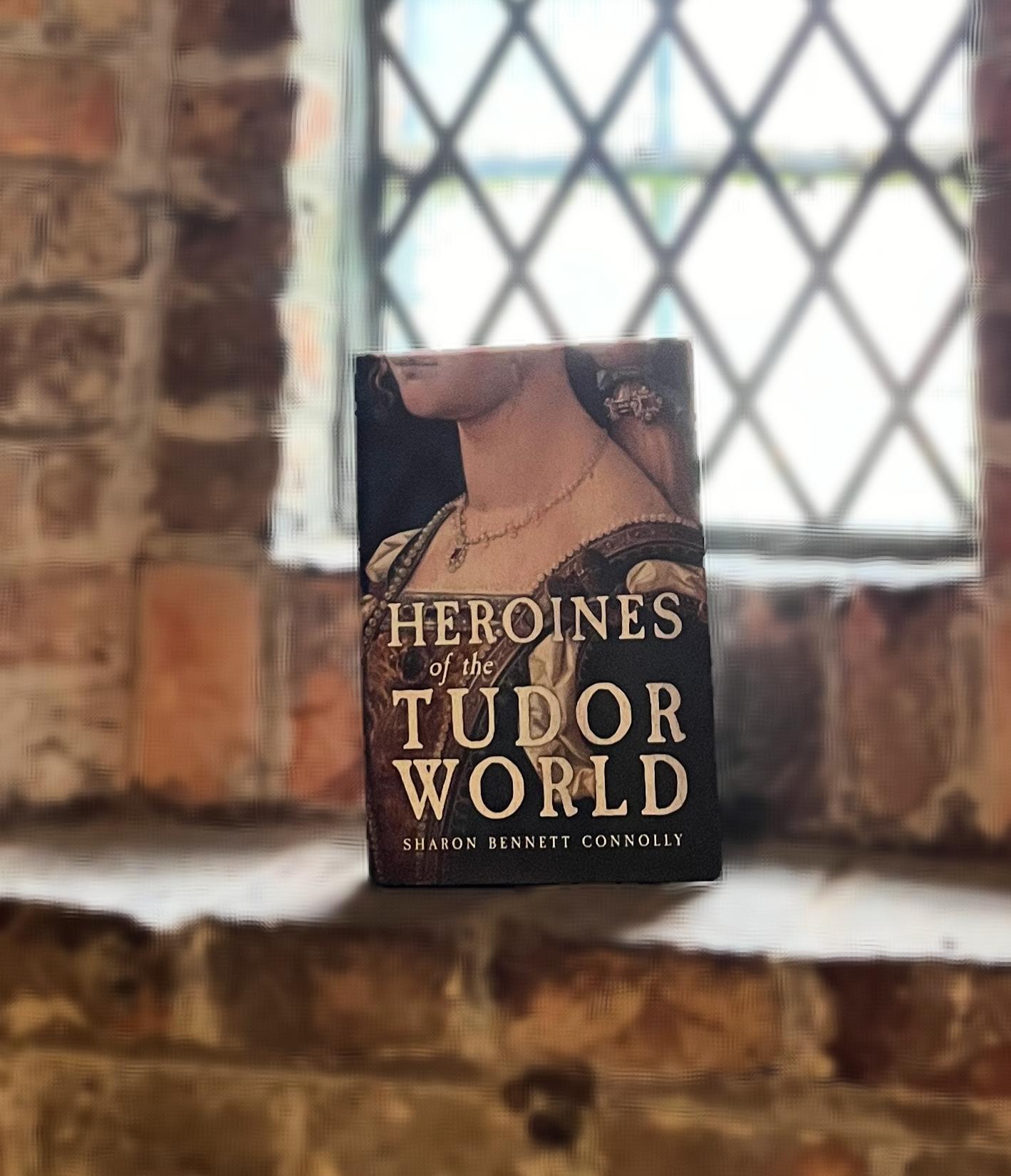
Coming on 15 June 2024: Heroines of the Tudor World
Heroines of the Tudor World tells the stories of the most remarkable women from European history in the time of the Tudor dynasty, 1485-1603. These are the women who ruled, the women who founded dynasties, the women who fought for religious freedom, their families and love. These are the women who made a difference, who influenced countries, kings and the Reformation. In the era dominated by the Renaissance and Reformation, Heroines of the Tudor World examines the threats and challenges faced by the women of the era, and how they overcame them. From writers to regents, from nuns to queens, Heroines of the Tudor World shines the spotlight on the women helped to shape Early Modern Europe.

Heroines of the Tudor World is now available for pre-order from Amberley Publishing and Amazon UK.

Also by Sharon Bennett Connolly:

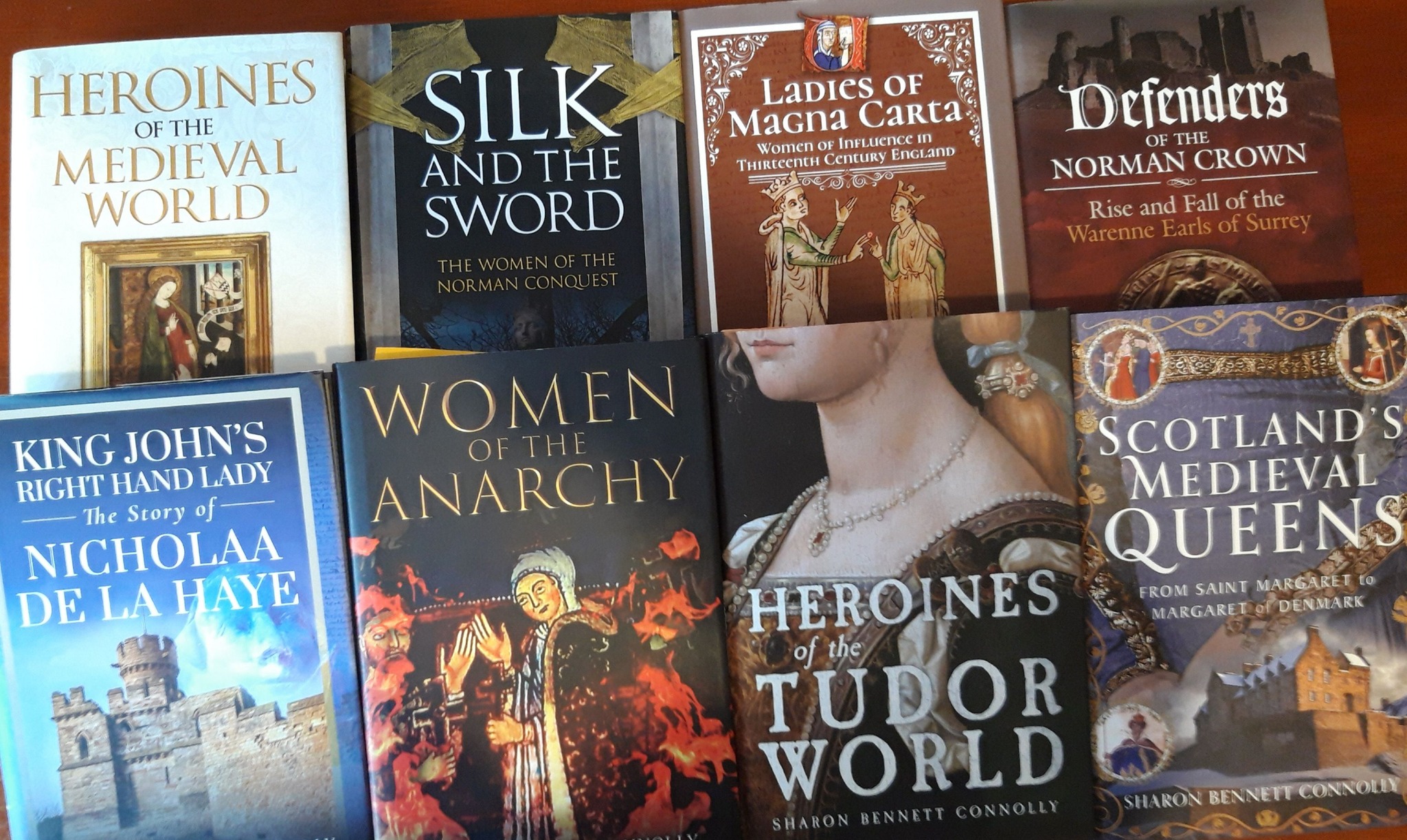
King John’s Right-Hand Lady: The Story of Nicholaa de la Haye is the story of a truly remarkable lady, the hereditary constable of Lincoln Castle and the first woman in England to be appointed sheriff in her own right. It is is available from King John’s Right-Hand Lady: The Story of Nicholaa de la Haye is the story of a truly remarkable lady, the hereditary constable of Lincoln Castle and the first woman in England to be appointed sheriff in her own right. Available from all good bookshops or direct from Pen & Sword Booksbookshop.org and AmazonDefenders of the Norman Crown: The Rise and Fall of the Warenne Earls of Surrey tells the fascinating story of the Warenne dynasty, from its origins in Normandy, through the Conquest, Magna Carta, the wars and marriages that led to its ultimate demise in the reign of Edward III. Available from Pen & Sword BooksAmazon in the UK and US, and Bookshop.org

Ladies of Magna Carta: Women of Influence in Thirteenth Century England looks into the relationships of the various noble families of the 13th century, and how they were affected by the Barons’ Wars, Magna Carta and its aftermath; the bonds that were formed and those that were broken. It is now available in paperback and hardback from Pen & Sword,  Amazon, and Bookshop.orgHeroines of the Medieval World tells the stories of some of the most remarkable women from Medieval history, from Eleanor of Aquitaine to Julian of Norwich. Available now from Amberley Publishing and Amazon, and Bookshop.orgSilk and the Sword: The Women of the Norman Conquest traces the fortunes of the women who had a significant role to play in the momentous events of 1066. Available now from Amazon,  Amberley Publishing, and Bookshop.org.

Alternate Endings: An anthology of historical fiction short stories including Long Live the King… which is my take what might have happened had King John not died in October 1216. Available in paperback and kindle from Amazon.

Podcast:

Have a listen to the A Slice of Medieval podcast, which I co-host with Historical fiction novelist Derek Birks. Derek and I welcome guests, such as Bernard Cornwell and Elizabeth Chadwick, and discuss a wide range of topics in medieval history, from significant events to the personalities involved.

*

Don’t forget! Signed and dedicated copies of all my books are available through my online bookshop.

For forthcoming online and in-person talks, please check out my Events Page.

You can be the first to read new articles by clicking the ‘Follow’ button, liking our Facebook page or joining me on Twitter and Instagram.

*

©2021 Sharon Bennett Connolly, FRHistS

Magna Carta’s Family Ties

Magna Carta

As I have been pursuing the various strands of research into the female personalities in medieval England, I have been struck, time and again, by how closely related the nobility were, through blood and marriage. Just look at the women who surround the Magna Carta story. Each of the women I wrote of had at least one familial connection to another great noble family; some had a number of links to several families. It is a tangled and complicated web, but I will try and give you a brief overview here.

As you may have noticed, my favourite medieval woman is Nicholaa de la Haye, castellan of Lincoln Castle; she successfully defended the castle through at least 3 sieges, the last 2 when she was a widow in her 60s. Nicholaa was related to King John’s half-brother, William  Longespée, Earl of Salisbury, through her son, Richard, whose daughter Idonea was married at a young age to William (II), Longespée’s son by his wife, Ela of Salisbury. It was as a result of this connection that William (I) Longespée claimed Lincoln Castle and the shrievalty of Lincolnshire following the Second Battle of Lincoln in May 1217. Longespée claimed that as they were his daughter-in-law’s inheritance, it was his right to administer them. Idonea’s father, Richard, had died sometime in the previous 12 months, leaving Idonea as his sole heir. Longespée appears to have conveniently forgotten – or ignored – the fact that the castle of Lincoln was Nicholaa’s by hereditary right – and Nicholaa was still very much alive!

Coat of arms of William Longespée, 3rd Earl of Salisbury

Despite Nicholaa’s stalwart defence of Lincoln Castle during a 10-week siege, Longespée was granted the position of sheriff just 4 days after the battle, and promptly seized the castle. Nicholaa’s refusal to accept this saw her presenting herself to the royal court and requesting she be reinstated. A compromise was reached whereby Longespée remained as sheriff of Lincolnshire, but Nicholaa was reinstated as castellan of Lincoln Castle, and given control of the city of Lincoln itself. Longespée was by no means satisfied and continued to scheme to gain control of the castle; Nicholaa doggedly held on and only retired from her position as castellan of Lincoln in 1226, 3 months after Longespée’s death.

Ela of Salisbury provided at least two further familial connections among my Ladies of Magna Carta. Through her grandfather, Patrick of Salisbury, Ela was a cousin of William Marshal and his five daughters. Marshal was the son of Patrick of Salisbury’s sister, Sybilla. Patrick himself had married, as his second wife, Ela de Talvas, who was the widow of William de Warenne, 3rd Earl of Warenne and Surrey. From her first marriage, Ela de Talvas was the mother of the heiress, Isabel de Warenne, Countess of Surrey in her own right and wife to, first, William of Blois, youngest son of King Stephen and secondly, Hamelin Plantagenet, illegitimate half-brother of King Henry II. Isabel de Warenne, therefore, was aunt to Ela of Salisbury, Richard the Lionheart and King John.

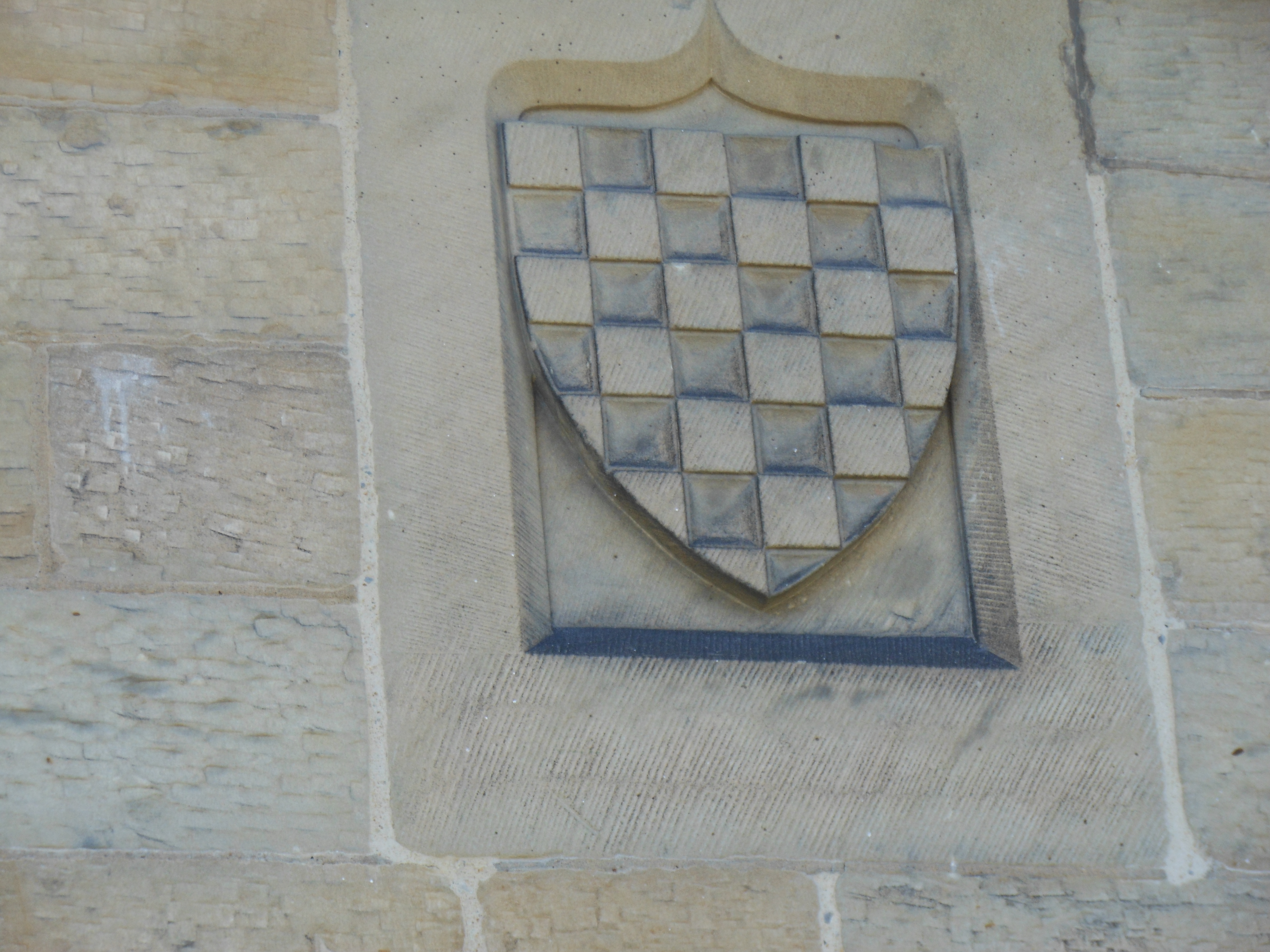
Arms of the Warenne earls of Surrey

Isabel de Warenne’s own aunt, Ada de Warenne, was married to the son and heir of King David I of Scotland, Henry, Earl of Huntingdon. Ada was the mother of two Scottish kings, Malcom IV the Maiden and William I the Lion. She was, therefore, the grandmother of the Scottish princesses, Margaret and Isabella, the only two women, other than the queen, Isabelle d’Angoulême, who can be clearly identified in a clause of Magna Carta. Margaret and Isabella had been handed over to King John as hostages following the 1209 Treaty of Norham, agreed between their father, William the Lion, and King John. John was supposed to find suitable husbands for the teenage girls; it had been implied that they would be married to John’s sons, Henry and Richard, but no marriages had ever materialised. Clause 59 of Magna Carta stipulated that John would find spouses for the princesses or send them home.

The two girls were eventually wed to English noblemen, though not until the 1220s. In 1221 Margaret married Hubert de Burgh, Henry III’s Justiciar and widower of another of my Ladies of Magna Carta, Isabella of Gloucester, who also had the dubious honour of having been the first wife of King John. Princess Isabella was married, in 1225, to Roger Bigod, Earl of Norfolk, who was 14 years her junior. The marriage was not a happy one. A third Scottish princess, Marjorie, who was several years younger than her two sisters and not part of the conditions of the Treaty of Norham, also married into the English nobility. She became the wife of Gilbert Marshal, 4th Earl of Pembroke, third son of the great William Marshal, Earl of Pembroke and regent for Henry III.

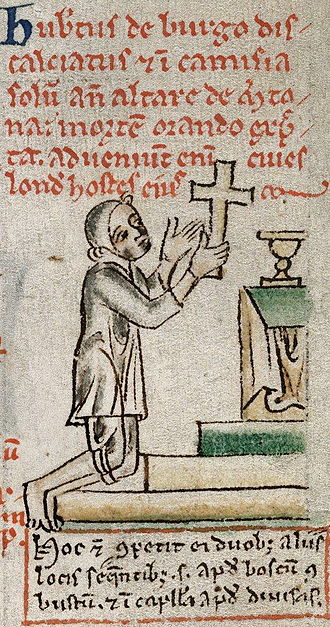
Hubert de Burgh from Matthew Paris’s Historia Anglorum

Roger Bigod was himself the son of Hugh Bigod, Earl of Norfolk, and Matilda Marshal, eldest daughter of William Marshal. Marshal was the man who had led the army that relieved Nicholaa de la Haye and the siege of Lincoln Castle in May 1220. Matilda married, as her second husband, William de Warenne, 5th Earl of Warenne and Surrey and only son of Isabel and Hamelin, mentioned earlier. Matilda’s sister, Isabel, was married to Gilbert de Clare, Earl of Gloucester; he was the nephew of the same Isabella of Gloucester who had been wife to King John, Geoffrey de Mandeville and Hubert de Burgh. Isabel Marshal then married, as her second husband, Richard, Earl of Cornwall, brother of Henry III and youngest son of King John. Another sister, Eva, married William (V) de Braose, grandson of William (IV) de Braose and Matilda, the poor woman who was imprisoned by King John and starved to death, alongside her eldest son, in his dungeons in 1210. It was Eva’s husband who was hanged by Llywelyn, Prince of Gwynedd, after he was found in Llywelyn’s bedroom with Llywelyn’s wife, Joan, Lady of Wales and illegitimate daughter of King John.

Which brings us neatly to the royal family. John’s eldest legitimate daughter, also named Joan, was betrothed as a child to Hugh X de Lusignan, Count of La Marche. The marriage never materialised, however, as Joan’s mother, Isabelle d’Angoulême, decided to marry Count Hugh in her daughter’s stead, causing a rather juicy scandal in the process! Joan was not without a suitor for long and within a year of her mother’s marriage she was married to Alexander II, King of Scots and brother of those same Scottish princesses who were included in Magna Carta’s clause 59. Of Joan’s sisters, Isabella was married to Frederick II, Holy Roman Emperor and Eleanor, only a baby at the time of her father’s death, was married to William (II) Marshal, eldest son and heir of the great William Marshal, at the age of 9. Eleanor was a widow before her 16th birthday, dramatically taking a vow of perpetual chastity in front of the Archbishop of Canterbury shortly after her husband’s death.

Arms of William Marshal, Earl of Pembroke

As her second husband, Eleanor married Simon de Montfort, Earl of Leicester, despite that pesky vow of chastity, which was to prove costly to Simon when he had to travel to Rome to seek a papal dispensation to have it annulled. Simon de Montfort was to continue the fight for reform that had been enshrined in Magna Carta, but would meet his end at the Battle of Evesham in 1265. Simon and Eleanor’s daughter, also named Eleanor, would marry Llywelyn, Prince of Wales, grandson of Llywelyn, Prince of Gwynedd. Eleanor died in childbirth in June 1282, while Llywelyn was defeated and killed by Edward I’s forces in December, the same year. Their only daughter, Gwenllian, was placed in a convent in Lincolnshire before she was 18 months old and would never leave it, dying there in 1337.

Another perpetual royal prisoner was Gwenllian’s distant cousin, Eleanor of Brittany, a granddaughter of Henry II, niece of King John and first cousin of Henry III. Her royal blood meant that she would never be afforded the protection enshrined in clause 39 of Magna Carta and inspired by the gruesome death of Matilda de Braose, that:

“No man shall be taken, imprisoned, outlawed, banished or in any way destroyed, nor will we proceed against or prosecute him, except by the lawful judgement of his peers or by the law of the land.”

There are many more familial links between the Ladies of Magna Carta. I could go on…

But I’m guessing that your heads are spinning and this is more than enough … for now.

Sources:

Rich Price, King John’s Letters Facebook group; Robert Bartlett England Under the Norman and Angevin Kings 1075-1225; Dan Jones The Plantagenets; the Kings who Made EnglandThe Plantagenet Chronicle Edited by Elizabeth Hallam; Maurice Ashley The Life and Times of King John; Roy Strong The Story of BritainOxford Companion to British History; Mike Ashley British Kings & Queens; David Williamson Brewer’s British Royalty; Ralph of Diceto, Images of History; Marc Morris, King John; David Crouch, William Marshal; Crouch and Holden, History of William Marshal; Crouch, David, ‘William Marshal [called the Marshal], fourth earl of Pembroke (c. 1146–1219)’, Oxforddnb.com; Flanagan, M.T., ‘Isabel de Clare, suo jure countess of Pembroke (1171×6–1220)’, Oxforddnb.com; Thomas Asbridge, The Greatest Knight; Chadwick, Elizabeth, ‘Clothing the Bones: Finding Mahelt Marshal’, livingthehistoryelizabethchadwick.blogspot.com; Stacey, Robert C., ‘Roger Bigod, fourth earl of Norfolk (c. 1212-1270)’, Oxforddnb.com; finerollshenry3.org.uk; Vincent, Nicholas, ‘William de Warenne, fifth earl of Surrey [Earl Warenne] (d. 1240)’, Oxforddnb.com.

*

My Books

Signed, dedicated copies of all my books are available through my online store.

OUT NOW! Heroines of the Tudor World

Heroines of the Tudor World tells the stories of the most remarkable women from European history in the time of the Tudor dynasty, 1485-1603. These are the women who ruled, the women who founded dynasties, the women who fought for religious freedom, their families and love. These are the women who made a difference, who influenced countries, kings and the Reformation. In the era dominated by the Renaissance and Reformation, Heroines of the Tudor World examines the threats and challenges faced by the women of the era, and how they overcame them. From writers to regents, from nuns to queens, Heroines of the Tudor World shines the spotlight on the women helped to shape Early Modern Europe.

Heroines of the Tudor World is now available for pre-order from Amberley Publishing and Amazon UK.

Coming 30 January 2025: Scotland’s Medieval Queens

Scotland’s history is dramatic, violent and bloody. Being England’s northern neighbour has never been easy. Scotland’s queens have had to deal with war, murder, imprisonment, political rivalries and open betrayal. They have loved and lost, raised kings and queens, ruled and died for Scotland. From St Margaret, who became one of the patron saints of Scotland, to Elizabeth de Burgh and the dramatic story of the Scottish Wars of Independence, to the love story and tragedy of Joan Beaufort, to Margaret of Denmark and the dawn of the Renaissance, Scotland’s Medieval Queens have seen it all. This is the story of Scotland through their eyes.

Available for pre-order now.

Also by Sharon Bennett Connolly:

Women of the Anarchy demonstrates how Empress Matilda and Matilda of Boulogne, unable to wield a sword themselves, were prime movers in this time of conflict and lawlessness. It shows how their strengths, weaknesses, and personal ambitions swung the fortunes of war one way – and then the other. Available from Bookshop.orgAmberley Publishing and Amazon UKKing John’s Right-Hand Lady: The Story of Nicholaa de la Haye is the story of a truly remarkable lady, the hereditary constable of Lincoln Castle and the first woman in England to be appointed sheriff in her own right. Available from all good bookshops Pen & Sword Booksbookshop.org and AmazonDefenders of the Norman Crown: The Rise and Fall of the Warenne Earls of Surrey tells the fascinating story of the Warenne dynasty, from its origins in Normandy, through the Conquest, Magna Carta, the wars and marriages that led to its ultimate demise in the reign of Edward III. Available from Pen & Sword BooksAmazon in the UK and US, and Bookshop.org

Ladies of Magna Carta: Women of Influence in Thirteenth Century England looks into the relationships of the various noble families of the 13th century, and how they were affected by the Barons’ Wars, Magna Carta and its aftermath; the bonds that were formed and those that were broken. It is now available in paperback and hardback from Pen & SwordAmazon, and Bookshop.orgHeroines of the Medieval World tells the stories of some of the most remarkable women from Medieval history, from Eleanor of Aquitaine to Julian of Norwich. Available now from Amberley Publishing and Amazon, and Bookshop.orgSilk and the Sword: The Women of the Norman Conquest traces the fortunes of the women who had a significant role to play in the momentous events of 1066. Available now from Amazon,  Amberley Publishing, and Bookshop.org.

Alternate Endings: An anthology of historical fiction short stories including Long Live the King… which is my take what might have happened had King John not died in October 1216. Available in paperback and kindle from Amazon.

Podcast:

Have a listen to the A Slice of Medieval podcast, which I co-host with Historical fiction novelist Derek Birks. Derek and I welcome guests, such as Bernard Cornwell and discuss a wide range of topics in medieval history, from significant events to the personalities involved.

*

Don’t forget! Signed and dedicated copies of all my books are available through my online store.

For forthcoming online and in-person talks, please check out my Events Page.

You can be the first to read new articles by clicking the ‘Follow’ button, liking our Facebook page or joining me on TwitterThreads and Instagram.

©2021 Sharon Bennett Connolly FRHistS

Book Corner: King John, Henry III and England’s Lost Civil War by John Paul Davis

In 1204, the great Angevin Empire created by the joining of the dynasties of Henry II of England and his queen, Eleanor of Aquitaine, was fragmenting. At its height, the family landholdings had been among the largest the world had ever seen. From the border of England and Scotland in the north to south of the Pyrenees, it seemed there was nowhere in Europe destined to escape Plantagenet control. Yet within five years of his accession, King John’s grip on the family holdings was loosening. Betrayal against his father and brother, the murder of his nephew, and breaking promises made to his supporters were just some of the accusations levelled against him. When Philip II conquered Normandy, the chroniclers believed that an ancient prophecy was fulfilled: that in this year the sword would be separated from the sceptre. For the first time since 1066, England’s rule over the ancestral land was over. For John, troubles on the continent were just the beginning of a series of challenges that would ultimately define his reign. Difficult relations with the papacy and clergy, coupled with rising dissent among his barons ensured conflict would not be limited to the continent. When John died in 1216, more than half of the country was in the hands of the dauphin of France. Never had the future of the Plantagenet dynasty looked more uncertain. As the following pages will show, throughout the first eighteen years of the reign of Henry III, the future direction of England as a political state, the identity of the ruling family and the fate of Henry II’s lost empire were still matters that could have gone either way. For the advisors of the young king, led by the influential regent, William Marshal, 1st Earl of Pembroke, the effects of John’s reign would be long and severe. Successful implementation of the failed Magna Carta may have ensured his son’s short-term survival, yet living up to such promises created arguably a more significant challenge. This is the story of how the varying actions of two very different kings both threatened and created the English way of life, and ultimately put England on the path to its Lost Civil War.

What a fascinating book!

King John, Henry III and England’s Lost Civil War by John Paul Davis is a study of the often overlooked civil war that took place between the First and Second Barons’ Wars of the 13th century. Very much overshadowed by King John’s struggles against the imposition of Magna Carta in 1215 and the later rise of Simon de Montfort, who was England’s ruler in all but name in 1264/5, the Marshal War often gets sidelined or ignored. Admittedly not as disruptive or even as violent as its more famous counterparts, the Marshal War was still an important event in the reign of Henry III.

In King John, Henry III and England’s Lost Civil War, John Paul Davis takes the reader on a thorough investigation into the events and politics that caused the Marshal War. Meticulously researched and beautifully written, John Paul Davis examines the reigns of both King John and Henry III in order to explain the context and background to the short-lived rebellion of 1234 of the country’s leading magnates.

A howling gale tore through the streets of Newark on the evening of 18 October 1216. A mid-sized market town located some forty miles inland from the North Sea, it was rare for a storm to give rise to the levels of concern often felt by citizens of its coastal counterparts. Lying on both the Great North Road and the Fosse Way, the area was popular with travellers, especially cloth and wool merchants in town to sell their wares. The early twelfth-century bridge over the Trent had improved the trade links further, and by the reign of Henry II, the market had become well established. Though most of the buildings were of timber construction, even at the height of winter weather damage was often repairable.

This was not the first time the town had been forced to endure such a tempest.

Behind the sturdy stone walls of the nearby Norman castle, the abbot of Croxton had far more troubling issues to address. The south riverside fortress, though by no means immune to regular splashback, was far better prepared for nature’s challenges than the earlier motte-and-bailey that had preceded it. The same lack of worry, however, could not be said of the crisis that had brought him there. Renowned for his medicinal expertise, it didn’t take him long to realise that the patient he had been asked to treat was beyond hope of recovery. Rather than prolong the inevitable, he heard the dying man’s confession and performed the last rites. The storm was over by sunrise.

Blighted by a combination of chronic fatigue, dysentery brought about from years of poor diet and a sudden fever, King John passed away in the early hours of 19 October after more than seventeen years on the throne. His final year had been a black one for England. Accusations of betrayal against his own family and an inability to keep his allies on side had contributed in no small part to humiliating defeat on the Continent. By 1214, the loss of much of his ancestral birthright had been compounded by domestic discord. Loathed in equal measure by natural adversary and should-be follower, John’s life ended ignominiously amid a strange alliance of foreign invader and baronial rebel. Somewhat surprisingly perhaps, it ended through natural causes.

There are several instances where my own research crosses with John Paul Davis’s work and it was interesting to see William de Warenne, 5th Earl of Warenne and Surrey, and the son of Hamelin and Isabel de Warenne, make an appearance; William played a prominent part in the events surrounding the rebellion. I have to say, also, that King John, Henry III and England’s Lost Civil War would be a perfect accompaniment to my own book Ladies of Magna Carta: Women of Influence in Thirteenth Century England, which looks at the same years, though with the focus on the women.

The research is impeccable. John Paul Davis and I apparently agree on many aspects of the period, which is encouraging! If you have an interest in 13th century history, this is definitely a book for your library. John Paul Davis fills in many of the gaps between the First and Second Barons’ Wars, an often overlooked period of history.

Written in an engaging, accessible manner, King John, Henry III and England’s Lost Civil War, is a thoroughly entertaining study of the politics, history and personalities involved in the first third of the century, from the devastating reign of King John, through the minority of Henry III and into the early years of Henry’s personal rule.

I can heartily recommend it!

King John, Henry III and England’s Lost Civil War is now available from Amazon and Pen & Sword Books.

About the author:

John Paul Davis is the international bestselling author of eleven thriller novels and four works of historical non-fiction. His debut thriller, The Templar Agenda, was a UK top 20 bestseller; The Cortés Trilogy has also been an international bestseller. As well as being a thriller author, his debut work, Robin Hood: The Unknown Templar, has been the subject of international attention, including articles in The Sunday Telegraph, The Daily Mail, Yorkshire Post and Nottingham Evening Post, mentions in USA Today and The Independent and reviews in the Birmingham Post and Medieval History Journal. His second work, Pity for the Guy, was the first full-length biography of Guy Fawkes and was featured on ITV’s The Alan Titchmarsh Show in November 2011. His most recent work on Henry III, The Gothic King, was released in 2013. His latest work of non-fiction, A Hidden History of the Tower of London, also published by Pen & Sword, was released in February 2020. He was educated at Loughborough University and lives in Warwickshire. His websites are http://www.officiallyjpd.com and http://www.theunknowntemplar.com. Twitter: @unknown_templar.

*

My Books

Signed, dedicated copies of all my books are available, please get in touch by completing the contact me form.

Defenders of the Norman Crown: The Rise and Fall of the Warenne Earls of Surrey tells the fascinating story of the Warenne dynasty, of the successes and failures of one of the most powerful families in England, from its origins in Normandy, through the Conquest, Magna Carta, the wars and marriages that led to its ultimate demise in the reign of Edward III. Defenders of the Norman Crown: Rise and Fall of the Warenne Earls of Surrey is now available from Pen & Sword BooksAmazon in the UK and US and Book Depository.

1 family. 8 earls. 300 years of English history!

Also by Sharon Bennett Connolly:

Ladies of Magna Carta: Women of Influence in Thirteenth Century England looks into the relationships of the various noble families of the 13th century, and how they were affected by the Barons’ Wars, Magna Carta and its aftermath; the bonds that were formed and those that were broken. It is now available in paperback and hardback from Pen & Sword,  Amazon and from Book Depository worldwide.

Heroines of the Medieval World tells the stories of some of the most remarkable women from Medieval history, from Eleanor of Aquitaine to Julian of Norwich. Available now from Amberley Publishing and Amazon and Book Depository.

Silk and the Sword: The Women of the Norman Conquest traces the fortunes of the women who had a significant role to play in the momentous events of 1066.  Available now from Amazon,  Amberley Publishing, Book Depository.

*

You can be the first to read new articles by clicking the ‘Follow’ button, liking our Facebook page or joining me on Twitter and Instagram.

©2021 Sharon Bennett Connolly

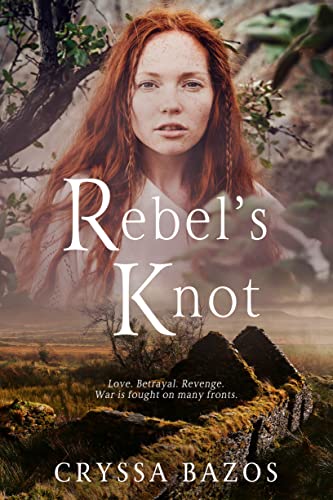
Book Corner: Rebel’s Knot by Cryssa Bazos

Ireland 1652: In the desperate, final days of the English invasion . . .

A fey young woman, Áine Callaghan, is the sole survivor of an attack by English marauders. When Irish soldier Niall O’Coneill discovers his own kin slaughtered in the same massacre, he vows to hunt down the men responsible. He takes Áine under his protection and together they reach the safety of an encampment held by the Irish forces in Tipperary.

Hardly a safe haven, the camp is rife with danger and intrigue. Áine is a stranger with the old stories stirring on her tongue and rumours follow her everywhere. The English cut off support to the brigade, and a traitor undermines the Irish cause, turning Niall from hunter to hunted.

When someone from Áine’s past arrives, her secrets boil to the surface—and she must slay her demons once and for all.

As the web of violence and treachery grows, Áine and Niall find solace in each other’s arms—but can their love survive long-buried secrets and the darkness of vengeance?

Thank you so much to Cryssa Bazos for disrupting my work this week! Instead of working for 3 hours and then reading for an hour over lunch, I’ve been working for 1 hour and reading for 3! But it’s ok, I’ve finished Rebel’s Knot now so I can get on with my life. What a bloody amazing book – again!

I do not usually read stories set in the 17th century, they’re a little out of my comfort zone. However, novels by Cryssa Bazos have definitely earned an exemption. This is Cryssa’s third book set in the civil wars that tore Britain apart during the reign of Charles I. The first was set in England whilst the second followed the exploits of those unfortunates who were forced into indentured servitude in the colonies. This third instalment follows the fortunes of the Irish Catholics who continued to hold on to their resistance to Oliver Cromwell an the Parliamentarians.

Pursuing a form of guerrilla warfare against a much stringer and better equipped English army, the Irish brigades sheltered in Ireland’s forests and depended on the goodwill of the Irish people to survive. Rebel’s Knot tells the story of one such brigade, the harsh conditions they were forced to live under and the political divisions that threatened to destroy their cause.

Áine still clutched the poker, her back pressed against the stone fireplace. She had never been more alarmed in her life to see a man materialise in her path. From experience, she gave them all distance. Niall O’Coneill had appeared, sprung from legend—a blazing warrior brandishing a gleaming sword, accompanied by a kingly wolfhound. He looked capable of hewing a giant in half. Were it not for his mud-splattered mantle, stubbled beard and dark shadows beneath his eyes, she’d believe him to be a figment of her fanciful imagination.

And then reality slammed her with the tide of his rage. With a fearsome bellow, he heaved the edge of the worktable, and it crashed onto its side. Áine muffled a scream. Her shoulder scraped against the rough stone—she was pinned between the fireplace and the raging man. The old terror gripped her.

With his back turned to her, his shoulders rose and fell with each breath. Áine marshalled her scattered wits, determined to fly. Now was her chance, while this man and his wolfhound paid her no attention.

But then he faced her. Áine sucked in her breath, her stomach knotting. She was ten feet from the door—from safety—but with every heartbeat of hesitation, that distance stretched to impossible.

He took a step forward, and she flinched, braced for the force of a blow. She squeezed her eyes shut. Please, not fists.

“I’m sorry.”

This hadn’t come from Áine, though those same words had been running through her mind—a reflex she thought she had smothered. No, he had spoken those words.

Áine’s eyes flew open. He stood a few feet away—jaw tense, hands balled into fists. “I’m sorry,”he repeated tersely. “My anger is not with you.”

She released the breath she had been holding and gave him an answering nod. Few had ever apologised to her. A part of her feared it might be a ruse.

The man ran a shaky hand through his dark hair and looked around the kitchen, a frown worrying his brow. “Gather what you will, Áine Callaghan. Supplies, any food. Especially food. We leave shortly.”

“And where are we to be going?” Áine asked sharply.

“Away from here.” He seemed deep in thought, his mind visibly whirring.

The heroes of Rebel’s Knot are a young woman, Aine, who has demons in her own past, and Niall, a born soldier who is driven to his limits when his loyalty is questioned. That Aine and Niall come up against a number of enemies, both known and unknown, leaves the reader on the edge of their seats, never quite knowing who is on the heroes’ side – and who isn’t. To prove his own innocence, he must find the real traitor.

The characters are wonderful, vivid creations who draw you in to their story. Cryssa Bazos recreates rural Ireland in great deal, drawing not only on the landscape, but also on the atmosphere and the beauty that is uniquely Ireland. Allusions to the Irish legends of the past serve to draw the reader in even deeper. What a masterpiece!

Rebel’s Knot is a wonderfully fast-paced novel that draws you in. Cleverly written, it leaves you guessing, almost to the very last page, as to the outcome of all the various strands and intrigues. The love story of Aine and Niall is offset by the violence engendered by war and the distrust borne out of the presence of a traitor.

Well, at least now I’ve finished it I can actually get back to work. I love it when a book grabs you like that! If you’re not reading it, you’re thinking about reading it!

It was a pleasure to read!

Rebel’s Knot by Cryssa Bazos is now available from Amazon.

From the author:

I am a historical fiction writer and 17th Century enthusiast, with a particular interest in the English Civil War (ECW) and romantic fiction. I blog about English history and storytelling at my site, the 17th Century Enthusiast, and I’m involved with the English Historical Fiction Authors blog site and a member of the Romantic Novelist Association (RNA) and the Historical Novel Society (HNS).

My absolute favourite books are romantic adventures, steeped in history, that take me to another time and place. I hope you enjoy my stories.

*

My Books

Signed, dedicated copies of all my books are available, please get in touch by completing the contact me form.

Defenders of the Norman Crown: The Rise and Fall of the Warenne Earls of Surrey tells the fascinating story of the Warenne dynasty, of the successes and failures of one of the most powerful families in England, from its origins in Normandy, through the Conquest, Magna Carta, the wars and marriages that led to its ultimate demise in the reign of Edward III. Defenders of the Norman Crown: Rise and Fall of the Warenne Earls of Surrey is now available from Pen & Sword BooksAmazon in the UK and US and Book Depository.

1 family. 8 earls. 300 years of English history!

Also by Sharon Bennett Connolly:

Ladies of Magna Carta: Women of Influence in Thirteenth Century England looks into the relationships of the various noble families of the 13th century, and how they were affected by the Barons’ Wars, Magna Carta and its aftermath; the bonds that were formed and those that were broken. It is now available in paperback and hardback from Pen & Sword,  Amazon and from Book Depository worldwide.

Heroines of the Medieval World tells the stories of some of the most remarkable women from Medieval history, from Eleanor of Aquitaine to Julian of Norwich. Available now from Amberley Publishing and Amazon and Book Depository.

Silk and the Sword: The Women of the Norman Conquest traces the fortunes of the women who had a significant role to play in the momentous events of 1066.  Available now from Amazon,  Amberley Publishing, Book Depository.

*

You can be the first to read new articles by clicking the ‘Follow’ button, liking our Facebook page or joining me on Twitter and Instagram.

©2021 Sharon Bennett Connolly

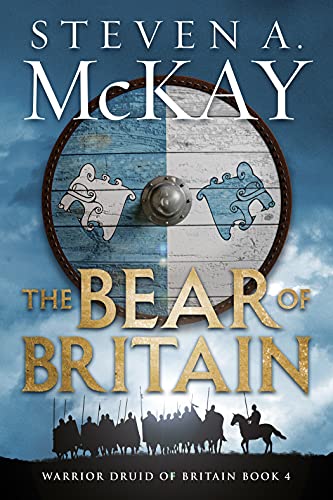
Book Corner: Bear of Britain by Steven A. McKay

AD 432. BRITAIN. The winter snows are melting at last, but spring will bring more than just rebirth this year. The Saxons are coming, and that means war.
Bellicus, Duro and Cai have travelled south to join the warlord, Arthur, and his growing army of Britons. New friendships have been made and exciting adventures await the warrior-druid and his companions, but the threat of Hengist and his invaders casts a dark cloud over all. For years, the Saxons have been content to remain mostly confined to the eastern parts of the country, but now they are marching west, and Hengist has amassed the biggest army seen on these shores since the Romans left over twenty years ago.
Arthur – dubbed the Bear of Britain by his advisor, Merlin – has never truly felt he’d earned such a grand title, but now he will have a chance to prove himself. The addition of a new, crack unit to his ranks will, he hopes, be enough to sweep the Saxon threat from Britain once and for all, and herald a generation of peace and prosperity for his people. But nothing in war is straightforward and even their own countrymen can turn violently against them at any moment, as Bellicus discovers to his cost…

The post-Roman landscape of Britain is brought vividly to life in this exciting fourth novel in the Warrior Druid of Britain Chronicles. Perfect for fans of Simon Scarrow, Bernard Cornwell and Conn Iggulden.

At last! Bellicus is back.

And what a thoroughly enjoyable novel it is.

I have developed a soft spot for this druid of the ancient Britons and his adventures. And this time he joins Arthur, the Bear of Britain to fight against Hengist and Horsa. The Bear of Britain truly indulges my love of all things Arthurian, with all the leading characters of the legend, Lancelot, Sir Kay and Merlin himself, joining the story. And what a story. Steven A. McKay has surpassed himself this time (and that is hard to do!). This was a fabulous adventure which I devoured in no time.

The Bear of Britain is a beautifully crafted adventure that sees Bellicus and his friend, the former Roman Centurion, Duro, join Arthur for an offensive against the Saxon brothers, Hengist and Horsa. Both Bellicus and Arthur are tasked with uniting the various British factions to form one coherent fighting force. And it is not that easy when each king thinks he himself should have the authority over Arthur, a man who is not tied to one land, but who has been raised since childhood to be the most formidable warlord and leader of men. Arthur must assert his own authority before he can lead his disparate forces against the Saxon invaders.

The Bear of Britain is a fabulous combination of battles, intrigue and political in-fighting and not everything will go Arthur’s way. However, he is blessed with the guidance of the Merlin and Bellicus, two druids who know how to influence the minds of kings and men. It is a fascinating study, not only of 6th century warfare, but also of what it takes to forge an army and lead it against such a formidable foe.

“I’ll actually be glad once the fighting starts,”the centurion said vehemently. “Since it’ll warm me up a little!”

A rider charged towards the camp from the east, heading towards Arthur’s tent and Bellicus led the way there himself. “That’ll be one of the scouts,”he said. “Bringing word of the Saxons’intended target perhaps.”

“Morning, big man,”a voice called, and they turned to see their young compatriot, and rowdy champion of the Votadini tribe, Eburus, warming himself by a fire. He’d travelled south with them after forming an unlikely friendship with both during the previous year’s battles against the Picts. “What’s happening? Are we moving out?”

“Soon, I’d guess,”Bellicus replied. “We’re just going to see Arthur now. Have our men ready to move, will you?”

Eburus grinned. Like Lancelot he was loud and brash and confident in his own abilities as a warrior. “They’re all ready to go, don’t worry, druid. Some of us have been up for hours you know.”

“Aye, not many can sleep once you start talking, Eburus. You’re a giant pain in the arse, lad.”Duro’s face was serious, but his eyes twinkled and, as he and Bellicus passed the guards and entered Arthur’s tent they chuckled at the foul insult Eburus called after them.

“Ah, you’re awake. Good.”Arthur nodded to them politely although he seemed pensive as he directed them to sit on a couple of stools by the table in the middle of the tent.

Lancelot was there, looking as fresh and clean-cut as he had before the previous night’s raid and Bellicus thought he could even smell lavender from the man, as though he’d washed in scented water recently. Also present were two local chieftains and, of course, the Merlin.

Nemias was his real name, but he was now more widely known as Merlin, the title given to the chief druid of all Britain.

Cai headed straight for the white-bearded old High Druid and allowed his muzzle to be stroked and a kiss to be planted on his head before padding back and flopping onto the floor at Bellicus’s feet.

“I was just saying,” Arthur told the newcomers, “That our scout reports the Saxons are moving south . He believes they’re heading for Waithe . Which means they won’t have as far to travel as I’d hoped. We should get moving now if you’re all ready?” He looked around at the gathered lords who all nodded agreement. “Let’s not waste any more time then. I’ll lead with Lancelot and my personal guard. King Caradoc, these are your lands, you ride with me, if you would ? Bellicus, you bring up the rear with your men, all right?”

Steven A. McKay has been teasing his readers with little glimpses of Arthur throughout the Warrior Druid of Britain series, but in this book the legendary hero gets more of a leading role – though the focus remains firmly on Bellicus’ story. It is wonderful the way the author skillfully weaves Arthur’s story into that of Bellicus, creating a new legend, all of its own. The character of Bellicus has developed wonderfully through the books, so that an avid reader can almost read his mind. He has a wonderful sense of right and wrong, and of destiny, that means the reader knows how Bellicus forms his decisions and ideas. HIs faithful companion, Duro, has his own demons to face in this episode of the story and it is refreshing to see him branch out on his own a little.

The Bear of Britain is a wonderful addition to Bellicus’ story and adds a new dimension to the druid’s life. The fact that he crosses paths with the legendary characters of Arthur and Lancelot adds a spice that the reader can really relish. One can only hope that their paths will continue to cross in later books.

And I do hope that the observant reader notices Steven A. McKay’s subtle nod to the great Bernard Cornwell and his The Last Kingdom series – it certainly made me smile and nod knowingly (but I will say no more and leave that for you to spot).

The Bear of Britain is a wonderful, enjoyable adventure and an excellent sequel to the preceding instalments of the Warrior Druid of Britain series (The Druid, Song of the Centurion and The northern Throne). The depth of research and thought that have gone into these books is astounding. Steven A. McKay has recreated post-Roman Britain in astonishing and vivid detail, no matter what part of Britain his characters find themselves in, both in the landscape and the people who occupied it.

The Bear of Britain is available in ebook and paperback from Amazon. I highly recommend you get yourself a copy – after reading the first 3 books, that is!

From Steven A. McKay:

I was born in Scotland in 1977 and always enjoyed studying history – well, the interesting bits, not so much what they taught us in school. I decided to write my Forest Lord series after seeing a house called “Sherwood” when I was out at work one day. I’d been thinking about maybe writing a novel but couldn’t come up with a subject or a hero so, to see that house, well…It felt like a message from the gods and my rebooted Robin Hood was born.

My current Warrior Druid of Britain series was similarly inspired, although this time it was the 80’s TV show “Knightmare”, and their version of Merlin that got my ideas flowing. Of course, the bearded old wizard had been done to death in fiction, so I decided to make my hero a giant young warrior-druid living in post-Roman Britain and he’s been a great character to write.

I was once in a heavy metal band although I tend to just play guitar in my study these days. I’m sure the neighbours absolutely love me.

Check out my website at stevenamckay.com and sign up for the email list – in return I’ll send you a FREE short story, as well as offering chances to win signed books, free audiobooks and other quite good things!

*

My Books

Signed, dedicated copies of all my books are available, please get in touch by completing the contact me form.

Defenders of the Norman Crown: The Rise and Fall of the Warenne Earls of Surrey tells the fascinating story of the Warenne dynasty, of the successes and failures of one of the most powerful families in England, from its origins in Normandy, through the Conquest, Magna Carta, the wars and marriages that led to its ultimate demise in the reign of Edward III. Defenders of the Norman Crown: Rise and Fall of the Warenne Earls of Surrey is now available from Pen & Sword BooksAmazon in the UK and US and Book Depository.

1 family. 8 earls. 300 years of English history!

Also by Sharon Bennett Connolly:

Ladies of Magna Carta: Women of Influence in Thirteenth Century England looks into the relationships of the various noble families of the 13th century, and how they were affected by the Barons’ Wars, Magna Carta and its aftermath; the bonds that were formed and those that were broken. It is now available in paperback and hardback from Pen & Sword,  Amazon and from Book Depository worldwide.

Silk and the Sword: The Women of the Norman Conquest traces the fortunes of the women who had a significant role to play in the momentous events of 1066.  Available now from Amazon,  Amberley Publishing, Book Depository.

Heroines of the Medieval World tells the stories of some of the most remarkable women from Medieval history, from Eleanor of Aquitaine to Julian of Norwich. Available now from Amberley Publishing and Amazon and Book Depository.

*

You can be the first to read new articles by clicking the ‘Follow’ button, liking our Facebook page or joining me on Twitter and Instagram.

*

©2021 Sharon Bennett Connolly

Daughters of the Greatest Knight

Arms of William Marshal, Earl of Pembroke

It is impossible to talk about anything related to Magna Carta without mentioning the man who has come to be known as ‘the Greatest Knight’: William Marshal, Earl of Pembroke, and his family. Marshal was one of the few nobles to stay loyal to King John throughout the Magna Carta crisis. That is not to say that the king and Marshal did not have their differences, nor that their relationship was always smooth sailing. However, William Marshal was famed for his loyalty and integrity and maintained his oaths to King John throughout his reign, regardless of the distrust between the two men.

The children of William and his wife, Isabel de Clare, cannot fail to have benefited from William Marshal’s rise through the ranks from fourth son and humble hearth knight, to earl of Pembroke and, eventually, regent for King Henry III. Their father’s position as a powerful magnate on the Welsh Marches, and the most respected knight in the kingdom, saw William’s daughters make advantageous marriages in the highest echelons of the English nobility.

William and Isabel were the parents of 10 children who survived to adulthood, 5 boys and 5 girls. In a bizarre and sad twist of fate, each of the boys would, in turn, succeed to the earldom, with not one leaving a male heir to continue the Marshal line. Of the girls, the couple’s eldest daughter was Matilda, also known as Maud or Mahelt. Given that her parents married in 1189 and she had two elder brothers, Matilda was probably born in 1193 or 1194. The Histoire de Guillaume le Maréchal wrote glowingly of Matilda, saying she had the gifts of

‘wisdom, generosity, beauty, nobility of heart, graciousness, and I can tell you in truth, all the good qualities which a noble lady should possess.’

 Histoire de Guillaume le Maréchal 

The Histoire goes on to say;

‘Her worthy father who loved her dearly, married her off, during his lifetime to the best and most handsome party he knew, to Sir Hugh Bigot.’

 Histoire de Guillaume le Maréchal 

Unfortunately for Matilda, her husband Hugh, the eldest son of the earl of Norfolk, was among the rebels during the Magna Carta crisis; their eldest son was taken hostage by the king when their castle at Framlingham surrendered to the royal army. It must have been a comfort to Matilda that, on John’s death, her son’s welfare, while still a hostage, would have been supervised by the new regent, the boy’s grandfather. When Hugh died in 1225, Matilda married for a second time just a few months later, to William de Warenne, Earl of Warenne and Surrey, thus uniting the Bigod, Warenne and Marshal families. The marriage appears to have been one of convenience rather than love but produced 2 children, a boy and a girl, John and Isabel. Matilda’s son by her second marriage, John de Warenne, joined his 3 older Bigod half-brothers, Roger, Hugh and Ralph as pall bearers for their mother’s coffin at her funeral in 1248, when she was laid to rest beside her mother at Tintern Abbey in Monmouthshire.

Seal of Matilda Marshal’s youngest son John de Warenne, 6th Earl of Warenne and Surrey

The next daughter, Isabel, was at least six years younger than Matilda, born in 1200. She was married to Gilbert de Clare, Earl of Gloucester and Hertford, who was twenty years her senior. Gilbert was the son of Richard de Clare, earl of Hertford, and Amicia, coheiress of William, Earl of Gloucester; through his mother he could trace his ancestry back to King Henry I, albeit through king’s illegitimate eldest son, Robert of Gloucester, the stalwart supporter of his half-sister, Empress Matilda. Gilbert’s aunt, Amicia’s sister, was Isabella of Gloucester, the discarded first wife of King John, who had held the earldom of Gloucester until her death on 14 October 1217, when it passed to Gilbert.

Both Gilbert and his father were named among the twenty-five barons appointed as Enforcers of Magna Carta in 1215; as a consequence, father and son were excommunicated at the beginning of 1216. After the death of King John, Gilbert sided with Prince Louis of France and was only reconciled with the royalist cause after the Battle of Lincoln in May 1217. This was despite having married Isabel, the second daughter of William Marshal, in 1214; Marshal had been regent of England for 9-year-old Henry III since King John’s death in October 1216. Like her older sister, Isabel had found her husband’s family were on the opposing side to her father in the Magna Carta crisis and the civil war that followed. They had 6 children together before Gilbert’s death in October 1230; he died on the return journey from an expedition to Brittany. Isabel was married again, not 6 months later, to the king’s younger brother, Richard, Earl of Cornwall. The early deaths of at least 2 children put a strain on this marriage and Richard had been seeking a divorce when Isabel found herself pregnant again. She was safely delivered of the longed-for son and heir, Henry of Almain in 1235. Tragically, Isabel herself died in childbirth, in 1240. Her baby son, Nicholas, died the same day.

The next-youngest of the Marshal sisters, Sibyl, was born around 1201: she was married to William de Ferrers, fifth earl of Derby. Unlike her elder sisters, Sibyl and her husband played little part in national affairs. Ferrers had been plagued by gout since his youth and led a largely secluded life. He was regularly transported by litter. Further, he had never fully recovered from an accident that had happened sometime in the 1230s. While crossing a bridge at St Neots in Huntingdonshire, Ferrers was thrown from his litter, into the water. It must have been a terrifying experience. He succeeded to the earldom of Derby on his father’s death in 1247 but died in 1254. During the marriage Sibyl gave birth to 7 children, all daughters: Agnes, Isabel, Maud, Sibyl, Joan, Agatha and Eleanor. Sibyl died sometime before 1247 and was laid to rest at Tintern Abbey, alongside her mother.

Tintern Abbey, Monmouthshire, resting place of several members of the Marshal family

William and Isabel Marshal’s fourth daughter, Eva, was born in about 1203 in Pembroke Castle, and so was only 16 when her father died – and 17 when she lost her mother. As a child, she spent several years with her family in exile in Ireland, only returning to England when her father was finally reconciled with King John in 1212. Sometime before 1221, Eva was married to William (V) de Braose, Lord of Abergavenny, son of Reginald de Braose and grandson of Matilda de Braose, who had died of starvation in King John’s dungeons in 1210. William de Braose was a wealthy Norman baron with estates along the Welsh Marches. He was hated by the Welsh, who had given him the nickname Gwilym Ddu, or Black William, and had been taken prisoner by Llywelyn ap Iorweth – Llywelyn the Great – in 1228.

Although he had been released after paying a ransom, de Braose later returned to Llywelyn’s court to arrange a marriage between his daughter, Isabella, and Llywelyn’s son and heir, Dafydd. During this stay, Eva’s husband was ‘caught in Llywelyn’s chamber with the King of England’s daughter, Llywelyn’s wife’. Whilst Llywelyn’s wife, Joan, Lady of Wales, the illegitimate daughter of King John, was imprisoned for a year, a much worse fate was meted out to William de Braose. He was publicly hanged on Llywelyn’s orders, leaving Eva a widow at the age of 27, with 4 young daughters, all under the age of 10. Despite the discomfort caused by Llywelyn’s execution of Braose, the marriage of Isabella and Dafydd went ahead, following some impressive diplomacy on Llywelyn’s part. Eva never remarried and spent her widowhood managing her own lands. She was caught up the revolt of her brother, Richard, in 1234, and appears to have acted as intermediary between her brother and the king to help resolve the situation. She died in 1246.

The youngest Marshal sister was Joan, who was still only a child when William Marshal died in 1219, being born in 1210. She is mentioned in the Histoire as having been called for by her ailing father, so that she could sing for him. Joan was married, before 1222, to Warin de Munchensi, a landholder and soldier who was born in the mid-1190s. When his father and older brother died in 1204 and 1208 (possibly), respectively, Warin was made a ward of his uncle William d’Aubigny, Earl of Arundel. He was ill-treated by King John, who demanded 2,000 marks in relief and quittance of his father’s Jewish debts on 23 December 1213. He was ordered to pay quickly and pledged his lands as a guarantee of his good behaviour.

Effigy identified as William Marshal, Temple Church, London

This harsh treatment drove him to ally with the rebel barons and he was captured fighting against the royalist forces, and his father-in-law, at the Battle of Lincoln, on 20 May 1217. He was, soon after, reconciled with the crown and served Henry III loyally on almost every military campaign of the next forty years. His marriage to Joan Marshal produced two children; John de Munchensi and a daughter, Joan, who would marry the king’s half-brother, William de Valence, fourth son of Isabelle d’Angoulême and her second husband, Hugh X de Lusignan, Count of La Marche. It was through his wife and, more accurately her mother, that William de Valence was allowed to accede to the earldom of Pembroke following the extinction of the Marshal male line. Joan Marshal died in 1234 and so never saw her daughter marry and become countess of Pembroke in 1247.

The various experiences of the 5 Marshal daughters serve as a demonstration of the divisions among the nobility, caused by the Magna Carta crisis, with several of them finding themselves on the opposing side to that of their father. It must have been a source of great anxiety for a family which appears to have been otherwise very close. These 5 young women also provide a snapshot of the fates of women in thirteenth century England, death in childbirth, early widowhood and second marriages arranged for personal security rather than love. What is evident is that, just like their father, these girls were an integral part of the Magna Carta story.

*

An earlier version of this article first appeared on Samantha Wilcoxson’s blog.

Sources:

Rich Price, King John’s Letters Facebook group; Robert Bartlett England Under the Norman and Angevin Kings 1075-1225; Dan Jones The Plantagenets; the Kings who Made EnglandThe Plantagenet Chronicle Edited by Elizabeth Hallam; Maurice Ashley The Life and Times of King John; Roy Strong The Story of BritainOxford Companion to British History; Mike Ashley British Kings & Queens; David Williamson Brewer’s British Royalty; Ralph of Diceto, Images of History; Marc Morris, King John; David Crouch, William Marshal; Crouch and Holden, History of William Marshal; Crouch, David, ‘William Marshal [called the Marshal], fourth earl of Pembroke (c. 1146–1219)’, Oxforddnb.com; Flanagan, M.T., ‘Isabel de Clare, suo jure countess of Pembroke (1171×6–1220)’, Oxforddnb.com; Thomas Asbridge, The Greatest Knight; Chadwick, Elizabeth, ‘Clothing the Bones: Finding Mahelt Marshal’, livingthehistoryelizabethchadwick.blogspot.com; Stacey, Robert C., ‘Roger Bigod, fourth earl of Norfolk (c. 1212-1270)’, Oxforddnb.com; finerollshenry3.org.uk; Vincent, Nicholas, ‘William de Warenne, fifth earl of Surrey [Earl Warenne] (d. 1240)’, Oxforddnb.com.

My Books

Signed, dedicated copies of all my books are available through my online bookshop.

Out now: Scotland’s Medieval Queens

Scotland’s history is dramatic, violent and bloody. Being England’s northern neighbour has never been easy. Scotland’s queens have had to deal with war, murder, imprisonment, political rivalries and open betrayal. They have loved and lost, raised kings and queens, ruled and died for Scotland. From St Margaret, who became one of the patron saints of Scotland, to Elizabeth de Burgh and the dramatic story of the Scottish Wars of Independence, to the love story and tragedy of Joan Beaufort, to Margaret of Denmark and the dawn of the Renaissance, Scotland’s Medieval Queens have seen it all. This is the story of Scotland through their eyes.

Scotland’s Medieval Queens gives a thorough grounding in the history of the women who ruled Scotland at the side of its kings, often in the shadows, but just as interesting in their lives beyond the spotlight. It’s not a subject that has been widely covered, and Sharon is a pioneer in bringing that information into accessible history.’ Elizabeth Chadwick (New York Times bestselling author)

Available now from Amazon and Pen and Sword Books

Also by Sharon Bennett Connolly:

Heroines of the Tudor World tells the stories of the most remarkable women from European history in the time of the Tudor dynasty, 1485-1603. These are the women who ruled, the women who founded dynasties, the women who fought for religious freedom, their families and love. Heroines of the Tudor World is now available for pre-order from Amberley Publishing and Amazon UK. Women of the Anarchy demonstrates how Empress Matilda and Matilda of Boulogne, unable to wield a sword themselves, were prime movers in this time of conflict and lawlessness. It shows how their strengths, weaknesses, and personal ambitions swung the fortunes of war one way – and then the other. Available from Bookshop.orgAmberley Publishing and Amazon UKKing John’s Right-Hand Lady: The Story of Nicholaa de la Haye is the story of a truly remarkable lady, the hereditary constable of Lincoln Castle and the first woman in England to be appointed sheriff in her own right. Available from all good bookshops Pen & Sword Booksbookshop.org and Amazon

Defenders of the Norman Crown: The Rise and Fall of the Warenne Earls of Surrey tells the fascinating story of the Warenne dynasty, from its origins in Normandy, through the Conquest, Magna Carta, the wars and marriages that led to its ultimate demise in the reign of Edward III. Available from Pen & Sword BooksAmazon in the UK and US, and Bookshop.orgLadies of Magna Carta: Women of Influence in Thirteenth Century England looks into the relationships of the various noble families of the 13th century, and how they were affected by the Barons’ Wars, Magna Carta and its aftermath; the bonds that were formed and those that were broken. It is now available in paperback and hardback from Pen & SwordAmazon, and Bookshop.orgHeroines of the Medieval World tells the stories of some of the most remarkable women from Medieval history, from Eleanor of Aquitaine to Julian of Norwich. Available now from Amberley Publishing and Amazon, and Bookshop.orgSilk and the Sword: The Women of the Norman Conquest traces the fortunes of the women who had a significant role to play in the momentous events of 1066. Available now from Amazon,  Amberley Publishing, and Bookshop.org.

Alternate Endings: An anthology of historical fiction short stories including Long Live the King… which is my take what might have happened had King John not died in October 1216. Available in paperback and kindle from Amazon.

Podcast:

Have a listen to the A Slice of Medieval podcast, which I co-host with Historical fiction novelist Derek Birks. Derek and I welcome guests, such as Bernard Cornwell and Michael Jecks, and discuss a wide range of topics in medieval history, from significant events to the personalities involved. Including an episode on William Marshal with Elizabeth Chadwick, author of The Greatest Knight. Every episode is now available on YouTube.

*

Don’t forget! Signed and dedicated copies of all my books are available through my online bookshop.

For forthcoming online and in-person talks, please check out my Events Page.

You can be the first to read new articles by clicking the ‘Follow’ button, liking our Facebook page or joining me on TwitterThreadsBluesky and Instagram.

*

©2021 Sharon Bennett Connolly FRHistS
Book Corner: The Castilian Pomegranate by Anna Belfrage

An enraged and grieving queen commands them to retrieve her exquisite jewel and abandon their foundling brat overseas—or never return

Robert FitzStephan and his wife, Noor, have been temporarily exiled. Officially, they are to travel to the courts of Aragon and Castile as emissaries of Queen Eleanor of England. Unofficially, the queen demands two things: that they abandon Lionel, their foster son, in foreign lands and that they bring back a precious jewel – the Castilian Pomegranate.

Noor would rather chop off a foot than leave Lionel in a foreign land—especially as he’s been entrusted to her by his dead father, the last true prince of Wales. And as to the jewel, stealing it would mean immediate execution. . .

Spain in 1285 is a complicated place. France has launched a crusade against Aragon and soon enough Robert is embroiled in the conflict, standing side by side with their Aragonese hosts.

Once in Castile, it is the fearsome Moors that must be fought, with Robert facing weeks separated from his young wife, a wife who is enthralled by the Castilian court—and a particular Castilian gallant.

Jealousy, betrayal and a thirst for revenge plunge Noor and Robert into life-threatening danger.

Will they emerge unscathed or will savage but beautiful Castile leave them permanently scarred and damaged?

And the wait is over! Anna Belfrage is back with the second instalment in her new Castilian Saga. And she has worked her magic again with another stunning page-turner of a book. A fast-paced adventure into the heart of medieval Spain, with stops at the courts of both Aragon and Castile. Anna Belfrage always seems to know how to craft a tale that will draw the reader in and keep them transfixed to the very end.

The Castilian Pomegranate continues the tale of Noor and her husband, Robert FitzStephan, as the journey to Spain with messages from the English queen, Eleanor of Castile, and in search of Noor’s roots a as a daughter of an illegitimate daughter of the Castilian royal house. They are also carrying a secret in the shape of a child, their foster son, who would be on the top of King Edward I’s Top Ten Most Wanted list, if he knew the child even existed. The story draws the young couple into the action and drama of the Reconquista, as the Catholic monarchs of Castile and Aragon attempt to retake Spain from the Moorish invaders.

The action is fast-paced and, at times, brutal. Anna Belfrage provides a stark contrast between the violence and action of war and the more gentle scenes of the continuing love story between Noor and Robert. That married life is never all plain sailing, means that, perhaps, the more thought provoking scenes are far from any battlefield.

Robert laughed again. For an instant, their gazes met, his light eyes crinkling at the corners as he blew her a kiss. Her man, so full of life, and just the thought of him being tortured to death… No one knew, she told herself shakily – she did that often. Except that Queen Eleanor had added two and two together and harboured strong suspicions as to Lionel’s real identity, and then there was that Welshman Rhys, who had accompanied Dafydd to Orton Manor that day when he’d placed his son in Noor’s care.

Only the fact that Queen Eleanor feared for her royal husband’s immortal soul had stopped her from sharing her suspicions with him. Aghast at having lost yet another son, her beloved Prince Alphonso, convinced that this was divine retribution for what Edward had done to Dafydd’s children, Eleanor had instead ordered Noor and Robert to leave England with the child, saying that as long as she was alive they were forbidden to return with the boy. “Get rid of him,” she’d said. “Leave him behind at a monastery somewhere and you are welcome to return.”

Without conscious thought, Noor had steered her mare back to the litter and dismounted to hug Lionel. “Never,” she whispered into his hair. “I will never abandon you.” So instead she prayed for divine guidance and – God forgive her – for Queen Eleanor’s death. Far too often, she woke angry, silently cursing the woman who’d obliged her and her husband, their foster son and their little daughter, Isabel, to leave their home for a long and hazardous voyage.

The litter drapes were pulled back, and Amalia stuck out her head. “Are we to stay here all day?” she grumbled. “I long for Sevilla, for Castile, not for a field in the middle of nowhere.” She smoothed her wimple into place, framing a very round face in which two dark eyes were the most distinctive feature. “And you,” she said to Lionel, “come here, mi tresoro. You cannot go about like that!”

“Let me,” Noor said, reaching inside for Lionel’s coif. The child protested loudly, but when she promised he could ride with her once the coif was tied into place, he stood as still as was possible for a child born with quicksilver in his veins.

As ever, the extent of Anna Belfrage’s research and attention to detail shines through on every page. The reader is transported to 14th century Spain, accosted by the sights, smells and sounds of the mixture of cultures that lived and fought alongside and within each other. The author has slotted the fictional Noor and Robert into the factual royal families of the time, weaving their story into the wider story of the Reconquista and conflicts, both in religion and cultures, of the Iberian Peninsula.

Anna Belfrage is a wonderful storyteller, one of the best. Her stories are at once exciting, sensual, and full of suspense. The intrigue and action combine beautifully with the love story at the heart of The Castilian Pomegranate. And the women see just as much intrigue and action as the men. That is not to say that actions do not have consequences, and Anna Belfrage always makes sure the story doesn’t always got the heroes’ way, which leaves the reader on the edge of their seat throughout the book.

The Castilian Pomegranate is a fabulous work of fiction, a wonderful story that will leave you captivated to the very end – and bereft when it is finally over. I enjoyed every word of it. Thank goodness there is another book in the works!

The Castilian Pomegranate is available in ebook and paperback from Amazon.

About the Author:

Had Anna been allowed to choose, she’d have become a professional time-traveller. No luck there, so instead she became a financial professional with two absorbing interests; history and writing. These days, Anna combines an exciting day-job with a large family and her writing endeavours. Plus she always finds the time to try out new recipes, chase down obscure rose bushes and initiate a home renovation scheme or two.

Anna has authored the acclaimed time travelling series The Graham Saga , set in 17th century Scotland and Maryland, as well as the equally acclaimed medieval series The King’s Greatest Enemy.

Anna has also published The Wanderer, a fast-paced contemporary romantic suspense trilogy with paranormal and time-slip ingredients. Her September 2020 release, His Castilian Hawk is a story of loyalty and love set against the complications of Edward I’s invasion of Wales in the late 13th century.

Her most recent release, The Whirlpools of Time , is a time travel romance set against the backdrop of brewing rebellion in the Scottish highlands.

All of Anna’s books have been awarded the IndieBRAG Medallion, she has several Historical Novel Society Editor’s Choices, and one of her books won the HNS Indie Award in 2015. She is also the proud recipient of several Reader’s Favorite medals as well as having won various Gold, Silver and Bronze Coffee Pot Book Club awards.

My Books

Signed, dedicated copies of all my books are available, please get in touch by completing the contact me form.

Defenders of the Norman Crown: The Rise and Fall of the Warenne Earls of Surrey tells the fascinating story of the Warenne dynasty, of the successes and failures of one of the most powerful families in England, from its origins in Normandy, through the Conquest, Magna Carta, the wars and marriages that led to its ultimate demise in the reign of Edward III. Defenders of the Norman Crown: Rise and Fall of the Warenne Earls of Surrey is now available from Pen & Sword BooksAmazon in the UK and US and Book Depository.

1 family. 8 earls. 300 years of English history!

Also by Sharon Bennett Connolly:

Ladies of Magna Carta: Women of Influence in Thirteenth Century England looks into the relationships of the various noble families of the 13th century, and how they were affected by the Barons’ Wars, Magna Carta and its aftermath; the bonds that were formed and those that were broken. It is now available in paperback and hardback from Pen & Sword,  Amazon and from Book Depository worldwide.

Silk and the Sword: The Women of the Norman Conquest traces the fortunes of the women who had a significant role to play in the momentous events of 1066.  Available now from Amazon,  Amberley Publishing, Book Depository.

Heroines of the Medieval World tells the stories of some of the most remarkable women from Medieval history, from Eleanor of Aquitaine to Julian of Norwich. Available now from Amberley Publishing and Amazon and Book Depository.

*

You can be the first to read new articles by clicking the ‘Follow’ button, liking our Facebook page or joining me on Twitter and Instagram.

*

©2021 Sharon Bennett Connolly

Book Giveaway: Ladies of Magna Carta

Giveaway results!

First of all, i would like to say a huge thank you to everyone who entered the giveaway. There were 156 entries, which is truly incredible. But unfortunately there can be only one winnerAnd the winner is…Charlotte Clark.

Congratulations Charlotte. Thank you all for taking part and giving me such a confidence boost with your lovely comments.

If you do get your hands on a copy of Ladies of Magna Carta – or any of my books – do get in touch and I will send you a signed bookplate to pop in the front. Alternatively, I do have copies of all my books in stock if you’d like to purchase a signed and dedicated copy.

Love Sharon x

I realise that I haven’t done a giveaway in over a year. So, to celebrate the release of Ladies of Magna Carta in paperback in the UK this week, I thought I would do a giveaway. One signed copy of the brand spanking new paperback (it looks very pretty!) will go to the lucky competition winner.

Inspired by the lives of Matilda de Braose and Nichoaa de la Haye, My third book looks at the events surrounding the issuing of Magna Carta with a view to how it affected the women.

Praise for Ladies of Magna Carta:

“Sharon Bennett Connolly throws much needed light on the lives of the high-born women of thirteenth-century England…Connolly’s version of the first Plantagenets is superbly concise. No distractions or detours, hitting all the right nails on the head…Connolly’s book is an informative and delightful read about women aspiring to control their destiny against this backdrop, but their success or failure had less to do with Magna Carta than with the timeless principles of resourcefulness, determination and knowing how to skilfully handle the big guy. It’s these qualities that make their stories inspiring.”

Darren Baker, author of The Two Eleanors

“A well-researched and comprehensive study of the women who lived through, and were affected by, the Barons’ Revolt and the sealing of the Magna Carta. Ms Bennett Connolly has skilfully brought to the fore the lives of the women who have hitherto been hidden in the background. A must-read for anyone interested in this pivotal moment in English and Scottish history.”

Annie Whitehead, author of Women of Power in Anglo-Saxon England

It’s easy to enter!

The competition is open to everyone, wherever you are in the world. To win a signed and dedicated copy of Ladies of Magna Carta, simply leave a comment below or on my Facebook page and I will include you in the prize draw.

The draw will be made on Sunday 21 November.

*

My Books

Signed, dedicated copies of all my books are available, please get in touch by completing the contact me form.

Defenders of the Norman Crown: The Rise and Fall of the Warenne Earls of Surrey tells the fascinating story of the Warenne dynasty, of the successes and failures of one of the most powerful families in England, from its origins in Normandy, through the Conquest, Magna Carta, the wars and marriages that led to its ultimate demise in the reign of Edward III. Defenders of the Norman Crown: Rise and Fall of the Warenne Earls of Surrey is now available from Pen & Sword BooksAmazon in the UK and US and Book Depository.

1 family. 8 earls. 300 years of English history!

Also by Sharon Bennett Connolly:

Ladies of Magna Carta: Women of Influence in Thirteenth Century England looks into the relationships of the various noble families of the 13th century, and how they were affected by the Barons’ Wars, Magna Carta and its aftermath; the bonds that were formed and those that were broken. It is now available in paperback and hardback from Pen & Sword,  Amazon and from Book Depository worldwide.

Heroines of the Medieval World tells the stories of some of the most remarkable women from Medieval history, from Eleanor of Aquitaine to Julian of Norwich. Available now from Amberley Publishing and Amazon and Book Depository.

Silk and the Sword: The Women of the Norman Conquest traces the fortunes of the women who had a significant role to play in the momentous events of 1066.  Available now from Amazon,  Amberley Publishing, Book Depository.

*

You can be the first to read new articles by clicking the ‘Follow’ button, liking our Facebook page or joining me on Twitter and Instagram.

©2021 Sharon Bennett Connolly

Book Corner: Gods of Rome by Simon Turney and Gordon Doherty

It is a pleasure today to join the blog tour for Gods of Rome, with a short review and enticing extract from the book. Gods of Rome is the final instalment in the magnificent Rise of Emperors series by Simon Turney and Gordon Doherty.

For one to rule, the other must die.

AD 312:  A year of horrific and brutal warfare.

Although outnumbered, Constantine’s legions seem unstoppable as they surge through Maxentius’ Italian heartlands. Constantine is determined to reach and seize the ancient capital of Rome from his rival, yet his army is exhausted, plagued by religious rivalries and on the verge of revolt. Maxentius meanwhile contends with a restive and dissenting Roman populace. Neither general can risk a prolonged war.

When the two forces clash amidst portents and omens in a battle that will shape history, there are factors at work beyond their control. Only one thing is certain: Constantine and Maxentius’ rivalry must end. With one on a bloodied sword and the other the sole ruler of an Empire…

The Rise of Emperors trilogy finally comes to its inevitable, devastating conclusion with Gods of Rome. The series has followed the careers of rival emperors Maxentius and Constantine, from their first meeting as children and blossoming friendship in Sons of Rome, to that friendship turning to rivalry in the second instalment, Masters of Rome. In Gods of Rome, the rivalry turns deadly when the ultimate prize is within each’s grasp – that of command of the empire itself.

This series has been a fabulous, unique reading experience. With each writer taking the voice of one of the emperors, the distinction between the two becomes profound. There is no hidden bias as you may find with one author writing both sides – but secretly preferring one. The rival emperors, Constantine and Maxentius, each have their own very distinct voice.

As you would expect with anything from Gordon Doherty and Simon Turney, the action is intense, the pace is, at times, rather furious, grabbing the reader’s attention and holding it to the very end.

The only problem with the whole trilogy is that one of the heroes had to lose – was destined to lose. And neither truly deserved to. Doherty and Turney draw wonderfully on the political machinations and family rivalries that drew these two former friends, Constantine and Maxentius, to final, devastating contest for Rome itself.

The meticulous research of the history, landscape, military strategy of the time and the war itself, help to recreate the world of the Roman Empire of the 4th century. Both authors draw on the conflicts, not only of politics and protagonists, but also through the rise of Christianity and how the rival emperors harnessed or exploited those divisions within their own camp and the camp of their rival.

Gods of Rome is a wonderful, engaging and fast-paced novel that is entertaining from start to finish. Another Doherty/Turney collaboration that is an absolute triumph.

Here’s what the reader has to look forward to:

Extract

1
CONSTANTINE

The Cottian Alpes, 27th January 312 ad

We moved through the mountains like winter wolves. The ferocious blizzard sped southwards with us, carried on the famous bora winds, singing a dire song. For days we marched through that driving snow, seeing nothing but great white-clad peaks either side of us; rugged,inhospitable highlands which in these frozen months soldiers were not meant to cross. All around me the gale screamed, boots crunched endlessly through the successively deeper drifts of white, men’s teeth chattered violently, mules brayed, exhausted. It felt at times as if we were wandering, snow-blind, to our deaths, but I knew what lay ahead… so close now.

I called upon my chosen men and a handful of their best soldiers – a group of thirty – and we roved ahead of the army like advance scouts. The blizzard raked through my bear cloak, the snow rattling like slingshot against my gemmed ridge helm and bronze scales as I scoured the valley route. Yet I refused to blink. When the speeding hail of white slowed and the murky grey ahead thinned a little, I saw them: a pair of stone and timber watchtowers, northern faces plastered in snow. Gateposts watching this passage between two realms. I dropped to my haunches behind the brow of a snowdrift and my chosen men hunkered down with me. I gazed over the drift’s brow, regarding the narrow gap between the towers and the valley route beyond, on through the winter-veined mountains. Thinking of the land that lay beyond these heights, my frozen lips moved soundlessly.

Italia…

Land of Roman forefathers. Home of the man I had once considered my friend… but that territory was rightfully mine. Mine! My surging anger scattered when I spotted movement atop one of the two towers: a freezing Maxentian scout blowing into his hands, oblivious to our presence. Then the blizzard fell treacherously slack, and the speeding veil of white cleared for a trice. I saw his ice-crusted eyebrows rise as he leaned forward, peering into the momentary clarity, right at us. His eyes bulged, mouth agog.

‘He is here!’ he screamed to be heard over the sudden return of the storm’s wrath. ‘Constantine is h—’

With a wet punch, an arrow whacked into the man’s chest and shuddered there. He spasmed then folded over the edge of the timber parapet and fell like a sack of gravel, crunching into a pillowy snowdrift at the turret’s foot. I glanced to my right, seeing my archer nock and draw again, shifting his bow to the heights of the other tower, his eyes narrowing within the shadow
of his helm brow. He loosed, but the dark-skinned sentry up there ducked behind the parapet, screaming and tolling a warning bell. At once, three more Maxentians spilled from the door at the base of that rightmost tower, rushing south towards a simple, snow-topped stable twenty paces away, in the lee of a rocky overhang. This was one of the few gateways through the mountains – albeit the least favoured and most treacherous – and it was guarded by just five men? Instantly, suspicion and elation clashed like swords in my mind. We had no time to rake over the facts. These watchmen could not be allowed to ride south and warn the legions of Italia. They had to die.

About the authors

Gordon Doherty

Simon Turney is the author of the Marius’ Mules and Praetorian series, as well as The Damned Emperor series for Orion and Tales of the Empire series for Canelo. He is based in Yorkshire.

Gordon Doherty is the author of the Legionary and Strategos series, and wrote the Assassin’s Creed tie-in novel Odyssey. He is based in Scotland.

Pre-order link

Amazon: https://amzn.to/3EtqBgF

Follow Simon

Twitter: @SJATurney

Instagram: @simonturney_aka_sjaturney

Website: http://simonturney.com/

Follow Gordon

Simon Turney

Twitter: @GordonDoherty

Instagram: @gordon.doherty

Website: https://www.gordondoherty.co.uk/

Follow Aries

Twitter: @AriesFiction

Facebook: Aries Fiction

Website: http://www.headofzeus.com

Blog Tour Hashtag

#GodsofRome

*

My Books

Signed, dedicated copies of all my books are available, please get in touch by completing the contact me form.

Defenders of the Norman Crown: The Rise and Fall of the Warenne Earls of Surrey tells the fascinating story of the Warenne dynasty, of the successes and failures of one of the most powerful families in England, from its origins in Normandy, through the Conquest, Magna Carta, the wars and marriages that led to its ultimate demise in the reign of Edward III. Defenders of the Norman Crown: Rise and Fall of the Warenne Earls of Surrey is now available from Pen & Sword BooksAmazon in the UK and US and Book Depository.

1 family. 8 earls. 300 years of English history!

Also by Sharon Bennett Connolly:

Ladies of Magna Carta: Women of Influence in Thirteenth Century England looks into the relationships of the various noble families of the 13th century, and how they were affected by the Barons’ Wars, Magna Carta and its aftermath; the bonds that were formed and those that were broken. It is now available in paperback and hardback from Pen & Sword,  Amazon and from Book Depository worldwide.

Heroines of the Medieval World tells the stories of some of the most remarkable women from Medieval history, from Eleanor of Aquitaine to Julian of Norwich. Available now from Amberley Publishing and Amazon and Book Depository.

Silk and the Sword: The Women of the Norman Conquest traces the fortunes of the women who had a significant role to play in the momentous events of 1066.  Available now from Amazon,  Amberley Publishing, Book Depository.

*

You can be the first to read new articles by clicking the ‘Follow’ button, liking our Facebook page or joining me on Twitter and Instagram.

©2021 Sharon Bennett Connolly

Women in Love: Katherine Swynford and Joan Beaufort, Queen of Scots

The coat of arms of Katherine Swynford

Sometimes the similarities in the stories of medieval women are intriguing. Especially among families. Katherine Swynford’s story is one of the endurance of love and is unique in that she eventually married her prince. Katherine’s granddaughter, Joan Beaufort, is one half of, arguably, the greatest love story of the middle ages. I say arguably, of course, because many would say that Katherine’s was the greatest.

You may not consider a mistress as a heroine, seeing her as ‘the other woman’ and not worthy of consideration. However, women in the medieval era had little control over their own lives; if a lord wanted them, who were they to refuse? And even if they were in love, differences in social position could mean marriage was impossible – at least for a time.

Katherine was born around 1350; she was the younger daughter of Sir Payn Roelt, a Hainault knight in the service of Edward III’s queen, Philippa of Hainault, who eventually rose to be Guyenne King of Arms. Her mother’s identity is unknown, but Katherine and her older sister, Philippa, appear to have been spent their early years in Queen Philippa’s household. By 1365 Katherine was serving Blanche, Duchess of Lancaster, the first wife of John of Gaunt and Katherine was married to Sir Hugh Swynford of Coleby and Kettlethorpe, Lincolnshire, shortly after. The couple had three children, Thomas, Margaret, who became a nun, and Blanche, who was named after the duchess. John of Gaunt stood as little Blanche’s godfather and she was raised alongside his own daughters by Duchess Blanche.

Following Blanche’s death in 1368, Katherine was appointed governess to the duchess’s daughters. In September 1371 John of Gaunt was remarried, to Constance of Castile; Constance had a claim to the throne of Castile and John was soon being addressed as King of Castile. In the same year, Katherine’s husband, Sir Hugh Swynford, died whilst serving overseas and it seems that within months of his death, probably in the winter of 1371/72 Katherine became John’s mistress. Their first child, John Beaufort, was born towards the end of 1372. Over the next few years, three further children – two sons and a daughter – followed. John’s wife Constance also had children during this time – she gave birth to a daughter, Catherine, (Catalina) in 1373 and a short-lived son, John, in 1374.

John of Gaunt, Duke of Lancaster

We can only guess at what the two women thought of each other, but it can’t have been an easy time for either. In 1381, following the unrest of the Peasants’ Revolt and the hefty criticism aimed particularly at John and his relationship with Katherine, John renounced Katherine. Giving up her position as governess, Katherine left court and returned to Lincoln. Her relationship with John of Gaunt and, indeed, his family, remained cordial and the duke still visited her, although discreetly. In 1388 Katherine was made a Lady of the Garter – a high honour indeed. And in 1394 Constance died.

In January 1396, John and Katherine were finally married in Lincoln Cathedral; they had to obtain a dispensation from the church as John was godfather to Katherine’s daughter. With the marriage, Katherine had gone from being a vilified mistress to Duchess of Lancaster. Her children by John were legitimised by the pope in September 1396 and by Richard II’s royal patent in the following February, although they were later excluded from the succession by Henry IV.

Sadly, Katherine’s marital happiness with John of Gaunt was short-lived; John of Gaunt died in February 1399 and Katherine retired to live in Lincoln, close to the cathedral of which her second son by John, Henry, was bishop. Katherine herself died at Lincoln on 10 May 1403 and was buried in the cathedral in which she had married her prince. Her tomb can still be seen today and lies close to the high altar, beside that of her youngest child Joan Beaufort, countess of Westmorland, who died in 1440.

Although it seems easy to criticise Katherine’s position as ‘the other woman’, her life cannot have been an easy one. The insecurity and uncertainty of her position, due to the lack of a wedding ring, must have caused her much unease. However, that she eventually married her prince, where so many other medieval mistresses simply fell by the wayside and were forgotten, makes her story unique. What makes her even more unique is that Katherine’s own granddaughter was part of one of the greatest love stories of the middle ages.

Joan Beaufort was the only daughter of Katherine’s eldest son by John of Gaunt, also named John. The story of King James I of Scotland and his queen, Joan Beaufort, is probably the greatest love story of the medieval era. He was a king in captivity and she a beautiful young lady of the court of her Lancastrian cousin, Henry V. The son of Robert III of Scotland, James had been on his way to France, sent there for safety and to continue his education, when his ship was captured by pirates in April 1406. Aged only eleven, he had been handed over to the English king, Henry IV, and imprisoned in the Tower of London. Within a couple of months of his capture, James’s father had died, and he was proclaimed King of Scots, but the English would not release their valuable prisoner. James was closely guarded and regularly moved around, but he was also well-educated while in the custody of the English king and became an accomplished musician and poet.

Joan Beaufort, Queen of Scots

Probably born in the early 1400s, Lady Joan was the daughter of John Beaufort, 1st Earl of Somerset. She was at court by the early 1420s, when James first set eyes on her. The Scottish king wrote of his love for Joan in his famous poem, The Kingis Quair. According to Nigel Tranter, James was with the court at Windsor, when he saw Joan for the first time; she was walking her little lapdog in the garden, below his window. The narrow window afforded him only a limited view, but the Lady Joan walked the same route every morning and James wrote of her;

Beauty, fair enough to make the world to dote,

Are ye a worldy creature?

Or heavenly thing in likeness of nature?

Or are ye Cupid’s own priestess, come here,

To loose me out of bonds

One morning James is said to have dropped a plucked rose down to Lady Joan, which he saw her wearing the following evening at dinner. Nigel Tranter suggests Lady Joan grieved over James’s imprisonment and even pleaded for his release. Written in the winter of 1423/24, the autobiographical poem, The Kingis Quair, gives expression to James’ feelings for Joan;

I declare the kind of my loving

Truly and good, without variance

I love that flower above all other things

James’s imprisonment lasted for eighteen years. His uncle Robert Stewart, Duke of Albany and Guardian of Scotland in James’s absence, refused to ransom him, in the hope of gaining the throne himself. He never quite garnered enough support, but managed to keep the Scottish nobles in check. However, when he died in 1420, control passed to his son Murdoch, and Scotland fell into a state of virtual anarchy. With Henry V’s death in 1422, it fell to his brother John, Duke of Bedford, as regent for the infant Henry VI, to arrange James’ release. The Scots king was charged 60,000 marks in ransom – ironically, it was claimed that it was to cover the costs for his upkeep and education for eighteen years. The agreement included a promise for the Scots to keep out of England’s wars with France, and for James to marry an English noble woman – not an onerous clause, given his love for Lady Joan Beaufort.

James and Joan were married at the Church of St Mary Overie in Southwark (now Southwark Cathedral) on 2 February 1424, with the wedding feast taking place in the adjoining hall, the official residence of Joan’s uncle Henry Beaufort, Bishop of Winchester. Finally united – and free – the young couple made their way north soon afterwards and were crowned together at Scone Abbey on 21 May 1424. James and Joan had eight children, seven of whom survived childhood. Their six daughters helped to strengthen alliances across Europe. The royal couple finally had twin sons on 16 October 1430; and although Alexander died within a year of his birth, his younger twin, James, thrived and was created Duke of Rothesay and heir to the throne. He would eventually succeed his father as James II.

On his return to Scotland, James immediately set about getting his revenge on the Duke of Albany’s family and adherents; executing some, including Murdoch, Albany’s son and heir. Two other claimants to James’s throne were sent to England, as hostages for the payment of his ransom. James and Joan ruled Scotland for thirteen years; James even allowed Joan to take some part in the business of government. Although the Scots were wary of her being English, Queen Joan became a figurehead for patronage and pageantry. The English hope that Joan’s marriage to James would also steer the Scots away from their Auld Alliance with France, was short-lived, however, and the 1436 marriage of their eldest daughter, Margaret, to the French dauphin formed part of the renewal of the Auld Alliance.

James I, King of Scots

James’ political reforms, combined with his desire for a firm but just government, made enemies of some nobles, including his own chamberlain Sir Robert Stewart, grandson of Walter, Earl of Atholl, who had been James’s heir until the birth of his sons. Sir Robert and his grandfather hatched a plot to kill the king and queen. In February 1437, the royal couple was staying at the Blackfriars in Perth when the king’s chamberlain dismissed the guard and the assassins were let into the priory. The king is said to have hidden in an underground vault as the plotters were heard approaching. There is a legend that the vault had originally been an underground passage, however, the king had ordered the far end to be sealed, when his tennis balls kept getting lost down there. Unfortunately, that also meant James had blocked off his own escape route. The assassins dragged the king from his hiding place and stabbed him to death; Joan herself was wounded in the scuffle.

And one of the greatest love affairs of the era ended in violence and death. The plotters, far from seizing control of the country, were arrested and executed as the Scottish nobles rallied around the new king, six-year-old James II. Joan’s life would continue to be filled with political intrigue, but her love story had been viciously cut short, without the happy ending her grandmother had achieved. Joan would marry again, to Sir James Stewart, the Black Knight of Lorne. They would go on to have 3 sons together before Joan died during a siege at Dunbar Castle on 15 July, 1445; although whether her death was caused by illness or the violence of the siege has not been determined. She was buried in the Carthusian priory in Perth alongside her first husband, King James I.

Katherine and Joan led very different lives, although the similarities are there if you look for them; they both lived their lives around the glittering court and married for love. Joan’s happy marriage only achieved because her grandmother finally got her prince; if Katherine had not married John of Gaunt, the Beauforts would have remained illegitimate and their future prospects seriously restricted by the taint of bastardy.

*

Images courtesy of Wikipedia.

Sources:

katherineswynfordsociety.org.uk; Red Roses: Blanche of Gaunt to Margaret Beaufort by Amy Licence; The Nevills of Middleham by K.L. Clark; The House of Beaufort: the Bastard Line that Captured the Crown by Nathen Amin; Brewer’s British Royalty by David Williamson; History Today Companion to British History Edited by Juliet Gardiner & Neil Wenborn; The mammoth Book of British kings & Queen by Mike Ashley; Britain’s Royal Families, the Complete Genealogy by Alison Weir; The Life and Times of Edward III by Paul Johnson; The Perfect King, the Life of Edward III by Ian Mortimer; The Reign of Edward III by WM Ormrod; Chronicles of the Age of Chivalry Edited by Elizabeth Hallam; Oxforddnb.com; womenshistory.about.com/od/medrenqueens/a/Katherine-Swynford.

An earlier version of this article first appeared on The Henry Tudor Society blog in November 2017.

*

My Books

Signed, dedicated copies of all my books are available through my online store.

Out now: Scotland’s Medieval Queens

Scotland’s history is dramatic, violent and bloody. Being England’s northern neighbour has never been easy. Scotland’s queens have had to deal with war, murder, imprisonment, political rivalries and open betrayal. They have loved and lost, raised kings and queens, ruled and died for Scotland. From St Margaret, who became one of the patron saints of Scotland, to Elizabeth de Burgh and the dramatic story of the Scottish Wars of Independence, to the love story and tragedy of Joan Beaufort, to Margaret of Denmark and the dawn of the Renaissance, Scotland’s Medieval Queens have seen it all. This is the story of Scotland through their eyes.

Available now from Amazon and Pen and Sword Books

Also by Sharon Bennett Connolly:

Heroines of the Tudor World tells the stories of the most remarkable women from European history in the time of the Tudor dynasty, 1485-1603. These are the women who ruled, the women who founded dynasties, the women who fought for religious freedom, their families and love. Heroines of the Tudor World is now available for pre-order from Amberley Publishing and Amazon UK. Women of the Anarchy demonstrates how Empress Matilda and Matilda of Boulogne, unable to wield a sword themselves, were prime movers in this time of conflict and lawlessness. It shows how their strengths, weaknesses, and personal ambitions swung the fortunes of war one way – and then the other. Available from Bookshop.orgAmberley Publishing and Amazon UKKing John’s Right-Hand Lady: The Story of Nicholaa de la Haye is the story of a truly remarkable lady, the hereditary constable of Lincoln Castle and the first woman in England to be appointed sheriff in her own right. Available from all good bookshops Pen & Sword Booksbookshop.org and Amazon

Defenders of the Norman Crown: The Rise and Fall of the Warenne Earls of Surrey tells the fascinating story of the Warenne dynasty, from its origins in Normandy, through the Conquest, Magna Carta, the wars and marriages that led to its ultimate demise in the reign of Edward III. Available from Pen & Sword BooksAmazon in the UK and US, and Bookshop.orgLadies of Magna Carta: Women of Influence in Thirteenth Century England looks into the relationships of the various noble families of the 13th century, and how they were affected by the Barons’ Wars, Magna Carta and its aftermath; the bonds that were formed and those that were broken. It is now available in paperback and hardback from Pen & SwordAmazon, and Bookshop.orgHeroines of the Medieval World tells the stories of some of the most remarkable women from Medieval history, from Eleanor of Aquitaine to Julian of Norwich. Available now from Amberley Publishing and Amazon, and Bookshop.orgSilk and the Sword: The Women of the Norman Conquest traces the fortunes of the women who had a significant role to play in the momentous events of 1066. Available now from Amazon,  Amberley Publishing, and Bookshop.org.

Alternate Endings: An anthology of historical fiction short stories including Long Live the King… which is my take what might have happened had King John not died in October 1216. Available in paperback and kindle from Amazon.

Podcast:

Have a listen to the A Slice of Medieval podcast, which I co-host with Historical fiction novelist Derek Birks. Derek and I welcome guests, such as Bernard Cornwell and discuss a wide range of topics in medieval history, from significant events to the personalities involved.

*

Don’t forget! Signed and dedicated copies of all my books are available through my online store.

For forthcoming online and in-person talks, please check out my Events Page.

You can be the first to read new articles by clicking the ‘Follow’ button, liking our Facebook page or joining me on TwitterThreadsBluesky and Instagram.

*

©2021 Sharon Bennett Connolly FRHistS