10 Facts about Nicholaa de la Haye that you may not know…

King John’s Right Hand Lady: The Story of Nicholaa de la Haye
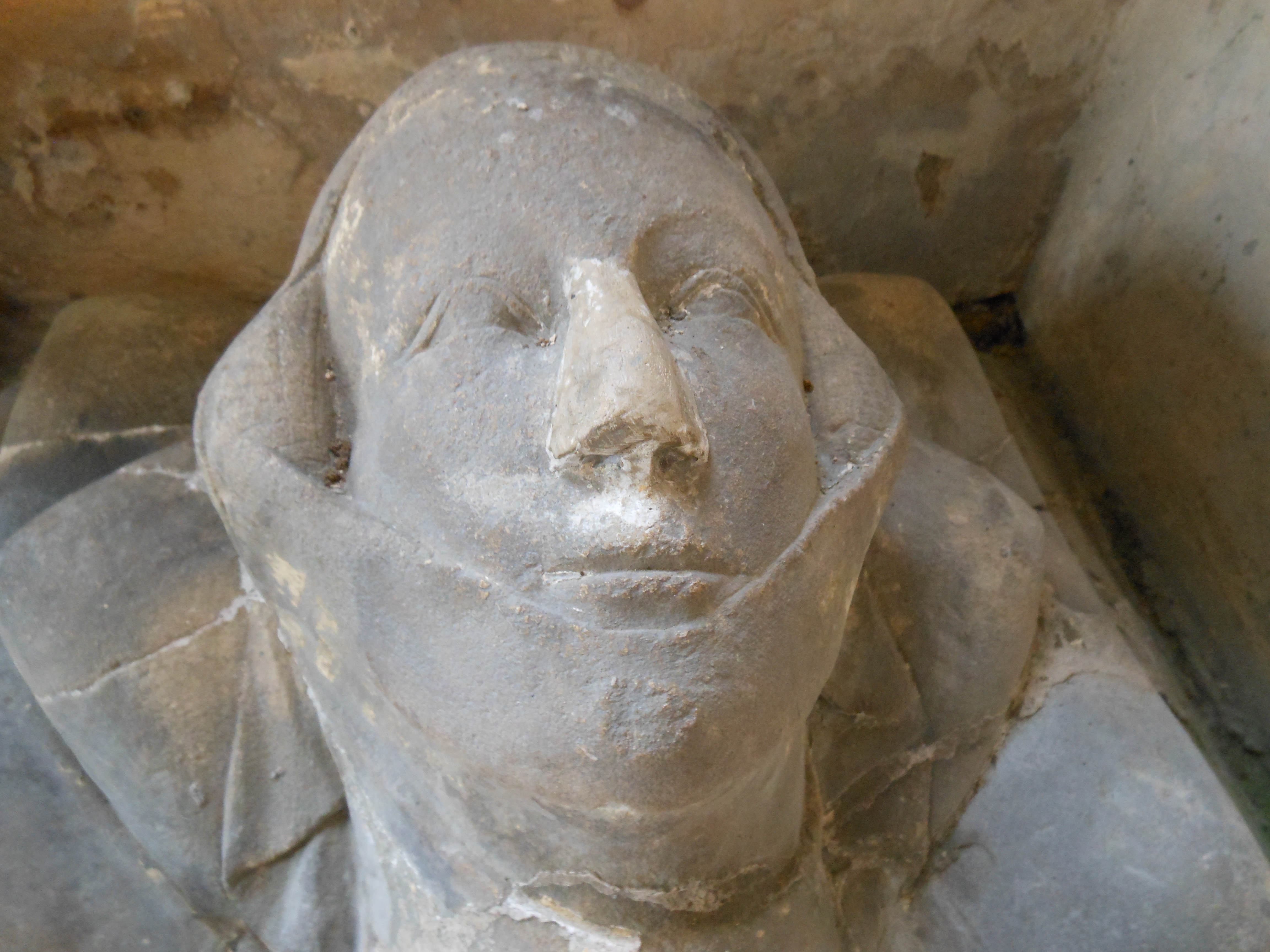
Tomb effigy of Nicholaa de la Haye, St Michael’s Church, Swaton

As you may have noticed, Nicholaa de la Haye is a favourite of mine. She is the subject of my 5th book, King John’s Right Hand Lady: The Story of Nicholaa de la Haye. She was one of King John’s most stalwart supporters. She held Lincoln Castle against all-comers during the First Barons’ War which followed the sealing of Magna Carta in 1215. Her career is the more remarkable because Nicholaa was a woman in command of a castle in her own right. And she masterminded its defence against the might of the rebel barons and their French allies, even though the city of Lincoln was also against her.

So, who was she?

10 Things about Nicholaa de la Haye that you may not know…

1. Nicholaa had both English and Norman ancestry. Unlike many Normans, Nicholaa could trace her Lincolnshire roots, through her paternal grandmother, Muriel, to before the Norman Conquest; her grandmother’s grandfather was Colswein of Lincoln, an Englishman who had found favour with William the Conqueror in the years after the Conquest. Nicholaa’s father was Richard de la Haye, whose family originated from La Haye-du-Puits in Normandy, and was distantly related, through marriage, to William the Conqueror. Nicholaa’s mother was Matilda de Vernon, a niece of Baldwin de Redvers, Earl of Devon, the first magnate to rebel against King Stephen when he stole the throne from Empress Matilda.

2. Nicholaa was hereditary constable of Lincoln Castle. Just like her father and grandfather before her, Nicholaa held Lincoln Castle for the king. A charter dated between 1155 and 1158, issued by Henry II, confirmed the succession of Richard de la Haye to his father in all of his father’s lands in Lincolnshire, including the constableship of Lincoln Castle.
King John’s Right Hand Lady: The Story of Nicholaa de la Haye
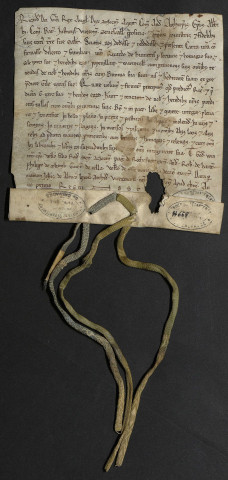
The Charte aux lacs d’Amour

3. Nicholaa was the oldest of three sisters. Her sister Gila (or Julia) married Richard du Hommet, the grandson and son of successive constables of Normandy. In 1191 a charter was issued to Gila and Richard, known as the charte aux lacs d’amour (the charter of the laces of love), which had laces attached to the seal on which was written a love poem: ‘I am a pledge of love. Do not give me away. May whoever separates our love receive death’. Nicholaa’s other sister, Isabel de la Haye married William de Rollos, who was probably from Bourne, in Lincolnshire. The Rollos family returned to Normandy during the reign of King John.

4. Nicholaa’s first husband was William Fitz Erneis, who may have been a younger son of Robert Fitz Erneis, a minor Lincolnshire lord. Nicholaa and William had one surviving child, a daughter named Matilda, before William died in 1178. Nicholaa would later pay a fine of 300 marks to King Richard I so that she could marry her daughter to whomever she wished except, of course, to an enemy of the king. Nicholaa was still accounting for this debt until 1212. In 1201, she still owed 40 marks and a palfrey (a horse).

5. Before 1185, Nicholaa had remarried, this time to Gerard de Camville, son of Richard de Camville, lord of Middleton Stoney in Oxfordshire. A family with an impressive record of royal service, Richard had died in Italy in 1176 while escorting the king’s daughter, Joanna, to her wedding with King William of Sicily. Gerard’s half-brother, also called Richard, accompanied Richard the Lionheart on Crusade; this Richard de Camville was made governor of Cyprus before dying at Acre in 1191. Gerard himself served the kings Henry II, Richard the Lionheart and John. He was Constable of Lincoln Castle by right of his wife and sheriff of Lincolnshire on two occasions.

6. Nicholaa first comes to the attention of the chroniclers in 1191, when Prince John led the opposition to, William Longchamp, the man left in charge of England during Richard the Lionheart’s absence on crusade. Longchamp wanted Lincoln Castle for one of his friends and determined to take it. Gerard sought the help of Prince John swearing fealty to him at Nottingham, leaving to Nicholaa to hold the castle. William Longchamp hired a force of mercenaries and laid siege to the castle in Gerard’s absence. The formidable Nicholaa refused to yield, holding out for 40 days before Longchamp gave up and went home. Amusingly, Richard of Devizes said of this defence of Lincoln Castle, that she did it ‘without thinking of anything womanly’.
King John’s Right Hand Lady: The Story of Nicholaa de la Haye
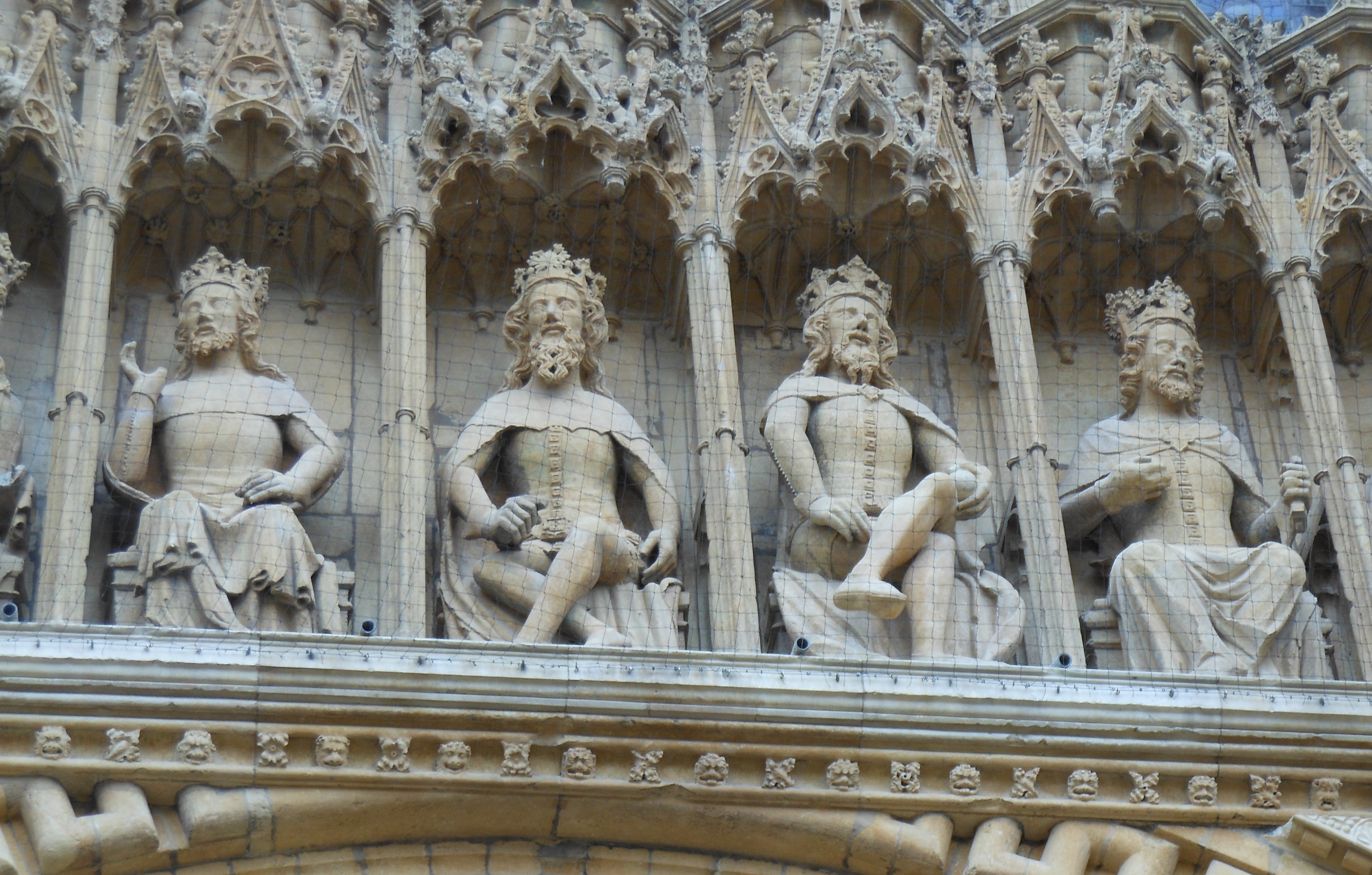
The kings Nicholaa served: Henry II, Richard I King John and Henry III, Lincoln Cathedral

7. By the time the king arrived home in 1194, John had fled to France, leaving his supporters to face the music. On 31 March 1194, on the first day of his council at Nottingham, King Richard dispossessed Gerard de Camville of the castle and shrievalty of Lincoln. And on 2 April, Gerard was charged with harbouring outlaws (wonder if they mean Robin Hood?), treason for failing to answer the king’s justices’ summons over the harbouring of the said outlaws, and for taking up arms and aiding John in taking the castles of Tickhill and Nottingham. The outcome of the proceedings is not recorded, but given that Gerard was fined 2,000 marks to recover the king’s good will and his lands, we can assume that the judges did not find in his favour.

8. When Richard the Lionheart died on 6 April 1199 and was succeeded by his brother, John, Nicholaa and Gerard de Camville were restored to favour and to Lincoln Castle. Gerard was also appointed sheriff of Lincolnshire and served in that office for the next six years, becoming ‘a greater man than ever.’ In November 1200, Nicholaa and Gerard welcomed the kings of England and Scotland to Lincoln, where King William the Lion paid homage to King John outside the city walls.
King John’s Right Hand Lady: The Story of Nicholaa de la Haye
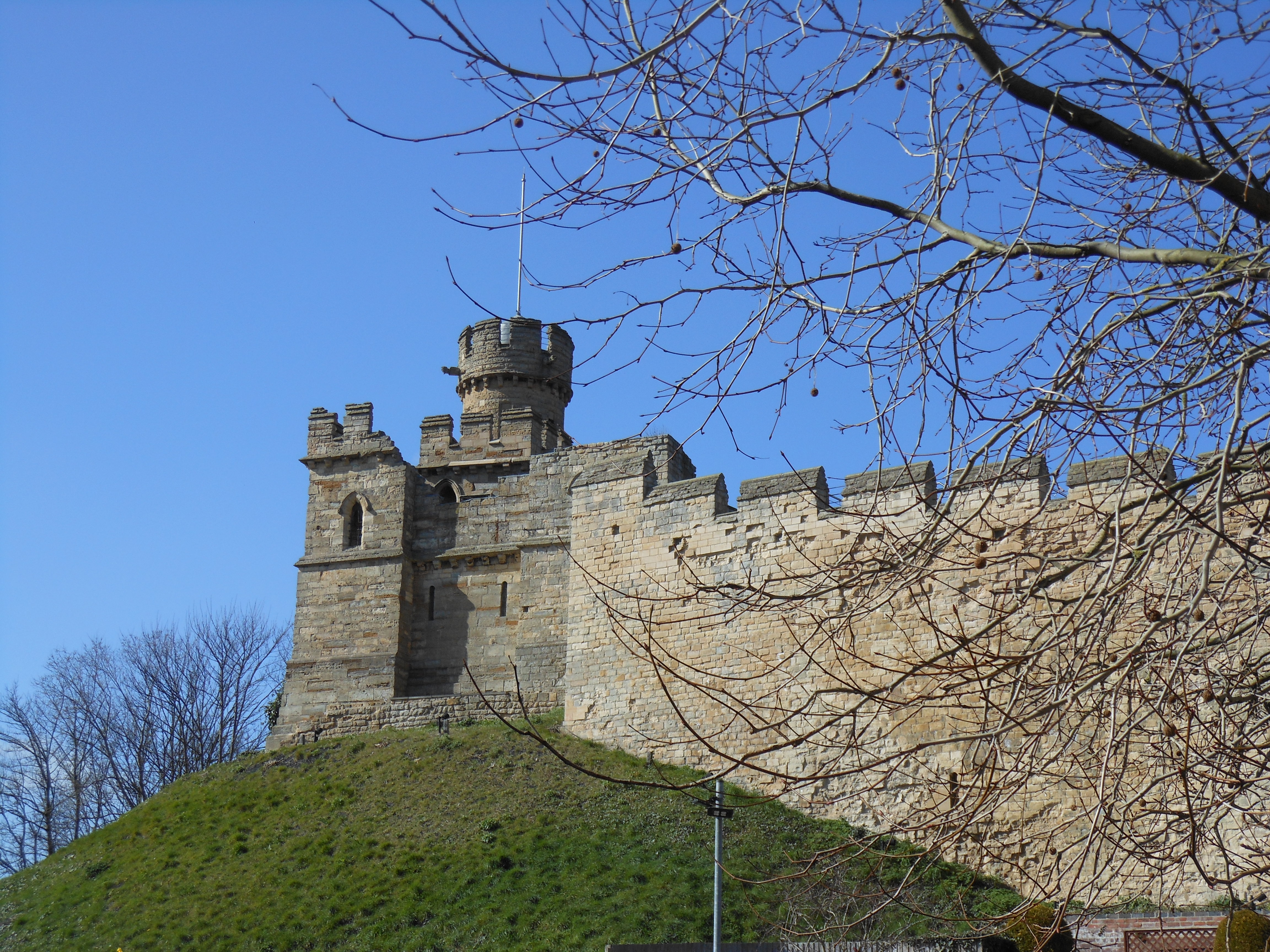
The Observatory Tower, Lincoln Castle

9. Gerard died in December 1214, leaving Nicholaa in command of Lincoln Castle. In 1216, she was besieged by a force of rebel barons who had taken up arms against King John in the aftermath of the issuing of Magna Carta. Nicholaa paid them off – they stopped attacking the castle but remained in the city. In the same year, Nicholaa met King John at the East Gate of Lincoln Castle, with the castle’s keys in her hand, offering to resign her position as constable, citing her weariness and great age (she was in her 60s). John refused, telling her to remain in post until he ordered otherwise.

10. On 18 October 1216, at Newark Castle, in one of his final acts and just hours before his death, King John appointed Nicholaa de la Haye as sheriff of Lincolnshire. She was the first woman in English history to be appointed to the office of sheriff in her own right – but she would not be the last.
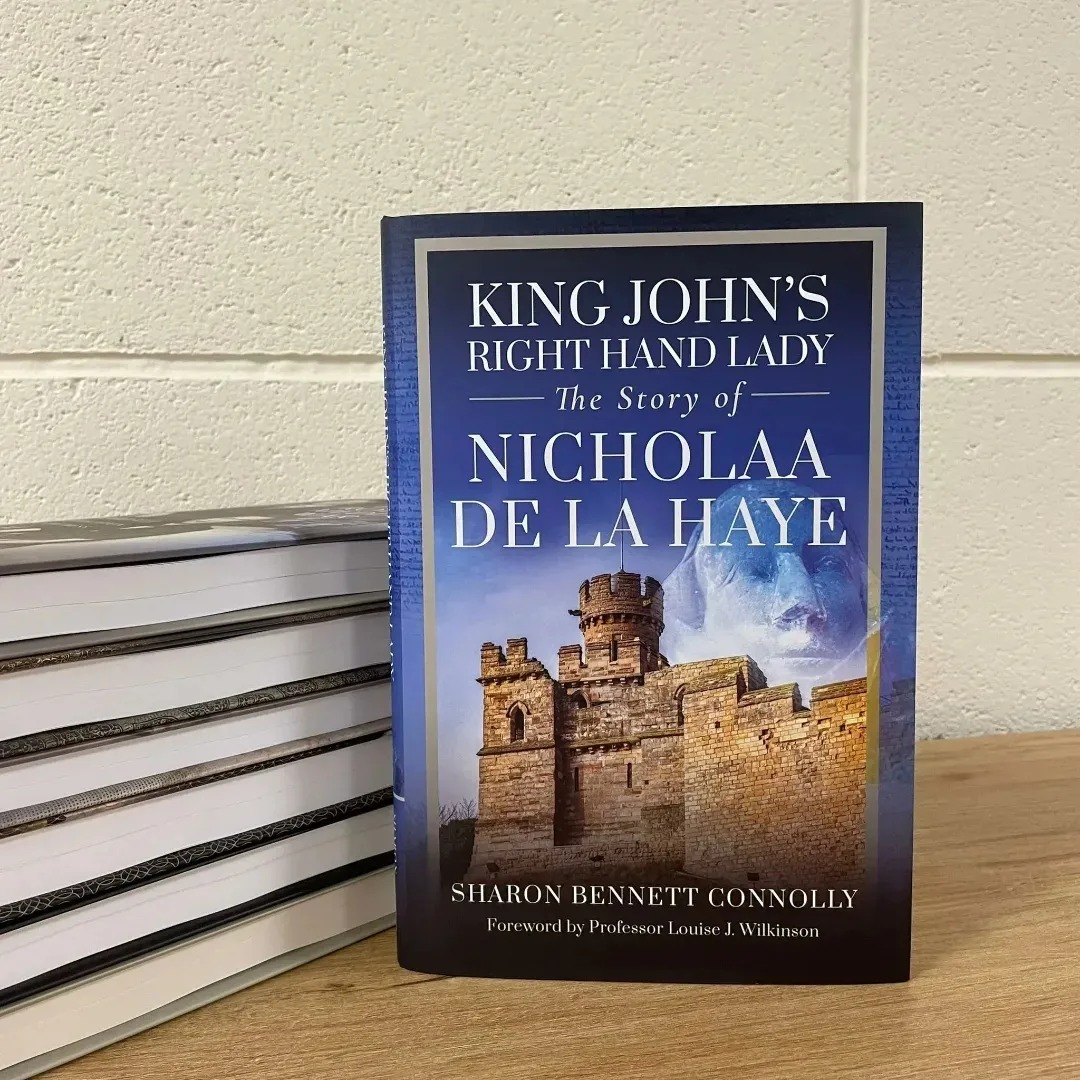
King John’s Right Hand Lady: The Story of Nicholaa de la Haye
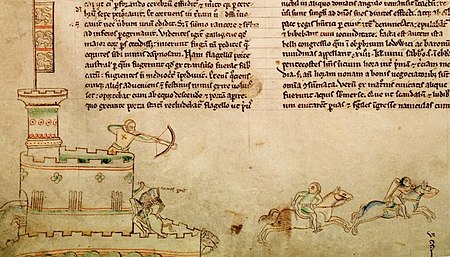
Depiction of the 1217 Battle of Lincoln from Matthew Paris

11. (Oops!) For 7 months, from October 1216 to May 1217, Lincoln Castle was once again under siege by a force of English rebel barons and their French allies under the command of the Comte de Perche. Nicholaa directed the castle’s defence until royalist forces could come to her aid. On 20 May 1217, William Marshal and the royalist army came to her relief, fighting the Battle of Lincoln through the city’s streets.

12. (double oops!) There was a rise in the number of baby girls named Nicholaa, in Lincolnshire, in the 13th century.

13. Have a listen to the A Slice of Medieval episode dedicated to Nicholaa de la Haye, where Derek Birks and I discuss the ins and outs – and highs and lows – of Nicholaa’s career.

Sources:

Richard of Devizes, The Chronicle of Richard of Devizes; Roger of Howden (Hoveden), The Annals of Roger of HowdenThe Plantagenet Chronicles edited by Elizabeth Hallam; Brassey’s Battles by John Laffin; 1215 The Year of Magna Carta by Danny Danziger & John Gillingham; The Life and times of King John by Maurice Ashley; The Plantagenets, the Kings Who Made England by Dan Jones; England Under the Norman and Angevin Kings  by Robert Bartlett; lincolnshirelife.co.uk; catherinehanley.co.uk; magnacarta800th.com; lothene.org; lincolncastle.com; The Sheriff: The Man and His Office by Irene Gladwin; Louise Wilkinson, Women in Thirteenth Century Lincolnshire; Richard Huscraft, Tales from the Long Twelfth Century; J.W.F. Hill, Medieval Lincoln; swaton.org.uk; oxforddnb.com; Ingulph, Ingulph’ Chronicle of the Abbey of Croyland; Stephen Church, King John: England, Magna Carta and the Making of a Tyrant; Marc Morris, King John; Pipe Rolls; Red Book of the Exchequer

*

My Books

Signed, dedicated copies of all my books are available through my online store.

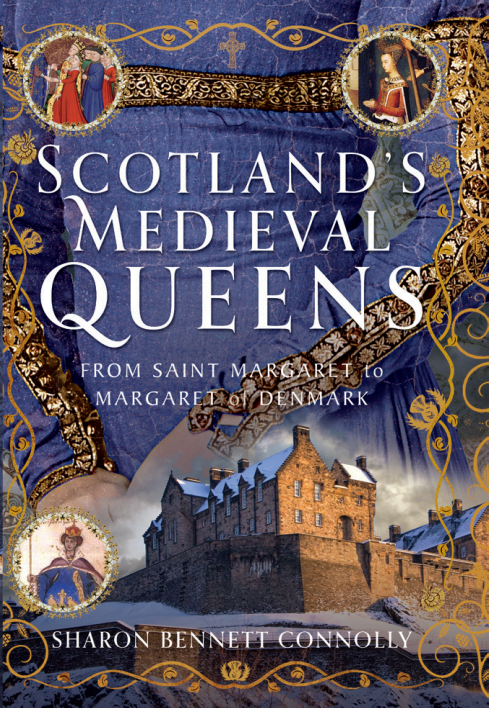
Out now: Scotland’s Medieval Queens

Books by Sharon Bennett Connolly

Scotland’s history is dramatic, violent and bloody. Being England’s northern neighbour has never been easy. Scotland’s queens have had to deal with war, murder, imprisonment, political rivalries and open betrayal. They have loved and lost, raised kings and queens, ruled and died for Scotland. From St Margaret, who became one of the patron saints of Scotland, to Elizabeth de Burgh and the dramatic story of the Scottish Wars of Independence, to the love story and tragedy of Joan Beaufort, to Margaret of Denmark and the dawn of the Renaissance, Scotland’s Medieval Queens have seen it all. This is the story of Scotland through their eyes.

Scotland’s Medieval Queens gives a thorough grounding in the history of the women who ruled Scotland at the side of its kings, often in the shadows, but just as interesting in their lives beyond the spotlight. It’s not a subject that has been widely covered, and Sharon is a pioneer in bringing that information into accessible history.’ Elizabeth Chadwick (New York Times bestselling author)

Available now from Amazon and Pen and Sword Books

Also by Sharon Bennett Connolly:

Books by Sharon Bennett Connolly

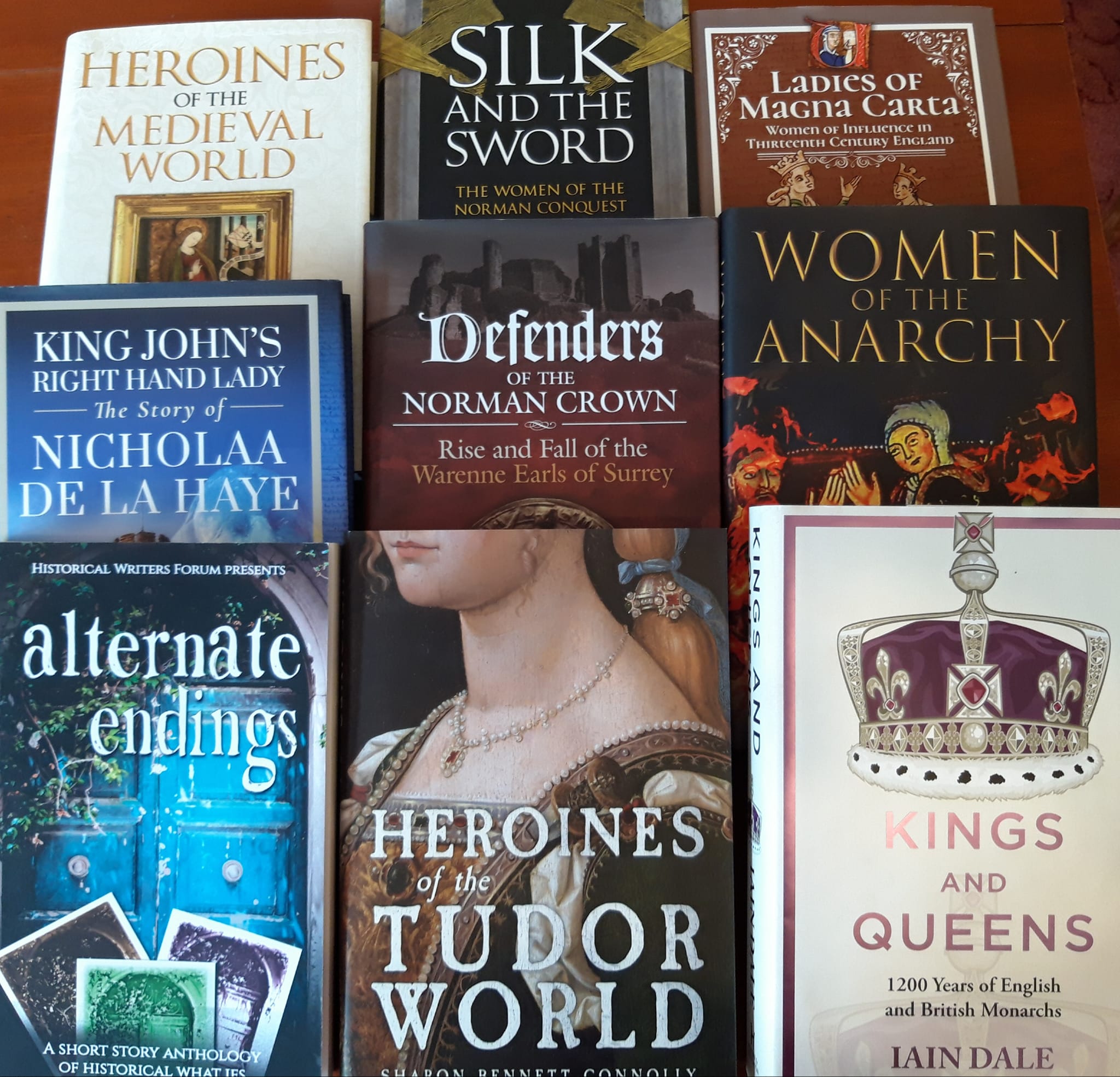
Heroines of the Tudor World tells the stories of the most remarkable women from European history in the time of the Tudor dynasty, 1485-1603. These are the women who ruled, the women who founded dynasties, the women who fought for religious freedom, their families and love. Heroines of the Tudor World is now available for pre-order from Amberley Publishing and Amazon UK. Women of the Anarchy demonstrates how Empress Matilda and Matilda of Boulogne, unable to wield a sword themselves, were prime movers in this time of conflict and lawlessness. It shows how their strengths, weaknesses, and personal ambitions swung the fortunes of war one way – and then the other. Available from Bookshop.orgAmberley Publishing and Amazon UKKing John’s Right-Hand Lady: The Story of Nicholaa de la Haye is the story of a truly remarkable lady, the hereditary constable of Lincoln Castle and the first woman in England to be appointed sheriff in her own right. Available from all good bookshops Pen & Sword Booksbookshop.org and Amazon

Royal Historical Society

Defenders of the Norman Crown: The Rise and Fall of the Warenne Earls of Surrey tells the fascinating story of the Warenne dynasty, from its origins in Normandy, through the Conquest, Magna Carta, the wars and marriages that led to its ultimate demise in the reign of Edward III. Available from Pen & Sword BooksAmazon in the UK and US, and Bookshop.orgLadies of Magna Carta: Women of Influence in Thirteenth Century England looks into the relationships of the various noble families of the 13th century, and how they were affected by the Barons’ Wars, Magna Carta and its aftermath; the bonds that were formed and those that were broken. It is now available in paperback and hardback from Pen & SwordAmazon, and Bookshop.orgHeroines of the Medieval World tells the stories of some of the most remarkable women from Medieval history, from Eleanor of Aquitaine to Julian of Norwich. Available now from Amberley Publishing and Amazon, and Bookshop.orgSilk and the Sword: The Women of the Norman Conquest traces the fortunes of the women who had a significant role to play in the momentous events of 1066. Available now from Amazon,  Amberley Publishing, and Bookshop.org.

Alternate Endings: An anthology of historical fiction short stories including Long Live the King… which is my take what might have happened had King John not died in October 1216. Available in paperback and kindle from Amazon.

Podcast:

Have a listen to the A Slice of Medieval podcast, which I co-host with Historical fiction novelist Derek Birks. Derek and I welcome guests, such as Bernard Cornwell and Elizabeth Chadwick, and discuss a wide range of topics in medieval history, from significant events to the personalities involved.

Every episode is also now available on YouTube.

*

Signed and dedicated copies of all my books are available through my online store.

For forthcoming online and in-person talks, please check out my Events Page.

You can be the first to read new articles by clicking the ‘Follow’ button, liking our Facebook page or joining me on TwitterThreadsBluesky and Instagram.

©2023 Sharon Bennett Connolly FRHistS

Book Corner: The Night of the Wolf by Cassandra Clark

The ruthless reign of Henry IV and the clerical tyranny of Archbishop Arundel keep Brother Chandler and his friends under constant threat in this gripping medieval mystery featuring friar-sleuth Rodric Chandler.

Chester, 1400. Riding for his life, with a copy of Chaucer’s heretical Canterbury Tales in his possession, friar-sleuth Brother Chandler is ambushed on the road and wakes up in a stranger’s house.

Is his ‘rescuer’, wool merchant John Willoughby, friend . . . or foe? Willoughby declares that he, like Chandler, has renounced the self-crowned King Henry IV and will help Chandler get his dangerous belongings to safety. He seems trustworthy, but Chandler knows that if he’s caught by the King’s merciless censors together with the Tales, he’ll be burned at the stake.

But then Willoughby’s young wife perishes in a terrible accident at their house – or so it seems . . . Willoughby asks Chandler to help investigate if it was indeed an accident or if someone had a hidden agenda.

All Chandler wants to do is find safe haven for Chaucer’s Tales and return to London, but he accepts the case. Little does he know that it will lead to secrets being uncovered which will put not only Chandler but also those around him in unimaginable peril.

Incredible adventure!

I have to admit, there is a gap in my knowledge in medieval history around the reigns of Henry IV and Henry V. I have never liked Henry IV, despite the fact I love researching his father, John of Gaunt. I don’t know why? I have read some a handful on the first two Lancastrian kings, but never delved deeper into their lives and reigns. So, The Night of the Wolf by Cassandra Clark is a refreshing and fascinating story set in a period that is unfamiliar to me, though I may now have to look more deeply into Henry IV and the attitudes towards his usurpation of the throne from his cousin Richard II.

The Night of the Wolf is an intriguing murder mystery – if it is murder, that is, rather than an unfortunate accident – set after the accession of Henry IV and the death in Pontefract Castle of Richard II. The lead character is a monk who has fallen foul of King Henry in the past and is trying to stay under the radar of the authorities and stay alive.

Cassandra Clark’s hero of The Night of the Wolf, Brother Chandler, is a fascinating character, a renegade friar who has left his lover and child to keep them safe, and travelled north with a book written by Geoffrey Chaucer. Having escaped the pyre once, Chandler must find somewhere safe to secrete Chaucer’s works, and to keep himself out of the reach of the new king’s men. His personal mission is hampered when the lady of the house in which he is staying falls from a roof garden – or was pushed.

Brother Chandler is drawn into a web of lies and deceit that he must unravel.

Chandler hesitated to ask him if he might see the body. When he entered one of the small chambers in the new wing a trestle had been erected with a sheet covering the body. He felt he had no right to enter without permission but there was only a priest there and a nun with a companion crossing the yard and following Chandler inside. They were soon kneeling and murmuring through a prayer for the dead.

The priest got up and after few words to Chandler went over to the trestle and lifted the sheet to one side. Her body was horribly bruised. Chandler indicated that the sheet should be replaced. It told him nothing. After another prayer, he left.

The housekeeper was watching from the kitchen window as he crossed the yard and the flurried movement as he approached suggested that she was not alone. In fact most of the house servants seemed to have congregated round the big, square, scrubbed table where the kitcheners ate their meals. As one they rose to their feet when he entered. Again he had to explain about the task Willoughby had given him.

The housekeeper, a wide-hipped, red-haired woman of about fifty, wrapped in a large white apron took charge of him. ‘Sit, brother. We are honoured to have the opportunity to help you in this sad and terrible business …’And so on in the same tone he had already heard before.

It seemed to be the case that nobody knew anything, no one had seen anything, and they were all shocked and would never forget the terrible sight of the poor young mistress lying in the yard in a pool of blood.

‘The devil curses us,’one of the maids said. ‘It is a judgement,’and she began to sob.

‘Be quiet, Maud, you have done nothing to warrant judgement,’the housekeeper reproved. ‘You’re always drawing attention to yourself. It’s my view, brother,’she turned to Chandler, ‘that the poor thing tripped and fell, maybe going too near the edge of the roof in order to watch people passing by in the street. Why else would she go so near the edge?’

‘I understand your master had not yet instructed his men to finish their work there? Were they not about to fix up a railing of some sort?’

‘I believe so.’

‘We were told not to venture out there until it was safe.’ the tearful maid interrupted. ‘But Mistress Willoughby liked her own way and said she needed somewhere more peaceful than the noise of a wool merchant’s house with carts clattering into the yard all day.’

‘And you are…?’

Poor Brother Chandler tries not to get involved in the murderous events in Chester, he has enough problems of his own. But he cannot refuse the pleas of a grieving husband and embarks on an investigation that uncovers the divided loyalties and various intrigues of the leading citizens of Chester. Chandler is a sympathetic character, so easy to like that the reader finds themselves egging him but at the same time urging caution.

It is fascinating to read a murder mystery set in a time that must have been very unsettled for the ordinary Englishmen. A political coup and change in monarch that leaves the realm divided between the rightful king – as there had been rumours of Richard II’s death, but no confirmation – and the man who seized the throne. Cassandra Clark clearly demonstrates the suspicion and fear that must have abounded in 1400. No one knowing who to trust nor where individual loyalties lay. Betrayal lurked around every corner.

The Night of the Wolf is a fabulous, fast- paced, murder mystery that will keep the reader on the edge of their seat, or sitting up, reading, late into the night, desperate to discover the murderer and learn that Brother Chandler is safe, or not. With such a clever, intriguing plot, I defy any reader not to be mesmerised by Brother Chandler’s story.

About the Author

Cassandra Clark is an award-winning scriptwriter for theatre, radio and television, and the author of nine previous novels in the Hildegard of Meaux medieval mystery series. Running wild near the ruins of the Abbey of Meaux in the East Riding as a child became her inspiration for the series while the discovery in a dusty archive of the Chronicle of Meaux written in 1395 is the secret source for her research.

To buy the book: Amazon

*

My Books

Signed, dedicated copies of all my books are available, please get in touch by completing the contact me form.

Out nowKing John’s Right-Hand Lady: The Story of Nicholaa de la Haye

In a time when men fought and women stayed home, Nicholaa de la Haye held Lincoln Castle against all-comers, gaining prominence in the First Baron’s War, the civil war that followed the sealing of Magna Carta in 1215. A truly remarkable lady, Nicholaa was the first woman to be appointed sheriff in her own right. Her strength and tenacity saved England at one of the lowest points in its history. Nicholaa de la Haye is one woman in English history whose story needs to be told…

King John’s Right-Hand Lady: The Story of Nicholaa de la Haye is now available from Pen & Sword Booksbookshop.org and Amazon.

Coming 15 January 2024: Women of the Anarchy

On the one side is Empress Matilda, or Maud. The sole surviving legitimate child of Henry I, she is fighting for her birthright and that of her children. On the other side is her cousin, Queen Matilda, supporting her husband, King Stephen, and fighting to see her own son inherit the English crown. Both women are granddaughters of St Margaret, Queen of Scotland and descendants of Alfred the Great of Wessex. Women of the Anarchy demonstrates how these women, unable to wield a sword, were prime movers in this time of conflict and lawlessness. It show how their strengths, weaknesses, and personal ambitions swung the fortunes of war one way – and then the other.

Available for pre-order from Amberley Publishing and Amazon UK.

Also by Sharon Bennett Connolly:

Defenders of the Norman Crown: The Rise and Fall of the Warenne Earls of Surrey tells the fascinating story of the Warenne dynasty, of the successes and failures of one of the most powerful families in England, from its origins in Normandy, through the Conquest, Magna Carta, the wars and marriages that led to its ultimate demise in the reign of Edward III. Defenders of the Norman Crown: Rise and Fall of the Warenne Earls of Surrey is now available from Pen & Sword BooksAmazon in the UK and US, and  Bookshop.org.

Ladies of Magna Carta: Women of Influence in Thirteenth Century England looks into the relationships of the various noble families of the 13th century, and how they were affected by the Barons’ Wars, Magna Carta and its aftermath; the bonds that were formed and those that were broken. It is now available in paperback and hardback from Pen & Sword,  Amazon, and Bookshop.org.

Heroines of the Medieval World tells the stories of some of the most remarkable women from Medieval history, from Eleanor of Aquitaine to Julian of Norwich. Available now from Amberley Publishing and Amazon, and Bookshop.org.

Silk and the Sword: The Women of the Norman Conquest traces the fortunes of the women who had a significant role to play in the momentous events of 1066. Available now from Amazon,  Amberley Publishing, and Bookshop.org.

Alternate Endings: An anthology of historical fiction short stories including Long Live the King… which is my take what might have happened had King John not died in October 1216. Available in paperback and kindle from Amazon.

Podcast:

Have a listen to the A Slice of Medieval podcast, which I co-host with Historical fiction novelist Derek Birks. Derek and I welcome guests, such as Bernard Cornwell, and discuss a wide range of topics in medieval history, from significant events to the personalities involved.

*

For forthcoming online and in-person talks, please check out my Events Page.

You can be the first to read new articles by clicking the ‘Follow’ button, liking our Facebook page or joining me on Twitter and Instagram.

©2023 Sharon Bennett Connolly FRHistS
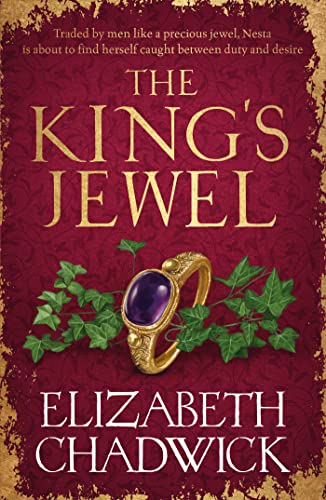
Book Corner: The King’s Jewel by Elizabeth Chadwick

Wales, 1093.

Meet Nesta, a woman trying to survive in a man’s world – a world where the men who would protect her are dead and banished.

The warm, comfortable family life of young Nesta, daughter of Prince Rhys of Deheubarth is destroyed when her father is killed and she is taken hostage. Her honour is further tarnished when she is taken as an unwilling concubine by King William’s ruthless younger brother Henry, who later ascends the throne under suspicious circumstances.

Gerald FitzWalter, an ambitious young knight is rewarded for his unwavering loyalty to his new King with Nesta’s hand in marriage. He is delighted, having always admired her from afar, but Nesta’s only comfort is her return to her beloved Wales where cannot help but be tempted by the handsome, charismatic and dangerous son of the Welsh prince, Owain. When he offers her the chance to join him in his plan to overthrow Norman rule she must choose between her duty and her desire . . .

The King’s Jewel by Elizabeth Chadwick recounts the story of Nesta ferch Rhys, the young Welsh princess who became the mistress of Henry I of England, bearing him at least one son. I first came across Nesta’s story when I was researching Heroines of the Medieval World. On the face of it, Nesta’s life appears exciting and adventurous but Elizabeth Chadwick tempers this with a clear understanding of how little control Nesta had over her own life.

Losing her father at an early age, the poor girl was a pawn in the hands of powerful men. She first appears in history as a concubine of King Henry I, though the exact dates of their relationship, the year it took place and how long it lasted, are unknown. What is known, is that Nesta had a son by Henry and that she married Gerald of Windsor as her first husband in the early 1100s. By 1109, she and Gerald had three children. By the end of her life, Nesta was the mother of no fewer than nine children by at least four different men. She had also endured an abduction by her cousin. As a Welsh heiress, in the face of Norman expansion, Nesta was never going to have a quiet life.

And Princess Nesta’s story has been brought to life by Elizabeth Chadwick’s The King’s Jewel, fleshing out the little we know to build a whole world and life around Nesta, telling a story that is both absorbing and historically accurate.

A short ride brought them to the settlement at Pembroke, where the women were thrust into a small room halfway up a stone lookout tower. A soldier tossed in their baggage, ransacked of all jewellery, fabric and trinkets. Straw pallets and coarse woollen blankets were thrown down for their slumber. The only light in the dismal chamber came from a slit of a window open to the air, and cresset lamps, burning smokily, sputtering tallow fat. The soldier returned, bringing bowls of barley broth and coarse bread, and then departed, closing and barring the door.

Nesta gazed at their bleak surroundings with a horrible, hollow sensation in her stomach. Two nights ago she had slept in a feather bed with fresh linen sheets and soft furs. She had enjoyed the clean, sweet light of beeswax candles and had washed her hands and face with rose water. She had belongings, wealth and status. Any man daring to fondle her haunch and laugh about it would have lost his hand for the insult.

‘What will happen to us?’ she asked her mother who was staring at the pallets in disgust.

‘If tehy had wanted to kill us, they would have done so by now,’ Gwladus said with a shrug. ‘I do not matter, unless I happen to be carrying another child, which I know I am not, but you are your father’s daughter, and that makes you valuable.’

Nesta folded her arms and shivered.

‘You had your first bleed at Christmas, and you are of an age to wed. Any of these Normans could take you to wife and lay claim to your father’s lands by their laws. You are not a hostage for your people, but a girl who brings with her the gift of stolen territory.’

Nesta went rigid. ‘I would never marry one of them – never!’

Gwladus shook her head. ‘What you want does not matter to them, but they cannot take what you already are inside. Hold your head high and remember your heritage. You are a pattern for others to emulate for courage and loyalty.’ She took three steps to Nesta and touched her cheek. ‘I am depending on you to carry this burden for your family’s pride.’

‘I won’t let you down.’ Nesta’s voice quivered for, despite her defiant words, she felt small, afraid and overwhelmed.

‘Oh, my beautiful girl.’ Gwladus hugged her hard and tears squeezed out from between her closed eyelids. ‘I know you will not. And you shall always have my love – always, whatever happens.’

Nesta drew in the familiar scent of her mother’s skin, seeking comfort. ‘I want it all to go away,’ she whispered.

‘I know you do. I know.’ Gwladus rocked her back and forth and kissed her cheek. ‘So do I. Dear Holy Virgin, so do I.’

As we have come to expect, The King’s Jewel is up to Elizabeth Chadwick’s usual superior standard of story-telling. Using what we do know of Nesta’s life, Elizabeth builds an engaging story of a young woman who makes the most of a life forced upon her, but whose instinct to rebel sees her make decisions that are not always in her own best interests. We are introduced to a girl who has lost almost everything, her father dead, brother in exile and mother condemned to a nunnery, and is at the mercy of her captors. From that frightened little girl, Elizabeth Chadwick creates a captivating story that will keep the reader enthralled to the very end.

The research is impeccable and I found myself nodding at the narrative more than once, knowing where Elizabeth found those little tidbits of information. And as I finished the book, I marvelled at how Elizabeth had managed to weave the few facts we do know seamlessly into the story, adding a strong element of authenticity to the elements of fiction.

The King’s Jewel is a thoroughly enjoyable novel, set in the heart of Wales against the backdrop of the Norman kings of England determined to stamp their authority on the wild country and its people. Nesta is, at once, the symbol of resistance and reluctant submission and her journey to find some kind of balance to her life is riveting.

The beauty of The King’s Jewel is that Elizabeth Chadwick brings Nesta to life, making her a real person in the eyes of the reader, eliciting sympathy for a young girl who has no control over her destiny, compassion for a woman making a marriage not of her choosing and understanding for the decisions made that led her down a dangerous path. Elizabeth understands the internal conflict that must have arisen for Nesta out of being married to a Norman, whilst wanting freedom for her Welsh homeland and people.

I cannot recommend it highly enough!

The King’s Jewel is available from Amazon.

About the Author:

New York Times bestselling author Elizabeth Chadwick lives in a cottage in the Vale of Belvoir in Nottinghamshire with her husband and their three dogs. Her first novel, The Wild Hunt, won a Betty Trask Award, To Defy a King won the Romantic Novelist Association’s Historical Novel Prize and The Scarlet Lion was nominated by Richard Lee – founder of the Historical Novel Society – as one of the top ten historical novels of the last decade. She often lectures at conferences and historical venues, has been consulted for television documentaries and is a member of the Royal Historical Society.

Keep in touch with Elizabeth via her website, her blogs or on social media.

http://www.elizabethchadwick.com
twitter: @chadwickauthor
facebook: ElizabethChadwick

*

My Books

Signed, dedicated copies of all my books are available, please get in touch by completing the contact me form.

Out nowKing John’s Right-Hand Lady: The Story of Nicholaa de la Haye

In a time when men fought and women stayed home, Nicholaa de la Haye held Lincoln Castle against all-comers, gaining prominence in the First Baron’s War, the civil war that followed the sealing of Magna Carta in 1215. A truly remarkable lady, Nicholaa was the first woman to be appointed sheriff in her own right. Her strength and tenacity saved England at one of the lowest points in its history. Nicholaa de la Haye is one woman in English history whose story needs to be told…

King John’s Right-Hand Lady: The Story of Nicholaa de la Haye is now available from Pen & Sword Booksbookshop.org and Amazon.

Coming 15 January 2024: Women of the Anarchy

On the one side is Empress Matilda, or Maud. The sole surviving legitimate child of Henry I, she is fighting for her birthright and that of her children. On the other side is her cousin, Queen Matilda, supporting her husband, King Stephen, and fighting to see her own son inherit the English crown. Both women are granddaughters of St Margaret, Queen of Scotland and descendants of Alfred the Great of Wessex. Women of the Anarchy demonstrates how these women, unable to wield a sword, were prime movers in this time of conflict and lawlessness. It show how their strengths, weaknesses, and personal ambitions swung the fortunes of war one way – and then the other.

Available for pre-order from Amberley Publishing and Amazon UK.

Also by Sharon Bennett Connolly:

Defenders of the Norman Crown: The Rise and Fall of the Warenne Earls of Surrey tells the fascinating story of the Warenne dynasty, of the successes and failures of one of the most powerful families in England, from its origins in Normandy, through the Conquest, Magna Carta, the wars and marriages that led to its ultimate demise in the reign of Edward III. Defenders of the Norman Crown: Rise and Fall of the Warenne Earls of Surrey is now available from Pen & Sword BooksAmazon in the UK and US, and  Bookshop.org.

Ladies of Magna Carta: Women of Influence in Thirteenth Century England looks into the relationships of the various noble families of the 13th century, and how they were affected by the Barons’ Wars, Magna Carta and its aftermath; the bonds that were formed and those that were broken. It is now available in paperback and hardback from Pen & Sword,  Amazon, and Bookshop.org.

Heroines of the Medieval World tells the stories of some of the most remarkable women from Medieval history, from Eleanor of Aquitaine to Julian of Norwich. Available now from Amberley Publishing and Amazon, and Bookshop.org.

Silk and the Sword: The Women of the Norman Conquest traces the fortunes of the women who had a significant role to play in the momentous events of 1066. Available now from Amazon,  Amberley Publishing, and Bookshop.org.

Alternate Endings: An anthology of historical fiction short stories including Long Live the King… which is my take what might have happened had King John not died in October 1216. Available in paperback and kindle from Amazon.

Podcast:

Have a listen to the A Slice of Medieval podcast, which I co-host with Historical fiction novelist Derek Birks. Derek and I welcome guests, such as Bernard Cornwell and discuss a wide range of topics in medieval history, from significant events to the personalities involved.

*

For forthcoming online and in-person talks, please check out my Events Page.

You can be the first to read new articles by clicking the ‘Follow’ button, liking our Facebook page or joining me on Twitter and Instagram.

©2023 Sharon Bennett Connolly FRHistS

Alternate Endings: Long Live the King…

With the release of King John’s Right Hand Lady: The Story of Nicholaa de la Haye, I just wanted to share a short extract from the short story I wrote, which was inspired by Nicholaa‘s relationship with King John. The story culminates at the 1217 Battle of Lincoln but it opens as John has arrived at Newark Castle in October 1216, when he should have died…

Long Live the King…

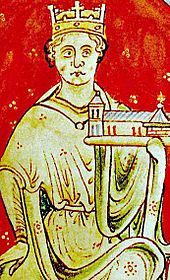
King John

During one of his visits to Lincoln in 1216, either in February or September, King John made a public demonstration of his support for Nicholaa de la Haye, hereditary constable of Lincoln Castle – and a woman! The dramatic scenes as related in the Hundred Rolls, commissioned by Edward I and written down about 60 years after the event, were played out. Nicholaa is said to have met the king at the eastern gate of the castle. A widow since the death of her husband, Gerard de Camville, in January 1215, Nicholaa met King John at the gates of her mighty fortress, Lincoln Castle.

She offered the keys of the castle to the king, the Hundred Rolls told the story:

‘And once it happened that after the war King John came to Lincoln and the said Lady Nicholaa went out of the eastern gate of the castle carrying the keys of the castle in her hand and met the king and offered the keys to him as her lord and said she was a woman of great age and was unable to bear such fatigue any longer and he besought her saying, “My beloved Nicholaa, I will that you keep the castle as hitherto until I shall order otherwise.” And she retained it as long as King John lived and after his decease she still kept it under King Henry, father of the king that now is.’

When Nicholaa spoke of her ‘great age’ she was not exaggerating. She was probably approaching sixty years of age at the time, a good age for anyone in those days, but John still had great confidence in her. Whether Nicholaa ever intended to resign Lincoln Castle at this point is open to debate. It is just as likely that the event was orchestrated as a public demonstration of John’s continuing trust in Nicholaa’s ability to hold and command the royal stronghold. John had been at war with his barons since the summer of 1215 and the failure of Magna Carta in its aim to ward off war. He had few allies left and those he did have, he needed to hold on to. Nicholaa had held Lincoln Castle for him before, in 1191, when John had led the rebellion against Richard I’s hated justiciar, William Longchamp.

In 1216, she had held it again, against the rebel forces led by her fellow Lincolnshire baron, Gilbert de Gant – that time, she paid Gant to lift the siege of the castle while allowing him to hold the city. King John had then raced to Lincoln, chased the rebels from the city and into the marshes of the Isle of Axholme, with ‘fire and sword,’ before returning to Lincoln and Nicholaa. During the visit to Lincoln, the business of government proceeded apace, with John sending out orders throughout the realm.

Effigy of Nicholaa de la Haye

There was no rest for the wicked – literally in John’s case – and he was soon back in the field. It was as John was campaigning in the south of Lindsey (Lincolnshire) that ‘grim misfortune struck him, for it was in those parts that the grievous sickness of which he died took hold, gripping him so dreadfully that he was incapable of moving.’ Moving south, just two weeks after leaving Lincoln, the king’s baggage train was lost as he crossed the Wash estuary and within a few more days John was desperately ill.

John was at Lynn when, on the evening of 9 October, John suffered an attack of dysentery. His health deteriorated as he made his way west until he reached Newark on 16 October, from where ‘he could go no further and that was that.’ He died at Newark Castle on the night of 18–19 October 1216 and was buried at Worcester Cathedral, ‘not because he had asked to be buried there but because that place at that time seemed a safe one where his supporters could gather to deliberate on what was to be done next.’

And this is where my short story for Alternate Endings starts:

Newark Castle

23 October 1216

John awoke to hear mumbling around him. He turned his head to the right to see three white-clad monks. Cistercians from Swineshead Abbey, John assumed. He had stayed there briefly a few days after falling ill and could vaguely recall the abbot insisting the monks accompany the king to tend to his spiritual needs. John had scoffed at the idea, but the monks had ignored him and attached themselves to his entourage. Now, the three of them were stood side by side, hovering over the bed, praying. He tried to make sense of the Latin words, but his mind seemed to be shrouded in fog. Even listening took a great deal of effort.

John tried once more. Was that the Pater Noster? Yes, and now they have moved on to more prayers. For his soul? Or his eternal damnation?

He had always had a rather fractious relationship with the Church, so either possibility carried weight. John’s mind wandered back to his childhood at Fontevraud, the great abbey so loved by his mother. He had been sent there with his sister, Joanna, to gain an education. He couldn’t recall enjoying being forced to study, but he remembered fondly running through the fields with Joanna, or riding abroad in their free time. Had his parents really thought him suitable for the church? He tried to laugh, but only a weak groan emitted from his dry, cracked lips.

Instantly, all conversation in the room ceased. The monks looked at him expectantly. What exactly they were expecting, John could not surmise. When he made no further sounds, the three tonsured clerics resumed their prayers.

Other conversations in the room were taken up again. Few seemed too concerned with the state of the patient. With great effort, John rolled his head to the other side. The slight movement caused a wave of pain through his head. He closed his eyes briefly, waiting for the worst of the discomfort to recede. As he opened them again, he perceived William Marshal standing by the window, talking to a knight whose back was turned to him. The knight said something to Marshal, turning briefly to the bed to indicate John. They were talking about him. Not such a surprise, given he was the king and even he could sense the spectre of death lurking about the room.

John was startled when the knight looked straight at him, and the king realised he was staring into the eyes of his cousin and enemy, the Earl of Surrey, William de Warenne. The man had sworn allegiance to Louis of France at Winchester, months ago. So, what was he doing here? Now? Was he here to ensure John breathed his last? To take the news back to Louis, so there would be no room for doubt for the French invader. Or were John’s eyes and mind deceiving him, was he still in a pain induced delirium?

The man turned back to Marshal, his face now obscured, and the shape of his back gave John no clues as to the man’s identity. Maybe he had been wrong? The light in the room was fading. Was the night drawing in? No, he just could not keep his eyes open any longer. Merely observing the room had exhausted him and he drifted into a deep, dreamless sleep.

What would have happened if King John had not died in October 1216…?

Would England have been lost?

Find out in ‘Long Live the King…

I was not sure about trying my hand at fiction, but there are so many ‘What ifs’ in history that it was hard to resist. Having spent the last two years writing Nicholaa de la Haye’s biography – which will be published in May 2023, I thought it would be quite fun to take one event in Nicholaa’s life and see what might change if that event didn’t happen.

About the Book:

Alternate Endings is a compilation of short stories published by the Historical Writers Forum.

We all know the past is the past, but what if you could change history?We asked eight historical authors to set aside the facts and rewrite the history they love. The results couldn’t be more tantalizing.

  • What if Julius Caesar never conquered Gaul?
  • What if Arthur Tudor lived and his little brother never became King Henry VIII?
  • What if Abigail Adams persuaded the Continental Congress in 1776 to give women the right to vote and to own property?

Dive into our collection of eight short stories as we explore the alternate endings of events set in ancient Rome, Britain, the United States, and France.

Alternate Endings is now available worldwide from Amazon.

My Books:

Signed, dedicated copies of all my books are available, please get in touch by completing the contact me form.

Out now!

King John’s Right-Hand Lady: The Story of Nicholaa de la Haye is now available for pre-order as a hardback and Kindle from Pen & Sword Booksbookshop.org and Amazon (UK and US).

In a time when men fought and women stayed home, Nicholaa de la Haye held Lincoln Castle against all-comers. Not once, but three times, earning herself the ironic praise that she acted ‘manfully’. Nicholaa gained prominence in the First Baron’s War, the civil war that followed the sealing of Magna Carta in 1215.

A truly remarkable lady, Nicholaa was the first woman to be appointed sheriff in her own right. Her strength and tenacity saved England at one of the lowest points in its history. Nicholaa de la Haye is one woman in English history whose story needs to be told…

Also by Sharon Bennett Connolly:

Defenders of the Norman Crown: The Rise and Fall of the Warenne Earls of Surrey tells the fascinating story of the Warenne dynasty, of the successes and failures of one of the most powerful families in England, from its origins in Normandy, through the Conquest, Magna Carta, the wars and marriages that led to its ultimate demise in the reign of Edward III. Defenders of the Norman Crown: Rise and Fall of the Warenne Earls of Surrey is now available from Pen & Sword BooksAmazon in the UK and US, and  Bookshop.org.

Ladies of Magna Carta: Women of Influence in Thirteenth Century England looks into the relationships of the various noble families of the 13th century, and how they were affected by the Barons’ Wars, Magna Carta and its aftermath; the bonds that were formed and those that were broken. It is now available in paperback and hardback from Pen & Sword,  Amazon, and Bookshop.org.

Heroines of the Medieval World tells the stories of some of the most remarkable women from Medieval history, from Eleanor of Aquitaine to Julian of Norwich. Available now from Amberley Publishing and Amazon, and Bookshop.org.

Silk and the Sword: The Women of the Norman Conquest traces the fortunes of the women who had a significant role to play in the momentous events of 1066. Available now from Amazon,  Amberley Publishing, and Bookshop.org.

Alternate Endings: An anthology of historical fiction short stories including Long Live the King… which is my take what might have happened had King John not died in October 1216. Available in paperback and kindle from Amazon.

*

For forthcoming online and in-person talks, please check out my Events Page.

You can be the first to read new articles by clicking the ‘Follow’ button, liking our Facebook page or joining me on Twitter and Instagram.

©2023 Sharon Bennett Connolly FRHistS

Guest Post: “How we made an award winning short film about Henry VIII”

“How we made an award winning short film about Henry VIII”

Part of a blog series about ‘I am Henry,’ the new novel and award-winning short film of Henry VIII and Anne Boleyn, by Jan Hendrik Verstaten & Massimo Barbato.

When I set out to write a screenplay for a short film, it wasn’t my plan for it to be about the infamous Tudor monarch. All I envisioned was a middle-aged man in an empty white room.

While I sat down behind the computer, I felt a man’s presence. He seemed eager to engage with me even though he did not say a word, but just stood there in silence. I wondered if this was Henry VIII who had just died, and who had not fully grasped, yet, what that meant.

“I never set out to write about Henry VIII”

I was not convinced I wanted to write his story, and the approach to use a historic character, and certainly one that is so prominent in the history of England, was quite daunting to be honest. I am Dutch, and I doubted very much if I could do it. One thing that did interest me was his tragic relationship with Anne Boleyn, his second wife. This could possibly be the focus of the story, and I decided I wanted to know more about it.

Interesting coincidences occurred during the writing process

I started with Henry’s love letters to Anne. After that I read the account of Master Kingston about Anne’s tragic final visit to the Tower, and her execution. I also watched several documentaries and searched the internet for anything I could find about them.

Apart from this, my main method of preparation remained how I ‘sensed’ him, Anne Boleyn and later also Catherine of Aragon, his first wife. I tried as much as possible to allow them to be themselves. This led to interesting coincidences. For instance, I was not aware Catherine had written a letter in which she claimed that her ‘dead’ children were with her. A fact that I sensed and used in the film, only to discover afterwards, from a Tudor expert, that she had mentioned this herself in real life.

The script went through several drafts and Massimo was the very first person who gave his feedback. At the time, I also worked with script editor and author Lucy Hay who I respect a lot. Her feedback surprised me. “At its heart, the story of ‘I Am Henry’ is quite brilliant (in the truest sense of the word); it’s easily one of the best stories in a short film I have seen for a very long time.” Obviously, this gave me the confidence that I was on the right track with the subject.

The challenges of ‘production’

Massimo and I then started to work on the production of the film itself. The first person who came on board was the very talented cinematographer Simon Rowling. He suggested that we film a couple of the scenes in the massive crypt underneath St Mary Magdalene’s Church in Paddington, north London. We ended up filming the entire film on location at the church, as it had everything we were looking for. The crypt with its Gothic architecture and beautiful stained glass windows was used in the film ‘Les Misérables.’

Costumes are expensive. Even so, we were committed to be historically accurate, and were very lucky with Kristen Ernst Brown, our costume designer. She won Best Costume for I Am Henry, and succeeded without a lot of money to create a beautiful and authentic look, using black and gold as her main colour palette. This complemented the cinematography by Simon Rowling, which was inspired by Rembrandt, the great Dutch master painter.

The film won many awards which encouraged us to write the novel

In the UK we are fortunate with so many accomplished actors. The cast was absolutely phenomenal. Especially Fleur Keith as Anne Boleyn and Maria de Lima as Catherine of Aragon, but also Sebastian Street as Henry VIII.

I am Henry’ went on to win many awards ( in every category) including a Gold Remi, and received great reviews. The longest and one of our most favourite one is from Claire Ridgeway from the Anne Boleyn Files: https://www.theanneboleynfiles.com/i-am-henry-review/

Thousands of viewers have enjoyed the film, which encouraged us to write the novel. The film is still available on Amazon Prime.

I am Henry‘ is an innovative retelling of the story of Henry VIII and Anne Boleyn. Due for release in paperback and e-book format by MadeGlobal Publishing, in April 2023. For more information about the novel and the short film go to linktr.ee/iamhenryfilmandnovel

*

My Books:

Signed, dedicated copies of all my books are available, please get in touch by completing the contact me form.

Coming 30 May 2023!

King John’s Right-Hand Lady: The Story of Nicholaa de la Haye is now available for pre-order as a hardback and Kindle from Pen & Sword Booksbookshop.org and Amazon (UK and US).

In a time when men fought and women stayed home, Nicholaa de la Haye held Lincoln Castle against all-comers. Not once, but three times, earning herself the ironic praise that she acted ‘manfully’. Nicholaa gained prominence in the First Baron’s War, the civil war that followed the sealing of Magna Carta in 1215.

A truly remarkable lady, Nicholaa was the first woman to be appointed sheriff in her own right. Her strength and tenacity saved England at one of the lowest points in its history. Nicholaa de la Haye is one woman in English history whose story needs to be told…

Also by Sharon Bennett Connolly:

Defenders of the Norman Crown: The Rise and Fall of the Warenne Earls of Surrey tells the fascinating story of the Warenne dynasty, of the successes and failures of one of the most powerful families in England, from its origins in Normandy, through the Conquest, Magna Carta, the wars and marriages that led to its ultimate demise in the reign of Edward III. Defenders of the Norman Crown: Rise and Fall of the Warenne Earls of Surrey is now available from Pen & Sword BooksAmazon in the UK and US, and  Bookshop.org.

Ladies of Magna Carta: Women of Influence in Thirteenth Century England looks into the relationships of the various noble families of the 13th century, and how they were affected by the Barons’ Wars, Magna Carta and its aftermath; the bonds that were formed and those that were broken. It is now available in paperback and hardback from Pen & Sword,  Amazon, and Bookshop.org.

Heroines of the Medieval World tells the stories of some of the most remarkable women from Medieval history, from Eleanor of Aquitaine to Julian of Norwich. Available now from Amberley Publishing and Amazon, and Bookshop.org.

Silk and the Sword: The Women of the Norman Conquest traces the fortunes of the women who had a significant role to play in the momentous events of 1066. Available now from Amazon,  Amberley Publishing, and Bookshop.org.

Alternate Endings: An anthology of historical fiction short stories including Long Live the King… which is my take what might have happened had King John not died in October 1216. Available in paperback and kindle from Amazon.

*

For forthcoming online and in-person talks, please check out my Events Page.

You can be the first to read new articles by clicking the ‘Follow’ button, liking our Facebook page or joining me on Twitter and Instagram.

©2023 Sharon Bennett Connolly FRHistS
Christine de Pisan, Literary Trailblazer

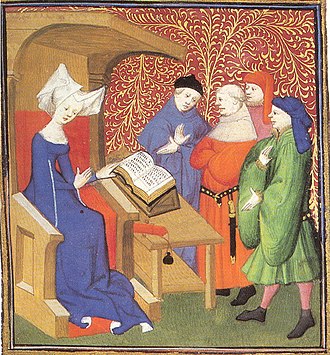
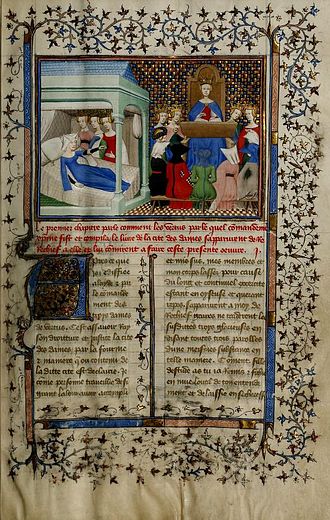
Christine de Pisan (sitting) lecturing to a group of men

Christine de Pisan was the first woman in history to make a living from writing.

Christine de Pisan was born around 1364 in Venice, Italy; the family was from the village of Pizzano, just outside Bologna. Her father, Tommaso di Benvenuto da Pizzano, was a graduate of the University of Bologna and was a lecturer in astrology at the university, but moved to Venice in 1357. In the late 1360s Tommaso was invited to join both the Hungarian and the French royal courts. He chose France and moved his family, including Christine and her two brothers Paolo and Aghinolfo, to Paris, in December 1368, becoming royal physician and astrologer to Charles V. Christine’s father paid particular attention to his daughter’s education, allowing her to be taught to the same standards as a boy of her age, although her mother disapproved. She was tutored in history, literature, religion and the classical languages.1

In 1380, at the age of fifteen, Tommaso arranged a marriage for Christine with Etienne de Castel. Ten years older than Christine, Etienne was a graduate of the University of Paris and became a royal secretary in the year they married. The position of royal secretary was a lifetime appointment and only open to the intellectual elite, as they were often involved in diplomatic events. In the same year, on 16 September, Tommaso’s patron Charles V died, leaving the family in a precarious financial position. Christine was further challenged by a series of tragedies toward the end of the decade. Her father, Tommaso, died in 1387, leaving Christine’s mother and niece in his daughter’s care. Around the same time, Christine lost a child, his name unknown; although two children, Marie and Jean, survived infancy. In 1390 her husband Etienne passed away at Beauvais and Christine was left with the responsibility of providing for herself and her young children, as well as her mother and niece.

Christine explained herself, in her book Mutation of Fortune, how she had to take on the mantle of the man of the house,

Let me summarise this moment,

Just who I am, what all this meant.

How I, a woman, became a man by a flick of Fortune’s hand

How she changed my body’s form

To the perfect masculine norm.2

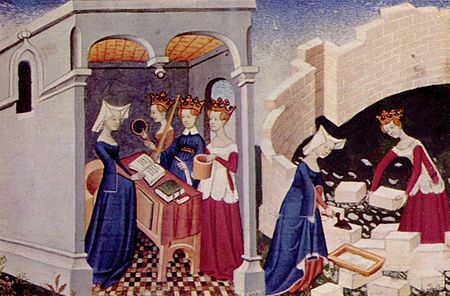
Illumination from The Book of the City of Ladies

Etienne had taken care of all the family’s financial dealings and it was a steep learning curve for Christine to learn to manage the accounts and pay off the family’s debts. Shortly after Etienne’s death, Christine found work as a copyist for a number of Parisian manuscript workshops. Eventually, around 1399, she began to compose her own prose and poetry as a means of supporting her family, and it was the grief of losing Etienne that informed Christine’s early works of poetry. Initially, she would send her works to members of the court, who sent her money in gratitude, with patrons eventually including Louis, Duke of Orléans, the Duke de Berry and France’s queen, Isabella of Bavaria. And as Christine’s fame spread beyond France, she could also count Philip II the Bold, Duke of Burgundy, and Thomas Montagu, 4th Earl of Salisbury, among her patrons. Writing in ballads and lais (poetry put to music), Christine could express her love and grief for Etienne and the sense of loss and loneliness she now felt,

Like the mourning dove I’m now alone,

And like a shepherdless sheep gone astray,

For death has long ago taken away

My loved one whom I constantly mourn…3

Christine de Pisan’s poems, amounted to ten volumes of verses, including L’Épistre au Dieu d’Amours (Letter to the God of Loves) which was published in 1399. In the early 1400s she also published Letters on the Debate of the Romance of the Rose, a response to Jean de Meun’s Le Roman de la Rose (The Romance of the Rose) attacking the traditional view of women causing the sins of men. Christine is, above all, remembered and revered for her work, Le Livre de la Cité des Dames (The Book of the City of Ladies), published in 1405. Well received in France, even in her own lifetime, it was later translated into Flemish and English. The book tells of the lives of past and present heroines, including pagan, Hebrew and Christian ladies who were renowned for being examples of exemplary womankind, famed for their chastity, loyalty and devotion. It included the lives of female saints who remained steadfast in their devotion to God in the face of martyrdom. City of Ladies was Christine’s response to the misogynistic portrait of womankind that was present in many works of the era, in which women were blamed for the misery in which men found themselves. The book suggests that women were capable of being anything, from warriors to artists and teachers, but stops short of suggesting that her contemporaries should pursue such careers.4

A page from Christine de Pisan’s The Book of the Three Virtues

In the same year, 1405, the sequel to City of Ladies, entitled Le Livre des Trois Vertus (The Book of the Three Virtues) was also published. This text was more of an instructional treatise, showing women how they should behave and how they could make a significant contribution to society from their various social spheres. In it Christine recommends that women should be modest and obedient as virgins, tolerant and humble as wives, and courageous and dignified as widows. It is possible that Le Livre des Trois Vertus was written as a book of instruction for eleven-year-old Marguerite de Nevers, the daughter of the Duke of Burgundy and bride of Louis of Guyenne, the heir to the throne of France. Although the book appears to be a contradiction of Christine’s own life, when she was making a name for herself as a writer to support her family, it has to be remembered that Christine was living in a male-dominated era, rather than the 21st century. She has often been advanced as the first feminist, but while she wanted to correct the negative view of women and improve the conditions of women, advancing arguments for better education and a role beyond the home, she was not intending to be revolutionary.

Christine’s writing proved so successful that she managed to pull herself out of debt and make a living at it; she was the first woman to ever become a professional writer. Her ability to write for varied audiences meant her work was often sought after. She eventually started receiving commissions to write specific items for her noble patrons, including political and moral works. A biography of Charles V, Le Livre des Fais et des Bonnes Meurs du Sage Roy Charles V (The Book of the Deeds and Good Character of the Wise King Charles V), which Christine wrote in 1404, was commissioned by the late king’s brother Philip, Duke of Burgundy. Her other works included The Book of the Body Politic and Feats of Arms and Chivalry. The latter was published anonymously as Christine doubted it would be taking seriously if a woman was identified as the author.

As Charles VI increasingly slipped into bouts of madness in the early 15th century, and France found itself on the verge of civil war, Christine would write about peace and the necessity of stable government. However, as France was dragged back into the Hundred Years War against England, she became increasingly marginalised. She retired from public life and retreated to the convent at Poissy, where her daughter was a nun. Her last work, in 1429, Le Ditié de Jehanne d’Arc (The Poem of Joan of Arc), extolled the virtues of Joan, the Maid of Orléans, as valiant and brave, chaste and pure; it was the only work written about Joan during her own lifetime. Writing at the height of Joan’s success. It portrayed the Maid, the leader of the revival of French fortunes in the war against the English, as the embodiment of the women Christine had written of in City of Ladies. However, Christine does not appear to have lived long enough to see the final chapters, and the tragedy, of Joan’s life – her imprisonment and death at the hands of the English. Christine probably died in 1430, the year before Joan.

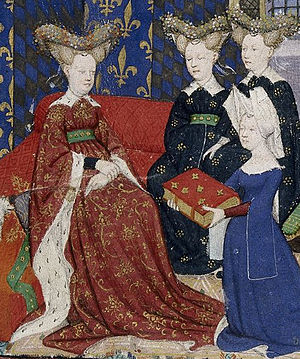
Christine de Pisan presents her book to Isabeau of Bavaria, Queen of France

Christine de Pisan was one of the most remarkable women of her age. In her world, women were denied their own voice and independence. There were strictures placed on every aspect of their lives, by tradition and society. And yet she circumvented these strictures, not only by writing, but by writing to make a living, and by giving a voice and identity to women everywhere. She was not a feminist; the notion of feminism simply did not exist. However, she was a forerunner for the feminist movement, and a sign of the independence that women would eventually achieve.

The poet, political and social observer Christine de Pisan was the culmination of a series of remarkable female trailblazers, including Hildegard of Bingen, Heloise (of Heloise and Abelard fame) and Marie de France. She proved that women were just as capable as men of making successful careers as writers.

*

Notes:

1. The Life and Triumphs of Christine de Pizan (article), faculty.msmc.edu; 2. The Writing of Christine de Pizan translated by Nadia Margolis, edited by Charity Cannon Willard; 3. ibid; 4. The Book of the City of Ladies by Christine de Pisan, translated by Rosalind Brown-Grant

*

My Books:

Signed, dedicated copies of all my books are available through my online bookshop.

Coming 30 January 2025: Scotland’s Medieval Queens

Scotland’s history is dramatic, violent and bloody. Being England’s northern neighbour has never been easy. Scotland’s queens have had to deal with war, murder, imprisonment, political rivalries and open betrayal. They have loved and lost, raised kings and queens, ruled and died for Scotland. From St Margaret, who became one of the patron saints of Scotland, to Elizabeth de Burgh and the dramatic story of the Scottish Wars of Independence, to the love story and tragedy of Joan Beaufort, to Margaret of Denmark and the dawn of the Renaissance, Scotland’s Medieval Queens have seen it all. This is the story of Scotland through their eyes.

Available for pre-order now.

Also by Sharon Bennett Connolly:

Heroines of the Tudor World tells the stories of the most remarkable women from European history in the time of the Tudor dynasty, 1485-1603. These are the women who ruled, the women who founded dynasties, the women who fought for religious freedom, their families and love. Heroines of the Tudor World is now available for pre-order from Amberley Publishing and Amazon UK. Women of the Anarchy demonstrates how Empress Matilda and Matilda of Boulogne, unable to wield a sword themselves, were prime movers in this time of conflict and lawlessness. It shows how their strengths, weaknesses, and personal ambitions swung the fortunes of war one way – and then the other. Available from Bookshop.orgAmberley Publishing and Amazon UKKing John’s Right-Hand Lady: The Story of Nicholaa de la Haye is the story of a truly remarkable lady, the hereditary constable of Lincoln Castle and the first woman in England to be appointed sheriff in her own right. Available from all good bookshops Pen & Sword Booksbookshop.org and Amazon

Defenders of the Norman Crown: The Rise and Fall of the Warenne Earls of Surrey tells the fascinating story of the Warenne dynasty, from its origins in Normandy, through the Conquest, Magna Carta, the wars and marriages that led to its ultimate demise in the reign of Edward III. Available from Pen & Sword BooksAmazon in the UK and US, and Bookshop.orgLadies of Magna Carta: Women of Influence in Thirteenth Century England looks into the relationships of the various noble families of the 13th century, and how they were affected by the Barons’ Wars, Magna Carta and its aftermath; the bonds that were formed and those that were broken. It is now available in paperback and hardback from Pen & SwordAmazon, and Bookshop.orgHeroines of the Medieval World tells the stories of some of the most remarkable women from Medieval history, from Eleanor of Aquitaine to Julian of Norwich. Available now from Amberley Publishing and Amazon, and Bookshop.orgSilk and the Sword: The Women of the Norman Conquest traces the fortunes of the women who had a significant role to play in the momentous events of 1066. Available now from Amazon,  Amberley Publishing, and Bookshop.org.

Alternate Endings: An anthology of historical fiction short stories including Long Live the King… which is my take what might have happened had King John not died in October 1216. Available in paperback and kindle from Amazon.

Podcast:

Have a listen to the A Slice of Medieval podcast, which I co-host with Historical fiction novelist Derek Birks. Derek and I welcome guests, such as Bernard Cornwell and Ian Mortimer, and discuss a wide range of topics in medieval history, from significant events to the personalities involved. 

*

Don’t forget! Signed and dedicated copies of all my books are available through my online bookshop.

For forthcoming online and in-person talks, please check out my Events Page.

You can be the first to read new articles by clicking the ‘Follow’ button, liking our Facebook page or joining me on TwitterThreadsBluesky and Instagram.

*

©2023 Sharon Bennett Connolly FRHistS

Eight Interesting Discoveries on writing 11th century non-fiction

Following on from my 10 Facts About Women and Magna Carta, I thought I would revisit the Norman Conquest and started thinking about I found most interesting when writing about 1066 and the years either side. And here’s what I discovered:

1. Not all primary sources are contemporary.

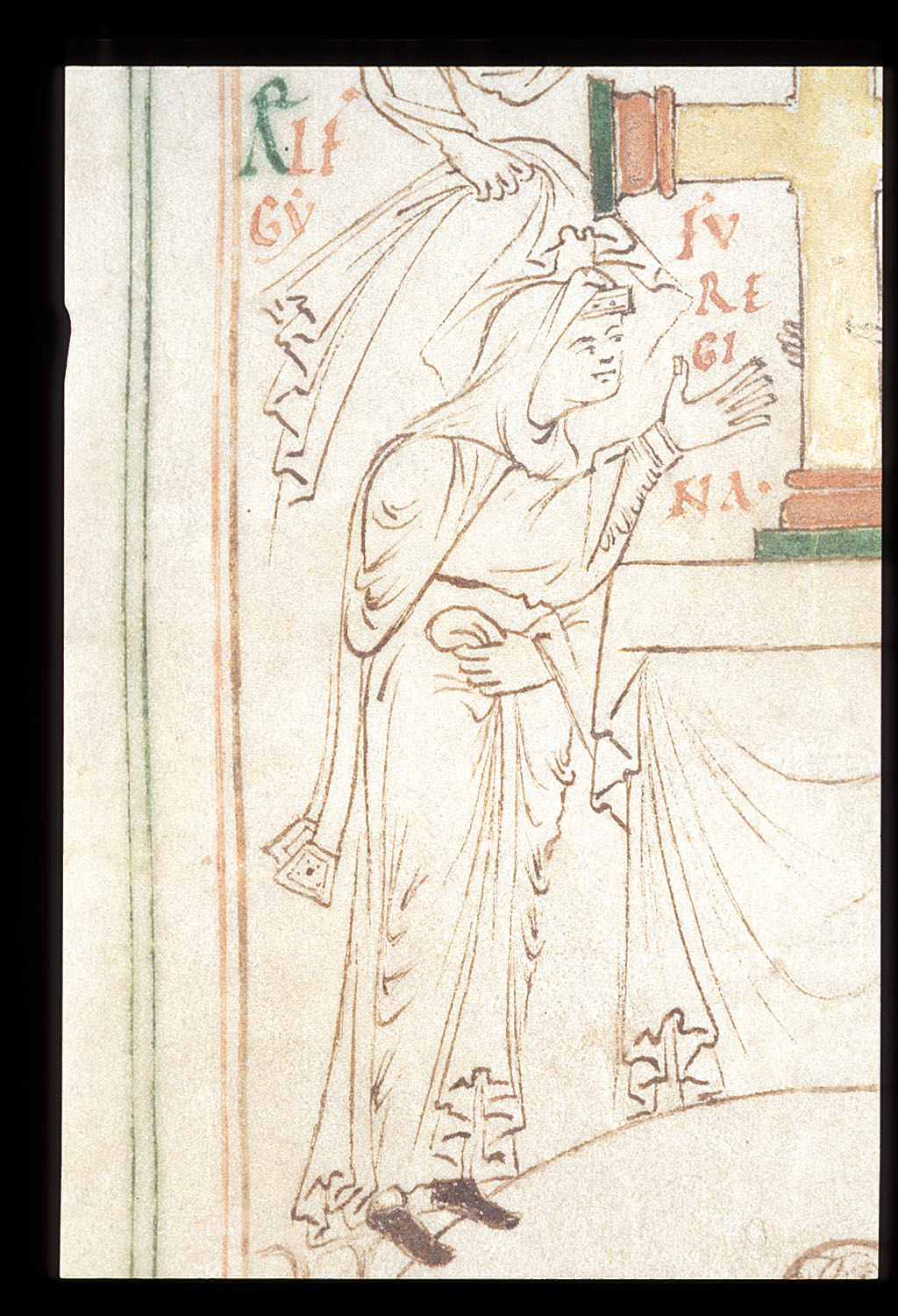
Emma of Normandy

Let me explain. Of course, all sources written in the 11th century are primary sources, but you do find people quoting sources as primary sources – only to discover that they were written 100 or even 200 years after the events.

One such legend, appearing two centuries after the events, suggested that Emma of Normandy’s relationship with her good friend, Bishop Stigand, was far more than that of her advisor and that he was, in fact, her lover – although the legend did get its bishops mixed up and named Ælfwine, rather than Stigand, as Emma’s lover. The story continues that Emma chose to prove her innocence in a trial by ordeal, and that she walked barefoot over white-hot ploughshares. Even though the tale varies depending on the source, the result is the same; when she completed the ordeal unharmed, and thus proven guiltless, she was reconciled with her contrite son, Edward.

However, there is no 11th century source for this event and it seems to have been created to explain Emma’s estrangement from her son, Edward the Confessor.

2. The Anglo-Saxon Chronicle is the most famous source of 11th century news. 

The Anglo-Saxon Chronicle gives wonderful snippets of information about life in Anglo-Saxon England – and the weather! If you have ever wondered where the English get their obsession with the weather, read the Anglo-Saxon Chronicle. It is also very dramatic.

For example, the year 1005 starts with; ‘Here in this year there was the great famine throughout the English race, such as no-one ever remembered on so grim before…’

1032 relates; ‘Here in this year appeared that wild-fire such as no man remembered before, and also it did damage everywhere in many places.’

And 1039 opens with ‘Here came the great gale…’

In 1053 we read, ‘Here [1052] was the great wind on the eve of the Feast of St Thomas, and the great wind was also all midwinter…’

And, of course, in 1066 we read about the appearance of Halley’s Comet; ‘Then throughout all England, a sign such as man ever saw before was seen in the heavens. Some me declared that it was the star comet, which some men called the ‘haired’ star; and it appeared first on the eve of the Great Litany, 24 April, and shone thus all the week….’

3. The Anglo-Saxon Chronicle is a fabulous source of news about church leaders.

Don’t get me wrong, the Anglo-Saxon Chronicle is invaluable to anyone studying the history of Anglo-Saxon Britain, but you can tell it was written by monks. There are some years where you learn little more than which church leader died, and who replaced him.

For example, the entry for 1023 from the E chronicle; ‘Here Bishop Wulfstan passed away, and Ælfric succeeded…’

And in 1032; ‘In the same year Ælfsige, bishop in Winchester, passed away, and Ælfwine, the king’s priest, succeeded to it.’

The only entry in the E Chronicle in 1033 was; ‘Here in this year Merehwit, bishop in Somerset, passed away, and he is buried in Glastonbury.’

And again in 1034; ‘Here Bishop Æthelric passed away.’

4. Not all inheritance was based on primogeniture.

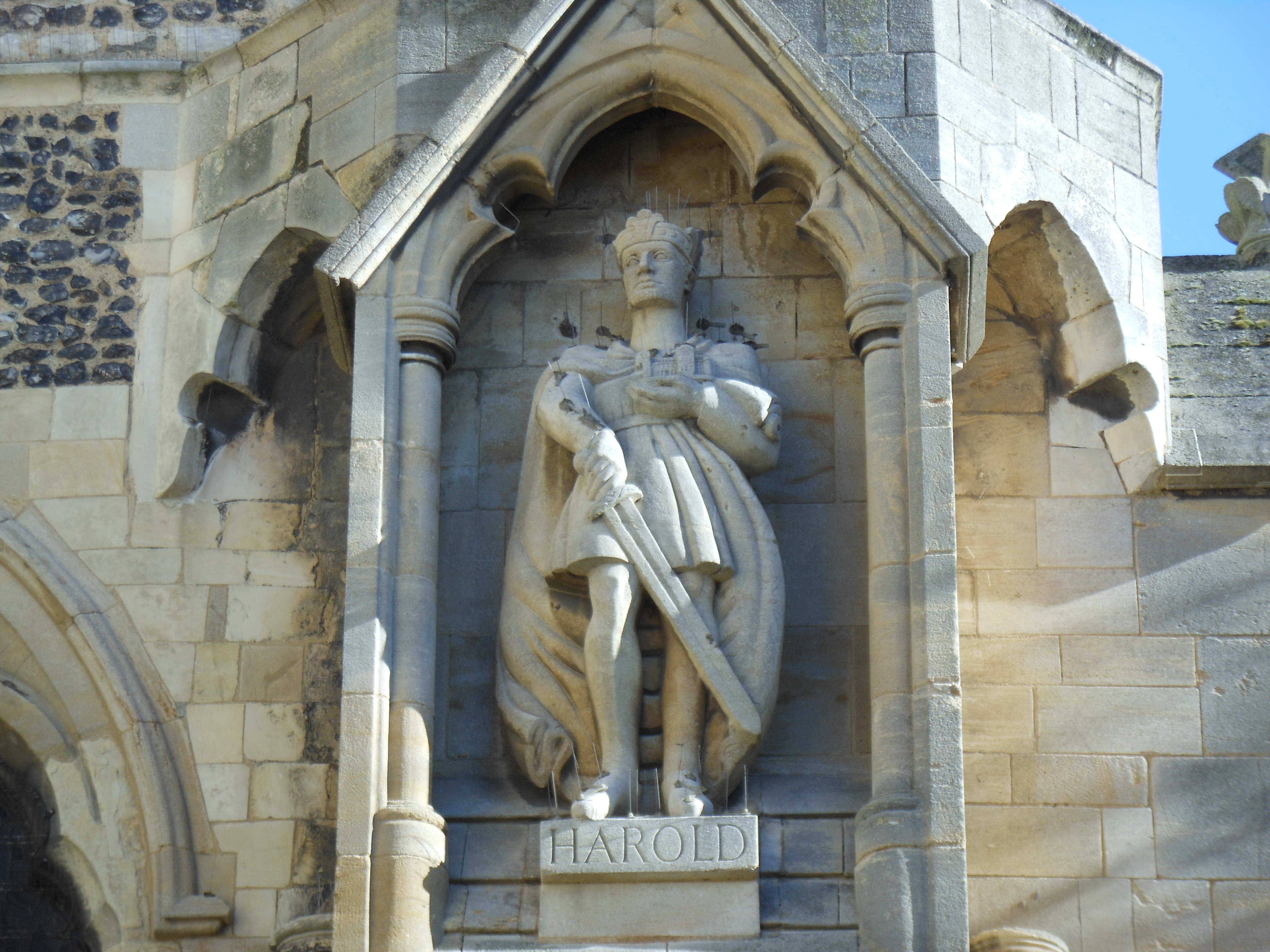
King Harold II, Waltham Abbey

Primogeniture, where the eldest son inherited from his father, was not unusual in 11th century England; when Earl Godwin of Wessex died, his eldest surviving son, Harold, succeeded him. However, it was not yet established as the definitive rule of inheritance of later centuries. When Siward, Earl of Northumbria, died in 1055 his heir, Waltheof, was still a child and too young to hold such a formidable position on the borders of Scotland. The earldom was given to Tostig Godwinson, the favourite brother of Edward the Confessor’s queen, Edith. Though he didn’t do a great job with it…

And in the opening days of 1066, when Edward the Confessor died, the ætheling, Edgar was only a teenager, and so was passed over as king for the more mature and militarily experienced Harold Godwinson, Earl of Wessex, who became King Harold II.

5. Travel to distant places was not uncommon for the nobility.

At different times in the 11th century, both King Cnut and Tostig Godwinson are known to have travelled to Rome; indeed, during his trip to Rome in 1027, Cnut was present at the coronation of Holy Roman Emperor, Conrad II and arranged for the marriage of his daughter by Emma of Normandy, Gunhilda, to Conrad’s son, the future King Henry III of Germany.

As for Tostig, travelling to Rome was not without its dangers, and shortly after leaving the city, his travelling party was caught up in a local dispute between the papacy and the Tuscan nobility; they were attacked. Tostig was able to escape by the ruse of one of his own thegns, a man named Gospatric, who pretended to be the earl.

Tostig and Harold’s brother, Swegn Godwinson, who had murdered his own cousin, even went on pilgrimage to Jerusalem – barefoot – he died on the journey home.

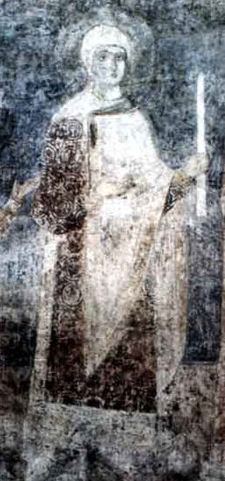
And when I started writing Silk and the Sword: The Women of the Norman Conquest I discovered that there are several links to the story of 1066 with the Russian principality of Kyiv. The baby sons of England’s short-lived king, Edmund II Ironside, who reigned and died in 1016, were given sanctuary and protection in Kyiv, saving them from the clutches of Edmund’s successor, King Cnut. The first wife of Harald Hardrada, the third contender for the English throne in 1066, Elisiv, was a Kyivan princess. And after the Conquest, Harold II Godwinson’s own daughter by Edith Swanneck, Gytha, would make her life in Kyiv as the wife of Vladimir II Monomakh and as the mother of Mstislav the Great, the last ruler of a united Kyivan Rus. Vladimir was the nephew of Harald Hardrada’s first wife, the Kyivan princess, Elisiv.

6. Having 2 wives at the same time was not THAT unusual.

Elisiv of Kyiv

In the story of 1066 there were not one BUT three men who had two wives simultaneously.

Harold Godwinson is known for having been in a relationship with the famous Edith Swanneck for 20 years before becoming King, and then marrying Ealdgyth of Mercia without divorcing Edith. Edith is often referred to as Harold’s concubine, but most historians agree that she was his ‘hand-fast’ wife and had undergone a Danish – rather than Christian – style of wedding with Harold. Edith was no ignorant peasant, she was a wealthy woman in her own right and it is highly doubtful she would have accepted being Harold’s mistress, and raising his children, without some kind of marital protection.

Harald Hardrada also married a second ‘wife’, whilst still being married to Elisiv. Elisiv had given the Norwegian king two daughters, but his second wife, Thora, gave him two sons, Magnus and Olaf, who each, in turn, succeeded their father as King of Norway.

King Cnut was the first to take two wives; he had two sons by Ælfgifu of Northampton before marrying Emma of Normandy and producing a second family. The chronicles, however, claim that Ælfgifu’s sons were not the children of Cnut, with John (also known as Florence) of Worcester saying, ‘Ælfgiva desired to have a son by the king, but as she could not, she caused the new-born child of a certain priest to be brought to her, and made the king fully believe that she had just borne him a son’. And the Anglo-Saxon Chronicle claimed ‘[King] Harold [I Harefoot] also said that he was the son of king Canute and Ælfgiva of Northampton, although that is far from certain; for some say that he was the son of a cobbler, and that Ælfgiva had acted with regard to him as she had done in the case of Swein: for our part, as there are doubts on the subject, we cannot settle with any certainty the parentage of either.’

7. There were some incredible, strong women in the 11th century.

Lady Godiva

The story of the Norman Conquest invariably revolves around the men involved, Edward the Confessor, Harold II, William the Conqueror, Harald Hardrada, and so on. However, there were some amazing women whose strength and perseverance helped to steer and shape the events of the era.

There were, of course, the queens, Emma of Normandy, Edith of Wessex and Matilda of Flanders, who supported their husbands and helped to shape and – even – preserve history, with Emma and Edith both commissioning books to tell the stories of their times and Matilda being the image of queenship that all future queens of England modelled themselves on.

There was also the notorious Lady Godiva, who was probably a lot less scandalous than the legend, of her riding naked through Coventry, leads us to believe. And the incredible Gytha of Wessex, a woman whose story is entwined with every aspect of the period. From the reign of Cnut to that of William the Conqueror, Gytha and her family were involved in so many aspects of the 11th century, from the rise of her sons, through the Battle of Hastings itself, to the English resistance in the years immediately following the Conquest. Gytha was not one to give up easily, despite the horrendous losses her family suffered (three of her sons died in one single day at Hastings), she encouraged her grandsons to lead the opposition against the Conqueror in the west, but her eventual failure saw her seek shelter in Flanders, where she disappears from the pages of history.

8. There is still so much we don’t know!

Ӕlfgyva, the mysterious woman in the Bayeux Tapestry

What you discover when researching the 11th century and the Norman Conquest is that there are gaps in our knowledge. For instance, we do not know why Harold was travelling to Europe in 1064, when he was shipwrecked and became a guest at the court of William, Duke of Normandy (the future William the Conqueror). The Bayeux Tapestry depicts Harold swearing an oath during his stay there. Was Harold promising to support William’s claim to England when Edward the Confessor died?

The Bayeux Tapestry has another tantalising mystery. That of Ӕlfgyva. Ӕlfgyva is depicted in a doorway with a priest touching her cheek. Whether the touch is in admonishment or blessing is open to interpretation. Above her head, written in Latin, is the incomplete phrase  ‘Here a certain cleric and Ӕlfgyva’. But who was the mysterious Ӕlfgyva? Will we ever know?

Historical Writers Forum hosted a fabulous debate on ‘Ӕlfgyva’: The Mysterious Woman in the Bayeux Tapestry, which is available on YouTube. Hosted by Samantha Wilcoxson, it features myself, Pat Bracewell, Carol McGrath and Paula Lofting discussing the possible cadidates of Ӕlfgyva’s identity.

*

A version of this article was first published on Carol McGrath’s website in December 2018

Images:

Courtesy of Wikipedia, except King Harold II, which is ©2022 Sharon Bennett Connolly FRHistS.

Sources:

A Historical Document Pierre Bouet and François Neveux, bayeuxmuseum.com/en/un_document_historique_enThe Mystery Lady of the Bayeux Tapestry (article) by Paula Lofting, annabelfrage.qordpress.com; Ӕlfgyva: The Mysterious lady of the Bayeux Tapestry (article) by M.W. Campbell, Annales de NormandieThe Bayeux Tapestry, the Life Story of a Masterpiece by Carola HicksÆthelred II [Ethelred; known as Ethelred the Unready] (c. 966×8-1016) (article) by Simon Keynes, Oxford Dictionary of National Biography, oxforddnb.com; Britain’s Royal Families; the Complete Genealogy by Alison Weir; Queen Emma and the Vikings: The Woman Who Shaped the Events of 1066 by Harriet O’BrienThe Anglo-Saxon Chronicle translated by James IngramOn the Spindle Side: the Kinswomen of Earl Godwin of Wessex by Ann Williams; Swein [Sweyn], earl by Ann Williams, Oxford Dictionary of National Biography, oxforddnb.com, 23 September 2004; Ӕlfgifu [Ӕlfgifu of Northampton (fl. 1006-1036) (article) by Pauline Stafford, Oxford Dictionary of National Biography, oxforddnb.com; The Chronicle of John of Worcester, translated and edited by Thomas Forester, A.M; The Anglo-Saxon Chronicles edited and translated by Michael Swanton.

*

My Books:

Signed, dedicated copies of all my books are available through my online store.

OUT NOW! Heroines of the Tudor World

Heroines of the Tudor World tells the stories of the most remarkable women from European history in the time of the Tudor dynasty, 1485-1603. These are the women who ruled, the women who founded dynasties, the women who fought for religious freedom, their families and love. These are the women who made a difference, who influenced countries, kings and the Reformation. In the era dominated by the Renaissance and Reformation, Heroines of the Tudor World examines the threats and challenges faced by the women of the era, and how they overcame them. From writers to regents, from nuns to queens, Heroines of the Tudor World shines the spotlight on the women helped to shape Early Modern Europe.

Heroines of the Tudor World is now available for pre-order from Amberley Publishing and Amazon UK.

Coming 30 January 2025: Scotland’s Medieval Queens

Scotland’s history is dramatic, violent and bloody. Being England’s northern neighbour has never been easy. Scotland’s queens have had to deal with war, murder, imprisonment, political rivalries and open betrayal. They have loved and lost, raised kings and queens, ruled and died for Scotland. From St Margaret, who became one of the patron saints of Scotland, to Elizabeth de Burgh and the dramatic story of the Scottish Wars of Independence, to the love story and tragedy of Joan Beaufort, to Margaret of Denmark and the dawn of the Renaissance, Scotland’s Medieval Queens have seen it all. This is the story of Scotland through their eyes.

Available for pre-order now.

Also by Sharon Bennett Connolly:

Women of the Anarchy demonstrates how Empress Matilda and Matilda of Boulogne, unable to wield a sword themselves, were prime movers in this time of conflict and lawlessness. It shows how their strengths, weaknesses, and personal ambitions swung the fortunes of war one way – and then the other. Available from Bookshop.orgAmberley Publishing and Amazon UKKing John’s Right-Hand Lady: The Story of Nicholaa de la Haye is the story of a truly remarkable lady, the hereditary constable of Lincoln Castle and the first woman in England to be appointed sheriff in her own right. Available from all good bookshops Pen & Sword Booksbookshop.org and AmazonDefenders of the Norman Crown: The Rise and Fall of the Warenne Earls of Surrey tells the fascinating story of the Warenne dynasty, from its origins in Normandy, through the Conquest, Magna Carta, the wars and marriages that led to its ultimate demise in the reign of Edward III. Available from Pen & Sword BooksAmazon in the UK and US, and Bookshop.org

Ladies of Magna Carta: Women of Influence in Thirteenth Century England looks into the relationships of the various noble families of the 13th century, and how they were affected by the Barons’ Wars, Magna Carta and its aftermath; the bonds that were formed and those that were broken. It is now available in paperback and hardback from Pen & Sword,  Amazon, and Bookshop.orgHeroines of the Medieval World tells the stories of some of the most remarkable women from Medieval history, from Eleanor of Aquitaine to Julian of Norwich. Available now from Amberley Publishing and Amazon, and Bookshop.orgSilk and the Sword: The Women of the Norman Conquest traces the fortunes of the women who had a significant role to play in the momentous events of 1066. Available now from Amazon,  Amberley Publishing, and Bookshop.org.

Alternate Endings: An anthology of historical fiction short stories including Long Live the King… which is my take what might have happened had King John not died in October 1216. Available in paperback and kindle from Amazon.

Podcast:

Have a listen to the A Slice of Medieval podcast, which I co-host with Historical fiction novelist Derek Birks. Derek and I welcome guests, such as Bernard Cornwell, and discuss a wide range of topics in medieval history, from significant events to the personalities involved.

*

Don’t forget! Signed and dedicated copies of all my books are available through my online store.

For forthcoming online and in-person talks, please check out my Events Page.

You can be the first to read new articles by clicking the ‘Follow’ button, liking our Facebook page or joining me on TwitterThreads and Instagram.

*

©2022 Sharon Bennett Connolly FRHistS.

Book Corner: Forest of Foes by Matthew Harffy

AD 652. Beobrand has been ordered to lead a group of pilgrims to the holy city of Rome. Chief among them is Wilfrid, a novice of the church with some surprisingly important connections. Taking only Cynan and some of his best men, Beobrand hopes to make the journey through Frankia quickly and return to Northumbria without delay, though the road is long and perilous.

But where Beobrand treads, menace is never far behind. The lands of the Merovingian kings are rife with intrigue. The queen of Frankia is unpopular and her ambitious schemes, though benevolent, have made her powerful enemies. Soon Wilfrid, and Beobrand, are caught up in sinister plots against the royal house.

After interrupting a brutal ambush in a forest, Beobrand and his trusted gesithas find their lives on the line. Dark forces will stop at nothing to seize control of the Frankish throne, and Beobrand is thrown into a deadly race for survival through foreign lands where he cannot be sure who is friend and who is foe.

The only certainty is that if he is to save his men, thwart the plots, and unmask his enemies, blood will flow.

He’s done it again!

Magnificent adventure!

Forest of Foes by Matthew Harffy is the author’s 12th book and the 9th instalment of his magnificent Bernicia Chronicles. Beobrand is once again journeying over the Narrow Sea into Frankia. This time he is on his way to Rome, escorting a novice monk on his pilgrimage. Unfortunately, as with all Beobrand’s adventures, things don’t quite go to plan…

Beobrand and his loyal gesiths first save the wife of Clovis II, Queen Balthild, from an ambush in the woods and is then drawn into the world of the Frankish court and the conspiracies and controversies that surround it.

“What is he saying?” Beobrand asked Halinard in a quiet voice. The woman’s eyes flicked to him as he spoke, her expression questioning, no doubt surprised by his use of the Anglisc tongue. Beobrand marvelled at her apparent lack of fear.

“He says he will kill her, if let him go we do not,” said Halinard, his words clumsy yet clear.

“I hardly need you to tell me that,” replied Beobrand.

“I tell you what he says,” said Halinard, shaking his head. “He says nothing interesting.”

Brocard spoke to the man in the same calming tone he had used before. The brigand shouted more loudly, his voice cracking with his anger and fear. Behind him the maidservant looked ready to swoon.

Beobrand stepped closer to Brocard, beckoning for Halinard to follow him.

“Ask him his name,” he said in a low voice. Halinard translated. Brocard looked askance at Beobrand, then, with a shrug, he spoke to the brigand.

“Omer,” replied the brigand, narrowing his eyes as though he expected a trick.

Beobrand nodded.

“Offer him a horse,” Beobrand said. Halinard whispered his words in Frankish.

Brocard hesitated. One of his men, the one with the great bleeding wound on his face, growled something. Brocard held up his hand for patience and offered Omer a steed.

Omer replied and Beobrand understood enough to know that he wanted two mounts, one for him and one for his hostage.

“No,” Beobrand said in Frankish. He held up a single finger. “One horse.”

Omer shook his head and began to shout. Beobrand could not make out all the words, but it was clear Omer was not happy with the answer. Beobrand watched the knife blade waver at the woman’s lovely throat. Omer must know that if he killed her, he would surely follow the woman to the afterlife in moments. And yet men under such pressure do not always act reasonably and Beobrand became increasingly worried that the brigand might yet cut her throat by accident.

“Tell him he can have two horses,” he said. Halinard translated for him. Omer again looked as though he suspected he was being lured into a trap. He spoke quickly, urgently, but Beobrand could barely make sense of any of it. He was pleased though, to see that some of the tension had left Omer’s shoulders. The knife had lowered slightly from the lady’s neck. Brocard spoke up in anger at Beobrand’s offer. But before Beobrand could respond, the lady being held hostage moved with the speed of a striking serpent and Omer’s speech came to a sudden, choked halt. For a couple of heart beats he stood there, unmoving and silent, mouth opening and closing without sound. Then his hand fell, the knife tumbling from lifeless fingers.

Matthew Harffy has written yet another cracking Beobrand adventure. Changing the location to France has opened up a world of opportunities, which includes integrating the remarkable story of Balthild, the slave girl who became queen of the Franks as the wife of Clovis II. It also see Beobrand facing new challenges, including that of language. Matthew Harffy could have made life so much easier for himself by having Beobrand pick up the language of the Franks easily, but it makes for a better story, and a more credible one, that he struggles like the rest of us. No one is perfect.

As has come to be expected from Matthew Harffy’s writing, the character development is paramount and it is interesting to see how Cynan continues to grow into the role of war leader and confidant. There is tragedy along the way and, as with any great story, a few surprises that will leave the reader reeling. But it all makes for a fabulous story.

Do not expect your emotions to escape unscathed.

Forest of Foes by Matthew Harffy is an adventure not to be missed!

About the author:

Matthew Harffy lived in Northumberland as a child and the area had a great impact on him. The rugged terrain, ruined castles and rocky coastline made it easy to imagine the past. Decades later, a documentary about Northumbria’s Golden Age sowed the kernel of an idea for a series of historical fiction novels. The first of them is the action-packed tale of vengeance and coming of age, THE SERPENT SWORD.

Matthew has worked in the IT industry, where he spent all day writing and editing, just not the words that most interested him. Prior to that he worked in Spain as an English teacher and translator. Matthew lives in Wiltshire, England, with his wife and their two daughters.

Pre-order link

Amazon: https://amzn.to/3U5eD43

Follow Matthew Harffy

Twitter: @MatthewHarffy

Instagram: @beobrand

Website: matthewharffy.com

Follow Aries

Twitter: @AriesFiction

Facebook: Aries Fiction

Website: http://www.headofzeus.com

*

My Books:

Signed, dedicated copies of all my books are available, please get in touch by completing the contact me form.

Defenders of the Norman Crown: The Rise and Fall of the Warenne Earls of Surrey tells the fascinating story of the Warenne dynasty, of the successes and failures of one of the most powerful families in England, from its origins in Normandy, through the Conquest, Magna Carta, the wars and marriages that led to its ultimate demise in the reign of Edward III. Defenders of the Norman Crown: Rise and Fall of the Warenne Earls of Surrey is now available from Pen & Sword BooksAmazon in the UK and US, Bookshop.org and Book Depository.

1 family. 8 earls. 300 years of English history!

Also by Sharon Bennett Connolly:

Ladies of Magna Carta: Women of Influence in Thirteenth Century England looks into the relationships of the various noble families of the 13th century, and how they were affected by the Barons’ Wars, Magna Carta and its aftermath; the bonds that were formed and those that were broken. It is now available in paperback and hardback from Pen & SwordAmazonBookshop.org and from Book Depository worldwide.

Heroines of the Medieval World tells the stories of some of the most remarkable women from Medieval history, from Eleanor of Aquitaine to Julian of Norwich. Available now from Amberley Publishing and Amazon, Bookshop.org and Book Depository.

Silk and the Sword: The Women of the Norman Conquest traces the fortunes of the women who had a significant role to play in the momentous events of 1066.  Available now from Amazon,  Amberley Publishing, Bookshop.org and Book Depository.

Alternate Endings: An anthology of historical fiction short stories including Long Live the King… which is my take what might have happened had King John not died in October 1216. Available in paperback and kindle from Amazon.

*

You can be the first to read new articles by clicking the ‘Follow’ button, liking our Facebook page or joining me on Twitter and Instagram.

©2020 Sharon Bennett Connolly FRHistS
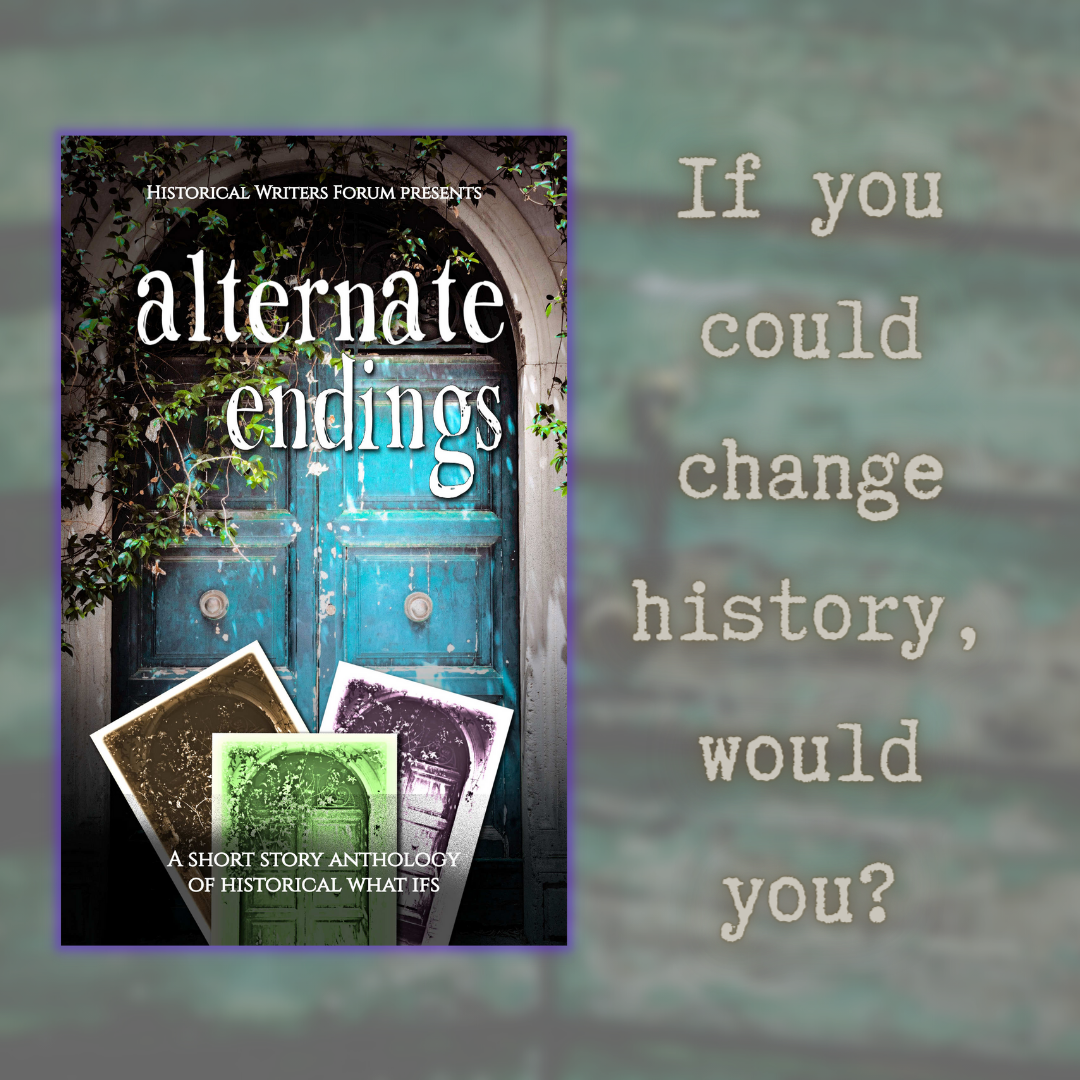
Book Corner: Tudor Places

Tudor Places Magazine

A new magazine exploring all the sites and buildings of the Tudor world – then and now.

·         Feature articles by expert contributors

·         Interviews with historians, archaeologists, curators, authors, houseowners and managers

·         Itineraries for weekends away exploring Tudor places, with recommendations on places to eat and stay

·         Regular column about living in a Tudor manor house today

·         Plus news, book listings and more………….

It is not every day that a new magazine hits the shops. And certainly not one devoted to Tudor history. As you may know, I am deep in the midst of writing Heroines of the Tudor World. So, when Tudor Places came along, I thought I should take a look. For research purposes, of course….

Tudor Places very kindly sent me their first 3 issues, so that I could see what I think. And I have to say I’m impressed!

The magazine is beautifully and professionally presented. With a varying range of articles and peppered throughout with colourful images, the magazine is vibrant and attractive to the reader’s eye.

But what of the content?

Well, if you are a Tudor fan, you won’t be disappointed – to be honest, if you are a history fan, you will not be disappointed. Each magazine has a wealth of content, including recent news about Tudor-related discoveries and events, interviews with historians and others working in the heritage industry and articles on Tudor-related historical sites and the Tudors themselves. Moreover, Tudor Places has turned to the experts we are familiar with in order to get the best content available. With contributions from Tracy Borman, Elizabeth Norton, Julian Humphreys, Nathen Amin and a host of others, the reader can trust that the articles are well researched and expertly presented.

Regular articles include ‘Living at the Old Hall’ where Brigitte Webster regales the reader with her experiences in renovating Old Hall in Norfolk and hosting the Tudor and 17th Century Experience. Brigitte vividly describes the highs and lows of living in a 500-year-old manor house. And though there are lows, you get the impression that she wouldn’t change a thing!

Another regular is from Sarah Morris, of the Tudor Travel Guide, who offers the reader itinerary suggestions for visits throughout the UK, from York to Monmouthshire and beyond. Sarah’s guides help you to guarantee that you won’t miss that ‘must-see’ Tudor manor house or monastery wherever you visit.

Tudor Places uses the knowledge of Tudor experts to bring to the reader a magazine which is accessible, entertaining and totally engrossing. My dinner hour lasted two hours because I could not put issue 3 down until I had read every word. The fact it ended with an image of Gainsborough Old Hall (one of my ‘go to’ Tudor places) didn’t hurt – it was recommended as a ‘hidden gem’ by Linda Porter.

Other articles in the first three issues included the lost Tudor palaces of Oatlands and Richmond from Elizabeth Norton, a fascinating insight into the Markenfield family of Ripon from Emma Wells, and the Building Projects of Cecily Bonville by Melita Thomas. I could go on…. Each article in the magazines has been carefully selected to give the best content and reading experience. The articles are well researched and very informative – and beautifully presented amidst colourful images and illustrations.

The mixture of regular articles, interviews and features, helps to create a lively, engaging magazine in which there is something for everyone. The only thing that is missing is a crossword or word search – but maybe that is just me?

It is certainly a magazine I would want to read regularly – or maybe even write for (hint, hint, winky face).

Whether you are reading about the Tudors for pleasure or research, you will find something of interest and value in every magazine. Tudor Places is crammed full of quality content and beautifully presented.

I cannot recommend it highly enough.

And just for my readers, Tudor Places has a very special offer…

Special Offer

Tudor Places is available in print and digital format.  Print copies posted worldwide.

Tudor Places has kindly offered a 10% discount on all purchases for followers of History… the Interesting Bits

Go to www.tudorplaces.com and use discount code HIB10 at checkout.

*

My Books:

Signed, dedicated copies of all my books are available, please get in touch by completing the contact me form.

Defenders of the Norman Crown: The Rise and Fall of the Warenne Earls of Surrey tells the fascinating story of the Warenne dynasty, of the successes and failures of one of the most powerful families in England, from its origins in Normandy, through the Conquest, Magna Carta, the wars and marriages that led to its ultimate demise in the reign of Edward III. Defenders of the Norman Crown: Rise and Fall of the Warenne Earls of Surrey is now available from Pen & Sword BooksAmazon in the UK and US, Bookshop.org and Book Depository.

1 family. 8 earls. 300 years of English history!

Also by Sharon Bennett Connolly:

Ladies of Magna Carta: Women of Influence in Thirteenth Century England looks into the relationships of the various noble families of the 13th century, and how they were affected by the Barons’ Wars, Magna Carta and its aftermath; the bonds that were formed and those that were broken. It is now available in paperback and hardback from Pen & SwordAmazonBookshop.org and from Book Depository worldwide.

Heroines of the Medieval World tells the stories of some of the most remarkable women from Medieval history, from Eleanor of Aquitaine to Julian of Norwich. Available now from Amberley Publishing and Amazon, Bookshop.org and Book Depository.

Silk and the Sword: The Women of the Norman Conquest traces the fortunes of the women who had a significant role to play in the momentous events of 1066.  Available now from Amazon,  Amberley Publishing, Bookshop.org and Book Depository.

Alternate Endings: An anthology of historical fiction short stories including Long Live the King… which is my take what might have happened had King John not died in October 1216. Available in paperback and kindle from Amazon.

*

You can be the first to read new articles by clicking the ‘Follow’ button, liking our Facebook page or joining me on Twitter and Instagram.

©2022 Sharon Bennett Connolly FRHistS
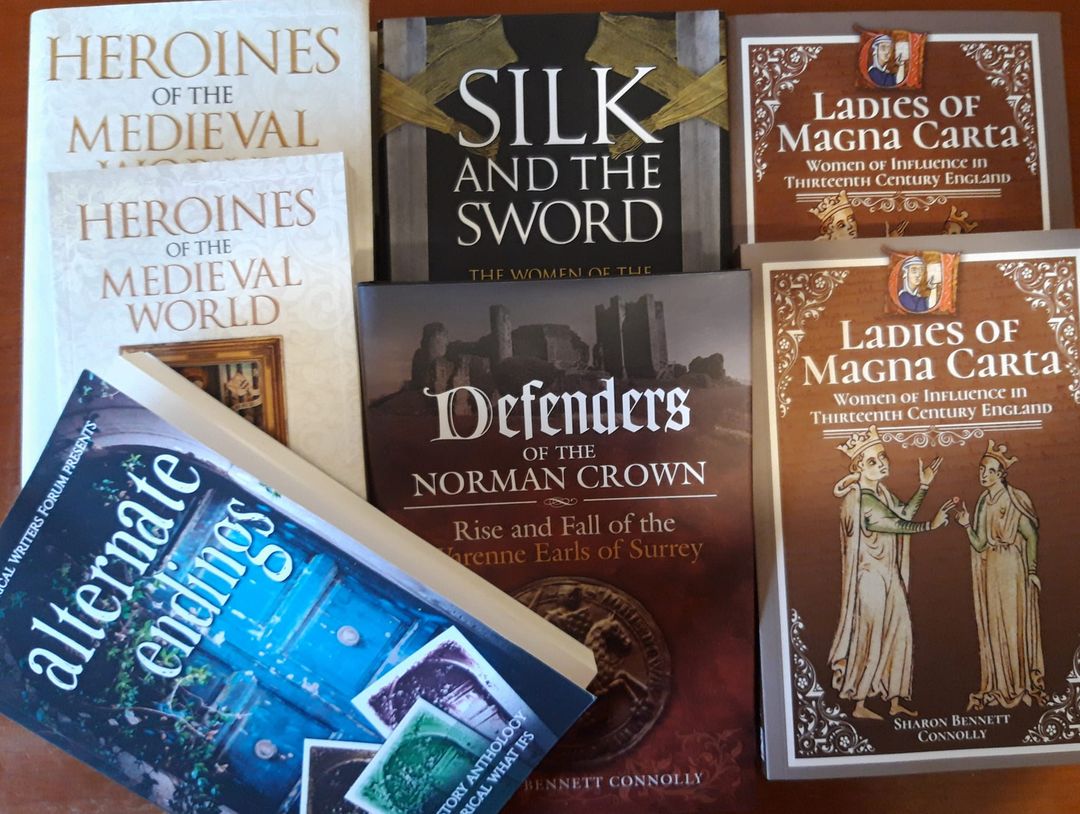
Eleanor, daughter of a king, Countess of Pembroke

King John with his children Henry, Richard, Joan, Isabella and Eleanor

There was one daughter of King John for whom the legacy of Magna Carta and the struggle for political reform held particular significance. The life of Eleanor of England, and her husband Simon de Montfort, stands as the epilogue of the Magna Carta story. Although democratic government was still many centuries in the future, Magna Carta was the first step. The political movement led by Simon de Montfort was the second step …

However, had fate not stepped in, Eleanor may never have married Simon. From an early age, she had been the wife of another, until tragedy struck.

Eleanor of England was the youngest child of John and Isabelle d’Angoulême; she is said to have inherited her mother’s beauty and feisty temperament.1 Eleanor was thought to have been born at the height of her father’s troubles, in the midst of the Magna Carta crisis in 1215. However, historians are now inclined to the theory that she was born posthumously, sometime after the death of King John, either in late 1216 or early in 1217. She was named for her famous grandmother, Eleanor of Aquitaine. As a baby, little Eleanor was placed in the household of the bishop of Winchester, where her eldest brother, Henry, had been living since 1212.2 Eleanor’s father had died whilst the country was riven by war, on the night of 18/19 October 1216 at Newark. He was succeeded by Eleanor’s eldest brother Henry – now King Henry III. Eleanor’s mother, frozen out from any role in her son’s regency or life, returned to her native Angoulême and in 1220 married Hugh X de Lusignan, Count of La Marche.

In 1224 Eleanor’s future was decided when she was married to William (II) Marshal, Earl of Pembroke. The younger Marshal was the son of the first earl of Pembroke who had been regent in the early years of Henry III’s reign, and who had driven the French out of England following his victory at the Battle of Lincoln in May 1217. The first earl had a reputation for integrity and loyalty, having remained unwavering in his loyalty to King John during the Magna Carta crisis. The second earl, Eleanor’s husband, had been a hostage of the king between 1207 and 1213, as a guarantee of his father’s good behaviour. He later joined the baronial rebellion and was appointed marshal of the forces of the invader, Prince Louis. However, he returned to the Royalist cause when Louis refused him possession of Marlborough Castle, which had previously belonged to the younger Marshal’s grandfather.3

William (II) Marshal fought alongside his father at the Battle of Lincoln. On his father’s death in 1219, Marshal had succeeded him as earl of Pembroke and marshal of England; when his mother died in 1220, he succeeded to her lordships of Leinster and Netherwent. His younger brother, Richard Marshal, succeeded to the Clare lands in Ireland. In 1214 Marshal married Alice, the daughter of Baldwin de Béthune, Count of Aumâle, to whom he had been betrothed in 1203. The marriage was short-lived, however, as poor Alice died in 1216.

On 23 April 1224, William (II) Marshal was married to Eleanor; born in the 1190s, he was some twenty-or-so years older than his bride, who was no more than 9 years old on her wedding day, and may have been as young as 7.4

Eleanor of England, Countess of Pembroke

The marriage was agreed at the behest of the justiciar, Hubert de Burgh, and the papal legate, Pandulf, as a way of guaranteeing Marshal remained firmly in the justiciar’s camp, and to prevent the marshal making a foreign marriage. The match put an end to three years of indecision, as to whether Eleanor should marry a foreign prince or an English magnate. The king settled ten manors, confiscated from a French nobleman and already administered by Marshal, on his sister as her marriage portion.5

For the first five years of her marriage Eleanor continued to live at court, under the guardianship of Cecily of Sandford.6 In 1229, when she was 13 or 14, she went to live with her husband, and would spend her time travelling with him in England, France and Ireland. In May 1230, Marshal had taken twenty knights with him on Henry III’s expedition to Poitou. He also took his wife, probably at the behest of the king. Eleanor became seasick during the voyage to France and Henry had his ship drop anchor at the nearest landfall to give her time to recover, ordering the fleet to continue without them.7

Henry was probably hoping that Eleanor’s presence would help to secure the support of his mother and her second husband, Hugh de Lusignan, to his expedition against the French. Mother and daughter had not seen each other since Eleanor was a baby. Isabelle’s maternal affection for the children of her first husband, however, was practically non-existent, or deeply hidden, and Eleanor’s presence failed to persuade her mother and stepfather to remain loyal to Henry III. As we have seen in a previous article, Isabelle d’Angoulême‘s priorities as a French countess often clashed with those of her English family.

Marshal and Eleanor returned from France in the spring of 1231, with William handing over command of the English forces to Ranulf, Earl of Chester. Shortly after their return, the couple attended the wedding of Marshal’s widowed sister, Isabel, to the king’s brother, Richard, Earl of Cornwall. Family happiness turned to grief, however, when William (II) Marshal died suddenly in London a week later, on 6 April. He was buried beside his father at the Temple Church on 15 April 1231.

At the still very tender age of between 14 and 16, Eleanor was a now childless widow.

The arms of William Marshal, Earl of Pembroke

The earldom of Pembroke passed to William’s younger brother, Richard, and Eleanor would spend many years fighting unsuccessfully to get the entirety of her dowry from the Marshal family, which amounted to one third of the Marshal estates, according to the guarantees established by Magna Carta. The Great Charter stipulated a widow should receive the allocation of a dower within forty days of her husband’s death.

A year after William’s death Richard Marshal offered Eleanor £400 a year as her settlement. Henry III persuaded his sister to take it, wanting to be done with the business and probably well aware that it was as much as Eleanor was likely to get, despite the Marshal holdings amounting to an income of £3,000 a year.8 Henry stood as guarantor for the settlement but the payments would always be sporadic and unreliable, not helped by the fact that the earldom passed through four successive Marshal brothers between 1231 and 1245, each with differing priorities and more Marshal widows to assign their dowers.

In the midst of her grief, and influenced by her former governess, Eleanor took a vow of chastity in the presence of Edmund of Abingdon, Archbishop of Canterbury in 1234. Although she did not become a nun, the archbishop put a ring on her finger, to signify that she was a bride of Christ; she was, therefore, expected to remain chaste and virtuous for the rest of her life. As a result, the king seized her estates and Richard Marshal, as her husband’s heir, took many of her valuable chattels.

Knowing how teenagers see lost love as the end of the world, even today, one can understand Eleanor’s decision to take a vow of chastity, even if we cannot comprehend anyone giving such advice to a grieving 16-year-old. Eleanor may also have seen taking such a vow as a way of staving off her brother, the king, forcing her to remarry in the interests of the crown. Moreover, it put Eleanor’s life in her own hands and also served to appease the Marshal family, who would have seen their own lands, which made up Eleanor’s dower, controlled by another magnate or foreign prince had she remarried.

Eleanor’s seal as Countess of Leicester

The widowed Eleanor retired to the castle of Inkberrow in Worcestershire. King Henry III continued to watch over his sister throughout the 1230s; he sent her gifts of venison and timber for her manors. Throughout her life, Eleanor was known for her extravagant spending, which led to substantial debts; Henry lent her money and made sporadic payments to reduce the debts. And in 1237 her brother granted her Odiham Castle in Hampshire, which would become her principal residence.9

Although Eleanor spent the 7 years after William Marshal’s death as a young widow sworn to chastity, most people may have predicted that such a life would not last. And at some point after the mid-1230s, possibly at the wedding of Henry and Eleanor of Provence, Eleanor met Simon de Montfort, the man who would dominate English politics in the mid-thirteenth century.

The couple fell in love.

But that story is for another time…

*

Images:

Courtesy of Wikipedia

Footnotes:

1. Carol, ‘Eleanor of Leicester: A Broken Vow of Chastity’, historyofroyalwomen.com, 28 February 2017; 2. Elizabeth Norton, She Wolves; 3. R.F. Walker, ‘William Marshal, fifth earl of Pembroke (c. 1190–1231)’, oxforddnb.com; 4. Ibid; 5. Darren Baker, With All For All; 6. Elizabeth Hallam, ‘Eleanor, Countess of Pembroke and Leicester (1215?–1275)’, Oxforddnb.com; 7. Darren Baker, With All For All; 8. Ibid; Elizabeth Hallam, ‘Eleanor, Countess of Pembroke’.

Sources:

Rich Price, King John’s Letters Facebook group; Robert Bartlett England Under the Norman and Angevin Kings 1075-1225; Dan Jones The Plantagenets; the Kings who Made EnglandThe Plantagenet Chronicle Edited by Elizabeth Hallam; Maurice Ashley The Life and Times of King John; Roy Strong The Story of BritainOxford Companion to British History; Mike Ashley British Kings & Queens; David Williamson Brewer’s British Royalty; Ralph of Diceto, Images of History; Marc Morris, King John; David Crouch, William Marshal; Crouch and Holden, History of William Marshal; Crouch, David, ‘William Marshal [called the Marshal], fourth earl of Pembroke (c. 1146–1219)’, Oxforddnb.com; Flanagan, M.T., ‘Isabel de Clare, suo jure countess of Pembroke (1171×6–1220)’, Oxforddnb.com; Thomas Asbridge, The Greatest Knight; Chadwick, Elizabeth, ‘Clothing the Bones: Finding Mahelt Marshal’, livingthehistoryelizabethchadwick.blogspot.com; Stacey, Robert C., ‘Roger Bigod, fourth earl of Norfolk (c. 1212-1270)’, Oxforddnb.com; finerollshenry3.org.uk; Vincent, Nicholas, ‘William de Warenne, fifth earl of Surrey [Earl Warenne] (d. 1240)’, Oxforddnb.com.

*

My Books:

Signed, dedicated copies of all my books are available through my online bookshop.

Out Now! Women of the Anarchy

Two cousins. On the one side is Empress Matilda, or Maud. The sole surviving legitimate child of Henry I, she is fighting for her birthright and that of her children. On the other side is her cousin, Queen Matilda, supporting her husband, King Stephen, and fighting to see her own son inherit the English crown. Women of the Anarchy demonstrates how these women, unable to wield a sword, were prime movers in this time of conflict and lawlessness. It show how their strengths, weaknesses, and personal ambitions swung the fortunes of war one way – and then the other.

Available from Bookshop.orgAmberley Publishing and Amazon UK.

Coming on 15 June 2024: Heroines of the Tudor World

Heroines of the Tudor World tells the stories of the most remarkable women from European history in the time of the Tudor dynasty, 1485-1603. These are the women who ruled, the women who founded dynasties, the women who fought for religious freedom, their families and love. These are the women who made a difference, who influenced countries, kings and the Reformation. In the era dominated by the Renaissance and Reformation, Heroines of the Tudor World examines the threats and challenges faced by the women of the era, and how they overcame them. From writers to regents, from nuns to queens, Heroines of the Tudor World shines the spotlight on the women helped to shape Early Modern Europe.

Heroines of the Tudor World is now available for pre-order from Amberley Publishing and Amazon UK.

Also by Sharon Bennett Connolly:

King John’s Right-Hand Lady: The Story of Nicholaa de la Haye is the story of a truly remarkable lady, the hereditary constable of Lincoln Castle and the first woman in England to be appointed sheriff in her own right. It is is available from King John’s Right-Hand Lady: The Story of Nicholaa de la Haye is the story of a truly remarkable lady, the hereditary constable of Lincoln Castle and the first woman in England to be appointed sheriff in her own right. Available from all good bookshops or direct from Pen & Sword Booksbookshop.org and AmazonDefenders of the Norman Crown: The Rise and Fall of the Warenne Earls of Surrey tells the fascinating story of the Warenne dynasty, from its origins in Normandy, through the Conquest, Magna Carta, the wars and marriages that led to its ultimate demise in the reign of Edward III. Available from Pen & Sword BooksAmazon in the UK and US, and Bookshop.org

Ladies of Magna Carta: Women of Influence in Thirteenth Century England looks into the relationships of the various noble families of the 13th century, and how they were affected by the Barons’ Wars, Magna Carta and its aftermath; the bonds that were formed and those that were broken. It is now available in paperback and hardback from Pen & Sword,  Amazon, and Bookshop.orgHeroines of the Medieval World tells the stories of some of the most remarkable women from Medieval history, from Eleanor of Aquitaine to Julian of Norwich. Available now from Amberley Publishing and Amazon, and Bookshop.orgSilk and the Sword: The Women of the Norman Conquest traces the fortunes of the women who had a significant role to play in the momentous events of 1066. Available now from Amazon,  Amberley Publishing, and Bookshop.org.

Alternate Endings: An anthology of historical fiction short stories including Long Live the King… which is my take what might have happened had King John not died in October 1216. Available in paperback and kindle from Amazon.

Podcast:

Have a listen to the A Slice of Medieval podcast, which I co-host with Historical fiction novelist Derek Birks. Derek and I welcome guests, such as Bernard Cornwell and Elizabeth Chadwick, and discuss a wide range of topics in medieval history, from significant events to the personalities involved.

*

Don’t forget! Signed and dedicated copies of all my books are available through my online bookshop.

For forthcoming online and in-person talks, please check out my Events Page.

You can be the first to read new articles by clicking the ‘Follow’ button, liking our Facebook page or joining me on Twitter and Instagram.

©2022 Sharon Bennett Connolly FRHistS