I am delighted to have been asked to take part in this year’s Online History Festival hosted by British History Events!
The theme and title of this year’s festival (their 6th) is ‘Defining Moments in British History’ – exploring six defining moments that have shaped Britain today. The festival is all online, taking place from the evening of Friday, 20th March until the evening of Sunday, 22nd March 2026.
Magna Carta: From Inception to Legacy
By 1215, the English barons’ objections to King John were almost beyond number. He had failed to face the French and had lost not only most of his family’s Continental possessions, but also those of his barons. Few had forgotten his treachery against his brother – his attempts on the throne whilst Richard was away on Crusade. His barons even complained that he forced himself on their wives and daughters.
The barons had had enough.
And the result was Magna Carta; a detailed document created to stave off civil war. It touched on the whole system of royal government. And it was granted to ‘all free men of the realm and their heirs forever’. It brought the king within the law, rather than above it.
It is the closest thing England has to a Constitution.
How significant was Magna Carta really?
In this lecture, I will explore the reasons for Magna Carta, the civil war that followed its creation and the people who fought for it and used it to assert their own rights. And we will look at how relevant it still is today, even beyond England’s shores.
So, I have been spending this week tweaking my PowerPoint presentation and recording the lecture.
There will be 6 talks from leading historians (including myself!), a live Q&A with all 6 historians, a live quiz, and a prize draw. Here is the line up!
Julian Humphrys explores ‘The Battle of Hastings: What Happened and What Followed’. Sharon Bennett Connolly (me!) traces ‘Magna Carta: From Inception to Legacy’. Matthew Lewis examines ‘How the Black Death Changed England Forever’. Gareth Russell tackles ‘Crisis of Faith: The Reformation in British History’. Jonathan Healey delves into ‘The British Civil Wars: How They Happened and Why They Matter’. Gareth Streeter looks at ‘The Birth of Britain: How the Glorious Revolution and the Act of Union Forged a Modern Nation’.
And I am really looking forward to the online Q&A and discussion.
Of course, Magna Carta is THE defining moment, but I will let the fellas have their say …
Don’t worry if you can’t watch all the talks as they go out – your ticket will give you access to everything in the festival until 31st May 2026.
Coming 30 March: Princesses of the Early Middle Ages
Daughters of kings were often used to seal treaty alliances and forge peace with England’s enemies. Princesses of the Early Middle Ages: Royal Daughters of the Conquest explores the lives of these young women, how they followed the stereotype, and how they sometimes managed to escape it. It will look at the world they lived in, and how their lives and marriages were affected by political necessity and the events of the time. Princesses of the Early Middle Ages will also examine how these girls, who were often political pawns, were able to control their own lives and fates. Whilst they were expected to obey their parents in their marriage choices, several princesses were able to exert their own influence on these choices, with some outright refusing the husbands offered to them.
Their stories are touching, inspiring and, at times, heartbreaking.
Princesses of the Early Middle Ages: Royal Daughters of the Conquest is now available for pre-order from Pen & Sword and Amazon.
Also by Sharon Bennett Connolly:
Scotland’s history is dramatic, violent and bloody and Scotland’s Medieval Queens have seen it all. This is the story of Scotland through their eyes. Available now fromAmazon and Pen and Sword Books. Heroines of the Tudor World tells the stories of the most remarkable women from European history in the time of the Tudor dynasty, 1485-1603. These are the women who ruled, the women who founded dynasties, the women who fought for religious freedom, their families and love. Heroines of the Tudor World is now available from Amberley Publishing and Amazon UK.Women of the Anarchy demonstrates how Empress Matilda and Matilda of Boulogne, unable to wield a sword themselves, were prime movers in this time of conflict and lawlessness. It shows how their strengths, weaknesses, and personal ambitions swung the fortunes of war one way – and then the other. Available from Bookshop.org, Amberley Publishing and Amazon UK. King John’s Right-Hand Lady: The Story of Nicholaa de la Haye is the story of a truly remarkable lady, the hereditary constable of Lincoln Castle and the first woman in England to be appointed sheriff in her own right. Available from all good bookshops Pen & Sword Books, bookshop.org and Amazon.
Alternate Endings: An anthology of historical fiction short stories including Long Live the King… which is my take what might have happened had King John not died in October 1216. Available in paperback and kindle from Amazon.
Podcast:
Have a listen to theA Slice of Medieval podcast, which I co-host with Historical fiction novelist Derek Birks. Derek and I welcome guests, such as Ian Mortimer, Bernard Cornwell, Elizabeth Chadwick and Scott Mariani, and discuss a wide range of topics in medieval history, from significant events to the personalities involved.
Today, it is a pleasure to be chatting with my good friend Charlene Newcomb, just as her latest book, Rogues and Kings hits the shops. Rogues and Kings is a fabulous story, set in 1216, featuring Robin Hood and his gang/friends, King John and the magnificent Nicholaa de la Haye. I highly recommend it and will be writing a review shortly.
But first, Char, let’s have a chat.
Sharon: We’re here today talking medieval historical fiction, but I know you started your publishing career with short stories in the Star Wars universe. How did that come about?
Charlene: Timothy Zahn’s Heir to the Empire, a sequel to the movie Return of the Jedi, inspired me to write my own Star Wars sequel though my writing credentials as of 1993 consisted of an alternative history short story in high school and a few scenes from other attempts at creativity. I was a huge fan of the original Star Wars trilogy. (Shouldn’t that count for something?) I quickly discovered only well known authors were being invited to publish in that universe but ran across a call for short stories in an official Lucasfilm licensed role-playing game magazine. My novel had broken all the rules for submission, but I took one of my original characters—a rebel underground freedom fighter named Alexandra Winger—and created her backstory. “A Glimmer of Hope” was accepted, vetted through West End Games and Lucasfilm, and illustrated and published in the Star Wars Adventure Journal (SWAJ). Alex even has a Wookiepedia entry!
Sharon: How did you get from Star Wars to medieval historical fiction?
Charlene: The publisher of the SWAJ declared bankruptcy so the timing of that—around 1998—along with single parenthood and a demanding career interrupted my writing journey. Several years later a BBC Robin Hood series stirred my interest in Richard the Lionheart and the Third Crusade. Down the research rabbit hole I went, and my itch to create an original novel-length story surfaced.
I wanted to see the Lionheart through the eyes of the men who served him so I created two original characters: the battle-hardened Stephan l’Aigle and the naive and inexperienced Henry de Grey. Men of the Cross (Battle Scars I) takes the young knights to the Holy Land and then back to England. I introduced some secondary characters in that novel: two teenaged camp followers and a knight named Will who was an expert with bow and had been in love with, and left behind, a girl named Marian. My critique partners could tell I was hinting at a Robin-Hood-type character in Will—they convinced me I should give readers a reimagining of the origins of the legend. Will became Robin and the two teenagers became my Allan a Dale and Little John.
Sharon: Tell us about your books.
The Battle Scars series (3 books) cover events of King Richard I’s reign from 1190-1199: the Third Crusade, Prince John’s attempted coup, and King Richard’s war against Philip of France for his continental holdings. The series ends shortly after Richard’s death in 1199.
The two books In Tales of Robin Hood can be read as stand-alones though they are closely tied. Both Tales take place in 1216 with the premise that Allan a Dale leads ‘the Hood’ in Sherwood Forest and Robin, in his fifties, has assumed a different identity and been in self-exile to finally have a life with Marian in Yorkshire. King John has never forgotten their roles in thwarting his attempt to overthrow Richard. He would hang them all in his thirst for revenge.
Sharon: What attracts you to the 12th-13th centuries?
Robin Hood (Charlene Newcomb)
Empress Matilda, Eleanor of Aquitaine, Henry II, Richard I, John—such rich (and not always so pretty) lives with powerful stories in incredible times: the Anarchy, Thomas Becket’s murder, the Crusades, the rise and fall of the Angevin Empire, Magna Carta. Unlike most school kids, I was a history nerd and soaked it in when Dad made an effort to stop at historic U.S. sites every time we traveled. But the medieval period was an era barely touched on in the world history classes I was required to take.
I loved the idea of Robin Hood as a close companion and loyal knight of Richard I, accompanying the king to the Holy Land, and then later serving as a spy in Prince John’s mesnie. When Richard, John, and their mother Eleanor of Aquitaine are on the page, the actual history at times almost feels like fiction—the dysfunctional family, sons (and wife) in rebellion against Henry II, brother against brother, scheming enemies, a paranoid, distrustful king. To weave Robin, Allan, Little John, and the other Hood (including Henry and Stephan) into that history lets me reveal lines between traitors and heroes.S
Sharon: What don’t people know about Robin Hood?
Forest Charter 1217, reissue 1225 image
Charlene: Modern audiences are familiar with the original legend through movies and television, most of which take place in the late 12th/early 13th century. But many don’t realize there is no evidence to indicate Robin was an actual historical figure. The first written stories about him appear mid-15th century though oral stories were passed around in the latter half of the 1400s. Television and movies generally portray Robin as serving King Richard I and/or fighting against King John (1189-1216), but the oldest ballads don’t name either of them. The Gest of Robyn Hode (late 1400s) notes Robin’s meeting with ‘Edwarde, our comly kynge,’ referring, many believe, to Edward I, II, or III, whose reigns covered the years from 1272-1377.
Sharon: How do you approach researching your topic?
Lincoln Castle (Charlene Newcomb)
Pre-14th century history is challenging for the historical fiction writer. Primary sources such as official documents and contemporary chronicles were written in medieval Latin. Fortunately, many of them have been translated and some are available freely online or are discussed by historians in works about the people and events of the era. When my university library didn’t have what I needed, I turned to interlibrary loan. (Thank you, libraries!) Footnotes and bibliographies in these resources provided more threads to follow.
Visiting the places I write about, standing in awe of the Major Oak in Sherwood, walking around the baileys and along the battlements of castles, even seeing the ruins, is inspiring, a blast. Castles and towns like Lincoln, Nottingham, York, and Newark have changed considerably in 800 years which meant more research to get everyday life and the settings right. I’d go back again and again if I lived closer. I will never forget meeting up with writer friends like you, and comparing notes on the history of a place.
Sharon: What are you working on now?
Charlene: I am gathering notes and considering story arcs surrounding two different events that I’d like to feature in short stories: King John’s rescue of his mother, Eleanor of Aquitaine, at the siege of Mirebeau in 1202; and the Battle of Lincoln Fair in 1217. (Sharon: I definitely think you should do one on the Battle of Lincoln Fair. I can just imagine Robin and his friends helping Nicholaa out there!)
Sharon: And finally, what is the best thing about being a writer?
Charlene and I at Newark Castle, below the windows to the room in which King John died in 1216
Writing can be a solitary undertaking so hearing from readers and friends that you’ve crafted a story and characters they tell you they love is such a rush. Just as rewarding is when you write ‘the end’ on something that started with a single idea, such as what might be the consequences if the son of Robin Hood served in King John’s household, write down a half dozen bullet points that spawn many more, and suddenly (or rather over the course of many, many months) the pieces gel and become chapters in a tome of nearly 400 pages. What is surprising is when a character takes over the story and blurts out something you weren’t expecting. Your jaw drops and then you sit back and realize, wow, that opens up a whole new dilemma. Run with it! Hopefully the reader experiences that same feeling.
About the Author:
Charlene Newcomb, aka Char, is a retired librarian, a U.S. Navy veteran, mom to 3 amazing humans, and grandma to 3. She writes historical fiction and science fiction. Her award-winning Battle Scars trilogy is set in the 12th century during the reign of Richard the Lionheart. Her writing roots are in science fiction: in the Star Wars Expanded Universe (aka Legends) where she published 10 short stories in the Star Wars Adventure Journal, and an original novel, Echoes of the Storm. Char returned to medieval times with Rogue and her latest novel Rogues & Kings, both in her Tales of Robin Hood series.
Deadly secrets. Hidden identities. A true enemy. Silence is the only shield.
The year is 1216 and civil war rages in England. King John ravages the countryside against rebellious barons and a French invasion. Unbeknownst to him, his newest squire, Richard, is in fact the son of a man the king would hang without a second thought. A man the common folk call Robin Hood.
For years, Robin has lived as a knight in exile. But when his son is ensnared in the treachery of the royal court, Robin is forced out of the shadows, aided by his outlaw friends in the Hood.
There is no question for Richard where his loyalties lie but it’s more than his own life at risk. He has the trust of a dangerous king. Can he serve the Hood better from within John’s inner circle, or will schemes against the crown unravel?
Rob from the rich, give to the poor takes on a whole new meaning.
Rogues & Kings is a sweeping tale of courage and betrayal in a kingdom on the edge of ruin, of a boy coming of age in the midst of war, and of legends being born.
Coming 30 March: Princesses of the Early Middle Ages
Daughters of kings were often used to seal treaty alliances and forge peace with England’s enemies. Princesses of the Early Middle Ages: Royal Daughters of the Conquest explores the lives of these young women, how they followed the stereotype, and how they sometimes managed to escape it. It will look at the world they lived in, and how their lives and marriages were affected by political necessity and the events of the time. Princesses of the Early Middle Ages will also examine how these girls, who were often political pawns, were able to control their own lives and fates. Whilst they were expected to obey their parents in their marriage choices, several princesses were able to exert their own influence on these choices, with some outright refusing the husbands offered to them.
Their stories are touching, inspiring and, at times, heartbreaking.
Princesses of the Early Middle Ages: Royal Daughters of the Conquest is now available for pre-order from Pen & Sword and Amazon.
Also by Sharon Bennett Connolly:
Scotland’s history is dramatic, violent and bloody and Scotland’s Medieval Queens have seen it all. This is the story of Scotland through their eyes. Available now fromAmazon and Pen and Sword Books. Heroines of the Tudor World tells the stories of the most remarkable women from European history in the time of the Tudor dynasty, 1485-1603. These are the women who ruled, the women who founded dynasties, the women who fought for religious freedom, their families and love. Heroines of the Tudor World is now available from Amberley Publishing and Amazon UK.Women of the Anarchy demonstrates how Empress Matilda and Matilda of Boulogne, unable to wield a sword themselves, were prime movers in this time of conflict and lawlessness. It shows how their strengths, weaknesses, and personal ambitions swung the fortunes of war one way – and then the other. Available from Bookshop.org, Amberley Publishing and Amazon UK. King John’s Right-Hand Lady: The Story of Nicholaa de la Haye is the story of a truly remarkable lady, the hereditary constable of Lincoln Castle and the first woman in England to be appointed sheriff in her own right. Available from all good bookshops Pen & Sword Books, bookshop.org and Amazon.
Defenders of the Norman Crown: The Rise and Fall of the Warenne Earls of Surrey tells the fascinating story of the Warenne dynasty, from its origins in Normandy, through the Conquest, Magna Carta, the wars and marriages that led to its ultimate demise in the reign of Edward III. Available from Pen & Sword Books, Amazon in the UK and US, and Bookshop.org. Ladies of Magna Carta: Women of Influence in Thirteenth Century England looks into the relationships of the various noble families of the 13th century, and how they were affected by the Barons’ Wars, Magna Carta and its aftermath; the bonds that were formed and those that were broken. It is now available in paperback and hardback from Pen & Sword, Amazon, and Bookshop.org. Heroines of the Medieval World tells the stories of some of the most remarkable women from Medieval history, from Eleanor of Aquitaine to Julian of Norwich. Available now from Amberley Publishing and Amazon, and Bookshop.org. Silk and the Sword: The Women of the Norman Conquest traces the fortunes of the women who had a significant role to play in the momentous events of 1066. Available now from Amazon, Amberley Publishing, and Bookshop.org.
Alternate Endings: An anthology of historical fiction short stories including Long Live the King… which is my take what might have happened had King John not died in October 1216. Available in paperback and kindle from Amazon.
Podcast:
Have a listen to theA Slice of Medieval podcast, which I co-host with Historical fiction novelist Derek Birks. Derek and I welcome guests, such as Ian Mortimer, Bernard Cornwell, Elizabeth Chadwick and Scott Mariani, and discuss a wide range of topics in medieval history, from significant events to the personalities involved.
When writing non-fiction biographies, you can tell the life of a person. You can say what happened to them, how they affected events and how they were perceived by others. But there are gaps. If you do not have the evidence, you cannot just make it up. If you are looking for reasons, you can offer different scenarios. It is hard to get to the heart of a person, though. You cannot put words in their mouths, or attribute feelings and emotions. Fiction can go where non fiction cannot tread. It can give you a vivid retelling of a fabulous story. It is not always historically accurate, there are some things we cannot know, but fiction can fill in the gaps. It can bring the past to life and give you a sense of the era that no other medium can.
And that is what Terri Lewis has achieved with remarkable skill in her novel if Isabelle d’Angoulême, Behold the Bird in Flight. And it is a pleasure to welcome Terri to History…the Interesting Bits to talk a little about her research behind her novel.
Finding Isabelle, a Mother and a Queen
by Terri Lewis
A birthing stool
I was in high school when I first asked my history teacher, “Where are the women?” An unsatisfactory answer gave impetus to what became a need to find forgotten women. Eventually I became obsessed with Isabelle d’Angoulême, King John’s second wife, and decided to resurrect her by writing a novel.
There are a few documented facts about her life: Historians think she was about twelve years old when John abducted her from her French fiancé, took her to England, and crowned her queen. The chronicles, when they bothered to mention her, were not kind; Matthew Paris called her a “Jezebel” and “slut” who kept John in bed until noon, an assessment most likely reflecting John’s reputation, not the reality of his wife. Isabelle apparently didn’t receive the normal queen’s gold—a percentage of John’s income—or the rents from lands given to her at the time of their marriage; John kept the monies for himself. In “history,” I found only men – fighting, amassing money and enemies, riding off to conquer unknown lands, signing writs, allowing fairs, courting and dancing and always fighting. Isabelle’s life, like the lives of most medieval women, was mainly blank.
But. . . she bore John five children.
My research on medieval childbirth uncovered dire statistics: 20% to 33% of medieval women died from childbearing. The mortality rate per single birth was only slightly higher than in modern times, but multiple pregnancies compounded the risk. Birth control was forbidden by the all-powerful Church so basically a fertile woman had children until menopause or until she died. Because kings had to have sons, as did counts and dukes and other lords—a child to inherit land and carry on the family name. Daughters were less important. An only-child daughter could inherit a kingdom , but not for herself, for her husband. Girls who had brothers would serve as bargaining chips in marriages that formed diplomatic alliances or enlarged territory for their fathers.
In another statistic, infants were uncertain to live to inheritance. Nicholas Orme wrote, “It has been suggested that 25% of [medieval children] may have died in their first year, half as many (12.5%) between one and four, and a quarter as many (6%) between five and nine.” Danger was everywhere. A cut could become infected and penicillin was years in the future. Children fell into wells and down stone stairs, or into the fire that burned in the middle of the great hall, the main source of heat. Many died of illnesses for which bleeding or herbal concoctions were the only cure. Multiple pregnancies mitigated this danger. I note that Isabelle, in addition to the five children with John, had nine more children with her second husband. But two of her own daughters died in childbirth.
Isabelle in her innocence
Isabelle wouldn’t have gone to a hospital. She’d have had a lying-in chamber removed from the main keep and furnished with a birthing stool, a midwife with practical experience but not a doctor because childbirth was a woman’s domain and doctors were men, and a room full of ladies-in-waiting who watched and prayed with her. If the birth was difficult, window shutters would be opened to release the new soul into life. If that failed, an arrow could be shot heavenward to waken God to the peril and ask for his help.
Since history decreed that Isabelle would live through childbirth, I decided to have her observe the suffering of her best friend. That scene became an important milestone in Isabelle’s growing up.
What kind of mother would Isabelle have been? I’d never read about a medieval mother. Women in 1200 who appeared in the chronicles were queens, royalty, or religious. Motherhood was important only for the child, preferable a boy, a gift to the father. The woman was just a bearing body.
I decided that Isabelle learned from her own mother, Alice de Courtney, the granddaughter of Louis le Gros of France. Alice would have been familiar with expectations for noble daughters. And she was married three times. I tried to imagine the experience of being handed to various husbands like a package—the decisions being made by fathers and kings. Perhaps she had grounded herself in her new household with a new husband by following the rules. The first “courtesy book” setting forth standards of behavior— Liber Urbani or the book of civilized man— appeared in England late in the 12th century. Written in Latin, the long poem contained general advice such as honor your parents, hold your tongue, don’t mount your horse in the great hall, and such gems as “when you pick up food with a spoon, do not shovel it on board with your thumb.”
Midwife swaddling the child
I needed to imagine a relationship between Isabelle and her mother. When I was twelve, my mother was the center of everything; I’d come home from school and stand in the kitchen to tell stories about my friends or things the teacher said. But Isi’s mother wouldn’t be in the kitchen. She was a countess; she’d have cooks and laundresses and maids. I couldn’t imagine that she was anything to Isabelle but a rule-maker. And Isabelle’s position required rules. When she was of age, she would be married – handed off in essence – to another count. The marriage would presumably involve a castle and her husband would go off to war or crusade or to visit a king, and Isabelle would be required to manage the vast operation of the castle while he was gone. Even when he was home, she would oversee household tasks, her belt laden with keys to various chests of fabric or spices, to rooms holding barrels of wine and other supplies. So I made her mother strict, set Isabelle chafing against her, then allowed her to escape, grow up a bit, marry John, and have her children.
Two boys first. Then three girls. Today one can find numerous mothers writing how overpowering love when their baby was laid on their breast changed their lives. But as queen of an itinerant court, Isabelle lived on the road with John who visited barons, trying to bring them to heel. So breastfeeding was impractical. It also acted as a form of contraception and Isabelle’s job was to conceive as often as possible and give John heirs. This meant that her babies would be handed over at birth to a wet-nurse, a hired woman who’d breast feed them as if her own. So the first attachment of mother to child was cut off and understandably, wet nurses often developed close relationships with their charges, particularly as children were generally breastfed for longer than they are today – boys often up to the age of two.
13th century depiction of John’s children (Isabelle not included)
At age seven, the boys would have sent to other noble castles for education. Perhaps the idea was that those other educators would have less attachment to the children and thus they would supply a strict upbringing without coddling. Isabelle’s girls would have remained with her as the kingdom fell deeper into chaos. The Barons were revolting, the Pope had excommunicated John, the French were threatening to invade and conquer. With a growing sense that the throne would be gone before her ten-year-old son Henry could assume it, Isabelle would have known the French would kill him along with the rest of her children, leaving no pretenders. How best to save them? I’ll leave that inside the novel and just say she managed as best she could. History has condemned her ultimate decision, but I understand how she came to it.
About the book:
Romantic and stubborn, eleven-year-old Isi plans to marry for love and be mistress of her own castle. But life in 1198 is full of threat and a series of tragic events teaches her growing up is hard. When Isi falls for Hugh, a French nobleman, he consents to marry her, but only for her dowry. She longs for more. Hoping a jealous man will fall in love, she flirts with a king. The flirtation backfires: King John abducts and marries her. Now trapped in cold, warring England with a malicious husband, Isi must hide her yearning for Hugh and find her own power. If she fails, she won’t live to return to her beloved. Inspired by real historical figures—Isabelle d’Angoulême, Hugh de Lusignan, and King John of Magna Carta fame—Behold the Bird in Flight is set in a period that valued women only for their dowries and childbearing. Isabelle’s story has been mainly erased by men, but the medieval chronicles suggest a woman who developed her own power and wielded it. And as the woman behind the throne, who’s to say she didn’t influence history?
About the Author:
Terri Lewis fell in love with medieval history in college. Not the dates or wars, but the mysterious daily lives of the people. Finally two sentences in a book bought at Windsor Castle led her to write her debut novel, Behold the Bird in Flight, A Novel of an Abducted Queen.
Published in Denver Quarterly, Blue Mesa Review, and Chicago Quarterly Review among others, and accepted to the Sewanee Writers’ Conference, she has worked with Laura van den Berg, Jill McCorkle, and Rebecca Makkai. Shortlisted for LitMag’s Virginia Woolf Award for Short Fiction, she won the 2025 Miami University Press Novella Prize. She reviews for The Washington Independent Review of Books.
Before she was an author, she had career as a ballet dancer in Denver and Germany, ran a dance company in Arkansas, earned a B.A. in history and education, and an M.A. in theater, not necessarily in that order. She lives with her husband and two lively dogs in Denver, Colorado.
Where to find Terri:
Website: Substack: Instagram: terri.lewis1: Facebook: terri lewis author
Signed, dedicated copies of all my books are available through my online bookshop.
Out now: Scotland’s Medieval Queens
Scotland’s history is dramatic, violent and bloody. Being England’s northern neighbour has never been easy. Scotland’s queens have had to deal with war, murder, imprisonment, political rivalries and open betrayal. They have loved and lost, raised kings and queens, ruled and died for Scotland. From St Margaret, who became one of the patron saints of Scotland, to Elizabeth de Burgh and the dramatic story of the Scottish Wars of Independence, to the love story and tragedy of Joan Beaufort, to Margaret of Denmark and the dawn of the Renaissance, Scotland’s Medieval Queens have seen it all. This is the story of Scotland through their eyes.
‘Scotland’s Medieval Queens gives a thorough grounding in the history of the women who ruled Scotland at the side of its kings, often in the shadows, but just as interesting in their lives beyond the spotlight. It’s not a subject that has been widely covered, and Sharon is a pioneer in bringing that information into accessible history.’ Elizabeth Chadwick (New York Times bestselling author)
Heroines of the Tudor World tells the stories of the most remarkable women from European history in the time of the Tudor dynasty, 1485-1603. These are the women who ruled, the women who founded dynasties, the women who fought for religious freedom, their families and love. Heroines of the Tudor World is now available for pre-order from Amberley Publishing and Amazon UK.Women of the Anarchy demonstrates how Empress Matilda and Matilda of Boulogne, unable to wield a sword themselves, were prime movers in this time of conflict and lawlessness. It shows how their strengths, weaknesses, and personal ambitions swung the fortunes of war one way – and then the other. Available from Bookshop.org, Amberley Publishing and Amazon UK. King John’s Right-Hand Lady: The Story of Nicholaa de la Haye is the story of a truly remarkable lady, the hereditary constable of Lincoln Castle and the first woman in England to be appointed sheriff in her own right. Available from all good bookshops Pen & Sword Books, bookshop.org and Amazon.
Alternate Endings: An anthology of historical fiction short stories including Long Live the King… which is my take what might have happened had King John not died in October 1216. Available in paperback and kindle from Amazon.
Podcast:
Have a listen to theA Slice of Medieval podcast, which I co-host with Historical fiction novelist Derek Birks. Derek and I welcome guests, such as Bernard Cornwell and Elizabeth Chadwick, and discuss a wide range of topics in medieval history, from significant events to the personalities involved.
Unusually for a king in medieval times, by 1185 William the Lion, King of Scots had been on the throne for 20 years, was past 40 and was still unmarried, despite having several illegitimate children. Until he married, William’s heir was his younger brother, David. Ironically, William’s mother, Ada de Warenne, who had been so keen to find a bride for her oldest son Malcolm IV that she was not above putting suitable girls in his bed, does not seem to have had the same sense of urgency with William. There’s no evidence that she pressured him to marry as she had his older brother. Though, I suppose, at least William had shown an interest in women and had the bastards to prove it.
And William was looking for a bride. Henry II, always happy to remind William that he was the Scots king’s overlord, exercised his right to choose William’s wife.
In May 1186, during a council at Woodstock, King Henry suggested Ermengarde de Beaumont as a bride for William. Ermengarde was the daughter of Richard, Vicomte de Beaumont-sur- Sarthe, who was himself the son of Constance, one of the many illegitimate daughters of King Henry I of England. With such diluted royal blood, she was hardly a prestigious match for the king of Scots. William felt slighted but he reluctantly accepted the marriage after consulting his advisers, the offer sweetened by a generous payment for the wedding celebrations and the return of two forfeited Scottish castles, as a wedding present.
Henry II, King of England, Lincoln Cathedral
We have, of course, no record of Ermengarde’s thoughts on the marriage, nor of whether she was aware of the fact it was seen as an insult to the Scots king. The wedding was celebrated at Woodstock, conducted by the Archbishop of Canterbury, on 5 September 1186,
‘with great magnificence, on the nones of September [5th Sept.] (being the sixth day of the week [Friday], the moon being in her eighteenth day), in the royal chapel in the park at Woodstock, in the presence of the king himself.’1
Following the ceremony, King Henry hosted 4 days of festivities. Although we do not know Ermengarde’s birth date, at the time of the marriage, she was described as ‘a girl’, suggesting that she may have only just reached the age of 12, the minimum legal age girls could marry. It has been suggested that Ermengarde’s tender age may also have been the reason for William’s reluctance to marry her.
We do not know the year of birth of Ermengarde’s first child, a daughter named Margaret, but it was sometime between 1187 and 1195. Another daughter, Isabella, was born a year or two later. If Ermengarde gave birth to Margaret the year after her marriage, it seems highly likely that she was at least fourteen or fifteen years old at the time of her wedding. However, a later birthdate, in the 1190s would suggest that Ermengarde was younger at the time of her marriage and was given time to mature before bearing children. The king’s growing need for an heir would, perhaps, indicate that Ermengarde was old enough to bear children at the time of their marriage, and that describing the bride as ‘a girl’ was alluding to her youth, but not her actual age. Unfortunately, the vagaries of chroniclers means that we cannot say for certain
In the spring of 1195 King William fell gravely ill at Clackmannan, causing a succession crisis, the sum of his legitimate children being one, possibly two, daughters at this time – and no son. The Scottish barons deliberated a number of options, such as recognising William’s oldest legitimate daughter, Margaret, as his heir. They also considered marrying Margaret to Otto, Duke of Saxony, grandson of Henry II, and allowing Otto to succeed to the throne. The earl of Dunbar led a faction who claimed that both solutions were contrary to the custom of the land, so long as the king had a brother who could succeed him. Traditionally, the Scots throne had passed to the oldest, legitimate, male member of the royal family, rather than by primogeniture.
This must have been a worrying time for Ermengarde, not only for the health of her husband, but for her own status in Scotland, should her daughter be disinherited. Not to mention the concern that Margaret, then aged only 8 at the most, might be married at such a young age to secure the succession. In the event, the discussion was moot as the king recovered from his illness and three years later the queen gave birth to Alexander, the much-desired son and heir.
Alexander II, King of Scots
Chronicler John of Fordun described the relief and celebration felt throughout the country at the birth of the heir to the Scots throne:
‘Now this most fortunate king of Scotland, William, had, nearly twelve years ago, with great splendour and rejoicings, taken to wife Ermyngarde, daughter of the Viscount of Beaumont… By her he had a son, named Alexander, — to the great gladness of his people, and the refreshment of the whole kingdom of the Scots, as the after course of these annals will show forth. He was born at Haddington, on Saint Bartholomew’s Day, in the year 1198. In every place in the whole country, the common folk used to forsake their menial work on this day, wherein they first heard tidings of his birth, and spend it in joy; while priests and churchmen donned the alb, and walked in procession, with loud voice glorifying God in hymns and canticles, and humbly praising Him.’
Although she does not act as a witness on any of King William’s extant charters, Queen Ermengarde appears to have played an active role in Scotland, with William allowing her an increasingly influential part in public affairs. One disgruntled canon, in 1207, complained that Walter, a royal chaplain, had obtained the bishopric of Glasgow by not only bribing the king’s chamberlain, but also Queen Ermengarde. The queen may also have offered patronage to relatives, including one Richard de Beaumont, perhaps a brother or cousin, who received substantial lands in Crail. As the king’s health declined in old age – he was already 46 when he married Ermengarde – the queen took on more responsibilities, especially where her children were concerned.
Relations with England had changed in 1199, with the accession of King John, the youngest son of Henry II. During the reign of King Richard, William had agreed with the justiciar, William Longchamp, and supported Arthur of Brittany as the king’s heir. However, it was John who succeeded Richard and he may well have remembered William’s stance. Soon after John’s accession, King William asked for the return of Northumberland. The two kings met at Lincoln in 1200, with William doing homage for his English lands but getting no satisfaction in his claim to Northumberland. In subsequent meetings, John continued to prevaricate, leaving the dispute unresolved.
In the meantime, the death of the bishop of Durham meant John took over the vacant see and set about building a castle at Tweedmouth. The Scots, saw this as a direct threat to Berwick and destroyed the building works. Matters reached a crisis point in 1209.
King John of England
After many threats, and with both sides building up their armies, the two kings met at Norham, Northumberland, in the last week of July and first week of August 1209. The Scots were in a desperate position, with an ailing and ageing king, and a 10-year-old boy as heir, whilst the English, with their Welsh allies and foreign mercenaries, had an army big enough to force a Scottish submission. Queen Ermengarde appears to have acted as a mediator between the two kings, although the subsequent treaty, agreed at Norham on 7 August, was humiliating for the Scots it did, at least, prevent a war. The Scots agreed to pay 15,000 marks for peace and to surrender hostages, including the king’s two oldest legitimate daughters, Margaret and Isabella. As a sweetener, John promised to marry the Margaret to one of his sons; although Henry was only 2 years old at the time and Richard was just 8 months, whilst the girls were already in their mid teens, at least. It was agreed that Isabella would be married to an English noble of suitable rank, an earl at least.
The king’s daughters and the other Scottish hostages were handed into the custody of England’s justiciar, at Carlisle on 16 August.
How the girls, or their parents, thought about this turn of events, we know not. Given John’s proven record of prevarication and perfidy, King William may have hoped that the promised marriages would occur in good time but may also have expected that John would find a way out of the pledges he had made. William and John met again at Durham in February 1212, a meeting in which ‘The queen of Scotland was present and acted as mediator, an extraordinary woman, gifted with a charming and witty eloquence.’3 The queen’s efforts bore fruit and peace between the two countries was renewed, as ‘There in the presence of the nobles of both kingdoms and the revered lady the queen of the Scots a formula for achieving peace and love, to be observed between the kingdoms and their kings for ever, was worked out anew and confirmed by charters given by both parties.’4
It was also agreed that the Scottish prince, Alexander, should be given an English wife. With at least one of the prince’s older sisters already intended for a son of King John, marrying Alexander to one of John’s daughters would further bind the Scots to the Plantagenet cause. Prince Alexander, now aged 14, would be knighted by King John, the ceremony taking place at Clerkenwell on 4 March 1212.
Ermengarde may have taken a more prominent role in the negotiations of 1212 as King William’s health began to fail. Their son, Alexander, was still only a teenager and so it would have fallen to the queen to take the lead in the talks. William was a physically active king almost to the very last moment. In January and February 1213, when both the Scots and English kings were close to the border, a meeting was proposed, but William resisted and could not be persuaded to meet with John. In his 70th year, he was probably already very ill.
18th century image of William I the Lion
As William’s health failed, Queen Ermengarde appears to have taken on more responsibilities and exerted her influence on the court. The king rallied in 1214, so that he was well enough to travel to Elgin in the summer, where he came to an accord with John, the new earl of Caithness, and received the earl’s unnamed daughter as a hostage. The journey took its toll on the king, and he suffered some sort of collapse. He was taken, in easy stages, to the royal castle at Stirling, where he saw his lords for the last time. With the queen in attendance, William urged his barons and bishops to accept Alexander, now 16 years old, as king. King William I, later known as William the Lion, died on 4 December 1214, aged about seventy-one, having reigned for a total of forty-nine years, almost to the day.
On the morning after her husband’s death, Queen Ermengarde was ‘in a state of extreme mourning and worn out with grief.’5 The prelates and nobles attempted to rouse the queen from her melancholy by asking that she arrange the late king’s funeral, but the queen would not be moved. They left Ermengarde with her grief and took the young king to Scone, where he was crowned as King Alexander II on 6 December. King William was then buried at Arbroath on 10 December. The new king and his mother then presided over the royal Christmas feast at Forfar but returned to Stirling in January 1215, before visiting Arbroath, to see the tomb of King William.
Queen Ermengarde had been much younger than her husband, possibly by as much as thirty years. She would, therefore, continue to live for many years into her son’s reign.
Magna Carta
King Alexander II sided with the English barons in their struggle against the tyranny of King John, making an alliance with the northern barons, who agreed to press for a decision on the future of Alexander’s sisters, and a resolution of the lordship of the northern counties. He raided the northern English earldoms, exploiting the unrest in England to renew Scottish claims to these counties, besieging Norham in October 1215 and receiving the homage of the leading men of Northumberland. And when a French force joined the fight on the side of the rebels, the papal legate pronounced a sentence of excommunication on the rebels and their French and Scottish allies; it even extended to Queen Ermengarde. Scotland put under interdict. Following John’s death in October 1216 and the defeat of the French rebel army at Lincoln in May 1217, Alexander’s position in England became precarious.
The Scots king surrendered Carlisle Castle at Berwick on 1 December 1217 and submitted to England’s boy-king Henry III at Northampton later in the same month. Alexander’s sentence of excommunication was lifted by the archbishop of York, while the bishop of Durham absolved his mother, Queen Ermengarde.
With King Alexander’s submission, there followed an unprecedented almost 80 years of unbroken peace between England and Scotland, sealed by his marriage – in York – with Joan, Henry III’s sister in June 1221. Another marriage soon followed, when, in London on 30 October, Alexander’s oldest sister, Margaret, was married to Hubert de Burgh.
Joan of England, Queen of Scots
Queen Ermengarde must have felt relief that her son had found a bride, and hoped that an heir would soon follow. She may also have been satisfied that her eldest daughter, Margaret, once thought of as the heir to the Scots throne, was also finally settled in matrimony. Though there was complaint from some sides that Margaret had been pressed into a disparaging marriage when she had been promised a prince as a bridegroom. Hubert de Burgh was King Henry III’s justiciar, but was of minor nobility. He only receive his earldom of Kent after his marriage to Margaret. As for Margaret’s sister Isabella, she returned to Scotland, still unmarried. She eventually married Roger Bigod, the young Earl of Norfolk, in 1225. The wedding took place at Alnwick, in Northumberland, which may mean that Queen Ermengarde was able to attend.
Queen Ermengarde devoted her later years to founding an abbey at Balmerino, with the help of Alexander. A parish in the district of Cupar in county of Fife, it was an area she regularly visited for the benefit of her health. The dowager queen raised the money to found the Cistercian abbey, paying 1,000 merks to purchase the land and acting as overseer to the building project. The abbey was built in red stone, quarried locally. Dedicated to Saint Edward the Confessor, Balmerino was populated by monks from Melrose Abbey. Queen Ermengarde appears to have had a particular veneration for the sainted English king as the only other religious gift we can attribute to her was to the hospital of St Edward at Berwick.
The queen had lived long enough to see three of her four children settled in marriage, and may have met her first grandchild, a daughter born to Princess Margaret in 1227, also named Margaret. In the same year, Henry III’s brother Richard, Earl of Cornwall, arrived in Scotland to speak with Queen Ermengarde. The object of the discussions was his possible marriage to the queen’s youngest daughter, Marjory. The earl’s proposals were attractive to neither the Scots nor his brother and negotiations came to naught, but the fact that it was Ermengarde that Richard approached, rather than the king, clearly demonstrates the queen’s continuing influence on her family. Her youngest daughter was not married until August 1235, when she married Gilbert Marshal, Earl of Pembroke, at Berwick.
Balmerino Abbey with Queen Ermengarde’s Cross in the foreground
The queen did not live to see the wedding as in February 1233 Ermengarde de Beaumont died. She was buried before the high altar of the abbey to which she had dedicated her years of widowhood, Balmerino. Although the surviving records hint at the queen enjoying substantial authority in Scotland, especially where her family were concerned, we have few specifics. That she was entrusted with negotiating with the English emissaries, in 1209 and again in 1212, suggests that she possessed impressive diplomatic skills, and that King William had considerable confidence in his wife’s abilities. Furthermore, the queen’s evident grief at her husband’s death attests to a deep affection within the union, an affection that not only defined the marriage, but also the whole family, with the queen continuing to exert her influence on the relationships of her children in the years after her husband’s death.
Having served Scotland as queen for 28 years and as its dowager queen for a further 19 years, Ermengarde de Beaumont defined the role of Queen of Scots for subsequent royal consorts. Her memory cast a long shadow.
1. Mediaeval chronicles of Scotland, translated by Joseph Stephenson; 2. John of Fordun’s Chronicle of the Scottish Nation; 3. Walter Bower, Scotichronicon, V 4; 4. ibid; 5. Rosalind K. Marshall, Scottish Queens 1034–1714
Bibliography:
Walter Bower, Scotichronicon, V 4; Chronicles of the Picts, chronicles of the Scots, and other early memorials of Scottish history, edited by W. F. Skene; fmg.ac/Projects/MedLands/SCOTLAND; John of Fordun’s Chronicle of the Scottish Nation, edited by W. F. Skene, Edinburgh, Edmonston and Douglas; Rosalind K. Marshall, Scottish Queens 1034–1714; Mediaeval chronicles of Scotland: the chronicles of Melrose and Holyrood, translated by Joseph Stephenson; Richard Oram, editor, The Kings and Queens of Scotland; The annals of Roger de Hoveden. Comprising the history of England and of other countries of Europe from A.D. 732 to A.D. 1201, edited by Henry T. Riley; David Ross, Scotland, History of a Nation; W.W. Scott, Ermengarde [Ermengarde de Beaumont], oxforddnb.com; W.W. Scott, William I [known as William the Lion] (c. 1142–1214), oxforddnb.com
*
My Books:
Signed, dedicated copies of all my books are available through my online bookshop.
Out now: Scotland’s Medieval Queens
Scotland’s history is dramatic, violent and bloody. Being England’s northern neighbour has never been easy. Scotland’s queens have had to deal with war, murder, imprisonment, political rivalries and open betrayal. They have loved and lost, raised kings and queens, ruled and died for Scotland. From St Margaret, who became one of the patron saints of Scotland, to Elizabeth de Burgh and the dramatic story of the Scottish Wars of Independence, to the love story and tragedy of Joan Beaufort, to Margaret of Denmark and the dawn of the Renaissance, Scotland’s Medieval Queens have seen it all. This is the story of Scotland through their eyes.
‘Scotland’s Medieval Queens gives a thorough grounding in the history of the women who ruled Scotland at the side of its kings, often in the shadows, but just as interesting in their lives beyond the spotlight. It’s not a subject that has been widely covered, and Sharon is a pioneer in bringing that information into accessible history.’ Elizabeth Chadwick (New York Times bestselling author)
Heroines of the Tudor World tells the stories of the most remarkable women from European history in the time of the Tudor dynasty, 1485-1603. These are the women who ruled, the women who founded dynasties, the women who fought for religious freedom, their families and love. Heroines of the Tudor World is now available for pre-order from Amberley Publishing and Amazon UK.Women of the Anarchy demonstrates how Empress Matilda and Matilda of Boulogne, unable to wield a sword themselves, were prime movers in this time of conflict and lawlessness. It shows how their strengths, weaknesses, and personal ambitions swung the fortunes of war one way – and then the other. Available from Bookshop.org, Amberley Publishing and Amazon UK. King John’s Right-Hand Lady: The Story of Nicholaa de la Haye is the story of a truly remarkable lady, the hereditary constable of Lincoln Castle and the first woman in England to be appointed sheriff in her own right. Available from all good bookshops Pen & Sword Books, bookshop.org and Amazon.
Alternate Endings: An anthology of historical fiction short stories including Long Live the King… which is my take what might have happened had King John not died in October 1216. Available in paperback and kindle from Amazon.
Podcast:
Have a listen to theA Slice of Medieval podcast, which I co-host with Historical fiction novelist Derek Birks. Derek and I welcome guests, such as Bernard Cornwell and Elizabeth Chadwick, and discuss a wide range of topics in medieval history, from significant events to the personalities involved.
Elizabeth Chadwick and I at Newark Book Festival, 2018
Throughout my writing career, I have been very lucky to have enjoyed the friendship of Elizabeth Chadwick. A truly generous person, Elizabeth and I shared a stage at the Newark Book Festival in July 2018. I had only published my first book, Heroines of the Medieval World the previous September, and I was a nervous wreck. Elizabeth was the star of the show, I was the newcomer, and she could have easily dominated the conversation – no one would have blamed her. Everyone was there to see her, not me. But Elizabeth was calm, encouraging and made sure I had my say. I will never forget that.
So, it is an honour and a pleasure to welcome Elizabeth to History … the Interesting Bits as part of my Wordly Women series, to discuss her writing career and her love of history – and William Marshal, of course!
Sharon: Hi, Elizabeth. So, what got you into writing?
Elizabeth: I came into the world as a storyteller. I can remember very clearly telling myself stories with beginnings, middles and ends at the age of three. Throughout my childhood I made up stories, inspired from illustrations I liked in books. I’d invent whole tales around pieces of artwork, say from the wonderful pages of Ladybird books. Even at a young age I was asking myself ‘What if this happened?’ Who, where, what why? I learned the art of story telling just by having fun – and reading a lot obviously. I didn’t write anything down until my mid-teens by which time I decided that I wanted to bring some posterity to my verbal stories and so began writing them down. I was fifteen when I wrote my first historical novel, purely for fun, and enjoyed the experience so much that I decided that I wanted to do this for my career. Eight unpublished novels later I finally got there.
Sharon: Tell us about your books.
Elizabeth: I write historical fiction set in the Middle Ages, mostly covering England and France with a bit of the Middle East thrown in. I began writing my stories with imaginary protagonists but then moved on to biographical fiction. They are character-driven stories of the life and times of the people, focussing on their family lives interwoven with political and emotional drama. I research the period meticulously and blend fact and fiction with an emphasis on telling an engrossing story without depriving the facts of their integrity. I have award winning novels and New York Times bestsellers among my published novels to date.
Sharon: What attracts you to the medieval period?
Elizabeth: It was actually chance that brought me to the Middle Ages. As I’ve mentioned above, I told myself stories throughout my childhood. I enjoyed historical TV dramas and became quite hooked on The Six Wives of Henry VIII starring Keith Michell. That led me to write down my first ever story over the summer holidays when I was fourteen. I enjoyed the exercise, but ran out of steam, however, I’d laid the groundwork. I became very enamoured of a knight in a children’s TV program put out by the BBC and dubbed from the French. It was called Desert Crusader, In French it was Thibaud ou les Croisades. My weekly doses of Desert Crusader led me to take up my pen again, and this time I didn’t run out of steam. This time I wrote a whole novel. It started out as a piece of fan fiction I guess, but within two chapters had taken on a life of its own – rather like me making up brand new stories to the Ladybird books of my childhood. Once I had the basic visual inspiration I was off. Since I knew nothing about the Holy Land and very little about the Middle Ages I had to begin researching because I wanted my story to have veracity and feel real. However if I hadn’t fallen for actor Andre Lawrence as Thibaud, ‘Le Chevalier Blanc’ I might never have taken to the Medieval period the way I did. Such are moments of chance in our lives.
Sharon: Who is your favourite medieval character and why?
William Marshal
Elizabeth: It would have to be the great William Marshal. You don’t get many of his kind to the pound. He had an amazing life and great integrity. He rose from the ranks of the ordinary jobbing nobility and a life in the military, and by using his charisma, intelligence, physical abilities and sheer personality, came to the attention of the Angevin royal family. Having saved the life of Eleanor of Aquitaine, he was taken into royal service. He was a champion of the tourneys, a far-travelled pilgrim, a counsellor of kings. He had his ups and downs and he wasn’t perfect by any manner of means, but the Angevins trusted him enough to give him a fantastic marriage to a great heiress (and they appear to have been very compatible despite a more than 20 year age gap). He became earl of Pembroke under King John and involved in the development of Magna Carta. When King John died, William took over the rule of England on behalf of John’s 9 year old son Henry III. He dealt with the volatile political situation in a way that showed he had a firm grasp of the politics and a practical knowledge of what to do. And at the battle of Lincoln in 1217, aged approx. 71, he saw off the French and got the country back on an even keel.
Sharon: Who is your least favourite medieval character and why?
Elizabeth: I don’t have a least favourite. Even the villains are interesting. I have some very least favourite modern politicians, but that’s because they’re in my face and I am having to deal with emotions engendered as consequences of their actions rather than being more objective. I do find it fascinating how people almost come to blows over Richard III and Henry VII and hold such passionate loyalties over a pair of men who are now bones. The War of the Roses is fought over and over and over again all day online! Having said that, I do admit I have a huge fondness for William Marshal which is certainly not dispassionate. I don’t however, get in a lather about King John!
Sharon: How do you approach researching your topic?
Just some of Elizabeth’s research books
Elizabeth: I’ve been studying the Middle Ages since I was fifteen years old and I am a few decades older now, so I have a good grounding in the general research of the period. I don’t have to start from scratch. I research using academic and specialist books of which I have a wide-ranging library – in several rooms of my house! I research online these days – when I began my career that wasn’t an option, but now it is, and it’s more a case of limiting the information and knowing which are the bona fide sites. While there’s a great deal of marvellous research resources out there, it has to be said that sadly copious amounts of rubbish exist too and one has to become an expert at sifting. I might do bits of experimental living history. I used to re-enact before I ran out of time and I still have all the kit and friends in the business toward whom I can direct questions. I also have friends in the academic community who are very helpful.
Sharon: Tell us your ‘favourite’ medieval story you have come across in your research.
Elizabeth: I think that would have to be the great William Marshal who attended a tournament with his lord the Young King, eldest son of Henry II. During the tournament they captured another knight for ransom and brought him back to their own camp sitting on his horse with a lead rein. However, on the way there they had to pass some buildings and the captured knight lifted himself off his horse and shimmied up a gutter pipe and clambered onto a house gallery (upstairs veranda sort of thing). Meanwhile, William Marshal was riding along, holding the reins of a riderless horse and not realising his captive had absconded until the Young King, doubled up with laughter, let him know – he’d been in on the joke for a while!
Sharon: Tell us your least ‘favourite’ medieval story you have come across in your research.
The Gallery of Kings, Lincoln Cathedral
Elizabeth: There are quite a few, but here’s a typical one. It would be in a work I was reading on criminal cases in Medieval Coventry. Someone stole a horse and was put in the stocks for it by the bailiff. But it was a very, very cold night and the criminal got frost bite which resulted in his lower legs perishing and then dropping off! He died, and the bailiff was arrested for murder – pretty gruesome!
Sharon: Are there any other eras you would like to write about?
Elizabeth: Arthurian might be interesting, although I’d need to do a lot of reading up because history has changed a lot since I became a fan of that era via various novels. When I first began writing as a teen, I almost wrote a Regency novel, but Medieval pipped Regency at the post. It might still be interesting to do, but again, I’d need to get stuck into the research so probably not.
Sharon: What are you working on now?
Joan of Kent
Elizabeth: I’ve just completed The Uncrowned Queen, the second part of Joan of Kent’s amazing story and I am now working on an untitled novel about Katherine Swynford and her two husbands – Hugh Swynford and John of Gaunt. I am finding it fascinating, especially the way research has moved on and changed datelines, nuances and our understanding of the period and the protagonists. It goes to show that so much of the time what we think we know is actually what we don’t know. Actually, if we are prepared to swallow long-cherished beliefs and re-learn, it’s immensely exciting and rewarding!
Sharon: And finally, what is the best thing about being a writer?
Elizabeth: Being your own boss to an extent. As long as I put in the word count, I can get up as I please and go to bed as I please. Equal with that are the many good friends I have made over my career, both the readers and the historians – and I’ve learned a lot of cool things too!
About the Author:
Elizabeth Chadwick is a UK million selling historical novelist whose works are based in the medieval period. She won a Betty Trask award for her first published novel The Wild Hunt and the RNA prize for Historical fiction in 2011 with To Defy A King. Her novel The Greatest Knight is a New York Times bestseller and has been optioned for film and TV together with several others in the same series. Specialising in the Middle Ages, with a particular interest in the life and times of William Marshal and the Angevin court, she occasionally lectures on the academic circuit and gives talks on historical tours. Elizabeth is also a member of The Royal Historical Society. When not writing, Elizabeth enjoys chatting to readers on all sorts of subjects but with a strong emphasis on reading and medieval history.
*
My books
Signed, dedicated copies of all my books are available through my online store.
Out now: Scotland’s Medieval Queens
Scotland’s history is dramatic, violent and bloody. Being England’s northern neighbour has never been easy. Scotland’s queens have had to deal with war, murder, imprisonment, political rivalries and open betrayal. They have loved and lost, raised kings and queens, ruled and died for Scotland. From St Margaret, who became one of the patron saints of Scotland, to Elizabeth de Burgh and the dramatic story of the Scottish Wars of Independence, to the love story and tragedy of Joan Beaufort, to Margaret of Denmark and the dawn of the Renaissance, Scotland’s Medieval Queens have seen it all. This is the story of Scotland through their eyes.
‘Scotland’s Medieval Queens gives a thorough grounding in the history of the women who ruled Scotland at the side of its kings, often in the shadows, but just as interesting in their lives beyond the spotlight. It’s not a subject that has been widely covered, and Sharon is a pioneer in bringing that information into accessible history.’ Elizabeth Chadwick (New York Times bestselling author)
Heroines of the Tudor World tells the stories of the most remarkable women from European history in the time of the Tudor dynasty, 1485-1603. These are the women who ruled, the women who founded dynasties, the women who fought for religious freedom, their families and love. Heroines of the Tudor World is now available for pre-order from Amberley Publishing and Amazon UK.Women of the Anarchy demonstrates how Empress Matilda and Matilda of Boulogne, unable to wield a sword themselves, were prime movers in this time of conflict and lawlessness. It shows how their strengths, weaknesses, and personal ambitions swung the fortunes of war one way – and then the other. Available from Bookshop.org, Amberley Publishing and Amazon UK. King John’s Right-Hand Lady: The Story of Nicholaa de la Haye is the story of a truly remarkable lady, the hereditary constable of Lincoln Castle and the first woman in England to be appointed sheriff in her own right. Available from all good bookshops Pen & Sword Books, bookshop.org and Amazon.
Alternate Endings: An anthology of historical fiction short stories including Long Live the King… which is my take what might have happened had King John not died in October 1216. Available in paperback and kindle from Amazon.
Podcast:
Have a listen to theA Slice of Medieval podcast, which I co-host with Historical fiction novelist Derek Birks. Derek and I welcome guests, such as Elizabeth Chadwick and Bernard Cornwell and discuss a wide range of topics in medieval history, from significant events to the personalities involved.
I am very happy today to welcome historian Catherine Hanley to History…the Interesting Bits in a new instalment of my Author Spotlight series, Wordly Women. Catherine is the author of Matilda, 1217 and her latest book, Lionessheart, about Joanna, the sister of Richard the Lionheart. Catherine also writes a historical fiction A Medieval Mystery series under the name C.B. Hanley, following the adventures of Edwin Weaver, bailiff of Conisbrough Castle and its lord, William de Warenne, 5th Earl of Warenne and Surrey. It is a fabulous series that I can highly recommend!
Sharon: So, Catherine, what got you into writing?
Catherine: Oddly, that question is kind of the wrong way round for me. When I did my PhD I was reading and writing all day every day for years; after it was finished and I got a full-time job that didn’t involve writing, I missed it so much that I just had to take it up on top of work. As the cliché goes, I write because I simply can’t *not* write. Eventually, over the years, it came to replace the day job rather than being an add-on.
Sharon: You write both fiction and non-fiction – is one harder than the other?
Catherine: On a day when I’m writing fiction, I’d say non-fiction was easier, and vice versa …
Sharon: Tell us about your books.
Catherine: My non-fiction mainly explores different facets of war and politics in the twelfth and thirteenth centuries – sometimes via biographies of individuals, and sometimes in the form of more wide-ranging surveys.
My fiction is a series of murder mysteries set during the early thirteenth century, during and just after the French invasion that followed the Magna Carta wars. My main characters are fictional, but the stories are set against a factual backdrop, with some real people in the background. It all started because, during some academic research, I discovered that a certain high-profile individual had changed sides twice during that war, but nobody knew why. So I decided to make up a (plausible!) story about why this had happened, and then once I’d started I just kept going.
Sharon: What attracts you to the 13th century?
Catherine: It is the best century, and I will be taking no further questions and entering into no arguments on this subject. (Sharon: no argument from me! I totally agree with this analysis!)
Sharon: Who is your favourite 13th century personality and why?
Catherine: OK, so this is very niche, but it’s Philip of Dreux, a member of a cadet branch of the Capetian royal house, who was the bishop of Beauvais in France. He was a younger son, so he’d been ‘donated’ to the Church by his family early in life. Unfortunately for him this had been done purely on the basis of birth order rather than aptitude or inclination, and he was one of the most bellicose men you could imagine. He fought in the Third Crusade, during which he travelled to Cyprus to tell Richard the Lionheart to his face that he should stop ‘arrogantly persecuting innocent Christians when close by there were still so many thousands of Saracens whom he should be attacking’, which went down about as well as you might expect. He was still going decades later, and fought in battle of Bouvines when aged in his sixties; there he battered the much younger earl of Salisbury to the ground with a mace ‘that he happened to have in his hand’, which is one of the best primary-source lines you’ll ever read.
If I ever decide to write a new series of novels when my current one is finished, the bishop of Beauvais and his mace are going to have starring roles …
Sharon: Who is your least favourite 13th century personality and why?
Catherine: It’s unfortunate for the purposes of this question that Richard the Lionheart died in 1199, thus making him a personality of the twelfth century, so I can’t nominate him! I also think that William Marshal has been vastly overrated.
Sharon: How do you approach researching your topic?
Catherine: I read A LOT, making sure that I’m consulting a wide range of primary sources rather than merely relying on what other people have said in secondary sources.
Sharon: Tell us your ‘favourite’ medieval story you have come across in your research.
Catherine: Basically the entire career of Philip Augustus of France, but I can’t give you too many spoilers on that just now …
Sharon: Tell us your least ‘favourite’ medieval story you have come across in your research.
Catherine: It’s always difficult reading about the many atrocities that took place in the past. One that got to me quite recently was the sad tale of Owain ap Dafydd, the son of Welsh prince Dafydd ap Gruffudd. Dafydd was captured by Edward I and then hanged, drawn and quartered, and his two sons were sentenced to harsh imprisonment. The elder of them died not long afterwards, but Owain, who was 7 when he was incarcerated, lived on for more than 40 years. He was kept in solitary confinement (and, as an adult, actually in a cage), and this stunted his mental as well as his physical development. A sad letter was later sent on his behalf asking if he could please have more adequate food and clothing, and whether he might be allowed out of his cell occasionally ‘to play’. He was at that point 37.
Sharon: Are there any other eras you would like to write about?
Catherine: Not really. There’s still so much to be discovered and said about the twelfth and thirteenth centuries that I can happily spend the rest of my career there, although I do venture occasionally into the fourteenth. The thought of writing about anything post-medieval gives me a nosebleed.
Sharon: What are you working on now?
Catherine: *Takes a deep breath* As ever, I have several projects on the go, all at different stages. In non-fiction, I’m at page-proof stage for Nemesis: Medieval England’s Greatest Enemy (about the French king Philip Augustus), for publication in September 2025; almost at manuscript delivery stage for Women in Medieval Families (for 2026 publication) and in the early stages of a whopping volume called The English at War in the Middle Ages for 2027.
In fiction, A Pale Horse, number 9 in my series of medieval mysteries, is due out in June 2025, and I’m having some initial thoughts about book 10.
That’s probably enough to be getting on with!
Sharon: And finally, what is the best thing about being a writer?
Catherine: Being able to sit in a roomful of books by myself all day and lose myself in the Middle Ages. It’s such a privilege that I can still hardly believe it’s happening.
About the Author:
Dr Catherine Hanley holds a PhD in Medieval Studies and is a Fellow of the Royal Historical Society. After producing several scholarly publications she decided to write something more interesting, and she now splits her time between writing popular history and historical fiction.
Catherine: I have no social media (anyone who wants to contact me may do so by writing in ink on parchment and then sending it via a messenger on a fast horse).
Signed, dedicated copies of all my books are available through my online store.
Out now: Scotland’s Medieval Queens
Scotland’s history is dramatic, violent and bloody. Being England’s northern neighbour has never been easy. Scotland’s queens have had to deal with war, murder, imprisonment, political rivalries and open betrayal. They have loved and lost, raised kings and queens, ruled and died for Scotland. From St Margaret, who became one of the patron saints of Scotland, to Elizabeth de Burgh and the dramatic story of the Scottish Wars of Independence, to the love story and tragedy of Joan Beaufort, to Margaret of Denmark and the dawn of the Renaissance, Scotland’s Medieval Queens have seen it all. This is the story of Scotland through their eyes.
‘Scotland’s Medieval Queens gives a thorough grounding in the history of the women who ruled Scotland at the side of its kings, often in the shadows, but just as interesting in their lives beyond the spotlight. It’s not a subject that has been widely covered, and Sharon is a pioneer in bringing that information into accessible history.’ Elizabeth Chadwick (New York Times bestselling author)
Heroines of the Tudor World tells the stories of the most remarkable women from European history in the time of the Tudor dynasty, 1485-1603. These are the women who ruled, the women who founded dynasties, the women who fought for religious freedom, their families and love. Heroines of the Tudor World is now available for pre-order from Amberley Publishing and Amazon UK.Women of the Anarchy demonstrates how Empress Matilda and Matilda of Boulogne, unable to wield a sword themselves, were prime movers in this time of conflict and lawlessness. It shows how their strengths, weaknesses, and personal ambitions swung the fortunes of war one way – and then the other. Available from Bookshop.org, Amberley Publishing and Amazon UK. King John’s Right-Hand Lady: The Story of Nicholaa de la Haye is the story of a truly remarkable lady, the hereditary constable of Lincoln Castle and the first woman in England to be appointed sheriff in her own right. Available from all good bookshops Pen & Sword Books, bookshop.org and Amazon.
Alternate Endings: An anthology of historical fiction short stories including Long Live the King… which is my take what might have happened had King John not died in October 1216. Available in paperback and kindle from Amazon.
Podcast:
Have a listen to theA Slice of Medieval podcast, which I co-host with Historical fiction novelist Derek Birks. Derek and I welcome guests, such as Bernard Cornwell and Michael Jecks, and discuss a wide range of topics in medieval history, from significant events to the personalities involved. Every episode is also now available on YouTube.
And we will be chatting with Catherine Hanley about Joanna Plantagenet, Lionessheart, in a couple of months!
*
Don’t forget!Signed and dedicated copies of all my books are available through my online store.
For forthcoming online and in-person talks, please check out my Events Page.
Well, it is September and we are already into the last third of the year. Wow! 2024 has gone quickly and I would like to thank all my readers for your continuing support. It has been an amazing and hectic year, so far.
I even made the national papers in the UK! I was interviewed for an article on the new Amazon Prime tv show, My Lady Jane for The Mirror, separating the facts from the fiction. You can still read the article here.
Book News
I don’t think I would ever choose to put 2 books out within 6 months of each other. That was my publisher’s choice and I did manage to roll with it, thankfully. I had a fabulous book launch for Women of the Anarchy at Oxford Castle in February and another amazing launch for Heroines of the Tudor World in Lincoln in June. Both books have been incredibly well received and had some amazing reviews.
And for those of you in the USA, Canada and Australia, the wait is almost over, Heroines of the Tudor World will be released on 10 September.
Praise for Heroines of the Tudor World:
“Bennett Connolly has an easy, conversation style of writing which welcomes you from the opening pages and draws you into her story. This is her seventh book and her craft is polished and professional.”
“Bennett Connolly’s way with words shows us a picture of that world, colourful, vibrant, and violent.”
“This book should be a staple for those who wish to understand the changing roles of women in society.”
“Sharon Bennett Connolly writes engaging history and is obviously passionate about exploring the lives of women from all backgrounds and different periods of history. Her knowledge and expertise in women’s history really shines through, making this book an absolute joy to read.”
Scotland’s Medieval Queens will by my 8th book and will be released in the UK on 30 January 2025. It is now available for pre-order. Here’s what it’s about:
Scotland’s history is dramatic, violent and bloody. Being England’s northern neighbour has never been easy. Scotland’s queens have had to deal with war, murder, imprisonment, political rivalries and open betrayal. They have loved and lost, raised kings and queens, ruled and died for Scotland. From St Margaret, who became one of the patron saints of Scotland, to Elizabeth de Burgh and the dramatic story of the Scottish Wars of Independence, to the love story and tragedy of Joan Beaufort, to Margaret of Denmark and the dawn of the Renaissance, Scotland’s Medieval Queens have seen it all.
This is the story of Scotland through their eyes.
I love Scottish History and am so proud of this book and cannot wait for you all to read it!
To pre-order Scotland’s Medieval Queens, click here!
Event News
September is rather a busy month for me, with 3 events in one week at the end of the month! So, here’s what’s coming up:
Saturday7 September:
I shall be co-hosting a panel with Derek Birks at the Historical Novel Society Conference 2024. Held at Dartington Hall in Devon, a whole host of authors a book lovers will be gathering to talk about books. Derek and I have the pleasure of hosting 3 giants of Historical Fiction, Elizabeth Chadwick, David Gilman and Matthew Harffy, to discuss the highs and lows of Writing Medieval.
The in-person event is sold out, but there are still online tickets available here.
Saturday 14 September:
As part of Heritage Open Days in the UK, I shall be putting my tour guide hat back on and giving guided tours around my local – Conisbrough Castle – home of the Warennes and one of the most stunning medieval keeps in England. The ‘Storming Normans’ event will also include children’s’ activities and a medieval re-enactment from the fabulous team at Sudjorvik. And, as its a Heritage Open Day weekend, entry to the castle and access to the events and guided tours is FREE!
Doors open at 10am, with my Castle Tours taking place at 11am and 2pm.
So, do come along if you are in the area.
Saturday 21 September:
I will be in Manchester at a conference for History teachers, presenting a talk entitled ‘Where Were the Women,’ focusing on putting the women back into History.
It is billed as ‘A great day of free History CPD and geekery.’
Hosted by Teachers Talk History, it takes place at the Friends’ Meeting House, 6 Mount Street Manchester M2 5NS
If you are a History teacher in the UK, the event is free – you just need to book your place.
Thursday 26 September:
I will be in Leicester, presenting the annual Scarborough Lecture for the Leicestershire Archaeological and Historical Society.
Women and Magna Carta will look at those women who influenced Magna Carta, or lived through it – and those who used it to assert their rights. They include Matilda de Braose, Nicholaa de la Haye, Ela of Salisbury and Isabel d’Aubigny.
The LAHS Scarborough Lecture is named after the late John Scarborough, Local Leicester man, who after joining LAHS at the age of 21 became a life-long member and supporter of the Society for over 45 years. He was particularly interested in the High Medieval Period.
No booking necessary. Entry to the talk is free of charge.
Doors open from 7.00pm, with tea and coffee available. The lecture will take place at 7.30pm, at the Rattray Lecture Theatre, University of Leicester, University Road, Leicester (LE1 7RH).
I will be back in Lincoln for the 2024 Lincoln Book Festival!
Presenting a talk, Lincolnshire Women in History, I will be looking at notable women from Lincoln – and Lincolnshire – in the Medieval and Tudor periods. Highlighting women including the formidable Nicholaa de la Haye, castellan of Lincoln Castle and Sheriff of Lincolnshire, Katherine Swynford, grandmother of the Tudor dynasty, Katherine Willoughby a Tudor duchess who encouraged the spread of Puritanism in Lincolnshire and Protestant martyr Anne Askew, one of only two women to be tortured in the Tower of London.
The talk is at 12 noon and will take place at the Lincoln Arts Centre: University of Lincoln, Brayford Pool Lincoln, LN6 7TS.
Tickets are £7 or £5 for those with a Live Pass, and can be booked online through the Lincoln Book Festival.
7 October:
Looking forward to returning the the Towton Battlefield Society for a talk on my hero, Nicholaa de la Haye. The Society meet at 7pm in Saxton Village Hall. They are very welcoming and only charge a small fee if you are not a member. So, if you want to come along, please do. I thoroughly enjoyed my visit there last year!
28 November:
I will be returning to Northampton, for the first time since my graduation there in 1992 and talking about the Women of the Anarchy, focusing on Empress Matilda and her rival, Queen Matilda of Boulogne and highlighting how these two women, unable to wield swords, were still highly influential in the battle for the crown between the Empress and King Stephen.
Tickets will be available from 1 November 2024 and can be booked online here.
Starting at7.30pm, the talk will be held at Delapre Abbey Preservation Trust, Northampton, NN4 8AW.
And that will be all for my programme of talks in 2024. There will be more to come in 2025, with talks already booked at Wallingford, Dorking and Gainsborough Old Hall, among others. But more of that later!
Podcast News
The A Slice of Medieval podcast that I co-host with my friend and fellow author, Derek Birks, is now 2 years old and has gone from strength to strength. We recently recorded our 50th – yes, 50th – episode, which will be out at the end of the month, and just happens to be on one of my favourite topics. If you haven’t tuned in yet, do give us a listen. Derek and I welcome guests, such as Bernard Cornwell and Elizabeth Chadwick or take a deep dive into a wide range of topics in medieval history, from significant events to the personalities involved.
*
Have a great September! My very best wishes, Sharon xx
*
My Books
Signed, dedicated copies of all my books are available through my online bookshop.
OUT NOW! Heroines of the Tudor World
Heroines of the Tudor World tells the stories of the most remarkable women from European history in the time of the Tudor dynasty, 1485-1603. These are the women who ruled, the women who founded dynasties, the women who fought for religious freedom, their families and love. These are the women who made a difference, who influenced countries, kings and the Reformation. In the era dominated by the Renaissance and Reformation, Heroines of the Tudor World examines the threats and challenges faced by the women of the era, and how they overcame them. From writers to regents, from nuns to queens, Heroines of the Tudor World shines the spotlight on the women helped to shape Early Modern Europe.
Alternate Endings: An anthology of historical fiction short stories including Long Live the King… which is my take what might have happened had King John not died in October 1216. Available in paperback and kindle from Amazon.
*
Don’t forget!Signed and dedicated copies of all my books are available through my online bookshop.
For forthcoming online and in-person talks, please check out my Events Page.
You can be the first to read new articles by clicking the ‘Follow’ button, liking our Facebook page or joining me on Twitterand Instagram.
When writing medieval non-fiction, you don’t get to tell many love stories. Most marriages were arranged between families for mutual gain or assistance. As a consequence, you don’t really expect to come across many tales of love – and actual love tokens are rare indeed. But in researching the story of Nicholaa de la Haye, I came across just that: a rather unique love token.
Unfortunately, the love token did not belong to Nicholaa, the defender of Lincoln Castle and first ever female sheriff in England, it belonged to one of her sisters. Nicholaa was the eldest of three sisters and while she inherited Lincoln Castle and her family’s English lands, her sisters, Julia (or Gila) and Isabel, married and settled in Normandy. The story of the love token is Julia’s.
Julia, whose name appears as Gille in French but appears on charters in the Latin, Gila, was married to Richard du Hommet, who died around 1199/1200. Richard was the eldest son and heir of William du Hommet (or Hummez), constable of Normandy, who died around 1204 and his wife, Lucy. According to a charter dated 1232, recording donations to the monks of Saint-Sauveur-le-Vicomte, Lucy was the granddaughter and heir of Adam de Bruys. As constable, William du Hommet appeared as a witness to a charter of 1 March 1190 in which King Richard I ‘confirms to the archbishop and church of Rouen and all the bishops and mother churches of Normandy, concerning those who break the trêve de Dieu (a truce organised by the church).’
As with most medieval women, we know very little of Julia’s actual dates, so we have to generalise or make educated guesses. Julia was probably born sometime in the late 1150s, and would have grown up on her family’s lands in Lincolnshire. She will have probably married Richard du Hommet some time in the 1170s, when she was in her mid-to-late teens. She died in the 1190s and her husband remarried before his own death at the turn of the century. Julia and Richard had at least three sons and two or more daughters; two of these sons were the last two constables of Normandy from the Hommet family, succeeding their grandfather in the role. Richard du Hommet had certainly married Julia by the mid-1170s at the latest, when his grandfather, another Richard du Hommet, was still constable of Normandy, and while the younger Richard was still underage. The couple’s first child was born around 1180.
Richard du Hommet predeceased his father by four or five years, so never became constable of Normandy in his own right, though he does appear to have assisted his father in his duties. In June 1190, Richard appears as a witness, alongside his father, to a charter of Richard I in which he ‘confirms to St Martin’s, Troarn and the monks there serving God the vill and island of Reimberhome etc., with the right of presentation to the church of St Mary there, as given, with his assent, by John son of William count of Ponthieu, etc.’ Father and son are recorded as ‘Willelmo de Humeto constabulario; Richardo de Humeto’ in the witness list.
Richard and Julia are also the subjects of a unique charter, issued by King Richard I in June 1190. The charter was preserved by the Abbey of Aunai, which had been founded by the du Hommet family. It conferred the manors of Varreville and Pouppeville upon the couple, naming both ‘Ricardo de Humetis’ and ‘Gila, uxor sue’ (his wife) in the grant.
And it has very famous laces by which the seal was attached.
These laces are made of silk and each one is 50cm in length; one of the laces is green, now turning yellow, and the other is blue, speckled with brown. An Old French poem was embroidered on the laces:
“Jo sui druerie. Ne me dunez mie ; ki nostre amur deseivre la mort pu”,
(In French, ‘Je suis gage d’amour. Ne me donnez pas. Que celui qui sépare notre amour puisse recevoir la mort’ and in English, ‘I am a pledge of love. Do not give me away. May death come to whoever separates our love’).
For this reason, the charter is known as the charte aux lacs d’amour (the charter with the laces of love). And while the idea of a love poem being attached to a charter issued in relation to a royal land grant is charming, the reasons behind it remain elusive. At first glance, the grant appears to have no special significance that would justify such a declaration of love, nor such careful detail and precision work being undertaken on its creation.
I can’t help thinking that Richard I – the Lionheart – who was a fan of the troubadour tradition and courtly love, would have heartily approved of turning the charter into a token of enduring love.
Unfortunately, while the laces are still attached to the document, the words, which were still visible in the nineteenth century, have now faded away. At least someone thought to record them before they faded from existence.
Under Henry I, the lands of Varreville and Pouppeville had been in the hands of Roger, Bishop of Salisbury, and had returned to the crown on his death. King Henry II had granted the same lands to Richard de la Haye, but they had reverted to the crown on his death in 1169, and were accounted for in the Exchequer accounts of 1180. So, it seems that in granting Varreville and Pouppeville to Julia and Richard du Hommet, Richard I was returning them to their former, rightful owners. This may explain why Julia is specifically mentioned in the charter and the grant stipulates that the lands pass to Richard’s children by Julia, rather than Richard’s children by any wife.
According to Léopold De Lisle, in his study of the charter, the two manors formed Julia’s dowry, though she and her husband were unable to take possession of the lands immediately after the marriage. In the charter King Richard ‘gives, renderes and confirms to Richard du Hommet, and to Gila [Julia] his wife, and to their heirs, Pouppeville and Varreville with all their dependencies, for them to hold from the king with their barony, by right of the said Gila [Julia].’ De Lisle goes on to suggest that the laces used, with the accompanying love poem, were once a love token, perhaps given by Julia to Richard on their wedding day, and that Richard du Hommet persuaded the king to attach them to the charter that gave him possession of Julia’s lands, as a symbol of their union.
If so, the fact that they have survived the centuries is particularly poignant.
When Julia died in the 1190s, she was buried in Blanchelande Abbey, a religious community of the Premonstratensian order, known as the White Canons, in Neufmesnil. The abbey had been founded by Julia’s parents, and it was where her father, Richard de la Haye, had been interred after his death in 1169. On her death, Julia’s mother, Matilda de Vernon, with the approval of her son-in-law, Richard du Hommet, made a donation to the abbey in her daughter’s name. After a short period as a widower, Richard du Hommet married for a second time, to Alienor, widow of Robert de la Haie, who may well have been a distant cousin of Julia (I did not have time to delve into the familial relationship, unfortunately).
The enduring love of Richard and Julia is forever entwined in the laces attached to the land charter. Even if we can no longer see the words, we know they were there and survived seven centuries before they faded away…
Les archives du Calvados; Leopold Deslisle, “Notice sur les attaches d’un sceau de Richard Coeur-de-Lion”; Richard of Devizes, The Chronicle of Richard of Devizes; Roger of Howden (Hoveden), The Annals of Roger of Howden; The Plantagenet Chronicles edited by Elizabeth Hallam; Brassey’s Battles by John Laffin; 1215 The Year of Magna Carta by Danny Danziger & John Gillingham; The Life and times of King John by Maurice Ashley; The Plantagenets, the Kings Who Made England by Dan Jones; England Under the Norman and Angevin Kings by Robert Bartlett; lincolnshirelife.co.uk; catherinehanley.co.uk; magnacarta800th.com; lothene.org; lincolncastle.com; The Sheriff: The Man and His Office by Irene Gladwin; Louise Wilkinson, Women in Thirteenth Century Lincolnshire; Richard Huscraft, Tales from the Long Twelfth Century; J.W.F. Hill, Medieval Lincoln; swaton.org.uk; oxforddnb.com; Ingulph, Ingulph’ Chronicle of the Abbey of Croyland; Stephen Church, King John: England, Magna Carta and the Making of a Tyrant; Marc Morris, King John; Pipe Rolls; Red Book of the Exchequer
*
My Books
Christmas is coming!
Signed, dedicated copies of all my books are available through my online bookshop.
Out now! Scotland’s Medieval Queens
Scotland’s history is dramatic, violent and bloody. Being England’s northern neighbour has never been easy. Scotland’s queens have had to deal with war, murder, imprisonment, political rivalries and open betrayal. They have loved and lost, raised kings and queens, ruled and died for Scotland. From St Margaret, who became one of the patron saints of Scotland, to Elizabeth de Burgh and the dramatic story of the Scottish Wars of Independence, to the love story and tragedy of Joan Beaufort, to Margaret of Denmark and the dawn of the Renaissance, Scotland’s Medieval Queens have seen it all. This is the story of Scotland through their eyes.
Heroines of the Tudor World tells the stories of the most remarkable women from European history in the time of the Tudor dynasty, 1485-1603. These are the women who ruled, the women who founded dynasties, the women who fought for religious freedom, their families and love. Heroines of the Tudor World is now available for pre-order from Amberley Publishing and Amazon UK.Women of the Anarchy demonstrates how Empress Matilda and Matilda of Boulogne, unable to wield a sword themselves, were prime movers in this time of conflict and lawlessness. It shows how their strengths, weaknesses, and personal ambitions swung the fortunes of war one way – and then the other. Available from Bookshop.org, Amberley Publishing and Amazon UK. King John’s Right-Hand Lady: The Story of Nicholaa de la Haye is the story of a truly remarkable lady, the hereditary constable of Lincoln Castle and the first woman in England to be appointed sheriff in her own right. Available from all good bookshops Pen & Sword Books, bookshop.org and Amazon.
Alternate Endings: An anthology of historical fiction short stories including Long Live the King… which is my take what might have happened had King John not died in October 1216. Available in paperback and kindle from Amazon.
Podcast:
Have a listen to theA Slice of Medieval podcast, which I co-host with Historical fiction novelist Derek Birks. Derek and I welcome guests, such as Bernard Cornwell and discuss a wide range of topics in medieval history, from significant events to the personalities involved. Every episode is also now available on YouTube.
*
Don’t forget!Signed and dedicated copies of all my books are available through my online bookshop.
For forthcoming online and in-person talks, please check out my Events Page.
You can be the first to read new articles by clicking the ‘Follow’ button, liking our Facebook page or joining me on Twitterand Instagram.
Throughout my research into medieval women, two ladies in particular have popped up a number of times: Nicholaa de la Haye and Matilda de Braose. Their unique stories drew me into their world, and the turbulent times of King John. They were the spark that led me to look into the story of Magna Carta; how its clauses were influenced by women and how women used it to protect their own rights. Magna Carta was, perhaps, the first step on the long road to democracy in England, and many women played key roles in its creation and development.
The Magna Carta of 1215 reflects the needs and events of the time in which it was issued; an England on the brink of civil war, disaffected barons demanding redress, the Church and cities such as London looking for protection. It was drawn up by barons looking for redress and legal protection from a king whose word could no longer be trusted, who meted out arbitrary punishments and heavy taxes. It was not a charter that was intended to form the protection and legal rights of every man, woman and child in the land; though it has come to be seen as just that in subsequent centuries. Indeed, the common man does not get a mention, and of the sixty-three clauses, only eight of them mention women as a gender.
The significance of women in the Magna Carta story is not just their limited inclusion in the charter itself, but also in their experiences of the unsettled times in which they lived, in their influence on the charter itself and in their use of its clauses to exact redress for injustices they had experienced. The political crisis which saw the issuing of Magna Carta, and the civil war which followed, was not just significant to the barons involved, but to their wives and families, tenants and retainers. The conflict tore families apart as they took sides in the struggle and saw more than one baron change sides mid-crisis. Wives and daughters were caught in the middle, often torn by divided loyalties; between their birth family and the family into which they had married; between their fathers and their husbands. For instance, Matilda Marshal was the eldest daughter of William Marshal, a man known for his staunch loyalty to the crown, but she was married to Hugh Bigod, son of Roger, second Earl of Norfolk, one of the leaders of baronial opposition.
Tomb of Nicholaa de la Haye, St Michael’s Church, Swaton
Although they had very different experiences, they shared a number of similarities. Probably born within a few years of each other, they were contemporaries and both were key figures in the reign of King John, though for very different reasons. While Nicholaa de la Haye was a staunch supporter of the man who is, arguably, England’s most despised king in history, Matilda de Braose was one of his most female victims. Matilda’s family were harassed to Ireland and back by John, before she and her eldest son were left in a prison cell to starve to death; they were found after 11 days, Matilda’s head resting on her son’s chest, her son’s cheeks bearing the bite marks as evidence of lengths Matilda went to in her desperation to stay alive. It was Matilda’s experiences at the hands of King John that inspired clause 39 of Magna Carta, that clause that is still the cornerstone of British justice to this day:
‘No man shall be taken, imprisoned, outlawed, banished or in any way destroyed, nor will we proceed against or prosecute him, except by the lawful judgement of his peers or by the law of the land’
Nicholaa de la Haye, on the other hand, had been a long-time supporter of King John. She first successfully defended Lincoln Castle, in support of John, in the siege of 1191; the siege lasted 40 days before William Longchamp, the hated justiciar, gave up and went home. In 1216, Nicholaa successfully defended it again, this time paying off the rebel barons so that they would lift the siege. In the aftermath, John came north and ravaged the Isle of Axholme, where the barons had retreated to, with ‘fire and sword’. It was after this even that Nicholaa, now in her 60s and recently widowed, offered to relinquish custody of the castle. John refused to accept her resignation and in October, hours before his death, appointed Nicholaa Sheriff of Lincolnshire: she was the first ever female sheriff in England.
King John
Although Nicholaa de la Haye and Matilda de Braose were the major influences behind my book, Ladies of Magna Carta, they were not the only women to make an impression on the Magna Carta story. The deeper I dug, the more stories I uncovered that deserved to be told. Matilda’s own daughter, Loretta de Braose, was one such. Recently widowed following the death of her husband, Robert de Breteuil, Earl of Leicester, Loretta had been forced by John to relinquish her dower rights; Magna Carta clauses 7 and 8 of Magna Carta, protecting widows’ rights:
Clause 7:
After her husband’s death, a widow shall have her marriage portion and her inheritance at once and without any hindrance; nor shall she pay anything for her dower, her marriage portion, or her inheritance which she and her husband held on the day of her husband’s death; and she may stay in her husband’s house for 40 days after his death, within which period her dower shall be assigned to her.
Clause 8:
No widow shall be compelled to marry so long as she wishes to live without a husband, provided that she gives security that she will not marry without our consent if she holds of us, or without the consent of the lord of whom she holds, if she holds of another.
Furthermore, there are two women who can be clearly identified in Magna Carta itself, though they are not named, they are two Scottish princesses. The sisters of King Alexander II had been held hostage in England since 1209, when John forced the humiliating Treaty of Norham on their ailing father, King William the Lion. Clause 59 promised:
‘We will treat Alexander, king of Scots, concerning the return of his sisters and hostages and his liberties and rights in the same manner in which we will act towards our other barons of England, unless it ought to be otherwise because of the charters which we have from William his father, formerly king of Scots; and this shall be determined by the judgement of his peers in our court.’
Women not only influenced the clauses of Magna Carta, however, they also used Magna Carta to assert and protect their own rights. Women such as Ela of Salisbury, who used the promises of Magna Carta to avoid an unwelcome marriage proposal when her husband, William Longspée was missing and feared dead. Or Isabel d’Aubigny, Countess of Arundel, who proclaimed ‘Where are the liberties of England, so often recorded, so often granted and so often ransomed’, when King Henry III foolishly attempted to steal land that was rightfully hers. She must have been a fearsome opponent, as Henry responded to one of her petitions, saying that he would grant her leniency ‘so long as she says nothing opprobrious to us as she did when we were at Westminster!’
Eleanor de Montfort
And then there were the women for whom Magna Carta offered no protection or respite. Women such as Eleanor of Brittany, for whom even clause 39 could be of no help. Their royal blood and ability to be a focus for opposition to the crown meant that successive kings would keep them imprisoned, either in castles, as with Eleanor, or in a rural convent, as with Gwenllian of Wales, orphan daughter of Llywelyn, Prince of Wales and his wife, Eleanor de Montfort, who was herself a granddaughter of King John.
It was Eleanor’s mother, also Eleanor, the youngest daughter of King John and not a year old at her father’s death, who, as the wife of Simon de Montfort, Earl of Leicester, would continue the struggle to curb the powers of the crown in the Second Barons’ War. She herself was defending Dover Castle when her husband was killed at the Battle of Evesham. She spent her final years in French exile. Her struggles to obtain her dower lands from the powerful Marshal family, guaranteed in Magna Carta, were a major component of Eleanor’s own dissatisfaction with her brother, Henry III.
It is through the stories of these remarkable women and the relationships of the various noble families of the 13th century, that I wanted to examine how they were affected by the First Barons’ Wars, Magna Carta and its aftermath. It is a study of the bonds that were formed and those that were broken among the women of the great families of 13th century England, including the royal families of England and Scotland, the Marshals, the Bigods, the Salisburys, Braoses and Warennes.
Their stories are inspirational, if heartbreaking at times.
Richard of Devizes, The Chronicle of Richard of Devizes; Roger of Howden (Hoveden), The Annals of Roger of Howden; The Plantagenet Chronicles edited by Elizabeth Hallam; Brassey’s Battles by John Laffin; 1215 The Year of Magna Carta by Danny Danziger & John Gillingham; The Life and times of King John by Maurice Ashley; The Plantagenets, the Kings Who Made England by Dan Jones; England Under the Norman and Angevin Kings by Robert Bartlett; lincolnshirelife.co.uk; catherinehanley.co.uk; magnacarta800th.com; lothene.org; lincolncastle.com; The Sheriff: The Man and His Office by Irene Gladwin; Louise Wilkinson, Women in Thirteenth Century Lincolnshire; Richard Huscraft, Tales from the Long Twelfth Century; J.W.F. Hill, Medieval Lincoln; swaton.org.uk; oxforddnb.com; Stephen Church, King John: England, Magna Carta and the Making of a Tyrant; Marc Morris, King John; Pipe Rolls; Red Book of the Exchequer
My Books
Signed, dedicated copies of all my books are available through my online store.
Out now: King John’s Right-Hand Lady: The Story of Nicholaa de la Haye
In a time when men fought and women stayed home, Nicholaa de la Haye held Lincoln Castle against all-comers, gaining prominence in the First Baron’s War, the civil war that followed the sealing of Magna Carta in 1215. A truly remarkable lady, Nicholaa was the first woman to be appointed sheriff in her own right. Her strength and tenacity saved England at one of the lowest points in its history. Nicholaa de la Haye is one woman in English history whose story needs to be told…
On the one side is Empress Matilda, or Maud. The sole surviving legitimate child of Henry I, she is fighting for her birthright and that of her children. On the other side is her cousin, Queen Matilda, supporting her husband, King Stephen, and fighting to see her own son inherit the English crown. Both women are granddaughters of St Margaret, Queen of Scotland and descendants of Alfred the Great of Wessex. Women of the Anarchy demonstrates how these women, unable to wield a sword, were prime movers in this time of conflict and lawlessness. It show how their strengths, weaknesses, and personal ambitions swung the fortunes of war one way – and then the other.
Alternate Endings: An anthology of historical fiction short stories including Long Live the King… which is my take what might have happened had King John not died in October 1216. Available in paperback and kindle from Amazon.
Podcast:
Have a listen to theA Slice of Medieval podcast, which I co-host with Historical fiction novelist Derek Birks. Derek and I welcome guests, such as Bernard Cornwell, and discuss a wide range of topics in medieval history, from significant events to the personalities involved.
*
Signed and dedicated copies of all my books are available through my online store.
For forthcoming online and in-person talks, please check out my Events Page.
You can be the first to read new articles by clicking the ‘Follow’ button, liking our Facebook page or joining me on Twitterand Instagram.
A knight sworn to keep a family secret. A king who seeks revenge. A daring plan to save one life…or condemn many.
England 1216AD. Sir Robert Fitzwilliam faithfully serves the English crown, but when the outlaw Allan a Dale, a childhood friend, is captured and thrown in the sheriff’s dungeons beneath Nottingham Castle, trouble is certain to follow.
Allan’s days are numbered. Nothing would please King John more than to see an old nemesis hanged. Nothing except watching Robert’s estranged father, Robin, dangling dead from a rope beside him.
When his father joins forces with the Hood gang to rescue Allan, enlisting the aid of friends and even the girl he loves, Robert must decide where his loyalties lie.
TALES OF ROBIN HOOD
Before there was Robin Hood, there was Allan of the Hood. You know their story – in Sherwood Forest, they rob from the rich and give to the poor. Rogue is a retelling of the origins of the Robin Hood legend set during a time of rebellion and invasion near the end of King John’s reign. It’s a thrilling adventure of loyalty, love, sacrifice, spies, and intrigue.
Anyone who follows me on Twitter or Facebook will know that I have a soft spot for Sherwood Forest and for the legend of Robin Hood. I live just down the road from the Forest and grew up visiting regularly. This year, I have even given two talks there, about Nicholaa de la Haye, who was a friend – or associate – of Philip Marc – the dastardly sheriff of Nottingham of Robin Hood legend. So when I hear of a new Robin Hood novel, I have to have it.
I was not going to pass up the chance of reading Rogue by Charlene Newcomb.
And I was not disappointed. Rogue offers a new take on the Robin Hood legend, with the main protagonist being Robin’s son, Robert, rather than Robin himself. Although it is a standalone novel, many of the characters from Charlene Newcomb’s previous Battle Scars series put in an appearance – it’s a, sort of, spin-off. Set in 1216, in the midst of the First Barons’ War, Rogue follows the adventures and dilemmas of Robert Fitz William, son of Sir Robin of Louviers – Robin Hood – who finds himself as a knight in the household of the Sheriff of Nottingham, and working to support the rule of King John, while his friends are the king’s sworn enemies.
Allan struck the thick mail on Marc’s arm. “Get off that arse and fight fair,”he shouted.
Robert was almost on him. “Hood, stop!”
If Allan heard Robert, he ignored him.
A heartbeat later, Robert reined in hard, severing Allan’s path to the sheriff. Robert didn’t remember grabbing his mace, but the wooden shaft was in his hand, his arm outstretched, the weapon’s spiked head sweeping toward Allan.
Robert aimed for his shoulder.
The sheriff—and King John—wanted Allan alive. Thank God for that. Outlaw or not, Robert could never kill him.
Allan blocked the blow, but the chain locked with Robert’s sword and sent their weapons into the air. Twisting round, Allan stepped on a downed tree and took a flying leap. He slammed into Robert, knocking them both to the ground.
Robert groaned, winded and shaken. Allan sprang to his feet, unfazed by the fall. He circled, but his sword was out of reach. As Robert stood, Allan lunged at Marc again, grabbing his saddle bow. Marc cursed, striking Allan’s head with his gauntlet. He drew his horse’s reins down hard. The animal jinked backwards, dragging Allan with him. Holding tight to the pommel, Allan kept his footing, but a branch cracked beneath his boot. He pitched wildly like a man swinging on a rope.
Clenching his teeth, Robert bulled toward Allan. He seized Allan’s arm and flung him across the road.
Allan collided with the ground, face first. Leaves and dirt flew into the air. Lurching sideways, Allan rolled and caught himself with his hands. He tried to scramble away, but Robert loomed large behind him. Allan’s knees collapsed beneath him, and Robert grabbed him. He whipped Allan to his back.
Robert slammed his fist into Allan’s jaw. Once. “Sorry.”Twice. “You shoulda’run.”
Withdrawing his sword, Robert drove the tip toward Allan’s face.
Allan blinked. “Robin?”
I have to admit, I found Rogue rather refreshing. It is a new take on the Robin Hood legend with the son of Robin taking centre stage and faced with a dilemma – how to serve the wicked King John as a man in the house hold of the sheriff of Nottingham, whilst still aiding his friends in the rescue of Allan a Dale, who has been captured by the sheriffs men and now languished in the dungeons of Nottingham Castle. There is as much action, intrigue and danger as any reader would expect from a Robin Hood story, and not everything goes as planned.
Charlene Newcomb has slipped Robin Hood into the story at a time of national crisis. Magna Carta was issued in 1215 – and revoked. England is in the midst of civil war – the Barons’ War – and the south is occupied by an invading French force under Prince Louis – invited by the revels to take the crown. King John’s situation is dire and the castle at Nottingham is trying to hold firm for the king.
Of course, nothing is ever straight forward! Robert is a complex character with father issues and deep feelings of abandonment from a childhood where Robin was off fighting for King Richard, unaware that he had a son at all. These feelings cause conflict within Robert as he tries to assimilate the absent father that Robin was to him with the noble hero Robin is to people Robert trusts and admires. Though he is not a child – far from it – Robert has to confronted the conflicting images he has of his father, if he is to survive. The contrasting scenes of father and son trying to get to know each other, to understand the other’s motives and find away to work together gives a depth to the story beyond the traditional adventure.
Rogue by Charlene Newcomb is a fabulous read. It is entertaining from start to finish. Replete with action, it will have the reader on the edge of their seat. And Nicholaa de la Haye gets a mention! As Rogue is set in 1216, we know Nicholaa is just a few miles away, defending Lincoln Castle. I can only hope she appears in her full glory in the sequel. (Hint, hint, Char!).
If you are looking for a good, adventurous read with action on every page, Rogue by Charlene Newcomb is perfect!
Charlene Newcomb, aka Char, writes historical fiction and science fiction. Her award-winning Battle Scars trilogy is set in the 12th century during the reign of Richard the Lionheart. Her writing roots are in the Star Wars Expanded Universe (aka Legends) where she published 10 short stories in the Star Wars Adventure Journal. She published the scifi/space opera Echoes of the Storm in 2020, and returns to medieval times with her latest novel Rogue in 2023.
Librarian (retired).
U.S. Navy veteran.
Mom to 3, grandma to 3.
*
My Books
Signed, dedicated copies of all my books are available through my online store.
Out now: King John’s Right-Hand Lady: The Story of Nicholaa de la Haye
In a time when men fought and women stayed home, Nicholaa de la Haye held Lincoln Castle against all-comers, gaining prominence in the First Baron’s War, the civil war that followed the sealing of Magna Carta in 1215. A truly remarkable lady, Nicholaa was the first woman to be appointed sheriff in her own right. Her strength and tenacity saved England at one of the lowest points in its history. Nicholaa de la Haye is one woman in English history whose story needs to be told…
On the one side is Empress Matilda, or Maud. The sole surviving legitimate child of Henry I, she is fighting for her birthright and that of her children. On the other side is her cousin, Queen Matilda, supporting her husband, King Stephen, and fighting to see her own son inherit the English crown. Both women are granddaughters of St Margaret, Queen of Scotland and descendants of Alfred the Great of Wessex. Women of the Anarchy demonstrates how these women, unable to wield a sword, were prime movers in this time of conflict and lawlessness. It show how their strengths, weaknesses, and personal ambitions swung the fortunes of war one way – and then the other.
Alternate Endings: An anthology of historical fiction short stories including Long Live the King… which is my take what might have happened had King John not died in October 1216. Available in paperback and kindle from Amazon.
Podcast:
Have a listen to theA Slice of Medieval podcast, which I co-host with Historical fiction novelist Derek Birks. Derek and I welcome guests, such as Bernard Cornwell, and discuss a wide range of topics in medieval history, from significant events to the personalities involved.
*
Don’t forget!Signed and dedicated copies of all my books are available through my online store.
For forthcoming online and in-person talks, please check out my Events Page.
You can be the first to read new articles by clicking the ‘Follow’ button, liking our Facebook page or joining me on Twitterand Instagram.
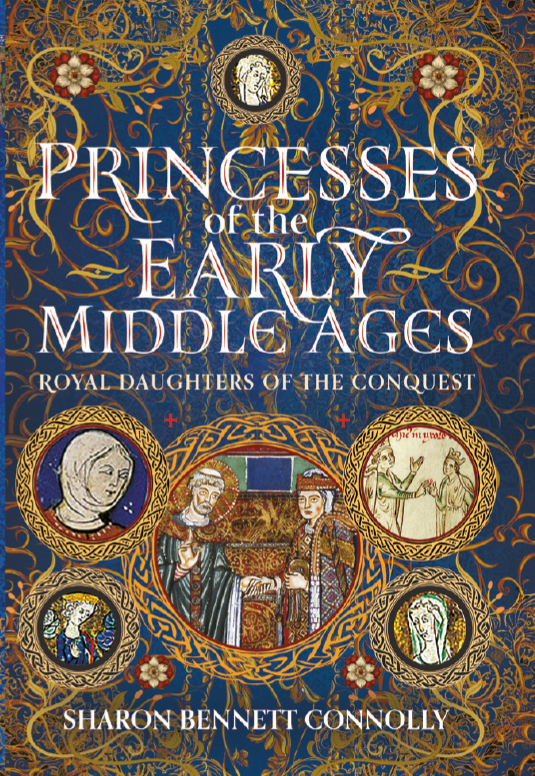


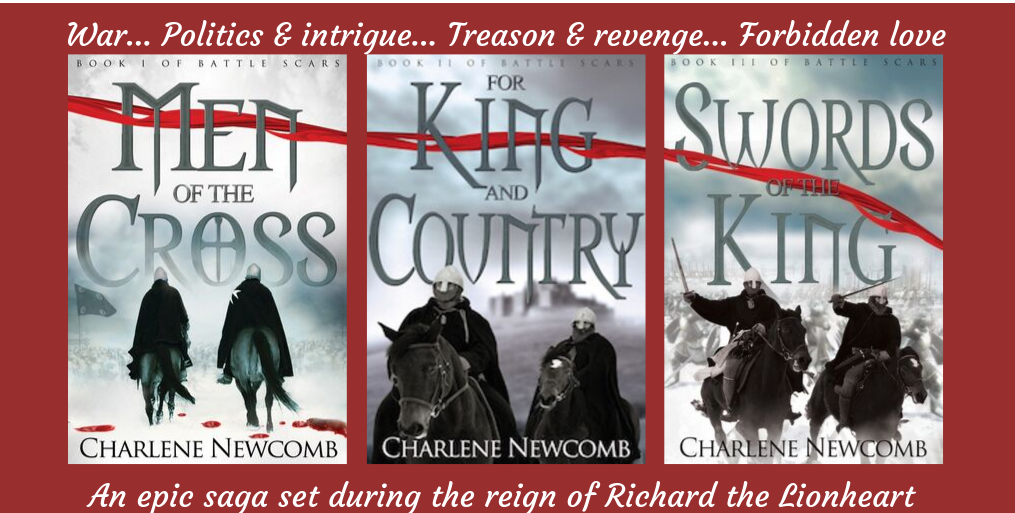
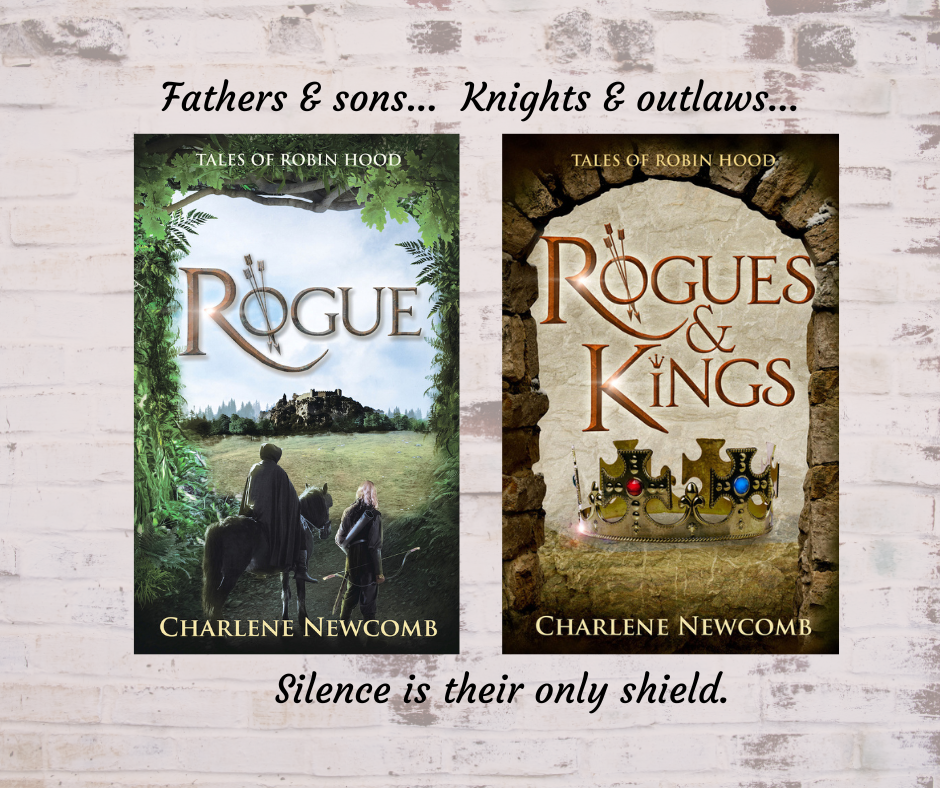
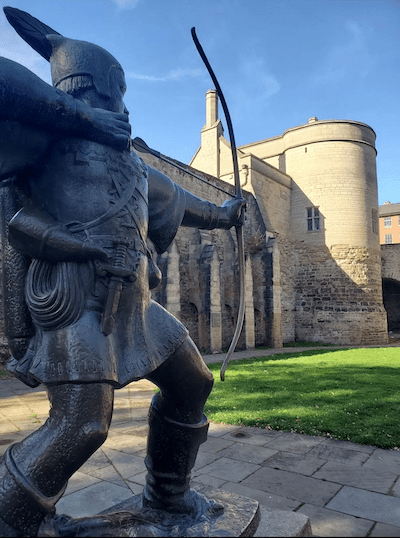
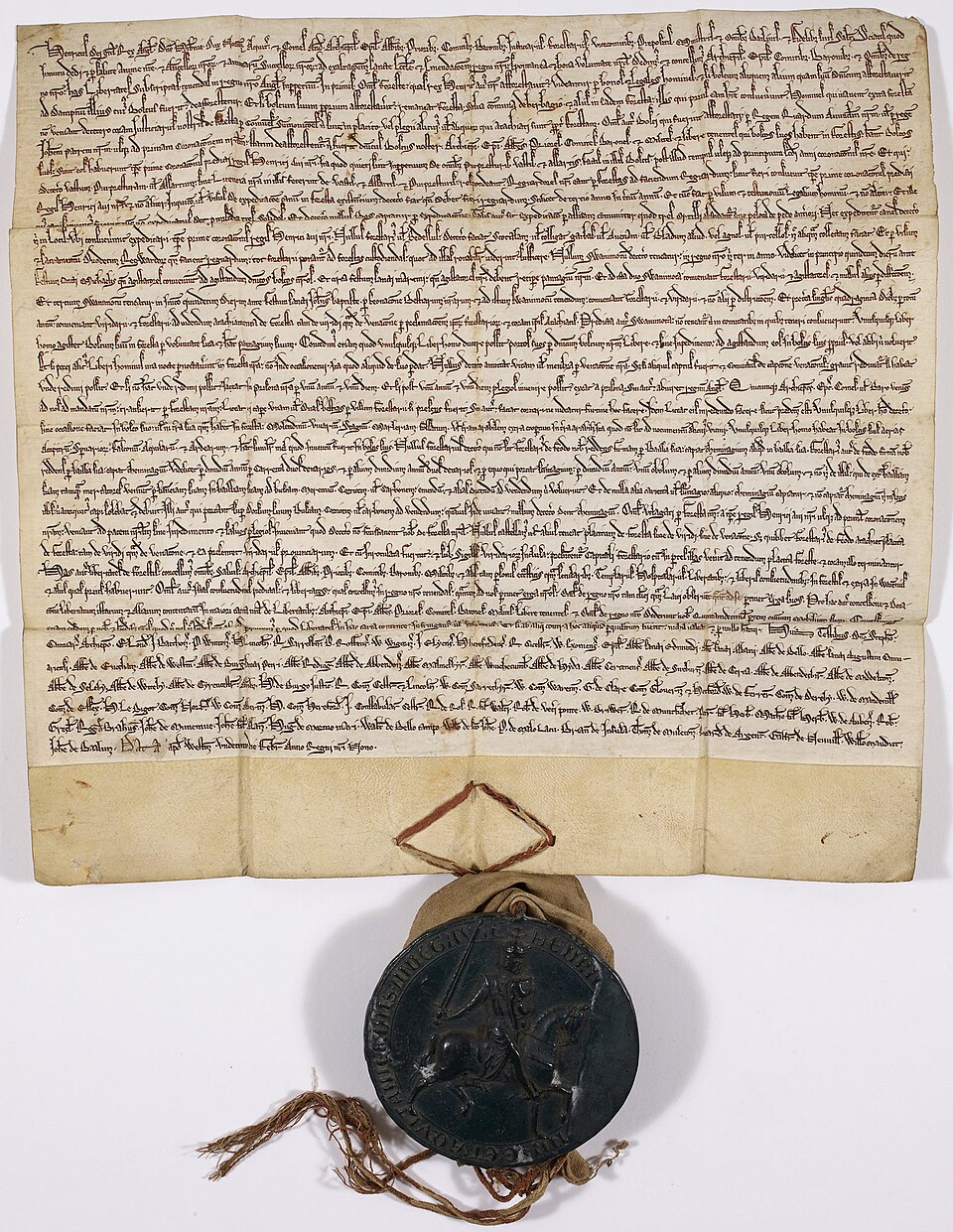
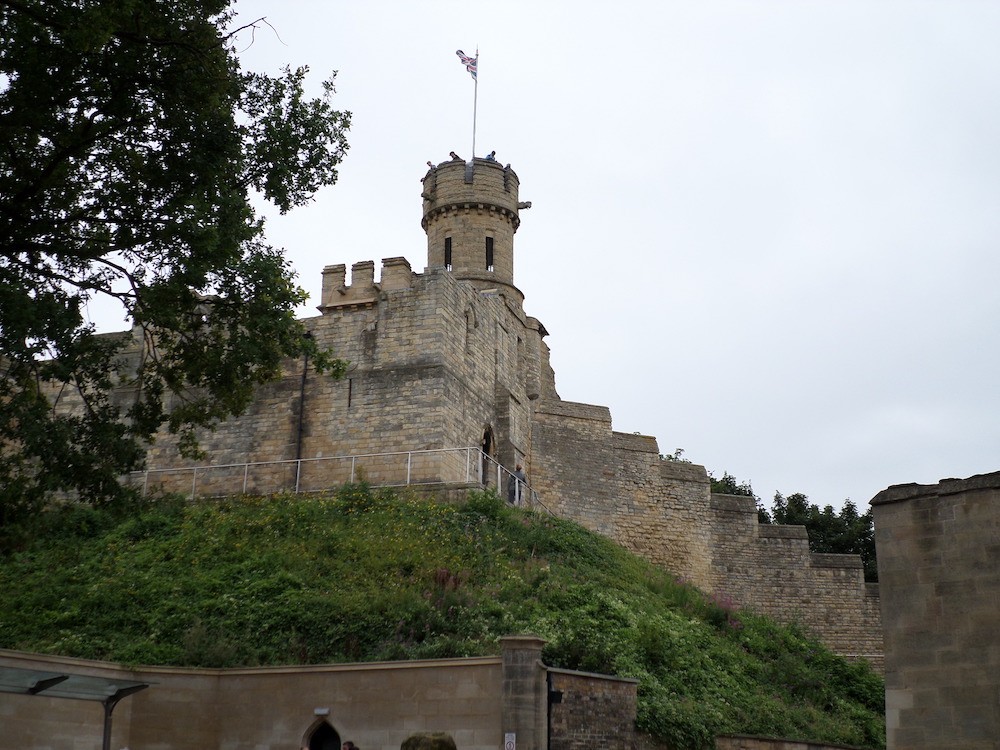
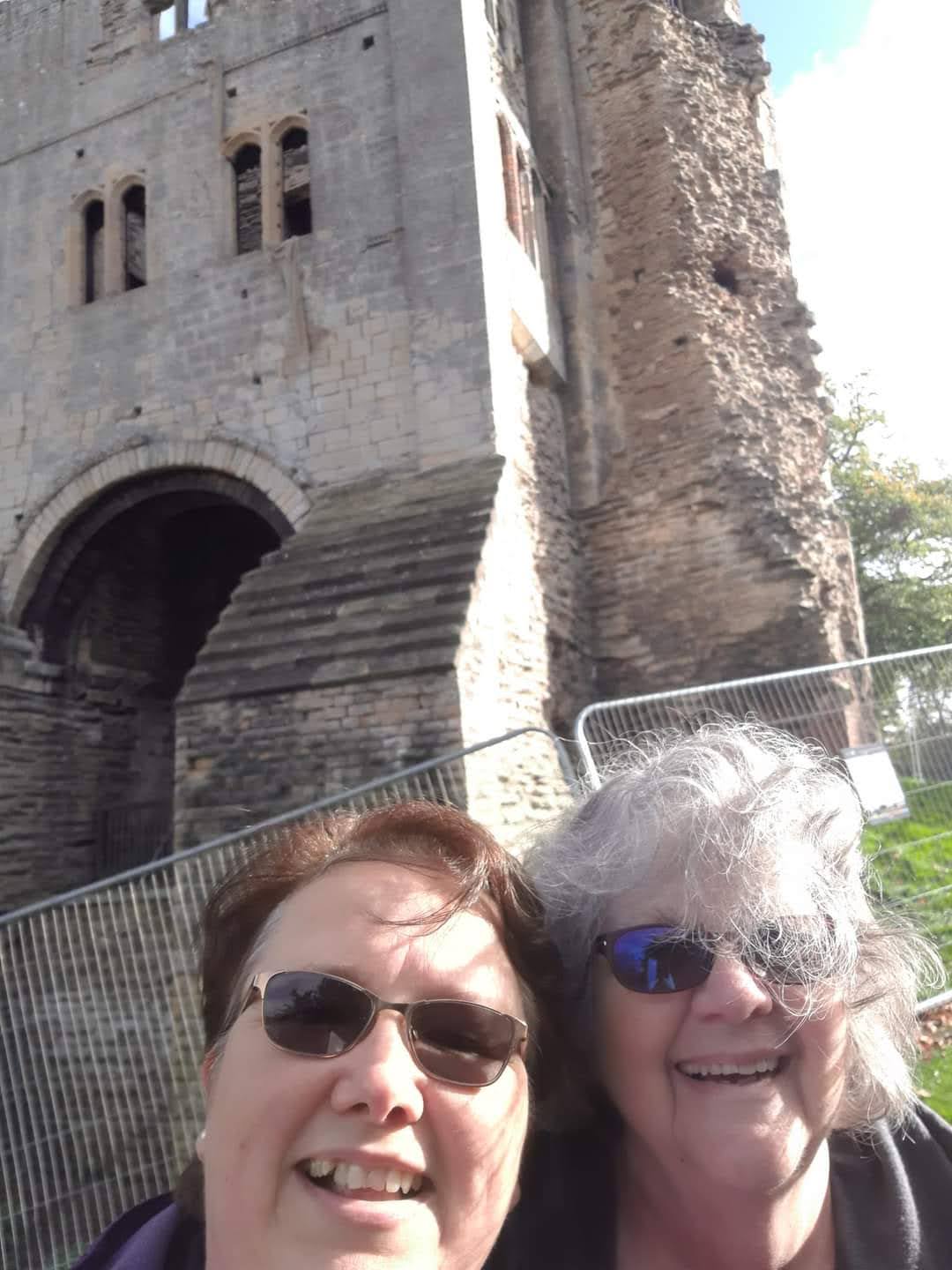
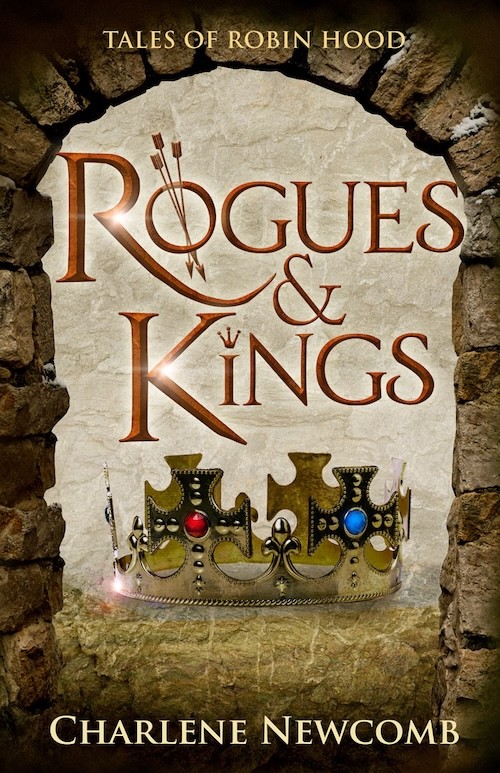


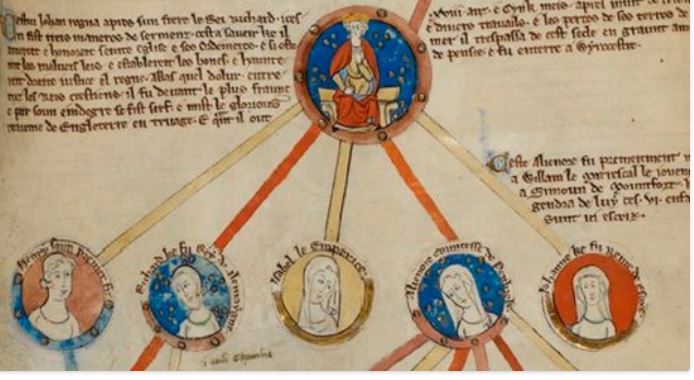
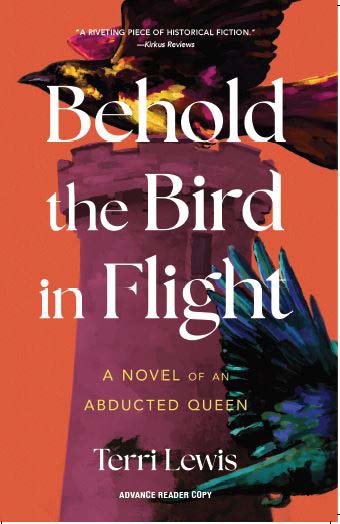
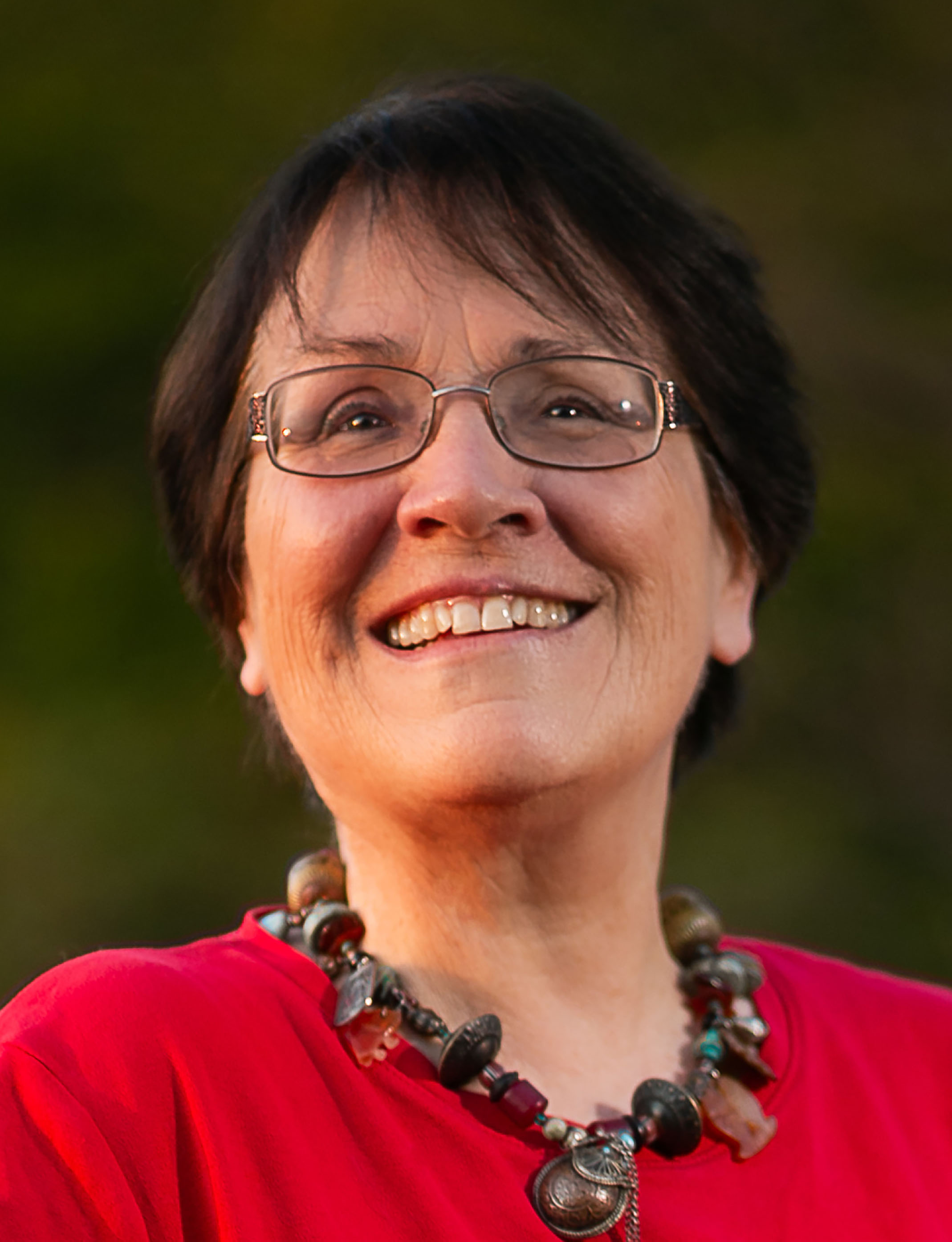


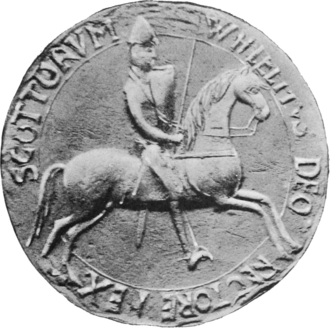


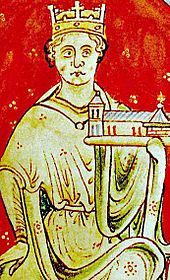
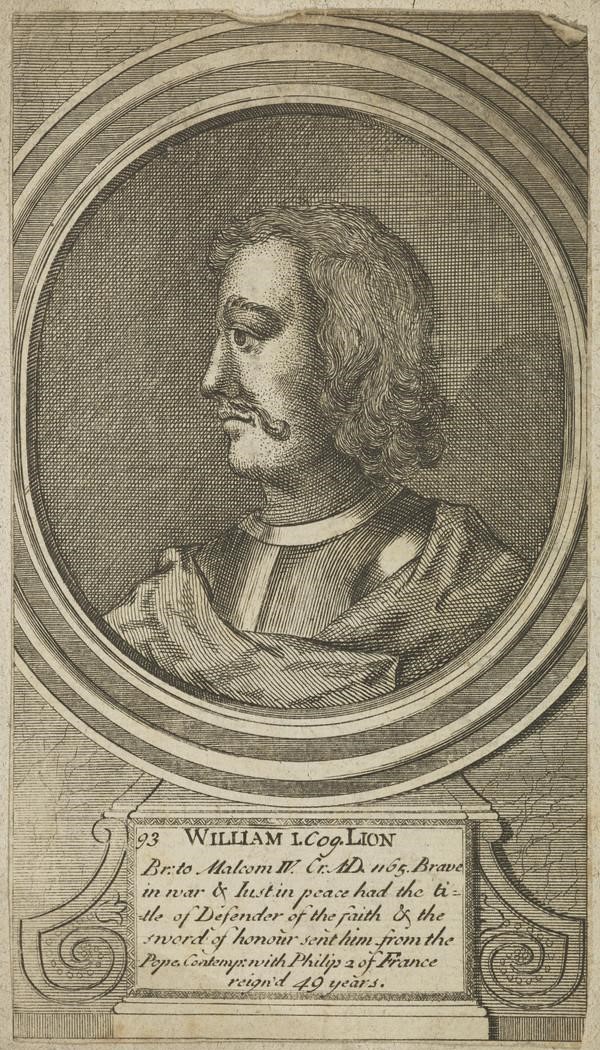


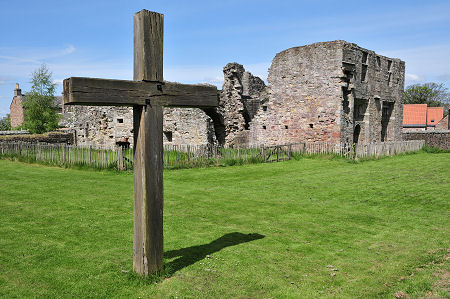


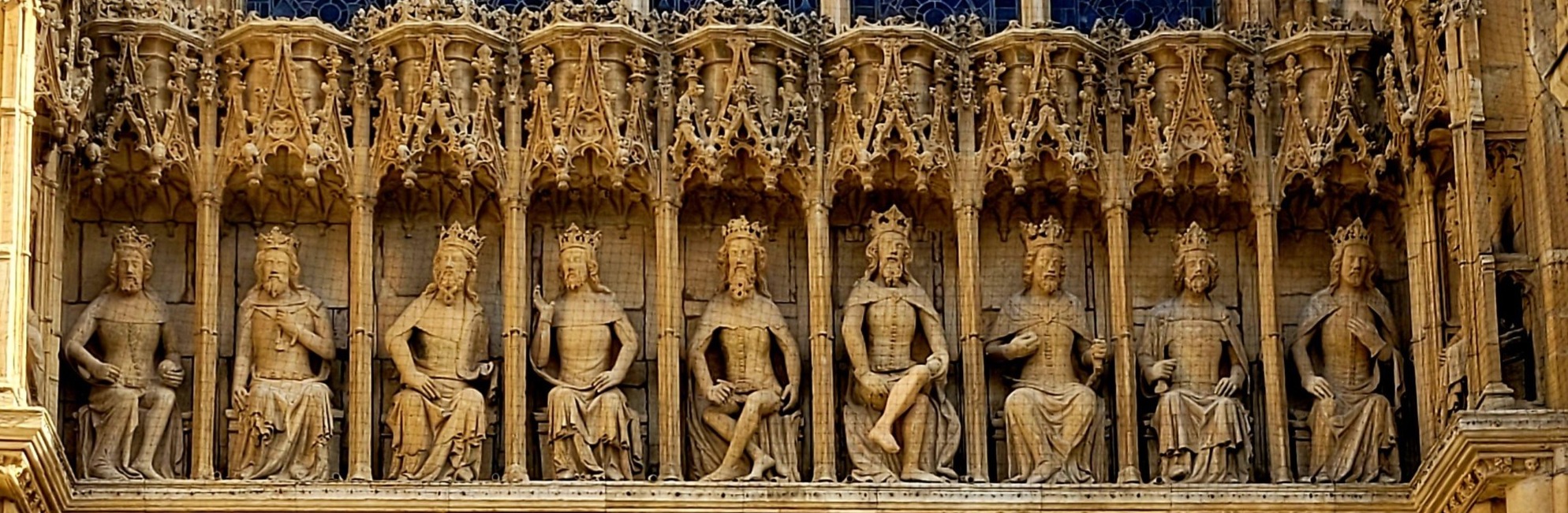

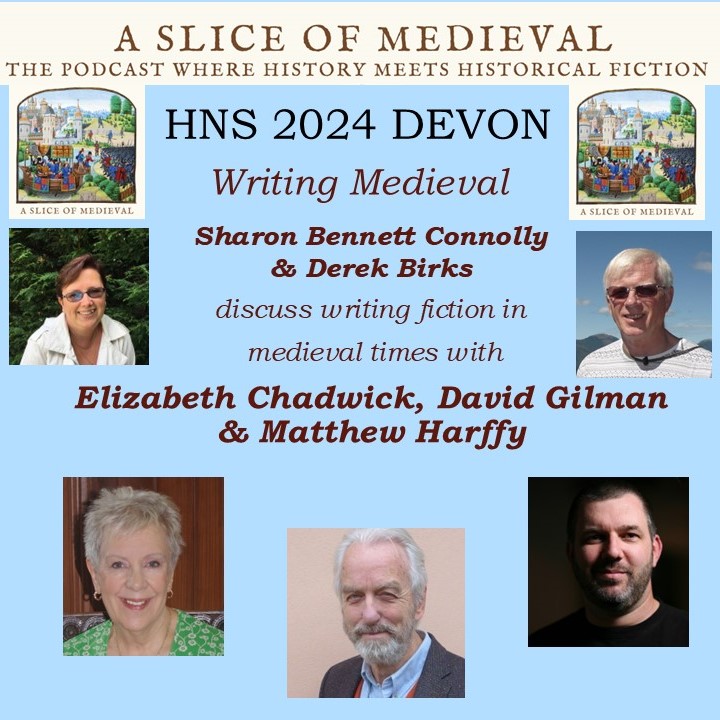
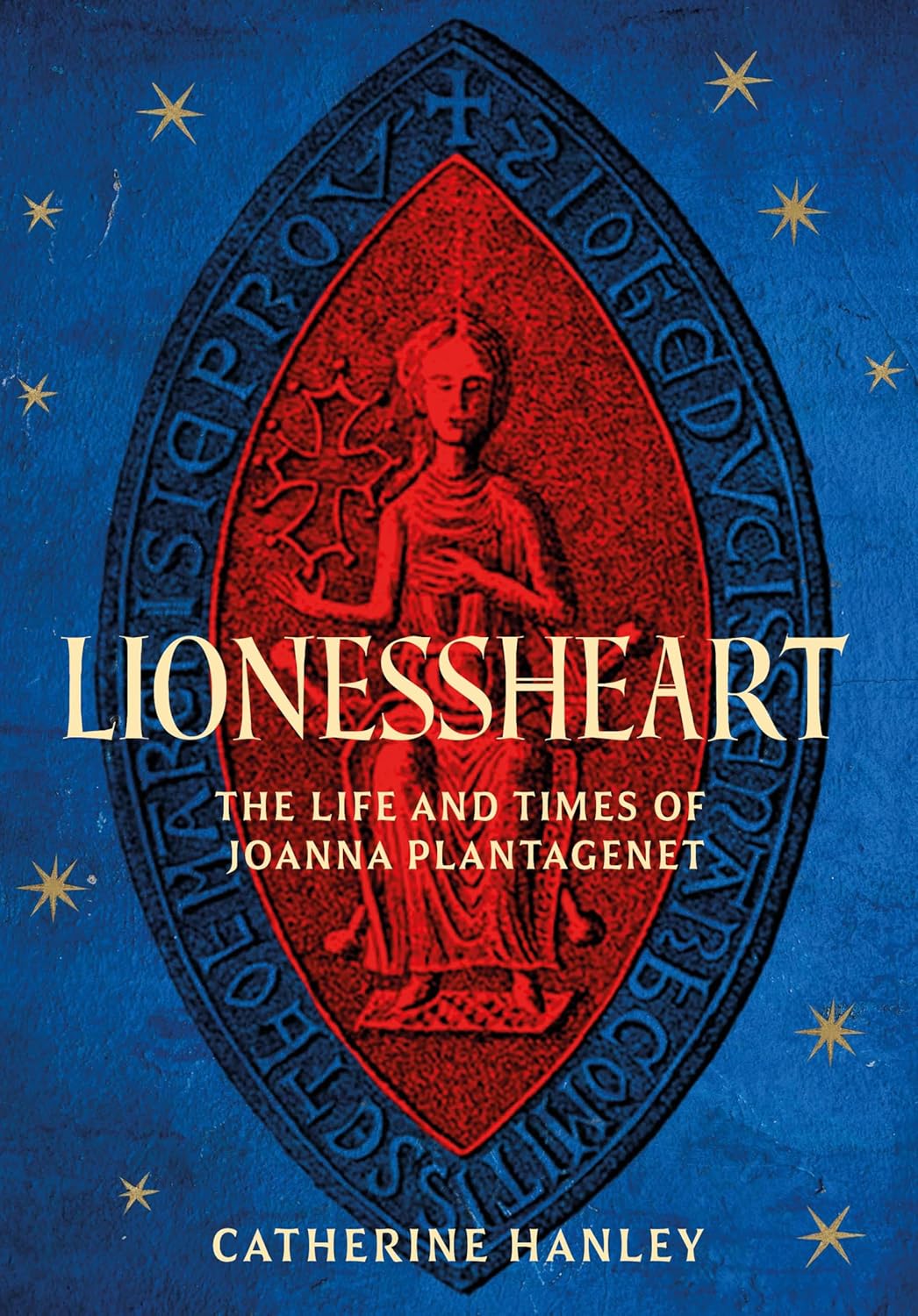
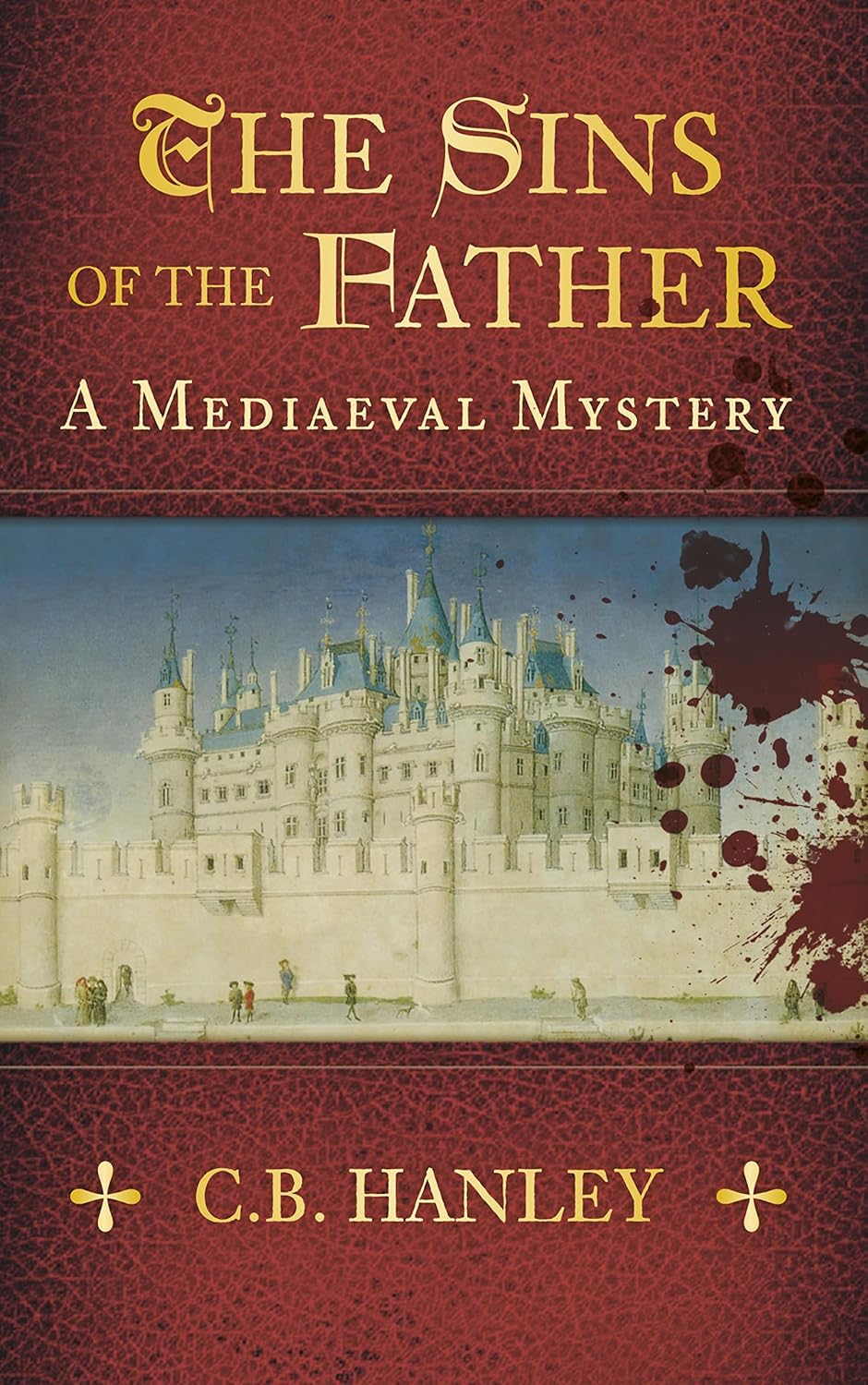
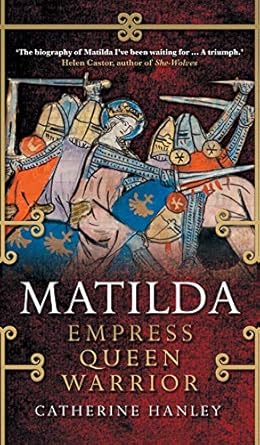
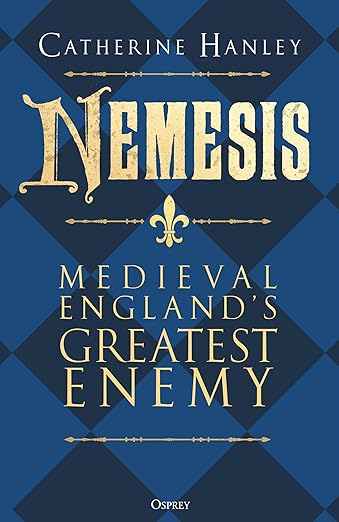
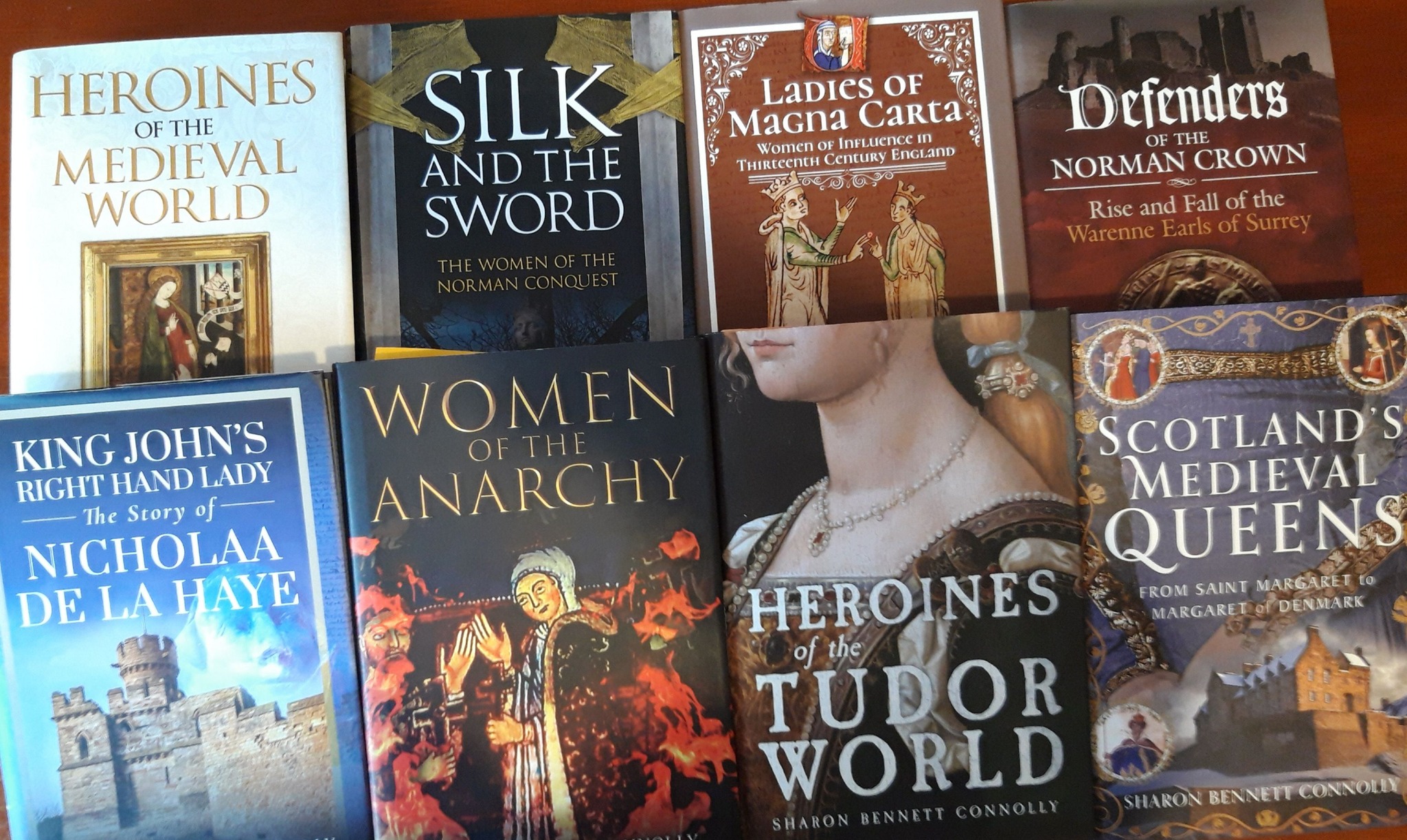
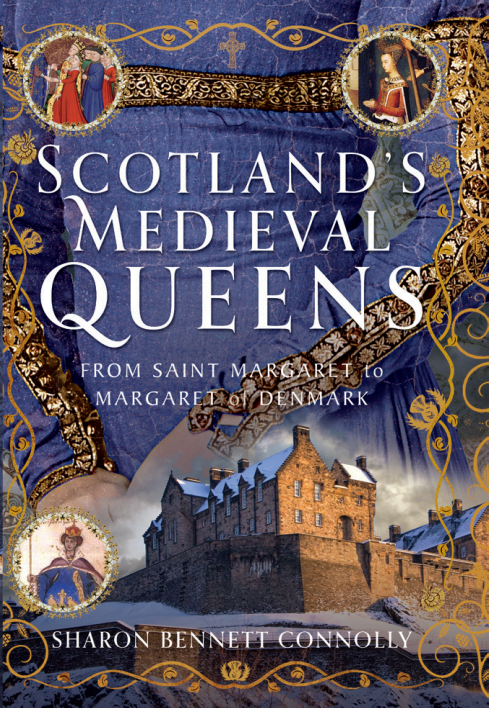

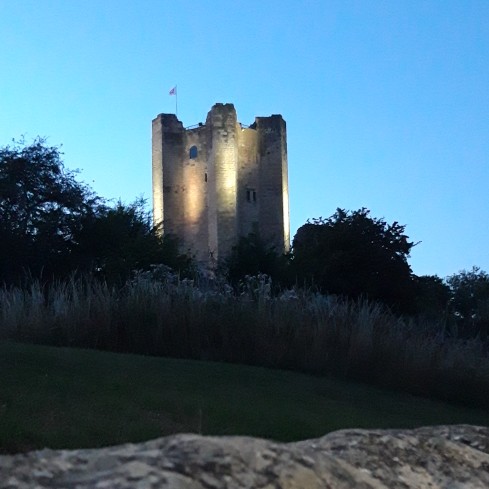

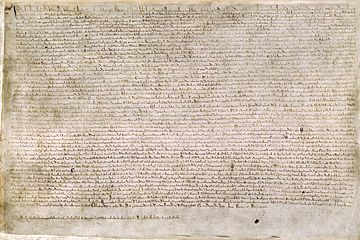


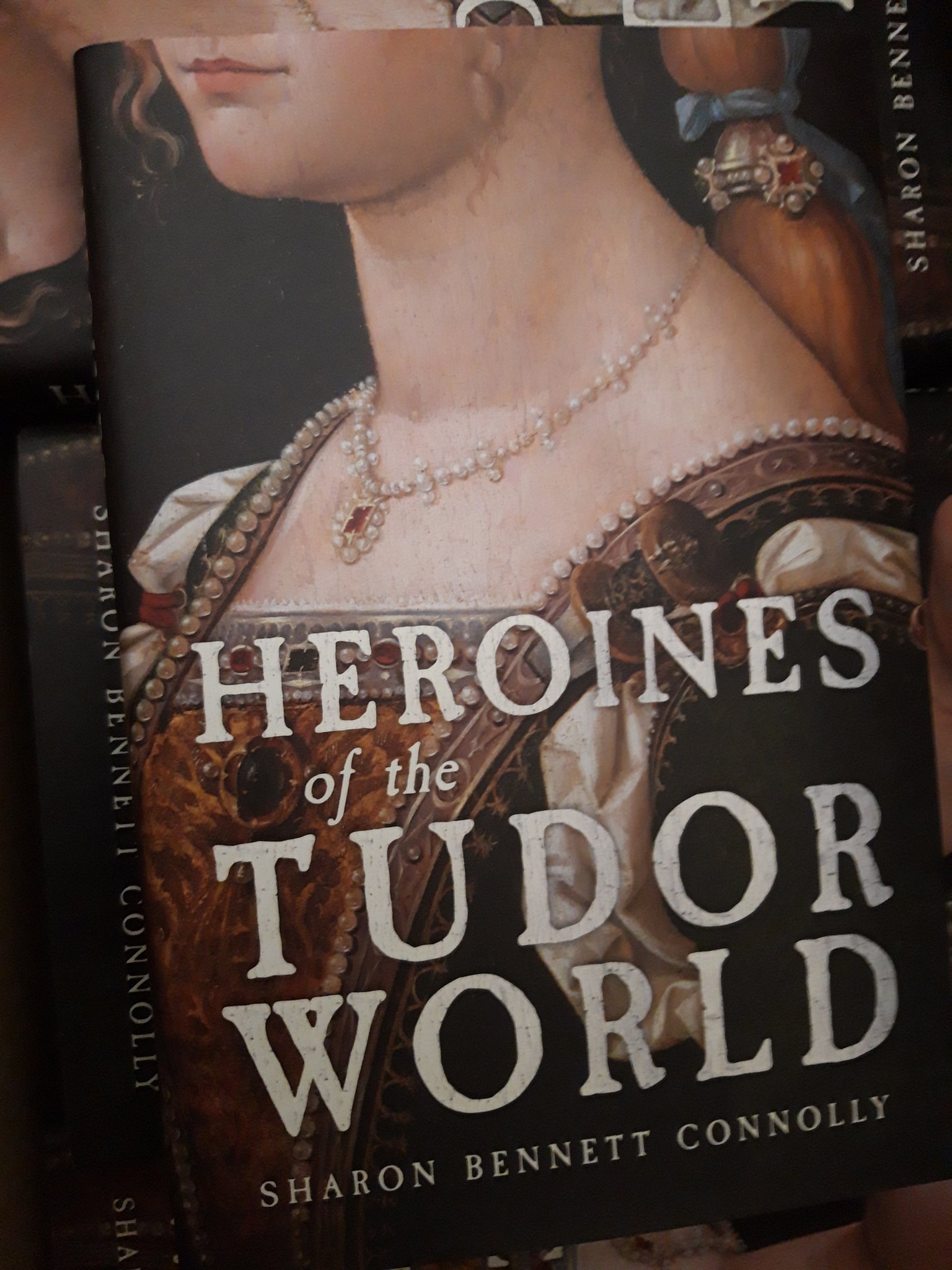
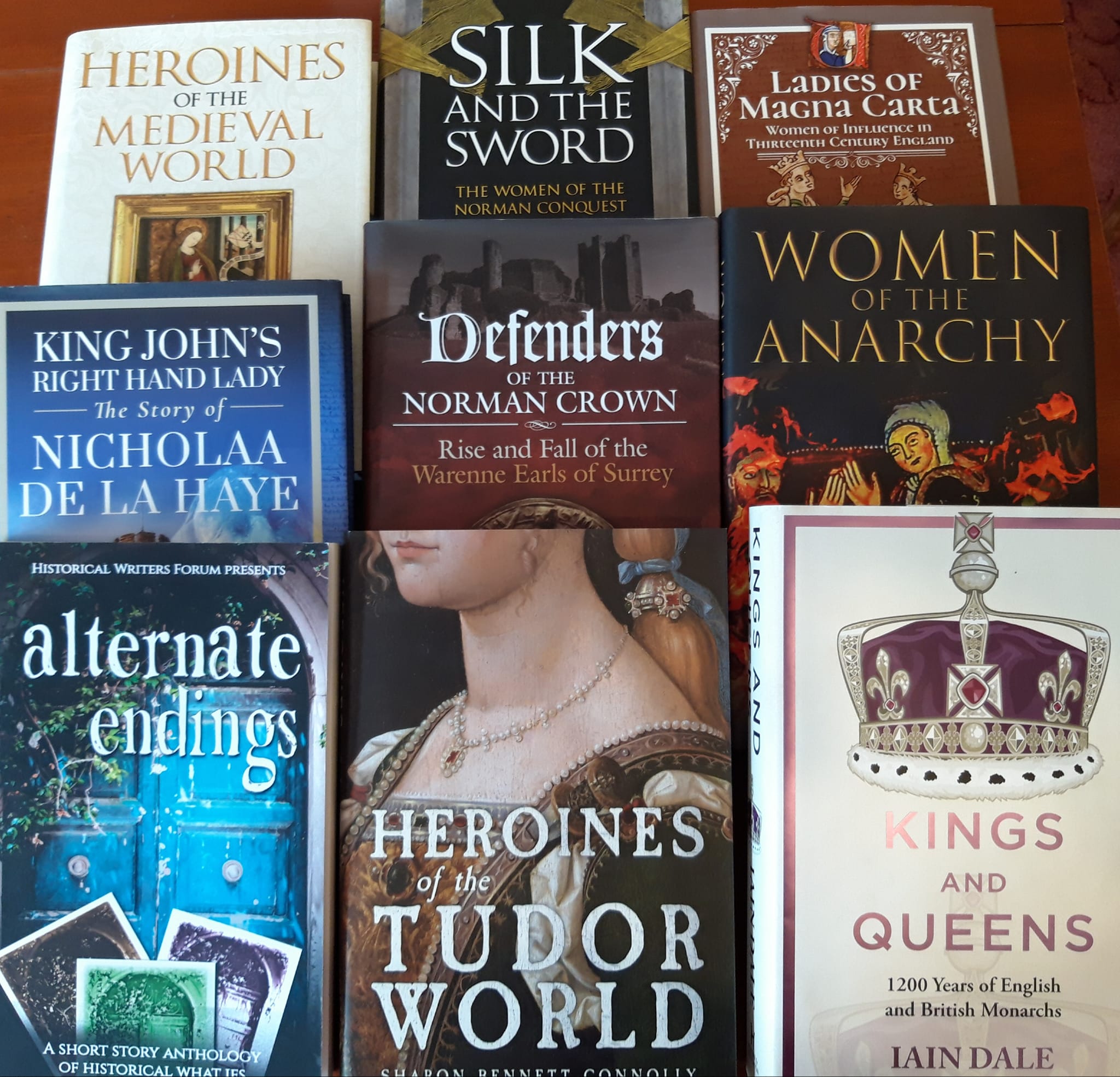
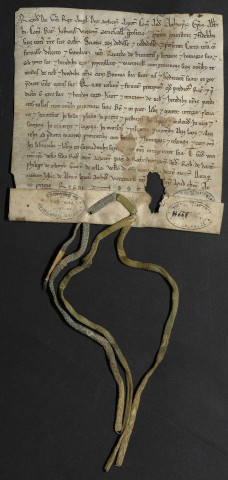



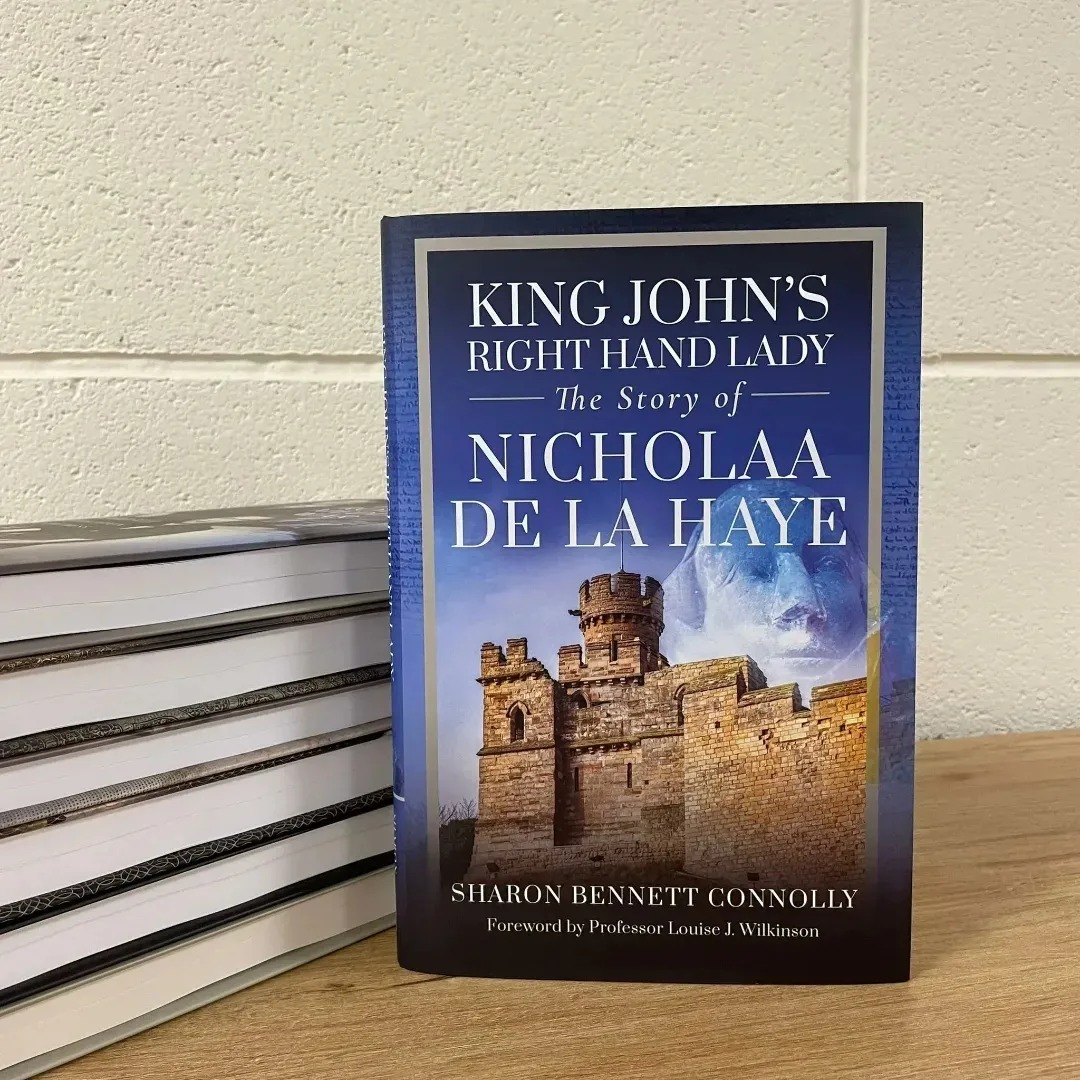


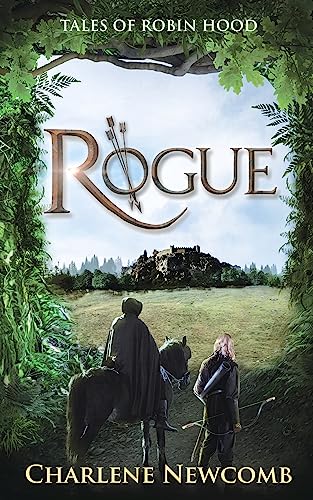
 History... the interesting bits!