‘God save the Queen! God save our good Queen Mary!’
When these words rang out over England, Mary Tudor thought her troubles were over. She could put her painful past – the loss of her mother and mistreatment at the hands of her father – behind her.
With her accession to the throne, Mary set out to restore Catholicism in England and find the love of a husband that she had long desired. But the tragedies in Mary’s life were far from over. How did a gentle, pious woman become known as ‘Bloody Mary’?
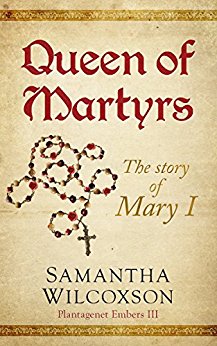
Queen of Martyrs, The Story of Mary I is the final book in Samantha Wilcoxson’s Plantagenet Embers series. It tells the story, in the third person, from the point of view of Mary I. Mary was the eldest daughter of King Henry I and England’s first ever queen regnant. Although part of a series, the book also works perfectly well as a standalone.
Samantha Wilcoxson has a unique writing style which makes her stand out from other Tudor storytellers. She gets into the mind of her main character and writes Mary’s story as if she’s seeing it through the queen’s own eyes. If Mary did not see something happen, then the reader does not know about it until the queen is informed. This distinctive writing style makes the book a personal journey, both for the subject and the reader.
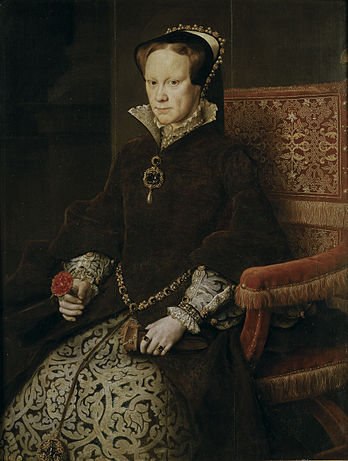
Mary I
Queen of Martyrs, The Story of Mary I tells the story of Mary I, from the time of Henry VIII’s marriage to Katherine Parr, to her own death.Telling the story through Mary’s own eyes, we follow her personal and public relationships, through her brother’s reign and the usurpation of Lady Jane Grey until she is sitting on the throne herself.
The novel demonstrates the human side of Mary I, her fears, insecurities and compassion, and her innate need to be loved; by her sister, her husband and her people. It shows her as a child of the Reformation, just as much as Elizabeth I, but on the opposing side. She is a queen struggling to do the right thing by her conscience and her people.
This compassionate portrayal helps to explain how the descent into the burning of protestants was not a plan, but a consequence of cumulative events and Mary’s own fear of displeasing God. Mary cuts a sad and lonely figure, desperate for love and constantly disappointed; by her father, her sister and, ultimately her husband.
With no children of her own, Mary doted upon Edward and Elizabeth in a way their father never would. She made her way now through the small, crowded room to her father’s other bastardized princess.
Elizabeth performed a perfect curtsy for her sister before letting her guard drop and offering a smile.
“I pray you are well, sister.” Elizabeth said with a sincerity of one unaware of the former bad feelings one has had toward them.
“My thanks to you and to God for seeing that I am indeed restored to health and am able to see a good friend and my dear father united in marriage.” As she said it, Mary was surprised to find that she meant it.
“I wish them great happiness,” Elizabeth agreed without emotion.
“You will find Katryn to be a loving mother, and she may be a calming presence for our father,” Mary encouraged her.
“Undoubtedly, you shall be proven correct.”
Sometimes Elizabeth’s habit of saying only what was expected could annoy, but Mary knew that she was simply doing her best to play her part to perfection. It was an effect of the quick succession of stepmothers and the gruesome connection between marriage and death that the young girl had witnessed.
What I love about this book is that it is Mary’s story. Elizabeth is a peripheral figure, making few appearances and always in her sister’s shadow. Philip of Spain is an unsympathetic character, desperate to get away from a marriage that he doesn’t want. The only character who is symbiotic with Mary is her cousin, Cardinal Reginald Pole, she sees him as an equal, in faith and outlook and he’s the only one she seems comfortable with.
Brilliantly researched, this is a sympathetic portrayal of a queen, known in many history books as Bloody Mary, who is often vilified and criticised for the burning of Protestants. Samantha Wilcoxson doesn’t just go with the flow, but manages to examine the queen’s life, loves and personal tragedies. In doing so, she shows us why the name of Bloody Mary is too simplistic for this complex woman who went through so much adversity before she ascended the throne.
Queen of Martyrs, The Story of Mary I is a wonderful, compassionate story of a frequently misunderstood woman. Samantha Wilcoxson’s writing style makes this an intimate portrayal of the Tudor queen, giving the reader a deep, personal relationship with the book and its subject, the queen’s story staying with them long after the last page has been turned.
*
Picture of Mary courtesy of Wikipedia.
*
My book, Heroines of the Medieval World, is now available in hardback in the UK from both Amberley Publishing and Amazon UK and worldwide from Book Depository. It is also available on Kindle in both the UK and USA and will be available in Hardback from Amazon US from 1 May 2018.
You can be the first to read new articles by clicking the ‘Follow’ button, liking our Facebook page or joining me on Twitter.
Adam de Guirande has cause to believe the turbulent times are behind him: Hugh Despenser is dead and Edward II is forced to abdicate in favour of his young son. It is time to look forward, to a bright new world in which the young king, guided by his council, heals his kingdom and restores its greatness. But the turmoil is far from over.
England in the early months of 1327 is a country in need of stability, and many turn with hope towards the new young king, Edward III. But Edward is too young to rule, so instead it is his mother, Queen Isabella, and her lover, Roger Mortimer, who do the actual governing, much to the dislike of barons such as Henry of Lancaster.
When it is announced that Edward II has died in September of 1327, what has so far been a grumble grows into voluble protests against Mortimer. Yet again, the spectre of rebellion haunts the land, and things are further complicated by the reappearance of one of Adam’s personal enemies. Soon enough, he and his beloved wife Kit are fighting for their survival – even more so when Adam is given a task that puts them both in the gravest of dangers.
Under the Approaching Dark is the third in Anna Belfrage’s series, The King’s Greatest Enemy, the story of a man torn apart by his loyalties to his lord, his king, and his wife.
Anna Belfrage is a master storyteller. She has the ability to weave a tale that draws the reader in from the very first word. But with Under the Approaching Dark she has surpassed herself. She has created a masterpiece of historical fiction. The story entices the reader in and takes them through the full range of emotions in this marvellous adventure, not letting up for one moment.
Under the Approaching Dark is the 3rd book in her King’s Greatest Enemy series telling the story of Kit and Adam Guirande, and of Roger Mortimer, the man who dethroned a king and became lover of a queen. With Kit as one of the queen’s ladies and Adam as Captain of the future Edward III’s guard, the couple are at the centre of events, juggling their public life with their family life. Kit and Adam are living in some of the most turbulent years of English history; they must stay together to survive against jealous rivals, vengeful enemies and the political machinations of the powerful elite.
This story had everything: love, war, suspense and intrigue – and a few twists along the way. One of my big questions before reading the book was how the fate of Edward II would be decided – and it didn’t disappoint. I won’t spoil it for you, but I love how the story unfolds; it is plausible, thoughtful and intriguing.
Anna Belfrage makes her characters human. They are not perfect, they have the same doubts, insecurities and complicated personalities and relationships as in real life. They develop, adapt and grow as events and the years unfold, their experiences sometimes weighing heavily upon them; their past, their future and their relationships.
The author really gets into the hearts and minds of her characters and takes her readers with her, taking them on a rollercoaster of emotions along the way. A number of scenes will bring a tear to the eye, while others will have you reaching for your sword. Despite the momentous times in which they are living, the story revolves around Kit and Adam, their relationship and the trials they face, both together and apart. They are an impressive couple, but firmly placed within the boundaries that 14th century society dictate. You won’t see Kit wielding a sword, but, as a result, she has more subtle weapons at her disposal.
With each step, the coil of hair grew heavier, and when one of the older ladies gave her a long look accompanied by a pursed mouth and raised brows, Kit regretted having followed Lady Margaret’s advice. Too late. She swallowed. Adam was saying something but stopped mid-sentence when he saw her, and Kit felt her cheeks heat. Would he deem it inappropriate? Chide her? She made a reverence; his hand shot out to close around her elbow, steadying her as she straightened up.
“Sweeting.” he sounded hoarse.
“I…” She licked her lips. “Do you like it?”
“like it?” He traced the golden net with a finger. “It is becoming.”
Her shoulders relaxed.
“But I’ll not have my wife walk about unveiled,” he continued, guiding her back towards the door.
“But the queen -“
A firm finger on Kit’s mouth hushed her. “The queen is not my wife. You are.” He picked at a tendril of hair, tugging ever so gently. “This is for me to see, my lady. Only for me.”
Anna Belfrage is meticulous in her research and includes many of the often overlooked details of medieval life – such as the prohibitions against marital ‘relations’ during Lent, or the length of time it would take a rider to get from York to London. Her descriptions of the cities visited by characters, such as York and Lincoln, are incredible – you can almost feel yourself transported to Clifford’s Tower or standing in front of Lincoln’s imposing cathedral.
Under the Approaching Dark gets everything right. The interaction between the characters is stunning, each having their own traits and quirks which play out in the dialogue. The love scenes are tender and tasteful and the action scenes are fast, furious and full of tension. You never know what will happen next, or how things will play out; which makes the book a true page-turner right to the very end.
The author’s skills at storytelling are exquisite; she draws you in with her words, transporting you back in time and showing you a world that has long since disappeared, but has been brought back to vivid life by the words and imagination of this amazing author. The story grabs your attention from the very first sentence, and will not leave you, not even after the final page has been read.
The writing is impeccable. The story has everything. Under the Approaching Dark is just perfect in every sense.
*
My book, Heroines of the Medieval World, is now available in hardback in the UK from both Amberley Publishing and Amazon UK and worldwide from Book Depository. It is also available on Kindle in both the UK and USA and will be available in Hardback from Amazon US from 1 May 2018.
You can be the first to read new articles by clicking the ‘Follow’ button, liking our Facebook page or joining me on Twitter.
Today over at The Review, you can read my thoughts on Anni Whitehead’s wonderful novel of Æthelflæd, Lady of Mercia, in To Be A Queen.
And there’s a signed copy as a giveaway!
Here’s a taster:
Written by Annie Whitehead, To Be A Queen, is the fascinating story of the most remarkable of Saxon women, Aethelflaed, Lady of the Mercians and daughter of Alfred the Great. The novel leads us through Aethelflaed’s personal journey, from a sheltered childhood in the heart of Wessex to marriage, motherhood, and a remarkable partnership with her brother Edward, who succeeded their father as King of Wessex. Aethelflaed and Edward spearhead the fight against the Danes and the struggle to unite England under one ruler.
A thoroughly enjoyable book, To Be A Queen, draws the reader in from the very first sentence, recounting the story of Aethelflaed’s life while telling you the bigger story that is the making of England. Many readers may be familiar with Aethelflaed from the Bernard Cornwell The Last Kingdom series, but Annie Whitehead develops the Lady of Mercia to even greater depths, getting under the skin and into the heart of this amazing woman.
To read the full review of this fantastic novel – and to enter the prize draw and be in with a chance of winning one of two e-book copies in the giveaway, simply visit The Review and leave a comment.
Good luck!
*
My book, Heroines of the Medieval World, is now available in hardback in the UK from both Amberley Publishing and Amazon UK and worldwide from Book Depository. It is also available on Kindle in both the UK and USA and will be available in Hardback from Amazon US from 1 May 2018.
You can be the first to read new articles by clicking the ‘Follow’ button, liking our Facebook page or joining me on Twitter.
Alice, Countess of Eu, was born into 2 of the noblest families of England and France, and married into a third. The daughter of Henry, Count of Eu and Lord Hastings, her mother was Matilda, daughter of Hamelin and Isabel de Warenne, Earl and Countess of Surrey.
Through her maternal grandparents, Alice was closely related to the kings of England. Her grandfather, Hamelin, was the illegitimate half-brother of King Henry II of England. Richard I and King John, therefore, were her cousins. Alice’s grandmother, Isabel de Warenne, had been one of the richest, most prized heiresses in England and had first been married to the younger son of King Stephen, before she married Hamelin.
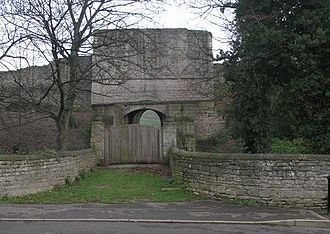
Alice’s father, Henry, held lands in England and Normandy. The Honour of Tickhill, in Yorkshire, had been granted to Henry’s father John, Count of Eu, by King Stephen, in 1139, after proving his rights as heir to the original owners, the de Busil family, through Beatrice, the sister of Roger de Busil, who died in 1102. However, in 1141, Empress Matilda captured the castle after Count John was taken prisoner at the Battle of Lincoln. The castle seems to have stayed in royal hands for many years afterwards, with Richard I taking possession on his accession; he then gave it to his brother John, as part of his holdings. As a consequence, the castle was besieged by the Bishop of Durham when John rebelled against Richard in 1194 and was surrendered only when the king returned to England following his capture and imprisonment in Germany, 3 years after Henry’s death.
Matilda and Henry had 4 children, 2 sons and 2 daughters. Alice was the eldest of the daughters, her sister Jeanne being younger. Sadly, both sons, Raoul and Guy, died young and in consecutive years, with Guy dying in 1185 and Raoul in 1186, leaving Alice as heir to her father’s lands.
Alice’s father died in 1191, and Alice became suo jure Countess of Eu and Lady Hastings. Alice’s mother, Matilda, later married again; her second husband was Henry d’Estouteville of Eckington, Lord of Valmont and Rames in Normandy. Matilda had a son, John, by d’Estouteville, and it was Alice’s half-brother, therefore, who became the heir to all the lands Matilda held in her own right, leaving Alice solely with the inheritance from her father.
Very little is known of Alice’s early years; we do not even have a year for her birth. Given that her grandparents did not marry until 1164, her parents would not have married until the early 1180s, which would mean is likely that Alice was born sometime around the mid-1180s. On her father’s death in 1191, she came into possession of lands in both England and Normandy, France. In August, 1209, Alice officially received the Comté of Eu from Philip II Augustus, King of France, when she also made a quitclaim of all rights to Neufchatel, Mortemer and Arques. Mortemer was a part of the de Warenne ancestral lands in Normandy, given to William I de Warenne by Willliam the Conqueror; suggesting that Alice was renouncing her own rights to the French de Warenne lands, as a granddaughter of Isabel de Warenne, Countess of Surrey.
Alice made a prestigious marriage to Raoul de Lusignan, the brother of Hugh IX de Lusignan and a powerful Poitevin lord. It was Raoul’s nephew, Hugh X, who would repudiate Joanna, the daughter of King John, in order to marry the dead king’s widow and queen, Isabelle d’Angoulême.
Raoul had been previously married to Marguerite de Courtney, but the marriage had been annulled by 1213, suggesting Alice and Raoul married around that time. On marrying Alice, Raoul became Raoul I, Count of Eu by right of his wife.
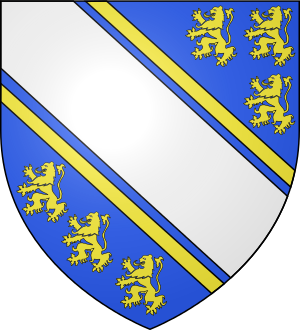
Arms of Humphrey de Bohun, 2nd Earl of Hereford and Earl of Essex, Constable of England
Raoul and Alice had four children together. Raoul II de Lusignan, Count of Eu and Guînes, was married 3 times and had one daughter, Marie de Lusignan, by his second wife, Yolande de Dreux. Raoul died sometime between 1245 and 1250 and was buried at the Abbey of Foucarmont. Mathilde married Humphgrey de Bohun, 2nd Earl of Hereford and Earl of Essex, and had 7 children together, including 4 boys. Mathilde died in August 1241 and was buried in Llanthony Secunda Priory, Gloucester. Her husband was buried beside her when he died in September 1275. Another son, Guerin (or Warin) de Lusignan died sometime after 29 September 1217, when he is granted the castle at Tickhill by Henry III. A second daughter, Jeanne, is mentioned in the necrology of the church of Eu, which records the anniversary of her death as 3 October, though no year is given.
In 1214 Alice, as Countess of Eu, was restored to the Honour of Tickhill by King John as part of the conditions of an agreement with her husband’s family, the de Lusignans. However, Robert de Vipont, who was in physical possession of the castle, refused to relinquish it, and claimed the castle in his own right. It took many years and much litigation before Alice finally took possession of the castle in 1222. Her husband, Raoul, died on 1st May, 1219, and was succeeded as Count of Eu by their son, Raoul II, still only a child.
It was left to Alice, now Dowager Countess, to administer the Eu inheritance. She paid 15,000 silver marks to the French King to receive the county of Eu in her own name and regained control of her English lands, entrusted to her uncle, the Earl of Surrey, as her representative, following her husband’s death.
Alice was a shrewd political survivor. However, with lands in France and England, two countries often at war, she found herself caught between a rock and a hard place. In 1225 she handed Tickhill Castle to Henry III, until the end of hostilities with France, as a means of safeguarding her lands. Nevertheless, this did not save her when she was ordered to levy troops for the French king, Louis IX, as Countess of Eu, and send her forces to fight for him. Henry III seized Tickhill Castle, although it was only permanently attached to the English crown after Alice’s death.
Alice was renowned for her wide patronage, both secular and religious, and has left numerous charters as testament. She was a benefactor of both French and English religious houses, including Battle Abbey and Christ Church, Canterbury in England and Eu and Foucarmont – where her son would be laid to rest – in France. Alice issued a charter in 1219, to Roche Abbey, which was witnessed by her uncle William, Earl de Warenne. She also granted an annual allowance to Loretta, Countess of Leicester, who was living as a recluse at Hackington.
Alice also granted several lands to others, such as Greetwell in the county of Lincoln, which had previously been held by Walter de Tylly in Alice’s name and was given to Earl de Warenne in August 1225; the earl was to annually render a sparrowhawk to Philippa de Tylly in payment. In 1232 Alice issued a charter to Malvesin de Hersy, of Osberton in the county of Nottingham, providing him with all customs due to Tickhill in return for 2 knights’ fees. Malvesin had been constable of Tickhill in 1220-1 and his brother Sir Baldwin de Hersy was Constable of Consibrough Castle, seat of Earl de Warenne.
The gatehouse of Tickhill Castle
Having spent most of her life fighting for her rights to her lands in England and France, caught between 2 great nations, whose relations were acrimonious to say the least, Alice appears to have conducted herself admirably. Her connections to the powerful de Lusignan and de Warenne families could not have harmed her situation.
Now in her early 60s, and having been a widow for almost 30 years, Alice died sometime in May 1246, probably between the 13th and 15th, at La Mothe St Héray in Poitou, France, leaving a will. It seems likely that she was buried at her husband’s foundation of Fontblanche Priory in Exoudon.
Sources: Early Yorkshire Charters Volume 8: The Honour of Warenne, Edited by William Farrer and Charles Travis Clay; England Under the Norman and Angevin Kings by Robert Bartlett; Brewer’s British Royalty by David Williamson; Britain’s Royal Families, the Complete Genealogy by Alison Weir; british-history.ac.uk; kristiedean.com; English Heritage Guidebook for Conisbrough Castle by Steven Brindle and Agnieszka Sadrei; oxforddnb.com; Tickhill Castle Guide Leaflet, Lords of the Honour of Tickhill; fmg.ac.
*
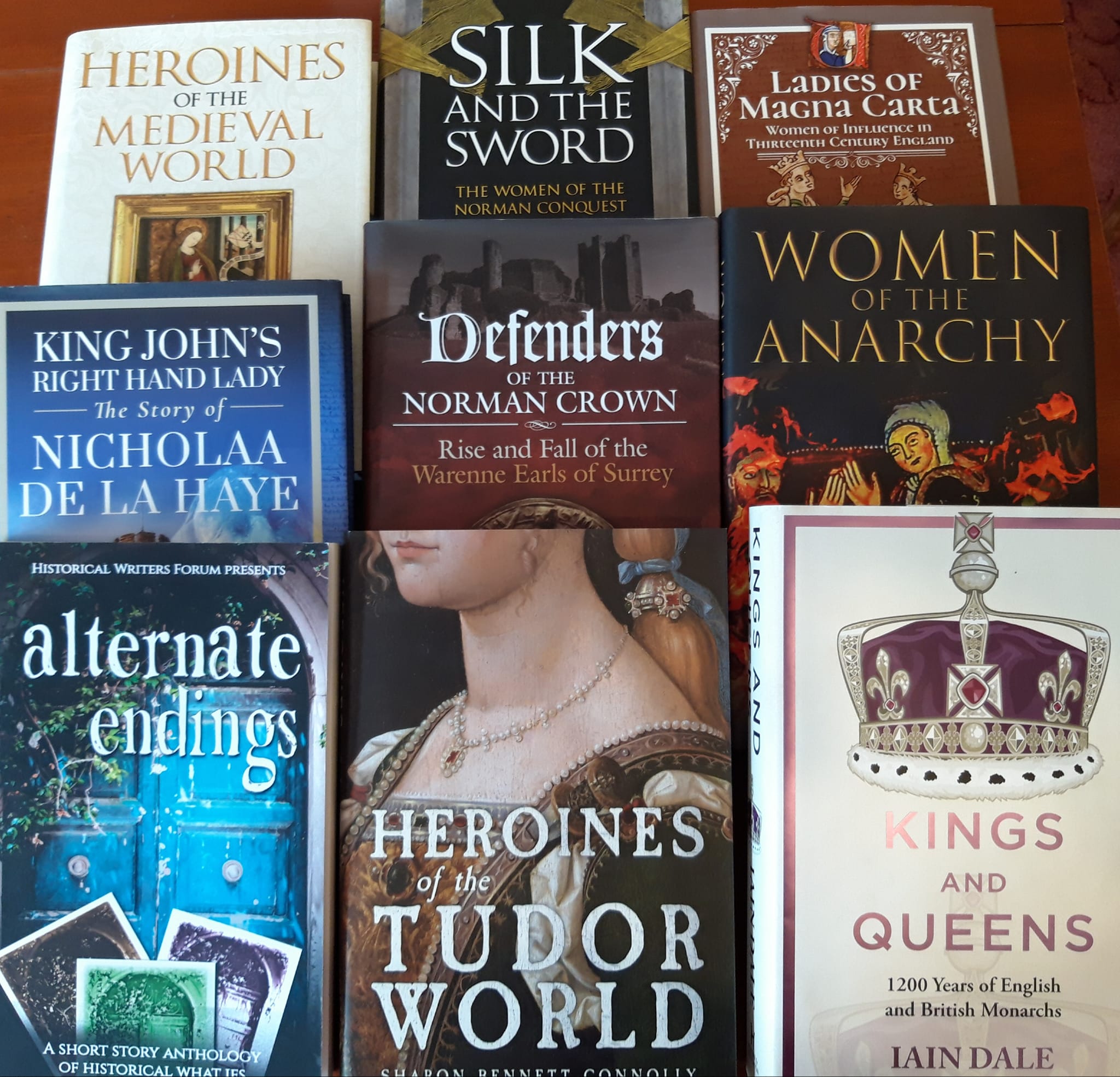
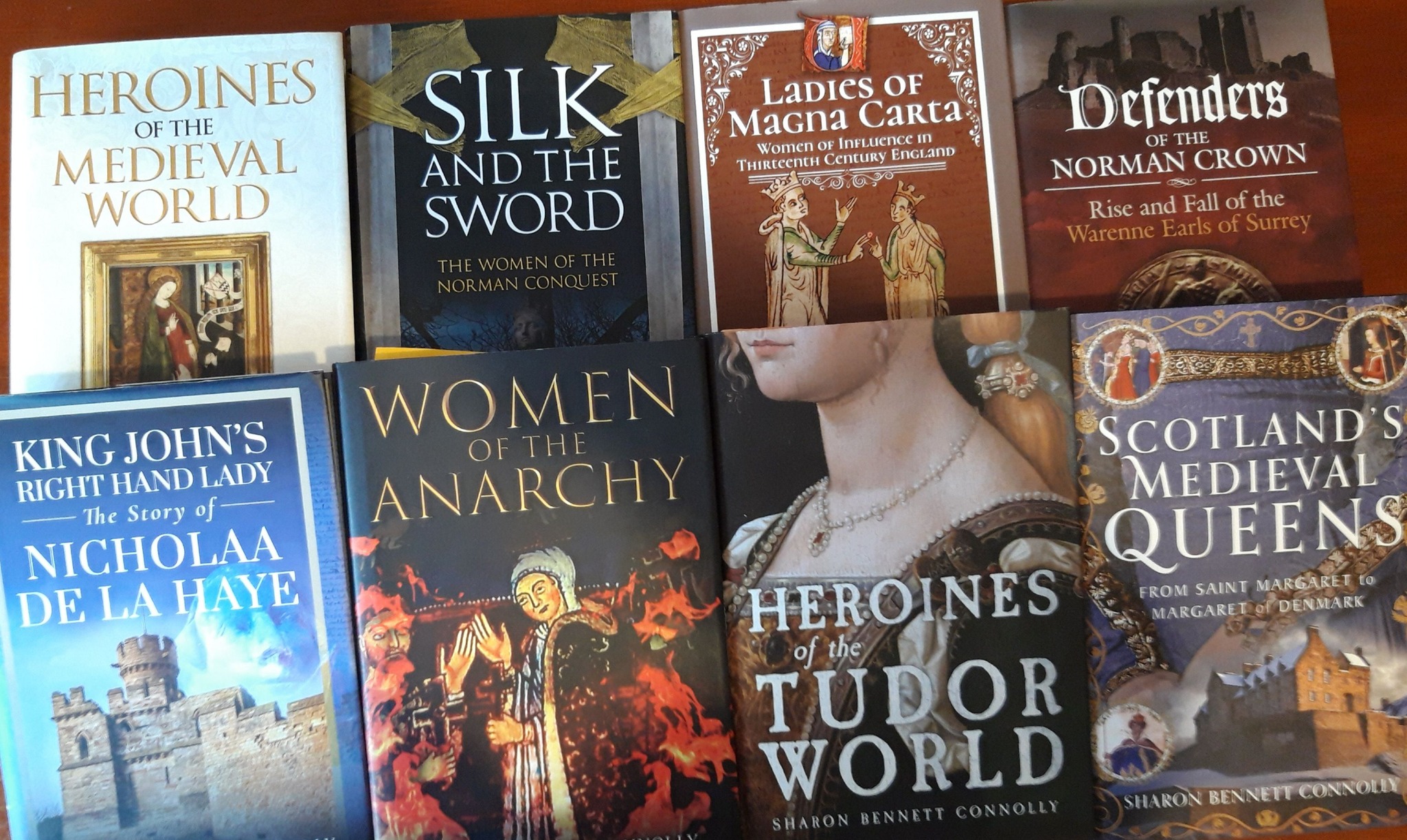
My Books
Signed, dedicated copies of all my books are available through my online store.
OUT NOW! Heroines of the Tudor World
Heroines of the Tudor World tells the stories of the most remarkable women from European history in the time of the Tudor dynasty, 1485-1603. These are the women who ruled, the women who founded dynasties, the women who fought for religious freedom, their families and love. These are the women who made a difference, who influenced countries, kings and the Reformation. In the era dominated by the Renaissance and Reformation, Heroines of the Tudor World examines the threats and challenges faced by the women of the era, and how they overcame them. From writers to regents, from nuns to queens, Heroines of the Tudor World shines the spotlight on the women helped to shape Early Modern Europe.
Coming 30 January 2025: Scotland’s Medieval Queens
Scotland’s history is dramatic, violent and bloody. Being England’s northern neighbour has never been easy. Scotland’s queens have had to deal with war, murder, imprisonment, political rivalries and open betrayal. They have loved and lost, raised kings and queens, ruled and died for Scotland. From St Margaret, who became one of the patron saints of Scotland, to Elizabeth de Burgh and the dramatic story of the Scottish Wars of Independence, to the love story and tragedy of Joan Beaufort, to Margaret of Denmark and the dawn of the Renaissance, Scotland’s Medieval Queens have seen it all. This is the story of Scotland through their eyes.
Alternate Endings: An anthology of historical fiction short stories including Long Live the King… which is my take what might have happened had King John not died in October 1216. Available in paperback and kindle from Amazon.
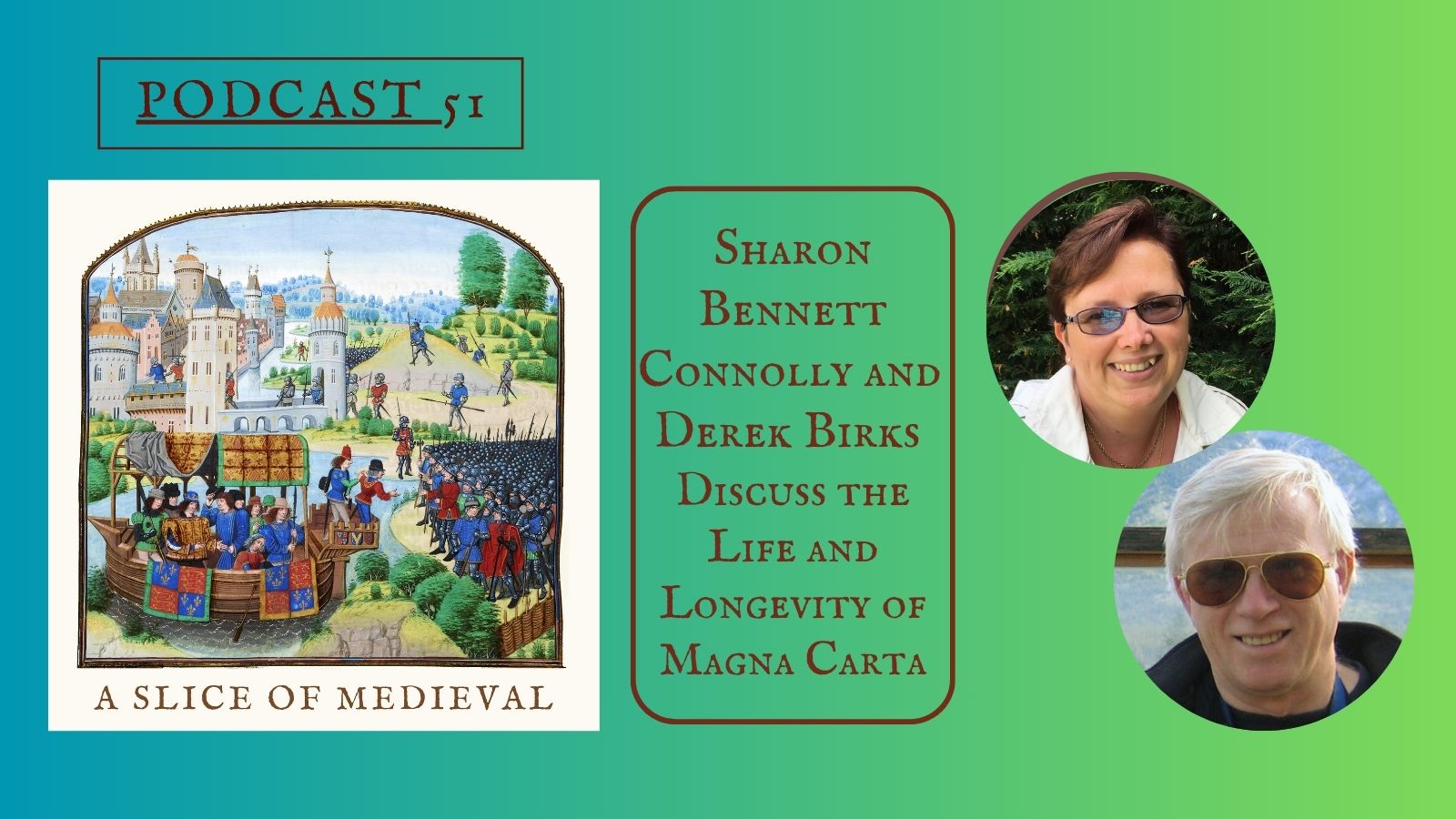
Podcast:
Have a listen to theA Slice of Medieval podcast, which I co-host with Historical fiction novelist Derek Birks. Derek and I welcome guests, such as Bernard Cornwell, and discuss a wide range of topics in medieval history, from significant events to the personalities involved.
*
Don’t forget!Signed and dedicated copies of all my books are available through my online store.
For forthcoming online and in-person talks, please check out my Events Page.
You can be the first to read new articles by clicking the ‘Follow’ button, liking our Facebook page or joining me on Twitter, Threadsand Instagram.
Today, I am honoured to be a guest writer over at the English Historical Fiction Authors, with an article on medieval heroine, Mary of Blois. Here’s a taster:
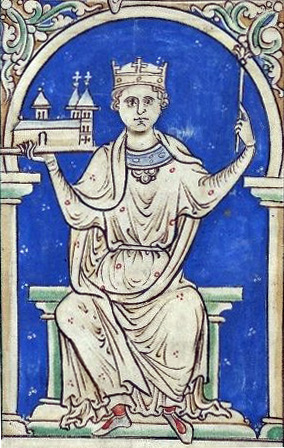
Mary was the youngest daughter of Stephen of Blois and his wife, Matilda of Boulogne, herself the granddaughter of St Margaret, queen of Scotland. Mary was born in Blois, France around 1136. She was destined for the cloister from an early age and was placed in a convent at Stratford, Middlesex, with some nuns from St Sulpice in Rennes. So how did this nun become a reluctant wife?
Mary’s father Stephen was the nephew of Henry I, one of his closest male relatives. In the confusion following Henry’s death it was Stephen who acted quickly and decisively….
My book, Heroines of the Medieval World, is now available in hardback in the UK from both Amberley Publishing and Amazon UK and worldwide from Book Depository. It is also available on Kindle in both the UK and USA and will be available in Hardback from Amazon US from 1 May 2018.
You can be the first to read new articles by clicking the ‘Follow’ button, liking our Facebook page or joining me on Twitter.
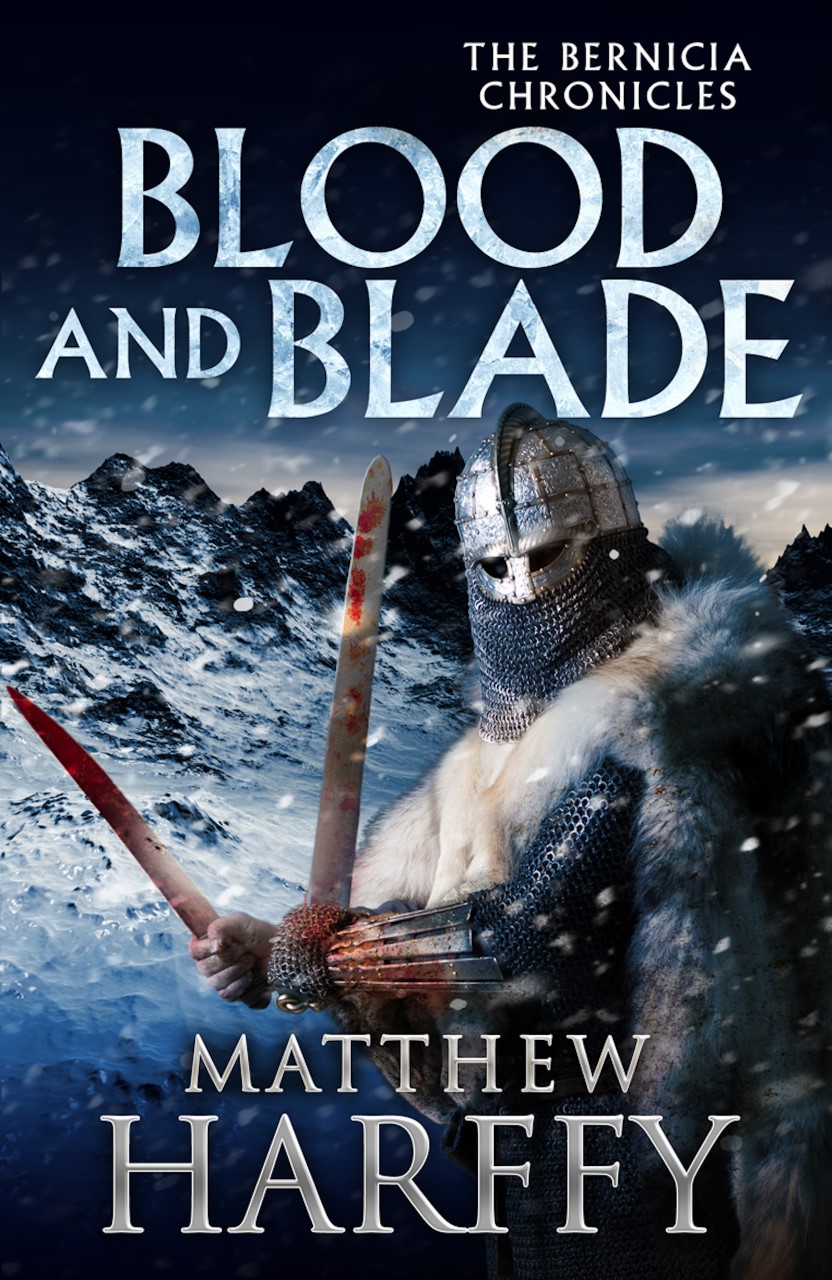
This week I am delighted to be a part of Matthew Harffy‘s blog tour, celebrating the release of his latest novel in the Bernicia Chronicles, Blood and Blade.
635AD. Anglo-Saxon Britain. A gripping, action-packed historical thriller and third instalment in The Bernicia Chronicles. Perfect for fans of Bernard Cornwell.
Oswald is now King of Northumbria. However, his plans for further alliances and conquests are quickly thrown into disarray when his wedding to a princess of Wessex is interrupted by news of a Pictish uprising.
Rushing north, Oswald leaves Beobrand to escort the young queen to her new home. Their path is fraught with danger and uncertainty, Beobrand must try to unravel secrets and lies if they are to survive.
Meanwhile, old enemies are closing in, seeking brutal revenge. Beobrand will give his blood and blade in service to his king, but will that be enough to avert disaster and save his kith and kin from the evil forces that surround them?
Beobrand Half-Hand is fast becoming one of my favourite Saxon heroes. Starting with The Serpent Sword, continuing with The Cross and the Curse and now in Blood and Blade his story has told with passion and excitement by Matthew Harffy, with an eye to the great adventure. The author has honed his story-tellling skills to perfection in this 3rd novel of the series. The action continues unabated; from the first words of the opening chapter, Beobrand is in the thick of the fight, both politically and physically.
In Blood and Blade Matthew Harffy manages to transport the reader back to 7th century Britain, enveloping you in the Anglo-Saxon era. His knowledge and love of the time and its people shines through on every page and gives the whole book – indeed, the series – a deep impression of authenticity. You are taken on a journey, which encompasses the length and breadth of England, from Hadrian’s Wall to the royal court of Wessex, we follow Beobrand’s journey as a warrior for his king, and courtier to his new queen. The landscape and people of Britain are vividly brought to life.
The fight scenes are wonderfully choreographed, enthusiastic and enjoyable. You can almost hear the clash of sword on shield, the screams of the wounded and howls of the warriors – I think I even, physically, flinched in places!
For a heartbeat Beobrand saw the firelight glisten on the wicked iron point of the arrow. Torran aimed and held the arrow there momentarily. They were still too far away to attack. With every step though, his chance of missing, or of their byrnies protecting them, lessened.
“If you are not afraid, then lower your child’s toy and face me with sword and spear.”
Torran did not answer. His right hand let loose the bowstring and the arrow thrummed towards Beobrand. it flew straight and true. Beobrand watched its flight, a blur of white in the dawn. He saw the arrow come but did not react. He closed his eyes and accepted his wyrd.
There was a crash and a clatter, but no impact. No searing pain as the arrow split through metal rings and the soft flesh beneath.
Beobrand opened his eyes. For a moment the scene was confusing in the dawn-shadow of the hill. Someone was sprawled on the earth before him. Was it Acennan? No, the short warrior was still at his side. Then the figure groaned and rose up. Teeth flashed in the dark as the face broke into a savage grin. It was Attor. He held a shield in his left hand. From its hide-covered boards protruded that arrow that had been meant for Beobrand.
“Seemed you needed saving, lord,” he said, the glee of battle lending his tone a shrill edge.
Matthew Harffy has taken great care in developing his characters. Beobrand has grown older and wiser through his experiences. His battle skills are as keen as ever, while his political acumen and tactical wizardry is proving invaluable to his king, Oswald. His confidence has grown through his success, but the faith of his men and their willingness to follow him wherever he may lead – even if it is into an enemy shield wall.
And we learn more about his men. As Beobrand matures, he realises that it is not enough to have men fight for him; he has to learn about their pasts, their lives and their weaknesses. this is the book in which the lives of his friends and followers, such as Acennan, are given more depth and history, making their characters more realistic and human.
New characters are also introduced’ some friends, some enemies; they change the dynamic and bring in the promise of some great stories to come. As ever, Beobrand’s enemies are truly despicable, and will stop at nothing to bring the hero down, whether it is with arrow, sword or some more personal weapon. Beobrand has to use all his physical and mental strength to win through.
It is hard not to compare Matthew Harffy’s books with those of Bernard Cornwell. Much of the story is set around Bebbanburg (Bamburgh Castle), where Cornwell’s Last Kingdom stories began; but I don’t think that’s a bad thing. Both authors have their own unique styles, but a sense of adventure that will take their heroes on spectacular journeys. Any fan of Bernard Cornwell will find another favourite writer in Matthew Harffy. However, Beobrand’s story is set a couple of centuries earlier and is a truly unique story. The hero of the Bernicia Chronicles will stand up against any Bernard Cornwell could produce.
Matthew Harffy is the author of the Bernicia Chronicles, a series of novels set in seventh century Britain. The first of the series, The Serpent Sword, was published by Aria/Head of Zeus on 1st June 2016. The sequel, The Cross and The Curse was released on 1st August 2016. Book three, Blood and Blade, was released on 1st December 2016.
Book info and links:
The Serpent Sword, The Cross and the Curse and Blood and Blade are available on Amazon, Kobo, Google Play, and all good online bookstores. Killer of Kings and Kin of Cain are available for pre-order on Amazon and all good online bookstores.
My book, Heroines of the Medieval World, is now available in hardback in the UK from both Amberley Publishing and Amazon UK and worldwide from Book Depository. It is also available on Kindle in both the UK and USA and will be available in Hardback from Amazon US from 1 May 2018.
You can be the first to read new articles by clicking the ‘Follow’ button, liking our Facebook page or joining me on Twitter.
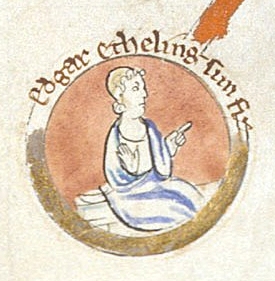
Edgar the Ætheling was the only son of Edward the Exile and his wife, Agatha. His father was the son of Edmund II Ironside, king of England in 1016; Edward’s grandfather was, therefore, Ӕthelred II (the Unready) and his uncle was Edward the Confessor, England’s king from 1042 until 1066. When his father was murdered in 1016 Edward and his younger brother, Edmund, were sent into exile of the continent by England’s new king, Cnut.
It is thought that Cnut intended that they would be killed, but the boys were protected by the king of Sweden and sent on to safety in Kiev, at the court of its prince, Jaroslav. Around 1043 Edward married Agatha, probably the daughter Liudolf, margrave of West Friesland and a relative of Emperor Heinrich III. Margaret, the oldest of three children, was born in either 1045 or 1046; her sister, Christina was born around 1050 and her brother Edgar, the Ӕtheling was born sometime between 1052 and 1056.
The family may have spent their whole lives in European exile, were it not for Edward the Confessor lacking an heir to the English throne; although Edward was married to Edith Godwinson, the couple remained childless. Sometime in 1054 Edward sent an embassy to Edward the Exile, to bring him back to England as ӕtheling, heir to the throne. The family could not travel immediately, possibly because Agatha was pregnant with Edgar, and only arrived in England in 1057, having journeyed by ship, provided by Emperor Heinrich III.
Just days after their return Edward the Exile was dead, whether by nefarious means or simply a twist of fate is uncertain. The suspicion has been raised that Edward’s rival for the throne, Harold Godwinson – the future Harold II – may have taken the opportunity to remove his rival; although it was Harold who brought Edward back to England, so surely, had he intended murder, he would have done it sooner?
Whatever the circumstances, the death of Edward the Exile was a blow for Edward the Confessor’s dynastic hopes. Little Edgar, now the ӕtheling was much too young to assume a political role. He and his sisters, along with their mother, were now in the protection of King Edward. They continued to live at court and by January 1066, when Edward the Confessor died, Margaret was approaching her twentieth birthday, while Edgar could have been as young as ten and was probably no older than fourteen. Due to his tender years, and lack of powerful allies, Edgar was passed over as a candidate for the throne in preference for the older and more experienced Harold Godwinson; who was crowned as Harold II.
Edward the Exile. Edgar’s father
Following Harold’s death at the Battle of Hastings in October 1066, Edgar was proclaimed king in London by some of his supporters, led by Archbishop Ealdred of York, ‘as was his proper due by birth’¹; he was also promised backing by the earls Edwin and Morcar, brothers-in-law of Harold II but their support did not materialise, and without it Edgar’s cause was hopeless. He submitted to William of Normandy, at Berkamsted, in early December. William treated Edgar honourably, allowing him his life and freedom, and giving him land.
However, by 1068 Edgar the Ӕtheling had become involved in the opposition to Norman rule, which had been festering in northern England. When events turned against him he fled to Scotland taking his mother and sisters along with him. The family was warmly received at Dunfermline by Scotland’s king, Malcolm III Canmore. At the time, Malcolm was married to Ingebiorg and the father of two sons, Duncan and Donald. Whether Ingebiorg died or was put aside, seems uncertain; her sons were exiled from court, although Duncan would eventually reign as Duncan II he was killed at the Battle of Monthechin in 1094.
Although we do not know Ingebiorg’s fate, we do know that in 1069 Malcolm asked Edgar and his mother for Margaret’s hand in marriage. Margaret was reluctant to agree to the marriage, she was more inclined to a religious life and had hoped to become a nun. Nonetheless, with pressure from Malcolm and, possibly, her own sense of obligation to the king who was sheltering her family, she eventually accepted his proposal. They were married at Dunfermline sometime in 1069 or 1070 and, by all accounts, it seems to have been a happy and successful marriage.
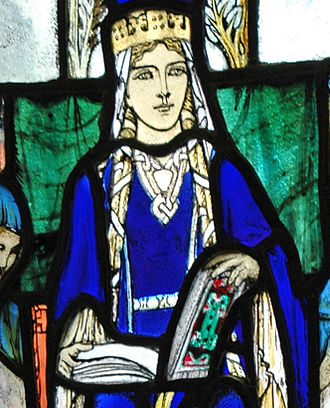
St Margaret, queen of Scotland
In 1069, Edgar was back in northern England, at the head of the Northumbrian rebels who entered York. After defeat at York, he fled again to Scotland, but returned to lead the Northumbrian army when a Danish fleet arrived in the Humber. The army captured the Norman castle at York and killed its garrison. During the winter, Edgar narrowly evaded capture when he raided into Lincolnshire with a ship from the Danish fleet. Although he was part of the rebellion, there does not appear to have been any specific plans to make Edgar king and in 1070 William brought the full force of his wrath down on the north, systematically and brutally crushing the rebellion.
Edgar fled again to Scotland, and played no part in the 1071-2 rebellion at Ely. By 1074 he was in exile in Flanders. He was shipwrecked in the same year, while on the way to take control of the castle of Montreuil, offered to him by the French as a base from which he could torment King William. Having returned to Scotland, and on the advice of his brother-in-law, Malcolm III, Edgar submitted to William I and was established at his court. According to William of Malmesbury he remained ‘at court for many years, silently sunk into contempt through his indolence, or more mildly speaking, his simplicity’².
According to the Domesday Book, Edgar held 2 estates in Hertfordshire in 1086; Barkway and Hormead. He became close friends with 2 of the Conqueror’s sons; Robert Curthose and William Rufus. In 1086, he was sent to Apulia, another land under Norman rule, with a force of 200 knights, although the nature of his mission is unknown, the mission itself is testament to the high regard the Normans held him in. Edgar then joined Robert Curthose, duke since his father’s death in 1087, in Normandy, but was expelled from there in 1091, following a treaty between Robert and his brother, William II of England.
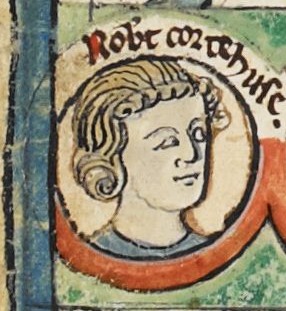
Robert Curthose, duke of Normandy
As a result, Edgar went to Scotland and encouraged Malcolm III to invade England. Peace was eventually restored and in 1093 Edgar was employed by William to escort King Malcolm to the English court. Both Malcolm and Margaret died within a few days of each other, in November 1093. In 1095 Edgar campaigned with William against the rebellious earl of Northumbria, Robert de Mowbray and by 1097 as guardian for his nephew, Edgar, in Scotland, he ‘went with an army, with the king’s support, into Scotland, and conquered the country in a severe battle’³ making his nephew and namesake king of Scotland.
According to Orderic Vitalis, in 1098 Edgar joined the First Crusade, arriving at Latakia in the Levant in June; having taken the area under his protection he then transferred it to Robert Curthose, also a Crusader. However, Orderic is the only source for Edgar’s participation and another possibility is that his journey to the Holy Land was later, in 1102 – or maybe he made 2 journeys?
Edgar returned to England in the early 1100s and fought his last action, for Robert Curthose, at the Battle of Tinchebrai in 1106. Robert was defeated by his younger brother, Henry I of England, and was imprisoned until his death in 1134. Edgar, however, was incarcerated for only a short while and was soon released;his Anglo-Saxon royal descent was no longer an issue of contention, since Henry had married Edgar’s niece, Matilda, soon after taking the crown in 1100.
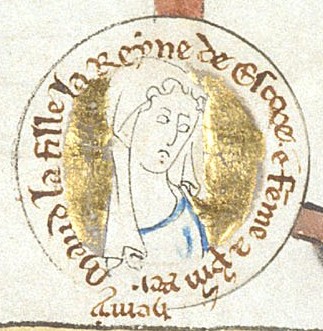
Matilda, Edgar’s niece and queen of England
Edgar seems to have been only a minor player in the politics and upheaval following the Norman Conquest. His political isolation meant that few took his claim to the English crown seriously. While his participation in military actions, and in relations with Scotland are mentioned in various documents, his death passed without notice – or remark. William of Malmesbury wrote of him in 1125, that ‘he now grows old in the country in privacy and quiet’². Nothing is mentioned of him thereafter; neither is it ever remarked that he had a wife of children.
If he had only been a few years older in that crucial year of 1066, his story could have been very different. instead, he simply slips from the pages of history, remembered only as England’s lost king.
*
Footnotes: ¹Anglo-Saxon Chronicle, 1066, Text D; ² William of Malmesbury, De gestis regum; ³Anglo-Saxon Chronicle, 1097, Text E.
*
Sources: Anglo-Saxon Chronicle; William of Malmesbury, De gestis regum; Oxforddnb.com; The History Today Companion to British History, Edited by juliet Gardner and Neil Wenborn; The Battle of Hastings, 1066 by m.K. Lawson; The Oxford Companion to British History edited by John Cannon; Britain’s Royal Families, the Complete Genealogy by Alison Weir; Edward the Confessor, King of England by Peter Rex; The Mammoth Book of British Kings & Queens by Mike Ashley; Brewer’s British Royalty by David Williamson; The Norman Conquest by Teresa Cole
*
Pictures courtesy of Wikipedia
*
My Books:
Signed, dedicated copies of all my books are available through my online bookshop.
OUT NOW: Scotland’s Medieval Queens
Scotland’s history is dramatic, violent and bloody. Being England’s northern neighbour has never been easy. Scotland’s queens have had to deal with war, murder, imprisonment, political rivalries and open betrayal. They have loved and lost, raised kings and queens, ruled and died for Scotland. From St Margaret, who became one of the patron saints of Scotland, to Elizabeth de Burgh and the dramatic story of the Scottish Wars of Independence, to the love story and tragedy of Joan Beaufort, to Margaret of Denmark and the dawn of the Renaissance, Scotland’s Medieval Queens have seen it all. This is the story of Scotland through their eyes.
‘Scotland’s Medieval Queens gives a thorough grounding in the history of the women who ruled Scotland at the side of its kings, often in the shadows, but just as interesting in their lives beyond the spotlight. It’s not a subject that has been widely covered, and Sharon is a pioneer in bringing that information into accessible history.’ Elizabeth Chadwick (New York Times bestselling author)
Heroines of the Tudor World tells the stories of the most remarkable women from European history in the time of the Tudor dynasty, 1485-1603. These are the women who ruled, the women who founded dynasties, the women who fought for religious freedom, their families and love. Heroines of the Tudor World is now available for pre-order from Amberley Publishing and Amazon UK.Women of the Anarchy demonstrates how Empress Matilda and Matilda of Boulogne, unable to wield a sword themselves, were prime movers in this time of conflict and lawlessness. It shows how their strengths, weaknesses, and personal ambitions swung the fortunes of war one way – and then the other. Available from Bookshop.org, Amberley Publishing and Amazon UK. King John’s Right-Hand Lady: The Story of Nicholaa de la Haye is the story of a truly remarkable lady, the hereditary constable of Lincoln Castle and the first woman in England to be appointed sheriff in her own right. Available from all good bookshops Pen & Sword Books, bookshop.org and Amazon.
Alternate Endings: An anthology of historical fiction short stories including Long Live the King… which is my take what might have happened had King John not died in October 1216. Available in paperback and kindle from Amazon.
Podcast:
Have a listen to theA Slice of Medieval podcast, which I co-host with Historical fiction novelist Derek Birks. Derek and I welcome guests, such as Bernard Cornwell, and discuss a wide range of topics in medieval history, from significant events to the personalities involved. Definitely worth a listen!
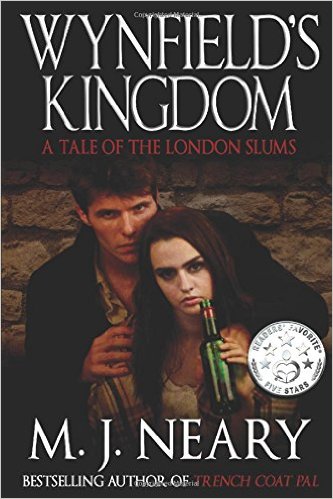
My latest book review, of MJ Neary’s latest novel,Wynfield’s Kingdom: A Tale of the London Slums, the first novel of his stunning new series, set in Victorian South London, has gone live over at The Review today!
Wynfield’s Kingdom: A Tale of the London Slums is one of those amazing books which makes you feel like you’ve discovered something really special. Set mainly in the slums of Bermondsey and Southwark in South London, it paints an image of Victorian London which will stay with you for days – and nights – afterwards. The novel is an amazing story of human existence and endurance, with so many twists and turns that it will not fail to surprise and mesmerise you. The fact you never quite know what the next chapter will bring keeps you hooked and curious to the very end.
Tom did not trust Diana. She might have been helpless but certainly not harmless. Feebleness and innocence are not synonyms. She was dangerous precisely because of her physical weakness. One could expect anything from her. Tom feared that she would torch the tavern out of sheer spite.
“She’s your burden now,” he told Wynfield. “I wash my hands. You brought her here, so you watch over her now. If she starts making trouble, I’ll kick both of you out on the streets. I won’t have any nonsense in my house. You both came here as patients. I allowed you to stay here and that alone was unwise on my part.”
To read the full review of this fantastic novel – and to enter the prize draw and be in with a chance of winning an e-book in the giveaway, simply visit The Review and leave a comment. Good luck!
*
My book, Heroines of the Medieval World, is now available in hardback in the UK from both Amberley Publishing and Amazon UK and worldwide from Book Depository. It is also available on Kindle in both the UK and USA and will be available in Hardback from Amazon US from 1 May 2018.
Be the first to read new articles by clicking the ‘Follow’ button, liking our Facebook page or joining me on Twitter.
My latest book review, of Derek Birks‘ latest novel, Scars From the Past, the first novel of his stunning new series, set 10 years after the conclusion of his fantasticRebels& Brothers series, has gone live over at The Review today!
Scars From the Past is the first novel from Derek Birks’ new series and, I have to say, it is the ultimate page-turner! It is a new direction for the author. While there is just as much action as in the first series, the story is less about national politics and more family orientated, as the Elders fight to survive, and to avoid the family imploding.Where the first series concentrated on duty and feudal loyalty, this new novel examines more personal relationships; love and friendship.
The original Rebels & Brothers series told the story of Ned Elder, a Sharpe-like hero who fought his way through the Wars of the Roses and Edward IV’s battle to win – and hold – the throne of England. The new series, set ten years after the end of the fourth book, The Last Shroud, follows the adventures of the next generation. Ned’s son, John, is a young man finding it difficult to live up to his father’s legend and the reader follows his journey as he realises his own identity and that duty and responsibility are not so easy to run from…..
To read the full review of this fantastic novel – and to enter the prize draw and be in with a chance of winning a hot-off-the-press signed paperback copy in the giveaway, simply visit The Review and leave a comment. Good luck!
*
My book, Heroines of the Medieval World, is now available in hardback in the UK from both Amberley Publishing and Amazon UK and worldwide from Book Depository. It is also available on Kindle in both the UK and USA and will be available in Hardback from Amazon US from 1 May 2018.
Be the first to read new articles by clicking the ‘Follow’ button, liking our Facebook page or joining me on Twitter.
After writing about Yolande de Dreux a few weeks back, I became intrigued with the story of her grandson, John de Montfort.
John was the only son of John, count of Montfort, and Joan of Flanders. He was probably born in November or December of 1339. His great-grandmother was Beatrice of England, a daughter of Henry III, who was the mother of his grandfather, Arthur, duke of Brittany. John is first mention in 1341 when his childless uncle, John III, duke of Brittany, provided him with 20,000 livres from his patrimony. However, when the duke died on 30 April 1341, the duchy was thrown into turmoil. Civil war erupted when John’s father and uncle-by-marriage, Charles de Blois, both laid claim to the duchy.
John de Montfort the elder was the son of Arthur, duke of Brittany, by his 2nd wife, Yolande. Charles de Blois was married to Jeanne de Penthièvre, daughter of Arthur’s second son by his first wife; Guy of Brittany. The bitter conflict was to be absorbed into the much greater struggle, between France and England, that became known as the Hundred Years’ War. Edward III of England supported young John’s father, while Philip VI of France backed Charles de Blois.
In November 1341 John’s father was captured and it was up to his mother to assume the de Montfort cause. Edward III sent troops to secure various strongholds, but by late 1342, after an unproductive campaign, he had minimised his military involvement, leaving a lieutenant in charge as he headed back to England, accompanied by John, who was about 3 years old at the time, his mother and his sister, Joan.
John’s mother was imprisoned in Tickhill Castle, Yorkshire, supposedly after succumbing to a mental illness, though more likely for political reasons. As a result, John was raised in the household of the queen, Philippa of Hainault. Their fortunes revived briefly when John’s father arrived in England 1345, paying homage to Edward III at Easter, having broken his parole and escaped the duchy. He led a small force back to Brittany, but died suddenly in September of the same year, leaving 6-year-old John in the guardianship of Edward III.
Mary of England, John’s first wife
Sir Thomas Dagworth captured Charles de Blois at Le Roche Derrien in June 1347, giving the English the opportunity to discuss the succession issue. It looked for a time, that Edward would sacrifice; in 1353 a treaty was actually drafted that was heavily in de Blois’ favour, depriving John of most of his rights. Luckily, for John, it was never implemented and de Blois was eventually released, in return for a huge ransom, in 1356.
Edward resolved now to back young John’s claims. Around 17-years-old, John experienced his first military campaign when he fought alongside Henry, duke of Lancaster, in the siege of Rennes, from October 1356 to July 1357, and later taking part in the Rheims campaign of 1359-60. In March, 1361, John married Edward III’s daughter, Mary, at Woodstock. The marriage would end in tragedy as Mary, still only 17, died of plague in September of the same year. Discussions throughout the early 1360s offered no lasting political solution and, now having attained his majority, John returned to Brittany in the summer of 1362.
Further discussions hosted by the Black Prince, including plans to partition the duchy, failed. However, when Charles de Blois was eventually defeated killed in battle at Auray on 29th September 1364 Jeanne de Penthièvre was forced to come to terms with John de Montfort and the Treaty of Guérande was signed on 12th April 1365. John was recognised as John IV duke of Brittany by Charles V of France, to whom he performed homage for his duchy in December 1366.
Initially, as duke of Brittany, John’s ties to England continued to be strong, his financial debts and other obligations ensuring this. In 1366 he married Joan Holland, step-daughter of Edward, the Black Prince. However, when a lull in the fighting ended in 1369 and France and England were at loggerheads once again, John was caught in a dilemma. As his overlord Charles V was expecting John to fight for France, while Edward III was his old ally and mentor and obviously felt deserving of his loyalty. His prevarications meant his Breton subjects grew restive and when John sided with Edward III, after receiving the earldom of Richmond in 1372 as a sweetener, they openly rebelled.
Joan of Navarre, John’s 3rd wife
By April 1373 John had lost everything; he fled to England as his duchy was overrun by French troops. And yet, worse was to follow. After participating in John of Gaunt’s chevauchée from Calais to Bordeaux, John was tried for treason in the Paris parlement in December 1378. In total, John spent 6 years in exile, living on his English estates and attending court and parliament; he was the 1st foreign prince to be made a Knight of the Garter, in 1374.
John was invited to Brittany in 1379 by his Breton subjects, who were beginning to become suspicious of Charles V’s intentions; realising that his attempts to bring Brittany into the French royal demesne would threaten her traditional privileges and independence. The Breton constable of France, Bertrand de Guesclin, deliberately failed to oppose the duke’s landing. After Charles V died in September 1380 a peace was negotiated with the aid of the count of Flanders and Louis, duke of Anjou, which was ratified in the 2nd Treaty of Guérande in April 1381.
A consequence of the treaty was that John de Montfort now opposed his former allies in England and Navarre. With Edward III dying in 1377, his young grandson was now King Richard II. The English still occupied Brest, and John was having difficulties in collecting revenues from his English estates. John’s wife, Duchess Joan, had been staying in England during the troubles but, after much wrangling, was finally returned to her husband in 1382, only to die in November 1384. Her death removed an important connection to the English court and Richard II, her half-brother.
The 1380s saw John consolidating his position in Brittany, making alliances with other French princes, such as the dukes of Berry and Burgundy and the king of Navarre. He developed the duchy’s institutions, encouraged trade, devised new taxes and exploited minting rights. On a cultural level, John expanded his court and encouraged the arts by extensive patronage. He also encouraged loyalty to his family and dynasty, which was helped greatly by his marriage to Joan of Navarre in 1386 and the birth of his long-awaited heir in 1389.
John V, duke of Brittany
As Anglo-French diplomatic relations thawed in the 1390s, John was able to make a marriage alliance with John of Gaunt, whereby one of his daughters would marry a son of Gaunt’s heir, the earl of Derby. John de Montfort attended the wedding of Richard II and Isabella of France in 1396 and Brest was returned to him in 1397.
Joan and John had an affectionate relationship, producing 8 children, 7 of whom survived to adulthood. John and a second son, Arthur, each became duke of Brittany; Arthur was also constable of France and succeeded his nephew, John’s son Peter, as duke. He died in 1458 and was succeeded by his nephew, Francis, son of his younger brother, Richard, count of Étampes, who had died in 1439. A fourth son, Gilles, died in 1412. Joan and John also had 3 daughters: Marie, countess of Alençon; Blanche, countess of Armagnac and Marguerite, vicomtess de Rohan.
John de Montfort paid one last visit to England in 1398, when he took formal possession of Richmond, attended a Garter ceremony at Windsor and spent some time on progress with Richard II before returning home. He died at Nantes on 1st November 1399, where he was buried. In 1402 his widow, now the wife of Henry IV of England, erected an English-made alabaster tomb over his grave; it was destroyed during the French Revolution. Joan acted as regent for her 10-year-old son, John, until her marriage to Henry; when she entrusted the regency and custody of her Breton children, to the Duke of Burgundy.
Brittany remained an independent duchy within France for another 100 years.
*
Pictures courtesy of Wikipedia.
*
Sources: Ian Mortimer The Perfect King; Marc Morris Edward I: A Great and Terrible King by Marc Morris; Brewer’s BritishRoyalty by David Williamson; The Mammoth Book of British kings & Queens by Mike Ashley; Britain’s Royal Families by Alison Weir; The Oxford Companion to British History edited by John Cannon; The History Today Companion to British History Edited by Juliet Gardiner and Neil Wenborn; The Story of Scotland by Nigel Tranter; Scotland, History of a Nation by David Ross; oxforddnb.com; britannica.com; W.M. Ormrod The Reign of Edward III.
*
My books
Signed, dedicated copies of all my books are available through my online bookshop.
Out now: Scotland’s Medieval Queens
Scotland’s history is dramatic, violent and bloody. Being England’s northern neighbour has never been easy. Scotland’s queens have had to deal with war, murder, imprisonment, political rivalries and open betrayal. They have loved and lost, raised kings and queens, ruled and died for Scotland. From St Margaret, who became one of the patron saints of Scotland, to Elizabeth de Burgh and the dramatic story of the Scottish Wars of Independence, to the love story and tragedy of Joan Beaufort, to Margaret of Denmark and the dawn of the Renaissance, Scotland’s Medieval Queens have seen it all. This is the story of Scotland through their eyes.
Heroines of the Tudor World tells the stories of the most remarkable women from European history in the time of the Tudor dynasty, 1485-1603. These are the women who ruled, the women who founded dynasties, the women who fought for religious freedom, their families and love. Heroines of the Tudor World is now available for pre-order from Amberley Publishing and Amazon UK.Women of the Anarchy demonstrates how Empress Matilda and Matilda of Boulogne, unable to wield a sword themselves, were prime movers in this time of conflict and lawlessness. It shows how their strengths, weaknesses, and personal ambitions swung the fortunes of war one way – and then the other. Available from Bookshop.org, Amberley Publishing and Amazon UK. King John’s Right-Hand Lady: The Story of Nicholaa de la Haye is the story of a truly remarkable lady, the hereditary constable of Lincoln Castle and the first woman in England to be appointed sheriff in her own right. Available from all good bookshops Pen & Sword Books, bookshop.org and Amazon.
Alternate Endings: An anthology of historical fiction short stories including Long Live the King… which is my take what might have happened had King John not died in October 1216. Available in paperback and kindle from Amazon.
Podcast:
Have a listen to theA Slice of Medieval podcast, which I co-host with Historical fiction novelist Derek Birks. Derek and I welcome guests, such as Bernard Cornwell and Michael Jecks, and discuss a wide range of topics in medieval history, from significant events to the personalities involved. Every episode is also now available on YouTube.
*
Don’t forget!Signed and dedicated copies of all my books are available through my online bookshop.
For forthcoming online and in-person talks, please check out my Events Page.
‘God save the Queen! God save our good Queen Mary!’










 History... the interesting bits!