Joan Makepeace, Scotland’s Lonely Queen

joan_queen_of_scotland1
Joan of the Tower, Queen of Scotland

In my research I frequently discover instances of happy medieval marriages – and even if a marriage was not based on love, it did not mean that it would not be successful. Indeed, in many such instances the young woman concerned found her own way of succeeding, whether it was through her children or the management of estates – or the fact that a lasting peace was achieved between her 2 countries.

Unfortunately for Joan of the Tower, later to be known as Joan Makepeace, her marriage achieved none of these things.

Joan was born in the Tower of London on 5 July, 1321; hence her rather dramatic name. She was the youngest of the 4 children of Edward II and his queen, Isabella of France, and had 2 older brothers and 1 sister. Her eldest brother, Edward, who was 9 years older than Joan, succeed his father as King Edward III in 1327, following Edward II’s deposition. While her 2nd brother, John of Eltham, was born in 1316 and died shortly after his 20th birthday, while campaigning against the Scots. Joan’s only sister, Eleanor of Woodstock, born in 1318, was only 3 years older than her baby sister and would go on to marry Reginald II, Count of Guelders.

Joan also had an illegitimate brother, Adam FitzRoy, a son of Edward II by an unknown woman. He was born in the early 1300s, but died whilst campaigning in Scotland with his father, in 1322.

Little Joan was named after her maternal grandmother, Queen Joan I of Navarre, wife of Philip IV of France. The king, also in London at the time of Joan’s birth, but not at the  Tower, granted an £80 respite on a £180 loan to Robert Staunton, the man who brought him news of the birth.¹ By 8th July Edward was visiting his wife and baby daughter at the Tower of London and stayed with them for several days.
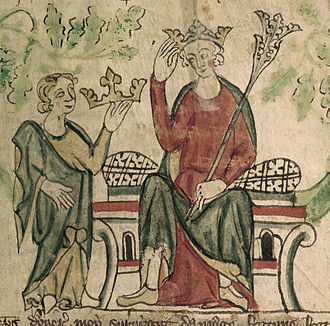
Joan’s father, Edward II

As the last of the children of Edward II and Isabella, it seems likely that the royal couple’s relationship changed shortly after her birth, their marriage heading for an irretrievable breakdown that would see the king deposed in favour of his son. Edward II was well known for having favourites; the first, Sir Piers Gaveston, met a sticky end in 1312, when he was murdered by barons angry at the influence he held over the king. Isabella’s estrangement with her husband followed the rise of a new favourite, Sir Hugh le Despenser, and, by the time of Joan’s birth, his influence on the king was gaining strength and alienating powerful barons at court. In March 1322 those barons were defeated at the Battle of Boroughbridge, Yorkshire, with many prominent barons killed, including the king’s erstwhile brother-in-law Humphrey de Bohun, earl of Hereford. The leader of the insurrection, the king’s cousin Thomas, earl of Lancaster, was executed 6 days later at Pontefract Castle.

Joan was, therefore, growing up amid a period of great turmoil, not only within England, but within her own family. It is doubtful that, as she grew, she was unaware of the atmosphere, but  Isabella and Edward were both loving parents and probably tried to shield their children as much as they could, ensuring stability in their everyday lives. Joan was soon placed  in the household of her older siblings, and put into the care of Matilda Pyrie,  who had once been nurse to her older brother, John of Eltham.

Sometime before February 1325, Joan and her sister were established in their own household, under the supervision of Isabel, Lady Hastings and her husband, Ralph Monthermer. Isabel was the younger sister of Edward II’s close companion, Hugh Despenser the Younger, and this act has often been seen by historians as the king removing the children from the queen’s custody. Although it could have been a malicious act it must be remembered, however, that Ralph Monthermer was the girls’ uncle-by-marriage through his first wife, Joan of Acre, Edward II’s sister, and it was a custom of the time that aristocratic children were fostered among the wider family.
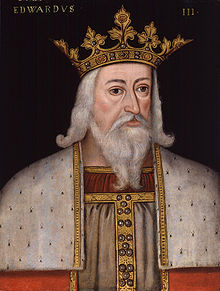
Joan’s brother Edward III

Joan and her elder sister, Eleanor, remained with Isabel even after Ralph’s death in the summer of 1325; however, the following year, they were given into the custody of Joan Jermy, sister-in-law of the king’s younger half-brother Thomas, Earl of Norfolk. Joan was the sister of Thomas’s wife, Alice Hales, and took charge of the girls’ household in January 1326, living alternately at Pleshey in Essex and Marlborough in Wiltshire.

As with all her siblings, Joan played a part in her father’s diplomatic plans; an attempt to form an alliance against France, Edward sought marriages in Spain for 3 of his 4 children. While Eleanor was to marry Alfonso XI of Castile, little Joan was proposed as the bride for the grandson of Jaime II of Aragon – the future Pedro IV – but this would come to nought.

By this time their mother, Isabella, was living at the French court, along with her eldest son, Edward, refusing to return to her husband whilst he still welcomed Hugh Despenser at his court. Within months Isabella and her companion (possibly her lover), Roger Mortimer, were to invade England and drive Edward II from his throne, putting an end to the proposed Spanish marriages. He was captured and imprisoned in Berkley Castle, forced to abdicate in favour of his eldest son, who was proclaimed King Edward III in 1327.

With her father exiled or murdered (his fate remains a bone of contention to this day), Joan became the central part of another plan – that of peace with Scotland. Isabella and her chief ally, Roger Mortimer, were now effectively ruling the kingdom for the young Edward III – still only in  his mid-teens. With the kingdom in disarray Isabella sought to end the interminable wars with Scotland, much to the young king’s disgust. Joan was offered as a bride for David, Robert the Bruce’s only son and heir, by his second wife, Elizabeth de Burgh.
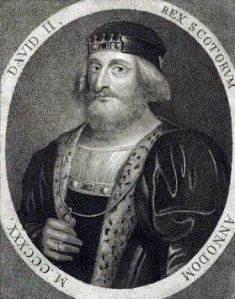
David II

The 1328 Treaty of Northampton was seen as a major humiliation by Edward III – and the 16-year-old king made sure his displeasure was known. However, he was forced to sign it, agreeing to Scotland’s recognition as an independent kingdom, the return of both the Ragman Roll (a document showing the individual acts of homage by the Scottish nobility) and the Stone of Scone (the traditional stone on which Scotland’s kings were crowned and which had sat in Westminster Abbey since being brought south by Edward I) and the marriage of Bruce’s 4-year-old son, David, to his 7-year-old sister, Joan.

Although the Stone of Scone and Ragman Roll were never returned to Scotland, the marriage between Joan and David did go ahead, although with a proviso that, should the marriage not be completed within 2 months of David reaching his 14th birthday, the treaty would be declared invalid. With neither king present – with Edward III refusing to attend, Robert the Bruce did likewise, claiming illness – the children were married at Berwick-on-Tweed on 17 July 1328, in the presence of Queen Isabella. The wedding was a lavish occasion, costing the Scots king over £2500.²

Following the wedding, and nicknamed Joan Makepeace by the Scots, Joan remained in Scotland with her child-groom. With Robert the Bruce’s death the following year, and David’s accession to the throne as David II, Joan and David attained the dubious record of being the youngest married monarchs in British history. They were crowned, jointly, at Scone Abbey in Perthshire, on 24th November 1331. It was the 1st time a Scottish Queen Consort was crowned.

Virtually nothing is known of Joan’s early years in Scotland. We can, I’m sure, assume she continued her education and maybe spent some time getting to know her husband. Scotland, however, was in turmoil and Edward III was not about to let his sister’s marriage get in the way of his own ambitions for the country. Unfortunately for Joan, Edward Balliol, son of the erstwhile king, John Balliol, and Isabella de Warenne, had a strong claim to the crown and was, as opposed to her young husband, a grown man with the backing of Edward III. What followed was a tug-of-war for Scotland’s crown, lasting many years.
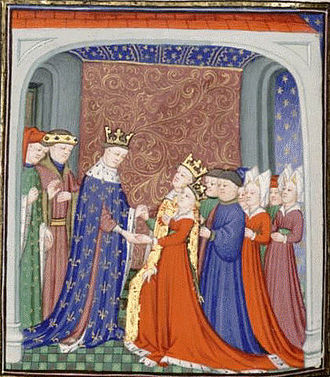
David II and Joan being greeted by Philip VI of France

David’s supporters suffered a heavy defeat at Halidon Hill in July 1333 and shortly after Joan, who was residing at Dumbarton at the time, and David were sent to France for their safety, where they spent the next 7 years. An ally of Scotland and first cousin of Joan’s mother, Philip VI of France gave the king and queen, and their Scottish attendants, accommodation in the famous Château Gaillard in Normandy.

Their return to Scotland, on 2nd June 1341, was greeted with widespread rejoicing that proved to be short-lived. When the French asked for help in their conflict with the English, David led his forces south. He fought valiantly in the disastrous battle at Neville’s Cross on 17th October 1346, but was captured by the English; he was escorted to a captivity in England that would last for the next 11 years, save for a short return to Scotland in 1351-52.

Joan and David’s marriage had proved to be an unhappy, loveless and childless union and, while a safe conduct was issued for Joan to visit her husband at Windsor for the St George’s Day celebrations of 1348, there is no evidence she took advantage of it. Although we know little of Joan’s movements, it seems she remained in Scotland at least some of the time, possibly held as a hostage to David’s safety by his Scottish allies. She may also have visited David in his captivity, taking it as an opportunity to visit with her own family, including her mother; Queen Isabella is said to have supported Joan financially while her husband was imprisoned, feeding and clothing her. Joan does not appear to have taken an active role in negotiations for David’s release, despite her close familial ties to the English court.

When David returned to Scotland he brought his lover, Katherine Mortimer, with him. They had met in England and it was said “The king loved her more than all other women, and on her account his queen was entirely neglected while he embraced his mistress.”³ Katherine met a grisly fate and was stabbed to death by the Earl of Atholl.

At Christmas 1357 Joan was issued with a safe conduct from Edward III “on business touching us and David” and again in May 1358 “by our licence for certain causes”.² Although the licences are understandably vague on the matter, Joan had, in fact, left David and Scotland.
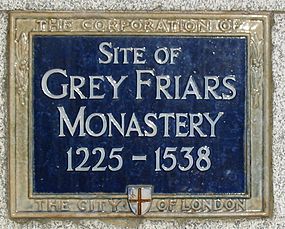
All that remains of Joan’s burial place

Joan spent the rest of her life in England, living on a pension of £200 a year provided by her brother, Edward III. She renewed family connections and was able to visit her mother before Isabella’s death in August 1358. As Queen of Scotland, she occasionally acted on her husband’s behalf. In February 1359 David acknowledge her assistance in the respite of ransom payments granted by Edward III saying it was “at the great and diligent request and instance of our dear companion the Lady Joan his sister.”²

Little is known of Joan’s appearance or personality. Several years after her death she was described as “sweet, debonair, courteous, homely, pleasant and fair” by the chronicler Andrew of Wyntoun.² Having led an adventurous life, through no choice of her own, if unhappy in love, Joan of the Tower, Queen of Scotland, died at the age of 41 on 7th September 1362, and was buried in the Church of the Greyfriars, Newgate, in London, where her mother had been laid to rest just 4 years earlier.

Following his wife’s death David II married his lover, Margaret Drummond, the widow of Sir John Logie, but divorced her on 20th March 1370. He died, childless, at Edinburgh Castle in February 1371, aged 47, and was succeeded by the first of the Stewart kings, his nephew, Robert II, son of Robert the Bruce’s eldest daughter, Marjorie.

*

Footnotes: ¹Isabella of France: The Rebel Queen by Kathryn Warner; ² Oxforddnb.com; ³Walter Bower quoted in Oxforddnb.com

Sources: The Story of Scotland by Nigel Tranter; Brewer’s British Royalty by David Williamson; Kings & Queens of Britain by Joyce Marlow; Mammoth Book of British Kings & Queens by Mike Ashley; Oxford Companion to British History Edited by John Cannon; Britain’s Royal Families by Alison Weir; educationscotland.gov.uk/scotlandhistory; englishmonarchs.co.uk; berkshirehistory.com; thefreelancehistorywriter.com; The Perfect King by Ian Mortimer; Scotland, History of a Nation by David Ross; The Life & Times of Edward III by Paul Johnson; The Reign of Edward III by W.M. Ormrod; Isabella of France: The Rebel Queen by Kathryn Warner; Isabella and the Strange Death of Edward II by Paul Doherty; Edward II: The Unconventional King by Kathryn Warner; Oxforddnb.com.

*

My Books

Signed, dedicated copies of all my books are available through my online bookshop.

Out now: Scotland’s Medieval Queens

Scotland’s history is dramatic, violent and bloody. Being England’s northern neighbour has never been easy. Scotland’s queens have had to deal with war, murder, imprisonment, political rivalries and open betrayal. They have loved and lost, raised kings and queens, ruled and died for Scotland. From St Margaret, who became one of the patron saints of Scotland, to Elizabeth de Burgh and the dramatic story of the Scottish Wars of Independence, to the love story and tragedy of Joan Beaufort, to Margaret of Denmark and the dawn of the Renaissance, Scotland’s Medieval Queens have seen it all. This is the story of Scotland through their eyes.

Available now from Amazon and Pen and Sword Books

Also by Sharon Bennett Connolly:
Heroines of the Tudor World tells the stories of the most remarkable women from European history in the time of the Tudor dynasty, 1485-1603. These are the women who ruled, the women who founded dynasties, the women who fought for religious freedom, their families and love. Heroines of the Tudor World is now available for pre-order from Amberley Publishing and Amazon UK. Women of the Anarchy demonstrates how Empress Matilda and Matilda of Boulogne, unable to wield a sword themselves, were prime movers in this time of conflict and lawlessness. It shows how their strengths, weaknesses, and personal ambitions swung the fortunes of war one way – and then the other. Available from Bookshop.orgAmberley Publishing and Amazon UKKing John’s Right-Hand Lady: The Story of Nicholaa de la Haye is the story of a truly remarkable lady, the hereditary constable of Lincoln Castle and the first woman in England to be appointed sheriff in her own right. Available from all good bookshops Pen & Sword Booksbookshop.org and Amazon

Defenders of the Norman Crown: The Rise and Fall of the Warenne Earls of Surrey tells the fascinating story of the Warenne dynasty, from its origins in Normandy, through the Conquest, Magna Carta, the wars and marriages that led to its ultimate demise in the reign of Edward III. Available from Pen & Sword BooksAmazon in the UK and US, and Bookshop.orgLadies of Magna Carta: Women of Influence in Thirteenth Century England looks into the relationships of the various noble families of the 13th century, and how they were affected by the Barons’ Wars, Magna Carta and its aftermath; the bonds that were formed and those that were broken. It is now available in paperback and hardback from Pen & SwordAmazon, and Bookshop.orgHeroines of the Medieval World tells the stories of some of the most remarkable women from Medieval history, from Eleanor of Aquitaine to Julian of Norwich. Available now from Amberley Publishing and Amazon, and Bookshop.orgSilk and the Sword: The Women of the Norman Conquest traces the fortunes of the women who had a significant role to play in the momentous events of 1066. Available now from Amazon,  Amberley Publishing, and Bookshop.org.

Alternate Endings: An anthology of historical fiction short stories including Long Live the King… which is my take what might have happened had King John not died in October 1216. Available in paperback and kindle from Amazon.

Podcast:

Have a listen to the A Slice of Medieval podcast, which I co-host with Historical fiction novelist Derek Birks. Derek and I welcome guests, such as Bernard Cornwell and discuss a wide range of topics in medieval history, from significant events to the personalities involved. Every episode is also now available on YouTube.

*

Don’t forget! Signed and dedicated copies of all my books are available through my online bookshop.

For forthcoming online and in-person talks, please check out my Events Page.

You can be the first to read new articles by clicking the ‘Follow’ button, liking our Facebook page or joining me on Twitter and Instagram.

©2017 Sharon Bennett Connolly FRHistS
Book Corner: Half Sick of Shadows by Richard Abbott

Today over at The Review, you can read my thoughts on Richard Abbott’s fantastic new historical fantasy novel, Half Sick of Shadows, a fabulous re-imagining of Alfred Lord Tennyson’s The Lady of Sahlott.

And there’s a fabulous giveaway! With one signed paperback copy going to a winner in the UK, or and ebook to anywhere else in the world.

Here’s a taster:

There is one great advantage to being a book reviewer; every now and then you get to read a gem of a book, one that you may never have discovered had you relied on Amazon’s reading recommendations. Half Sick of Shadows is one such treasure. This novel, inspired by Alfred Lord Tennyson’s epic poem The Lady of Shalott, is unique and engrossing from the very first page.

When trying to think of a single word that could be used to describe this novel, the only one that seemed to fit was ‘mesmerising‘.

The reader is instantly drawn into the world of the Lady, who can watch the lives and interactions of the people in the world only through the guide of a mirror. She can see the world, but is apart from it, safe in her own keep…..


To read the full review of this fantastic novel – and to enter the prize draw and be in with a chance in this fantastic giveaway, simply visit The Review and leave a comment.

Good luck!

*

My book, Heroines of the Medieval World,  is now available in hardback in the UK from both Amberley Publishing and Amazon UK and worldwide from Book Depository. It is also available on Kindle in both the UK and USA and will be available in Hardback from Amazon US from 1 May 2018.

You can be the first to read new articles by clicking the ‘Follow’ button, liking our Facebook page or joining me on Twitter.


*

©Sharon Bennett Connolly 2017

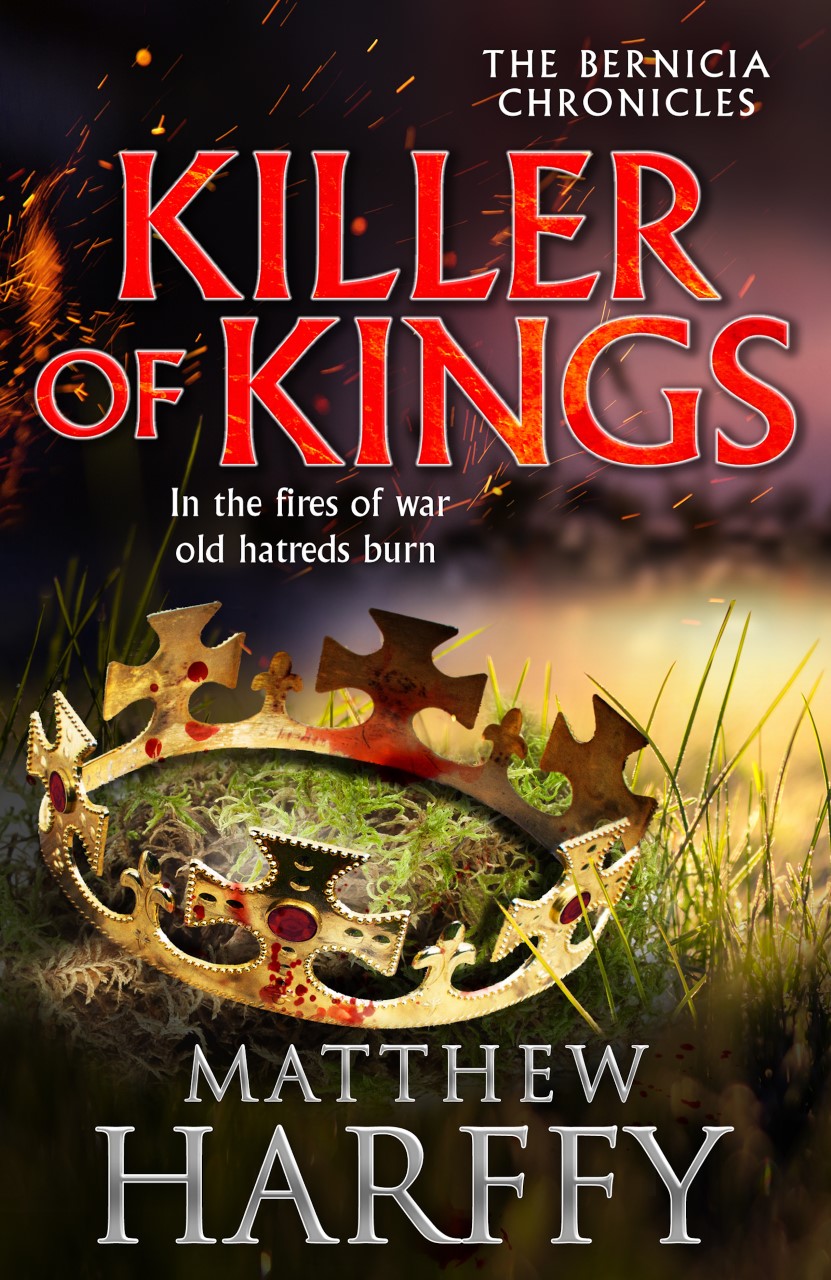
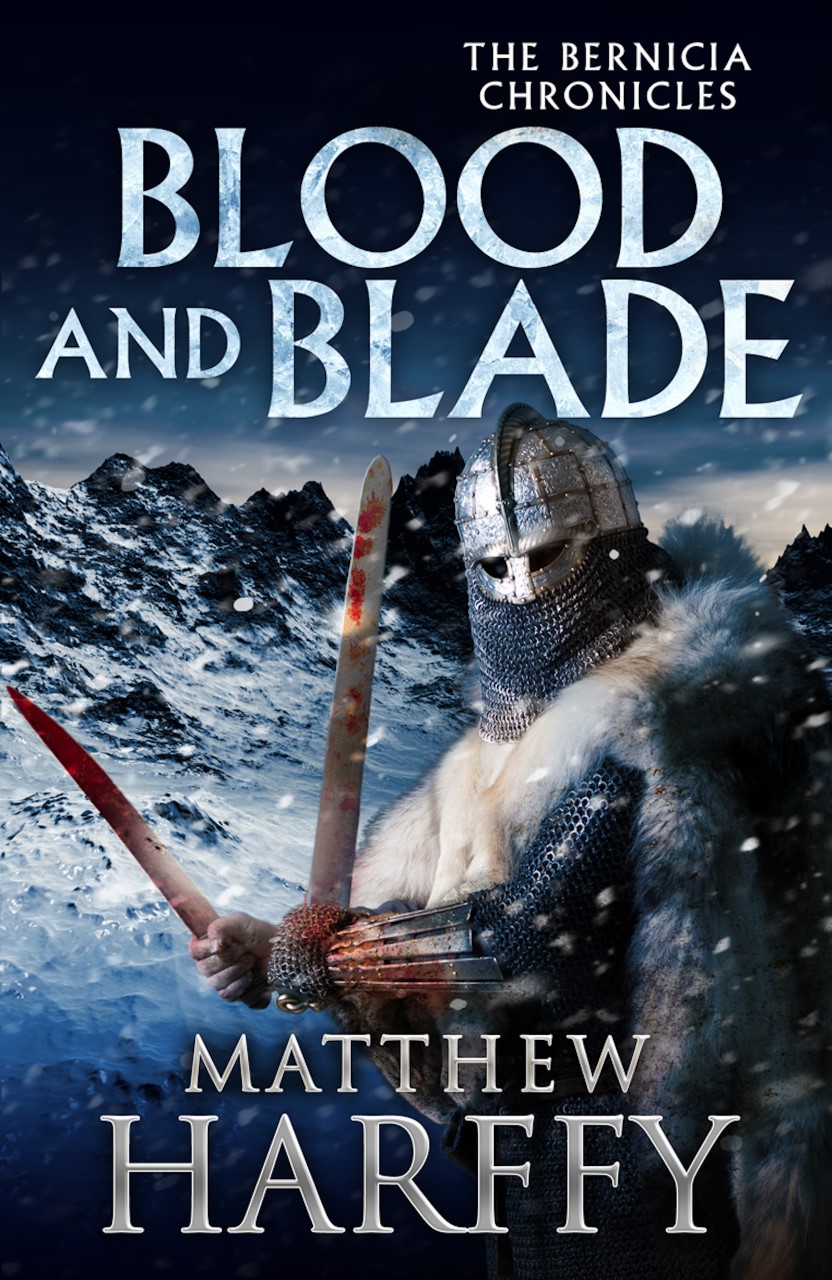
Book Corner: Killer of Kings by Matthew Harffy

AD 636. Anglo-Saxon Britain. A gripping, action-packed historical thriller and the fourth instalment in The Bernicia Chronicles. Perfect for fans of Bernard Cornwell.

Beobrand has land, men and riches. He should be content. And yet he cannot find peace until his enemies are food for the ravens. But before Beobrand can embark on his bloodfeud, King Oswald orders him southward, to escort holy men bearing sacred relics.

When Penda of Mercia marches a warhost into the southern kingdoms, Beobrand and his men are thrown into the midst of the conflict. Beobrand soon finds himself fighting for his life and his honour.

In the chaos that grips the south, dark secrets are exposed, bringing into question much that Beobrand had believed true. Can he unearth the answers and exact the vengeance he craves? Or will the blood-price prove too high, even for a warrior of his battle-fame and skill?

This series just gets better and better!

Killer of Kings by Matthew Harffy is the 4th instalment in the Bernicia Chronicles, telling the story of Beobrand Half-Hand, a young Northumbrian thegn skilled in war. And, as readers have come to expect of the author, the novel has a strong, engaging story, that sees the hero travelling the length and breadth of Saxon England, fueled by duty to his king and a desire for revenge against the man who violated his wife and has, as yet, escaped retribution. Set in East Anglia, Kent, Mercia and Northumbria (Bernicia), we see Beobrand facing enemies, both old and new.

Matthew Harffy is a great story-teller. The Bernicia Chronicles are a must-read for anyone with a love of Anglo-Saxon England. The story is fast-paced and impossible to put down. Keeping you on the edge of your seat from the opening chapter, a desperation to know what happens next will keep you reading into the early hours.

Beobrand is developing into a wonderful character; a hero always questioning himself and other people’s perceptions of him. He has a growing sense of responsibility towards his duties, his men and their families, who rely on him for protection and patronage. In Killer of Kings we see Beobrand’s past and present collide; the mysteries of his childhood are revealed, tying up some loose ends, while at the same time helping to set his course in the present and, maybe, the future.

One last look at the other woman and then Edmonda grasped his hand. Beobrand pulled her up behind him with ease.

“God bless you all,” she said, sobbing.

“Hold on to me, girl,” said Beobrand. “Tight, mind, or you’ll fall when we start to ride.”

She did not reply, but her slim arms encircled his waist.

Swinging Sceadugenga’s head around, he turned to the mounted Waelisc warrior in the white cloak.

“You say you know me,” said Beobrand. “And yet, I know you not. What is your name, Waelisc?”

The man offered him a broad smile.

“I am Gwalchmei ap Gwyar. And you have now stolen two things of mine.”

The name meant nothing to Beobrand.

“What two things? What riddle is this?” How he would love to ride the man off his horse and smash that smile from his face.

“Well, now there is that girl. But she is nothing. That however,” he said, indicating Sceadugenga, “is another matter.”

What was the man speaking of? He made no sense.

“What do you mean?” Beobrand asked, his words as sharp and cold as shards of iron.

“That fine stallion you are riding,” said Gwalchmei, “is my horse.”

The storyline follows two interesting opposing paths. With one strand being Beobrand’s mission and his return face the demons of his past. While the other follows those left behind; Rheagan, the freed slave who is his current love interest, and those left to protect and maintain Beobrand’s manor of Ubbanford … who find themselves with their own enemy to face. The contrast between the struggles of those who left to fight, and of those left at home, is stark. It serves to offer a new insight into the intertwined fates of the warriors and their families, the worries of each for the other and their interdependency.

Whether it is setting the scene in a king’s hall, a simple cottage or on a battlefield, Matthew Harffy transports the reader so that the sights, sounds and smells are so vivid it’s hard to believe they’re not real. His attention to detail serves to  paint the picture in the reader’s mind’s eye. The horrors of the battlefield are described with care and attention, with individual fights contrasting with the greater battle and individual, heroic deaths contrasting with the devastation once the battle has ended, leaving the reader exhilarated and bereft at the same time. It is not all about battles, however; even though he is a warrior, past experience has made Beobrand all-too-aware of the political consequences of war and the machinations of kings.

The Bernicia Chronicles are set in the Seventh Century, telling the story of a time even before King Alfred, when Anglo-Saxon England was made up of a number of disparate kingdoms, with kings fighting for supremacy over each other. With his exceptional knowledge of the time, Matthew Harrfy transports the reader back to this period, using his research to vividly recreate the people, buildings and landscape of the time.

Matthew Harffy has a knack of developing characters who are at once vivid, flawed, heroic and human. Each book sees Beobrand grow and mature, and carrying more scars from his experiences. The strong story lines and interesting personalities make Matthew Harffy one of the best authors of Dark Ages historical fiction of today. He is one of those authors I do not hesitate to recommend – and often. His books are fabulous, enjoyable, entertaining and true to the history of the period. The author’s descriptive skills and lively dialogue will draw you in and keep you captivated to the very end – and beyond.


*

About the author: Matthew Harffy grew up in Northumberland where the rugged terrain, ruined castles and rocky coastline had a huge impact on him He now lives in Wiltshire, England, with his wife and their two daughters.

Killer of Kings, Book 4 in the Bernicia Chronicles, is now available from Amazon, Kobo, ibooks and Google Play.

*

My book, Heroines of the Medieval World,  is now available in hardback in the UK from both Amberley Publishing and Amazon UK and worldwide from Book Depository. It is also available on Kindle in both the UK and USA and will be available in Hardback from Amazon US from 1 May 2018.

You can be the first to read new articles by clicking the ‘Follow’ button, liking our Facebook page or joining me on Twitter.

*

©2017 Sharon Bennett Connolly

Book Corner: Sharon talks to Matthew Harffy

AD 636. Anglo-Saxon Britain. A gripping, action-packed historical thriller and the fourth instalment in The Bernicia Chronicles. Perfect for fans of Bernard Cornwell.

Beobrand has land, men and riches. He should be content. And yet he cannot find peace until his enemies are food for the ravens. But before Beobrand can embark on his bloodfeud, King Oswald orders him southward, to escort holy men bearing sacred relics.

When Penda of Mercia marches a warhost into the southern kingdoms, Beobrand and his men are thrown into the midst of the conflict. Beobrand soon finds himself fighting for his life and his honour.

In the chaos that grips the south, dark secrets are exposed, bringing into question much that Beobrand had believed true. Can he unearth the answers and exact the vengeance he craves? Or will the blood-price prove too high, even for a warrior of his battle-fame and skill?

It is my pleasure, today, to welcome Matthew Harffy back to the blog, opening his Blog Tour for the release of the latest instalment in the Bernicia Chronicles series, Killer of Kings.

Hi Matthew, thank you so much for agreeing to another interview. The last time we chatted you had just released your second novel in the Bernicia Chronicles, The Cross and the Curse, and now you’re about to release the fourth in the series, Killer of Kings.  What an amazing achievement. Congratulations!

Thank you! And thank you for having me on your blog again, it’s great to be back!

It’s great  to have you back, Matthew. I love the Bernicia Chronicles, such wonderful stories. And so, I was wondering;

Are you still enjoying the writing process? Do you still get that buzz when you type ‘The End’?

I get a real buzz out of typing “the end”, but I think that’s more due to relief than enjoyment! I do still enjoy writing, but the more readers I have, the more I question whether what I’m writing is any good! That’s not a bad problem to have, but it does mean that the writing process is slightly more stressful than it was before anybody was reading my stuff.

How have you changed your writing routine since publishing your first novel?

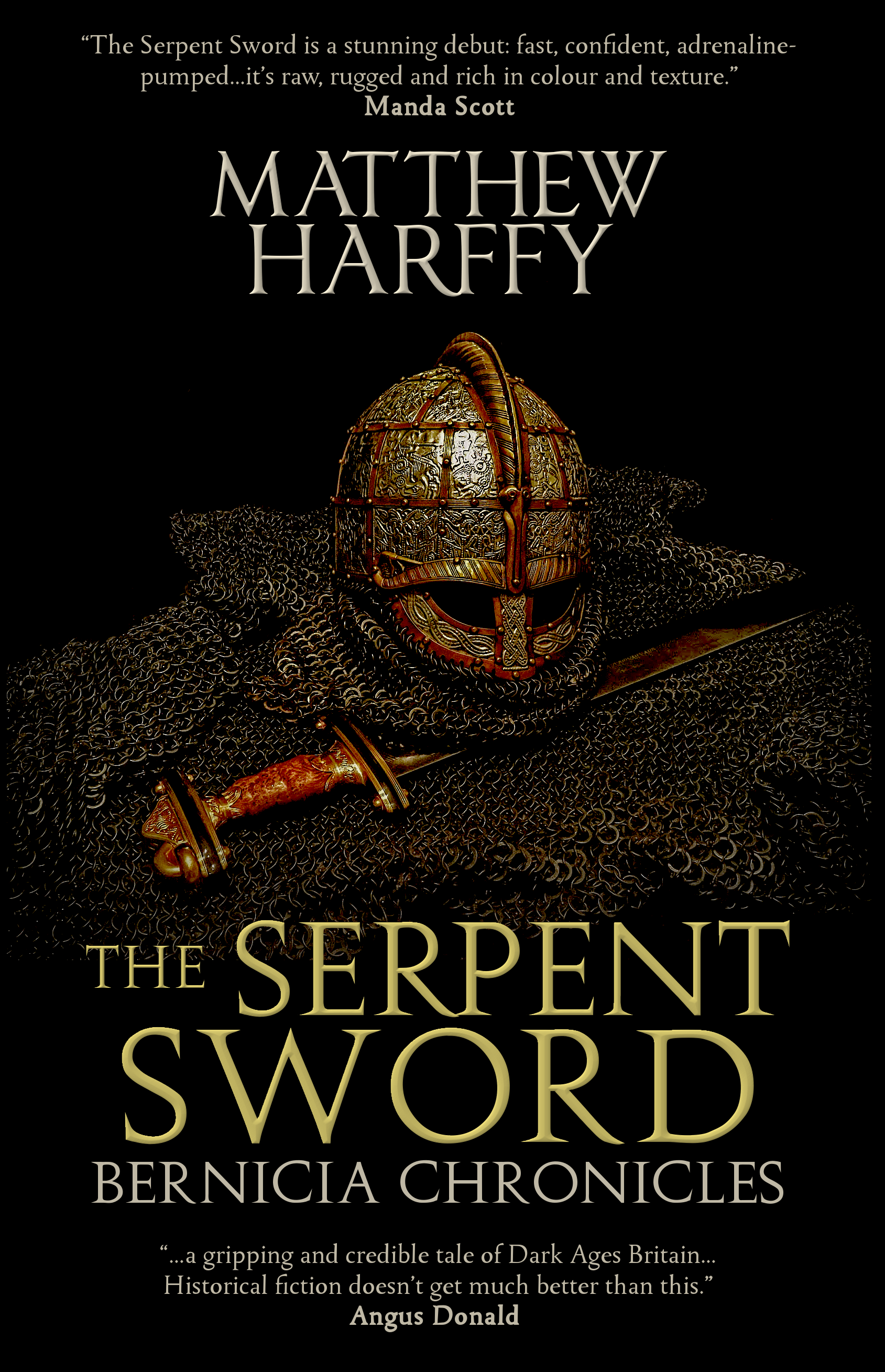
When I wrote my first novel, THE SERPENT SWORD, I did most of it in small windows of opportunity whilst my daughters were in clubs, such as dancing or Tae Kwon Do. I still write in small windows of opportunity that come along, but I also have set aside one whole day for writing each week. That makes it easier to make progress more quickly than before.

How many more stories of Beobrand can we expect to enjoy?

Well, I am writing book 5 at the moment, entitled Warrior of Woden. After that, I have at least one more novel contracted with Aria. After book 6, who knows what I’ll write?

Do you have a story outline for the whole series of books, or do you just go where the story leads you?

I do have a general outline for the whole series, but it isn’t broken down to the level of each book. That means I have an idea of where Beobrand will end up at the end of his life, and I know some of the events that he will be involved in, but I don’t have all the details until I get to the next book in the series. It also means I don’t know exactly how many books there will be in the series, but there are definitely more than six, if people keep buying them.

How meticulously is each book planned before you start writing?

I think it would be stretching things to say that I plan each book meticulously! I read around the subjects and events that are going to be touched upon, and come up with a basic timeline and then break that down into a very rough chapter outline. At that point, I usually just start writing and things begin to fall into place. As the book goes on, I add more and more detail to the synopsis and the plan until, by the time I reached the last quarter, I actually know what it is I’m writing about!

As a Bernard Cornwell fan writing about Northumbria, are you not tempted to introduce a character named Uhtred?

I have thought about it! However, as my books are set hundreds of years before Bernard Cornwell’s, I think it is more likely that Beobrand is one of Uhtred’s ancestors!

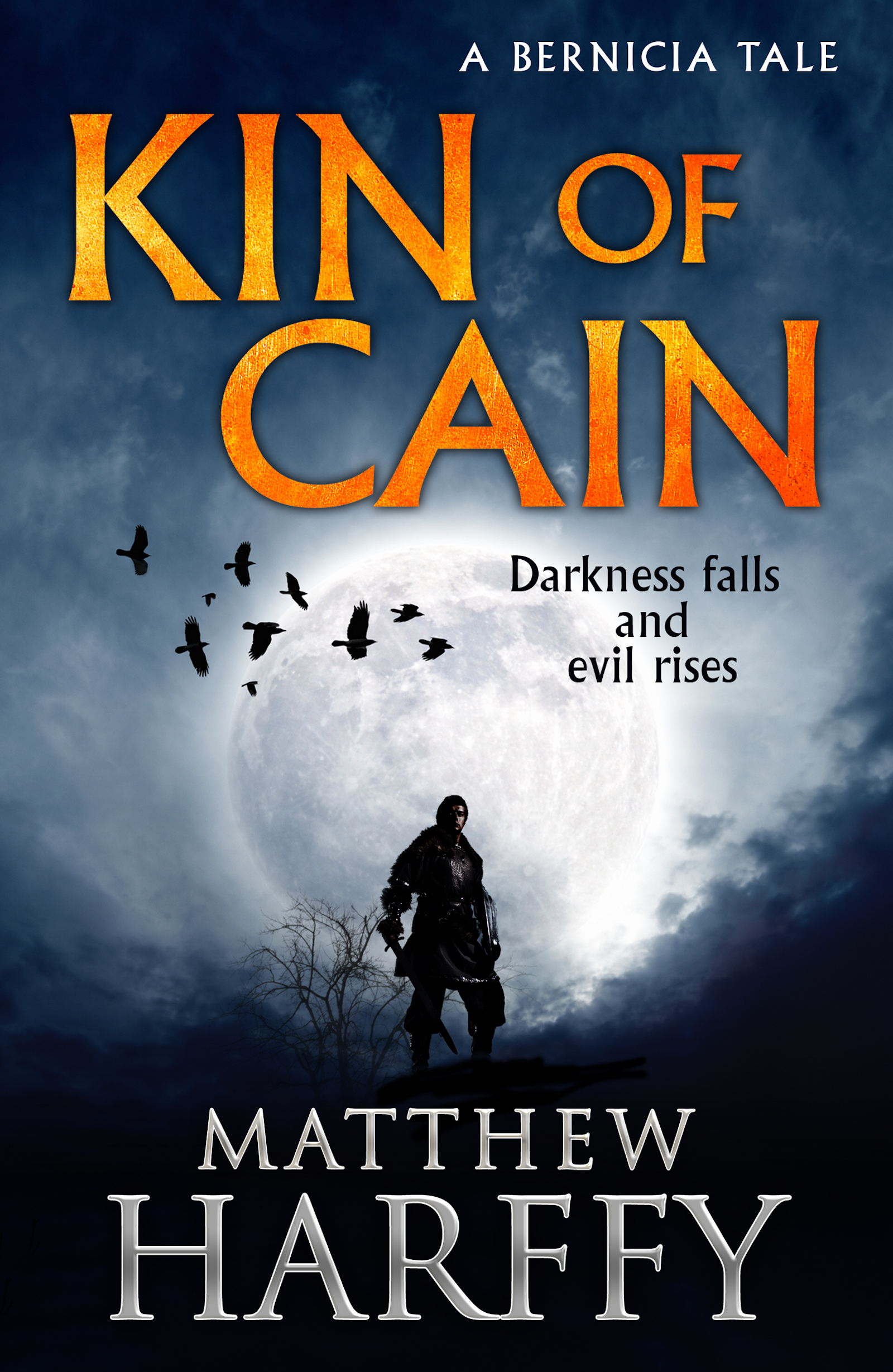
I loved the short story, ‘Kin of Cain’, about Beobrand’s brother, Octa; how did you come up with the idea of using the Beowulf story?

Thank you, I really enjoyed writing it too. The seed of the idea actually came from a reader who asked me whether Hrunting in the Bernicia Chronicles was the famous sword from the Beowulf story. The question made me think, and in the end the story told itself.

Will we see more stories about Octa, maybe a prequel to the Bernicia Chronicles?

I haven’t got anything else planned with Octa, but you never know. If I can think of any other good ideas, I’m tempted to write some more novellas, as I really enjoyed being able to write a whole story in such a short space of time.

Who is the best character you have created, which are you most proud of?

I really don’t know. That’s like asking a parent who is your favourite child! I think the most memorable of the characters I have created is probably Hengist. He is truly evil and does horrible things, but I imagined him as someone who had suffered terribly and witnessed so many atrocities of war that he suffered from post-traumatic stress disorder. There is some debate as to whether soldiers suffered from PTSD in the time when warfare was waged with swords and shields, but I think it is likely that certain warriors would have been affected by particularly traumatic events.

How do you come up with the ideas for characters? Are they ever someone you know, or pure imagination?

They’re mostly purely imagination. But where does inspiration and imagination come from, if not from everything we have seen and done in our lives? Therefore I am sure that there are many traits exhibited by my characters which actually come from me or from people I know. I am also sure that some of my characters were inspired by fictional characters in other authors’ books.

What is the most significant thing you have learned that made you a better writer?

To trust myself and to write stories that I would enjoy reading. It is impossible to write novels that everybody will enjoy, but if you as the writer enjoy reading the finished product, you can be sure there will be a lot of people who will agree with you.

What advice would you give to someone wanting to write their first novel?

Don’t overthink it. The only way to write a novel is to actually write it. Behind every published author is an amateur writer who didn’t give up and who finished their novel. Nobody is going to publish an unwritten book.

After Beobrand, do you have other projects in the pipeline?

I have got a couple of ideas that I’ve been mulling over, but nothing that I can talk about yet. If I actually write them, it probably won’t be for a couple of years yet anyway.

Is there any historic era or topic that you would dearly love to write about?

I would love to write a western.

Have you ever thought of writing non-fiction, if so what would you write about?

I have written scientific papers and manuals for computer software, so I have written non-fiction. However, I haven’t considered writing any non-fiction for publication beyond that. Perhaps one day, but I’m not sure it would be about history, as I would be too scared of getting things wrong! It’s bad enough when you do it in a novel!

Thank you so much for answering my questions Matthew – it’s always great to welcome you to the blog. Good luck with Killer of Kings – I wish you every success.

Thank you very much, Sharon, and best of luck with your own book that I know is coming out at the end of the year. Thank you.

About the author: Matthew Harffy grew up in Northumberland where the rugged terrain, ruined castles and rocky coastline had a huge impact on him He now lives in Wiltshire, England, with his wife and their two daughters.

Killer of Kings, Book 4 in the Bernicia Chronicles, is now available from Amazon, Kobo, ibooks and Google Play.

Follow Matthew: Website: www.matthewharffy.com; Twitter: @MatthewHarffy; Facebook: MatthewHarffyAuthor

Follow Aria: Website: www.ariafiction.com; Facebook: @ariafiction; Twitter: @aria_fiction; Instagram: @ariafiction; NetGalley: http://bit.ly/2lkKB0e. Sign up to the Aria newsletter: http://bit.ly/2jQxVtV

Follow the rest of the Blog Tour: 6th June; 7th June; 8th June; 9th June; 10th June; 11th June; 12th June.

*

My book, Heroines of the Medieval World,  is now available in hardback in the UK from both Amberley Publishing and Amazon UK and worldwide from Book Depository. It is also available on Kindle in both the UK and USA and will be available in Hardback from Amazon US from 1 May 2018.

You can be the first to read new articles by clicking the ‘Follow’ button, liking our Facebook page or joining me on Twitter.

*

©2017 Sharon Bennett Connolly

“The Lincoln Fair” – the Battle that Saved England

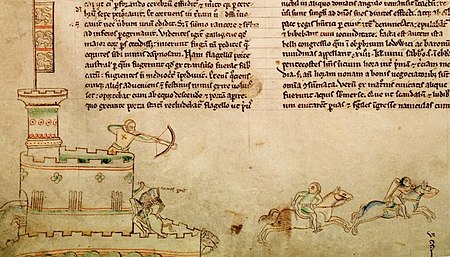
The Battle of Lincoln by Matthew Paris

Saturday 20th May, 2017, marked the 800th anniversary of one of Medieval England’s most decisive battles. The Second Battle of Lincoln, also known as “The Lincoln Fair”, rescued England from the clutches of Louis, Dauphin of France and future King Louis VIII.

England had been in turmoil during the last years of the reign of King John, with the barons trying to curtail the worst of his excesses. It had been hoped that the 1215 issuing of Magna Carta would prevent war, but when John reneged on the Great Charter, war was inevitable. England’s disgruntled barons even went so far as to write to Philip II, King of France, and invite his son, Louis, to come and claim the throne. Louis jumped at the chance and landed on England’s shores in 1216.

Strategically placed in the centre of the country, Lincoln was a target for the rebel barons and their French allies. An important Royalist stronghold, it was held by the redoubtable hereditary castellan, Lady Nicholaa de la Haye, who had been widowed in the early months of 1215. Lincoln Castle had already been under siege in 1216, when the northern rebels had been paid to go away. The rebels – including the King of Scotland – then fled north as John’s army advanced on the city. It was probably after the 1216 siege that Nicholaa made a show of relinquishing her post as castellan; however, John had other ideas:

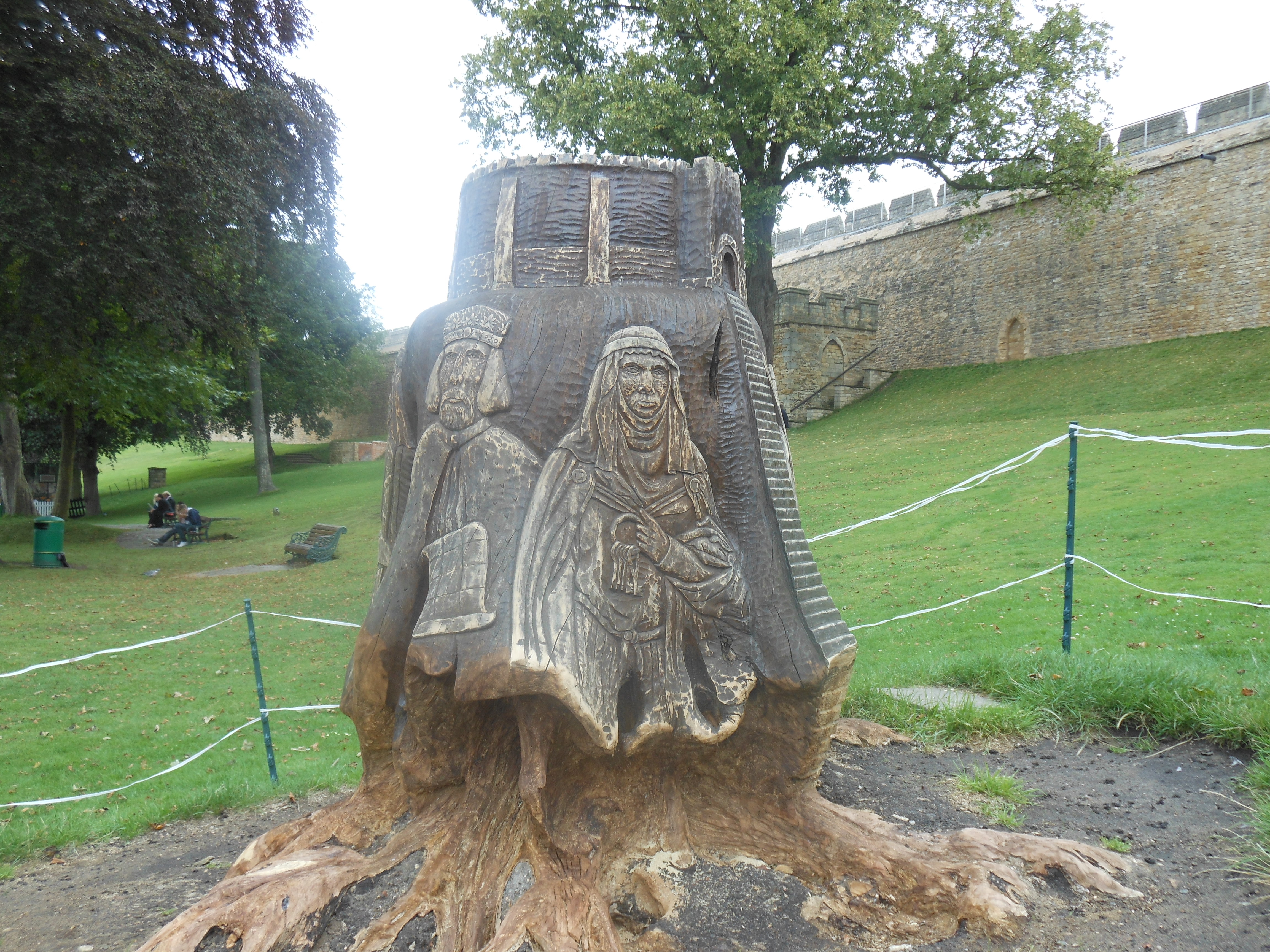
And once it happened that after the war King John came to Lincoln and the said Lady Nicholaa went out of the eastern gate of the castle carrying the keys of the castle in her hand and met the king and offered the keys to him as her lord and said she was a woman of great age and was unable to bear such fatigue any longer and he besought her saying, “My beloved Nicholaa, I will that you keep the castle as hitherto until I shall order otherwise”.¹

John went even further to show his trust in Nicholaa, who was a long-time supporter of the unpopular king. As Louis consolidated his position in the south, John made an inspection of Lincoln castle in September 1216. He then moved south, losing his baggage as he crossed the Wash and falling ill as he travelled. After a brief stay at Swineshead Abbey, he made his way to Newark, where he died on the night of 18/19 October. Mere hours earlier, John had made history by appointing Nicholaa to the post of Sheriff of Lincolnshire. She was the first woman to ever be appointed sheriff in her own right. .

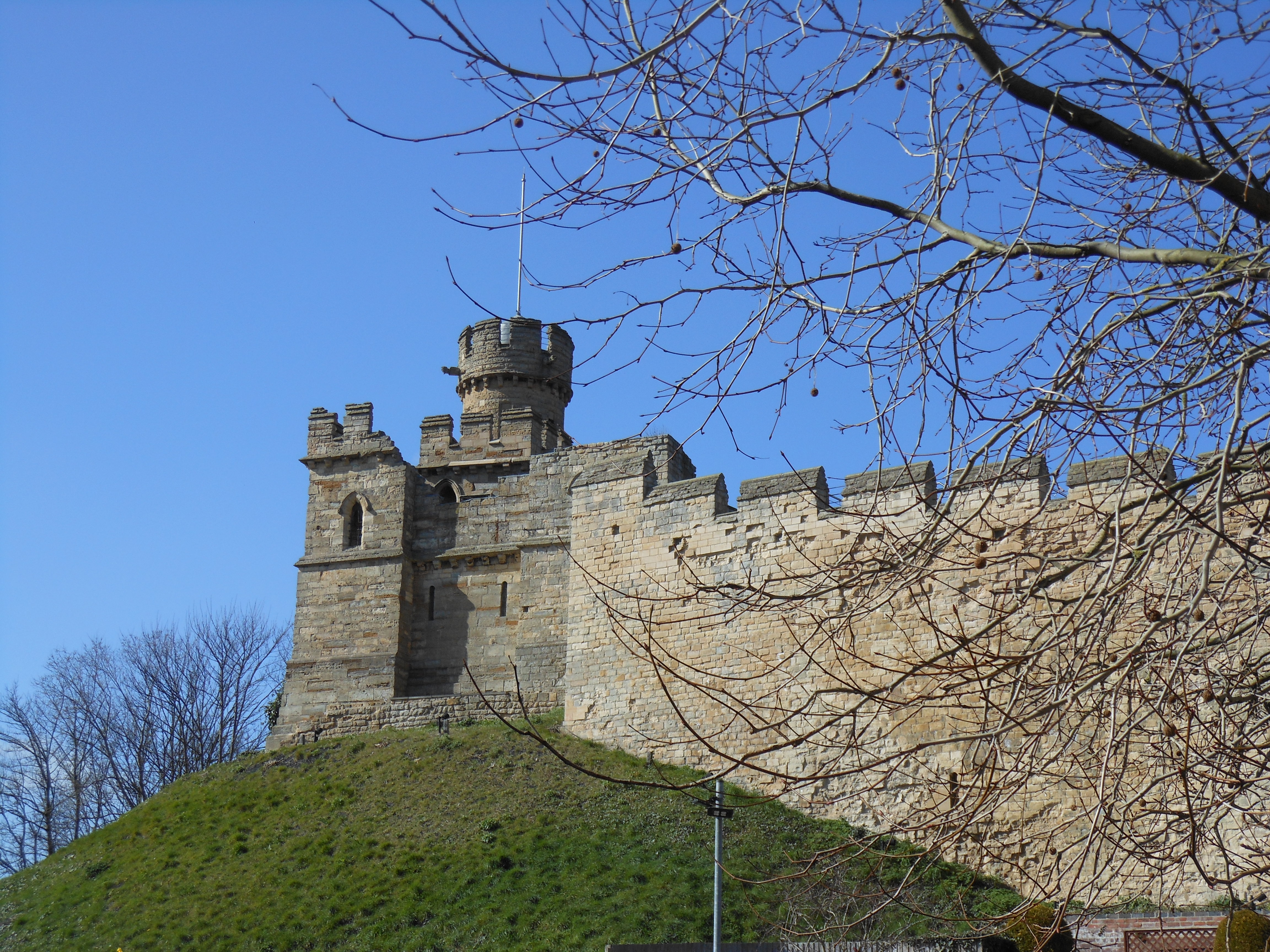
The Observatory Tower, Lincoln Castle

When John died, half of his country was occupied by a foreign invader and his throne now occupied by his 9-year-old son, Henry III. The only royal castles still in royalist hands were Windsor, Dover – and Lincoln. The elder statesman and notable soldier William Marshal, Earl of Pembroke was appointed Regent and set out to save the kingdom.

Following the coronation of young Henry, Magna Carta was reissued and some of the rebel barons returned to the fold, not wanting to make war on a 9-year-old king. However, Louis still had powerful supporters and did not seem keen to give up on his dream to rule England.

Louis’ forces, under the Comte de Perche, along with leading rebels Saher de Quincy, Earl of Wonchester, and Robert FitzWalter, marched north intending to relieve Mountsorel Castle, which was being besieged by the Earl of Chester. Fearing he was facing the entire French invading force, Chester had withdrawn as the French arrived and Perche’s forces diverted to Lincoln. Gilbert de Gant, on hearing news of John’s death, had occupied the city in late 1216 with a small force. He was now reinforced by Perche’s army and in early 1217, they laid siege to the castle. Now in her 60s, Nicholaa de la Haye took charge of the defences, with the help of her lieutenant, Sir Geoffrey de Serland.

For almost 3 months – from March to mid-May – siege machinery continuously bombarded the south and east walls of the castle. When the allied force proved insufficient to force a surrender, the French had to send for reinforcements. This meant that half of Louis’ entire army was now outside the gates of Lincoln Castle and provided William Marshal with an opportunity; one decisive battle against Louis’ forces at Lincoln could destroy the hopes of Louis and the rebel barons, once and for all.

DSCN5225
Nicholaa de la Haye, Lincoln Castle

Risking all on one battle was a gamble, but one that Marshal was determined to take. Spurred on by the chivalrous need to rescue a lady in distress – the formidable Lady Nicholaa – Marshal ordered his forces to muster at Newark by 17th May. While the young king, Henry III, waited at Nottingham, Marshal’s army prepared for war. The papal legate, Guala Bicchieri, absolved the Royalist army of all their sins – of all the sins they had committed since their birth – and excommunicated the French and rebel forces, before riding to join the king at Nottingham.

While at Newark, Marshal set out the order of battle, although not without some argument. The Norman contingent and Ranulf, earl of Chester, both claimed the right to lead the vanguard. However, when Ranulf threatened to withdraw his men, it was decided to acquiesce to his demands.

Lincoln is an unusual city; its castle and cathedral sit at the top of a hill, with the rest of the city to the south, at the hill’s base. In the 12th century it was enclosed in a rectangular wall, which had stood since Roman times,  with 5 gates, and the castle abutting the wall at the north-west corner. William Marshal decided not to attack Lincoln from the south, which would have meant heading up the Fosse Way (the old Roman road) and forcing a crossing of the River Witham, before climbing the steep slope to the castle and cathedral (so steep, the road going up is called Steep Hill to this day). Instead he chose to take a circuitous route, so he could come at the city from the north-west and attack close to the castle and cathedral, directly where the enemy troops were concentrated.

On the 19th May Marshal’s forces rode from Newark alongside the the River Trent and set up camp at Torksey, about 8 miles to the north of Lincoln, or Stow, depending on the source you read. Or, perhaps, both.

Coronation of Louis VIII and Blanche of Castile. Louis’ claim to England was through his wife, a granddaughter of Henry II

The English commanders included William Marshal, earl of Pembroke, his son, Young William Marshal, and nephew, John Marshal, in addition to Ranulf, Earl of Chester, William Longspée, Earl of Salisbury, Peter des Roches, Bishop of Winchester, and Faulkes de Breauté, King John’s mercenary captain. They led 406 knights, 317 crossbowmen and a large number of sergeants-at-arms, foot soldiers and camp followers.

Although Louis was in charge of the French forces in England, those in Lincoln were led by Thomas, Comte de Perche, himself a grandson of Henry II’s daughter Matilda, and therefore a cousin of King Henry III. Perche was also related to William Marshal; both were descended from sisters of Patrick, 1st earl of Salisbury. The commanders of the English rebels in the city included Robert FitzWalter and Saer de Quincey, Earl of Winchester. They led over 600 knights and several thousand infantry.

At various points in the lead up to the battle, William Marshal is known to have made some stirring speeches. When battle was imminent, he made one more;

Now listen, my lords! There is honour and glory to be won here, and I know that here we have the chance to free our land. It is true that you can win this battle. Our lands and our possessions those men have taken and seized by force. Shame be upon the man who does not strive, this very day, to put up a challenge, and may the Lord our God decide the matter. You see them here in your power. So much do I fully guarantee, that they are ours for the taking, whatever happens. If courage and bravery are not found wanting.

Coat of arms of William Marshal

And, if we die …, God, who knows who are his loyal servants, will place us today in paradise, of that I am completely certain. And, if we beat them, it is no lie to say that we will have won eternal glory for the rest of our lives and for our kin. And I shall tell you another fact which works very badly against them: they are excommunicated and for that reason all the more trapped. I can tell you that they will come to a sticky end as they descend into hell. There you see men who have started a war on God and the Holy Church. I can fully guarantee you this, that God has surrendered them into our hands.

Let us make haste and attack them, for it is truly time to do so!²

As with all battles, the information gets confusing as the fighting commences, timings get distorted and facts mixed. No two sources give exactly the same information. So the story of a battle is a matter of putting the pieces together and making sense of various snippets of information – much as it would have been for the commanders on the day.

In the dawn of 20th May the English Royalist army marched south towards Lincoln, probably climbing to the ridge at Stow so as not to have that climb nearer to Lincoln, with the enemy in sight. Marshal had hoped that, on reaching the plain in front of the city walls, the French and rebels would come out and meet him and a pitched battle would be fought outside of the city. Marshal was resting everything – the very future of England – on the outcome of that one battle. However, it seems that, although the allied leaders did come out and take a look at the forces arrayed before them, they then chose to stay inside the city walls and wait for the Royalists to come to them.

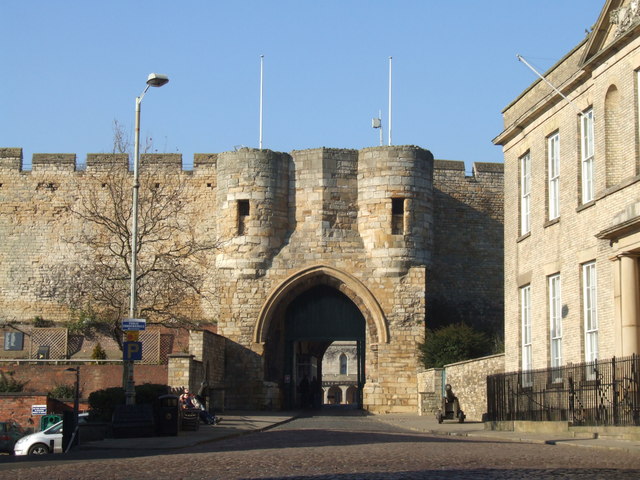
The West Gate of Lincoln Castle

William Marshal’s nephew, John Marshal was sent to the castle, to ascertain the situation within the city, but as he approached, Nicholaa’s deputy, Geoffrey de Serland, was making his way out to report to the English commanders that the castle was still in Nicholaa’s hands. It is not hard to imagine Nicholaa or her deputy climbing the tallest towers of the castle – perhaps the one now known as the Observatory Tower, used in Matthew Paris’s illustration – to watch out for an approaching relief force. Seeing the Marshal’s banners appearing in the north must have been an amazing feeling.

The castle itself had two main gates, one in the eastern wall and one in the west, with postern gates in the Lucy Tower to the south-east of the castle, the tower known as Cobb Hall to the north-east corner and another in the northern wall. On ascertaining that the castle still held, Peter des Roches then made his way inside, most likely by either the postern gate in Cobb Hall, or the one in the northern wall. Having met with Nicholaa de la Haye in the Lucy Tower, it seems he then made his way into the town via its postern gate, to check the defences and try to find a way into the city.

According to the Histoire, des Roches’ reconnaissance proved successful and he reported to Marshal that there was a gate within the north-west wall of the city, which, although blockaded, could be cleared. As Marshal set men to clearing the blockaded gate, the earl of Chester was sent to attack the North Gate as a diversion and Faulkes de Breauté took his crossbowmen into the castle via a postern gate and set them on the ramparts above the East Gate, so their bolts could fire down on the besiegers.

De Breauté fell into disgrace in 1224 and so the major source for the Battle of Lincoln – the Histoire de Guillaume le Maréschale – plays down his role in the battle. However, his crossbowmen managed to keep the French forces focussed on the castle, rather than Marshal’s forces outside the city. De Breauté did make a sortie out of the East Gate, to attack the besiegers, but was taken prisoner and had to be rescued by his own men; although at what stage of the battle this happened is uncertain.

The Histoire tells how it took several hours, it seems, for Marshal’s men to break through the gate. The 70-year-old William Marshal was so eager to lead the charge that he had to be reminded to don his helmet. Once safely helmeted, he led his men through the city gates and down Bailgate to approach the castle from the north, his men spilling into the space between castle and cathedral, where the main force of the besiegers were still firing missiles at the castle.

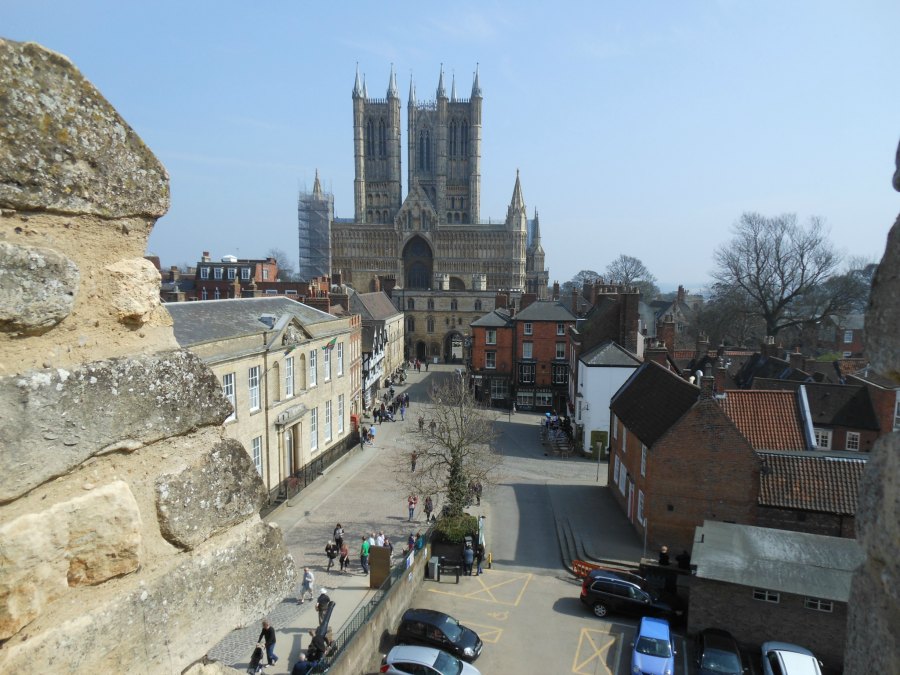
Lincoln Cathedral viewed from the Castle. The fiercest fighting was between the 2 great buildings

The English forces took the enemy so totally by surprise that one man – according to the Histoire he was the enemy’s ‘most expert stonethrower’² – thought they were allies and continued loading the siege machinery, only to have his head struck from his shoulders.

Almost simultaneously, it seems, the earl of Chester had broken through a gate to the northeast and arrived from behind the cathedral. Battle was joined on all sides. Vicious, close-quarter combat had erupted in the narrow streets, but the fiercest fighting was in front of the cathedral. In the midst of the melee, William Longspée took a blow from Robert of Roppesley, whose  lance broke against the earl. The aged Marshal dealt a blow to Roppesley that the knight who, having crawled to a nearby house ‘out of fear, [he] went to hide in an upper room as quickly as he could’.³

The Comte de Perche made his stand in front of the cathedral, rallying his troops; and it was there he took a blow from Reginald Croc which breached the eye slit of his helmet. Croc himself was badly wounded and died the same day. The Comte continued to fight, striking several blows to the Marshal’s helmet (the one he had almost forgotten to don), before falling from his horse. It was thought the Comte was merely stunned until someone tried to remove his helmet and it was discovered that the point of Croc’s sword had pierced the count’s eye and continued into his brain, killing him.

With the death of their leader,  the French and rebel barons lost heart and started pulling back. They fled downhill, to the south of the city. Although they briefly rallied, making an uphill assault, the battle was lost. There was a bottleneck as the defeated soldiers tried to escape through the city gates, made worse by a cow stuck in the South Gate and the bridge across the Witham as the enemy forces fled. The cow could not be moved and so the rebels butchered it – only to discover a dead cow was even harder to move. The rebel leaders, Saher de Quincey and Robert FitzWalter were both taken prisoner, as were many others. In total, about half of the enemy knights surrendered.

The battle had lasted no more than 6 hours.

The East Gate of Lincoln Castle

Sadly, in the aftermath of the battle, women took to the river with their children, in small boats, to escape the unwanted attentions of the victorious army. However, not knowing how to control the overloaded craft, many capsized and the women and children drowned.

The city, which had supported the rebels, was sacked, churches included; the excommunication seen as permission that everything was fair game. Although, one does wonder how much choice the citizens had in siding with the rebels and their French allies – survive or die would have been the reality. The battle earned the name ‘The Lincoln Fair,’ possibly because of the amount of plunder gained by the victorious English army.

Immediately the battle was won, William Marshal, earl of Pembroke, rode to Nottingham to inform the king of the victory. The Battle of Lincoln turned the tide of the war. On hearing of the battle, Louis immediately lifted his siege of Dover Castle and withdrew to London. His situation became desperate, his English allies were bristling against the idea of Louis giving English land as reward to his French commanders and were beginning to see the young Henry III as rightful king – after all, the son couldn’t be blamed for the actions of the father. In August of the same year Louis was soundly defeated at sea in the Battle of Sandwich, off the Kent coast. By September he had sued for peace and returned to France.

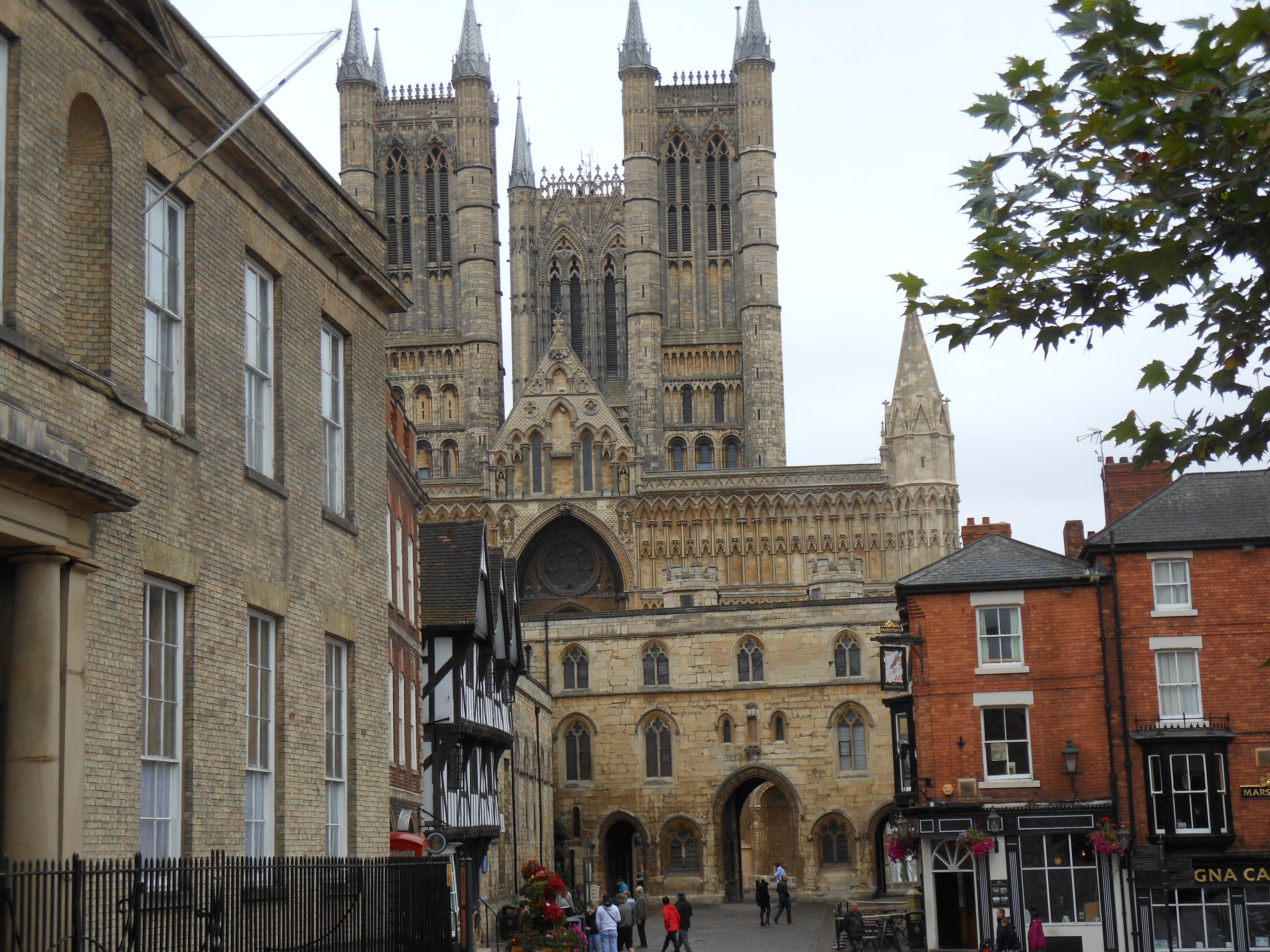
Lincoln Cathedral

In an incredible demonstration of ingratitude, within 4 days of the relief of the Castle, Nicholaa de la Haye’s position of Sheriff of Lincolnshire was given to the king’s uncle William Longspée, Earl of Salisbury, who took control of the city and seized the castle. Salisbury was the father-in-law of Nicholaa’s granddaughter – and heir – Idonea de Camville. However, not one to give up easily, Nicholaa travelled to court to remind the king’s regents of her services, and request her rights be restored to her. A compromise was eventually reached whereby Salisbury remained as Sheriff of the County, while Nicholaa held the city and the castle. Although Salisbury never gave hope of acquiring the castle, it was still in Nicholaa’s hands when he died in 1226.

The battle had been a magnificent victory for the 70-year-old regent, William Marshal, Earl of Pembroke, and is a testament to his claim to the title ‘The Greatest Knight’. He staked the fate of the country on this one battle and pulled off a decisive victory, saving his king and country. Although, he could not have achieved it, had Nicholaa not so stubbornly held onto Lincoln Castle.

*

Footnotes: ¹Irene Gladwin: The Sheriff; The Man and His Office; ²Histoire de Guillaume le Maréschal translated by Stewart Gregory; ³ Quoted in Thomas Asbridge’s The greatest Knight

All photos from Lincoln – Castle, Cathedral, Nicholaa de la Haye and Magna Carta, © Sharon Bennett Connolly 2015. All other pictures are courtesy of Wikipedia.

*

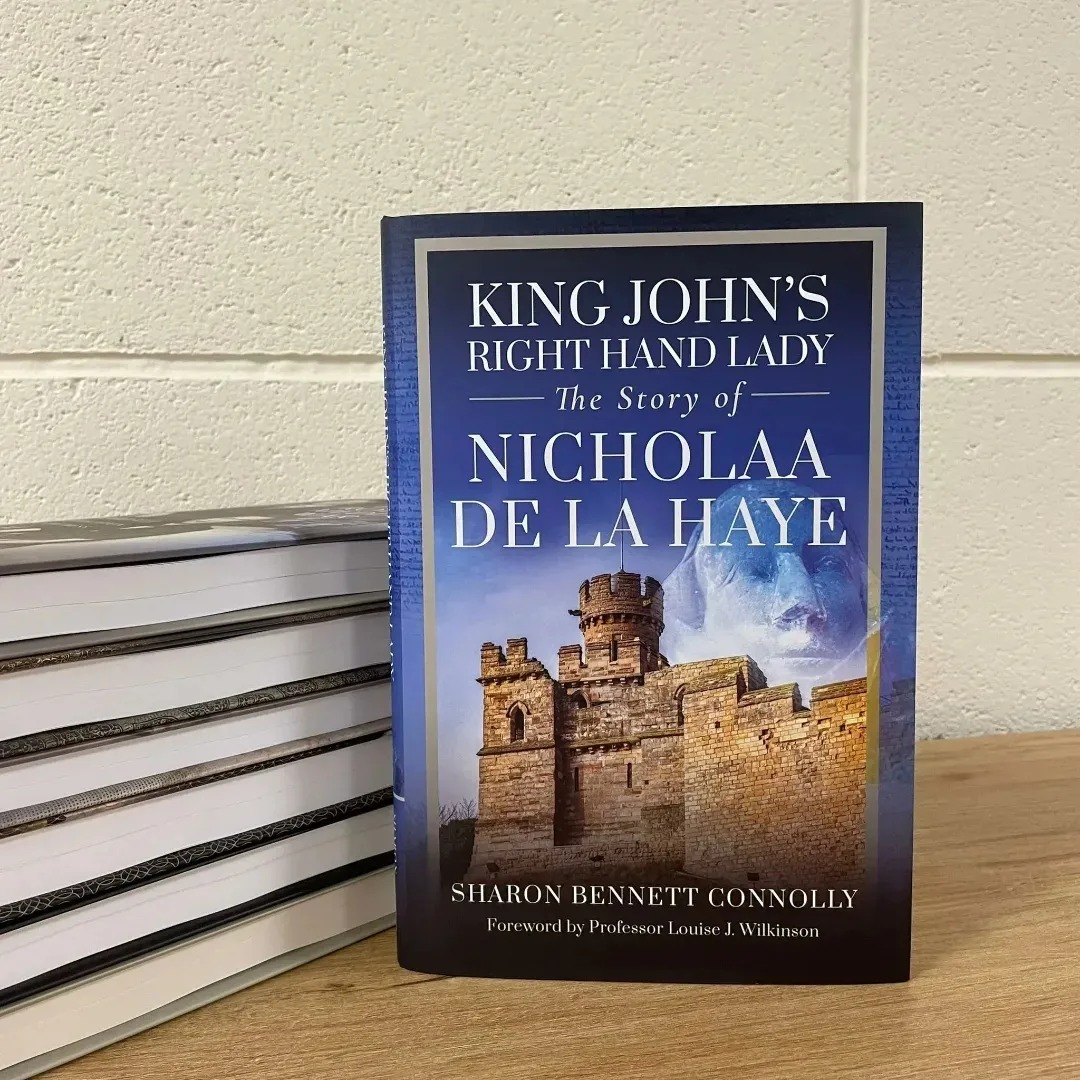
You can read more on the story of the 1217 Battle of Lincoln – and Nicholaa de la Haye in particular – in my book, King John’s Right Hand Lady: The Story of Nicholaa de la Haye. Or listen to the episode on Nicholaa de la Haye in our A Slice of Medieval podcast

*

Sources: King John by Marc Morris; Henry III The Son of Magna Carta by Matthew Lewis; The Demon’s Brood by Desmond Seward; The Greatest Knight by Thomas Asbridge; The Knight Who Saved England by Richard Brooks; The Plantagenet Chronicles edited by Elizabeth Hallam; Brassey’s Battles by John Laffin; 1215 The Year of Magna Carta by Danny Danziger & John Gillingham; The Life and times of King John by Maurice Ashley; The Story of Britain by Roy Strong; The Plantagenets, the Kings Who Made England by Dan Jones; England Under the Norman and Angevin Kings  by Robert Bartlett; lincolnshirelife.co.uk; catherinehanley.co.uk; magnacarta800th.com; lothene.org; lincolncastle.com; Nick Buckingham; The Sheriff: The Man and His Office by Irene Gladwin; Elizabeth Chadwick; swaton.org.uk; Histoire de Guillaume le Mareschal translated by Stewart Gregory, usna.edu.

*

My Books

Signed, dedicated copies of all my books are available through my online bookshop.

Out now: Scotland’s Medieval Queens

Scotland’s history is dramatic, violent and bloody. Being England’s northern neighbour has never been easy. Scotland’s queens have had to deal with war, murder, imprisonment, political rivalries and open betrayal. They have loved and lost, raised kings and queens, ruled and died for Scotland. From St Margaret, who became one of the patron saints of Scotland, to Elizabeth de Burgh and the dramatic story of the Scottish Wars of Independence, to the love story and tragedy of Joan Beaufort, to Margaret of Denmark and the dawn of the Renaissance, Scotland’s Medieval Queens have seen it all. This is the story of Scotland through their eyes.

Scotland’s Medieval Queens gives a thorough grounding in the history of the women who ruled Scotland at the side of its kings, often in the shadows, but just as interesting in their lives beyond the spotlight. It’s not a subject that has been widely covered, and Sharon is a pioneer in bringing that information into accessible history.’ Elizabeth Chadwick (New York Times bestselling author)

Available now from Amazon and Pen and Sword Books

Also by Sharon Bennett Connolly:

Heroines of the Tudor World tells the stories of the most remarkable women from European history in the time of the Tudor dynasty, 1485-1603. These are the women who ruled, the women who founded dynasties, the women who fought for religious freedom, their families and love. Heroines of the Tudor World is now available from Amberley Publishing and Amazon UK. Women of the Anarchy demonstrates how Empress Matilda and Matilda of Boulogne, unable to wield a sword themselves, were prime movers in this time of conflict and lawlessness. It shows how their strengths, weaknesses, and personal ambitions swung the fortunes of war one way – and then the other. Available from Bookshop.orgAmberley Publishing and Amazon UKKing John’s Right-Hand Lady: The Story of Nicholaa de la Haye is the story of a truly remarkable lady, the hereditary constable of Lincoln Castle and the first woman in England to be appointed sheriff in her own right. Available from all good bookshops Pen & Sword Booksbookshop.org and Amazon

Defenders of the Norman Crown: The Rise and Fall of the Warenne Earls of Surrey tells the fascinating story of the Warenne dynasty, from its origins in Normandy, through the Conquest, Magna Carta, the wars and marriages that led to its ultimate demise in the reign of Edward III. Available from Pen & Sword BooksAmazon in the UK and US, and Bookshop.orgLadies of Magna Carta: Women of Influence in Thirteenth Century England looks into the relationships of the various noble families of the 13th century, and how they were affected by the Barons’ Wars, Magna Carta and its aftermath; the bonds that were formed and those that were broken. It is now available in paperback and hardback from Pen & SwordAmazon, and Bookshop.orgHeroines of the Medieval World tells the stories of some of the most remarkable women from Medieval history, from Eleanor of Aquitaine to Julian of Norwich. Available now from Amberley Publishing and Amazon, and Bookshop.orgSilk and the Sword: The Women of the Norman Conquest traces the fortunes of the women who had a significant role to play in the momentous events of 1066. Available now from Amazon,  Amberley Publishing, and Bookshop.org.

Alternate Endings: An anthology of historical fiction short stories including Long Live the King… which is my take what might have happened had King John not died in October 1216. Available in paperback and kindle from Amazon.

Podcast:

Have a listen to the A Slice of Medieval podcast, which I co-host with Historical fiction novelist Derek Birks. Derek and I welcome guests, such as Bernard Cornwell and Michael Jecks, and discuss a wide range of topics in medieval history, from significant events to the personalities involved. Every episode is also now available on YouTube.

*

Don’t forget! Signed and dedicated copies of all my books are available through my online bookshop.

For forthcoming online and in-person talks, please check out my Events Page.

You can be the first to read new articles by clicking the ‘Follow’ button, liking our Facebook page or joining me on TwitterThreadsBluesky and Instagram.

©2017 Sharon Bennett Connolly FRHistS

The Infamous Jane Shore

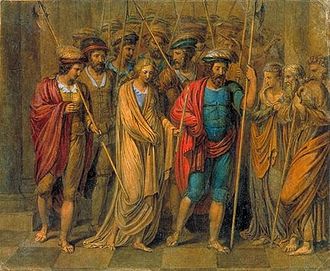
The Penance of Jane Shore by William Blake

Jane Shore is one of the most renowned of medieval royal mistresses, rivalling only Katherine Swynford in her fame. However, Jane was not so fortunate as Katherine; there was no ‘happily ever after’ with her royal lover. As she has gone down in history, the poor woman didn’t even get to keep her own name.

So, who is Jane Shore? Well, she’s not called Jane, for starters. In fact, that name seems to have only been attributed to her more than 50 years after her death, and by a playwright, of all people.

The young woman in question was born Elizabeth Lambert; she was the daughter of John Lambert, a citizen and mercer of London who died in 1487. Her mother, Amy, was the daughter of Robert Marshall, a London grocer, and died in 1488, the year after her husband. Elizabeth was probably born sometime before 1450 and was married, in her middle or late teens, to William Shore, a London goldsmith.

Elizabeth eventually became mistress to King Edward IV, the larger-than-life king who reigned from 1461 to 1483, except for a little interval in 1470-71 when Henry VI briefly regained the throne. Mistress Shore first appears in the historical record in the mid-1470s, possibly when she was already mistress to the king, when she petitioned for an annulment to her marriage. The grounds for the petition was her husband’s impotence.

The recent petition of Elizabeth Lambert alias Schore, of London states that she continued in her marriage to William Schore, layman of the diocese of London, and cohabited with him for the lawful time, but that he is so frigid and impotent that she, desirous of being a mother and having offspring, requested over and over again the official of London to cite the said William before him to answer her concerning the foregoing and the nullity of the said marriage and that, seeing the said official refused to do so she appealed to the Apostolic See.¹

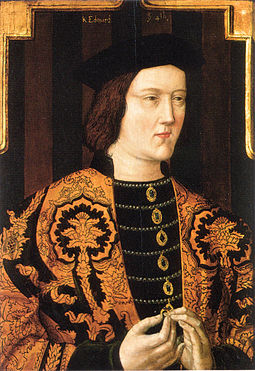
King Edward IV

While it was not unheard of for a wife to petition for the dissolution of a marriage, it was certainly a rare occurrence; such appeals were expensive and rarely granted against the husband. It may well be that Elizabeth was already mistress to the king when she brought the divorce petition, it would certainly explain her ability to finance the case. The whole proceedings would have been as humiliating for Elizabeth as it was for her husband, William; but her developing relationship with the king may have given her the encouragement to endure it. However the petition came about, a woman’s right to bear children was considered sacrosanct and the annulment was granted, the papal mandate being dated to 1 March 1476.

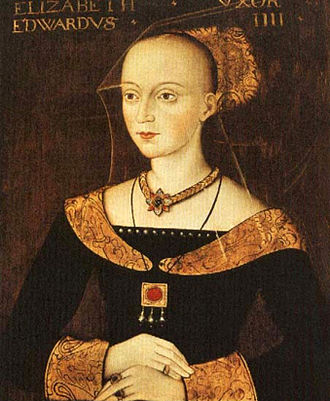
Edward IV is as famous for his love life as he is for his prowess in battle. His irregular, secret marriage to Elizabeth Wydeville  provided enough ammunition and doubt for his brother, Richard of Gloucester, to declare his sons, Edward V and Richard (the Princes in the Tower), illegitimate and take the crown for himself. Gloucester claimed that Edward IV had already been married – again secretly – to one Eleanor Butler when he married Elizabeth Wydeville, making his children by Elizabeth illegitimate and therefore unable to inherit the throne. Of course, proof was lacking, but Edward’s own record with women provided sufficient doubt to enable Richard to seize the throne.

There is little doubt that Edward IV and his queen, Elizabeth, were happily married; the couple had numerous children together, of which 6 girls and 2 boys survived infancy. However, this did not prevent Edward from taking mistresses, of which Elizabeth Shore is said to have been his favourite.

There is a near-contemporary description of Mistress Shore, from Thomas More, who described a bright, intelligent woman;

“Proper she was and fair … yet delighted not men so much in her beauty, as in her pleasant behaviour. For a proper wit had she, and could both read well and write, merry of company, ready and quick of answer, neither mute nor full of babble, sometimes taunting without displeasure and not without disport … The merriest [of Edward’s mistresses] was this Shore’s wife, in whom the king therefore took special pleasure. For many he had, but her he loved, whose favour to say truth … she never abused to any man’s hurt.”¹

Edward IV’s queen, Elizabeth Wydeville

Of course, we cannot truly say whether or not Edward loved Elizabeth Shore, nor how deep was their relationship. Nor can we say how Elizabeth Wydeville felt about her husband’s relationship with Mistress Shore. In fact, very little contemporary evidence exists to prove the existence of a relationship. At least, not while Edward was alive. However, when Edward died in 1483 and his brother, Richard seized power, Elizabeth Shore was brought into the limelight, caught up in the power struggle following the king’s death and the accession of his 13-year-old son.

On the king’s death, Elizabeth Shore was in need of a protector and transferred her allegiance and affection to William, Lord Hastings, the late king’s best friend. As the political situation deteriorated in 1483, following Richard Duke of Gloucester’s arrest of Anthony Wydeville, the new king’s uncle and brother of Queen Elizabeth Wydeville, the queen fled to sanctuary at Westminster Abbey. Elizabeth Shore was accused of carrying messages between the queen in sanctuary and Lord Hastings, who was serving on the Privy Council. Whether she did or not, or even whether the queen and Hastings were plotting, we’ll probably never know.

Richard, now Lord Protector for his nephew Edward V, accused Hastings of treason and had him summarily executed within the Tower of London, on 13 June 1483. Elizabeth Shore was caught up in Hastings’ downfall; her goods being attached by the sheriffs of London, she was made to do public penance ‘for the lyfe that she ledd with the said lord hastyngys and other grete astatys’.² More praises Mistress Shore’s demeanour during her penance, stating;

“In which she went in countenance & pace demure so womanly, & albeit she were out of all array save her kyrtle only: yet went she so fair & lovely … that her great shame won her much praise.”²

There is some suggestion that, following the king’s death, Elizabeth Shore was a mistress of both Hastings and the late king’s stepson, Thomas Grey, Marquess of Dorset. In October 1483, when Grey joined Buckingham’s rebellion against Richard III, he was accused of holding ‘the unshameful and mischievous woman called Shore’s wife in adultery.’²

After her public penance, Elizabeth Shore was imprisoned in Ludgate Gaol for a time. During the same period, she attracted the attention of Thomas Lynom, the King’s Solicitor, who wanted to marry her. An undated letter, written to the Bishop of Lincoln by Richard III, himself, asks the bishop to intervene and persuade Lynom against the marriage, saying Lynom had been ‘merveillously blynded and abused.’²

Elizabeth was eventually released from gaol, into her father’s custody, on the payment of sureties; however, it seems Lynom was not dissuaded by the entreaties of the king and the bishop. He and Elizabeth were married before her father’s death on 1487, as is made clear in his will, in which he left his daughter a bed of arras and a painted cloth of Mary Magdalen and Martha.

Thomas Lynom survived the regime change of 1485, successfully transferring his services to the Tudors; he served bother Henry VII and Henry VIII and was a councillor for Arthur, Prince of Wales and controller of the rolls for the prince’s household.

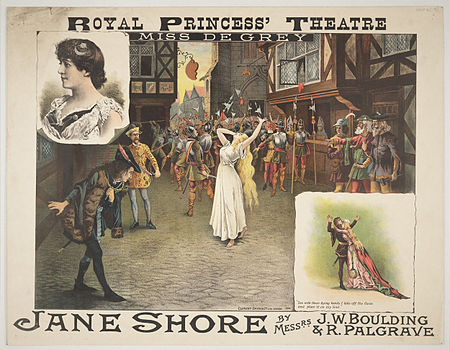
Theatre poster for ‘Jane Shore’

Thomas Lynom was dead by July 1518 and, according to More, Elizabeth fell on hard times after that, even claiming she had to resort to begging, although this seems unlikely.

Elizabeth Shore probably died around 1527, although she had long since retreated from the limelight. There is no evidence that she ever had any children – the reason for the dissolution of her first marriage – and her story may have ended there, were it not for the Tudor playwrights.

Her literary life was born through the works of William Shakespeare, Thomas Heywood and Nichols Rowe. It was Thomas Heywood who rechristened her ‘Jane’ and made her the focal point of his play, Edward IV, in 1599. However, despite the name change, the plays have, to say the least, guaranteed Elizabeth Shore’s place in history.

*

Footnotes: ¹Edward IV and Elizabeth Woodville: A True Romance by Amy Licence; ² quoted by Rosemary Horrox in Oxforddnb.com.

*

Sources: Edward IV and Elizabeth Woodville: A True Romance by Amy Licence; Elizabeth Shore – Jane by Rosemary Horrox in Oxforddnb.com; Richard III, England’s Black Legend by Desmond Seward; Edward IV, Glorious Son of York by Jeffrey James; Elizabeth Woodville, Mother of the Princes in the Tower by David Baldwin; Lancaster & York, The Wars of the Roses by Alison Weir, Richard III by Michael Hicks; Edward IV and the Wars of the Roses by David Santuiste.

Pictures courtesy of Wikipedia

*

My books

Signed, dedicated copies of all my books are available through my online bookshop.

Out Now! Women of the Anarchy

Two cousins. On the one side is Empress Matilda, or Maud. The sole surviving legitimate child of Henry I, she is fighting for her birthright and that of her children. On the other side is her cousin, Queen Matilda, supporting her husband, King Stephen, and fighting to see her own son inherit the English crown. Women of the Anarchy demonstrates how these women, unable to wield a sword, were prime movers in this time of conflict and lawlessness. It show how their strengths, weaknesses, and personal ambitions swung the fortunes of war one way – and then the other.

Available from Bookshop.orgAmberley Publishing and Amazon UK.

Coming on 15 June 2024: Heroines of the Tudor World

Heroines of the Tudor World tells the stories of the most remarkable women from European history in the time of the Tudor dynasty, 1485-1603. These are the women who ruled, the women who founded dynasties, the women who fought for religious freedom, their families and love. These are the women who made a difference, who influenced countries, kings and the Reformation. In the era dominated by the Renaissance and Reformation, Heroines of the Tudor World examines the threats and challenges faced by the women of the era, and how they overcame them. From writers to regents, from nuns to queens, Heroines of the Tudor World shines the spotlight on the women helped to shape Early Modern Europe.

Heroines of the Tudor World is now available for pre-order from Amberley Publishing and Amazon UK.

Also by Sharon Bennett Connolly:

King John’s Right-Hand Lady: The Story of Nicholaa de la Haye is the story of a truly remarkable lady, the hereditary constable of Lincoln Castle and the first woman in England to be appointed sheriff in her own right. It is is available from King John’s Right-Hand Lady: The Story of Nicholaa de la Haye is the story of a truly remarkable lady, the hereditary constable of Lincoln Castle and the first woman in England to be appointed sheriff in her own right. Available from all good bookshops or direct from Pen & Sword Booksbookshop.org and AmazonDefenders of the Norman Crown: The Rise and Fall of the Warenne Earls of Surrey tells the fascinating story of the Warenne dynasty, from its origins in Normandy, through the Conquest, Magna Carta, the wars and marriages that led to its ultimate demise in the reign of Edward III. Available from Pen & Sword BooksAmazon in the UK and US, and Bookshop.org

Ladies of Magna Carta: Women of Influence in Thirteenth Century England looks into the relationships of the various noble families of the 13th century, and how they were affected by the Barons’ Wars, Magna Carta and its aftermath; the bonds that were formed and those that were broken. It is now available in paperback and hardback from Pen & Sword,  Amazon, and Bookshop.orgHeroines of the Medieval World tells the stories of some of the most remarkable women from Medieval history, from Eleanor of Aquitaine to Julian of Norwich. Available now from Amberley Publishing and Amazon, and Bookshop.orgSilk and the Sword: The Women of the Norman Conquest traces the fortunes of the women who had a significant role to play in the momentous events of 1066. Available now from Amazon,  Amberley Publishing, and Bookshop.org.

Alternate Endings: An anthology of historical fiction short stories including Long Live the King… which is my take what might have happened had King John not died in October 1216. Available in paperback and kindle from Amazon.

Podcast:

Have a listen to the A Slice of Medieval podcast, which I co-host with Historical fiction novelist Derek Birks. Derek and I welcome guests, such as Bernard Cornwell and Elizabeth Chadwick, and discuss a wide range of topics in medieval history, from significant events to the personalities involved.

*

Don’t forget! Signed and dedicated copies of all my books are available through my online bookshop.

For forthcoming online and in-person talks, please check out my Events Page.

You can be the first to read new articles by clicking the ‘Follow’ button, liking our Facebook page or joining me on Twitter and Instagram.

©2017 Sharon Bennett Connolly FRHistS

Book Corner: Vikings to Virgin by Trisha Hughes

In Vikings to Virgin – The Hazards of Being King Trisha Hughes provides the reader with a pacey introduction to the many pitfalls faced by the ambitious as they climbed the dangerous ladders of royalty. It is easy to think that monarchs are all powerful, but throughout the Dark and Middle Ages it was surprisingly easy to unseat one and assume the crown yourself. But if it was easy to gain … it was just as easy to lose.
From the dawn of the Vikings through to Elizabeth I, Trisha Hughes follows the violent struggles for power and the many brutal methods employed to wrest it and keep hold of it. Murder, deceit, treachery, lust and betrayal were just a few of the methods used to try and win the crown. Vikings to Virgin – The Hazards of Being King spans fifteen hundred years and is a highly accessible and enjoyable ride through the dark side of early British monarchy.

Vikings to Virgin Book  1: The Hazards of Being King by Trisha Hughes is a thoroughly engaging and entertaining introduction to English history. Fast-paced and accessible it relates England’s history in a chronological narrative, from the time of the Viking invasions to Elizabeth I, arguably England’s greatest queen.

In England, the story of our kings tells the history of the country and its people. From the likes of  Alfred the Great and Edward the Martyr, through Henry II to Richard III and Queen Elizabeth I herself, the monarchs defined England’s history and the direction that was taken by its people. Trisha Hughes shows us that journey, pointing out where paths deviated, where events overtook the king and the people asserted themselves, such as Magna Carta and what could have been.

A great introduction to the length, depth and breadth of English history. Telling the story of each king in turn, it gives you their highs and lows, what they are famous for and the good, the bad and the despicable of each era. The author’s depth of knowledge of English history allows her to tell us the story of each king in turn, from the Saxons, the Danes, the Normans and Plantagenets, through to the Tudors, giving each monarch her personal attention and a fair appraisal of their achievements, failures and character, but giving no quarter to the ruthless and the weak alike.

By all accounts, Maud was remarkable. She was said to “have the nature of a man in the frame of a woman.” Fierce, proud, hard and cynical, her love of politics overshadowed all other passions. But Maud was with her husband in Anjou when Henry died and Stephen was first on the spot. Stephen also had an advantage – his brother was Bishop of Winchester with a great voice in council and with this backup, the barons stood by him.

The speed with which the aristocracy accepted Stephen was mindboggling and speaks volumes about the rules regarding female queens in the 12th century. The prospect was not a promising one for Maud. There was also the question of who had the most power, and in England at this time in history, succession was still not fully decided by blood alone. If that had been the case, Henry would never have been king in the first place. Henry had snatched the throne from William Rufus, and then stolen the throne from right under his elder brother’s nose while Robert was crusading in Sicily.

It seems that history was repeating itself because Stephen had no real claim since there was an elder brother, Theobald of Blois, whose blood claim was stronger. But Stephen was wealthy, powerful and charming and his wife’s country of Boulogne was important to England.

Trisha Hughes writes as if she is in the room talking to you. Her fun and easy manner makes the book a thoroughly enjoyable read. Her stories are engaging and her knowledge and love of English history shines through in every page. This book gives you the best and worst that English kings had to offer, giving an entertaining commentary and interesting insights into the characters and actions of the various kings and queens. The author’s assessments of the highs and lows of each reign are testament to her love of history and the depth of research she has invested in this marvellous book.

Vikings to Virgin Book  1: The Hazards of Being King can be read and enjoyed by all. It would be incredibly useful to anyone wanting an overview and understanding of the life and times of England’s medieval kings.  Whether reading for fun, or to expand your knowledge, from teenagers to octogenarians, from the amateur history fan to those new to the subject, there is something in this book for everyone.

*

About the author: th2Trisha Hughes started her writing career with her autobiography ‘Daughters of Nazareth’ eighteen years ago. The debut novel was first published by Pan Macmillan Australia and became a bestseller in 1997 beating the current Stephen King book to the top 10 bestsellers at the time.  Since then she has discovered a thirst for writing.  She’s written crime novels but her latest book, the first in her ‘V 2 V’ trilogy, ‘Vikings to Virgin – The Hazards of being King’ is her passion and due for release on 28th February 2017. She is currently working on the second in the series ‘Virgin to Victoria – The Queen is dead. Long live the Queen.’

You can connect with Trisha through:  Trisha’s Website: www.trishahughesauthor.com Or: www.vikingstovirgin.com and you can find Trisha on Facebook at Trisha Hughes Author and Twitter at @trishahughes_

*

My book, Heroines of the Medieval World,  is now available in hardback in the UK from both Amberley Publishing and Amazon UK and worldwide from Book Depository. It is also available on Kindle in both the UK and USA and will be available in Hardback from Amazon US from 1 May 2018.

You can be the first to read new articles by clicking the ‘Follow’ button, liking our Facebook page or joining me on Twitter.

*

©2017 Sharon Bennett Connolly

Book Corner: The Six Wives and Many Mistresses of Henry VIII by Amy Licence

For a King renowned for his love life, Henry VIII has traditionally been depicted as something of a prude, but the story may have been different for the women who shared his bed. How did they take the leap from courtier to lover, to wife? What was Henry really like as a lover? Henry’s women were uniquely placed to experience the tension between his chivalric ideals and the lusts of the handsome, tall, athletic king; his first marriage, to Catherine of Aragon, was on one level a fairy-tale romance, but his affairs with Anne Stafford, Elizabeth Carew and Jane Popincourt undermined it early on. Later, his more established mistresses, Bessie Blount and Mary Boleyn, risked their good names by bearing him illegitimate children. Typical of his time, Henry did not see that casual liaisons might threaten his marriage, until he met the one woman who held him at arm’s length. The arrival of Anne Boleyn changed everything. Her seductive eyes helped rewrite history. After their passionate marriage turned sour, the king rapidly remarried to Jane Seymour. Henry was a man of great appetites, ready to move heaven and earth for a woman he desired; Licence readdresses the experiences of his wives and mistresses in this frank, modern take on the affairs of his heart. What was it really like to be Mrs Henry VIII?

I love the writing style of Amy Licence, she makes history enjoyable and accessible; so much so that when The Six Wives and Many Mistresses of Henry VIII dropped on my doormat I put down what I was reading and jump straight in. And I was not disappointed. A thoroughly fun and entertaining read, this is a book that examines every aspect of Henry VIII’s love life, with particular focus on the women, rather than the king.

No stone remains unturned in Amy Licence’s hunt for the women in Henry’s life. Each rumour is examined in great detail, with comprehensive arguments for or against their actual relationship with Henry. As you would expect, Anne Boleyn and Catherine of Aragon, and the other 4 wives, all find their place within the pages of this book. Bessie Blount and Mary  Boleyn are also discussed in detail. Amy Licence does not judge, she tells their stories, the highs and lows, with great sympathy and compassion. The Six Wives and Many Mistresses of Henry VIII also brings to the fore the less well-known women who have been linked to this most controversial of kings. Etiennette de la Baume, Jane Popincourt and several other, even more obscure, women have their relationships with Henry examined.

Investigations are also made into the claims of the illegitimate children, not only those of the children of Mary Boleyn, but also those less well-known, such as Thomas Stukley and John Perrot. Amy Licence expertly investigates their claims and convincingly argues the truth – or not – of their parentage.

Workshop_of_Hans_Holbein_the_Younger_-_Portrait_of_Henry_VIII_-_Google_Art_Project

The watchwords for Mary’s relationship with the king were secrecy and discretion. Yet history has tarnished her with scandal and rumour, insults and aspersions, leaving her with a reputation worthiest of the greatest whore at Henry’s court. Just like so many of the facts of Mary’s life, her real personality and appearance elude us. Historians and novelists have deduced various things from the known dates of her service in France, particularly her comparative lack of education and the circumstances of her marriage, yet these have often raised more questions than they have answered. Mary is illuminated in history by the light that fell upon her sister and she has suffered from the comparison ever since. Sadly her light will always be dimmer, her biography more nebulous.

Amy Licence has a reputation as an excellent researcher and writer, she shines a light into the deepest, darkest corners of the Tudors and, indeed, history itself. In  The Six Wives and Many Mistresses of Henry VIII she brings women into the limelight whose fifteen minutes of fame have long since been extinguished. And that is what is truly amazing about this book, not only are the famous and infamous discussed, but the author also highlights those women who have become footnotes in Henry’s life. Every woman who has been linked to Henry, before and after his death, is examined, as is the veracity of their interractions with the king. She tells their stories, examines their relationship with Henry, the rumours and the truth to them.

Through looking into the women involved, Amy Licence also paints a picture of Henry that is rarely seen; Henry the man and lover, rather than Henry the king. Her diligent research and well-thought out arguments demonstrate Henry’s continual search, not only  for an heir, but for love itself. We discover a complex man, a king who can have whatever he wants in material possessions, but who is continually searching for the immaterial, a son and true love.

The text is supported by over 30 gorgeous, colourful images, photographs and reproductions of paintings which help give the reader an impression of the life and times in which Henry VIII, and the women associated with him, lived. Written in a relaxed narrative, the book is as easy to read as any novel, and as exciting as enjoyable as the best of them. Accessible, engaging and brimming with original research, it would be difficult for anyone to not learn something new when reading this wonderful book.

The Six Wives and Many Mistresses of Henry VIII is a wonderful, exquisitely written investigation into the lives of the women in Henry VIII’s life.

*

Amy Licence has been a teacher for over a decade. She has an MA in Medieval and Tudor Studies and has published several scholarly articles on the Tudors. She is an author and historian of women’s lives in the medieval and Tudor period.

The Six Wives and Many Mistresses of Henry VIII is available on Amazon in the UK and in the US.

*

My book, Heroines of the Medieval World,  is now available in hardback in the UK from both Amberley Publishing and Amazon UK and worldwide from Book Depository. It is also available on Kindle in both the UK and USA and will be available in Hardback from Amazon US from 1 May 2018.

You can be the first to read new articles by clicking the ‘Follow’ button, liking our Facebook page or joining me on Twitter.

*

©2017 Sharon Bennett Connolly

Book Corner: Henry by Tony Riches

Bosworth 1485: After victory against King Richard III, Henry Tudor becomes King of England. Rebels and pretenders plot to seize his throne. The barons resent his plans to curb their power and he wonders who he can trust. He hopes to unite Lancaster and York through marriage to the beautiful Elizabeth of York.

With help from his mother, Lady Margaret Beaufort, he learns to keep a fragile peace. He chooses a Spanish Princess, Catherine of Aragon, as a wife for his son Prince Arthur. His daughters will marry the King of Scotland and the son of the Emperor of Rome. It seems his prayers are answered, then disaster strikes and Henry must ensure the future of the Tudors.

“A fine end to a superbly researched and well-written trilogy, one I would recommend to anyone with an interest in this period of history.” Best-selling author Terry Tyler.

Henry is the final installment of Tony Riches‘ excellent Tudor Trilogy which has followed the rise of the Tudors from Owen’s relationship with Catherine of Valois, through his son, Jasper, and now to his grandson, Henry, the first Tudor king.

Opening as Henry  is victorious at Bosworth, it follows Henry VII from the moment he becomes king, through the many trials and tribulations of kingship and establishing a new dynasty. This is an enjoyable story of one of England’s least loved and most misunderstood English kings. Tony Riches does an excellent job of giving us an entertaining novel while offering the reader an insight into the life and problems of a man who was not born to be king and who knew little of his subjects after spending his entire adult life in exile in Brittany.

I love the fact that Henry is not the finished product from the very beginning. The author has thought hard about how a man, who suddenly becomes king, may act when feeling his way through the maze of court politics, factions and family divisions, and the actual day-to-day challenges of ruling a country that has suffered 30 years of intermittent warfare and political instability.

Henry paints a portrait of Henry as a man who grew into his role as king, learning from his mistakes and facing up to his insecurities; insecurities arising not from his right to the throne, but from the challenges facing him and not knowing what happened to the Princes in the Tower. Henry Tudor is portrayed as a all-too-human; a man whose decisions about others way on his soul, but are made to ensure the security of himself and his family. He walks a  fine line in an attempt to appease his opponents whilst establishing his authority – and his dynasty.

‘On what grounds do we imprison young Edward Plantagenet?’

Jasper sat in the spare chair and the stubble on his chin as he considered the question. He’d chosen to shave his beard on the journey from Wales. He looked younger clean-shaven, but a beard suited his uncle, and Henry guessed he was already growing it back.

‘King Richard considered the young earl enough of a threat to declare him illegitimate.’

Henry allowed himself a smile. ‘King Richard declared everyone illegitimate, other than himself. Young Edward is a cousin of Princess Elizabeth.’

Jasper returned his smile. ‘Half of England is related to the Woodvilles one way or another.’ His face became serious. ‘We need time, Henry. Time to win over the doubters. We could say it is for young Edward’s own safety?’

Henry picked up his quill and dipped it in Mayor Olney’s inkpot before signing the warrant. ‘We must ensure the boy is well treated – I wish no harm to him.’

Henry is the story of one man’s life and kingship. Moments of crisis and sincerity are interspersed with little moments of tenderness and humour. Tony Riches has taken time to seriously consider the character of his subject, and this comes across in every page of the book. He seems to have spent no less time on the supporting characters. Jasper Tudor and Margaret Beaufort, who have played prominent parts in all 3  book of the Tudor Trilogy are pivotal characters and are well thought out, complex figures. Henry respects them deeply and is well aware of the sacrifices they have made that got him to the throne. Each character in the book is credible, believable, and has his, or her, own unique qualities. The headstrong future king, Henry VIII is wonderfully contrasted with quiet and studious Prince Arthur, while the delightful Mary Tudor steals every scene in which she appears.

thumbnail_Late 16th-century copy of a portrait of Henry VII - Wikimedia Commons
Henry VII

The novel tells the story of Henry and Elizabeth with sensitivity and compassion; charting their life together from the first moments of getting to know each other, through the births and deaths of their children, and the toll that takes on them, not only as individuals, but also as a couple. Indeed, the author seriously considers the effect that being king must have had on Henry’s family life, the compromises he had to make. You get the impression that the poor chap never had enough time in the day to do everything he wanted and that every personal loss takes away a little part of him.

‘I like it here.’ He reached across and took her white-gloved hand in his. ‘We shall make Sheen into a palace fit for a royal family.’

Elizabeth squeezed his hand in agreement. ‘I would like that.’ She gave him a conspiratorial look. This is my most secret place. A sanctuary.’

Henry stared into her bright amber eyes. ‘You spent many months in sanctuary … yet you’ve never spoken of it?’

‘At first I didn’t understand the danger we were in.’ She stared, wide-eyed, into the far distance as she remembered. ‘My mother made a game of it, said it would be a great adventure. Years later she told me my father abandoned us and she thought our enemies might murder us all.’

There are many novels set during the Wars of the Roses. The huge majority revolve around Richard III and the disappearance of the Princes in the Tower. If a novel sees Richard III as a hero, then you can practically guarantee that Henry Tudor is the villain. With Henry, you would therefore be forgiven for expecting the opposite; Henry the hero and Richard the villain.  Richard, of course, gets mentioned, but the story does not revolve around the fallen king and his guilt or innocence, rather it puts him firmly where he was when Henry was king – in the past!

As a novel, Tony Riches has created a fast-paced, enjoyable tale that is virtually impossible to put down – at least until your eyelids are so heavy they need matchsticks to hold them up. It also gives you a deeper understanding of the founder of the Tudor dynasty. I defy anyone – except, maybe, the most ardent of Yorkists – to read this book and not develop a deeper understanding of Henry VII, of the challenges he faced and compromises he made in order to secure peace for the realm and the continuation of his dynasty. Henry is a must-read book for anyone who has a love  of medieval history, the Wars of the Roses and the Tudors.

Although part of a series, Henry can definitely be read as a standalone. Entertaining and insightful, it tells a story that has rarely been told – the one from Henry’s own viewpoint. This is the story of the foundation of, arguably, England’s most famous royal house – and is not to be missed!

*

Ten Things You Might Not Know About Henry Tudor, by Tony Riches

During the four years of research for my trilogy about the early Tudors, I discovered many little known facts about one of our most overlooked kings, Henry Tudor. Here are a few of my favourites:

  1. Instead of Tudor, Henry could have been called ‘Tidder’ or ‘Tetyr’ or even Tewdwr It seems the name Tudor was a simplification used by scribes in the time of Henry’s grandfather, Owen Tudor.
  2. After his victory at the Battle of Bosworth Henry led a procession through the narrow streets of York, where he was attacked by a man with a dagger. His bodyguards saved him but his reign was nearly over before it began – and he later travelled with some fifty ‘Yeomen of the Guard’ for protection.
  3. Henry didn’t invent the ‘Tudor rose’ – the combined red and white roses had long been known as symbols of the Virgin, representing sacrifice and purity – he simply adopted it as his ‘branding’.
  4. Henry loved gambling with cards and dice and lost huge sums more often than he won. He also kept detailed records of who he’d played against (which included his wife, Elizabeth of York)– and how much he’d lost.
  5. As well as lions and other dangerous animals, which he kept at the Tower of London, Henry kept a pet monkey, thought to be a marmoset, in his private chambers. One day he discovered it had torn up his detailed diary, so there is a gap in his meticulous records.
  6. When the pretender Perkin Warbeck was finally captured, Henry was so enamoured of Warbeck’s wife, Lady Katheryn Gordon, that he kept them both in his household – but wouldn’t let them sleep together. He also bought Lady Katheryn expensive dresses and she became a close companion and confidante, even after Henry had her husband executed.
  7. Henry nearly lost his crown to a mob of Cornish rebels, who marched on London in an armed protest against his tax raising. More men joined them on the way and the rebels reached Blackheath before they could be stopped.
  8. Henry kept various ‘fools’ to entertain his court, including one named ‘Diego the Spaniard’ (possibly as a joke at the expense of Catherine of Aragon’s father, King Ferdinand, who failed to provide the dowry he’d promised.)
  9. At Christmas 1497 Henry and his family were woken in the night by a fire in his private chambers at Sheen Palace. They barely escaped with their lives but the old palace was ruined and Henry had it rebuilt as the Palace of Richmond.
  10. Towards the end of his life Henry suffered from a throat disease referred to as ‘the quinsy’ which his physicians treated (unsuccessfully) with a remedy of celandine, fenugreek and hedgehog fat.

Tony Riches is the author of the best-selling Tudor Trilogy as well as other historical fiction set in the medieval era. He lives by the sea in Pembrokeshire, West Wales with his wife and enjoys sailing and kayaking in his spare time. For more information about Tony’s other books please visit his popular blog, The Writing Desk and website www.tonyriches.com and find him on Facebook and Twitter @tonyriches.  The Tudor Trilogy is available on Amazon UK  Amazon US and Amazon AU

*

My book, Heroines of the Medieval World,  is now available in hardback in the UK from both Amberley Publishing and Amazon UK and worldwide from Book Depository. It is also available on Kindle in both the UK and USA and will be available in Hardback from Amazon US from 1 May 2018.

You can be the first to read new articles by clicking the ‘Follow’ button, liking our Facebook page or joining me on Twitter.

*

©2017 Sharon Bennett Connolly

Ela: Heiress, Wife and Abbess

Model of Old Sarum

Ela of Salisbury was one of the most influential women of the thirteenth century. Ela was born at Amesbury in Wiltshire in 1187. She was the only surviving child – and sole heir – of William FitzPatrick, earl of Salisbury, and his wife, Eleanor de Vitré. Her father was a descendant of Walter, an ally of William the Conqueror, who had rewarded his support at Hastings with great estates which eventually passed to Ela. When her father died in 1196, Ela became Countess of Salisbury in her own right, and the most prized heiress in England.

There is a story that little Ela, only 9 years old at the time of her father’s death, was kidnapped by her uncle and hidden away in a castle in Normandy, so that he could gain control of the vast Salisbury inheritance. The tale goes, that an English knight, named William Talbot, toured the Norman castles in search of poor Ela, he would sing ballads beneath castle windows in the hope that the little Countess would hear him and join in with his singing. Whether a romantic legend or a true story, who can tell?

Whether she was rescued, or never kidnapped in the first place, we do not know. However, what we do know is that, on her father’s death, Ela’s wardship passed into the hands of the king himself, Richard I, the Lionheart. The king saw Ela as the opportunity to reward his loyal,  but illegitimate, brother, William Longspée (or Longsword), by offering him her hand in marriage. The Salisbury lands were a suitable reward for a king’s son, especially one born out of wedlock.

Arms of the Longspée earls of Salisbury

William Longspée was the son of Henry II by Ida de Tosney, wife of Roger Bigod, earl of Norfolk, from a relationship she had with the king before her marriage. For many years, it was thought that Longspée was the son of a common harlot, called Ikenai, and a full brother of another of Henry’s illegitimate sons, Geoffrey, Archbishop of York. There were also theories that his mother was, Rosamund Clifford, famed in ballads as ‘the Fair Rosamund’. However, it is now considered beyond doubt that his mother was, in fact, Ida de Tosney, with two pieces of evidence supporting this.  There is a charter in the cartulary of Bradenstoke Priory, made by William Longspée, in which he identifies his mother as the Countess Ida. There is also a prisoner roll from after the Battle of Bouvines, in which William Longspée is listed as the brother of Ralph Bigod (he was, in fact, Ralph’s half-brother).

Despite the misunderstandings over his mother, the identity of William Longspée’s father was never in doubt. He was Henry II’s son and served two of his half-brothers; Richard I and King John. At the time of his marriage to Ela, Longspée was in his early-to-mid-20’s, while his bride was not yet 10 years old; although she would not have been expected to consummate the marriage until she was 14 or 15.

William I Longspée had an impressive career during the reigns of his half-brothers, he served in Normandy with Richard between 1196 and 1198, and took part in John’s coronation in May, 1199. In 1213 he destroyed the French fleet off the Flemish coast. He commanded an army in northern France for John in 1214; and in July of the same year, he was captured at the Battle of Bouvines, after being clubbed on the head by the Bishop of Beauvais. Longspée was held for ransom and eventually exchanged, in March 1215, for John’s prisoner, Robert of Dreux, who had been captured at Nantes in 1214.

Longspée returned to England shortly afterwards and was one of the signatories of Magna Carta in 1215. He was still supporting John when Louis, the Dauphin, invaded England and took London; however, after Winchester fell to the French, in June 1216, Longspée defected to the Dauphin and remained in opposition to his brother for the rest of John’s life.¹

Following the death of King John in October 1216,  Longspée swore loyalty to his 9-year-old nephew, Henry III in March 1217. He was part of William Marshal’s army at the Battle of Lincoln Fair, when Lincoln Castle and its formidable castellan, Nicholaa de la Haye, were finally relieved from a 3-month siege by the French under the Comte de Perche.

William II Longspée, 4th Earl of Salisbury

Although we know little-to-nothing of their married life, it appears to have been happy. The couple had at least 8 children together, if not more; 4 boys and 4 girls. Of their younger boys, Richard became a canon at the newly built Salisbury Cathedral, while Nicholas eventually rose to be Bishop of Salisbury and Stephen became Senschal of Gascony and Justiciar of Ireland.

The oldest son, William II Longspée, 4th Earl of Salisbury, was married to Idonea, granddaughter and sole heiress of the formidable Nicholaa de la Haye, who held Lincoln Castle against the French. The Salisburys and Nicholaa de la Haye would spend several years in legal disputes over the inheritance of Nicholaa’s Lincolnshire holdings; Idonea could inherit the lands that had belonged to her grandfather, Gerard de Canville (Nicholaa’s husband), but not the lands Nicholaa held in her own right. Nicholaa, however, was forced to relinquish her position as sheriff of Lincolnshire to the earl of Salisbury, but retained her position as castellan of Lincoln Castle until she retired in 1226.

William II Longspée went on Crusade with Richard, Earl of Cornwall, in 1240-1241 and later led the English contingent in the Seventh Crusade, led by Louis IX of France. His company formed part of the doomed vanguard, which was overwhelmed at Mansourah in Egypt, on 8 February 1250, and William was killed. William’s body was buried in Acre, but his effigy lies atop an empty tomb in Salisbury Cathedral. His mother is said to have experienced a vision of her son’s last moments at the time of his death.

Of Ela and William’s 4 daughters, Petronilla died unmarried, possibly having become a nun. Isabella married  William de Vescy, Lord of Alnwick and had children before her death in 1244. Named after her mother, Ela married, firstly Thomas de Beaumont, Earl of Warwick and, secondly, Phillip Basset; sadly, she had no children by either husband. There were possibly two daughters with the same name, Ida. The first Ida was married to Ralph de Somery before marrying, in 1220, William de Beauchamp, Baron Bedford, by whom she had 6 children. The second Ida who was married to Walter FitzRobert. Both Idas are identified in various records as the daughters of William and Ela, though it is possible that one is a granddaughter, the dates we have available do not suggest that.

As a couple, William Longspée and Ela were great patrons of the church, laying the 4th and 5th, respectively, foundation stones for the new Salisbury Cathedral in 1220. In 1225 Longspée was shipwrecked off the coast of Brittany and a rumour spread that he was dead. While he spent months recovering at an island monastery in France Hubert de Burgh, 1st Earl of Kent and husband of Isabel of Gloucester, proposed a marriage between Ela and his nephew, Reimund. Ela, however, would not even consider it, insisting that she knew William was alive and that, even were he dead, she would never consider marrying below her status. It has been suggested that she used clause 8 of Magna Carta to support her rejection of the offer; “No widow is to be distrained to marry while she wishes to live without a husband…”

William_Salisbury
William Longspee, Earl of Salisbury

As it turned out, William Longspée was still alive and eventually returned to his wife. However, he never seems to have recovered fully from his injuries and died at the royal castle at Salisbury shortly after his return home, on 7 March 1226. He was buried in a splendid tomb in Salisbury Cathedral.

Ela did not marry again. On her husband’s death, she was forced to relinquish her custody of Salisbury castle (although she did eventually buy it back), but was allowed to take over her husband’s role as Sheriff of Wiltshire, which he had held three times, holding the office continuously from 1213 until his death in 1226. Ela acted as Sheriff until 1228. She was known as a great patron of religious houses; she and her husband had co-founded Salisbury Cathedral and Ela herself founded two Augustinian religious houses. She managed to lay the foundation stones of both, at Hinton and Lacock, 16 miles apart, on the same day. The abbey at Hinton, Somerset, was endowed for monks, in memory of her husband, after they had found the original house, founded by Longspée at Hathorp unsuitable.

Lacock Priory was established in 1230 as a house for Augustinian canonesses at the village of Lacock in Wiltshire. Ela herself entered the priory in 1237 and became the first Abbess when it was upgraded to an Abbey in 1239. As Abbess, Ela was able to secure many rights and privileges for the abbey and its village. She obtained a copy of the 1225 issue of Magna Carta, which had been given to her husband for him to distribute around Wiltshire. She remained Abbess for 20 years, resigning in 1259. Ela remained at the abbey, however, and died there on 24 August, 1261.

Lacock Abbey, Wiltshire

Ela of Salisbury outlived both her eldest son and grandson. She was succeeded as Countess of Salisbury by her great-granddaughter, Margaret, who was the daughter of William III Longspée. Margaret was married to Henry de Lacey, 3rd Earl of Lincoln, and was the mother of Alice de Lacey, 4th Countess of Lincoln and the unfortunate, unloved wife of Thomas, Earl of Lancaster, who was killed in rebellion against Edward II, at the Battle of Boroughbridge in 1322.

The 3rd Countess of Salisbury was described in the Register of St Osmund as “a woman indeed worthy of praise because she was filled with the fear of the Lord.”² Ela was not buried alongside her husband in Salisbury Cathedral, but within the Abbey that she had founded and ruled – and had called her home for the last 24 years of her life. Her tombstone demonstrates the high esteem in which she was held and records the words; “Below lie buried the bones of the venerable Ela, who gave this sacred house as a home for the nuns. She also had lived her as holy abbess and Countess of Salisbury, full  of good works.”³

*

Ela’s story appears in greater detail in my book, Ladies of Magna Carta: Women of Influence in Thirteenth Century England.

Footnote: ¹With thanks to Rich Price for clarification of events; Rich is currently translating King John’s letters; ²Ela, suo jure Countess of Salisbury, Jennifer C Ward, Oxforddnb.com, October 2009; ³ Ela of Salisbury stanfordmagnacarta.worpress.com

*

Pictures courtesy of Wikipedia

*

Sources: The Plantagenet Chronicles edited by Elizabeth Hallam; Brassey’s Battles by John Laffin; 1215 The Year of Magna Carta by Danny Danziger & John Gillingham; The Life and Times of King John by Maurice Ashley; The Story of Britain by Roy Strong; The Plantagenets, the Kings Who Made England by Dan Jones; England Under the Norman and Angevin Kings  by Robert Bartlett; lincolnshirelife.co.uk; catherinehanley.co.uk; magnacarta800th.com; lothene.org; lincolncastle.com; The Sheriff: The Man and His Office by Irene Gladwin; Oxforddnb.com; stanfordmagnacarta.wordpress.com; A Year in the Life of Medieval England by Toni Mount; The Demon’s Brood by Desmond Seward; The Oxford Companion to British History, Edited by John Cannon; The Greatest Knight by Thomas Asbridge; Britain’s Royal Families by Alison Weir; chitterne.com

*

My Books:

Signed, dedicated copies of all my books are available through my online store.

Out now: Scotland’s Medieval Queens

Scotland’s history is dramatic, violent and bloody. Being England’s northern neighbour has never been easy. Scotland’s queens have had to deal with war, murder, imprisonment, political rivalries and open betrayal. They have loved and lost, raised kings and queens, ruled and died for Scotland. From St Margaret, who became one of the patron saints of Scotland, to Elizabeth de Burgh and the dramatic story of the Scottish Wars of Independence, to the love story and tragedy of Joan Beaufort, to Margaret of Denmark and the dawn of the Renaissance, Scotland’s Medieval Queens have seen it all. This is the story of Scotland through their eyes.

Available now from Amazon and Pen and Sword Books

Also by Sharon Bennett Connolly:

Heroines of the Tudor World tells the stories of the most remarkable women from European history in the time of the Tudor dynasty, 1485-1603. These are the women who ruled, the women who founded dynasties, the women who fought for religious freedom, their families and love. Heroines of the Tudor World is now available for pre-order from Amberley Publishing and Amazon UK. Women of the Anarchy demonstrates how Empress Matilda and Matilda of Boulogne, unable to wield a sword themselves, were prime movers in this time of conflict and lawlessness. It shows how their strengths, weaknesses, and personal ambitions swung the fortunes of war one way – and then the other. Available from Bookshop.orgAmberley Publishing and Amazon UKKing John’s Right-Hand Lady: The Story of Nicholaa de la Haye is the story of a truly remarkable lady, the hereditary constable of Lincoln Castle and the first woman in England to be appointed sheriff in her own right. Available from all good bookshops Pen & Sword Booksbookshop.org and Amazon

Defenders of the Norman Crown: The Rise and Fall of the Warenne Earls of Surrey tells the fascinating story of the Warenne dynasty, from its origins in Normandy, through the Conquest, Magna Carta, the wars and marriages that led to its ultimate demise in the reign of Edward III. Available from Pen & Sword BooksAmazon in the UK and US, and Bookshop.orgLadies of Magna Carta: Women of Influence in Thirteenth Century England looks into the relationships of the various noble families of the 13th century, and how they were affected by the Barons’ Wars, Magna Carta and its aftermath; the bonds that were formed and those that were broken. It is now available in paperback and hardback from Pen & SwordAmazon, and Bookshop.orgHeroines of the Medieval World tells the stories of some of the most remarkable women from Medieval history, from Eleanor of Aquitaine to Julian of Norwich. Available now from Amberley Publishing and Amazon, and Bookshop.orgSilk and the Sword: The Women of the Norman Conquest traces the fortunes of the women who had a significant role to play in the momentous events of 1066. Available now from Amazon,  Amberley Publishing, and Bookshop.org.

Alternate Endings: An anthology of historical fiction short stories including Long Live the King… which is my take what might have happened had King John not died in October 1216. Available in paperback and kindle from Amazon.

Podcast:

Have a listen to the A Slice of Medieval podcast, which I co-host with Historical fiction novelist Derek Birks. Derek and I welcome guests, such as Bernard Cornwell, Elizabeth Chadwick and Michael Jecks, and discuss a wide range of topics in medieval history, from significant events to the personalities involved. Every episode is also now available on YouTube.

*

Don’t forget! Signed and dedicated copies of all my books are available through my online store.

For forthcoming online and in-person talks, please check out my Events Page.

You can be the first to read new articles by clicking the ‘Follow’ button, liking our Facebook page or joining me on TwitterThreadsBluesky and Instagram.

*

©2017 Sharon Bennett Connolly FRHistS