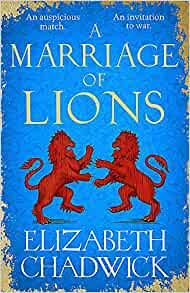
Book Corner: A Marriage of Lions by Elizabeth Chadwick

England, 1238

Raised at the court of King Henry III as a chamber lady to the queen, young Joanna of Swanscombe’s life changes forever when she comes into an inheritance far above all expectations, including her own.

Now a wealthy heiress, Joanna’s arranged marriage to the King’s charming, tournament-loving half-brother William de Valence immediately stokes the flames of political unrest as more established courtiers object to the privileges bestowed on newcomers.

As Joanna and William strive to build a life together, England descends into a bitter civil war. In mortal danger, William is forced to run for his life, and Joanna is left with only her wit and courage to outfox their enemies and prevent them from destroying her husband, her family, and their fortunes.

What a marvellous adventure!

A Marriage of Lions is another fabulous, character-driven historical novel from Elizabeth Chadwick. An enjoyable and entertaining read, it will take you through the full range of emotions; it will have you in tears in one moment and shouting at the characters in the book the next. Beautifully written, it is a wonderful reading experience.

As I have come to expect with Elizabeth Chadwick, A Marriage of Lions transports you back through the centuries, so expertly that you can almost imagine yourself in the midst of Henry III’s court and the battle of wills between Henry and Simon de Montfort. In a change of focus to most books of the time, Elizabeth foregoes telling de Montfort’s story to concentrate on the remarkable relationship of William de Valence and his wife, Joanna de Munchesny, granddaughter of the great William Marshal.

Having just written a biography of the Warenne family, who were the earls of Surrey from the time of the Norman Conquest to the death of the 7th and last earl in 1347, I took particular interest in Elizabeth’s portrayal of John de Warenne, 6th Earl of Surrey, who was brother-in-law to both King Henry III and William de Valence. He was also a cousin to William’s wife, Joanna, through their Marshal mothers. And I have to say, I think Elizabeth got John spot on. He was a loyal, noble character with his friends and family – a trait that ran through his family. Though he could be ruthless to his enemies and was not a benevolent lord to his tenants. 

A Marriage of Lions is not just a fascinating read, it is an experience not to be missed, shining a light on the 13th century, on not only the complex political manoeuvring, but also on the family dynamics that coloured the politics of all those involved, from inheritance disputes to political reform and financial management. Elizabeth manages to weave all these different threads into one fabulous, addictive story.

Elizabeth Chadwick seamlessly combines the history with the fiction.

‘Did you know my mother well?’ Joanna ventured, hoping for crumbs.

Her aunt held out her empty cup to a passing servant to be refilled. ‘I was married with a child before she was born, but I saw her sometimes and I grew to know her better when our father was dying. We sang to him, your mother and me. She was young and shy, but he took great delight in it and it was a moment of light and blessing amid his pain.’ a shadow crossed her face. ‘Our mother died less than a year later and I cared for your mother until she came to be wed. That is why I say you are like her for I knew her well when she was your age. I miss her. I miss all of my sisters. I am the last one. None have made old bones.’

‘I am sorry, madam,’ Joanna said. Her aunt Isabelle, Mahelt’s sister, had died bearing the child she had been carrying at the Queen’s churching – a stillborn son. Her husband, the King’s brother, Richard, had since departed on crusade with Simon de Montfort who was making good use of his exile. ‘I am sorry for the loss of your husband too.’

‘Him I do not miss,’ her aunt said brusquely. ‘Marriage is a bargain and you make the best of your circumstances. If you are fortunate you will bear sons and daughters to nurture and shape, who will be your consolation and make you proud.’

She beckoned to a junior squire who had been attending on the newly knighted Peter of Savoy.

The boy joined them and bowed. Joanna eyed him curiously. He had glossy crow’s wing hair and dark-brown eyes set under slanted brows. He was of about her own age and she recognised his guarded expression from her own repertoire. Her aunt introduced him as her son, John de Warenne, who was entering the household of the newly knighted Peter of Savoy as his squire and ward, where he would be trained to knighthood.

The boy bowed again and gave Joanna an evaluating, slightly wary look. She could almost see prickles bristling on him like a defensive hedgehog. She understood his tension for she had reacted in the same way when she first arrived at court.

‘I will be glad to have another cousin to talk to,’ she said.

Elizabeth Chadwick demonstrates a deep understanding of the politics and nuances of the royal court of Henry III, showing how factionalism and court favourites led to the Second Barons’ War and how it was Henry’s Lusignan siblings suffered from the fallout of Henry’s mounting disagreements with Simon de Montfort. A Marriage of Lions also shows readers how women, despite their inability to take to the field of battle, could use their own skills and abilities to not only protect their family, but also further the interests of their husbands and children. Through Joanna de Munchesny, Elizabeth Chadwick emphasises that medieval women were no more meek and defenceless in the 13th century than they are today. Joanna was intelligent and resourceful – and a force to be reckoned with! She is a character than any reader can admire and get behind.

I have written about many of the historical personages in A Marriage of Lions, either as research subjects or peripheral subjects of my books and I found myself nodding along to Elizabeth Chadwick’s own assessments of these characters, from Simon de Montfort to John de Warenne, from Matilda Marshal to de Montfort’s wife, Eleanor of England – I think Elizabeth and I must read many of the same books for research. This also serves to demonstrate how much knowledge and research the author has accumulated over the years, and how deeply she comes to understand her characters. While this isn’t essential in a historical fiction book, it does help to add authenticity to a novel, and draws the reader in deeper, so that they become totally immersed in the story and its characters.

While I have enjoyed many an Elizabeth Chadwick novel, A Marriage of Lions stands on a level with The Greatest Knight as one of her very best. If you are an Elizabeth Chadwick fan, this is a must read. If you have never read Elizabeth, then I suggest you start with this one – you will definitely want to read the rest afterwards. It is one of the best historical fiction novels that I have read this year. I did not want it to finish and yet – at the same time – could not wait to get to the end!

Elizabeth Chadwick has a knack of getting into the heads and hearts of her characters, so that they jump off the page and insinuate themselves into the thought of the reader. The book is impossible to put down – until the very last page. And finishing the book – especially this book – leaves the reader bereft.

To buy the book: Amazon

About the author:

New York Times bestselling author Elizabeth Chadwick lives in a cottage in the Vale of Belvoir in Nottinghamshire with her husband and their 3 dogs. Her first novel, The Wild Hunt, won a Betty Trask Award and To Defy a King won the RNA’s 2011 Historical Novel Prize. She was also shortlisted for the Romantic Novelists’ Award in 1998 for The Champion, in 2001 for Lords of the White Castle, in 2002 for The Winter Mantle and in 2003 for The Falcons of Montabard. Her sixteenth novel, The Scarlet Lion, was nominated by Richard Lee, founder of the Historical Novel Society, as one of the top ten historical novels of the last decade. She often lectures at conferences and historical venues, has been consulted for television documentaries and is a member of the Royal Historical Society.

For more details on Elizabeth Chadwick and her books, visit http://www.elizabethchadwick.com, follow her on Twitter, read her blogs or chat to her on Facebook.

*

My Books

Signed, dedicated copies of all my books are available, please get in touch by completing the contact me form.

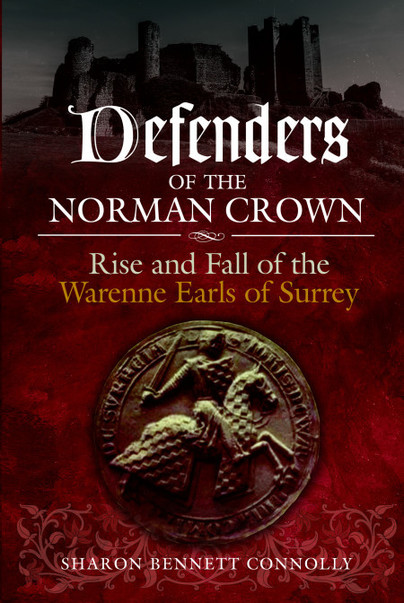
Defenders of the Norman Crown: The Rise and Fall of the Warenne Earls of Surrey tells the fascinating story of the Warenne dynasty, of the successes and failures of one of the most powerful families in England, from its origins in Normandy, through the Conquest, Magna Carta, the wars and marriages that led to its ultimate demise in the reign of Edward III. Defenders of the Norman Crown: Rise and Fall of the Warenne Earls of Surrey is now available from Pen & Sword BooksAmazon in the UK and US and Book Depository.

1 family. 8 earls. 300 years of English history!

Also by Sharon Bennett Connolly:

Ladies of Magna Carta: Women of Influence in Thirteenth Century England looks into the relationships of the various noble families of the 13th century, and how they were affected by the Barons’ Wars, Magna Carta and its aftermath; the bonds that were formed and those that were broken. It is now available from Pen & Sword,  Amazon and from Book Depository worldwide.

Heroines of the Medieval World tells the stories of some of the most remarkable women from Medieval history, from Eleanor of Aquitaine to Julian of Norwich. Available now from Amberley Publishing and Amazon and Book Depository.

Silk and the Sword: The Women of the Norman Conquest traces the fortunes of the women who had a significant role to play in the momentous events of 1066.  Available now from Amazon,  Amberley Publishing, Book Depository.

*

You can be the first to read new articles by clicking the ‘Follow’ button, liking our Facebook page or joining me on Twitter and Instagram.

©2021 Sharon Bennett Connolly

Book Corner: The Brandon Men: In the Shadow of Kings by Sarah Bryson

Four generations of Brandon men lived and served six English kings, the most famous being Charles Brandon, Duke of Suffolk, best friend and brother-in-law to King Henry VIII. Yet his family had a long history tied closely to the kings of the Wars of the Roses back to Henry VI. Charles Brandon’s father, Sir William Brandon, supported Henry Tudor’s claim on the throne and became his standard bearer, dying at the Battle of Bosworth. Charles’s uncle, Sir Thomas Brandon, was Henry VII’s Master of the Horse, one of the three highest positions within the court. Charles’s grandfather had ties with Henry VI, Edward IV and Richard III. These men held important offices, made great sacrifices, walked the fine line between being loyal courtiers and traitors, and even gave their lives, all in the name of loyalty to the king they served. No more shall the Brandon name be an obscure reference in archives. It is time for them to emerge from the shadows of history.

I have been looking forward to reading The Brandon Men: In the Shadow of Kings by Sarah Bryson ever since I heard that Sarah was working on it. I loved her first book, La Reine Blanche: Mary Tudor, A Life in Letters, and was hoping this one would be as good. I was wrong!

The Brandon Men: In the Shadow of Kings is even better. In telling the story of Henry VIII’s best friend, Charles Brandon, and Charles’ forebears, Sarah Bryson writes with a passion that draws the reader in from the very first pages. Sarah Bryson starts the story at the beginning, with the first known head of the Brandon family, Sir William Brandon, born in around 1425. The Brandons rose to prominence during the unsettled times of the Wars of the Roses, their fortunes turning with the tug-of-war between York and Lancaster. Sir William Brandon’s son – also William – was killed at the Battle of Bosworth while protecting the future king, Henry VII. It was this William whose son, Charles Brandon, Duke of Suffolk, took the family to its greatest heights, going so far to marry Mary Tudor, Dowager Queen of France and King Henry VIII’s beloved baby sister.

While the rest of the family had a no-less dramatic story, it is Charles Brandon’s which catches the attention. Brandon pursued a thriving career at court, as one of Henry VIII’s closest friends and jousting partners, while at the same time he chased after wealth and land through several scandalous marriages and betrothals. His marriage to Mary Tudor, however, was the icing on the cake; it brought him a beautiful bride, a love story that would last the ages, and the title of Duke of Suffolk as the brother-in-law to the king. It also brought him more trouble than even he could have imagined; whilst Brandon did not lose his head, he got heavily in debt trying to placate the king for his presumption in marrying the king’s sister.

Charles Brandon’s life was also tinged with family scandal, with one daughter being publicly shamed for her extramarital affair, and tragedy; two of his sons died during the duke’s lifetime, with two mores, his sons by Katherine Willoughby, dying within half an hour of each other before either reached their majority. It was Charles Brandon’s granddaughter by Mary Tudor, the tragic Lady Jane Grey, who became Queen of England for Nine Days. The Brandon story is one of the highs and lows of ambition and family; the veritable wheel of fortune that was so popular in medieval culture.

Lacking experience in military action, Henry Tudor appointed the veteran Earl of Oxford to command his troops and to lead the vanguard. Sir Gilbert Talbot took the right wing and was ordered to defend the archers and keep an eye on the battle line, while John Savage was to lead the left wing. Henry Tudor was positioned to the rear of the troops with several French mercenaries whom he had brought with him from France. Standing close to Henry was Sir William Brandon II.

Brandon had been appointed Henry’s standard-bearer. It is unclear exactly why Brandon was chosen to carry one of Henry Tudor’s standards; perhaps it was due to his unfaltering loyalty to the man he hoped would become king, or perhaps it was down to his physical toughness. We have no description of what Sir William Brandon II looked like, but his son Charles grew up to be tall, handsome, well built and extremely suited to physical pastimes such as hunting and jousting – all qualities that he may have inherited from his father.

Facing them, on King Richard’s side was John Howard, Duke of Norfolk, with Sir Robert Brackenbury leading the Yorkist vanguard. Next came a force commanded by Richard III and comprised of his bodyguard and others. In the rear was the Earl of Northumberland and his men.

When the battle cry went up, arrows flew and the roar of Richard III’s artillery filled the air. Oxford’s men clashed with the Duke of Norfolk’s, the two being old foes. Both sides paused to reorientate themselves. Oxford formed his men into a wedge and charged forward. At this second charge, Henry’s French troops attacked Norfolk’s vanguard. Soon Norfolk’s men were in trouble. Many were killed, including the duke. Others fled while some defected to fight on Henry Tudor’s side.

Northumberland and his men did not move into the fight, and it is believed that at some point the earl decided to leave the battle without throwing any of his men into the fray. Amid this chaos, some of Richard III’s supporters begged him to flee, but he declared that he would live or die as a king. Oxford’s men had pushed forward, leaving a gap, and Richard III now saw an opportunity to get to Henry Tudor directly. He charged with his men, aiming to strike Henry down.

As he advanced, Richard III’s lance pierced through Henry’s standard-bearer, Sir William Brandon II, and broke in half. History records that William Brandon ‘hevyd on high [the Tudor standard] and vamisyd it, tyll with deathe’s dent he was tryken downe.’ What was racing through Sir William’s mind in those last few moments as Richard III and his men came thundering towards him? He had given up his property, his land, his wealth, everything he had to support Henry Tudor. He had bid his wife and infant son farewell to follow Henry to England in the hopes of a better life, not just for himself or his family but for England. It was his sworn duty to protect Henry Tudor with his life, and as Richard III’s lance pierced his armour and threw him from his horse, he gave up his life to save the man he believed to be the rightful king of England. Sir William Brandon II had been loyal to his last breath.

In The Brandon Men: In the Shadow of Kings, Sarah Bryson puts flesh on the bones of history; she brings the family, their actions, hopes and dreams, back to life. Concentrating on the human side of their story, Sarah Bryson expertly recreates the world in which the Brandon men and their families lived, from the violence, suspicion and betrayal that personified the Wars of the Roses, to the glamour, intrigue and fear of the court of Henry VIII. Neither does she shy away from the more questionable actions of the family, such as Charles Brandon’s dislike of Anne Boleyn and complicity in her downfall. Sarah Bryson examines the evidence and arguments with a neutral, if passionate, eye, giving us a wonderful portrait of Charles Brandon as a fallible human being whose ambition sometimes gets in the way of his own success. However, and above all, Charles Brandon knew where his loyalty – and his prospects – lie; with the king. He did everything to ensure that his relationship with Henry VIII, and therefore his family’s security, remained paramount in his career.

I was surprised to see that the Brandon story overlaps a little with my own research on the Warennes. Two hundred years after the demise of John de Warenne, the 7th and last Earl of Warenne and Surrey, it seems that some of the Warenne lands, notably Bromfield and Yale in Wales, found themselves in the hands of Charles Brandon – a little serendipity there.

The Brandon Men: In the Shadow of Kings is a beautifully written non-fiction biography of a family that most people have heard of, but of which few know the particulars. Meticulously researched, with substantial notes and an excellent bibliography, it tells the story of the Brandon family and their rise to heights that none of them could have predicted in their wildest dreams. It is a story of war and conflict, love and feuds, with family ambition tempered by family tragedy. It is, above all, a story of service to the crown.

Sarah Bryson is a wonderful writer of non-fiction, whose love of the Brandons’ story comes through on every page, drawing the reader in; engaging, entertaining and enlightening you on every page. It is, in short, a thoroughly enjoyable investigation into the rise of one of the greatest families of the Tudor court, from the origins in later medieval England and the discord of the Wars of the Roses; from humble Suffolk landowners, to the great Duke of Suffolk who owned most of Lincolnshire. The Brandon Men: In the Shadow of Kings is definitely worth reading!

To buy the book:

The Brandon Men: In the Shadow of Kings is available now from Amberley Publishing and Amazon

About the author:

Sarah Bryson is a researcher, writer and educator who has a Bachelor of Early Childhood Education with Honours. She currently works with children with disabilities. She is passionate about Tudor history and has a deep interest in Mary Tudor, Charles Brandon, Duke of Suffolk and the reign of Henry VIII and the people of his court. She has run a website dedicated to Tudor history for many years and has written for various websites including ‘On the Tudor Trail’ and “QueenAnneBoleyn’. She has been studying primary sources to tell the story of Mary Tudor for a decade. She is the author of books on Mary Boleyn, Charles Brandon and La Reine Blanche. She lives in Australia. –This text refers to the hardcover edition.

My books

Defenders of the Norman Crown: The Rise and Fall of the Warenne Earls of Surrey tells the fascinating story of the Warenne dynasty, of the successes and failures of one of the most powerful families in England, from its origins in Normandy, through the Conquest, Magna Carta, the wars and marriages that led to its ultimate demise in the reign of Edward III. Defenders of the Norman Crown: Rise and Fall of the Warenne Earls of Surrey is now available from Pen & Sword BooksAmazon in the UK and US and Book Depository.

1 family. 8 earls. 300 years of English history!

Also by Sharon Bennett Connolly:

Ladies of Magna Carta: Women of Influence in Thirteenth Century England looks into the relationships of the various noble families of the 13th century, and how they were affected by the Barons’ Wars, Magna Carta and its aftermath; the bonds that were formed and those that were broken. It is now available from Pen & Sword,  Amazon and from Book Depository worldwide.

Silk and the Sword: The Women of the Norman Conquest traces the fortunes of the women who had a significant role to play in the momentous events of 1066.  Available now from Amazon,  Amberley Publishing, Book Depository.

Heroines of the Medieval World tells the stories of some of the most remarkable women from Medieval history, from Eleanor of Aquitaine to Julian of Norwich. Available now from Amberley Publishing and Amazon and Book Depository.

*

You can be the first to read new articles by clicking the ‘Follow’ button, liking our Facebook page or joining me on Twitter and Instagram.

©2021 Sharon Bennett Connolly
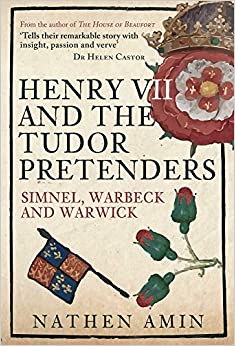
Book Corner: Henry VII and the Tudor Pretenders by Nathen Amin

On 22 August 1485, Henry Tudor emerged from the Battle of Bosworth victorious. His disparate army vanquished the forces of Richard III and, according to Shakespeare over a century later, brought ‘smooth-faced peace, with smiling aplenty and fair prosperous days’ back to England. Yet, all was not well early in the Tudor reign. Despite later attempts to portray Henry VII as single-handedly uniting a war-torn England after three decades of conflict, the kingdom was anything but settled. Nor could it be after a tumultuous two-year period that had witnessed the untimely death of one king, the mysterious disappearance of another, and the brutal slaughter of a third on the battlefield. For the first time in one compelling and comprehensive account, Nathen Amin looks at the myriad of shadowy conspiracies and murky plots which sought to depose the Tudor usurper early in his reign, with particular emphasis on the three pretenders whose causes were fervently advanced by Yorkist dissidents ‒ Lambert Simnel, Perkin Warbeck, and Edward, Earl of Warwick. Just how close did the Tudors come to overthrow long before the myth of their greatness had taken hold on our public consciousness?

Nathen Amin has surpassed himself. The House of Beaufort was a brilliant book, but Henry VII and the Tudor Pretenders: Simnel, Warbeck and Warwick, is even better. looking into the threats and challenges faced by Henry’s fledgling Tudor dynasty, Nathen tells the story of the pretenders who would steal Henry’s crown, either in their own name, or in the name of those they claimed to be.

I have been waiting for this book for a long time! Delayed by Covid, the anticipation only became greater. So, when it finally arrived, I could not wait to dive in. And I was not disappointed. Henry VII and the Tudor Pretenders: Simnel, Warbeck and Warwick is a much-needed investigation into the various pretenders that Henry VII faced during his time on the throne. Focusing on fact, rather than fiction, it takes the reader on a chronological journey through the reign of henry VII, presenting each pretender as they appeared in the timeline.

As you would expect, Lambert Simnel and Perkin Warbeck take up a fair amount of the discussion. But there are others, not least Edward, Earl of Warwick, son of George Duke of Clarence, who I had not even considered as a pretender until this book. Although I understand the reasoning behind identifying young Warwick as a pretender, I do see him more as a pawn to the machinations of others, than a man capable of claiming the throne – and holding on to it. Nathen Amin makes a good argument to him being a pretender, but equally points out that Warwick, beyond his ancestry and title, was little threat to the first Tudor king.

An enormous amount of research has gone into this book – and it shows. Nathen Amin has carefully and meticulously followed the trails of the pretenders, from their humble origins to the moment they made a play for the throne – and beyond. Henry VII and the Tudor Pretenders: Simnel, Warbeck and Warwick also turns the spotlight on those who engineered or assisted these acts of defiance and resistance, analysing the actions and motives of the pretenders’ supporters, both practical and political, from rebellious Yorkist sympathisers to the crowned heads of Europe.

In a frantic attempt to persuade their hesitant peers to join their cause, the Staffords started spreading false rumours in the locality that their attainders had been overturned, even producing forged letters patent and claiming Henry had pardoned them of all offences. They also announced that Lovell had captured the king at York, and such a disingenuous strategy soon paid some dividend, for the Staffords started to amass a small band of adherents who had no qualms about openly plotting Henry’s death. The rebels even started championing the name of Warwick in public, alluding to the young Yorkist prince held in the Tower of London. It was unquestionably treasonous activity, and all were partaking in a deadly game against overwhelming odds.

The employment of the Warwick name was likely connected to another minor plot uncovered a few miles north of London in early May 1486, adding to the king’s growing burden, in which several conspirators armed themselves with ploughs, rakes and woolsacks and attempted to assault some members of the royal household. Although the basic weapons suggest the revolt was poorly planned and trivial in comparison to similar uprisings, the insurgents involved did provocatively wave a ragged staff banner, a well-known heraldic device associated with previous generations of Warwick earls, including the present incumbent’s grandfather Richard Neville, the 16th Earl, better remembered as ‘the Kingmaker’ for his tireless scheming during the earlier phases of the Wars of the Roses. It certainly wasn’t escaping the attention of some disaffected Yorkist diehards that there was still a prince of Yorkist blood known to be alive, albeit confined within the walls of the Tower.

Momentarily boosted by a slight upturn in support, the Staffords were even able to briefly enter Worcester after the town guard proved embarrassingly lax in their defence of their gateways, a dereliction of duty which earned the bailiff and commonalty the severe displeasure of their irritated sovereign. Nonetheless, the rebel efforts proved in vain

The famous Shakespeare phrase ‘uneasy lies the head that wears a crown’ (from Henry IV) certainly rang true for Henry VII and Nathen Amin demonstrates how the first Tudor king’s throne was plagued by threats from pretenders with differing levels of credibility. Certainly, Simnel, Warbeck and Warwick presented the greatest threats, but Amin demonstrates how Henry could not be complacent against any challengers, no matter how unfeasible their claim. While the author mentions the Princes in the Tower, and discusses their likely fate, he does not let himself get distracted by the arguments into that fate. Rather, he concentrates on the opportunities offered by the uncertainty surrounding what happened to them, and how the various pretenders played on this to serve their own ends – or the ends of those pulling the strings.

Henry VII and the Tudor Pretenders: Simnel, Warbeck and Warwick by Nathen Amin is a thoughtful examination of the challenges that Henry VII faced during his reign. It is also thought-provoking. It will make you think about your own views on the subjects it touches on, from the possibility that Warbeck was Richard, Duke of York, to the murder – or not – of the Princes in the Tower, and to the legitimacy of the rule of Henry VII himself. Nathen Amin’s conclusions are thoroughly and comprehensively argued, leaving the reader to re-examine their own previously conclusions and convictions. While it presents Henry VII in a positive light, the book does not shy away from offering criticism where it is merited, nor does it vilify Richard III.

Nathen Amin has produced a balanced, thoughtful examination of the pretenders who threatened Henry VII’s throne. Going back to the primary evidence, he has carefully and meticulously peeled away the rumours, innuendos and propaganda to present his findings in engaging, accessible prose.

Henry VII and the Tudor Pretenders: Simnel, Warbeck and Warwick an essential addition to every War of the Roses library. It also serves as an engaging and entertaining read for anyone with more than a passing interest in the fates of the Princes in the Tower, the establishment of the Tudor dynasty and the numerous threats that Henry VII had to face in order to establish that dynasty.

About the author:

Nathen Amin is an author from Carmarthenshire, West Wales, who focuses on the fifteenth century and the reign of Henry VII. He wrote ‘Tudor Wales’ in 2014 and ‘York Pubs’ in 2016, followed in 2017 by the first full-length biography of the Beaufort family, ‘The House of Beaufort’, an Amazon #1 bestseller.

Henry VII and the Tudor Pretenders: Simnel, Warbeck and Warwick is now available from Amberley Publishing and Amazon.

*

My Books

Defenders of the Norman Crown: The Rise and Fall of the Warenne Earls of Surrey tells the fascinating story of the Warenne dynasty, of the successes and failures of one of the most powerful families in England, from its origins in Normandy, through the Conquest, Magna Carta, the wars and marriages that led to its ultimate demise in the reign of Edward III.

1 family. 8 earls. 300 years of English history!

Defenders of the Norman Crown: Rise and Fall of the Warenne Earls of Surrey is now available from Pen & Sword BooksAmazon in the UK and US and Book Depository.

Also by Sharon Bennett Connolly:

Ladies of Magna Carta: Women of Influence in Thirteenth Century England looks into the relationships of the various noble families of the 13th century, and how they were affected by the Barons’ Wars, Magna Carta and its aftermath; the bonds that were formed and those that were broken. It is now available from Pen & Sword,  Amazon and from Book Depository worldwide.

Heroines of the Medieval World tells the stories of some of the most remarkable women from Medieval history, from Eleanor of Aquitaine to Julian of Norwich. Available now from Amberley Publishing and Amazon and Book Depository.

Silk and the Sword: The Women of the Norman Conquest traces the fortunes of the women who had a significant role to play in the momentous events of 1066.  Available now from Amazon,  Amberley Publishing, Book Depository.

*

You can be the first to read new articles by clicking the ‘Follow’ button, liking our Facebook page or joining me on Twitter and Instagram.

©2021 Sharon Bennett Connolly
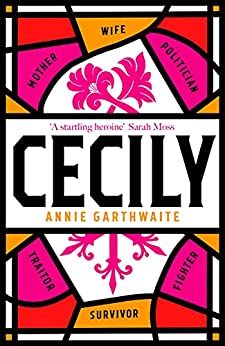
Book Corner: Cecily by Annie Garthwaite

‘Rebellion?’
The word is a spark. They can start a fire with it, or smother it in their fingertips.
She chooses to start a fire.

You are born high, but marry a traitor’s son. You bear him twelve children, carry his cause and bury his past.

You play the game, against enemies who wish you ashes. Slowly, you rise.

You are Cecily.

But when the king who governs you proves unfit, what then?

Loyalty or treason – death may follow both. The board is set. Time to make your first move.

Told through the eyes of its greatest unknown protagonist, this astonishing debut plunges you into the closed bedchambers and bloody battlefields of the first days of the Wars of the Roses, a war as women fight it.

What a fabulous debut novel!

I had already been hearing good things about Annie Garthwaite’s book, Cecily, when I was offered a review copy from NetGalley. So, of course, I jumped at the chance to read it. A book about one of the strongest and most influential women of the 15th century was bound to interest me. I have forever been fascinated with the Wars of the Roses, after all, and written a number of articles about members of the House of York. I’ve also researched and written about Cecily’s amazing mother, Joan Beaufort, and impressive grandmother, Katherine Swynford. So, I was interested to read Annie Garthwaite’s take on this incredible woman.

And I was not disappointed,. It is hard to believe that Cecily is a debut novel. Beautifully written and composed, it transports the reader back the turmoil of fifteenth century England and shows us the Wars of the Roses through the eyes of Cecily and her husband, Richard, Duke of York. Though historical fiction, it has a sense of reality that is not always present in novels.

Cecily takes no wine in Lent but, when its privations are over, she had chance to share her uncle’s gift with unlooked-for visitors. Bedford’s widow comes to Fotheringhay. Not the gentle duchess Anne she’d come to care for in France, but pretty young Jacquetta, who took that lady’s place after plague demanded she vacate it.

In truth, of course, she’d met Jacquetta too, that time in Paris.

It was the morning after Henry’s crowning and she and Richard had been staying in the Bedfords’ household. Their new good fortune had made them more hungry for excitement than sleep, so they stole out in the cold dawn light, planning to take horses and race each other over the frost hard fields beyond the city. They were laughing as they came, thinking themselves alone, until they turned a corner into the mews and saw Jacquetta, daughter of Bedford’s ally the Count of St Pol, leaning down from a fine grey mare and kissing John of Bedford hard on the mouth.

They brazened it out. Jacquetta smiled boldly, gave brief farewells and was gone. Bedford, dismissive, bade them take whichever of his horses they fancied and enjoy their morning. Richard thanked him warmly but couldn’t look him in the eye.

Cecily could.

‘I believe it was Jacquetta’s uncle who captured the peasant Joan when the English could not and sold her to you for ten thousand livres,’ she said, pulling on her gloves. ‘I suppose that, for such service, you owe her much.’

Enough fr him to marry her, it seems. Duchess Anne died the winter after Cecily returned from France. By spring the Duke of Bedford had dried his tears in Jacquetta’s lap and taken her to wife. Cecily had grieved for it but, in truth, who could blame him? Jacquetta was sixteen, untouched by grief and, likely, fertile. He was forty years old and lonely; the king’s her and childless. After the wedding he’d brought his new wife briefly to England and had grace enough to look shamefaced when he’d asked Cecily to be a friend to her. ‘She knows no one here, you see. And I must be busy, so…’

He’d come to make pleas to the council for more money and more men. They begrudged giving either to a man who kept losing. Even then, he’d looked ill; whip thin and hollow. She’d told him so.

‘I’m just tired, Cecily,’ he’d shrugged. ‘This endless war.’

So, out of pity, and because, in truth, he’d been a maker of her fortune, she’d taken Jacquetta into her company, tolerated her French gossip; her vanity and foolishness.

Cecily is a marvellous, sweeping story, that follows the fortunes of the house of York, through the eyes of its duchess, from the last years of the Hundred Years War, through the turbulent ups and downs of the Wars of the Roses, to the triumphal coronation of Edward IV. Meticulously researched, it strikes the perfect balance between portraying national and international events, and the family life of Cecily and her husband, Richard. Ambition, love and loss, victory and defeat all play a powerful part in the narrative.

The storyline is fast-paced, the political and physical landscape of fifteenth century England providing a wonderful backdrop to the dramatic events of the era. Annie Garthwaite tries to get in the heads of her characters, depicting the Yorks not just as whit knights in shining armour, but as genuine, real people, with their own foibles and ambitions. I do love the depth of the characters. Cecily herself is not perfect, and is the product of her experiences – Annie Garthwaite has really considered how Cecily’s personality would be affected by her experiences and by the characters around her, both friends and enemies alike. The complexities of the family relationships involved in the Wars of the Roses can sometimes get confusing, but the author has managed to navigate her way through the complex relationships to craft a story that is, at once, enjoyable and intriguing.

I can heartily recommend Cecily by Annie Garthwaite to anyone with a passion for historical fiction, and for the Wars of the Roses period, in particular. The book does not disappoint!

About the author:

Annie Garthwaite grew up in a working-class community in the north-east of England. She studied English at the University of Wales before embarking on a thirty-year international business career. In 2017 she returned to her first love, books, and set out to write the story of a woman she had always felt drawn to: Cecily Neville. This became her debut novel, Cecily.

Cecily is available from Amazon

*

My Books

Defenders of the Norman Crown: The Rise and Fall of the Warenne Earls of Surrey tells the fascinating story of the Warenne dynasty, of the successes and failures of one of the most powerful families in England, from its origins in Normandy, through the Conquest, Magna Carta, the wars and marriages that led to its ultimate demise in the reign of Edward III.

1 family. 8 earls. 300 years of English history!

Defenders of the Norman Crown: Rise and Fall of the Warenne Earls of Surrey is now available from Pen & Sword BooksAmazon in the UK and US and Book Depository.

Also by Sharon Bennett Connolly:

Ladies of Magna Carta: Women of Influence in Thirteenth Century England looks into the relationships of the various noble families of the 13th century, and how they were affected by the Barons’ Wars, Magna Carta and its aftermath; the bonds that were formed and those that were broken. It is now available from Pen & Sword,  Amazon and from Book Depository worldwide.

Heroines of the Medieval World tells the stories of some of the most remarkable women from Medieval history, from Eleanor of Aquitaine to Julian of Norwich. Available now from Amberley Publishing and Amazon and Book Depository.

Silk and the Sword: The Women of the Norman Conquest traces the fortunes of the women who had a significant role to play in the momentous events of 1066.  Available now from Amazon,  Amberley Publishing, Book Depository.

*

You can be the first to read new articles by clicking the ‘Follow’ button, liking our Facebook page or joining me on Twitter and Instagram.

©2021 Sharon Bennett Connolly

Book Corner: For Lord and Land by Matthew Harffy

Greed and ambition threaten to tear the north apart.

War rages between the two kingdoms of Northumbria. Kin is pitted against kin and friend becomes foe as ambitious kings vie for supremacy.

When Beobrand travels south into East Angeln to rescue a friend, he unwittingly tilts the balance of power in the north, setting in motion events that will lead to a climactic confrontation between Oswiu of Bernicia and Oswine of Deira.

While the lord of Ubbanford is entangled in the clash of kings, his most trusted warrior, Cynan, finds himself on his own quest, called to the aid of someone he thought never to see again. Riding into the mountainous region of Rheged, Cynan faces implacable enemies who would do anything to further their own ends.

Forced to confront their pasts, and with death and betrayal at every turn, both Beobrand and Cynan have their loyalties tested to breaking point.

Who will survive the battle for a united Northumbria, and who will pay the ultimate price for lord and land?

Beobrand is back!

For Lord and Land is book no. 8 of Matthew Harffy’s excellent Bernicia Chronicles. I have read each of these books as soon as they have come out, and I have never been disappointed. And For Lord and Land is no exception! This was another one of those books that makes you read late into the night, saying ‘just one more chapter’.

A slight change in style from the last book, with two stories running side by side for most of the book, For Lord and Land is a fabulous, engaging, entertaining, engrossing (and all the other ‘en’s) read. Matthew Harffy has surpassed himself yet again, combining a fast paced narrative with an intricately-woven storyline that, inevitably, leaves the reader wanting more as the last page is turned.

Matthew Harffy skilfully recreates the world of 7th century Northumbria, bringing the landscape, the politics and the people to life in the reader’s mind. he really is a master storyteller. He fits his stories into the known history, which is, as ever, thoroughly researched. The mixing of historical and fictional characters melds together to bring the 7th century to life.

With practised ease, Beobrand wriggled into his byrnie and quickly tightened his sword belt about his waist to take some of the armour’s familiar weight from his shoulders. Placing the helm on his head, he looked back at his men. They were grim-faced and sombre now, ready for what they must do. Only Cuthbert was smiling, though Beobrand noticed that the colour had drained from his face as his excitement changed to the uncertainty of growing anticipation.

“Get your shield,” murmured Beobrand. Cuthbert started, then rushed to retrieve his newly painted linden board and the bright-bladed spear that, like its owner, was untested in combat.

“You think there will be a fight, lord?” Cuthbert asked breathlessly.

Beobrand sighed and scanned the mass of black-shielded warriors in the belly of the ship. They had all bee ready for battle for some time. Were they merely cautious or had they travelled with him for so long that they had foreseen how this day would end? He knew not, but there were no finer warriors in all of Albion. As ever, the sight of them filled him with pride.

The ship cut through the waves, flinging spray into the faces of the men as they all turned towards the approaching sand.

“Come, my gesithas!” bellowed Beobrand, pulling Naegling from its scabbard so that the fine patterend blade caught the lowering sun. “It seems there is killing to be done today after all!”

As you may have come to expect from Matthew Harffy, the battle scenes are beautifully choreographed, highlighting the actions of the individuals, especially of Beobrand and his men, whilst never losing sight of the big picture. The instances of combat are ferocious and deadly, with the reader waiting with bated breath to see who would survive, and who would die. It is heart in the mouth time every time, with Harffy drawing out the tension until the reader finds it almost unbearable.

Besides the gripping action and engaging storylines, the character development has always set Matthew Harffy apart from many authors. Beobrand, the eponymous hero, has been through an awful lot in 8 books. The reader doesn’t forget that – and neither does the author – and Beobrand’s scars, both mentally and physically, serve to create a deeper personality, and a more in-depth story with every book. And it is not just Beobrand. Harffy gives depth and vitality to every character in the book, no matter whether they are in there for a chapter, for the whole book, or for the last 6 books.

For Lord and Land goes a step further than the usual book in the Bernicia Chronicles with a dual storyline in which Beobrand shares the stage with Cynan. Cynan has grown immensely in the last couple of books, becoming a character demanding attention in his own right, and probably developing a fan-base of his own. And no wonder! He has become one of Beobrand’s most trusted warriors, despite being a former slave. He is devoted to Beobrand but has a mind and responsibilities of his own and in For Lord and Land he comes into his own. His storyline draws from the past to remind the reader of how far both he and Beobrand have come, and of how far trust can be stretched – and how easily it can be broken. But I’ve already said too much….

You will have to read the book to know more. All I can say is that For Lord and Land is well worth the read – and the late nights!

About the Author:

Matthew Harffy lived in Northumberland as a child and the area had a great impact on him. The rugged terrain, ruined castles and rocky coastline made it easy to imagine the past. Decades later, a documentary about Northumbria’s Golden Age sowed the kernel of an idea for a series of historical fiction novels. The first of them is the action-packed tale of vengeance and coming of age, THE SERPENT SWORD.

Matthew has worked in the IT industry, where he spent all day writing and editing, just not the words that most interested him. Prior to that he worked in Spain as an English teacher and translator. Matthew lives in Wiltshire, England, with his wife and their two daughters.

For all the latest news and exclusive competitions, join Matthew online:
http://www.matthewharffy.com
twitter.com/@MatthewHarffy
http://www.facebook.com/MatthewHarffyAuthor

Retail links

Amazon UK: https://amzn.to/3e45G97

Follow Aries

Twitter: @AriesFiction; Facebook: Aries Fiction; Website: http://www.headofzeus.com

*

My Books

Defenders of the Norman Crown: The Rise and Fall of the Warenne Earls of Surrey tells the fascinating story of the Warenne dynasty, of the successes and failures of one of the most powerful families in England, from its origins in Normandy, through the Conquest, Magna Carta, the wars and marriages that led to its ultimate demise in the reign of Edward III.

1 family. 8 earls. 300 years of English history!

Defenders of the Norman Crown: Rise and Fall of the Warenne Earls of Surrey is now available from Pen & Sword BooksAmazon in the UK and US and Book Depository.

Also by Sharon Bennett Connolly:

Ladies of Magna Carta: Women of Influence in Thirteenth Century England looks into the relationships of the various noble families of the 13th century, and how they were affected by the Barons’ Wars, Magna Carta and its aftermath; the bonds that were formed and those that were broken. It is now available from Pen & Sword,  Amazon and from Book Depository worldwide.

Heroines of the Medieval World tells the stories of some of the most remarkable women from Medieval history, from Eleanor of Aquitaine to Julian of Norwich. Available now from Amberley Publishing and Amazon and Book Depository.

Silk and the Sword: The Women of the Norman Conquest traces the fortunes of the women who had a significant role to play in the momentous events of 1066.  Available now from Amazon,  Amberley Publishing, Book Depository.

*

You can be the first to read new articles by clicking the ‘Follow’ button, liking our Facebook page or joining me on Twitter and Instagram.

©2021 Sharon Bennett Connolly
Book Corner: Land of Fire by Derek Birks

Late Spring, 455 AD.

After a brutal winter struggle against the High King Vortigern, outcast imperial officer Ambrosius Aurelianus has led his weary followers to south-west Britannia in search of his mother’s kinfolk. But Vortigern, thirsting for revenge is already forging a dangerous alliance against him.

Taking refuge in a ruined Roman fort near the decaying town of Vindocladia, Ambrosius finds an ally in Lurotriga, the widowed queen of the Durotriges. Though still sworn to his Saxon lady Inga, he is soon beguiled by the British noblewoman.

Between Inga and her new rival there can be no compromise and their enmity threatens to cause a rift between the Britons and Saxons of Ambrosius’ company.

If Vortigern attacks before the fort is repaired Ambrosius fears the outcome. He must find allies fast but, in a land of squabbling rival tribes the Roman encounters more enemies than friends. A treaty with neighbouring Dumnonia offers Ambrosius some hope, but commits him to defend the south coast against Scotti raiders. Ambrosius’ forces are stretched perilously thin putting the lives of Lurotriga and others at risk.

As Ambrosius prepares to pursue Vortigern for a final reckoning, his quest to discover his mother’s kin suddenly delivers a startling revelation, but will it help him to defeat the High King?

Heavily outnumbered in the thick forests and steep valleys of Vortigern’s homeland, Ambrosius must rely upon the fighting spirit of his small force of bucellarii and raw recruits. But sometimes courage alone is not enough.

Many of my readers will already know that Derek Birks is one of my favourite authors. Ever since reading his debut novel, Feud, set during the Wars of the Roses, I have devoured every one of his books. And Land of Fire was no exception. The 3rd book in Derek Birks’ The Last of the Romans series is a fabulous, action-filled adventure set in post-Roman Britain. The series follows the experiences of Ambrosius Aurelianus, his lover, Inga, and his small band of armed warriors, trying to make a new life for themselves inn this abandoned outpost of the Roman Empire.

As I have come to expect from this author, the action is relentless, with Ambrosius and his band fighting for their lives from the very first page. The plot is cleverly laid out, with a number of twists and turns that the reader cannot see coming. Ambrosius has to face the might of Vortigern, the High King who is eager for revenge. Life is even more complicated by Ambrosius’ attraction to two women…

The various plot threads make for an explosive combination that will leave the reader on the edge of their seats.

Below he surveyed once more the gravel hard where fishermen had drawn their small boats high up above the tideline. Close by, a rickety wooden jetty thrust a stubby finger out into the estuary channel and Ambrosius smiled to see children playing on the foreshore. But his grin of satisfaction froze half-formed, as a vessel emerged from the mist.

“What’s that?” asked Inga, clutching his arm.

After a tense moment he chuckled with relief, for it was just a single ship and not a Scoti vessel either. If anything, it looked Roman in origin.

“A trader,” ventured Inga.

“Could be,” he said, but something about the ship irked him and by the time Inga’s grip tightened upon his arm he had worked out why. The vessel was a navis lusoria, made for short, coastal journeys and river navigation; and its arrival here irked him far more than any Scoti incursion.

“That’s … your ship,” cried Inga. “Our ship!”

The previous year Ambrosius had brought them, against all odds, to the shore of Britannia in just such a navis lusoria. Their ship was a supply craft built to patrol the Rhinus River but it was very like the one he saw below. This one could, of course have been any vessel… except that it certainly looked like the ship stolen from him at the onset of winter by his embittered half-sister.

open-mouthed in shock, he stared as it lowered its sail and glided out of the mist into the harbour and there at its prow, like some carved image, stood Florina.

“No,” he moaned, as if conjuring up a long dead spirit – except she looked far from dead. “How can she be here?”

“Because Frigg has delivered her into our hands,” breathed Inga, the fire of revenge already beginning to sparkle in her eyes.

Land of Fire is superbly written and full of action. The characters are wonderful, colorful and unique individuals, including the magnificent war-dog, Ferox, who steals every scene he is in. Derek Birks is renowned for putting strong women into his stories. In his Rebels & Brothers and Craft of Kings series, it was Eleanor Elder who stole the show, using all her strength to fight for her family. In The Last of the Romans series, we have Inga and a number of other women who fight for themselves, their friends and loved ones. That is not to say that these women are therefore unrealistic, Derek Birks achieves the perfect balance in making the women into warriors, while also remembering the vulnerability of their sex and the male-dominated world in which they lived.

Ambrosius Aurelianus is a sympathetic hero, burdened with the weight of leadership, he also has a vulnerability about him, in his ability to command and fight. He is well aware of his own mortality and the mortality of those who fight alongside him. This makes him the perfect hero – you want him to succeed and, as with every Derek Birks book, are nervous that he might not. That is because Derek Birks has a unique outlook as an author. He is not afraid to kill off a key character, if it furthers the story. As a reader, that gives his book an edge – you are on the edge of your seat because you know that even the hero might not survive the battle. It makes the tension palpable – right to the very end of the book!

Well written, and with meticulous research, the book expertly depicts the lawlessness and factional warfare of the post-Roman period., where warlords are fighting to fill the vacuum left by the Roman withdrawal. Derek Birks’ knowledge of Roman Britain’s history serves to rebuild the long-lost world, and to draw the reader in, so that they can imagine the sights, sounds and -even – the smells of fifth century Britannia.

Land of Fire has depth and scope. The action is ferocious. The tension constant. It is, quite simply, impossible to put down. I read it in two days and enjoyed every moment of this fabulous novel. I cannot recommend it highly enough – it is a great way to lose a weekend!

To Buy the Book

Land of Fire is now available on Kindle from Amazon.

About the Author:

Derek was born in Hampshire in England but spent his teenage years in Auckland, New Zealand, where he still has strong family ties. On his return to England, he read history at Reading University and for many years he taught history in a secondary school. Whilst he enjoyed his teaching career and it paid the bills, he found a creative outlet in theatrical activities, stage-managing many plays and outdoor Shakespeare performances. Derek always wanted to write and began, aged 17, writing stories, songs and poetry – in fact virtually anything. Inevitably, work and family life took precedence for a long period of time but in 2010 Derek took early retirement to indulge his passion for history and concentrate on his writing. He is interested in a wide range of historical themes but his particular favourite is the late medieval period.

Derek writes action-packed fiction which is rooted in accurate history. He also produces podcasts on the Wars of the Roses for those interested in the real historical background to his books. Check them out on his website at: https://www.derekbirks.com/history-podcasts/

His historical fiction works include:
Rebels & Brothers – a 4-book series set during the fifteenth century, which follows a fictional family, the Elders, through their struggle to survive the Wars of the Roses up to 1471. The Craft of Kings – a sequel series which finds the Elder family ten years later in 1481. The latest book in this series is book 3, Echoes of Treason, which is set during the short and turbulent reign of Richard III. The final book in the series, Crown of Fear, will be published later in 2020. He has recently embarked upon a new Post-Roman series and the first book, The Last of the Romans, is out now. A sequel, Britannia: World’s End, was released in in 2020.

Apart from his writing, he enjoys travelling – sometimes, but not always, to carry out research for his books. He also spends his time walking, swimming and taking part in archaeological digs. He was a regular presence at the Harrogate History Festival, is an active member of the Historical Novel Society and you will also find him each summer signing books – and selling them – at the Chalke Valley History Festival outside Salisbury in Wiltshire.

Derek welcomes feedback from readers.
Feel free to get in touch with him via his website: http://www.derekbirks.com or follow him on twitter: https://twitter.com/Feud_writer
or facebook: https://www.facebook.com/derek.birks.14

*

My Books:

Coming 31 May 2021:

Defenders of the Norman Crown: The Rise and Fall of the Warenne Earls of Surrey tells the fascinating story of the Warenne dynasty, of the successes and failures of one of the most powerful families in England, from its origins in Normandy, through the Conquest, Magna Carta, the wars and marriages that led to its ultimate demise in the reign of Edward III.

1 family. 8 earls. 300 years of English history!

Defenders of the Norman Crown: Rise and Fall of the Warenne Earls of Surrey will be released in the UK on 31 May and in the US on 6 August. And it is now available for pre-order from Pen & Sword BooksAmazon in the UK and US and Book Depository.

Also by Sharon Bennett Connolly:

Ladies of Magna Carta: Women of Influence in Thirteenth Century England looks into the relationships of the various noble families of the 13th century, and how they were affected by the Barons’ Wars, Magna Carta and its aftermath; the bonds that were formed and those that were broken. It is now available from Pen & Sword,  Amazon and from Book Depository worldwide.

Heroines of the Medieval World tells the stories of some of the most remarkable women from Medieval history, from Eleanor of Aquitaine to Julian of Norwich. Available now from Amberley Publishing and Amazon and Book Depository.

Silk and the Sword: The Women of the Norman Conquest traces the fortunes of the women who had a significant role to play in the momentous events of 1066.  Available now from Amazon,  Amberley Publishing, Book Depository.

You can be the first to read new articles by clicking the ‘Follow’ button, liking our Facebook page or joining me on Twitter and Instagram.

©2021 Sharon Bennett Connolly 

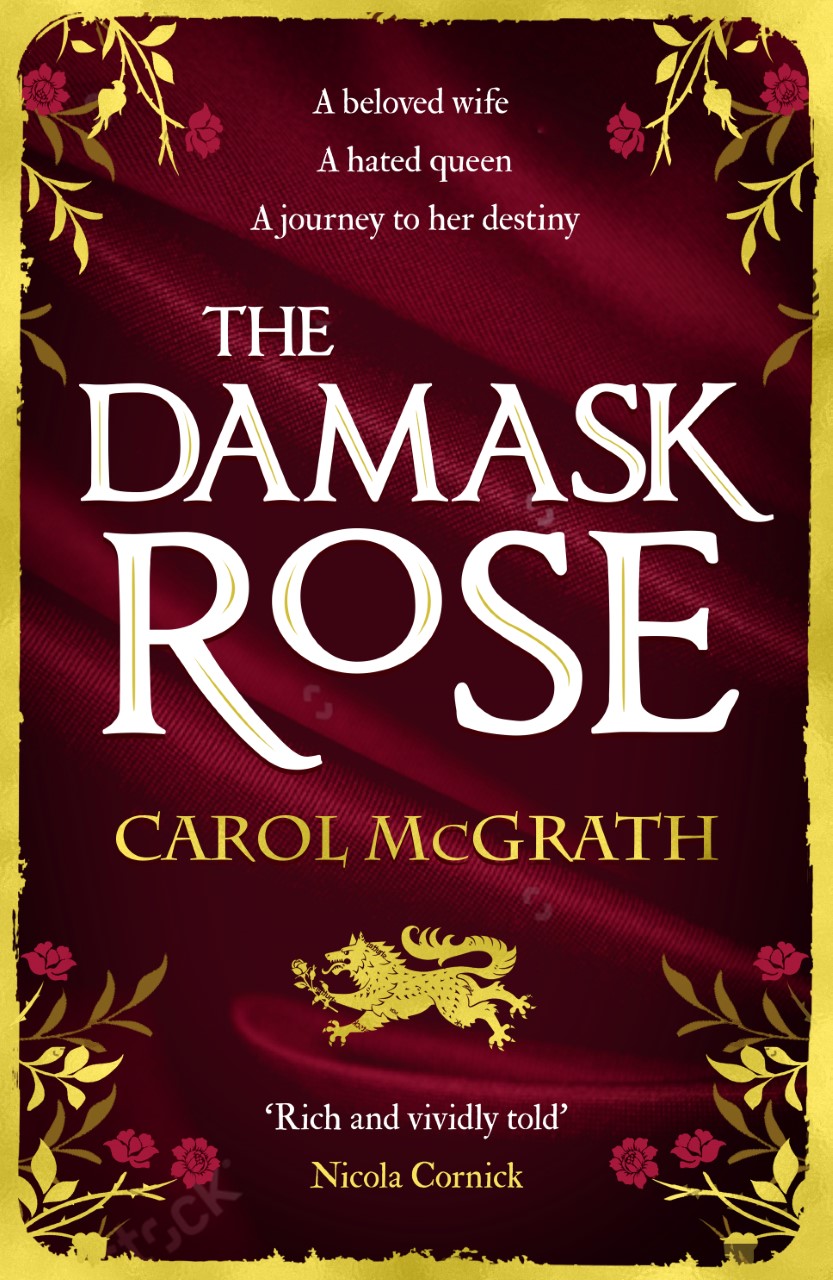
Book Corner: The Damask Rose by Carol McGrath

1266. Eleanor of Castile, adored wife of the Crown Prince of England, is still only a princess when she is held hostage in the brutal Baron’s Rebellion, and her baby daughter dies. Scarred by privation, a bitter Eleanor swears revenge on those who would harm her family – and vows never to let herself be vulnerable again.

As she rises to become Queen, Eleanor keeps Olwen – a trusted herbalist, who tried to save her daughter – by her side. But it is dangerous to be friendless in a royal household, and as the court sets out on crusade, Olwen and Eleanor discover that the true battle for Europe may not be a matter of swords and lances, but one fanned by whispers and spies . . .

The Damask Rose is the second book in historian and novelist Carol McGrath’s She-Wolves trilogy, giving a refreshing new appraisal of the lives of Eleanor of Provence, Eleanor of Castile and – still to come – Isabella of France. The first in the series, The Silken Rose, followed the story of Eleanor of Provence through the early years of the reign of her husband, Henry III and his struggle with Simon de Montfort. The Damask Rose continues the story through Eleanor’s daughter-in-law, Eleanor of Castile. Though each book can definitely be read as a standalone, the two novels certainly complement each other.

Carol McGrath has a wonderful, engaging writing style that draws the reader in. The Damask Rose is a pleasure to read from start to finish and really gets into the mind of Eleanor of Castile, giving a new interpretation of the queen, her experiences, her emotions and motivations.

It shows the woman behind the crown and follows the life of Eleanor from the young Castilian princess, newly arrived in England to the height of her powers as queen and landowner.

And it is a thoroughly entertaining story.

In this fantastic novel, Carol McGrath explores every aspect of Eleanor’s life and explains how the Barons’ War and Simon de Montfort’s rebellion left a lasting impression on her, so much so that she never wanted to be so vulnerable and helpless ever again.

Eleanor scanned the courtyard where her frightened people had begun to gather in family groups. A priest hurried through them clutching a large cross, his habit flapping in a sudden breeze. He crossed himself and shouted in a voice as clear as reliquary crystal, ‘You, Gilbert of Gloucester, mark this, you are excommunicate by order of our Father, the Pope. You’ll burn Hell’s fire and you’ll deserve your fate.’

Earl Gilbert turned his head away from him. Pushing Eleanor forward again, he said, ‘UP you go, my lady.’ In a heartbeat, he had hoisted her onto his horse as if she were light as a feather, and jumped up behind her. He said into her pained ear, ‘Tell them they are to obey Hugh Bigod when he enters the castle this evening. He’ll arrange an escort for your ladies and household.’

‘We have no choice,’ she called down as she managed to wriggle an arm free from Gilbert’s grip. She pointed at the crumpled scroll still lying on the earth, and shouted to her shocked steward, ‘Take it. Read it to my people. Tell them the king has been forced to sign it.’

Master Thomas ran forward and scooped up the King’s letter. He picked her veil up from the ground and handed it up to her.

‘See the King’s order is obeyed,’ she said in a grudging tone as she took possession of her veil. Gilbert thrust her sword into an empty scabbard hanging from his saddle, and slowly walked his horse forward onto the drawbridge.

She could not let this seizure of her royal person go without another protest. ‘Gilbert of Gloucester, I shall have my revenge on you,’ she barked. ‘No one treats a future queen in such a manner.’ She knew she was making a formidable enemy but she didn’t care. Her temper could be foul but she did not care about this either.

‘Lady Eleanor, when you behave as a queen should, with suitable decorum, I shall treat you as a queen,’ he quipped. ‘Until then you are no better than a harridan.’

‘Arrogant bastard,’ she said under her breath as they rode into the trees, followed by the trotting horse ridden by the squire with the ridiculous name and carrying young Simon, the Devil’s son.

That evening, she peered from her heavily guarded tent, incandescent, watching as Hgh Bigod, Earl of Norfolk, rode to take possession of Windsor Castle. Her child and ladies would be loaded like cattle into wagons the next day to begin the journey to Canterbury. Her close friend and lady-in-waiting, Joanna de Valence, married to King Henry’s own half-brother William of Pembroke, was pregnant and she, herself, had missed her courses twice.

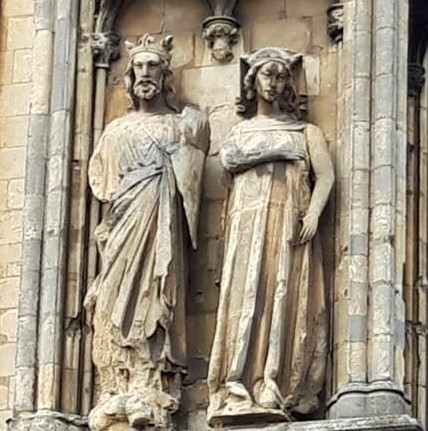
Statues of Edward I and Eleanor of Castile, Lincoln Cathedral ©2021 Sharon Bennett Connolly 

The leading characters of the story are a wonderful, rich collection of historical personages, from Edward and Eleanor themselves to the distasteful Gilbert de Clare, and the various lords, barons and ladies who made up their court, including my very own John de Warenne, Earl of Surrey. The fictional foil to the story is a young woman, Olwen, who helps the queen with her vast knowledge of herbs and their medicinal properties. Olwen is the perfect observer to Eleanor’s life, able to watch and listen whilst escaping notice – for the most part.

Carol McGrath weaves together the known story of Eleanor’s life, through the great events that shaped it, with the fictional creation of Eleanor’s world and emotions, allowing the reader to be a fly on the wall, watching events unfold and marvelling at the sights, smells and emotions of this long lost world.

And it will play on your own emotions.

In The Damask Rose, Carol McGrath not only tells Eleanor of Castile’s story, but also looks deep into the queen’s heart, offering a scenario that would explain Eleanor’s apparent lack of maternal instinct, her need to remain at Edward’s side no matter how far he travelled, and the inter-family relationships that shaped her life. It is a window into the life of a medieval princess and queen that is hard to forget.

Carol McGrath’s portrayal of the Spanish queen is the best depiction of Eleanor of Castile that I have ever read. Beautifully written, it is so touching that it had me in tears in several places – always the sign of a good book.

To buy The Damask Rose: tinyurl.com/dk2att32

About the Author:

Carol McGrath is the author of the acclaimed She-Wolves Trilogy, which began with the hugely successful The Silken Rose and continues with the brand new The Damask Rose. Born in Northern Ireland, she fell in love with historical fiction at a young age, when exploring local castles, such as Carrickfergus, and nearby archaeological digs – and discovering some ancient bones herself. While completing a degree in history, she became fascinated by the strong women who were silenced in record, and was inspired to start exploring their lives. Her first novel, The Handfasted Wife, was shortlisted for the Romantic Novelists’ Association Awards, and Mistress Cromwell was widely praised as a timely feminist retelling of Tudor court life. Her novels are known for their intricacy, depth of research and powerful stories.

For more news, exclusive content and competitions, sign up to Carol’s newsletter at: http://www.carolcmcgrath.co.uk

Follow her on Facebook: /CarolMcGrathAuthor1

And Twitter: @CarolMcGrath

*

My books

Coming 31st May:

Defenders of the Norman Crown: The Rise and Fall of the Warenne Earls of Surrey tells the fascinating story of the Warenne dynasty, of the successes and failures of one of the most powerful families in England, from its origins in Normandy, through the Conquest, Magna Carta, the wars and marriages that led to its ultimate demise in the reign of Edward III.

Defenders of the Norman Crown: Rise and Fall of the Warenne Earls of Surrey will be released in the UK on 31 May and in the US on 6 August. And it is now available for pre-order from Pen & Sword BooksAmazon in the UK and US and Book Depository.

Also by Sharon Bennett Connolly:

Ladies of Magna Carta: Women of Influence in Thirteenth Century England looks into the relationships of the various noble families of the 13th century, and how they were affected by the Barons’ Wars, Magna Carta and its aftermath; the bonds that were formed and those that were broken. It is now available from Pen & Sword,  Amazon and from Book Depository worldwide.

Heroines of the Medieval World tells the stories of some of the most remarkable women from Medieval history, from Eleanor of Aquitaine to Julian of Norwich. Available now from Amberley Publishing and Amazon and Book Depository.

Silk and the Sword: The Women of the Norman Conquest traces the fortunes of the women who had a significant role to play in the momentous events of 1066.  Available now from Amazon,  Amberley Publishing, Book Depository.

You can be the first to read new articles by clicking the ‘Follow’ button, liking our Facebook page or joining me on Twitter and Instagram.

©2021 Sharon Bennett Connolly 

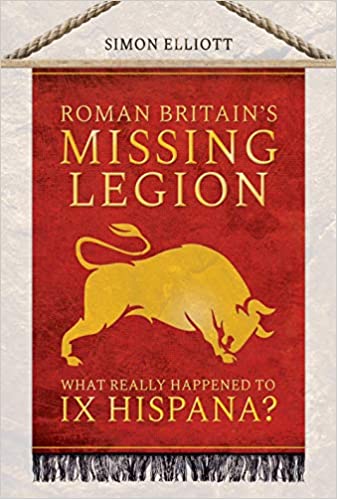
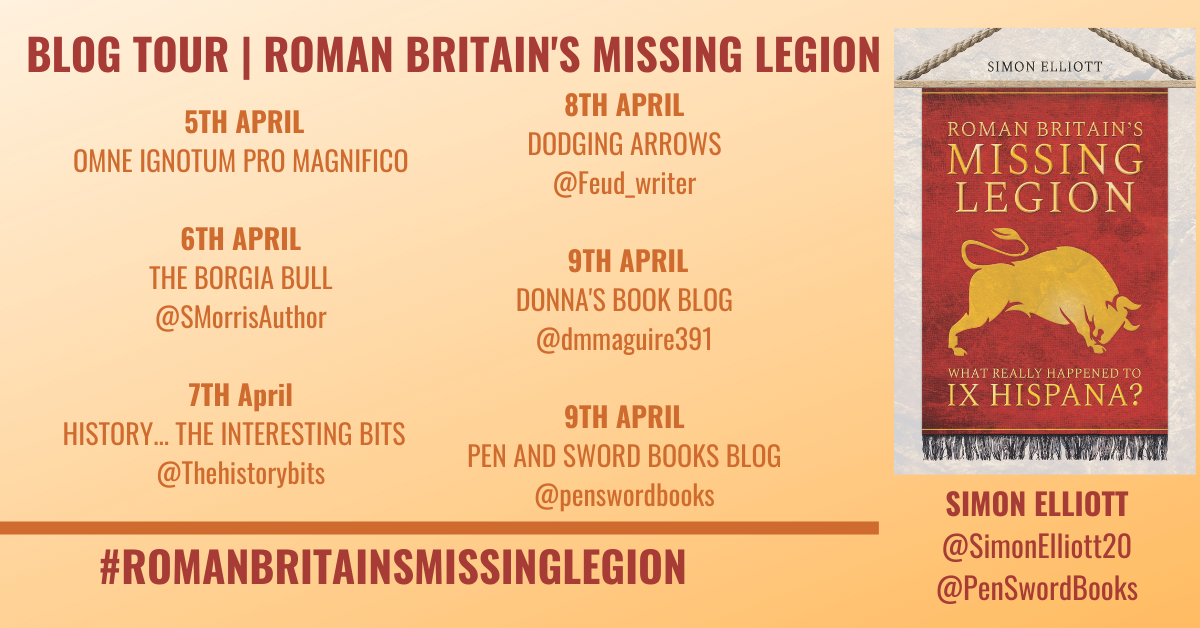
Book Corner: Roman Britain’s Missing Legion by Simon Elliott

Legio IX Hispana had a long and active history, later founding York from where it guarded the northern frontiers in Britain. But the last evidence for its existence in Britain comes from AD 108\. The mystery of their disappearance has inspired debate and imagination for decades. The most popular theory, immortalized in Rosemary Sutcliffe’s novel _The Eagle of the Ninth_, is that the legion was sent to fight the Caledonians in Scotland and wiped out there. But more recent archaeology (including evidence that London was burnt to the ground and dozens of decapitated heads) suggests a crisis, not on the border but in the heart of the province, previously thought to have been peaceful at this time. What if IX Hispana took part in a rebellion, leading to their punishment, disbandment and _damnatio memoriae_ (official erasure from the records)? This proposed ‘Hadrianic War’ would then be the real context for Hadrian’s ‘visit’ in 122 with a whole legion, VI Victrix, which replaced the ‘vanished’ IX as the garrison at York. Other theories are that it was lost on the Rhine or Danube, or in the East. Simon Elliott considers the evidence for these four theories, and other possibilities.

Roman Britain’s Missing Legion: What Really Happened to IX Hispania by Simon Elliott is a fascinating investigation into the fate of the 9th Legion. Immortalised in Rosemary Sutcliff’s iconic novel, The Eagle of the Ninth.

In Roman Britain’s Missing Legion: What Really Happened to IX Hispania, historian Simon Elliott examines all the possible fates of the famous IX legion, examining every scenario in which the legion may have met its end, from revolt in Britannia to the wars in Germany to ignominious defeat in one of the Jewish revolts. Each conflict is explained in detail, with the possible involvement of the IX legion examined and explained, the level of plausibility carefully measured and detailed.

Simon Elliott ruminates on why this one legion disappears so completely from history, with no contemporary records – Roman or otherwise – giving reason or explanation as to its ultimate fate. This is a fascinating book, not only for its enquiries into the fate of the Legio IX Hisapana, but also for its detailed explanations into the make-up of the Roman army in the 1st and 2nd centuries AD.

Using contemporary records, historical investigations and archaeological discoveries, as well as his extensive knowledge of the Roman Empire and the Roman military, Simon Elliott finds traces of the IXth legion in Britain, Rome and elsewhere, but to discover their eventual fate must be a mammoth task.

This book is a historical detective story concerning the mysterious disappearance of the 5,500 men of legio IX Hispana, one of Rome’s most famous military units. Uniquely among the Roman legions, of which there were over time more than sixty (and at any one time in the Empire a maximum of thirty-three), we have no idea what happened to it. It simply disappears from history.

The historical conundrum has grabbed the attention of academics, scholars and the wider public for hundreds of years. One of the first to write on the subject was British antiquarian John Horsley who published his Britannia Romana or the Roman Antiquities of Britain in 1732. In his work he detailed when each Roman legion arrived and left Britain. However, he noted that there was no leaving date for legio IX Hispana, a fact he found difficult to explain. Then, in the 1850s, the renowned German scholar Theodor Mommsen published his multi-volume The History of Rome. In this he speculated that the IXth legion had been the subject of an uprising by the Brigantes tribe of northern Britain around AD 117/118, it being wiped out in its legionary fortress at York (Roman Eboracum). Mommsen speculated it was this event that prompted the new Emperor Hadrian to later visit Britain in AD 122 and initiate the construction of Hadrian’s Wall.

Such was Mommsen’s reputation that his theory became the received wisdom regarding the legion’s fate well into the twentieth century AD, when it was then popularized by a number of historical fiction works. One above all others cemented the fate of the legio IX Hispana in the popular imagination. This was The Eagle of the Ninth, the seminal work published by children’s author Rosemary Sutcliff in 1954. Her second book, this told the story of her hero Marcus Flavius Aquila who travelled north of Hadrian’s Wall to track down the fate of his father’s legion, legio IX Hispana. Her conceit was that the IXth legion had been annihilated in the far north of Britain, beyond the northern border rather than York, during yet another uprising. This novel proved as popular with adults as with children, and is still a bestseller to this day.

You don’t have to be an expert on Roman military history in order to read and enjoy this thorough investigation into the fate of the legio IX Hispana, Simon Elliott dedicates the first chapter to explaining the foundations of the Roman military machine, and how units are divided into legions, centuries, vexillations and the rest. This comprehensive introduction means the general reader can enjoy the book without getting lost in the various description of diverse Roman units. The author also explains the extent of Roman influence throughout Europe and beyond, from Roman incursions into Scotland, to its actions in Egypt, Syria and beyond.

He then goes on to examine the breadcrumbs left behind by the IXth legion, including tablets, small altars and inscriptions in York. Carlisle and elsewhere in the empire. These examples of the legion’s existence also serve to remind the reader that we are investigating the fate of men, around 1,000 men, who just disappear from history.

Incredibly well researched, Simon Elliott uses his extensive knowledge of this Roman military machine to offer all possible scenarios for the fate of the IXth legion and, with confidence, explain how likely or unlikely each scenario could ultimately be. I won’t tell you his conclusions, that would spoil it! However, the investigation process is just as entertaining as the conclusions that the author draws; perhaps more so, in that the reader learns so much about the various theatres of war in which the IXth legion may – or may not – have been drawn into.

Whether or not you agree with Simon Elliott’s arguments and conclusions, Roman Britain’s Missing Legion: What Really Happened to IX Hispania is well worth a read. It takes you on a fascinating detective journey through all the corners of the Roman Empire. And what is certain is that something extraordinary must have happened to the IXth legion to make them disappear so completely from contemporary records. Their fate remaining open to speculation for 2 millennia – so far.

This review has been written as part of Roman Britain’s Missing Legion: What Really Happened to IX Hispania week-long blog tour. You can follow the rest of the tour:

To buy the book:

Roman Britain’s Missing Legion: What Really Happened to IX Hispania by Simon Elliott is available from Amazon and Pen & Sword Books.

About the author:

Dr Simon Elliott is an historian, archaeologist and Honorary Research Fellow at the University of Kent where he studied for his PhD in Archaeology on the subject of the Roman military in Britain. He also has an MA in War Studies from KCL and an MA in Archaeology from UCL. For a day job he runs his own PR company, and is a former defence and aerospace journalist at titles including Jane’s Defence Weekly and Flight International. He frequently gives talks on Roman themes and is co-Director at a Roman villa excavation. He is also a Trustee of the Council for British Archaeology. His website can be viewed at: simonelliott.net.

*

My books

Coming 31st May:

Defenders of the Norman Crown: The Rise and Fall of the Warenne Earls of Surrey tells the fascinating story of the Warenne dynasty, of the successes and failures of one of the most powerful families in England, from its origins in Normandy, through the Conquest, Magna Carta, the wars and marriages that led to its ultimate demise in the reign of Edward III.

Defenders of the Norman Crown: Rise and Fall of the Warenne Earls of Surrey will be released in the UK on 31 May and in the US on 6 August. And it is now available for pre-order from Pen & Sword BooksAmazon in the UK and US and Book Depository.

Also by Sharon Bennett Connolly:

Ladies of Magna Carta: Women of Influence in Thirteenth Century England looks into the relationships of the various noble families of the 13th century, and how they were affected by the Barons’ Wars, Magna Carta and its aftermath; the bonds that were formed and those that were broken. It is now available from Pen & Sword,  Amazon and from Book Depository worldwide.

Heroines of the Medieval World tells the stories of some of the most remarkable women from Medieval history, from Eleanor of Aquitaine to Julian of Norwich. Available now from Amberley Publishing and Amazon and Book Depository.

Silk and the Sword: The Women of the Norman Conquest traces the fortunes of the women who had a significant role to play in the momentous events of 1066.  Available now from Amazon,  Amberley Publishing, Book Depository.

You can be the first to read new articles by clicking the ‘Follow’ button, liking our Facebook page or joining me on Twitter and Instagram.

©2021 Sharon Bennett Connolly

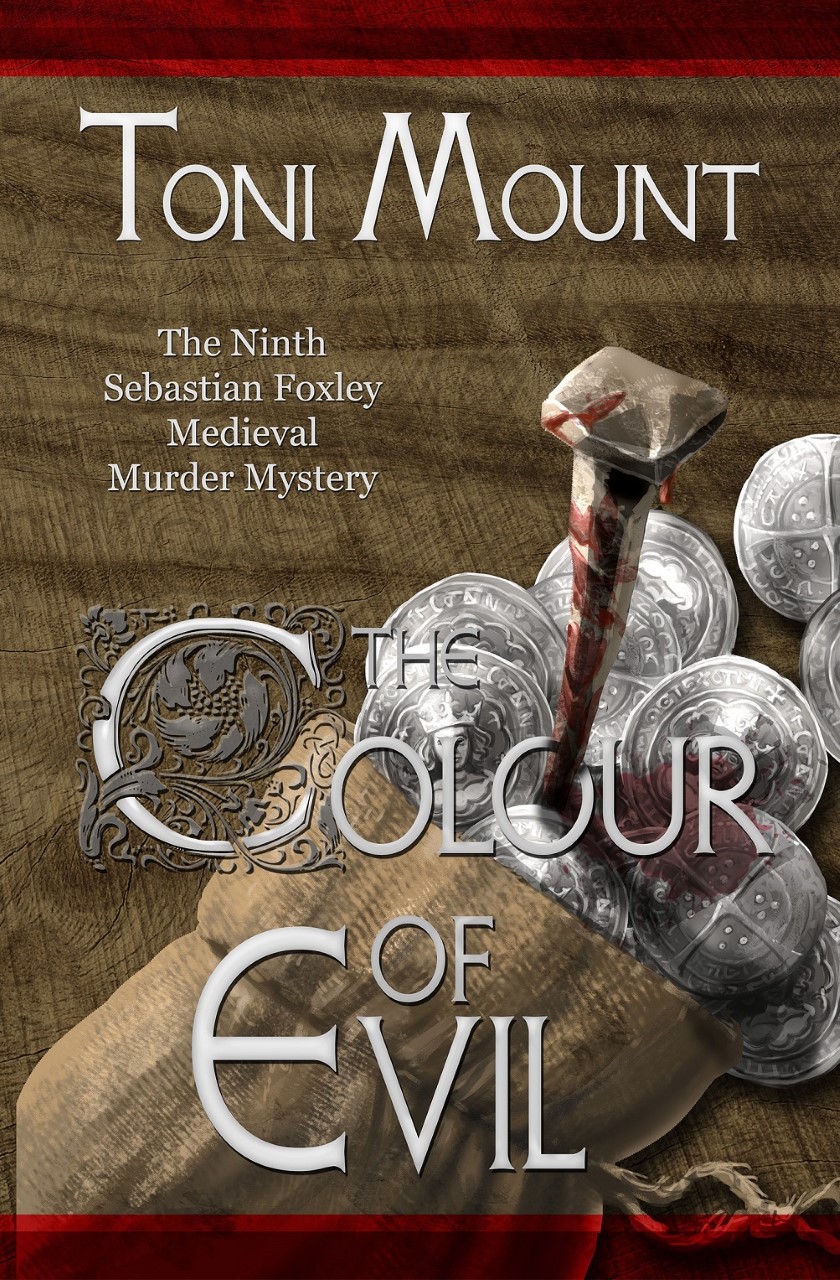
Book Corner: The Colour of Evil by Toni Mount

Every Londoner has money worries. Talented artist and some-time sleuth, Seb Foxley, is no exception.

When fellow craftsmen with debts to pay are found dead in the most horrid circumstances, fears escalate. Only Seb can solve the puzzles that baffle the authorities.

Seb’s wayward elder brother, Jude, returns unannounced from Italy with a child-bride upon his arm. Shock turns to dismay when life becomes more complicated and troubles multiply.

From counterfeit coins to deadly darkness in London’s worst corners; mysterious thefts to attacks of murderous intent, Seb finds himself embroiled at every turn. With a royal commission to fulfil and heartache to resolve, can our hero win through against the odds?

Share Seb Foxley’s latest adventures in the filthy streets of medieval London, join in the Midsummer festivities and meet his fellow citizens, both the respectable and the villainous.

The Colour of Evil by Toni Mount is the 9th book in Toni’s marvellous Sebastian Foxley Medieval Mystery series. If you haven’t read any of these books yet, you are really missing a treat!

Toni Mount has a unique, engaging writing style. Her beautiful prose and clever use of language instantly transports you back to 15th century England. The story revolves around a series of murders linked to counterfeit coins, into which Seb Foxley is brought as a consultant by the local bailiff.

The eponymous hero of the story, Seb Foxley, is a wonderful, intelligent character, who is, perhaps, a little too straitlaced and naive for his own good. His brother is a little too worldly-wise and entitled, but much less self-aware than is good for a grown man – I wanted to punch him on a number of occasions (and I’m not a violent person). The Colour of Evil places these brothers at the heart of the story, highlighting their conflicts and rivalries as London is in the grip of a series of gruesome murders.

As the mystery deepens, the reader is absorbed into the sights, smells and story of London; the excitement, fear and mystery is palpable. The Colour of Evil is an absorbing thriller.

Over ale, Thaddeus told me of the man – the thief we had taken in possession of his ill-gotten gains.

‘His name is Philip Hartnell, a most respectable citizen and a cutler by craft. He said he was walking along Bladder Street, passed the house with its window wide to the pleasant evening air when he saw the candlesticks by the open casement. At a glance, he was quite certain they were the same ones he had bought his wife as a wedding gift ten years since. His wife has much fondness for the sticks, so he took them, thinking to please her.’

‘Had they been stolen away from him previously, then? Is that the way of it?’ I sipped my ale. Thaddeus did likewise afore continuing.

‘That was my first thought. I tell you, Seb, it took a deal of cajoling and probing to get the truth out of Philip Hartnell. The candlesticks weren’t stolen from him but he apparently gave his goodwife to think they had been taken. The truth is that Hartnell has fallen into debt. He took the candlesticks to a goldsmith and sold them to pay off a sizeable loan. When his wife found them gone, she was much upset – more so than Hartnell ever expected. Thus, he told her they had been stolen, rather than admit his actions and the fact that he was over the ears in debt to a moneylender.’

‘An unfortunate situation but how does that excuse his actions of yestereve?’

‘It doesn’t. Besides, the candlesticks he stole from the house in Bladder Street were never his. Similar in shape but not the same ones.’

‘He has no right to them, even had they been the same. He sold them and has had the profit from the sale. Hartnell is a thief and we caught hm. He deserves just punishment, does he not? I do not see any reason for your difficulties in this matter, Thaddeus.’

‘He had never had any dealings with the law before, Seb. He’s a respected member of the Cutlers’ Company and a churchwarden. He loves his wife and family, works hard and earns a good living.’

‘Not good enough, so it would seem, else why would he be in debt?’

‘A foolish mistake, he said though he withheld further details. I had the feeling another woman was involved. In every other respect, Hartnell is a decent citizen. I think he deserves a second chance.’

‘What of the house in Bladder Street? The folk he robbed? Not to mention all the neighbourhood having to rally to the hue-and-cry.’

‘The candlesticks were returned – dented, it’s true but Hartnell says he will pay for their repair. The householder is agreeable. Besides…’

Thaddeus drained his ale.

‘Besides?’

‘Philip Hartnell is not alone, Seb. He is the fourth… no, the fifth respectable citizen that has come to my notice, by one means or another, who has found himself in debt and unable to repay. There’s something going on in London, concerning underhanded financial dealings, and I don’t like the smell of it.

‘Watch your purse, my friend. Every one of them is of middling status like you. Outwardly decent and honest yet they find themselves in dire need, monetarily. I wouldn’t want that to happen to you.’

‘Fear not, I owe no man so much as a ha’penny. So you will let Hartnell go?’

‘Aye, I think so. Both Newgate and the Counter are overfull of vile inmates. Hartnell is not of their kind. They’d make a hearty supper of him on his first day inside.’

The Colour of Evil by Toni Mount paints a wonderful, full-colour image of London in the time of Edward IV. The streets, taverns, work places and dark alleys are brought to vivid, vibrant life by Toni Mount’s beautiful prose and fantastic imagination. The author’s research is impeccable, her knowledge of 15th century medieval England allowing the reader to sit back and be transported back in time. Toni Mount clearly demonstrates how the guilds, the law and money, works and how it was all an integral part of life in medieval London. She recreates the world of 500 years ago to give the reader not only a great story, but the experience of being amongst the people and places of the time.

The characters are wonderfully individuals, each with their own strengths and flaws – though some have mostly flaws and very few strengths. I always think the sign of a good book is when you find yourself frustrated with the actions of a favourite character – or wanting to punch one who seems thoughtless or heartless; or when you find yourself egging a character on – or wanting to shout ‘no, don’t go down there’. The Colour of Evil certainly takes you through all these emotions and more.

The Colour of Evil by Toni Mount is a beautifully crafted mystery that brings the dark, dangerous streets of medieval London to life. Toni Mount is a magician with words, weaving a captivating story in wonderful prose. The Colour of Evil is, to put it simply, a pleasure to read.

If you haven’t read a Seb Foxley book before, don’t worry, each book works as a standalone. Though I have to warn you – after reading one, you will want to read the rest!

To buy the Book: http://getbook.at/colour_of_evilhttp://mybook.to/Colour_Evil

*

About the Author

Toni Mount earned her Master’s Degree by completing original research into a unique 15th-century medical manuscript. She is the author of several successful non-fiction books including the number one bestseller, Everyday Life in Medieval England, which reflects her detailed knowledge in the lives of ordinary people in the Middle Ages. Toni’s enthusiastic understanding of the period allows her to create accurate, atmospheric settings and realistic characters for her Sebastian Foxley medieval murder mysteries. Toni’s first career was as a scientist and this brings an extra dimension to her novels. It also led to her new biography of Sir Isaac Newton. She writes regularly for both The Richard III Society and The Tudor Society and is a major contributor of online courses to MedievalCourses.com. As well as writing, Toni teaches history to adults, coordinates a creative writing group and is a member of the Crime Writers’ Association.

You can find Toni at: Her website; Seb Foxley’s website; Seb Foxley’s Facebook page; Toni’s ‘Medieval England’ Facebook page; Toni Mount’s Facebook page; Toni Mount online courses.

*

My books

Coming 31st May:

Defenders of the Norman Crown: The Rise and Fall of the Warenne Earls of Surrey tells the fascinating story of the Warenne dynasty, of the successes and failures of one of the most powerful families in England, from its origins in Normandy, through the Conquest, Magna Carta, the wars and marriages that led to its ultimate demise in the reign of Edward III.

Defenders of the Norman Crown: Rise and Fall of the Warenne Earls of Surrey will be released in the UK on 31 May and in the US on 6 August. And it is now available for pre-order from Pen & Sword BooksAmazon in the UK and US and Book Depository.

Also by Sharon Bennett Connolly:

Ladies of Magna Carta: Women of Influence in Thirteenth Century England looks into the relationships of the various noble families of the 13th century, and how they were affected by the Barons’ Wars, Magna Carta and its aftermath; the bonds that were formed and those that were broken. It is now available from Pen & Sword,  Amazon and from Book Depository worldwide.

Heroines of the Medieval World tells the stories of some of the most remarkable women from Medieval history, from Eleanor of Aquitaine to Julian of Norwich. Available now from Amberley Publishing and Amazon and Book Depository.

Silk and the Sword: The Women of the Norman Conquest traces the fortunes of the women who had a significant role to play in the momentous events of 1066.  Available now from Amazon,  Amberley Publishing, Book Depository.

You can be the first to read new articles by clicking the ‘Follow’ button, liking our Facebook page or joining me on Twitter and Instagram.

©2021 Sharon Bennett Connolly 
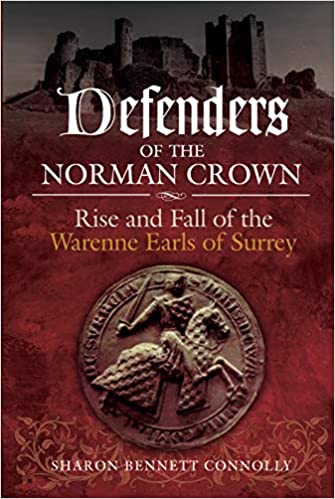
Book Corner: How to Survive in Ancient Rome by LJ Trafford

Imagine you were transported back in time to Ancient Rome and you had to start a new life there. How would you fit in? Where would you live? What would you eat? Where would you go to have your hair done? Who would you go to if you got ill, or if you were mugged in the street? All these questions, and many more, will be answered in this new how-to guide for time travellers. Part self-help guide, part survival guide, this lively and engaging book will help the reader deal with the many problems and new experiences that they will face, and also help them to thrive in this strange new environment.

What a fun and entertaining read!

How to Survive in Ancient Rome by LJ Trafford is a tour guide to the ancient city of Rome for the inexperienced and seasoned traveller alike. The book takes a snapshot of the city, its society and the state of the Roman Empire in the time of the Emperor Domitian – and more specifically in the year 95 CE. It tells you all you need to know about Roman history and society so that you may get the best from a visit to the eternal city in the First century AD.

LJ Trafford covers all aspects of Roman life, from the history and family, to entertainment, shopping and crime and punishment. The tone is light-hearted, entertaining and often outright hilarious. Some anecdotes stretch credibility, but the author has clearly done her homework and includes endnotes and a comprehensive bibliography. The stories may be unbelievable, but LJ Trafford has the evidence to back her up.

The beauty of How to Survive in Ancient Rome is the book’s simplicity, which makes it accessible to all ages. I read excerpts out to my husband and teenage son, and both enjoyed the stories I recited. In fact some of the stories are – apparently – particularly appealing to the mind of a teenage boy!

The young Caligula, for instance, was said to enjoy donning a robe and wig and hitting the town. Otho’s floggable youthful pursuits involved wandering about the city bundling drunks and women into blankets and tossing them into the river Tiber, Mark Anthony, so Cicero alleges, dressed as a woman and took up prostitution in his youth.

There are less alarming leisure activities available. Watching chariot racing, for instance. Or wrestling. Or the Games. Or placing high-stakes bets on all of them, a pastime that is all the more appealing when you have a living pater familias responsible for all the family finances: including debts.

Probably the best example of the struggling pater familias is the Emperor Augustus. Augustus made a big show of family. His series of morality laws included inducements to have three children or more, penalties for failing to marry and stiff punishments for adulterers.

He paraded his own family as an example to follow, sharing the strict education of his daughter, Julia, as the model. He chose all three of Julia’s husbands for her and arranged the marriages. The first was to her cousin, Marcellus. The second was to her father’s right-hand man, Agrippa, who was over twenty years her senior. Her third marriage was to her stepbrother, Tiberius.

Augustus similarly orchestrated his male relatives’ lives, appointing them to public positions from a young age and insisting that they serve the state in unending duty. This is how family was done properly, he declared to the world. This is the traditional pater familias role.

Naturally, it all went wrong. Daughter Julia, knee deep in woven underpants, embarked on a full-scale rebellion against her father. She did this by ‘having some fun’, saying ‘things which might be considered by some stick in the mud Romans as undignified to her sex.’, and by putting it about a bit.

Don’t get me wrong! This may be a light-hearted look at life in ancient Rome, but you will be laughing as you are learning. How to Survive in Ancient Rome is chock-full of facts and interesting anecdotes. It delves into the structure of society, government and family, giving insight into the daily life of the average – and sometimes not-so-average – Roman. However, it also looks into the murkier side of Roman life; crime and punishment, prostitution, gambling and slavery. LJ Trafford takes you to the market, the forums and the gladiatorial games in a fascinating illumination of life in ancient Rome.

And you will enjoy every minute and every word.

Whilst the book focuses on a year in the reign of the Emperor Domitian, it also draws from the entirety of Roman history, from its legendary origins through the babies Romulus and Remus and the wolf that suckled them, through the greats such as Julius Caesar, Emperor Augusts and Vespasian, to the less admirable characters such as Caligula and Nero – who apparently had at least 3 people impersonate him after his death (and they each attracted followers proclaiming the survival of the emperor). LJ Trafford uses How to Survive in Ancient Rome to illuminate the diversity and experiences of ancient Roman life.

How to Survive in Ancient Rome by LJ Trafford is a brilliant, entertaining book. Easily readable for the avid fans of ancient Rome and novice Romans alike, it is not to be missed. It is thoroughly researched and beautifully written, with a view to entertaining and informing the reader in equal measure. I cannot recommend it highly enough.

How to Survive in Ancient Rome by LJ Trafford is available from Pen & Sword Publishing and Amazon.

About the Author:

After gaining a BA Hons in Ancient History LJ Trafford toured the amphitheatres of western europe before a collision with a moped in Rome left her unable to cross the road. Which was a shame because there was some really cool stuff on the other side. Returning to the UK somewhat battered and certainly very bruised she spent several years working as a tour guide. A perfect introduction to writing, involving as it did, the need for entertainment and a hefty amount of invention (it’s how she got tips). She now works in London doing something whizzy with computers.

Palatine is the first in the Four Emperors series. Book Two is Galba’s Men, and is followed by Otho’s Regret and Vitellius’ Feast. See also two short stories featuring the same characters: The Wine Boy and The Wedding (in the Rubicon collection)

Follow me on Twitter, if you dare! @traffordlj

*

My books

Coming 31st May:

Defenders of the Norman Crown: The Rise and Fall of the Warenne Earls of Surrey tells the fascinating story of the Warenne dynasty, of the successes and failures of one of the most powerful families in England, from its origins in Normandy, through the Conquest, Magna Carta, the wars and marriages that led to its ultimate demise in the reign of Edward III.

Defenders of the Norman Crown: Rise and Fall of the Warenne Earls of Surrey will be released in the UK on 31 May and in the US on 6 August. And it is now available for pre-order from Pen & Sword BooksAmazon in the UK and US and Book Depository.

Also by Sharon Bennett Connolly:

Ladies of Magna Carta: Women of Influence in Thirteenth Century England looks into the relationships of the various noble families of the 13th century, and how they were affected by the Barons’ Wars, Magna Carta and its aftermath; the bonds that were formed and those that were broken. It is now available from Pen & Sword,  Amazon and from Book Depository worldwide.

Heroines of the Medieval World tells the stories of some of the most remarkable women from Medieval history, from Eleanor of Aquitaine to Julian of Norwich. Available now from Amberley Publishing and Amazon and Book Depository.

Silk and the Sword: The Women of the Norman Conquest traces the fortunes of the women who had a significant role to play in the momentous events of 1066.  Available now from Amazon,  Amberley Publishing, Book Depository.

*

You can be the first to read new articles by clicking the ‘Follow’ button, liking our Facebook page or joining me on Twitter and Instagram.

©2021 Sharon Bennett Connolly.