Illustrious Queen

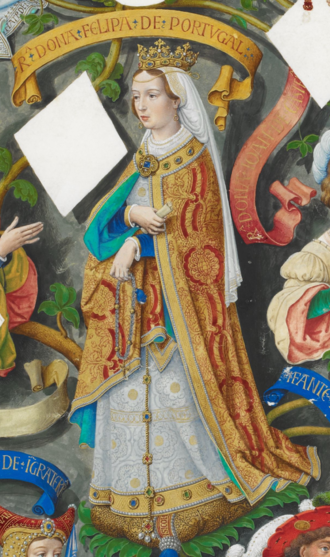
Filipa_de_Lencastre,_Rainha_de_Portugal_-_The_Portuguese_Genealogy_(Genealogia_dos_Reis_de_Portugal)
Philippa of Lancaster, Queen of Portugal

Philippa of Lancaster was born at Leicester on 31st March 1360. She was the eldest daughter of John of Gaunt, Duke of Lancaster and 4th son of Edward III, and his first wife Blanche of Lancaster, great-great-granddaughter of Henry III. her father was one of the richest men in the country – and one of the most powerful.

Her life as a child would have been one of luxury and privilege, with a glorious dynastic marriage awaiting her in the future. Philippa was raised alongside her younger sister, Elizabeth, who was born in 1363, and her baby brother, Henry of Bolingbroke, born in 1367.

The children shared a household for some of their childhood and were given the best education available. The reformer John Wycliffe, first translator of the Bible into English, was among their tutors.

The children lost their mother when Blanche died at Tutbury on 12th September, 1368, more likely from the complications of childbirth than from the plague, as a daughter, Isabella, who did not survive, was born around the same time.

The children’s father was with Blanche when she died but departed on campaign to France soon after; it is doubtful the children’s care was interrupted. The Lancaster household was well-organised and by 1376 the girls had been appointed a new governess; Katherine Swynford, who was by this time also mistress to their father, John of Gaunt.

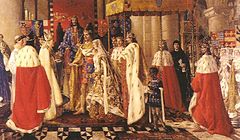
450px-Casamento_João_I_e_Filipa_Lencastre
Wedding of Philippa and King John

As with most high-born women of the time, Philippa’s marriage was in the hands of her father. John of Gaunt planned for her to contract a dynastic match which would benefit and complement his own dynastic ambitions. In 1374, Philippa was betrothed to Gaston, Count of Foix, but nothing came of it. In 1381/2 she was offered in marriage to Jean de Blois, claimant to the duchy of Brittany; and in 1383 her prospective husband was Count William of Ostrevant, the heir to Hainault, Holland and Zeeland.

In 1385 and 25 years old Philippa was still unmarried. However, in the following year her father took her on his military expedition to Spain, hoping to claim the kingdom of Castile in right of his 2nd wife, Constance. Philippa’s marriage to John – or Joao – I of Portugal was agreed as part of an alliance made between the 2 Johns at Ponte do Mouro in November 1386.

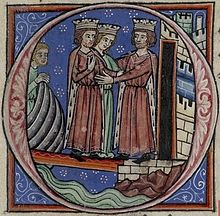
Philippa was married to King John at Oporto on 2nd February 1387, before they had even received the required papal dispensation. The British Museum has a beautifully illuminated manuscript (above) which depicts the wedding, with John of Gaunt and his wife, Constance, looking on. Philippa was 26 – about 10 years older than the average age for a princess to marry. John was 3 years her senior and had been king for just short of 2 years.

Anoniem_-_Koning_Johan_I_van_Portugal_(1450-1500)_-_Lissabon_Museu_Nacional_de_Arte_Antiga_19-10-2010_16-12-61
John I, King of Portugal

Philippa became known as ‘Dona Fillipa’ in Portugal and would be one of the country’s best-loved queens. Her natural disposition to austerity and piety was endearing to the Portuguese people. Philippa reformed the court and encouraged courtly games among her ladies. French poet Eustace Deschamps characterised her as the chief patron of the order of The Flower of England, casting her at the centre of the court and the May Day celebrations.

A patron of literature, Philippa was sent a copy of John Gower’s poem “Confessio amantis“, which was translated into Portuguese by Robert Payn, an English canon of Lisbon Cathedral.

Philippa had been made a Lady of the Garter in 1378 and was instrumental in fostering  links between England and Portugal, a practice helped by the mixture of English and Portuguese servants in her household. She was on good terms with both Richard II and his successor – her brother, Henry IV.

In 1399 she wrote to the Archbishop of Canterbury, Thomas Arundel, asking him to intervene with Henry on behalf of her friend, Bishop Henry Despenser of Norwich, who had angered the new king by defending Richard II at the time of Henry’s invasion of England and seizure of the throne.

Rogier_van_der_Weyden_(workshop_of)_-_Portrait_of_Isabella_of_Portugal
John and Philippa’s daughter Isabella, Duchess of Burgundy

Philippa also had a hand in persuading Henry to arrange the marriage of her stepdaughter, Beatriz (John’s illegitimate daughter) to the earl of Arundel in 1405.

Almost immediately after the wedding John returned to the war. In July 1387 Philippa miscarried their first child while visiting John at Curval, where he lay seriously ill. However, after what appears to have been a bumpy start, the couple seem well-matched. John had had 2 illegitimate children before his marriage, but was demonstrably faithful to Philippa after the wedding.

In fact when court gossip reached the queen that he had been unfaithful, John went to great lengths to convince Philippa of his innocence. He even went so far as to commemorate the event by having a room in the royal apartments at Sintra decorated with chattering magpies – he must have had a great sense of humour, and confidence in his relationship to be so bold.

Philippa and John were to have a large family, which they brought up with great care. Of their 9 children,  5 sons and one daughter survived infancy and would later be known in Portugal as ‘the Illustrious Generation’. Their eldest surviving son, Edward, was born in 1391 and would succeed his father as King of Portugal in 1433. Peter, Duke of Coimbra, was born in 1392 and would act as regent for his nephew, Afonso V, following Edward’s death in 1438.
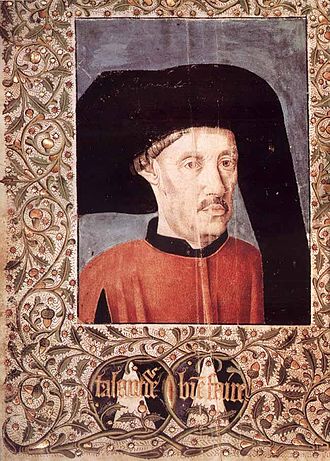
330px-Henry_the_Navigator_(Cronicas)
Prince Henry the Navigator

Their most famous son was Prince Henry ‘the Navigator’, Duke of Viseu, who was renowned for financing and researching great explorations – though he never undertook expeditions himself.

Their next youngest son was John, Duke of Beja and Constable of Portugal, who married Isabella, the daughter of Alfonso I, Duke of Braganza.

The baby of the family was Ferdinand, Grand Master of Aviz. He was born in 1402 and was later known as ‘the Saint Prince’ following his death as a prisoner of the Moors. Ferdinand had been held as a hostage for the return of Ceuta following the Disaster of Tangier, a siege led by his brother Henry. Ferdinand was held in increasingly severe confinement when it became apparent no ransom would be forthcoming, until he finally died in 1443.

John and Philippa’s one daughter, Isabella, was born in 1397 and would go on to marry Philip III the Good, Duke of Burgundy; and become the mother of Charles the Bold, Duke of Burgundy.

By 1415 Philippa’s oldest sons were itching to prove their martial prowess. Scorning their father’s offer to hold a magnificent tournament for them, they persuaded him to mount an attack on the port of Ceuta in North Africa. As they were about to set sail Philippa fell ill.
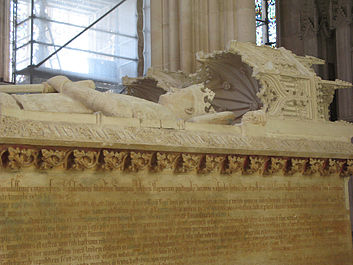
353px-BatalhaTombKingJohn
Tomb of John and Philippa

She had contracted plague and died at Odivelas, near Lisbon, on 18/19th July 1415. She was 55. On her deathbed she gave her 3 eldest sons, each, a jewel encrusted sword, in anticipation of their impending knighthoods, and a piece of the true cross. Giving them her blessing for the forthcoming military expedition she exhorted “them to preserve their faith and to fulfil the duties of their rank”¹.

The expedition sailed just 5 days after her death and Ceuta fell after only one day of siege, becoming Portugal’s first African possession.

Described as pious, charitable, affable and obedient to her husband, Portuguese historian Fernao Lopes, secretary to Philippa’s son, Fernando, held Philippa up as a model queen. Her piety was renowned; in later life she was said to regularly read the Book of Psalms.
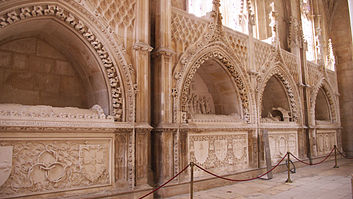
353px-Túmulos_de_los_Infantes
Tombs of the Infantes, the 4 younger sons of John and Philippa

Queen Philippa was buried in the Dominican Priory at Batalha Abbey, which had been founded by her husband. King John arranged for a magnificent tomb to be built in the Capela do Fundador. Constructed between 1426 and 1434, it is topped by their effigies, clasping each others’ hands. King John himself was laid beside her after his death in August 1433.

Their sons, Ferdinand, John, Henry and Peter, were laid to rest along the south side of the same chapel.

*

Footnote: ¹ Edgar Prestage, The Portuguese pioneers.

*

Pictures courtesy of Wikipedia

*

Sources: The Plantagenets, the Kings who Made England by Dan Jones;  Brewer’s British Royalty by David Williamson; Britain’s Royal Families, the Complete Genealogy by Alison Weir; The Mammoth Book of British Kings and Queens by Mike Ashley; The Plantagenets, the Kings that made Britain by Derek Wilson;  englishmonarchs.co.uk; oxforddnb.com; annvictoriaroberts.co.uk.

*

My Books

Signed, dedicated copies of all my books are available through my online bookshop.

Out now: Scotland’s Medieval Queens

Books by Sharon Bennett Connolly

Scotland’s history is dramatic, violent and bloody. Being England’s northern neighbour has never been easy. Scotland’s queens have had to deal with war, murder, imprisonment, political rivalries and open betrayal. They have loved and lost, raised kings and queens, ruled and died for Scotland. From St Margaret, who became one of the patron saints of Scotland, to Elizabeth de Burgh and the dramatic story of the Scottish Wars of Independence, to the love story and tragedy of Joan Beaufort, to Margaret of Denmark and the dawn of the Renaissance, Scotland’s Medieval Queens have seen it all. This is the story of Scotland through their eyes.

Scotland’s Medieval Queens gives a thorough grounding in the history of the women who ruled Scotland at the side of its kings, often in the shadows, but just as interesting in their lives beyond the spotlight. It’s not a subject that has been widely covered, and Sharon is a pioneer in bringing that information into accessible history.’ Elizabeth Chadwick (New York Times bestselling author)

Available now from Amazon and Pen and Sword Books

Also by Sharon Bennett Connolly:

Books by Sharon Bennett Connolly

Heroines of the Tudor World tells the stories of the most remarkable women from European history in the time of the Tudor dynasty, 1485-1603. These are the women who ruled, the women who founded dynasties, the women who fought for religious freedom, their families and love. Heroines of the Tudor World is now available for pre-order from Amberley Publishing and Amazon UK. Women of the Anarchy demonstrates how Empress Matilda and Matilda of Boulogne, unable to wield a sword themselves, were prime movers in this time of conflict and lawlessness. It shows how their strengths, weaknesses, and personal ambitions swung the fortunes of war one way – and then the other. Available from Bookshop.orgAmberley Publishing and Amazon UKKing John’s Right-Hand Lady: The Story of Nicholaa de la Haye is the story of a truly remarkable lady, the hereditary constable of Lincoln Castle and the first woman in England to be appointed sheriff in her own right. Available from all good bookshops Pen & Sword Booksbookshop.org and Amazon

Books by Sharon Bennett Connolly

Defenders of the Norman Crown: The Rise and Fall of the Warenne Earls of Surrey tells the fascinating story of the Warenne dynasty, from its origins in Normandy, through the Conquest, Magna Carta, the wars and marriages that led to its ultimate demise in the reign of Edward III. Available from Pen & Sword BooksAmazon in the UK and US, and Bookshop.orgLadies of Magna Carta: Women of Influence in Thirteenth Century England looks into the relationships of the various noble families of the 13th century, and how they were affected by the Barons’ Wars, Magna Carta and its aftermath; the bonds that were formed and those that were broken. It is now available in paperback and hardback from Pen & SwordAmazon, and Bookshop.orgHeroines of the Medieval World tells the stories of some of the most remarkable women from Medieval history, from Eleanor of Aquitaine to Julian of Norwich. Available now from Amberley Publishing and Amazon, and Bookshop.orgSilk and the Sword: The Women of the Norman Conquest traces the fortunes of the women who had a significant role to play in the momentous events of 1066. Available now from Amazon,  Amberley Publishing, and Bookshop.org.

Alternate Endings: An anthology of historical fiction short stories including Long Live the King… which is my take what might have happened had King John not died in October 1216. Available in paperback and kindle from Amazon.

Podcast:

A Slice of Medieval

Have a listen to the A Slice of Medieval podcast, which I co-host with Historical fiction novelist Derek Birks. Derek and I welcome guests, such as Bernard Cornwell and discuss a wide range of topics in medieval history, from significant events to the personalities involved. Our first ever episode was a discussion on The Anarchy 

Every episode is also now available on YouTube.

*

Don’t forget! Signed and dedicated copies of all my books are available through my online bookshop.

For forthcoming online and in-person talks, please check out my Events Page.

You can be the first to read new articles by clicking the ‘Follow’ button, liking our Facebook page or joining me on TwitterThreadsBluesky and Instagram.

©2016 Sharon Bennett Connolly FRHistS
Constance of York, the Rebel Countess

History...the Interesting Bits
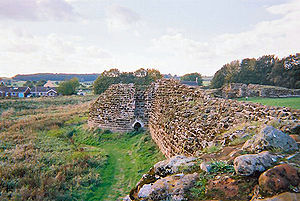
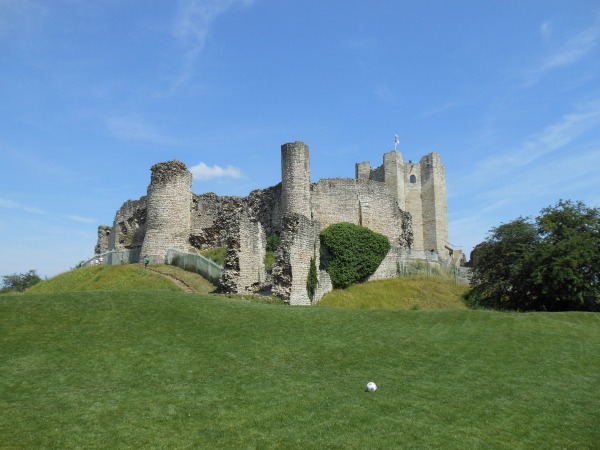
Conisbrough Castle, possible birthplace of Constance of York

Constance of York was born around 1374, possibly at Conisbrough Castle in Yorkshire (although that is far from certain). She was the second of 3 children born to Edmund of Langley, Duke of York and 5th son of Edward III, and his wife, Isabella of Castile. Edmund and Isabella also had 2 boys, Edward of Norwich in around 1373 and Richard of Conisbrough, who is thought to have been born around 1375/6, but could have been born as late as the early 1380s.

Near-contemporary sources suggest that Edmund and Isabella were an ill-matched pair and their relationship was a rocky one, with Isabella accused of having an affair with John Holland, Duke of Exeter and half-brother to Richard II. Holland has also been suggested as the father of Isabella’s youngest son, Richard. However, recent research into contemporary records contradicts this image.

Constance’s childhood was short-lived. At the age of 4, in April 1378, she was betrothed to Edward le Despenser. However, young Edward appears to have died shortly after the betrothal as by November 1379 Constance was married to his only surviving, younger brother, Thomas, who was about 6 at the time.

Isabella_of_Castile-Langley
Isabella of Castile, Constance’s mother

It is highly likely that 4-year-old Constance remained in her parents’ household for several years after her marriage, although she may have spent time also in the household of her mother-in-law, who retained wardship of young Thomas despite her husband’s death.

Thomas le Despenser was a great-grandson of the infamous Hugh le Despenser the Younger, despised favourite and alleged lover of Edward II, who was executed on a 50-foot high gallows in 1326. The marriage was seen as a good match on both sides: the Despenser family had a considerable fortune and were among the 12 richest families in the country, while Constance was a granddaughter of Edward III. Her hand in marriage completed the rehabilitation of the Despenser family.

In 1386, at just 12-years-old Constance was made a Lady of the Garter by her cousin, Richard II; she was one of the youngest ever recipients of the award. In 1392 Constance’s mother died and the following year her father re-married. His new bride was about 6 years younger than Constance and was a niece to Richard II; Joan Holland was the daughter of Thomas Holland, 2nd earl of Kent and granddaughter of Joan of Kent, Princess of Wales. In a bizarre twist, she was also the niece of John Holland, 1st Duke of Exeter, the late Duchess of York’s alleged lover.

Thomas, meanwhile, was learning his trade as a soldier. He served with Richard II in Scotland in 1385, probably as a page or squire, given his tender years. In 1388 he was knighted by the Earl of Arundel, following his involvement in a naval expedition against the French. In 1391 Thomas travelled to Prussia to join the “crusade” against the Lithuanians.

It seems likely that, by 1394 with Thomas back in England, Thomas and Constance were finally living together as a couple.  In March of that year, Thomas had been granted full possession of his lands; he had been a ward of his mother, Elizabeth de Burghersh, since his father Edward’s death in 1375.

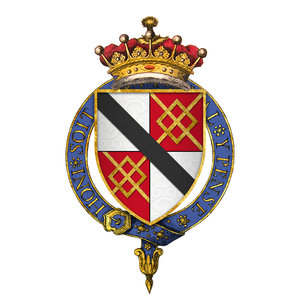
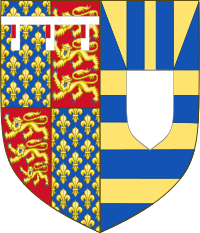
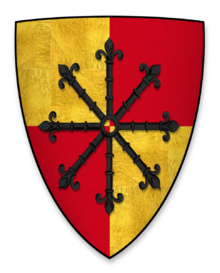
Coat_of_Arms_of_Sir_Thomas_le_Despencer,_1st_Earl_of_Gloucester,_KG
Arms of Thomas le Despenser, 1st Earl of Gloucester

It’s possible the couple had as many as 5 children, but only 2 survived infancy; a son, Edward, died young, Hugh died around 1401 and a daughter, Elizabeth, born around 1398, also died young.

The first definite date of birth of a child is Richard, possibly their 2nd son but the first to survive childhood, who was born 30 November 1396. Richard would inherit his grandmother’s title of Baron Burghersh on her death in about 1402. Richard married his second cousin Eleanor, daughter of Ralph Neville, 1st Earl of Westmoreland, and Joan Beaufort, daughter of John of Gaunt and Katherine Swynford.

Unfortunately, Richard and Eleanor had no children before Richard died, still only in his 20s. His title passed to his younger sister, Isabella, who had been born around 1400 and was married successively to 2 men, cousins, of the same name; she married firstly Richard de Beauchamp, Earl of Worcester and secondly Richard de Beauchamp, Earl of Warwick. Isabella’s daughter by Warwick, Anne, would later marry Richard Neville, known as the Kingmaker, and be the mother of Richard III’s queen, Anne Neville.

Thomas le Despenser was a great supporter of Richard II, he was involved in the arrest and prosecution of the Appellant lords, the Duke of Gloucester and the Earl of Arundel in 1397; in return for which he received a share of their lands. And on the 29th September 1397, le Despenser was created Earl of Gloucester.

In spite of his close links with Richard II, Gloucester initially supported the accession of Henry Bolingbroke as Henry IV, after usurping Richard’s throne. However, after he was attainted for his role in the death of Thomas of Woodstock, Duke of Gloucester, and deprived of his earldom he became disillusioned with the new regime.

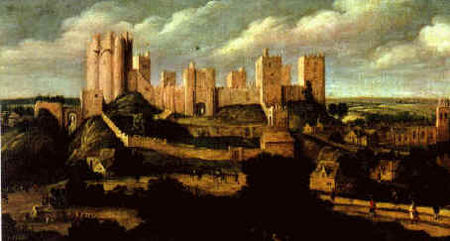
450px-Pontefract_Castle
Painting of Pontefract Castle by Alexander Keirincx

Fearful of losing his estates, and possibly his life, in January 1400 he joined in a conspiracy with the earls of Kent, Salisbury and Huntingdon. Known as the Epiphany Rising, the earls planned to seize the king during a tournament at Windsor, intending to kill Henry IV and replace him with Richard II – still imprisoned at Pontefract Castle. The conspiracy was betrayed to the king by Edward of Norwich, Constance’s older brother and the conspirators were arrested and executed.  Richard II himself became the prime victim of the plot, which led Henry IV to believe it was too dangerous to keep the erstwhile king alive; he died shortly afterwards, still in custody at Pontefract Castle, probably from starvation.

Thomas le Despenser was executed on 13 January 1400. It is tempting to feel sorry for Constance of York, former Countess of Gloucester, mother of several infants and pregnant with her late husband’s child. And, indeed, it must have been difficult for her; a young, pregnant widow of a convicted traitor. With her husband’s lands forfeit, she could well have wondered what was going to happen to them all, especially following the death of her father in 1402. However, Constance herself was not beyond plotting.

Edward_of_Norwich_Duke_of_York
Edward of Norwich, 2nd Duke of York

In February 1405, during Owain Glyn Dwr‘s rebellion, Constance became involved in the plot to abduct Edmund Mortimer, 5th Earl of March from Windsor Castle. March had the greatest claim to the throne of all Henry IV’s rivals, being descended from Edward III’s second surviving son, Lionel of Antwerp. The plan was to deliver March and his younger brother, Roger, to their uncle, Sir Edmund Mortimer, who was married to Glyn Dwr’s daughter.

The boys were successfully released from Windsor, but recaptured before entering Wales. Although Constance does not seem to have suffered retribution for her part in the plot, she did implicate her brother Edward of Norwich, Duke of York, who was imprisoned in Pevensey Castle for seventeen weeks as a consequence.

Constance was also to cause scandal in her love life. As a young widow, she started a romantic liaison with Edmund Holland, 4th Earl of Kent. Edmund was the brother of Constance’s step-mother, Joan. A daughter, Eleanor, was born to the couple at Kenilworth in about 1405. She would later marry James Touchet, Lord Audley.

Whether or not Eleanor’s parents married became a bone of contention for the couple’s daughter, when she attempted to lay claim to her father’s lands and titles in 1430. Although Eleanor produced witnesses to prove the marriage of her parents, in about 1404, it was on the petition of Edmund’s sisters, Joan Duchess of York (Eleanor’s step-grandmother) and Margaret Holland, Duchess of Clarence, that Eleanor was adjudged illegitimate and unable to inherit from her father. With Eleanor declared illegitimate, Joan and Margaret became Edmund’s co-heirs and would divide their brother’s estate between them.

375px-Reading_Abbey_interior
Reading Abbey

Edmund was killed at the Battle of Ile-de-Brehat in September 1408 and buried on the island of Lavrec.

Constance outlived her lover by 8 years, dying on the 28 November 1416, the last survivor of the 3 York children. Her younger brother, Richard, had been executed in August 1415, for his part in the Southampton Plot to assassinate Henry V; and older brother Edward, Duke of York, was killed at Agincourt in October of the same year.

Constance of York, Countess of Gloucester, was buried at Reading Abbey in Berkshire.

*

Images:

Conisbrough Castle is ©2015 Sharon Bennett Connolly. All other pictures are courtesy of Wikipedia.

Sources:

Brewer’s British Royalty by David Williamson; History Today Companion to British History Edited by Juliet Gardiner & Neil Wenborn; The Mammoth Book of British kings & Queen by Mike Ashley; Britain’s Royal Families, the Complete Genealogy by Alison Weir; The Life and Times of Edward III by Paul Johnson; The Perfect King, the Life of Edward III by Ian Mortimer; Chronicles of the Age of Chivalry Edited by Elizabeth Hallam; yorkistage.blogspot.co.uk; richard111.com; The Oxford Companion to British History Edited by John Cannon.

*

My Books

Christmas is coming!

Signed, dedicated copies of all my books are available through my online bookshop.

Out now: Scotland’s Medieval Queens

Books by Sharon Bennett Connolly

Scotland’s history is dramatic, violent and bloody. Being England’s northern neighbour has never been easy. Scotland’s queens have had to deal with war, murder, imprisonment, political rivalries and open betrayal. They have loved and lost, raised kings and queens, ruled and died for Scotland. From St Margaret, who became one of the patron saints of Scotland, to Elizabeth de Burgh and the dramatic story of the Scottish Wars of Independence, to the love story and tragedy of Joan Beaufort, to Margaret of Denmark and the dawn of the Renaissance, Scotland’s Medieval Queens have seen it all. This is the story of Scotland through their eyes.

Scotland’s Medieval Queens gives a thorough grounding in the history of the women who ruled Scotland at the side of its kings, often in the shadows, but just as interesting in their lives beyond the spotlight. It’s not a subject that has been widely covered, and Sharon is a pioneer in bringing that information into accessible history.’ Elizabeth Chadwick (New York Times bestselling author)

Available now from Amazon and Pen and Sword Books

Coming 30 March 2026: Princesses of the Early Middle Ages

Books by Sharon Bennett Connolly

Daughters of kings were often used to seal treaty alliances and forge peace with England’s enemies. Princesses of the Early Middle Ages: Royal Daughters of the Conquest explores the lives of these young women, how they followed the stereotype, and how they sometimes managed to escape it. It will look at the world they lived in, and how their lives and marriages were affected by political necessity and the events of the time. Princesses of the Early Middle Ages will also examine how these girls, who were often political pawns, were able to control their own lives and fates. Whilst they were expected to obey their parents in their marriage choices, several princesses were able to exert their own influence on these choices, with some outright refusing the husbands offered to them.

Their stories are touching, inspiring and, at times, heartbreaking.

Princesses of the Early Middle Ages: Royal Daughters of the Conquest is now available for pre-order.

Also by Sharon Bennett Connolly:

Books by Sharon Bennett Connolly

Heroines of the Tudor World tells the stories of the most remarkable women from European history in the time of the Tudor dynasty, 1485-1603. These are the women who ruled, the women who founded dynasties, the women who fought for religious freedom, their families and love. Heroines of the Tudor World is now available from Amberley Publishing and Amazon UK. Women of the Anarchy demonstrates how Empress Matilda and Matilda of Boulogne, unable to wield a sword themselves, were prime movers in this time of conflict and lawlessness. It shows how their strengths, weaknesses, and personal ambitions swung the fortunes of war one way – and then the other. Available from Bookshop.orgAmberley Publishing and Amazon UKKing John’s Right-Hand Lady: The Story of Nicholaa de la Haye is the story of a truly remarkable lady, the hereditary constable of Lincoln Castle and the first woman in England to be appointed sheriff in her own right. Available from all good bookshops Pen & Sword Booksbookshop.org and Amazon

Books by Sharon Bennett Connolly

Defenders of the Norman Crown: The Rise and Fall of the Warenne Earls of Surrey tells the fascinating story of the Warenne dynasty, from its origins in Normandy, through the Conquest, Magna Carta, the wars and marriages that led to its ultimate demise in the reign of Edward III. Available from Pen & Sword BooksAmazon in the UK and US, and Bookshop.orgLadies of Magna Carta: Women of Influence in Thirteenth Century England looks into the relationships of the various noble families of the 13th century, and how they were affected by the Barons’ Wars, Magna Carta and its aftermath; the bonds that were formed and those that were broken. It is now available in paperback and hardback from Pen & SwordAmazon, and Bookshop.orgHeroines of the Medieval World tells the stories of some of the most remarkable women from Medieval history, from Eleanor of Aquitaine to Julian of Norwich. Available now from Amberley Publishing and Amazon, and Bookshop.orgSilk and the Sword: The Women of the Norman Conquest traces the fortunes of the women who had a significant role to play in the momentous events of 1066. Available now from Amazon,  Amberley Publishing, and Bookshop.org.

Alternate Endings: An anthology of historical fiction short stories including Long Live the King… which is my take what might have happened had King John not died in October 1216. Available in paperback and kindle from Amazon.

Podcast:

A Slice of Medieval

Have a listen to the A Slice of Medieval podcast, which I co-host with Historical fiction novelist Derek Birks. Derek and I welcome guests, such as Bernard Cornwell, Elizabeth Chadwick and Scott Mariani, and discuss a wide range of topics in medieval history, from significant events to the personalities involved. 

There are now over 75 episodes to listen to!

Every episode is also now available on YouTube.

*

Don’t forget! Signed and dedicated copies of all my books are available through my online bookshop.

For forthcoming online and in-person talks, please check out my Events Page.

You can be the first to read new articles by clicking the ‘Follow’ button, liking our Facebook page or joining me on TwitterThreadsBluesky and Instagram.

*

©2015 Sharon Bennett Connolly FRHistS
The Fascinating Marital Exploits of Joan, the Fair Maid of Kent

Joan_of_Kent
Joan, the Fair Maid of Kent

Joan of Kent was the daughter of Edmund of Woodstock, Earl of Kent and brother of Edward II. Edmund was a younger son of Edward I by his second wife, Margaret of France; he married Margaret Wake in 1325.

Joan was the third of four children, and was born on 28/9th September 1328 at Woodstock. When she was just 18 months old, Joan’s father was beheaded for treason on the orders of the Regent, Roger Mortimer and his lover, Queen Isabella; after becoming convinced that his brother, Edward II, was still alive, Edmund had become involved in a plot to free the erstwhile king.

Joan’s mother, Margaret Wake, was held under house arrest at Arundel Castle, along with all four of her children; Joan’s baby brother, John, was born a month after their father’s execution. Just a few months later, Edward III escaped Mortimer’s control and assumed power; he took over responsibility for his uncle’s family and Joan, a favourite of Edward’s queen, Philippa of Hainault, was raised at court.

The leading beauty of her day, Joan had little to offer a potential suitor, beyond her looks and keen intelligence. She had grown up in the same household as Edward III’s oldest children; his son and heir, Edward and his daughters Isabella and Joan.

Sometime around the age of 11 or 12, it seems that Joan secretly married, or promised to marry, Thomas Holland. However, shortly afterwards Holland left on Crusade to Prussia and during  his absence, Joan was married to William Montague, the future Earl of Salisbury in 1340/41.

Salisbury_1430
William Montague, Earl of Salisbury

When he returned to England, Thomas Holland discovered that his wife was married. Without the financial means to pursue his claim to be Joan’s husband through the church courts. Holland had to bide his time, joining Edward III’s campaigns in France, where he gained enough funds in ransoms to initiate the legal proceedings to recover his wife. In May 1348 Holland petitioned the pope, stating that Joan had been forced into her marriage with Salisbury. He went on to say that Joan had previously agreed to marry him and that their relationship had been consummated. He claimed her as his own wife, and Joan backed up his story.

It took 18 months for Joan’s marital status to be resolved, and for some of that time Salisbury kept Joan a prisoner, preventing her from presenting her testimony to the church lawyers. He was ordered to release her in order that she could give evidence at the inquisition looking into her marriage status.

In the mean time, England itself was in the grips of the Black Death, the bubonic plague. In order to lift the country’s spirits the king, Edward III, had arranged a grand tournament at Windsor, on St George’s Day, 23 April 1349. The knights in contention were founding members of the Order of the Garter; England’s greatest chivalric order, consisting of the king and 25 knights, it was probably founded in 1348, though the date is uncertain.

Joan herself is a part of the legend of the foundation of the Order of the Garter. She is said to be the lady who lost her garter during a ball celebrating the fall of Calais. Edward III is said to have returned the item to the 20-year-old damsel with the words “honi soit qui mal y pense” (evil to him who evil thinks).

Although the story is probably apocryphal (the fact a garter in those days was worn by men, not women, supporting this), Joan’s connection with the inaugural  tournament is all too true. Her presence brought an added bit of spice to the St George’s Day tournament of 1349. Her current husband, the Earl of Salisbury, fought on the king’s team, while Sir Thomas Holland was on the side of Prince Edward. Joan’s two husbands faced each other across the tournament field, with the object of their affection watching from the stands.

220px-Thomas_Holland_1430
Sir Thomas Holland

Although I couldn’t find the results of the tournament, Joan’s marital status was decided by Papal Bull on 13th November 1349, when the pope ordered her to divorce Salisbury and return to Holland. Which she did. I suppose we will never know if Joan had married Holland at the age of 11, or if they had an affair that only started after Holland returned from crusade, and the claim of a pre-contract was a clever ploy to get Joan out of an unhappy marriage.

It is easy for the cynic of the 21st century to nod their head sagely and say ‘good plan’. However, Joan and Thomas Holland were risking their eternal souls if they lied to a church court; such an oath was not to be undertaken lightly. It may be the romantic in me, but I cannot help but believe that Joan and Thomas were telling the truth about their promises to each other.

Joan succeeded her brother, John, as Baroness Wake of Liddell and Countess of Kent in December 1352 and was confirmed in her new titles in February 1353. Sir Thomas Holland, therefore, became Earl of Kent by right of his wife.

Joan and Sir Thomas Holland had five children together; three sons and two daughters. Edmund was born in 1352 and died young. Thomas, Earl of Kent, married Alice, the daughter of Richard FitzAlan, 10th Earl of Arundel; he died in 1397.  Their third son, John, was created Duke of Exeter in 1397 by his younger brother, King Richard II. He married Elizabeth of Lancaster, daughter of John of Gaunt and Blanche of Lancaster, but was executed in 1400 for his involvement in a plot to assassinate Henry IV and return his brother to the throne.

Of their daughters, Joan married John V, Duke of Brittany (who would marry Joanna of Navarre as his second wife, the future queen-consort of Henry IV), but died in 1384. Their youngest child, Matilda, was born in 1359 and married twice; first to Sir Hugh de Courtenay, who died in 1377, and then Waleran of Luxembourg, Count of St Pol and Ligny. Matilda died in 1391.

At the end of 1360 Sir Thomas Holland, a veteran soldier who had fought in the Crecy campaign, died from illness while in Normandy and Joan was left a widow.

Edward Prince of Wales – the Black Prince – may have offered comfort to the Lady Joan, his friend from childhood. Joan and Edward appear to have fallen in love. As widow with five children, and bringing no beneficial foreign alliance to the marriage table, Joan was hardly the ideal bride for the heir to the throne. Especially not with her dubious marital history. It was not the political match his father had wanted for his oldest son, but all attempts at a marriage alliance with a princess from the Low Countries had come to nought; and it seems the king was quite happy to accept his son’s choice of wife.

220px-Cernoch
Edward, the Black Prince

It must have caused quite a scandal at the time. Although a reputed beauty, Joan’s bigamous marriage to William Montague was well-known – and he was still alive. She had five children by her first husband, Thomas Holland. Moreover, she was 33 years of age, two years older than her prince. She hardly appeared ‘queen’ material.

However, according to the Chandos Herald Joan was “a lady of great worth…. very beautiful, pleasing and wise”. Edward III sent one of his own people to the pope to ask permission for the marriage, which was swiftly granted, securing the papal dispensations needed, given Edward and Joan were related withing the prohibited degrees (they were first cousins once removed).

With great ceremony Edward and Joan were married at Windsor on 10th October 1361, by the Archbishop of Canterbury and in the presence of the king and queen. Shortly after the wedding, the couple moved to Berkhamsted, where the king visited them after Christmas.

In 1363 they moved their entire household to Bordeaux, after the prince was given the Duchy of Aquitaine by his father. Their court there was lavish, exceeding the king’s own in brilliance.

In 1365 their first child was born; a son, Edward of Angoulême. His brother, Richard of Bordeaux, followed on 6th January 1367.

The chronicler, Froissart, tells the story:

In due course Joan, the princess, went into labour and by God’s grace was delivered of her child. It was a fine son, Richard of Bordeaux, born at Epiphany, 6 January , which that year fell on a Wednesday.

220px-Edward_of_Angouleme
Edward of Angouleme, from the Wilton Diptych

The child came into the world early in the morning to the great joy of the prince and the whole household, and was baptised the following Friday in the early afternoon on the holy font of St Andrew’s Church in the city of Bordeaux. The child was named Richard and he afterwards became King of England.”

Richard’s baptism was attended by three kings; Pedro of Castile, James IV of Majorca and Richard of Armenia. William Thorne, the Canterbury Chronicler, described them as the three ‘magi’ (or wise men), as Richard had been born on Epiphany, Twelfth Night; an auspicious sign for a bright future.

The Black Prince wrote fondly to his wife whilst campaigning in Spain: “Be assured, dearest companion, that we, our brother of Lancaster and all the great men of our army are, thank God, in good form.”

Froissart wrote of the Black Prince’s return from Spain, and his arrival in Bordeaux; “Where he was received with great celebrations. Princess Joan came to meet him and had Edward, her eldest son, carried with her; he was then about three years old.”

The Spanish campaign was aimed at supporting Pedro of Castile’s claim to the throne against that of his illegitimate half-brother, Henry of Trastamara. Although the Black Prince managed to re-establish Pedro’s rule, the Castilian king could not pay the English army and Edward, already with a reputation for heavy-handedness in Aquitaine, taxed the duchy in order to raise funds.

220px-Richard_II_King_of_England
Richard II

Sometime in late 1370 or early 1371 the young family suffered a heartbreaking tragedy. Little Edward of Angoulême died of bubonic plague. He was buried in Bordeaux, his funeral arranged by John of Gaunt and attended by all the great lords of Gascony.

Shortly afterwards, the remaining family returned to England, as reported by the chronicler Walsingham:

“When he had done this, Prince Edward hurried to return to England, as much because of the infirmities which troubled him, as because of lack of money. Therefore, at the beginning of January [1371], with his wife and small son Richard, and with  his household following behind, he reached Plymouth.”

The Black Prince’s health had been destroyed by a lifetime of campaigning. He returned to England a virtual invalid and died in 1376. Left a widow for a second time, Joan still had custody of her young son and was in charge of Richard’s education until his accession to the throne.

Edward III died in 1377, leaving the throne to 10-year-old Richard of Bordeaux. In his will he gave to Joan, Princess of Wales, a thousand marks and the free restitution of jewels she had pledged to him.

Despite her marital history, and a reputation for extravagance – she was said to have spent £200 on a set of jewelled buttons – Joan was loved by the English people. It was with her that John of Gaunt sought refuge following the sacking of his Savoy Palace in 1376, when the people were discontented with his rule.

Wilton_diptych
The Wilton Diptych

Joan was seen as a calming influence of her son, Richard II, and was by his side during the dangerous days of the Peasant’s Revolt of 1381; she sheltered in the Tower of London and rode in a whirligig to accompany her 13-year-old son to meet with the rebels at Mile End.

In 1385 Joan’s son, John Holland, while campaigning in Scotland, killed Ralph Stafford, son of the second Earl of Stafford, in a quarrel. He fled to sanctuary at the shrine of St John of Beverley, but was condemned to death. Joan pleaded with Richard for days, begging him to pardon his half-brother. She died at Wallingford Castle, on or shortly after 7 August 1385. The, when she made her will. King pardoned his half-brother the following day.

Although the Edward, the Black Prince, had built a chantry chapel for his wife, at Canterbury Cathedral, with ceiling bosses of her face, Joan was not buried at Canterbury with the Black Prince, but at the Greyfriars at Stamford in Lincolnshire, beside her first husband, Sir Thomas Holland. Unfortunately, nothing remains of the abbey beyond a gatehouse. Thomas and Joan’s tombs are lost.

*

Pictures taken from Wikipedia.

*

Sources: The Perfect King, the Life of Edward III by Ian Mortimer; The Life and Time of Edward III by Paul Johnson; The Reign of Edward III  by WM Ormrod; The Mammoth Book of British kings & Queens by Mike Ashley; Britain’s’ Royal Families, the Complete Genealogy by Alison Weir; Brewer’s British Royalty by David Williamson; The Plantagenets, the Kings Who Made Britain by Dan Jones; englishmonarchs.co.uk; The Oxford Companion to British History edited by John Cannon; Chronicles of the Age of Chivalry Edited by Elizabeth Hallam; The Black Prince by Michael Jones.

*

My Books

Signed, dedicated copies of all my books are available through my online store.

Out now: Scotland’s Medieval Queens

Books by Sharon Bennett Connolly

Scotland’s history is dramatic, violent and bloody. Being England’s northern neighbour has never been easy. Scotland’s queens have had to deal with war, murder, imprisonment, political rivalries and open betrayal. They have loved and lost, raised kings and queens, ruled and died for Scotland. From St Margaret, who became one of the patron saints of Scotland, to Elizabeth de Burgh and the dramatic story of the Scottish Wars of Independence, to the love story and tragedy of Joan Beaufort, to Margaret of Denmark and the dawn of the Renaissance, Scotland’s Medieval Queens have seen it all. This is the story of Scotland through their eyes.

Scotland’s Medieval Queens gives a thorough grounding in the history of the women who ruled Scotland at the side of its kings, often in the shadows, but just as interesting in their lives beyond the spotlight. It’s not a subject that has been widely covered, and Sharon is a pioneer in bringing that information into accessible history.’ Elizabeth Chadwick (New York Times bestselling author)

Available now from Amazon and Pen and Sword Books

Also by Sharon Bennett Connolly:

Books by Sharon Bennett Connolly

Heroines of the Tudor World tells the stories of the most remarkable women from European history in the time of the Tudor dynasty, 1485-1603. These are the women who ruled, the women who founded dynasties, the women who fought for religious freedom, their families and love. Heroines of the Tudor World is now available from Amberley Publishing and Amazon UK. Women of the Anarchy demonstrates how Empress Matilda and Matilda of Boulogne, unable to wield a sword themselves, were prime movers in this time of conflict and lawlessness. It shows how their strengths, weaknesses, and personal ambitions swung the fortunes of war one way – and then the other. Available from Bookshop.orgAmberley Publishing and Amazon UKKing John’s Right-Hand Lady: The Story of Nicholaa de la Haye is the story of a truly remarkable lady, the hereditary constable of Lincoln Castle and the first woman in England to be appointed sheriff in her own right. Available from all good bookshops Pen & Sword Booksbookshop.org and Amazon

Books by Sharon Bennett Connolly

Defenders of the Norman Crown: The Rise and Fall of the Warenne Earls of Surrey tells the fascinating story of the Warenne dynasty, from its origins in Normandy, through the Conquest, Magna Carta, the wars and marriages that led to its ultimate demise in the reign of Edward III. Available from Pen & Sword BooksAmazon in the UK and US, and Bookshop.orgLadies of Magna Carta: Women of Influence in Thirteenth Century England looks into the relationships of the various noble families of the 13th century, and how they were affected by the Barons’ Wars, Magna Carta and its aftermath; the bonds that were formed and those that were broken. It is now available in paperback and hardback from Pen & SwordAmazon, and Bookshop.orgHeroines of the Medieval World tells the stories of some of the most remarkable women from Medieval history, from Eleanor of Aquitaine to Julian of Norwich. Available now from Amberley Publishing and Amazon, and Bookshop.orgSilk and the Sword: The Women of the Norman Conquest traces the fortunes of the women who had a significant role to play in the momentous events of 1066. Available now from Amazon,  Amberley Publishing, and Bookshop.org.

Alternate Endings: An anthology of historical fiction short stories including Long Live the King… which is my take what might have happened had King John not died in October 1216. Available in paperback and kindle from Amazon.

Podcast:

A Slice of Medieval

Have a listen to the A Slice of Medieval podcast, which I co-host with Historical fiction novelist Derek Birks. Derek and I welcome guests, such as Bernard Cornwell and Michael Jecks, and discuss a wide range of topics in medieval history, from significant events to the personalities involved. 

Every episode is also now available on YouTube.

*

Signed and dedicated copies of all my books are available through my online store.

For forthcoming online and in-person talks, please check out my Events Page.

You can be the first to read new articles by clicking the ‘Follow’ button, liking our Facebook page or joining me on TwitterThreadsBluesky and Instagram.

©Sharon Bennett Connolly 2015 FRHistS

The Mother of the House of York

200px-Arms_of_Philippa_of_Clarence,_5th_Countess_of_Ulster.svg
Arms of Philippa of Clarence

Princess Philippa of Clarence was born at Eltham Palace in Kent on the 16th August 1355.  She was named after her grandmother, Philippa of Hainault, queen of Edward III, who was one of her Godparents.

The first grandchild of Edward III she was the only child of Lionel of Antwerp, Duke of Clarence, and his 1st wife, Elizabeth de Burgh. Lionel was the 1st of Edward and Philippa’s children to marry.

Lionel was the 3rd son of Edward and Philippa, but the 2nd to survive childhood. Born in 1338, he was married to Elizabeth de Burgh in the Tower of London on the 9th September 1342. Lionel was almost 4 years old and his bride was 6 years older, born in 1332. Elizabeth was the daughter and heiress of William de Burgh, 3rd Earl of Ulster, who had died the year after her birth. It seems the couple lived together as husband and wife from 1352, when Lionel was 14 and Elizabeth 20. Lionel became Earl of Ulster by right of his wife and took possession of vast estates in Ireland and the Honour of Clare, in Suffolk; from which he was created Duke of Clarence by Parliament on 13th November 1362.

220px-LionelDukeOfClarenceAtWestminster
Lionel Duke of Clarence

Philippa lost her mother when she was just 8 years old. Elizabeth died in Dublin in December 1363, she was buried  at Clare Priory in Suffolk. Lionel was married again in May 1368, in Milan, to Violante Visconti, daughter of the Lord of Milan. He died at Alba just 5 months after the wedding, in October 1368, and was buried at Pavia; his body was later reinterred to lie beside Elizabeth at Clare Priory in Suffolk.

The dukedom of Clarence became extinct on Lionel’s death, but the earldom of Ulster and Honour of Clare passed to Philippa, his only daughter and heiress.

Although an orphan at the tender age of 13, Philippa’s future had been settled even by the time of her mother’s death in 1363. When only in her 4th year she was married, at the Queen’s Chapel in Reading, in February 1359, to 7-year-old Edmund Mortimer. Edmund was the great-grandson of Roger Mortimer, 1st Earl of March and lover of Edward II’s queen, and Edward III’s mother, Isabella of France.

Mortimer had been executed on Edward III’s orders in 1330 and the marriage was viewed as a reconciliation with the Mortimer family, powerful lords on the Welsh Marches. The children’s wedding was also the 1st in a string of royal marriages. Philippa was married before any of her aunts and uncles; but weddings for her uncle John of Gaunt to Blanche of Lancaster  and her aunt Margaret to John Hastings, 2nd Earl of Pembroke followed in May the same year.

250px-Arms_of_the_House_of_Mortimer.svg
Arms of the House of Mortimer

The marriage alliances were all part of Edward III’s policy to provide for his large brood of children and tie the great baronial families of the kingdom to the crown, by bringing them into the Royal family.

Edmund Mortimer succeeded to his father’s earldom as the 3rd Earl of March in the year after the marriage and the couple spent their time between properties in England, Wales and Ireland.

Their 1st child was born when Philippa was 15; she gave birth to a daughter, Elizabeth, at Usk in Monmouthshire, on 12th February 1371. 3 more children followed; Roger born at Usk on 11th April 1374, Philippa, born at Ludlow in Shropshire on 21st November 1375 and finally Edmund, who was born at Ludlow on 9th November 1377.

Marriage to Philippa had brought her husband power and influence. Through his steward, Peter de la Mare, he was instrumental in the Good Parliament of 1376, which argued against the influence of Edward III’s lover, Alice Perrers, and her friends, on the government of the kingdom. He spoke up for royal legitimacy and, using similar language to that used against his grandfather, Roger Mortimer, decried the influence an adulterous affair was having  on the dignity of the crown.

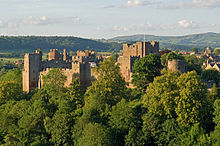
220px-Ludlow_Castle_from_Whitcliffe,_2011
Ludlow Castle, Shropshire

Following Edward III’s death in 1377, until her own death 6 months later, Philippa was, technically, heiress presumptive to the crown of her cousin, Richard II. However, in a supplementary document to his will, Edward III had practically disinherited his eldest granddaughter. He settled the inheritance of the throne on his grandson, Richard, son of his eldest son, the Black Prince and then, in turn, starting with John of Gaunt, on his surviving sons and their sons.

Edward had thus attempted to destroy any claim Philippa might have had to the throne whilst at the same time, revoking the royal status of the Mortimer earls of March.

Although there appear to be several death dates for Philippa, the most likely is that she died as a result of complications following Edmund’s birth, as she had made a will in November 1377, suggesting she was preparing for death. She passed away on, or shortly before, 7th January 1378 and was buried at Wigmore, Herefordshire, the burial-place of the Mortimers.

Edmund’s star, however, continued to rise and he was appointed Lieutenant of Ireland by Richard II on 22nd October 1380.  He died at Cork on 26th or 27th December 1381 and his body was brought back to Wigmore for burial. He was succeeded as 4th Earl of March by his eldest son, Roger; who had succeeded Philippa as Earl of Ulster on her death.

220px-Harry_Hotspur_Percy
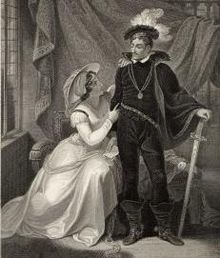
Sir Henry “Hotspur” Percy and Elizabeth Mortimer

Roger spent many years in wardship following his father’s death. He was courageous, but had a reputation for religious and moral laxity. He was killed in Ireland in 1398, while acting as the king’s Lieutenant. It is possible that, at some point, he was named heir to the throne by Richard II, although there is considerable doubt in this.

Of Philippa and Edmund’s other children Elizabeth married Sir Henry “Hotspur” Percy sometime before May 1380. They had 2 children, but he was killed at the Battle of Shrewsbury in 1403. Elizabeth then married Thomas, 1st Baron Camoys, with whom she had a son who died young. Elizabeth died on 20th April 1417 and was buried at Trotton in Sussex, with her 2nd husband.

Philippa’s daughter and namesake, Philippa, married John Hastings, 3rd Earl of Pembroke, son of the Earl of Pembroke who had married Edward III’s daughter, Margaret. Following his death in 1389, she married Richard FitzAlan, 11th Earl of Arundel, who was executed in 1397. Her 3rd marriage was to Thomas Poynings, 5th Baron St John of Basing, around November 1399. She died in 1400 or 1401 and was buried at Boxgrove Priory in Sussex.

220px-Richard_Plantagenet,_3rd_Duke_of_York
Richard, Duke of York

Edmund’s namesake, Philippa and Edmund’s youngest son was married in about 1402 to Katherine, the daughter of Owen Glendower. They had several children, but all died young. Edmund himself died sometime between 1409 and 1411.

Philippa’s grandson, Roger’s son, Edmund, succeeded his father as Earl of March and Ulster; he became the king’s ward following his father’s death and, following the usurpation he was kept in Henry IV’s family circle.

Edmund seems to have suffered from a lack of ambition and when some barons tried to place him on the throne in 1415, it was Edmund himself who revealed the Southampton Plot to Henry V.

Edmund died of plague in Ireland in January 1425, but it is his sister, Anne Mortimer, who had been married to Richard of Conisbrough, that Philippa’s claim to the throne was passed to Anne and Richard’s son, Richard, Duke of York; thus laying the foundations for the Wars of the Roses and the accession of Edward IV and, later, his brother, Richard III.

*

Pictures taken from Wikipedia.

*

Sources: The Perfect King, the Life of Edward III by Ian Mortimer; The Life and Time of Edward III by Paul Johnson; The Reign of Edward III  by WM Ormrod; The Mammoth Book of British kings & Queens by Mike Ashley; Britain’s’ Royal Families, the Complete Genealogy by Alison Weir; Brewer’s British Royalty by David Williamson; The Plantagenets, the Kings Who Made Britain by Dan Jones; mortimerhistorysociety.org.uk.

*

My books:

Signed, dedicated copies of all my books are available through my online store.

Out now: Scotland’s Medieval Queens

Books by Sharon Bennett Connolly

Scotland’s history is dramatic, violent and bloody. Being England’s northern neighbour has never been easy. Scotland’s queens have had to deal with war, murder, imprisonment, political rivalries and open betrayal. They have loved and lost, raised kings and queens, ruled and died for Scotland. From St Margaret, who became one of the patron saints of Scotland, to Elizabeth de Burgh and the dramatic story of the Scottish Wars of Independence, to the love story and tragedy of Joan Beaufort, to Margaret of Denmark and the dawn of the Renaissance, Scotland’s Medieval Queens have seen it all. This is the story of Scotland through their eyes.

Scotland’s Medieval Queens gives a thorough grounding in the history of the women who ruled Scotland at the side of its kings, often in the shadows, but just as interesting in their lives beyond the spotlight. It’s not a subject that has been widely covered, and Sharon is a pioneer in bringing that information into accessible history.’ Elizabeth Chadwick (New York Times bestselling author)

Available now from Amazon and Pen and Sword Books

Also by Sharon Bennett Connolly:

Books by Sharon Bennett Connolly

Heroines of the Tudor World tells the stories of the most remarkable women from European history in the time of the Tudor dynasty, 1485-1603. These are the women who ruled, the women who founded dynasties, the women who fought for religious freedom, their families and love. Heroines of the Tudor World is now available from Amberley Publishing and Amazon UK. Women of the Anarchy demonstrates how Empress Matilda and Matilda of Boulogne, unable to wield a sword themselves, were prime movers in this time of conflict and lawlessness. It shows how their strengths, weaknesses, and personal ambitions swung the fortunes of war one way – and then the other. Available from Bookshop.orgAmberley Publishing and Amazon UKKing John’s Right-Hand Lady: The Story of Nicholaa de la Haye is the story of a truly remarkable lady, the hereditary constable of Lincoln Castle and the first woman in England to be appointed sheriff in her own right. Available from all good bookshops Pen & Sword Booksbookshop.org and Amazon

Royal Historical Society

Defenders of the Norman Crown: The Rise and Fall of the Warenne Earls of Surrey tells the fascinating story of the Warenne dynasty, from its origins in Normandy, through the Conquest, Magna Carta, the wars and marriages that led to its ultimate demise in the reign of Edward III. Available from Pen & Sword BooksAmazon in the UK and US, and Bookshop.orgLadies of Magna Carta: Women of Influence in Thirteenth Century England looks into the relationships of the various noble families of the 13th century, and how they were affected by the Barons’ Wars, Magna Carta and its aftermath; the bonds that were formed and those that were broken. It is now available in paperback and hardback from Pen & SwordAmazon, and Bookshop.orgHeroines of the Medieval World tells the stories of some of the most remarkable women from Medieval history, from Eleanor of Aquitaine to Julian of Norwich. Available now from Amberley Publishing and Amazon, and Bookshop.orgSilk and the Sword: The Women of the Norman Conquest traces the fortunes of the women who had a significant role to play in the momentous events of 1066. Available now from Amazon,  Amberley Publishing, and Bookshop.org.

Alternate Endings: An anthology of historical fiction short stories including Long Live the King… which is my take what might have happened had King John not died in October 1216. Available in paperback and kindle from Amazon.

Podcast:

A Slice of Medieval

Have a listen to the A Slice of Medieval podcast, which I co-host with Historical fiction novelist Derek Birks. Derek and I welcome guests, such as Bernard Cornwell and Michael Jecks, and discuss a wide range of topics in medieval history, from significant events to the personalities involved. 

Every episode is also now available on YouTube.

*

Don’t forget! Signed and dedicated copies of all my books are available through my online store.

For forthcoming online and in-person talks, please check out my Events Page.

You can be the first to read new articles by clicking the ‘Follow’ button, liking our Facebook page or joining me on TwitterThreadsBluesky and Instagram.

*

©2015 Sharon Bennett Connolly FRHistS
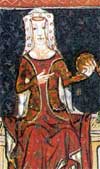
Blanche, Duchess of Lancaster

240px-Marriage_of_blanche_of_lancster_and_john_of_gaunt_1359
The wedding of Blanche of Lancaster and John of Gaunt, painted by Horace Wright, 1914

Blanche of Lancaster is one of those ladies of history more famous because of her children and the antics of her husband. Blanche’s life was pitifully short, but her legacy would see the unravelling of peace in the 15th century, and the decades of civil war called the Wars of the Roses.

Blanche of Lancaster was born around 25 March 1345, at Bolingbroke Castle in Lincolnshire. She was the second and youngest daughter of illustrious parents; Henry of Grosmont, Duke of Lancaster and Isabella de Beaumont. Henry of Grosmont was the grandson of Edmund Crouchback and a great-grandson of Henry III. Isabella was the daughter of Henry, 1st Baron de Beaumont and Earl of Buchan by right of his wife, Alice Comyn.

225px-Portrait_of_Henry,_Duke_of_Lancaster_-_William_Bruges's_Garter_Book_(c.1440-1450),_f.8_-_BL_Stowe_MS_594_(cropped)
Henry of Grosmont, Duke of Lancaster

Blanche had only one sibling, her older sister, Matilda, who was married, first to Ralph de Stafford and later to William V, Duke of Bavaria, Count of Holland, Hainault and Zeeland. Blanche herself was betrothed to John de Segrave as a child, but this seems to have been set aside soon afterwards.

By the late 1350s Blanche was a part of King Edward III’s plans to provide for his growing number of sons. As one of the country’s richest heiresses, Blanche was chosen as the bride for Edward’s 3rd surviving son, John of Gaunt. Blanche and John were 3rd cousins, being great-great-grandchildren of Henry III.

The couple was married on the 19 May 1359 at Reading Abbey in Berkshire. Blanche had just turned 14 and John was 19 years old.

In 1361 Blanche suffered a double tragedy; her father died of bubonic plague in Leicester in March and her mother succumbed to the same disease before the end of the year. While her sister inherited the earldoms of Leicester and Lincoln, John of Gaunt inherited those of Derby and Lancaster by right of his wife; however, the title of Duke of Lancaster became extinct with Henry of Grosmont’s death.

200px-Johnofgaunt
John of Gaunt, Duke of Lancaster

By April 1362 Blanche’s sister had also succumbed to the Black Death; there were some rumours of poison, but this seems unlikely. Maud had died childless and so Blanche inherited the remainder of her father’s estates. Blanche – and by extension John of Gaunt – now added the earldoms of Leicester and Lincoln to their vast holdings. John was invested with the title of Duke of Lancaster and was now the most powerful magnate in England; holding more than 30 castles, his lands and possessions were second only to those of the king.

Blanche herself was pregnant for most of her married life, giving birth to 7 children between 1360 and 1368. 3 sons, John, Edward and a second John, and a daughter, Isabella, died young. Two daughters and a son did, however, survive into adulthood.

Their eldest daughter, Philippa, was born on 31 March 1360  and would marry King John I of Portugal. Philippa was the mother of 8 children, known as the ‘Illustrious Generation’ in Portugal, including Edward, King of Portugal, Prince Henry the Navigator and Ferdinand the Holy Prince. Philippa herself would die of plague in 1415.

History....the Interesting Bits
Tomb of Henry IV and Joanna of Navarre, Canterbury Cathedral

A second daughter, Elizabeth, was born around 1363 at Burford, Shropshire. Although her first marriage to John Hastings, 3rd Earl of Pembroke, was annulled, her second marriage, to John Holland, 1st Duke of Exeter, would end with his execution for treason in 1400; they had 5 children. Elizabeth would marry for a 3rd time to John Cornwall, 1st Baron Fanhope, with whom she had a daughter before she died in 1426.

Blanche and John’s last surviving child, Henry of Bolingbroke, was born at Bolingbroke Castle in 1367, probably on 15 April. Having been exiled in the later years of the reign of his cousin, Richard II, Henry would return to England following the death of his father and confiscation of his inheritance by the king. Richard was forced to abdicate and Henry succeeded to the throne as King Henry IV.

300px-Old-Bolingbroke-Castle
Bolingbroke Castle, Lincolnshire, where Blanche of Lancaster was born

Henry’s first marriage, to Mary de Bohun, produced 7 children, including the future King Henry V; his second marriage was to Joanna of Navarre, Duchess of Brittany. Henry IV died on 20 March 1413 and was buried at Canterbury Cathedral; Joanna would be buried beside him following her own death in 1437.

By 1365 Blanche had taken Katherine Swynford into her household. Katherine was the wife of one of John of Gaunt’s Lincolnshire knights. Moreover, John was godfather to their daughter, Blanche, who was named after the Duchess. Young Blanche Swynford was lodged in the same chambers as the Duchess’s daughters, Philippa and Elizabeth and accorded the same luxuries as the princesses.

Having lost her parents and sister to the Black Death it is not surprising that Blanche was fearful of the disease. In the summer of 1368 she is said to have moved her family away from the city, to Bolingbroke Castle to escape the pestilence.

240px-Wenceslas_Hollar_-_John_of_Gaunt_(monument)
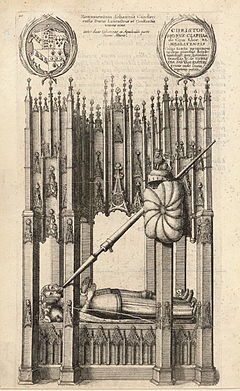
1658 etching by Wenceslas Hollar, of the tomb of John of Gaunt and Blanche of Lancaster

There seems to be some doubt over the year of her death – some sources say 1368, some 1369 – and even the nature of it. One theory is that Blanche succumbed to the bubonic plague, the disease she most feared, in 1369. As a daughter, Isabella, who died young, was born in 1368 some have suggested Blanche died in childbirth. Recent research by Amy Licence has discovered that Blanche died at Tutbury on 12 September, 1368, more likely from the complications of childbirth than from the plague. Her husband was by her side when she died and a letter has come to light in which John arranged to have prayers said for the soul of his lost duchess.¹

Blanche was buried in Old St Paul’s Cathedral, London; where John of Gaunt arranged for a splendid alabaster tomb and annual commemorations for the rest of his life. And despite 2 subsequent marriages, John of Gaunt would be interred next to Blanche following his own death in 1399. The tomb was lost when the cathedral was destroyed during the Great Fire of London in 1666.

Blanche is one of the few ladies of the 14th century of whom we have several descriptions. The Chronicler Froissart noted that she was “jone et jolie” – young and pretty.

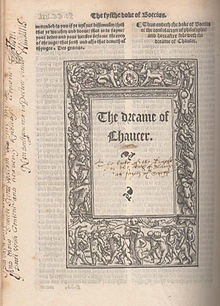
The best description, however, is from Geoffrey Chaucer, Katherine Swynford’s brother-in-law, who was commissioned by John of Gaunt to write The Book of the Duchess, also known as The Deth of Blaunche. The poem is said to depict Gaunt’s mourning for his wife, in the tale of a Knight grieving for his lost love.

220px-The_Dreame_of_Chaucer_Book_of_the_Duchess
Geoffrey Chaucer’s ‘The Book of the Duchess’

Chaucer describes Blanche’s neck (yes, her neck) as “whyt, smothe, streght and flat. Naming the heroine “White”, he goes on to say she is “rody, fresh and lyvely hewed”.  Blanche (White) was “bothe fair and bright” and Nature’s “cheef patron of beautee”.

Despite his marrying Constance of Castile just 2 years later, and his eventual marriage to his mistress, Katherine Swynford, being singled out as one of the great love affairs of the age, it was said that Blanche was the love of his life.

Chaucer’s poem and the lavish tomb and commemorations are said to highlight Gaunt’s love for his first wife; the fact he was eventually buried beside her has been seen, by many, as the final proof of this love.

*

Footnote: ¹Red Roses: From Blanche of Gaunt to Margaret Beaufort by Amy Licence.

*

Photograph of the tomb of Henry IV and Joanna of Navarre are © Sharon Bennett Connolly, 2015. All other pictures are courtesy of Wikipedia.

*

Sources: Brewer’s British Royalty by David Williamson; Red Roses: From Blanche of Gaunt to Margaret Beaufort by Amy Licence; History Today Companion to British History Edited by Juliet Gardiner & Neil Wenborn; The mammoth Book of British kings & Queen by Mike Ashley; Britain’s Royal Families, the Complete Genealogy by Alison Weir; The Life and Times of Edward III by paul Johnson; The Perfect King, the Life of Edward III by Ian Mortimer; Chronicles of the Age of Chivalry Edited by Elizabeth Hallam; unofficialroyalty.com; katherineswynfordsociety.org.uk; The Reign of Edward III by WM Ormrod; The Plantagenets, the kings Who Made Britain by Dan Jones; englishmonarchs.co.uk; oxforddnb.com.

*

My Books

Signed, dedicated copies of all my books are available through my online bookshop.

Out now: Scotland’s Medieval Queens

Books by Sharon Bennett Connolly

Scotland’s history is dramatic, violent and bloody. Being England’s northern neighbour has never been easy. Scotland’s queens have had to deal with war, murder, imprisonment, political rivalries and open betrayal. They have loved and lost, raised kings and queens, ruled and died for Scotland. From St Margaret, who became one of the patron saints of Scotland, to Elizabeth de Burgh and the dramatic story of the Scottish Wars of Independence, to the love story and tragedy of Joan Beaufort, to Margaret of Denmark and the dawn of the Renaissance, Scotland’s Medieval Queens have seen it all. This is the story of Scotland through their eyes.

Scotland’s Medieval Queens gives a thorough grounding in the history of the women who ruled Scotland at the side of its kings, often in the shadows, but just as interesting in their lives beyond the spotlight. It’s not a subject that has been widely covered, and Sharon is a pioneer in bringing that information into accessible history.’ Elizabeth Chadwick (New York Times bestselling author)

Available now from Amazon and Pen and Sword Books

Also by Sharon Bennett Connolly:

Books by Sharon Bennett Connolly

Heroines of the Tudor World tells the stories of the most remarkable women from European history in the time of the Tudor dynasty, 1485-1603. These are the women who ruled, the women who founded dynasties, the women who fought for religious freedom, their families and love. Heroines of the Tudor World is now available for pre-order from Amberley Publishing and Amazon UK. Women of the Anarchy demonstrates how Empress Matilda and Matilda of Boulogne, unable to wield a sword themselves, were prime movers in this time of conflict and lawlessness. It shows how their strengths, weaknesses, and personal ambitions swung the fortunes of war one way – and then the other. Available from Bookshop.orgAmberley Publishing and Amazon UKKing John’s Right-Hand Lady: The Story of Nicholaa de la Haye is the story of a truly remarkable lady, the hereditary constable of Lincoln Castle and the first woman in England to be appointed sheriff in her own right. Available from all good bookshops Pen & Sword Booksbookshop.org and Amazon

History...the Interesting Bits

Defenders of the Norman Crown: The Rise and Fall of the Warenne Earls of Surrey tells the fascinating story of the Warenne dynasty, from its origins in Normandy, through the Conquest, Magna Carta, the wars and marriages that led to its ultimate demise in the reign of Edward III. Available from Pen & Sword BooksAmazon in the UK and US, and Bookshop.orgLadies of Magna Carta: Women of Influence in Thirteenth Century England looks into the relationships of the various noble families of the 13th century, and how they were affected by the Barons’ Wars, Magna Carta and its aftermath; the bonds that were formed and those that were broken. It is now available in paperback and hardback from Pen & SwordAmazon, and Bookshop.orgHeroines of the Medieval World tells the stories of some of the most remarkable women from Medieval history, from Eleanor of Aquitaine to Julian of Norwich. Available now from Amberley Publishing and Amazon, and Bookshop.orgSilk and the Sword: The Women of the Norman Conquest traces the fortunes of the women who had a significant role to play in the momentous events of 1066. Available now from Amazon,  Amberley Publishing, and Bookshop.org.

Alternate Endings: An anthology of historical fiction short stories including Long Live the King… which is my take what might have happened had King John not died in October 1216. Available in paperback and kindle from Amazon.

Podcast:

A Slice of Medieval

Have a listen to the A Slice of Medieval podcast, which I co-host with Historical fiction novelist Derek Birks. Derek and I welcome guests, such as Bernard Cornwell, Helen Castor and Michael Jecks, and discuss a wide range of topics in medieval history, from significant events to the personalities involved. In a recent episode, Kathryn Warner joined us to chat about Blanche’s husband, John of Gaunt

Every episode is also now available on YouTube.

*

Don’t forget! Signed and dedicated copies of all my books are available through my online bookshop.

For forthcoming online and in-person talks, please check out my Events Page.

You can be the first to read new articles by clicking the ‘Follow’ button, liking our Facebook page or joining me on TwitterThreadsBluesky and Instagram.


©2015 Sharon Bennett Connolly FRHistS
Love, Adultery and a Fake Kidnapping? The story of Isabel de Vermandois

Adelaide_of_Vermandois
Adelaide de Vermandois, mother of Isabel

Born around 1085, Isabel de Vermandois had the blood of kings flowing through her veins. Her father was Hugh Capet, younger son of King Henry I of France. Her mother was Adelaide de Vermandois, a descendant of the ancient Carolingian dynasty. She was one of her parents’ 9 surviving children; 4 boys and 5 girls.

As with many medieval women, there are no images of Isabel; not even a description of her appearance. Her life can be pieced together, somewhat, through her marriages and through her children. When researching her, her name also frequently appears as Elisabeth; Elisabeth being the Latin version of her name, whereas Isabelle/Isabel appears to derive from the French/Spanish languages.

From her birth, as the granddaughter of the King of France, Isabel was a valuable prize. Her childhood proved to be  depressingly short. By 1096 a marriage was mooted between Isabel and Robert de Beaumont, Count of Meulan, who was 35 years her senior.

Robert de Beaumont was a seasoned warrior and courtier, with lands in both England and Normandy. He had fought alongside William the conqueror at the Battle of Hastings and was with William II Rufus when he was killed in a hunting accident in the New Forest. A loyal supporter of Henry I, he would fight for his king at the Battle of Tinchebrai in 1106, and receive the earldom of Leicester in 1107.

Hugh_I_of_Vermandois
Hugh I, Count of Vermandois, Isabel’s father

The marriage was originally opposed by the church; the prospective couple were related within the prohibited degrees and Isabel was not yet at the minimum legal age to marry – 12. Before leaving on Crusade, however, Isabel’s father was able to persuade Pope Urban to issue a dispensation and the marriage went ahead in 1096.

Isabel was around 11 years old, Robert de Beaumont was about 46.

Isabel gave Robert 9 children; the first was a daughter, Emma, born in 1102. Twin boys followed in 1104; Waleran and Robert de Beaumont, earls of Worcester and Leicester, respectively. The brothers were active supporters of King Stephen during the conflict with Empress Matilda, popularly known as the Anarchy, but while Robert would come to terms with Matilda’s son, the future Henry II, in 1153, Waleran was distrusted due to his support of Louis VII of France.

Another daughter, Isabel, was a mistress of Henry I before being married to Gilbert de Clare, 1st Earl of Pembroke. Through her son Richard de Clare, 2nd Earl of Pembroke, she would be the grandmother of Isabel de Clare, wife of the great knight and Regent for Henry III, William Marshal.

Sharon Bennett Connolly
Arms of Isabel de Vermandois assumed by William de Warenne following their marriage.

Isabel’s marriage to Robert de Beaumont seems to have ended in scandal and controversy. The chronicler Henry of Huntingdon reported that she was seduced by William de Warenne, 2nd Earl of Surrey, suggesting they had a love affair, which lasted for several years. It’s hard to blame a young woman of 30, in an arranged marriage to a man more than twice her age, for looking elsewhere for love and comfort.

William de Warenne had failed, in 1093, to obtain a royal bride for himself in a match with Matilda of Scotland (she went on to marry Henry I), and so looked elsewhere for a bride. It seems that de Warenne hatched a plot to kidnap Isabel – possibly with her approval – after de Beaumont refused to grant his wife a divorce. Huntingdon has the aged warrior dying of shame following his wife’s betrayal:

But when he was at the height of his fame, it happened that another count stole his wife, by intrigue and violent treachery. Because of this, in his old age his mind was troubled, and, darkened by anguish, he passed into the shadows of grief, and never again experienced happiness or cheerfulness. After days given over to sorrow he fell into an illness that heralded his death …

Henry of Huntingdon, The History of the English People 1000-1154

However … Henry of Huntingdon’s accusations may well be a misinterpretation of the facts; and be based on rumours arising from Isabel and William marrying within only a few months of her first husband’s death, that they must have been having an affair if they married so soon afterwards. Wealthy widows were a target for ambitious men, though. They were at risk of being kidnapped, raped and forced to marry their rapist. Isabel circumvented this risk by marrying William de Warenne, a man she knew and was of equal rank with her late husband.

Whether the story is true, or not, is highly questionable, but great for the novelists. However, Robert de Beaumont died soon after, on 5th June 1118, and William and Isabel married as soon as they could; William was approaching 50, had been Earl of Surrey for 30 years and, as yet, had no heir to succeed him.

Sharon Bennett Connolly
Castle Acre, residence of the Earls of Surrey

William de Warenne, 2nd Earl of Surrey, had a chequered career. He had succeeded his father in 1088, but was disinherited by Henry I for his support of Henry’s brother Robert Curthose, Duke of Normandy, in his attempt on the English throne. De Warenne was restored to favour in 1103 and thereafter remained loyal. He would be one of the earls present at Henry I’s death on 1st December 1135 at Lyons-la-Foret.

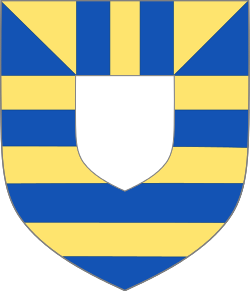
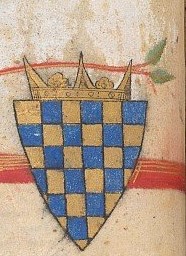
On his marriage to Isabel, William assumed the Vermandois coat of arms as his own and the blue and yellow checks became known as the ‘Warenne chequer’.

Isabel and William had several children; their son and heir, William, the future 3rd earl was born in 1119. He would die on Crusade in January 1148 in the Battle of Mount Cadmus, at Laodicea in Turkey, whilst fighting in the elite royal guard of his cousin, King Louis VII of France. His only child, a daughter, Isabel, became the greatest heiress in England.

Another 2 sons followed, Ralph and Rainald, and 2 daughters. Gundreda married Roger de Beaumont, Earl of Warwick and Ada married Prince Henry of Scotland, Earl of Huntingdon, son and heir of David I of Scotland. Two of Ada’s sons became kings of Scotland; Malcolm IV and William the Lion.

Sharon Bennett Connolly
Lewes Priory, final resting place of Isabel de Vermandois, Countess of Leicester and Surrey

Isabel’s two families seem to have got on quite well. Not only did Gundreda de Warenne marry a  cousin of her Beaumont siblings, but William de Warenne also had both his son and step sons with him when he attended Henry I on his deathbed. The Beaumont and Warenne half-brothers looked after each other, and their interests, during the period known as the Anarchy, when King Stephen and Empress Matilda were vying for the crown. Young William de Warenne, the 3rd Earl, was only 18 or 19 when his father died, and was guided and advised by his half-brothers Waleran and Robert, 15 years his senior.

Although her life was tinged with scandal, Isabel of Vermandois has had a great influence on the history of England and Scotland. From her are descended the greatest families of England and all subsequent Scottish monarchs.

William de Warenne died in 1138, having held the earldom of Surrey for 50 years; he was buried at his father’s feet at Lewes Priory. Isabel survived him by almost 10 years, dying around 1147/8. She was also buried at Lewes Priory, close to her husband.

*

Pictures taken from Wikipedia, except Castle Acre and Lewes Priory, which are ©2019, Sharon Bennett Connolly FRHistS
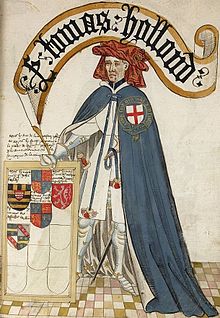
Sources: Early Yorkshire Charters Volume 8: The Honour of Warenne, Edited by William Farrer and Charles Travis Clay; England Under the Norman and Angevin Kings by Robert Bartlett; Brewer’s British Royalty by David Williamson; The History of the English People 1000-1154 by Henry of Huntingdon; Britain’s Royal Families, the Complete Genealogy by Alison Weir; british-history.ac.uk; kristiedean.com; knight-france.com; Rev. John Watson, Memoirs of the Ancient Earls of Warren and Surrey, and Their Descendants to the Present Time, Volume I; Elisabeth M.C. Van Houts and Rosalind C. Love (eds and trans), The Warenne (Hyde) Chronicle; Elisabeth Van Houts, ‘The Warenne View of the Past’, in Proceedings of the Battle Conference 2003, edited by John Gillingham.

*

My Books

Signed, dedicated copies of all my books are available through my online bookshop.

Out now: Scotland’s Medieval Queens

Books by Sharon Bennett Connolly

Scotland’s history is dramatic, violent and bloody. Being England’s northern neighbour has never been easy. Scotland’s queens have had to deal with war, murder, imprisonment, political rivalries and open betrayal. They have loved and lost, raised kings and queens, ruled and died for Scotland. From St Margaret, who became one of the patron saints of Scotland, to Elizabeth de Burgh and the dramatic story of the Scottish Wars of Independence, to the love story and tragedy of Joan Beaufort, to Margaret of Denmark and the dawn of the Renaissance, Scotland’s Medieval Queens have seen it all. This is the story of Scotland through their eyes.

Scotland’s Medieval Queens gives a thorough grounding in the history of the women who ruled Scotland at the side of its kings, often in the shadows, but just as interesting in their lives beyond the spotlight. It’s not a subject that has been widely covered, and Sharon is a pioneer in bringing that information into accessible history.’ Elizabeth Chadwick (New York Times bestselling author)

Available now from Amazon and Pen and Sword Books

Also by Sharon Bennett Connolly:

Books by Sharon Bennett Connolly

Heroines of the Tudor World tells the stories of the most remarkable women from European history in the time of the Tudor dynasty, 1485-1603. These are the women who ruled, the women who founded dynasties, the women who fought for religious freedom, their families and love. Heroines of the Tudor World is now available from Amberley Publishing and Amazon UK. Women of the Anarchy demonstrates how Empress Matilda and Matilda of Boulogne, unable to wield a sword themselves, were prime movers in this time of conflict and lawlessness. It shows how their strengths, weaknesses, and personal ambitions swung the fortunes of war one way – and then the other. Available from Bookshop.orgAmberley Publishing and Amazon UKKing John’s Right-Hand Lady: The Story of Nicholaa de la Haye is the story of a truly remarkable lady, the hereditary constable of Lincoln Castle and the first woman in England to be appointed sheriff in her own right. Available from all good bookshops Pen & Sword Booksbookshop.org and Amazon

Books by Sharon Bennett Connolly

Defenders of the Norman Crown: The Rise and Fall of the Warenne Earls of Surrey tells the fascinating story of the Warenne dynasty, from its origins in Normandy, through the Conquest, Magna Carta, the wars and marriages that led to its ultimate demise in the reign of Edward III. Available from Pen & Sword BooksAmazon in the UK and US, and Bookshop.orgLadies of Magna Carta: Women of Influence in Thirteenth Century England looks into the relationships of the various noble families of the 13th century, and how they were affected by the Barons’ Wars, Magna Carta and its aftermath; the bonds that were formed and those that were broken. It is now available in paperback and hardback from Pen & SwordAmazon, and Bookshop.orgHeroines of the Medieval World tells the stories of some of the most remarkable women from Medieval history, from Eleanor of Aquitaine to Julian of Norwich. Available now from Amberley Publishing and Amazon, and Bookshop.orgSilk and the Sword: The Women of the Norman Conquest traces the fortunes of the women who had a significant role to play in the momentous events of 1066. Available now from Amazon,  Amberley Publishing, and Bookshop.org.

Alternate Endings: An anthology of historical fiction short stories including Long Live the King… which is my take what might have happened had King John not died in October 1216. Available in paperback and kindle from Amazon.

Podcast:

Books by Sharon Bennett Connolly

Have a listen to the A Slice of Medieval podcast, which I co-host with Historical fiction novelist Derek Birks. Derek and I welcome guests, such as Bernard Cornwell and Michael Jecks, and discuss a wide range of topics in medieval history, from significant events to the personalities involved. Every episode is also now available on YouTube.

*

Don’t forget! Signed and dedicated copies of all my books are available through my online bookshop.

For forthcoming online and in-person talks, please check out my Events Page.

You can be the first to read new articles by clicking the ‘Follow’ button, liking our Facebook page or joining me on TwitterThreadsBluesky and Instagram.

©2015 Sharon Bennett Connolly FRHistS
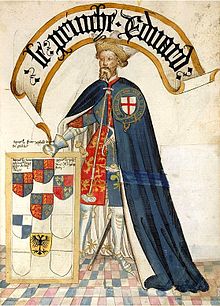
Joanna of England, the Lionheart’s Little Sister

220px-Joanna_Plantagenet
Joanna of England

Joanna of England was born in October 1165, the 7th child and youngest daughter of Henry II of England and Eleanor of Aquitaine. Ten years younger than her eldest brother, Henry the Young King, she was born at a time when their parents’ relationship was breaking down; her mother would eventually go to war against her husband, before being imprisoned by him for the last 16 years of Henry’s reign.

Born at Angers Castle in Anjou, Christmas 1165 was the first ever Christmas her parents spent apart; with Henry still in England dealing with a Welsh revolt, it would be several months before he met his new daughter for the first time. Although Joanna spent much of her childhood at her mother’s court in Poitiers, she and her younger brother, John, spent sometime boarding at the magnificent Abbey of Fontevraud. Whilst there Joanna was educated in the skills needed to run a large, aristocratic household and in several languages; English, Norman French and rudimentary Latin.

160px-Britishmuseumsealofjoanna
Joanna’s seals

When Eleanor and her sons rebelled in 1173, Henry II went to war against his wife. When she was captured – wearing men’s clothes – she was sent to imprisonment in England. Joanna joined her father’s entourage and frequently appeared at Henry’s Easter and Christmas courts.

3 years later, Eleanor was allowed to travel to Winchester to say ‘goodbye’ to her youngest daughter, who had been betrothed to King William II of Sicily. Provided with a trousseau, probably similar to that of her sister Matilda on her marriage to Henry the Lion, Joanna set out from Winchester at the end of August 1176; escorted by Bishop John of Norwich and her uncle, Hamelin de Warenne.

Joanna’s entourage must have been a sight to see. Once on the Continent, she was escorted from Barfleur by her brother Henry, the Young King. Her large escort was intended to dissuade bandit attacks against her impressive dowry, which included fine horses, gems and precious metals. At Poitiers, Joanna was met by another brother, Richard, who escorted his little sister to Toulouse in a leisurely and elegant progress.

Dedication_mosaic_-_Cathedral_of_Monreale_-_Italy_2015_(crop)
William II dedicating the Cathedral of Monreale to the Virgin Mary

Having finally reached Sicily 12-year-old Joanna was married to 24-year-old William on 13th February 1177, in Palermo Cathedral. The marriage ceremony was followed by her coronation as Queen of Sicily. Joanna must have looked magnificent, her bejewelled dress cost £114 – not a small sum at the time.

Sicily was an ethnically diverse country; William’s court was composed of Christian, Muslim and Greek advisers. William himself spoke, read and wrote Arabic and, in fact, kept a harem of both Christian and Muslim girls within the palace. Although she was kept secluded, it must have been a strange life for a young girl, partly raised in a convent.

Joanna and William only had one child, Bohemond, Duke of Apulia, who was born – and died – in 1181. And when William died without an heir in November 1189, Joanna became a pawn in the race for the succession. William’s aunt, Constance was the rightful heir, but she was married to Henry VI, Holy Roman Emperor and many feared being absorbed into his empire. William II’s illegitimate nephew, Tancred of Lecce, seized the initiative. He claimed the throne and, in need of money, imprisoned Joanna and stole her dowry and the treasures left to her by her husband.

180px-Vilem2Sicilie_smrt
William II of Sicily on his deathbed

Who knows how long Joanna would have remained imprisoned, if it had not been for her brother’s eagerness to go on Crusade? Having gained the English throne in 1189 Richard I – the Lionheart – had wasted no time in organising the Third Crusade and arrived at Messina in Sicily in September 1190.

Richard demanded Joanna’s release; and fearing the Crusader king’s anger Tancred capitulated and freed Joanna, paying 40,000 ounces of gold towards the Crusade in fulfilment of William II’s promise of aid.

Described as beautiful and spirited, Joanna had been Queen of Sicily for 13 years and it seems that, while at her brother’s court, she caught the eye of Richard’s co-Crusdaer, King Philip II of France. Richard was having none of it and moved Joanna to the Priory of Bagnara on the mainland, out of sight and hopefully out of mind.

Richard stayed in Sicily for sometime, negotiating a treaty with Tancred which would recognise him as rightful king of Sicily in return for the remainder of Joanna’s dowry and 19 ships to support the Crusade. He was also waiting for his bride, Berengaria of Navarre, to catch up with him.

Richard_I_and_Joan_greeting_Philip_Augustus
Joanna with her brother, Richard the Lionheart, and King Philip II of France

During Lent of 1191 Joanna had a brief reunion with her mother Eleanor of Aquitaine when she arrived in Sicily, having escorted Richard’s bride. Joanna became Berengaria’s chaperone and they were lodged together at Bagnara, like ‘two doves in a cage’.

Unable to marry in the Lenten season, Richard sent Joanna and Berengaria on ahead of the main army, and departed Sicily for the Holy Land.

The Royal ladies’ ship was driven to Limassol on Cyprus by a storm. After several ships were crippled and then plundered by the islanders, the ruler of Cyprus, Isaac Comnenus, tried to lure Joanna and Berengaria ashore. Richard came to the rescue, reduced Cyprus in 3 weeks and clamped Comnenus in chains (silver ones apparently). Lent being over, Richard and Berengaria were married, with great pomp and celebration, before the whole party continued their journey to the Holy Land, arriving at Acre in June 1191.

Joanna’s time in the Holy Land was spent in Acre and Jaffa, accompanying her sister-in-law and following – at a safe distance – behind the Crusading army. She spent Christmas 1191 with Richard and Berengaria, at Beit-Nuba, just 12 miles from Jerusalem. However, although he re-took Acre and Jaffa, Richard fell out with his allies and was left without a force strong enough to take Jerusalem.

In attempts to reach a political settlement with the Muslim leader, Saladin, Richard even offered Joanna as a bride for Saladin’s brother. His plans were scuppered, however, when Joanna refused outright to even consider marrying a Muslim, despite the fact Richard’s plan would have seen her installed as Queen of Jerusalem.

When a 3-year truce was eventually agreed with Saladin, Joanna and Berengaria were sent ahead of the army, to Sicily and onto Rome where they were to await Richard’s arrival. Richard, however, never made it; falling into the hands of Duke Leopold of Austria, he was handed over to his enemy, the Holy Roman Emperor.

With Richard imprisoned, Berengaria and Joanna arrived back in Poitiers. Berengaria herself set out to help raise the ransom money for Richard’s release, which finally came about in February 1194.

220px-Raimond6Toulouse
Raymond VI Count of Toulouse

Joanna spent the next few years at her mother’s and brother’s courts, her wealth having been squandered by Richard’s Crusade. But at the age of 31 she was proposed as a bride for Raymond VI, Count of Toulouse. Her title as Queen of Sicily would give him greater prestige while bringing the County of Toulouse into the Plantagenet fold, a long-time aim of Eleanor’s.

3-times married Raymond does not seem to have been ideal husband material; he had been excommunicated for marrying his third wife whilst still married to his second. And he now repudiated wife number 3, confining her to a convent, in order to marry Joanna. Despite such a colourful history, the wedding went ahead and Joanna and Raymond were married in Rouen in October 1196, with Queen Berengaria in attendance.

Although not a happy marriage Joanna gave birth to a son, Raymond, in around 1197 and a daughter, possibly called Mary, in 1198. Little is known of Mary, and it is possible she died in infancy. Raymond succeeded his father as Raymond VII Count of Toulouse, and married twice.

220px-RaimondVIIToulouse1242
Raymond VII Count of Toulouse

Raymond VI was not a popular Count of Toulouse and while he was away in the Languedoc, in 1199, dealing with rebel barons, Joanna herself tried to face down her husband’s enemies. She laid siege to a rebel stronghold at Cassee. Mid-siege, however, her troops turned traitor and fired the army’s camp – Joanna managed to escape, but was probably injured.

A pregnant Joanna was then trying to make her way to her brother Richard when she heard of his death. She diverted course and finally reached her mother at Niort. Hurt, distressed and pregnant, Eleanor sent her to Fontevraud to be looked after by the nuns.

With no allowance from her husband, Joanna returned to her mother and brother – King John – in Rouen in June 1199, pleading poverty; Eleanor managed to persuade John to give his sister an annual pension of 100 marks.

Joanna’s last few months must have been a desperate time. Too ill to travel and heavily pregnant, she remained at Rouen. In September, King John gave her a lump sum of 3,000 marks, to dispose of in her will; she specifically mentioned a legacy towards the cost of a new kitchen at Fontevraud and asked Eleanor to dispose of the remainder in charitable works for the religious and the poor.

800px-Abbaye_Fontevraud_-_Eglise_Abbatiale,_facade_ouest
The Church at the Abbey of Fontevraud

Knowing she was dying, Joanna became desperate to be veiled as a nun at Fontevraud; a request normally denied to married women – especially when they were in the late stages of pregnancy. However, seeing how desperate her daughter was, Eleanor sent for Matilda, the Abbess of Fontevraud but, fearing the Abbess would arrive too late, she also asked Hubert Walter, the Archbishop of Canterbury, to intervene. The Archbishop tried to dissuade Joanna, but was impressed by her fervour and convened a committee of nuns and clergy; who agreed that Joanna must be ‘inspired by heaven’.

In Eleanor’s presence, the Archbishop admitted Joanna to the Order of Fontevraud. Joanna was too weak to stand and died shortly after the ceremony; her son, Richard, was born a few minutes later and lived only long enough to be baptised. She died on 4 September 1199, a month short of her 34th birthday.

Joanna and her baby son were interred together at Fontevraud, the funeral cortege having been escorted there by Eleanor of Aquitaine and King John.

The Winchester Annalist said of Joanna, that she was;

a woman whose masculine spirit overcame the weakness of her sex

Winchester Annalist quoted in Oxforddnb.com

*

Do have a listen to our recent episode of A Slice of Medieval in which Derek and I chat with Catherine Hanley about her biography of Joanna, Lionessheart.

Pictures taken from Wikipedia

References: Mike Ashley The Mammoth Book of Kings & Queens; Alison Weir Britain’s Royal Families, the Complete Genealogy; Robert Bartlett England Under the Norman and Angevin Kings; Alison Weir Eleanor of Aquitaine, by the Wrath of God, Queen of England; Douglas Boyd Eleanor, April Queen of Aquitaine; bestofsicily.com; Oxforddnb.com; britannica.com; geni.com; royalwomenblogspot.co.uk; medievalqueens.com.

*

My books

Signed, dedicated copies of all my books are available through my online bookshop.

Out now: Scotland’s Medieval Queens

Books by Sharon Bennett Connolly

Scotland’s history is dramatic, violent and bloody. Being England’s northern neighbour has never been easy. Scotland’s queens have had to deal with war, murder, imprisonment, political rivalries and open betrayal. They have loved and lost, raised kings and queens, ruled and died for Scotland. From St Margaret, who became one of the patron saints of Scotland, to Elizabeth de Burgh and the dramatic story of the Scottish Wars of Independence, to the love story and tragedy of Joan Beaufort, to Margaret of Denmark and the dawn of the Renaissance, Scotland’s Medieval Queens have seen it all. This is the story of Scotland through their eyes.

Scotland’s Medieval Queens gives a thorough grounding in the history of the women who ruled Scotland at the side of its kings, often in the shadows, but just as interesting in their lives beyond the spotlight. It’s not a subject that has been widely covered, and Sharon is a pioneer in bringing that information into accessible history.’ Elizabeth Chadwick (New York Times bestselling author)

Available now from Amazon and Pen and Sword Books

Also by Sharon Bennett Connolly:

Books by Sharon Bennett Connolly

Heroines of the Tudor World tells the stories of the most remarkable women from European history in the time of the Tudor dynasty, 1485-1603. These are the women who ruled, the women who founded dynasties, the women who fought for religious freedom, their families and love. Heroines of the Tudor World is now available for pre-order from Amberley Publishing and Amazon UK. Women of the Anarchy demonstrates how Empress Matilda and Matilda of Boulogne, unable to wield a sword themselves, were prime movers in this time of conflict and lawlessness. It shows how their strengths, weaknesses, and personal ambitions swung the fortunes of war one way – and then the other. Available from Bookshop.orgAmberley Publishing and Amazon UKKing John’s Right-Hand Lady: The Story of Nicholaa de la Haye is the story of a truly remarkable lady, the hereditary constable of Lincoln Castle and the first woman in England to be appointed sheriff in her own right. Available from all good bookshops Pen & Sword Booksbookshop.org and Amazon

Royal Historical Society

Defenders of the Norman Crown: The Rise and Fall of the Warenne Earls of Surrey tells the fascinating story of the Warenne dynasty, from its origins in Normandy, through the Conquest, Magna Carta, the wars and marriages that led to its ultimate demise in the reign of Edward III. Available from Pen & Sword BooksAmazon in the UK and US, and Bookshop.orgLadies of Magna Carta: Women of Influence in Thirteenth Century England looks into the relationships of the various noble families of the 13th century, and how they were affected by the Barons’ Wars, Magna Carta and its aftermath; the bonds that were formed and those that were broken. It is now available in paperback and hardback from Pen & SwordAmazon, and Bookshop.orgHeroines of the Medieval World tells the stories of some of the most remarkable women from Medieval history, from Eleanor of Aquitaine to Julian of Norwich. Available now from Amberley Publishing and Amazon, and Bookshop.orgSilk and the Sword: The Women of the Norman Conquest traces the fortunes of the women who had a significant role to play in the momentous events of 1066. Available now from Amazon,  Amberley Publishing, and Bookshop.org.

Alternate Endings: An anthology of historical fiction short stories including Long Live the King… which is my take what might have happened had King John not died in October 1216. Available in paperback and kindle from Amazon.

Podcast:

A Slice of Medieval

Have a listen to the A Slice of Medieval podcast, which I co-host with Historical fiction novelist Derek Birks. Derek and I welcome guests, such as Elizabeth Chadwick, Helen Castor, Ian Mortimer, Scott Mariani and Bernard Cornwell and discuss a wide range of topics in medieval history, from significant events to the personalities involved. 

Every episode is also now available on YouTube.

*

Don’t forget! Signed and dedicated copies of all my books are available through my online store.

For forthcoming online and in-person talks, please check out my Events Page.

You can be the first to read new articles by clicking the ‘Follow’ button, liking our Facebook page or joining me on TwitterThreadsBluesky and Instagram.

©2015 Sharon Bennett Connolly FRHistS
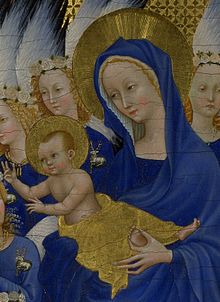
Eleanor de Montfort, the First Princess of Wales

Eleanor_de_Montford
Eleanor de Montfort

Born in 1258, probably at Kenilworth Castle, Eleanor de Montfort was the only daughter and sixth child of Eleanor of England. Her mother was the fifth and youngest child of King John and Isabella of Angouleme, and sister of Henry III. Her father was Simon de Montfort, Earl of Leicester, leader of the rebels in the Second Barons’ War.

Eleanor had 5 older brothers; Henry, Simon, Amaury, Guy and Richard.

Her father, Simon de Montfort, is remembered as one of the founders of representative government. He was a leading figure of the Second Barons’ War. He and his eldest son, Henry, were killed at the Battle of Evesham on 4th August 1265. On her father’s death, Eleanor fled to exile in France with her mother and brother, Amuary. The women settled at the Abbey at Montargis until Eleanor of England’s death there in 1275.

llywel2
Llewelyn ap Gruffydd, Prince of Wales

In 1265, in return for Welsh support, Simon de Montfort had agreed to the marriage of his daughter, Eleanor, to Llewelyn ap Gruffydd, Prince of Wales. De Montfort’s downfall had postponed the marriage, but in 1275, in a move guaranteed to rile Edward I, King of England, Llewelyn reprised his marriage plans and the couple were married by proxy whilst Eleanor was still in France.

Shortly afterwards, Eleanor set sail for Wales, accompanied by her brother, Amaury, who was now a Papal Chaplain and Canon of York. Believing the marriage would ‘scatter the seeds which had grown from the malice her father had sown’, Edward arranged for Eleanor to be captured at sea. When Eleanor’s ship was taken in the Bristol Channel, the de Montfort arms and banner were found beneath the ship’s boards.

Eleanor was taken to close, but comfortable, captivity at Windsor; whilst her brother Amaury was imprisoned at Corfe Castle for 6 years.

In 1276 Llewelyn having refused to pay homage to Edward I, he was declared a rebel. Faced with Edward’s overwhelming forces, and support slipping away, Llewelyn was forced to submit within a year. The Treaty of Aberconwy reduced his lands to Gwynedd, but paved the way for his marriage to Eleanor, at last; it’s possible that the marriage was one of the conditions of Llewelyn’s submission.

edward03
Edward I, with Alexander III, King of Scots on his right, and Llewelyn, Prince of Wales on his left

The wedding celebrations of Eleanor de Montfort and Llewelyn ap Gruffydd were an extravagant affair, celebrated at Worcester Cathedral on the Feast of St Edward, 13th October 1278. The illustrious guest list included Edward I and Alexander III, King of Scots. Edward and his brother, Edmund of Lancaster gave Eleanor away at the church door, and Edward paid for the lavish wedding feast.

While the marriage did not prevent further struggles between the Welsh and the English king, there was relative peace for a short time and Eleanor may have encouraged her husband to seek political solutions. She is known to have visited the English court when Princess of Wales; and was at Windsor on such a visit in January 1281. Eleanor herself wrote to Edward on 8 July 1279, not only to assure him of her ‘sincere affection’ and loyalty, but also to warn him against listening to reports unfavourable to Wales from his advisers:

Although as we have heard, the contrary hereto hath been reported of us to your excellency by some; and we believe, notwithstanding, that you in no wise give credit to any who report unfavourably concerning our lord and ourself until you learn from ourselves if such speeches contain truth: because you showed, of your grace, so much honour and so much friendliness to our lord and yourself, when you were at the last time at Worcester.

Anne Crawford, Letters of Medieval Women

As a testament to her diplomatic skills, Eleanor uses words of affection and flattery whilst clearly getting her point across, a technique her predecessor Joan, Lady of Wales, had used to good effect with Henry III. As it had been with Joan, Eleanor, too, was not beyond humbling herself to King Edward in order to achieve her objectives and wrote to him again in October 1280, this time regarding her brother, Amaury, who was still in the king’s custody. She wrote to the king,

with clasped hands, and with bended knees and tearful groanings, we supplicate your highness that, reverencing from your inmost soul the Divine mercy (which holds out the hand of pity to all, especially those who seek Him with their whole heart), you would deign mercifully to take again to your grace and favour our aforesaid brother and your kinsman, who humbly craves, as we understand, your kindness. For if your excellency, as we have often known, mercifully condescends to strangers, with much reason, as we think, ought you to hold out the hand of pity to one so near to you by the ties of nature.

Anne Crawford, Letters of Medieval Women

Amaury was released shortly afterwards.

However, on 22nd March, 1282, Llewelyn’s younger brother, Dafydd, attacked the Clifford stronghold of Hawarden Castle and Llewelyn found himself in rebellion against Edward I yet again. At the same time, Eleanor was in the final few months of her pregnancy and Llewelyn held off taking the field until the birth of his much hoped for heir.

Eleanor and Llewelyn’s only child, a daughter, Gwenllian, was born on 19th June 1282; Eleanor died the same day.

250px-Gwenllian_memorial_Sempringham
Memorial stone for Princess Gwenllian, Sempringham

Llewelyn himself was killed in an ambush on 11 December of the same year, at Builth, earning himself the name of Llewelyn the Last – the last native Prince of Wales.

Their daughter, Gwenllian was given into the guardianship of her uncle, Dafydd ap Gruffydd, but was taken into Edward I’s custody when David was defeated and captured by the English. She was sent to be raised at the Gilbertine convent at Sempringham, where she eventually became a nun. She died there on 7th June 1337, the last of her father’s line. It is said that she was never allowed to speak, hear or learn her native language. It has been assumed that she was not aware of her heritage, although she was once visited by her cousin, Edward III, who paid £20 annually for her food and clothing. However, as David Pilling has pointed out, she does in fact call herself ‘Princess of Wales, daughter of Llywelyn ap Gruffudd’ in a petition inside the volume of petitions from Wales edited by William Rees.

Eleanor de Montfort was the first woman known to have used the title Princess of Wales. She was buried alongside her aunt Joan, illegitimate daughter of King John and wife of Llewelyn the Great, at Llanfaes on the Isle of Anglesey.

*

Sources: castlewales.com; snowdoniaheritage.info; Marc Morris A Great and Terrible King; David Williamson Brewer’s British royalty; Mike Ashley The Mammoth Book of British kings & Queens; Alison Weir Britain’s Royal Families; Roy Strong The Story of Britain; Dan Jones The Plantagenets; the Kings who Made England; Chronicles of the Age of Chivalry Edited by Elizabeth Hallam; The Oxford Companion to British History; The History Today Companion to British History; Derek Wilson The Plantagenets; Anne Crawford, Letters of Medieval Women; author David Pilling.

Pictures taken from Wikipedia, except that of Edward I, Alexander III and Llewelyn, which was taken from castlewales.com.

*

My Books:

Signed, dedicated copies of all my books are available through my online bookshop.

Out Now! Scotland’s Medieval Queens

Books by Sharon Bennett Connolly

Scotland’s history is dramatic, violent and bloody. Being England’s northern neighbour has never been easy. Scotland’s queens have had to deal with war, murder, imprisonment, political rivalries and open betrayal. They have loved and lost, raised kings and queens, ruled and died for Scotland. From St Margaret, who became one of the patron saints of Scotland, to Elizabeth de Burgh and the dramatic story of the Scottish Wars of Independence, to the love story and tragedy of Joan Beaufort, to Margaret of Denmark and the dawn of the Renaissance, Scotland’s Medieval Queens have seen it all. This is the story of Scotland through their eyes.

Scotland’s Medieval Queens gives a thorough grounding in the history of the women who ruled Scotland at the side of its kings, often in the shadows, but just as interesting in their lives beyond the spotlight. It’s not a subject that has been widely covered, and Sharon is a pioneer in bringing that information into accessible history.’ Elizabeth Chadwick (New York Times bestselling author)

Available now from Amazon and Pen and Sword Books

Also by Sharon Bennett Connolly:

Books by Sharon Bennett Connolly

Heroines of the Tudor World tells the stories of the most remarkable women from European history in the time of the Tudor dynasty, 1485-1603. These are the women who ruled, the women who founded dynasties, the women who fought for religious freedom, their families and love. Heroines of the Tudor World is now available for pre-order from Amberley Publishing and Amazon UK. Women of the Anarchy demonstrates how Empress Matilda and Matilda of Boulogne, unable to wield a sword themselves, were prime movers in this time of conflict and lawlessness. It shows how their strengths, weaknesses, and personal ambitions swung the fortunes of war one way – and then the other. Available from Bookshop.orgAmberley Publishing and Amazon UKKing John’s Right-Hand Lady: The Story of Nicholaa de la Haye is the story of a truly remarkable lady, the hereditary constable of Lincoln Castle and the first woman in England to be appointed sheriff in her own right. Available from all good bookshops Pen & Sword Booksbookshop.org and Amazon

Royal Historical Society

Defenders of the Norman Crown: The Rise and Fall of the Warenne Earls of Surrey tells the fascinating story of the Warenne dynasty, from its origins in Normandy, through the Conquest, Magna Carta, the wars and marriages that led to its ultimate demise in the reign of Edward III. Available from Pen & Sword BooksAmazon in the UK and US, and Bookshop.orgLadies of Magna Carta: Women of Influence in Thirteenth Century England looks into the relationships of the various noble families of the 13th century, and how they were affected by the Barons’ Wars, Magna Carta and its aftermath; the bonds that were formed and those that were broken. It is now available in paperback and hardback from Pen & SwordAmazon, and Bookshop.orgHeroines of the Medieval World tells the stories of some of the most remarkable women from Medieval history, from Eleanor of Aquitaine to Julian of Norwich. Available now from Amberley Publishing and Amazon, and Bookshop.orgSilk and the Sword: The Women of the Norman Conquest traces the fortunes of the women who had a significant role to play in the momentous events of 1066. Available now from Amazon,  Amberley Publishing, and Bookshop.org.

Alternate Endings: An anthology of historical fiction short stories including Long Live the King… which is my take what might have happened had King John not died in October 1216. Available in paperback and kindle from Amazon.

Podcast:

A Slice of Medieval

Have a listen to the A Slice of Medieval podcast, which I co-host with Historical fiction novelist Derek Birks. Derek and I welcome guests, such as Bernard Cornwell and Michael Jecks, and discuss a wide range of topics in medieval history, from significant events to the personalities involved. 

Every episode is also now available on YouTube.

*

Don’t forget! Signed and dedicated copies of all my books are available through my online store.

For forthcoming online and in-person talks, please check out my Events Page.

You can be the first to read new articles by clicking the ‘Follow’ button, liking our Facebook page or joining me on TwitterThreadsBluesky and Instagram.

*

©2015 Sharon Bennett Connolly FRHistS
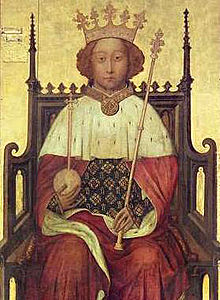
Isabella of Gloucester, the Lost Queen of England

170px-john_of_england_john_lackland
King John

Isabella of Gloucester is a shadow in the pages of history. I could find no pictures of her. Until recently, no one even seemed certain of her name; in the history books she has been called Isabel, Isabella, Hawise, Avice – probably due to different language interpretations, translations and misunderstandings. However, Rich Price, who has done extensive research on primary sources from King John‘s reign has clarified that The Close Rolls definitely name her as ‘comitissa Isabella’ and ‘Isabella filia Willielmi comitis’ (Isabella, daughter of Count William), so we’ll stick with Isabella.

Isabella was the youngest daughter, and co-heiress, of William, 2nd Earl of Gloucester and his wife, Hawise, daughter of Robert de Beaumont, 2nd Earl of Leicester; Isabella was therefore a great-granddaughter of Isabel de Vermandois (and a distant cousin of the Warennes). Through her father, Isabella was a descendant of Robert of Gloucester, the illegitimate half-brother of Empress Matilda who was his sister’s leading general during the civil war known as The Anarchy. We know very little of Isabella’s childhood, although, considering her social status, as the daughter of one of England’s wealthiest earls, it is likely that she was given the education expected of a high-ranking noblewoman and taught to run a large household, as well as the social graces of singing, dancing and needlework. Her parents’ marriage appears to have been a successful one. Isabella’s mother, Countess Hawise, was a regular witness to her husband’s charters and was mentioned in several of them, especially in the pro amina clauses of grants made to religious houses that sought spiritual benefits for those named.

Although her date of birth has been lost to history – most sources say between 1173 and 1176, though she may have been born in the 1160s – she was betrothed in 1176, possibly whilst still in her cradle, to Prince John. The youngest son of Henry II and Eleanor of Aquitaine, John was 9 years old at the time of the betrothal. Under the terms of the marriage agreement, Earl William recognised John as heir to the earldom of Gloucester, effectively disinheriting Isabella’s two elder sisters. The marriage was to be a way for Henry II to provide for his youngest son. After the Earl of Gloucester’s death in 1183, his entire estate was passed to Isabella, who had been made a ward of the king. However the wedding did not take place until 1189, when John was 21.

Baldwin, the Archbishop of Canterbury at the time, opposed the marriage as the couple were related within the prohibited degrees, both being a great-grandchild of Henry I, and ordered that they should not live together as husband and wife. John promised to seek a papal dispensation, in order to overcome Baldwin’s objections – although it appears this was never obtained. Nevertheless, John and Isabella were married on 29 August, 1189, at Marlborough Castle, Wiltshire. Although Isabella and John were married for ten years, their marriage was neither happy nor successful. They spent some time together in the first years of their marriage and issued joint charters during a visit to Normandy around 1190–91. However, they appear to have spent less and less time in each others’ company as the years went on. They never had any children and it is during this time in his life that John’s illegitimate children, including Richard of Chilham and Joan Lady of Wales, were probably born. In 1193, as part of his plotting with Philip Augustus, John promised to marry the French king’s half-sister, Alys, who had previously been betrothed to John’s own brother, Richard. Nothing eventually came of the marriage proposal, but it was an implicit rejection of Isabella as his wife.

John succeeded to the throne on the death of his older brother Richard I – the Lionheart – on 6 April 1199. He was crowned king on 27 May 1199; the fact that Isabella was not crowned alongside him, suggests that John was already looking for a way out of the marriage. Isabella would never be styled Queen of England.

Books by Sharon Bennett Connolly
Coat of arms of Geoffrey de Mandeville, Earl of Essex and Gloucester

Within months of his succession, possibly as early as 30 August 1199 (the day after their 10th wedding anniversary), but certainly by 1200, John had obtained a divorce on the grounds of consanguinity; the bishops of Lisieux, Bayeux and Avranches, sitting in Normandy, provided the required judgement.

However, in order to keep his hold on the substantial Gloucester lands, John imposed a royal wardship on Isabella for the next 14 years. When John remarried, to Isabelle d’Angouleme, his new, young wife (she was no more than 12 on her wedding day and possibly a year or two younger) was lodged with Isabella of Gloucester at Winchester, the countess’s allowance was raised from £50 to £80 to cover the extra expenditure that comes with housing a queen. John’s wife and ex-wife were housed together until a few weeks before the birth of Isabelle’s first child by John, the future King Henry III, who was born in 1207.

The king eventually arranged a new marriage for Isabella, to a man who was over 16 years her junior. In 1214, although possibly past child-bearing age – certainly safe child-bearing age – she was married to Geoffrey de Mandeville, Earl of Essex, who had paid the considerable sum of 20,000 marks to become her second husband and Earl of Gloucester ‘jure uxoris‘ (by right of his wife), a huge sum which he could never hope to repay. Indeed, he soon defaulted on his payments. Just 2 years later, in 1216, de Mandeville died from wounds he had received in a tournament in London.

One of the Magna Carta sureties, de Mandeville was in a state of rebellion against the king when he died; as a result, all his lands and titles – including the earldom of Gloucester – were forfeit to the crown. Isabella’s feelings towards John may well be seen in the fact that, even after de Mandeville’s death, she continued to support the rebels. Isabella was now a widow and although virtually penniless appears to have reveled in her first taste of freedom, styling herself on one charter ‘Countess of Gloucester and Essex in my free widowhood’. It was not until 17th September 1217, almost a year after the death of King John, that Isabella’s lands were returned to her.

220px-Hubert_de_Burgh-Paris
Hubert de burgh

At about the same time – or shortly after – Isabella was married for a third and final time, to Hubert de Burgh. Hubert De Burgh had become Chief Justiciar of England in 1215 and would rise to be Regent during the minority of Henry III. It was only several years after Isabella’s death that he would be created Earl of Kent.

On 13 October 1217 the sheriffs of nine counties were ordered to relinquish custody of Isabella’s lands to de Burgh. This final marriage was, sadly, very short-lived and Isabella was dead within only a few weeks of her wedding day and almost exactly a year after the death of her first husband, King John.

Isabella died on 14 October 1217, probably at Keynsham Abbey near Bristol, and was buried at the cathedral of Christ Church, Canterbury. Shortly before her death, Isabella made a grant to the monks of Canterbury, of £10 of land in her manor of Petersfield, Hampshire, which was witnessed by Hubert de Burgh and other members of his household.

In spite of her three marriages, Isabella never had children and was succeeded to the earldom of Gloucester by her nephew, Gilbert de Clare.

She was laid to rest in Canterbury Cathedral, Kent.

  *

Isabella of Gloucester’s story appears in greater detail in my book, Ladies of Magna Carta: Women of Influence in Thirteenth Century England.

Further Reading: Robert Bartlett England Under the Norman and Angevin Kings 1075-1225; Dan Jones The Plantagenets; the Kings who Made England; The Plantagenet Chronicle Edited by Elizabeth Hallam; Maurice Ashley The Life and Times of King John; Roy Strong The Story of Britain; Oxford Companion to British History; Mike Ashley British Kings & Queens; David Williamson Brewer’s British Royalty; Rich Price King John’s Letters Facebook page; finerollshenry3.org.uk; Oxforddnb.com; magnacarta800th.com; Church, Stephen, King John: England, Magna Carta and the Making of a Tyrant; Danziger, Danny and John Gillingham, 1215: The Year of Magna Carta.

Pictures courtesy of Wikipedia.

*

My Books

Signed, dedicated copies of all my books are available through my online bookshop.

Out now: Scotland’s Medieval Queens

Books by Sharon Bennett Connolly

Scotland’s history is dramatic, violent and bloody. Being England’s northern neighbour has never been easy. Scotland’s queens have had to deal with war, murder, imprisonment, political rivalries and open betrayal. They have loved and lost, raised kings and queens, ruled and died for Scotland. From St Margaret, who became one of the patron saints of Scotland, to Elizabeth de Burgh and the dramatic story of the Scottish Wars of Independence, to the love story and tragedy of Joan Beaufort, to Margaret of Denmark and the dawn of the Renaissance, Scotland’s Medieval Queens have seen it all. This is the story of Scotland through their eyes.

Scotland’s Medieval Queens gives a thorough grounding in the history of the women who ruled Scotland at the side of its kings, often in the shadows, but just as interesting in their lives beyond the spotlight. It’s not a subject that has been widely covered, and Sharon is a pioneer in bringing that information into accessible history.’ Elizabeth Chadwick (New York Times bestselling author)

Available now from Amazon and Pen and Sword Books

Also by Sharon Bennett Connolly:

Books by Sharon Bennett Connolly

Heroines of the Tudor World tells the stories of the most remarkable women from European history in the time of the Tudor dynasty, 1485-1603. These are the women who ruled, the women who founded dynasties, the women who fought for religious freedom, their families and love. Heroines of the Tudor World is now available for pre-order from Amberley Publishing and Amazon UK. Women of the Anarchy demonstrates how Empress Matilda and Matilda of Boulogne, unable to wield a sword themselves, were prime movers in this time of conflict and lawlessness. It shows how their strengths, weaknesses, and personal ambitions swung the fortunes of war one way – and then the other. Available from Bookshop.orgAmberley Publishing and Amazon UKKing John’s Right-Hand Lady: The Story of Nicholaa de la Haye is the story of a truly remarkable lady, the hereditary constable of Lincoln Castle and the first woman in England to be appointed sheriff in her own right. Available from all good bookshops Pen & Sword Booksbookshop.org and Amazon

Defenders of the Norman Crown: The Rise and Fall of the Warenne Earls of Surrey tells the fascinating story of the Warenne dynasty, from its origins in Normandy, through the Conquest, Magna Carta, the wars and marriages that led to its ultimate demise in the reign of Edward III. Available from Pen & Sword BooksAmazon in the UK and US, and Bookshop.orgLadies of Magna Carta: Women of Influence in Thirteenth Century England looks into the relationships of the various noble families of the 13th century, and how they were affected by the Barons’ Wars, Magna Carta and its aftermath; the bonds that were formed and those that were broken. It is now available in paperback and hardback from Pen & SwordAmazon, and Bookshop.orgHeroines of the Medieval World tells the stories of some of the most remarkable women from Medieval history, from Eleanor of Aquitaine to Julian of Norwich. Available now from Amberley Publishing and Amazon, and Bookshop.orgSilk and the Sword: The Women of the Norman Conquest traces the fortunes of the women who had a significant role to play in the momentous events of 1066. Available now from Amazon,  Amberley Publishing, and Bookshop.org.

Alternate Endings: An anthology of historical fiction short stories including Long Live the King… which is my take what might have happened had King John not died in October 1216. Available in paperback and kindle from Amazon.

Podcast:

Have a listen to the A Slice of Medieval podcast, which I co-host with Historical fiction novelist Derek Birks. Derek and I welcome guests, such as Bernard Cornwell and Elizabeth Chadwick, and discuss a wide range of topics in medieval history, from significant events to the personalities involved.

Every episode is also now available on YouTube.

*

Signed and dedicated copies of all my books are available through my online store.

For forthcoming online and in-person talks, please check out my Events Page.

You can be the first to read new articles by clicking the ‘Follow’ button, liking our Facebook page or joining me on TwitterThreadsBluesky and Instagram.

©2015 Sharon Bennett Connolly FRHistS
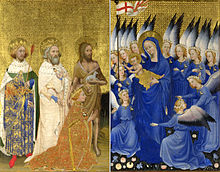
Edmund Crouchback, Edward I’s Loyal Brother

arms_of_edmund_crouchback_earl_of_leicester_and_lancaster-svg
Arms of Edmund Crouchback

The fourth child and second son of Henry III and his Queen, Eleanor of Provence,  and named to honour the Old English royal saint, Edmund was born in London on 16th January 1245.

From an early age, Edmund was involved in his father’s schemes to extend Angevin influence across Europe; in 1254 Henry accepted the crown of Sicily from the Pope for the 9-year-old Edmund, but this came to naught and he was to be officially deprived of the kingdom in 1266, when the Pope handed Sicily to Henry’s brother-in-law, Charles of Anjou.

Henry and Eleanor are known to have been devoted parents and had a very close relationship with all their children. However, Edmund grew up in a time of great upheaval in the kingdom. Henry was locked in a power struggle with his barons, led by his brother-in-law, Simon de Montfort, Earl of Leicester. The barons were against expensive entanglements in Europe – such as Edmund’s claim to the Sicilian crown – and what they saw as Henry’s inept and ineffective rule in general.

BodleianDouce231Fol1rEdCrouchbackAndStGeorge
Miniature of Edmund with Saint George

The conflict known as the Barons’ War would lead to what is now seen as the first recognisable English parliament, and to the eventual defeat and destruction of Simon de Montfort at the Battle of Evesham in 1265.

Although Edmund’s youth during the war years meant he took no major part in the conflict, following de Montfort’s death, in October 1265 Edmund was given his lands and titles, including the castle at Kenilworth, which was still holding out against the king. Edmund commanded the Siege of Kenilworth, which held out for 6 months, until starvation forced the garrison’s capitulation. He would also receive the earldom of Lancaster, which was created for him in 1267 by Henry III.

A less-than-chivalric move in 1269 saw Edmund and his older brother, Edward, conspiring against Robert de Ferrers, Earl of Derby, a former Montfort supporter, depriving him of his titles and lands – all of which were passed to Edmund.

In April of the same year, Edmund married Avelina de Forz, daughter of the Earl of Devon and Aumale. The marriage produced no children and Avelina died in 1274.

In 1268 Edward and Edmund had both taken the cross, promising to take part in Crusade to the Holy Land. Although logistics meant they didn’t leave immediately, the brothers travelled separately and Edmund arrived in the Holy Land in September 1271. It is likely that his soubriquet of ‘Crouchback’ comes from him wearing a cross on his back during the Crusades, as there is no evidence of any physical deformity.

After some minor victories, but realising their force wasn’t big enough to retake the Holy Land, and reinforcements from Europe were not forthcoming, Edward signed a 10 year truce with the Muslim leader, Baibars. The following month, May 1272, Edmund sailed for home.

150px-BlancheArtois
Seal of Blanche of Artois

Henry III died in November 1272 and Edmund’s older brother ascended the throne as Edward I. Edmund was loyal to his brother, throughout his reign, playing a supporting role, both militarily and diplomatically. In 1276, Edmund married again; to Blanche of Artois, the widowed Countess of Champagne, whose daughter, Jeanne of Navarre, would marry Philip IV of France in 1284, making Edmund step-father to the French Queen.

Blanche would outlive Edmund, dying in Paris in 1302. They had 4 children together. Thomas was born before 1280 and was executed on the orders of Edward II, following a failed rebellion and his defeat at the Battle of Boroughbridge. Their second son, Henry would eventually succeed to his brother’s titles of Earl of Lancaster, Lincoln, Salisbury, Derby and Leicester. Born around 1281, he married Matilda, daughter of Sir Patrick de Chaworth, and they had 7 children together; their eldest son being Henry of Grosmont, 1st Duke of Lancaster and father of Blanche of Lancaster. A third son, John, Lord of Beaufort and Nogent, was born before May 1286 and died around 1317, leaving no children. Their only daughter, Mary, died young in France.

In Edward’s 1277 Welsh campaign Edmund, the biggest landowner in south Wales, was given the command of the southern army. This second, smaller contingent of the invasion of Wales provided support to Edward’s main army. Having set out shortly after 10th July, Edmund’s force drove deep into Wales, facing little opposition compared to Edward’s army. The main landholders of the south had already capitulated, or had fled to join the Welsh prince, Llewellyn, in the north. Edmund’s army had reached their objective of Aberystwyth by 25th July and, at the start of August, began the construction of the castle there. By September the war was over, Edmund disbanded his army on the 20th – leaving a small contingent to garrison the castle – and returned to England.

As a loyal and loving brother, in 1290 Edmund was involved in organising the funeral arrangements for his sister-in-law, Eleanor of Castile. Historian Dean Irwin has told me of a letter which includes many current events and explains that Edmund had had to cancel a planned trip to Canterbury in order to help with the late queen’s funeral.

Edmond1
Edmund’s seal

In 1294 Edmund used his familial connections with the French crown to broker a peace deal with France; an agreement intended to foster a long-lasting peace and to see his widowed brother Edward married to Margaret, Philip IV’s sister. Edmund agreed to hand over several cities, including Bordeaux, in Gascony, on the understanding they would be returned to Edward on his marriage.

The French had no intention of returning the Gascon lands, and in April 1294, Edmund realised he had been duped; the French ejected the English Seneschal of Gascony and Edward prepared an invasion force, ordered to muster on 1st September.

However, rebellion in Wales meant the postponement of the Gascon expedition and Edmund and his forces were ordered to Worcester. The Welsh having been subdued and Edmund having recovered from unspeicifed illness that struck him at the end of 1295, Edmund and his army finally set sail for Gascony in January 1296.

It was to be Edmund’s last campaign. The French were well entrenched and the English failed to retake Bordeaux, or any of the towns along the Garonne. His money running out, Edmund was forced to retire to Bayonne, where he fell sick, dying there on 5th June 1296.

A devastated Edward I called on his churchmen to pray for ‘our dearest and only brother, who was always devoted and faithful to us…and in whom valour and many gifts of grace shone forth’.

He was buried in Westminster Abbey, recently completed by his father, Henry III.

*

Pictures of Edmund’s coat of arms, seal and Edmund with St George, and of Blanche of Artois, courtesy of Wikipedia.

Further reading: Marc Morris A Great and terrible King; Sara Cockerill Eleanor of Castile: Shadow Queen; Roy Strong The Story of Britain; Mike Ashley The Mammoth Book of British Kings & Queens; Derek Wilson The Plantagenets; Alison Weir Britain’s Royal Families; Dean Irwin.

*

My Books

Signed, dedicated copies of all my books are available through my online store.

Out now: Scotland’s Medieval Queens

Books by Sharon Bennett Connolly

Scotland’s history is dramatic, violent and bloody. Being England’s northern neighbour has never been easy. Scotland’s queens have had to deal with war, murder, imprisonment, political rivalries and open betrayal. They have loved and lost, raised kings and queens, ruled and died for Scotland. From St Margaret, who became one of the patron saints of Scotland, to Elizabeth de Burgh and the dramatic story of the Scottish Wars of Independence, to the love story and tragedy of Joan Beaufort, to Margaret of Denmark and the dawn of the Renaissance, Scotland’s Medieval Queens have seen it all. This is the story of Scotland through their eyes.

Scotland’s Medieval Queens gives a thorough grounding in the history of the women who ruled Scotland at the side of its kings, often in the shadows, but just as interesting in their lives beyond the spotlight. It’s not a subject that has been widely covered, and Sharon is a pioneer in bringing that information into accessible history.’ Elizabeth Chadwick (New York Times bestselling author)

Available now from Amazon and Pen and Sword Books

Also by Sharon Bennett Connolly:

Books by Sharon Bennett Connolly

Heroines of the Tudor World tells the stories of the most remarkable women from European history in the time of the Tudor dynasty, 1485-1603. These are the women who ruled, the women who founded dynasties, the women who fought for religious freedom, their families and love. Heroines of the Tudor World is now available from Amberley Publishing and Amazon UK. Women of the Anarchy demonstrates how Empress Matilda and Matilda of Boulogne, unable to wield a sword themselves, were prime movers in this time of conflict and lawlessness. It shows how their strengths, weaknesses, and personal ambitions swung the fortunes of war one way – and then the other. Available from Bookshop.orgAmberley Publishing and Amazon UKKing John’s Right-Hand Lady: The Story of Nicholaa de la Haye is the story of a truly remarkable lady, the hereditary constable of Lincoln Castle and the first woman in England to be appointed sheriff in her own right. Available from all good bookshops Pen & Sword Booksbookshop.org and Amazon

Defenders of the Norman Crown: The Rise and Fall of the Warenne Earls of Surrey tells the fascinating story of the Warenne dynasty, from its origins in Normandy, through the Conquest, Magna Carta, the wars and marriages that led to its ultimate demise in the reign of Edward III. Available from Pen & Sword BooksAmazon in the UK and US, and Bookshop.orgLadies of Magna Carta: Women of Influence in Thirteenth Century England looks into the relationships of the various noble families of the 13th century, and how they were affected by the Barons’ Wars, Magna Carta and its aftermath; the bonds that were formed and those that were broken. It is now available in paperback and hardback from Pen & SwordAmazon, and Bookshop.orgHeroines of the Medieval World tells the stories of some of the most remarkable women from Medieval history, from Eleanor of Aquitaine to Julian of Norwich. Available now from Amberley Publishing and Amazon, and Bookshop.orgSilk and the Sword: The Women of the Norman Conquest traces the fortunes of the women who had a significant role to play in the momentous events of 1066. Available now from Amazon,  Amberley Publishing, and Bookshop.org.

Alternate Endings: An anthology of historical fiction short stories including Long Live the King… which is my take what might have happened had King John not died in October 1216. Available in paperback and kindle from Amazon.

Podcast:

A Slice of Medieval

Have a listen to the A Slice of Medieval podcast, which I co-host with Historical fiction novelist Derek Birks. Derek and I welcome guests, such as Bernard Cornwell and Michael Jecks, and discuss a wide range of topics in medieval history, from significant events to the personalities involved. Every episode is also now available on YouTube.

*

Don’t forget! Signed and dedicated copies of all my books are available through my online store.

For forthcoming online and in-person talks, please check out my Events Page.

You can be the first to read new articles by clicking the ‘Follow’ button, liking our Facebook page or joining me on TwitterThreadsBluesky and Instagram.

*

©2015  Sharon Bennett Connolly FRHistS