Wordly Women: Amy McElroy

After sharing the interview with Helene Harrison a couple of weeks ago and introducing my Author Spotlight series, Wordly Women, I was surprised and grateful for the amazing response from readers and writers alike. So, I am going to carry it on, hopefully for a whole year – or at least until I run out of astounding female authors – which could take a while! In the second of my Wordly Women interviews, I welcome Amy McElroy to History…the Interesting Bits to talk about her writing journey.

Hello Amy!

Sharon: What got you into writing non-fiction?

Amy: I had started a blog as a place to jot down my thoughts on books I had read, I did not really expect people to read it, I just wanted to be able to keep track of my reading and the books I had enjoyed. I often read other peoples blogs to find recommendations so thought it would be a good way to record my own thoughts. I ended up joining NetGalley where 99% of the books I requested were non-fiction, and many were published by Pen and Sword and continued to publish my reviews on my blog. Eventually I was approached by Pen and Sword and asked if I had ever considered writing my own book. I had absolutely not thought about it at that point despite my love of history and writing so it came as a complete surprise! After working my way through many thoughts of doubt and imposter syndrome I decided to go for it, why not? I was given an incredible opportunity that I will always be grateful for.

Sharon: Tell us about your books…
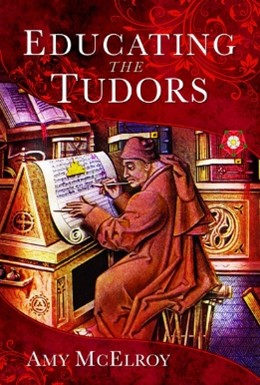
Amy: My first book Educating the Tudors was published in January 2023 and looks at the education of those well-known Tudor individuals we all know and love (or dislike), including Henry and his siblings, as well as his children. It also covers the education of the general public and the different opportunities available such as apprenticeships. Finally there is a little on who the tutors of the royal household were, and what people did for fun when they weren’t learning!

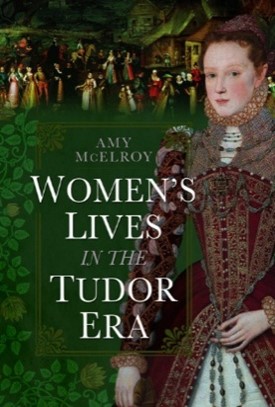
My second, Women’s Lives in the Tudor Era, was published in February 2024, the title pretty much gives everything away but it essentially discusses the milestones in the lives of Tudor women; childhood, courtship and marriage, motherhood, employment, widowhood, and death. I loved researching this book, although not all women left behind a Will, those that remain are fascinating!

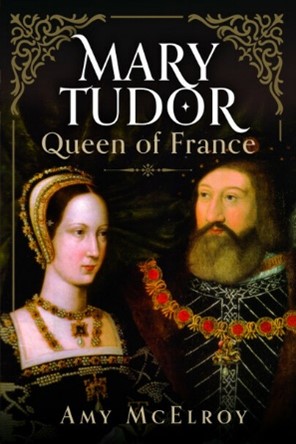
My most recent publication is Mary Tudor, Queen of France, which was due to be published 28 February 2025 but came out a little early on 30 January, so you and I now have a shared book birthday! Mary was the younger sister of Henry VIII, and aunt of Mary I. She began to interest me when I was researching my first book and I could not help but keep digging and rushing down rabbit-holes. I do hope I have done Mary justice as she was much more than just a sister to a king.

Sharon: What attracts you to the Tudor period?

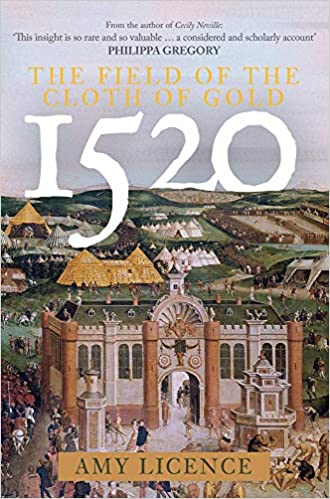
Amy: There are so many events it is hard not to be interested! Not only are there many fascinating individuals but we have lots of marriages, executions, the Reformation, and events such as the Field of the Cloth of Gold, there is lots for people to read and research. I am also attracted to the Tudor period as it was at the centre of huge changes to education, the Renaissance was in full swing and how it impacted education in England continues to intrigue me.

Sharon: Who is your favourite Tudor and why?

Amy: Oh this is a difficult one! If we are referring to monarchs I would have to say Henry VIII. I know, I know, he was a tyrant, but he wasn’t always and he accomplished a lot as king. I am also a little biased in that I enjoy researching his education and continued learning as an adult. If we are referring to any individual in the Tudor era, then that would be Mary, I really enjoyed writing about her and found she is often overshadowed by her brother and whenever someone reads ‘Mary Tudor’ many will assume it to be Mary I. Hopefully my book and those of others will help in bringing Mary out of the shadows.

Sharon: Who is your least favourite Tudor and why?

Amy: Haha, Henry Grey, Duke of Suffolk, husband to Frances Brandon and father of Lady Jane, Lady Katherine, and Lady Mary Grey. I will just never understand his actions, especially once Jane was held in the Tower, you would think he would do everything he could to stay out of trouble but no!

Sharon: How do you approach researching your topic?
Amy: I generally write a rough chapter plan detailing what I want to cover. When I say rough, I really do mean that but it gives me a start on my research. I then look at what resources do I already have and what do I need. I live in the Midlands so I try to plan my research so that if I need to travel somewhere for a source e.g. National Archives or British Library then I have a clear plan of everything I need from there so I can try and make the most of my time there but giving myself enough time that I can go for another visit if I miss something or find something else I need. I am old school so I write most of my notes by hand which can then take me forever to type up, therefore I try to ensure I have everything I need before I start typing.

Sharon: Tell us your ‘favourite’ Tudor story.

Amy: I love the story of Thomas More and Erasmus visiting the royal children at Eltham. Erasmus did not know that was the plan so he was very surprised when they arrived at Eltham Palace and found Margaret, Henry, Mary and Edmund all there. Thomas More had prepared some writing for Henry but Erasmus had come unprepared so was not happy with More! They stayed for dinner and Henry actually challenged Erasmus to write something for him. Erasmus spent 3 days writing a poem which became Prosopopӕia Britanniӕ and praises Henry VII, the princes, and England. He dedicated the poem to  Prince Henry and it was printed in the first edition of Adages in 1500. I think this was both a surprising yet memorable event for Erasmus and was the beginning of his friendship with Henry.

Sharon: Tell us your ‘least favourite’ Tudor story.

Amy: I think I would have to say that I really dislike the stories that Henry VII was a miser. The records and accounts show he more than willing to spend a great deal of money when he wished to. He made gifts to his children, spent money on building and was certainly not afraid to show his wealth when it came to impressing ambassadors and visitors to the royal court. Yes, he was very intelligent when it came to money but I think it is unfair for him to have the reputation of a miser.

Sharon: Are there any other eras you would like to write about?
Amy: I think if I were to ever write about another era it would likely be the Plantagenets but I’m not sure if I ever will!

Sharon: What are you working on now?

Amy: I am finishing up writing a book on Desiderius Erasmus which is due to be published early 2026 then I will be moving on to my 5th book, Teaching the Tudors. This will expand on my first book and focus on some of the tutors we know so well and others that were extremely influential on education during the Tudor era but are maybe not so well known.

Sharon: And finally, what is the best thing about being a writer?

Amy: Another hard one! Firstly, getting to know so many incredible historians, I have been made to feel so welcome in the history community by historians I greatly admire such as yourself, Nathen Amin, and Estelle Paranque and others but I can’t name everyone or this may be a very long answer. I have made some wonderful friends including Rebecca Batley, Rebecca Larson, and Helene Harrison and had fantastic opportunities to appear on podcasts like Talking Tudors and Royals, Rebels, and Romantics. But overall, I love history, so I am doing something I love, does it get better than that?

About the Author:

Amy McElroy is the author of Educating the Tudors (2023), Women’s Lives in the Tudor Era (2024), and Mary Tudor, Queen of France (2025). Amy has long had an interest in history, beginning with a blog where she shared her love of books before culminating in her own book, Educating the Tudors. Amy is currently writing her fourth book, Desiderius Erasmus and has a fifth in the pipeline with many more ideas for the future. Amy co-hosts the blog, The Tudor Notebook on Substack. She has appeared on numerous podcasts including Talking Tudors, Royals, Rebels, and Romantics, and Tudors Dynasty. Amy has also spoken at events including the Wolves Literature Festival and After Hours at Shakespeare Birthplace Trust.

Where to find Amy:

Facebook – Amy McElroy; Instagram – @amymcelroy_author; Blue Sky – AmyMcElroy; Threads – amymcelroy_books; Twitter/X – @AmyMc_Books; Substack – The Tudor Notebook; Blog – website.

To Buy Amy’s Books:

Educating the Tudors: Pen and Sword Books: Educating the Tudors – Hardback. Women’s Lives in the Tudor Era: Pen and Sword Books: Women’s Lives in the Tudor Era – Hardback, and is also available to order with a signed bookplate at Fox Lane Books. Mary Tudor, Queen of France: Pen and Sword Books: Mary Tudor – Hardback and is also available to order with a signed and dedicated bookplate at Fox Lane Books

*

My books

Signed, dedicated copies of all my books are available through my online store.

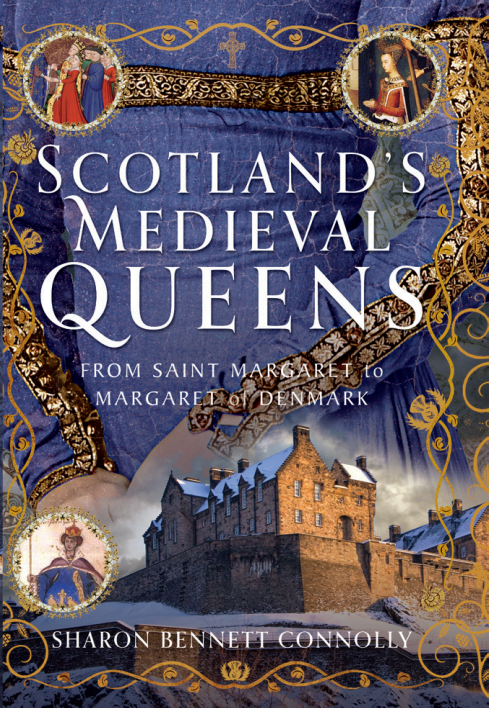
Out now: Scotland’s Medieval Queens

Scotland’s history is dramatic, violent and bloody. Being England’s northern neighbour has never been easy. Scotland’s queens have had to deal with war, murder, imprisonment, political rivalries and open betrayal. They have loved and lost, raised kings and queens, ruled and died for Scotland. From St Margaret, who became one of the patron saints of Scotland, to Elizabeth de Burgh and the dramatic story of the Scottish Wars of Independence, to the love story and tragedy of Joan Beaufort, to Margaret of Denmark and the dawn of the Renaissance, Scotland’s Medieval Queens have seen it all. This is the story of Scotland through their eyes.

Available now from Amazon and Pen and Sword Books

Also by Sharon Bennett Connolly:
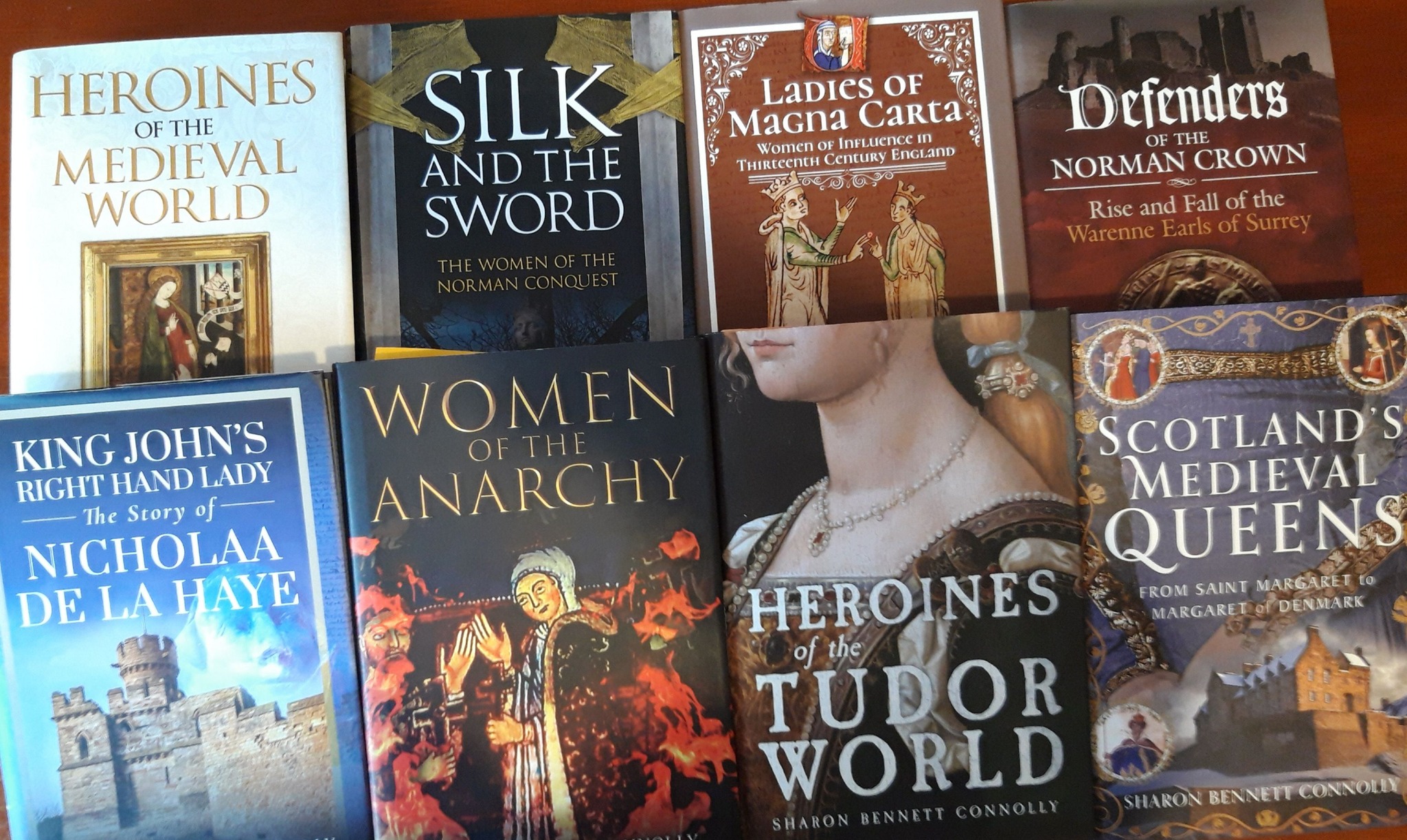
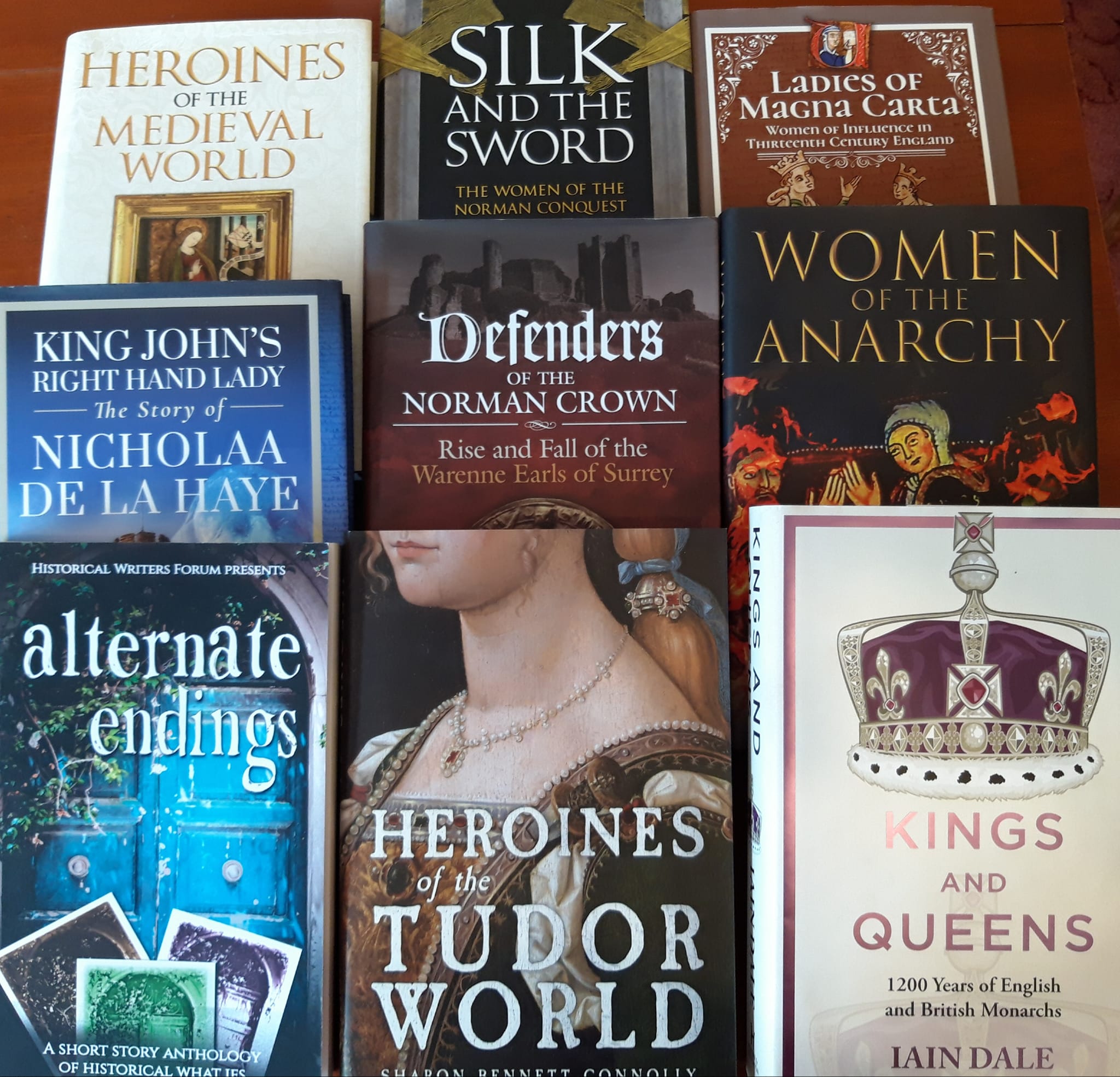
Heroines of the Tudor World tells the stories of the most remarkable women from European history in the time of the Tudor dynasty, 1485-1603. These are the women who ruled, the women who founded dynasties, the women who fought for religious freedom, their families and love. Heroines of the Tudor World is now available for pre-order from Amberley Publishing and Amazon UK. Women of the Anarchy demonstrates how Empress Matilda and Matilda of Boulogne, unable to wield a sword themselves, were prime movers in this time of conflict and lawlessness. It shows how their strengths, weaknesses, and personal ambitions swung the fortunes of war one way – and then the other. Available from Bookshop.orgAmberley Publishing and Amazon UKKing John’s Right-Hand Lady: The Story of Nicholaa de la Haye is the story of a truly remarkable lady, the hereditary constable of Lincoln Castle and the first woman in England to be appointed sheriff in her own right. Available from all good bookshops Pen & Sword Booksbookshop.org and Amazon

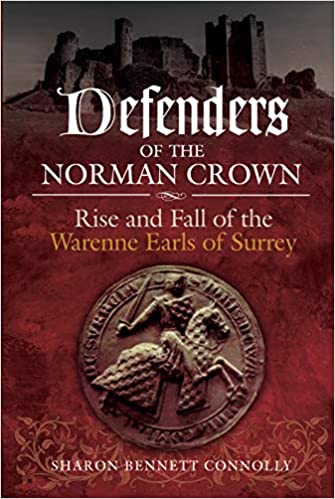
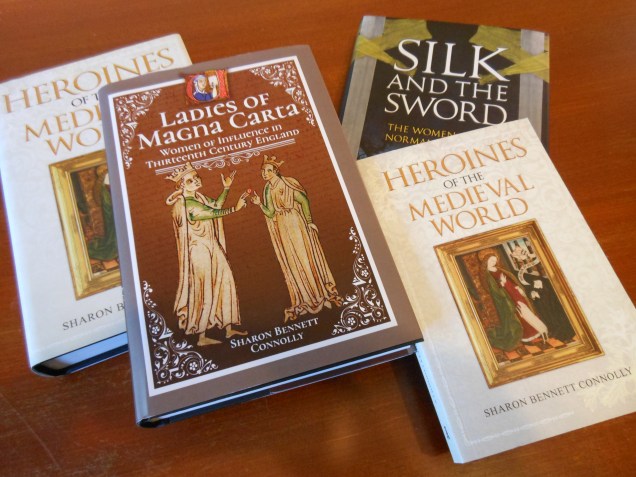
Defenders of the Norman Crown: The Rise and Fall of the Warenne Earls of Surrey tells the fascinating story of the Warenne dynasty, from its origins in Normandy, through the Conquest, Magna Carta, the wars and marriages that led to its ultimate demise in the reign of Edward III. Available from Pen & Sword BooksAmazon in the UK and US, and Bookshop.orgLadies of Magna Carta: Women of Influence in Thirteenth Century England looks into the relationships of the various noble families of the 13th century, and how they were affected by the Barons’ Wars, Magna Carta and its aftermath; the bonds that were formed and those that were broken. It is now available in paperback and hardback from Pen & SwordAmazon, and Bookshop.orgHeroines of the Medieval World tells the stories of some of the most remarkable women from Medieval history, from Eleanor of Aquitaine to Julian of Norwich. Available now from Amberley Publishing and Amazon, and Bookshop.orgSilk and the Sword: The Women of the Norman Conquest traces the fortunes of the women who had a significant role to play in the momentous events of 1066. Available now from Amazon,  Amberley Publishing, and Bookshop.org.

Alternate Endings: An anthology of historical fiction short stories including Long Live the King… which is my take what might have happened had King John not died in October 1216. Available in paperback and kindle from Amazon.

Podcast:

Have a listen to the A Slice of Medieval podcast, which I co-host with Historical fiction novelist Derek Birks. Derek and I welcome guests, such as Bernard Cornwell and Michael Jecks, and discuss a wide range of topics in medieval history, from significant events to the personalities involved. Every episode is also now available on YouTube.

*

Don’t forget! Signed and dedicated copies of all my books are available through my online store.

For forthcoming online and in-person talks, please check out my Events Page.

You can be the first to read new articles by clicking the ‘Follow’ button, liking our Facebook page or joining me on TwitterThreadsBluesky and Instagram.

*

©2025 Sharon Bennett Connolly, FRHistS and Amy McElroy
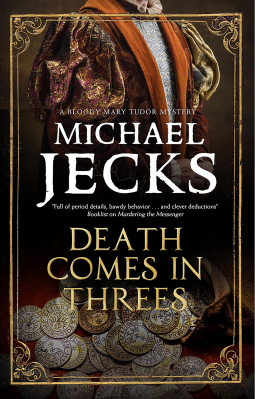
Book Corner: Death Comes in Threes by Michael Jecks

Princess Elizabeth’s unlikely assassin finds himself on the hook for two murders in this light-hearted Tudor mystery series!

August, 1558. As London is bustling with growing trade from foreign lands, and Queen Mary’s health is once again a hot topic, Jack Blackjack has much to keep him busy. And that’s before his new tenant – a Dutch merchant – disappears under a cloud of suspicion, quickly presumed murdered, and Jack’s latest female companion’s body is found mere streets from her dwelling place.

People around Jack keep inconveniently getting murdered, and he seems to be the most likely culprit! With both the authorities and the unsavoury echelons of London on his tail, nowhere is safe for Jack to hide. He must go about proving his innocence – and uncovering the mirky truth – while ensuring he doesn’t find himself dancing the Tyburn jig!

The question is – can he rely on friends in high – and very low – places to get him out of this ever-increasing mess?

You know, I don’t think I’ve had as much fun reading a book in a long time!

Michael Jecks has long been one of my favourite authors, ever since his very first book, The Last Templar. I Iove the way he writes. With his Tudor mystery series, he has really showcased his ability to write a jolly good murder mystery – with an impressive dose of humour.

I hate to use the word unputdownable – is it even a word? – but this book really was! I read it in two days. I took it every where with me, so I could read even if I only had a few minutes, sat in the car or giggling to myself whilst sat in a cafe – the other patrons must have thought me very odd. But I could not wait to get to the end. I think I will have to give it a re-read, slower this time. So that I can savour the story.

Set in 1558, in the final months of the life and reign of Mary I, Death Comes in Threes really captures the atmosphere of a London unsure of its future. The queen is either pregnant or ill, possibly about to deliver a Catholic heir, or on the verge of dying and leaving the throne to her Protestant sister, Lady Elizabeth. Factions are at work preparing for one outcome – or the other – and aiming to guarantee the throne’s security works in their interests.

And then Jack is accused of not one murder – but two!

You can tell I was out of sorts from the way that I lost my temper, and you see, I did have good reason.

My master, John Blount, had been less and less keen to speak with me for the last months, ever since his mission sending a female agent to the continent had failed. Another had caused that project to be closed, but he yet suspected, I think, that I might have had some involvement in the subsequent death. Of course, it was nothing to do with me, but Master Blount was nothing if not committed to his singular interpretation of other men and their motives and actions.

In my case, he had firmly persuaded himself that I was in fact a keen slayer of other men and women. I was hired on that express understanding, all owing to an unfortunate experience I had had during Wyatt’s revolt. I was seen in the presence of a dead man, and Blount formed an entirely mistaken opinion about my responsibility for the death.

Erroneous though his conclusion had been, there were benefits to his impression. First there was the new suit of clothing every year; then there was the property in which I had just harangued the Dutchman, God burn his ballocks; and the regular bonus each time I fulfilled his requirement of removing some poor soul from this vale of tears and misery. He was delighted with my expertise, and I was more than happy with the money. It meant that I could afford to hire a thoroughly competent killer on my own behalf, and then ensure that I was many miles away from any murders when they were committed, causing Blount on several occasions to look at me askance, as though wondering how on earth I had managed both to be in the presence of a corpse, while also being witnessed in a tavern, entertaining a wench, or playing dice in an alehouse. As a consequence, he grew more and more impressed with my abilities.

However, that all changed when his chosen agent was murdered, and no matter how I swore I had nothing to do with it, my protestations only served to convince him that I must have been responsible. It is a hard cross to bear, this matter of supposed infallibility, when on occasion it leaves others to wonder whether I had in truth been the man involved. I was not!

He did send messages to me indicating that the queen’s half-sister, our mistress Lady Elizabeth, was taking up much of his time. That, I was sure, was an excuse, and not a particularly good one. After all, she had been forced to keep her head down after the queen’s husband had tried to force her to marry a man she did not wish to, and since then, so I had heard, she and her sister were barely on speaking terms.

Michael Jecks’ self-absorbed hero, Jack Blackjack, is joined in the narrative by his employer, John Blount, and his neighbour, with whom he shares close relations – very close relations – Susan Appleby. The two new narrators offer an entirely different, and often surprising, view of our Jack. It is fascinating to read the three different interpretations of Jack’s character and abilities.

In Death Comes in Threes, Jack is surrounded by enemies, accused of murder and caught up in conspiracies with people whose loyalties and motives are suspect, to say the least. The poor chap doesn’t know who to trust!

The storyline is fast-paced and credible. With the queen’s health in question, of the birth of an heir imminent, London is suffering nervous anxiety. People are preparing for what comes next; a male child or the queen’s death. Or both!

Death Comes in Threes by Michael Jecks is not just a book – it is 8 hours of pure entertainment. I cannot recommend it highly enough. The entire series is a jolly good read, but this book is one of the best and a great way to start your 2025 reading.

Death Comes in Threes is a corker!

What a fabulous tv series these books would make!

About the author:

Michael Jecks is the author of more than thirty novels in the Knights Templar medieval mystery series, and four previous Bloody Mary Tudor mysteries. A former Chairman of the Crime Writers’ Association, he lives with his wife, children and dogs in northern Dartmoor.

To buy Death Comes in Threes

*

My Books

Signed, dedicated copies of all my books are available through my online bookshop.

Coming 30 January 2025: Scotland’s Medieval Queens

Scotland’s history is dramatic, violent and bloody. Being England’s northern neighbour has never been easy. Scotland’s queens have had to deal with war, murder, imprisonment, political rivalries and open betrayal. They have loved and lost, raised kings and queens, ruled and died for Scotland. From St Margaret, who became one of the patron saints of Scotland, to Elizabeth de Burgh and the dramatic story of the Scottish Wars of Independence, to the love story and tragedy of Joan Beaufort, to Margaret of Denmark and the dawn of the Renaissance, Scotland’s Medieval Queens have seen it all. This is the story of Scotland through their eyes.

Available for pre-order now.

Also by Sharon Bennett Connolly:

Heroines of the Tudor World tells the stories of the most remarkable women from European history in the time of the Tudor dynasty, 1485-1603. These are the women who ruled, the women who founded dynasties, the women who fought for religious freedom, their families and love. Heroines of the Tudor World is now available for pre-order from Amberley Publishing and Amazon UK. Women of the Anarchy demonstrates how Empress Matilda and Matilda of Boulogne, unable to wield a sword themselves, were prime movers in this time of conflict and lawlessness. It shows how their strengths, weaknesses, and personal ambitions swung the fortunes of war one way – and then the other. Available from Bookshop.orgAmberley Publishing and Amazon UKKing John’s Right-Hand Lady: The Story of Nicholaa de la Haye is the story of a truly remarkable lady, the hereditary constable of Lincoln Castle and the first woman in England to be appointed sheriff in her own right. Available from all good bookshops Pen & Sword Booksbookshop.org and Amazon

Defenders of the Norman Crown: The Rise and Fall of the Warenne Earls of Surrey tells the fascinating story of the Warenne dynasty, from its origins in Normandy, through the Conquest, Magna Carta, the wars and marriages that led to its ultimate demise in the reign of Edward III. Available from Pen & Sword BooksAmazon in the UK and US, and Bookshop.orgLadies of Magna Carta: Women of Influence in Thirteenth Century England looks into the relationships of the various noble families of the 13th century, and how they were affected by the Barons’ Wars, Magna Carta and its aftermath; the bonds that were formed and those that were broken. It is now available in paperback and hardback from Pen & SwordAmazon, and Bookshop.orgHeroines of the Medieval World tells the stories of some of the most remarkable women from Medieval history, from Eleanor of Aquitaine to Julian of Norwich. Available now from Amberley Publishing and Amazon, and Bookshop.orgSilk and the Sword: The Women of the Norman Conquest traces the fortunes of the women who had a significant role to play in the momentous events of 1066. Available now from Amazon,  Amberley Publishing, and Bookshop.org.

Alternate Endings: An anthology of historical fiction short stories including Long Live the King… which is my take what might have happened had King John not died in October 1216. Available in paperback and kindle from Amazon.

Podcast:

Have a listen to the A Slice of Medieval podcast, which I co-host with Historical fiction novelist Derek Birks. Derek and I welcome guests, such as Bernard Cornwell and Michael Jecks, and discuss a wide range of topics in medieval history, from significant events to the personalities involved. 

*

Don’t forget! Signed and dedicated copies of all my books are available through my online bookshop.

For forthcoming online and in-person talks, please check out my Events Page.

You can be the first to read new articles by clicking the ‘Follow’ button, liking our Facebook page or joining me on TwitterThreadsBluesky and Instagram.

©2025 Sharon Bennett Connolly FRHistS

Lady Jane: The 9 Days’ Queen

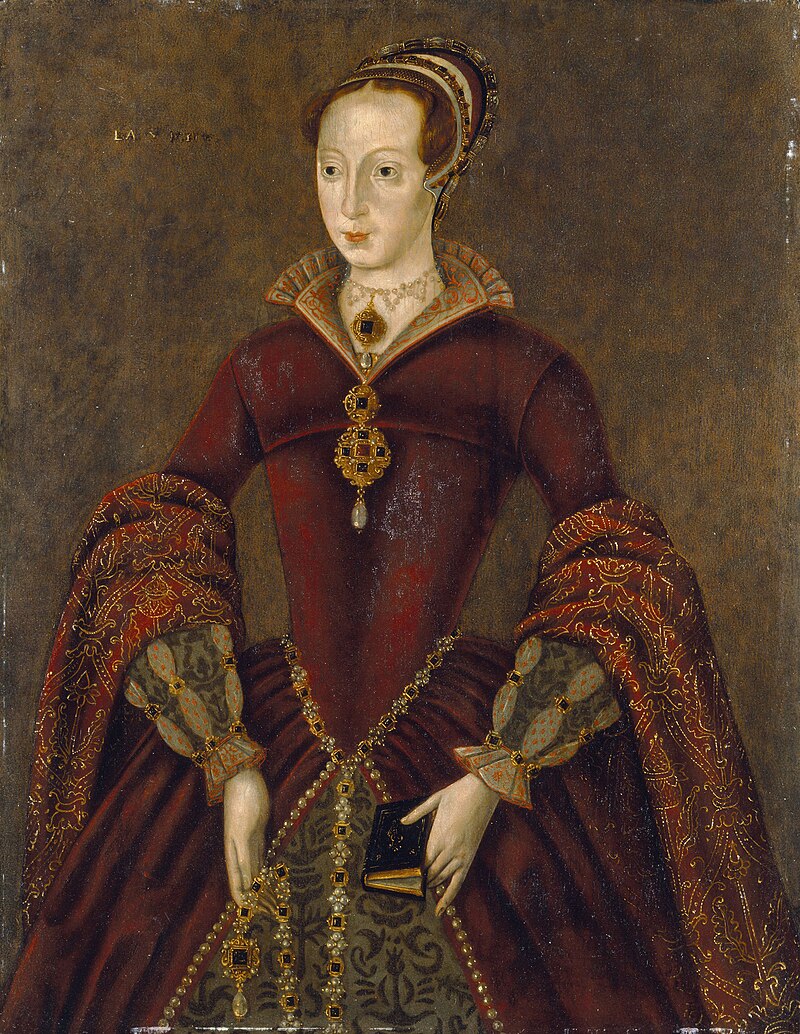
The Streatham Portrait of Jane Grey

Frances and Henry Grey were married in 1533, at her parent’s residence of Suffolk Place in Southwark. As the eldest surviving child of Mary Tudor, dowager Queen of France and Duchess of Suffolk, Frances was fourth in line to the throne after the children of Henry VIII, Edward, Mary and Elizabeth. When settling the succession, the king had instructed that his younger sister Mary’s line should be preferred over that of his older sister, Margaret. As a consequence, Frances was frequently at court.

The couple’s first child, a son, died young. They had three surviving daughters. The eldest, Jane, was born in October 1537, about the same time as her cousin Edward, the future King Edward VI; with the birth of the longed-for heir to the throne, Jane’s own birth went almost unnoticed. Jane would have been named after Henry VIII’s tragic queen, Jane Seymour, who died within two weeks of Edward’s birth.

Jane Grey would be known to history as the Nine Days’ Queen.

 She was raised at the family home of Bradgate Park, near Leicester. Frances and Henry Grey are said to have been very strict parents who were not prone to expressions of love and affection; the children were used to sarcasm, cuffs and criticism. In her teenage years, Jane herself is said to have complained to the visiting scholar Roger Ascham:

‘When I am in the presence either of father or mother, whether I speak, keep silence, sit, stand or go, eat, drink, be merry or sad, be sewing, playing, dancing, or doing anything else, I must do it as it were in such weight, measure and number, even so perfectly as God made the world; or else I am so sharply taunted, so cruelly threatened, yea presently sometimes with pinches, nips and bobs and other ways (which I will not name for the honour I bear them) … that I think myself in hell.’1

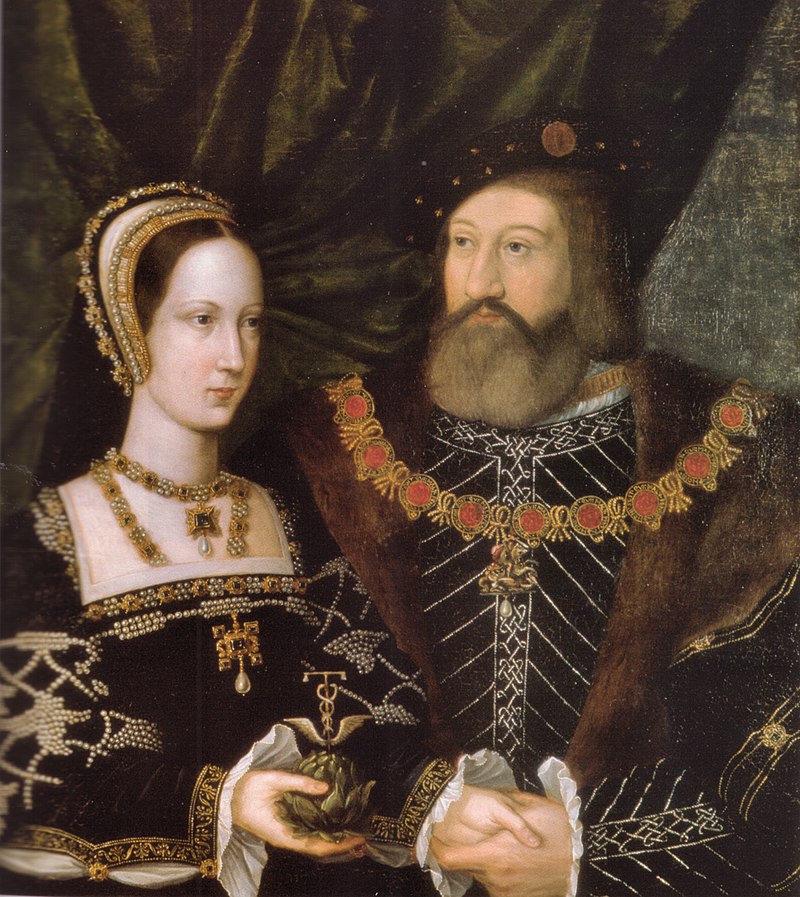
Mary Tudor and Charles Brandon, Jane’s maternal grandparents

Jane enjoyed study and excelled in all fields, including Greek and philosophy. She was afforded a first-class education and from 1545 her tutor was John Aylmer. Aylmer had been sponsored through his studies at Cambridge by Jane’s father, the Marquess of Dorset, and was a brilliant academic. As a future courtier, Jane was given lessons in dance and music; probably including the popular instruments, the lute, spinet and virginal. In religion, Jane and her sisters were raised as ‘evangelicals’, the common word in the first half of the sixteenth century for Protestants. From the age of nine, Jane’s mother would have taken her to court from time to time, to familiarise her daughter with the court and her future duties as a Maid of Honour. Frances was at the time serving as a Lady of the Privy Chamber to the king’s sixth wife, Kateryn Parr, Henry VIII’s 6th and final wife.

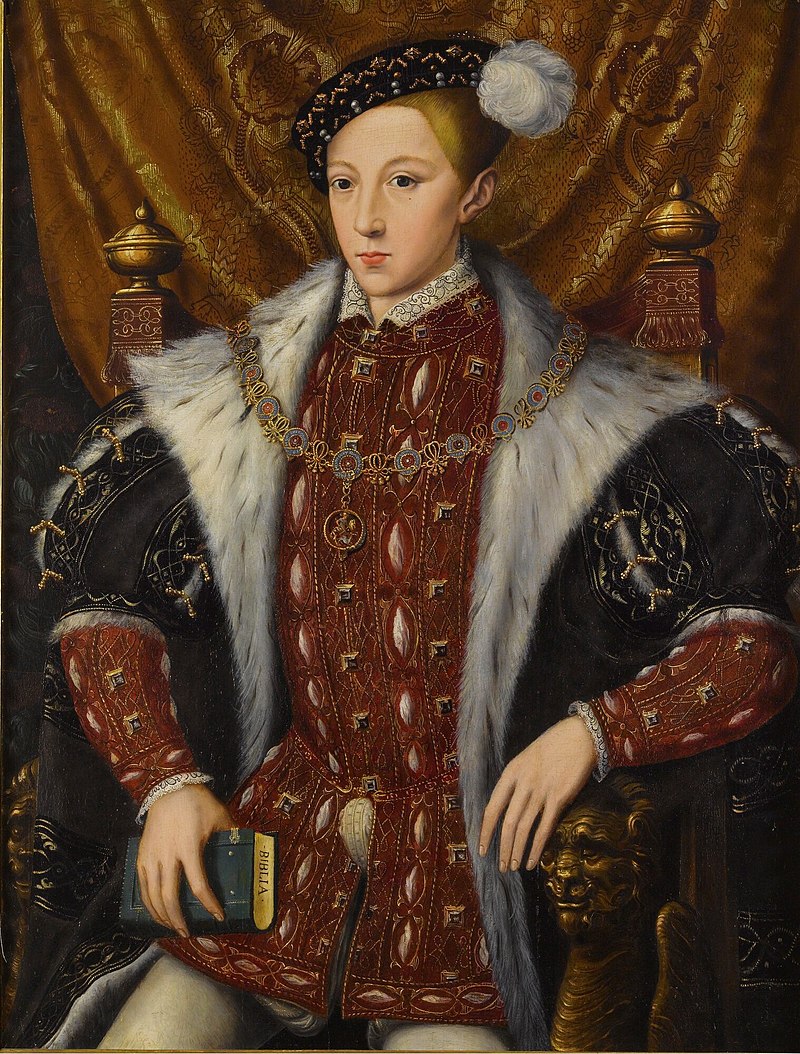
In January 1547, King Henry VIII died and was succeeded by his 9-year-old son, Edward VI. Jane and Edward were first cousins, once removed,and it is entirely possible – even likely – that Frances and Henry harboured hopes that Jane would marry the young king. It was Henry VIII’s will that shaped and dominated Jane’s future. More than ten years before his death, Parliament had granted Henry the right to bequeath the crown where he desired, rather than by strict primogeniture. In his final will, dated 26 December 1546, Henry excluded the Stuart line of his elder sister Margaret and settled the succession, should his children die without heirs, on the descendants of his younger sister, Mary, Duchess of Suffolk. Should Edward, Mary and Elizabeth all die without producing a child of their own, Jane would be queen; although Henry probably still held out hope that Frances would produce a son who could inherit ahead of the sisters.

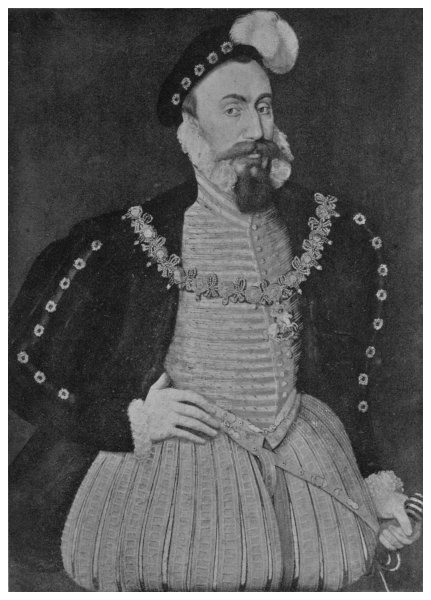
Henry Grey, Marquess of Dorset

The government of England was now in the hands of the boy-king’s uncle Edward Seymour, Earl of Somerset – soon to become duke of Somerset. Somerset and Henry Grey did not get along well and Grey, though he was the only marquess in England he was not appointed to the new king’s privy council. The younger brother of Somerset, Thomas Seymour, the Lord High Admiral of England and first Baron Seymour of Sudeley, having recently – and rather scandalously – married the king’s widow, proposed that he take on the wardship of Lady Jane. Henry Grey was reluctant, given the scandal attached to the hasty marriage of Queen Kateryn and Seymour just four months after the king’s death. However, Princess Elizabeth had already joined the dowager queen’s household and Seymour hinted at arranging a marriage between Jane and the young king when they were old enough, sweetening the deal with the offer of a payment of £2,000 for Jane’s wardship.

Joining the household of the dowager queen was a great opportunity for Jane, which would provide her with connections that would benefit herself and her family. And so, at ten years-old, Jane was given into the custody of Thomas Seymour and from then on was frequently in the household of Kateryn Parr, at Chelsea and later at Sudeley Castle. This was one of the happiest periods of Jane’s short life.

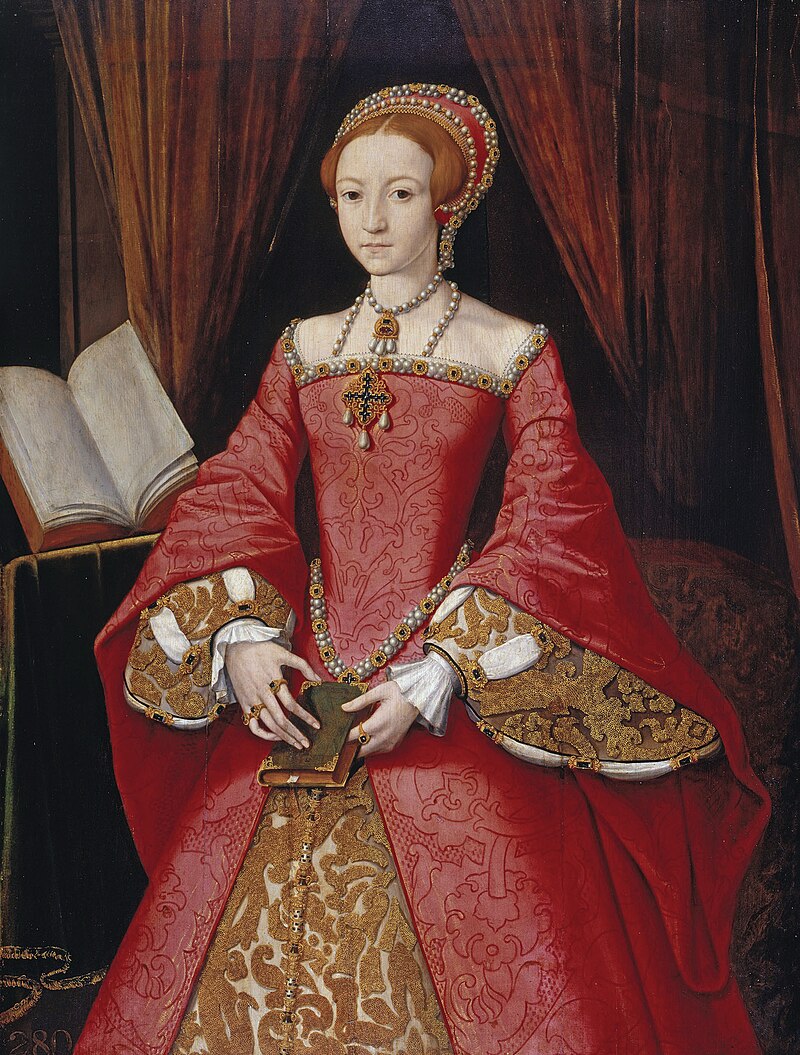
During her time in the dowager queen’s household, Jane got to know her cousin, Princess Elizabeth, better, though they never grew close. At thirteen, Elizabeth was too old to pay much attention to ten-year-old Jane. And despite her tender years, Elizabeth was rather self-contained and distant; she had already experienced the highs and lows of royal life, from being lauded as her father’s heir to being declared a bastard and knowing her mother was executed as a traitor. The princess had learned not to trust easily and to keep her own counsel. That Jane was, technically, Elizabeth’s heir, must have made the relationship more fractious in a world where one’s inheritance could be erased by an act of parliament.

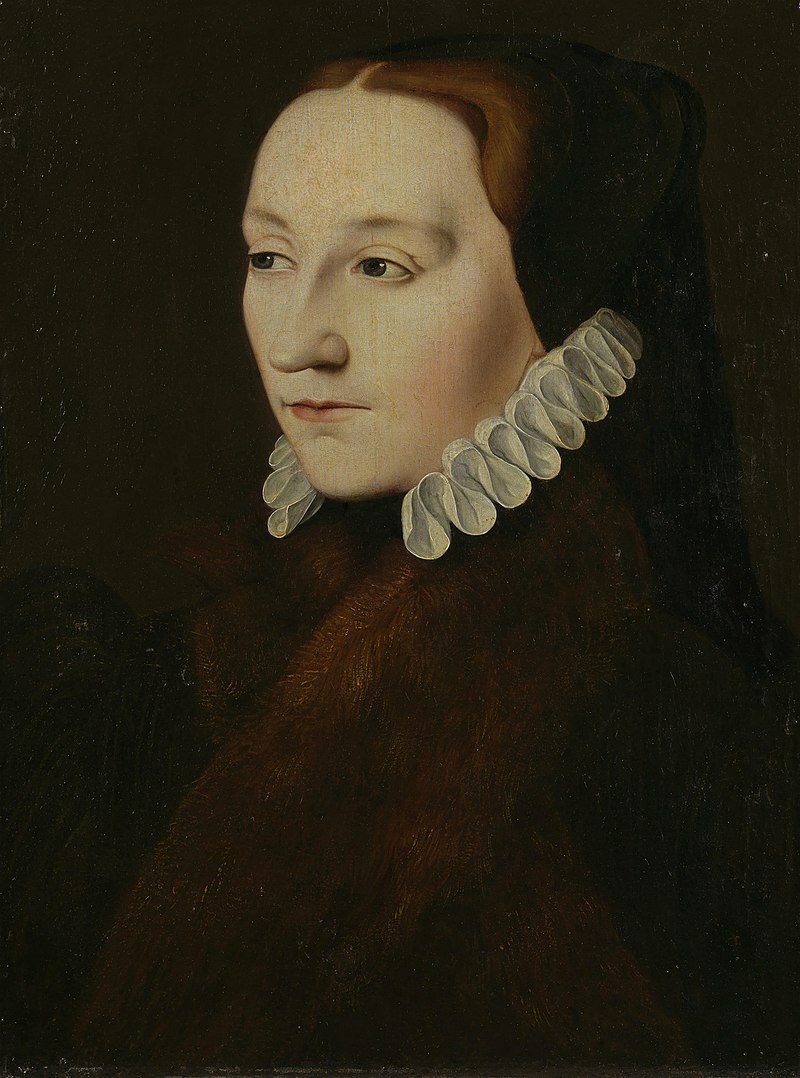
Frances Brandon, Duchess of Suffolk

Jane must have enjoyed living in a household of well educated, inquisitive women. One wonders, though, if she was aware of other goings-on in the household, as Thomas Seymour paid excessive attention to Princess Elizabeth. This caused tensions within the household, especially after the queen fell pregnant and began to fear that Seymour saw Elizabeth as a suitable replacement should she die in childbirth. Fearful for the princess’s reputation – and of her husband’s intentions – Elizabeth was sent away by Kateryn. Jane was now the most senior lady in the queen dowager’s household. And when Kateryn died a week after giving birth to her only child, Lady Mary Seymour, it was 11-year-old Jane who acted as chief mourner at her funeral, walking behind the queen’s coffin from the house to the chapel at Sudeley.

After the funeral, the queen’s household was broken up and Jane sent home to her parents. Within a few weeks, however, Thomas Seymour, now over the first stages of grief at losing his wife, given the blow to his finances and status the queen’s death had caused, realised that he could yet regain some standing if he resumed his guardianship of Jane. It took some persuading, but Seymour assured Henry and Frances that Jane would be well cared for and under the supervision of his mother. Although the late dowager queen’s women were still in Seymour’s household, the atmosphere had changed; and as Seymour’s ambitions came under suspicion from the Privy Council, it must have been an uncomfortable place for Jane to be. Amid rumours that Thomas Seymour was intending to marry Princess Elizabeth, he was arrested, as were Elizabeth’s servants. Elizabeth herself continued to insist that she would never agree to marry anyone without the Council’s permission.

Seymour was condemned for high treason by Act of Attainder and executed on 20 March 1549. On Seymour’s arrest, Jane had returned to Dorset House, her family’s London residence. Henry Grey may have seen his own hopes of advancement and Jane’s marriage to Edward VI disappear at Seymour’s arrest, but he must have been relieved that at least he had survived the affair with his head still on his shoulders. Besides, the wheel of fortune was about to turn his way. People were becoming increasingly disenchanted with Somerset’s rule and in the wake of Kett’s Rebellion in Norfolk, by 14 October it was Edward Seymour, Duke of Somerset, who was lodged in the Tower under arrest. John Dudley, Earl of Warwick and future Duke of Northumberland, took the reins of government. Henry Grey was finally appointed to the Privy Council and received numerous rewards of office and grants of lands and lordships.

King Edward VI

Jane’s marriage was never far from the minds of those in power. Edward Seymour, Duke of Somerset had wanted to marry Jane to his oldest son and heir, the earl of Hertford, also called Edward. Nothing had come of this plan by the time of Somerset’s fall. Before that, as early as 1541, the French Ambassador had proposed that she marry Charles, Duke of Orléans, third son of King Francis I, but the boy died in 1545. John Dudley initially favoured a marriage between Jane and the king. The children born of such a marriage would secure the succession and guarantee the continuance of the new religion within England’s borders. It would also resolve the problems associated with the succession of Mary or Elizabeth. Jane and Edward were good friends and corresponded regularly, but neither Jane nor Edward appeared enthusiastic about the suggestion and the idea was dropped, for the time being.


By February of 1553, the point was moot.

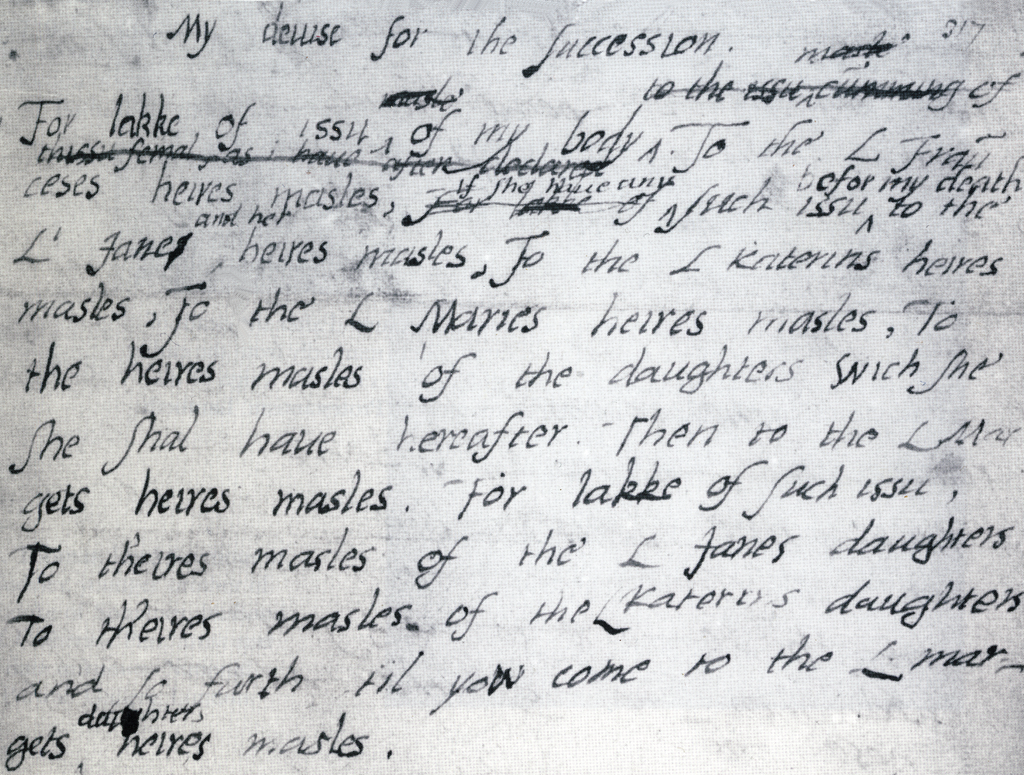
The young king was ill again, and it was becoming apparent that he was dying. Those around him started looking to the problem of the succession. The next in line was Princess Mary, a committed Catholic who would undo all the work Edward had done in advancing the Reformation. Edward could not pass over Mary’s claim to the crown in favour of Elizabeth, so chose to exclude all females from the succession and his ‘Device’ would leave the crown to ‘the Lady Jane’s heirs male’. As his health failed him, in June King Edward changed the wording of the Device to ‘The Lady Jane and her heirs male.’ Further arguments for excluding Mary and Elizabeth centred on their legitimacy – open to question after Henry VIII had, at various times, declared them both illegitimate – and the fear that they would marry outside of England.

Jane, on the other hand, was married to Lord Guildford Dudley, the fifteen-year-old son of John Dudley, now Duke of Northumberland and Lord President of the Council. Their parents saw the young couple as an alternative, Protestant king and queen to the Catholic Mary. The wedding had taken place in May 1553 in Dudley’s London home, Durham House. The young couple had been reluctant to marry and were bullied into it by their parents.

Edward VI’s ‘Devise for the Succession’

Aged just fifteen, King Edward VI died at Greenwich Palace on 6 July 1553. He was unmarried and left no heir. As the king lay dying Mary was summoned to the council, but instead rode to Kenninghall in Norfolk, with Robert Dudley despatched to intercept her with orders to take the princess to a place of safety. On 8 July, Mary heard the news of the king’s death and the following day proclaimed herself queen, despatching a letter to the Privy Council, ordering them to endorse her claim. She then moved to the formidable fortress of Framlingham Castle, where thousands flocked to her standard. Princess Elizabeth initially stayed away, pleading illness, watching and waiting to see how events played out. On 9 July the Privy Council summoned Lady Jane, recuperating from an illness at Chelsea, to appear before them. Dudley’s daughter, Mary Sidney, was sent to escort Jane by barge to Syon House, where she was greeted by two nobles who knelt before her, kissed her and informed her that Edward had nominated her as his successor. John Dudley, Duke of Northumberland and now father-in-law of the new queen, gave a lengthy speech, informing all present that King Edward’s wish had been for Jane to succeed him. Jane was left trembling and speechless before she fell to the ground, crying and declaring

I am insufficient to fill the role.2

Jane’s reaction to the proclamation of her accession to the throne suggests that she was not aware of the plans of Edward, Dudley and her father to make her queen. Though she was a clever girl and may well have suspected what was afoot. The next morning, dressed in the green and white of the Tudors and accompanied by her husband Guildford dressed equally splendidly in white and gold, Jane was escorted to the Tower in a procession of barges. There were no flags being waved, and no crowds lining the river to get a glimpse of their new queen. London was only just learning of the king’s death. Jane was greeted at the Tower by the Marquess of Winchester and Sir John Bridges, Lieutenant of the Tower, and various other civilian and military officials. Winchester knelt before the young queen and presented the keys to the fortress. John Dudley stepped forward and took them. Jane then made her ceremonial entrance into the White Tower and, with flags flying, a fanfare of trumpets and guns firing in salute, was seated under the canopy of state. The crown was brought to her, but she initially refused to wear it, only putting it on when Winchester persuaded her that he wished to see how it suited her.

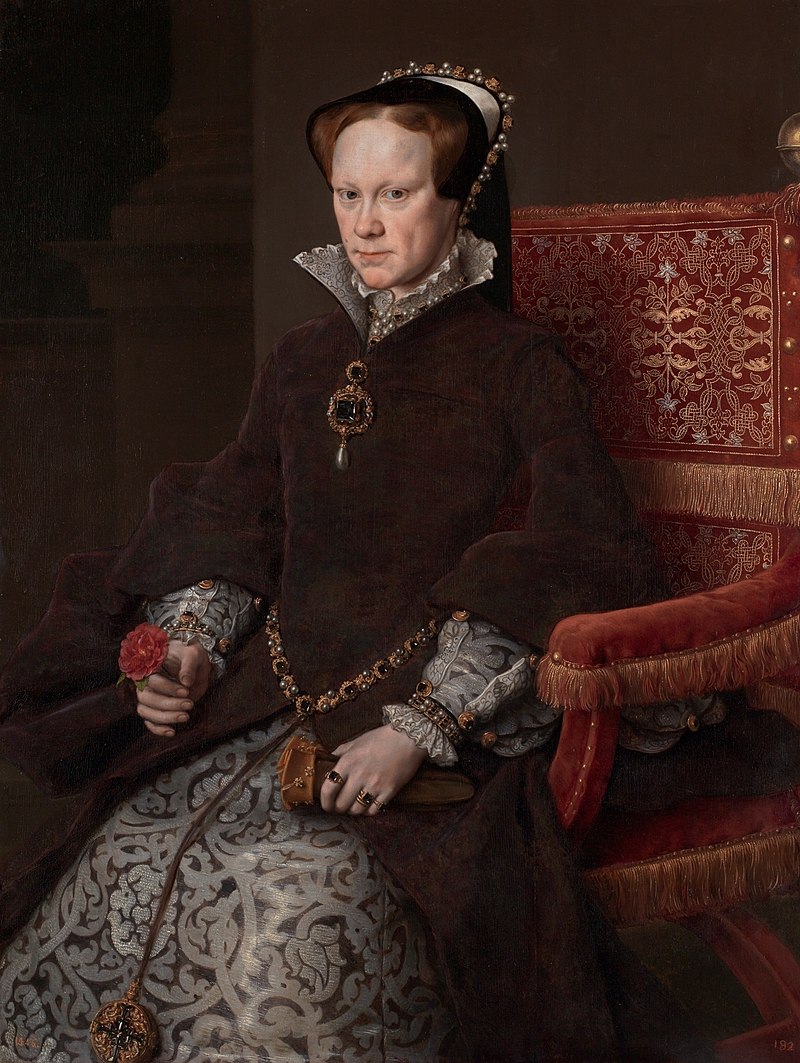
Mary I

On one matter, Jane was adamant. She refused to make Guildford king: ‘If the crown belongs to me, I would be content to make my husband a duke. But I will never consent to make him king.’3 Royal blood flowed through Jane’s veins, not her husband’s. Apparently, Guildford fled the room in tears, but his parents were hopeful that Jane could be persuaded to change her mind. After all, they lived in a patriarchal society and no one expected that a woman could actually rule in her own right.

The Privy Council and leading judges declared Jane the new Queen of England.

That Sunday, at St Paul’s Cross, Bishop Ridley preached that as bastards, Mary and Elizabeth were unfit for the crown and that Mary’s Catholicism was a particular threat to the country, exposing it to foreign influence. A devout Protestant, Jane was seen as the symbol of continuity for the Protestant faith, untainted by any previous declarations of illegitimacy. However, there was no rejoicing and only the herald could be heard to shout ‘Long live the Queen!’

For 9 days, Jane was England’s first female monarch.

By 12 July, Mary and her supporters had gathered at Framlingham, Suffolk. Within days, the duke of Northumberland rode out of London with 3,000 men, promising to capture or kill Mary. Jane ordered the gates to the Tower be locked and the keys given to her. On 18 July, Jane began raising troops to be led against rebels in Buckinghamshire. But as Northumberland left London, everything began to fall apart. Rumours circulated that Mary had a force of 30,000. Londoners refused to rally to the duke’s army.

Northumberland’s coup collapsed.

On 19 July, Henry Grey, Duke of Suffolk, declared in favour of Mary. He entered his daughter’s chamber, where she sat at dinner under a canopy of state, and dramatically tore down the hangings. The next day, the Privy Council proclaimed Mary as Queen of England. And Jane went from being queen to a prisoner in the Tower of London; she was taken from the royal apartments to the Gentleman Gaoler’s lodgings. Her mother and ladies-in-waiting were allowed to return home, which they did without delay.

Mary was crowned on 1 October 1533, and Jane’s younger sisters Katherine and Mary became maids of honour to the new queen. Frances, too, was welcomed at court. John Dudley, Duke of Northumberland, Jane’s father-in-law, had been tried and convicted of high treason and executed on 22 August 1553. After just a few days in the Tower, Henry Grey, Duke of Suffolk, was pardoned and allowed to go home to his wife.

As for Jane, in November, she, her husband and two of his brothers were tried and convicted of high treason. Mary was willing to be merciful and spared their lives, for the moment. Jane was kept in comfortable confinement and may have hoped that she would eventually be released, had her father not involved himself in yet another plot…

Princess Elizabeth, the future Queen Elizabeth I

Opposed to Mary’s proposed marriage to Philip of Spain, the Wyatt rebellion, led by Sir Thomas Wyatt, the son of the poet who was an admirer of Anne Boleyn, aimed to overthrow Mary. The intent was to marry Princess Elizabeth to Edward Courtney, Earl of Devon and a descendant of Edward IV, and put Elizabeth on the throne. As Wyatt raised an army in Kent, Grey was raising forces in the Midlands. However, Wyatt’s forces were overwhelmed as London closed its gates to them and Grey was arrested at his manor of Astley. He was taken prisoner, arraigned for his treason, condemned, and executed at the Tower on 23 February 1554, less than a month after his brief rebellion began.

Though she was in no way implicated in the rebellion, her father’s actions had already sealed Jane’s fate; her very existence as a possible figurehead for Protestant discontent made her an unacceptable danger to the state. The queen could no longer afford to be merciful, and Mary signed the death warrant for Jane and Guildford; the sentence for Jane was commuted from burning to beheading. She received a few days’ stay of execution while Mary sent the dean of St Paul’s, John Feckenham, to her to try and persuade Jane to accept the Catholic faith. But Jane remained steadfast, writing ‘Lord, thou God and father of my life, hear me poor and desolute woman, arm me, I beseech thee, with thy armour, that I may stand fast.’4

The night before her execution, aware that her father, by now also imprisoned in the Tower, was in great distress over her fate, Jane wrote a final letter to him:

‘Father, although it pleases God to hasten my death by one by whom my life should rather have been lengthened; yet can I so patiently take it, that I yield God more hearty thanks for shortening my woeful days, than if all the world had been given into my possession, with life lengthened at my own will. And albeit I am assured for your impatient dolours redoubled manifold ways, both in bewailing your own woe, and especially, as I hear, my unfortunate state; yet, dear father (if I may without offence rejoice in my own mishaps), herein I may account myself blessed, that washing my hands with the innocence of my fact, my guiltless blood may cry before the Lord, ‘Mercy to the innocent!’5

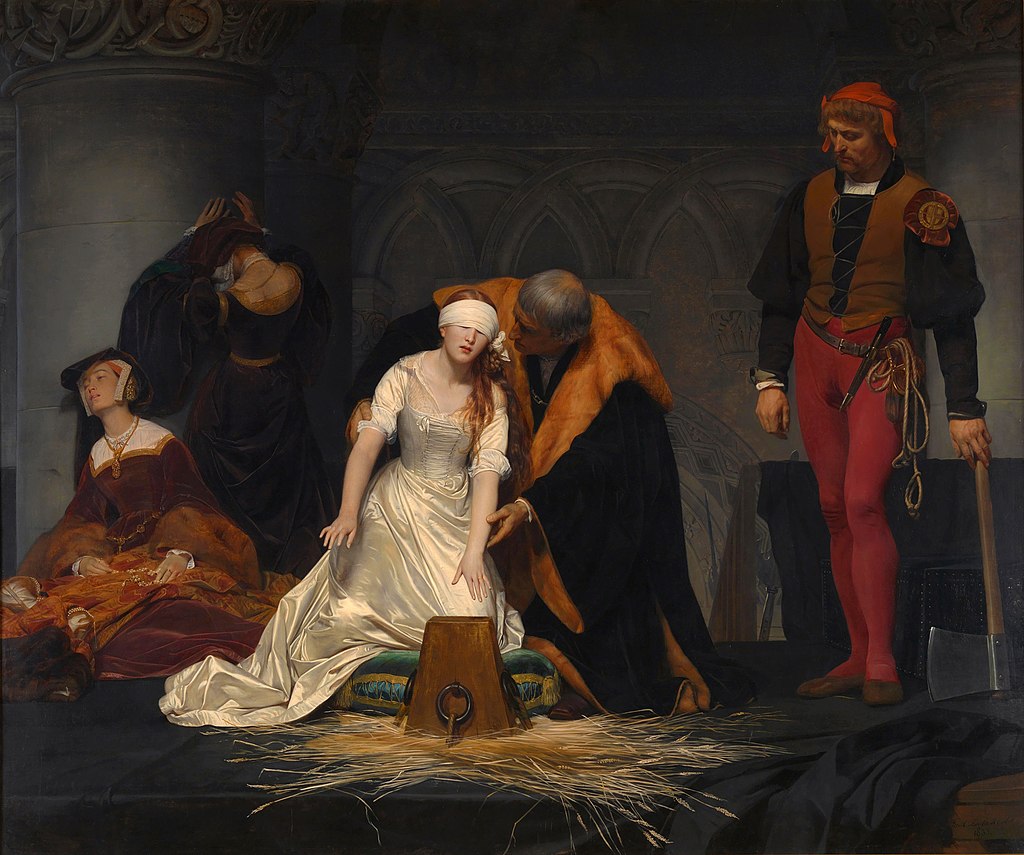
The Execution of Lady Jane Grey by Paul Delaroche

At ten the next morning Guildford Dudley was taken from the Tower and escorted to Tower Hill for his execution. Jane watched him leave from her window. As Jane walked to her own execution, Guildford’s body was carried into the Tower’s chapel, St Peter Ad Vincula, for burial. Dressed in black, Jane mounted the scaffold by the White Tower. Speaking to the assembled crowd, she performed the traditional admission of guilt, saying that she had acted against the queen’s highness, though qualified it with:

‘Touching the procurement and desire thereof by me or on my behalf, I do wash my hands thereof in innocence.’6

Having said her piece, and her prayers, Jane gave her gloves and handkerchief to Elizabeth Tilney and her prayer book to Thomas Bridges, the brother of the Lieutenant of the Tower. Jane then removed her gown, headdress and neckerchief as the executioner knelt to ask her forgiveness, which Jane gave willingly.

Jane knelt and, with her handkerchief tied over her eyes, she had to feel for the block and cried out ‘What shall I do? Where is it?’ when she couldn’t find it.7 One of those close by guided her to the block.

Her final words were ‘Lord, into thy hands I commend my spirit!’8

She was despatched with one stroke of the axe.

Notes:

1 .Lady jane Grey quoted in Jill Armitage, Four Queens and a Countess: Mary Queen of Scots, Elizabeth I, Mary I, Lady Jane Grey and Bess of Hardwick, p. 54; 2. Jill Armitage, Four Queens and a Countess: Mary Queen of Scots, Elizabeth I, Mary I, Lady Jane Grey and Bess of Hardwick, p. 68; 3. ibid; 4. Leanda de Lisle, The Sisters Who Would Be Queen, p. 146; 5. ibid, p. 148; 6. ibid, p. 150; 7. ibid, p. 151; 8. ibid, p. 152

Images:

Courtesy of Wikipedia

Sources:

Jill Armitage, Four Queens and a Countess: Mary Queen of Scots, Elizabeth I, Mary I, Lady Jane Grey and Bess of Hardwick; Leanda de Lisle, The Sisters Who Would Be Queen; Amy Licence, Tudor Roses; Amy Licence, The Sixteenth Century in 100 Women; Haynes (ed.), State papers, Vol. VI; Amy Licence, In Bed with the Tudors; Erin Lawless, Forgotten Royal Women: The King and I; David Loades, editor, Chronicles of the Tudor Kings: The Tudor Dynasty from 1485 to 1553: Henry VII, Henry VIII and Edward VI in the Words of their Contemporaries;  ODNB.com; Tracy Borman, The Private Lives of the Tudors; Sarah Gristwood, The Tudors in Love: The Courtly Code Behind the Last Medieval Dynasty; John Cannon, editor, The Oxford Companion to British History; Arthur D. Innes, A History of England Under the Tudors; J.D. Mackie, The Earlier Tudors 1485-1558

*

My Books

Signed, dedicated copies of all my books are available through my online bookshop.

OUT NOW! Heroines of the Tudor World

Heroines of the Tudor World tells the stories of the most remarkable women from European history in the time of the Tudor dynasty, 1485-1603. These are the women who ruled, the women who founded dynasties, the women who fought for religious freedom, their families and love. These are the women who made a difference, who influenced countries, kings and the Reformation. In the era dominated by the Renaissance and Reformation, Heroines of the Tudor World examines the threats and challenges faced by the women of the era, and how they overcame them. From writers to regents, from nuns to queens, Heroines of the Tudor World shines the spotlight on the women helped to shape Early Modern Europe.

Heroines of the Tudor World is now available for pre-order from Amberley Publishing and Amazon UK.

Women of the Anarchy

Two cousins. On the one side is Empress Matilda, or Maud. The sole surviving legitimate child of Henry I, she is fighting for her birthright and that of her children. On the other side is her cousin, Queen Matilda, supporting her husband, King Stephen, and fighting to see her own son inherit the English crown. Women of the Anarchy demonstrates how these women, unable to wield a sword, were prime movers in this time of conflict and lawlessness. It show how their strengths, weaknesses, and personal ambitions swung the fortunes of war one way – and then the other.

Available from Bookshop.orgAmberley Publishing and Amazon UK.

Also by Sharon Bennett Connolly:

King John’s Right-Hand Lady: The Story of Nicholaa de la Haye is the story of a truly remarkable lady, the hereditary constable of Lincoln Castle and the first woman in England to be appointed sheriff in her own right. Available from all good bookshops Pen & Sword Booksbookshop.org and AmazonDefenders of the Norman Crown: The Rise and Fall of the Warenne Earls of Surrey tells the fascinating story of the Warenne dynasty, from its origins in Normandy, through the Conquest, Magna Carta, the wars and marriages that led to its ultimate demise in the reign of Edward III. Available from Pen & Sword BooksAmazon in the UK and US, and Bookshop.org

Ladies of Magna Carta: Women of Influence in Thirteenth Century England looks into the relationships of the various noble families of the 13th century, and how they were affected by the Barons’ Wars, Magna Carta and its aftermath; the bonds that were formed and those that were broken. It is now available in paperback and hardback from Pen & Sword,  Amazon, and Bookshop.orgHeroines of the Medieval World tells the stories of some of the most remarkable women from Medieval history, from Eleanor of Aquitaine to Julian of Norwich. Available now from Amberley Publishing and Amazon, and Bookshop.orgSilk and the Sword: The Women of the Norman Conquest traces the fortunes of the women who had a significant role to play in the momentous events of 1066. Available now from Amazon,  Amberley Publishing, and Bookshop.org.

Alternate Endings: An anthology of historical fiction short stories including Long Live the King… which is my take what might have happened had King John not died in October 1216. Available in paperback and kindle from Amazon.

Podcast:

Have a listen to the A Slice of Medieval podcast, which I co-host with Historical fiction novelist Derek Birks. Derek and I welcome guests, such as Bernard Cornwell – and Tony Riches. We discuss a wide range of topics in medieval history, from significant events to the personalities involved.

*

Don’t forget! Signed and dedicated copies of all my books are available through my online bookshop.

For forthcoming online and in-person talks, please check out my Events Page.

You can be the first to read new articles by clicking the ‘Follow’ button, liking our Facebook page or joining me on Twitter and Instagram.

*

©2024 Sharon Bennett Connolly FRHistS 

Book Corner: Tudor Roses by Amy Licence

A dynasty is defined by its men: by their personalities, their wars and reigns, their laws and decisions. Their mothers, wives, sisters and daughters are often depicted as mere foils, shadowy figures whose value lies in the inheritance they brought, or the children they produced. Yet the Tudor dynasty is full of women who are fascinating in their own right, like Margaret Beaufort, who finally emerged triumphant after years of turmoil; Elizabeth of York and her steadying influence; Catherine of Aragon and Anne Boleyn, whose rivalry was played out against the backdrop of the Reformation; and Mary and Elizabeth, England’s first reigning queens. Then there were all the others: Henry VIII’s fascinating sisters who became queens of France and Scotland, and their offspring, the Brandon and Grey women, Lady Margaret Douglas and her granddaughter Arabella Stuart. Many more women danced the Pavane under Henry’s watchful eye or helped adjust Elizabeth’s ruff. These were strong women, wielding remarkable power, whether that was behind the scenes or on the international stage. Their contribution took England from the medieval era into the modern. It is time for a new narrative of the Tudor women: one that prioritises their experiences and their voices.

Tudor Roses: From Margaret Beaufort to Elizabeth I by Amy Licence continues the history started with Red Roses, which told the history of the women of the royal house of Lancaster, from Blanche of Lancaster to Margaret Beaufort and the start of the Tudor dynasty. Tudor Roses: From Margaret Beaufort to Elizabeth I is the fabulous sequel! Amy Licence has put all her considerable knowledge and research into this book to bring you a book on the Tudor period focussed on its incredible women.

Amy Licence brings the women to the fore, telling the stories of the Tudors through the lives and actions of the women who formed such a considerable part of the dynasty. Not only does she retell the lives of these women, but she puts those lives in context, assessing their influence and legacy on one of the most famous English dynasties – and on the European countries that England interacted with.

Amy Licence also draws not only on events of the time, but on the changing world around the dynasty, on the developments in literature, music, the arts and religion to give a rounded picture of the women of 16th century England. This gives the reader a deeper understanding of the rules and restrictions women had to live by at the time. It also demonstrates the areas in which women had liberties and the ability to express their own desires, wants and needs, and how they could assert control over their own lives.

This is Amy Licence at her best!

Excerpt:

It is not difficult to visualise the Tudor princesses sitting at their lessons, or roaming the gardens at Eltham. Surviving accounts give an indication of the adult-style clothing in which the children appeared, as the nursery was also a location for the entertainment of dignitaries and foreign visitors, and the children were a powerful, visible indicator of the dynasty’s future. In November 1495, Henry spent £7 on ‘diverse yerdes of silk’ for Henry and Margaret, while baby Mary the following years was clothed in kirtles of black silk and velvet, edged in ermine and mink. The following year as she was beginning to walk, her dresses were made of baby buckram, a fine cotton, not like the stiff, modern version, and she required linen smocks, three pairs of hose, eight pairs of single-soled shoes and four pairs of double. The children were frequent visitors to Windsor, Westminster, Greenwich, Sheen and Baynard’s Castle, or wherever their parents might be, attending important events and festivities, expected to show themselves to best advantage in front of guests. No doubt the girls were also influenced by Margaret Beaufort’s model of piety and were visible attendees at church on red letter days in the Catholic calendar, but they were also lively, energetic participants. One of Margaret’s most notable public appearances as a small child was her fifth birthday in November 1494, on which occasion her younger brother Henry was elevated to the Dukedom of York. A tournament lasting three days was held at Westminster, after which Margaret handed out the prizes, dressed in a velvet and buckram gown trimmed in gold lace with a white, winged cap in the Dutch style. Afterwards, Margaret and her young brother danced to the delight of the court.

At Eltham, Margaret and Mary were shielded from he dynastic struggles that their parents were experiencing in the 1490s. A second pretender, far more serious than the young Lambert Simnel, had emerged in Europe, and was being feted by enemies of the Tudor regime. Claiming to be Richard of Shrewsbury, the younger of the Princes in the Tower, a young Flemish merchant by the name of Perkin Warbeck arrived at the Burgundian court, swiftly winning over Elizabeth’s aunt Margaret, who schooled him in the details and manners of the Yorkist court and encouraged him to distribute coins minted in his name. Warbeck was initially welcomed at the court of Charles VIII of France, until Charles ejected him under terms of the Treaty of Etaples he signed with England in 1492. The pretender returned to Burgundy, where he was invited to attend the funeral of the Holy Roman Emperor and recognised as Richard IV. However, after a failed attempt to invade England, and a brief flirtation with Ireland, Warbeck went north, towards the Scottish king with whom Henry had hoped to ally his eldest daughter.

Amy Licence is an accomplished writer whose prose flows so freely that you almost feel like you are reading a novel. The narrative flows easily, absorbing the reading from the very first pages. As you may have come to expect from Ms Licence, her research is thorough and second-to-none. She delves into every aspect of the lives of the women and brings the whole era to life for the reader, showing how they interracted with the world around them, with the men in their lives – and with each other.

Her insight into the lives of the Tudor women is unparalleled.

It is always a pleasure to read a non-fiction book by Amy Licence and Tudor Roses: From Margaret Beaufort to Elizabeth I is no exception. In fact, it is probably one of Ms Licence’s best. For anyone interested in the Tudor period, this book is a must read. An essential addition to any library. I cannot recommend it highly enough.

Tudor Roses: From Margaret Beaufort to Elizabeth I is available from Amazon and Amberley Publishing.

About the author:

Amy Licence is an historian of women’s lives in the medieval and early modern period, from Queens to commoners. Her particular interest lies in the late fifteenth and early sixteenth century, in gender relations, Queenship and identity, rites of passage, pilgrimage, female orthodoxy and rebellion, superstition, magic, fertility and childbirth. She is also interested in Modernism, specifically Woolf and the Bloomsbury Group, Picasso and Post-Impressionism. She has been a teacher for over twenty years and is a Fellow of the Royal Historical Society.

Amy has written for The Guardian, The TLS, The New Statesman, BBC History, The English Review, The Huffington Post, The London Magazine and contributes regularly to BBC History Magazine. She has been interviewed regularly for BBC radio, including Woman’s Hour, and has appeared in several TV documentaries.

*

My Books

Signed, dedicated copies of all my books are available, please get in touch by completing the contact me form.

Defenders of the Norman Crown: The Rise and Fall of the Warenne Earls of Surrey tells the fascinating story of the Warenne dynasty, of the successes and failures of one of the most powerful families in England, from its origins in Normandy, through the Conquest, Magna Carta, the wars and marriages that led to its ultimate demise in the reign of Edward III. Defenders of the Norman Crown: Rise and Fall of the Warenne Earls of Surrey is now available from Pen & Sword BooksAmazon in the UK and US, Bookshop.org and Book Depository.

1 family. 8 earls. 300 years of English history!

Also by Sharon Bennett Connolly:

Ladies of Magna Carta: Women of Influence in Thirteenth Century England looks into the relationships of the various noble families of the 13th century, and how they were affected by the Barons’ Wars, Magna Carta and its aftermath; the bonds that were formed and those that were broken. It is now available in paperback and hardback from Pen & Sword,  AmazonBookshop.org and from Book Depository worldwide.

Heroines of the Medieval World tells the stories of some of the most remarkable women from Medieval history, from Eleanor of Aquitaine to Julian of Norwich. Available now from Amberley Publishing and Amazon, Bookshop.org and Book Depository.

Silk and the Sword: The Women of the Norman Conquest traces the fortunes of the women who had a significant role to play in the momentous events of 1066.  Available now from Amazon,  Amberley Publishing, Bookshop.org and Book Depository.

*

You can be the first to read new articles by clicking the ‘Follow’ button, liking our Facebook page or joining me on Twitter and Instagram.

©2022 Sharon Bennett Connolly 

Book Corner: The Brandon Men: In the Shadow of Kings by Sarah Bryson

Four generations of Brandon men lived and served six English kings, the most famous being Charles Brandon, Duke of Suffolk, best friend and brother-in-law to King Henry VIII. Yet his family had a long history tied closely to the kings of the Wars of the Roses back to Henry VI. Charles Brandon’s father, Sir William Brandon, supported Henry Tudor’s claim on the throne and became his standard bearer, dying at the Battle of Bosworth. Charles’s uncle, Sir Thomas Brandon, was Henry VII’s Master of the Horse, one of the three highest positions within the court. Charles’s grandfather had ties with Henry VI, Edward IV and Richard III. These men held important offices, made great sacrifices, walked the fine line between being loyal courtiers and traitors, and even gave their lives, all in the name of loyalty to the king they served. No more shall the Brandon name be an obscure reference in archives. It is time for them to emerge from the shadows of history.

I have been looking forward to reading The Brandon Men: In the Shadow of Kings by Sarah Bryson ever since I heard that Sarah was working on it. I loved her first book, La Reine Blanche: Mary Tudor, A Life in Letters, and was hoping this one would be as good. I was wrong!

The Brandon Men: In the Shadow of Kings is even better. In telling the story of Henry VIII’s best friend, Charles Brandon, and Charles’ forebears, Sarah Bryson writes with a passion that draws the reader in from the very first pages. Sarah Bryson starts the story at the beginning, with the first known head of the Brandon family, Sir William Brandon, born in around 1425. The Brandons rose to prominence during the unsettled times of the Wars of the Roses, their fortunes turning with the tug-of-war between York and Lancaster. Sir William Brandon’s son – also William – was killed at the Battle of Bosworth while protecting the future king, Henry VII. It was this William whose son, Charles Brandon, Duke of Suffolk, took the family to its greatest heights, going so far to marry Mary Tudor, Dowager Queen of France and King Henry VIII’s beloved baby sister.

While the rest of the family had a no-less dramatic story, it is Charles Brandon’s which catches the attention. Brandon pursued a thriving career at court, as one of Henry VIII’s closest friends and jousting partners, while at the same time he chased after wealth and land through several scandalous marriages and betrothals. His marriage to Mary Tudor, however, was the icing on the cake; it brought him a beautiful bride, a love story that would last the ages, and the title of Duke of Suffolk as the brother-in-law to the king. It also brought him more trouble than even he could have imagined; whilst Brandon did not lose his head, he got heavily in debt trying to placate the king for his presumption in marrying the king’s sister.

Charles Brandon’s life was also tinged with family scandal, with one daughter being publicly shamed for her extramarital affair, and tragedy; two of his sons died during the duke’s lifetime, with two mores, his sons by Katherine Willoughby, dying within half an hour of each other before either reached their majority. It was Charles Brandon’s granddaughter by Mary Tudor, the tragic Lady Jane Grey, who became Queen of England for Nine Days. The Brandon story is one of the highs and lows of ambition and family; the veritable wheel of fortune that was so popular in medieval culture.

Lacking experience in military action, Henry Tudor appointed the veteran Earl of Oxford to command his troops and to lead the vanguard. Sir Gilbert Talbot took the right wing and was ordered to defend the archers and keep an eye on the battle line, while John Savage was to lead the left wing. Henry Tudor was positioned to the rear of the troops with several French mercenaries whom he had brought with him from France. Standing close to Henry was Sir William Brandon II.

Brandon had been appointed Henry’s standard-bearer. It is unclear exactly why Brandon was chosen to carry one of Henry Tudor’s standards; perhaps it was due to his unfaltering loyalty to the man he hoped would become king, or perhaps it was down to his physical toughness. We have no description of what Sir William Brandon II looked like, but his son Charles grew up to be tall, handsome, well built and extremely suited to physical pastimes such as hunting and jousting – all qualities that he may have inherited from his father.

Facing them, on King Richard’s side was John Howard, Duke of Norfolk, with Sir Robert Brackenbury leading the Yorkist vanguard. Next came a force commanded by Richard III and comprised of his bodyguard and others. In the rear was the Earl of Northumberland and his men.

When the battle cry went up, arrows flew and the roar of Richard III’s artillery filled the air. Oxford’s men clashed with the Duke of Norfolk’s, the two being old foes. Both sides paused to reorientate themselves. Oxford formed his men into a wedge and charged forward. At this second charge, Henry’s French troops attacked Norfolk’s vanguard. Soon Norfolk’s men were in trouble. Many were killed, including the duke. Others fled while some defected to fight on Henry Tudor’s side.

Northumberland and his men did not move into the fight, and it is believed that at some point the earl decided to leave the battle without throwing any of his men into the fray. Amid this chaos, some of Richard III’s supporters begged him to flee, but he declared that he would live or die as a king. Oxford’s men had pushed forward, leaving a gap, and Richard III now saw an opportunity to get to Henry Tudor directly. He charged with his men, aiming to strike Henry down.

As he advanced, Richard III’s lance pierced through Henry’s standard-bearer, Sir William Brandon II, and broke in half. History records that William Brandon ‘hevyd on high [the Tudor standard] and vamisyd it, tyll with deathe’s dent he was tryken downe.’ What was racing through Sir William’s mind in those last few moments as Richard III and his men came thundering towards him? He had given up his property, his land, his wealth, everything he had to support Henry Tudor. He had bid his wife and infant son farewell to follow Henry to England in the hopes of a better life, not just for himself or his family but for England. It was his sworn duty to protect Henry Tudor with his life, and as Richard III’s lance pierced his armour and threw him from his horse, he gave up his life to save the man he believed to be the rightful king of England. Sir William Brandon II had been loyal to his last breath.

In The Brandon Men: In the Shadow of Kings, Sarah Bryson puts flesh on the bones of history; she brings the family, their actions, hopes and dreams, back to life. Concentrating on the human side of their story, Sarah Bryson expertly recreates the world in which the Brandon men and their families lived, from the violence, suspicion and betrayal that personified the Wars of the Roses, to the glamour, intrigue and fear of the court of Henry VIII. Neither does she shy away from the more questionable actions of the family, such as Charles Brandon’s dislike of Anne Boleyn and complicity in her downfall. Sarah Bryson examines the evidence and arguments with a neutral, if passionate, eye, giving us a wonderful portrait of Charles Brandon as a fallible human being whose ambition sometimes gets in the way of his own success. However, and above all, Charles Brandon knew where his loyalty – and his prospects – lie; with the king. He did everything to ensure that his relationship with Henry VIII, and therefore his family’s security, remained paramount in his career.

I was surprised to see that the Brandon story overlaps a little with my own research on the Warennes. Two hundred years after the demise of John de Warenne, the 7th and last Earl of Warenne and Surrey, it seems that some of the Warenne lands, notably Bromfield and Yale in Wales, found themselves in the hands of Charles Brandon – a little serendipity there.

The Brandon Men: In the Shadow of Kings is a beautifully written non-fiction biography of a family that most people have heard of, but of which few know the particulars. Meticulously researched, with substantial notes and an excellent bibliography, it tells the story of the Brandon family and their rise to heights that none of them could have predicted in their wildest dreams. It is a story of war and conflict, love and feuds, with family ambition tempered by family tragedy. It is, above all, a story of service to the crown.

Sarah Bryson is a wonderful writer of non-fiction, whose love of the Brandons’ story comes through on every page, drawing the reader in; engaging, entertaining and enlightening you on every page. It is, in short, a thoroughly enjoyable investigation into the rise of one of the greatest families of the Tudor court, from the origins in later medieval England and the discord of the Wars of the Roses; from humble Suffolk landowners, to the great Duke of Suffolk who owned most of Lincolnshire. The Brandon Men: In the Shadow of Kings is definitely worth reading!

To buy the book:

The Brandon Men: In the Shadow of Kings is available now from Amberley Publishing and Amazon

About the author:

Sarah Bryson is a researcher, writer and educator who has a Bachelor of Early Childhood Education with Honours. She currently works with children with disabilities. She is passionate about Tudor history and has a deep interest in Mary Tudor, Charles Brandon, Duke of Suffolk and the reign of Henry VIII and the people of his court. She has run a website dedicated to Tudor history for many years and has written for various websites including ‘On the Tudor Trail’ and “QueenAnneBoleyn’. She has been studying primary sources to tell the story of Mary Tudor for a decade. She is the author of books on Mary Boleyn, Charles Brandon and La Reine Blanche. She lives in Australia. –This text refers to the hardcover edition.

My books

Defenders of the Norman Crown: The Rise and Fall of the Warenne Earls of Surrey tells the fascinating story of the Warenne dynasty, of the successes and failures of one of the most powerful families in England, from its origins in Normandy, through the Conquest, Magna Carta, the wars and marriages that led to its ultimate demise in the reign of Edward III. Defenders of the Norman Crown: Rise and Fall of the Warenne Earls of Surrey is now available from Pen & Sword BooksAmazon in the UK and US and Book Depository.

1 family. 8 earls. 300 years of English history!

Also by Sharon Bennett Connolly:

Ladies of Magna Carta: Women of Influence in Thirteenth Century England looks into the relationships of the various noble families of the 13th century, and how they were affected by the Barons’ Wars, Magna Carta and its aftermath; the bonds that were formed and those that were broken. It is now available from Pen & Sword,  Amazon and from Book Depository worldwide.

Silk and the Sword: The Women of the Norman Conquest traces the fortunes of the women who had a significant role to play in the momentous events of 1066.  Available now from Amazon,  Amberley Publishing, Book Depository.

Heroines of the Medieval World tells the stories of some of the most remarkable women from Medieval history, from Eleanor of Aquitaine to Julian of Norwich. Available now from Amberley Publishing and Amazon and Book Depository.

*

You can be the first to read new articles by clicking the ‘Follow’ button, liking our Facebook page or joining me on Twitter and Instagram.

©2021 Sharon Bennett Connolly

Guest Post: Suffolk Place by Sarah Bryson

Today it is a pleasure to welcome author/ historian Sarah Bryson to History…the Interesting Bits as the last stop on Sarah’s blog tour for her latest book The Brandon Men: In the Shadow of Kings. Look out for my review coming soon.

Suffolk Place

Suffolk Place was once the magnificent manor home belonging to Charles Brandon, Duke of Suffolk. It is a common misconception that Brandon built Suffolk Place, when in fact it has a long and rich history dating back to the 1460’s.

Suffolk Place, otherwise known as Brandon House was built during the 1460’s by Charles Brandon’s grandfather, Sir William Brandon. William Brandon was closely associated with England’s Kings and was knighted in 1471 after the Battle of Tewkesbury by King Edward IV.

In 1457 William Brandon was Marshall of the Marshalsea Prison in Southwark. The prison was run for profit and prisoners would have to pay the Marshall for certain rights, such as access to better conditions, soap, water, food etc.

The Prison was located along Borough High Street, the main thoroughfare from Southwark to London. To enter London from Southwark people had to cross the famous London Bridge. From as early as 14 November 1462 William Brandon was being referred to as Brandon ‘of Suthwerk.’

William Brandon built Suffolk Place, known then as Brandon House, during this period opposite the prison that he controlled. Suffolk Place would become the Brandon family’s main dwelling, providing the family not only access to the Prison but close access to London. In 1465 Sir Thomas Howard, the future Duke of Norfolk is recorded as having stayed at “Brandennes Place in Sothwerke”.

Dominico Mancini, Parisian Scholar, described Southwark as ‘a suburb remarkable for its streets and buildings, which, if it were surrounded by walls, might be called a second city.’ In fact, Southwark was so large that it had a population of approximately 8000 people, many of those considered to be foreigners, including Flemish.

When Sir William Brandon died in 1491 not only was the Marshall of the Marshalsea Prison granted to his third son, Thomas Brandon, but he also left his property of Suffolk Place. Thomas’ older brother William, father of Charles Brandon, Duke of Suffolk had died at the famous Battle of Bosworth fighting for King Henry VII. In 1502 Thomas Brandon added to Suffolk place by leasing 48 acres of meadow surrounding the property. He turned this meadow into a park which also included a fishpond stocked with fish to eat.

Thomas Brandon held his own illustrious career at court, becoming Henry VII’s Master of the Horse and knighted on the 17th June 1497 at battle of Blackheath. Over his career Thomas Brandon amassed quite a fortune comprising of land, plate and coin totaling almost £1000.

When Thomas Brandon died on January 27th 1510, he left Suffolk Place to Lady Guildford, wife of the late Sir Richard Guilford whom had helped Thomas Brandon during his final illness. To keep Suffolk Place Charles Brandon, Thomas’ nephew, had to rent the property from Lady Guildford for £42 6s 8d a year.

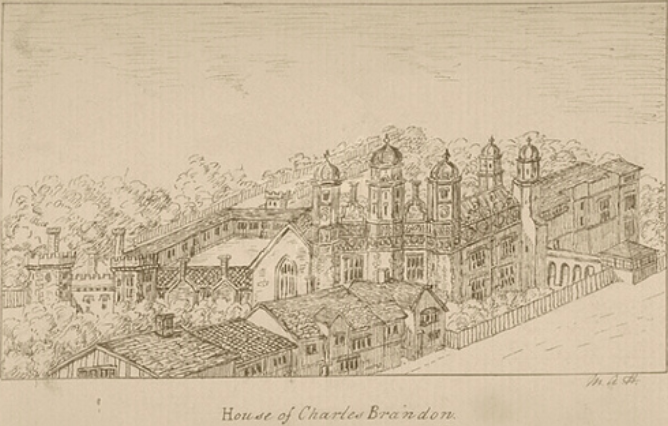
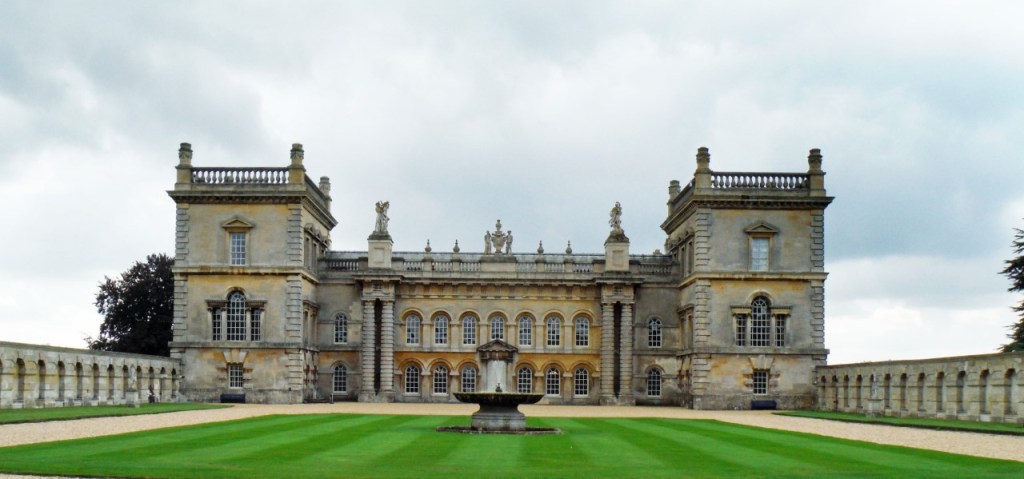
Suffolk Place was built from traditional Tudor red brick, containing four towers with domed turrets at each corner and an additional tower positioned at the center of one side. The palace was decorated with fashionable terracotta. In addition, there were decorations of cupid, an urn flanked by two griffins, a mythological creature and Charles Brandon’s famous crowned lion’s head badge. The chapel within Suffolk Place contained six guilt statues of saints. Brandon stocked Suffolk Place with plate worth £1 475. Suffolk Place would have stood out as one travelled along Borough High Street as they made their way toward London Bridge clearly showing Brandon’s status to all that passed.

After Charles Brandon, Duke of Suffolk’s first son was born, the baby, named Henry after the King, was Christened at Suffolk Place. The christening ceremony took place in the hall at Suffolk Place and was conducted with great splendor and ceremony. The hall was lavishly decorated with wall hangings of red and white Tudor roses, torches were lit and the christening font was warmed for the special occasion. The Christening as performed by John Fisher, Bishop of Rochester and he was assisted by Thomas Ruthall of Durham. The King attended ceremony as did Cardinal Thomas Wolsey, the Duke of Norfolk and other important members of the court. The King and Cardinal Wolsey stood as the godfathers while Catherine, the Dowager Countess of Devon, a daughter of the late King Edward IV stood as the godmother.

In June 1522 when Charles V visited England Charles Brandon, Duke of Suffolk he had the honour of hosting Henry VIII and the Emperor at Suffolk place where the men dined and hunted in the great park that Brandon’s Uncle had purchased. Charles was a great lover of hunting and kept the park stocked with deer.

Suffolk Place would not stay in the hands of Charles Brandon. On 19 July 1535 Brandon was to be given £2333.6.8 by the King in return for handing over ‘the manors and lordships of Ewelme, Donington, Hokenorton, Carsington, Throppe, Newnham, Courtney, Newnham Moreyn, Tournes, Cudlington, Lekenor, Hantesford Auston, Thorold, Langley, West Bradley, West Compton and Bukland in counties of Oxford and Berk., the manor house of Southwark called Suffolk place and two adjoining walled gardens the constableship of Wallingford Castle.’ To lose Suffolk Place was a huge blow for Brandon as it had been his family’s primary residence in London since his grandfather built the place in the early 1460’s. However, Brandon was in debt and needed money to continue his position at court. Henry VIII did grant Brandon the Bishop of Norwich’s house near Charring Cross to Brandon which still provided the Duke with close access to Westminster and the King.

In June the following year Suffolk Place was granted to Henry VIII’s third wife, Jane Seymour. After her death in 1537 the property reverted back to the crown. The property was occasionally used as a royal residence or to host royal visitors. The royal accounts record that

2 gardeners and 2 women were kept for weeding, and setting of strawberries and 3,000 “red rossiers” and 1,000 slips of damask roses were added as well as and cages to put birds in.

In 1545 part of Suffolk Place was turned into the Royal Mint and Edward VI, Henry VIII’s son, ordered that new sovereigns, royal, angel and half angel coins be made. However, the mint was closed in 1551 due to fraud.

After Edward VI’s death his half-sister Mary and her husband, Philip stayed at Suffolk Place in August 1555. In February 1556 Queen Mary granted Suffolk Place to the Archbishop of York. However, he was only granted 14 acres of the property as during the reign of Edward VI part of Suffolk Place had been leased out to small tenements.

The Archbishop did not keep the property for long and over the next year sought to dismantle and dispose of the once great Suffolk Place. The manor was completely destroyed by June 1562 and the remaining property sold to Anthony Cage. Soon the land was filled with small cottages.

Today nothing remains of Suffolk Place. In its place stands a large office building aptly named Brandon House.

Sources:

Calendar of the patent rolls preserved in the Public Record Office, 1446-1452 Henry VI v.5. Great Britain; ‘Close Rolls, Edward IV: 1471-1472’, in Calendar of Close Rolls, Edward IV: Volume 1, 1468-1476, ed. W H B Bird and K H Ledward (London, 1953), British History Online http://www.british-history.ac.uk/cal-close-rolls/edw4/vol2/pp222-234 [accessed 19 December 2018]; Gunn, Steven 2015, Charles Brandon, Amberley Publishing, Gloucestershire, UK; Gunn, Steven 2016, Henry VII’s New Men and The Making of Tudor England, Oxford University Press, Oxford; Letters and Papers, Foreign and Domestic, of the Reign of Henry VIII, 1509-47, ed. J.S Brewer, James Gairdner and R.H Brodie, His Majesty’s Stationery Office, 1862-1932; Porter, Stephen 2016, Everyday Life in Tudor London, Amberley Publishing, Gloucestershire; Sadlack, Erin 2001, The French Queen’s Letters, Palgrave Macmillan, New York; ‘Suffolk Place and the Mint’, in Survey of London: Volume 25, St George’s Fields (The Parishes of St. George the Martyr Southwark and St. Mary Newington), ed. Ida Darlington (London, 1955), pp. 22-25, viewed 2 June 2015, <http://www.british-history.ac.uk/survey-london/vol25/pp22-25&gt;.

About the Author:

Sarah Bryson is a researcher, writer and educator who has a Bachelor of Early Childhood Education with Honours. She currently works with children with disabilities. She is passionate about Tudor history and has a deep interest in the Brandon family who lived in England during the 14th and 15th centuries.  She has previously written a book on the life of Mary Tudor, sister of Henry VIII and wife of Charles Brandon, Duke of Suffolk. She runs a website and facebook page dedicated to Tudor history. Sarah lives in Australia, enjoys reading, writing and Tudor costume enactment.

Links:

Website: Facebook page: Amazon

*

My Books:

Defenders of the Norman Crown: The Rise and Fall of the Warenne Earls of Surrey tells the fascinating story of the Warenne dynasty, of the successes and failures of one of the most powerful families in England, from its origins in Normandy, through the Conquest, Magna Carta, the wars and marriages that led to its ultimate demise in the reign of Edward III.

1 family. 8 earls. 300 years of English history!

Defenders of the Norman Crown: Rise and Fall of the Warenne Earls of Surrey will be released in the UK on 31 May and in the US on 6 August. And it is now available for pre-order from Pen & Sword BooksAmazon in the UK and US and Book Depository.

Also by Sharon Bennett Connolly:

Ladies of Magna Carta: Women of Influence in Thirteenth Century England looks into the relationships of the various noble families of the 13th century, and how they were affected by the Barons’ Wars, Magna Carta and its aftermath; the bonds that were formed and those that were broken. It is now available from Pen & Sword,  Amazon and from Book Depository worldwide.

Heroines of the Medieval World tells the stories of some of the most remarkable women from Medieval history, from Eleanor of Aquitaine to Julian of Norwich. Available now from Amberley Publishing and Amazon and Book Depository.

Silk and the Sword: The Women of the Norman Conquest traces the fortunes of the women who had a significant role to play in the momentous events of 1066.  Available now from Amazon,  Amberley Publishing, Book Depository.

You can be the first to read new articles by clicking the ‘Follow’ button, liking our Facebook page or joining me on Twitter and Instagram.

©2021 Sharon Bennett Connolly  and Sarah Bryson

Guest Post: The Infamous Lady Rochford and the fall of Anne Boleyn by Monika Simon

Today it is a pleasure to welcome Monika Simon to the blog. Monika’s debut book, From Robber Barons to Courtiers: The Changing World of the Lovells of Titchmarsh, is out at the end of the month. And on the anniversary of the execution of Henry VIII’s second and tragic queen, Anne Boleyn, Monika has written about the involvement in events, of Anne’s sister-in-law, Jane, Lady Rochford.

The Infamous Lady Rochford and the fall of Anne Boleyn

by Monika Simon

Anne Boleyn, National Portrait Gallery

Anne Boleyn, the second wife of Henry VIII and mother of Queen Elizabeth I, was executed on 19 May 1536. Reading about the whirlwind prosecution of Anne Boleyn and her fellow accused that lasted not even four weeks, one name comes up inevitably as one of the key witness if not the key witness: Anne’s sister-in-law Jane, Lady Rochford, sometimes cited as the person who may have accused Anne and her brother George of incest.

In short, she has become ‘the infamous Lady Rochford’. But does she deserve her infamy?

Jane was born Jane Parker, the name I continue to use here*, around the year 1500 as the oldest (or possibly second oldest) daughter of Henry Parker, Lord Morley and his wife Alice St John. Her father was the son of Alice Lovell and Sir William Parker, a knight from an obscure northern family. William Parker had made his career in the service of Richard III and it is possible that Alice Lovell’s cousin Francis Lovell had helped to arrange the marriage between Alice and his fellow member of the retinue of Richard, then Duke of Gloucester. Alice Lovell inherited her mother’s Morley estates after the death of her brother Henry Parker, Lord Morley in the battle of Dixmude in 1489. As a boy, Henry Parker entered the service of Margaret Beaufort, the mother of Henry VII, and she arranged his marriage to Alice St John, the granddaughter of her half-brother John St John.

Around 1520, Jane Parker became a lady-in-waiting of Catherine of Aragon. To achieve this position she must have been good looking and quite accomplished. In the following years she often participated in the grand pageants at court, including a particularly spectacular one in 1522 revolving around a mocked-up castle, the Château Vert. It was inhabited by ladies dressed as virtues. A mock fight was then staged between boys representing vices and eight gentleman, including Henry VIII, who also bore mottos. Jane was given the role of Perseverance, the king’s sister Mary Tudor was Beauty and a recent newcomer, Anne Boleyn, portrayed Constancy. In the mid-1520s Jane Parker married Anne Boleyn’s brother George, whom she must have known well from court.

The Parkers were estates were situated near those of the Boleyns and the Howards were another noble family whose property was nearby. As is so often the case with aristocratic families, multiple ties existed between these families. Jane’s grandmother Alice Lovell had married Edward Howard after the death of her first husband. Edward Howard’s sister Elizabeth was the wife of Thomas Boleyn and the mother of Jane’s husband George and Anne Boleyn. Thomas Boleyn’s sister Anne was in turn the mother-in-law of Jane’s sister Margaret.

While George Boleyn was profiting from his sisters affair with and marriage to Henry VIII, Jane was able to enjoy the honours and grants that he received alongside her husband. When her father-in-law was elevated to Earl of Wiltshire, George received the courtesy title of Viscount and Jane became a Viscountess.

But Jane’s situation changed drastically when the relationship between Henry VIII and Anne Boleyn soured. As lady-in-waiting and sister-in-law to Anne, Jane was one of the women and men who were questioned in the search for incriminating evidence against Anne, her brother George, and the other accused. The brief description of Jane’s life in the Oxford Dictionary of National Biography asserts that by this time, she had turned against Anne and that she may have been the source of rumours about George and Anne’s incest and of Henry VIII’s impotence. It is speculated that the reason for Jane’s actions was that her relationship to the Boleyns had been ‘poisoned by sexual jealousy’. As the accusations against Anne and her alleged lovers are almost generally regarded as spurious and just a means to an end, Jane Parker must have deliberately lied and lied in the full knowledge that it would cost her husband, her sister-in-law, and the other accused their lives. Accordingly, she has been described by Diarmaid MacCulloch as a ‘less than grieving widow’ and when she wrote to her husband imprisoned in the Tower that she would plead for his life, Eric Ives states that the letter ‘smells of malice’. Her complaints about her impoverished state after the goods and estates of her husband had been confiscated have been severely criticised as well.

Commemorative Plaque at the Tower of London

But on what evidence is the assertion based that Jane Parker was a main or the key witnesses against Anne Boleyn and the other accused?

The short answer is: not much. Though the proceedings against the accused are fairly well documented, and individual statements are known, what exactly Jane or anybody else said under questioning was not recorded in detail. The one information provided by Jane that we know for certain was used in the trial of her husband George. He was asked to silently read a note he was handed and answer yes or no. George, however, probably knowing that he had already been condemned before the official judgement, decided to read the note out loud. It said that his wife Jane had told him that his sister Anne had told her that the king ‘was no good in bed with women, and that he neither had potency nor force’.

This statement was probably received with embarrassed silence by the assembled Lords, Jane’s father among them, who knew that this was a particularly touchy topic. However tactless it was, the information was neither about adultery nor incest.

Another piece of evidence against Jane is that George Boleyn is recorded to have said, ‘On the evidence of only one woman you are willing to believe this great evil of me, and on the basis of her allegations you are deciding my judgement’. It has often been assumed that the one woman he referred to was his wife. There were however other women who were questioned and according to John Spelmen, one of the judges of the trial, it was Lady Wingfield’s deathbed confession that first revealed Anne’s behaviour.

The third piece of ‘damning’ evidence is the lost journal of Antony Antony, which probably  included the statement that ‘the wife of Lord Rochford [George Boleyn] was a particular instrument in the death of Queen Anne’.

The charge that Jane was the source of incest against her husband is based on a book by Bishop Burnet, writing over a hundred years later, who asserted that Jane Rochford ‘carried many stories to the king or some about him [George Boleyn]’, and evidence ‘that there was a familiarity’. Bishop Burnett had access to sources no longer existing, but what these sources said and how reliable they were cannot be determined today.

Signature of Jane, Lady Rochford

To me this evidence seems rather flimsy, but for many it has been enough to condemn Jane, but there are also those, who like me don’t believe Jane was responsible for the death of Anne Boleyn, her husbands and the other accused notably Julia Fox who wrote a biography about her.

How Jane’s previous and subsequent actions have been interpreted depends on whether the historian in question believes in Jane’s guilt or not.

Three examples show this quite clearly. According to a report by the imperial ambassador Eustace Chapuys from 1534, Jane was banished from court as she had conspired with Anne to get rid of a lady who Henry VIII had become too interested in. If Jane is thought to be guilty in the case against Anne, as for example Eric Ives does, this must be an unfounded rumour. If Jane is not seen as guilty, for example by Julia Fox, it is believable that she worked together with Anne to remove a rival.

A year later a crowd of women from London demonstrated their loyalty to Lady Mary, the daughter of Catherine of Aragon, who was saying at Greenwich at this time. Among the mob were two ladies, Lady Jane Parker and Lady ‘William Howard’. Those who think Jane was guilty find this only natural, as she was ‘otherwise known as Anne’s enemy’, in the words of Eric Ives. Others, Richard Starkey for example, point out that the names of the two ladies were later added to the document, and states that Jane Parker would never be foolish enough to participate in such a demonstration.

It is also hard to believe that Anne Boleyn would have allowed Jane to remain her lady-in-waiting if she had been a ‘known enemy’. Ives himself repeatedly stresses how much control Anne had over the personnel at court so she would have been able to have Jane dismissed or at least sent away from court until she learned how to behave herself. Jane’s husband George would have hardly pressed a ‘known enemy’ on his sisters, and Jane’s father definitely had not enough influence to force Anne to accept his daughter as lady-in-waiting if the queen wanted her gone.

Unknown Man, possibly George Boleyn, Hans Holbein

The third example of how Jane’s actions, or in this case possible actions, are interpreted is the report that on Whitsun 1536, two weeks after the executions of Anne Boleyn, Jane, her father and mother paid a visit to Lady Mary. This visit is seen as further proof of Jane’s hostility to Anne. However, the document from which the visit is known is badly damaged and most likely says only that Henry Parker, Lord Morley, his wife and unnamed daughter visited Mary. The daughter in question was, however, most likely not Jane but her sister Margaret. Margaret’s parents-in-law, John Shelton and Anne Boleyn, were in charge of Mary at the time.

What the relationship between Jane and her husband was really like on a personal level is something we can only judge from their actions and as the three examples above show, Jane’s behaviour has been interpreted according to the author’s judgement on whether or not she was responsible for Anne’s death.

In the end, the case against Jane Parker rests on one vague statement by her husband about ‘a woman’, a lost journal that may have included the accusation, and the later report by Bishop Burnett that is impossible to verify. On the other hand, the one definite piece of information we have, that she was told by Anne a very intimate detail about her married life, which Jane in turn shared with her husband, shows that far from being estranged to the queen or her husband, Jane was on good terms with them. Anne surely would not have divulged the problematic state of her relationship to Henry VIII to a woman who was her enemy.

Additionally, if the whole case against Anne Boleyn and her alleged lovers was a farce and falls apart as soon as it is analysed, as Ives states, can Jane even be responsible for Anne Boleyn’s fate? If the trial was only the means to the end of getting rid of Anne and make way for a new queen, what Jane said or whether or not George Boleyn read out the note in court made no difference whatsoever.

Why are so many writers convinced of Jane Parker’s guilt based on this meagre evidence? For most of them this is an open and shut case and has been proved for centuries. The focus of their research was on a different subject and they had to rely on other writers for their information. Diarmaid MacCullough working on his massive and excellent biography of Thomas Cromwell could not let himself be side-tracked by examining in detail every person that happened to come in contact with the subject of his study.

Additionally, Jane Parker, Lady Rochford also became entangled in the downfall of another of Henry VIII’s wives: Katherine Howard. Jane was briefly exiled from court following Anne Boleyn’s execution, but returned to became lady-in waiting to the next three queens. When Katherine Howard’s youthful misdemeanours had come to light, her behaviour as queen was scrutinised and it was discovered that she had become all too friendly with a young courtier, Thomas Culpepper, one of the king’s gentlemen of the Privy Chamber. During the court’s progress through northern England Katherine had secretly met Thomas Culpepper on several occasions, meetings that often lasted for hours. Her lady-in-waiting Jane Parker was incriminated as well as she had helped arranged these clandestine encounters and acted as a chaperon. In their trial, all three, Thomas Culpepper, Katherine Howard, and Jane Parker, naturally tried to present their part in the events in as innocent a light as possible. Culpepper blamed the women for leading him astray, Katherine blamed Jane for encouraging her and enabling the meetings, and Jane said she had only done what Katherine had told her to do. None of them could deny they had been involved and all three were executed.

In the light of her involvement in Katherine Howard’s conviction and death, it was easy to assume that Jane had also been involved in the downfall of Anne Boleyn. By the reign of Elizabeth it was also adamant that the reputation of her mother had to be freed of any doubts about her sexual conduct, but the blame for her execution should also not be put on Elizabeth’s father Henry VIII. Blaming others, like Jane Parker or Thomas Cromwell, had become the prudent explanation of the downfall of Anne Boleyn.

* I generally refer to married women my their maiden names for one to keep their natal family in mind and secondly to avoid confusion. Alice Lovell and Alice St John would otherwise become Alice Parker.

About the book:

Francis Lovell is without a doubt the most famous – if not the only famous – Lovell of Titchmarsh. In 1483 he was he was made a viscount by Edward IV, the first Lovell to be raised into the titled nobility. He is most famous for being the chamberlain and close friend of Richard III, the ‘dog’ of William Collingbourne’s famous doggerel.

Though Francis Lovell is the best known member of his family, the Lovells were an old aristocratic family, tracing their roots back to eleventh-century Normandy. Aside from the Battle of Hastings, a Lovell can be found at virtually all important events in English history, whether it was the crusade of Richard I, the Battle of Lewes, the siege of Calais, the Lambert Simnel rebellion against Henry VII, or the downfall of Anne Boleyn. Over the centuries the Lovells rose in wealth and power through service to the crown, rich marriages, and, to a considerable degree, luck.

The history of the Lovells of Titchmarsh, from their relatively obscure beginnings in the border region between France and Normandy to a powerful position at the royal court, not only illustrates the fate of this one family but also throws an interesting light on the changes and developments in medieval and Tudor England. Several themes emerge as constant in the lives of an aristocratic family over the five centuries covered in this book: the profit and perils of service to the crown, the influences of family tradition and personal choice, loyalty and opportunism, skill and luck, and the roles of women in the family.

About the author:

Monika E. Simon studied Medieval History, Ancient History, and English Linguistics and Middle English Literature at the Ludwig-Maximilians-Universität, Munich, from which she received an MA. She wrote her DPhil thesis about the Lovells of Titchmarsh at the University of York. She lives and works in Munich.

Links:
https://www.pen-and-sword.co.uk/From-Robber-Barons-to-Courtiers-Hardback/p/19045
https://www.facebook.com/MoniESim
http://www.monikasimon.eu/lovell.html

My Books:

Coming 31 May 2021:

Defenders of the Norman Crown: The Rise and Fall of the Warenne Earls of Surrey tells the fascinating story of the Warenne dynasty, of the successes and failures of one of the most powerful families in England, from its origins in Normandy, through the Conquest, Magna Carta, the wars and marriages that led to its ultimate demise in the reign of Edward III.

1 family. 8 earls. 300 years of English history!

Defenders of the Norman Crown: Rise and Fall of the Warenne Earls of Surrey will be released in the UK on 31 May and in the US on 6 August. And it is now available for pre-order from Pen & Sword BooksAmazon in the UK and US and Book Depository.

Also by Sharon Bennett Connolly:

Ladies of Magna Carta: Women of Influence in Thirteenth Century England looks into the relationships of the various noble families of the 13th century, and how they were affected by the Barons’ Wars, Magna Carta and its aftermath; the bonds that were formed and those that were broken. It is now available from Pen & Sword,  Amazon and from Book Depository worldwide.

Heroines of the Medieval World tells the stories of some of the most remarkable women from Medieval history, from Eleanor of Aquitaine to Julian of Norwich. Available now from Amberley Publishing and Amazon and Book Depository.

Silk and the Sword: The Women of the Norman Conquest traces the fortunes of the women who had a significant role to play in the momentous events of 1066.  Available now from Amazon,  Amberley Publishing, Book Depository.

You can be the first to read new articles by clicking the ‘Follow’ button, liking our Facebook page or joining me on Twitter and Instagram.

©2021 Sharon Bennett Connolly  and Monika Simon

Book Corner: Interview with Tony Riches

Guest Interview with Tudor Historical Fiction Author Tony Riches

Carrying on with my series of author interviews, today it is a great pleasure, at History … the Interesting Bits, to welcome author Tony Riches, best-selling author of many historical novels, including The Tudor Trilogy and The Brandon Trilogy. Tony’s latest book, Drake – Tudor Corsair has just hit the shops.

I last interviewed Tony in 2016, so we had some catching up to do!

Hi Tony, thanks so much for agreeing to do an interview, and congratulations on the release of Drake – Tudor Corsair.

So, first question, have you always wanted to be a writer?

I used to write regularly for a range of magazines, and was amazed when my first book (on project management) became a best seller in the US. I wrote my first historical fiction novel ten years ago. Since then, I’ve written at least one book a year, and have been able to write full-time.

Who are your writing influences?

Hilary Mantel and C.J. Sansom are my favourite historical fiction authors, and I’ve just finished reading Alison Weir’s Kathryn Howard – The Tainted Queen, which I highly recommend. I read widely across all genres, and have a huge collection of non-fiction books.

What do you love about writing?

Writing historical fiction is like travelling in time, as I enjoy immersing myself in every detail of the period, from the food they eat to the clothes they wear. In my new Elizabethan series, I had to understand what it was like to wear a ruff. (Francis Drake found his fashionable ruffs uncomfortable, and couldn’t wait to take them off.)

Grimsthorpe Castle

I also look forward to visiting the actual locations used in my books, to have a sense of the local area. When I was researching my book about Katherine Willoughby, I was able to visit the actual rooms at Grimsthorpe Castle where she spent her last years, as well as her amazing tomb at Spilsby. 

Social media – do you love it or hate it?

I was an early adopter of Twitter (in July 2009) and over the years have built up a great following, so I use it most days. I never really took to Facebook, but I try to post to my author page once a day, and I’ve recently been participating in some useful and interesting groups, so it has its place. I’m still trying to work out how to make effective use of Instagram…

What advice would you give to someone starting on their writing career?

Write something every day, until writing becomes a habit – and remember that a page a day us a book a year! I try to write at least five-hundred words a day, even when I’m away on research visits.

Many of your stories are set in the Tudor era, what attracted you to setting your stories in the Tudor, what attracted you to writing about this time?

I was born in Pembroke, birthplace of Henry Tudor, who became King Henry VII and began the Tudor Dynasty, but I only began to study its history when I returned to the area as a full-time author.

I found several accounts of Henry’s life, but no novels which brought the truth of his story to life. The idea for the Tudor Trilogy occurred to me when I realised Henry Tudor could be born in book one, ‘come of age’ in book two, and rule England as king in book three, so there would be plenty of scope to explore his life and times.

I’m pleased to say all three books of the Tudor trilogy became best-sellers in the US and UK, and I decided to write a ‘sequel’ about the life of Henry VII’s daughter, Mary Tudor, who became Queen of France. This developed into the Brandon trilogy, as I was intrigued by the life of Mary’s second husband, Charles Brandon, the best friend of Henry VIII. The final book of the Brandon trilogy, about his last wife, Katherine Willoughby, has also become an international best-seller.

Katherine saw Elizabeth Ist become queen, and I began planning an Elizabethan series, so that my books tell the continuous stories of the Tudors from Owen Tudor’s first meeting with Queen Catherine of Valois through to the end of Queen Elizabeth’s reign.

What particularly interested you in writing the story of Francis Drake?

I decided to show the fascinating world of the Elizabethan court through the eyes of the queen’s favourite courtiers. Francis Drake’s story is one of the great adventures of Tudor history. He intrigued me because he was a self-made man, who built his fortune by discovering the routes used by the Spanish to transport vast quantities of gold and silver. He had a special relationship with Queen Elizabeth, and they spent long hours in private meetings, yet he was looked down on by the nobility – even after he was knighted.

I’ve enjoyed tracking down primary sources to uncover the truth of Drake’s story – and discovering the complex man behind the myths. I’ve also learnt that most of what I thought I knew about Drake was wrong, so I’m hoping my new book will help to set the record straight.

What comes first, the research or the story?

I spend about a year researching each book, making notes, looking for important details, and thinking about my approach. I decided to write Drake in the first person, and can imagine him as a unreliable narrator, keen to impress his queen with his stories of stolen gold, dangerous islanders and long-necked sheep (llamas).

How do you decide whose story to write next?

Although it’s important for each book to stand alone, there is a thread which connects them all, and some readers have noticed how there is some mention of the next subject, in each book. There are so many fascinating characters in the Elizabethan court I decided not to limit myself to a trilogy and to make it a series.

You have written about several fascinating people, from Eleanor Cobham to Francis Drake, who was your favourite subject and why?

Whoever I’m writing about at any point in time becomes my new favourite subject, but if I have to choose one, Owen Tudor has a special place as the one who started it all. I’d written the first three chapters when I read Hilary Mantel’s Wolf Hall, and decided to rewrite Owen in first person present tense. It was a gamble, but I’ve just checked and at the time of writing he has 676 reviews on Amazon US – and has been #1 in the US, UK and Australia, so he’s served me well. 

Tony Riches

Fabulous talking to you Tony! Thank you!

About the author:

Tony Riches is a full-time UK author of best-selling historical fiction. He lives in Pembrokeshire, West Wales and is a specialist in the history of the Tudors. For more information about Tony’s books please visit his website tonyriches.com and his blog, The Writing Desk and find him on Facebook and Twitter @tonyriches.

Links:

Amazon UK: https://www.amazon.co.uk/Tony-Riches/e/B006UZWOXA

Amazon US: https://www.amazon.com/Tony-Riches/e/B006UZWOXA

Website: https://www.tonyriches.com/

Writing blog: https://tonyriches.blogspot.com/

Twitter: https://twitter.com/tonyriches

Facebook: https://www.facebook.com/tonyriches.author

Podcasts: https://tonyriches.podbean.com/

Goodreads: https://www.goodreads.com/author/show/5604088.Tony_Riches

*

My Books

Ladies of Magna Carta: Women of Influence in Thirteenth Century England  looks into the relationships of the various noble families of the 13th century, and how they were affected by the Barons’ Wars, Magna Carta and its aftermath; the bonds that were formed and those that were broken. It is now available from Pen & SwordAmazon and from Book Depository worldwide.

Also by Sharon Bennett Connolly:

Silk and the Sword: The Women of the Norman Conquest traces the fortunes of the women who had a significant role to play in the momentous events of 1066.  Available now from Amazon,  Amberley Publishing, Book Depository.

Heroines of the Medieval World tells the stories of some of the most remarkable women from Medieval history, from Eleanor of Aquitaine to Julian of Norwich. Available now from Amberley Publishing and Amazon and Book Depository.

*

You can be the first to read new articles by clicking the ‘Follow’ button, liking our Facebook page or joining me on Twitter and Instagram.

©2020 Sharon Bennett Connolly

Book Corner: 1520 by Amy Licence

1520 explores the characters of two larger-than-life kings, whose rivalry and love-hate relations added a feisty edge to European relations in the early sixteenth century. What propelled them to meet, and how did each vie to outdo the other in feats of strength and yards of gold cloth? Everyone who was anyone in 1520 was there. But why was the flower of England’s nobility transported across the Channel, and how were they catered for? What did this temporary, fairy-tale village erected in a French field look like, feel like and smell like? This book explores not only the political dimension of their meeting and the difficult triangle they established with Emperor Charles V, but also the material culture behind the scenes. While the courtiers attended masques, dances, feasts and jousts, an army of servants toiled in the temporary village created specially for that summer. Who were the men and women behind the scenes? What made Henry rush back into the arms of the Emperor immediately after the most expensive two weeks of his entire reign? And what was the long-term result of the meeting, of that sea of golden tents and fountains spouting wine? This quinquecentenary analysis explores the extraordinary event in unprecedented detail. Based on primary documents, plans, letters and records of provisions and with a new focus on material culture, food, textiles, planning and organisation.

There are some books that are just a pleasure to review and I have been looking forward to reviewing 1520: The Field of the Cloth of Gold by Amy Licence since about the second chapter in. It was a pure pleasure to read and is a pleasure to review.

1520: The Field of the Cloth of Gold by Amy Licence was a wonderful insight into the magnificence of the Field of the Cloth of Gold

There is so much information in its 288 pages!

Told in a beautiful, colourful narrative, Amy Licence brings the Field of the Cloth of Gold to vivid life. Providing an in-depth analysis of the sources material, from letters of the participants to diplomatic dispatches, lists of attendees, lists of entertainments, lists of building materials, lists of supplies from food, to cloth, to wine, 1520: The Field of the Cloth of Gold presents the spectacle to the reader as if they were actually there, amidst these two tented towns, created so that two monarchs could meet without either insulting the other’s dignity.

The first thing to mention has to be the colossal amount of research that must have gone into writing this book. Amy Licence has looked into every aspect of the the Field of the Cloth of Gold, from every angle, and produced a comprehensive, informative study of this remarkable event in Tudor history. Every facet of the meeting of Henry VIII of England and Francis I of France is covered in wonderful detail; from the political implications of the gathering, to the vast amount of supplies, people and organisation needed to pull off this unique event.

The year 2020 marks the 500th anniversary of the meeting between Henry VIII, King of England and Francis I, King of France. They came face to face in a French valley midway between the towns of Guines and Ardres in the modern Pas-de-Calais department of northern France. Today, a minimalist stone plinth marks the spot where thousands of attendees feasted, danced and jousted. Dressed in cloth of gold, crimson satin and yellow velvet, or in the servants’ livery clothes of Tudor white and green, and Valois black, white and tawny, they converged in the ‘golden valley’ between 7 and 24 June 1520. Due to the quantities of glittering material used in their costumes and tents, it would go down in history as The Field of the Cloth of Gold.

Modern retellings of the period have tended to relegate the events to the status of a glorious party. Undoubtedly there was a party atmosphere, with fabulous costumes, temporary palaces and tents, dazzling props, masked dancers and chivalric feats. At a distance, these epitomise the glamour of the Tudor period, condense it into a short summer’s lease, and present it as a glittering historic bauble. In many ways, the Field of the Cloth of Gold represents the perfect simulacrum of the Tudor experience. It was the long-awaited meeting between two European giants, alike in dignity and ambition; it was the height of Tudor spectacle and pageantry, and it was the most expensive display of magnificence of which either king would ever conceive. It shines across five centuries as a stand-alone moment amid the turbulence of international politics, reformation and national redefinition. As such, it makes for a full and rewarding micro study of Anglo-French spectacle. But it was also far more than this.

Amy Licence manages to get over to the reader the great significance of the Field of Cloth of Gold, not just for the participants, but for Europe as a whole. This was a meeting of two kings from countries who had traditionally been enemies for centuries. And they were two of the three great European powers of the time. The Holy Roman Emperor was watching, along with the rest of Europe, to ensure his own interests were not affected by this new amity.

1520: The Field of the Cloth of Gold is also a tale of the people and personalities involved in the ruling of early modern Europe. The organisation of the event was not just logistical but also political; egos had to be stroked, etiquette observed and there was a delicate balancing act to ensure that neither king felt snubbed or received more precedence that the other. Amy Licence clearly demonstrates how the personalities involved shaped and styled the event; from the diplomatic discussions, to the sumptuous meals and feasting, to the jousting and lavish entertainments. The sheer amount of organisation involved in putting together an event like this – when everything had to be arranged via correspondence and couriers, is mind-boggling.

As ever with Amy Licence, the prose flows wonderfully, making this book a thoroughly absorbing, engaging and enjoyable read. I have always marveled at how she can make a non-fiction book as easy to read as a novel. It makes the pages fly by and you are at the end of the book long before you are ready to finish it. Amy Licence leaves you with mental images of the magnificent spectacle of the Field of the Cloth of Gold that will take a while to fade.

1520: The Field of the Cloth of Gold is a truly remarkable study of a unique event in English, French and European history. It is a must-read for anyone interested in the splendour, pageantry and politics of the Tudor era.

1520: The Field of the Cloth of Gold is now available in hardcover from Amazon UK

*

About the author:

Amy Licence is an historian of women’s lives in the medieval and early modern period, from Queens to commoners. Her particular interest lies in the late fifteenth and early sixteenth century, in gender relations, Queenship and identity, rites of passage, pilgrimage, female orthodoxy and rebellion, superstition, magic, fertility and childbirth. She is also interested in Modernism, specifically Woolf and the Bloomsbury Group, Picasso and Post-Impressionism.

Amy has written for The Guardian, The TLS, The New Statesman, BBC History, The English Review, The Huffington Post, The London Magazine and other places. She has been interviewed regularly for BBC radio, including Woman’s Hour, and made her TV debut in “The Real White Queen and her Rivals” documentary, for BBC2, in 2013. She also writes historical and literary fiction and has been shortlisted twice for the Asham Award.

Her website can be found at amylicence.weebly.com

*

My Books

Ladies of Magna Carta: Women of Influence in Thirteenth Century England  looks into the relationships of the various noble families of the 13th century, and how they were affected by the Barons’ Wars, Magna Carta and its aftermath; the bonds that were formed and those that were broken. It is now available from Pen & SwordAmazon and from Book Depository worldwide.

Also by Sharon Bennett Connolly:

Silk and the Sword: The Women of the Norman Conquest traces the fortunes of the women who had a significant role to play in the momentous events of 1066.  Available now from Amazon,  Amberley Publishing, Book Depository.

Heroines of the Medieval World tells the stories of some of the most remarkable women from Medieval history, from Eleanor of Aquitaine to Julian of Norwich. Available now from Amberley Publishing and Amazon and Book Depository.

*

You can be the first to read new articles by clicking the ‘Follow’ button, liking our Facebook page or joining me on Twitter and Instagram.

©2020 Sharon Bennett Connolly

Guest Post: The Brandon Trilogy by Tony Riches

It is a pleasure to welcome author Tony Riches to History … the Interesting Bits today. Tony has written a fabulous trilogy based on the story of Charles Brandon and two of his wives, Mary Tudor, Queen of France, and Katherine Willoughby.

Mary – Tudor Princess

From the author of the best-selling Tudor Trilogy, the true stories of the Tudor dynasty continue with Mary Tudor, daughter of King Henry VII and sister of King Henry VIII.

Born into great privilege, Mary has beauty and intelligence beyond her years and is the most marriageable princess in Europe. Henry plans to use her marriage to build a powerful alliance against his enemies. Will she dare risk his anger by marrying for love?

Meticulously researched and based on actual events, this ‘sequel’ follows Mary’s story from book three of the Tudor Trilogy and is set during the reign of King Henry VIII.

Brandon – Tudor Knight

Handsome, charismatic and a champion jouster, Sir Charles Brandon has a secret. He has fallen in love with Henry VIII’s sister, Mary Tudor, the beautiful widowed Queen of France, and risks everything to marry her without King Henry’s consent.

Brandon becomes Duke of Suffolk, but his loyalty is tested fighting Henry’s wars in France. Mary’s public support for Queen Catherine of Aragon brings Brandon into dangerous conflict with the ambitious Boleyn family and the king’s new right-hand man, Thomas Cromwell.

Torn between duty to his family and loyalty to the king, Brandon faces an impossible decision: can he accept Anne Boleyn as his new queen?

Katherine – Tudor Duchess

Attractive, wealthy and influential, Katherine Willoughby is one of the most unusual ladies of the Tudor court. A favourite of King Henry VIII, Katherine knows all his six wives, his daughters Mary and Elizabeth, and his son Edward.

She marries Tudor knight, Sir Charles Brandon, and becomes Duchess of Suffolk at the age of fourteen. Her Spanish mother, Maria de Salinas, is Queen Catherine of Aragon’s lady in waiting, so it is a challenging time for them all when King Henry marries Anne Boleyn.

Following Anne’s dramatic downfall, the tragic death of Jane Seymour, and the short reign of Catherine Howard, Katherine’s young sons are tutored with the future king, Prince Edward, and become his friends.

Katherine and Charles Brandon are chosen to welcome Anna of Cleves as she arrives in England. When the royal marriage is annulled, Katherine’s friend, Catherine Parr becomes the king’s sixth wife, and they work to promote religious reform. When King Edward dies, his Catholic sister Mary is crowned queen, and Katherine’s Protestant faith puts her family in great danger – from which there seems no escape.

About the Author

Tony Riches was born in Pembrokeshire, West Wales, UK, and spent part of his childhood in Kenya. He gained a BA degree in Psychology and an MBA from Cardiff University. After writing several successful non-fiction books, Tony decided his real interest is in the history of the fifteenth and sixteenth centuries, and now his focus is on writing historical fiction about the lives of key figures of medieval history. His Tudor Trilogy has become an international best-seller and he is in regular demand as a guest speaker about the lives of the early Tudors. Find out more at his website https://www.tonyriches.com/ and find him on Facebook and Twitter @tonyriches.

Links: Amazon UK; Amazon US.

Social media: Author Website; Writing Blog; Facebook; Twitter

*

My Books

Coming soon! 

Ladies of Magna Carta: Women of Influence in Thirteenth Century England will be released in the UK on 30 May 2020 and is now available for pre-order from Pen & SwordAmazon UK and from Book Depository worldwide. It will be released in the US on 2 September and is available for pre-order from Amazon US.

Also by Sharon Bennett Connolly:

Silk and the Sword: The Women of the Norman Conquest traces the fortunes of the women who had a significant role to play in the momentous events of 1066.  Available now from Amazon UK,  Amberley Publishing, Book Depository and Amazon US.

Heroines of the Medieval World tells the stories of some of the most remarkable women from Medieval history, from Eleanor of Aquitaine to Julian of Norwich. Available now from Amberley Publishing and Amazon UK, Amazon US and Book Depository.

*

You can be the first to read new articles by clicking the ‘Follow’ button, liking our Facebook page or joining me on Twitter and Instagram.

©2020 Sharon Bennett Connolly and Tony Riches