An oath bound him to King Alfred. An oath bound him to Æthelflaed. And now an oath will wrench him away from the ancestral home he fought so hard to regain. For Uhtred has sworn that on King Edward’s death, he will kill two men. And now Edward is dying.
A violent attack drives Uhtred south with a small band of warriors, and headlong into the battle for kingship. Plunged into a world of shifting alliances and uncertain loyalties, he will need all his strength and guile to overcome the fiercest warrior of them all.
As two opposing Kings gather their armies, fate drags Uhtred to London, and a struggle for control that must leave one King victorious, and one dead. But fate – as Uhtred has learned to his cost – is inexorable. Wyrd bið ful ãræd. And Uhtred’s destiny is to stand at the heart of the shield wall once again…
I have said a few times that I am a big Bernard Cornwell fan. I have been reading his books since I was 14 and the Sharpe series was the inspiration for my dissertation at university. He is the most thoughtful author out there; he publishes a book every year in October, just in time for my birthday (for which the hubby and I are equally grateful!). This year was no exception.
This is the 12th outing for Uhtred of Bebbanburgh and Bernard Cornwell has done it again! Sword of Kings is a thoroughly enjoyable adventure set in 10th century England. Full of action, intrigue, friendship and a little bit of love, the master storyteller has given us yet another book that is impossible to put down.
Uhtred’s penchant for swearing oaths, and for standing by his oaths, once again gets him into trouble. This time he has sworn to help put Athelstan on the throne; the grandson of King Alfred and nephew of Uhtred’s former love, Æthelflaed, he is the eldest son of King Edward the Elder. But there is a question over his legitimacy and other, powerful nobles would see Athelstan’s half-brother, Ælfweard. Luckily for Athelstan, Uhtred has also sworn to kill Ælfweard and his uncle, Æthelhelm. However, fulfilling an oath is not as easy as making it!
So Æthelhelm the Younger had sent his youngest brother to kill me. He had equipped a fleet, and offered gold to the crew, and placed a rancid priest on the ships to inspire Æthelwulf with righteous anger. Æthelhelm knew it would be next to impossible to kill me while I stayed inside the fortress and knew too that he could not send sufficient en to ambush me on my lands without those men being discovered and slaughtered by Northumbria’s warriors, so he had been clever. Her had sent men to ambush me at sea.
Æthelwulf was the fleet’s leader, but Æthelhelm knew that his brother, though imbued with the family’s hatred of me, was not the most ruthless of men, and so he had sent Father Ceolnoth to fill Æthelwulf with holy stupidity, and he also sent the man they called Edgar. Except that was not his real name. Æthelhelm had wanted no one to know of the fleet’s true allegiance, or to connect my death to his orders. He had hoped the blame would be placed on piracy, or on some passing Norse ship, and so he had commanded the leaders to use any name except their own. Æthelwulf had become Wistan, and I learned that Edgar was really Waormund.
I knew Waormund. He was a huge West Saxon, a brutal man, with a slab face scarred from his right eyebrow to his lower left jaw. I remembered his eyes, dead as stone. In battle Waormund was a man you would want standing beside you because he was capable of terrible violence, but he was also a man who revelled in that savagery. A strong man, even taller than me, and implacable. He was a warrior, and, though you might want his help in a battle, no one but a fool would want Waormund as an enemy. ‘Why,’ I asked Æthelwulf the next morning, ‘was Waormund in your smallest ship?’
‘I ordered him into that ship, lord, because I wanted him gone! He is not a Christian.’
‘He’s a pagan?’
‘He’s a beast. It was Waormund who tortured the captives. I tried to stop him.’
But Father Ceolnoth encouraged him?’
‘Yes.’ Æthelwulf nodded miserably. We were walking on Bebbanburg’s ramparts. The sun glittered from an empty sea and a small wind brought the smell of seaweed and salt. ‘I tried to stop Waormund,’ Æthelwulf went on, ‘and he cursed me and he cursed God.’
‘He cursed your god?’ I asked, amused.
As we have come to expect from Bernard Cornwell, the action is non-stop. the writing is up to his usual high standard, keeping the reader enthralled from the first page to the last. Uhtred gets himself into some of the worst scrapes yet, leaving the reader petrified that his luck will finally run out…
Uhtred has always been a sympathetic character to me, ruthless in battle but with a softer side for his lovers and (most of) his children. What shines through in this book, probably more so than in the rest of the series, is his friendship with Finan. These two men have been through Hell together – slavery and countless battles – and their relationship has always remained strong. In Sword of Kings it is this friendship that drives the book; their mutual trust and reliance on each other, in battle and out, is what makes this book so engaging.
Bernard Cornwell is a natural storyteller, one of the best at the craft. Sword of Kings is yet more testament to that fact. You never quite know how it is going to work out for Uhtred – he is not immune to loss and suffering – which is what always makes these books so gripping – you know he is not going to come out of his adventures totally unscathed. The suspense, the drama, the intrigue and action all come together to make yet another perfect chapter in Uhtred’s story.
Uhtred may be fictional, but other characters are real, and as always, there is an author’s note at the end to explain the history behind the story.
*
About the Author
Bernard Cornwell was born in London and worked in television until he met his American wife and moved to the US. Denied a work permit, he wrote a novel and has been writing ever since.
A master storyteller with a passion for history, his current bestselling series, THE LAST KINGDOM, is centred around the creation of England. It is also a major TV series on Netflix, with Bernard playing a cameo role in season three. The fourth season is currently being filmed.
He is also the author of THE GRAIL QUEST series, set in the Hundred Years’ War, THE WARLORD chronicles, set in Arthurian Britain, a number of standalone novels, one non-fiction work on Waterloo and the series with which he began, the SHARPE series.
For exciting news, tour and publication details, and exclusive content from Bernard visit http://www.bernardcornwell.net and like his author page on Facebook/Bernard.Cornwel
From Emma of Normandy, wife of both King Cnut and Æthelred II to Saint Margaret, a descendant of Alfred the Great himself, Silk and the Sword: the Women of the Norman Conquest traces the fortunes of the women who had a significant role to play in the momentous events of 1066. Available now from Amazon UK, Amberley Publishing,Book Depository and Amazon US.
Telling the stories of some of the most remarkable women from Medieval history, from Eleanor of Aquitaine to Julian of Norwich, Heroines of the Medieval World, is available now on kindle and in paperback in the UK from from both Amberley Publishing and Amazon, in the US from Amazon and worldwide from Book Depository.
*
You can be the first to read new articles by clicking the ‘Follow’ button, liking our Facebook page or joining me on Twitterand Instagram.
Ever since I first discovered Bernard Cornwell’s Richard Sharpe 30 years ago, I have had a fascination for all-things Napoleonic – the Peninsular War in particular (I even wrote my university dissertation on it!). The Walcheren expedition of 1809 was an extension of this conflict, and a rather disastrous one. Author Lynn Bryant is currently writing a fiction series, The Manxman Series, based on the events of the Walcheren Campaign. Book 2, This Blighted Expedition, is out this week. Today Lynn visits us to talk about the research behind the book.
This Blighted Expedition: a novel of the Walcheren Campaign of 1809 (Book 2 in the Manxman series)
This
Blighted Expedition
is my eleventh published historical novel, and the second in the Manxman
series, which follows the fortunes of the fictional Captain Hugh Kelly of HMS Iris, his wife Roseen and his young
first lieutenant Alfred Durrell. This book takes them to the Walcheren campaign
of 1809 where a huge joint operation between the army and the navy went
disastrously wrong, and led to an ignominious retreat, the deaths of over 4000
men from the deadly Walcheren fever and a Parliamentary inquiry.
Researching Walcheren has been very
different to researching the better known campaigns of the wars for my
Peninsular War Saga. There is a huge amount of published contemporary material
in the form of letters and journals about the Peninsular War. Officers, and in
a few cases, their enlisted men, wrote endlessly to their family and friends
about their experiences in the war, and modern historians have done a
remarkable job of discovering, editing and publishing these accounts. When
researching the doings of my fictional regiment at the siege of Badajoz, the
problem was having time to sift through all the material and also of knowing
when to stop. Writing fiction, as opposed to history, there comes a point when
you have to decide how you’re going to write it and then stop researching. You
are not trying to give a perfect account of events, you’re trying to give a
credible account of events from the point of view of your characters. There’s a
big difference.
With Walcheren, I was unusually
lucky to have a great deal of help with the sources, in the person of Dr
Jacqueline Reiter, who is something of an expert on the campaign. Jacqueline
has done an enormous amount of research on Walcheren, and has written an
excellent biography of John Pitt, second Earl of Chatham, who commanded the
army during the campaign. She is currently working on a biography of Sir Home
Popham, the controversial navy officer who played such a large part in the
planning and execution of the joint operation at Walcheren. Not only did
Jacqueline point me in the direction of the few books written on the subject,
but she also generously shared her own notes and sources from many years of
research.
With a joint operation, I needed to
follow both the army and the navy. As always, my starting point was to read any
books on the subject to get a general overview, and I’ve listed them in full
below. There aren’t many, but I read Jacqueline’s book on Chatham, and the
books by Martin R Howard and Gordon Bond on the campaign. There is a brief
account of the campaign in Andrew Limm’s Walcheren to Waterloo and a
frustratingly short mention of it in Hugh Popham’s biography of Sir Home Riggs
Popham. I was also very grateful to Carl Christie, for sharing his excellent
thesis on the campaign with me as well as his list of sources.
There are some accounts by both
army and navy officers. Many are very brief, and included in volumes describing
their more glorious achievements in later campaigns. One of the most useful
sources for the navy was the letters and journals of Edward Codrington, which
are available online. I owe the story of the wreck of the Venerable to him and
to Dr McGrigor, who was aboard the ship and described it vividly in his
autobiography. Jacqueline Reiter generously shared her research notes on the
log of the Venerable, which confirmed McGrigor’s account of the army wives
aboard the vessel.
Some of my old favourite army
writers include an account of Walcheren, including Private Harris and Private
Wheeler and it is from them that I have taken my account of the fever, along
with several medical men who wrote about it. The Proceedings of the Army give
daily accounts of the progress of the siege works, once again shared by Dr
Reiter, and offer a marvellous impression of the mind-numbing tedium of the
digging of trenches and building of batteries.
I am indebted to Gareth Glover for
sending me the account of the campaign by Joseph Barrallier of the 71st
who told the story of Pack’s abortive attack on Veere really well. Excerpts of
diaries by Captain Bowlby of the 4th foot and General Trench are
very short, but give marvellous small details which help to bring a novel to
life, such as Trench’s mention of the order of 24th July stating
that plundering would be punished by ‘instant death’. Trench is also scathing
about Chatham’s abilities as a commander, and writes that: “yesterday about 12
o’clock he got under way being preceded by a column of 8 waggons in the first
of which was a life turtle, he had a fresh horse at Schore but did not attempt
to go further than Crabbendyke, tho’ Batz was but 7 miles off.” Evidently
Chatham’s indolence and slow progress was a source of frustration in his army.
The rather unusual aspect of the
Walcheren campaign was the large number of civilians who accompanied the army,
including a number of journalists, most of them invited by that relentless
self-publicist, Sir Home Popham. Once again, I am indebted to Jacqui Reiter for
a lot of information about them, including the diary and letters of young Lord
Lowther. Lowther was a gift wrapped in silver paper for a historical novelist,
and almost everything I have written about him was true.
In addition to sources which are
directly relevant to the campaign, I spent a great deal of time reading online
accounts of the Parliamentary inquiry into Walcheren, since I decided that the
story of one of my characters, needed to end with his appearance before the
House of Commons. This turned out to be one of those impulsive decisions a
writer makes, without really thinking about the amount of work involved. I did
the same thing at the end of the first book in the series, by choosing to end
the novel with a general Court Martial which took hours of research into
procedure and rules of evidence. It turns out that a Parliamentary inquiry
takes even longer although as a set piece to end the novel, it was very
effective.
While most of my research is done
sitting at my desk, I was lucky enough to be able to go to Walcheren earlier
this year, to visit many of the sites I’ve been writing about. The apartment we
stayed in was in one of the many old houses on Korendijk in Middelburg, which
would have been there at the time Katja de Groot was living there and I was
ridiculously excited when our hostess explained that the old beams in the house
are so scarred and in some places burned, because they were all re-used from
broken up ships in the Vlissingen and Antwerp dockyards. That kind of on the
ground research is priceless and I feel as though I know Katja’s lovely
Middelburg home personally.
This
Blighted Expedition
is available on Kindle and will be available in paperback in a few weeks. In
the end, it is always my aim, as a novelist to engage the reader with my
characters, both fictional and real. The research is a framework, on which to
build a story, and by the end of the book it often feels as though I’ve been
playing a game of Jenga with the research, carefully removing as much of it as
I can to enable the story to stand up but not taking out so much that the whole
thing comes crashing down. I hope I’ve achieved it and that readers enjoy the
end result.
As this is a blog post, not a thesis, I’ve provided a short book list but if readers have any further questions about online sources, please contact me on my website, on Facebook or on Twitter and I’ll do my best to answer them.
Bibliography
Bond, Gordon, The Grand Expedition: the British invasion of Holland in 1809 (University of Georgia Press, 1979); Christie, Carl A, The Walcheren Expedition of 1809 (PhD, University of Dundee, 1975); Howard, Martin R, Walcheren 1809: the scandalous destruction of a British army; Limm, Andrew, Walcheren to Waterloo: the British Army in the Low Countries during the French Revolution and Napoleonic Wars (Pen and Sword, 2018); Popham, Hugh, A Damned Cunning Fellow: the eventful life of Rear-Admiral Sir Home Popham (The Old Ferry Press, 1991); Reiter, Jacqueline, The Late Lord: the life of John Pitt, 2nd Earl of Chatham (Pen and Sword 2017).
About the author:
Lynn Bryant was born
and raised in London’s East End. She studied History at University and had
dreams of being a writer from a young age. Since this was clearly not something
a working class girl made good could aspire to, she had a variety of careers
including a librarian, NHS administrator, relationship counsellor and manager of
an art gallery before realising that most of these were just as unlikely as
being a writer and took the step of publishing her first book.
She now lives in the
Isle of Man and is married to a man who understands technology, which saves her
a job, and has two grown up children and two Labradors. History is still a
passion, with a particular enthusiasm for the Napoleonic era and the sixteenth
century. When not writing she waits on the Labradors, reads anything that’s put
in front of her and makes periodic and unsuccessful attempts to keep a tidy
house.
This Blighted Expedition is available on Amazon kindle here and will be out in paperback by the end of November. To celebrate publication, the first book, An Unwilling Alliance is available from 1st to 5th November 2019 FREE on Amazon here.
In the meantime, I am about to embark on book six of the Peninsular War Saga. It’s called An Unrelenting Enmity and to give myself a kick start with the writing process, I am attempting NaNaWriMo for the first time ever. To follow my progress why not join me on my blog over at Writing with Labradors, or on Facebook or Twitter?
From Emma of Normandy, wife of both King Cnut and Æthelred II to Saint Margaret, a descendant of Alfred the Great himself, Silk and the Sword: the Women of the Norman Conquest traces the fortunes of the women who had a significant role to play in the momentous events of 1066. Available now from Amazon UK, Amberley Publishing,Book Depository and Amazon US.
Telling the stories of some of the most remarkable women from Medieval history, from Eleanor of Aquitaine to Julian of Norwich, Heroines of the Medieval World, is available now on kindle and in paperback in the UK from from both Amberley Publishing and Amazon, in the US from Amazon and worldwide from Book Depository.
*
You can be the first to read new articles by clicking the ‘Follow’ button, liking our Facebook page or joining me on Twitterand Instagram.
Jack Blackjack stands accused of killing a priest in the wickedly entertaining new Bloody Mary Tudor mystery.
April, 1555. A priest has been stabbed to death in the village of St Botolph, to the east of the City of London, his body left to rot by the roadside – and Jack Blackjack stands accused of his murder.
As well as clearing his name, Jack has his own reasons for wanting to find out who really killed the priest – but this is an investigation where nothing is as it seems. Was it a random attack by a desperate outlaw, or do the answers lie in the murdered priest’s past? As he questions those who knew the dead man, Jack is faced with a number of conflicting accounts – and it’s clear that not everyone can be telling him the whole truth.
But Jack is about to be sidetracked from the investigation … with disastrous consequences.
I have been a fan of Michael Jecks‘ books ever since the first, The Last Templar, came out many, many years ago. And The Dead Don’t Wait clearly reminds me why I am such a fan of his writing. It is a wonderful murder mystery set in the time of Queen Mary I and a fine example of why Michael Jecks is considered one of the foremost authors of historical crime fiction.
The Dead Don’t Wait is the 4th title in Jecks’ Bloody Mary Mystery series.
The characters are wonderfully colourful and the various suspects suitably despicable or sympathetic, depending on their possible motives. The victim himself is not exactly the most innocent of men. And without the modern benefits of fingerprinting and DNA analysis, the book’s dubious hero, Jack Blackjack, must use his best detective skills to solve the crime. This fabulous combination serves to create a murder mystery that will have the reader gripped from the first page to the last.
What makes this book so perfect is its ‘hero’ – and I use the term as loosely as possible. Jack Blackjack is the most unremarkable hero you have probably come across. His drinking and womanising gets him into no end of trouble, and the fact he is officially an assassin – who has an aversion to blood – makes him the most unlikely of heroes and should make him an unsympathetic protagonist. However, it’s impossible not to like him!
Thus it was that a scant few minutes later I found myself bellowing for Raphe, who had finally found a decent wine, which he set about pouring into fresh cups. Sir Richard took up one and sipped it with a black glower fixed to his face, which was suddenly washed away and replaced by a beatific smile. ‘Hah! That’s more like it, boy! Next time I come, you will make sure that you find that barrel again, won’t ye? And next time we come here and find you’re serving dregs to your master, I will have you taken to the stocks personally. Understand me, boy?’
‘Y-yes,’ Raphe said, and I was delighted to hear him stammer. It was the first time in months that I had seen him lost for words or anxious, and it was a salve to my soul.
‘The dog,’ I said before he could scurry away. ‘You will have to put it out. I don’t want some mangy cur in my house. It could have rabies, for all you know.’
‘Yes, sir.’
That itself was a major success. He tended to avoid calling me ‘sir’, as if that was to concede that his own position was inferior. I watched him with narrowed eyes. I didn’t trust his sudden conversion to politeness.
He walked out carrying the two dirty cups and the empty flagon before I could comment further.
‘So you deny knowing this dead man?’ Sir Richard said.
‘Yes! I don’t even know the place you’re talking about. I’ve never been there. I spent all day today here in London.’
It is not only by the intricacies of the murder plot and the unravelling of the mystery, that the reader is entertained, but also by Jack’s own ability to get himself into the deepest water with the seediest members of the Tudor underworld.
The Dead Don’t Wait is a fast paced, enjoyable murder mystery with a balanced combination of diligent detective work and frenetic action. The characters drive this story, from Jack and his co-detective, Sir Richard, to Arch and Hamon, the London low-lifes who see Jack as an easy mark, to the various suspects who all have their own stories to unravel.
Michael Jecks weaves the various strands of the story together to create an engaging story that is impossible to put down and keeps the reader enthralled until long past their bedtime! It is thoroughly enjoyable!
For any fan of the detective novel, and any lover of Tudor history, this is a must read, and Jack Blackjack is a protagonist everyone should meet!
*
The Dead Don’t Wait is available from Amazon in the UK and US.
From Emma of Normandy, wife of both King Cnut and Æthelred II to Saint Margaret, a descendant of Alfred the Great himself, Silk and the Sword: the Women of the Norman Conquest traces the fortunes of the women who had a significant role to play in the momentous events of 1066. Available now from Amazon UK, Amberley Publishing,Book Depository and Amazon US.
Telling the stories of some of the most remarkable women from Medieval history, from Eleanor of Aquitaine to Julian of Norwich, Heroines of the Medieval World, is available now on kindle and in paperback in the UK from from both Amberley Publishing and Amazon, in the US from Amazon and worldwide from Book Depository.
*
You can be the first to read new articles by clicking the ‘Follow’ button, liking our Facebook page or joining me on Twitterand Instagram.
While researching Silk and the Sword: the Women of the Norman Conquest I came across some incredibly interesting characters. One of the most misunderstood women of the 11th century has to be Lady Godiva. Although she would have been known as Godgifu in her lifetime, we shall call her Godiva, the name we have all grown up with, and to distinguish her from several notable ladies of a similar name in this period. Known for her legendary naked ride through Coventry in order to ease the tax burdens of its citizens, finding the true story of Lady Godiva was a fascinating experience. She was the grandmother of three of the leading English characters of the Norman Conquest; Harold II’s queen, Ealdgyth and the earls of Mercia and Northumberland, Edwin and Morcar.
The origins of Lady Godiva herself, are shrouded in mystery and the distance of time. We know nothing of her parentage or relations. There is some suggestion that she was the sister of Thorold of Bucknall, who is said to have founded a Benedictine abbey on his manor at Spalding, Lincolnshire, which he then gave to the great abbey at Crowland. However, there does appear to be some confusion and the charter from Crowland which mentions Thorold could well be spurious. The situation is further confused by the fact the land later passed to Ivo Taillebois, who founded a church at Spalding as a satellite of the church of St Nicholas at Angers. Ivo’s wife, Lucy, was the daughter of Turold, Sheriff of Lincoln. It is difficult to say whether Turold of Lincoln and Thorold of Bucknall are one and the same person, but it is possible; Turold and Thorold are both a derivative of the Scandinavian name Thorvaldr. Later legends even name Lucy as a daughter of Earl Ælfgar and therefore a granddaughter of Godiva. However, there is no surviving evidence to support this theory and the identity of Thorold and his relationship to Godiva is just as uncertain.
Church of St Mary, Stow (Stow Minster) Lincolnshire
Godiva was probably married before 1010 and so it is possible that she was born in the early 990s. She possessed considerable lands in the north-west of Mercia, suggesting that this is where she and her family were from. Mercia, in that time, covered almost all of the Midlands region, spreading from the Welsh borders across the centre of England. Her lands in Leicestershire, Warwickshire, Staffordshire and Shropshire, which amounted to sixty hides, may have constituted her own inheritance.1 Godiva’s high family status is also attested by the fact that she made a very good marriage, to Leofric, who would later become Earl of Mercia.
Leofric was the son of Leofwine, who had been appointed Ealdorman of the Hwicce, an ancient kingdom within the earldom of Mercia, by Æthelred II in 994. While the family lands were given to victorious Danes on the accession of Cnut, Leofwine was allowed to keep his rank and title and may have succeeded the traitorous Eadric Streona as Ealdorman of Mercia after his death in 1017. The family’s lands and influence appear to have been in the eastern part of Mercia, where they were known religious benefactors; Earl Leofwine was recorded as a benefactor at Peterborough Abbey. Leofric’s marriage to Godiva, therefore, may have been a way of extending his family’s influence into the western parts of Mercia. He was attesting charters as minister between 1019 and 1026, perhaps as sheriff under Hakon, Earl of Worcester.
His father, Leofwine, probably died in 1023 or shortly after, as that was the last year in which he attested a charter. There is no clear indication as to whether Leofwine was ever Earl of Mercia, although Leofric certainly held that title through the reigns of four kings; Cnut, Harold Harefoot, Harthacnut and Edward the Confessor. Leofric’s backing of Harold Harefoot, over Harthacnut, may have been a result of his son’s marriage. Ælfgar is thought to have married Ælfgifu, who was possibly a kinswoman of Harold Harefoot’s mother, Ælfgifu of Northampton, sometime in the late 1020s. Such a relationship would explain Leofric’s support for Harold Harefoot. Of course, so would the fact that Harthacnut was in no hurry to return from Denmark and Harold was on the spot and able to take charge.
Lady Godiva and Leofric were great benefactors to the church and acted in partnership, particularly in their endowment of Coventry Abbey which, according to John of Worcester, was made out of lands held by each of them. They also endowed the minster church of Stow St Mary, just to the north of Lincoln, and an Old English memorandum included both Leofric and Godiva in a request to Wulfwig, Bishop of Dorchester-on-Thames ‘to endow the monastery and assign lands to it.’2 Stow St Mary is a beautiful building at the centre of the small village of Stow. Founded in the seventh century, it boasts the faded graffiti carving of a Viking longboat on one of its inner walls. The endowment included provision for secular canons, under the supervision of the bishop and was made between and 1053 and 1055.
Information board explaining the links with Lady Godiva, Stow Minster, Lincolnshire
It is often difficult to work out the extent of Godiva’s involvement in her husband’s religious endowments. The Evesham Chronicle names both Leofric and Godiva (as Godgifu, of course) as the founders of both Coventry Abbey and Holy Trinity Church at Evesham. The couple also gave a crucifix, with the supporting figures of the Virgin and St John the Evangelist, to Holy Trinity Church. Moreover, Godiva had a reputation as a patroness of the Church throughout Mercia during her own lifetime. Orderic Vitalis said that Godiva gave ‘her whole store of gold and silver’ for the provision of ecclesiastical ornaments for the foundation at Coventry and John of Worcester also records Godiva’s devotion to the Virgin.3
There is one example that counters this argument, however, which involves a joint grant by Leofric and Godiva, of Wolverley and Blackwell, Worcestershire. The Second Worcester Cartulary, compiled by Hemming on the orders of Bishop Wulfstan, claims that Leofric returned Wolverley and Blackwell, and promised that the manors at Belbroughton, Bell Hall, Chaddesley Corbett and Fairford, seized by his father Leofwine, would revert to the Church on his death. Hemming, however, claims that Godiva held onto the lands for herself, rather than returning them; although she is said to have given the Church expensive vestments and ornaments, and a promise not only to pay the annual revenues from these estates to the Church, but to return the lands on her own death.4 That Edwin and Morcar seized the lands after their grandmother’s death, surely cannot be laid at Godiva’s door?
During her marriage, Godiva held several manors in her own right. Coventry, although little more than a village at this time, appears to have belonged to Godiva herself. She also had lands in various other parts of Mercia, including Newark, which she may have bought from her son, Ælfgar, as it was part of the comital lands (the earldom). Her lands at Appleby in Derbyshire were leased from Leofric, the Abbot of Peterborough, who was nephew and namesake of her husband, Earl Leofric.
Godiva and Leofric by Edmund Blair Leighton
Leofric died in 1057, on either 31 August or 30 September, at his manor of King’s Bromley in Staffordshire. John of Worcester said of him; this ‘man of excellent memory died at a good old age, in his own manor called Bromley, and was buried with honour in Coventry, which monastery he had founded and well endowed.’5 The 1057 entry of the Anglo-Saxon Chronicle reported; ‘The same year died Earl Leofric, on the second before the calends of October; who was very wise before God, and also before the world; and who benefited all this nation’.6
Godiva was to live on as a widow for at least ten more years. She would be there to see her son’s inheritance of the earldom of Mercia. Although titles and land did often pass from father to son, it was not a foregone conclusion. Indeed, Ælfgar’s rebellion in 1055 – which led to a subsequent exile – may well have been in fear of losing his inheritance, given that Edward the Confessor had just given the earldom of Northumbria to Tostig, son of Godwin, on the death of Earl Siward in place of his son and natural heir, Waltheof. Waltheof was still a child, however, and this may well have been a practical decision, in that it would be dangerous to leave such a powerful earldom, and the border with Scotland, in the control of a child. Ælfgar was banished again in 1058, but for a very short while, apparently, with the Anglo-Saxon Chronicle reporting; ‘Earl Ælfgar was expelled but he soon came back again, with violence, through the help of Gruffydd.’7
We do not have the exact date of Godiva’s death. Most historians seem to believe that she survived the Norman Conquest and died around 1067. She is mentioned as a pre-Conquest landholder in the Domesday Book, but that doesn’t necessarily mean that she was alive in 1066. Hemming, who compiled the Worcester cartulary, says that some of her lands passed directly to her grandsons, Edwin and Morcar, offering evidence that Godiva also outlived her son, Ælfgar, who probably died in 1062. If Godiva did live into 1067, then she would have seen the dangers that the Norman Conquest brought to her family. Although her son was dead, most of her grandchildren were very much alive, and at the heart of events. By 1065 her 2 surviving grandsons were both earls (a 3rd grandson, Burgred, died in 1060 while returning from a pilgrimage to Rome).
Morcar became Earl of Northumbria in 1065, chosen by the Northumbrians to replace the unpopular Tostig. His tenure, however, was of short duration and he was replaced with Copsig, an adherent of Tostig, by William the Conqueror. Edwin had succeeded his father as Earl of Mercia in 1062 but neither brother flourished under the rule of William the Conqueror. Their sister, Ealdgyth married Harold Godwinson (King Harold II) sometime in late 1065, or early 1066, and was the uncrowned Queen of England until Harold’s death at Hastings in October 1066. Following the battle, Ealdgyth was taken to Chester by her brothers, where she may have given birth the king Harold’s son, Harold, before disappearing from the records.
Godiva is believed to have died in 1067 and was most likely buried alongside her husband at Coventry; although the Evesham Chronicle claims that she was laid to rest in Holy Trinity, Evesham. In the thirteenth century, her death was remembered on 10 September, but we have no way of confirming the actual date. After the Conquest, Godiva’s lands were held by various personalities.
Statue of Alfred Lord Tennyson in the grounds of Lincoln Cathedral
We have no contemporary description of Godiva, of her personality or appearance. Her patronage of such religious institutions as Stow St Mary and Coventry Abbey is testimony to her piety and generosity. Stories of this generosity and piety were known to later chroniclers, such as William of Malmesbury and Henry of Huntingdon. Henry of Huntingdon said of Godiva that her name ‘meriting endless fame, was of distinguished worth, and founded the abbey at Coventry which she enriched with immense treasures of silver and gold. She also built the church at Stow, under the hill at Lincoln, and many others.’8 Although Henry of Huntingdon’s geography is a little skewed – Stow is a few miles north of Lincoln, rather than to the south, which ‘under the hill’ would suggest – it is obvious that Godiva’s fame was still alive in the twelfth century.
Lady Godiva is, perhaps, the most famous Anglo-Saxon woman in history. Everyone knows her legend – or a variation of it. And that legend has only grown and expanded down the years; like the game of Chinese whispers, the story has been added to and enhanced with every retelling. It was probably her reputation for generosity that gave rise to the legend for which she is famous today. The story of Godiva’s naked ride through Coventry appears to have been first recounted by Roger of Wendover, who died in 1236:
The Countess Godiva devoutly anxious to free the city of Coventry from a grievous and base thralldom often besought the Count, her husband, that he would for the love of the Holy Trinity and the sacred Mother of God liberate it from such servitude. But he rebuked her for vainly demanding a thing so injurious to himself and forbade her to move further therein. Yet she, out of womanly pertinacity, continued to press the matter in so much that she obtained this answer from him: ‘Ascend,’ he said, ‘thy horse naked and pass thus through the city from one end to the other in sight of the people and on thy return thou shalt obtain thy request.’ Upon which she returned: ‘And should I be willing to do this, wilt thou give me leave?’ ‘I will,’ he responded. Then the Countess Godiva, beloved of God, ascended her horse, naked, loosing her long hair which clothed her entire body except her snow white legs, and having performed the journey, seen by none, returned with joy to her husband who, regarding it as a miracle, thereupon granted Coventry a Charter, confirming it with his seal.
Flores Historiarum by Roger of Wendover, translated by Matthew of Westminster
This legend has grown and expanded over time, providing inspiration for ballads, poetry, paintings and sculptures throughout the centuries, the most famous being the poem, Lady Godiva, by Alfred Lord Tennyson, written in 1840, which included the lines:
Lady Godiva by John Collier
“The woman of a thousand summers back, Godiva, wife to that grim Earl, who ruled In Coventry: for when he laid a tax Upon his town, and all the mothers brought Their children, clamouring, ‘If we pay, we starve!’ She sought her lord, and found him, where he strode About the hall, among his dogs, alone, His beard a foot before him, and his hair A yard behind. She told him of their tears, And pray’d him, ‘If they pay this tax, they starve.’ Whereat he stared, replying, half-amazed, ‘You would not let your little finger ache For such as – these?’ – ‘But I would die,’ said she.”
Godiva by Alfred Lord Tennyson.
The legend arose from a story that Earl Leofric had introduced a toll on Coventry that the people could not afford to pay. Godiva went to her husband, begging that he rescind the taxes. He proved reluctant to offer the slightest reduction and is said to have told Godiva that he would only rescind the taxes if she rode naked through Coventry. In the earliest accounts Godiva rode through the market place, accompanied by two of Leofric’s soldiers, with her long, golden hair let loose to protect her modesty. In the early versions, the religious element of the story is highlighted, with Leofric hailing the fact no one had seen her nakedness as a miracle.
Although the story has endured through the centuries, I am inclined to believe that it didn’t happen – at least not in the way portrayed. It seems more plausible that Godiva had undertaken a pilgrimage, stripped of her fine clothes and jewels – in a state of undress, rather then undressed – maybe just in her shift or a simple, penitentiary, garment. While the legend is almost certainly distorted beyond recognition from the true story, it has guaranteed the immortality of a remarkable lady.
[1] Godgifu (d. 1067?) (article) by Ann Williams, oxforddnb.com; [2] ibid; [3] The Ecclesiastical History of England and Normandy by Ordericus Vitalis; [4] Godgifu (d. 1067?) (article) by Ann Williams, oxforddnb.com; [5] The Anglo-Saxon Chronicles edited and translated by Michael Swanton; [6] The Anglo-Saxon Chronicle translated by James Ingram; [7] The Anglo-Saxon Chronicles edited and translated by Michael Swanton; [8] The Chronicle of Henry of Huntingdon. Comprising the history of England, from the invasion of Julius Caesar to the accession of Henry II. Also, the Acts of Stephen, King of England and duke of Normandy Translated and edited by Thomas Forester. London, H.G. Bohn, 1807.
Sources:
The English and the Norman Conquest by Dr Ann Williams; Brewer’s British Royalty by David Williamson; Britain’s Royal Families, the Complete Genealogy by Alison Weir; The Wordsworth Dictionary of British History by JP Kenyon; The Norman Conquestby Marc Morris; Harold, the King Who Fell at Hastings by Peter Rex; The Anglo-Saxons in 100 Facts by Martin Wall; The Anglo-Saxon Age by Martin Wall; Kings, Queens, Bones and Bastards by David Hilliam; The Mammoth Book of British kings & Queens by Mike Ashley; The Oxford Companion to British History Edited by John Cannon; The Anglo-Saxon Chronicles translated and edited by Michael Swaton; The Anglo-Saxon Chronicle translated by James Ingram; Queen Emma and the Vikings by Harriett O’Brien; The Bayeux Tapestry by Carola Hicks; On the Spindle Side: the Kinswomen of Earl Godwin of Wessex by Ann Williams; oxforddnb.com.
*
Godiva’s story appears in greater detail in my book, Silk and the Sword: The Women of the Norman Conquest. From Emma of Normandy, wife of both King Cnut and Æthelred II to Saint Margaret, a descendant of Alfred the Great himself, Silk and the Sword: the Women of the Norman Conquest traces the fortunes of the women who had a significant role to play in the momentous events of 1066.
*
My Books
Signed, dedicated copies of all my books are available through my online store.
Out now: Scotland’s Medieval Queens
Scotland’s history is dramatic, violent and bloody. Being England’s northern neighbour has never been easy. Scotland’s queens have had to deal with war, murder, imprisonment, political rivalries and open betrayal. They have loved and lost, raised kings and queens, ruled and died for Scotland. From St Margaret, who became one of the patron saints of Scotland, to Elizabeth de Burgh and the dramatic story of the Scottish Wars of Independence, to the love story and tragedy of Joan Beaufort, to Margaret of Denmark and the dawn of the Renaissance, Scotland’s Medieval Queens have seen it all. This is the story of Scotland through their eyes.
‘Scotland’s Medieval Queens gives a thorough grounding in the history of the women who ruled Scotland at the side of its kings, often in the shadows, but just as interesting in their lives beyond the spotlight. It’s not a subject that has been widely covered, and Sharon is a pioneer in bringing that information into accessible history.’ Elizabeth Chadwick (New York Times bestselling author)
Heroines of the Tudor World tells the stories of the most remarkable women from European history in the time of the Tudor dynasty, 1485-1603. These are the women who ruled, the women who founded dynasties, the women who fought for religious freedom, their families and love. Heroines of the Tudor World is now available from Amberley Publishing and Amazon UK.Women of the Anarchy demonstrates how Empress Matilda and Matilda of Boulogne, unable to wield a sword themselves, were prime movers in this time of conflict and lawlessness. It shows how their strengths, weaknesses, and personal ambitions swung the fortunes of war one way – and then the other. Available from Bookshop.org, Amberley Publishing and Amazon UK. King John’s Right-Hand Lady: The Story of Nicholaa de la Haye is the story of a truly remarkable lady, the hereditary constable of Lincoln Castle and the first woman in England to be appointed sheriff in her own right. Available from all good bookshops Pen & Sword Books, bookshop.org and Amazon.
Alternate Endings: An anthology of historical fiction short stories including Long Live the King… which is my take what might have happened had King John not died in October 1216. Available in paperback and kindle from Amazon.
Podcast:
Have a listen to theA Slice of Medieval podcast, which I co-host with Historical fiction novelist Derek Birks. Derek and I welcome guests, such as Bernard Cornwell and Michael Jecks, and discuss a wide range of topics in medieval history, from significant events to the personalities involved.
Worshipped by Rome. Betrayed by love. Stalked by death. Rome is enjoying a period of stability and prosperity. The Empire’s borders are growing, and there are two sons in the imperial succession for the first time in Rome’s history. But all is not as it appears. Cracks are beginning to show. Two decades of war have taken their toll, and there are whispers of a sickness in the East. The Empire stands on the brink of true disaster, an age of gold giving way to one of iron and rust, a time of reason and strength sliding into hunger and pain. The decline may yet be halted, though. One man tries to hold the fracturing empire together. To Rome, he is their emperor, their Hercules, their Commodus. But Commodus is breaking up himself, and when the darkness grips, only one woman can hold him together. To Rome she was nothing. The plaything of the emperor. To Commodus, she was everything. She was Marcia.
Commodus by Simon Turney is the second in his The Damned Emperors series, exploring the lives of those emperors even Rome wanted to erase from history. The first in the series, Caligula was a fabulous and intelligent read that really made you think about the political intrigues of ancient Rome. Commodus is no less thought-provoking.
The thing that struck me after reading both Caligula and Commodus is why on earth would anyone want to be emperor – or even close to the emperor in ancient Rome. Yes, the job came with ‘phenomenal cosmic power’ (as the genie in Aladdin would put it) but you did not expect to die in your bed – unless it was from poison or an assassin in the night.
What makes The Damned Emperors series so unique is that Simon Turney uses the women close to the emperor to tell his story. In Caligula it was his own sister, Livilla, who witnessed her brother’s rise to ‘the purple’ and followed his story to an inevitable violent conclusion. In Commodus the tale is told through Marcia, a childhood friend who rose to be the emperor’s lover and consort, though not his wife and empress. Each woman is able to narrate the emperor’s life and the events which shape his personality and rule. Each book is a standalone.
‘I’m supposed to turn my other cheek to you, ignore your violence and forgive you. And because I want to be a good Christian, I’ll do that. I’ll forgive you but only this once.’
He made .to push me again, but perhaps something in my expression stopped him. Certainly, he stepped back. I was a freedwoman of the emperor Lucius Verus, and he was a slave. I had allowed him to get away with pushing me over in anger, but I had warned him not to do so again. For my part, I meant every word. I would punch him in the eye if he tried again. For his part, I suspect he thought I meant I would report his behaviour to the major-domo, which would have seen him beaten at the very least. Whatever the case, he walked away. As he reached the door, he paused and turned.
‘In the old days, they used to burn your sort.’
And then he was gone. I seethed, shaking, promising myself that one day I would settle that score. I received my second shock in a short space as Commodus emerged from the shadows near another door, confusion creasing his young, innocent face.
‘What’s a Criss-chen?’ he asked, stumbling a little over the unfamiliar word.
Hmm. I thought lessons would be cancelled today, what with Fulvus bedridden, but it seemed I was to teach instead. I thought long and hard on the question as he watched me with those intelligent, searching eyes.
‘We believe in only one God. He is the creator of all things and the world is made according to His plan.’ I shrugged, trotting out the words I’d heard so many times. ‘There’s more to it, but that’s the main thing.’
‘Which god?’
Marcia’s own story is as fascinating as that of the emperor she adores, and serves as an example of how power corrupts not only the leaders, but those around them. Marcia is an interesting character who uses necessity and love to justify actions that many would find questionable, if not downright abhorrent. And yet you can’t help liking and sympathising with a woman who had little real power and influence over her own life, let alone anyone the emperor’s!
Simon Turney is a master of intrigue and has a remarkable ability to get inside the head of the women who lived alongside these emperors. And then into the heads of the emperors themselves. You cannot help but have sympathy for these great men, who rose to such heights that they practically ruled the world, but could trust no one. His knowledge of Roman history is second-to-none and he puts it to good use in depicting not only the Roman psyche, but also the Roman way of life.
Simon Turney vividly recreates the streets of Rome, the buildings, people and events to the extent that you can practically smell the markets, the blood in the arenas and the wondrous aromas of the lavish meals served to the imperial family. As a consequence, you can also feel the despair and despondency of the poor and unrepresented populace – the plebs and the slaves – who are ignored and left to suffer famine and plague by their indifferent rulers.
Commodus is not always an easy read, but it is fascinating. It draws you in from the very first pages, and leads you on a journey of discovery, not only of the emperor himself but of the life of the imperial family. It is eye-opening! Beautifully written and addictive, it is one of those books that you can’t wait to finish – and yet, desperately want it not to end.
To buy the book:
Commodus: The Damned Emperors Book 2 by Simon Turney is available from Amazon in the UK and US.
About the author:
Simon lives with his wife, children and dogs in rural North Yorkshire. Having spent much of his childhood visiting historic sites with his grandfather, a local photographer, Simon fell in love with the Roman heritage of the region, beginning with the world famous Hadrian’s Wall. His fascination with the ancient world snowballed from there with great interest in Egypt, Greece and Byzantium, though his focus has always been Rome. A born and bred Yorkshireman with a love of country, history and architecture, Simon spends most of his rare free time travelling the world visiting historic sites, writing, researching the ancient world and reading voraciously.
Simon’s early career meandered along an arcane and eclectic path of everything from the Ministry of Agriculture to computer network management before finally settling back into the ancient world. During those varied years, Simon returned to university study to complete an honours degree in classical history through the Open University. With what spare time he had available and a rekindled love of all things Roman, he set off on an epic journey to turn Caesar’s Gallic War diaries into a novel accessible to all. The first volume of Marius’ Mules was completed in 2003 and has garnered international success, bestseller status and rave reviews, spawning numerous sequels. Marius’ Mules is still one of Simon’s core series and although Roman fiction features highly he now has Byzantine, Fantasy and Medieval series, too, as well as several collaborations and short stories in other genres.
Now, with in excess of 25 novels available and 5 awaiting release, Simon is a prolific writer, spanning genres and eras and releasing novels both independently and through renowned publishers including Canelo and Orion. Simon writes full time and is represented by MMB Creative literary agents.
Look out for Roman military novels featuring Caesar’s Gallic Wars in the form of the bestselling Marius’ Mules series, Roman thrillers in the Praetorian series, set during the troubled reign of Commodus, adventures around the 15th century Mediterranean world in the Ottoman Cycle, and a series of Historical Fantasy novels with a Roman flavour called the Tales of the Empire.
From Emma of Normandy, wife of both King Cnut and Æthelred II to Saint Margaret, a descendant of Alfred the Great himself, Silk and the Sword: the Women of the Norman Conquest traces the fortunes of the women who had a significant role to play in the momentous events of 1066. Available now from Amazon UK, Amberley Publishing,Book Depository and Amazon US.
Telling the stories of some of the most remarkable women from Medieval history, from Eleanor of Aquitaine to Julian of Norwich, Heroines of the Medieval World, is available now on kindle and in paperback in the UK from from both Amberley Publishing and Amazon, in the US from Amazon and worldwide from Book Depository.
*
You can be the first to read new articles by clicking the ‘Follow’ button, liking our Facebook page or joining me on Twitterand Instagram.
This is a story about Yorkshire and its people, from the earliest period up to recent times. Foremost it is a story about invasion. Archaeological finds have shown that Yorkshire was occupied at a time when early hunters from continental Europe were not supposed to have ventured so far north. Growing populations on the European mainland made Yorkshire s fertile land and receding woodland a prime landscape for these first European farmers, and over time they would be followed by waves of invaders intent on pillage and land grabbing. From the north and west came the Picts and the Scots, while the Romans, Angles and Vikings arrived via the River Humber. The Normans would be the last to invade and seek to dominate everything they saw. Each invasion would leave its stamp on Yorkshire s culture and life, while battles would later be fought on Yorkshire soil during both the Wars of the Roses and the English Civil Wars. More than just a romp through the ages, this book reveals the key places where battles were fought and Yorkshire history was made.
Yorkshire: A Story of Invasion, Uprising and Conflict by Paul C. Levitt is a fabulous, fun and entertaining overview of the history of Yorkshire, from the earliest times to the 20th century. As a Yorkshire lass myself, it was a pleasure to sit back and soak up this history of this unique county. The author obviously enjoys his work, and writes about Yorkshire’s history with an enthusiasm that makes the book impossible to put down.
The beauty of Yorkshire: A Story of Invasion, Uprising and Conflict is that it tells Yorkshire’s story within the context of England’s wider history. So we see the Norman invasion of 1066 through the very harsh and dramatic effects it had on Yorkshire, with the Harrying of the North. We also Yorkshire’s part in the Anarchy, the almost-20 year civil war between Stephen and Matilda, and in such events as the Wars of the Roses and the English Civil War of the seventeenth century.
Paul C. Levitt also brings to the fore events particular to Yorkshire, such as the dreadful massacre of the Jews in York, while also explaining the wider context of anti-semitism in England and the time. The author manages to portray Yorkshire’s unique personality and place in history, both of the county and its people and the relationship of the county with the country as a whole.
Throughout the first millennium, the tribes of Europe were taking part in unprecedented levels of migration. The collapse of the Roman Empire released unbridled waves of Huns, Goths and Vandals who moved across Europe displacing native tribes. On the edge of this disturbance was Scandinavia, from where people would come to British shores from the late eighth century until AD 1100 looking for richer land and more space to live. The question arises, when exactly does a ‘migration’ become and invasion? The Vikings were thought to have left their homelands in Scandinavia initially due to overcrowding and declining resources, but later on their mass migration was equally due to a weakness they perceived in the English. Although they shared similarities and kinship with the Anglo-Saxons, the Vikings viewed them as being weak and cowardly…
Yorkshire: A Story of Invasion, Uprising and Conflict by Paul C. Levitt is a thoroughly enjoyable read that I’m definitely going to pass on to my dad – as a true Yorkshireman, he will love it! This book will be useful for anyone with an interest in Yorkshire and it history.
Fun and informative, it clearly demonstrates the reason we Yorkshire folk are said to have ‘grit’. I can highly recommend it!
To Buy the Book:
Yorkshire: A Story of Invasion, Uprising and Conflict by Paul C. Levitt is available from Pen & Sword and also from Amazon in the UK and US.
About the author:
Born into a military family in the historic market town of Beverley, East Yorkshire, Paul Levitt has always been intrigued by the past. He developed a keen awareness of Yorkshire’s rich heritage as a schoolboy and developed a particular interest in the medieval period. Yorkshire’s unique landscape and especially the North York Moors made a strong impression on him and to this day remains a magical place. He has written professionally on a wide range of subjects for the past 25 years.
From Emma of Normandy, wife of both King Cnut and Æthelred II to Saint Margaret, a descendant of Alfred the Great himself, Silk and the Sword: the Women of the Norman Conquest traces the fortunes of the women who had a significant role to play in the momentous events of 1066. Available now from Amazon UK, Amberley Publishing,Book Depository and Amazon US.
Telling the stories of some of the most remarkable women from Medieval history, from Eleanor of Aquitaine to Julian of Norwich, Heroines of the Medieval World, is available now on kindle and in paperback in the UK from from both Amberley Publishing and Amazon, in the US from Amazon and worldwide from Book Depository.
*
You can be the first to read new articles by clicking the ‘Follow’ button, liking our Facebook page or joining me on Twitterand Instagram.
James Wright,
Buildings Archaeologist, Triskele Heritage
In my last guest blog for History the Interesting Bits, we
discussed five common myths about mediaeval buildings. These tall tales
included stories of secret passages, yarns about the twist of spiral staircases
relating to right-handed defenders and anecdotes that lepers were provided
special windows in churches to watch the mass through.
As a buildings archaeologist I often meet folk who are eager
to tell me all about their properties and their enthusiasm is genuinely
infectious. I’m a great lover of historic architecture and believe that we can
learn so much of value about a society by what it builds. However, romanticised
and elaborated stories often grow up around certain mysterious features in
mediaeval buildings – and it is surprising how often these get repeated all
across the country in so many different structures.
In the second part of this series, I will discuss five more
common misconceptions, attempt to explain how they come about and what the
underlying truth behind each myth is. Hopefully this will help to give a
broader and deeper understanding of historic buildings that will bring us that
little bit closer to their former occupants.
Ship Timbers
Ship timbers, Tattershall
Perhaps the most tenacious and persistent mediaeval building myth is that lots of timber-framed buildings were constructed from salvaged ship timbers. There is even a house in Hertfordshire that is actually called Ships Timbers! Given that traditional British boozers have a reputation as hotbeds of rumour and intrigue, it will come as no shock that many pubs have the reused ship timbers story associated with them – often linked to a famous battle such as Trafalgar. Is there any truth in these tales?
On extremely rare occasions, it can be demonstrated that specific pieces of timber may have genuinely originated from a ship. I cannot stress just how rare this is and that documentary evidence is often lacking. My former colleague, Damian Goodburn, Historic Timber Specialist at MOLA, has pointed out that ship timbers rarely lend themselves to reuse in terrestrial buildings due to extreme weathering, their shaping designed for aquatic settings and the overall unworkability of seasoned oak. Instead, timbers from ship-breaking yards tend to be reused in marine or inter-tidal architecture, such as the Bermondsey foreshore of the River Thames in London. Alternatively, ship timbers may occasionally be found in the foundations of structures located very close to waterways, such as the three pieces recorded in the foundations of the Rose Playhouse, Bankside, London.
The vast majority of timber-framed buildings were constructed from newly felled trees and/or reused terrestrial structures such as barns, granaries and houses. The reuse of buildings is widely documented – for example the building accounts for Tattershall Castle, Lincolnshire, refer to the removal of timber from nearby Revesby Abbey in 1434-5. Reused timber will often be placed in a different part of the new building to the original structure leaving rectangular holes, known as mortises, visible and it is probably this which gives us the origin of the romantic story of timbers salvaged from wrecked ships.
Arrow-sharpening Grooves
Arrow grooves, Lambley
Worn into the hard stonework of the interior of many a church porch can be found clusters of strange vertical grooves which visitors are commonly told were created by archers sharpening their arrows, such as those at Holy Trinity, Lambley, Nottinghamshire. Given Edward III’s law of 1363, that all able-bodied men aged between 16 and 60 must practice their archery on Sundays and holy days, plus the location of many archery butts close to the parish church, the arrow-sharpening story has become received wisdom wherever the grooves are found.
There is neither any documentary evidence to suggest that archers sharpened their arrows on the stones of church porches, neither would this be a practical solution to the problem of dulled arrowheads. As churchyards were consecrated ground, archery butts were located elsewhere in the manor, creating a laborious trek to the porch. Instead, the sixteenth century archery expert, Roger Ascham tells us that bowmen would sharpen their arrows using hand-held files and whetstones. Equally, the majority of the grooves are orientated vertically and are located relatively low-down in the porches which render them as impractical for drawing a metre long arrow shaft across. Finally, these grooves are often found on soft limestones entirely useless for honing an edge.
The swashbuckling tales of English victories at Crécy and Azincourt have led to nationalistic myths of an epic proportion. Not only have accounts of the battles become rather knotted, but the desire to connect local history to the heroic archers has led to a misreading of the evidence. Folk traditions from pre-modern Germany and France, collected in the nineteenth century by Charles Rau, refer to parishioners scraping powder from church stonework to use in rituals. The stone was seen as a powerful holy material which was ingested as cures for fever or impotence. It is likely that similar ritualistic practises associated with holy buildings were also once common in Britain and the grooves in church porches relates to this folk ritual.
Murder Holes
Murder holes, Berry Pomeroy, Devon
Look up whilst you are visiting castles and you will often see voids in the overhead masonry associated with the defence of the building. These can take the form of slots overhanging the walls, known as machicolations (for example at Berry Pomeroy, Devon), or holes in the gate passage, known as murder holes (such as those at Caernarfon, Gwynedd). The popular story is that they were built so that the defenders could pour boiling oil down upon attackers.
Although it is not a myth that these holes were created to potentially
hurl items into the spaces below them, including projectiles, stones and
caustic lime, their uses were even more complicated. They could act as safe
observation points from which the wall foot or passageway could be seen. If
fires were started, either accidentally or deliberately, during a siege the
slots could also be used to douse the flames with cold water.
Boiling oil was rarely used – it was prohibitively expensive, not often available in large enough quantities to be effective, would have been difficult to heat (it has a boiling point at 2040C), problematic to transport around the parapets and could have been a fire risk in itself. There are a very small number of scattered references to the use of hot oil, including at the siege of Orléans in 1428. For the most part, castles were rarely laid siege to and murder holes were mostly left untested. In fact many of them were intended to be nothing more than symbols of architectural prestige: the machicolations at Tattershall would have directly overlooked the roofs of the castle’s Inner Ward – not the best place to drop offensive weapons or scalding materials!
Templar Graffiti
Templar graffiti, Worksop
Type “Templar graffiti” into a search engine and you will find a mind-boggling number of links to hundreds of castles and churches, from the dungeons of Warwick Castle to the porch of Worksop Priory, Nottinghamshire. The websites invariably refer to cross-shaped graffiti left behind by the enigmatic Order of the Knights Templar (founded 1199 and dissolved 1312) and their crusading brethren. The legend that he Templars harboured the Holy Grail is all-consuming and many believe that the location of the cup of Christ can be found by decoding intriguing symbols and carvings at sites such as Royston Cave, Hertfordshire.
One of the principle problems with these romanticised notions is that they have more akin to conspiracy theories and Dan Brown novels than to historical research. In particular, it can be demonstrated that the “dungeon” at Warwick Castle was actually the storage basement of Caesar’s Tower, built over 30 years after the Templars were dissolved. Similarly, the carvings at Royston Cave, have been identified, by archaeologist Matthew Champion, as dating to the late fourteenth and fifteenth centuries. Again, this falls outside of the Templar period and the religious character of the carvings is entirely consistent with those in a wide variety of other sites of the period.
Ultimately, crosses are a very common discovery in mediaeval graffiti surveys. They may be related to devotional activities such as prayer, but, as large numbers – around 80% – are found in church porches (as at Worksop) it is also likely that they relate to more secular behaviour. In particular, there is good evidence for mediaeval porches being used as sheltered meeting rooms, places where manorial courts were held, locations for reading wills and a site for parish notices to be read or fixed. As such the graffiti crosses may have been left as contractual memorials akin to swearing on the Bible or signing a document.
Devil’s Door
Devil’s door, Warkworth
Many churches, such as St Lawrence, Warkworth, Northumberland, have their north aisle doors blocked up – a phenomena which has been increasingly referred to as the Devil’s Door. Tradition states that this door, nearest to the font, was left open during baptisms so that demons could escape from the new-born child upon command of the priest. The north side of the church was thought of as being connected with the devil and after the Reformation these doors were blocked up as they were considered to relate to superstitions incompatible with the Protestant faith.
Francis Young has written eloquently on the subject of baptismal folklore and suggests that the sacrament was never considered to be a true exorcism, thus we might not be expecting demons to come flying out of the north door. Furthermore, Nicholas Groves has pointed out that the part of the baptism when the devil was commanded to leave the body of the infant, actually took place outside of the south porch in the churchyard. Equally, the belief that the north side of the church was particularly feared also does not stand up. Many churches have their principle entrance to the north, including Southwell Minster, Nottinghamshire, they face the principle access route from the settlement. It is also the case that large numbers of churches retained both their north and south porches, as at Kelham, Nottinghamshire.
Although it is acknowledged that north aisle doors may have
been left open during baptisms, this was never part of the established liturgy.
However, a number of formal church processions, including that on Palm Sunday,
required the north porch as an exit point prior to walking, clockwise, around
the east end of the church and back in through the south porch. Following the
Reformation, these processions no longer took place making the door and porch
essentially redundant. Churchwardens eventually decommissioned many of them as
an expensive maintenance liability.
—————————-
I hope that you enjoyed this blog and that it will prove useful in trying to fully understand mediaeval buildings on your own visits. Should you wish for more information on this subject, please feel free to tweet me on @jpwarchaeology or email on james@triskeleheritage.com
All images courtesy of James Wright.
*
I would like to say a HUGE THANK YOU to James Wright for taking the time to write two incredibly fascinating post. I owe you one, James.
From Emma of Normandy, wife of both King Cnut and Æthelred II to Saint Margaret, a descendant of Alfred the Great himself, Silk and the Sword: the Women of the Norman Conquest traces the fortunes of the women who had a significant role to play in the momentous events of 1066. Available now from Amazon UK, Amberley Publishing,Book Depository and Amazon US.
Telling the stories of some of the most remarkable women from Medieval history, from Eleanor of Aquitaine to Julian of Norwich, Heroines of the Medieval World, is available now on kindle and in paperback in the UK from from both Amberley Publishing and Amazon, in the US from Amazon and worldwide from Book Depository.
*
You can be the first to read new articles by clicking the ‘Follow’ button, liking our Facebook page or joining me on Twitterand Instagram.
Autumn, AD 430. After the Princess Catia’s disappearance, and Bellicus’s adventures trailing her Saxon abductors south to the fabled Hanging Stones, the giant warrior-druid is finally returning home.
Battle-scarred, and mourning the loss of a loved one, Bellicus has learned from bitter experience that the gods rarely make things easy. Even if he can evade Horsa’s vengeful pursuit and get back to the North safely, his troubles may be far from over. In a land beset by the rivalries of petty warlords, Dun Breatann has stood solid and secure for untold generations. Trouble brews though as King Coroticus has cracked under the pressure of his daughter’s abduction. When the king’s rage finally boils over during a winter feast, Bellicus finds himself with two choices: accept exile, or complete another seemingly impossible undertaking. So much for the returning hero…
Accompanied by his massive war-dog, Cai, and the former centurion, Duro – who has his own painful issues to contend with – Bellicus must somehow survive a journey east into enemy-held lands. Folklore, superstition, the healing power of song, and even a wondrous white stag will all play a part in the companions’ continuing adventures, but armies are gathering and, when spring returns, the people of Dun Breatann will surely find themselves under siege once again. Will their legendary warrior-druid be there to help defend them this time, or will the new ways sweep away the old, once and for all? Find out in Song of the Centurion, the action-packed sequel to 2018’s The Druid!
Tracing the story of Bellicus’ mission to rescue the Princess Catia, The Druid was one of my Top 5 books of 2019 and so I have been eagerly awaiting the sequel with some trepidation; could author Steven A. McKay improve on this great story and the character who drives it?
But … Wow! What a book!
Song of the Centurion not only builds on the story started in The Druid, but takes it in a wholly unexpected direction. Sequels can often suffer by being ‘much of the same’. Not this time. Bellicus returns to his king as the hero rescuer of the princess, but comes home to petty jealousy and court intrigues which see the druid’s life take several unexpected turns.
Song of the Centurion works not only as a sequel, but as a standalone novel. Steven A. McKays’ skillful summary of the first book, interwoven into the story of Bellicus retracing his steps north with the rescued princess, serves to remind the reader of preceding events or act as a backstory if you haven’t read The Druid.
Set in a time of great turmoil in Britain, where the Romans have left and the Saxons are pushing further west and north, Bellicus’ ultimate task is to end the bitter infighting between the clans in Alt Clota and to unite them to fight against the Saxon invaders. Not an easy task.
“Duro isn’t to blame for what happened here today,” Bellicus said, voice low but powerful enough thanks to his years of specialist training that it penetrated even the grief-ravaged minds of the angry townsmen. “We all are.”
“What does that mean?” the blacksmith demanded, eyes fixed on the sobbing man in the centurion uniform. “It’s not my fault the Saxons came here looking for revenge.”
“Aye,” one of his companions agreed. “We just wanted to be left alone.”
“And that’s the problem,” the druid nodded, looking down at the ground sadly. “We all just want to be left alone.” He waited until there were murmurs of surprise agreement from the angry blacksmith and his friends then his head came up and his eyes blazed. “Left alone? That is why your town was targeted by the sea-wolves. They knew you people were an easy target after their last visit here, when only your fat baker was willing to stand against them.”
“Why would we stop them?” the blacksmith demanded. “That lass was nothing to us -“
“That lass was a Briton, and you knew that!” Bellicus roared, the rage in his voice making more than one of the men facing him step back warily as a crowd of soot-blackened locals began to form around them.” “If more of you were as brave as Duro there, the Saxons might have been cut down like the animals they have shown themselves to be here today. If you -” he pointed directly at the blacksmith whose eyes narrowed “- had used that hammer to help a little girl, well …” He trailed off shaking his head, looking around at the scattered bodies sorrowfully. “None of this would have happened.”
The men were either mollified by the druid’s words, or perhaps embarrassed. Shamed by his accusations maybe. Whatever it was, most of them just stood there, looking dumbly at the druid. One stepped forward threateningly, clealy hoping his companions would follow his lead, but none did and, when Cai bared his teeth and barked at him, he stopped instantly in his tracks.
As has come to be expected with books written by Steven A. McKay, from the earliest novels in his Forest Lord series, the story is fast-paced and energetic, leaving the reader little time to stop for breath. The frantic battle scenes contrast remarkably well with the political and personal actions of the characters, recreating the life-or-death existence of Britons in the post-Roman era.
The author has a knack of drawing the reader in, so that they are totally invested in Bellicus’s story and desperate for the druid to succeed. As Bellicus inspires loyalty in Song of the Centurion, so too does he inspire it in his readers! He is a wonderful, noble character, made wise for his years by his druidic training. That his training extended to the martial arts – his proficiency with both sword and staff a testament to this – make for a story that melds both war and diplomacy into the character of the hero.
Song of the Centurion is a unique story, melding the mystical world of the druids with the legends and history of post-Roman Britain. The story drives the hero, the book and the reader to a riveting climax. And the promise of more to come…
Song of the Centurion is available in paperback and ebook from Amazon UK.
About the author:
Steven McKay was born in 1977 near Glasgow in Scotland. He live in Old Kilpatrick with his wife and two young children. After obtaining his Bachelor of Arts degree with the Open University he decided to follow his life-long ambition and write a historical novel.
He plays guitar and sings in a heavy metal band when they can find the time to meet up.
You can check out his website here. Steven also has an Amazon Author page and can be found on Twitter and Facebook.
From Emma of Normandy, wife of both King Cnut and Æthelred II to Saint Margaret, a descendant of Alfred the Great himself, Silk and the Sword: the Women of the Norman Conquest traces the fortunes of the women who had a significant role to play in the momentous events of 1066. Available now from Amazon UK, Amberley Publishing,Book Depository and Amazon US.
Telling the stories of some of the most remarkable women from Medieval history, from Eleanor of Aquitaine to Julian of Norwich, Heroines of the Medieval World, is available now on kindle and in paperback in the UK from from both Amberley Publishing and Amazon, in the US from Amazon and worldwide from Book Depository.
*
You can be the first to read new articles by clicking the ‘Follow’ button, liking our Facebook page or joining me on Twitterand Instagram.
Matilda of Flanders was the consummate duchess and queen. Born in the early to mid-1030s, possibly around 1032, Matilda was the daughter of Baldwin V, Count of Flanders, and his wife Adela of France, a daughter of Robert the Pious, King of France. Matilda had two brothers and each of them became Count of Flanders in his turn; Baldwin of Mons and Robert the Frisian. As is often the case with medieval women, we know very little of Matilda’s early life, though it is likely she was raised alongside her aunt, Judith, her father’s sister who was of a similar age to Matilda, and who would go on to marry Tostig, Earl of Northumberland and brother of king Harold II.
The first time Matilda appears on the world stage is when her marriage is being discussed. There is a popular story of how Matilda refused to marry William, Duke of Normandy, stating that she was too highly born to marry a bastard. As the legend goes; on hearing this, William was so infuriated that he rode to Flanders and confronted Matilda. He is said to have thrown her to the ground, before pulling her braids and cutting her with his spurs. Matilda, unlikely as it seems, then accepted his proposal and they were married. Despite the story most likely being a later invention, William was the one to propose the marriage and, although he was a duke, his illegitimacy would have meant making a proposal to a niece of the King of France was audacious, to say the least.
The arrangements for the marriage of Matilda and William probably started in 1048, but it was a long, drawn out matter, marred by papal and political machinations. The Synod of Reims, of 3 and 4 October 1049, issued a decree instructing Count Baldwin not to allow the marriage of his daughter to Duke William. However, despite these papal objections, Matilda and William were married by 1053, at the latest. A penance was later imposed on the couple for their disobedience in marrying against papal prohibition. Each was to found an abbey; William founded the Abbaye-aux-Hommes, or St Stephen’s Abbey, in his Norman capital of Caen, while Matilda founded the Abbaye-aux-Dames, or Holy Trinity Abbey, in the same city. The two abbeys still stand to this day.
William the Conqueror from the Bayeux Tapestry
The marriage between Matilda and William proved to be a strong and trusting relationship; William is one of very few medieval kings believed to have been completely faithful to his wife, no known lovers or illegitimate children have ever been uncovered, although that did not stop the rumours. William of Malmesbury related one such story, of William having a mistress, the daughter of a priest, who Matilda ordered to be hamstrung and disinherited; in punishment, Matilda is said to have been beaten to death by a horse bridle. Malmesbury himself was sceptical of the story and, given that Matilda’s death came after a short illness in 1083, it does seem rather far-fetched.
William trusted Matilda to act as regent in Normandy during his many absences on campaign or in England. Their relationship appears to have been more of a partnership than most marriages of the time; she was witness to thirty-nine pre-conquest and sixty-one post-conquest charters. Matilda supported her husband’s proposed invasion of England; she promised a great ship for William’s personal use, called the Mora. Just before leaving for England in 1066, William accompanied Matilda to the consecration of her foundation, Holy Trinity Abbey – the Abbaye-aux-Dames – in Caen, arranging for his duchess to act as regent in his absence. The Conquest was a close-run thing and it was not until 1068 that William felt secure enough to bring his wife to England for her coronation. Matilda, six months pregnant with her son Henry, who would be born at Selby in September, was crowned Queen of England in Westminster Abbey, by Archbishop Ealdred of Canterbury, at Whitsuntide 1068.
Matilda and William had a large family, with four boys and at least four daughters. Of their sons; the eldest, Robert Curthose, would inherit Normandy, Richard was killed in a hunting accident as a youth, William, known as Rufus, became King William II, and the youngest was the future King Henry I. Of the four or five daughters; Adeliza became a nun following a series of failed marriage plans, Cecilia was given to the convent of Ste Trinité as a child, Constance married Alain Fergant, Duke of Brittany, and Adela married Stephen of Blois and was the mother of King Stephen of England. There are suggestions of two further daughters, Matilda and Agatha, though evidence for their existence is limited. Queen Matilda was very close to her family, especially her eldest son, Robert. William and Robert, father and son, however, were often at loggerheads, with Robert rebelling against his father as a young man. Matilda was constantly trying to play the peacemaker. During a period of exile imposed on Robert, Matilda still supported her son as best she could; she would send him vast amounts of silver and gold through a Breton messenger, Samson.
Although the problems with Robert, their eldest son, caused considerable tensions within the marriage, Matilda and William’s relationship is one of the most successful of the medieval period. Their partnership as rulers, and as husband and wife, was strong and appeared to be one built on mutual respect. One contemporary remarked that ‘The Queen adored the King and the King the Queen.’1
Matilda’s youngest son Henry I, King of England
Matilda’s piety was renowned. Although founding the Abbaye aux Dames in Caen was a penance for her irregular marriage to William, her constant and repeated donations to religious houses demonstrated her dedication to her faith. The nuns of her abbey at Ste Trinité, Caen, received a substantial bequest from Matilda’s will, written the year before her death; as well as her crown and sceptre, they were given a chalice, a chasuble, a mantle of brocade, two golden chains with a cross, a chain decorated with emblems for hanging a lamp in front of the altar, several large candelabras, the draperies for her horse and all the vases ‘which she had not yet handed out during her life’. 2
Having drawn up her will in 1082, it is possible that Matilda was aware of her illness long before her last summer. The continuing worry over the rift between her husband and beloved son cannot have helped her health, and the arrival of winter saw her gravely ill. Matilda died on 2 November 1083, having ‘confessed her sins with bitter tears and, after fully accomplishing all that Christian custom requires and being fortified by the saving sacrament’.3 Her husband was with her throughout the final moments of her illness, and he ‘… showed many days of the deepest mourning how much he missed the love of her whom he had lost’.4 She was buried at Ste Trinité, Caen, following a funeral that lasted two days and that was attended by a host of monks, abbots, bishops and nuns and a host of people came to pay homage. There is no record of which of her children attended the funeral, although her daughter Cecilia was most likely in attendance, being a nun of the abbey. The original tombstone still survives; it has an inscription carved around the edge, emphasising her royal descent on her mother’s side.
Queen Matilda’s Grave, Ste Trinité, Caen
Matilda’s height has been discussed frequently by historians, with some claiming that she was a dwarf. The casket, containing her bones, was opened in 1961 and misreported as revealing a woman of about 4ft 2in tall. However, Professor Dastague, from the Institut D’Anthropologie at Caen, who was present at the original dig confirmed that it had been calculated that Matilda was in fact 152cm, about 5ft, in height.5 Matilda’s actual height cannot be said with certainty, however, as the skeleton which was examined was incomplete. The queen’s grave had been destroyed in the sixteenth century, during the French Wars of Religion, and much of her remains never recovered.
William the Conqueror followed his wife to the grave four years later, in 1087. In many aspects of her life, Matilda is clearly seen as the ideal medieval wife and mother. Ever supportive of her husband, he relied heavily on her to administer Normandy in his frequent absences. Even when disobeying William, in her support of their eldest son Robert, she was still trying to be the embodiment of the good medieval woman, playing the peacemaker between warring members of her family. Her piety and steadfast support of her husband provided an example for future queens, and noble ladies, to follow.
*
This article, first appeared in March 2019, as Matilda of Flanders: The Ideal Medieval Queen, on Mary Anne Yarde’s wonderful blog Myths, Legends, Book and Coffee Pots.
*
Footnotes:
[1] Les Oeuvres Poétiques de Baudri de Bourgueil edited by P. Abrahams; [2] Musset, La Reine Mathilde, quoted by Elizabeth van Houts in oxforddnb.com. [3] Matilda by Tracy Borman, [4] Chronicles of the Kings of England, From the Earliest Period to the Reign of King Stephen by William of Malmesbury; [5] A Historical Obstetric Enigma: How Tall was Matilda? (article) by J Dewhurst Journal of Obstetriccs and Gynaecology.
Pictures:
Courtesy of Wikipedia
Sources:
England Under the Norman and Angevin Kings by Robert Bartlett; Heroines of the Medieval World by Sharon Bennett Connolly; Chronicles of the Kings of England, From the Earliest Period to the Reign of King Stephen by William of Malmesbury; Silk and the Sword: The Women of the Norman Conquest by Sharon Bennett Connolly; Brewer’s British Royalty by David Williamson; Britain’s Royal Families, the Complete Genealogy by Alison Weir; Matilda by Tracy Borman; The Norman Conquest by Marc Morris; The Anglo-Saxon Chronicles by Michael Swanton; The Anglo-Saxon Chronicle by James Ingram; The Mammoth Book of British Kings and Queens by Mike Ashley; oxforddnb.com; Queen Matilda, wife of William the Conqueror, was NOT a Dwarf (article) by Marc Morris, marcmorris.org.uk; womenshistory.about.com; epistolae.ccnmtl.columbia.edu; Les Oeuvres Poétiques de Baudri de Bourgueil edited by P. Abrahams
*
My Books
Signed, dedicated copies of all my books are available through my online store.
Out now: Scotland’s Medieval Queens
Scotland’s history is dramatic, violent and bloody. Being England’s northern neighbour has never been easy. Scotland’s queens have had to deal with war, murder, imprisonment, political rivalries and open betrayal. They have loved and lost, raised kings and queens, ruled and died for Scotland. From St Margaret, who became one of the patron saints of Scotland, to Elizabeth de Burgh and the dramatic story of the Scottish Wars of Independence, to the love story and tragedy of Joan Beaufort, to Margaret of Denmark and the dawn of the Renaissance, Scotland’s Medieval Queens have seen it all. This is the story of Scotland through their eyes.
‘Scotland’s Medieval Queens gives a thorough grounding in the history of the women who ruled Scotland at the side of its kings, often in the shadows, but just as interesting in their lives beyond the spotlight. It’s not a subject that has been widely covered, and Sharon is a pioneer in bringing that information into accessible history.’ Elizabeth Chadwick (New York Times bestselling author)
Heroines of the Tudor World tells the stories of the most remarkable women from European history in the time of the Tudor dynasty, 1485-1603. These are the women who ruled, the women who founded dynasties, the women who fought for religious freedom, their families and love. Heroines of the Tudor World is now available for pre-order from Amberley Publishing and Amazon UK.Women of the Anarchy demonstrates how Empress Matilda and Matilda of Boulogne, unable to wield a sword themselves, were prime movers in this time of conflict and lawlessness. It shows how their strengths, weaknesses, and personal ambitions swung the fortunes of war one way – and then the other. Available from Bookshop.org, Amberley Publishing and Amazon UK. King John’s Right-Hand Lady: The Story of Nicholaa de la Haye is the story of a truly remarkable lady, the hereditary constable of Lincoln Castle and the first woman in England to be appointed sheriff in her own right. Available from all good bookshops Pen & Sword Books, bookshop.org and Amazon.
Alternate Endings: An anthology of historical fiction short stories including Long Live the King… which is my take what might have happened had King John not died in October 1216. Available in paperback and kindle from Amazon.
Podcast:
Have a listen to theA Slice of Medieval podcast, which I co-host with Historical fiction novelist Derek Birks. Derek and I welcome guests, such as Bernard Cornwell and Elizabeth Chadwick, and discuss a wide range of topics in medieval history, from significant events to the personalities involved. Episode 41 was on the Norman Conquest!
Last week I had the pleasure of attending a talk given by buildings archaeologist James Wright, of Triskele Heritage, on Medieval Graffitti. It was a fascinating lecture and thoroughly enjoyable – if you ever get the chance to go and hear James talk, I highly recommend you do. Anyway, chatting to James afterwards we got on to the topic of the many myths surrounding medieval buildings and James very kindly agreed to write a blog post for me. It is, in fact, a rather large topic – especially after James’ Twitter followers got involved – and so has turned into 2 posts. Part Two will be along next week, but here’s Part One for your delectation.
Busting Mediaeval Building Myths:
Part One
James Wright,
Buildings Archaeologist, Triskele Heritage
As a buildings archaeologist, I am very fortunate to have
access to all manner of mediaeval structures, many of which are not open to the
public. I feel a great affinity with these buildings, be they timber-framed
houses, stunning parish churches or the castles of great lords, and sense a
responsibility to let folk know about new discoveries using a wide range of
media. There is simply no point doing archaeology unless you tell others what
you have done!
Recently I met my friend, the author Sharon Bennett Connolly,
after giving a talk on the mediaeval period. Whilst we were having a catch-up, the
subject of popular myths about mediaeval buildings cropped up and Sharon asked
if I would be interested in submitting a guest blog for this website.
During my visits to mediaeval buildings, the information
relayed on websites, leaflets and guidebooks or by property owners, custodians
and stewards is not always wholly precise. I want to use this blog to gently
bust a few of the more common myths. There is rarely any malicious intent in
such stories – they are usually the result of the misidentification of a
structure by an early antiquarian, amateur or even professional historian. If
something has been repeated enough times or put into print it becomes “real”. Once
it becomes “received wisdom” the myth is widely taken as factual and repeated
often.
So here are the first five of ten myths, associated with mediaeval
buildings, and the (often more interesting) realities hiding behind them…
Secret Passages
Secret Passages, Ashby
Tales of underground secret passages are so common that
almost every village and town have their own version. Usually the tunnel
connects two rather contrasting, and faintly scandalous, locations such as the
manor house and the nunnery or the priest’s house and the local pub! In my own
home town of Stone,
Staffordshire, there is a persistent rumour that a passageway linked the
site of the twelfth century priory to Aston Hall.
The fact that the two buildings are over one and half miles
apart, and that the intervening land is on the flood plain of the River Trent,
never seemed to raise any scepticism when the locals of various pubs were
discussing this! How would the presence of the passage be kept secret? Who paid
for it? Why was it constructed? Where was the spoil put? How was it kept
drained? The practicalities all seem rather insurmountable.
Although some sites do feature genuine tunnels, such as Strelley
Hall in Nottinghamshire or Ashby
Castle in Leicestershire, they tend to be both post-mediaeval in date and
are relatively short in length. In both cases they offer access for goods and
connect different buildings within a single complex. The vast majority of
tunnel myths turn out to be simple drains when investigated. The origin of the
story at Stone is probably related to the survival of a small section of a
storage undercroft, from the priory, which is now the cellars of a much later
house.
Spiral Staircases
Spiral Stair, Newark
Go and visit any castle in the land and you will inevitably
find a guidebook, audio-tour, interpretation panel or tour guide stating that
all spiral staircases twist clockwise to provide a swordsman’s advantage for
the right-handed defenders, who were able to easily wield their weapons, whilst
attackers would be at a disadvantage. I’ve spotted this being presented to
visitors recently at both Arundel,
Sussex and Colchester,
Essex.
A brilliant survey of castle staircases, by Neil Guy of the Castle Studies Group, has demonstrated that, contrary to the myth, anti-clockwise spiral staircases were incredibly common. We can find them in the eleventh century at the Tower of London; twelfth century at Newark, Nottinghamshire; thirteenth century at Conwy, Gwynedd; fourteenth century at Carisbrooke, Isle of Wight and fifteenth century at Kirby Muxloe, Leicestershire. Many of these castles were built during periods of military activity such as the Norman Conquest or Edwardian invasion of Wales – yet they still feature anti-clockwise stairs.
Some castle gatehouses (for example, Tonbridge, Kent) feature two staircase turrets, one clockwise and one anti-clockwise. They seem to relate to a similar pattern of access in monastery and cathedral towers (such as St Alphage Tower, London) which may be “up” and “down” routes to avoid collisions and jams. Many castles, such as Richmond, North Yorkshire, even feature straight stair passages. Finally, sieges rarely ended with fighting in the interiors of castles, let alone on the staircases – if the enemy was on your stair the battle was probably already lost!
Burn Marks
Burn marks, Gainsborough Old Hall
Huge numbers of timber-framed buildings are littered with
curious tear-shaped burn marks which are often over-looked by custodians and
visitors alike. However, when attention is drawn to them, as in the kitchens at
Haddon Hall, Derbyshire or on an
upper floor at Tudor House,
Southampton, Hampshire, they are usually interpreted as being scorch marks left
by unattended candles, rushlights, tapers or lamps. Many buildings, such as Gainsborough Old Hall,
Lincolnshire, are so riddled with burn marks that their occupants must have
been so careless that it is astonishing they are still standing!
Instead, a great piece of experimental
archaeology, undertaken by John Dean and Nick Hill and published by the Vernacular Architecture Group,
showed that these marks were deliberately created. A tear-shaped burn mark is
almost impossible to replicate by leaving a light unattended. They found that
the only way to leave such a mark was to hold a taper at a 45 degree angle, a
few millimetres away from the timber, for between 5 and 15 minutes. Many marks are
also found in locations unsuitable for supporting lights – the backs of doors
and window shutters – and few had associated evidence of how lights would have
been supported.
Once it was realised that the marks were created deliberately, archaeologists mapped their locations and found that the vast majority were on timbers near doors, windows and chimneys. In the mediaeval period, these areas were widely believed to be vulnerable to malicious fires and invasion by evil spirits. Therefore many of the marks were possibly created as part of a tradition of magical house protection. By burning the timber a little bit it would drive away the threat of more significant damage. Equally, there may be other ritual purposes associated with burn marks that may be connected to prayer, devotion, healing or purification.
Leper Squints
Leper squints, Lewes
Many parish churches feature curious holes penetrating their walls which are sometimes identified as windows through which sufferers of leprosy (now known as Hansen’s Disease) could observe services. Considered to be contagious and deformed, lepers were literally suffering purgatory on earth, and were therefore discouraged from mixing with the congregation.
Although lepers were considered to be outcasts, they were
regularly provided for in charitable hospitals (such as St
Nicholas, Harbledown, Kent) which were located on the edge of towns or at
crossroads. Ultimately, they were not
encouraged to enter regular communities and the provision of squints at parish
churches is unlikely.
Location and form is key here. A number features identified
as leper squints (for example at St
Cuthbert’s, Aldingham, Cumbria) are very small square holes, on the
exterior of the church, capped by a thin lintel stone. These are relict putlog
holes – left behind by builders whose mediaeval timber scaffolding was
physically bonded into the masonry of the wall during construction. At the end
of the work, carpenters would saw off the timber flush with the wall and over
time the wood would rot away to leave a hole. Alternatively, small, low down
windows like the one at St
Leonard’s, Wollaton, Nottinghamshire (which usually have evidence for
shutters) were probably built to allow ventilation rather than cater to lepers.
Holes found internally, such as that at St Thomas Becket, Lewes, East
Sussex, are usually at an oblique angle through the wall separating the aisle
from the chancel. These are formally designed, sometimes elaborately decorated,
hagioscopes.
This feature enabled priests officiating at side aisle altars to be able to simultaneously
engage with the main celebrant, at the high altar in the chancel, during the Elevation
of the Host – indicating that the ritual bread was now the body of Christ.
Mason’s Marks
Masons marks, Warkworth Castle
Stone buildings were constructed by masons – often considered
to be a secretive bunch given to various arcane practises. One tradition states
that masons had their own individual symbol (such as the illustrated example
from Warkworth
Castle, Northumberland) which they would chisel onto a piece of stone, once
it was finished, so that they could be paid for it. By finding these marks we may
be able to trace the career of a mason as he travelled from site to site.
Although there are definitely marks on the walls of
mediaeval buildings which can be attributed to stonemasons, the reasons for
their presence has become a little scrambled. Firstly, masons were very rarely
paid per stone (i.e. piecework). Mediaeval building accounts (such as those for
Caister
Castle, Norfolk) indicate that masons were paid weekly wages. Secondly, the
simplicity of masons marks means that they get widely repeated. Identical
examples to those recorded in the early sixteenth century Hospital of the
Savoy, London, were also found in fourteenth century Strasbourg Cathedral, France;
seventeenth century Kirby Hall,
Northamptonshire and nineteenth century Canton Viaduct, America.
The marks left behind by masons were not necessarily
specific to an individual. There was no register of such things and it is
likely that they were assigned to either individuals or entire work-gangs just
for the lifespan of the building project. When they moved on to a new site, new
marks were distributed. On a particular project the marks would be used by
foremen to account for productivity, ensuring that the required number of
stones were cut during set time periods.
—————————-
I hope that you enjoyed this blog and that it will prove
useful in trying to fully understand mediaeval buildings on your own visits.
Part two of this series will discuss subjects including crusader graffiti and
ship’s timbers in mediaeval buildings.
Should you wish for more information on this subject, please feel free to tweet me on @jpwarchaeology or email on james@triskeleheritage.com
I have to extend a huge ‘thank you‘ to James for such a fabulous article. Can’t wait for Part Two!
From Emma of Normandy, wife of both King Cnut and Æthelred II to Saint Margaret, a descendant of Alfred the Great himself, Silk and the Sword: the Women of the Norman Conquest traces the fortunes of the women who had a significant role to play in the momentous events of 1066. Available now from Amazon UK, Amberley Publishing,Book Depository and Amazon US.
Telling the stories of some of the most remarkable women from Medieval history, from Eleanor of Aquitaine to Julian of Norwich, Heroines of the Medieval World, is available now on kindle and in paperback in the UK from from both Amberley Publishing and Amazon, in the US from Amazon and worldwide from Book Depository.
*
You can be the first to read new articles by clicking the ‘Follow’ button, liking our Facebook page or joining me on Twitterand Instagram.
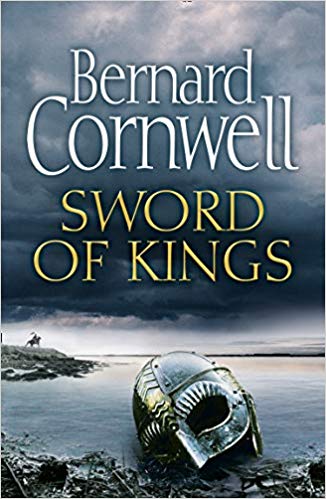



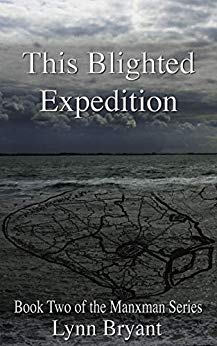

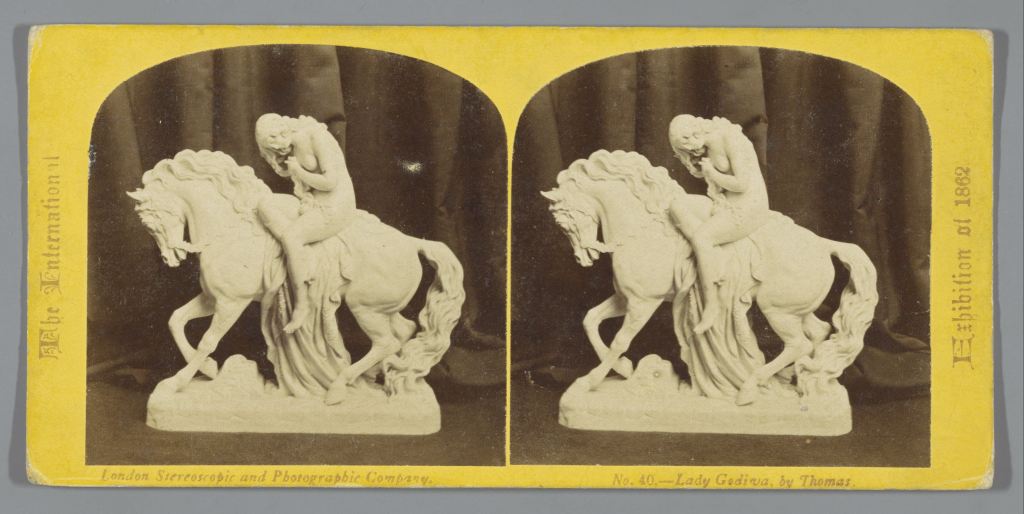
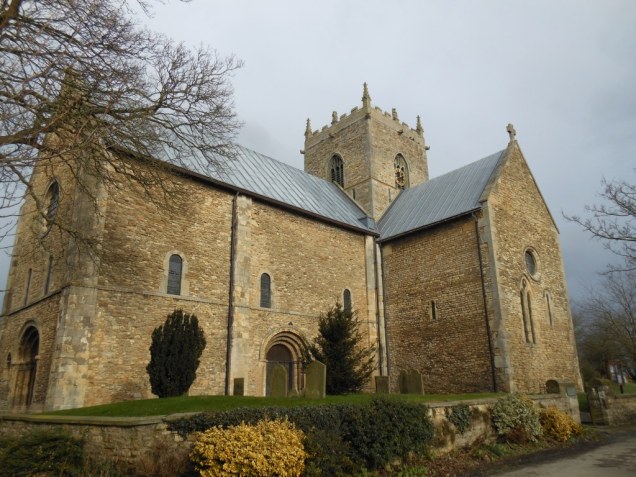

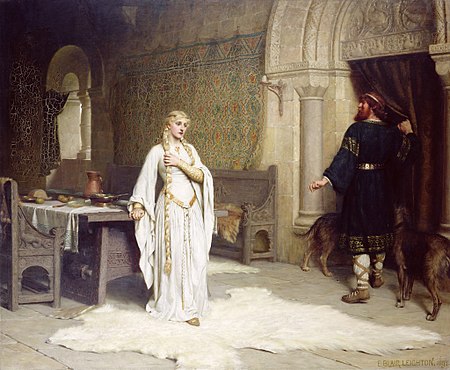
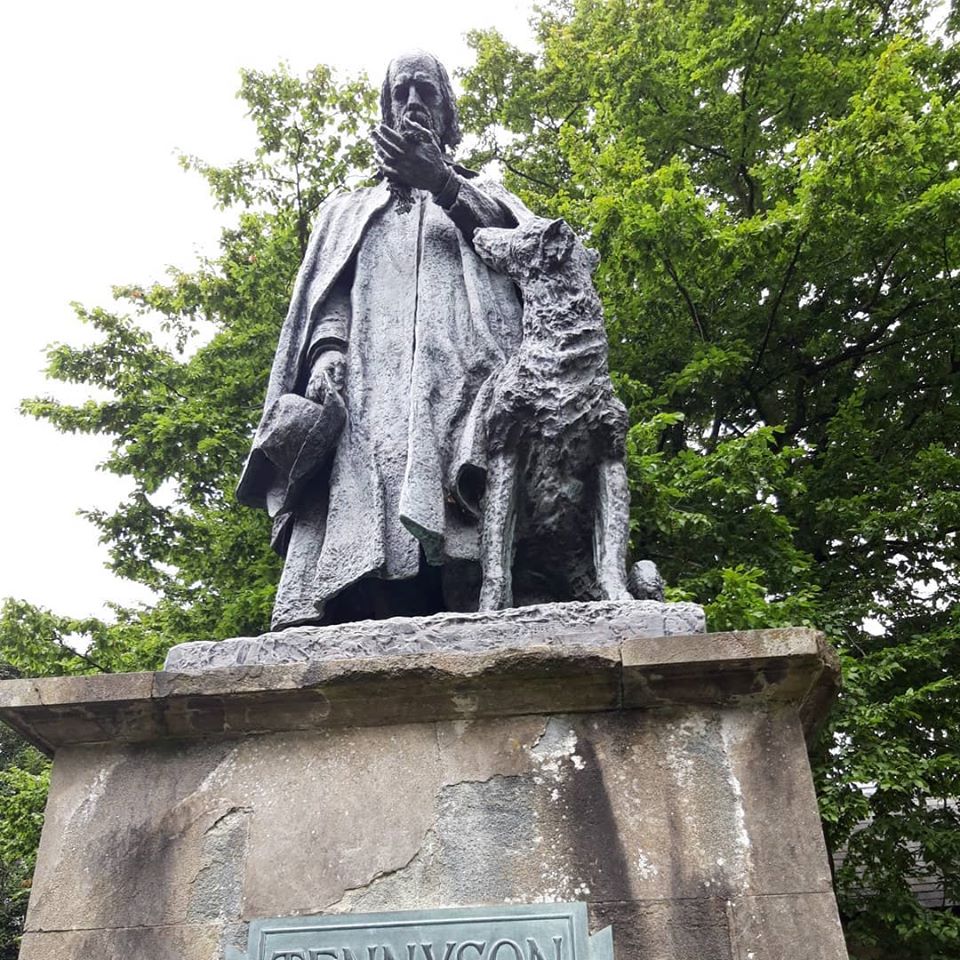
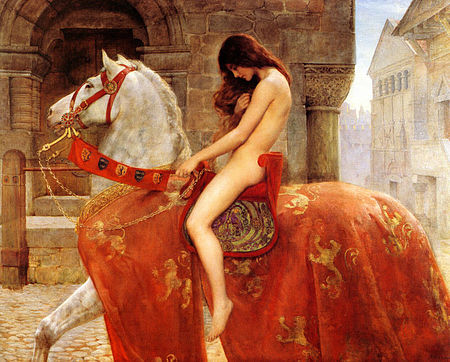




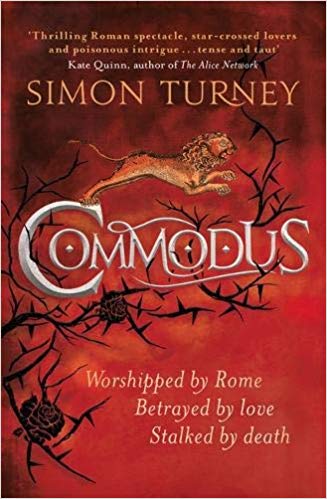


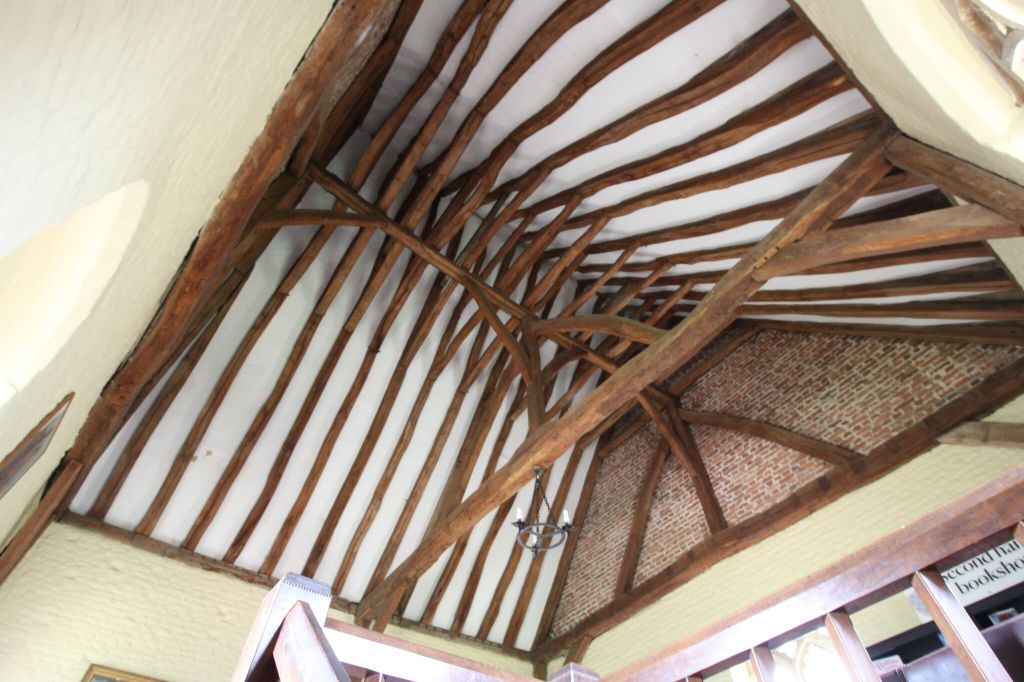
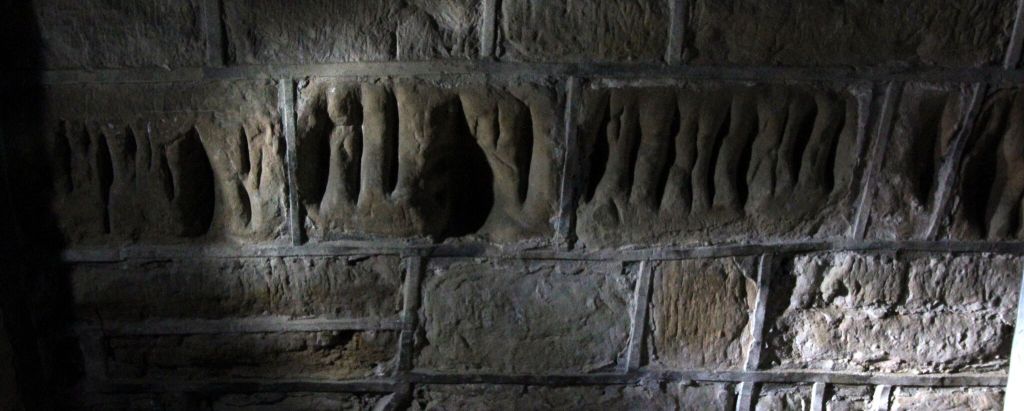


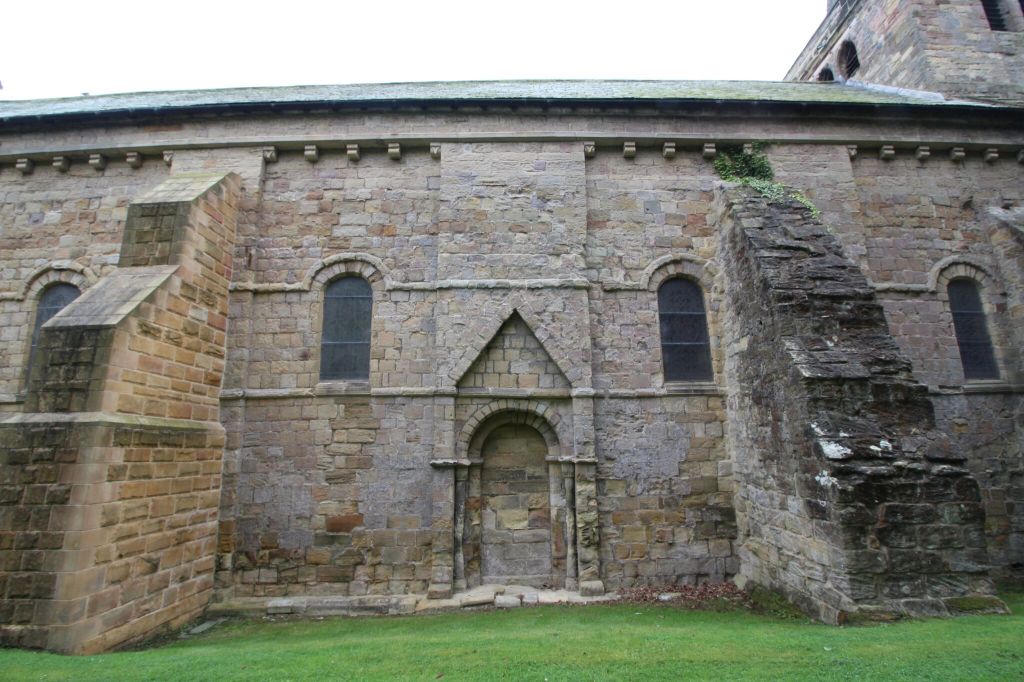


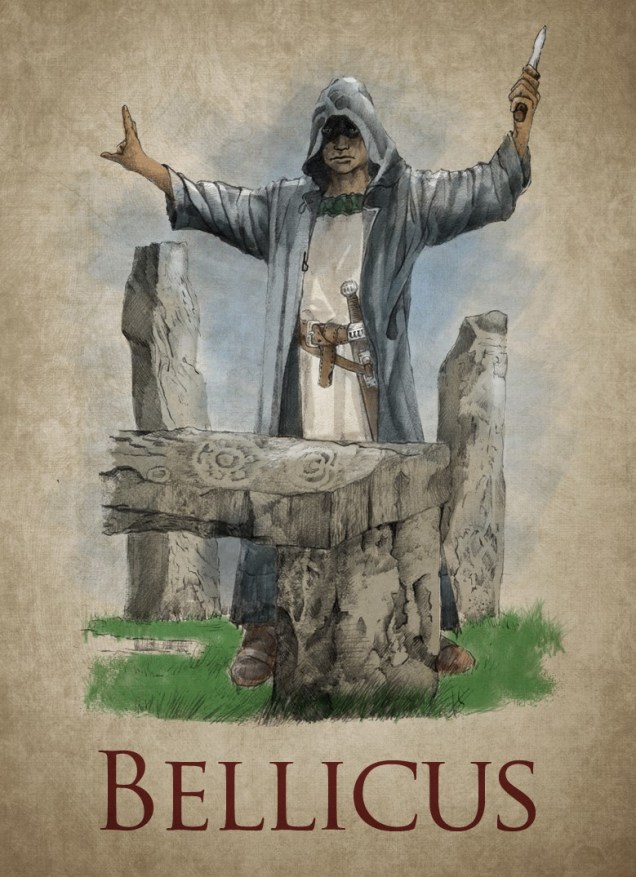
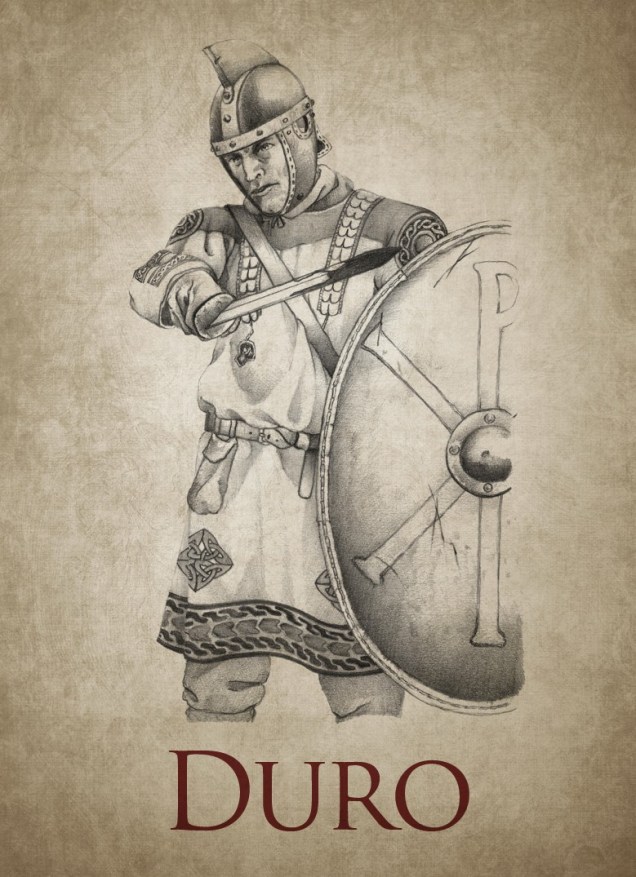


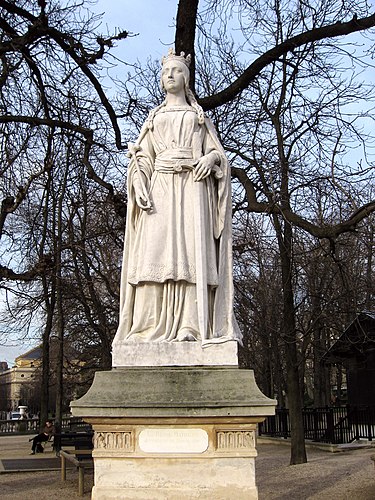
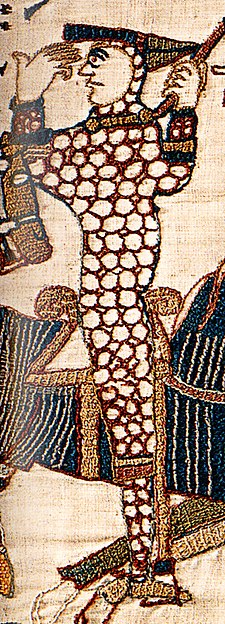

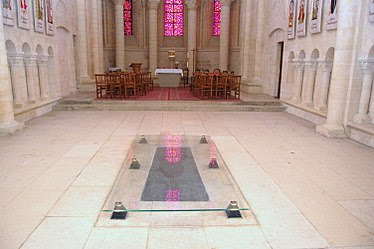


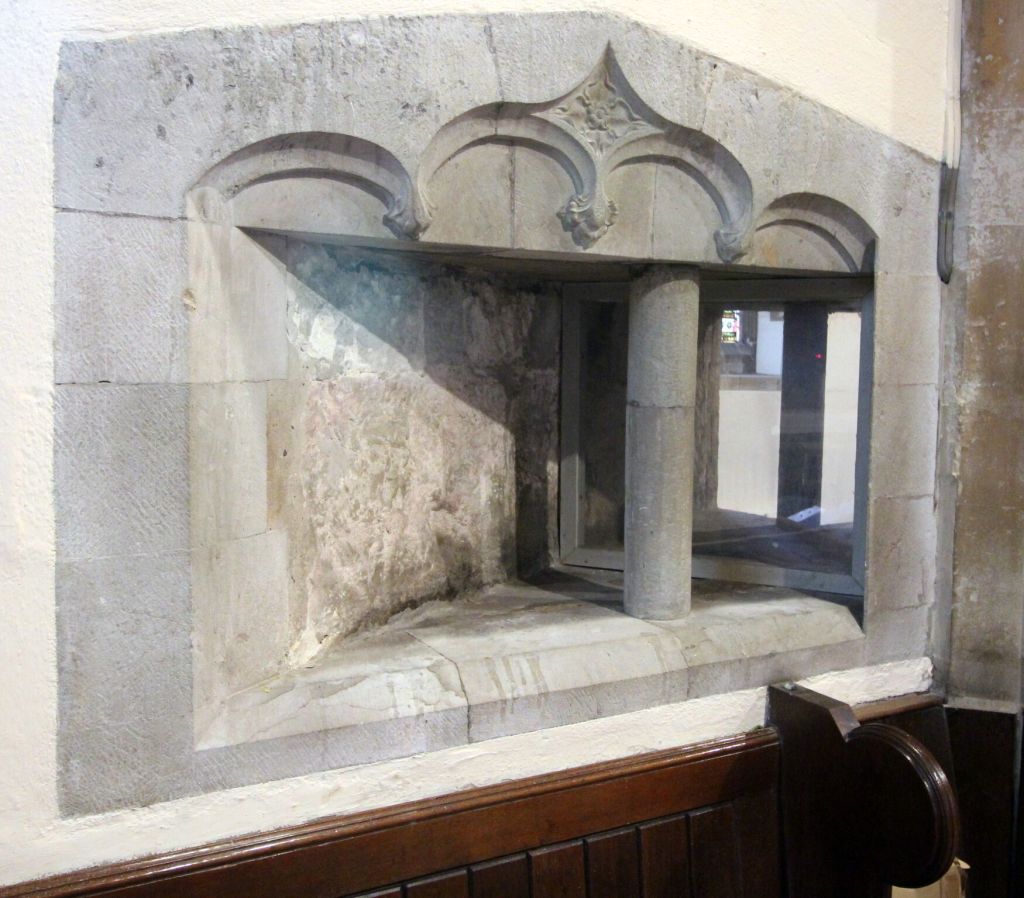
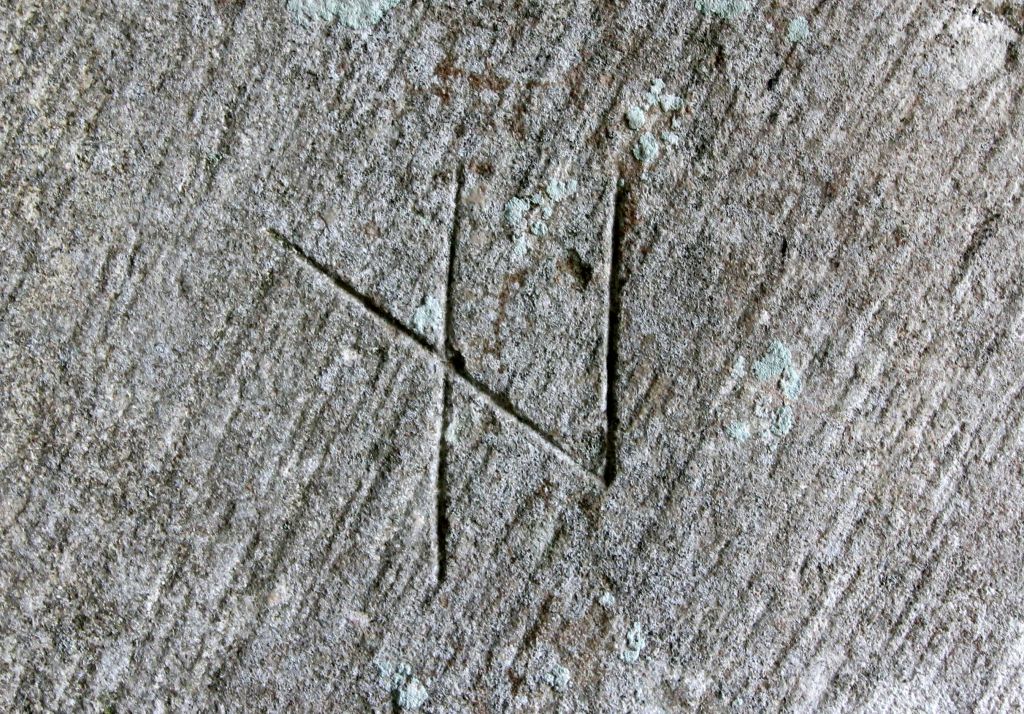
 History... the interesting bits!