The Tragic Story of the 1st Duke of Rothesay

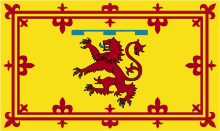
220px-Duke_of_Rothesay_Standard.svg
Standard of the Duke of Rothesay

David Stewart was born on 24th October, 1378, the son of John, Earl of Carrick and heir to the throne, and Annabella Drummond. His grandfather was King Robert II, who was himself the grandson of Robert I the Bruce, being the son of Robert’s unfortunate daughter, Marjorie Bruce, who died in childbirth, aged only 19.

His father succeeded to the throne in 1390, taking the name King Robert III (John being considered an unlucky name for kings). AS heir to the throne, David was created Earl of Carrick in the same year. Robert III, however, was an invalid – he had been kicked by a horse 2 years before his accession. Never having fully recovered from his injuries, he was also prone to depression. This severely limited his ability to govern and his younger brother, also called Robert, took over much of the administration of the realm.

As a highly ambitious younger brother, Robert Stewart, was a ruthless politician with designs on the throne for himself. Towards the end of his father’s reign – following his brother’s injury – he had been protector of the realm; and it seems he intended to keep the position for the duration of his brother’s reign.
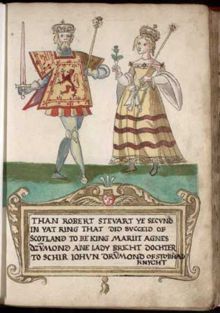
220px-Robert_III_and_Annabella_Drummond
Robert III and his queen, Annabella Drummond

From 1393 Robert III tried to impose his own authority and rule for himself, but caused more division between the Highlands of the north and the Lowlands of the south; bribery and corruption were rife.

In 1395 young David was married to Elizabeth Dunbar, daughter of the Earl of March. However, they were close blood relations and had married before the required papal dispensation had arrived. The couple were censured by the church and forced to live apart for two years – after which they would be allowed to remarry. They separated in 1397.

In April 1398 Robert III’s wife, Annabella, called a special council at which David, still only 19, was made Duke of Rothesay. It was the first ever creation of a duke in Scotland, and the title would, from that moment on, be borne by all heirs to the Scottish throne. He would also receive the title Earl of Atholl later in the same year.

Annabella also had David named “Lieutenant of the Realm”, as a means of ensuring that David would succeed his increasingly frail father. This appointment essentially gave him the rule of Scotland, in his father’s place; although he was to consult with the full council, with his Uncle Robert as his primary advisor.

In the same council Robert Stewart was made Duke of Albany.

A power struggle developed between Albany and David. As their rivalry grew more intense the country was effectively divided into 2 factions.

David, it seems, was of a ‘dissolute and licentious’ nature (Ashley) and almost as inept as his father. According to Nigel Tranter he was “high-spirited” and “not always noted for good judgement”.

220px-Robert_of_Albany
Robert Stewart, Duke of Albany

In 1400, instead of remarrying Elizabeth Dunbar, David married Marjorie Douglas, daughter of Archibald the 3rd Earl of Douglas and his wife Joan, at Bothwell Church. She and David would have no children.

The marriage itself caused the Earl of March – father of David’s 1st wife – to renounce his allegiance and swear fealty to Henry IV of England, thus prompting an English invasion. Henry managed to reach Edinburgh without much opposition. Once there he summoned the dukes of Rothesay and Albany to pay homage to him, but neither did.

David held Edinburgh Castle against Henry, whilst Albany had mustered an army 15 miles away at Calder Muir; but he failed to march to Rothesay’s aid. Henry IV was eventually forced to retire for lack of supplies, with the Scots powerless to take the advantage.

David was blamed for provoking the English invasion. Following his mother’s death in 1401, his popularity was further damaged when he failed to consult his council, as was required, before taking a number of steps which threatened the positions of his nobles, especially his uncle.
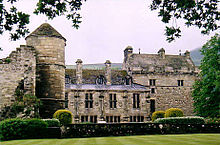
220px-Falkland_Palace
Falkland Palace

With Queen Annabella’s death went David’s chief supporter and last protector. Albany, in alliance with David’s brother-in-law, the 4th Earl of Douglas, took action and had David waylaid on the road to St Andrews, arrested and held captive in St Andrews Castle, before being moved to Falkland Palace, supposedly hooded and mounted backwards on a mule.

According to Tranter, David was flung into a cellar, with no food and water. There were stories of nursing mothers giving him their breast milk for sustenance, through a crack in the cellar’s masonry. He survived for at least 18 days, supposedly dying of starvation between 25th and 27th March 1402, aged 23.

Some historians now think David died of dysentery; but whether he died of starvation or disease the result was the same; from April 1402 Robert, Duke of Albany, was in control of Scotland.

A few weeks after his death a public inquiry, under the control of Albany, exonerated Albany and Douglas of any complicity in the death, ordering that no one should “murmur against” them. The inquiry concluded that David Stewart, Duke of Rothesay, had died “by divine providence and not otherwise”.
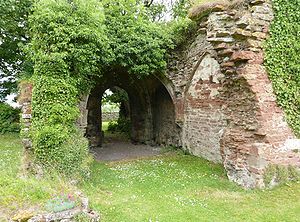
300px-Lindores_abbey_04
Lindores Abbey, burial-place of David, Duke of Rothesay

David was buried in Lindores Abbey, Fife. The king founded a chaplaincy at the parish church of Dundee to pray for David’s soul, and ordered daily masses to be said in the prince’s memory at Deer Abbey and Culross.

Following David’s death his widow, Marjorie, went on to marry Sir Walter Haliburton in 1403; she died sometime before 11th May 1421.

The king, Robert III, took some time to realise that his second son, James, may also be in danger. In 1406, the king arranged for him to be sent to France for his own safety. Aged just 12, James was smuggled out of Scotland by ship, but was captured by pirates off Flamborough Head, and handed over to the English to begin 18 years of imprisonment.

King Robert III died of grief shortly after.

Albany was, thereafter, the effective ruler of Scotland until his death in 1420.

*

Pictures courtesy of Wikipedia.

Sources: The Story of Scotland by Nigel Tranter; Brewer’s British Royalty by David Williamson; Kings & Queens of Britain by Joyce Marlow; Mammoth Book of British Kings & Queens and British Kings & Queens by Mike Ashley; Oxford Companion to British History Edited by John Cannon; History Today Companion to British History Edited by juliet Gardiner & Neil Wenborn; Britain’s Royal Families by Alison Weir; undiscoveredscotland.co.uk; englishmonarchs.co.uk

*

My Books

Signed, dedicated copies of all my books are available, please get in touch by completing the contact me form.
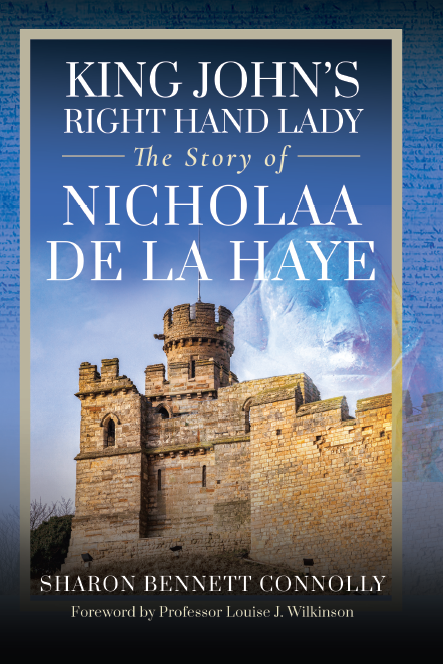
Coming 30 May 2023!

King John’s Right-Hand Lady: The Story of Nicholaa de la Haye is now available for pre-order from Pen & Sword Booksbookshop.org and Amazon UK. (I will hopefully have a US release date shortly)

In a time when men fought and women stayed home, Nicholaa de la Haye held Lincoln Castle against all-comers. Not once, but three times, earning herself the ironic praise that she acted ‘manfully’. Nicholaa gained prominence in the First Baron’s War, the civil war that followed the sealing of Magna Carta in 1215.

A truly remarkable lady, Nicholaa was the first woman to be appointed sheriff in her own right. Her strength and tenacity saved England at one of the lowest points in its history. Nicholaa de la Haye is one woman in English history whose story needs to be told…

 Also by Sharon Bennett Connolly:
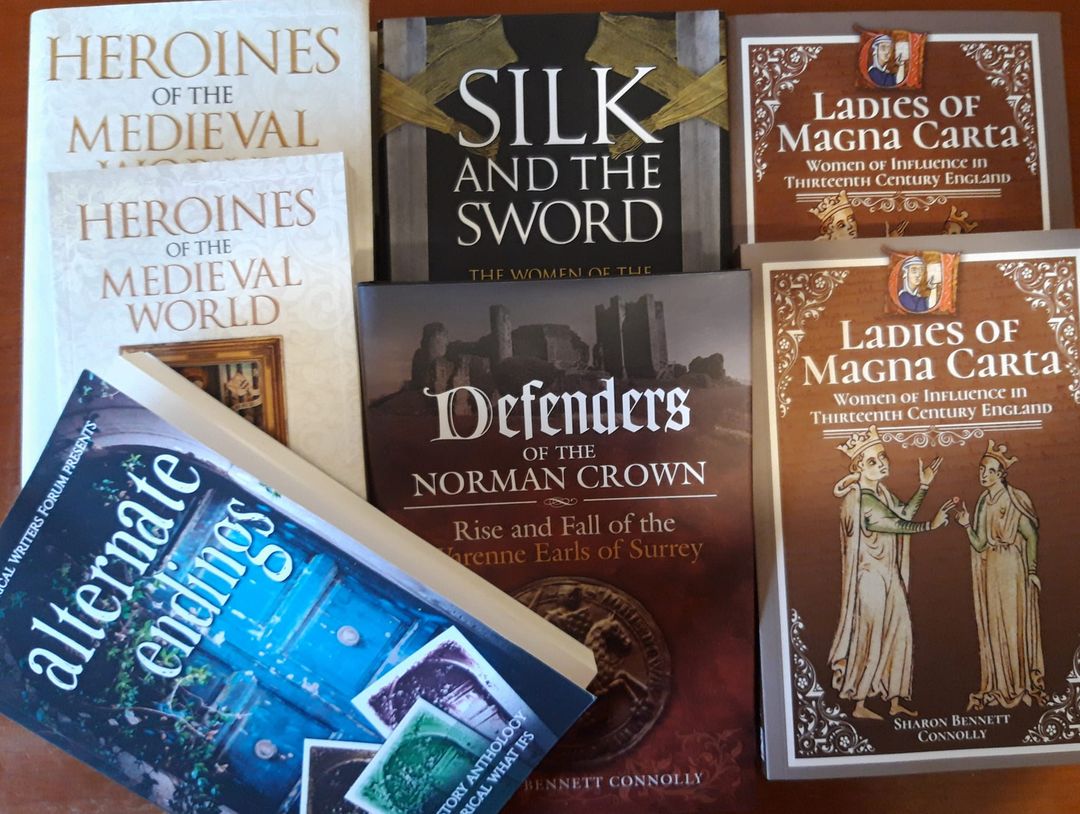
Defenders of the Norman Crown: The Rise and Fall of the Warenne Earls of Surrey tells the fascinating story of the Warenne dynasty, of the successes and failures of one of the most powerful families in England, from its origins in Normandy, through the Conquest, Magna Carta, the wars and marriages that led to its ultimate demise in the reign of Edward III. Defenders of the Norman Crown: Rise and Fall of the Warenne Earls of Surrey is now available from Pen & Sword BooksAmazon in the UK and US, Bookshop.org and Book Depository.

Ladies of Magna Carta: Women of Influence in Thirteenth Century England looks into the relationships of the various noble families of the 13th century, and how they were affected by the Barons’ Wars, Magna Carta and its aftermath; the bonds that were formed and those that were broken. It is now available in paperback and hardback from Pen & Sword,  AmazonBookshop.org and from Book Depository worldwide.
Heroines of the Medieval World tells the stories of some of the most remarkable women from Medieval history, from Eleanor of Aquitaine to Julian of Norwich. Available now from Amberley Publishing and Amazon, Bookshop.org and from Book Depository worldwide.

Silk and the Sword: The Women of the Norman Conquest traces the fortunes of the women who had a significant role to play in the momentous events of 1066. Available now from Amazon,  Amberley Publishing, Bookshop.org and Book Depository.

Alternate Endings: An anthology of historical fiction short stories including Long Live the King… which is my take what might have happened had King John not died in October 1216. Available in paperback and kindle from Amazon.

*

For forthcoming online and in-person talks, please check out my Events Page.

*

You can be the first to read new articles by clicking the ‘Follow’ button, liking our Facebook page or joining me on Twitter and Instagram.

*

2015 Sharon Bennett Connolly FRHistS
Matilda de Braose, the King’s Enemy

220px-William_de_Braose,_4th_Lord_Bramber.svg
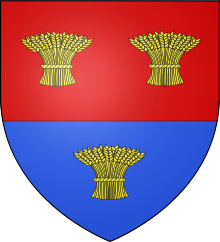
Arms of William de Braose

Matilda de Braose was probably born in the early 1150s in Saint-Valery-en-Caux, France, to Bernard IV, Seigneur de Saint-Valery and his wife, Matilda. Contemporary records describe her as tall and beautiful, wise and vigorous.

Matilda’s story was made famous by the de Braose’s spectacular falling-out with King John – and the manner of her death. Very little is known of Matilda’s early years; though she probably spent time at her family’s manor of Hinton Waldrist in Berkshire. Sometime around 1166 she married William de Braose, 4th Lord of Bramber, a Norman lord with land on the Welsh Marches. William was highly favoured by both Richard I and, later his brother King John.

Whilst William was away campaigning in Normandy, Matilda would be left to manage their estates in Wales. In 1198, Matilda defended Painscastle in Elfael against a massive Welsh attack by Gwenwynyn, Prince of Powys. She held out for 3 weeks until English reinforcements arrived, earning the castle its nickname of Matilda’s Castle.

220px-Hay_Castle_-_geograph.org.uk_-_61858
Hay Castle

Matilda’s exploits were legendary. One of her titles was the Lady of Hay and Welsh folklore has her building the Castle of Hay in one night, single-handed, carrying the stones in her skirts.

The couple had around 16 children together, who married into some of the most powerful families of the time. Their eldest son, William, married Maud de Clare, daughter of the Earl of Hertford. Another son, Giles, became Bishop of Hereford. Of their daughters Loretta, married Robert de Breteuil, 4th Earl of Leicester and another, Margaret, married Walter de Lacy, Lord of Meath in Ireland.

A third son, Reginald, married, as his second wife, Gwladus Ddu, daughter of Llewelyn the Great, Prince of Wales. Reginald’s son by his first wife, William, was married Eva Marshal, daughter of the great knight, William Marshal, Earl of Pembroke and regent for King Henry III. It was this William de Braose who was ignominiously hanged by Llewelyn the Great, after being found in the bedchamber of Llewelyn’s wife Joan, the Lady of Wales and natural daughter of King John. William had been at the Welsh court to arrange the marriage of his daughter, Isabel, to Llewelyn and Joan’s son, David. Interestingly, the marriage still went ahead, although it was to be childless.

170px-John_of_England_(John_Lackland)
King John

William de Braose was greatly favoured by King John in the early part of his reign. He was given  Limerick in Ireland for 5,000 marks and also received the castle at Glamorgan and the lordship of Gower. William de Braose was the knight who captured the rival to John’s throne, Arthur of Brittany, at the Siege of Mirebeau in 1202 and possibly witnessed Arthur’s murder at Rouen at Easter 1203.

It was following Arthur’s murder that things started to go wrong for the Lord and Lady of Bramber. John became increasingly suspicious of de Braose’s loyalty and turned against him. This could have been for several reasons, not least being de Braose’s knowledge of Arthur’s fate.

Elsewhere, de Braose had fallen behind in his payments to the Exchequer for the honour of Limerick, but he had also sided with his friend William Marshal in his disagreements with the king. In addition, de Braose’s son, Giles had been one of the bishops to approve an Interdict against John; Giles fled into exile in France to escape the king’s reprisals.

250px-TrimCastle
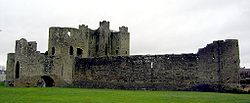
Trim Castle, Meath

Whatever the reason, in 1207 King John moved to make a public example of one of his most powerful barons, and punish him for his debts to the Exchequer. John demanded William and Matilda give up their sons as hostages.

Matilda refused and Roger of Wendover recorded her response to the soldiers sent to collect the boys, as;

“I will not deliver my sons to your lord, King John, for he foully murdered his nephew Arthur, whom he should have cared for honourably.”

Roger of Wendover

William is said to have admonished his wife for speaking so harshly of the king; but what mother wouldn’t react rashly when in fear for her children’s lives? William and Matilda realised she had gone too far, and tried to placate John with gifts. Matilda sent a herd of cows and a prized whit bull to John’s queen, Isabella of Angouleme.

But it was too late.

John took possession of de Braose’s castles and moved to arrest William. Forewarned, the couple fled to Ireland with 2 of their sons, where they took refuge with Walter de Lacy, their son-in-law and Lord of Meath. John followed after them, mounting an invasion of Ireland and bringing other recalcitrant barons to heal along the way. While William de Braose tried to come to terms with the king, Matilda and their eldest son, William, escaped by taking ship for Scotland.

However, Matilda and her son were captured in Galloway by Duncan of Carrick, and, having been returned to England in chains, they were imprisoned in Bristol Castle. King John made an agreement with both William and Matilda; freedom for her and a pardon for William in return for 40,000 marks.

220px-Outer_bailey_wall_west_of_the_outer_gatehouse_corfe_castle
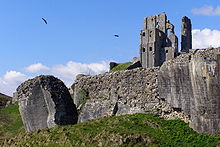
Corfe Castle

However, being either unwilling or unable to pay, Matilda and her son remained in prison – either at Windsor or Corfe Castle – and William was outlawed, eventually escaping into exile in France, disguised as a beggar, where he died in 1211.

Matilda’s fate was more gruesome; she and her son were left to starve to death in John’s dungeons (though whether this was at Corfe or Windsor is unclear). Tradition has it, that when their bodies were found, William’s cheeks bore his mother’s bite marks, where she had tried to stay alive following his death:

‘On the eleventh day the mother was found dead between her son’s legs, still upright but leaning back against her son’s chest as a dead woman. The son, who was also dead, sat upright, leaning against the wall as a dead man. So desperate was the mother that she had eaten her son’s cheeks. When William de Braose, who was in Paris, heard this news, he died soon afterwards, many asserting that it was through grief.’

Anonymous of Bethune
Magna_Carta_(British_Library_Cotton_MS_Augustus_II.106)
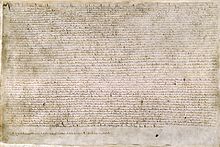
Magna Carta

In another version,

‘When the King returned to England he imprisoned Matilda de Braose and her son William in the castle of Corfe; they were given a sheaf of oats and a flitch of raw bacon ; this was all the meat they were allowed. On the eleventh day the mother was found dead between the knees of her son, sitting upright except that she leaned back against her son like a dead woman. The son was dead in like manner, except that he was leaning back against the wall; and his cheeks had been gnawed by his mother in her anguish.’ (Histoire des ducs de Normandie)

John’s treatment of the de Braose family did not lead to the submission of his barons, as John had intended, and the remainder of his reign was marred by civil war.

However when Magna Carta was written in 1215, Clause 39 may well have been included  with Matilda and her family in mind:

“No man shall be taken, imprisoned, outlawed, banished or in any way destroyed, nor will we proceed against or prosecute him, except by the lawful judgement of his peers or by the law of the land.”

Magna Carta 1215

In his final days John may have felt some remorse at his relentless pursuit of the destruction of Matilda and her family, as shortly after the onset of his final, fatal illness, on 10 October 1216, the king gave permission to Matilda’s daughter, Margaret, to found a religious house in Herefordshire in memory of her father, mother and brother William. John died at Newark on the night of 18/19 October 1216.

*

The story of Matilda and her family features in my book, Ladies of Magna Carta; Women of Influence in Thirteenth Century England, which was released in the UK in May 2020.

*

Sources: sussexcastles.com; genie.com; steyningmuseum.org.uk; berkshirehistory.com; England Under the Norman and Angevin Kings 1075-1225 by Robert Bartlett; Oxford Companion to British History Edited by John Cannon; The Story of Britain by Roy Strong; The Plantagenets; the Kings who Made England by Dan Jones; The Life and Times of King John by Maurice Ashley; The Plantagenet Chronicles Edited by Elizabeth Hallam.

Pictures courtesy of Wikipedia

*

My Books:

Signed, dedicated copies of all my books are available through my online store.

Out now: Scotland’s Medieval Queens

Books by Sharon Bennett Connolly

Scotland’s history is dramatic, violent and bloody. Being England’s northern neighbour has never been easy. Scotland’s queens have had to deal with war, murder, imprisonment, political rivalries and open betrayal. They have loved and lost, raised kings and queens, ruled and died for Scotland. From St Margaret, who became one of the patron saints of Scotland, to Elizabeth de Burgh and the dramatic story of the Scottish Wars of Independence, to the love story and tragedy of Joan Beaufort, to Margaret of Denmark and the dawn of the Renaissance, Scotland’s Medieval Queens have seen it all. This is the story of Scotland through their eyes.

Scotland’s Medieval Queens gives a thorough grounding in the history of the women who ruled Scotland at the side of its kings, often in the shadows, but just as interesting in their lives beyond the spotlight. It’s not a subject that has been widely covered, and Sharon is a pioneer in bringing that information into accessible history.’ Elizabeth Chadwick (New York Times bestselling author)

Available now from Amazon and Pen and Sword Books

Also by Sharon Bennett Connolly:

Books by Sharon Bennett Connolly

Heroines of the Tudor World tells the stories of the most remarkable women from European history in the time of the Tudor dynasty, 1485-1603. These are the women who ruled, the women who founded dynasties, the women who fought for religious freedom, their families and love. Heroines of the Tudor World is now available from Amberley Publishing and Amazon UK. Women of the Anarchy demonstrates how Empress Matilda and Matilda of Boulogne, unable to wield a sword themselves, were prime movers in this time of conflict and lawlessness. It shows how their strengths, weaknesses, and personal ambitions swung the fortunes of war one way – and then the other. Available from Bookshop.orgAmberley Publishing and Amazon UKKing John’s Right-Hand Lady: The Story of Nicholaa de la Haye is the story of a truly remarkable lady, the hereditary constable of Lincoln Castle and the first woman in England to be appointed sheriff in her own right. Available from all good bookshops Pen & Sword Booksbookshop.org and Amazon

Defenders of the Norman Crown: The Rise and Fall of the Warenne Earls of Surrey tells the fascinating story of the Warenne dynasty, from its origins in Normandy, through the Conquest, Magna Carta, the wars and marriages that led to its ultimate demise in the reign of Edward III. Available from Pen & Sword BooksAmazon in the UK and US, and Bookshop.orgLadies of Magna Carta: Women of Influence in Thirteenth Century England looks into the relationships of the various noble families of the 13th century, and how they were affected by the Barons’ Wars, Magna Carta and its aftermath; the bonds that were formed and those that were broken. It is now available in paperback and hardback from Pen & SwordAmazon, and Bookshop.orgHeroines of the Medieval World tells the stories of some of the most remarkable women from Medieval history, from Eleanor of Aquitaine to Julian of Norwich. Available now from Amberley Publishing and Amazon, and Bookshop.orgSilk and the Sword: The Women of the Norman Conquest traces the fortunes of the women who had a significant role to play in the momentous events of 1066. Available now from Amazon,  Amberley Publishing, and Bookshop.org.

Alternate Endings: An anthology of historical fiction short stories including Long Live the King… which is my take what might have happened had King John not died in October 1216. Available in paperback and kindle from Amazon.

Podcast

A Slice of Medieval

Have a listen to the A Slice of Medieval podcast, which I co-host with Historical fiction novelist Derek Birks. Derek and I welcome guests, such as Bernard Cornwell and Michael Jecks, and discuss a wide range of topics in medieval history, from significant events to the personalities involved. 

Every episode is also now available on YouTube.

*

Don’t forget! Signed and dedicated copies of all my books are available through my online store.

For forthcoming online and in-person talks, please check out my Events Page.

You can be the first to read new articles by clicking the ‘Follow’ button, liking our Facebook page or joining me on TwitterThreadsBluesky and Instagram.

*

©2015 Sharon Bennett Connolly FRHistS
Eleanor de Montfort, the First Princess of Wales

Eleanor_de_Montford
Eleanor de Montfort

Born in 1258, probably at Kenilworth Castle, Eleanor de Montfort was the only daughter and sixth child of Eleanor of England. Her mother was the fifth and youngest child of King John and Isabella of Angouleme, and sister of Henry III. Her father was Simon de Montfort, Earl of Leicester, leader of the rebels in the Second Barons’ War.

Eleanor had 5 older brothers; Henry, Simon, Amaury, Guy and Richard.

Her father, Simon de Montfort, is remembered as one of the founders of representative government. He was a leading figure of the Second Barons’ War. He and his eldest son, Henry, were killed at the Battle of Evesham on 4th August 1265. On her father’s death, Eleanor fled to exile in France with her mother and brother, Amuary. The women settled at the Abbey at Montargis until Eleanor of England’s death there in 1275.

llywel2
Llewelyn ap Gruffydd, Prince of Wales

In 1265, in return for Welsh support, Simon de Montfort had agreed to the marriage of his daughter, Eleanor, to Llewelyn ap Gruffydd, Prince of Wales. De Montfort’s downfall had postponed the marriage, but in 1275, in a move guaranteed to rile Edward I, King of England, Llewelyn reprised his marriage plans and the couple were married by proxy whilst Eleanor was still in France.

Shortly afterwards, Eleanor set sail for Wales, accompanied by her brother, Amaury, who was now a Papal Chaplain and Canon of York. Believing the marriage would ‘scatter the seeds which had grown from the malice her father had sown’, Edward arranged for Eleanor to be captured at sea. When Eleanor’s ship was taken in the Bristol Channel, the de Montfort arms and banner were found beneath the ship’s boards.

Eleanor was taken to close, but comfortable, captivity at Windsor; whilst her brother Amaury was imprisoned at Corfe Castle for 6 years.

In 1276 Llewelyn having refused to pay homage to Edward I, he was declared a rebel. Faced with Edward’s overwhelming forces, and support slipping away, Llewelyn was forced to submit within a year. The Treaty of Aberconwy reduced his lands to Gwynedd, but paved the way for his marriage to Eleanor, at last; it’s possible that the marriage was one of the conditions of Llewelyn’s submission.

edward03
Edward I, with Alexander III, King of Scots on his right, and Llewelyn, Prince of Wales on his left

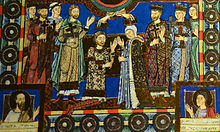
The wedding celebrations of Eleanor de Montfort and Llewelyn ap Gruffydd were an extravagant affair, celebrated at Worcester Cathedral on the Feast of St Edward, 13th October 1278. The illustrious guest list included Edward I and Alexander III, King of Scots. Edward and his brother, Edmund of Lancaster gave Eleanor away at the church door, and Edward paid for the lavish wedding feast.

While the marriage did not prevent further struggles between the Welsh and the English king, there was relative peace for a short time and Eleanor may have encouraged her husband to seek political solutions. She is known to have visited the English court when Princess of Wales; and was at Windsor on such a visit in January 1281. Eleanor herself wrote to Edward on 8 July 1279, not only to assure him of her ‘sincere affection’ and loyalty, but also to warn him against listening to reports unfavourable to Wales from his advisers:

Although as we have heard, the contrary hereto hath been reported of us to your excellency by some; and we believe, notwithstanding, that you in no wise give credit to any who report unfavourably concerning our lord and ourself until you learn from ourselves if such speeches contain truth: because you showed, of your grace, so much honour and so much friendliness to our lord and yourself, when you were at the last time at Worcester.

Anne Crawford, Letters of Medieval Women

As a testament to her diplomatic skills, Eleanor uses words of affection and flattery whilst clearly getting her point across, a technique her predecessor Joan, Lady of Wales, had used to good effect with Henry III. As it had been with Joan, Eleanor, too, was not beyond humbling herself to King Edward in order to achieve her objectives and wrote to him again in October 1280, this time regarding her brother, Amaury, who was still in the king’s custody. She wrote to the king,

with clasped hands, and with bended knees and tearful groanings, we supplicate your highness that, reverencing from your inmost soul the Divine mercy (which holds out the hand of pity to all, especially those who seek Him with their whole heart), you would deign mercifully to take again to your grace and favour our aforesaid brother and your kinsman, who humbly craves, as we understand, your kindness. For if your excellency, as we have often known, mercifully condescends to strangers, with much reason, as we think, ought you to hold out the hand of pity to one so near to you by the ties of nature.

Anne Crawford, Letters of Medieval Women

Amaury was released shortly afterwards.

However, on 22nd March, 1282, Llewelyn’s younger brother, Dafydd, attacked the Clifford stronghold of Hawarden Castle and Llewelyn found himself in rebellion against Edward I yet again. At the same time, Eleanor was in the final few months of her pregnancy and Llewelyn held off taking the field until the birth of his much hoped for heir.

Eleanor and Llewelyn’s only child, a daughter, Gwenllian, was born on 19th June 1282; Eleanor died the same day.

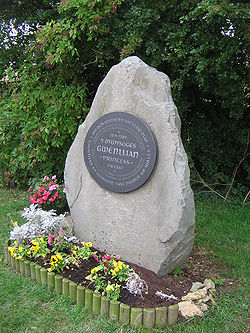
250px-Gwenllian_memorial_Sempringham
Memorial stone for Princess Gwenllian, Sempringham

Llewelyn himself was killed in an ambush on 11 December of the same year, at Builth, earning himself the name of Llewelyn the Last – the last native Prince of Wales.

Their daughter, Gwenllian was given into the guardianship of her uncle, Dafydd ap Gruffydd, but was taken into Edward I’s custody when David was defeated and captured by the English. She was sent to be raised at the Gilbertine convent at Sempringham, where she eventually became a nun. She died there on 7th June 1337, the last of her father’s line. It is said that she was never allowed to speak, hear or learn her native language. It has been assumed that she was not aware of her heritage, although she was once visited by her cousin, Edward III, who paid £20 annually for her food and clothing. However, as David Pilling has pointed out, she does in fact call herself ‘Princess of Wales, daughter of Llywelyn ap Gruffudd’ in a petition inside the volume of petitions from Wales edited by William Rees.

Eleanor de Montfort was the first woman known to have used the title Princess of Wales. She was buried alongside her aunt Joan, illegitimate daughter of King John and wife of Llewelyn the Great, at Llanfaes on the Isle of Anglesey.

*

Sources: castlewales.com; snowdoniaheritage.info; Marc Morris A Great and Terrible King; David Williamson Brewer’s British royalty; Mike Ashley The Mammoth Book of British kings & Queens; Alison Weir Britain’s Royal Families; Roy Strong The Story of Britain; Dan Jones The Plantagenets; the Kings who Made England; Chronicles of the Age of Chivalry Edited by Elizabeth Hallam; The Oxford Companion to British History; The History Today Companion to British History; Derek Wilson The Plantagenets; Anne Crawford, Letters of Medieval Women; author David Pilling.

Pictures taken from Wikipedia, except that of Edward I, Alexander III and Llewelyn, which was taken from castlewales.com.

*

My Books:

Signed, dedicated copies of all my books are available through my online bookshop.

Out Now! Scotland’s Medieval Queens

Books by Sharon Bennett Connolly

Scotland’s history is dramatic, violent and bloody. Being England’s northern neighbour has never been easy. Scotland’s queens have had to deal with war, murder, imprisonment, political rivalries and open betrayal. They have loved and lost, raised kings and queens, ruled and died for Scotland. From St Margaret, who became one of the patron saints of Scotland, to Elizabeth de Burgh and the dramatic story of the Scottish Wars of Independence, to the love story and tragedy of Joan Beaufort, to Margaret of Denmark and the dawn of the Renaissance, Scotland’s Medieval Queens have seen it all. This is the story of Scotland through their eyes.

Scotland’s Medieval Queens gives a thorough grounding in the history of the women who ruled Scotland at the side of its kings, often in the shadows, but just as interesting in their lives beyond the spotlight. It’s not a subject that has been widely covered, and Sharon is a pioneer in bringing that information into accessible history.’ Elizabeth Chadwick (New York Times bestselling author)

Available now from Amazon and Pen and Sword Books

Also by Sharon Bennett Connolly:

Books by Sharon Bennett Connolly

Heroines of the Tudor World tells the stories of the most remarkable women from European history in the time of the Tudor dynasty, 1485-1603. These are the women who ruled, the women who founded dynasties, the women who fought for religious freedom, their families and love. Heroines of the Tudor World is now available for pre-order from Amberley Publishing and Amazon UK. Women of the Anarchy demonstrates how Empress Matilda and Matilda of Boulogne, unable to wield a sword themselves, were prime movers in this time of conflict and lawlessness. It shows how their strengths, weaknesses, and personal ambitions swung the fortunes of war one way – and then the other. Available from Bookshop.orgAmberley Publishing and Amazon UKKing John’s Right-Hand Lady: The Story of Nicholaa de la Haye is the story of a truly remarkable lady, the hereditary constable of Lincoln Castle and the first woman in England to be appointed sheriff in her own right. Available from all good bookshops Pen & Sword Booksbookshop.org and Amazon

Royal Historical Society

Defenders of the Norman Crown: The Rise and Fall of the Warenne Earls of Surrey tells the fascinating story of the Warenne dynasty, from its origins in Normandy, through the Conquest, Magna Carta, the wars and marriages that led to its ultimate demise in the reign of Edward III. Available from Pen & Sword BooksAmazon in the UK and US, and Bookshop.orgLadies of Magna Carta: Women of Influence in Thirteenth Century England looks into the relationships of the various noble families of the 13th century, and how they were affected by the Barons’ Wars, Magna Carta and its aftermath; the bonds that were formed and those that were broken. It is now available in paperback and hardback from Pen & SwordAmazon, and Bookshop.orgHeroines of the Medieval World tells the stories of some of the most remarkable women from Medieval history, from Eleanor of Aquitaine to Julian of Norwich. Available now from Amberley Publishing and Amazon, and Bookshop.orgSilk and the Sword: The Women of the Norman Conquest traces the fortunes of the women who had a significant role to play in the momentous events of 1066. Available now from Amazon,  Amberley Publishing, and Bookshop.org.

Alternate Endings: An anthology of historical fiction short stories including Long Live the King… which is my take what might have happened had King John not died in October 1216. Available in paperback and kindle from Amazon.

Podcast:

A Slice of Medieval

Have a listen to the A Slice of Medieval podcast, which I co-host with Historical fiction novelist Derek Birks. Derek and I welcome guests, such as Bernard Cornwell and Michael Jecks, and discuss a wide range of topics in medieval history, from significant events to the personalities involved. 

Every episode is also now available on YouTube.

*

Don’t forget! Signed and dedicated copies of all my books are available through my online store.

For forthcoming online and in-person talks, please check out my Events Page.

You can be the first to read new articles by clicking the ‘Follow’ button, liking our Facebook page or joining me on TwitterThreadsBluesky and Instagram.

*

©2015 Sharon Bennett Connolly FRHistS
English Princess, Exiled Duchess

Matylda_Anglicka
Matilda of England

Matilda of England was the eldest daughter and third child of, arguably, Medieval Europe’s most glamorous couple. Born in London in June 1156, the daughter of Eleanor of Aquitaine and Henry II was baptised by Theobald, Archbishop of Canterbury, in the Priory Church of the Holy Trinity, Aldgate.

As her parents ruled an empire, that stretched from the Scottish borders to the Pyrenees, travel was a constant part of Matilda’s childhood. She took her first sea-voyage across the English Channel at just 2 months old with her mother and older brother, Henry, to join her father in Anjou; before travelling to Aquitaine in October.

Throughout her childhood, Matilda is often seen accompanying her mother throughout the vast Angevin domains. She and Henry would be joined in the nursery by 3 younger brothers – Richard, Geoffrey and John – and 2 younger sisters – Eleanor and Joan – who survived into adulthood.

Negotiations began for Matilda’s marriage in February 1165, as part of an alliance with the German Emperor, Frederick Barbarossa, in opposition to Louis VII of France and the Pope, Alexander III. It was one of a series of dynastic marriages, which included her younger sisters, aimed at strengthening their father’s position in Europe.

The first of her parents’ daughters to be married, her dowry and send-off cost around £4,500 (about a quarter of England’s annual revenue). The money was raised by taxes specifically levied for the occasion. The 12-year-old princess was given a trousseau worth £63 , including saddles with gilt fittings, ‘two large silken cloths, and two tapestries and one cloth of samite and twelve sable skins’. 34 packhorses were needed to transport all her belongings.

Heinrich_der_Löwe_und_Mathilde_von_England
Coronation of Henry V and Matilda

In July 1166 the emperor’s envoys arrived in England, to escort Matilda to Germany. Her mother accompanied her to Dover, where she embarked on a German ship; and the wedding to Henry V ‘the Lion’, Duke of Saxony and Bavaria, finally took place in Minden Cathedral, Germany, on 1st february 1168.

Henry the Lion was 27 years Matilda’s senior, his first marriage, to Klementia of Zahringen, had been annulled in 1162. The marriage appears to have been successful and produced 10 children, although the fates of some seem to be in question, and several did not survive childhood. Their eldest daughter, Richenza (her name was later changed to Matilda), born around 1172, was married firstly to Geoffrey III, Count of Perche, and secondly to Enguerrand III, Lord of Coucy.

Of their sons Henry, born in 1173, would succeed to the Duchies of Saxony and Bavaria on his father’s death in 1195. Born around 1175, their second son, Otto, Earl of York and Count of Ponthieu, would become Holy Roman Emperor as Otto IV in 1209; Otto was briefly considered as heir to the English throne, by his uncle Richard I, before King John claimed the crown. A third son, William, Duke of Luneberg and Brunswick, was born in England in 1184 and would be ancestor, in the direct male line, of the House of Hanover, Kings of Great Britain in the 18th Century.

220px-JindraLev
Henry V ‘the Lion’

In 1180 Henry V quarrelled with the Holy Roman Emperor, Frederick Barbarossa, who held him responsible for the failure of a campaign in Italy. Henry, it seems, had grown very powerful in his own domains and Barbarossa, after the quarrel, deprived him of his fiefs and sent the Duke of Saxony and Bavaria into exile for 7 years.

Henry, Matilda and their children left Germany and sought refuge at the Angevin court in Autumn 1181. Henry II welcomed his daughter to his court in Normandy and, whilst energetically lobbying the German emperor on his son-in-law’s behalf, gave his daughter the palace of Argentin as a family residence.

Matilda was heavily pregnant and remained with her father whilst her husband left on pilgrimage to Compostela. The family was together again by Christmas 1182, spending the festive period with Matilda’s siblings at Henry II’s court in Caen.

Matilda and her family spent 1183 in the Angevin lands on the Continent; a pregnant Matilda accompanied her father to England in 1184, where she gave birth to her son, William, at Winchester in mid-June. While at the Angevin court Matilda was instrumental in getting the restrictions eased on her mother’s imprisonment; Eleanor of Aquitaine had been held at Old Sarum, following her complicity in a failed rebellion by her sons in 1173-4.

Although she was still in the custody of guards, Eleanor was allowed to reside with Matilda at various locations in England, including Windsor and Berkhamsted. When Eleanor was allowed to cross the Channel to take possession of the Vexin Castles, Matilda accompanied her.

In early 1185, having asked the Pope to intervene with the Emperor, Henry II finally secured agreement for his son-in-law to return to his German domains; although Henry would not be restored to Imperial favour until 1190, when he made peace with the new Holy Roman Emperor, Henry VI.

170px-Braunschweig_Brunswick_Heinrich_der_Loewe_(Dom_2005)
Henry V ‘the Lion’

Matilda and Henry arrived back in Germany in October 1185, although their children, Otto, William and Matilda had been left at Henry’s court, to be raised by their grandparents.

Henry the Lion would be exiled from Germany again, when Frederick Barbarossa left on Crusade, but this time, Matilda remained to oversee their German domains.

Matilda died at Brunswick on 28th June 1189 and was buried there, in the Cathedral of St Blasius, of which she was co-foundress. Henry II died just 8 days later, probably before the news of his daughter’s death could reach him. Matilda’s husband would be buried alongside her, following his death on 6th August 1195.

There seems to be no surviving description of Matilda; however, Bertran de Born, troubadour to Matilda’s brother Richard (the Lionheart) composed a song about her and compared Matilda’s beauty to that of Helen of Troy.

*

Sources: Robert Bartlett England Under the Norman and Angevin Kings, 1075-1225; Alison Weir, Britain’s Royal Families; Mike Ashley The Mammoth Book of British Kings & Queens; David Williamson Brewer’s British Royalty; Douglas Boyd Eleanor, April Queen of Aquitaine; Alison Weir Eleanor of Aquitaine.

Pictures taken from Wikipedia.

*

My Books

Signed, dedicated copies of all my books are available through my online bookshop.

OUT NOW! Heroines of the Tudor World

Heroines of the Tudor World tells the stories of the most remarkable women from European history in the time of the Tudor dynasty, 1485-1603. These are the women who ruled, the women who founded dynasties, the women who fought for religious freedom, their families and love. These are the women who made a difference, who influenced countries, kings and the Reformation. In the era dominated by the Renaissance and Reformation, Heroines of the Tudor World examines the threats and challenges faced by the women of the era, and how they overcame them. From writers to regents, from nuns to queens, Heroines of the Tudor World shines the spotlight on the women helped to shape Early Modern Europe.

Heroines of the Tudor World is now available for pre-order from Amberley Publishing and Amazon UK.

Women of the Anarchy

Two cousins. On the one side is Empress Matilda, or Maud. The sole surviving legitimate child of Henry I, she is fighting for her birthright and that of her children. On the other side is her cousin, Queen Matilda, supporting her husband, King Stephen, and fighting to see her own son inherit the English crown. Women of the Anarchy demonstrates how these women, unable to wield a sword, were prime movers in this time of conflict and lawlessness. It show how their strengths, weaknesses, and personal ambitions swung the fortunes of war one way – and then the other.

Available from Bookshop.orgAmberley Publishing and Amazon UK.

Also by Sharon Bennett Connolly:

King John’s Right-Hand Lady: The Story of Nicholaa de la Haye is the story of a truly remarkable lady, the hereditary constable of Lincoln Castle and the first woman in England to be appointed sheriff in her own right. Available from all good bookshops Pen & Sword Booksbookshop.org and AmazonDefenders of the Norman Crown: The Rise and Fall of the Warenne Earls of Surrey tells the fascinating story of the Warenne dynasty, from its origins in Normandy, through the Conquest, Magna Carta, the wars and marriages that led to its ultimate demise in the reign of Edward III. Available from Pen & Sword BooksAmazon in the UK and US, and Bookshop.org

Ladies of Magna Carta: Women of Influence in Thirteenth Century England looks into the relationships of the various noble families of the 13th century, and how they were affected by the Barons’ Wars, Magna Carta and its aftermath; the bonds that were formed and those that were broken. It is now available in paperback and hardback from Pen & Sword,  Amazon, and Bookshop.orgHeroines of the Medieval World tells the stories of some of the most remarkable women from Medieval history, from Eleanor of Aquitaine to Julian of Norwich. Available now from Amberley Publishing and Amazon, and Bookshop.orgSilk and the Sword: The Women of the Norman Conquest traces the fortunes of the women who had a significant role to play in the momentous events of 1066. Available now from Amazon,  Amberley Publishing, and Bookshop.org.

Alternate Endings: An anthology of historical fiction short stories including Long Live the King… which is my take what might have happened had King John not died in October 1216. Available in paperback and kindle from Amazon.

Podcast:

Have a listen to the A Slice of Medieval podcast, which I co-host with Historical fiction novelist Derek Birks. Derek and I welcome guests, such as Bernard Cornwell – and Tony Riches. We discuss a wide range of topics in medieval history, from significant events to the personalities involved.

*

Don’t forget! Signed and dedicated copies of all my books are available through my online bookshop.

For forthcoming online and in-person talks, please check out my Events Page.

You can be the first to read new articles by clicking the ‘Follow’ button, liking our Facebook page or joining me on Twitter and Instagram.

*

©2015 Sharon Bennett Connolly FRHistS
Isabella of Gloucester, the Lost Queen of England

170px-john_of_england_john_lackland
King John

Isabella of Gloucester is a shadow in the pages of history. I could find no pictures of her. Until recently, no one even seemed certain of her name; in the history books she has been called Isabel, Isabella, Hawise, Avice – probably due to different language interpretations, translations and misunderstandings. However, Rich Price, who has done extensive research on primary sources from King John‘s reign has clarified that The Close Rolls definitely name her as ‘comitissa Isabella’ and ‘Isabella filia Willielmi comitis’ (Isabella, daughter of Count William), so we’ll stick with Isabella.

Isabella was the youngest daughter, and co-heiress, of William, 2nd Earl of Gloucester and his wife, Hawise, daughter of Robert de Beaumont, 2nd Earl of Leicester; Isabella was therefore a great-granddaughter of Isabel de Vermandois (and a distant cousin of the Warennes). Through her father, Isabella was a descendant of Robert of Gloucester, the illegitimate half-brother of Empress Matilda who was his sister’s leading general during the civil war known as The Anarchy. We know very little of Isabella’s childhood, although, considering her social status, as the daughter of one of England’s wealthiest earls, it is likely that she was given the education expected of a high-ranking noblewoman and taught to run a large household, as well as the social graces of singing, dancing and needlework. Her parents’ marriage appears to have been a successful one. Isabella’s mother, Countess Hawise, was a regular witness to her husband’s charters and was mentioned in several of them, especially in the pro amina clauses of grants made to religious houses that sought spiritual benefits for those named.

Although her date of birth has been lost to history – most sources say between 1173 and 1176, though she may have been born in the 1160s – she was betrothed in 1176, possibly whilst still in her cradle, to Prince John. The youngest son of Henry II and Eleanor of Aquitaine, John was 9 years old at the time of the betrothal. Under the terms of the marriage agreement, Earl William recognised John as heir to the earldom of Gloucester, effectively disinheriting Isabella’s two elder sisters. The marriage was to be a way for Henry II to provide for his youngest son. After the Earl of Gloucester’s death in 1183, his entire estate was passed to Isabella, who had been made a ward of the king. However the wedding did not take place until 1189, when John was 21.

Baldwin, the Archbishop of Canterbury at the time, opposed the marriage as the couple were related within the prohibited degrees, both being a great-grandchild of Henry I, and ordered that they should not live together as husband and wife. John promised to seek a papal dispensation, in order to overcome Baldwin’s objections – although it appears this was never obtained. Nevertheless, John and Isabella were married on 29 August, 1189, at Marlborough Castle, Wiltshire. Although Isabella and John were married for ten years, their marriage was neither happy nor successful. They spent some time together in the first years of their marriage and issued joint charters during a visit to Normandy around 1190–91. However, they appear to have spent less and less time in each others’ company as the years went on. They never had any children and it is during this time in his life that John’s illegitimate children, including Richard of Chilham and Joan Lady of Wales, were probably born. In 1193, as part of his plotting with Philip Augustus, John promised to marry the French king’s half-sister, Alys, who had previously been betrothed to John’s own brother, Richard. Nothing eventually came of the marriage proposal, but it was an implicit rejection of Isabella as his wife.

John succeeded to the throne on the death of his older brother Richard I – the Lionheart – on 6 April 1199. He was crowned king on 27 May 1199; the fact that Isabella was not crowned alongside him, suggests that John was already looking for a way out of the marriage. Isabella would never be styled Queen of England.

Books by Sharon Bennett Connolly
Coat of arms of Geoffrey de Mandeville, Earl of Essex and Gloucester

Within months of his succession, possibly as early as 30 August 1199 (the day after their 10th wedding anniversary), but certainly by 1200, John had obtained a divorce on the grounds of consanguinity; the bishops of Lisieux, Bayeux and Avranches, sitting in Normandy, provided the required judgement.

However, in order to keep his hold on the substantial Gloucester lands, John imposed a royal wardship on Isabella for the next 14 years. When John remarried, to Isabelle d’Angouleme, his new, young wife (she was no more than 12 on her wedding day and possibly a year or two younger) was lodged with Isabella of Gloucester at Winchester, the countess’s allowance was raised from £50 to £80 to cover the extra expenditure that comes with housing a queen. John’s wife and ex-wife were housed together until a few weeks before the birth of Isabelle’s first child by John, the future King Henry III, who was born in 1207.

The king eventually arranged a new marriage for Isabella, to a man who was over 16 years her junior. In 1214, although possibly past child-bearing age – certainly safe child-bearing age – she was married to Geoffrey de Mandeville, Earl of Essex, who had paid the considerable sum of 20,000 marks to become her second husband and Earl of Gloucester ‘jure uxoris‘ (by right of his wife), a huge sum which he could never hope to repay. Indeed, he soon defaulted on his payments. Just 2 years later, in 1216, de Mandeville died from wounds he had received in a tournament in London.

One of the Magna Carta sureties, de Mandeville was in a state of rebellion against the king when he died; as a result, all his lands and titles – including the earldom of Gloucester – were forfeit to the crown. Isabella’s feelings towards John may well be seen in the fact that, even after de Mandeville’s death, she continued to support the rebels. Isabella was now a widow and although virtually penniless appears to have reveled in her first taste of freedom, styling herself on one charter ‘Countess of Gloucester and Essex in my free widowhood’. It was not until 17th September 1217, almost a year after the death of King John, that Isabella’s lands were returned to her.

220px-Hubert_de_Burgh-Paris
Hubert de burgh

At about the same time – or shortly after – Isabella was married for a third and final time, to Hubert de Burgh. Hubert De Burgh had become Chief Justiciar of England in 1215 and would rise to be Regent during the minority of Henry III. It was only several years after Isabella’s death that he would be created Earl of Kent.

On 13 October 1217 the sheriffs of nine counties were ordered to relinquish custody of Isabella’s lands to de Burgh. This final marriage was, sadly, very short-lived and Isabella was dead within only a few weeks of her wedding day and almost exactly a year after the death of her first husband, King John.

Isabella died on 14 October 1217, probably at Keynsham Abbey near Bristol, and was buried at the cathedral of Christ Church, Canterbury. Shortly before her death, Isabella made a grant to the monks of Canterbury, of £10 of land in her manor of Petersfield, Hampshire, which was witnessed by Hubert de Burgh and other members of his household.

In spite of her three marriages, Isabella never had children and was succeeded to the earldom of Gloucester by her nephew, Gilbert de Clare.

She was laid to rest in Canterbury Cathedral, Kent.

  *

Isabella of Gloucester’s story appears in greater detail in my book, Ladies of Magna Carta: Women of Influence in Thirteenth Century England.

Further Reading: Robert Bartlett England Under the Norman and Angevin Kings 1075-1225; Dan Jones The Plantagenets; the Kings who Made England; The Plantagenet Chronicle Edited by Elizabeth Hallam; Maurice Ashley The Life and Times of King John; Roy Strong The Story of Britain; Oxford Companion to British History; Mike Ashley British Kings & Queens; David Williamson Brewer’s British Royalty; Rich Price King John’s Letters Facebook page; finerollshenry3.org.uk; Oxforddnb.com; magnacarta800th.com; Church, Stephen, King John: England, Magna Carta and the Making of a Tyrant; Danziger, Danny and John Gillingham, 1215: The Year of Magna Carta.

Pictures courtesy of Wikipedia.

*

My Books

Signed, dedicated copies of all my books are available through my online bookshop.

Out now: Scotland’s Medieval Queens

Books by Sharon Bennett Connolly

Scotland’s history is dramatic, violent and bloody. Being England’s northern neighbour has never been easy. Scotland’s queens have had to deal with war, murder, imprisonment, political rivalries and open betrayal. They have loved and lost, raised kings and queens, ruled and died for Scotland. From St Margaret, who became one of the patron saints of Scotland, to Elizabeth de Burgh and the dramatic story of the Scottish Wars of Independence, to the love story and tragedy of Joan Beaufort, to Margaret of Denmark and the dawn of the Renaissance, Scotland’s Medieval Queens have seen it all. This is the story of Scotland through their eyes.

Scotland’s Medieval Queens gives a thorough grounding in the history of the women who ruled Scotland at the side of its kings, often in the shadows, but just as interesting in their lives beyond the spotlight. It’s not a subject that has been widely covered, and Sharon is a pioneer in bringing that information into accessible history.’ Elizabeth Chadwick (New York Times bestselling author)

Available now from Amazon and Pen and Sword Books

Also by Sharon Bennett Connolly:

Books by Sharon Bennett Connolly

Heroines of the Tudor World tells the stories of the most remarkable women from European history in the time of the Tudor dynasty, 1485-1603. These are the women who ruled, the women who founded dynasties, the women who fought for religious freedom, their families and love. Heroines of the Tudor World is now available for pre-order from Amberley Publishing and Amazon UK. Women of the Anarchy demonstrates how Empress Matilda and Matilda of Boulogne, unable to wield a sword themselves, were prime movers in this time of conflict and lawlessness. It shows how their strengths, weaknesses, and personal ambitions swung the fortunes of war one way – and then the other. Available from Bookshop.orgAmberley Publishing and Amazon UKKing John’s Right-Hand Lady: The Story of Nicholaa de la Haye is the story of a truly remarkable lady, the hereditary constable of Lincoln Castle and the first woman in England to be appointed sheriff in her own right. Available from all good bookshops Pen & Sword Booksbookshop.org and Amazon

Defenders of the Norman Crown: The Rise and Fall of the Warenne Earls of Surrey tells the fascinating story of the Warenne dynasty, from its origins in Normandy, through the Conquest, Magna Carta, the wars and marriages that led to its ultimate demise in the reign of Edward III. Available from Pen & Sword BooksAmazon in the UK and US, and Bookshop.orgLadies of Magna Carta: Women of Influence in Thirteenth Century England looks into the relationships of the various noble families of the 13th century, and how they were affected by the Barons’ Wars, Magna Carta and its aftermath; the bonds that were formed and those that were broken. It is now available in paperback and hardback from Pen & SwordAmazon, and Bookshop.orgHeroines of the Medieval World tells the stories of some of the most remarkable women from Medieval history, from Eleanor of Aquitaine to Julian of Norwich. Available now from Amberley Publishing and Amazon, and Bookshop.orgSilk and the Sword: The Women of the Norman Conquest traces the fortunes of the women who had a significant role to play in the momentous events of 1066. Available now from Amazon,  Amberley Publishing, and Bookshop.org.

Alternate Endings: An anthology of historical fiction short stories including Long Live the King… which is my take what might have happened had King John not died in October 1216. Available in paperback and kindle from Amazon.

Podcast:

Have a listen to the A Slice of Medieval podcast, which I co-host with Historical fiction novelist Derek Birks. Derek and I welcome guests, such as Bernard Cornwell and Elizabeth Chadwick, and discuss a wide range of topics in medieval history, from significant events to the personalities involved.

Every episode is also now available on YouTube.

*

Signed and dedicated copies of all my books are available through my online store.

For forthcoming online and in-person talks, please check out my Events Page.

You can be the first to read new articles by clicking the ‘Follow’ button, liking our Facebook page or joining me on TwitterThreadsBluesky and Instagram.

©2015 Sharon Bennett Connolly FRHistS

Isabella de Warenne, Queen of Scotland?

John Balliol and Isabella de Warenne

Whilst researching for my article on Ada de Warenne I discovered that a hundred years later, a kinswoman of hers also, briefly, made an appearance on the stage of Scottish history. I looked at both women, again in my latest book, Scotland’s Medieval Queens, a project I am immensely excited about. I love Scottish history!

Isabella de Warenne was the daughter of John de Warenne, 6th Earl of Surrey, and Alice de Lusignan. As such, Isabella had connections, both to royalty and the highest ranks of the English nobility. Her mother, Alice, was the daughter of King John of England’s widow, Isabella of Angouleme, and Hugh X de Lusignan and half-sister to Henry III of England. Isabella was, therefore, Henry’s niece and a 1st cousin of King Edward I. Through her paternal grandmother, Matilda Marshal, Isabella was also a great-granddaughter of the ‘Greatest Knight’ William Marshal, Earl of Pembroke and Regent of England in the early years of Henry III’s reign.

Isabella was one of three children; her elder sister, Eleanor, married Henry Percy and was the mother of Henry de Percy, 1st Baron Percy. Isabella’s younger brother, William de Warenne, married Joan de Vere, daughter of the 5th Earl of Oxford, and was father to two children, a son and a daughter; John and Alice. Isabella’s nephew, John de Warenne, was the last Earl of Warenne and Surrey, whose marital and extra-marital situation led to the extinction of the senior Warenne line. It was through John’s sister, Alice de Warenne, that the title earl of Surrey would eventually pass to her son Richard Fitzalan, 10th Earl of Arundel.

John Balliol, King of Scots

Alice de Lusignan died in 1256, shortly after giving birth to her youngest child, William, leaving the 25-year-old Earl Warenne to raise three young children alone. Alice de Lusignan was buried at Lewes Priory, the Warenne family mausoleum, she was ‘placed in the earth before the great altar in the presence of her brother Adelmar [Aymer de Valence], [bishop] elect of Winchester.’1 Isabella was probably born around 1253, although some genealogical sources claim she was younger and the daughter of a second, unknown wife of John de Warenne.

Isabella was married to John Balliol, Lord of Bywell, sometime before 7 February 1281. The confusion over her age is probably based on the writings of chronicler Thomas Wykes, who, in trying to explain why John Balliol did not succeed to the Balliol lands until a year after his brother’s death, suggested that the lands were in wardship to Edward I due to John Balliol’s youth. According to Wykes, Balliol needed Edward’s consent for his proposed marriage to Isabella, describing John as a youth, adolescens, and Isabella, a young girl, adolescentula. In fact, at the date of their marriage, John was about thirty years of age and Isabel was at least in her mid-twenties. Clearly, Edward could not have been exercising rights of wardship in a minority but the true reasons for his heavy-handed intervention are not clear.

Furthermore, there is no evidence that John ever remarried after Alice’s death, so this theory seems unlikely. It is just as likely – or more likely, in fact – that Isabella married late because previous marriage proposals or arrangements had failed, either due to failed negotiations or the death of the proposed groom. Such instances often went unrecorded, and are much more feasible than the suggestion that the earl had remarried but not one of the chroniclers of the time had mentioned it.

In the early 1290s, John Balliol was one of the 13 Competitors for the Scottish throne. He was the great-grandson of Ada de Warenne’s youngest son, David, Earl of Huntingdon, by David’s daughter, Margaret. John and Isabella were, therefore, 4th cousins, both being descended from William de Warenne, 2nd Earl of Surrey, and his wife, Isabel de Vermandois.

Balliol’s claim lay through seniority, he was grandson of Margaret, the eldest daughter of David of Huntingdon. The other leading Competitor was Robert de Brus, grandfather of the future King Robert (I) the Bruce. Robert de Brus’s claim lay in the fact he was closer in degree to the same David, being the son of David’s youngest daughter, Isobel. John Balliol was therefore David’s great-grandson, whereas Robert de Brus was his grandson, though by a younger daughter.

With 13 claimants to the Scottish throne it was Edward I of England who was given the duty of selecting Scotland’s next king. Isabella’s close family links to the English crown may have helped Edward decide in John’s favour and he was installed as King of Scotland in November 1292.

John and Isabella may have had at least three, but possibly four, children together.

A daughter, Margaret, died unmarried. There is mention of another daughter, Anne; but there is  doubt as to whether she ever existed.

Their eldest son, Edward, was born around 1283. Following the deposition of his father, in November 1299 Isabella and John’s oldest son, Edward, was entrusted to the custody of his Earl Warenne, who was then approaching his 70th year. After his grandfather’s death in 1304, Edward was transferred to the custody of his cousin John, the 7th Earl Warenne, until he was delivered into royal custody in 1310.

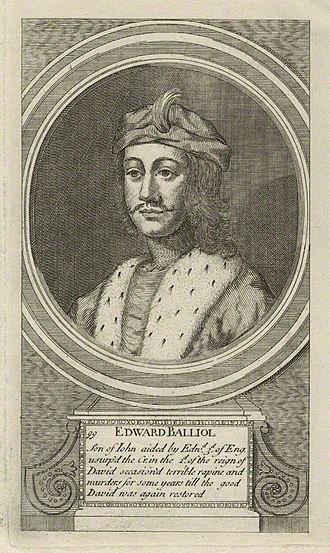
By the 1330s Edward’s prospects had improved. He was seen as a useful political tool, a rival claimant to the Scottish crown. With English support, Edward made his own bid for the throne, and was crowned king following his defeat of 8-year-old David II‘s forces at the Battle of Dupplin Moor in 1332. David’s supporters and Edward struggled against each other, until they eventually triumphed over Edward and he was deposed in 1336.

Isabella’s son, Edward Balliol, King of Scots

Edward finally surrendered his claim to the Scottish throne in 1356 whilst living in English exile; he died in Wheatley, Doncaster, probably in 1363 or 1364. Although his final resting place has recently been claimed to be under Doncaster Post Office, the former site of Doncaster Priory, it remains elusive.

John and Isabella’s possible younger son, Henry, was killed on 16th December 1332 at the Battle of Annan, a resounding victory for supporters of David II against Henry’s brother, Edward.

Although Edward was briefly married to Margaret of Taranto, the marriage was annulled. Neither Edward nor Henry had any children.

Very little is known of John and Isabella’s life together. Her death date and final resting place are both unknown. It is by no means certain that Isabella was still alive when John became king, so may have died before 1292, when John succeeded to the Scottish throne. She was no longer living, however, when her own father defeated John and the Scottish army at the Battle of Dunbar in April 1296; John abdicated in July of the same year and died in French exile in 1314.

John’s claim to the Scottish throne was supported by the Comyns, which led to the murder of John Comyn, in the church at Dumfries in 1306, by Robert the Bruce, who had succeeded his grandfather as the other leading Competitor to the throne. Shortly after the murder, he was crowned King Robert I at Scone but was only able to consolidate his rule after winning a resounding victory over the English at Bannockburn in 1314.

*

Footnotes:

1‘Annals written by a certain monk of Lewes, from the birth of Christ to the year 1312’ quoted in W.H. Blaauw, On the Early History of Lewes Priory, and its Seals, with extracts from a MS. Chronicle

Picture:

John Balliol and Isabella de Warenne from britroyals.com; Edward Balliol courtesy of Wikipedia

Further reading:

W.H. Blaauw, On the Early History of Lewes Priory, and its Seals, with extracts from a MS. Chronicle; William Farrer and Charles Travis Clay, editors, Early Yorkshire Charters, Volume 8: The Honour of Warenne; Nigel Tranter, The Story of Scotland; britroyals.com; Rev. John Watson, Memoirs of the Ancient Earls of Warren and Surrey, and Their Descendants to the Present Time, Volume I; G.P. Stell, John [John de Balliol] (c. 1248×50-1314) (article), Oxforddnb.com; Susan M. Johns, ‘Alice de Lusignan, suo jure countess of Eu’, Oxforddnb.com; Scott L. Waugh, Warenne, John de, sixth earl of Surrey [earl of Surrey and Sussex, Earl Warenne] (1231-1304) Oxforddnb.com; royal.gov.uk/HistoryoftheMonarchy/ScottishMonarchs; Alison Weir, Britain’s Royal Families; David Williamson, Brewer’s British Royalty; Mike Ashley, The Mammoth Book of British Kings and Queens; englishmonarchs.co.uk.

*

My Books

Signed, dedicated copies of all my books are available through my online bookshop.

Coming 30 January 2025: Scotland’s Medieval Queens

Scotland’s history is dramatic, violent and bloody. Being England’s northern neighbour has never been easy. Scotland’s queens have had to deal with war, murder, imprisonment, political rivalries and open betrayal. They have loved and lost, raised kings and queens, ruled and died for Scotland. From St Margaret, who became one of the patron saints of Scotland, to Elizabeth de Burgh and the dramatic story of the Scottish Wars of Independence, to the love story and tragedy of Joan Beaufort, to Margaret of Denmark and the dawn of the Renaissance, Scotland’s Medieval Queens have seen it all. This is the story of Scotland through their eyes.

Available for pre-order now.

Also by Sharon Bennett Connolly:

Defenders of the Norman Crown: The Rise and Fall of the Heroines of the Tudor World tells the stories of the most remarkable women from European history in the time of the Tudor dynasty, 1485-1603. These are the women who ruled, the women who founded dynasties, the women who fought for religious freedom, their families and love. Heroines of the Tudor World is now available for pre-order from Amberley Publishing and Amazon UK. Women of the Anarchy demonstrates how Empress Matilda and Matilda of Boulogne, unable to wield a sword themselves, were prime movers in this time of conflict and lawlessness. It shows how their strengths, weaknesses, and personal ambitions swung the fortunes of war one way – and then the other. Available from Bookshop.orgAmberley Publishing and Amazon UKKing John’s Right-Hand Lady: The Story of Nicholaa de la Haye is the story of a truly remarkable lady, the hereditary constable of Lincoln Castle and the first woman in England to be appointed sheriff in her own right. Available from all good bookshops Pen & Sword Booksbookshop.org and Amazon

Defenders of the Norman Crown: The Rise and Fall of the Warenne Earls of Surrey tells the fascinating story of the Warenne dynasty, from its origins in Normandy, through the Conquest, Magna Carta, the wars and marriages that led to its ultimate demise in the reign of Edward III. Available from Pen & Sword BooksAmazon in the UK and US, and Bookshop.orgLadies of Magna Carta: Women of Influence in Thirteenth Century England looks into the relationships of the various noble families of the 13th century, and how they were affected by the Barons’ Wars, Magna Carta and its aftermath; the bonds that were formed and those that were broken. It is now available in paperback and hardback from Pen & SwordAmazon, and Bookshop.orgHeroines of the Medieval World tells the stories of some of the most remarkable women from Medieval history, from Eleanor of Aquitaine to Julian of Norwich. Available now from Amberley Publishing and Amazon, and Bookshop.orgSilk and the Sword: The Women of the Norman Conquest traces the fortunes of the women who had a significant role to play in the momentous events of 1066. Available now from Amazon,  Amberley Publishing, and Bookshop.org.

Alternate Endings: An anthology of historical fiction short stories including Long Live the King… which is my take what might have happened had King John not died in October 1216. Available in paperback and kindle from Amazon.

Podcast:

Have a listen to the A Slice of Medieval podcast, which I co-host with Historical fiction novelist Derek Birks. Derek and I welcome guests, such as Bernard Cornwell, and discuss a wide range of topics in medieval history, from significant events to the personalities involved.

*

Don’t forget! Signed and dedicated copies of all my books are available through my online bookshop.

For forthcoming online and in-person talks, please check out my Events Page.

You can be the first to read new articles by clicking the ‘Follow’ button, liking our Facebook page or joining me on TwitterThreadsBluesky and Instagram.

*

©2015 Sharon Bennett Connolly FRHistS

Hamelin de Warenne, the King’s Brother

A short while ago I wrote about Isabel de Warenne, Countess of Surrey and then her first husband, William of Blois (youngest son of King Stephen). So, I think it’s about time I finished the story by looking at Isabel’s second husband, Hamelin Plantagenet, the other 4th Earl of Surrey.

The illegitimate son of Geoffrey, Count of Anjou, Hamelin was born sometime around 1130, when Geoffrey was estranged from his wife, Empress Matilda. His mother was, possibly, Adelaide of Angers, though this is by no means certain. Geoffrey had a second illegitimate child, Emma, who was possibly Hamelin’s full sister. Emma married the Welsh prince, Davydd ap Owain of Gwynedd. Geoffrey of Anjou was the second husband to Empress Matilda, daughter of Henry I of England and would be the mother of the future Henry II, Hamelin’s half-brother.

The de Warenne arms, Trinity Church, Southover

Hamelin was incredibly loyal to Henry and his marriage to an heiress was reward for his support, whilst at the same time giving him position and influence within England. Hamelin and Isabel married in April 1164, Hamelin even taking the de Warenne surname after the marriage; Isabel’s trousseau cost an impressive £41 10s 8d.

Hamelin became Earl of Surrey by right of his wife, though was more habitually called Earl Warenne. In some references, he is named as the 5th Earl of Surrey and in others the 4th: this confusion arises from the fact that the earldom belonged to his wife, Isabel, and her two husbands both held the earldom, sometimes being numbered the 4th and 5th earls to avoid confusion. They were, in fact, both, the 4th Earl of Surrey.

Hamelin supported his brother the king in the contest of wills that Henry was engaged in with his archbishop of Canterbury, Thomas Becket. When Henry called for the archbishop to appear at a great council at Northampton Castle on 12 October 1164, to answer to the charges laid against him, Hamelin was at the trial and spoke in support of his brother. Indeed, the new earl and the archbishop appear to have started a war of words; Hamelin defended Henry’s dignity and called Becket a traitor. The archbishop’s retort was ‘Were I a knight instead of a priest, my fist would prove you a liar!’ Ironically, it is thought that Hamelin’s denunciation of Becket was motivated by the injury caused to the royal family in Becket’s refusal to allow Henry’s brother, William – Hamelin’s half-brother – to marry Isabel de Warenne; who was now Hamelin’s wife.

Hamelin’s animosity to Becket was not to survive the archbishop’s martyrdom and he actively participated in the cult that grew up around Thomas Becket after his violent death. In later life, the earl claimed that the cloth covering Becket’s tomb had cured his blindness, caused by a cataract, in one eye.

Hamelin was an influential and active member of the English barony. He supported Henry against his sons’ rebellion in 1173, and formed part of the entourage which escorted Princess Joanna (daughter of Henry and Eleanor of Aquitaine) to Sicily for her marriage to King William. Joanna’s escort was ordered not to return home until they had seen ‘the King of Sicily and Joanna crowned in wedlock’.

Hamelin remained close to the crown even after Henry’s death, supporting his nephew, Richard I. Hamelin was among the earls present at Richard’s first coronation in September 1189; and carried one of the three swords at his second coronation in April 1194.

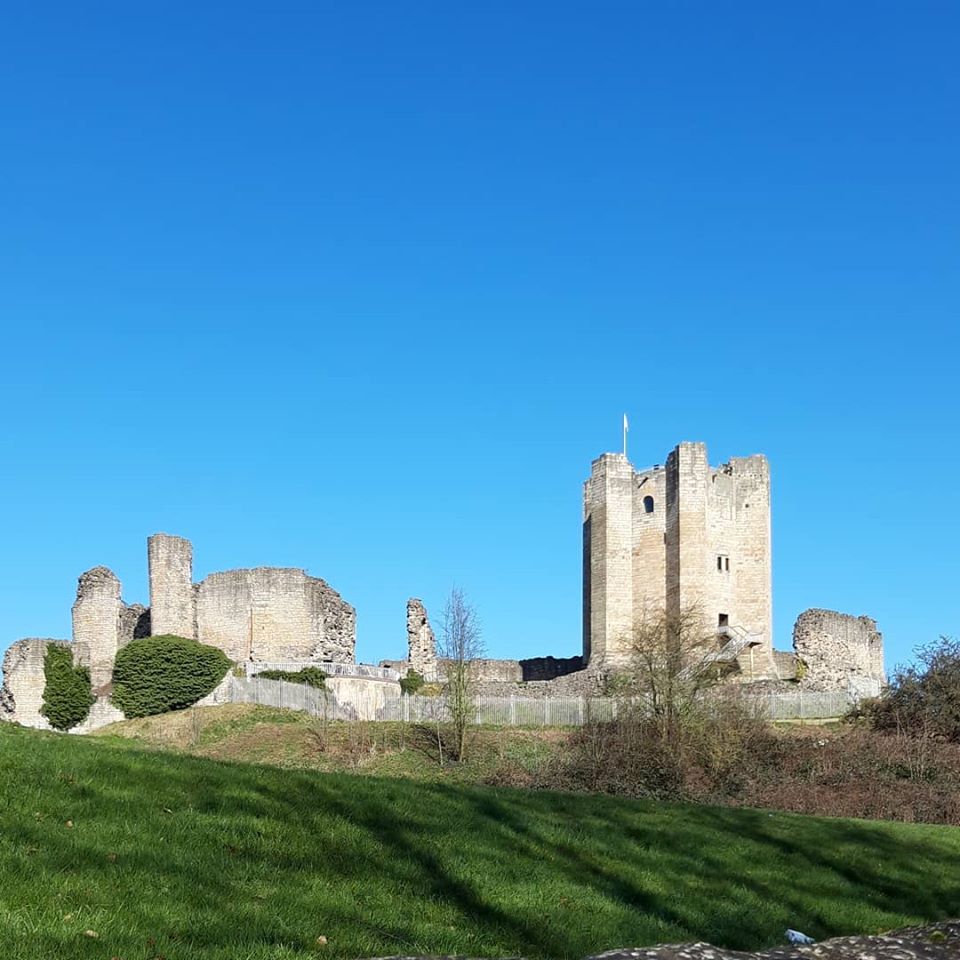
Conisbrough Castle

During Richard’s absence on Crusade, Hamelin sided with the Regent, William Longchamp, against the intrigues of Richard’s brother John. Hamelin held great store in the rule of law, attested by the legend on his seal, ‘pro lege, per lege’. This adherence to the law explains Hamelin’s support for Longchamp against that of his own nephew, John, and even as the justiciar’s overzealous actions alienated others. Hamelin was one of only two magnates entrusted with the collection and storage of the king’s ransom, when he was held captive by Duke Leopold of  Austria, appointed by Eleanor of Aquitaine; ; the other was William d’Aubigny, Earl of Arundel.

Hamelin’s involvement with the court continued into the reign of King John; he was present at John’s coronation and at Lincoln when William, King of Scots, gave his oath of homage in November 1200.

Away from court, Hamelin appears to have been an avid builder; he built a cylindrical keep at his manor of Mortemer in Normandy. He then constructed a larger and improved version, using all the latest techniques of castle design, at his manor of Conisbrough, South Yorkshire. He may also have been the one to build Peel Castle at Thorne, a hunting lodge which had a 3-sided donjon that was of smaller, but similar, design to Conisbrough.

He was also involved in a famous dispute with Hugh, abbot of Cluny, over the appointment of a new prior to Lewes priory. Abbot Hugh was known as a man of great piety and honour; he had been prior of Lewes but was elected as abbot of Reading in 1186 and became abbot of Cluny in 1199. In 1200, Abbot Hugh appointed one Alexander to the vacant position of prior of Lewes but Hamelin refused to accept the nomination. In establishing the priory at Lewes, the abbots of Cluny had apparently reserved the right to appoint the prior, and to admit all monks seeking entry into the order; however, Hamelin claimed that the patronage of the priory belonged to him, and it was his right to appoint the prior.

The dispute dragged on. It was only after intervention from King John that agreement was eventually reached whereby, should the position of prior become vacant, the earl and the monks should send representatives to the abbot, who would nominate two candidates, of whom the earl’s proctors should choose one to be appointed prior.

Hamelin and Isabel had four surviving children. Their son and heir, William, would become the 5th Earl of Surrey and married Matilda, daughter of the great William Marshal, Earl of Pembroke and regent of England during the minority of Henry III. There were also three daughters, Ela, Isabel and Matilda.

Lewes priory, Sussex

Ela married twice, firstly to a Robert de Newburn, of whom nothing else is known, and secondly to William Fitzwilliam of Sprotborough, a village just a few miles from Conisbrough. Isabel was married, firstly, to Robert de Lascy, who died in 1193, and secondly, no later than the spring of 1196, to Gilbert de L’Aigle, Lord of Pevensey.

Matilda, or Maud, married Henry, Count of Eu, who died around 1190; by Henry, she was the mother of Alice de Lusignan, who struggled to maintain her inheritance during the reign of King John. Matilda then married Henry d’Estouteville, a Norman lord. However, it was once thought that Matilda was the daughter of Hamelin by an earlier relationship, due to the supposed death date of Matilda’s husband, Henry, Count of Eu. This was due to the mistaken belief that Henry had died in 1172, which would mean that Matilda could not have been a daughter of the marriage of Isabel and Hamelin, who were married in 1164, as she would have been too young to have married and borne children with Henry. The Chronicle of the Counts of Eu records Henry’s death as 1183, which also appears to be an error as Henry was assessed for scutage for Wales at Michaelmas 1190; with this later death date it was entirely possible, and indeed likely, that Matilda was the legitimate daughter of both Hamelin and Countess Isabel.

One of the daughters  – although it is not clear which – bore an illegitimate son, Richard Fitzroy, Baron Chilham, who was born, possibly, around 1190, by her cousin, John (the future King John).

The motte of Peel Castle, Thorne

Hamelin spent a lot of time and money on Conisbrough Castle, which took almost 10 years to complete, and it appears to have been a favourite family residence. King John visited him there in 1201, and two of Hamelin’s daughters married landowners from the nearby manors of Tickhill and Sprotborough. His son, William de Warenne, the 5th earl, would complete the castle, rebuilding the curtain wall in stone.

Hamelin died on 7th May 1202, in his early 70s and was buried in the chapter house at Lewes Priory, in Sussex; Isabel died the following year and was buried alongside him.

*

Further reading: East Yorkshire Charters Volume 8: The Honour of Warenne, edited by William Farrer & Charles Travis Clay; Britain’s Royal Families and Eleanor of Aquitaine by Alison Weir; The Plantagenets: the Kings who Made England by Dan Jones.

Photos: The de Warenne arms, Conisbrough Castle, Peel Castle and Lewes Priory ©Sharon Bennett Connolly.

*

My Books:

Signed, dedicated copies of all my books are available through my online bookshop.

Out now: Scotland’s Medieval Queens

Scotland’s history is dramatic, violent and bloody. Being England’s northern neighbour has never been easy. Scotland’s queens have had to deal with war, murder, imprisonment, political rivalries and open betrayal. They have loved and lost, raised kings and queens, ruled and died for Scotland. From St Margaret, who became one of the patron saints of Scotland, to Elizabeth de Burgh and the dramatic story of the Scottish Wars of Independence, to the love story and tragedy of Joan Beaufort, to Margaret of Denmark and the dawn of the Renaissance, Scotland’s Medieval Queens have seen it all. This is the story of Scotland through their eyes.

Scotland’s Medieval Queens gives a thorough grounding in the history of the women who ruled Scotland at the side of its kings, often in the shadows, but just as interesting in their lives beyond the spotlight. It’s not a subject that has been widely covered, and Sharon is a pioneer in bringing that information into accessible history.’ Elizabeth Chadwick (New York Times bestselling author)

Available now from Amazon and Pen and Sword Books

Also by Sharon Bennett Connolly:

Heroines of the Tudor World tells the stories of the most remarkable women from European history in the time of the Tudor dynasty, 1485-1603. These are the women who ruled, the women who founded dynasties, the women who fought for religious freedom, their families and love. Heroines of the Tudor World is now available for pre-order from Amberley Publishing and Amazon UK. Women of the Anarchy demonstrates how Empress Matilda and Matilda of Boulogne, unable to wield a sword themselves, were prime movers in this time of conflict and lawlessness. It shows how their strengths, weaknesses, and personal ambitions swung the fortunes of war one way – and then the other. Available from Bookshop.orgAmberley Publishing and Amazon UKKing John’s Right-Hand Lady: The Story of Nicholaa de la Haye is the story of a truly remarkable lady, the hereditary constable of Lincoln Castle and the first woman in England to be appointed sheriff in her own right. Available from all good bookshops Pen & Sword Booksbookshop.org and Amazon

Defenders of the Norman Crown: The Rise and Fall of the Warenne Earls of Surrey tells the fascinating story of the Warenne dynasty, from its origins in Normandy, through the Conquest, Magna Carta, the wars and marriages that led to its ultimate demise in the reign of Edward III. Available from Pen & Sword BooksAmazon in the UK and US, and Bookshop.orgLadies of Magna Carta: Women of Influence in Thirteenth Century England looks into the relationships of the various noble families of the 13th century, and how they were affected by the Barons’ Wars, Magna Carta and its aftermath; the bonds that were formed and those that were broken. It is now available in paperback and hardback from Pen & SwordAmazon, and Bookshop.orgHeroines of the Medieval World tells the stories of some of the most remarkable women from Medieval history, from Eleanor of Aquitaine to Julian of Norwich. Available now from Amberley Publishing and Amazon, and Bookshop.orgSilk and the Sword: The Women of the Norman Conquest traces the fortunes of the women who had a significant role to play in the momentous events of 1066. Available now from Amazon,  Amberley Publishing, and Bookshop.org.

Alternate Endings: An anthology of historical fiction short stories including Long Live the King… which is my take what might have happened had King John not died in October 1216. Available in paperback and kindle from Amazon.

Podcast:

Have a listen to the A Slice of Medieval podcast, which I co-host with Historical fiction novelist Derek Birks. Derek and I welcome guests, such as Bernard Cornwell and Michael Jecks, and discuss a wide range of topics in medieval history, from significant events to the personalities involved. Every episode is also now available on YouTube.

*

Don’t forget! Signed and dedicated copies of all my books are available through my online bookshop.

For forthcoming online and in-person talks, please check out my Events Page.

You can be the first to read new articles by clicking the ‘Follow’ button, liking our Facebook page or joining me on TwitterThreadsBluesky and Instagram.

*

©2015 Sharon Bennett Connolly, FRHistS

Eleanor, the ‘Pearl of Brittany’

History...the Interesting Bits
Eleanor of Brittany

Eleanor of Brittany was born around 1184, the daughter of Geoffrey Plantagenet Duke of Brittany by right of his wife, and Constance of Brittany. Whilst estranged from his father, Henry II, Geoffrey had been trampled to death while competing at a tournament in Paris, in August 1186.

Described as beautiful, she has been called the Pearl, the Fair Maid and the Beauty of Brittany. A granddaughter of Henry II and Eleanor of Aquitaine, she was the eldest of her parents’ three children; a second daughter, Matilda was born the following year, but died young and a son, Arthur who was killed by – or at least on the orders of – King John in 1203. The birth of Eleanor’s brother Arthur in 1187 diminished her value on the marriage market; she no longer came with Brittany as her dowry, like her mother had done.

Initially, Eleanor’s life seemed destined to follow the same path as many royal princesses; marriage. Richard I, her legal guardian after the death of her father in 1186, following his sister Joanna’s adamant refusal, offered Eleanor as a bride to Saladin’s brother, Al-Adil, in a failed attempt at a political settlement to the Third Crusade.

Nothing came of the suggestion and, shortly after, at the age of nine, Eleanor was betrothed to Friedrich, the son of Duke Leopold VI of Austria, who had made the betrothal a part of the ransom for Richard I’s release from imprisonment by the Duke. Eleanor was travelling to Germany in the care of Baldwin de Béthune when news arrived that, Duke Leopold had died suddenly. The duke’s s son had ‘no great inclination’ for the proposed marriage and so Eleanor and her party turned around and returned home. Further marriage plans were mooted in 1195 and 1198, to Philip II of France’s son Louis, the dauphin, and Odo, Duke of Burgundy, respectively; although neither came to fruition.

History...the Interesting Bits
Arthur of Brittany

Duchess Constance then pressed for Eleanor to be released from royal custody and by the time of Richard’s death, in 1199, Eleanor was living in France with her mother and brother. Eleanor’s fortunes changed drastically when Arthur rebelled against Richard’s successor, King John, in the early 1200s, encouraged by King Philip II of France.

As the posthumous son of John’s older brother, Geoffrey, Arthur had a strong claim to the English crown, but had been sidelined in favour of his more mature and experienced uncle. He was also heavily influenced by the French king, a fact which did not go in his favour. Arthur was captured while besieging his grandmother, Eleanor of Aquitaine, at Mirebeau on 1st August 1202.

Eleanor was captured at the same time, or shortly after. And while her brother was imprisoned at Falaise, and later Rouen, in 1203 she was sent into perpetual imprisonment in England. Eleanor of Brittany holds the sad record of being the longest imprisoned English royal in British history.

If the laws of primogeniture had been strictly followed at the time, Eleanor would have been sovereign of England after her brother’s death. John and his successor, Henry III could never forget this. However, the experiences of Empress Matilda and her fight with King Stephen over her own rights to the crown – and the near-20 years of civil war between 1135 and 1154, had reinforced the attitude that a woman could not rule.

History...the Interesting Bits
Eleanor of Brittany

This did not, however, mean that Eleanor was no threat to John and Henry; should she be allowed to marry, her husband may be persuaded to fight to assert her rights, of form the focus to a rival faction at court – and an alternative royal line. Imprisoning Eleanor mean that John not only kept control of her, but also eliminated any possible opposition building around her rights to the throne.

Although her confinement has been described as ‘honourable’, Eleanor’s greater right to the throne meant she would never be freed, or allowed to marry and have children. King John gave her the title of Countess of Richmond on 27th May 1208, but Henry III would take it from her in 1219 and bestow the title elsewhere. From 1219 onward she was styled the ‘king’s kinswoman’ and ‘our cousin’.

It seems Eleanor did spend some time with the king and court, particularly in 1214 when she accompanied John to La Rochelle to pursue his war with the French. John planned to use Eleanor to gain Breton support and maybe set her up as his puppet Duchess of Brittany, replacing her younger half-sister Alice.

Alice was the daughter of Eleanor’s mother, Constance, by her third marriage to Guy of Thouars. She was married to Peter of Dreux, a cousin of King Philip of France and Duke of Brittany by right of Alice. Using the carrot and stick approach, John offered Peter the earldom of Richmond to draw him to his side, while at the same time dangling the threat of restoring Eleanor to the dukedom, just by having her with him. Peter, however, refused to be threatened of persuaded and chose to face John in the field at Nantes. John’s victory and capture of Peter’s brother in the fighting persuaded Peter to agree to a truce, and John was content to leave Brittany alone, thereafter, advancing on Angers. His plans to restore Eleanor abandoned and forgotten.

History...the Interesting Bits
Bowes Castle, North Yorkshire

Eleanor’s movements were restricted, and she was closely guarded. Her guards were changed regularly to enhance security, but her captivity was not onerous. She was provided with ‘robes’, two ladies-in-waiting in 1230, and given money for alms and linen for her ‘work’. One order provided her with cloth; however, it was to be ‘not of the king’s finest.’ She was granted the manor of Swaffham and a supply of venison from the royal forests. The royal family sent her gifts and she spent some time with the queen and the daughters of the king of Scotland, who were hostages in the king’s custody.

Throughout her captivity she is said to have remained ‘defiant’.

Eleanor was well-treated and fed an aristocratic diet, as her weekly shopping list attests; ‘Saturday: bread, ale, sole, almonds, butter, eggs. Sunday: mutton, pork, chicken and eggs. Monday: beef, pork, honey, vinegar. Tuesday: pork, eggs, egret. Wednesday: herring, conger, sole, eels, almonds and eggs. Thursday: pork, eggs, pepper, honey. Friday: conger, sole, eels, herring and almonds.’ In her sole surviving letter, written in 1208 with John’s consent, she is styled ‘Duchess of Brittany and Countess of Richmond.’

It is difficult to pinpoint exactly where Eleanor was imprisoned at any one time.  Over the years, she was held in various strongholds, including the castles of Corfe (Dorset), Burgh (Westmorland), and Bowes (Yorkshire).  Corfe Castle is mentioned at times, and it seems she was moved away from the coast in 1221 after a possible rescue plot was uncovered. She was also held at Marlborough for a time, and she was definitely at Gloucester Castle in 1236.

History...the Interesting Bits
King John

By 1241 she was confined in Bristol castle, where Eleanor was visited regularly by bailiffs and leading citizens to ensure her continued welfare. Eleanor was also allowed   her chaplain and serving ladies to ensure her comfort. She died on 10 August 1241, at the age of about fifty-seven. After thirty-nine years of imprisonment, Eleanor achieved in death the freedom that had eluded her in life.

She was initially buried at St James’s Priory Church in Bristol but her remains were later removed to the abbey at Amesbury, a convent with a long association with the crown.

*

Sources: Douglas Boyd, Eleanor, April Queen of Aquitaine; Dan Jones, The Plantagenets: the Kings who made England; Robert Bartlett, England Under the Norman and Angevin Kings 1075-1225; Alison Weir, Eleanor of Aquitaine and Britain’s Royal Families; Oxford Companion to British History; The History Today Companion to British History; Robert Lacey, Great Tales from English History; Mike Ashley, A Brief History of British Kings and Queens and The Mammoth Book of British Kings and Queens; findagrave.com; spokeo.com.

Pictures: Wikipedia, findagrave.com; Bowes Castle is ©Sharon Bennett Connolly

*

My books

Signed, dedicated copies of all my books are available through my online bookshop. or by contacting me.

Coming 30 March: Princesses of the Early Middle Ages

Books by Sharon Bennett Connolly

Daughters of kings were often used to seal treaty alliances and forge peace with England’s enemies. Princesses of the Early Middle Ages: Royal Daughters of the Conquest explores the lives of these young women, how they followed the stereotype, and how they sometimes managed to escape it. It will look at the world they lived in, and how their lives and marriages were affected by political necessity and the events of the time. Princesses of the Early Middle Ages will also examine how these girls, who were often political pawns, were able to control their own lives and fates. Whilst they were expected to obey their parents in their marriage choices, several princesses were able to exert their own influence on these choices, with some outright refusing the husbands offered to them.

Their stories are touching, inspiring and, at times, heartbreaking.

Princesses of the Early Middle Ages: Royal Daughters of the Conquest is now available for pre-order from Pen & Sword and Amazon.

Also by Sharon Bennett Connolly:

Books by Sharon Bennett Connolly

Scotland’s history is dramatic, violent and bloody and Scotland’s Medieval Queens have seen it all. This is the story of Scotland through their eyes. Available now from Amazon and Pen and Sword BooksHeroines of the Tudor World tells the stories of the most remarkable women from European history in the time of the Tudor dynasty, 1485-1603. These are the women who ruled, the women who founded dynasties, the women who fought for religious freedom, their families and love. Heroines of the Tudor World is now available from Amberley Publishing and Amazon UK. Women of the Anarchy demonstrates how Empress Matilda and Matilda of Boulogne, unable to wield a sword themselves, were prime movers in this time of conflict and lawlessness. It shows how their strengths, weaknesses, and personal ambitions swung the fortunes of war one way – and then the other. Available from Bookshop.orgAmberley Publishing and Amazon UKKing John’s Right-Hand Lady: The Story of Nicholaa de la Haye is the story of a truly remarkable lady, the hereditary constable of Lincoln Castle and the first woman in England to be appointed sheriff in her own right. Available from all good bookshops Pen & Sword Booksbookshop.org and Amazon

History...the Interesting Bits

Defenders of the Norman Crown: The Rise and Fall of the Warenne Earls of Surrey tells the fascinating story of the Warenne dynasty, from its origins in Normandy, through the Conquest, Magna Carta, the wars and marriages that led to its ultimate demise in the reign of Edward III. Available from Pen & Sword BooksAmazon in the UK and US, and Bookshop.orgLadies of Magna Carta: Women of Influence in Thirteenth Century England looks into the relationships of the various noble families of the 13th century, and how they were affected by the Barons’ Wars, Magna Carta and its aftermath; the bonds that were formed and those that were broken. It is now available in paperback and hardback from Pen & SwordAmazon, and Bookshop.orgHeroines of the Medieval World tells the stories of some of the most remarkable women from Medieval history, from Eleanor of Aquitaine to Julian of Norwich. Available now from Amberley Publishing and Amazon, and Bookshop.orgSilk and the Sword: The Women of the Norman Conquest traces the fortunes of the women who had a significant role to play in the momentous events of 1066. Available now from Amazon,  Amberley Publishing, and Bookshop.org.

Alternate Endings: An anthology of historical fiction short stories including Long Live the King… which is my take what might have happened had King John not died in October 1216. Available in paperback and kindle from Amazon.

Podcast:

A Slice of Medieval

Have a listen to the A Slice of Medieval podcast, which I co-host with Historical fiction novelist Derek Birks. Derek and I welcome guests, such as Ian Mortimer, Bernard Cornwell, Elizabeth Chadwick and Scott Mariani, and discuss a wide range of topics in medieval history, from significant events to the personalities involved. 

Every episode is also now available on YouTube.

*

Don’t forget! Signed and dedicated copies of all my books are available through my online bookshop.

For forthcoming online and in-person talks, please check out my Events Page.

You can be the first to read new articles by clicking the ‘Follow’ button, liking our Facebook page or joining me on TwitterThreadsBluesky and Instagram.

*

©2015 Sharon Bennett Connolly FRHistS

Arthur: England’s Lost Prince

Artur_of_Brittany
Arthur of Brittany

A Plantagenet prince, Arthur of Brittany‘s story is one of the most tragic of the Medieval period. The posthumous son of Geoffrey, 4th son of Henry II of England and Eleanor of Aquitaine, and Constance of Brittany, he was Duke of Brittany from the moment of his birth.

Constance and Geoffrey had married in 1181; their daughter, Eleanor, was born in 1184. It was during an estrangement from his father Geoffrey that was trampled to death while competing at a tournament in Paris, in August 1186.

Arthur was born several months later, in March or April 1187. In 1190 the two-year-old Arthur was named as heir presumptive to his uncle Richard I, king of England; Richard even arranged a betrothal for young Arthur, to a daughter of Tancred of Sicily. However, the Emperor Henry VI conquered Sicily in 1194 and the betrothal came to nothing.

Arthur was a valuable pawn for both the kings of France and England; when Richard tried to take him into his household, in 1196, his mother sent him to the French court, where he spent several months. On his return to Brittany, Constance started involving him in the government of the duchy.

On Richard’s death in 1199, the great William Marshal and Hubert Walter, Archbishop of Canterbury and Justiciar of England, were instrumental in persuading the English barons to accept the king’s youngest brother John as King. They reasoned that John knew more of England – and was more experienced – than young Arthur. And that John was not as friendly with the king of France, Philip II Augustus, who supported Arthur’s claim to the English crown.

In August 1199, Philip complained that John had not paid him homage for the French lands held by the English king. He demanded the Vexin and that John relinquish Anjou, Maine and Touraine, the Angevin ancestral lands, to Arthur. According to Gervase of Canterbury John ‘made up his mind to resist the French king like a man, and to fight manfully for the peace of his country.’

By September, John was winning the war. William des Roches, Arthur’s seneschal in Anjou, offered to defect to John. He was bitter that Philip Augustus had destroyed the Angevin fortress of Ballon after capturing it from John, rather than handing it to Arthur. This high-profile defection was followed by the submission of Arthur himself, he and his mother met John at Le Mans. However, they received a warning that the king was planning to arrest and imprison them, and fled Le Mans in the dead of night, making their way to the French court. Whether the intelligence was true or not, John’s past record of betrayal was obviously enough to sow distrust in the minds of Arthur and his mother and make the threat credible.

A temporary truce followed, which was made more permanent in January 1200, before John and Philip II came to terms at Le Goulet on 18 May 1200. Philip agreed to withdraw his support of Arthur in return for John paying homage to Philip for his French possessions. In addition, Arthur performed homage to John for Brittany. Arthur’s claim was revived, however, when King Philip confiscated John’s possessions in Northern France for refusing to acknowledge Philip as his overlord. Philip recognised Arthur as the rightful heir to Normandy and Anjou. Tensions were then exacerbated when Philip declared all of John’s continental possessions forfeit as a result of his refusal to deal justly with Hugh IX de Lusignan, who had rebelled following John’s marriage to Hugh’s betrothed, Isabelle d’Angoulême.

300px-Philippe2+Arthur
Arthur  of Brittany paying homage to Philip II of France

War followed.

In July 1202 Arthur, newly knighted and betrothed to King Philip’s infant daughter, took a force of knights, including the de Lusignans, into Aquitaine, to make war on John. having received intelligence that his grandmother, Eleanor of Aquitaine, was travelling to Poitiers, he set a course to intercept her at Mirebeau. The ageing queen sought refuge in the castle and sent word to her son, King John, asking for assistance. Having become aware of Arthur’s move against Aquitaine, John had already set out with his army and was at Le Mans when he received his mother’s message. Taking a small force so he could move quickly, John made a forced march to the rescue of his mother, covering 100 miles in less than two days and surprising Arthur and his allies while they were still at breakfast, on the morning of 1 August. After some fierce fighting through the streets, the enemy commanders were all captured. One of John’s barons, William de Braose, captured Arthur and handed him over to the King, who imprisoned him at Falaise.

His captivity was probably less than comfortable, despite his rank and familial relationship. According to William Marshal, John ‘kept his prisoners in such a horrible manner and such abject confinement that it seemed an indignity and disgrace to all those with him who witnessed his cruelty.’

Whilst imprisoned at Falaise, John ordered that Arthur should be blinded and castrated. Two of the three messengers dispatched to carry the order fled the king’s court, to avoid the distasteful duty, but one reached Falaise. However, Arthur’s jailer Hubert de Burgh, balked at mutilating a 15-year-old boy, saying that John would regret the order, and John ‘was not displeased for the moment that his order had not been carried out.’ Though word was put out that the deed had been done, in the hope that the news would quell insurrection in Brittany. The Bretons were so enraged that the revolt rose to a new level of ferocity and the rebels were only pacified when it was announced that Arthur was, in fact, alive and well.

Arthur was later removed to confinement in Rouen.

King Philip and the nobility of Brittany continued to press for the release of the young duke, but John had other ideas. It was in Rouen, at Easter 1203, most likely on 3rd or 4th April, that Arthur was put to death. He was 16 years old. A chronicler of the Cistercian monastery of Margam, Glamorgan, described the murder:

“The King of the French took the castle of Chinon, and afterwards all the garrisons of Normandy, Anjou, and the city of Poitiers, with other castles, fortified towns and cities, as he so willed it – for this reason; when king John had captured Arthur, he had him kept alive in prison for some time, but finally, in the great tower at Rouen, on the Thursday before Easter, after his dinner and when drunk and possessed by the devil, he killed him by his own hand, and, after a large stone had been tied to the body, threw it in the Seine. It was discovered by a fisherman in his net and recognised when it was brought to the riverbank, and, for fear of the tyrant, secretly buried at the priory of Bec, which is called Notre Dame des Pres.

When the aforesaid king of the French heard the news of this and knew for certain that Arthur had been killed, he had his killer John summoned to the court of France, as was customary with dukes of Normandy, to answer for the murder of such a great man and to defend himself if he could; of such a great man, say I, for he was the legitimate heir of England, the count of Brittany, and the son-in-law of the king of France. John, fully aware of his evil deed, never dared to appear before the court, but fled to England and exercised a most cruel tyranny over his people until he died. When he never came to answer for the death of Arthur or to defend himself, judgement was given against him by the king’s court, and he was deprived of all his titles, in all the lands and honours which he held of the French crown; this was an incontrovertible and just sentence.”

King John

Whether John committed the deed himself, or merely ordered it done, will probably never be known; of the fact he was present there seems to be little doubt. Whatever his part, however, it was an act that would be held against John, not only during his lifetime, but for centuries to come. In 1204 King Philip, most likely knowing – or at least suspecting – that Arthur was dead, made the young duke of Brittany’s release a condition of any peace settlement.

On Arthur’s death the duchy should have passed to his older sister, Eleanor; but she was also a prisoner of King John and would be held in confinement in England for the rest of her life. So it passed to his two-year-old half-sister, Alix of Thouars, daughter of Constance and her third husband, Guy of Thouars.

*

Sources: Dan Jones, The Plantagenets: The Kings Who Made England; Robert Bartlett, England Under the Norman and Angevin Kings 1075-1225; Maurice Ashley, The Life and Times of King John; H.G. Koenigsberger, Medieval Europe 400-1500; History Today Companion to British History; Charles Phillips, Illustrated Encyclopedia of the Kings & Queens of Britain; Oxford Companion to British History; Mike Ashley, The Mammoth Book of British Kings & Queens; Douglas Boyd, Eleanor: April Queen of Aquitaine

Pictures courtesy of Wikipedia

*

My Books:

Signed, dedicated copies of all my books are available through my online store.

Out now: Scotland’s Medieval Queens

Scotland’s history is dramatic, violent and bloody. Being England’s northern neighbour has never been easy. Scotland’s queens have had to deal with war, murder, imprisonment, political rivalries and open betrayal. They have loved and lost, raised kings and queens, ruled and died for Scotland. From St Margaret, who became one of the patron saints of Scotland, to Elizabeth de Burgh and the dramatic story of the Scottish Wars of Independence, to the love story and tragedy of Joan Beaufort, to Margaret of Denmark and the dawn of the Renaissance, Scotland’s Medieval Queens have seen it all. This is the story of Scotland through their eyes.

Available now from Amazon and Pen and Sword Books

Also by Sharon Bennett Connolly:

Heroines of the Tudor World tells the stories of the most remarkable women from European history in the time of the Tudor dynasty, 1485-1603. These are the women who ruled, the women who founded dynasties, the women who fought for religious freedom, their families and love. Heroines of the Tudor World is now available for pre-order from Amberley Publishing and Amazon UK. Women of the Anarchy demonstrates how Empress Matilda and Matilda of Boulogne, unable to wield a sword themselves, were prime movers in this time of conflict and lawlessness. It shows how their strengths, weaknesses, and personal ambitions swung the fortunes of war one way – and then the other. Available from Bookshop.orgAmberley Publishing and Amazon UKKing John’s Right-Hand Lady: The Story of Nicholaa de la Haye is the story of a truly remarkable lady, the hereditary constable of Lincoln Castle and the first woman in England to be appointed sheriff in her own right. Available from all good bookshops Pen & Sword Booksbookshop.org and Amazon

Defenders of the Norman Crown: The Rise and Fall of the Warenne Earls of Surrey tells the fascinating story of the Warenne dynasty, from its origins in Normandy, through the Conquest, Magna Carta, the wars and marriages that led to its ultimate demise in the reign of Edward III. Available from Pen & Sword BooksAmazon in the UK and US, and Bookshop.orgLadies of Magna Carta: Women of Influence in Thirteenth Century England looks into the relationships of the various noble families of the 13th century, and how they were affected by the Barons’ Wars, Magna Carta and its aftermath; the bonds that were formed and those that were broken. It is now available in paperback and hardback from Pen & SwordAmazon, and Bookshop.orgHeroines of the Medieval World tells the stories of some of the most remarkable women from Medieval history, from Eleanor of Aquitaine to Julian of Norwich. Available now from Amberley Publishing and Amazon, and Bookshop.orgSilk and the Sword: The Women of the Norman Conquest traces the fortunes of the women who had a significant role to play in the momentous events of 1066. Available now from Amazon,  Amberley Publishing, and Bookshop.org.

Alternate Endings: An anthology of historical fiction short stories including Long Live the King… which is my take what might have happened had King John not died in October 1216. Available in paperback and kindle from Amazon.

Podcast:

Have a listen to the A Slice of Medieval podcast, which I co-host with Historical fiction novelist Derek Birks. Derek and I welcome guests, such as Bernard Cornwell and Michael Jecks, and discuss a wide range of topics in medieval history, from significant events to the personalities involved. Every episode is also now available on YouTube.

*

Don’t forget! Signed and dedicated copies of all my books are available through my online bookshop.

For forthcoming online and in-person talks, please check out my Events Page.

You can be the first to read new articles by clicking the ‘Follow’ button, liking our Facebook page or joining me on TwitterThreadsBluesky and Instagram.

*

©2015 Sharon Bennett Connolly FRHistS