Matilda of Scotland was the daughter of Malcolm III Canmore, King of Scots, and his wife, the saintly Queen Margaret. With Margaret’s descent from Alfred the Great, Matilda not only had the blood of Scottish kings flowing through her veins but also that of England’s Anglo-Saxon rulers. Born in the second half of 1080, Matilda was named Edith at her baptism, her name being changed to Matilda at the time of her marriage, most likely to make it more acceptable to the Norman barons. To avoid confusion, we will call her Matilda for the whole article.
The baby princess’s godfather was none other than Robert Curthose, who was visiting Scotland at the time of her birth. Her godmother was England’s queen, Matilda of Flanders. She and her younger sister, Mary, who was born in 1082, were sent to England to be educated by their maternal aunt Christina, at Romsey Abbey in 1086. A nun who spent time at both Romsey and Wilton abbeys, Christina was said to have treated Matilda harshly, the young princess constantly ‘in fear of the rod of my aunt’.1 Christina’s treatment of Matilda was made public during a church inquiry into whether or not Matilda had, in fact, been professed as a nun, at which point Matilda made her striking references to the ‘rage and hatred … that boiled up in me’.2
Before 1093 the two Scottish princesses, now approaching their teens, had moved on to Wilton Abbey to continue their education, away from the harsh discipline of their aunt. Like Romsey, Wilton was a renowned centre for women’s education and learning. It could accommodate between eighty and ninety women, and was once patronised by Edward the Confessor’s wife, Edith of Wessex. The abbey had a reputation for educating women from the highest echelons of the nobility and the royal family itself; the girls’ mother, Queen Margaret, had also been sent to Wilton to be educated after arriving in England in the late 1050s. The abbey was a popular destination for pilgrims, housing among its relics ‘a nail from the True Cross, a portion of the Venerable Bede and the body of St Edith’.3 Matilda’s first language was English, but she is known to have spoken French at Wilton. She also learned some Latin, read both the old and new testaments of the Bible, ‘the books of the Church fathers and some of the major Latin writers’.4
Malcolm IV and St Margaret
By 1093, thoughts were turning to Matilda’s future, but politics intervened. King Malcolm had a disagreement with King William II Rufus after which ‘they parted with great discord, and the king Malcolm returned home to Scotland.’5 On his way home, Malcolm stopped at Wilton to collect his daughters. On his arrival, he found Matilda wearing a veil. The Scots king ripped the offending item from his daughter’s head, tearing it to pieces before trampling the garment into the earth.
Malcolm III insisted that the two girls were not destined for the religious life.
Father and daughters then returned to Scotland, only to find Queen Margaret was ailing, her health had been deteriorating gradually for some time. Despite the queen’s illness, King Malcolm took two of his sons and an army into England, raiding Northumberland. Malcolm and his eldest son, Edward, were killed. Queen Margaret was told the news just a few days later and died shortly after. Having lost both parents in such a short space of time, the two princesses were taken back south by their uncle Edgar the Ӕtheling, though whether they stayed at a convent or resided at court is unclear. Mary would eventually be married to Eustace III, Count of Boulogne, and was the mother of Matilda of Boulogne, wife of King Stephen.
Matilda herself was not short of suitors, who included Alan the Red, Count of Richmond and William de Warenne, Earl of Surrey. Orderic Vitalis explains:
Alain the Red, Count of Brittany, asked William Rufus for permission to marry Matilda, who was first called Edith, but was refused. Afterwards, William de Warenne, Earl of Surrey, asked for this princess; but reserved for another by God’s permission, she made a more illustrious marriage. Henry, having ascended the English throne, married Matilda.6
Christina of Wessex
As events unfolded, Matilda was caught up in accusations and scandal surrounding her erstwhile nunnery at Wilton. She refused to return to the convent and insisted that she had never intended to dedicate herself to the church. When Archbishop Anselm ordered Osmund, Bishop of Salisbury to retrieve this ‘prodigal daughter of the king of Scots whom the devil made to cast off the veil’, the princess stood firm and defied him.’7
William II Rufus was famously killed in a hunting accident in the New Forest on 2 August 1100, shot by an arrow loosed by Walter Tirel. William II’s youngest brother, Henry, who was among the hunting party, wasted no time grieving his brother’s death. Leaving the dead king’s body to be looked after by others, he rode fast for Winchester. He seized control of the royal treasury before heading to London and his coronation, which took place on 5 August, just three days after William II’s death. Henry’s surviving older brother, Robert, was still on his way home from the Crusades, unable to take advantage of William’s death to claim the English crown for himself. The newly crowned King Henry I now needed a wife and settled on Matilda of Scotland.
The marriage was not without controversy, however, and before it could take place the church conducted an inquiry into the suggestion that Matilda was a runaway nun. Although Matilda vehemently rejected the claim that she had been professed as a nun, the fact witnesses had seen her wearing a veil on multiple occasions counted against her. Matilda appealed to Archbishop Anselm to look into the matter. The archbishop was appalled at the thought a religious vow may have been broken and declared that he ‘would not be induced by any pleading to take from God his bride and join her to any earthly husband’.8 After meeting with Matilda personally, and hearing her side of the story, the archbishop was persuaded to call an ecclesiastical council to decide the matter. Using Archbishop Lanfranc’s previous ruling that Anglo-Saxon women who had sought refuge in a convent after the Norman Conquest ‘could not be held as sworn nuns when they emerged from hiding’, the council ruled in Matilda’s favour.9 The council determined that ‘under the circumstances of the matter, the girl could not rightly be bound by any decision to prevent her from being free to dispose of her person in whatever way she legally wished’.10
Henry I, King of England in Lincoln Cathedral’s Gallery of Kings
When the wedding finally went ahead, Archbishop Anselm related the controversy over Matilda’s status to the gathered congregation and asked if there were any objections. According to Eadmer, ‘The crowd cried out in one voice that the affair had been rightly decided and that there was no ground on which anyone … could possibly raise any scandal.’11
Henry I married Matilda of Scotland on 11 November 1100, at Westminster Abbey, her name officially and permanently changed from Edith. Marriage between Henry and Matilda represented a continuity of the old Anglo-Saxon royal line; an heir produced by the royal couple would be heir to both the Norman royal house and the ancient royal house of Wessex, creating a genuine unifying force within England. The marriage was also a union between the royal houses of England and Scotland. Offering the promise of peace on England’s troublesome northern border, it would allow Henry to look to his interests on the continent and watch for the return of his older brother, Robert, from crusade.
The honeymoon period for the royal couple was was short-lived and in 1101, Robert had returned and heard of King William’s death and Henry’s seizure of the crown. The duke sent messengers to Henry, asking him to hand over the kingdom. Henry refused. It probably came as no surprise to Henry, then, when Robert invaded England on 20 July 1101. One chronicler claimed that Matilda was in childbed at this time; if she was, the child did not survive. More likely given the timing is that the queen was having a difficult early pregnancy with Matilda, who was born seven months later.
Neither side, however, was keen on all-out war, especially a civil war, and peace talks began almost immediately as the two armies of the royal brothers came face to face at Alton. In the subsequent Treaty of Alton, the duke accepted an annuity of 3,000 marks, drawn from the revenues of England, to abandon his invasion and renounce his claims to the throne. In return, King Henry renounced his lands in Normandy save for Domfront, where he had made a solemn vow to the inhabitants that he would never relinquish control. The brothers agreed to support each other should either be attacked by a third party, and to be each other’s heir if neither sired a son.
William the Ætheling
Robert returned to Normandy but would soon be pulled back to England by a sense of chivalric duty to his barons. The agreement at Alton between the brothers had left Earl William II de Warenne isolated and at Henry’s mercy. For violating his oath of homage to the king, and for violence perpetrated by his men in Norfolk, Earl Warenne’s English estates were declared forfeit and he was effectively forced to cross the English Channel into exile. Earl William complained to Duke Robert of his sufferings and losses on the duke’s behalf. The duke obviously felt some responsibility, as he set out for England to intercede with his brother on the earl’s behalf. Robert arrived at Henry’s court, uninvited and unwelcome, in 1103. Threatened with imprisonment by an angry brother, he was persuaded by Queen Matilda, to relinquish his annuity of 3,000 marks in return for the reinstatement of Earl William’s English estates and titles.
The primary duty of a queen was to secure the succession by producing an heir as soon as she possibly could. Henry still had his older brother, Robert, to contend with and an heir would certainly strengthen his position. By September 1103, Matilda of Scotland had fulfilled this duty by giving birth to a daughter, Matilda, in February 1102, and the much-desired son and heir, William, known as William Ætheling in an allusion to his descent from the Anglo-Saxon royal line, in September 1103. It is possible third child was either stillborn or short-lived. After the births of the royal children, the king and queen appear to have lived separately, with Queen Matilda establishing herself at Westminster. It was rumoured that the queen had chosen a life of celibacy once her duties of producing an heir had been fulfilled.
The family of Henry I
Disputes with Normandy were to be a feature of the first half of Henry’s reign, even after the capture of his brother, Robert at the Battle of Tinchebrai in 1106. Robert would spend the rest of his life imprisoned in England, but his son, William Clito, would later take up the fight. And while Henry subjugated Normandy, Queen Matilda remained in England, often chairing meetings of the king’s council during his absence. The queen had her own seal, which she appended to her charters and which depicted her ‘standing, crowned and wearing a long embroidered robe which falls in folds over her feet. Over this is a seamless mantle which has an embroidered border and is draped over her head. It is fastened at her throat by a brooch, and falls in folds over her arms. In her right hand she holds a sceptre surmounted by a dove, and in her left an orb surmounted by a cross.’.12
As queen, Matilda had received a generous dower settlement, which had been granted from those lands once held by Edith, Edward the Confessor’s queen. Surviving charters issued by Matilda show that she controlled the abbeys of Waltham, Barking and Malmesbury. She held further territory in Rutland and property in London including the wharf later known as Queenhithe, and she also received the tolls of Exeter. Her staff included two clerks who would eventually become bishops. The queen appears to have had a personal interest in managing her estates. In the charter granting Waltham Abbey to his wife, Henry mentions the ‘queen’s court’ held there. Among the queen’s many good works were the building of bridges in Surrey and Essex and the construction of a public bathhouse at Queenhithe. Working with Anselm, Archbishop of Canterbury, Queen Matilda founded a house for the Augustinian canons, Holy Trinity, at Aldgate in London. She also founded a leper hospital at St Giles, funded by sixty shillings a year from dock revenues at her wharf.
Leprosy and the care of lepers was of great concern to the queen. In addition to St Giles, she was the benefactress of a leper hospital at Chichester. Indeed, the queen’s brother David – later David I, King of Scots – told a tale in which he witnessed his sister administering to lepers in her own apartments in Westminster:
David I, King of Scots
The place was full of lepers and there was the Queen standing in the middle of them. And taking off a linen cloth she had wrapped around her waist, she put it into a water basin and began to wash and dry their feet and kiss them most devotedly while she was bathing them and drying them with her hands. And I said to her ‘My Lady! What are you doing? Surely if the King knew about this he would never deign to kiss you with his lips after you had been polluted by the putrefied feet of lepers!’ Then she, under a smile, said ‘Who does not know that the feet of the Eternal King are to be preferred over the lips of a King who is going to die? Surely for that reason I called you, dearest brother, so that you might learn such works from my example.13
While this story may not be an exact recollection of the siblings’ conversation, it does serve to demonstrate the extent of Matilda’s piety, something she inherited from her sainted mother, Queen Margaret. The queen’s piety and interest in religion are evidenced in her surviving correspondence, which involved not only Archbishop Anselm but also leading church figures such as Pope Paschal II, Hildebert of Lavardin, Archbishop of Tours, Herbert of Losinga, Bishop of Norwich and Ivo, Bishop of Chartres. Though written by a clerk rather than in her own hand, these letters are the earliest surviving examples from an English queen.
Matilda and Anselm appear to have had a good working relationship, which is evidenced by her actions as mediator during the Investiture Controversy, which sought to clarify the rules of investiture within the church. In their correspondence, the archbishop wrote to Matilda as his ‘dearest Lady and daughter Matilda, Queen of the English’.14 Likewise, Matilda witnessed a charter at Rochester, prior to Anselm’s exile, as ‘Matildis reginae et filiae Anselmi archiepiscopi’ (Queen Matilda and daughter of Archbishop Anselm).15 And when Anselm was exiled from England from 1103, Queen Matilda acted as mediator between the archbishop, the king and the pope, Paschal II.
Empress Matilda depicted in an image from the Gospels of Henry the Lion.
The queen appears to have been well aware of her influence over the king, and its limitations. When Henry appropriated the revenues of Canterbury for himself, claiming it was a vacant see with the archbishop in exile, Matilda persuaded him to set aside a personal allowance for Anselm. However, when she was asked to intervene with the king a few years later, when he was attempting to extract more money from the clergy, Matilda ‘wept and insisted she could do nothing’.16 In 1104, Matilda even approached Pope Paschal II, asking for his intervention in the disagreement between Henry and Anselm.
Henry saw the investiture crisis as an erosion of his royal prerogative, and he was determined to cede no ground. But, with the pope threatening excommunication and Matilda voicing her own pleas to her husband, a compromise was eventually reached by which Henry would relinquish his powers to invest prelates but retain the right to receive homage for ‘temporalities’; this latter concession by the church would augment the secular powers of the crown. When Anselm was finally able to return home to England, in 1106, Matilda was there to personally welcome him back from his three-year exile. She then rode in advance of the archbishop, to ensure accommodation and welcoming ceremonies were in place along his route.
The Investiture Controversy served to demonstrate the extent to which Matilda’s influence could be exerted, not only on the king but internationally, through her correspondence with the church’s most powerful prelates. Matilda also acted as regent for Henry when he was away in Normandy, which was more than half of the time. A woman fulfilling such a role in her lord’s absence was far from unusual and indeed was accepted by the barony of the kingdom; Matilda’s daughter, Empress Matilda, would discover that a woman fulfilling this role on her own behalf faced far more resistance. Queen Matilda acted as regent for months at a time, most notably for ten-month spells from September 1114 and from April 1116. In her final regency Matilda was assisted by her only son, the teenage William Ætheling, who was now earnestly in training for his future role as King of England. He would later join his father in Normandy to continue his apprenticeship, fighting in his first battle there in 1119.
Another notable element of queenship was patronage. Queen Matilda commissioned William of Malmesbury to write the Gesta Regum Anglorum, a genealogical history of the royal house of Wessex which was finished after her death and presented to her daughter, Empress Matilda. She also commissioned a biography of her mother, The Life of St Margaret Queen of Scotland by Turgot, Prior of Durham and later Bishop of St Andrew’s, who had been her mother’s confessor. In 1111 the queen attended the ceremony for the translation of St Æthelwold’s relics at Winchester, and the following year she was in Gloucester to witness the presentation of gifts to the monks there.
Seal of Queen Matilda
Matilda was also concerned with justice and in 1116 ordered the release of Bricstan of Chatteris, a prisoner who had apparently been unjustly condemned. Bricstan, who had intended to take holy orders before his arrest – the reason for which is unknown – called upon St Benedict and St Etheldreda for assistance. The two saints are said to have torn his chains from him. The shocked guards immediately turned to Queen Matilda, who ordered an investigation into the events. Satisfied that a miracle had occurred, the queen ordered Bricstans’s immediate release. She also ordered that special masses should be heard, and the bells of London should be rung in celebration.
Matilda of Scotland died on 1 May 1118 at Westminster, at the age of thirty-seven. King Henry was in Normandy at the time and Matilda was acting as regent, which suggests that her death was unexpected, though we do not know the cause. The canons of her foundation of Holy Trinity at Aldgate and the monks at Westminster both claimed the right to bury her. She was buried in Westminster Abbey, much to the chagrin of the monks of Aldgate who lodged a complaint with Henry on his return. Henry compensated the order with a gift of relics from the Byzantine emperor. He also confirmed his queen’s donations to Holy Trinity, Aldgate. The king gave money so that a perpetual light could be maintained at her tomb; this was still being paid in the reign of Henry III, Matilda’s great-great-grandson.
Matilda died a beloved queen, and was remembered as ‘Mold the Good Queen’ or ‘Good Queen Maud’. Praise for the queen is almost universal, although William of Malmesbury criticised her for patronising foreigners and reported that she ‘fell into the error of prodigal givers; bringing many claims to her tenantry, exposing them to injuries and taking away their property, but since she became known as a liberal benefactress, she scarcely regarded their outrage’.17
The Warenne Chronicle recorded her death with a fitting epitaph:
Matilda of Scotland
So then, almost all of England’s bishops, magnates, abbots, priors, and indeed the innumerable common masses assembled with great sadness for her crowded funeral, and with many tears they attended her burial … I can sum up her praise in this brief declaration that from the time when England was first subject to kings, of all queens none was found like her, nor will a similar queen be found in coming ages whose memory will be held in praise and whose name will be blessed for centuries. So great was the sorrow at her absence and so great a devotion filled everyone, that several of the noblest clerics, whom she had much esteemed in life, stayed at her tomb for thirty days in vigils, prayers and fasting, and they kept mournful and devoted watch…18
A woman of proven ability in governing the kingdom, Queen Matilda served as an example of what a woman could do, and the power she could wield, albeit in her husband’s name.
*
Notes:
1. Lisa Hilton, Queens Consort: England’s Medieval Queens; 2. Eadmer of Canterbury, Historia Novorum in Anglia; 3. Hilton, Queens Consort; 4. ibid; 5. Michael Swanton (ed.), The Anglo-Saxon Chronicles; 6. Ordericus Vitalis, Histoire de Normandie, quatrième partie (my translation); 7. Anselm, quoted in Hilton, Queens Consort; 8. Eadmer, Historia Novorum in Anglia; 9. Hilton, Queens Consort; 10. Eadmer, Historia Novorum in Anglia; 11. ibid; 12. Susan M. Johns, Noblewomen, Aristocracy and Power in the Twelfth-Century Anglo-Norman Realm; 13. Ailred of Rievaulx, quoted in Hilton, Queens Consort; 14. epistolae.ccnmtl.columbia.edu; 15. Hilton, Queens Consort; 16. ibid; 17. William of Malmesbury, quoted in Hilton, Queens Consort; 18. Van Houts and Love, The Warenne (Hyde) Chronicle
Lisa Hilton, Queens Consort: England’s Medieval Queens; Eadmer of Canterbury, Historia Novorum in Anglia; Michael Swanton (ed.), The Anglo-Saxon Chronicles; Ordericus Vitalis, Histoire de Normandie; Susan M. Johns, Noblewomen, Aristocracy and Power in the Twelfth-Century Anglo-Norman Realm; epistolae.ccnmtl.columbia.edu; Teresa Cole, After the Conquest: The Divided Realm; Jeffrey James, The Bastard’s Sons: Robert, William and Henry of Normandy; Henry of Huntingdon, The History of the English People 1000-1154; Charles Spencer, The White Ship: Conquest, Anarchy and the Wrecking of Henry I’s Dream; E. Norton, England’s Queens: From Boudicca to Elizabeth of York; Nigel Tranter, The Story of Scotland; Elisabeth Van Houts, and Rosalind C. Love (eds and trans), The Warenne (Hyde) Chronicle; Oxford Dictionary of National Biography; Ordericus Vitalis, The Ecclesiastical History of Orderic Vitalis, 1075-1143; J. F. Andrews, Lost Heirs of the Medieval Crown: The Kings and Queens Who Never Were; Anne Crawford (ed.), Letters of the Queens of England; Elizabeth Norton, England’s Queens: From Boudicca to Elizabeth of York; Lida Sophia Townsley, ‘Twelfth-century English queens: charters and authority’, academia.edu;
*
My Books
Signed, dedicated copies of all my books are available through my online bookshop.
Out now: Scotland’s Medieval Queens
Scotland’s history is dramatic, violent and bloody. Being England’s northern neighbour has never been easy. Scotland’s queens have had to deal with war, murder, imprisonment, political rivalries and open betrayal. They have loved and lost, raised kings and queens, ruled and died for Scotland. From St Margaret, who became one of the patron saints of Scotland, to Elizabeth de Burgh and the dramatic story of the Scottish Wars of Independence, to the love story and tragedy of Joan Beaufort, to Margaret of Denmark and the dawn of the Renaissance, Scotland’s Medieval Queens have seen it all. This is the story of Scotland through their eyes.
‘Scotland’s Medieval Queens gives a thorough grounding in the history of the women who ruled Scotland at the side of its kings, often in the shadows, but just as interesting in their lives beyond the spotlight. It’s not a subject that has been widely covered, and Sharon is a pioneer in bringing that information into accessible history.’ Elizabeth Chadwick (New York Times bestselling author)
Heroines of the Tudor World tells the stories of the most remarkable women from European history in the time of the Tudor dynasty, 1485-1603. These are the women who ruled, the women who founded dynasties, the women who fought for religious freedom, their families and love. Heroines of the Tudor World is now available for pre-order from Amberley Publishing and Amazon UK.Women of the Anarchy demonstrates how Empress Matilda and Matilda of Boulogne, unable to wield a sword themselves, were prime movers in this time of conflict and lawlessness. It shows how their strengths, weaknesses, and personal ambitions swung the fortunes of war one way – and then the other. Available from Bookshop.org, Amberley Publishing and Amazon UK. King John’s Right-Hand Lady: The Story of Nicholaa de la Haye is the story of a truly remarkable lady, the hereditary constable of Lincoln Castle and the first woman in England to be appointed sheriff in her own right. Available from all good bookshops Pen & Sword Books, bookshop.org and Amazon.
Alternate Endings: An anthology of historical fiction short stories including Long Live the King… which is my take what might have happened had King John not died in October 1216. Available in paperback and kindle from Amazon.
Podcast:
Have a listen to theA Slice of Medieval podcast, which I co-host with Historical fiction novelist Derek Birks. Derek and I welcome guests, such as Bernard Cornwell and Elizabeth Chadwick, and discuss a wide range of topics in medieval history, from significant events to the personalities involved.
Alexander I was the second-to-youngest son of Malcolm III Canmore and his sainted wife Margaret of Wessex. Born around 1077 or 1078, he was thirty-or-so when he ascended the throne in 1107, ‘as the King Henry granted him.’1 Like his brother Edgar before him, Alexander succeeded to the throne as a vassal of the English crown. He had probably spent the years between his father’s death and Edgar’s accession in exile in England, with Edgar and their younger brother, David. John of Fordun provides a largely flattering assessment of Alexander I as king:
‘Now the king was a lettered and godly man ; very humble and amiable towards the clerics and regulars, but terrible beyond measure to the rest of his subjects; a man of large heart, exerting himself in all things beyond his strength. He was most zealous in building churches, in searching for relics of saints, in providing and arranging priestly vestments and sacred books; most open-handed, even beyond his means, to all newcomers; and so devoted to the poor, that he seemed to delight in nothing so much as in supporting them, washing, nourishing, and clothing them.’2
One of the primary duties of a king is to marry and produce heirs; at least one son, preferably two – the heir and the spare. This guarantees the succession and offers stability to a country. Even daughters were useful to a king, their marriages cementing alliances with friends and enemies alike. Alexander I was married shortly after his accession to the throne. His bride was offered to him by his brother-in-law, King Henry I of England. She was Sybilla, also known as Sybilla of Normandy, one of the King of England’s many illegitimate offspring.
Henry I, Lincoln Cathedral
King Henry had more than twenty illegitimate children and as many as five were by the same mother, his mistress, or concubine, Sybilla Corbet. Orderic Vitalis refers to Sybilla of Normandy as ‘the daughter of King Henry by a concubine’.3 It is highly likely that Sybilla Corbet was Sybilla’s mother, one indication being their shared Christian name. She was the daughter of a Shropshire landowner named Robert Corbet. Her children with the king included Reginald, Earl of Cornwall, and a young man named William, who was described as the queen’s brother when he accompanied the younger Sybilla to Scotland. Sybilla Corbet is also reputed to have been the mother of Robert, Earl of Gloucester, Henry I’s oldest son and the stalwart supporter of his legitimate sister, Empress Matilda, during the Anarchy. After the end of her relationship with the king, Sybilla Corbet would go on to marry Herbert FitzHerbert, who held lands in Yorkshire and Gloucestershire, and have a further five children.
The date of Alexander’s marriage to Sybilla is unknown, though it is thought to have been shortly after his accession to the throne, possibly in 1107 or 1108, and before his involvement in the English campaign in Wales in 1114. It was in a charter dated to 1114 or 1115 that Alexander and Sybilla jointly refounded Scone Abbey, whereby they are referred to as ‘Alexander … King of Scots, son of King Malcolm and Queen Margaret and … Sybilla, Queen of Scots, daughter of King Henry of England.’4
Another unknown is Sybilla’s age at the time of her marriage as her birth was unrecorded. Alexander was in his 30s, while most historians agree that it is likely that Sybilla was born in the mid-to-late 1090s and probably in her mid-teens. Although born out of wedlock, as the acknowledged daughter of King Henry I of England, Sybilla was considered a suitable wife for King Alexander. Henry I’s illegitimate daughters played an important role in his foreign and domestic policies; no fewer than ten of them were married into the upper classes of the Norman-French nobility to cement political alliances. Sybilla’s illegitimate status was of less significance than the fact her father was the King of England.
Matilda of Scotland, Queen of England
The marriage was intended to bind Alexander even closer to England and to King Henry personally, who was already his brother-in-law, having married Alexander’s sister, Matilda of Scotland, shortly after becoming king. The union was also aimed at securing peace along the Anglo-Scottish border. In his chronicle, William of Malmesbury recorded the marriage, though did not name Sybilla and added ‘there was … some defect about the lady either in correctness of manners or elegance of person.’5 Malmesbury stated that Alexander ‘did not sigh much when she died before him, for the woman lacked, as is said, what was desired, either in modest manners, or in elegant body’.6 Unfortunately, William of Malmesbury does not elaborate further on this defect, nor on the reasons behind such an unflattering description of the Scottish queen. No other chronicler mentions any flaws in the queen. It is possible that Malmesbury was playing down the queen’s attributes, and the impact of her death on the king, in order to find favour with her brother-in-law David, Alexander I’s younger brother and heir.
Some historians have interpreted the childless marriage as also being loveless, perhaps drawing on Malmesbury’s depiction of Sybilla, most actually agree that, although there were no children, it was a happy and loving marriage. With this distance of time, it would be difficult to be certain either way. However, despite the lack of an heir, Alexander did not repudiate his wife, though that could always be as a result of who her father was. Rosalind Marshal suggests that Alexander loved Sybilla, and mourned her deeply when she died, founding a church in her memory.
Arms of Scotland
Alexander and Sybilla’s court is said to have been one of splendour, with reference to Arab stallions and Turkish men-at-arms. They issued a number of charters together, including the one founding Scone Abbey, mentioned above. Scone was the ancient site for the installation and crowning of Scotland’s kings, it was the centre of royal power in Scotland. Sybilla’s inclusion in the foundation of the Augustinian priory there demonstrates how she had become an integral part of the Scottish ruling dynasty. She and Alexander also made a joint offering to the cathedral church of St Andrews.
Sybilla also made grants, as an ecclesiastical patron, in her own right. She granted the manor of Beath in Fife to Dunfermline Abbey, the monastery founded by her husband’s parents, Malcolm III and Queen Margaret, their final resting place. Sybilla attested one of the four surviving charters from Alexander I’s reign, demonstrating her presence at court and involvement in the affairs of state. Significantly, it may have been Sybilla who acted as peacemaker between the king and Eadmer, when he became Bishop of St Andrews. Due to the investiture controversy that was causing issues throughout Europe, with kings and bishops in disagreement over the validity of lay investiture, Eadmer accepted the ring of office from King Alexander, but not the staff. The staff had been placed on the altar at the cathedral of St Andrews and it seems likely that Sybilla was the one who broached the compromise whereby Eadmer would take the episcopal ring from the king, but the pastoral staff from the altar. When Eadmer arrived at the cathedral church of St Andrews to take up the pastoral staff, Queen Sybilla was there to greet him.
Saint Margaret, Queen of Scots
Queen Sybilla died suddenly on the Island of the Women at ‘Loch Tay, the cell of the canons of Scone’ on 12 or 13 July 1122 and was buried at Dunfermline Abbey. Afterwards, the king granted the island on Loch Tay, and its surrounding lands, to the canons at Scone, to pray for the soul of Queen Sybilla, and himself. Alexander did not remarry after Sybilla’s death, leaving the crown to his brother, David, on his own death in 1124.
Queen Sybilla has left little imprint on history, beyond her name as a witness on a surviving charter and the founding of Scone Abbey. That she did not bear children, and therefore an heir for Alexander I, means that she did not have living descendants to keep her memory alive and memorialise her life and deeds, as Queen Margaret had. Her significance is, perhaps, not in her impact on Scotland but rather the physical link that she represented between the kingdoms and dynasties of England and Scotland, and thus demonstrating Scottish acceptance of Norman rule in England.
***
Notes:
1. Manuscript E, The Anglo-Saxon Chronicles, edited and translated by Michael Swanton, p. 241; 2. John of Fordun’s Chronicle of the Scottish nation, pp. 217-218; 3. ‘filiam Henrici regis Anglorun ex concubine’ Orderic Vitalis cited in Danna Messer, Medieval Monarchs, Female Illegitimacy and Modern Genealogical Matters: Part 1: Sybilla, Queen of Scotland, c. 1090-1122, fmg.ac; 4. ‘Alexander…rex Scottorum filius regis Malcolmi et regine Margerete et…Sibilla regina Scottorum filia Henrici regis Anglie’ Scone, 1, p. 1. Quoted in fmg.ac/Projects/MedLands/SCOTLAND; 5. William of Malmesbury, 400, p. 349, quoted in fmg.ac/Projects/MedLands/SCOTLAND; 6. William of Malmesbury, quoted in Messer, Medieval Monarchs, Female Illegitimacy and Modern Genealogical Matters: Part 1: Sybilla, Queen of Scotland, c. 1090-1122
The Anglo-Saxon Chronicles, edited and translated by Michael Swanton; John of Fordun’s Chronicle of the Scottish nation; Danna Messer, Medieval Monarchs, Female Illegitimacy and Modern Genealogical Matters: Part 1: Sybilla, Queen of Scotland, c. 1090-1122; fmg.ac/Projects/MedLands/SCOTLAND; Jessica Nelson, Sybilla (d. 1122), queen of Scots and consort of Alexander I, Oxforddnb.com; Walter Bower, Scotichronicon; A.A.M. Duncan, Alexander I, Oxforddnb.com; Forester, The Chronicle of John Florence of Worcester with the two continuations; David Ross, Scotland, History of a Nation; Rosalind K. Marshall, Scottish Queens 1034-1714; Mike Ashley, A Brief History of British Kings & Queens; Richard Oram, editor, The Kings & Queens of Scotland
*
My books
Signed, dedicated copies of all my books are available through my online store.
Out now: Scotland’s Medieval Queens
Scotland’s history is dramatic, violent and bloody. Being England’s northern neighbour has never been easy. Scotland’s queens have had to deal with war, murder, imprisonment, political rivalries and open betrayal. They have loved and lost, raised kings and queens, ruled and died for Scotland. From St Margaret, who became one of the patron saints of Scotland, to Elizabeth de Burgh and the dramatic story of the Scottish Wars of Independence, to the love story and tragedy of Joan Beaufort, to Margaret of Denmark and the dawn of the Renaissance, Scotland’s Medieval Queens have seen it all. This is the story of Scotland through their eyes.
‘Scotland’s Medieval Queens gives a thorough grounding in the history of the women who ruled Scotland at the side of its kings, often in the shadows, but just as interesting in their lives beyond the spotlight. It’s not a subject that has been widely covered, and Sharon is a pioneer in bringing that information into accessible history.’ Elizabeth Chadwick (New York Times bestselling author)
Heroines of the Tudor World tells the stories of the most remarkable women from European history in the time of the Tudor dynasty, 1485-1603. These are the women who ruled, the women who founded dynasties, the women who fought for religious freedom, their families and love. Heroines of the Tudor World is now available from Amberley Publishing and Amazon UK.Women of the Anarchy demonstrates how Empress Matilda and Matilda of Boulogne, unable to wield a sword themselves, were prime movers in this time of conflict and lawlessness. It shows how their strengths, weaknesses, and personal ambitions swung the fortunes of war one way – and then the other. Available from Bookshop.org, Amberley Publishing and Amazon UK. King John’s Right-Hand Lady: The Story of Nicholaa de la Haye is the story of a truly remarkable lady, the hereditary constable of Lincoln Castle and the first woman in England to be appointed sheriff in her own right. Available from all good bookshops Pen & Sword Books, bookshop.org and Amazon.
Alternate Endings: An anthology of historical fiction short stories including Long Live the King… which is my take what might have happened had King John not died in October 1216. Available in paperback and kindle from Amazon.
Podcast:
Have a listen to theA Slice of Medieval podcast, which I co-host with Historical fiction novelist Derek Birks. Derek and I welcome guests, such as Bernard Cornwell and Michael Jecks, and discuss a wide range of topics in medieval history, from significant events to the personalities involved.
I am very fond of Joanna Arman as an author. She has a habit of bringing often-forgotten or ignored – or maligned – women to the fore and reassessing their role in history. Her biography of Æthelflæd,The Warrior Queen: The Life and Legend of Æthelflæd, Daughter of Alfred the Great, was an engaging and illuminating book, despite the challenges of writing about a woman who lived over a thousand years ago. Writing about any woman in history is challenging. Women are rarely mentioned in the chronicles. And when they are, contemporary sources are rarely balanced and often trying to advance a moral judgement of how women fell below the standard expected of them in their society. Which is why we need reappraisals of significant historic women, books which reassess their stories and apply the filter against the casual misogyny that women have suffered from throughout the centuries. Joanna Arman has set out to do that with books about two very different queens consort of England; Matilda of Scotland and Margaret of Anjou.
Matilda II: The Forgotten Queen
The wife of King Henry I and the mother of the Empress Maud is a woman and a Queen forgotten to history. She is frequently conflated with her daughter or her mother-in-law. She was born the daughter of the King of Scotland and an Anglo-Saxon princess. Her name was Edith, but her name was changed to Matilda at the time of her marriage. The Queen who united the line of William the Conqueror with the House of Wessex lived during an age marked by transition and turbulence. She married Henry in the first year of the 12th century and for the eighteen years of her rule aided him in reforming the administrative and legal system due to her knowledge of languages and legal tradition. Together she and her husband founded a series of churches and arranged a marriage for their daughter to the Holy Roman Emperor. Matilda was a woman of letters to corresponded with Kings, Popes, and prelates, and was respected by them all. Matilda’s greatest legacy was continuity: she united two dynasties and gave the Angevin Kings the legitimacy they needed so much. It was through her that the Empress Matilda and Henry II were able to claim the throne. She was the progenitor of the Plantagenet Kings, but the war and conflict which followed the death of her son William led to a negative stereotyping by Medieval Chroniclers. Although they saw her as pious, they said she was a runaway nun and her marriage to Henry was cursed. This book provides a much-needed re-evaluation of Edith/Matilda’s role and place in the history of the Queens of England.
Now, this is a book I have been waiting for!
And it is a book that has needed to be written for a long time. How useful it would have been when I was writing my own book, Women of the Anarchy. A complete biography of Matilda of Scotland – also referred to as Matilda II to distinguish her from her predecessor, Matilda of Flanders. As the wife of Henry I of England Matilda of Scotland is a woman often neglected and overlooked by historians. And yet, Queen Matilda was a truly remarkable queen and one who was well respected during her lifetime. Born as the eldest daughter of Malcolm III Canmore, King of Scots, and his saintly wife, Margaret of Wessex, and given the name Edith at birth, her name was changed to the more Norman name, Matilda, on her marriage to Henry I.
Joanna Arman expertly guides us through Queen Matilda’s life, from her childhood in a convent, supervised by her mother’s sister, Christina, through the various suitors who came calling to the controversy over her marriage to King Henry. Matilda II: The Forgotten Queen delves deep into the investigation into whether or not Matilda had ever been professed as a nun and presents the evidence and arguments for both sides. It is a fascinating study.
Queen Matilda’s role, as a queen, wife and mother, is examined in great detail, demonstrating her influence, both on her family and on England and Normandy. Matilda’s piety is shown as an anchoring force throughout her life, influencing the way she approaches problems and relationships. The queen is shown to be a deeply devout, kind and benevolent woman, with a strong sense of purpose and destiny.
Matilda II: The Forgotten Queen covers every aspect of the queen’s life, drawing on chronicles and charters to present what we know in a clear, engaging narrative that brings this often-overlooked queen to life. The book is accompanied by extensive notation and a through bibliography – I was flattered to discover my own book, Defenders of the Norman Crown: Rise and Fall of the Warenne Earls of Surrey, cited as a refence. It is an excellent biography, thoroughly researched and beautifully presented. I loved reading every word.
Margaret of Anjou: She-Wolf of France, Twice Queen of England
In 1445 a fifteen-year-old French girl left her homeland to marry the son of the great warrior Henry V. Sixteen years later, her husband had lost his throne and she had fled into exile. For a decade, she struggled to reclaim the throne of England before her final and shattering defeat at the Battle of Tewkesbury. It marked the final destruction of the House of Lancaster by Yorkist King Edward IV and his brothers. Margaret lost more than her family: she was also vilified. Shakespeare cast her as a sadistic killer who murdered the noble Richard, Duke of York. History cast her as a manipulative seductress whose destructive ambition was a major cause of the Wars of the Roses. Margaret of Anjou remains one of the most notorious consorts in medieval history, the queen we love to hate. But is her reputation deserved, or was she simply caught between the machinations and rivalries of powerful men? By examining Margaret’s life and actions in detail, this biography reveals a new side to the last foreign-born queen of medieval England. Margaret came from a family of strong women. Faced with hardship in the first years of her marriage, Margaret’s choices arose from a conviction that it was natural for a woman to take control in the absence of male leadership. A wealth of records have been left behind, allowing historians to investigate Margaret’s career as a beloved wife and, later, as the leader of a political faction struggling to secure the crown for her family. If the course of history had run differently, would she instead be considered a heroic warrior queen today – perhaps even England’s Joan of Arc?
At last! A balanced, objective biography of Margaret of Anjou that does not just regurgitate the ‘she-wolf’ trope (despite it being in the title).Peeling away the centuries of misogyny, Joanna Arman takes a new look at the historical record and presents a version of Margaret of Anjou, the long-suffering wife of the mentally-fragile king, Henry VI, that is much closer to the living, breathing woman she was. This does not mean that Margaret’s actions are excused away, that she is suddenly assessed as a saint. Rather, Joanna Arman presents Margaret of Anjou’s actions against the backdrop of the times; the challenges she was facing, and the actions she had to take in order to preserve her husband’s crown and her son’s inheritance.
Margaret is presented as a human being, prone to making mistakes just like the rest of us. She is also a woman, challenged with holding her own in a man’s world – and in a time of war. Joanna Arman presents the complete queen; a woman, a wife, a mother. And a leading protagonist in the Wars of the Roses. The book is a fascinating analysis of this influential queen, of her life, decisions and struggles that eventually led to her losing everything; her son, her husband and her crown.
Told with empathy, balance and passion, I defy anyone to not feel moved and invigorated by this fascinating study of a woman who had fought hard to hold on to everything, but lost it all. Faced with her husband’s mental illness and military ineptitude, Margaret tried to fill the void, to be king and queen. The male dominated society of 15th century England would not permit it. One wonders what Margaret might have achieved had she been allowed to take the reins of government. Her deadly rivalry with Richard, Duke of York, however, meant court factions would always manoeuvre against her, even after York’s death at Wakefield.
Joanna Arman has taken great care to ensure that Margaret of Anjou: She-Wolf of France, Twice Queen of England, is a biography of the queen. It is not a Lancastrian whitewash, nor a Yorkist hate-filled pamphlet. Margaret of Anjou is the centre of attention, the woman held out for appraisal, for assessment, for praise and criticism. That it is at once balanced, critical and empathetic is testament to Joanna Arman’s skill as the queen’s biographer.
To buy Margaret of Anjou: She-Wolf of France, Twice Queen of England: Amazon
*
My Books:
Signed, dedicated copies of all my books are available through my online bookshop.
Out Now!Women of the Anarchy
Two cousins. On the one side is Empress Matilda, or Maud. The sole surviving legitimate child of Henry I, she is fighting for her birthright and that of her children. On the other side is her cousin, Queen Matilda, supporting her husband, King Stephen, and fighting to see her own son inherit the English crown. Women of the Anarchy demonstrates how these women, unable to wield a sword, were prime movers in this time of conflict and lawlessness. It show how their strengths, weaknesses, and personal ambitions swung the fortunes of war one way – and then the other.
Coming on 15 June 2024: Heroines of the Tudor World
Heroines of the Tudor World tells the stories of the most remarkable women from European history in the time of the Tudor dynasty, 1485-1603. These are the women who ruled, the women who founded dynasties, the women who fought for religious freedom, their families and love. These are the women who made a difference, who influenced countries, kings and the Reformation. In the era dominated by the Renaissance and Reformation, Heroines of the Tudor World examines the threats and challenges faced by the women of the era, and how they overcame them. From writers to regents, from nuns to queens, Heroines of the Tudor World shines the spotlight on the women helped to shape Early Modern Europe.
King John’s Right-Hand Lady: The Story of Nicholaa de la Haye is the story of a truly remarkable lady, the hereditary constable of Lincoln Castle and the first woman in England to be appointed sheriff in her own right. Available from all good bookshops or direct from Pen & Sword Books, bookshop.org and Amazon. Defenders of the Norman Crown: The Rise and Fall of the Warenne Earls of Surrey tells the fascinating story of the Warenne dynasty, from its origins in Normandy, through the Conquest, Magna Carta, the wars and marriages that led to its ultimate demise in the reign of Edward III. Available from Pen & Sword Books, Amazon in the UK and US, and Bookshop.org.
Alternate Endings: An anthology of historical fiction short stories including Long Live the King… which is my take what might have happened had King John not died in October 1216. Available in paperback and kindle from Amazon.
Podcast:
Have a listen to theA Slice of Medieval podcast, which I co-host with Historical fiction novelist Derek Birks. Derek and I welcome guests, such as Bernard Cornwell and Elizabeth Chadwick, and discuss a wide range of topics in medieval history, from significant events to the personalities involved.
*
Don’t forget!Signed and dedicated copies of all my books are available through my online bookshop.
For forthcoming online and in-person talks, please check out my Events Page.
You can be the first to read new articles by clicking the ‘Follow’ button, liking our Facebook page or joining me on Twitterand Instagram.
King Stephen’s wife, Matilda of Boulogne, was a stalwart supporter of her husband. She was arguably more capable than Stephen and often took the initiative in diplomatic negotiations. Acting as Stephen’s wife, she offered a stark contrast to the independence and authority of Empress Matilda that so infuriated the barons. Matilda of Boulogne was a little more subtle than her imperious counterpart, only ever acting in her husband’s name, not her own. Even later, when she held the command of Stephen’s forces during his captivity in 1141, she claimed to act only on behalf of her husband and sons.
Matilda of Boulogne was an example of how a woman was expected to act and comport herself: strong and confident, but subject to her husband’s will. On this last, Empress Matilda failed in the eyes of the barons; she was acting for herself. In the event, the barons of England and Normandy despised her second husband, Geoffrey of Anjou, so they would have been even less receptive to Matilda had her husband tried to assert his authority. It was a conundrum that Matilda was never able to resolve, though she would not give up trying.
According to the Gesta Stephani (The Deeds of Stephen), Stephen of Blois was ‘by far the dearest of all his nephews to King Henry the peacemaker, not only because of the close family relationship, but also because he was peculiarly eminent for many conspicuous virtues’. Born at Blois in or around 1096, Stephen was the third son of Adela and her husband, Stephen, Count of Blois and Chartres. His father was one of the leaders of the First Crusade and may well have departed for the Holy Land before – or shortly after – the younger Stephen’s birth. It is likely that young Stephen had little contact with his father; the count returned from crusade in 1198, only to depart again in 1201.
In 1125, it was King Henry who arranged for Stephen’s marriage to the daughter and sole heiress of the Count of Boulogne, Matilda. Matilda’s mother was Mary of Scotland, sister of Henry I’s first wife, Matilda of Scotland; the younger Matilda was therefore first cousin to Henry I’s daughter, Empress Matilda. The daughter of King Malcolm III Canmore and his queen Margaret of Wessex, Mary of Scotland could trace her illustrious heritage all the way back to Alfred the Great; she had been educated in England alongside her sister. Mary was married to Eustace III, Count of Boulogne, and their only child, Matilda, was probably born the following year, in 1105. The baby’s maternal aunt, Matilda of Scotland, stood as godmother. It is possible that, like her mother and aunt, young Matilda was educated at the convents of Wilton and Romsey. She was certainly a well-educated and capable woman. As we shall see, as an adult, she seems as erudite and well versed in politics as her husband, perhaps with an even better capacity for diplomacy.
Henry I, King of England
Mary of Scotland died when her daughter was around ten or eleven years old, on 31 May 1116. She was buried in the wealthy Cluniac house of Bermondsey Abbey in England.
The county of Boulogne lay within the greater county of Flanders. Nominally owing fealty to France, it was largely autonomous and held extensive interests in England, particularly in Essex and the south-east. The county also controlled one of the most important Channel crossings to England at Wissant. Keeping the county onside by marrying a reliable magnate to the heir to Boulogne was of great interest to Henry. As its heiress, Matilda of Boulogne was a figure of major political significance, her marriage deserving of careful consideration. Given that she was still unmarried at the age of twenty, with such a rich inheritance, it is possible that previous but unrecorded marital arrangements had fallen through, or that her father and uncle had taken extra care in ensuring that Matilda’s hand in marriage went to the right person.
By 1125, King Henry had been married to Adeliza of Louvain for four years, but no children had been born of the union. Likewise, Henry’s daughter, Empress Matilda, had yet to produce a living child and was at this stage more likely to be envisioning a future within the empire rather than as her father’s successor. King Henry may have been looking elsewhere for an heir to his throne; his Blois nephews, Theobald and Stephen, were the obvious candidates. As a bride to Stephen, Matilda of Boulogne would strengthen his claim to the throne, both by her Saxon royal blood and by the financial backing of the county of Boulogne.
Matilda of Boulogne and Stephen were married early in 1125, though the exact date is not recorded. Shortly after the marriage, Matilda’s father, Eustace, a former crusader, abdicated in favour of his son-in-law. Eustace retired to the Cluniac priory at Romilly, taking leave of his daughter and son-in-law in a public ceremony, probably followed by a private farewell, at the priory where he died a short time later, aged about seventy-five. As Count of Boulogne and Mortain, Stephen was now a man to be reckoned with, with considerable resources on both sides of the English Channel; he was the greatest landowner in Suffolk, Essex and the north-west of England.
Rule over the strategically important county of Boulogne would be a suitable training ground for Stephen to get used to exercising significant power in his own right. Through certain charters in the latter half of the 1120s, we can see Stephen administering his cross-Channel lordship. In 1127 he founded Furness Abbey in his lordship of Lancaster. The abbey’s mother house was located at Savigny, in Stephen’s county of Mortain. In the same year, Stephen granted the monks of Canterbury Cathedral priory an exemption from tolls at Wissant, the port through which they shipped their wine.
Empress Matilda depicted at the coronation of her granddaughter, Matilda of England, as Duchess of Saxony, in an image from the Gospels of Henry the Lion.
In marrying into the county of Boulogne, Stephen had joined a family well versed in commerce. He was heavily involved in the county’s business proceedings, usually mentioned alongside his wife, Matilda of Boulogne, who appears to have been the one in charge of the day-to-day management of the county. The Essex town of Colchester was the centre of administration for Boulogne’s interests in England. In the early years of Henry I’s reign the lands in Colchester had been identified as ‘the lands of Count Eustace,’ and were built up with the addition of lands that had belonged to Eudo Dapifer, also known as Iwun al Capel, brother-in-law of William the Conqueror and a member of the de la Haye family, until his death in 1120.
Stephen and Matilda were at Canterbury in person to confirm a charter to the monks of Christ Church, which gave the monks freedom from customs duties for the port of Wissant, granted by Count Eustace. The count and countess placed their sealed charter on the high altar of the abbey church; it is still held in the abbey archives. The ceremony was presided over by the Archbishop of Canterbury himself, William Corbeil. In 1131, the couple wrote to the archbishop and the Bishop of Ely to notify them that they had transferred the secular rights of the church at Gamlingay in Cambridgeshire to the Augustinian canons of Colchester, ‘for the remission of our sins and those of our ancestors and for the safe preservation of our son, Eustace, and our other offspring and for our temporal well-being.’ This is the first mention of Eustace and dates his birth to no later than August 1131, when Hervey, Bishop of Ely, died.
The fact these charters were jointly granted by both Stephen and Matilda serve to demonstrate how closely involved Matilda was in the management of the county, and how closely Stephen and Matilda worked together as a couple. The trust they developed in each other would stand them in good stead in the years to come.
In the early 1130s Matilda of Boulogne, like her counterpart Empress Matilda in Anjou, would have been occupied with a number of pregnancies. The couple’s first child, a son named Eustace, was born no later than 1131 and at least two further children, Baldwin and Matilda, were born before Stephen became king in 1135. Little Baldwin died before his father even came to the throne; he was buried beside the altar at Holy Trinity, Aldgate, the abbey founded by the countess’s aunt Matilda of Scotland, Henry I’s first queen. That Baldwin was buried in London suggests that Matilda spent time in England as well as Boulogne during this period. Two more children, William and Mary (or Marie), were probably born after Stephen seized the crown. The three older children were given names that called to mind the county of Boulogne, with both Eustace and Baldwin being the names of several former counts. William, on the other hand, was a reference to Stephen’s grandfather, William the Conqueror, King of England.
Arms of the county of Boulogne
Despite henry I having his barons swear – twice – to uphold the claims of his daughter to the throne of England, Henry I left no written instruction as to the disposition of his throne and lands, which led to the chroniclers disputing exactly what the king had intended. What is certain is that in his final days, Henry did not name his heir. Unfortunately, the lack of this definitive designation at the last meant that there was enough ambiguity for Stephen to seize the initiative.
What the chronicles do agree on is that Henry’s death caused a great deal of unrest on both sides of the Channel. According to Orderic Vitalis, ‘on the very same day that the Normans heard that their firm ruler had died in the first week of Advent they rushed out hungrily like ravening wolves to plunder and ravage mercilessly’. On the other side of the Channel, the Anglo-Saxon Chronicle made a similar report: ‘Then his land immediately grew dark because every man who could immediately robbed another.’
At Henry I’s death in December 1135, the major players in the drama that was about to unfold were scattered throughout the Anglo-Norman realm. Robert, Earl of Gloucester was at his father’s side; Queen Adeliza was in England; Empress Matilda was in Anjou with her husband, Geoffrey, and in the early stages of her third pregnancy; and Stephen of Blois was in Boulogne with his wife, Matilda. In the days after the king’s death, the lack of a designated heir was evident, and the barons moved to maintain peace in Normandy.
Stephen, King of England
Stephen had decided his own priorities, possibly well in advance of the king’s death and perhaps in collusion with his brother, Theobald. Whether Empress Matilda had an inkling of what Stephen was planning we do not know, though it seems unlikely given her own move into Normandy and no further. Stephen was not with the king when he died. Although he had been with Henry at Rouen earlier in the year, by late November 1135 he was in his county of Boulogne and it was there that the news of the king’s demise reached him, probably two or three days later. The speed of Stephen’s response, and its organisation, shows that he had been contemplating his plan of action for some time.
It is not hard to imagine him sitting in Boulogne, surrounded by his wife and family, watching and waiting for the arrival of the news that would set his plans in motion. According to the Gesta Stephani, ‘as soon as he heard by report that King Henry had breathed his last, forming a mighty design like the famous Saul, [Stephen] made for the coast, since he was the other side of the Channel, and happening to gain a favourable wind turned his mind and his ship towards England’.
Leaving his wife and children in the relative safety of Boulogne, Stephen took what must have been the biggest gamble of his life.
*
Further reading:
Donald Matthew, King Stephen; Robert Bartlett, England Under the Norman and Angevin Kings; David Williamson, Brewer’s British Royalty; the History Today Companion to British History; Dan Jones, the Plantagenets; englishmonarchs.co.uk; The Oxford Companion to British History; Mike Ashley, The Mammoth Book of British kings & Queens; Alison Weir, Britain’s Royal Families, the Complete Genealogy; Farrer, William and Charles Travis Clay, editors, Early Yorkshire Charters, Volume 8: The Honour of Warenne; Gesta Stephani; Henry of Huntingdon, The History of the English People 1000-1154; J. Sharpe (trans.), The History of the Kings of England and of his Own Times by William Malmesbury; Catherine Hanley, Matilda: Empress, Queen, Warrior; Orderici Vitalis, Historiae ecclesiasticae libri tredecem, translated by Auguste Le Prévost; Chronicles of the Reigns of Stephen, Henry II and Richard I; Edmund King, King Stephen; Donald Matthew, King Stephen; Teresa Cole, the Anarchy: The Darkest Days of Medieval England; Matthew Lewis, Stephen and Matilda’s Civil War: Cousins of Anarchy.
*
My Books:
Signed, dedicated copies of all my books are available through my online bookshop.
Out Now!Women of the Anarchy
Two cousins. On the one side is Empress Matilda, or Maud. The sole surviving legitimate child of Henry I, she is fighting for her birthright and that of her children. On the other side is her cousin, Queen Matilda, supporting her husband, King Stephen, and fighting to see her own son inherit the English crown. Women of the Anarchy demonstrates how these women, unable to wield a sword, were prime movers in this time of conflict and lawlessness. It show how their strengths, weaknesses, and personal ambitions swung the fortunes of war one way – and then the other.
Coming on 15 June 2024: Heroines of the Tudor World
Heroines of the Tudor World tells the stories of the most remarkable women from European history in the time of the Tudor dynasty, 1485-1603. These are the women who ruled, the women who founded dynasties, the women who fought for religious freedom, their families and love. These are the women who made a difference, who influenced countries, kings and the Reformation. In the era dominated by the Renaissance and Reformation, Heroines of the Tudor World examines the threats and challenges faced by the women of the era, and how they overcame them. From writers to regents, from nuns to queens, Heroines of the Tudor World shines the spotlight on the women helped to shape Early Modern Europe.
King John’s Right-Hand Lady: The Story of Nicholaa de la Haye is the story of a truly remarkable lady, the hereditary constable of Lincoln Castle and the first woman in England to be appointed sheriff in her own right. Available from all good bookshops or direct from Pen & Sword Books, bookshop.org and Amazon. Defenders of the Norman Crown: The Rise and Fall of the Warenne Earls of Surrey tells the fascinating story of the Warenne dynasty, from its origins in Normandy, through the Conquest, Magna Carta, the wars and marriages that led to its ultimate demise in the reign of Edward III. Available from Pen & Sword Books, Amazon in the UK and US, and Bookshop.org.
Alternate Endings: An anthology of historical fiction short stories including Long Live the King… which is my take what might have happened had King John not died in October 1216. Available in paperback and kindle from Amazon.
Podcast:
Have a listen to theA Slice of Medieval podcast, which I co-host with Historical fiction novelist Derek Birks. Derek and I welcome guests, such as Bernard Cornwell and Elizabeth Chadwick, and discuss a wide range of topics in medieval history, from significant events to the personalities involved.
*
Don’t forget!Signed and dedicated copies of all my books are available through my online bookshop.
For forthcoming online and in-person talks, please check out my Events Page.
You can be the first to read new articles by clicking the ‘Follow’ button, liking our Facebook page or joining me on Twitterand Instagram.
Although the Battle of Hastings was fought by men, the women of the two opponents, Harold and William, had as much invested in the outcome as their husbands. The two women, however, have very different reputations. Whereas Matilda appears as the epitome of the medieval ideal woman, Edith has come down through history as ‘the other woman’. However, for both these women, their futures, and the futures of their children, were inextricably linked with the fates of the men fighting on Senlac Hill on that October morning in 1066.
Harold had met Edith Swan-neck at about the same time as he became earl of East Anglia, in 1044. Which makes it possible that Edith Swan-neck and the East Anglian magnate, Eadgifu the Fair, are one and the same. Eadgifu the Fair held over 270 hides of land and was one of the richest magnates in England. The majority of her estates lay in Cambridgeshire, but she also held land in Buckinghamshire, Hertfordshire, Essex and Suffolk; in the Domesday Book Eadgifu held the manor at Harkstead in Suffolk, which was attached to Harold’s manor of Brightlingsea in Essex and some of her Suffolk lands were tributary to Harold’s manor of East Bergholt. While it is by no means certain that Eadgifu is Edith Swan-neck several historians – including Ann Williams in the Oxford Dictionary of National Biography – make convincing arguments that they were. Even their names, Eadgifu and Eadgyth, are so similar that the difference could be merely a matter of spelling or mistranslation; indeed, the abbey of St Benet of Hulme, Norfolk, remembers an Eadgifu Swanneshals among its patrons.
By 1065 Harold had been living with the wonderfully-named Eadgyth Swanneshals (Edith the Swan-neck) for twenty years. History books label her as Harold’s concubine, but Edith was, obviously, no weak and powerless peasant, so it’s highly likely they went through a hand-fasting ceremony – or ‘Danish marriage’ – a marriage, but not one recognized by the church, thus allowing Harold to take a second ‘wife’ should he need to. Harold and Edith had at least 6 children together; including four sons, Godwin, Edmund, Magnus and Ulf and two daughters, Gytha, who married Vladimir Monomakh, Great Prince of Kiev, and Gunnhild, was to become a nun at Wilton Abbey in Wiltshire, but never took her vows.
King Harold at the Battle of Hastings, from the Bayeux Tapestry
However, despite their twenty years and many children together, with the health of the king, Edward the Confessor, deteriorating, it became politically expedient for Harold to marry in order to strengthen his position as England’s premier earl and, possibly, next king. Ealdgyth was the daughter of Alfgar, earl of Mercia, and, according to William of Jumieges, very beautiful. She was the widow of Gruffudd ap Llywelyn, King of Gwynedd from 1039 and ruler of all Wales after 1055, with whom she had had at least one child, a daughter, Nest. Gruffudd had been murdered in 1063, following an expedition into Wales, some sources suggest it was by Harold himself, however Gruffudd’s own men are the chief suspects. Harold’s subsequent marriage to Ealdgyth not only secured the support of the earls of Northumbria and Mercia, but also weakened the political ties of the same earls with the new rulers of north Wales.
Rather than his loyal and loving ‘wife’, Edith, it was Ealdgyth, therefore, who was for a short time, queen of England. However, with Harold having to defend his realm, first against Harold Hardrada and his own brother, Tostig, at Stamford Bridge in September of 1066 and, subsequently, against William of Normandy at Hastings, it is unlikely Ealdgyth had time to enjoy her exalted status. At the time of the Battle of Hastings, 14th October 1066, Ealdgyth was in London, but her brothers took her north to Chester soon after. Although sources are confused it seems possible that Ealdgyth was heavily pregnant and gave birth to a son, Harold Haroldson, within months of the battle. Unfortunately, that is the last we hear of Ealdgyth; her fate remains unknown. Young Harold is said to have grown up in exile on the Continent and died in 1098.
Despite his marriage to Ealdgyth it seems Edith Swan-neck remained close to Harold and it was she who was waiting close by when the king faced William of Normandy at Senlac Hill near Hastings on 14th October 1066. She awaited the outcome alongside Harold’s mother, Gytha. Having lost a son, Tostig, just two weeks before, fighting against his brother and with the Norwegians at the Battle of Stamford Bridge, Gytha lost three more sons – Harold, Gyrth and Leofwine – and her grandson, Haakon, in the battle at Hastings.
And it was Edith and the elderly Gytha, who wandered the blood-soaked field in the aftermath of the battle, in search of the fallen king. Sources say that Gytha was unable to identify her sons amidst the mangled and mutilated bodies. It fell to Edith to find Harold, by undoing the chain mail of the victims, in order to recognize certain identifying marks on the king’s body – probably tattoos.
Edith finding Harold’s body on the battlefield
The monks of Waltham Abbey had a tradition of Edith bringing Harold’s body to them for burial, soon after the battle. Although other sources suggest Harold was buried close to the battlefield, and without ceremony, it is hard not to hope that Edith was able to perform this last service for the king. However, any trace of Harold’s remains was swept away by Henry VIII’s Dissolution of the Monasteries, so the grave of England’s last Anglo-Saxon king is lost to history.
Harold’s mother, Gytha, eventually fled into exile on the Continent, taking Harold and Edith’s daughter, another Gytha, with her, possibly arranging her marriage to the prince of Smolensk and – later – Kiev. The sons of Edith and Harold fled to Ireland with all but one, living into the 1080s, though the dates of their eventual deaths remain uncertain. Gunnhild remained in her nunnery at Wilton until sometime before 1093, when she became the wife or concubine of Alan the Red, a Norman magnate. Whether or not she was kidnapped seems to be in question but when Alan died in 1093, instead of returning to the convent, Gunnhild became the mistress of Alan’s brother and heir, Alan Niger. Alan Rufus held vast lands in East Anglia – lands that had once belonged to Eadgifu the Fair and, if Eadgifu was Edith Swan-neck, it’s possible that Alan married Gunnhild to strengthen his claims to her mother’s lands.
Of Edith Swan-neck, there is no trace after Harold is interred at Waltham Abbey, she simply disappears from the pages of history…
For Matilda, on the other hand, the Battle of Hastings marked the start of another stage of her life and career as the wife of William, duke of Normandy and, now, King of England. Matilda of Flanders was probably born around 1032, the daughter of Baldwin V, count of Flanders, and his wife, Adela, a daughter of King Robert the Pious of France. The young duke, William of Normandy, was probably pushing his luck when he proposed a marriage between himself and young Matilda. Although he was a duke and Baldwin a mere count, there was the question of his illegitimacy and Normandy was hardly the most stable of regions; William had spent all of his adult life fighting to keep hold of it.
Matilda of Flanders
A later story tells of how Matilda refused to marry William, stating that, being granddaughter of a king, she was too high born to marry a bastard. William was said to be so incensed with this response that he straightaway rode to Flanders, accosted young Matilda in the street, pulling her from her horse by her braids, before hitting her and cutting her with his spurs; whereupon Matilda changed her mind and agreed to marry William. While amusing, it is highly likely that the story is an invention, and highly unlikely that Matilda was asked her opinion on the marriage. Getting to the altar was not an easy task, however, as the pope refused to allow the marriage, without giving his reasons. It is possible that the refusal was on the grounds of consanguinity, although it seems the only familial link is that William’s aunt married Matilda’s grandfather as his second wife (Matilda’s father, however, was the son of the count’s first wife, so there was no blood relationship). It seems more likely that the refusal was politically motivated, due to Count Baldwin’s support of the Lotharingian’s rebellion against Pope Leo IX’s sponsor, the Holy Roman Emperor.
William was not to be thwarted, however, and before 1053 he married, Matilda despite the papal interdict; they were eventually ordered to establish a monastery each in penance for the marrying without papal dispensation, but the marriage was allowed to stand. In penance Matilda established the Abbaye-aux-Dames, consecrated in 1066, while William founded the Abbay-aux-Hommes, both in Caen.
The marriage between Matilda and William proved to be a strong and trusting relationship; William is one of very few medieval kings believed to have been completely faithful to his wife, no rumours of extra-marital affairs have ever been uncovered. He trusted Matilda to act as regent in Normandy during his many absences on campaign or in England. Matilda supported her husband’s proposed invasion of England, promised a great ship for William’s personal used, it was called the Mora; the ship had a figurehead of a small boy, whose right hand pointed to England and left hand held a horn to his lips.
William the Conqueror from the Bayeux Tapestry
Matilda and William had a rather large family, with 4 boys and at least 4 daughters. Their eldest son, Robert Curthose, who inherited Normandy, was followed by Richard, who was killed during a hunting accident as a youth, William, known as Rufus who became King William II, and the future Henry I. Of the 4 or 5 daughters Adelida became a nun following a series of failed marriage plans, Cecilia was given to the convent of Ste Trinite as a child, Constance married Alain Fergant, duke of Brittany and Adela married Stephen of Blois; their son, another Stephen would succeed Henry I as King of England. There are suggestions of 2 further daughters, Matilda and Agatha, though evidence for their existence is highly limited.
Matilda was very close to her family, especially her eldest son, Robert, whose later antics were to cause problems between his parents. William and Robert, father and son, were often at loggerheads, with Robert in open rebellion against his father as a young adult. Matilda was constantly trying to play the peacemaker and was so upset by one quarrel that she was ‘choked by tears and could not speak’. Even during a period of exile imposed on Robert, Matilda still supported her son as best she can; she would send him vast amounts of silver and gold through a Breton messenger, Samson. On discovering Samson’s complicity William threatened to blind the messenger and it was only through Matilda’s intervention that the Breton escaped.
Where poor Edith Swan-neck lost almost everything at Hastings, Matilda’s star was in the ascendant, but the Conquest was not without problems and it was not until 1068 that William felt secure enough to bring his wife over to England. Matilda was crowned Queen of England in Winchester Cathedral at Pentecost in that year, although further unrest soon saw her returned to the relative safety of Normandy, where she was acting as regent for her absent husband. Matilda was one of the most active of medieval queens, standing in as an able administrator during her husband’s absences; hearing land pleas and corresponding with such as the pope, who is known to have asked her to use her influence over her husband, on occasion. She was also the driving force in holding together her family, keeping relations as cordial as possible, even with the rebellious Robert. And it may well be her own strength of character, as the centre of the family, that meant none of her sons would marry until after her death.
Matilda’s piety is renowned. Although founding the Abbaye-aux-Dames in Caen was a penance for her irregular marriage to William, her constant and repeated donations to religious houses demonstrate her dedication to her faith. Among her many donations; she gave the monks of Marmoutier a new refectory and a cope and to the monks of St Evroult she gave £100 for a refectory, a mark of gold, a chasuble decorated with gold and pearls, and a cope for the chanter. The nuns of her abbey at Ste Trinite, Caen, received a substantial bequest from Matilda’s will; as well as her regalia, they were given a chalice, a chasuble, a mantle of brocade, 2 golden chains with a cross, a chain decorated with emblems for hanging a lamp in front of the altar, several large candelabras, the draperies for her horse and all the vases ‘which she had not yet handed out during her life’.
Matilda and William’s Xs on a charter
Matilda and William’s relationship is one of the most successful of the medieval period. Said to be a happy and loving marriage, their trust in each other was demonstrable and it was remarked up on when William fell seriously ill during a stay at Cherbourg between 1063 and 1066, Matilda prayed for his recovery at the altar; the monks remarking on her informal appearance as the sign of her distress her husband illness was causing her. Matilda fell ill in the late summer of 1083 and died on 2nd November of the same year. She was buried at Ste Trinite, Caen, where the original tombstone, with the inscription carved round the edge, still survives. Following her death William cut a sad and lonely figure; becoming increasingly isolated he followed his wife to the grave 4 years later in 1087.
Select bibliography:
Oxforddnb.com; The Norman Conquest: William the Conquerors’ Subjugation of England by Teresa Cole; William the Conqueror: The Bastard of Normandy by Peter Rex; Kings, Queens, Bones and Bastards by David Hilliam; Britains’ Royal Families: The Complete Genealogy by Alison Weir; The Oxford Companion to British History edited by John Cannon; epistolae.ccnmtl.columbia.edu.
My Books
Signed, dedicated copies of all my books are available through my online bookshop.
Out now: Scotland’s Medieval Queens
Scotland’s history is dramatic, violent and bloody. Being England’s northern neighbour has never been easy. Scotland’s queens have had to deal with war, murder, imprisonment, political rivalries and open betrayal. They have loved and lost, raised kings and queens, ruled and died for Scotland. From St Margaret, who became one of the patron saints of Scotland, to Elizabeth de Burgh and the dramatic story of the Scottish Wars of Independence, to the love story and tragedy of Joan Beaufort, to Margaret of Denmark and the dawn of the Renaissance, Scotland’s Medieval Queens have seen it all. This is the story of Scotland through their eyes.
‘Scotland’s Medieval Queens gives a thorough grounding in the history of the women who ruled Scotland at the side of its kings, often in the shadows, but just as interesting in their lives beyond the spotlight. It’s not a subject that has been widely covered, and Sharon is a pioneer in bringing that information into accessible history.’ Elizabeth Chadwick (New York Times bestselling author)
Heroines of the Tudor World tells the stories of the most remarkable women from European history in the time of the Tudor dynasty, 1485-1603. These are the women who ruled, the women who founded dynasties, the women who fought for religious freedom, their families and love. Heroines of the Tudor World is now available for pre-order from Amberley Publishing and Amazon UK.Women of the Anarchy demonstrates how Empress Matilda and Matilda of Boulogne, unable to wield a sword themselves, were prime movers in this time of conflict and lawlessness. It shows how their strengths, weaknesses, and personal ambitions swung the fortunes of war one way – and then the other. Available from Bookshop.org, Amberley Publishing and Amazon UK. King John’s Right-Hand Lady: The Story of Nicholaa de la Haye is the story of a truly remarkable lady, the hereditary constable of Lincoln Castle and the first woman in England to be appointed sheriff in her own right. Available from all good bookshops Pen & Sword Books, bookshop.org and Amazon.
Alternate Endings: An anthology of historical fiction short stories including Long Live the King… which is my take what might have happened had King John not died in October 1216. Available in paperback and kindle from Amazon.
Podcast:
Have a listen to theA Slice of Medieval podcast, which I co-host with Historical fiction novelist Derek Birks. Derek and I welcome guests, such as Bernard Cornwell and Elizabeth Chadwick, and discuss a wide range of topics in medieval history, from significant events to the personalities involved.
Meet Nesta, a woman trying to survive in a man’s world – a world where the men who would protect her are dead and banished.
The warm, comfortable family life of young Nesta, daughter of Prince Rhys of Deheubarth is destroyed when her father is killed and she is taken hostage. Her honour is further tarnished when she is taken as an unwilling concubine by King William’s ruthless younger brother Henry, who later ascends the throne under suspicious circumstances.
Gerald FitzWalter, an ambitious young knight is rewarded for his unwavering loyalty to his new King with Nesta’s hand in marriage. He is delighted, having always admired her from afar, but Nesta’s only comfort is her return to her beloved Wales where cannot help but be tempted by the handsome, charismatic and dangerous son of the Welsh prince, Owain. When he offers her the chance to join him in his plan to overthrow Norman rule she must choose between her duty and her desire . . .
The King’s Jewel by Elizabeth Chadwick recounts the story of Nesta ferch Rhys, the young Welsh princess who became the mistress of Henry I of England, bearing him at least one son. I first came across Nesta’s story when I was researching Heroines of the Medieval World. On the face of it, Nesta’s life appears exciting and adventurous but Elizabeth Chadwick tempers this with a clear understanding of how little control Nesta had over her own life.
Losing her father at an early age, the poor girl was a pawn in the hands of powerful men. She first appears in history as a concubine of King Henry I, though the exact dates of their relationship, the year it took place and how long it lasted, are unknown. What is known, is that Nesta had a son by Henry and that she married Gerald of Windsor as her first husband in the early 1100s. By 1109, she and Gerald had three children. By the end of her life, Nesta was the mother of no fewer than nine children by at least four different men. She had also endured an abduction by her cousin. As a Welsh heiress, in the face of Norman expansion, Nesta was never going to have a quiet life.
And Princess Nesta’s story has been brought to life by Elizabeth Chadwick’s The King’s Jewel, fleshing out the little we know to build a whole world and life around Nesta, telling a story that is both absorbing and historically accurate.
A short ride brought them to the settlement at Pembroke, where the women were thrust into a small room halfway up a stone lookout tower. A soldier tossed in their baggage, ransacked of all jewellery, fabric and trinkets. Straw pallets and coarse woollen blankets were thrown down for their slumber. The only light in the dismal chamber came from a slit of a window open to the air, and cresset lamps, burning smokily, sputtering tallow fat. The soldier returned, bringing bowls of barley broth and coarse bread, and then departed, closing and barring the door.
Nesta gazed at their bleak surroundings with a horrible, hollow sensation in her stomach. Two nights ago she had slept in a feather bed with fresh linen sheets and soft furs. She had enjoyed the clean, sweet light of beeswax candles and had washed her hands and face with rose water. She had belongings, wealth and status. Any man daring to fondle her haunch and laugh about it would have lost his hand for the insult.
‘What will happen to us?’ she asked her mother who was staring at the pallets in disgust.
‘If tehy had wanted to kill us, they would have done so by now,’ Gwladus said with a shrug. ‘I do not matter, unless I happen to be carrying another child, which I know I am not, but you are your father’s daughter, and that makes you valuable.’
Nesta folded her arms and shivered.
‘You had your first bleed at Christmas, and you are of an age to wed. Any of these Normans could take you to wife and lay claim to your father’s lands by their laws. You are not a hostage for your people, but a girl who brings with her the gift of stolen territory.’
Nesta went rigid. ‘I would never marry one of them – never!’
Gwladus shook her head. ‘What you want does not matter to them, but they cannot take what you already are inside. Hold your head high and remember your heritage. You are a pattern for others to emulate for courage and loyalty.’ She took three steps to Nesta and touched her cheek. ‘I am depending on you to carry this burden for your family’s pride.’
‘I won’t let you down.’ Nesta’s voice quivered for, despite her defiant words, she felt small, afraid and overwhelmed.
‘Oh, my beautiful girl.’ Gwladus hugged her hard and tears squeezed out from between her closed eyelids. ‘I know you will not. And you shall always have my love – always, whatever happens.’
Nesta drew in the familiar scent of her mother’s skin, seeking comfort. ‘I want it all to go away,’ she whispered.
‘I know you do. I know.’ Gwladus rocked her back and forth and kissed her cheek. ‘So do I. Dear Holy Virgin, so do I.’
As we have come to expect, The King’s Jewel is up to Elizabeth Chadwick’s usual superior standard of story-telling. Using what we do know of Nesta’s life, Elizabeth builds an engaging story of a young woman who makes the most of a life forced upon her, but whose instinct to rebel sees her make decisions that are not always in her own best interests. We are introduced to a girl who has lost almost everything, her father dead, brother in exile and mother condemned to a nunnery, and is at the mercy of her captors. From that frightened little girl, Elizabeth Chadwick creates a captivating story that will keep the reader enthralled to the very end.
The research is impeccable and I found myself nodding at the narrative more than once, knowing where Elizabeth found those little tidbits of information. And as I finished the book, I marvelled at how Elizabeth had managed to weave the few facts we do know seamlessly into the story, adding a strong element of authenticity to the elements of fiction.
The King’s Jewel is a thoroughly enjoyable novel, set in the heart of Wales against the backdrop of the Norman kings of England determined to stamp their authority on the wild country and its people. Nesta is, at once, the symbol of resistance and reluctant submission and her journey to find some kind of balance to her life is riveting.
The beauty of The King’s Jewel is that Elizabeth Chadwick brings Nesta to life, making her a real person in the eyes of the reader, eliciting sympathy for a young girl who has no control over her destiny, compassion for a woman making a marriage not of her choosing and understanding for the decisions made that led her down a dangerous path. Elizabeth understands the internal conflict that must have arisen for Nesta out of being married to a Norman, whilst wanting freedom for her Welsh homeland and people.
New York Times bestselling author Elizabeth Chadwick lives in a cottage in the Vale of Belvoir in Nottinghamshire with her husband and their three dogs. Her first novel, The Wild Hunt, won a Betty Trask Award, To Defy a King won the Romantic Novelist Association’s Historical Novel Prize and The Scarlet Lion was nominated by Richard Lee – founder of the Historical Novel Society – as one of the top ten historical novels of the last decade. She often lectures at conferences and historical venues, has been consulted for television documentaries and is a member of the Royal Historical Society.
Keep in touch with Elizabeth via her website, her blogs or on social media.
Signed, dedicated copies of all my books are available, please get in touch by completing the contact me form.
Out now: King John’s Right-Hand Lady: The Story of Nicholaa de la Haye
In a time when men fought and women stayed home, Nicholaa de la Haye held Lincoln Castle against all-comers, gaining prominence in the First Baron’s War, the civil war that followed the sealing of Magna Carta in 1215. A truly remarkable lady, Nicholaa was the first woman to be appointed sheriff in her own right. Her strength and tenacity saved England at one of the lowest points in its history. Nicholaa de la Haye is one woman in English history whose story needs to be told…
On the one side is Empress Matilda, or Maud. The sole surviving legitimate child of Henry I, she is fighting for her birthright and that of her children. On the other side is her cousin, Queen Matilda, supporting her husband, King Stephen, and fighting to see her own son inherit the English crown. Both women are granddaughters of St Margaret, Queen of Scotland and descendants of Alfred the Great of Wessex. Women of the Anarchy demonstrates how these women, unable to wield a sword, were prime movers in this time of conflict and lawlessness. It show how their strengths, weaknesses, and personal ambitions swung the fortunes of war one way – and then the other.
Alternate Endings: An anthology of historical fiction short stories including Long Live the King… which is my take what might have happened had King John not died in October 1216. Available in paperback and kindle from Amazon.
Podcast:
Have a listen to theA Slice of Medieval podcast, which I co-host with Historical fiction novelist Derek Birks. Derek and I welcome guests, such as Bernard Cornwell and discuss a wide range of topics in medieval history, from significant events to the personalities involved.
*
For forthcoming online and in-person talks, please check out my Events Page.
You can be the first to read new articles by clicking the ‘Follow’ button, liking our Facebook page or joining me on Twitterand Instagram.
William de Warenne, Holy Trinity Church, Southover
William de Warenne, first earl of Surrey, was a younger son of Rodulf de Warenne and his wife Beatrix. It is possible that Beatrix was a niece of Duchess Gunnor of Normandy, making young William a cousin of William the Bastard, Duke of Normandy. The family name is probably derived from the hamlet of Varenne, part of the Warenne lands in the modern French department of Seine-Inférieure, Normandy. William’s older brother, Rodulf or Ralph, would inherit the greater part of the Warenne family estates in Normandy.
William’s date of birth is unrecorded; a younger son of the minor nobility does not tend to get a mention until he does something remarkable or becomes someone notable. Although still young William was considered a capable and experienced enough soldier to be given joint command of a Norman army, by the mid-1050s. His first recorded military action is in the 1054 campaign against the French. He was one of the commanders who fought against the King of France’s brother, Count Odo, at the Battle of Mortemer.
De Warenne was rewarded with some of the lands of his kinsman, Roger (I) de Mortemer, who had fought for the French. William managed to retain some of these lands even after Mortemer was restored to favour, including the castles of Mortemer and Bellencombre. Bellencrombe would become the capital of the de Warenne estates in Normandy. De Warenne had also received some of the confiscated lands of William, count of Arques in 1053. Duke William’s confidence in de Warenne is demonstrated in the fact he was one of the barons consulted during the planning of the invasion of England in 1066.
In fact, William de Warenne is one of only a handful of Norman barons who can be positively identified as having fought at the Battle of Hastings on 14th October, 1066. De Warenne was rewarded with vast swathes of land throughout the country. According to the Domesday survey his lands extended over 13 counties: stretching from Conisbrough in Yorkshire to Lewes in Sussex. His territories were acquired over the course of the reign of William I and elevated him the highest rank of magnates. By 1086 his riches were only surpassed by the king’s half-brothers and his own kinsman, Roger de Montgomery. He still ranks in the Top 20 of the richest people in the world – ever!
Lewes Castle
Throughout his career, William de Warenne acquired lands in numerous counties, sometimes by nefarious means. Much of the property, such as Conisbrough, had formerly belonged to the late king, Harold. In Norfolk he is said to have asserted lordship over freemen not necessarily assigned to him. He had disputes with neighbouring landowners in Conisbrough, over which properties were sokelands and he is said to have stolen lands from the bishop of Durham and the abbot of Ely. Some acquisitions were obtained peacefully, such as the manor of Whitchurch in Shropshire, which was left to him by his kinsman Roger de Montgomery. William was an energetic and attentive landowner and improved the economy of most of his estates; more than tripling his sheep flock at Castle Acre and doubling the value of his Yorkshire estates in just 20 years (at a time when the county was devastated by the Harrying of the North).
In 1067 William de Warenne was one of 4 prominent Normans appointed to govern England during William the Conqueror’s absence in Normandy. Following the Conquest, he continued to support the king and – subsequently – his son, William II Rufus – as a military commander for over 20 years. In 1074 he was with his father at the abbey of Holy Trinity in Rouen, where he was a witness to his father’s last known charter, and in 1083-85 he fought with the king on campaign in Maine, being wounded at the siege of the castle of Sainte-Suzanne.
In 1075, along with Richard de Clare, his fellow justiciar, he was sent to deal with the rebellion of Earl Ralph de Gael of East Anglia. De Gael had failed to respond to their summons to answer for an act of defiance and so the 2 lords faced and defeated the rebels at Fawdon in Cambridgeshire, mutilating their prisoners afterwards. Ralph withdrew to Norwich Castle; besieged for 3 months he managed to escape his attackers by boat, while the castle surrendered and was occupied by de Warenne.
William de Warenne was married to a Flemish noblewoman, Gundrada; her brother Gerbod was sometime earl of Chester and another brother, Frederic, held lands in Norfolk which eventually passed to Gundrada. Frederic, appears to have jointly, with Gundrada, held lands in England even before the Conquest, when two people named Frederic and Gundrada are mentioned as holding four manors in Kent and Sussex. It would indeed be a coincidence if there were two other related people, named Frederic and Gundrada, very distinctive foreign names, in England at that time. Gundrada’s brothers, it seems, were deeply involved in the border politics between Flanders and Normandy; indeed, it is thought that Gerbod resigned his responsibilities in Chester in order to return to the Continent to oversee the family’s lands and duties there, following the death of an older brother, Arnulf II of Oosterzele-Scheldewindeke.
Gundrada de Warenne, Holy Trinity Church, Southover
Frederic was murdered by English freedom fighter, Hereward the Wake; his murder giving rise to a personal feud between Hereward and William de Warenne:
‘Among his other crimes, by trickery [Hereward] killed Frederick, brother of Earl William of Warenne, a man distinguished by lineage and possessions, who one night was surrounded in his own house. On account of his murder, such discord arose between Hereward and the aforesaid William that it could not be settled by any reparation nor in any court.’1
There has been considerable debate among historians over the theory that Gundrada may have been the daughter of William the Conqueror, but the confusion appears to have come from an unreliable charter belonging to Lewes Priory and Gundrada being part of the household of King William’s wife, Matilda. The confirmation charter of the foundation of the priory has King William naming ‘William de Warenne and his wife Gundrada, my daughter.’2 In the same charter, William de Warenne pleads ‘for the health of my mistress Queen Matilda, mother of my wife.’3 However, this is a confirmation of an earlier charter and in the original, while the king and William de Warenne, both, mention Gundrada, neither refer to her as being related to the king or queen.
Historian Elisabeth van Houts argues that Gundrada was most likely a distant relative of Queen Matilda and the counts of Flanders, as asserted in her epitaph as ‘offspring of dukes’ and a ‘noble shoot’. Indeed, had her father been William the Conqueror, her epitaph would surely have referred to her as the offspring of kings. Even if she had been the daughter of Matilda by an earlier marriage, off-spring of kings would have still been appropriate, given that Queen Matilda was the granddaughter of King Robert II of France. Though it does seem likely that Matilda and Gundrada were related in some way, perhaps distant cousins.
The ‘dukes’ referred to in Gundrada’s epitaph, although naturally assumed to be of Normandy, could well refer to a kinship with the house of Luxembourg, to which Queen Matilda’s paternal grandmother, Orgive, belonged. Moreover, Frederic was a familial name within the house of Luxembourg. This kinship via the House of Luxembourg with Queen Matilda would also explain the queen’s gift to Gundrada, of the manor of Carlton, which is usually given as evidence that Gundrada belonged to the queen’s household; an association which would be entirely consistent with kinship.
De Warenne coat of arms, Holy Trinity Church, Southover
Gundrada and William were married sometime around the time of the Conquest, either before or after the expedition to conquer England. They had 3 children together. Their eldest son, William, would succeed his father as Earl of Surrey and Warenne. He married Isabel de Vermandois, widow of Robert de Beaumont, earl of Leicester; with whom he had, according to one chronicler, been having an affair even before the earl’s death. Young William had a chequered career, he supported the claims of Robert Curthose, Duke of Normandy, to the English throne against the duke’s younger brother, Henry I, but changed sides and fought for Henry at the Battle of Tinchebrai in 1106. Duke Robert lost and was captured and imprisoned by Henry. William remained in the king’s favour for the rest of the reign, fighting alongside Henry at the Battle of Bremule in 1119. William, his son and stepsons were at Henry’s deathbed at Lyons-la-Foret when he died in 1135.
William and Gundrada’s second son, Rainald de Warenne, led the assault on Rouen in 1090, for William II Rufus, in the conflict between the English king and his older brother, Duke Robert. However, by 1105 Rainald was fighting for the duke against the youngest of the Conqueror’s sons, Henry I, defending the castle of Saint-Pierre-sur-Dives for the duke. He was captured by Henry the following year but had been freed by September 1106. It is possible he died shortly after but was certainly dead by 1118 when his brother issued a charter, in which he gave 6 churches to Lewes Priory, for the soul of deceased family members, including Rainald.
Gundrada and William also had a daughter, Edith, who married Gerard de Gournay, son of the lord of Gournay-en-Bray. Gerard also supported William II Rufus against Duke Robert and took part in the Crusade of 1096. Edith later accompanied him on pilgrimage back to Jerusalem, sometime after 1104, where he died. Gerard was succeeded by their son, Hugh de Gournay, whose daughter Gundreda would be the mother of Roger de Mowbray. Edith then married Drew de Monchy, with whom she had a son, Drew the Younger.
Castle Acre, Norfollk, where Gundrada died
Sadly, Gundrada died in childbirth at Castle Acre in Norfolk on 27th May 1085. She was buried in the chapter house of the couple’s own of foundation Lewes Priory.
William’s second wife was a sister of Richard Guet, who was described as ‘frater comitissae Warennae’ when he gave the manor of Cowyck to Bermondsey Abbey in 1098.3 Guet was a landowner in Perche, Normandy, but his sister’s name has not survived the passage of time. All we know of her is that, a few days after her husband’s death, she attempted to gift 100 shillings to Ely Abbey in restitution for damage caused by William de Warenne. The monks refused the donation, hoping that Warenne’s departing soul had been claimed by demons.4
Despite this feud with Ely, William de Warenne and his wife, Gundrada, had a reputation for piety. At some point in their marriage, probably 1081-3, they went on pilgrimage to Rome. Due of war in Italy they only got as far as the great abbey of Cluny in Burgundy, where they were received into the fellowship of monks. On their return to England, they founded a priory at Lewes, following the Cluniac rule and a prior and 3 monks were sent from Cluny to establish the foundation. It was the first Cluniac foundation in England.
St Pancras priory, Lewes, founded by William and Gundrada
Following the Conqueror’s death, William fought in support of the late king’s second son, William II Rufus against his older brother, Robert Curthose, who had inherited the dukedom of Normandy. He was rewarded in early 1088 with the earldom of Surrey. The new earl fought for William II Rufus during an invasion by Robert’s supporters and was badly wounded at the siege of Pevensey Castle, East Sussex, in the spring of 1088. He was taken to Lewes, where he died of his wounds on 24th June of the same year. Earl Warenne was buried beside his first wife, Gundrada, in the chapter house of Lewes Priory.
Following the dissolution of Lewes Priory in the 16th century, Gundrada’s tombstone was first moved to Isfield Church; it was moved again in 1775 to the parish church of St John the Baptist at Southover in Lewes. The remains of Gundrada and William, themselves, were discovered in 2 leaden chests in 1845, when the railway line was excavated through the priory grounds. They were laid to rest, for a final time, at the Southover church, in 1847, in a chapel dedicated to Gundrada de Warenne.
William and Gundrada de Warenne had founded a dynasty that would survive for almost 300 years, dying out in the reign of Edward III following the disastrous marriage of John de Warenne, 7th and last Earl of Warenne and Surrey
*
Footnotes:
¹ The Warenne (Hyde) Chronicle edited and translated by Elisabeth M.C. van Houts and Rosalind C. Love; 2 My translation from quote in George Floyd Duckett, Observations on the Parentage of Gundreda, the Daughter of William Duke of Normandy, and Wife of William de Warenne; 3 ibid; 4 Early Yorkshire Charters Volume 8: The Honour of Warenne, Edited by William Farrer and Charles Travis Clay; 5 ibid
Early Yorkshire Charters Volume 8: The Honour of Warenne, Edited by William Farrer and Charles Travis Clay; England Under the Norman and Angevin Kings by Robert Bartlett; Brewer’s British Royalty by David Williamson; Britain’s Royal Families, the Complete Genealogy by Alison Weir; british-history.ac.uk; kristiedean.com; English Heritage Guidebook for Conisbrough Castle by Steven Brindle and Agnieszka Sadrei; oxforddnb.com; George Floyd Duckett, Observations on the Parentage of Gundreda, the Daughter of William Duke of Normandy, and Wife of William de Warenne; Elisabeth M.C. Van Houts and Rosalind C. Love (eds and trans), The Warenne (Hyde) Chronicle; C.P. Lewis, ‘Warenne, Gundrada de (d.1085)’, ODNB; Elisabeth Van Houts, ‘The Warenne View of the Past’, in Proceedings of the Battle Conference 2003, edited by John Gillingham
*
My Books:
Signed, dedicated copies of all my books are available through my online store.
Out now: Scotland’s Medieval Queens
Scotland’s history is dramatic, violent and bloody. Being England’s northern neighbour has never been easy. Scotland’s queens have had to deal with war, murder, imprisonment, political rivalries and open betrayal. They have loved and lost, raised kings and queens, ruled and died for Scotland. From St Margaret, who became one of the patron saints of Scotland, to Elizabeth de Burgh and the dramatic story of the Scottish Wars of Independence, to the love story and tragedy of Joan Beaufort, to Margaret of Denmark and the dawn of the Renaissance, Scotland’s Medieval Queens have seen it all. This is the story of Scotland through their eyes.
‘Scotland’s Medieval Queens gives a thorough grounding in the history of the women who ruled Scotland at the side of its kings, often in the shadows, but just as interesting in their lives beyond the spotlight. It’s not a subject that has been widely covered, and Sharon is a pioneer in bringing that information into accessible history.’ Elizabeth Chadwick (New York Times bestselling author)
Heroines of the Tudor World tells the stories of the most remarkable women from European history in the time of the Tudor dynasty, 1485-1603. These are the women who ruled, the women who founded dynasties, the women who fought for religious freedom, their families and love. Heroines of the Tudor World is now available for pre-order from Amberley Publishing and Amazon UK.Women of the Anarchy demonstrates how Empress Matilda and Matilda of Boulogne, unable to wield a sword themselves, were prime movers in this time of conflict and lawlessness. It shows how their strengths, weaknesses, and personal ambitions swung the fortunes of war one way – and then the other. Available from Bookshop.org, Amberley Publishing and Amazon UK. King John’s Right-Hand Lady: The Story of Nicholaa de la Haye is the story of a truly remarkable lady, the hereditary constable of Lincoln Castle and the first woman in England to be appointed sheriff in her own right. Available from all good bookshops Pen & Sword Books, bookshop.org and Amazon.
Alternate Endings: An anthology of historical fiction short stories including Long Live the King… which is my take what might have happened had King John not died in October 1216. Available in paperback and kindle from Amazon.
Podcast:
Have a listen to theA Slice of Medieval podcast, which I co-host with Historical fiction novelist Derek Birks. Derek and I welcome guests, such as Bernard Cornwell and Elizabeth Chadwick, and discuss a wide range of topics in medieval history, from significant events to the personalities involved.
As you may know, in medieval times most noble marriages were arranged by parents. They were usually alliances between families whose interests were aligned, and whose assets and connections could be mutually beneficial to each other. Rarely did an earl have to search for his own wife. However, it did happen.
William de Warenne, 1st Earl of Warenne and Surrey
William de Warenne, the second Earl of Warenne and Surrey, was about 20 when he inherited the earldom – and vast tracts of land stretching from the South Coast to Yorkshire – from his father in 1088. His mother, Gundrada de Warenne, had died in childbirth 3 years previously. And his father had spent his final days helping King William II put down a rebellion. The first earl was grievously wounded at the siege of Pevensey and died a few days later. The earldom itself was still in its infancy, having been conferred on the first earl scant months before his demise. With all this going on, therefore, it is no surprise that arranging his son and heir’s marriage had not made it onto the earl’s pressing agenda.
The second earl would have to make his own arrangements. And he set his sights rather high. William was interested in a royal bride. The young woman in question was Matilda of Scotland (at that time, she was known as Edith), daughter of Malcom III Canmor, King of Scots, and his wife, the saintly Queen Margaret. Edith/Matilda not only had the blood of Scottish kings flowing through her veins, but also the blood of England’s Anglo-Saxon kings; her mother Margaret was the daughter of Edward the Exile, a grandson of King Æthelræd II the Unready, and a descendant of Alfred the Great. Born in the early 1080s, Matilda and her sister Mary had been raised and educated by their aunt, Christine, at the abbey of Romsey, though their father had apparently insisted that they were not destined for the religious life. Matilda and her sister had returned to Scotland in 1093, after their father’s falling-out with King William II Rufus, but were brought back south in 1094, by their uncle Edgar, following Malcolm’s death in battle at Alnwick and Queen Margaret’s own sad demise just days later. Mary would eventually be married to Eustace III, Count of Boulogne, and was the mother of Matilda of Boulogne, wife of King Stephen. At some point after Edith/Matilda’s return to England, William de Warenne sought Matilda’s hand in marriage, although he was not the only one. As Orderic Vitalis says:
‘Alain the Red, Count of Brittany, asked William Rufus for permission to marry Matilda, who was first called Edith, but was refused. Afterwards, William de Warenne, Earl of Surrey, asked for this princess; but reserved for another by God’s permission, she made a more illustrious marriage. Henry, having ascended the English throne, married Matilda’
Orderic Vitalis
The Warenne coat of arms, adopted by the second earl
Following the rebuff from King William, Earl William seems to have rarely appeared at court. A royal bride would have been a major asset for a man with Earl William’s ambition, but a marriage alliance of the powerful Warennes with a descendant of the Scottish and Anglo-Saxon royal houses could have been perceived as a threat to the ruling Normans. Aware that William de Warenne was disappointed with the loss of his royal bride and then seeing her married to the new king, Henry I attempted to make amends and win the earl’s support by offering one of his illegitimate daughters as an alternative bride. Unfortunately, Anselm, Archbishop of Canterbury, opposed the marriage on the grounds of consanguinity – the bride and groom were distant cousins – and Earl William was once again disappointed.
William, it seems, was quite bitter at having been thwarted in his plans to marry the Scottish princess, and then the king’s daughter, to the extent that he is credited with making up derogatory nicknames for the king and queen. He ridiculed Henry’s studious approach to hunting by calling him ‘stagfoot’; a reference to Henry’s claim that he could tell the number of tines in a stag’s antlers by examining the beast’s hoofprint, although the nickname could also be applied to Henry’s notorious womanising and the numerous illegitimate offspring that resulted. In a dig at both Henry and Queen Matilda, Earl William is believed to have been behind the Anglo-Saxon nicknames ‘Godric and Goda’, used by some of the Norman nobles as an insult and possibly an allusion to Henry’s inclination towards his English subjects at the expense of his Norman ones.
Gundrada de Warenne
In all the years of unrest with Normandy, Earl William de Warenne would remain a bachelor. With peace finally achieved, however, it seems that the earl was at last ready to settle down. Unfortunately, the new object of his affections was Isabel de Vermandois. And she was married.
Also sometimes known as Elisabeth, Isabel had the blood of kings flowing through her veins; her father was Hugh Capet, Count of Vermandois by right of his wife, a younger son of King Henry I of France and Anna of Kyiv. Her mother was Adelaide de Vermandois, a descendant of the ancient Carolingian dynasty. Isabel was one of her parents’ nine surviving children, four boys and five girls. As with many medieval women, there are no images of Isabel, not even a description of her appearance. Her life can be pieced together, somewhat, through her marriages and through her children. From the moment of her birth, as the granddaughter of the King of France, Isabel was a valuable prize on the international marriage market. As a result, her childhood proved to be depressingly short. By 1096 a marriage was mooted between Isabel and Robert de Beaumont, Count of Meulan and Earl of Leicester, he was 46 years old. Isabel was about 10. Robert de Beaumont was a seasoned warrior and courtier, with lands in both England and Normandy. He had fought alongside William the Conqueror at the Battle of Hastings and was with William II Rufus when he was killed in a hunting accident in the New Forest. A loyal supporter of Henry I, he would fight for his king at the Battle of Tinchebrai in 1106 and received the earldom of Leicester in 1107.
The marriage was originally opposed by the church. Not only were the prospective couple related within the prohibited degrees, but also, Isabel was not yet 12, the minimum legal age that a girl could marry. Before leaving on the First Crusade, however, Isabel’s father was able to persuade Pope Urban to issue a dispensation and the marriage went ahead in 1096. The fact their first child was not born until 1102 suggests that, despite her father’s haste in arranging Isabel’s marriage, her husband at least gave the young girl time to mature before taking her to his bed. Isabel gave Robert nine children; the first was a daughter, Emma, born in 1102. Twin boys followed in 1104; Waleran and Robert de Beaumont, earls of Worcester and Leicester, respectively. The brothers were active supporters of King Stephen during the conflict with Empress Matilda, popularly known as the Anarchy. Another daughter, Isabel, was a mistress of Henry I before being married to Gilbert de Clare, first Earl of Pembroke. Through her son Richard de Clare, second Earl of Pembroke, she would be the grandmother of Isabel de Clare, wife of the great knight and regent for Henry III, William Marshal.
Waleran de Beaumont
Isabel’s marriage to Robert de Beaumont appears to have ended in scandal and controversy. The chronicler Henry of Huntingdon reported that she was seduced by Earl William de Warenne, saying of Robert that ‘when he was at the height of his fame, it happened that another count stole his wife, by intrigue and violent treachery.’ It is hard to blame a young woman of thirty, in an arranged marriage to a man more than twice her age, for looking elsewhere for love and comfort. Although William de Warenne himself must have been around fifty and still twenty years Isabel’s senior. Huntingdon suggests that Earl William hatched a plot to kidnap Isabel – possibly with her approval – after Robert de Beaumont refused to grant his wife a divorce. It was claimed that the adultery of his wife with the earl had made the end of Robert de Beaumont’s life all-the-more miserable. Beaumont died on 5 June 1118, in England.
Such rumours of adultery, however, may have been little more than gossip, or a later invention, arising from the haste in which Isabel de Vermandois was married to Earl William de Warenne following her husband’s demise. The marriage was arranged, or at least sanctioned, by the king, possibly at the instigation of Earl Warenne, though this is by no means proof of any relationship prior to the marriage. Earl Warenne was badly in need of a wife, having been active on the political stage for thirty years and still with no son to succeed him. Indeed, the death of his brother, Rainald, leaving no heirs, sometime before 1118, may have prompted Earl William to consider the future of the earldom with more of a sense of urgency. It is thought he may have been the father of two illegitimate sons, Rainald blundus and Rainald brunus, who appear as brothers of the third earl in a charter.
Castle Acre Priory, Norfolk, rebuilt on its present site by the second Earl Warenne
Isabel and William appear to have married very soon after Robert de Beaumont’s death, given that their first child, a son also named William, was born in 1119: he would become the third Earl Warenne on his father’s death in 1138. At least four more children followed, including two sons. Ralph de Warenne, does not seem to have married and may have joined his big brother on crusade; nothing is heard of him following his brother’s departure for the Holy Land. A third son, Reginald de Warenne, would marry the heiress to the barony of Wormegay: he was a trusted administrator of the Warenne lands for his brother, the third earl.
William and Isabel also had two daughters. Ada de Warenne fulfilled her father’s royal ambitions when she married Henry of Huntingdon, heir to the Scottish throne. Two of Ada’s sons became kings of Scotland; Malcolm IV and William the Lion. Another daughter, Gundreda, is described as ‘uterine sister’ of Waleran de Beaumont, Isabel de Vermandois’ son by her first marriage. Gundreda is a clear demonstration of how well Countess Isabel’s two families integrated. Gundreda married Roger de Beaumont, a cousin of her Beaumont half-siblings. Roger had become earl of Warwick on his father’s death in 1119 and must have been some years older than his wife, who cannot have been born before 1120. Roger de Beaumont vacillated during the period known as The Anarchy, but finally sided with King Stephen. He was with the royal court when news reached it that his wife, Countess Gundreda, had tricked the garrison of Warwick castle into surrendering to the supporters of Henry of Anjou, the future King Henry II. The earl apparently died from the shock of hearing of his wife’s betrayal on 12 June 1153.
St Pancras Priory, Lewes, where both William and Isabel were laid to rest
On his marriage to Isabel, Earl William adopted the Vermandois coat of arms as his own and the blue and yellow checks became known as the ‘Warenne chequer’, perhaps to highlight his wife’s illustrious ancestry as a member of the French royal family. William and Isabel enjoyed 20 years of married life before the earl died, in his early 70s, and having been one of the leading magnates of England and Normandy for fifty years. William de Warenne, second Earl Warenne died on or around 11 May 1138 and was buried at his father’s feet at St Pancras Priory, Lewes. When he died, he left the earldom with more land than he had inherited and even greater prestige, having married a member of the French royal family. Isabel de Vermandois outlived her husband by almost ten years, dying around 1147 or 1148. She was also buried at Lewes Priory, close to her second husband.
Sources: Early Yorkshire Charters Volume 8: The Honour of Warenne, Edited by William Farrer and Charles Travis Clay; England Under the Norman and Angevin Kings by Robert Bartlett; Brewer’s British Royalty by David Williamson; Britain’s Royal Families, the Complete Genealogy by Alison Weir; british-history.ac.uk; kristiedean.com; English Heritage Guidebook for Conisbrough Castle by Steven Brindle and Agnieszka Sadrei; The Warenne (Hyde) Chronicle edited and translated by Elisabeth M.C. van Houts and Rosalind C. Love; The Ecclesiastical History of England and Normandy by Orderic Vitalis oxforddnb.com.
*
My Books:
Signed, dedicated copies of all my books are available through my online bookshop.
Out now: Scotland’s Medieval Queens
Scotland’s history is dramatic, violent and bloody. Being England’s northern neighbour has never been easy. Scotland’s queens have had to deal with war, murder, imprisonment, political rivalries and open betrayal. They have loved and lost, raised kings and queens, ruled and died for Scotland. From St Margaret, who became one of the patron saints of Scotland, to Elizabeth de Burgh and the dramatic story of the Scottish Wars of Independence, to the love story and tragedy of Joan Beaufort, to Margaret of Denmark and the dawn of the Renaissance, Scotland’s Medieval Queens have seen it all. This is the story of Scotland through their eyes.
‘Scotland’s Medieval Queens gives a thorough grounding in the history of the women who ruled Scotland at the side of its kings, often in the shadows, but just as interesting in their lives beyond the spotlight. It’s not a subject that has been widely covered, and Sharon is a pioneer in bringing that information into accessible history.’ Elizabeth Chadwick (New York Times bestselling author)
Heroines of the Tudor World tells the stories of the most remarkable women from European history in the time of the Tudor dynasty, 1485-1603. These are the women who ruled, the women who founded dynasties, the women who fought for religious freedom, their families and love. Heroines of the Tudor World is now available for pre-order from Amberley Publishing and Amazon UK.Women of the Anarchy demonstrates how Empress Matilda and Matilda of Boulogne, unable to wield a sword themselves, were prime movers in this time of conflict and lawlessness. It shows how their strengths, weaknesses, and personal ambitions swung the fortunes of war one way – and then the other. Available from Bookshop.org, Amberley Publishing and Amazon UK. King John’s Right-Hand Lady: The Story of Nicholaa de la Haye is the story of a truly remarkable lady, the hereditary constable of Lincoln Castle and the first woman in England to be appointed sheriff in her own right. Available from all good bookshops Pen & Sword Books, bookshop.org and Amazon.
Alternate Endings: An anthology of historical fiction short stories including Long Live the King… which is my take what might have happened had King John not died in October 1216. Available in paperback and kindle from Amazon.
Podcast:
Have a listen to theA Slice of Medieval podcast, which I co-host with Historical fiction novelist Derek Birks. Derek and I welcome guests, such as Bernard Cornwell and Michael Jecks, and discuss a wide range of topics in medieval history, from significant events to the personalities involved. Every episode is also now available on YouTube.
*
Don’t forget!Signed and dedicated copies of all my books are available through my online bookshop.
For forthcoming online and in-person talks, please check out my Events Page.
Æthelread II (known to history as the Æthelread Unready)
It may come as no surprise that very few royals have been born in Yorkshire over the years. There was Ӕlfgifu of York, the first wife of Ӕthelred II (known to history as Ӕthelred the Unready). Ӕlfgifu was the daughter of the earl of Northumbria and the marriage was intended to strengthen the links between the north and south of England. Ӕlfgifu was the mother of, among others, Edmund II Ironside, and therefore the great-grandmother of Margaret of Wessex, (St Margaret) Queen of Scots as the wife of Malcolm III Canmor. Ӕlfgifu died before April 1002 when Ӕthelred II married his second wife, Emma of Normandy.
Another royal with links to Yorkshire was Henry I. The youngest son of William the Conqueror and Matilda of Flanders, Henry was the only king of England born in Yorkshire. Henry was born in Selby in the summer of 1068, whilst his father was in the county, stamping out rebellion and pursuing his Harrying of the North. He would seize the throne in 1100 following the death of his older brother, William II Rufus, in a hunting accident in the New Forest. In the same year, Henry would marry Edith of Scotland, who changed her name to Matilda on her marriage. As the daughter of Malcolm III and St Margaret, Edith/Matilda was herself a descendant of Ӕthelred II and Ӕlfgifu of York.
There is also, of course, Edward of Middleham, the son of Richard III, who spent his short life, of no more than 10 years, living in Yorkshire. He was created Prince of Wales in a ceremony in York Minster in a lavish ceremony in September 1483. Edward died on 9 April 1484, a year to the day after the unexpected death of his uncle, Edward IV.
One other medieval royal born in Yorkshire, a little prince who spent his entire – though tragically short – life in our great county. William of Hatfield.
I read a book recently that mistakenly said William of Hatfield was born in Hatfield, Hertfordshire. I was amazed that the author wasn’t aware that he was actually born at the royal hunting lodge of Hatfield, near Doncaster. I thought everyone knew this! Then I realised that most people, when talking about royals and Hatfield, would automatically think of the Hertfordshire Hatfield. It was, after all, where Queen Elizabeth I was living when she was told that she was queen of England. It makes sense that most people would think of that Hatfield first.
But I’m a Yorkshire lass and, as I say, we don’t get many royals born up our way. So, I suppose, when we do, we know about them.
Monument to William of Hatfield, York Minster
William of Hatfield was the fourth child and second son of Edward III and Philippa of Hainault. The king and queen were keeping Christmas at the manor of Hatfield, in the old West Riding of Yorkshire, in 1336, when Prince William was born. Hatfield was situated in the midst of the royal hunting grounds of Hatfield Chase and was close to the Earl Warenne’s hunting lodge of Peel Castle, Thorne. The young prince was baptised by William Melton, Archbishop of York, but died soon afterwards. After his death, the little prince’s body was transported a little further north, to York. On 10 February 1337, William was buried in York Minster, the church in which his parents had been married in January 1328. His short life memorialised by an elaborate tomb surmounted with his effigy and located in the north quire aisle of the Minster, though the site of his grave is now lost.
In 1345, the tragic little prince’s story was caught up in the marital affairs of John de Warenne, 7th and last earl of Warenne and Surrey. John had been married to a granddaughter of King Edward I, Joan of Bar, in 1306, when John was 20 years old and Joan a girl of 10. The marriage was a disaster, with John having a number of affairs and spending many years trying to obtain a divorce. In pursuit of this divorce, and in the hope of finally being able to marry his mistress of the time, Isabella Holland, John claimed that he had had an affair before marrying Joan, with his wife’s maternal aunt Mary of Woodstock, when he was 19 and Mary 27 years of age. This was indeed a drastic claim, as Mary had been a nun since she was about 7 years old, and it was probably born out of desperation; John was becoming increasingly infirm and still had no heir to succeed him. It was a last-ditch attempt to marry Isabella and have legitimate children. It failed, though the earl’s confession was presented to Pope Clement VI who,
on 15 May, 1345, issued a mandate to the Bishop of S. Asaph to absolve John de Warenne, Earl of Surrey and Stratherne, Lord of Bromfeld and Yale, from excommunication, which he has incurred by inter-marrying with Joan, daughter of Henry, Count de Barre, whose mother’s sister, Mary, he had carnally known. A penance is to be enjoined; and as to the marriage, canonical action is to be taken.
Calendar of Papal Registers, Papal Letters (p. 116) quoted in Fairbank, ‘The Last Earl of Warenne and Surrey’, p. 245
Roche Abbey, South Yorkshire
No further action seems to have been taken with regards to the marriage. John and Joan would remain husband and wife until John’s death at Conisbrough Castle at the end of June, 1347. John’s penance, however, appears to have been the generous donation of the manor of Hatfield to Roche Abbey:
1345. November 22. Westminster. Whereas the King’s kinsman, John de Warenna, Earl of Surrey, holds the manor of Haytfield for life of the grant of Edward II, with successive remainders to Maud de Neyrford for life, to John de Warenna her son, in tail male, to Thomas his brother, in tail male, and to the heirs of the body of the said earl, and reversion to the said King and his heirs, as in the letters patent is more fully contained; the earl has now made petition that – Whereas the said Maud is dead, and John son of Maud and Thomas have taken the religious habit in the Order of the Brethren of the Hospital of S. John of Jerusalem in England, at Clerkenwell, he may have licence to grant for his life to the abbot and convent of Roche, the advowson of the church of Haytfield, held in chief, which church is extended, of the value of 70 marks yearly; and the King has assented to his petition. Also, as a further grace, the King has granted that the abbot and convent shall retain in frankalmoign the said advowson, which should revert to him on the death of the earl; and may appropriate the church whenever they deem it expedient to do so, to find thirteen monks as chaplains to celebrate divine service daily for ever in the abbey for the King, Queen Philippa, and their children, and for the earl; also for the soul of William, the King’s son, who lately died in the said manor; also the souls of the progenitors of the King and of the earl.
Calendar of Papal Registers, Papal Letters (p. 116) quoted in Fairbank, ‘The Last Earl of Warenne and Surrey’, p. 246
It is touching that John’s penance also served as a means for the king and queen to remember their infant son, William, who had been born in late 1336 at the manor of Hatfield, Doncaster, and died there in early 1337.
The motte of Peel Castle, Thorne, near Doncaster
William had been born six years after his older brother Edward, known to history as the Black Prince, who was their father Edward III’s heir, until his death in 1376, a year before the king. As a consequence, Edward III was succeeded by the Black Prince’s only surviving son by his wife, Joan of Kent, Richard II. It was the usurpation of Henry IV, who seized the crown from King Richard in 1399, that caused the fatal rivalry of the royal houses of Lancaster and York. Had William survived to adulthood, the story of England in the 15th century could have been very different; the rival houses of Lancaster and York were both descended from sons of Edward III who were younger than William.
Had he lived, the Wars of the Roses may never have happened….
The Oxford Companion to British History Edited by John Cannon; The Plantagenets, the Kings who Made England by Dan Jones; History Today Companion to British History Edited by Juliet Gardiner and Neil Wenborn; Brewer’s British Royalty by David Williamson; Britain’s Royal Families, the Complete Genealogy by Alison Weir; Early Yorkshire Charters Volume 8, Edited by William Farrer and Charles Travis Clay; Conisbrough Castle by Steven Brindle and Agnieszka Sadraei; The Mammoth Book of British Kings and Queens by Mike Ashley; The Plantagenets, the Kings that made Britain by Derek Wilson; oxforddnb.com; royaldescent.net; Fairbank, F. Royston, ‘The Last Earl of Warenne and Surrey, and the Distribution of hisPossessions’, The Yorkshire Archaeological Journal, vol. XIX, (1907), pp. 193–266; Historic England, ‘Peel Hill Motte and Bailey Castle, Thorne’, historicengland.org.uk; ‘Peel Hill Motte’, http://historyofthorne.com/peel_hill.html
*
My Books:
Signed, dedicated copies of all my books are available through my online bookshop.
Out Now!Women of the Anarchy
Two cousins. On the one side is Empress Matilda, or Maud. The sole surviving legitimate child of Henry I, she is fighting for her birthright and that of her children. On the other side is her cousin, Queen Matilda, supporting her husband, King Stephen, and fighting to see her own son inherit the English crown. Women of the Anarchy demonstrates how these women, unable to wield a sword, were prime movers in this time of conflict and lawlessness. It show how their strengths, weaknesses, and personal ambitions swung the fortunes of war one way – and then the other.
Coming on 15 June 2024: Heroines of the Tudor World
Heroines of the Tudor World tells the stories of the most remarkable women from European history in the time of the Tudor dynasty, 1485-1603. These are the women who ruled, the women who founded dynasties, the women who fought for religious freedom, their families and love. These are the women who made a difference, who influenced countries, kings and the Reformation. In the era dominated by the Renaissance and Reformation, Heroines of the Tudor World examines the threats and challenges faced by the women of the era, and how they overcame them. From writers to regents, from nuns to queens, Heroines of the Tudor World shines the spotlight on the women helped to shape Early Modern Europe.
King John’s Right-Hand Lady: The Story of Nicholaa de la Haye is the story of a truly remarkable lady, the hereditary constable of Lincoln Castle and the first woman in England to be appointed sheriff in her own right. It is is available from King John’s Right-Hand Lady: The Story of Nicholaa de la Haye is the story of a truly remarkable lady, the hereditary constable of Lincoln Castle and the first woman in England to be appointed sheriff in her own right. Available from all good bookshops or direct from Pen & Sword Books, bookshop.org and Amazon. Defenders of the Norman Crown: The Rise and Fall of the Warenne Earls of Surrey tells the fascinating story of the Warenne dynasty, from its origins in Normandy, through the Conquest, Magna Carta, the wars and marriages that led to its ultimate demise in the reign of Edward III. Available from Pen & Sword Books, Amazon in the UK and US, and Bookshop.org.
Alternate Endings: An anthology of historical fiction short stories including Long Live the King… which is my take what might have happened had King John not died in October 1216. Available in paperback and kindle from Amazon.
Podcast:
Have a listen to theA Slice of Medieval podcast, which I co-host with Historical fiction novelist Derek Birks. Derek and I welcome guests, such as Bernard Cornwell and Elizabeth Chadwick, and discuss a wide range of topics in medieval history, from significant events to the personalities involved.
*
Don’t forget!Signed and dedicated copies of all my books are available through my online bookshop.
For forthcoming online and in-person talks, please check out my Events Page.
You can be the first to read new articles by clicking the ‘Follow’ button, liking our Facebook page or joining me on Twitterand Instagram.
Defenders of the Norman Crown: Rise and Fall of the Warenne Earls of Surrey is now available for pre-order.
In the reign of Edward I, when asked Quo Warranto? – by what warrant he held his lands – John de Warenne, the 6th earl of Warenne and Surrey, is said to have drawn a rusty sword, claiming ‘My ancestors came with William the Bastard, and conquered their lands with the sword, and I will defend them with the sword against anyone wishing to seize them.’
John’s ancestor, William de Warenne, 1st Earl of Surrey, fought for William the Conqueror at the Battle of Hastings in 1066. He was rewarded with enough land to make him one of the richest men of all time. In his search for a royal bride, the 2nd earl kidnapped the wife of a fellow baron. The 3rd earl died on crusade, fighting for his royal cousin, Louis VII of France…
For three centuries, the Warennes were at the heart of English politics at the highest level, until one unhappy marriage brought an end to the dynasty. The family moved in the most influential circles, married into royalty and were not immune to scandal.
Defenders of the Norman Crown tells the fascinating story of the Warenne dynasty, of the successes and failures of one of the most powerful families in England, from its origins in Normandy, through the Conquest, Magna Carta, the wars and marriages that led to its ultimate demise in the reign of Edward III.
As a child, I regularly visited Conisbrough Castle. I have fond memories of summer picnics in the outer bailey, rolling down the hills and sneaking past the man in his little hut to get into the inner bailey without paying (sorry about that).
Conisbrough Castle
In those days the history of the castle mainly focused on the fact it was the inspiration for the Saxon stronghold of the eponymous hero’s father in Sir Walter Scott’s novel, Ivanhoe. Scott is said to have been driving by in a carriage, on his way to Scotland, when he saw the castle and decided it was the perfect setting for a Saxon lord’s home – quite ironic, considering the fact it had been a Norman stronghold since the Conquest, although it had previously belonged to the unfortunate King Harold II, defeated and killed at the Battle of Hastings.
As a tour guide at the castle in the 1990s, I developed a fascination for the family that had once owned Conisbrough Castle and built the magnificent hexagonal keep: the Warenne earls of Surrey. The last Warenne earl died 674 years ago and the castle became a royal castle shortly after. However, for almost 300 years, from the Norman Conquest to 1347, Conisbrough Castle was part of the vast Warenne demesne. The extensive Warenne lands spanned the country from Lewes on the south coast to their castles of Conisbrough and Sandal in Yorkshire, with their family powerbase in East Anglia, where they built a magnificent priory, castle and medieval village at Castle Acre. The family mausoleum was at St Pancras Priory in Lewes, founded by the first earl and his wife, Gundrada, burial place of all but two subsequent earls and numerous other family members.
St Pancras Priory, Lewes
The Warennes were at the heart of English history and politics from the time of the Conquest to their demise. The Warenne story is one of drama, tragedy, glory and ambition that was consigned to history with the death of John II de Warenne, the seventh and last Earl of Warenne, Surrey, Sussex and Strathearn. The dynasty founded by William and Gundrada in the turmoil of the Norman Conquest, would continue to serve the Crown until John’s death in 1347.
To tell the Warenne story has been a personal ambition for a long time; I cannot wait for you to read the story of this incredible family.
Defenders of the Norman Crown: Rise and Fall of the Warenne Earls of Surrey
Defenders of the Norman Crown: Rise and Fall of the Warenne Earls of Surrey will be released in the UK on 31 May and in the US on 6 August. And it is now available for pre-order from Pen & Sword Books, Amazon in the UK and US and Book Depository.


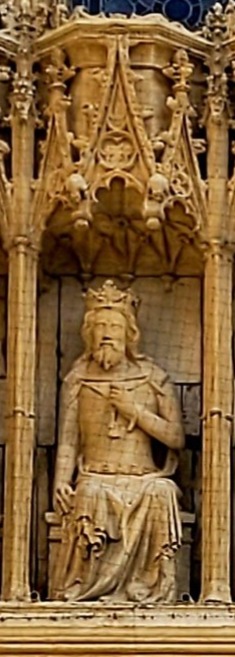
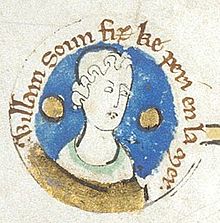
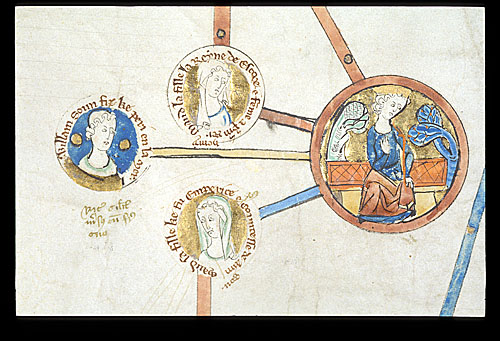
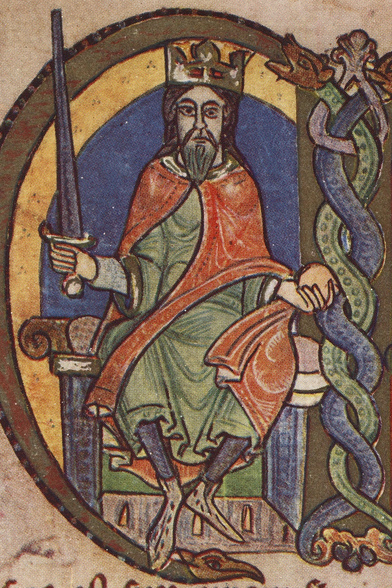
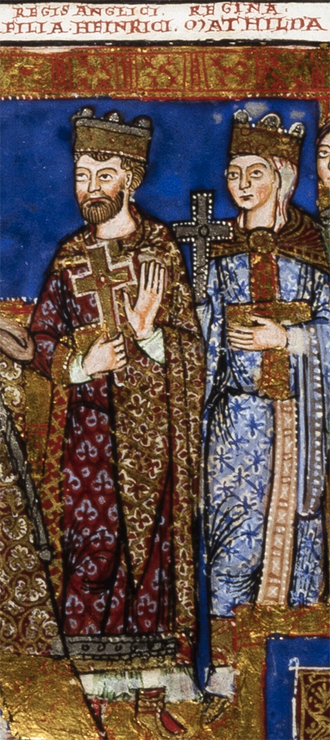
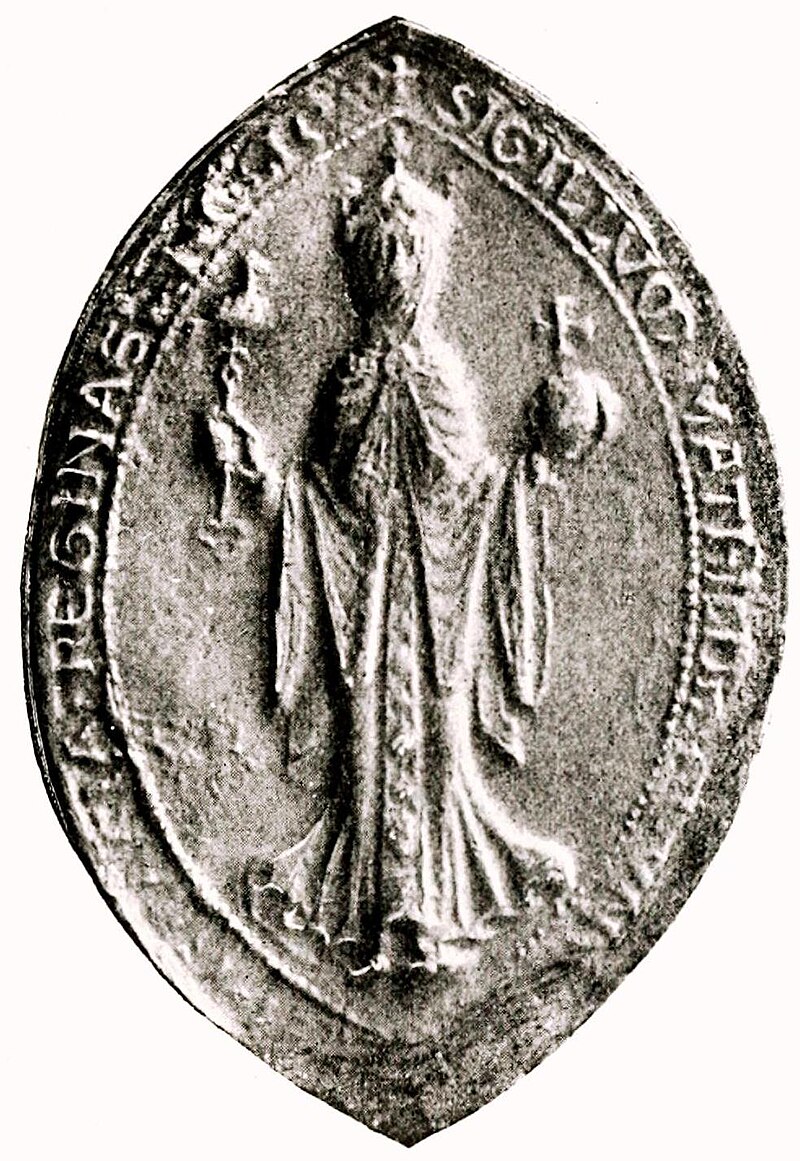
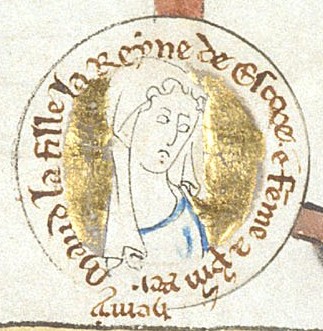



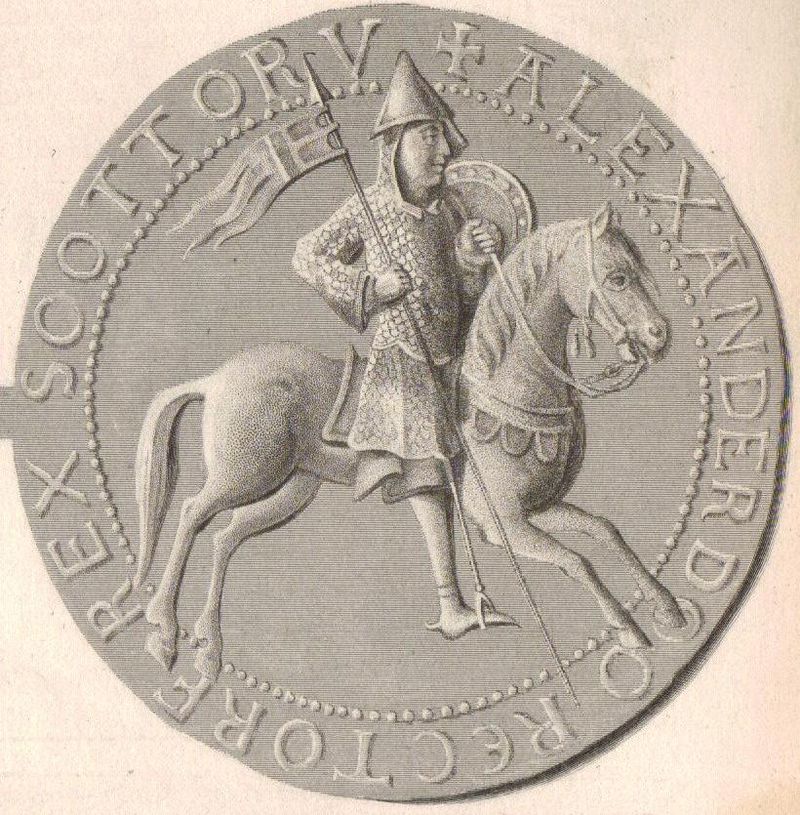
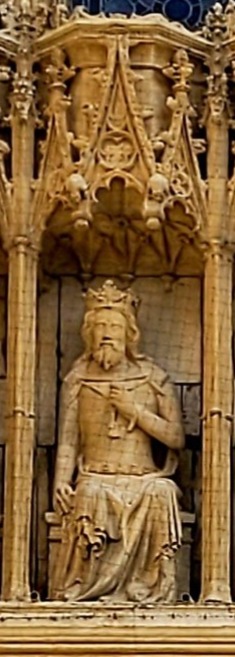
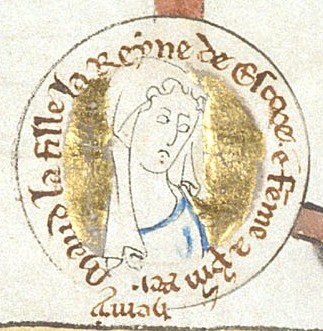
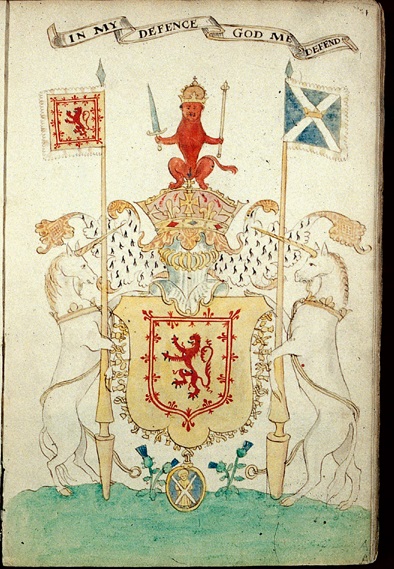
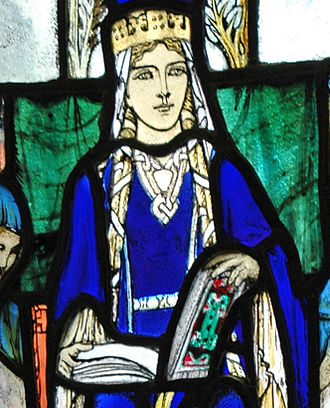




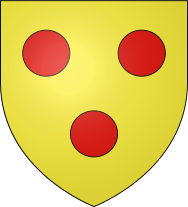

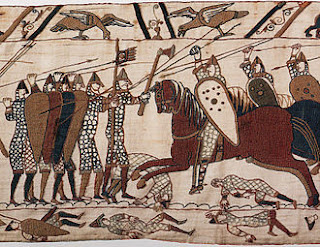
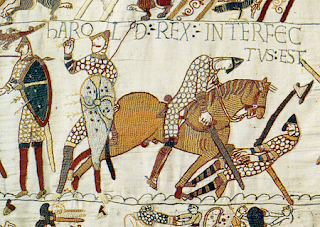
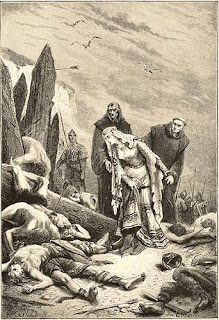
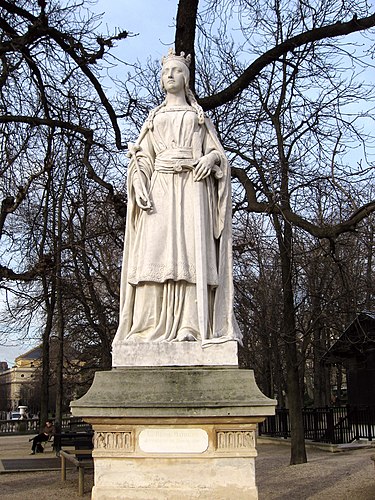
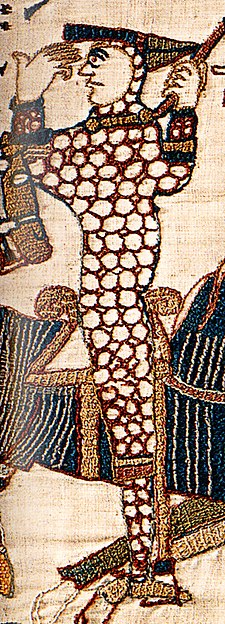
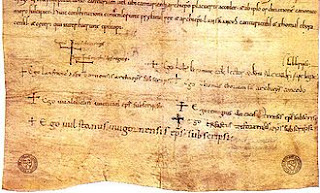

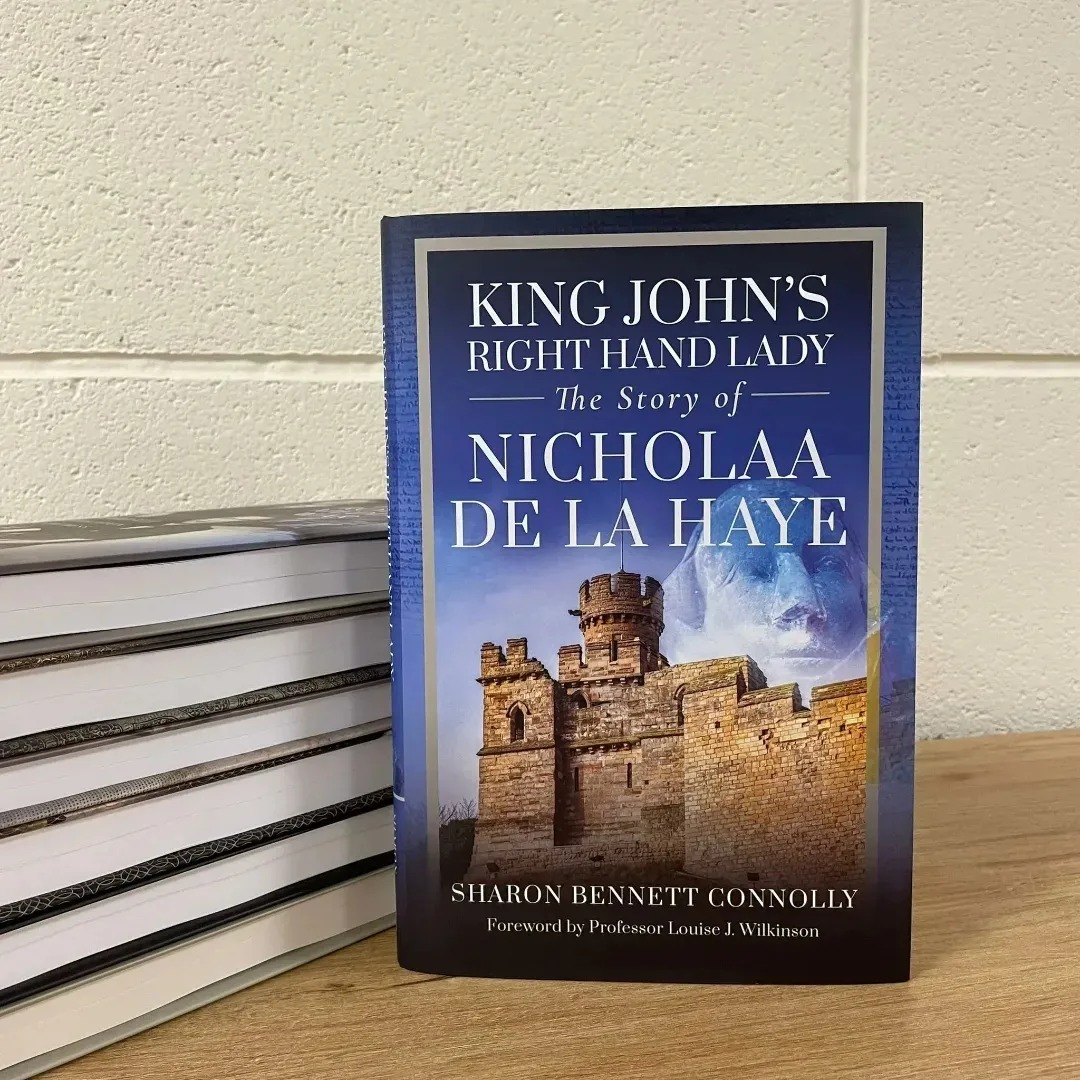


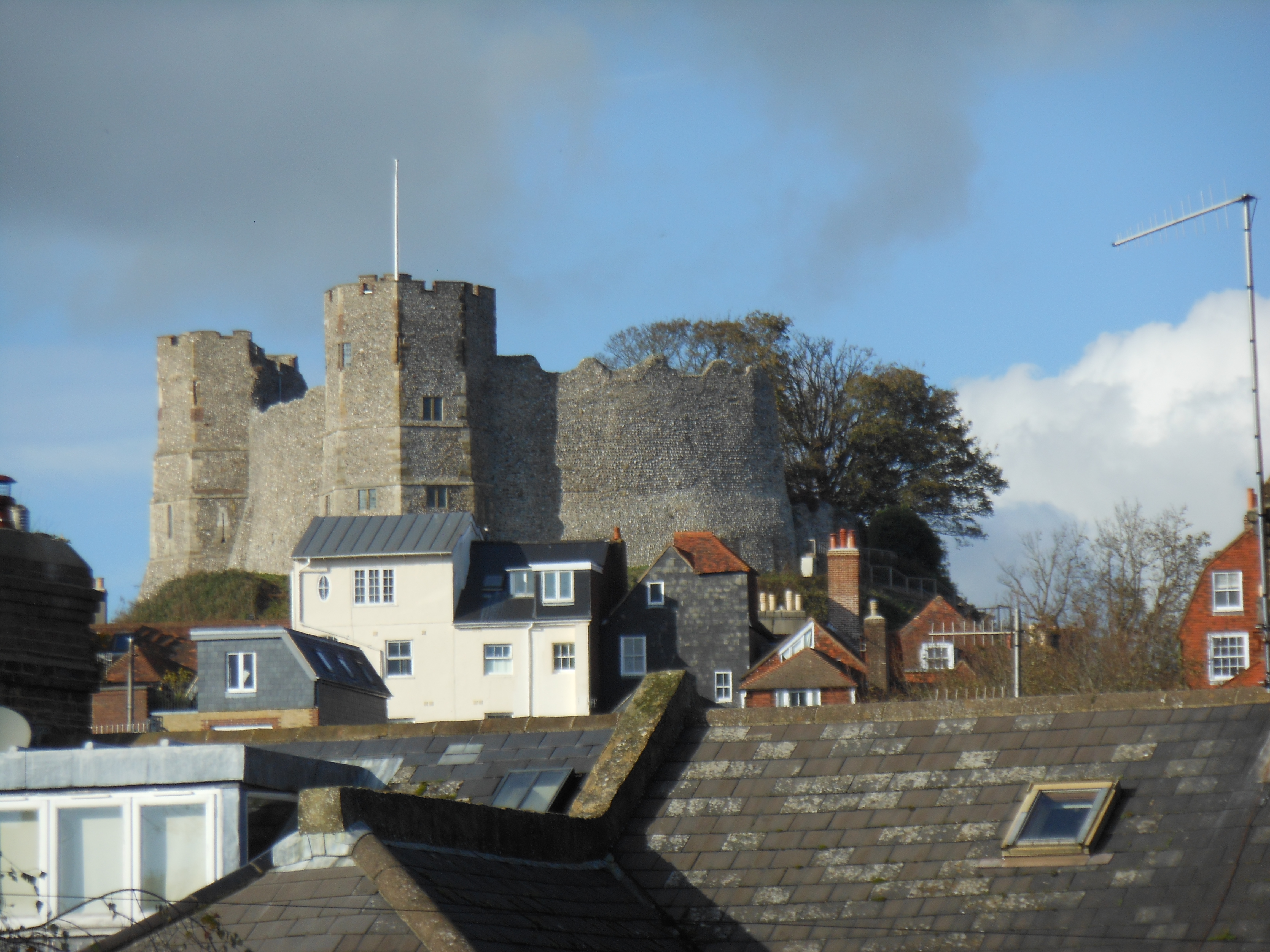
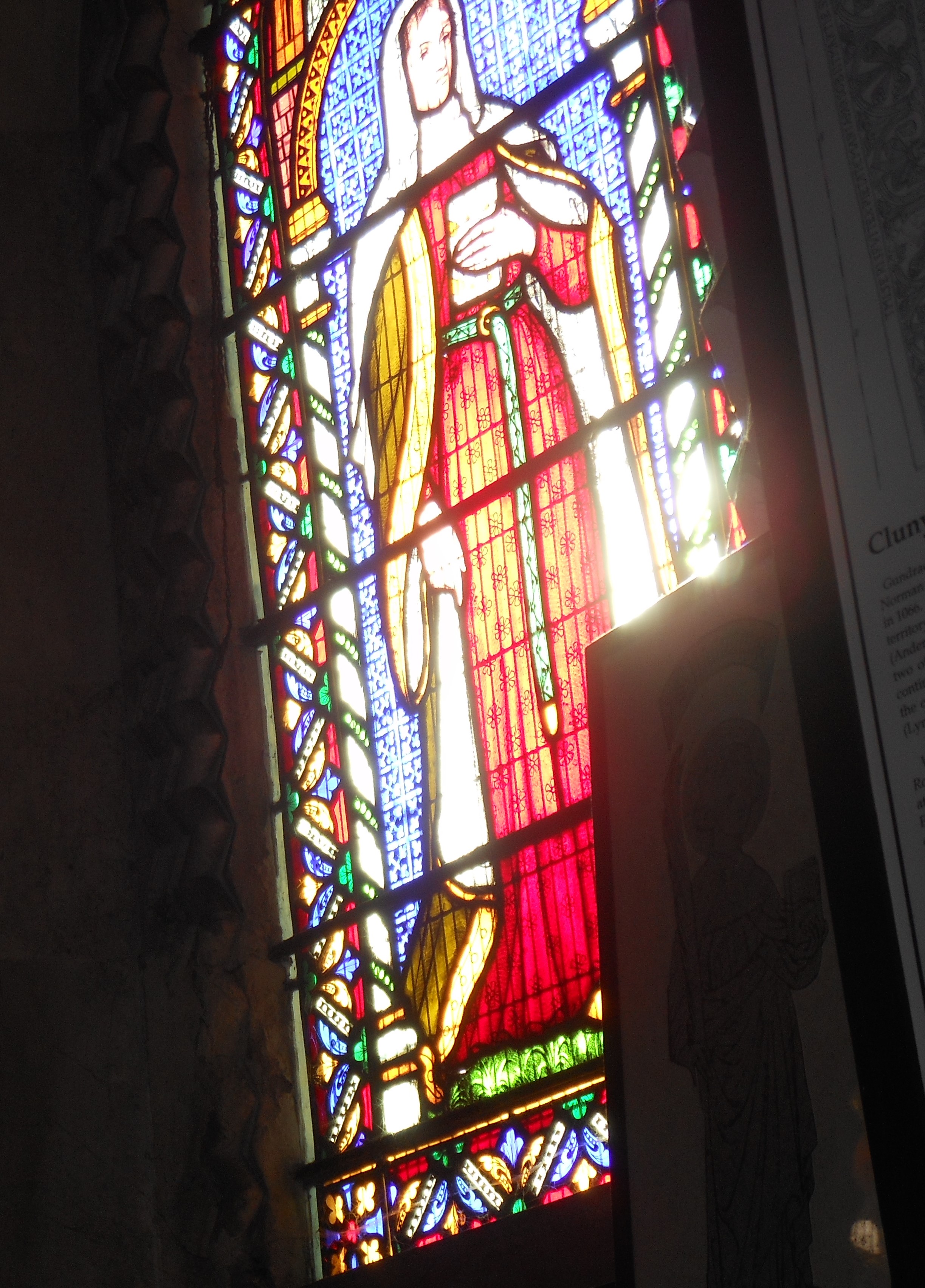

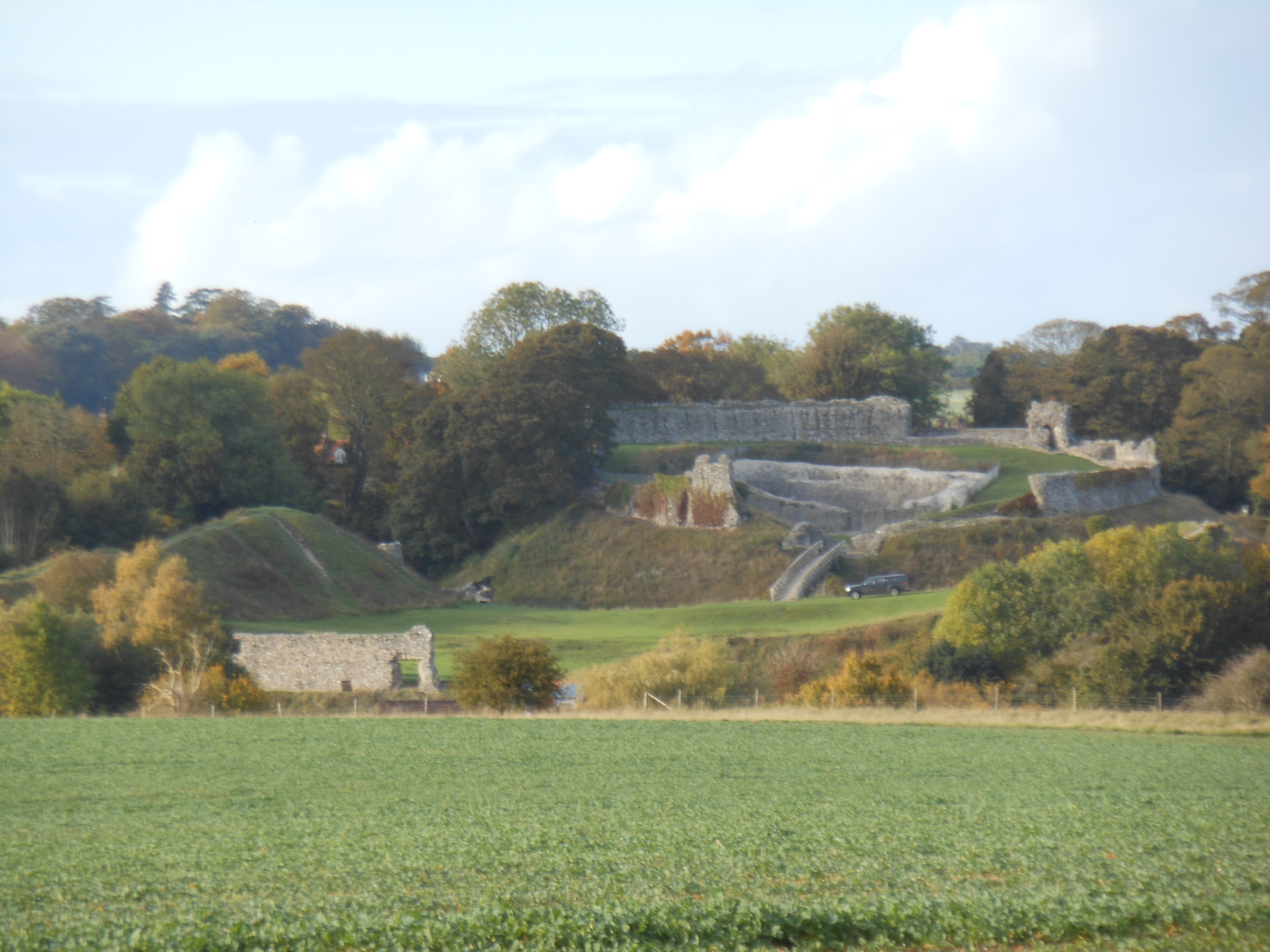


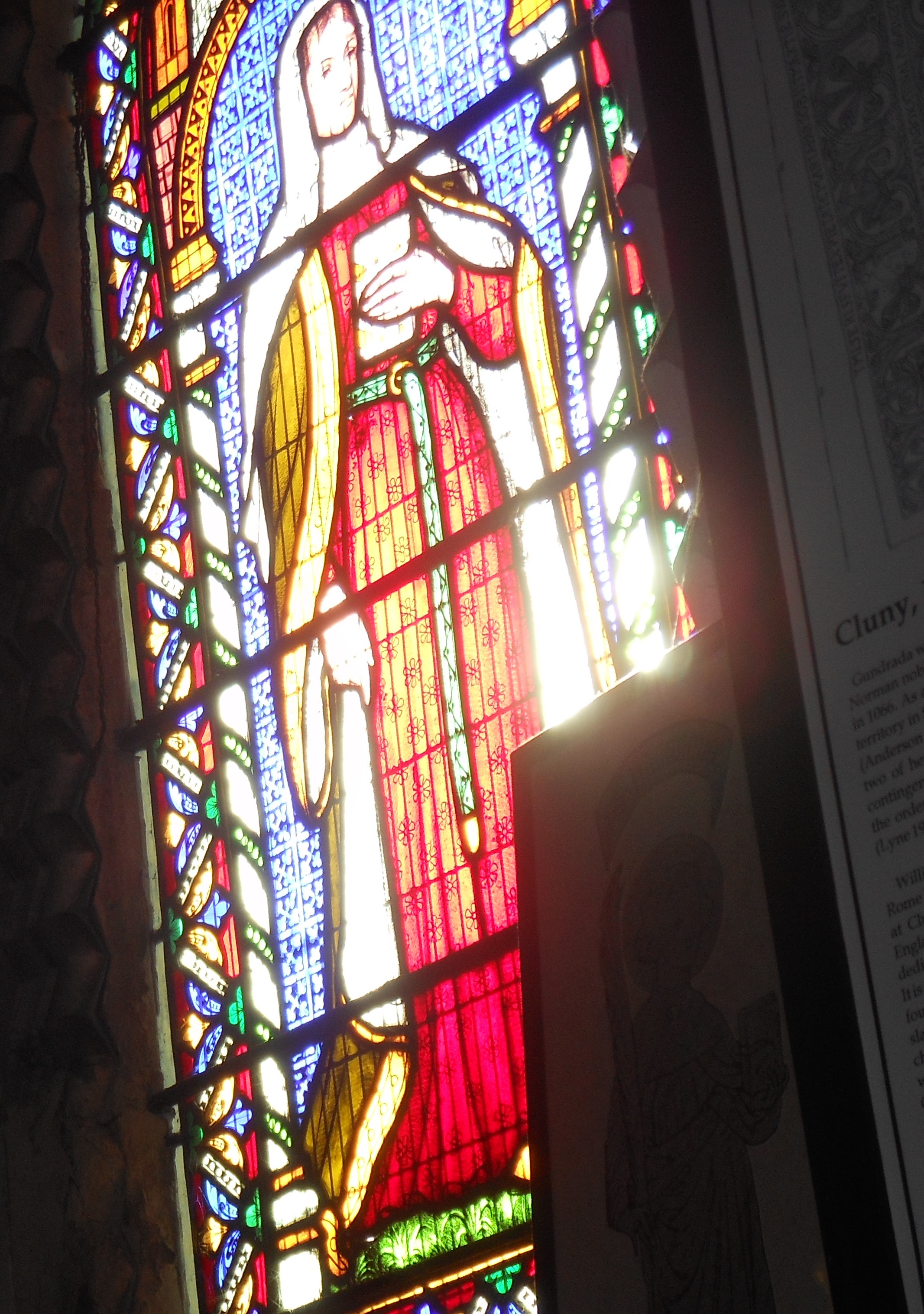

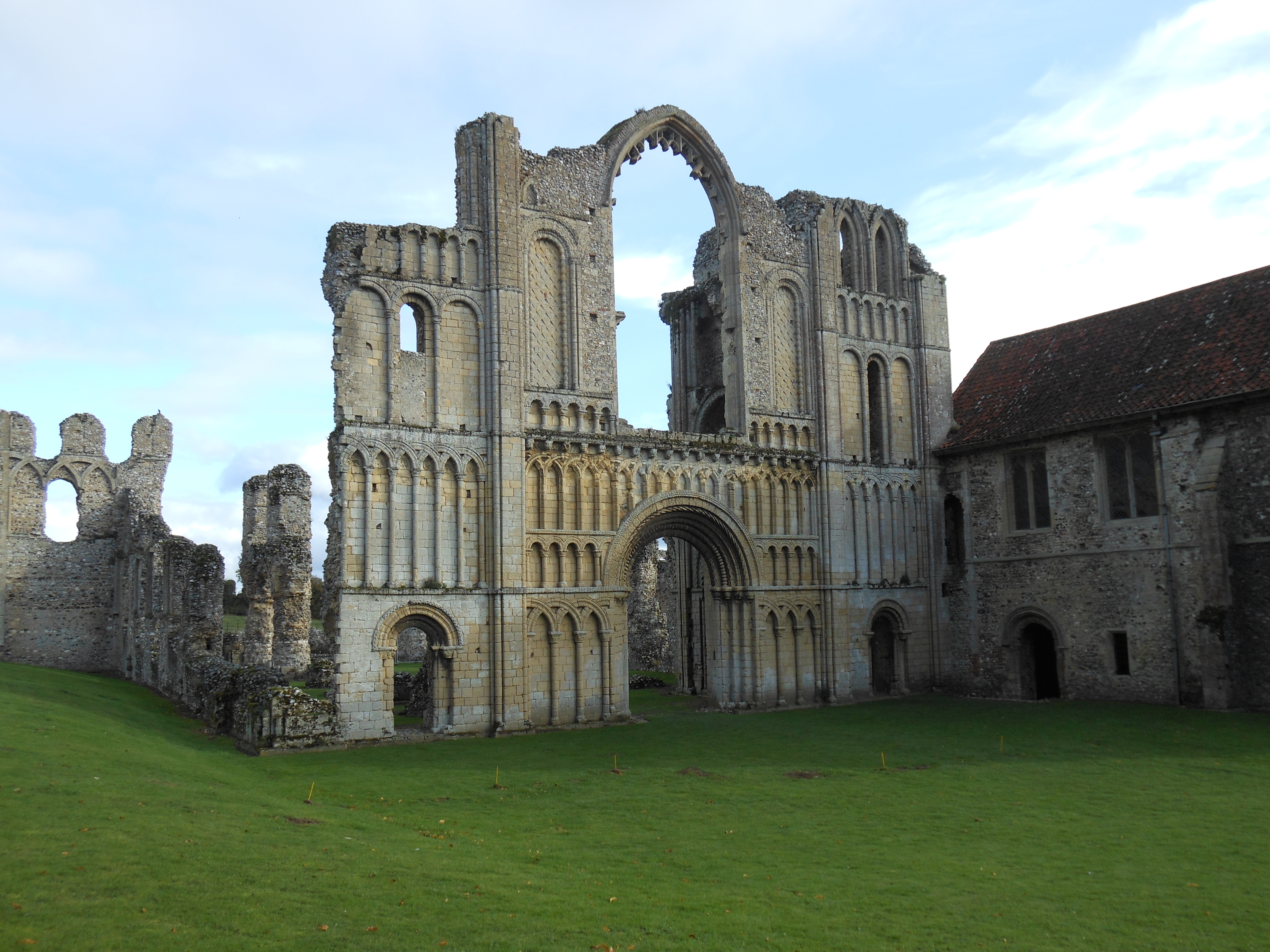




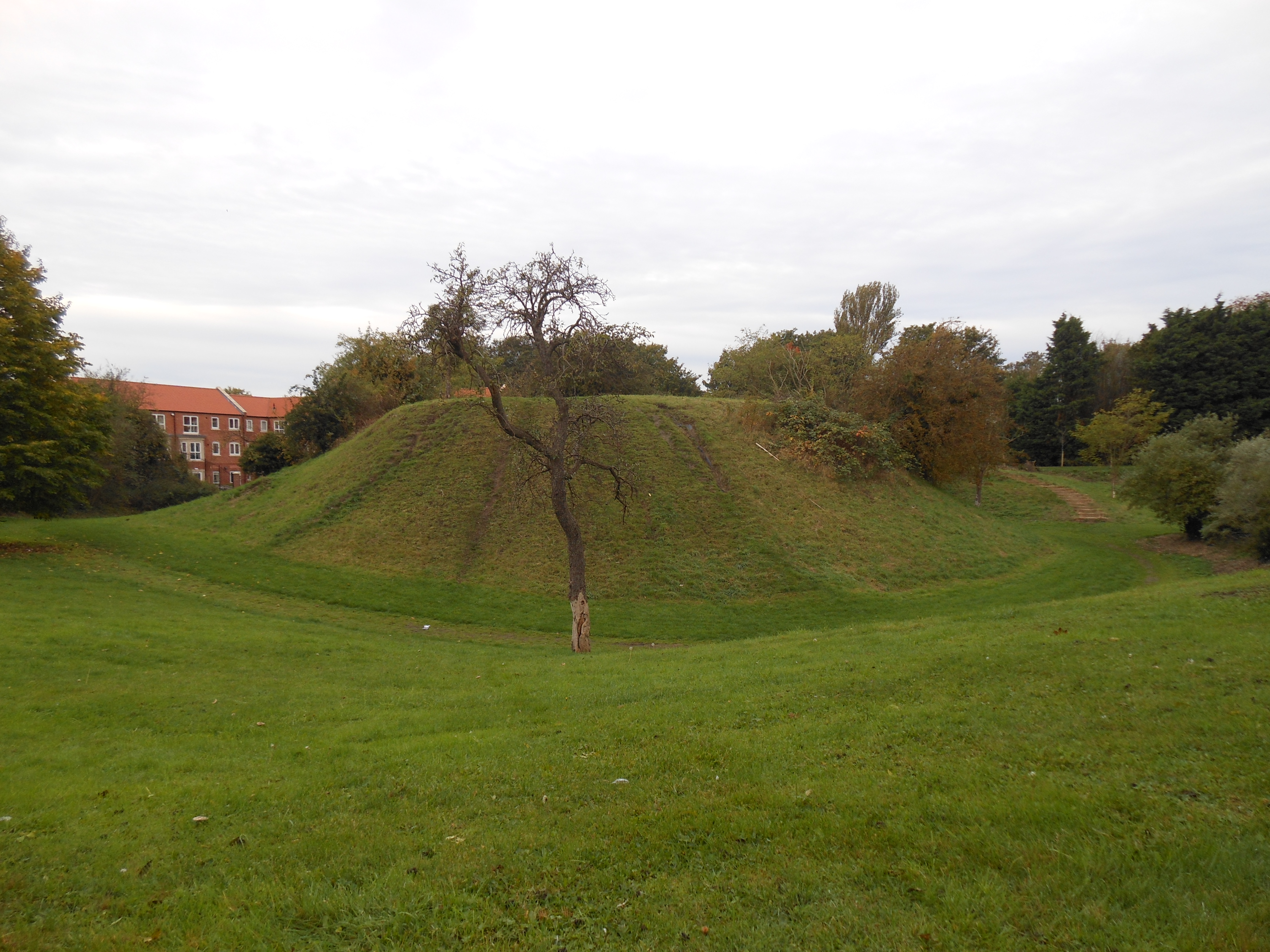
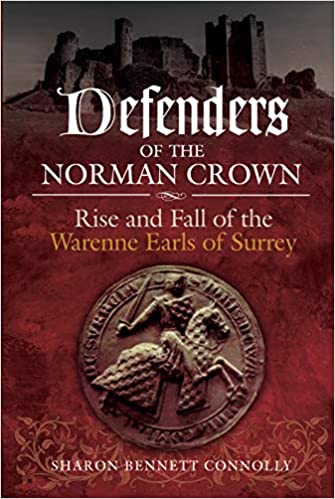


 History... the interesting bits!