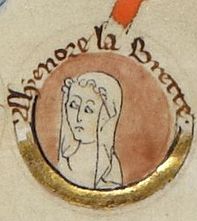
The ‘Comfortable Confinement’ of Eleanor of Brittany

Eleanor of Brittany

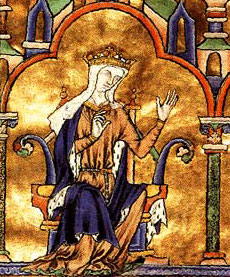
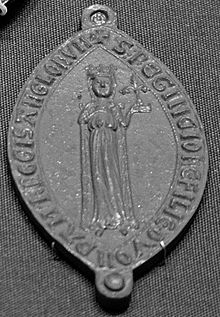
The story of Eleanor of Brittany is one that highlights how women in the Middle Ages could feel truly powerless, if the men around them wanted it so. Her story also highlights the limitations of the Great Charter, or Magna Carta as it is better known, in protecting and supporting the rights of women – even princesses. Eleanor was born around 1184; she was the daughter of Geoffrey Plantagenet, Duke of Brittany by right of his wife, and Constance of Brittany. Described as beautiful, over the years she has been called the Pearl, the Fair Maid and the Beauty of Brittany.

A granddaughter of the medieval power couple, Henry II and Eleanor of Aquitaine, she was the eldest of her parents’ three children; Matilda, born the following year, died young and Arthur, born in spring 1187, six months after his father’s death in a tournament near Paris. Arthur was killed by – or at least on the orders of – King John in 1203.

Initially, Eleanor’s life seemed destined to follow the same path as many royal princesses; marriage. Richard I, her legal guardian after the death of her father in 1186, offered Eleanor as a bride to Saladin’s brother, Al-Adil. Eleanor’s aunt, Joanna, King Richard’s sister had adamantly refused to consider such a marriage and so Eleanor had been offered as an alternative. This was part of an attempt at a political settlement to the 3rd Crusade that never came to fruition.

At the age of 9, Eleanor was betrothed to Friedrich, the son of Duke Leopold VI of Austria. Duke Leopold had made the betrothal a part of the ransom for Richard I’s release from imprisonment. Young Eleanor travelled to Germany with her grandmother, Eleanor of Aquitaine, and the rest of the ransom and hostages. She was allowed to return to England, unmarried, when Duke Leopold died suddenly, and his son had ‘no great inclination’ for the proposed marriage. Further marriage plans were mooted in 1195 and 1198, to Philip II of France’s son, Louis, and Odo Duke of Burgundy, respectively; though neither came to fruition.

Arthur of Brittany

Eleanor’s fortunes changed drastically when Arthur rebelled against Richard’s successor, King John, in the early 1200s. As the son of John’s older brother, Geoffrey, Arthur had a strong claim to the English crown, but had been sidelined in favour of his more mature and experienced uncle. Arthur was captured while besieging his grandmother, Eleanor of Aquitaine, at Mirebeau on 1st August 1202. Eleanor was captured at the same time, or shortly after. And while her brother was imprisoned at Falaise, she was sent to England, to what would be a life-long imprisonment.

If the laws of primogeniture had been strictly followed at the time, Eleanor would have been sovereign of England after her brother’s death. John and his successor, Henry III could never forget this. However, primogeniture was far from being the established rule of succession that it is today. Further, the experiences of Empress Matilda and her fight with King Stephen over her own rights to the crown – and the near-20 years of civil war between 1135 and 1154, had reinforced the attitude that a woman could not rule.

Not only was Eleanor her brother Arthur’s heir, but with King John still having no legitimate children of his own, she was also the heir to England and would be until the birth of John’s eldest son, Henry, in October 1207. If the laws of inheritance had been strictly followed, Eleanor would have been sovereign of England after her brother’s death: John and his successor, Henry III, could never forget this. In 1203 she was moved to England and would be held a prisoner of successive English kings to her dying day. Although her confinement has been described as ‘honourable’ and ‘comfortable’, Eleanor’s greater right to the throne meant she would never be freed or allowed to marry and have children, despite repeated attempts over the years by King Philip and the Bretons to negotiate her release.
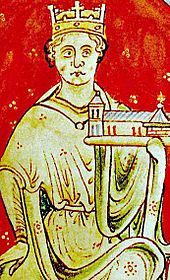
King John

It seems Eleanor did spend some time with the king and court, particularly in 1214 when she accompanied John to La Rochelle to pursue his war with the French. John planned to use Eleanor to gain Breton support and maybe set her up as his puppet duchess of Brittany, replacing her younger half-sister Alice. Alice was the daughter of Eleanor’s mother, Constance, by her third marriage to Guy of Thouars. She was married to Peter of Dreux, a cousin of King Philip of France and duke of Brittany by right of Alice. Using the carrot and stick approach, John offered Peter the earldom of Richmond to draw him to his side, while at the same time dangling the threat of restoring Eleanor to the dukedom, just by having her with him. Peter, however, refused to be threatened or persuaded and chose to face John in the field at Nantes. John’s victory and capture of Peter’s brother in the fighting persuaded Peter to agree to a truce, and John was content to leave Brittany alone, thereafter, instead advancing on Angers. His plans to restore Eleanor abandoned and forgotten.

As John’s prisoner, Eleanor’s movements were restricted, and she was closely guarded. Her guards were changed regularly to enhance security, but her captivity was not onerous. She was provided with ‘robes’, two ladies-in-waiting in 1230, and given money for alms and linen for her ‘work’.1 One order provided her with cloth; however, it was to be ‘not of the king’s finest.’2 Eleanor was well-treated and fed an aristocratic diet, as her weekly shopping list attests: ‘Saturday: bread, ale, sole, almonds, butter, eggs. Sunday: mutton, pork, chicken and eggs. Monday: beef, pork, honey, vinegar. Tuesday: pork, eggs, egret. Wednesday: herring, conger, sole, eels, almonds and eggs. Thursday: pork, eggs, pepper, honey. Friday: conger, sole, eels, herring and almonds.’3

Eleanor was granted the manor of Swaffham and a supply of venison from the royal forests. The royal family sent her gifts and she spent some time with the queen and the daughters of the king of Scotland, who were also hostages in the king’s custody after July 1209. King John gave her the title of Countess of Richmond on 27 May 1208, but Henry III’s regents would take it from her in 1219 and bestow the title elsewhere. From 1219 onwards she was styled the ‘king’s kinswoman’ and ‘our cousin’. In her sole surviving letter, written in 1208 with John’s consent, she is styled ‘Duchess of Brittany and Countess of Richmond.’4 Throughout her captivity she is said to have remained ‘defiant’.5

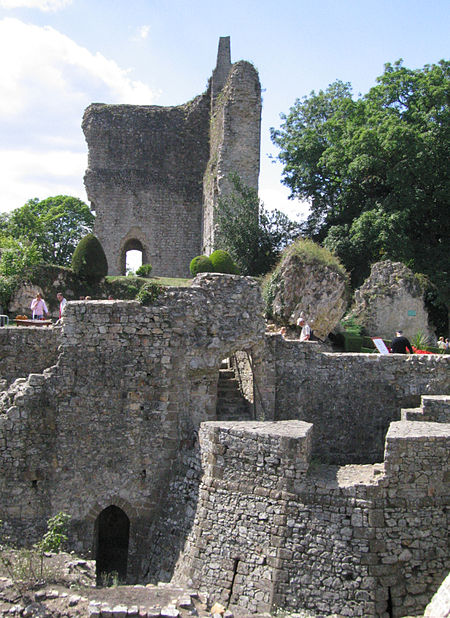
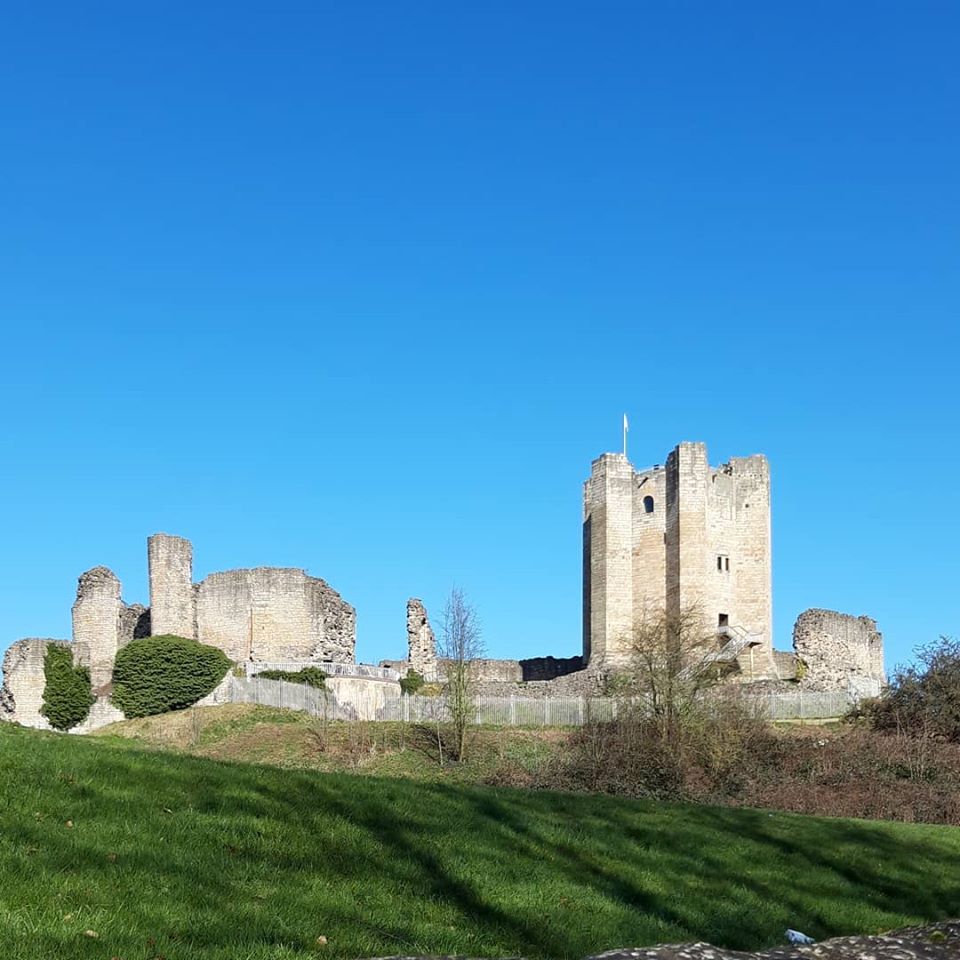
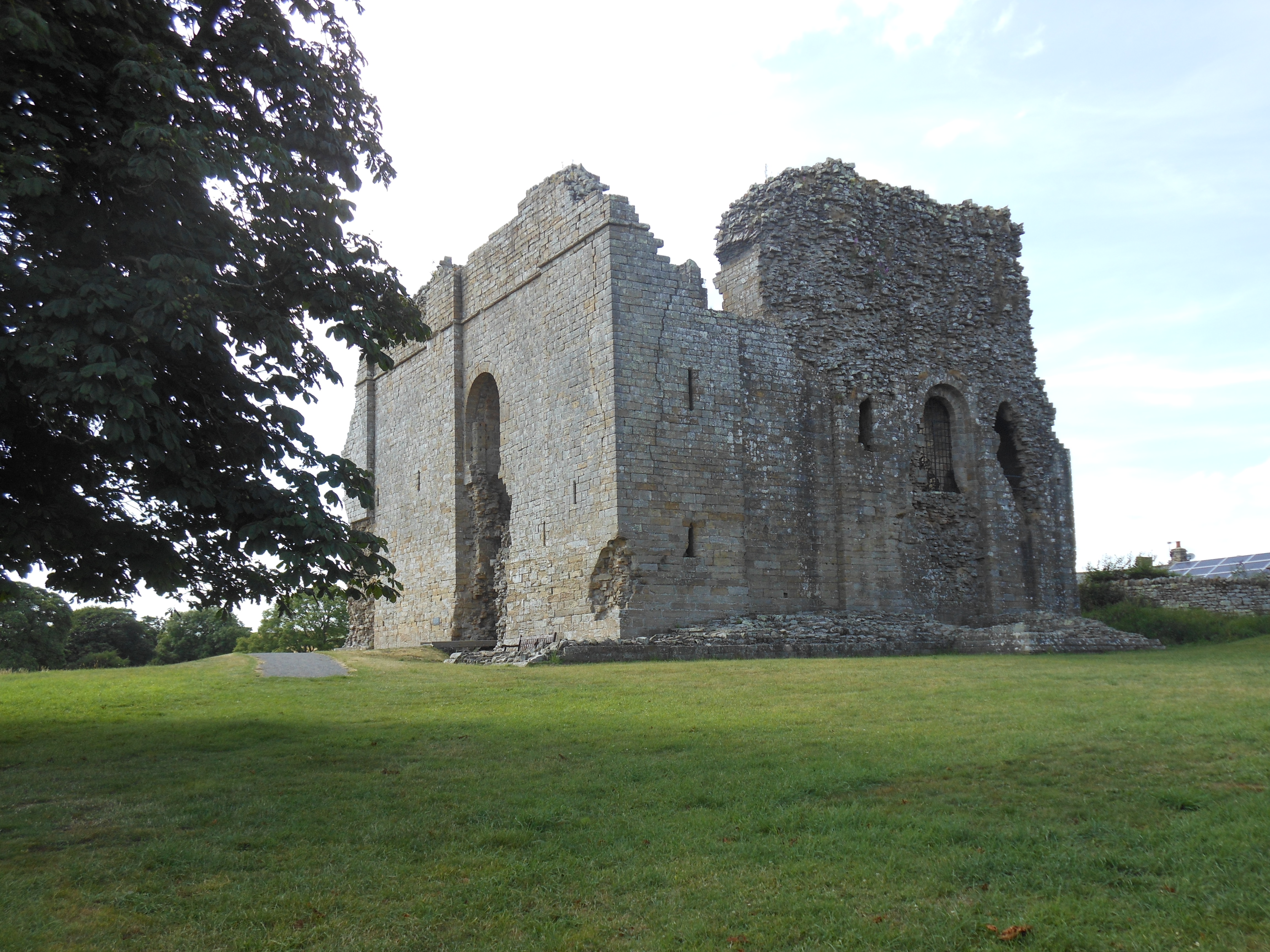
Bowes Castle

It is difficult to pinpoint exactly where Eleanor was imprisoned at any one time. Over the years, she was held in various strongholds, including the castles of Corfe (Dorset), Burgh (Westmorland), and Bowes (Yorkshire). Corfe Castle is mentioned at various times, and it seems she was moved away from the is fortress on the south coast in 1221, after a possible rescue plot was uncovered. She was also held at Marlborough for a time, and was definitely at Gloucester castle in 1236. By 1241 Eleanor was confined in Bristol castle, where she was visited regularly by bailiffs and leading citizens to ensure her continued welfare. Eleanor was also allowed her chaplain and serving ladies to ensure her comfort.

Eleanor of Brittany died at Bristol Castle, on 10 August 1241, at the age of about 57, after thirty-nine years of imprisonment, achieving in death, the freedom that had eluded her in life. She was initially buried at St James’s Priory church in Bristol but her remains were later removed to the abbey at Amesbury, as instructed in her will; a convent with a long association with the crown.

Magna Carta

The freedoms and rights enshrined in Magna Carta in 1215, and reissued in 1216 and 1225 under Henry III, unfortunately held no relevance or respite for Eleanor. Every other subject of the king was afforded the right to judgement of his peers before imprisonment thanks to clause 39:

“No man shall be taken, imprisoned, outlawed, banished or in any way destroyed, nor will we proceed against or prosecute him, except by the lawful judgement of his peers or by the law of the land.”

Magna Carta 1215

And clause 40:

“To no one will we sell, to no one will we deny or delay right or justice.”

Magna Carta 1215

Eleanor’s royal blood and claim to the throne meant that she was awarded no such privilege; justice and freedom were perpetually denied her. Of all the royal family and noblewomen of the time, it is Eleanor who proves that Magna Carta was not always observed and implemented, especially where women were involved, and particularly where the royal family – and the interests of the succession – were concerned.

*

Footnotes:

1David Williamson, ‘Eleanor, Princess (1184–1241)’, Brewer’s British Royalty; 2Rotuli litterarum clausarum quoted in Michael Jones, ‘Eleanor suo jure duchess of Brittany (1182×4–1241)’, Oxforddnb.com; 3Danziger, Danny and John Gillingham, 1215: The Year of Magna Carta; 4 Rotuli litterarum clausarum quoted in Michael Jones, ‘Eleanor suo jure duchess of Brittany (1182×4–1241)’, Oxforddnb.com; 5 Danziger, Danny and John Gillingham, 1215: The Year of Magna Carta

Sources:

Douglas Boyd, Eleanor, April Queen of Aquitaine; Dan Jones, The Plantagenets: the Kings who made England; Robert Bartlett, England Under the Norman and Angevin Kings 1075-1225; Alison Weir, Eleanor of Aquitaine and Britain’s Royal FamiliesOxford Companion to British History; The History Today Companion to British History; Robert Lacey, Great Tales from English History; Mike Ashley, A Brief History of British Kings and Queens and The Mammoth Book of British Kings and Queensfindagrave.comspokeo.com; Danziger, Danny and John Gillingham, 1215: The Year of Magna Carta; Michael Jones, ‘Eleanor suo jure duchess of Brittany (1182×4–1241)’, Oxforddnb.com

Pictures: Wikipedia, except Bowes Castle which is ©2020 Sharon Bennett Connolly


*

My Books

Signed, dedicated copies of all my books are available through my online bookshop.

OUT NOW! Heroines of the Tudor World

Heroines of the Tudor World tells the stories of the most remarkable women from European history in the time of the Tudor dynasty, 1485-1603. These are the women who ruled, the women who founded dynasties, the women who fought for religious freedom, their families and love. These are the women who made a difference, who influenced countries, kings and the Reformation. In the era dominated by the Renaissance and Reformation, Heroines of the Tudor World examines the threats and challenges faced by the women of the era, and how they overcame them. From writers to regents, from nuns to queens, Heroines of the Tudor World shines the spotlight on the women helped to shape Early Modern Europe.

Heroines of the Tudor World is now available for pre-order from Amberley Publishing and Amazon UK.

Also by Sharon Bennett Connolly:
Women of the Anarchy demonstrates how Empress Matilda and Matilda of Boulogne, unable to wield a sword themselves, were prime movers in this time of conflict and lawlessness. It shows how their strengths, weaknesses, and personal ambitions swung the fortunes of war one way – and then the other. Available from Bookshop.orgAmberley Publishing and Amazon UKKing John’s Right-Hand Lady: The Story of Nicholaa de la Haye is the story of a truly remarkable lady, the hereditary constable of Lincoln Castle and the first woman in England to be appointed sheriff in her own right. Available from all good bookshops Pen & Sword Booksbookshop.org and AmazonDefenders of the Norman Crown: The Rise and Fall of the Warenne Earls of Surrey tells the fascinating story of the Warenne dynasty, from its origins in Normandy, through the Conquest, Magna Carta, the wars and marriages that led to its ultimate demise in the reign of Edward III. Available from Pen & Sword BooksAmazon in the UK and US, and Bookshop.org

Ladies of Magna Carta: Women of Influence in Thirteenth Century England looks into the relationships of the various noble families of the 13th century, and how they were affected by the Barons’ Wars, Magna Carta and its aftermath; the bonds that were formed and those that were broken. It is now available in paperback and hardback from Pen & Sword,  Amazon, and Bookshop.orgHeroines of the Medieval World tells the stories of some of the most remarkable women from Medieval history, from Eleanor of Aquitaine to Julian of Norwich. Available now from Amberley Publishing and Amazon, and Bookshop.orgSilk and the Sword: The Women of the Norman Conquest traces the fortunes of the women who had a significant role to play in the momentous events of 1066. Available now from Amazon,  Amberley Publishing, and Bookshop.org.

Alternate Endings: An anthology of historical fiction short stories including Long Live the King… which is my take what might have happened had King John not died in October 1216. Available in paperback and kindle from Amazon.

Podcast:

Have a listen to the A Slice of Medieval podcast, which I co-host with Historical fiction novelist Derek Birks. Derek and I welcome guests, such as Bernard Cornwell, and discuss a wide range of topics in medieval history, from significant events to the personalities involved.

*

Signed and dedicated copies of all my books are available through my online store.

For forthcoming online and in-person talks, please check out my Events Page.

You can be the first to read new articles by clicking the ‘Follow’ button, liking our Facebook page or joining me on Twitter and Instagram.

©2020 Sharon Bennett Connolly FRHistS

Guest Post: Prince John’s Gambit: The Throne at any Cost

Prince John’s Gambit: The Throne at any Cost

John, Count of Mortain, Lord of Ireland, and youngest son of Henry II and Eleanor of Aquitaine knew that the stars were finally aligning in his favor, and the impossible dreams of his youth were now within his grasp. Bold action was required, and he was confident in his ability to seize this auspicious opportunity.

It was early January 1193 when John received a letter from King Philip II of France informing him that his brother, King Richard the Lionheart, was being held captive by the Duke of Austria and his liege lord, Holy Roman Emperor Henry VI.

John immediately traveled to the nearest port and secretly crossed the Channel into Normandy. He might have already been imagining his future as King of England, Duke of Normandy and Aquitaine, and ruler over the Angevin lands lying between those valuable duchies. No one would ever call him “Lackland” again.

It’s likely that John’s ambitions were buoyed by his knowledge of family history. His great-grandfather, Henry I, was the youngest son of William the Conqueror. Upon William’s death, his lands were divided between his two oldest surviving sons: William Rufus, who became King of England and Robert Curthose, who became Duke of Normandy. Henry Beauclerc, as Henry I was known before his ascension, was the original “Lackland” as the only inheritance he received was money.

Yet, only 13 years after William the Conqueror’s death, this youngest son had seized the throne of England after the sudden death of William Rufus in 1100. Six years later, Henry defeated

Robert Curthose at the Battle of Tinchebray and became Duke of Normandy. Robert Curthose would spend the rest of his life in captivity.

Did visions of Richard, his formidable older brother, imprisoned for the rest of his natural life inspire John as he rode across Normandy that cold January?

John’s story during Richard’s captivity stretches from January 1193 to the brothers’ reconciliation in May 1194. It’s a tale of persistence, audacious risk-taking, and a single-minded resolve to achieve power at any cost.

If John had succeeded, perhaps we would admire him just as Henry I is admired for his unexpected rise to power. But John’s failures and reckless schemes during these 17 months would not only determine the course of Richard’s remaining years as king, they would also play an important role in establishing John’s reputation as a deceitful, untrustworthy, and avaricious man.

When John met with the Norman barons at Alençon in January 1193, he announced that Richard would not return, and that he was likely dead. John proclaimed that he was ready to assume control of Normandy and help the barons defend against potential attacks from King Philip. These loyal liegemen of Richard flatly refused to accept John as their new lord. As long as Richard lived, they would honor their oaths of fealty to him. Undeterred, John left them and went to Paris.

King Philip had spent his reign cleverly pitting one Plantagenet against another, and he was delighted to receive John at his court. In return for Philip’s support, John vowed to annul his marriage and marry Philip’s sister. He then paid homage to Philip for Normandy and the Angevin lands, and he promised to give Philip the strategic fortress of Gisors and the Norman Vexin.

This was a stunning betrayal of his brother, and as news of John’s actions in Paris made its way back to England, many of those who might have otherwise supported John as heir were outraged.

In February, John returned to England where he captured and garrisoned the castles of Windsor and Wallingford. He then entered London and declared that Richard would never return; he even insisted that Richard was dead. John demanded the Great Council recognize him as king.

His mother, the indomitable Eleanor of Aquitaine, and the Great Council were now ruling England. They had not yet received word of Richard’s location or condition, and it was a precarious time. Since Richard had no legitimate children, only John and a nephew, Arthur of Brittany, were potential successors. Arthur’s father, Geoffrey, had been born before John, but Arthur’s youth and Breton upbringing worked against him. Eleanor preferred that John ascend to the throne should Richard die.

By early March, John’s castles at Windsor and Tickhill were under siege. It was an awkward moment for the men leading these sieges. If they pursued victory too vigorously, they might make an enemy of the future king.

On April 20, Eleanor and the Great Council began receiving dispatches from Richard, who outlined the terms of his release and offered recommendations for raising the staggering king’s ransom required for his freedom. The government could not simultaneously conduct sieges against John’s castles and raise the ransom.

Even though Windsor and Tickhill were on the verge of surrender, a six-month truce was negotiated. Eleanor took control of Windsor and Wallingford, while John kept Tickhill and Nottingham. Along with other stipulations, John was expected to help raise the ransom, and he was required to stay in England.

After this setback, John spent May and June in Dorset, pouting and plotting his next move. Historians differ on how much effort he put into raising the ransom.

In early July, news reached both England and France that the terms of Richard’s release had been renegotiated and finalized. Although Richard knew that his release was still months away, Philip believed the Lionheart could be freed at any time.

In response, a frantic King Philip sent his famous message to John: “Look to yourself, the Devil is loosed!”

Despite his pledge to remain in England, a terrified John fled across the Channel to Paris. Because he had broken the truce, John’s estates were confiscated.

John was at Philip’s side when emissaries from the Lionheart arrived, proposing a treaty with the French king. The Treaty of Mantes was signed on July 9, 1193, and it was a generous settlement intended to stop Philip from further incursions into Normandy and to avoid a possible French invasion of England.

Richard’s secondary goal was to separate Philip and John. If John renewed his oath of loyalty to his brother, his titles and lands on both sides of the Channel would be restored, and a series of castles in Normandy would be awarded to him. John promptly pledged his allegiance to Richard and set off to claim his castles. However, he was so distrusted that the castellans refused to relinquish control to John. A furious John returned to Paris, and Richard’s scheme to remove John from Philip’s influence failed.

The emperor’s December announcement that Richard would be released in January resulted in another panicked response from Philip and John. They sent a letter to Henry offering either monthly payments to keep Richard imprisoned until autumn or a lump sum matching the ransom raised by Eleanor, as long as Henry transferred custody of his prisoner to Philip.

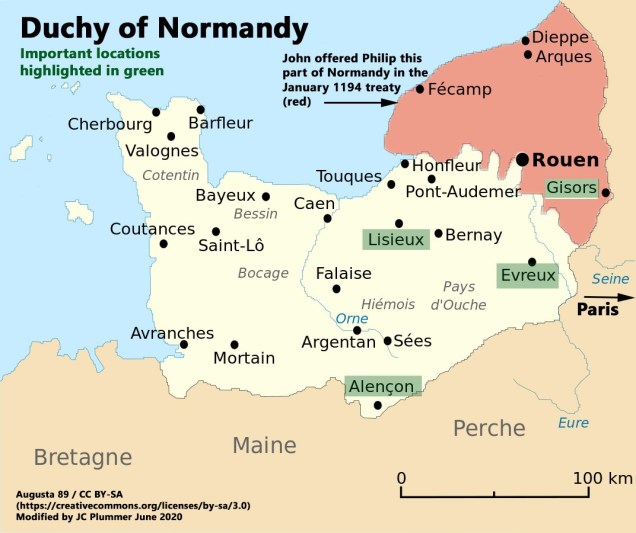
By January 1194, John was desperate, but he was not ready to admit defeat. He made one last treaty with Philip, and its extraordinary terms must have astounded the French king. John surrendered the whole of Normandy east of the Seine except for the city of Rouen. He gave key castles in Maine, Anjou, Touraine, and Aquitaine to Philip. And perhaps the most shocking concession was his agreement to hold the remaining continental lands as a baron of the French court. This would end the long-standing tradition of the Duke of Normandy meeting the King of France as an equal.

The January treaty was so astonishing that it only raised Philip’s suspicions. Although Philip signed the treaty, the shrewd French king probably doubted that John would abide by it.

Philip and John’s offer tempted Henry VI, and he showed their letter to Richard. Although he could not renege on his promises, Henry delayed Richard’s release until February 4, 1194.

Eleanor and Richard immediately left the German court, and they landed in England on March 13. Richard soon subdued John’s remaining supporters, and John’s titles and lands were again confiscated.

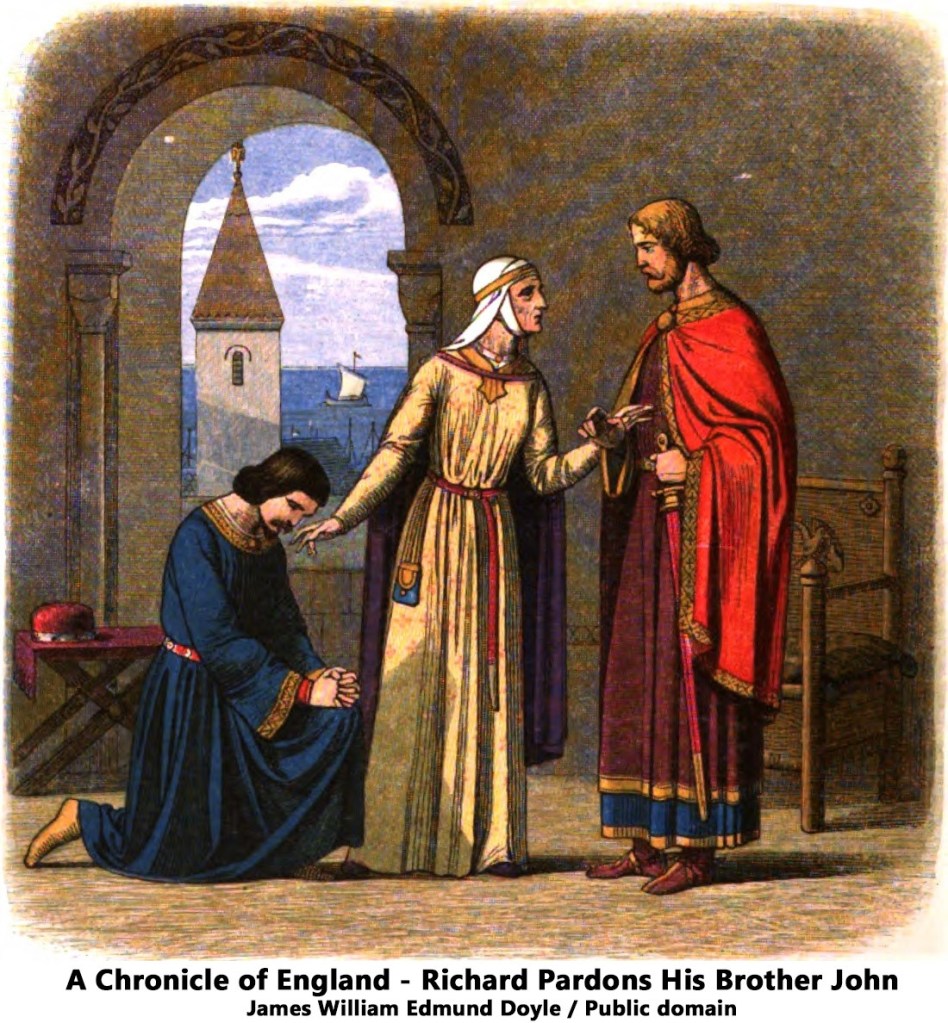
On May 13, Richard and Eleanor disembarked in Normandy. By May 19, they were in Lisieux at the home of John of Alençon. It is here that a shaken and contrite John arrived, falling at his brother’s feet, shedding the required tears, and begging for mercy. Richard forgave him, but his words were casual and full of contempt. He called the 27-year-old John a “child” who had been led astray by evil advisors.

Eleanor and Richard had already determined that it was more important to separate John from Philip and bring him back into the family fold than to impose the punishment he deserved for his treason.

The following day, John returned to Evreux, a strategic castle he had been holding for Philip since January. He then demonstrated why he could not be trusted. He invited the town’s French officials to meet with him, perhaps for dinner, and he announced to them that he now held the town for Richard before ordering their slaughter.

Twelve months later, in May 1195, Richard restored the counties of Mortain and Gloucester to John, although not the castles. In September 1197, Richard formally named John as his heir. John did not return to England until after Richard’s death in 1199.

The story of John’s 17 month quest for power during Richard’s captivity shows a man willing to promise anything and risk everything, regardless of whether he could deliver. Yet, he never suffered the consequences he deserved for his actions, mostly because he was the favored choice to succeed Richard, as long as the Lionheart remained childless.

Consider these examples:

· During his initial bid to take the crown, when his castles were on the verge of surrender, he was offered a generous truce.

· He lost his titles and lands when he fled to Paris in July 1193, but the Treaty of Mantes restored them to him.

· He ceded valuable strategic castles to Philip, and Richard would spend the remainder of his life fighting to recover them. John’s penalty was to lose his lands and titles for a time, but they were eventually returned to him.

This raises the question of whether John learned any lessons from his disastrous attempt to take the throne from Richard, and how that lack of meaningful consequences for his reckless and risky gambles might have impacted his reign, particularly when dealing with a cunning foe like King Philip and aggrieved barons looking for a measure of justice.

About the authors:

J. C. Plummer graduated Summa Cum Laude from Washburn University with a Bachelor of Arts degree in History and Anthropology. She later earned a Master of Science degree in Computer Information Science from Dartmouth College.

As an author and historian, J.C.’s goal is to provide thoughtful and entertaining storytelling that honors the past, is mindful of the present, and is optimistic for the future.

She has joined with author Olivia Longueville to co-author The Robin Hood Trilogy.

About Olivia Longueville: Olivia has always loved literature and fiction, and she is passionate about historical research, genealogy, and the arts. She has several degrees in finance & general management from London Business School (LBS) and other universities. At present, she helps her father run the family business.

Olivia’s first book was Between Two Kings, a novel set in Tudor England, which will be re-published by Penmore Press later this year.

J.C.’s social media profiles:

Website: http://www.angevinworld.com/

Twitter: @JC_Plummer Facebook: http://www.facebook.com/jennie.newbrand/

Olivia’s social media profiles:

Website: http://www.olivialongueville.com/

Twitter: @O_Longueville

Facebook: http://www.facebook.com/OliviaLongueville/

The Robin Hood Trilogy:

Set in late 12th century England, France, and Outremer, this re-imagining of the Robin Hood story closely follows history while incorporating popular aspects of the Robin Hood legends.

From the mists of an ancient woodland, to lavish royal courts teeming with intrigue, to the exotic shores of the Holy Land—Robin Hood leads the fight in a battle between good and evil, justice and tyranny, the future and the past.

Historical figures such as King Philip II of France, Richard the Lionheart, Prince John, and Eleanor of Aquitaine are featured in the trilogy.

Book 1: Robin Hood’s Dawn Amazon buy links. https://bit.ly/1-RHDawn https://bit.ly/RHDawn-UK

Book 2: Robin Hood’s Widow NOW AVAILABLE! Amazon buy links. https://bit.ly/RHWidow https://bit.ly/RHWidow-UK

Book 3: Robin Hood’s Return Coming soon!

*

My Books

Out Now!

Ladies of Magna Carta: Women of Influence in Thirteenth Century England  looks into the relationships of the various noble families of the 13th century, and how they were affected by the Barons’ Wars, Magna Carta and its aftermath; the bonds that were formed and those that were broken. It is now available from Pen & SwordAmazon and from Book Depository worldwide.

Also by Sharon Bennett Connolly:

Silk and the Sword: The Women of the Norman Conquest traces the fortunes of the women who had a significant role to play in the momentous events of 1066.  Available now from Amazon,  Amberley Publishing, Book Depository.

Heroines of the Medieval World tells the stories of some of the most remarkable women from Medieval history, from Eleanor of Aquitaine to Julian of Norwich. Available now from Amberley Publishing and Amazon and Book Depository.

*

You can be the first to read new articles by clicking the ‘Follow’ button, liking our Facebook page or joining me on Twitter and Instagram.

©2020 Sharon Bennett Connolly, Olivia Longueville and J.C. Plummer

Medieval She-Wolves: Part Two

As promised, here’s Part Two of Medieval She-Wolves. Charting the stories of 3 more remarkable women who have been labelled ‘she-wolves’ due to their strength and determination – and a ruthlessness born out of an impressive survival instinct.

Zoe, Empress of Constantinople

Mosaic of Empress Zoe, Hagia Sophia

Zoe Porphyrogenita lived much of her life in relative obscurity. At the age of 50, in 1028, she was married to her father’s designated successor, Emperor Romanos III, and became empress consort when he succeeded to the throne in the same year. Zoe was described by a palace courtier, Michael Psellos, as ‘a woman of great beauty, most imposing in her manner and commanding respect … a woman of passionate interests.’

As empress consort, Zoe asserted herself. Her younger sister, Theordora, was sent to a monastery. Neglected by her husband, who had taken a mistress and refused his wife access to the treasury, Zoe took a much younger, teenage lover, Michael. Together the lovers conspired to dispose of Romanos and he was drowned in his bath in 1034.

Zoe promptly married her lover and made him Emperor Michael IV. Their marriage, however, was full of distrust and Zoe was allowed no power or say in government.  Michael IV then banished Zoe to the gynaeceum, or women’s quarters. Not to be forgotten, Zoe began scheming to reclaim her throne. After she was allowed back to court, and unable to bare her own children, Zoe adopted Michael IV’s nephew, another Michael, and made him her heir. Michael IV’s life would have probably ended in the same way as his predecessor, Romanos III, drowned in the bath or with a knife in his back, had he not died of natural causes in 1041.

Michael’s nephew, Zoe’s adopted son, ascended the throne as Michael V. When Michael V was crowned, Zoe was again banished to a monastery, an act which caused an uprising in Constantinople. Michael V was deposed after only four months of disastrous rule. He was exiled to a monastery, but complaints about such lenient treatment meant that, despite Zoe’s desire to be merciful, orders were issued for his mutilation and he was blinded, an act symbolically rendering him incapable of ruling.

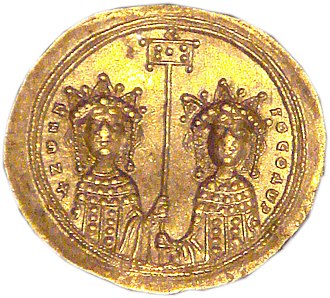
Zoe and Theodora

Now 64-years-old, Zoe was empress, once again. Her sister, Theordora, was retrieved from her monastery to rule beside her, though Zoe’s throne being placed slightly further forward, at the joint coronation ceremony, was an obvious indication of which of the sisters was in charge. In the same year, 1042, Zoe took a third husband, Emperor Constantine IX, who co-ruled the empire, with the two sisters. Constantine outlived his wife; Zoe died in 1050, aged about 72. A ruthless empress who knew what she wanted, Zoe was not afraid to dispose of her rivals – whether they be a husband or an adopted son.

Isabella of Angouleme, Queen of England

At first sight, it is easy to have sympathy for Isabella of Angouleme. When I started researching her for my forthcoming book, Ladies of Magna Carta: Women of Influence in Thirteenth Century England, I was expecting to be able to go some way to redeeming her reputation. She was married at a very young age – she was no more than 12 and may have been as young as 10 – to ‘Bad’ King John, the man who left women to starve in his dungeons and murdered his own nephew. Isabella and John were married in 1200 and, after 16 years together, they had 5 children; the youngest, Eleanor, was born in 1215.

Seal of Isabella of Angouleme

When John died in October 1216, however, Isabella didn’t spend much time seeking to comfort and protect her children. As soon as her oldest son, Henry III, was crowned with her own ‘chaplet’, Isabella started making arrangements to go home, to her own lands in Angouleme, France. In 1217 she left England, supposedly to arrange the wedding of her daughter, Joan, but she never returned. Joan had been betrothed, at the age of 4, to Hugh X de Lusignan, Count of La Marche and the son of Hugh IX de Lusignan (the man who had been betrothed to Isabella before John married her).

In 1220, however, in a scandalous about-face Hugh IX repudiated Joan and married her mother, his father’s former betrothed. And poor 9-year-old Joan’s erstwhile betrothed was now her step-father!

But worse was to come…

Instead of being sent back to England, as you would expect, Joan went from being Hugh’s betrothed – to being his prisoner. She was held hostage to ensure Hugh’s continued control of her dower lands, and as a guarantee to the transfer of his new wife’s dower. England, on the other hand, was withholding Queen Isabella’s dower against the return of Joan’s dower lands.

Isabella wrote to her son, Henry III, to explain and justify why she had supplanted her own daughter as Hugh’s bride, claiming that his ‘friends’ were worried about Joan’s youth and forcing Hugh to repudiate the English princess in favour of a French bride who was old enough to bear him a son. Isabella had married Hugh to stop him going over to the French and to guarantee his allegiance to her son.

Ironically, the proposed union of Hugh IX and Isabella, and of their lands, was the reason John had married Isabella in the first place – to prevent the lands of La Marche and Angouleme combining and challenging Plantagenet superiority in the region. Little Joan was returned to England towards the end of 1220, but the arguments over Isabella’s English lands continued and they were confiscated, for a short time, in 1221.

Isabella would not retire in peace, however, and in 1224 she and Hugh betrayed Henry by allying themselves with the King of France. In exchange for a substantial pension, they supported a French invasion of Poitou (the lands in France belonging to the King of England, her son). Although she reconciled with Henry in 1230, Isabella and Hugh continued to play the kings of France and England against each other, always looking for the advantage. In 1242, for example, when Henry III invaded Poitou, Hugh X initially gave support to his English stepson, only to change sides once more. Isabella herself was implicated in a plot to poison King Louis IX of France and his brother, only to be foiled at the last minute.

As contemporaries described her as ‘more Jezebel than Isabel’, accused her of ‘sorcery and witchcraft’, Isabella of Angouleme’s reputation as a heartless mother and habitual schemer seems set to remain. With little to recommend her, she stands out as a She-wolf with an impressive ruthless streak, even against her own son.

Isabella of France, Queen of England

Isabella of France, Queen of England

Isabella of France was the wife and queen of Edward II of England. In 1325, Isabella went on a diplomatic mission to France to negotiate terms with her brother, the French king Charles IV, who had seized Edward’s lands in France. Isabella saw an opportunity to take a stand against the unfairness of her situation. Ignored, spied on and persecuted by her husband’s favourite, the hated Hugh Despencer, and after 17 years of marriage, Isabella refused to return home. Isabella took to wearing widow’s weeds and claimed:

‘I feel that marriage is a joining together of man and woman, maintaining the undivided habit of life. Someone has come between my husband and myself, trying to break this bond. I protest that I will not return until this intruder has been removed but, discarding my marriage garment, I shall assume the robes of widowhood and mourning until I am avenged of this Pharisee.’

Isabella and the Strange Death of Edward II by Paul Doherty

With her son Edward, the heir to the throne, in her in France, and with the help of her close friend and adviser – and, quite possibly, her lover – Roger Mortimer, Isabella started attracting support from the disappointed and disillusioned of Edward’s subjects. In 1326, she launched the invasion of England that would see her husband fleeing for his life in the face of her advancing army. Edward and Hugh were captured near Llantrisant in Wales. Edward was sent to imprisonment in Berkeley Castle.

Hugh Despencer was taken before a military tribunal in Hereford, blamed for the collapse of the queen’s marriage and humiliating Isabella, and seizing her wealth and estates, he was given no right to reply. His guilt was a foregone conclusion. Paraded through the city of Hereford, with a crown of nettles on his head and all manner of things thrown at him, before being dragged on a sled to the town square, where Despencer suffered the full horror of a traitor’s death. He was hanged from a specially-erected gallows, fifty feet high; cut down whilst still alive, his intestines were cut out and burned before his eyes, before his head was cut off to end his agony.

Despencer’s death demonstrated the anger Isabella felt towards her husband and his favourite. Edward’s death may well have been just as gruesome – or not at all. Historians are divided about what happened to Edward II. Some claim he escaped to the continent, dying years later in Italy, while others are convinced that he was killed in Berkeley Castle, although probably not by a red-hot poker up his bum. Whatever happened to Edward, Isabella’s revenge was complete; Despencer had been utterly destroyed and Edward was deposed and replaced with his son, the 14-year-old Edward III.

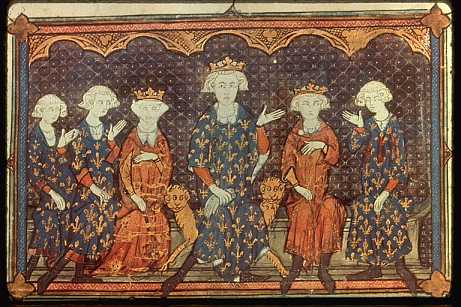
Isabella (3rd from the left), with her father King Philip IV, brothers and uncle

For 3 years Isabella and Mortimer ruled England, only to be themselves deposed by Edward III when he turned eighteen; their own arrogance and mismanagement of England causing their downfall. Mortimer was hanged at Tyburn and Isabella spent her remaining years in comfortable house arrest, the She-Wolf who had launched an invasion of England and deposed – and possibly murdered – her husband, only to be deposed herself.

Zoe, Isabella of Angouleme and Isabella of France have been much maligned throughout history. Their stories have concentrated on the ruthlessness of their actions, rather than how they themselves had been treated by the men around them. If we turn it around, it is far easier to sympathise with women who were used as pawns in an Empire, or child brides or endured troubled marriages. Just as with Æthelflæd, Eleanor of Aquitaine and Isabeau of Bavaria (see Medieval She-Wolves from Part One), they fought for what they wanted, often against impossible odds, and achieved much. At a time when the perceived main purpose of a wife was to produce and raise children, these women made a remarkable imprint on history that has ensured their stories are still being told today.

Selected Sources:

The Oxford Companion to British History Edited by John Cannon; The Plantagenets, the Kings who Made England by Dan Jones; History Today Companion to British History Edited by Juliet Gardiner and Neil Wenborn;  Brewer’s British Royalty by David Williamson; Britain’s Royal Families, the Complete Genealogy by Alison Weir; The Plantagenet Chronicles Edited by Elizabeth Hallam; The Mammoth Book of British Kings and Queens by Mike Ashley; The Plantagenets, the Kings that made Britain by Derek Wilson; England Under the Norman and Angevin Kings  by Robert Bartlett; http://www.britannica.com; oxforddnb.com; finerollshenry3.org.uk; The Anglo-Saxon Chronicles by Michael Swanton; The Anglo-Saxon Chronicle by James Ingram; Chronicles of the Kings of England, From the Earliest Period to the Reign of King Stephen, c. 1090–1143 by William of Malmesbury; The Chronicle of Henry of Huntingdon by Thomas Forester; Alfred the Great by David Sturdy; Britain’s Royal Families, the Complete Genealogy by Alison Weir; The Wordsworth Dictionary of British History by JP Kenyon; The Anglo-Saxons in 100 Facts by Martin Wall; Kings, Queens, Bones and Bastards by David Hilliam; Mercia; the Rise and Fall of a Kingdom by Annie Whitehead.

Images courtesy of Wikipedia

A version of both parts of Medieval She-Wolves first appeared in the 2019 edition of All About History magazine. Isabella of Angouleme’s story is discussed in greater detail in my forthcoming book, Ladies of Magna Carta.

My Books:

Signed, dedicated copies of all my books are available through my online bookshop.

Out Now! Women of the Anarchy

Two cousins. On the one side is Empress Matilda, or Maud. The sole surviving legitimate child of Henry I, she is fighting for her birthright and that of her children. On the other side is her cousin, Queen Matilda, supporting her husband, King Stephen, and fighting to see her own son inherit the English crown. Women of the Anarchy demonstrates how these women, unable to wield a sword, were prime movers in this time of conflict and lawlessness. It show how their strengths, weaknesses, and personal ambitions swung the fortunes of war one way – and then the other.

Available from Bookshop.orgAmberley Publishing and Amazon UK.

Coming on 15 June 2024: Heroines of the Tudor World

Heroines of the Tudor World tells the stories of the most remarkable women from European history in the time of the Tudor dynasty, 1485-1603. These are the women who ruled, the women who founded dynasties, the women who fought for religious freedom, their families and love. These are the women who made a difference, who influenced countries, kings and the Reformation. In the era dominated by the Renaissance and Reformation, Heroines of the Tudor World examines the threats and challenges faced by the women of the era, and how they overcame them. From writers to regents, from nuns to queens, Heroines of the Tudor World shines the spotlight on the women helped to shape Early Modern Europe.

Heroines of the Tudor World is now available for pre-order from Amberley Publishing and Amazon UK.

Also by Sharon Bennett Connolly:

King John’s Right-Hand Lady: The Story of Nicholaa de la Haye is the story of a truly remarkable lady, the hereditary constable of Lincoln Castle and the first woman in England to be appointed sheriff in her own right. It is is available from King John’s Right-Hand Lady: The Story of Nicholaa de la Haye is the story of a truly remarkable lady, the hereditary constable of Lincoln Castle and the first woman in England to be appointed sheriff in her own right. Available from all good bookshops or direct from Pen & Sword Booksbookshop.org and AmazonDefenders of the Norman Crown: The Rise and Fall of the Warenne Earls of Surrey tells the fascinating story of the Warenne dynasty, from its origins in Normandy, through the Conquest, Magna Carta, the wars and marriages that led to its ultimate demise in the reign of Edward III. Available from Pen & Sword BooksAmazon in the UK and US, and Bookshop.org

Ladies of Magna Carta: Women of Influence in Thirteenth Century England looks into the relationships of the various noble families of the 13th century, and how they were affected by the Barons’ Wars, Magna Carta and its aftermath; the bonds that were formed and those that were broken. It is now available in paperback and hardback from Pen & Sword,  Amazon, and Bookshop.orgHeroines of the Medieval World tells the stories of some of the most remarkable women from Medieval history, from Eleanor of Aquitaine to Julian of Norwich. Available now from Amberley Publishing and Amazon, and Bookshop.orgSilk and the Sword: The Women of the Norman Conquest traces the fortunes of the women who had a significant role to play in the momentous events of 1066. Available now from Amazon,  Amberley Publishing, and Bookshop.org.

Alternate Endings: An anthology of historical fiction short stories including Long Live the King… which is my take what might have happened had King John not died in October 1216. Available in paperback and kindle from Amazon.

Podcast:

Have a listen to the A Slice of Medieval podcast, which I co-host with Historical fiction novelist Derek Birks. Derek and I welcome guests, such as Bernard Cornwell and Elizabeth Chadwick, and discuss a wide range of topics in medieval history, from significant events to the personalities involved.

*

Don’t forget! Signed and dedicated copies of all my books are available through my online bookshop.

For forthcoming online and in-person talks, please check out my Events Page.

You can be the first to read new articles by clicking the ‘Follow’ button, liking our Facebook page or joining me on Twitter and Instagram.

*

©2020 Sharon Bennett Connolly FRHistS

Medieval She-Wolves: Part One

Throughout history – and particularly in medieval times – strong, determined women have been labelled ‘she-wolves’. It is a term that has been used as a criticism or insult. It has often been applied to suggest a woman of serious character flaws who would invariably put her own interests ahead of others, who fought for what they wanted, be it a crown, their children or independence. Men who performed similar actions and had similar aims tended to be called strong and determined rulers. However, the term can also be used to show women in a positive light, women who didn’t give up, fought for themselves and their families. So I have chosen 6 women who could have been termed ‘she-wolves’ to show women from both viewpoints, and to demonstrate the strength of the characters and the challenges they faced. And while their actions were not always exemplary, their stories were always remarkable.

Here are the first 3:

Æthelflæd, Lady of Mercia

Æthelflæd, Lady of Mercia

The daughter of King Alfred the Great, Æthelflæd was married to Æthelred, ealdorman of Mercia. Æthelflæd was a strong, brave woman and is often regarded more as a partner to Æthelred than a meek, obedient wife. Although she exercised regal rights in Mercia even before her husband’s death, after Æthelred died in 911, it was left to Æthelflæd to lead the Mercians in the fight against the Danes. Alongside her brother, King Edward of Wessex. It is universally acknowledged that Æthelflæd helped to push back the Viking incursions. Losing four of her greatest captains in the battle to capture Derby in 917, the Anglo-Saxon Chronicle reported:

‘With God’s help Ethelfleda, lady of Mercia, captured the fortress known as Derby with all its assets. Four of her favoured ministers were slain inside the gates.’

Anglo-Saxon Chronicles edited by Michael Swanton

In 918, Æthelflæd captured Leicester, ravaging the countryside around the town until the Danes surrendered. The combination of her indefatigable forces and compassion in victory saw the Danes soon suing for peace; in the summer of 918, the noblemen and magnates of York sent emissaries to Æthelflæd, promising that they would surrender to her. She personally led campaigns against the Welsh, the Norse and the Danes – though whether she actually wielded a sword in battle is unknown.

While often magnanimous in victory, Æthelflæd could be ruthless when it was her friends who were attacked; even she was not immune from the desire for revenge. In June 916, on the feast of St Cyriac, Æthelflæd’s good friend, Abbot Egbert, was murdered for no known reason. The Mercian abbot and his retainers were ambushed and killed while travelling in the Welsh mountain kingdom of Brycheiniog. The abbot had been under Æthelflæd’s protection and within three days she was leading an army into the Wales to exact revenge.

Statue of Aethelflaed and Athelstan

Æthelflæd’s army ravaged Brycheiniog, burning the little kingdom and taking many hostages. Although King Tewdr escaped Æthelflæd, his wife did not; Queen Angharad and thirty-three others, many of them relatives of the Welsh king, were taken back to Mercia as hostages. Æthelflæd’s strength and determination was complemented by her quick actions and an impressive ruthless streak. When the Welsh king eventually submitted to Æthelflæd, he promised to serve her faithfully, and to pay compensation for the murder of the abbot and his people.

Æthelflæd died suddenly in June 918. She did not live to see the successful conclusion to the work she and her brother had worked tirelessly to achieve; between 910 and 920 all Danish territories south of Yorkshire had been conquered.

Eleanor of Aquitaine, Queen of France, Queen of England (died 1204)

Tomb effigy of Eleanor of Aquitaine, Fontevraud Abbey, France

Eleanor of Aquitaine is iconic. Probably the most famous woman of the middle ages, she is the only woman to have ever worn the crowns of both England and France. She has even been promoted as the first feminist.

Eleanor’s long life saw her weather the dangers of crusade, scandal, siege, imprisonment and betrayal to emerge as the great matriarch of Europe.

When her first husband, Louis VII, led the Second Crusade, Eleanor went with him, only to find herself mired in scandal.  Eleanor’s uncle Raymond of Toulouse, Prince of Antioch, welcomed Eleanor warmly and lavished such attention on her that rumours soon arose of an affair. Despite a lack of concrete evidence, but accused of adultery and incest, Eleanor spent most of the crusade under close guard on her husband’s orders.

Louis and Eleanor’s marriage had been dealt a fatal blow; they left the Holy Land in 1149 and their divorce was finally proclaimed 21 March 1152. By May 1152 Eleanor was married again, to the man who would become her first husband’s greatest rival. Henry of Anjou would become King of England in 1154 and eventually built an empire that extended 1,000 miles, from the Scottish border in the north to the Pyrenees in the south and incorporating most of western France.

Later rumours again mired Eleanor in scandal, accusing her of murdering Henry’s lover Rosamund Clifford. In one extravagant version, Rosamund was hidden in her secret bower within a maze but, with the help of a silken thread, a jealous Eleanor still found her and stabbed her while she bathed. In another the discarded queen forced Rosamund to drink from a poison cup. Of course, a closely guarded prisoner in Old Sarum or at Winchester as Eleanor was at the time of Rosamund’s death, it was impossible for her to do any such thing. But who are we to let facts get in the way of a good story?

Eleanor did, however, commit one of the most heinous crimes a woman could in the medieval world. As a she-wolf, protecting her cubs, she rebelled against her husband. In 1173 her eldest son by Henry, also called Henry, rebelled against his father and fled to the French court for support. His father-in-law, King Louis VII welcomed the disgruntled Angevin prince and Eleanor of Aquitaine, having sided with her sons against her husband, sent two of her other sons, fifteen-year-old Richard and fourteen-year-old Geoffrey, to join their older brother at the French court, while she rallied her barons in Poitou to their cause. In 1174, when the rebellion failed, Henry accepted the submission of his sons.

Eleanor, who was captured as she rode towards safety in France, wearing men’s clothing – an act itself highly frowned upon – was not so fortunate. While it was not encouraged for sons to rebel against their father, it could be seen as boys flexing their muscles. For a wife to rebel against her husband was practically unheard of, and went against the natural order of society, and therefore deserved harsher punishment – where would the world be if women refused to behave?

Unforgiven and defeated, Eleanor was sent to perpetual imprisonment in various castles throughout southern England. She was only released after Henry II’s death in 1189, when her favourite son, Richard I, the Lionheart, ascended England’s throne. If she had done everything of which she was accused – murder, incest, adultery and rebellion – Eleanor would be the ultimate she-wolf. As it was, her rebellion, an act unprecedented for a queen, meant she paid the price with her freedom for the next fifteen years.

Isabeau of Bavaria, Queen of France

Isabeau of Bavaria

If all the stories of Isabeau of Bavaria were to be believed, she would be the most ruthless and wicked queen to have ever lived. For centuries Isabeau has been accused of almost every crime imaginable, from adultery and incest to treason and avarice. Variously described as being beautiful and hypnotic or so obese that she was crippled, the chroniclers have not been kind to Isabeau. According to them, her moral corruption led to the neglect of her children and betrayal of her husband and country.

However, they ignored the challenges faced by a queen whose husband was sinking deeper and deeper into the realms of insanity, going so far as killing four of his own knights during one mental breakdown and thinking he was made of glass in another. Married to King Charles VI of France, also known as Charles ‘the Mad’, Isabeau was left to raise her children and navigate the dangers and intrigues of court politics with little assistance from her mentally disturbed husband. Her political alliance with Louis of Orléans, her husband’s brother, led to her imprisonment amid slanderous rumours of adultery and incest – from the opposing political party.

To add to this, France was – not that they knew it at the time – halfway through the conflict with England that would become known as the Hundred Years’ War. The war was going badly for France – Henry V defeated them decisively at Agincourt – and Isabeau was forced to put her signature to the Treaty of Troyes in 1420. In that instant she disinherited her own son, the Dauphin, making Henry V heir to King Charles and handing France over to England. Much of Isabeau’s life and career has been re-examined in the twentieth century and she has been exonerated of many of the accusations against her, but, despite the fact Isabeau was backed into a corner, she still signed away her son’s inheritance in favour of a foreign power…

Although not all their actions were womanly, and some of what they did could be seen as dishonourable and ruthless, what is certain is that these women – and many others from their time – left their mark on history. With each of them, applying the term ‘she-wolf’ highlights their strengths, their determination, and the challenges they faced and overcame. They fought for what they wanted, often against impossible odds, and achieved much. At a time when the perceived main purpose of a wife was to produce and raise children, these women made a remarkable imprint on history that has ensured their stories are still being told today.

Look out for Part Two of Medieval She-Wolves, next week.

Selected Sources:

The Oxford Companion to British History Edited by John Cannon; The Plantagenets, the Kings who Made England by Dan Jones; History Today Companion to British History Edited by Juliet Gardiner and Neil Wenborn;  Brewer’s British Royalty by David Williamson; Britain’s Royal Families, the Complete Genealogy by Alison Weir; The Plantagenet Chronicles Edited by Elizabeth Hallam; The Mammoth Book of British Kings and Queens by Mike Ashley; The Plantagenets, the Kings that made Britain by Derek Wilson; England Under the Norman and Angevin Kings  by Robert Bartlett; http://www.britannica.com; oxforddnb.com; finerollshenry3.org.uk; The Anglo-Saxon Chronicles by Michael Swanton; The Anglo-Saxon Chronicle by James Ingram; Chronicles of the Kings of England, From the Earliest Period to the Reign of King Stephen, c. 1090–1143 by William of Malmesbury; The Chronicle of Henry of Huntingdon by Thomas Forester; Alfred the Great by David Sturdy; Britain’s Royal Families, the Complete Genealogy by Alison Weir; The Wordsworth Dictionary of British History by JP Kenyon; The Anglo-Saxons in 100 Facts by Martin Wall; Kings, Queens, Bones and Bastards by David Hilliam; Mercia; the Rise and Fall of a Kingdom by Annie Whitehead.

Images courtesy of Wikipedia

A version of this article first appeared in the 2019 edition of All About History magazine.

My Books:

Signed, dedicated copies of all my books are available through my online bookshop.

Out Now! Women of the Anarchy

Two cousins. On the one side is Empress Matilda, or Maud. The sole surviving legitimate child of Henry I, she is fighting for her birthright and that of her children. On the other side is her cousin, Queen Matilda, supporting her husband, King Stephen, and fighting to see her own son inherit the English crown. Women of the Anarchy demonstrates how these women, unable to wield a sword, were prime movers in this time of conflict and lawlessness. It show how their strengths, weaknesses, and personal ambitions swung the fortunes of war one way – and then the other.

Available from Bookshop.orgAmberley Publishing and Amazon UK.

Coming on 15 June 2024: Heroines of the Tudor World

Heroines of the Tudor World tells the stories of the most remarkable women from European history in the time of the Tudor dynasty, 1485-1603. These are the women who ruled, the women who founded dynasties, the women who fought for religious freedom, their families and love. These are the women who made a difference, who influenced countries, kings and the Reformation. In the era dominated by the Renaissance and Reformation, Heroines of the Tudor World examines the threats and challenges faced by the women of the era, and how they overcame them. From writers to regents, from nuns to queens, Heroines of the Tudor World shines the spotlight on the women helped to shape Early Modern Europe.

Heroines of the Tudor World is now available for pre-order from Amberley Publishing and Amazon UK.

Also by Sharon Bennett Connolly:

King John’s Right-Hand Lady: The Story of Nicholaa de la Haye is the story of a truly remarkable lady, the hereditary constable of Lincoln Castle and the first woman in England to be appointed sheriff in her own right. It is is available from King John’s Right-Hand Lady: The Story of Nicholaa de la Haye is the story of a truly remarkable lady, the hereditary constable of Lincoln Castle and the first woman in England to be appointed sheriff in her own right. Available from all good bookshops or direct from Pen & Sword Booksbookshop.org and AmazonDefenders of the Norman Crown: The Rise and Fall of the Warenne Earls of Surrey tells the fascinating story of the Warenne dynasty, from its origins in Normandy, through the Conquest, Magna Carta, the wars and marriages that led to its ultimate demise in the reign of Edward III. Available from Pen & Sword BooksAmazon in the UK and US, and Bookshop.org

Ladies of Magna Carta: Women of Influence in Thirteenth Century England looks into the relationships of the various noble families of the 13th century, and how they were affected by the Barons’ Wars, Magna Carta and its aftermath; the bonds that were formed and those that were broken. It is now available in paperback and hardback from Pen & Sword,  Amazon, and Bookshop.orgHeroines of the Medieval World tells the stories of some of the most remarkable women from Medieval history, from Eleanor of Aquitaine to Julian of Norwich. Available now from Amberley Publishing and Amazon, and Bookshop.orgSilk and the Sword: The Women of the Norman Conquest traces the fortunes of the women who had a significant role to play in the momentous events of 1066. Available now from Amazon,  Amberley Publishing, and Bookshop.org.

Alternate Endings: An anthology of historical fiction short stories including Long Live the King… which is my take what might have happened had King John not died in October 1216. Available in paperback and kindle from Amazon.

Podcast:

Have a listen to the A Slice of Medieval podcast, which I co-host with Historical fiction novelist Derek Birks. Derek and I welcome guests, such as Bernard Cornwell and Elizabeth Chadwick, and discuss a wide range of topics in medieval history, from significant events to the personalities involved.

*

Don’t forget! Signed and dedicated copies of all my books are available through my online bookshop.

For forthcoming online and in-person talks, please check out my Events Page.

You can be the first to read new articles by clicking the ‘Follow’ button, liking our Facebook page or joining me on Twitter and Instagram.

*

©2019 Sharon Bennett Connolly FRHistS

Mother’s Day Treat

Sunday 11th March 2018 is Mother’s Day in the UK this year

Mum is everyone’s favourite Heroine, in whatever era, and I could not think of a better way to celebrate Mother’s Day than with a giveaway of a hardback copy of Heroines of the Medieval World.

About Heroines of the Medieval World

Heroines come in many different forms, and it is no less true for medieval heroines. They can be found in all areas of medieval life; from the dutiful wife and daughter to religious devotees, warriors and rulers. What makes them different compared to those of today are the limitations placed on them by those who directed their lives – their fathers, husbands, priests and kings. Women have always been an integral part of history, although when reading through the chronicles of the medieval world, you would be forgiven if you did not know it. We find that the vast majority of written references are focussed on men. The chronicles were written by men and, more often than not, written for men. It was men who ruled countries, fought wars, made laws and treaties, dominated religion and guaranteed – or tried to guarantee – the continued survival of their world. It was usually the men, but not all of them, who could read, who were trained to rule and who were expected to fight, to defend their people and their country…


If you would like to win a signed copy of Heroines of the Medieval World to give to your mum on Mother’s Day, or someone else’s mum – or even as a gift to yourself, simply leave a comment below or on my Facebook page and I will include you in the prize draw.

The draw will be made on Wednesday 7th March, so you should get the book in time for the day.

*

The winner is ….. Janet Carter.

The draw is now closed and I would like to thank everyone for taking part.

*

Heroines of the Medieval World,  is now available in hardback in the UK from both Amberley Publishing and Amazon UK and worldwide from Book Depository. It is also available on Kindle in both the UK and USA and will be available in Hardback from Amazon US from 1 May 2018.

You can be the first to read new articles by clicking the ‘Follow’ button, liking our Facebook page or joining me on Twitter.

*

©2018 Sharon Bennett Connolly

‘Fair Rosamund’

Fair Rosamund by John William Waterhouse

The story of Rosamund de Clifford is shrouded in more legends than most medieval lives. After Eleanor of Aquitaine, she is the woman most associated with Henry II, king of England. In historical fiction, she is the woman who claimed his heart and stole him away from his queen. But who was she? How much of her story is real, how much is fantasy?

Rosamund de Clifford was probably born around 1140. She was the daughter of Walter de Clifford, a lord on the Welsh Marches, and his wife Margaret de Tosny. We know nothing of her childhood, she may have been educated at Godstow Abbey, but it is not certain; nor is when she actually met the king. The rest of her life is made of rumour and gossip.

Rosamund’s father served Henry II on campaign in Wales in the 1160s. It is possible that the king first met the young woman on a visit to de Clifford’s residence of Bredelais during the campaign. Some theories have Henry’s affair with Rosamund starting around 1165, the first Christmas that Henry spent apart from his queen, Eleanor of Aquitaine. Eleanor held her Christmas court at Angers while Henry was at Oxford. Henry had a tendency to be constantly on the move and it was unusual for him to be so immobile, which has led to suspicions that this was when his love affair with Rosamund began. However, there is evidence that Henry may also have been nursing some sort of injury, which would also curtail his movements.

Henry and Eleanor were to have one more child, John, born at Christmas 1166, which suggests the Christmas 1165 separation was more due to the logistics of ruling large domains than it was to Henry finding love elsewhere. However, there is a later story of Eleanor intending to have her lying in at the royal palace of Woodstock, only to find Rosamund in residence on her arrival and quickly relocating to Oxford to give birth.

Henry and Eleanor holding court

Henry was never a faithful husband and was known to have several illegitimate children, including William Longspée and Geoffrey, Archbishop of York. He numbered among his conquests Rohese, a daughter of the prominent de Clare family and Ida de Tosny, who later married Hugh Bigod, earl of Norfolk, and was mother of Longspée. If Henry and Rosamund did begin their relationship in the mid-1160s, they did a marvellous job of keeping the affair secret, as it was not made public until 1174.

Henry’s relationship with his queen soured considerably in the early 1170s with Eleanor taking the side of their sons and joining them in open rebellion in 1172-73. Henry managed to crush the rebellion and forgave his sons, but he was not so lenient with Eleanor. In 1174 he escorted her to England and installed her in Old Sarum, condemning her to what would be 15 years of imprisonment; she would only be released when her favourite son, Richard I, ascended the throne in 1189.

In the same year as Eleanor’s imprisonment, Henry’s relationship with Rosamund became common knowledge. She resided at the royal palace of Woodstock in Oxfordshire, which was extensively refurbished in the early 1170s. It was said that ‘King Henry had made for her a house of wonderful workmanship, a labyrinth of Daedelian design.’¹ There was said to be a labyrinth, a secret bower where Henry and Rosamund met and a well where Rosamund bathed. Rosamund’s Well can still be seen today in the grounds of Blenheim Palace, which now stands where Woodstock once stood.

Although it has come down through legend as a great love story, nothing is known of Rosamund’s feelings towards Henry, nor whether she any any say in her position as the king’s mistress. The chroniclers of the time, of course, painted her as the fallen woman, a seductress and adulteress. They created puns derived from her name; Rosamund, or rosa mundi meaning the rose of the world became rosa immunda – the unclean rose – and rosa immundi – the unchaste rose.

The ruins of Godstow Abbey

That poor Rosamund was blamed for Henry’s infidelity was a sign of the times; women were the daughters of Eve, temptation for honourable men who had no power to resist them. Rosamund’s early death was seen as a just punishment for her lascivious lifestyle. Rosamund ended her relationship with Henry in 1175/6 and withdrew to Godstow Abbey. It seems likely that she was already ill when she entered the priory and she died in 1176. Henry paid for a lavish tomb within the convent church, at which the nuns left floral tributes on a daily basis. In the years following Rosamund’s death, Henry endowed the convent with 2 churches at Wycombe and Bloxham, new buildings and substantial amounts of building materials. Rosamund’s father, Walter, granted the abbey mills and a meadow, for the souls of his wife and daughter.

Unfortunately, however, Rosamund was not allowed to rest in peace. In 1190 when  the saintly Bishop Hugh of Lincoln visited Godstow he was horrified that Rosamund’s tomb had a place of honour within the church and ordered her remains to be removed. The tomb was resited in the nun’s chapter house, with an accompanying inscription admonishing her lifestyle:

This tomb doth here enclose the world’s most beauteous Rose,

Rose passing sweet erewhile, now nought but odour vile.²

Eleanor prepares to poison Rosamund by Evelyn De Morgan

Rosamund’s early death – she was still only in her 30s – inspired legends of revenge; Eleanor has been variously accused of stabbing her in her bath and poisoning her. In one extravagant version, Rosamund was hidden in her secret bower within a maze but, with the help of a silken thread, a jealous Eleanor still found her and stabbed her while she bathed. In another the discarded queen forced Rosamund to drink from a poison cup. Of course, a closely guarded prisoner in Old Sarum or at Winchester as she was, it was impossible for Eleanor to do any such thing. But it makes for a good story!

Rosamund’s relationship with Henry probably lasted no more than 10 years and possibly as little as 3 years. She may have seen little of Henry in that time, as he was a constantly on the move and only spent a little over 3 of those 10 years in England in total. It is possible that Rosamund sometimes travelled with him, discreetly, although this seems unlikely given that no one knew of her until after Eleanor’s rebellion and imprisonment. There are some theories that suggest Henry had lost interest in Rosamund even before her death, and that was the reason for her retirement to Godstow. Although his lavish endowment of the Abbey may argue otherwise, Henry is said to have turned his attentions to his son Richard’s fiancée, Princess Alys, sister of Philip II of France.

Perhaps the truth of Rosamund’s story matters less than the legend and romance that has grown up around it. Maybe the story of unrequited love, secret trysts and hidden bowers are just as important to history than the sordid truth a woman seduced by a king with little say in the direction of her own life, denied husband, children and a future.

Maybe the romance is what makes the story more palatable.

The Ballad of Fair Rosamund

The Flower of the World

When as king Henry ruled this land,

The second of that name,

Besides the queene, he dearly loved

A faire and comely dame

Most peerless was her beautye founde,

Her favour, and her face;

A sweeter creature in this worlde

Could never prince embrace.

Her crisped lockes like threads of golds

Appeared to each man’s sight;

Her sparkling eyes, like Orient pearles,

Did cast a heavenlye light.

The blood within her crystal cheeks

Did such a colour drive,

As though the lillye and the rose

For mastership did strive.

Yea Rossamonde, fair Rosamonde,

Her name was called so,

To whom our queene, dame Ellinor,

Was known a deadly foe.

The king therefore, for her defence

Against the furious queene,

At Woodstocke builded such a bower,

The like was never seene.

Most curiously that bower was built

Of stone and timber strong,

An hundred and fifty doors

Did to this bower belong.

And they so cunningly contriv’d,

With turnings round about,

That none but with a clue of thread

Could enter in and out.³

*

Footnotes: ¹Polychronicon quoted in Oxforddnb.com; ² Speed quoted in Oxforddnb.com; ³Anonymous quoted in Eleanor, April Queen of Aquitaine by Douglas Boyd

Pictures courtesy of Wikipedia

Sources: Oxforddnb.com by T.A. Archer, rev by Elizabeth Hallam; Wordsworth Dictionary of British History by J.P. Kenyon; kings, Queens, Bones and Bastards by David Hilliam; England Under the Norman and Angevin Kings 1075-1225 by Robert Bartlett; King John by Marc Morris; The Devil’s Brood by Desmond Seward; The Greatest Knight by Thomas Asbridge; Eleanor, April Queen of Aquitaine by Douglas Boyd; Eleanor of Aquitaine by Alison Weir; The Plantagenet Chronicles Edited by Elizabeth Hallam.

*

My books

Signed, dedicated copies of all my books are available through my online bookshop.

Out Now! Women of the Anarchy

Two cousins. On the one side is Empress Matilda, or Maud. The sole surviving legitimate child of Henry I, she is fighting for her birthright and that of her children. On the other side is her cousin, Queen Matilda, supporting her husband, King Stephen, and fighting to see her own son inherit the English crown. Women of the Anarchy demonstrates how these women, unable to wield a sword, were prime movers in this time of conflict and lawlessness. It show how their strengths, weaknesses, and personal ambitions swung the fortunes of war one way – and then the other.

Available from Bookshop.orgAmberley Publishing and Amazon UK.

Coming on 15 June 2024: Heroines of the Tudor World

Heroines of the Tudor World tells the stories of the most remarkable women from European history in the time of the Tudor dynasty, 1485-1603. These are the women who ruled, the women who founded dynasties, the women who fought for religious freedom, their families and love. These are the women who made a difference, who influenced countries, kings and the Reformation. In the era dominated by the Renaissance and Reformation, Heroines of the Tudor World examines the threats and challenges faced by the women of the era, and how they overcame them. From writers to regents, from nuns to queens, Heroines of the Tudor World shines the spotlight on the women helped to shape Early Modern Europe.

Heroines of the Tudor World is now available for pre-order from Amberley Publishing and Amazon UK.

Also by Sharon Bennett Connolly:

King John’s Right-Hand Lady: The Story of Nicholaa de la Haye is the story of a truly remarkable lady, the hereditary constable of Lincoln Castle and the first woman in England to be appointed sheriff in her own right. It is is available from King John’s Right-Hand Lady: The Story of Nicholaa de la Haye is the story of a truly remarkable lady, the hereditary constable of Lincoln Castle and the first woman in England to be appointed sheriff in her own right. Available from all good bookshops or direct from Pen & Sword Booksbookshop.org and AmazonDefenders of the Norman Crown: The Rise and Fall of the Warenne Earls of Surrey tells the fascinating story of the Warenne dynasty, from its origins in Normandy, through the Conquest, Magna Carta, the wars and marriages that led to its ultimate demise in the reign of Edward III. Available from Pen & Sword BooksAmazon in the UK and US, and Bookshop.org

Ladies of Magna Carta: Women of Influence in Thirteenth Century England looks into the relationships of the various noble families of the 13th century, and how they were affected by the Barons’ Wars, Magna Carta and its aftermath; the bonds that were formed and those that were broken. It is now available in paperback and hardback from Pen & Sword,  Amazon, and Bookshop.orgHeroines of the Medieval World tells the stories of some of the most remarkable women from Medieval history, from Eleanor of Aquitaine to Julian of Norwich. Available now from Amberley Publishing and Amazon, and Bookshop.orgSilk and the Sword: The Women of the Norman Conquest traces the fortunes of the women who had a significant role to play in the momentous events of 1066. Available now from Amazon,  Amberley Publishing, and Bookshop.org.

Alternate Endings: An anthology of historical fiction short stories including Long Live the King… which is my take what might have happened had King John not died in October 1216. Available in paperback and kindle from Amazon.

Podcast:

Have a listen to the A Slice of Medieval podcast, which I co-host with Historical fiction novelist Derek Birks. Derek and I welcome guests, such as Bernard Cornwell and Elizabeth Chadwick, and discuss a wide range of topics in medieval history, from significant events to the personalities involved.

*

Don’t forget! Signed and dedicated copies of all my books are available through my online bookshop.

For forthcoming online and in-person talks, please check out my Events Page.

You can be the first to read new articles by clicking the ‘Follow’ button, liking our Facebook page or joining me on Twitter and Instagram.

*

©2017 Sharon Bennett Connolly FRHistS

Eleanor of England, Queen Leonor of Castile

EleonoraAngl
Eleanor of England, Queen of Castile

On 13th October 1162 (1161 has also been suggested, but most sources agree on 1162) the Queen of England gave birth to a 2nd daughter at Domfront Castle in Normandy, Eleanor. She was the 6th child of Europe’s most glamorous and controversial couple; Henry II and Eleanor of Aquitaine. Named after her mother Eleanor was baptised by Cardinal Henry of Pisa, with the chronicler Robert de Torigny standing as her godfather.

Of Eleanor’s 4 older brothers 3 had survived infancy; Henry, the Young King, Richard the Lionheart and Geoffrey – later Duke of Brittany. Geoffrey was nearest to Eleanor in age, but already 4 years old when she was born. Eleanor’s older sister, Matilda, had been born in 1156 and would be married to Henry V ‘the Lion’, Duke of Saxony and Bavaria, when Eleanor was just 6 years old. At the age of 3 Eleanor would be joined by a baby sister, Joanna, in the Plantagenet nursery and by a last brother, John, in 1166.

Eleanor’s birth coincided with an awkward period in her parents’ marriage. Eleanor of Aquitaine’s vassals, unhappy with Henry’s rule, were attempting to get her marriage to Henry annulled on the grounds of consanguinity. Although the plot was unsuccessful and the Cardinals were unimpressed with the argument, it cannot have been an easy time for the King and Queen.

450px-DonjonDomfront61
Domfront, Eleanor’s birthplace

Eleanor’s early childhood was quite nomadic. She travelled often with her parents, in her mother’s entourage. Henry had been absent from the country for 5 years when Eleanor first came to England with her parents in 1163. The Royal family would spend the Christmas of 1164/5 at Marlborough, while in the midst of the crisis of Henry’s disagreements with his archbishop of Canterbury, Thomas a Becket. Eleanor of Aquitaine would then take her children to Winchester, from where they visited Sherborne Castle in Dorset and the Isle of Wight before moving to Westminster.

In February 1165 3-year-old Eleanor was betrothed to the infant son of Frederick Barbarossa, Frederick, in order to cement a treaty with the Emperor. And following the conclusion of the treaty the Archbishop of Cologne was introduced to Eleanor and Matilda (who was to marry Henry the Lion). However, where Matilda departed for her new life in Germany in 1168, Eleanor’s proposed marriage was still in the distant future.

Alfons8Kastilie
Alfonso VIII of Castile

Some historians have speculated that Eleanor was educated for some time at Fontevrault Abbey, along with her younger sister Joanna and her baby brother, John, who spent 5 years there after initially being intended for the church. However, by 1168 she was with her mother, who had decided to settle in Aquitaine and was allowed, by Henry II, to have her children with her.

By 1170 Eleanor’s marriage to the Emperor’s son was no longer a part of Henry II’s plans, and he decided to look elsewhere for an alliance. Seeking to extend his influence across the Pyrenees and to prevent a French alliance with Castile, Henry betrothed Eleanor to 7-year-old Alfonso VIII, king of Castile since he was just 2 years old. Raoul de Faye, Seneschal of Poitou for Eleanor of Aquitaine, was influential in negotiating the marriage; arranging for Eleanor to receive Gascony as her dowry, but only after the death of her mother.

September 1170 saw Eleanor on her way to Castile. A month short of her 8th birthday, some historians suggest she was escorted as far as Bordeaux by her mother, but this is not supported by the contemporary chronicles. However, she would have been given a suitable escort – as the daughter of a king and as a future queen herself – to see her safely to her new country. The wedding took place at Burgos Cathedral in 1174, when the bride was twelve-years-old.

Enrique_I_de_Castilla
Henry I, King of Castile

Eleanor and Alfonso appear to have had a very successful marriage, and a close, trusting relationship. Eleanor is renowned for introducing her mother’s Poitevin culture into the Castilian court. The court encouraged the culture and architecture of Eleanor’s youth, whilst blending it with the luxuries offered by the neighbouring Moorish culture. Castilian poet Ramon Vidal described Eleanor as “Queen Leonore modestly clad in a mantle of rich stuff, red, with a silver border wrought with golden lions.” While the troubadour Pierre Vidal described to Eleanor as elegant and gracious.

Eleanor and Alfonso would have 7 children that survived infancy. Their eldest daughter Berengaria would marry Alfonso IX, King of Leon, and would act as regent in Castile for her younger brother, Henry I, before succeeding him as queen regnant. Berengaria and Alfonso’s marriage was dissolved by the papacy, on the grounds of consanguinity; but their children were declared legitimate. Shortly after succeeding to the throne of Castile, Berengaria abdicated in favour of her son, Ferdinand III, but continued to act as his closest adviser.

225px-Doña_Berenguela_01
Berengaria, Queen of Castile

One daughter, Eleanor, married James I, king of Aragon, but they divorced in 1229. While another, Constance, was dedicated as a nun and eventually became abbess of the abbey of Las Huelgas, founded by her parents in 1187. The abbey’s nuns were drawn from the highest ranks of the Spanish nobility, they belonged to the  Cistercian Order, a closed community mainly cut off from the world.

Alfonso and Eleanor had 2 sons who would survive childhood. The eldest, Ferdinand, predeceased his parents, dying of a fever in 1209 or 1211. Henry I would succeed his father, but died in 1217 when a loose roof tile fell on his head. He was 13 years old.

Two other daughters survived childhood. Eleanor’s 2nd eldest daughter, 14-year-old Urraca, was initially suggested as the bride of the future Louis VIII of France, son of Philip II Augustus. In 1200 the girls’ grandmother, Eleanor of Aquitaine, was instrumental in arranging the marriage; her dowry was to be provided from the territories Richard I had won from France at the end of the 12th century.

D._Urraca_de_Castela,_Rainha_de_Portugal_-_The_Portuguese_Genealogy_(Genealogia_dos_Reis_de_Portugal)
Urraca, Queen of Portugal

Eleanor of Aquitaine outlived all but 2 of her children. With the deaths of Richard I and his sister Joanna in 1199, only Eleanor in Castile and her baby brother John, now King of England, remained of the once large brood of 4 boys and 3 girls who had survived infancy.

Such recent losses may have helped to persuade the 77-year-old Eleanor of Aquitaine to travel to Castile, in person and in the depths of winter, to collect the granddaughter who would be Louis’ bride. The reunion of the 2 Eleanors would surely have been highly emotional.

She was received at Alfonso’s court with all the pageantry and courtesies appropriate for most remarkable woman of her time. The Dowager Queen of England stayed with her daughter for over 2 months, taking the opportunity to spend some time with her daughter and grandchildren, as the marriage would not be able to take place until after Lent.

In getting to know her granddaughters, Eleanor of Aquitaine seems to have decided that 12-year-old Blanca would make a more suitable bride for Louis. Whether it was because of the girls’ temperaments or simply a matter of names, as some historians have suggested. Urraca was not a name easily translated into French, whereas Blanca, as Blanche, was easily  recognisable.

Blancheofcastile
Blanche of Castile, Queen of France

It was, therefore, 12-year-old Blanche who travelled back to France with her grandmother to marry the Dauphin, Louis – the same Louis who would be invited to become England’s king by the rebel barons and laid siege to Lincoln Castle in 1216. Blanche and Louis were married in Normandy, as France was under papal interdict at the time; Blanche would be the mother, and lifelong adviser, of Louis IX (St Louis).

In 1206 Urraca married the heir to the throne of Portugal – the future King Alfonso II.

Eleanor of England and Alfonso VIII appear to have had a happy, successful marriage, producing a family of 4 sons and 8 daughters over a 16 year period. Eleanor enhanced the culture of the Castilian court and acted as a diplomatic conduit between her husband and brothers, Richard and John, in order to aid each other and keep the peace – most of the time. However, in 1204, following the death of Eleanor of Aquitaine, Alfonso had to resort to a show of military force in order to successfully claim his wife’s dower rights over Gascony from John.

Burgos_-_Las_Huelgas_10
Abbey of Las Huelgas

Their happy marriage came to an end when Alfonso died in Burgos on 6th October 1214. He was buried in the Abbey of Las Huelgas, where their daughter, Constance, was now Abbess, leaving Eleanor as regent for their 10-year-old son, Henry I. Broken-hearted Eleanor, however, only survived her husband by a little over 3 weeks. Overcome with grief she died in Burgos on 31st October 1214, and was laid to rest beside her beloved husband; leaving their daughter Berengaria to take up the regency for Henry.

Of Eleanor’s grandchildren 2 were to become saints, Louis IX of France and Berengaria’s son Ferdinand III, king of Castile; her great-granddaughter and namesake, Eleanor of Castile (Ferdinand’s daughter), would become Queen of England as the wife of Edward I.

*

Pictures courtesy of Wikipedia

*

Sources: Brewer’s Royalty by David Williamson; The Mammoth Book of British Kings & Queens by Mike Ashley; Britain’s Royal Families, the Complete Genealogy by Alison Weir; The Plantagenet Chronicles Edited by Elizabeth Hallam; England Under the Norman and Angevin Kings by Robert Bartlett; Eleanor of Aquitaine, by the Wrath of God, Queen of England by Alison Weir; Eleanor, April Queen of Aquitaine by Douglas Boyd; oxforddnb.com.

*

My Books

Christmas is coming!

Signed, dedicated copies of all my books are available through my online bookshop.

Coming 15 January 2024: Women of the Anarchy

On the one side is Empress Matilda, or Maud. The sole surviving legitimate child of Henry I, she is fighting for her birthright and that of her children. On the other side is her cousin, Queen Matilda, supporting her husband, King Stephen, and fighting to see her own son inherit the English crown. Both women are granddaughters of St Margaret, Queen of Scotland and descendants of Alfred the Great of Wessex. Women of the Anarchy demonstrates how these women, unable to wield a sword, were prime movers in this time of conflict and lawlessness. It show how their strengths, weaknesses, and personal ambitions swung the fortunes of war one way – and then the other.

Available for pre-order from Amberley Publishing and Amazon UK.

Also by Sharon Bennett Connolly:

Out nowKing John’s Right-Hand Lady: The Story of Nicholaa de la Haye is the story of a truly remarkable lady. Nicholaa de la Haye was the hereditary constable of Lincoln Castle and the first woman in England to be appointed sheriff in her own right. Her strength and tenacity saved England at one of the lowest points in its history. Nicholaa de la Haye is one woman in English history whose story needs to be told…

King John’s Right-Hand Lady: The Story of Nicholaa de la Haye is now available from Pen & Sword Booksbookshop.org and Amazon.

Defenders of the Norman Crown: The Rise and Fall of the Warenne Earls of Surrey tells the fascinating story of the Warenne dynasty, of the successes and failures of one of the most powerful families in England, from its origins in Normandy, through the Conquest, Magna Carta, the wars and marriages that led to its ultimate demise in the reign of Edward III. Defenders of the Norman Crown: Rise and Fall of the Warenne Earls of Surrey is now available from Pen & Sword BooksAmazon in the UK and US, and Bookshop.org.
Ladies of Magna Carta: Women of Influence in Thirteenth Century England looks into the relationships of the various noble families of the 13th century, and how they were affected by the Barons’ Wars, Magna Carta and its aftermath; the bonds that were formed and those that were broken. It is now available in paperback and hardback from Pen & Sword,  Amazon, and Bookshop.org.

Heroines of the Medieval World tells the stories of some of the most remarkable women from Medieval history, from Eleanor of Aquitaine to Julian of Norwich. Available now from Amberley Publishing and Amazon, and Bookshop.org.

Silk and the Sword: The Women of the Norman Conquest traces the fortunes of the women who had a significant role to play in the momentous events of 1066. Available now from Amazon,  Amberley Publishing, and Bookshop.org.

Alternate Endings: An anthology of historical fiction short stories including Long Live the King… which is my take what might have happened had King John not died in October 1216. Available in paperback and kindle from Amazon.

Podcast:

Have a listen to the A Slice of Medieval podcast, which I co-host with Historical fiction novelist Derek Birks. Derek and I welcome guests, such as Bernard Cornwell, and discuss a wide range of topics in medieval history, from significant events to the personalities involved.

*

Don’t forget! Signed and dedicated copies of all my books are available through my online bookshop.

For forthcoming online and in-person talks, please check out my Events Page.

You can be the first to read new articles by clicking the ‘Follow’ button, liking our Facebook page or joining me on Twitter and Instagram.

*

©2016 Sharon Bennett Connolly FRHistS

Joanna of England, the Lionheart’s Little Sister

220px-Joanna_Plantagenet
Joanna of England

Joanna of England was born in October 1165, the 7th child and youngest daughter of Henry II of England and Eleanor of Aquitaine. Ten years younger than her eldest brother, Henry the Young King, she was born at a time when their parents’ relationship was breaking down; her mother would eventually go to war against her husband, before being imprisoned by him for the last 16 years of Henry’s reign.

Born at Angers Castle in Anjou, Christmas 1165 was the first ever Christmas her parents spent apart; with Henry still in England dealing with a Welsh revolt, it would be several months before he met his new daughter for the first time. Although Joanna spent much of her childhood at her mother’s court in Poitiers, she and her younger brother, John, spent sometime boarding at the magnificent Abbey of Fontevraud. Whilst there Joanna was educated in the skills needed to run a large, aristocratic household and in several languages; English, Norman French and rudimentary Latin.

160px-Britishmuseumsealofjoanna
Joanna’s seals

When Eleanor and her sons rebelled in 1173, Henry II went to war against his wife. When she was captured – wearing men’s clothes – she was sent to imprisonment in England. Joanna joined her father’s entourage and frequently appeared at Henry’s Easter and Christmas courts.

3 years later, Eleanor was allowed to travel to Winchester to say ‘goodbye’ to her youngest daughter, who had been betrothed to King William II of Sicily. Provided with a trousseau, probably similar to that of her sister Matilda on her marriage to Henry the Lion, Joanna set out from Winchester at the end of August 1176; escorted by Bishop John of Norwich and her uncle, Hamelin de Warenne.

Joanna’s entourage must have been a sight to see. Once on the Continent, she was escorted from Barfleur by her brother Henry, the Young King. Her large escort was intended to dissuade bandit attacks against her impressive dowry, which included fine horses, gems and precious metals. At Poitiers, Joanna was met by another brother, Richard, who escorted his little sister to Toulouse in a leisurely and elegant progress.

Dedication_mosaic_-_Cathedral_of_Monreale_-_Italy_2015_(crop)
William II dedicating the Cathedral of Monreale to the Virgin Mary

Having finally reached Sicily 12-year-old Joanna was married to 24-year-old William on 13th February 1177, in Palermo Cathedral. The marriage ceremony was followed by her coronation as Queen of Sicily. Joanna must have looked magnificent, her bejewelled dress cost £114 – not a small sum at the time.

Sicily was an ethnically diverse country; William’s court was composed of Christian, Muslim and Greek advisers. William himself spoke, read and wrote Arabic and, in fact, kept a harem of both Christian and Muslim girls within the palace. Although she was kept secluded, it must have been a strange life for a young girl, partly raised in a convent.

Joanna and William only had one child, Bohemond, Duke of Apulia, who was born – and died – in 1181. And when William died without an heir in November 1189, Joanna became a pawn in the race for the succession. William’s aunt, Constance was the rightful heir, but she was married to Henry VI, Holy Roman Emperor and many feared being absorbed into his empire. William II’s illegitimate nephew, Tancred of Lecce, seized the initiative. He claimed the throne and, in need of money, imprisoned Joanna and stole her dowry and the treasures left to her by her husband.

180px-Vilem2Sicilie_smrt
William II of Sicily on his deathbed

Who knows how long Joanna would have remained imprisoned, if it had not been for her brother’s eagerness to go on Crusade? Having gained the English throne in 1189 Richard I – the Lionheart – had wasted no time in organising the Third Crusade and arrived at Messina in Sicily in September 1190.

Richard demanded Joanna’s release; and fearing the Crusader king’s anger Tancred capitulated and freed Joanna, paying 40,000 ounces of gold towards the Crusade in fulfilment of William II’s promise of aid.

Described as beautiful and spirited, Joanna had been Queen of Sicily for 13 years and it seems that, while at her brother’s court, she caught the eye of Richard’s co-Crusdaer, King Philip II of France. Richard was having none of it and moved Joanna to the Priory of Bagnara on the mainland, out of sight and hopefully out of mind.

Richard stayed in Sicily for sometime, negotiating a treaty with Tancred which would recognise him as rightful king of Sicily in return for the remainder of Joanna’s dowry and 19 ships to support the Crusade. He was also waiting for his bride, Berengaria of Navarre, to catch up with him.

Richard_I_and_Joan_greeting_Philip_Augustus
Joanna with her brother, Richard the Lionheart, and King Philip II of France

During Lent of 1191 Joanna had a brief reunion with her mother Eleanor of Aquitaine when she arrived in Sicily, having escorted Richard’s bride. Joanna became Berengaria’s chaperone and they were lodged together at Bagnara, like ‘two doves in a cage’.

Unable to marry in the Lenten season, Richard sent Joanna and Berengaria on ahead of the main army, and departed Sicily for the Holy Land.

The Royal ladies’ ship was driven to Limassol on Cyprus by a storm. After several ships were crippled and then plundered by the islanders, the ruler of Cyprus, Isaac Comnenus, tried to lure Joanna and Berengaria ashore. Richard came to the rescue, reduced Cyprus in 3 weeks and clamped Comnenus in chains (silver ones apparently). Lent being over, Richard and Berengaria were married, with great pomp and celebration, before the whole party continued their journey to the Holy Land, arriving at Acre in June 1191.

Joanna’s time in the Holy Land was spent in Acre and Jaffa, accompanying her sister-in-law and following – at a safe distance – behind the Crusading army. She spent Christmas 1191 with Richard and Berengaria, at Beit-Nuba, just 12 miles from Jerusalem. However, although he re-took Acre and Jaffa, Richard fell out with his allies and was left without a force strong enough to take Jerusalem.

In attempts to reach a political settlement with the Muslim leader, Saladin, Richard even offered Joanna as a bride for Saladin’s brother. His plans were scuppered, however, when Joanna refused outright to even consider marrying a Muslim, despite the fact Richard’s plan would have seen her installed as Queen of Jerusalem.

When a 3-year truce was eventually agreed with Saladin, Joanna and Berengaria were sent ahead of the army, to Sicily and onto Rome where they were to await Richard’s arrival. Richard, however, never made it; falling into the hands of Duke Leopold of Austria, he was handed over to his enemy, the Holy Roman Emperor.

With Richard imprisoned, Berengaria and Joanna arrived back in Poitiers. Berengaria herself set out to help raise the ransom money for Richard’s release, which finally came about in February 1194.

220px-Raimond6Toulouse
Raymond VI Count of Toulouse

Joanna spent the next few years at her mother’s and brother’s courts, her wealth having been squandered by Richard’s Crusade. But at the age of 31 she was proposed as a bride for Raymond VI, Count of Toulouse. Her title as Queen of Sicily would give him greater prestige while bringing the County of Toulouse into the Plantagenet fold, a long-time aim of Eleanor’s.

3-times married Raymond does not seem to have been ideal husband material; he had been excommunicated for marrying his third wife whilst still married to his second. And he now repudiated wife number 3, confining her to a convent, in order to marry Joanna. Despite such a colourful history, the wedding went ahead and Joanna and Raymond were married in Rouen in October 1196, with Queen Berengaria in attendance.

Although not a happy marriage Joanna gave birth to a son, Raymond, in around 1197 and a daughter, possibly called Mary, in 1198. Little is known of Mary, and it is possible she died in infancy. Raymond succeeded his father as Raymond VII Count of Toulouse, and married twice.

220px-RaimondVIIToulouse1242
Raymond VII Count of Toulouse

Raymond VI was not a popular Count of Toulouse and while he was away in the Languedoc, in 1199, dealing with rebel barons, Joanna herself tried to face down her husband’s enemies. She laid siege to a rebel stronghold at Cassee. Mid-siege, however, her troops turned traitor and fired the army’s camp – Joanna managed to escape, but was probably injured.

A pregnant Joanna was then trying to make her way to her brother Richard when she heard of his death. She diverted course and finally reached her mother at Niort. Hurt, distressed and pregnant, Eleanor sent her to Fontevraud to be looked after by the nuns.

With no allowance from her husband, Joanna returned to her mother and brother – King John – in Rouen in June 1199, pleading poverty; Eleanor managed to persuade John to give his sister an annual pension of 100 marks.

Joanna’s last few months must have been a desperate time. Too ill to travel and heavily pregnant, she remained at Rouen. In September, King John gave her a lump sum of 3,000 marks, to dispose of in her will; she specifically mentioned a legacy towards the cost of a new kitchen at Fontevraud and asked Eleanor to dispose of the remainder in charitable works for the religious and the poor.

800px-Abbaye_Fontevraud_-_Eglise_Abbatiale,_facade_ouest
The Church at the Abbey of Fontevraud

Knowing she was dying, Joanna became desperate to be veiled as a nun at Fontevraud; a request normally denied to married women – especially when they were in the late stages of pregnancy. However, seeing how desperate her daughter was, Eleanor sent for Matilda, the Abbess of Fontevraud but, fearing the Abbess would arrive too late, she also asked Hubert Walter, the Archbishop of Canterbury, to intervene. The Archbishop tried to dissuade Joanna, but was impressed by her fervour and convened a committee of nuns and clergy; who agreed that Joanna must be ‘inspired by heaven’.

In Eleanor’s presence, the Archbishop admitted Joanna to the Order of Fontevraud. Joanna was too weak to stand and died shortly after the ceremony; her son, Richard, was born a few minutes later and lived only long enough to be baptised. She died on 4 September 1199, a month short of her 34th birthday.

Joanna and her baby son were interred together at Fontevraud, the funeral cortege having been escorted there by Eleanor of Aquitaine and King John.

The Winchester Annalist said of Joanna, that she was;

a woman whose masculine spirit overcame the weakness of her sex

Winchester Annalist quoted in Oxforddnb.com

*

Do have a listen to our recent episode of A Slice of Medieval in which Derek and I chat with Catherine Hanley about her biography of Joanna, Lionessheart.

Pictures taken from Wikipedia

References: Mike Ashley The Mammoth Book of Kings & Queens; Alison Weir Britain’s Royal Families, the Complete Genealogy; Robert Bartlett England Under the Norman and Angevin Kings; Alison Weir Eleanor of Aquitaine, by the Wrath of God, Queen of England; Douglas Boyd Eleanor, April Queen of Aquitaine; bestofsicily.com; Oxforddnb.com; britannica.com; geni.com; royalwomenblogspot.co.uk; medievalqueens.com.

*

My books

Signed, dedicated copies of all my books are available through my online bookshop.

Out now: Scotland’s Medieval Queens

Books by Sharon Bennett Connolly

Scotland’s history is dramatic, violent and bloody. Being England’s northern neighbour has never been easy. Scotland’s queens have had to deal with war, murder, imprisonment, political rivalries and open betrayal. They have loved and lost, raised kings and queens, ruled and died for Scotland. From St Margaret, who became one of the patron saints of Scotland, to Elizabeth de Burgh and the dramatic story of the Scottish Wars of Independence, to the love story and tragedy of Joan Beaufort, to Margaret of Denmark and the dawn of the Renaissance, Scotland’s Medieval Queens have seen it all. This is the story of Scotland through their eyes.

Scotland’s Medieval Queens gives a thorough grounding in the history of the women who ruled Scotland at the side of its kings, often in the shadows, but just as interesting in their lives beyond the spotlight. It’s not a subject that has been widely covered, and Sharon is a pioneer in bringing that information into accessible history.’ Elizabeth Chadwick (New York Times bestselling author)

Available now from Amazon and Pen and Sword Books

Also by Sharon Bennett Connolly:

Books by Sharon Bennett Connolly

Heroines of the Tudor World tells the stories of the most remarkable women from European history in the time of the Tudor dynasty, 1485-1603. These are the women who ruled, the women who founded dynasties, the women who fought for religious freedom, their families and love. Heroines of the Tudor World is now available for pre-order from Amberley Publishing and Amazon UK. Women of the Anarchy demonstrates how Empress Matilda and Matilda of Boulogne, unable to wield a sword themselves, were prime movers in this time of conflict and lawlessness. It shows how their strengths, weaknesses, and personal ambitions swung the fortunes of war one way – and then the other. Available from Bookshop.orgAmberley Publishing and Amazon UKKing John’s Right-Hand Lady: The Story of Nicholaa de la Haye is the story of a truly remarkable lady, the hereditary constable of Lincoln Castle and the first woman in England to be appointed sheriff in her own right. Available from all good bookshops Pen & Sword Booksbookshop.org and Amazon

Royal Historical Society

Defenders of the Norman Crown: The Rise and Fall of the Warenne Earls of Surrey tells the fascinating story of the Warenne dynasty, from its origins in Normandy, through the Conquest, Magna Carta, the wars and marriages that led to its ultimate demise in the reign of Edward III. Available from Pen & Sword BooksAmazon in the UK and US, and Bookshop.orgLadies of Magna Carta: Women of Influence in Thirteenth Century England looks into the relationships of the various noble families of the 13th century, and how they were affected by the Barons’ Wars, Magna Carta and its aftermath; the bonds that were formed and those that were broken. It is now available in paperback and hardback from Pen & SwordAmazon, and Bookshop.orgHeroines of the Medieval World tells the stories of some of the most remarkable women from Medieval history, from Eleanor of Aquitaine to Julian of Norwich. Available now from Amberley Publishing and Amazon, and Bookshop.orgSilk and the Sword: The Women of the Norman Conquest traces the fortunes of the women who had a significant role to play in the momentous events of 1066. Available now from Amazon,  Amberley Publishing, and Bookshop.org.

Alternate Endings: An anthology of historical fiction short stories including Long Live the King… which is my take what might have happened had King John not died in October 1216. Available in paperback and kindle from Amazon.

Podcast:

A Slice of Medieval

Have a listen to the A Slice of Medieval podcast, which I co-host with Historical fiction novelist Derek Birks. Derek and I welcome guests, such as Elizabeth Chadwick, Helen Castor, Ian Mortimer, Scott Mariani and Bernard Cornwell and discuss a wide range of topics in medieval history, from significant events to the personalities involved. 

Every episode is also now available on YouTube.

*

Don’t forget! Signed and dedicated copies of all my books are available through my online store.

For forthcoming online and in-person talks, please check out my Events Page.

You can be the first to read new articles by clicking the ‘Follow’ button, liking our Facebook page or joining me on TwitterThreadsBluesky and Instagram.

©2015 Sharon Bennett Connolly FRHistS
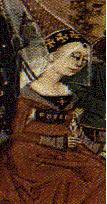
Hamelin de Warenne, the King’s Brother

A short while ago I wrote about Isabel de Warenne, Countess of Surrey and then her first husband, William of Blois (youngest son of King Stephen). So, I think it’s about time I finished the story by looking at Isabel’s second husband, Hamelin Plantagenet, the other 4th Earl of Surrey.

The illegitimate son of Geoffrey, Count of Anjou, Hamelin was born sometime around 1130, when Geoffrey was estranged from his wife, Empress Matilda. His mother was, possibly, Adelaide of Angers, though this is by no means certain. Geoffrey had a second illegitimate child, Emma, who was possibly Hamelin’s full sister. Emma married the Welsh prince, Davydd ap Owain of Gwynedd. Geoffrey of Anjou was the second husband to Empress Matilda, daughter of Henry I of England and would be the mother of the future Henry II, Hamelin’s half-brother.

The de Warenne arms, Trinity Church, Southover

Hamelin was incredibly loyal to Henry and his marriage to an heiress was reward for his support, whilst at the same time giving him position and influence within England. Hamelin and Isabel married in April 1164, Hamelin even taking the de Warenne surname after the marriage; Isabel’s trousseau cost an impressive £41 10s 8d.

Hamelin became Earl of Surrey by right of his wife, though was more habitually called Earl Warenne. In some references, he is named as the 5th Earl of Surrey and in others the 4th: this confusion arises from the fact that the earldom belonged to his wife, Isabel, and her two husbands both held the earldom, sometimes being numbered the 4th and 5th earls to avoid confusion. They were, in fact, both, the 4th Earl of Surrey.

Hamelin supported his brother the king in the contest of wills that Henry was engaged in with his archbishop of Canterbury, Thomas Becket. When Henry called for the archbishop to appear at a great council at Northampton Castle on 12 October 1164, to answer to the charges laid against him, Hamelin was at the trial and spoke in support of his brother. Indeed, the new earl and the archbishop appear to have started a war of words; Hamelin defended Henry’s dignity and called Becket a traitor. The archbishop’s retort was ‘Were I a knight instead of a priest, my fist would prove you a liar!’ Ironically, it is thought that Hamelin’s denunciation of Becket was motivated by the injury caused to the royal family in Becket’s refusal to allow Henry’s brother, William – Hamelin’s half-brother – to marry Isabel de Warenne; who was now Hamelin’s wife.

Hamelin’s animosity to Becket was not to survive the archbishop’s martyrdom and he actively participated in the cult that grew up around Thomas Becket after his violent death. In later life, the earl claimed that the cloth covering Becket’s tomb had cured his blindness, caused by a cataract, in one eye.

Hamelin was an influential and active member of the English barony. He supported Henry against his sons’ rebellion in 1173, and formed part of the entourage which escorted Princess Joanna (daughter of Henry and Eleanor of Aquitaine) to Sicily for her marriage to King William. Joanna’s escort was ordered not to return home until they had seen ‘the King of Sicily and Joanna crowned in wedlock’.

Hamelin remained close to the crown even after Henry’s death, supporting his nephew, Richard I. Hamelin was among the earls present at Richard’s first coronation in September 1189; and carried one of the three swords at his second coronation in April 1194.

Conisbrough Castle

During Richard’s absence on Crusade, Hamelin sided with the Regent, William Longchamp, against the intrigues of Richard’s brother John. Hamelin held great store in the rule of law, attested by the legend on his seal, ‘pro lege, per lege’. This adherence to the law explains Hamelin’s support for Longchamp against that of his own nephew, John, and even as the justiciar’s overzealous actions alienated others. Hamelin was one of only two magnates entrusted with the collection and storage of the king’s ransom, when he was held captive by Duke Leopold of  Austria, appointed by Eleanor of Aquitaine; ; the other was William d’Aubigny, Earl of Arundel.

Hamelin’s involvement with the court continued into the reign of King John; he was present at John’s coronation and at Lincoln when William, King of Scots, gave his oath of homage in November 1200.

Away from court, Hamelin appears to have been an avid builder; he built a cylindrical keep at his manor of Mortemer in Normandy. He then constructed a larger and improved version, using all the latest techniques of castle design, at his manor of Conisbrough, South Yorkshire. He may also have been the one to build Peel Castle at Thorne, a hunting lodge which had a 3-sided donjon that was of smaller, but similar, design to Conisbrough.

He was also involved in a famous dispute with Hugh, abbot of Cluny, over the appointment of a new prior to Lewes priory. Abbot Hugh was known as a man of great piety and honour; he had been prior of Lewes but was elected as abbot of Reading in 1186 and became abbot of Cluny in 1199. In 1200, Abbot Hugh appointed one Alexander to the vacant position of prior of Lewes but Hamelin refused to accept the nomination. In establishing the priory at Lewes, the abbots of Cluny had apparently reserved the right to appoint the prior, and to admit all monks seeking entry into the order; however, Hamelin claimed that the patronage of the priory belonged to him, and it was his right to appoint the prior.

The dispute dragged on. It was only after intervention from King John that agreement was eventually reached whereby, should the position of prior become vacant, the earl and the monks should send representatives to the abbot, who would nominate two candidates, of whom the earl’s proctors should choose one to be appointed prior.

Hamelin and Isabel had four surviving children. Their son and heir, William, would become the 5th Earl of Surrey and married Matilda, daughter of the great William Marshal, Earl of Pembroke and regent of England during the minority of Henry III. There were also three daughters, Ela, Isabel and Matilda.

Lewes priory, Sussex

Ela married twice, firstly to a Robert de Newburn, of whom nothing else is known, and secondly to William Fitzwilliam of Sprotborough, a village just a few miles from Conisbrough. Isabel was married, firstly, to Robert de Lascy, who died in 1193, and secondly, no later than the spring of 1196, to Gilbert de L’Aigle, Lord of Pevensey.

Matilda, or Maud, married Henry, Count of Eu, who died around 1190; by Henry, she was the mother of Alice de Lusignan, who struggled to maintain her inheritance during the reign of King John. Matilda then married Henry d’Estouteville, a Norman lord. However, it was once thought that Matilda was the daughter of Hamelin by an earlier relationship, due to the supposed death date of Matilda’s husband, Henry, Count of Eu. This was due to the mistaken belief that Henry had died in 1172, which would mean that Matilda could not have been a daughter of the marriage of Isabel and Hamelin, who were married in 1164, as she would have been too young to have married and borne children with Henry. The Chronicle of the Counts of Eu records Henry’s death as 1183, which also appears to be an error as Henry was assessed for scutage for Wales at Michaelmas 1190; with this later death date it was entirely possible, and indeed likely, that Matilda was the legitimate daughter of both Hamelin and Countess Isabel.

One of the daughters  – although it is not clear which – bore an illegitimate son, Richard Fitzroy, Baron Chilham, who was born, possibly, around 1190, by her cousin, John (the future King John).

The motte of Peel Castle, Thorne

Hamelin spent a lot of time and money on Conisbrough Castle, which took almost 10 years to complete, and it appears to have been a favourite family residence. King John visited him there in 1201, and two of Hamelin’s daughters married landowners from the nearby manors of Tickhill and Sprotborough. His son, William de Warenne, the 5th earl, would complete the castle, rebuilding the curtain wall in stone.

Hamelin died on 7th May 1202, in his early 70s and was buried in the chapter house at Lewes Priory, in Sussex; Isabel died the following year and was buried alongside him.

*

Further reading: East Yorkshire Charters Volume 8: The Honour of Warenne, edited by William Farrer & Charles Travis Clay; Britain’s Royal Families and Eleanor of Aquitaine by Alison Weir; The Plantagenets: the Kings who Made England by Dan Jones.

Photos: The de Warenne arms, Conisbrough Castle, Peel Castle and Lewes Priory ©Sharon Bennett Connolly.

*

My Books:

Signed, dedicated copies of all my books are available through my online bookshop.

Out now: Scotland’s Medieval Queens

Scotland’s history is dramatic, violent and bloody. Being England’s northern neighbour has never been easy. Scotland’s queens have had to deal with war, murder, imprisonment, political rivalries and open betrayal. They have loved and lost, raised kings and queens, ruled and died for Scotland. From St Margaret, who became one of the patron saints of Scotland, to Elizabeth de Burgh and the dramatic story of the Scottish Wars of Independence, to the love story and tragedy of Joan Beaufort, to Margaret of Denmark and the dawn of the Renaissance, Scotland’s Medieval Queens have seen it all. This is the story of Scotland through their eyes.

Scotland’s Medieval Queens gives a thorough grounding in the history of the women who ruled Scotland at the side of its kings, often in the shadows, but just as interesting in their lives beyond the spotlight. It’s not a subject that has been widely covered, and Sharon is a pioneer in bringing that information into accessible history.’ Elizabeth Chadwick (New York Times bestselling author)

Available now from Amazon and Pen and Sword Books

Also by Sharon Bennett Connolly:

Heroines of the Tudor World tells the stories of the most remarkable women from European history in the time of the Tudor dynasty, 1485-1603. These are the women who ruled, the women who founded dynasties, the women who fought for religious freedom, their families and love. Heroines of the Tudor World is now available for pre-order from Amberley Publishing and Amazon UK. Women of the Anarchy demonstrates how Empress Matilda and Matilda of Boulogne, unable to wield a sword themselves, were prime movers in this time of conflict and lawlessness. It shows how their strengths, weaknesses, and personal ambitions swung the fortunes of war one way – and then the other. Available from Bookshop.orgAmberley Publishing and Amazon UKKing John’s Right-Hand Lady: The Story of Nicholaa de la Haye is the story of a truly remarkable lady, the hereditary constable of Lincoln Castle and the first woman in England to be appointed sheriff in her own right. Available from all good bookshops Pen & Sword Booksbookshop.org and Amazon

Defenders of the Norman Crown: The Rise and Fall of the Warenne Earls of Surrey tells the fascinating story of the Warenne dynasty, from its origins in Normandy, through the Conquest, Magna Carta, the wars and marriages that led to its ultimate demise in the reign of Edward III. Available from Pen & Sword BooksAmazon in the UK and US, and Bookshop.orgLadies of Magna Carta: Women of Influence in Thirteenth Century England looks into the relationships of the various noble families of the 13th century, and how they were affected by the Barons’ Wars, Magna Carta and its aftermath; the bonds that were formed and those that were broken. It is now available in paperback and hardback from Pen & SwordAmazon, and Bookshop.orgHeroines of the Medieval World tells the stories of some of the most remarkable women from Medieval history, from Eleanor of Aquitaine to Julian of Norwich. Available now from Amberley Publishing and Amazon, and Bookshop.orgSilk and the Sword: The Women of the Norman Conquest traces the fortunes of the women who had a significant role to play in the momentous events of 1066. Available now from Amazon,  Amberley Publishing, and Bookshop.org.

Alternate Endings: An anthology of historical fiction short stories including Long Live the King… which is my take what might have happened had King John not died in October 1216. Available in paperback and kindle from Amazon.

Podcast:

Have a listen to the A Slice of Medieval podcast, which I co-host with Historical fiction novelist Derek Birks. Derek and I welcome guests, such as Bernard Cornwell and Michael Jecks, and discuss a wide range of topics in medieval history, from significant events to the personalities involved. Every episode is also now available on YouTube.

*

Don’t forget! Signed and dedicated copies of all my books are available through my online bookshop.

For forthcoming online and in-person talks, please check out my Events Page.

You can be the first to read new articles by clicking the ‘Follow’ button, liking our Facebook page or joining me on TwitterThreadsBluesky and Instagram.

*

©2015 Sharon Bennett Connolly, FRHistS
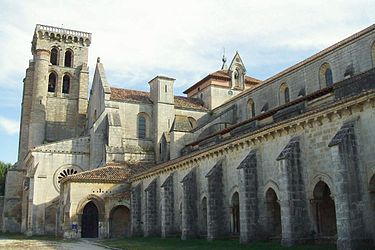
Eleanor, the ‘Pearl of Brittany’

History...the Interesting Bits
Eleanor of Brittany

Eleanor of Brittany was born around 1184, the daughter of Geoffrey Plantagenet Duke of Brittany by right of his wife, and Constance of Brittany. Whilst estranged from his father, Henry II, Geoffrey had been trampled to death while competing at a tournament in Paris, in August 1186.

Described as beautiful, she has been called the Pearl, the Fair Maid and the Beauty of Brittany. A granddaughter of Henry II and Eleanor of Aquitaine, she was the eldest of her parents’ three children; a second daughter, Matilda was born the following year, but died young and a son, Arthur who was killed by – or at least on the orders of – King John in 1203. The birth of Eleanor’s brother Arthur in 1187 diminished her value on the marriage market; she no longer came with Brittany as her dowry, like her mother had done.

Initially, Eleanor’s life seemed destined to follow the same path as many royal princesses; marriage. Richard I, her legal guardian after the death of her father in 1186, following his sister Joanna’s adamant refusal, offered Eleanor as a bride to Saladin’s brother, Al-Adil, in a failed attempt at a political settlement to the Third Crusade.

Nothing came of the suggestion and, shortly after, at the age of nine, Eleanor was betrothed to Friedrich, the son of Duke Leopold VI of Austria, who had made the betrothal a part of the ransom for Richard I’s release from imprisonment by the Duke. Eleanor was travelling to Germany in the care of Baldwin de Béthune when news arrived that, Duke Leopold had died suddenly. The duke’s s son had ‘no great inclination’ for the proposed marriage and so Eleanor and her party turned around and returned home. Further marriage plans were mooted in 1195 and 1198, to Philip II of France’s son Louis, the dauphin, and Odo, Duke of Burgundy, respectively; although neither came to fruition.

History...the Interesting Bits
Arthur of Brittany

Duchess Constance then pressed for Eleanor to be released from royal custody and by the time of Richard’s death, in 1199, Eleanor was living in France with her mother and brother. Eleanor’s fortunes changed drastically when Arthur rebelled against Richard’s successor, King John, in the early 1200s, encouraged by King Philip II of France.

As the posthumous son of John’s older brother, Geoffrey, Arthur had a strong claim to the English crown, but had been sidelined in favour of his more mature and experienced uncle. He was also heavily influenced by the French king, a fact which did not go in his favour. Arthur was captured while besieging his grandmother, Eleanor of Aquitaine, at Mirebeau on 1st August 1202.

Eleanor was captured at the same time, or shortly after. And while her brother was imprisoned at Falaise, and later Rouen, in 1203 she was sent into perpetual imprisonment in England. Eleanor of Brittany holds the sad record of being the longest imprisoned English royal in British history.

If the laws of primogeniture had been strictly followed at the time, Eleanor would have been sovereign of England after her brother’s death. John and his successor, Henry III could never forget this. However, the experiences of Empress Matilda and her fight with King Stephen over her own rights to the crown – and the near-20 years of civil war between 1135 and 1154, had reinforced the attitude that a woman could not rule.

History...the Interesting Bits
Eleanor of Brittany

This did not, however, mean that Eleanor was no threat to John and Henry; should she be allowed to marry, her husband may be persuaded to fight to assert her rights, of form the focus to a rival faction at court – and an alternative royal line. Imprisoning Eleanor mean that John not only kept control of her, but also eliminated any possible opposition building around her rights to the throne.

Although her confinement has been described as ‘honourable’, Eleanor’s greater right to the throne meant she would never be freed, or allowed to marry and have children. King John gave her the title of Countess of Richmond on 27th May 1208, but Henry III would take it from her in 1219 and bestow the title elsewhere. From 1219 onward she was styled the ‘king’s kinswoman’ and ‘our cousin’.

It seems Eleanor did spend some time with the king and court, particularly in 1214 when she accompanied John to La Rochelle to pursue his war with the French. John planned to use Eleanor to gain Breton support and maybe set her up as his puppet Duchess of Brittany, replacing her younger half-sister Alice.

Alice was the daughter of Eleanor’s mother, Constance, by her third marriage to Guy of Thouars. She was married to Peter of Dreux, a cousin of King Philip of France and Duke of Brittany by right of Alice. Using the carrot and stick approach, John offered Peter the earldom of Richmond to draw him to his side, while at the same time dangling the threat of restoring Eleanor to the dukedom, just by having her with him. Peter, however, refused to be threatened of persuaded and chose to face John in the field at Nantes. John’s victory and capture of Peter’s brother in the fighting persuaded Peter to agree to a truce, and John was content to leave Brittany alone, thereafter, advancing on Angers. His plans to restore Eleanor abandoned and forgotten.

History...the Interesting Bits
Bowes Castle, North Yorkshire

Eleanor’s movements were restricted, and she was closely guarded. Her guards were changed regularly to enhance security, but her captivity was not onerous. She was provided with ‘robes’, two ladies-in-waiting in 1230, and given money for alms and linen for her ‘work’. One order provided her with cloth; however, it was to be ‘not of the king’s finest.’ She was granted the manor of Swaffham and a supply of venison from the royal forests. The royal family sent her gifts and she spent some time with the queen and the daughters of the king of Scotland, who were hostages in the king’s custody.

Throughout her captivity she is said to have remained ‘defiant’.

Eleanor was well-treated and fed an aristocratic diet, as her weekly shopping list attests; ‘Saturday: bread, ale, sole, almonds, butter, eggs. Sunday: mutton, pork, chicken and eggs. Monday: beef, pork, honey, vinegar. Tuesday: pork, eggs, egret. Wednesday: herring, conger, sole, eels, almonds and eggs. Thursday: pork, eggs, pepper, honey. Friday: conger, sole, eels, herring and almonds.’ In her sole surviving letter, written in 1208 with John’s consent, she is styled ‘Duchess of Brittany and Countess of Richmond.’

It is difficult to pinpoint exactly where Eleanor was imprisoned at any one time.  Over the years, she was held in various strongholds, including the castles of Corfe (Dorset), Burgh (Westmorland), and Bowes (Yorkshire).  Corfe Castle is mentioned at times, and it seems she was moved away from the coast in 1221 after a possible rescue plot was uncovered. She was also held at Marlborough for a time, and she was definitely at Gloucester Castle in 1236.

History...the Interesting Bits
King John

By 1241 she was confined in Bristol castle, where Eleanor was visited regularly by bailiffs and leading citizens to ensure her continued welfare. Eleanor was also allowed   her chaplain and serving ladies to ensure her comfort. She died on 10 August 1241, at the age of about fifty-seven. After thirty-nine years of imprisonment, Eleanor achieved in death the freedom that had eluded her in life.

She was initially buried at St James’s Priory Church in Bristol but her remains were later removed to the abbey at Amesbury, a convent with a long association with the crown.

*

Sources: Douglas Boyd, Eleanor, April Queen of Aquitaine; Dan Jones, The Plantagenets: the Kings who made England; Robert Bartlett, England Under the Norman and Angevin Kings 1075-1225; Alison Weir, Eleanor of Aquitaine and Britain’s Royal Families; Oxford Companion to British History; The History Today Companion to British History; Robert Lacey, Great Tales from English History; Mike Ashley, A Brief History of British Kings and Queens and The Mammoth Book of British Kings and Queens; findagrave.com; spokeo.com.

Pictures: Wikipedia, findagrave.com; Bowes Castle is ©Sharon Bennett Connolly

*

My books

Signed, dedicated copies of all my books are available through my online bookshop. or by contacting me.

Coming 30 March: Princesses of the Early Middle Ages

Books by Sharon Bennett Connolly

Daughters of kings were often used to seal treaty alliances and forge peace with England’s enemies. Princesses of the Early Middle Ages: Royal Daughters of the Conquest explores the lives of these young women, how they followed the stereotype, and how they sometimes managed to escape it. It will look at the world they lived in, and how their lives and marriages were affected by political necessity and the events of the time. Princesses of the Early Middle Ages will also examine how these girls, who were often political pawns, were able to control their own lives and fates. Whilst they were expected to obey their parents in their marriage choices, several princesses were able to exert their own influence on these choices, with some outright refusing the husbands offered to them.

Their stories are touching, inspiring and, at times, heartbreaking.

Princesses of the Early Middle Ages: Royal Daughters of the Conquest is now available for pre-order from Pen & Sword and Amazon.

Also by Sharon Bennett Connolly:

Books by Sharon Bennett Connolly

Scotland’s history is dramatic, violent and bloody and Scotland’s Medieval Queens have seen it all. This is the story of Scotland through their eyes. Available now from Amazon and Pen and Sword BooksHeroines of the Tudor World tells the stories of the most remarkable women from European history in the time of the Tudor dynasty, 1485-1603. These are the women who ruled, the women who founded dynasties, the women who fought for religious freedom, their families and love. Heroines of the Tudor World is now available from Amberley Publishing and Amazon UK. Women of the Anarchy demonstrates how Empress Matilda and Matilda of Boulogne, unable to wield a sword themselves, were prime movers in this time of conflict and lawlessness. It shows how their strengths, weaknesses, and personal ambitions swung the fortunes of war one way – and then the other. Available from Bookshop.orgAmberley Publishing and Amazon UKKing John’s Right-Hand Lady: The Story of Nicholaa de la Haye is the story of a truly remarkable lady, the hereditary constable of Lincoln Castle and the first woman in England to be appointed sheriff in her own right. Available from all good bookshops Pen & Sword Booksbookshop.org and Amazon

History...the Interesting Bits

Defenders of the Norman Crown: The Rise and Fall of the Warenne Earls of Surrey tells the fascinating story of the Warenne dynasty, from its origins in Normandy, through the Conquest, Magna Carta, the wars and marriages that led to its ultimate demise in the reign of Edward III. Available from Pen & Sword BooksAmazon in the UK and US, and Bookshop.orgLadies of Magna Carta: Women of Influence in Thirteenth Century England looks into the relationships of the various noble families of the 13th century, and how they were affected by the Barons’ Wars, Magna Carta and its aftermath; the bonds that were formed and those that were broken. It is now available in paperback and hardback from Pen & SwordAmazon, and Bookshop.orgHeroines of the Medieval World tells the stories of some of the most remarkable women from Medieval history, from Eleanor of Aquitaine to Julian of Norwich. Available now from Amberley Publishing and Amazon, and Bookshop.orgSilk and the Sword: The Women of the Norman Conquest traces the fortunes of the women who had a significant role to play in the momentous events of 1066. Available now from Amazon,  Amberley Publishing, and Bookshop.org.

Alternate Endings: An anthology of historical fiction short stories including Long Live the King… which is my take what might have happened had King John not died in October 1216. Available in paperback and kindle from Amazon.

Podcast:

A Slice of Medieval

Have a listen to the A Slice of Medieval podcast, which I co-host with Historical fiction novelist Derek Birks. Derek and I welcome guests, such as Ian Mortimer, Bernard Cornwell, Elizabeth Chadwick and Scott Mariani, and discuss a wide range of topics in medieval history, from significant events to the personalities involved. 

Every episode is also now available on YouTube.

*

Don’t forget! Signed and dedicated copies of all my books are available through my online bookshop.

For forthcoming online and in-person talks, please check out my Events Page.

You can be the first to read new articles by clicking the ‘Follow’ button, liking our Facebook page or joining me on TwitterThreadsBluesky and Instagram.

*

©2015 Sharon Bennett Connolly FRHistS