A headlong journey through the physical and spiritual dangers of Plantagenet Britain, in all its savage pageantry. Welsh Marches, July 1284 – the uprising in Wales is over, the leader gruesomely executed, the dead are buried. But for Illesa Arrowsmith, the war’s aftermath is just as brutal. When her brother is thrown into the Forester’s prison on false charges, she is left impoverished and alone. All Illesa has left is the secret manuscript entrusted to her – a book so powerful it can save lives, a book so valuable that its discovery could lead to her death. When the bailiff’s daughter finds it, Illesa decides to run, and break her brother out of jail by whatever means. But the powerful Forester tracks them down, and Illesa must put herself and the book at the mercy of an unscrupulous knight who threatens to reveal all their secrets, one by one. Inspired by the seductive art of illuminated manuscripts, The Errant Hours draws from the deep well of medieval legend to weave a story of survival and courage, trickery and love.
Every now and again you come across a book that draws you in and makes you lose entire days to reading. For me, The Errant Hours by Kate Innes was one of those books: I lost the whole of last weekend to reading the final 200 pages because I HAD to get to the end. Of course, I now wish I’d taken a little longer over it, but this was a book I needed to devour. With just short of 400 pages of beautiful prose, a unique storyline and the perfect combination of intrigue, betrayal and love, The Errant Hours is a perfect book for lockdown or those long, dark, winter nights.
A brother-sister relationship most of us can relate to, family secrets and mysteries and a beautiful, valuable book all come together to create The Errant Hours by Kate Innes. Illesa Arrowsmith losing her home to her creditors and helping her reckless brother escape the Forester’s prison is only the start of her adventures; adventures that will lead her to the heart of the court of Edward I and into the political turmoil of the English conquest of Wales. While the national political climate contrasts perfectly with the turmoil in Illesa’s own life as she attempts to uncover her own origins and her feelings for Sir Richard Burnel, the knight who could be both protector and her accuser.
‘Illesa!’
She ignored the angry whisper and went back towards the torchlight. The guard’s head had changed position. She stood still, watching him. A thin stream of saliva came from the corner of his open mouth. His jerkin was unbuttoned. The iron chain was wound around his belt and the end hung down behind the bench.
Illesa slowly undid the buckle and loosened the chain, pulling it, link by link, off the leather belt. Gathering the chain in her hand, she pulled it up. There was a dull clang. The guard grunted and shifted on the bench, but his eyes remained closed. The ring holding the keys was caught between the wall and the bench. Illesa held the chain in her left hand and knelt down. She reached under the bench, her arms stretched around the guard, straining not to touch him. Her fingers brushed against the keys, and she let them rest on her palm. Illesa let the chain slip slowly out of her left hand until she held it, and the keys, in her right hand. She got shakily to her feet and ran to the cell door.
‘Where is the lock?’ she whispered.
‘Here, follow my hand.’Illesa saw the vague whiteness of Kit’s fingers; she put her own on top of them, feeling for the keyhole with her thumb.
‘Got it,’ she said, fumbling with the larger key.
It slid easily into the hole, but as she turned it there was a terrible screeching sound of metal against metal. Something hit the floor with a loud thump and a gasp of pain.
Kit pushed the door, nearly knocking Illesa over as he ran out of the cell.
‘Follow me!’
Kate Innes must have done a remarkable amount of research to produce such a historically accurate work of historical fiction. Although her leading characters are fictional, the supporting characters are very much historical fact, with Edward I, Eleanor of Castile, young Prince Alphonso and John, 6th Earl Warenne all making an appearance. I didn’t know one of the Warennes would be making an appearance in the story – it was such a lovely surprise!
I particularly liked Kate Innes’ portrayal of Earl Warenne as a brutal, brash lord who spares little thought for the niceties – he certainly comes across as that in my research for my own forthcoming book on the Warennes, Defenders of the Norman Crown: Rise and Fall of the Warenne Earls of Surrey. In fact, I think Kate Innes was a little more generous with Warenne’s personality than some chroniclers were!
The fictional characters, Illesa, her brother Kit and the knight, Richard Burnel, are the central actors in the story. Their personalities, appearance and relationships are wonderfully ‘fleshed’ out. Illesa is a strong female character, but one that is not out of place in 13th century England. A young woman with determination and capability, she is also all-too-aware of the limitations forced on her by her sex.
A beautifully crafted tome, The Errant Hours by Kate Innes is a unique insight into 13th century England. The narrative flows freely and Illesa’s story will keep the reader entranced from the first page to the last. I cannot recommend it highly enough and have already put book 2, All the Winding World, on my Christmas list.
The Errant Hours by Kate Innes is available from Amazon.
About the author:
Kate Innes was born in London and lived and worked in America and Zimbabwe. She is now based in Shropshire, and it is the history and natural beauty of this area that provides inspiration for both her fiction and poetry.
She originally trained as an archaeologist and a teacher, and then worked as a Museum Education Officer around the Midlands, writing poetry in her spare time. After the arrival of her children, Kate began work on her medieval novel ‘The Errant Hours’ which was published in 2015.
The Historical Novel Society selected ‘The Errant Hours’ as an ‘Editor’s Choice’, and it was added to the reading list of the Medieval Studies Department at Bangor University. It is one of Book Riot’s ‘One Hundred Must Read Medieval Novels’.
Her second novel, ‘All the Winding World’ is a sequel to ‘The Errant Hours’, set ten years later. It is due to be published on the 22 June 2018.
Kate has been writing and performing poetry for many years, usually with a particular focus on animals, art and the natural world. Her poem ‘Flocks of Words’ won first prize in the ‘Imagined Worlds’ Competition held by the Friends of Samuel Taylor Coleridge. Her first collection, also called ‘Flocks of Words’, was published in Spring 2017 and many of these poems form part of a performance with the acoustic music group ‘Whalebone’.
Kate runs writing workshops, gives illustrated talks, works collaboratively with communities and undertakes commissions and residencies.
Matilda – also known as Mahelt or Maud – was the eldest daughter of the great William Marshal, Earl of Pembroke, known to many as The Greatest Knight! She lived through on of the most tumultuous periods of English history, the reign of King John, Magna Carta, the First Barons’ War and the minority of King Henry III.
Effigy identified as William Marshal, Temple Church, London
Although we do not have a birth date for Matilda Marshal, given that her parents married in 1189 and she had two elder brothers, Matilda was probably born in 1193 or 1194. She was the third child and eldest daughter of William Marshal and his wife Isabel de Clare. The Histoire de Guillaume le Marechale praises Matilda saying she had the gifts of ‘wisdom, generosity, beauty, nobility of heart, graciousness, and I can tell you in truth, all the good qualities which a noble lady should possess.’1 The Histoire goes on to say; ‘Her worthy father who loved her dearly, married her off, during his lifetime to the best and most handsome party he knew, to Sir Hugh Bigot.’2 Of William and Isabel’s five daughters, it is only Matilda who is mentioned in the Histoire as being ‘loved dearly’ by her father.
In 1207 when the Marshal family moved to Ireland, William looked to settle Matilda’s future. Now aged 13 of 14, Matilda was old enough to be married and William approached Roger Bigod, second Earl of Norfolk, to propose a match between Matilda and Roger’s son and heir, Hugh Bigod. Hugh was Roger’s son by his wife Ida de Tosny, former mistress of King Henry II and the mother of the king’s son, William Longespée, Earl of Salisbury. Roger and Ida had married at Christmas in 1181 and so Hugh was probably in his mid-twenties when the marriage with Matilda was suggested.
Coat of arms of Matilda’s 1st husband Hugh Bigod, 3rd Earl of Norfolk
According to the Histoire William asked Roger Bigod ‘graciously, being the wise man he was, to arrange a handsome marriage between his own daughter and his son Hugh. The boy was worthy, mildmannered, and noblehearted and the young lady was a very young thing and both noble and beautiful. The marriage was a most suitable one and pleased both families involved.’3 The match was a good one. After the marriage, Matilda lived with her husband at the earl of Norfolk’s magnificent thirteen-towered castle at Framlingham. In 1209 she gave birth to a son, Roger, who would succeed his father as 4th Earl of Norfolk. Another son, Hugh, was born in 1212, and a daughter, Isabelle in 1215. A third and final son, Ralph, was probably born in 1216 or 1217.
Matilda’s family was deeply divided by the Magna Carta crisis and subsequent civil war. Her husband and father-in-law had joined the ranks of the baronial rebellion in 1215, as had her brother, William Marshal the Younger, whilst her father remained a staunch supporter of the king, holding the Welsh Marches for the Royalist cause during the civil war.
In 1216 the war touched Matilda personally, with Framlingham Castle being besieged by King John, who demanded the castle’s surrender:
The King to his well-beloved men, William le Enveise, constable of Framlingham, and all the knights presently with him in that castle, greetings. We command that you deliver up to our trusty and well beloved William de Harcourt and Elias de Beauchamp the castle of Framlingham. And in testimony hereof we thereto send you these our letters patent. Witness myself, at Framlingham, the thirteenth day of March, in the seventeenth year of our reign.4
We do not know whether Matilda was in residence at the castle at the time of the siege; her father-in-law was in, or on his way to, London and her husband Hugh’s whereabouts are unknown, but he was not at Framlingham. The king allowed the constable, William le Enveise, to send messengers to the earl and seek advice on what they should do. The earl probably advised the constable to surrender as the castle capitulated to the king without a fight two days later. One of Matilda’s sons, most likely the eldest, Roger, was taken as hostage.
It is not hard to imagine what thoughts and feelings – and fears – must have gone through Matilda’s mind, knowing that her young son, only 6 or 7 years of age, was in the custody of King John. The king’s treatment of Matilda de Braose was common knowledge, and rumours of what had happened to Arthur of Brittany were rife. Her own two older brothers, William and Richard, had also been held for several years as hostages to their father’s good behaviour. It must have been a comfort to Matilda, however, to know that King John depended on the loyalty of her father, and so would treat the boy well, if only to avoid alienating the man whose support he sorely needed.
Framlingham Castle, Suffolk
Despite King John’s death in October 1216, Matilda’s husband and father-in-law remained in rebellion, supporting the claims of Louis of France, the dauphin, who had invaded England early in 1216 and controlled much of the south. The earl of Norfolk only came to terms with the Royalist government when the French prince returned home in September 1217; after which he was finally restored to the earldom of Norfolk and Framlingham Castle was returned to him. It was probably also at this time that his grandson, Roger, was returned to his mother; his last year as a hostage would have been when his own grandfather, William Marshal, was in power as regent. Which must have allowed Matilda to rest easier and allayed her fears for her son.
Matilda spent time with her father while he was dying in April and May 1219. The Histoire says of Matilda at her father’s deathbed:
‘My lady Mahelt [Matilda] la Bigote was so full of grief she almost went out of her mind, so great was her love for him. Often she appealed to God, asking Him why He was taking from her what her heart loved most.’5
It goes on to tell the story of the ailing William Marshal calling for his daughters to sing to him. William asked Matilda to be the first to sing:
‘She had no wish to do so for her life at the time was a bitter cup, but she had no wish to disobey her father’s command. She started to sing since she wished to please her father, and she sang exceedingly well, giving a verse of a song in a sweet, clear voice.’6
Matilda’s husband, Hugh, succeeded to the title of earl of Norfolk when his father died sometime between April and August 1221, probably aged well into his seventies. The new earl, however, only enjoyed his title for four years; he died suddenly in 1225, aged only 43. He was succeeded by their eldest son, Roger, then only 16 years old and therefore still a minor. His wardship was given to William Longespée, Earl of Salisbury, the young earl’s half-uncle, but when Longespée died the following year, the wardship was transferred to Alexander II, King of Scots.
With custody of the young earl of Norfolk, and of all his lands, Alexander II married Roger to his sister, Isabella of Scotland. The only lands not granted to the king of Scots were those which Matilda held in dower as Hugh Bigod’s widow. Matilda was still only 32 when Hugh died, with three of her four children still to care for. As a valuable marriage prize she, or her family, acted quickly to secure her future and safety and within three months of her husband’s death, Matilda was married once more.
Arms of William de Warenne
Her second husband was William de Warenne, 5th Earl of Surrey, also known as Earl Warenne. William was the only son of Isabel de Warenne, Countess of Surrey in her own right, and her second husband, Hamelin de Warenne, half-brother of King Henry II. Matilda was the earl’s second wife, his first wife, also called Matilda, the daughter of William d’Aubigny, second Earl of Arundel had died childless on 6 February 1215 and was buried at Lewes Priory, Sussex. William de Warenne was a neighbour of the Bigods, having lands centred in Castle Acre in Norfolk, and he had joined the rebellion against King John at about the same time as Roger Bigod, although William was back in the Royalist camp by March 1217 and was a prominent participant in the negotiations which ended the war in August 1217.
Probably born in the late 1260s, William was considerably older than his new wife and the marriage appears to have been one of practicality, rather than affection. The earl had purchased Matilda’s marriage, essentially meaning her dower in Norfolk, before July 1225. Matilda continued to style herself as ‘Matildis la Bigot’ in charters, with ‘Matildis de Warenne’ added only as an afterthought, or not at all. For example, a charter from the early 1240s, following the death of William de Warenne, has the salutation, ‘ego Latilda Bigot comitissa Norf ’ et Warenn.’7 This may be an indication that this second marriage was not of Matilda’s own choosing and she may even have preferred to remain a widow, rather than entering into this second marriage. The continuing use of her name from her first marriage possibly being her own mark of rebellion against her new situation.
After the resolution of the crisis of 1216/1217 William de Warenne served the crown faithfully, save for his brief involvement in the confederation against it led by Henry III’s brother Richard of Cornwall, between July and October 1227. He was forced to surrender Tickhill Castle, but his disgrace was only temporary and in 1228 he received the third penny for the county of Surrey for the first time, an honorary payment previously denied to William and his father. In 1230 William de Warenne was appointed keeper of the east-coast ports of England during the king’s expedition to Brittany. In 1236 he was cup bearer at the coronation of Eleanor of Provence and in 1237 he witnessed the reissue of Magna Carta; the ageing earl was one of the few surviving barons who had been witness to the original charter in 1215.
The Warenne stronghold of Castle Acre Castle, Norfolk
In his early 70s, William de Warenne died in London on 27 or 28 May 1240; he was buried before the high altar at his family’s foundation of Lewes Priory in Sussex. In his memory, the king ordered that a wayside cross be erected on the road between Carshalton and Merton, in Surrey.
Matilda bore her second husband two children, a boy and a girl, John and Isabel (later Isabel d’Aubigny). John would succeed his father as earl and attained his majority in 1248, when he succeeded to the vast Warenne estates. He would pursue a martial career and was one of Edward I’s fiercest generals. Matilda did not marry again after William’s death. In 1246, as the last surviving child of William Marshal, and with neither of her five brothers leaving a son, Matilda was granted the Marshal’s rod by King Henry III. She did, at this point, change her name on charters, to ‘Martill marescalla Angliae, comitissa Norfolciae et Warennae.’8
Emphasising her Marshal name as her father’s eldest surviving child, Matilda was, significantly, claiming the title Marshal of England as her right, thus increasing her power and prestige, and taking the authority of the marshal as her own. Matilda appears to have acted independently during her second marriage, purchasing land in the Don Valley in South Yorkshire, close to the Warenne stronghold of Conisbrough Castle and after the queen she was ‘undoubtedly the most powerful and wealthy woman in England from 1242 onwards.’9
Tintern Abbey Monmouthshire
Matilda Marshal died in 1248, either on 27 March or at the beginning of April, in her mid-50s. Choosing to be interred with her Marshal family, rather than either of her husbands, Matilda was buried at Tintern Abbey, Monmouthshire. Her three Bigod sons and their Warenne half-brother carried their mother’s bier into the church, where she was laid to rest close to her mother, Isabel, two of her brothers, Walter and Ancel, and her sister, Sybil. It is through Matilda’s marriage to Hugh Bigod, Earl of Norfolk, that the present duke of Norfolk also bears the title of Earl Marshal.
1David Crouch and Anthony Holden, History of William Marshal: Text and Translation; 2 ibid; 3ibid; 4Letter of 13 March 1216, Rich Price, King John’s Letters; 5Crouch and Holden, History of William Marshal: Text and Translation; 6ibid; 7Chadwick, Elizabeth, ‘Clothing the Bones: Finding Mahelt Marshal’, livingthehistoryelizabethchadwick.blogspot.com; 8Vincent, Nicholas, ‘William de Warenne, fifth earl of Surrey [Earl Warenne] (d. 1240)’, Oxforddnb.com; 9David Crouch quoted in Chadwick, ‘Clothing the Bones: Finding Mahelt Marshal’.
Sources:
Rich Price, King John’s Letters Facebook group; Robert Bartlett England Under the Norman and Angevin Kings 1075-1225; Dan Jones The Plantagenets; the Kings who Made England; The Plantagenet Chronicle Edited by Elizabeth Hallam; Maurice Ashley The Life and Times of King John; Roy Strong The Story of Britain; Oxford Companion to British History; Mike Ashley British Kings & Queens; David Williamson Brewer’s British Royalty; Ralph of Diceto, Images of History; Marc Morris, King John; David Crouch, William Marshal; Crouch and Holden, History of William Marshal; Crouch, David, ‘William Marshal [called the Marshal], fourth earl of Pembroke (c. 1146–1219)’, Oxforddnb.com; Flanagan, M.T., ‘Isabel de Clare, suo jure countess of Pembroke (1171×6–1220)’, Oxforddnb.com; Thomas Asbridge, The Greatest Knight; Chadwick, Elizabeth, ‘Clothing the Bones: Finding Mahelt Marshal’, livingthehistoryelizabethchadwick.blogspot.com; Stacey, Robert C., ‘Roger Bigod, fourth earl of Norfolk (c. 1212-1270)’, Oxforddnb.com; finerollshenry3.org.uk; Vincent, Nicholas, ‘William de Warenne, fifth earl of Surrey [Earl Warenne] (d. 1240)’, Oxforddnb.com.
My Books
Signed, dedicated copies of all my books are available through my online bookshop.
Out Now!Women of the Anarchy
Two cousins. On the one side is Empress Matilda, or Maud. The sole surviving legitimate child of Henry I, she is fighting for her birthright and that of her children. On the other side is her cousin, Queen Matilda, supporting her husband, King Stephen, and fighting to see her own son inherit the English crown. Women of the Anarchy demonstrates how these women, unable to wield a sword, were prime movers in this time of conflict and lawlessness. It show how their strengths, weaknesses, and personal ambitions swung the fortunes of war one way – and then the other.
Coming on 15 June 2024: Heroines of the Tudor World
Heroines of the Tudor World tells the stories of the most remarkable women from European history in the time of the Tudor dynasty, 1485-1603. These are the women who ruled, the women who founded dynasties, the women who fought for religious freedom, their families and love. These are the women who made a difference, who influenced countries, kings and the Reformation. In the era dominated by the Renaissance and Reformation, Heroines of the Tudor World examines the threats and challenges faced by the women of the era, and how they overcame them. From writers to regents, from nuns to queens, Heroines of the Tudor World shines the spotlight on the women helped to shape Early Modern Europe.
King John’s Right-Hand Lady: The Story of Nicholaa de la Haye is the story of a truly remarkable lady, the hereditary constable of Lincoln Castle and the first woman in England to be appointed sheriff in her own right. It is is available from King John’s Right-Hand Lady: The Story of Nicholaa de la Haye is the story of a truly remarkable lady, the hereditary constable of Lincoln Castle and the first woman in England to be appointed sheriff in her own right. Available from all good bookshops or direct from Pen & Sword Books, bookshop.org and Amazon. Defenders of the Norman Crown: The Rise and Fall of the Warenne Earls of Surrey tells the fascinating story of the Warenne dynasty, from its origins in Normandy, through the Conquest, Magna Carta, the wars and marriages that led to its ultimate demise in the reign of Edward III. Available from Pen & Sword Books, Amazon in the UK and US, and Bookshop.org.
Alternate Endings: An anthology of historical fiction short stories including Long Live the King… which is my take what might have happened had King John not died in October 1216. Available in paperback and kindle from Amazon.
Podcast:
Have a listen to theA Slice of Medieval podcast, which I co-host with Historical fiction novelist Derek Birks. Derek and I welcome guests, such as Bernard Cornwell and Elizabeth Chadwick, and discuss a wide range of topics in medieval history, from significant events to the personalities involved.
*
Don’t forget!Signed and dedicated copies of all my books are available through my online bookshop.
For forthcoming online and in-person talks, please check out my Events Page.
You can be the first to read new articles by clicking the ‘Follow’ button, liking our Facebook page or joining me on Twitterand Instagram.
Robert the Bruce is a man of both history and legend. In his lifetime he secured Scottish independence in the face of English imperial aggression under the successive leadership of Edward I and Edward II. He was the victor of Bannockburn, a self-made king against all odds, and is celebrated as a champion of the Scottish nation. Yet Robert s colourful life is far from straightforward. Stephen Spinks seeks to examine this most enigmatic of kings beyond the myths to reveal him in the context of his time, his people and in his actions.
Stephen shows that Robert was a complex man, confronted by hardships and difficult and often dangerous decisions. He was not born to rule. As the murderer of John Comyn, a rival for the Scottish crown, Bruce sent shockwaves across Europe and was condemned by kings and popes. In war he suffered terrible personal loss, including the deaths of all four of his brothers and the imprisonment of his wife, daughter and two sisters, all at the hands of the English. He was at times a desperate yet focussed and highly determined man. Robert was also astute, breaking the rules of chivalry to even the odds, systematically fighting a guerrilla war against the English which he ultimately won. Yet he also cultivated the symbols of kingship, was pious, careful with his patronage and fought to uphold his fiercely held beliefs.
King Robert unified his deeply divided kingdom and secured its independence from England. His dramatic life as the victorious underdog forged a significant legacy that has survived for 700 years.
I may have mentioned before that I have a soft spot for Robert the Bruce and his family. I have already written of his daughter Marjorie, wife Elizabeth de Burgh and 2 of his sisters, Christian and Mary, women who suffered under the heavy hand of Edward I due to their relationship with Robert the Bruce and his ambition for an independent Scotland. King Robert I (the Bruce) is an enigmatic figure, whose conflicted loyalties saw him change sides on a number of occasions during the early years of his career.
So, of course I have been eagerly awaiting Robert the Bruce: Champion of a Nation ever since I first heard that Stephen Spinks was writing it. And it does not disappoint. Beautifully written and presented, Stephen Spinks tells the incredible story of Robert the Bruce and the fight for Scottish independence with great passion and enthusiasm. This is a wonderful book for any fan of Robert the Bruce – and Scottish history in general.
Since his surreptitious meeting with Lamberton, Robert may well have been building discreet coalitions to shore up a foundation on which to launch a bid for the Scottish throne. Yet, however successful he may have been at this juncture, there remained a significant contingent of men who would probably not support him, in particular the Balliols and Comyns and their adherents, who still held out for the return of King John or the accession of his heir, Edward Balliol, the latter still in English captivity. Just because Bruce wanted to champion his right did not mean Scotland would unite behind his cause. His greatest challenge now rested with John ‘the Red’ Comyn, lord of Badenoch, who had assumed the leadership of the Comyn family. He was nephew to King John, cousin to the Comyn Earl of Buchan, and brother-in-law to the English Aymer de Valence, soon to be Earl of Pembroke. If Bruce was to secure the crown, he needed to reconcile Comyn to his cause one way or another. What happened next tested the limits of Bruce’s personal ambition, and has gone down in the annals of history.
What is certain is that, on a cold night on 10 February 1306, Robert and John Comyn met at the Church of the Greyfriars in Dumfries. Comyn had been resident at his nearby castle at Dalswinton, not far from Bruce’s family home of Lochmaben. The two men, who had a history of bitter rivalry and had clashed violently at Peebles during the summer gathering near Selkirk Forest in 1299, could guarantee a safe, violence-free meeting constrained by their choice of location. Spilling blood in a church was sacrilegious and warranted excommunication, the gravest of punishements.
Robert the Bruce: Champion of a Nation doesn’t sugar coat Robert the Bruce’s actions, it examines the good and the bad in detail, from his support for Edward I in his early years, to the fateful murder of John Comyn that set him on the road to his coronation, a race against time to become king before the inevitable sentence of excommunication could be passed.
The author uses the primary sources of both England and Scotland, to present the story of Bruce’s fight to gain – and hold on to – the Scottish throne. Analytical and highlighting source bias, Stephen Spinks presents Robert the Bruce as a flawed hero, like all kings, whose personal and political ambition is balanced by opposition within a deeply divided Scotland, and a personal cost to him and his family that few of us could bare.
Robert the Bruce: Champion of a Nation is a wonderful, entertaining and informative read from beginning to end. Insightful and analytical, it puts every known aspect of Robert the Bruce’s life under the microscope, from his family, ambitions and military capabilities, to his health and leadership. Author Stephen Spinks examines Bruce’s actions and motivations in great detail, painting a fascinating portrait of the man and king.
Robert the Bruce: Champion of a Nation by Stephen Spinks is a must-read for anyone interested in Scottish history, and one of the best non-fiction books I have read in recent years. It is thoroughly enjoyable, totally engaging and impossible to put down.
Robert the Bruce: Champion of a Nation is now available from Amazon in the UK. It will be released in the US on 1 April 2020 and is available for pre-order on Amazon US.
About the Author:
Stephen Spinks wrote his dissertation on Edward II while studying at King’s College, London. He works for the National Trust and manages three Medieval heritage sites with 900 volunteers and 150 staff. He is a columnist for ‘Midlands Zone’ magazine, in which he writes a very well received exploration of life as a gay man today, partly political, partly personal. He has given many interviews on radio and in his capacity at the National Trust, to ‘BBC’s Escape to the Country’ and the ‘Antiques Road Show’. He has been studying the primary sources (and locations) for this book over the past 15 years.
Gwenllian was the only child of Llywelyn ab Gruffuddd, also known as Llywelyn the Last, Prince of Wales. Her mother was Eleanor de Montfort, who was the daughter of Eleanor of England, sister of Henry III, and Simon de Montfort, Earl of Leicester. Llywelyn and Eleanor had married in Worcester Cathedral in October 1278, in a lavish ceremony attended by Edward I, King of England, and Alexander III, King of Scots.
Memorial to Gwenllian, Sempringham, Lincolnshire
Gwenllian, a descendant of both Welsh and English royalty, was born in June 1282 at the palace of Garth Celyn, Abergwyngregyn, near Bangor; her mother died giving birth to her. Shortly after her birth, Edward I concluded his conquest of Wales. Gwenllian’s father, Llywelyn, was killed in an ambush on 11 December 1282 – and just six months after her birth, Gwenllian was an orphan. Her uncle Dafydd, Llywelyn’s younger brother, became the little princess’s legal guardian. After his brother’s death, Dafydd continued the fight for Welsh independence but was betrayed to the English, in June 1283.
Dafydd, his wife, children and little Gwenllian were captured at Bera Mountain in Snowdonia, where they had been in hiding. At just one year old, Gwenllian was taken, by sea, probably to thwart any attempt at rescue, from Wales, the land of her birth. She would never see her homeland again. The baby girl was placed behind the high walls of the Gilbertine priory of Sempringham, in Lincolnshire, just south of the great city of Lincoln. Her female cousins, the seven daughters of Dafydd, were also placed in various nunneries, so it is possible some of her cousins were with her. Dafydd’s legitimate daughter, Gwladus, who was a similar age to Gwenllian, was placed in Sixhills, another Gilbertine priory, in the Lincolnshire Wolds.
Statue of Gwenllian’s father, Llywelyn the Last at Cardiff City Hall
Dafydd’s two sons, Llywelyn and Owain, were imprisoned in Bristol Castle; the eldest, Llywelyn, died there in 1287, just four years after his capture. Owain was still living in 1325, every night securely incarcerated in a specially constructed timber cage within Bristol Castle. Dafydd himself suffered the horrendous ‘traitor’s death’; he was hung, drawn and quartered at Shrewsbury.
The Gilbertines were the only wholly-English monastic community. Their founder, St Gilbert, had some form of physical deformity, which prevented him from pursuing a career as a knight. He trained as a clerk in France, studying under Master Anselm at Laon. He eventually entered the household of the Bishop of Lincoln and, in 1129, was appointed Vicar of Sempringham and West Torrington. He established the first priory there in 1131, with seven local women vowing to live a life of chastity, poverty and obedience. Sempringham Priory was a double-house, housing both men and women in segregated quarters.
At its height, the priory housed 200 nuns and forty canons. The order followed strict rules, based on those of the Augustinian and Premonstratensian monasteries. By the time of Gilbert’s death in 1189 there were thirteen priories in England; this number had risen to twenty-five at the time of the Reformation.1
Gwenllian was a prisoner at the Gilbertine Priory of St Mary, at Sempringham, for the rest of her life. A prisoner of three English kings, Edward I, Edward II and Edward III, she was a rallying figure for the subjugated Welsh and too valuable to ever be freed. Edward I wrote to the Prior and Prioress of Sempringham of his decision to place Gwenllian in their custody, on 11 November 1283: ‘… Having the Lord before our eyes, pitying also her sex and her age, that the innocent may not seem to atone for the iniquity and ill-doing of the wicked and contemplating especially the life in your Order’.2
Memorial plaque to Gwenllian on the memorial at Sempringham
Although Edward wanted Gwenllian to be forgotten, he could not afford to forget about her himself, and four years after she was placed in the convent, Edward ordered Thomas Normanvill to ‘go to the places where the daughters of Llewellyn and of David his brother, who have taken the veil in the Order of Sempringham, are dwelling, and to report upon their state and custody by next Parliament’.3 The extent of Gwenllian’s knowledge of her own history and homeland is far from certain. Having been taken from Wales at six months old, she is said not to have spoken a word of Welsh and may not have even known how to spell her name; she is referred to as ‘Wencillian’, in a document sent to Edward III at the time of her death, although spelling was far from uniform in the 14th century.
Gwenllian was probably well-cared for. Edward III endowed her with a pension of £20 a year, which was paid to the priory for her food and clothing. Whether Gwenllian was treated according to her rank at the priory is unknown. However, she was aware of her importance and her family connections; as David Pilling points out and she does in fact call herself Princess of Wales, daughter of Llywelyn ap Gruffudd in a petition of 1327 to Edward II:
Wentliane, daughter of Lewelyn [Llywelyn], formerly Prince of Wales, prays the King of his grace to remember her and aid her, since the King, his father, promised her when she was put in the house of Sempringham, £100 of land and rent; whereof he told Walter de Langeton, then Treasurer, that he had given her £20 from the Exchequer yearly; and with this she has been provided.4
She is said to have received gifts from her cousin the king, and may have spent time in Edward III’s company, when he visited the priory at Easter-time in 1328; the young king issued a charter from Sempringham on 2 April of that year.5
St Andrew’s Church, Sempringham stands close to the site of the Gilbertine priory of Sempringham
Gwenllian may also have spent time in the company of Joan Mortimer, the daughter of Roger Mortimer, supposed lover of Isabelle of France, Edward III’s mother, and ruler of England after the deposition of her huusband, Edward II. Joan was held at Sempringham following her father’s downfall in 1330. She was only eighteen at the time, however, so may have had little in common, beyond their joint status as prisoners of the crown, with Gwenllian, who was a woman now in her late forties who had spent her entire life in conventual seclusion. The profound difference between Joan and Gwenllian, of course, is that Joan was released after a short time.
Gwenllian only found her freedom in death. She died on 7 June 1337, the same month as her fifty-fifth birthday. She was buried at the priory where she had spent all but eighteen months of her life. Her grave was lost at the time of the dissolution of the monasteries, in the 16th century. However, a memorial plaque was placed near St Andrew’s Church in Sempringham in 1993, stating:
In memory of Gwenllian, daughter of the last Prince of Wales. Born at Abergwyngregyn 12.06.1282. Died at Sempringham 7.6.1337. Having been held prisoner for 54 years.6
Although she left very few marks on the world, a child whose very future was stolen by Edward I, Gwenllian’s remarkable story has not been forgotten. In 2009 a mountain in Snowdonia in Wales, formerly known as Carnedd Uchaf, was renamed Carnedd Gwenllian in the lost princess’s honour.
Footnotes: [1] David Ross, editor, Sempringham Priory, Church and Holy Well, britainexpress.com; [2] englishmonarchs.co.uk; [3] ibid; [4] William Rees, Calendar of Ancient Petitions Relating to Wales [5] Calendar of the Charter Rolls. 1-14, Edward III; [6] The Princess Gwenllian Society, Princessgwenllian.co.uk
Sources: castlewales.com; snowdoniaheritage.info; William Rees, Calendar of Ancient Petitions Relating to Wales; Marc Morris A Great and Terrible King;David Williamson Brewer’s British royalty; Mike Ashley The Mammoth Book of British kings & Queens; Alison Weir Britain’s Royal Families; Roy Strong The Story of Britain; Dan Jones The Plantagenets; the Kings who Made England; Chronicles of the Age of Chivalry Edited by Elizabeth Hallam; The Oxford Companion to British History; The History Today Companion to British History; Derek Wilson The Plantagenets; britainexpress.com; englishmonarchs.co.uk; princessgwenllian.co.uk; Calendar of the Charter Rolls; David Pilling.
Signed, dedicated copies of all my books are available through my online store.
Out now: Scotland’s Medieval Queens
Scotland’s history is dramatic, violent and bloody. Being England’s northern neighbour has never been easy. Scotland’s queens have had to deal with war, murder, imprisonment, political rivalries and open betrayal. They have loved and lost, raised kings and queens, ruled and died for Scotland. From St Margaret, who became one of the patron saints of Scotland, to Elizabeth de Burgh and the dramatic story of the Scottish Wars of Independence, to the love story and tragedy of Joan Beaufort, to Margaret of Denmark and the dawn of the Renaissance, Scotland’s Medieval Queens have seen it all. This is the story of Scotland through their eyes.
‘Scotland’s Medieval Queens gives a thorough grounding in the history of the women who ruled Scotland at the side of its kings, often in the shadows, but just as interesting in their lives beyond the spotlight. It’s not a subject that has been widely covered, and Sharon is a pioneer in bringing that information into accessible history.’ Elizabeth Chadwick (New York Times bestselling author)
Heroines of the Tudor World tells the stories of the most remarkable women from European history in the time of the Tudor dynasty, 1485-1603. These are the women who ruled, the women who founded dynasties, the women who fought for religious freedom, their families and love. Heroines of the Tudor World is now available from Amberley Publishing and Amazon UK.Women of the Anarchy demonstrates how Empress Matilda and Matilda of Boulogne, unable to wield a sword themselves, were prime movers in this time of conflict and lawlessness. It shows how their strengths, weaknesses, and personal ambitions swung the fortunes of war one way – and then the other. Available from Bookshop.org, Amberley Publishing and Amazon UK. King John’s Right-Hand Lady: The Story of Nicholaa de la Haye is the story of a truly remarkable lady, the hereditary constable of Lincoln Castle and the first woman in England to be appointed sheriff in her own right. Available from all good bookshops Pen & Sword Books, bookshop.org and Amazon.
Alternate Endings: An anthology of historical fiction short stories including Long Live the King… which is my take what might have happened had King John not died in October 1216. Available in paperback and kindle from Amazon.
Podcast:
Have a listen to theA Slice of Medieval podcast, which I co-host with Historical fiction novelist Derek Birks. Derek and I welcome guests, such as Bernard Cornwell and Michael Jecks, and discuss a wide range of topics in medieval history, from significant events to the personalities involved. Every episode is also now available on YouTube.
*
Don’t forget!Signed and dedicated copies of all my books are available through my online bookshop.
For forthcoming online and in-person talks, please check out my Events Page.
Isabella Buchan crowning Robert the Bruce at Scone
When watching Outlaw King a couple of weeks ago, I was disappointed to see that they had omitted the stories of Robert the Bruce’s sister, Mary, and the woman who crowned him, Isabella MacDuff, Countess of Buchan. And yet, they managed to keep the punishment Edward I meted out to them, but inflicted it on Robert the Bruce’s wife, Elizabeth de Burgh, instead. In a great example of dramatic licence, they also insisted on retelling the age-old fallacy that the cage was hung from the castle walls, exposing the poor woman to ridicule and the elements.
While it is necessary to change stories, and limit the number of protagonists in a movie, in order to avoid confusion, produce a fabulous story and, probably, keep down costs, I thought it a shame that the remarkable stories of Mary and Isabella were ignored, or rather circumvented for the dramatic benefit of the movie.
We know very little of Mary Bruce. She was a younger sister of King Robert, probably born around 1282. A younger daughter of Robert de Brus, 6th Earl of Annandale, and Marjorie, Countess of Carrick in her own right. It may be that she took care of her brother’s daughter, Marjorie, after Robert’s first wife, Isabella of Mar, died giving birth to the baby girl.
Her story has long been intertwined with that of her brother.
From that fateful moment in Greyfriars Church in Dumfries when Robert the Bruce – or one of his men – is said to have stabbed to death John Comyn, his rival to the Scottish throne, it was a race against time for Robert to establish himself as king. Whether Comyn’s death was accidental or murder, we’ll probably never know. Almost immediately, Robert made the dash for Scone, hoping to achieve his coronation before the Christian world erupted in uproar over his sacrilege. An excommunicate could not be crowned. His sisters Christian and Mary accompanied him to Scone Abbey, as did his wife Elizabeth and daughter Marjorie. The Stone of Scone was the traditional coronation seat of the kings of Scotland and, although the stone had been stolen by the English and spirited away to London, holding the coronation at the Abbey sent a message of defiance to the English king, Edward I.
The killing of Comyn, by Felix Philippoteaux
On 25 March 1306 Mary, Christian, Elizabeth and little Marjorie were all present when Robert the Bruce was crowned King Robert I by Isabella MacDuff, Countess of Buchan, who claimed her family’s hereditary right to crown Scotland’s kings (despite her being married to a Comyn). The ceremony was repeated on 27 March, following the late arrival of William Lamberton, Bishop of St Andrews. Robert’s coronation was the start of the most desperate period of his life – and that of his supporters. Edward I of England was never one to acquiesce when his will was flouted; he sent his army into Scotland to hunt down the new king and his adherents. After Robert’s defeat by the English at Methven in 1306, he went into hiding in the Highlands.
Robert sent his wife and daughter north to what he hoped would be safety. Mary, her sister Christan and Isabella, Countess of Buchan accompanied them, escorted by the Earl of Atholl and Mary and Christian’s brother, Sir Neil Bruce. It is thought that the Bruce women were heading north to Orkney to take a boat to Norway, where Robert’s sister, Isabel, widow of King Erik II, was still living. Unfortunately, they would never make it. The English caught up with them at Kildrummy Castle and laid siege to it. The defenders were betrayed by someone in their garrison, a blacksmith who set fire to the barns, making the castle indefensible.
The women managed to escape with the Earl of Atholl, but Neil Bruce remained with the garrison to mount a desperate defence, to give the queen, his niece and sisters enough time to escape. Following their capitulation, the entire garrison was executed. Sir Neil Bruce was subjected to a traitor’s death; he was hung, drawn and quartered at Berwick in September 1306 (not in front of the women he had protected, as portrayed in the film). Mary and her companions did not escape for long; they made for Tain, in Easter Ross, probably in the hope of finding a boat to take them onwards. They were hiding in the sanctuary of St Duthac when they were captured by the Earl of Ross (a former adherent of the deposed king John Balliol), who handed them over to the English. They were sent south, to Edward I at Lanercost Priory in Cumbria.
Edward I’s admirer, Sir Maurice Powicke, said Edward treated his captives with a ‘peculiar ferocity’.¹ Mary was treated particularly harshly by Edward I. The English king had a special cage built for her, although within the castle and not, as previously believed, hung from the walls of the keep at Roxburgh Castle, exposed to the elements and the derision of the English garrison and populace. In contrast, her sister Christian was sent into captivity to a Gilbertine convent at Sixhills, an isolated location, deep in the Lincolnshire Wolds. Christian languished at Sixhills for eight years, until shortly after her brother’s remarkable victory over the English at Bannockburn, in 1314. Despite Edward II escaping the carnage, King Robert the Bruce had managed to capture several notable English prisoners, including Humphrey de Bohun, 4th Earl of Hereford and Essex. Suddenly in a strong bargaining position, the Scots king was able to exchange his English captives for his family, held prisoners in England for the last 8 years.
The remains of Berwick Castle
Isabella MacDuff, Countess of Buchan, also suffered the harshly under Edward I’s not inconsiderable wrath. Isabella was probably born around 1270; she was the daughter of Colban, Earl of Fife, and his wife, Anna. Isabella was married to John Comyn, Earl of Buchan, and was first mentioned in 1297, when she was in England, managing her husband’s estates while he was in Scotland. Captured after the Scottish defeat at Dunbar in 1296, the Earl of Buchan had been sent north by Edward I, ordered to take action against Andrew Murray; however, he only took cursory action against the loyal Scot and soon changed sides, possibly fighting for the Scots at Falkirk in 1298. The Comyn family were cousins of Scotland’s former king, John Balliol, and constantly fought for his return to the throne, putting them in direct opposition to Robert the Bruce.
Isabella’s story remained unremarkable throughout Scotland’s struggles in the early years of the 1300s; until Robert the Bruce made his move for the throne in 1306. By birth, Isabella was a MacDuff, her father had been Earl of Fife and, in 1306, the current earl was her nephew, Duncan, a teenager who was a loyal devotee of Edward I. The Earls of Fife had, for centuries, claimed the hereditary right to crown Scotland’s kings. Although Duncan had no interest in being involved in the coronation of Robert the Bruce, Isabella was determined to fulfil her family’s role. It cannot have been an easy decision for her. Isabella’s participation was an act of bravery and defiance. She went against not only Edward I but her own husband, the Earl of Buchan. Isabella’s husband and the murdered John Comyn, Lord of Badenoch, were not only cousins but had a close relationship. It seems likely that Isabella’s husband was in England at the time of Bruce’s coronation, and she did not have to face him personally; but she would have known that her actions would mean there was no going back. Supporting Robert the Bruce, the man who stood accused of John Comyn’s murder, meant she turned against her husband and his entire family, people she had lived among for her entire married life.
Isabella reached Scone by 25 March 1306, in time to claim her family’s hereditary right to crown the new king, with Isabella placing the crown on the new Robert’s head. There are some rumours of a more intimate relationship between Isabella and Bruce, but these seem to be without foundation and are only to be expected, given that Isabel acted so decisively – and publicly – against her husband.
There was no going back for Isabella – crowning Robert the Bruce meant she was on her own; she couldn’t go back to her family, so she stayed with the royal party, travelling with Elizabeth de Burgh, the new queen, when Bruce sent her, his daughter and sisters, north for their safety. Isabella was with them when they escaped Kildrummy Castle by the skin of their teeth, and when they reached the shrine of St Duthac at Tain and were captured by William, Earl of Ross, in September 1306. As the party were sent south, Isabella must have faced the future with trepidation. Her placing the crown on Robert the Bruce’s head was the clearest challenge to Edward I and guaranteed that she would receive no sympathy from England’s king.
Statue of Robert the Bruce at Bannockburn
Even knowing that she would receive harsh treatment, it is doubtful that she, or indeed anyone, could have foreseen the punishment that Edward I would mete out. He ordered the construction of wooden cages, for Isabella and Bruce’s sister Mary; the two women were to be imprisoned in these cages close to the Scottish border, Isabella at Berwick Castle and Mary at Roxburgh Castle. Tradition has these cages were suspended from the walls of the castles’ keeps, open to the elements and the harsh Borders weather, the only shelter and privacy being afforded by a small privy. According to the Flores Historiarum, written at the Abbey of St Albans, Edward I said of Isabel’s punishment:
“[o]ne who doesn’t strike with the sword shall not perish by the sword. But because of that illicit coronation which she made, in a little enclosure made of iron and stone in the form of a crown, solidly constructed, let her be suspended at Berwick under the open heavens, so as to provide, in life and after death, a spectacle for passers-by and eternal shame.”²
It is doubtful, however, that the St Albans annalist was present when the order was given. The original royal writ still survives, written in French and reads a little differently;
“It is decreed and ordered by letters under the privy seal sent to the Chamberlain of Scotland, or his Lieutenant at Berwick-upon-Tweed, that, in one of the turrets within the castle at the same place, in the position which he sees to be most suitable for the purpose, he cause to be made a cage of stout lattice work of timber, barred and strengthened with iron, in which he is to put the Countess of Buchan.”³
This type of cage, within a room in the keep, was also used by Edward I to hold Owain, the son of Dafydd ap Gruffudd; he had been held at Bristol Castle since 1283 and had been secured in a cage, overnight, since 1305. The construction of the cages was intended to humiliate their occupants and, at the same time, Scotland’s new king. They were also a taunt; placing Isabella and Mary in these cages, in castles on the border with Scotland, it is possible they were intended as a challenge to Robert the Bruce, showing him that he was not powerful enough to protect his women, but also teasing him, hoping he would be drawn into a rescue attempt that would, almost certainly, lead to the destruction of his limited forces.
Despite Edward I’s death in 1307, Isabella, Countess of Buchan was held in her little cage in Berwick Castle for four years in total. Attempts to secure her release were made by Sir Robert Keith and Sir John Mowbray, by appealing to Duncan, Earl of Fife, but the appeals came to nought. It was only in 1310 that Mary and Isabella were released from their cages; Isabella was moved to the more comfortable surroundings of the Carmelite friary at Berwick. In 1313 she was put into the custody of Sir Henry de Beaumont, who was married to Alice, niece and co-heir of Isabella’s husband, John Comyn, Earl of Buchan. This is the last we hear of Isabella, Countess of Buchan, as she slips from the pages of history. It seems likely that Isabella died within the next year, probably due to her health being destroyed by the years of deprivation; she was not among the hostages who were returned to Scotland following the Scots’ victory at Bannockburn.
The ruins of Roxburgh Castle
Mary, on the other hand, survived her ordeal and was returned to Scotland with the prisoner exchange that followed her brother’s victory at Bannockburn. She would be married twice after her release. Mary’s first husband was Sir Neil Campbell, a staunch supporter of her brother; the marriage being Neil’s reward for a lifetime of service to his king. The couple was to have one son, Iain (also John), and received the confiscated lands of David Strathbogie from the king; lands which passed to Iain on Neil’s death in 1316. In 1320 Iain was created Earl of Atholl as a consequence of his possession of the Strathbogie lands, and despite the rival claims of Strathbogie’s son. After Neil’s death Mary married a second time, to Alexander Fraser of Touchfraser and Cowie, by whom she had 2 sons, John of Touchfraser and William of Cowie and Durris.
Mary died in 1323, she had survived four years imprisoned in a cage at Roxburgh Castle before being transferred to a more comfortable imprisonment in 1310. It wouldn’t be surprising if this inhumane incarceration had contributed to Mary’s death in her early forties, as it had shortened the life of poor Countess Isabella.
The strength and bravery of these two women should never be underestimated, nor ignored. To survive 4 years imprisoned in a cage within a castle is remarkable. Even though they were not exposed to the elements, their movements, ability to exercise and exposure to fresh air were severely limited. Their courage and tenacity deserves to be remembered and celebrated. Their story deserves to be told.
*
Footnotes: ¹Marc Morris, A Great and Terrible King: Edward I and the Forging of Britain; ²Interim annalist, Flores Historiarum, Volume III; ³Pilling, David, Ladies in Cages (article)
Pictures courtesy of Wikipedia
*
Sources: The Story of Scotland by Nigel Tranter; Brewer’s British Royalty by David Williamson; Ladies in Cages (article) by David Pilling; Kings & Queens of Britain by Joyce Marlow; educationscotland.gov.uk/scotlandhistoryMammoth Book of British Kings & Queens by Mike Ashley; Oxford Companion to British History Edited by John Cannon; Edward I A Great and Terrible King by Marc Morris; Britain’s Royal Families by Alison Weir; A Great and Terrible King: Edward I and the Forging of Britain by Marc Morris; Buchan, Isabel, Countess of Buchan (b. c.1270, d. after 1313) by Fiona Watson, oxforddnb.com; thefreelancehistorywriter.com; englishmonarchs.co.uk.
*
My Books
Signed, dedicated copies of all my books are available through my online store.
Coming 30 January 2025: Scotland’s Medieval Queens
Scotland’s history is dramatic, violent and bloody. Being England’s northern neighbour has never been easy. Scotland’s queens have had to deal with war, murder, imprisonment, political rivalries and open betrayal. They have loved and lost, raised kings and queens, ruled and died for Scotland. From St Margaret, who became one of the patron saints of Scotland, to Elizabeth de Burgh and the dramatic story of the Scottish Wars of Independence, to the love story and tragedy of Joan Beaufort, to Margaret of Denmark and the dawn of the Renaissance, Scotland’s Medieval Queens have seen it all. This is the story of Scotland through their eyes.
Heroines of the Tudor World tells the stories of the most remarkable women from European history in the time of the Tudor dynasty, 1485-1603. These are the women who ruled, the women who founded dynasties, the women who fought for religious freedom, their families and love. Heroines of the Tudor World is now available for pre-order from Amberley Publishing and Amazon UK.Women of the Anarchy demonstrates how Empress Matilda and Matilda of Boulogne, unable to wield a sword themselves, were prime movers in this time of conflict and lawlessness. It shows how their strengths, weaknesses, and personal ambitions swung the fortunes of war one way – and then the other. Available from Bookshop.org, Amberley Publishing and Amazon UK. King John’s Right-Hand Lady: The Story of Nicholaa de la Haye is the story of a truly remarkable lady, the hereditary constable of Lincoln Castle and the first woman in England to be appointed sheriff in her own right. Available from all good bookshops Pen & Sword Books, bookshop.org and Amazon.
Alternate Endings: An anthology of historical fiction short stories including Long Live the King… which is my take what might have happened had King John not died in October 1216. Available in paperback and kindle from Amazon.
Podcast:
Have a listen to theA Slice of Medieval podcast, which I co-host with Historical fiction novelist Derek Birks. Derek and I welcome guests, such as Bernard Cornwell, and discuss a wide range of topics in medieval history, from significant events to the personalities involved.
*
Don’t forget!Signed and dedicated copies of all my books are available through my online store.
For forthcoming online and in-person talks, please check out my Events Page.
In the heart of Sherwood Forest lies the picturesque, yet unassuming, village of King’s Clipstone. Between the twelfth and fifteenth centuries one of the very largest royal palaces ever to have graced the Mediaeval landscape stood there.
The palace was visited by eight kings who held parliament, Christmas feasts and tournaments; were visited by the king of Scotland, a papal envoy and traitorous barons; built a fortification, great hall and a stable for two hundred horses; went hunting, drank wine and conceived a prince; listened to storytellers, poets and singers.
This is the history of one of the great lost buildings of Britain and of the individuals that built, worked and lived there. Above all this is story of the people whose lives have been shaped for centuries by an extraordinary structure standing in a remarkable landscape.
A Palace For Our Kings: The history and archaeology of a Mediaeval royal palace in the heart of Sherwood Forest by archaeologist James Wright is a wonderful study of a little known piece of English history. It tells the story of a palace located in the heart of Sherwood Forest. James Wright is an archaeologist who has been involved with King’s Clipstone for many years and his love and enthusiasm for the project shine through on every page of this marvellous book.
The King’s Houses at Clipstone in Nottinghamshire has an incredibly unique and fascinating story to tell. The book traces the history of the village of King’s Clipstone – and it’s palace – from Roman times to the 21st century. It tells not only the archaeological story, but also the life and history of the palace and its people.
James Wright has used the medieval chronicles to explain and support his archaeological discoveries and theories. They also serve to illustrate the varying uses of the palace throughout the years, and demonstrate how national and international events influenced the history of the King’s Houses. The chronicles are drawn on to explain building practices and alterations;
The king’s chamber was whitewashed, quite a job as the space was big enough to warrant two chimneys with a window between them. This window was subsequently blocked up and the remaining windows in Henry’s chamber were installed with protective iron bars, a legacy of the attempt on his life at Woodstock thirteen years previously.
The palace’s story is amply illustrated with the help of photographic evidence, floor plans and maps throughout this highly detailed and fascinating study. The author has also drawn from the memoirs and accounts of antiquarians throughout the generations in order to tell the comprehensive story of the King’s Houses st Clipstone The book contains so much detail that it is impossible not to find something of interest. I have lived half an hour from Sherwood Forest for most of my life, but this book has given me a whole new perspective on the Forest and the people who lived within and around it; giving the Forest and its palace a whole new significance – to me and to history in particular.
The King’s Houses, Clipstone
James Wright has managed to write an archaeological study which is riveting to the historian or general reader alike. He explains everything clearly, with the minimum of technical language. The archaeological discoveries are discussed in the context of architectural, royal and social history, explaining how the palace developed over the years, as royal requirements and – even – the appearance of royal dignity changed through the centuries.
Pottery was often preferred for serving up victuals as, unlike silver or pewter, it did not taint the taste of food; although in the later Mediaeval period communal serving platters were used less as private dining became preferable. In this was food and dining became yet another method of social exclusion through the refinement of the palate.
A Palace For Our Kings: The history and archaeology of a Mediaeval royal palace in the heart of Sherwood Forest also places Clipstone and the King’s Houses in a regional context; discussing its purpose as a hunting lodge, as a stopover point between London and the North, and as a royal residence. The influences of the larger region – such as York, Nottingham and Lincoln – are considered, not only on the people but also the architecture of the palace.
The author draws on more famous locations, such as Clarendon and Woodstock, to explain and compare the development of king’s Clipstone and the demonstrate how improvements to other royal residences influenced the development of the King’s Houses through the centuries.
The Major Oak, Sherwood Forest
Moreover, the book provides a fascinating insight into how the palace affected the lives of the common people in the area. From the scales of justice to the enclosure of local pastureland; the palace was intrinsically intertwined with the lives of the local populace. The book highlights how the actions of the kings who used the palace played a part not only in the livelihoods of the local community but also in their standard of living and, indeed, life itself.
From the stories of kings, through witchcraft, war and religion to the individual lives of the families who lived and worked there, this book tells the remarkable history of the palace and its people; and of its rediscovery and significance to the history of England. This book is a marvel to read; it is a fabulous story of how 1,500 years of history have affected one small area of England – and how that little village played its part in English history.
I cannot recommend it highly enough, it is written in a wonderful, conversational manner which makes it accessible to all, and tells a truly fascinating story which made it a pleasure, and a privilege, to read.
A Palace For Our Kings: The history and archaeology of a Mediaeval royal palace in the heart of Sherwood Forest by James Wright is out now as a limited edition paperback and e-book via Triskele Publishing. More information on the book and the King’s Houses at Clipstone can be found on social media: Facebook and Twitter.
My book, Heroines of the Medieval World, is now available in hardback in the UK from both Amberley Publishing and Amazon UK and worldwide from Book Depository. It is also available on Kindle in both the UK and USA and will be available in Hardback from Amazon US from 1 May 2018.
Be the first to read new articles by clicking the ‘Follow’ button, liking our Facebook page or joining me on Twitter.
Christian Bruce was one of the many children of Sir Robert le Brus, Lord of Annandale, and his wife Marjorie, Countess of Carrick in her own right. Christian was one of 11 children, with 5 boys and 5 girls surviving infancy. Unfortunately we don’t know when she was born, nor whether or not she was an older or younger sibling.
Christian was probably born at her father’s castle of Turnberry sometime in the 1270s or early 1280s.
Christian’s grandfather was another Robert le Brus, one of the 13 Competitors for the throne of Scotland following the death of Margaret, the Maid of Norway; when the vacancy of the Scottish throne was resolved by Edward I of England in favour of John Balliol. And when Balliol’s kingship failed it was Christian’s brother, Robert the Bruce, who became one of the leading candidates for the Scottish throne.
There are some question marks over Christian’s marital history. Some sources claim she married Gartnait, Earl of Mar in the 1290s, and was the mother of Donald of Mar. However, this has recently been disputed. Christian never seems to have been addressed, or described, as the Countess of Mar, and there seems to have been little communication between Christian and her supposed son, Donald, even though they were both held prisoner in England simultaneously.
Robert the Bruce and Elizabeth de Burgh
The main argument against the marriage appears to be that Abbot Walter Bower had stated that Gartnait had been married to the ‘eldest Bruce daughter’, a description never applied to Christian. However, if the elder daughters were already married, Christian may well have been the eldest ‘unmarried’ Bruce daughter.
By 1305, however, Gartanit was dead and Christian had married Sir Christopher Seton (c. 1278-1306). Sir Christopher was a knight with lands in Annandale and northern England. He was a stalwart supporter of Robert the Bruce, his family having had a long tradition of serving the Bruce family. We know little to nothing about Christian’s short marriage to Sir Christopher; their relationship had to take a back seat to the national events of the time.
Sir Christopher was with Christian’s brother on the fateful day in the Greyfriars Church in Dumfries, when one of Robert the Bruce’s men fatally stabbed John Comyn, his rival to the Scottish throne. Robert then made the dash for Scone, hoping to achieve his coronation before the Christian world erupted in uproar over his sacrilege. An excommunicate could not be crowned. Christian accompanied her brother, his wife Elizabeth and daughter Marjorie and her sister Mary to Scone Abbey. The Stone of Scone was the traditional coronation seat of the Kings of Scotland and, although the stone had been stolen by the English and spirited away to London, holding the coronation at the Abbey sent a message of defiance to the English.
Scone Abbey with a replica of the Stone of Scone in the forefront.
On 25th March 1306 Christian, alongside her husband, saw her brother crowned King Robert I by Isabella MacDuff, Countess of Buchan, who claimed her family’s hereditary right to crown Scotland’s kings (despite her being married to a Comyn), just 6 weeks after John Comyn’s death. The next day saw the ceremony repeated following the late arrival of William Lamberton, Bishop of St Andrews,
Robert’s coronation was the start of the most desperate period of his life – and that of his supporters. Edward I of England was never a one to casually acquiesce when he saw his will flouted. He sent his army into Scotland to hunt down the new king and his adherents. After his defeat by the English at Methven in 1306, Robert went into hiding in the Highlands. He sent his wife and daughter north to what he hoped would be safety. Christian, her sister Mary and the Countess of Buchan accompanied them, escorted by the Earl of Atholl and Christian’s brother, Sir Neil Bruce.
It is thought that the Bruce women were heading north to Orkney in order to take a boat to Norway, where Robert’s sister, Isabel, was queen consort to King Erik II. Unfortunately they would never make it. The English caught up with them at Kildrummy Castle and laid siege to it. The defenders were betrayed by someone in their own garrison, a blacksmith who set fire to the barns, making the castle indefensible. The women managed to escape with the Earl of Atholl, but Neil Bruce remained with the garrison to mount a desperate defence in order give the queen, his niece and sisters enough time to escape.
Following their capitulation the entire garrison was executed. Sir Neil Bruce was given a traitor’s death; he was hung, drawn and quartered at Berwick in September 1306.
Doon Castle
Christian and her companions did not escape for long; they made for Tain, in Easter Ross, possibly in the hope of finding a boat to take them onwards. They were hiding in the sanctuary of St Duthac when they were captured by the Earl of Ross (a former adherent of the deposed King John Balliol), who handed them over to the English. They were sent south, to Edward I at Lanercost Priory in Cumbria.
Following the coronation Christian’s husband, Sir Christopher Seton, had been sent to hold Loch Doon Castle against the English. Following a siege the castle was surrendered by its Governor, Sir Gilbert de Carrick. Seton was executed on the orders of Edward I; the poor man was hanged.
Christian’s sister Mary and Isabella, Countess of Buchan, were treated particularly harshly by Edward I. The English king had special cages built for them and for centuries it has been thought they were suspended from the walls of the keeps at Roxburgh and Berwick Castles, exposed to the elements and the derision of the English garrisons and populace, and a taunt to the Scots just over the border. However, the cages were in fact indoors, within rooms in the castles’ keeps. In contrast, Christian was sent into captivity to a Gilbertine convent at Sixhills in Lincolnshire; she was probably told of her husband’s death – and the manner of it – some time during the journey south. On 15 March 1307, financial provision was made fro Christian’s keep by an order sent to the sheriff of Lincoln to provide ‘3d. a day for her expenses, from the morrow of All Souls last year, when she came there; and a mark yearly for her dress.’ (Calendar of documents relating to Scotland, no. 1910, p. 508)
The convent at Sixhills was also custodian to the daughter of Dafydd ap Gruffydd, the last Welsh prince of Wales. Gwladys had been sent there following their father’s capture in 1283. She died at Sixhills in 1336. Gwladys’s cousin, Gwenllian, was sent to Sixhills’ sister priory at Sempringham. Dafydd himself was hanged, drawn and quartered; his two sons were imprisoned in Bristol Castle, Llywelyn died there a few years later, whilst the younger son, Owain lived until at least 1325, imprisoned nightly in a cage to prevent escape.
Christian languished at Sixhills for 8 years, until shortly after her brother’s remarkable victory over the English at Bannockburn, in 1314. During the battle, King Robert the Bruce had managed to captured several notable English prisoners, including Humphrey de Bohun, 4th Earl of Hereford and Essex, which put the King of Scots in a strong bargaining position. King Robert was able to arrange the exchange of his English captives for the members of his family still incarcerated in England, and Isabella Buchan.
Once home in Scotland Christian joined her brother’s court. In no hurry to remarry, she accompanied the king and his family on a short progress around Tyndale, an area of Northumberland which was officially in Scottish hands. Some time after her return to Scotland, Christian had also been granted the Bruce lands of Garioch in Aberdeenshire.
David II, Robert the Bruce’s son and successor
The Scottish Wars of Independence took a heavy toll on Christian’s family. Having lost her brother and husband in 1306, she lost her 2 younger brothers on the same day in 1307. Thomas and Alexander Bruce had been leading a force into Galloway when they were overwhelmed by the forces of Dungal MacDouall, a supporter of the Comyn faction. The brothers, both in their early 20s, were handed over to the English and were beheaded at Carlisle on 9th February 1307. Robert and Christian’s surviving brother, Edward, was killed in battle in Ireland in 1318.
The sad losses must have seemed endless to Christian. In 1316 King Robert had lost his daughter, Marjorie, in childbirth. She was just 19. Her son, Robert Stewart, survived and would be the king’s heir until the birth of his only son, David, in 1324. Marjorie’s son would eventually succeed as King Robert II following his uncle David II’s death in 1371. And in 1323 Christian’s sister Mary died; Mary had survived 4 years imprisoned in an iron cage at Roxburgh Castle before being transferred to a more comfortable imprisonment in 1310. It wouldn’t be surprising if her inhumane incarceration had contributed to Mary’s death in her early 40s.
Christian remained unmarried for many years. Although their marriage had been a short one, Christian kept her husband’s memory alive for many years to come; in 1324 she founded a chapel in Dumfries in his honour. There is a possibility she was the Bruce sister mooted as a bride for Sir Andrew Harclay, earl of Carlisle, as part of a peace treaty with Scotland in 1323. However, negotiations broke down and the marriage never took place.
Bothwell Castle
Christian eventually married in 1326, to a man who was probably about 20 years her junior. Her 2nd husband was Sir Andrew Murray of Bothwell, posthumous son of the Sir Andrew Murray who had fought beside Sir William Wallace in the victory at Stirling Bridge.
Christian and Andrew were to have 2 children, sons. Their eldest, John, married Margaret Graham, Countess of Mentieth, sometime after 21st November 1348. John died in 1352 and Margaret would go on to marry Robert Duke of Albany, brother of Robert III and a great-grandson of King Robert the Bruce. A 2nd son, Thomas, would marry Joan, a daughter of Maurice Moray, Earl of Strathearn, and died in 1361.
On the death of Christian’s surviving brother, Robert the Bruce, in 1329, Scotland was once again thrown into turmoil. His 5-year-old son, David, was proclaimed king, with regents set to rule for him. As a member of the royal family Christian took part in David’s coronation in 1331. She shared a room in Scone Palace with her nieces, the new king’s sisters.
The English, however, saw the Bruce’s death as an opportunity and backed Edward Balliol‘s invasion of Scotland. Edward was crowned king in 1332, but could not consolidate his position. In the same year Murray was chosen as Guardian of Scotland and spent the next 5 years fighting the English and repulsing their attempts to return Balliol to the throne. Again, Christian found herself in the thick of the fighting when Sir Andrew installed her as keeper of Kildrummy Castle. In 1335 she was besieged by one of Balliol’s commanders, David Strathbogie, earl of Atholl. Her husband marched to her aid with a force of over a thousand men; he was able to surprise Atholl and defeated him at Culblean.
Kildrummy Castle
Christian remained in possession of Kildrummy Castle even after Sir Andrew’s death; her husband had died at Avoch Castle in Ross in 1338, having retired from national politics the year before. Christian is known to have entertained her nephew’s wife, Queen Joan, at Kildrummy Castle in 1342. David II was generous to his aunt, providing her with an income from a number of sources, including the customs of Aberdeen.
It is believed that Christian died sometime in 1356, the last time she was mention in the exchequer rolls. She must have been well into her 70s, a great age for the time. I couldn’t find any source to confirm where she was buried; however, her husband was initially buried in the chapel at Rossmarkie, but later reinterred in Dunfermline Abbey, suggesting that this is also Christian’s resting place. It would be appropriate if it was, as so many of her ancestors and family are buried there; including her husband, brother, Robert, and niece, Marjorie.
*
Pictures courtesy of Wikipedia
*
Sources: The Story of Scotland by Nigel Tranter; Brewer’s British Royalty by David Williamson; Kings & Queens of Britain by Joyce Marlow; educationscotland.gov.uk/scotlandhistoryMammoth Book of British Kings & Queens by Mike Ashley; Oxford Companion to British History Edited by John Cannon; Edward I A Great and Terrible King by Marc Morris; Britain’s Royal Families by Alison Weir; oxforddnb.com;thefreelancehistorywriter.com; englishmonarchs.co.uk; The Kings & Queens of Scotland edited by Richard Oram; Scotland: History of a Nation by David Ross.
*
My Books
Signed, dedicated copies of all my books are available through my online bookshop.
Coming 15 January 2024:Women of the Anarchy
On the one side is Empress Matilda, or Maud. The sole surviving legitimate child of Henry I, she is fighting for her birthright and that of her children. On the other side is her cousin, Queen Matilda, supporting her husband, King Stephen, and fighting to see her own son inherit the English crown. Both women are granddaughters of St Margaret, Queen of Scotland and descendants of Alfred the Great of Wessex. Women of the Anarchy demonstrates how these women, unable to wield a sword, were prime movers in this time of conflict and lawlessness. It show how their strengths, weaknesses, and personal ambitions swung the fortunes of war one way – and then the other.
Coming on 15 June 2024: Heroines of the Tudor World
Heroines of the Tudor World tells the stories of the most remarkable women from European history in the time of the Tudor dynasty, 1485-1603. These are the women who ruled, the women who founded dynasties, the women who fought for religious freedom, their families and love. These are the women who made a difference, who influenced countries, kings and the Reformation. In the era dominated by the Renaissance and Reformation, Heroines of the Tudor World examines the threats and challenges faced by the women of the era, and how they overcame them. Some famous, some infamous, some less well known, including Anne Boleyn, Elizabeth Barton, Catherine de Medici, Bess of Hardwick and Elizabeth I. From writers to regents, from nuns to queens, Heroines of the Tudor World shines the spotlight on the women helped to shape Early Modern Europe.
King John’s Right-Hand Lady: The Story of Nicholaa de la Haye is the story of a truly remarkable lady, who was the hereditary constable of Lincoln Castle and the first woman in England to be appointed sheriff in her own right. Her strength and tenacity saved England at one of the lowest points in its history. King John’s Right-Hand Lady: The Story of Nicholaa de la Haye is now available from Pen & Sword Books, bookshop.org and Amazon.
Defenders of the Norman Crown: The Rise and Fall of the Warenne Earls of Surrey tells the fascinating story of the Warenne dynasty, of the successes and failures of one of the most powerful families in England, from its origins in Normandy, to its ultimate demise in the reign of Edward III. Defenders of the Norman Crown: Rise and Fall of the Warenne Earls of Surrey is now available from Pen & Sword Books, Amazon in the UK and US, and Bookshop.org.
Alternate Endings: An anthology of historical fiction short stories including Long Live the King… which is my take what might have happened had King John not died in October 1216. Available in paperback and kindle from Amazon.
Podcast:
Have a listen to theA Slice of Medieval podcast, which I co-host with Historical fiction novelist Derek Birks. Derek and I welcome guests, such as Bernard Cornwell and Elizabeth Chadwick, and discuss a wide range of topics in medieval history, from significant events to the personalities involved.
*
Don’t forget!Signed and dedicated copies of all my books are available through my online bookshop.
For forthcoming online and in-person talks, please check out my Events Page.
You can be the first to read new articles by clicking the ‘Follow’ button, liking our Facebook page or joining me on Twitterand Instagram.
In July 1282 King Edward I was in the middle of subduing Wales when his wife, Eleanor of Castile, was reaching her final month of pregnancy. Unlike most royal wives, who would have stayed at home in one of their sumptuous, cosy palaces, Eleanor was in Wales with her husband. After all, Eleanor had been on Crusade with her husband and had even given birth to her daughter, Joan of Acre, in the Holy Land. Wales was no more of a difficulty.
Rhuddlan Castle had been ‘civilised’ for the queen’s use; with the addition of gardens, decorative seating and a fish pond to aid Eleanor’s comfort. However, it was still Edward’s headquarters, where troops were mustering and messengers were coming and going at all hours – hardly the most comfortable and peaceful place for a queen to give birth.
Elizabeth of Rhuddlan was born around the 7th August 1282. She was the youngest surviving daughter of the king and queen’s 15 children – a 16th and final child, Edward (the future Edward II) would be born in 1284. Although the castle must have been hectic during Elizabeth’s birth, one can imagine the rooms surrounding the birthing chamber were kept as serene as possible. Indeed, it seems that Eleanor was allowed the ‘laying-in’ of a whole month following Elizabeth’s birth with her churching at the end of it – a luxury that did not arise all that often for Edward’s queen.
Eleanor’s wardrobe accounts show that the queen purchased several small items for her baby daughter’s use; a basin, some tankards, a storage chest and a bucket. And, unlike her siblings, Eleanor kept Elizabeth with her during the 1st few years of her life. It’s possible she was with her full-time until the age of 2, or was at least visited regularly by Eleanor. Elizabeth was still with her mother when her baby brother and the king’s heir, Edward, was born at Caernarfon in 1284.
When Edward was established in his own household, Elizabeth went with him. She spent most of her childhood in her brother’s company; her education supervised by her mother, often from a distance.
In 1285 Elizabeth and Edward spent the summer with their parents and older sisters. They visited Thomas a Becket’s shrine at Canterbury and spent a week at Leeds Castle in Kent before traveling to Amesbury in Wiltshire. Amesbury Priory was the retirement home of the dowager queen, Eleanor of Provence; and it was during the visit that Elizabeth’s 6-year-old sister, Mary, was veiled as a nun.
Edward I and Eleanor of Castile are famous for having had a close, loving relationship. They appear to have travelled everywhere together. Their children, however, were often left behind, usually in the care of their grandmother, Eleanor of Provence, Henry III’s queen and Edward I’s mother. In 1286, when Elizabeth was still only 3, they left England for the continent to broker peace between France and Aragon, in the hope of another Crusade. Although the Crusade never materialised, Edward and Eleanor were absorbed in their continental possessions until 1289.
However, the children were not forgotten. While in Paris Eleanor bought little items of jewellery for her daughters and sent them other pieces that had been given to her as gifts. She was also known to make offerings for her children’s health at any major shrines she visited.
Edward II, Elizabeth’s childhood companion
Arriving at Dover after a 3 year absence, Edward and Eleanor were met by their children; 6-year-old Elizabeth and 4-year-old Edward probably had little or no memory of their parents. Following celebrations for their return in Canterbury, the royal family would spent the next 2 weeks at Leeds Castle, getting to know each other again.
Elizabeth and Eleanor were not especially close. Eleanor had spent half of her daughter’s life away on the Continent and Eleanor’s health began to fail shortly after her return. Elizabeth spent the summer of 1290 touring the countryside with her brother, only attending the court for the weddings of their sisters; Joan in April and Margaret in July.
In October 1290 Elizabeth was summoned to her ailing mother’s bedside at the royal hunting lodge of Clipstone in Nottinghamshire. Eleanor died at Harby in Lincolnshire on the 28th November 1290, the king accompanied her body back for burial at Westminster Abbey, ordering stone crosses to be erected at the places they stopped along the route.
We have no record of how Elizabeth reacted to her mother’s death, she was just 8 years old and had seen her mother rarely over the last 5 years. We can assume that she was saddened, but that life carried on pretty much as normal otherwise, with her day-to-day life remaining constant. In 1297 she and her sister Mary paid to have a special Mass held in honour of their mother, demonstrating their affection, and that she hadn’t been forgotten.
John Count of Holland
In 1297 Elizabeth’s marriage was celebrated; to John, Count of Holland. John had been educated at Edward’s court following his betrothal to Elizabeth in 1285. He had been one of the competitors for the Scots throne, though with only an outside chance. Elizabeth is said to have thrown a tantrum before the wedding, when not all her jewels were ready in time.
However, the royal wedding went ahead, at Ipswich Priory on 8th January 1297, with her father, her brother Edward and sister Margaret in attendance. Elizabeth was just 14 years old and John was about 13. It seems Elizabeth was very fond of her father – there is some suggestion, too, that she was his favourite – and she was loath to leave him, and England. The king himself threw Elizabeth’s coronet into the fire during an argument over Elizabeth’s refusal to leave England with her husband. It took several letters from Count John, and cajoling from the king, to persuade Elizabeth to accompany her husband to her new country.
In the event, however, the arguing proved unnecessary as Count John died at Haarlem on 10th November 1299. Elizabeth, a childless widow at 17, returned home to her father’s court.
Almost exactly 3 years after the death of her 1st husband, on 14th November 1302, Elizabeth married again. This time there would be no arguments about leaving England as her husband was Humphrey de Bohun, 4th Earl of Hereford and Essex. Before the wedding Humphrey had relinquished all his lands and titles to the crown; after the wedding they were re-granted, jointly, to Humphrey and his new wife.
Humphrey de Bohun, 4th earl of Hereford and Essex
Elizabeth’s second marriage appears to have been highly successful. Humphrey and Elizabeth weathered the storms of change together. Humphrey had been a stalwart of Edward I’s Scottish campaigns and in 1306 had been rewarded with the forfeited estates of Robert the Bruce. When Elizabeth’s father died in 1307, Humphrey was initially a supporter of the new king, Elizabeth’s brother and childhood companion, Edward II. He is witness to the document that created Piers Gaveston, Edward’s controversial favourite, Earl of Cornwall.
However, in 1310 he was named one of the lords ordainers, set up to reform the king’s household and government. He was stripped of his position as Constable of England for refusing to accompany the king on his Scottish campaign of 1310/11, but was reinstated the following year.
In 1314 Humphrey was one of the commanders of the English forces facing Robert the Bruce at Bannockburn. It is believed his arguments with Gilbert de Clare, Earl of Gloucester, over who should have precedence, was a major factor contributing to England’s defeat. Gloucester was killed in the fighting, but Humphrey was captured by the Scots; he was exchanged for Robert the Bruce’s queen, Elizabeth de Burgh, who had been held captive by the English since 1306.
Between 1303 and 1316, Elizabeth and Humphrey were to have 11 children, including twin boys, 8 of whom survived childhood; 6 boys and 2 girls. Their eldest daughter, Eleanor, married James Butler, 1st Earl of Ormonde and, following his death, Sir Thomas Dagworth, who was murdered in 1350. While their youngest surviving daughter, Margaret, married Hugh de Courtenay, Earl of Devon and lived until 1391.
Margaret de Bohun, Countess of Devon
Two of their sons would succeed, consecutively to the earldoms of Hereford and Essex; John and Humphrey. While William de Bohun, twin brother of Edward (who drowned in 1334), would be granted the title of Earl of Northampton by his cousin and close friend Edward III. The twin brothers had both been involved in Edward III’s escape from Nottingham Castle and the control of his mother’s lover, Roger Mortimer. Of the 2 remaining sons; Eneas died before 1343 and Edmund married Matilda, the daughter of Nicholas de Segrave, Baron Stowe.
Elizabeth died in childbirth on 5th May 1316; their last daughter, Isabella, died with her. They were buried together at Walden Priory in Essex on 23rd May.
Humphrey survived his wife by 6 years, being killed at the Battle of Boroughbridge in March 1322, fighting with the forces of Thomas of Lancaster against the king. Despite his will requesting he be buried beside his wife at Walden Priory, he was laid to rest at the Church of the Friars Preachers in York.
Elizabeth and Humphrey’s great-granddaughter, Mary de Bohun, married Henry Bolingbroke (the future Henry IV) and was the mother of 5 children, including Henry V.
*
Pictures courtesy of Wikipedia
*
Sources: The Oxford Companion to British History Edited by John Cannon; The Plantagenets, the Kings who Made England by Dan Jones; History Today Companion to British History Edited by Juliet Gardiner and Neil Wenborn; Brewer’s British Royalty by David Williamson; Britain’s Royal Families, the Complete Genealogy by Alison Weir; The Mammoth Book of British Kings and Queens by Mike Ashley; The Plantagenets, the Kings that made Britain by Derek Wilson; oxforddnb.com; Edward I; A Great and Terrible King by Marc Morris; Chronicles of the Age of Chivalry Edited by Elizabeth Hallam; Eleanor of Castile; the Shadow Queen by Sara Cockerill.
*
My Books:
Signed, dedicated copies of all my books are available through my online bookshop.
Out Now!Women of the Anarchy
Two cousins. On the one side is Empress Matilda, or Maud. The sole surviving legitimate child of Henry I, she is fighting for her birthright and that of her children. On the other side is her cousin, Queen Matilda, supporting her husband, King Stephen, and fighting to see her own son inherit the English crown. Women of the Anarchy demonstrates how these women, unable to wield a sword, were prime movers in this time of conflict and lawlessness. It show how their strengths, weaknesses, and personal ambitions swung the fortunes of war one way – and then the other.
Coming on 15 June 2024: Heroines of the Tudor World
Heroines of the Tudor World tells the stories of the most remarkable women from European history in the time of the Tudor dynasty, 1485-1603. These are the women who ruled, the women who founded dynasties, the women who fought for religious freedom, their families and love. These are the women who made a difference, who influenced countries, kings and the Reformation. In the era dominated by the Renaissance and Reformation, Heroines of the Tudor World examines the threats and challenges faced by the women of the era, and how they overcame them. From writers to regents, from nuns to queens, Heroines of the Tudor World shines the spotlight on the women helped to shape Early Modern Europe.
King John’s Right-Hand Lady: The Story of Nicholaa de la Haye is the story of a truly remarkable lady, the hereditary constable of Lincoln Castle and the first woman in England to be appointed sheriff in her own right. It is is available from King John’s Right-Hand Lady: The Story of Nicholaa de la Haye is the story of a truly remarkable lady, the hereditary constable of Lincoln Castle and the first woman in England to be appointed sheriff in her own right. Available from all good bookshops or direct from Pen & Sword Books, bookshop.org and Amazon. Defenders of the Norman Crown: The Rise and Fall of the Warenne Earls of Surrey tells the fascinating story of the Warenne dynasty, from its origins in Normandy, through the Conquest, Magna Carta, the wars and marriages that led to its ultimate demise in the reign of Edward III. Available from Pen & Sword Books, Amazon in the UK and US, and Bookshop.org.
Alternate Endings: An anthology of historical fiction short stories including Long Live the King… which is my take what might have happened had King John not died in October 1216. Available in paperback and kindle from Amazon.
Podcast:
Have a listen to theA Slice of Medieval podcast, which I co-host with Historical fiction novelist Derek Birks. Derek and I welcome guests, such as Bernard Cornwell and Elizabeth Chadwick, and discuss a wide range of topics in medieval history, from significant events to the personalities involved.
*
Don’t forget!Signed and dedicated copies of all my books are available through my online bookshop.
For forthcoming online and in-person talks, please check out my Events Page.
You can be the first to read new articles by clicking the ‘Follow’ button, liking our Facebook page or joining me on Twitterand Instagram.
The story of Alice de Lacey is like something straight from a novel, with rebellion, kidnappings and love all wrapped up in the life of this one Countess. Alice was born at Denbigh Castle on 25th December 1281. She was the daughter of Henry de Lacey, 5th Earl of Lincoln. Through her mother Margaret, she was a granddaughter of William (II) Longspee, Earl of Salisbury and his wife, Idonea de Camville. Through Margaret, Alice was also descended from 2 of the greatest women of the 13th century, Nicholaa de la Haye, castellan of Lincoln Castle, and Ela of Salisbury, Countess of Salisbury in her own right.
Alice was one of 3 children. With 2 brothers, Edmund and John, she was, of course, not expected to inherit her father’s earldom. However, 2 family tragedies made Alice one of the richest heiresses in England. Young Edmund, it appears, drowned in a well at Denbigh Castle and John fell to his death from the parapet at Pontefract Castle, leaving Alice as her parents’ sole heir.
In 1294 Alice’s marriage was arranged by no-less than the king – Edward I – who saw her as a suitable bride for his nephew Thomas, Earl of Lancaster and son of the king’s brother Edmund Crouchback. Alice and Thomas were married on or before 28th October 1294; he was about 16 years old and Alice was not yet 13.
Edward I had shown his unscrupulous nature in the marriage settlement in that Thomas was given part of the Lacey inheritance on the marriage, with the rest to pass to Thomas on Henry de Lacey’s death. The settlement further stipulated that the de Lacey lands would pass to Lancaster in the event of Alice’s dying without issue; thus excluding all collateral heirs to the earldoms of Salisbury and Lincoln.
Seal of Henry de Lacey
Alice’s mother Margaret, Countess of Salisbury in her own right, died in 1309 and by June 1310 her father had remarried, to Joan Fitz Martin, probably in the hope of securing an heir for his earldom. In the event, it wasn’t to be and the Earl of Lincoln died in 1311, with his estates passing through his daughter, to Thomas Earl of Lancaster and Leicester.
With 5 earldoms to his name, Thomas now became one of the richest and most powerful men in the kingdom. Although he was initially a supporter of the new king, his cousin Edward II, he would soon turn against him and his favourites, making enemies along the way.
Poor Alice got caught in the middle of one of Thomas’s feuds.
According to the chronicler Walsingham:
“The Countess of Lancaster … was seized at Canford, in Dorset, by a certain knight of the house and family of John, Earl Warenne, with many English retainers called togetherfor the detestable deed, as it is said, with the royal assent. … With them was a certain man of a miserable stature, lame and hunchbacked, called Richard de St Martin, exhibiting and declaring constantly his evil intentions towards the lady, so miserably led away.“
Alice was kidnapped in 1317 from her manor in Canford, Dorset, by John de Warenne‘s man, Sir Richard de St Martin, supposedly with the king’s knowledge. Several reasons for the abduction have been put forward; one is, of course, that Alice and St Martin were having an affair while another is that the affair was between Alice and John de Warenne, Earl of Surrey, himself. After all, John de Warenne did have a reputation with women.
Given the king’s involvement, a more likely explanation is that the kidnapping was organised by Earl Warenne in retaliation for Lancaster’s objections to the earl’s attempts to divorce his wife, Joan of Bar, in 1315/16. Joan was a cousin of Thomas of Lancaster and niece of King Edward II, but her marriage to John de Warenne was a disaster and John openly lived with his mistress, Maud Nerford. When he attempted to divorce Joan, Lancaster was one of his most vocal opponents; the divorce was eventually refused and Earl Warenne was even excommunicated for a time.
Arms of Thomas and his father as Earls of Lancaster and Leicester
Following her kidnapping, Alice was held at Reigate Castle, Surrey. Her abduction set off a private war between the 2 magnates, with Lancaster targeting Warenne’s Yorkshire estates and successfully besieging the Earl’s castle at Conisbrough in retaliation. Lancaster seems to have made little-to-no effort to actually rescue his wife and there is no record of how and when she was eventually released.
Alice and Thomas’s marriage does not appear to have been a happy one and there is some evidence that they were actually divorced in 1318, with Thomas retaining Alice’s earldoms after enforcing the marriage contract. The divorce was supposedly on account of her adultery with the Earl of Surrey’s squire, Sir Eubolo Lestrange (although this may be a confusion of facts from her abduction and her later marriage). It has also been claimed that Alice and her abductor, Richard de St Martin, were pre-contracted before her marriage to Thomas of Lancaster. However, although this is not impossible, it does seem unlikely, given Alice’s tender age on her wedding day.
Whether or not Alice and Thomas did divorce is still open to debate. If the divorce occurred, it did not protect her from the reprisals meted out after her husband’s failed rebellion and defeat at the Battle of Boroughbridge on 16th March 1322. While Thomas was executed Alice, along with her step-mother, Joan, was imprisoned in York Castle.
It must have been a truly terrifying time for the 2 women; with no protectors they were at the mercy of the king’s favourites, the Despensers, father and son. Threatened with execution by burning they were forced to turn over the majority of their estates. Having paid an enormous ransom of £20,000 Alice was finally released, securing some her titles, a small number of estates and the right to remarry.
Lincoln Castle
Her step-mother, Joan, died in October 1322; we can only surmise as to whether or not her demise was as a consequence of her imprisonment.
Alice would eventually recover Lincoln Castle and the Earldom of Lincoln, but many of her estates were given to her erstwhile abductor, John de Warenne, and only returned to her by Edward III, many years later.
By November 1324 Alice had married again, this time to a minor baron from the Welsh Marches, Sir Ebule, or Eubolo, Lestrange of Shropshire. The marriage demonstrated that Alice had managed to come out of the disaster of her first husband’s downfall with enough income and property to make her an attractive proposition as a wife. Although, it does seem possible that this marriage was a love-match.
This marriage appears to have been a happier one, given that Lestrange moved over to Lincolnshire to look after his wife’s interests, and that it was with Sir Eubolo that Alice chose to be buried, when the time came. Alice and Sir Eubolo were married for over 10 years, although towards the latter part Lestrange was away campaigning in Scotland, where he died in September 1335. Alice was named as one of his executors and he was buried in Barlings Abbey, Lincolnshire.
Following his death, Alice took a vow of chastity and looked determined to settle into a life of quiet retirement. However, her adventures were not quite at an end. In 1335, or early 1336, Alice was kidnapped for a second time; she was abducted from her castle at Bolingbroke and raped, by Sir Hugh de Freyne. Freyne was a Herefordshire knight and royal keeper of the town and castle of Cardigan.
There appears some suggestion that Alice was in collusion with Sir Hugh, with the theory being that her abduction was a way for her to escape her vow of chastity. It seems more likely that Alice acquiesced to a situation over which she had little control. Edward III was furious and ordered the imprisonment of the couple, but they were reconciled with the king in 1336 and allowed to marry. The marriage did much to improve Freyne’s status and brought him a summons to Parliament in November 1336.
Barlings Abbey
However, such success was short-lived as he died at Perth in December 1336 or January 1337.
Shortly after her third husband’s death, the Bishop of Lincoln issued a demand that Alice keep her prior vow and chastity. As there were no further marriages – or abductions – we can probably assume that she did. Alice died on the 2nd October 1348 at the grand age of 66. She was buried with her second husband at the Premonstratensian House of Barlings, in Lincolnshire, founded by Ralph de la Haye, uncle of the famous Nicholaa de la Haye.
Having had no children from any of her 3 marriages, Alice’s lands and titles, as according to her marriage settlement 54 years earlier, passed to the house of Lancaster and her husband’s nephew, Henry of Grosmont, 1st Duke of Lancaster and father of Blanche of Lancaster, John of Gaunt’s 1st wife.
Sources: The Oxford Companion to British History Edited by John Cannon; The Plantagenets, the Kings who Made England by Dan Jones; History Today Companion to British History Edited by Juliet Gardiner and Neil Wenborn; Brewer’s British Royalty by David Williamson; Britain’s Royal Families, the Complete Genealogy by Alison Weir; Conisbrough Castle by Steven Brindle and Agnieszka Sadraei; The Mammoth Book of British Kings and Queens by Mike Ashley; The Plantagenets, the Kings that made Britain by Derek Wilson; findagrave.com; oxforddnb.com; royaldescent.net.
*
My Books
Signed, dedicated copies of all my books are available through my online store.
OUT NOW! Heroines of the Tudor World
Heroines of the Tudor World tells the stories of the most remarkable women from European history in the time of the Tudor dynasty, 1485-1603. These are the women who ruled, the women who founded dynasties, the women who fought for religious freedom, their families and love. These are the women who made a difference, who influenced countries, kings and the Reformation. In the era dominated by the Renaissance and Reformation, Heroines of the Tudor World examines the threats and challenges faced by the women of the era, and how they overcame them. From writers to regents, from nuns to queens, Heroines of the Tudor World shines the spotlight on the women helped to shape Early Modern Europe.
Coming 30 January 2025: Scotland’s Medieval Queens
Scotland’s history is dramatic, violent and bloody. Being England’s northern neighbour has never been easy. Scotland’s queens have had to deal with war, murder, imprisonment, political rivalries and open betrayal. They have loved and lost, raised kings and queens, ruled and died for Scotland. From St Margaret, who became one of the patron saints of Scotland, to Elizabeth de Burgh and the dramatic story of the Scottish Wars of Independence, to the love story and tragedy of Joan Beaufort, to Margaret of Denmark and the dawn of the Renaissance, Scotland’s Medieval Queens have seen it all. This is the story of Scotland through their eyes.
Alternate Endings: An anthology of historical fiction short stories including Long Live the King… which is my take what might have happened had King John not died in October 1216. Available in paperback and kindle from Amazon.
Podcast:
Have a listen to theA Slice of Medieval podcast, which I co-host with Historical fiction novelist Derek Birks. Derek and I welcome guests, such as Bernard Cornwell, and discuss a wide range of topics in medieval history, from significant events to the personalities involved.
*
Don’t forget!Signed and dedicated copies of all my books are available through my online store.
For forthcoming online and in-person talks, please check out my Events Page.
You can be the first to read new articles by clicking the ‘Follow’ button, liking our Facebook page or joining me on Twitterand Instagram.
You would think that a man who was given a king’s granddaughter as a wife would relish the glamour and connections such a bride brought. However, this was not always the case and nowhere is it more obvious than in the life and marriage of Joan of Bar.
Joan was the granddaughter of the mighty Edward I and his queen, Eleanor of Castile. Her mother was Eleanor, Edward and Eleanor’s eldest surviving child. Eleanor of England had been born in 1264 and was first married to Alfonso III, King of Aragon, by proxy on 15th August 1290 at Westminster Abbey.
However the groom died before the marriage could be consummated and Eleanor married again at Bristol on 20th September 1293, to Henry III, Count of Bar. Henry and Eleanor had at least 2 children together. Their son, Edward, and daughter, Joan, were born in successive years, in 1294 and 1295. Although there seems to be some confusion of who was the oldest. A possible 3rd child, Eleanor, is said to have married Llywelyn ap Owen of Deheubarth; but her actual existence seems to be in question.
Eleanor of England, Countess of Bar
As usual with Medieval women – even royal ones – we know very little of Joan’s childhood. Her mother died in Ghent in 1298 and was buried in Westminster Abbey, London. Joan’s father, the Count of Bar, died in 1302, sources say as a result of injuries received in battle while fighting in Sicily.
The count was succeeded by his only son, Edward, who was then only 6 or 7 years old. The county of Bar was run by his grandfather, Edward I, during young Edward’s minority, with the child’s uncle John of Puisaye and the bishops of Liege and Metz acting as governors. It’s possible the children came to live at the English court, or at least spent some time there.
By 1310 Edward’s majority was declared. He married Mary, daughter of Robert II, Duke of Burgundy, in the same year. By this time, young Joan had already been married 4 years. In 1306 Joan had returned to England, arriving on 13th April. Barely 10 years old, she was escorted to the palace at Westminster with great pomp.
During the parliament of 1306 Edward I had settled Joan’s future. On 15th May of that year Edward offered Joan’s hand in marriage to 20-year-old John de Warenne, 7th Earl of Surrey, who had recently been granted his grandfather’s lands, despite the fact he wasn’t yet 21.
Henry III Count of Bar
John was not without royal connections himself. His aunt, Isabella had been married to Scots King John Balliol, and their son, John’s cousin, was Edward Balliol, sometime King of Scots and John’s ward. John was the grandson of Edward’s good friend, also named John de Warenne, the 6th Earl of Surrey and former Warden of Scotland. Young John’s father, William de Warenne, had died in a tournament within a year of John’s birth and so he was raised by his grandfather, until John Senior’s death in 1304.
In the week following the betrothal of John and Joan, Edward I held a magnificent ceremony for the knighting of his eldest son, Edward. The ceremony was also to include the knighting of almost 300 men, John de Warenne included. As the celebrations continued a number of weddings also took place, involving several barons and nobles.
John de Warenne and Joan of Bar were married on 25th May, with John’s sister, Alice, marrying Edmund Fitzalan, 9th Earl of Arundel, at about the same time. Edmund had been a ward of John’s grandfather. The 2 young men were very close in age and were political allies and friends.
Following the wedding the couple lived on the Warenne Yorkshire estates, sharing their time between their castles at Conisbrough and Sandal.
Sandal Castle
In the wider world, Edward I died in the summer of 1307 and was succeeded by his son, Edward II. Initially John de Warenne was a supporter of Edward; witnessing the charter which made Edward’s favourite, Piers Gaveston, Earl of Cornwall and accompanying the king to France to claim his bride, Isabella, daughter of Philip IV of France.
However, John was not immune to the turbulence and distrust of Edward’s reign and changed sides several times in the arguments between the king and his barons. The uncertainty of Edward’s reign cannot have helped the marriage of John and Joan, but neither, it seems, did John.
The couple was soon estranged – Joan was half John’s age when they married, which must have put an incredible strain on the relationship. There had been indications of problems as early as 1309, when the king had given John permission to name whoever he wished as his heir, as long as any children he may have by Joan were not disinherited.
By 1313 the marriage was still childless, and blatantly unhappy. In the spring of that year, Edward sent his yeoman, William Aune, to bring Joan to the king. She was taken from Warenne’s castle at Conisbrough and lodged in the Tower of London, at the king’s expense.
John, on the other hand, was living openly with his mistress, Maud Nereford, for which he was threatened with excommunication in May; a sentence which was finally carried out by the bishop of Chichester when Edward’s attempts to prevent it failed.
Conisbrough Castle
A long legal battle followed, eager to marry Maud and legitimise his 2 sons by her, John attempted to dissolve his marriage to Joan on the grounds of consanguinity – they were related in the 3rd and 4th degrees. He also claimed that he was pressured into marrying Joan against his will. Maud added her own suit to the legal proceeding by claiming that John had contracted to marry her before his marriage to Joan.
The church council registered disapproval of John and Maud’s relationship; as did a council of nobles which included the king’s cousin and most powerful nobleman in the land, Thomas of Lancaster. John had even been Thomas’s retainer in the early years of the king’s reign, but relations had soured following the murder of Gaveston in 1312.
The case would drag on for 2 years, with John unable to find a friendly ecclesiastical court who would pronounce in his favour. In 1316 he agreed to pay Joan a sum of £200 annually while the suit was ongoing, and to provide Joan with lands worth 740 marks once the marriage was dissolved.
As the hopes of an annulment faded, John enlisted the help of the earl of Pembroke in presenting a petition to the pope seeking an annulment. John also rearranged his estates, surrendering them to the king to have them re-granted with specifications that some of the lands could pass to his sons be Maud Nereford on his death. In the mean time, in August 1316, Joan had left England for France.
Arms of the de Warenne Earls of Surrey
While the troubles in England intensified, John’s marriage troubles seem to have abated somewhat. The rebellion of Thomas of Lancaster was crushed at the Battle of Boroughbridge in 1322, but war simmered on with France adding to the king’s troubles by demanding he personally pay homage for his French lands. In 1325 John de Warenne was appointed captain of an English expedition to Aquitaine and was away from home for the next year.
Joan had been in France at the same time, spending some of her time with Edward II’s queen, Isabella, and eldest son Prince Edward. Some sources say that when Warenne returned to England in 1326, Joan accompanied him and they even received permission to go abroad in February 1327 – as a couple.
Following the downfall of Edward II, his son and the new king, Edward III, in gratitude for her service to his mother, Queen Isabella, settled lands on Joan for life, and granted her some of the goods forfeited by Edmund Fitzalan. John’s erstwhile brother-in-law had been caught up in the turbulence of Edward II’s downfall and executed.
John de Warenne proved a faithful servant to Edward III, acting as keeper of the realm, jointly with young prince Edward, during the king’s absences in 1338 and 1340. However, his domestic life was as unsettled as ever in the last years of his life. Joan was in his company and treated as his wife in the years between 1331 and 1337, but went abroad with her entire household in 1337 shortly after her brother’s death; Edward, Count of Bar, had died in a shipwreck on his way to the Crusades and its possible Joan was acting as regent for her nephew, Henry IV, Count of Bar.
By the 1340s Maud Nereford and her sons had predeceased him, but John had a new lover in Isabella Holland, daughter of Sir Robert Holland, a leading retainer of Thomas of Lancaster. And it seems he was again contemplating divorce. In a 1344 letter from the Bishop of Winchester charges him to hold Joan in marital affection and honour the dispensation that had been granted for his marriage.
Clock Tower, Bar
Joan was abroad again, possibly acting as regent for her great-nephew, Edward II Count of Bar. Amid fears that John de Warenne would try to take Joan’s lands Edward III acted to guarantee them in her absence. By 1345, in one final attempt to dissolve his marriage John was claiming that he had had an affair before marrying Joan, with his wife’s maternal aunt Mary of Woodstock. This was indeed a drastic claim, as Mary had been a nun since she was about 7 years old, and was probably born out of desperation; John was getting increasingly infirm and still had no heir to succeed him. It was a last-ditch attempt to marry Isabella and have legitimate children.
It failed, however, and John died at Conisbrough Castle between 28th and 30th June 1347, aged 61. His will, written just before his death and dated 24th June 1347, left various gifts to Isabella and his illegitimate children – but nothing to Joan, his wife. Warenne left several illegitimate children, including at least 3 boys and 3 girls.
Joan de Bar was abroad when her husband died. She lived for another 14 years, retaining the title of Countess of Surrey until her death; Richard Fitzalan, John’s heir, took possession of the Warenne estates on John’s death, but didn’t use the title earl of Surrey until after Joan died. In the 1350s Joan is said to have often visited the French king, Jean II, who was a prisoner of Edward III in London.
After a long and turbulent life, and at around 66 years of age, Joan died in London in 1361. Her body was conducted to France by her valet. She was buried at Sainte-Maxe Collegiate Church in Bar-le-Duc in October 1361.
Sources: The Oxford Companion to British History Edited by John Cannon; The Plantagenets, the Kings who Made England by Dan Jones; History Today Companion to British History Edited by Juliet Gardiner and Neil Wenborn; Brewer’s British Royalty by David Williamson; Britain’s Royal Families, the Complete Genealogy by Alison Weir; Early Yorkshire Charters Volume 8, Edited by William Farrer and Charles Travis Clay; Conisbrough Castle by Steven Brindle and Agnieszka Sadraei; The Mammoth Book of British Kings and Queens by Mike Ashley; The Plantagenets, the Kings that made Britain by Derek Wilson; oxforddnb.com; royaldescent.net.
*
My Books
Signed, dedicated copies of all my books are available through my online store.
Out now: Scotland’s Medieval Queens
Scotland’s history is dramatic, violent and bloody. Being England’s northern neighbour has never been easy. Scotland’s queens have had to deal with war, murder, imprisonment, political rivalries and open betrayal. They have loved and lost, raised kings and queens, ruled and died for Scotland. From St Margaret, who became one of the patron saints of Scotland, to Elizabeth de Burgh and the dramatic story of the Scottish Wars of Independence, to the love story and tragedy of Joan Beaufort, to Margaret of Denmark and the dawn of the Renaissance, Scotland’s Medieval Queens have seen it all. This is the story of Scotland through their eyes.
‘Scotland’s Medieval Queens gives a thorough grounding in the history of the women who ruled Scotland at the side of its kings, often in the shadows, but just as interesting in their lives beyond the spotlight. It’s not a subject that has been widely covered, and Sharon is a pioneer in bringing that information into accessible history.’ Elizabeth Chadwick (New York Times bestselling author)
Heroines of the Tudor World tells the stories of the most remarkable women from European history in the time of the Tudor dynasty, 1485-1603. These are the women who ruled, the women who founded dynasties, the women who fought for religious freedom, their families and love. Heroines of the Tudor World is now available from Amberley Publishing and Amazon UK.Women of the Anarchy demonstrates how Empress Matilda and Matilda of Boulogne, unable to wield a sword themselves, were prime movers in this time of conflict and lawlessness. It shows how their strengths, weaknesses, and personal ambitions swung the fortunes of war one way – and then the other. Available from Bookshop.org, Amberley Publishing and Amazon UK. King John’s Right-Hand Lady: The Story of Nicholaa de la Haye is the story of a truly remarkable lady, the hereditary constable of Lincoln Castle and the first woman in England to be appointed sheriff in her own right. Available from all good bookshops Pen & Sword Books, bookshop.org and Amazon.
Alternate Endings: An anthology of historical fiction short stories including Long Live the King… which is my take what might have happened had King John not died in October 1216. Available in paperback and kindle from Amazon.
Podcast:
Have a listen to theA Slice of Medieval podcast, which I co-host with Historical fiction novelist Derek Birks. Derek and I welcome guests, such as Bernard Cornwell and Michael Jecks, and discuss a wide range of topics in medieval history, from significant events to the personalities involved. Every episode is also now available on YouTube.
*
Don’t forget!Signed and dedicated copies of all my books are available through my online store.
For forthcoming online and in-person talks, please check out my Events Page.
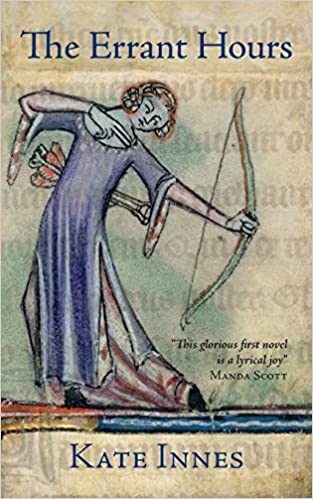


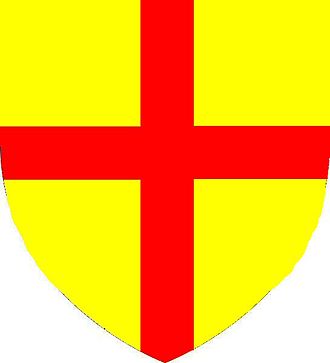
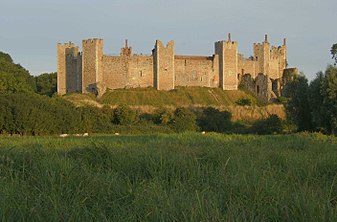
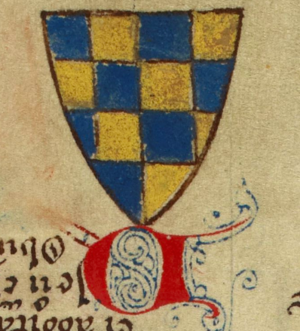
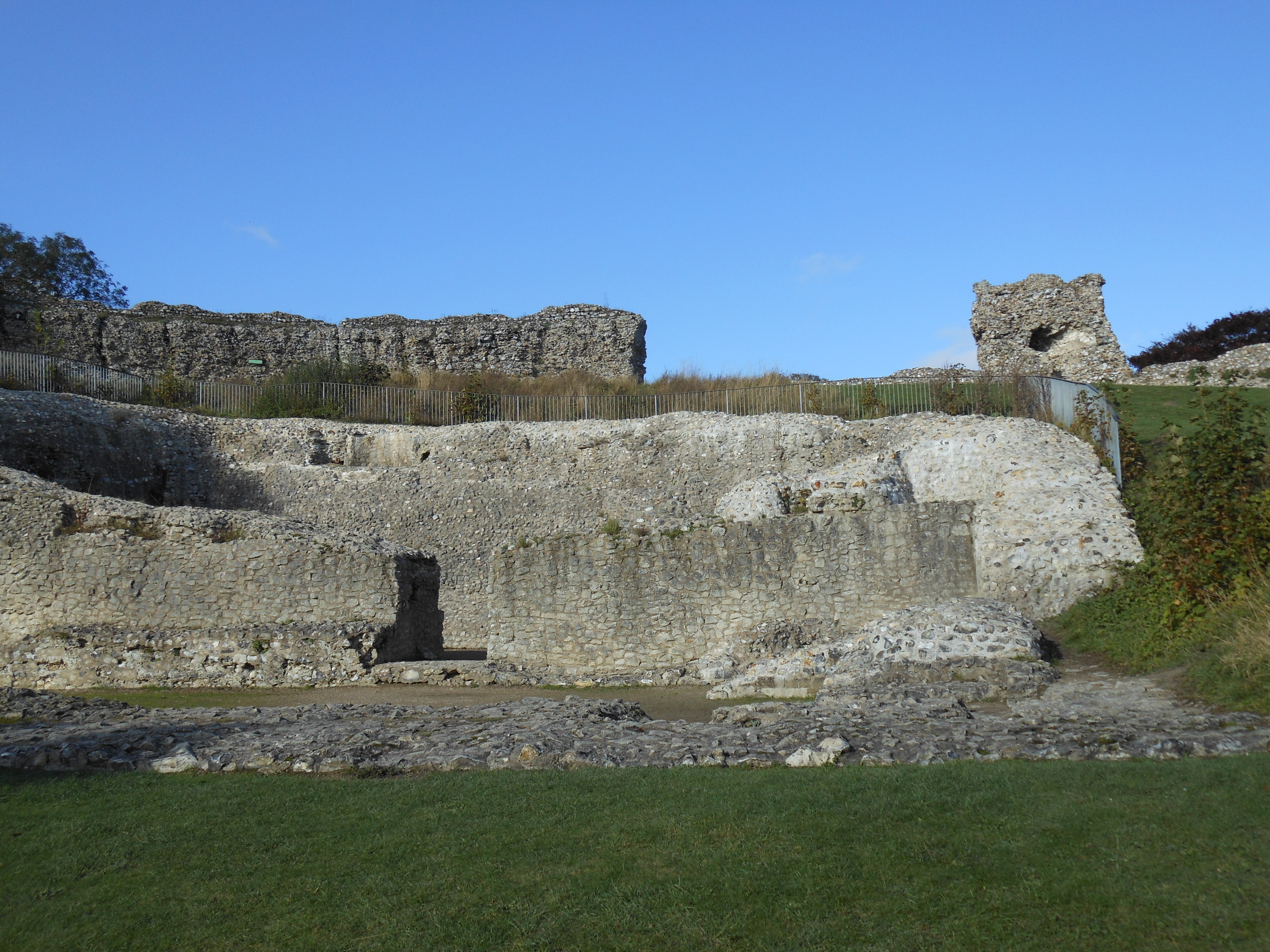



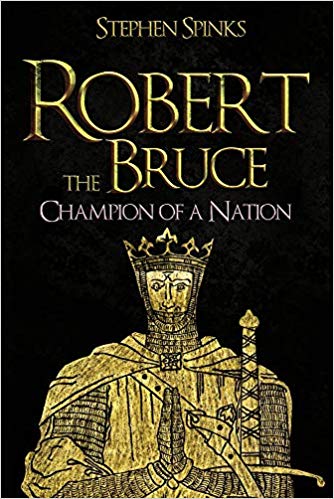


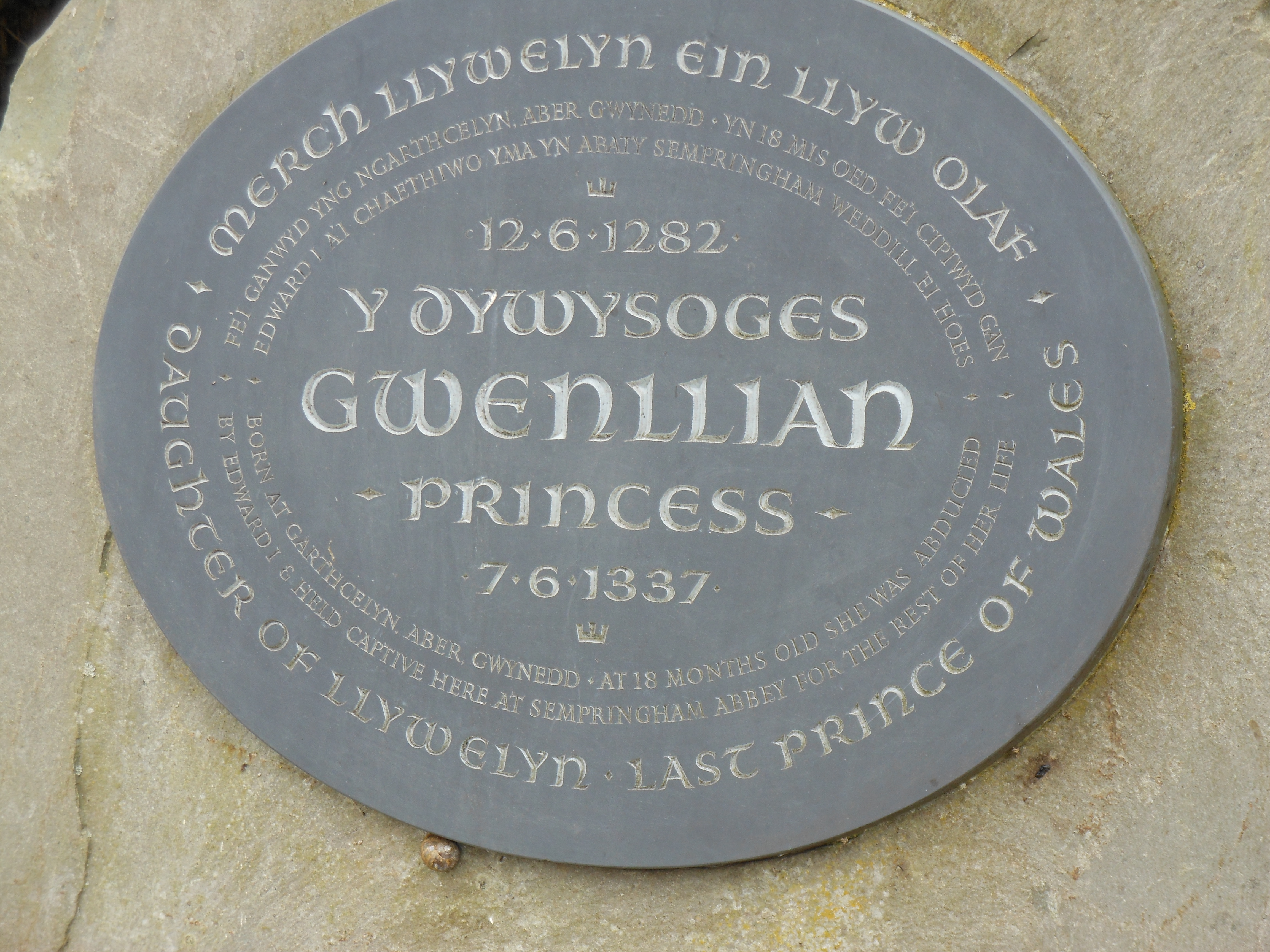


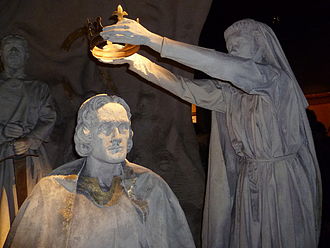
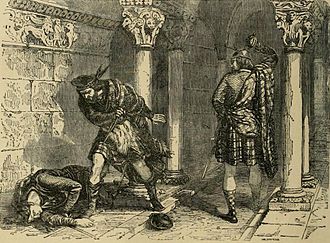
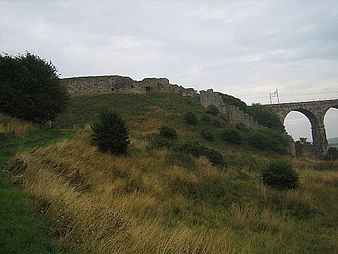
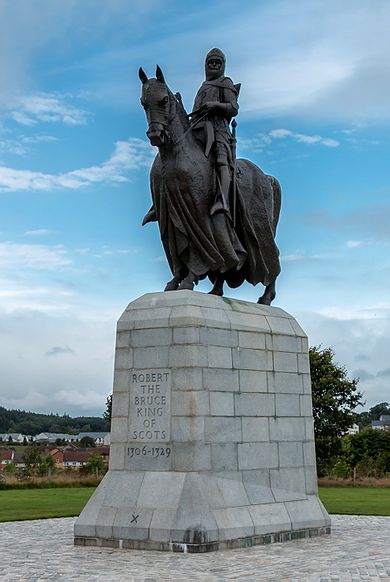
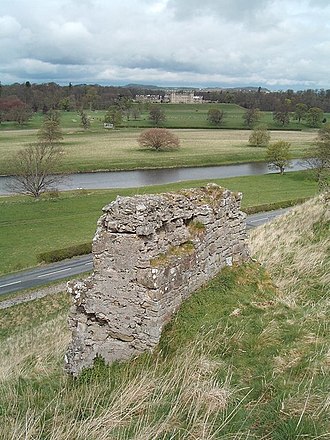
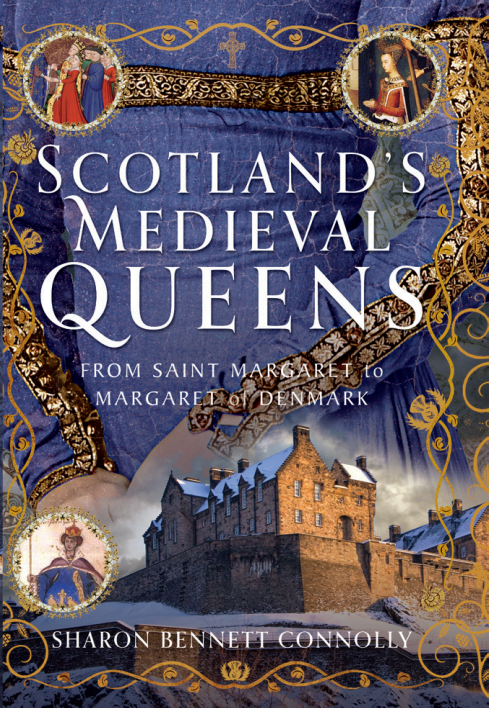
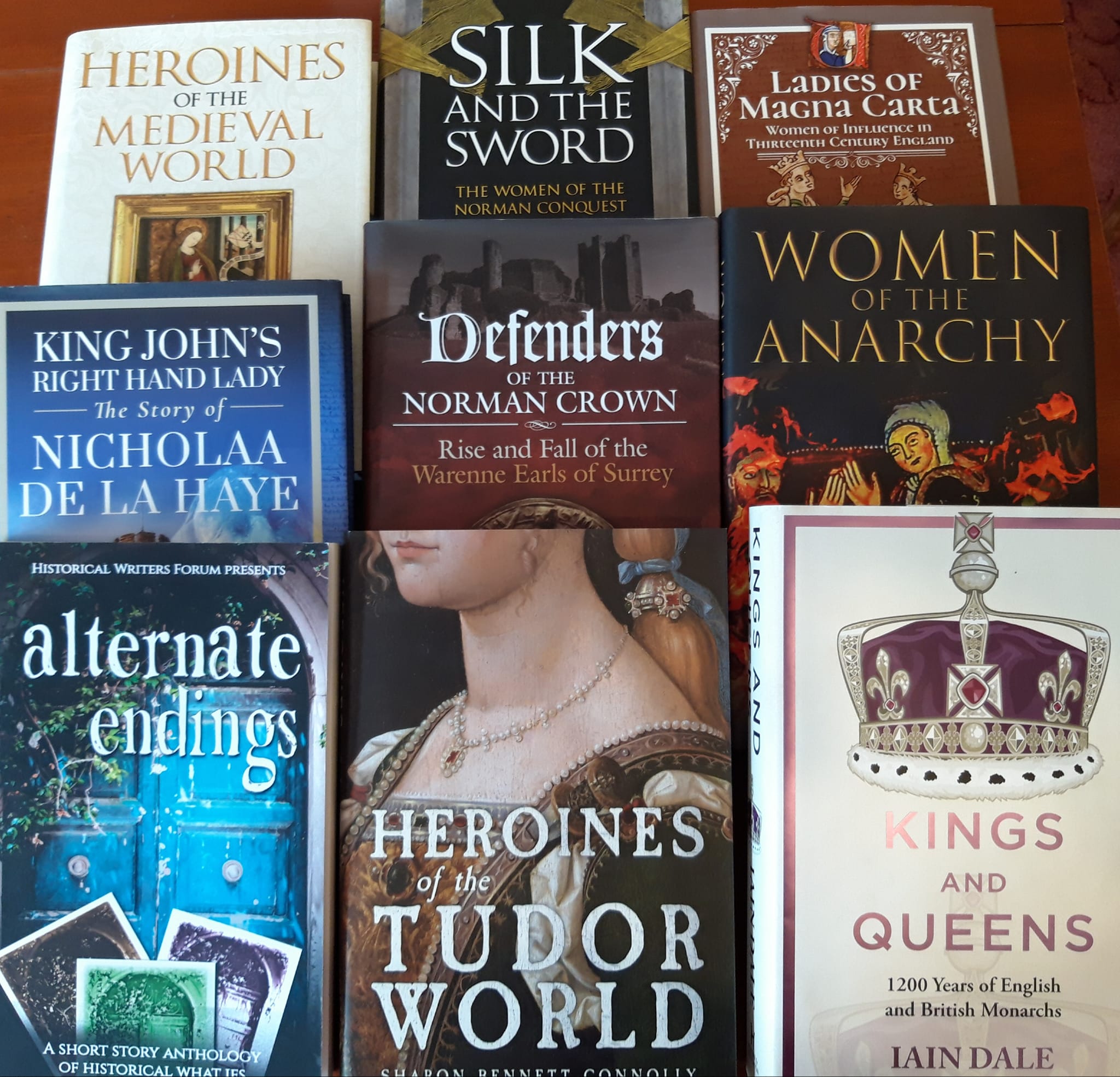


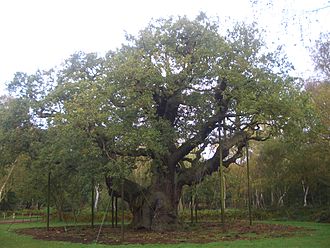

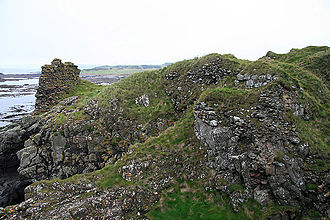


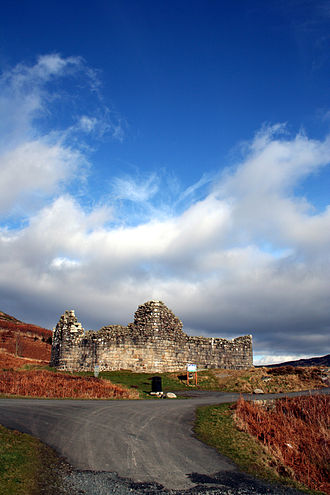


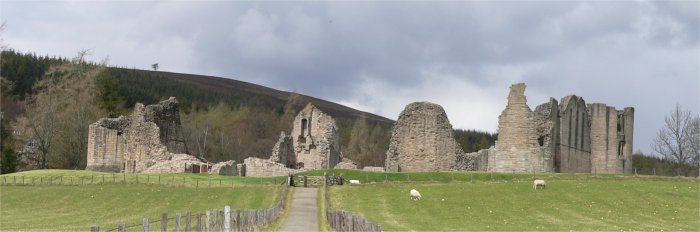


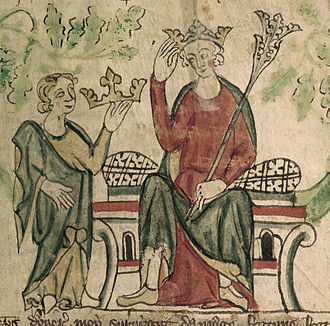


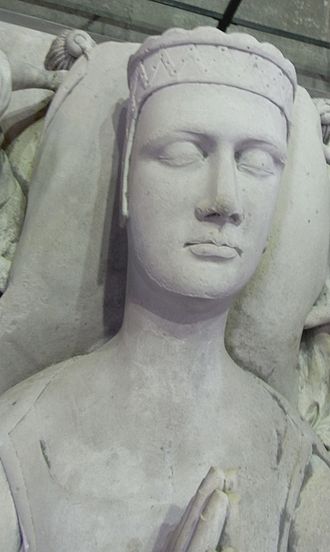
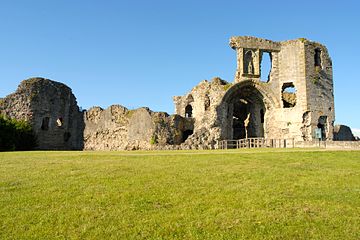
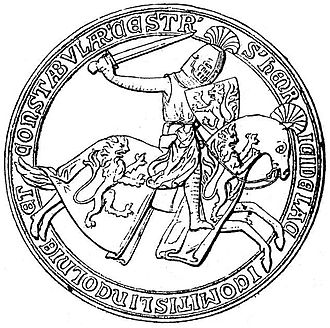
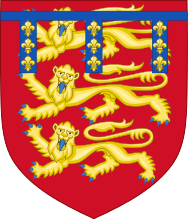
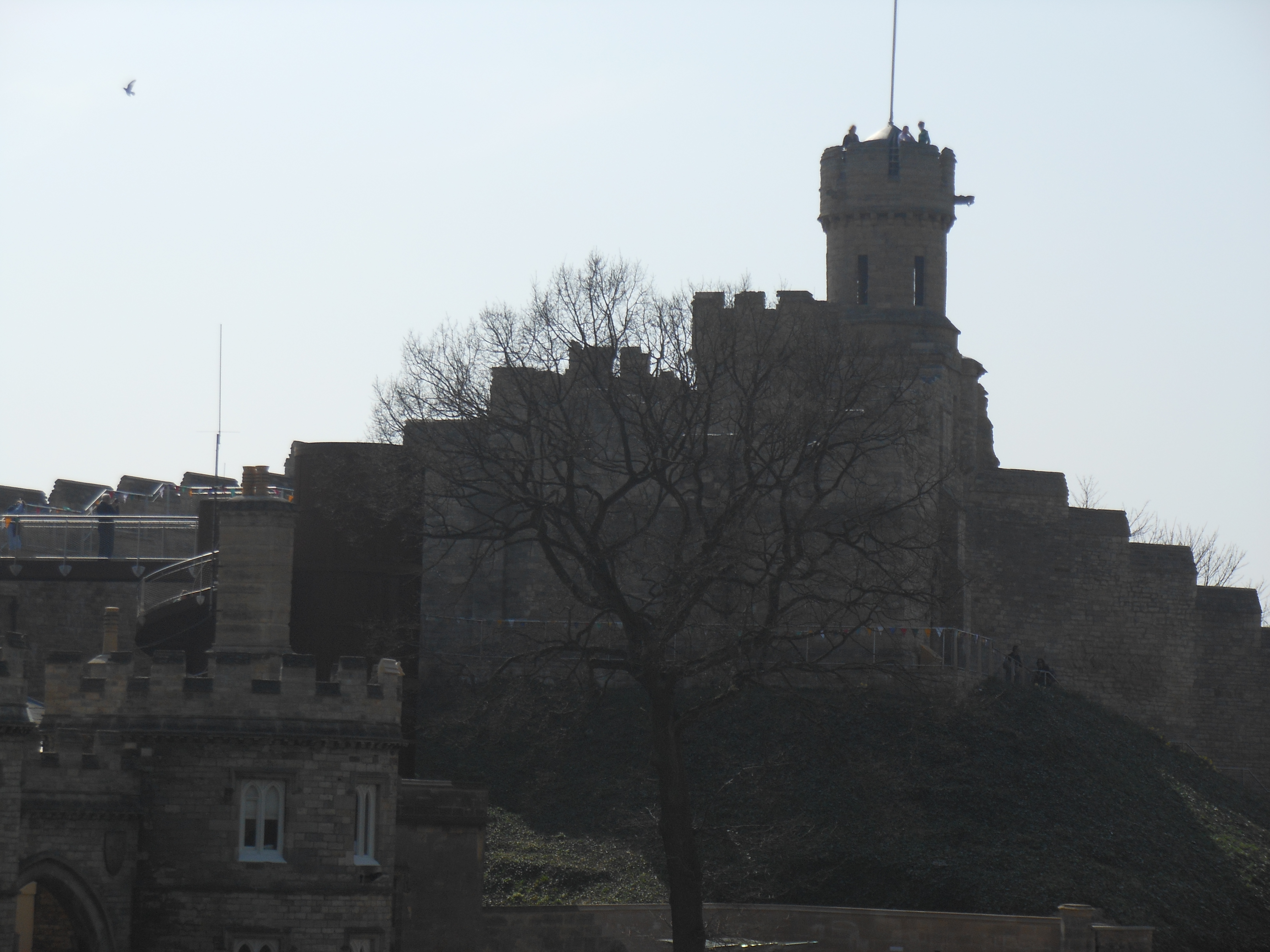
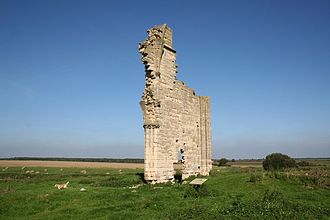

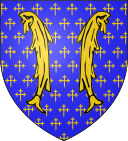
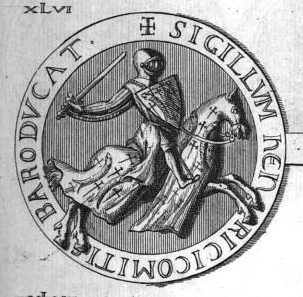
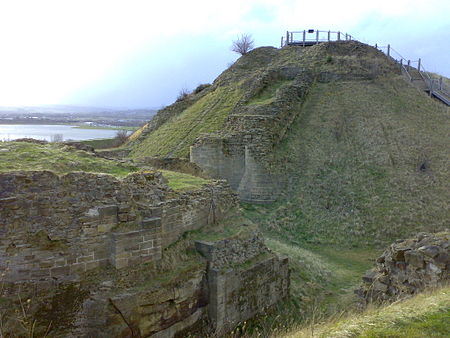
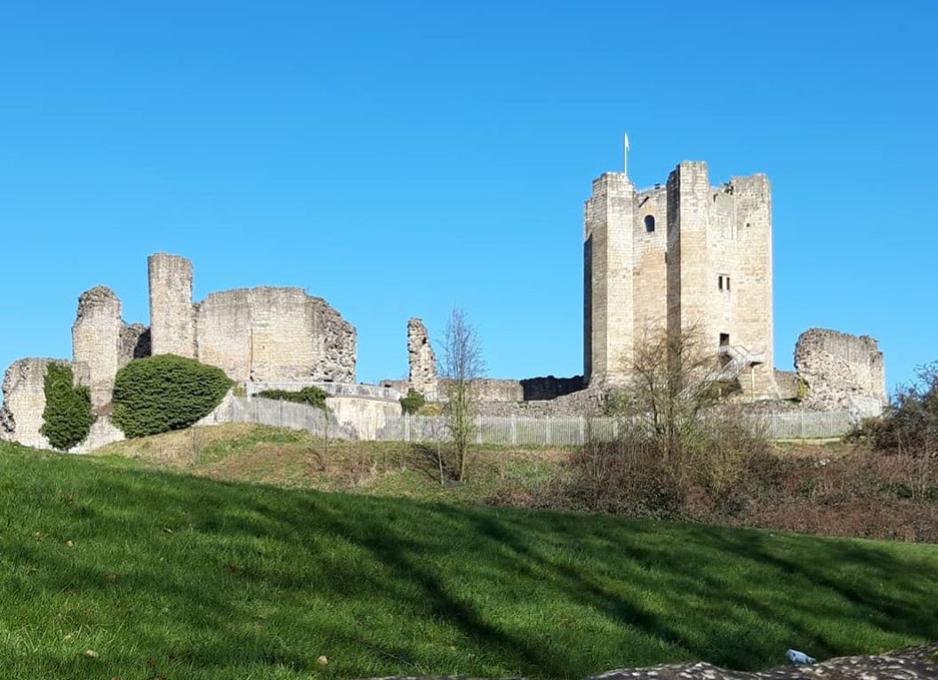
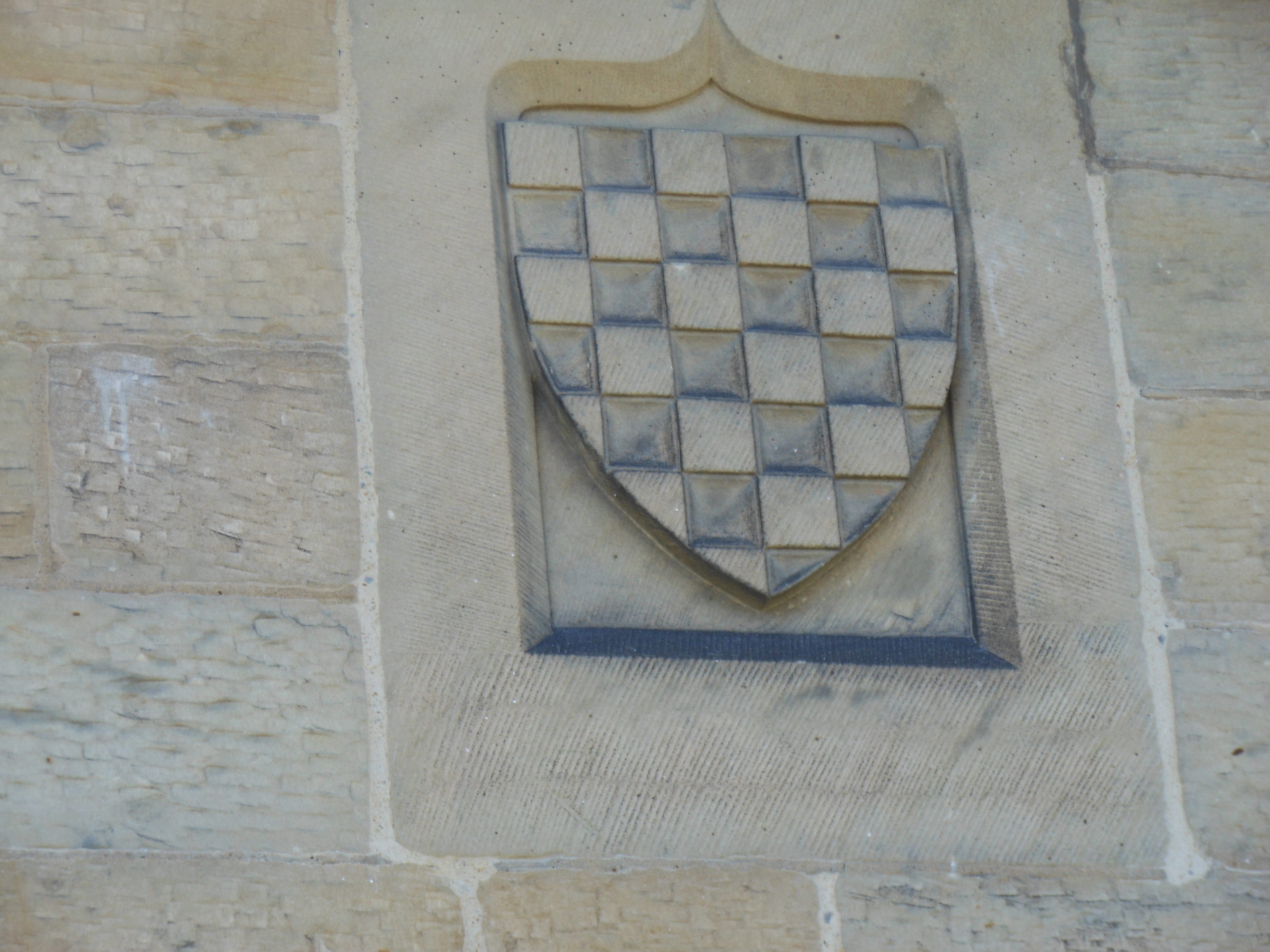


 History... the interesting bits!