A headlong journey through the physical and spiritual dangers of Plantagenet Britain, in all its savage pageantry. Welsh Marches, July 1284 – the uprising in Wales is over, the leader gruesomely executed, the dead are buried. But for Illesa Arrowsmith, the war’s aftermath is just as brutal. When her brother is thrown into the Forester’s prison on false charges, she is left impoverished and alone. All Illesa has left is the secret manuscript entrusted to her – a book so powerful it can save lives, a book so valuable that its discovery could lead to her death. When the bailiff’s daughter finds it, Illesa decides to run, and break her brother out of jail by whatever means. But the powerful Forester tracks them down, and Illesa must put herself and the book at the mercy of an unscrupulous knight who threatens to reveal all their secrets, one by one. Inspired by the seductive art of illuminated manuscripts, The Errant Hours draws from the deep well of medieval legend to weave a story of survival and courage, trickery and love.
Every now and again you come across a book that draws you in and makes you lose entire days to reading. For me, The Errant Hours by Kate Innes was one of those books: I lost the whole of last weekend to reading the final 200 pages because I HAD to get to the end. Of course, I now wish I’d taken a little longer over it, but this was a book I needed to devour. With just short of 400 pages of beautiful prose, a unique storyline and the perfect combination of intrigue, betrayal and love, The Errant Hours is a perfect book for lockdown or those long, dark, winter nights.
A brother-sister relationship most of us can relate to, family secrets and mysteries and a beautiful, valuable book all come together to create The Errant Hours by Kate Innes. Illesa Arrowsmith losing her home to her creditors and helping her reckless brother escape the Forester’s prison is only the start of her adventures; adventures that will lead her to the heart of the court of Edward I and into the political turmoil of the English conquest of Wales. While the national political climate contrasts perfectly with the turmoil in Illesa’s own life as she attempts to uncover her own origins and her feelings for Sir Richard Burnel, the knight who could be both protector and her accuser.
‘Illesa!’
She ignored the angry whisper and went back towards the torchlight. The guard’s head had changed position. She stood still, watching him. A thin stream of saliva came from the corner of his open mouth. His jerkin was unbuttoned. The iron chain was wound around his belt and the end hung down behind the bench.
Illesa slowly undid the buckle and loosened the chain, pulling it, link by link, off the leather belt. Gathering the chain in her hand, she pulled it up. There was a dull clang. The guard grunted and shifted on the bench, but his eyes remained closed. The ring holding the keys was caught between the wall and the bench. Illesa held the chain in her left hand and knelt down. She reached under the bench, her arms stretched around the guard, straining not to touch him. Her fingers brushed against the keys, and she let them rest on her palm. Illesa let the chain slip slowly out of her left hand until she held it, and the keys, in her right hand. She got shakily to her feet and ran to the cell door.
‘Where is the lock?’ she whispered.
‘Here, follow my hand.’Illesa saw the vague whiteness of Kit’s fingers; she put her own on top of them, feeling for the keyhole with her thumb.
‘Got it,’ she said, fumbling with the larger key.
It slid easily into the hole, but as she turned it there was a terrible screeching sound of metal against metal. Something hit the floor with a loud thump and a gasp of pain.
Kit pushed the door, nearly knocking Illesa over as he ran out of the cell.
‘Follow me!’
Kate Innes must have done a remarkable amount of research to produce such a historically accurate work of historical fiction. Although her leading characters are fictional, the supporting characters are very much historical fact, with Edward I, Eleanor of Castile, young Prince Alphonso and John, 6th Earl Warenne all making an appearance. I didn’t know one of the Warennes would be making an appearance in the story – it was such a lovely surprise!
I particularly liked Kate Innes’ portrayal of Earl Warenne as a brutal, brash lord who spares little thought for the niceties – he certainly comes across as that in my research for my own forthcoming book on the Warennes, Defenders of the Norman Crown: Rise and Fall of the Warenne Earls of Surrey. In fact, I think Kate Innes was a little more generous with Warenne’s personality than some chroniclers were!
The fictional characters, Illesa, her brother Kit and the knight, Richard Burnel, are the central actors in the story. Their personalities, appearance and relationships are wonderfully ‘fleshed’ out. Illesa is a strong female character, but one that is not out of place in 13th century England. A young woman with determination and capability, she is also all-too-aware of the limitations forced on her by her sex.
A beautifully crafted tome, The Errant Hours by Kate Innes is a unique insight into 13th century England. The narrative flows freely and Illesa’s story will keep the reader entranced from the first page to the last. I cannot recommend it highly enough and have already put book 2, All the Winding World, on my Christmas list.
The Errant Hours by Kate Innes is available from Amazon.
About the author:
Kate Innes was born in London and lived and worked in America and Zimbabwe. She is now based in Shropshire, and it is the history and natural beauty of this area that provides inspiration for both her fiction and poetry.
She originally trained as an archaeologist and a teacher, and then worked as a Museum Education Officer around the Midlands, writing poetry in her spare time. After the arrival of her children, Kate began work on her medieval novel ‘The Errant Hours’ which was published in 2015.
The Historical Novel Society selected ‘The Errant Hours’ as an ‘Editor’s Choice’, and it was added to the reading list of the Medieval Studies Department at Bangor University. It is one of Book Riot’s ‘One Hundred Must Read Medieval Novels’.
Her second novel, ‘All the Winding World’ is a sequel to ‘The Errant Hours’, set ten years later. It is due to be published on the 22 June 2018.
Kate has been writing and performing poetry for many years, usually with a particular focus on animals, art and the natural world. Her poem ‘Flocks of Words’ won first prize in the ‘Imagined Worlds’ Competition held by the Friends of Samuel Taylor Coleridge. Her first collection, also called ‘Flocks of Words’, was published in Spring 2017 and many of these poems form part of a performance with the acoustic music group ‘Whalebone’.
Kate runs writing workshops, gives illustrated talks, works collaboratively with communities and undertakes commissions and residencies.
It is a pleasure to welcome to History … the Interesting Bits today, Nicola Lisle, author of Life in Miniature: A History of Dolls’ Houses as part of her Blog Tour with Pen & Sword. A history of dolls’ houses is a little different to my usual type of post, but reading Life in Miniature brought back some very happy childhood memories of my sister and I playing with our dolls’ house in our grandparents’ attic. So I was very interested in finding out more of their history and origins. Nicola very kindly answered a few of my most pressing questions.
Dolls’ house at Charles Dickens’ House, Doughty Street, London
Hi Nicola, congratulations on the release of Life in Miniature and thank you for stopping by to chat.
1. When I heard about your book, I immediately thought of the dolls’ house my sister and I had as children – we used to play with it for hours. How long have you had a fascination for dolls’ houses? Did you have one as a child?
I did have a dolls’ house as a child, and my sister and I played with it a lot. It was apparently made for us by a distant relative, who also made wooden furniture for it. It’s all quite basic, but I love it because it’s unique and it was part of my childhood. We used to have some tiny dolls for it, and we also used to decorate it at Christmas. We had a Christmas tree and had to cut away a square of carpet to fit it in! Sadly, the dolls and Christmas decorations have been lost, but the original furniture and other bits and pieces are still there. As we grew up we lost interest in the dolls’ house and it was in my parents’ loft for many years gathering dust! It wasn’t until I started writing that I became interested in dolls’ houses again, and it was quite by chance. I subscribed to Writing Magazine and Writers’ News – and still do! – and in one issue there was a piece about Dolls House and Miniature Scene magazine, which was open to submissions from freelance writers. It caught my attention, and I got in touch with some ideas. My first piece for the magazine was about the Museum of Childhood at Sudbury Hall in Derbyshire, and it was published in 2004. I carried on writing for the magazine for many years, and it ignited a real passion in me for dolls’ houses. Eventually I rescued my childhood dolls’ house from my mum’s house, and I’m hoping at some point to find the time to give it a bit of TLC! It’s not in bad condition, but it could definitely do with a bit of a makeover!
2. The thing with dolls’ houses is that they are not just for children, are they? My mum has one!
Dolls’ house at Tolsey Museum, Burford
Dolls’ houses are definitely not just for children. I think a lot of adults who had them as children still treasure them, and collecting vintage and antique dolls’ houses is also popular. For children, they are great for stimulating the imagination, but for adults I think it’s more about appreciating the sheer delight of miniatures and the craftsmanship that went into creating them.
3. I think the most famous dolls’ house has to be Queen Mary’s in Windsor Castle, isn’t it? What is so special about it?
Reproduction of miniature of Conan Doyle’s ‘How Watson Learned the Trick’, written for Queen Mary’s Dolls’ House
Yes, I think Queen Mary’s dolls’ house is probably the most famous. It’s special because it captures a slice of 1920s England in such exquisite detail, from the furniture and soft furnishings right down to the food and drink that were popular at the time. It attracted international interest when it first appeared, and it was a showcase to the world, a display of some of the very finest British talent. I think it also restored some pride and optimism in the country during the immediate post-war years. The house and garden were designed by Sir Edwin Lutyens and Gertrude Jekyll, and among its highlights are miniature books, music scores and paintings by popular writers, composers and artists of the day. Many of the books contained original stories written exclusively for the dolls’ house. Two of these, Fougasse’s J. Smith and Conan Doyle’s How Watson Learned the Trick, have been reproduced as miniature replicas with booklets containing the stories in full-size print. Another, Vita Sackville-West’s A Note of Explanation – a story about a mischievous spirit who inhabits the dolls’ house – was also reproduced in full size. I treated myself to all three when I was researching my book, and they are now treasured items on my bookshelves!
4. How long have dolls’ houses been around, Nicola? I always associate them with the Victorians, but were they around earlier? Are dolls’ houses an English creation, or did they come from the continent?
Nicola’s childhood dolls’ house
Dolls’ houses have been around since at least the 16th century and originated in Germany, where they were known as baby houses. The first known dolls’ house was made for the Duke of Bavaria in 1557, and it was a miniature version of his ducal palace. By the 17th century, baby houses had become popular in Germany, particularly in Nuremberg. The idea caught on in Holland towards the end of the 17th century, but instead of baby houses the
Dutch favoured cabinet houses, which were grand, elaborately-carved cabinets containing exquisitely furnished miniature rooms. The earliest dolls’ houses in England appeared in the late 17th century and were similar to the Dutch cabinet houses. By the early 18th century they were beginning to look more like houses than cabinets, and they were often modelled on the great country houses and created by estate carpenters. It wasn’t until the Victorian era that they became regarded as toys for children, and mass production towards the end of the 19th century made them much more widely accessible.
5. And what was their original purpose, were they always aimed at children.
The earliest baby houses, cabinet houses and dolls’ houses were primarily display pieces, and they were very much the preserve of royalty and the aristocracy – each one was a statement of the owner’s wealth and social status. They also had an educational role, often being used to instruct young ladies and servants in efficient household management and domestic skills.
6. I am fascinated by dolls’ houses and have to admit that the first thing I did on getting your book was look at the pictures. The houses are beautiful and the furniture inside is so detailed and intricate, do you have a favourite?
Reproduction of miniature of J. Smith by Fougasse, written for Queen Mary’s Dolls’ House
I saw so many gorgeous dolls’ houses while writing and researching my book that it’s almost impossible to pick a favourite. I think all dolls’ houses have their own particular charm, from the grand, ornate ones to the very simplest, and often it’s the stories behind them that make them special. For this reason, I think the dolls’ house at Uppark in West Sussex is one of my favourites, partly because it’s one of the earliest surviving dolls’ houses from the early 18th century, reflecting the Palladian-style architecture that was popular at the time, and partly because it has a connection with H.G. Wells, and I always love literary connections! Wells’s mother was the housekeeper at Uppark during the late 19th century, and he drew on his childhood memories of Uppark in his novel Tono-Bungay, in which he refers to the “great dolls’ house on the nursery landing”.
Another with a literary connection is the dolls’ house at Charles Dickens’ House at Doughty Street in London. The house doesn’t actually have a connection with Dickens himself, but it was modelled on the Doughty Street house by dolls’ house maker Christopher Cole for his book Make Your Own Dolls’ House, which was published in 1976. It is a simplified version of the real thing, rather than an exact replica, but it is very similar, especially the outside, and it was one I particularly enjoyed going to see! It’s not on public display, but it can be viewed by appointment.
I also have special fondness for the dolls’ house at Overbeck’s in Devon. It was created during the 1980s by a lady called Mabel Hill, a very talented, self-taught craftswoman who used scraps of leftover material and other household odds and ends to make the furniture and soft furnishings. What’s particularly lovely is that Overbeck’s was used as a convalescent home for wounded soldiers during the First World War, and one of the activities they were encouraged to do as therapy was to make dolls’ house furniture. Although there’s no direct link between that and Mabel Hill’s house, it does feel as though there is a spiritual connection.
Others closer to home, in Oxfordshire, include the Regency-style dolls’ house at the Tolsey Museum in Burford, which was created during the 1930s by members of the local community and reflects the town’s rural industries (another fascination of mine!), and the Palladian-style house at Greys Court, near Henley, which was created by a local lady, Patricia Mackenzie, during the 1970s. Like Mabel Hill, she used old materials and household objects to create the house and its contents. She was inspired by the Carlisle Collection of Miniature Rooms, which she used to visit when it was displayed at Greys Court during the 1970s. The collection is now housed at Nunnington Hall in Yorkshire, and is another favourite of mine, with a fascinating history – as I said, there are so many favourites!
7. I am guessing that some of these dolls’ houses have fascinating histories – is there one that has a story that particularly caught your attention?
Interior of Dolls’ house at Charles Dickens’ House
Something I became fascinated with while researching the book was finding out about famous collectors, particularly Vivien Greene, wife of novelist Graham Greene. Her collection was once housed in a museum in Oxford, not far from where I live, so there’s a bit of a connection there! Tracking down Vivien Greene’s dolls’ houses almost became a project of its own – sadly, she decided to auction her collection during the late 1990s when her eyesight was deteriorating and most of it finished up in private hands. But one that is on public display is Whiteway at Saltram, a National Trust house in Devon, and its Victorian-style interior is exquisite. I particularly loved the library with its miniature books, all made from wood, and the dining room with its plush red furnishings. The provenance of the house is something of a mystery, and I do love a good mystery! There’s another Vivien Greene house on display at Ilkley Toy Museum in Yorkshire, which dates from the late Victorian era and used to belong to a lady in Abingdon, Oxfordshire – again, not far from where I live. At some point it was converted into an hotel and named The Original Swan after a pub in Cowley, just outside Oxford. It has lost some of its original contents, but it is in good condition and you can still see the mahogany bar and its wooden barrels and glass bottles.
8. What made you want to write a book on dolls’ houses?
The Original Swan at Ilkley Toy Museum
It was writing for Dolls House and Miniature Scene magazine for so many years that made me think it would be interesting to write a book on the subject. I had already accumulated a lot of information and pictures that I could use as the basis for a book, and I had a lot of fun building on that, visiting various museums and stately homes that had dolls’ houses on display and gathering up lots more fascinating facts about these wonderful miniatures. I enjoyed researching and writing the book so much – it was a real labour of love!
9. What is your next writing project?
I’ve been working on some possible new book ideas, but at the moment I’m very busy with other writing work. I have several article deadlines coming up, and I am also a tutor on four distance-learning courses with The Writers Bureau, so I’m having to work on my book pitches in between everything else! Hopefully, though, at some point I’ll get them finished and sent off!
10. Where can people find you? Do you have a website or blog? Are you on social media?
I’m on Twitter – you can find me at @NicolaLisle1. I did set up a blog a while ago but haven’t actually done anything with it for some time, so it’s due for a major overhaul – that’s probably going to be a Christmas holiday job!
Thank you, Nicola, for such a lovely chat!
Life in Miniature: A History of Dolls’ Houses is available from Amazon or direct from Pen & Sword and would make a perfect Christmas present.
About the author:
Nicola Lisle is a freelance journalist and author specialising in history and the arts. She has written numerous articles for family history magazines, including Who Do You Think You Are?, Your Family History and Discover Your Ancestors, and was a regular contributor to Dolls House and Miniature Scene magazine for many years. She is the author of Tracing Your Family History Made Easy (Which? Books, 2011) and Tracing Your Oxfordshire Ancestors (Pen & Sword, 2018).
The finalised cover for Defenders of the Norman Crown: Rise and Fall of the Warenne Earls of Surrey, coming out next year.
Huge thanks to designer Paul Wilkinson at Pen & Sword for making my book look sooo good!
Defenders of the Norman Crown: Rise and Fall of the Warenne Earls of Surrey
In the reign of Edward I, when asked Quo Warranto? – by what warrant he held his lands – John de Warenne, the 6th earl of Warenne and Surrey, is said to have drawn a rusty sword, claiming ‘My ancestors came with William the Bastard, and conquered their lands with the sword, and I will defend them with the sword against anyone wishing to seize them.’
John’s ancestor, William de Warenne, 1st Earl of Surrey, fought for William the Conqueror at the Battle of Hastings in 1066. He was rewarded with enough land to make him one of the richest men of all time. In his search for a royal bride, the 2nd earl kidnapped the wife of a fellow baron. The 3rd earl died on crusade, fighting for his royal cousin, Louis VII of France…
For three centuries, the Warennes were at the heart of English politics at the highest level, until one unhappy marriage brought an end to the dynasty. The family moved in the most influential circles, married into royalty and were not immune to scandal.
Defenders of the Norman Crown tells the fascinating story of the Warenne dynasty, of the successes and failures of one of the most powerful families in England, from its origins in Normandy, through the Conquest, Magna Carta, the wars and marriages that led to its ultimate demise in the reign of Edward III.
Warenne arms
If you have been following this blog for any length of time, you will have noticed that I have a fondness for the Warennes. The family were earls of Surrey from 1088 until the death of the last Warenne earl in 1347. They possessed lands throughout England, stretching from Lewes in Sussex to Castle Rising in Norfolk and on to Conisbrough and Sandal Castles in Yorkshire.
Growing up close to the Warenne castle at Conisbrough in South Yorkshire, I developed a fascination for the castle’s history, for its connections to royalty, and for the family which built this amazing stronghold – the Warennes. As a student, I worked at the castle as a volunteer tour guide and started researching the story of the family. Many, many years later, when Pen & Sword asked me for some book ideas, I suggested writing a biography of the family, not really expecting them to say ‘yes’ – but they did. Defenders of the Norman Crown: Rise and Fall of the Warenne Earls of Surreyis a book I have always wanted to write, but never expected I would get the chance.
From the time of the Norman Conquest to the death of the seventh and last earl, the Warenne family was at the heart of English politics and the establishment, providing military and administrative support to the Crown. In the years following 1066 William I de Warenne, who became the first Earl of Surrey in 1088, was the fourth richest man in England and the richest not related to the royal family – he ranks at number 18 in MSN.com’s Top 20 Richest People of All Time.
Conisbrough Castle
The earls of Surrey were at the centre of the major crises of medieval England, from the Norman Conquest itself to the deposition of Edward II and accession of Edward III. Strategic marriages forged links with the leading noble houses in England and Scotland, from the Marshals, the FitzAlans, the d’Aubignys and Percys to the Scottish and English royal families themselves. Indeed, it is from Ada de Warenne, daughter of the second earl, married to the oldest son of the king of Scots, that all the leading competitors for the Scottish throne, after the death of Margaret, Maid of Norway in 1286, are descended. Queen Elizabeth II, herself, can trace her own lineage back to Ada and, through Ada, to the second earl of Warenne and Surrey.
In the 14th century, one unhappy marriage brought the dynasty to an end, the family’s influence and achievements almost forgotten…
Writing Defenders of the Norman Crown: Rise and Fall of the Warenne Earls of Surrey and researching this incredible family has been an amazing experience – a dream come true – and I will be eternally grateful to Pen & Sword for allowing me to tell their story.
Defenders of the Norman Crown: Rise and Fall of the Warenne Earls of Surrey tells the story of this remarkable dynasty. It is a story of power, ambition, loyalty and – above all – family!
Defenders of the Norman Crown: The Rise and Fall of the Warenne Earls of Surreywill be released in the UK on 31 May andis now available for pre-order from Pen & Sword Books.
Mary of Blois was the youngest daughter of Stephen of Blois and his wife, Matilda of Boulogne, herself the granddaughter of St Margaret, queen of Scotland. Mary was born in Blois, France around 1136. She was destined for the cloister from an early age and, while still a young girl, was placed in a convent at St Sulpice in Rennes.
Mary’s lineage and the quirks of fate, however, meant that Mary’s peaceful convent life would be violently cut short.
Mary’s father Stephen was the nephew of Henry I, and his closest, legitimate, male relatives. Following the death of his only legitimate son, William Adelin, in the White Ship disaster of 1120, and with his only other legitimate child, Empress Matilda, living in Germany, it seems that Henry looked at Stephen as a possible successor. However, when Matilda’s husband died in 1125 and the empress returned to her father’s court, Stephen’s position was left undetermined. Stephen remained prominent at the English court, always present as a viable alternative to the succession of a woman – Empress Matilda.
In the confusion following Henry’s death in December 1135, it was Stephen who acted quickly and decisively. As he claimed the crown in England and his adherents secured Normandy in Stephen’s name, Empress Matilda was home in Anjou with her husband Geoffrey, Count of Anjou and two young sons, Henry and Geoffrey. She was pregnant with her third and youngest son, William.
What followed was a period known as the Anarchy, almost 20 years of conflict and bloodshed as Stephen and the Empress Matilda battled for supremacy of England and Normandy. Ultimately, Stephen managed to retain control of England but lost Normandy to Count Geoffrey, who passed it on to his and Matilda’s eldest son, Henry FitzEmpress. Henry, was eager to win back his birthright and following several incursions by Henry – whilst still in his teens – he and Stephen came to an agreement.
King Stephen
Stephen and his wife Matilda had five children in total, but only three, including Mary, who survived infancy. Of Stephen and Matilda’s three children, Eustace IV, Count of Boulogne, was the eldest to survive into adulthood, and was groomed as his father’s heir. He was married to Constance of France, daughter of King Louis VI and sister of Louis VII, in 1140 and knighted in 1147. He died in August 1153, after suffering some form of seizure. The Anglo-Saxon Chronicle said of him
‘he had little success, and with just cause, because he was an evil man, because wheresoever he came he did more evil than good; he robbed the lands and laid great taxes on them.’
Anglo_Saxon Chronicles, edited by Michael Swanton
The Gesta Stephani, however, paints a picture of
‘a young man of high character … his manners were grave; he excelled in warlike exercises and had great natural courage … he was courteous and affable … and possessed much of his father’s spirit … ever ready to draw close the bands of peace’ but ‘never shrank from presenting a resolute and indomitable front to his enemies.’
Gesta Stephani
Stephen’s youngest son was William, who was born around 1134/5. In 1149 he married Isabel de Warenne, sole heiress to William de Warenne, third earl of Surrey, in order to bring the vast Warenne lands within the influence of the crown. William would succeed to the County of Boulogne in 1153, on the death of Eustace. Shortly after his brother’s death, and with the help of the clergy, William made an agreement with Henry of Anjou, whereby he waived his own rights to the crown in return for assurances explicitly recognising his rights to his lands, as Count of Boulogne and Mortain and Earl of Surrey.
Romsey Abbey
Mary, who had been in the convent at St Sulpice in Rennes, was moved around 1150-52, apparently after some discord with the nunnery. Her parents founded a new convent for her at Lillechurch (Higham) in Kent, making it a sister convent with Rennes’ St Sulpice. Mary does not appear to have been given the title of prioress. However, a charter of Henry II, dated around 1155-58, confirmed Lillechurch to Mary and her nuns, suggesting she held some position of authority. Before 1160, however, Mary had become abbess of the great abbey at Romsey, an older and more prestigious institution than her little foundation at Lillechurch.
Mary’s brother William died without issue in 1159 during the Siege of Toulouse. Though a nun, Mary succeeded him in the County of Boulogne. As a consequence, in 1160 Mary’s life was turned upside down. She was suddenly a great heiress, countess of Boulogne in her own right and too great a marriage prize to be allowed to remain secluded in the cloisters. She was abducted from Romsey Abbey by Matthew of Alsace, second son of the Count of Flanders, and forced to marry him. This may well have been a political move; although there does not appear to be any proof that Henry II sanctioned it, most sources imply that the marriage was forced on her by the king and he certainly benefited from Mary being safely married to a loyal vassal. She was, after all, not only a great heiress but, through her father, she had a strong, rival claim to the throne of England.
Henry II and his mother, Empress Matilda, from a 12th century manuscript
There was great outrage among the clergy; marriage with a nun was a breach against canon law and opposed by the leading ecclesiastical figures of the day. One source suggested the pope had granted a dispensation for the marriage. However, given that Pope Alexander III expressed great disapproval in a letter to the archbishop of Rheims, his consent seems highly unlikely. The pope imposed an interdict on Matthew of Alsace and pressed the claims of the wife of Mary’s brother, Eustace, to the Boulogne estates; even though Constance had died some fourteen years before. The furore seems to have died down eventually, and the marriage was allowed to stand.
Unfortunately for Henry II, Matthew turned out to be a not-so-loyal vassal and rebelled at least twice. The first occasion arose when Matthew tried to press his claims to Mortain, land that should have been part of Mary’s inheritance but was now held by Henry II. The king was not too accommodating. An agreement was eventually reached whereby, in return for £1,000, Matthew would renounce all claims to those parts of his wife’s estates that were still in royal hands.
Mary seems to have had little love for Henry II, possibly due to his involvement in her abduction and marriage, or simply because of the fact their respective families had spent many years at war. With so much bad history, you wouldn’t expect them to have an affectionate relationship, but Mary appears to have actively worked against Henry. Following a meeting with the ambassadors of the emperor, Frederick Barbarossa, she wrote to King Louis of France. In the document, she describes Henry II as ‘the fraudulent king’, while informing Louis of Henry’s manoeuvring against him.
Mary and Matthew had two children, daughters Ida and Mathilde; and it was after the birth of Mathilde that the couple were divorced, in 1170. There is some suggestion that Matthew was pressured to agree to the divorce by his dying father and the emperor, Frederick Barbarossa, probably in the hope of having the interdict – placed on Matthew on his marriage to Mary – lifted. After the divorce, Matthew would continue to rule Boulogne and was succeeded by Ida on his death in 1173.
Mary’s younger daughter Mathilde, Duchess of Brabant
Ida (b. c1160) married three times; her first husband, Gerard III, count of Gueldres, who died in 1183. Her short marriage to her second husband, Berthold IV, Duke of Zehringen, ended in his death in 1186. Ida’s last marriage was to Reginald, or Renaud, de Tree, Count of Dammartin, who was a childhood friend of France’s king, Philip Augustus. It seems Renaud abducted Ida and forced her into marriage. He died in 1227, outliving Ida, who died in 1216, by eleven years. It was Matilda, the daughter of Ida and Renaud, who inherited Boulogne from Ida, and would also become Queen of Portugal through her marriage to Alfonso III of Portugal.
Born in 1170 Ida’s younger sister, Mathilde, married Henry I, duke of Louvain and Brabant, when she was nine-years-old. She would have seven children before her death sometime in 1210 or 1211; she was buried in St Peter’s Church, Leuven.
The interdict, which had been placed on Matthew on his marriage to Mary, was finally lifted when she returned to the convent life in 1169-70, becoming a simple Benedictine nun at St Austrebert, Montreuil. Mary died there in July 1182, possibly on the 25th, aged about forty-six, and was buried within the convent that had been her home for over ten years. A woman who obviously believed that her life should be devoted to God, she is remarkable in that she managed to fulfil her dynastic duties in a forced marriage, and yet asserted herself so that she was able to return to the secluded life she so obviously craved.
*
Sources:
Donald Matthew, King Stephen; Robert Bartlett, England Under the Norman and Angevin Kings; David Williamson, Brewer’s British Royalty; the History Today Companion to British History; Dan Jones, the Plantagenets; englishmonarchs.co.uk; The Oxford Companion to British History; Mike Ashley, The Mammoth Book of British Kings & Queens; Alison Weir, Britain’s Royal Families, the Complete Genealogy; S.P. Thompson, Oxforddnb.com, Mary [Mary of Blois], suo jure countess of Boulogne (d. 1182), princess and abbess of Romsey; Anglo_Saxon Chronicles, edited by Michael Swanton; Gesta Stephani.
*
My Books
Signed, dedicated copies of all my books are available through my online bookshop.
Out now: Scotland’s Medieval Queens
Scotland’s history is dramatic, violent and bloody. Being England’s northern neighbour has never been easy. Scotland’s queens have had to deal with war, murder, imprisonment, political rivalries and open betrayal. They have loved and lost, raised kings and queens, ruled and died for Scotland. From St Margaret, who became one of the patron saints of Scotland, to Elizabeth de Burgh and the dramatic story of the Scottish Wars of Independence, to the love story and tragedy of Joan Beaufort, to Margaret of Denmark and the dawn of the Renaissance, Scotland’s Medieval Queens have seen it all. This is the story of Scotland through their eyes.
‘Scotland’s Medieval Queens gives a thorough grounding in the history of the women who ruled Scotland at the side of its kings, often in the shadows, but just as interesting in their lives beyond the spotlight. It’s not a subject that has been widely covered, and Sharon is a pioneer in bringing that information into accessible history.’ Elizabeth Chadwick (New York Times bestselling author)
Heroines of the Tudor World tells the stories of the most remarkable women from European history in the time of the Tudor dynasty, 1485-1603. These are the women who ruled, the women who founded dynasties, the women who fought for religious freedom, their families and love. Heroines of the Tudor World is now available for pre-order from Amberley Publishing and Amazon UK.Women of the Anarchy demonstrates how Empress Matilda and Matilda of Boulogne, unable to wield a sword themselves, were prime movers in this time of conflict and lawlessness. It shows how their strengths, weaknesses, and personal ambitions swung the fortunes of war one way – and then the other. Available from Bookshop.org, Amberley Publishing and Amazon UK. King John’s Right-Hand Lady: The Story of Nicholaa de la Haye is the story of a truly remarkable lady, the hereditary constable of Lincoln Castle and the first woman in England to be appointed sheriff in her own right. Available from all good bookshops Pen & Sword Books, bookshop.org and Amazon.
Alternate Endings: An anthology of historical fiction short stories including Long Live the King… which is my take what might have happened had King John not died in October 1216. Available in paperback and kindle from Amazon.
Podcast:
Have a listen to theA Slice of Medieval podcast, which I co-host with Historical fiction novelist Derek Birks. Derek and I welcome guests, such as Bernard Cornwell and discuss a wide range of topics in medieval history, from significant events to the personalities involved.
Today it is a distinct pleasure to welcome Danna R. Messer to History … the Interesting Bits to talk about her favourite medieval heroine, Joan, Lady of Wales. I recently review Danna’s new, excellent, biography of Joanand now Dannais here to shine some light on Joan.
Joan, Lady of Wales by Danna R. Messer
When Sharon invited me as a guest she happily told me I could write on ‘any subject relating to Joan’. In theory, given such free range to write about one aspect of my long-lived preoccupation with this true ‘heroine of history’ was a blessing and should have been a cinch. In practice, it stumped me. I have just spent almost three years cobbling together my research to write a book about Joan, never mind the seven years spent using her activities and status as a centrepiece for my PhD research on the wives of native Welsh rulers, or the numerous years before and after exploring as many avenues as I could to find out more about her. What more is there to cover, especially on a woman whose presence only peaks through the evidence and events on what sometimes seems the rarest of occasions? Well, it turns out the answer to that is, there’s plenty. And that is what has stumped me.
By nature, my inclination was to either 1) lean further into her role as a ‘Welsh queen’ and try to continue unpack any of those layers that might still be pliable or 2) think more about her role and expectations as a wife. Old habits are hard to break – especially when these two factors combined have already helped in painting a portrait of her. But, I had to really ask myself, what is missing? What are the things that should be given further, serious consideration when it comes to understanding such a complicated woman as Joan – and by complicated I mean the complications of not only her general life circumstances, but the complications also related to lack of sources.
After much pondering and reflection, I have decided that the largest part of the answer to ‘what is missing’ is the most obvious and lies in Joan’s experiences and the human emotions that dictated every moment of her life. The study of emotions and their impact on how we react to our own worlds, the world at large and during ‘historical’ events has grown in importance over the past thirty years. The understanding of human emotions and how they make us tick as sentient beings should not, and does not, simply fall under the sole remit of psychologists or neuroscientists. It is also an understanding that should be embraced, or in the least, accepted by historians when writing about the past. As I have often said students taking my medieval history courses, ‘Nothing happens in a vacuum, right?’
Of course, I am aware of the debates surrounding the study of and emphasis on emotions when it comes to constructing a better understanding of history: the argument that emotions are culturally constructed and carry their own specific meanings in context to period and place and are therefore variable over time versus the more universal argument that people in the past felt the same way we do, about their lives, themselves, their relationships, their situations, simply because they, too, were people, human beings just like us. Whether emotions themselves have a history is a mute discussion here. The point is emotions play a role in every situation – for every one of us, in every waking moment of every day. For Joan and the characters that surrounded her, from Llywelyn to John, to Susanna to Dafydd, to her ladies in waiting and her own priest, this was also the case.
Although I do touch on aspects of Joan’s emotions and those of her loved ones, as a trained historian, that is all I felt I could allow myself to do. The human part of me wanted, and still wants to, throw them into the fray and exclaim, ‘Look! Can’t you see? She was [insert] angry/sad/stressed/annoyed/happy/excited/eager. That’s why she did what she did when she did it’. She was human after all. Perhaps this is why historical fiction is such a popular genre. An astute and attentive author like Sharon Penman can give, and has given, a woman such as Joan real depth, a personality, a visceral humanness that by nature is missing from any biography or history written on any individual whose own voice seldomly speaks from the grave.
Having researched Joan for well over twenty years, I often wonder what she thought, how she reacted, how she felt. I envision her as trepidatious – perhaps scared, excited or both — on her initial journey to Wales. I imaging frustration and annoyance at not being able to understand the language of her new home on arrival. The anxiety of ensuring she fulfilled her roles as Llywelyn’s consort and wife; the pressure she felt to learn and adopt the new customs at an accelerated speed. The desire to be accepted, the shame or anger at being rejected as a foreigner. As a bastard. An incomprehensible fear of looming death in 1211 for husband or her father, or even herself and her children. A sense of determination to do right by both her natal and martial families over her long career. A growth in her self-esteem from her younger years as a ‘political princess’ to a deeper sense of empowerment and prerogative as political diplomat, based on knowledge, experience and wisdom as she aged.
What about a sense of freedom? Did she have any, either carrying out her role as a ‘queen’, perhaps on circuit, or managing her own English lands? Or did she simply feel trapped deep down, but made the most of her situation? Undeniably, Joan understood her status and position with both her families and within Anglo-Welsh politics. I suspect moments of real pride in herself and her own achievements could be found in attaining legitimacy (including a sense of spiritual security and, I assume relief), and above all, her witnessing her son’s homage at Westminster, where she was there as a mother, but embracing and imbuing the real power of her status as a ‘queen’. From bastard to ‘queen’, not a bad climb up the social ladder. Perhaps all the more empowering with the thought that such an event essentially placed her publicly on par with a number of her female relatives scattered across Britain and the Continent, who themselves were queens.
Above all, I often wonder about love, the joys and sorrows it brought her. How long did it take for her and Llywelyn to build a relationship? Was there real love involved? What about William de Braose? Did Joan really experience the anguish of losing someone she loved because of her love? How difficult was it for her to love her father and face his cruelties? What about the worry and love that define motherhood, or parenthood in general? How did she feel watching her daughters leave, one by one, to pastures generally unknown, facing an uncertain future? What about her son, knowing full well that his position, his life, was forever in a precarious balance being Llywelyn’s chosen successor?
Such musings easily occupy the time, but should not be deemed frivolous. They really are important to take into consideration when thinking about Joan, Lady of Wales and her impact on history, evidence or no. Her emotions impacted her and influenced the decisions, actions and outcomes we write about and talk about when it comes to Britain in the early thirteenth century. In the words of one of my favourite writers, Ralph Waldo Emerson: ‘Life is a tram of moods like a string of beads, and as we pass through them they proved to be many colored lenses which paint the world in their own hue.’
Thank you so much to Danna for a fascinating article. Danna R. Messer’s book Joan, Lady of Wales: Power and Politics of King John’s Daughter is now available in the UK from Pen & Sword and Amazon.
About the Author:
I am a medieval historian by training and trade. My BA history honours thesis, many moons ago, at the University of Denver was, unsurprisingly, about Joan as a ‘political princess’. Researching her at that time, and over the pond, wasn’t terribly easy. I vividly recall asking a librarian for help when searching the (literal) card catalogue, telling her I was researching medieval Wales to which she responded with utter disbelief, ‘The things that live in the sea?!’ That may have unconsciously propelled my move to Britain after graduation. I earned my MA from the University of York, again using Joan as a centre-piece on the role of illegitimate daughters in England’s royal family. Whilst working full time at the Borthwick Institute for Archives at the University of York, I taught classes on medieval and women’s history for the Centre for Life Long Learning and studied for my PhD, via long distance, at Bangor University. My doctoral thesis is on the uxorial agency of the wives of native Welsh rulers, yet again, where Joan features as a case study.
Over of the past few years I have worked in publishing as an editor for medieval history. I am Acquisitions Editor at Arc Humanities Press, the academic publishing arm of the medieval network CARMEN. Part of my role with Arc includes being the Executive Editor for the Encyclopedia of the Global Middle Ages, an online encyclopedia run in partnership with Bloomsbury Academic and their Medieval Studies Digital Resource. I am also the Series Editor for both Medieval History and Women’s Studies, with Pen and Sword Books.
My other publications relating to Joan, Welsh queenship and medieval consorts to date include:
‘Volume 1: Norman to Early Plantagenet Consorts’, English Consorts: Power, Influence, Dynasty, edited by Aidan Norrie, Carolyn Harris, Joanna Laynesmith, Danna Messer and Elena Woodacre, 4 vols. (Palgrave Macmillan, 2022)
‘A Model of Welsh Queenship: Joan of England and the Medieval Court of Gwynedd’, Special Edition on Medieval and Early Modern Queenship, edited by Louise Wilkinson, Women’s History Review (2020)
‘Welsh Queenship in the Twelfth and Thirteenth Centuries’, Encyclopedia of the Global Middle Ages: Core Case Study (Bloomsbury Academic, 2019), Bloomsbury Medieval Studies, Web
‘Impressions of Welsh Queenship in the Twelfth and Thirteenth Centuries’, in A Companion to Global Queenship, edited by Elena Woodacre (ARC Humanities Press/CARMEN, 2018), pp. 147-58
‘Medieval Monarchs, Female Illegitimacy and Modern Genealogical Matters, Pt. 2: Joan of England, c.1190–1236/7’, Foundations: Newsletter of the Foundation for Medieval Genealogy, 1:4 (2004), 294-8
‘Filia Notha or Filia Regis?: Kinship and the Acquiescence of Royal Illegitimate Daughters, c.1090–1440’, Foundations: Newsletter of the Foundation for Medieval Genealogy, 1:1 (2003), 51-3
1564: Devon sailor Francis Drake sets out on a journey of adventure.
Drake learns of routes used to transport Spanish silver and gold, and risks his life in an audacious plan to steal a fortune.
Queen Elizabeth is intrigued by Drake and secretly encourages his piracy. Her unlikely champion becomes a national hero, sailing around the world in the Golden Hind and attacking the Spanish fleet.
King Philip of Spain has enough of Drake’s plunder and orders an armada to threaten the future of England.
I have read practically everything Tony Riches has ever written and I have to say, this is one of his best!
Drake – Tudor Corsair, is the first in a new Elizabethan Series. It follows the career of Sir Francis Drake from his first days as a sailor on a slave ship, to becoming captain of his own ship captain, to his raid on Cadiz and the Spanish Armada and to his final voyage as one of the greatest sailors England has ever produced. It is a life full of danger and adventure – and ambition.
As I have come to expect from Tony Riches, the book is meticulously researched and draws on primary sources to recreate Drake’s life as a novel. The result is a stunning, detailed story that draws the reader onto every aspect of Elizabethan naval life.
I confess, I knew nothing of Francis Drake beyond his participation in defeating the Spanish Armada. Tony Riches paints the portrait of a fascinating character, adventurous, ambitious, caring of his family and his crews. Drake pushed the boundaries of navigation, seamanship and – oftentimes – the law. He was a thorn in the side of the Spanish, preying on their colonies and treasure ships – they must have hated him.
I’d grown tired of remaining on the ship and wanted to experience something of Africa. I armed myself with an old sword, and found a leather bag to carry anything of value I discovered. For years I’d dreamed of searching for gold in this wild country, and now I had my chance.
Morgan cursed as the dark mud at the landing place chosen by our guide clung like glue to his boots. We walked in single file down the narrow path and I hacked at the undergrowth with my sword, mindful of stories of poisonous spiders, deadly snakes and dangerous animals.
The village came into view, in a clearing surrounded by thick forest. I was surprised by the silence; it seemed the villages had learned of our approach and fled. We’d been ordered to keep together, but the men began rushing from hut to hut, their discipline lost in the search for gold.
The first arrow flashed through the air and struck the man ahead of me in the throat. He fell with bright blood gushing from a deep wound. More arrows flew from the forest, finding their targets with deadly accuracy.
I froze in panic. We’d walked into a trap and were a long way from the boats. An arrow thudded deep into a tree close to where I stood, and Master Gilbert yelled in pain as another hit him in the shoulder.
A native ran towards me, his spear raised high in the air. Painted with red earth, he wore a necklace of curved white fangs. His muscular arm drew back, ready to put all his strength into the throw.
I turned and ran back the way we’d come, the yells and cries of pain urging me on as my heart pounded and I ran for my life. The low branch of a thorn tree scratched across my face, drawing blood, and I expected an arrow to strike my back at any moment.
Drake – Tudor Corsair is a thoroughly enjoyable read. Rich in detail and characters, it depicts the good and bad of Tudor history, delicately dealing with sensitive issues such as the slave trade, while not ignoring the brutality nor immorality of it. Tony Riches depicts the drama and danger of life at sea in a Tudor warship – fighting against not only the Spanish and the often violent natives, but also the elements themselves; the weather and the dangerous, uncharted coastlines.
Tony Riches’ characters are always rich and full of life. Sir Francis Drake himself is a likable character, he has some flaws, but comes across as someone who knows what he wants, who he wants to be and naturally takes command of every situation.
Drake – Tudor Corsair is a fabulous, entertaining read. It takes the reader on a journey full of adventure and fraught with danger, to the West Indies, Africa, South America and the Spanish coast. The various voyages and natives they encounter leave Drake – and the reader – in suspense as to whether they are friend and foe.
Tony Riches highlights the dangers faced by Drake and the brave adventurers of his era, who pushed their ships further and for longer in the name of discovery and of Elizabeth I. These were men who pushed the boundaries and often paid the ultimate price. As a result, Drake – Tudor Corsair is also a story of friendship, companionship and survival, with a twist of betrayal when ambition outweighs friendship.
And what’s more, Tony Riches is telling an epic, real-life story!
Drake – Tudor Corsair is out now and available from Amazon.
About the author:
Tony Riches is a full-time writer and lives with his wife in Pembrokeshire, West Wales, UK. A specialist in the history of the early Tudors, Tony is best known for his Tudor Trilogy. His other international best-sellers include Mary – Tudor Princess, Brandon – Tudor Knight and Katherine – Tudor Duchess.
Matilda – also known as Mahelt or Maud – was the eldest daughter of the great William Marshal, Earl of Pembroke, known to many as The Greatest Knight! She lived through on of the most tumultuous periods of English history, the reign of King John, Magna Carta, the First Barons’ War and the minority of King Henry III.
Effigy identified as William Marshal, Temple Church, London
Although we do not have a birth date for Matilda Marshal, given that her parents married in 1189 and she had two elder brothers, Matilda was probably born in 1193 or 1194. She was the third child and eldest daughter of William Marshal and his wife Isabel de Clare. The Histoire de Guillaume le Marechale praises Matilda saying she had the gifts of ‘wisdom, generosity, beauty, nobility of heart, graciousness, and I can tell you in truth, all the good qualities which a noble lady should possess.’1 The Histoire goes on to say; ‘Her worthy father who loved her dearly, married her off, during his lifetime to the best and most handsome party he knew, to Sir Hugh Bigot.’2 Of William and Isabel’s five daughters, it is only Matilda who is mentioned in the Histoire as being ‘loved dearly’ by her father.
In 1207 when the Marshal family moved to Ireland, William looked to settle Matilda’s future. Now aged 13 of 14, Matilda was old enough to be married and William approached Roger Bigod, second Earl of Norfolk, to propose a match between Matilda and Roger’s son and heir, Hugh Bigod. Hugh was Roger’s son by his wife Ida de Tosny, former mistress of King Henry II and the mother of the king’s son, William Longespée, Earl of Salisbury. Roger and Ida had married at Christmas in 1181 and so Hugh was probably in his mid-twenties when the marriage with Matilda was suggested.
Coat of arms of Matilda’s 1st husband Hugh Bigod, 3rd Earl of Norfolk
According to the Histoire William asked Roger Bigod ‘graciously, being the wise man he was, to arrange a handsome marriage between his own daughter and his son Hugh. The boy was worthy, mildmannered, and noblehearted and the young lady was a very young thing and both noble and beautiful. The marriage was a most suitable one and pleased both families involved.’3 The match was a good one. After the marriage, Matilda lived with her husband at the earl of Norfolk’s magnificent thirteen-towered castle at Framlingham. In 1209 she gave birth to a son, Roger, who would succeed his father as 4th Earl of Norfolk. Another son, Hugh, was born in 1212, and a daughter, Isabelle in 1215. A third and final son, Ralph, was probably born in 1216 or 1217.
Matilda’s family was deeply divided by the Magna Carta crisis and subsequent civil war. Her husband and father-in-law had joined the ranks of the baronial rebellion in 1215, as had her brother, William Marshal the Younger, whilst her father remained a staunch supporter of the king, holding the Welsh Marches for the Royalist cause during the civil war.
In 1216 the war touched Matilda personally, with Framlingham Castle being besieged by King John, who demanded the castle’s surrender:
The King to his well-beloved men, William le Enveise, constable of Framlingham, and all the knights presently with him in that castle, greetings. We command that you deliver up to our trusty and well beloved William de Harcourt and Elias de Beauchamp the castle of Framlingham. And in testimony hereof we thereto send you these our letters patent. Witness myself, at Framlingham, the thirteenth day of March, in the seventeenth year of our reign.4
We do not know whether Matilda was in residence at the castle at the time of the siege; her father-in-law was in, or on his way to, London and her husband Hugh’s whereabouts are unknown, but he was not at Framlingham. The king allowed the constable, William le Enveise, to send messengers to the earl and seek advice on what they should do. The earl probably advised the constable to surrender as the castle capitulated to the king without a fight two days later. One of Matilda’s sons, most likely the eldest, Roger, was taken as hostage.
It is not hard to imagine what thoughts and feelings – and fears – must have gone through Matilda’s mind, knowing that her young son, only 6 or 7 years of age, was in the custody of King John. The king’s treatment of Matilda de Braose was common knowledge, and rumours of what had happened to Arthur of Brittany were rife. Her own two older brothers, William and Richard, had also been held for several years as hostages to their father’s good behaviour. It must have been a comfort to Matilda, however, to know that King John depended on the loyalty of her father, and so would treat the boy well, if only to avoid alienating the man whose support he sorely needed.
Framlingham Castle, Suffolk
Despite King John’s death in October 1216, Matilda’s husband and father-in-law remained in rebellion, supporting the claims of Louis of France, the dauphin, who had invaded England early in 1216 and controlled much of the south. The earl of Norfolk only came to terms with the Royalist government when the French prince returned home in September 1217; after which he was finally restored to the earldom of Norfolk and Framlingham Castle was returned to him. It was probably also at this time that his grandson, Roger, was returned to his mother; his last year as a hostage would have been when his own grandfather, William Marshal, was in power as regent. Which must have allowed Matilda to rest easier and allayed her fears for her son.
Matilda spent time with her father while he was dying in April and May 1219. The Histoire says of Matilda at her father’s deathbed:
‘My lady Mahelt [Matilda] la Bigote was so full of grief she almost went out of her mind, so great was her love for him. Often she appealed to God, asking Him why He was taking from her what her heart loved most.’5
It goes on to tell the story of the ailing William Marshal calling for his daughters to sing to him. William asked Matilda to be the first to sing:
‘She had no wish to do so for her life at the time was a bitter cup, but she had no wish to disobey her father’s command. She started to sing since she wished to please her father, and she sang exceedingly well, giving a verse of a song in a sweet, clear voice.’6
Matilda’s husband, Hugh, succeeded to the title of earl of Norfolk when his father died sometime between April and August 1221, probably aged well into his seventies. The new earl, however, only enjoyed his title for four years; he died suddenly in 1225, aged only 43. He was succeeded by their eldest son, Roger, then only 16 years old and therefore still a minor. His wardship was given to William Longespée, Earl of Salisbury, the young earl’s half-uncle, but when Longespée died the following year, the wardship was transferred to Alexander II, King of Scots.
With custody of the young earl of Norfolk, and of all his lands, Alexander II married Roger to his sister, Isabella of Scotland. The only lands not granted to the king of Scots were those which Matilda held in dower as Hugh Bigod’s widow. Matilda was still only 32 when Hugh died, with three of her four children still to care for. As a valuable marriage prize she, or her family, acted quickly to secure her future and safety and within three months of her husband’s death, Matilda was married once more.
Arms of William de Warenne
Her second husband was William de Warenne, 5th Earl of Surrey, also known as Earl Warenne. William was the only son of Isabel de Warenne, Countess of Surrey in her own right, and her second husband, Hamelin de Warenne, half-brother of King Henry II. Matilda was the earl’s second wife, his first wife, also called Matilda, the daughter of William d’Aubigny, second Earl of Arundel had died childless on 6 February 1215 and was buried at Lewes Priory, Sussex. William de Warenne was a neighbour of the Bigods, having lands centred in Castle Acre in Norfolk, and he had joined the rebellion against King John at about the same time as Roger Bigod, although William was back in the Royalist camp by March 1217 and was a prominent participant in the negotiations which ended the war in August 1217.
Probably born in the late 1260s, William was considerably older than his new wife and the marriage appears to have been one of practicality, rather than affection. The earl had purchased Matilda’s marriage, essentially meaning her dower in Norfolk, before July 1225. Matilda continued to style herself as ‘Matildis la Bigot’ in charters, with ‘Matildis de Warenne’ added only as an afterthought, or not at all. For example, a charter from the early 1240s, following the death of William de Warenne, has the salutation, ‘ego Latilda Bigot comitissa Norf ’ et Warenn.’7 This may be an indication that this second marriage was not of Matilda’s own choosing and she may even have preferred to remain a widow, rather than entering into this second marriage. The continuing use of her name from her first marriage possibly being her own mark of rebellion against her new situation.
After the resolution of the crisis of 1216/1217 William de Warenne served the crown faithfully, save for his brief involvement in the confederation against it led by Henry III’s brother Richard of Cornwall, between July and October 1227. He was forced to surrender Tickhill Castle, but his disgrace was only temporary and in 1228 he received the third penny for the county of Surrey for the first time, an honorary payment previously denied to William and his father. In 1230 William de Warenne was appointed keeper of the east-coast ports of England during the king’s expedition to Brittany. In 1236 he was cup bearer at the coronation of Eleanor of Provence and in 1237 he witnessed the reissue of Magna Carta; the ageing earl was one of the few surviving barons who had been witness to the original charter in 1215.
The Warenne stronghold of Castle Acre Castle, Norfolk
In his early 70s, William de Warenne died in London on 27 or 28 May 1240; he was buried before the high altar at his family’s foundation of Lewes Priory in Sussex. In his memory, the king ordered that a wayside cross be erected on the road between Carshalton and Merton, in Surrey.
Matilda bore her second husband two children, a boy and a girl, John and Isabel (later Isabel d’Aubigny). John would succeed his father as earl and attained his majority in 1248, when he succeeded to the vast Warenne estates. He would pursue a martial career and was one of Edward I’s fiercest generals. Matilda did not marry again after William’s death. In 1246, as the last surviving child of William Marshal, and with neither of her five brothers leaving a son, Matilda was granted the Marshal’s rod by King Henry III. She did, at this point, change her name on charters, to ‘Martill marescalla Angliae, comitissa Norfolciae et Warennae.’8
Emphasising her Marshal name as her father’s eldest surviving child, Matilda was, significantly, claiming the title Marshal of England as her right, thus increasing her power and prestige, and taking the authority of the marshal as her own. Matilda appears to have acted independently during her second marriage, purchasing land in the Don Valley in South Yorkshire, close to the Warenne stronghold of Conisbrough Castle and after the queen she was ‘undoubtedly the most powerful and wealthy woman in England from 1242 onwards.’9
Tintern Abbey Monmouthshire
Matilda Marshal died in 1248, either on 27 March or at the beginning of April, in her mid-50s. Choosing to be interred with her Marshal family, rather than either of her husbands, Matilda was buried at Tintern Abbey, Monmouthshire. Her three Bigod sons and their Warenne half-brother carried their mother’s bier into the church, where she was laid to rest close to her mother, Isabel, two of her brothers, Walter and Ancel, and her sister, Sybil. It is through Matilda’s marriage to Hugh Bigod, Earl of Norfolk, that the present duke of Norfolk also bears the title of Earl Marshal.
1David Crouch and Anthony Holden, History of William Marshal: Text and Translation; 2 ibid; 3ibid; 4Letter of 13 March 1216, Rich Price, King John’s Letters; 5Crouch and Holden, History of William Marshal: Text and Translation; 6ibid; 7Chadwick, Elizabeth, ‘Clothing the Bones: Finding Mahelt Marshal’, livingthehistoryelizabethchadwick.blogspot.com; 8Vincent, Nicholas, ‘William de Warenne, fifth earl of Surrey [Earl Warenne] (d. 1240)’, Oxforddnb.com; 9David Crouch quoted in Chadwick, ‘Clothing the Bones: Finding Mahelt Marshal’.
Sources:
Rich Price, King John’s Letters Facebook group; Robert Bartlett England Under the Norman and Angevin Kings 1075-1225; Dan Jones The Plantagenets; the Kings who Made England; The Plantagenet Chronicle Edited by Elizabeth Hallam; Maurice Ashley The Life and Times of King John; Roy Strong The Story of Britain; Oxford Companion to British History; Mike Ashley British Kings & Queens; David Williamson Brewer’s British Royalty; Ralph of Diceto, Images of History; Marc Morris, King John; David Crouch, William Marshal; Crouch and Holden, History of William Marshal; Crouch, David, ‘William Marshal [called the Marshal], fourth earl of Pembroke (c. 1146–1219)’, Oxforddnb.com; Flanagan, M.T., ‘Isabel de Clare, suo jure countess of Pembroke (1171×6–1220)’, Oxforddnb.com; Thomas Asbridge, The Greatest Knight; Chadwick, Elizabeth, ‘Clothing the Bones: Finding Mahelt Marshal’, livingthehistoryelizabethchadwick.blogspot.com; Stacey, Robert C., ‘Roger Bigod, fourth earl of Norfolk (c. 1212-1270)’, Oxforddnb.com; finerollshenry3.org.uk; Vincent, Nicholas, ‘William de Warenne, fifth earl of Surrey [Earl Warenne] (d. 1240)’, Oxforddnb.com.
My Books
Signed, dedicated copies of all my books are available through my online bookshop.
Out Now!Women of the Anarchy
Two cousins. On the one side is Empress Matilda, or Maud. The sole surviving legitimate child of Henry I, she is fighting for her birthright and that of her children. On the other side is her cousin, Queen Matilda, supporting her husband, King Stephen, and fighting to see her own son inherit the English crown. Women of the Anarchy demonstrates how these women, unable to wield a sword, were prime movers in this time of conflict and lawlessness. It show how their strengths, weaknesses, and personal ambitions swung the fortunes of war one way – and then the other.
Coming on 15 June 2024: Heroines of the Tudor World
Heroines of the Tudor World tells the stories of the most remarkable women from European history in the time of the Tudor dynasty, 1485-1603. These are the women who ruled, the women who founded dynasties, the women who fought for religious freedom, their families and love. These are the women who made a difference, who influenced countries, kings and the Reformation. In the era dominated by the Renaissance and Reformation, Heroines of the Tudor World examines the threats and challenges faced by the women of the era, and how they overcame them. From writers to regents, from nuns to queens, Heroines of the Tudor World shines the spotlight on the women helped to shape Early Modern Europe.
King John’s Right-Hand Lady: The Story of Nicholaa de la Haye is the story of a truly remarkable lady, the hereditary constable of Lincoln Castle and the first woman in England to be appointed sheriff in her own right. It is is available from King John’s Right-Hand Lady: The Story of Nicholaa de la Haye is the story of a truly remarkable lady, the hereditary constable of Lincoln Castle and the first woman in England to be appointed sheriff in her own right. Available from all good bookshops or direct from Pen & Sword Books, bookshop.org and Amazon. Defenders of the Norman Crown: The Rise and Fall of the Warenne Earls of Surrey tells the fascinating story of the Warenne dynasty, from its origins in Normandy, through the Conquest, Magna Carta, the wars and marriages that led to its ultimate demise in the reign of Edward III. Available from Pen & Sword Books, Amazon in the UK and US, and Bookshop.org.
Alternate Endings: An anthology of historical fiction short stories including Long Live the King… which is my take what might have happened had King John not died in October 1216. Available in paperback and kindle from Amazon.
Podcast:
Have a listen to theA Slice of Medieval podcast, which I co-host with Historical fiction novelist Derek Birks. Derek and I welcome guests, such as Bernard Cornwell and Elizabeth Chadwick, and discuss a wide range of topics in medieval history, from significant events to the personalities involved.
*
Don’t forget!Signed and dedicated copies of all my books are available through my online bookshop.
For forthcoming online and in-person talks, please check out my Events Page.
You can be the first to read new articles by clicking the ‘Follow’ button, liking our Facebook page or joining me on Twitterand Instagram.
Ada de Warenne was born around 1120, daughter of William de Warenne 2nd Earl of Surrey and Isabel de Vermandois. Through her mother, she was a great-granddaughter of Henry I of France and half-sister to twins Waleran and Robert de Beaumont, Count of Meulan and 2nd Earl of Leicester, respectively, and Hugh de Beaumont, 1st Earl of Bedford. Her niece, Isabel de Warenne, would marry William of Blois, the younger son of King Stephen and, following his death, Hamelin, half-brother of Henry II of England. Ada’s family connections were of the highest quality in the Anglo-Norman world.
As a consequence, Ada’s future marriage became an international concern. On 9 April 1139, following the defeat of the Scottish army at the Battle of the Standard, the Treaty of Durham was concluded between King Stephen of England and King David I of Scots. Primarily negotiated by Stephen’s wife, Queen Matilda – King David’s own niece – the terms were extremely favourable to the defeated Scots. All the lands that Prince Henry of Scotland, King David’s son and heir, had held in 1138 were returned to him, save for the castles at Bamburgh and Newcastle, for which he was recompensed with two towns of equal value in the south. Furthermore, Henry was confirmed as earl of Huntingdon and created earl of Northumbria, a title which encompassed Northumberland, Durham, Cumberland, Westmoreland and the parts of Lancashire north of the Ribble.
Malcolm IV, King of Scots
It was agreed that English law would remain in force in these regions, but that the barons within the earldom were permitted to do homage to Prince Henry, saving only their allegiance to King Stephen. In return, King David and his son promised a permanent peace and provided four hostages. Although the text of the treaty is now lost, it seems likely that the prince’s marriage to Ada de Warenne, sister of the third Earl Warenne and half-sister of the Beaumont twins, was included in the terms of the Treaty of Durham.
Shortly after the treaty was signed, Prince Henry joined King Stephen’s court for a time, accompanying Stephen on campaign, which came not without a little risk. While Stephen’s forces besieged Ludlow, Henry was dragged from his horse by an iron hook, and nearly taken prisoner, but he was gallantly rescued from the enemy by the King himself.
It was probably during his stay with Stephen’s court that Henry married his bride. Orderic Vitalis claims that the marriage was a love match. However, the timing clearly suggests that the union was a consequence of the 1139 treaty of Durham, perhaps with the intention of drawing Henry into Stephen’s corner by allying him in marriage to his staunchest supporters, the Beaumont twins; although it is not inconceivable that affection grew between the couple during Henry’s stay at Stephen’s court. On her marriage, which took place sometime between the conclusion of the treaty of Durham and Henry’s return to Scotland, Ada became Countess of Huntingdon and Northumbria and Lady of Haddington and Crail.
Henry was the only surviving son of King David I of Scotland and his queen, Matilda (or Maud), widow of Simon (I) de Senlis, who had died in 1113. Henry’s mother, Matilda, was the daughter of Waltheof, Earl of Northumbria, and Judith of Lens, a niece of William the Conqueror. Henry’s older brother, Malcolm, was tragically killed when a toddler; he was reportedly murdered by a Scandinavian monk in his father’s service, who is said to have savagely attacked the child with his artificial iron hand. Needless to say, the murderous monk was executed: David ordered that he be torn apart by wild horses.
The marriage of Ada and Henry produced three sons and three daughters.
William the Lion, King of Scots
Ada never became Queen of Scots as Henry of Scotland died in 1152, a year before the death of David I. On his son’s death, David recognised his grandson and Ada’s eldest son, Malcolm, as his heir. During her son’s reign, Ada became known as the Queen Mother of Scotland. At this time, in her charters, she is most frequently styled ‘Ada comitissa regis Scottorum.’
Born in 1142, Malcolm succeeded to the crown at the age of 11 as Malcolm IV. Also known as Malcolm the Maiden, he died, unmarried, at Jedburgh in December 1165. Ada had been trying to arrange a suitable bride for him when he died.
He was succeeded by Ada’s second son, William I the Lion. William was one of the longest reigning kings of Scots in history, ruling for 49 years. He married Ermengarde de Beaumont, a granddaughter of Henry I of England by his illegitimate daughter, Constance. William and Ermengarde had three daughters and a son, who succeeded his father as Alexander II in 1214. Their two eldest daughters, Margaret and Isabella, are mentioned in a clause of Magna Carta. They became hostages of King John following the treaty of Norham in 1209; the English king had promised to marry at least one of them to his son, the future King Henry III, and to find a suitable husband for the other. Both girls married English nobles – eventually. Their brother, Alexander II, married Henry III’s sister, Joan, but the marriage was childless.
Ada and Henry’s third son, David, Earl of Huntingdon, married Matilda of Chester and it is through the daughters of David that Robert the Bruce and John Balliol both based their claims as Competitors to the Scots crown in the 1290s.
Of the three daughters, Matilda died young, in 1152, the same year as her father, meaning poor Ada faced a double grief, of losing a husband and a daughter in one year. Ada’s namesake, Ada of Huntingdon married Floris III, Count of Holland, in 1161. She had four sons and four daughters before the count died at Antioch while on the Third Crusade, in 1190. The younger Ada’s great-great-grandson, Floris V, Count of Holland, was one of the Thirteen Competitors for the Scots crown in 1291. Lastly, Margaret married Conan IV, Duke of Brittany and Earl of Richmond in 1160. She was the mother of Constance, Duchess of Brittany, wife of Henry II’s son Geoffrey and mother of the tragic Arthur of Brittany who was murdered by King John, and Eleanor, the Pearl of Brittany who spent all her adult life in ‘honourable imprisonment’ in England.
St Martin’s Kirk, Haddington
Following her husband’s death Ada played little part in the politics of Scotland. She did, however, take great interest in the futures of her children, arranging the marriages of her daughters and seeking a bride for her son, King Malcolm IV. She later retired to her dower lands at Haddington in East Lothian, given to her by David I. It was possibly the first Royal Burgh in Scotland.
A generous patroness of the Church, Ada de Warenne died in 1178, shortly after founding the nunnery at Haddington. She is believed to be buried in the Haddington area, possibly in St Mary’s Church, although the exact location of her grave is lost to history. In 1198 her grandson, the future Alexander II, would be born in her old palace at Haddington, after her dower-lands were passed on to her daughter-in-law, Queen Ermengarde.
*
Images from Wikipedia.
Further Reading: G.W.S. Barrow, David I (c. 1185-1153) (article), Oxforddnb.com; Keith Stringer, Ada [née Ada de Warenne], countess of Northumberland (c. 1123-1178), Oxforddnb.com; Keith Stringer, Henry, earl of Northumberland (c. 1115-1152) (article), Oxforddnb.com; The Chronicle of Henry of Huntingdon; W.W. Scott, Malcolm IV (c. 1141–1165) (article), (article), Oxforddnb.com; Comprising the history of England, from the invasion of Julius Caesar to the accession of Henry II. Also, the Acts of Stephen, King of England and duke of Normandy Translated and edited by Thomas Forester; Early Yorkshire Charters Volume 8: The Honour of Warenne, Edited by William Farrer and Charles Travis Clay; Brewer’s British Royalty by David Williamson; The Mammoth Book of British Kings and Queens by Mike Ashley; The Story of Scotland by Nigel Tranter; Ada, Queen Mother of Scotland (article) by Victoria Chandler; David Ross, Scotland: History of a Nation; Matthew Lewis, Stephen and Matilda’s Civil War: Cousins of Anarchy; Stephen Spinks, Robert the Bruce: Champion of a Nation.
*
My Books:
Signed, dedicated copies of all my books are available through my online bookshop.
Coming 30 January 2025: Scotland’s Medieval Queens
Scotland’s history is dramatic, violent and bloody. Being England’s northern neighbour has never been easy. Scotland’s queens have had to deal with war, murder, imprisonment, political rivalries and open betrayal. They have loved and lost, raised kings and queens, ruled and died for Scotland. From St Margaret, who became one of the patron saints of Scotland, to Elizabeth de Burgh and the dramatic story of the Scottish Wars of Independence, to the love story and tragedy of Joan Beaufort, to Margaret of Denmark and the dawn of the Renaissance, Scotland’s Medieval Queens have seen it all. This is the story of Scotland through their eyes.
Heroines of the Tudor World tells the stories of the most remarkable women from European history in the time of the Tudor dynasty, 1485-1603. These are the women who ruled, the women who founded dynasties, the women who fought for religious freedom, their families and love. Heroines of the Tudor World is now available for pre-order from Amberley Publishing and Amazon UK.Women of the Anarchy demonstrates how Empress Matilda and Matilda of Boulogne, unable to wield a sword themselves, were prime movers in this time of conflict and lawlessness. It shows how their strengths, weaknesses, and personal ambitions swung the fortunes of war one way – and then the other. Available from Bookshop.org, Amberley Publishing and Amazon UK. King John’s Right-Hand Lady: The Story of Nicholaa de la Haye is the story of a truly remarkable lady, the hereditary constable of Lincoln Castle and the first woman in England to be appointed sheriff in her own right. Available from all good bookshops Pen & Sword Books, bookshop.org and Amazon.
Alternate Endings: An anthology of historical fiction short stories including Long Live the King… which is my take what might have happened had King John not died in October 1216. Available in paperback and kindle from Amazon.
Podcast:
Have a listen to theA Slice of Medieval podcast, which I co-host with Historical fiction novelist Derek Birks. Derek and I welcome guests, such as Bernard Cornwell and Elizabeth Chadwick, and discuss a wide range of topics in medieval history, from significant events to the personalities involved.
*
Don’t forget!Signed and dedicated copies of all my books are available through my online bookshop.
For forthcoming online and in-person talks, please check out my Events Page.
As with so many nobles of the eleventh century, Gundrada and William de Warenne were known for their piety. Either in 1077 or 1081-3 (the dates vary according to the sources) the couple set off on a pilgrimage to Rome. Unfortunately, they never actually made it as far as Italy, due to the outbreak of war between the pope, Hildebrand, and the Holy Roman Emperor. They did, however, reach the magnificent abbey of St Peter and St Paul at Cluny in Burgundy, where Gundrada’s brother, Gerbod, was now a monk and they themselves were received into the fellowship of the monks.
Shortly after the Norman Conquest, Gerbod had been made Earl of Chester, but had resigned this position and returned to Flanders in 1071. Gerbod’s return home had been essential to guarantee the safety of the family’s lands and interests there. The former earl of Chester’s eventual fate is uncertain, however; one report has him killed while another sees him imprisoned. His most likely fate comes from a third account, which claims that Gerbod accidentally killed his lord, Count Arnulf III, the nephew of Queen Matilda, at the Battle of Cassel in 1071. According to this last account, Gerbod travelled to Rome to perform penance for killing his young lord, but was prevented from his self-imposed mutilation by Pope Gregory VII. Instead, the pope sent him to Abbot Hugh at Cluny, who gave Gerbod absolution and admitted him to the order as a monk.1 This would explain William and Gundrada‘s visit to Cluny and the Warenne attraction to the Cluniac order, which led to the foundation of the priory of St Pancras at Lewes, the first Cluniac priory founded in England.
The memorial to the 1264 Battle of Lewes, in the grounds of Lewes Priory
Although Abbot Hugh was absent at the time of the de Warenne’s visit, the abbey at Cluny inspired the couple, they ‘were so struck with the high standard of religious life maintained there that they determined to put their proposed foundation under Cluny, and accordingly desired the abbot to send three or four of his monks to begin the monastery. He, however, would not at first consent—fearing that at so great a distance from their mother-house they would become undisciplined’.2
It was only after William and Gundrada managed to gain the backing of the king, William the Conqueror, that the abbot gave his consent and eventually sent a monk named Lanzo, to act as prior, with three other monks to found the community. William gave them the church of St Pancras at Lewes, which had recently been rebuilt in stone, and the land surrounding it. Their territory was extended by William de Warenne acquiring ‘all the land and the island near Lewes which is called Southye’ for his monks, in return for, every Nativity of St John the Baptist, the delivery of ‘ten arrows, barbed, shafted, and feathered.’3 William and Gundrada were expecting to build a community to house twelve monks. All the churches on the vast Warenne estates were given to the priory, including endowments from the lands of Gundrada’s brother Frederic in Norfolk, recently inherited by Gundrada. The priory was to pay a fixed sum of 50s a year to the abbey at Cluny, but the independence of the Lewes monks was severely restricted, with the right of appointing its prior and admitting new monks being solely the reserve of the abbot of Cluny.4 A second priory, started by William but finished by his son, also William, was built on the family’s lands at Castle Acre in Norfolk.
The Cluniac order were unique in the church in that they had been granted exemption from excommunication by Pope Alexander II in 1061, who declared that anyone attempting to excommunicate the monks of Cluny would be ‘accursed by our Lord and St Peter, and fit to be burnt in eternal fire with the devil and the traitor Judas, and to be cast down with the impious into the abyss and Tartarean chaos.’5 The order had been founded in the year 910 by monks seeking to pursue a more austere lifestyle and a stricter interpretation of the Rule of St Benedict, laid down in the sixth century and the basis for medieval monastic life. Cluniac monks were renowned for the length and rigour of their church worship, the strict rules that governed them and their freedom from lay control and episcopal control, save for the pope. Their stringent rule contrasted with the order’s love of art and decoration, as demonstrated in the magnificent façade of the Cluniac priory of Castle Acre in Norfolk.6
Castle Acre Priory, Norfolk
The first Cluniac priory in England, St Pancras was also the acknowledged chief among Cluny’s establishments in England, all of which were founded within 150 years of the Norman Conquest; it became one of the wealthiest monasteries in the country. The family chronicle, the Warenne Chronicle may have originated at St Pancras Priory. Although it is also called the Hyde Chronicle, it is so called because it was discovered at Hyde Abbey in Winchester. It’s origin before that is unknown, so it is entirely possible that the chronicle originated was written at Lewes. This would also explain the chronicler’s extensive knowledge of the Warenne family.
Not only did the priory receive gifts and grants from each successive earl of Warenne, but also from other quarters, including those who wished to be buried there and those wanting to become monks. Among the grants issued to the priory over the years were allowances of venison for sick monks, fishing rights, the monopoly of eels from the Warenne’s Yorkshire properties and the right of taking wood three days a week from Pentecost (fifty days after Easter Sunday) to St Peter’s day (29 June).7 Of the Warenne earls of Surrey, all were buried at the priory at Lewes, except the third earl, who died on crusade in the Holy Land, and William of Blois, the first husband of Isabel de Warenne, who was buried in France. In addition to the family members, Lewes Priory was the chosen final resting place for the rich and noble, including earls and countesses of Arundel, and members of the prominent Nevill, Maltravers and Bohun families.
Gundrada died in childbirth at Castle Acre in Norfolk on 27 May 1085. It seems the misunderstanding over Gundrada’s parentage, and the claim that she was the daughter of William the Conqueror and his queen, Matilda of Flanders, arose with the monks at Lewes Priory, when a copy of an earlier charter claimed she was the daughter of Matilda of Flanders. Whether this was accidental or a deliberate misdirection is open to conjecture; the impression of royal links could give houses an advantage over other monasteries when seeking patronage.
Gundrada died before her husband received his earldom, and so never bore the title of countess. She was buried in the chapter house of St Pancras Priory at Lewes; her husband would be buried beside her three years later. Around 1145, when new monastic buildings were consecrated at St Pancras, Gundrada’s bones were placed in a leaden chest and interred under a tombstone of black Tournai marble, ‘richly carved in the Romanesque style, with foliage and lions’ heads’.8 The sculptor was trained at Cluny and would later work for Henry I’s nephew, Henry of Blois, Bishop of Winchester and brother of King Stephen. The inscription on the tombstone, which runs along all four sides and down the middle, reads:
‘Gundrada, offspring of dukes, glory of the age, noble shoot,
brought to the churches of the English the balm of her character.
As a Martha …
That part of Martha [in her] died; the greater part of Mary survives.
she was to the wretched; a Mary she was in her piety.
O, pious Pancras, witness of truth and justice,
she makes you her heir; may you in your clemency accept the mother.
The sixth day of the kalends of June, showing itself,
broke the alabaster containing her flesh …’
Elisabeth M.C. Van Houts and Rosalind C. Love (eds and trans), The Warenne (Hyde) Chronicle
William de Warenne was awarded the earldom of Surrey in the spring of 1088. He did not live long enough to enjoy his new title, however, dying within months, or possibly weeks, of attaining the honour, in June 1088. It is conceivable that William’s epitaph was written by Orderic Vitalis himself, who recreates it in volume iv of his Ecclesiastical History. [45] It reads:
‘Earl William, in this place your fame is kindled.
You built this house and were its generous friend:
This (place) honours your body, because pleasing was the gift
you gave so willingly to the poor of Christ.
The saint himself, Pancras, your heir, who guards your ashes,
Will raise you to the mansions of the blessed in the stars.
Saint Pancras give, we pray, a seat in heaven
To him who for your glory gave this house.’
Elisabeth M.C. Van Houts and Rosalind C. Love (eds and trans), The Warenne (Hyde) Chronicle
St John the Baptist church, Southover
Following the dissolution of St Pancras Priory at Lewes in the sixteenth century, the tombstone was first moved to Isfield Church; it was moved again in 1775 to the parish church of St John the Baptist at Southover in Lewes. The church is situated close to the grounds of the ruined priory and may once have been within the priory’s precincts. The remains of Gundrada and William were discovered in the ruined priory in two leaden chests in 1845 and finally laid to rest in the Gundrada chapel at the Southover church in 1847. 9
The priory founded by William and Gundrada would continue its association with the Warenne family until the death of John, the seventh and final Warenne Earl of Surrey, who was buried there in 1347. The relationship was not always amicable, however; Earl Hamelin, the 4th Earl Warenne and second husband of Countess Isabel, had a long-running disagreement with the founding house at Cluny.
1Elisabeth Van Houts, Hereward and Flanders (article), Anglo-Saxon England vol. 28; 2A History of the County of Sussex: Volume 2 edited by William Page; 3 Lewes Chartulary quoted in W.H. Blaauw, On the Early History of Lewes Priory, and its Seals, with extracts from a MS. Chronicle, Sussex Archaeological Collections; 4W.H. Blaauw, On the Early History of Lewes Priory, and its Seals, with extracts from a MS. Chronicle, Sussex Archaeological Collections; 5Bullarum. Rom. Pontiff. Collectio, t.l. Roma, 1739-62 quoted in ibid; 6Edward Impey, Castle Acre Priory and Castle, English Heritage; 7Blaauw; 8Warenne, Gundrada de (d.1085) (article) by C.P. Lewis, Oxforddnb.com, oxforddnb.com; 9Elisabeth M.C. Van Houts and Rosalind C. Love (eds and trans), The Warenne (Hyde) Chronicle
Sources:
Elisabeth Van Houts, Hereward and Flanders (article), Anglo-Saxon England vol. 28; A History of the County of Sussex: Volume 2 edited by William Page; W.H. Blaauw, On the Early History of Lewes Priory, and its Seals, with extracts from a MS. Chronicle, Sussex Archaeological Collections; Edward Impey, Castle Acre Priory and Castle, English Heritage; Warenne, Gundrada de (d.1085) (article) by C.P. Lewis, Oxforddnb.com, oxforddnb.com; Elisabeth M.C. Van Houts and Rosalind C. Love (eds and trans), The Warenne (Hyde) Chronicle; Jeffrey James, The Bastard’s Sons: Robert, William and Henry of Normandy; Early Yorkshire Charters Volume 8 Edited by William Farrer and Charles Travis Clay; Rev. John Watson, Memoirs of the Ancient Earls of Warren and Surrey, and Their Descendants to the Present Time, Volume I; Alfred S. Ellis, Biographical Notes on the Yorkshire Tenants Named in Domesday Book (article); C.P. Lewis, Warenne, William de, first Earl of Surrey [Earl Warenne] (d. 1088) (article), Oxforddnb.com
*
My Books
Signed, dedicated copies of all my books are available through my online store.
Out now: Scotland’s Medieval Queens
Scotland’s history is dramatic, violent and bloody. Being England’s northern neighbour has never been easy. Scotland’s queens have had to deal with war, murder, imprisonment, political rivalries and open betrayal. They have loved and lost, raised kings and queens, ruled and died for Scotland. From St Margaret, who became one of the patron saints of Scotland, to Elizabeth de Burgh and the dramatic story of the Scottish Wars of Independence, to the love story and tragedy of Joan Beaufort, to Margaret of Denmark and the dawn of the Renaissance, Scotland’s Medieval Queens have seen it all. This is the story of Scotland through their eyes.
‘Scotland’s Medieval Queens gives a thorough grounding in the history of the women who ruled Scotland at the side of its kings, often in the shadows, but just as interesting in their lives beyond the spotlight. It’s not a subject that has been widely covered, and Sharon is a pioneer in bringing that information into accessible history.’ Elizabeth Chadwick (New York Times bestselling author)
Heroines of the Tudor World tells the stories of the most remarkable women from European history in the time of the Tudor dynasty, 1485-1603. These are the women who ruled, the women who founded dynasties, the women who fought for religious freedom, their families and love. Heroines of the Tudor World is now available for pre-order from Amberley Publishing and Amazon UK.Women of the Anarchy demonstrates how Empress Matilda and Matilda of Boulogne, unable to wield a sword themselves, were prime movers in this time of conflict and lawlessness. It shows how their strengths, weaknesses, and personal ambitions swung the fortunes of war one way – and then the other. Available from Bookshop.org, Amberley Publishing and Amazon UK. King John’s Right-Hand Lady: The Story of Nicholaa de la Haye is the story of a truly remarkable lady, the hereditary constable of Lincoln Castle and the first woman in England to be appointed sheriff in her own right. Available from all good bookshops Pen & Sword Books, bookshop.org and Amazon.
Alternate Endings: An anthology of historical fiction short stories including Long Live the King… which is my take what might have happened had King John not died in October 1216. Available in paperback and kindle from Amazon.
Podcast:
Have a listen to theA Slice of Medieval podcast, which I co-host with Historical fiction novelist Derek Birks. Derek and I welcome guests, such as Bernard Cornwell and Michael Jecks, and discuss a wide range of topics in medieval history, from significant events to the personalities involved. Every episode is also now available on YouTube.
*
Don’t forget!Signed and dedicated copies of all my books are available through my online store.
For forthcoming online and in-person talks, please check out my Events Page.
One of the most intriguing relationships of the Magna Carta story is that between Isabella of Gloucester and Isabelle d’Angoulême, the two wives of King John.
Isabella of Gloucester is a unique individual in the story of Magna Carta. She is, in many ways, a shadow in the pages of history, and yet she held one of the greatest earldoms in England. There are no pictures of her, not even a description of her personality or appearance. At one time, no one even seemed certain of her name; she has been called Isabel, Isabella, Hawise, Avice – but Isabella is how she appears in the Close Rolls.1
Isabella was the youngest daughter and co-heiress of William, second Earl of Gloucester, who was himself the son of Robert of Gloucester, an illegitimate son of King Henry I and Empress Matilda’s half-brother and stalwart supporter during her war against King Stephen. Earl William’s wife was Hawise, the daughter of Robert de Beaumont, third Earl of Leicester. Isabella’s only brother Robert had died in 1166, making Isabella and her two sisters co-heiresses to the earldom of Gloucester. Although her date of birth has been lost to history, it seems likely she was born in the early 1160s.
We know very little of Isabella’s childhood, although, considering her social status, as the daughter of one of England’s wealthiest earls, it is likely that she was given the education expected of a high-ranking noblewoman and taught to run a large household, as well as the social graces of singing, dancing and needlework. Her parents’ marriage appears to have been a successful one. Isabella’s mother, Countess Hawise, was a regular witness to her husband’s charters and was mentioned in several of them, especially in the pro amina clauses of grants made to religious houses that sought spiritual benefits for those named.
Arms of Geoffrey de Mandeville, Isabella of Gloucester’s second husband
Isabella’s father, although a first cousin of Henry II, had a complicated relationship with the king, especially after Henry had taken Bristol Castle from the earl; the castle had been held by William’s father before him. Despite remaining loyal to Henry II during the rebellion of the king’s sons in 1173–74 and agreeing to the marriage of his youngest daughter to Prince John, Earl William’s loyalty remained suspect and he was arrested and imprisoned in 1183. The unfortunate earl died whilst still a captive, on 23 November 1183.
Isabella was betrothed, in 1176, to Prince John, the youngest son of Henry II and Eleanor of Aquitaine. John was 9 years old at the time of the betrothal, while Isabella was probably a few years older. Under the terms of the marriage agreement, Earl William recognised John as heir to the earldom of Gloucester, effectively disinheriting Isabella’s two elder sisters. The marriage was to be a way for Henry II to provide for his youngest son. After the Earl of Gloucester’s death in 1183, his entire estate was passed to Isabella, who had been made a ward of the king.
Isabella’s older sisters were both already married; Mabel was the wife of Amaury of Évreux and Amicia was married to the earl of Hertford. On their father’s death they had both been explicitly excluded from the estate to prevent the division of the comital inheritance and they received annuities of £100 each in compensation. Taking Isabella into wardship, Henry II therefore seized all the Gloucester lands and made the income from them available for John’s use, as Isabella’s future husband. The king, however, appears to have kept his options open and had not finalised John’s marriage to Isabella by the time of his death; in case a more suitable alliance came along.
Winchester Cathedral, Isabella and Isabelle shared a household in Winchester
King Richard I, on the other hand, thought it expedient to get his brother safely married, on his own accession to the throne in 1189. The wedding took place at Marlborough Castle in Wiltshire on 29 August 1189; John was 21 and Isabella may have been approaching 30. Baldwin, the archbishop of Canterbury at the time, opposed the marriage as the couple were related within the third degree of consanguinity; they were second cousins, both being great-grandchildren of Henry I. John had to promise to seek a papal dispensation and, even then, the couple were ordered, by the archbishop, not to sleep together.
Although Isabella and John were married for ten years, their marriage was neither happy nor successful. They spent some time together in the first years of their marriage as they issued charters together during a visit to Normandy around 1190–91.2 However, they appear to have spent less and less time together as the years went on. They never had any children and it is during this time in his life that John’s illegitimate children, including Richard of Chilham and Joan Lady of Wales, were born; a further suggestion that the couple were not close. In 1193, as part of his plotting with Philip Augustus, John promised to marry the French king’s half-sister, Alice, who had previously been betrothed to John’s own brother, Richard. Nothing eventually came of the marriage proposal, but it was an implicit rejection of Isabella as his wife.
John succeeded to the throne on the death of his older brother, Richard the Lionheart, on 6 April 1199. He was crowned, alone, on 27 May 1199; the fact that Isabella was not crowned with him suggests that John was already looking for a way out of the marriage. Poor Isabella would never be styled ‘queen’ and it was possibly as early as August 1199, but certainly by early 1200, that John obtained a divorce on the grounds of consanguinity, the very objection for which he was supposed to have obtained a dispensation when he married Isabella in 1189. The bishops of Lisieux, Bayeux and Avranches, sitting in Normandy, provided the required judgement. One chronicler said of John that ‘seized by hope of a more elevated marriage, he acted on wicked counsel and rejected his wife.’3
Keen to keep his hold on the substantial Gloucester lands, John took Isabella into wardship, again, holding her in ‘honourable confinement’ for the next fourteen years. Little is known of her day-to-day life, although she does appear to have remained on civil terms with King John. John met the expenses of Isabella’s household and staff and sent her numerous gifts, including wine and cloth. Things may well have been a little awkward at times, especially after John found himself another wife.
Westminster Abbey, where Isabelle d’Angoulême was crowned Queen of England
Having discarded Isabella, John began to look elsewhere for a new wife; he sent ambassadors to the Iberian peninsula to investigate the possibilities of a match with the daughter of the king of Portugal. However, any such plans were hastily abandoned when John set his sights on Isabelle d’Angoulême.
Isabelle was the only child of Audemar (or Aymer), Count of Angoulême and Alice de Courtenay. Alice was the daughter Peter de Courtenay, lord of Montargis and Chateaurenard, and a cousin of king Philip II Augustus of France. Through her Courtenay family connections, Isabelle was also related to the royal houses of Jerusalem, Hungary, Aragon and Castile. There was one tiny problem, however, Isabelle was already betrothed to Hugh IX de Lusignan. The marriage was intended to end the bitter rivalry of the two families but would also be a threat to Angevin power in the region, effectively splitting Aquitaine in two, with the Lusignans controlling the centre.
John therefore suggested to Count Audemar that he marry Isabelle himself. The count jumped at the chance of seeing his daughter become queen of England. Isabelle and John were married on 24 August 1200; Isabelle was no more than 12 and may have been as young as 10, John was 33 or 34.
Seal of Isabelle d’Angoulême
When John remarried in 1200 to Isabelle d’Angoulême, he housed his new wife with his ex-wife, which could have been rather awkward for both women. Queen Isabelle was still very young, probably no more than 12 years old on her marriage. Despite the chroniclers claiming Isabelle was a temptress and kept John in bed when he should have been ruling the kingdom, in the early years of their marriage, the king appears to have treated her more like a child than a wife; which she, of course, was. Her independence was severely limited by John keeping personal control of her finances.
When she was not at court with the king, Isabelle spent time at Marlborough or in the household of John’s first wife, Isabella of Gloucester, at Winchester. Isabella’s allowance was raised from £50 to £80 a year, to pay for the extra expenses incurred by housing the queen.4 The young queen remained in Isabella of Gloucester’s household until the birth of her first child, Henry, in 1207; in that year Isabella of Gloucester was moved to Sherborne before the queen gave birth. And now that she no longer had the care of the queen, Isabella’s allowance was reduced back down to £50 a year.
One may imagine this was quite awkward for Isabella of Gloucester, the discarded wife being forced to host her former husband’s young bride. On closer reflection, however, it may also have been a comfort to her. The teenage queen would probably have been lively company for the 40-something countess who had never been blessed with children. She may have felt protective and motherly to the girl, especially knowing John as well as she must have done.
Following the birth of her first son, Henry, Isabelle gave John four more children; another son, Richard, born in 1209 and daughters, Joan, born in 1210, Isabella, born in 1214 and Eleanor, who was born in either 1215 or 1216, and married the famed Simon de Montfort, Earl of Leicester, as her second husband. Following John’s death in 1216, Isabelle returned to France, to her county of Angoulême, where, in 1220, she married Hugh X de Lusignan, the son of her former betrothed.
The gatehouse to Canterbury Cathedral, where Isabella of Gloucester is buried
Isabella of Gloucester was finally allowed to remarry in 1214; a letters patent issued by John on 28 January 1214 informed all the knights and tenants of the honour of Gloucester that ‘we have given Isabella, countess of Gloucester, our kinswoman’ in marriage to Geoffrey de Mandeville, Earl of Essex.5 Mandeville had to pay the massive sum of 20,000 marks for the privilege of marrying the king’s first wife; an amount he could never hope to repay. He was one of the barons who rose in rebellion during the Magna Carta crisis of 1215.
*
Footnotes:
1 Rich Price, King John’s Letters Facebook group; 2 Louise Wilkinson, Isabel of Gloucester, wife of King John, magnacarta800th.com; 3 Ralph of Diceto, Images of History; 4 Lisa Hilton, Queen’s Consort: England’s Medieval Queens; 5 Louise Wilkinson, Isabel of Gloucester, wife of King John, magnacarta800th.com
Sources:
Rich Price, King John’s Letters Facebook group; Louise Wilkinson, Isabel of Gloucester, wife of King John, magnacarta800th.com; Robert Bartlett England Under the Norman and Angevin Kings 1075-1225; Dan Jones The Plantagenets; the Kings who Made England; The Plantagenet Chronicle Edited by Elizabeth Hallam; Maurice Ashley The Life and Times of King John; Roy Strong The Story of Britain; Oxford Companion to British History; Mike Ashley British Kings & Queens; David Williamson Brewer’s British Royalty; Robert B. Patterson, Isabella, suo jure Countess of Gloucester (c. 1160-1217), Oxforddnb.com; Ralph of Diceto, Images of History; Lisa Hilton, Queen’s Consort: England’s Medieval Queens; Marc Morris, King John; Elizabeth Norton, She-Wolves: The Notorious Queens of England; Louise Wilkinson, Isabella of Angoulême, wife of King John, magnacarta800th.com
Coming 30 March: Princesses of the Early Middle Ages
Daughters of kings were often used to seal treaty alliances and forge peace with England’s enemies. Princesses of the Early Middle Ages: Royal Daughters of the Conquest explores the lives of these young women, how they followed the stereotype, and how they sometimes managed to escape it. It will look at the world they lived in, and how their lives and marriages were affected by political necessity and the events of the time. Princesses of the Early Middle Ages will also examine how these girls, who were often political pawns, were able to control their own lives and fates. Whilst they were expected to obey their parents in their marriage choices, several princesses were able to exert their own influence on these choices, with some outright refusing the husbands offered to them.
Their stories are touching, inspiring and, at times, heartbreaking.
Princesses of the Early Middle Ages: Royal Daughters of the Conquest is now available for pre-order from Pen & Sword and Amazon.
Also by Sharon Bennett Connolly:
Scotland’s history is dramatic, violent and bloody and Scotland’s Medieval Queens have seen it all. This is the story of Scotland through their eyes. Available now fromAmazon and Pen and Sword Books. Heroines of the Tudor World tells the stories of the most remarkable women from European history in the time of the Tudor dynasty, 1485-1603. These are the women who ruled, the women who founded dynasties, the women who fought for religious freedom, their families and love. Heroines of the Tudor World is now available from Amberley Publishing and Amazon UK.Women of the Anarchy demonstrates how Empress Matilda and Matilda of Boulogne, unable to wield a sword themselves, were prime movers in this time of conflict and lawlessness. It shows how their strengths, weaknesses, and personal ambitions swung the fortunes of war one way – and then the other. Available from Bookshop.org, Amberley Publishing and Amazon UK. King John’s Right-Hand Lady: The Story of Nicholaa de la Haye is the story of a truly remarkable lady, the hereditary constable of Lincoln Castle and the first woman in England to be appointed sheriff in her own right. Available from all good bookshops Pen & Sword Books, bookshop.org and Amazon.
Alternate Endings: An anthology of historical fiction short stories including Long Live the King… which is my take what might have happened had King John not died in October 1216. Available in paperback and kindle from Amazon.
Podcast:
Have a listen to theA Slice of Medieval podcast, which I co-host with Historical fiction novelist Derek Birks. Derek and I welcome guests, such as Ian Mortimer, Bernard Cornwell, Elizabeth Chadwick and Scott Mariani, and discuss a wide range of topics in medieval history, from significant events to the personalities involved.
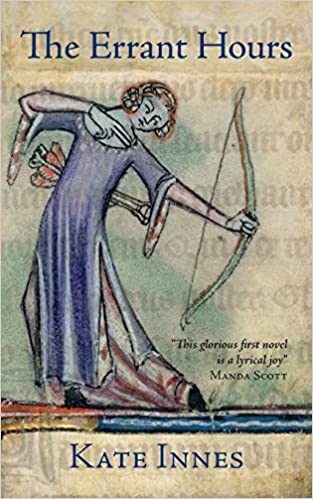



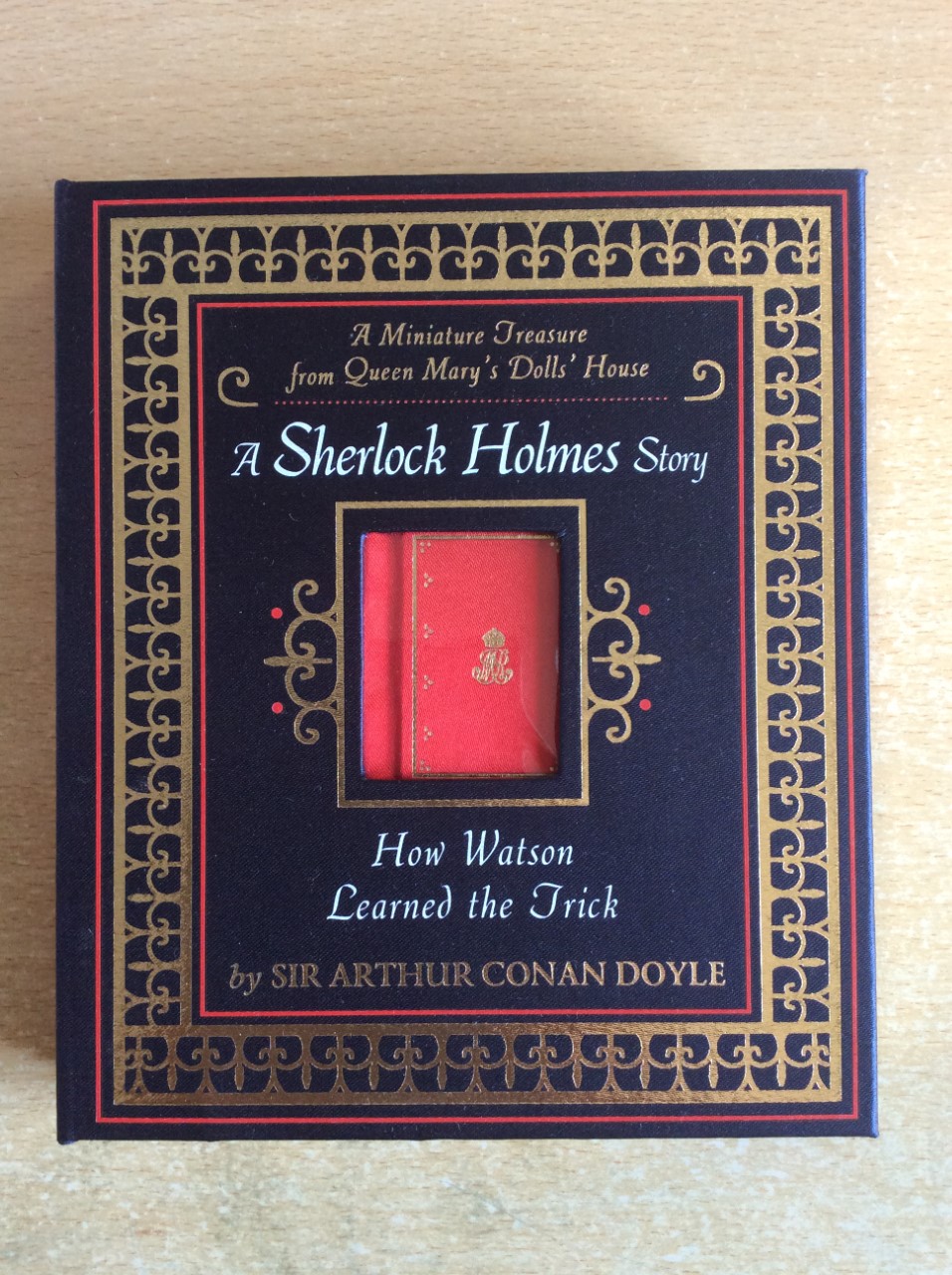
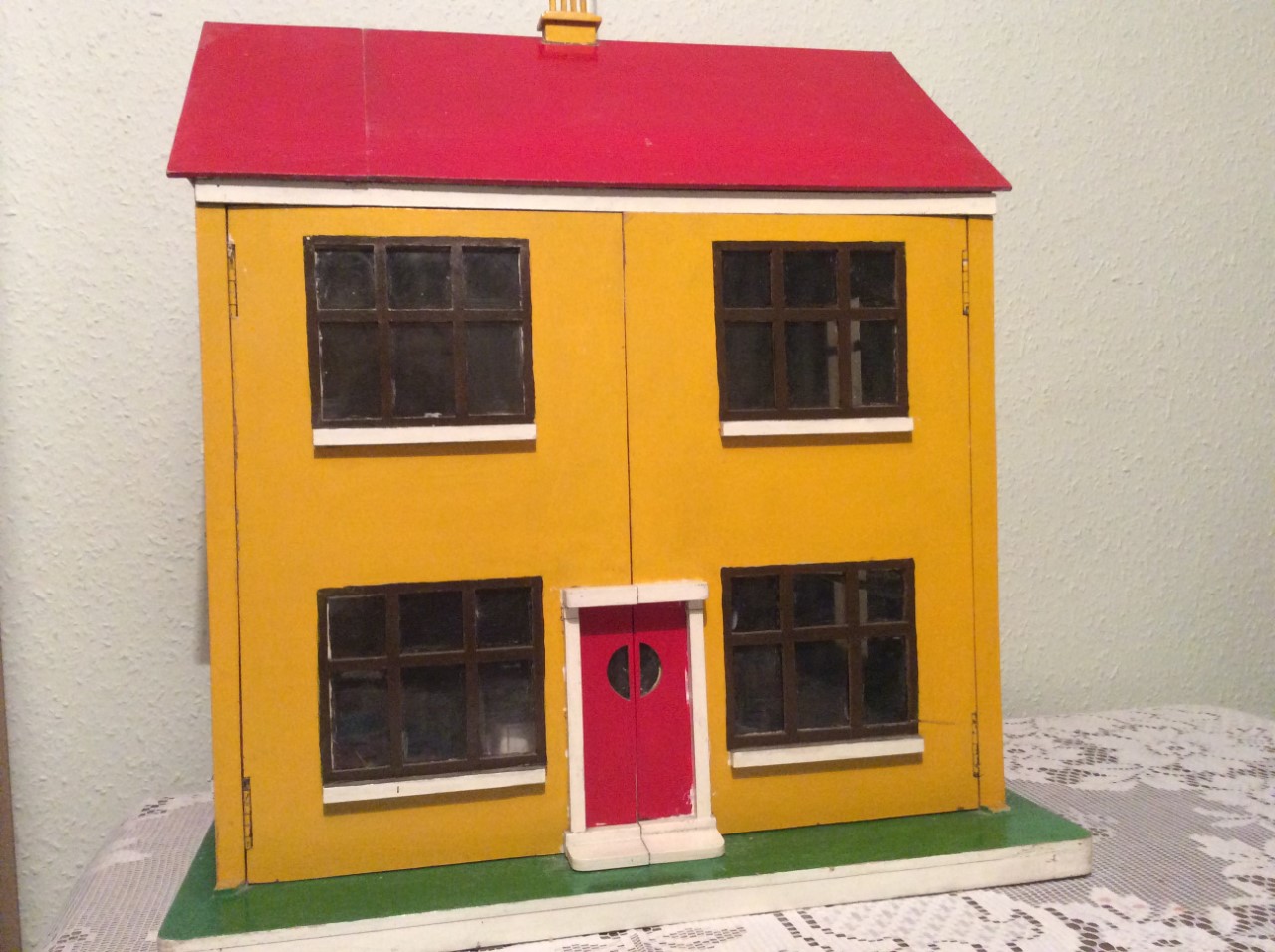
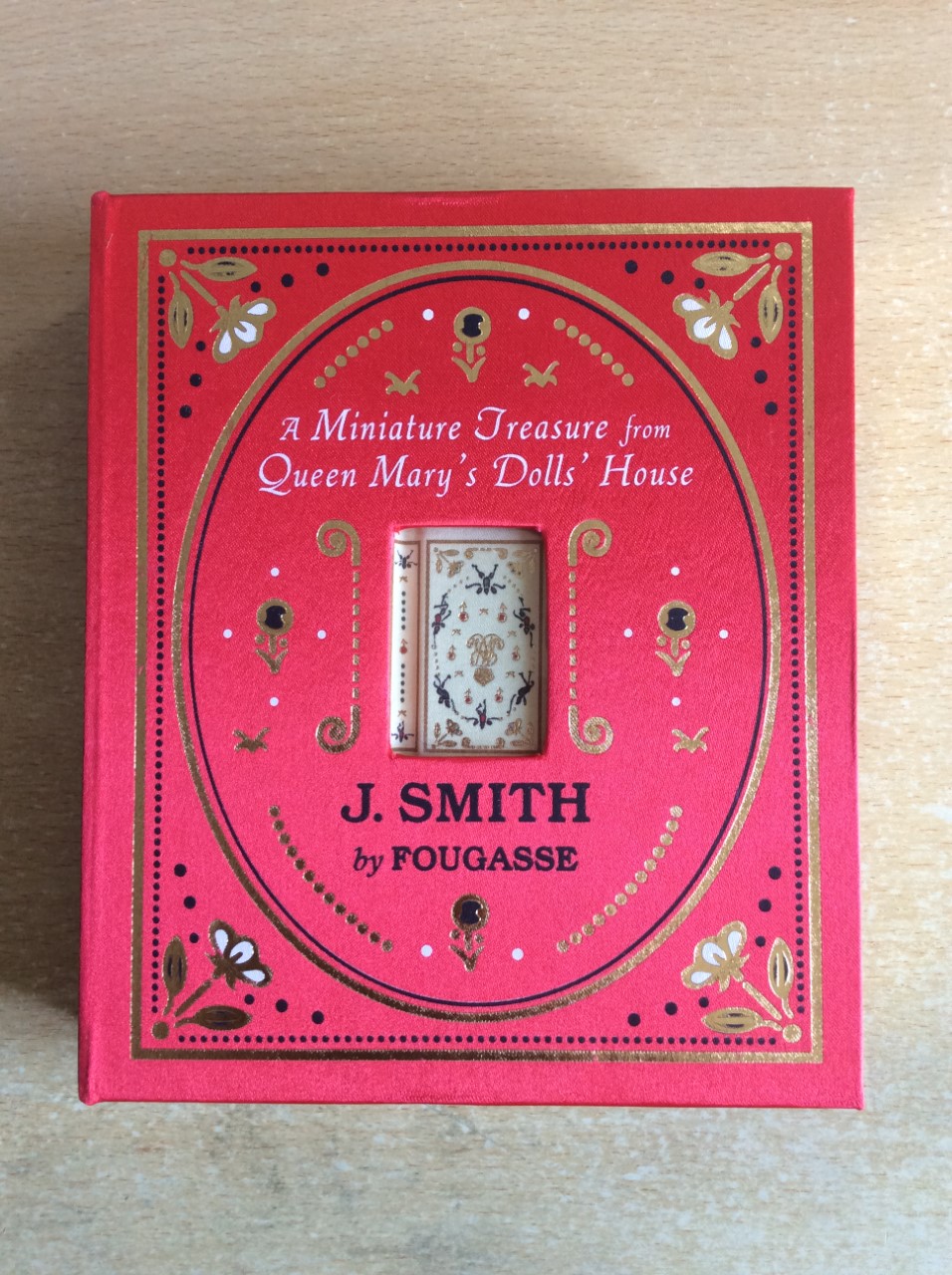
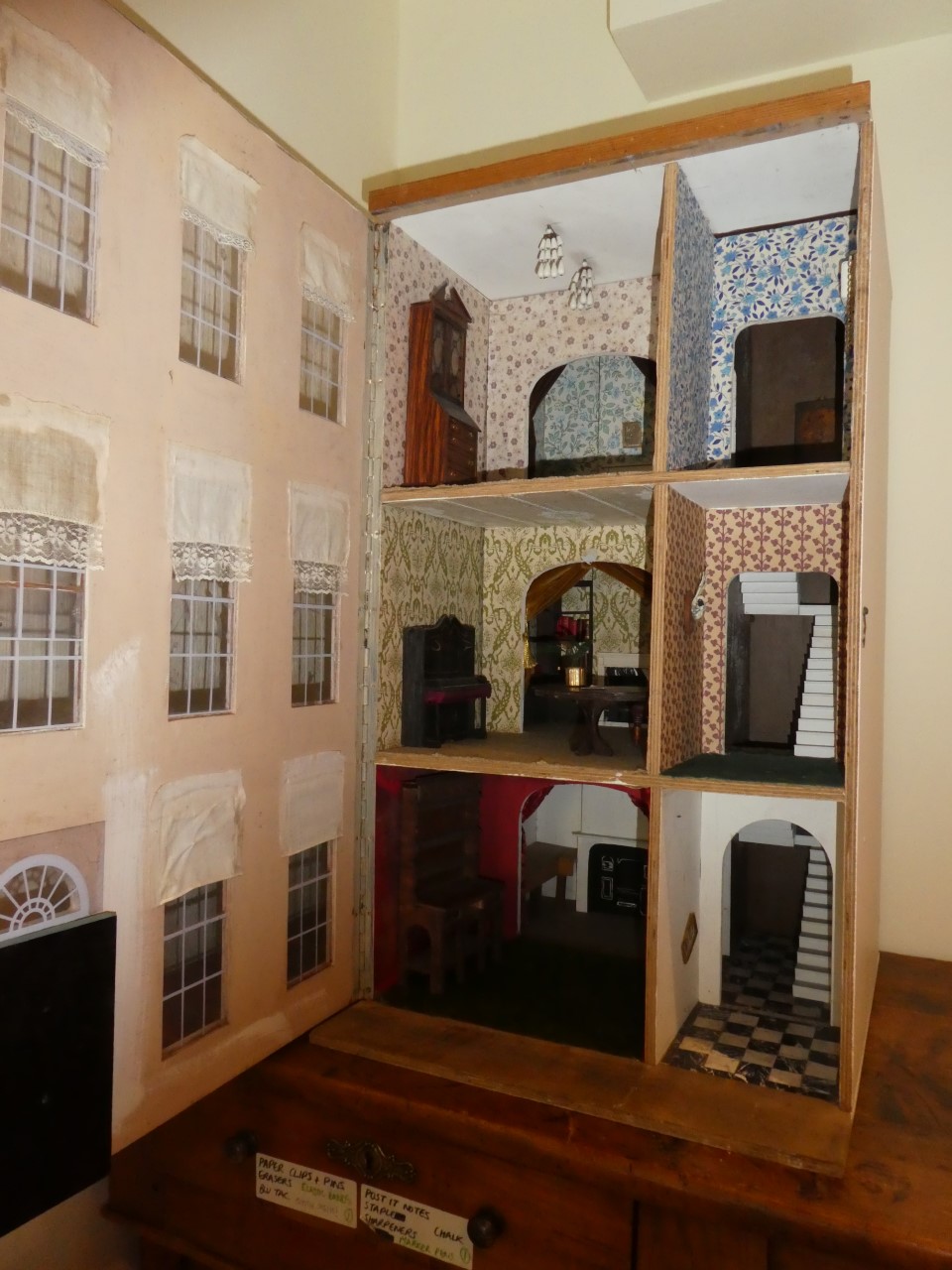
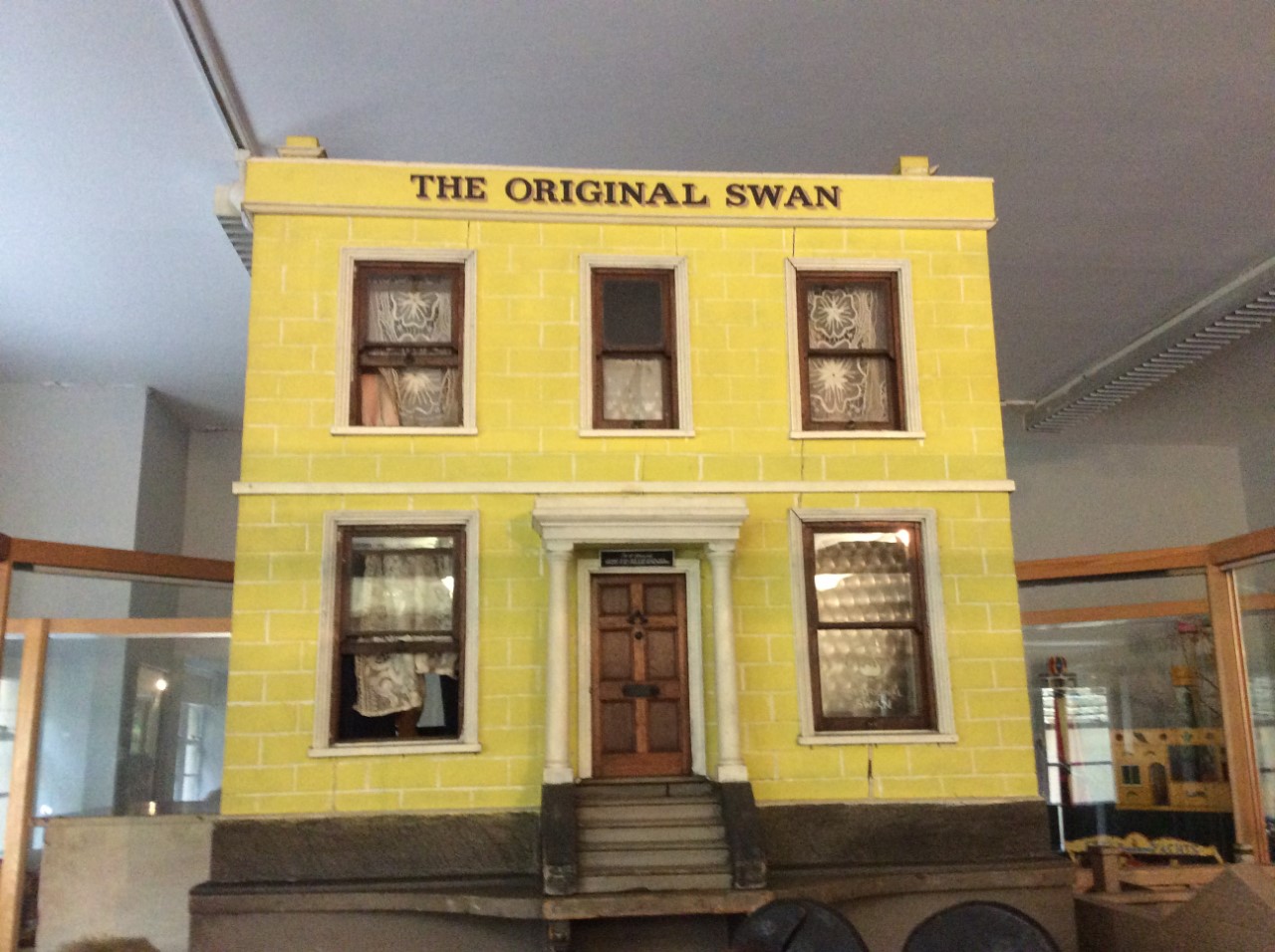
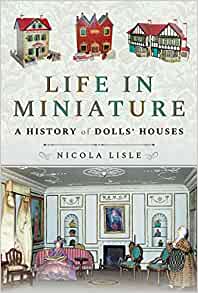
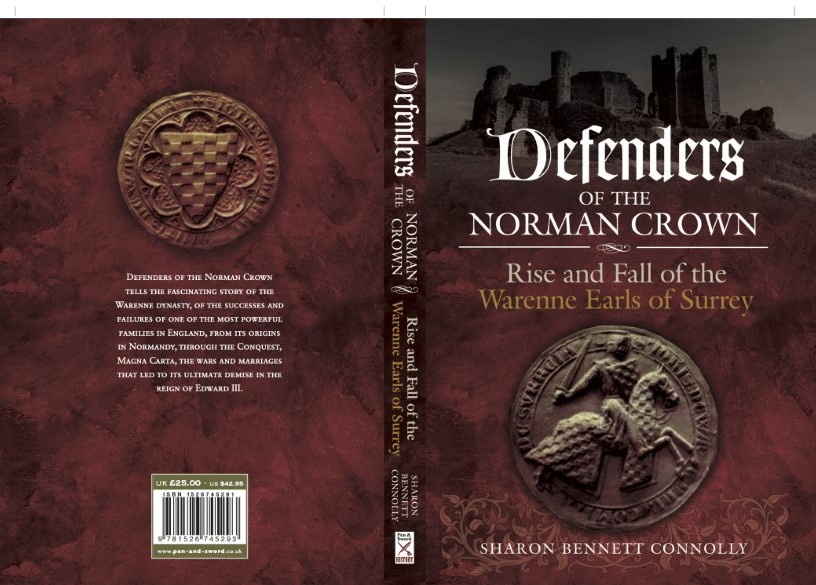
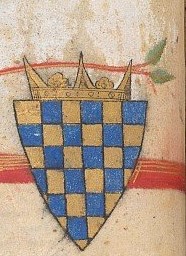
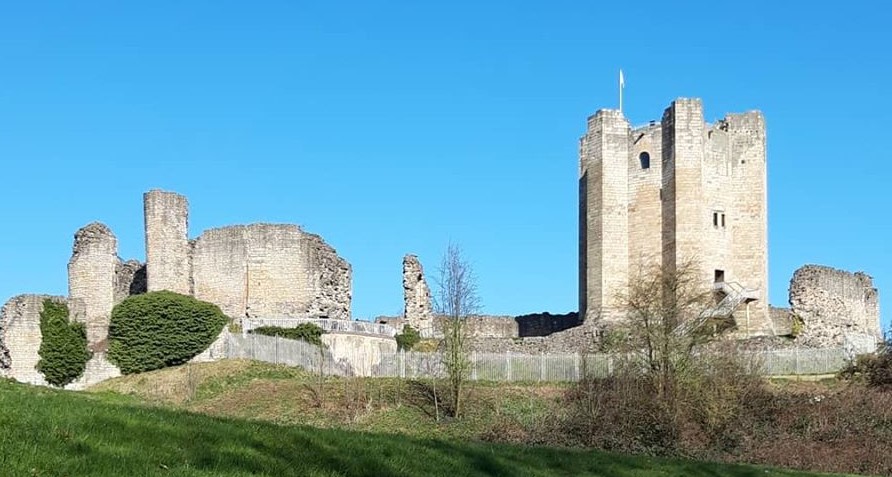
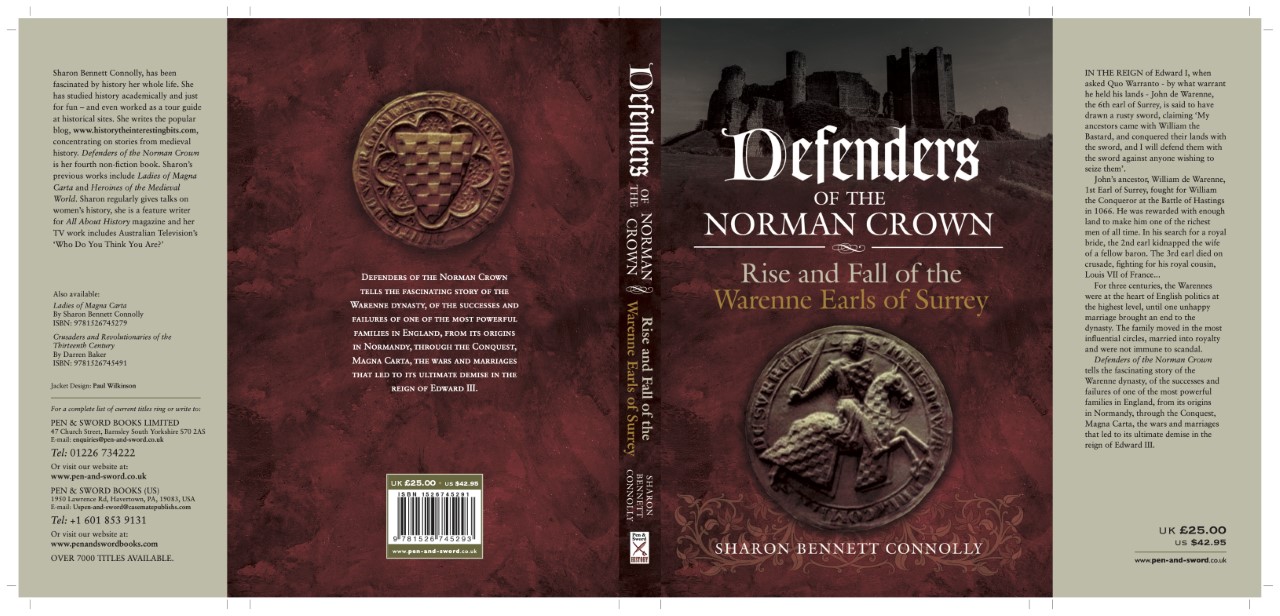


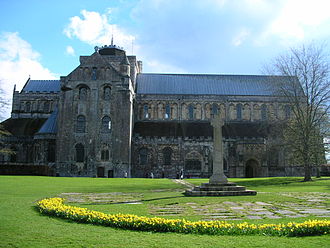

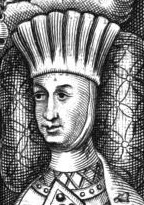





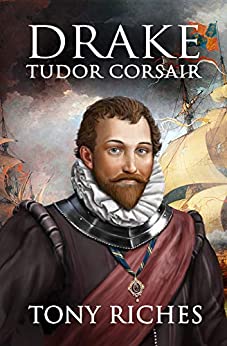

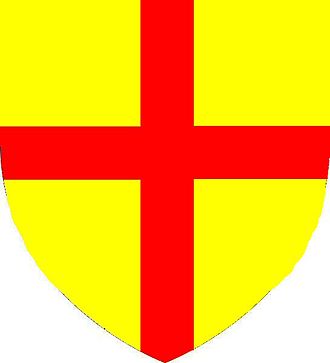
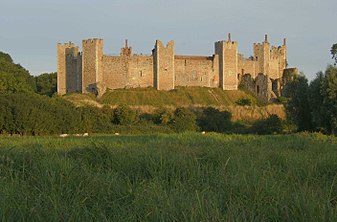
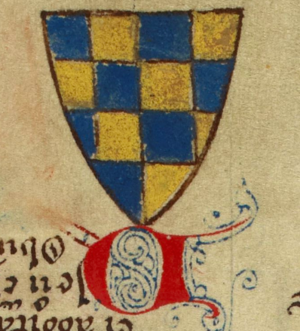
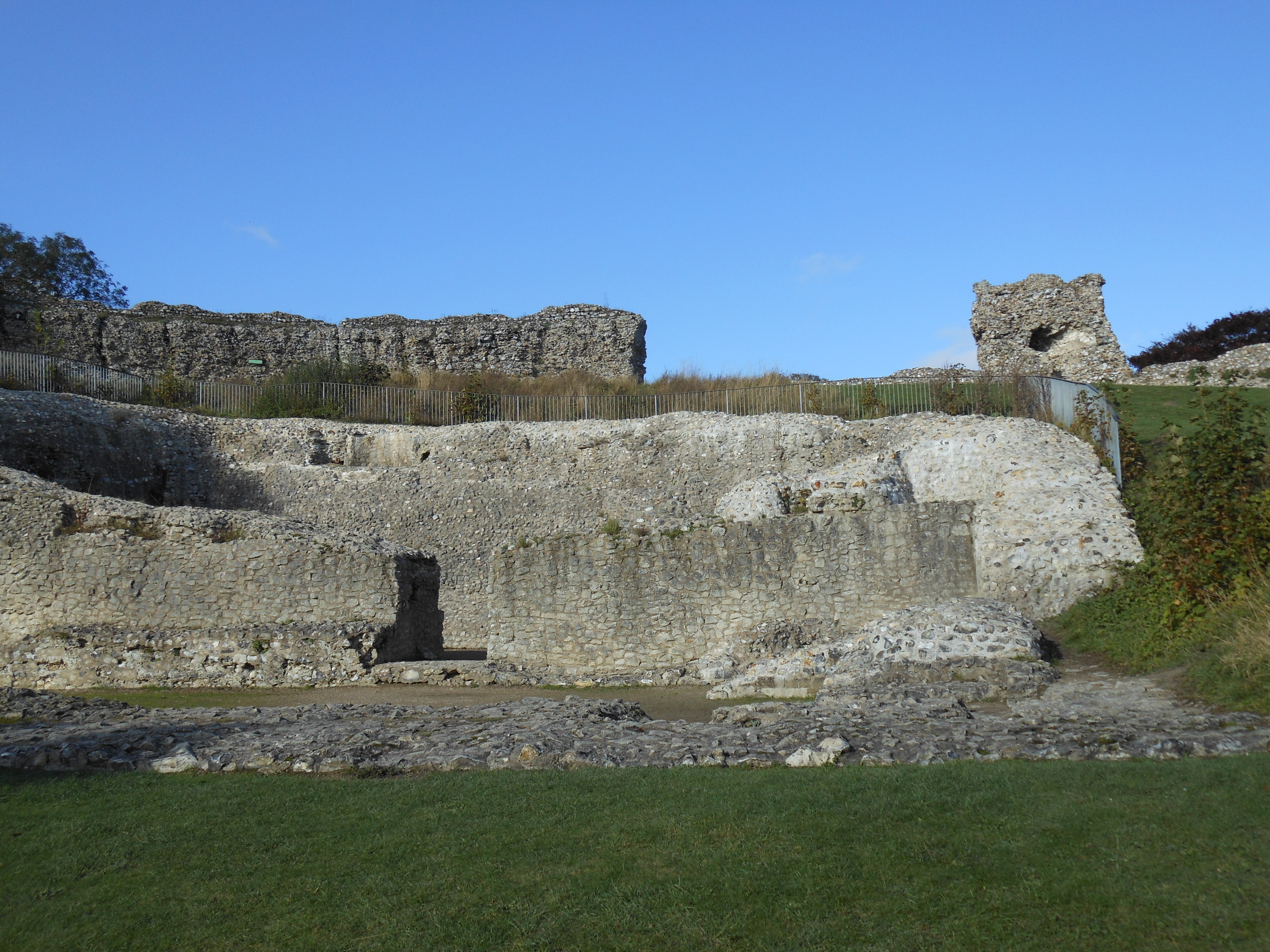

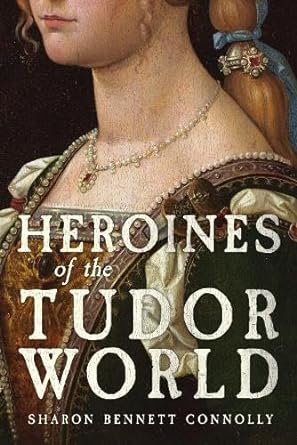

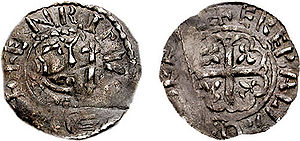


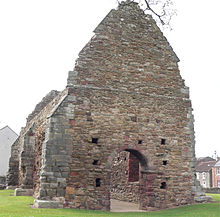
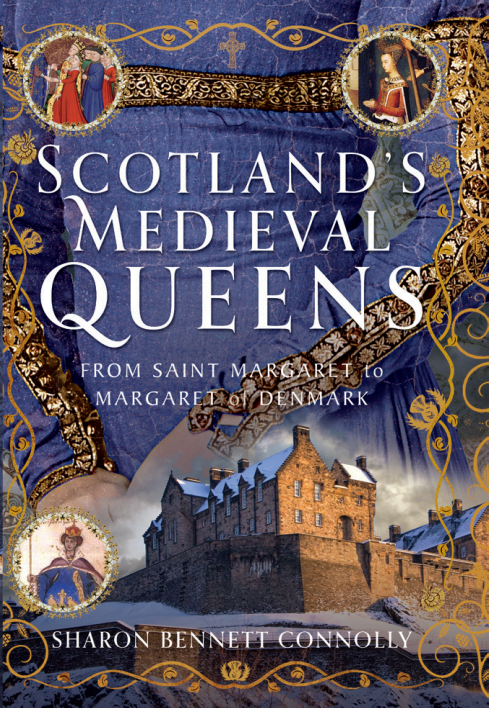
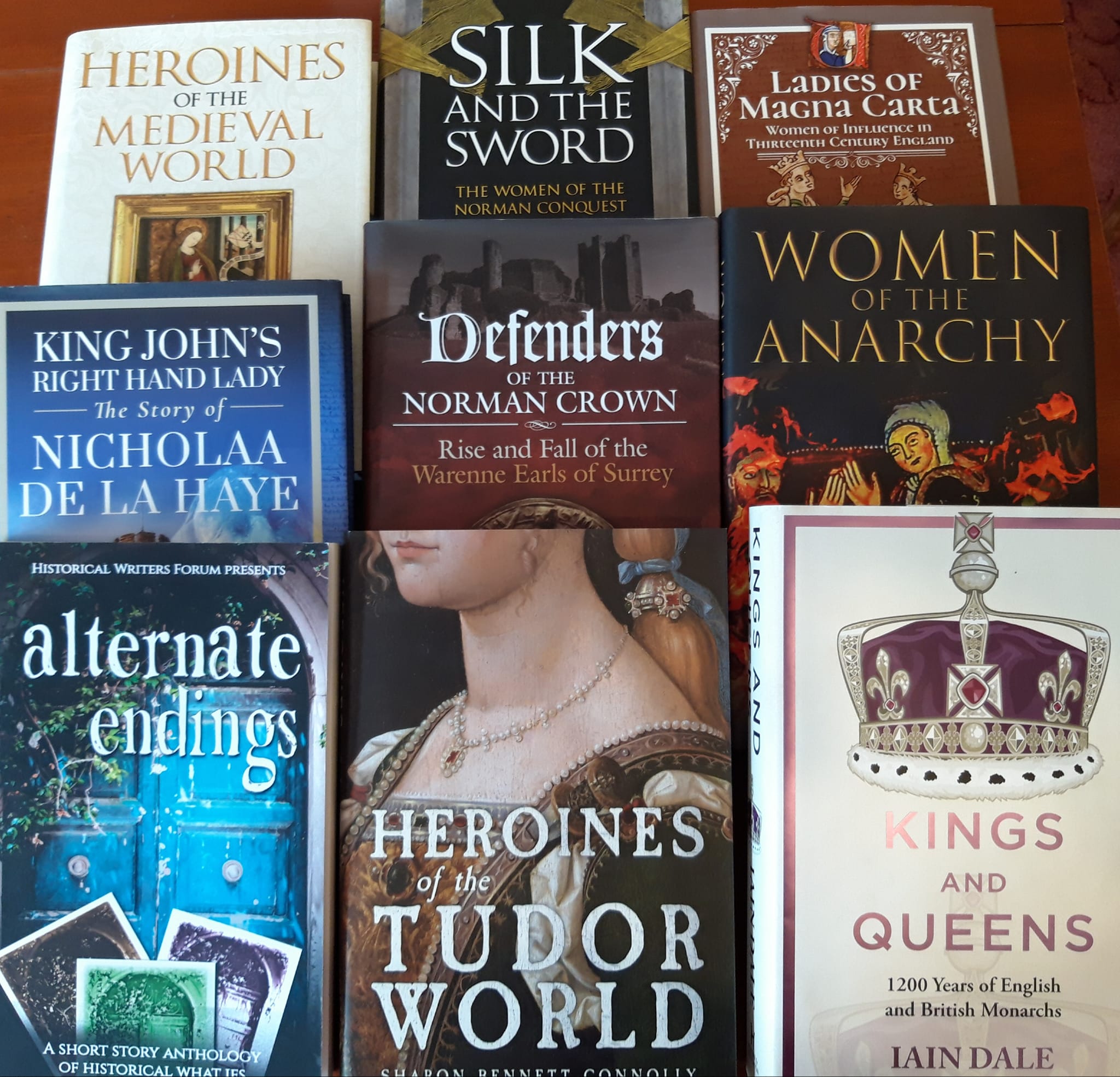
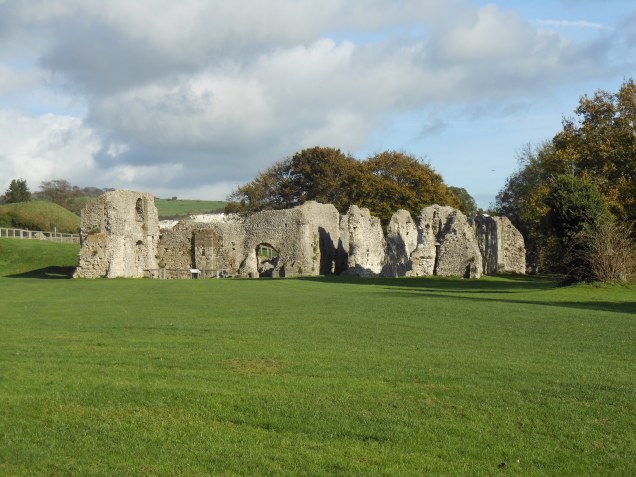
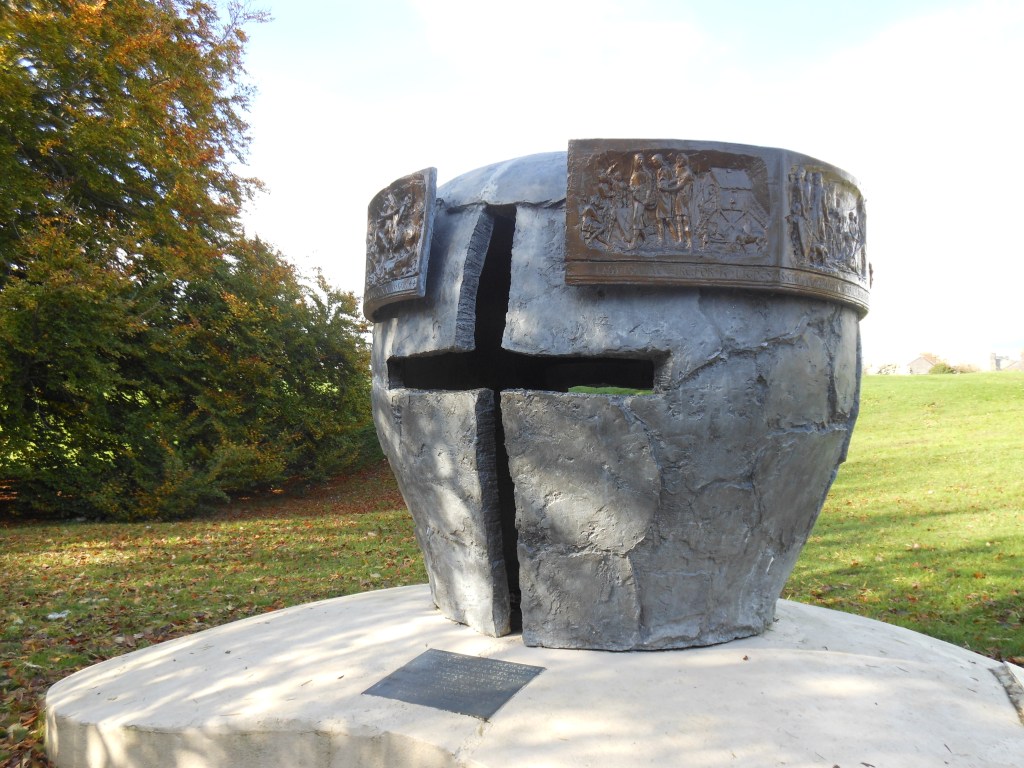

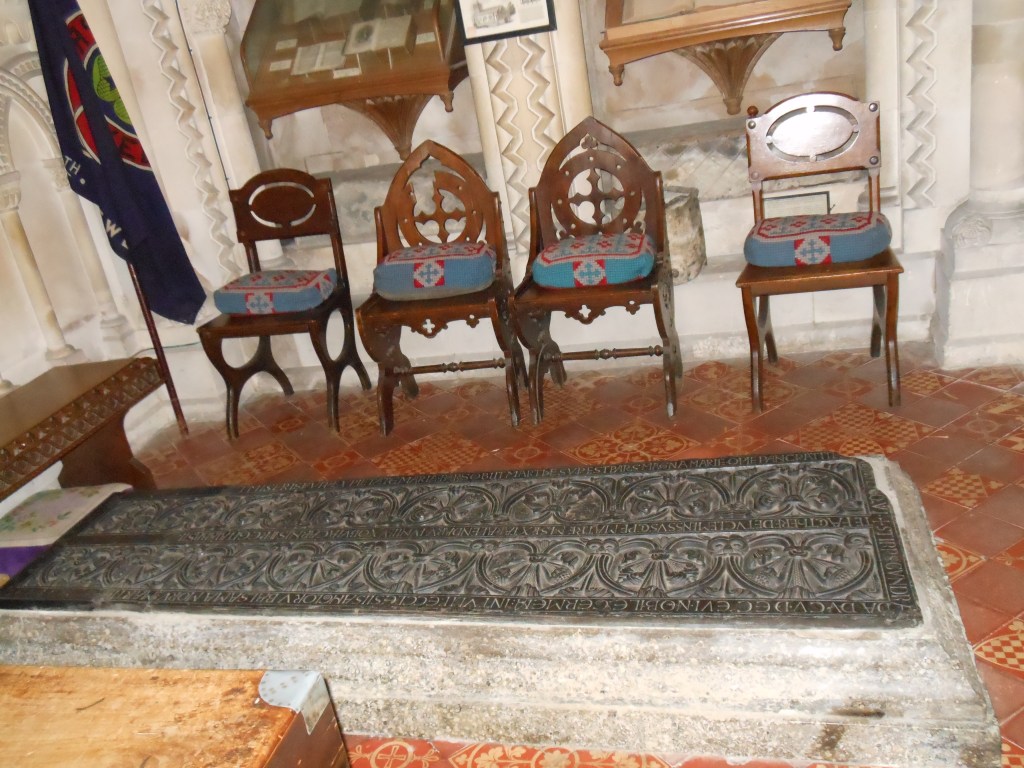
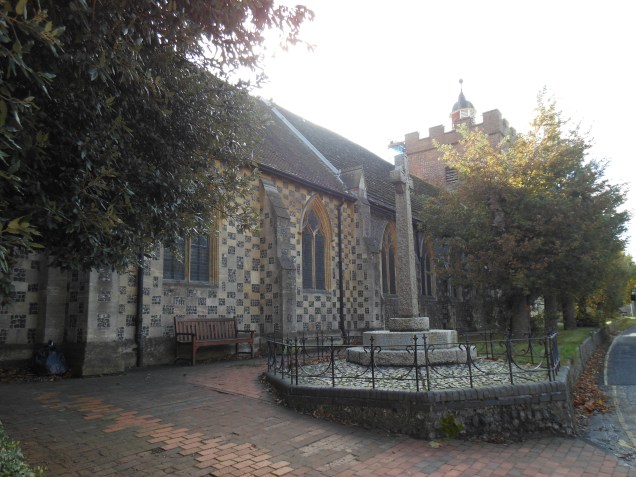
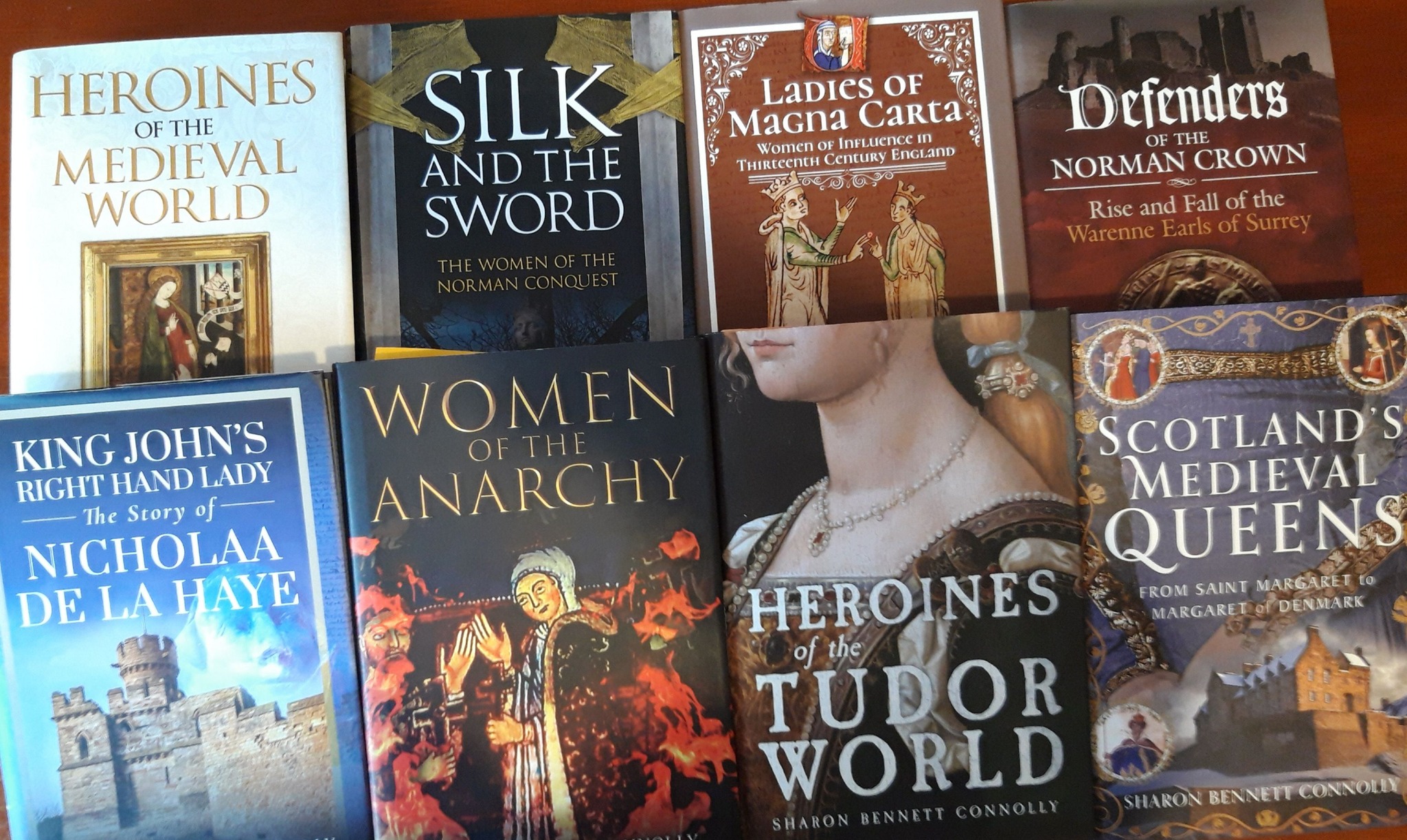
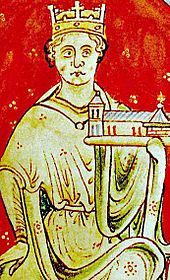

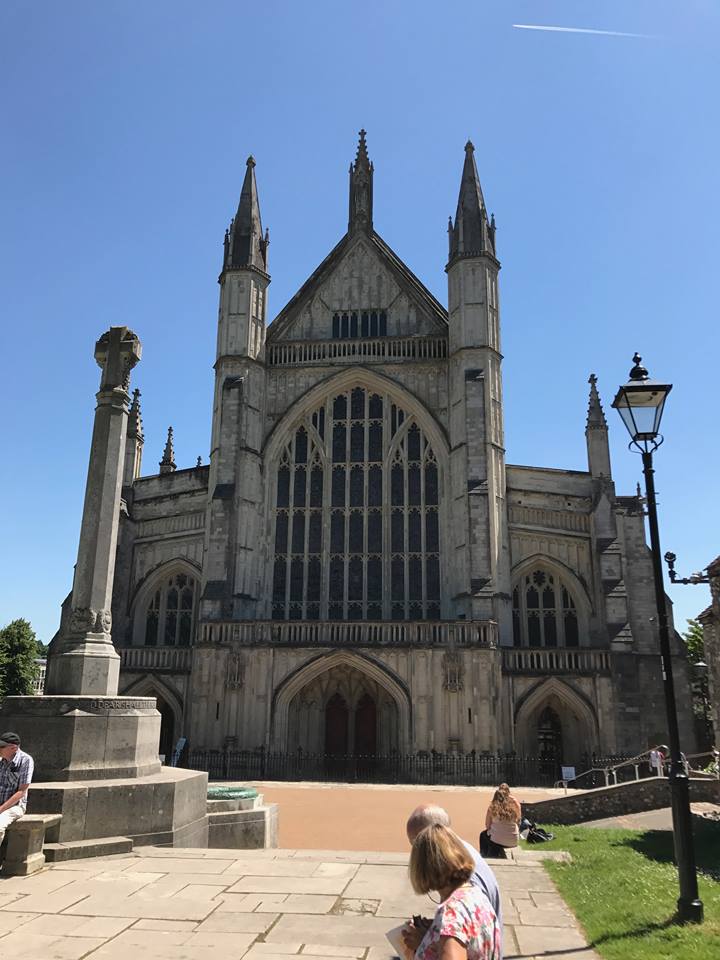
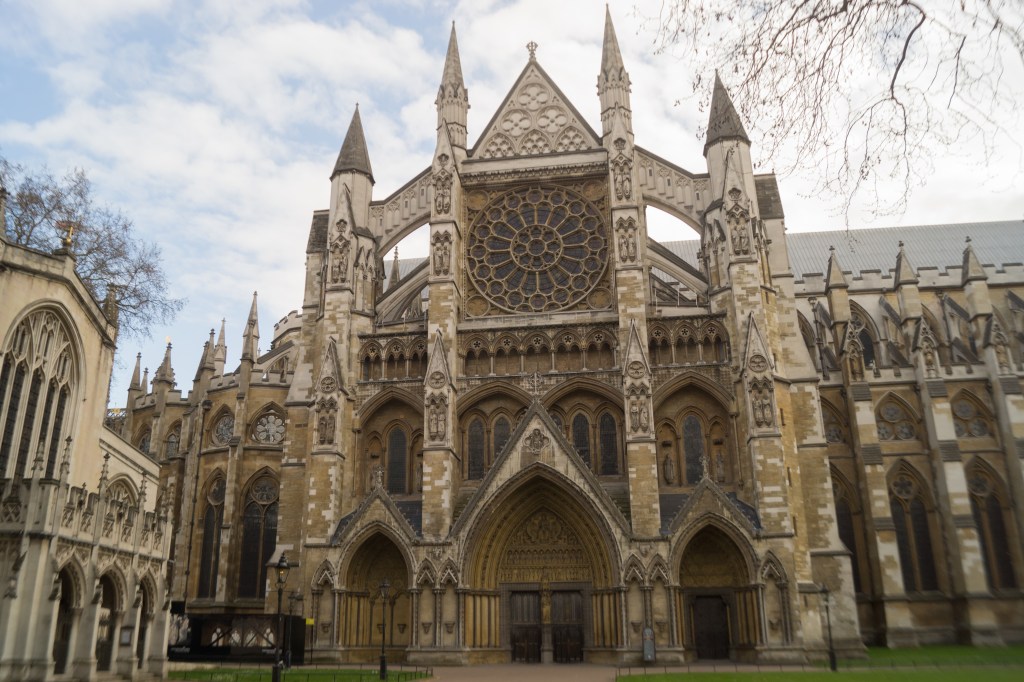


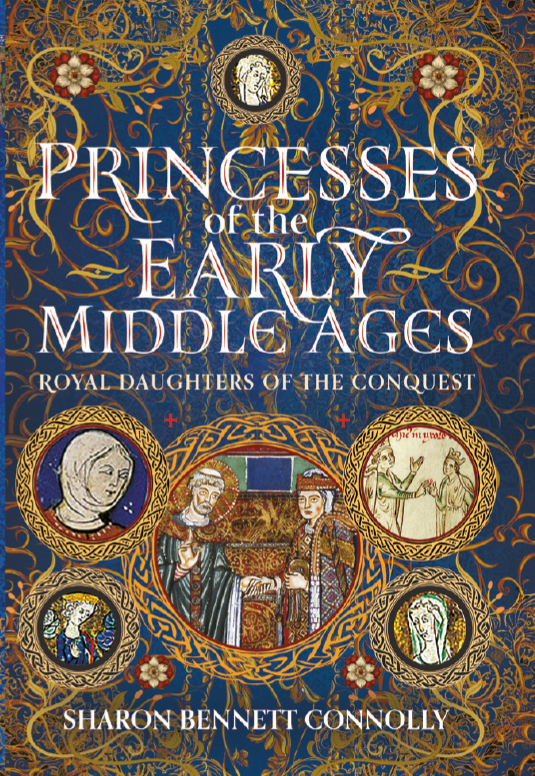
 History... the interesting bits!