Joan of Bar: Abandoned Wife

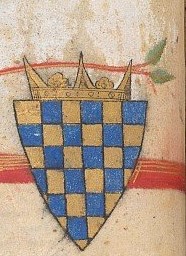
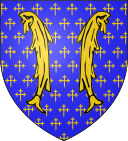
128px-Bar_Arms.svg
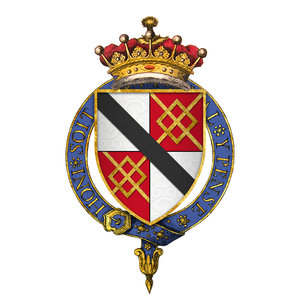
Arms of the House of Bar

You would think that a man who was given a king’s granddaughter as a wife would relish the glamour and connections such a bride brought. However, this was not always the case and nowhere is it more obvious than in the life and marriage of Joan of Bar.

Joan was the granddaughter of the mighty Edward I and his queen, Eleanor of Castile. Her mother was Eleanor, Edward and Eleanor’s eldest surviving child. Eleanor of England had been born in 1264 and was first married to Alfonso III, King of Aragon, by proxy on 15th August 1290 at Westminster Abbey.

However the groom died before the marriage could be consummated and Eleanor married again at Bristol on 20th September 1293, to Henry III, Count of Bar. Henry and Eleanor had at least 2 children together. Their son, Edward, and daughter, Joan, were born in successive years, in 1294 and 1295. Although there seems to be some confusion of who was the oldest. A possible 3rd child, Eleanor, is said to have married Llywelyn ap Owen of Deheubarth; but her actual existence seems to be in question.
Eleanor,_Countess_of_Bar
Eleanor of England, Countess of Bar

As usual with Medieval women – even royal ones – we  know very little of Joan’s childhood. Her mother died in Ghent in 1298 and was buried in Westminster Abbey, London. Joan’s father, the Count of Bar, died in 1302, sources say as a result of injuries received in battle while fighting in Sicily.

The count was succeeded by his only son, Edward, who was then only 6 or 7 years old. The county of Bar was run by his grandfather, Edward I, during young Edward’s minority, with the child’s uncle John of Puisaye and the bishops of Liege and Metz acting as governors. It’s possible the children came to live at the English court, or at least spent some time there.

By 1310 Edward’s majority was declared. He married Mary, daughter of Robert II, Duke of Burgundy, in the same year. By this time, young Joan had already been married 4 years. In 1306 Joan had returned to England, arriving on 13th April. Barely 10 years old, she was escorted to the palace at Westminster with great pomp.

During the parliament of 1306 Edward I had settled Joan’s future. On 15th May of that year Edward offered Joan’s hand in marriage to 20-year-old John de Warenne, 7th Earl of Surrey, who had recently been granted his grandfather’s lands, despite the fact he wasn’t yet 21.
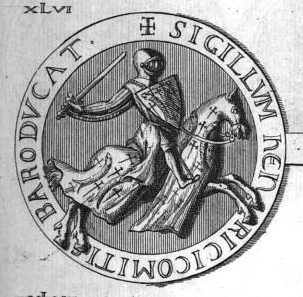
Henry_III,_Count_of_Bar
Henry III Count of Bar

John was not without royal connections himself. His aunt, Isabella had been married to Scots King John Balliol, and their son, John’s cousin, was Edward Balliol, sometime King of Scots and John’s ward. John was the grandson of Edward’s good friend, also named John de Warenne, the 6th Earl of Surrey and former Warden of Scotland. Young John’s father, William de Warenne, had died in a tournament within a year of John’s birth and so he was raised by his grandfather, until John Senior’s death in 1304.

In the week following the betrothal of John and Joan, Edward I held a magnificent ceremony for the knighting of his eldest son, Edward. The ceremony was also to include the knighting of almost 300 men, John de Warenne included. As the celebrations continued a number of weddings also took place, involving several barons and nobles.

John de Warenne and Joan of Bar were married on 25th May, with John’s sister, Alice, marrying Edmund Fitzalan, 9th Earl of Arundel, at about the same time. Edmund had been a ward of John’s grandfather. The 2 young men were very close in age and were political allies and friends.

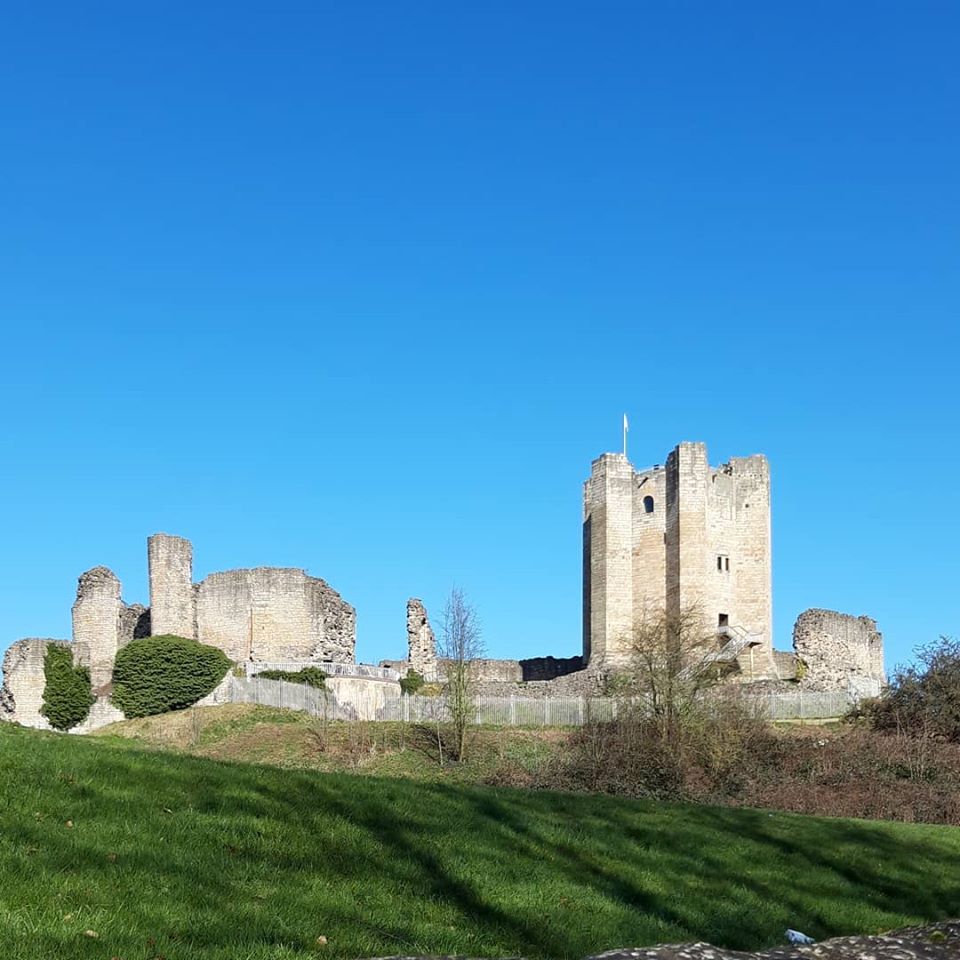
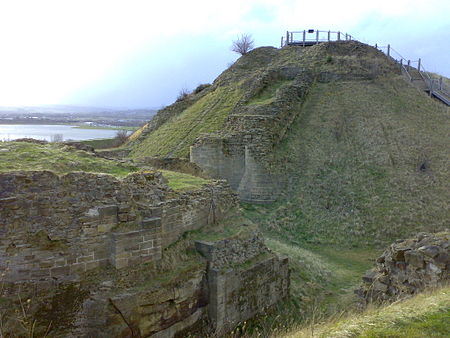
Following the wedding the couple lived on the Warenne Yorkshire estates, sharing their time between their castles at Conisbrough and Sandal.
450px-SandalCastleMotte
Sandal Castle

In the wider world, Edward I died in the summer of 1307 and was succeeded by his son, Edward II. Initially John de Warenne was a supporter of Edward; witnessing the charter which made Edward’s favourite, Piers Gaveston, Earl of Cornwall and accompanying the king to France to claim his bride, Isabella, daughter of Philip IV of France.

However, John was not immune to the turbulence and distrust of Edward’s reign and changed sides several times in the arguments between the king and his barons. The uncertainty of Edward’s reign cannot have helped the marriage of John and Joan, but neither, it seems, did John.

The couple was soon estranged – Joan was half John’s age when they married, which must have put an incredible strain on the relationship. There had been indications of problems as early as 1309, when the king had given John permission to name whoever he wished as his heir, as long as any children he may have by Joan were not disinherited.

By 1313 the marriage was still childless, and blatantly unhappy. In the spring of that year, Edward sent his yeoman, William Aune, to bring Joan to the king. She was taken from Warenne’s castle at Conisbrough and lodged in the Tower of London, at the king’s expense.

John, on the other hand, was living openly with his mistress, Maud Nereford, for which he was threatened with excommunication in May; a sentence which was finally carried out by the bishop of Chichester when Edward’s attempts to prevent it failed.
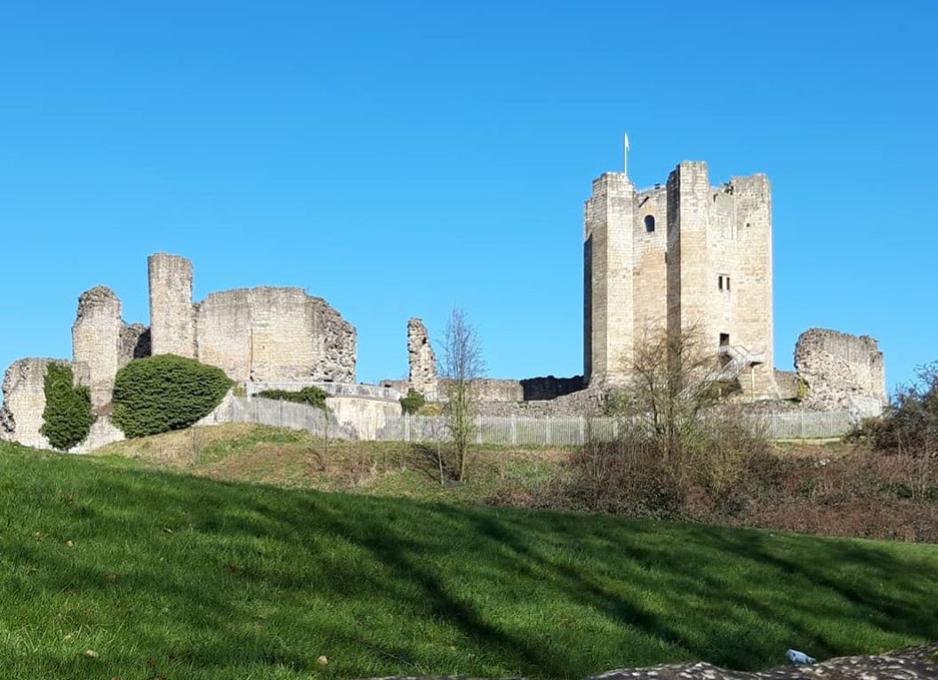
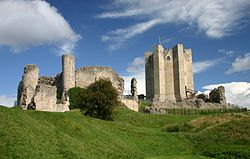
Conisbrough Castle

A long legal battle followed, eager to marry Maud and legitimise his 2 sons by her, John attempted to dissolve his marriage to Joan on the grounds of consanguinity – they were related in the 3rd and 4th degrees. He also claimed that he was pressured into marrying Joan against his will. Maud added her own suit to the legal proceeding by claiming that John had contracted to marry her before his marriage to Joan.

The church council registered disapproval of John and Maud’s relationship; as did a council of nobles which included the king’s cousin and most powerful nobleman in the land, Thomas of Lancaster. John had even been Thomas’s retainer in the early years of the king’s reign, but relations had soured following the murder of Gaveston in 1312.

The case would drag on for 2 years, with John unable to find a friendly ecclesiastical court who would pronounce in his favour.  In 1316 he agreed to pay Joan a sum of £200 annually while the suit was ongoing, and to provide Joan with lands worth 740 marks once the marriage was dissolved.

As the hopes of an annulment faded, John enlisted the help of the earl of Pembroke in presenting a petition to the pope seeking an annulment. John also rearranged his estates, surrendering them to the  king to have them re-granted with specifications that some of the lands could pass to his sons be Maud Nereford on his death. In the mean time, in August 1316, Joan had left England for France.
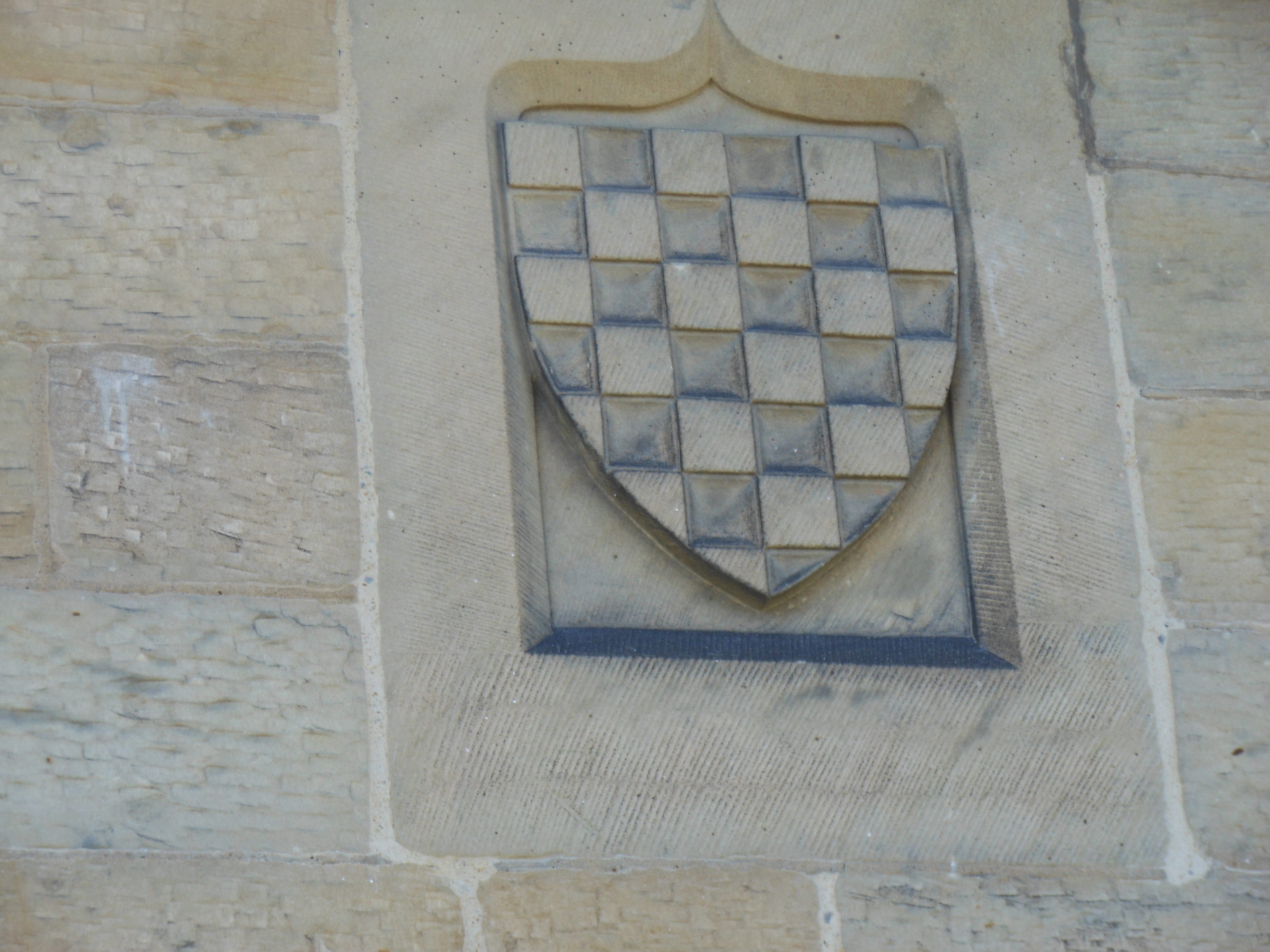
Arms of the de Warenne Earls of Surrey

While the troubles in England intensified, John’s marriage troubles seem to have abated somewhat. The rebellion of Thomas of Lancaster was crushed at the Battle of Boroughbridge in 1322, but war simmered on with France adding to the king’s troubles by demanding he personally pay homage for his French lands. In 1325 John de Warenne was appointed captain of an English expedition to Aquitaine and was away from home for the next year.

Joan had been in France at the same time, spending some of her time with Edward II’s queen, Isabella, and eldest son Prince Edward. Some sources say that when Warenne returned to England in 1326, Joan accompanied him and they even received permission to go abroad in February 1327 – as a couple.

Following the downfall of Edward II, his son and the new king, Edward III, in gratitude for her service to his mother, Queen Isabella, settled lands on Joan for life, and granted her some of the goods forfeited by Edmund Fitzalan. John’s erstwhile brother-in-law had been caught up in the turbulence of Edward II’s downfall and executed.

John de Warenne proved a faithful servant to Edward III, acting as keeper of the realm, jointly with young prince Edward, during the king’s absences in 1338 and 1340. However, his domestic life was as unsettled as ever in the last years of his life. Joan was in his company and treated as his wife in the years between 1331 and 1337, but went abroad with her entire household in 1337 shortly after her brother’s death; Edward, Count of Bar, had died in a shipwreck on his way to the Crusades and its possible Joan was acting as regent for her nephew, Henry IV, Count of Bar.

By the 1340s Maud Nereford and her sons had predeceased him, but John had a new lover in Isabella Holland, daughter of Sir Robert Holland, a leading retainer of Thomas of Lancaster. And it seems he was again contemplating divorce. In a 1344 letter from the Bishop of Winchester charges him to hold Joan in marital affection and honour the dispensation that had been granted for his marriage.
Tour_de_l'Horloge21
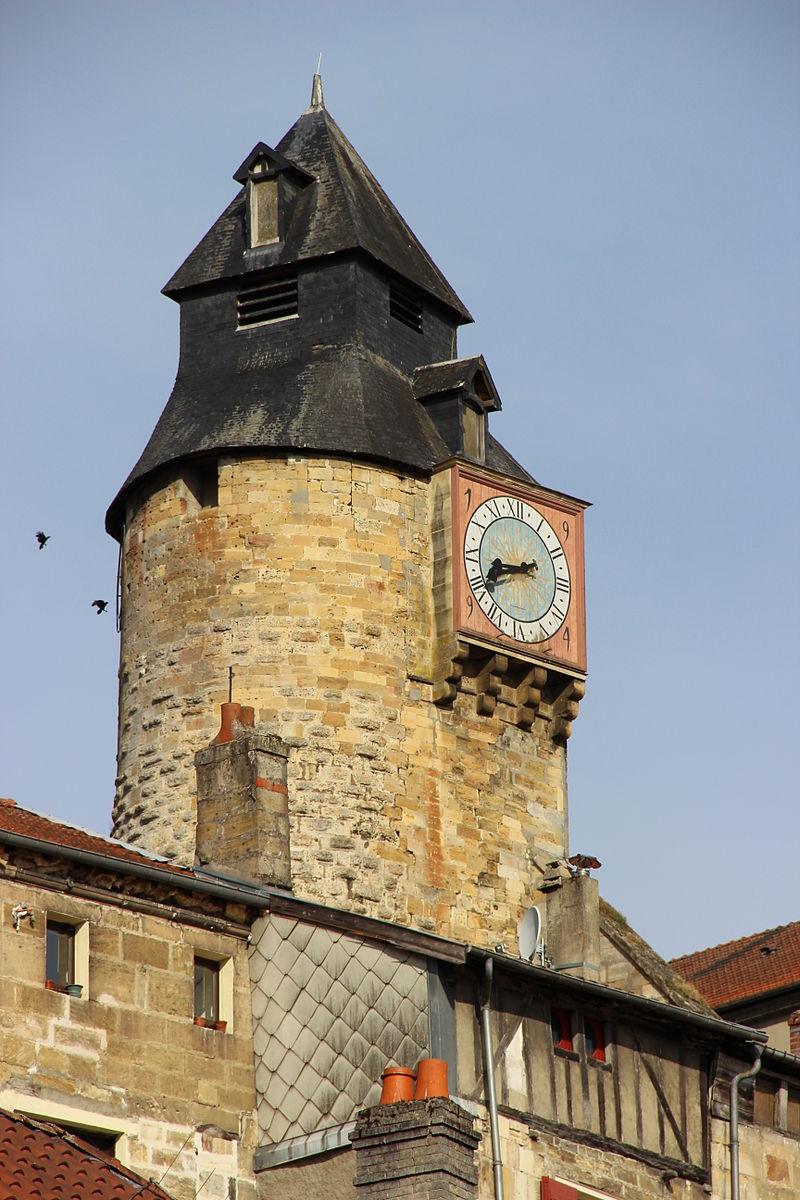
Clock Tower, Bar

Joan was abroad again, possibly acting as regent for her great-nephew, Edward II Count of Bar. Amid fears that John de Warenne would try to take Joan’s lands Edward III acted to guarantee them in her absence. By 1345, in one final attempt to dissolve his marriage John was claiming that he had had an affair before marrying Joan, with his wife’s maternal aunt Mary of Woodstock. This was indeed a drastic claim, as Mary had been a nun since she was about 7 years old, and was probably born out of desperation; John was getting increasingly infirm and still had no heir to succeed him. It was a last-ditch attempt to marry Isabella and have legitimate children.

It failed, however, and John died at Conisbrough Castle between 28th and 30th June 1347, aged 61. His will, written just before his death and dated 24th June 1347, left various gifts to Isabella and his illegitimate children – but nothing to Joan, his wife. Warenne left several illegitimate children, including at least 3 boys and 3 girls.

Joan de Bar was abroad when her husband died. She lived for another 14 years, retaining the title of Countess of Surrey until her death; Richard Fitzalan, John’s heir, took possession of the Warenne estates on John’s death, but didn’t use the title earl of Surrey until after Joan died. In the 1350s Joan is said to have often visited the French king, Jean II, who was a prisoner of Edward III  in London.

After a long and turbulent life, and at around 66 years of age, Joan died in London in 1361. Her body was conducted to France by her valet. She was buried at Sainte-Maxe Collegiate Church in Bar-le-Duc in October 1361.

*

Pictures courtesy of Wikipedia except Consibrough Castle and the Warenne arms which are ©2025 Sharon Bennett Connolly FRHistS

*

Sources: The Oxford Companion to British History Edited by John Cannon; The Plantagenets, the Kings who Made England by Dan Jones; History Today Companion to British History Edited by Juliet Gardiner and Neil Wenborn;  Brewer’s British Royalty by David Williamson; Britain’s Royal Families, the Complete Genealogy by Alison Weir; Early Yorkshire Charters Volume 8, Edited by William Farrer and Charles Travis Clay; Conisbrough Castle by Steven Brindle and Agnieszka Sadraei; The Mammoth Book of British Kings and Queens by Mike Ashley; The Plantagenets, the Kings that made Britain by Derek Wilson; oxforddnb.com; royaldescent.net.

*

My Books

Signed, dedicated copies of all my books are available through my online store.

Out now: Scotland’s Medieval Queens

Scotland’s history is dramatic, violent and bloody. Being England’s northern neighbour has never been easy. Scotland’s queens have had to deal with war, murder, imprisonment, political rivalries and open betrayal. They have loved and lost, raised kings and queens, ruled and died for Scotland. From St Margaret, who became one of the patron saints of Scotland, to Elizabeth de Burgh and the dramatic story of the Scottish Wars of Independence, to the love story and tragedy of Joan Beaufort, to Margaret of Denmark and the dawn of the Renaissance, Scotland’s Medieval Queens have seen it all. This is the story of Scotland through their eyes.

Scotland’s Medieval Queens gives a thorough grounding in the history of the women who ruled Scotland at the side of its kings, often in the shadows, but just as interesting in their lives beyond the spotlight. It’s not a subject that has been widely covered, and Sharon is a pioneer in bringing that information into accessible history.’ Elizabeth Chadwick (New York Times bestselling author)

Available now from Amazon and Pen and Sword Books

Also by Sharon Bennett Connolly:
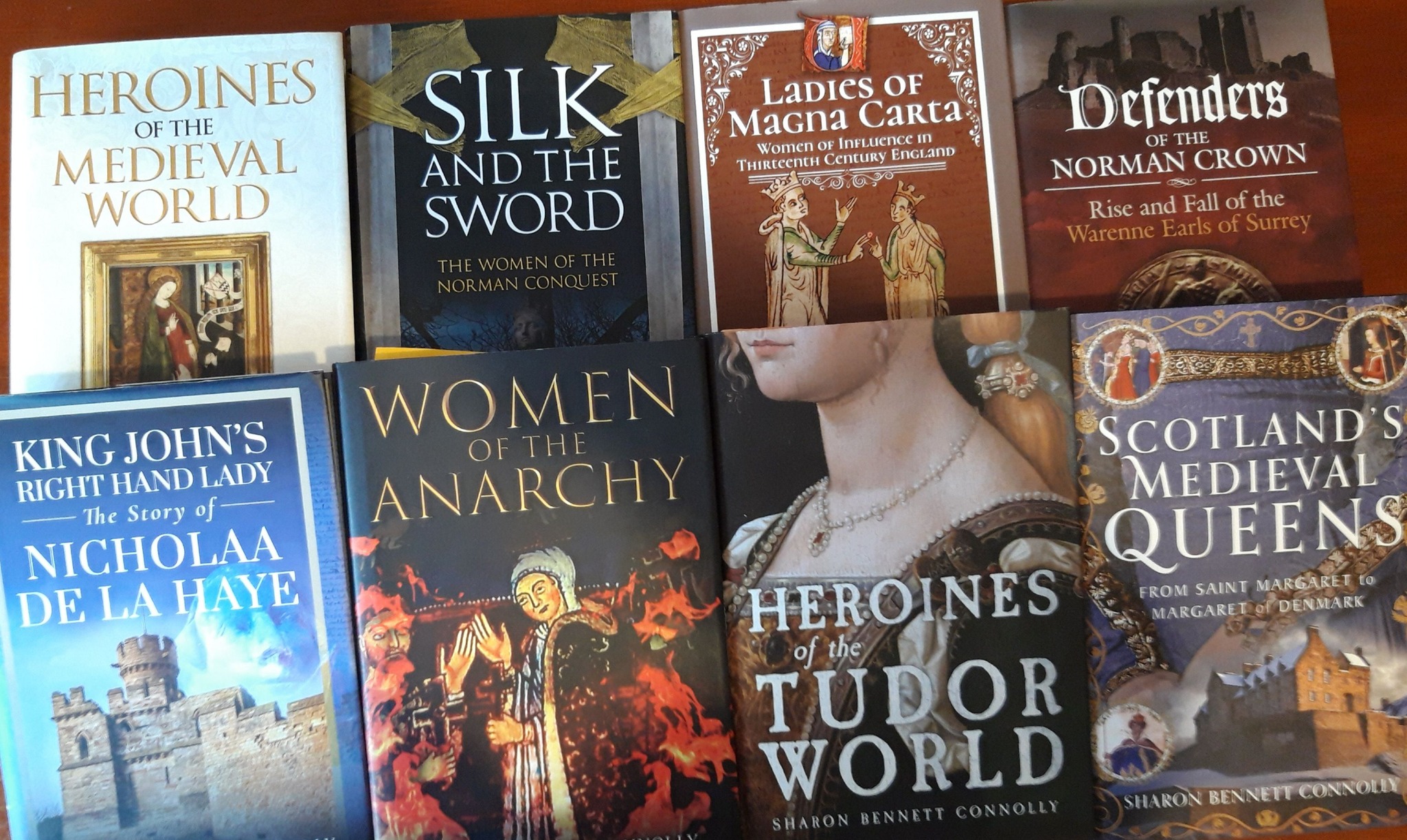
Heroines of the Tudor World tells the stories of the most remarkable women from European history in the time of the Tudor dynasty, 1485-1603. These are the women who ruled, the women who founded dynasties, the women who fought for religious freedom, their families and love. Heroines of the Tudor World is now available from Amberley Publishing and Amazon UK. Women of the Anarchy demonstrates how Empress Matilda and Matilda of Boulogne, unable to wield a sword themselves, were prime movers in this time of conflict and lawlessness. It shows how their strengths, weaknesses, and personal ambitions swung the fortunes of war one way – and then the other. Available from Bookshop.orgAmberley Publishing and Amazon UKKing John’s Right-Hand Lady: The Story of Nicholaa de la Haye is the story of a truly remarkable lady, the hereditary constable of Lincoln Castle and the first woman in England to be appointed sheriff in her own right. Available from all good bookshops Pen & Sword Booksbookshop.org and Amazon

Defenders of the Norman Crown: The Rise and Fall of the Warenne Earls of Surrey tells the fascinating story of the Warenne dynasty, from its origins in Normandy, through the Conquest, Magna Carta, the wars and marriages that led to its ultimate demise in the reign of Edward III. Available from Pen & Sword BooksAmazon in the UK and US, and Bookshop.orgLadies of Magna Carta: Women of Influence in Thirteenth Century England looks into the relationships of the various noble families of the 13th century, and how they were affected by the Barons’ Wars, Magna Carta and its aftermath; the bonds that were formed and those that were broken. It is now available in paperback and hardback from Pen & SwordAmazon, and Bookshop.orgHeroines of the Medieval World tells the stories of some of the most remarkable women from Medieval history, from Eleanor of Aquitaine to Julian of Norwich. Available now from Amberley Publishing and Amazon, and Bookshop.orgSilk and the Sword: The Women of the Norman Conquest traces the fortunes of the women who had a significant role to play in the momentous events of 1066. Available now from Amazon,  Amberley Publishing, and Bookshop.org.

Alternate Endings: An anthology of historical fiction short stories including Long Live the King… which is my take what might have happened had King John not died in October 1216. Available in paperback and kindle from Amazon.

Podcast:

Have a listen to the A Slice of Medieval podcast, which I co-host with Historical fiction novelist Derek Birks. Derek and I welcome guests, such as Bernard Cornwell and Michael Jecks, and discuss a wide range of topics in medieval history, from significant events to the personalities involved. Every episode is also now available on YouTube.

*

Don’t forget! Signed and dedicated copies of all my books are available through my online store.

For forthcoming online and in-person talks, please check out my Events Page.

You can be the first to read new articles by clicking the ‘Follow’ button, liking our Facebook page or joining me on TwitterThreadsBluesky and Instagram.

*

©2016 Sharon Bennett Connolly FRHistS
Constance of York, the Rebel Countess

History...the Interesting Bits
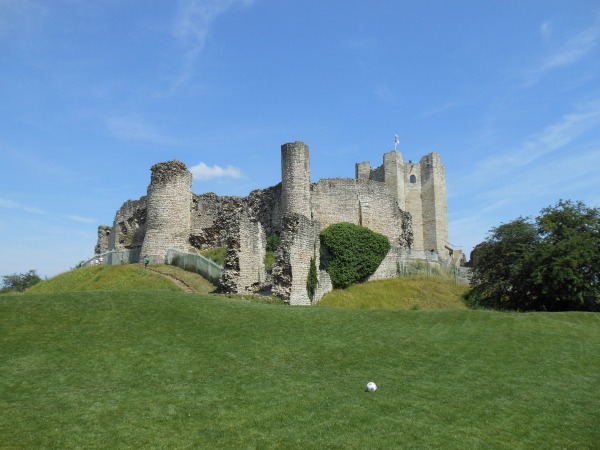
Conisbrough Castle, possible birthplace of Constance of York

Constance of York was born around 1374, possibly at Conisbrough Castle in Yorkshire (although that is far from certain). She was the second of 3 children born to Edmund of Langley, Duke of York and 5th son of Edward III, and his wife, Isabella of Castile. Edmund and Isabella also had 2 boys, Edward of Norwich in around 1373 and Richard of Conisbrough, who is thought to have been born around 1375/6, but could have been born as late as the early 1380s.

Near-contemporary sources suggest that Edmund and Isabella were an ill-matched pair and their relationship was a rocky one, with Isabella accused of having an affair with John Holland, Duke of Exeter and half-brother to Richard II. Holland has also been suggested as the father of Isabella’s youngest son, Richard. However, recent research into contemporary records contradicts this image.

Constance’s childhood was short-lived. At the age of 4, in April 1378, she was betrothed to Edward le Despenser. However, young Edward appears to have died shortly after the betrothal as by November 1379 Constance was married to his only surviving, younger brother, Thomas, who was about 6 at the time.

Isabella_of_Castile-Langley
Isabella of Castile, Constance’s mother

It is highly likely that 4-year-old Constance remained in her parents’ household for several years after her marriage, although she may have spent time also in the household of her mother-in-law, who retained wardship of young Thomas despite her husband’s death.

Thomas le Despenser was a great-grandson of the infamous Hugh le Despenser the Younger, despised favourite and alleged lover of Edward II, who was executed on a 50-foot high gallows in 1326. The marriage was seen as a good match on both sides: the Despenser family had a considerable fortune and were among the 12 richest families in the country, while Constance was a granddaughter of Edward III. Her hand in marriage completed the rehabilitation of the Despenser family.

In 1386, at just 12-years-old Constance was made a Lady of the Garter by her cousin, Richard II; she was one of the youngest ever recipients of the award. In 1392 Constance’s mother died and the following year her father re-married. His new bride was about 6 years younger than Constance and was a niece to Richard II; Joan Holland was the daughter of Thomas Holland, 2nd earl of Kent and granddaughter of Joan of Kent, Princess of Wales. In a bizarre twist, she was also the niece of John Holland, 1st Duke of Exeter, the late Duchess of York’s alleged lover.

Thomas, meanwhile, was learning his trade as a soldier. He served with Richard II in Scotland in 1385, probably as a page or squire, given his tender years. In 1388 he was knighted by the Earl of Arundel, following his involvement in a naval expedition against the French. In 1391 Thomas travelled to Prussia to join the “crusade” against the Lithuanians.

It seems likely that, by 1394 with Thomas back in England, Thomas and Constance were finally living together as a couple.  In March of that year, Thomas had been granted full possession of his lands; he had been a ward of his mother, Elizabeth de Burghersh, since his father Edward’s death in 1375.

Coat_of_Arms_of_Sir_Thomas_le_Despencer,_1st_Earl_of_Gloucester,_KG
Arms of Thomas le Despenser, 1st Earl of Gloucester

It’s possible the couple had as many as 5 children, but only 2 survived infancy; a son, Edward, died young, Hugh died around 1401 and a daughter, Elizabeth, born around 1398, also died young.

The first definite date of birth of a child is Richard, possibly their 2nd son but the first to survive childhood, who was born 30 November 1396. Richard would inherit his grandmother’s title of Baron Burghersh on her death in about 1402. Richard married his second cousin Eleanor, daughter of Ralph Neville, 1st Earl of Westmoreland, and Joan Beaufort, daughter of John of Gaunt and Katherine Swynford.

Unfortunately, Richard and Eleanor had no children before Richard died, still only in his 20s. His title passed to his younger sister, Isabella, who had been born around 1400 and was married successively to 2 men, cousins, of the same name; she married firstly Richard de Beauchamp, Earl of Worcester and secondly Richard de Beauchamp, Earl of Warwick. Isabella’s daughter by Warwick, Anne, would later marry Richard Neville, known as the Kingmaker, and be the mother of Richard III’s queen, Anne Neville.

Thomas le Despenser was a great supporter of Richard II, he was involved in the arrest and prosecution of the Appellant lords, the Duke of Gloucester and the Earl of Arundel in 1397; in return for which he received a share of their lands. And on the 29th September 1397, le Despenser was created Earl of Gloucester.

In spite of his close links with Richard II, Gloucester initially supported the accession of Henry Bolingbroke as Henry IV, after usurping Richard’s throne. However, after he was attainted for his role in the death of Thomas of Woodstock, Duke of Gloucester, and deprived of his earldom he became disillusioned with the new regime.

450px-Pontefract_Castle
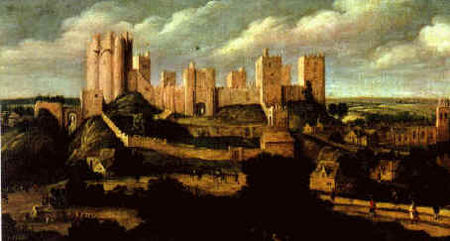
Painting of Pontefract Castle by Alexander Keirincx

Fearful of losing his estates, and possibly his life, in January 1400 he joined in a conspiracy with the earls of Kent, Salisbury and Huntingdon. Known as the Epiphany Rising, the earls planned to seize the king during a tournament at Windsor, intending to kill Henry IV and replace him with Richard II – still imprisoned at Pontefract Castle. The conspiracy was betrayed to the king by Edward of Norwich, Constance’s older brother and the conspirators were arrested and executed.  Richard II himself became the prime victim of the plot, which led Henry IV to believe it was too dangerous to keep the erstwhile king alive; he died shortly afterwards, still in custody at Pontefract Castle, probably from starvation.

Thomas le Despenser was executed on 13 January 1400. It is tempting to feel sorry for Constance of York, former Countess of Gloucester, mother of several infants and pregnant with her late husband’s child. And, indeed, it must have been difficult for her; a young, pregnant widow of a convicted traitor. With her husband’s lands forfeit, she could well have wondered what was going to happen to them all, especially following the death of her father in 1402. However, Constance herself was not beyond plotting.

Edward_of_Norwich_Duke_of_York
Edward of Norwich, 2nd Duke of York

In February 1405, during Owain Glyn Dwr‘s rebellion, Constance became involved in the plot to abduct Edmund Mortimer, 5th Earl of March from Windsor Castle. March had the greatest claim to the throne of all Henry IV’s rivals, being descended from Edward III’s second surviving son, Lionel of Antwerp. The plan was to deliver March and his younger brother, Roger, to their uncle, Sir Edmund Mortimer, who was married to Glyn Dwr’s daughter.

The boys were successfully released from Windsor, but recaptured before entering Wales. Although Constance does not seem to have suffered retribution for her part in the plot, she did implicate her brother Edward of Norwich, Duke of York, who was imprisoned in Pevensey Castle for seventeen weeks as a consequence.

Constance was also to cause scandal in her love life. As a young widow, she started a romantic liaison with Edmund Holland, 4th Earl of Kent. Edmund was the brother of Constance’s step-mother, Joan. A daughter, Eleanor, was born to the couple at Kenilworth in about 1405. She would later marry James Touchet, Lord Audley.

Whether or not Eleanor’s parents married became a bone of contention for the couple’s daughter, when she attempted to lay claim to her father’s lands and titles in 1430. Although Eleanor produced witnesses to prove the marriage of her parents, in about 1404, it was on the petition of Edmund’s sisters, Joan Duchess of York (Eleanor’s step-grandmother) and Margaret Holland, Duchess of Clarence, that Eleanor was adjudged illegitimate and unable to inherit from her father. With Eleanor declared illegitimate, Joan and Margaret became Edmund’s co-heirs and would divide their brother’s estate between them.

375px-Reading_Abbey_interior
Reading Abbey

Edmund was killed at the Battle of Ile-de-Brehat in September 1408 and buried on the island of Lavrec.

Constance outlived her lover by 8 years, dying on the 28 November 1416, the last survivor of the 3 York children. Her younger brother, Richard, had been executed in August 1415, for his part in the Southampton Plot to assassinate Henry V; and older brother Edward, Duke of York, was killed at Agincourt in October of the same year.

Constance of York, Countess of Gloucester, was buried at Reading Abbey in Berkshire.

*

Images:

Conisbrough Castle is ©2015 Sharon Bennett Connolly. All other pictures are courtesy of Wikipedia.

Sources:

Brewer’s British Royalty by David Williamson; History Today Companion to British History Edited by Juliet Gardiner & Neil Wenborn; The Mammoth Book of British kings & Queen by Mike Ashley; Britain’s Royal Families, the Complete Genealogy by Alison Weir; The Life and Times of Edward III by Paul Johnson; The Perfect King, the Life of Edward III by Ian Mortimer; Chronicles of the Age of Chivalry Edited by Elizabeth Hallam; yorkistage.blogspot.co.uk; richard111.com; The Oxford Companion to British History Edited by John Cannon.

*

My Books

Christmas is coming!

Signed, dedicated copies of all my books are available through my online bookshop.

Out now: Scotland’s Medieval Queens

Books by Sharon Bennett Connolly

Scotland’s history is dramatic, violent and bloody. Being England’s northern neighbour has never been easy. Scotland’s queens have had to deal with war, murder, imprisonment, political rivalries and open betrayal. They have loved and lost, raised kings and queens, ruled and died for Scotland. From St Margaret, who became one of the patron saints of Scotland, to Elizabeth de Burgh and the dramatic story of the Scottish Wars of Independence, to the love story and tragedy of Joan Beaufort, to Margaret of Denmark and the dawn of the Renaissance, Scotland’s Medieval Queens have seen it all. This is the story of Scotland through their eyes.

Scotland’s Medieval Queens gives a thorough grounding in the history of the women who ruled Scotland at the side of its kings, often in the shadows, but just as interesting in their lives beyond the spotlight. It’s not a subject that has been widely covered, and Sharon is a pioneer in bringing that information into accessible history.’ Elizabeth Chadwick (New York Times bestselling author)

Available now from Amazon and Pen and Sword Books

Coming 30 March 2026: Princesses of the Early Middle Ages

Books by Sharon Bennett Connolly

Daughters of kings were often used to seal treaty alliances and forge peace with England’s enemies. Princesses of the Early Middle Ages: Royal Daughters of the Conquest explores the lives of these young women, how they followed the stereotype, and how they sometimes managed to escape it. It will look at the world they lived in, and how their lives and marriages were affected by political necessity and the events of the time. Princesses of the Early Middle Ages will also examine how these girls, who were often political pawns, were able to control their own lives and fates. Whilst they were expected to obey their parents in their marriage choices, several princesses were able to exert their own influence on these choices, with some outright refusing the husbands offered to them.

Their stories are touching, inspiring and, at times, heartbreaking.

Princesses of the Early Middle Ages: Royal Daughters of the Conquest is now available for pre-order.

Also by Sharon Bennett Connolly:

Books by Sharon Bennett Connolly

Heroines of the Tudor World tells the stories of the most remarkable women from European history in the time of the Tudor dynasty, 1485-1603. These are the women who ruled, the women who founded dynasties, the women who fought for religious freedom, their families and love. Heroines of the Tudor World is now available from Amberley Publishing and Amazon UK. Women of the Anarchy demonstrates how Empress Matilda and Matilda of Boulogne, unable to wield a sword themselves, were prime movers in this time of conflict and lawlessness. It shows how their strengths, weaknesses, and personal ambitions swung the fortunes of war one way – and then the other. Available from Bookshop.orgAmberley Publishing and Amazon UKKing John’s Right-Hand Lady: The Story of Nicholaa de la Haye is the story of a truly remarkable lady, the hereditary constable of Lincoln Castle and the first woman in England to be appointed sheriff in her own right. Available from all good bookshops Pen & Sword Booksbookshop.org and Amazon

Books by Sharon Bennett Connolly

Defenders of the Norman Crown: The Rise and Fall of the Warenne Earls of Surrey tells the fascinating story of the Warenne dynasty, from its origins in Normandy, through the Conquest, Magna Carta, the wars and marriages that led to its ultimate demise in the reign of Edward III. Available from Pen & Sword BooksAmazon in the UK and US, and Bookshop.orgLadies of Magna Carta: Women of Influence in Thirteenth Century England looks into the relationships of the various noble families of the 13th century, and how they were affected by the Barons’ Wars, Magna Carta and its aftermath; the bonds that were formed and those that were broken. It is now available in paperback and hardback from Pen & SwordAmazon, and Bookshop.orgHeroines of the Medieval World tells the stories of some of the most remarkable women from Medieval history, from Eleanor of Aquitaine to Julian of Norwich. Available now from Amberley Publishing and Amazon, and Bookshop.orgSilk and the Sword: The Women of the Norman Conquest traces the fortunes of the women who had a significant role to play in the momentous events of 1066. Available now from Amazon,  Amberley Publishing, and Bookshop.org.

Alternate Endings: An anthology of historical fiction short stories including Long Live the King… which is my take what might have happened had King John not died in October 1216. Available in paperback and kindle from Amazon.

Podcast:

A Slice of Medieval

Have a listen to the A Slice of Medieval podcast, which I co-host with Historical fiction novelist Derek Birks. Derek and I welcome guests, such as Bernard Cornwell, Elizabeth Chadwick and Scott Mariani, and discuss a wide range of topics in medieval history, from significant events to the personalities involved. 

There are now over 75 episodes to listen to!

Every episode is also now available on YouTube.

*

Don’t forget! Signed and dedicated copies of all my books are available through my online bookshop.

For forthcoming online and in-person talks, please check out my Events Page.

You can be the first to read new articles by clicking the ‘Follow’ button, liking our Facebook page or joining me on TwitterThreadsBluesky and Instagram.

*

©2015 Sharon Bennett Connolly FRHistS

Love, Adultery and a Fake Kidnapping? The story of Isabel de Vermandois

Adelaide_of_Vermandois
Adelaide de Vermandois, mother of Isabel

Born around 1085, Isabel de Vermandois had the blood of kings flowing through her veins. Her father was Hugh Capet, younger son of King Henry I of France. Her mother was Adelaide de Vermandois, a descendant of the ancient Carolingian dynasty. She was one of her parents’ 9 surviving children; 4 boys and 5 girls.

As with many medieval women, there are no images of Isabel; not even a description of her appearance. Her life can be pieced together, somewhat, through her marriages and through her children. When researching her, her name also frequently appears as Elisabeth; Elisabeth being the Latin version of her name, whereas Isabelle/Isabel appears to derive from the French/Spanish languages.

From her birth, as the granddaughter of the King of France, Isabel was a valuable prize. Her childhood proved to be  depressingly short. By 1096 a marriage was mooted between Isabel and Robert de Beaumont, Count of Meulan, who was 35 years her senior.

Robert de Beaumont was a seasoned warrior and courtier, with lands in both England and Normandy. He had fought alongside William the conqueror at the Battle of Hastings and was with William II Rufus when he was killed in a hunting accident in the New Forest. A loyal supporter of Henry I, he would fight for his king at the Battle of Tinchebrai in 1106, and receive the earldom of Leicester in 1107.

Hugh_I_of_Vermandois
Hugh I, Count of Vermandois, Isabel’s father

The marriage was originally opposed by the church; the prospective couple were related within the prohibited degrees and Isabel was not yet at the minimum legal age to marry – 12. Before leaving on Crusade, however, Isabel’s father was able to persuade Pope Urban to issue a dispensation and the marriage went ahead in 1096.

Isabel was around 11 years old, Robert de Beaumont was about 46.

Isabel gave Robert 9 children; the first was a daughter, Emma, born in 1102. Twin boys followed in 1104; Waleran and Robert de Beaumont, earls of Worcester and Leicester, respectively. The brothers were active supporters of King Stephen during the conflict with Empress Matilda, popularly known as the Anarchy, but while Robert would come to terms with Matilda’s son, the future Henry II, in 1153, Waleran was distrusted due to his support of Louis VII of France.

Another daughter, Isabel, was a mistress of Henry I before being married to Gilbert de Clare, 1st Earl of Pembroke. Through her son Richard de Clare, 2nd Earl of Pembroke, she would be the grandmother of Isabel de Clare, wife of the great knight and Regent for Henry III, William Marshal.

Sharon Bennett Connolly
Arms of Isabel de Vermandois assumed by William de Warenne following their marriage.

Isabel’s marriage to Robert de Beaumont seems to have ended in scandal and controversy. The chronicler Henry of Huntingdon reported that she was seduced by William de Warenne, 2nd Earl of Surrey, suggesting they had a love affair, which lasted for several years. It’s hard to blame a young woman of 30, in an arranged marriage to a man more than twice her age, for looking elsewhere for love and comfort.

William de Warenne had failed, in 1093, to obtain a royal bride for himself in a match with Matilda of Scotland (she went on to marry Henry I), and so looked elsewhere for a bride. It seems that de Warenne hatched a plot to kidnap Isabel – possibly with her approval – after de Beaumont refused to grant his wife a divorce. Huntingdon has the aged warrior dying of shame following his wife’s betrayal:

But when he was at the height of his fame, it happened that another count stole his wife, by intrigue and violent treachery. Because of this, in his old age his mind was troubled, and, darkened by anguish, he passed into the shadows of grief, and never again experienced happiness or cheerfulness. After days given over to sorrow he fell into an illness that heralded his death …

Henry of Huntingdon, The History of the English People 1000-1154

However … Henry of Huntingdon’s accusations may well be a misinterpretation of the facts; and be based on rumours arising from Isabel and William marrying within only a few months of her first husband’s death, that they must have been having an affair if they married so soon afterwards. Wealthy widows were a target for ambitious men, though. They were at risk of being kidnapped, raped and forced to marry their rapist. Isabel circumvented this risk by marrying William de Warenne, a man she knew and was of equal rank with her late husband.

Whether the story is true, or not, is highly questionable, but great for the novelists. However, Robert de Beaumont died soon after, on 5th June 1118, and William and Isabel married as soon as they could; William was approaching 50, had been Earl of Surrey for 30 years and, as yet, had no heir to succeed him.

Sharon Bennett Connolly
Castle Acre, residence of the Earls of Surrey

William de Warenne, 2nd Earl of Surrey, had a chequered career. He had succeeded his father in 1088, but was disinherited by Henry I for his support of Henry’s brother Robert Curthose, Duke of Normandy, in his attempt on the English throne. De Warenne was restored to favour in 1103 and thereafter remained loyal. He would be one of the earls present at Henry I’s death on 1st December 1135 at Lyons-la-Foret.

On his marriage to Isabel, William assumed the Vermandois coat of arms as his own and the blue and yellow checks became known as the ‘Warenne chequer’.

Isabel and William had several children; their son and heir, William, the future 3rd earl was born in 1119. He would die on Crusade in January 1148 in the Battle of Mount Cadmus, at Laodicea in Turkey, whilst fighting in the elite royal guard of his cousin, King Louis VII of France. His only child, a daughter, Isabel, became the greatest heiress in England.

Another 2 sons followed, Ralph and Rainald, and 2 daughters. Gundreda married Roger de Beaumont, Earl of Warwick and Ada married Prince Henry of Scotland, Earl of Huntingdon, son and heir of David I of Scotland. Two of Ada’s sons became kings of Scotland; Malcolm IV and William the Lion.

Sharon Bennett Connolly
Lewes Priory, final resting place of Isabel de Vermandois, Countess of Leicester and Surrey

Isabel’s two families seem to have got on quite well. Not only did Gundreda de Warenne marry a  cousin of her Beaumont siblings, but William de Warenne also had both his son and step sons with him when he attended Henry I on his deathbed. The Beaumont and Warenne half-brothers looked after each other, and their interests, during the period known as the Anarchy, when King Stephen and Empress Matilda were vying for the crown. Young William de Warenne, the 3rd Earl, was only 18 or 19 when his father died, and was guided and advised by his half-brothers Waleran and Robert, 15 years his senior.

Although her life was tinged with scandal, Isabel of Vermandois has had a great influence on the history of England and Scotland. From her are descended the greatest families of England and all subsequent Scottish monarchs.

William de Warenne died in 1138, having held the earldom of Surrey for 50 years; he was buried at his father’s feet at Lewes Priory. Isabel survived him by almost 10 years, dying around 1147/8. She was also buried at Lewes Priory, close to her husband.

*

Pictures taken from Wikipedia, except Castle Acre and Lewes Priory, which are ©2019, Sharon Bennett Connolly FRHistS
Sources: Early Yorkshire Charters Volume 8: The Honour of Warenne, Edited by William Farrer and Charles Travis Clay; England Under the Norman and Angevin Kings by Robert Bartlett; Brewer’s British Royalty by David Williamson; The History of the English People 1000-1154 by Henry of Huntingdon; Britain’s Royal Families, the Complete Genealogy by Alison Weir; british-history.ac.uk; kristiedean.com; knight-france.com; Rev. John Watson, Memoirs of the Ancient Earls of Warren and Surrey, and Their Descendants to the Present Time, Volume I; Elisabeth M.C. Van Houts and Rosalind C. Love (eds and trans), The Warenne (Hyde) Chronicle; Elisabeth Van Houts, ‘The Warenne View of the Past’, in Proceedings of the Battle Conference 2003, edited by John Gillingham.

*

My Books

Signed, dedicated copies of all my books are available through my online bookshop.

Out now: Scotland’s Medieval Queens

Books by Sharon Bennett Connolly

Scotland’s history is dramatic, violent and bloody. Being England’s northern neighbour has never been easy. Scotland’s queens have had to deal with war, murder, imprisonment, political rivalries and open betrayal. They have loved and lost, raised kings and queens, ruled and died for Scotland. From St Margaret, who became one of the patron saints of Scotland, to Elizabeth de Burgh and the dramatic story of the Scottish Wars of Independence, to the love story and tragedy of Joan Beaufort, to Margaret of Denmark and the dawn of the Renaissance, Scotland’s Medieval Queens have seen it all. This is the story of Scotland through their eyes.

Scotland’s Medieval Queens gives a thorough grounding in the history of the women who ruled Scotland at the side of its kings, often in the shadows, but just as interesting in their lives beyond the spotlight. It’s not a subject that has been widely covered, and Sharon is a pioneer in bringing that information into accessible history.’ Elizabeth Chadwick (New York Times bestselling author)

Available now from Amazon and Pen and Sword Books

Also by Sharon Bennett Connolly:

Books by Sharon Bennett Connolly

Heroines of the Tudor World tells the stories of the most remarkable women from European history in the time of the Tudor dynasty, 1485-1603. These are the women who ruled, the women who founded dynasties, the women who fought for religious freedom, their families and love. Heroines of the Tudor World is now available from Amberley Publishing and Amazon UK. Women of the Anarchy demonstrates how Empress Matilda and Matilda of Boulogne, unable to wield a sword themselves, were prime movers in this time of conflict and lawlessness. It shows how their strengths, weaknesses, and personal ambitions swung the fortunes of war one way – and then the other. Available from Bookshop.orgAmberley Publishing and Amazon UKKing John’s Right-Hand Lady: The Story of Nicholaa de la Haye is the story of a truly remarkable lady, the hereditary constable of Lincoln Castle and the first woman in England to be appointed sheriff in her own right. Available from all good bookshops Pen & Sword Booksbookshop.org and Amazon

Books by Sharon Bennett Connolly

Defenders of the Norman Crown: The Rise and Fall of the Warenne Earls of Surrey tells the fascinating story of the Warenne dynasty, from its origins in Normandy, through the Conquest, Magna Carta, the wars and marriages that led to its ultimate demise in the reign of Edward III. Available from Pen & Sword BooksAmazon in the UK and US, and Bookshop.orgLadies of Magna Carta: Women of Influence in Thirteenth Century England looks into the relationships of the various noble families of the 13th century, and how they were affected by the Barons’ Wars, Magna Carta and its aftermath; the bonds that were formed and those that were broken. It is now available in paperback and hardback from Pen & SwordAmazon, and Bookshop.orgHeroines of the Medieval World tells the stories of some of the most remarkable women from Medieval history, from Eleanor of Aquitaine to Julian of Norwich. Available now from Amberley Publishing and Amazon, and Bookshop.orgSilk and the Sword: The Women of the Norman Conquest traces the fortunes of the women who had a significant role to play in the momentous events of 1066. Available now from Amazon,  Amberley Publishing, and Bookshop.org.

Alternate Endings: An anthology of historical fiction short stories including Long Live the King… which is my take what might have happened had King John not died in October 1216. Available in paperback and kindle from Amazon.

Podcast:

Books by Sharon Bennett Connolly

Have a listen to the A Slice of Medieval podcast, which I co-host with Historical fiction novelist Derek Birks. Derek and I welcome guests, such as Bernard Cornwell and Michael Jecks, and discuss a wide range of topics in medieval history, from significant events to the personalities involved. Every episode is also now available on YouTube.

*

Don’t forget! Signed and dedicated copies of all my books are available through my online bookshop.

For forthcoming online and in-person talks, please check out my Events Page.

You can be the first to read new articles by clicking the ‘Follow’ button, liking our Facebook page or joining me on TwitterThreadsBluesky and Instagram.

©2015 Sharon Bennett Connolly FRHistS
Richard of Conisbrough, the Traitorous Earl

Richard_of_Conisburgh,_3rd_Earl_of_Cambridge
Richard of Conisbrough, Earl of Cambridge

Richard of Conisbrough seems to have been a very controversial figure throughout his life, from questions of his paternity, through his secret marriage, to his untimely death for his involvement in a particularly ill-thought-out plot.

He and I were born within 3 miles (and, of course,  6 centuries) of each other. As a student, I even gave guided tours at the Castle in which he was born. And the man is a completely fascinating, and yet such a shadowy, figure. The grandfather of both Edward IV and Richard III, he seems to have been a mediocre diplomat and soldier, and his eventual treason barely registers in the history books.

Richard’s birth is obscured by time. Although sources seem undecided, the most likely date of his birth appears to be 1386 (although some place it as early as 1375). He was a grandson of Edward III through his father, Edmund of Langley, 1st Duke of York; and his mother, Isabella of Castile (sister of John of Gaunt’s wife, Constance), was described by chronicler Thomas of Walsingham as having ‘loose morals’. She and Edmund appear to have been an ill-matched pair from the beginning.

Isabella_of_Castile-Langley
Isabel of Castile

Edmund and Isabella married in 1372, two children soon followed; Edward of Norwich in c.1373 and Constance in c.1374. It seems the couple’s relationship cooled soon after, as no other children were forthcoming for over 10 years. As a result, the arrival of Richard of Conisbrough in 1386 appears to have raised some eyebrows and most people – even of the time – suspected that he was the son of Isabella’s lover, rather than the Duke of York.

Isabel’s relationship with John Holland, Duke of Exeter and half-brother of the king, Richard II, was probably an open secret. The fact that his father and brother, both, left him out of their wills has fuelled this theory. However, leaving a son out of your will was not entirely unusual – Edmund of Langley was, in fact, left out of his own father’s will (that of Edward III) – and, my research suggests that Richard of Conisbrough was already dead by the time his brother, Edward, made his will.

180px-Edmund_of_Langley_2C_Duke_of_York
Edmund of Langley, 1st Duke of York

Isabella died on 23rd December 1392. Her will made Richard II her heir, but specifically asked him to provide an annual pension of 500 marks for her youngest son. Richard’s allowance was paid regularly until 1399, but following the deposition of Richard II and accession of Henry IV, payments were made only sporadically and Richard of Conisbrough became the Royal Family’s ‘poor relation’.

Richard of Conisbrough’s father, Edmund of Langley, died in 1402 and the dukedom of York passed to Richard’s older brother, Edward.

Although his regular pension petered out under Henry IV, Richard’s career was largely unremarkable. In 1403/4 he was given command of a small force to defend Herefordshire against the last native prince of Wales, Owain Glyndwr. Richard was able to make several connections in the area; most notably with the Mortimer family. The Mortimers were cousins of Richard’s through the marriage of Lionel, Duke of Clarence’s daughter Philippa (Edward III’s granddaughter) to Edmund Mortimer, 3rd Earl of March.

Edmund_of_Langley_remonstrating_with_the_King_of_Portugal_-_Chronique_d'_Angleterre_(Volume_III)_(late_15th_C),_f.186r_-_BL_Royal_MS_14_E_IV
Edmund of Langley and the King of Portugal

Richard of Conisbrough secretly married Anne Mortimer (Philippa’s granddaughter) sometime in 1406. The couple had married without parental consent, or the papal dispensation required due to their being 2nd and 4th cousins. The dispensation was finally obtained in 1408.

Probably a love-match – Anne seems to have been as destitute as her husband. Born in December 1390 Anne’s family were close to Richard II; her father, Roger Mortimer, being seen as his possible heir until his death in 1398. Seen as rivals claimants by the new King, Henry IV, Anne’s fortunes changed in 1399 and  she was described as ‘destitute’ after her mother’s death in 1405.

The marriage of Anne and Richard produced 2 children; Isabella was born in 1409 and Richard, later Duke of York, was born in 1411. Not yet 21 years old, Anne herself died in September 1411, probably due to complications following the birth of her son. She was buried at Kings Langley, alongside Edmund of Langley and Isabella of Castile.

82634424_132521090790
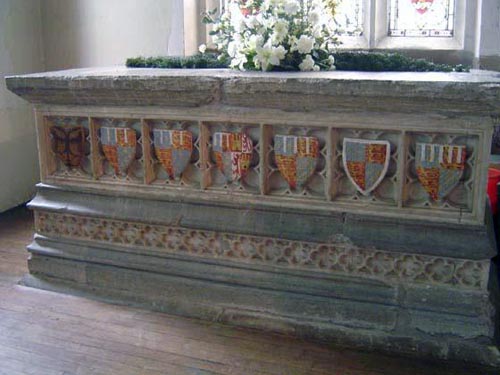
Tomb of Edmund of Langley

Richard would marry as his 2nd wife, sometime between 1411 and 1415, Maud daughter of Thomas, 6th Baron Clifford and divorced wife of John Neville, 6th Baron Latimer. Following his death, Maud continued to live at Richard’s birthplace of Conisbrough Castle, dying there in 1446.

Richard was knighted by Henry IV in 1406, probably with a view to his escorting Henry’s daughter, Philippa, to Denmark, for her marriage to King Erik. Richard’s stay in Denmark was short and unremarkable; he was back in England 2 months after witnessing the wedding.

Little more is heard of Richard until he was created Earl of Cambridge in the reign of Henry V, in 1414. The earldom did not improve his prospects, as it came without the usual grants of land or revenue to support the title; Richard was thought the poorest of England’s Earls.

ConisbroughCastle
Conisbrough Castle

Fuelled by resentment Richard of Conisbrough, Earl of Cambridge, began plotting with Sir Thomas Grey and Henry 3rd Baron Scrope. Their scheme was to murder Henry V and his 3 brothers at Southampton, before their embarkation  for the invasion of France, and replace him with Richard’s brother-in-law, Edmund Mortimer, 5th Earl of March.

However, it seems unclear whether March himself was in on the plot as it was the Earl who revealed it to the king on the 31st July 1415.

Cambridge and his co-conspirators were quickly rounded up. Arrested as the ringleader and at just 30 years old, Cambridge’s honours and estates were declared forfeit. Despite pleas for mercy he was beheaded for treason at Southampton Green on 5th August 1415. He was buried in the Chapel of God’s House, Southampton.

220px-Richard_Plantagenet,_3rd_Duke_of_York
Richard Plantagenet, 3rd Duke of York

Although his honours were forfeit, Richard of Conisbrough was not attainted and his son remained his heir and was therefore able to inherit the dukedom of York, from his uncle Edward, following his death at Agincourt just 2 months later, in October 1415.

The 4-year-old Richard, Duke of York, was made a royal ward. He was raised by the Nevilles, a powerful northern family, and would marry Cecily Neville, youngest daughter of Ralph, 1st Earl of Westmorland, and his second wife, Joan Beaufort. The combination of his York and Mortimer inheritances not only made the Duke of York the wealthiest of English landowners, but also gave him a strong claim to the English throne. As a result, during the ineffectual reign of his cousin, Henry VI, Richard of York made a play for the crown.

His defeat and death at the Battle of Wakefield on 30 December 1460 meant he never became king, but his eldest son Edward took up the mantle and was proclaimed king on 4 March 1461, following this up with his overwhelming victory over the Lancastrians at the Battle of Towton on 29 March 1461.

With just a short interlude of 6 months in 1470/71, the Readeption of Henry VI, the Yorkist dynasty would rule for the next 24 years.

*

Photos: taken from Wikipedia, except that of the tomb of Edmund of Langley which is taken from findagrave.com

*

Sources: The History Today Companion to British History, edited by Juliet Gardiner & Neil Wenborn; Brewer’s British Royalty by David Williamson; Britain’s Royal Families, the Complete Genealogy by Alison Weir; The Wars of the Roses by John Gillingham; The Wordsworth Dictionary of British History by J.P. Kenyon; The Oxford Companion to British History, edited by John Cannon; The Reign of Edward III by WM Ormrod; The Wars of the Roses by Martin J Dougherty; englishmonarchs.co.uk; womenshistory.about.com; findagrave.com; conisbroughcastle.org.uk; hrionline.ac.uk.

*

My Books

Signed, dedicated copies of all my books are available through my online bookshop.

OUT NOW! Heroines of the Tudor World

Heroines of the Tudor World tells the stories of the most remarkable women from European history in the time of the Tudor dynasty, 1485-1603. These are the women who ruled, the women who founded dynasties, the women who fought for religious freedom, their families and love. These are the women who made a difference, who influenced countries, kings and the Reformation. In the era dominated by the Renaissance and Reformation, Heroines of the Tudor World examines the threats and challenges faced by the women of the era, and how they overcame them. From writers to regents, from nuns to queens, Heroines of the Tudor World shines the spotlight on the women helped to shape Early Modern Europe.

Heroines of the Tudor World is now available for pre-order from Amberley Publishing and Amazon UK.

Also by Sharon Bennett Connolly:

Women of the Anarchy demonstrates how Empress Matilda and Matilda of Boulogne, unable to wield a sword themselves, were prime movers in this time of conflict and lawlessness. It shows how their strengths, weaknesses, and personal ambitions swung the fortunes of war one way – and then the other. Available from Bookshop.orgAmberley Publishing and Amazon UKKing John’s Right-Hand Lady: The Story of Nicholaa de la Haye is the story of a truly remarkable lady, the hereditary constable of Lincoln Castle and the first woman in England to be appointed sheriff in her own right. Available from all good bookshops Pen & Sword Booksbookshop.org and AmazonDefenders of the Norman Crown: The Rise and Fall of the Warenne Earls of Surrey tells the fascinating story of the Warenne dynasty, from its origins in Normandy, through the Conquest, Magna Carta, the wars and marriages that led to its ultimate demise in the reign of Edward III. Available from Pen & Sword BooksAmazon in the UK and US, and Bookshop.org

Ladies of Magna Carta: Women of Influence in Thirteenth Century England looks into the relationships of the various noble families of the 13th century, and how they were affected by the Barons’ Wars, Magna Carta and its aftermath; the bonds that were formed and those that were broken. It is now available in paperback and hardback from Pen & Sword,  Amazon, and Bookshop.orgHeroines of the Medieval World tells the stories of some of the most remarkable women from Medieval history, from Eleanor of Aquitaine to Julian of Norwich. Available now from Amberley Publishing and Amazon, and Bookshop.orgSilk and the Sword: The Women of the Norman Conquest traces the fortunes of the women who had a significant role to play in the momentous events of 1066. Available now from Amazon,  Amberley Publishing, and Bookshop.org.

Alternate Endings: An anthology of historical fiction short stories including Long Live the King… which is my take what might have happened had King John not died in October 1216. Available in paperback and kindle from Amazon.

Podcast:

Have a listen to the A Slice of Medieval podcast, which I co-host with Historical fiction novelist Derek Birks. Derek and I welcome guests, such as Bernard Cornwell, and discuss a wide range of topics in medieval history, from significant events to the personalities involved.

*

Signed and dedicated copies of all my books are available through my online store.

For forthcoming online and in-person talks, please check out my Events Page.

You can be the first to read new articles by clicking the ‘Follow’ button, liking our Facebook page or joining me on Twitter and Instagram.

*

©2015 Sharon Bennett Connolly FRHistS

Isabella de Warenne, Queen of Scotland?

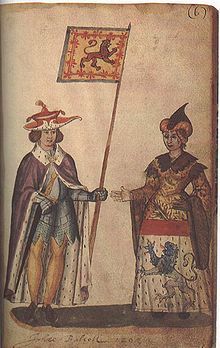
John Balliol and Isabella de Warenne

Whilst researching for my article on Ada de Warenne I discovered that a hundred years later, a kinswoman of hers also, briefly, made an appearance on the stage of Scottish history. I looked at both women, again in my latest book, Scotland’s Medieval Queens, a project I am immensely excited about. I love Scottish history!

Isabella de Warenne was the daughter of John de Warenne, 6th Earl of Surrey, and Alice de Lusignan. As such, Isabella had connections, both to royalty and the highest ranks of the English nobility. Her mother, Alice, was the daughter of King John of England’s widow, Isabella of Angouleme, and Hugh X de Lusignan and half-sister to Henry III of England. Isabella was, therefore, Henry’s niece and a 1st cousin of King Edward I. Through her paternal grandmother, Matilda Marshal, Isabella was also a great-granddaughter of the ‘Greatest Knight’ William Marshal, Earl of Pembroke and Regent of England in the early years of Henry III’s reign.

Isabella was one of three children; her elder sister, Eleanor, married Henry Percy and was the mother of Henry de Percy, 1st Baron Percy. Isabella’s younger brother, William de Warenne, married Joan de Vere, daughter of the 5th Earl of Oxford, and was father to two children, a son and a daughter; John and Alice. Isabella’s nephew, John de Warenne, was the last Earl of Warenne and Surrey, whose marital and extra-marital situation led to the extinction of the senior Warenne line. It was through John’s sister, Alice de Warenne, that the title earl of Surrey would eventually pass to her son Richard Fitzalan, 10th Earl of Arundel.

John Balliol, King of Scots

Alice de Lusignan died in 1256, shortly after giving birth to her youngest child, William, leaving the 25-year-old Earl Warenne to raise three young children alone. Alice de Lusignan was buried at Lewes Priory, the Warenne family mausoleum, she was ‘placed in the earth before the great altar in the presence of her brother Adelmar [Aymer de Valence], [bishop] elect of Winchester.’1 Isabella was probably born around 1253, although some genealogical sources claim she was younger and the daughter of a second, unknown wife of John de Warenne.

Isabella was married to John Balliol, Lord of Bywell, sometime before 7 February 1281. The confusion over her age is probably based on the writings of chronicler Thomas Wykes, who, in trying to explain why John Balliol did not succeed to the Balliol lands until a year after his brother’s death, suggested that the lands were in wardship to Edward I due to John Balliol’s youth. According to Wykes, Balliol needed Edward’s consent for his proposed marriage to Isabella, describing John as a youth, adolescens, and Isabella, a young girl, adolescentula. In fact, at the date of their marriage, John was about thirty years of age and Isabel was at least in her mid-twenties. Clearly, Edward could not have been exercising rights of wardship in a minority but the true reasons for his heavy-handed intervention are not clear.

Furthermore, there is no evidence that John ever remarried after Alice’s death, so this theory seems unlikely. It is just as likely – or more likely, in fact – that Isabella married late because previous marriage proposals or arrangements had failed, either due to failed negotiations or the death of the proposed groom. Such instances often went unrecorded, and are much more feasible than the suggestion that the earl had remarried but not one of the chroniclers of the time had mentioned it.

In the early 1290s, John Balliol was one of the 13 Competitors for the Scottish throne. He was the great-grandson of Ada de Warenne’s youngest son, David, Earl of Huntingdon, by David’s daughter, Margaret. John and Isabella were, therefore, 4th cousins, both being descended from William de Warenne, 2nd Earl of Surrey, and his wife, Isabel de Vermandois.

Balliol’s claim lay through seniority, he was grandson of Margaret, the eldest daughter of David of Huntingdon. The other leading Competitor was Robert de Brus, grandfather of the future King Robert (I) the Bruce. Robert de Brus’s claim lay in the fact he was closer in degree to the same David, being the son of David’s youngest daughter, Isobel. John Balliol was therefore David’s great-grandson, whereas Robert de Brus was his grandson, though by a younger daughter.

With 13 claimants to the Scottish throne it was Edward I of England who was given the duty of selecting Scotland’s next king. Isabella’s close family links to the English crown may have helped Edward decide in John’s favour and he was installed as King of Scotland in November 1292.

John and Isabella may have had at least three, but possibly four, children together.

A daughter, Margaret, died unmarried. There is mention of another daughter, Anne; but there is  doubt as to whether she ever existed.

Their eldest son, Edward, was born around 1283. Following the deposition of his father, in November 1299 Isabella and John’s oldest son, Edward, was entrusted to the custody of his Earl Warenne, who was then approaching his 70th year. After his grandfather’s death in 1304, Edward was transferred to the custody of his cousin John, the 7th Earl Warenne, until he was delivered into royal custody in 1310.

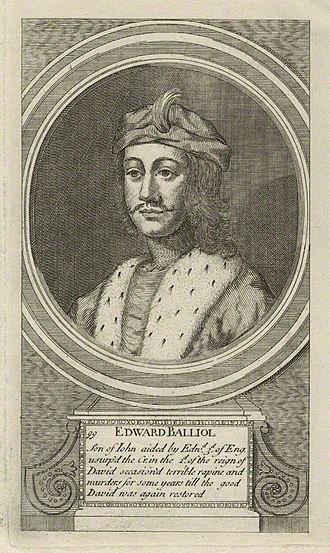
By the 1330s Edward’s prospects had improved. He was seen as a useful political tool, a rival claimant to the Scottish crown. With English support, Edward made his own bid for the throne, and was crowned king following his defeat of 8-year-old David II‘s forces at the Battle of Dupplin Moor in 1332. David’s supporters and Edward struggled against each other, until they eventually triumphed over Edward and he was deposed in 1336.

Isabella’s son, Edward Balliol, King of Scots

Edward finally surrendered his claim to the Scottish throne in 1356 whilst living in English exile; he died in Wheatley, Doncaster, probably in 1363 or 1364. Although his final resting place has recently been claimed to be under Doncaster Post Office, the former site of Doncaster Priory, it remains elusive.

John and Isabella’s possible younger son, Henry, was killed on 16th December 1332 at the Battle of Annan, a resounding victory for supporters of David II against Henry’s brother, Edward.

Although Edward was briefly married to Margaret of Taranto, the marriage was annulled. Neither Edward nor Henry had any children.

Very little is known of John and Isabella’s life together. Her death date and final resting place are both unknown. It is by no means certain that Isabella was still alive when John became king, so may have died before 1292, when John succeeded to the Scottish throne. She was no longer living, however, when her own father defeated John and the Scottish army at the Battle of Dunbar in April 1296; John abdicated in July of the same year and died in French exile in 1314.

John’s claim to the Scottish throne was supported by the Comyns, which led to the murder of John Comyn, in the church at Dumfries in 1306, by Robert the Bruce, who had succeeded his grandfather as the other leading Competitor to the throne. Shortly after the murder, he was crowned King Robert I at Scone but was only able to consolidate his rule after winning a resounding victory over the English at Bannockburn in 1314.

*

Footnotes:

1‘Annals written by a certain monk of Lewes, from the birth of Christ to the year 1312’ quoted in W.H. Blaauw, On the Early History of Lewes Priory, and its Seals, with extracts from a MS. Chronicle

Picture:

John Balliol and Isabella de Warenne from britroyals.com; Edward Balliol courtesy of Wikipedia

Further reading:

W.H. Blaauw, On the Early History of Lewes Priory, and its Seals, with extracts from a MS. Chronicle; William Farrer and Charles Travis Clay, editors, Early Yorkshire Charters, Volume 8: The Honour of Warenne; Nigel Tranter, The Story of Scotland; britroyals.com; Rev. John Watson, Memoirs of the Ancient Earls of Warren and Surrey, and Their Descendants to the Present Time, Volume I; G.P. Stell, John [John de Balliol] (c. 1248×50-1314) (article), Oxforddnb.com; Susan M. Johns, ‘Alice de Lusignan, suo jure countess of Eu’, Oxforddnb.com; Scott L. Waugh, Warenne, John de, sixth earl of Surrey [earl of Surrey and Sussex, Earl Warenne] (1231-1304) Oxforddnb.com; royal.gov.uk/HistoryoftheMonarchy/ScottishMonarchs; Alison Weir, Britain’s Royal Families; David Williamson, Brewer’s British Royalty; Mike Ashley, The Mammoth Book of British Kings and Queens; englishmonarchs.co.uk.

*

My Books

Signed, dedicated copies of all my books are available through my online bookshop.

Coming 30 January 2025: Scotland’s Medieval Queens

Scotland’s history is dramatic, violent and bloody. Being England’s northern neighbour has never been easy. Scotland’s queens have had to deal with war, murder, imprisonment, political rivalries and open betrayal. They have loved and lost, raised kings and queens, ruled and died for Scotland. From St Margaret, who became one of the patron saints of Scotland, to Elizabeth de Burgh and the dramatic story of the Scottish Wars of Independence, to the love story and tragedy of Joan Beaufort, to Margaret of Denmark and the dawn of the Renaissance, Scotland’s Medieval Queens have seen it all. This is the story of Scotland through their eyes.

Available for pre-order now.

Also by Sharon Bennett Connolly:

Defenders of the Norman Crown: The Rise and Fall of the Heroines of the Tudor World tells the stories of the most remarkable women from European history in the time of the Tudor dynasty, 1485-1603. These are the women who ruled, the women who founded dynasties, the women who fought for religious freedom, their families and love. Heroines of the Tudor World is now available for pre-order from Amberley Publishing and Amazon UK. Women of the Anarchy demonstrates how Empress Matilda and Matilda of Boulogne, unable to wield a sword themselves, were prime movers in this time of conflict and lawlessness. It shows how their strengths, weaknesses, and personal ambitions swung the fortunes of war one way – and then the other. Available from Bookshop.orgAmberley Publishing and Amazon UKKing John’s Right-Hand Lady: The Story of Nicholaa de la Haye is the story of a truly remarkable lady, the hereditary constable of Lincoln Castle and the first woman in England to be appointed sheriff in her own right. Available from all good bookshops Pen & Sword Booksbookshop.org and Amazon

Defenders of the Norman Crown: The Rise and Fall of the Warenne Earls of Surrey tells the fascinating story of the Warenne dynasty, from its origins in Normandy, through the Conquest, Magna Carta, the wars and marriages that led to its ultimate demise in the reign of Edward III. Available from Pen & Sword BooksAmazon in the UK and US, and Bookshop.orgLadies of Magna Carta: Women of Influence in Thirteenth Century England looks into the relationships of the various noble families of the 13th century, and how they were affected by the Barons’ Wars, Magna Carta and its aftermath; the bonds that were formed and those that were broken. It is now available in paperback and hardback from Pen & SwordAmazon, and Bookshop.orgHeroines of the Medieval World tells the stories of some of the most remarkable women from Medieval history, from Eleanor of Aquitaine to Julian of Norwich. Available now from Amberley Publishing and Amazon, and Bookshop.orgSilk and the Sword: The Women of the Norman Conquest traces the fortunes of the women who had a significant role to play in the momentous events of 1066. Available now from Amazon,  Amberley Publishing, and Bookshop.org.

Alternate Endings: An anthology of historical fiction short stories including Long Live the King… which is my take what might have happened had King John not died in October 1216. Available in paperback and kindle from Amazon.

Podcast:

Have a listen to the A Slice of Medieval podcast, which I co-host with Historical fiction novelist Derek Birks. Derek and I welcome guests, such as Bernard Cornwell, and discuss a wide range of topics in medieval history, from significant events to the personalities involved.

*

Don’t forget! Signed and dedicated copies of all my books are available through my online bookshop.

For forthcoming online and in-person talks, please check out my Events Page.

You can be the first to read new articles by clicking the ‘Follow’ button, liking our Facebook page or joining me on TwitterThreadsBluesky and Instagram.

*

©2015 Sharon Bennett Connolly FRHistS

Hamelin de Warenne, the King’s Brother

A short while ago I wrote about Isabel de Warenne, Countess of Surrey and then her first husband, William of Blois (youngest son of King Stephen). So, I think it’s about time I finished the story by looking at Isabel’s second husband, Hamelin Plantagenet, the other 4th Earl of Surrey.

The illegitimate son of Geoffrey, Count of Anjou, Hamelin was born sometime around 1130, when Geoffrey was estranged from his wife, Empress Matilda. His mother was, possibly, Adelaide of Angers, though this is by no means certain. Geoffrey had a second illegitimate child, Emma, who was possibly Hamelin’s full sister. Emma married the Welsh prince, Davydd ap Owain of Gwynedd. Geoffrey of Anjou was the second husband to Empress Matilda, daughter of Henry I of England and would be the mother of the future Henry II, Hamelin’s half-brother.

The de Warenne arms, Trinity Church, Southover

Hamelin was incredibly loyal to Henry and his marriage to an heiress was reward for his support, whilst at the same time giving him position and influence within England. Hamelin and Isabel married in April 1164, Hamelin even taking the de Warenne surname after the marriage; Isabel’s trousseau cost an impressive £41 10s 8d.

Hamelin became Earl of Surrey by right of his wife, though was more habitually called Earl Warenne. In some references, he is named as the 5th Earl of Surrey and in others the 4th: this confusion arises from the fact that the earldom belonged to his wife, Isabel, and her two husbands both held the earldom, sometimes being numbered the 4th and 5th earls to avoid confusion. They were, in fact, both, the 4th Earl of Surrey.

Hamelin supported his brother the king in the contest of wills that Henry was engaged in with his archbishop of Canterbury, Thomas Becket. When Henry called for the archbishop to appear at a great council at Northampton Castle on 12 October 1164, to answer to the charges laid against him, Hamelin was at the trial and spoke in support of his brother. Indeed, the new earl and the archbishop appear to have started a war of words; Hamelin defended Henry’s dignity and called Becket a traitor. The archbishop’s retort was ‘Were I a knight instead of a priest, my fist would prove you a liar!’ Ironically, it is thought that Hamelin’s denunciation of Becket was motivated by the injury caused to the royal family in Becket’s refusal to allow Henry’s brother, William – Hamelin’s half-brother – to marry Isabel de Warenne; who was now Hamelin’s wife.

Hamelin’s animosity to Becket was not to survive the archbishop’s martyrdom and he actively participated in the cult that grew up around Thomas Becket after his violent death. In later life, the earl claimed that the cloth covering Becket’s tomb had cured his blindness, caused by a cataract, in one eye.

Hamelin was an influential and active member of the English barony. He supported Henry against his sons’ rebellion in 1173, and formed part of the entourage which escorted Princess Joanna (daughter of Henry and Eleanor of Aquitaine) to Sicily for her marriage to King William. Joanna’s escort was ordered not to return home until they had seen ‘the King of Sicily and Joanna crowned in wedlock’.

Hamelin remained close to the crown even after Henry’s death, supporting his nephew, Richard I. Hamelin was among the earls present at Richard’s first coronation in September 1189; and carried one of the three swords at his second coronation in April 1194.

Conisbrough Castle

During Richard’s absence on Crusade, Hamelin sided with the Regent, William Longchamp, against the intrigues of Richard’s brother John. Hamelin held great store in the rule of law, attested by the legend on his seal, ‘pro lege, per lege’. This adherence to the law explains Hamelin’s support for Longchamp against that of his own nephew, John, and even as the justiciar’s overzealous actions alienated others. Hamelin was one of only two magnates entrusted with the collection and storage of the king’s ransom, when he was held captive by Duke Leopold of  Austria, appointed by Eleanor of Aquitaine; ; the other was William d’Aubigny, Earl of Arundel.

Hamelin’s involvement with the court continued into the reign of King John; he was present at John’s coronation and at Lincoln when William, King of Scots, gave his oath of homage in November 1200.

Away from court, Hamelin appears to have been an avid builder; he built a cylindrical keep at his manor of Mortemer in Normandy. He then constructed a larger and improved version, using all the latest techniques of castle design, at his manor of Conisbrough, South Yorkshire. He may also have been the one to build Peel Castle at Thorne, a hunting lodge which had a 3-sided donjon that was of smaller, but similar, design to Conisbrough.

He was also involved in a famous dispute with Hugh, abbot of Cluny, over the appointment of a new prior to Lewes priory. Abbot Hugh was known as a man of great piety and honour; he had been prior of Lewes but was elected as abbot of Reading in 1186 and became abbot of Cluny in 1199. In 1200, Abbot Hugh appointed one Alexander to the vacant position of prior of Lewes but Hamelin refused to accept the nomination. In establishing the priory at Lewes, the abbots of Cluny had apparently reserved the right to appoint the prior, and to admit all monks seeking entry into the order; however, Hamelin claimed that the patronage of the priory belonged to him, and it was his right to appoint the prior.

The dispute dragged on. It was only after intervention from King John that agreement was eventually reached whereby, should the position of prior become vacant, the earl and the monks should send representatives to the abbot, who would nominate two candidates, of whom the earl’s proctors should choose one to be appointed prior.

Hamelin and Isabel had four surviving children. Their son and heir, William, would become the 5th Earl of Surrey and married Matilda, daughter of the great William Marshal, Earl of Pembroke and regent of England during the minority of Henry III. There were also three daughters, Ela, Isabel and Matilda.

Lewes priory, Sussex

Ela married twice, firstly to a Robert de Newburn, of whom nothing else is known, and secondly to William Fitzwilliam of Sprotborough, a village just a few miles from Conisbrough. Isabel was married, firstly, to Robert de Lascy, who died in 1193, and secondly, no later than the spring of 1196, to Gilbert de L’Aigle, Lord of Pevensey.

Matilda, or Maud, married Henry, Count of Eu, who died around 1190; by Henry, she was the mother of Alice de Lusignan, who struggled to maintain her inheritance during the reign of King John. Matilda then married Henry d’Estouteville, a Norman lord. However, it was once thought that Matilda was the daughter of Hamelin by an earlier relationship, due to the supposed death date of Matilda’s husband, Henry, Count of Eu. This was due to the mistaken belief that Henry had died in 1172, which would mean that Matilda could not have been a daughter of the marriage of Isabel and Hamelin, who were married in 1164, as she would have been too young to have married and borne children with Henry. The Chronicle of the Counts of Eu records Henry’s death as 1183, which also appears to be an error as Henry was assessed for scutage for Wales at Michaelmas 1190; with this later death date it was entirely possible, and indeed likely, that Matilda was the legitimate daughter of both Hamelin and Countess Isabel.

One of the daughters  – although it is not clear which – bore an illegitimate son, Richard Fitzroy, Baron Chilham, who was born, possibly, around 1190, by her cousin, John (the future King John).

The motte of Peel Castle, Thorne

Hamelin spent a lot of time and money on Conisbrough Castle, which took almost 10 years to complete, and it appears to have been a favourite family residence. King John visited him there in 1201, and two of Hamelin’s daughters married landowners from the nearby manors of Tickhill and Sprotborough. His son, William de Warenne, the 5th earl, would complete the castle, rebuilding the curtain wall in stone.

Hamelin died on 7th May 1202, in his early 70s and was buried in the chapter house at Lewes Priory, in Sussex; Isabel died the following year and was buried alongside him.

*

Further reading: East Yorkshire Charters Volume 8: The Honour of Warenne, edited by William Farrer & Charles Travis Clay; Britain’s Royal Families and Eleanor of Aquitaine by Alison Weir; The Plantagenets: the Kings who Made England by Dan Jones.

Photos: The de Warenne arms, Conisbrough Castle, Peel Castle and Lewes Priory ©Sharon Bennett Connolly.

*

My Books:

Signed, dedicated copies of all my books are available through my online bookshop.

Out now: Scotland’s Medieval Queens

Scotland’s history is dramatic, violent and bloody. Being England’s northern neighbour has never been easy. Scotland’s queens have had to deal with war, murder, imprisonment, political rivalries and open betrayal. They have loved and lost, raised kings and queens, ruled and died for Scotland. From St Margaret, who became one of the patron saints of Scotland, to Elizabeth de Burgh and the dramatic story of the Scottish Wars of Independence, to the love story and tragedy of Joan Beaufort, to Margaret of Denmark and the dawn of the Renaissance, Scotland’s Medieval Queens have seen it all. This is the story of Scotland through their eyes.

Scotland’s Medieval Queens gives a thorough grounding in the history of the women who ruled Scotland at the side of its kings, often in the shadows, but just as interesting in their lives beyond the spotlight. It’s not a subject that has been widely covered, and Sharon is a pioneer in bringing that information into accessible history.’ Elizabeth Chadwick (New York Times bestselling author)

Available now from Amazon and Pen and Sword Books

Also by Sharon Bennett Connolly:

Heroines of the Tudor World tells the stories of the most remarkable women from European history in the time of the Tudor dynasty, 1485-1603. These are the women who ruled, the women who founded dynasties, the women who fought for religious freedom, their families and love. Heroines of the Tudor World is now available for pre-order from Amberley Publishing and Amazon UK. Women of the Anarchy demonstrates how Empress Matilda and Matilda of Boulogne, unable to wield a sword themselves, were prime movers in this time of conflict and lawlessness. It shows how their strengths, weaknesses, and personal ambitions swung the fortunes of war one way – and then the other. Available from Bookshop.orgAmberley Publishing and Amazon UKKing John’s Right-Hand Lady: The Story of Nicholaa de la Haye is the story of a truly remarkable lady, the hereditary constable of Lincoln Castle and the first woman in England to be appointed sheriff in her own right. Available from all good bookshops Pen & Sword Booksbookshop.org and Amazon

Defenders of the Norman Crown: The Rise and Fall of the Warenne Earls of Surrey tells the fascinating story of the Warenne dynasty, from its origins in Normandy, through the Conquest, Magna Carta, the wars and marriages that led to its ultimate demise in the reign of Edward III. Available from Pen & Sword BooksAmazon in the UK and US, and Bookshop.orgLadies of Magna Carta: Women of Influence in Thirteenth Century England looks into the relationships of the various noble families of the 13th century, and how they were affected by the Barons’ Wars, Magna Carta and its aftermath; the bonds that were formed and those that were broken. It is now available in paperback and hardback from Pen & SwordAmazon, and Bookshop.orgHeroines of the Medieval World tells the stories of some of the most remarkable women from Medieval history, from Eleanor of Aquitaine to Julian of Norwich. Available now from Amberley Publishing and Amazon, and Bookshop.orgSilk and the Sword: The Women of the Norman Conquest traces the fortunes of the women who had a significant role to play in the momentous events of 1066. Available now from Amazon,  Amberley Publishing, and Bookshop.org.

Alternate Endings: An anthology of historical fiction short stories including Long Live the King… which is my take what might have happened had King John not died in October 1216. Available in paperback and kindle from Amazon.

Podcast:

Have a listen to the A Slice of Medieval podcast, which I co-host with Historical fiction novelist Derek Birks. Derek and I welcome guests, such as Bernard Cornwell and Michael Jecks, and discuss a wide range of topics in medieval history, from significant events to the personalities involved. Every episode is also now available on YouTube.

*

Don’t forget! Signed and dedicated copies of all my books are available through my online bookshop.

For forthcoming online and in-person talks, please check out my Events Page.

You can be the first to read new articles by clicking the ‘Follow’ button, liking our Facebook page or joining me on TwitterThreadsBluesky and Instagram.

*

©2015 Sharon Bennett Connolly, FRHistS

Isabella of Castile, the Controversial First Duchess of York, c.1355-1392

Isabella_of_Castile-Langley
Isabella of Castile

As the third daughter of Peter (or Pedro) the Cruel of Castile and his long-term mistress (and sometime wife) Maria of Padilla, Isabella of Castile‘s childhood was marred by her father’s battles to hold on to his throne and almost constant warfare with Aragon.

Peter was known in some areas as Peter the Cruel and in others as Peter the Just, depending which side of the conflict people were on. He received support from Edward III of England’s eldest son and heir Edward, the Black Prince, but Peter’s failure to pay the costs of the prince’s campaign,  his faithlessness, and the failing health of the Black Prince, meant the king of Castile was left to his own devices by 1367. Adding to Peter’s woes, his own nobles backed the king’s illegitimate brother, Henry of Tastamara, as an alternative candidate. Henry eventually defeated and killed Peter in March 1369.

Peter had been married, in June 1353, to the unfortunate French princess, Blanche de Bourbon, though some historians believe he had already married Maria de Padilla sometime before this. Whatever the case, Peter abandoned Blanche for Maria just 3 days after the wedding. Blanche was imprisoned in various castles, far away from the French border to prevent her rescue. Repeated calls from the French, for her to be released, went unheeded and the pope refused to excommunicate Peter for his actions. Blanche died at Medina Sidonia in 1361, though whether her death was by natural causes or assassination on Peter’s orders is disputed. One source claims Peter’s crossbowman was sent to kill Blanche. Another claims she was poisoned. While another suggests natural causes. With Peter and his brother Henry vying for the crown, misinformation his hard to filter.

Isabella was born sometime around 1355. Her mother died in 1361 and her 3-year-old brother, Alfonso, in 1362. In 1362, Peter had persuaded the Cortes to recognise his relationship with Maria as a legitimate marriage, and thus legitimise his 3 daughters, Beatrix, Constance and Isabella, making Beatrix his heir. However, Beatrix died in 1367 and son, on Peter’s death in 1369, it was Constance who inherited their father’s claim to the crown of Castile. The situation in Castile was precarious, to say the least and Constance was unable to pursue her claim. Her father had taken Constance and her sister to the English territory of Guyenne in 1366, where they had remained whilst Peter had tried to reclaim his crown from Henry. They remained in Bayonne as hostages against the repayment of the financial costs of the expedition. Following Peter’s death, the English took the princesses in and soon after, in September 1371, Constance was married to John of Gaunt, the third surviving son of Edward III, at Roquefort. John of Gaunt had become duke of Lancaster on marrying his first wife, Blanche of Lancaster, who had died in 1368; he saw this second marriage as an opportunity to gain a kingdom of his own. When the newly married couple returned to London, they brought Constance’s younger sister, Isabella, with them.

Edmund_of_Langley_remonstrating_with_the_King_of_Portugal_-_Chronique_d'_Angleterre_(Volume_III)_(late_15th_C),_f.186r_-_BL_Royal_MS_14_E_IV

Following Constance’s official entry into London, 16-year-old Isabella probably stayed with her sister and new brother-in-law at Gaunt’s house on the Thames, the Savoy. A year later, Edward III arranged for Isabella to marry Gaunt’s younger brother, Edmund of Langley. Edmund was the fifth son, fourth surviving of Edward III and Philippa of Hainault. Born in 1341, Edmund was 14 years older than his bride. They were married on 4 July 1372, at Wallingford. John of Gaunt gave the bride a wedding gift of plate bought from leading London goldsmiths. The marriage was a continuation of the of the English policy of the time, to reinforce the dynastic link between England and Castile and thus ensuring that both heirs of Peter of Castile were married into the English royal line. Should Constance die without an heir, Isabella would inherit her claim to the Castilian throne.

On her marriage to Edmund, Isabella became Countess of Cambridge, and would become the first ever Duchess of York when Edmund was created Duke of York by his nephew, King Richard II, on 6 August 1385. She was appointed a Lady of the Garter in 1379. In 1381, Isabella accompanied her husband, taking along their 8-year-old son Edward to Lisbon, on John of Gaunt’s ill-fated expedition to claim the Castilian throne for his wife. The Portuguese chronicler, Ferñao Lopes, noted how the Portuguese king, Ferdinand, supported the countess on his arm on the walk up the steep slope from the Tagus to the cathedral, and led her mount by the rein to the monastery where they were lodged. Little Edward was briefly betrothed to King Ferdinand’s only legitimate child, Beatriz, who would go on to marry John I of Castle, the son of Henry of Trastamara.

The couple’s first son, Edward was born in 1373 – he would become the second Duke of York, and be killed at Agincourt in 1415. A daughter, Constance, was born in 1374. A second son, Richard of Conisbrough, grandfather of both Edward IV and Richard III, was born at Conisbrough Castle in Yorkshire, sometime between 1375 and 1386. He was executed for his involvement in the Southampton Plot, against Henry V, in 1415.

It is hard to discern the truth of the relationship between Isabella and Edmund. Froissart remarked on Edmund’s indolent character and together they were described as an ill-matched pair. Thomas of Walsingham, in particular, commented on Isabella’s ‘loose morals.’ And 40 years after her death, John Shirley, spicing up poems he was transcribing with gossip, referred to a love affair ‘my lady of York doughter to the king of Spaygne and my lord of Huntyngdone.’ The affair was said to have started as early as 1374 and has cast doubt on the legitimacy of Edmund and Isabella’s third and youngest child, Richard of Conisbrough. Recent studies, however, have cast doubt on the affair, their argument supported by Duke Edmund’s will, giving the lie to a rocky relationship by requesting to be buried ‘near his beloved Isabel, formerly his companion.’ 

conisbroughcastle
Conisbrough Castle, Yorkshire

Isabella died on 23 December 1392, aged about 37, and was buried at the church of the Dominicans, in King’s Langley, on 14 January 1393. In her will, drawn up a week before her death, and with her husband’s consent, she made Richard II her heir and asked that he provide a pension for her youngest son and Richard II’s godson, Richard of Conisbrough. Richard was given an allowance of £500 by the king, but this was only paid sporadically following Richard II’s deposition by Henry IV. Richard was not even mentioned in the wills of his father and brother and G.L. Harriss, of the Oxford Dictionary of National Biography, has speculated this could be proof that Richard was not the son of the Duke of York. Although it could simply be because his mother had already made provision for their youngest son. At the time of Isabella’s death, Duke Edmund was still in debt due to the failed Castilian expedition, and so Isabella’s will gave provision for her younger son whilst protecting the incomes of her husband and older son.

Jenny Stratford’s recent essay on Isabella of Castile from the Oxford Dictionary of National Biography has an extensive study of Isabella’s will and argues against the supposed affair with John Holland, rooting out the sources of the rumours and and demonstrating how they took flight. Isabella’s will demonstrates her pride in her heritage and affection for her husband and children, as well as a conventional piety. She left personal bequests to Richard II and his queen, Anne of Bohemia, in addition to books, jewels, plate, horses and robes to her husband, children and friends, with monetary bequests for various other members of the York household, including servants and the musicians of the household chapel. Isabella also left a bequest of robes, furs and jewels, to the first lady of her household, Marie St Hilaire, who was the mother of Gaunt’s illegitimate daughter, Blanche, born about 1359.

Edmund married again, to his cousin Joan Holland, niece of his first wife’s supposed lover, John Holland. In another bizarre family twist, it was Joan’s brother, Edmund Holland, 4th Earl of Kent, who had an affair – and an illegitimate daughter – with Constance of York, the daughter of Edmund and Isabella.

*

Sources: Ian Mortimer, Edward III The Perfect King; englishmonarchs.co.uk; womenshistory.about.com; WM Ormrod, The Reign of Edward III; Conisbrough Castle, South Yorkshire; Oxforddnb.com; The History Today Companion to British History, edited by Juliet Gardiner & Neil Wenborn; Brewer’s British Royalty by David Williamson; Britain’s Royal Families, the Complete Genealogy by Alison Weir; The Wars of the Roses by John Gillingham; The Wordsworth Dictionary of British History by J.P. Kenyon; The Oxford Companion to British History, edited by John Cannon; The Reign of Edward III by WM Ormrod; The Wars of the Roses by Martin J Dougherty; englishmonarchs.co.uk; womenshistory.about.com; findagrave.com; conisbroughcastle.org.uk; hrionline.ac.uk.

Photos from Wikipedia, except Conisbrough Castle which is © Sharon Bennett Connolly.

*

My Books

Signed, dedicated copies of all my books are available through my online bookshop.

Coming on 15 June 2024: Heroines of the Tudor World

Heroines of the Tudor World tells the stories of the most remarkable women from European history in the time of the Tudor dynasty, 1485-1603. These are the women who ruled, the women who founded dynasties, the women who fought for religious freedom, their families and love. These are the women who made a difference, who influenced countries, kings and the Reformation. In the era dominated by the Renaissance and Reformation, Heroines of the Tudor World examines the threats and challenges faced by the women of the era, and how they overcame them. From writers to regents, from nuns to queens, Heroines of the Tudor World shines the spotlight on the women helped to shape Early Modern Europe.

Heroines of the Tudor World is now available for pre-order from Amberley Publishing and Amazon UK.

Out Now! Women of the Anarchy

Two cousins. On the one side is Empress Matilda, or Maud. The sole surviving legitimate child of Henry I, she is fighting for her birthright and that of her children. On the other side is her cousin, Queen Matilda, supporting her husband, King Stephen, and fighting to see her own son inherit the English crown. Women of the Anarchy demonstrates how these women, unable to wield a sword, were prime movers in this time of conflict and lawlessness. It show how their strengths, weaknesses, and personal ambitions swung the fortunes of war one way – and then the other.

Available from Bookshop.orgAmberley Publishing and Amazon UK.

Also by Sharon Bennett Connolly:

King John’s Right-Hand Lady: The Story of Nicholaa de la Haye is the story of a truly remarkable lady, the hereditary constable of Lincoln Castle and the first woman in England to be appointed sheriff in her own right. It is is available from King John’s Right-Hand Lady: The Story of Nicholaa de la Haye is the story of a truly remarkable lady, the hereditary constable of Lincoln Castle and the first woman in England to be appointed sheriff in her own right. Available from all good bookshops or direct from Pen & Sword Booksbookshop.org and AmazonDefenders of the Norman Crown: The Rise and Fall of the Warenne Earls of Surrey tells the fascinating story of the Warenne dynasty, from its origins in Normandy, through the Conquest, Magna Carta, the wars and marriages that led to its ultimate demise in the reign of Edward III. Available from Pen & Sword BooksAmazon in the UK and US, and Bookshop.org

Ladies of Magna Carta: Women of Influence in Thirteenth Century England looks into the relationships of the various noble families of the 13th century, and how they were affected by the Barons’ Wars, Magna Carta and its aftermath; the bonds that were formed and those that were broken. It is now available in paperback and hardback from Pen & Sword,  Amazon, and Bookshop.orgHeroines of the Medieval World tells the stories of some of the most remarkable women from Medieval history, from Eleanor of Aquitaine to Julian of Norwich. Available now from Amberley Publishing and Amazon, and Bookshop.orgSilk and the Sword: The Women of the Norman Conquest traces the fortunes of the women who had a significant role to play in the momentous events of 1066. Available now from Amazon,  Amberley Publishing, and Bookshop.org.

Alternate Endings: An anthology of historical fiction short stories including Long Live the King… which is my take what might have happened had King John not died in October 1216. Available in paperback and kindle from Amazon.

Podcast:

Have a listen to the A Slice of Medieval podcast, which I co-host with Historical fiction novelist Derek Birks. Derek and I welcome guests, such as Bernard Cornwell and discuss a wide range of topics in medieval history, from significant events to the personalities involved.

*

Don’t forget! Signed and dedicated copies of all my books are available through my online bookshop.

For forthcoming online and in-person talks, please check out my Events Page.

You can be the first to read new articles by clicking the ‘Follow’ button, liking our Facebook page or joining me on Twitter and Instagram.

*

©2015 Updated ©2024 Sharon Bennett Connolly FRHistS