Sanchia of Provence, Queen of the Romans

One of 4 sisters, all of whom became queens, Sanchia of Provence was born in Aix-en-Provence in about 1228. She was the third daughter of Raymond Berengar V, Count of Provence, and his wife Beatrice of Savoy.
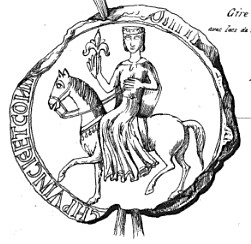
Sanchie
Sanchie de Provence

Sanchia was 7 years younger than her oldest sister, Marguerite, who married Louis IX of France in 1234. Her second oldest sister, Eleanor, was 5 years her senior and married Henry III of England in 1236. Sanchia probably spent most of her childhood with Beatrice, who, as the youngest of the 4 sisters, was 3 years younger than Sanchia and didn’t marry until 1246; she would become Queen of Naples in 1266.

I could find no information on Sanchia’s childhood, beyond the fact that the sisters were all close, and remained so throughout their lives; thus helping to forge international relations through their exceptional familial bond.

The one description I could find of Sanchia was that she was ‘of incomparable beauty’.

Sanchia had originally been married, by proxy, to Raymond VII of Toulouse; however Raymond had failed to obtain an annulment of his previous marriage and the arrangement was declared void. In the mean time Richard, Earl of Cornwall and brother of Henry III of England visited Provence in 1241; he saw in Sanchia the chance to ally himself more closely with his brother’s interests, whilst at the same time strengthening his family’s position on the continent.

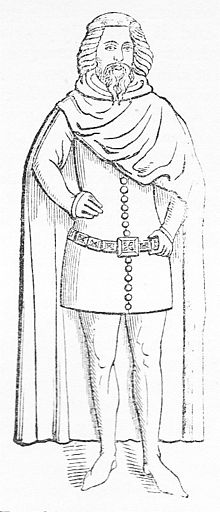
330px-Richard_of_Cornwall_
Richard Earl of Cornwall

Richard and Sanchia were betrothed by proxy in July 1242, following negotiations at Tarascon, led by Sanchia’s uncle, Peter of Savoy, and the Savoyard bishop of Hereford, Peter d’Aigueblanche.

Richard was the second and youngest son of King John of England and Isabella of Angoulême. Born in 1209, he was just 7 years old when his father died. A renowned soldier, Crusader, negotiator and administrator, Richard was one of the wealthiest men in Europe. He already had a son, Henry of Almain by his first wife, Isabella Marshal, daughter of the great William Marshal Earl of Pembroke. Isabella had died in childbirth in January 1240, after giving birth to a second son, who was stillborn.

In August-September 1242, following a failed campaign against Louis IX with his step-father, Hugh de Lusignan, Richard had planned to visit his future bride in Provence, before returning to England. However a falling-out with his brother, Henry III, and a fear of kidnapping forced Richard to change his plans and head straight for home, thus delaying a reunion with his bride-to-be.

Sanchia arrived in England in 1243. She and Richard were married in Westminster Abbey on 23rd November 1243. Sanchia was a girl of about 15, while Richard was 34. On his marriage, Richard confirmed in his possession of Cornwall and the honours of Wallingford and Eye. He was also given £2000 in cash by the king, and a promise of 1000 marks a year, in return for a renunciation of all claims to lands in Gascony and Ireland.

Richard’s marriage to Sanchia greatly improved his relations with the Savoyards, a powerful contingent of the queen’s relatives living in England. Following the marriage Richard served Peter of Savoy, titular earl of Richmond, as a banker and political ally.
Edmund,_2nd_Earl_of_Cornwall
Edmund, 2nd Earl of Cornwall

Richard and Sanchia had only 2 children. Their eldest son, Richard, was born at Wallingford in July 1246 and died there the following month; the little baby was buried at Grove Mill. Another son, Edmund, was born at Berkhamsted on 26 December 1249 and was baptised by his mother’s uncle, Boniface of Savoy, Archbishop of Canterbury. He would be knighted at the age of 22 and married Margaret, the daughter of Richard de Clare. However, the marriage was childless and the couple officially separated in February 1294.

Edmund had departed on crusade with the king’s son and heir, Edward (the future Edward I) when he heard of the murder of his older brother, Henry of Almain (son of Richard and his 1st wife, Isabella Marshal), who was murdered in Viterbo by the sons of Simon de Montfort. Edmund returned home to his father, who died the following year, leaving Edmund as the 2nd Earl of Cornwall. With no heir to succeed him, the earldom reverted to the crown on Edmund’s death in 1300.

In 1246 Sanchia’s father, Raymond Berengar V, died, leaving Provence to the youngest of his daughters; Beatrice was the only daughter still unmarried. Several suitors now set out to ‘win’ the heiress and her mother appealed to the pope for protection. The pope and Louis IX together decided that the most appropriate husband for Beatrice was Louis’ brother, Charles of Anjou. Beatrice’s mother offered no objection; however Henry III and Richard sought – unsuccessfully – to oppose the marriage, unsurprising when you consider their wives were denied their share of their father’s inheritance.

Statue_Raimond_Bérenger_IV
Raymond Berengar V, Count of Provence

Sanchia and her sister, Eleanor, were not as cut off from their family as most royal brides of the period appear to have been. Their mother, Beatrice of Savoy, arrived in England in 1248 with her brother, Thomas, to visit both her daughters.

Sanchia also accompanied her husband on an embassy to the French court in 1250, taking the opportunity to meet with her big sister, Marguerite; and possibly her little sister Beatrice, who was by then married to Charles of Anjou. Sanchia also joined the family gathering in Chartres and Paris in 1254, when Louis IX and queen Marguerite received Henry III and queen Eleanor; Her mother Countess Beatrice and youngest sister Beatrice were also present.

Sanchia and her sister Eleanor seem to have been in close contact ever since Sanchia arrived in England. Henry III officially recognised Sanchia as a voice in family dynastic matters. In the 1253 Calendar of Patent Rolls, she is included in a grant to her uncle, Peter of Savoy:

Grant to Peter de Sabaudia that if he have an heir male of his wife, he may assign or bequeath the lordship of his lands and heir to whom he will. The king also wills that the said heir shall not be married to anyone without the consent of Queen Eleanor and Sanchia, countess of Cornwall, and the brothers of the said Peter.”

Calendar of Patent Rolls, 1253

Sanchia seem to have had some influence in pleading for others. The Patent Rolls of 1255 record her achieving a pardon for a man who received an outlaw and again, in 1256, they record her gaining a licence to a man to enclose a wood.
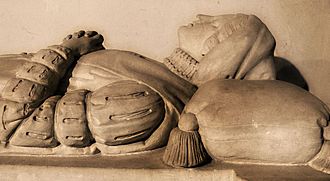
330px-Beatrix4
Beatrice of Savoy, Countess of Provence

Henry III had made attempts to gain his brother a crown; he had accepted the crown of Sicily, offered by the pope, on his brother’s behalf, but the enterprise to recover the kingdom from the Hohenstaufens proved beyond the king’s means. In 1256, however, another opportunity arose with the death of William of Holland, papal candidate to be Holy Roman Emperor. With the support of his brother and his considerable wealth, diplomatic skills and imperial connections, Richard set about earning his election to the Empire.

On 26 December 1256 the crown of Germany was offered to Richard by the archbishop of Cologne. with his rival, King Alfonso of Castile, too busy with troubles at home to travel to Germany to claim the crown; Richard and Sanchia, with a large entourage including their son Edmund, but only half of the electors on their side, made their way to Aachen.

Sanchia and Richard were crowned as king and queen of Germany on 17 May 1257, by the archbishop of Cologne; being styled as the king and queen of the Romans, Richard still needed papal ratification to become Holy Roman Emperor. The coronation was followed by a splendid feast for Richard’ supporters before the new king and queen departed on progress around their new kingdom. Richard held his 1st royal parliament, or diet, in Mainz in September, and another progress in the spring of 1258 was spent confirming imperial privileges and issuing charters.

However, papal confirmation of Richard’s titles were not forthcoming and in the winter of 1258/9 Richard and Sanchia returned home to an England riven by baronial rebellion. Richard acted as mediator between his brother the king and his brother-in-law, Simon de Montfort, leader of the baronial opposition.

330px-Hailes_Abbey
Hailes Abbey, final resting place of Sanchia, her husband, Richard, and son, Edmund.

The political situation was still unresolved when Sanchia died at Berkhamsted on 9th November 1261 and was buried at Hailes Abbey 6 days later; her husband was absent from her death-bed and funeral.

After Sanchia’s death a grant in the Patent Rolls of Henry III:

for the saving of the king’s soul and of Sanchia, queen of Almain [Germany], to the master and brethren of the hospital of St Katharine without the Tower London of 50s a year at the Exchequer for the maintenance of a chaplain celebrating divine service daily in the chapel of St John within the Tower for her soul”.

Although she was only about 33 at her death, Sanchia’s legacy came from the close relationship with her sisters. All 4 sisters, and their mother, took part in the negotiations which led to the 1259 Treaty of Paris, improving relations between the French and English kings.

*

Pictures courtesy of Wikipedia

*

Sources:  The Plantagenet Chronicles edited by Elizabeth Hallam;  The Story of Britain by Roy Strong; The Plantagenets, the Kings Who Made England by Dan Jones; England Under the Norman and Angevin Kings  by Robert Bartlett; oxforddnb.com;  Brewer’s British Royalty by David Williamson; epistolae.ccnmtl.columbia.edu

*

My Books

Signed, dedicated copies of all my books are available through my online store.

OUT NOW! Heroines of the Tudor World
Heroines of the Tudor World tells the stories of the most remarkable women from European history in the time of the Tudor dynasty, 1485-1603. These are the women who ruled, the women who founded dynasties, the women who fought for religious freedom, their families and love. These are the women who made a difference, who influenced countries, kings and the Reformation. In the era dominated by the Renaissance and Reformation, Heroines of the Tudor World examines the threats and challenges faced by the women of the era, and how they overcame them. From writers to regents, from nuns to queens, Heroines of the Tudor World shines the spotlight on the women helped to shape Early Modern Europe.

Heroines of the Tudor World is now available for pre-order from Amberley Publishing and Amazon UK.

Coming 30 January 2025: Scotland’s Medieval Queens
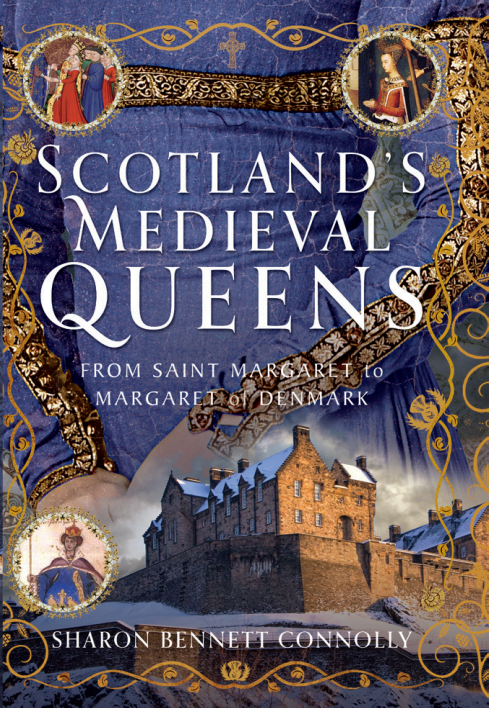
Scotland’s history is dramatic, violent and bloody. Being England’s northern neighbour has never been easy. Scotland’s queens have had to deal with war, murder, imprisonment, political rivalries and open betrayal. They have loved and lost, raised kings and queens, ruled and died for Scotland. From St Margaret, who became one of the patron saints of Scotland, to Elizabeth de Burgh and the dramatic story of the Scottish Wars of Independence, to the love story and tragedy of Joan Beaufort, to Margaret of Denmark and the dawn of the Renaissance, Scotland’s Medieval Queens have seen it all. This is the story of Scotland through their eyes.

Available for pre-order now.

Also by Sharon Bennett Connolly:
Women of the Anarchy demonstrates how Empress Matilda and Matilda of Boulogne, unable to wield a sword themselves, were prime movers in this time of conflict and lawlessness. It shows how their strengths, weaknesses, and personal ambitions swung the fortunes of war one way – and then the other. Available from Bookshop.orgAmberley Publishing and Amazon UKKing John’s Right-Hand Lady: The Story of Nicholaa de la Haye is the story of a truly remarkable lady, the hereditary constable of Lincoln Castle and the first woman in England to be appointed sheriff in her own right. Available from all good bookshops Pen & Sword Booksbookshop.org and AmazonDefenders of the Norman Crown: The Rise and Fall of the Warenne Earls of Surrey tells the fascinating story of the Warenne dynasty, from its origins in Normandy, through the Conquest, Magna Carta, the wars and marriages that led to its ultimate demise in the reign of Edward III. Available from Pen & Sword BooksAmazon in the UK and US, and Bookshop.org

Ladies of Magna Carta: Women of Influence in Thirteenth Century England looks into the relationships of the various noble families of the 13th century, and how they were affected by the Barons’ Wars, Magna Carta and its aftermath; the bonds that were formed and those that were broken. It is now available in paperback and hardback from Pen & SwordAmazon, and Bookshop.orgHeroines of the Medieval World tells the stories of some of the most remarkable women from Medieval history, from Eleanor of Aquitaine to Julian of Norwich. Available now from Amberley Publishing and Amazon, and Bookshop.orgSilk and the Sword: The Women of the Norman Conquest traces the fortunes of the women who had a significant role to play in the momentous events of 1066. Available now from Amazon,  Amberley Publishing, and Bookshop.org.

Alternate Endings: An anthology of historical fiction short stories including Long Live the King… which is my take what might have happened had King John not died in October 1216. Available in paperback and kindle from Amazon.

Podcast:

Have a listen to the A Slice of Medieval podcast, which I co-host with Historical fiction novelist Derek Birks. Derek and I welcome guests, such as Bernard Cornwell, and discuss a wide range of topics in medieval history, from significant events to the personalities involved.

*

Don’t forget! Signed and dedicated copies of all my books are available through my online bookshop.

For forthcoming online and in-person talks, please check out my Events Page.

You can be the first to read new articles by clicking the ‘Follow’ button, liking our Facebook page or joining me on Twitter and Instagram.

©2015 Sharon Bennett Connolly FRHistS
The Fascinating Marital Exploits of Joan, the Fair Maid of Kent

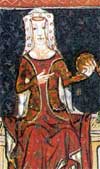
Joan_of_Kent
Joan, the Fair Maid of Kent

Joan of Kent was the daughter of Edmund of Woodstock, Earl of Kent and brother of Edward II. Edmund was a younger son of Edward I by his second wife, Margaret of France; he married Margaret Wake in 1325.

Joan was the third of four children, and was born on 28/9th September 1328 at Woodstock. When she was just 18 months old, Joan’s father was beheaded for treason on the orders of the Regent, Roger Mortimer and his lover, Queen Isabella; after becoming convinced that his brother, Edward II, was still alive, Edmund had become involved in a plot to free the erstwhile king.

Joan’s mother, Margaret Wake, was held under house arrest at Arundel Castle, along with all four of her children; Joan’s baby brother, John, was born a month after their father’s execution. Just a few months later, Edward III escaped Mortimer’s control and assumed power; he took over responsibility for his uncle’s family and Joan, a favourite of Edward’s queen, Philippa of Hainault, was raised at court.

The leading beauty of her day, Joan had little to offer a potential suitor, beyond her looks and keen intelligence. She had grown up in the same household as Edward III’s oldest children; his son and heir, Edward and his daughters Isabella and Joan.

Sometime around the age of 11 or 12, it seems that Joan secretly married, or promised to marry, Thomas Holland. However, shortly afterwards Holland left on Crusade to Prussia and during  his absence, Joan was married to William Montague, the future Earl of Salisbury in 1340/41.

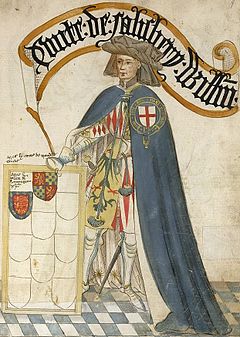
Salisbury_1430
William Montague, Earl of Salisbury

When he returned to England, Thomas Holland discovered that his wife was married. Without the financial means to pursue his claim to be Joan’s husband through the church courts. Holland had to bide his time, joining Edward III’s campaigns in France, where he gained enough funds in ransoms to initiate the legal proceedings to recover his wife. In May 1348 Holland petitioned the pope, stating that Joan had been forced into her marriage with Salisbury. He went on to say that Joan had previously agreed to marry him and that their relationship had been consummated. He claimed her as his own wife, and Joan backed up his story.

It took 18 months for Joan’s marital status to be resolved, and for some of that time Salisbury kept Joan a prisoner, preventing her from presenting her testimony to the church lawyers. He was ordered to release her in order that she could give evidence at the inquisition looking into her marriage status.

In the mean time, England itself was in the grips of the Black Death, the bubonic plague. In order to lift the country’s spirits the king, Edward III, had arranged a grand tournament at Windsor, on St George’s Day, 23 April 1349. The knights in contention were founding members of the Order of the Garter; England’s greatest chivalric order, consisting of the king and 25 knights, it was probably founded in 1348, though the date is uncertain.

Joan herself is a part of the legend of the foundation of the Order of the Garter. She is said to be the lady who lost her garter during a ball celebrating the fall of Calais. Edward III is said to have returned the item to the 20-year-old damsel with the words “honi soit qui mal y pense” (evil to him who evil thinks).

Although the story is probably apocryphal (the fact a garter in those days was worn by men, not women, supporting this), Joan’s connection with the inaugural  tournament is all too true. Her presence brought an added bit of spice to the St George’s Day tournament of 1349. Her current husband, the Earl of Salisbury, fought on the king’s team, while Sir Thomas Holland was on the side of Prince Edward. Joan’s two husbands faced each other across the tournament field, with the object of their affection watching from the stands.

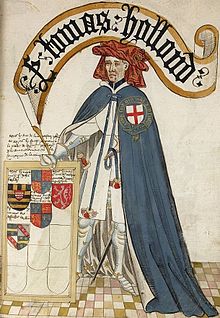
220px-Thomas_Holland_1430
Sir Thomas Holland

Although I couldn’t find the results of the tournament, Joan’s marital status was decided by Papal Bull on 13th November 1349, when the pope ordered her to divorce Salisbury and return to Holland. Which she did. I suppose we will never know if Joan had married Holland at the age of 11, or if they had an affair that only started after Holland returned from crusade, and the claim of a pre-contract was a clever ploy to get Joan out of an unhappy marriage.

It is easy for the cynic of the 21st century to nod their head sagely and say ‘good plan’. However, Joan and Thomas Holland were risking their eternal souls if they lied to a church court; such an oath was not to be undertaken lightly. It may be the romantic in me, but I cannot help but believe that Joan and Thomas were telling the truth about their promises to each other.

Joan succeeded her brother, John, as Baroness Wake of Liddell and Countess of Kent in December 1352 and was confirmed in her new titles in February 1353. Sir Thomas Holland, therefore, became Earl of Kent by right of his wife.

Joan and Sir Thomas Holland had five children together; three sons and two daughters. Edmund was born in 1352 and died young. Thomas, Earl of Kent, married Alice, the daughter of Richard FitzAlan, 10th Earl of Arundel; he died in 1397.  Their third son, John, was created Duke of Exeter in 1397 by his younger brother, King Richard II. He married Elizabeth of Lancaster, daughter of John of Gaunt and Blanche of Lancaster, but was executed in 1400 for his involvement in a plot to assassinate Henry IV and return his brother to the throne.

Of their daughters, Joan married John V, Duke of Brittany (who would marry Joanna of Navarre as his second wife, the future queen-consort of Henry IV), but died in 1384. Their youngest child, Matilda, was born in 1359 and married twice; first to Sir Hugh de Courtenay, who died in 1377, and then Waleran of Luxembourg, Count of St Pol and Ligny. Matilda died in 1391.

At the end of 1360 Sir Thomas Holland, a veteran soldier who had fought in the Crecy campaign, died from illness while in Normandy and Joan was left a widow.

Edward Prince of Wales – the Black Prince – may have offered comfort to the Lady Joan, his friend from childhood. Joan and Edward appear to have fallen in love. As widow with five children, and bringing no beneficial foreign alliance to the marriage table, Joan was hardly the ideal bride for the heir to the throne. Especially not with her dubious marital history. It was not the political match his father had wanted for his oldest son, but all attempts at a marriage alliance with a princess from the Low Countries had come to nought; and it seems the king was quite happy to accept his son’s choice of wife.

220px-Cernoch
Edward, the Black Prince

It must have caused quite a scandal at the time. Although a reputed beauty, Joan’s bigamous marriage to William Montague was well-known – and he was still alive. She had five children by her first husband, Thomas Holland. Moreover, she was 33 years of age, two years older than her prince. She hardly appeared ‘queen’ material.

However, according to the Chandos Herald Joan was “a lady of great worth…. very beautiful, pleasing and wise”. Edward III sent one of his own people to the pope to ask permission for the marriage, which was swiftly granted, securing the papal dispensations needed, given Edward and Joan were related withing the prohibited degrees (they were first cousins once removed).

With great ceremony Edward and Joan were married at Windsor on 10th October 1361, by the Archbishop of Canterbury and in the presence of the king and queen. Shortly after the wedding, the couple moved to Berkhamsted, where the king visited them after Christmas.

In 1363 they moved their entire household to Bordeaux, after the prince was given the Duchy of Aquitaine by his father. Their court there was lavish, exceeding the king’s own in brilliance.

In 1365 their first child was born; a son, Edward of Angoulême. His brother, Richard of Bordeaux, followed on 6th January 1367.

The chronicler, Froissart, tells the story:

In due course Joan, the princess, went into labour and by God’s grace was delivered of her child. It was a fine son, Richard of Bordeaux, born at Epiphany, 6 January , which that year fell on a Wednesday.

220px-Edward_of_Angouleme
Edward of Angouleme, from the Wilton Diptych

The child came into the world early in the morning to the great joy of the prince and the whole household, and was baptised the following Friday in the early afternoon on the holy font of St Andrew’s Church in the city of Bordeaux. The child was named Richard and he afterwards became King of England.”

Richard’s baptism was attended by three kings; Pedro of Castile, James IV of Majorca and Richard of Armenia. William Thorne, the Canterbury Chronicler, described them as the three ‘magi’ (or wise men), as Richard had been born on Epiphany, Twelfth Night; an auspicious sign for a bright future.

The Black Prince wrote fondly to his wife whilst campaigning in Spain: “Be assured, dearest companion, that we, our brother of Lancaster and all the great men of our army are, thank God, in good form.”

Froissart wrote of the Black Prince’s return from Spain, and his arrival in Bordeaux; “Where he was received with great celebrations. Princess Joan came to meet him and had Edward, her eldest son, carried with her; he was then about three years old.”

The Spanish campaign was aimed at supporting Pedro of Castile’s claim to the throne against that of his illegitimate half-brother, Henry of Trastamara. Although the Black Prince managed to re-establish Pedro’s rule, the Castilian king could not pay the English army and Edward, already with a reputation for heavy-handedness in Aquitaine, taxed the duchy in order to raise funds.

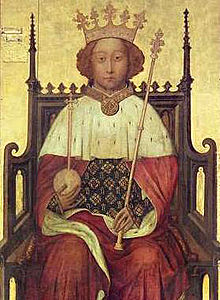
220px-Richard_II_King_of_England
Richard II

Sometime in late 1370 or early 1371 the young family suffered a heartbreaking tragedy. Little Edward of Angoulême died of bubonic plague. He was buried in Bordeaux, his funeral arranged by John of Gaunt and attended by all the great lords of Gascony.

Shortly afterwards, the remaining family returned to England, as reported by the chronicler Walsingham:

“When he had done this, Prince Edward hurried to return to England, as much because of the infirmities which troubled him, as because of lack of money. Therefore, at the beginning of January [1371], with his wife and small son Richard, and with  his household following behind, he reached Plymouth.”

The Black Prince’s health had been destroyed by a lifetime of campaigning. He returned to England a virtual invalid and died in 1376. Left a widow for a second time, Joan still had custody of her young son and was in charge of Richard’s education until his accession to the throne.

Edward III died in 1377, leaving the throne to 10-year-old Richard of Bordeaux. In his will he gave to Joan, Princess of Wales, a thousand marks and the free restitution of jewels she had pledged to him.

Despite her marital history, and a reputation for extravagance – she was said to have spent £200 on a set of jewelled buttons – Joan was loved by the English people. It was with her that John of Gaunt sought refuge following the sacking of his Savoy Palace in 1376, when the people were discontented with his rule.

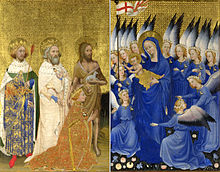
Wilton_diptych
The Wilton Diptych

Joan was seen as a calming influence of her son, Richard II, and was by his side during the dangerous days of the Peasant’s Revolt of 1381; she sheltered in the Tower of London and rode in a whirligig to accompany her 13-year-old son to meet with the rebels at Mile End.

In 1385 Joan’s son, John Holland, while campaigning in Scotland, killed Ralph Stafford, son of the second Earl of Stafford, in a quarrel. He fled to sanctuary at the shrine of St John of Beverley, but was condemned to death. Joan pleaded with Richard for days, begging him to pardon his half-brother. She died at Wallingford Castle, on or shortly after 7 August 1385. The, when she made her will. King pardoned his half-brother the following day.

Although the Edward, the Black Prince, had built a chantry chapel for his wife, at Canterbury Cathedral, with ceiling bosses of her face, Joan was not buried at Canterbury with the Black Prince, but at the Greyfriars at Stamford in Lincolnshire, beside her first husband, Sir Thomas Holland. Unfortunately, nothing remains of the abbey beyond a gatehouse. Thomas and Joan’s tombs are lost.

*

Pictures taken from Wikipedia.

*

Sources: The Perfect King, the Life of Edward III by Ian Mortimer; The Life and Time of Edward III by Paul Johnson; The Reign of Edward III  by WM Ormrod; The Mammoth Book of British kings & Queens by Mike Ashley; Britain’s’ Royal Families, the Complete Genealogy by Alison Weir; Brewer’s British Royalty by David Williamson; The Plantagenets, the Kings Who Made Britain by Dan Jones; englishmonarchs.co.uk; The Oxford Companion to British History edited by John Cannon; Chronicles of the Age of Chivalry Edited by Elizabeth Hallam; The Black Prince by Michael Jones.

*

My Books

Signed, dedicated copies of all my books are available through my online store.

Out now: Scotland’s Medieval Queens

Books by Sharon Bennett Connolly

Scotland’s history is dramatic, violent and bloody. Being England’s northern neighbour has never been easy. Scotland’s queens have had to deal with war, murder, imprisonment, political rivalries and open betrayal. They have loved and lost, raised kings and queens, ruled and died for Scotland. From St Margaret, who became one of the patron saints of Scotland, to Elizabeth de Burgh and the dramatic story of the Scottish Wars of Independence, to the love story and tragedy of Joan Beaufort, to Margaret of Denmark and the dawn of the Renaissance, Scotland’s Medieval Queens have seen it all. This is the story of Scotland through their eyes.

Scotland’s Medieval Queens gives a thorough grounding in the history of the women who ruled Scotland at the side of its kings, often in the shadows, but just as interesting in their lives beyond the spotlight. It’s not a subject that has been widely covered, and Sharon is a pioneer in bringing that information into accessible history.’ Elizabeth Chadwick (New York Times bestselling author)

Available now from Amazon and Pen and Sword Books

Also by Sharon Bennett Connolly:

Books by Sharon Bennett Connolly

Heroines of the Tudor World tells the stories of the most remarkable women from European history in the time of the Tudor dynasty, 1485-1603. These are the women who ruled, the women who founded dynasties, the women who fought for religious freedom, their families and love. Heroines of the Tudor World is now available from Amberley Publishing and Amazon UK. Women of the Anarchy demonstrates how Empress Matilda and Matilda of Boulogne, unable to wield a sword themselves, were prime movers in this time of conflict and lawlessness. It shows how their strengths, weaknesses, and personal ambitions swung the fortunes of war one way – and then the other. Available from Bookshop.orgAmberley Publishing and Amazon UKKing John’s Right-Hand Lady: The Story of Nicholaa de la Haye is the story of a truly remarkable lady, the hereditary constable of Lincoln Castle and the first woman in England to be appointed sheriff in her own right. Available from all good bookshops Pen & Sword Booksbookshop.org and Amazon

Books by Sharon Bennett Connolly

Defenders of the Norman Crown: The Rise and Fall of the Warenne Earls of Surrey tells the fascinating story of the Warenne dynasty, from its origins in Normandy, through the Conquest, Magna Carta, the wars and marriages that led to its ultimate demise in the reign of Edward III. Available from Pen & Sword BooksAmazon in the UK and US, and Bookshop.orgLadies of Magna Carta: Women of Influence in Thirteenth Century England looks into the relationships of the various noble families of the 13th century, and how they were affected by the Barons’ Wars, Magna Carta and its aftermath; the bonds that were formed and those that were broken. It is now available in paperback and hardback from Pen & SwordAmazon, and Bookshop.orgHeroines of the Medieval World tells the stories of some of the most remarkable women from Medieval history, from Eleanor of Aquitaine to Julian of Norwich. Available now from Amberley Publishing and Amazon, and Bookshop.orgSilk and the Sword: The Women of the Norman Conquest traces the fortunes of the women who had a significant role to play in the momentous events of 1066. Available now from Amazon,  Amberley Publishing, and Bookshop.org.

Alternate Endings: An anthology of historical fiction short stories including Long Live the King… which is my take what might have happened had King John not died in October 1216. Available in paperback and kindle from Amazon.

Podcast:

A Slice of Medieval

Have a listen to the A Slice of Medieval podcast, which I co-host with Historical fiction novelist Derek Birks. Derek and I welcome guests, such as Bernard Cornwell and Michael Jecks, and discuss a wide range of topics in medieval history, from significant events to the personalities involved. 

Every episode is also now available on YouTube.

*

Signed and dedicated copies of all my books are available through my online store.

For forthcoming online and in-person talks, please check out my Events Page.

You can be the first to read new articles by clicking the ‘Follow’ button, liking our Facebook page or joining me on TwitterThreadsBluesky and Instagram.

©Sharon Bennett Connolly 2015 FRHistS

The Mother of the House of York

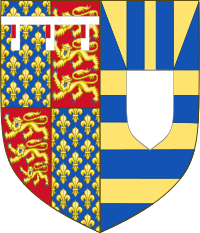
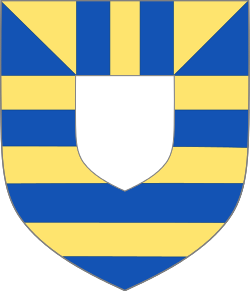
200px-Arms_of_Philippa_of_Clarence,_5th_Countess_of_Ulster.svg
Arms of Philippa of Clarence

Princess Philippa of Clarence was born at Eltham Palace in Kent on the 16th August 1355.  She was named after her grandmother, Philippa of Hainault, queen of Edward III, who was one of her Godparents.

The first grandchild of Edward III she was the only child of Lionel of Antwerp, Duke of Clarence, and his 1st wife, Elizabeth de Burgh. Lionel was the 1st of Edward and Philippa’s children to marry.

Lionel was the 3rd son of Edward and Philippa, but the 2nd to survive childhood. Born in 1338, he was married to Elizabeth de Burgh in the Tower of London on the 9th September 1342. Lionel was almost 4 years old and his bride was 6 years older, born in 1332. Elizabeth was the daughter and heiress of William de Burgh, 3rd Earl of Ulster, who had died the year after her birth. It seems the couple lived together as husband and wife from 1352, when Lionel was 14 and Elizabeth 20. Lionel became Earl of Ulster by right of his wife and took possession of vast estates in Ireland and the Honour of Clare, in Suffolk; from which he was created Duke of Clarence by Parliament on 13th November 1362.

220px-LionelDukeOfClarenceAtWestminster
Lionel Duke of Clarence

Philippa lost her mother when she was just 8 years old. Elizabeth died in Dublin in December 1363, she was buried  at Clare Priory in Suffolk. Lionel was married again in May 1368, in Milan, to Violante Visconti, daughter of the Lord of Milan. He died at Alba just 5 months after the wedding, in October 1368, and was buried at Pavia; his body was later reinterred to lie beside Elizabeth at Clare Priory in Suffolk.

The dukedom of Clarence became extinct on Lionel’s death, but the earldom of Ulster and Honour of Clare passed to Philippa, his only daughter and heiress.

Although an orphan at the tender age of 13, Philippa’s future had been settled even by the time of her mother’s death in 1363. When only in her 4th year she was married, at the Queen’s Chapel in Reading, in February 1359, to 7-year-old Edmund Mortimer. Edmund was the great-grandson of Roger Mortimer, 1st Earl of March and lover of Edward II’s queen, and Edward III’s mother, Isabella of France.

Mortimer had been executed on Edward III’s orders in 1330 and the marriage was viewed as a reconciliation with the Mortimer family, powerful lords on the Welsh Marches. The children’s wedding was also the 1st in a string of royal marriages. Philippa was married before any of her aunts and uncles; but weddings for her uncle John of Gaunt to Blanche of Lancaster  and her aunt Margaret to John Hastings, 2nd Earl of Pembroke followed in May the same year.

250px-Arms_of_the_House_of_Mortimer.svg
Arms of the House of Mortimer

The marriage alliances were all part of Edward III’s policy to provide for his large brood of children and tie the great baronial families of the kingdom to the crown, by bringing them into the Royal family.

Edmund Mortimer succeeded to his father’s earldom as the 3rd Earl of March in the year after the marriage and the couple spent their time between properties in England, Wales and Ireland.

Their 1st child was born when Philippa was 15; she gave birth to a daughter, Elizabeth, at Usk in Monmouthshire, on 12th February 1371. 3 more children followed; Roger born at Usk on 11th April 1374, Philippa, born at Ludlow in Shropshire on 21st November 1375 and finally Edmund, who was born at Ludlow on 9th November 1377.

Marriage to Philippa had brought her husband power and influence. Through his steward, Peter de la Mare, he was instrumental in the Good Parliament of 1376, which argued against the influence of Edward III’s lover, Alice Perrers, and her friends, on the government of the kingdom. He spoke up for royal legitimacy and, using similar language to that used against his grandfather, Roger Mortimer, decried the influence an adulterous affair was having  on the dignity of the crown.

220px-Ludlow_Castle_from_Whitcliffe,_2011
Ludlow Castle, Shropshire

Following Edward III’s death in 1377, until her own death 6 months later, Philippa was, technically, heiress presumptive to the crown of her cousin, Richard II. However, in a supplementary document to his will, Edward III had practically disinherited his eldest granddaughter. He settled the inheritance of the throne on his grandson, Richard, son of his eldest son, the Black Prince and then, in turn, starting with John of Gaunt, on his surviving sons and their sons.

Edward had thus attempted to destroy any claim Philippa might have had to the throne whilst at the same time, revoking the royal status of the Mortimer earls of March.

Although there appear to be several death dates for Philippa, the most likely is that she died as a result of complications following Edmund’s birth, as she had made a will in November 1377, suggesting she was preparing for death. She passed away on, or shortly before, 7th January 1378 and was buried at Wigmore, Herefordshire, the burial-place of the Mortimers.

Edmund’s star, however, continued to rise and he was appointed Lieutenant of Ireland by Richard II on 22nd October 1380.  He died at Cork on 26th or 27th December 1381 and his body was brought back to Wigmore for burial. He was succeeded as 4th Earl of March by his eldest son, Roger; who had succeeded Philippa as Earl of Ulster on her death.

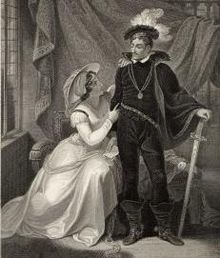
220px-Harry_Hotspur_Percy
Sir Henry “Hotspur” Percy and Elizabeth Mortimer

Roger spent many years in wardship following his father’s death. He was courageous, but had a reputation for religious and moral laxity. He was killed in Ireland in 1398, while acting as the king’s Lieutenant. It is possible that, at some point, he was named heir to the throne by Richard II, although there is considerable doubt in this.

Of Philippa and Edmund’s other children Elizabeth married Sir Henry “Hotspur” Percy sometime before May 1380. They had 2 children, but he was killed at the Battle of Shrewsbury in 1403. Elizabeth then married Thomas, 1st Baron Camoys, with whom she had a son who died young. Elizabeth died on 20th April 1417 and was buried at Trotton in Sussex, with her 2nd husband.

Philippa’s daughter and namesake, Philippa, married John Hastings, 3rd Earl of Pembroke, son of the Earl of Pembroke who had married Edward III’s daughter, Margaret. Following his death in 1389, she married Richard FitzAlan, 11th Earl of Arundel, who was executed in 1397. Her 3rd marriage was to Thomas Poynings, 5th Baron St John of Basing, around November 1399. She died in 1400 or 1401 and was buried at Boxgrove Priory in Sussex.

220px-Richard_Plantagenet,_3rd_Duke_of_York
Richard, Duke of York

Edmund’s namesake, Philippa and Edmund’s youngest son was married in about 1402 to Katherine, the daughter of Owen Glendower. They had several children, but all died young. Edmund himself died sometime between 1409 and 1411.

Philippa’s grandson, Roger’s son, Edmund, succeeded his father as Earl of March and Ulster; he became the king’s ward following his father’s death and, following the usurpation he was kept in Henry IV’s family circle.

Edmund seems to have suffered from a lack of ambition and when some barons tried to place him on the throne in 1415, it was Edmund himself who revealed the Southampton Plot to Henry V.

Edmund died of plague in Ireland in January 1425, but it is his sister, Anne Mortimer, who had been married to Richard of Conisbrough, that Philippa’s claim to the throne was passed to Anne and Richard’s son, Richard, Duke of York; thus laying the foundations for the Wars of the Roses and the accession of Edward IV and, later, his brother, Richard III.

*

Pictures taken from Wikipedia.

*

Sources: The Perfect King, the Life of Edward III by Ian Mortimer; The Life and Time of Edward III by Paul Johnson; The Reign of Edward III  by WM Ormrod; The Mammoth Book of British kings & Queens by Mike Ashley; Britain’s’ Royal Families, the Complete Genealogy by Alison Weir; Brewer’s British Royalty by David Williamson; The Plantagenets, the Kings Who Made Britain by Dan Jones; mortimerhistorysociety.org.uk.

*

My books:

Signed, dedicated copies of all my books are available through my online store.

Out now: Scotland’s Medieval Queens

Books by Sharon Bennett Connolly

Scotland’s history is dramatic, violent and bloody. Being England’s northern neighbour has never been easy. Scotland’s queens have had to deal with war, murder, imprisonment, political rivalries and open betrayal. They have loved and lost, raised kings and queens, ruled and died for Scotland. From St Margaret, who became one of the patron saints of Scotland, to Elizabeth de Burgh and the dramatic story of the Scottish Wars of Independence, to the love story and tragedy of Joan Beaufort, to Margaret of Denmark and the dawn of the Renaissance, Scotland’s Medieval Queens have seen it all. This is the story of Scotland through their eyes.

Scotland’s Medieval Queens gives a thorough grounding in the history of the women who ruled Scotland at the side of its kings, often in the shadows, but just as interesting in their lives beyond the spotlight. It’s not a subject that has been widely covered, and Sharon is a pioneer in bringing that information into accessible history.’ Elizabeth Chadwick (New York Times bestselling author)

Available now from Amazon and Pen and Sword Books

Also by Sharon Bennett Connolly:

Books by Sharon Bennett Connolly

Heroines of the Tudor World tells the stories of the most remarkable women from European history in the time of the Tudor dynasty, 1485-1603. These are the women who ruled, the women who founded dynasties, the women who fought for religious freedom, their families and love. Heroines of the Tudor World is now available from Amberley Publishing and Amazon UK. Women of the Anarchy demonstrates how Empress Matilda and Matilda of Boulogne, unable to wield a sword themselves, were prime movers in this time of conflict and lawlessness. It shows how their strengths, weaknesses, and personal ambitions swung the fortunes of war one way – and then the other. Available from Bookshop.orgAmberley Publishing and Amazon UKKing John’s Right-Hand Lady: The Story of Nicholaa de la Haye is the story of a truly remarkable lady, the hereditary constable of Lincoln Castle and the first woman in England to be appointed sheriff in her own right. Available from all good bookshops Pen & Sword Booksbookshop.org and Amazon

Royal Historical Society

Defenders of the Norman Crown: The Rise and Fall of the Warenne Earls of Surrey tells the fascinating story of the Warenne dynasty, from its origins in Normandy, through the Conquest, Magna Carta, the wars and marriages that led to its ultimate demise in the reign of Edward III. Available from Pen & Sword BooksAmazon in the UK and US, and Bookshop.orgLadies of Magna Carta: Women of Influence in Thirteenth Century England looks into the relationships of the various noble families of the 13th century, and how they were affected by the Barons’ Wars, Magna Carta and its aftermath; the bonds that were formed and those that were broken. It is now available in paperback and hardback from Pen & SwordAmazon, and Bookshop.orgHeroines of the Medieval World tells the stories of some of the most remarkable women from Medieval history, from Eleanor of Aquitaine to Julian of Norwich. Available now from Amberley Publishing and Amazon, and Bookshop.orgSilk and the Sword: The Women of the Norman Conquest traces the fortunes of the women who had a significant role to play in the momentous events of 1066. Available now from Amazon,  Amberley Publishing, and Bookshop.org.

Alternate Endings: An anthology of historical fiction short stories including Long Live the King… which is my take what might have happened had King John not died in October 1216. Available in paperback and kindle from Amazon.

Podcast:

A Slice of Medieval

Have a listen to the A Slice of Medieval podcast, which I co-host with Historical fiction novelist Derek Birks. Derek and I welcome guests, such as Bernard Cornwell and Michael Jecks, and discuss a wide range of topics in medieval history, from significant events to the personalities involved. 

Every episode is also now available on YouTube.

*

Don’t forget! Signed and dedicated copies of all my books are available through my online store.

For forthcoming online and in-person talks, please check out my Events Page.

You can be the first to read new articles by clicking the ‘Follow’ button, liking our Facebook page or joining me on TwitterThreadsBluesky and Instagram.

*

©2015 Sharon Bennett Connolly FRHistS
Nicholaa de la Haye, England’s Forgotten Heroine

History...the Interesting Bits
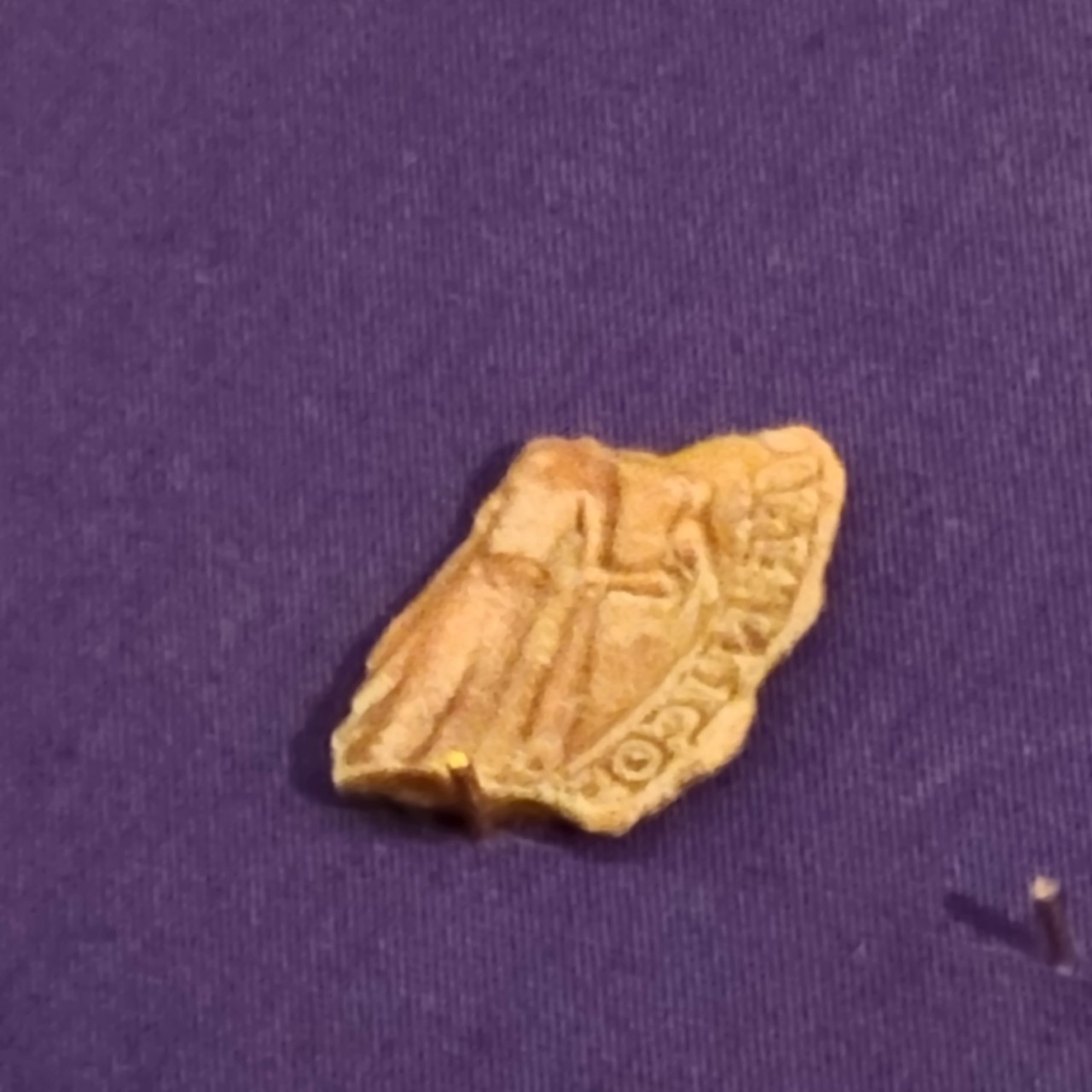
Seal of Nicholaa de la Haye, Lincoln Cathedral

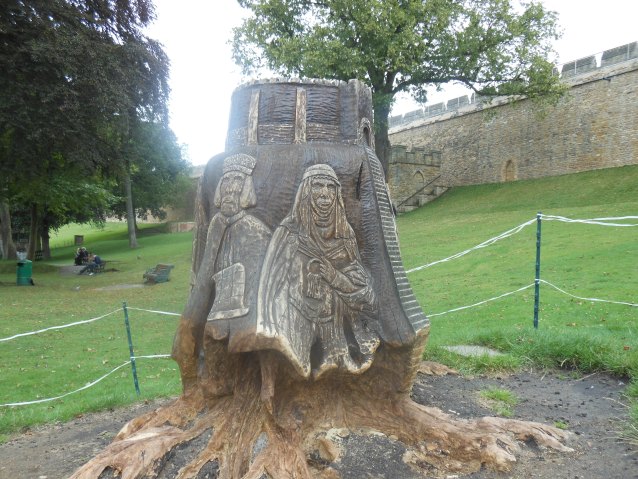
Nicholaa de la Haye is one of those very rare women in English history. She is renowned for her abilities, rather than her family and connections. In a time when men fought and women stayed home, Nicholaa de la Haye held Lincoln Castle against all-comers. Her strength and tenacity saved England at one of its lowest points in history.

The eldest daughter and co-heiress of Richard de la Haye and his wife, Matilda de Vernon, Nicholaa was probably born in the early-to-mid 1150s. Her father was Baron of Brattleby. Richard’s father was a Norman, Robert de la Haye of La Haye du Puits in the Cotentin. His mother, Muriel, was English, a Lincolnshire heiress as the granddaughter of Colswein of Lincoln. In 1166 Richard he was recorded as owing 20 knights’ fees, which had been reduced to 16 by 1172. When he died in 1169, Nicholaa inherited her father’s land in Lincolnshire and his position as hereditary castellan of Lincoln Castle, a position she would hold for over 50 years.

Nicholaa was married twice, her first husband, William Fitz Erneis, died in 1178, leaving Nicholaa a young widow with one daughter, Matilda. Before 1185 she married Gerard de Camville (or Canville), brother of Richard de Camville, admiral of Richard I’s crusading fleet during the Third Crusade. Nicholaa and Gerard had at least 2 children together; Richard and Thomas. Richard was heir to both Nicholaa and Gerard. Nothing is known of Thomas beyond his name. Another daughter may have been Nicholaa d’Eyncourt, who sued Nicholaa’s granddaughter for some de la Haye lands in the 1230s; however, while it seems certain that Nicholaa d’Eyncourt was kin, unfortunately, her exact relation to Nicholaa de la Haye has not been established.

Nicholaa’s husbands each claimed the position of castellan of Lincoln Castle by right of his wife; but Nicholaa seems to have been far from the normal subservient wife. When her husband was not in the castle, she was left in charge rather than an alternative, male deputy.

History...the Interesting Bits
Lincoln castle walls leading to the Observatory Tower

Nicholaa first comes to the attention of the chroniclers in 1191, when Prince John led the opposition to his brother’s chancellor, William Longchamp. Accusing him of harbouring outlaws, Longchamp demanded that Gerard de Camville relinquish Lincoln Castle to one of his own supporters. Gerard refused, and swore fealty to John, joining him at Nottingham Castle. Leaving Nicholaa to hold Lincoln. He probably assumed that Longchamp would not wage war on a woman. However, Richard I’s Chancellor, William Longchamp, had no such qualms. He headed north and laid siege to Lincoln Castle, probably assuming, wrongly, that Nicholaa would submit easily.

The formidable Nicholaa refused to yield, holding out for 40 days before Longchamp raised the siege, following the fall of the castles at Tickhill and Nottingham to John. Amusingly, Richard of Devizes said of this defence of Lincoln Castle, that she did it ‘without thinking of anything womanly’.

In 1194, on the king’s return, Camville was stripped of his positions as Sheriff of Lincolnshire and Castellan of the castle; only having it returned to him on the accession of King John in 1199.

As we all know, King John’s reign wasn’t exactly smooth sailing. He lost his French lands and was held to account by the barons of England for  numerous examples of maladministration, corruption and  outright murder. In 1215 he had been forced to seal the Great Charter, or Magna Carta, in order to avoid war. Although it eventually came to be considered a fundamental statement of English liberties, as a peace treaty Magna Carta failed miserably. Within months John had written to Pope Innocent III and the charter had been declared null and void; the barons were up in arms.

Gerard de Camville died in December 1214 and, although now a widow, it seems the castle remained in Nicholaa’s hands. On one of King John’s visits to inspect the castle’s defences in 1216, either in February or September there was a rather dramatic display of fealty from Nicholaa :

History...the Interesting Bits
Nicholaa de la Haye, Lincoln Castle

And once it happened that after the war King John came to Lincoln and the said Lady Nicholaa went out of the eastern gate of the castle carrying the keys of the castle in her hand and met the king and offered the keys to him as her lord and said she was a woman of great age and was unable to bear such fatigue any longer and he besought her saying, “My beloved Nicholaa, I will that you keep the castle as hitherto until I shall order otherwise”.¹

Whether Nicholaa ever intended to give up Lincoln, or the event was staged so that John could demonstrate his continued trust in Nicholaa, is open to debate. I suspect it was the latter. John was in the midst of civil war and running short of allies. Nicholaa had already demonstrated her abilities at defending Lincoln, and her loyalty to John – he would have been hard put to replace her. However, the event gave John the opportunity to reinforce his trust in Nicholaa in front of his barons.

The rebels invited the king of France to take the throne of England; instead Philip II‘s son, Louis (the future Louis VIII), accepted the offer and was hailed as King of England in London in June 1216. In the same year Nicholaa prevented another siege by paying off a rebel army, led by Gilbert de Gant, who remained in occupation of the city of Lincoln but lifted the siege of the castle. After Nicholaa paid off the 1216 besiegers, John came north and he chased the rebels into the Isle of Axholme ‘with fire and sword’.

As Louis consolidated his position in the south, John then made an inspection of Lincoln castle in September. Moving south, just 2 weeks later, the king’s baggage train was lost as he crossed the Wash estuary and within a few more days John was desperately ill, probably from dysentery. He moved on to the castle at Newark, from where, just hours before his death, John appointed Nicholaa de la Haye as Sheriff of Lincolnshire in her own right:

History...the Interesting Bits
The East Gate of Lincoln Castle

‘The King to the archbishops, bishops, earls, barons, knights, freeholders and others of the county of Lincoln etc.. Know that we have granted to our trusty and well-beloved, the lady Nicholaa de Haye and Philip Marc, the county of Lincoln with all its appurtenances, to be in their custody for so long as it may please us. We therefore command that you do heed and obey the said Nicholaa and Philip in all things as the bailiffs of the said county. And in testimony etc.. Witness myself, at Newark, the eighteenth day of October, in the eighteenth year of our reign.’

From King John’s Letters and Papers, translated by Rich Price

King John died at Newark on the night of 18/19th October 1216, with half his country occupied by a foreign invader and his throne now occupied by his 9-year-old son, Henry III. The elder statesman and notable soldier William Marshal, Earl of Pembroke was appointed Regent and set out to save the kingdom.

Meanwhile, Gilbert de Gant renewed the siege of Lincoln Castle, receiving reinforcements from Louis’ forces, under the Comte de Perche, in early 1217. Now in her 60s Nicholaa de la Haye took charge of the defences.

400px-BitvaLincoln1217ortho
The Battle of Lincoln, 1217

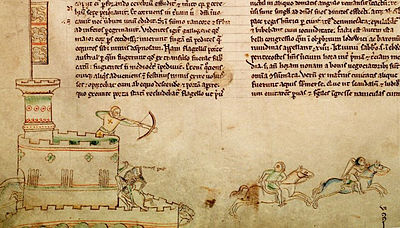
When the small force proved insufficient to force a surrender, the French had to send for reinforcements and siege engines. For almost 7 months, Nicholaa was besieged, with the circle tightening from March to mid-May as siege machinery bombarded the south and east walls of the castle. On the 20th May William Marshal arrived, from the north-west, with a relieving force. Attacking from the north of Lincoln, his army fell upon the besieging forces and, after about 6 hours of combat, routed the enemy; the French commander, the Comte de Perche, was killed in the fighting, and the rebel leaders captured.

The city, which had supported the rebels and welcomed the French, was sacked and looted by the victorious army; the battle becoming known as the Lincoln Fair, as a result. The Battle of Lincoln turned the tide of the war. After a further defeat in the naval Battle of Sandwich in the summer, the French were forced to seek peace and returned home. Magna Carta was reissued and Henry III’s regents could set about healing the country.

In a magnificent demonstration of ingratitude, within 4 days of the relief of the Castle, Nicholaa’s position of Sheriff of Lincolnshire was given to the king’s uncle William Longspée, Earl of Salisbury, who took control of the city and promptly seized the castle.

The king’s council should have known that Nicholaa would not give up her castle so easily. She travelled to court to remind the king’s regents of her services, and request her rights be restored to her. And in October 1217, an order was issued in Henry III’s name to

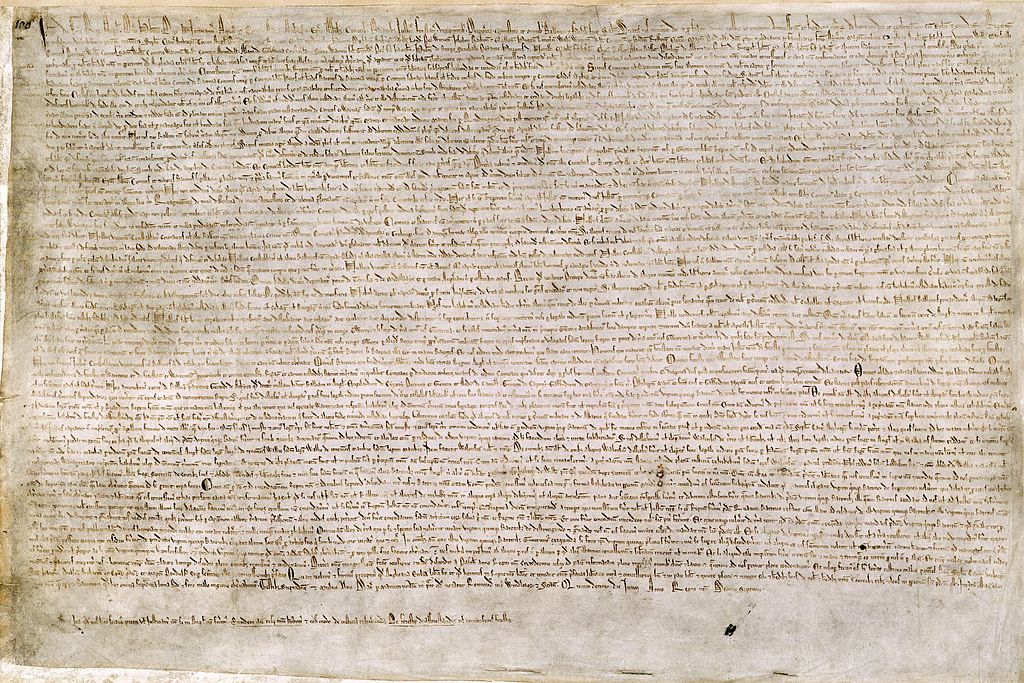
Magna_Carta_(British_Library_Cotton_MS_Augustus_II.106)
Magna carta

To our beloved and loyal uncle, W. Earl of Salisbury, greetings. Recently, our beloved and loyal lady, Mistress Nicholaa de Haya, came to us in London, begging us to restore her rights, and particularly the custody of Lincoln Castle, which she ought to have and usually possesses. We, considering her faithful service to our lord King J., our father, and our subsequently commended expenses, kindly, as was fitting, heeded her, restoring her rights, namely, the aforementioned custody of Lincoln Castle and others, saving our beloved and loyal R. Earl of Chester, in his matter [rather his right] which he claims to have in the same Castle. Furthermore, we have entrusted the county of Lincoln, along with the city of Lincoln, to the same Nicholaa, to be kept for as long as we please. And therefore we command you that, all delay and occasion postponed, you restore to her the said castle of Lincoln, with its appurtenances, removing from there all those who are on our part. And that you cause her to have without delay full possession of the said county with the city of Lincoln, as is above mentioned. And in testimony of this matter, etc. Witness the count, at Westminster, the 32nd (sic) day of October, in the second year of our reign.2

The settlement was not ideal, however, and some wrangling seems to have continued until Salisbury’s death in 1226.

Nicholaa’s granddaughter and heiress, Idonea – the daughter of Nicholaa’s eldest son Richard – was married to Salisbury’s son, William II Longspée; the couple inherited the de la Haye and Camville lands on Nicholaa’s death. As a result, Salisbury felt it was his right to hold his daughter-in-law’s inheritance, even though Nicholaa was not yet dead. Understandably, Nicholaa felt differently.

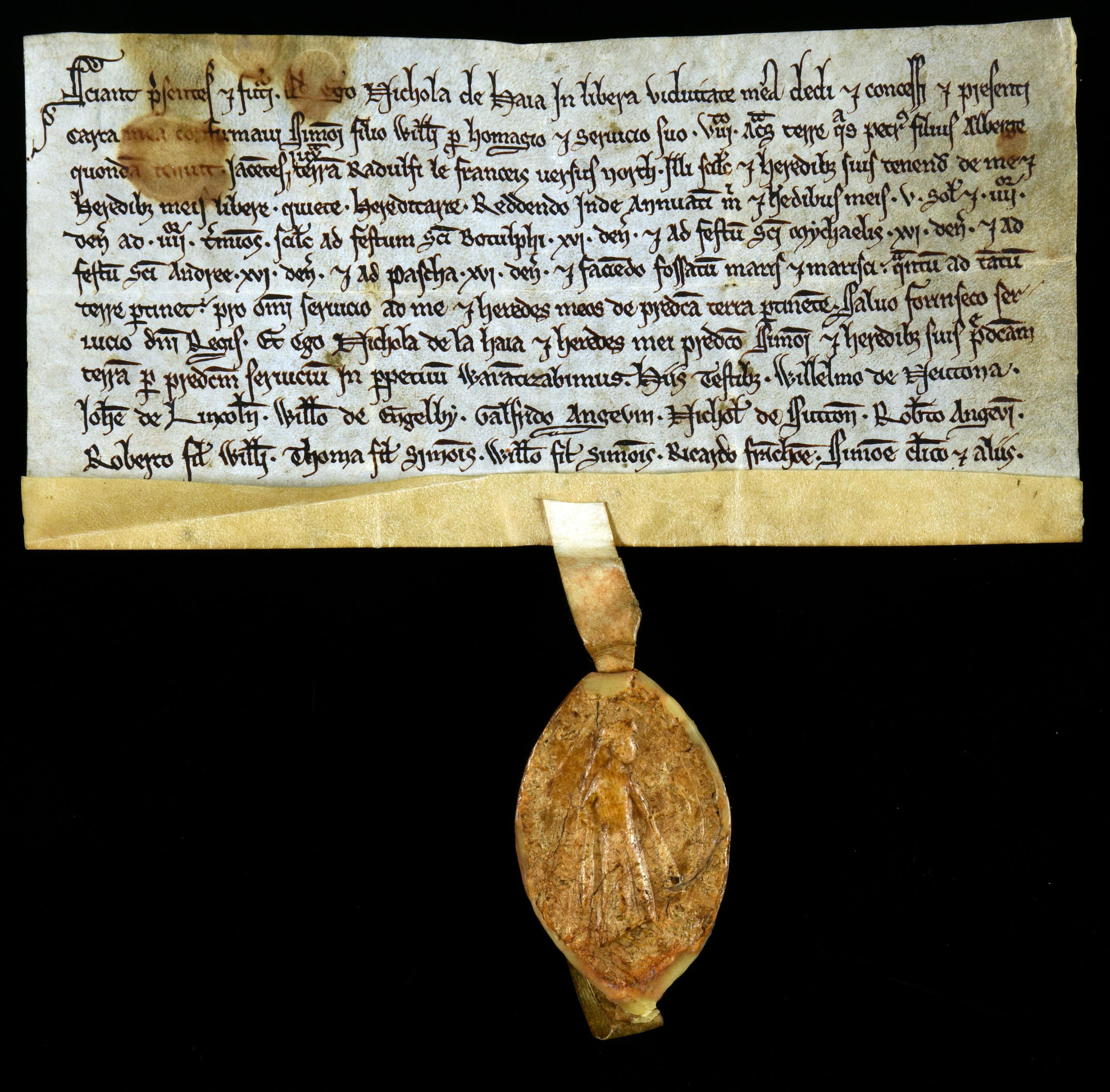
On the death of her second husband, Gerard de Camville, Nicholaa had declared herself femme sole, meaning she would be able to control her own lands. A staunchly independent woman, Nicholaa issued some 25 surviving charters in her name. She made grants to various religious houses, including Lincoln Cathedral, and even secured a royal grant for a weekly market for her village of Swaton.

History...the Interesting Bits
Land grant with Nicholaa de la Haye’s seal attached

A most able adversary for some of the greatest military minds of the time, and a loyal supporter of King John, Nicholaa de la Haye was unique among her peers. Although praised by the chroniclers, they seemed to find difficulty in describing a woman who acted in such a fashion;  the Dunstable annals refer to her as a ‘noble woman’, saying she acted ‘manfully’. One cannot fail to feel admiration for a woman who managed to hold her own in a man’s world, who fought for her castle and her home in a time when women had so little say over their own lives – and at such an advanced age. Her bravery and tenacity saved Henry III’s throne.

Not surprisingly, both King John and Henry III referred to her as ‘our beloved and faithful Nicholaa de la Haye’.

Nicholaa de la Haye, the woman who saved England, lived well into her 70s. By late 1226 she had retired to her manor at Swaton, dying there on 20 November, 1230. She was buried in St Michael’s Church, Swaton in Lincolnshire, where her tomb can be seen to this day.

*

Footnotes: ¹Irene Gladwin: The Sheriff; The Man and His Office; 2 ‘1217, membranes 11, 10, 9, 8’, in Calendar of Patent Rolls, Henry III: Volume 1, 1216-1225, ed. H C Maxwell Lyte (London, 1901), British History Online https://www.british-history.ac.uk/cal-pat-rolls/hen3/vol1/pp117-132 [accessed 16 July 2025].

*

Nicholaa’s story was the inspiration behind my third book, Ladies of Magna Carta: Women of Influence in Thirteenth Century England. And my full-length biography of Nicholaa, King John’s Right-Hand Lady: the Story of Nicholaa de la Haye, was published in May, 2023.

*

Image credits:

Photos of Lincoln Castle and Nicholaa’s seal, © Sharon Bennett Connolly 2015. Picture of the Battle of Lincoln and Magna Carta are courtesy of Wikipedia. Image of the land grant from the National Archives.

*

Sources:

The Plantagenet Chronicles edited by Elizabeth Hallam; Brassey’s Battles by John Laffin; 1215 The Year of Magna Carta by Danny Danziger & John Gillingham; The Life and times of King John by Maurice Ashley; The Story of Britain by Roy Strong; The Plantagenets, the Kings Who Made England by Dan Jones; England Under the Norman and Angevin Kings  by Robert Bartlett; lincolnshirelife.co.uk; catherinehanley.co.uk; magnacarta800th.com; lothene.org; lincolncastle.com; The Sheriff: The Man and His Office by Irene Gladwin; Elizabeth Chadwick; Nick Buckingham; swaton.org.uk; Women in Thirteenth Century Lincolnshire by Louise Wilkinson.

*

My Books:

Signed, dedicated copies of all my books are available through my online bookshop. or by contacting me.

Coming in 2026

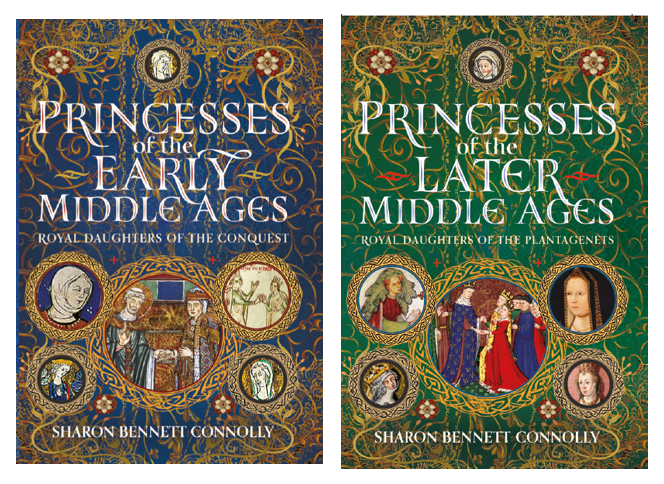
30 March: Princesses of the Early Middle Ages: Royal Daughters of the Conquest 

‘My daughter wanted me to treat her more like a princess. So, I married her to a stranger to strengthen the alliance with Poland!’

The medieval princess has often been portrayed as a pawn in the political machinations of her father or brother, married off to distant lands for the sake of peace, or land, or both. Never to be seen or thought of again.

But was that really her fate?

From the daughters of Harold, the last Saxon king, to the sisters of Henry III, Princesses of the Early Middle Ages explores the lives of these young women, how they followed the stereotype, and how they sometimes managed to escape it. It will look at the world they lived in, and how their lives and marriages were affected by political necessity and the events of the time.

Princesses of the Early Middle Ages: Royal Daughters of the Conquest is now available for pre-order from Pen & Sword and Amazon.

30 August: Princesses of the Later Middle Ages: Royal Daughters of the Plantagenets

Continuing the story, Princesses of the Later Middle Ages: Royal Daughters of the Plantagenets looks at the lives of the princesses, from the treasured daughters of Henry III to the children of Edward IV, whose lives were turned upside down when they were declared illegitimate.

What we see is a very different story, where a foreign marriage does not mean eternal exile, but a purpose in life, where a princess is a diplomat, an ambassador for England in her new country. She is the bond between allies – most of the time.

Princesses of the Later Middle Ages is now available for pre-order.

Also by Sharon Bennett Connolly:

Books by Sharon Bennett Connolly

Scotland’s history is dramatic, violent and bloody and Scotland’s Medieval Queens have seen it all. This is the story of Scotland through their eyes. Available now from Amazon and Pen and Sword BooksHeroines of the Tudor World tells the stories of the most remarkable women from European history in the time of the Tudor dynasty, 1485-1603. These are the women who ruled, the women who founded dynasties, the women who fought for religious freedom, their families and love. Heroines of the Tudor World is now available from Amberley Publishing and Amazon UK. Women of the Anarchy demonstrates how Empress Matilda and Matilda of Boulogne, unable to wield a sword themselves, were prime movers in this time of conflict and lawlessness. It shows how their strengths, weaknesses, and personal ambitions swung the fortunes of war one way – and then the other. Available from Bookshop.orgAmberley Publishing and Amazon UKKing John’s Right-Hand Lady: The Story of Nicholaa de la Haye is the story of a truly remarkable lady, the hereditary constable of Lincoln Castle and the first woman in England to be appointed sheriff in her own right. Available from all good bookshops Pen & Sword Booksbookshop.org and Amazon

Books by Sharon Bennett Connolly

Defenders of the Norman Crown: The Rise and Fall of the Warenne Earls of Surrey tells the fascinating story of the Warenne dynasty, from its origins in Normandy, through the Conquest, Magna Carta, the wars and marriages that led to its ultimate demise in the reign of Edward III. Available from Pen & Sword BooksAmazon in the UK and US, and Bookshop.orgLadies of Magna Carta: Women of Influence in Thirteenth Century England looks into the relationships of the various noble families of the 13th century, and how they were affected by the Barons’ Wars, Magna Carta and its aftermath; the bonds that were formed and those that were broken. It is now available in paperback and hardback from Pen & SwordAmazon, and Bookshop.orgHeroines of the Medieval World tells the stories of some of the most remarkable women from Medieval history, from Eleanor of Aquitaine to Julian of Norwich. Available now from Amberley Publishing and Amazon, and Bookshop.orgSilk and the Sword: The Women of the Norman Conquest traces the fortunes of the women who had a significant role to play in the momentous events of 1066. Available now from Amazon,  Amberley Publishing, and Bookshop.org.

Alternate Endings: An anthology of historical fiction short stories including Long Live the King… which is my take what might have happened had King John not died in October 1216. Available in paperback and kindle from Amazon.

Podcast:

A Slice of Medieval

Have a listen to the A Slice of Medieval podcast, which I co-host with Historical fiction novelist Derek Birks. Derek and I welcome guests, such as Ian Mortimer, Bernard Cornwell, Elizabeth Chadwick and Scott Mariani, and discuss a wide range of topics in medieval history, from significant events to the personalities involved. 

Every episode is also now available on YouTube.

*

Don’t forget! Signed and dedicated copies of all my books are available through my online bookshop.

For forthcoming online and in-person talks, please check out my Events Page.

You can be the first to read new articles by clicking the ‘Follow’ button, liking our Facebook page or joining me on TwitterThreads, Bluesky and Instagram.

©2015 Sharon Bennett Connolly FRHistS
Joanna of England, the Lionheart’s Little Sister

220px-Joanna_Plantagenet
Joanna of England

Joanna of England was born in October 1165, the 7th child and youngest daughter of Henry II of England and Eleanor of Aquitaine. Ten years younger than her eldest brother, Henry the Young King, she was born at a time when their parents’ relationship was breaking down; her mother would eventually go to war against her husband, before being imprisoned by him for the last 16 years of Henry’s reign.

Born at Angers Castle in Anjou, Christmas 1165 was the first ever Christmas her parents spent apart; with Henry still in England dealing with a Welsh revolt, it would be several months before he met his new daughter for the first time. Although Joanna spent much of her childhood at her mother’s court in Poitiers, she and her younger brother, John, spent sometime boarding at the magnificent Abbey of Fontevraud. Whilst there Joanna was educated in the skills needed to run a large, aristocratic household and in several languages; English, Norman French and rudimentary Latin.

160px-Britishmuseumsealofjoanna
Joanna’s seals

When Eleanor and her sons rebelled in 1173, Henry II went to war against his wife. When she was captured – wearing men’s clothes – she was sent to imprisonment in England. Joanna joined her father’s entourage and frequently appeared at Henry’s Easter and Christmas courts.

3 years later, Eleanor was allowed to travel to Winchester to say ‘goodbye’ to her youngest daughter, who had been betrothed to King William II of Sicily. Provided with a trousseau, probably similar to that of her sister Matilda on her marriage to Henry the Lion, Joanna set out from Winchester at the end of August 1176; escorted by Bishop John of Norwich and her uncle, Hamelin de Warenne.

Joanna’s entourage must have been a sight to see. Once on the Continent, she was escorted from Barfleur by her brother Henry, the Young King. Her large escort was intended to dissuade bandit attacks against her impressive dowry, which included fine horses, gems and precious metals. At Poitiers, Joanna was met by another brother, Richard, who escorted his little sister to Toulouse in a leisurely and elegant progress.

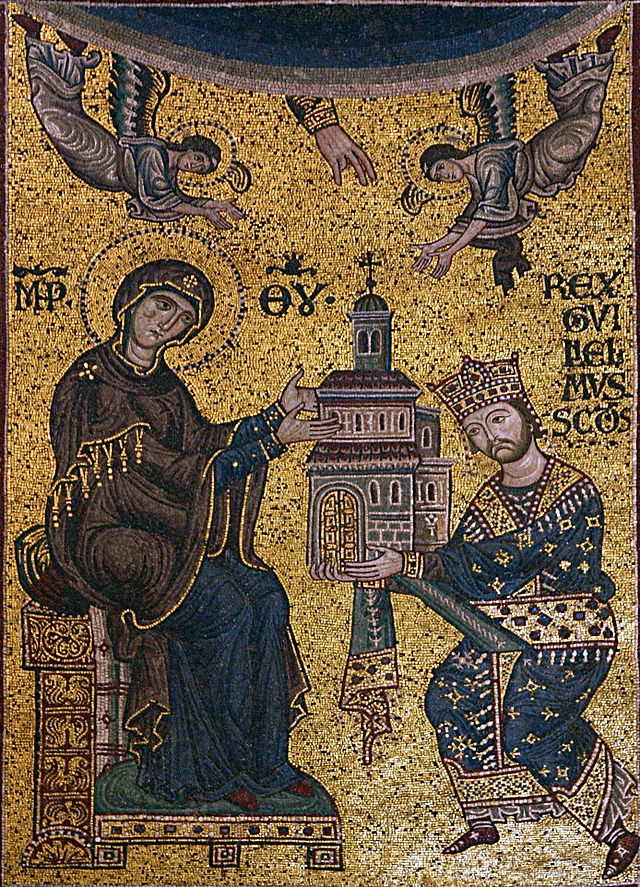
Dedication_mosaic_-_Cathedral_of_Monreale_-_Italy_2015_(crop)
William II dedicating the Cathedral of Monreale to the Virgin Mary

Having finally reached Sicily 12-year-old Joanna was married to 24-year-old William on 13th February 1177, in Palermo Cathedral. The marriage ceremony was followed by her coronation as Queen of Sicily. Joanna must have looked magnificent, her bejewelled dress cost £114 – not a small sum at the time.

Sicily was an ethnically diverse country; William’s court was composed of Christian, Muslim and Greek advisers. William himself spoke, read and wrote Arabic and, in fact, kept a harem of both Christian and Muslim girls within the palace. Although she was kept secluded, it must have been a strange life for a young girl, partly raised in a convent.

Joanna and William only had one child, Bohemond, Duke of Apulia, who was born – and died – in 1181. And when William died without an heir in November 1189, Joanna became a pawn in the race for the succession. William’s aunt, Constance was the rightful heir, but she was married to Henry VI, Holy Roman Emperor and many feared being absorbed into his empire. William II’s illegitimate nephew, Tancred of Lecce, seized the initiative. He claimed the throne and, in need of money, imprisoned Joanna and stole her dowry and the treasures left to her by her husband.

180px-Vilem2Sicilie_smrt
William II of Sicily on his deathbed

Who knows how long Joanna would have remained imprisoned, if it had not been for her brother’s eagerness to go on Crusade? Having gained the English throne in 1189 Richard I – the Lionheart – had wasted no time in organising the Third Crusade and arrived at Messina in Sicily in September 1190.

Richard demanded Joanna’s release; and fearing the Crusader king’s anger Tancred capitulated and freed Joanna, paying 40,000 ounces of gold towards the Crusade in fulfilment of William II’s promise of aid.

Described as beautiful and spirited, Joanna had been Queen of Sicily for 13 years and it seems that, while at her brother’s court, she caught the eye of Richard’s co-Crusdaer, King Philip II of France. Richard was having none of it and moved Joanna to the Priory of Bagnara on the mainland, out of sight and hopefully out of mind.

Richard stayed in Sicily for sometime, negotiating a treaty with Tancred which would recognise him as rightful king of Sicily in return for the remainder of Joanna’s dowry and 19 ships to support the Crusade. He was also waiting for his bride, Berengaria of Navarre, to catch up with him.

Richard_I_and_Joan_greeting_Philip_Augustus
Joanna with her brother, Richard the Lionheart, and King Philip II of France

During Lent of 1191 Joanna had a brief reunion with her mother Eleanor of Aquitaine when she arrived in Sicily, having escorted Richard’s bride. Joanna became Berengaria’s chaperone and they were lodged together at Bagnara, like ‘two doves in a cage’.

Unable to marry in the Lenten season, Richard sent Joanna and Berengaria on ahead of the main army, and departed Sicily for the Holy Land.

The Royal ladies’ ship was driven to Limassol on Cyprus by a storm. After several ships were crippled and then plundered by the islanders, the ruler of Cyprus, Isaac Comnenus, tried to lure Joanna and Berengaria ashore. Richard came to the rescue, reduced Cyprus in 3 weeks and clamped Comnenus in chains (silver ones apparently). Lent being over, Richard and Berengaria were married, with great pomp and celebration, before the whole party continued their journey to the Holy Land, arriving at Acre in June 1191.

Joanna’s time in the Holy Land was spent in Acre and Jaffa, accompanying her sister-in-law and following – at a safe distance – behind the Crusading army. She spent Christmas 1191 with Richard and Berengaria, at Beit-Nuba, just 12 miles from Jerusalem. However, although he re-took Acre and Jaffa, Richard fell out with his allies and was left without a force strong enough to take Jerusalem.

In attempts to reach a political settlement with the Muslim leader, Saladin, Richard even offered Joanna as a bride for Saladin’s brother. His plans were scuppered, however, when Joanna refused outright to even consider marrying a Muslim, despite the fact Richard’s plan would have seen her installed as Queen of Jerusalem.

When a 3-year truce was eventually agreed with Saladin, Joanna and Berengaria were sent ahead of the army, to Sicily and onto Rome where they were to await Richard’s arrival. Richard, however, never made it; falling into the hands of Duke Leopold of Austria, he was handed over to his enemy, the Holy Roman Emperor.

With Richard imprisoned, Berengaria and Joanna arrived back in Poitiers. Berengaria herself set out to help raise the ransom money for Richard’s release, which finally came about in February 1194.

220px-Raimond6Toulouse
Raymond VI Count of Toulouse

Joanna spent the next few years at her mother’s and brother’s courts, her wealth having been squandered by Richard’s Crusade. But at the age of 31 she was proposed as a bride for Raymond VI, Count of Toulouse. Her title as Queen of Sicily would give him greater prestige while bringing the County of Toulouse into the Plantagenet fold, a long-time aim of Eleanor’s.

3-times married Raymond does not seem to have been ideal husband material; he had been excommunicated for marrying his third wife whilst still married to his second. And he now repudiated wife number 3, confining her to a convent, in order to marry Joanna. Despite such a colourful history, the wedding went ahead and Joanna and Raymond were married in Rouen in October 1196, with Queen Berengaria in attendance.

Although not a happy marriage Joanna gave birth to a son, Raymond, in around 1197 and a daughter, possibly called Mary, in 1198. Little is known of Mary, and it is possible she died in infancy. Raymond succeeded his father as Raymond VII Count of Toulouse, and married twice.

220px-RaimondVIIToulouse1242
Raymond VII Count of Toulouse

Raymond VI was not a popular Count of Toulouse and while he was away in the Languedoc, in 1199, dealing with rebel barons, Joanna herself tried to face down her husband’s enemies. She laid siege to a rebel stronghold at Cassee. Mid-siege, however, her troops turned traitor and fired the army’s camp – Joanna managed to escape, but was probably injured.

A pregnant Joanna was then trying to make her way to her brother Richard when she heard of his death. She diverted course and finally reached her mother at Niort. Hurt, distressed and pregnant, Eleanor sent her to Fontevraud to be looked after by the nuns.

With no allowance from her husband, Joanna returned to her mother and brother – King John – in Rouen in June 1199, pleading poverty; Eleanor managed to persuade John to give his sister an annual pension of 100 marks.

Joanna’s last few months must have been a desperate time. Too ill to travel and heavily pregnant, she remained at Rouen. In September, King John gave her a lump sum of 3,000 marks, to dispose of in her will; she specifically mentioned a legacy towards the cost of a new kitchen at Fontevraud and asked Eleanor to dispose of the remainder in charitable works for the religious and the poor.

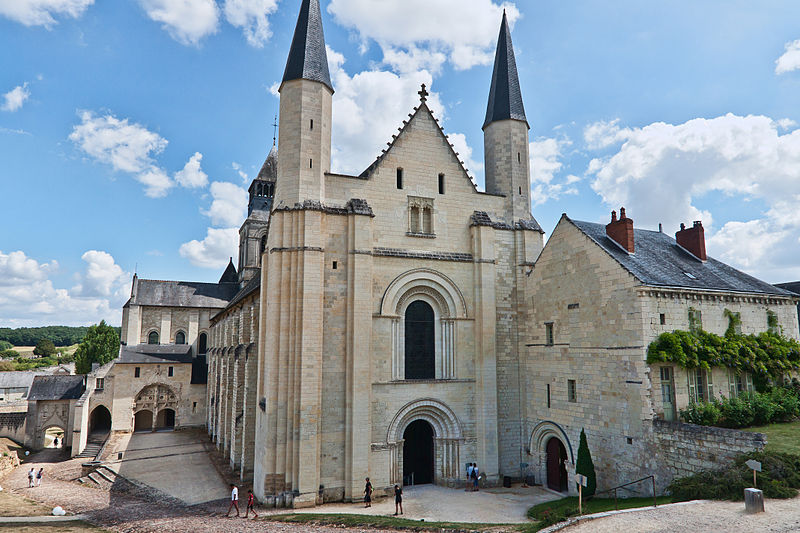
800px-Abbaye_Fontevraud_-_Eglise_Abbatiale,_facade_ouest
The Church at the Abbey of Fontevraud

Knowing she was dying, Joanna became desperate to be veiled as a nun at Fontevraud; a request normally denied to married women – especially when they were in the late stages of pregnancy. However, seeing how desperate her daughter was, Eleanor sent for Matilda, the Abbess of Fontevraud but, fearing the Abbess would arrive too late, she also asked Hubert Walter, the Archbishop of Canterbury, to intervene. The Archbishop tried to dissuade Joanna, but was impressed by her fervour and convened a committee of nuns and clergy; who agreed that Joanna must be ‘inspired by heaven’.

In Eleanor’s presence, the Archbishop admitted Joanna to the Order of Fontevraud. Joanna was too weak to stand and died shortly after the ceremony; her son, Richard, was born a few minutes later and lived only long enough to be baptised. She died on 4 September 1199, a month short of her 34th birthday.

Joanna and her baby son were interred together at Fontevraud, the funeral cortege having been escorted there by Eleanor of Aquitaine and King John.

The Winchester Annalist said of Joanna, that she was;

a woman whose masculine spirit overcame the weakness of her sex

Winchester Annalist quoted in Oxforddnb.com

*

Do have a listen to our recent episode of A Slice of Medieval in which Derek and I chat with Catherine Hanley about her biography of Joanna, Lionessheart.

Pictures taken from Wikipedia

References: Mike Ashley The Mammoth Book of Kings & Queens; Alison Weir Britain’s Royal Families, the Complete Genealogy; Robert Bartlett England Under the Norman and Angevin Kings; Alison Weir Eleanor of Aquitaine, by the Wrath of God, Queen of England; Douglas Boyd Eleanor, April Queen of Aquitaine; bestofsicily.com; Oxforddnb.com; britannica.com; geni.com; royalwomenblogspot.co.uk; medievalqueens.com.

*

My books

Signed, dedicated copies of all my books are available through my online bookshop.

Out now: Scotland’s Medieval Queens

Books by Sharon Bennett Connolly

Scotland’s history is dramatic, violent and bloody. Being England’s northern neighbour has never been easy. Scotland’s queens have had to deal with war, murder, imprisonment, political rivalries and open betrayal. They have loved and lost, raised kings and queens, ruled and died for Scotland. From St Margaret, who became one of the patron saints of Scotland, to Elizabeth de Burgh and the dramatic story of the Scottish Wars of Independence, to the love story and tragedy of Joan Beaufort, to Margaret of Denmark and the dawn of the Renaissance, Scotland’s Medieval Queens have seen it all. This is the story of Scotland through their eyes.

Scotland’s Medieval Queens gives a thorough grounding in the history of the women who ruled Scotland at the side of its kings, often in the shadows, but just as interesting in their lives beyond the spotlight. It’s not a subject that has been widely covered, and Sharon is a pioneer in bringing that information into accessible history.’ Elizabeth Chadwick (New York Times bestselling author)

Available now from Amazon and Pen and Sword Books

Also by Sharon Bennett Connolly:

Books by Sharon Bennett Connolly

Heroines of the Tudor World tells the stories of the most remarkable women from European history in the time of the Tudor dynasty, 1485-1603. These are the women who ruled, the women who founded dynasties, the women who fought for religious freedom, their families and love. Heroines of the Tudor World is now available for pre-order from Amberley Publishing and Amazon UK. Women of the Anarchy demonstrates how Empress Matilda and Matilda of Boulogne, unable to wield a sword themselves, were prime movers in this time of conflict and lawlessness. It shows how their strengths, weaknesses, and personal ambitions swung the fortunes of war one way – and then the other. Available from Bookshop.orgAmberley Publishing and Amazon UKKing John’s Right-Hand Lady: The Story of Nicholaa de la Haye is the story of a truly remarkable lady, the hereditary constable of Lincoln Castle and the first woman in England to be appointed sheriff in her own right. Available from all good bookshops Pen & Sword Booksbookshop.org and Amazon

Royal Historical Society

Defenders of the Norman Crown: The Rise and Fall of the Warenne Earls of Surrey tells the fascinating story of the Warenne dynasty, from its origins in Normandy, through the Conquest, Magna Carta, the wars and marriages that led to its ultimate demise in the reign of Edward III. Available from Pen & Sword BooksAmazon in the UK and US, and Bookshop.orgLadies of Magna Carta: Women of Influence in Thirteenth Century England looks into the relationships of the various noble families of the 13th century, and how they were affected by the Barons’ Wars, Magna Carta and its aftermath; the bonds that were formed and those that were broken. It is now available in paperback and hardback from Pen & SwordAmazon, and Bookshop.orgHeroines of the Medieval World tells the stories of some of the most remarkable women from Medieval history, from Eleanor of Aquitaine to Julian of Norwich. Available now from Amberley Publishing and Amazon, and Bookshop.orgSilk and the Sword: The Women of the Norman Conquest traces the fortunes of the women who had a significant role to play in the momentous events of 1066. Available now from Amazon,  Amberley Publishing, and Bookshop.org.

Alternate Endings: An anthology of historical fiction short stories including Long Live the King… which is my take what might have happened had King John not died in October 1216. Available in paperback and kindle from Amazon.

Podcast:

A Slice of Medieval

Have a listen to the A Slice of Medieval podcast, which I co-host with Historical fiction novelist Derek Birks. Derek and I welcome guests, such as Elizabeth Chadwick, Helen Castor, Ian Mortimer, Scott Mariani and Bernard Cornwell and discuss a wide range of topics in medieval history, from significant events to the personalities involved. 

Every episode is also now available on YouTube.

*

Don’t forget! Signed and dedicated copies of all my books are available through my online store.

For forthcoming online and in-person talks, please check out my Events Page.

You can be the first to read new articles by clicking the ‘Follow’ button, liking our Facebook page or joining me on TwitterThreadsBluesky and Instagram.

©2015 Sharon Bennett Connolly FRHistS
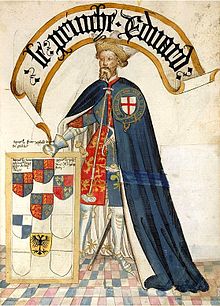
Eleanor, the ‘Pearl of Brittany’

History...the Interesting Bits
Eleanor of Brittany

Eleanor of Brittany was born around 1184, the daughter of Geoffrey Plantagenet Duke of Brittany by right of his wife, and Constance of Brittany. Whilst estranged from his father, Henry II, Geoffrey had been trampled to death while competing at a tournament in Paris, in August 1186.

Described as beautiful, she has been called the Pearl, the Fair Maid and the Beauty of Brittany. A granddaughter of Henry II and Eleanor of Aquitaine, she was the eldest of her parents’ three children; a second daughter, Matilda was born the following year, but died young and a son, Arthur who was killed by – or at least on the orders of – King John in 1203. The birth of Eleanor’s brother Arthur in 1187 diminished her value on the marriage market; she no longer came with Brittany as her dowry, like her mother had done.

Initially, Eleanor’s life seemed destined to follow the same path as many royal princesses; marriage. Richard I, her legal guardian after the death of her father in 1186, following his sister Joanna’s adamant refusal, offered Eleanor as a bride to Saladin’s brother, Al-Adil, in a failed attempt at a political settlement to the Third Crusade.

Nothing came of the suggestion and, shortly after, at the age of nine, Eleanor was betrothed to Friedrich, the son of Duke Leopold VI of Austria, who had made the betrothal a part of the ransom for Richard I’s release from imprisonment by the Duke. Eleanor was travelling to Germany in the care of Baldwin de Béthune when news arrived that, Duke Leopold had died suddenly. The duke’s s son had ‘no great inclination’ for the proposed marriage and so Eleanor and her party turned around and returned home. Further marriage plans were mooted in 1195 and 1198, to Philip II of France’s son Louis, the dauphin, and Odo, Duke of Burgundy, respectively; although neither came to fruition.

History...the Interesting Bits
Arthur of Brittany

Duchess Constance then pressed for Eleanor to be released from royal custody and by the time of Richard’s death, in 1199, Eleanor was living in France with her mother and brother. Eleanor’s fortunes changed drastically when Arthur rebelled against Richard’s successor, King John, in the early 1200s, encouraged by King Philip II of France.

As the posthumous son of John’s older brother, Geoffrey, Arthur had a strong claim to the English crown, but had been sidelined in favour of his more mature and experienced uncle. He was also heavily influenced by the French king, a fact which did not go in his favour. Arthur was captured while besieging his grandmother, Eleanor of Aquitaine, at Mirebeau on 1st August 1202.

Eleanor was captured at the same time, or shortly after. And while her brother was imprisoned at Falaise, and later Rouen, in 1203 she was sent into perpetual imprisonment in England. Eleanor of Brittany holds the sad record of being the longest imprisoned English royal in British history.

If the laws of primogeniture had been strictly followed at the time, Eleanor would have been sovereign of England after her brother’s death. John and his successor, Henry III could never forget this. However, the experiences of Empress Matilda and her fight with King Stephen over her own rights to the crown – and the near-20 years of civil war between 1135 and 1154, had reinforced the attitude that a woman could not rule.

History...the Interesting Bits
Eleanor of Brittany

This did not, however, mean that Eleanor was no threat to John and Henry; should she be allowed to marry, her husband may be persuaded to fight to assert her rights, of form the focus to a rival faction at court – and an alternative royal line. Imprisoning Eleanor mean that John not only kept control of her, but also eliminated any possible opposition building around her rights to the throne.

Although her confinement has been described as ‘honourable’, Eleanor’s greater right to the throne meant she would never be freed, or allowed to marry and have children. King John gave her the title of Countess of Richmond on 27th May 1208, but Henry III would take it from her in 1219 and bestow the title elsewhere. From 1219 onward she was styled the ‘king’s kinswoman’ and ‘our cousin’.

It seems Eleanor did spend some time with the king and court, particularly in 1214 when she accompanied John to La Rochelle to pursue his war with the French. John planned to use Eleanor to gain Breton support and maybe set her up as his puppet Duchess of Brittany, replacing her younger half-sister Alice.

Alice was the daughter of Eleanor’s mother, Constance, by her third marriage to Guy of Thouars. She was married to Peter of Dreux, a cousin of King Philip of France and Duke of Brittany by right of Alice. Using the carrot and stick approach, John offered Peter the earldom of Richmond to draw him to his side, while at the same time dangling the threat of restoring Eleanor to the dukedom, just by having her with him. Peter, however, refused to be threatened of persuaded and chose to face John in the field at Nantes. John’s victory and capture of Peter’s brother in the fighting persuaded Peter to agree to a truce, and John was content to leave Brittany alone, thereafter, advancing on Angers. His plans to restore Eleanor abandoned and forgotten.

History...the Interesting Bits
Bowes Castle, North Yorkshire

Eleanor’s movements were restricted, and she was closely guarded. Her guards were changed regularly to enhance security, but her captivity was not onerous. She was provided with ‘robes’, two ladies-in-waiting in 1230, and given money for alms and linen for her ‘work’. One order provided her with cloth; however, it was to be ‘not of the king’s finest.’ She was granted the manor of Swaffham and a supply of venison from the royal forests. The royal family sent her gifts and she spent some time with the queen and the daughters of the king of Scotland, who were hostages in the king’s custody.

Throughout her captivity she is said to have remained ‘defiant’.

Eleanor was well-treated and fed an aristocratic diet, as her weekly shopping list attests; ‘Saturday: bread, ale, sole, almonds, butter, eggs. Sunday: mutton, pork, chicken and eggs. Monday: beef, pork, honey, vinegar. Tuesday: pork, eggs, egret. Wednesday: herring, conger, sole, eels, almonds and eggs. Thursday: pork, eggs, pepper, honey. Friday: conger, sole, eels, herring and almonds.’ In her sole surviving letter, written in 1208 with John’s consent, she is styled ‘Duchess of Brittany and Countess of Richmond.’

It is difficult to pinpoint exactly where Eleanor was imprisoned at any one time.  Over the years, she was held in various strongholds, including the castles of Corfe (Dorset), Burgh (Westmorland), and Bowes (Yorkshire).  Corfe Castle is mentioned at times, and it seems she was moved away from the coast in 1221 after a possible rescue plot was uncovered. She was also held at Marlborough for a time, and she was definitely at Gloucester Castle in 1236.

History...the Interesting Bits
King John

By 1241 she was confined in Bristol castle, where Eleanor was visited regularly by bailiffs and leading citizens to ensure her continued welfare. Eleanor was also allowed   her chaplain and serving ladies to ensure her comfort. She died on 10 August 1241, at the age of about fifty-seven. After thirty-nine years of imprisonment, Eleanor achieved in death the freedom that had eluded her in life.

She was initially buried at St James’s Priory Church in Bristol but her remains were later removed to the abbey at Amesbury, a convent with a long association with the crown.

*

Sources: Douglas Boyd, Eleanor, April Queen of Aquitaine; Dan Jones, The Plantagenets: the Kings who made England; Robert Bartlett, England Under the Norman and Angevin Kings 1075-1225; Alison Weir, Eleanor of Aquitaine and Britain’s Royal Families; Oxford Companion to British History; The History Today Companion to British History; Robert Lacey, Great Tales from English History; Mike Ashley, A Brief History of British Kings and Queens and The Mammoth Book of British Kings and Queens; findagrave.com; spokeo.com.

Pictures: Wikipedia, findagrave.com; Bowes Castle is ©Sharon Bennett Connolly

*

My books

Signed, dedicated copies of all my books are available through my online bookshop. or by contacting me.

Coming 30 March: Princesses of the Early Middle Ages

Books by Sharon Bennett Connolly

Daughters of kings were often used to seal treaty alliances and forge peace with England’s enemies. Princesses of the Early Middle Ages: Royal Daughters of the Conquest explores the lives of these young women, how they followed the stereotype, and how they sometimes managed to escape it. It will look at the world they lived in, and how their lives and marriages were affected by political necessity and the events of the time. Princesses of the Early Middle Ages will also examine how these girls, who were often political pawns, were able to control their own lives and fates. Whilst they were expected to obey their parents in their marriage choices, several princesses were able to exert their own influence on these choices, with some outright refusing the husbands offered to them.

Their stories are touching, inspiring and, at times, heartbreaking.

Princesses of the Early Middle Ages: Royal Daughters of the Conquest is now available for pre-order from Pen & Sword and Amazon.

Also by Sharon Bennett Connolly:

Books by Sharon Bennett Connolly

Scotland’s history is dramatic, violent and bloody and Scotland’s Medieval Queens have seen it all. This is the story of Scotland through their eyes. Available now from Amazon and Pen and Sword BooksHeroines of the Tudor World tells the stories of the most remarkable women from European history in the time of the Tudor dynasty, 1485-1603. These are the women who ruled, the women who founded dynasties, the women who fought for religious freedom, their families and love. Heroines of the Tudor World is now available from Amberley Publishing and Amazon UK. Women of the Anarchy demonstrates how Empress Matilda and Matilda of Boulogne, unable to wield a sword themselves, were prime movers in this time of conflict and lawlessness. It shows how their strengths, weaknesses, and personal ambitions swung the fortunes of war one way – and then the other. Available from Bookshop.orgAmberley Publishing and Amazon UKKing John’s Right-Hand Lady: The Story of Nicholaa de la Haye is the story of a truly remarkable lady, the hereditary constable of Lincoln Castle and the first woman in England to be appointed sheriff in her own right. Available from all good bookshops Pen & Sword Booksbookshop.org and Amazon

History...the Interesting Bits

Defenders of the Norman Crown: The Rise and Fall of the Warenne Earls of Surrey tells the fascinating story of the Warenne dynasty, from its origins in Normandy, through the Conquest, Magna Carta, the wars and marriages that led to its ultimate demise in the reign of Edward III. Available from Pen & Sword BooksAmazon in the UK and US, and Bookshop.orgLadies of Magna Carta: Women of Influence in Thirteenth Century England looks into the relationships of the various noble families of the 13th century, and how they were affected by the Barons’ Wars, Magna Carta and its aftermath; the bonds that were formed and those that were broken. It is now available in paperback and hardback from Pen & SwordAmazon, and Bookshop.orgHeroines of the Medieval World tells the stories of some of the most remarkable women from Medieval history, from Eleanor of Aquitaine to Julian of Norwich. Available now from Amberley Publishing and Amazon, and Bookshop.orgSilk and the Sword: The Women of the Norman Conquest traces the fortunes of the women who had a significant role to play in the momentous events of 1066. Available now from Amazon,  Amberley Publishing, and Bookshop.org.

Alternate Endings: An anthology of historical fiction short stories including Long Live the King… which is my take what might have happened had King John not died in October 1216. Available in paperback and kindle from Amazon.

Podcast:

A Slice of Medieval

Have a listen to the A Slice of Medieval podcast, which I co-host with Historical fiction novelist Derek Birks. Derek and I welcome guests, such as Ian Mortimer, Bernard Cornwell, Elizabeth Chadwick and Scott Mariani, and discuss a wide range of topics in medieval history, from significant events to the personalities involved. 

Every episode is also now available on YouTube.

*

Don’t forget! Signed and dedicated copies of all my books are available through my online bookshop.

For forthcoming online and in-person talks, please check out my Events Page.

You can be the first to read new articles by clicking the ‘Follow’ button, liking our Facebook page or joining me on TwitterThreadsBluesky and Instagram.

*

©2015 Sharon Bennett Connolly FRHistS