Wordly Women: Toni Mount

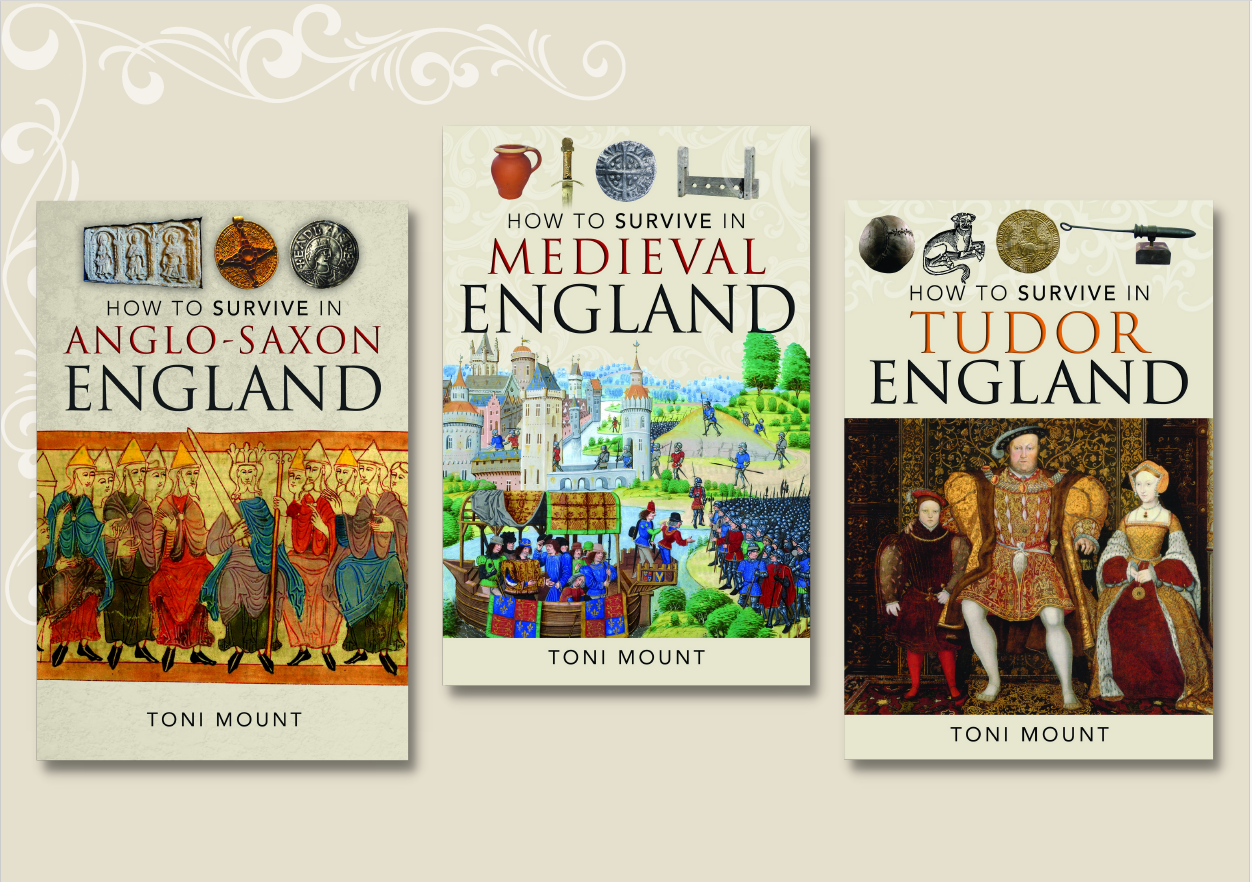
In today’s spotlight on Wordly Women, I welcome my good friend, novelist and historian, Toni Mount back to History… the Interesting Bits. Toni writes the fabulous Seb Foxley mystery novels and the non-fiction series How to Survive in…

Sharon: What got you into writing?

Toni: I’ve always been a story-teller. Aged 6, when the teacher was called away – before the days of teaching assistants – she would have me sit at the front of the class and tell them a story. It was usually a mix of various fairytales with princes, princesses, witches and dragons. I like to think I became more sophisticated when I started writing them down in English Composition lessons aged 7 or 8. My imagined ‘First Flight of Concorde’ – the supersonic plane – won the school prize and my head has been full of stories for as long as I can remember. A good many have made it to the page but not all.

Sharon: You write both fiction and non-fiction – is one harder than the other?

Toni: Fiction needs your own ideas; in non-fiction the facts are there, waiting for you to use. Since my novels are as authentic to the period as I can make them, but without the ‘gadzooks’ and ‘forsooths’, they take as much research as the non- fiction books. In both cases, I’m looking to tell a good story. The difference is that non-fiction may have gaps where historians don’t know the answers, such as what was Edward II thinking when he gave Piers Gaveston the queen’s jewellery but in a novel the writer is allowed to tell you why.

Sharon: Tell us about your books.

Toni: I’ve had 30+ books published, half of them novels. My most successful non-fiction books are ‘Everyday Life in Medieval London’ and ‘Medieval Medicine’ both published by Amberley, and ‘How to Survive in Medieval England’ published by Pen & Sword which was recently a no.1 best seller on Amazon. The How to Survive series – my fourth: ‘How to Survive in Ration-Book Britain’ is due to be out in November 2025 – is written for the armchair time-traveller and puts a light-hearted slant on history. ‘How to Survive in Tudor England’ and ‘How to Survive in Anglo-Saxon England’ are the other titles.

My Sebastian Foxley Medieval Murder Mystery series has quite a following – book 13 ‘The Colour of Darkness’ has just gone off to the publisher MadeGlobal. Seb is a London-based scribe and illuminator in the 1470s-80s whose eye for detail means he spots clues that others miss to solve crimes. Many are true crimes which were recorded in the Mayor’s Court Rolls and remain unsolved – until now. I love the way my characters take over the story, sometimes doing things that never occurred to me. Seb has become a family member, so much so that my sons commissioned a portrait of him for my 65th birthday and it hangs above the fireplace.

Sharon: What attracts you to the period?

Toni: Whether fact or fiction, the Plantagenet period from the 1150s to 1485 is by far the most intriguing for me. Who doesn’t love to puzzle out a mystery? But modern policing is too boring to write about with so much paperwork, hours of CCTV footage to trawl through, fingerprinting, DNA, ballistics, etc. Give me Sherlock Holmes with his magnifying glass every time. The medieval period has even fewer technical complications.

Sharon: Who is your favourite medieval or Tudor personality and why?

Toni: Richard III obviously. I love the controversy. Was he a saint or a sinner? Or simply a human being?

Sharon: Who is your least favourite medieval or Tudor personality and why?

Toni: Henry VIII – a vicious paranoid megalomaniac. What’s to like? (Sharon: I could not agree more!)

Sharon: How do you approach researching your topic?

Toni: I read all I can around the subject; get a feel for the period and ‘live it’ in my head. As I write, if I realise I don’t know something, I make a note of it, check it out and list sources as I go. This is vital for a book which will have references and footnotes but even if I’m working on a novel, I may want to return to a source for further info or to mention it in my Author’s Notes – this is where I tell readers what’s true in the novel, which characters really existed, etc. In ‘The Colour of Darkness’, I did additional research into Medieval Mystery Plays and the ‘Duke of Exeter’s Daughter [a torture device], among other things. For the next novel, I’m reading up on medieval ships and firearms – I think it’s time somebody got shot with a ‘gunne’.

Sharon: Tell us your ‘favourite’ medieval or Tudor story you have come across in your research.

Toni: John/Eleanor Rykenor was a cross-dresser in the 1390s. He claimed to have had sex with nuns ‘as a man’ and didn’t charge them for it but did charge a group of Oxford priests-in-training for his services ‘as a woman’. He/she also said he’d spent a year or more living as a man’s wife. When caught in flagranti in a stable, wearing women’s attire and charging a man for sex, as Eleanor she appeared in court. The authorities weren’t sure what crime to charge her with – homosexuality wasn’t made a criminal offence until Tudor times – so she was charged with misrepresenting the product for sale, i.e. advertising her services as a female without having the appropriate ‘equipment’ for the job. She had to pay a fine for flouting what we would call the Trades Description Act. John/Eleanor is a character in my Foxley novels although he/she lived a century before they’re set. I couldn’t resist using such a fantastic character.

Sharon: Tell us your least ‘favourite’ medieval or Tudor story you have come across in your research.

Toni: The discovery of RIII’s skeleton in a Leicester car park ruined my first ever trilogy [written in 1980s and unpublished]. My premise for the series of novels was that Richard, though wounded, survives the battle of Bosworth and goes on to have further adventures. Henry Tudor, frustrated when he can’t find Richard’s corpse to prove the king is dead, substitutes a crippled beggar to be buried instead. I was about to rewrite the trilogy when the dig discovered the bones and DNA proved it was Richard. How annoying!

Sharon: Are there any other eras you would like to write about?

Toni: Apart from writing about the medieval and Tudor eras, I’ve also written a Victorian who dunnit – ‘The Death Collector’ – making use of unsolved murders from the 1880s, including those attributed to Jack the Ripper. That was great fun to write and I fancy doing a sequel. Also, I wrote a non-fiction book ‘The World of Isaac Newton’ and I think Isaac, with his brilliant brain, has definite possibilities as a sleuth. I’ve published books ranging from Anglo-Saxon England to the 1950s and everything in between has at least been touched upon. Maybe more on the Anglo-Saxons would be interesting.

Sharon: What are you working on now?

Toni: The next novel is brewing: ‘The Colour of Malice’ and two self-published booklets are being prepped. ‘Medieval Christmas’ will do what it says on the tin. ‘Warriors – Men-o’-War’ is a very different beast as a collection of my short stories, something I’ve not done before, from Agincourt to Afghanistan. There are no new titles for non-fiction books at the moment.

Sharon: And finally, what is the best thing about being a writer?

Toni: Playing God with characters [in fiction] and the beauty of words – choosing how best to express your ideas and imaginings on the page. Marvellous!

About the Author:

Toni studies, teaches and writes about medieval history. She is a successful author writing the popular Sebastian Foxley medieval murder series and several non-fiction volumes, including her collection of How to Survive in books. She has created several online courses for http://www.MedievalCourses.com, she teaches history to adults and is an experienced speaker giving talks to groups and societies. Toni enjoys attending history events as a costumed interpreter and is a member of the Research Committee of the Richard III Society.

Toni earned her Masters Degree by Research from the University of Kent in 2009 through study of a medieval medical manuscript held at the Wellcome Library in London. Her first-class honours degree, Diploma in Literature and Creative Writing and her Diploma in European Humanities are from the Open University. Toni also holds a Cert. Ed (in Post-Compulsory Education and Training) from the University of Greenwich.

Find Toni Mount’s books here

Find Toni on Social Media:

Amazon; Website; Seb Foxley website; Facebook: Medieval England Facebook; Seb Foxley Facebook; Twitter

*

My books

Signed, dedicated copies of all my books are available through my online store.

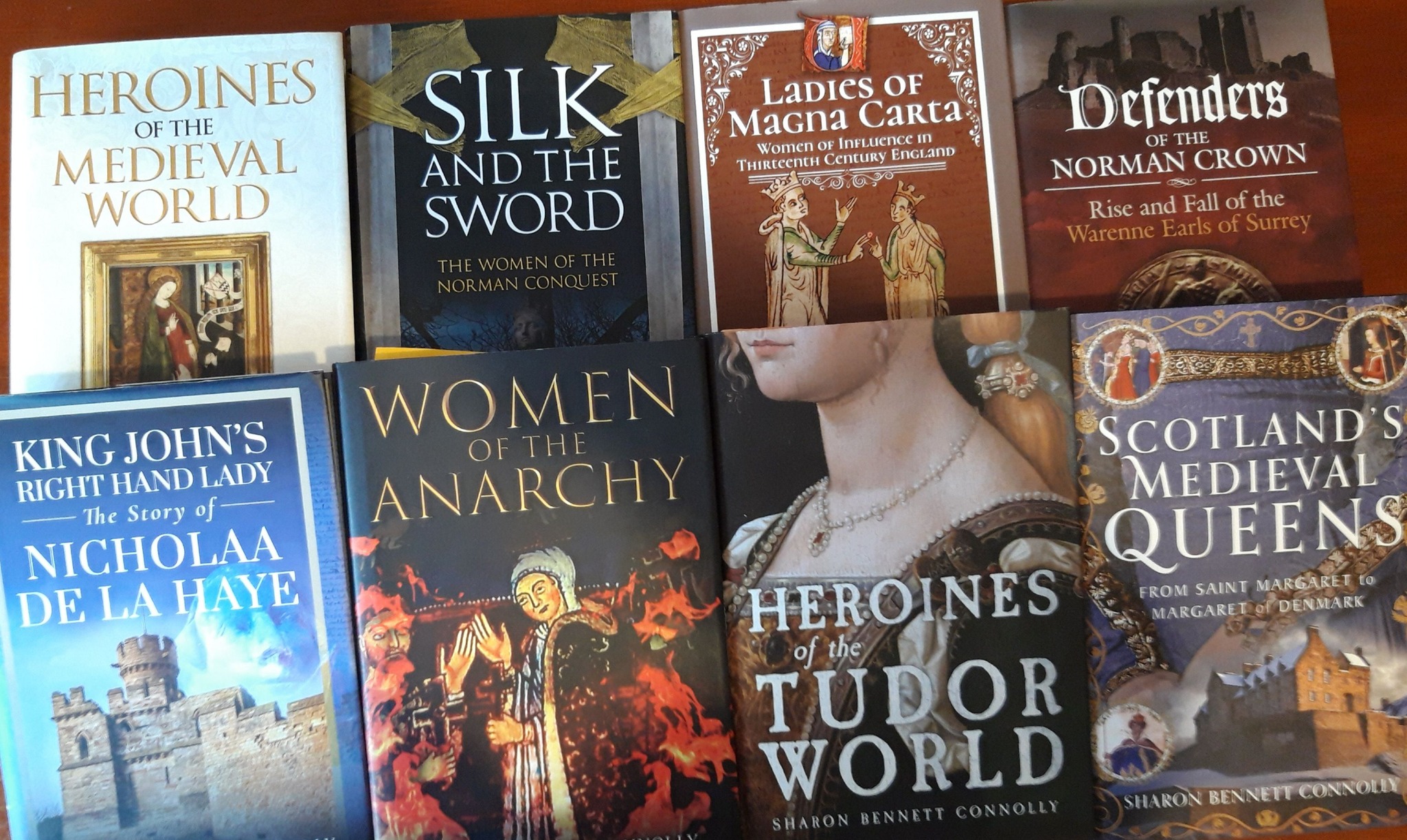
Out now: Scotland’s Medieval Queens

Scotland’s history is dramatic, violent and bloody. Being England’s northern neighbour has never been easy. Scotland’s queens have had to deal with war, murder, imprisonment, political rivalries and open betrayal. They have loved and lost, raised kings and queens, ruled and died for Scotland. From St Margaret, who became one of the patron saints of Scotland, to Elizabeth de Burgh and the dramatic story of the Scottish Wars of Independence, to the love story and tragedy of Joan Beaufort, to Margaret of Denmark and the dawn of the Renaissance, Scotland’s Medieval Queens have seen it all. This is the story of Scotland through their eyes.

Available now from Amazon and Pen and Sword Books

Also by Sharon Bennett Connolly:

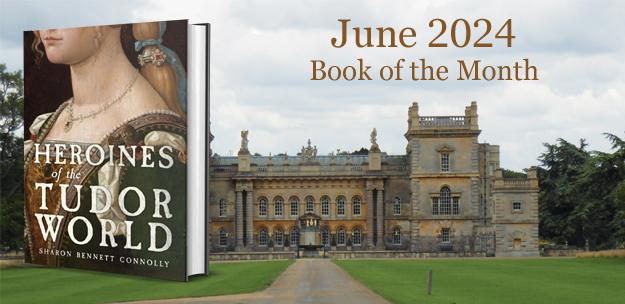
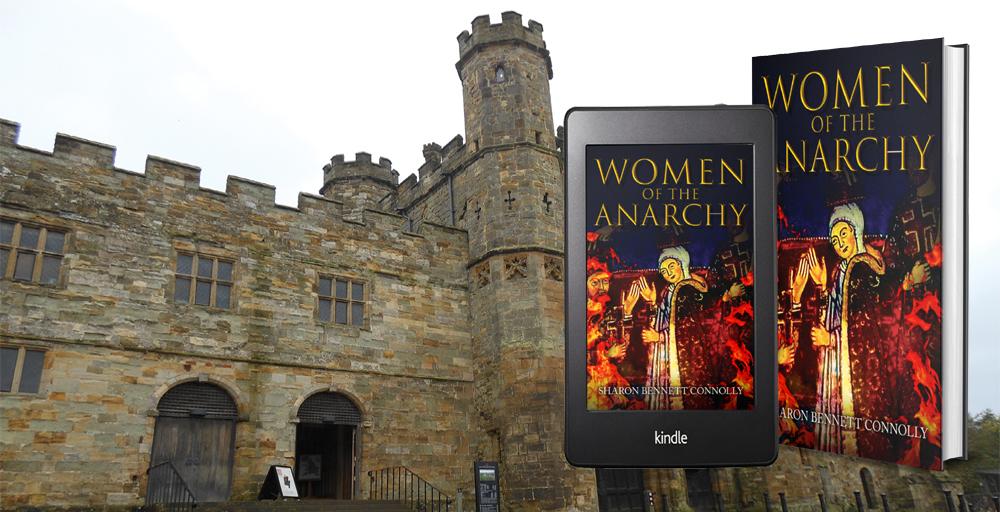
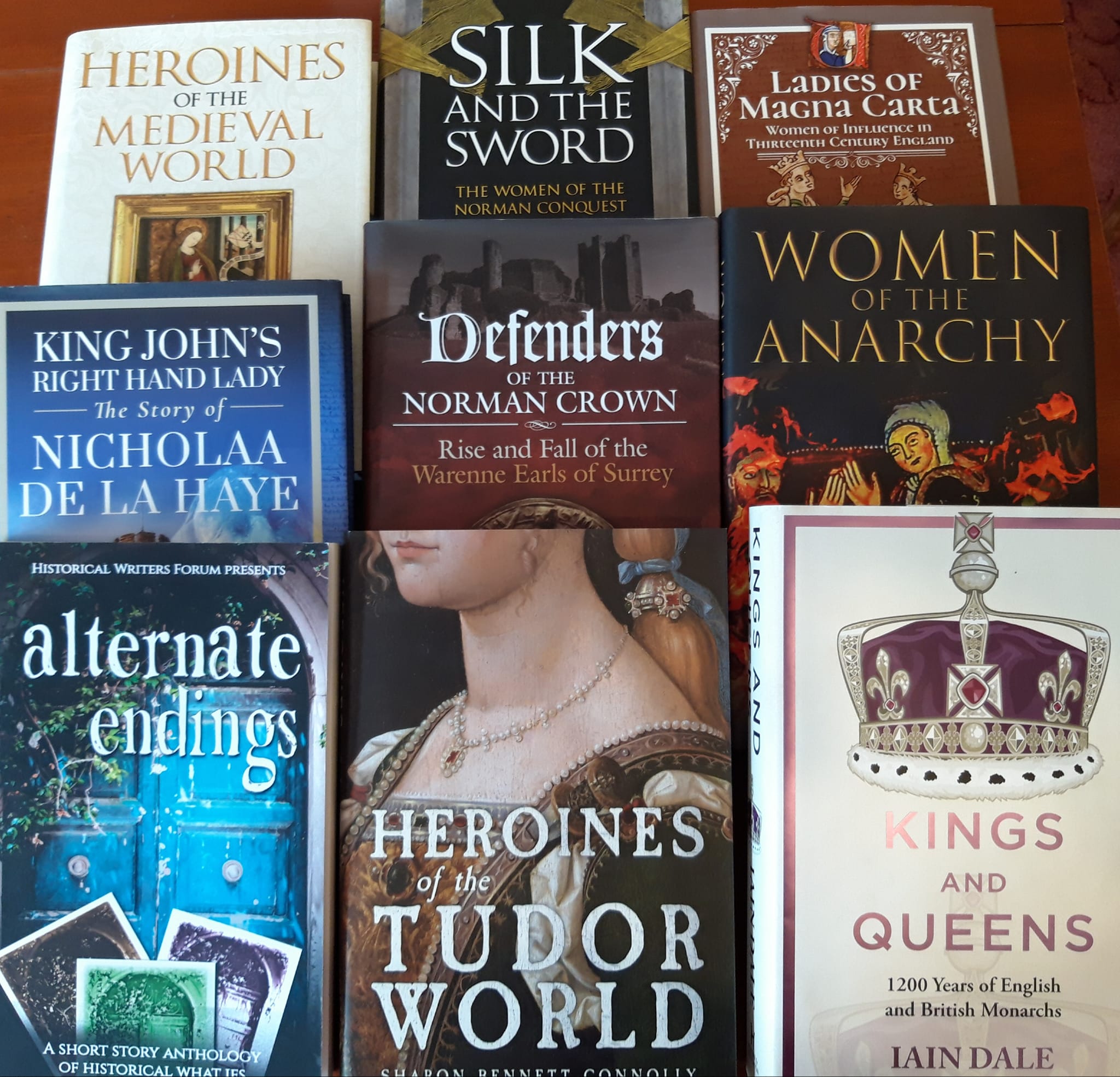
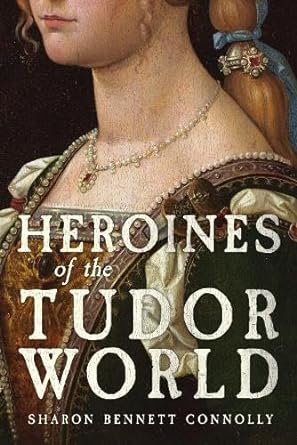
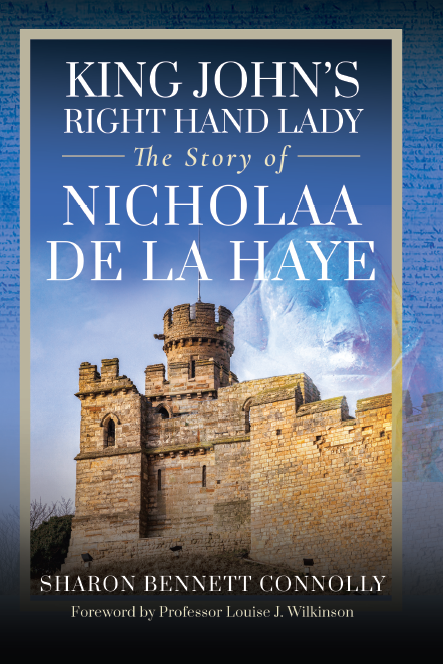
Heroines of the Tudor World tells the stories of the most remarkable women from European history in the time of the Tudor dynasty, 1485-1603. These are the women who ruled, the women who founded dynasties, the women who fought for religious freedom, their families and love. Heroines of the Tudor World is now available for pre-order from Amberley Publishing and Amazon UK. Women of the Anarchy demonstrates how Empress Matilda and Matilda of Boulogne, unable to wield a sword themselves, were prime movers in this time of conflict and lawlessness. It shows how their strengths, weaknesses, and personal ambitions swung the fortunes of war one way – and then the other. Available from Bookshop.orgAmberley Publishing and Amazon UKKing John’s Right-Hand Lady: The Story of Nicholaa de la Haye is the story of a truly remarkable lady, the hereditary constable of Lincoln Castle and the first woman in England to be appointed sheriff in her own right. Available from all good bookshops Pen & Sword Booksbookshop.org and Amazon

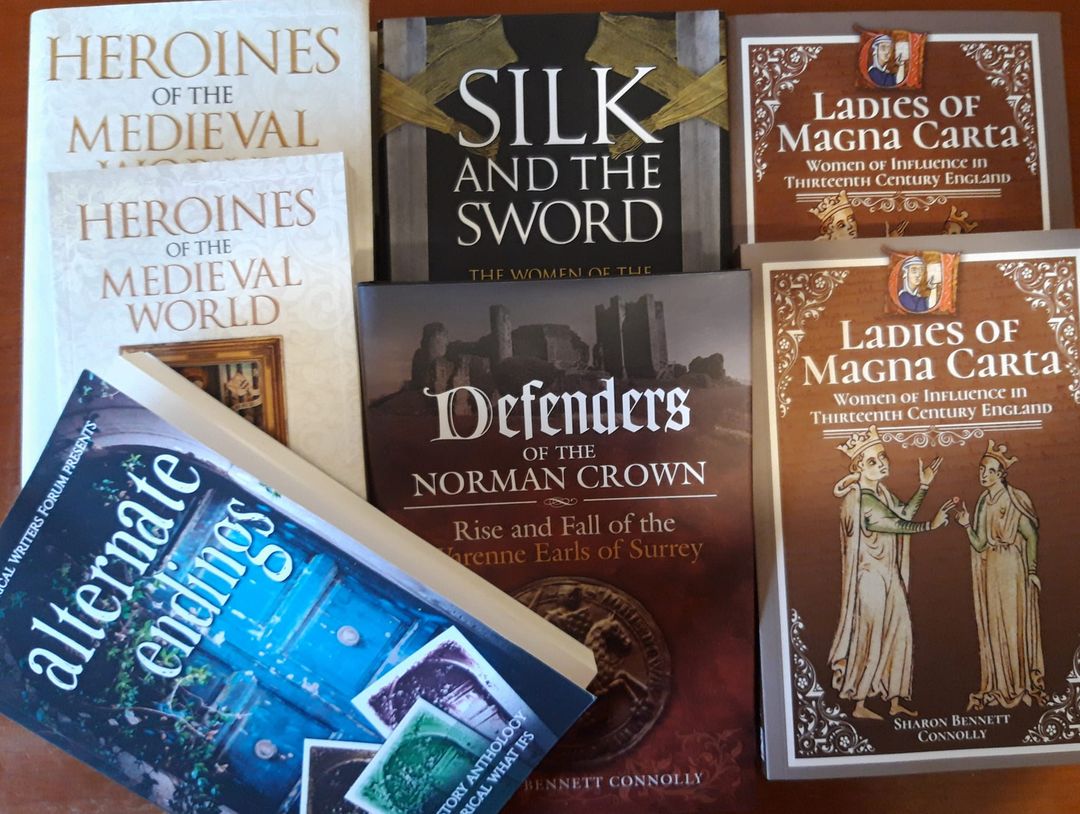
Defenders of the Norman Crown: The Rise and Fall of the Warenne Earls of Surrey tells the fascinating story of the Warenne dynasty, from its origins in Normandy, through the Conquest, Magna Carta, the wars and marriages that led to its ultimate demise in the reign of Edward III. Available from Pen & Sword BooksAmazon in the UK and US, and Bookshop.orgLadies of Magna Carta: Women of Influence in Thirteenth Century England looks into the relationships of the various noble families of the 13th century, and how they were affected by the Barons’ Wars, Magna Carta and its aftermath; the bonds that were formed and those that were broken. It is now available in paperback and hardback from Pen & SwordAmazon, and Bookshop.orgHeroines of the Medieval World tells the stories of some of the most remarkable women from Medieval history, from Eleanor of Aquitaine to Julian of Norwich. Available now from Amberley Publishing and Amazon, and Bookshop.orgSilk and the Sword: The Women of the Norman Conquest traces the fortunes of the women who had a significant role to play in the momentous events of 1066. Available now from Amazon,  Amberley Publishing, and Bookshop.org.

Alternate Endings: An anthology of historical fiction short stories including Long Live the King… which is my take what might have happened had King John not died in October 1216. Available in paperback and kindle from Amazon.

Podcast:
Have a listen to the A Slice of Medieval podcast, which I co-host with Historical fiction novelist Derek Birks. Derek and I welcome guests, such as Bernard Cornwell, Elizabeth Chadwick and Michael Jecks, and discuss a wide range of topics in medieval history, from significant events to the personalities involved. Every episode is also now available on YouTube.

*

Don’t forget! Signed and dedicated copies of all my books are available through my online store.

For forthcoming online and in-person talks, please check out my Events Page.

You can be the first to read new articles by clicking the ‘Follow’ button, liking our Facebook page or joining me on TwitterThreadsBluesky and Instagram.

*

©2025 Sharon Bennett Connolly, FRHistS and Toni Mount

Lady Katherine Gordon, “Duchess of York”

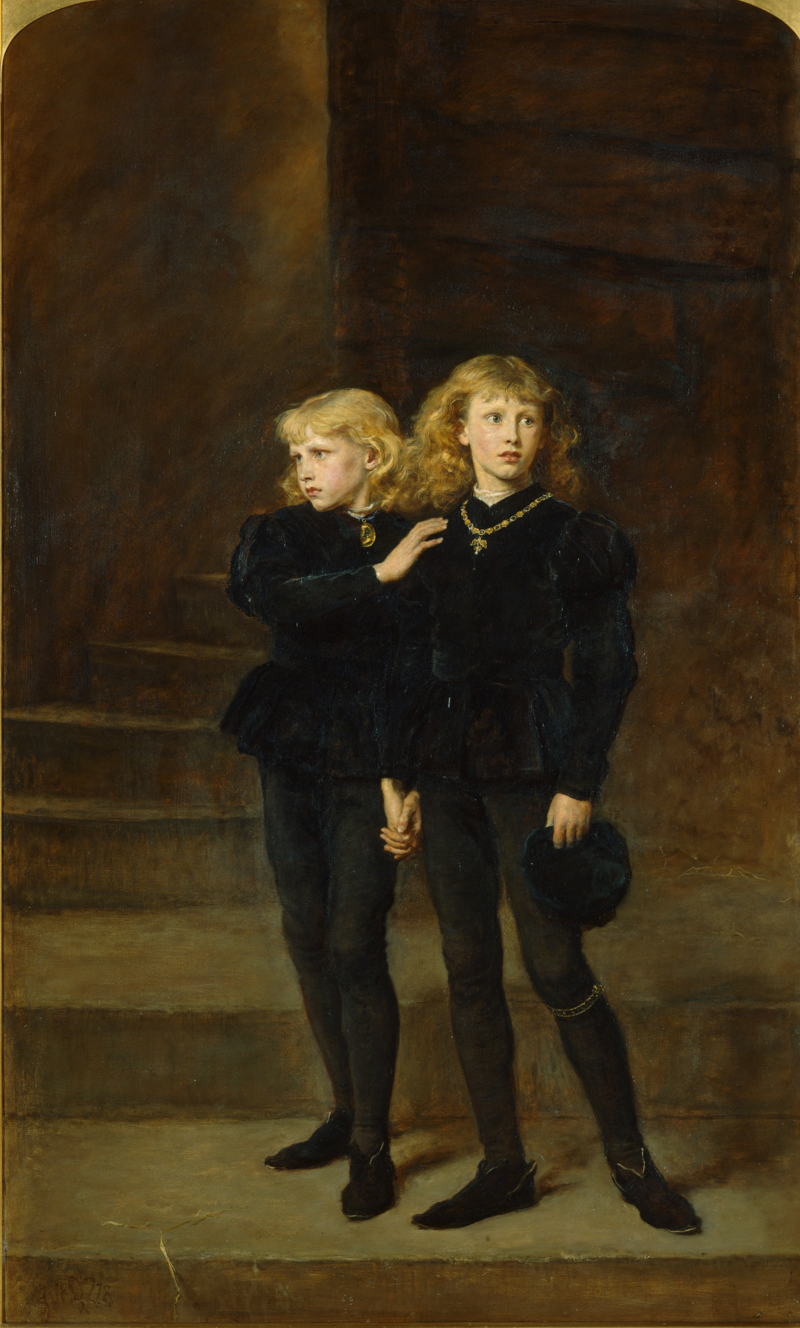
The Two Princes Edward and Richard in the Tower, 1483 by Sir John Everett Millais

I don’t usually start my articles with a disclaimer, but with this one, I think I will. The Princes in the Tower is always a hot topic, after all. So, I will warn you. Here, I am going to look into the life of Lady Katherine Gordon, rather than the veracity of the claim of her husband, Perkin Warbeck/Prince Richard, to being the younger of the two lost Princes. I am giving you the information and evidence that Katherine would have been presented with at the time, and not making any actual judgements. I will leave that to others who have spent much more time on the study of the Princes than I.

Lady Katherine Gordon was, by all accounts, a beautiful woman, with connections, though distant, to the Scottish royal family. She was the daughter of George Gordon, second Earl of Huntly, and his third wife, Elizabeth Hay. George Gordon had previously been married to Annabella Stewart, a great-aunt of James IV, meaning that Katherine was distantly related to the king by marriage.

Katherine first came to prominence in 1496, when she was given as a bride to Richard, Duke of York, the younger son of Edward IV and one of the Princes in the Tower. ‘Richard’ had recently emerged from hiding to claim the English throne, and after having spent some years on the Continent had been welcomed at the Scottish court in the autumn of 1495, probably simply to antagonise the English king, Henry VII, rather than in a genuine belief in his claim to be one of the lost princes. It would later be revealed that Richard was actually an impostor named Perkin Warbeck, from the Flemish city of Tournai. But that was by no means clear when he was residing at the Scottish court and several Continental royals, including the lost prince’s aunt Margaret of York, Duchess of Burgundy, had supported his claim to be Richard, Duke of York.

King James IV was probably hedging his bets as to Richard’s real identity when he offered Katherine Gordon in marriage. Katherine had just enough royal credentials to be a suitable bride for an English prince but was not too royal that King James would be embarrassed should Richard prove to be an impostor. And if Richard was successful in overthrowing Henry VII and claiming the English throne, James would have a friend as his neighbour in England. For James, it was worth the gamble and for Richard, it meant that he could count on Scottish support. The Scots king welcomed Richard to court with all honours due to an English prince. He treated Richard like an honoured royal guest, dressed him like a king, gave him a pension and took him on a progress through the kingdom. There is a letter purportedly written by Prince Richard to Lady Katherine in December 1495, just weeks before their wedding, which suggests he is highly enthusiastic about the match:

King Edward V and the Duke of York in the Tower of London by Paul Delaroche.

Most noble lady, it is not without reason that all turn their eyes to you; that all admire, love, and obey you. For they see your two-fold virtues by which you are so much distinguished above all other morals. Whilst, on the one hand, they admire your riches and immutable prosperity, which secure to you the nobility of your lineage and the loftiness of your rank, they are, on the other hand, struck by your rather divine than human beauty, and believe that you are not born in our days, but descended from Heaven.

All look at your face, so bright and serene that it gives splendour to the cloudy sky; all look at your eyes as brilliant as stars, which makes all pain to be forgotten, and turn despair into delight; all look at your neck, which outshines pearls; all look at your fine forehead, your purple light of youth, your fair hair; in one word, at the splendid perfection of your person; and looking at, they cannot choose but admire you; admiring, they cannot choose but love you; loving, they cannot choose but obey you.

I shall, perhaps, be the happiest of all your admirers, and the happiest man on earth, since I have reason to hope you will think me worthy of your love. If I represent to my mind all your perfections, I am not only compelled to love, to adore, and to worship you, but love makes me your slave. Whether waking or sleeping, I cannot find rest or happiness except in your affection. All my hopes rest in you, and in you alone.

Most noble lady, my soul, look mercifully down upon me your slave, who has ever been devoted to you from the first hour he saw you. Love is not an earthly thing, it is heaven born. Do not think it below yourself to obey love’s dictates. Not only kings, but also gods and goddesses have bent their necks beneath its yoke.

I beseech you, most noble lady, to accept for ever one who in all things will cheerfully do your will as long as his days shall last. Farewell, my soul and my consolation. You, the brightest ornament of Scotland, farewell, farewell.1

James IV, copy by Daniël Mijtens of a lost contemporary portrait

The marriage between the man claiming to be Richard of York and Katherine Gordon was celebrated on 13 January 1496. Richard was given a white damask ‘spousing’ gown for the occasion. Other gifts included a purple damask-covered suit of armour, six servants, two trumpeters and a French armourer. Richard was also awarded an annual pension of £1, 344.2 The ceremony was followed by a series of jousts in which the king of Scots himself participated, though there is no evidence that Prince Richard did; he probably watched the jousts in the company of his bride. Katherine was now referred to as duchess of York. The newlyweds then travelled with the king to the palace at Falkland in Fife to wait out the winter in anticipation of the campaigning season and Richard’s invasion of England to claim the throne.

James, too, was intent on invading England, despite pressure from both the Spanish and French monarchs. James insisted that the English had started the conflict by destroying his ships and cattle. In September 1496, James invaded Northumberland but returned to Scotland after only three days – no one in England had risen in support of Richard, Duke of York. As the year 1496 ended, Richard was no closer to invading England and was spending less time with King James, instead staying with his wife Katherine at Falkland Palace. In the meantime, King Henry VII’s spies had been at work on the Continent, discovering the true identity of Prince Richard.

King James IV’s priorities now changed. He was seeking peace with Henry VII, and a bride. In July 1497, James was negotiating with Henry to marry the English king’s eldest daughter, Margaret, though she was only eight years old at the time. Henry VII made one of the conditions of the peace that James ‘delyvere unto us Perkyn Werbek’.3 Although the Scots king was amenable to the suggestion, Warbeck was not available to be handed over to the English.

On 6 July, he and his wife set sail from Ayr after 19 months in Scotland. He left behind a brown horse, to be used to settle any debts that may still be outstanding. The ship, a French merchant vessel known as the Cukow, carried Warbeck, Katherine and 30 of Warbeck’s followers. Its hold was stocked with provisions including wine, bread, salt beef, mutton, cheese and fish. Although the king had not been present to bid them farewell, he had provided Katherine with some cloth to make a gown suitable for wearing aboard ship. What had spurred Warbeck to leave Scotland at this particular time is unclear. It may have been the burgeoning peace between James IV and Henry VII, or it may have been news of the Cornish uprising, which had erupted after King Henry had implemented a tax to raise funds for war against Scotland. It may be that Warbeck thought to join this rebellion.

Henry VII painted by an unknown artist

Katherine and her pretender-prince sailed first for Ireland, arriving in Cork on 25 July 1497. After spending a month in Ireland trying to raise troops to their cause, they sailed for Cornwall, making landfall at Whitesand Bay on 7 September with a small flotilla with just a hundred or so people on board. Warbeck’s first action after landing was to make his way to the parish of St Buryan, four miles inland, where he left Katherine to await news of his military campaign. He then headed further into Cornwall, recruiting along the way. It is estimated that by the time he reached Bodmin, Warbeck had an army of between three and five thousand men. After failing to take Exeter from the earl of Devon, Warbeck and his forces marched towards Taunton. The earl of Devon then set off in pursuit and cut off his line of retreat back into Cornwall.

Another royal army moved down from Oxfordshire into Somerset, reaching Glastonbury on 19 September, the same day Warbeck had reached Taunton – just twenty miles away. Warbeck was cornered and, losing his nerve, attempted to flee in the dead of night. With only sixty men, Warbeck sought sanctuary at Beaulieu Abbey in Hampshire on 22 September. Where most religious houses that offered sanctuary could only provide it for a limited period of forty days, Beaulieu was one of those with an exemption, which meant those seeking it could remain in sanctuary there for the remainder of their lives. By early October, Warbeck had been persuaded to surrender and under strong guard was taken to face the king, who was now at Taunton.

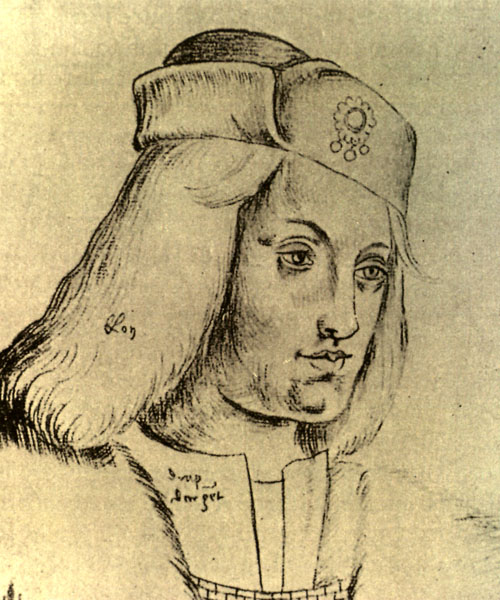
16th-century copy by Jacques Le Boucq of the only known contemporary portrait of Warbeck, Library of Arras

The king and his prisoner then proceeded to Exeter where Perkin Warbeck was reunited with his wife. Katherine had been retrieved from St Buryan’s by a force sent by King Henry. When she was found, she was dressed in robes of mourning, which may suggest that she had already been apprised of her husband’s failure, or that she had recently lost a child. We do not know. As the young woman was presented to Henry VII, she was ‘ashamed and tearful’.4 The chronicler Polydore Vergil described the meeting: ‘When the king saw the woman’s beauty he promptly judged her worthy to be among the captive hostages of a general rather than a common soldier.’5 The king perceived Katherine’s nobility and resolved to afford her a more honourable status than he had previously planned. This meant, inevitably, that she would be separated from Warbeck.

Warbeck had been promised his life, but in the same interview the king insisted that Perkin Warbeck publicly admit, in front of his wife, the extent of his deception; that he was not, in fact, the duke of York, and that he was an impostor from Tournai. It may well be that Katherine was not wholly surprised by the confession. She must have heard the stories and accusations, but to hear the confession from her husband’s lips must have been hard to take. She was not duchess of York, she was Mrs Perkin Warbeck. The revelation put their very marriage in doubt. He had married her under a false identity, as Richard, Duke of York. Katherine put herself into the hands of the king.

Henry VII treated Katherine kindly, though he would not send her back home to Scotland. Instead, she was sent to London to serve in the household of Queen Elizabeth. The king purchased horses and saddles for her journey and presented Katherine with new clothes, including a satin gown and a black velvet bonnet. Katherine arrived at Sheen on 21 October and was presented to the queen, the woman she had believed to be her sister-in-law until Warbeck had made his confession. Katherine was given a position in the queen’s household and a pension, not as the wife of the pretender, but in her own right as a high-ranking Scottish noblewoman. When the king returned to London, bringing Warbeck with him, the two lived separately within the royal household. They were well treated but not permitted to sleep together. Katherine also resumed her maiden name.

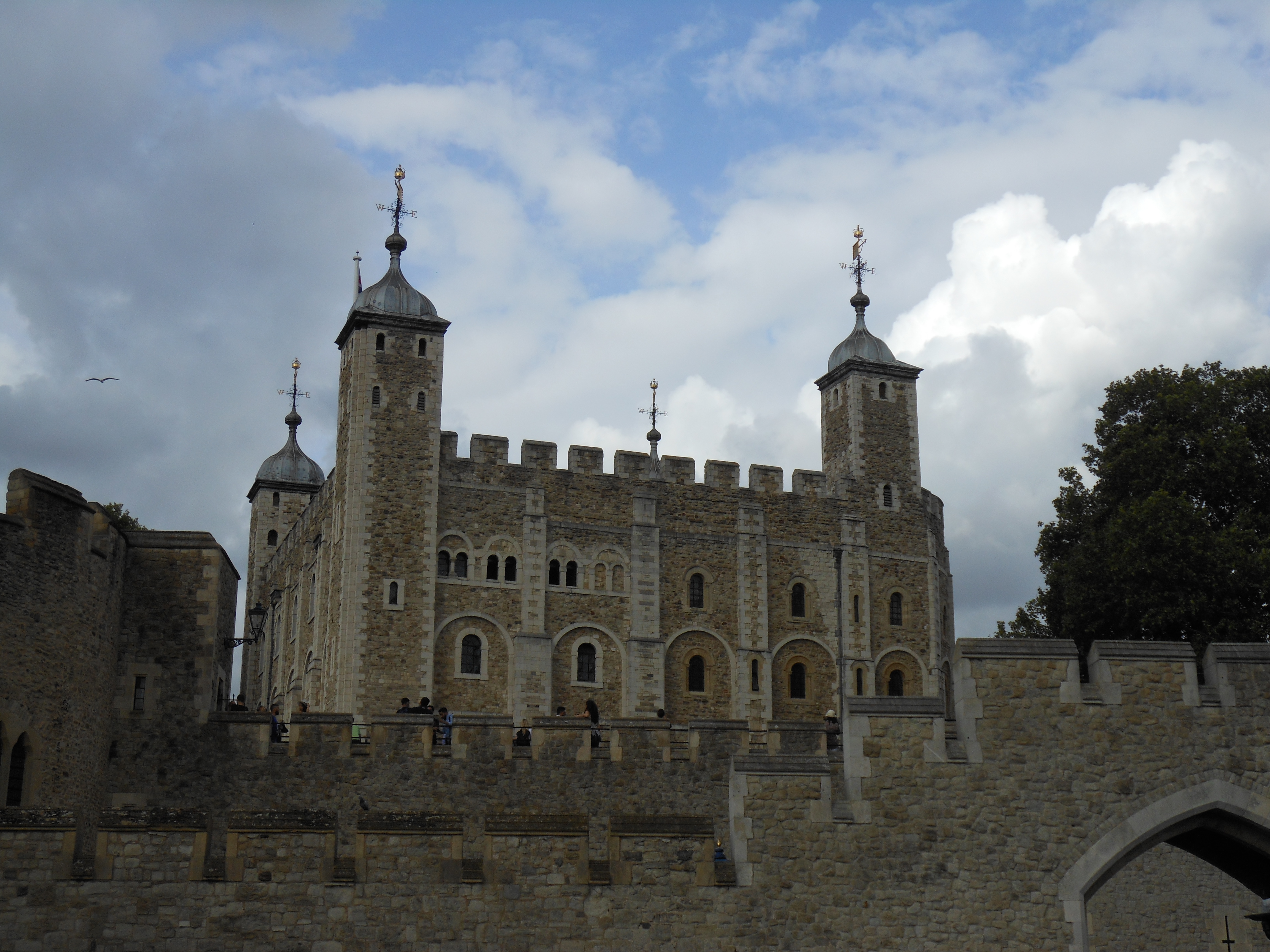
Tower of London

In June 1498, in spite of the lenient treatment he had received from the king, Perkin Warbeck chose to abscond from Westminster Palace. He was recaptured within a couple of days, having only reached the Carthusian priory at Sheen, just seven miles from Westminster. Although he still escaped the executioner’s axe, the king was no longer minded to be so lenient and sent Warbeck, after a spell in the stocks, to close confinement within the Tower of London.

Katherine’s own situation does not appear to have been threatened by Warbeck’s recklessness and in June 1499 she accompanied the king and queen to Calais for a meeting with Archduke Philip and his wife Juana of Castile, the sister of their future daughter-in-law Catherine of Aragon. Later in the same year Perkin Warbeck, having tried to escape with fellow prisoner Edward, Earl of Warwick, was accused of conspiring against the king. And this time he was not going to get away with it. As it had been established that he was not noble, Warbeck was executed by hanging, not beheading, at Tyburn on 23 November 1499. Warwick was beheaded on Tower Hill five days later.

Katherine’s marital status had been ambiguous since the discovery of Warbeck’s deception, but she was now definitively free to remarry. We know not whether she was saddened or relieved at the execution of Warbeck. She may have felt nostalgic for the short time they had been together, or grateful that the man who betrayed her was no longer able to cast a shadow over her life and future; or both. We will never know. Katherine remained at court and as one of the queen’s ladies was present at the betrothal ceremony of James IV and Margaret Tudor, held at Richmond in January 1502. When the queen, Elizabeth of York, died in February 1503 Katherine was one of the chief mourners at her funeral, accompanying the procession from the Tower of London to Westminster Abbey behind the queen’s sisters. And at the Abbey, she laid her pall on the coffin, again, after the queen’s sisters. After the queen’s death, Katherine remained at court, keeping the king company: she played cards with him, acquired medicines for him when he was ill and painted cloths and religious scenes to be held before him as he lay dying.

Fyfield Manor, Berkshire, Katherine’s home with her last husband

After Warbeck’s fall, Katherine Gordon had been taken prisoner, but her noble status had allowed her to be accepted at court as one of the queen’s ladies. Katherine never remarried in the lifetime of either Elizabeth of York or Henry VII. She was no longer a prisoner, but still not entirely free. Shortly before Henry VII’s death, Katherine was granted land in Berkshire, on the condition that she would not leave England. Following Henry VII’s death, sometime between 1510 and 1512 Katherine married James Strangeways, a Gentleman Usher of the King’s Chamber, but he died in 1516, leaving all his property to Katherine. The following year, Katherine married Matthew Craddock, a Welsh knight from Glamorganshire, obtaining permission to live with him in Wales; her promise to never leave England making such a request necessary. From 1525 to 1530, Katherine was employed in the household of Henry VIII’s daughter Mary as Chief Lady of the Privy Chamber. Katherine was widowed once again in 1531, with Craddock making her executor of his will and leaving her income from some of his Welsh properties in addition to 500 marks. Sometime before 1536 Katherine married for a fourth and final time. Her husband, Christopher Ashton, was a Gentleman Usher of the Privy Chamber. Katherine spent the last years of her life on her lands in Berkshire, at Fyfield Manor.

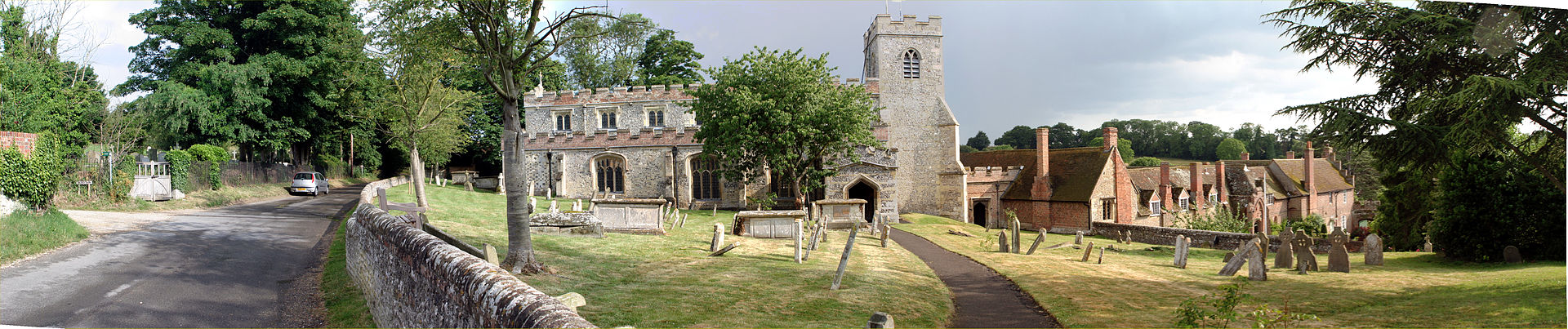
St Nicholas Church, Fyfield, where Katherine was buried

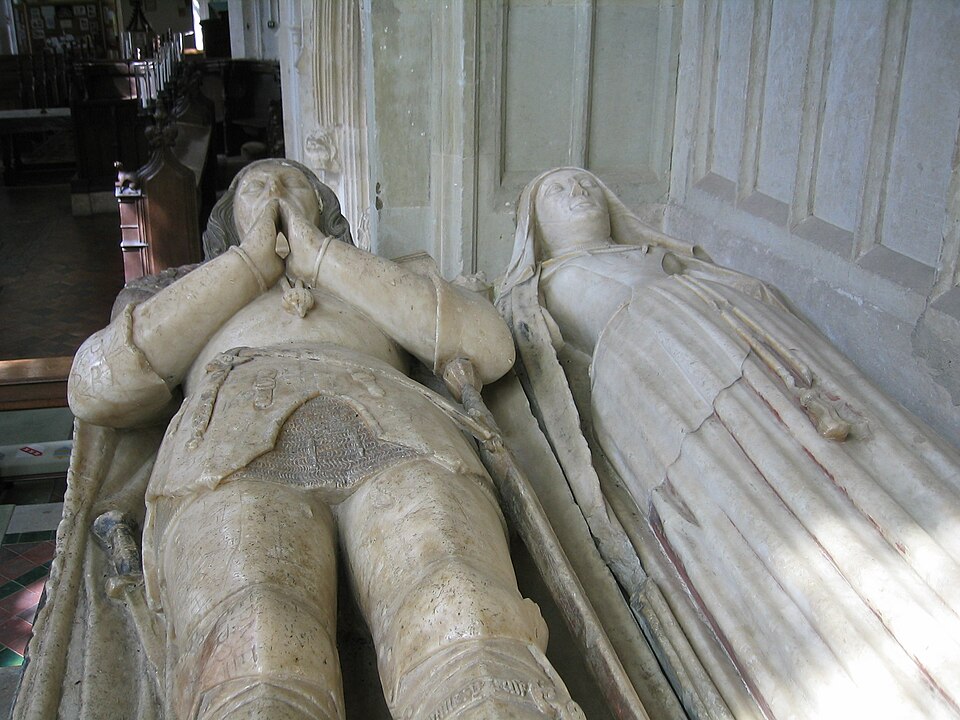
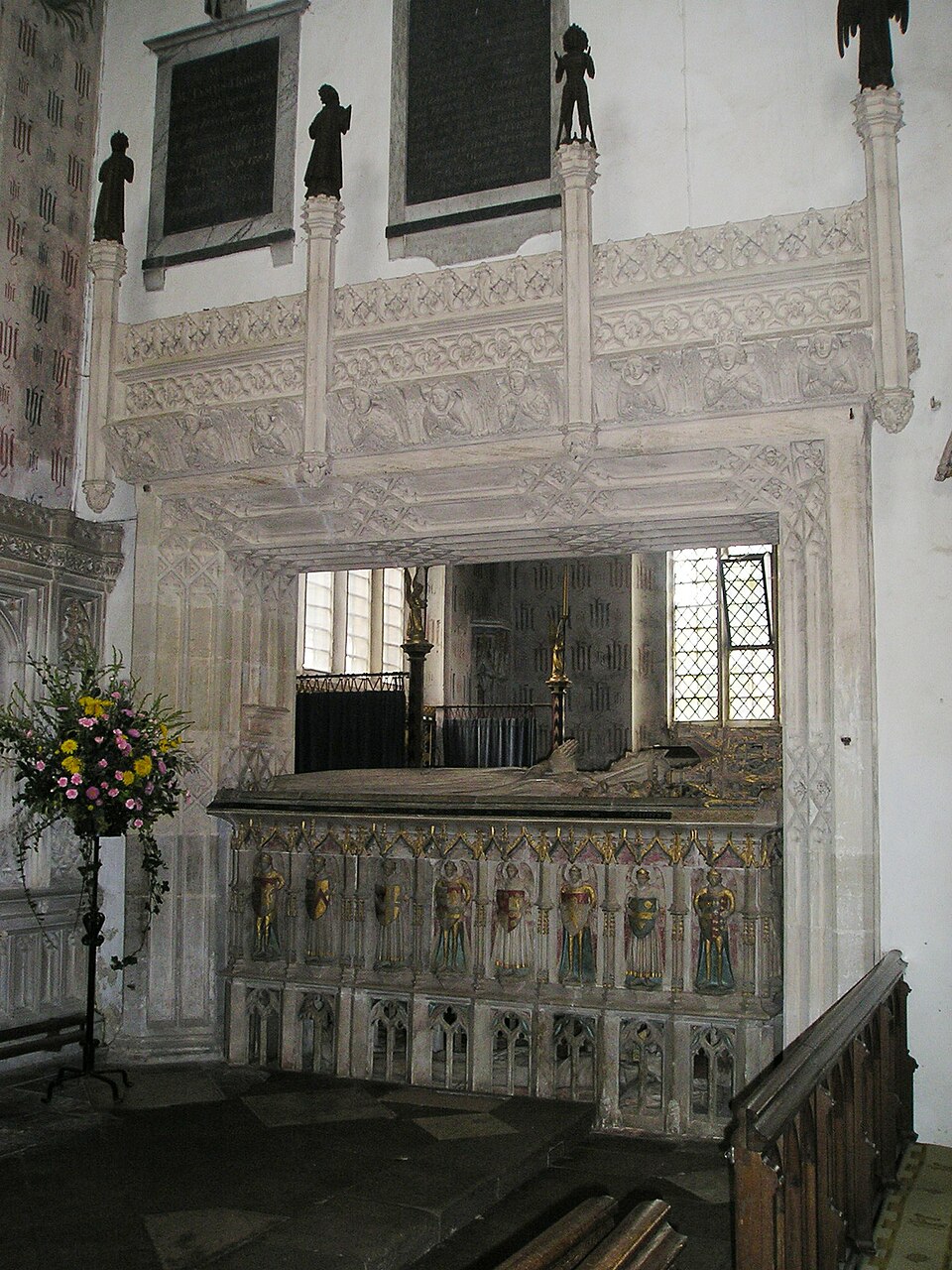
Survived by her last husband, she died on 14 October 1537, forty years almost to the day after Perkin Warbeck had been captured at Beaulieu Abbey. In her will she refers to all of her husbands, save Warbeck. She leaves bequests to Margaret Kyme, the daughter of Elizabeth of York’s sister, Cecily, to her servant, Philippa Hulls and to Alice Smyth, whom Katherine refers to as her sister.6 Perhaps she was a sister of one of Katherine’s husbands. There is no mention of any children and although there has been speculation that Katherine and Warbeck had a child, there is no evidence of this beyond a report by the Venetian ambassador Adrian Trevisano from September 1497,in which he says Warbeck had arrived in Cornwall ‘leaving behind his wife and children’.7 This may well have been a misunderstanding as there is no further mention of children from Trevisano or any other sources. Katherine was buried in the chancel of the church of St Nicholas at Fyfield. A tomb there, missing its brasses, is still referred to as Lady Gordon’s Monument.

Lady Katherine Gordon had survived the fallout from her first husband’s rebellions and conspiracies and made a life for herself at the English court. She appears to have been considered a dupe to Warbeck’s plotting, rather than a co-conspirator. Her position as the daughter of a Scottish earl and a distant relative of the king of Scots afforded her the chance to make a new life for herself as one of the queen of England’s ladies and she grabbed the opportunity in both hands. She went from being a royal captive to a trusted and loved member of the English court. Not all female prisoners would be so fortunate.

Notes:

1. ‘December 1494’ in CSPM pp. 72-79 quoted in Nathen Amin, Henry VII and the Tudor Pretenders, p. 219; Nathen Amin, Henry VII and the Tudor Pretenders, p. 220; 3. ibid; 4. Bernard André quoted in ibid, p. 269; Polydore Vergil quoted in ibid, p. 269; 6. Susan Abernethy, ‘The Life of Lady Katherine Gordon’; 7. Nathen Amin, Henry VII and the Tudor Pretenders, p. 327

Images:

Courtesy of Wikipedia except the Tower of London which is  © 2024 Sharon Bennett Connolly FRHistS
Further Reading:

Nathen Amin, Henry VII and the Tudor Pretenders; Susan Abernethy, ‘The Life of Lady Katherine Gordon’; Amy Licence, The Sixteenth Century in 100 Women; Amy Licence, In Bed with the Tudors; Erin Lawless, Forgotten Royal Women: The King and I; David Loades, editor, Chronicles of the Tudor Kings: The Tudor Dynasty from 1485 to 1553: Henry VII, Henry VIII and Edward VI in the Words of their Contemporaries; David Ross, Scotland: History of a Nation; ODNB.com; Tracy Borman, The Private Lives of the Tudors; Sarah Gristwood, The Tudors in Love: The Courtly Code Behind the Last Medieval Dynasty; John Cannon, editor, The Oxford Companion to British History; Arthur D. Innes, A History of England Under the Tudors; J.D. Mackie, The Earlier Tudors 1485-1558.

*

My Books

Signed, dedicated copies of all my books are available through my online bookshop.

OUT NOW! Heroines of the Tudor World

Heroines of the Tudor World tells the stories of the most remarkable women from European history in the time of the Tudor dynasty, 1485-1603. These are the women who ruled, the women who founded dynasties, the women who fought for religious freedom, their families and love. These are the women who made a difference, who influenced countries, kings and the Reformation. In the era dominated by the Renaissance and Reformation, Heroines of the Tudor World examines the threats and challenges faced by the women of the era, and how they overcame them. From writers to regents, from nuns to queens, Heroines of the Tudor World shines the spotlight on the women helped to shape Early Modern Europe.

Heroines of the Tudor World is now available for pre-order from Amberley Publishing and Amazon UK.

Women of the Anarchy

Two cousins. On the one side is Empress Matilda, or Maud. The sole surviving legitimate child of Henry I, she is fighting for her birthright and that of her children. On the other side is her cousin, Queen Matilda, supporting her husband, King Stephen, and fighting to see her own son inherit the English crown. Women of the Anarchy demonstrates how these women, unable to wield a sword, were prime movers in this time of conflict and lawlessness. It show how their strengths, weaknesses, and personal ambitions swung the fortunes of war one way – and then the other.

Available from Bookshop.orgAmberley Publishing and Amazon UK.

Also by Sharon Bennett Connolly:

King John’s Right-Hand Lady: The Story of Nicholaa de la Haye is the story of a truly remarkable lady, the hereditary constable of Lincoln Castle and the first woman in England to be appointed sheriff in her own right. Available from all good bookshops Pen & Sword Booksbookshop.org and AmazonDefenders of the Norman Crown: The Rise and Fall of the Warenne Earls of Surrey tells the fascinating story of the Warenne dynasty, from its origins in Normandy, through the Conquest, Magna Carta, the wars and marriages that led to its ultimate demise in the reign of Edward III. Available from Pen & Sword BooksAmazon in the UK and US, and Bookshop.org

Ladies of Magna Carta: Women of Influence in Thirteenth Century England looks into the relationships of the various noble families of the 13th century, and how they were affected by the Barons’ Wars, Magna Carta and its aftermath; the bonds that were formed and those that were broken. It is now available in paperback and hardback from Pen & Sword,  Amazon, and Bookshop.orgHeroines of the Medieval World tells the stories of some of the most remarkable women from Medieval history, from Eleanor of Aquitaine to Julian of Norwich. Available now from Amberley Publishing and Amazon, and Bookshop.orgSilk and the Sword: The Women of the Norman Conquest traces the fortunes of the women who had a significant role to play in the momentous events of 1066. Available now from Amazon,  Amberley Publishing, and Bookshop.org.

Alternate Endings: An anthology of historical fiction short stories including Long Live the King… which is my take what might have happened had King John not died in October 1216. Available in paperback and kindle from Amazon.

Podcast:

Have a listen to the A Slice of Medieval podcast, which I co-host with Historical fiction novelist Derek Birks. Derek and I welcome guests, such as Bernard Cornwell – and Tony Riches. We discuss a wide range of topics in medieval history, from significant events to the personalities involved.

*

Don’t forget! Signed and dedicated copies of all my books are available through my online bookshop.

For forthcoming online and in-person talks, please check out my Events Page.

You can be the first to read new articles by clicking the ‘Follow’ button, liking our Facebook page or joining me on Twitter and Instagram.

*

©2024 Sharon Bennett Connolly FRHistS 

Book Corner: Anthony Woodville, Sophisticate or Schemer? by Danielle Burton

The Woodville family are synonymous with the Wars of the Roses. While much has been published on the family as a whole, especially Elizabeth, wife of Edward IV, Anthony Woodville – the favourite sibling of Elizabeth – has been largely overlooked by history. He is famed for his arrest and execution in June 1483, but there is much more to learn from his life. Woodville was a man with an important cultural role. He was a knight, had a successful jousting career, and worked with the printing pioneer William Caxton. He was the printer’s only long-lasting patron in England and acted as translator for him, using the books printed by Caxton to educate Edward, Prince of Wales, the future Edward V.

This book seeks to bring Anthony Woodville out of the shadows of history, giving him the recognition he deserves and challenging the negative perceptions around him by investigating his personality and personal achievements in military, diplomatic and literary capacities.

I have always had the impression that Anthony Woodville would have stood out in any period of history. A Renaissance man, he championed the arts, patronised the printing press, was a renowned jouster and so well respected by his king that he was entrusted with the education and upbringing of the Prince of Wales – the future King Edward V.

I do think Woodville would have stood out in any generation, but it didn’t hurt that his sister was Elizabeth Woodville, Queen of England.

Anthony Woodville, as the queen’s brother, was at the centre of events during the reign of Edward IV. He accompanied his brother-in-law into exile when Henry VI briefly reclaimed the throne in 1470-71. He appeared in tournaments to celebrate the marriage of the king’s sister, Margaret, to the future duke of Burgundy. He was a poet and writer and was a patron of William Caxton, the man who brought the printing press to England. Caxton printed and published Woodville’s English translation of The Dictes and Sayings of the Philosophers. So why is there not a larger body of work on him?

Danielle Burton has rectified this omission with her fascinating, in-depth study, Anthony Woodville, Sophisticate or Schemer? She delves deep into Woodville’s life, family, loves and career.

The Woodville family are often viewed as grasping and power hungry. This is true of some of the family members, particularly Thomas Grey, Marquess of Dorset, who was the eldest son of Anthony’s sister Elizabeth by her first marriage to John Grey. However, Anthony, while of course benefitting from the advancement of his sister to the status of queen, notably avoided meddling wherever possible. His interests in piety, tutoring Edward, the Prince of Wales, jousting, and translating books let him play a background role in the Wars of the Roses.

While Anthony Woodville may have been a secondary figure in political terms, it is clear that he had a significant part in transforming English culture, especially through his patronage of William Caxton, as well as his tutelage of Edward. Prince of Wales, who resided at Ludlow Castle for around ten years. According to Dominic Mancini, and Italian visitor who stayed in England between late summer 1482 and July 1483, Anthony Woodville was ‘always considered a kind, serious and just man’ who was ‘tested by every vicissitude of life.’ It was for this reason that he had been entrusted with the ‘care and direction’ of the prince. Further to Mancini’s description of Anthony, he purposefully contrasts his character with that of other Woodvilles, who were ‘detested by the nobles.’ There is a certain amount of truth in this, for unlike some other family members Anthony preferred to stay away from court life, favouring more academic and religious pursuits.

As a debut work, Anthony Woodville, Sophisticate or Schemer? is very impressive. It is clear that Danielle Burton has done her research, thoroughly, using primary sources where possible. She uses her extensive knowledge of Anthony Woodville to suggest reasons for his actions and to fill in the gaps of our knowledge, clearly indicating her theories and supporting arguments. There are some minor errors, which other reviewers have highlighted, but nothing that changes the thrust of the arguments nor detracts from the enjoyment of reading. They certainly do not devalue the biography as a whole and are more a sign of the writer’s inexperience of the editing process. I certainly would not expect it to put a reader off.

I suspect Anthony Woodville is Danielle’s historical crush, but this adds to the passion in her retelling of his story. We all fall in love with our subjects, just a little bit. You cannot spend years studying a person without doing so.

Danielle Burton’s arguments are balanced and do not present Anthony Woodville and some flawless super hero. Rather, he is an accomplished knight who had his flaws and would often look to his own advantage. Who wouldn’t? He was, however, loyal to Edward IV and his nephew, Edward V. And, having been the younger Edward’s guardian since his early years, was probably a great influence on the teenage king. This would Explain why Richard, Duke of Gloucester – the future Richard III – saw him as a threat. In Anthony Woodville, Sophisticate or Schemer? Danielle looks into the events of 1483 in great detail, examining the relationship between Richard and Anthony and analysing what went wrong and why. Anthony Woodville’s execution at Pontefract Castle is a tragic consequence of the power struggle that followed the death of Edward IV and accession of Anthony’s charge, Edward V.

All in all, Anthony Woodville, Sophisticate or Schemer? by Danielle Burton is a much-needed addition to the study of the Wars of the Roses, highlighting a man of great influence who is often overlooked in favour of his royal contemporaries. It is an impressive piece of work.

Listen to: Danielle Burton talking about Anthony Woodville, Sophisticate or Schemer? with myself and Derek Birks on our podcast, on A Slice of Medieval.

To Buy the Book: Anthony Woodville, Sophisticate or Schemer? is available from Amazon or direct from Amberly Publishing.

About the Author: Danielle Burton has had a keen interest in the Wars of the Roses from a young age, including being a member of the Richard III Society since the age of 9. She has presented aspects of her research into the life of Anthony Woodville at various academic conferences, and works in the heritage sector.

*

My Books:

Signed, dedicated copies of all my books are available through my online bookshop.

Out Now! Women of the Anarchy

Two cousins. On the one side is Empress Matilda, or Maud. The sole surviving legitimate child of Henry I, she is fighting for her birthright and that of her children. On the other side is her cousin, Queen Matilda, supporting her husband, King Stephen, and fighting to see her own son inherit the English crown. Women of the Anarchy demonstrates how these women, unable to wield a sword, were prime movers in this time of conflict and lawlessness. It show how their strengths, weaknesses, and personal ambitions swung the fortunes of war one way – and then the other.

Available from Bookshop.orgAmberley Publishing and Amazon UK.

Coming on 15 June 2024: Heroines of the Tudor World

Heroines of the Tudor World tells the stories of the most remarkable women from European history in the time of the Tudor dynasty, 1485-1603. These are the women who ruled, the women who founded dynasties, the women who fought for religious freedom, their families and love. These are the women who made a difference, who influenced countries, kings and the Reformation. In the era dominated by the Renaissance and Reformation, Heroines of the Tudor World examines the threats and challenges faced by the women of the era, and how they overcame them. From writers to regents, from nuns to queens, Heroines of the Tudor World shines the spotlight on the women helped to shape Early Modern Europe.

Heroines of the Tudor World is now available for pre-order from Amberley Publishing and Amazon UK.

Also by Sharon Bennett Connolly:

King John’s Right-Hand Lady: The Story of Nicholaa de la Haye is the story of a truly remarkable lady, the hereditary constable of Lincoln Castle and the first woman in England to be appointed sheriff in her own right. Available from all good bookshops or direct from Pen & Sword Booksbookshop.org and AmazonDefenders of the Norman Crown: The Rise and Fall of the Warenne Earls of Surrey tells the fascinating story of the Warenne dynasty, from its origins in Normandy, through the Conquest, Magna Carta, the wars and marriages that led to its ultimate demise in the reign of Edward III. Available from Pen & Sword BooksAmazon in the UK and US, and Bookshop.org

Ladies of Magna Carta: Women of Influence in Thirteenth Century England looks into the relationships of the various noble families of the 13th century, and how they were affected by the Barons’ Wars, Magna Carta and its aftermath; the bonds that were formed and those that were broken. It is now available in paperback and hardback from Pen & Sword,  Amazon, and Bookshop.orgHeroines of the Medieval World tells the stories of some of the most remarkable women from Medieval history, from Eleanor of Aquitaine to Julian of Norwich. Available now from Amberley Publishing and Amazon, and Bookshop.orgSilk and the Sword: The Women of the Norman Conquest traces the fortunes of the women who had a significant role to play in the momentous events of 1066. Available now from Amazon,  Amberley Publishing, and Bookshop.org.

Alternate Endings: An anthology of historical fiction short stories including Long Live the King… which is my take what might have happened had King John not died in October 1216. Available in paperback and kindle from Amazon.

Podcast:

Have a listen to the A Slice of Medieval podcast, which I co-host with Historical fiction novelist Derek Birks. Derek and I welcome guests, such as Bernard Cornwell and Elizabeth Chadwick, and discuss a wide range of topics in medieval history, from significant events to the personalities involved.

*

Don’t forget! Signed and dedicated copies of all my books are available through my online bookshop.

For forthcoming online and in-person talks, please check out my Events Page.

You can be the first to read new articles by clicking the ‘Follow’ button, liking our Facebook page or joining me on Twitter and Instagram.

*

©2024 Sharon Bennett Connolly FRHistS 
Guest Post: Middleham Castle – Home to Kings and Kingmakers by Wendy Johnson

Today, it is a pleasure to welcome debut author, Wendy Johnson, to History…the Interesting Bits as part of her blog tour to celebrate the launch of Wendy’s first novel, The Traitor’s Son.

Middleham Castle – Home to Kings and Kingmakers

Middleham Castle, North Yorkshire, bastion of the illustrious Neville family and home to both Richard Neville, earl of Warwick and his cousin, the future Richard III, is an evocative and fascinating place.

Eleven miles from the market town of Richmond, and a stone’s throw from Leyburn, the castle stands at the heart of Middleham, amid Wensleydale’s rolling hills. The visitor’s first impression, on approaching its cavernous gatehouse, is that these ruins have witnessed the very essence of history, and if only walls could talk, they would have a treasure trove of secrets to reveal.

An earlier castle once stood on nearby William’s Hill, but the present edifice began to rise in the 1170s. The fortress came into the possession of the Neville family when Mary FitzRanulph married Robert Neville in the thirteenth century. However, Middleham appears to have been considered less important than Robert’s other castles at Raby and Sheriff Hutton.1 Later Nevilles made a number of improvements – heightening the towers and creating a new and larger gatehouse – but it was in the later fifteenth century that the castle became the home of some of the most influential figures of the Wars of the Roses: the three Richards.

Richard Neville, earl of Salisbury; Richard Neville, earl of Warwick; and Richard Plantagenet, duke of Gloucester were each caught up in one of the most dramatic periods of English history, when the crown changed hands from Lancaster to York, York to Lancaster, and back again in the course of only ten years.

Following the fateful Battle of Wakefield in 1460, Salisbury was captured and executed. His son, the enigmatic and forceful Earl of Warwick, was largely responsible for helping Edward IV, the first Yorkist king, to win the throne in 1461.

Richard duke of Gloucester, Edward’s youngest brother, who ascended the throne as Richard III, spent much of his life at Middleham. Installed in his cousin, Warwick’s, household at the age of twelve, Richard embarked on his knightly training under the earl’s tutelage, learning the military and social graces required of a chivalric warrior. At the age of twenty, following his marriage to Warwick’s daughter, Anne, Middleham became Richard’s favourite residence.

My debut novel, The Traitor’s Son, re-imagines these early years. As a grieving and fatherless boy, Richard finds solace in the company of his cousin, the Earl of Warwick, whose paternal influence repairs the boy’s shattered life. The castle of Middleham plays an important role in the novel – representing a new and, at first, unnerving, part in Richard’s journey, as he wonders whether he is able to live up to the earl’s expectations. I have chosen to illustrate Richard’s early feelings for Middleham and for his formidable cousin in the following scene, when the boy has been summoned into Warwick’s presence.

‘Belly lurching, he follows the earl’s man down the tight spiral and out into the bailey. Kitchen boys are throwing out slops, bandying jests, sniggering. As he approaches, they fall silent, snatching caps and bobbing knees. The air is cool, pungent with the scent of verdure and horse dung, birds chirruping in the violet dusk. A solitary crow swoops from the keep, hops across the earth in the clumsy, jerking manner of his breed, then takes off again in the direction of the practice yard.

He should have fetched a cloak. It’s so much colder here in the land of the Nevilles, plagued as it is with a perpetual wind sweeping from the moors and striking like a whiplash. He shivers, wondering why Warwick has hauled him from what little comfort there is to be had on such a dismal evening. To draw conclusions on the day’s events? To tell him he has failed?

Torchlight bobs on towering stone as they mount the steps to the keep. Challenged twice in the ascent, he could be at Westminster, and Warwick a king at the heart of the labyrinth. Surely, he thinks, it’s the dread of the moment that gives this impression, the creeping suffocation of growing darkness, the brilliance of the wind-torn flames. Warwick is my cousin and my tutor; he is not my sovereign.

The Middleham known to both Richard and Warwick was larger than the ruined fabric we see today. In addition to the keep, towers and surrounding ranges, there would have been stables, an armoury, a blacksmith’s forge and many more domestic buildings all integral to the daily life of the castle, as well as to the role of its lord as upholder of his estates and a foremost figure in society. How magnificent that life was, can be gleaned by the splendour of the Middleham Jewel: a fifteenth century gold and sapphire pendent found in the vicinity of the castle in 1986. Current thinking is that the jewel belonged to a woman – the most likely candidate being Anne Beauchamp, Warwick’s countess, or possibly Anne Neville, Warwick’s daughter, and wife of Richard III. Although the original pendent is on display in the Yorkshire Museum, York, a replica has pride of place in the castle’s English Heritage shop.

I find that visualising the past can help stir the imagination, as one explores Middleham’s evocative and dramatic ruins. If you’ve never experienced Middleham’s magic for yourself, then try following in the footsteps of kings and kingmakers, you’ll not regret it.

About the book:

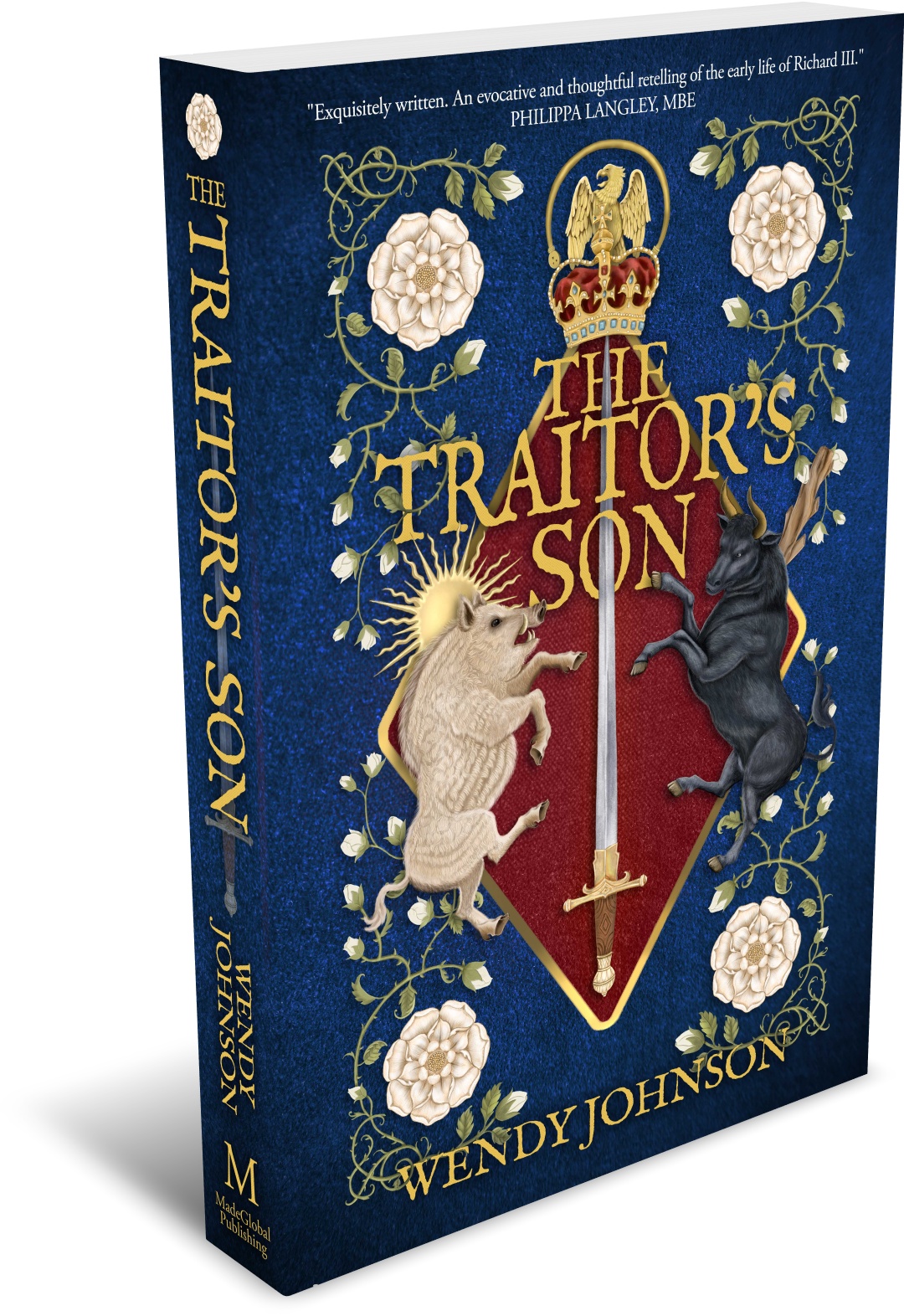
Click here to buy: The Traitor’s Son

Review quotes:

“Exquisitely written. An evocative and thoughtful retelling of the early life of Richard III.” Philippa Langley, MBE

Synopsis:

Caught between a king and a kingmaker, young Richard Plantagenet knows he’ll have to choose…

1461: Richard Duke of York, King by Right, has been branded a traitor and slain by his Lancastrian foes. For his eight-year-old son—Richard Plantagenet—England has become a dangerous place.

As the boy grapples with grief and uncertainty, his elder brother, Edward, defeats the enemy and claims the throne. Dazzled by his glorious sibling, young Richard soon discovers that imperfections lurk beneath his brother’s majestic façade. Enter Richard Neville, Earl of Warwick—cousin, tutor, luminary—whose life has given him everything but that which he truly craves: a son. A filial bond forms between man and boy as they fill the void in each other’s lives. Yet, when treachery tears their world asunder, Richard faces an agonizing dilemma: pledge allegiance to Edward—his blood brother and king—or to Warwick, the father figure who has shaped his life and affections.

Painfully trapped between duty and devotion, Richard faces a grim reality: whatever he decides will mean a fight to the death.

In “The Traitor’s Son”, Wendy Johnson masterfully weaves a tapestry of loyalty, love, and sacrifice against the backdrop of England’s turbulent history. Through the eyes of a young Richard III, readers are transported into a world where every choice is fraught with peril, and the bonds of kinship are tested to their limits. As Richard Plantagenet navigates the explosive tensions within his own family, readers are swept along on a journey of intrigue and passion that will leave them spellbound until the final page.

Note: 1. https://www.english-heritage.org.uk/visit/places/middleham-castle/history/

Images:

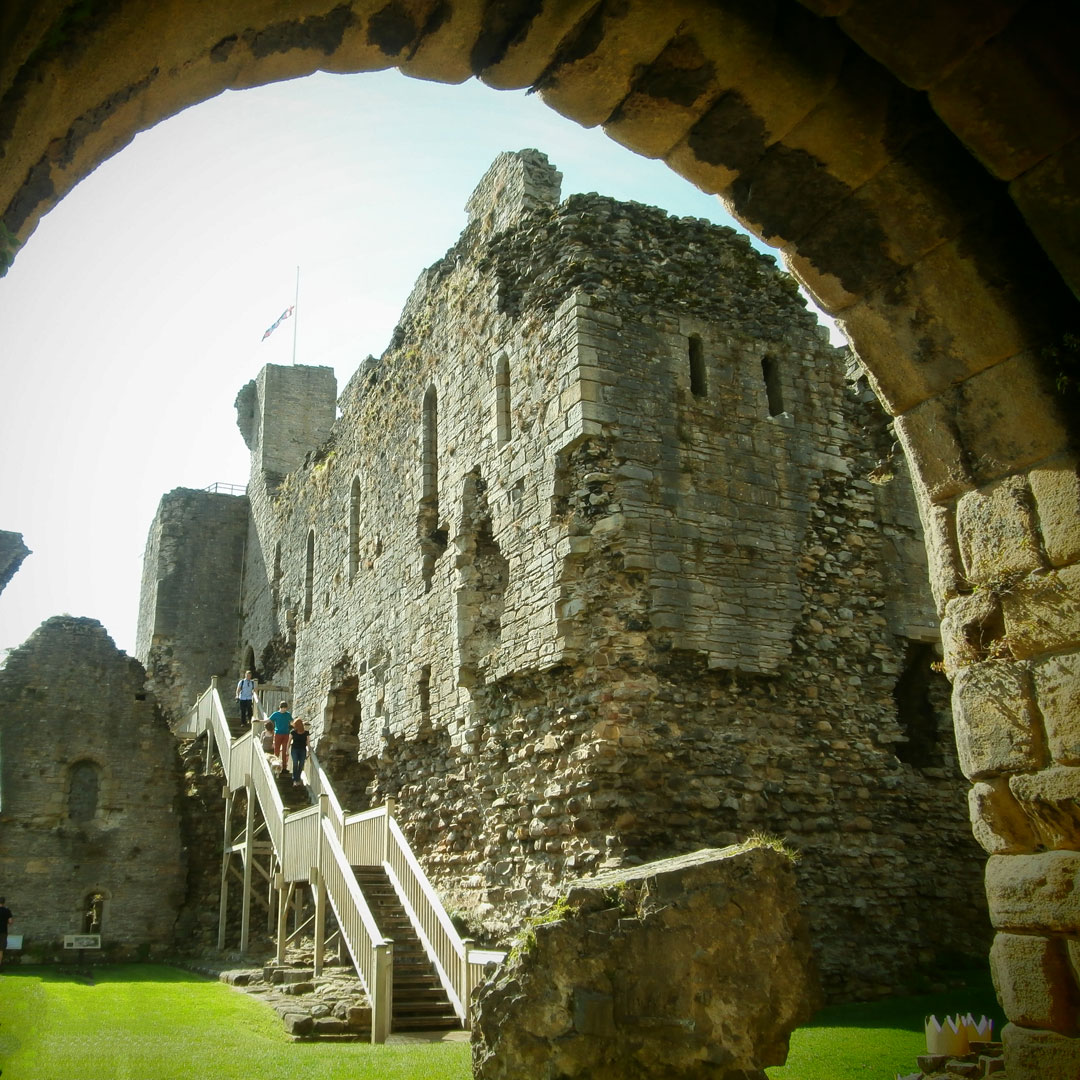
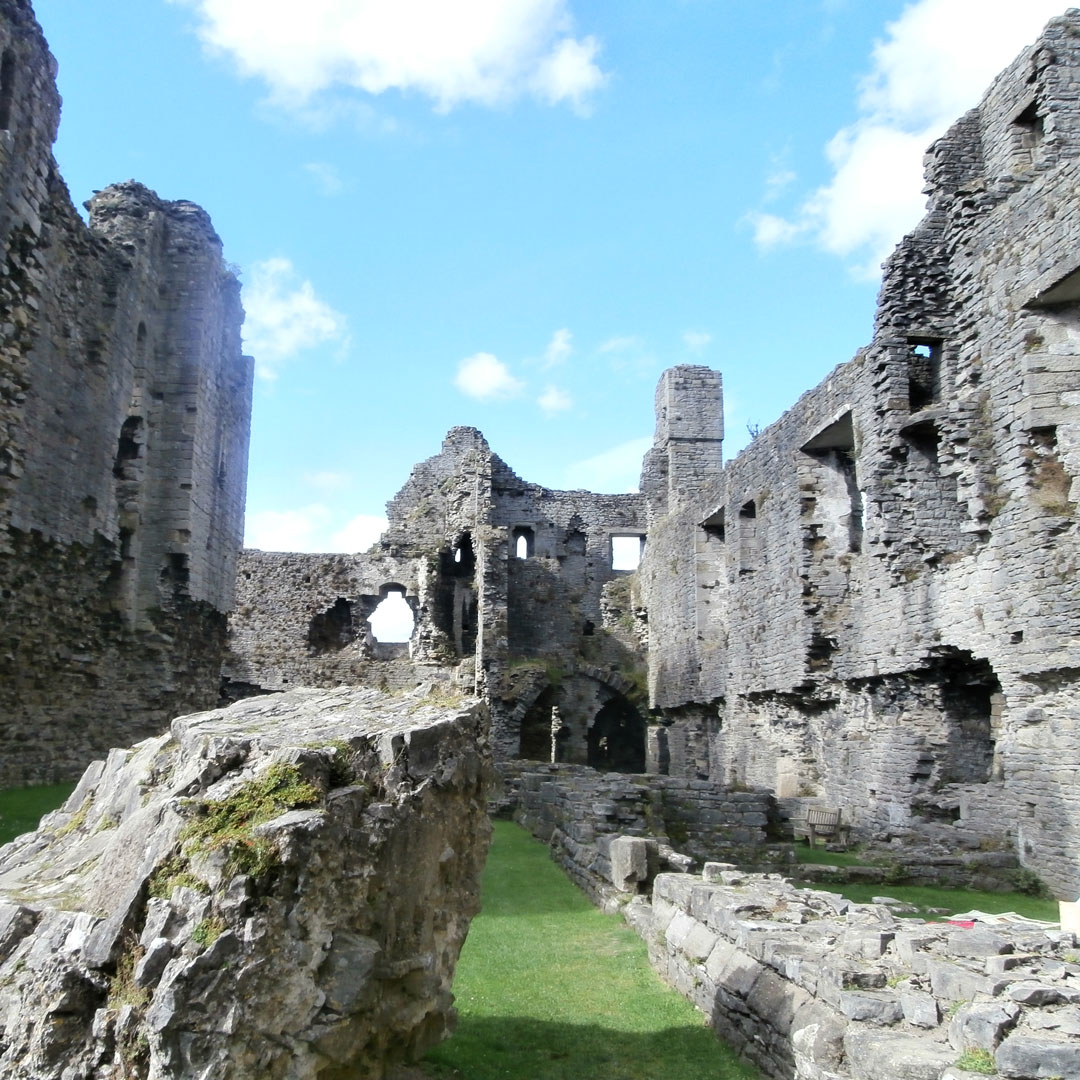
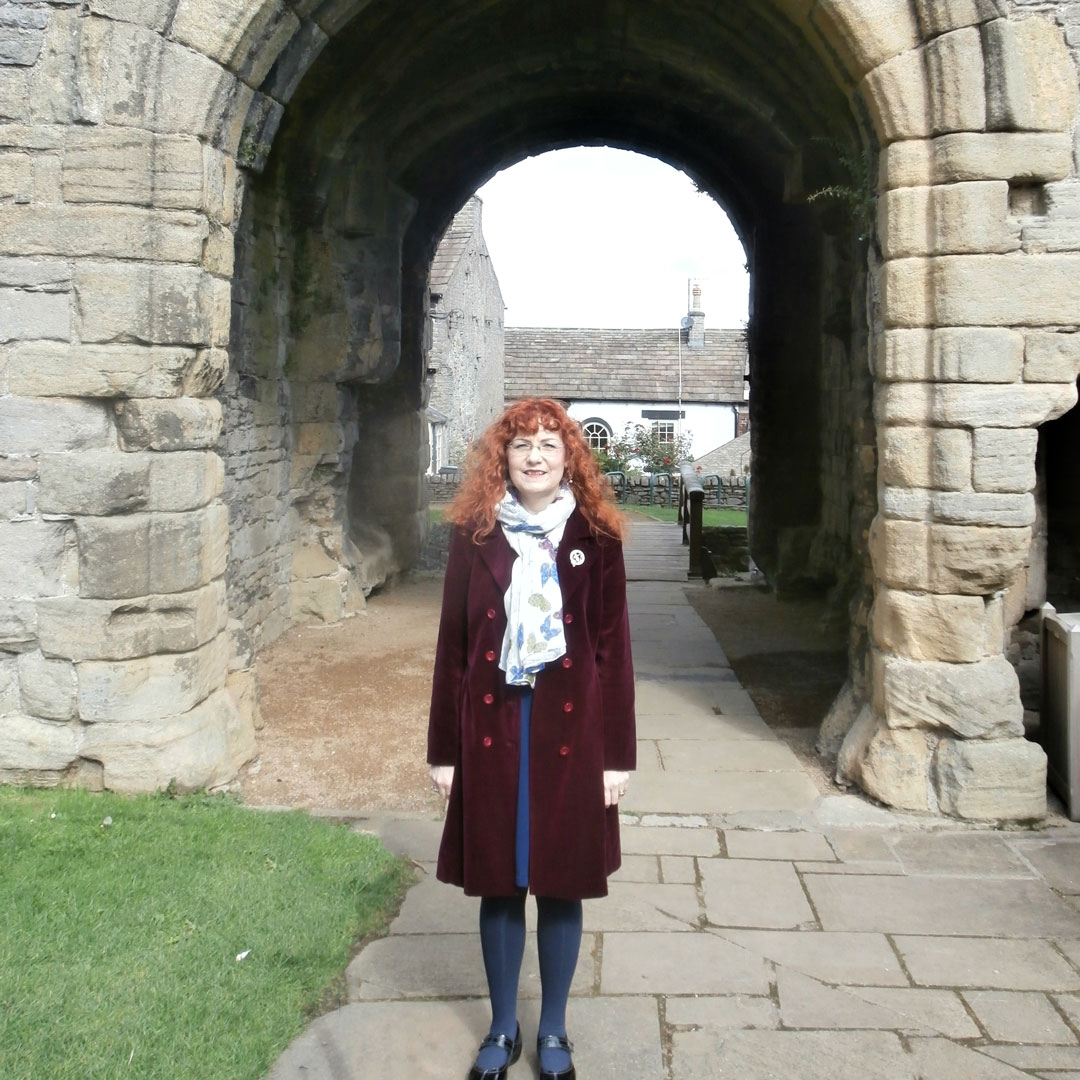
1) Middleham Castle from the Gatehouse (Wendy Johnson); 2) Middleham Castle: North Range (Wendy Johnson); 3) Middleham Castle: Towards the Gatehouse (Wendy Johnson).

About the author:

Wendy has a lifelong passion for medieval history, its people, and for bringing their incredible stories to life. Her specific areas of interest are the fifteenth century, the Wars of the Roses, and Richard III in particular. She enjoys narratives which immerse the reader in the past, and tries faithfully to recreate the later Middle Ages within in her own writing. She has contributed to a number of historical anthologies and was a runner up in the Woman and Home Short Story Competition 2008.

A member of the Richard III Society since 1986, Wendy is also a founder member of Philippa Langley’s Looking for Richard Project, which located the king’s lost grave in 2012. She co-authored Finding Richard III: the Official Account of Research by the Retrieval and Reburial Project in 2014, and in 2019 received the Richard III Society’s Robert Hamblin Award.

THE TRAITOR’S SON, volume one in a Richard III trilogy, is Wendy’s debut novel and she is currently working on the sequel.

*

My Books:

Signed, dedicated copies of all my books are available through my online bookshop.

Out Now! Women of the Anarchy

Two cousins. On the one side is Empress Matilda, or Maud. The sole surviving legitimate child of Henry I, she is fighting for her birthright and that of her children. On the other side is her cousin, Queen Matilda, supporting her husband, King Stephen, and fighting to see her own son inherit the English crown. Women of the Anarchy demonstrates how these women, unable to wield a sword, were prime movers in this time of conflict and lawlessness. It show how their strengths, weaknesses, and personal ambitions swung the fortunes of war one way – and then the other.

Available from Bookshop.orgAmberley Publishing and Amazon UK.

Coming on 15 June 2024: Heroines of the Tudor World

Heroines of the Tudor World tells the stories of the most remarkable women from European history in the time of the Tudor dynasty, 1485-1603. These are the women who ruled, the women who founded dynasties, the women who fought for religious freedom, their families and love. These are the women who made a difference, who influenced countries, kings and the Reformation. In the era dominated by the Renaissance and Reformation, Heroines of the Tudor World examines the threats and challenges faced by the women of the era, and how they overcame them. From writers to regents, from nuns to queens, Heroines of the Tudor World shines the spotlight on the women helped to shape Early Modern Europe.

Heroines of the Tudor World is now available for pre-order from Amberley Publishing and Amazon UK.

Also by Sharon Bennett Connolly:

King John’s Right-Hand Lady: The Story of Nicholaa de la Haye is the story of a truly remarkable lady, the hereditary constable of Lincoln Castle and the first woman in England to be appointed sheriff in her own right. Available from all good bookshops or direct from Pen & Sword Booksbookshop.org and AmazonDefenders of the Norman Crown: The Rise and Fall of the Warenne Earls of Surrey tells the fascinating story of the Warenne dynasty, from its origins in Normandy, through the Conquest, Magna Carta, the wars and marriages that led to its ultimate demise in the reign of Edward III. Available from Pen & Sword BooksAmazon in the UK and US, and Bookshop.org

Ladies of Magna Carta: Women of Influence in Thirteenth Century England looks into the relationships of the various noble families of the 13th century, and how they were affected by the Barons’ Wars, Magna Carta and its aftermath; the bonds that were formed and those that were broken. It is now available in paperback and hardback from Pen & Sword,  Amazon, and Bookshop.orgHeroines of the Medieval World tells the stories of some of the most remarkable women from Medieval history, from Eleanor of Aquitaine to Julian of Norwich. Available now from Amberley Publishing and Amazon, and Bookshop.orgSilk and the Sword: The Women of the Norman Conquest traces the fortunes of the women who had a significant role to play in the momentous events of 1066. Available now from Amazon,  Amberley Publishing, and Bookshop.org.

Alternate Endings: An anthology of historical fiction short stories including Long Live the King… which is my take what might have happened had King John not died in October 1216. Available in paperback and kindle from Amazon.

Podcast:

Have a listen to the A Slice of Medieval podcast, which I co-host with Historical fiction novelist Derek Birks. Derek and I welcome guests, such as Bernard Cornwell and Elizabeth Chadwick, and discuss a wide range of topics in medieval history, from significant events to the personalities involved.

*

Don’t forget! Signed and dedicated copies of all my books are available through my online bookshop.

For forthcoming online and in-person talks, please check out my Events Page.

You can be the first to read new articles by clicking the ‘Follow’ button, liking our Facebook page or joining me on Twitter and Instagram.

*

©2024 Sharon Bennett Connolly FRHistS 

Guest Post: The Kingmaker’s Women by Julia A. Hickey

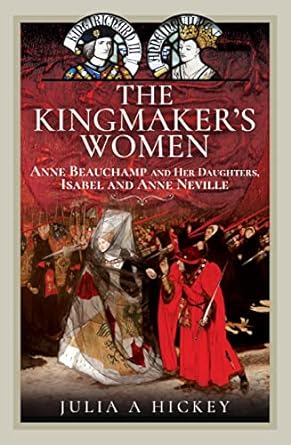
Today it is an absolute pleasure to welcome fellow historian Julia A. Hickey to History… the Interesting Bits. I have been following Julia’s work for many years and regularly turn to her blog, The History Jar, for information and inspiration for my own work. And, apparently, Julia does the same with History… the Interesting Bits, so we’re forming a bit of a mutual appreciation society. Julia’s latest book focuses on the Wars of the Roses and, in particular, the wife and daughters of Richard Neville, Earl of Warwick, known to history as ‘The Kingmaker.’ And here she is to give us a little taster of her book, The Kingmaker’s Women, Anne Beauchamp and Her Daughters, Isabel and Anne Neville by Julia A Hickey.

So, it’s over to Julia…

The Kingmaker’s Women, Anne Beauchamp and Her Daughters, Isabel and Anne Neville.

Julia A. Hickey

Anne Neville, Middleham Church

Isabel and Anne Neville led brief but turbulent lives. Their father, Richard Neville, 16th Earl of Warwick by right of his wife, Anne Beauchamp, was at the heart of the conflicts of the mid-fifteenth century, earning himself the name ‘Warwick the Kingmaker’. Countess Anne and her children were chronicled, on occasion, alongside the earl in his long-played political game spanning more than twenty years, concluding only with his death on a foggy Easter morning at Barnet in 1471. It is impossible to write about their lives without setting them in the context of the War of the Roses and the earl’s influence upon it.

Anne Beauchamp, descended from King Edward III, the Despensers and the Mortimers as well as the earls of Warwick, was married to Richard Neville in 1434 at Abergavenny when she was 8 years-old and her husband was only 6. The union was subsidiary to the wedding of their siblings Henry Beauchamp, the 13th Earl of Warwick’s heir, and Cecily Neville which was celebrated at the same time. There was no reason to expect that the marriage would transform Richard, who was heir to his father Richard Neville and his mother, Alice Montacute, the heiress of the Earl of Salisbury, into one of the most powerful nobles of the fifteenth century.

It was Anne’s unexpected inheritance of the earldom of Warwick and all its estates upon the death of her brother in 1446 followed by her young niece, named after her, in 1449 that transformed the couple’s fortunes. Anne, who had three elder half-sisters from the 13th earl’s first marriage to Elizabeth de Berkeley, was the only full-blooded relation of the 15th countess. The law, viewing the deceased countess’s collateral heirs, saw only that Anne was more closely related to her niece than the other women. Inheritance was not awarded based on direct descent from Richard Beauchamp, 13th Earl of Warwick who had been outlived by both his son and his granddaughter. The decision triggered a legal dispute and a feud with the families of Anne Beauchamp’s half-sisters which resonated throughout the conflict between York and Lancaster. As daughters of the 13th earl, Margaret, Eleanor and Elizabeth expected to be coheiresses to the earldom alongside their younger half-sibling. Margaret’s husband, John Talbot, contended that as the husband of the 13th earl’s eldest daughter, it was he rather than Richard Neville who should become the 16th Earl of Warwick by right marriage (jure uxoris).

Middleham Castle

The new countess travelled with her husband, oversaw the management of their estates in his absence, was party to his schemes and subject to the State’s wrath after his death. One of the consequences of the lived experience of the countess and her daughters was that they did not leave the kind of documentary trail that would help to shine a light upon their lives in present times. It was only when medieval women became widows in receipt of dower and jointure rights that they gained legal independence and a voice in the official record. Isabel, born in 1451, and Anne, born in 1456, grew up, lived and died largely unheralded in a masculine world, or so it appears at first glance. Dig deeper and the echo of women with voices demanding to be heard, including Countess Anne, can be found in court records, financial accounts, charters and wills; books commissioned by wealthy well-educated women like the Nevilles and Beauchamps; as well as the establishment of chantries and the building of parish churches throughout the realm.

Isabel Neville, who died when she was 25, was married, in secret at Calais, to King Edward IV’s brother George, Duke of Clarence in 1469. Her father was eager to link the Neville name with that of Plantagenet. Clarence was desirous of the match because Isabel was the elder daughter of one of England’s most powerful men and an heiress to vast estates. There was also a distinct possibility that Warwick would topple Edward from the throne as the relationship between the men deteriorated and place Clarence upon it in his brother’s stead. Circumstantial evidence demonstrates that Isabel was beloved by George who was only a year older than his bride. Unlike the king, Clarence had no known mistresses or illegitimate children. No one can know how Isabel felt about her husband; her experience as a fugitive in 1470, forced to give birth onboard ship to a still born child outside Calais; or the turning of her husband’s coat that September when he re-joined his brother’s cause. It had become clear that Warwick was less interested in making him king than Clarence might have previously supposed. Nor is it possible to know what the relationship between the two sisters was like when Anne Neville was placed in George’s custody in 1471 or even if Isabel supported George’s attempt to prevent the division of her parents’ estates. It is certainly true that Clarence was grief-stricken by his wife’s death and he was permitted, as he desired, to be interred next to Isabel at Tewkesbury following his own execution for treason in 1478.

Warwick Castle

The idea of heiress as powerless trophy is a trope embedded into our common view of Anne Neville, thanks to Shakespeare’s portrayal of her in Richard III as a pawn furthering her father’s ambitions. She has also served since Tudor times as a sickly cypher to illustrate Richard’s manifest evil. The story, told by Shakespeare, is based on Sir Thomas More’s History of King Richard III. In reality, Anne’s life was an example of the changeability of fortune depicted by the popular medieval philosophy of Fortuna’s wheel. History does not know if she was a woman of courage or shrewd intelligence in the way the Lady Margaret Beaufort is recognised, but John Rous who knew Anne described her as ‘amiable and beauteous and in conditions full commendable and right virtuous’. Whatever her health might have been, she was made of the same stern stuff as Henry Tudor’s mother to whom she was distantly related. Anne endured a sea battle when her father was forced to flee England in 1470; was married to Edward of Lancaster, the son of her father’s bitterest enemy; made a forced march with the Lancastrian army from the south of England to Tewkesbury in 1471; was widowed after five months of marriage; and escaped the clutches of her land-hungry brother-in-law. She preferred to risk the criminals of St Martin’s sanctuary near Westminster so that she could make a second marriage to Richard, Duke of Gloucester who would fight for her inheritance and see her returned to her own rightful position in society.

Anne’s marriage to Richard was unusual for a couple of their rank in that no dowry could be agreed for her because, by then, the estates associated with the Nevilles and the Earldom of Warwick lay within the king’s gift. The legal rights of Anne’s mother, the suo jure Countess of Warwick, were stolen from her by King Edward IV and Parliament through the simple expedient of having Anne Beauchamp declared legally dead. The countess’s letters written from sanctuary at Beaulieu following her husband’s death demanding her legal rights remain as testimony to both her own education and the potential power of aristocratic women to intervene in political decision making. The effectiveness of her correspondence to the highborn men and women who surrounded the king is best illustrated by Edward IV’s orders that she should be prevented from the continuation of her writing.

Memorial brass to Isabel Neville and George, Duke of Clarence, Tewkesbury Abbey

Had King Edward IV not died in 1483 while his eldest son was still a child, Anne Neville might have spent the remainder of her days overseeing her household and servants at Middleham as the Duchess of Gloucester. Hers would have been a story of estate management, a piety shared with her spouse, and the trials of childbirth.

Fortuna’s wheel carried Anne to the apex of society when her husband was declared King Richard III on 25 June 1483. As queen she chose to surround herself with Neville kinswomen familiar since childhood, including her own illegitimate half-sister, Margaret Huddleston who was married to the Lord of Millom. Fate continued its abrupt revolution. The loss of her only son, Edward of Middleham, followed hard on the heels of a double coronation and triumphant progress to York. It was not long before Anne became so unwell that her doctors prohibited the king from sharing her bed. As winter turned into spring in March 1485, Anne died and was buried in Westminster Abbey, leaving behind only rumour, speculation and rebellion. Five months later Richard was dead at Bosworth, buried with scant regard for ceremony, leaving Anne to be characterised as a victim rather than a woman born with a powerful name and the potential of political agency.

Even more extraordinary, the circumstances surrounding the end of Isabel and Anne Neville’s lives were both followed by accusations of murder and witchcraft. Clarence, to modern eyes at least, maddened with grief following the untimely death of Isabel in December 1476, accused one of his wife’s own household of murder. Ankarette Twynyho, possibly a trusted midwife, was shoehorned by the duke into an evolving stereotype of a witch. Clarence had no hesitation either in kidnapping the woman or having her judicially murdered. Later, the Tudor propaganda machine, whatever the truth of the matter, vilified Richard III as the murderer of his nephews, a poisoner and a man of such diabolical intensity that he terrified Anne into an early grave.

Countess Anne lived on after her daughters. Consigned to the footnotes or forgotten by history, the suo jure Countess of Warwick, declared legally dead in 1474, refused to be stripped of her voice or her rights. She may have commissioned The Pageants of Richard Beauchamp, Earl of Warwick and the Rous Roll that depict the lives of the Earls of Warwick, the countess, and Isabel and Anne. There was no such thing as a bad Earl of Warwick in her opinion. She knew that her power and that of her daughters lay in the land that they represented, in their kinship networks and the men they slept with.

A pragmatist and survivor, Countess Anne negotiated her return to legal life with the accession of the Tudors on the condition that she broke the entail that lay upon her estates and gifted then to Henry VII. When she died in 1492, she was buried next to her husband in Bisham Abbey. She left Isabel’s surviving children, Margaret and Edward, nothing, apart from a Plantagenet legacy that would see Edward, the 17th Earl of Warwick, executed for treason in 1499 and, Margaret Pole, suo jure Countess of Salisbury, butchered by an inept headsman in 1541.

Medieval chroniclers and the focus of history’s lens marginalises women like Countess Anne and her daughters by imposing a distinction between the masculine public and the feminine domestic spheres. The messy reality is that the countess and her daughters, and women like them, lived complex and sometimes contentious lives, risking everything to protect their family’s interests.

To Buy the Book

The Kingmaker’s Women, Anne Beauchamp and Her Daughters, Isabel and Anne Neville by Julia A Hickey, published by Pen and Sword is currently priced at £20.00. It is available direct from Pen and Sword as well as from Amazon and Waterstones. It is the third of Julia’s books to be published by Pen and Sword. The Son that Elizabeth I Never Had: The Adventurous Life of Robert Dudley explores the life of the Earl of Leicester’s illegitimate son while Medieval Royal Mistresses: Mischievous Women who Slept with Kings and Princes takes an overview of the women who shared the beds of some of England and Scotland’s rulers.

About the author

Julia Hickey describes herself as a general historian but is often drawn back to the Wars of the Roses and the Tudor period. Her interest in history began at an early age when she lived near Plymouth and her father recounted the story of Sir Francis Drake playing bowls before setting sail to vanquish the Armada. She has a particular passion for the reivers who operated in the borders between England and Scotland before James I ascended the throne in 1603 not only because riding names such as Armstrong and Musgrave resonate in her husband’s family tree but because a glimpse may be caught of ordinary men and women in ballads of the period. Little known or untold stories, the contribution made by women and the lives of people who populate the footnotes of History fascinate her. She is at her happiest exploring and photographing castles, ruins, cathedrals and stately homes – preferably followed by a visit to a café.

Her first degree was in English and History from the University of Kent which she followed up with an M.A. by research and teaching qualification. Since then, she has taught in a range of settings from secondary schools to venues used by the Workers Educational Association (WEA). These days she is a freelance speaker, writer and blogger at thehistoryjar.com. She can also be found at https://www.instagram.com/thehistoryjar/ and https://www.facebook.com/TheHistoryJar.

When she’s not writing, she can be found in her garden, enjoying the Peak District in all its seasons or crafting. Almost inevitably her interests take a historical turn. This year she has taken part in the Unstitched Coif, a co-created artwork and research project undertaken by a PHD student at Sheffield in association with the V & A Museum, using blackwork embroidery to stitch a previously unworked seventeenth century design.

*

My Books

Signed, dedicated copies of all my books are available through my online bookshop.

Out nowKing John’s Right-Hand Lady: The Story of Nicholaa de la Haye

In a time when men fought and women stayed home, Nicholaa de la Haye held Lincoln Castle against all-comers, gaining prominence in the First Baron’s War, the civil war that followed the sealing of Magna Carta in 1215. A truly remarkable lady, Nicholaa was the first woman to be appointed sheriff in her own right. Her strength and tenacity saved England at one of the lowest points in its history. Nicholaa de la Haye is one woman in English history whose story needs to be told…

King John’s Right-Hand Lady: The Story of Nicholaa de la Haye is now available from Pen & Sword Booksbookshop.org and Amazon.

Coming 15 January 2024: Women of the Anarchy

On the one side is Empress Matilda, or Maud. The sole surviving legitimate child of Henry I, she is fighting for her birthright and that of her children. On the other side is her cousin, Queen Matilda, supporting her husband, King Stephen, and fighting to see her own son inherit the English crown. Both women are granddaughters of St Margaret, Queen of Scotland and descendants of Alfred the Great of Wessex. Women of the Anarchy demonstrates how these women, unable to wield a sword, were prime movers in this time of conflict and lawlessness. It show how their strengths, weaknesses, and personal ambitions swung the fortunes of war one way – and then the other.

Available for pre-order from Amberley Publishing and Amazon UK.

Also by Sharon Bennett Connolly:

Defenders of the Norman Crown: The Rise and Fall of the Warenne Earls of Surrey tells the fascinating story of the Warenne dynasty, of the successes and failures of one of the most powerful families in England, from its origins in Normandy, through the Conquest, Magna Carta, the wars and marriages that led to its ultimate demise in the reign of Edward III. Defenders of the Norman Crown: Rise and Fall of the Warenne Earls of Surrey is now available from Pen & Sword BooksAmazon in the UK and US, and  Bookshop.org.

Ladies of Magna Carta: Women of Influence in Thirteenth Century England looks into the relationships of the various noble families of the 13th century, and how they were affected by the Barons’ Wars, Magna Carta and its aftermath; the bonds that were formed and those that were broken. It is now available in paperback and hardback from Pen & Sword,  Amazon, and Bookshop.org.

Heroines of the Medieval World tells the stories of some of the most remarkable women from Medieval history, from Eleanor of Aquitaine to Julian of Norwich. Available now from Amberley Publishing and Amazon, and Bookshop.org.

Silk and the Sword: The Women of the Norman Conquest traces the fortunes of the women who had a significant role to play in the momentous events of 1066. Available now from Amazon,  Amberley Publishing, and Bookshop.org.

Alternate Endings: An anthology of historical fiction short stories including Long Live the King… which is my take what might have happened had King John not died in October 1216. Available in paperback and kindle from Amazon.

Podcast:

Have a listen to the A Slice of Medieval podcast, which I co-host with Historical fiction novelist Derek Birks. Derek and I welcome guests, such as Bernard Cornwell, and discuss a wide range of topics in medieval history, from significant events to the personalities involved.

*

Don’t forget! Signed and dedicated copies of all my books are available through my online bookshop.

For forthcoming online and in-person talks, please check out my Events Page.

You can be the first to read new articles by clicking the ‘Follow’ button, liking our Facebook page or joining me on Twitter and Instagram.

©2023 Sharon Bennett Connolly FRHistS and Julia A. Hickey

Guest Post: The Crown Sild by Toni Mount

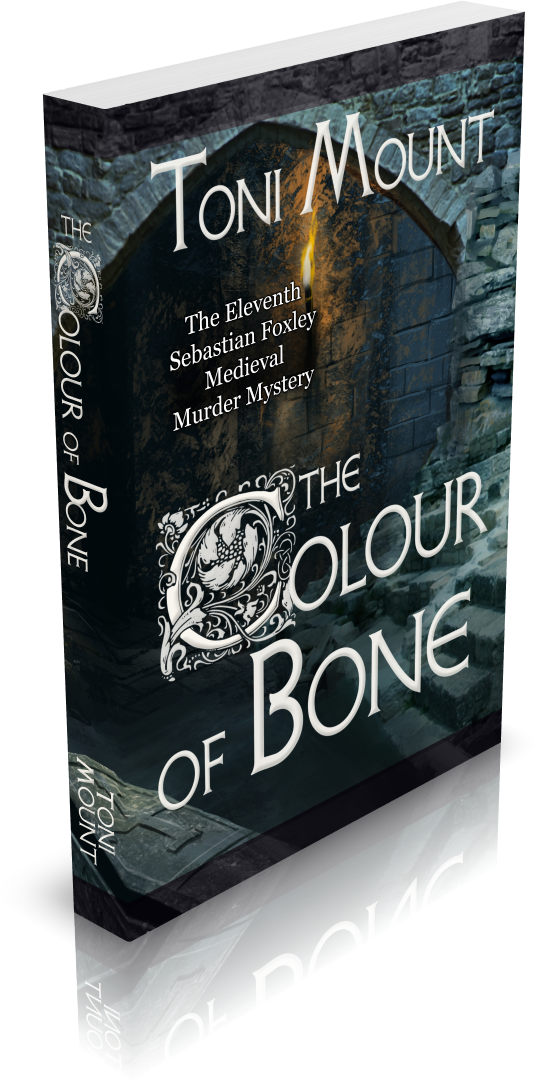
Today, it is a pleasure to welcome author Toni Mount to the History … the Interesting Bits to celebrate the release of the latest instalment of Toni’s Seb Foxley mysteries.

The Crown Sild, Cheapside, London  

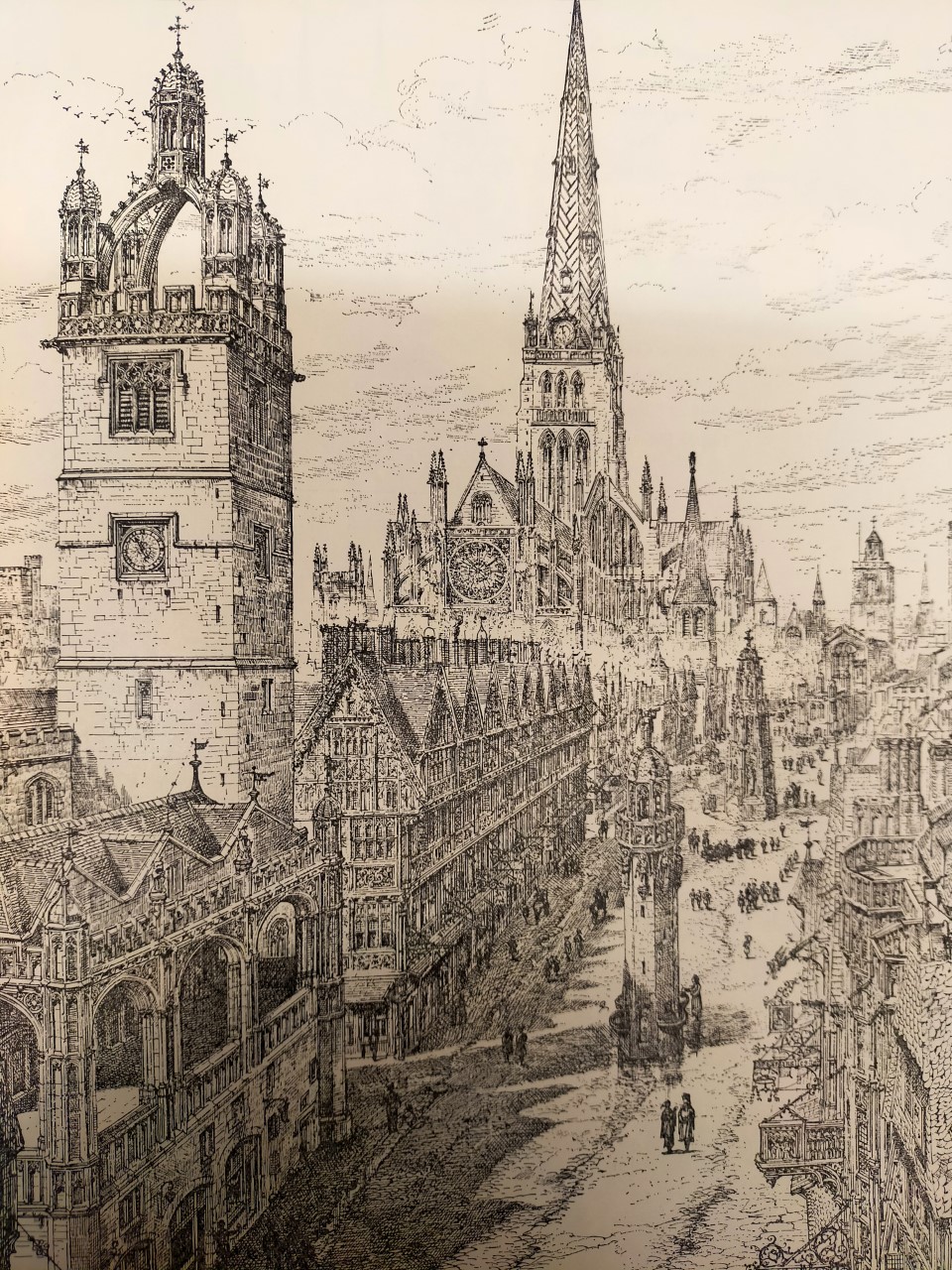
When I began writing my new Sebastian Foxley medieval murder mystery, The Colour of Bone, I had never heard of the Crown Sild but it came to my attention when I was lucky enough to be given a wonderful book of drawings: Old London – Illustrated [1962]. The book contains numerous reconstructed scenes of medieval London and Westminster by H.W. Brewer [d.1903] with explanatory texts and there, in Plate 10, ‘Cheapside from the east’, was a marvellously ornate two-storey Gothic building on the south side of London’s main east-west thoroughfare, labelled ‘Crown Sild or Sildam’. What on earth was it? I was intrigued. 

In the text, discussing the church of St Mary-le-Bow, it tells us: 

In front of Bow Church was a costly building of stone, known as the “Crown Sild” or “Sildam”, with an open arcade in the upper story (sic) facing the street, which was used by Royalty and their visitors for witnessing tournaments, pageants and processions. The tower of the present church has a balcony overlooking the street, placed there by Wren to commemorate the “Crown Sild”. 

Surprisingly for this ‘costly building of stone’, I discovered that ‘sild’ is the medieval word for a shed! That’s a very posh shed. ‘Wren’ is Sir Christopher who rebuilt the church after it was destroyed during the Great Fire of London in 1666, along with the ‘shed’ next door. But why was the Sild built, what was it used for and is there any evidence of it remaining?  

The story goes that the Sild was constructed by King Edward III, following a disaster in September 1331. The king planned to hold a magnificent tournament to celebrate the birth of his son and heir, Prince Edward of Woodstock [later known as the Black Prince] the year before. The tournament would take place in the heart of the City of London, in its widest street, Cheapside. Carpenters were commissioned to build a large wooden grandstand for Queen Philippa and her ladies to sit and watch the spectacle in comfort. King Edward would take part in tournament himself, a risky endeavour since fatalities were not unknown but he was young and daring and determined to impress the ladies and his fellow knights. 

However, it wasn’t the king who almost came to grief that day.  

As the queen and her ladies took their places on the cushioned benches among the flower garlands and bunting, the hastily constructed wooden grandstand began to creak and groan, then to sway and crack before it gave way beneath the royal and noble spectators. The whole edifice collapsed to the great horror of those looking on, including the king. By a miracle, no one was killed but there must have been injuries among the ladies, although the queen was badly shaken but otherwise unharmed. The hot-blooded king’s rage was terrible. 

He ordered that all the carpenters involved in the construction of the grandstand be arrested and hanged forthwith, there and then, on the spot. Fortunately, the queen was a shocked by this as by her brush with death and had wits enough to go on her knees before her irate husband. She begged him to spare the carpenters and, willing to grant her every wish at that moment, Edward let the carpenters live. He also insisted that the tournament continue as planned. A disaster wasn’t going to deter this royal showman. But, for any future, similar events in Cheapside, he wasn’t going to risk the queen’s life in the hands of those incompetent carpenters. Instead, he commissioned the stone masons to build a permanent grandstand at the best vantage point beside St Mary-le-Bow Church, fit for royalty with all the comforts and shelter from the weather. This was the Crown Sild. 

We don’t know how often royalty made use of it. Tournaments were held more frequently at Smithfield, outside the city walls, where there was far more space for the crowds. But the procession of the monarch on the eve of their coronation travelled from the Tower of London to Westminster Palace via Cheapside so the citizens could see the new king or queen and the sild would be the best viewpoint. Other processions, pageants, street festivals and entertainments took place in Cheapside too and the last royal spectators to use the sild for such an event were Henry VIII and Queen Anne Boleyn.  

By the later fifteenth century, when not in use by VIPs, the lower level was rented by the Vintners’ Company and used as storage for their barrels of wine. This is the sild as I describe it in my novel The Colour of Bone when Seb Foxley, the artist-cum-sleuth, his family and friends pay to watch the street entertainments from this ‘royal box’ with disastrous consequences which have nothing to do with it collapsing beneath them – you’ll have to read the book if you want to know what happens. 

At the head of this blog, I also asked whether there is any evidence of the Crown Sild remaining today? I don’t know what may lie among the foundations of the shops and office buildings along modern Cheapside, constructed after the devastation of the bombing during World War II but back in Victorian times, a letter was written concerning it. Here are the relevant bits from a letter written by Thomas Lott, Esq. F.S.A. to Sir Henry Ellis, K.H., Secretary of the Society of Antiquities on 19th December 1844, ‘describing some remains of ancient buildings to the west side of Bow Churchyard’:  

Dear Sir, 

…It is not generally known that there exist, in its immediate neighbourhood, subterranean 

architectural remains, although evidently of a later date, yet of a very interesting character. 

Having occasion to inspect several of the houses on the west side of Bow Church-yard, the property of the parish, I was surprised, on descending into the cellars, to find (as the foundation of three of the houses) stone vaultings of very substantial masonry. 

On a subsequent visit (accompanied by my friend Mr. Chaffers, who has kindly assisted me in describing the place), we found beneath the house No. 5, occupied by Messrs. Groucock, a square vaulted chamber, 12 feet by 7 feet 3 inches in height, with a slightly pointed arch of ribbed masonry, similar to some of those of the Old London Bridge. We were informed that 

there had been, in the centre of the floor, an excavation, which appeared formerly to have been used as a bath, but which was now arched over and converted into a cesspool. 

Proceeding northwards towards Cheapside, we found what appeared to be a continuation of the vault, beneath the houses Nos. 4 and 3. The arch of the vault here is plain, not ribbed, and more pointed. The masonry appears, from an aperture made to the warehouse above, to be of considerable thickness. This vault or crypt is 7 feet in height from the floor to the crown of 

the arch, and is 9 feet in width, and 18 feet long. Beneath the house No. 4 is an outer vault. The entrance to both these vaults is by a depressed Tudor arch with plain spandrils, 6 feet high, the thickness of the walls about 4 feet. 

In the thickness of the eastern wall, in the vault of the house No. 3, are cut triangular-headed niches, similar to those in which in ancient ecclesiastical edifices the basins containing the holy water, and sometimes lamps, were placed. … In some other parts of these vaults are modern imitations of these recesses. The vaulting beneath the house No. 2, appears to have been destroyed to add convenience to the warehouses; but the buildings, of which these are the vestiges, appear to have extended to Cheapside; for beneath a house in Cheapside, in a direct line with these buildings, and close to the street, is a massive stone wall. 

I cannot think they were any portion of the Grammar School which Stowe says “was let out in the reign of Henry VIIth for fowr shillings a year, and a cellar for two shillings the year; two vaults under the church for fifteen shillings both.” 

The Sild – the building in the bottom left hand corner.

Mr. Chaffers seems disposed to think these may be the remains of the stone building erected by Edward the Third, from which to view the processions, jousts, &c. described thus by Stowe: “Within the north side of St Mary Bow, towards West Cheape, standeth one fair building of stone called in record Sildam, SL shed, &c. King Edward IIIrd. upon occasion, (viz. the falling of the wooden scaffold) caused this sild or shed to be made and strongly to be built of stone for himself, the Queen, and other estates, to stand in them to behold the joustings and other shows at their pleasure, and this house for a long time after served to that use, namely, in the reigns of Edward IIIrd and Richard IInd; but, in the year 1410, Henry IVth confirmed the said shed or building to Stephen Spilman and others, by the name of one new sildam, shed, or building, with shops, cellars, and edifices appertaining, called Crown Silde or Tamer Silde, situate in West Cheape, and in the parish of St Mary de Arcubus.” 

According to the same author, notwithstanding this grant, the kings of England still occasionally repaired to the same building to view the shows; and we find a century afterwards, that “Henry VIIIth, his Queen, and nobles frequently came here to behold the great marching watches on the eves of St John and St Peter; remaining there until the morning.” 

Thus it will be seen that this sild or shed, strongly built of stone, still remained in Stowe’s time, two hundred and fifty years after its erection, darkening (as Stowe says) the doors and windows on that side of the church. Mr. Chaffers states, it has been thought that the Crown sild stood on the spot between the tower of the present church and Bow Lane; but he does not think, from Stowe’s account, such could have been the case, as Stowe, speaking of Cordwainers Street, afterwards Hosier Lane, then Bow Lane, says:

“This street begins by West Cheape, and St Mary Bow Church is the head thereof on the west side, and runneth down south.” Had such a spacious building as the Crown-sild been situated between the church and Cheapside, Stowe would doubtless have mentioned it. There is no doubt, it was Crown property, as it now pays a trifling fee-farm rent to the Crown.  

If this building was erected for purposes of a domestic kind … since the original building was destroyed, which was probably in the fire of London … there are no old maps of the parish to throw any light on the subject, nor do the ancient city maps and plans, which profess to contain elevations of the buildings, assist in the discovery. 

I hazard no opinion on this matter, contenting myself with having thus drawn attention to it from those whose greater experience, more extensive research, and leisure opportunities will enable them to form a more correct judgment…  

I remain, dear Sir, 

Your faithful obedient Servant, 

THOMAS LOTT. 

So now you know as much as I do.  

As to whether the Crown Sild stood to the east or west side of St Mary-le-Bow Church, Brewer’s drawing shows it to the east whereas, if Lott’s friend Mr Chaffers is correct in thinking they had found its ancient vaults, it was to the west. Perhaps we shall never know. But you can have my version of the Crown Sild where traumatic events happen, if you read my latest Sebastian Foxley medieval murder mystery, The Colour of Bone.  

*

The Colour of Bone by Toni Mount:

It’s May 1480 in the City of London.

When workmen discover the body of a nun in a newly-opened tomb, Seb Foxley, a talented artist and bookseller is persuaded to assist in solving the mystery of her death when a member of the Duke of Gloucester’s household meets an untimely end. Evil is again abroad the crowded, grimy streets of medieval London and even in the grandest of royal mansions.

Some wicked rogue is setting fires in the city and no house is safe from the hungry flames. Will Seb and his loved ones come to grief when a man returns from the dead and Seb has to appear before the Lord Mayor?

Join our hero as he feasts with royalty yet struggles to save his own business and attempts to unravel this latest series of medieval mysteries.

About the author:

Toni Mount is a best-selling author of medieval non-fiction books. She is the creator of the Sebastian Foxley series of medieval murder mysteries and her work focuses on the ordinary lives of fascinating characters from history. She has a first class honours degree from the Open University and a Master degree by research from the University of Kent however her first career was as a scientist which brings an added dimension to her writing. Her detailed knowledge of the medieval period helps her create believable characters and realistic settings based on years of detailed study. You can find Toni at:

www.tonimount.com

https://www.amazon.co.uk/Toni-Mount/e/B0034P0FF8/

https://www.facebook.com/toni.mount.10/

https://twitter.com/tonihistorian

*

My Books:

Signed, dedicated copies of all my books are available, please get in touch by completing the contact me form.

Coming 30 May 2023!

King John’s Right-Hand Lady: The Story of Nicholaa de la Haye is now available for pre-order from Pen & Sword Books and Amazon UK. (I will hopefully have a US release date shortly)

In a time when men fought and women stayed home, Nicholaa de la Haye held Lincoln Castle against all-comers. Not once, but three times, earning herself the ironic praise that she acted ‘manfully’. Nicholaa gained prominence in the First Baron’s War, the civil war that followed the sealing of Magna Carta in 1215.

A truly remarkable lady, Nicholaa was the first woman to be appointed sheriff in her own right. Her strength and tenacity saved England at one of the lowest points in its history. Nicholaa de la Haye is one woman in English history whose story needs to be told…

Also by Sharon Bennett Connolly:

Defenders of the Norman Crown: The Rise and Fall of the Warenne Earls of Surrey tells the fascinating story of the Warenne dynasty, of the successes and failures of one of the most powerful families in England, from its origins in Normandy, through the Conquest, Magna Carta, the wars and marriages that led to its ultimate demise in the reign of Edward III. Defenders of the Norman Crown: Rise and Fall of the Warenne Earls of Surrey is now available from Pen & Sword BooksAmazon in the UK and US, Bookshop.org and Book Depository.

Ladies of Magna Carta: Women of Influence in Thirteenth Century England looks into the relationships of the various noble families of the 13th century, and how they were affected by the Barons’ Wars, Magna Carta and its aftermath; the bonds that were formed and those that were broken. It is now available in paperback and hardback from Pen & Sword,  AmazonBookshop.org and from Book Depository worldwide.

Heroines of the Medieval World tells the stories of some of the most remarkable women from Medieval history, from Eleanor of Aquitaine to Julian of Norwich. Available now from Amberley Publishing and Amazon, Bookshop.org and from Book Depository worldwide.

Silk and the Sword: The Women of the Norman Conquest traces the fortunes of the women who had a significant role to play in the momentous events of 1066. Available now from Amazon,  Amberley Publishing, Bookshop.org and Book Depository.

Alternate Endings: An anthology of historical fiction short stories including Long Live the King… which is my take what might have happened had King John not died in October 1216. Available in paperback and kindle from Amazon.

*

You can be the first to read new articles by clicking the ‘Follow’ button, liking our Facebook page or joining me on Twitter and Instagram.

©2023 Sharon Bennett Connolly FRHistS and Toni Mount
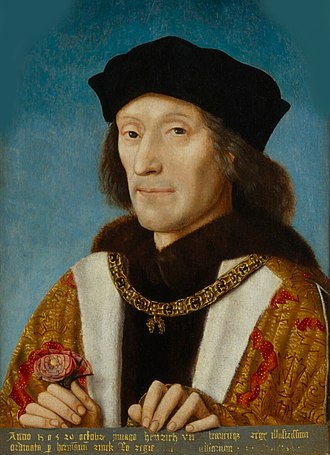
Guest Post: John, Lord Lovell and Holland, also called ‘the Great Lord Lovell’ by Monika E Simon

Portrait of John Lovell VII
(British Library, Harley 7026, fol. 4, verson © Bridgeman Images)

When John Lovell VII, Lord Lovell and Holland died on 10 September 1408 at the age of about 66 he had lived not only a long but also a very active and occasionally turbulent life.

John Lovell VII, who is generally referred to as the fifth Lord Lovell, came of age in 1363 and on 8 June the escheators of several counties were ordered to give him seisin of his lands. At this point, the fortunes of his family were at a distinctly low point. His great-grandfather John Lovell III had been the first Lovell to be summoned to parliament and once had been the marshal of Edward I’s army in Scotland. It was the death of his son, John Lovell IV, at the battle of Bannockburn on 24 June 1314, only four years after his father died, that started the long time of decline. First came the long minority of his posthumous son John Lovell V. John Lovell V died at the young age of 33 on 3 November 1347. Another long period of guardianship followed as his eldest son, John Lovell VI was only six years old when his father died. Isabel, the wife of John Lovell V, died two years after her husband in 1449 only a year after the death of Joan de Ros, the grandmother of John Lovell V. This meant that all the Lovell estates were in the hands of guardians. The long periods of guardianship must have surely have a detrimental effect on the profitability of the Lovell estates. Additionally, the lands were also devastated by the Plague. In Titchmarsh, for example, only four of the eight tenants survived the Plague. John Lovell VI died a minor on 12 July 1361 and his younger brother, John Lovell VII, who was also underage, inherited his lands.

Though John Lovell VII was able to look back to a long line of distinguished ancestors, when he was declared of age in 1463, for thirty-nine years of the previous 49 years, the head of the Lovell family had been a minor. His father had never been summoned to parliament, nor had, needless to say, his elder brother. John Lovell VII certainly could not rely on family influence to make his way to promotion and it was even uncertain whether he would receive an individual summons as his great-grandfather and grandfather had done.

The coats of arms: Lovell (left), Burnell (top), and Holland (bottom). (© Gill Smith)

Fortunately John Lovell VII was an ambitious young man, who would prove himself to be an able military commander and administrator. He was also, as far as we can tell, able to make fast friends and allies. Last but not least, he was also lucky.

He first appears in records serving on several military campaigns including in Brittany and was in the company of Lionel, Duke of Clarence, when he was travelling to Milan to marry Violante Visconti. It was most likely in this early period of his life that he went on crusade to Prussia and the Eastern Mediterranean.

Though we do not know exactly when he married Maud Holland, the granddaughter and heiress of Robert Holland, but it was probably in 1371, when Maud was about 15. As an heiress of her grandfather large estates, this was an exceptionally good match for a young man with few connections. Interestingly, this marriage not only approximately doubled the lands John Lovell was holding, it also created a link, if only a tenuous one to the royal family. Maud Holland’s grandfather Robert Holland was the older brother of Thomas Holland, who in turn was the husband of Joan of Kent. Maud Holland’s father Robert, who had predeceased his father, therefore had been the cousin of Thomas, John, Maud, and Joan Holland, the half-siblings of Richard II.

Thanks to his marriage to Maud Holland, John Lovell VII held both the Lovell and the Holland barony. John Lovell certainly seems to have appreciated the significance of this marriage: he was the first noblemen who used a double title, calling himself Lord Lovell and Lord Holland. He also combined the Lovell coat of arms with that of the Holland. On their seals, John Lovell VII, his wife Maud Holland, and their sons John Lovell VIII and Robert Holland showed the quartered Lovell and Holland coat of arms. The design can also be found in the cloister of Canterbury Cathedral to the present day.

It is perhaps no accident that the first parliament John Lovell VII was summoned to was the first parliament to be held after his wife’s grandfather had died and he had taken control of his wife’s inheritance. Significant though this boost to his wealth no doubt was, John Lovell VII had also demonstrated his willingness and ability to serve in the military in the years since he came of age. His period as a crusader certainly must have added to his fame as well. The fact that his ancestors had already received individual summonses alone may not have been enough to ensure his inclusion in the House of Lords, but a combination of all these factors made certain of it.

Over the following 33 years John Lovell VII served in a variety of functions, both in military service and increasingly also in the royal administration. Like all noblemen he was appointed to commissions in the areas where his estates were concentrated. He was also placed on commissions that were appointed to deal with more general problems. In 1381, in the aftermath of the Peasants’ Revolt, John Lovell served on a commission to deal with crimes committed during the uprising. John Lovell must have got to know several of his fellow commissioners quite well, as he met them frequently both in the localities and at court. Whether this acquaintances also became his friends is difficult to impossible to say.

In 1385, the war between England and Scotland broke erupted again, and John Lovell VII joined the exceptionally large army that Richard II led north. It was during this campaign that John Lovell started a dispute with Thomas, Lord Morley about the right to bear the arms argent, a lion rampant sable, crowned and armed or. Disputes about who was the rightful owner of a particular coat of arms were quite common in this period. However, only in three of these cases substantial records of the proceedings have survived to this day. One is the Lovell-Morley dispute, the other two are the contemporary controversy between Richard Scrope and Robert Grosvenor, and the slightly later case of Reginald, Lord Grey of Ruthin and Sir Edward Hastings. The Lovell-Morley dispute is an interesting case, as the coat of arms that John Lovell claimed were not in fact the Lovell coat of arms (barry nebuly or and gules). The arms John Lovell claimed were those that his (half-)uncle Nicholas Burnell had fought over with the grandfather of Thomas Morley, Robert Morley, during the Crécy-Calais campaign almost forty years earlier. A considerable part of the testimony collected in the records of the Morley-Lovell dispute is therefore about the earlier proceedings.

Old Wardour Castle (author)

The question that this case raises is of course why John Lovell VII claimed to be the rightful owner of the Burnell coat of arms. The most likely explanation is that he used the claim to the Burnell coat of arms to also stake his claim on the Burnell barony. His grandmother Maud Burnell had settled most of these estates on her sons from her second marriage with John Haudlo. By claiming the Burnell coat of arms, he showed he considered himself the rightful heir of the Burnell barony.

Unfortunately, the outcome of this case cannot be found in the records of the court case. Later depictions of the coat of arms used by Hugh Burnell, John Lovell VII (half-)cousin, shows them differenced with a blue border. John Lovell VII himself continued to use the quartered Lovell and Holland arms as before.

In the course of the 1380s John Lovell VII became a well-placed courtier and administrator. He was made a king’s knight and banneret of the royal household. He also received rewards for his service. When the disagreements between Richard II and several high-ranking members of the nobility worsened at the end of the decade, John Lovell was at first trusted by both sides of the conflict and was employed as an intermediary. But by the time of the Merciless Parliament, he had lost the trust of the king’s critics. He was expelled from court alongside 14 other men and women during the Merciless Parliament and had to swear not to return. Though the exact charges against the men and women thus removed from court are not known, they were considered to have had only undue influence over the king. John Lovell VII exile from court was short as he had returned by the following year. It is possible that his friendship to Bishop Thomas Arundel, the brother of one Richard II’s fiercest critics, eased his way back.

Far from discourage John Lovell VII became even more influential at court during the following decade. He became a member of the king’s council and the number of royal charters he witnessed increased. In 1395, Richard II retained him for life.

It was in 1393, John Lovell VII received a licence to crenellate his manor in Wardour (Wiltshire). The castle he built, now Old Wardour Castle, is of an unusual hexagonal design and despite its appearance are that of a fortress, it was mainly built for comfort and entertainment. Though the building was severely damaged during the Civil War, the ruins are still impressive and give an impression on the amount of money, John Lovell spent on its building.

John Lovell accompanied Richard II on both his expeditions to Ireland. When Richard’s cousin Henry of Bolingbroke invaded England while Richard was in Ireland in 1399, John Lovell stayed with the king even after he had sent most of the army back to England. By the time Richard, his remaining troops and household finally sailed for Wales, it was already too late.

Unfortunately, what exactly happened next cannot be pieced together with certainty as the chronicles describing the events are too vague. We know that soon after landing in Wales, Thomas Percy, Earl of Worcester, Edward, Duke of Aumale, John Stanley, controller of the royal household and John Lovell VII left Richard II and met up with Henry of Bolingbroke, either in Shrewsbury or Chester. Here they ‘put themselves at his mercy’. Considering that all four men had been favoured and promoted by Richard II, this looks like a case of blatant ungratefulness. However, at this time everybody vividly remembered what had happened during the last crisis of Richard II’s reign: all of his supporters that had not managed to escape abroad or were clergymen had been executed. It seems likely that John Lovell and the others tried to escape a similar fate.

Whatever his personal feelings were, John Lovell VII quickly made his peace with the new government. He did not participate in the Epiphany Rising that tried to place Richard II on the throne again and was quickly back in his old position at court. That he had gained the

trust of Henry IV was soon obvious, as John Lovell was one of the four men who were considered to become the tutor of Henry, Prince of Wales. Though he was not appointed in the end, he retained his place on the council. In February 1405 his long service to the Crown was rewarded when he was made Knight of the Garter. Though he was getting on in years, he still participated in the campaign in Wales in the same year. He died three years later on 10 September 1408.

The writs to hold the inquisitions post mortem about the estates he held were sent out to the various counties from Westminster a day later, on 11 September. The only exception is the writ to the escheator of Rutland, which was only written on 16 February 1409, presumably because it had been unknown John Lovell held land there.

The Lovell coat of arms (centre) in the cloister of Canterbury Cathedral (author)

It has been argued, though unfortunately I cannot remember where, that this quick response to his death meant that he had been ill for some time and his death was expected. The one record that specifies where John Lovell died, the inquisition taken in Lincoln on 25 September, state that he died at Wardour Castle in Wiltshire. I have to say that I have serious doubts that it was physically possible for the news of his death to travel the distance of over 100 miles from Wardour to Westminster in a single day. Even if John Lovell’s death had been expected it would still be necessary for someone to inform the administration that he had died so that the inquisitions post mortem could be sent out. It seems more likely to me that the information taken by the escheator in Lincoln was faulty, perhaps it was assumed that John Lovell would have been in Wardour Castle. The quickness with which the writs were issued, suggests to me that John Lovell died in London, probably at Lovell’s Inn in Paternoster Row.

John Lovell VII was buried in the church of the Hospital of St James and St John near Brackley. The church had had no previous connection to the Lovell family, but it was the burial place of Robert Holland, the grandfather of John Lovell’s wife Maud, and her great-grandfather, another Robert. This decision was another indication of how important his marriage was for John Lovell.

John Lovell VII had taken the fortunes of the Lovell family from a rather low point to a new height. He achieved this by luck, through his marriage to the heiress Maud Holland, dedicated service in war and peace, and through his skill to survive turbulent times like the Merciless Parliament or the usurpation of Henry IV. He could be accused of being a ruthless opportunist, but, to quote Mark Ormrod (in his masterful biography of Edward III): ‘the men who survived and thrived in the prince’s service, were precisely those who had the wit and judgement to adjust to the dramatic shifts in political fortunes.’ Though this refers to the last years of the reign of Edward II it also holds true for the turbulent times John Lovell VII lived through.

About the Author:

Monika E. Simon studied Medieval History, Ancient History, and English Linguistics and Middle English Literature at the Ludwig-Maximilians-Universität, Munich, from which she received an MA. She wrote her DPhil thesis about the Lovells of Titchmarsh at the University of York. She lives and works in Munich.

Links:
https://www.pen-and-sword.co.uk/From-Robber-Barons-to-Courtiers-Hardback/p/19045
https://www.facebook.com/MoniESim
http://www.monikasimon.eu/lovell.html

*

My Books

Signed, dedicated copies of all my books are available, please get in touch by completing the contact me form.

Defenders of the Norman Crown: The Rise and Fall of the Warenne Earls of Surrey tells the fascinating story of the Warenne dynasty, of the successes and failures of one of the most powerful families in England, from its origins in Normandy, through the Conquest, Magna Carta, the wars and marriages that led to its ultimate demise in the reign of Edward III. Defenders of the Norman Crown: Rise and Fall of the Warenne Earls of Surrey is now available from Pen & Sword BooksAmazon in the UK and US and Book Depository.
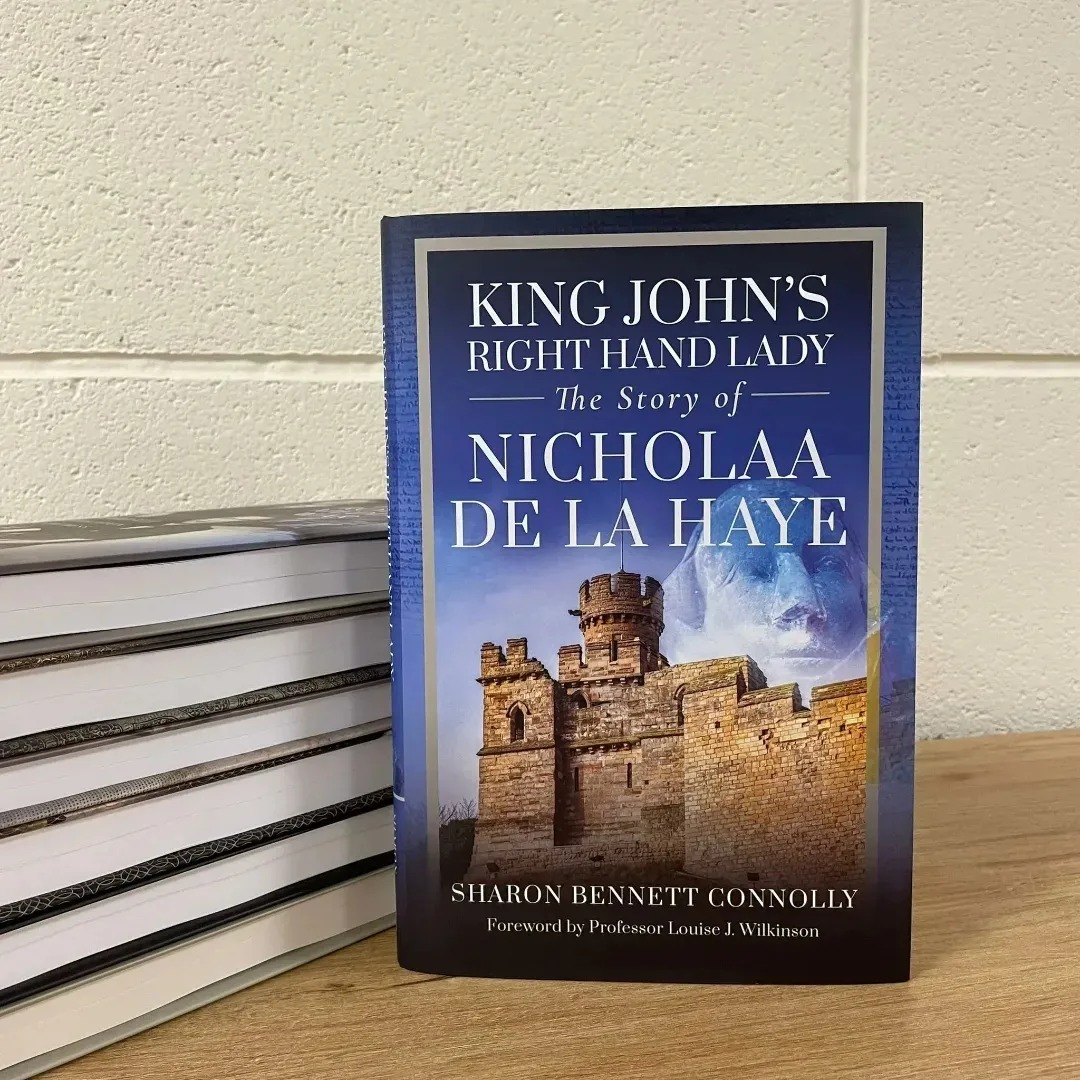
1 family. 8 earls. 300 years of English history!

Also by Sharon Bennett Connolly:

Ladies of Magna Carta: Women of Influence in Thirteenth Century England looks into the relationships of the various noble families of the 13th century, and how they were affected by the Barons’ Wars, Magna Carta and its aftermath; the bonds that were formed and those that were broken. It is now available from Pen & Sword,  Amazon and from Book Depository worldwide.

Heroines of the Medieval World tells the stories of some of the most remarkable women from Medieval history, from Eleanor of Aquitaine to Julian of Norwich. Available now from Amberley Publishing and Amazon and Book Depository.

Silk and the Sword: The Women of the Norman Conquest traces the fortunes of the women who had a significant role to play in the momentous events of 1066.  Available now from Amazon,  Amberley Publishing, Book Depository.

*

You can be the first to read new articles by clicking the ‘Follow’ button, liking our Facebook page or joining me on Twitter and Instagram.

©2021 Sharon Bennett Connolly and Monika E Simon

Book Corner: The Brandon Men: In the Shadow of Kings by Sarah Bryson

Four generations of Brandon men lived and served six English kings, the most famous being Charles Brandon, Duke of Suffolk, best friend and brother-in-law to King Henry VIII. Yet his family had a long history tied closely to the kings of the Wars of the Roses back to Henry VI. Charles Brandon’s father, Sir William Brandon, supported Henry Tudor’s claim on the throne and became his standard bearer, dying at the Battle of Bosworth. Charles’s uncle, Sir Thomas Brandon, was Henry VII’s Master of the Horse, one of the three highest positions within the court. Charles’s grandfather had ties with Henry VI, Edward IV and Richard III. These men held important offices, made great sacrifices, walked the fine line between being loyal courtiers and traitors, and even gave their lives, all in the name of loyalty to the king they served. No more shall the Brandon name be an obscure reference in archives. It is time for them to emerge from the shadows of history.

I have been looking forward to reading The Brandon Men: In the Shadow of Kings by Sarah Bryson ever since I heard that Sarah was working on it. I loved her first book, La Reine Blanche: Mary Tudor, A Life in Letters, and was hoping this one would be as good. I was wrong!

The Brandon Men: In the Shadow of Kings is even better. In telling the story of Henry VIII’s best friend, Charles Brandon, and Charles’ forebears, Sarah Bryson writes with a passion that draws the reader in from the very first pages. Sarah Bryson starts the story at the beginning, with the first known head of the Brandon family, Sir William Brandon, born in around 1425. The Brandons rose to prominence during the unsettled times of the Wars of the Roses, their fortunes turning with the tug-of-war between York and Lancaster. Sir William Brandon’s son – also William – was killed at the Battle of Bosworth while protecting the future king, Henry VII. It was this William whose son, Charles Brandon, Duke of Suffolk, took the family to its greatest heights, going so far to marry Mary Tudor, Dowager Queen of France and King Henry VIII’s beloved baby sister.

While the rest of the family had a no-less dramatic story, it is Charles Brandon’s which catches the attention. Brandon pursued a thriving career at court, as one of Henry VIII’s closest friends and jousting partners, while at the same time he chased after wealth and land through several scandalous marriages and betrothals. His marriage to Mary Tudor, however, was the icing on the cake; it brought him a beautiful bride, a love story that would last the ages, and the title of Duke of Suffolk as the brother-in-law to the king. It also brought him more trouble than even he could have imagined; whilst Brandon did not lose his head, he got heavily in debt trying to placate the king for his presumption in marrying the king’s sister.

Charles Brandon’s life was also tinged with family scandal, with one daughter being publicly shamed for her extramarital affair, and tragedy; two of his sons died during the duke’s lifetime, with two mores, his sons by Katherine Willoughby, dying within half an hour of each other before either reached their majority. It was Charles Brandon’s granddaughter by Mary Tudor, the tragic Lady Jane Grey, who became Queen of England for Nine Days. The Brandon story is one of the highs and lows of ambition and family; the veritable wheel of fortune that was so popular in medieval culture.

Lacking experience in military action, Henry Tudor appointed the veteran Earl of Oxford to command his troops and to lead the vanguard. Sir Gilbert Talbot took the right wing and was ordered to defend the archers and keep an eye on the battle line, while John Savage was to lead the left wing. Henry Tudor was positioned to the rear of the troops with several French mercenaries whom he had brought with him from France. Standing close to Henry was Sir William Brandon II.

Brandon had been appointed Henry’s standard-bearer. It is unclear exactly why Brandon was chosen to carry one of Henry Tudor’s standards; perhaps it was due to his unfaltering loyalty to the man he hoped would become king, or perhaps it was down to his physical toughness. We have no description of what Sir William Brandon II looked like, but his son Charles grew up to be tall, handsome, well built and extremely suited to physical pastimes such as hunting and jousting – all qualities that he may have inherited from his father.

Facing them, on King Richard’s side was John Howard, Duke of Norfolk, with Sir Robert Brackenbury leading the Yorkist vanguard. Next came a force commanded by Richard III and comprised of his bodyguard and others. In the rear was the Earl of Northumberland and his men.

When the battle cry went up, arrows flew and the roar of Richard III’s artillery filled the air. Oxford’s men clashed with the Duke of Norfolk’s, the two being old foes. Both sides paused to reorientate themselves. Oxford formed his men into a wedge and charged forward. At this second charge, Henry’s French troops attacked Norfolk’s vanguard. Soon Norfolk’s men were in trouble. Many were killed, including the duke. Others fled while some defected to fight on Henry Tudor’s side.

Northumberland and his men did not move into the fight, and it is believed that at some point the earl decided to leave the battle without throwing any of his men into the fray. Amid this chaos, some of Richard III’s supporters begged him to flee, but he declared that he would live or die as a king. Oxford’s men had pushed forward, leaving a gap, and Richard III now saw an opportunity to get to Henry Tudor directly. He charged with his men, aiming to strike Henry down.

As he advanced, Richard III’s lance pierced through Henry’s standard-bearer, Sir William Brandon II, and broke in half. History records that William Brandon ‘hevyd on high [the Tudor standard] and vamisyd it, tyll with deathe’s dent he was tryken downe.’ What was racing through Sir William’s mind in those last few moments as Richard III and his men came thundering towards him? He had given up his property, his land, his wealth, everything he had to support Henry Tudor. He had bid his wife and infant son farewell to follow Henry to England in the hopes of a better life, not just for himself or his family but for England. It was his sworn duty to protect Henry Tudor with his life, and as Richard III’s lance pierced his armour and threw him from his horse, he gave up his life to save the man he believed to be the rightful king of England. Sir William Brandon II had been loyal to his last breath.

In The Brandon Men: In the Shadow of Kings, Sarah Bryson puts flesh on the bones of history; she brings the family, their actions, hopes and dreams, back to life. Concentrating on the human side of their story, Sarah Bryson expertly recreates the world in which the Brandon men and their families lived, from the violence, suspicion and betrayal that personified the Wars of the Roses, to the glamour, intrigue and fear of the court of Henry VIII. Neither does she shy away from the more questionable actions of the family, such as Charles Brandon’s dislike of Anne Boleyn and complicity in her downfall. Sarah Bryson examines the evidence and arguments with a neutral, if passionate, eye, giving us a wonderful portrait of Charles Brandon as a fallible human being whose ambition sometimes gets in the way of his own success. However, and above all, Charles Brandon knew where his loyalty – and his prospects – lie; with the king. He did everything to ensure that his relationship with Henry VIII, and therefore his family’s security, remained paramount in his career.

I was surprised to see that the Brandon story overlaps a little with my own research on the Warennes. Two hundred years after the demise of John de Warenne, the 7th and last Earl of Warenne and Surrey, it seems that some of the Warenne lands, notably Bromfield and Yale in Wales, found themselves in the hands of Charles Brandon – a little serendipity there.

The Brandon Men: In the Shadow of Kings is a beautifully written non-fiction biography of a family that most people have heard of, but of which few know the particulars. Meticulously researched, with substantial notes and an excellent bibliography, it tells the story of the Brandon family and their rise to heights that none of them could have predicted in their wildest dreams. It is a story of war and conflict, love and feuds, with family ambition tempered by family tragedy. It is, above all, a story of service to the crown.

Sarah Bryson is a wonderful writer of non-fiction, whose love of the Brandons’ story comes through on every page, drawing the reader in; engaging, entertaining and enlightening you on every page. It is, in short, a thoroughly enjoyable investigation into the rise of one of the greatest families of the Tudor court, from the origins in later medieval England and the discord of the Wars of the Roses; from humble Suffolk landowners, to the great Duke of Suffolk who owned most of Lincolnshire. The Brandon Men: In the Shadow of Kings is definitely worth reading!

To buy the book:

The Brandon Men: In the Shadow of Kings is available now from Amberley Publishing and Amazon

About the author:

Sarah Bryson is a researcher, writer and educator who has a Bachelor of Early Childhood Education with Honours. She currently works with children with disabilities. She is passionate about Tudor history and has a deep interest in Mary Tudor, Charles Brandon, Duke of Suffolk and the reign of Henry VIII and the people of his court. She has run a website dedicated to Tudor history for many years and has written for various websites including ‘On the Tudor Trail’ and “QueenAnneBoleyn’. She has been studying primary sources to tell the story of Mary Tudor for a decade. She is the author of books on Mary Boleyn, Charles Brandon and La Reine Blanche. She lives in Australia. –This text refers to the hardcover edition.

My books

Defenders of the Norman Crown: The Rise and Fall of the Warenne Earls of Surrey tells the fascinating story of the Warenne dynasty, of the successes and failures of one of the most powerful families in England, from its origins in Normandy, through the Conquest, Magna Carta, the wars and marriages that led to its ultimate demise in the reign of Edward III. Defenders of the Norman Crown: Rise and Fall of the Warenne Earls of Surrey is now available from Pen & Sword BooksAmazon in the UK and US and Book Depository.

1 family. 8 earls. 300 years of English history!

Also by Sharon Bennett Connolly:

Ladies of Magna Carta: Women of Influence in Thirteenth Century England looks into the relationships of the various noble families of the 13th century, and how they were affected by the Barons’ Wars, Magna Carta and its aftermath; the bonds that were formed and those that were broken. It is now available from Pen & Sword,  Amazon and from Book Depository worldwide.

Silk and the Sword: The Women of the Norman Conquest traces the fortunes of the women who had a significant role to play in the momentous events of 1066.  Available now from Amazon,  Amberley Publishing, Book Depository.

Heroines of the Medieval World tells the stories of some of the most remarkable women from Medieval history, from Eleanor of Aquitaine to Julian of Norwich. Available now from Amberley Publishing and Amazon and Book Depository.

*

You can be the first to read new articles by clicking the ‘Follow’ button, liking our Facebook page or joining me on Twitter and Instagram.

©2021 Sharon Bennett Connolly

Book Corner: Henry VII and the Tudor Pretenders by Nathen Amin

On 22 August 1485, Henry Tudor emerged from the Battle of Bosworth victorious. His disparate army vanquished the forces of Richard III and, according to Shakespeare over a century later, brought ‘smooth-faced peace, with smiling aplenty and fair prosperous days’ back to England. Yet, all was not well early in the Tudor reign. Despite later attempts to portray Henry VII as single-handedly uniting a war-torn England after three decades of conflict, the kingdom was anything but settled. Nor could it be after a tumultuous two-year period that had witnessed the untimely death of one king, the mysterious disappearance of another, and the brutal slaughter of a third on the battlefield. For the first time in one compelling and comprehensive account, Nathen Amin looks at the myriad of shadowy conspiracies and murky plots which sought to depose the Tudor usurper early in his reign, with particular emphasis on the three pretenders whose causes were fervently advanced by Yorkist dissidents ‒ Lambert Simnel, Perkin Warbeck, and Edward, Earl of Warwick. Just how close did the Tudors come to overthrow long before the myth of their greatness had taken hold on our public consciousness?

Nathen Amin has surpassed himself. The House of Beaufort was a brilliant book, but Henry VII and the Tudor Pretenders: Simnel, Warbeck and Warwick, is even better. looking into the threats and challenges faced by Henry’s fledgling Tudor dynasty, Nathen tells the story of the pretenders who would steal Henry’s crown, either in their own name, or in the name of those they claimed to be.

I have been waiting for this book for a long time! Delayed by Covid, the anticipation only became greater. So, when it finally arrived, I could not wait to dive in. And I was not disappointed. Henry VII and the Tudor Pretenders: Simnel, Warbeck and Warwick is a much-needed investigation into the various pretenders that Henry VII faced during his time on the throne. Focusing on fact, rather than fiction, it takes the reader on a chronological journey through the reign of henry VII, presenting each pretender as they appeared in the timeline.

As you would expect, Lambert Simnel and Perkin Warbeck take up a fair amount of the discussion. But there are others, not least Edward, Earl of Warwick, son of George Duke of Clarence, who I had not even considered as a pretender until this book. Although I understand the reasoning behind identifying young Warwick as a pretender, I do see him more as a pawn to the machinations of others, than a man capable of claiming the throne – and holding on to it. Nathen Amin makes a good argument to him being a pretender, but equally points out that Warwick, beyond his ancestry and title, was little threat to the first Tudor king.

An enormous amount of research has gone into this book – and it shows. Nathen Amin has carefully and meticulously followed the trails of the pretenders, from their humble origins to the moment they made a play for the throne – and beyond. Henry VII and the Tudor Pretenders: Simnel, Warbeck and Warwick also turns the spotlight on those who engineered or assisted these acts of defiance and resistance, analysing the actions and motives of the pretenders’ supporters, both practical and political, from rebellious Yorkist sympathisers to the crowned heads of Europe.

In a frantic attempt to persuade their hesitant peers to join their cause, the Staffords started spreading false rumours in the locality that their attainders had been overturned, even producing forged letters patent and claiming Henry had pardoned them of all offences. They also announced that Lovell had captured the king at York, and such a disingenuous strategy soon paid some dividend, for the Staffords started to amass a small band of adherents who had no qualms about openly plotting Henry’s death. The rebels even started championing the name of Warwick in public, alluding to the young Yorkist prince held in the Tower of London. It was unquestionably treasonous activity, and all were partaking in a deadly game against overwhelming odds.

The employment of the Warwick name was likely connected to another minor plot uncovered a few miles north of London in early May 1486, adding to the king’s growing burden, in which several conspirators armed themselves with ploughs, rakes and woolsacks and attempted to assault some members of the royal household. Although the basic weapons suggest the revolt was poorly planned and trivial in comparison to similar uprisings, the insurgents involved did provocatively wave a ragged staff banner, a well-known heraldic device associated with previous generations of Warwick earls, including the present incumbent’s grandfather Richard Neville, the 16th Earl, better remembered as ‘the Kingmaker’ for his tireless scheming during the earlier phases of the Wars of the Roses. It certainly wasn’t escaping the attention of some disaffected Yorkist diehards that there was still a prince of Yorkist blood known to be alive, albeit confined within the walls of the Tower.

Momentarily boosted by a slight upturn in support, the Staffords were even able to briefly enter Worcester after the town guard proved embarrassingly lax in their defence of their gateways, a dereliction of duty which earned the bailiff and commonalty the severe displeasure of their irritated sovereign. Nonetheless, the rebel efforts proved in vain

The famous Shakespeare phrase ‘uneasy lies the head that wears a crown’ (from Henry IV) certainly rang true for Henry VII and Nathen Amin demonstrates how the first Tudor king’s throne was plagued by threats from pretenders with differing levels of credibility. Certainly, Simnel, Warbeck and Warwick presented the greatest threats, but Amin demonstrates how Henry could not be complacent against any challengers, no matter how unfeasible their claim. While the author mentions the Princes in the Tower, and discusses their likely fate, he does not let himself get distracted by the arguments into that fate. Rather, he concentrates on the opportunities offered by the uncertainty surrounding what happened to them, and how the various pretenders played on this to serve their own ends – or the ends of those pulling the strings.

Henry VII and the Tudor Pretenders: Simnel, Warbeck and Warwick by Nathen Amin is a thoughtful examination of the challenges that Henry VII faced during his reign. It is also thought-provoking. It will make you think about your own views on the subjects it touches on, from the possibility that Warbeck was Richard, Duke of York, to the murder – or not – of the Princes in the Tower, and to the legitimacy of the rule of Henry VII himself. Nathen Amin’s conclusions are thoroughly and comprehensively argued, leaving the reader to re-examine their own previously conclusions and convictions. While it presents Henry VII in a positive light, the book does not shy away from offering criticism where it is merited, nor does it vilify Richard III.

Nathen Amin has produced a balanced, thoughtful examination of the pretenders who threatened Henry VII’s throne. Going back to the primary evidence, he has carefully and meticulously peeled away the rumours, innuendos and propaganda to present his findings in engaging, accessible prose.

Henry VII and the Tudor Pretenders: Simnel, Warbeck and Warwick an essential addition to every War of the Roses library. It also serves as an engaging and entertaining read for anyone with more than a passing interest in the fates of the Princes in the Tower, the establishment of the Tudor dynasty and the numerous threats that Henry VII had to face in order to establish that dynasty.

About the author:

Nathen Amin is an author from Carmarthenshire, West Wales, who focuses on the fifteenth century and the reign of Henry VII. He wrote ‘Tudor Wales’ in 2014 and ‘York Pubs’ in 2016, followed in 2017 by the first full-length biography of the Beaufort family, ‘The House of Beaufort’, an Amazon #1 bestseller.

Henry VII and the Tudor Pretenders: Simnel, Warbeck and Warwick is now available from Amberley Publishing and Amazon.

*

My Books

Defenders of the Norman Crown: The Rise and Fall of the Warenne Earls of Surrey tells the fascinating story of the Warenne dynasty, of the successes and failures of one of the most powerful families in England, from its origins in Normandy, through the Conquest, Magna Carta, the wars and marriages that led to its ultimate demise in the reign of Edward III.

1 family. 8 earls. 300 years of English history!

Defenders of the Norman Crown: Rise and Fall of the Warenne Earls of Surrey is now available from Pen & Sword BooksAmazon in the UK and US and Book Depository.

Also by Sharon Bennett Connolly:

Ladies of Magna Carta: Women of Influence in Thirteenth Century England looks into the relationships of the various noble families of the 13th century, and how they were affected by the Barons’ Wars, Magna Carta and its aftermath; the bonds that were formed and those that were broken. It is now available from Pen & Sword,  Amazon and from Book Depository worldwide.

Heroines of the Medieval World tells the stories of some of the most remarkable women from Medieval history, from Eleanor of Aquitaine to Julian of Norwich. Available now from Amberley Publishing and Amazon and Book Depository.

Silk and the Sword: The Women of the Norman Conquest traces the fortunes of the women who had a significant role to play in the momentous events of 1066.  Available now from Amazon,  Amberley Publishing, Book Depository.

*

You can be the first to read new articles by clicking the ‘Follow’ button, liking our Facebook page or joining me on Twitter and Instagram.

©2021 Sharon Bennett Connolly

Book Corner: Cecily by Annie Garthwaite

‘Rebellion?’
The word is a spark. They can start a fire with it, or smother it in their fingertips.
She chooses to start a fire.

You are born high, but marry a traitor’s son. You bear him twelve children, carry his cause and bury his past.

You play the game, against enemies who wish you ashes. Slowly, you rise.

You are Cecily.

But when the king who governs you proves unfit, what then?

Loyalty or treason – death may follow both. The board is set. Time to make your first move.

Told through the eyes of its greatest unknown protagonist, this astonishing debut plunges you into the closed bedchambers and bloody battlefields of the first days of the Wars of the Roses, a war as women fight it.

What a fabulous debut novel!

I had already been hearing good things about Annie Garthwaite’s book, Cecily, when I was offered a review copy from NetGalley. So, of course, I jumped at the chance to read it. A book about one of the strongest and most influential women of the 15th century was bound to interest me. I have forever been fascinated with the Wars of the Roses, after all, and written a number of articles about members of the House of York. I’ve also researched and written about Cecily’s amazing mother, Joan Beaufort, and impressive grandmother, Katherine Swynford. So, I was interested to read Annie Garthwaite’s take on this incredible woman.

And I was not disappointed,. It is hard to believe that Cecily is a debut novel. Beautifully written and composed, it transports the reader back the turmoil of fifteenth century England and shows us the Wars of the Roses through the eyes of Cecily and her husband, Richard, Duke of York. Though historical fiction, it has a sense of reality that is not always present in novels.

Cecily takes no wine in Lent but, when its privations are over, she had chance to share her uncle’s gift with unlooked-for visitors. Bedford’s widow comes to Fotheringhay. Not the gentle duchess Anne she’d come to care for in France, but pretty young Jacquetta, who took that lady’s place after plague demanded she vacate it.

In truth, of course, she’d met Jacquetta too, that time in Paris.

It was the morning after Henry’s crowning and she and Richard had been staying in the Bedfords’ household. Their new good fortune had made them more hungry for excitement than sleep, so they stole out in the cold dawn light, planning to take horses and race each other over the frost hard fields beyond the city. They were laughing as they came, thinking themselves alone, until they turned a corner into the mews and saw Jacquetta, daughter of Bedford’s ally the Count of St Pol, leaning down from a fine grey mare and kissing John of Bedford hard on the mouth.

They brazened it out. Jacquetta smiled boldly, gave brief farewells and was gone. Bedford, dismissive, bade them take whichever of his horses they fancied and enjoy their morning. Richard thanked him warmly but couldn’t look him in the eye.

Cecily could.

‘I believe it was Jacquetta’s uncle who captured the peasant Joan when the English could not and sold her to you for ten thousand livres,’ she said, pulling on her gloves. ‘I suppose that, for such service, you owe her much.’

Enough fr him to marry her, it seems. Duchess Anne died the winter after Cecily returned from France. By spring the Duke of Bedford had dried his tears in Jacquetta’s lap and taken her to wife. Cecily had grieved for it but, in truth, who could blame him? Jacquetta was sixteen, untouched by grief and, likely, fertile. He was forty years old and lonely; the king’s her and childless. After the wedding he’d brought his new wife briefly to England and had grace enough to look shamefaced when he’d asked Cecily to be a friend to her. ‘She knows no one here, you see. And I must be busy, so…’

He’d come to make pleas to the council for more money and more men. They begrudged giving either to a man who kept losing. Even then, he’d looked ill; whip thin and hollow. She’d told him so.

‘I’m just tired, Cecily,’ he’d shrugged. ‘This endless war.’

So, out of pity, and because, in truth, he’d been a maker of her fortune, she’d taken Jacquetta into her company, tolerated her French gossip; her vanity and foolishness.

Cecily is a marvellous, sweeping story, that follows the fortunes of the house of York, through the eyes of its duchess, from the last years of the Hundred Years War, through the turbulent ups and downs of the Wars of the Roses, to the triumphal coronation of Edward IV. Meticulously researched, it strikes the perfect balance between portraying national and international events, and the family life of Cecily and her husband, Richard. Ambition, love and loss, victory and defeat all play a powerful part in the narrative.

The storyline is fast-paced, the political and physical landscape of fifteenth century England providing a wonderful backdrop to the dramatic events of the era. Annie Garthwaite tries to get in the heads of her characters, depicting the Yorks not just as whit knights in shining armour, but as genuine, real people, with their own foibles and ambitions. I do love the depth of the characters. Cecily herself is not perfect, and is the product of her experiences – Annie Garthwaite has really considered how Cecily’s personality would be affected by her experiences and by the characters around her, both friends and enemies alike. The complexities of the family relationships involved in the Wars of the Roses can sometimes get confusing, but the author has managed to navigate her way through the complex relationships to craft a story that is, at once, enjoyable and intriguing.

I can heartily recommend Cecily by Annie Garthwaite to anyone with a passion for historical fiction, and for the Wars of the Roses period, in particular. The book does not disappoint!

About the author:

Annie Garthwaite grew up in a working-class community in the north-east of England. She studied English at the University of Wales before embarking on a thirty-year international business career. In 2017 she returned to her first love, books, and set out to write the story of a woman she had always felt drawn to: Cecily Neville. This became her debut novel, Cecily.

Cecily is available from Amazon

*

My Books

Defenders of the Norman Crown: The Rise and Fall of the Warenne Earls of Surrey tells the fascinating story of the Warenne dynasty, of the successes and failures of one of the most powerful families in England, from its origins in Normandy, through the Conquest, Magna Carta, the wars and marriages that led to its ultimate demise in the reign of Edward III.

1 family. 8 earls. 300 years of English history!

Defenders of the Norman Crown: Rise and Fall of the Warenne Earls of Surrey is now available from Pen & Sword BooksAmazon in the UK and US and Book Depository.

Also by Sharon Bennett Connolly:

Ladies of Magna Carta: Women of Influence in Thirteenth Century England looks into the relationships of the various noble families of the 13th century, and how they were affected by the Barons’ Wars, Magna Carta and its aftermath; the bonds that were formed and those that were broken. It is now available from Pen & Sword,  Amazon and from Book Depository worldwide.

Heroines of the Medieval World tells the stories of some of the most remarkable women from Medieval history, from Eleanor of Aquitaine to Julian of Norwich. Available now from Amberley Publishing and Amazon and Book Depository.

Silk and the Sword: The Women of the Norman Conquest traces the fortunes of the women who had a significant role to play in the momentous events of 1066.  Available now from Amazon,  Amberley Publishing, Book Depository.

*

You can be the first to read new articles by clicking the ‘Follow’ button, liking our Facebook page or joining me on Twitter and Instagram.

©2021 Sharon Bennett Connolly