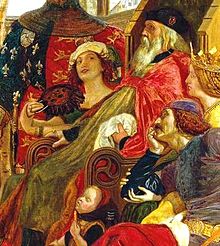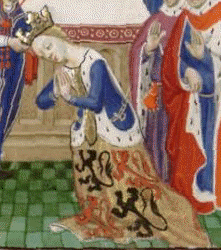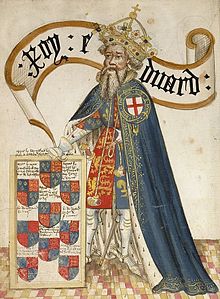
The Mother of the House of York

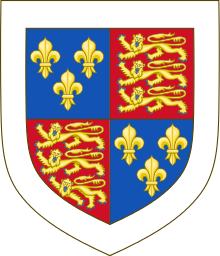
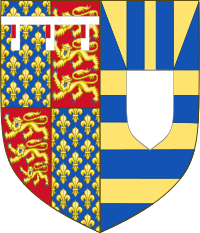
200px-Arms_of_Philippa_of_Clarence,_5th_Countess_of_Ulster.svg
Arms of Philippa of Clarence

Princess Philippa of Clarence was born at Eltham Palace in Kent on the 16th August 1355.  She was named after her grandmother, Philippa of Hainault, queen of Edward III, who was one of her Godparents.

The first grandchild of Edward III she was the only child of Lionel of Antwerp, Duke of Clarence, and his 1st wife, Elizabeth de Burgh. Lionel was the 1st of Edward and Philippa’s children to marry.

Lionel was the 3rd son of Edward and Philippa, but the 2nd to survive childhood. Born in 1338, he was married to Elizabeth de Burgh in the Tower of London on the 9th September 1342. Lionel was almost 4 years old and his bride was 6 years older, born in 1332. Elizabeth was the daughter and heiress of William de Burgh, 3rd Earl of Ulster, who had died the year after her birth. It seems the couple lived together as husband and wife from 1352, when Lionel was 14 and Elizabeth 20. Lionel became Earl of Ulster by right of his wife and took possession of vast estates in Ireland and the Honour of Clare, in Suffolk; from which he was created Duke of Clarence by Parliament on 13th November 1362.
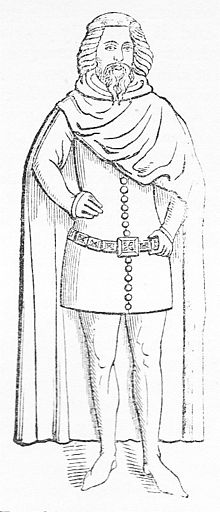
220px-LionelDukeOfClarenceAtWestminster
Lionel Duke of Clarence

Philippa lost her mother when she was just 8 years old. Elizabeth died in Dublin in December 1363, she was buried  at Clare Priory in Suffolk. Lionel was married again in May 1368, in Milan, to Violante Visconti, daughter of the Lord of Milan. He died at Alba just 5 months after the wedding, in October 1368, and was buried at Pavia; his body was later reinterred to lie beside Elizabeth at Clare Priory in Suffolk.

The dukedom of Clarence became extinct on Lionel’s death, but the earldom of Ulster and Honour of Clare passed to Philippa, his only daughter and heiress.

Although an orphan at the tender age of 13, Philippa’s future had been settled even by the time of her mother’s death in 1363. When only in her 4th year she was married, at the Queen’s Chapel in Reading, in February 1359, to 7-year-old Edmund Mortimer. Edmund was the great-grandson of Roger Mortimer, 1st Earl of March and lover of Edward II’s queen, and Edward III’s mother, Isabella of France.

Mortimer had been executed on Edward III’s orders in 1330 and the marriage was viewed as a reconciliation with the Mortimer family, powerful lords on the Welsh Marches. The children’s wedding was also the 1st in a string of royal marriages. Philippa was married before any of her aunts and uncles; but weddings for her uncle John of Gaunt to Blanche of Lancaster  and her aunt Margaret to John Hastings, 2nd Earl of Pembroke followed in May the same year.
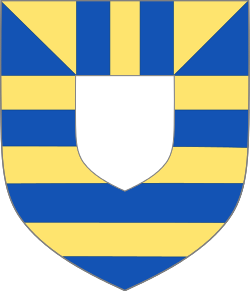
250px-Arms_of_the_House_of_Mortimer.svg
Arms of the House of Mortimer

The marriage alliances were all part of Edward III’s policy to provide for his large brood of children and tie the great baronial families of the kingdom to the crown, by bringing them into the Royal family.

Edmund Mortimer succeeded to his father’s earldom as the 3rd Earl of March in the year after the marriage and the couple spent their time between properties in England, Wales and Ireland.

Their 1st child was born when Philippa was 15; she gave birth to a daughter, Elizabeth, at Usk in Monmouthshire, on 12th February 1371. 3 more children followed; Roger born at Usk on 11th April 1374, Philippa, born at Ludlow in Shropshire on 21st November 1375 and finally Edmund, who was born at Ludlow on 9th November 1377.

Marriage to Philippa had brought her husband power and influence. Through his steward, Peter de la Mare, he was instrumental in the Good Parliament of 1376, which argued against the influence of Edward III’s lover, Alice Perrers, and her friends, on the government of the kingdom. He spoke up for royal legitimacy and, using similar language to that used against his grandfather, Roger Mortimer, decried the influence an adulterous affair was having  on the dignity of the crown.
220px-Ludlow_Castle_from_Whitcliffe,_2011
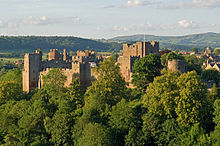
Ludlow Castle, Shropshire

Following Edward III’s death in 1377, until her own death 6 months later, Philippa was, technically, heiress presumptive to the crown of her cousin, Richard II. However, in a supplementary document to his will, Edward III had practically disinherited his eldest granddaughter. He settled the inheritance of the throne on his grandson, Richard, son of his eldest son, the Black Prince and then, in turn, starting with John of Gaunt, on his surviving sons and their sons.

Edward had thus attempted to destroy any claim Philippa might have had to the throne whilst at the same time, revoking the royal status of the Mortimer earls of March.

Although there appear to be several death dates for Philippa, the most likely is that she died as a result of complications following Edmund’s birth, as she had made a will in November 1377, suggesting she was preparing for death. She passed away on, or shortly before, 7th January 1378 and was buried at Wigmore, Herefordshire, the burial-place of the Mortimers.

Edmund’s star, however, continued to rise and he was appointed Lieutenant of Ireland by Richard II on 22nd October 1380.  He died at Cork on 26th or 27th December 1381 and his body was brought back to Wigmore for burial. He was succeeded as 4th Earl of March by his eldest son, Roger; who had succeeded Philippa as Earl of Ulster on her death.
220px-Harry_Hotspur_Percy
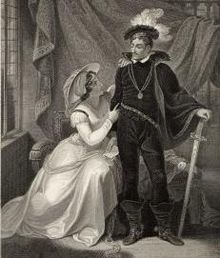
Sir Henry “Hotspur” Percy and Elizabeth Mortimer

Roger spent many years in wardship following his father’s death. He was courageous, but had a reputation for religious and moral laxity. He was killed in Ireland in 1398, while acting as the king’s Lieutenant. It is possible that, at some point, he was named heir to the throne by Richard II, although there is considerable doubt in this.

Of Philippa and Edmund’s other children Elizabeth married Sir Henry “Hotspur” Percy sometime before May 1380. They had 2 children, but he was killed at the Battle of Shrewsbury in 1403. Elizabeth then married Thomas, 1st Baron Camoys, with whom she had a son who died young. Elizabeth died on 20th April 1417 and was buried at Trotton in Sussex, with her 2nd husband.

Philippa’s daughter and namesake, Philippa, married John Hastings, 3rd Earl of Pembroke, son of the Earl of Pembroke who had married Edward III’s daughter, Margaret. Following his death in 1389, she married Richard FitzAlan, 11th Earl of Arundel, who was executed in 1397. Her 3rd marriage was to Thomas Poynings, 5th Baron St John of Basing, around November 1399. She died in 1400 or 1401 and was buried at Boxgrove Priory in Sussex.

220px-Richard_Plantagenet,_3rd_Duke_of_York
Richard, Duke of York

Edmund’s namesake, Philippa and Edmund’s youngest son was married in about 1402 to Katherine, the daughter of Owen Glendower. They had several children, but all died young. Edmund himself died sometime between 1409 and 1411.

Philippa’s grandson, Roger’s son, Edmund, succeeded his father as Earl of March and Ulster; he became the king’s ward following his father’s death and, following the usurpation he was kept in Henry IV’s family circle.

Edmund seems to have suffered from a lack of ambition and when some barons tried to place him on the throne in 1415, it was Edmund himself who revealed the Southampton Plot to Henry V.

Edmund died of plague in Ireland in January 1425, but it is his sister, Anne Mortimer, who had been married to Richard of Conisbrough, that Philippa’s claim to the throne was passed to Anne and Richard’s son, Richard, Duke of York; thus laying the foundations for the Wars of the Roses and the accession of Edward IV and, later, his brother, Richard III.

*

Pictures taken from Wikipedia.

*

Sources: The Perfect King, the Life of Edward III by Ian Mortimer; The Life and Time of Edward III by Paul Johnson; The Reign of Edward III  by WM Ormrod; The Mammoth Book of British kings & Queens by Mike Ashley; Britain’s’ Royal Families, the Complete Genealogy by Alison Weir; Brewer’s British Royalty by David Williamson; The Plantagenets, the Kings Who Made Britain by Dan Jones; mortimerhistorysociety.org.uk.

*

My books:

Signed, dedicated copies of all my books are available through my online store.

Out now: Scotland’s Medieval Queens

Books by Sharon Bennett Connolly

Scotland’s history is dramatic, violent and bloody. Being England’s northern neighbour has never been easy. Scotland’s queens have had to deal with war, murder, imprisonment, political rivalries and open betrayal. They have loved and lost, raised kings and queens, ruled and died for Scotland. From St Margaret, who became one of the patron saints of Scotland, to Elizabeth de Burgh and the dramatic story of the Scottish Wars of Independence, to the love story and tragedy of Joan Beaufort, to Margaret of Denmark and the dawn of the Renaissance, Scotland’s Medieval Queens have seen it all. This is the story of Scotland through their eyes.

Scotland’s Medieval Queens gives a thorough grounding in the history of the women who ruled Scotland at the side of its kings, often in the shadows, but just as interesting in their lives beyond the spotlight. It’s not a subject that has been widely covered, and Sharon is a pioneer in bringing that information into accessible history.’ Elizabeth Chadwick (New York Times bestselling author)

Available now from Amazon and Pen and Sword Books

Also by Sharon Bennett Connolly:

Books by Sharon Bennett Connolly

Heroines of the Tudor World tells the stories of the most remarkable women from European history in the time of the Tudor dynasty, 1485-1603. These are the women who ruled, the women who founded dynasties, the women who fought for religious freedom, their families and love. Heroines of the Tudor World is now available from Amberley Publishing and Amazon UK. Women of the Anarchy demonstrates how Empress Matilda and Matilda of Boulogne, unable to wield a sword themselves, were prime movers in this time of conflict and lawlessness. It shows how their strengths, weaknesses, and personal ambitions swung the fortunes of war one way – and then the other. Available from Bookshop.orgAmberley Publishing and Amazon UKKing John’s Right-Hand Lady: The Story of Nicholaa de la Haye is the story of a truly remarkable lady, the hereditary constable of Lincoln Castle and the first woman in England to be appointed sheriff in her own right. Available from all good bookshops Pen & Sword Booksbookshop.org and Amazon

Royal Historical Society

Defenders of the Norman Crown: The Rise and Fall of the Warenne Earls of Surrey tells the fascinating story of the Warenne dynasty, from its origins in Normandy, through the Conquest, Magna Carta, the wars and marriages that led to its ultimate demise in the reign of Edward III. Available from Pen & Sword BooksAmazon in the UK and US, and Bookshop.orgLadies of Magna Carta: Women of Influence in Thirteenth Century England looks into the relationships of the various noble families of the 13th century, and how they were affected by the Barons’ Wars, Magna Carta and its aftermath; the bonds that were formed and those that were broken. It is now available in paperback and hardback from Pen & SwordAmazon, and Bookshop.orgHeroines of the Medieval World tells the stories of some of the most remarkable women from Medieval history, from Eleanor of Aquitaine to Julian of Norwich. Available now from Amberley Publishing and Amazon, and Bookshop.orgSilk and the Sword: The Women of the Norman Conquest traces the fortunes of the women who had a significant role to play in the momentous events of 1066. Available now from Amazon,  Amberley Publishing, and Bookshop.org.

Alternate Endings: An anthology of historical fiction short stories including Long Live the King… which is my take what might have happened had King John not died in October 1216. Available in paperback and kindle from Amazon.

Podcast:

A Slice of Medieval

Have a listen to the A Slice of Medieval podcast, which I co-host with Historical fiction novelist Derek Birks. Derek and I welcome guests, such as Bernard Cornwell and Michael Jecks, and discuss a wide range of topics in medieval history, from significant events to the personalities involved. 

Every episode is also now available on YouTube.

*

Don’t forget! Signed and dedicated copies of all my books are available through my online store.

For forthcoming online and in-person talks, please check out my Events Page.

You can be the first to read new articles by clicking the ‘Follow’ button, liking our Facebook page or joining me on TwitterThreadsBluesky and Instagram.

*

©2015 Sharon Bennett Connolly FRHistS
The Maid of Norway – The Tragic Story of Scotland’s First Queen Regnant

800px-Kongevåpen_1905
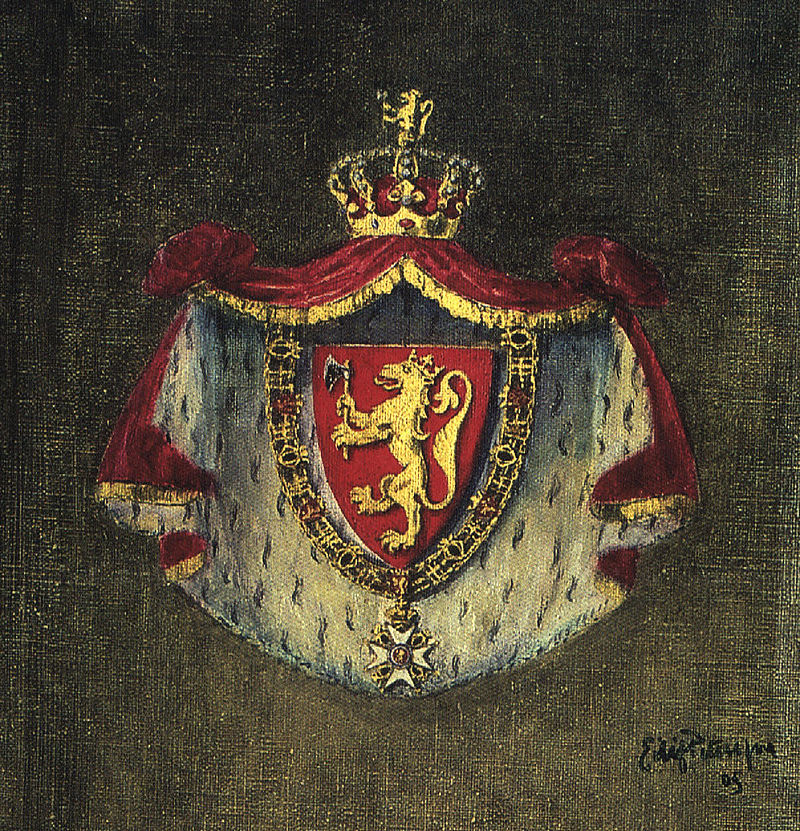
The coat of arms of Norway

The story of Margaret, the Maid of Norway, is short and sad. The little girl died before her 8th birthday, and before she ever set foot in the country of which she was Queen. And her death set into a motion a chain of events that would see Scotland torn apart by war for years to come.

Margaret’s claim to the Scottish throne came from her grandfather, Alexander III. Alexander had come to the throne at the age of 8 and had proved to be a very capable and strong monarch. He had married, on 26th December 1251, Margaret, the daughter of Henry III of England and Eleanor of Provence.

Margaret and Alexander had 3 children together. Their eldest daughter, Margaret, was born in February 1261 at Windsor Castle. And of their 2 sons; Alexander was born in 1264 at Jedburgh and David who was born in March 1273. However, their family was soon to face a succession of tragedies. Queen Margaret died in February 1275 at Cupar Castle. And 8-year-old David died in June 1281 at Stirling Castle.

220px-Margaret_Plantagenet,_Queen_of_Scotland
Margaret of England, Queen of Scotland

One happy event in the midst of the tragedy, was the marriage of 20-year-old Margaret of Scotland to 13-year-old Erik Magnusson around the 31st August 1281. Erik had become King Erik II of Norway the year before, with a royal council ruling for the under-age king.

Eric came of age in 1282 and the following year, on the 9th April 1283, Margaret gave birth to a daughter, another Margaret. The queen died giving birth to Margaret; at Tonsberg, Norway, and was buried in Christ’s Kirk, Bergen.

For Alexander III, even more tragedy was to follow in January 1284 when his son and heir, Alexander, died aged just 20. Alexander’s death sparked a succession crisis for Scotland’s king. He had no brothers or uncles to succeed him; his only heir was his 8-month-old granddaughter, Margaret, in Norway. In the same year Alexander obtained, from his nobles, a recognition of Margaret’s right to succeed to the throne, should he fail to produce any further heirs.

220px-Alexander_III_and_Ollamh_Rígh
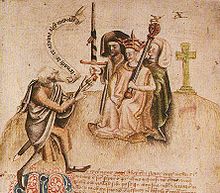
The coronation of Alexander III

However, the death of his last surviving child also prompted Alexander III to look for a new wife. And on 1st November 1285, at Jedburgh Abbey, Alexander married Yolande de Dreux, daughter of Robert IV, Count of Dreux, in the hope of producing an heir.

Shortly after the marriage, on 18/19 March 1286, Alexander was on his way to visit his new bride, one night, when he got separated from his escort during a violent storm; his horse appears to have lost its footing and fallen down an embankment. The king’s body, with his neck broken, was found on the beach the next day, just a mile from where his wife was staying, at Kinghorn in Fife.

With the new queen pregnant 6 Guardians were appointed to rule the kingdom until the arrival of Alexander’s posthumous heir. However, Yolande either miscarried, or the baby was still-born and by the end of the year it was clear that Scotland had to look elsewhere for a ruler. Alexander’s only surviving heir was now 3-year-old Margaret of Norway.

Within weeks of Alexanders death Robert Bruce and John Balliol had both made attempts on the crown and the south-west was raised in rebellion. However the majority of Scots, represented by the 6 Guardians, gave their backing to Margaret, the Maid of Norway and Bruce and Balliol were forcibly held in check.

Eirik_Magnusson_(Stavanger_cathedral)
Erik II Magnusson

As early as 1284 Alexander III had, following the death of his last son, floated the idea that England and Scotland might unite through marriage. In response to a letter of condolence from his brother-in-law, Edward I, Alexander had suggested that, through his tiny granddaughter, ‘much may yet come to pass’.

The prospect at the time had not been without risk, however; should Alexander have more children, England would have been committed to a disadvantageous marriage with a Norwegian princess. But with Alexander’s death, and the queen’s child dead, Margaret’s accession seemed certain.

With the Guardians maintaining an uneasy peace between the competing claims of Margaret, Robert Bruce and John Balliol, Erik II of Norway sought the help of Edward I of England. Messengers were sent between the English and Norwegian courts and in Spring 1289 serious negotiations began.

On 6th November 1289 an international summit was held at Salisbury. The Norwegian ambassadors met with Edward and his advisers. It’s possible the Scottish Guardians had also sent representatives, but some sources say the Scots were excluded from these initial talks. The summit proved successful and it was agreed that Margaret would marry Edward of Caernarfon, Edward I’s son and heir, within the next 12 months.

For the Scottish, the marriage alliance promised an end to the years of uncertainty and to the latent threats they had been facing since 1286. For Margaret, a marriage alliance with England gave the Maid a powerful protector.

edward03
Alexander III of Scotland (left) with Edward I of England (centre) and Llewelyn, prince of Wales (right)

In March 1290 the community of Scotland, comprising over 100 Scotsmen of substance, met to ratify the marriage agreement. They wrote to Edward expressing their will to proceed with the wedding. The Guardians of Scotland, however, had sworn an oath to preserve Alexander III’s kingdom intact and undiminished for his eventual heirs, and their overriding concern now was to safeguard Scotland’s future independence.

It was agreed at Brigham that, although Edward and Margaret were not yet of marriageable age, the would be regarded as married on Margaret’s arrival from Norway – and Edward of Caernarfon would be King of Scotland from that moment. The business of Scottish government and law was to remain in Scotland and be run by a resident Viceroy or lieutenant.

There was no common ground, however, on the issue of royal fortresses: Edward I wanted to appoint all custodians as a guarantee of security but the Scots saw this as a demand for the surrender of sovereignty. In the final agreement, ratified at Northampton, the point is glossed over with an agreement that keepers would be appointed by the ‘common advice of the Scots and the English king’.

The reason Edward acquiesced on – or, rather, failed to push – the castles issue was the news that Margaret had already left Norway. Edward wanted the deal signed and sealed before the Scots’ hand was strengthened by the physical possession of their queen.

Edward_II_-_British_Library_Royal_20_A_ii_f10_(detail)
Edward of Carnarvon

In the final agreement, the Scots got a clear statement safeguarding their independence. Edward promised that Scotland should remain ‘free in itself, and without subjection from the kingdom of England’.

Margaret set sail in September 1290; accompanied by Bishop Narve of Bergen, she was bound for Leith. In preparation for the Maid’s arrival, Edward I sent gifts for his future daughter-in-law; and the magnates of Scotland began to assemble at Scone Abbey, Perth, in anticipation of the enthronement of their new queen.

However, storms drove the Maid’s ship off course and she landed at St Margaret’s Hope, South Ronaldsay, on Orkney. Scottish and English representatives rode north to Orkney to meet her. Sometime between 26 and 29 September 1290, Margaret died at Orkney, in the arms of the Bishop, supposedly from the effects of a severe bout of seasickness. She was 7 years old.

As the Scottish and English messengers returned south with news of the Maid’s death, Margaret’s body was returned to Norway. She was buried beside her mother, in the north aisle of Christ’s Kirk, in Bergen.

220px-Margaret,_Maid_of_Norway
Margaret, Maid of Norway, Queen of Scotland

Her father confirmed the identity of the body before her burial, an act that proved significant in 1300, a year after Erik’s death, when a woman turned up in Bergen. claiming to be Margaret. Reports say the woman appeared to be 40 years old, when Margaret would have only been 17, and she gained popular support, despite the king’s identification Margaret’s body, before finally being convicted as ‘the False Margareth’; she was burned at the stake in 1301.

The tragedy of Margaret’s death brought an end to the rule of the House of Dunkeld, begun with Malcolm III Canmore in 1058, and plunged Scotland into crisis. Edward I’s intervention with his judgement of the 13 Competitors for the crown, and his backing of John Balliol as the next King, saw the beginning of Scotland’s Wars of Independence. Marred not only be English invasion, but also the in-fighting among the Scottish nobles, it was not until Robert the Bruce emerged victorious that Scotland found her feet again.

*

Pictures taken from Wikipedia, except that of Edward I, Alexander III and Llewelyn, which was taken from castlewales.com

*

Sources: castlewales.com; Marc Morris Edward I: A Great and Terrible King; David Williamson Brewer’s British royalty; Mike Ashley The Mammoth Book of British kings & Queens; Alison Weir Britain’s Royal Families; Roy Strong The Story of Britain; Dan Jones The Plantagenets; the Kings who Made England; Chronicles of the Age of Chivalry Edited by Elizabeth Hallam; The Oxford Companion to British History edited by John Cannon; The History Today Companion to British History Edited by Juliet Gardiner and Neil Wenborn; The Plantagenets by Derek Wilson; The Story of Scotland by Nigel Tranter; royal.gov.uk; britroyals.com; undiscoveredscotland.co.uk; englishmonarchs.co.uk; educationscotland.gov.uk.

*

My Books

Signed, dedicated copies of all my books are available through my online store.

OUT NOW! Heroines of the Tudor World

Heroines of the Tudor World tells the stories of the most remarkable women from European history in the time of the Tudor dynasty, 1485-1603. These are the women who ruled, the women who founded dynasties, the women who fought for religious freedom, their families and love. These are the women who made a difference, who influenced countries, kings and the Reformation. In the era dominated by the Renaissance and Reformation, Heroines of the Tudor World examines the threats and challenges faced by the women of the era, and how they overcame them. From writers to regents, from nuns to queens, Heroines of the Tudor World shines the spotlight on the women helped to shape Early Modern Europe.

Heroines of the Tudor World is now available for pre-order from Amberley Publishing and Amazon UK.

Coming 30 January 2025: Scotland’s Medieval Queens

Scotland’s history is dramatic, violent and bloody. Being England’s northern neighbour has never been easy. Scotland’s queens have had to deal with war, murder, imprisonment, political rivalries and open betrayal. They have loved and lost, raised kings and queens, ruled and died for Scotland. From St Margaret, who became one of the patron saints of Scotland, to Elizabeth de Burgh and the dramatic story of the Scottish Wars of Independence, to the love story and tragedy of Joan Beaufort, to Margaret of Denmark and the dawn of the Renaissance, Scotland’s Medieval Queens have seen it all. This is the story of Scotland through their eyes.

Available for pre-order now.

Also by Sharon Bennett Connolly:

Women of the Anarchy demonstrates how Empress Matilda and Matilda of Boulogne, unable to wield a sword themselves, were prime movers in this time of conflict and lawlessness. It shows how their strengths, weaknesses, and personal ambitions swung the fortunes of war one way – and then the other. Available from Bookshop.orgAmberley Publishing and Amazon UKKing John’s Right-Hand Lady: The Story of Nicholaa de la Haye is the story of a truly remarkable lady, the hereditary constable of Lincoln Castle and the first woman in England to be appointed sheriff in her own right. Available from all good bookshops Pen & Sword Booksbookshop.org and AmazonDefenders of the Norman Crown: The Rise and Fall of the Warenne Earls of Surrey tells the fascinating story of the Warenne dynasty, from its origins in Normandy, through the Conquest, Magna Carta, the wars and marriages that led to its ultimate demise in the reign of Edward III. Available from Pen & Sword BooksAmazon in the UK and US, and Bookshop.org

Ladies of Magna Carta: Women of Influence in Thirteenth Century England looks into the relationships of the various noble families of the 13th century, and how they were affected by the Barons’ Wars, Magna Carta and its aftermath; the bonds that were formed and those that were broken. It is now available in paperback and hardback from Pen & Sword,  Amazon, and Bookshop.orgHeroines of the Medieval World tells the stories of some of the most remarkable women from Medieval history, from Eleanor of Aquitaine to Julian of Norwich. Available now from Amberley Publishing and Amazon, and Bookshop.orgSilk and the Sword: The Women of the Norman Conquest traces the fortunes of the women who had a significant role to play in the momentous events of 1066. Available now from Amazon,  Amberley Publishing, and Bookshop.org.

Alternate Endings: An anthology of historical fiction short stories including Long Live the King… which is my take what might have happened had King John not died in October 1216. Available in paperback and kindle from Amazon.

Podcast:

Have a listen to the A Slice of Medieval podcast, which I co-host with Historical fiction novelist Derek Birks. Derek and I welcome guests, such as Bernard Cornwell, and discuss a wide range of topics in medieval history, from significant events to the personalities involved.

*

Don’t forget! Signed and dedicated copies of all my books are available through my online bookshop.

For forthcoming online and in-person talks, please check out my Events Page.

You can be the first to read new articles by clicking the ‘Follow’ button, liking our Facebook page or joining me on TwitterThreads and Instagram.

©2015 Sharon Bennett Connolly FRHistS

The Complicated Love Life of John of Gaunt

200px-johnofgaunt
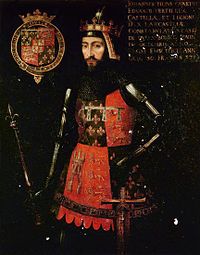
John of Gaunt, Duke of Lancaster

The third surviving son of Edward III and Philippa of Hainault John of Gaunt was born in 1340 at the Abbey of St Bavon, in Ghent in modern-day Belgium. At the height of his career he was the most powerful man in the kingdom after the king. He was virtually regent for his father, Edward III, in his old age, thus getting the blame for military failures and government corruption. His reputation was further damaged when he blocked the reforms of the Good Parliament of 1376, which had tried to curb the corruption of Edward III’s and limit the influence of the king’s grasping mistress, Alice Perrers.

John of Gaunt’s wealth meant he could form the largest baronial retinue of knights and esquires in the country. He alone provided a quarter of the army raised for Richard II’s Scottish campaign in 1385. A stalwart supporter of his nephew, Richard II, he was the target for the rebels during the Peasants’ Revolt; his London residence, the Savoy Palace, was burned to the ground in 1381.

He was a soldier and statesman whose career spanned 6 decades and several countries, including England, Belgium, France, Scotland and Castile. However, by far the most fascinating part of his life is his love life. John married three times; his wives being two great heiresses and a long-time mistress.

John of Gaunt’s first marriage, at the age of 19, was aimed to give him prestige, property and income and was arranged as part of his father’s plans to provide for the futures of several of his children. John and 14-year-old Blanche of Lancaster, youngest daughter of Henry of Grosmont, Duke of Lancaster, were married on 19th May 1359 in the Queen’s Chapel at Reading.

Gaunt marriage
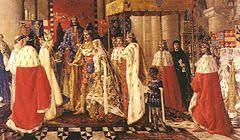
Wedding of John of Gaunt and Blanche of Lancaster

It is quite likely that John had already fathered one child, a daughter, Blanche, by Marie de St Hilaire before his marriage. Blanche was born sometime before 1360 and would go on to marry Sir Thomas Morieux before her death in 1388 or 1389.

Blanche of Lancaster was described as “jone et jolie” – young and pretty – by the chronicler Froisssart, and also “bothe fair and bright” and Nature’s “cheef patron of beautee” by Geoffrey Chaucer. She brought John of Gaunt the earldom of Lancaster following her father’s death from plague in 1361, and those of Leicester and Lincoln when her older sister, Matilda, died of the same disease in 1362, making him the largest landowner in the country, after the king.

The marriage proved very successful, with 7 children being born in just 8 years, 3 of whom survived infancy; daughters Philippa and Elizabeth and a son, Henry of Bolingbroke.

It has always been believed that Blanche died in 1369, when John of Gaunt was away in France, having moved her young family to Bolingbroke Castle in Lincolnshire, to escape a fresh outbreak of the Black Death, but that she succumbed to the plague while there. However, recent research has discovered that Blanche died at Tutbury on 12th September, 1368, more likely from the complications of childbirth than from the plague, following the birth of her daughter, Isabella, who died young. Her husband was by her side when she died and arranged to have prayers said for the soul of his lost duchess.

She was buried in St Paul’s Cathedral in London. John of Gaunt arranged for a splendid alabaster tomb and annual commemorations for the rest of his life. John also commissioned Geoffrey Chaucer to write The Book of the Duchess, also known as The Deth of Blaunche; a poem that is said to depict Gaunt’s mourning for his wife, in the tale of a Knight grieving for his lost love. In it Chaucer describes Blanche as “whyt, smothe, streght and flat. Naming the heroine “White”, he goes on to say she is “rody, fresh and lyvely hewed”.

Before 1365 Blanche had taken into her household a lady called Katherine Swynford, wife of one of her husband’s Lincolnshire knights. John was godfather to the Swynfords’ daughter, Blanche. Katherine later became governess to Blanche’s two daughters, Philippa and Elizabeth and young Blanche Swynford was lodged in the same chambers as the Duchess’s daughters, and accorded the same luxuries as the princesses.

Surrender
Surrender of Santiago de Compostela to John of Gaunt. Constance is the lady on horseback (Froissart)

Katherine was the daughter of a Hainault knight, Sir Paon de Roet of Guyenne, who came to England in the retinue of Queen Philippa. She had grown up at court with her sister, Philippa, who would later marry Geoffrey Chaucer. Whilst serving in Blanche’s household, she had married one of John of Gaunt’s retainers, a Lincolnshire knight, Sir Hugh Swynford of Coleby and Kettlethorpe, at St Clement Danes Church on the Strand, London.

Following Blanche’s death Katherine stayed on in the Duke’s household, taking charge of the Duke’s daughters. However, it was only shortly after her husband’s death in 1371 that rumours began of a liaison between Katherine and the Duke; although it is possible the affair started before Sir Hugh’s death, this is far from certain.

John and Katherine would have four children. They had 3 sons, John, Thomas and Henry, and a daughter, Joan, in the years between 1371 and 1379. They were supposedly born in John’s castle in Champagne, in France, and were given the name of the castle as their surname; Beaufort. However it seems just as likely that they were named after the lordship of Beaufort, which had formerly belonged to Gaunt and to which he still laid claim.

Meanwhile, John had not yet done with his dynastic ambitions and, despite his relationship with Katherine, married Constance of Castile in September 1371. Constance was the daughter of Peter I “the Cruel” and his ‘hand-fast’ wife, Maria de Padilla. Born in 1354 at Castro Kerez, Castile, she succeeded her father as ‘de jure’ Queen of Castile on 13th March 1369, but John was never able to wrest control of the kingdom from the rival claimant Henry of Tastamara, reigning as Henry III, and would eventually come to an agreement in 1388 where Henry married John and Constance’s daughter, Katherine.

Tombs
Tombs of Katherine Swynford and her daughter, Joan Beaufort, Lincoln Cathedral

Katherine – or Catalina – was born in 1372/3 at Hertford Castle and was the couple’s only surviving child.

John and Constance’s relationship appears to be purely dynastic. There is some suggestion John formally renounced his relationship with Katherine and reconciled with Constance in June 1381, possibly as a way to recover some popularity during the Peasant’s Revolt, following the destruction of his palace on the Thames.

Katherine left court and settled at her late husband’s manor at Kettlethorpe, before moving to a rented townhouse in Lincoln. John of Gaunt visited her regularly throughout the 1380s, and Katherine was frequently at court. With 4 children by John of Gaunt but still only, officially, governess to his daughters, Katherine was made a Lady of the Garter in 1388.

Constance, however, died on 24th March, 1394, at Leicester Castle and was buried at Newark Abbey in Leicester.

John then went to Guienne to look after his interests as Duke of Aquitaine and remained in France from September 1394 until December 1395. When he returned to England, John wasted no time in reuniting with Katherine and they were married in Lincoln Cathedral in January 1396.

John then made an appeal to the Pope and his children by Katherine were legitimated on 1st September 1396, and then by Charter of Richard II on 9th February 1397. However, it is claimed a later clause excluded the Beaufort children from the succession.

John was a man of renown, of culture and refinement. An amateur poet and friend of Chaucer, who had married Katherine’s sister, Philippa, he was also a patron of Wycliffe and encouraged the translation of the Bible into English.

His complicated love life would cause problems for future generations, with his son by Blanche of Lancaster, Henry, forcing the abdication of Richard II and usurping the throne on 30th September 1399. His Beaufort descendants would be prominent players on both sides of the Wars of the Roses. While his son John, Earl of Somerset was the grandfather of Margaret Beaufort, mother of Henry VII, his daughter, Joan, was grandmother of the Yorkist kings Edward IV and Richard III.

Tomb John of Gaunt
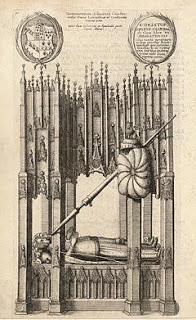
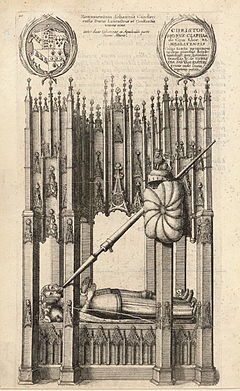
Drawing of the tomb of John of Gaunt and Blanche of Lancaster, etching by Wenceslas Hollar, 1658

Katherine would outlive John and died at Lincoln on 10th May 1403. She was buried, close to the High Altar, in the cathedral in which she had married her prince just 7 years earlier. Her daughter Joan, Countess of Westmoreland, was laid to rest beside her, following her death in 1440. Their tombs, however, are empty and they are buried beneath the floor of the cathedral.

John himself died on 3 February 1399, probably at Leicester Castle. He was buried in Old St Paul’s Cathedral, beside his first wife, Blanche of Lancaster. This has often been seen as his final act of love for his first wife, despite the problems John went through in order to finally be able to marry his mistress, Katherine Swynford.

Personally, I think the two ladies, Blanche and Katherine, were his true love at different parts of John’s life. And I hope he had some feelings for poor Constance, who frequently appears as only a means to his dynastic ambitions.

*

Article originally published on English Historical Fiction Authors in September 2015.

*

Sources: Williamson, David Brewer’s British Royalty; Juliet Gardiner & Neil Wenborn History Today Companion to British History; Mike Ashley The Mammoth Book of British Kings & Queens; Alison Weir Britain’s Royal Families, the Complete Genealogy; Paul Johnson The Life and Times of Edward III; Ian Mortimer The Perfect King, the Life of Edward III; WM Ormrod The Reign of Edward III; Edited by Elizabeth Hallam Chronicles of the Age of Chivalry; Amy Licence Red Roses: From Blanche of Gaunt to Margaret Beaufort; katherineswynfordsociety.org.uk; womenshistory.about.com/od/medrenqueens/a/Katherine-Swynford;.

*

Pictures courtesy of Wikipedia, except the tomb of Katherine Swynford, © Sharon Bennett Connolly, 2015.

*

My Books

Signed, dedicated copies of all my books are available through my online bookshop.

Out Now! Women of the Anarchy

On the one side is Empress Matilda, or Maud. The sole surviving legitimate child of Henry I, she is fighting for her birthright and that of her children. On the other side is her cousin, Queen Matilda, supporting her husband, King Stephen, and fighting to see her own son inherit the English crown. Both women are granddaughters of St Margaret, Queen of Scotland and descendants of Alfred the Great of Wessex. Women of the Anarchy demonstrates how these women, unable to wield a sword, were prime movers in this time of conflict and lawlessness. It show how their strengths, weaknesses, and personal ambitions swung the fortunes of war one way – and then the other.

Available for pre-order from Amberley Publishing and Amazon UK.

Coming on 15 June 2024: Heroines of the Tudor World

Heroines of the Tudor World tells the stories of the most remarkable women from European history in the time of the Tudor dynasty, 1485-1603. These are the women who ruled, the women who founded dynasties, the women who fought for religious freedom, their families and love. These are the women who made a difference, who influenced countries, kings and the Reformation. In the era dominated by the Renaissance and Reformation, Heroines of the Tudor World examines the threats and challenges faced by the women of the era, and how they overcame them. Some famous, some infamous, some less well known, including Anne Boleyn, Elizabeth Barton, Catherine de Medici, Bess of Hardwick and Elizabeth I. From writers to regents, from nuns to queens, Heroines of the Tudor World shines the spotlight on the women helped to shape Early Modern Europe.

Heroines of the Tudor World is now available for pre-order from Amberley Publishing and Amazon UK.

Also by Sharon Bennett Connolly:

King John’s Right-Hand Lady: The Story of Nicholaa de la Haye is the story of a truly remarkable lady, the hereditary constable of Lincoln Castle and the first woman in England to be appointed sheriff in her own right. It is is available from King John’s Right-Hand Lady: The Story of Nicholaa de la Haye is the story of a truly remarkable lady, the hereditary constable of Lincoln Castle and the first woman in England to be appointed sheriff in her own right. Available from all good bookshops or direct from Pen & Sword Booksbookshop.org and AmazonDefenders of the Norman Crown: The Rise and Fall of the Warenne Earls of Surrey tells the fascinating story of the Warenne dynasty, from its origins in Normandy, through the Conquest, Magna Carta, the wars and marriages that led to its ultimate demise in the reign of Edward III. Available from Pen & Sword BooksAmazon in the UK and US, and Bookshop.org

Ladies of Magna Carta: Women of Influence in Thirteenth Century England looks into the relationships of the various noble families of the 13th century, and how they were affected by the Barons’ Wars, Magna Carta and its aftermath; the bonds that were formed and those that were broken. It is now available in paperback and hardback from Pen & Sword,  Amazon, and Bookshop.orgHeroines of the Medieval World tells the stories of some of the most remarkable women from Medieval history, from Eleanor of Aquitaine to Julian of Norwich. Available now from Amberley Publishing and Amazon, and Bookshop.orgSilk and the Sword: The Women of the Norman Conquest traces the fortunes of the women who had a significant role to play in the momentous events of 1066. Available now from Amazon,  Amberley Publishing, and Bookshop.org.

Alternate Endings: An anthology of historical fiction short stories including Long Live the King… which is my take what might have happened had King John not died in October 1216. Available in paperback and kindle from Amazon.

Podcast:

Have a listen to the A Slice of Medieval podcast, which I co-host with Historical fiction novelist Derek Birks. Derek and I welcome guests, such as Bernard Cornwell and Elizabeth Chadwick, and discuss a wide range of topics in medieval history, from significant events to the personalities involved.

*

Don’t forget! Signed and dedicated copies of all my books are available through my online bookshop.

For forthcoming online and in-person talks, please check out my Events Page.

You can be the first to read new articles by clicking the ‘Follow’ button, liking our Facebook page or joining me on Twitter and Instagram.

©2015 Sharon Bennett Connolly FRHistS
Blanche, Duchess of Lancaster

240px-Marriage_of_blanche_of_lancster_and_john_of_gaunt_1359
The wedding of Blanche of Lancaster and John of Gaunt, painted by Horace Wright, 1914

Blanche of Lancaster is one of those ladies of history more famous because of her children and the antics of her husband. Blanche’s life was pitifully short, but her legacy would see the unravelling of peace in the 15th century, and the decades of civil war called the Wars of the Roses.

Blanche of Lancaster was born around 25 March 1345, at Bolingbroke Castle in Lincolnshire. She was the second and youngest daughter of illustrious parents; Henry of Grosmont, Duke of Lancaster and Isabella de Beaumont. Henry of Grosmont was the grandson of Edmund Crouchback and a great-grandson of Henry III. Isabella was the daughter of Henry, 1st Baron de Beaumont and Earl of Buchan by right of his wife, Alice Comyn.

225px-Portrait_of_Henry,_Duke_of_Lancaster_-_William_Bruges's_Garter_Book_(c.1440-1450),_f.8_-_BL_Stowe_MS_594_(cropped)
Henry of Grosmont, Duke of Lancaster

Blanche had only one sibling, her older sister, Matilda, who was married, first to Ralph de Stafford and later to William V, Duke of Bavaria, Count of Holland, Hainault and Zeeland. Blanche herself was betrothed to John de Segrave as a child, but this seems to have been set aside soon afterwards.

By the late 1350s Blanche was a part of King Edward III’s plans to provide for his growing number of sons. As one of the country’s richest heiresses, Blanche was chosen as the bride for Edward’s 3rd surviving son, John of Gaunt. Blanche and John were 3rd cousins, being great-great-grandchildren of Henry III.

The couple was married on the 19 May 1359 at Reading Abbey in Berkshire. Blanche had just turned 14 and John was 19 years old.

In 1361 Blanche suffered a double tragedy; her father died of bubonic plague in Leicester in March and her mother succumbed to the same disease before the end of the year. While her sister inherited the earldoms of Leicester and Lincoln, John of Gaunt inherited those of Derby and Lancaster by right of his wife; however, the title of Duke of Lancaster became extinct with Henry of Grosmont’s death.

200px-Johnofgaunt
John of Gaunt, Duke of Lancaster

By April 1362 Blanche’s sister had also succumbed to the Black Death; there were some rumours of poison, but this seems unlikely. Maud had died childless and so Blanche inherited the remainder of her father’s estates. Blanche – and by extension John of Gaunt – now added the earldoms of Leicester and Lincoln to their vast holdings. John was invested with the title of Duke of Lancaster and was now the most powerful magnate in England; holding more than 30 castles, his lands and possessions were second only to those of the king.

Blanche herself was pregnant for most of her married life, giving birth to 7 children between 1360 and 1368. 3 sons, John, Edward and a second John, and a daughter, Isabella, died young. Two daughters and a son did, however, survive into adulthood.

Their eldest daughter, Philippa, was born on 31 March 1360  and would marry King John I of Portugal. Philippa was the mother of 8 children, known as the ‘Illustrious Generation’ in Portugal, including Edward, King of Portugal, Prince Henry the Navigator and Ferdinand the Holy Prince. Philippa herself would die of plague in 1415.

History....the Interesting Bits
Tomb of Henry IV and Joanna of Navarre, Canterbury Cathedral

A second daughter, Elizabeth, was born around 1363 at Burford, Shropshire. Although her first marriage to John Hastings, 3rd Earl of Pembroke, was annulled, her second marriage, to John Holland, 1st Duke of Exeter, would end with his execution for treason in 1400; they had 5 children. Elizabeth would marry for a 3rd time to John Cornwall, 1st Baron Fanhope, with whom she had a daughter before she died in 1426.

Blanche and John’s last surviving child, Henry of Bolingbroke, was born at Bolingbroke Castle in 1367, probably on 15 April. Having been exiled in the later years of the reign of his cousin, Richard II, Henry would return to England following the death of his father and confiscation of his inheritance by the king. Richard was forced to abdicate and Henry succeeded to the throne as King Henry IV.

300px-Old-Bolingbroke-Castle
Bolingbroke Castle, Lincolnshire, where Blanche of Lancaster was born

Henry’s first marriage, to Mary de Bohun, produced 7 children, including the future King Henry V; his second marriage was to Joanna of Navarre, Duchess of Brittany. Henry IV died on 20 March 1413 and was buried at Canterbury Cathedral; Joanna would be buried beside him following her own death in 1437.

By 1365 Blanche had taken Katherine Swynford into her household. Katherine was the wife of one of John of Gaunt’s Lincolnshire knights. Moreover, John was godfather to their daughter, Blanche, who was named after the Duchess. Young Blanche Swynford was lodged in the same chambers as the Duchess’s daughters, Philippa and Elizabeth and accorded the same luxuries as the princesses.

Having lost her parents and sister to the Black Death it is not surprising that Blanche was fearful of the disease. In the summer of 1368 she is said to have moved her family away from the city, to Bolingbroke Castle to escape the pestilence.

240px-Wenceslas_Hollar_-_John_of_Gaunt_(monument)
1658 etching by Wenceslas Hollar, of the tomb of John of Gaunt and Blanche of Lancaster

There seems to be some doubt over the year of her death – some sources say 1368, some 1369 – and even the nature of it. One theory is that Blanche succumbed to the bubonic plague, the disease she most feared, in 1369. As a daughter, Isabella, who died young, was born in 1368 some have suggested Blanche died in childbirth. Recent research by Amy Licence has discovered that Blanche died at Tutbury on 12 September, 1368, more likely from the complications of childbirth than from the plague. Her husband was by her side when she died and a letter has come to light in which John arranged to have prayers said for the soul of his lost duchess.¹

Blanche was buried in Old St Paul’s Cathedral, London; where John of Gaunt arranged for a splendid alabaster tomb and annual commemorations for the rest of his life. And despite 2 subsequent marriages, John of Gaunt would be interred next to Blanche following his own death in 1399. The tomb was lost when the cathedral was destroyed during the Great Fire of London in 1666.

Blanche is one of the few ladies of the 14th century of whom we have several descriptions. The Chronicler Froissart noted that she was “jone et jolie” – young and pretty.

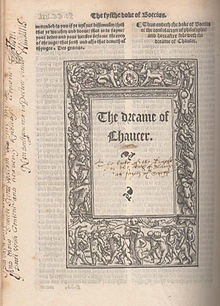
The best description, however, is from Geoffrey Chaucer, Katherine Swynford’s brother-in-law, who was commissioned by John of Gaunt to write The Book of the Duchess, also known as The Deth of Blaunche. The poem is said to depict Gaunt’s mourning for his wife, in the tale of a Knight grieving for his lost love.

220px-The_Dreame_of_Chaucer_Book_of_the_Duchess
Geoffrey Chaucer’s ‘The Book of the Duchess’

Chaucer describes Blanche’s neck (yes, her neck) as “whyt, smothe, streght and flat. Naming the heroine “White”, he goes on to say she is “rody, fresh and lyvely hewed”.  Blanche (White) was “bothe fair and bright” and Nature’s “cheef patron of beautee”.

Despite his marrying Constance of Castile just 2 years later, and his eventual marriage to his mistress, Katherine Swynford, being singled out as one of the great love affairs of the age, it was said that Blanche was the love of his life.

Chaucer’s poem and the lavish tomb and commemorations are said to highlight Gaunt’s love for his first wife; the fact he was eventually buried beside her has been seen, by many, as the final proof of this love.

*

Footnote: ¹Red Roses: From Blanche of Gaunt to Margaret Beaufort by Amy Licence.

*

Photograph of the tomb of Henry IV and Joanna of Navarre are © Sharon Bennett Connolly, 2015. All other pictures are courtesy of Wikipedia.

*

Sources: Brewer’s British Royalty by David Williamson; Red Roses: From Blanche of Gaunt to Margaret Beaufort by Amy Licence; History Today Companion to British History Edited by Juliet Gardiner & Neil Wenborn; The mammoth Book of British kings & Queen by Mike Ashley; Britain’s Royal Families, the Complete Genealogy by Alison Weir; The Life and Times of Edward III by paul Johnson; The Perfect King, the Life of Edward III by Ian Mortimer; Chronicles of the Age of Chivalry Edited by Elizabeth Hallam; unofficialroyalty.com; katherineswynfordsociety.org.uk; The Reign of Edward III by WM Ormrod; The Plantagenets, the kings Who Made Britain by Dan Jones; englishmonarchs.co.uk; oxforddnb.com.

*

My Books

Signed, dedicated copies of all my books are available through my online bookshop.

Out now: Scotland’s Medieval Queens

Books by Sharon Bennett Connolly

Scotland’s history is dramatic, violent and bloody. Being England’s northern neighbour has never been easy. Scotland’s queens have had to deal with war, murder, imprisonment, political rivalries and open betrayal. They have loved and lost, raised kings and queens, ruled and died for Scotland. From St Margaret, who became one of the patron saints of Scotland, to Elizabeth de Burgh and the dramatic story of the Scottish Wars of Independence, to the love story and tragedy of Joan Beaufort, to Margaret of Denmark and the dawn of the Renaissance, Scotland’s Medieval Queens have seen it all. This is the story of Scotland through their eyes.

Scotland’s Medieval Queens gives a thorough grounding in the history of the women who ruled Scotland at the side of its kings, often in the shadows, but just as interesting in their lives beyond the spotlight. It’s not a subject that has been widely covered, and Sharon is a pioneer in bringing that information into accessible history.’ Elizabeth Chadwick (New York Times bestselling author)

Available now from Amazon and Pen and Sword Books

Also by Sharon Bennett Connolly:

Books by Sharon Bennett Connolly

Heroines of the Tudor World tells the stories of the most remarkable women from European history in the time of the Tudor dynasty, 1485-1603. These are the women who ruled, the women who founded dynasties, the women who fought for religious freedom, their families and love. Heroines of the Tudor World is now available for pre-order from Amberley Publishing and Amazon UK. Women of the Anarchy demonstrates how Empress Matilda and Matilda of Boulogne, unable to wield a sword themselves, were prime movers in this time of conflict and lawlessness. It shows how their strengths, weaknesses, and personal ambitions swung the fortunes of war one way – and then the other. Available from Bookshop.orgAmberley Publishing and Amazon UKKing John’s Right-Hand Lady: The Story of Nicholaa de la Haye is the story of a truly remarkable lady, the hereditary constable of Lincoln Castle and the first woman in England to be appointed sheriff in her own right. Available from all good bookshops Pen & Sword Booksbookshop.org and Amazon

History...the Interesting Bits

Defenders of the Norman Crown: The Rise and Fall of the Warenne Earls of Surrey tells the fascinating story of the Warenne dynasty, from its origins in Normandy, through the Conquest, Magna Carta, the wars and marriages that led to its ultimate demise in the reign of Edward III. Available from Pen & Sword BooksAmazon in the UK and US, and Bookshop.orgLadies of Magna Carta: Women of Influence in Thirteenth Century England looks into the relationships of the various noble families of the 13th century, and how they were affected by the Barons’ Wars, Magna Carta and its aftermath; the bonds that were formed and those that were broken. It is now available in paperback and hardback from Pen & SwordAmazon, and Bookshop.orgHeroines of the Medieval World tells the stories of some of the most remarkable women from Medieval history, from Eleanor of Aquitaine to Julian of Norwich. Available now from Amberley Publishing and Amazon, and Bookshop.orgSilk and the Sword: The Women of the Norman Conquest traces the fortunes of the women who had a significant role to play in the momentous events of 1066. Available now from Amazon,  Amberley Publishing, and Bookshop.org.

Alternate Endings: An anthology of historical fiction short stories including Long Live the King… which is my take what might have happened had King John not died in October 1216. Available in paperback and kindle from Amazon.

Podcast:

A Slice of Medieval

Have a listen to the A Slice of Medieval podcast, which I co-host with Historical fiction novelist Derek Birks. Derek and I welcome guests, such as Bernard Cornwell, Helen Castor and Michael Jecks, and discuss a wide range of topics in medieval history, from significant events to the personalities involved. In a recent episode, Kathryn Warner joined us to chat about Blanche’s husband, John of Gaunt

Every episode is also now available on YouTube.

*

Don’t forget! Signed and dedicated copies of all my books are available through my online bookshop.

For forthcoming online and in-person talks, please check out my Events Page.

You can be the first to read new articles by clicking the ‘Follow’ button, liking our Facebook page or joining me on TwitterThreadsBluesky and Instagram.


©2015 Sharon Bennett Connolly FRHistS

Alice Perrers, Mistress of the King

220px-Alice_Perrers_and_Edward_III
Alice Perrers and Edward III, painted by Ford Maddox Brown

Alice Perrers is one royal mistress who did not fare as well as her contemporary, Katherine Swynford. Whereas Katherine eventually married her prince; Alice was not so lucky, despite the fact she had been mistress of the King.

Although it is impossible to find any definite date, it seems likely that Alice Perrers was born in the late 1340s. For many years she was believed to be the daughter of Sir Richard Perrers, a prominent Hertfordshire landowner who had been both sheriff and Member of Parliament for his county. However, recent research has suggested that she is the daughter of either William Salisbury, a goldsmith, or one of his possible kinsmen, John or Gilbert Salisbury. Her mother was likely the Joan Salisbury involved in a joint purchase of a messuage in Canterbury with Alice Perrers and others in 1371. A John Salisbury was identified as her brother in a petition of 1377 or 1378 from John Cobham seeking payment of debts. Her first husband was Janyn Perrers, who may had been apprenticed to William Salisbury (Alice’s possible father or kinsman). He died in 1361 or 1362.1

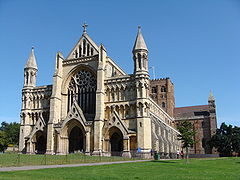
The majority of what we know of Alice comes from the blatantly hostile St Albans Chronicle. The Chronicler claimed Alice was the daughter of an Essex tiler and a former domestic servant, suggesting she made her way to court by humble channels. She was described as ‘extremely ugly’ and ruling the king through her clever tongue. The king was certainly known to like clever and attractive women.

Sometime in the early 1360s – and certainly before 1366 – Alice joined the household of Queen Philippa of Hainault and started her affair with the king, Edward III. Alice would have been in her mid-to-late teens. It isn’t clear whether Alice joined the Queen’s household before or after the affair started; it may be that Edward placed her there, so she was close by. It does appear that the ailing queen acquiesced to the situation, even if she did not wholeheartedly approve.

Philippa_of_Hainault-mini
Queen Philippa of Hainault

Before his relationship with Alice, there seems to have been few, if any, extramarital affairs on Edward’s part; there are certainly no suggestions of illegitimate children as had happened with previous monarchs. If Edward had affairs they had been of short duration and incredibly discreet. This makes his relationship with Alice Perrers all the more surprising.

By 1366 Alice had been installed as a lady of the queen’s bedchamber. In 1364/5, she had left court to give birth to Edward’s first illegitimate child. The boy, Sir John Southeray,  would later marry Maud Percy, a sister of the future Earl of Northumberland. Two daughters were to follow, Joan and Jane, who were still young at the time of the king’s death in 1377. Jane later married Richard Northland and Joan married Robert Skerne, a lawyer.

Whilst in the queen’s household Edward granted Alice 2 tuns of wine; he also granted her wardships, land and jewels. Although the king gave gifts to all the queen’s ladies, those to Alice were particularly extravagant.

Following the queen’s death in 1369, Alice rose to greater prominence, she dominated the court. A devastated Edward leaned heavily on her considerable abilities; his own decline accelerated by his loss.

220px-Edward_III_of_England_(Order_of_the_Garter)
Edward III

As a result Alice was blamed for the setbacks and financial scandals of the last years of Edward’s reign. She was accused of being scheming and grasping, and making the king’s final years a misery.  The monastic chronicler, Walsingham, believed she had bewitched the king in order to secure his affections.

Whereas Queen Philippa had remained in the domestic environment, Alice Perrers had greater political ambitions. The court was dominated by a ‘narrow, exclusive and unpopular clique’2. Along with  Lord Latimer and Lord Neville, Edward’s chamberlain and steward respectively, Alice enjoyed almost total control of royal patronage; she became the king’s principal advisor and advanced her own friends into positions of influence.

Rumours arose that Edward had given Alice some of Queen Philippa’s jewels. It seems more likely that the jewels were a part of a collection previously given by the queen to Euphemia Hasleworth, rather than a part of the queen’s personal collection, but it further tarnished Alice’s reputation.The fact the gifts were recorded in the patent rolls suggests they were given on Edward’s personal order, rather than through Alice’s machinations.

By the early 1370s Alice had established her domination of the court. In 1371 she was granted the valuable manor of Wendover.

In 1375 a grand tournament was held at Smithfield in her honour. Alice rode from the Tower, through the city, dressed as the Lady of the Sun. Ladies led knights on silver chains.

In the early 1370s Alice had started looking to her future. The king was old and she was very aware that, without his protection she was likely to be thrown to the wolves. With this in mind she contracted a secret marriage to William Windsor and persuaded the king to appoint Windsor his lieutenant in Ireland, despite his record of previous maladministration of that same country.

240px-StAlbansCathedral-PS02
The abbey of St Albans; home to the Chronicler, Walsingham

By 1376, shortly after the death of the Black Prince – Edward’s eldest son and heir – parliament took the lead. Known as the Good Parliament and having been called to advance the king subsidies they demanded their own petitions were answered first.

According to Walsingham: “the Parliamentary knights complained bitterly about one Alice Perrers, a wanton woman who was all too familiar with Edward III. They accused her of numerous misdeeds, performed by her and her friends in the realm. She far overstepped the bounds of feminine conduct: forgetful of her sex and her weakness, now besieging the king’s justices, now stationing herself among the doctors in the ecclesiastical courts, she did not fear to plead in defence of her cause and even to make illegal demands. As a result of the scandal and great shame which this brought on King Edward, not only in this kingdom but also in foreign lands, the knights sought her banishment from his side.3

The main accusations, voiced by Peter de la Mare, against Alice were that she had taken thousands of pounds from the royal purse and that she was notorious for the use of maintenance – protecting those accused in the king’s courts; Parliament stipulated that she and all women were prohibited from doing this. It was also during the parliament that Alice’s secret marriage to William Windsor was revealed. Assuming that, as a married couple, they had slept together this then made the king guilty of adultery.

220px-Wife-of-Bath-ms
Chaucer’s The Wife of Bath

Edward III swore an oath by the Virgin Mary that he did not know she was married. William Windsor was summoned from Ireland to be prosecuted. Edward is said to have bought a chest and locked in it the accusations against Windsor, who he saw as the guilty party.

Edward begged for Alice to be shown mercy. She avoided prison and further prosecution on condition she no longer saw the king. If she broke the conditions, the punishment would be perpetual exile.

However, once parliament had disbanded John of Gaunt, as virtual ruler of the kingdom, recalled all those banished. Edward “recalled his mistress, Alice Perrers, to his company; she had been legally banished from his presence, on account of the scandal and shame which came from her wantonness. This was against the oath by which Alice had bound herself and which the king himself had ratified…4

Alice stayed with the king until his death.

Edward III died, probably from a stroke, on 21st June 1377. According to the St Albans Chronicler he was alone, save for his confessor. Walsingham went so far as to accuse Alice of stripping the rings from the king’s fingers; although she was never charged with the offence.

Following the king’s death, Alice’s sentence of banishment was reconfirmed, only to be reversed in 1379 at the request of her husband. William Windsor himself died in 1384 and Alice seems to have spent much of her final years in litigation over his will; Windsor left his estate to his 3 sisters.

250px-Upminster_021
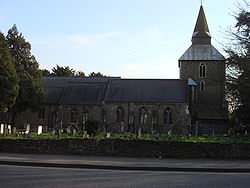
Church of St Lawrence, Upminster

As the king’s mistress Alice had dealt in property, and used her influence to guarantee a future income. She remained wealthy and was still litigating when she died in 1400. She was buried in the Church of St Lawrence, Upminster; her grave now lost to history.

Alice Perrers was the first king’s mistress to influence the courts of justice and the government of the kingdom. She had met the king when relatively young and naive; but was intelligent enough to realise the advantages and implications of her liaison with the king.

However, she was held up as an example of how a woman shouldn’t behave. She is thought to have been the inspiration for Chaucer’s The Wife of Bath.

*

Footnotes: ¹ C. Given-Wilson, Oxforddnb.com; 2WM Ormrod, The Reign of Edward III; 3&4 Thomas Walsingham, St Albans Chronicle

*

Pictures courtesy of Wikipedia.

*

Sources: The Perfect King, the Life of Edward III by Ian Mortimer; The Life and Time of Edward III by Paul Johnson; The Reign of Edward III  by WM Ormrod; The Oxford Companion to British History Edited by John Cannon; The Mammoth Book of British kings & Queens by Mike Ashley; The History Today Companion to British History Edited by Juliet Gardiner & Neil Wenborn; Britain’s’ Royal Families, the Complete Genealogy by Alison Weir; Brewer’s British Royalty by David Williamson; Chronicles of the Age of Chivalry Edited by Elizabeth Hallam; Kings & Queens of Britain by Joyce Marlow; The Plantagenets, the kings Who Made Britain by Dan Jones; britannica.com/biography/Alice-Perrers; historyinanhour.com; anneobrienbooks.com.

*

My books

Signed, dedicated copies of all my books are available through my online bookshop.

Out nowKing John’s Right-Hand Lady: The Story of Nicholaa de la Haye

In a time when men fought and women stayed home, Nicholaa de la Haye held Lincoln Castle against all-comers, gaining prominence in the First Baron’s War, the civil war that followed the sealing of Magna Carta in 1215. A truly remarkable lady, Nicholaa was the first woman to be appointed sheriff in her own right. Her strength and tenacity saved England at one of the lowest points in its history. Nicholaa de la Haye is one woman in English history whose story needs to be told…

King John’s Right-Hand Lady: The Story of Nicholaa de la Haye is now available from Pen & Sword Booksbookshop.org and Amazon.

Coming 15 January 2024: Women of the Anarchy

On the one side is Empress Matilda, or Maud. The sole surviving legitimate child of Henry I, she is fighting for her birthright and that of her children. On the other side is her cousin, Queen Matilda, supporting her husband, King Stephen, and fighting to see her own son inherit the English crown. Both women are granddaughters of St Margaret, Queen of Scotland and descendants of Alfred the Great of Wessex. Women of the Anarchy demonstrates how these women, unable to wield a sword, were prime movers in this time of conflict and lawlessness. It show how their strengths, weaknesses, and personal ambitions swung the fortunes of war one way – and then the other.

Available for pre-order from Amberley Publishing and Amazon UK.

Also by Sharon Bennett Connolly:

Defenders of the Norman Crown: The Rise and Fall of the Warenne Earls of Surrey tells the fascinating story of the Warenne dynasty, of the successes and failures of one of the most powerful families in England, from its origins in Normandy, through the Conquest, Magna Carta, the wars and marriages that led to its ultimate demise in the reign of Edward III. Defenders of the Norman Crown: Rise and Fall of the Warenne Earls of Surrey is now available from Pen & Sword BooksAmazon in the UK and US, and  Bookshop.org.

Ladies of Magna Carta: Women of Influence in Thirteenth Century England looks into the relationships of the various noble families of the 13th century, and how they were affected by the Barons’ Wars, Magna Carta and its aftermath; the bonds that were formed and those that were broken. It is now available in paperback and hardback from Pen & Sword,  Amazon, and Bookshop.org.

Heroines of the Medieval World tells the stories of some of the most remarkable women from Medieval history, from Eleanor of Aquitaine to Julian of Norwich. Available now from Amberley Publishing and Amazon, and Bookshop.org.

Silk and the Sword: The Women of the Norman Conquest traces the fortunes of the women who had a significant role to play in the momentous events of 1066. Available now from Amazon,  Amberley Publishing, and Bookshop.org.

Alternate Endings: An anthology of historical fiction short stories including Long Live the King… which is my take what might have happened had King John not died in October 1216. Available in paperback and kindle from Amazon.

Podcast:

Have a listen to the A Slice of Medieval podcast, which I co-host with Historical fiction novelist Derek Birks. Derek and I welcome guests, such as Bernard Cornwell, and discuss a wide range of topics in medieval history, from significant events to the personalities involved.

*

Don’t forget! Signed and dedicated copies of all my books are available through my online bookshop.

For forthcoming online and in-person talks, please check out my Events Page.

You can be the first to read new articles by clicking the ‘Follow’ button, liking our Facebook page or joining me on Twitter and Instagram.

*

©2015 Sharon Bennett Connolly FRHistS

Katherine Swynford, Duchess of Scandal

220px-Arms_of_Katherine_Swynford.svg
Arms of Katherine Swynford

Katherine Swynford is, arguably, the most famous – or infamous – of English ladies  to have risen so high as to become the first lady of the kingdom, without ever being queen.

Born Katherine de Roet in Hainault, now in modern-day Belgium, in around 1350, her father was Sir Paon de Roet of Guyenne. Unfortunately, as can be the way with Medieval women, I could find no mention of her mother’s identity.

Sir Paon was a Hainault knight who travelled to England with its new queen, Philippa of Hainault, as part of her retinue. As a consequence, Katherine was raised at the English court of Queen Philippa and her illustrious husband, King Edward III.

Katherine and her older sister, Philippa, were eventually given positions as ladies-in-waiting to members of the royal family. Philippa joined the household of Elizabeth de Burgh, wife of Lionel of Antwerp, where she met her future husband, the literary giant of the age, Geoffrey Chaucer.

By 1365 Katherine was serving in the household of Blanche, Duchess of Lancaster, and her husband John of Gaunt, third surviving son of Edward III and Philippa of Lancaster. Sometime before 1367 Katherine married a Lincolnshire knight, Sir Hugh Swynford of Coleby and Kettlethorpe, possibly at St Clement Danes Church on the Strand, London. They had at least 2 children, Blanche and Thomas (born May 1367 and September 1368, respectively); John of Gaunt was Blanche’s godfather. A third possible child was Margaret Swynford (born c. 1369), who was nominated as a nun at Barking. Sir Hugh was a tenant of John of Gaunt’s and accompanied him to Europe in 1366 and 1370.

200px-Johnofgaunt
John of Gaunt

In 1368 in order to avoid the plague, Blanche is said to have moved her family to Bolingbroke in the Lincolnshire countryside. By the end of summer, she was at Tutbury, where she died in childbirth in September, the same year. However, rather than leaving the household on Blanche’s death, Katherine was appointed governess to the 2 daughters of Gaunt and the late Duchess, Philippa and Elizabeth.

Katherine’s husband, Sir Hugh, died in 1371 and shortly afterwards rumours started arising of a relationship between John of Gaunt and the young widow. Whether the affair started before Sir Hugh’s death is uncertain and some sources suggest this was the case.

Although John married his second wife, Constance of Castile, on 21st September 1371. John and Constance’s marriage was a dynastic one; John was hoping to gain a kingdom for himself, through his wife. From January 1372 John assumed the title King of Castile and Leon, by right of his wife, although he was never able to consolidate his position. John’s younger brother, Edmund, would marry Constance’s sister, Isabella.

Constance gave birth to a daughter, Catherine, in 1373 and a son, John in 1374 – John died the following year. Catherine would marry Henry III of Castile, becoming Queen Consort of Castile and Leon and thus fulfilling her father’s ambition of his descendants sitting on the throne of Castile.

200px-Delaroche_-_Beaufort_and_Joan_of_Arc
Delaroche’s painting of Cardinal Henry Beaufort (son of Katherine Swynford) interrogating Joan of Arc

By 1372 Katherine’s status within Gaunt’s household had risen, indicating their developing relationship. While continuing in her post of governess to Philippa and Elizabeth, Katherine bore 4 children between 1373 and 1379, acknowledged by John of Gaunt as his own; John, Henry, Thomas and Joan. They were given the surname of Beaufort, possibly after their father’s lost French lordship in Anjou, but that is not certain.

I could find no record of Constance’s – or Katherine’s – reactions to Gaunt’s living arrangements. It’s hard to imagine that either was completely happy with the situation, but Gaunt does appear to have fulfilled his obligations to both women. In 1377, John granted Katherine the manors of Wheatley and Gringley in Nottinghamshire, with an annual income of £150. The gift was seen as a public acknowledgement of Katherine’s position – and a slight to Gaunt’s wife. Contemporary chroniclers denounced Katherine as ‘une deblesce et enchantresce‘ (a devil and enchantress).

There is some record that John of Gaunt formally renounced his relationship with Katherine and reconciled with his wife in June 1381, possibly as a way to recover some popularity during the Peasant’s Revolt. The revolt blamed 13-year-old King Richard II’s counsellors as the cause of the country’s problems. John of Gaunt was one of the main targets for the rebels’ anger and his Savoy Palace on the Strand was burned to the ground, despite Gaunt’s absence from the centre of proceedings; he was on his way to Scotland at the time.

046
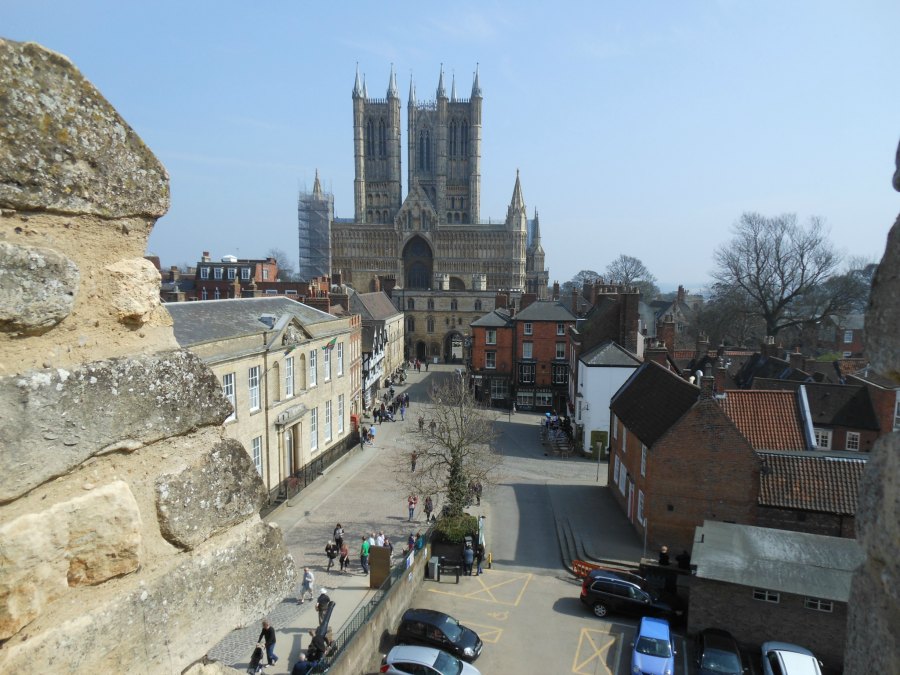
Lincoln Cathedral today, viewed from the walls of Lincoln Castle

Katherine left court and settled at her late husband’s manor at Kettlethorpe, before moving to a rented townhouse in Lincoln. John of Gaunt visited her regularly throughout the 1380s, and Katherine was frequently at court. John of Gaunt kept a stable of 12 horses for her use and her relationship with Gaunt and his family remained cordial. She is known to have lent him money for his Castilian expedition of 1386 and in 1387 received a New Years’ gift from the countess of Derby, the wife of John’s eldest son, Henry.

With 4 children by John of Gaunt but still only, officially, governess to his daughters, Katherine was made a Lady of the Garter in 1388. However, her situation changed again following Constance’s death at the end of 1394.

At Lincoln Cathedral, in January 1396 and a quarter of a century after the start of their relationship, John of Gaunt and Katherine Swynford were married. Styled Lady Katherine, Duchess of Lancaster, she was, briefly, the first Lady in England following the death of Queen Anne of Bohemia. Although the marriage undoubtedly caused surprise and upset among members of the royal court, it had a very practical outcome.

Once they were married John of Gaunt was able to petition the pope for the legitimisation his children by Katherine. This was achieved by papal bull on 1st September 1396, and confirmed by Richard II’s royal patent on 9th February 1397. The result was the children’s exalted position in court society and a marked improvement in their marriage and career prospects. A further Charter in the reign of Henry IV appears to have excluded the Beauforts from the succession, though there is some question as to the legitimacy of the exclusion as the relevant phrase appears to have been inserted after the Act was written.

073
Tombs of Katherine Swynford, Duchess of Lancaster, and her daughter Joan Beaufort, Countess of Westmorland. Lincoln Cathedral

John and Katherine’s final happiness was of short duration, however, as John of Gaunt died on the 3rd of February 1399; he was buried beside his first wife, Blanche of Lancaster, in St Paul’s Cathedral, London. His son and heir, Henry Bolingbroke, had recently been exiled to the Continent for 10 years. Richard II extended that exile to a life term and confiscated the Lancastrian lands.

Following Gaunt’s death Katherine returned to her townhouse in Lincoln; close to the east end of the Cathedral. Her son, Henry Beaufort, had become Bishop of Lincoln shortly after being legitimised.

Katherine died at Lincoln on 10th May 1403. She was buried, close to the High Altar, in the cathedral in which she had married her prince just 7 years earlier. Her daughter Joan, Countess of Westmoreland, was laid to rest beside her, following her death in 1440, with a slightly smaller tomb. The tombs themselves are empty, with Katherine and Joan buried beneath the floor of the Cathedral.

Katherine appears to have had a good relationship with John of Gaunt’s children; she was very close to Philippa and Elizabeth. Henry IV, Katherine’s stepson, referred to her in her widowhood as ‘The King’s Mother’.

And together, through their children Katherine and John left a legacy that would change the  course of English and Scottish history.

220px-Swyntomb
Katherine Swynford’s tomb, 1809

Henry Beaufort would rise to the position of Bishop of Winchester and Cardinal. Thomas, an able soldier, would rise to become Duke of Exeter and serve on the council of his great-nephew, Henry VI.

Less impressively, their grandson Edmund (son of John, Earl of Somerset) was responsible for great losses of territory whilst Regent of France for young Henry VI.

Katherine and John’s daughter, Joan, was the mother of Cecily Neville, Duchess of York, who would be the mother of 2 kings of England; Edward IV and Richard III. Their son John, Earl of Somerset, was grandfather of Margaret Beaufort and great-grandfather of the first Tudor King, Henry VII. John’s daughter, Joan Beaufort, married James I of Scotland in another of history’s great love stories.

*

Photographs of Lincoln and Katherine Swynford’s tomb are © Sharon Bennett Connolly, 2015. All other pictures are courtesy of Wikipedia.

*

Sources: katherineswynfordsociety.org.uk; Brewer’s British Royalty by David Williamson; History Today Companion to British History Edited by Juliet Gardiner & Neil Wenborn; The mammoth Book of British kings & Queen by Mike Ashley; Britain’s Royal Families, the Complete Genealogy by Alison Weir; The Life and Times of Edward III by paul Johnson; The Perfect King, the Life of Edward III by Ian Mortimer; The Reign of Edward III by WM Ormrod; Chronicles of the Age of Chivalry Edited by Elizabeth Hallam; womenshistory.about.com/od/medrenqueens/a/Katherine-Swynford.

*

My Books

Signed, dedicated copies of all my books are available through my online bookshop.

Coming on 15 June 2024: Heroines of the Tudor World

Heroines of the Tudor World tells the stories of the most remarkable women from European history in the time of the Tudor dynasty, 1485-1603. These are the women who ruled, the women who founded dynasties, the women who fought for religious freedom, their families and love. These are the women who made a difference, who influenced countries, kings and the Reformation. In the era dominated by the Renaissance and Reformation, Heroines of the Tudor World examines the threats and challenges faced by the women of the era, and how they overcame them. From writers to regents, from nuns to queens, Heroines of the Tudor World shines the spotlight on the women helped to shape Early Modern Europe.

Heroines of the Tudor World is now available for pre-order from Amberley Publishing and Amazon UK.

Out Now! Women of the Anarchy

Two cousins. On the one side is Empress Matilda, or Maud. The sole surviving legitimate child of Henry I, she is fighting for her birthright and that of her children. On the other side is her cousin, Queen Matilda, supporting her husband, King Stephen, and fighting to see her own son inherit the English crown. Women of the Anarchy demonstrates how these women, unable to wield a sword, were prime movers in this time of conflict and lawlessness. It show how their strengths, weaknesses, and personal ambitions swung the fortunes of war one way – and then the other.

Available from Bookshop.orgAmberley Publishing and Amazon UK.

Also by Sharon Bennett Connolly:

King John’s Right-Hand Lady: The Story of Nicholaa de la Haye is the story of a truly remarkable lady, the hereditary constable of Lincoln Castle and the first woman in England to be appointed sheriff in her own right. It is is available from King John’s Right-Hand Lady: The Story of Nicholaa de la Haye is the story of a truly remarkable lady, the hereditary constable of Lincoln Castle and the first woman in England to be appointed sheriff in her own right. Available from all good bookshops or direct from Pen & Sword Booksbookshop.org and AmazonDefenders of the Norman Crown: The Rise and Fall of the Warenne Earls of Surrey tells the fascinating story of the Warenne dynasty, from its origins in Normandy, through the Conquest, Magna Carta, the wars and marriages that led to its ultimate demise in the reign of Edward III. Available from Pen & Sword BooksAmazon in the UK and US, and Bookshop.org

Ladies of Magna Carta: Women of Influence in Thirteenth Century England looks into the relationships of the various noble families of the 13th century, and how they were affected by the Barons’ Wars, Magna Carta and its aftermath; the bonds that were formed and those that were broken. It is now available in paperback and hardback from Pen & Sword,  Amazon, and Bookshop.orgHeroines of the Medieval World tells the stories of some of the most remarkable women from Medieval history, from Eleanor of Aquitaine to Julian of Norwich. Available now from Amberley Publishing and Amazon, and Bookshop.orgSilk and the Sword: The Women of the Norman Conquest traces the fortunes of the women who had a significant role to play in the momentous events of 1066. Available now from Amazon,  Amberley Publishing, and Bookshop.org.

Alternate Endings: An anthology of historical fiction short stories including Long Live the King… which is my take what might have happened had King John not died in October 1216. Available in paperback and kindle from Amazon.

Podcast:

Have a listen to the A Slice of Medieval podcast, which I co-host with Historical fiction novelist Derek Birks. Derek and I welcome guests, such as Bernard Cornwell and Elizabeth Chadwick, and discuss a wide range of topics in medieval history, from significant events to the personalities involved.

*

Don’t forget! Signed and dedicated copies of all my books are available through my online bookshop.

For forthcoming online and in-person talks, please check out my Events Page.

You can be the first to read new articles by clicking the ‘Follow’ button, liking our Facebook page or joining me on Twitter and Instagram.

*

©2015 Sharon Bennett Connolly FRHistS
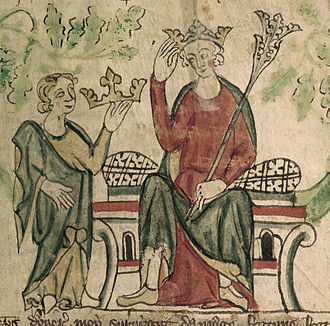
Poor Little Marjorie Bruce

Marjorie_Bruce_Paisley_Abbey
Tomb of Marjorie Bruce, Paisley Abbey

I’ve always had a soft spot for little Marjorie Bruce. Dead before her 20th birthday, her short life was filled with tragedy and adversity from the moment of her birth. I could find no pictures of her, just ones of her tomb; which just about sums it up for poor Marjorie.

Marjorie was born at a time of great upheaval for Scotland; Edward I was claiming overlordship of the country, and the right to choose its next king. John Balliol was picked as king, only for Edward to humiliate and dethrone him a short time later.

Marjorie’s father, Robert the Bruce, was one of the chief claimants of the Scots crown.

Marjorie was the only daughter of Robert the Bruce, Lord of Annandale and Earl of Carrick, and Isabella of Mar. Isabella was the daughter of Donald, 6th Earl of Mar, and Helen, possible illegitimate daughter of Llewelyn the Great, Prince of Wales.

Robert_I_and_Isabella_of_Mar
Marjorie’s parents; Robert the Bruce and Isabella of Mar

Isabella and Robert had married in 1295 and Marjorie arrived about 2 years later. At the age of only 19, Isabella died shortly after giving birth and poor Marjorie was left motherless, with a father who was fighting, alternately, for and against the English.

Even when still a baby, Marjorie was seen as a political pawn, when on 9 July 1297, Edward I demanded that she be handed over as a hostage to her father’s good behaviour. Three of Robert’s allies, ‘Robert bishop of Glasgow, James the Steward of Scotland, and Alexander de Lindesye, become guarantees for the Earl of Carrick’s loyalty till he delivers his daughter Margerie as a hostage.’ Although, there is no record that Marjorie was ever handed over to the English at this time.

Marjorie was named after her paternal grandmother, Marjorie, Countess of Carrick in her own right. And it seems highly likely that Marjorie’s care was handed to one of her father’s sister, either Mary or Christian.

At 6 years old Marjorie acquired a new step-mother when Robert married Elizabeth de Burgh, daughter of Richard de Burgh, Earl of Ulster, and god-daughter of Edward I. Although Edward I appears to have arranged the marriage in order to keep the Bruce’s loyalty, it was only a short while after the marriage that Robert the Bruce finally decided to join William Wallace and fight for Scotland.

In 1306, following his murder of his rival for the throne, John Comyn, Robert the Bruce defied Edward I by having himself crowned King of Scots at Scone Abbey. Little 8-year-old Marjorie was suddenly a Princess of Scotland as the daughter of  King Robert I; although her uncle Edward Bruce was designated Robert’s heir.

RobertBruceAndElizabethDeBurgh (280X280)_tcm4-562387
Robert the Bruce and his queen, Elizabeth de Burgh

Unfortunately Robert’s coronation infuriated Edward I even more. After King Robert was brought to battle, and defeated, at Methven in June 1306 he and his family became fugitives in their own land. Edward I of England was determined to hunt him down; sending men after Robert and all his adherents.

In August 1306 Robert split his party; while he headed west he sent Marjorie and Elizabeth to the north-east, possibly hoping they could escape to Orkney and onto Norway, where his sister, Isabel, was queen.

Accompanying Elizabeth and Marjorie were Robert’s other 2 sisters, Christian and Mary, and Isabella, Countess of Buchan, who had crowned Robert at Scone. They were escorted by John of Strathbogie, Earl of Atholl, and Robert’s younger brother, Sir Niall Bruce.

By September 1306, the women and their escort had reached Kildrummy Castle in Aberdeenshire; where Edward’s forces caught up with them. While Sir Niall Bruce and the garrison stoically attempted to hold off the English troops, the Earl of Atholl escaped with the women. Having made it to the far north of Scotland, but were apprehended at Tain, near Inverness, by the Earl of Ross, a supporter of the Comyns.

Kildrummy had fallen in the mean time.

170px-Gal_nations_edward_i
Edward I

Sir Niall Bruce and the Kildrummy garrison were handed over to the English and executed; Sir Niall suffered hanging, drawing and quartering at Berwick. The Earl of Atholl and the Bruce women, along with the Countess of Buchan, were sent south to King Edward.

When they reached London, the Earl of Atholl suffered the same fate as Sir Niall, the first earl to ever suffer a traitor’s execution.

Although Edward did not order the executions of the women folk, it cannot be said he treated them kindly. They were used to set an example; a demonstration of the price of rebellion against Edward.

For Mary Bruce and the Countess of Buchan, he ordered the construction of iron cages. Isabella, Countess of Buchan, who had set the crown of Scotland on Robert the Bruce’s head, was imprisoned in one such cage supposedly suspended high from the walls of Berwick castle, open the elements and the mockery of the people of Berwick. The same was ordered for Mary Bruce at Roxburgh. Although the cages were actually in rooms inside the two strongholds, rather than outside and suspended from the walls. Either way, it was still horrendous treatment for two noblewomen.

220px-Watton_Abbey
Watton Abbey, where Marjorie was confined for 8 years

Christian Bruce, whose husband had recently been executed as a traitor at Dumfries, was ordered to be confined at a convent at Sixhills in Lincolnshire; while Elizabeth de Burgh was confined to various manors in England and treated more kindly due to her father’s friendship with the king.

For Marjorie Bruce, these events must have been terrifying. Edward ordered her confined in an iron cage in the Tower of London, where no one was to speak to her. Whether Edward relented of his own free will, or was advised against such treatment of a child of not yet 10 years old, the order was rescinded and she was confined to a convent at Watton in Yorkshire.

On 15 March 1307, Edward sent orders for financial provision for Marjory: ‘The K. commands the sheriff of York, by view of the Prior of Wattone, to allow Margery daughter of Robert de Brus, staying in Wattone by the K.’s order, 3d. a day for her expenses, from the morrow of All Souls last year, when she came there; and a mark yearly for her dress.’

Although loyal to their king, we can only hope that the nuns took pity on the poor child, and treated her kindly. She was held at Watton for 8 years and it was only her father’s victory at Bannockburn, in 1314, that eventually secured her freedom.

175px-Paisley_abbey
Paisley Abbey

Robert the Bruce’s resounding victory over Edward I’s son and successor, Edward II, in the 1314 battle meant Bruce was finally in a position to insist on the return of his queen, daughter, sisters and the Countess of Buchan. With so many English nobles taken prisoner, the women were the price demanded in the exchange of hostages.

On Marjorie’s return to Scotland, King Robert almost immediately set about arranging her marriage. With the queen not yet having produced a child, the now-17-year-old Marjorie was needed to produce an heir for the Bruce dynasty.

Just 5 years older the Marjorie, Walter Stewart, the wealthy and powerful 6th High Steward of Scotland was the ideal candidate as a husband. Walter had distinguished himself as a commander at the Battle of Bannockburn, and was the man entrusted by Bruce to bring his family home for their English captivity.

Robert_II_of_Scotland
Robert II of Scotland

Walter and Marjorie were married shortly after, with Marjorie’s dowry including the Barony of Bathgate in West Lothian. Whatever happiness – if any – Marjorie derived from the marriage, however, was short-lived.

In 1316, whilst heavily pregnant, she fell from her horse when out riding near Paisley Abbey. Going into premature labour, Marjorie was taken to the Abbey, where she was delivered of a son, Robert, on 2nd March 1316. It is possible that Robert was delivered by caesarean as his mother was close to death. Marjorie survived the birth by just a few hours and died the same day.

Poor little Marjorie Bruce was dead at the tender age of 19 – the same as her mother before her – having lived through some of the most turbulent years of Scottish history.

Had she lived she would have seen her son succeed her brother, David II, on the Scots throne as King Robert II, founder of the Stewart dynasty.

*

Pictures courtesy of Wikipedia.

*

Sources: The Story of Scotland by Nigel Tranter; Brewer’s British Royalty by David Williamson; Kings & Queens of Britain by Joyce Marlow; Mammoth Book of British Kings & Queens by Mike Ashley; Oxford Companion to British History Edited by John Cannon; Edward I, A Great and Terrible King by Marc Morris; Britain’s Royal Families by Alison Weir; History Today Companion to British History Edited by Juliet Gardiner & Neil Wenborn; The Plantagenets, The Kings Who Made England by Dan Jones; The Illustrated Encyclopaedia of the Kings & Queens of Britain by Charles Phillips; Kings & Queens of Britain by Joyce Marlow; englishmonarchs.co.uk; educationscotland.gov.uk; Sisters of the Bruce; electricscotland.com.

*

My Books

Signed, dedicated copies of all my books are available through my online bookshop. or by contacting me.

Coming 30 March: Princesses of the Early Middle Ages

Books by Sharon Bennett Connolly

Daughters of kings were often used to seal treaty alliances and forge peace with England’s enemies. Princesses of the Early Middle Ages: Royal Daughters of the Conquest explores the lives of these young women, how they followed the stereotype, and how they sometimes managed to escape it. It will look at the world they lived in, and how their lives and marriages were affected by political necessity and the events of the time. Princesses of the Early Middle Ages will also examine how these girls, who were often political pawns, were able to control their own lives and fates. Whilst they were expected to obey their parents in their marriage choices, several princesses were able to exert their own influence on these choices, with some outright refusing the husbands offered to them.

Their stories are touching, inspiring and, at times, heartbreaking.

Princesses of the Early Middle Ages: Royal Daughters of the Conquest is now available for pre-order from Pen & Sword and Amazon.

Also by Sharon Bennett Connolly:

Books by Sharon Bennett Connolly

Scotland’s history is dramatic, violent and bloody and Scotland’s Medieval Queens have seen it all. This is the story of Scotland through their eyes. Available now from Amazon and Pen and Sword BooksHeroines of the Tudor World tells the stories of the most remarkable women from European history in the time of the Tudor dynasty, 1485-1603. These are the women who ruled, the women who founded dynasties, the women who fought for religious freedom, their families and love. Heroines of the Tudor World is now available from Amberley Publishing and Amazon UK. Women of the Anarchy demonstrates how Empress Matilda and Matilda of Boulogne, unable to wield a sword themselves, were prime movers in this time of conflict and lawlessness. It shows how their strengths, weaknesses, and personal ambitions swung the fortunes of war one way – and then the other. Available from Bookshop.orgAmberley Publishing and Amazon UKKing John’s Right-Hand Lady: The Story of Nicholaa de la Haye is the story of a truly remarkable lady, the hereditary constable of Lincoln Castle and the first woman in England to be appointed sheriff in her own right. Available from all good bookshops Pen & Sword Booksbookshop.org and Amazon

Defenders of the Norman Crown: The Rise and Fall of the Warenne Earls of Surrey tells the fascinating story of the Warenne dynasty, from its origins in Normandy, through the Conquest, Magna Carta, the wars and marriages that led to its ultimate demise in the reign of Edward III. Available from Pen & Sword BooksAmazon in the UK and US, and Bookshop.orgLadies of Magna Carta: Women of Influence in Thirteenth Century England looks into the relationships of the various noble families of the 13th century, and how they were affected by the Barons’ Wars, Magna Carta and its aftermath; the bonds that were formed and those that were broken. It is now available in paperback and hardback from Pen & SwordAmazon, and Bookshop.orgHeroines of the Medieval World tells the stories of some of the most remarkable women from Medieval history, from Eleanor of Aquitaine to Julian of Norwich. Available now from Amberley Publishing and Amazon, and Bookshop.orgSilk and the Sword: The Women of the Norman Conquest traces the fortunes of the women who had a significant role to play in the momentous events of 1066. Available now from Amazon,  Amberley Publishing, and Bookshop.org.

Alternate Endings: An anthology of historical fiction short stories including Long Live the King… which is my take what might have happened had King John not died in October 1216. Available in paperback and kindle from Amazon.

Podcast:

Have a listen to the A Slice of Medieval podcast, which I co-host with Historical fiction novelist Derek Birks. Derek and I welcome guests, such as Bernard Cornwell and Michael Jecks, and discuss a wide range of topics in medieval history, from significant events to the personalities involved. 

Every episode is also now available on YouTube.

*

Don’t forget! Signed and dedicated copies of all my books are available through my online store.

For forthcoming online and in-person talks, please check out my Events Page.

You can be the first to read new articles by clicking the ‘Follow’ button, liking our Facebook page or joining me on TwitterThreadsBluesky and Instagram.

*

©2015 Sharon Bennett Connolly FRHistS
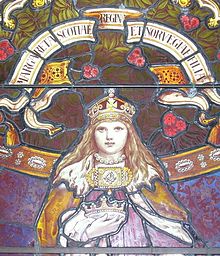
The Remarkably Resilient Jacqueline d’Hainault

220px-Jacoba_van_Beieren_door_Hollandse_school_ca_1600
Jacqueline of Hainault

Jacqueline of Hainault, also known as Jacoba of Bavaria, is one of those Medieval ladies who seems to have slipped under the radar of history. Until last week I knew very little about her; and yet her life is one of the most colourful I have ever come across.

Born on or shortly before the 16th July 1401 at Le Quesnoy, Flanders, Jacqueline was the daughter of William VI, Count of Holland, and Marguerite of Burgundy; her grandfather was Philippe the Bold, Duke of Burgundy.

Although she had at least 9 illegitimate siblings, Jacqueline was her father’s sole heir. And in order to strengthen her position, William arranged a marriage for Jacqueline while she was still an infant. In 1406 she was betrothed to John of Valois, Duke of Touraine, the fourth son of King Charles VI of France, and only 3 years older than Jacqueline. With little chance of inheriting the French throne, and with a view to him eventually ruling Hainault, the responsibility for John’s education was handed over to  Count William; he would be raised alongside his future wife.

Jean_de_Touraine,_dauphin_of_France
John, Duke of Touraine

The young couple married in 1415 at The Hague. Only 4 months after the wedding John’s older brother Louis, Dauphin of France, died and John became Dauphin and heir to the French throne.

Within 2 years John himself was dead, on 4th April 1417, with rumours circulating that he was poisoned, although this is far from certain. His younger brother, Charles, became Dauphin and Jacqueline was a widow at only 16.

In the meantime, although Holland was not subject to Salic Law (where a woman could not inherit), Jacqueline’s father had been having a hard time getting his people and Sigismund, the Holy Roman Emperor, to accept Jacqueline as his heir. They finally refused outright in 1416.

When Count William died only 2 months after her husband, on 31st May 1417, Jacqueline was accepted as Countess of Hainault; however Holland and Zeeland recognised her uncle John of Bavaria, backed by Sigismund, as their count.

At this point Jacqueline’s mother and uncle stepped in. Margaret of Burgundy and her brother, John the Fearless, Duke of Burgundy, started looking around for a suitable husband for Jacqueline. Unfortunately they decided on her cousin John IV, Duke of Brabant. The Duke of Burgundy saw the marriage as an opportunity to expand his influence over Jacqueline’s lands, and applied for a Papal Dispensation. The Dispensation was given, but withdrawn just over 2 weeks later, following pressure from Sigismund.

John_IV,_Duke_of_Brabant
John IV Duke of Brabant

The couple married anyway, in March 1418. The marriage was a disaster, politically and personally. John managed to antagonise both his wife and her subjects. Initially Jacqueline’s husband helped in the fight against her avaricious uncle, John of Bavaria and in 1419 John the Fearless settled the dispute in his niece’s favour; only for John of Brabant to then mortgage Holland and Zeeland to John of Bavaria for a period of 12 years.

Jacqueline ran away; first to her mother in Hainault and then on to England, where she was welcomed by Henry V. The king granted her a pension, and made her godmother to his only son, the future Henry VI.

In  1421 Jacqueline repudiated her marriage to John of Brabant, with the support of Antipope Benedict XIII in Avignon. And in 1422, with a view to strengthening England’s position against France, she married the king’s younger brother Humphrey, Duke of Gloucester. The public were behind the marriage and even supported Humphrey’s attempts to recover Jacqueline’s lands.

As Duchess of Gloucester, Jacqueline was made a Lady of the Garter in 1423, and, at some point, accepted Eleanor Cobham into her household as a lady-in-waiting; Eleanor would later go on to become Humphrey’s 2nd wife. In 1424 Jacqueline gave birth to her only recorded child, who was stillborn.

In 1424 Humphrey and Jacqueline led an army to the Low Countries, to recover Jacqueline;s inheritance. Though Humphrey managed to recover much of Hainault, he came up against opposition from the new Duke of Burgundy, Philip III The Good, destroying the Anglo-Burgundian alliance.

120px-HumphreyGloucester
Humphrey, Duke of Gloucester

Many of Jacqueline’s subjects, however, considered Humphrey an invader and, refusing to recognising him as count, gave their support to Burgundy. So, in 1425, Humphrey returned to England; Jacqueline’s mother had objected to her returning with him, so she moved on to Mons.

The officials of Mons had promised to protect Jacqueline, but once Gloucester was gone, she was handed over to the Duke of Burgundy and imprisoned in Ghent. In the same year her uncle, John of Bavaria, died and her lands were handed over to Burgundy, as regent, by John of Brabant.

Jacqueline escaped her imprisonment, dressed as a man, and escaped escorted by 2 knights, to Gouda. From Gouda, she led the Dutch resistance to the Burgundian takeover. However, when Burgundy besieged Gouda, she was forced to surrender.

In the meantime, Pope Martin V had authorised an investigation into the state of Jacqueline’s marriages. In 1428 he declared her marriage to Humphrey of Gloucester null and void, as her marriage to John of Brabant was legally valid. John of Brabant had died in 1426, so a remarriage between Humphrey and Jacqueline would have been acceptable – had Humphrey’s attentions not already turned to Eleanor Cobham.

220px-Jacoba_van_Beieren_(1401-1436),_gravin_van_Holland_en_Zeeland
Jacqueline of Hainault

Jacqueline still had sympathisers in England, however and the ladies of London petitioned Humphrey, according to the chronicler Stow their letters  “containing matter of rebuke and sharpe reprehension of the Duke of Gloucester, because he would not deliver his wife Jacqueline out of her grievous imprisonment, being then held prisoner by the Duke of Burgundy, suffering her to remaine so unkindly, contrary to the law of God and the honourable estate of matrimony”.

Humphrey had managed to get a 9,000 marks grant from the king’s council, in 1427, to help Jacqueline recover her lands; however John, Duke of Bedford, put a stop to the expedition by opening up negotiations with the Duke of Burgundy.

So, in 1428, Jacqueline of Hainault is a prisoner of the Duke of Burgundy, with no prospect of help from England. With few options left to her, she came to an agreement with Philip the Good. In the Treaty of Delft, of 3rd July 1428, Jacqueline retained her title of countess, but administration for her 3 counties passed to Philip. Philip the Good was confirmed as her heir, should she die childless; and she was not to marry without the consent of Philip, her mother and the 3 counties.

220px-Frank_van_Borssele
Francis van Borselen

Philip, however, broke the treaty by mortgaging the revenues of Holland and Zeeland to members of the Borselen family from Zeeland.

In 1432 Jacqueline secretly married one of the Borselen family, Francis, Lord of Zuilen and St Maartensdijk.

Whether or not this was a plot to overthrow Burgundian rule in Holland, Philip the good certainly saw it that way. Francis was imprisoned in October 1432 and Jacqueline was forced to abdicate as countess in 1433, relinquishing her titles in return for an income from several estates. After years of civil war, Jacqueline’s financial position prior to the settlement had been desperate.

Jacqueline and Francis’ relationship appears to have been a love match and, in July 1434 they had a 2nd, public, marriage ceremony at Maartensdijk Castle. After such an adventurous life, and having fought so hard for her inheritance, Jacqueline settled down to married life. Her happiness was short-lived, however, as Jacqueline died at Teilingen on 8th October 1436, probably of tuberculosis. She was buried at the Hague.

*

Pictures courtesy of Wikipedia

*

Sources: Brewer’s British Royalty by David Williamson; History Today Companion to British History Edited by Juliet Gardiner and Neil Wenborn; Britain’s Royal Families, the Complete Genealogy by Alison Weir; medievalists.net; r3.org; susanhigginbotham.com; britannica.com; historyofroyalwomen.com.

*

My books

Signed, dedicated copies of all my books are available through my online bookshop.

Out now: Scotland’s Medieval Queens

Books by Sharon Bennett Connolly

Scotland’s history is dramatic, violent and bloody. Being England’s northern neighbour has never been easy. Scotland’s queens have had to deal with war, murder, imprisonment, political rivalries and open betrayal. They have loved and lost, raised kings and queens, ruled and died for Scotland. From St Margaret, who became one of the patron saints of Scotland, to Elizabeth de Burgh and the dramatic story of the Scottish Wars of Independence, to the love story and tragedy of Joan Beaufort, to Margaret of Denmark and the dawn of the Renaissance, Scotland’s Medieval Queens have seen it all. This is the story of Scotland through their eyes.

Scotland’s Medieval Queens gives a thorough grounding in the history of the women who ruled Scotland at the side of its kings, often in the shadows, but just as interesting in their lives beyond the spotlight. It’s not a subject that has been widely covered, and Sharon is a pioneer in bringing that information into accessible history.’ Elizabeth Chadwick (New York Times bestselling author)

Available now from Amazon and Pen and Sword Books

Also by Sharon Bennett Connolly:

Books by Sharon Bennett Connolly

Heroines of the Tudor World tells the stories of the most remarkable women from European history in the time of the Tudor dynasty, 1485-1603. These are the women who ruled, the women who founded dynasties, the women who fought for religious freedom, their families and love. Heroines of the Tudor World is now available from Amberley Publishing and Amazon UK. Women of the Anarchy demonstrates how Empress Matilda and Matilda of Boulogne, unable to wield a sword themselves, were prime movers in this time of conflict and lawlessness. It shows how their strengths, weaknesses, and personal ambitions swung the fortunes of war one way – and then the other. Available from Bookshop.orgAmberley Publishing and Amazon UKKing John’s Right-Hand Lady: The Story of Nicholaa de la Haye is the story of a truly remarkable lady, the hereditary constable of Lincoln Castle and the first woman in England to be appointed sheriff in her own right. Available from all good bookshops Pen & Sword Booksbookshop.org and Amazon

Books by Sharon Bennett Connolly

Defenders of the Norman Crown: The Rise and Fall of the Warenne Earls of Surrey tells the fascinating story of the Warenne dynasty, from its origins in Normandy, through the Conquest, Magna Carta, the wars and marriages that led to its ultimate demise in the reign of Edward III. Available from Pen & Sword BooksAmazon in the UK and US, and Bookshop.orgLadies of Magna Carta: Women of Influence in Thirteenth Century England looks into the relationships of the various noble families of the 13th century, and how they were affected by the Barons’ Wars, Magna Carta and its aftermath; the bonds that were formed and those that were broken. It is now available in paperback and hardback from Pen & SwordAmazon, and Bookshop.orgHeroines of the Medieval World tells the stories of some of the most remarkable women from Medieval history, from Eleanor of Aquitaine to Julian of Norwich. Available now from Amberley Publishing and Amazon, and Bookshop.orgSilk and the Sword: The Women of the Norman Conquest traces the fortunes of the women who had a significant role to play in the momentous events of 1066. Available now from Amazon,  Amberley Publishing, and Bookshop.org.

Alternate Endings: An anthology of historical fiction short stories including Long Live the King… which is my take what might have happened had King John not died in October 1216. Available in paperback and kindle from Amazon.

Podcast:

A Slice of Medieval

Have a listen to the A Slice of Medieval podcast, which I co-host with Historical fiction novelist Derek Birks. Derek and I welcome guests, such as Bernard Cornwell and Michael Jecks, and discuss a wide range of topics in medieval history, from significant events to the personalities involved. Every episode is also now available on YouTube.

*

Don’t forget! Signed and dedicated copies of all my books are available through my online bookshop.

For forthcoming online and in-person talks, please check out my Events Page.

You can be the first to read new articles by clicking the ‘Follow’ button, liking our Facebook page or joining me on TwitterThreadsBluesky and Instagram.

*

©2015 Sharon Bennett Connolly FRHistS

Witchy Woman – the Fall of Eleanor Cobham, Duchess of Gloucester

300px-Starborough_Castle
Sterborough Castle, possible birthplace of Eleanor

Born around 1400 and probably at the castle of Sterborough in Kent, Eleanor Cobham was the daughter of Sir Reginald Cobham of Sterborough and his wife Eleanor, daughter of Sir Thomas Culpeper of Rayal.

As is often the case with Medieval women, nothing is known of Eleanor’s early life. She appeared at court in her early 20s, when she was appointed lady-in-waiting to Jacqueline of Hainault,  Duchess of Gloucester.

Jacqueline had come to England to escape her 2nd husband, the abusive John IV Duke of Brabant. She obtained an annulment of the marriage from the Antipope, Benedict XIII, and married Humphrey, Duke of Gloucester, in 1423. He would spend a large amount of their marriage trying to recover Jacqueline’s lands from the Dukes of Brabant and Burgundy.

120px-HumphreyGloucester
Humphrey Duke of Gloucester

Humphrey was a younger brother of King Henry V and John, Duke of Bedford. He had fought at the Battle of Shrewsbury at the age of 12 years and 9 months and would go on to fight at Agincourt in 1415. On Henry V’s death, Humphrey acted as Protector for  his young nephew, Henry VI, whenever his older brother, the Duke of Bedford, was away fighting in France. However, he seems to have been little liked and was never trusted with full Regency powers.

In 1428 Pope Martin V refused to recognise the annulment of Jacqueline’s previous marriage to John of Brabant and declared the Gloucester marriage null and void. However, John of Brabant had died in 1426 and so Humphrey and Jacqueline were free to remarry – if they wanted to. In the mean time, Humphrey’s attention had turned to Eleanor of Cobham and he made no attempt to keep Jacqueline by his side.

This did not go down too well with the good ladies of London, who petitioned parliament between Christmas 1427 and Easter 1428.

According to the chronicler Stow their letters were delivered to Humphrey, the archbishops and the lords “containing matter of rebuke and sharpe reprehension of the Duke of Gloucester, because he would not deliver his wife Jacqueline out of her grievous imprisonment, being then held prisoner by the Duke of Burgundy, suffering her to remaine so unkindly, contrary to the law of God and the honourable estate of matrimony”.

220px-Arms_of_Humphrey_of_Lancaster,_1st_Duke_of_Gloucester.svg
Coat of arms of Humphrey, Duke of Gloucester

Humphrey paid the petition little attention and married Eleanor sometime between 1428 and 1431. It has been suggested that Eleanor was the mother of Humphrey’s 2 illegitimate children – Arthur and Antigone – although this seems unlikely as Humphrey made no attempt to legitimise them following the marriage (as his grandfather John of Gaunt had done with his Beaufort children by Katherine Swynford).

Described by Aeneas Sylvius as “a woman distinguished in her form” and “beautiful and marvellously pleasant” by Jean de Waurin, Eleanor and Humphrey had a small but lively court at their residence of La Plesaunce at Greenwich. Humphrey had a lifelong love of learning, which Eleanor most likely shared, and the couple attracted scholars, musicians and poets to their court.

On 25th June 1431, as Duchess of Gloucester, Eleanor was admitted to the fraternity of the monastery of St Albans – to which her husband already belonged – and in 1432 she was made a Lady of the Garter.

Eleanor’s status rose even higher in 1435, with the death of John Duke of Bedford. Whilst Henry VI was still childless, John had been heir presumptive. He died having had no children and so the position passed to Humphrey, Duke of Gloucester.

With her heightened status, Eleanor received sumptuous Christmas gifts from the king; and her father was given custody of the French hostage Charles, Duke of Orleans – a prisoner since Agincourt.

But in 1441 came Eleanor’s dramatic downfall.

Master Thomas Southwell, a canon of St Stephen’s Chapel at Westminster, and Master Roger Bolyngbroke, a scholar, astronomer and cleric – and alleged necromancer, were arrested for casting the King’s horoscope and predicting his death.

humphrey__eleanor
Eleanor – alongside Humphrey – joining the confraternity of St Albans, 1431

Southwell and Bolyngbroke, along with Margery Jourdemayne, known as the Witch of Eye and renowned for selling potions and spells, were accused of making a wax image of the king, ‘the which image they dealt so with, that by their devilish incantations and sorcery they intended to bring out of life, little and little, the king’s person, as they little and little consumed that image’.

Bolyngbroke implicated Eleanor during questioning, saying she had asked him to cast her horoscope and predict her future; for the wife of the heir to the throne, this was a dangerous practise. Did she have her eye on the throne itself?

On hearing of the arrest of her associates Eleanor fled to Sanctuary at Westminster. Of 28 charges against her she admitted to 5. Eleanor denied the treason charges, but confessed to obtaining potions from Jourdemayne in order to help her conceive a child. Awaiting further proceedings, as Eleanor remained in Sanctuary, pleading sickness, she tried to escape by river. Thwarted, she was escorted to Leeds Castle on 11th August and held there for 2 months.

Having returned to Westminster Eleanor was examined by an ecclesiastical tribunal on 19th October and on the 23rd she faced Bolyngbroke, Southwell and Jourdemayne who accused her of being the “causer and doer of all these deeds”.

Eleanor was found guilty of sorcery and witchcraft; she was condemned to do public penance and perpetual imprisonment. Of her co-accused; Bolyngbroke was hanged, drawn and quartered, Southwell died in the Tower of London and Margery Jourdemayne was burned at the stake at Smithfield.

The_Penance_of_Eleanor_(Abbey)
The Penance of Eleanor by Edwin Austin Abbey

Eleanor’s own chaplain, Master John Hume, had also been arrested, although he was accused only of knowing of the others’ actions and was later pardoned.

On 3 occasions Eleanor was made to do public penance at various churches in London; on the 1st of such, 13th November 1441, bareheaded and dressed in black carrying a wax taper, she walked from Temple Bar to St Paul’s Cathedral, where she offered the wax taper at the high altar. Following 2 further penances, at Christ Church and St Michael’s in Cornhill, Eleanor was sent first to Chester Castle and then to Kenilworth. Her circumstances much reduced, Eleanor was allowed a household of only 12 persons.

Eleanor’s witchcraft conviction discredited her husband; Humphrey was marginalised and on 6th November 1441 his marriage was annulled. Humphrey’s enemies, Margaret of Anjou (Henry VI’s queen) and the Earl of Suffolk, convinced the king that his uncle was plotting against him. In February 1447, Humphrey was arrested and confined in Bury St Edmunds. He died a week later, on 23rd February; some claimed it was murder, but the most likely cause of death is stroke.

1000px-Beaumaris-01s
Beaumaris Castle, Anglesey

Eleanor was moved to Peel Castle on the Isle of Man, in 1446 and one final time in 1449 when she was transferred to Beaumaris Castle on Anglesey.

Eleanor Cobham, one time Duchess of Gloucester and wife to the heir to England’s throne, having risen so high – and fallen so low – died still a prisoner, at Beaumaris Castle on 7th July 1452; she was buried at Beaumaris, at the expense of Sir William Beauchamp, the castle’s constable.

*

Pictures courtesy of Wikipedia

*

Sources: Brewer’s British Royalty by David Williamson; History Today Companion to British History Edited by Juliet Gardiner and Neil Wenborn; The Mammoth Book of British Kings & Queens by Mike Ashley; Britain’s Royal Families, the Complete Genealogy by Alison Weir; The Oxford Companion to British History Edited by John Cannon; The Plantagenets, the Kings who made England by Dan Jones; The Plantagenets, the Kings that Made Britain by Derek Wilson; madameguillotine.co.uk; susanhigginbotham.com; The Medieval Mind.

*

My Books

Signed, dedicated copies of all my books are available through my online bookshop.

OUT NOW! Heroines of the Tudor World

Heroines of the Tudor World tells the stories of the most remarkable women from European history in the time of the Tudor dynasty, 1485-1603. These are the women who ruled, the women who founded dynasties, the women who fought for religious freedom, their families and love. These are the women who made a difference, who influenced countries, kings and the Reformation. In the era dominated by the Renaissance and Reformation, Heroines of the Tudor World examines the threats and challenges faced by the women of the era, and how they overcame them. From writers to regents, from nuns to queens, Heroines of the Tudor World shines the spotlight on the women helped to shape Early Modern Europe.

Heroines of the Tudor World is now available for pre-order from Amberley Publishing and Amazon UK.

Also by Sharon Bennett Connolly:

Women of the Anarchy demonstrates how Empress Matilda and Matilda of Boulogne, unable to wield a sword themselves, were prime movers in this time of conflict and lawlessness. It shows how their strengths, weaknesses, and personal ambitions swung the fortunes of war one way – and then the other. Available from Bookshop.orgAmberley Publishing and Amazon UKKing John’s Right-Hand Lady: The Story of Nicholaa de la Haye is the story of a truly remarkable lady, the hereditary constable of Lincoln Castle and the first woman in England to be appointed sheriff in her own right. Available from all good bookshops Pen & Sword Booksbookshop.org and AmazonDefenders of the Norman Crown: The Rise and Fall of the Warenne Earls of Surrey tells the fascinating story of the Warenne dynasty, from its origins in Normandy, through the Conquest, Magna Carta, the wars and marriages that led to its ultimate demise in the reign of Edward III. Available from Pen & Sword BooksAmazon in the UK and US, and Bookshop.org

Ladies of Magna Carta: Women of Influence in Thirteenth Century England looks into the relationships of the various noble families of the 13th century, and how they were affected by the Barons’ Wars, Magna Carta and its aftermath; the bonds that were formed and those that were broken. It is now available in paperback and hardback from Pen & Sword,  Amazon, and Bookshop.orgHeroines of the Medieval World tells the stories of some of the most remarkable women from Medieval history, from Eleanor of Aquitaine to Julian of Norwich. Available now from Amberley Publishing and Amazon, and Bookshop.orgSilk and the Sword: The Women of the Norman Conquest traces the fortunes of the women who had a significant role to play in the momentous events of 1066. Available now from Amazon,  Amberley Publishing, and Bookshop.org.

Alternate Endings: An anthology of historical fiction short stories including Long Live the King… which is my take what might have happened had King John not died in October 1216. Available in paperback and kindle from Amazon.

Podcast:

Have a listen to the A Slice of Medieval podcast, which I co-host with Historical fiction novelist Derek Birks. Derek and I welcome guests, such as Bernard Cornwell and discuss a wide range of topics in medieval history, from significant events to the personalities involved.

*

Don’t forget! Signed and dedicated copies of all my books are available through my online bookshop.

For forthcoming online and in-person talks, please check out my Events Page.

You can be the first to read new articles by clicking the ‘Follow’ button, liking our Facebook page or joining me on Twitter and Instagram.

©2015 Sharon Bennett Connolly FRHistS
The Eternal Legacy of Magna Carta

031
Lincoln Cathedral’s Magna Carta

June 15th 2015 was the 800th anniversary of the signing of Magna Carta.

On 1 April 2015 Lincoln Castle reopened its doors after an extensive refurbishment. The renovations included a new purpose-built, state-of-the-art, underground vault for its most prized possession: one of only four surviving copies of the original 1215 Great Charter – the Magna Carta.

The Magna Carta’s new home cannot fail to emphasise the importance of this charter in the history of not only England, but also the rest of the world. Two films – Magna Carta: Challenging the Power of the King and Magna Carta: Meaning and Myth – reconstruct the events leading up to Magna Carta and chart its significance through the centuries, respectively.

But what is Magna Carta? And what makes it so important?

In many ways, the reign of King John had been a continuation of that of his father, Henry II, and of his brother, Richard I, with one significant difference. Early in his reign John had lost the French part of the great Angevin empire: Normandy and most of Aquitaine were now held by France. In 1214 King John returned to England following his army’s defeat by the French at the Battle of Bouvines. The battle ended the king’s hopes of regaining the lost empire.

Added to this catastrophe was the character and personality of John himself. By nature John was paranoid, secretive and distrustful. John’s cruelty is widely known. He is accused of killing his nephew and rival claimant to the English throne, Arthur of Brittany; he hanged 28 Welsh hostages (sons of rebel chieftains) and he hounded William de Braose and his family all the way to Ireland and back. De Braose’s wife and son died in one of John’s prisons, probably from starvation.

The History of William Marshal, a biography of the great knight and statesman, states of John: ‘He kept his prisoners in such a horrible manner, and in such abject confinement that it seemed an indignity and a disgrace to all those with him who witnessed such cruelty’.

Although John faced the fallout of Magna Carta, many of the injustices targeted by the barons can be seen in the reigns of his predecessors. Heavy taxes, arbitrary fines and the exploitation of wardships were long-established royal revenue earners. However, where Henry and Richard had a whole empire to exploit, John’s need for money had to be met by England alone.

Even John’s disagreement with the Church can see parallels in the reign of Henry II and his clashes with Thomas Becket. John opposed the election of Stephen Langton as Archbishop of Canterbury, and refused to allow his consecration. Pope Innocent III went so far as to excommunicate John and place England under interdict; in 1213 Philip II of France was even invited to depose him.

John finally came to an agreement with the Church in May 1213, swearing that the liberties established under Henry I would be strictly observed and allowing Langton to take up his post as archbishop. However, John broke his oath almost immediately and Langton became one of the leaders of the opposition to the king.

The barons’ objections to John were almost beyond number. He had failed to face the French and had lost not only most of his family’s Continental possessions, but also those of his barons. Few had forgotten his treachery against his brother – his attempts on the throne whilst Richard was away on Crusade. His barons even complained that he forced himself on their wives and daughters.

The barons had had enough.

Lincoln Cathedral Sharon's pic
Lincoln Cathedral

The rebels were ready to fight. After occupying London they made one final attempt to prevent war, presenting the king with a list of their demands.

Following further negotiations a long detailed document was produced, dealing with particular grievances of the time and with injustices in general. It touched on the whole system of royal government. And it was granted to ‘all free men of the realm and their heirs forever’.

Magna Carta

Of its 63 clauses, some terms were asking for immediate remedies, such as the removal of corrupt administrators and the sending home of foreign mercenaries. The clause stating that fighting outside of the kingdom could not be imposed by the king was a reaction to John’s recent attempts to force his English barons to help him recover his Continental domains.

Others had long-term aims. The document sought to guarantee the privileges of the Church and the City of London. Restrictions were placed on the powers of regional officials, such as sheriffs, to prevent abuses. The royal court was fixed at Westminster, for justice to be obtainable by all, and royal judges were to visit each county regularly. Taxes could no longer be levied without the consent of the Church and the barons.

John and the barons at Runnymede

Clauses included the fixing of inheritance charges and protection from exploitation for under-age heirs; the king was to take only what was reasonable from an estate (although ‘reasonable’ remained undefined). From henceforth a widow was to be free to choose whether or not to remarry and her marriage portion (dowry) would be made available to her immediately on her husband’s death. Another clause sought to prevent the seizure of land from Jews and the king’s debtors.

Magna Carta even went so far as to regulate weights and measures. It also reduced the size of the king’s forests and limited the powers of forest justices.

Although most of the 63 clauses of Magna Carta are now defunct, three still remain as major tenets of British law, including ‘to no one will we sell, to no one will we deny or delay right or justice’. That no person could be imprisoned, outlawed or deprived of his lands except by judgement of his peers and the law of the land has remained the cornerstone of the English legal system ever since.

Magna Carta was sealed at Runnymede, Berkshire, on 15 June 1215. John ordered that the charter be circulated around the towns and villages.

As a peace agreement between King John and his rebellious barons, however, it failed miserably. By July John was appealing to the Pope for help. Pope Innocent III’s response arrived in England in September. The treaty was declared null and void; it was ‘not only shameful and demeaning but also illegal and unjust’. By the time the letter arrived in England, the dispute had already erupted into the Barons’ War.

Deciding they could no longer deal with John’s perfidy, the rebel barons invited the King of France, Philip II, to claim the throne. Philip’s son and heir, the future Louis VIII, accepted the offer. Having landed on the south coast, he marched for London, where he was proclaimed King of England on 2 June 1216.

John’s fortuitous death at Newark in October 1216 turned the tide against Louis and the rebels. The highly respected knight and statesman, William Marshal, Earl of Pembroke, was appointed regent for John’s nine-year-old son, Henry III. Marshal’s staunch loyalty was renowned throughout Europe; he was the embodiment of the chivalric code. Many barons who had previously sided with Louis saw the opportunity to come back from the brink, and rally around the young king. Marshal reissued Magna Carta and faced and defeated the joint French and rebel army at Lincoln on 20 May 1217.

Afterwards, the English were able to dictate peace terms to Louis, and the French went home. Magna Carta was issued a third time, along with a new Forest Charter (also on display at Lincoln Castle). It was reissued in 1225, on Henry III attaining his majority and it is the 1225 edition which remains on the statute books today.

The Legacy of Magna Carta

021
Lincoln Castle

It is hard to overstate the enduring significance of Magna Carta. Although it was initially a document conceived by rebel barons, the regents of Henry III exploited Magna Carta as a royalist device to recover the loyalty of the rebel barons. However, once it was issued it was used as a curb to all regal excesses. In 1265 it was invoked to create the first representative parliament.

By the late 1200s Magna Carta was regarded as a fundamental statement of English liberties.

Magna Carta set the precedent for future reform programmes, such as the Provisions of Oxford of 1258, the Ordinances of 1311, the Petition of Right of 1628 and the Grand Remonstrance of 1641.

The influence of Magna Carta has spread far beyond England’s shores. It can be seen in the United States’ 1791 Bill of Rights, in the 1948 Universal Declaration of Human Rights and the 1950 European Convention on Human Rights.

Although a failure in the short term, in the long term, Magna Carta established defined limitations to royal rights, laying down that standard to be observed by the crown and its agents.

It is the closest thing England has to a Constitution.

*

Article and Photos © Sharon Bennett Connolly FRHistS 2015, except John and his barons, which is courtesy of Wikipedia.
*

Article originally published on The Review in June 2015.

*

Sources: Robert Bartlett England Under the Norman and Angevin Kings 1075-1225; Dan Jones The Plantagenets; the Kings who Made England; The Plantagenet Chronicle Edited by Elizabeth Hallam; Maurice Ashley The Life and Times of King John; Roy Strong The Story of Britain; Oxford Companion to British History; Mike Ashley British Kings & Queens; David Williamson Brewer’s British Royalty.

My Books

Signed, dedicated copies of all my books are available, please get in touch by completing the contact me form.

Out now!

King John’s Right-Hand Lady: The Story of Nicholaa de la Haye is now available for pre-order from Pen & Sword Booksbookshop.org and Amazon UK. (I will hopefully have a US release date shortly)

In a time when men fought and women stayed home, Nicholaa de la Haye held Lincoln Castle against all-comers. Not once, but three times, earning herself the ironic praise that she acted ‘manfully.’ Nicholaa gained prominence in the First Baron’s War, the civil war that followed the sealing of Magna Carta in 1215.

A truly remarkable lady, Nicholaa was the first woman to be appointed sheriff in her own right. Her strength and tenacity saved England at one of the lowest points in its history. Nicholaa de la Haye is one woman in English history whose story needs to be told…

Coming 15 January 2024: Women of the Anarchy

On the one side is Empress Matilda, or Maud. The sole surviving legitimate child of Henry I, she is fighting for her birthright and that of her children. On the other side is her cousin, Queen Matilda, supporting her husband, King Stephen, and fighting to see her own son inherit the English crown. Both women are granddaughters of St Margaret, Queen of Scotland and descendants of Alfred the Great of Wessex. Women of the Anarchy demonstrates how these women, unable to wield a sword, were prime movers in this time of conflict and lawlessness. It show how their strengths, weaknesses, and personal ambitions swung the fortunes of war one way – and then the other.

Available for pre-order from Amberley Publishing and Amazon UK.

Also by Sharon Bennett Connolly:

Defenders of the Norman Crown: The Rise and Fall of the Warenne Earls of Surrey tells the fascinating story of the Warenne dynasty, of the successes and failures of one of the most powerful families in England, from its origins in Normandy, through the Conquest, Magna Carta, the wars and marriages that led to its ultimate demise in the reign of Edward III. Defenders of the Norman Crown: Rise and Fall of the Warenne Earls of Surrey is now available from Pen & Sword BooksAmazon in the UK and US, and  Bookshop.org.

Ladies of Magna Carta: Women of Influence in Thirteenth Century England looks into the relationships of the various noble families of the 13th century, and how they were affected by the Barons’ Wars, Magna Carta and its aftermath; the bonds that were formed and those that were broken. It is now available in paperback and hardback from Pen & Sword,  Amazon, and Bookshop.org.

Heroines of the Medieval World tells the stories of some of the most remarkable women from Medieval history, from Eleanor of Aquitaine to Julian of Norwich. Available now from Amberley Publishing and Amazon, and Bookshop.org.

Silk and the Sword: The Women of the Norman Conquest traces the fortunes of the women who had a significant role to play in the momentous events of 1066. Available now from Amazon,  Amberley Publishing, and Bookshop.org.

Alternate Endings: An anthology of historical fiction short stories including Long Live the King… which is my take what might have happened had King John not died in October 1216. Available in paperback and kindle from Amazon.

Podcast:

Have a listen to the A Slice of Medieval podcast, which I co-host with Historical fiction novelist Derek Birks. Derek and I welcome guests, such as Bernard Cornwell and discuss a wide range of topics in medieval history, from significant events to the personalities involved.

*

For forthcoming online and in-person talks, please check out my Events Page.

You can be the first to read new articles by clicking the ‘Follow’ button, liking our Facebook page or joining me on Twitter and Instagram.

©2015 Sharon Bennett Connolly FRHistS