Hubert de Burgh Part 1: King John’s Justiciar

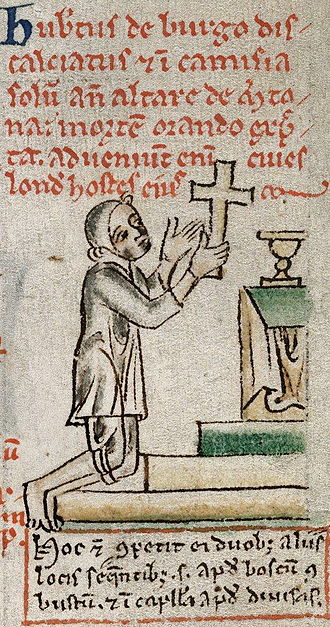
Hubert de Burgh from Matthew Paris’s Historia Anglorum

Hubert de Burgh, King John’s justiciar, came from a gentry family rather than the higher echelons of the nobility. His origins are quite obscure. His mother’s name was Alice, as evidenced by a grant he made to the church of Oulton in about 1230, stating the gift was ‘for the soul of my mother Alice who rests in the church at Walsingham.’ Hubert de Burgh’s father may have been the Walter whose daughter Adelina owed 40 marks in the Pipe Rolls of Henry II, for recognition of a knights’ fee at Burgh in Norfolk, although this is little more than a possibility.

We do know that Hubert de Burgh was the younger brother of William de Burgh who had accompanied King Henry II’s youngest son, John, to Ireland in 1185; he eventually became lord of Connacht. Hubert de Burgh also had two younger brothers. Geoffrey became archdeacon of Norwich in 1202 and then bishop of Ely in 1225. A third brother, Thomas, was castellan of Norwich Castle in 1215–16. Little is known of Hubert de Burgh’s childhood, upbringing or education, though a letter of 1220 that William Longespée, Earl of Salisbury, sent to Hubert de Burgh reminds the justiciar that they were raised together, probably fostered in the same noble household.

A self-made man, coming from a family of minor landowners in East Anglia centred on the manor of Burgh in Norfolk, Hubert de Burgh first appears in official records on 8 February 1198, when he witnessed a charter of John, as count of Mortain, at Tinchebrai in Normandy. In a charter of 12 June in the same year, he was identified as chamberlain of John’s household and in 1199, when John succeeded to the throne, he was created chamberlain of the royal household. Hubert de Burgh’s career in royal service developed rapidly. In December 1200 he was made custodian of two important royal castles, Dover and Windsor. In 1201 he was sheriff of Dorset and Somerset and when John departed for France in June 1201, along with the two senior Marcher lords, the earl of Pembroke and constable of Chester, de Burgh was created custodian of the Welsh Marches with 100 men-at-arms at his disposal. He was also given the castles of Grosmont, Skenfrith and Whitecastle ‘to sustain him in our service.’

Further grants followed, making Hubert de Burgh a significant and powerful figure in the royal administration by 1200. In that year, Hubert de Burgh was one of the ambassadors despatched to Portugal to negotiate a possible marriage between John and a daughter of Portugal’s king, but the embassy was abandoned after John married Isabelle d’Angoulême. Later, in 1202 Hubert de Burgh was sent to France and made constable of Falaise Castle in Normandy, where he was entrusted with guarding Arthur of Brittany, John’s nephew and rival for the English throne, following hiss capture at Mirebeau in August. While he was being held there, John had sent orders for Arthur’s castration and blinding. John gave the order:
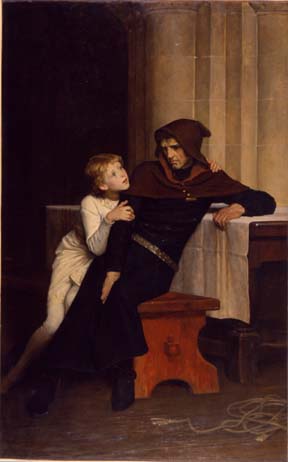
Prince Arthur and Hubert de Burgh by William Frederick Yeames, 1882

‘enraged by the ceaseless attacks of his enemies, hurt by their threats and misdeed, at length in a rage and fury, King John ordered three of his servants to go to Falaise and perform this detestable act.’

Plantagenet Chronicles, edited by Elizabeth Hallam

Two of the appointed messengers fled the king’s court, to avoid the distasteful duty, while the third carried the order to Falaise where the royal chamberlain, Hubert de Burgh, had custody of Arthur. De Burgh, however, but Hubert had refused to carry out the punishment, believing that

‘having regard for the king’s honesty and reputation and expecting his forgiveness, kept the youth unharmed. He thought that the king would immediately repent of such an order and that ever afterwards would hate anyone who presumed to obey such a cruel mandate.’

Plantagenet Chronicles, edited by Elizabeth Hallam

The fact Hubert de Burgh faced no repercussions on refusing the order suggests that he had read the situation perfectly. Moreover, given the persecution John later inflicted on William de Braose, following his complicity in Arthur’s murder at Rouen the following year, it is clear that Hubert de Burgh knew John well.Hubert de Burgh had been partly right and Arthur’s survival at that time helped to pacify the rebellious Bretons. With Arthur imprisoned at Falaise, the Bretons continued to cause trouble. According to Ralph of Coggeshall,

‘the counsellors of the king, realising that the Bretons were causing much destruction and sedition everywhere on behalf of their lord Arthur, and that no firm peace could be made while Arthur lived, suggested to the king that he order Arthur to be blinded and castrated, thus rendering him incapable of rule, so that the opposition would cease from their insane programme of destruction and submit themselves to the king.’

The Plantagenet Chronicles, edited by Elizabeth Hallam
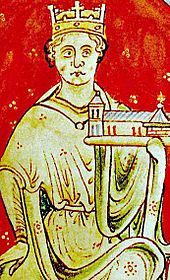
King John

Despite balking at mutilating a 15-year-old, de Burgh announced that the sentence had been carried out, hoping to put a stop to the Breton revolt. Although it is recorded that, John ‘was not displeased for the moment that his order had not been carried out.’ The Bretons were so enraged that their revolt rose to a new level of ferocity and the rebels were only pacified when it was announced that Arthur was, in fact, alive and well. However, in 1203 Arthur was removed from de Burgh’s custody and transferred to the castle at Rouen. King Philip and the nobility of Brittany continued to press for the release of the young duke, but John had other ideas. It was in Rouen, at Easter 1203, most likely on 3rd April, that Arthur was put to death. Whether John committed the deed himself, or merely ordered it done, will probably never be proved; of the fact he was present there seems to be little doubt. Whichever way, the act itself has been a black mark against John for centuries.

In 1204 Hubert de Burgh was entrusted with the defence of Chinon, against the king of France. He held out for a year, until the summer of 1205, when the walls of the castle were practically levelled. In a last desperate engagement, de Burgh and his men rushed from the castle to confront the French. A fierce fight followed in which de Burgh was wounded and captured; he was held for two years. King John helped with his ransom, with writs to the treasurer and chamberlain, in February 1207, ordering them to pay William de Chayv 300 marks ‘for the pledge of Hubert de Burgh.’

De Burgh returned to England before the end of 1207 and again began to accumulate land and offices. In May 1208 he was given custody of the castle and town of Lafford in Huntingdon and in the following year he married Beatrice de Warenne, who had succeeded her father in the barony of Wormegay; de Burgh became guardian of William, Beatrice’s young son by her first husband, Doun Bardolf. Beatrice was the mother of at least one son by Hubert, John, who was probably born before 1212. It is possible another son, named Hubert, from whom the Burghs of Gainsborough were descended, was born in 1213 or 1214. In the same year, de Burgh returned to France in royal service, first as deputy seneschal of Poitou and then as seneschal in association with Philip d’Aubigny and Geoffrey de Neville. After the French defeated the English at Bouvines in 1214, de Burgh was one of the witnesses to the truce with King Philp II Augustus of France, which agreed that John should keep all his lands south of the River Loire.
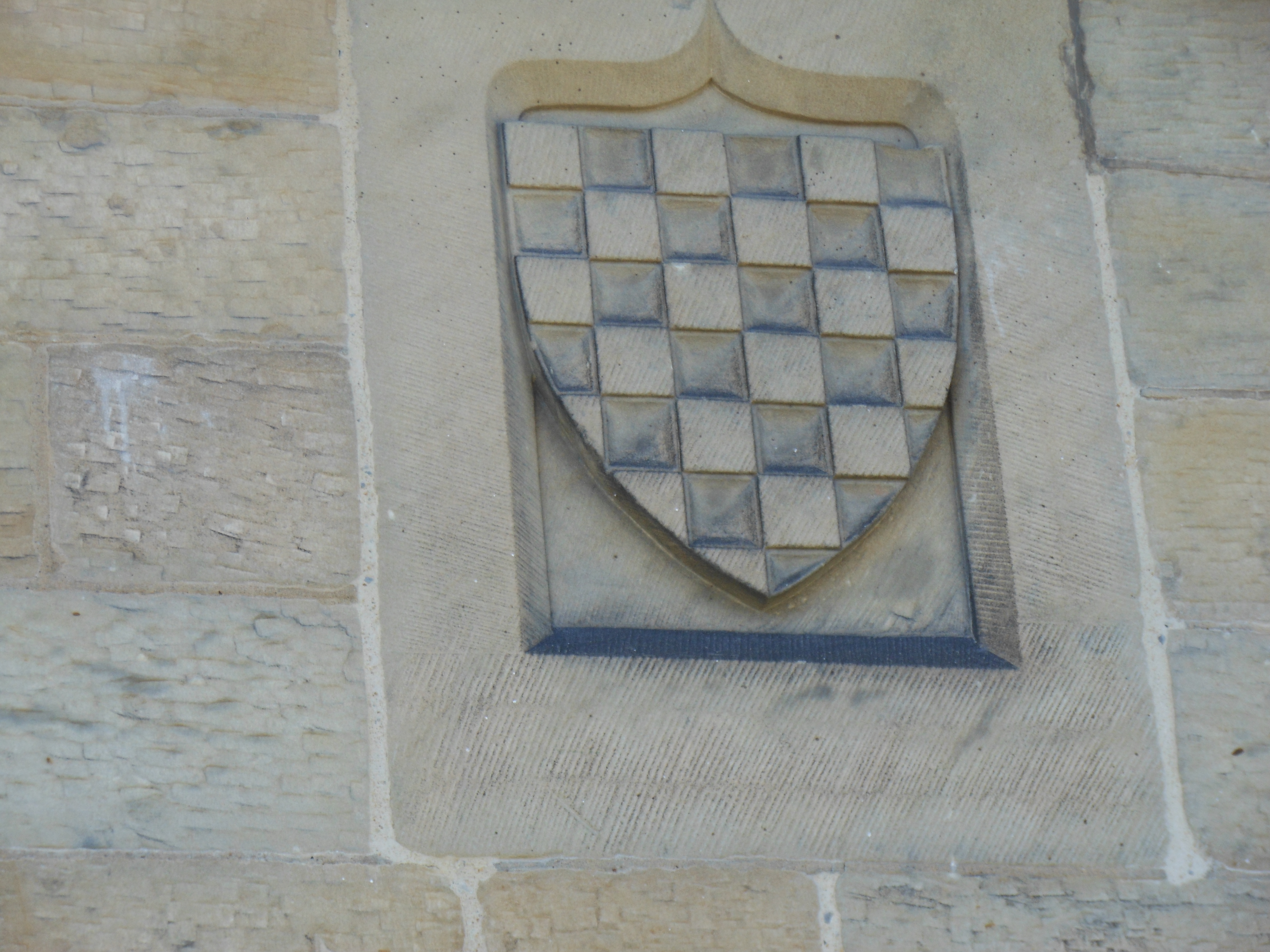
The Warenne coat of arms, Conisbrough Castle

Beatrice de Warenne died sometime before 18 December 1214. Hubert de Burgh retained Beatrice’s lands at Wormegay throughout his lifetime and they only passed to her eldest son, William Bardolf, on de Burgh’s death in May 1243. William Bardolf’s inheritance of Portslade and Harthill, both held from the honour of Warenne, serve to demonstrate the continued connections that this junior branch of the family held with the powerful Warenne earls throughout the thirteenth century.

Beatrice and Hubert’s son, John, was knighted on 3 June 1229, but was specifically excluded from inheriting the earldom of Kent, bestowed on his father on 19 February 1226 or 1227. This earldom was created following
Hubert de Burgh’s third marriage, to Princess Margaret of Scotland, daughter of William I the Lion and therefore granddaughter of Ada de Warenne. The earldom of Kent was to descend exclusively through de Burgh’s children by the Scottish princess. In 1241 John owed relief on the manor of Portslade which had been given to him by his half-sister, Margery – the daughter of Hubert de Burgh by his third wife, Margaret of Scotland. Margery had received the manor from her father, who had held it of Earl Warenne. When John died on 7 January in 1273 or 1274, he held the manor of his older half-brother, Sir William Bardolf. John de Burgh was succeeded by his son, also John, who was married to Cecily, daughter of John Balliol and his wife Dervorguilla; she was also the sister of John Balliol, King of Scots, who was himself married to Isabella de Warenne, daughter of John de Warenne, sixth Earl Warenne.

By the time of the Magna Carta crisis in the spring and summer of 1215, Hubert de Burgh was back in England and supporting the king in his attempts to quell the rebellion. He was tasked, alongside the bishop of Coventry, with speaking to the mayor, sheriff and knights of London, who were instructed to listen to what de Burgh and the bishop had to say; despite this, the Londoners opened their gates to the rebels. In the preamble to Magna Carta, Hubert de Burgh is styled seneschal of Poitou and listed eighth among the list of lay barons. By 25 June 1215 he was being styled as justiciar in official documents. Matthew Paris later claimed he had been appointed to the post in the presence of Stephen Langton, Archbishop of Canterbury, and the earls of Surrey and Derby, among other magnates.

As justiciar, in the Magna Carta, Hubert de Burgh is mentioned as being the one to hold ultimate responsibility in the realm whenever the king was abroad; this was a considerable change to the role of justiciar in former reigns, when he was primarily responsible as president of the exchequer and chief justice. He was, essentially, the most powerful man in the land after the king himself, quite an achievement for the younger son of a minor landholder from Norfolk. De Burgh was also made castellan of Dover Castle, the gateway to England from the Continent, and was besieged there from 22 July 1216 until King John’s death in October of the same year, when the Dauphin Louis abandoned the siege.
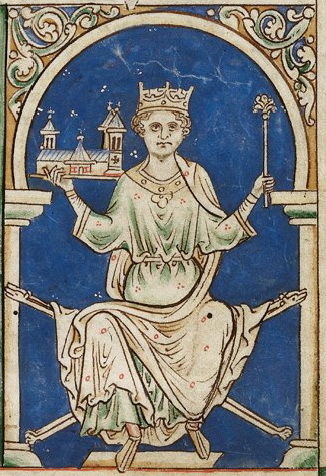
Henry III

King John was soon writing to the pope to have Magna Carta annulled, plunging England into rebellion. The barons invited the French dauphin, Louis, to join them and make a play for the throne. Louis was the son of John’s erstwhile friend Philip II Augustus, King of France, and the husband of his niece Blanche, who was the daughter of his sister Eleanor, Queen of Castile. Louis and his men had landed on the Isle of Thanet on 14 May 1216. The dauphin advanced through Kent and took Canterbury before moving onto Winchester. Louis was hailed as King of England in London in June of 1216. John seems to have been undecided as to how to act; he sent his oldest son Henry to safety at Devizes Castle in Wiltshire. Dover Castle, under the command of Hubert de Burgh, held out against the French and rebel forces, as did Windsor and Lincoln.

This was the state of the kingdom when King John died on the night of 18/19 October 1216; he was succeeded by his 9-year-old son, Henry, now King Henry III. Despite John’s death, his half-brother and uncle of the new king, William Longespée, Earl of Salisbury, had remained with Louis and it was he who called for Hubert de Burgh to surrender Dover to the French. The justiciar refused.

John’s death turned the tide of the war, giving the English royalists the upper hand and allowing Hubert de Burgh and his fellow loyal barons, including William Marshal, Earl of Pembroke, to take the initiative and begin the recovery of the kingdom. Hubert de Burgh had done rather well from the reign of King John; he had attained high office, a good marriage and the opportunity to play a major role in the next reign. The new reign offered a new start for everyone, though the struggle was far from over and Hubert de Burgh would rise to new heights.

Look out for Part 2, Hubert de Burgh and the Minority of Henry III.

*

Images:

Courtesy of Wikipedia except the Warenne coat of arms which is ©Sharon Bennett Connolly.

Sources:

finerollshenry3.org.uk; Oxforddnb.com; magnacarta800th.com; Church, Stephen, King John: England, Magna Carta and the Making of a Tyrant; Danziger, Danny and John Gillingham, 1215: The Year of Magna Carta; Crouch, David, William Marshal; Matthew Paris, Robert de Reading and others, Flores Historiarum, volume III; Robert Bartlett England Under the Norman and Angevin Kings 1075-1225; Dan Jones The Plantagenets; the Kings who Made England; Maurice Ashley The Life and Times of King John; Roy Strong The Story of BritainOxford Companion to British History; Mike Ashley British Kings & Queens; David Williamson Brewer’s British Royalty; Rich Price King John’s Letters Facebook page;  Elizabeth Hallam, editor, The Plantagenet Chronicles;  Donald Matthew, King Stephen; Medieval Lands Project on the Earls of Surrey, Conisbrough Castle; Farrer, William and Charles Travis Clay, editors, Early Yorkshire Charters, Volume 8: The Honour of Warenne; Rev. John Watson, Memoirs of the Ancient Earls of Warren and Surrey and their Descendants to the Present Time; Morris, Marc King John: Treachery, Tyranny and the Road to Magna Carta; doncasterhistory.co.uk.

*

My Books

Signed, dedicated copies of all my books are available, please get in touch by completing the contact me form.

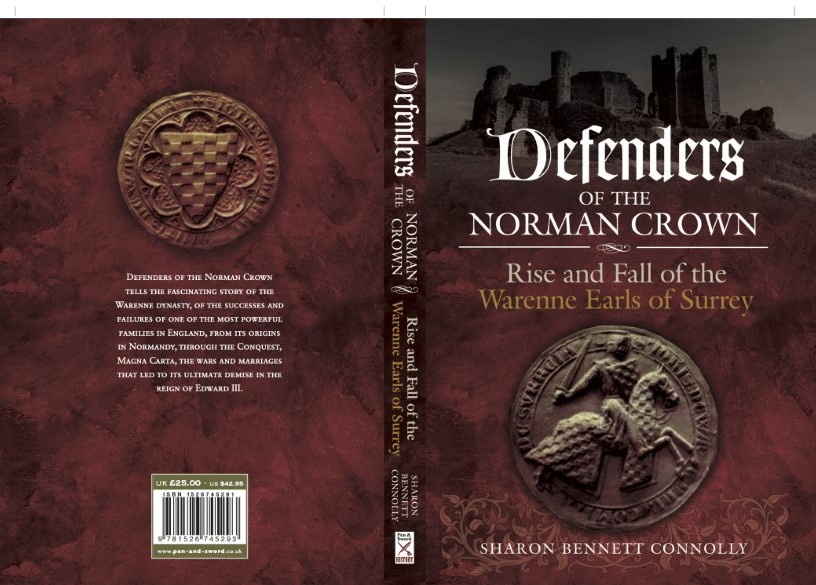
Defenders of the Norman Crown: The Rise and Fall of the Warenne Earls of Surrey tells the fascinating story of the Warenne dynasty, of the successes and failures of one of the most powerful families in England, from its origins in Normandy, through the Conquest, Magna Carta, the wars and marriages that led to its ultimate demise in the reign of Edward III. Defenders of the Norman Crown: Rise and Fall of the Warenne Earls of Surrey is now available from Pen & Sword BooksAmazon in the UK and US, Bookshop.org and Book Depository.

1 family. 8 earls. 300 years of English history!

Also by Sharon Bennett Connolly:

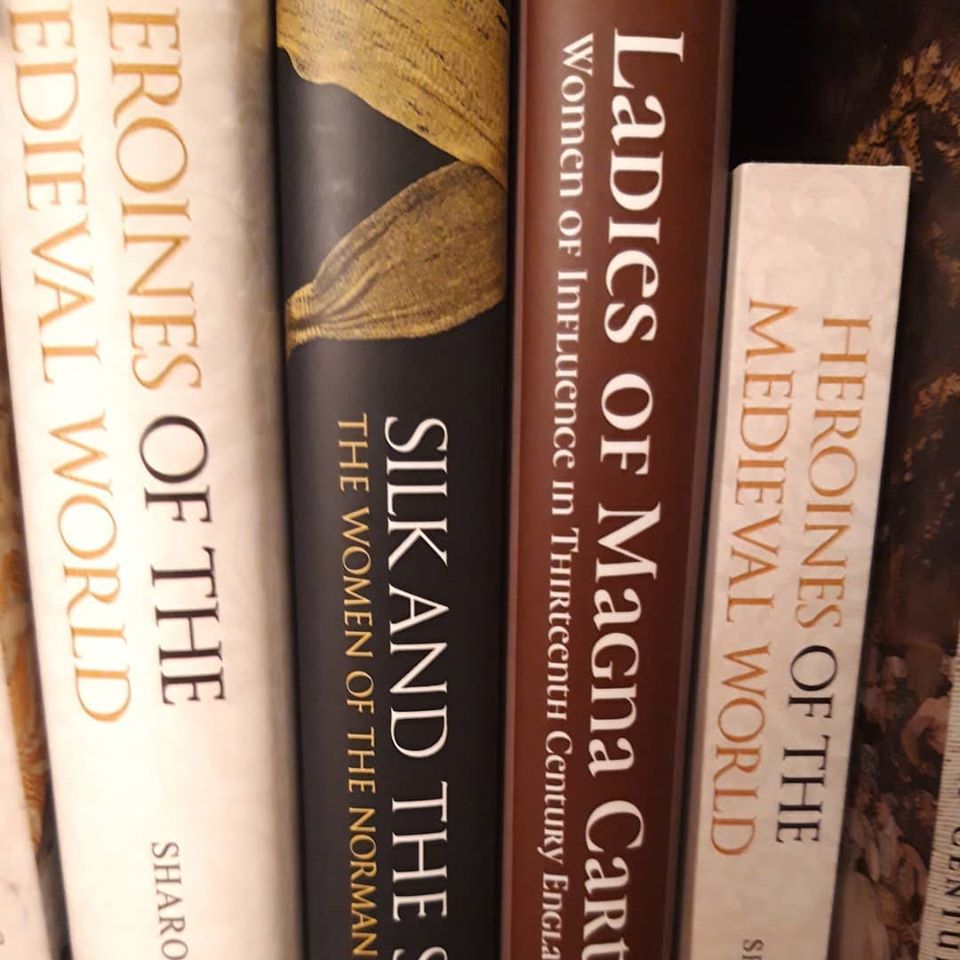
Ladies of Magna Carta: Women of Influence in Thirteenth Century England looks into the relationships of the various noble families of the 13th century, and how they were affected by the Barons’ Wars, Magna Carta and its aftermath; the bonds that were formed and those that were broken. It is now available in paperback and hardback from Pen & Sword,  AmazonBookshop.org and from Book Depository worldwide.

Heroines of the Medieval World tells the stories of some of the most remarkable women from Medieval history, from Eleanor of Aquitaine to Julian of Norwich. Available now from Amberley Publishing and Amazon, Bookshop.org and Book Depository.

Silk and the Sword: The Women of the Norman Conquest traces the fortunes of the women who had a significant role to play in the momentous events of 1066.  Available now from Amazon,  Amberley Publishing, Bookshop.org and Book Depository.

*

You can be the first to read new articles by clicking the ‘Follow’ button, liking our Facebook page or joining me on Twitter and Instagram.

©2021 Sharon Bennett Connolly.
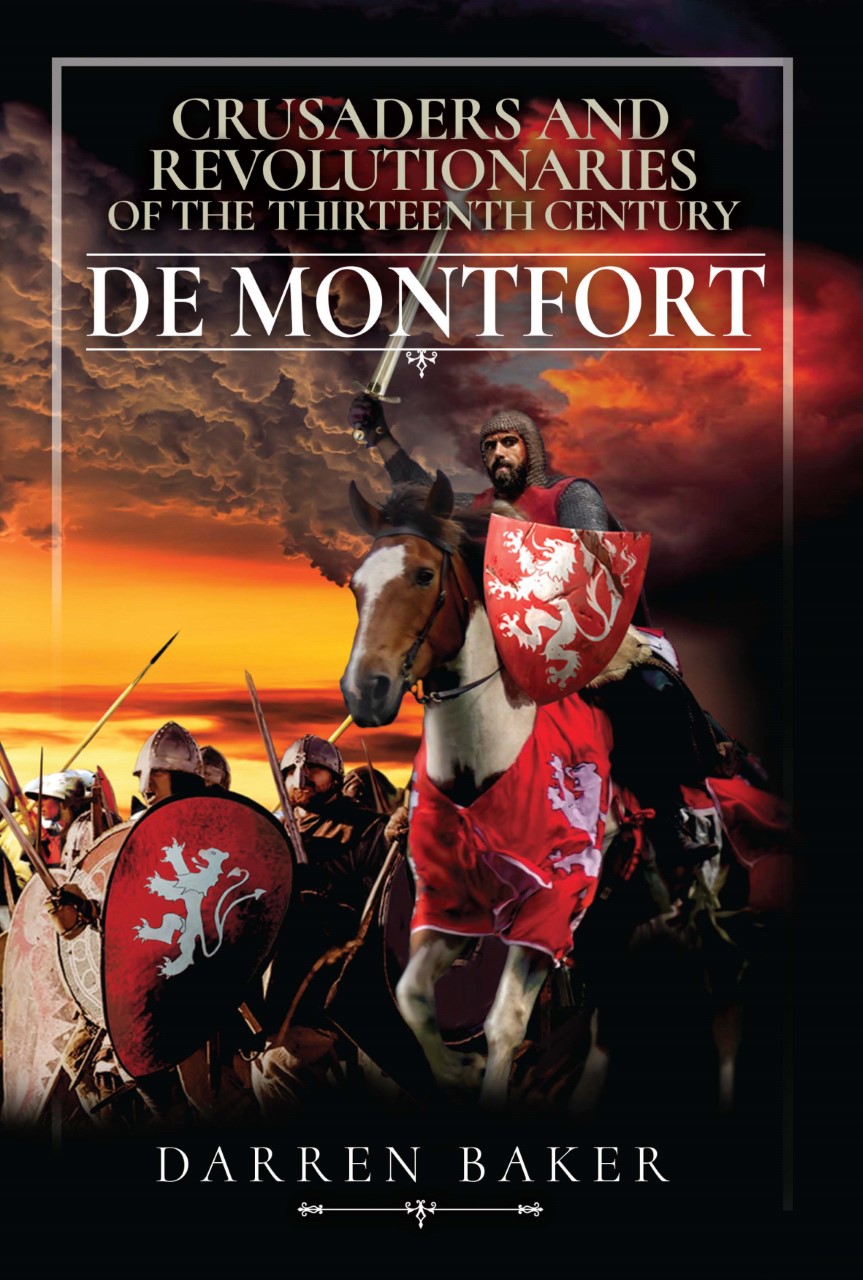
Guest Post: The Women of the House of Montfort by Darren Baker

It is a pleasure to welcome historian Darren Baker to History … the Interesting Bits today, with a guest article about the women of the family of Simon de Montfort. Darren is the author of The Two Eleanors, a book telling the dual biography of Eleanor of Provence, wife of Henry III, and Eleanor of England, wife of Simon de Montfort. Darren’s latest book, Crusaders and Revolutionaries of the Thirteenth Century: De Montfort, was released in November from Pen & Sword and is a stunning biography of the the Montfort family.

So, over to Darren …

The Women of the House of Montfort

Darren Baker

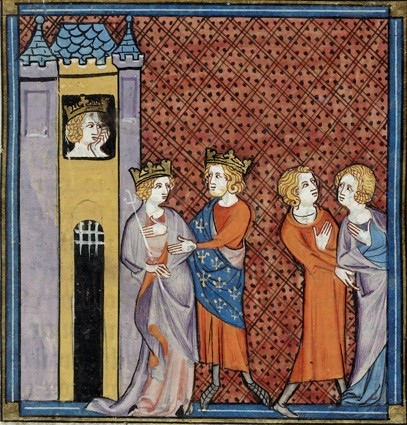
King Philip I of France leaving his wife for Bertrade de Montfort

The house of Montfort arose some 50 kilometres west of Paris in a place known today as Montfort l’Amaury. Their family name ‘de Montfort’ is usually associated with two Simons, father and son, the relentless Albigensian crusader and the determined English revolutionary, both men of the 13th century. Other family members went further afield and established lordships in Italy and the crusader states.

Less known is the prominence of the de Montfort women. Their influence reaches back to the 11th century, starting with Isabella. Her father, Simon I, gave her in marriage to Ralph de Tosny, who in turn forced his sister Agnes to marry this first Simon. When Isabella fell out with her father’s children with Agnes, she put on armour and led a body knights in the field against her half-brothers.

Isabella’s half-sister Bertrade was married to Fulk IV of Anjou. She grew tired of his lecherous ways and took as her next husband the king of France, Philip I, who deserted his wife to marry her. Hoping to see her son with Philip succeed to the throne over her stepson Louis (VI), Bertrade had the older youth poisoned, but the attempt failed and brought about her disgrace. She died in a nunnery in 1117, not living to see her son from her first marriage, Fulk V of Anjou, become king of Jerusalem.

Two generations later, Simon III stood loyally by the English in their fight with the French. He was rewarded with marriages for his three children into the Anglo-Norman nobility. His oldest son Amaury V married Mabel, daughter of the earl of Gloucester, the next son Simon IV married Amicia, daughter of the earl of Leicester, and daughter Bertrade II married Hugh, the earl of Chester. This Bertrade was the mother of the legendary Ranulf de Blondeville, arguably the last of the great Anglo-Norman barons.

The senior branch of the house of Montfort died out in 1213, but Amicia’s son Simon V (the crusader), who was already the count of Montfort, inherited the earldom of Leicester. It was confiscated by King John in 1207 and ended up in the custody of Ranulf. It was from Ranulf that Simon VI acquired Leicester in 1231 and became an English noble, but that’s getting ahead of the story.

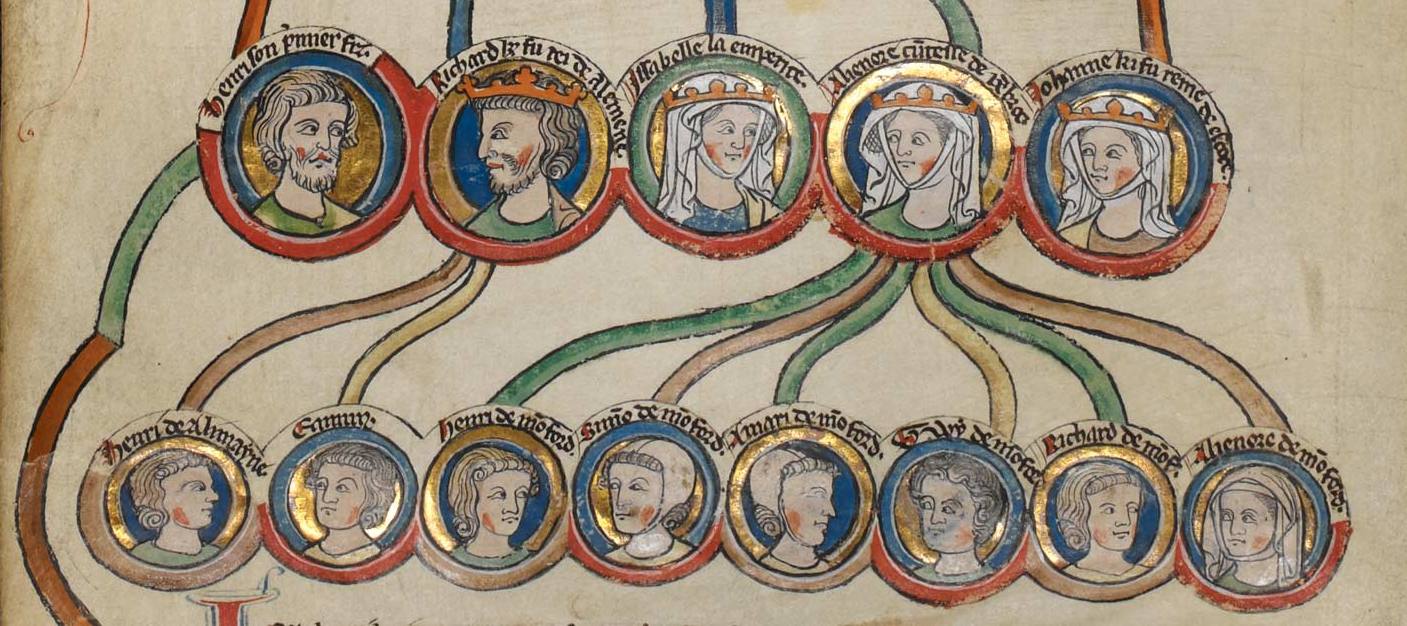
Eleanor de Montfort and children

Simon V’s wife was Alice de Montmorency. She was very much an active crusader against the Albigensians and often participated in her husband’s war councils. Their daughter Petronilla was born during the crusade and baptised by Dominic de Guzman, founder of the Dominican order. After Simon’s death in 1218, Alice placed Petronilla in a nunnery, where she became the abbess later in life. Alice’s oldest daughter Amicia founded the nunnery of Montargis, south of Paris, and died there in 1252.

In England, Alice’s son Simon VI rose high in royal favour and married Eleanor, the youngest sister of King Henry III and widow of William Marshal II. Together she and Simon had five sons and one daughter. The clash between Eleanor’s husband and brother ended in civil war and Simon’s death in 1265 at the battle of Evesham. Eleanor left England to live out the rest of her life in Montargis and took her namesake daughter with her.

Guy de Montfort was the only one of Eleanor’s sons to marry. He found service under Charles of Anjou, the king of Sicily, and rapidly advanced to become the count of Nola. He received a Tuscan heiress as his bride, but he scandalised the family in 1271 by vengefully murdering his cousin. Guy escaped punishment for the most part and had two daughters, of whom only the youngest Anastasia survived to adulthood. She became the countess of Nola at her father’s death in 1292 and married into the Orsini family of Rome.

Eleanor de Montfort died in 1275, living long enough to see her daughter marry Llywelyn of Wales by proxy. Later that year, the boat carrying young Eleanor and her brother Amaury VIII was captured by the forces of their cousin King Edward I, who had been alerted to their intentions. Eleanor was confined at Windsor Castle and not freed to marry Llywelyn until 1278.

She died four years later giving birth to a daughter Gwenllian. When Llywelyn was then killed, the baby girl was placed in a nunnery in Lincolnshire. By the time of her death in 1337, the de Montfort family, once so admired and respected across Europe and the Mediterranean, seemed long extinct. But their fortunes were about to be revived.

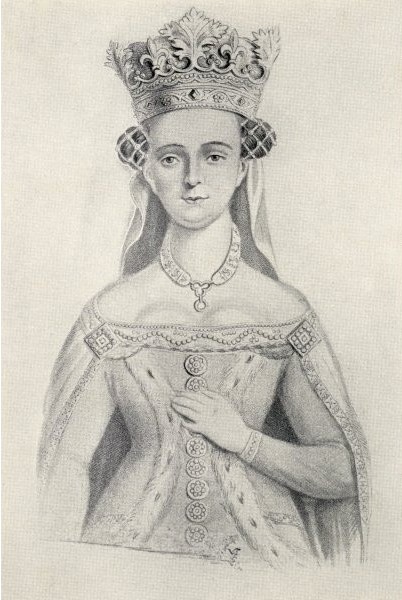
Joan of Navarre, Queen of England

This part of the story goes back to Simon V and Alice’s oldest son Amaury VII, who succeeded his father as the count of Montfort. He was followed by his son John, whose wife was pregnant when he left on crusade and died overseas. The daughter born to her, Beatrice, became the countess of Montfort when she came of age. She married Robert of Dreux and had a daughter Yolande, who became the second wife of King Alexander III of Scotland in 1285 in the hope of producing an heir to that throne.

It didn’t happen, and after Alexander died, Yolande married Arthur II of Brittany. Their son John succeeded her as the count of Montfort, and when his half-brother the duke of Brittany died in 1341 without an heir, John put in a claim for the duchy. It turned into a war of succession, which was won by his son, another John of Montfort, in 1365, a hundred years after Evesham.

In 1386, this John of Montfort took as his third wife the famous Joan of Navarre. She was the mother of his children and after his death became the queen of England with her marriage to King Henry IV. It was through her and Yolande that the Montfort family line returned to England.

About the Author:

Darren Baker was born in California, raised in South Carolina, and came to Europe in 1990, settling permanently in the Czech Republic. A former submariner in the US Pacific fleet, he later studied languages at the University of Connecticut and works as a translator. A trip to the UK inspired him to revisit the events of 13th century England, which he does on his website simon2014.com and in his books. His newly released Crusaders and Revolutionaries of the Thirteenth Century: De Montfort is his fourth on the subject.

*

My Books

Ladies of Magna Carta: Women of Influence in Thirteenth Century England looks into the relationships of the various noble families of the 13th century, and how they were affected by the Barons’ Wars, Magna Carta and its aftermath; the bonds that were formed and those that were broken. It is now available from Pen & Sword,  Amazon and from Book Depository worldwide.

Also by Sharon Bennett Connolly:

Silk and the Sword: The Women of the Norman Conquest traces the fortunes of the women who had a significant role to play in the momentous events of 1066.  Available now from Amazon,  Amberley Publishing, Book Depository.

Heroines of the Medieval World tells the stories of some of the most remarkable women from Medieval history, from Eleanor of Aquitaine to Julian of Norwich. Available now from Amberley Publishing and Amazon and Book Depository.

*

You can be the first to read new articles by clicking the ‘Follow’ button, liking our Facebook page or joining me on Twitter and Instagram.

©2020 Sharon Bennett Connolly

Book Corner: Reading Round-up 1

I am well behind on the list of book reviews I still have to write up, so I though I would do a couple of articles that include mini-reviews of several books that I have read and enjoyed over the last few months, to clear the backlog and give you some fabulous ideas if you’re looking for that next read.

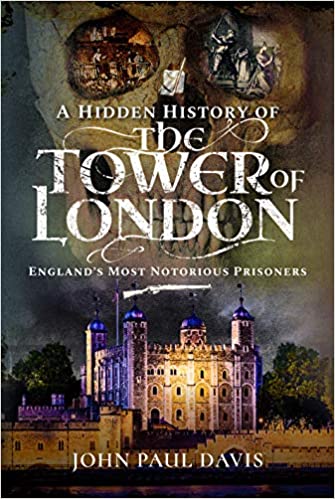
A Hidden History of the Tower of London by John Paul Davis

Famed as the ultimate penalty for traitors, heretics and royalty alike, being sent to the Tower is known to have been experienced by no less than 8,000 unfortunate souls. Many of those who were imprisoned in the Tower never returned to civilisation and those who did, often did so without their head! It is hardly surprising that the Tower has earned itself a reputation among the most infamous buildings on the planet. There have, of course, been other towers. Practically every castle ever built has consisted of at least one; indeed, even by the late 14th century, the Tower proudly boasted no less than 21. Yet even as early as the 1100s, the effect that the first Tower had on the psyche of the local population was considerable. The sight of the dark four-pointed citadel – at the time the largest building in London – as it appeared against the backdrop of the expanding city gave rise to many legends, ranging from the exact circumstances of its creation to what went on within its strong walls. In ten centuries what once consisted of a solitary keep has developed into a complex castle around which the history of England has continuously evolved. So revered has it become that legend has it that should the Tower fall, so would the kingdom. Beginning with the early tales surrounding its creation, this book investigates the private life of an English icon. Concentrating on the Tower’s developing role throughout the centuries, not in terms of its physical expansion into a site of unique architectural majesty or many purposes but through the eyes of those who experienced its darker side, it pieces together the, often seldom-told, human story and how the fates of many of those who stayed within its walls contributed to its lasting effect on England’s – and later the UK’s – destiny. From ruthless traitors to unjustly killed Jesuits, vanished treasures to disappeared princes and jaded wives to star-crossed lovers, this book provides a raw and at times unsettling insight into its unsolved mysteries and the lot of its unfortunate victims, thus explaining how this once typical castle came to be the place we will always remember as THE TOWER.

What a wonderful read!

Packed to the brim with the best stories from the Tower, and almost 1,000 years of history – some you will know and some you won’t. John Paul Davis tells the remarkable story of the Tower of London through the lives of the people who have resided under its roofs – some of them most unfortunate indeed! We hear the stories of those fortunate people who escaped – and the not-so-fortunate who died in the attempt. John Paul Davis examines every aspect of the Tower of London, its role as a royal fortress, prison and place of execution; and the national events in which it played apart, such as the Peasants’ Revolt and the executions of 2 of Henry VIII’s queens. Written in 23 chapters, the story of the Tower as a prison is told from its foundation in 1066 to the present day.

With these incredible and often heart breaking stories, John Paul Davis clearly demonstrates how the fortress acquired its sinister reputation.

A Hidden History of the Tower of London is a thoroughly enjoyable read, and impossible to put down.

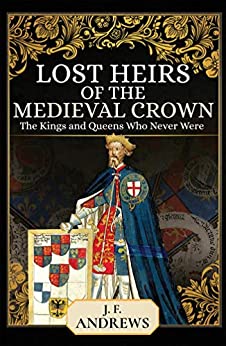
Lost Heirs of the Medieval Crown by J.F. Andrews

When William the Conqueror died in 1087 he left the throne of England to William Rufus … his second son. The result was an immediate war as Rufus’s elder brother Robert fought to gain the crown he saw as rightfully his; this conflict marked the start of 400 years of bloody disputes as the English monarchy’s line of hereditary succession was bent, twisted and finally broken when the last Plantagenet king, Richard III, fell at Bosworth in 1485.

The Anglo-Norman and Plantagenet dynasties were renowned for their internecine strife, and in Lost Heirs we will unearth the hidden stories of fratricidal brothers, usurping cousins and murderous uncles; the many kings – and the occasional queen – who should have been but never were. History is written by the winners, but every game of thrones has its losers too, and their fascinating stories bring richness and depth to what is a colourful period of history. King John would not have gained the crown had he not murdered his young nephew, who was in line to become England’s first King Arthur; Henry V would never have been at Agincourt had his father not seized the throne by usurping and killing his cousin; and as the rival houses of York and Lancaster fought bloodily over the crown during the Wars of the Roses, life suddenly became very dangerous indeed for a young boy named Edmund.

With Lost Heirs of the Medieval Crown, author JF Andrews provides a fascinating study of the also-rans and almost-made-its of medieval history; those children of the kings of England who died before they could claim their birth-right, or were passed over due to the dynastic squabbles of the Norman and Plantagenet dynasties that ruled England from the Norman Conquest in 1066 to the advent of the Tudor age.

From the battles of Robert Curthose, eldest son of William the Conqueror, to the tragic lives of the Yorkist heirs, Edward V, Edward of Middleham and Edward Earl of Warwick, Lost Heirs of the Medieval Crown is a thoroughly engaging read, examining the lives of the heirs who were unable to claim their birthright, imprisoned for their royal blood, died before their time, or died in the attempt to claim the throne. Each individual story is brought into one volume, and demonstrates the struggle for power and supremacy in medieval England.

Beautifully written and well researched, it is an engaging read.

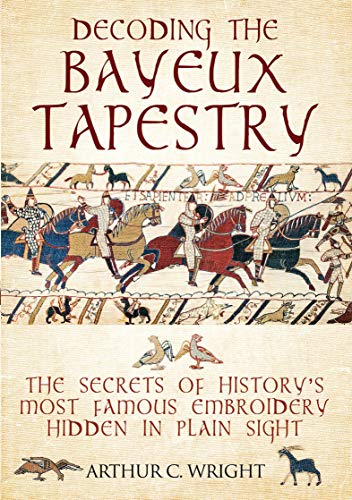
Decoding the Bayeux Tapestry by Arthur C. Wright

For the first time, a scholar reveals the meaning of the marginal images on the Bayeux Tapestry, unlocking a completely new meaning of the work.
 
The story of the Norman Conquest and the Battle of Hastings as shown in the Bayeux Tapestry is arguably the most widely-known in the panoply of English history, and over the last 200 years there have been hundreds of books on the Tapestry seeking to analyze its meanings. Yet, there is one aspect of the embroidery that has been virtually ignored or dismissed as unimportant by historians—the details in the margins.
 
The fables shown in the margins are neither just part of a decorative ribbon, nor are they discontinuous. They follow on in sequence. When this is understood, it becomes clear that they must relate to the action shown on the body of the Tapestry. After careful examination, the purpose of these images is to amplify, elaborate, or explain the main story.
 
In this groundbreaking study, Arthur Wright reveals the significance of the images in the margins. Now it is possible to see the “whole” story as never before, enabling a more complete picture of the Bayeux Tapestry to be constructed. Wright reexamines many of the scenes in the main body of the work, showing that a number of the basic assumptions, so often taught as facts, have been based on nothing more than reasoned conjecture.
 
It might be thought that after so much has been written about the Bayeux Tapestry there was nothing more to be said, but Decoding the Bayeux Tapestry shows how much there is still to be learned.

Decoding the Bayeux Tapestry: The Secrets of History’s Most Famous Embroidery Hidden in Plain Sight by Arthur C. Wright is a wonderful, engaging study of this most famous of embroideries, retelling the Norman Invasion in stunning, colourful needlework. Arthur C. Wright studies every aspect of the Tapestry, from the beasts in the margins to the story being played out in dramatic detail in the main part of the Tapestry. The author demonstrates how the images in the tapestry, even the animals and mystical creatures in the margin, serve to tell the story of the tapestry and the Norman Conquest.

An entertaining read and thoughtful study of the most famous of tapestries Decoding the Bayeux Tapestry is an illuminating work, beautifully illustrated along the way with images from the famous needlework.

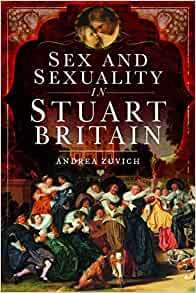
Sex and Sexuality in Stuart Britain by Andrea Zuvich

Peek beneath the bedsheets of Stuart Britain in this frank, informative, and captivating look at the sexual lives of the peoples of the British Isles between 1603 and 1714. Popular Stuart historian Andrea Zuvich, The Seventeenth Century Lady , explores our ancestors’ ingenious, surprising, bizarre, and often entertaining beliefs and solutions to the challenges associated with maintaining a healthy sex life, along with the prevailing attitudes towards male and female sexual behaviour. The author sheds light not only on the saucy love lives of the Royal Stuarts, but also on the dark underbelly of the Stuart era with histories of prostitution, sexual violence, infanticide, and sexual deviance. What was considered sexually attractive in Stuart Britain? At which ages would people be old enough for marriage? What were the penalties for adultery, incest, and fornication? How did Stuart-era peoples deal with infertility, sexually-transmitted illnesses, and child mortality? Find out the answers to these questions – and more – as fashion, food, science, art, medicine, magic, literature, love, politics, faith and superstition of the day are all examined, leaving the reader with a new regard for the ingenuity and character of our seventeenth and early eighteenth-century ancestors.

Sex and Sexuality in Stuart Britain by Andrea Zuvich is a wonderful study of the bedroom exploits of the Stuart dynasty of the seventeenth century. Andrea Zuvich examines all aspects of Stuart sexual life, from attitudes to rape and pornography, to the notions of love and marriage. Zuvich also looks at the lives of the Stuart monarchs, examining the rumours around them, the various mistress and lovers and the perceptions they gave to their people and to history. This is a truly fascinating study of a part of life that is important to all of us – and necessary for our continued existence – but so rarely talked about. Sex and Sexuality in Stuart Britain is so much more than a study of sexual practices in Stuart Britain, it also analyses the effects of child mortality, the dangers of childbirth. It also looks at the seedier side of society, such as infanticide and sexually transmitted diseases.

Sex and Sexuality in Stuart Britain is fascinating! It is a book that needed to be written and provides a wonderful contrast to the usual books on Stuart Britain, which concentrate on the Civil Wars, rather than the lives, loves and desires of the people. Andrea Zuvich has written a marvelous study of Stuart attitudes towards sex and sexuality, leaving no stone unturned to give the reader a comprehensive view of Stuart life, including the legal, social and personal aspects and implications.

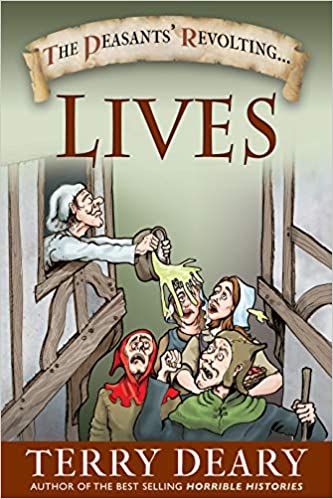
The Peasants Revolting Lives by Terry Deary

Today we are aware of how the rich and privileged have lived in the past because historians write about them endlessly. The poor have largely been ignored and, as a result, their contributions to our modern world are harder to unearth. Skilled raconteur TERRY DEARY takes us back through the centuries with a poignant but humorous look at how life treated the common folk who scratched out a living at the very bottom of society. Their world was one of foul food, terrible toilets, danger, disease and death the last, usually premature. Discover the stories of the teacher turned child-catcher who rounded up local waifs and strays and put them to work, and the thousands of children who descended into the hazardous depths to dig for coal. Read all about the agricultural workers who escaped the Black Death only to be thwarted by greedy landowners. And would you believe the one about the man who betrothed his 7-year-old daughter to a Holy Roman Emperor, or even the brothel that was run by a bishop? On the flip side, learn how cash-strapped citizens used animal droppings for house building and as a cure for baldness; how sparrow s brains were incorporated into aphrodisiacal brews; and how mixing tea with dried elder leaves could turn an extra profit. And of the milestones that brought some meaning to ordinary lives, here are the trials and tribulations of courtship and marriage; the ruthless terrors of the sporting arena; and the harsh disciplines of education all helping to alleviate the daily grind. The Peasants Revolting Lives celebrates those who have endured against the odds. From medieval miseries to the idiosyncrasies of being a twenty-first-century peasant, tragedy and comedy sit side by side in these tales of survival and endurance in the face of hardship.

Terry Deary’s The Peasants’ Revolting Lives is a fun and fascinating read for all the family. Whenever a Terry Deary book arrives on the doorstep, there is an inevitable squabble between myself and my son as to who should read it first – I tend to lose!

With stories that are often amusing, sometimes gruesome and all true, Terry Deary examines every aspect of the life of the peasant – throughout history – from work and religion, to sport, entertainment and education. The book is packed full of facts, each story or anecdote intended to inform and entertain – and they do!

The Peasants’ Revolting Lives is a wonderful reading experience for adult and child alike. The stories are so engaging and interesting that you don’t even realise you are learning about the trials and hardships of life as a peasant down the centuries. It is a must-read for any history lover.

All these books are available from Pen & Sword, with 30% off throughout December.

*

My Books

Ladies of Magna Carta: Women of Influence in Thirteenth Century England looks into the relationships of the various noble families of the 13th century, and how they were affected by the Barons’ Wars, Magna Carta and its aftermath; the bonds that were formed and those that were broken. It is now available from Pen & Sword,  Amazon and from Book Depository worldwide.

Also by Sharon Bennett Connolly:

Silk and the Sword: The Women of the Norman Conquest traces the fortunes of the women who had a significant role to play in the momentous events of 1066.  Available now from Amazon,  Amberley Publishing, Book Depository.

Heroines of the Medieval World tells the stories of some of the most remarkable women from Medieval history, from Eleanor of Aquitaine to Julian of Norwich. Available now from Amberley Publishing and Amazon and Book Depository.

*

You can be the first to read new articles by clicking the ‘Follow’ button, liking our Facebook page or joining me on Twitter and Instagram.

©2020 Sharon Bennett Connolly

Jolabokaflod – the Christmas Giveaway

Competition Closed

And the winner is …. Sue Barnard.

Thank you to everyone who entered. If you do get a copy of any of my books, either for yourself or others, please get in touch via the ‘contact me’ page and I will send you out a signed book plate to pop in the front.

My very best wishes for a wonderful Christmas and amazing New Year!

It is my pleasure to be the one to kick of the Historical Writers’ Forum Christmas Advent Blog Hop. And what better way to celebrate the end of 2020 with a book giveaway or special offer for practically every day of advent – so be sure to follow the blog hop through our Facebook page.

You could be a winner!

This year we are celebrating with Jolabokaflod as our Christmas blog hop theme! If you are not familiar with Jolabokaflod, it is the wonderful Icelandic tradition of giving books as gifts on Christmas Eve – except we are doing it for Advent.

And my contribution to Jolabokaflod is a signed paperback copy of my first book, Heroines of the Medieval World – either for yourself or as a gift for a friend or loved one – the dedication is entirely up to you!

Heroines of the Medieval World Giveaway!

Heroines of the Medieval World looks at the lives of the women who broke the mould: those who defied social norms and made their own future, consequently changing lives, society and even the course of history. Some of the women are famous, such as Eleanor of Aquitaine, who was not only a duchess in her own right but also Queen Consort of France through her first marriage and Queen Consort of England through her second, in addition to being a crusader and a rebel. Then there are the more obscure but no less remarkable figures such as Nicholaa de la Haye, who defended Lincoln Castle in the name of King John, and Maud de Braose, who spoke out against the same king’s excesses and whose death (or murder) was the inspiration for a clause in Magna Carta. Women had to walk a fine line in the Middle Ages, but many learned to survive – even flourish – in this male-dominated world. Some led armies, while others made their influence felt in more subtle ways, but all made a contribution to their era and should be remembered for daring to defy and lead in a world that demanded they obey and follow.

The Jolabokaflod Giveaway!

The giveaway is a signed and dedicated – for you or someone you love – paperback copy of my first book, Heroines of the Medieval World. The giveaway is open worldwide – and I will do my best to get the book to you in time for the big day, wherever you are.

Here is a taster:

From Chapter 3: Medieval Mistresses

The most successful of mistresses must be Katherine Swynford, the one mistress who defied the odds and eventually married her man, thus spawning a multitude of novels and love stories. Katherine was born around 1350; she was the younger daughter of Sir Payn Roelt, a Hainault knight in the service of Edward III’s queen, Philippa of Hainault, who eventually rose to be Guyenne King of Arms. Unfortunately, the identity of her mother has never been established, not an unusual situation when you think Katherine was born to an obscure knight and her significance only became evident later in life. Katherine and her older sister, Philippa,
appear to have been spent their early years in Queen Philippa’s household. Philippa de Roelt (or Rouet) joined the household of Elizabeth de Burgh, wife of Lionel of Antwerp, where she met her future husband, the literary giant of his age, Geoffrey Chaucer.

By 1365 Katherine was serving Blanche, Duchess of Lancaster, the first wife of John of Gaunt. John was the third surviving son of Edward III and Queen Philippa, and had married Blanche, co-heiress of Henry of Grosmont, Duke of Lancaster, in 1359. Soon after joining Blanche’s household, Katherine was married to Sir Hugh Swynford of Coleby and Kettlethorpe, Lincolnshire. Sir Hugh was a knight and tenant of John of Gaunt, who would serve with his lord on campaigns in 1366 and 1370. The couple had two children, Thomas and Blanche, who was named after the duchess. John of Gaunt stood as little Blanche’s godfather and she was raised alongside his own daughters by Duchess Blanche. Following the duchess’s death in September 1368, Katherine became governess to the duke’s three children: Elizabeth, Philippa and Henry. Three years after the death of Blanche, in September 1371, John married again, this time to a Spanish princess, Constance of Castile, the daughter of Pedro the Cruel, King of Castile, and Maria de Padilla, the king’s concubine-turned-wife. The marriage was a dynastic move, with Constance being heiress to the kingdom of Castile there was a distinct chance of John becoming King of Castile, if only John could wrest it from her father’s killer and illegitimate brother, Henry of Trastámara. From January 1372, he assumed the title of King of Castile and Leon, though in name only as he was never able
to consolidate his position.

Shortly after the marriage of John and Constance, in November 1371, Sir Hugh Swynford died while serving overseas, leaving Katherine a widow with two very young children; the youngest was probably less than two years old. It was not long after Sir Hugh’s death that Katherine became John of Gaunt’s mistress; although some sources suggest the couple were lovers even before Sir Hugh’s death, which has brought into question the paternity of Katherine’s eldest son by John of Gaunt. However, the majority of historians agree the relationship between John and Katherine started in late 1371 or early 1372 and was developing well in the spring of that year, when Katherine received rewards and a significant increase in her status within Gaunt’s household….

It’s easy to enter!

The competition is open to everyone, wherever you are in the world. To win a signed and dedicated copy of Heroines of the Medieval World, simply leave a comment below, on the Historical Writers Forum Blog Hop Facebook Page or on my own Facebook page and I will include you in the prize draw.

The draw will be made on Sunday 6 December 2020.

Good Luck!

And don’t forget to follow the rest of the blog hop!

Dec 4th Alex Marchant; Dec 5th Cathie Dunn; Dec 6th Jennifer C Wilson; Dec 8th Danielle Apple; Dec 9th Angela Rigley; Dec 10th Christine Hancock; Dec 12th Janet Wertman; Dec 13th Vanessa Couchman; Dec 14th Sue Barnard; Dec 15th Wendy J Dunn; Dec 16th Margaret Skea; Dec 17th Nancy Jardine; Dec 18th Tim Hodkinson; Dec 19th Salina Baker; Dec 20th Paula Lofting; Dec 21st Nicky Moxey; Dec 22nd Samantha Wilcoxson; Dec 23rd Jen Black; 24th Lynn Bryant

*

My Books

Ladies of Magna Carta: Women of Influence in Thirteenth Century England  looks into the relationships of the various noble families of the 13th century, and how they were affected by the Barons’ Wars, Magna Carta and its aftermath; the bonds that were formed and those that were broken. It is now available from Pen & SwordAmazon and from Book Depository worldwide.

Also by Sharon Bennett Connolly:

Silk and the Sword: The Women of the Norman Conquest traces the fortunes of the women who had a significant role to play in the momentous events of 1066.  Available now from Amazon,  Amberley Publishing, Book Depository.

Heroines of the Medieval World tells the stories of some of the most remarkable women from Medieval history, from Eleanor of Aquitaine to Julian of Norwich. Available now from Amberley Publishing and Amazon and Book Depository.

*

You can be the first to read new articles by clicking the ‘Follow’ button, liking our Facebook page or joining me on Twitter and Instagram.

©2020 Sharon Bennett Connolly 

Cover and Title reveal – Defenders of the Norman Crown

Here it is!

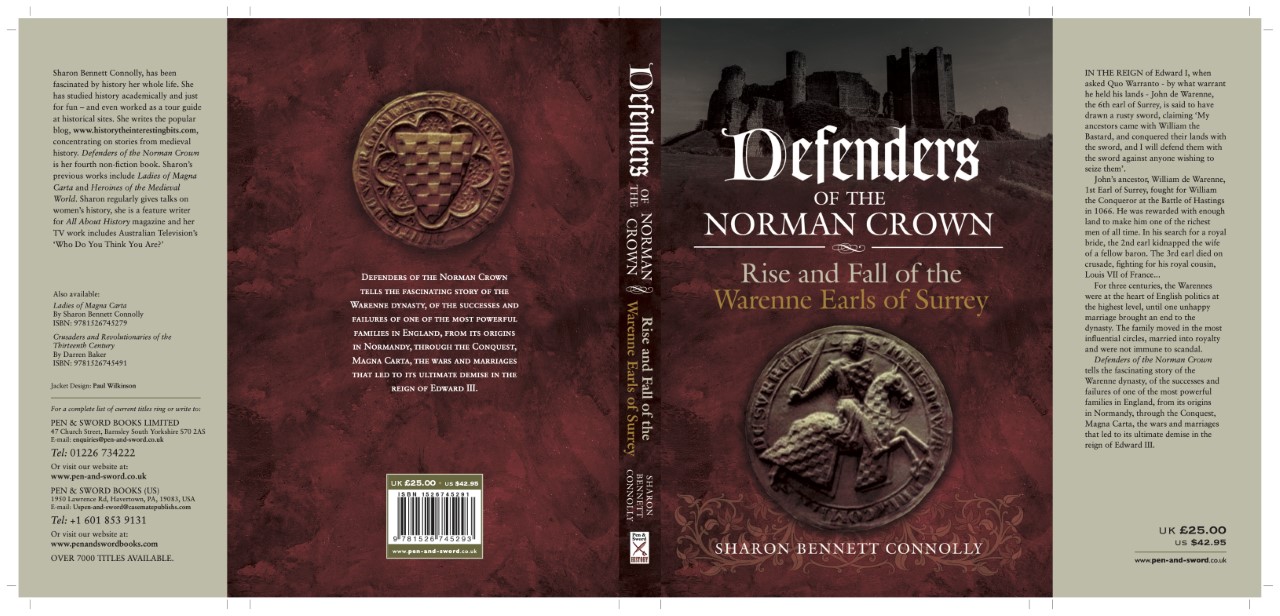
The finalised cover for Defenders of the Norman Crown: Rise and Fall of the Warenne Earls of Surrey, coming out next year.

Huge thanks to designer Paul Wilkinson at Pen & Sword for making my book look sooo good!

Defenders of the Norman Crown: Rise and Fall of the Warenne Earls of Surrey

In the reign of Edward I, when asked Quo Warranto? – by what warrant he held his lands – John de Warenne, the 6th earl of Warenne and Surrey, is said to have drawn a rusty sword, claiming ‘My ancestors came with William the Bastard, and conquered their lands with the sword, and I will defend them with the sword against anyone wishing to seize them.’

John’s ancestor, William de Warenne, 1st Earl of Surrey, fought for William the Conqueror at the Battle of Hastings in 1066. He was rewarded with enough land to make him one of the richest men of all time. In his search for a royal bride, the 2nd earl kidnapped the wife of a fellow baron. The 3rd earl died on crusade, fighting for his royal cousin, Louis VII of France…

For three centuries, the Warennes were at the heart of English politics at the highest level, until one unhappy marriage brought an end to the dynasty. The family moved in the most influential circles, married into royalty and were not immune to scandal.

Defenders of the Norman Crown tells the fascinating story of the Warenne dynasty, of the successes and failures of one of the most powerful families in England, from its origins in Normandy, through the Conquest, Magna Carta, the wars and marriages that led to its ultimate demise in the reign of Edward III.

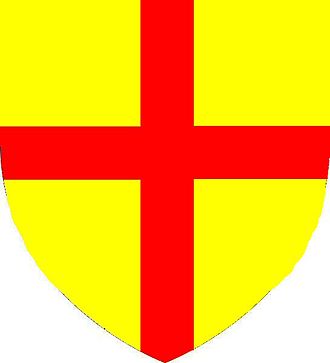
Warenne arms

If you have been following this blog for any length of time, you will have noticed that I have a fondness for the Warennes. The family were earls of Surrey from 1088 until the death of the last Warenne earl in 1347. They possessed lands throughout England, stretching from Lewes in Sussex to Castle Rising in Norfolk and on to Conisbrough and Sandal Castles in Yorkshire.

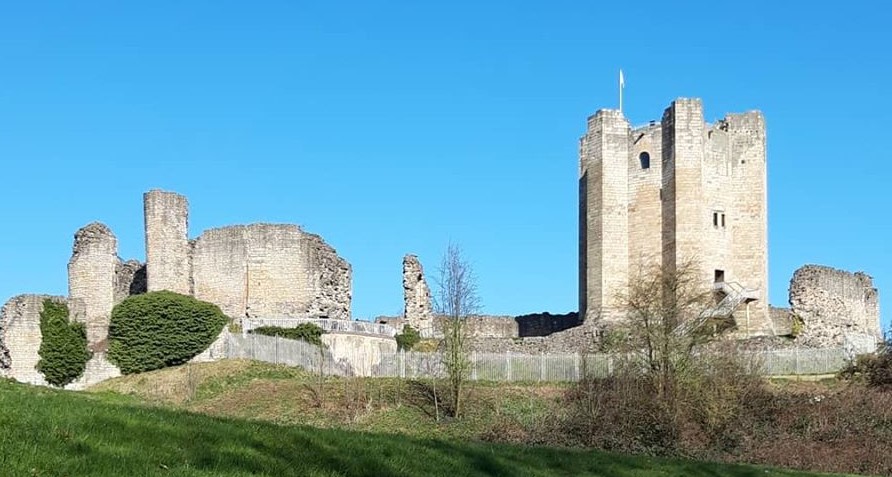
Growing up close to the Warenne castle at Conisbrough in South Yorkshire, I developed a fascination for the castle’s history, for its connections to royalty, and for the family which built this amazing stronghold – the Warennes. As a student, I worked at the castle as a volunteer tour guide and started researching the story of the family. Many, many years later, when Pen & Sword asked me for some book ideas, I suggested writing a biography of the family, not really expecting them to say ‘yes’ – but they did. Defenders of the Norman Crown: Rise and Fall of the Warenne Earls of Surrey is a book I have always wanted to write, but never expected I would get the chance.

From the time of the Norman Conquest to the death of the seventh and last earl, the Warenne family was at the heart of English politics and the establishment, providing military and administrative support to the Crown. In the years following 1066 William I de Warenne, who became the first Earl of Surrey in 1088, was the fourth richest man in England and the richest not related to the royal family – he ranks at number 18 in MSN.com’s Top 20 Richest People of All Time.

Conisbrough Castle

The earls of Surrey were at the centre of the major crises of medieval England, from the Norman Conquest itself to the deposition of Edward II and accession of Edward III. Strategic marriages forged links with the leading noble houses in England and Scotland, from the Marshals, the FitzAlans, the d’Aubignys and Percys to the Scottish and English royal families themselves. Indeed, it is from Ada de Warenne, daughter of the second earl, married to the oldest son of the king of Scots, that all the leading competitors for the Scottish throne, after the death of Margaret, Maid of Norway in 1286, are descended. Queen Elizabeth II, herself, can trace her own lineage back to Ada and, through Ada, to the second earl of Warenne and Surrey.

In the 14th century, one unhappy marriage brought the dynasty to an end, the family’s influence and achievements almost forgotten…

Writing Defenders of the Norman Crown: Rise and Fall of the Warenne Earls of Surrey and researching this incredible family has been an amazing experience – a dream come true – and I will be eternally grateful to Pen & Sword for allowing me to tell their story.

Defenders of the Norman Crown: Rise and Fall of the Warenne Earls of Surrey tells the story of this remarkable dynasty. It is a story of power, ambition, loyalty and – above all – family!

Defenders of the Norman Crown: The Rise and Fall of the Warenne Earls of Surrey will be released in the UK on 31 May and is now available for pre-order from Pen & Sword Books.

*

My Books

Ladies of Magna Carta: Women of Influence in Thirteenth Century England  looks into the relationships of the various noble families of the 13th century, and how they were affected by the Barons’ Wars, Magna Carta and its aftermath; the bonds that were formed and those that were broken. It is now available from Pen & SwordAmazon and from Book Depository worldwide.

Also by Sharon Bennett Connolly:

Silk and the Sword: The Women of the Norman Conquest traces the fortunes of the women who had a significant role to play in the momentous events of 1066.  Available now from Amazon,  Amberley Publishing, Book Depository.

Heroines of the Medieval World tells the stories of some of the most remarkable women from Medieval history, from Eleanor of Aquitaine to Julian of Norwich. Available now from Amberley Publishing and Amazon and Book Depository.

*

You can be the first to read new articles by clicking the ‘Follow’ button, liking our Facebook page or joining me on Twitter and Instagram.

©2020 Sharon Bennett Connolly 

Guest Post: Joan, Lady of Wales by Danna R. Messer

Today it is a distinct pleasure to welcome Danna R. Messer to History … the Interesting Bits to talk about her favourite medieval heroine, Joan, Lady of Wales. I recently review Danna’s new, excellent, biography of Joan and now Danna is here to shine some light on Joan.

Joan, Lady of Wales by Danna R. Messer

When Sharon invited me as a guest she happily told me I could write on ‘any subject relating to Joan’. In theory, given such free range to write about one aspect of my long-lived preoccupation with this true ‘heroine of history’ was a blessing and should have been a cinch. In practice, it stumped me. I have just spent almost three years cobbling together my research to write a book about Joan, never mind the seven years spent using her activities and status as a centrepiece for my PhD research on the wives of native Welsh rulers, or the numerous years before and after exploring as many avenues as I could to find out more about her. What more is there to cover, especially on a woman whose presence only peaks through the evidence and events on what sometimes seems the rarest of occasions? Well, it turns out the answer to that is, there’s plenty. And that is what has stumped me.

By nature, my inclination was to either 1) lean further into her role as a ‘Welsh queen’ and try to continue unpack any of those layers that might still be pliable or 2) think more about her role and expectations as a wife. Old habits are hard to break – especially when these two factors combined have already helped in painting a portrait of her. But, I had to really ask myself, what is missing? What are the things that should be given further, serious consideration when it comes to understanding such a complicated woman as Joan – and by complicated I mean the complications of not only her general life circumstances, but the complications also related to lack of sources.  

After much pondering and reflection, I have decided that the largest part of the answer to ‘what is missing’ is the most obvious and lies in Joan’s experiences and the human emotions that dictated every moment of her life. The study of emotions and their impact on how we react to our own worlds, the world at large and during ‘historical’ events has grown in importance over the past thirty years. The understanding of human emotions and how they make us tick as sentient beings should not, and does not, simply fall under the sole remit of psychologists or neuroscientists. It is also an understanding that should be embraced, or in the least, accepted by historians when writing about the past. As I have often said students taking my medieval history courses, ‘Nothing happens in a vacuum, right?’

Of course, I am aware of the debates surrounding the study of and emphasis on emotions when it comes to constructing a better understanding of history: the argument that emotions are culturally constructed and carry their own specific meanings in context to period and place and are therefore variable over time versus the more universal argument that people in the past felt the same way we do, about their lives, themselves, their relationships, their situations, simply because they, too, were people, human beings just like us. Whether emotions themselves have a history is a mute discussion here. The point is emotions play a role in every situation – for every one of us, in every waking moment of every day. For Joan and the characters that surrounded her, from Llywelyn to John, to Susanna to Dafydd, to her ladies in waiting and her own priest, this was also the case.

Although I do touch on aspects of Joan’s emotions and those of her loved ones, as a trained historian, that is all I felt I could allow myself to do. The human part of me wanted, and still wants to, throw them into the fray and exclaim, ‘Look! Can’t you see? She was [insert] angry/sad/stressed/annoyed/happy/excited/eager. That’s why she did what she did when she did it’. She was human after all. Perhaps this is why historical fiction is such a popular genre. An astute and attentive author like Sharon Penman can give, and has given, a woman such as Joan real depth, a personality, a visceral humanness that by nature is missing from any biography or history written on any individual whose own voice seldomly speaks from the grave.

Having researched Joan for well over twenty years, I often wonder what she thought, how she reacted, how she felt. I envision her as trepidatious – perhaps scared, excited or both — on her initial journey to Wales. I imaging frustration and annoyance at not being able to understand the language of her new home on arrival. The anxiety of ensuring she fulfilled her roles as Llywelyn’s consort and wife; the pressure she felt to learn and adopt the new customs at an accelerated speed. The desire to be accepted, the shame or anger at being rejected as a foreigner. As a bastard. An incomprehensible fear of looming death in 1211 for husband or her father, or even herself and her children. A sense of determination to do right by both her natal and martial families over her long career. A growth in her self-esteem from her younger years as a ‘political princess’ to a deeper sense of empowerment and prerogative as political diplomat, based on knowledge, experience and wisdom as she aged.

What about a sense of freedom? Did she have any, either carrying out her role as a ‘queen’, perhaps on circuit, or managing her own English lands? Or did she simply feel trapped deep down, but made the most of her situation? Undeniably, Joan understood her status and position with both her families and within Anglo-Welsh politics. I suspect moments of real pride in herself and her own achievements could be found in attaining legitimacy (including a sense of spiritual security and, I assume relief), and above all, her witnessing her son’s homage at Westminster, where she was there as a mother, but embracing and imbuing the real power of her status as a ‘queen’. From bastard to ‘queen’, not a bad climb up the social ladder. Perhaps all the more empowering with the thought that such an event essentially placed her publicly on par with a number of her female relatives scattered across Britain and the Continent, who themselves were queens.     

Above all, I often wonder about love, the joys and sorrows it brought her. How long did it take for her and Llywelyn to build a relationship? Was there real love involved? What about William de Braose? Did Joan really experience the anguish of losing someone she loved because of her love? How difficult was it for her to love her father and face his cruelties? What about the worry and love that define motherhood, or parenthood in general? How did she feel watching her daughters leave, one by one, to pastures generally unknown, facing an uncertain future? What about her son, knowing full well that his position, his life, was forever in a precarious balance being Llywelyn’s chosen successor?

Such musings easily occupy the time, but should not be deemed frivolous. They really are important to take into consideration when thinking about Joan, Lady of Wales and her impact on history, evidence or no. Her emotions impacted her and influenced the decisions, actions and outcomes we write about and talk about when it comes to Britain in the early thirteenth century. In the words of one of my favourite writers, Ralph Waldo Emerson: ‘Life is a tram of moods like a string of beads, and as we pass through them they proved to be many colored lenses which paint the world in their own hue.’

Thank you so much to Danna for a fascinating article. Danna R. Messer’s book Joan, Lady of Wales: Power and Politics of King John’s Daughter is now available in the UK from Pen & Sword and Amazon.


About the Author:

I am a medieval historian by training and trade. My BA history honours thesis, many moons ago, at the University of Denver was, unsurprisingly, about Joan as a ‘political princess’. Researching her at that time, and over the pond, wasn’t terribly easy. I vividly recall asking a librarian for help when searching the (literal) card catalogue, telling her I was researching medieval Wales to which she responded with utter disbelief, ‘The things that live in the sea?!’ That may have unconsciously propelled my move to Britain after graduation. I earned my MA from the University of York, again using Joan as a centre-piece on the role of illegitimate daughters in England’s royal family. Whilst working full time at the Borthwick Institute for Archives at the University of York, I taught classes on medieval and women’s history for the Centre for Life Long Learning and studied for my PhD, via long distance, at Bangor University. My doctoral thesis is on the uxorial agency of the wives of native Welsh rulers, yet again, where Joan features as a case study.

Over of the past few years I have worked in publishing as an editor for medieval history. I am Acquisitions Editor at Arc Humanities Press, the academic publishing arm of the medieval network CARMEN. Part of my role with Arc includes being the Executive Editor for the Encyclopedia of the Global Middle Ages, an online encyclopedia run in partnership with Bloomsbury Academic and their Medieval Studies Digital Resource. I am also the Series Editor for both Medieval History and Women’s Studies, with Pen and Sword Books.  

My other publications relating to Joan, Welsh queenship and medieval consorts to date include:

‘Volume 1: Norman to Early Plantagenet Consorts’, English Consorts: Power, Influence, Dynasty, edited by Aidan Norrie, Carolyn Harris, Joanna Laynesmith, Danna Messer and Elena Woodacre, 4 vols. (Palgrave Macmillan, 2022)

‘A Model of Welsh Queenship: Joan of England and the Medieval Court of Gwynedd’, Special Edition on Medieval and Early Modern Queenship, edited by Louise Wilkinson, Women’s History Review (2020)

‘Welsh Queenship in the Twelfth and Thirteenth Centuries’, Encyclopedia of the Global Middle Ages: Core Case Study (Bloomsbury Academic, 2019), Bloomsbury Medieval Studies, Web

‘Joan (d. 1237), princess and diplomat’, Dictionary of Welsh Biography Online (2018, revised article), http://wbo.llgc.org.uk/en/s-JOAN-TYW-1237.html

‘Impressions of Welsh Queenship in the Twelfth and Thirteenth Centuries’, in A Companion to Global Queenship, edited by Elena Woodacre (ARC Humanities Press/CARMEN, 2018), pp. 147-58

‘Medieval Monarchs, Female Illegitimacy and Modern Genealogical Matters, Pt. 2: Joan of England, c.1190–1236/7’, Foundations: Newsletter of the Foundation for Medieval Genealogy, 1:4 (2004), 294-8

Filia Notha or Filia Regis?: Kinship and the Acquiescence of Royal Illegitimate Daughters, c.1090–1440’, Foundations: Newsletter of the Foundation for Medieval Genealogy, 1:1 (2003), 51-3

*

My Books

Ladies of Magna Carta: Women of Influence in Thirteenth Century England  looks into the relationships of the various noble families of the 13th century, and how they were affected by the Barons’ Wars, Magna Carta and its aftermath; the bonds that were formed and those that were broken. It is now available from Pen & SwordAmazon and from Book Depository worldwide.

Also by Sharon Bennett Connolly:

Silk and the Sword: The Women of the Norman Conquest traces the fortunes of the women who had a significant role to play in the momentous events of 1066.  Available now from Amazon,  Amberley Publishing, Book Depository.

Heroines of the Medieval World tells the stories of some of the most remarkable women from Medieval history, from Eleanor of Aquitaine to Julian of Norwich. Available now from Amberley Publishing and Amazon and Book Depository.

*

You can be the first to read new articles by clicking the ‘Follow’ button, liking our Facebook page or joining me on Twitter and Instagram.

©2020 Sharon Bennett Connolly and Danna R. Messesr

Matilda Marshal, Countess of Norfolk, Warenne and Surrey

Matilda – also known as Mahelt or Maud – was the eldest daughter of the great William Marshal, Earl of Pembroke, known to many as The Greatest Knight! She lived through on of the most tumultuous periods of English history, the reign of King John, Magna Carta, the First Barons’ War and the minority of King Henry III.

Effigy identified as William Marshal, Temple Church, London

Although we do not have a birth date for Matilda Marshal, given that her parents married in 1189 and she had two elder brothers, Matilda was probably born in 1193 or 1194. She was the third child and eldest daughter of William Marshal and his wife Isabel de Clare. The Histoire de Guillaume le Marechale praises Matilda saying she had the gifts of ‘wisdom, generosity, beauty, nobility of heart, graciousness, and I can tell you in truth, all the good qualities which a noble lady should possess.’1 The Histoire goes on to say; ‘Her worthy father who loved her dearly, married her off, during his lifetime to the best and most handsome party he knew, to Sir Hugh Bigot.’2 Of William and Isabel’s five daughters, it is only Matilda who is mentioned in the Histoire as being ‘loved dearly’ by her father.

In 1207 when the Marshal family moved to Ireland, William looked to settle Matilda’s future. Now aged 13 of 14, Matilda was old enough to be married and William approached Roger Bigod, second Earl of Norfolk, to propose a match between Matilda and Roger’s son and heir, Hugh Bigod. Hugh was Roger’s son by his wife Ida de Tosny, former mistress of King Henry II and the mother of the king’s son, William Longespée, Earl of Salisbury. Roger and Ida had married at Christmas in 1181 and so Hugh was probably in his mid-twenties when the marriage with Matilda was suggested.

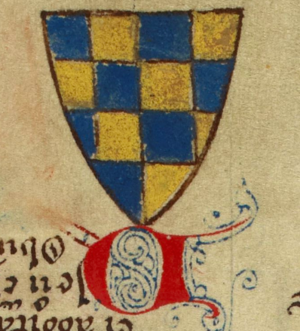
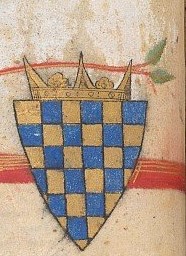
Coat of arms of Matilda’s 1st husband Hugh Bigod, 3rd Earl of Norfolk

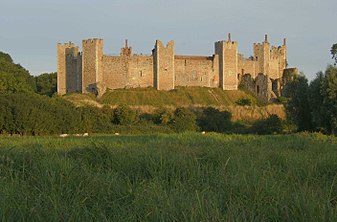
According to the Histoire William asked Roger Bigod ‘graciously, being the wise man he was, to arrange a handsome marriage between his own daughter and his son Hugh. The boy was worthy, mildmannered, and noblehearted and the young lady was a very young thing and both noble and beautiful. The marriage was a most suitable one and pleased both families involved.’3 The match was a good one. After the marriage, Matilda lived with her husband at the earl of Norfolk’s magnificent thirteen-towered castle at Framlingham. In 1209 she gave birth to a son, Roger, who would succeed his father as 4th Earl of Norfolk. Another son, Hugh, was born in 1212, and a daughter, Isabelle in 1215. A third and final son, Ralph, was probably born in 1216 or 1217.

Matilda’s family was deeply divided by the Magna Carta crisis and subsequent civil war. Her husband and father-in-law had joined the ranks of the baronial rebellion in 1215, as had her brother, William Marshal the Younger, whilst her father remained a staunch supporter of the king, holding the Welsh Marches for the Royalist cause during the civil war.

In 1216 the war touched Matilda personally, with Framlingham Castle being besieged by King John, who demanded the castle’s surrender:

The King to his well-beloved men, William le Enveise, constable of Framlingham, and all the knights presently with him in that castle, greetings. We command that you deliver up to our trusty and well beloved William de Harcourt and Elias de Beauchamp the castle of Framlingham. And in testimony hereof we thereto send you these our letters patent. Witness myself, at Framlingham, the thirteenth day of March, in the seventeenth year of our reign.4

We do not know whether Matilda was in residence at the castle at the time of the siege; her father-in-law was in, or on his way to, London and her husband Hugh’s whereabouts are unknown, but he was not at Framlingham. The king allowed the constable, William le Enveise, to send messengers to the earl and seek advice on what they should do. The earl probably advised the constable to surrender as the castle capitulated to the king without a fight two days later. One of Matilda’s sons, most likely the eldest, Roger, was taken as hostage.

It is not hard to imagine what thoughts and feelings – and fears – must have gone through Matilda’s mind, knowing that her young son, only 6 or 7 years of age, was in the custody of King John. The king’s treatment of Matilda de Braose was common knowledge, and rumours of what had happened to Arthur of Brittany were rife. Her own two older brothers, William and Richard, had also been held for several years as hostages to their father’s good behaviour. It must have been a comfort to Matilda, however, to know that King John depended on the loyalty of her father, and so would treat the boy well, if only to avoid alienating the man whose support he sorely needed.

Framlingham Castle, Suffolk

Despite King John’s death in October 1216, Matilda’s husband and father-in-law remained in rebellion, supporting the claims of Louis of France, the dauphin, who had invaded England early in 1216 and controlled much of the south. The earl of Norfolk only came to terms with the Royalist government when the French prince returned home in September 1217; after which he was finally restored to the earldom of Norfolk and Framlingham Castle was returned to him. It was probably also at this time that his grandson, Roger, was returned to his mother; his last year as a hostage would have been when his own grandfather, William Marshal, was in power as regent. Which must have allowed Matilda to rest easier and allayed her fears for her son.

Matilda spent time with her father while he was dying in April and May 1219. The Histoire says of Matilda at her father’s deathbed:

‘My lady Mahelt [Matilda] la Bigote was so full of grief she almost went out of her mind, so great was her love for him. Often she appealed to God, asking Him why He was taking from her what her heart loved most.’5

It goes on to tell the story of the ailing William Marshal calling for his daughters to sing to him. William asked Matilda to be the first to sing:

‘She had no wish to do so for her life at the time was a bitter cup, but she
had no wish to disobey her father’s command. She started to sing since
she wished to please her father, and she sang exceedingly well, giving a
verse of a song in a sweet, clear voice.’6

Matilda’s husband, Hugh, succeeded to the title of earl of Norfolk when his father died sometime between April and August 1221, probably aged well into his seventies. The new earl, however, only enjoyed his title for four years; he died suddenly in 1225, aged only 43. He was succeeded by their eldest son, Roger, then only 16 years old and therefore still a minor. His wardship was given to William Longespée, Earl of Salisbury, the young earl’s half-uncle, but when Longespée died the following year, the wardship was transferred to Alexander II, King of Scots.

With custody of the young earl of Norfolk, and of all his lands, Alexander II married Roger to his sister, Isabella of Scotland. The only lands not granted to the king of Scots were those which Matilda held in dower as Hugh Bigod’s widow. Matilda was still only 32 when Hugh died, with three of her four children still to care for. As a valuable marriage prize she, or her family, acted quickly to secure her future and safety and within three months of her husband’s death, Matilda was married once more.

Arms of William de Warenne

Her second husband was William de Warenne, 5th Earl of Surrey, also known as Earl Warenne. William was the only son of Isabel de Warenne, Countess of Surrey in her own right, and her second husband, Hamelin de Warenne, half-brother of King Henry II. Matilda was the earl’s second wife, his first wife, also called Matilda, the daughter of William d’Aubigny, second Earl of Arundel had died childless on 6 February 1215 and was buried at Lewes Priory, Sussex. William de Warenne was a neighbour of the Bigods, having lands centred in Castle Acre in Norfolk, and he had joined the rebellion against King John at about the same time as Roger Bigod, although William was back in the Royalist camp by March 1217 and was a prominent participant in the negotiations which ended the war in August 1217.

Probably born in the late 1260s, William was considerably older than his new wife and the marriage appears to have been one of practicality, rather than affection. The earl had purchased Matilda’s marriage, essentially meaning her dower in Norfolk, before July 1225. Matilda continued to style herself as ‘Matildis la Bigot’ in charters, with ‘Matildis de Warenne’ added only as an afterthought, or not at all. For example, a charter from the early 1240s, following the death of William de Warenne, has the salutation, ‘ego Latilda Bigot comitissa Norf ’ et Warenn.’7 This may be an indication that this second marriage was not of Matilda’s own choosing and she may even have preferred to remain a widow, rather than entering into this second marriage. The continuing use of her name from her first marriage possibly being her own mark of rebellion against her new situation.

After the resolution of the crisis of 1216/1217 William de Warenne served the crown faithfully, save for his brief involvement in the confederation against it led by Henry III’s brother Richard of Cornwall, between July and October 1227. He was forced to surrender Tickhill Castle, but his disgrace was only temporary and in 1228 he received the third penny for the county of Surrey for the first time, an honorary payment previously denied to William and his father. In 1230 William de Warenne was appointed keeper of the east-coast ports of England during the king’s expedition to Brittany. In 1236 he was cup bearer at the coronation of Eleanor of Provence and in 1237 he witnessed the reissue of Magna Carta; the ageing earl was one of the few surviving barons who had been witness to the original charter in 1215.

The Warenne stronghold of Castle Acre Castle, Norfolk

In his early 70s, William de Warenne died in London on 27 or 28 May 1240; he was buried before the high altar at his family’s foundation of Lewes Priory in Sussex. In his memory, the king ordered that a wayside cross be erected on the road between Carshalton and Merton, in Surrey.

Matilda bore her second husband two children, a boy and a girl, John and Isabel (later Isabel d’Aubigny). John would succeed his father as earl and attained his majority in 1248, when he succeeded to the vast Warenne estates. He would pursue a martial career and was one of Edward I’s fiercest generals. Matilda did not marry again after William’s death. In 1246, as the last surviving child of William Marshal, and with neither of her five brothers leaving a son, Matilda was granted the Marshal’s rod by King Henry III. She did, at this point, change her name on charters, to ‘Martill marescalla Angliae, comitissa Norfolciae et Warennae.’8

Emphasising her Marshal name as her father’s eldest surviving child, Matilda was, significantly, claiming the title Marshal of England as her right, thus increasing her power and prestige, and taking the authority of the marshal as her own. Matilda appears to have acted independently during her second marriage, purchasing land in the Don Valley in South Yorkshire, close to the Warenne stronghold of Conisbrough Castle and after the queen she was ‘undoubtedly the most powerful and wealthy woman in England from 1242 onwards.’9

Tintern Abbey Monmouthshire

Matilda Marshal died in 1248, either on 27 March or at the beginning of April, in her mid-50s. Choosing to be interred with her Marshal family, rather than either of her husbands, Matilda was buried at Tintern Abbey, Monmouthshire. Her three Bigod sons and their Warenne half-brother carried their mother’s bier into the church, where she was laid to rest close to her mother, Isabel, two of her brothers, Walter and Ancel, and her sister, Sybil. It is through Matilda’s marriage to Hugh Bigod, Earl of Norfolk, that the present duke of Norfolk also bears the title of Earl Marshal.

Images:

Courtesy of Wikipedia except Castle Acre Castle which is ©2019Sharon Bennett Connolly.
Footnotes:

1David Crouch and Anthony Holden, History of William Marshal: Text and Translation; 2 ibid; 3ibid; 4Letter of 13 March 1216, Rich Price, King John’s Letters; 5Crouch and Holden, History of William Marshal: Text and Translation; 6ibid; 7Chadwick, Elizabeth, ‘Clothing the Bones: Finding Mahelt Marshal’, livingthehistoryelizabethchadwick.blogspot.com; 8Vincent, Nicholas, ‘William de Warenne, fifth earl of Surrey [Earl Warenne] (d. 1240)’, Oxforddnb.com; 9David Crouch quoted in Chadwick, ‘Clothing the Bones: Finding Mahelt Marshal’.

Sources:

Rich Price, King John’s Letters Facebook group; Robert Bartlett England Under the Norman and Angevin Kings 1075-1225; Dan Jones The Plantagenets; the Kings who Made EnglandThe Plantagenet Chronicle Edited by Elizabeth Hallam; Maurice Ashley The Life and Times of King John; Roy Strong The Story of BritainOxford Companion to British History; Mike Ashley British Kings & Queens; David Williamson Brewer’s British Royalty; Ralph of Diceto, Images of History; Marc Morris, King John; David Crouch, William Marshal; Crouch and Holden, History of William Marshal; Crouch, David, ‘William Marshal [called the Marshal], fourth earl of Pembroke (c. 1146–1219)’, Oxforddnb.com; Flanagan, M.T., ‘Isabel de Clare, suo jure countess of Pembroke (1171×6–1220)’, Oxforddnb.com; Thomas Asbridge, The Greatest Knight; Chadwick, Elizabeth, ‘Clothing the Bones: Finding Mahelt Marshal’, livingthehistoryelizabethchadwick.blogspot.com; Stacey, Robert C., ‘Roger Bigod, fourth earl of Norfolk (c. 1212-1270)’, Oxforddnb.com; finerollshenry3.org.uk; Vincent, Nicholas, ‘William de Warenne, fifth earl of Surrey [Earl Warenne] (d. 1240)’, Oxforddnb.com.

My Books

Signed, dedicated copies of all my books are available through my online bookshop.

Out Now! Women of the Anarchy

Two cousins. On the one side is Empress Matilda, or Maud. The sole surviving legitimate child of Henry I, she is fighting for her birthright and that of her children. On the other side is her cousin, Queen Matilda, supporting her husband, King Stephen, and fighting to see her own son inherit the English crown. Women of the Anarchy demonstrates how these women, unable to wield a sword, were prime movers in this time of conflict and lawlessness. It show how their strengths, weaknesses, and personal ambitions swung the fortunes of war one way – and then the other.

Available from Bookshop.orgAmberley Publishing and Amazon UK.

Coming on 15 June 2024: Heroines of the Tudor World

Heroines of the Tudor World tells the stories of the most remarkable women from European history in the time of the Tudor dynasty, 1485-1603. These are the women who ruled, the women who founded dynasties, the women who fought for religious freedom, their families and love. These are the women who made a difference, who influenced countries, kings and the Reformation. In the era dominated by the Renaissance and Reformation, Heroines of the Tudor World examines the threats and challenges faced by the women of the era, and how they overcame them. From writers to regents, from nuns to queens, Heroines of the Tudor World shines the spotlight on the women helped to shape Early Modern Europe.

Heroines of the Tudor World is now available for pre-order from Amberley Publishing and Amazon UK.

Also by Sharon Bennett Connolly:

King John’s Right-Hand Lady: The Story of Nicholaa de la Haye is the story of a truly remarkable lady, the hereditary constable of Lincoln Castle and the first woman in England to be appointed sheriff in her own right. It is is available from King John’s Right-Hand Lady: The Story of Nicholaa de la Haye is the story of a truly remarkable lady, the hereditary constable of Lincoln Castle and the first woman in England to be appointed sheriff in her own right. Available from all good bookshops or direct from Pen & Sword Booksbookshop.org and AmazonDefenders of the Norman Crown: The Rise and Fall of the Warenne Earls of Surrey tells the fascinating story of the Warenne dynasty, from its origins in Normandy, through the Conquest, Magna Carta, the wars and marriages that led to its ultimate demise in the reign of Edward III. Available from Pen & Sword BooksAmazon in the UK and US, and Bookshop.org

Ladies of Magna Carta: Women of Influence in Thirteenth Century England looks into the relationships of the various noble families of the 13th century, and how they were affected by the Barons’ Wars, Magna Carta and its aftermath; the bonds that were formed and those that were broken. It is now available in paperback and hardback from Pen & Sword,  Amazon, and Bookshop.orgHeroines of the Medieval World tells the stories of some of the most remarkable women from Medieval history, from Eleanor of Aquitaine to Julian of Norwich. Available now from Amberley Publishing and Amazon, and Bookshop.orgSilk and the Sword: The Women of the Norman Conquest traces the fortunes of the women who had a significant role to play in the momentous events of 1066. Available now from Amazon,  Amberley Publishing, and Bookshop.org.

Alternate Endings: An anthology of historical fiction short stories including Long Live the King… which is my take what might have happened had King John not died in October 1216. Available in paperback and kindle from Amazon.

Podcast:

Have a listen to the A Slice of Medieval podcast, which I co-host with Historical fiction novelist Derek Birks. Derek and I welcome guests, such as Bernard Cornwell and Elizabeth Chadwick, and discuss a wide range of topics in medieval history, from significant events to the personalities involved.

*

Don’t forget! Signed and dedicated copies of all my books are available through my online bookshop.

For forthcoming online and in-person talks, please check out my Events Page.

You can be the first to read new articles by clicking the ‘Follow’ button, liking our Facebook page or joining me on Twitter and Instagram.

*

©2020 Sharon Bennett Connolly, FRHistS

Birthday Giveaway

Competition Closed

Competition is now closed and the draw has been made. The winner is… Lisa Graham. Thank you so much to everyone for taking part – there were over 300 entries! And thank you for the many wonderful birthday wishes. Apparently a ‘big’ birthday doesn’t feel as overwhelming when you have so many wonderful friends. THANK YOU!!!!

It’s my birthday!

Today is my birthday, and its one of those big ones with a ‘0’ on the end. I’m not going to say exactly, but here’s a few clues:

I’m not 40 or 60;

My son keeps telling me that I’m now a part of history;

and he keeps making sly remarks about half centuries.

So, you work it out…

Anyway, seeing as its such a big birthday, I thought it would be nice to celebrate with a giveaway, seeing as I haven’t done one in a while.

The Giveaway!

The giveaway is a signed and dedicated – for you or someone you love – hardback copy of one of my books. And its your choice of book You can choose from my first book, Heroines of the Medieval World. my second book Silk and the Sword: The Women of the Norman Conquest or the latest, Ladies of Magna Carta: Women of Influence in Thirteenth Century Europe.

It’s easy to enter!

The competition is open to everyone, wherever you are in the world. To win a signed and dedicated copy of one of my books, simply leave a comment below or on my Facebook page and I will include you in the prize draw.

The draw will be made on Monday 12 October.

Good luck!

*

My Books

Ladies of Magna Carta: Women of Influence in Thirteenth Century England  looks into the relationships of the various noble families of the 13th century, and how they were affected by the Barons’ Wars, Magna Carta and its aftermath; the bonds that were formed and those that were broken. It is now available from Pen & SwordAmazon and from Book Depository worldwide.

Also by Sharon Bennett Connolly:

Silk and the Sword: The Women of the Norman Conquest traces the fortunes of the women who had a significant role to play in the momentous events of 1066.  Available now from Amazon,  Amberley Publishing, Book Depository.

Heroines of the Medieval World tells the stories of some of the most remarkable women from Medieval history, from Eleanor of Aquitaine to Julian of Norwich. Available now from Amberley Publishing and Amazon and Book Depository.

*

You can be the first to read new articles by clicking the ‘Follow’ button, liking our Facebook page or joining me on Twitter and Instagram.

©2020 Sharon Bennett Connolly

Book Corner: Joan, Lady of Wales by Danna R. Messer

The history of women in medieval Wales before the English conquest of 1282 is one largely shrouded in mystery. For the Age of Princes, an era defined by ever-increased threats of foreign hegemony, internal dynastic strife and constant warfare, the comings and goings of women are little noted in sources. This misfortune touches even the most well-known royal woman of the time, Joan of England (d. 1237), the wife of Llywelyn the Great of Gwynedd, illegitimate daughter of King John and half-sister to Henry III. With evidence of her hand in thwarting a full scale English invasion of Wales to a notorious scandal that ended with the public execution of her supposed lover by her husband and her own imprisonment, Joan’s is a known, but little-told or understood story defined by family turmoil, divided loyalties and political intrigue. From the time her hand was promised in marriage as the result of the first Welsh-English alliance in 1201 to the end of her life, Joan’s place in the political wranglings between England and the Welsh kingdom of Gwynedd was a fundamental one. As the first woman to be designated Lady of Wales, her role as one a political diplomat in early thirteenth-century Anglo-Welsh relations was instrumental. This first-ever account of Siwan, as she was known to the Welsh, interweaves the details of her life and relationships with a gendered re-assessment of Anglo-Welsh politics by highlighting her involvement in affairs, discussing events in which she may well have been involved but have gone unrecorded and her overall deployment of royal female agency.

Finally!

I have got my hands on this much-anticipated book, Joan, Lady of Wales by Danna R. Messer. I have to admit, I devoured every word. Joan has been in need of a biographer for some time, and I am so pleased that Danna took up the challenge and produced this remarkable study of the illegitimate daughter of King John who became Lady of Wales as the wife of Llywelyn ap Iorweth – Llywelyn Fawr.

Ever since I have known this book was being written, I have been itching to get my hands on it!

Anyone who is a fan of Sharon Penman will have heard of Joan, and most likely have a soft spot for this incredible woman. This biography gives you the chance to study the facts, to meet the woman behind the story and read of how deeply involved she was in Anglo-Welsh relations in the first half of the 13th century. Danna R. Messer portrays a politically astute and powerful woman, aware of her duty, importance and capabilities, not only as the daughter and sister of England’s kings, but also as Llywelyns wife and consort – and as the mother of his heir.

Detail of the sarcophagus thought to belong to Joan in St Mary’s and St Nicholas’s Church, Beaumaris

Beautifully written, with clear, concise arguments and a passion for her subject, the author has brought Joan to life. This is a book that is impossible to put down. Danna R. Messer does not shy away from areas of controversy, either, examining every aspect of Joan’s relationship with William de Braose, the man who was hanged after being found with Joan in Llywelyn’s chamber. the deconstruction of the event, the aftermath and the repercussions make for fascinating reading – its worth getting the book just to discover how everything unfolded.

As are all life stories, that of Joan of England’s is complicated; the complexities of which are further irritated by a dearth of contemporaneous material related to her. The identity of her mother remains a mystery and is much debated by today’s genealogists, as is who her children were. how many she really had and where some even ended up in their own lives. How many times she travelled as an envoy, how many charters she issued and just how fully she participated in effecting Welsh polity can never be fully known. No matter the daunting aspect of approaching such an ill-documented existence, which is a painstaking project indeed, it is one that yields both exciting and long-overdue results.

This study of Joan of England seeks to revise the master narrative of native medieval Wales in the early-thirteenth century – to generate a better ad more inclusively nuanced understanding of the history of this fascinating and wild region of Britain and its relationship with England by placing this particularly interesting and fascinating woman at the forefront in the sequence of events…

Although Siwan’s role in Anglo-Welsh history has received recognition by historians, she has been still largely relegated to the sidelines; an indication that her role was not entirely critical to the stability and growth of Welsh polity, or peace with England overall. On the flip side, it is sometimes difficult not to naturally overplay our hand and emphatically conclude that Joan was, indeed, a heroine and that if it were not for her, the very fabric of native Wales would have been fundamentally altered by the time Llywelyn died in 1240. On balance, however, it is vitally important to understand that the aggregate of Joan’s interventions in the early-thirteenth century ensured that she really was a crucial player in the political wranglings between the ruler of Gwynedd and the rulers of England. The famous early-twentieth-century Welsh historian J.E. Lloyd concluded that Llywelyn ap Iorweth ‘had one emissary whose diplomatic services far outran those of the seneschal and who helped him in this capacity for the greater part of his reign. To the assistance of his wife Joan, both as advocate and counsellor, there can be no doubt he was much indebted.’ To the assistance of Joan, Lady of Wales, there can be no doubt that the history of native medieval Wales is also much indebted.

Joan, Lady of Wales by Danna R. Messer not only examines every aspect of Joan’s life, but places that life in the wider context of English and Welsh events, of Anglo-Welsh relations and of the place of women in Welsh society and history in general. This in-depth study provides an overview analysis of the status of women in Welsh history, the laws surrounding marriage and adultery, legitimate and illegitimate children and demonstrates how Joan’s own confirmation of legitimacy in the 1220s added prestige and legitimacy to her husband’s position within Wales and the wider sphere of Anglo-Welsh relations.

Arms of the royal house of Gwynedd

Danna R. Messer also explores the use of title and authority for women in the 13th century, depicting Joan as a queen, both in her actions and relationship with others. Although she was not crowned and anointed in the same manner as an English queen would be, she held the same level of authority and respect, both in the public and the private sphere of the Welsh court.

A collection of a bout 20 black and white photos help to illustrate Joan’s story, Joan, Lady of Wales is a stunning, comprehensive study of the unique character and position that Joan occupies in both English and Welsh history.

Despite a woeful lack of sources mentioning Joan, Danna has managed to tease out every piece of information she could find on Joan and her position and duties, not only in Wales as the wife and consort of Llywelyn, but also in England as the daughter and, later, sister of the king. Joan’s status as the primary diplomat in Anglo-Welsh relations comes through clearly in the way Joan was treated by her husband and the rewards she was given by the English crown.

In brief, in Joan, Lady of Wales, Danna R. Messer recreates the life and times of this incredible woman, giving us a more complete portrait than has ever been achieved since her own lifetime. We are given a full and complete analysis – as far as the sources and distance of time will allow – of Joan’s political and personal life, the good and the bad, including the scandal, the ambition and Joan’s own legacy and what it meant for those who followed her.

Joan, Lady of Wales has long needed her own biography, to bring her out from the shadows of the lives of her father, brother, husband and son – and this book does not disappoint. It is, quite simply, a beautifully-executed, fascinating and addictive read.

Joan, Lady of Wales is available in hardback from Pen &Sword and Amazon.

About the author:

Dr Danna R. Messer has published on various aspects of the wives of the native Welsh rulers before 1282, providing a gendered perspective of medieval Welsh politics. As an editor and historian, she is widely involved in medieval history and queenship studies generally, including her roles as Series Editor for Medieval History for Pen and Sword, editor for the Royal Studies Journal and editor for Normans to Early Plantagenet Consorts, the first volume of the forthcoming four-book series, English Consorts: Power, Influence, Dynasty (Palgrave). She is also Acquisitions Editor for Arc Humanities Press and the Executive Editor for the Encyclopedia of the Global Middle Ages, a partnership project with Bloomsbury Academic and Arc Humanities Press.

*

My Books

Ladies of Magna Carta: Women of Influence in Thirteenth Century England  looks into the relationships of the various noble families of the 13th century, and how they were affected by the Barons’ Wars, Magna Carta and its aftermath; the bonds that were formed and those that were broken. It is now available from Pen & SwordAmazon and from Book Depository worldwide.

Also by Sharon Bennett Connolly:

Silk and the Sword: The Women of the Norman Conquest traces the fortunes of the women who had a significant role to play in the momentous events of 1066.  Available now from Amazon,  Amberley Publishing, Book Depository.

Heroines of the Medieval World tells the stories of some of the most remarkable women from Medieval history, from Eleanor of Aquitaine to Julian of Norwich. Available now from Amberley Publishing and Amazon and Book Depository.

*

You can be the first to read new articles by clicking the ‘Follow’ button, liking our Facebook page or joining me on Twitter and Instagram.

©2020 Sharon Bennett Connolly

Ada de Warenne, Queen Mother of Scotland

300px-Prince_Henry_of_Scotland_1139_692124
Coin of Prince Henry of Scotland

Ada de Warenne was born around 1120, daughter of William de Warenne 2nd Earl of Surrey and Isabel de Vermandois. Through her mother, she was a great-granddaughter of Henry I of France and half-sister to twins Waleran and Robert de Beaumont, Count of Meulan and 2nd Earl of Leicester, respectively, and Hugh de Beaumont, 1st Earl of Bedford. Her niece, Isabel de Warenne, would marry William of Blois, the younger son of King Stephen and, following his death, Hamelin, half-brother of Henry II of England. Ada’s family connections were of the highest quality in the Anglo-Norman world.

As a consequence, Ada’s future marriage became an international concern. On 9 April 1139, following the defeat of the Scottish army at the Battle of the Standard, the Treaty of Durham was concluded between King Stephen of England and King David I of Scots. Primarily negotiated by Stephen’s wife, Queen Matilda – King David’s own niece – the terms were extremely favourable to the defeated Scots. All the lands that Prince Henry of Scotland, King David’s son and heir, had held in 1138 were returned to him, save for the castles at Bamburgh and Newcastle, for which he was recompensed with two towns of equal value in the south. Furthermore, Henry was confirmed as earl of Huntingdon and created earl of Northumbria, a title which encompassed Northumberland, Durham, Cumberland, Westmoreland and the parts of Lancashire north of the Ribble.

Malcolm IV, King of Scots

It was agreed that English law would remain in force in these regions, but that the barons within the earldom were permitted to do homage to Prince Henry, saving only their allegiance to King Stephen. In return, King David and his son promised a permanent peace and provided four hostages. Although the text of the treaty is now lost, it seems likely that the prince’s marriage to Ada de Warenne, sister of the third Earl Warenne and half-sister of the Beaumont twins, was included in the terms of the Treaty of Durham.

Shortly after the treaty was signed, Prince Henry joined King Stephen’s court for a time, accompanying Stephen on campaign, which came not without a little risk. While Stephen’s forces besieged Ludlow, Henry was dragged from his horse by an iron hook, and nearly taken prisoner, but he was gallantly rescued from the enemy by the King himself.

It was probably during his stay with Stephen’s court that Henry married his bride. Orderic Vitalis claims that the marriage was a love match. However, the timing clearly suggests that the union was a consequence of the 1139 treaty of Durham, perhaps with the intention of drawing Henry into Stephen’s corner by allying him in marriage to his staunchest supporters, the Beaumont twins; although it is not inconceivable that affection grew between the couple during Henry’s stay at Stephen’s court. On her marriage, which took place sometime between the conclusion of the treaty of Durham and Henry’s return to Scotland, Ada became Countess of Huntingdon and Northumbria and Lady of Haddington and Crail.

Henry was the only surviving son of King David I of Scotland and his queen, Matilda (or Maud), widow of Simon (I) de Senlis, who had died in 1113. Henry’s mother, Matilda, was the daughter of Waltheof, Earl of Northumbria, and Judith of Lens, a niece of William the Conqueror. Henry’s older brother, Malcolm, was tragically killed when a toddler; he was reportedly murdered by a Scandinavian monk in his father’s service, who is said to have savagely attacked the child with his artificial iron hand. Needless to say, the murderous monk was executed: David ordered that he be torn apart by wild horses.

The marriage of Ada and Henry produced three sons and three daughters.

William the Lion, King of Scots

Ada never became Queen of Scots as Henry of Scotland died in 1152, a year before the death of David I. On his son’s death, David recognised his grandson and Ada’s eldest son, Malcolm, as his heir. During her son’s reign, Ada became known as the Queen Mother of Scotland. At this time, in her charters, she is most frequently styled ‘Ada comitissa regis Scottorum.’

Born in 1142, Malcolm succeeded to the crown at the age of 11 as Malcolm IV. Also known as Malcolm the Maiden, he died, unmarried, at Jedburgh in December 1165. Ada had been trying to arrange a suitable bride for him when he died.

He was succeeded by Ada’s second son, William I the Lion. William was one of the longest reigning kings of Scots in history, ruling for 49 years. He married Ermengarde de Beaumont, a granddaughter of Henry I of England by his illegitimate daughter, Constance. William and Ermengarde had three daughters and a son, who succeeded his father as Alexander II in 1214. Their two eldest daughters, Margaret and Isabella, are mentioned in a clause of Magna Carta. They became hostages of King John following the treaty of Norham in 1209; the English king had promised to marry at least one of them to his son, the future King Henry III, and to find a suitable husband for the other. Both girls married English nobles – eventually. Their brother, Alexander II, married Henry III’s sister, Joan, but the marriage was childless.

Ada and Henry’s third son, David, Earl of Huntingdon, married Matilda of Chester and it is through the daughters of David that Robert the Bruce and John Balliol both based their claims as Competitors to the Scots crown in the 1290s.

Of the three daughters, Matilda died young, in 1152, the same year as her father, meaning poor Ada faced a double grief, of losing a husband and a daughter in one year. Ada’s namesake, Ada of Huntingdon married Floris III, Count of Holland, in 1161. She had four sons and four daughters before the count died at Antioch while on the Third Crusade, in 1190. The younger Ada’s great-great-grandson, Floris V, Count of Holland, was one of the Thirteen Competitors for the Scots crown in 1291. Lastly, Margaret married Conan IV, Duke of Brittany and Earl of Richmond in 1160. She was the mother of Constance, Duchess of Brittany, wife of Henry II’s son Geoffrey and mother of the tragic Arthur of Brittany who was murdered by King John, and Eleanor, the Pearl of Brittany who spent all her adult life in ‘honourable imprisonment’ in England.

220px-St_Martin's_Kirk,_Haddington_03
St Martin’s Kirk, Haddington

Following her husband’s death Ada played little part in the politics of Scotland. She did, however, take great interest in the futures of her children, arranging the marriages of her daughters and seeking a bride for her son, King Malcolm IV. She later retired to her dower lands at Haddington in East Lothian, given to her by David I. It was possibly the first Royal Burgh in Scotland.

A generous patroness of the Church, Ada de Warenne died in 1178, shortly after founding the nunnery at Haddington. She is believed to be buried in the Haddington area, possibly in St Mary’s Church, although the exact location of her grave is lost to history. In 1198 her grandson, the future Alexander II, would be born in her old palace at Haddington, after her dower-lands were passed on to her daughter-in-law, Queen Ermengarde.

*

Images from Wikipedia.

Further Reading: G.W.S. Barrow, David I (c. 1185-1153) (article), Oxforddnb.com; Keith Stringer, Ada [née Ada de Warenne], countess of Northumberland (c. 1123-1178), Oxforddnb.com; Keith Stringer, Henry, earl of Northumberland (c. 1115-1152) (article), Oxforddnb.com; The Chronicle of Henry of Huntingdon; W.W. Scott, Malcolm IV (c. 1141–1165) (article), (article), Oxforddnb.com; Comprising the history of England, from the invasion of Julius Caesar to the accession of Henry II. Also, the Acts of Stephen, King of England and duke of Normandy Translated and edited by Thomas Forester; Early Yorkshire Charters Volume 8: The Honour of Warenne, Edited by William Farrer and Charles Travis Clay; Brewer’s British Royalty by David Williamson; The Mammoth Book of British Kings and Queens by Mike Ashley; The Story of Scotland by Nigel Tranter; Ada, Queen Mother of Scotland (article) by Victoria Chandler; David Ross, Scotland: History of a Nation; Matthew Lewis, Stephen and Matilda’s Civil War: Cousins of Anarchy; Stephen Spinks, Robert the Bruce: Champion of a Nation.

*

My Books:

Signed, dedicated copies of all my books are available through my online bookshop.

Coming 30 January 2025: Scotland’s Medieval Queens

Scotland’s history is dramatic, violent and bloody. Being England’s northern neighbour has never been easy. Scotland’s queens have had to deal with war, murder, imprisonment, political rivalries and open betrayal. They have loved and lost, raised kings and queens, ruled and died for Scotland. From St Margaret, who became one of the patron saints of Scotland, to Elizabeth de Burgh and the dramatic story of the Scottish Wars of Independence, to the love story and tragedy of Joan Beaufort, to Margaret of Denmark and the dawn of the Renaissance, Scotland’s Medieval Queens have seen it all. This is the story of Scotland through their eyes.

Available for pre-order now.

Also by Sharon Bennett Connolly:

Heroines of the Tudor World tells the stories of the most remarkable women from European history in the time of the Tudor dynasty, 1485-1603. These are the women who ruled, the women who founded dynasties, the women who fought for religious freedom, their families and love. Heroines of the Tudor World is now available for pre-order from Amberley Publishing and Amazon UK. Women of the Anarchy demonstrates how Empress Matilda and Matilda of Boulogne, unable to wield a sword themselves, were prime movers in this time of conflict and lawlessness. It shows how their strengths, weaknesses, and personal ambitions swung the fortunes of war one way – and then the other. Available from Bookshop.orgAmberley Publishing and Amazon UKKing John’s Right-Hand Lady: The Story of Nicholaa de la Haye is the story of a truly remarkable lady, the hereditary constable of Lincoln Castle and the first woman in England to be appointed sheriff in her own right. Available from all good bookshops Pen & Sword Booksbookshop.org and Amazon

Defenders of the Norman Crown: The Rise and Fall of the Warenne Earls of Surrey tells the fascinating story of the Warenne dynasty, from its origins in Normandy, through the Conquest, Magna Carta, the wars and marriages that led to its ultimate demise in the reign of Edward III. Available from Pen & Sword BooksAmazon in the UK and US, and Bookshop.orgLadies of Magna Carta: Women of Influence in Thirteenth Century England looks into the relationships of the various noble families of the 13th century, and how they were affected by the Barons’ Wars, Magna Carta and its aftermath; the bonds that were formed and those that were broken. It is now available in paperback and hardback from Pen & SwordAmazon, and Bookshop.orgHeroines of the Medieval World tells the stories of some of the most remarkable women from Medieval history, from Eleanor of Aquitaine to Julian of Norwich. Available now from Amberley Publishing and Amazon, and Bookshop.orgSilk and the Sword: The Women of the Norman Conquest traces the fortunes of the women who had a significant role to play in the momentous events of 1066. Available now from Amazon,  Amberley Publishing, and Bookshop.org.

Alternate Endings: An anthology of historical fiction short stories including Long Live the King… which is my take what might have happened had King John not died in October 1216. Available in paperback and kindle from Amazon.

Podcast:

Have a listen to the A Slice of Medieval podcast, which I co-host with Historical fiction novelist Derek Birks. Derek and I welcome guests, such as Bernard Cornwell and Elizabeth Chadwick, and discuss a wide range of topics in medieval history, from significant events to the personalities involved.

*

Don’t forget! Signed and dedicated copies of all my books are available through my online bookshop.

For forthcoming online and in-person talks, please check out my Events Page.

You can be the first to read new articles by clicking the ‘Follow’ button, liking our Facebook page or joining me on TwitterThreadsBluesky and Instagram.

©2020 Sharon Bennett Connolly FRHistS