Guest Post: The Festive History of Gingerbread and “The Twelve Days of Christmas” by Grace Tierney

It’s December!

And to get us in the Christmas spirit, I have a wonderful guest post from Grace Tierney, looking into the history of two of our greatest Christmas traditions.

The Festive History of Gingerbread and “The Twelve Days of Christmas”

History...the Interesting Bits

I’ve spent the last three years researching the words and traditions Christmas gave to the English language for my book “Words Christmas Gave Us”. The old roots of festive traditions are truly fascinating and a doorway to history. You can use Crusader spices in your mince pies and honour the Vikings by kissing under mistletoe. Two such doorways are the histories of gingerbread and the stories behind the lyrics of “The Twelve Days of Christmas”.

I always make gingerbread at Christmas and if your family makes (or eats) a gingerbread house at Christmas you have a fairytale to thank for it, and you’re continuing a history which goes back 5,000 years.

Gingerbread entered the English language in the late 1200s, spelled as gingerbrar but at that time the word was for preserved ginger. It arrived from Old French ginginbrat (ginger preserve) and Medieval Latin gingimbratus (gingered). By the mid 1300s the end of the word had changed to brede (bread) as the idea of sweet cakes spiced with ginger gained popularity, probably thanks to Crusaders returning to Europe with spices.

Ginger root had been used in medicine and food long before the 1300s, however. The plant was grown in China around 5,000 years ago and used in their traditional medicines. Some food historians claim early recipes for gingerbread date to 2400 B.C. in Greece. Certainly by the 1400s there are references to a gingerbread bakers’ guild in Germany.

History...the Interesting Bits

Gingerbread figures are popular too, just as they are today. These date back to Tudor times. Shakespeare mentions them in “Love’s Labour’s Lost” in 1598. They were made to resemble important guests at the court of Queen Elizabeth I so they were much more elaborate and unique than the gingerbread man we cut out in our festive kitchens today. The giving of such figures on religious feast days at that time may explain gingerbread’s modern association with Christmas, although children’s stories about gingerbread men in the 1800s probably helped too.

The fairytale connection gives us the Christmas classic, the gingerbread house, thanks to the two folk-tale collectors, the famous Brothers Grimm. When they published the tale of Hansel and Gretel in 1812 the idea of a witch’s house made from bread sparked the readers’ imaginations. German bakers were quick to create the houses to sell to their customers and in the process started another tasty Christmas tradition. In fact in later editions of the tale, the word bread was changed to gingerbread in response to these new, and quickly beloved, gingerbread houses.

Thus the gingerbread house has a 5,000 year old history spanning Greece, Crusaders, German folk-tales, and the Tudor court before it reaches our homes at Christmas.

The chances of you hearing a choir or radio warbling “The Twelve Days of Christmas” in December this year are pretty high, but the rather strange lyrics provide another doorway into history and are well worth exploring as you listen to the tune.

First published in the late 1700s, “The Twelve Days of Christmas” is a popular English carol which lists the gifts given to the singer by their true love. The gift-giver is a very generous friend or romantic suitor who wants to celebrate on each day of the Christmas season with their loved one.

History...the Interesting Bits

The origin of the song is obscure. Some sources believe it was originally chanted by children as a memory game. Each child would add a line and you paid a forfeit if you forgot one.

The twelve days refer to the traditional English Christmas season from Christmas Day until Twelfth Night which falls on the 5th of January, although there was a version called “The Ten Days of Christmas” in the north of England.

One theory, dating to the 1990s and well debunked by now, arose that the lyrics were reminders to Catholic children of the articles of their faith when it was outlawed in England. The “two turtle doves” were the old and new testaments, the “ten lords “were the ten commandments, and the “true love: was from God at baptism.

Apparently it would cost your true love £28,000 to send these gifts in the 2020s which is  very generous by most people’s standards. It rises closer to £119,000 if the gifts are bought repeatedly each time they’re mentioned in the song’s cumulative verses.

Now let’s take a look at each of the gifts and what meanings they may contain.

A Partridge in a Pear Tree – It should be noted that partridges are ground birds and don’t perch in trees, although this particular line may come from an earlier song which had a line about a pie sitting in a pear tree. This doesn’t refer to the classic Tudor love of a festive pie, it’s a magpie which is perching in the tree this time which is feasible.

Two Turtle Doves – It’s mentioned in the Bible that two turtle doves were sacrificed at the circumcision of Jesus, so this one may be a reference to that ceremony or even to love with the birds representing a pair of lovers.

Three French Hens – French in this case simply means foreign, and is probably included to make them seem special or expensive relative to local hens.

Four Calling Birds – Earlier versions of the lyrics presented the receiver with four canary birds, four mockingbirds, or four colly (or collie) birds which is an archaic term for blackbirds. Blackbirds were called colly birds because of coal, which is black. Coal is associated with Christmas in two other ways – the coal you bring if you are First Footing in Scotland and the coal in your stocking if you’ve been naughty and have found yourself on the wrong list.

History...the Interesting Bits

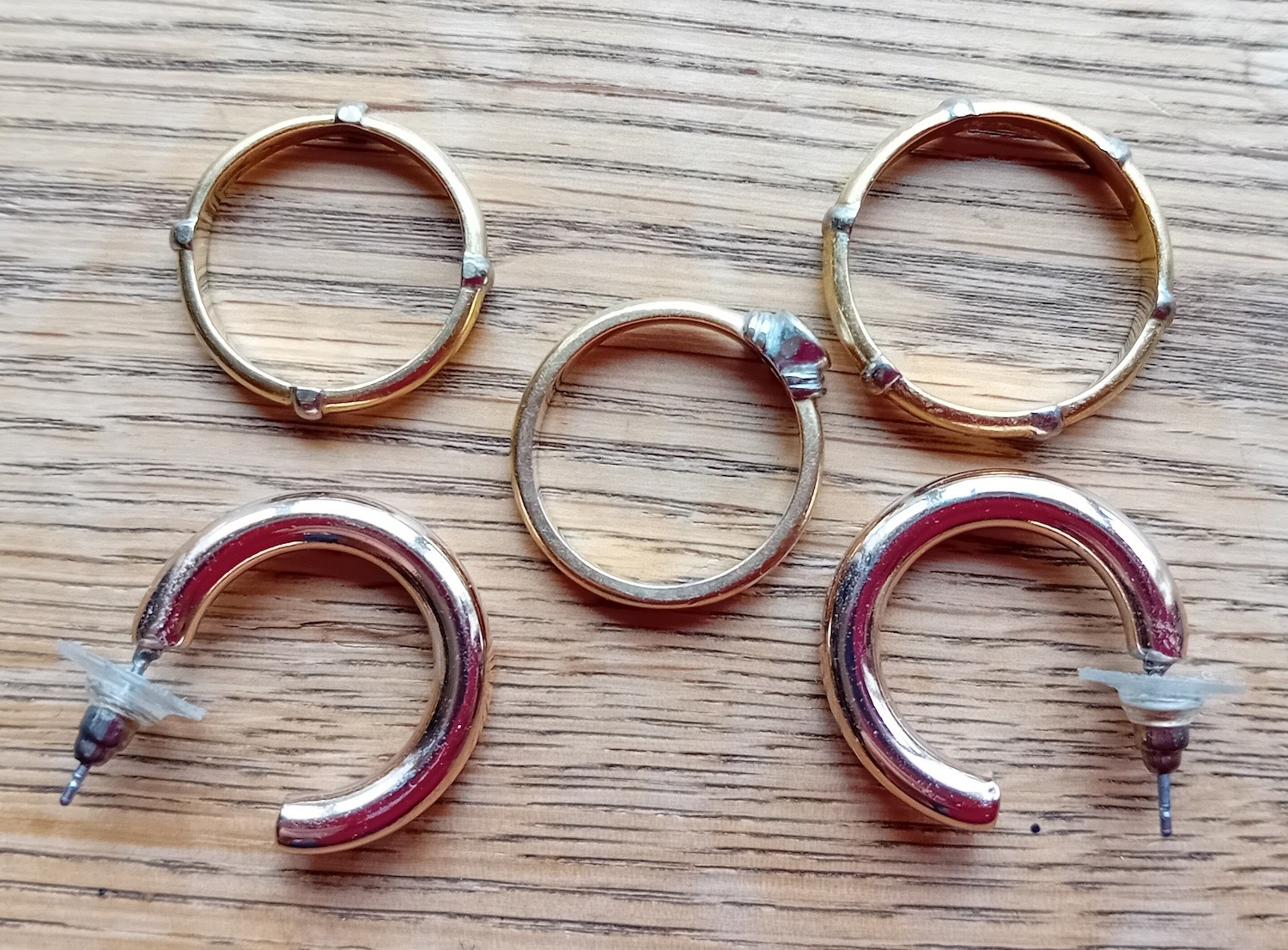
Five Golden Rings – The rings are perhaps the most obvious choice of gift from a lover (although five seems excessive) but this may be a mishearing of goldspinks, an alternative word for goldfinches, yet another bird. Certainly by 1780 song illustrations show the rings as being jewellery.

Six Geese a-Laying – the goose was the bird of choice for Christmas feasting until relatively recent times in the British Isles.

Seven Swans a-Swimming – Since the 1100s the British monarch owns the mute swans on the River Thames. The British Royal Family still maintains a Royal Swan Keeper and this is historically because swans were eaten at special feasts. This makes the seven swans here a very valuable gift indeed, although thankfully swans are now a protected species and nobody eats them.

Eight Maids a-Milking – These particular maidens appear to be dairy maids at work, perhaps creating cheese and butter for the feasting.

Nine Ladies Dancing – Having gathered all the items for decoration and feasting the giver now moves on to inviting guests and creating some music. The ladies get the party started.

Ten Lords a-Leaping – If you have pretty ladies dancing it won’t be long before gentlemen arrive to join them. Tudor era dances involved leaping, and lifting of the ladies, so the gents are in perfect form here.

Eleven Pipers Piping – Small pipes and flutes would provide the melody for the dance.

History...the Interesting Bits

Twelve Drummers Drumming – Add some percussion and the scene is set for a perfect Twelfth Night revel. The true love had a passion for party planning as well as gift giving.

While we no longer party for the entire twelve days between the 25th of December and the 5th of January, if you need to plan a Tudor style revel this year, the song might well be your guide (although please leave the swans alone or sculpt them in chocolate or marzipan). The song gives us a glimpse back in time to some serious next level gift giving and yuletide feasting.

Finally, if you enjoy parodies, look up Frank Kelly’s “Christmas Countdown”, a classic comedy sketch which recounts how the generous gifts recounted in the song ruined Christmas for one Irish recipient. You might know Frank better as the alcoholic Father Jack in the sitcom “Father Ted”.

Wishing you all a very Merry Christmas and hoping it lasts for twelve days and includes plenty of gingerbread.

About Grace Tierney

Grace Tierney is an author, and blogger writing on Ireland’s coast. She blogs about the history of unusual words at http://wordfoolery.wordpress.com every Monday and broadcasts a monthly slot about etymology on LMFM radio since 2020.

Her books about words are “Words Christmas Gave Us”, “How To Get Your Name in the Dictionary” (the extraordinary lives of those who gave their names as eponyms to English), “Words The Sea Gave Us” (nautical nouns from fishermen, pirates, and explorers), “Words the Vikings Gave Us” (how Vikings gave us everyday English words), and “Modern Words with Old Roots” (the ancient histories of 50 modern words).

Her favourite Christmas word is twixtmas because it’s the quiet part of the season, spent with family, friends, and a heap of new books.

Grace’s Social Media Links

http://www.twitter.com/Wordfoolery
http://www.facebook.com/gracetierneywriter
http://www.bsky.app/profile/wordfoolery.bsky.social
http://www.instagram.com/wordfoolery/

Where to Buy “Words Christmas Gave Us”

“Words Christmas Gave Us” by Grace Tierney is out now in hardback, paperback, and ebook format.
Physical copies are available from Amazon worldwide, waterstones.com , and foyles.co.uk as well as select independent bookstores and libraries.
All the links are at https://wordfoolery.wordpress.com/my-books/
Signed copies are available directly from the author via https://wordfoolery.wordpress.com/would-you-like-a-signed-copy/

Words Christmas Gave Us” unwraps the stories behind the season, via festive words from advent to yule and grinch to scurryfunge. This book, the third in the series, explores the influence of Greeks, Romans, Vikings, Tudors, Dickens, and of course Santa Claus, on worldwide traditions, merry music, decorations, feasts, and more. Discover why Jean-Paul Sartre wrote a nativity play, when Jingle Bells was sung in space, what Christmas decoration used to contain false teeth, how a newspaper typo started Santa tracking, and plenty of festive folklore traditions.

Ideal for word geeks, Christmas enthusiasts, and anybody who’s ever said Bah Humbug or Ho Ho Ho.

*

My Books

Signed, dedicated copies of all my books are available through my online bookshop.

Out now: Scotland’s Medieval Queens

Books by Sharon Bennett Connolly

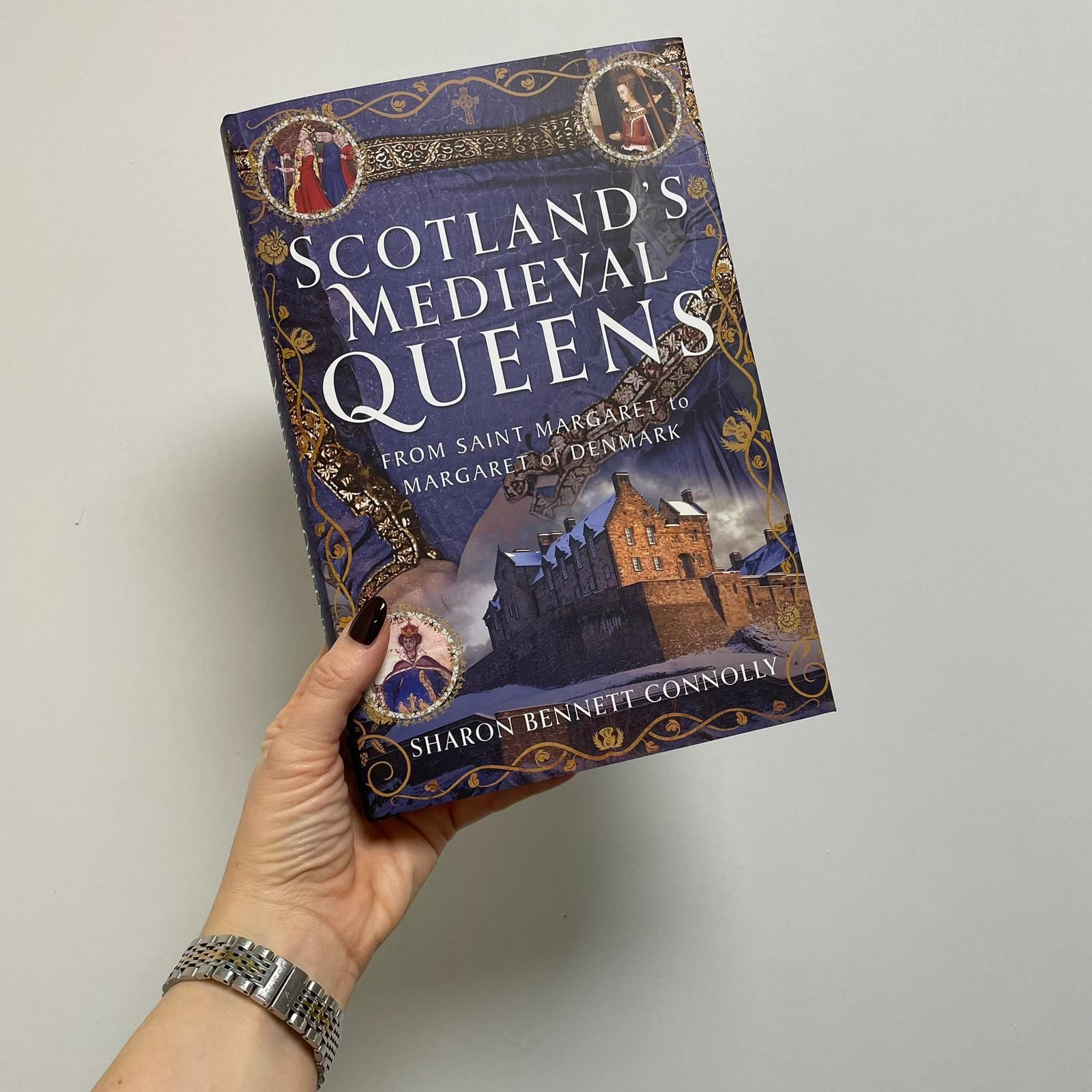
Scotland’s history is dramatic, violent and bloody. Being England’s northern neighbour has never been easy. Scotland’s queens have had to deal with war, murder, imprisonment, political rivalries and open betrayal. They have loved and lost, raised kings and queens, ruled and died for Scotland. From St Margaret, who became one of the patron saints of Scotland, to Elizabeth de Burgh and the dramatic story of the Scottish Wars of Independence, to the love story and tragedy of Joan Beaufort, to Margaret of Denmark and the dawn of the Renaissance, Scotland’s Medieval Queens have seen it all. This is the story of Scotland through their eyes.

Scotland’s Medieval Queens gives a thorough grounding in the history of the women who ruled Scotland at the side of its kings, often in the shadows, but just as interesting in their lives beyond the spotlight. It’s not a subject that has been widely covered, and Sharon is a pioneer in bringing that information into accessible history.’ Elizabeth Chadwick (New York Times bestselling author)

Available now from Amazon and Pen and Sword Books

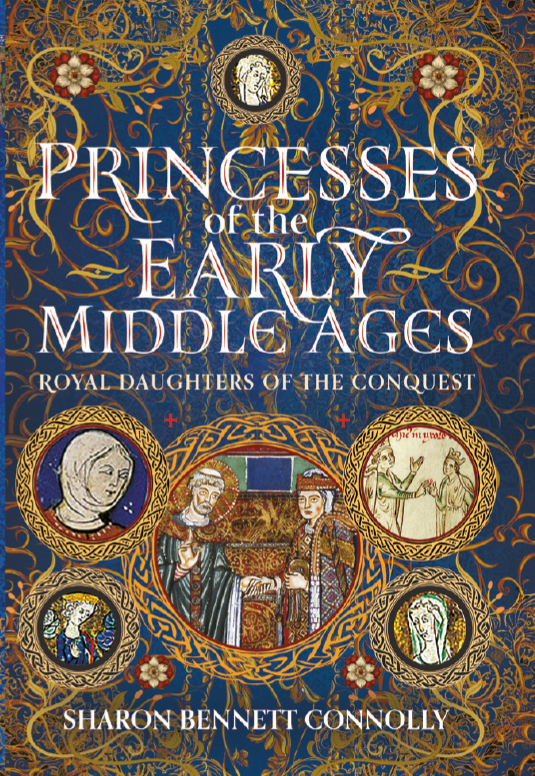
Coming 30 March 2026: Princesses of the Early Middle Ages

Books by Sharon Bennett Connolly

Daughters of kings were often used to seal treaty alliances and forge peace with England’s enemies. Princesses of the Early Middle Ages: Royal Daughters of the Conquest explores the lives of these young women, how they followed the stereotype, and how they sometimes managed to escape it. It will look at the world they lived in, and how their lives and marriages were affected by political necessity and the events of the time. Princesses of the Early Middle Ages will also examine how these girls, who were often political pawns, were able to control their own lives and fates. Whilst they were expected to obey their parents in their marriage choices, several princesses were able to exert their own influence on these choices, with some outright refusing the husbands offered to them.

Their stories are touching, inspiring and, at times, heartbreaking.

Princesses of the Early Middle Ages: Royal Daughters of the Conquest is now available for pre-order.

Also by Sharon Bennett Connolly:

Books by Sharon Bennett Connolly

Heroines of the Tudor World tells the stories of the most remarkable women from European history in the time of the Tudor dynasty, 1485-1603. These are the women who ruled, the women who founded dynasties, the women who fought for religious freedom, their families and love. Heroines of the Tudor World is now available from Amberley Publishing and Amazon UK. Women of the Anarchy demonstrates how Empress Matilda and Matilda of Boulogne, unable to wield a sword themselves, were prime movers in this time of conflict and lawlessness. It shows how their strengths, weaknesses, and personal ambitions swung the fortunes of war one way – and then the other. Available from Bookshop.orgAmberley Publishing and Amazon UKKing John’s Right-Hand Lady: The Story of Nicholaa de la Haye is the story of a truly remarkable lady, the hereditary constable of Lincoln Castle and the first woman in England to be appointed sheriff in her own right. Available from all good bookshops Pen & Sword Booksbookshop.org and Amazon

Royal Historical Society

Defenders of the Norman Crown: The Rise and Fall of the Warenne Earls of Surrey tells the fascinating story of the Warenne dynasty, from its origins in Normandy, through the Conquest, Magna Carta, the wars and marriages that led to its ultimate demise in the reign of Edward III. Available from Pen & Sword BooksAmazon in the UK and US, and Bookshop.orgLadies of Magna Carta: Women of Influence in Thirteenth Century England looks into the relationships of the various noble families of the 13th century, and how they were affected by the Barons’ Wars, Magna Carta and its aftermath; the bonds that were formed and those that were broken. It is now available in paperback and hardback from Pen & SwordAmazon, and Bookshop.orgHeroines of the Medieval World tells the stories of some of the most remarkable women from Medieval history, from Eleanor of Aquitaine to Julian of Norwich. Available now from Amberley Publishing and Amazon, and Bookshop.orgSilk and the Sword: The Women of the Norman Conquest traces the fortunes of the women who had a significant role to play in the momentous events of 1066. Available now from Amazon,  Amberley Publishing, and Bookshop.org.

Alternate Endings: An anthology of historical fiction short stories including Long Live the King… which is my take what might have happened had King John not died in October 1216. Available in paperback and kindle from Amazon.

Podcast:
A Slice of Medieval

Have a listen to the A Slice of Medieval podcast, which I co-host with Historical fiction novelist Derek Birks. Derek and I welcome guests, such as Bernard Cornwell, Elizabeth Chadwick and Scott Mariani, and discuss a wide range of topics in medieval history, from significant events to the personalities involved. 

There are now over 80 episodes to listen to!

Every episode is also now available on YouTube.

*

Don’t forget! Signed and dedicated copies of all my books are available through my online bookshop.

For forthcoming online and in-person talks, please check out my Events Page.

You can be the first to read new articles by clicking the ‘Follow’ button, liking our Facebook page or joining me on TwitterThreadsBluesky and Instagram.

*

©2025 Sharon Bennett Connolly FRHistS and Grace Tierney

Guest Post: Announcing Gothic Precarity by Tim Rideout

History ... the Interesting Bits

Today, it is a pleasure to welcome to History…the Interesting Bits, Dr Tim Rideout. I have known Tim since 2017, when Heroines of the Tudor World came out. He is the ‘go to’ person if you need an interviewer for your literary festival and chaired a panel, which included me, at the Newark Book Festival a few years ago. His first book, ‘Gothic Precarity: Fear and Anxiety in Twenty-First-Century Fiction’ comes out next month.

So, Tim dropped by to tell me a little bit about it.

Announcing Gothic Precarity by Tim Rideout

I’m thrilled to announce the upcoming publication of my new book, ‘Gothic Precarity: Fear and Anxiety in Twenty-First-Century Fiction’, which will be released on 15th September by the University of Wales Press as part of their excellent Gothic Literary Studies series.

This book emerges from a sustained engagement with contemporary fiction that situates the Gothic not simply as a mode of terror or horror, but as a rich cultural register through which the anxieties of our time—social, economic, ecological, and psychological—are exposed and decoded. Over the past two decades, the Gothic has flourished in fiction as a form uniquely attuned to chronic unease, existential threat, and the slow violence of neoliberalism, climate crisis, and systemic collapse.

Why ‘Gothic Precarity’?

The term precarity has become a central keyword in contemporary critical theory, capturing the conditions of instability and insecurity that define life in the early twenty-first century. In my book, I argue that the Gothic offers a distinctive aesthetic and affective vocabulary for exploring those conditions—particularly the entanglement of fear, anxiety, and dread as they permeate everyday life.

Drawing on a wide range of works from authors such as Yiyun Li, Ahmed Saadawi, Silvia Moreno-Garcia, Viet Thanh Nguyen, Diane Cook, and others, Gothic Precarity considers how fiction engages with themes such as economic precarity, racialised violence, climate trauma, and ontological uncertainty. These texts do more than simply represent fear—they perform it, immersing readers in atmospheres of claustrophobia, dread, and instability that mirror our own precarious moments.

Gothic Forms for Precarious Times

Rather than treating the Gothic as a genre of the past, the book rethinks it as a living, evolving mode of cultural critique. It shows how contemporary authors adapt and reconfigure Gothic conventions—hauntings, uncanny spaces, spectral figures, disrupted chronologies—to address the deep unease that defines much of the twenty-first-century experience.

At its heart, Gothic Precarity is a study of how fiction helps us feel, name, and navigate the crises of our time. It’s a book about fear—but also about how fear can become a means of political and ethical awareness, a platform for counter-narratives.

About the book:

Ours is an age of precarity, as fear and anxiety have come to define the twenty-first century. Politically, economically and socially, the neoliberal orthodoxy has become globally dominant and, as a direct result, traditional frameworks of protection have been dismantled, while existential insecurity is increasingly passed from nations and institutions to individuals. In the meantime, the Gothic mode of fiction is experiencing a new ascendancy, strengthening the argument that the Gothic represents the best literary mode with which to decode this age of precarity. In this context, the present study offers a groundbreaking examination of the Gothic mode’s conceptual affinity with notions of neoliberal precarity. Exploring twenty-first-century Gothic fiction’s engagement with the most pressing issues of our age, it considers the oppression and existential entrapment experienced by marginalised populations in the provincial China of the late 1970s, and observes a modern-day Frankenstein’s creature occasion violence and destruction across Baghdad post the 2003 Iraq War. The reader will also discover vampires (representatives of a voracious, toxic economic model) in an alternate Mexico City, encounter a nomadic group traversing the only remaining wilderness in a near-future North America devastated as a result of the climate crisis, and be haunted by a spectral migrant who died in their efforts to flee political oppression in Vietnam.

Pre-Order and More

History ... the Interesting Bits

‘Gothic Precarity: Fear and Anxiety in Twenty-First-Century Fiction’ will be available from the 15th September via the University of Wales Press, Amazon, Waterstones and major retailers. I’ll be sharing more updates, events, and discussions around the book in the coming weeks.

For academics, students, and readers interested in contemporary literature, the Gothic, affect theory, or cultural responses to crisis, I hope this book offers both insight and provocation.

Thank you for reading—and stay tuned for more!

About the author:

Dr Timothy Rideout is a doctoral graduate of the University of Lincoln. He has had a long and successful career in health services leadership.

*

My Books:

Signed, dedicated copies of all my books are available through my online store.

Out now: Scotland’s Medieval Queens

Books by Sharon Bennett Connolly

Scotland’s history is dramatic, violent and bloody. Being England’s northern neighbour has never been easy. Scotland’s queens have had to deal with war, murder, imprisonment, political rivalries and open betrayal. They have loved and lost, raised kings and queens, ruled and died for Scotland. From St Margaret, who became one of the patron saints of Scotland, to Elizabeth de Burgh and the dramatic story of the Scottish Wars of Independence, to the love story and tragedy of Joan Beaufort, to Margaret of Denmark and the dawn of the Renaissance, Scotland’s Medieval Queens have seen it all. This is the story of Scotland through their eyes.

Scotland’s Medieval Queens gives a thorough grounding in the history of the women who ruled Scotland at the side of its kings, often in the shadows, but just as interesting in their lives beyond the spotlight. It’s not a subject that has been widely covered, and Sharon is a pioneer in bringing that information into accessible history.’ Elizabeth Chadwick (New York Times bestselling author)

Available now from Amazon and Pen and Sword Books

Also by Sharon Bennett Connolly:

Books by Sharon Bennett Connolly

Heroines of the Tudor World tells the stories of the most remarkable women from European history in the time of the Tudor dynasty, 1485-1603. These are the women who ruled, the women who founded dynasties, the women who fought for religious freedom, their families and love. Heroines of the Tudor World is now available from Amberley Publishing and Amazon UK. Women of the Anarchy demonstrates how Empress Matilda and Matilda of Boulogne, unable to wield a sword themselves, were prime movers in this time of conflict and lawlessness. It shows how their strengths, weaknesses, and personal ambitions swung the fortunes of war one way – and then the other. Available from Bookshop.orgAmberley Publishing and Amazon UKKing John’s Right-Hand Lady: The Story of Nicholaa de la Haye is the story of a truly remarkable lady, the hereditary constable of Lincoln Castle and the first woman in England to be appointed sheriff in her own right. Available from all good bookshops Pen & Sword Booksbookshop.org and Amazon

Royal Historical Society

Defenders of the Norman Crown: The Rise and Fall of the Warenne Earls of Surrey tells the fascinating story of the Warenne dynasty, from its origins in Normandy, through the Conquest, Magna Carta, the wars and marriages that led to its ultimate demise in the reign of Edward III. Available from Pen & Sword BooksAmazon in the UK and US, and Bookshop.orgLadies of Magna Carta: Women of Influence in Thirteenth Century England looks into the relationships of the various noble families of the 13th century, and how they were affected by the Barons’ Wars, Magna Carta and its aftermath; the bonds that were formed and those that were broken. It is now available in paperback and hardback from Pen & SwordAmazon, and Bookshop.orgHeroines of the Medieval World tells the stories of some of the most remarkable women from Medieval history, from Eleanor of Aquitaine to Julian of Norwich. Available now from Amberley Publishing and Amazon, and Bookshop.orgSilk and the Sword: The Women of the Norman Conquest traces the fortunes of the women who had a significant role to play in the momentous events of 1066. Available now from Amazon,  Amberley Publishing, and Bookshop.org.

Alternate Endings: An anthology of historical fiction short stories including Long Live the King… which is my take what might have happened had King John not died in October 1216. Available in paperback and kindle from Amazon.

Podcast:

A Slice of Medieval

Have a listen to the A Slice of Medieval podcast, which I co-host with Historical fiction novelist Derek Birks. Derek and I welcome guests, such as Bernard Cornwell and Michael Jecks, and discuss a wide range of topics in medieval history, from significant events to the personalities involved. 

Every episode is also now available on YouTube.

*

Don’t forget! Signed and dedicated copies of all my books are available through my online store.

For forthcoming online and in-person talks, please check out my Events Page.

You can be the first to read new articles by clicking the ‘Follow’ button, liking our Facebook page or joining me on TwitterThreadsBluesky and Instagram.

*

©2025 Sharon Bennett Connolly FRHistS and Dr Tim Rideout

Guest Post: Inside the Book Trade of Late Medieval London by Toni Mount

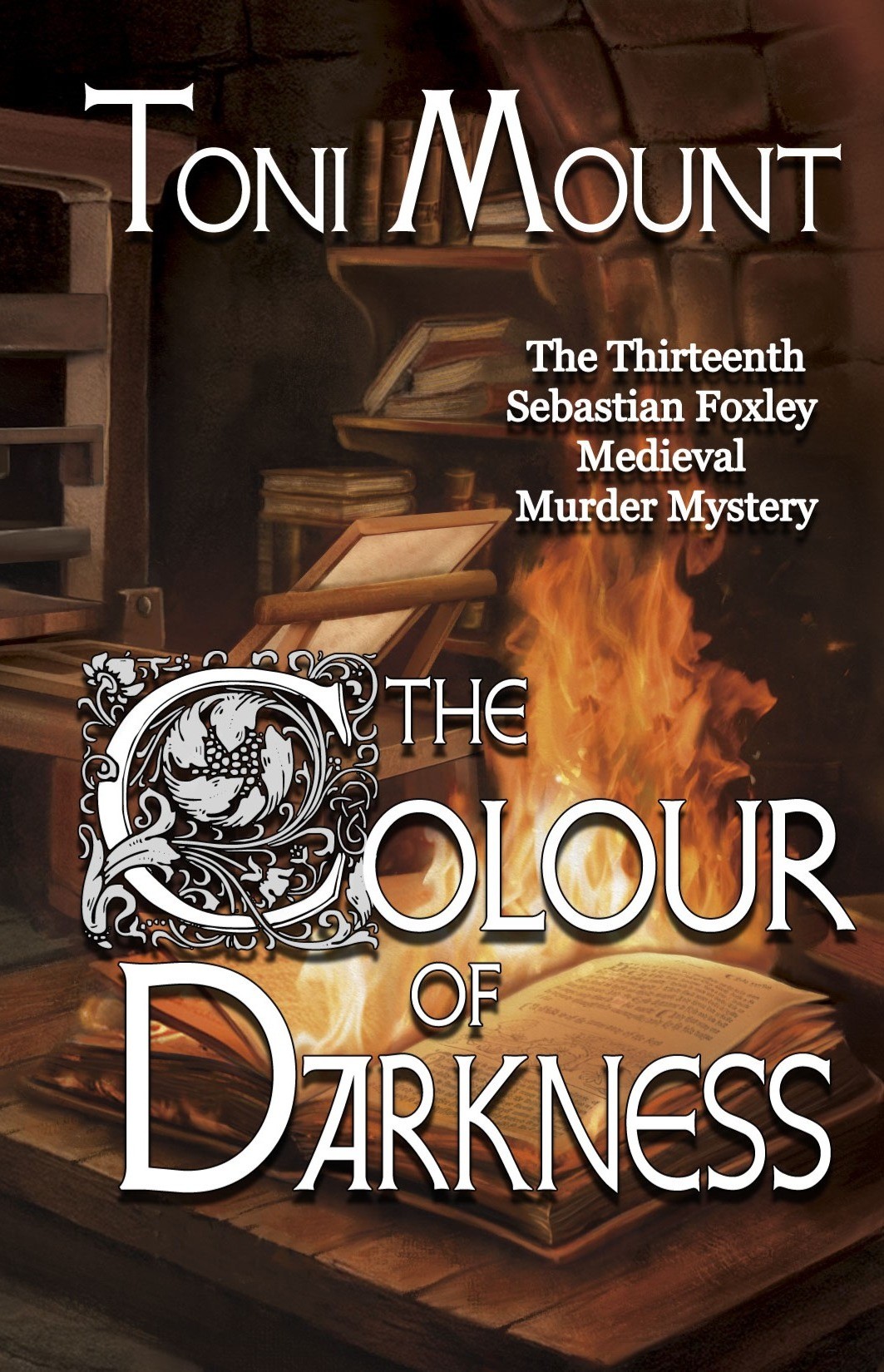
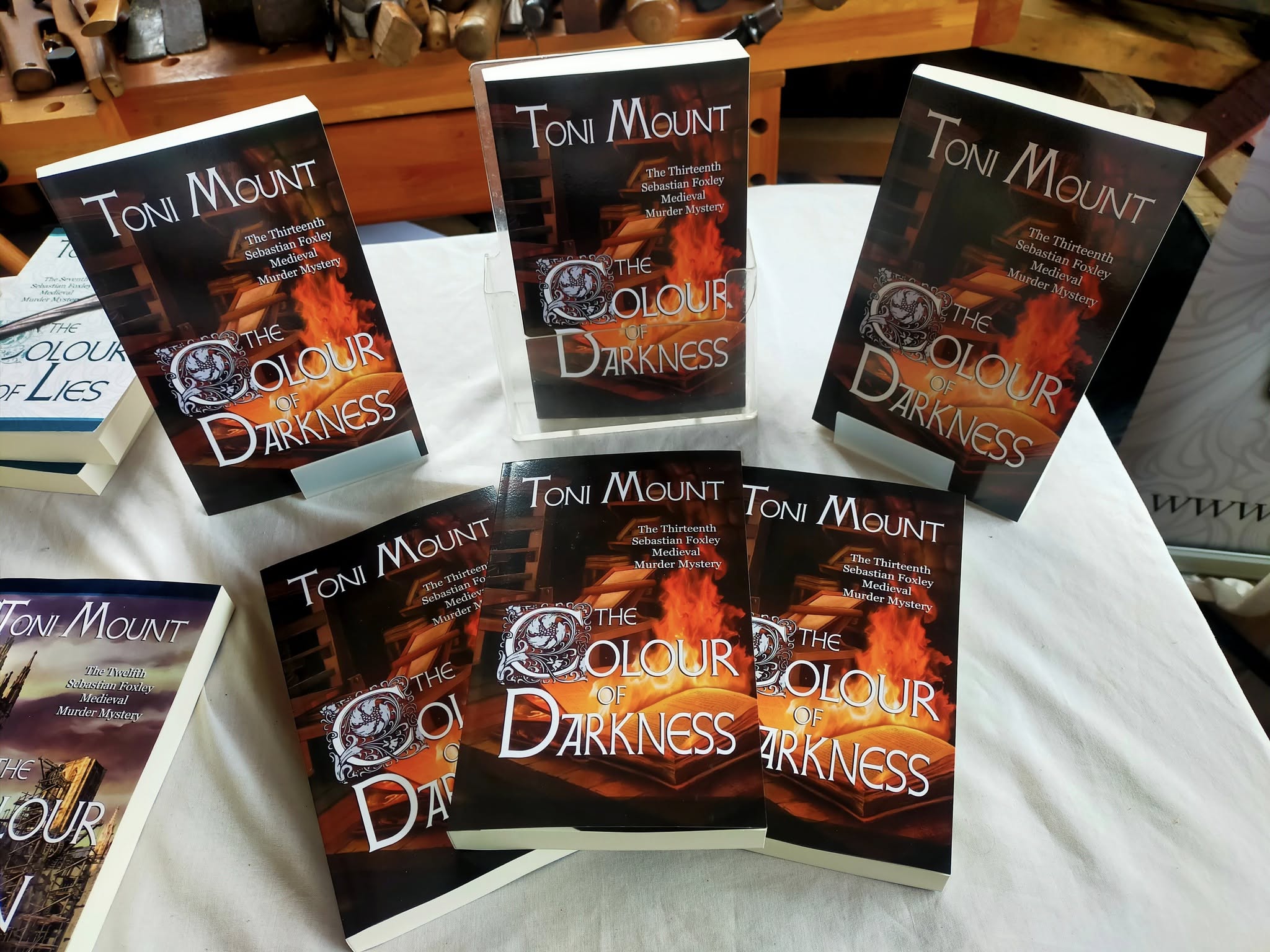
It is always a pleasure to welcome Toni Mount to History … the Interesting Bits. Toni is a brilliant historian and born storyteller and she is here today to give a glimpse of the history behind her latest Seb Foxley novel, The Colour of Darkness. If you haven’t met him yet, I really do recommend you pick up a Foxley book. They are simply delicious!

So, it’s over to Toni…

Inside the Book Trade of Late Medieval London

History ... the Interesting Bits

When we think about medieval London, we probably imagine grimy streets, plague and maybe a knight or two clanking through the city. But tucked within the chaos was a quiet revolution – one involving paper, ink and a growing thirst for knowledge. By the late 1400s, the book trade in London wasn’t just alive; it was thriving. And at the heart of it all stood St Paul’s Cathedral – not just a place of worship, but a book-fest for the city’s literate elite.

To put this in context, the printing press arrived in England when William Caxton famously set up the first one at Westminster in 1476 and the world of books was changing fast. Previously, books were hand-copied by scribes – as at the fictional Seb Foxley’s workshop in Paternoster Row, just north of St Paul’s, in my latest novel, The Colour of Darkness. Writing every page by hand meant they were expensive and slow to produce. But then came the printing press – a real game-changer.

Printing took a decade or two to catch on in England, mainly because it was a tricky procedure to master – see my next guest Blog on printing books – but once the techniques were established books could be produced faster and cheaper. More books available led to an increase in literacy, especially among the urban middle classes, clergy and educated elite. London, with its bustling population and growing trade networks, became a prime spot for this new business.

St Paul’s Cathedral: The Book Trade’s Beating Heart

History ... the Interesting Bits
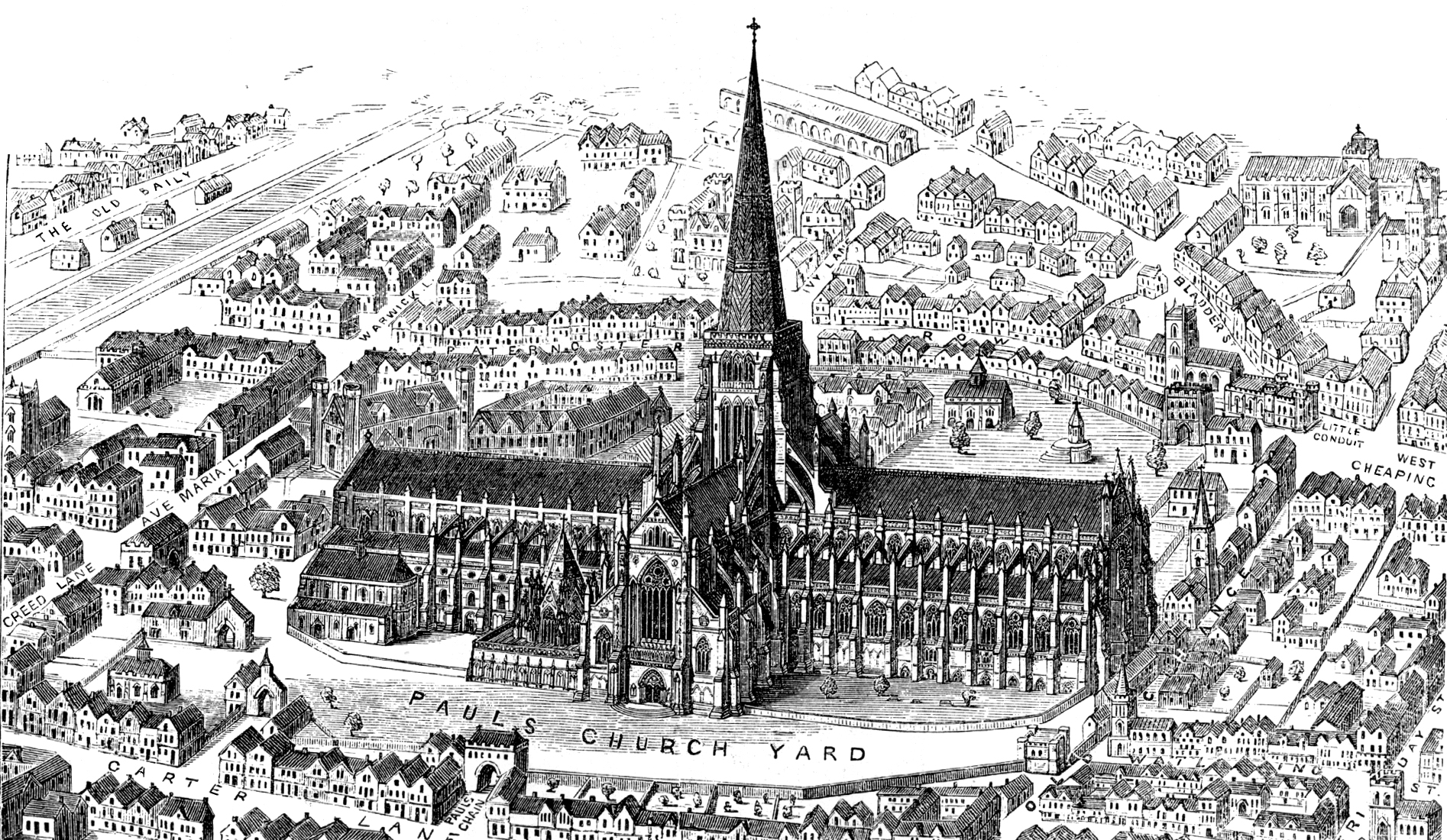
Old St Paul’s, from Francis Bond, Early Christian Architecture 1913

Forget the grand white dome you see today in the City of London because that was designed by Sir Christopher Wren after the Great Fire of 1666. Before that catastrophe, it was ‘Old St Paul’s’, a massive gothic structure that dominated the skyline with a spire over 400 feet tall, at least until it was struck by lightning in the reign of Elizabeth I. Its precinct and churchyard weren’t just for prayer and pigeons but, together with nearby Paternoster Row, were at the very centre of London’s book trade. In fact, Paternoster Row remained at the heart of the British publishing industry until it was destroyed by bombs during World War II.

But returning to the late fifteenth century, imagine a lively courtyard filled with wooden stalls, booksellers shouting out their latest wares, customers thumbing through new pamphlets and prayer books. The area around St Paul’s was known for its ‘stationers’ – a term that, back then, didn’t just mean a place to buy paper and pens. These were the printers, booksellers, and binders who brought the written word to the people.

Why did St Paul’s become such a hive of book-production? The cathedral’s proximity to learning helped. The Cathedral School and other educational institutions were nearby, including the Inns of Court to the west of the city where lawyers were trained and the sons of the aristocracy were schooled in the arts required for life at the royal court. The clergy needed books for sermons, study and teaching, so local demand was ensured.

Who were the Printers?

By the 1480s, London had a small but important group of professional printers. William Caxton deserves the spotlight since he was the first to introduce a press, having learned the business in Burgundy and the Low Countries. His press in Westminster produced some of the first books in English, making literature and religious texts more accessible to the public. After Caxton, his former assistant, Wynkyn de Worde, took over the operation and moved it closer to the action, by St Paul’s. De Worde knew the churchyard was where the customers would come. He printed everything from devotional tracts to almanacs and even the occasional romance or how-to guide. He’s sometimes credited with being one of the first to market printed books to a wider audience.

But printers, like the scribes before them, didn’t only create the pages. They often collated and stitched the pages before either binding them or passing them on to a specialist binder to stitch the pages into a cover. A book’s binding could range from simple stitched parchment to elaborately tooled leather with jewelled clasps. The wealthy might commission personalised bindings with their family crests. The printers often dealt with sales too or went into partnership with independent booksellers. These sellers might have a permanent stall near St Paul’s or be mobile, setting up shop at fairs or markets – wherever there were customers.

What was on the shelves?

So what were Londoners reading? A lot of religious texts, unsurprisingly: sermons, Books of Hours, Psalters and the lives of popular saints. The Church was a dominant force in everyday life and owning religious books was a sign of piety and status. For this reason, the new fashion of portrait painting would frequently show the sitter with a religious book in their hands. But secular works were creeping in, too. Translations of classical texts, histories, medical manuals and even cookbooks began to appear. One popular genre was that of ‘books of courtesy’ – guides to correct behaviour, speech and etiquette for the aspiring gentleman or gentlewoman. There were also the early English romances and poetry. Caxton and de Worde printed tales of King Arthur, Chaucer’s Canterbury Tales and other stories that helped shape English literary culture down to our own times.

Not only Men’s work

While the big names in printing were all men, there is increasing evidence that women played a quiet but important role in the trade. Widows who took over their husbands’ businesses often became successful printers or booksellers in their own right. The trade was one area in medieval commerce where women participated openly, though their contributions often went under-recorded.

Censorship and Control

Of course, not everyone was thrilled about the explosion of printed material. The Church and the Crown kept a watchful eye on the presses. Unauthorised texts, especially those seen as heretical or politically subversive – such as the Ars Notoria in The Colour of Darkness – could get a printer, stationer or book seller into trouble. The Stationers’ Company, officially incorporated in 1557 but already in existence in the fifteenth century to oversee the production of hand-written books, would help regulate who could print what when printing eventually came under its umbrella.

By the early 1500s, the London book trade was setting the stage for what would become a publishing powerhouse in later centuries. It was local but also international, connected by trade routes that brought in books and ideas from France, the Low Countries and beyond. Some of the early printers, like Wynkyn de Worde, brought their foreign know-how to the new trade. The stalls around St Paul’s would continue to be a hub for centuries, long after the old cathedral itself was gone. In fact, it’s reckoned that one reason why the building burned so ferociously during the Great Fire of 1666 was that the printers and stationers stored their stocks of paper and books in St Faith’s Chapel in the cathedral’s undercroft – a disaster just waiting to happen.

The people who browsed there – the scholars, preachers, merchants, citizens and maybe a curious apprentice or two – were part of a quiet revolution, one that transformed how knowledge spread and who had access to it.

So next time you think about medieval London, picture not just mud and markets but a vibrant little world of booksellers shouting above the crowd, customers thumbing through the latest printed pamphlets and the great gothic walls of St Paul’s towering above it all. The presses may have been small but their impact was monumental.

About the book:

History ... the Interesting Bits

My new Sebastian Foxley novel, The Colour of Darkness, transports readers to midsummer 1480, in medieval London where our hero has to solve a number of serious crimes, involving Master Caxton’s printing business, ‘suspect’ books and witchcraft. London is ready for a joyous festivity but, for some, there is nothing to celebrate when Death stalks the city’s sweltering streets. As livelihoods are brought to ruin and trust withers in the heat, our hero and artist-cum-sleuth discovers trouble has come to his own doorstep. Plague rears its hideous head; fire, theft and disease imperil the citizens.

Meanwhile, a beautiful young woman enchants the men of London and the mob shrieks that witchcraft is to blame when waxen dolls, spiked with pins, are discovered. With such horrors in his possession and discovering that guilt lies too close at hand, can Seb unravel the mysteries and save those he loves before it’s too late?

Join Seb Foxley in this intriguing and danger-riddled new adventure, The Colour of Darkness, out now from MadeGlobal.  

Buy The Colour of Darkness

About the Author:

History ... the Interesting Bits

Toni studies, teaches and writes about medieval history. She is a successful author writing the popular Sebastian Foxley medieval murder series and several non-fiction volumes, including her collection of How to Survive in books. She has created several online courses for http://www.MedievalCourses.com, she teaches history to adults and is an experienced speaker giving talks to groups and societies. Toni enjoys attending history events as a costumed interpreter and is a member of the Research Committee of the Richard III Society.

Toni earned her Masters Degree by Research from the University of Kent in 2009 through study of a medieval medical manuscript held at the Wellcome Library in London. Her first-class honours degree, Diploma in Literature and Creative Writing and her Diploma in European Humanities are from the Open University. Toni also holds a Cert. Ed (in Post-Compulsory Education and Training) from the University of Greenwich.

Find Toni Mount’s books here

Find Toni on Social Media:

AmazonWebsiteSeb Foxley websiteFacebookMedieval England FacebookSeb Foxley FacebookTwitter

*

My books

Signed, dedicated copies of all my books are available through my online store.

Out now: Scotland’s Medieval Queens

Books by Sharon Bennett Connolly

Scotland’s history is dramatic, violent and bloody. Being England’s northern neighbour has never been easy. Scotland’s queens have had to deal with war, murder, imprisonment, political rivalries and open betrayal. They have loved and lost, raised kings and queens, ruled and died for Scotland. From St Margaret, who became one of the patron saints of Scotland, to Elizabeth de Burgh and the dramatic story of the Scottish Wars of Independence, to the love story and tragedy of Joan Beaufort, to Margaret of Denmark and the dawn of the Renaissance, Scotland’s Medieval Queens have seen it all. This is the story of Scotland through their eyes.

Scotland’s Medieval Queens gives a thorough grounding in the history of the women who ruled Scotland at the side of its kings, often in the shadows, but just as interesting in their lives beyond the spotlight. It’s not a subject that has been widely covered, and Sharon is a pioneer in bringing that information into accessible history.’ Elizabeth Chadwick (New York Times bestselling author)

Available now from Amazon and Pen and Sword Books

Also by Sharon Bennett Connolly:

Books by Sharon Bennett Connolly

Heroines of the Tudor World tells the stories of the most remarkable women from European history in the time of the Tudor dynasty, 1485-1603. These are the women who ruled, the women who founded dynasties, the women who fought for religious freedom, their families and love. Heroines of the Tudor World is now available for pre-order from Amberley Publishing and Amazon UK. Women of the Anarchy demonstrates how Empress Matilda and Matilda of Boulogne, unable to wield a sword themselves, were prime movers in this time of conflict and lawlessness. It shows how their strengths, weaknesses, and personal ambitions swung the fortunes of war one way – and then the other. Available from Bookshop.orgAmberley Publishing and Amazon UKKing John’s Right-Hand Lady: The Story of Nicholaa de la Haye is the story of a truly remarkable lady, the hereditary constable of Lincoln Castle and the first woman in England to be appointed sheriff in her own right. Available from all good bookshops Pen & Sword Booksbookshop.org and Amazon

Royal Historical Society

Defenders of the Norman Crown: The Rise and Fall of the Warenne Earls of Surrey tells the fascinating story of the Warenne dynasty, from its origins in Normandy, through the Conquest, Magna Carta, the wars and marriages that led to its ultimate demise in the reign of Edward III. Available from Pen & Sword BooksAmazon in the UK and US, and Bookshop.orgLadies of Magna Carta: Women of Influence in Thirteenth Century England looks into the relationships of the various noble families of the 13th century, and how they were affected by the Barons’ Wars, Magna Carta and its aftermath; the bonds that were formed and those that were broken. It is now available in paperback and hardback from Pen & SwordAmazon, and Bookshop.orgHeroines of the Medieval World tells the stories of some of the most remarkable women from Medieval history, from Eleanor of Aquitaine to Julian of Norwich. Available now from Amberley Publishing and Amazon, and Bookshop.orgSilk and the Sword: The Women of the Norman Conquest traces the fortunes of the women who had a significant role to play in the momentous events of 1066. Available now from Amazon,  Amberley Publishing, and Bookshop.org.

Alternate Endings: An anthology of historical fiction short stories including Long Live the King… which is my take what might have happened had King John not died in October 1216. Available in paperback and kindle from Amazon.

Podcast:

A Slice of Medieval

Have a listen to the A Slice of Medieval podcast, which I co-host with Historical fiction novelist Derek Birks. Derek and I welcome guests, such as Bernard Cornwell and discuss a wide range of topics in medieval history, from significant events to the personalities involved.

Every episode is also now available on YouTube.

*

Don’t forget! Signed and dedicated copies of all my books are available through my online bookshop.

For forthcoming online and in-person talks, please check out my Events Page.

You can be the first to read new articles by clicking the ‘Follow’ button, liking our Facebook page or joining me on TwitterThreadsBluesky and Instagram.

*

©2025 Sharon Bennett Connolly, FRHistS and Toni Mount
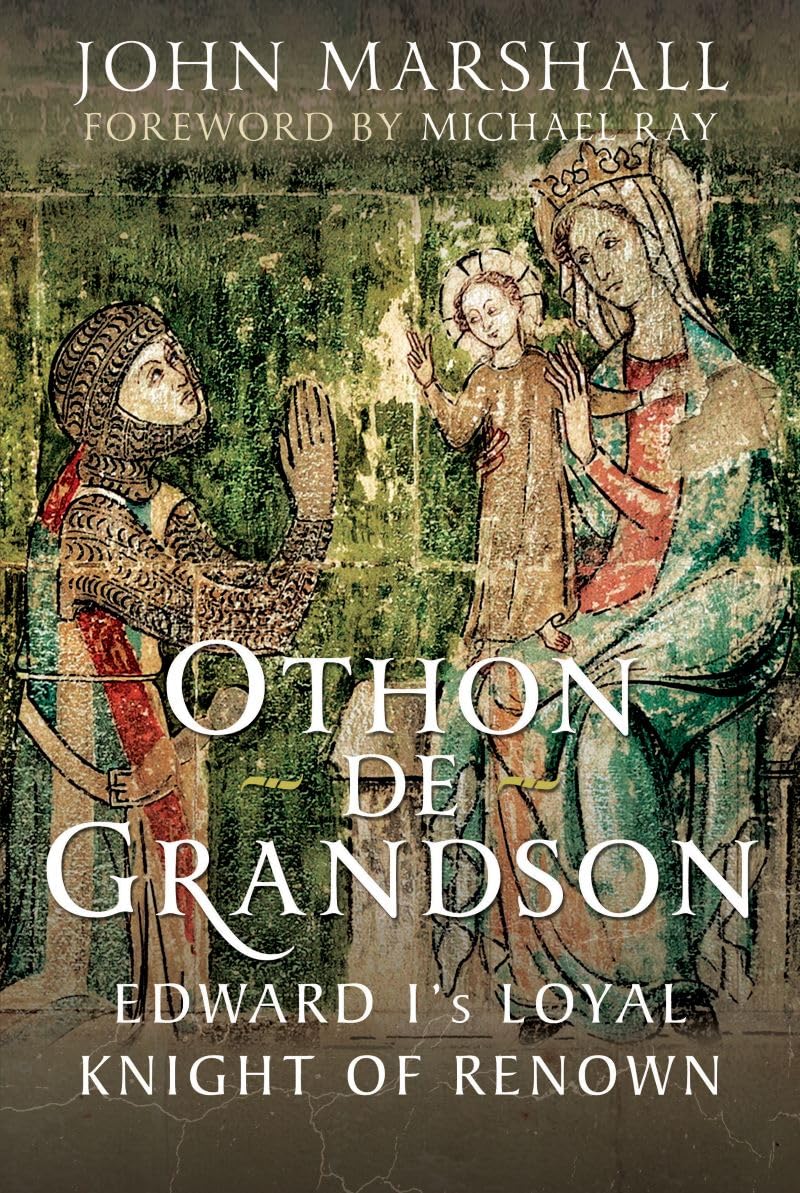
Guest Post: Othon and the Templars by John Marshall

Today, it is a pleasure to welcome John Marshall to History…the Interesting Bits with an article about a very intriguing chap, Othon de Grandson. Othon was a very good friend of Edward I and one who could arguably challenge William Marshal for the title, Greatest Knight. John’s new book is a biography of this remarkable man.

So, over to John…

Othon and the Templars

History  the Interesting Bits
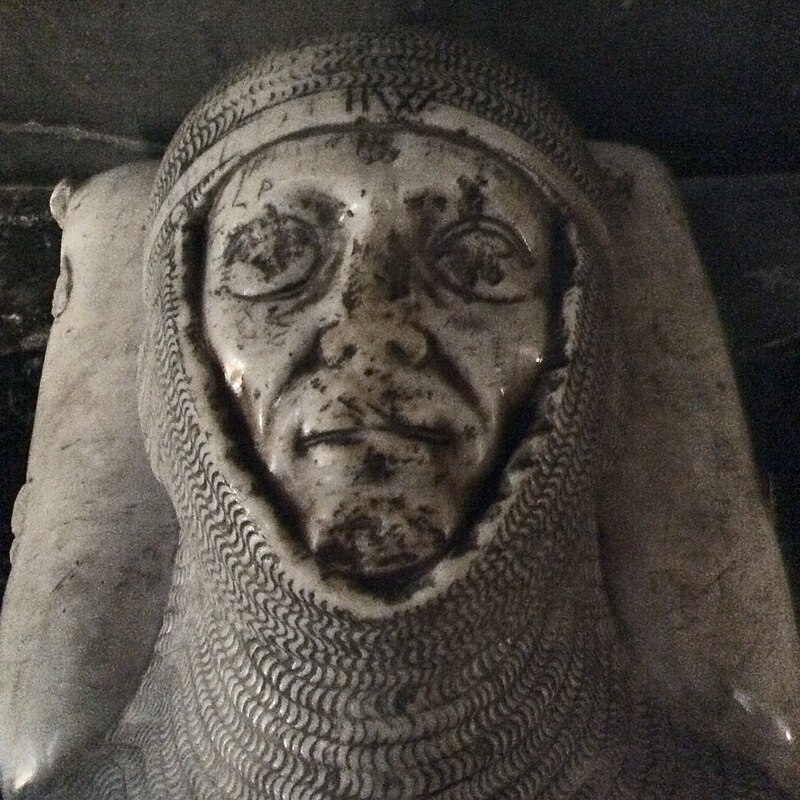
Othon de Grandson from an altar screen from the Cathedral in Lausanne now displayed in the Bern Historic Museum.

A question I asked myself in writing Othon de Grandson: Edward I’s Loyal Knight of Renown was exactly what was the Savoyard knight’s relationship with the Knights Templar? The relationship of Edward’s friend and envoy with the Poor Fellow Soldiers of Christ and of the Temple of Solomon is a long one and indeed began over a century before he was born.

Othon’s ancestor Barthélémy de Jura, treasurer of Reims, then Bishop of Laon in Picardy, was there at the very beginning of the crusader order. Barthélémy was at the 1128 Council of Troyes, chaired by Bernard of Clairvaulx which ratified the rule of the the Templars. He was a kinsman, through his mother, of Bernard of Clairvaulx, and would later retire as a monk to the Cistercian abbey he helped found at Foigny. Another ancestor was another Barthélémy who took up the cross and joined the Second Crusade. He is reported to have departed this life in Jerusalem in 1158.

So, when Othon de Grandson accompanied his liege the Lord Edward on the ninth crusade in 1271 his family was no stranger to crusading.

But the story of Othon de Grandson’s close association with the Templars begins in earnest with his flight from Acre accompanying Templar knight Jacques de Molay in 1291. Grandson had likely been sent to Acre in 1290 as preparation for a crusade by King Edward I that never came to pass. They were all overtaken by Al Ashraf Khalil, the sultan of Egypt who successfully led a Mamluk assault on the last crusader outpost in Outremer. King Henry II of Cyprus, the gravely wounded Master of the Hospitallers Jean de Villiers, the soon-to-be Master of the Templars, Jacques de Molay and Othon de Grandson washed up on the shore of Cyprus as refugees from Acre. The Templars were in need of a new Grand Master, and it is said that Othon de Grandson was “involved” in the election of Jacques de Molay.

The former Templar Commanderie at Épailly in Burgundy which passed to Othon on the Templars suppression.

The idea of being ‘involved’ came from a declaration given later during the suppression of the order; a Templar, Hugh de Fauro, gave testimony that Jacques de Molay had sworn before the Master of the Hospital and ‘coram domino Odone de Grandisono milite’ that is ‘before the knight Sir Othon de Grandson.’ We then hear from Hethum of Corycus that Grandson and Jacques de Molay, had had a hand in affairs and the better reordering of the kingdom of Cillician Armenia to meet the Mamluk threat and preserve it as a base for ongoing crusading ventures. Grandson’s relationship with Molay and the Templars does seem to stem from this time at Acre, on Cyprus and in Armenian Cilicia between 1291 and 1294.

We then meet the financial entanglement of grandson with the Templars. Evidence of this comes not only from payments from the Templars to Grandson but also grants in the other direction. When both Molay and Grandson were back in the west, on 14 July 1296, Othon would grant the Templars 200 Livres from his salt revenues at Salins-les-Bains in the Franche Comté, a source of revenue he had used to similarly grant the monks of Saint-Jean Baptiste in Grandson before he had left for the

Holy Land. The first grant was in essence for prayers of safe return; the second grant looks like thanks for a safe return. The great salt works of Salins belonged to the Count of Burgundy; they were also known as the Seigneurs de Salins, and the works and its grander enlightenment era equivalent today enjoy UNESCO-listed status. The grant to the Templars was in consideration of the great help Othon had received from ‘mes chiers amis en dieu freres Jaques de Molai’, that is, ‘my dear friend in God brother Jacques de Molay’ and he referred to the help which ‘li freres du celle meismes Relegion ont fait a mes accessors, e a moi deca mer et de la mer en la sainte terre e ne cesse encore de faire’ or ‘the brethren of that same order have given to my ancestors and to myself in the West and in the East in the Holy Land, and still continue to give’. His reference to his anccessurs is likely to mean Barthélémy de Grandson who had, as we saw, died in 1158 in Jerusalem.

History the Interesting Bits
Templar Commanderie at Épailly in Burgundy

The reverse Templar ongoing and enormous financial commitment to Grandson is confirmed to us in a papal confirmation of 17 August 1308 by Pope Clement V. Upon suppression of the order Grandson was keen, obviously, that Templar payments continue, since they were the tremendous annual sum of 2,000 Livres Tournois, equating to £500 at the time, and over £350,000 in today’s money. The pension arrangement was made by a Grand Master, named as Jacques de Molay, and variously dated to 1277, 1287 or 1296–97. French Templar historian Alain Demurger wrote: ‘Fault lay with the editor of Clement V’s records … The editor put the date 1277, while M. L. Bulst-Thiele transcribed it as 1297, whereas the original, very clearly and without abbreviations or deletions says 1287.’ In his notes to this assertion, he cites the Vatican Archives date as ‘Anno millesimo duecentesimo octuagesimo septimo’ or ‘In the year one thousand two hundred and eighty-seven.’

Now of course Molay did not succeed Beaujeu until 1292, which renders the dating of the award problematic. Demurger suggested that it was not Molay who made the award despite specific reference to him ‘Jacobus de Mollay’, but his predecessor Beaujeu – in short, that the date was correct but the master’s name incorrect. Alan Forey argued the contrary, writing that it was: ‘more likely that the grant was made by James of Molay and that the date was wrongly copied’. Given, Molay’s 1292 election as Grand Master this would suggest 1296–97 – in short, the date was incorrect, but the master’s name correct. Demurger acknowledged in his notes that ‘a new problem arose … Grandson and the Temple were already connected in 1287: where, how and for what reason?’ Indeed, Demurger’s dating would create such questions, while Forey’s dating would place them squarely in the context of the Fall of Acre and his time in the east with Molay. This ‘compensare’ was given by the The Templars for ‘operibus virtuosis’ or ‘virtuous actions’ rendered by Othon in support of the order, but surely more likely post-Fall of Acre than before.

Templar Commanderie at Épailly in Burgundy

In confirmation of the pension, Clement V granted Othon three former Templar houses in France as a part of the continuing settlement, those at Thors, Épailly and Coulours, an act unlikely to have been undertaken at the time in favour of a knight of the order. And so, the ‘virtuous works’ referred to by Pope Clement would appear to date from Grandson’s time in Acre in 1291. So, the date of 1277 attached to the payments by the transcription of them is certainly mistaken, and for the 1287 dating of the original 1308 manuscript we should read 1296–97. Demurger gives 1296 clearly as the date for Molay meeting with Grandson in Paris and the Salins grant. Othon de Grandson’s intimate links with the Templars continue to intrigue, but in Cyprus and Armenia 1292-4, as at Acre in 1291, and here with his pension payments they point to a significant and close ally in matters Outremer rather than a member of the order itself, of which there is no mention.

Grandson, was a close friend of the Templars, having fought alongside them at Acre in 1291, been there in Cyprus as a part of Molay’s election as Grand Master, and in receipt of a handsome annual pension from the order. So, at Philippe ke Bel’s suppression of the order and Molay’s arrest and the rumours swirling around France, the scandal would have touched directly upon him. But at no point can we find Grandson implicated in events, other than petitioning Pope Clement for the maintenance of his pension. But nowhere too can we find him leaping to the defence of Molay, his former friend and ally, at least not in a way that has left any trace. As Demurger said in conversation with the author of this book, Grandson did not try to defend Molay. A character flaw? Demurger went to affirm that one cannot speculate about possible motives, Grandson was by now seventy years of age, had discretion become the greater part of valour?

History the Interesting Bits
Templar Commanderie at Épailly in Burgundy

It is because of his avoidance of implication in the suppression of the Templars, that despite his Templar connections, we can be as certain as certain can be that Othon de Grandson was a friend, ally, indeed fellow traveller of the Templars, but not actually a member of the doomed order, As Alain Demurger said unequivocally to the question, was Grandson a Templar? – Non. What were the enormous payments from the Templars to Othon de Grandson for? What were the “operibus virtuosis”? It’s only speculation but what did Grandson have that might be valuable to the Order? – access better than anyone to Edward I’s ear and access to the English court.

*

About the Book:

History  the Interesting Bits

There were once two little boys – they met when they were both quite young; one was born in what’s now Switzerland, by Lake de Neuchâtel, his name Othon de Grandson, and the other was born in London, his name Prince Edward, son of King Henry the third of that name. Othon was probably born in 1238, and Edward, we know, in June 1239. These two little boys grew up and had adventures together. They took the cross together, the ninth crusade in 1271 and 1272. Othon reputedly sucking poison from Edward when the latter was attacked by an assassin. In 1277 and 1278, they fought the First Welsh War against the House of Gwynedd, Othon doing much to negotiate the Treaty of Aberconwy in 1278, which ended hostilities. When war broke out again in 1282 they fought the Second Welsh War together. Othon led Edward’s army across the Bridge of Boats from Anglesey and was the first to sight the future sites of castles at Caernarfon and Harlech. Edward made his friend the first Justiciar (Viceroy) of North Wales. When Edward and Othon went to Gascony in 1287, Othon stayed in Zaragoza as a hostage for Edward’s good intentions between Gascony and Castille.  Later, in 1291, when Acre was threatened by the Mamluks, Edward sent Othon as head of the English delegation of knights. When Acre finally fell to the Mamluks bringing the Crusades to a close, who was the last knight onto the boats? Othon de Grandson, helping his old friend, the wounded Jean de Grailly onto the boat. When Othon returned from the East, he found England at war with Scotland and France; he would spend his last years in Edward’s service building alliances and negotiating peace before retiring to his home in what is now Switzerland after the king’s death in 1307. Grandson lived in the time of Marco Polo, Giotto, Dante, Robert the Bruce, and the last Templars. He was right there at the centre of the action in two crusades: war with Wales, Scotland, and France, the Sicilian Vespers, and suppression of the Templars; he walked with a succession of kings and popes, a knight of great renown. This is his story.

Othon de Grandson: Edward I’s Loyal Knight of Renown is available now from Amazon.

About the Author:

History  the Interesting Bits

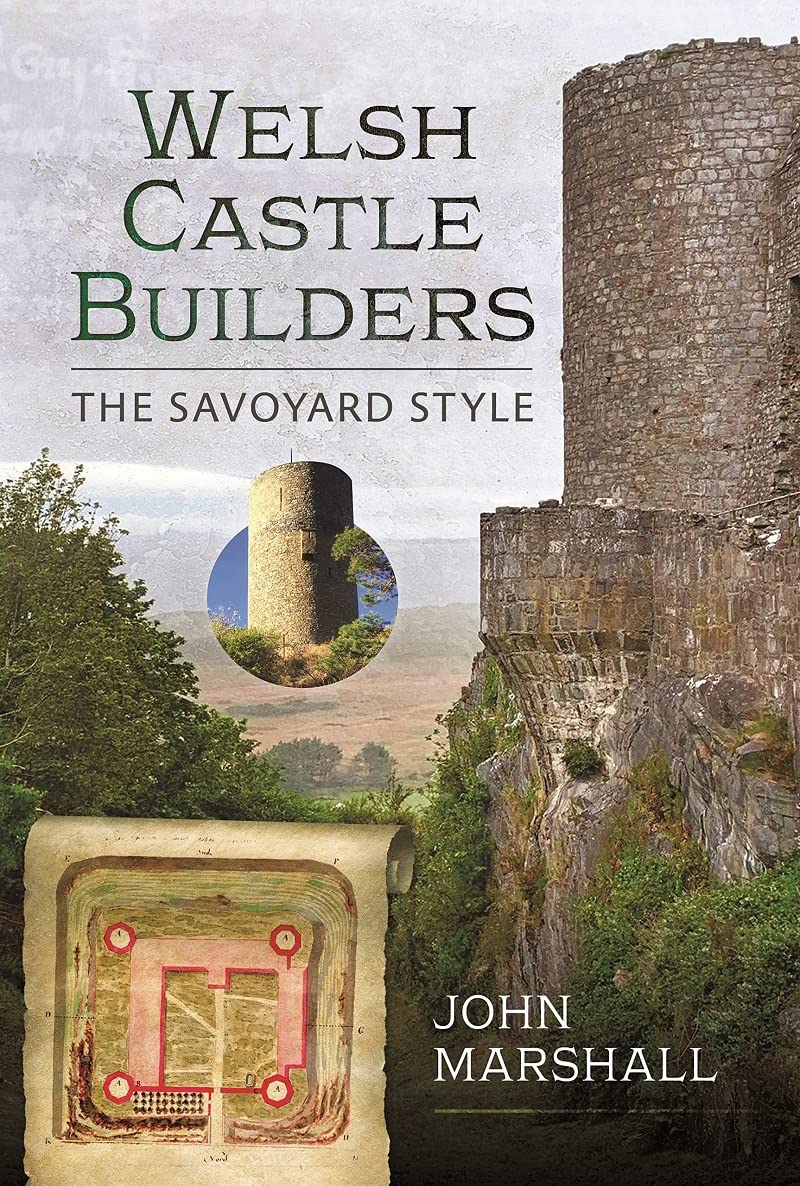
Having moved to Switzerland, and qualified as a historian (Masters, Northumbria University, 2016), the author came across the story of the Savoyards in England and engaged in this important history research project. He founded the Association pour l’histoire médiévale Anglo Savoyards. Writer of Welsh Castle Builders: The Savoyard Style and Peter of Savoy: The Little Charlemagne both available from Pen and Sword Books Ltd. Member of the Henry III Roundtable with Darren Baker, Huw Ridgeway and Michael Ray.

*

My Books

Signed, dedicated copies of all my books are available through my online bookshop.

Out now: Scotland’s Medieval Queens

Books by Sharon Bennett Connolly

Scotland’s history is dramatic, violent and bloody. Being England’s northern neighbour has never been easy. Scotland’s queens have had to deal with war, murder, imprisonment, political rivalries and open betrayal. They have loved and lost, raised kings and queens, ruled and died for Scotland. From St Margaret, who became one of the patron saints of Scotland, to Elizabeth de Burgh and the dramatic story of the Scottish Wars of Independence, to the love story and tragedy of Joan Beaufort, to Margaret of Denmark and the dawn of the Renaissance, Scotland’s Medieval Queens have seen it all. This is the story of Scotland through their eyes.

Scotland’s Medieval Queens gives a thorough grounding in the history of the women who ruled Scotland at the side of its kings, often in the shadows, but just as interesting in their lives beyond the spotlight. It’s not a subject that has been widely covered, and Sharon is a pioneer in bringing that information into accessible history.’ Elizabeth Chadwick (New York Times bestselling author)

Available now from Amazon and Pen and Sword Books

Also by Sharon Bennett Connolly:

Books by Sharon Bennett Connolly

Heroines of the Tudor World tells the stories of the most remarkable women from European history in the time of the Tudor dynasty, 1485-1603. These are the women who ruled, the women who founded dynasties, the women who fought for religious freedom, their families and love. Heroines of the Tudor World is now available for pre-order from Amberley Publishing and Amazon UK. Women of the Anarchy demonstrates how Empress Matilda and Matilda of Boulogne, unable to wield a sword themselves, were prime movers in this time of conflict and lawlessness. It shows how their strengths, weaknesses, and personal ambitions swung the fortunes of war one way – and then the other. Available from Bookshop.orgAmberley Publishing and Amazon UKKing John’s Right-Hand Lady: The Story of Nicholaa de la Haye is the story of a truly remarkable lady, the hereditary constable of Lincoln Castle and the first woman in England to be appointed sheriff in her own right. Available from all good bookshops Pen & Sword Booksbookshop.org and Amazon

Royal Historical Society

Defenders of the Norman Crown: The Rise and Fall of the Warenne Earls of Surrey tells the fascinating story of the Warenne dynasty, from its origins in Normandy, through the Conquest, Magna Carta, the wars and marriages that led to its ultimate demise in the reign of Edward III. Available from Pen & Sword BooksAmazon in the UK and US, and Bookshop.orgLadies of Magna Carta: Women of Influence in Thirteenth Century England looks into the relationships of the various noble families of the 13th century, and how they were affected by the Barons’ Wars, Magna Carta and its aftermath; the bonds that were formed and those that were broken. It is now available in paperback and hardback from Pen & SwordAmazon, and Bookshop.orgHeroines of the Medieval World tells the stories of some of the most remarkable women from Medieval history, from Eleanor of Aquitaine to Julian of Norwich. Available now from Amberley Publishing and Amazon, and Bookshop.orgSilk and the Sword: The Women of the Norman Conquest traces the fortunes of the women who had a significant role to play in the momentous events of 1066. Available now from Amazon,  Amberley Publishing, and Bookshop.org.

Alternate Endings: An anthology of historical fiction short stories including Long Live the King… which is my take what might have happened had King John not died in October 1216. Available in paperback and kindle from Amazon.

Podcast:

A Slice of Medieval

Have a listen to the A Slice of Medieval podcast, which I co-host with Historical fiction novelist Derek Birks. Derek and I welcome guests, such as Bernard Cornwell and discuss a wide range of topics in medieval history, from significant events to the personalities involved.

Every episode is also now available on YouTube.

*

Don’t forget! Signed and dedicated copies of all my books are available through my online bookshop.

For forthcoming online and in-person talks, please check out my Events Page.

You can be the first to read new articles by clicking the ‘Follow’ button, liking our Facebook page or joining me on TwitterThreadsBluesky and Instagram.

*

©2025 Sharon Bennett Connolly, FRHistS and John Marshall
Author Spotlight: John Marshall

History...the Interesting Bits
Othon de Grandson

Today, it is a pleasure to welcome historian John Marshall to History…the Interesting Bits to chat about his writing and what attracts him to History. John’s third book, Othon de Grandson: Edward I’s Loyal Knight of Renown, has just hit the shops. A close rival to William Marshal for the Greatest Knight accolade, I’m looking forward to reading Othon’s story. But first, a chat with John about what inspires his writing…

Sharon: How did you start your writing career?

John: A midlife career change, some would say a midlife crisis, but an increasing dissatisfaction and boredom surrounding my career of thirty years within the corporate travel business. In short it was not fun anymore, nor was it in anyway stimulating intellectually. I had had a lifelong interest in history, so the first step was a master’s in history. More than anything, this taught me how to organise my thoughts and conduct research professionally, especially that in reading the most interesting stuff was usually in the footnotes. A relocation for personal reasons brought a move from England to Switzerland. There, I kind of fell down the rabbit hole of the relations between Savoy and England in the thirteenth century, I was looking for a writing project as a historian and within a week of arriving in Switzerland my partner and I visited the castle at Yverdon in the Canton of Vaud. Hidden away in the small print of a panel was the throw away line that the castle had been built by Maître Jacques de Saint George. I had recently visited Conwy castle before leaving the UK and for some reason the name immediately registered as the man who had built Conwy. “Do you know who this is?” I asked my partner, receiving a puzzled look. I then emailed the castle to be given an erroneous answer. I then discovered the works of the late Arnold Taylor, and the more recent criticism which I thought unfair. So, the research for my first book, Welsh Castle Builders began.

Sharon: What is the best thing about being a writer?

John: We all write to understand something better, we all read for the same reason. We also, as was the case with me, write a book we would have wanted to read ourselves. In beginning the research for Welsh Castle Builders I was frustrated that the available evidence, the story, did not seem to be in one place. I also felt that the people I wanted to write about in the distant past had not had their story told well enough. So, the best thing about being a writer is being able to write books you would want to read yourself and to tell the stories of forgotten people.

Sharon: What is the worst thing about being a writer?

History...the Interesting Bits

John: For a history writer the worst thing is the sheer volume of detail, and the ease with which you can make mistakes by saying castle x is in county y when it’s now in county z. My previous career had involved a whole lot of data analysis, so this helped, but the sheer volume of detail can be daunting. I would also add that the hours involved in research can also be daunting.

Sharon: What got you into history?

John: My dad was the one who got me into history, it was very much a father and son thing. He had a real passion for history; we covered many miles visiting castles and battlefields. Indeed, my earliest childhood memory is a vague one of walking by an enormous castle by a river and wondering who built that. As a five-year-old boy a medieval castle had a “wow” response that never left me. We were on holiday in Rhyl, I now know the castle has a name, Rhuddlan Castle.

Sharon: What drew you to Othon de Grandson’s story?

John: Days after visiting the castle at Yverdon my partner and I visited the cathedral at Lausanne. My partner is from Lausanne, and she was and is very proud of the cathedral. Just by the altar is the tomb of a knight, with no reference to who the knight is. Asking my partner she replied, “Oh that’s Othon de Grandson” But she was not able to add much more. Reading Arnold Taylor, in connection to the Yverdon visit the name Othon de Grandson kept coming up time and time again. So, I began to learn Othon’s story and realised quickly that without Othon there would have been no Maître Jacques de Saint George in Britain. More research told the story of a boy who came to England, a crusading knight, a top-level diplomat, someone at the very heart of European affairs. Perhaps it was the little boy in me, but this had all the hallmarks of a Boy’s Own adventure story. So, once I had done with Maître Jacques and Pierre de Savoie, Othon’s story had to be told. There was an excellent book written in the sixties, but this story needed to be told again, maybe one day the Swiss will even put a marker on the tomb to say who it is.

Sharon: How influential was Othon to Edward I’s reign?

History...the Interesting Bits
Othon de Grandson from an altar screen from the Cathedral in Lausanne now displayed in the Bern Historic Museum.

John: I think it comes down to one word – loyalty. The book is called Othon de Grandson: Edward I’s Loyal Knight of Renown. Edward I could inspire incredible lifelong loyalty in those around him. It is remarkable to see how loyal these band of brothers; Edward, Edmund, Othon de Grandson, Henry de Lacy, Jean de Vesci et al were to one another. The epithet that seems to come up time after time in their regard is loyalty. Edward in March 1278 described Othon as someone who could ‘do his will … better and more advantageously’ than ‘others about him’, as well as ‘if he himself were to attend to the matters in person’. Delegation, even in our own day is an art, and Edward chose wisely those around him. Being a monarch in the Middle Ages was no easy task, and having people you could trust to do something exactly as you would do it yourself was like gold dust. Loyalty was foundational to medieval ideas of knighthood. It was not just important it was central to their identity, purpose, and honour. What stands out about these band of brothers is that their bonds were formed through shared hardships: crusades, rebellion, foreign war, and dynastic tension. Loyalty was more than service—it was a mark of faith, honour, brotherhood, and identity. French historian Charles-Victor Langlois wrote of Edward:

“We cannot admire the activity of the English king too much; he was both in the breach on the side of the Rhône valley and of Wales; the threads of all European intrigues, in Castile, in Aragon, in Italy, were connected in his hands; and he still found the leisure to watch over his interests on the continent as Duke of Aquitaine.”

How could Edward do this? He had an Othon.

Sharon: How do you conduct your research?

History...the Interesting Bits
The former Templar Commanderie at Épailly in Burgundy which passed to Othon on the Templars suppression.

John: The answer is reading, reading, and reading. But more than that paying especial attention to primary sources and more that that especial attention to sources in other countries. The subjects of these histories, especially Othon de Grandson, lived their lives across the whole of the European theatre, and so their story is to be found everywhere. But I would sound a note of caution, to be careful in handling medieval chroniclers, like writers today they usually politically span stories, omitted things they didn’t like, only including things they liked. We should use medieval chronicles very carefully. A good case in point is the conduct of Othon de Grandson’s conduct in the Fall of Acre in 1292. Some chroniclers praise him, others are very critical, some even accuse him of cowardice. But by giving greater weight to eyewitness accounts and especially those like the Templar of Tyre who seems to have been with the English knights at the end, we can arrive at the truest picture. Spoiler alert, he was not a coward.

I would also add that it is vital to get out from a book and walk in the steps of those you are writing about. To this end my partner and son have spent many hours under a hot sun in the deep undergrowth of the French countryside looking for castles that are today nothing more than a few stones on top of a steep hill. But it is crucial in understanding the people of the past to visualise the landscape in which they moved.

Sharon: What attracts you to the thirteenth century?

John: The thirteenth century is foundational in many ways to the world we know today. In Othon’s time we see the beginnings of the clashes between church and state. We also see knights like Othon who were of their day, the feudal system, that is loyalty to a suzerain not a nation state. Whereas we see at the French court of Philippe le Bel the likes of Nogaret who are outlining nascent ideas of nation as primary identity. It is the century where we begin to move from the Middle Ages to the modern. In Britain, the relationships between England, Scotland, and Wales are beginning to be set. Indeed, why Wales employs the English legal system and Scotland does not are founded in the thirteenth-century. We also saw in my previous book to this, Pierre de Savoie, the beginnings of our parliamentary system and sadly xenophobia too.

Sharon: The 13th century is just the best! But,are there any other eras you would like to write about?

John: I became a medieval historian on my arrival in Switzerland, but prior to that my university concentration and dissertation was the American colonial period. I might return to that at some point, but I may by typecast.

Sharon: What comes next? Are you working on a new book?

History...the Interesting Bits

John: My fourth book, the story of Edmund, 1st Earl of Lancaster has just been written, the task of editing, especially on the part of my long-suffering partner, now begins. There has been a journal article written of Edmund, but it was written a century ago. During 2026 we plan to return from Switzerland to England, and in particular my hometown of Lancaster, so the subject of Edmund appeared like a bridge back to Lancaster – although he seems to almost never to have been there. The story of Edmund in many ways parallels that of Othon de Grandson. But Edmund’s story is one that fits into a brief period when it was not considered unusual for a Plantagenet prince to marry a Capetian queen and to rule French counties ((Champagne and Brie) that were so close to Paris. Edmund is the ancestor of our royalty today, both through his stepdaughter Jeanne I de Navarre but also in bloodline through his second son Henry. Edmund of Lancaster emerges as a very Anglo-French character, one that could only have existed in the rapprochement between the 1259 Treaty of Paris and the 1294 Gascon War. He is in many ways a model of a future that was not to be, where Plantagenets and Capetians happily coexisted, the road not traveled.

Sharon: Ooh, I like the idea of a book on Edmund. Good luck with that John and thank you so much for speaking with me today.

About the book:

History...the Interesting Bits

There were once two little boys – they met when they were both quite young; one was born in what’s now Switzerland, by Lake de Neuchâtel, his name Othon de Grandson, and the other was born in London, his name Prince Edward, son of King Henry the third of that name. Othon was probably born in 1238, and Edward, we know, in June 1239. These two little boys grew up and had adventures together. They took the cross together, the ninth crusade in 1271 and 1272. Othon reputedly sucking poison from Edward when the latter was attacked by an assassin. In 1277 and 1278, they fought the First Welsh War against the House of Gwynedd, Othon doing much to negotiate the Treaty of Aberconwy in 1278, which ended hostilities. When war broke out again in 1282 they fought the Second Welsh War together. Othon led Edward’s army across the Bridge of Boats from Anglesey and was the first to sight the future sites of castles at Caernarfon and Harlech. Edward made his friend the first Justiciar (Viceroy) of North Wales. When Edward and Othon went to Gascony in 1287, Othon stayed in Zaragoza as a hostage for Edward’s good intentions between Gascony and Castille.  Later, in 1291, when Acre was threatened by the Mamluks, Edward sent Othon as head of the English delegation of knights. When Acre finally fell to the Mamluks bringing the Crusades to a close, who was the last knight onto the boats? Othon de Grandson, helping his old friend, the wounded Jean de Grailly onto the boat. When Othon returned from the East, he found England at war with Scotland and France; he would spend his last years in Edward’s service building alliances and negotiating peace before retiring to his home in what is now Switzerland after the king’s death in 1307. Grandson lived in the time of Marco Polo, Giotto, Dante, Robert the Bruce, and the last Templars. He was right there at the centre of the action in two crusades: war with Wales, Scotland, and France, the Sicilian Vespers, and suppression of the Templars; he walked with a succession of kings and popes, a knight of great renown. This is his story.

Othon de Grandson: Edward I’s Loyal Knight of Renown is available now from Amazon.

About the Author:

History...the Interesting Bits

Having moved to Switzerland, and qualified as a historian (Masters, Northumbria University, 2016), the author came across the story of the Savoyards in England and engaged in this important history research project. He founded the Association pour l’histoire médiévale Anglo Savoyards. Writer of Welsh Castle Builders: The Savoyard Style and Peter of Savoy: The Little Charlemagne both available from Pen and Sword Books Ltd. Member of the Henry III Roundtable with Darren Baker, Huw Ridgeway and Michael Ray.

*

My Books

Signed, dedicated copies of all my books are available through my online bookshop.

Out now: Scotland’s Medieval Queens

Books by Sharon Bennett Connolly

Scotland’s history is dramatic, violent and bloody. Being England’s northern neighbour has never been easy. Scotland’s queens have had to deal with war, murder, imprisonment, political rivalries and open betrayal. They have loved and lost, raised kings and queens, ruled and died for Scotland. From St Margaret, who became one of the patron saints of Scotland, to Elizabeth de Burgh and the dramatic story of the Scottish Wars of Independence, to the love story and tragedy of Joan Beaufort, to Margaret of Denmark and the dawn of the Renaissance, Scotland’s Medieval Queens have seen it all. This is the story of Scotland through their eyes.

Scotland’s Medieval Queens gives a thorough grounding in the history of the women who ruled Scotland at the side of its kings, often in the shadows, but just as interesting in their lives beyond the spotlight. It’s not a subject that has been widely covered, and Sharon is a pioneer in bringing that information into accessible history.’ Elizabeth Chadwick (New York Times bestselling author)

Available now from Amazon and Pen and Sword Books

Also by Sharon Bennett Connolly:

Books by Sharon Bennett Connolly

Heroines of the Tudor World tells the stories of the most remarkable women from European history in the time of the Tudor dynasty, 1485-1603. These are the women who ruled, the women who founded dynasties, the women who fought for religious freedom, their families and love. Heroines of the Tudor World is now available for pre-order from Amberley Publishing and Amazon UK. Women of the Anarchy demonstrates how Empress Matilda and Matilda of Boulogne, unable to wield a sword themselves, were prime movers in this time of conflict and lawlessness. It shows how their strengths, weaknesses, and personal ambitions swung the fortunes of war one way – and then the other. Available from Bookshop.orgAmberley Publishing and Amazon UKKing John’s Right-Hand Lady: The Story of Nicholaa de la Haye is the story of a truly remarkable lady, the hereditary constable of Lincoln Castle and the first woman in England to be appointed sheriff in her own right. Available from all good bookshops Pen & Sword Booksbookshop.org and Amazon

Royal Historical Society

Defenders of the Norman Crown: The Rise and Fall of the Warenne Earls of Surrey tells the fascinating story of the Warenne dynasty, from its origins in Normandy, through the Conquest, Magna Carta, the wars and marriages that led to its ultimate demise in the reign of Edward III. Available from Pen & Sword BooksAmazon in the UK and US, and Bookshop.orgLadies of Magna Carta: Women of Influence in Thirteenth Century England looks into the relationships of the various noble families of the 13th century, and how they were affected by the Barons’ Wars, Magna Carta and its aftermath; the bonds that were formed and those that were broken. It is now available in paperback and hardback from Pen & SwordAmazon, and Bookshop.orgHeroines of the Medieval World tells the stories of some of the most remarkable women from Medieval history, from Eleanor of Aquitaine to Julian of Norwich. Available now from Amberley Publishing and Amazon, and Bookshop.orgSilk and the Sword: The Women of the Norman Conquest traces the fortunes of the women who had a significant role to play in the momentous events of 1066. Available now from Amazon,  Amberley Publishing, and Bookshop.org.

Alternate Endings: An anthology of historical fiction short stories including Long Live the King… which is my take what might have happened had King John not died in October 1216. Available in paperback and kindle from Amazon.

Podcast:

A Slice of Medieval

Have a listen to the A Slice of Medieval podcast, which I co-host with Historical fiction novelist Derek Birks. Derek and I welcome guests, such as Bernard Cornwell and discuss a wide range of topics in medieval history, from significant events to the personalities involved. Our first ever episode was a discussion on The Anarchy Every episode is also now available on YouTube.

*

Don’t forget! Signed and dedicated copies of all my books are available through my online bookshop.

For forthcoming online and in-person talks, please check out my Events Page.

You can be the first to read new articles by clicking the ‘Follow’ button, liking our Facebook page or joining me on TwitterThreadsBluesky and Instagram.

*

©2025 Sharon Bennett Connolly, FRHistS and John Marshall
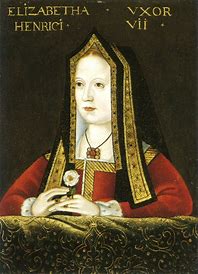
Guest Post: Tudor Princes and Princesses by Aimee Fleming

Today, it is a pleasure to welcome Aimee Fleming to History…the Interesting Bits. Aimee’s first book, The Female Tudor Scholar and Writer: The Life and Times of Margaret More Roper was a wonderful biography of Thomas More’s famous scholarly daughter. Aimee is now back with a second book, looking into the lives of the first royal Tudor children, Tudor Princes and Princesses: The Early Lives of the Children of Henry VII and Elizabeth of York. And she has written a little piece as a taster of the treat that is this wonderful book. Over to Aimee…

When Henry VII and Elizabeth of York married in January 1486, it was clear to them that their most important task ahead was to stabilise England, and the best, perhaps easiest way available to them was to produce an heir, and quickly.

However, bearing a child in the fifteenth century was not an easy feat, even for a Queen. Science and medicine were far from helpful, and the practices of the time meant that pregnancy and childbirth were dangerous to everyone involved. Elizabeth had her family around her, her mother who had had twelve children would have been invaluable to her, but the risks to herself, her child, and to her husband’s reign would have been very clear indeed.

In this extract we see how the couple prepared for their new arrival, and what Elizabeth herself was required to do, even before the rigours of birth.

Extract from Chapter 2 of Tudor Princes and Princesses

Elizabeth of York

Following the wedding ceremony in January 1486, the royal couple remained in London and held court over celebrations in their honour, with spectacular banquets and dances. The celebrations were held all over London and further afield. As Bernard André describes:

‘…the most wished day of marriage was celebrated by them

with all religious and glorious magnificence at court, and

by their people, to show their gladness with bonfires,

dancing, songs and banquets throughout all London,

both men and women, rich and poor, beseeching God to

bless the King and Queen and grant them a numerous

progeny.’

This outpouring of support for the marriage of the king and queen was welcomed by all, especially by Henry and Elizabeth themselves, who knew just how important it was that their union, and rule, be accepted. It became apparent that their marriage represented the potential for peace in the form of an heir who would have their claims combined within him. Hall’s Chronicle shows what was expected.

‘By reason of whiche manage peace was thought to discende out of heaue into England, consideryng that the lynes of Lancastre & Yorke, being both noble families equiualet in ryches, fame and honour, were now brought into one knot and connexed together, of whose two bodyes one heyre might succede, which after their lyme should peaceably rule and enioye the whole monarchy and realme of England.’

Confident in their position early on, the king and queen worked to secure the future that so many hoped for and very soon after their wedding took place it was announced that the queen was with child. Whether that be out of duty, mutual respect, or genuine affection and love between them, the conception of a child was joyous news for all involved. Calculating from the date of their wedding, and Arthur’s birth, it is reasonable to assume that they conceived quickly, if not on their wedding night itself. When Henry departed for a progress around Yorkshire and Lincolnshire in the early spring of 1486, he did not take Elizabeth with him, most likely because she was suffering from morning sickness, or other symptoms associated with the early stages of pregnancy. As a first-time mother, it would have been new to Elizabeth, but luckily, she had her experienced mother and mother-in-law both around to support her. While Henry was travelling, he sent regular letters to his new wife, and would send gifts to her while she stayed at the Palace of Placentia.

Elizabeth would have been familiar with the palace, having spent a lot of time there as a young girl. It would become one of the most favoured for the king and queen and would be renamed by Henry as Greenwich Palace. Both names emphasise how the palace was surrounded by green parks and fields, isolated from the hustle and bustle and potential diseases of London itself.

As soon as it could be confirmed that Elizabeth was with child, the wheels began turning to arrange yet more elaborate ceremony, intended to cement Elizabeth as queen, the Tudor dynasty as the ruling family, and rightfully on the throne. This started with Elizabeth’s care while pregnant.

While it was not common for pregnant women to receive medical or ante-natal care in this period, Elizabeth’s health would have been monitored and her diet checked, and healthy habits encouraged by her ladies and physicians. Pregnant women were discouraged from heavy activities or stressful situations, and sometimes forbidden to eat certain foods; for example, if a woman complained of morning sickness, she may be told to limit her intake of fish or milk, both of which modern doctors would recommend she eat.

Pregnancy was dangerous, as was childbirth, for both the mother and the child, so royal women were given the best possible conditions in which to give birth, according to the science of the time.

Elizabeth of York

As a woman’s due date got closer, she would be expected to enter confinement. This was a time where the pregnant woman and her household would isolate themselves in the woman’s bedroom. Windows would be barred and draped, and air flow would be completely stifled as it was believed that illnesses were carried on the air. For a queen, preparations for confinement would be made by the king according to traditions laid out during the reign of Edward IV, Elizabeth’s father. She would have been very familiar with the work that needed to be done, and the fact that the arrangements would be made for her by her husband.

Henry took his role in arranging Elizabeth’s confinement very seriously indeed. He purchased clothes and bedding for the chambers, all made of furs and velvet, and the most luxurious cotton sheets. He arranged for new furniture for her rooms and cushions stuffed with feathers, and even, bewilderingly, two velvet-covered saddles.

However, by far the most important decision that Henry made regarding his wife’s confinement and birth experience was to choose the location, and for Henry there was only one place that it could happen and that was the city of Winchester.

About the Author:

Aimee Fleming is a historian and author from North Yorkshire. She is happily married, with three growing boys and a whole host of pets. She studied history at the University of Wales, Bangor and then later completed a masters in Early Modern History at the University of York as a mature student. She has a passion for history, particularly the Tudors, and worked for over a decade in the heritage industry in a wide variety of roles and historic places.

Books by Aimee Fleming:

The Female Tudor Scholar and Writer: The Life and Times of Margaret More Roper

Tudor Princes and Princesses: The Early Lives of the Children of Henry VII and Elizabeth of York

Where to find Aimee:

Website; Facebook; Threads and Instagram: @historyaimee; Substack.

*

My books

Signed, dedicated copies of all my books are available through my online store.

Out now: Scotland’s Medieval Queens

Books by Sharon Bennett Connolly

Scotland’s history is dramatic, violent and bloody. Being England’s northern neighbour has never been easy. Scotland’s queens have had to deal with war, murder, imprisonment, political rivalries and open betrayal. They have loved and lost, raised kings and queens, ruled and died for Scotland. From St Margaret, who became one of the patron saints of Scotland, to Elizabeth de Burgh and the dramatic story of the Scottish Wars of Independence, to the love story and tragedy of Joan Beaufort, to Margaret of Denmark and the dawn of the Renaissance, Scotland’s Medieval Queens have seen it all. This is the story of Scotland through their eyes.

Scotland’s Medieval Queens gives a thorough grounding in the history of the women who ruled Scotland at the side of its kings, often in the shadows, but just as interesting in their lives beyond the spotlight. It’s not a subject that has been widely covered, and Sharon is a pioneer in bringing that information into accessible history.’ Elizabeth Chadwick (New York Times bestselling author)

Available now from Amazon and Pen and Sword Books

Also by Sharon Bennett Connolly:

Books by Sharon Bennett Connolly

Heroines of the Tudor World tells the stories of the most remarkable women from European history in the time of the Tudor dynasty, 1485-1603. These are the women who ruled, the women who founded dynasties, the women who fought for religious freedom, their families and love. Heroines of the Tudor World is now available from Amberley Publishing and Amazon UK. Women of the Anarchy demonstrates how Empress Matilda and Matilda of Boulogne, unable to wield a sword themselves, were prime movers in this time of conflict and lawlessness. It shows how their strengths, weaknesses, and personal ambitions swung the fortunes of war one way – and then the other. Available from Bookshop.orgAmberley Publishing and Amazon UKKing John’s Right-Hand Lady: The Story of Nicholaa de la Haye is the story of a truly remarkable lady, the hereditary constable of Lincoln Castle and the first woman in England to be appointed sheriff in her own right. Available from all good bookshops Pen & Sword Booksbookshop.org and Amazon

Royal Historical Society

Defenders of the Norman Crown: The Rise and Fall of the Warenne Earls of Surrey tells the fascinating story of the Warenne dynasty, from its origins in Normandy, through the Conquest, Magna Carta, the wars and marriages that led to its ultimate demise in the reign of Edward III. Available from Pen & Sword BooksAmazon in the UK and US, and Bookshop.orgLadies of Magna Carta: Women of Influence in Thirteenth Century England looks into the relationships of the various noble families of the 13th century, and how they were affected by the Barons’ Wars, Magna Carta and its aftermath; the bonds that were formed and those that were broken. It is now available in paperback and hardback from Pen & SwordAmazon, and Bookshop.orgHeroines of the Medieval World tells the stories of some of the most remarkable women from Medieval history, from Eleanor of Aquitaine to Julian of Norwich. Available now from Amberley Publishing and Amazon, and Bookshop.orgSilk and the Sword: The Women of the Norman Conquest traces the fortunes of the women who had a significant role to play in the momentous events of 1066. Available now from Amazon,  Amberley Publishing, and Bookshop.org.

Alternate Endings: An anthology of historical fiction short stories including Long Live the King… which is my take what might have happened had King John not died in October 1216. Available in paperback and kindle from Amazon.

Podcast:

A Slice of Medieval

Have a listen to the A Slice of Medieval podcast, which I co-host with Historical fiction novelist Derek Birks. Derek and I welcome guests, such as Bernard Cornwell and Michael Jecks, and discuss a wide range of topics in medieval history, from significant events to the personalities involved. 

Every episode is also now available on YouTube.

*

Don’t forget! Signed and dedicated copies of all my books are available through my online store.

For forthcoming online and in-person talks, please check out my Events Page.

You can be the first to read new articles by clicking the ‘Follow’ button, liking our Facebook page or joining me on TwitterThreadsBluesky and Instagram.

*

©2025 Sharon Bennett Connolly, FRHistS and Aimee Fleming
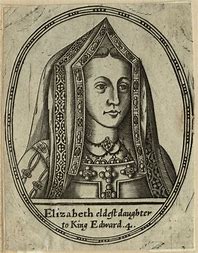
Guest Post: Feisty Females: Writing Lincolnshire’s Medieval Women by Rosanna McGlone

The great Cowcher Book
The Great Cowcher Book

It is a pleasure to welcome my good friend Rosanna McGlone to History … the Interesting Bits to chat about her new book, Feisty Females, a series of short stories inspired by The Great Cowcher Book. Although Feisty Females is Rosanna’s ‘baby’, I feel like its Godmother as we have chatted frequently, over coffee, about the women she included, included Nicholaa de la Haye, Alice de Lacey, Blanche of Lancaster and Gwenllian of Wales – women my readers, I know, are well acquainted with!

Rosanna would meet me, armed with questions about the history of these women and the world they lived in. Then she went away and came back having put her own mark on their stories. And what a fascinating collection of stories it is!

It is a joy to see this project come to fruition. So, over to Rosanna to tell you a little about the process of researching and writing Feisty Females: Old Bolingbroke through our Imaginations.

Feisty Females: Writing Lincolnshire’s Medieval Women by Rosanna McGlone

Henry IV effigy
Henry IV, Canterbury Cathedral

You’ve heard of the Domesday Book, right? But do you know the second most important medieval record book? If you don’t, let me reassure you. Until I received this commission, neither did I. According to staff at the National Archives it’s The Great Cowcher Book, a medieval land registry commissioned by Henry IV to provide a record of lands within the Duchy of Lancaster. Receiver General John Leventhorpe was assigned to visit the 18,000 hectares of rural estates in England and Wales including Cheshire and Lancashire in the West and The Honor of Bolingbroke in Lincolnshire in the East which make up the Duchy of Lancaster. In doing so, he gathered a total of 161 folios and 2,433 charters written in either Latin or medieval French.

What exactly do the two volumes of The Great Cowcher Book contain? As well as including transactions such as the bestowing of Old Bolingbroke Castle to John of Gaunt and his wife Blanche of Lancaster, the book also covers more minor land transactions between people of much lower status.

Additionally, the Great Cowcher Book provides a record of disputes which had been brought before the court seeking resolution.

I was commissioned, and funded, by a number of organisations including the Arts Council, Lincoln County Council, the community of Old Bolingbroke and others to write a creative response to this unique material. Thus, it is from this medieval register that my book of short stories, Feisty Females: Old Bolingbroke through our Imaginations was crafted.

Feisty Females

The beautiful medieval manuscripts have recently been translated into English and I received the information on a rather less romanticised, Excel spreadsheet! The columns display the following headings, however not all of them have been populated for each of the more than 5,000 entries: regnal year, name of vendor, name of buyer, land to be purchased; witnesses to the contract; any special conditions, the original language of the manuscript.

As I poured over in excess of 1,200 entries pertaining to The Honor of Bolingbroke, my key focus, I was struck by the names: Walter son of Andrew; Adam, Hugh, Odo Galle of Saltfletby; Gilbert, Ranulf, Clement Prior of Spaldying, William de Rusmar, Henry de Lascy, Simon le Bret, God and his church.

Where were all of the women? As I note in the introduction to my book, His-tory is so often that, a record of the past through the male lens. For me, it was important to offer a different perspective. Out of the more than 5,000 entries within the Great Cowcher Book there are few female landowners. Yet, I was mindful that any females who did appear would have something remarkable about them to succeed in the male dominated medieval world.

Nicholaa de la Haye effigy
Tomb effigy of Nicholaa de la Haye

Women such as Nicholaa de la Haye, the first female Sheriff of Lincoln and Castellan of Lincoln Castle who withstood not one, but three separate sieges on the castle and earned the respect of King John himself.

Another feisty female for whom I have particular affection is Alice de Lacy, a woman whose story is too incredible to be true, at least that’s what I thought when I read it. Kidnappings, rape, imprisonment by the king, threats of being burnt to death, really how could I possibly capture all of Alice’s turbulent life in a mere 3,000 words? The answer is, I couldn’t. Therefore, I focused upon the catalyst for her troubles, her inheritance. Two bizarre childhood accidents occurred to her brothers which, in my opinion, determined the course of Alice’s life. Firstly, her young brother Edmund fell down a well at Denbigh Castle and died. Then, barely six months later, her other brother, John fell off the battlements at Pontefract Castle. He too perished leaving Alice- still a child herself- as sole heir to her parents, Henry de Lacy, Earl of Lincoln, and Margaret Longespee, Countess of Salisbury.

Whilst all of the other stories are set in medieval times, for Alice’s story I use the framework of a police interview in which she is pushed to reveal the truth of those inciting incidents.

The women with the most charters in the Great Cowcher Book is Hawise de Quincy, first Countess of Lincoln, who has a remarkable 40 entries. Whilst the vast majority of these relate to land acquisitions, the one upon which my tale focuses concerns a dispute was between Hawise and Philip de Kyma. To quote the Great Cowcher, this disagreement was

‘…concerning a certain obstruction of a certain watercourse made by the said Philip in Torp to the nuisance of the port of the said Hawise in Weynfled. Because it was then clear the land of both sides of that watercourse towards the port of Weynfled is of the said Philip…’

And so on… In essence, Philip de Kyma was preventing Hawise de Quincy from accessing her port and, therefore, the valuable port fees. So, what was she to do? This is what my story explores. Does pragmatism work, or must Hawise resort to womanly wiles?

Gwenllian of Wales
Memorial to Gwenllian, Sempringham Priory

An incredibly wronged female in Feisty Females is Gwenllian, the last Princess of Wales who was incarcerated in a Lincolnshire Priory from which there was little chance of escape, unless she had inside help…

In all cases, bar one, the women come from the Great Cowcher book, however in Matilda’s case my desire to write on the specific topic of that story arose first, based on a certain building referenced in The Great Cowcher. Matilda’s Story begins thus:

It was the day after Candlemas that we held my brother’s funeral. There was just one problem: he wasn’t dead.

It has been a pleasure to learn more about these characters and to bring them to life for readers, giving them voices after 800 years, or more, of silence. The book is a celebration of the female power which was understood by Chaucer who, himself, makes an appearance in Blanche’s Story. In the epigraph to my book Chaucer describes women thus:

‘And what is better than wisedoom? Womman.

And what is better than a good woman? Nothyng.’1

*

Notes: 1. Geoffrey Chaucer, ‘The Tale of Melibee’ The Canterbury Tales.

Images: The Great Cowcher Book (DL 42/2, fol. 231r, the property of His Majesty The King in Right of His Duchy of Lancaster and is reproduced by permission of the Chancellor and Council of the Duchy of Lancaster.); Photos of Henry IV, Nicholaa de la Haye and Gwenllian of Wales are ©Sharon Bennett Connolly FRHistS.

To Buy the Book:

Just click on the link to buy: Feisty Females

About the Author:

Rosanna McGlone

Rosanna McGlone is a writer and journalist. Her book, The Process of Poetry -which explores the development of early drafts of poems by some of the country’s leading poets- was number 1 on Amazon and featured on Radio 4’s Front Row. The sequel, The Making of a Poem, focuses on the work of Australian foremost poets. She has written more than 100 features for the national press, including: The GuardianThe IndependentThe Sydney Morning Herald and The Australian. Rosanna has written memoirs, community plays and collected oral histories. Feisty Females, a creative response to The Great Cowcher Book, a medieval book, is out on June 8th 2025.

To find out more follow Rosanna at @rosannamcglone.bsky.social

*

My Books:

Signed, dedicated copies of all my books are available through my online bookshop.

Out Now! Scotland’s Medieval Queens

Books by Sharon Bennett Connolly

Scotland’s history is dramatic, violent and bloody. Being England’s northern neighbour has never been easy. Scotland’s queens have had to deal with war, murder, imprisonment, political rivalries and open betrayal. They have loved and lost, raised kings and queens, ruled and died for Scotland. From St Margaret, who became one of the patron saints of Scotland, to Elizabeth de Burgh and the dramatic story of the Scottish Wars of Independence, to the love story and tragedy of Joan Beaufort, to Margaret of Denmark and the dawn of the Renaissance, Scotland’s Medieval Queens have seen it all. This is the story of Scotland through their eyes.

Scotland’s Medieval Queens gives a thorough grounding in the history of the women who ruled Scotland at the side of its kings, often in the shadows, but just as interesting in their lives beyond the spotlight. It’s not a subject that has been widely covered, and Sharon is a pioneer in bringing that information into accessible history.’ Elizabeth Chadwick (New York Times bestselling author)

Available now from Amazon and Pen and Sword Books

Also by Sharon Bennett Connolly:

Books by Sharon Bennett Connolly

Heroines of the Tudor World tells the stories of the most remarkable women from European history in the time of the Tudor dynasty, 1485-1603. These are the women who ruled, the women who founded dynasties, the women who fought for religious freedom, their families and love. Heroines of the Tudor World is now available for pre-order from Amberley Publishing and Amazon UK. Women of the Anarchy demonstrates how Empress Matilda and Matilda of Boulogne, unable to wield a sword themselves, were prime movers in this time of conflict and lawlessness. It shows how their strengths, weaknesses, and personal ambitions swung the fortunes of war one way – and then the other. Available from Bookshop.orgAmberley Publishing and Amazon UKKing John’s Right-Hand Lady: The Story of Nicholaa de la Haye is the story of a truly remarkable lady, the hereditary constable of Lincoln Castle and the first woman in England to be appointed sheriff in her own right. Available from all good bookshops Pen & Sword Booksbookshop.org and Amazon

Royal Historical Society

Defenders of the Norman Crown: The Rise and Fall of the Warenne Earls of Surrey tells the fascinating story of the Warenne dynasty, from its origins in Normandy, through the Conquest, Magna Carta, the wars and marriages that led to its ultimate demise in the reign of Edward III. Available from Pen & Sword BooksAmazon in the UK and US, and Bookshop.orgLadies of Magna Carta: Women of Influence in Thirteenth Century England looks into the relationships of the various noble families of the 13th century, and how they were affected by the Barons’ Wars, Magna Carta and its aftermath; the bonds that were formed and those that were broken. It is now available in paperback and hardback from Pen & SwordAmazon, and Bookshop.orgHeroines of the Medieval World tells the stories of some of the most remarkable women from Medieval history, from Eleanor of Aquitaine to Julian of Norwich. Available now from Amberley Publishing and Amazon, and Bookshop.orgSilk and the Sword: The Women of the Norman Conquest traces the fortunes of the women who had a significant role to play in the momentous events of 1066. Available now from Amazon,  Amberley Publishing, and Bookshop.org.

Alternate Endings: An anthology of historical fiction short stories including Long Live the King… which is my take what might have happened had King John not died in October 1216. Available in paperback and kindle from Amazon.

Podcast:

A Slice of Medieval

Have a listen to the A Slice of Medieval podcast, which I co-host with Historical fiction novelist Derek Birks. Derek and I welcome guests, such as Bernard Cornwell and Michael Jecks, and discuss a wide range of topics in medieval history, from significant events to the personalities involved. 

Every episode is also now available on YouTube.

*

Don’t forget! Signed and dedicated copies of all my books are available through my online store.

For forthcoming online and in-person talks, please check out my Events Page.

You can be the first to read new articles by clicking the ‘Follow’ button, liking our Facebook page or joining me on TwitterThreadsBluesky and Instagram.

*

©2025 Sharon Bennett Connolly, FRHistS and Rosanna McGlone
Wordly Women: Toni Mount

In today’s spotlight on Wordly Women, I welcome my good friend, novelist and historian, Toni Mount back to History… the Interesting Bits. Toni writes the fabulous Seb Foxley mystery novels and the non-fiction series How to Survive in…

Sharon: What got you into writing?

Toni: I’ve always been a story-teller. Aged 6, when the teacher was called away – before the days of teaching assistants – she would have me sit at the front of the class and tell them a story. It was usually a mix of various fairytales with princes, princesses, witches and dragons. I like to think I became more sophisticated when I started writing them down in English Composition lessons aged 7 or 8. My imagined ‘First Flight of Concorde’ – the supersonic plane – won the school prize and my head has been full of stories for as long as I can remember. A good many have made it to the page but not all.

Sharon: You write both fiction and non-fiction – is one harder than the other?

Toni: Fiction needs your own ideas; in non-fiction the facts are there, waiting for you to use. Since my novels are as authentic to the period as I can make them, but without the ‘gadzooks’ and ‘forsooths’, they take as much research as the non- fiction books. In both cases, I’m looking to tell a good story. The difference is that non-fiction may have gaps where historians don’t know the answers, such as what was Edward II thinking when he gave Piers Gaveston the queen’s jewellery but in a novel the writer is allowed to tell you why.

Sharon: Tell us about your books.

Toni: I’ve had 30+ books published, half of them novels. My most successful non-fiction books are ‘Everyday Life in Medieval London’ and ‘Medieval Medicine’ both published by Amberley, and ‘How to Survive in Medieval England’ published by Pen & Sword which was recently a no.1 best seller on Amazon. The How to Survive series – my fourth: ‘How to Survive in Ration-Book Britain’ is due to be out in November 2025 – is written for the armchair time-traveller and puts a light-hearted slant on history. ‘How to Survive in Tudor England’ and ‘How to Survive in Anglo-Saxon England’ are the other titles.

My Sebastian Foxley Medieval Murder Mystery series has quite a following – book 13 ‘The Colour of Darkness’ has just gone off to the publisher MadeGlobal. Seb is a London-based scribe and illuminator in the 1470s-80s whose eye for detail means he spots clues that others miss to solve crimes. Many are true crimes which were recorded in the Mayor’s Court Rolls and remain unsolved – until now. I love the way my characters take over the story, sometimes doing things that never occurred to me. Seb has become a family member, so much so that my sons commissioned a portrait of him for my 65th birthday and it hangs above the fireplace.

Sharon: What attracts you to the period?

Toni: Whether fact or fiction, the Plantagenet period from the 1150s to 1485 is by far the most intriguing for me. Who doesn’t love to puzzle out a mystery? But modern policing is too boring to write about with so much paperwork, hours of CCTV footage to trawl through, fingerprinting, DNA, ballistics, etc. Give me Sherlock Holmes with his magnifying glass every time. The medieval period has even fewer technical complications.

Sharon: Who is your favourite medieval or Tudor personality and why?

Toni: Richard III obviously. I love the controversy. Was he a saint or a sinner? Or simply a human being?

Sharon: Who is your least favourite medieval or Tudor personality and why?

Toni: Henry VIII – a vicious paranoid megalomaniac. What’s to like? (Sharon: I could not agree more!)

Sharon: How do you approach researching your topic?

Toni: I read all I can around the subject; get a feel for the period and ‘live it’ in my head. As I write, if I realise I don’t know something, I make a note of it, check it out and list sources as I go. This is vital for a book which will have references and footnotes but even if I’m working on a novel, I may want to return to a source for further info or to mention it in my Author’s Notes – this is where I tell readers what’s true in the novel, which characters really existed, etc. In ‘The Colour of Darkness’, I did additional research into Medieval Mystery Plays and the ‘Duke of Exeter’s Daughter [a torture device], among other things. For the next novel, I’m reading up on medieval ships and firearms – I think it’s time somebody got shot with a ‘gunne’.

Sharon: Tell us your ‘favourite’ medieval or Tudor story you have come across in your research.

Toni: John/Eleanor Rykenor was a cross-dresser in the 1390s. He claimed to have had sex with nuns ‘as a man’ and didn’t charge them for it but did charge a group of Oxford priests-in-training for his services ‘as a woman’. He/she also said he’d spent a year or more living as a man’s wife. When caught in flagranti in a stable, wearing women’s attire and charging a man for sex, as Eleanor she appeared in court. The authorities weren’t sure what crime to charge her with – homosexuality wasn’t made a criminal offence until Tudor times – so she was charged with misrepresenting the product for sale, i.e. advertising her services as a female without having the appropriate ‘equipment’ for the job. She had to pay a fine for flouting what we would call the Trades Description Act. John/Eleanor is a character in my Foxley novels although he/she lived a century before they’re set. I couldn’t resist using such a fantastic character.

Sharon: Tell us your least ‘favourite’ medieval or Tudor story you have come across in your research.

Toni: The discovery of RIII’s skeleton in a Leicester car park ruined my first ever trilogy [written in 1980s and unpublished]. My premise for the series of novels was that Richard, though wounded, survives the battle of Bosworth and goes on to have further adventures. Henry Tudor, frustrated when he can’t find Richard’s corpse to prove the king is dead, substitutes a crippled beggar to be buried instead. I was about to rewrite the trilogy when the dig discovered the bones and DNA proved it was Richard. How annoying!

Sharon: Are there any other eras you would like to write about?

Toni: Apart from writing about the medieval and Tudor eras, I’ve also written a Victorian who dunnit – ‘The Death Collector’ – making use of unsolved murders from the 1880s, including those attributed to Jack the Ripper. That was great fun to write and I fancy doing a sequel. Also, I wrote a non-fiction book ‘The World of Isaac Newton’ and I think Isaac, with his brilliant brain, has definite possibilities as a sleuth. I’ve published books ranging from Anglo-Saxon England to the 1950s and everything in between has at least been touched upon. Maybe more on the Anglo-Saxons would be interesting.

Sharon: What are you working on now?

Toni: The next novel is brewing: ‘The Colour of Malice’ and two self-published booklets are being prepped. ‘Medieval Christmas’ will do what it says on the tin. ‘Warriors – Men-o’-War’ is a very different beast as a collection of my short stories, something I’ve not done before, from Agincourt to Afghanistan. There are no new titles for non-fiction books at the moment.

Sharon: And finally, what is the best thing about being a writer?

Toni: Playing God with characters [in fiction] and the beauty of words – choosing how best to express your ideas and imaginings on the page. Marvellous!

About the Author:

Toni studies, teaches and writes about medieval history. She is a successful author writing the popular Sebastian Foxley medieval murder series and several non-fiction volumes, including her collection of How to Survive in books. She has created several online courses for http://www.MedievalCourses.com, she teaches history to adults and is an experienced speaker giving talks to groups and societies. Toni enjoys attending history events as a costumed interpreter and is a member of the Research Committee of the Richard III Society.

Toni earned her Masters Degree by Research from the University of Kent in 2009 through study of a medieval medical manuscript held at the Wellcome Library in London. Her first-class honours degree, Diploma in Literature and Creative Writing and her Diploma in European Humanities are from the Open University. Toni also holds a Cert. Ed (in Post-Compulsory Education and Training) from the University of Greenwich.

Find Toni Mount’s books here

Find Toni on Social Media:

Amazon; Website; Seb Foxley website; Facebook: Medieval England Facebook; Seb Foxley Facebook; Twitter

*

My books

Signed, dedicated copies of all my books are available through my online store.

Out now: Scotland’s Medieval Queens

Scotland’s history is dramatic, violent and bloody. Being England’s northern neighbour has never been easy. Scotland’s queens have had to deal with war, murder, imprisonment, political rivalries and open betrayal. They have loved and lost, raised kings and queens, ruled and died for Scotland. From St Margaret, who became one of the patron saints of Scotland, to Elizabeth de Burgh and the dramatic story of the Scottish Wars of Independence, to the love story and tragedy of Joan Beaufort, to Margaret of Denmark and the dawn of the Renaissance, Scotland’s Medieval Queens have seen it all. This is the story of Scotland through their eyes.

Available now from Amazon and Pen and Sword Books

Also by Sharon Bennett Connolly:

Heroines of the Tudor World tells the stories of the most remarkable women from European history in the time of the Tudor dynasty, 1485-1603. These are the women who ruled, the women who founded dynasties, the women who fought for religious freedom, their families and love. Heroines of the Tudor World is now available for pre-order from Amberley Publishing and Amazon UK. Women of the Anarchy demonstrates how Empress Matilda and Matilda of Boulogne, unable to wield a sword themselves, were prime movers in this time of conflict and lawlessness. It shows how their strengths, weaknesses, and personal ambitions swung the fortunes of war one way – and then the other. Available from Bookshop.orgAmberley Publishing and Amazon UKKing John’s Right-Hand Lady: The Story of Nicholaa de la Haye is the story of a truly remarkable lady, the hereditary constable of Lincoln Castle and the first woman in England to be appointed sheriff in her own right. Available from all good bookshops Pen & Sword Booksbookshop.org and Amazon

Defenders of the Norman Crown: The Rise and Fall of the Warenne Earls of Surrey tells the fascinating story of the Warenne dynasty, from its origins in Normandy, through the Conquest, Magna Carta, the wars and marriages that led to its ultimate demise in the reign of Edward III. Available from Pen & Sword BooksAmazon in the UK and US, and Bookshop.orgLadies of Magna Carta: Women of Influence in Thirteenth Century England looks into the relationships of the various noble families of the 13th century, and how they were affected by the Barons’ Wars, Magna Carta and its aftermath; the bonds that were formed and those that were broken. It is now available in paperback and hardback from Pen & SwordAmazon, and Bookshop.orgHeroines of the Medieval World tells the stories of some of the most remarkable women from Medieval history, from Eleanor of Aquitaine to Julian of Norwich. Available now from Amberley Publishing and Amazon, and Bookshop.orgSilk and the Sword: The Women of the Norman Conquest traces the fortunes of the women who had a significant role to play in the momentous events of 1066. Available now from Amazon,  Amberley Publishing, and Bookshop.org.

Alternate Endings: An anthology of historical fiction short stories including Long Live the King… which is my take what might have happened had King John not died in October 1216. Available in paperback and kindle from Amazon.

Podcast:

Have a listen to the A Slice of Medieval podcast, which I co-host with Historical fiction novelist Derek Birks. Derek and I welcome guests, such as Bernard Cornwell, Elizabeth Chadwick and Michael Jecks, and discuss a wide range of topics in medieval history, from significant events to the personalities involved. Every episode is also now available on YouTube.

*

Don’t forget! Signed and dedicated copies of all my books are available through my online store.

For forthcoming online and in-person talks, please check out my Events Page.

You can be the first to read new articles by clicking the ‘Follow’ button, liking our Facebook page or joining me on TwitterThreadsBluesky and Instagram.

*

©2025 Sharon Bennett Connolly, FRHistS and Toni Mount
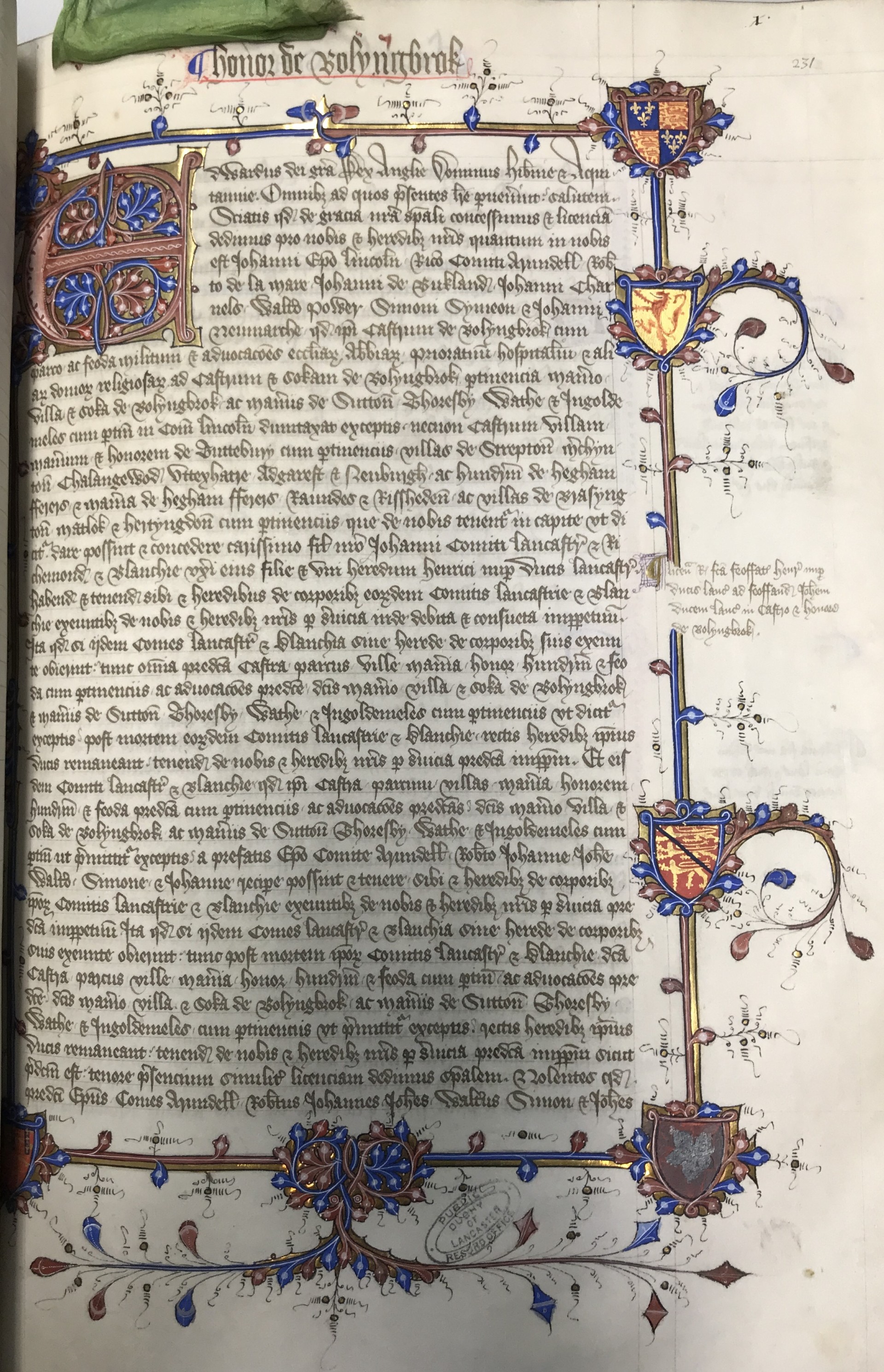
Wordly Women: Paula Lofting

In the third episode of my Wordly Women interviews, I welcome Paula Lofting to History…the Interesting Bits to talk about her writing journey. Paula is the author of the Sons of the Wolf series of novels and has recently published her first none fiction work Searching for the Last Anglo-Saxon King: Harold Godwinson, England’s Golden Warrior.

Welcome Paula….

Sharon: What got you into writing? 

Paula: When I was a little girl as soon as I could write straight, I used to come home from school sit at the coffee table in our lounge on my feet and write stories. I was particularly fond of ‘composition’ class at school where the teacher would put several titles up for us to choose from to write about. I often had my stories read out to class. 

I guess it was something I always wanted to do. I remember in my teens, writing an epic historical fiction based on the years after the Romans left Britain, but I hand wrote it because I hadn’t learned to type and the typewriter, I had was useless. I thought I was never going to submit because it never occurred to me to just type with one finger! So, I gave up on that idea. I’d written plays, poems, and all sorts of stuff, but I was also in a bad relationship with a man who didn’t want to share me with a pen, so it was difficult until the relationship ended, and I had moved on. It was when the advent of personal computers came along when I realised that I could actually achieve my dream if I wanted to. 

    Sharon: Tell us about your books. 

    Paula: I have been writing a series set in the years leading up to the Norman Invasion of 1066. There are currently two books I have published in the series, and of course a nearly finished 3rd WIP. The series is called Sons of the Wolf, which is the name of book 1 and book 2 is The Wolf Banner, and 3 which I am working on is called Wolf’s Bane. As you can see there is a recurring theme. The theme is not something to do with real wolves but has its origins in my hero’s family history whose ancestors believed that they were descended from wolves. 

    The books tell the story of Wulfhere, a Sussex thegn, and follows the fortunes of his family in the years before the Battle of Hastings took place. It explores the lives of the ordinary people who lived against the backdrop of the political landscape of the time. 

    The series is a chronological account of events that are woven into the tapestry of the family’s lives and also tells the story of the main historical players of the time, such as Harold Godwinson and his clan. The two men’s lives run parallel alongside each other, and their contrasting stories are intricately woven together as is their fate.  

    The books all run consecutively, and you will find there are no gaps in the saga, so where one book ends, the new book starts. I have plans to continue after the catastrophic events of 1066 into the rebellion years. 

    Sharon: What attracts you to the 11th century? 

    Paula: I think that there is a lot of romance around the whole story of two men who fought over their claims to be king of England which people are drawn to. There is the tragedy of the last ‘Anglo-Saxon king’ who is butchered to death on the battlefield: the tall, handsome, charismatic, affable, warrior who fights for his people and his country. There is the underdog and the overdog theme which comes after the conquest and lasts for some time before England begins to melt as though seamlessly into the new regime.  

    Then you have the original Robin Hood type story of Hereward who sort of appears from nowhere to fight the good fight against the baddies after coming back to England from abroad to find a lot of things have changed and his ancestral lands commandeered by invaders. There is so much to play with there, a passionate conglomerate of rich history that evokes and inspires in the most amazing manner. It is an era that sets itself apart from what happens later – the cusp of change from the old world to the new. 

    I find it fascinating. Love… Betrayal… Battles… Bloodfeud. 

    What’s not to love! 

    I have also written a book about Harold Godwinson which is due for release any day now with Pen and Sword. 

    Sharon: Who is your favourite Anglo-Saxon and why? 

    Paula: There were so many extraordinary characters, and a lot I could choose from. For now, I have to go with Harold Godwinson, simply because, although we will never know what his true nature was for certain, what is written in the sources is constant and conjures up a vision of a man who loved his wife, his family, and his country. A man who avoided internal conflict, forced to navigate intrigue, family skirmishes, and the jealousy of the other aristocracy. He was not a perfect man, but in comparison to many rulers and sub rulers in medieval times, there were a lot more who were far more undesirable. During his early tenure as king, knowing that his country was in danger on many fronts, he acted swiftly to gather his armies together and deploy them to defend the shores. He even found time to see to some of his admin duties, all this in the early weeks of his reign. Who knows what he might have achieved if his life had not been so cruelly taken from him so early into his reign. 

    Sharon: Who is your least favourite Anglo-Saxon – or Viking – and why? 

    Paula: Ooo – Can I have one of each?  

    In that case I have to say, the Anglo-Saxon Ealdorman Eadric Streona whose betrayal of King Edmund lost him the battle of Assandun.  

    My least favourite Viking would have been Sweyn Forkbeard who was invading England from the 990s up until 1013. He became king for about 6 weeks before he died in February 1014. His pillaging and burning of England really stank. 

    Sharon: How do you approach researching your topic? 

    Paula: Well, currently I am taking notes from the two major annals, the Anglo-Saxon Chronicles and the Chronicon ex Chronicis which was the work of the monk, John of Worcester and also in part, someone called Florence. I plan to augment them with other sources that I read, both primary and secondary, to try and find sources that correlate and contradict each other so I can make sure I have all the facts in one place when I come to write the narrative. I am always very grateful to those historians who came before me for having done the hard part of digging through the foundations of the information available to me and try to see the original sources for myself. Its helpful that these authors give guidance in their own work for us new historians to build upon and come up with new ideas. 

    For Historical fiction I have the privilege of being a reenactor and learning the everyday tasks and the little detailed things that experimental archaeology gives us like clothing, food, buildings and battle strategies that often history texts can’t give us. This helps me to build my world as authentically as I possibly can.  

    Sharon: Tell us your ‘favourite’ Anglo-Saxon story you have come across in your research? 

    Paula: Oo I love this question! 

      I have a few, actually: The research carried by Dan Armstrong regarding the Papal Banner. It seems there is little evidence for it in 1066. Readers will need to read the book to find out more about what Armstrong uncovered. 

      Another is the version of Harold’s trip to Normandy that the English chronicler, Eadmer of Canterbury writes in his History of Recent Events in England, a story that makes far more sense, even though it is the only version of this you can find. And considering that Eadmer was not particularly pro Harold, I think it is far more reliable than the Norman sources. 

      I also love the anecdotal tale of Bishop Wulfstan who carried a pair of snips with him to cut the hair long hair of the young men who came before him. He didn’t approve of men with long hair, obviously. Can you imagine, you’re an elite, well-respected member of the elite huscarls kneeling before him as you get to the front to receive holy communion and he reaches over your head and grips your neatly combed and beautifully tied back pony-tail and with one snip, you lose it! And there was nothing you could do about it!  

      Sharon: Tell us your least ‘favourite’ Anglo-Saxon story you have come across in your research?  

      Paula: Oh gosh, I can name lots, but probably the worst, I have to say, is the cruel propaganda used by the Norman scribes such as Poitiers, who was the first one to mention the Papal Banner, and the way they defiled Harold’s character to detract from William’s regicide of an anointed king and make him seem like a saint! 

        Sharon: Are there any other eras you would like to write about? 

        Paula: Yes indeed, but I’m probably never going to achieve them all, here are just a few: 

          Staying in the so-called dark ages, I once started to write an epic about the post Roman Britain era, centring on Ambrosius Aurelianus. It never came to anything because my circumstances were not right at the time, but I would love to give it ago one day.  

          Another is Macbeth, and coming right out of my comfort zone, a story about a highway man. 

          Sharon: What are you working on now? 

          Paula: Edmund Ironside is my new project for Pen and Sword – a non-fiction book, and fiction wise, I am working on finishing the third novel in my series, Wolf’s Bane 

            Sharon: And finally, what is the best thing about being a writer? 

            Paula: Escaping into other times, other places, and building a different world. It gives me a sense of release and I enjoy creating characters I love. 

            It has never really been my aim to sell loads of books and earn loads of money from writing because its not going to be achievable in this day and age. Its more of a hobby really, but if people read my work, then I am very happy, especially if they enjoy it. That’s the most important part to me.  

            About the author:

            Paula was born in the ancient Saxon county of Middlesex in 1961. She grew up in Australia hearing stories from her dad of her homeland and its history. As a youngster she read books by Rosemary Sutcliff and Leon Garfield and her love of English history grew. At 16 her family decided to travel back to England and resettle. She was able to visit the places she’d dreamt about as a child, bringing the stories of her childhood to life. It wasn’t until later in life that Paula realised her dream to write and publish her own books. Her debut historical novel Sons of the Wolf, was first published in 2012 and then revised and republished in 2016 along with the sequel, The Wolf Banner, in 2017. The third in the series, Wolf’s Bane, will be ready for publishing later this year.   

            In this midst of all this, Paula has acquired contracts for nonfiction books with the prestigious Pen & Sword publishers. Searching for the Last Anglo-Saxon King, Harold Godwinson, England’s golden Warrior is due to be published at the end of February, and a biographic of King Edmund Ironside is also in the pipeline. She has also written a short essay about Edmund for Iain Dale’s Kings and Queens, articles for historical magazines. When she is not writing, she is a psychiatric nurse, mother of three grown up kids and grandmother of two and also re-enacts the Anglo-Saxon/Viking period with the awesome Regia Anglorum. 

            Social Media:

            Website: www.threadstothepast.com, Facebook: https://www.facebook.com/Wulfsuna?locale=en_GB, Instagram: https://www.instagram.com/paulaloftingwilcox/, x: https://x.com/longshippub, Threads: www.threadstothepast.com, Blue Sky: @paulaloftingauthor.bsky.social 

            Book Links: Sons of the Wolf; Wolf’s Bane; Searching for the Last Anglo-Saxon King: Harold Godwinson, England’s Golden Warrior.

            *

            My books

            Signed, dedicated copies of all my books are available through my online store.

            Out now: Scotland’s Medieval Queens

            Scotland’s history is dramatic, violent and bloody. Being England’s northern neighbour has never been easy. Scotland’s queens have had to deal with war, murder, imprisonment, political rivalries and open betrayal. They have loved and lost, raised kings and queens, ruled and died for Scotland. From St Margaret, who became one of the patron saints of Scotland, to Elizabeth de Burgh and the dramatic story of the Scottish Wars of Independence, to the love story and tragedy of Joan Beaufort, to Margaret of Denmark and the dawn of the Renaissance, Scotland’s Medieval Queens have seen it all. This is the story of Scotland through their eyes.

            Available now from Amazon and Pen and Sword Books

            Also by Sharon Bennett Connolly:

            Heroines of the Tudor World tells the stories of the most remarkable women from European history in the time of the Tudor dynasty, 1485-1603. These are the women who ruled, the women who founded dynasties, the women who fought for religious freedom, their families and love. Heroines of the Tudor World is now available for pre-order from Amberley Publishing and Amazon UK. Women of the Anarchy demonstrates how Empress Matilda and Matilda of Boulogne, unable to wield a sword themselves, were prime movers in this time of conflict and lawlessness. It shows how their strengths, weaknesses, and personal ambitions swung the fortunes of war one way – and then the other. Available from Bookshop.orgAmberley Publishing and Amazon UKKing John’s Right-Hand Lady: The Story of Nicholaa de la Haye is the story of a truly remarkable lady, the hereditary constable of Lincoln Castle and the first woman in England to be appointed sheriff in her own right. Available from all good bookshops Pen & Sword Booksbookshop.org and Amazon

            Defenders of the Norman Crown: The Rise and Fall of the Warenne Earls of Surrey tells the fascinating story of the Warenne dynasty, from its origins in Normandy, through the Conquest, Magna Carta, the wars and marriages that led to its ultimate demise in the reign of Edward III. Available from Pen & Sword BooksAmazon in the UK and US, and Bookshop.orgLadies of Magna Carta: Women of Influence in Thirteenth Century England looks into the relationships of the various noble families of the 13th century, and how they were affected by the Barons’ Wars, Magna Carta and its aftermath; the bonds that were formed and those that were broken. It is now available in paperback and hardback from Pen & SwordAmazon, and Bookshop.orgHeroines of the Medieval World tells the stories of some of the most remarkable women from Medieval history, from Eleanor of Aquitaine to Julian of Norwich. Available now from Amberley Publishing and Amazon, and Bookshop.orgSilk and the Sword: The Women of the Norman Conquest traces the fortunes of the women who had a significant role to play in the momentous events of 1066. Available now from Amazon,  Amberley Publishing, and Bookshop.org.

            Alternate Endings: An anthology of historical fiction short stories including Long Live the King… which is my take what might have happened had King John not died in October 1216. Available in paperback and kindle from Amazon.

            Podcast:

            Have a listen to the A Slice of Medieval podcast, which I co-host with Historical fiction novelist Derek Birks. Derek and I welcome guests, such as Bernard Cornwell and Michael Jecks, and discuss a wide range of topics in medieval history, from significant events to the personalities involved. Every episode is also now available on YouTube.

            *

            Don’t forget! Signed and dedicated copies of all my books are available through my online store.

            For forthcoming online and in-person talks, please check out my Events Page.

            You can be the first to read new articles by clicking the ‘Follow’ button, liking our Facebook page or joining me on TwitterThreadsBluesky and Instagram.

            *

            ©2025 Sharon Bennett Connolly, FRHistS and Paula Lofting

            Guest Post: The Book and the Duchess by Katarzyna Ogrodnik-Fujcik

            Last month, we lost one of the great historians of medieval history, Martin Aurell. A few years ago, I had the honour of translating one of Martin’s essays on Eleanor of Aquitaine for a compilation on England’s medieval queens. He had a wonderful insight into Eleanor and I would have loved to meet him. So, when my dear friend Kasia asked if I would publish her tribute to Martin, I jumped at the chance.

            The Book and the Duchess: Eleanor of Aquitaine and her Artistic Legacy….

            In memory of Professor Martin Aurell

            Eleanor of Aquitaine’s tomb effigy, Fontevraud Abbey

            Richard of Devizes called her femina incomparabilis “a woman without compare” and in many respects she was. Queen of both France and England respectively, duchess of a great duchy in her own right, rebel wife who openly went to war against her husband, Eleanor of Aquitaine needs no introduction. And yet very little is actually known about one of the most famous women in history. Thus we should not find it surprising that all the myths and misconceptions about her got so firmly established in the popular consciousness. One of them is Eleanor as a very active artistic patron. However, if we raise the question, her artistic legacy is rather modest. There are only few surviving objects that can be safely associated with her.

            First and foremost, there is her tomb effigy at Fontevraud Abbey, which is the earliest funerary monument that we know of to depict a woman with a book. Also, as it seems, it is the only one to depict a man or a woman in the act of reading. The book Eleanor is holding is a restoration. The original had been destroyed during the Revolution. It is probably devotional work…. book of prayers, psalter or gospel book.

            A noble lady kneeling in a psalter of Eleanor of Aquitaine

            The effigy is one of the few instances when Eleanor can be safely identified as an artistic patron. She most probably commissioned it herself. Also the effigies of Henry II and Richard I the Lionheart (the one of Isabelle of Angouleme was commissioned more than forty years later) which were created at the same time (as stylistic similarities indicate). Made from tuffeau limestone from the Loire valley they successfully stood the test of time. despite different vagaries of history. What makes us believe Eleanor was a commissioner? First and foremost, Eleanor’s presence at Fontevraud Abbey at the time. After Richard’s death in 1199 she left the walls of the abbey, but stayed in Anjou, defending it for John. Later she retreated to the abbey again and spent her last years there. The effigies must have been created between the death of Richard and her own death in 1204 (also the year Anjou fell to the Capetians).

            Another object connected with Eleanor is the afore-mentioned Eleanor’s vase, which was a wedding gift she presented to her first husband Louis VII of France. It had stayed in her family since the reign of her famous/infamous grandfather, William IX the Troubadour, who had brought it with him from Spain. Louis gave it to Abbot Suger as a gift for St Denis. Suger added all the ornamentation. It was a classic crystal rock vessel when Eleanor presented it to Louis.

            Another work of art associated with Eleanor is the so-called Fecamp Psalter (or Psalter of Eleanor of Aquitaine), one of the oldest manuscripts preserved at the Dutch Royal Library at the Hague. With 27 full-page miniatures, 36 calendar miniatures depicting the Labours of the Months, and 11 historiated initials illustrating the major divisions of the psalter it is exquisitely beautiful. By the end of the 11th century Fécamp was a leading centre for manuscript copying in Normandy and in the late 12th century (c. 1180) this beautifully illuminated psalter was probably commissioned by Eleanor herself. In 2016 student Jesus Rodriguez Veijo identified the figure on the Beatus page of the psalter with Eleanor, relying in part on the scholarship relating to the Radegonde mural. You can view the manuscript on the official site of Koninklijke Bibliotheek, Hague.

            An image of the chase in a fresco in the chapel of St Radegonde

            The so-called Poitiers Window is one of the few contemporary depictions of Eleanor. She, Henry and their four sons are shown in a small scene, being a part of a larger depiction of Crucifixion, in the area reserved for patrons. Eleanor and Henry hold an image that represents the window itself. This image is not a part of the original, but a result of 19th-century restoration by Adolphe Steiheil. The window must have been commissioned between 1166 and 1173, the birth of John and the outbreak of the Great Revolt, when the royal family was still undivided.

            The famous Radegonde Mural preserved in the chapel of Sainte Radegonde, Chinon has been a subject of heated debates since its discovery in 1964 by Albert Heron. This representation has been widely accepted as a depiction of the Plantagenet family, identifying the central ”crowned” figure as Eleanor. Later research, however, helped to determine that all the figures were actually male. This led the historians to believe that the central crowned figure was in fact Eleanor’s eldest surviving son, Henry the Young King.

            The Eleanor Vase

            In her article entitled Two reputed representations of Eleanor of Aquitaine from her lifetime – a re-evaluation Sara Cockerill, the author of the latest Eleanor biography, revisits the evidence for both these representations and formulates yet one more theory that the scene is in fact a representation of the characters from St Radegonde’s legend. This led her to the following conclusion: while the same person may well have commissioned both depictions, only one, the Psalter, should be regarded as attempting to portray Eleanor herself.

            By Katarzyna Ogrodnik-Fujcik

            About the author:

            Katarzyna Ogrodnik-Fujcik specializes in British literature and history, her area of expertise being the first Plantagenets (the Angevins). She lives in Poland. She writes for different magazines and websites on Polish and European Middle Ages. She runs a blog dedicated to Henry the Young King. She consulted a BBC documentary on William Marshal.

            *

            My books

            Signed, dedicated copies of all my books are available through my online store.

            Out now: Scotland’s Medieval Queens

            Scotland’s history is dramatic, violent and bloody. Being England’s northern neighbour has never been easy. Scotland’s queens have had to deal with war, murder, imprisonment, political rivalries and open betrayal. They have loved and lost, raised kings and queens, ruled and died for Scotland. From St Margaret, who became one of the patron saints of Scotland, to Elizabeth de Burgh and the dramatic story of the Scottish Wars of Independence, to the love story and tragedy of Joan Beaufort, to Margaret of Denmark and the dawn of the Renaissance, Scotland’s Medieval Queens have seen it all. This is the story of Scotland through their eyes.

            Available now from Amazon and Pen and Sword Books

            Also by Sharon Bennett Connolly:

            Heroines of the Tudor World tells the stories of the most remarkable women from European history in the time of the Tudor dynasty, 1485-1603. These are the women who ruled, the women who founded dynasties, the women who fought for religious freedom, their families and love. Heroines of the Tudor World is now available for pre-order from Amberley Publishing and Amazon UK. Women of the Anarchy demonstrates how Empress Matilda and Matilda of Boulogne, unable to wield a sword themselves, were prime movers in this time of conflict and lawlessness. It shows how their strengths, weaknesses, and personal ambitions swung the fortunes of war one way – and then the other. Available from Bookshop.orgAmberley Publishing and Amazon UKKing John’s Right-Hand Lady: The Story of Nicholaa de la Haye is the story of a truly remarkable lady, the hereditary constable of Lincoln Castle and the first woman in England to be appointed sheriff in her own right. Available from all good bookshops Pen & Sword Booksbookshop.org and Amazon

            Defenders of the Norman Crown: The Rise and Fall of the Warenne Earls of Surrey tells the fascinating story of the Warenne dynasty, from its origins in Normandy, through the Conquest, Magna Carta, the wars and marriages that led to its ultimate demise in the reign of Edward III. Available from Pen & Sword BooksAmazon in the UK and US, and Bookshop.orgLadies of Magna Carta: Women of Influence in Thirteenth Century England looks into the relationships of the various noble families of the 13th century, and how they were affected by the Barons’ Wars, Magna Carta and its aftermath; the bonds that were formed and those that were broken. It is now available in paperback and hardback from Pen & SwordAmazon, and Bookshop.orgHeroines of the Medieval World tells the stories of some of the most remarkable women from Medieval history, from Eleanor of Aquitaine to Julian of Norwich. Available now from Amberley Publishing and Amazon, and Bookshop.orgSilk and the Sword: The Women of the Norman Conquest traces the fortunes of the women who had a significant role to play in the momentous events of 1066. Available now from Amazon,  Amberley Publishing, and Bookshop.org.

            Alternate Endings: An anthology of historical fiction short stories including Long Live the King… which is my take what might have happened had King John not died in October 1216. Available in paperback and kindle from Amazon.

            Podcast:

            Have a listen to the A Slice of Medieval podcast, which I co-host with Historical fiction novelist Derek Birks. Derek and I welcome guests, such as Bernard Cornwell and Michael Jecks, and discuss a wide range of topics in medieval history, from significant events to the personalities involved. Every episode is also now available on YouTube.

            *

            Don’t forget! Signed and dedicated copies of all my books are available through my online store.

            For forthcoming online and in-person talks, please check out my Events Page.

            You can be the first to read new articles by clicking the ‘Follow’ button, liking our Facebook page or joining me on TwitterThreadsBluesky and Instagram.

            *

            ©2025 Sharon Bennett Connolly, FRHistS and Katarzyna Ogrodnik-Fujcik